


Product Monograph - Anthrasil
RECENT MAJOR LABEL CHANGES
| Not Applicable | [MM/YYY] |
|---|
Table of Contents
Sections or subsections that are not applicable at the time of authorization are not listed.
RECENT MAJOR LABEL CHANGES ................................................................................2
PART I: HEALTH PROFESSIONAL INFORMATION ....................................................4
1 INDICATIONS ...............................................................................................................4
INDICATIONS AND CLINICAL USE ...........................................................................4
1.1 Pediatrics ................................................................................................................4
1.2 Geriatrics ................................................................................................................4
2 CONTRAINDICATIONS ..............................................................................................4
3 SERIOUS WARNINGS AND PRECAUTIONS BOX ................................................5
4 DOSAGE AND ADMINISTRATION ..........................................................................5
DOSAGE AND ADMINISTRATION .............................................................................5
4.1 Dosing Considerations ...........................................................................................5
4.2 Recommended Dose and Dosage Adjustment .......................................................6
4.3 Administration .........................................................................................................7
4.4 Missed Dose ............................................................................................................8
5 OVERDOSAGE ...................................................................................................................8
6 DOSAGE FORMS, STRENGTHS, COMPOSITION AND PACKAGING ..................................8
7 WARNINGS AND PRECAUTIONS ......................................................................................9
Transfusion-related Acute Lung Injury ...............................................................................9
Thromboembolic Events .....................................................................................................9
Acute Renal Dysfunction/Failure ........................................................................................9
Hypersensitivity .................................................................................................................10
Hemolysis...........................................................................................................................10
Infusion Rate Precautions .................................................................................................11
Aseptic Meningitis Syndrome (AMS) ................................................................................11
Transmission of Infectious Agents ....................................................................................11
7.1 Special Populations ...............................................................................................11
7.2 Breast-feeding .......................................................................................................12
7.3 Pediatrics ...............................................................................................................12
7.4 Geriatrics................................................................................................................12
8 ADVERSE REACTIONS .....................................................................................................12
ADVERSE REACTIONS ........................................................................................................12
8.1 Adverse Reaction Overview ..................................................................................12
8.2 Clinical Trial Adverse Reactions ............................................................................12
8.3 Patient Experience ................................................................................................14
8.4 Post-Market Adverse Drug Reactions ..................................................................14
9 DRUG INTERACTIONS .....................................................................................................14
9.1 Drug-Drug Interactions .........................................................................................14
9.2 Drug-Food Interactions .........................................................................................15
9.3 Drug-Herb Interactions .........................................................................................15
9.4 Drug-Laboratory Test Interactions .......................................................................15
10 CLINICAL PHARMACOLOGY ............................................................................................15
10.1 Mechanism of Action ............................................................................................15
10.2 Pharmacodynamics ...............................................................................................16
10.3 Pharmacokinetics ..................................................................................................16
11 STORAGE, STABILITY AND DISPOSAL .............................................................................18
12 SPECIAL HANDLING INSTRUCTIONS ...............................................................................18
PART II: SCIENTIFIC INFORMATION ........................................................................................19
13 PHARMACEUTICAL INFORMATION ................................................................................19
14 CLINICAL TRIALS .............................................................................................................21
14.1 Trial Design and Study Demographics ..................................................................21
14.2 Patient Experience ................................................................................................22
14.3 Detailed Pharmacology .........................................................................................22
15 MICROBIOLOGY ..............................................................................................................26
16 NON-CLINICAL TOXICOLOGY .............................................................................26
16.1 General Toxicology ..............................................................................................26
PATIENT MEDICATION INFORMATION .....................................................................27
ANTHRASIL®
Anthrax Immunoglobulin (Human) Injection, Sterile Solution for Infusion
PART I: HEALTH PROFESSIONAL INFORMATION
| “HEALTH CANADA HAS AUTHORIZED THE SALE OF THIS EXTRAORDINARY USE NEW DRUG FOR EXPOSURE TO INHALATIONAL ANTHRAX BASED ON LIMITED CLINICAL TESTING IN HUMANS” |
|---|
1 INDICATIONS
ANTHRASIL [Anthrax Immunoglobulin (Human) Injection, Sterile Solution for Infusion, ≥60 Units/vial] is indicated for:
- The treatment of adult and pediatric patients with toxemia associated with inhalational anthrax.
ANTHRASIL is beneficial in combination with appropriate antibacterial drugs.
The effectiveness of ANTHRASIL is based solely on efficacy studies conducted in animal models of inhalational anthrax.
1.1 Pediatrics
Pediatrics (≤16 years of age): No data is available.
1.2 Geriatrics
Geriatrics (≥65 years of age): No data are available to Health Canada; therefore, Health Canada has not authorized an indication for geriatric use.
2 CONTRAINDICATIONS
- ANTHRASIL (Anthrax Immunoglobulin (Human)) is contraindicated in patients who are hypersensitive to this drug or to any ingredient in the formulation, including any non-medicinal ingredient, or component of the container. For a complete listing, see DOSAGE FORMS, STRENGTHS, COMPOSITION AND PACKAGING.
ANTHRASIL (Anthrax Immunoglobulin (Human)) should not be administered to patients with:
- A history of hypersensitivity, anaphylactic, or other severe systemic reaction to ANTHRASIL or other human immunoglobulin drug products.
- IgA deficiencies when the patient has antibodies to IgA or a history of IgA hypersensitivity.
- A history of hypersensitivity, anaphylactic, or other severe systemic reaction to any ingredient in this formulation or component of the container.
EUND
3 SERIOUS WARNINGS AND PRECAUTIONS BOX
Serious Warnings and Precautions
|
|---|
4 DOSAGE AND ADMINISTRATION
4.1 Dosing Considerations
ANTHRASIL must be given by intravenous administration.
ANTHRASIL vials are for single use only.
- Do not use past expiration date on package.
- Bring ANTHRASIL vials to room temperature prior to dosing.
- Inspect the product prior to use and do not use if solution is cloudy or contains particulates.
- Administer ANTHRASIL separately from other drugs.
- Do not shake vial. Shaking vial may cause foaming.
- ANTHRASIL contains no preservatives. Do not reuse or save ANTHRASIL for future use. Discard any unused portion.
Proper care should be taken when calculating the dose of ANTHRASIL to be administered. It is recommended that whenever ANTHRASIL is administered to a patient, the respective name and number of the lot be registered to maintain a connection between the patient and the product lot.
EUND
ANTHRASIL should be prepared in an infusion bag by withdrawing the vial contents of ANTHRASIL into a syringe, aseptically transfer into an appropriately sized intravenous bag and label with the volume to be infused. No further dilution is required.
Once punctured, use the vial contents to prepare the infusion bag and administer as soon as possible. ANTHRASIL contains no preservative.
If adverse reactions occur, such as flushing, headache, nausea, changes in pulse rate or blood pressure, slow the rate of infusion or temporarily stop the infusion.
Do not exceed the recommended infusion rate and follow the infusion schedule.
The dosage and the rate of infusion have not been evaluated in pediatric or geriatric patients.
Administer in an intravenous line with constant infusion pump. Use of an in-line filter is optional.
4.2 Recommended Dose and Dosage Adjustment
The initial dose of ANTHRASIL in combination with appropriate antimicrobial therapy is 420 units (seven vials). Data in animal models suggest that administration of higher doses may result in improved survival. An initial dose of 840 units (14 vials) may be considered, depending on the clinical status of the patient. Allometric scaling was used to derive dosing regimens to provide pediatric patients with exposure comparable to the observed exposure in adults receiving 420 units and 840 units. The dose for pediatric patients is based on body weight.
Dosing is summarized in Table 1 and Table 2 below.
Table 1 ANTHRASIL Dosing Guide and Intravenous Infusion Rate
| Patient Group | Dosea | Starting Infusion Rate (first 30 minutes) | Incremental Infusion Rate if Tolerated (every 30 minutes) | Maximum Infusion Rate |
|---|---|---|---|---|
| Adults ≥17 years | 7 vials (420 units) | 0.5 mL/min | 1 mL/min | 2 mL/min |
| Pediatric ≤16 years | 1–7 vials (60–420 units) based on patient weight | 0.01 mL/kg/min (do not exceed the adult rate) | 0.02 mL/kg/min | 0.04 mL/kg/min (do not exceed the adult rate) |
| a Select initial dose based on clinical severity; severe cases may warrant use of 14 vials (840 units) in adults and 2 to 14 vials (based on weight) in pediatric patients weighing >5 kg. | ||||
Table 2 Pediatric Dosing Guide for ANTHRASILa
| Body Weight (kg) | Number of ANTHRASIL Vials per Doseb |
|---|---|
| <5 | 1 |
| <10 | 1 |
| 10 to <18 | 2 |
| 18 to <25 | 3 |
| Body Weight (kg) | Number of ANTHRASIL Vials per Doseb |
|---|---|
| 25 to <35 | 4 |
| 35 to <50 | 5 |
| 50 to <60 | 6 |
| ≥60 | 7 |
| a The pediatric dosing is derived from allometric scaling based on observed adult exposure to ANTHRASIL at 420 units by Toxin Neutralization Assay (TNA) dose. | |
| b Select initial dose based on clinical severity. Dose may be doubled for severe cases in patients >5 kg. | |
Depending on the severity of symptoms and the response to treatment, consider an initial dose of 840 units (14 vials) and repeat dosing especially in patients experiencing substantial hemorrhage as reflected in large transfusion requirements, patients with significant compartmental fluid losses such as from large volume and/or repeated therapeutic thoracentesis and/or abdominal paracentesis, and in patients whose own immune response may be impaired/delayed. Take the magnitude of ongoing blood and fluid losses and the clinical status of the patient into account in determining the time interval between doses when repeat doses are administered. Repeated dosing and single doses greater than 840 units in humans have not been studied. Without substantially delaying therapy, give consideration to performing therapeutic thoracentesis and/or abdominal paracentesis as indicated prior to or concurrently with administration of ANTHRASIL.
4.3 Administration
Each vial of ANTHRASIL has a minimum potency of ≥60 units per vial. There is no need for reconstitution.
- 1.
Bring ANTHRASIL vials to room temperature.
- • Thaw frozen vials rapidly for immediate use by placing at room temperature for one hour followed by a water bath at 37°C (98.6°F) until thawed.
- • Alternatively, thaw vials by placing the required number of vials in a refrigerator at 2 to 8°C (36 to 46°F) until the vials are thawed (approximately 14 hours).
- • Do not thaw in a microwave oven. Do not refreeze vials.
- • Bring thawed vials to room temperature by letting sit on a bench for a few minutes prior to infusion.
- 2. Inspect vials to ensure the product is fully thawed and free from discoloration and particulate matter. The solution should be clear or slightly opalescent. Do not use solutions that are cloudy, turbid or have particulates.
- 3. Inspect vials to ensure there is no damage to the seal or vial. If damaged, do not use and contact the manufacturer.
- 4. Gently swirl upright vials by hand to ensure uniformity. Do not shake the vial during preparation to avoid foaming.
- 5.
Follow the steps below to prepare the ANTHRASIL infusion bag:
- • Remove the protective caps from the product vials.
- • Wipe the exposed central portion of the rubber stopper with an isopropyl alcohol swab.
- • Withdraw the vial contents of ANTHRASIL into a syringe, aseptically transfer into an appropriately sized intravenous bag and label with the volume to be infused.
- • No further dilution is required.
- • Once punctured, use the vial contents to prepare the infusion bag and administer as soon as possible. ANTHRASIL contains no preservative.
- 6. Administer in an intravenous line with constant infusion pump. Use of an in-line filter is optional.
- 7. If adverse reactions occur, such as flushing, headache, nausea, changes in pulse rate or blood pressure, slow the rate of infusion or temporarily stop the infusion.
ANTHRASIL vials are for single use only. Discard any unused portion.
4.4 Missed Dose
Not applicable; dosing is dependent on the severity of symptoms and response to treatment.
5 OVERDOSAGE
Consequences of an overdose are not known. The dosage of ANTHRASIL is dependent upon clinical severity and individual response.
| For management of a suspected drug overdose, contact your regional Poison Control Centre. |
|---|
6 DOSAGE FORMS, STRENGTHS, COMPOSITION AND PACKAGING
| Route of Administration | Dosage Form/Strength | Non-medicinal Ingredientsa |
|---|---|---|
| Intravenous | Sterile solution for infusion/ ≥60 units Toxin Neutralization Activity (TNA) per vial | 10% Maltose |
| 0.03% Polysorbate 80 | ||
| Water for injection |
a ANTHRASIL may contain trace amounts of tri-n-butyl phosphate and octoxynol.
Packaging: ANTHRASIL is supplied as a 50 mL single dose vial fitted with a rubber stopper and a plastic cap. Each vial, regardless of fill volume, contains ≥60 units. It is packaged in a shelf carton with seven vials and a package insert. ANTHRASIL does not contain latex.
Composition: Human protein content is between 40 and 70 milligram per milliliter (mg/mL), of which at least 96% is immunoglobulin G (IgG).
The content of IgA is less than or equal to 40 micrograms per milliliter (µg/mL).
7 WARNINGS AND PRECAUTIONS
This product is prepared from large pools of human plasma. Thus, there is a possibility it may contain causative agents of viral or other undetermined diseases (see Transmission of Infectious Agents).
Transfusion-related Acute Lung Injury
Transfusion-related Acute Lung Injury (TRALI) occurs within one to six hours after blood or blood product transfusions and may occur in patients receiving immunoglobulin treatment. TRALI is characterized by severe respiratory distress, non-cardiogenic pulmonary edema or fluid overload, hypoxemia, and fever.
Monitor for pulmonary adverse reactions. If TRALI is suspected, perform tests for the presence of anti-HLA and anti-neutrophil antibodies in the product.
Thromboembolic Events
Thrombosis may occur in patients receiving immunoglobulin treatment. Consider baseline assessment of blood viscosity in patients at risk for hyperviscosity.
Risk factors include, but are not limited to, those with a history of cardiovascular risk factors, advanced age, impaired cardiac output, coagulation disorders, prolonged periods of immobilization, history of arterial or venous thrombosis, estrogen use, indwelling central vascular catheters and/or known or suspected hyperviscosity. Thrombosis may occur in the absence of known risk factors. Weigh the potential risks and benefits of ANTHRASIL against those of alternative therapies for all patients for whom ANTHRASIL administration is being considered.
There is also clinical evidence of an association between intravenous immunoglobulin product administration and thromboembolic events such as myocardial infarction, stroke, pulmonary embolism and deep vein thrombosis. Caution should be exercised in prescribing ANTHRASIL in patients with pre-existing risk factors for thrombotic events.
For patients who are at risk of developing thromboembolic events, administer ANTHRASIL at the minimum concentration available and at the minimum rate of infusion practicable. Ensure adequate hydration in patients before administration. Monitor for signs and symptoms of thrombosis.
Acute Renal Dysfunction/Failure
Acute renal dysfunction, acute renal failure, acute kidney injury, osmotic nephropathy, acute tubular necrosis, proximal tubular nephropathy, and death may occur in patients receiving immunoglobulin treatment, including ANTHRASIL. Increases in serum creatinine and blood urea nitrogen have been observed as soon as one to two days after treatment with other IGIVs.
Risk factors include, but are not limited to, those with any degree of pre-existing renal insufficiency and in patients at risk of developing renal insufficiency including those with diabetes mellitus, age greater than 65 years, volume depletion, paraproteinemia, sepsis and patients receiving known nephrotoxic drugs.
Ensure that patients are not volume depleted before administering ANTHRASIL. Administer ANTHRASIL at the minimum concentration available and at the minimum infusion rate practicable. Do not exceed the recommended infusion rate. If renal function deteriorates, consider discontinuing ANTHRASIL.
Periodic monitoring of renal function and urine output is important in patients judged to be at increased risk of developing acute renal failure. Assess renal function before the initial infusion of ANTHRASIL and at appropriate intervals thereafter.
Hypersensitivity
Hypersensitivity reactions may occur with ANTHRASIL administration.
ANTHRASIL contains trace amounts of IgA (less than 40 µg/mL). Patients with known antibodies to IgA may have a greater risk of severe hypersensitivity and anaphylactic reactions. ANTHRASIL is contraindicated in IgA deficient patients with antibodies against IgA or a history of hypersensitivity reactions (see CONTRAINDICATIONS).
Monitor all patients for signs and symptoms of acute allergic reaction during and following ANTHRASIL administration. In the case of hypersensitivity, discontinue administration of ANTHRASIL immediately and administer appropriate emergency care. ANTHRASIL should be administered in a setting where appropriate equipment, medication and personnel trained in the management of hypersensitivity, anaphylaxis and shock are available.
Hemolysis
Hemolytic anemia and hemolysis may develop subsequent to ANTHRASIL administration.
ANTHRASIL may contain blood group antibodies that may act as hemolysins and induce in vivo coating of red blood cells with immunoglobulin, causing a positive direct antiglobulin reaction and hemolysis. Acute hemolysis, including intravascular hemolysis, has been reported following immunoglobulin administration, including ANTHRASIL. Delayed hemolytic anemia can develop due to enhanced red blood cell sequestration. Severe hemolysis may lead to renal dysfunction/failure.
The following risk factors may be associated with the development of hemolysis: high doses (e.g. >2 g per kg), given either as a single administration or divided over several days, and non-O blood group. Other individual patient factors, such as an underlying inflammatory state (as may be reflected by, for example, elevated C-reactive protein or erythrocyte sedimentation rate), have been hypothesized to increase the risk of hemolysis, but their role is uncertain.
Monitor ANTHRASIL recipients for clinical signs and symptoms of hemolysis. Consider appropriate laboratory testing in higher risk patients, including measurement of hemoglobin or hematocrit prior to infusion and within approximately 36 to 96 hours post infusion and again approximately seven to 10 days post infusion. If signs and/or symptoms of hemolysis or a significant drop in hemoglobin or hematocrit have been observed after ANTHRASIL infusion, perform additional confirmatory laboratory testing.
Infusion Rate Precautions
Certain adverse drug reactions may be related to the rate of infusion. The recommended infusion rate must be closely followed (see DOSAGE AND ADMINISTRATION). Patients and their vital signs must be closely monitored and carefully observed for any symptoms throughout the infusion period and immediately following an infusion.
Aseptic Meningitis Syndrome (AMS)
Aseptic meningitis syndrome (AMS) may occur in association with administration of immunoglobulin products, including ANTHRASIL. AMS usually is associated with high total doses (>2 g per kg) and begins within several hours to two days following treatment. Discontinuation of treatment has resulted in remission of AMS within several days without sequelae.
AMS is characterized by the following symptoms and signs: severe headache, nuchal rigidity, drowsiness, fever, photophobia, painful eye movements, and nausea and vomiting. Cerebrospinal fluid (CSF) studies are frequently positive with pleocytosis up to several thousand cells per cubic millimeter, predominately from the granulocytic series, and with elevated protein levels up to several hundred mg/dL, but negative culture results. Conduct a thorough neurological examination in patients exhibiting such symptoms and signs, including CSF studies, to rule out other causes of meningitis.
Transmission of Infectious Agents
Because ANTHRASIL is made from human plasma, it may carry a risk of transmitting blood-borne infectious agents, e.g., viruses, the variant Creutzfeldt-Jakob disease (vCJD) agent, and, theoretically, the Creutzfeld-Jakob disease (CJD) agent. There is also the possibility that unknown infectious agents may be present in such products.
No cases of transmission of viral diseases have been associated with the use of ANTHRASIL. Report all infections thought by a health professional to have been transmitted by ANTHRASIL to Emergent BioSolutions Canada Inc. at 1-800-768-2304 (phone) or 1-800-768-2281 (fax).
7.1 Special Populations
7.1.1 Pregnant Women
Animal reproduction studies have not been conducted with ANTHRASIL.
The risk/benefit of ANTHRASIL administration should be assessed for each individual case.
7.2 Breast-feeding
It is not known whether ANTHRASIL is excreted in human milk. Because many drugs are excreted in human milk, caution should be exercised when ANTHRASIL is administered to a nursing mother.
7.3 Pediatrics
Pediatrics (≤16 years of age):
Safety and effectiveness in the pediatric population has not been established for ANTHRASIL.
7.4 Geriatrics
Geriatrics (>65 years of age):
Safety and effectiveness in the geriatric population has not been established for ANTHRASIL.
8 ADVERSE REACTIONS
8.1 Adverse Reaction Overview
The most common adverse reactions to ANTHRASIL observed in >5% of subjects in the healthy volunteer clinical trial were headache, infusion site pain, nausea, infusion site swelling, and back pain. The safety profile of the product may be different in patients with severe inhalational/systemic anthrax from that seen in the healthy volunteer trial. The incidence and/or severity of some adverse reactions to ANTHRASIL and other intravenous immunoglobulin products may be related to the total protein/polyclonal antibody load administered.
8.2 Clinical Trial Adverse Reactions
Clinical trials are conducted under very specific conditions. The adverse reaction rates observed in the clinical trials; therefore may not reflect the rates observed in practice and should not be compared to the rates in the clinical trials of another drug. Adverse drug reaction information from clinical trials is useful for identifying and approximating rates of adverse drug reactions in real-world use.
In a double blind, randomized, placebo-controlled study designed to assess the safety and pharmacokinetics of three doses of ANTHRASIL after a single intravenous infusion in healthy volunteers, 72 healthy adult subjects were randomized to receive a dose of 210, 420 or 840 units of ANTHRASIL by Toxin Neutralization Assay (TNA) (N=18/dosing group) or an equal volume of saline placebo (N=6/dosing group). A total of 54 healthy volunteers received one of the three ANTHRASIL doses while 18 healthy volunteers received a saline placebo.
A second stage of the study, designed only for additional safety assessment, was a randomized, open-label study in 20 healthy adult volunteers. Subjects were randomized to receive a dose of
EUND
840 units by TNA from one of two additional product lots (10 subjects per lot). There was no placebo group.
Table 3 Adverse Reactions Observed in >5% of Subjects Administered ANTHRASIL or Placebo in a Healthy Volunteer Clinical Trial
| System Organ Class | Preferred Term | ANTHRASIL Blinded Randomized Group (N=54) | Placebo (N=18) | ||||
| No. of Events | No. of Subjects | % of Subjects | No. of Events | No. of Subjects | % of Subjects | ||
| Gastrointestinal disorders | Nausea | 5 | 5 | 9.3 | 2 | 1 | 5.6 |
| General disorders and administration site conditions | Infusion site pain | 7 | 5 | 9.3 | 0 | 0 | 0.0 |
| Infusion site swelling | 5 | 4 | 7.4 | 0 | 0 | 0.0 | |
| Musculoskeletal and connective tissue disorders | Back pain | 2 | 2 | 3.7 | 1 | 1 | 5.6 |
| Nervous system disorders | Headache | 15 | 11 | 20.4 | 3 | 1 | 5.6 |
There were no serious adverse reactions reported in any of the ANTHRASIL or saline placebo control groups in these studies. Non-serious adverse events and adverse reactions were more frequent in the active ANTHRASIL dosage groups than in the subjects administered placebo.
Headache and back pain rates occurred in a dose-dependent fashion. Back pain was observed with 840 unit doses in five out of 38 subjects (13.2%).
Dose-related elevations in urine glucose also were noted transiently following infusion.
Infusion of ANTHRASIL was permanently discontinued in four subjects due to adverse reactions (Table 4 ).
Table 4 Adverse Reactions Resulting in Discontinuation of ANTHRASIL Infusion in Clinical Trial
| Subject | MedDRA Preferred Term | Outcome | Intensity |
|---|---|---|---|
| 1 | Chest discomfort | Resolved | Mild |
| Flushing | Mild | ||
| Tachycardia | Mild | ||
| Throat tightness | Mild | ||
| 2 | Infusion site swelling | Resolved | Moderate |
| 3 | Infusion site pain | Resolved | Moderate |
| 4 | Urticaria | Resolved | Mild |
| Pruritus | Mild | ||
| Lip swelling | Mild | ||
8.3 Patient Experience
Nineteen adult patients with severe systemic anthrax have been dosed with single 420-unit doses of ANTHRASIL and antimicrobial therapy through expanded access use with the CDC: three patients with inhalational anthrax, 15 patients with anthrax due to injection of anthrax-contaminated heroin and one patient with gastrointestinal anthrax.
A total of 16 serious adverse reactions that began within 72 hours of infusion were reported for eight out of 19 patients (42%) as follows: acute respiratory distress syndrome (n=2), pulmonary edema, pleural effusion, acute renal insufficiency/failure (n=4), coagulopathy, cardiac arrest/death (not otherwise specified, n=2), hypotension, ascites, metabolic acidosis, hyperkalemia, and edema/peripheral edema.
Six deaths were reported; one patient with inhalational anthrax and five patients with injectional anthrax. The cause of death in three of these six expired patients, including the patient who expired with inhalational anthrax, was consistent with progression of anthrax disease or co-morbidities and the cause of death in the remaining three patients was not determined or available.
8.4 Post-Market Adverse Drug Reactions
No post-marketing data is available.
9 DRUG INTERACTIONS
9.1 Drug-Drug Interactions
9.1.1 Live Attenuated Virus Vaccines
Immunoglobulin administration may impair the efficacy of live attenuated vaccines such as measles, rubella, mumps and varicella. Defer vaccination with live virus vaccines until approximately three months after administration of ANTHRASIL. Revaccinate people who received ANTHRASIL shortly after live virus vaccination three months after the administration of the ANTHRASIL.
9.1.2 Antibiotic Therapy
Based on animal studies, ANTHRASIL did not interfere with antibiotic therapy. Concomitant administration of ANTHRASIL with levofloxacin or ciprofloxacin in exposed rabbits and cynomolgus macaques, respectively, did not reduce the efficacy of antibacterial therapy.
9.1.3 Other
Interactions with other drugs have not been established. It is recommended that ANTHRASIL be administered separately from other drugs.
9.2 Drug-Food Interactions
Interactions with food have not been established.
9.3 Drug-Herb Interactions
Interactions with herbal products have not been established.
9.4 Drug-Laboratory Test Interactions
9.4.1 Glucose Testing
Urinalysis after ANTHRASIL administration may result in elevated glucose. As this is a known transient effect, testing should be repeated to determine if further action is warranted.
ANTHRASIL contains maltose. Maltose in immunoglobulin products has been shown to give falsely high blood glucose levels when certain types of blood glucose testing systems are used (for example, systems based on glucose dehydrogenase pyrroloquinolineequinone (GDH-PQQ) or glucose-dye-oxidoreductase methods). This could result in the inappropriate administration of insulin, resulting in life-threatening hypoglycemia. Also, cases of true hypoglycemia may go untreated if the hypoglycemic state is masked by falsely elevated glucose readings.
Due to the potential for falsely elevated glucose readings, only testing systems that are glucose-specific should be used to test or monitor blood glucose levels in patients receiving maltose-containing parenteral products, including ANTHRASIL.
Carefully review the product information of the blood glucose testing system, including that of the test strips, to determine if the system is appropriate for use with maltose-containing parenteral products. If any uncertainty exists, contact the manufacturer of the testing system to determine if the system is appropriate for use with maltose-containing parenteral products.
9.4.2 Serological Testing
Antibodies present in ANTHRASIL may also interfere with some serological tests. After administration of immunoglobulins like ANTHRASIL, a transitory increase of passively transferred antibodies in the patient’s blood may result in positive results in serological testing (e.g. Coombs’ test).
10 CLINICAL PHARMACOLOGY
10.1 Mechanism of Action
The polyclonal IgG in ANTHRASIL is a passive immunizing agent that neutralizes anthrax toxin. ANTHRASIL binds to protective antigen (PA) to prevent PA mediated cellular entry of anthrax edema factor and lethal factor. ANTHRASIL is administered in combination with appropriate antibiotic therapy as the product by itself is not known to have bactericidal activity against anthrax bacteria, which otherwise may continue to grow and produce anthrax toxins.
10.2 Pharmacodynamics
No specific ANTHRASIL data available.
10.3 Pharmacokinetics
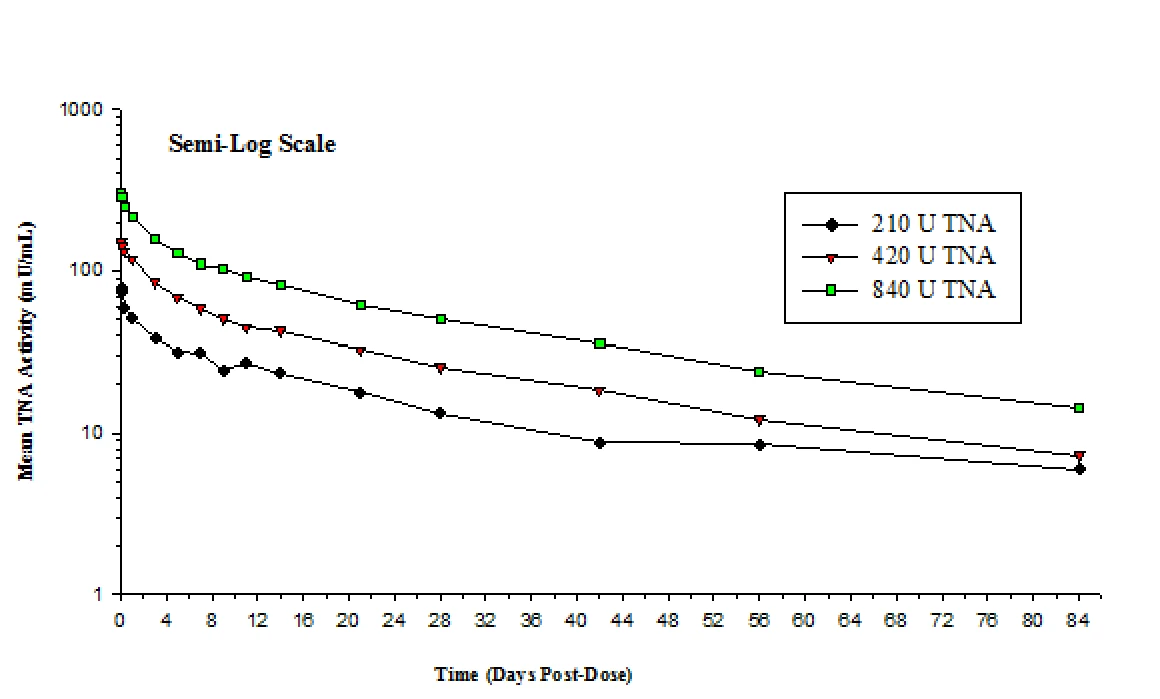
The mean TNA activities for three doses of ANTHRASIL (210, 420 and 840 units TNA) in the clinical trial in healthy volunteers (see Clinical Trial Adverse Reactions) are plotted on a semi-log scale in Figure 1. The pharmacokinetics of ANTHRASIL after intravenous infusion of the three dose levels were characterized; the peak levels of ANTHRASIL were reached immediately after infusion and then declined over the duration of study (84 days). The mean TNA activity remained above the lower limit of quantitation (5 milliunits per mL) over the entire 84-day post-dose period for the three doses studied.
Figure 1 Mean TNA Activities for Three Doses of ANTHRASIL
A summary of the mean pharmacokinetic (PK) results for the TNA data collected in the healthy volunteer study is presented in Table 5.
Table 5 Summary of Mean PK Results by Treatment (TNA Data) in Humans
| PK Parameters | Dose Levels | |||||
| 210 U TNA | N | 420 U TNA | N | 840 U TNA | N | |
| Arithmetic Mean (CV%) | ||||||
| AUC0-t (mU·d/mL) | 1031.8 (23.3) | 15 | 2176.7 (18.9) | 17 | 4271.0 (22.3) | 16 |
| AUC0-∞ (mU·d/mL) | 1277.5 (27.7) | 7 | 2536.7 (14.7) | 16 | 4788.8 (26.5) | 15 |
| Cmax (mU/mL) | 83.0 (13.4) | 15 | 156.4 (21.7) | 17 | 316.7 (18.3) | 16 |
| t½ (d) | 24.3 (33.3) | 7 | 28.3 (19.9) | 16 | 28.0 (25.2) | 15 |
| CL (mL/d) | 174.2 (24.1) | 7 | 169.7 (17.9) | 16 | 188.6 (29.5) | 15 |
| Vd (mL) | 5714.8 (11.4) | 7 | 6837.2 (20.4) | 16 | 7238.2 (19.4) | 15 |
| Median (Min-Max) | ||||||
| Tmax (d) | 0.116 | 15 | 0.120 | 17 | 0.169 | 16 |
| (0.109–1.068) | (0.120–0.412) | (0.165–0.459) | ||||
In comparison to healthy subjects, patients with inhalational anthrax are expected to initially have greater clearance of anti-PA antibodies and lower AUC from ANTHRASIL administration due to the presence of PA antigen.
Mean PK results (TNA data) were evaluated by sex and revealed no sex-related differences over the dose range studied. Systemic exposure of ANTHRASIL increased in a dose-proportional manner over the dose range studied. ANTHRASIL has a serum elimination half-life of 24 to 28 days in healthy humans.
In the three inhalational anthrax patients (see ADVERSE REACTIONS) who were concomitantly treated with antibiotics and a single 420 unit TNA dose of ANTHRASIL, increases in serum and pleural anti-PA levels were exhibited; these levels remained at >50% of the peak anti-PA levels over the next five days. The mean serum anti-PA level for patients (145 mcg/mL) was lower compared to healthy volunteers (190 mcg/mL) who were treated with a 420 unit dose of ANTHRASIL. In the three inhalational anthrax patients, serum and pleural levels of lethal factor declined after initiation of antibiotics and further decreased over the period of five days following ANTHRASIL administration; however, due at least in part to ANTHRASIL targeting the PA component of lethal toxin, plasma and pleural fluid lethal factor levels remained detectable when measured two to five days following ANTHRASIL administration.
Because the effectiveness of ANTHRASIL cannot ethically be tested in placebo-controlled trials in humans, a comparison of ANTHRASIL exposures achieved in healthy human subjects to those observed in animal models of inhalational anthrax in therapeutic efficacy studies was necessary to support the dosage regimen. A dose of 420 units has a similar exposure to the efficacious dose of 15 U/kg administered to New Zealand white rabbits and cynomolgus macaques. In cynomolgus macaques treated with ANTHRASIL monotherapy, a higher dose of 30 U/kg, with a similar exposure to a human dose of 840 units, may result in improved survival. As a result, the initial dosing regimen is given as a range of 420 to 840 units, and the recommended regimen includes the potential for repeat dosing.
11 STORAGE, STABILITY AND DISPOSAL
Store frozen at or below -20°C until used. Do not refreeze.
Once punctured, use the vial contents to prepare the infusion bag and administer as soon as possible. ANTHRASIL vials are for single use only and contain no preservative. Discard any unused portion.
12 SPECIAL HANDLING INSTRUCTIONS
- Keep out of reach and sight of children.
- Keep protected from light.
- The product should be brought to room or body temperature immediately prior to use. The product should be clear or slightly opalescent. Do not use product that appears cloudy or contains particulates.
PART II: SCIENTIFIC INFORMATION
13 PHARMACEUTICAL INFORMATION
Drug Substance
| Proper name: | Anthrax Immunoglobulin (Human) |
|---|---|
| Chemical name: | Anthrax Immunoglobulin (Human) |
| Molecular formula and molecular mass: | Glycoprotein of approximately 160,000 Daltons |
| Structural formula: | Gamma Immunoglobulin (IgG) |
| Physicochemical properties: | The drug substance contains purified IgG in an aqueous buffer with a pH between 5.0 and 6.5. It is stabilized with 10% maltose and 0.03% polysorbate 80 and contains no preservative. The total protein concentration ranges from 40 to 70 mg per mL. |
Product Characteristics:
ANTHRASIL is a clear to opalescent sterile liquid of purified immunoglobulin G (IgG) fraction of human plasma containing polyclonal antibodies that bind the protective antigen (PA) component of Bacillus anthracis lethal and edema toxins. ANTHRASIL is prepared using plasma collected from healthy, screened donors who were immunized with BioThrax® (Anthrax Vaccine Adsorbed) to achieve high titers of anti-anthrax antibody (meeting minimum potency specifications) and purified by an anion-exchange column chromatography method.
Product potency, as determined by the Toxin Neutralization Assay, is expressed in units (U) by comparison to the Centers for Disease Control and Prevention (CDC) standard AVR414. A single
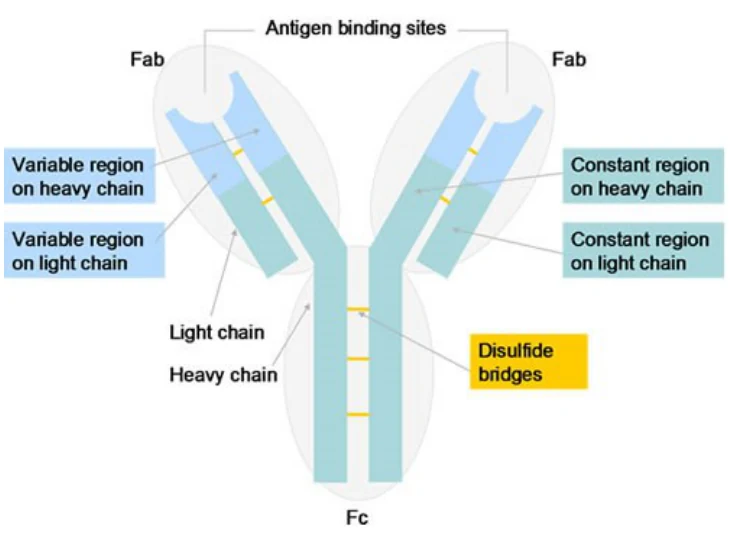 |
use 50 mL vial contains anti-anthrax antibodies at ≥60 Units by Toxin Neutralization Activity (TNA), regardless of fill volume.
Viral Inactivation
ANTHRASIL is prepared from human plasma by an anion-exchange column chromatography method. The manufacturing process includes two steps implemented specifically for viral clearance. The solvent detergent treatment step (using tri-n-butyl phosphate and octoxynol) is effective in inactivating lipid enveloped viruses such as hepatitis B (HBV), hepatitis C (HCV), and human immunodeficiency virus (HIV). Virus filtration, using a 20 nm virus filter is effective in the removal of some non-lipid enveloped viruses. These two processes are designed to increase product safety by reducing the risk of transmission of enveloped and non-enveloped viruses, respectively. In addition to the two specific steps, the anion-exchange chromatography step contributes to the removal of small non-lipid enveloped viruses.
The inactivation and reduction of known enveloped and non-enveloped model viruses were validated in laboratory studies as summarized in Table 6.
Table 6 Viral Validation of Model Viruses in Laboratory Studies
| Enveloped | Non-Enveloped | |||||||||||||||||||||
| Genome | RNA | DNA | RNA | DNA | ||||||||||||||||||
| Virus | HIV-1 | BVDV | PRV | HAV | EMC | MMV | PPV | |||||||||||||||
| Family | retro | flavi | herpes | picorna | parvo | |||||||||||||||||
| Size (nm) | 80–100 | 50–70 | 120–200 | 25–30 | 30 | 20–25 | 18–24 | |||||||||||||||
| Anion Exchange Chromatography (partitioning) | Not evaluated | 2.3 | n.e. | 3.4 | n.e. | |||||||||||||||||
| 20N Filtration (size exclusion) | ≥4.7 | ≥3.5 | ≥5.6a | n.e. | 4.8 | n.e. | 4.1 | |||||||||||||||
| Solvent/Detergen t (inactivation) | ≥4.7 | ≥7.3 | ≥5.5 | Not evaluated | ||||||||||||||||||
| Total Reduction (log10) | ≥9.4 | ≥10.8 | ≥11.1 | 2.3 | 4.8 | 3.4 | 4.1 | |||||||||||||||
| a The PRV was retained by the 0.1 μm pre-filter during the virus validation. Since manufacturing employs a 0.1 μm pre-filter before the 20N filter, the claim of ≥5.6 reduction is considered applicable. | ||||||||||||||||||||||
| Abbreviations: | ||||||||||||||||||||||
| HIV-1: Human immunodeficiency virus-1; relevant virus for human immunodeficiency virus-1 and model for HIV-2 | ||||||||||||||||||||||
| BVDV: Bovine viral diarrhea virus; model virus for hepatitis C virus (HCV) and West Nile virus (WNV) | ||||||||||||||||||||||
| PRV: Pseudorabies virus; model for large enveloped DNA viruses, including herpes | ||||||||||||||||||||||
| HAV: Human hepatitis A virus; relevant virus for HAV and model for small non-enveloped viruses in general | ||||||||||||||||||||||
| EMC: Encephalomyocarditis virus; model for HAV and for small non-enveloped viruses in general | ||||||||||||||||||||||
| MMV: Murine minute virus; model for human parvovirus B19 and for small non-enveloped viruses in general | ||||||||||||||||||||||
| n.e.: Not evaluated | ||||||||||||||||||||||
Despite these measures, such products can still potentially transmit disease (see Transmission of Infectious Agents).
14 CLINICAL TRIALS
Because it is not ethical or feasible to conduct placebo-controlled clinical trials in humans with inhalational anthrax, the effectiveness of ANTHRASIL is based on efficacy studies demonstrating a survival benefit in animal models of inhalational anthrax infection (see Detailed Pharmacology). The safety has been assessed in healthy adults and in a limited number of patients with anthrax who were treated with ANTHRASIL under expanded access use.
14.1 Trial Design and Study Demographics
Table 7 Summary of Subject Demographics for ANTHRASIL Clinical Trials
| Study No. | Trial Design | Dosage, Route of Administration and Duration | Study Subjects (n=number) | Mean Age (Range) | Gender |
|---|---|---|---|---|---|
| AX-001 |
|
|
| 31 (19–55) | 52% M 48% F |
| CDC Expanded Access Program | Not applicable | 420 U TNA | 19a | 38 (24–61) | 74% M 26% F |
| a Patients in expanded access consisted of 3 inhalational, 1 gastrointestinal and 15 injectional anthrax cases. | |||||
In a double blind, randomized, placebo-controlled study designed to assess the safety and pharmacokinetics of three doses of ANTHRASIL after a single intravenous infusion in healthy volunteers, a total of 72 healthy adult subjects were randomized to receive a dose of 210, 420 or 840 units of ANTHRASIL by TNA (N=18/dosing group) or an equal volume of saline placebo (N=6/dosing group).
A second stage of this study, designed only for additional safety assessment, was a randomized, open-label study in 20 healthy adult volunteers. Subjects were randomized to receive a dose of 840 units by TNA from one of two additional product lots (10 subjects per lot). There was no placebo group.
Results of the safety study are presented within the Clinical Trial Adverse Reactions and Pharmacokinetics sections.
14.2 Patient Experience
Nineteen adult patients have been treated with ANTHRASIL under expanded access use, including three patients with inhalational anthrax, one patient with gastrointestinal anthrax and 15 patients with injectional anthrax due to injection of anthrax-contaminated heroin. Patients were receiving antimicrobial therapy before, during and after ANTHRASIL administration.
In patients with inhalational anthrax, two out of three patients treated with ANTHRASIL plus antimicrobial therapy survived and one died from progression of anthrax disease, systemic candidiasis and multiorgan failure. Among the 15 patients with injectional anthrax treated with ANTHRASIL plus antibiotics, 10 survived and five died (two from progression of anthrax disease; the cause of death was not determined or available for three patients). The single patient with gastrointestinal anthrax treated with ANTHRASIL survived. Therapy for these systemic anthrax cases included aggressive supportive measures including mechanical ventilation and pulmonary/abdominal fluid drainage.
In the three inhalational patients, the ANTHRASIL dose of 420 units by TNA resulted in increased anti-PA levels (correlating with increased TNA activity); these levels remained stable up to seven to 20 days post-administration, probably reflecting the rising antibody production by the patient at the same time that the exogenously-administered antibody was being cleared.
In some injectional anthrax cases, complicated by hemorrhage and pleural and/or peritoneal fluid losses from thoracentesis and/or paracentesis, serum anti-PA antibody levels fell as much as approximately 90% from their post-ANTHRASIL peak levels by 24 hours following ANTHRASIL administration. In the gastrointestinal anthrax patient, serum anti-PA levels were observed prior to ANTHRASIL infusion with further increases in anti-PA levels post-administration and maintenance of anti-PA above pre-administration levels for 11 days was observed.
14.3 Detailed Pharmacology
The evaluation of new treatment options for anthrax using placebo-controlled human trials is unethical and infeasible. Therefore, the effectiveness of ANTHRASIL for treatment of inhalational anthrax is based on well controlled efficacy studies conducted in rabbits and cynomolgus macaques.
14.3.1 Animal Studies
Anthrax infected New Zealand white (NZW) rabbits and cynomolgus macaques administered an intravenous injection of ANTHRASIL (15 units TNA per kg) that did not survive their infection showed an increase in the severity and/or incidence of central nervous system lesions (bacteria, hemorrhage and necrosis) as compared to intravenous immunoglobulin (“placebo”) treated animals who also did not survive the infection. The mean time to death between non-surviving ANTHRASIL and placebo treated animals was comparable. Surviving rabbits had no evidence of central nervous system lesions at the end of the study. No surviving cynomolgus macaques in monotherapeutic studies were tested for central nervous system lesions.
Monotherapeutic Studies in Animal Models
In a monotherapeutic efficacy study, rabbits were exposed to a target dose of 200 x LD50 aerosolized anthrax spores and then administered 15 units per kg of ANTHRASIL or a single dose of placebo (IGIV) at the onset of toxemia, as determined by the presence of PA in serum samples. In addition, ten rabbits were exposed to the target dose of 200 x LD50 aerosolized anthrax spores but were not treated. Detection of PA was used as the trigger for initiation of treatment, while bacteremia status provided a retrospective confirmation of disease.
Ninety-eight (98) percent of the treated animals were bacteremic prior to treatment; two animals in the IGIV placebo group were not bacteremic and were excluded from the modified intent-to-treat (MITT) population. Of the animals that were toxemic and bacteremic prior to treatment and received a full dose of either IGIV placebo or ANTHRASIL, ANTHRASIL treatment resulted in a 26% survival in comparison to a 2% survival with IGIV placebo treatment (Table 8) over the 36 day duration of the study. ANTHRASIL treatment resulted in a decrease in the proportion of rabbits that were toxemic or bacteremic. The median time to resolution of toxemia was 234.2 hours in the ANTHRASIL treatment group but could not be estimated in the IGIV placebo treatment group since only one animal resolved prior to death or reaching the end of the study. The median time to resolution of bacteremia could not be estimated in either treatment group since not enough animals resolved: 13/50 and 1/48 animals resolved bacteremia in the ANTHRASIL and IGIV placebo treatment groups respectively.
Table 8 Survival Rates in NZW Rabbits Treated with ANTHRASIL Monotherapy (MITT)
| Treatment | Dose | No. of Animals | Survival at at 36 Days PI | ||
|---|---|---|---|---|---|
| Male | Female | No. Survivors (%)a | p-Valueb | ||
| Untreated control | N/A | 5 | 5 | 0/10 (0) | – |
| Placebo (IGIV) treatment | 0 | 25 | 25 | 1/48 (2) | – |
| ANTHRASIL treatment | 15 U/kg | 25 | 25 | 13/50 (26) | 0.0009 |
| a Survival among animals that received a full dose of either IGIV placebo or ANTHRASIL and were bacteremic and toxemic prior to treatment (MITT population). | |||||
| b Two-sided Fisher’s exact test versus IGIV placebo treatment | |||||
| MITT = Modified intent-to-treat | |||||
| PI = Post-infection | |||||
Efficacy of ANTHRASIL was also assessed in cynomolgus macaques exposed to a target dose of 200 x LD50 aerosolized anthrax spores. Treatment with placebo or one of three dose levels of ANTHRASIL was initiated after animals became toxemic (positive for PA detection in serum samples), and bacteremia status provided a retrospective confirmation of disease. Survival was assessed over a period of 88 days in toxemic animals that were confirmed to be bacteremic at the time of treatment. Animals that were not bacteremic prior to treatment comprised five in the IGIV placebo group, four in the 7.5 units per kg dose group, two in the 15 units per kg dose group, and four in the 30 units per kg dose group. There were three additional exclusions from the MITT population: one animal in the 7.5 units per kg dose group was found unresponsive and euthanized on Day 24 with no evidence of anthrax infection, and two animals in the 30 units per kg dose group were not toxemic prior to treatment. In the MITT population, survival was 0% in placebo treated animals. Animals treated with 7.5 units per kg exhibited 36% survival, those treated with 15 units per kg exhibited 43% survival, and those treated with 30 units per kg exhibited 70% survival (Table 9). Compared to IGIV placebo, these survival rates were statistically significant at p=0.0451, 0.0339, and 0.0031, respectively (Bonferroni-Holm adjusted one-sided Fisher’s exact tests). ANTHRASIL treated animals showed a rapid reduction in circulating anthrax toxin level post infusion when compared to placebo treated animals.
Table 9 Survival Rates in Cynomolgus Macaques Treated with ANTHRASIL Monotherapy (MITT)
| Treatment | Dose | No. of Animals | Survival at 28 Days PI | ||
|---|---|---|---|---|---|
| Male | Female | No. Survivors (%)a | p-Valueb | ||
| Placebo (IGIV) treatment | N/A | 8 | 8 | 0/11 (0) | – |
| ANTHRASIL treatment | 7.5 U/kg | 8 | 8 | 4/11 (36) | 0.0451 |
| ANTHRASIL treatment | 15 U/kg | 8 | 8 | 6/14 (43) | 0.0339 |
| ANTHRASIL treatment | 30 U/kg | 8 | 8 | 7/10 (70) | 0.0031 |
| a Survival among animals that were bacteremic and toxemic prior to treatment (MITT population), excluding one non-anthrax death. | |||||
| b Bonferroni-Holm adjusted one-sided Fisher’s exact test | |||||
| MITT = Modified intent-to-treat | |||||
| PI = Post-infection | |||||
ANTHRASIL Efficacy in Combination with Antibiotics
The efficacy of ANTHRASIL administered with levofloxacin was determined in New Zealand white rabbits with systemic disease. No significant difference between the control (normal immunoglobulin [IGIV] plus levofloxacin) and treatment groups (ANTHRASIL plus levofloxacin) was seen when combination treatment was delayed up to 60 hours post-challenge. One animal in an ANTHRASIL treatment group was excluded from analysis due to inconclusive cause of death. There was no observed antagonism between levofloxacin and ANTHRASIL in this study. This study also demonstrated that ANTHRASIL effectively cleared toxemia when administered with antibiotics. In ANTHRASIL treated groups, all animals cleared PA toxemia post-ANTHRASIL administration and only 4/31 (13%) of ANTHRASIL treated animals exhibited a single transient positive PA result for toxemia at the 12 or 18 hour time point post-dosing. Placebo control animals exhibited more persistent toxemia, with 26/32 (81%) having positive PA results for 18 to 90 hours post-treatment.
In a second study, treatment was delayed 60 hours or beyond to simulate a clinical scenario. Animals that died before completing treatment infusion (133/246) were excluded from analysis, as were three animals in an antibiotic plus IGIV placebo group that were not bacteremic prior to treatment. When combination treatment was initiated at 60, 72, 84 or 96 hours post anthrax exposure, no statistically significant added survival benefit was observed between groups that received placebo (IGIV plus levofloxacin) or ANTHRASIL (15 units per kg plus levofloxacin). A trend of an increase in survival was observed with ANTHRASIL when treatment was delayed to 96 hours post exposure: survival was 25% (2/8) in the antibiotic plus IGIV control group and 71% (5/7) in the ANTHRASIL plus levofloxacin group. A marginal improvement of 10 to 15% was observed at other time points, suggesting a trend in added benefit with ANTHRASIL. This study also demonstrated an effect of ANTHRASIL on reduction of toxemia. The majority of ANTHRASIL treated animals became negative for PA (toxemia) within one hour post-infusion of ANTHRASIL and remained negative, even with the delayed treatment from 60 to 96 hours post-anthrax challenge and high levels of toxemia pretreatment. In contrast, placebo treated animals remained toxemic up to three days after initiating antibiotic treatment.
The efficacy of ANTHRASIL co-administered with levofloxacin was evaluated in New Zealand white rabbits when treatment was delayed to 96 hours after anthrax spore inhalation. The dose of levofloxacin was chosen to yield a comparable exposure to that achieved by the recommended dose in humans. Eighty-four (84) animals survived to receive at least a single dose of levofloxacin, comprising 25% of the animals exposed to B. anthracis via the inhalational route. Of these 84 animals, three rabbits died prior to start of IV infusion; therefore, 81 animals were included in the intent-to-treat (ITT) analysis set. A total of 14 animals in the ITT analysis set died during infusion or did not complete a full infusion. In addition, three animals in the ITT analysis set were not bacteremic and toxemic at least once prior to treatment. Thus, 64 animals were included in the MITT analysis set. Of the animals that were bacteremic prior to treatment and survived to complete treatment infusion, antibacterial drug plus ANTHRASIL (15 units per kg) resulted in 58% (18/31) survival compared to 39% (13/33) survival in rabbits treated with antibacterial drug and placebo (p=0.1353, two-sided Z-test, Table 10).
Table 10 Survival Rates in NZW Rabbits Treated with ANTHRASIL + Levofloxacin at 96 Hours Post Challenge (MITT)
| Treatment | ANTHRASIL Dose | Treatment Time Pointa | No. of Animals | Survival at 36 Days PI | |
|---|---|---|---|---|---|
| No. Survivors (%)b | p-Valuec | ||||
| Placebo (IGIV) + levofloxacin | N/A | 96 hr | 43 | 13/33 (39) | – |
| ANTHRASIL + levofloxacin | 15 U/kg | 96 hr | 38 | 18/31 (58) | 0.1353 |
| a Relative to anthrax spore inhalational challenge. | |||||
| b Survival among animals that received a full dose of either IGIV or ANTHRASIL plus antibiotic and were bacteremic and toxemic prior to treatment (MITT population). | |||||
| c Two-sided Z-test | |||||
| MITT = Modified intent-to-treat | |||||
| PI = Post-infection | |||||
When animals were stratified by pre-treatment toxemia (PA) in a post hoc analysis, added benefit was observed in animals treated with ANTHRASIL and levofloxacin when they had pre-treatment PA levels between 200 and 800 ng/mL. When pre-treatment toxemia was low (PA <200 ng/mL), survival was greater than 90% in all animals, regardless of treatment (Table 11). Animals with very high levels of toxemia (>800 ng/mL) did not survive irrespective of the treatment administered.
Table 11 Survival Rates in NZW Rabbits Treated with ANTHRASIL + Levofloxacin at 96 Hours Post Challenge Stratified by Pre-treatment PA Levels
| Pre-treatment PA (ng/mL) | IGIV Placebo + Levofloxacin (%) | ANTHRASIL + Levofloxacin (%) |
|---|---|---|
| <200 | 11/12 (91.7) | 8/9 (88.9) |
| 200–800 | 2/11 (18.2) | 10/14 (71.4) |
| >800 | 0/10 (0) | 0/8 (0) |
| All pre-treatment PA levels | 13/33 (39.4) | 18/31 (58.1) |
ANTHRASIL and antibiotic combination treatment was also studied in the cynomolgus macaque model of inhalational anthrax. In this study, initiation of treatment was delayed to 64 hours post anthrax exposure. Four animals (one in IGIV placebo plus ciprofloxacin group, two in low dose ANTHRASIL plus ciprofloxacin group, and one in high dose ANTHRASIL plus ciprofloxacin group) were excluded from analysis due to cause of death other than anthrax. While 56 animals survived to treatment, 18 (seven in IGIV placebo plus ciprofloxacin group, six and five in low and high dose ANTHRASIL plus ciprofloxacin groups, respectively) were excluded from analysis due to negative bacteremia prior to treatment. Survival was 75% (9/12) in the IGIV placebo plus ciprofloxacin treatment group versus 83% (10/12) in the ANTHRASIL 15 units per kg plus ciprofloxacin group and 79% (11/14) in the ANTHRASIL 30 units per kg plus ciprofloxacin group.
No antagonism of ANTHRASIL when administered with antibiotic as a concomitant therapy was observed.
ANTHRASIL in Post-exposure Prophylaxis
A post exposure prophylactic study assessed the survival following aerosol exposure to a lethal dose of anthrax spores (200 x LD50) in New Zealand white rabbits administered ANTHRASIL (7.5, 15 or 30 units TNA per kg) at 30 hours post-anthrax challenge compared to placebo controls. All three doses of ANTHRASIL improved survival when given 30 hours post-anthrax challenge. A total of 14 animals (four in the IGIV placebo group and three, five and two in the ANTHRASIL groups in increasing dose order) were excluded from analysis due to not being both bacteremic and toxemic. With treatment at 30 hours following challenge in bacteremic animals, there was a 22% (2/9) survival with a dose of 15 units TNA per kg and a 33% (4/12) survival with a dose of 30 units TNA per kg. All rabbits in the IGIV placebo arm died.
15 MICROBIOLOGY
No microbiological information is required for this drug product.
16 NON-CLINICAL TOXICOLOGY
16.1 General Toxicology
Immunoglobulins are normal constituents of the human body. Toxicology studies have not been performed with ANTHRASIL or its components.
