


Product Monograph - Apo-Efavirenz-Emtricitabine-Tenofovir
SUMMARY PRODUCT INFORMATION
| Route of Administration | Dosage Form/Strength | All Nonmedicinal Ingredients |
| Oral | Tablet efavirenz 600 mg/ emtricitabine 200 mg/ tenofovir disoproxil fumarate 300 mg | carboxymethylcellulose calcium, colloidal silicon dioxide, crospovidone, ferric-ferrous oxide, ferric oxide red, magnesium stearate, microcrystalline cellulose, polyethylene glycol, polyvinyl alcohol, talc and titanium dioxide |
INDICATIONS AND CLINICAL USE
APO-EFAVIRENZ-EMTRICITABINE-TENOFOVIR (efavirenz [EFV]/emtricitabine [FTC]/tenofovir disoproxil fumarate [TDF]) is indicated for use alone as a complete regimen or in combination with other antiretroviral agents for the treatment of HIV-1 infection in adults. (see CLINICAL TRIALS, Description of Clinical Studies and ADVERSE REACTIONS).
Geriatrics (>65 years of age):
Clinical studies of the components of efavirenz, emtricitabine and tenofovir disoproxil fumarate tablets did not include sufficient numbers of subjects aged 65 and over to determine whether they respond differently from younger subjects.
Pediatrics (<18 years of age):
Safety and effectiveness in pediatric patients have not been established. APO-EFAVIRENZ-EMTRICITABINE-TENOFOVIR is not recommended for pediatric administration.
CONTRAINDICATIONS
APO-EFAVIRENZ-EMTRICITABINE-TENOFOVIR is contraindicated in patients with previously demonstrated hypersensitivity to any of the components of the product. For a complete listing, see the DOSAGE FORMS, COMPOSITION AND PACKAGING section of the Product Monograph.
Competition for CYP3A4 by efavirenz could result in inhibition of metabolism of some drugs and create the potential for serious and/or life-threatening adverse events. Drugs that are contraindicated with APO-EFAVIRENZ-EMTRICITABINE-TENOFOVIR are listed in
Table 1. See also DRUG INTERACTIONS, Drug-Drug Interactions.
Table 1. Drugs That Are Contraindicated with APO-EFAVIRENZ-EMTRICITABINE-TENOFOVIR
| Drug Class: Drug Name | Clinical Comment |
| Antiarrhythmics: bepridil* | CONTRAINDICATED due to potential for serious and/or life-threatening reactions such as cardiac arrhythmias. |
| HCV antiviral agents: elbazvir/grazoprevir | CONTRAINDICATED due to the expected significant decreases in plasma concentrations of elbasvir and grazoprevir. This effect is due to induction of CYP3A4 by efavirenz and may result in loss of therapeutic effect. |
| Antifungal: voriconazole | CONTRAINDICATED because efavirenz significantly decreases voriconazole plasma concentrations, and coadministration may decrease the therapeutic effectiveness of voriconazole. Also, voriconazole significantly increases efavirenz plasma concentrations, which may increase the risk of efavirenz-associated side effects. Because APO-EFAVIRENZ-EMTRICITABINE-TENOFOVIR is a fixed dose combination product, the dose of efavirenz cannot be altered; therefore, voriconazole and APO-EFAVIRENZ-EMTRICITABINE-TENOFOVIR cannot be coadministered. |
| Antihistamines: astemizole*, terfenadine* | CONTRAINDICATED due to potential for serious and/or life-threatening reactions such as cardiac arrhythmias. |
| Antimigraine: ergot derivatives (dihydroergotamine, ergonovine, ergotamine, methylergonovine) | CONTRAINDICATED due to potential for serious and/or life-threatening reactions such as acute ergot toxicity characterized by peripheral vasospasm and ischemia of the extremities and other tissues. |
| Benzodiazepines: midazolam, triazolam | CONTRAINDICATED due to potential for serious and/or life-threatening reactions such as prolonged or increased sedation or respiratory depression. |
| Neuroleptic: pimozide | CONTRAINDICATED due to potential for serious and/or life- threatening reactions such as cardiac arrhythmias. |
| GI motility agent: cisapride* | CONTRAINDICATED due to potential for serious and/or life-threatening reactions such as cardiac arrhythmias. |
| Herbal products: St. John’s wort (Hypericum perforatum) | CONTRAINDICATED due to risk of reduced plasma concentrations of efavirenz. This effect is due to an induction of CYP3A4 and may result in loss of virologic response and possible resistance to efavirenz or to the class of non-nucleoside reverse transcriptase inhibitors (NNRTIs). |
*Not marketed in Canada.
WARNINGS AND PRECAUTIONS
Lactic acidosis and severe hepatomegaly with steatosis, including fatal cases, have been reported with the use of nucleoside analogs including tenofovir disoproxil fumarate, a component of APO-EFAVIRENZ-EMTRICITABINE-TENOFOVIR, alone or in combination with other antiretrovirals (see WARNINGS AND PRECAUTIONS: Hepatic/Biliary/Pancreatic). APO-EFAVIRENZ-EMTRICITABINE-TENOFOVIR is not approved for the treatment of chronic hepatitis B virus (HBV) infection and the safety and efficacy of efavirenz, emtricitabine and tenofovir disoproxil fumarate have not been established in patients coinfected with HBV and HIV. Severe acute exacerbations of hepatitis B have been reported in patients who are coinfected with HBV and HIV after the discontinuation of emtricitabine or tenofovir disoproxil fumarate, two of the components of APO-EFAVIRENZ-EMTRICITABINE-TENOFOVIR. In some patients infected with HBV and treated with emtricitabine, the exacerbations of hepatitis B were associated with liver decompensation and liver failure. Hepatic function should be closely monitored with both clinical and laboratory follow-up for at least several months in patients who discontinue APO-EFAVIRENZ-EMTRICITABINE-TENOFOVIR and are coinfected with HIV and HBV. If appropriate, initiation of anti-hepatitis B therapy may be warranted (see WARNINGS AND PRECAUTIONS: Special Populations). Renal failure, renal insufficiency, elevated creatinine, hypophosphatemia, and Fanconi syndrome have been reported with the use of tenofovir disoproxil fumarate during clinical practice (see WARNINGS AND PRECAUTIONS). |
General
APO-EFAVIRENZ-EMTRICITABINE-TENOFOVIR should not be administered with the following related drugs including COMPLERA® (emtricitabine/rilpivirine/tenofovir disoproxil fumarate), EMTRIVA® (emtricitabine), TRUVADA® (emtricitabine/tenofovir disoproxil fumarate), STRIBILD® (elvitegravir/cobicistat/emtricitabine/tenofovir disoproxil fumarate) and VIREAD® (tenofovir disoproxil fumarate).
Due to similarities between emtricitabine and lamivudine, APO-EFAVIRENZ-EMTRICITABINE-TENOFOVIR should not be administered with drugs containing lamivudine including Combivir® (lamivudine/zidovudine), 3TC® (lamivudine), Heptovir® (lamivudine), Kivexa® (abacavir/lamivudine), Triumeq® (dolutegravir/abacavir/lamivudine) and Trizivir® (abacavir/lamivudine/zidovudine).
APO-EFAVIRENZ-EMTRICITABINE-TENOFOVIR should not be administered concurrently with drugs containing tenofovir alafenamide (TAF) including DESCOVY® (emtricitabine/tenofovir alafenamide) or GENVOYA®
(elvitegravir/cobicistat/emtricitabine/tenofovir alafenamide), ODEFSEY™ (emtricitabine/rilpivirine/tenofovir alafenamide), or VEMLIDY™ (tenofovir alafenamide).
APO-EFAVIRENZ-EMTRICITABINE-TENOFOVIR should not be administered with HEPSERA® (adefovir dipivoxil).
APO-EFAVIRENZ-EMTRICITABINE-TENOFOVIR should not be administered with SUSTIVA® (efavirenz) unless needed for dose- adjustment of efavirenz (e.g., with rifampin) (see DRUG INTERACTIONS).
Clinical trial data of patients who were switched to efavirenz, emtricitabine and tenofovir disoproxil fumarate tablets from a prior PI-containing regimen suggest that they may have lower response rates than patients who remain on their baseline regimens (see CLINICAL TRIALS section). Therefore, patients who are switched to APO-EFAVIRENZ-EMTRICITABINE-TENOFOVIR from a prior PI-containing regimen should be monitored for both treatment- emergent adverse events and rises in viral load.
Carcinogenesis, Mutagenesis, Impairment of Fertility
Efavirenz:
Oral carcinogenicity studies in mice and rats were carried out with efavirenz. Mice were dosed with 0, 25, 75, 150, or 300 mg/kg/day for 2 years. Incidences of hepatocellular adenomas and carcinomas and pulmonary alveolar/bronchiolar adenomas at all doses were increased above background in females. No increases in tumor incidence above background were seen in males. The systemic exposure (based on AUCs) in mice was approximately 1.7-fold that in humans receiving the 600-mg/day dose. Rats were administered efavirenz at doses of 0, 25, 50, or 100 mg/kg/day for 2 years; no increases in tumor incidence above background were observed. The exposure in rats was lower than that in humans.
The mechanism of the carcinogenic potential is unknown. However, in genetic toxicology assays, efavirenz showed no evidence of mutagenic or clastogenic activity in a battery of in vitro and in vivo studies. These included bacterial mutation assays in S. typhimurium and E. coli, mammalian mutation assays in Chinese hamster ovary cells, chromosome aberration assays in human peripheral blood lymphocytes or Chinese hamster ovary cells, and an in vivo mouse bone marrow micronucleus assay. Given the lack of genotoxic activity of efavirenz, the relevance to humans of neoplasms in efavirenz-treated mice is not known.
Efavirenz did not impair mating or fertility of male or female rats, and did not affect sperm of treated male rats. The reproductive performance of offspring born to female rats given efavirenz was not affected. As a result of the rapid clearance of efavirenz in rats, systemic drug exposures achieved in these studies were equivalent to or below those achieved in humans given therapeutic doses of efavirenz.
Emtricitabine:
In long-term oral carcinogenicity studies of emtricitabine, no drug-related increase in tumor incidence was found in mice at doses up to 750 mg/kg/day (26 times the human systemic exposure at the therapeutic dose of 200 mg/day) or in rats at doses up to 600 mg/kg/day (31 times the human systemic exposure at the therapeutic dose).
Emtricitabine was not genotoxic in the in vitro reverse mutation bacterial test (Ames test), or in vivo mouse lymphoma or mouse micronucleus assays.
Emtricitabine did not affect fertility in male rats at approximately 140-fold or in male and female mice at approximately 60-fold higher exposures (AUC) than in humans given the recommended 200 mg daily dose. Fertility was normal in the offspring of mice exposed daily from before birth (in utero) through sexual maturity at daily exposures (AUC) of approximately 60-fold higher than human exposures at the recommended 200 mg daily dose.
Tenofovir disoproxil fumarate:
Tenofovir disoproxil fumarate did not show any carcinogenic potential in a long-term oral carcinogenicity study in rats. A long-term oral carcinogenicity study in mice showed a low incidence of duodenal tumors, considered likely related to high local concentrations in the gastrointestinal tract at the high dose of 600 mg/kg/day. The mechanism of tumor formation in mice and potential relevance for humans is uncertain.
Tenofovir disoproxil fumarate was mutagenic in the in vitro mouse lymphoma assay and negative in an in vitro bacterial mutagenicity test (Ames test). In an in vivo mouse micronucleus assay, tenofovir disoproxil fumarate was negative at doses up to 2000 mg/kg when administered orally to male mice.
There were no effects on fertility, mating performance or early embryonic development when tenofovir disoproxil fumarate was administered at 600 mg/kg/day to male rats for 28 days prior to mating and to female rats for 15 days prior to mating through day seven of gestation. There was, however, an alteration of the estrous cycle in female rats. A dose of 600 mg/kg/day is equivalent to 19 times the human dose based on body surface area comparisons.
Cardiovascular
QTc Prolongation:
QTc prolongation has been observed with the use of efavirenz (see DRUG INTERACTIONS and ACTION AND CLINICAL PHARMACOLOGY). Consider alternatives to APO-EFAVIRENZ-EMTRICITABINE-TENOFOVIR when coadministered with a drug with a known risk of Torsade de Pointes or when administered to patients at higher risk of Torsade de Pointes.
Drug Interactions
Use with Certain HCV Regimens:
Tenofovir exposure is increased when efavirenz, emtricitabine and tenofovir disoproxil fumarate tablets are coadministered with HARVONI® (ledipasvir/sofosbuvir). Patients receiving APO-EFAVIRENZ-EMTRICITABINE-TENOFOVIR concomitantly with HARVONI, particularly those at increased risk for renal dysfunction, should be monitored for tenofovir- associated adverse reactions (see DRUG INTERACTIONS).
Coadministration of efavirenz with a HCV treatment regimen containing velpatasvir has been shown to decrease velpatasvir exposure. Coadministration of efavirenz, emtricitabine and tenofovir disoproxil fumarate tablets with EPCLUSA™ (sofosbuvir/velpatasvir) resulted in increased tenofovir exposure and decreased velpatasvir exposure. Tenofovir exposure is expected to increase and velpatasvir and voxilaprevir are expected to decrease upon coadministration of VOSEVI™ (sofosbuvir/velpatasvir/voxilaprevir) and efavirenz, emtricitabine and tenofovir disoproxil fumarate. Coadministration of APO-EFAVIRENZ-EMTRICITABINE-TENOFOVIR with EPCLUSA or sofosbuvir/velpatasvir/voxilaprevir is not recommended (see DRUG INTERACTIONS).
Effects On Ability To Drive and To Use Machines
APO-EFAVIRENZ-EMTRICITABINE-TENOFOVIR may cause dizziness, impaired concentration, and/or drowsiness, due to the efavirenz component. Patients should be instructed that, if they experience these symptoms, they should avoid potentially hazardous tasks such as driving or operating machinery (see WARNINGS AND PRECAUTIONS: Neurologic).
Endocrine and Metabolism
Serum Lipids and Blood Glucose:
Serum lipid and blood glucose levels may increase during antiretroviral therapy. Disease control and life style changes may also be contributing factors. Consideration should be given to the measurement of serum lipids and blood glucose. Lipid disorders and blood glucose elevations should be managed as clinically appropriate.
Hepatic/ Biliary/Pancreatic
Lactic Acidosis/Severe Hepatomegaly with Steatosis:
Lactic acidosis and severe hepatomegaly with steatosis, including fatal cases, have been reported with the use of antiretroviral nucleoside analogs including the tenofovir disoproxil fumarate component of efavirenz, emtricitabine and tenofovir disoproxil fumarate tablets, alone or in combination with other antiretrovirals in the treatment of HIV infection. A majority of these cases have been in women. Obesity and prolonged nucleoside exposure may be risk factors. Particular caution should be exercised when administering nucleoside analogs to any patient with known risk factors for liver disease; however, cases have also been reported in patients with no known risk factors. Treatment with APO-EFAVIRENZ-EMTRICITABINE-TENOFOVIR
should be suspended in any patient who develops clinical or laboratory findings suggestive of lactic acidosis or pronounced hepatotoxicity (which may include hepatomegaly and steatosis even in the absence of marked transaminase elevations).
Hepatotoxicity – Efavirenz:
Postmarketing reports of hepatic failure have occurred in patients receiving efavirenz, including some cases in patients without pre-existing hepatic disease or other identifiable risk factors (see WARNINGS AND PRECAUTIONS, Monitoring and Laboratory Tests and ADVERSE REACTIONS, Post-Market Adverse Drug Reactions).
In patients with persistent elevations of serum transaminases to greater than five times the upper limit of the normal range, the benefit of continued therapy with APO-EFAVIRENZ-EMTRICITABINE-TENOFOVIR needs to be weighed against the potential risks of significant liver toxicity.
Hepatic Impairment:
The pharmacokinetics of efavirenz has not been adequately studied in patients with hepatic impairment. Efavirenz, emtricitabine and tenofovir disoproxil fumarate tablets are not recommended in patients with moderate or severe hepatic impairment (Child-Pugh Class B or C) because of insufficient data. Caution should be exercised in administering APO-EFAVIRENZ-EMTRICITABINE-TENOFOVIR to patients with mild hepatic impairment because of the extensive cytochrome P450-mediated metabolism of efavirenz and limited clinical experience. Patients should be monitored carefully for adverse events, and laboratory tests to evaluate the liver disease should be performed at periodic intervals. (See WARNINGS AND PRECAUTIONS, Monitoring and Laboratory Tests, DOSAGE AND ADMINISTRATION; Dose Adjustment for Hepatic Impairment, and ACTION AND CLINICAL PHARMACOLOGY; Pharmacokinetics: Special Populations and Conditions).
Tenofovir and tenofovir disoproxil are not metabolized by liver enzymes. Clinically relevant pharmacokinetic changes in patients with hepatic impairment are not observed. Emtricitabine has not been evaluated in patients with hepatic impairment; however, emtricitabine has not been shown to be metabolized by liver enzymes, so the impact of liver impairment is likely to be limited.
The safety and efficacy of efavirenz, emtricitabine and tenofovir disoproxil fumarate tablets have not been established or specifically studied in patients with underlying liver disorders. Patients with chronic hepatitis B or C and treated with antiretroviral therapy are at increased risk for severe and potentially fatal hepatic adverse events. In case of concomitant antiviral therapy for hepatitis B or C, please refer also to the relevant product information for these medicinal products (see WARNINGS AND PRECAUTIONS: Special Populations).
Pancreatitis:
Pancreatitis has occurred during therapy with combination regimens that included tenofovir disoproxil fumarate. Caution should be used when administering nucleoside analogues (including APO-EFAVIRENZ-EMTRICITABINE-TENOFOVIR) to patients with a history of pancreatitis or risk factors for the development of pancreatitis. Therapy should be suspended in patients with suspected pancreatitis.
In controlled clinical studies the rate of clinical pancreatitis was similar in patients receiving [1/1008 (0.1%)] and not receiving [2/635 (0.3%)] efavirenz. Asymptomatic increases in serum amylase levels were observed in a significantly higher number of patients treated with efavirenz 600 mg than in control patients.
Elevated triglycerides have been reported in patients receiving efavirenz, in some cases to levels which can predispose a patient to pancreatitis. Among patients with elevated triglycerides, there have been no cases of pancreatitis. Because these triglyceride levels were not obtained in a fasting state, the exact clinical relevance of these measurements is not known.
Immune
Hypersensitivity Reactions:
In clinical trials, hypersensitivity reactions were uncommon (<1%) in patients treated with efavirenz.
Immune Reconstitution Inflammatory Syndrome:
Immune Reconstitution Inflammatory Syndrome has been reported in patients treated with combination antiretroviral therapy, including the components of efavirenz, emtricitabine and tenofovir disoproxil fumarate tablets. During the initial phase of treatment, patients responding to antiretroviral therapy may develop an inflammatory response to indolent or residual opportunistic infections (such as Mycobacterium avium infections, cytomegalovirus, Pneumocystis jiroveci pneumonia (PCP), and tuberculosis), which may necessitate further evaluation and treatment.
Autoimmune disorders (such as Graves’ disease, polymyositis and Guillain-Barre syndrome) have also been reported to occur in the setting of immune reconstitution, however, the time to onset is more variable, and can occur many months after initiation of treatment.
Musculoskeletal
Bone Effects:
Bone monitoring should be considered for HIV infected patients who have a history of pathologic bone fracture or are at risk for osteopenia. Although the effect of supplementation with calcium and vitamin D was not studied, such supplementation may be beneficial for all patients. If bone abnormalities are suspected then appropriate consultation should be obtained.
In a 144 week study of treatment-naïve patients, decreases from baseline in bone mineral density (BMD) were seen at the lumbar spine and hip in both arms of the study. At Week 144, there was a significantly greater mean percentage decrease from baseline in BMD at the lumbar spine in patients in the tenofovir disoproxil fumarate + lamivudine + efavirenz group compared with patients in the stavudine + lamivudine + efavirenz group. Changes in BMD at the hip were similar in the two treatment groups. In both groups, the majority of the reduction in BMD occurred in the first 24 to 48 weeks of the study and this reduction was sustained through Week 144. Twenty-eight percent of tenofovir disoproxil fumarate-treated patients vs. 21% of the stavudine- treated patients lost at least 5% of BMD at the spine or 7% of BMD at the hip. Clinically relevant fractures (excluding fingers and toes) were reported in
4 patients in the tenofovir disoproxil fumarate group and 6 patients in the stavudine group. In addition, there were significant increases in biochemical markers of bone metabolism (serum bone-specific alkaline phosphatase, serum osteocalcin, serum C-telopeptide, and urinary N-telopeptide) in the tenofovir disoproxil fumarate group relative to the stavudine group, suggesting increased bone turnover. Serum parathyroid hormone levels and 1,25 Vitamin D levels were also higher in the tenofovir disoproxil fumarate group. Except for bone specific alkaline phosphatase, these changes resulted in values that remained within the normal range. The effects of tenofovir disoproxil fumarate-associated changes in BMD and biochemical markers on long-term bone health and future fracture risk are unknown.
Cases of osteomalacia (associated with proximal renal tubulopathy and infrequently contributing to fractures) have been reported in association with the use of tenofovir disoproxil fumarate (see ADVERSE REACTIONS, Post Market Adverse Drug Reactions: Tenofovir disoproxil fumarate).
For additional information, please consult the tenofovir disoproxil fumarate Product Monograph.
Neurologic
Nervous System Symptoms:
Fifty-three percent (531/1008) of patients receiving efavirenz in controlled clinical trials reported central nervous system symptoms (any grade, regardless of causality) compared to 25% (156/635) of patients receiving control regimens. These symptoms included, but were not limited to, dizziness (28.1% of the 1008 patients), insomnia (16.3%), impaired concentration (8.3%), somnolence (7.0%), abnormal dreams (6.2%), and hallucinations (1.2%). Other reported symptoms were euphoria, confusion, agitation, amnesia, stupor, abnormal thinking, and depersonalization. The majority of these symptoms were mild- moderate (50.7%); symptoms were severe in 2.0% of patients. Overall, 2.1% of patients discontinued therapy as a result. These symptoms usually begin during the first or second day of therapy and generally resolve after the first 2 to 4 weeks. After 4 weeks of therapy the prevalence of nervous system symptoms of at least moderate severity ranged from 5 to 9% in patients treated with regimens containing efavirenz and from 3 to 5% in patients treated with a control regimen. Patients should be informed that these symptoms are likely to improve with continued therapy. Dosing at bedtime improves tolerability of these symptoms.
Analysis of long-term data from a clinical study, (median follow-up 180 weeks, 102 weeks, and 76 weeks for patients treated with efavirenz + zidovudine + lamivudine, efavirenz + indinavir, and indinavir + zidovudine + lamivudine, respectively) showed that, beyond 24 weeks of therapy, the incidences of new-onset nervous system symptoms among efavirenz-treated patients were generally similar to those in the indinavir-containing control arm.
Patients receiving APO-EFAVIRENZ-EMTRICITABINE-TENOFOVIR should be alerted to the potential for additive central nervous system effects, due to the efavirenz component, when APO-EFAVIRENZ-EMTRICITABINE-TENOFOVIR is used concomitantly with alcohol or psychoactive drugs.
Seizures:
Caution should be taken in any patient with any history of seizures. Convulsions have been observed infrequently in patients receiving efavirenz, generally in the presence of known medical history of seizures. Overall, the rate of seizure in controlled clinical trials has been 0.89% in efavirenz treated patients and 0.63% in the control patients. Patients who are receiving concomitant anticonvulsant medications primarily metabolized by the liver such as phenytoin, carbamazepine, and phenobarbital, may require periodic monitoring of plasma levels (See DRUG INTERACTIONS).
Psychiatric
Serious psychiatric adverse reactions have been reported in patients treated with efavirenz. In controlled trials of 1008 patients treated with regimens containing efavirenz for an average of 2.1 years and 635 patients treated with control regimens for an average of 1.5 years, the frequency (regardless of causality) of specific serious psychiatric events among patients who received efavirenz or control regimens respectively, were: severe depression (2.4%, 0.9%), suicidal ideation (0.7%, 0.3%), non-fatal suicide attempts (0.5%, 0%), aggressive behavior (0.4%, 0.5%), paranoid reactions (0.4%, 0.3%), and manic reactions (0.2%, 0.3%). When psychiatric symptoms similar to those noted above were combined and evaluated as a group in a multifactorial analysis of data from a clinical study, treatment with efavirenz was associated with an increase in the occurrence of these selected psychiatric symptoms. Other factors associated with an increase in the occurrence of these psychiatric symptoms were history of injection drug use, psychiatric history, and receipt of psychiatric medication at study entry; similar associations were observed in both the efavirenz and control treatment groups. In Study 006, onset of new serious psychiatric symptoms occurred throughout the study for both efavirenz-treated and control-treated patients. One percent of efavirenz-treated patients discontinued or interrupted treatment because of one or more of these selected psychiatric symptoms. There have also been occasional postmarketing reports of death by suicide, delusions, psychosis-like behavior, and catatonia, although a causal relationship to the use of efavirenz cannot be determined from these reports. Patients with serious psychiatric adverse experiences should seek immediate medical evaluation to assess the probability that the symptoms may be related to the use of APO-EFAVIRENZ-EMTRICITABINE-TENOFOVIR, and if so, to determine whether the risks of continued therapy outweigh the benefits.
Renal
Nephrotoxicity:
Emtricitabine and tenofovir are principally eliminated by the kidney, however efavirenz is not. Since APO-EFAVIRENZ-EMTRICITABINE-TENOFOVIR is a combination product and the dose of the individual components cannot be altered, patients with creatinine clearance <50 mL/min should not receive APO-EFAVIRENZ-EMTRICITABINE-TENOFOVIR.
Renal impairment, including cases of acute renal failure and Fanconi syndrome (renal tubular injury with severe hypophosphatemia), has been reported in association with the use of tenofovir disoproxil fumarate (see ADVERSE REACTIONS, Post Marketing Experience). The majority of these cases occurred in patients with underlying systemic or renal disease, or in patients taking nephrotoxic agents, however, some cases occurred in patients without identified risk factors.
It is recommended that creatine clearance be calculated in all patients prior to initiating therapy and as clinically appropriate during therapy with APO-EFAVIRENZ-EMTRICITABINE-TENOFOVIR. Routine monitoring of calculated creatine clearance and serum phosphorus should be performed in patients at risk for renal impairment, including patients who have previously experienced renal events while receiving adefovir dipivoxil.
APO-EFAVIRENZ-EMTRICITABINE-TENOFOVIR should be avoided with concurrent or recent use of a nephrotoxic agent. Examples of nephrotoxic agents include but are not limited to aminoglycosides, amphotericin B, foscarnet, ganciclovir, pentamidine, vancomycin, cidofovir, or interleukin-2. Particular caution should be exercised when administering APO-EFAVIRENZ-EMTRICITABINE-TENOFOVIR to patients with known risk factors for renal disease and a history of renal dysfunction; however, cases of renal failure have also been reported in patients with no known risk factors.
Skin
Rash:
APO-EFAVIRENZ-EMTRICITABINE-TENOFOVIR, due to its efavirenz component, is not recommended for patients who have had any life-threatening cutaneous reaction (e.g., Stevens-Johnson syndrome). APO-EFAVIRENZ-EMTRICITABINE-TENOFOVIR should be discontinued in patients developing severe rash associated with blistering, desquamation, mucosal involvement or fever. Resumption of therapy with APO-EFAVIRENZ-EMTRICITABINE-TENOFOVIR after resolution of severe rash should be considered only if the benefit outweighs the risk, such as for patients without other therapeutic options. For Grade 1 or 2 rash (National Cancer Institute Grading System), appropriate antihistamines and /or corticosteroids may improve the tolerability and hasten the resolution of rash. APO-EFAVIRENZ-EMTRICITABINE-TENOFOVIR can be reinitiated in patients interrupting therapy due to Grades 1 and 2 rash.
In controlled clinical trials, 26% (266/1008) of patients treated with 600 mg efavirenz experienced new onset skin rash compared with 17% (111/635) of patients treated in control groups. Rash associated with blistering, moist desquamation or ulceration occurred in 0.9% (9/1008) of patients treated with efavirenz. Rashes are usually mild-to-moderate maculopapular skin eruptions that occur within the first 2 weeks of initiating therapy with efavirenz (median time to onset of rash in adults was 11 days) and in most patients continuing therapy with efavirenz, rash resolves within 1 month (median duration, 16 days). The discontinuation rate for rash in clinical trials was 6.4% (17/266) among patients with rash and 1.7% (17/1008) overall.
Grade 4 rash (including erythema multiforme, Stevens-Johnson syndrome, toxic epidermal necrolysis, and exfoliative dermatitis) was uncommon (<1%) in patients treated with efavirenz in clinical studies.
Experience with efavirenz in patients who discontinued other antiretroviral agents of the NNRTI class is limited. Nineteen patients who discontinued nevirapine because of rash have been treated with efavirenz. Nine of these patients developed mild-to-moderate rash while receiving therapy with efavirenz, and two of these patients discontinued because of rash.
Special Populations
Patients with HIV and Hepatitis B Virus Coinfection:
It is recommended that all patients with HIV be tested for the presence of HBV before initiating antiretroviral therapy. APO-EFAVIRENZ-EMTRICITABINE-TENOFOVIR is not approved for the treatment of chronic HBV infection and the safety and efficacy of efavirenz, emtricitabine and tenofovir disoproxil fumarate have not been established in patients co- infected with HBV and HIV. Severe acute exacerbations of hepatitis B have been reported in patients who are coinfected with HBV and HIV after the discontinuation of emtricitabine and tenofovir disoproxil fumarate, two of the components of APO-EFAVIRENZ-EMTRICITABINE-TENOFOVIR. In some patients infected with HBV and treated with emtricitabine, the exacerbations of hepatitis B were associated with liver decompensation and liver failure. Hepatic function should be closely monitored with both clinical and laboratory follow-up for at least several months in patients who discontinue efavirenz, emtricitabine and tenofovir disoproxil fumarate tablets and are co-infected with HIV and HBV. If appropriate, initiation of anti- hepatitis B therapy may be warranted. In patients with advanced liver disease or cirrhosis, post-treatment exacerbation of hepatitis may lead to hepatic decompensation. Therefore, in these patients, discontinuation of treatment without initiation of alternative anti-hepatitis B therapy is not recommended.
Pregnant Women:
Efavirenz may cause fetal harm when administered during the first trimester to a pregnant woman. Pregnancy should be avoided in women receiving APO-EFAVIRENZ-EMTRICITABINE-TENOFOVIR and for 12 weeks after discontinuation. Barrier contraception must always be used in combination with other methods of contraception (e.g., oral or other hormonal contraceptives) (see DRUG INTERACTIONS and TOXICOLOGY). Because of the long half-life of efavirenz, use of adequate contraceptive measures for 12 weeks after discontinuation of APO-EFAVIRENZ-EMTRICITABINE-TENOFOVIR is recommended. Women of childbearing potential should undergo pregnancy testing prior to initiation of APO-EFAVIRENZ-EMTRICITABINE-TENOFOVIR.
There are no adequate and well-controlled studies in pregnant women. APO-EFAVIRENZ-EMTRICITABINE-TENOFOVIR should be used in pregnant women only if the potential benefits outweigh the potential risks to the fetus, such as in pregnant women without other therapeutic options.
Efavirenz: As of July 2013, the Antiretroviral Pregnancy Registry has received prospective reports of 1067 pregnancies exposed to efavirenz-containing regimens, 904 of which were first-trimester exposures. Birth defects occurred in 18 of 766 live births (first-trimester exposure) and 3 of 160 live births (second-/third-trimester exposure). One of these prospectively reported defects with first-trimester exposure was a neural tube defect. A single case of anophthalmia with first-trimester exposure to efavirenz has also been prospectively reported; however, this case included severe oblique facial clefts and amniotic banding, a known association with anophthalmia. There have been seven reports during post- marketing use of findings consistent with neural tube defects, including meningomyelocele, all in mothers exposed to efavirenz-containing regimens (excluding any efavirenz-containing fixed-dose combination) in the first trimester. Although a causal relationship of these events to the use of efavirenz cannot be established, similar defects have been observed in nonclinical studies of efavirenz (see TOXICOLOGY, Reproductive Toxicology).
Emtricitabine: The incidence of fetal variations and malformations was not increased in embryo-fetal toxicity studies performed with emtricitabine in mice at exposures (AUC) approximately 60-fold higher and in rabbits at approximately 120-fold higher than human exposures at the recommended daily dose.
Tenofovir DF: Reproduction studies have been performed in rats and rabbits at doses up to 14 and 19 times the human dose based on body surface area comparisons and revealed no evidence of impaired fertility or harm to the fetus due to tenofovir. Reduced pup body weights, survival and delay in sexual maturation was observed in a peri- and postnatal toxicity study in rats at the maternally toxic doses of 450 and 600 mg/kg (approximately 14 and 19 times the human dose based on body surface area comparisons).
Antiretroviral Pregnancy Registry: To monitor fetal outcomes of pregnant women exposed to ART (antiretroviral therapy) including APO-EFAVIRENZ-EMTRICITABINE-TENOFOVIR, an Antiretroviral Pregnancy Registry has been established. Healthcare providers are encouraged to register patients, http://www.apregistry.com
Telephone: (800) 258–4263
Fax: (800) 800-1052.
Nursing Women:
HIV-1 infected mothers should not breast-feed their infants to avoid risking postnatal transmission of HIV. Studies in rats have demonstrated that efavirenz is excreted in milk. Efavirenz has also been shown to pass into human breast milk. In humans, samples of breast milk obtained during the first week post-partum from five HIV-1 infected mothers who were dosed with emtricitabine 200 mg and tenofovir 300 mg show that both tenofovir and emtricitabine are secreted in human milk. Nursing infants whose mothers are being treated with efavirenz, emtricitabine and tenofovir disoproxil fumarate tablets may be at risk for developing viral resistance to emtricitabine. Tenofovir- associated risks (including the risk of developing viral resistance to tenofovir) and other emtricitabine-associated risks in such infants are unknown. Because of both the potential for HIV transmission and the potential for serious adverse reactions in nursing infants, mothers should be instructed not to breast-feed if they are receiving APO-EFAVIRENZ-EMTRICITABINE-TENOFOVIR.
Pediatrics (<18 years of age): Safety and effectiveness in pediatric patients have not been established. APO-EFAVIRENZ-EMTRICITABINE-TENOFOVIR is not recommended for pediatric administration.
Geriatrics (>65 years of age): Clinical studies of efavirenz, emtricitabine or tenofovir disoproxil fumarate did not include sufficient numbers of subjects aged 65 and over to determine whether they respond differently than younger subjects. In general, dose selection for the elderly patient should be cautious, keeping in mind the greater frequency of decreased hepatic, renal, or cardiac function, and of concomitant disease or other drug therapy.
Monitoring and Laboratory Tests
Liver Enzymes: Monitoring of liver enzymes before and during treatment is recommended for patients with underlying hepatic disease, including hepatitis B or C infection; patients with marked transaminase elevations; and patients treated with other medications associated with liver toxicity. Liver enzyme monitoring should also be considered for patients without pre-existing hepatic dysfunction or other risk factors. (See ADVERSE REACTIONS: Laboratory Abnormalities and WARNINGS AND PRECAUTIONS: Hepatic/Biliary/Pancreatic).
ADVERSE REACTIONS
Clinical Trial Adverse Drug Reactions
Because clinical trials are conducted under very specific conditions the adverse reaction rates observed in the clinical trials may not reflect the rates observed in practice and should not be compared to the rates in the clinical trials of another drug. Adverse drug reaction information from clinical trials is useful for identifying drug-related adverse events and for approximating rates.
Adverse Drug Reaction Overview
The combination of efavirenz + emtricitabine + tenofovir disoproxil fumarate has been studied in 460 patients either as the fixed-dose dose combination tablet APO-EFAVIRENZ-EMTRICITABINE-TENOFOVIR (Study 073) or as the component products (Study 934). Adverse reactions observed in Study 934 (Phase III) and Study 073 (Phase IV) were generally consistent with those seen in previous studies of the individual components.
The most common adverse events reported in Study 934 associated with study regimen of efavirenz + emtricitabine + tenofovir disoproxil fumarate through Week 144 were dizziness (25%), nausea (18%), and abnormal dreams (17%). Study regimen was discontinued due to an adverse event for 5% of subjects (13/257) in the efavirenz +emtricitabine + tenofovir disoproxil fumarate group and 11% of subjects (29/254) in the lamivudine/zidovudine + efavirenz group.
In study 073, the most frequently reported adverse events associated with efavirenz, emtricitabine and tenofovir disoproxil fumarate tablets among patients treated up to 48 weeks were psychiatric disorders (16%); nervous system disorders (13%); and gastrointestinal disorders (7%). The majority of adverse events associated with efavirenz, emtricitabine and tenofovir disoproxil fumarate tablets were mild in severity with dizziness (11%) and abnormal dreams (7%) being the most common specific adverse events reported. Adverse events that led to study drug discontinuation were experienced by 5% of subjects in the efavirenz, emtricitabine and tenofovir disoproxil fumarate tablets group and 1% of subjects who stayed on their baseline regimen (SBR group); the majority of subjects who discontinued study drug due to adverse events had switched to efavirenz, emtricitabine and tenofovir disoproxil fumarate tablets from a prior protease inhibitor-based regimen and the events that led to discontinuation were expected events consistent with the known safety profile of efavirenz e.g. nervous system symptoms.
Study 934
Study 934 – Treatment Emergent Adverse Events: Assessment of adverse reactions is based on data from Study 934 in which 511 antiretroviral-naïve patients received either emtricitabine + tenofovir disoproxil fumarate administered in combination with efavirenz (N=257) or lamivudine/zidovudine administered in combination with efavirenz (N=254). Adverse events observed in this study were generally consistent with those seen in other studies in treatment experienced or treatment-naïve patients (Table 2). The most common adverse events that occurred in patients receiving efavirenz + emtricitabine + tenofovir disoproxil fumarate were mild to moderate dizziness, nausea or diarrhea.
Table 2. Selected Treatment-Emergent Adverse Events (Grades 2 to 4*) Reported in ≥3% in Any Treatment Group in Study 934 (0 to 48 Weeks)
| FTC+TDF+EFV | AZT/3TC+EFV | ||||||
| N=257 | N=254 | ||||||
| Blood and Lymphatic System Disorders | |||||||
| Anemia | <1% | 5% | |||||
| Gastrointestinal Disorder | |||||||
| Diarrhea | 7% | 4% | |||||
| Nausea | 8% | 6% | |||||
| Vomiting | 1% | 4% | |||||
| General Disorders and Administration Site Condition | |||||||
| Fatigue | 7% | 6% | |||||
| Infections and Infestations | |||||||
| Sinusitis | 4% | 2% | |||||
| Upper Respiratory Tract Infections | 3% | 3% | |||||
| Nasopharyngitis | 3% | 1% | |||||
| Nervous System Disorders | |||||||
| Somnolence | 3% | 2% | |||||
| Headache | 5% | 4% |
| Dizziness | 8% | 7% |
| Psychiatric Disorders | ||
| Depression | 4% | 7% |
| Insomnia | 4% | 5% |
| Abnormal Dreams | 4% | 3% |
| Skin and Subcutaneous Tissue Disorders | ||
| Rash | 5% | 4% |
- * National Cancer Institute (NCI) grading system.
Patients who received efavirenz + emtricitabine + tenofovir disoproxil fumarate up to 144 weeks in Study 934 reported adverse events similar in nature and severity to those reported in the first 48 weeks of treatment.
Abnormal Hematologic and Clinical Chemistry Findings
Laboratory abnormalities observed in this study were generally consistent with those seen in other studies (Table 3).
Table 3. Significant Laboratory Abnormalities* Reported in ≥1% in Any Treatment Group in Study 934 (0 to 48 Weeks)
| FTC+TDF+EFV | AZT/3TC+EFV | |||||
| N=257 | N=254 | |||||
| Any ≥Grade 3 Laboratory Abnormality | 25% | 22% | ||||
| Fasting Cholesterol (>240 mg/dL) | 15% | 17% | ||||
Creatine Kinase (M: >990 U/L) (F: >845 U/L) | 7% | 6% | ||||
| Serum Amylase (>175U/L) | 7% | 3% | ||||
| Alkaline Phosphatase (>550 U/L) | 1% | 0% | ||||
AST (M: >180 U/L) (F: >170 U/L) | 3% | 2% | ||||
ALT (M: >215 U/L) (F: >170 U/L) | 2% | 2% | ||||
| Hemoglobin (<8.0 mg/dL) | 0% | 3% | ||||
| Hyperglycemia (>250 mg/dL) | 1% | 1% | ||||
| Hematuria (>75 RBC/HPF) | 2% | 2% | ||||
| Neutrophil (<750/mm3) | 3% | 4% | ||||
| Fasting Triglycerides (>750 mg/dL) | 4% | 2% | ||||
- * National Cancer Institute (NCI) grading system.
Laboratory abnormalities in patients who received treatment up to 144 weeks in Study 934 were consistent with those observed in the first 48 weeks of treatment.
Through 48 weeks, 7 patients in the efavirenz + emtricitabine + tenofovir disoproxil fumarate group and 5 patients in the efavirenz + lamivudine/zidovudine group experienced a new CDC Class C event (10 and 6 patients, respectively, through 144 weeks). Renal safety assessed by laboratory abnormalities was similar in the two groups and no patient discontinued study drug due to renal events. At Weeks 48 and 144, total limb fat (as measured by dual-energy x-ray absorptiometry) was significantly less in a subgroup of patients in the efavirenz + lamivudine/zidovudine group compared to the efavirenz + emtricitabine + tenofovir disoproxil fumarate subgroup (see Table 4).
Table 4. Study 934 Total Limb Fat at Week 144* (Dual-Energy X-Ray Absorptiometry)
| FTC + TDF + EFV | AZT/3TC +EFV | |
|---|---|---|
| Week 481 | N=51 | N=49 |
| Total Limb Fat (kg) Mean ± S.D | 8.9 ± 5.4 | 6.9 ± 3.9 |
| (Median) | (7.4) | (6.0) |
| Week 1442 | N=145 | N=124 |
| Total Limb Fat (kg) Mean ± S.D | 9.2 ± 5.4 | 6.5 ± 4.4 |
| (Median) | (7.9) | (5.4) |
| Change from Week 48 to Week 1443 | N=48 | N=38 |
| Total Limb Fat (kg) Mean ± S.D | 1.1 ± 1.9 | -1.1 ± 1.7 |
| (Median) | (0.9) | (-0.8) |
- * Baseline data are not available.
1P=0.03 for the comparison between arms
2P<0.001 for the comparison between arms
3P<0.001 for the comparison between arms; P<0.001 for the comparison within arms
Lipids:
In Study 934 at Week 144, the mean increase from baseline fasting triglyceride concentrations was 4 mg/dL for the tenofovir disoproxil fumarate, emtricitabine and efavirenz group and 36 mg/dL for the zidovudine/lamivudine and efavirenz group. For fasting total, LDL, and HDL cholesterol concentrations, the mean increases from baseline were 24 mg/dL, 13 mg/dL, and 10 mg/dL, respectively, for the tenofovir disoproxil fumarate group and 36 mg/dL, 16 mg/dL, and 12 mg/dL, respectively, for the zidovudine/lamivudine group. The differences between treatment groups reached statistical significance for fasting triglycerides (p=0.047) and fasting total serum cholesterol (p=0.005).
Hepatic Events:
In Study 934, 10 patients treated with efavirenz, emtricitabine, and tenofovir disoproxil fumarate and 16 patients treated with efavirenz and fixed-dose zidovudine/lamivudine were Hepatitis C antibody positive. Among these HCV coinfected patients, one patient (1/10) in the efavirenz, emtricitabine and tenofovir disoproxil fumarate arm had elevations in ALT and AST to greater than five times ULN through 144 weeks. One patient (1/16) in the fixed-dose zidovudine/lamivudine arm had elevations in ALT to greater than five times ULN through 144 weeks, and one patient (1/16) in the fixed-dose zidovudine/lamivudine arm had elevations in AST to greater than five times ULN through 144 weeks. Nine patients treated with efavirenz, emtricitabine and tenofovir disoproxil fumarate and 4 patients treated with efavirenz and fixed-dose zidovudine/lamivudine were Hepatitis B surface antigen positive. None of these patients had treatment-emergent elevations in ALT and AST to greater than five times ULN through 144 weeks. No HBV and/or HCV coinfected patient discontinued from the study due to hepatobiliary disorders (see WARNINGS AND PRECAUTIONS, Hepatic/Biliary/Pancreatic and Monitoring and Laboratory Tests).
Study 073
In study 073, patients with stable virologic suppression on antiretroviral therapy and no history of virologic failure were randomized to receive efavirenz, emtricitabine and tenofovir disoproxil fumarate tablets or to stay on their baseline regimen. The adverse reactions observed in Study 073 were generally consistent with those seen in Study 934 and those seen with individual components of efavirenz, emtricitabine and tenofovir disoproxil fumarate tablets when each was administered in combination with other antiretroviral agents.
In such an open label switch study, subjects may experience an adverse event or laboratory abnormality when they switch to a new treatment compared to subjects who remain on their baseline regimen.
Treatment-emergent AEs such as nervous system symptoms were more frequent in subjects who switched to efavirenz, emtricitabine and tenofovir disoproxil fumarate tablets than those who stayed on their baseline regimen (SBR group). Such events can be expected in subjects receiving an efavirenz based regimen for the first time, and are consistent with the known safety profile of efavirenz.
Table 5. Selected Treatment-Emergent Adverse Events Reported for ≥ 3% of Subjects in Any Treatment Group in Study 073 (0 to 48 Weeks)
| FTC+TDF+EFV | SBR | |||||
| N=203 | N=97 | |||||
| Gastrointestinal Disorder | ||||||
| Diarrhea | 3% | 0% | ||||
| Nausea | 3% | 2% | ||||
| Nervous System Disorders | ||||||
| Somnolence | 3% | 0% | ||||
| Dizziness | 11% | 1% | ||||
| Psychiatric Disorders | ||||||
| Insomnia | 4% | 0% | ||||
| Abnormal Dreams | 7% | 0% | ||||
Laboratory abnormalities observed in the efavirenz, emtricitabine and tenofovir disoproxil fumarate tablets group in Study 073 (Table 6) were generally consistent with those in Study 934.
Table 6. Laboratory Abnormalities (≥ Grade 3*) Reported in ≥1% of Subjects in Any Treatment Group in Study 073 (0 to 48 Weeks)
| FTC+TDF+EFV | SBR | ||||
| N=203 | N=97 | ||||
| Any ≥Grade 3 Laboratory Abnormality | 9% | 15% | |||
| Fasting Cholesterol (>300 mg/dL) | <1% | 2% | |||
| Serum Amylase (>200 u/L) | 3% | 2% | |||
AST (M: >180 U/L) (F: >170 U/L) | 1% | 1% | |||
ALT (M: >215 U/L) (F: >170 U/L) | 2% | 0% | |||
| Hemoglobin (<7.5 g/dL) | 0% | 1% | |||
| Hyperglycemia (>250 mg/dL) | 1% | 1% | |||
| Neutrophil (<750/mm3) | 0% | 1% | |||
| Fasting Triglycerides (>750 mg/dL) | 2% | 2% | |||
| Total Bilirubin (>3 mg/dL) | 0% | 7% | |||
- * National Cancer Institute (NCI) grading system.
In addition to the adverse events in Study 934 (Table 2) and Study 073 (Table 5), the following adverse events were reported in clinical studies of efavirenz, emtricitabine, or tenofovir disoproxil fumarate in combination with other antiretroviral agents. This list is not all inclusive. For additional safety information about SUSTIVA (efavirenz), EMTRIVA (emtricitabine) or VIREAD (tenofovir disoproxil fumarate), consult the Product Monographs for these products.
Efavirenz: The most significant adverse events observed in patients treated with efavirenz are nervous system symptoms, psychiatric symptoms, and rash (see WARNINGS AND PRECAUTIONS). Selected clinical adverse events of moderate or severe intensity reported in ≥2% of efavirenz-treated patients in three controlled clinical trials included abdominal pain, dyspepsia, anorexia, nausea, vomiting, diarrhea, anxiety, insomnia, dizziness, impaired concentration, nervousness, fatigue, pain, abnormal dreams, headache, depression, rash, somnolence, lipodystrophy, and pruritus.
Other adverse events of moderate or severe intensity reported in <2% of patients in all Phase II/III studies are listed below. Some adverse reactions identified through postmarketing spontaneous reporting are included in this list.
Body as a Whole: alcohol intolerance, allergic reaction, asthenia, fever, hot flushes, influenza-like symptoms, malaise, pain, peripheral edema, syncope, dysregulated body temperature, flank pain, hypersensitivity reactions.
Cardiovascular: arrhythmia, flushing, palpitations, tachycardia, thrombophlebitis, hypertension, congestive heart failure, chest pain
Central and Peripheral Nervous System: ataxia, confusion, convulsions, impaired coordination, migraine headaches, neuralgia, paresthesia, hypoesthesia, peripheral neuropathy, speech disorder, stupor, tremor, neuromuscular paresis, paranoid reaction
Gastrointestinal: dry mouth, pancreatitis, constipation, malabsorption
Liver and Biliary System: hepatic enzymes increased (including ALT, AST and GGT), hepatitis, jaundice, hepatomegaly (see Post-Market Adverse Drug Reactions)
Metabolic and Nutritional: hypercholesterolemia, hypertriglyceridemia
Miscellaneous: thrombocytopenia, proteinuria, anemia, pancytopenia, increased sweating
Psychiatric: aggressive reactions, abnormal thinking, aggravated depression, agitation, delusions, amnesia, anxiety, apathy, delirium, depersonalization, emotional lability, euphoria, hallucination, manic reaction, psychosis, neurosis, paranoia, suicide, suicidal ideation, non- fatal suicide attempts, catatonia
Respiratory: asthma, apnea, dyspnea
Skin and Appendages: acne, alopecia, eczema, folliculitis, skin defoliation, urticaria, erythema nodosum, erythema multiforme, Stevens-Johnson syndrome, verruca, nail disorders, skin disorders, photosensitivity reaction
Special Senses: abnormal vision, diplopia, glaucoma, iritis, parosmia, taste perversion, tinnitus
Urinary System: polyuria
For more information, please consult the efavirenz Product Monograph.
Emtricitabine and Tenofovir: Adverse events that occurred in at least 3 to 5% of patients receiving emtricitabine or tenofovir disoproxil fumarate with other antiretroviral agents in clinical trials include: anorexia, anxiety, arthralgia, asthenia, increased cough, depressive disorders, dyspepsia, fever, flatulence, myalgia, pain, abdominal pain, back pain, chest pain, paresthesia, peripheral neuropathy (including peripheral neuritis and neuropathy), pneumonia, rhinitis, rash event (including rash, pruritus, maculopapular rash, urticaria, vesiculobullous rash, pustular rash and allergic reaction), sweating, and weight loss. Skin discoloration has been reported with higher frequency among emtricitabine treated patients.
Skin discoloration, manifested by hyperpigmentation on the palms and/or soles was generally mild and asymptomatic and of little clinical significance. The mechanism is unknown. In addition to the laboratory abnormalities described for Study 934 (Table 3), Grade 3/4 elevations of bilirubin (>2.5 × ULN), pancreatic amylase (>2.0 × ULN), serum glucose (<40 or >250 mg/dL), serum lipase (>2.0 × ULN), and urine glucose (≥3+) occurred in up to 3% of patients treated with emtricitabine or tenofovir disoproxil fumarate with other antiretroviral agents in clinical trials. For more information, please consult the tenofovir disoproxil fumarate and emtricitabine Product Monographs.
Post Market Adverse Drug Reactions
In addition to the adverse reaction reports from clinical trials, the following possible adverse reactions have been identified during post-approval use of efavirenz, emtricitabine, or tenofovir disoproxil fumarate. Because these events have been reported voluntarily from a population of unknown size, estimates of frequency cannot be made. These events have been considered possible adverse reactions due to a combination of their seriousness, frequency of reporting or potential causal relationship with treatment.
Efavirenz:
Additional adverse experiences* reported in postmarketing surveillance include:
| Ear and labyrinth disorders | Vertigo |
| Endocrine | Gynecomastia |
| Eye disorders | Blurred vision |
| Immune system disorders | Immune Reconstitution Inflammatory Syndrome |
| Musculoskeletal | Rhabdomyolysis |
| Nervous system disorders | Cerebellar coordination and balance disturbances |
| Psychiatric | Neurosis |
| Renal and urinary disorders | Increased CPK |
| Skin and subcutaneous tissue disorders | Photoallergic dermatitis |
Hepatic failure has been reported postmarketing, including some cases in patients with no pre-existing hepatic disease or other identifiable risk factors and also some cases characterized by a fulminant course, sometimes progressing to transplantation or death.
Additional cases of pancreatitis have been reported in postmarketing surveillance. Please see
WARNINGS AND PRECAUTIONS: Hepatic/Biliary/Pancreatitis.
*Those adverse events not already included under Clinical Trial Adverse Drug Reactions, Efavirenz
Emtricitabine:
The following adverse experiences have been reported in post-marketing experience without regard to causality; some events represent a single report.
| Blood and lymphatic system disorders: | Thrombocytopenia |
| Gastrointestinal disorders: | Pancreatitis |
| General disorders and administrative site conditions: | Pyrexia |
| Metabolism and nutrition disorders: | Lactic acidosis |
Tenofovir disoproxil fumarate:
| Immune system disorders: | Allergic reaction (including angioedema) |
| Metabolism and nutrition disorders: | Lactic acidosis, hypokalemia, hypophosphatemia |
| Respiratory, thoracic and mediastinal disorders: | Dyspnea |
| Gastrointestinal disorders: | Pancreatitis, increased amylase, abdominal pain |
| Hemic and lymphatic system disorders: | Thrombocytopenia |
| Hepatobiliary disorders: | Hepatic steatosis, hepatitis, increased liver enzymes (most commonly AST, ALT, GGT) |
| Skin and Subcutaneous Tissue Disorders: | Rash |
| Musculoskeletal and Connective Tissue Disorders: | Rhabdomyolysis, osteomalacia (manifested as bone pain and infrequently contributing to fractures), muscular weakness, myopathy |
| Renal and urinary disorders: | Acute renal failure, renal failure, acute tubular necrosis, Fanconi syndrome, proximal renal tubulopathy, interstitial nephritis (including acute cases), nephrogenic diabetes insipidus, renal insufficiency, increased creatinine, proteinuria, polyuria |
| General disorders and administrative site conditions: | Asthenia |
The following adverse reactions, listed under the body system headings above, sometimes appeared to be concurrent with proximal renal tubulopathy: rhabdomyolysis, osteomalacia (manifested as bone pain and infrequently contributing to fractures), hypokalemia, muscular weakness, myopathy, hypophosphatemia.
There have been three post marketing reports of acute renal failure in patients on concomitant NSAIDS therapy where a relationship to tenofovir disoproxil fumarate could not be excluded. These events mostly occurred in medically complex patients, where underlying disease processes confound interpretation.
Immune Reconstitution Inflammatory Syndrome
In HIV-infected patients with severe immune deficiency at the time of initiation of antiretroviral therapy an inflammatory reaction to infectious pathogens (active or inactive) may arise. Autoimmune disorders have also been reported to occur in the setting of immune reconstitution (see WARNINGS and PRECAUTIONS).
Exacerbations of Hepatitis after Discontinuation of Treatment
Tenofovir disoproxil fumarate and emtricitabine-containing products: In HIV infected patients coinfected with HBV, clinical and laboratory evidence of exacerbations of hepatitis have occurred after discontinuation of treatment (see WARNINGS AND PRECAUTIONS: Special Populations - Patients with HIV and Hepatitis B Virus Coinfection).
DRUG INTERACTIONS
Drug-Drug Interactions
The drug interactions described in Table7 are based on studies conducted with either efavirenz, emtricitabine or tenofovir disoproxil fumarate, the components of efavirenz, emtricitabine or tenofovir disoproxil fumarate tablets as individual agents, or are potential drug interactions. This table includes potentially significant interactions, but may not be inclusive of all potential interactions.
Table 7. Established1 and Other Potentially Significant2 Drug Interactions:
| Concomitant Drug Class: Drug Name | Effect 3 | Clinical Comment | |||
|---|---|---|---|---|---|
| Antiretroviral Agents | |||||
| Protease Inhibitor: Atazanavir | ↑ tenofovir concentration | Sufficient data are not available to make a dosing recommendation for atazanavir or atazanavir/ritonavir with efavirenz, emtricitabine and tenofovir disoproxil fumarate. Plasma concentrations of atazanavir were decreased by both efavirenz and tenofovir DF. Atazanavir has been shown to increase tenofovir concentrations. Therefore, the concomitant use of atazanavir and APO-EFAVIRENZ-EMTRICITABINE-TENOFOVIR is not recommended. | |||
| Protease Inhibitor: Fosamprenavir calcium | ↓ amprenavir concentration | Fosamprenavir (unboosted): Appropriate doses of fosamprenavir and efavirenz, emtricitabine and tenofovir disoproxil fumarate with respect to safety and efficacy have not been established. Fosamprenavir/ritonavir: An additional 100 mg/day (300 mg total) of ritonavir is recommended when APO-EFAVIRENZ-EMTRICITABINE-TENOFOVIR is administered with fosamprenavir/ritonavir once | |||
| Concomitant Drug Class: Drug Name | Effect 3 | Clinical Comment | ||
|---|---|---|---|---|
| daily. No change in the ritonavir dose is required when APO-EFAVIRENZ-EMTRICITABINE-TENOFOVIR is administered with fosamprenavir plus ritonavir twice daily. | ||||
| Protease Inhibitor: Indinavir | ↓ indinavir concentration | The optimal dose of indinavir, when given in combination with efavirenz, is not known. Increasing the indinavir dose to 1000 mg every 8 hours does not compensate for the increased indinavir metabolism due to efavirenz. | ||
| Protease Inhibitor: Lopinavir/ritonavir | ↓ lopinavir concentration ↑ tenofovir concentration | Insufficient data are available to make a dosing recommendation with efavirenz, emtricitabine and tenofovir disoproxil fumarate tablets. If used with APO-EFAVIRENZ-EMTRICITABINE-TENOFOVIR, dose adjustment of lopinavir/ ritonavir should be considered due to the efavirenz component (For additional information, consult the efavirenz product monograph). Also, patients should be monitored for tenofovir-associated adverse events. APO-EFAVIRENZ-EMTRICITABINE-TENOFOVIR should be discontinued in patients who develop tenofovir-associated adverse events. | ||
CCR5 co-receptor antagonist : Maraviroc | ↓ maraviroc | Refer to the full product monograph for maraviroc for guidance on coadministration with APO-EFAVIRENZ-EMTRICITABINE-TENOFOVIR | ||
Integrase strand transfer inhibitor: Raltegravir | ↓ raltegravir | Efavirenz did not have a clinically meaningful effect on the pharmacokinetics of raltegravir. | ||
| Protease Inhibitor: Ritonavir | ↑ ritonavir concentration ↑ efavirenz concentration | When ritonavir 500 mg every 12 hours was coadministered with efavirenz 600 mg once daily, the combination was associated with a higher frequency of adverse clinical experiences (eg, dizziness, nausea, paresthesia) and laboratory abnormalities (elevated liver enzymes). Monitoring of liver enzymes is recommended when APO-EFAVIRENZ-EMTRICITABINE-TENOFOVIR is used in combination with ritonavir. | ||
| Protease Inhibitor: Saquinavir | ↓ saquinavir concentration | Should not be used as sole protease inhibitor in combination with APO-EFAVIRENZ-EMTRICITABINE-TENOFOVIR. | ||
NRTI: Didanosine | ↑ didanosine concentration | Higher didanosine concentrations could potentiate didanosine-associated adverse events, including pancreatitis, and neuropathy. In adults weighing ≥60 kg, the didanosine EC dose should be reduced to 250 mg if coadministered with APO-EFAVIRENZ-EMTRICITABINE-TENOFOVIR. For patients with body weight <60 kg, and creatinine clearance ≥60 mL/min, the recommended dose of ddI-EC is 200 mg. Data are not available to recommend a dose adjustment of didanosine for | ||
| Concomitant Drug Class: Drug Name | Effect 3 | Clinical Comment |
|---|---|---|
| patients with creatinine clearance <60mL/min. Coadministration of APO-EFAVIRENZ-EMTRICITABINE-TENOFOVIR and didanosine EC should be undertaken with caution and patients receiving this combination should be monitored closely for didanosine-associated adverse events. For additional information, please consult the didanosine product monograph. | ||
| HCV Antiviral Agents | ||
NS5A inhibitor /NS3/4A protease inhibitor: Elbasvir/grazoprevir | ↓ elbasvir ↓ grazoprevir | Coadministration of efavirenz with elbasvir/grazoprevir reduced elbasvir AUC and Cmax by 54% and 45%, respectively, and reduced grazoprevir AUC and Cmax by 83% and 87%, respectively, compared to elbasvir/grazoprevir alone. Concomitant administration of ATRIPLA with elbasvir/grazoprevir is contraindicated [see CONTRAINDICATIONS] because it may lead to loss of virologic response to elbasvir/grazoprevir. This loss is due to significant decreases in elbasvir and grazoprevir plasma concentrations caused by CYP3A4 induction. For additional information, please consult the Zepatier® (elbasvir/grazoprevir) product monograph. |
NS3/4A protease inhibitor/NS5A inhibitor: Glecaprevir/pibrentas vir | ↓ glecaprevir ↓ pibrentasvir ↔ efavirenz | Concomitant administration of glecaprevir/pibrentasvir with EFV may significantly decrease plasma concentrations of glecaprevir and pibrentasvir, leading to reduced therapeutic effect. Coadministration of glecaprevir/pibrentasvir with APO-EFAVIRENZ-EMTRICITABINE-TENOFOVIR is not recommended. For additional information, please consult the Maviret® (glecaprevir/pibrentasvir) product monograph. |
| Concomitant Drug Class: Drug Name | Effect 3 | Clinical Comment |
|---|---|---|
NS5A inhibitor/NS5B polymerase inhibitor: Ledipasvir/sofosbuvir NS5B polymerase inhibitor/NS5A inhibitor: Sofosbuvir/velpatasvir NS5B polymerase inhibitor/NS5A inhibitor/NS3/4A inhibitor : Sofosbuvir/velpatasvir/voxil aprevir | ↑ tenofovir ↑ tenofovir ↓ velpatasvir ↑ tenofovir5 ↓ velpatasvir5 ↓ voxilaprevir5 | Concomitant administration of ledipasvir/sofosbuvir with efavirenz, emtricitabine and tenofovir disoproxil fumarate resulted in increases in tenofovir (AUC ↑ 98%, Cmax ↑ 79% and Cmin ↑163%), compared with efavirenz, emtricitabine and tenofovir disoproxil fumarate alone. No dose adjustment of APO-EFAVIRENZ-EMTRICITABINE-TENOFOVIR or ledipasvir/sofosbuvir is required. Patients receiving APO-EFAVIRENZ-EMTRICITABINE-TENOFOVIR with ledipasvir/sofosbuvir should be monitored for adverse reactions associated with tenofovir disoproxil fumarate. Concomitant administration of sofosbuvir/velpatasvir with efavirenz, emtricitabine and tenofovir disoproxil fumarate increased tenofovir AUC, Cmax, and Cmin by 81%, 77%, and 121%, respectively, compared with efavirenz, emtricitabine and tenofovir disoproxil fumarate alone, and decreased velpatasvir AUC, Cmax, and Cmin by 53%, 47%, and 57%, respectively, compared with sofosbuvir/velpatasvir alone. Coadministration of APO-EFAVIRENZ-EMTRICITABINE-TENOFOVIR with sofosbuvir/velpatasvir is not recommended. Concomitant administration of efavirenz with a HCV treatment containing velpatasvir has been shown to decrease velpatasvir exposure. Tenofovir exposure is expected to increase and velpatasvir and voxilaprevir are expected to decrease upon concomitant administration of APO-EFAVIRENZ-EMTRICITABINE-TENOFOVIR and sofosbuvir/velpatasvir/voxilaprevir. Coadministration of APO-EFAVIRENZ-EMTRICITABINE-TENOFOVIR with sofosbuvir/velpatasvir/voxilaprevir is not recommended. |
| NS5B Polymerase inhibitor Sofosbuvir | ↑ tenofovir | Concomitant administration of sofosbuvir with efavirenz, emtricitabine and tenofovir disoproxil fumarate resulted in an increase in tenofovir Cmax by 25%, compared with efavirenz, emtricitabine and tenofovir disoproxil fumarate alone. Tenofovir AUC and Cmin were unaltered by sofosbuvir coadministration. No dose adjustment of APO-EFAVIRENZ-EMTRICITABINE-TENOFOVIR or sofosbuvir is required. |
| Protease inhibitor: Simeprevir | ↓ simeprevir1 ↔ efavirenz1 | Concomitant use of simeprevir with efavirenz resulted in significantly decreased plasma concentrations of simeprevir (AUC ↓ 71%, Cmax ↓ 51%, Cmin ↓ 91%) due to CYP3A induction by efavirenz. This may result in loss of therapeutic effect of simeprevir. It is not recommended to co-administer simeprevir with APO-EFAVIRENZ-EMTRICITABINE-TENOFOVIR. Alternatives should be considered. Refer to the prescribing information for simeprevir for more |
| Concomitant Drug Class: Drug Name | Effect 3 | Clinical Comment | |||
|---|---|---|---|---|---|
| information. | |||||
| Other Agents | |||||
Anticoagulant: Warfarin Acenocoumarol | ↑ or ↓ warfarin concentration ↑ or ↓ acenocoumarol concentration | Plasma concentrations and effects potentially increased or decreased by efavirenz. It is recommended that INR be monitored. | |||
| Anticonvulsants: Carbamazepine | ↓ carbamazepine concentration ↓ efavirenz concentration | Periodic monitoring of carbamazepine plasma levels should be conducted. There are insufficient data to make a dose recommendation for efavirenz, emtricitabine and tenofovir disoproxil fumarate tablets. Alternative anticonvulsant treatment should be considered. | |||
Anticonvulsants: Phenytoin Phenobarbital | ↓ anticonvulsant concentration ↓ efavirenz concentration | Potential for reduction in anticonvulsant and/or efavirenz plasma levels; periodic monitoring of anticonvulsant plasma levels should be conducted. | |||
Antidepressants: Bupropion Sertraline | ↓ bupropion concentration ↓ sertraline concentration | The effect of efavirenz on buproprion exposure is thought to be due to the induction of bupropion metabolism. Bupropion dose adjustments should be guided by clinical response, but the maximum recommended dose of bupropion should not be exceeded. No dose adjustment is necessary for efavirenz. It may be necessary to retitrate the sertraline dose to achieve the desired clinical effect. In a drug interaction study in healthy subjects, an increased incidence of impaired concentration was seen in subjects receiving sertraline concomitantly with efavirenz. | |||
| Antifungals: Itraconazole | ↓ itraconazole concentration ↓ hydroxy- itraconazole concentration | See CONTRAINDICATIONS for other antifungals. Since no dose recommendation for itraconazole can be made, alternative antifungal treatment should be considered. | |||
| Posaconazole | ↓ posaconazole | Avoid concomitant use of posaconazole and APO-EFAVIRENZ-EMTRICITABINE-TENOFOVIR unless the benefit to the patient outweighs the risk. | |||
| Ketoconazole | ↓ ketoconazole concentration | Drug interaction studies with efavirenz, emtricitabine and tenofovir disoproxil fumarate and ketoconazole have not been conducted. Efavirenz has the potential to decrease plasma concentrations of ketoconazole. | |||
| Anti-infective: Clarithromycin | ↓ clarithromycin concentration ↑ 14-OH metabolite | Consider alternatives to macrolide antibiotics because of the risk of QT interval prolongation. Clinical significance unknown. In uninfected volunteers, 46% developed rash while receiving | |||
| Concomitant Drug Class: Drug Name | Effect 3 | Clinical Comment | |||
|---|---|---|---|---|---|
| concentration | efavirenz and clarithromycin. No dose adjustment of APO-EFAVIRENZ-EMTRICITABINE-TENOFOVIR is recommended when given with clarithromycin. Alternatives to clarithromycin, such as azithromycin, should be considered. Not all macrolide antibiotics have been studied in combination with efavirenz. | ||||
| Antimalarial: Artemether/lumefantrine4 | ↓ artemether ↓ dihydroartemisinin ↓ lumefantrine | Consider alternatives to artemether/lumefantrine because of the risk of QT interval prolongation. Coadministration of efavirenz with artemether/ lumefantrine resulted in a decrease in exposures to artemether, dihydroartemisinin (active metabolite of artemether), and lumefantrine. Exposure to efavirenz was not significantly affected. Since decreased concentrations of artemether, dihydroartemisinin, or lumefantrine may result in a decrease of antimalarial efficacy, caution is recommended when APO-EFAVIRENZ-EMTRICITABINE-TENOFOVIR and artemether/lumefantrine tablets are coadministered. | |||
| Antimalarial: Atovaquone/Proguanil | ↓ atovaquone ↓ proguanil | Coadministration of efavirenz with atovaquone/proguanil resulted in a decrease in exposures to atovaquone and proguanil. Since decreased concentrations of atovaquone and proguanil may result in a decrease of antimalarial efficacy, concomitant administration should be avoided whenever possible. | |||
| Antimycobacterial: Rifabutin | ↓ rifabutin concentration | Increase daily dose of rifabutin by 50%. Consider doubling the rifabutin dose in regimens where rifabutin is given 2 or 3 times a week. | |||
| Antimycobacterial: Rifampin | ↓ efavirenz concentration | An additional 200 mg/day (800 mg total) of efavirenz is recommended when APO-EFAVIRENZ-EMTRICITABINE-TENOFOVIR is administered with rifampin in adult patients weighing 50 kg or more. | |||
Calcium Channel Blockers: Diltiazem Others (e.g. felodipine, nifedipine, verapamil) | ↓ diltiazem ↓ desacetyl diltiazem ↓ N-mono desmethyl diltiazem ↓ calcium channel blocker | Diltiazem levels are markedly decreased when coadministered with efavirenz. Efavirenz levels decreased to a lesser extent (see Table 9 and Table 10). Patients should be closely monitored for possible decreased diltiazem effects and increased adverse events and laboratory abnormalities associated with efavirenz. Refer to the product monograph for diltiazem for guidance on dose adjustment. No data are available on the potential interactions of efavirenz with other calcium channel blockers that are substrates of the CYP3A4 enzyme. The potential exists for reduction in plasma concentrations of the calcium channel blocker. Dose adjustments should be guided by clinical response (refer to the product monograph for the calcium channel blocker). | |||
| Immunosuppressants: | ↓ cyclosporine, tacrolimus, | When an immunosuppressant metabolized by CYP3A4 is administered with efavirenz, decreased exposure of | |||
| Concomitant Drug Class: Drug Name | Effect 3 | Clinical Comment |
|---|---|---|
| cyclosporine, tacrolimus, sirolimus | sirolimus concentration | the immunosuppressant may be expected due to CYP3A4 induction. Immunosuppressants metabolized by CYP3A4 are not anticipated to affect exposure of efavirenz. There were no clinically significant pharmacokinetic interactions when emtricitabine/tenofovir disoproxil fumarate was coadministered with tacrolimus. Dose adjustments of the immunosuppressant may be required when used with APO-EFAVIRENZ-EMTRICITABINE-TENOFOVIR. Close monitoring of immunosuppressant concentrations for at least 2 weeks (until stable concentrations are reached) is recommended when starting or stopping treatment with APO-EFAVIRENZ-EMTRICITABINE-TENOFOVIR. |
HMG-CoA Reductase inhibitors: Atorvastatin Pravastatin Simvastatin | ↓ atorvastatin concentration ↓ pravastatin concentration ↓ simvastatin concentration | Plasma concentrations of atorvastatin, pravastatin, and simvastatin decreased with efavirenz. Consult the complete product monograph for the HMG-CoA reductase inhibitor for guidance on individualizing the dose. |
Hormonal contraceptive: Oral: Ethinyl estradiol/ Norgestimate Implant: Etonogestrel | ↓ active metabolites of norgestimate ↓ etonogestrel | A reliable method of barrier contraception must be used in addition to hormonal contraceptives. Efavirenz had no effect on ethinyl estradiol concentrations, but progestin levels (norelgestromin and levonorgestrel) were markedly decreased. The clinical significance of these effects is not known. No effect of ethinyl estradiol/norgestimate on efavirenz plasma concentrations was observed. . Decreased exposure of etonogestrel may be expected (CYP3A4 induction), and there have been occasional postmarketing reports of contraceptive failure with etonogestrel in efavirenz-exposed patients. |
Narcotic Analgesic: Methadone | ↓ methadone concentration | Coadministration of efavirenz in HIV-infected individuals with a history of injection drug use resulted in decreased plasma levels of methadone and signs of opiate withdrawal. Patients should be monitored for signs of withdrawal and their methadone dose increased as required to alleviate withdrawal symptoms. |
- 1. See Table 8 to Table 11.
- 2. This table is not all inclusive.
- 3. Increase = ↑; Decrease = ↓; ↔ = No Effect
- 4. Not marketed in Canada.
- 5. A study with sofosbuvir/velpatasvir/voxilaprevir was not conducted. The interactions shown are expected based on an interaction study with EPCLUSA (sofosbuvir/velpatasvir).
Efavirenz:
Efavirenz has been shown in vivo to cause hepatic enzyme induction, thus increasing the biotransformation of some drugs metabolized by CYP3A4 and CYP2B6. In vitro studies have demonstrated that efavirenz inhibits 2C9, 2C19 and 3A4 isozymes in the range of observed efavirenz plasma concentrations. Coadministration of efavirenz with drugs primarily metabolized by these isozymes may result in altered plasma concentrations of the coadministered drug. Therefore, appropriate dose adjustments may be necessary for these drugs.
Drugs which induce CYP3A4 activity (e.g., phenobarbital, rifampin, rifabutin) would be expected to increase the clearance of efavirenz resulting in lowered plasma concentrations.
There is limited information available on the potential for a pharmacodynamic interaction between efavirenz and drugs that prolong the QTc interval. QTc prolongation has been observed with the use of efavirenz (see ACTION AND CLINICAL PHARMACOLOGY). Consider alternatives to
APO-EFAVIRENZ-EMTRICITABINE-TENOFOVIR when coadministered with a drug with a known risk of Torsade de Pointes.
Drug interaction studies were performed with efavirenz and other drugs likely to be coadministered or drugs commonly used as probes for pharmacokinetic interaction. There was no clinically significant interaction observed between efavirenz and zidovudine, lamivudine, azithromycin, fluconazole, lorazepam, cetirizine, paroxetine or sofosbuvir. Single doses of famotidine or an aluminum and magnesium antacid with simethicone had no effects on efavirenz exposures. The effects of coadministration of efavirenz on Cmax and AUC are summarized in Table 8 (effect of other drugs on efavirenz) and Table 9 (effect of efavirenz on other drugs) (see CONTRAINDICATIONS).
Specific drug interaction studies have not been performed with efavirenz and NRTIs other than lamivudine, zidovudine and tenofovir DF. The steady-state pharmacokinetics of favirenz and tenofovir were unaffected when efavirenz and tenofovir disoproxil fumarate were administered together versus each agent dosed alone. Clinically significant interactions would not be expected since the NRTIs are metabolized via a different route than efavirenz and would be unlikely to compete for the same metabolic enzymes and elimination pathways.
Table 8. Drug Interactions: Changes in Pharmacokinetic Parameters for Efavirenz in the Presence of the Coadministered Drug
| Coadministered Drug | Dose of Coadministered Drug | Efavirenz Dose | N | Mean % Change of Efavirenz Pharmacokinetic Parameters1 | ||
|---|---|---|---|---|---|---|
| Cmax | AUC | Cmin | ||||
| Atazanavir4 | 400 mg qd x 20 days | 600 mg qd d 7-20 | -- | ↔ | ↔ | NA |
| Indinavir | 800 mg q8h × 14 days | 200 mg × 14 days | 11 | ↔ | ↔ | ↔ |
| Ledipasvir/ Sofosbuvir | 90/400 mg qd x 10 days | 600 mg qd x 10 days | 15 | ↔ | ↔ | ↔ |
| Sofosbuvir/ | 400/100 mg qd | 600 mg qd | 15 | ↔ | ↔ | ↔ |
| Coadministered Drug | Dose of Coadministered Drug | Efavirenz Dose | N | Mean % Change of Efavirenz Pharmacokinetic Parameters1 |
|---|
| Cmax | AUC | Cmin | ||||
|---|---|---|---|---|---|---|
| Velpatasvir | ||||||
| Sofosbuvir | 400 mg qd x 10 days | 600 mg qd x 10 days | 16 | ↔ | ↔ | ↔ |
| Lopinavir/ Ritonavir | 400/100 mg q12h × 9 days | 600 mg × 9 days | 11, 123 | ↔ | ↓ 16 | ↓ 16 |
| Nelfinavir | 750 mg q8h × 7 days | 600 mg × 7 days | 10 | ↓ 12 | ↓ 12 | ↓ 21 |
| Ritonavir | 500 mg q12h × 8 days | 600 mg × 10 days | 9 | ↑ 14 | ↑ 21 | ↑ 25 |
| Saquinavir SGC2 | 1200 mg q8h × 10 days | 600 mg × 10 days | 13 | ↓ 13 | ↓ 12 | ↓ 14 |
| Tenofovir disoproxil fumarate | 300 mg qd | 600 mg x 14 days | 30 | ↔ | ↔ | ↔ |
| Simeprevir | 150 mg daily for 14 days | 600 mg x 14 days | 23 | ↔ | ↔ | ↔ |
| Clarithromycin | 500 mg q12h × 7 days | 400 mg × 7 days | 12 | ↑ 11 | ↔ | ↔ |
| Azithromycin | 600 mg single dose | 400 mg x 7 days | 14 | ↔ | ↔ | ↔ |
| Rifabutin | 300 mg qd × 14 days | 600 mg × 14 days | 11 | ↔ | ↔ | ↓ 12 |
| Rifampin | 600 mg × 7 days | 600 mg × 7 days | 12 | ↓ 20 | ↓ 26 | ↓ 32 |
Antacid: Aluminum hydroxide 400 mg Magnesium hydroxide 400 mg + simethicone 30 mg | 30 mL single dose | 400 mg single dose | 17 | ↔ | ↔ | NA |
| Carbamazepine | 200 mg qd × 3 days, 200 mg BID × 3 days, then 400 mg qd × 15 days | 600 mg × 35 days | 14 | ↓ 21 | ↓ 36 | ↓ 47 |
| Paroxetine | 20 mg qd × 14 days | 600 mg × 14 days | 12 | ↔ | ↔ | ↔ |
| Sertraline | 50 mg qd × 14 days | 600 mg × 14 days | 13 | ↑ 11 | ↔ | ↔ |
| Fluconazole | 200 mg x 7 days | 400 mg x 7 days | 10 | ↔ | ↑ 16 | ↑ 22 |
| Itraconazole | 200 mg q 12h x 14 days | 600 mg x 28 days | 16 | ↔ | ↔ | ↔ |
| Coadministered Drug | Dose of Coadministered Drug | Efavirenz Dose | N | Mean % Change of Efavirenz Pharmacokinetic Parameters1 |
|---|
| Cmax | AUC | Cmin | ||||
|---|---|---|---|---|---|---|
| Voriconazole | 400 mg po q12h × 1 day then 200 mg po q12h × 8 days | 400 mg × 9 days | — | ↑ 38 | ↑ 44 | NA |
| 300 mg po q12h days 2-7 | 300 mg × 7 days | — | ↓145 | ↔5 | NA | |
| 400 mg po q12h days 2-7 | 300 mg × 7 days | — | ↔5 | ↑175 | NA | |
| Diltiazem | 240 mg x 14 days | 600 mg x 28 days | 12 | ↑ 16 | ↑ 11 | ↑ 13 |
| Cetirizine | 10 mg single dose | 600 mg x 10 days | 11 | ↔ | ↔ | ↔ |
| Famotidine | 40 mg single dose | 400 mg single dose | 17 | ↔ | ↔ | NA |
| Atorvastatin | 10 mg qd x 4 days | 600 mg x 15 days | 14 | ↔ | ↔ | ↔ |
| Pravastatin | 40 mg qd x 4 days | 600 mg x 15 days | 11 | ↔ | ↔ | ↔ |
| Simvastatin | 40 mg qd x 4 days | 600 mg x 15 days | 14 | ↓ 12 | ↔ | ↓ 12 |
- 1. Increase = ↑; Decrease = ↓; No Effect = ↔
- 2. Soft Gelatin Capsule.
- 3. Parallel-group design; N for efavirenz + lopinavir/ritonavir, N for efavirenz alone.
- 4. Comparison with historical data suggests that Atazanavir does not affect Efavirenz PK
- 5. Relative to steady-state administration of efavirenz (600 mg once daily for 9 days).
Table 9. Drug Interactions: Changes in Pharmacokinetic Parameters for Coadministered Drug in the Presence of Efavirenz
| Coadministered Drug | Dose of Coadministered Drug | Efavirenz Dose | N | Mean % Change of Coadministered Drug Pharmacokinetic Parameters1 | ||||||
|---|---|---|---|---|---|---|---|---|---|---|
| Cmax | AUC | Cmin | ||||||||
| Atazanavir | 400 mg qd with a light meal d 1 to 20 | 600 mg qd with a light meal d 7to 20 | 27 | ↓ 59 | ↓ 74 | ↓ 93 | ||||
| 400 mg qd d 1 to 6, then 300 mg | 600 mg qd 2 h after | 13 | ↑ 143 | ↑ 393 | ↑ 483 | |||||
| Coadministered Drug | Dose of Coadministered Drug | Efavirenz Dose | N | Mean % Change of Coadministered Drug Pharmacokinetic Parameters1 |
|---|
| Cmax | AUC | Cmin | ||||
|---|---|---|---|---|---|---|
qd d 7 to 20 with ritonavir 100 mg qd and a light meal | atazanavir and ritonavir d 7 to 20 | |||||
300 mg qd/ritonavir 100 mg qd d 1 to 10 (pm), then 400 mg qd/ritonavir 100 mg qd d 11 to 24 (pm) (simultaneous with efavirenz) | 600 mg qd d 11 to 24 (pm) | 14 | ↑ 17 | ↔ | ↓ 42 | |
| Indinavir | 1000 mg q8h × 10 days | 600 mg × 10 days | 20 | |||
| After morning dose | ↔4 | ↓ 334 | ↓ 394 | |||
| After afternoon dose | ↔4 | ↓ 374 | ↓ 524 | |||
| After evening dose | ↓ 294 | ↓ 464 | ↓ 574 | |||
| Indinavir/Ritonavir | Indinavir 800 mg + ritonavir 100 mg q12 hr d 1 to 29 | 600 mg d 15 to 29 | ↓ 175 | ↓ 255 | ↓ 505 | |
Ledipasvir/ Sofosbuvir | 90/400 mg qd x 10 days | 600 mg qd x 10 days | 15 | ↓ 34 | ↓ 34 | ↓ 34 |
| Ledipasvir | ||||||
| Sofosbuvir | ↔ | ↔ | NA | |||
| GS-33100710 | ↔ | ↔ | ↔ | |||
| Sofosbuvir | 400/100 mg qd | 600 mg qd | 14 | ↑ 38 | ↔ | NA |
| GS-33100710 | ↔ | ↔ | ↔ | |||
| Velpatasvir | ↓ 47 | ↓ 53 | ↓ 57 | |||
| Sofosbuvir | 400 mg qd x 10 days | 600 mg qd x10 days | 16 | ↓ 19 | ↔ | NA |
| GS-33100710 | ↓ 23 | ↔ | NA | |||
| Lopinavir/ Ritonavir | 400/100 mg (capsule*) q12h × 9 days | 600 mg × 9 days | 11, 76 | ↔7 | ↓ 197 | ↓ 397 |
| 600/150 mg (tablet) q12h × 10 days with efavirenz compared to 400/100 mg q12h alone | 600 mg × 9 days | 23 | ↑ 36 | ↑ 36 | ↑ 32 | |
| Raltegravir | 400 mg single dose | 600 mg | 9 | ↓ 36 | ↓ 36 | ↓ 21 |
| Nelfinavir Metabolite | 750 mg q8h × 7 days | 600 mg × 7 days | 10 | ↑ 21 | ↑ 20 | ↔ |
| Coadministered Drug | Dose of Coadministered Drug | Efavirenz Dose | N | Mean % Change of Coadministered Drug Pharmacokinetic Parameters1 |
|---|
| Cmax | AUC | Cmin | ||||
|---|---|---|---|---|---|---|
| AG-1402 | ↓ 40 | ↓ 37 | ↓ 43 | |||
| Ritonavir | 500 mg q12h × 8 days | 600 mg × 10 days | 11 | |||
| After AM dose | ↑ 24 | ↑ 18 | ↑ 42 | |||
| After PM dose | ↔ | ↔ | ↑ 24 | |||
| Saquinavir SGC9 | 1200 mg q8h × 10 days | 600 mg × 10 days | 12 | ↓ 50 | ↓ 62 | ↓ 56 |
| Lamivudine | 150 mg q 12 h x 14 days | 600 mg × 14 days | 9 | ↔ | ↔ | ↑ 265 |
| Zidovudine | 300 mg q 12 h x 14 days | 600 mg × 14 days | 9 | ↔ | ↔ | ↑ 225 |
| Tenofovir disoproxil fumarate | 300 mg qd | 600 mg × 14 days | 29 | ↔ | ↔ | ↔ |
| Simeprevir | 150 mg daily for 14 days | 600 mg x 14 days | 23 | ↓ 51 | ↓ 71 | ↓ 91 |
| Maraviroc | 100 mg bid | 600 mg qd | 12 | ↓ 51 | ↓ 45 | ↓ 45 |
| Clarithromycin | 500 mg q12h × 7 days | 400 mg × 7 days | 11 | ↓ 26 | ↓ 39 | ↓ 53 |
| 14-OH Metabolite | ↑ 49 | ↑ 34 | ↑ 26 | |||
| Artemether* | 80/480 mg bid x 3 | 600 mg x 26 days | 12 | ↓ 21 | ↓ 51 | NA |
| Dihydroartemisinin (active metabolite of artemether)* | days before and during efavirenz coadministration | ↓ 38 | ↓ 46 | NA | ||
| Lumefantrine* | ↔ | ↓ 21 | NA | |||
| Azithromycin | 600 mg single dose | 400 mg x 7 days | 14 | ↑ 22 | ↔ | NA |
Rifabutin 25-0- desacetylrifabutin | 300 mg qd × 14 days | 600 mg × 14 days | ↓ 32 ↓ 492 | ↓ 38 ↓ 742 | ↓ 45 NA | |
| Carbamazepine | 200 mg qd × 3days, | 600 mg × 14 | 12 | ↓ 20 | ↓ 27 | ↓ 35 |
| 200 mg BID × 3 | ||||||
| days, then 400 mg | days | |||||
| qd × 29 days | ||||||
| Epoxide Metabolite | ↔ | ↔ | ↓ 13 | |||
| Bupropion | 150 mg single dose (sustained-release) | 600 mg x 14 days | 13 | ↓ 34 | ↓ 55 | NA |
| Hydroxybupropion | ↑ 50 | ↔ | NA | |||
| Paroxetine | 20 mg daily x 14 days | 600 mg x 14 days | 16 | ↔ | ↔ | ↔ |
| Oral contraceptive: | 0.035 mg/ 0.25 mg | 600 mg x 14 | ||||
| Ethinyl estradiol/ | ||||||
| Norgestimate | x 14 days | days |
| Coadministered Drug | Dose of Coadministered Drug | Efavirenz Dose | N | Mean % Change of Coadministered Drug Pharmacokinetic Parameters1 |
|---|
| Cmax | AUC | Cmin | ||||
|---|---|---|---|---|---|---|
| 21 | ↔ | ↔ | ↔ | Ethinyl estradiol | ||
| Norelgestromin | 21 | ↓ 46 | ↓ 64 | ↓ 82 | ||
| Levonorgestrel | 6 | ↓ 80 | ↓ 83 | ↓ 86 | ||
| Methadone | Stable maintenance 35 to 100 mg daily | 600 mg 14 to 21 days | 11 | ↓ 45 | ↓ 52 | NA |
| Sertraline | 50 mg qd × 14 days | 600 mg × 14 days | 13 | ↓ 29 | ↓ 39 | ↓ 46 |
| N desmethyl sertraline | ↓17 | ↓20 | ↓20 | |||
| Fluconazole | 200 mg x 7 days | 400 mg x 7 days | 10 | ↔ | ↔ | ↔ |
| Itraconazole | 200 mg q12h x 28 | 600 mg x 14 | 18 | ↓37 | ↓39 | ↓44 |
| Hydro- intraconazole | days | days | ↓35 | ↓37 | ↓43 | |
| Posaconazole | 400 mg (oral suspension) bid x 10 and 20 days | 400 mg x 10 and 20 days | ↓45 | ↓50 | NA | |
| Voriconazole | 400 mg po q12h × 1 day then 200 mg po q12h x 8 days | 400 mg × 9 days | — | ↓ 61 | ↓ 77 | NA |
| 300 mg po q12h days 2 to 7 | 300 mg × 7 days | — | ↓368 | ↓558 | NA | |
| 400 mg po q12h days 2 to 7 | 300 mg × 7 days | — | ↑238 | ↔8 | NA | |
| Lorazepam | 2 mg single dose | 600 mg x 10 days | 12 | ↑ 16 | ↔ | NA |
Diltiazem Desacetyl diltiazem N-monodesmethyl diltiazem | 240 mg x 21 days | 600 mg x 14 days | 13 | ↓60 ↓64 ↓28 | ↓69 ↓75 ↓37 | ↓ 63 ↓ 62 ↓ 37 |
| Cetirizine | 10 mg single dose | 600 mg x 10 days | 11 | ↓24 | ↔ | NA |
Atorvastatin Total active (including metabolites | 10 mg qd × 4 days | 600 mg × 15 days | 14 | ↓ 14 ↓ 15 | ↓ 43 ↓ 32 | ↓ 69 ↓ 48 |
| Pravastatin | 40 mg qd × 4 days | 600 mg × 15 days | 13 | ↓ 32 | ↓ 44 | ↓ 19 |
Simvastatin Total active (including metabolites | 40 mg qd × 4 days | 600 mg × 15 days | 14 | ↓ 72 ↓ 68 | ↓ 68 ↓ 60 | ↓ 45 NA |
- 1. Increase = ↑; Decrease = ↓; No Effect = ↔.
- 2. Based on arithmetic means.
- 3. Compared with atazanavir 400 mg qd alone.
- 4. Comparator dose of indinavir was 800 mg q8h × 10 days.
- 5. Compared to indinavir 800 twice daily given with ritonavir 100 mg twice daily without efavirenz. The geometric Cmin for indinavir (0.33 mg/L) when given with ritonavir and efavirenz was higher than the mean historical Cmin (0.15 mg/L) when indinavir was given alone at 800 mg every 8 hours. When efavirenz 600 mg once daily was given with indinavir/ritonavir 800/100 mg twice daily in HIV-1-infected patients (n=6), the pharmacokinetics of indinavir and efavirenz were generally comparable to these data from uninfected volunteers.
- 6. Parallel-group design; N for efavirenz + lopinavir/ritonavir, N for lopinavir/ritonavir alone.
- 7. Values are for lopinavir. The pharmacokinetics of ritonavir 100 mg q12h are unaffected by concurrent efavirenz.
- 8. Relative to steady-state administration of voriconazole (400 mg for 1 day, then 200 mg po q12h for 2 days).
- 9. Soft Gelatin Capsule.
- 10. The predominant circulating nucleoside metabolite of sofosbuvir.
- * Not marketed in Canada.
Emtricitabine and tenofovir disoproxil fumarate:
The steady state pharmacokinetics of emtricitabine and tenofovir were unaffected when emtricitabine and tenofovir disoproxil fumarate were administered together versus each agent dosed alone.
In vitro and clinical pharmacokinetic drug-drug interaction studies have shown that the potential for CYP450 mediated interactions involving emtricitabine and tenofovir with other medicinal products is low.
Emtricitabine and tenofovir are primarily excreted by the kidneys by a combination of glomerular filtration and active tubular secretion. No drug-drug interactions due to competition for renal excretion have been observed. Since emtricitabine and tenofovir are primarily eliminated by the kidneys, coadministration of efavirenz, emtricitabine and tenofovir disoproxil fumarate tablets with drugs that reduce renal function (see WARNINGS AND PRECAUTIONS: Renal) or compete for active tubular secretion may increase serum concentrations of emtricitabine, tenofovir, and/or other renally eliminated drugs. Some examples of drugs that compete for active tubular secretion include, but are not limited to cidofovir, acyclovir, valacyclovir, ganciclovir, and valganciclovir.
APO-EFAVIRENZ-EMTRICITABINE-TENOFOVIR should not be administered with HEPSERA (adefovir dipivoxil).
No clinically significant drug interactions have been observed between emtricitabine and famciclovir, indinavir, zidovudine, stavudine, and tenofovir DF. Similarly, no clinically significant drug interactions have been observed between tenofovir disoproxil fumarate and abacavir, ribavirin, efavirenz, emtricitabine, entecavir, indinavir, lamivudine, lopinavir/ritonavir, methadone, oral contraceptives, nelfinavir, sofosbuvir or saquinavir/ritonavir in studies conducted in healthy volunteers.
Atazanavir and lopinavir/ritonavir have been shown to increase tenofovir concentrations (see clinical comments in Table 7). The mechanism of this interaction is unknown. The effects of coadministration of tenofovir on Cmax, Cmin and AUC are summarized in Table 10 (effect of other drugs on tenofovir) and Table 11 (effect of tenofovir on other drugs).
Table 10. Drug Interactions: Changes in Pharmacokinetic Parameters for Tenofovir in the Presence of the Coadministered Drug1,2
| Coadministered Drug | Dose of Coadministered Drug (mg) | N | Mean % Change of Tenofovir Pharmacokinetic Parameters3 (90% CI) | ||||||||||||
| Cmax | AUC | Cmin | |||||||||||||
| Atazanavir4 | 400 once daily × 14 days | 33 | ↑ 14 (↑ 8 to ↑ 20) | ↑ 24 (↑ 21 to ↑ 28) | ↑ 22 (↑ 15 to ↑ 30) | ||||||||||
| Didanosine (enteric- coated) | 400 once | 25 | ↔ | ↔ | ↔ | ||||||||||
| Didanosine (buffered) | 250 or 400 once daily × 7 days | 14 | ↔ | ↔ | ↔ | ||||||||||
| Entecavir | 1 mg once daily × 10 days | 28 | ↔ | ↔ | ↔ | ||||||||||
Ledipasvir/ Sofosbuvir | 90/400 once daily | 15 | ↑ 79 | ↑ 98 | ↑ 163 | ||||||||||
Sofosbuvir/ Velpatasvir | 400/100 once daily | 15 | ↑ 77 (↑ 53 to ↑ 104) | ↑ 81 (↑ 68 to ↑ 94) | ↑ 121 (↑ 100 to ↑ 143) | ||||||||||
| Lopinavir/Ritonavir | 400/100 twice daily × 14 days | 24 | ↔ | ↑ 32 (↑ 25 to ↑ 38) | ↑ 51 (↑ 37 to ↑ 66) | ||||||||||
| Sofosbuvir | 400 once daily | 16 | ↑ 25 | ↔ | ↔ | ||||||||||
- 1. All interaction studies conducted in healthy volunteers.
- 2. Patients received tenofovir disoproxil fumarate 300 mg once daily.
- 3. Increase = ↑; Decrease = ↓; No Effect = ↔
- 4. Reyataz Product Monograph
Table 11. Drug Interactions: Changes in Pharmacokinetic Parameters for Coadministered Drug in the Presence of Tenofovir 1,2
| Coadministered Drug | Dose of Coadministered Drug (mg) | N | Mean % Change of Coadministered Drug Pharmacokinetic Parameters3 (90% CI) | ||||||||
|---|---|---|---|---|---|---|---|---|---|---|---|
| Cmax | AUC | Cmin | |||||||||
| Atazanavir4 | 400 once daily × 14 days | 34 | ↓ 21 (↓ 27 to ↓ 14) | ↓ 25 (↓ 30 to ↓ 19) | ↓ 40 (↓ 48 to ↓ 32) | ||||||
Atazanavir/ritonavir 300/100 once daily × 42 days | 10 | ↓ 28 (↓ 50 to ↑ 5) | ↓ 255 (↓ 42 to ↓ 3) | ↓ 235 (↓ 46 to ↑ 10) | |||||||
| Entecavir | 1 mg once daily × 10 days | 28 | ↔ | ↑ 13 (↑ 11 to ↑ 15) | ↔ | ||||||
| Coadministered Drug | Dose of Coadministered Drug (mg) | N | Mean % Change of Coadministered Drug Pharmacokinetic Parameters3 (90% CI) |
|---|
| Cmax | AUC | Cmin | |||
|---|---|---|---|---|---|
| Lopinavir | Lopinavir/ritonavir 400/100 twice daily × 14 days | 24 | ↔ | ↔ | ↔ |
| Ritonavir | Lopinavir/ritonavir 400/100 twice daily × 14 days | 24 | ↔ | ↔ | ↔ |
| Sofosbuvir | Sofosbuvir 400 once daily x 10 days | 16 | ↓ 19 | ↔ | NA |
| GS-3310076 | ↓ 23 | ↔ | NA |
- 1. All interaction studies conducted in healthy volunteers.
- 2. Patients received tenofovir disoproxil fumarate 300 mg once daily.
- 3. Increase = ↑; Decrease = ↓; No Effect = ↔
- 4. Reyataz Product Monograph
- 5. In HIV-infected patients, addition of tenofovir disoproxil fumarate to atazanavir 300 mg plus ritonavir 100 mg, resulted in AUC and Cmin values of atazanavir that were 2.3- and 4-fold higher than the respective values observed for atazanavir 400 mg when given alone.
- 6. The predominant circulating nucleoside metabolite of sofosbuvir.
Coadministration of tenofovir disoproxil fumarate with didanosine results in changes in the pharmacokinetics of didanosine that may be of clinical significance. Table 12 summarizes the effects of tenofovir disoproxil fumarate on the pharmacokinetics of didanosine. Concomitant dosing of tenofovir disoproxil fumarate with didanosine buffered tablets or enteric-coated capsules significantly increased the Cmax and AUC of didanosine. When didanosine 250 mg enteric-coated capsules were administered with tenofovir disoproxil fumarate, systemic exposures of didanosine were similar to those seen with the 400 mg enteric-coated capsules alone under fasted conditions. The mechanism of this interaction is unknown. Increases in didanosine concentrations of this magnitude could potentiate didanosine-associated adverse events, including pancreatitis, lactic acidosis, and neuropathy. In addition, suppression of CD4+ counts has been observed in patients receiving tenofovir disoproxil fumarate with didanosine at a dose of 400 mg daily.
Therefore, the recommended dose of didanosine EC is 250 mg for HIV infected adults with body weight ≥60 kg and creatinine clearance ≥60 mL/min when coadministered with efavirenz, emtricitabine and tenofovir disoproxil fumarate tablets. For patients with body weight <60 kg, and creatinine clearance ≥60 mL/min, the recommended dose of ddI-EC is 200 mg. Data are not available to recommend a dose adjustment of didanosine for patients with creatinine clearance <60mL/min (for didanosine EC dosing adjustment recommendations, see Table 8). Coadministration of APO-EFAVIRENZ-EMTRICITABINE-TENOFOVIR and didanosine should be undertaken with caution and patients receiving this combination should be monitored closely for didanosine-associated adverse events.
Caution should be used when coadministering reduced-dose didanosine, tenofovir, and an NNRTI in treatment-naïve patients with high viral loads at baseline since such use has been associated with reports of a high rate of virologic failure and emergence of resistance at an early stage. All patients receiving tenofovir disoproxil fumarate and didanosine concomitantly should be closely monitored for didanosine-related adverse events and clinical response.
Table 12. Drug Interactions: Changes in Pharmacokinetic Parameters for Didanosine in the Presence of Tenofovir disoproxil fumarate1,2
| Didanosine Dose (mg)/Method of Administration4 | Tenofovir disoproxil fumarate Method of Administration2,4 | N | Mean % Change (90% CI) vs. Didanosine 400 mg Alone, Fasted3 | |
| Cmax | AUC | |||
| Buffered Tablets | ||||
400 once daily5 × 7 days | Fasted 1 hour after didanosine | 14 | ↑ 28 (↑ 11 to ↑ 48) | ↑ 44 (↑ 31 to ↑ 59) |
| Enteric coated Capsules | ||||
| 400 Once, Fasted | With food, 2 hr after didanosine | 26 | ↑ 48 (↑ 25 to ↑ 76) | ↑ 48 (↑ 31 to ↑ 67) |
| 400 Once, with Food | Simultaneously with didanosine | 26 | ↑ 64 (↑ 41 to ↑ 89) | ↑ 60 (↑ 44 to ↑ 79) |
| 250 Once, Fasted | With food, 2 hr after didanosine | 28 | ↓ 10 (↓ 22 to ↑ 3) | ↔ |
| 250 Once, Fasted | Simultaneously with didanosine | 28 | ↔ | ↑ 14 (0 to ↑ 31) |
| 250 Once, with Food | Simultaneously with didanosine | 28 | ↓ 29 (↓ 39 to ↓ 18) | ↓ 11 (↓ 23 to ↑ 2) |
- 1. All interaction studies conducted in healthy volunteers.
- 2. Patients received tenofovir disoproxil fumarate 300 mg once daily.
- 3. Increase = ↑; Decrease = ↓; No Effect = ↔
- 4. Administration with food was with a light meal (~373 kcal, 20% fat).
5 Includes 4 subjects weighing <60 kg receiving ddI 250 mg.
Drug-Food Interactions
Interactions of efavirenz, emtricitabine and tenofovir disoproxil fumarate tablets with food have not been established. In studies of the individual components of efavirenz, emtricitabine and tenofovir disoproxil fumarate tablets, increased efavirenz and tenofovir concentrations were observed following administration with food (see ACTION AND CLINICAL PHARMACOLOGY, Effect of Food on Oral Absorption). Increased concentrations of efavirenz may lead to an increase in frequency of adverse events.
Drug-Herb Interactions
Interactions of efavirenz, emtricitabine and tenofovir disoproxil fumarate with herbs have not been established. Concomitant use of St. John’s wort (Hypericum perforatum) or St. John’s wort-containing products with APO-EFAVIRENZ-EMTRICITABINE-TENOFOVIR is contraindicated (see CONTRAINDICATIONS). Coadministration of NNRTIs, including efavirenz, with St. John’s wort is expected to substantially decrease NNRTI concentrations.
Decreased concentrations may result in suboptimal levels of efavirenz and lead to loss of virologic response and possible resistance to efavirenz or to the class of NNRTIs.
Drug-Laboratory Interactions
Interactions of efavirenz, emtricitabine and tenofovir disoproxil fumarate with laboratory tests have not been established.
Efavirenz Assay Interference
Cannabinoid Test Interaction: Efavirenz does not bind to cannabinoid receptors. False- positive urine cannabinoid test results have been reported with some screening assays in uninfected and HIV-infected subjects receiving efavirenz. Confirmation of positive screening tests for cannabinoids by a more specific method such as gas chromatography/mass spectrometry is recommended. For more information, please consult the efavirenz Product Monograph.
DOSAGE AND ADMINISTRATION
The recommended dose of APO-EFAVIRENZ-EMTRICITABINE-TENOFOVIR is one tablet (containing 600 mg of efavirenz, 200 mg of emtricitabine and 300 mg of tenofovir disoproxil fumarate) once daily, taken orally on an empty stomach. Dosing at bedtime may improve the tolerability of nervous system symptoms (see WARNINGS AND PRECAUTIONS, Neurologic and INFORMATION FOR THE CONSUMER).
Dose Adjustment for Renal Impairment
Because APO-EFAVIRENZ-EMTRICITABINE-TENOFOVIR is a fixed-dose combination, it should not be prescribed for patients requiring dosage adjustment such as those with moderate to severe renal impairment (creatinine clearance <50 mL/min).
Dose Adjustment for Hepatic Impairment
Efavirenz, emtricitabine and tenofovir disoproxil fumarate tablets are not recommended in patients with moderate or severe hepatic impairment (Child-Pugh Class B or C) because of insufficient data. Caution should be exercised in administering APO-EFAVIRENZ-EMTRICITABINE-TENOFOVIR to patients with mild hepatic impairment because of the extensive cytochrome P450-mediated metabolism of efavirenz and limited clinical experience. (see WARNINGS AND PRECAUTIONS: Hepatic Impairment, Monitoring and Laboratory Tests and ACTION AND CLINICAL PHARMACOLOGY, Pharmacokinetics: Special Populations and Conditions).
Missed Dose
If a patient misses a dose at the regularly scheduled time, but then remembers it that same day, the patient should take the missed dose immediately. The patient should not take more than 1 dose of APO-EFAVIRENZ-EMTRICITABINE-TENOFOVIR in a day.
OVERDOSAGE
| For management of a suspected drug overdose, please contact your regional Poison Control Centre. |
If overdose occurs the patient must be monitored for evidence of toxicity, and standard supportive treatment applied as necessary including monitoring of vital signs and observation of the patient’s clinical status. Administration of activated charcoal may be used to aid removal of efavirenz. Hemodialysis can remove both emtricitabine and tenofovir disoproxil fumarate (refer to information below), but, since efavirenz is highly protein bound, dialysis is unlikely to significantly remove the drug from blood. There is no specific antidote for overdose with efavirenz.
Efavirenz:
Some patients accidentally taking 600 mg twice daily have reported increased nervous system symptoms. One patient experienced involuntary muscle contractions and a second patient experienced vomiting after taking twice the recommended dose.
Emtricitabine:
Limited clinical experience is available at doses higher than the therapeutic dose of emtricitabine. In one clinical pharmacology study single doses of emtricitabine 1200 mg were administered to 11 patients. No severe adverse reactions were reported. The effects of higher doses are not known.
Hemodialysis treatment removes approximately 30% of the emtricitabine dose over a 3-hour dialysis period starting within 1.5 hours of emtricitabine dosing (blood flow rate of 400 mL/min and a dialysate flow rate of 600 mL/min), however, a single treatment does not significantly affect emtricitabine Cmax or AUC. It is not known whether emtricitabine can be removed by peritoneal dialysis.
Tenofovir disoproxil fumarate:
Limited clinical experience is available at doses higher than the therapeutic dose of tenofovir disoproxil fumarate 300 mg. In one study, 600 mg tenofovir disoproxil fumarate was administered to 8 patients orally for 28 days. No severe adverse reactions were reported. The effects of higher doses are not known.
Tenofovir is efficiently removed by hemodialysis with an extraction coefficient of approximately 54%. Following a single 300 mg dose of tenofovir disoproxil fumarate, a four-hour hemodialysis session removed approximately 10% of the administered tenofovir dose.
ACTION AND CLINICAL PHARMACOLOGY
Mechanism of Action
Efavirenz:
Efavirenz is a non-nucleoside reverse transcriptase (RT) inhibitor of human immunodeficiency virus type 1 (HIV-1). Efavirenz is predominantly a non-competitive inhibitor of HIV-1 RT. HIV-2 RT and human cellular DNA polymerases α, β, γ, and δ are not inhibited by efavirenz.
Emtricitabine:
Emtricitabine, a synthetic nucleoside analog of cytidine, is phosphorylated by cellular enzymes to form emtricitabine 5'-triphosphate. Emtricitabine 5'-triphosphate inhibits the activity of the HIV-1 RT by competing with the natural substrate deoxycytidine 5'-triphosphate and by being incorporated into nascent viral DNA which results in chain termination. Emtricitabine 5′-triphosphate is a weak inhibitor of mammalian DNA polymerases α, β, ε, and mitochondrial DNA polymerase γ.
Tenofovir disoproxil fumarate:
Tenofovir disoproxil fumarate is an acyclic nucleoside phosphonate diester analog of adenosine monophosphate. Tenofovir disoproxil fumarate requires initial diester hydrolysis for conversion to tenofovir and subsequent phosphorylations by cellular enzymes to form tenofovir diphosphate. Tenofovir diphosphate inhibits the activity of HIV-1 RT by competing with the natural substrate deoxyadenosine 5′-triphosphate and, after incorporation into DNA, by DNA chain termination. Tenofovir diphosphate is a weak inhibitor of mammalian DNA polymerases α, β, and mitochondrial DNA polymerase γ.
Pharmacodynamics
Antiviral Activity In Vitro:
Efavirenz, emtricitabine and tenofovir disoproxil fumarate: In combination studies evaluating the in vitro antiviral activity of efavirenz and emtricitabine together, efavirenz and tenofovir together and emtricitabine and tenofovir together, additive to synergistic antiviral effects were observed.
Efavirenz: The concentration of efavirenz inhibiting replication of wild-type laboratory adapted strains and clinical isolates in cell culture by 90 to 95% (EC90−95) ranged from 1.7 to 25 nM in lymphoblastoid cell lines, peripheral blood mononuclear cells, and macrophage/monocyte cultures. Efavirenz demonstrated antiviral activity against most non-clade B isolates (subtypes A, AE, AG, C, D, F, G, J, and N), but had reduced antiviral activity against group O viruses.
Emtricitabine: The in vitro antiviral activity of emtricitabine against laboratory and clinical isolates of HIV was assessed in lymphoblastoid cell lines, the MAGI-CCR5 cell line, and peripheral blood mononuclear cells. The EC50 (50% effective concentration) values for emtricitabine were in the range of 0.0013 to 0.64 mcM (0.0003 to 0.158 mcg/mL). Emtricitabine displayed antiviral activity in vitro against HIV-1 clades A, B, C, D, E, F, and G (EC50 values ranged from 0.007 to 0.075 mcM) and showed strain specific activity against HIV-2 (EC50 values ranged from 0.007 to 1.5 mcM).
Tenofovir disoproxil fumarate: The antiviral activity in cell culture of tenofovir against laboratory and clinical isolates of HIV-1 was assessed in lymphoblastoid cell lines, primary monocyte/macrophage cells and peripheral blood lymphocytes. The EC50 values for tenofovir were in the range of 0.04 to 8.5 mcM. Tenofovir displayed antiviral activity in vitro against HIV-1 clades A, B, C, D, E, F, G, and O (EC50 values ranged from 0.5 to 2.2 mcM) and showed strain specific activity against HIV-2 (EC50 values ranged from 1.6 mcM to 4.9 mcM).
Cardiac Electrophysiology:
Efavirenz: The effect of efavirenz on the QTc interval was evaluated in an open-label, positive and placebo-controlled, fixed single sequence 3-period, 3-treatment crossover QT study in 58 healthy subjects enriched for CYP2B6 polymorphisms. The mean Cmax of efavirenz in subjects with CYP2B6 *6/*6 genotype following the administration of 600 mg daily dose for 14 days was 2.25-fold the mean Cmax observed in subjects with CYP2B6 *1/*1 genotype. A positive relationship between efavirenz concentration and QTc prolongation was observed. Based on the concentration-QTc relationship, the mean QTc prolongation and its upper bound 90% confidence interval are 8.7 msec and 11.3 msec, respectively, in subjects with CYP2B6 *6/*6 genotype following the administration of 600 mg daily dose for 14 days (see WARNINGS AND PRECAUTIONS).
Pharmacokinetics
EFAVIRENZ, EMTRICITABINE and TENOFOVIR DISOPROXIL FUMARATE TABLETS:
One efavirenz, emtricitabine and tenofovir disoproxil fumarate tablet was bioequivalent to one efavirenz tablet (600 mg) plus one emtricitabine capsule (200 mg) plus one tenofovir disoproxil fumarate tablet (300 mg) following single-dose administration to fasting healthy subjects (N=45).
Efavirenz:
In HIV-infected patients time-to-peak plasma concentrations were approximately 3 to 5 hours and steady-state plasma concentrations were reached in 6 to 10 days. In 35 patients receiving efavirenz 600 mg once daily, steady-state Cmax was 12.9 mcM, Cmin was 5.6 mcM, and AUC was 184 mcM/h. Efavirenz is highly bound (approximately 99.5 to 99.75%) to human plasma proteins, predominantly albumin. Following administration of 14C-labeled efavirenz, 14 to 34% of the dose was recovered in the urine (mostly as metabolites) and 16 to 61% was recovered in feces (mostly as parent drug).
In vitro studies suggest CYP3A4 and CYP2B6 are the major isozymes responsible for efavirenz metabolism. Efavirenz has been shown to induce P450 enzymes, resulting in induction of its own metabolism.
Efavirenz has been shown in vivo to cause hepatic enzyme induction, thus increasing the biotransformation of some drugs metabolized by CYP3A4 and CYP2B6. In vitro studies have demonstrated that efavirenz inhibits 2C9, 2C19 and 3A4 isozymes with Ki values (8.5 to 17 mcM) in the range of observed efavirenz plasma concentrations. In in vitro studies, efavirenz did not inhibit CYP2E1 and inhibited CYP2D6 and CYP1A2 (Ki values 82 to 160 mcM) only at concentrations well above those achieved clinically. Coadministration of efavirenz with drugs primarily metabolized by 2C9, 2C19, and 3A4 isozymes may result in altered plasma concentrations of the coadministered drug. Drugs which induce CYP3A4 activity would be expected to increase the clearance of efavirenz resulting in lowered plasma concentrations.
Efavirenz plasma exposure may be increased in patients with the homozygous G516T genetic variant of the CYP2B6 isozyme. The clinical implications of such an association are unknown; however, the potential for an increased frequency and severity of efavirenz- associated adverse events cannot be excluded.
Efavirenz has a terminal half-life of 52 to 76 hours after single doses and 40 to 55 hours after multiple doses.
Emtricitabine:
Following oral administration, emtricitabine is rapidly absorbed with peak plasma concentrations occurring at 1 to 2 hours post-dose. In vitro binding of emtricitabine to human plasma proteins is <4% and is independent of concentration over the range of 0.02 to 200 mcg/mL. Following administration of radiolabelled emtricitabine, approximately 86% is recovered in the urine and 13% is recovered as metabolites. The metabolites of emtricitabine include 3′-sulfoxide diastereomers and their glucuronic acid conjugate. Emtricitabine is eliminated by a combination of glomerular filtration and active tubular secretion. Following a single oral dose, the plasma emtricitabine half-life is approximately 10 hours.
Tenofovir disoproxil fumarate:
Following oral administration of tenofovir disoproxil fumarate, maximum tenofovir serum concentrations are achieved in 1.0 ± 0.4 hour. In vitro binding of tenofovir to human plasma proteins is <0.7% and is independent of concentration over the range of 0.01 to 25 mcg/mL. Approximately 70 to 80% of the intravenous dose of tenofovir is recovered as unchanged drug in the urine. Tenofovir is eliminated by a combination of glomerular filtration and active tubular secretion. Following a single oral dose of tenofovir disoproxil fumarate, the terminal elimination half-life of tenofovir is approximately 17 hours.
Effect of Food on Oral Absorption
Efavirenz, emtricitabine and tenofovir disoproxil fumarate tablets have not been evaluated in the presence of food. Administration of efavirenz tablets with a high fat meal increased the mean AUC and Cmax of efavirenz by 28% and 79%, respectively, compared to administration in the fasted state. Compared to fasted administration, dosing of tenofovir disoproxil fumarate/ emtricitabine in combination with either a high fat meal or a light meal increased the mean AUC and Cmax of tenofovir by 35% and 15%, respectively, without affecting emtricitabine exposures.
Special Populations and Conditions
Pediatrics and Geriatrics: Pharmacokinetics of tenofovir have not been evaluated in children (<18 years). Efavirenz has not been studied in children below 3 years of age or who weigh less than 13 kg. Emtricitabine has been studied in pediatric patients from 3 months to 17 years of age. APO-EFAVIRENZ-EMTRICITABINE-TENOFOVIR is not recommended for pediatric administration. Pharmacokinetics of efavirenz, emtricitabine, and tenofovir have not been fully evaluated in the elderly (>65 years of age).
Race:
Efavirenz: The pharmacokinetics of efavirenz in patients appear to be similar among the ethnic groups studied.
Emtricitabine: No pharmacokinetic differences due to race have been identified following the administration of emtricitabine.
Tenofovir disoproxil fumarate: There were insufficient numbers from racial and ethnic groups other than Caucasian to adequately determine potential pharmacokinetic differences among these populations following administration of tenofovir DF.
Gender: Efavirenz, emtricitabine and tenofovir pharmacokinetics are similar in male and female patients.
Hepatic Insufficiency: In a multiple-dose efavirenz pharmacokinetics study (600 mg daily), the mean Cmax and mean AUC of efavirenz in patients with mild hepatic impairment (Child-Pugh Class A, n=6) were 20.3 ± 15.5 mcM (mean±SD) and 351 ± 336.9 mcM•h (mean±SD), respectively, compared with those in controls (n=6; Cmax= 28.4 ± 27.35 mcM, AUC = 506 ±581 mcM•h). There were insufficient data to determine whether moderate or severe hepatic impairment (Child-Pugh Class B or C) affects efavirenz pharmacokinetics. The pharmacokinetics of tenofovir following a 300 mg single dose of tenofovir disoproxil fumarate have been studied in non-HIV infected subjects with moderate to severe hepatic impairment. There were no substantial alterations in tenofovir pharmacokinetics in subjects with hepatic impairment compared with unimpaired subjects. The pharmacokinetics of emtricitabine has not been studied in patients with hepatic impairment; however, emtricitabine has not been shown to be significantly metabolized by liver enzymes, so the impact of liver impairment should be limited (see WARNINGS AND PRECAUTIONS, Hepatic/Biliary/Pancreatic).
Renal Insufficiency: The pharmacokinetics of efavirenz have not been studied in patients with renal insufficiency; however, less than 1% of efavirenz is excreted unchanged in the urine, so the impact of renal impairment on efavirenz elimination should be minimal. The pharmacokinetics of emtricitabine and tenofovir are altered in patients with renal insufficiency (see WARNINGS AND PRECAUTIONS, Renal, Nephrotoxicity). In patients with creatinine clearance <50 mL/min, Cmax and AUC0-∞ of emtricitabine and tenofovir were increased. Because APO-EFAVIRENZ-EMTRICITABINE-TENOFOVIR is a fixed dose combination, it should not be prescribed for patients requiring dosage adjustment such as those with moderate to severe renal impairment (creatinine clearance <50 mL/min).
STORAGE AND STABILITY
Store at room temperature 15°C to 25°C. Protect from moisture.
- Keep container tightly closed
- Dispense only in original container
- Do not use if seal over bottle opening is broken or missing.
SPECIAL HANDLING INSTRUCTIONS
There are no special handling instructions.
DOSAGE FORMS, COMPOSITION AND PACKAGING
APO-EFAVIRENZ-EMTRICITABINE-TENOFOVIR is available as tablets. Each tablet contains 600 mg of efavirenz, 200 mg of emtricitabine and 300 mg of tenofovir disoproxil fumarate (which is equivalent to 245 mg of tenofovir disoproxil), as active ingredients. The tablets also include the following inactive ingredients: carboxymethylcellulose calcium, colloidal silicon dioxide, crospovidone, ferric-ferrous oxide, ferric oxide red, magnesium stearate, microcrystalline cellulose, polyethylene glycol, polyvinyl alcohol, talc and titanium dioxide.
APO-EFAVIRENZ-EMTRICITABINE-TENOFOVIR tablets are pink, oval, biconvex coated tablets, engraved “APO” on one side, “ETE” on the other side. They are available in bottles of 30 and 90 tablets.
PART II. SCIENTIFIC INFORMATION
PHARMACEUTICAL INFORMATION
APO-EFAVIRENZ-EMTRICITABINE-TENOFOVIR tablets are fixed dose combination tablets containing efavirenz, emtricitabine and tenofovir disoproxil fumarate. Efavirenz is a non-nucleoside reverse transcriptase inhibitor. Emtricitabine is a synthetic nucleoside analog of cytidine. Tenofovir disoproxil fumarate (also known as tenofovir DF), which is converted in vivo to tenofovir isan acyclic nucleoside phosphonate (nucleotide) analog of adenosine 5′-monophosphate. All three compounds exhibit inhibitory activity against HIV-1 reverse transcriptase. Tenofovir disoproxil fumarate and emtricitabine are the components of emtricitabine and tenofovir tablets.
APO-EFAVIRENZ-EMTRICITABINE-TENOFOVIR tablets are for oral administration. Each tablet contains 600 mg of efavirenz, 200 mg of emtricitabine and 300 mg of tenofovir disoproxil fumarate (which is equivalent to 245 mg of tenofovir disoproxil), as active ingredients. The tablets also include the following inactive ingredients: carboxymethylcellulose calcium, colloidal silicon dioxide, crospovidone, ferric-ferrous oxide, ferric oxide red, magnesium stearate, microcrystalline cellulose, polyethylene glycol, polyvinyl alcohol, talc and titanium dioxide.
Efavirenz:
Drug Substance
Proper Name: efavirenz (USAN)
Chemical Name: (S)-6-chloro-4-(cyclopropylethynyl)-1,4-dihydro-4-
(trifluoromethyl)-2H-3,1-benzoxazin-2-one.
Molecular Formula: C14H9ClF3NO2
Molecular Weight: 315.67 g/mol
Structural Formula:
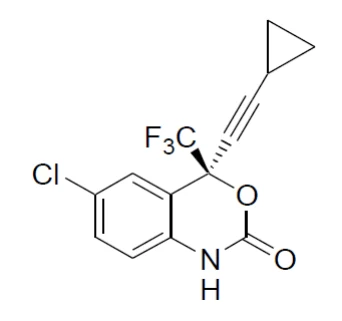
Physicochemical Properties:
Description: Efavirenz is a white to off-white powder.
Solubility: It is practically insoluble in water, freely soluble in methanol and dichloromethane. The pKa is 10.2. The partition coefficient (log P) is = 3.03 ± 0.76.
Emtricitabine:
Drug Substance
Common Name: emtricitabine (USAN)
Chemical Name: 5-Fluoro-1-(2R,5S)-[2-(hydroxymethyl)-1,3-oxathiolan-5-yl]cytosine
Molecular Formula: C8H10FN3O3S
Molecular Weight: 247.25 g/mol
Structural Formula:
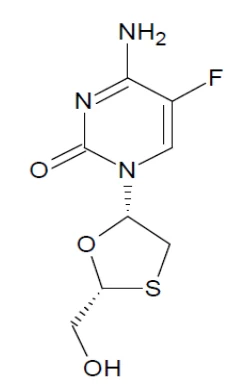
Physicochemical Properties:
Description: Emtricitabine is a white to off-white powder.
Solubility: The solubility is approximately 112 mg/mL in water at 25°C. The partition coefficient (log P) is −0.43 (Octanol / Water) and the pKa is 2.65+/- 0.01.
Tenofovir DF: Drug Substance
Common Name: tenofovir disoproxil fumarate (USAN)
Chemical Name: 9-[(R)-2-[[Bis[[(isopropoxycarbonyl)-oxy]methoxy]phosphinyl]methoxy]-propyl]adenine Fumarate (1:1)
Molecular Formula: C19H30N5O10P • C4H4O4
Molecular Weight: 635.51 g/mol
Structural Formula:
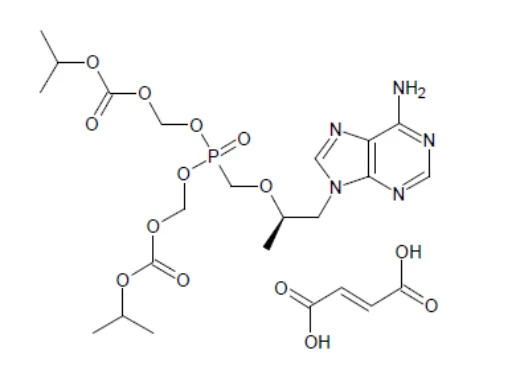
Physicochemical Properties:
Description: Tenofovir disoproxil fumarate is a white to off-white powder.
Solubility: Soluble in methanol and dimethylformamide. The partition coefficient (log P) is 1.25 and the pKa is 3.75.
CLINICAL TRIALS
Comparative Bioavailability Studies
A randomized, single-dose, 2-way crossover comparative bioavailability study conducted under fasting conditions, was performed on healthy male volunteers. The results obtained from 27 healthy volunteers who completed the study are summarized in the following table. The rate and extent of absorption of efavirenz, emtricitabine and tenofovir was measured and compared following a single oral dose (1 x 600/200/300 mg tablet) of APO-EFAVIRENZ-EMTRICITABINE-TENOFOVIR (Efavirenz, Emtricitabine and Tenofovir disoproxil fumarate) 600/200/300 mg (Apotex Inc.) and Atripla® (Efavirenz, Emtricitabine and Tenofovir disoproxil fumarate) 600/200/300 mg tablet (Bristol-Myers Squibb and Gilead Sciences LLC).
(Efavirenz) (1 x 600 mg of Efavirenz /200 mg of Emtricitabine /300 mg of Tenofovir Disoproxil Fumarate) From Measured Data Geometric Mean Arithmetic Mean (CV%) | ||||
| Parameter | Test* | Reference† | Ratio of Geometric Means (%) | 90% Confidence Interval (%) |
| AUC72 (ng•h/mL) Ɣ | 48389.6 51008.4 (29.8) | 50685.6 53439.0 (31.7) | 95.47 | 88.35 – 103.16 |
AUCI (ng•h/mL) | 77858.6 80943.9 (28.1) | 85640.0 89987.9 (30.6) | 90.91 | 84.86 – 97.40 |
Cmax (ng/mL) | 1635.8 1718.6 (34.7) | 1951.1 2021.8 (26.7) | 83.84 | 76.44 – 91.96 |
| Tmax§ (h) | 4.09 (53.3) | 4.19 (43.3) | ||
| T1/2§ (h) | 51.28 (29.6) | 59.18 (31.8) | ||
* APO- EFAVIRENZ-EMTRICITABINE-TENOFOVIR (Efavirenz, Emtricitabine and Tenofovir disoproxil fumarate) 600/200/300 mg tablets (Apotex Inc.). † Atripla® (Efavirenz, Emtricitabine and Tenofovir disoproxil fumarate) 600/200/300 mg tablets (Bristol-Myers Squibb and Gilead Sciences LLC) were purchased in Canada. Ɣ AUCT replaced with AUC72 § Expressed as the arithmetic mean (CV%) only. | ||||
(Emtricitabine) (1 x 600 mg of Efavirenz /200 mg of Emtricitabine /300 mg of Tenofovir Disoproxil Fumarate) From Measured Data Geometric Mean Arithmetic Mean (CV%) | ||||
| Parameter | Test* | Reference† | Ratio of Geometric Means (%) | 90% Confidence Interval (%) |
AUCT (ng•h/mL) | 9534.0 9765.8 (20.8) | 8720.1 9080.5 (26.7) | 109.33 | 101.50 – 117.77 |
AUCI (ng•h/mL) | 9799.6 10025.6 (20.3) | 9029.3 9379.5 (25.9) | 108.53 | 100.95 – 116.68 |
Cmax (ng/mL) | 1767.0 1805.3 (19.1) | 1558.1 1639.3 (28.9) | 113.41 | 103.93 – 123.75 |
| Tmax§ (h) | 1.48 (45.6) | 1.82 (42.7) | ||
| T1/2§ (h) | 7.66 (19.5) | 8.98 (44.1) | ||
* APO-EFAVIRENZ-EMTRICITABINE-TENOFOVIR (Efavirenz, Emtricitabine and Tenofovir disoproxil fumarate) 600/200/300 mg tablets (Apotex Inc.). † Atripla® (Efavirenz, Emtricitabine and Tenofovir disoproxil fumarate) 600/200/300 mg tablets (Bristol-Myers Squibb and Gilead Sciences LLC) were purchased in Canada. § Expressed as the arithmetic mean (CV%) only. | ||||
(Tenofovir) (1 x 600 mg of Efavirenz /200 mg of Emtricitabine /300 mg of Tenofovir Disoproxil Fumarate) From Measured Data Geometric Mean Arithmetic Mean (CV%) | ||||
| Parameter | Test* | Reference† | Ratio of Geometric Means (%) | 90% Confidence Interval (%) |
AUCT (ng•h/mL) | 1984.70 2041.82 (22.3) | 1872.83 1973.21 (30.4) | 105.97 | 97.79 – 114.84 |
AUCI (ng•h/mL) | 2100.28 2163.67 (22.7) | 1991.10 2094.62 (30.0) | 105.48 | 97.65 – 113.94 |
Cmax (ng/mL) | 232.26 239.68 (25.7) | 214.55 226.58 (31.8) | 108.25 | 97.28 – 120.47 |
| Tmax§ (h) | 1.18 (49.2) | 1.42 (36.2) | ||
| T1/2§ (h) | 18.14 (15.6) | 18.96 (16.0) | ||
* APO-EFAVIRENZ-EMTRICITABINE-TENOFOVIR (Efavirenz, Emtricitabine and Tenofovir disoproxil fumarate) 600/200/300 mg tablets (Apotex Inc.). † Atripla® (Efavirenz, Emtricitabine and Tenofovir disoproxil fumarate) 600/200/300 mg tablets (Bristol-Myers Squibb and Gilead Sciences LLC) were purchased in Canada. § Expressed as the arithmetic mean (CV%) only. | ||||
Study Demographics and Trial Design
Description of Clinical Studies
For safety and efficacy studies using efavirenz, emtricitabine or tenofovir disoproxil fumarate in combination with other antiretroviral agents, also consult the Product Monographs for these products.
Study 934
Study 934 was a phase III 144-week open-label randomized non-inferiority clinical study comparing the safety and efficacy of a once-daily regimen containing the individual agents efavirenz, emtricitabine and tenofovir disoproxil fumarate versus the fixed-dose combination of lamivudine and zidovudine administered twice-daily and efavirenz once daily in HIV-1 infected antiretroviral treatment-naive patients. Patients in both arms of Study 934 who completed 144 weeks were given the option to roll-over into an open-label extension phase of the study and switch their ARV regimen to the once-daily fixed-dose combination single tablet regimen, efavirenz/emtricitabine/tenofovir disoproxil fumarate for an additional 96 weeks.
In this study, 59% of patients were Caucasian and 23% were Black. The mean baseline CD4 cell count was 245 cells/mm3 (range 2 to 1191) and median baseline plasma HIV-1 RNA was 5.01 log10 copies/mL (range 3.56 to 6.54). Patients were stratified by baseline CD4+ count (< or ≥200 cells/mm3); 41% had CD4+ cell counts <200 cells/mm3 and 51% of patients had baseline viral loads >100,000 copies/mL.
Table 13. Study 934 Efavirenz + Emtricitabine + Tenofovir DF Compared with Efavirenz + Lamivudine/Zidovudine
| Study Number | Trial Design | Dosage, Route of Administration and Duration | Study Subjects | Mean Age | Gender |
| GS-01-934 | Randomized, open- label, parallel, multicenter, active controlled study. Arm 1: emtricitabine+ tenofovir DF+ efavirenz Arm 2: lamivudine/ zidovudine + efavirenz | Arm 11: efavirenz 600 mg once daily, emtricitabine 200 mg once and tenofovir disoproxil fumarate 300 mg once daily; Oral administration. Arm 2: efavirenz 600 mg once daily and Combivir (lamivudine/ zidovudine) 150/300 mg twice daily. Oral administration. 144 weeks | Antiretroviral naive patients (HIV-1 RNA >10,000 copies/mL) (N=517 randomized) | Mean 38 years (18–80) | Male : 86% Female: 14% |
1From weeks 96 to 144 of the study, patients randomized to emtricitabine + tenofovir disoproxil fumarate received emtricitabine/tenofovir disoproxil fumarate fixed-dose combination (Truvada) with efavirenz in place of emtricitabine + tenofovir disoproxil fumarate with efavirenz.
Study 073
Study 073 was a 48-week open-label, randomized clinical study in patients with stable virologic suppression on combination antiretroviral therapy. The study compared the efficacy of efavirenz, emtricitabine and tenofovir disoproxil fumarate tablets to antiretroviral therapy consisting of at least two nucleoside reverse transcriptase inhibitors (NRTIs) administered in combination with a protease inhibitor (with or without ritonavir) or a non-nucleoside reverse transcriptase inhibitor. At baseline, patients had been virologically suppressed (HIV-1 RNA <200 copies/mL) on their current antiretroviral therapy for at least 12 weeks prior to study entry, and had no known HIV-1 substitutions conferring resistance to the components of efavirenz, emtricitabine and tenofovir disoproxil fumarate tablets or history of virologic failure. At baseline, 140 subjects (47%) were receiving an NNRTI-based regimen and 160 subjects (53%) were receiving a PI-based regimen.
Table 14. Study 073 Efavirenz, Emtricitabine and Tenofovir DF Tablets Compared with 2 NRTI + NNRTI or 2 NRTI + PI (+/- Ritonavir)
| Study Number | Trial Design | Dosage, Route of Administration and Duration | Study Subjects | Mean Age | Gender |
| AI266073 | Open-label, randomized, parallel multicenter, active- controlled study. | Arm 1: Efavirenz, emtricitabine and tenofovir disoproxil fumarate tablets once daily. Oral administration. 48 weeks Arm 2: Standard Baseline Regimen (SBR)* either 2 NRTI + NNRTI or PI (+/- ritonavir). Oral administration. 48 weeks | Virologically suppressed (≥ 3 months) HIV-1 infected patients (HIV-1 RNA <200 copies/mL) (N=306 randomized) | Mean 43 years (22–73) | Male : 88% Female: 12% |
*Dosage and dosing frequency administered according to manufacturers’ dosing instructions.
Patients were randomized in a 2:1 ratio to switch to efavirenz, emtricitabine and tenofovir disoproxil fumarate tablets (N=203) or stay on their baseline regimen (SBR) (N=97). Patients had a mean age of 43 years (range 22 to 73 years), 88% were male, 68% were white, 29% were black or African-American, and 3% were of other races. At baseline, median CD4+ cell count was 516 cells/mm3 and all but 11 patients (3.7%) had HIV-1 RNA <50 copies/mL. The median time since onset of antiretroviral therapy was 3 years.
In antiretroviral treatment-experienced patients, the use of efavirenz, emtricitabine and tenofovir disoproxil fumarate tablets may be considered for patients with HIV strains that are expected to be susceptible to the components of efavirenz, emtricitabine and tenofovir disoproxil fumarate tablets as assessed by treatment history or by genotypic or phenotypic testing (see VIROLOGY, Resistance and Cross Resistance).
Study Result
Efavirenz, Emtricitabine, and Tenofovir disoproxil fumarate
Study 934: Efavirenz + Emtricitabine + Tenofovir disoproxil fumarate Compared with Efavirenz + Lamivudine/Zidovudine
Treatment outcomes through 48 and 144 weeks for those patients who did not have efavirenz resistance at baseline are presented in Table 15.
Table 15. Outcomes of Randomized Treatment at Weeks 48 and 144 (Study 934)
| At Week 48 | At Week 1441 | |||||||||||
| Outcomes | FTC+TDF + EFV (N=244) | 3TC/AZT +EFV (N=243) | FTC+TDF + EFV (N=227) | 3TC/AZT +EFV (N=229) | ||||||||
| Responder2 | 84% | 73% | 71% | 58% | ||||||||
| Virologic Failure3 | 2% | 4% | 3% | 6% | ||||||||
| Rebound | 1% | 3% | 2% | 5% | ||||||||
| Never Suppressed | 0% | 0% | 0% | 0% | ||||||||
| Change in Antiretroviral Regimen | 1% | 1% | 1% | 1% | ||||||||
| Death | <1% | 1% | 1% | 1% | ||||||||
| Discontinued Due to Adverse Event | 4% | 9% | 5% | 12% | ||||||||
| Discontinued for Other Reasons4 | 10% | 14% | 20% | 22% | ||||||||
- 1. Patients who did not consent to continue study beyond Week 48 were excluded from analysis.
- 2. Patients achieved and maintained confirmed HIV-1 RNA <400 copies/mL through Week 48 and 144.
- 3. Includes confirmed viral rebound and failure to achieve confirmed <400 copies/mL through Week 48 and 144.
- 4. Includes lost to follow-up, patient withdrawal, non-compliance, protocol violation and other reasons.
In this study, efavirenz +emtricitabine + tenofovir disoproxil fumarate demonstrated statistically significant superiority to lamivudine/zidovudine in combination with efavirenz in achieving and maintaining HIV-1 RNA <400 copies/mL through 48 and 144 weeks (Table 15). The difference in the percentages of responders, stratified by baseline CD4+ cell count (< or ≥200 cells/mm3), between the efavirenz +emtricitabine + tenofovir disoproxil fumarate group and the efavirenz + lamivudine/zidovudine group was 11.4%, and the 95% CI was 4.3% to 18.6% (p=0.002) at Week 48 and was 13% at Week 144, 95% CI= 4% to 22% (p=0.004). Through 48 weeks of therapy, 80% and 70% of patients in the efavirenz +emtricitabine + tenofovir disoproxil fumarate and the efavirenz + lamivudine/zidovudine arms, respectively, achieved and maintained HIV-1 RNA <50 copies/mL (64 and 56%, respectively, through Week 144). The difference in the percentages of responders stratified by baseline CD4+ cell count (< or ≥ 200 cells/mm3) between the efavirenz + emtricitabine + tenofovir disoproxil fumarate group and the efavirenz + lamivudine/zidovudine group was 9.1%, and the 95% CI was 1.6% to 16.6% (p=0.02) at Week 48 and was 8% at Week 144, 95% CI = -1% to 17% (p=0.082). The mean increase from baseline in CD4+ cell count was 190 cells/mm3 for the efavirenz +emtricitabine + tenofovir disoproxil fumarate arm, and 158 cells/mm3 for the efavirenz + lamivudine/zidovudine arm (p=0.002) at Week 48 (312 and 271 cells/mm3, respectively, at Week 144, p=0.089).
The difference in the proportion of patients who achieved and maintained HIV-1 RNA <400 copies/mL through 48 weeks largely results from the higher number of discontinuations due to adverse events and other reasons in the zidovudine/lamivudine group in this open label study.
Study 073: Efavirenz, Emtricitabine and Tenofovir DF Tablets Compared with 2 NRTI + NNRTI or 2 NRTI + PI (+/- Ritonavir)
Table 16 summarizes treatment outcomes through week 48.
Table 16. Outcomes of Randomized Treatment at Week 48 (Study 073)
| Outcomes | Efavirenz, emtricitabine and tenofovir disoproxil fumarate tablets (N=203) | Stayed on Baseline Regimen (SBR) (N=97) |
| Respondera | 89% (87%) | 88% (85%) |
| Virologic failureb | 1% (2%) | 1% (4%) |
| Death | 0% | 0% |
| Discontinued due to adverse event | 5% | 1% |
| Discontinued for other reasonsc | 5% | 10% |
a. Patients who maintained confirmed HIV-1 RNA <200 copies/mL (<50 copies/mL) through Week 48.
Primary endpoint of the study was HIV-1 RNA <200 copies/mL
- b. Virologic failure defined as rebound [two consecutive HIV-1 RNA ≥200 copies/mL (≥50 copies/mL) or last observed HIV RNA ≥200 copies/mL (≥50 copies/mL)].
- c. Includes lost to follow-up, patient consent withdrawal, investigator’s discretion, and protocol violation.
The responder difference (HIV-1 RNA <200 copies/mL), efavirenz, emtricitabine and tenofovir disoproxil fumarate tablets minus SBR, was 1% (95% CI: −7%, 9%, p=0.82) at week 48. Efavirenz, emtricitabine and tenofovir disoproxil fumarate tablets were non-inferior to SBR in this study. At week 48, the median change from baseline in CD4+ cell count was 3 cells/mm3 in the efavirenz, emtricitabine and tenofovir disoproxil fumarate tablets group and 9 cells/mm3 in the SBR group.
When treatment responses were evaluated at 48 weeks by baseline treatment regimen strata (NNRTI or PI), 92% vs. 84% of patients on prior NNRTI-based antiretroviral therapy maintained HIV-1 RNA <200 copies/mL when randomized to switch to efavirenz, emtricitabine and tenofovir disoproxil fumarate tablets vs. continue SBR, respectively. For patients on prior PI-based antiretroviral therapy, 87% vs. 90% of patients maintained HIV-1 RNA <200 copies/mL when randomized to receive efavirenz, emtricitabine and tenofovir disoproxil fumarate tablets vs. SBR, respectively.
Comparative Bioavailability Studies
Study GS-US-177-0105 was a single-dose, randomized, open-label, two-way crossover study conducted in 45 healthy male and female adults to establish comparative bioavailability between the combination tablet (containing 600 mg efavirenz/200 mg emtricitabine/300 mg tenofovir disoproxil fumarate) and concurrent administration of the individual dosage forms, the efavirenz 600 mg tablet, the emtricitabine 200 mg capsule and the tenofovir disoproxil fumarate 300 mg tablet, administered under fasting conditions, by evaluation of Cmax and AUC of efavirenz, emtricitabine and tenofovir. The bioavailability of one tablet of the fixed dose combination containing 600 mg efavirenz/ 200 mg emtricitabine/300 mg tenofovir disoproxil fumarate was found to be comparable to the bioavailability of one dose of the three individual dosage forms taken in combination. The results of Study GS-US-177-0105 are summarized in Tables 17, 18 and 19 below.
Table 17. Summary of Efavirenz Pharmacokinetic Parameters (GS-US-177- 0105) – Fasted
Efavirenz 600mg From Measured Data Geometric Mean Arithmetic Mean (CV%) | ||||
| Parameter | Test Treatment B2 | Reference Treatment A1 | % Ratio of Geometric Means5 | 90% Confidence Interval5 |
AUC 0-72 (ng•h/mL) | 52098.79 53366.2 (22.2) | 54570.04 56352.5 (22.9) | 95.47 | (90.69, 100.51) |
AUCI (ng•h/mL) | 139109.1 146074.9 (33.1) | 145097.8 155518.6 (34.6) | 95.87 | (89.63, 102.55) |
| Cmax (ng/mL) | 2179.16 2264.3 (26.8) | 2205.86 2308.6 (30.3) | 98.79 | (92.28, 105.76) |
| Tmax3 (h) | 3.50 (2.00−8.00) | 3.50 (1.50−5.50) | ||
| T1/24 (h) | 180.6 (45.3) | 182.5 (38.3) | ||
- 1. Treatment A = concurrent administration of efavirenz 600 mg tablet, emtricitabine 200 mg capsule and tenofovir disoproxil fumarate 300 mg tablet to fasted subjects.
- 2. Treatment B = 600 mg efavirenz/ 200 mg emtricitabine/300 mg tenofovir disoproxil fumarate combination tablet administered to fasted subjects.
- 3. Expressed as the median (range) only.
- 4. Expressed as the arithmetic mean (CV%) only.
- 5. Based on geometric least squares mean.
Table 18. Summary of Emtricitabine Pharmacokinetic Parameters (GS-US- 177-0105) – Fasted
Emtricitabine 200mg From Measured Data Geometric Mean Arithmetic Mean (CV%) | ||||
| Parameter | Test Treatment B2 | Reference Treatment A1 | % Ratio of Geometric Means5 | 90% Confidence Interval5 |
AUCT (ng•h/mL) | 10523.83 10682.6 (18.1) | 10740.78 10874.4 (14.9) | 97.98 | 94.90−101.16 |
AUCI (ng•h/mL) | 10694.43 10854.9 (17.9) | 10916.98 11054.3 (14.9) | 97.96 | 94.86−101.16 |
| Cmax (ng/mL) | 2066.48 2130.6 (25.3) | 2325.96 2384.4 (20.4) | 88.84 | 84.02−93.94 |
| Tmax3 (h) | 1.50 (1.00−5.00) | 1.50 (0.77−2.50) | ||
| T1/24 (h) | 14.5 (53.8) | 14.6 (47.8) | ||
- 1. Treatment A = concurrent administration of efavirenz 600 mg tablet, emtricitabine 200 mg capsule and tenofovir disoproxil fumarate 300 mg tablet to fasted subjects.
- 2. Treatment B = 600 mg efavirenz/ 200 mg emtricitabine/300 mg tenofovir disoproxil fumarate combination tablet administered to fasted subjects.
- 3. Expressed as the median (range) only.
- 4. Expressed as the arithmetic mean (CV%) only.
- 5. Based on geometric least squares mean.
Table 19. Summary of Tenofovir Pharmacokinetic Parameters (GS-US-177- 0105) – Fasted
Tenofovir 300mg From Measured Data Geometric Mean Arithmetic Mean (CV%) | ||||
| Parameter | Test Treatment B2 | Reference Treatment A1 | % Ratio of Geometric Means5 | 90% Confidence Interval5 |
AUCT (ng•h/mL) | 1845.03 1948.8 (32.9) | 1858.15 1969.0 (32.8) | 99.29 | 91.02−108.32 |
AUCI (ng•h/mL) | 2218.24 2314.0 (29.2) | 2208.41 2319.4 (30.3) | 100.45 | 93.22−108.23 |
| Cmax (ng/mL) | 307.25 325.1 (34.2) | 335.93 352.9 (29.6) | 91.46 | 84.64−98.83 |
| Tmax3 (h) | 1.00 (0.50−3.50) | 0.75 (0.50−2.00) | ||
| T1/24 (h) | 18.9 (20.8) | 17.8 (22.6) | ||
- 1. Treatment A=concurrent administration of efavirenz 600 mg tablet, emtricitabine 200 mg capsule and tenofovir disoproxil fumarate 300 mg tablet to fasted subjects
- 2. Treatment B=600 mg efavirenz/ 200 mg emtricitabine/300 mg tenofovir disoproxil fumarate combination tablet administered to fasted subjects.
- 3. Expressed as the median (range) only.
- 4. Expressed as the arithmetic mean (CV%) only.
- 5. Based on geometric least squares mean.
DETAILED PHARMACOLOGY
VIROLOGY (MICROBIOLOGY)
Efavirenz:
Efavirenz is a non-nucleoside reverse transcriptase (RT) inhibitor of human immunodeficiency virus type 1 (HIV-1). Efavirenz is predominantly a non-competitive inhibitor of HIV-1 RT. HIV-2 RT and human cellular DNA polymerases α, β, γ, and δ are not inhibited by efavirenz.
Emtricitabine:
Emtricitabine, a synthetic nucleoside analog of cytidine, is phosphorylated by cellular enzymes to form emtricitabine 5'-triphosphate. Emtricitabine 5'-triphosphate inhibits the activity of the HIV-1 RT by competing with the natural substrate deoxycytidine 5'-triphosphate and by being incorporated into nascent viral DNA which results in chain termination. Emtricitabine 5′-triphosphate is a weak inhibitor of mammalian DNA polymerases α, β, ε, and mitochondrial DNA polymerase γ.
Tenofovir disoproxil fumarate:
Tenofovir disoproxil fumarate is an acyclic nucleoside phosphonate diester analog of adenosine monophosphate. Tenofovir disoproxil fumarate requires initial diester hydrolysis for conversion to tenofovir and subsequent phosphorylations by cellular enzymes to form tenofovir diphosphate. Tenofovir diphosphate inhibits the activity of HIV-1 RT by competing with the natural substrate deoxyadenosine 5′-triphosphate and, after incorporation into DNA, by DNA chain termination. Tenofovir diphosphate is a weak inhibitor of mammalian DNA polymerases α, β, and mitochondrial DNA polymerase γ.
Antiviral Activity
Efavirenz, emtricitabine and tenofovir disoproxil fumarate:
In combination studies evaluating the in vitro antiviral activity of emtricitabine and efavirenz together, efavirenz and tenofovir together and emtricitabine and tenofovir together, additive to synergistic antiviral effects were observed.
Efavirenz:
The clinical significance of in vitro susceptibility of HIV-1 to efavirenz has not been established. The in vitro antiviral activity of efavirenz was assessed in lymphoblastoid cell lines, peripheral blood mononuclear cells (PBMCs) and macrophage/monocyte cultures enriched from PBMCs. The concentration of efavirenz inhibiting replication of wild-type laboratory adapted strains and clinical isolates in cell culture by 90 to 95% (EC90−95) ranged from 1.7 to ≤25nM. Efavirenz demonstrated additive to synergistic antiviral activity against HIV-1 in cell culture when combined with non-nucleoside reverse transcriptase inhibitors (NNRTIs) (delavirdine and nevirapine), nucleoside reverse transcriptase inhibitors (NRTIs) (abacavir, didanosine, lamivudine, stavudine, zalcitabine, and zidovudine), protease inhibitors (PIs) (amprenavir, indinavir, lopinavir, nelfinavir, ritonavir, and saquinavir), and the fusion inhibitor enfuvirtide. Efavirenz demonstrated antiviral activity against most non- clade B isolates (subtypes A, AE, AG, C, D, F, G, J, and N), but had reduced antiviral activity against group O viruses.
Emtricitabine:
The in vitro antiviral activity of emtricitabine against laboratory and clinical isolates of HIV was assessed in lymphoblastoid cell lines, the MAGI-CCR5 cell line, and peripheral blood mononuclear cells. The EC50 values for emtricitabine were in the range of 0.0013 to 0.64 mcM (0.0003 to 0.158 mcg/mL). In drug combination studies of emtricitabine with nucleoside reverse transcriptase inhibitors (abacavir, lamivudine, stavudine, zalcitabine, and zidovudine), non- nucleoside reverse transcriptase inhibitors (delavirdine, efavirenz, and nevirapine), and protease inhibitors (amprenavir, nelfinavir, ritonavir, and saquinavir), additive to synergistic effects were observed. Most of these drug combinations have not been studied in humans. Emtricitabine displayed antiviral activity in vitro against HIV-1 clades A, B, C, D, E, F, and G (EC50 values ranged from 0.007 to 0.075 mcM) and showed strain specific activity against HIV-2 (EC50 values ranged from 0.007 to 1.5 mcM).
Tenofovir disoproxil fumarate:
The in vitro antiviral activity of tenofovir against laboratory and clinical isolates of HIV-1 was assessed in lymphoblastoid cell lines, primary monocyte/macrophage cells and peripheral blood lymphocytes. The EC50 values for tenofovir were in the range of 0.04 to 8.5 mcM. In drug combination studies of tenofovir with nucleoside reverse transcriptase inhibitors (abacavir, didanosine, lamivudine, stavudine, zalcitabine, and zidovudine), non- nucleoside reverse transcriptase inhibitors (delavirdine, efavirenz, and nevirapine), and protease inhibitors (amprenavir, indinavir, nelfinavir, ritonavir, and saquinavir), additive to synergistic effects were observed. Most of these drug combinations have not been studied in humans. Tenofovir displayed antiviral activity in vitro against HIV-1 clades A, B, C, D, E, F, G, and O (IC50 values ranged from 0.5 to 2.2 mcM).
Resistance
Efavirenz, emtricitabine and tenofovir disoproxil fumarate:
HIV-1 isolates with reduced susceptibility to the combination of emtricitabine and tenofovir have been selected in cell culture and in clinical studies. Genotypic analysis of these isolates identified the M184V/I and/or K65R amino acid substitutions in the viral RT. In addition, a K70E substitution in HIV-1 reverse transcriptase has been selected by tenofovir and results in low-level reduced susceptibility to abacavir, emtricitabine, tenofovir, and lamivudine.
In a clinical study of treatment-naïve patients (Study 934, see Clinical Studies) resistance analysis was performed on HIV isolates from all virologic failure patients with >400 copies/mL of HIV-1 RNA at Week 144 or early discontinuations. The resistance analysis population consisted of 19/244 (8%) patients in the emtricitabine + tenofovir disoproxil fumarate group and 29/243 (12%) patients in the zidovudine/lamivudine fixed-dose combination group with available genotypic data. Genotypic resistance to efavirenz, predominantly the K103N mutation, was the most common form of resistance that developed. Resistance to efavirenz occurred in 13/19 (68%) analyzed patients (13/244, 5% of total patients) in the emtricitabine + tenofovir disoproxil fumarate group and in 21/29 (72%) analyzed patients (21/243, 9% of total patients) in the zidovudine/lamivudine fixed-dose combination group. The M184V amino acid substitution, associated with resistance to emtricitabine and lamivudine, was observed in 2/19 (11%) analyzed patient isolates (2/244, 0.8% of total patients) in the emtricitabine + tenofovir disoproxil fumarate group and in 10/29 (34%) analyzed patient isolates (10/243, 4.1% of total patients) in the zidovudine/lamivudine group; this difference was statistically significant (p=0.021). Through 144 weeks of Study 934, no patients developed a detectable K65R mutation in their HIV as analyzed through standard genotypic analysis.
Only limited resistance data are available from a clinical study of treatment-experienced patients with stable virologic suppression and no history of virologic failure (Study 073, see CLINICAL TRIALS section) since virologic failure was observed in only 3 subjects in the efavirenz, emtricitabine and tenofovir disoproxil fumarate treatment group. One of the 3 subjects who experienced virologic failure on efavirenz, emtricitabine and tenofovir disoproxil fumarate had confirmed development of resistance, specifically the K103N efavirenz resistance mutation only.
In a clinical study of treatment-naïve patients, isolates from 8/47 (17%) analyzed patients receiving tenofovir disoproxil fumarate developed the K65R substitution through 144 weeks of therapy; 7 of these occurred in the first 48 weeks of treatment and one at Week 96. In treatment experienced patients, 14/304 (5%) of tenofovir disoproxil fumarate treated patients with virologic failure through Week 96 showed >1.4 fold (median 2.7) reduced susceptibility to tenofovir. Genotypic analysis of the resistant isolates showed a mutation in the HIV-1 RT gene resulting in the K65R amino acid substitution.
Efavirenz:
HIV-1 isolates with reduced susceptibility to efavirenz (>380-fold increase in EC90) compared to baseline emerged rapidly under selection in cell culture in the presence of drug.
Genotypic characterization of these viruses identified mutations resulting in single amino acid substitutions L100I or V179D, double substitutions L100I/V108I and triple substitutions L100I/V179D/Y181C in RT. Other resistance mutations observed to emerge commonly included L100I (7%), K101E/Q/R (14%), V108I (11%), G190S/T/A (7%), P225H (18%), and M230I/L (11%).
Phenotypic (N=26) changes in evaluable HIV-1 isolates and genotypic (N=104) changes in plasma virus from selected patients treated with efavirenz in combination with indinavir, or with zidovudine plus lamivudine, were monitored. Clinical isolates with reduced susceptibility in vitro to efavirenz have been obtained. One or more RT mutations at amino acid positions 98, 100, 101, 103, 106, 108, 188, 190 and 225, and 227 were observed in all 102 of 104 patients with a frequency of at least 9% compared to baseline. The mutation at RT amino acid position 103 (lysine to asparagine) was the most frequently observed (≥90%). A mean loss in susceptibility (EC90) to efavirenz of 47-fold was observed in 26 clinical isolates. Five clinical isolates were evaluated for both genotypic and phenotypic changes from baseline. Decreases in efavirenz susceptibility (range from 9 to >312-fold increase in EC90) were observed for these isolates in vitro compared to baseline. All 5 isolates possessed at least one of the efavirenz-associated RT mutations. The clinical relevance of phenotypic and genotypic changes associated with efavirenz therapy has not been established.
Emtricitabine:
Emtricitabine-resistant isolates of HIV have been selected in vitro. Genotypic analysis of these isolates showed that the reduced susceptibility to emtricitabine was associated with a mutation in the HIV RT gene at codon 184 which resulted in an amino acid substitution of methionine by valine or isoleucine (M184V/I).
Tenofovir disoproxil fumarate:
HIV-1 isolates with reduced susceptibility to tenofovir have been selected in vitro. These viruses expressed a K65R mutation in RT and showed a 2 to 4 fold reduction in susceptibility to tenofovir.
Cross-resistance
Efavirenz, emtricitabine and tenofovir disoproxil fumarate:
Cross-resistance has been recognized among NNRTIs. Cross-resistance has also been recognized among certain NRTIs. The M184V/I and/or K65R substitutions selected in vitro by the combination of emtricitabine and tenofovir are also observed in some HIV-1 isolates from subjects failing treatment with tenofovir in combination with either lamivudine or emtricitabine, and either abacavir or didanosine. Therefore, cross-resistance among these drugs may occur in patients whose virus harbors either or both of these amino acid substitutions. Delaviradine and/or nevirapine resistant clinical viral isolates with NNRTI resistance-associated substitutions (A98G, L100I, K101E/P, K103N/S, V106A, Y181X, Y188X, G190X, P225H, F227L, or M230L) showed reduced susceptibility to efavirenz in cell culture.
Efavirenz:
Rapid emergence of HIV-1 strains that are cross-resistant to non-nucleoside RT inhibitors has been observed in vitro. Thirteen clinical isolates previously characterized as efavirenz-resistant were also phenotypically resistant to nevirapine and delavirdine in vitro compared to baseline. Clinically derived zidovudine-resistant HIV-1 isolates tested in vitro retained susceptibility to efavirenz. Cross-resistance between efavirenz and HIV protease inhibitors is unlikely because of the different enzyme targets involved.
Emtricitabine:
Emtricitabine-resistant isolates (M184V/I) were cross-resistant to lamivudine and zalcitabine but retained susceptibility in vitro to didanosine, stavudine, tenofovir, zidovudine, and NNRTIs (delavirdine, efavirenz, and nevirapine). Isolates from heavily treatment- experienced patients containing the M184V/I amino acid substitution in the context of other NRTI resistance-associated substitutions may retain susceptibility to tenofovir. HIV-1 isolates containing the K65R substitution, selected in vivo by abacavir, didanosine, tenofovir, and zalcitabine, demonstrated reduced susceptibility to inhibition by emtricitabine. Viruses harboring mutations conferring reduced susceptibility to stavudine and zidovudine (M41L, D67N, K70R, L210W, T215Y/F, K219Q/E) or didanosine (L74V) remained sensitive to emtricitabine. HIV-1 containing the K103N substitution associated with resistance to NNRTIs was susceptible to emtricitabine.
Tenofovir disoproxil fumarate:
Cross-resistance has been observed among NRTIs. The K65R mutation selected by tenofovir is also selected in some HIV-1 infected patients treated with abacavir, didanosine, or zalcitabine. HIV-1 isolates with the K65R mutation also showed reduced susceptibility to emtricitabine and lamivudine. Therefore, cross-resistance among these drugs may occur in patients whose virus harbors the K65R mutation. The K70E substitution selected by tenofovir disoproxil fumarate results in reduced susceptibility to abacavir, didanosine, emtricitabine, and lamivudine. HIV-1 isolates from patients (N=20) whose HIV-1 expressed a mean of 3 zidovudine-associated RT amino acid substitutions (M41L, D67N, K70R, L210W, T215Y/F, or K219Q/E/N) showed a 3.1-fold decrease in the susceptibility to tenofovir.
Multinucleoside resistant HIV-1 with a T69S double insertion mutation in the RT showed reduced susceptibility to tenofovir.
TOXICOLOGY
For additional information on toxicology, reproductive toxicology, mutagenicity and carcinogenicity, please consult the Product Monographs for efavirenz, emtricitabine, and tenofovir DF.
Carcinogenesis
Efavirenz:
Oral carcinogenicity studies in mice and rats were carried out with efavirenz. Mice were dosed with 0, 25, 75, 150, or 300 mg/kg/day for 2 years. Incidences of hepatocellular adenomas and carcinomas and pulmonary alveolar/bronchiolar adenomas at all doses were increased above background in females. No increases in tumor incidence above background were seen in males. The systemic exposure (based on AUCs) in mice was approximately 1.7-fold that in humans receiving the 600-mg/day dose. In studies in which rats were administered efavirenz at doses of 0, 25, 50, or 100 mg/kg/day for 2 years, no increases in tumor incidence above background were observed. The exposure to efavirenz in rats at all doses was lower than that in humans.
The findings from the efavirenz mouse carcinogenicity study may not represent a significant risk to patients based upon the following: An increase in the incidence of hepatic tumors in efavirenz-treated mice was not unexpected as efavirenz is known to induce hepatic drug- metabolizing enzyme activity and enzyme inducers are known to increase the incidence of hepatic tumors in rodents, but not in humans. While the cause of the increased incidence of pulmonary tumors is not known, this finding also may not constitute a significant risk for patients given efavirenz because: (1) efavirenz is not genotoxic, (2) the strain of mice used in these studies is documented to have a high spontaneous background incidence of this tumor type, and (3) a decrease in the incidence of pulmonary tumors was observed in efavirenz-treated male mice. In male mice, plasma efavirenz concentrations were equal to or greater than in female mice.
Emtricitabine:
In long-term oral carcinogenicity studies of emtricitabine, no drug-related increase in tumor incidence was found in mice at doses up to 750 mg/kg/day (26 times the human systemic exposure at the therapeutic dose of 200 mg/day) or in rats at doses up to 600 mg/kg/day (31 times the human systemic exposure at the therapeutic dose).
Tenofovir disoproxil fumarate:
Long-term oral carcinogenicity studies were conducted in mice and rats receiving tenofovir disoproxil fumarate. In the mouse study, one male and two female mice in the 600 mg/kg/day group (15 times the human systemic exposure at the recommended human dose of 300 mg/day) had duodenal tumors. The mechanism underlying this effect is uncertain but may relate to high local drug concentrations in the gastrointestinal tract. No treatment-related tumors were seen in mice in the 100 or 300 mg/kg/day groups. In the rat study at doses of 30, 100, and 300 mg/kg/day (approximately 5 times human exposure), no treatment-related increase in tumor incidence was observed.
Mutagenesis
Efavirenz:
Efavirenz was not genotoxic in a battery of in vitro and in vivo genotoxicity assays. This included assays in four in vitro assay systems: (1) bacterial mutation assays in Salmonella typhimurium and Escherichia coli, (2) a Chinese hamster ovary (CHO) cell/hypoxanthine- guanine phosphoribosyl-transferase (HGPRT) forward mutation assay, (3) a chromosome aberration assay in human peripheral lymphocytes, and (4) a chromosome aberration assay in CHO cells, and in one in vivo system (mouse micronucleus assay). All assays were conducted employing maximally soluble or minimally toxic doses/concentrations of efavirenz.
Emtricitabine:
Emtricitabine was not genotoxic in the reverse mutation bacterial test (Ames test), mouse lymphoma or mouse micronucleus assays.
Tenofovir disoproxil fumarate:
Tenofovir disoproxil fumarate was not mutagenic in the in vitro bacterial mutation (Ames) assay (Salmonella-Eschericia coli/Mammalian-Microsome Reverse Mutation Assay) but was mutagenic in the in vitro mouse lymphoma assay (L5178Y TK +/− Forward Mutation Assay), with and without metabolic activation. Tenofovir disoproxil fumarate was not clastogenic in the in vivo mouse micronucleus assay at plasma exposure levels of more than 10x the human exposure.
Reproductive Toxicology
Efavirenz:
Malformations were observed in 3 of 20 fetuses/infants from efavirenz-treated cynomolgus monkeys versus 0 of 20 concurrent control animals. The pregnant monkeys were given 60 mg/kg/day of efavirenz throughout pregnancy (post-coital days 20 to 150) and plasma drug concentrations were similar to those in humans given 600 mg/day. Anencephaly and unilateral anophthalmia were observed in one fetus, microophthalmia was observed in another fetus, and cleft palate was observed in a third fetus.
No malformations were observed in fetuses from efavirenz-treated rats; however an increase in fetal resorptions and a slight increase in pup mortality was observed at doses that produced peak plasma concentrations and AUC values in pregnant female rats similar to or lower than those achieved in humans at the recommended clinical dose. Efavirenz was not teratogenic or embryotoxic when given to pregnant rabbits.
A 5 to 8% decrease in mean rat pup weights versus control, and a slight increase in pup mortality was observed at ≥ 50 mg/kg BID when efavirenz was given to pregnant rats during gestation and through lactation until weaning. Peak plasma concentrations and AUC values in rats were similar to or lower than those in humans at the recommended clinical dose. No efavirenz-related effects were observed on the fertility, mating behavior, sexual maturation, learning, or behavior of the F1 generation derived from female rats given 100 mg/kg BID.
In a five-week oral infant rhesus toxicity study, infant monkeys given 30 mg/kg BID exhibited slight transitory decreases in body weight gain and food intake. Doses of 45 mg/kg BID produced adverse clinical signs including; vomiting, lethargy, dehydration, poor appetite, and/or weakness and slight decreases in body weight gain.
No efavirenz-related effects were observed on the fertility or reproductive performance of female rats given 100 mg/kg BID, or on the reproductive performance or sperm motility and morphology of male rats given 200 mg/kg BID.
Efavirenz produced no reproductive toxicities when given to pregnant rabbits at the dose that produced peak plasma concentrations similar to and AUC values approximately half of those achieved in humans given 600 mg once daily of efavirenz.
Fetal exposure to efavirenz was documented in pregnant rats, rabbits and cynomolgus monkeys. Maternal and fetal blood concentrations were equivalent in pregnant rabbits and cynomolgus monkeys and fetal blood concentrations were approximately 25% to 49% lower than the corresponding maternal concentrations in pregnant rats. Results of these studies indicated that efavirenz crossed the placenta of all species tested.
The excretion of efavirenz into rat milk was demonstrated. Efavirenz milk concentrations in rats were approximately 8-fold higher than corresponding maternal efavirenz plasma concentrations.
Emtricitabine:
The incidence of fetal variations and malformations was not increased in embryofetal toxicity studies performed with emtricitabine in mice at exposures (AUC) approximately 60-fold higher and in rabbits at approximately 120-fold higher than human exposures at the recommended daily dose.
Emtricitabine did not affect fertility in male rats at approximately 140-fold or in male and female mice at approximately 60-fold higher exposures (AUC) than in humans given the recommended 200 mg daily dose. Fertility was normal in the offspring of mice exposed daily from before birth (in utero) through sexual maturity at daily exposures (AUC) of approximately 60-fold higher than human exposures at the recommended 200 mg daily dose.
Tenofovir disoproxil fumarate:
Tenofovir disoproxil fumarate had no adverse effects on embryo-fetal development in rats at doses 450 mg/kg/day and in rabbits at doses up to 300 mg/kg/day (14 and 19 times the human dose based on body surface area comparisons).
Tenofovir disoproxil fumarate had no adverse effects on fertility or general reproductive performance in rats at doses up to 600 mg/kg/day. In a study of effects on peri- and postnatal development in rats, reduced pup body weights, survival and delay in sexual maturation was in rats at the maternally toxic doses of 450 and 600 mg/kg (approximately 14 and 19 times the human dose based on body surface area comparisons). There were no adverse effects on growth, development, behavior, or reproductive parameters at non-maternally toxic doses (150 mg/kg/day).
Studies in rats and rhesus monkeys have demonstrated that tenofovir is secreted in milk.
REFERENCES
- 1. Haas DW, Fessel WJ, Delapenha RA, et al. Therapy with efavirenz plus indinavir in patients with extensive prior nucleoside reverse-transcriptase inhibitor experience: a randomized, double-blind, placebo-controlled trial. Journal of infectious diseases 2001 Feb 1;183(3):392-400.
- 2. Albrecht MA, Bosch RJ, Hammer SM, et al. Nelfinavir, Efavirenz, or Both After The Failure Of Nucleoside Treatment Of HIV Infection. NEJM 2001 Aug 9;345(6):398- 407.
- 3. Katzenstein DA, Bosch RJ, Hellmann N, et al. Phenotypic susceptibility and virological outcome in nucleoside-experienced patients receiving three or four antiretroviral drugs. AIDS 2003 April 11;17(6)821-830.
- 4. Starr SE, Fletcher CV, Spector SA, et al. Combination Therapy with Efavirenz, Nelfinavir, and Nucleoside Reverse-Transcriptase Inhibitors in Children Infected with Human Immunodeficiency Virus Type 1. NEJM 1999 Dec 16;341(25)1874-1881.
- 5. Spector SA, Hsia K, Yong FH, et al. Patterns of Plasma Human Immunodeficiency Virus Type 1 RNA Response to Highly Active Antiretroviral Therapy in Infected Children. JID 2000;182(6) 1769-1773.
- 6. Deeks SG, Barditch-Crovo P, Lietman PS, Hwang F, Cundy KC, Rooney JF, et al. Safety, pharmacokinetics, and antiretroviral activity of intravenous 9-[2-(R)- (phosphonomethoxy)propyl]adenine, a novel anti-human immunodeficiency virus (HIV) therapy, in HIV-infected adults. Antimicrob Agents Chemother 1998 Sep;42 (9):2380-4.
- 7. Barditch-Crovo P, Deeks SG, Collier A, Safrin S, Coakley DF, Miller M, et al. Phase I/II trial of the pharmacokinetics, safety, and antiretroviral activity of tenofovir disoproxil fumarate in HIV-1 infected adults. Antimicrob Agents Chemother 2001 Oct;45 (10):2733-9.
- 8. Schooley RT, Ruane P, Myers RA, Beall G, Lampiris H, Berger D, et al. Tenofovir DF in antiretroviral-experienced patients: results from a 48-week, randomized, double-blind study. AIDS 2002 Jun 14;16 (9):1257-63.
- 9. Margot NA, Isaacson E, McGowan I, Cheng AK, Schooley RT, Miller MD. Genotypic and phenotypic analyses of HIV-1 in antiretroviral-experienced patients treated with tenofovir DF. AIDS 2002 Jun 14;16 (9):1227-35.
- 10. Koutsavlis, AT., Toole, J. Bristol-Myers Squibb Canada and Gilead Sciences letter to physicians about clinical data: Important Information Pertaining to the Coadministration of Videx® and Viread. June 9, 2005.
- 11. Gallant, J.E., DeJesus, E., Arribas, J.R., Pozniak, A.L., Gazzard, B., Campo, R.E. et al. Tenofovir DF, Emtricitabine and Efavirenz versus Zidovudine, Lamivudine and Efavirenz for HIV. New Engl. J. Med. 2006 (354): 251-260.
- 12. Pozniak AL, Gallant JE, DeJesus E, Arribas JR, Gazzard B, Campo RE, et al. Tenofovir disoproxil fumarate, emtricitabine, and efavirenz versus fixed-dose zidovudine/lamivudine and efavirenz in antiretroviral-naive patients. AIDS 2006 Dec 15; 43(5):535-540.
- 13. EMEA Public Statement, Efficacy and safety concerns regarding the co- administration of tenofovir disoproxil fumarate (TDF, Viread) and didanosine (ddI, Videx), 2005. http://www.emea.eu.int/pdfs/human/press/pus/6233105en.pdf
- 14. Podzamczer D, Ferrer E, Gatell JM, Niubo J, Dalmau D, Leon A, Knobel H, Polo C, Iniguez D, Ruiz I. Early virological failure with a combination of tenofovir, didanosine and efavirenz. Antiviral Therapy 2005; 10: 171-177.
- 15. DeJesus E, Young B, et al. Simplification of Antiretroviral Therapy to a Single Tablet Regimen Consisting of Efavirenz, Emtricitabine and Tenofovir Disoproxil Fumarate versus Unmodified Antiretroviral Therapy in Virologically Suppressed HIV-Infected Patients. J Acquir Immune Defic Syndr 2009; 51:163-174.
- 16. Benaboud, S., et al. 2011. Concentrations of Tenofovir and Emtricitabine in Breast Milk of HIV-1 Infected Women in Abidjan, Côte d’Ivoire, in the ANRS 12109 TEmAA Study, Step 2. Antimicrob. Agents Chemother. 55: 1315-1317.
- 17. Huang L. Parikh S, Rosenthal PJ, Lizak P, Marzan F, Dorsey G, Havlir D, Aweeka FT. Concomitant Efavirenz Reduces Pharmacokinetic Exposure to the Antimalarial Drug Artemether–Lumefantrine in Healthy Volunteers. J Acquir Immune Defic Syndr. 2012; 61:310–316.
- 18.
Product Monograph – ATRIPLA® (efavirenz/emtricitabine/tenofovir disoproxil fumarate tablets) 600 mg/200 mg/300 mg. Bristol-Myers Squibb & Gilead Sciences, LLC, Date of Revision:12 february 2020, Submission control no. 235076.
PART III. CONSUMER INFORMATION
PrAPO-EFAVIRENZ-EMTRICITABINE-TENOFOVIR
Efavirenz, Emtricitabine and Tenofovir Tablets
Apotex Standard
600 mg / 200 mg / 300 mg
(efavirenz/emtricitabine/tenofovir disoproxil fumarate)
This leaflet is Part III of a three part “Product Monograph” published when APO-EFAVIRENZ-EMTRICITABINE-TENOFOVIR was approved for sale in Canada and is designed specifically for consumers. This leaflet is a summary and will not tell you everything about APO-EFAVIRENZ-EMTRICITABINE-TENOFOVIR. Contact your doctor or pharmacist if you have any questions about the drug.
| ABOUT THIS MEDICATION |
What the medication is used for:
APO-EFAVIRENZ-EMTRICITABINE-TENOFOVIR contains 3 medicines, efavirenz, emtricitabine and tenofovir disoproxil fumarate (tenofovir DF), combined in one pill. Emtricitabine and tenofovir disoproxil fumarate are HIV (human immunodeficiency virus) nucleoside/nucleotide analog reverse transcriptase inhibitors (NRTIs) and efavirenz is an HIV non- nucleoside analog reverse transcriptase inhibitor (NNRTI). Tenofovir disoproxil fumarate and emtricitabine are components of APO-EMTRICITABINE-TENOFOVIR. APO-EFAVIRENZ-EMTRICITABINE-TENOFOVIR can be used alone as a complete regimen or in combination with other medications to treat people with HIV infection. APO-EFAVIRENZ-EMTRICITABINE-TENOFOVIR is for adults age 18 and older.
Efavirenz, emtricitabine and tenofovir disoproxil fumarate tablets have not been studied in children under age 18 or adults over age 65.
What it does:
APO-EFAVIRENZ-EMTRICITABINE-TENOFOVIR helps block HIV reverse transcriptase, a chemical in your body (enzyme) that is needed for HIV to multiply. APO-EFAVIRENZ-EMTRICITABINE-TENOFOVIR lowers the amount of HIV in the blood (viral load). Lowering the amount of HIV in the blood lowers the chance of infections that happen when your immune system is weak (opportunistic infections).
HIV infection destroys CD4+ (T) cells, which are important to the immune system. The immune system helps fight infection. After a large number of T cells are destroyed, acquired immune deficiency syndrome (AIDS) develops. APO-EFAVIRENZ-EMTRICITABINE-TENOFOVIR may also help to increase the number of T cells (CD4+ cells).
APO-EFAVIRENZ-EMTRICITABINE-TENOFOVIR does not cure HIV infection or AIDS. The long-term effects of APO-EFAVIRENZ-EMTRICITABINE-TENOFOVIR are not known at this time. People taking APO-EFAVIRENZ-EMTRICITABINE-TENOFOVIR may still get opportunistic infections or other conditions that happen with HIV infection. Opportunistic infections are infections that develop because the immune system is weak. Some of these conditions are pneumonia, herpes virus infections, and Mycobacterium avium complex (MAC) infections. It is very important that you see your doctor regularly while taking APO-EFAVIRENZ-EMTRICITABINE-TENOFOVIR.
APO-EFAVIRENZ-EMTRICITABINE-TENOFOVIR has not been shown to reduce the risk of passing HIV to others through sexual contact or blood contamination. Continue to practice safe sex and do not use or share dirty needles.
When it should not be used:
Together with your doctor, you need to decide whether APO-EFAVIRENZ-EMTRICITABINE-TENOFOVIR is right for you.
Do not take APO-EFAVIRENZ-EMTRICITABINE-TENOFOVIR if:
- you are taking any medication that is listed in this pamphlet under “Drugs that must not be taken with APO-EFAVIRENZ-EMTRICITABINE-TENOFOVIR” (see INTERACTIONS WITH THIS MEDICATION).
- you have or are at known risk for any type of bone disease or bone-related problems and have not discussed this with your doctor.
- you are allergic to APO-EFAVIRENZ-EMTRICITABINE-TENOFOVIR or any of its ingredients. The medicinal ingredients are efavirenz, emtricitabine and tenofovir disoproxil fumarate (see: What the important nonmedicinal ingredients are).
What the medicinal ingredients are:
efavirenz
emtricitabine
tenofovir disoproxil fumarate (tenofovir DF)
What the important nonmedicinal ingredients are:
carboxymethylcellulose calcium, colloidal silicon dioxide, crospovidone, ferric-ferrous oxide, ferric oxide red, magnesium stearate, microcrystalline cellulose, polyethylene glycol, polyvinyl alcohol, talc and titanium dioxide.
What dosage forms it comes in:
APO-EFAVIRENZ-EMTRICITABINE-TENOFOVIR is available as tablets. Each tablet contains 600 mg of efavirenz, 200 mg of emtricitabine and 300 mg of tenofovir disoproxil fumarate (which is equivalent to 245 mg of tenofovir disoproxil), as active ingredients. The tablets are pink, oval, biconvex coated tablets, engraved “APO” on one side, “ETE” on the other side. They are available in bottles of 30 and 90 tablets.
| WARNINGS AND PRECAUTIONS |
Serious Warnings and Precautions
The class of medicines to which emtricitabine and tenofovir DF, two of the components of APO-EFAVIRENZ-EMTRICITABINE-TENOFOVIR, belongs (NRTIs) can cause a condition called lactic acidosis, together with an enlarged liver. This rare but serious side effect has occasionally been fatal.
If you notice these symptoms of lactic acidosis or liver problems, stop taking APO-EFAVIRENZ-EMTRICITABINE-TENOFOVIR and consult a doctor immediately.
|
|
- Tenofovir DF, a component of APO-EFAVIRENZ-EMTRICITABINE-TENOFOVIR, caused harm to the bones of animals. If you notice bone pain, suffer a bone fracture, or other bone problem, consult your doctor. If you have bone problems, you may wish to discuss calcium and/or vitamin D supplementation with your doctor. The effect of supplementation with calcium and/or vitamin D is unknown.
- Patients who experience dizziness, trouble concentrating or drowsiness should avoid driving or operating machinery.
- Women should not become pregnant while taking APO-EFAVIRENZ-EMTRICITABINE-TENOFOVIR and for 12 weeks after stopping it. Serious birth defects have been seen in animals and women treated with efavirenz (a component of APO-EFAVIRENZ-EMTRICITABINE-TENOFOVIR) during pregnancy. It is not known whether efavirenz caused these defects. A reliable form of barrier contraception must always be used even if you or your partner are using other methods of contraception such as the pill or other hormonal therapy (e.g. implants, injections). APO-EFAVIRENZ-EMTRICITABINE-
- TENOFOVIR may remain in your blood for a time after therapy is stopped. Therefore, you should continue use of a reliable form of contraception for 12 weeks after stopping treatment with APO-EFAVIRENZ-EMTRICITABINE-TENOFOVIR. If you are pregnant or become pregnant while taking APO-EFAVIRENZ-EMTRICITABINE-TENOFOVIR, your doctor may register you in the Antiretroviral Pregnancy Registry. The Registry monitors fetal outcomes in pregnant women using antiretroviral medicines.
- A small number of patients taking efavirenz, one of the components of APO-EFAVIRENZ-EMTRICITABINE-TENOFOVIR, have had severe depression, strange thoughts, or angry behavior. Some patients have had thoughts of suicide and a few patients have actually committed suicide. These problems tend to occur more often in patients with a history of mental illness. You should contact your doctor immediately if you think you are having these symptoms, so your doctor can decide whether you should continue to take APO-EFAVIRENZ-EMTRICITABINE-TENOFOVIR.
- Consult your doctor if you have a rash, since some rashes may be serious.
BEFORE you use APO-EFAVIRENZ-EMTRICITABINE-TENOFOVIR (efavirenz/ emtricitabine/tenofovir DF) talk to your doctor or pharmacist:
If you have ever had a previous life threatening skin reaction (e.g. Stevens-Johnson syndrome).
If you are breast-feeding or plan to breast-feed: Do not breast-feed if you have HIV or are taking APO-EFAVIRENZ-EMTRICITABINE-TENOFOVIR. HIV can be passed to your baby in your breast milk. All components of APO-EFAVIRENZ-EMTRICITABINE-TENOFOVIR (efavirenz, emtricitabine and
tenofovir DF) can be passed to your baby in your breast milk and may cause harm to your baby. Talk to your doctor about the best way to feed your baby.
If you have other medical conditions: Let your doctor know if you have other medical conditions, especially liver or kidney problems, pancreatitis (inflammation of the pancreas), seizures or mental illness, or have or are at risk for bone disease or bone-related problems.
If you have or have had a heart rhythm disorder such as:
- lengthening of QT interval
- irregular heartbeat
- a heart condition, Torsades de pointes
If you are taking other medicines: Some medicines can interact when taken together, including prescription and non-prescription medicines, herbal products and dietary supplements (see INTERACTIONS WITH THIS MEDICATION).
Other Special Warnings: Your blood sugar levels (glucose) or levels of fats (lipids) in your blood may increase with HIV treatment. Your doctor may order blood tests for you.
| INTERACTIONS WITH THIS MEDICATION |
No drug interaction studies have been done with APO-EFAVIRENZ-EMTRICITABINE-TENOFOVIR.
Drugs that must not be taken with APO-EFAVIRENZ-EMTRICITABINE-TENOFOVIR:
- Propulsid™ (cisapride)*, Versed® (midazolam), Halcion® (triazolam), ergot medications (for example Wigraine® and Cafergot®), Hismanal (astemizole)*, Seldane® (terfenadine)*, Vascor® (bepridil)* or Orap® (pimozide). Taking these medications with APO-EFAVIRENZ-EMTRICITABINE-TENOFOVIR could create the potential for serious or life-threatening side effects.
- Zepatier® (elbasvir/grazoprevir), since Zepatier® may lose its effect.
- Vfend® (voriconazole), since it may lose its effect or may increase the chance of having side effects from APO-EFAVIRENZ-EMTRICITABINE-TENOFOVIR.
- Do not take APO-EFAVIRENZ-EMTRICITABINE-TENOFOVIR if you are taking St. John’s wort (Hypericum perforatum), or products containing St. John’s wort. St. John’s wort is an herbal product sold as a dietary supplement. Taking St. John’s wort may decrease APO-EFAVIRENZ-EMTRICITABINE-TENOFOVIR levels and may lead to increased viral load and possible resistance to efavirenz or resistance to the class of non- nucleoside reverse transcriptase inhibitors (NNRTIs).
*Not marketed in Canada.
It is also important to tell your doctor if you are taking any of the following:
- APO-EFAVIRENZ-EMTRICITABINE-
- TENOFOVIR should not be used with 3TC®, Combivir®, COMPLERA®, DESCOVY®, EMTRIVA, GENVOYA®, Heptovir®, HEPSERA®, Kivexa®, ODEFSEYTM Triumeq®, Trizivir®, TRUVADA®, STRIBILD®, VEMLIDYTM or VIREAD. APO-EFAVIRENZ-EMTRICITABINE-TENOFOVIR also should not be used with SUSTIVA® unless your doctor decides a dose adjustment is needed (e.g. with rifampin).
- Do not take APO-EFAVIRENZ-EMTRICITABINE-TENOFOVIR if you are on other medications that may affect your kidneys and you have not discussed this with your doctor. APO-EFAVIRENZ-EMTRICITABINE-TENOFOVIR should not be used at the same time or shortly after cidofovir, ganciclovir, vancomycin or aminoglycosides as this may harm the kidneys.
- Reyataz® (atazanavir sulfate), Fortovase®* or Invirase® (saquinavir); these medicines need to be replaced with another medicine when taken with APO-EFAVIRENZ-EMTRICITABINE-TENOFOVIR. If your doctor does prescribe Reyataz and APO-EFAVIRENZ-EMTRICITABINE-TENOFOVIR, you may need to be monitored more carefully for side effects.
- Biaxin® (clarithromycin). Biaxin may interact with APO-EFAVIRENZ-EMTRICITABINE-TENOFOVIR to affect the electrical activity of your heart. Biaxin needs to be replaced with another medicine when taken with APO-EFAVIRENZ-EMTRICITABINE-TENOFOVIR.
- Celsentri® (maraviroc)
- Crixivan® (indinavir), methadone, Mycobutin® (rifabutin), Zoloft® (sertraline), Wellbutrin® SR, Wellbutrin® XL, or Zyban® (bupropion); these medicines may need to have their dose changed when taken with APO-EFAVIRENZ-EMTRICITABINE-TENOFOVIR.
Videx® or Videx EC ® (didanosine); tenofovir disoproxil fumarate (a component of APO-EFAVIRENZ-EMTRICITABINE-TENOFOVIR) may increase the amount of didanosine in your blood, which could result in more side effects. You may need to be monitored more carefully if you are taking APO-EFAVIRENZ-EMTRICITABINE-TENOFOVIR and didanosine together. Also,
- the dose of didanosine may need to be changed.
- Kaletra® (lopinavir/ritonavir) or HARVONI® (ledipasvir/sofosbuvir) may increase the amount of tenofovir disoproxil fumarate (a component of APO-EFAVIRENZ-EMTRICITABINE-TENOFOVIR) in your blood, which could result in more side effects. You may need to be monitored more carefully if you are taking APO-EFAVIRENZ-EMTRICITABINE-TENOFOVIR and Kaletra together or APO-EFAVIRENZ-EMTRICITABINE-TENOFOVIR and HARVONI together. Also, the dose of Kaletra may need to be changed.
- EPCLUSA™ (sofosbuvir/velpatasvir) or VOSEVITM (sofosbuvir/velpatasvir/voxilprevir) should not be used with APO-EFAVIRENZ-EMTRICITABINE-TENOFOVIR as it is expected to decrease the amount of velpatasvir (a component of EPCLUSA and VOSEVI) and voxilaprevir (a component of VOSEVI) in your blood, which may reduce the effectiveness of EPCLUSA or VOSEVI.
- Maviret® (glecaprevir/pibrentasvir) is not recommended when taking APO-EFAVIRENZ-EMTRICITABINE-TENOFOVIR
- Medicines for seizures [for example, Dilantin® (phenytoin), Tegretol (carbamazepine), or phenobarbital]; your doctor may want to switch you to another medicine or check drug levels in your blood from time to time.
- Sporanox® (itraconazole) and Posanol® (posaconazole) may need to be replaced by another medicine when taken with APO-EFAVIRENZ-EMTRICITABINE-TENOFOVIR.
- The cholesterol-lowering medicines Lipitor® (atorvastatin), Pravachol® (pravastatin sodium), and Zocor® (simvastatin).
- Rifadin® (rifampin) or the rifampin-containing medicines Rofact® and Rifater®.
- Calcium channel blockers such as Cardizem® or Tiazac® (diltiazem), Covera HS®, Isoptin® SR or Tarka® (verapamil), and others.
- Immunosuppressants such as Neoral® (cyclosporine), Advagraf® or Prograf® (tacrolimus), Rapamune® or Torisel® (sirolimus).
- Hepatitis C antiviral agents such as Galexos® (simeprevir).
- Antimalarials such as Coartem®* and Riamet®* (artemether/lumefantrine). These
- medicines may interact with APO-EFAVIRENZ-EMTRICITABINE-TENOFOVIR to affect your heart. Malarone® (atovaquone/proguanil) (an antimalarial).
- The effect of combining alcohol or recreational (street, illicit) drugs with efavirenz has not been studied. Because they may interact with each other, speak with your doctor before you combine APO-EFAVIRENZ-EMTRICITABINE-TENOFOVIR with these drugs.
* Not marketed in Canada.
These are not all the medicines that may cause problems if you take APO-EFAVIRENZ-EMTRICITABINE-TENOFOVIR. Be sure to tell your doctor about all the medicines you take.
Keep a complete list of all the prescription and nonprescription medicines as well as any herbal medicines that you are taking, how much you take and how often you take them. Make a new list when medicines or herbal medicines are added or stopped, or if the dose changes. Give copies of this list to all your doctors and pharmacists every time you visit them or fill a prescription. This will give your doctor a complete picture of the medicines you use. Then he or she can decide the best approach for the situation.
| PROPER USE OF THIS MEDICATION |
Stay under a doctor’s care when taking APO-EFAVIRENZ-EMTRICITABINE-TENOFOVIR. Do not change your treatment or stop treatment without first talking with your doctor.
Take APO-EFAVIRENZ-EMTRICITABINE-TENOFOVIR every day exactly as your doctor prescribed it. Follow the directions from your doctor, exactly as written on the label. Set up a dosing schedule and follow it carefully.
When your APO-EFAVIRENZ-EMTRICITABINE-TENOFOVIR supply starts to run low, get more from your doctor or pharmacy. This is very important because the amount of virus in your blood may increase if the medicine is stopped for even a short time. The virus may develop resistance to APO-EFAVIRENZ-EMTRICITABINE-TENOFOVIR and become harder to treat.
Only take medicine that has been prescribed specifically for you. Do not give APO-EFAVIRENZ-EMTRICITABINE-TENOFOVIR to others or take medicine prescribed for someone else.
Do not use if seal over bottle opening is broken or missing.
Usual Adult Dose:
- The usual dose of APO-EFAVIRENZ-EMTRICITABINE-TENOFOVIR is one tablet orally (by mouth) once a day.
- APO-EFAVIRENZ-EMTRICITABINE-TENOFOVIR should be taken on an empty stomach. Taking APO-EFAVIRENZ-EMTRICITABINE-TENOFOVIR at bedtime may make some side effects less bothersome.
Overdosage:
| If you think you have taken too much APO-EFAVIRENZ-EMTRICITABINE-TENOFOVIR, contact your healthcare professional, hospital emergency department or regional poison control centre immediately, even if there are no symptoms. |
Missed Dose:
It is important that you do not miss any doses. If you miss a dose of APO-EFAVIRENZ-EMTRICITABINE-TENOFOVIR, take it as soon as you remember that day. Do not take more than 1 dose of APO-EFAVIRENZ-EMTRICITABINE-TENOFOVIR in a day. Do not take 2 doses at the same time. Call your doctor or pharmacist if you are not sure what to do.
| SIDE EFFECTS AND WHAT TO DO ABOUT THEM |
The most common side effects of efavirenz, emtricitabine and tenofovir disoproxil fumarate are:
- Nervous system symptoms such as dizziness, trouble sleeping, drowsiness, trouble concentrating, unusual dreams
- Headache
- Diarrhea
- Nausea
- Vomiting
- Rash
- Flatulence (intestinal gas)
- Tiredness
- Itching
- Allergic reaction (including swelling of the face, lips, tongue or throat)
- Abdominal pain
Other side effects may include pancreatitis (inflammation of the pancreas) and shortness of breath.
Skin discoloration (small spots or freckles) may also happen with APO-EFAVIRENZ-EMTRICITABINE-TENOFOVIR.
A small number of patients taking efavirenz, one of the components of APO-EFAVIRENZ-EMTRICITABINE-TENOFOVIR, have had severe depression, strange thoughts, or angry behavior. Some patients have had thoughts of suicide and a few patients have actually committed suicide. These problems tend to occur more often in patients with a history of mental illness. Contact your doctor immediately if you think you are having these symptoms so your doctor can decide whether you should continue to take APO-EFAVIRENZ-EMTRICITABINE-TENOFOVIR.
Changes in body fat have been seen in some patients taking antiretroviral therapy. These changes may include increased amounts of fat in the upper back and neck (“buffalo hump”), breast, and around the trunk. Loss of fat from the legs, arms and face may also happen. The cause and long-term health effects of these conditions are not known at this time.
Some patients have experienced serious liver problems including liver failure, resulting in transplantation or death. Most of these serious side effects occurred in patients with a chronic liver disease such as a hepatitis infection, but there have also been a few reports in patients without any existing liver disease.
Changes in your immune system (Immune Reconstitution Inflammatory Syndrome) can happen when you start taking HIV medicines. Your immune system may get stronger and begin to fight infections that have been hidden in your body for a long time, or you could develop an autoimmune disease in which your immune system reacts against your own body [e.g. Grave's disease (which affects the thyroid gland), Guillain-Barre syndrome (which affects the nervous system) or polymyositis (which affects the muscles)] and it may develop at any time, sometimes months after the start of HIV therapy. Sometimes symptoms can be severe, so if you develop high temperature (fever), joint or muscle pain, redness, rash, swelling or fatigue, or any new symptoms, contact your doctor right away.
| SERIOUS SIDE EFFECTS, HOW OFTEN THEY HAPPEN AND WHAT TO DO ABOUT THEM | |||||||
|---|---|---|---|---|---|---|---|
| Symptoms / Effect | Talk with your doctor or pharmacist | Stop taking drug and call your doctor or pharmacist | |||||
| Only if severe | In all cases | ||||||
| Co mmo n | Effect: Serious | ✓ ✓ ✓ | |||||
| psychiatric events | |||||||
| Symptoms: | |||||||
| |||||||
| |||||||
| ✓ | ||||||
| Un co mmo n | Effect: Serious psychiatric events Symptoms:
| ✓ | |||||
| Un co mmo n | Effect: Severe skin rash Symptoms:
| ✓ ✓ ✓ | |||||
| Rare | Effect: Lactic acidosis Symptoms:
| ✓ ✓ ✓ ✓ ✓ ✓ | |||||
| Rare | Effect: Hepatotoxicity (severe liver problems) with hepatomegaly (liver enlargement) and steatosis (fat in the liver) Symptoms:
| ✓ ✓ | |||||
| SERIOUS SIDE EFFECTS, HOW OFTEN THEY HAPPEN AND WHAT TO DO ABOUT THEM |
|---|
| Symptoms / Effect | Talk with your doctor or pharmacist | Stop taking drug and call your doctor or pharmacist |
|---|
| Only if severe | In all cases |
|---|---|
| ✓ ✓ ✓ ✓ |
| Very Rare | |
Effect: Flare-ups of hepatitis B virus infection following drug discontinuation Symptoms:
| |
✓ ✓ ✓ ✓ ✓ ✓ | |
| Rare | |
Effect: Kidney problems Symptoms:
| |
✓ ✓ ✓ | |
Lactic acidosis is a medical emergency and must be treated in the hospital. You may be more likely to get lactic acidosis or serious liver problems if you are very overweight (obese) or have been taking nucleoside analog medicines, like APO-EFAVIRENZ-EMTRICITABINE-TENOFOVIR, for a long time.
Muscle pain, muscle weakness, bone pain and softening of the bone (infrequently contributing to fractures) have also been reported due to tenofovir disoproxil fumarate (a component of APO-EFAVIRENZ-EMTRICITABINE-TENOFOVIR).
There have been other side effects in patients taking SUSTIVA, EMTRIVA or VIREAD. This is not a complete list of side effects. If you have questions about side effects, ask your doctor, nurse, or pharmacist. You should report any new or continuing symptoms to your doctor right away. Your doctor may be able to help you manage these side effects.
| HOW TO STORE IT |
- Keep APO-EFAVIRENZ-EMTRICITABINE-TENOFOVIR and all other medications out of reach and sight of children.
- APO-EFAVIRENZ-EMTRICITABINE-TENOFOVIR should be stored at 15°C to 25°C, protect from moisture. It should remain stable until the expiration date printed on the label.
- Do not keep your medicine in places that are too hot or cold.
- Do not keep medicine that is out of date or that you no longer need. If you throw any medicines away make sure that children will not find them.
- Keep APO-EFAVIRENZ-EMTRICITABINE-TENOFOVIR in its original container and keep the container tightly closed.
Reporting Side Effects You can report any suspected side effects associated with the use of health products to Health Canada by:
NOTE: Contact your healthcare professional if you need information about how to manage your side effects. The Canada Vigilance Program does not provide medical advice. |
| MORE INFORMATION |
If you want more information about APO-EFAVIRENZ-EMTRICITABINE-TENOFOVIR:
- Talk to your healthcare professional
- Find the full Product Monograph that is prepared for healthcare professionals and includes this Consumer Information by visiting the Health Canada website (https://health-products.canada.ca/dpd-bdpp/index-eng.jsp). Find the Consumer Information on the manufacturer’s website http://www.apotex.ca/products, or by calling 1-800-667-4708.
Last revised: June 24, 2020.
ATRIPLA® is a trademark of Gilead Sciences, LLC.
Pravachol®, Videx® and Videx EC® are trademarks of Bristol-Myers Squibb Company. Reyataz® is a trademark of Bristol-Myers Squibb Holdings Ireland. Sustiva® is a trademark of Bristol-Myers Squibb Pharma Company.
COMPLERA®, DESCOVY®, EMTRIVA®, GENVOYA®, HARVONI®, EPCLUSA™, HEPSERA®, SOVALDI®, STRIBILD®, TRUVADA®, and VIREAD® are trademarks of Gilead Sciences, Inc. or its related companies.
All trademarks referenced herein are the property of their respective owners.