


Product Monograph - Apo-Triamcinolone Aq
RECENT MAJOR LABEL CHANGES
| 7 WARNINGS AND PRECAUTIONS | 05/2023 |
|---|
TABLE OF CONTENTS
Sections or subsections that are not applicable at the time of authorization are not listed.
RECENT MAJOR LABEL CHANGES ............................................................................................ 2
TABLE OF CONTENTS .............................................................................................................. 2
PART I: HEALTH PROFESSIONAL INFORMATION ...................................................................... 4
1 INDICATIONS ............................................................................................................... 4
1.1 Pediatrics ................................................................................................................. 4
1.2 Geriatrics ................................................................................................................. 4
2 CONTRAINDICATIONS .................................................................................................. 4
4 DOSAGE AND ADMINISTRATION ................................................................................. 4
4.1 Dosing Considerations ............................................................................................. 4
4.2 Recommended Dose and Dosage Adjustment ........................................................ 5
4.4 Administration ........................................................................................................ 5
4.5 Missed Dose ............................................................................................................ 6
5 OVERDOSAGE .............................................................................................................. 6
6 DOSAGE FORMS, STRENGTHS, COMPOSITION AND PACKAGING ................................. 6
7 WARNINGS AND PRECAUTIONS .................................................................................. 7
7.1 Special Populations ............................................................................................... 10
7.1.1 Pregnant Women .................................................................................................. 10
7.1.2 Breast-feeding ....................................................................................................... 10
7.1.3 Pediatrics ............................................................................................................... 10
8 ADVERSE REACTIONS ................................................................................................ 10
8.1 Adverse Reaction Overview .................................................................................. 10
8.2 Clinical Trial Adverse Reactions ............................................................................. 11
8.2.1 Clinical Trial Adverse Reactions-Pediatrics ............................................................ 13
8.5 Post-Market Adverse Reactions ............................................................................ 14
9 DRUG INTERACTIONS ................................................................................................ 14
9.4 Drug-Drug Interactions .......................................................................................... 14
9.5 Drug-Food Interactions ......................................................................................... 14
9.6 Drug-Herb Interactions ......................................................................................... 14
9.7 Drug-Laboratory Test Interactions ........................................................................ 14
10 CLINICAL PHARMACOLOGY ....................................................................................... 15
10.1 Mechanism of Action ............................................................................................ 15
10.2 Pharmacodynamics ............................................................................................... 15
10.3 Pharmacokinetics .................................................................................................. 16
11 STORAGE, STABILITY AND DISPOSAL ......................................................................... 17
12 SPECIAL HANDLING INSTRUCTIONS ........................................................................... 17
PART II: SCIENTIFIC INFORMATION ....................................................................................... 18
13 PHARMACEUTICAL INFORMATION ............................................................................ 18
14 CLINICAL TRIALS ........................................................................................................ 19
14.1 Clinical Trials by Indication .................................................................................... 19
14.2 Comparative Bioavailability Studies ..................................................................... 19
15 MICROBIOLOGY ......................................................................................................... 21
16 NON-CLINICAL TOXICOLOGY ...................................................................................... 22
17 SUPPORTING PRODUCT MONOGRAPHS .................................................................... 23
PATIENT MEDICATION INFORMATION .................................................................................. 24
PART I: HEALTH PROFESSIONAL INFORMATION
1 INDICATIONS
Children 4 to 12 years of age: APO-TRIAMCINOLONE AQ (triamcinolone acetonide aqueous nasal spray) is indicated for the topical treatment of the symptoms of perennial and seasonal allergic rhinitis unresponsive to conventional treatment. APO-TRIAMCINOLONE AQ is available only by prescription for children 4 to 12 years of age.
1.1 Pediatrics
Pediatrics (4 to 12 years of age): Based on the data submitted and reviewed by Health Canada, the safety and efficacy of APO-TRIAMCINOLONE AQ in pediatric patients has been established. Therefore, Health Canada has authorized an indication for pediatric use. (See 1 INDICATIONS).
1.2 Geriatrics
No data are available to Health Canada; therefore, Health Canada has not authorized an indication for geriatric use.
2 CONTRAINDICATIONS
Hypersensitivity to any of the ingredients of APO-TRIAMCINOLONE AQ, and in patients with active or quiescent tuberculosis, or untreated fungal, bacterial and viral infection.
APO-TRIAMCINOLONE AQ is contraindicated in patients who:
- Are hypersensitive to this drug or any ingredient in this formulation, including any non-medicinal ingredient, or component of the container. For a complete listing, see 6 DOSAGE FROMS, STRENGTHS, COMPOSITION AND PACKAGING.
- Have active or quiescent tuberculosis or untreated fungal, bacterial, and viral infection.
4 DOSAGE AND ADMINISTRATION
4.1 Dosing Considerations
APO-TRIAMCINOLONE AQ is available only by prescription for children between the ages of 4 and 12 years. APO-TRIAMCINOLONE AQ is not recommended for children under 4 years of age.
Regular usage is essential since maximum relief may not be obtained until after 2 to 3 days of treatment.
Careful attention must be given to patients previously treated for prolonged periods with systemic corticosteroids when transferred to APO-TRIAMCINOLONE AQ, see 7 WARNINGS AND PRECAUTIONS. Initially, APO-TRIAMCINOLONE AQ and the systemic corticosteroid must be given concomitantly, while the dose of the latter is gradually decreased. The usual rate of withdrawal of the systemic steroid is the equivalent of 2.5 mg of prednisone every four days if the patient is under close supervision. If continuous supervision is not feasible, the withdrawal of the systemic steroid should be slower, approximately 2.5 mg of prednisone (or equivalent) every ten days. If withdrawal symptoms appear, the previous dose of the systemic steroid should be resumed for a week before further decrease is attempted.
4.2 Recommended Dose and Dosage Adjustment
It is always desirable to titrate an individual patient to the minimum effective dose to reduce the possibility of side effects. Therefore, when the maximum benefit has been achieved and symptoms have been controlled, reducing the dose to 110 mcg (one spray in each nostril once daily) has been shown to be effective in maintaining control of the allergic rhinitis symptoms in patients who were initially controlled at 220 mcg/day (see 7 WARNINGS AND PRECAUTIONS, 8 ADVERSE REACTIONS).
Children 4 to 12 years of age:
APO-TRIAMCINOLONE AQ is available only by prescription for children between the ages of 4 and 12 years. The recommended starting dose is 110 mcg per day given as one spray in each nostril once daily. Patients who do not achieve maximum symptom control may benefit from a dose of 220 mcg given as 2 sprays in each nostril once daily. Once symptoms are controlled, patients should be maintained on 110 mcg (1 spray in each nostril) once daily.
4.4 Administration
The therapeutic effects of corticosteroids, unlike those of decongestants, are not immediate. Since the effect of APO-TRIAMCINOLONE AQ depends on its regular use, patients must be instructed to take the nasal inhalations at regular intervals and not as with other decongestant nasal sprays, as they feel necessary.
In the presence of excessive nasal mucus secretion or edema of the nasal mucosa, the drug may fail to reach the site of action. In such cases it is advisable to use a nasal vasoconstrictor for two to three days prior to APO-TRIAMCINOLONE AQ therapy. Patients should be instructed on the correct method of use, which is to blow the nose, then insert the nozzle firmly into the nostril, compress the opposite nostril and actuate the spray while inspiring through the nose, with the mouth closed.
Children 4 to 12 years of age:
An improvement of symptoms usually becomes apparent within a few days after the start of therapy. However symptomatic relief may not occur in some patients for as long as two weeks. APO-TRIAMCINOLONE AQ should not be continued beyond three weeks in the absence of significant symptomatic improvement.
4.5 Missed Dose
Take the regular dose, which you are on, if a missed dose is less than an hour or so from the designated time. If a dose is missed for over an hour, do not take the dose. Continue regular dosing schedule on the next day, after 24 hours. Do not exceed the maximum daily dose (2 sprays in each nostril once daily).
5 OVERDOSAGE
Like any other nasally administered corticosteroid, acute overdosing is unlikely in view of the total amount of active ingredient present. In the event that the entire contents of the bottle were administered all at once, via either oral or nasal application, clinically significant systemic adverse events would most likely not result. The patient may experience some gastrointestinal upset if taken orally.
However, when used chronically in excessive doses or in conjunction with other corticosteroid formulations, systemic corticosteroid effects such as hypercorticism and adrenal suppression may appear. If such changes occur, the dosage of APO-TRIAMCINOLONE AQ should be discontinued slowly consistent with accepted procedures for discontinuation of chronic steroid therapy. (See 4 DOSAGE AND ADMINISTRATION).
The restoration of hypothalamic-pituitary axis may be slow; during periods of pronounced physical stress (i.e. severe infections, trauma, surgery) a supplement with systemic steroids may be advisable.
| For management of a suspected drug overdose, contact your regional poison control centre. |
|---|
6 DOSAGE FORMS, STRENGTHS, COMPOSITION AND PACKAGING
Table 1 – Dosage Forms, Strengths, Composition and Packaging
| Route of Administration | Dosage Form / Strength/Composition | Non-medicinal Ingredients |
| Nasal | Aqueous Nasal Spray 55 mcg/Metered Spray | Benzalkonium chloride (preservative), carboxymethylcellulose sodium, dextrose monohydrate, edetate disodium dihydrate, hydrochloric acid, microcrystalline cellulose and polysorbate 80 and purified water. Sodium hydroxide may be added to adjust pH. |
APO-TRIAMCINOLONE AQ is an unscented, thixotrophic, water-based metered-dose pump spray formulation unit containing a microcrystalline suspension of triamcinolone acetonide (9.075 mg triamcinolone acetonide / bottle) in an aqueous medium.
APO-TRIAMCINOLONE AQ is supplied as a non-chlorofluorocarbon (CFC) containing-metered dose pump spray which will provide 120 actuations. It is supplied with a nasal adapter and patient instructions.
Each bottle contains 9.075 mg triamcinolone acetonide. Each actuation releases approximately 55 mcg triamcinolone acetonide from the nasal actuator to the patient. There are at least 120 actuations in one APO-TRIAMCINOLONE AQ bottle.
7 WARNINGS AND PRECAUTIONS
General
The replacement of a systemic steroid with APO-TRIAMCINOLONE AQ has to be gradual and carefully supervised by the physician. The guidelines under "DOSAGE AND ADMINISTRATION" should be followed in all such cases.
Patients should be informed that the full effect of APO-TRIAMCINOLONE AQ therapy is not achieved until 2 to 3 days of treatment has been completed. Treatment of seasonal rhinitis should, if possible, start before the exposure to allergens.
Patients should be advised to inform subsequent physicians of prior use of corticosteroids.
To ensure the proper dosage and administration of the drug, the patient should be instructed to read the consumer package insert (see PATIENT MEDICATION INFORMATION).
Dependence/Tolerance
Treatment with APO-TRIAMCINOLONE AQ should not be stopped abruptly but tapered off gradually. Systemic absorption of intranasal corticosteroids may occur (especially when used for a prolonged duration). The risks associated with sudden discontinuation of all corticosteroids after prolonged use may include exacerbation or recurrence of the underlying disease, adrenocortical insufficiency or steroid withdrawal syndrome. Typical signs and symptoms of steroid withdrawal syndrome can be either systemic (e.g., arthralgia, myalgia, tremors, weight loss and anxiety) or localized (e.g., nasal bleeding, nasal drip).
In patients previously on prolonged periods or high doses of systemic steroids, the replacement with a topical corticosteroid can be accompanied by symptoms of withdrawal, e.g. joint and/or muscular pain, lassitude, and depression; in severe cases, adrenal insufficiency may occur, necessitating the temporary resumption of systemic steroid therapy. These patients should be carefully monitored for acute adrenal insufficiency in response to stress. Careful attention must be given to patients with asthma or other clinical conditions in whom a rapid decrease in systemic steroids may cause a severe exacerbation of their symptoms.
Ear/Nose/Throat
Because of the inhibitory effect of corticosteroids on wound healing, in patients who have had recent nasal surgery or trauma, a nasal corticosteroid should be used with caution until healing has occurred. As with other nasally inhaled corticosteroids, nasal septal perforations have been reported in rare instances.
The possibility of atrophic rhinitis and/or pharyngeal candidiasis should be kept in mind.
In clinical studies with triamcinolone acetonide aqueous nasal spray, the development of localized infections of the nose and pharynx with Candida albicans has rarely occurred. When such an infection develops it may require treatment with appropriate local or systemic therapy and temporary discontinuation of treatment with APO-TRIAMCINOLONE AQ. Therefore, patients using APO-TRIAMCINOLONE AQ over several months or longer should be examined periodically for evidence of Candida infection or other signs of adverse effects on the nasal mucosa.
Endocrine and Metabolism
No apparent evidence of hypothalamic-pituitary-adrenal (HPA) axis suppression was observed in clinical studies following treatment with triamcinolone acetonide aqueous nasal spray at recommended doses. When intranasal steroids are used at higher than recommended dosages or in susceptible individuals at recommended dosages, systemic corticosteroid effects may occur, such as hypercorticism, suppression of HPA function and/or reduction of growth velocity in children or teenagers. Children should be maintained on the lowest dose which delivers adequate symptom control (see 4 DOSAGE AND ADMINISTRATION).
In order to evaluate the effects of systemic absorption on the Hypothalamic-Pituitary-Adrenal (HPA) axis, a clinical study was performed comparing 220 mcg or 440 mcg triamcinolone acetonide aqueous nasal spray, or 10 mg prednisone to placebo for 42 days. Adrenal response to a 6-hour cosyntropin stimulation test clearly indicated that triamcinolone acetonide aqueous nasal spray, administered at doses of 220 mcg and 440 mcg had no effect on HPA activity versus placebo. Conversely, oral prednisone at 10 mg/day significantly reduced the response to ACTH.
A six-week study was conducted in 80 pediatric patients to evaluate the effect of 220 mcg or 440 mcg of triamcinolone acetonide aqueous nasal spray versus placebo on HPA function. No evidence of adrenal axis suppression was observed in the pediatric patients exposed to systemic levels of triamcinolone acetonide higher than the systemic levels observed following administration of the maximum recommended dose of triamcinolone acetonide aqueous nasal spray.
In a 6-week randomized, double-blind, placebo-controlled clinical study evaluating the effect of triamcinolone acetonide aqueous nasal spray (once-daily dose of 110 micrograms or 220 micrograms) on HPA axis function (as measured by 24-hour serum cortisol AUC) in 140 children (2 to 11 years of age), no statistically significant difference from placebo was observed. The ratio of triamcinolone acetonide aqueous nasal spray to placebo was 0.966, 95% CI (0.892, 1.045).
A one-year double-blind, placebo-controlled parallel group study in 298 treated pediatric patients (3 to 9 years of age) was conducted to assess the effect of triamcinolone acetonide aqueous nasal spray (once-daily dose of 110 microgram) on growth velocity using stadiometry. From the primary analysis of evaluable patients (134 triamcinolone acetonide aqueous nasal spray and 133 placebo), the estimated growth velocity in the triamcinolone acetonide aqueous nasal spray group was 0.45 cm/year lower than that in the placebo group with 95% CI ranging between 0.11 to 0.78 cm/year lower than placebo. The clinical long-term relevance of this change in growth velocity associated with nasal corticosteroids is not known. Physicians should closely follow the growth of children and adolescents taking corticosteroids, by any route, and weigh the benefits of corticosteroid therapy against the possibility of growth suppression. Therapy should be managed with the aim of reducing the dose of nasal corticosteroid if possible, to the lowest dose at which effective control of symptoms is maintained.
Osteoporosis is a possible adverse effect associated with a long-term use of large doses of corticosteroids.
Immune
Corticosteroids may mask some signs of infection and new infections may appear. A decreased resistance to localized infections has been observed during corticosteroid therapy; this may require treatment with appropriate therapy or stopping the administration of APO-TRIAMCINOLONE AQ.
Patients who are on immunosuppressant drugs are more susceptible to infections than healthy individuals. Chickenpox and measles, for example, can have a more serious or even fatal course in children or adults on immunosuppressant doses of corticosteroids. In such children, or in adults who have not had these diseases, particular care should be taken to avoid exposure. If exposed, therapy with varicella zoster immune globulin (VZIG) or pooled intravenous immunoglobulin (IVIG), as appropriate, may be indicated. If chickenpox develops, treatment with antiviral agents may be considered.
Monitoring and Laboratory Tests
During long-term therapy, pituitary-adrenal function and hematological status should be assessed.
Ophthalmologic
Glaucoma and/or cataracts have been reported in patients receiving nasal corticosteroids. Therefore, close monitoring is warranted in patients with a change in vision or with a history of increased intraocular pressure, glaucoma, and/or cataracts.
Sensitivity/Resistance
There is an enhanced effect of corticosteroids on patients with hypothyroidism and in those with cirrhosis. Acetylsalicylic acid should be used cautiously in conjunction with corticosteroids in patients with hypothrombinemia.
The use of APO-TRIAMCINOLONE AQ with alternate day systemic prednisone could increase the likelihood of HPA suppression compared to a therapeutic dose of either one alone. Therefore, APO-TRIAMCINOLONE AQ should be used with caution in patients already receiving alternate-day prednisone treatment for any disease.
7.1 Special Populations
7.1.1 Pregnant Women
The safety of triamcinolone acetonide aqueous nasal spray in pregnancy has not been established. If used, the expected benefits should be weighed against the potential hazard to the fetus, particularly during the first trimester of pregnancy.
Like other glucocorticosteroids, triamcinolone acetonide is teratogenic to rodents and non-human primates (see 16 NON-CLINICAL TOXICOLOGY). The relevance of these findings to humans has not yet been established. Infants born of mothers who have received substantial doses of glucocorticosteroids during pregnancy should be carefully observed for hypoadrenalism.
7.1.2 Breast-feeding
Glucocorticosteroids are excreted in human milk. It is not known whether triamcinolone acetonide would be secreted in human milk, but it is suspected to be likely. The use of APO-TRIAMCINOLONE AQ in nursing mothers requires that the possible benefits of the drug be weighed against the potential hazards to the infant.
7.1.3 Pediatrics
APO-TRIAMCINOLONE AQ is not presently recommended for children younger than 4 years of age due to limited clinical data in this age group. Oral corticosteroids have been shown to cause growth suppression in children and teenagers, particularly with higher doses over extended periods. If a child or teenager on any corticosteroids appears to have growth suppression, the possibility that they are particularly sensitive to this effect of steroids should be considered.
8 ADVERSE REACTIONS
8.1 Adverse Reaction Overview
Systemic and local corticosteroid use may result in the following (see 7 WARNINGS AND PRECAUTIONS):
- Epistaxis, ulcerations, Candida albicans infection, nasal septal perforation, impaired wound healing
- Glaucoma and Cataracts
- Immunosuppression
- Hypothalamic-pituitary-adrenal (HPA) axis effects, including reduction of growth velocity
8.2 Clinical Trial Adverse Reactions
Clinical trials are conducted under very specific conditions. The adverse reaction rates observed in the clinical trials; therefore, may not reflect the rates observed in practice and should not be compared to the rates in the clinical trials of another drug. Adverse reaction information from clinical trials may be useful in identifying and approximating rates of adverse drug reactions in real-world use.
In placebo-controlled, double-blind and open-label clinical studies, 1483 adults and children 12 years and older received treatment with triamcinolone acetonide aqueous nasal spray. These patients were treated for an average duration of 50.7 days. In the controlled, seasonal allergic rhinitis trials (2 to 5 weeks duration) from which the following adverse reaction data is derived, 1394 patients were treated with triamcinolone acetonide aqueous nasal spray for an average of 18.7 days. In the long-term, open-label study, the 172 patients enrolled received treatment for an average of 286 days duration.
The most commonly reported adverse reactions included those involving mucous membranes of the nose and throat. The three most prevalent adverse reactions considered to be at least possibly drug-related in adults and children 12 years and older were rhinitis (1.5%), headache (0.7%), and pharyngitis (0.3%), and in children 4 to 12 years were epistaxis (3.1%), rhinitis (1.4%) and headache (1.2%).
The incidence of specific nasopharyngeal-related adverse reactions considered drug related is summarized as follows:
Table 2 - Nasopharyngeal Adverse Reactions
Placebo (N=176) | Triamcinolone acetonide aqueous nasal spray 110 mcg (N=179) | Triamcinolone acetonide aqueous nasal spray 220 mcg (N=187) | Placebo (N=626) | Triamcinolone acetonide aqueous nasal spray 400 mcg (N=1068) | |
Nasal AEs (overall) | 15 (8.5%) | 8 (4.5%) | 12 (6.4%) | 20 (3.2%) | 31 (2.9%) |
| Dry mucous membranes | 0 | 0 | 0 | 2 (0.3%) | 3 (0.3%) |
| Epistaxis | 9 (5.1%) | 6 (3.4%) | 6 (3.2%) | 3 (0.5%) | 17 (1.6%) |
| Nasal irritation | 5 (2.8%) | 0 | 2 (1.1%) | 3 (0.5%) | 9 (0.8%) |
| Naso-sinus congestion | 0 | 1 (0.6%) | 1 (0.5%) | 1 (0.2%) | 2 (0.2%) |
Placebo (N=176) | Triamcinolone acetonide aqueous nasal spray 110 mcg (N=179) | Triamcinolone acetonide aqueous nasal spray 220 mcg (N=187) | Placebo (N=626) | Triamcinolone acetonide aqueous nasal spray 400 mcg (N=1068) | |
| Sneezing | 1 (0.6%) | 0 | 2 (1.1%) | 6 (1.0%) | 2 (0.2%) |
| Throat discomfort | 1 (0.6%) | 1 (0.6%) | 1 (0.5%) | 6 (1.0%) | 3 (0.3%) |
These adverse reactions, with the exception of epistaxis (in adults), were reported at approximately the same or lower incidence as placebo treated patients. Only 1% of the patients in the controlled trials discontinued treatment (e.g. pharyngitis, headache). Overall, these studies found the adverse experience profile for triamcinolone acetonide aqueous nasal spray to be similar to placebo.
The following table summarize the adverse events (% of patients) present in at least 5% of patients in the double-blind and open label phase studies in adults.
Table 3 - Adverse Events in Adults
| Double-Blind | Open Label | ||||||||||||||
Placebo N=90 | Triamcinolone acetonide aqueous nasal spray 220 mcg N=88 | Triamcinolone acetonide aqueous nasal spray 220/110 mcg N=172 | |||||||||||||
| Flu Syndrome | 5 (5.6%) | 5 (5.7%) | 17 (9.9%) | ||||||||||||
| Headache | 12 (13.3%) | 6 (6.8%) | 38 (22.1%) | ||||||||||||
| Epistaxis | 1 (1.1%) | 6 (6.8%) | 31 (18.0%) | ||||||||||||
| Pharyngitis | 5 (5.6%) | 13 (14.8%) | 55 (32.0%) | ||||||||||||
| Rhinitis | 5 (5.6%) | 6 (6.8%) | 49 (28.5%) | ||||||||||||
| Injury Accident | -- | -- | 20 (11.6%) | ||||||||||||
| Back Pain | -- | -- | 13 (7.6%) | ||||||||||||
| Cough Increased | -- | -- | 14 (8.1%) | ||||||||||||
| Sinusitis | -- | -- | 27 (15.7%) | ||||||||||||
| Pain | -- | -- | 10 (5.8%) | ||||||||||||
| Diarrhea | -- | -- | 10 (5.8%) | ||||||||||||
In the event of accidental overdose, an increased potential for these adverse experiences may be expected, but systemic adverse experiences are unlikely (see 5 OVERDOSAGE).
Hypersensitivity reactions including skin rash and edema of the face or tongue have been reported with other intranasal corticosteroids.
When patients are transferred to APO-TRIAMCINOLONE AQ from a systemic steroid, allergic conditions such as asthma or eczema may be unmasked (see 7 WARNINGS AND PRECAUTIONS).
8.2.1 Clinical Trial Adverse Reactions-Pediatrics
Children 4 to 12 years of age (n= 622) were studied in 3 controlled clinical trials. Of these, 179 received 110 mcg/day and 215 received 220 mcg/day of triamcinolone acetonide aqueous nasal spray in two, six, or twelve week trials. The longest average duration of treatment for patients receiving 110 mcg/day was 76.3 days and 79.6 days for those receiving 220 mcg/day.
The following tables summarize the adverse events (% of patients) present in at least 5% of patients in controlled studies in children 4 to 12 years of age.
Table 4 - Adverse Events in Children 4 to 12 Years of Age
Placebo N=202 | Triamcinolone acetonide aqueous nasal spray 110 mcg N=179 | Triamcinolone acetonide aqueous nasal spray 220 mcg N=215 | Triamcinolone acetonide aqueous nasal spray 440 mcg N=26 | |
| Fever | 11 (5.4%) | 8 (4.5%) | 12 (5.6%) | 2 (7.7%) |
| Flu syndrome | 15 (7.4%) | 16 (8.9%) | 4 (1.9%) | 0 |
| Headache | 22 (10.9%) | 18 (10.1%) | 16 (7.4%) | 4 (15.4%) |
| Infection | 15 (7.4%) | 13 (7.3%) | 16 (7.4%) | 0 |
| Injury accidental | 3 (1.5%) | 3 (1.7%) | 4 (1.9%) | 2 (7.7%) |
| Cough increased | 13 (6.4%) | 15 (8.4%) | 15 (7.0%) | 0 |
| Epistaxis | 14 (6.9%) | 8 (4.5%) | 10 (4.7%) | 1 (3.8%) |
| Pharyngitis | 13 (6.4%) | 14 (7.8%) | 16 (7.4%) | 2 (7.7%) |
| Rhinitis | 18 (8.9%) | 18 (10.1%) | 18 (8.4%) | 0 |
| Sinusitis | 16 (6.4%) | 7 (3.9%) | 7 (3.3%) | 0 |
In addition, the most frequent (frequencies ≥ 2%) adverse reactions in adults and children greater than 6 years are: headache, epistaxis, cough, bronchitis, dyspepsia, rhinitis, pharyngitis, flu syndrome, and tooth disorder.
Additional adverse reactions in pediatric patients:
Reduction of growth velocity (see 7 WARNINGS AND PRECAUTIONS – Endocrine and Metabolism).
In patients aged 2 to 5 years, the following adverse reactions have been observed (frequency ≥ 2%): headache, pharyngolaryngeal pain, nasopharyngitis, excoriation, diarrhea, and upper abdominal pain.
These adverse reactions, with the exception of nasal congestion and sneezing (in children) were reported at approximately the same or lower incidence as placebo treated patients. In children, no patient receiving 110 mcg/day discontinued due to a serious adverse event and one patient receiving 220 mcg/day discontinued due to a serious event that was considered not drug related. Overall, these studies found the adverse experience profile for triamcinolone acetonide to be similar to placebo.
8.5 Post-Market Adverse Reactions
The following additional adverse reactions have been reported during post-marketing experience; they are derived from spontaneous reports and therefore, the frequency of these adverse reactions is not known: nasal irritation, dry mucous membrane, nasal congestion, sneezing alterations of taste and smell, nausea, insomnia, dizziness, fatigue, dyspnea, decreased blood cortisol, cataract, glaucoma, increased ocular pressure, pruritus, rash, hypersensitivity, recurrence of the underlying disease from drug withdrawal and steroid withdrawal syndrome. As with other nasally inhaled corticosteroids, nasal septum perforations have been reported in rare instances.
9 DRUG INTERACTIONS
9.4 Drug-Drug Interactions
Interactions with other drugs have not been established.
9.5 Drug-Food Interactions
Interactions with food have not been established.
9.6 Drug-Herb Interactions
Interactions with herbal products have not been established.
9.7 Drug-Laboratory Test Interactions
Interactions with laboratory tests have not been established.
10 CLINICAL PHARMACOLOGY
10.1 Mechanism of Action
Triamcinolone acetonide is a potent anti-inflammatory steroid with strong topical and weak systemic activity. Triamcinolone acetonide is a more potent derivative of triamcinolone. Although triamcinolone itself is approximately one to two times as potent as prednisone in animal models of inflammation, triamcinolone acetonide is approximately 8 times more potent than prednisone.
When administered intranasally in therapeutic doses, it has a direct anti-inflammatory action on the nasal mucosa, the mechanism of which is not yet completely defined.
Corticosteroids are very effective. However, when allergic symptoms are very severe, local treatment with recommended doses (microgram) of any available topical corticosteroid are not as effective as treatment with larger doses (milligram) of oral or parenteral formulations.
Corticosteroids do not have an immediate effect on allergic signs and symptoms.
Children 4 to 12 years of age:
An improvement of symptoms may be seen as early as the first day after initiation of treatment and full benefit may be expected in 3 to 4 days. However, symptomatic relief may not occur in some patients for as long as two weeks. APO-TRIAMCINOLONE AQ should not be continued beyond three weeks in the absence of significant symptomatic improvement.
10.2 Pharmacodynamics
Triamcinolone acetonide is a potent derivative of triamcinolone. Although triamcinolone itself is approximately 1 to 2 times as potent as prednisone in animal models of inflammation, triamcinolone acetonide is much more potent. In cotton oil-induced ear inflammation, triamcinolone acetonide topically applied was 59 times more active than hydrocortisone when given by mouth in equivalent doses. Comparable effects were obtained in rats with cotton and asbestos pellet induced granuloma.
Thymolytic potency was essentially equivalent, when given by the subcutaneous, intramuscular, intravenous and intraperitoneal routes. It was, however, 3 to 4 times more potent when given orally. Neither triamcinolone nor triamcinolone acetonide produced sodium retention in adrenalectomized rats or androgenic effects in castrated rats.
The precise mechanism of action of the intranasal drug is unknown. However, clinical studies utilizing nasal administration have demonstrated effective local steroid activity with no evidence of systemic effects. Smears of the nasal mucosa obtained during clinical studies demonstrated marked reductions in nasal eosinophils, which are known to release highly active chemical mediators.
10.3 Pharmacokinetics
Absorption
Pharmacokinetic characterization of the triamcinolone acetonide aqueous nasal spray formulation was determined in both normal adult subjects and patients with allergic rhinitis. Single dose intranasal administration of 220 mcg of triamcinolone acetonide aqueous nasal spray in normal adult subjects and patients demonstrated minimal absorption of triamcinolone acetonide. The mean peak plasma concentration was approximately 0.5 ng/mL (range: 0.1 to 1.0 ng/mL) and occurred at 1.5 hours post dose. Dose proportionality was demonstrated in normal subjects and in patients following a single intranasal dose of 110 mcg or 220 mcg triamcinolone acetonide aqueous nasal spray.
Distribution:
Based upon intravenous dosing of triamcinolone acetonide phosphate ester, the volume of distribution (Vd) reported was 99.5 L (SD±27.5).
Metabolism:
Pharmacokinetics studies in animals with radiolabelled triamcinolone acetonide have been carried out by the oral, pulmonary, and intravenous routes in several species. The pharmacokinetic behaviour of the triamcinolone acetonide was similar in all species within each route of administration. The results of studies in which triamcinolone acetonide was administered as an aerosol showed rapid disappearance of radioactivity from lungs, comparable to that observed following oral administration. Three major metabolites of triamcinolone acetonide have been identified. They are 6-hydroxy-triamcinolone acetonide (much less biologically active than triamcinolone acetonide), 21-carboxytriamcinolone acetonide and 21-carboxy-6-hydroxytriam-cinolone acetonide. The latter two metabolites would also be expected to be substantially less active than the parent compound due to:
- a) the dependence of anti-inflammatory activity on the presence of the 21-hydroxyl group,
- b) the decreased activity observed upon 6-hydroxylation, and
- c) the markedly increased water solubility that favours rapid elimination.
There appeared to be some qualitative differences in the metabolites among the species. No differences were detected in the metabolic pattern as a function of route of administration.
Elimination
Based upon intravenous dosing of triamcinolone acetonide phosphate ester, the half-life of triamcinolone acetonide was reported to be 88 minutes and clearance was 45.2 L/ hour (SD ± 9.1) for triamcinolone acetonide.
The plasma half-life of corticosteroids does not correlate well with the biologic half-life.
After a single dose intranasal administration of 220 mcg of triamcinolone acetonide in normal adult subjects and patients, the mean plasma drug concentration was less than 0.06 ng/mL at 12 hours and below the assay detection limit at 24 hours. The average terminal half-life was 3.1 hours.
Studies in animals completed utilizing radiolabelled triamcinolone acetonide given via oral and intravenous routes in several species show the major portion of the drug is eliminated in the feces, irrespective of the route of administration, with only one species (rabbit) showing significant urinary excretion of radioactivity.
Special Populations and Conditions
Pediatrics: Following multiple doses in pediatric patients ages 6 to 12 years old receiving 440 mcg/day, plasma drug concentration, AUC, Cmax and Tmax were similar to those values observed in adult patients.
11 STORAGE, STABILITY AND DISPOSAL
Store at room temperature 15°C to 30°C.
12 SPECIAL HANDLING INSTRUCTIONS
The bottle should be discarded after 120 sprays or 2 months after starting treatment.
In the PATIENT MEDICATION INFORMATION, patients are provided with a check-off form to track usage.
PART II: SCIENTIFIC INFORMATION
13 PHARMACEUTICAL INFORMATION
Drug Substance
Proper name: Triamcinolone Acetonide USP
Chemical name: 1) 9-Fluoro-11β, 16α, 17,21-tetrahydroxypregna-1,4-diene-3,20-dione cyclic 16,17-acetal with acetone
- 2) 9-Fluoro-11β, 21-dihydroxy-16α, 17-1-methylethylidenedioxy) pregna-1,4-diene-3,20-dione
- 3) Pregna-1,4-diene-3,20-dione, 9-fluoro-11,21-dihydroxy-16,17-[(1-methylethylidene)bis (oxy)]-, (11β,16α)
Molecular formula and molecular mass: C24H31FO6 ; 434.50 g/mol
Structural formula:
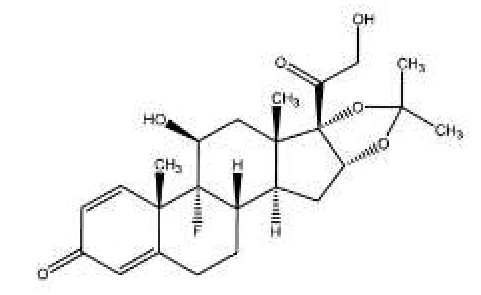
Physicochemical properties:
| Physical description: | White to almost white microcrystalline powder. |
| Solubility: | Practically insoluble in water, sparingly soluble in methanol, ethanol and chloroform, very slightly soluble in ether. |
| Melting range/point: | Melts between 285°C and 295°C with decomposition. |
14 CLINICAL TRIALS
14.1 Clinical Trials by Indication
Perennial and Seasonal Allergic Rhinitis in Children 4 to 12 years of Age
Trial Design and Study Demographics
The safety and efficacy of triamcinolone acetonide aqueous nasal spray has been evaluated in 10 double-blind, placebo-controlled clinical trials in adults and children 12 years and older with seasonal or perennial allergic rhinitis. The number of patients treated with triamcinolone acetonide aqueous nasal spray in these studies was 1204; of these patients, 668 were males and 536 were females.
The safety and efficacy of triamcinolone acetonide aqueous nasal spray, at doses of 110 mcg or 220 mcg once daily, has also been studied in two double blind placebo controlled trials of two and twelve weeks duration in children ages 4 through 12 years with seasonal and perennial allergic rhinitis. These trials included 355 males and 183 females. Triamcinolone acetonide aqueous nasal spray administered at either dose resulted in statistically significant reductions of allergic rhinitis symptoms.
Study Results
Overall, in double-blind clinical trials of two to four weeks duration, analysis of the clinical studies has demonstrated that triamcinolone acetonide aqueous nasal spray 220 mcg once daily (2 sprays in each nostril) when compared to placebo provides statistically significant relief of nasal symptoms including sneezing, stuffiness, discharge, and itching.
14.2 Comparative Bioavailability Studies
A randomized, two-treatment, two-period, crossover, single-dose (4 x 55 mcg/actuation, 2 sprays into each nostril) comparative bioavailability study of APO-TRIAMCINOLONE AQ (Apotex Inc.) and NASACORT® AQ (sanofi-aventis, USA) was conducted in healthy male and female subjects under fasting conditions. A summary of the data from the 29 subjects (21 males and 8 females) that were included in the pharmacokinetic and statistical analyses is presented in the following table.
Summary Table of the Comparative Bioavailability Data
Triamcinolone Acetonide 220 mcg (4 x 55 mcg/actuation, 2 sprays into each nostril) From Measured Data Geometric Mean Arithmetic Mean (CV%) | ||||
| Parameter | Test1 | Reference2 | % Ratio of Geometric Means | 90% Confidence Interval |
AUCT (ng•h/mL) | 1.80 1.90 (33.36) | 1.77 1.87 (34.82) | 101.7 | 95.5 – 108.3 |
AUCI3 (ng•h/mL) | 1.90 2.03 (34.52) | 1.85 1.97 (36.13) | 102.6 | 96.2 – 109.4 |
Cmax (ng/mL) | 0.47 0.50 (33.76) | 0.46 0.48 (30.87) | 103.3 | 96.1 – 111.1 |
Tmax4 (h) | 0.66 (72.84) | 0.64 (66.78) | ||
T1/24 (h) | 2.96 (30.65) | 2.94 (43.37) | ||
1 APO-TRIAMCINOLONE AQ (triamcinolone acetonide) nasal spray, 55 mcg/metered spray (Apotex Inc.). 2 NASACORT® AQ (triamcinolone acetonide) nasal spray, 55 mcg/metered spray (sanofi-aventis, USA). 3 For the AUCI and T1/2 parameters, N=28 for APO-TRIAMCINOLONE AQ and N=29 for NASACORT® AQ. 4 Expressed as arithmetic mean (CV%) only. | ||||
A clinical efficacy study was conducted between March and October 2008 to demonstrate efficacy and bioequivalence. The study consisted of a double blind, multi-center, placebo controlled, parallel group, randomized clinical study. Of the 637 subjects (male and female) who completed the placebo run-in period and were randomized to one of the three treatments (APO-TRIAMCINOLONE AQ, NASACORT®, and placebo), 511 subjects met the criteria for clinical equivalency analysis and 636 subjects were eligible for the clinical efficacy analysis. Each eligible subject received a dose of 220 mcg per day (55 mcg per actuation, 2 actuations in each nostril once daily) for 14 days. Drug concentration/time profiles and pharmacokinetic parameters were not determined in this study.
The primary efficacy and equivalence measures were based on the average morning and evening reflective total nasal symptom scores (TNSS) of rhinorrhea, nasal congestion, nasal itchiness and sneezing. The primary endpoint was the change in Reflective TNSS from baseline to the average of the data from the 14 days of treatment.
A secondary efficacy analysis on the ITT and the PP populations was conducted in an identical manner to the primary efficacy analysis, except using the secondary efficacy measure of instantaneous TNSS (morning and evening instantaneous scores on runny nose, nasal congestion, nasal itchiness, and sneezing).
The efficacy and bioequivalence results for the seasonal allergic rhinitis study are shown in the table below:
Mean ± SD changes in reflective total nasal symptom scores (rTNSS) and instantaneous total nasal symptom score (iTNSS) in seasonal allergic rhinitis trial
| Measures | Statistics | Superiority Assessment1 (Triamcinolone acetonide 55 mcg/spray; 2 sprays per nostril daily) | |||||||||||||||
| Equivalence Assessment2 | |||||||||||||||||
| Test# | Reference † | Placebo | Ratio (Test/Ref) of Means (%) | 90% Confidence Interval | |||||||||||||
| N | (N=260) | (N=249) | (N=127) | ||||||||||||||
| rTNSS | Mean ± SD | 1.8 ± 2.21 | 1.9 ± 2.28 | 1.2 ± 1.91 | 89 | 85 - 93 | |||||||||||
P-value (vs. placebo) | 0.0008 | 0.0006 | NA | ||||||||||||||
| iTNSS | Mean ± SD | 1.7 ± 2.21 | 1.8 ± 2.24 | 1.1 ± 1.71 | 84 | 81 - 88 | |||||||||||
P-value (vs. placebo) | 0.0042 | 0.0016 | NA | ||||||||||||||
# APO-TRIAMCINOLONE AQ 55 mcg/metered nasal spray (Apotex Inc.) † NASACORT® AQ Nasal Spray (Sanofi-Aventis Pharmaceutical Products, Inc., USA) was purchased in the USA 1 Based on the Intent-To-Treat population 2 Based on the Per-Protocol population | |||||||||||||||||
15 MICROBIOLOGY
No microbiological information is required for this drug product.
16 NON-CLINICAL TOXICOLOGY
General Toxicology: Acute toxicity studies in mice and rats and subacute toxicity studies in rats, rabbits and dogs were done by conventional routes of administration. The findings in these studies were typically those seen following the administration of potent glucocorticosteroids. Subacute toxicity studies in rats and dogs and chronic studies in rats and monkeys were conducted by inhalation of aerosolized triamcinolone acetonide. A one-month intranasal toxicity study in dogs with triamcinolone acetonide aqueous nasal formulation revealed no toxicity other than that expected from triamcinolone acetonide. The findings in these studies generally were minimal and the same as in studies carried out by conventional routes of administration, with changes typical of those seen with potent glucocorticoids. There were no gross histopathological or ultrastructural findings suggestive of untoward effects on the respiratory tract.
An eye irritation study conducted in rabbits with triamcinolone acetonide aqueous nasal formulation revealed only a slight reversible irritation of the conjunctiva and iris.
Carcinogenicity: A recent literature report of a chronic bioassay conducted with several corticosteroids (budenoside, prednisolone, triamcinolone acetonide) indicated that all caused slightly increased incidence of liver tumors at toxic doses over a two-year study period. However, no evidence of treatment-related carcinogenicity was demonstrated after two years of once daily oral administration of triamcinolone acetonide at a maximum daily dose of 1.0 mcg/kg/day (6.1 mcg/m2/day) in male or female rats and 3.0 mcg/kg/day (12.9 mcg/m2/day) in male or female mice.
Reproductive and Developmental Toxicology: Teratology studies have been conducted in rats and rabbits by the subcutaneous route and by aerosol inhalation. The known teratogenic effects of glucocorticoids were found to occur following both routes of administration. Triamcinolone acetonide has been shown to be teratogenic in rats and rabbits. Teratogenic effects in both species at 0.02, 0.04 and 0.08 mg/kg/day (approximately 135, 270 and 540 mcg/m2/day in the rat and 320, 640 and 1280 mcg/m2/day in the rabbit, as calculated on a surface area basis), included low incidence of cleft palate and/or internal hydrocephaly and axial skeletal defects. Teratogenic effects, including CNS and cranial malformation have also been observed in non-human primates at 0.5 mg/kg/day (approximately 6.7 mg/m2/day). The doses of 0.02, 0.04, 0.08 and 0.5 mg/kg/day used in these toxicology studies are approximately 12.8, 25.5, 51 and 318.2 times the minimum recommended dose of 110 mcg of triamcinolone acetonide aqueous nasal spray per day and 6.4, 12.7, 25.5 and 159.1 times the maximum recommended dose of 220 mcg of triamcinolone acetonide aqueous nasal spray per day based on a patient body weight of 70 kg.
Administration by aerosol inhalation to pregnant rats and rabbits produced embryotoxic and fetotoxic effects which were comparable to those produced by administration by other routes.
Male and female rats which were administered oral triamcinolone acetonide at doses as high as 15 mcg/kg/day (110 mcg/m2/day, as calculated on a surface area basis) exhibited no evidence of impaired fertility. The maximum human dose, for comparison, is 6.3 mcg/kg/day (240 mcg/m2/day). However, a few female rats which received maternally toxic doses of 8 or 15 mcg/kg/day (60 mcg/m2/day or 110 mcg/m2/day, respectively, as calculated on a surface area basis) exhibited dystocia and prolonged delivery. Developmental toxicity, which included increases in fetal resorptions and stillbirths and decreases in pup body weight and survival, also occurred at the maternally toxic doses (2.5 to 15.0 mcg/kg/day or 20 to 110 mcg/m2/day, as calculated on a surface area basis). Reproductive performance of female rats and effects on fetuses and offspring were comparable between groups that received placebo and nontoxic or marginally toxic doses (0.5 and 1.0 mcg/kg/day or 3.8 mcg/m2/day and 7.0 mcg/m2/day).
17 SUPPORTING PRODUCT MONOGRAPHS
- 1. NASACORT® AQ, Aqueous Nasal Spray, 55 mcg/ Metered Spray, submission control 261994, Product Monograph, Sanofi Consumer Health Inc. (SEP 14, 2022)