


Product Monograph - Apo-Beclomethasone Nasal Spray
INDICATIONS AND CLINICAL USE
APO-BECLOMETHASONE NASAL SPRAY (beclomethasone dipropionate) is indicated for treatment of perennial and seasonal allergic rhinitis, poorly responsive to conventional treatment.
Beclomethasone dipropionate can significantly delay the recurrence of nasal polyps in those patients who have undergone nasal polypectomy. In those patients in whom polyps do recur, beclomethasone dipropionate aqueous suspension can prevent their increase in size.
CONTRAINDICATIONS
APO-BECLOMETHASONE NASAL SPRAY (beclomethasone dipropionate) is contraindicated for patients with: active or quiescent tuberculosis of the respiratory tract or; untreated fungal, bacterial or viral infections.
APO-BECLOMETHASONE NASAL SPRAY is also contraindicated in patients with a history of hypersensitivity to any of the ingredients of these preparations.
WARNINGS
Careful attention must be given to patients previously treated for prolonged periods with systemic corticosteroids. Transfer to APO-BECLOMETHASONE NASAL SPRAY (beclomethasone dipropionate) may cause withdrawal symptoms, e.g., joint and/or muscular pain, lassitude and depression. In severe cases, adrenal insufficiency may occur necessitating the temporary resumption of systemic steroids. This is particularly important in those patients who have associated asthma or other clinical conditions, in whom too rapid a decrease in systemic corticosteroids may cause a severe exacerbation of their symptoms. Deaths due to adrenal insufficiency have occurred in asthmatic patients during and after transfer from systemic corticosteroids to aerosol beclomethasone dipropionate. Therefore, systemic corticosteroid therapy should be withdrawn gradually.
Use in Pregnancy
Glucocorticoids are known teratogens in rodent species and beclomethasone dipropionate is no exception. Teratogenicity studies were performed in the mouse and rabbit using beclomethasone dipropionate administered by the inhaled or oral route. At high dose levels of beclomethasone dipropionate fetuses were growth retarded and had cleft palate.
The safety of beclomethasone dipropionate in human pregnancy and lactation has not been established. Administration of drug during pregnancy should only be considered if the expected benefit to the mother is greater than any possible risk to the fetus.
HPA Axis Effect
When intranasal steroids are used at higher-than-recommended dosages or in susceptible individuals at recommended dosages, systemic corticosteroid effects such as hypercorticism and adrenal suppression may appear. If such changes occur, the dosage of APO-BECLOMETHASONE
NASAL SPRAY should be discontinued slowly, consistent with accepted procedures for discontinuing chronic corticosteroid therapy.
PRECAUTIONS
APO-BECLOMETHASONE NASAL SPRAY (beclomethasone dipropionate) is absorbed into the circulation. Use of excessive doses of APO-BECLOMETHASONE NASAL SPRAY may suppress hypothalamic-pituitary-adrenal function. Therefore, larger than recommended doses should be avoided. Systemic effects have been minimal with recommended doses.
Patients should be advised that APO-BECLOMETHASONE NASAL SPRAY must be used at regular intervals to be therapeutically effective. The patient should take the medication as directed, and the prescribed dosage should not be increased. For proper dosage and administration of the drug and to attain maximum improvement, the patient must be instructed by the physician or other health care professional in the correct use of this preparation. The physician should also advise the patient to read and to follow the accompanying PATIENT MEDICATION INFORMATION insert carefully. The patient should contact the physician if the symptoms do not improve, or if the condition worsens, or if sneezing or nasal irritation occurs. An abnormally heavy challenge of summer allergens may, in certain instances, necessitate appropriate additional therapy, particularly to control eye symptoms. These patients should also be instructed to inform subsequent physicians of the prior use of corticosteroids.
The replacement of systemic steroids with APO-BECLOMETHASONE NASAL SPRAY has to be gradual and carefully supervised by the physician. During withdrawal from oral steroids, some patients may experience symptoms of withdrawal, e.g., joint and/or muscular pain, lassitude and depression. The guidelines under “DOSAGE AND ADMINISTRATION” should be followed in all such cases.
During periods of stress or during a severe asthmatic attack, patients who have been withdrawn from systemic corticosteroids should be instructed to immediately resume systemic steroids in dosages that were previously effective and to contact their physicians for further instructions.
These patients should also be instructed to carry a warning card indicating that they may need supplementary systemic steroids during periods of stress or a severe asthma attack. To assess the risk of adrenal insufficiency in emergency situations, routine tests of adrenal cortical function, including measurement of early morning and evening cortisol levels, should be performed periodically in all patients. An early morning resting cortisol level may be accepted as normal only if it falls at or near the normal mean level.
Studies in asthmatic patients have shown that the combined administration of alternate-day prednisone systemic treatment and orally inhaled beclomethasone dipropionate increases the likelihood of hypothalamic-pituitary-adrenal suppression compared to a therapeutic dose of either drug alone. Therefore, APO-BECLOMETHASONE NASAL SPRAY should be used with caution in patients already on an alternate day prednisone systemic treatment.
Rare instances of increased intraocular pressure have been reported following intranasal application of aerosolized corticosteroids. Rare instances of nasal septum perforation have been spontaneously reported.
Long-term Effects
The long-term effects of beclomethasone dipropionate in human subjects have not been established. In particular, the local effects of the agent on the developmental or immunologic processes of the respiratory passageways are still unknown. During long-term therapy, pituitary- adrenal function and hematological status should be periodically assessed. In addition, as with any long-term treatment with a topical steroid, patients using APO-BECLOMETHASONE NASAL SPRAY over several months or longer should be examined periodically for possible changes in the nasal mucosa. The possibility of atrophic rhinitis should be kept in mind.
Effect on Growth
Controlled clinical trials have shown that intranasal corticosteroids may cause a reduction in growth velocity in pediatric patients. This effect has been observed in the absence of laboratory evidence of HPA axis suppression, suggesting that growth velocity is a more sensitive indicator of systemic corticosteroid exposure in pediatric patients than some commonly used tests of HPAaxis function. In a 12-month randomized, controlled clinical trial completed in children ages 5 to 11 years with asthma, the mean growth velocity at month 12 compared to baseline in children treated with orally inhaled HFA-beclomethasone dipropionate without spacer was approximately 0.5 cm/year less than that noted with children treated with orally inhaled chlorofluorocarbonpropelled (CFC) -beclomethasone dipropionate via large volume spacer. The long-term effects of reduction in growth velocity associated with intranasal corticosteroids, including the impact on final adult height, are unknown. The potential for “catch-up” growth following discontinuation of treatment with intranasal corticosteroids has not been adequately studied. The growth of pediatric and adolescent patients receiving intranasal corticosteroids, including APO-BECLOMETHASONE NASAL SPRAY, should be monitored routinely (e.g., via stadiometry). The potential growth effects of prolonged treatment should be weighed against the clinical benefits obtained and the risks/benefits of treatment alternatives.
Immunosuppression
Persons who are using drugs that suppress the immune system (e.g., corticosteroids) are more susceptible to infections than healthy individuals. Chickenpox and measles, for example, can have a more serious or even fatal course in susceptible children or adults using corticosteroids. In children or adults who have not had these diseases or been properly immunized, particular care should be taken to avoid exposure. How the dose, route, and duration of corticosteroid administration affect the risk of developing a disseminated infection is not known. The contribution of the underlying disease and/or prior corticosteroid treatment to the risk is also not known. If a patient is exposed to chickenpox, prophylaxis with varicella zoster immune globulin (VZIG) may be indicated. If a patient is exposed to measles, prophylaxis with pooled intramuscular immunoglobulin (IG) may be indicated. If chickenpox develops, treatment with antiviral agents may be considered.
Effect on Infections
Corticosteroids may mask some signs of infection and new infections may appear. A decreased resistance to localized infections has been observed during corticosteroid therapy. The possibility of nasal, prenasal or pharyngeal candidiasis should be kept in mind. If any infection occurs during therapy, it requires appropriate treatment and/or discontinuance of APO-BECLOMETHASONE NASAL SPRAY, depending on the severity of the infection.
Localized infections of the nose and pharynx with Candida albicans have been reported in clinical trials with an intranasal aqueous formulation of beclomethasone dipropionate. Patients using APO-BECLOMETHASONE NASAL SPRAY over several months or longer should be examined periodically for evidence of Candida infection.
Inhibitory Effect on Wound Healing
Because of the inhibitory effect of corticosteroids on wound healing, patients who have experienced recent nasal septal ulcers, nasal surgery or trauma should not use a nasal corticosteroid until healing has occurred.
Hypothyroidism and Cirrhosis
There may be enhanced systemic effects of corticosteroids on patients with hypothyroidism and in those with cirrhosis.
Ophthalmologic
Use of intranasal and inhaled corticosteroids may result in the development of glaucoma and/or cataracts. Therefore, close monitoring is warranted in patients with a change in vision or with a history of increased intraocular pressure, glaucoma, and/or cataracts.
Hypersensitivity
Hypersensitivity reactions including anaphylaxis, angioedema, urticaria, and rash have been reported following intranasal and inhalation administration of beclomethasone dipropionate.
Drug Interactions
Similar to other corticosteroids, beclomethasone dipropionate undergoes extensive first pass metabolism mediated by cytochrome P450 isozyme 3A (CYP 3A4). There have been reports concerning potentially clinically significant drug interactions with a number of inhaled corticosteroids and potent inhibitors of CYP3A4 isozymes (e.g., ketoconazole, itraconazole, ritonavir).
Use of Corticosteroids and Acetylsalicylic Acid
Acetylsalicylic acid should be used cautiously in conjunction with corticosteroids in hypoprothrombinemia.
Use in Pregnancy and Lactation
The safety of beclomethasone dipropionate in pregnancy and lactation has not been established. Unnecessary administration of drugs during the first trimester of pregnancy is undesirable.
Administration of drugs during pregnancy should only be considered if the expected benefit to the mother is greater than any possible risk to the fetus.
It is not known whether beclomethasone dipropionate is excreted in human breast milk. However, other corticosteroids have been detected in human breast milk and thus caution should be exercised when APO-BECLOMETHASONE NASAL SPRAY is administered to a nursing mother. The benefits of APO-BECLOMETHASONE NASAL SPRAY to the nursing woman should be weighed against the potential hazards to the infant.
Teratogenic Effects
Glucocorticoids are known teratogens in rodent species and beclomethasone dipropionate is no exception.
Teratogenicity studies have been carried out by the inhaled and oral routes in mice, rats and rabbits. In mice and rabbits, beclomethasone dipropionate showed effects at high dose levels typical of a potent corticosteroid, e.g., fetal growth retardation and cleft palate. Similarly, in rats, beclomethasone dipropionate induced early embryonic death and fetal growth retardation at very high dose levels; however, no fetus with cleft palate was detected. Well-controlled trials relating to fetal risk in humans are not available.
Glucocorticoids are secreted in human milk. It is not known whether beclomethasone dipropionate is secreted in human milk, but it is suspected to be likely.
The use of beclomethasone dipropionate in pregnancy, nursing mothers or women of childbearing potential requires that the possible benefits of the drug be weighed against the potential hazards to the mother, and embryo or fetus. Infants born of mothers who have received substantial dosages of corticosteroids during pregnancy should be carefully observed for hypoadrenalism.
ADVERSE REACTIONS
In general, side effects have been primarily associated with the nasal mucous membranes and are consistent with what one would expect from applying a topical medication to an already inflamed membrane.
Sensations of irritation and burning in the nose following the use of beclomethasone dipropionate have been reported. Occasional sneezing attacks have occurred immediately following the use of intranasal beclomethasone dipropionate.
Other adverse nasopharyngeal effects of beclomethasone dipropionate use include nasal dryness or crusting and transient episodes of bloody discharge from the nose. Extremely rare instances of ulceration of the nasal mucosa and of nasal septum perforation have been reported following intranasal application of aerosol and aqueous corticosteroids. Localized infections of the nose and pharynx with Candida albicans have occurred rarely (see PRECAUTIONS).
Other less frequent adverse effects associated with beclomethasone dipropionate include: sore throat, cough, headache, dizziness, nausea, lethargy and stomach pains. Rare cases of raised intraocular pressure or glaucoma in association with intranasal formulations of beclomethasone dipropionate have been reported.
Rare cases of immediate and delayed hypersensitivity reactions, including urticaria, angioedema, rash and bronchospasm, have been reported after the use of beclomethasone dipropionate oral or intra-nasal inhalers.
When patients are transferred to APO-BECLOMETHASONE NASAL SPRAY (beclomethasone dipropionate) from a systemic steroid, allergic conditions such as asthma, conjunctivitis or eczema may be unmasked.
Cases of hypercorticism, adrenal suppression, growth reduction and immunosuppression are possible after the use of APO-BECLOMETHASONE NASAL SPRAY.
SYMPTOMS AND TREATMENT OF OVERDOSAGE
When used in excessive dosages (above 600 micrograms or 12 sprays of APO-BECLOMETHASONE NASAL SPRAY (beclomethasone dipropionate) per day), systemic steroid effects, such as hypercorticism and adrenal suppression, may appear. If such changes occur, the dosage of APO-BECLOMETHASONE NASAL SPRAY should be discontinued slowly, consistent with accepted procedures for discontinuing chronic corticosteroid therapy.
DOSAGE AND ADMINISTRATION
The safety and efficacy of APO-BECLOMETHASONE NASAL SPRAY (beclomethasone dipropionate) in children under 6 years of age have not been established.
APO-BECLOMETHASONE NASAL SPRAY is for administration by the intranasal route only.
The usual dosage of APO-BECLOMETHASONE NASAL SPRAY for patients who have received no previous systemic steroid is two sprays (100 micrograms beclomethasone dipropionate) into each nostril twice daily. A dosage regimen of one spray into each nostril three or four times daily may be preferred. When APO-BECLOMETHASONE NASAL SPRAY is administered as two sprays into each nostril, the first spray should be directed at the upper and the second at the lower part of the nasal cavity. Maximum daily dosage should not exceed 12 sprays (600 micrograms beclomethasone dipropionate) in adults and 8 sprays (400 micrograms beclomethasone dipropionate) in children.
When APO-BECLOMETHASONE NASAL SPRAY is used concurrently with another dosage form of beclomethasone dipropionate, the combined total daily dosage should not exceed the maximum daily recommended dosage of beclomethasone dipropionate (1000 micrograms). Since the effectiveness of APO-BECLOMETHASONE NASAL SPRAY depends on its regular use, patients must be instructed to take the nasal inhalation at regular intervals and not as with other nasal sprays, as they feel necessary. They should also be instructed in the correct methods of administration, which are described in the section “PATIENT MEDICATION INFORMATION”.
In order to ensure cooperation and continuation of treatment, patients must be advised that the therapeutic effects are not immediate and that some days may elapse before improvement is noted.
In the presence of excessive nasal mucous secretion or edema of the nasal mucosa, the drug may fail to reach the site of action. In such cases it is advisable to use a nasal vasoconstrictor for two to three days prior to APO-BECLOMETHASONE NASAL SPRAY.
Careful attention must be given to patients previously treated for prolonged periods with systemic corticosteroids when these patients are transferred to APO-BECLOMETHASONE NASAL SPRAY.
Initially, APO-BECLOMETHASONE NASAL SPRAY and the systemic corticosteroid must be given concomitantly, while the dose of the latter is gradually decreased. In adults, the usual rate of withdrawal of the systemic steroid is the equivalent of 1.0 mg of the daily dose of prednisone (or equivalent) at no less than weekly intervals if the patient is under close supervision. In children over 6 years of age, the rate of withdrawal is 1.0 mg of the daily dose of prednisone (or equivalent), every eight days under close supervision. If continuous supervision is not feasible, the withdrawal of the systemic steroid should be slower, approximately 1.0 mg of prednisone (or equivalent) every ten days and every twenty days, in adults and in children, respectively. A slow rate of withdrawal cannot be overemphasized. If withdrawal symptoms appear, the previous dose of the systemic steroid should be resumed for a week before a further decrease is attempted.
PHARMACEUTICAL INFORMATION
Drug Substance
Proper Name: beclomethasone dipropionate
Chemical Names: 1) Pregna-1,4-diene-3,20-dione,9-chloro-11-hydroxy-16- methyl-17,21-bis(1-oxopropoxy)-,(11 ,16 )-;
- 2)
9-Chloro-11 ,17,21-trihy-droxy-16 -
methylpregna-1,4-diene-3,20-dione 17,21-dipropionate.
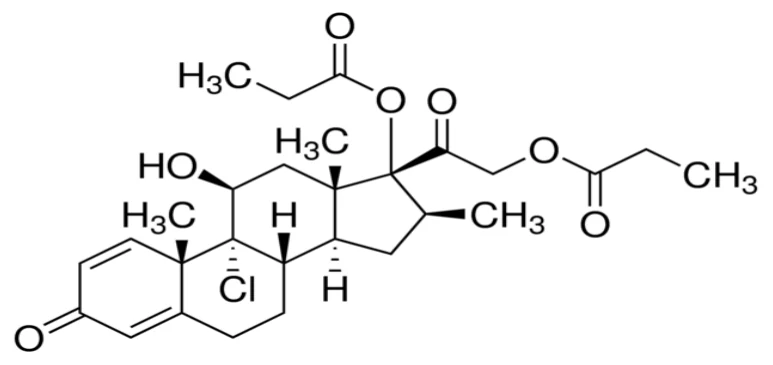
Structural Formula:
Molecular Formula: C28H37ClO7 Molecular Weight: 521.05 g/mol
Description: Beclomethasone dipropionate is a white to cream-white, odourless powder. It is very slightly soluble in water; very soluble in chloroform; freely soluble in acetone and in alcohol.
Composition
APO-BECLOMETHASONE NASAL SPRAY (beclomethasone dipropionate) is an aqueous suspension (0.05% w/w) delivering 50 micrograms beclomethasone dipropionate per metered spray suspended in avicel (microcrystalline cellulose and carboxymethylcellulose sodium), benzalkonium chloride, dextrose, phenylethyl alcohol, polysorbate 80 and purified water.
Stability and Storage Recommendations
Do not refrigerate. Discard 3 months after first use. Store at room temperature (15°C to 30°C). Protect from light.
AVAILABILITY OF DOSAGE FORMS
APO-BECLOMETHASONE NASAL SPRAY (beclomethasone dipropionate) is a suspension of beclomethasone dipropionate in an amber glass bottle fitted with a metered atomizing pump and a nasal applicator. Each spray delivered by the nasal applicator contains 50 micrograms beclomethasone dipropionate.
APO-BECLOMETHASONE NASAL SPRAY is available in 200 metered spray (22 g net weight) bottles.
PHARMACOLOGY
Metabolism
Two tritium-labelled beclomethasone dipropionate preparations, one labelled on the C16 position, the other labelled on the C21 propionate group, were used to study the in vitro metabolism of the drug by human lung slices and rat lung homogenate. In both cases the drug was metabolized rapidly into beclomethasone-17-mono-propionate and more slowly into beclomethasone.
Rats were exposed in a chamber to nineteen 50 microgram burst of beclomethasone dipropionate over a five-minute period. The highest concentrations of radioactivity were present in the nose and mouth. Two hours after inhalation, the tissue radioactivity was reduced by about 80%. The lung concentration was 140-420 ng/g. Extrapolation to therapeutic human conditions shows that the total exposure of rats represented twelve times the single human dose.
Excretion
Following oral administration of 4 - 10 mg/kg of radioactive beclomethasone dipropionate to rats, 50-90% was excreted in the feces and 1.5 - 4.4% in the urine after forty-eight hours. In the feces, 65% of the drug was present unchanged, and small amounts of beclomethasone dipropionate and beclomethasone were found. In the urine, each metabolite was present in a small quantity. After an oral dose, 10 - 15% of the radioactivity was found in the urine and 35 - 65% in the feces. In man, the major metabolites are the same as those in rats.
Glucocorticoid Effect
Thymolytic tests in mice treated orally or subcutaneously showed results similar to those found with betamethasone. In rats, the thymolytic effect of beclomethasone dipropionate is very weak.
In mice, the glycogen deposition test showed the activity of beclomethasone dipropionate was 1/10 that of dexamethasone. In rats, the drug caused no glycogen deposition.
In mice, the pituitary-adrenal suppression test showed an activity three times stronger than that of betamethasone, when 40 micrograms/kg of beclomethasone dipropionate was given subcutaneously. However, in rats only a large dose of 100 mg/kg showed any suggestion of pituitary suppression.
After administration of 100 or 1000 micrograms/kg of beclomethasone dipropionate to adrenalectomized rats, mineralocorticoid activity was minimal as shown by electrolyte changes.
Anti-inflammatory activity was assessed by the carrageenin and formalin induced edema and inhibition of cotton-pellet granuloma. In all tests, the activity of beclomethasone dipropionate was 9 - 40 times higher than that of hydrocortisone.
In conclusion, beclomethasone dipropionate is a potent anti-inflammatory steroid both in the rat and the mouse. However, in the mouse, the drug behaves as a potent glucocorticoid, while in the rat it is virtually devoid of typical glucocorticoid effects.
Human Pharmacology
Inhalation of beclomethasone dipropionate, 1 to 4 mg/kg/day for four weeks, showed that the daily dose of 1 mg/kg/day causes no significant adrenal suppression. At 2 mg/kg/day, the results are equivocal and at 4 mg/kg/day, there is clear evidence of adrenal suppression.
Studies in five volunteers over a four-week period showed the addition of a daily dose of 1 mg/day beclomethasone dipropionate intranasally to that of 1 mg/day beclomethasone dipropionate intrabronchially, does not lead to adrenal suppression.
Clinical Trials
A double-blind, double-placebo comparative study of beclomethasone dipropionate (BDP) aqueous nasal spray and the conventional BDP pressurized aerosol spray was conducted in 373 patients with seasonal rhinitis, including 51 children 12 years of age or less. The dosage regimen for both preparations was 2 applications (100 micrograms) into each nostril twice daily (i.e., 400 micrograms/day). After two weeks of treatment there were no statistically significant differences between the two treatment groups with regard to symptom scores or concurrent consumption of anti-histamine tablets. In the physicians’ assessments, the two BDP preparations were equally effective in reducing and controlling nasal symptoms with 72% of patients in each group demonstrating a “good” or “very good” response to treatment. A total of 224 complaints of putative adverse effects, equally divided between the two treatment groups, were elicited during the study.
One hundred forty patients participated in a double-blind, placebo-controlled study comparing beclomethasone nasal and aqueous sprays in the management of nasal polyposis. In patients receiving beclomethasone nasal or aqueous sprays there was no evidence of a significant increase in either the number of polyps or in the site of existing polyps during the 12-month study period. In contrast, in patients receiving placebo, there was a highly statistically significant increase in both the number of polyps (p<0.05) and in the site of existing polyps (p<0.001). This study demonstrates that beclomethasone dipropionate, given by aqueous or pressurized nasal spray can, compared to placebo, significantly delay the recurrence of nasal polyps after nasal polypectomy and in those polyps that do reoccur, beclomethasone dipropionate can suppress their increase in size.
TOXICOLOGY
ANIMAL
Acute Toxicity
Oral LD50 in mice: above 3 g/kg; in rats: above 1 g/kg. Guinea pigs, rabbits, cats and dogs survived single oral doses of 60 mg beclomethasone dipropionate. This dose caused bloody diarrhea and inflammation of the intestinal tract.
Subacute Toxicity
In the rat, subcutaneous studies were performed in which animals received doses of beclomethasone dipropionate from 0.9 to 100 mg/kg/day for one week or doses ranging from
0.02 - 3.0 mg/kg/day for four weeks. No animal died from drug treatment. High doses diminished animal growth, in addition to serum protein and inorganic phosphate levels. There was some elevation of SGPT. Two rats had chronic inflammatory changes in the bronchi.
In dogs, daily intramuscular injection of beclomethasone dipropionate ranging from 0.5 to 4.5 mg/kg/day for four weeks caused decreased leukocyte count, and classic glucocorticoid-type organ changes.
Chronic Toxicity
In the rat, subcutaneous injection of beclomethasone dipropionate at daily doses from 0.1 to 300 mg/kg for three to six months duration, gave the following results: decreased food consumption and body weight; reduction of leukocytes and lymphocytes; increased SGPT, SGOT and alkaline phosphatase levels, and; fat and glycogen deposition in the liver. The sites of injection showed hardening and irritation in the high-dose groups. There was no spontaneous mortality.
Local Effect on the Lungs After Inhalation
One hundred and fifty rats were exposed intermittently to beclomethasone dipropionate aerosol for twenty-six weeks at estimated dosages of ten, twenty and forty times the human dose. In addition, during the last thirteen weeks, some rats received daily oral doses of beclomethasone dipropionate at ten, thirty and one hundred times the human therapeutic level, to account for any gross swallowing of the drug during inhalation. No gross pathological changes attributable to the medication were seen. Histologically, most animals had minimal perivascular and peribronchial accumulations of lymphocytes. Some animals had signs of chronic respiratory disease which is commonly seen in laboratory rats.
Dogs were exposed to 50 micrograms and 100 micrograms of beclomethasone dipropionate per burst for three months, representing approximately two hundred and fifty times the human exposure. There were no changes in the respiratory tract attributable to the medication.
HUMAN
Nasal biopsies from patients treated with intranasal beclomethasone dipropionate aerosol for six weeks showed no drug-related abnormalities.
Beclomethasone aqueous nasal spray was administered to forty healthy volunteers who were asked to assess the local irritancy of the preparation. None of the subjects judged the spray to be sufficiently irritating so as to possibly compromise treatment.
Teratogenic Effects
In mice treated from first day to the eighteenth day of pregnancy with beclomethasone dipropionate, 3 mg/kg/day subcutaneously, there was an increased number of resorption sites, reduced number of live fetuses and reduced weight of live-born fetuses. There was an increased incidence of cleft palate and retarded maturation of the sternum. These results were similar to those obtained with hydrocortisone at a corresponding dose (60 mg/kg/day).
In rabbits treated with beclomethasone dipropionate from the first to the thirteenth day of pregnancy at the dose of 0.1 mg/kg/day, there was complete resorption of fetuses. At the dose of
0.01 mg/kg/day, there was no toxicity to pregnant dose, while there was some cleft palate formation in the offspring. At the dose of 0.005 mg/kg/day, there was no teratogenic effect.
Studies in rats, mice and rabbits have shown that subcutaneously administered beclomethasone causes increased fetal resorptions and birth defects.
BIBLIOGRAPHY
- 1. Baggott PJ, Dash CH, Haydock A, et al. A double-blind study comparing two nasal sprays of beclomethasone dipropionate in the management of seasonal rhinitis. Drugs Exptl Clin Res 1984; X(4): 287-292.
- 2. Beswick KBJ, Kenyon GS, Cherry JR. A comparative study of beclomethasone dipropionate aqueous nasal spray with terfenadine tablets in seasonal rhinitis. Curr Med Res Opin 1985; 9: 560-7.
- 3. Brogden RN, Heel RC, Speight TM, Avery GS. Beclomethasone dipropionate. A reappraisal of its pharmacodynamic properties and therapeutic efficacy after a decade of use in asthma and rhinitis. Drugs 1984; 28: 99-126.
- 4. Brompton Hospital/Medical Research Council Collaborative Trial: Double-blind trial comparing two dosage schedules of beclomethasone dipropionate aerosol with a placebo in the treatment of perennial rhinitis for twelve months. Clin Allergy 1980; 10: 239-251.
- 5. Brown HM, Storey G. Beclomethasone dipropionate aerosol in the treatment of seasonal asthma and hay fever. Clin Allergy 1974; 4: 331-341.
- 6. Brown HM, Storey G, Jackson FA. Beclomethasone dipropionate aerosol in treatment of perennial rhinitis: A review of five years’ experience. Br J Clin Pharmacol 1977; 4: 283S- 286S
- 7. Chatterjee SS, Nassar WY, Wilson O, Butler AG. Intra-nasal beclomethasone dipropionate and intra-nasal sodium cromoglycate: A comparative trial. Clin Allergy 1974; 4: 343-8.
- 8.
Dunn AM, Wilson RSE, Baggott PJ. A comparison of beclomethasone dipropionate aqueous nasal spray and beclomethasone dipropionate pressurized nasal spray in the management
of seasonal rhinitis. Postgrad Med J 1984; 60: 404-6.
- 9. Harris DM, Martin LE, Harrison C and Jack D. The effect of intra-nasal beclomethasone dipropionate on adrenal function. Clin Allergy 1974; 4: 291-4.
- 10. Hill D, Connolly D, Vorath J. Beclomethasone dipropionate aerosol in the treatment of children with severe perennial rhinitis. Med J Aust 1978; 2: 603-4.
- 11. Hillas J, Booth RJ, Somerfield S, et al. A comparative trial of intranasal beclomethasone dipropionate and sodium cromoglycate in patients with chronic perennial rhinitis. Clin Allergy 1980; 10: 253-8
- 12. Holopainen E, Malmberg H, Binder E. Long-term follow-up of intra-nasal beclomethasone treatment. A clinical and histological study. Acta Otolaryngol 1982; 386 (Suppl): 270-3.
- 13. Horowitz M, Burnet RB. The effect of intranasal beclomethasone dipropionate on adrenal function. Med J Aust 1979; 2: 660-1.
- 14. Knight A, Kolin A. Long-term efficacy and safety of beclomethasone dipropionate aerosol in perennial rhinitis. Ann Allergy 1983; 50: 81-4.
- 15. Krouse HA, Phung ND, Klaustermeyer WB. Intranasal beclomethasone in severe rhino- sinusitis and nasal polyps. Ann Allergy 1983; 50: 385-8.
- 16. Langrick AF. Comparison of flunisolide and beclomethasone dipropionate in seasonal allergic rhinitis. Curr Med Res Opin 1984; 9: 290-5.
- 17. Mygind N, Pederson CB, Prytz S, Sorensen H. Treatment of nasal polyps with intranasal beclomethasone dipropionate aerosol. Clin Allergy 1975; 5: 159-164.
- 18. Mygind N, Sorensen H, Pederson CB. The nasal mucosa during long-term treatment with beclomethasone dipropionate aerosol. Acta Otolaryngol 1978; 85: 437-443.
- 19. Okuda M, Sakaguchi K, Ohtsuka H. Intranasal beclomethasone: Mode of action in nasal allergy. Ann Allergy 1983; 50: 116-120.
- 20. Pelikan Z. The effects of disodium cromoglycate (DSCG) and beclomethasone dipropionate (BDA) on the delayed nasal mucosa response to allergen challenge. Ann Allergy 1984; 52: 111-124.
- 21. Sahay JN, Chatterjee SS, Engler C. A comparative trial of flunisolide and beclomethasone dipropionate in the treatment of perennial allergic rhinitis. Clin Allergy 1980; 10: 65-70.
- 22. Sibbald B, Hilton S, D’Souza M. An open cross-over trial comparing two doses of astemizole and beclomethasone dipropionate in the treatment of perennial rhinitis. Clin Allergy 1986; 16: 203-211.
- 23. Sidwell S. A comparison of the efficacy and tolerance of an aqueous beclomethasone dipropionate nasal spray with the conventional pressurized spray. Curr Med Res Opin 1983; 8: 659-664.
- 24. Siegel SC, Katz RM, Rachelefsky GS, et al. Multicentric study of beclomethasone dipropionate nasal aerosol in adults with seasonal allergic rhinitis. J Allergy Clin Immunol 1982; 69: 345-353.
- 25. Sipila P, Sorri M, Ojala K, Palva A. Comparative trial of flunisolide and beclomethasone dipropionate nasal sprays in patients with seasonal allergic rhinitis. Allergy 1983; 38: 303-7.
- 26. Small P, Black M, Frenkiel S, Wachs GN. Beclomethasone dipropionate in the management of rhinitis - a review. Ann Allergy 1982; 49: 127-130.
- 27. Tandon MK, Strahan EG. Double-blind crossover trial comparing beclomethasone dipropionate and sodium cromoglycate in perennial allergic rhinitis. Clin Allergy 1980; 10: 459-462.
- 28. Welsh PW, Stricker WE, Chu CP, et al. Efficacy of beclomethasone nasal solution, flunisolide, and cromolyn in relieving symptoms of ragweed allergy. Mayo Clin Proc 1987; 62: 125-134.
- 29. Product Monograph for Beconase Aq Nasal Spray (beclomethasone dipropionate aqueous suspension 0.05% w/w) 50 mg/metered dose by Glaxo Wellcome Inc. 1996.