


Product Monograph - Atridox
RECENT MAJOR LABEL CHANGES
Not Applicable
TABLE OF CONTENTS
PART I: HEALTH PROFESSIONAL INFORMATION ................................................................. 4
1 INDICATIONS................................................................................................................ 4
1.1 Pediatrics............................................................................................................ 4
1.2 Geriatrics ............................................................................................................ 4
2 CONTRAINDICATIONS ................................................................................................. 4
3 SERIOUS WARNINGS AND PRECAUTIONS BOX ........................................................ 4
4 DOSAGE AND ADMINISTRATION................................................................................. 4
4.1 Dosing Considerations ........................................................................................ 4
4.2 Recommended Dose and Dosage Adjustment ..................................................... 5
4.3 Administration ..................................................................................................... 5
4.4 Reconstitution ..................................................................................................... 5
4.5 Missed Dose ....................................................................................................... 6
5 OVERDOSAGE ............................................................................................................. 6
6 DOSAGE FORMS, STRENGTHS, COMPOSITION AND PACKAGING ........................... 6
7 WARNINGS AND PRECAUTIONS ................................................................................. 7
7.1 Special Populations ............................................................................................. 8
7.1.1 Pregnant Women ................................................................................................ 8
7.1.2 Breast-feeding .................................................................................................... 8
7.1.3 Pediatrics............................................................................................................ 8
7.1.4 Geriatrics ............................................................................................................ 9
8 ADVERSE REACTIONS................................................................................................. 9
8.1 Adverse Reaction Overview................................................................................. 9
8.2 Clinical Trial Adverse Reactions........................................................................... 9
8.3 Less Common Clinical Trial Adverse Reactions.................................................. 10
8.4 Abnormal Laboratory Findings: Hematologic, Clinical Chemistry and Other Quantitative Data .............................................................................................. 11
8.5 Clinical Trial Adverse Reactions (Pediatrics) ...................................................... 11
8.6 Post-Market Adverse Reactions ......................................................................... 11
9 DRUG INTERACTIONS................................................................................................ 11
9.1 Serious Drug Interactions Box ........................................................................... 11
9.2 Overview ........................................................................................................... 11
9.3 Drug-Drug Interactions ...................................................................................... 11
9.4 Drug-Food Interactions ...................................................................................... 11
9.5 Drug-Herb Interactions ...................................................................................... 12
9.6 Drug-Laboratory Test Interactions ...................................................................... 12
9.7 Drug-Lifestyle Interactions ................................................................................. 12
10 ACTION AND CLINICAL PHARMACOLOGY ............................................................... 12
10.1 Mechanism of Action ......................................................................................... 12
10.2 Pharmacodynamics .......................................................................................... 12
10.3 Pharmacokinetics ............................................................................................. 12
11 STORAGE, STABILITY AND DISPOSAL ..................................................................... 14
12 SPECIAL HANDLING INSTRUCTIONS ........................................................................ 15
PART II: SCIENTIFIC INFORMATION ..................................................................................... 16
13 PHARMACEUTICAL INFORMATION ........................................................................... 16
14 CLINICAL TRIALS ....................................................................................................... 16
14.1 Trial Design and Study Demographics ............................................................... 16
14.2 Study Results.................................................................................................... 18
14.3 Comparative Bioavailability Studies.................................................................... 19
15 MICROBIOLOGY......................................................................................................... 19
16 NON-CLINICAL TOXICOLOGY.................................................................................... 20
17 SUPPORTING PRODUCT MONOGRAPHS ................................................................. 23
PATIENT MEDICATION INFORMATION ................................................................................. 24
PART I: HEALTH PROFESSIONAL INFORMATION
1 INDICATIONS
ATRIDOX® controlled-release doxycycline gel is indicated for use in the treatment of chronic adult periodontitis for gain in clinical attachment, reduction in probing depth, and reduction in bleeding on probing.
1.1 Pediatrics
Pediatrics (< 18 years of age): Based on the data submitted and reviewed by Health Canada, the safety and efficacy of ATRIDOX® in pediatric patients has not been established; therefore, Health Canada has not authorized an indication for pediatric use. Oral doses of doxycycline in children up to age 8 years have caused permanent discolouration of teeth. (See also CONTRAINDICATIONS)
1.2 Geriatrics
Geriatrics (> 65 years of age): No data are available to Health Canada; therefore, Health Canada has not authorized an indication for geriatric use.
To reduce the development of drug-resistant bacteria and maintain the effectiveness of ATRIDOX® and other antibacterial drugs, ATRIDOX® should be used only to treat infections that are proven or strongly suspected to be caused by susceptible bacteria. When culture and susceptibility information are available, they should be considered in selecting or modifying antibacterial therapy. In the absence of such data, local epidemiology and susceptibility patterns may contribute to the empiric selection of therapy.
2 CONTRAINDICATIONS
ATRIDOX® is contraindicated in patients who are hypersensitive to this drug or to any ingredient in the formulation, including any non-medicinal ingredient, or component of the container. For a complete listing, see DOSAGE FORMS, STRENGTHS, COMPOSITION AND PACKAGING.
- ATRIDOX® controlled-release doxycycline gel should not be used in patients who are hypersensitive to any drug in the tetracycline class.
- ATRIDOX® should not be used during tooth development (second half of pregnancy, infancy and childhood to age of twelve years).
- ATRIDOX® should not be given to pregnant patients or nursing mothers.
3 SERIOUS WARNINGS AND PRECAUTIONS BOX
Not Applicable. For a complete listing, see WARNINGS AND PRECAUTIONS.
4 DOSAGE AND ADMINISTRATION
4.1 Dosing Considerations
Not Applicable
4.2 Recommended Dose and Dosage Adjustment
ATRIDOX® is considered a variable-dose unit dependent on the morphology and number of periodontal pockets being treated.
Health Canada has not authorized an indication for pediatric use. (See INDICATIONS, CONTRAINDICATIONS, and WARNINGS AND PRECAUTIONS)
4.3 Administration
ATRIDOX® requires no local anesthesia for placement. Bend the cannula to resemble a periodontal probe and explore the periodontal pocket in a manner similar to periodontal probing. Keeping the cannula tip near the base of the pocket, express the product into the pocket until the formulation reaches the top of the gingival margin. Withdraw the cannula tip from the pocket. To separate the tip from the formulation, turn the tip of the cannula towards the tooth, press the tip against the tooth surface and pinch the string of formulation from the tip of the cannula. Variations on this technique may be needed to achieve separation between ATRIDOX® and the cannula.
If desired, use an appropriate dental instrument to pack ATRIDOX® into the pocket. Dip the edge of the instrument in water before packing to help keep ATRIDOX® from sticking to the instrument and help speed coagulation of ATRIDOX®. A few drops of water dripped onto the surface of ATRIDOX® once in the pocket may also aid in coagulation. If necessary, add more ATRIDOX® product as described and pack it into pocket until the pocket is full.
ATRIDOX® may be re-applied four months after initial application, or as needed.
4.4 Reconstitution
Preparation for Use
- 1. Remove the trayed product from refrigeration at least 15 minutes prior to mixing.
- 2.
Couple Syringe A (liquid delivery system) and Syringe B (drug powder).
Syringe A Syringe B

- 3. Inject the contents of Syringe A (indicated by purple stripe) into Syringe B (liquid into powder) and then push the contents back into Syringe A. This entire operation is one mixing cycle.
- 4. Complete 100 mixing cycles at a pace of one cycle per second using brisk strokes.
- 5. The contents will be in Syringe A (indicated by purple stripe). Hold the coupled syringes vertically with Syringe A at the bottom. Pull back on the Syringe A plunger and allow the contents to flow down the barrel for several seconds.
- 6. Uncouple the two syringes and attach the blunt cannula to Syringe A.

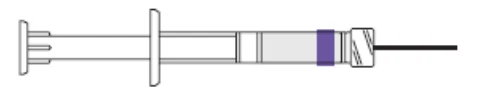
Product is now ready for application.
4.5 Missed Dose
Not Applicable
5 OVERDOSAGE
Overdose with ATRIDOX® is unlikely due to the small dose of doxycycline, extremely low serum doxycycline levels, and professional placement of ATRIDOX®. There have been no overdoses in ATRIDOX® clinical trials.
For management of a suspected drug overdose, contact your regional poison control centre.
6 DOSAGE FORMS, STRENGTHS, COMPOSITION AND PACKAGING
| Route of Administration | Dosage Form / Strength/Composition | Non-medicinal Ingredients |
| Topical (subgingivally) | Controlled-release gel supplied n a two-syringe set with 8.8% w/w doxycycline hyclate in a female Luer-LokTM coupling syringe (Syringe B) and the DOXYGEL™ Delivery System in a male Luer-LokTM coupling syringe (Syringe A). | 450 mg of the DOXYGEL™ Delivery System, which is a bioabsorbable, flowable polymeric formulation composed of 36.7% poly(DL-lactide) (PLA) dissolved in 63.3% N-methyl-2-pyrrolidone (NMP). |
Dosage Form and Strength
ATRIDOX® controlled-release doxycycline gel is a controlled-release dosage form applied topically (subgingivally) into periodontal pockets for the treatment of periodontal disease. Since the amount of product applied is dependent upon the morphology and number of periodontal pockets treated, ATRIDOX® is considered a variable-dose unit dependent on these factors.
The final blended product is 500 mg of formulation containing doxycycline hyclate equivalent to 44 mg doxycycline (8.8% w/w). It contains sufficient material to treat between 10 and 12 sites with pocket depths averaging 6 mm.
ATRIDOX® is supplied in a two-syringe set with doxycycline hyclate in a female Luer-LokTM coupling syringe (Syringe B) and the DOXYGEL™ Delivery System in a male Luer-LokTM coupling syringe (Syringe A). The clinician constitutes the product prior to use.
Composition
The dosage form consists of USP grade doxycycline hyclate in Syringe B and the DOXYGEL™ Delivery System which is a bioabsorbable, flowable polymeric formulation composed of 63.3% N-methyl-2-pyrrolidone (NMP) and 36.7% poly(DL-lactide) (PLA) in Syringe A.
Packaging
The ATRIDOX® product is available as a tray containing a doxycycline hyclate syringe (Syringe B) (50 mg), an DOXYGEL™ Delivery System syringe (Syringe A) (450 mg), and a blunt-ended cannula.
Each ATRIDOX® product syringe system is intended for use in only one patient. Do not use if tray has been previously opened or damaged.
7 WARNINGS AND PRECAUTIONS
General
THE USE OF DRUGS OF THE TETRACYCLINE CLASS DURING TOOTH DEVELOPMENT (SECOND HALF OF PREGNANCY, INFANCY, AND CHILDHOOD TO TWELVE YEARS) MAY CAUSE PERMANENT DISCOLOURATION OF THE TEETH. This adverse reaction is more common during long-term use of the drugs, but has been observed following repeated short-term courses. Enamel hypoplasia has also been reported. ATRIDOX®, THEREFORE, SHOULD NOT BE USED IN THIS AGE GROUP, OR IN PREGNANT WOMEN. (See CONTRAINDICATIONS)
Results of animal studies indicate that tetracyclines cross the placenta, are found in fetal tissues, and can have toxic effects on the developing fetus (often related to skeletal development). Evidence of embryotoxicity has also been observed in animals treated early in pregnancy.
ATRIDOX® has not been clinically tested in pregnant women.
ATRIDOX® has not been clinically evaluated in patients with conditions involving extremely severe periodontal defects with very little remaining periodontium.
Immune
ATRIDOX® has not been clinically tested in immunocompromised patients, such as patients immunocompromised by diabetes, chemotherapy, radiation therapy or HIV infection.
Peri-Operative Considerations
ATRIDOX® has not been clinically tested in regenerating alveolar bone, either in preparation for or in conjunction with placement of endosseous (dental) implants or in treatment of failing implants.
Renal
Accumulation of tetracyclines has been associated with renal failure. These effects have not been studied in the low plasma concentrations associated with ATRIDOX® controlled-release doxycycline gel.
Sensitivity/Resistance
As with other antibiotic preparations, ATRIDOX® therapy may result in overgrowth of nonsusceptible organisms, including fungi. ATRIDOX® should be used with caution in patients with a history of or predisposition to oral candidiasis.
The safety and effectiveness of ATRIDOX® have not been established for the treatment of periodontitis in patients with coexistent oral candidiasis.
Use of antibiotic preparations may result in the development of resistant bacteria. The effects of prolonged ATRIDOX® treatment for periods greater than nine months have not been studied.
Susceptibility/Resistance
Development of Drug Resistant Bacteria
Prescribing ATRIDOX® in the absence of a proven or strongly suspected bacterial infection is unlikely to provide benefit to the patient and risks the development of drug-resistant bacteria.
Sexual Health
Fertility
Animal studies (to evaluate carcinogenic potential, mutagenic potential or effects on fertility) for ATRIDOX® have not been performed. However, there has been evidence of oncogenic activity in rats in studies with the related antibiotics, oxytetracycline (adrenal and pituitary tumors), and minocycline (thyroid tumors). Likewise, although mutagenicity studies of doxycycline have not been conducted, positive results in in vitro mammalian cell assays have been reported for related antibiotics (tetracycline, oxytetracycline). Doxycycline administered orally at dosage levels as high as 250 mg/kg/day had no apparent effect on the fertility of female rats. Effect on male fertility has not been studied.
Skin
Photosensitivity manifested by an exaggerated sunburn reaction has been observed in some individuals taking doxycycline or other tetracyclines. Patients apt to be exposed to direct sunlight or ultraviolet light should be advised that this reaction can occur with tetracycline drugs. Treatment should be discontinued at the first sign of cutaneous erythema.
Avoid excessive sunlight or artificial ultraviolet light while receiving doxycycline.
7.1 Special Populations
7.1.1 Pregnant Women
Administration of tetracycline during pregnancy may cause permanent discolouration of the teeth of offspring. Animal studies indicate that tetracyclines can cause retardation of fetal skeletal development. Animal reproduction studies have not been conducted with ATRIDOX®. Also, it is unknown whether ATRIDOX® can cause fetal harm when administered to a pregnant woman or affects reproductive capacity. ATRIDOX® should not be given to a pregnant woman.
7.1.2 Breast-feeding
Tetracyclines appear in breast milk following oral administration. It is unknown whether doxycycline is excreted in human milk following use of ATRIDOX®. Because of doxycycline’s potential for serious adverse reactions in nursing infants, ATRIDOX® should not be used in nursing mothers.
7.1.3 Pediatrics
Pediatrics (< 18 years of age): Based on the data submitted and reviewed by Health Canada, the safety and efficacy of ATRIDOX® in pediatric patients has not been established; therefore, Health Canada has not authorized an indication for pediatric use. Oral doses of doxycycline in children up to age 8 years have caused permanent discolouration of teeth. (See also CONTRAINDICATIONS)
7.1.4 Geriatrics
No data are available to Health Canada; therefore, Health Canada has not authorized an indication for geriatric use.
8 ADVERSE REACTIONS
8.1 Adverse Reaction Overview
ATRIDOX® controlled-release doxycycline gel demonstrates a benign safety profile with no increased risk of untoward or serious adverse events beyond those associated with standard periodontal treatments. In two controlled, multi-centre, parallel-design, nine-month clinical trials, treatment-related adverse events generally did not significantly differ among patients treated with ATRIDOX®, scaling and root planing, oral hygiene, or placebo.
8.2 Clinical Trial Adverse Reactions
Because clinical trials are conducted under very specific conditions, the adverse reaction rates observed in the clinical trials may not reflect the rates observed in practice and should not be compared to the rates in the clinical trials of another drug. Adverse reaction information from clinical trials is useful for identifying drug-related adverse events and for approximating rates.
In eleven clinical trials with a total of 1827 patients, two patients in the placebo group reported adverse events consistent with a localized allergic response. This represents a 0.2% incidence rate (incidence includes total number of ATRIDOX® and placebo patients, n = 1022), indicating that patients had a very low risk for an allergic response following the use of ATRIDOX®. Table 1 lists the incidence of treatment-emergent adverse events from all-causalities, across all treatment groups, occurring in ≥ 1% of subjects in Phase 3 clinical investigations.
Table 1: Treatment-Emergent Adverse Events from All-Causalities (occurring in ≥ 1% of subjects in Phase 3 clinical investigations)
Body System Verbatim Terms | Doxycycline n=609 | Vehicle n=413 | OH n=204 | SRP n=210 |
|---|---|---|---|---|
Circulatory High blood pressure Digestive Gum discomfort, pain or soreness; loss of attachment; increased pocket depth Toothache, pressure sensitivity Periodontal abscess, exudate, infection, Drainage, extreme mobility, suppuration Thermal tooth sensitivity Gum inflammation, swelling, sensitivity Soft tissue erythema, sore mouth, Unspecified pain Indigestion, upset stomach, stomachache Diarrhea Tooth mobility, bone loss Periapical abscess, lesion Aphthous ulcer, canker sores Fistula Endodontic abscess, pulpitis Jaw pain | 1.6% 18.1% 14.3% 9.9% 7.7% 4.1% 4.3% 3.6% 3.3% 2.0% 1.5% 0.7% 0.8% 1.5% 1.1% | 0.2% 23.0% 14.3% 10.9% 8.5% 5.8% 5.3% 4.1% 2.4% 0.7% 1.9% 1.7% 1.5% 1.5% 0.5% | 0.0% 20.1% 10.3% 10.3% 4.4% 5.4% 2.7% 2.9% 1.0% 0.5% 1.0% 1.0% 1.5% 0.0% 1.0% | 0.0% 21.0% 18.1% 8.6% 6.7% 5.7% 6.2% 3.8% 1.0% 2.4% 0.5% 1.4% 1.0% 0.5% 1.9% |
Body System Verbatim Terms | Doxycycline n=609 | Vehicle n=413 | OH n=204 | SRP n=210 |
|---|---|---|---|---|
Tooth loss Bleeding gums Genitourinary Premenstrual tension syndrome Ill-Defined Conditions Headache Cough Sleeplessness Body aches, soreness Nausea and vomiting Fever Injury & Poisoning Broken tooth Mental Tension headache Musculoskeletal Muscle aches Backache Pain in arms or legs Lower back pain Neck pain Shoulder pain Nervous System Ear infection Respiratory Common cold Flu, respiratory Stuffy head, post nasal drip, congestion Sore throat Sinus infection Flu Bronchitis Allergies Skin & Subcutaneous Tissue Skin infection or inflammation | 0.8% 1.0% 4.4% 27.3% 3.6% 3.4% 1.6% 1.8% 1.0% 5.1% 1.8% 6.4% 3.6% 1.5% 1.6% 1.3% 1.0% 1.6% 25.5% 6.1% 5.6% 5.7% 5.3% 2.8% 2.3% 1.0% 1.3% | 1.5% 0.7% 3.1% 28.1% 6.1% 1.5% 1.2% 0.7% 1.9% 4.1% 0.7% 4.6% 5.3% 2.2% 1.7% 1.7% 1.0% 1.9% 25.2% 9.0% 7.7% 6.5% 2.7% 2.9% 1.9% 1.0% 1.0% | 1.5% 0.0% 2.5% 23.5% 2.9% 2.0% 1.5% 2.5% 1.0% 4.9% 0.0% 4.9% 2.5% 2.0% 0.5% 1.0% 1.5% 2.0% 18.1% 3.9% 2.9% 2.0% 1.0% 2.9% 1.5% 1.0% 1.0% | 0.0% 2.4% 3.3% 23.8% 2.4% 2.9% 1.4% 0.5% 1.9% 5.7% 1.0% 3.3% 6.2% 2.4% 2.9% 1.9% 1.0% 0.0% 16.7% 6.7% 4.8% 3.3% 1.9% 3.3% 1.0% 1.9% 1.0% |
In the Circulatory System category, 10 subjects (1.6%) in the ATRIDOX® group were reported as having “unspecified essential hypertension.” Only 1 subject (0.2%) in the Vehicle group, and none in the Scaling and Root Planing or Oral Hygiene groups were reported to have “unspecified essential hypertension.” In all cases, the event occurred anywhere from 13 to 134 days post treatment. There is no known association of oral administration of doxycycline with essential hypertension.
Two patients in the polymer vehicle group and none in the ATRIDOX® group (0.2% for both groups combined) reported adverse events consistent with a localized allergic response.
Sex, age, race and smoking status did not appear to be correlated with adverse events.
8.3 Less Common Clinical Trial Adverse Reactions
Not Applicable
8.4 Abnormal Laboratory Findings: Hematologic, Clinical Chemistry and Other Quantitative Data
Not Applicable
8.5 Clinical Trial Adverse Reactions (Pediatrics)
Not Applicable
8.6 Post-Market Adverse Reactions
Post-Market Adverse Reactions
Post-marketing adverse events for ATRIDOX® are generally consistent with those reported in Clinical Trial Adverse Reactions above, with regard to severity, frequency, and/or character. Adverse reactions which were not reported in the clinical trials are listed below (categorized by MedDRA SOC).
Musculoskeletal:
Pain in jaw
Metabolism and Nutrition:
Blood glucose decreased
Nervous System:
Burning sensation
Skin and Subcutaneous Tissue:
Rash, rash pruritic, alopecia, nail disorder
9 DRUG INTERACTIONS
9.1 Serious Drug Interactions Box
Not Applicable
9.2 Overview
Tetracyclines, including doxycycline, may decrease the effectiveness of hormonal contraceptives. Tetracyclines may also potentiate the effects of oral anticoagulants. Serious impairment of renal function has been reported after concurrent use of methoxyflurane anesthesia and tetracyclines.
9.3 Drug-Drug Interactions
Tetracyclines may potentiate the effects of oral anticoagulants. These effects have not been studied in the low plasma concentrations associated with ATRIDOX® controlled-release doxycycline gel.
Concurrent use of methoxyflurane anesthesia and tetracyclines has been reported to seriously impair renal function, leading in some cases to death. These effects have not been studied in the low plasma concentrations associated with ATRIDOX® controlled-release doxycycline gel.
Doxycycline may decrease the effectiveness of birth control pills.
9.4 Drug-Food Interactions
Not Applicable
9.5 Drug-Herb Interactions
Not Applicable
9.6 Drug-Laboratory Test Interactions
Not applicable
9.7 Drug-Lifestyle Interactions
Patients should avoid mechanical oral hygiene procedures (i.e. tooth brushing, flossing) on any treated area for seven days.
Patients should avoid excessive sunlight or artificial ultraviolet light while receiving doxycycline.
10 ACTION AND CLINICAL PHARMACOLOGY
10.1 Mechanism of Action
ATRIDOX® controlled-release doxycycline gel is a subgingival controlled-release product containing doxycycline. Doxycycline is a semi-synthetic tetracycline. It is bacteriostatic and inhibits bacterial protein synthesis due to the disruption of transfer and messenger RNA at ribosomal sites. Doxycycline has a broad-spectrum of antimicrobial activity against gram-positive and gram-negative aerobic and anaerobic bacteria, spirochetes, and mycoplasma. In vitro testing has shown that periodontal pathogens such as Actinobacillus actinomycetemcomitans, Porphyromonas gingivalis, Prevotella intermedia, Campylobacter rectus, and Fusobacterium nucleatum are susceptible to < 6.0 µg/mL doxycycline. (For details, see MICROBIOLOGY.)
ATRIDOX® delivers doxycycline directly to the periodontal pocket over an extended period. It is a flowable, bioabsorbable liquid which solidifies upon contact with aqueous fluids in the periodontal pocket, resulting in a controlled-release delivery system for the incorporated doxycycline, with gain in attachment level, reduction in probing depth and reduction in bleeding on probing between Baseline and Month 9 in clinical studies. (For further details, see CLINICAL TRIALS.)
10.2 Pharmacodynamics
Not Applicable
10.3 Pharmacokinetics
In clinical pharmacokinetic studies, doxycycline concentrations in gingival crevicular fluid (GCF) peaked (approx. 1500 µg/mL) two hours following treatment with ATRIDOX®. Levels remained above 1000 µg/mL through 18 hours, when they began to gradually decline to 140 µg/mL at Day 7. Local levels of doxycycline remained well above the minimum inhibitory concentration (MIC90) for periodontal pathogens (< 6.0 µg/mL) for seven days post-treatment. In comparison, subjects receiving oral doxycycline had peak GCF levels of 2.5 µg/mL at 12 hours following the initial oral dosing, with levels declining to 0.2 µg/mL by Day 7. High variability was observed for doxycycline levels in GCF for both oral and ATRIDOX® treatment groups. In comparison with administration of oral doxycycline, treatment with ATRIDOX® resulted in 1) initial local GCF levels approximately 600 times greater than those achieved with oral doxycycline, and 2) seven day local GCF levels that were approximately 740 times the levels achieved in GCF after seven days of oral doxycycline.
Following use of ATRIDOX®, the maximum doxycycline concentration in the saliva two hours post-treatment was 4.05 µg/mL. This decreased to 0.36 µg/mL by Day 7. The concentration of doxycycline in serum following treatment with the ATRIDOX® product never exceeded 0.1 µg/mL. Extremely high levels of drug available at the periodontal site, relatively low levels in the saliva and extremely low levels in serum indicate that this is a suitable method of delivering doxycycline hyclate into periodontal pockets.
The pharmacokinetic profile of doxycycline hyclate from ATRIDOX® controlled-release doxycyline gel was studied in two studies described in Table 2. Table 2 below outlines two pharmacokinetic studies of doxycycline hyclate.
Table 2: Human Pharmacokinetic Studies
| Study | Study Design | Objectives | Treatment | Subjects | Treatment |
|---|---|---|---|---|---|
| I | single-centre, single-blind, randomized, parallel | Characterize release profile of doxycycline in GCF, saliva and serum of subjects with chronic adult periodontitis | ATRIDOX® & Coe-PakTM ATRIDOX® & OctyldentTM Oral doxycycline 100-200 mg qd | 13 13 6 | 7 days x 1 application up to 3 months x 1 application 8 days |
| II (feasibility study) | multi-centre, open label, randomized, parallel | Quantitate and compare doxycycline release characteristics of ATRIDOX® Product covered with different retentive material in GCF of subjects with chronic adult periodontitis | ATRIDOX® & Coe-PakTM ATRIDOX® & OctyldentTM ATRIDOX® & No retentive material ATRIDOX® & Coe-PakTM & OctyldentTM | 12 12 12 4* | Up to 28 days x 1 application Up to 6 hours x 1 application |
* Four supplemental subjects were enrolled to train investigators in GCF sampling procedures (ATRIDOX® product was removed at 6 hours)
Results of Study I showed doxycycline concentrations in GCF peaked at 2 hours in both the Coe-PakTM (mean value = 1500 µg/mL) and OctyldentTM (mean value = 2000 µg/mL) ATRIDOX® groups. These levels remained above 1000 µg/mL in both groups through 18 hours at which time the levels began to gradually decline. By Day 7, the mean GCF doxycycline concentrations in the Coe-PakTM and OctyldentTM groups were 317 µg/mL and 148 µg/mL, respectively. In comparison, subjects receiving oral doxycycline had a peak GCF level of 2.5 µg/mL at 12 hours following the initial oral dose with levels declining to 0.2 µg/mL by Day 7. High variability was observed for doxycycline levels in GCF for both oral and ATRIDOX® treatment groups.
Doxycycline concentrations in saliva also peaked at two hours in both the Coe-PakTM (mean value = 4 µg/mL) and OctyldentTM (mean value = 9 µg/mL) groups. These levels dropped below 2 µg/mL at 6 hours in the Coe-PakTM group and at 24 hours in the OctyldentTM group. Minimal doxycycline was detected in the saliva of subjects administered oral doxycycline, with the highest level achieved at 18 hours on Day 1 (0.12 µg/mL).
Low levels of doxycycline were detectable in the serum in both ATRIDOX® groups. Mean doxycycline concentrations of 0.08 to 0.10 µg/mL were measured from two to eight hours post product application. Levels dropped to between 0.05 and 0.07 µg/mL from Hour 12 to Hour 24 (Day 1). After Day 2, serum levels of doxycycline were undetectable (limit of detection of assay = 0.04 µg/mL). In contrast, subjects receiving 100 mg oral doxycycline had serum doxycycline levels ranging from 0.9 to 2.3 µg/mL over the eight days of treatment. Table 3 summarizes the pharmacokinetic data for this study.
Table 3: Pharmacokinetic Summary Comparing Treatment Groups
| Body Fluid | Parameter | Coe-PakTM (Mean Value) | OctyldentTM (Mean Value) | Oral doxycycline (Mean Value) |
| GCF1 | Cmax (µg/mL) | 2,640.00 | 3,110.00 | 3.50 |
| AUC (µg-hr/mL) | 120,000.00 | 93,000.00 | 115.00 | |
| Tmax (hours) | 24.26 | 10.56 | 23.83 | |
| Serum2 | Cmax (µg/mL) | 0.12 | 0.10 | 2.60 |
| AUC (µg-hr/mL) | 2.32 | 2.10 | 264.00 | |
| Tmax (hours) | 5.14 | 5.08 | 15.85 | |
| Saliva1 | Cmax (µg/mL) | 4.15 | 8.41 | 0.12 |
| AUC (µg-hr/mL) | 92.8 | 148.00 | 10.50 | |
| Tmax (hours) | 3.68 | 2.30 | 18.03 |
1 Mean of GCF and Saliva data through Day 7
2 Mean of Serum data through Day 8
Study II was a feasibility study conducted prior to Study I. The results of this study demonstrated that a single application of product provided high local levels of doxycycline in GCF through seven days. There was an initial burst of doxycycline (approximately 950-1300 µg/mL) by two hours, followed by controlled-release. Doxycycline levels in GCF remained well above MIC90 levels (< 6 µg/mL) for periodontal pathogens through Day 7.
Both pharmacokinetic studies demonstrated high local levels of doxycycline in GCF for seven days after a single application of ATRIDOX®. Evaluating drug levels in the serum demonstrated that a single application of the treatment results in relatively low systemic exposure.
Table 4 compares doxycycline concentrations at various time points in dressing (OctyldentTM) and no-dressing groups. Levels of doxycycline are well above the MIC90 for suspected periodontal pathogens (< 6 µg/mL) at all time points through Day 7 in both treatment groups. These data support use of the product without use of a dressing.
Table 4: Summary of Doxycycline Concentration by Timepoint (Dressing and No-Dressing)
| Time Point | OCTYLDENTTM TREATMENT GROUP (µg/mL) | NO-DRESSING TREATMENT GROUP (µg/mL) | ||||
| N | Mean | S.E. | N | Mean | S.E. | |
| Baseline | 12 | 0.00 | 0.00 | 12 | 0.00 | 0.00 |
| Hour 2 | 12 | 928 | 211 | 12 | 918 | 233 |
| Hour 4 | 12 | 330 | 120 | 12 | 599 | 110 |
| Hour 6 | 12 | 569 | 127 | 12 | 589 | 209 |
| Hour 8 | 12 | 442 | 8501 | 12 | 653 | 279 |
| Hour 18 | 12 | 689 | 186 | 12 | 885 | 212 |
| Day 1 | 12 | 819 | 346 | 12 | 565 | 105 |
| Day 2 | 12 | 878 | 175 | 12 | 547 | 145 |
| Day 3 | 12 | 1530 | 336 | 12 | 954 | 303 |
| Day 5 | 12 | 151 | 43.8 | 12 | 149 | 57.3 |
| Day 7 | 12 | 753 | 350 | 12 | 136 | 45.1 |
11 STORAGE, STABILITY AND DISPOSAL
Store at 2–8 °C. After product constitution, the product is to be stored at room temperature up to three days between 15–30°C.
12 SPECIAL HANDLING INSTRUCTIONS
Not Applicable
PART II: SCIENTIFIC INFORMATION
13 PHARMACEUTICAL INFORMATION
Drug Substance
Proper name: Doxycycline Hyclate Controlled-Release Gel
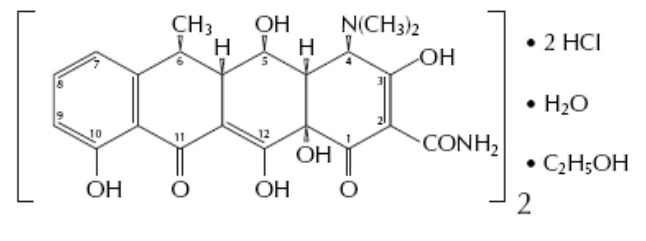
Chemical name: [4S-(4α,4aα,5α,5aα,6α,12aα)]-4-(Dimethylamino)-1,4,4a,5,5a,6,11,12a-octohydro-3,5,10,12,-12a-pentahydroxy-6-methyl-1,11-dioxo-2-naphthacenecarboxamide monohydrate
Molecular formula and molecular mass: (C22H24N2O8•HCl)2•C2H6O•H2O The molecular weight of Doxycycline (C22H24N2O8) is 444.45. The molecular weight of Doxycycline Hyclate is 1025.89.
Structural formula:
Monohydrate [4S-(4α,4aα,5α,5aα,6α,12aα)]-4-(dimethylamino)-1,4,4a,5,5a,6,11,12a-octohydro-3,5,10,12,-12a-pentahydroxy-6-methyl-1,11-dioxo-2-naphtacenecarboxamide
Physicochemical properties: Doxycycline hyclate is a light yellow, crystalline powder that is soluble in water. It is an amphoteric substance, like all tetracyclines, with 3 acid groups of respective pka 3.4, 7.7, 9.7 and an isoelectric point at pH of 5.6, where the molecule is most lipophilic.
14 CLINICAL TRIALS
14.1 Trial Design and Study Demographics
Four controlled clinical trials were conducted with ATRIDOX® (See Table 5). These studies mimicked the frequency of periodontal treatment in clinical practice where patients are usually seen every four months for maintenance-type visit. Hence, subjects received two applications, at Baseline and at Month 4. The primary clinical endpoint was attachment level, defined as the distance from the cemento-enamel junction to the tip of the periodontal probe during periodontal probing. The secondary clinical endpoints were change in probing depth and bleeding on probing.
In Study 1, a uniphase drug dosage form was used. This dosage form was the initial formulation studied during drug development, with the same doxycycline concentration [8.8% w/w] and release characteristics as the two-phase dosage form (ATRIDOX®) developed for the other clinical studies.
Table 5: Well-Controlled Clinical Studies with ATRIDOX®
| Study | Study Design | Objectives | Treatment | No. of Subjects | Treatment |
| Study 1 (Polson et al.1) | Randomized, single-blind, parallel placebo control 9 month duration | Compare periodontal effects of treatment for chronic adult periodontitis with:
ii) SaCl2 vs. placebo control iii) ATRIDOX® vs. SaCl | 5% SaCl2 with Coe-PakTM Uniphase drug dosage for with Coe-PakTM Placebo with Coe-PakTM | 60 61 59 | 7 days x 2 applications |
| Study 2 | Randomized, single-blind, parallel placebo control, oral hygiene control, SRP3 control 9 month duration | Compare periodontal effects of treatment for chronic adult periodontitis with:
ii) ATRIDOX® vs. oral hygiene iii) ATRIDOX® vs. SRP3 | ATRIDOX® with Coe-PakTM Placebo with Coe-PakTM Oral hygiene SRP3 | 101 104 102 104 | 7 days x 2 applications |
| Study 3 | Randomized, single-blind, parallel placebo control, oral hygiene control, SRP3 control | Compare periodontal effects of treatment for chronic adult periodontitis with:
ii) ATRIDOX® vs. oral hygiene iii) ATRIDOX® vs. SRP3 | ATRIDOX® with Coe-PakTM Placebo with Coe-PakTM Oral hygiene SRP3 | 106 106 102 108 | 7 days x 2 applications |
| Study 4 | Randomized, single-blind, parallel placebo control | Compare periodontal effects of treatment for chronic adult periodontitis with:
Compare periodontal effect of treatment for chronic adult periodontitis with:
ii) ATRIDOX® removed vs. Placebo left in | ATRIDOX® with OctyldentTM ATRIDOX® with Coe-PakTM Placebo with OctyldentTM | 198 204 203 | 7 days x 2 applications |
1 Polson et al. Journal of Periodontology, February 1997 68:110-118; 68:119-126
2 DOXYGEL™ Delivery System with 5% sanguinarium chloride (w/w)
3 Scaling and Root Planing
14.2 Study Results
Results among the four trials were consistent (See Table 6). Doxycycline treatment was statistically superior to placebo in terms of attachment level gain and pocket depth reduction at nine months after initial treatment. Doxycycline was also superior to oral hygiene and clinically comparable to SRP at nine months. Treatment with doxycycline also demonstrated reduced bleeding on probing in all four studies. This was statistically superior to oral hygiene (Study 2, 3) and placebo (Study 1, 3, 4).
Doxycycline treatment resulted in a nine month attachment gain of 1.0 mm (Study 1) and 0.8 mm (Study 2, 3, 4). This provides evidence for the efficacy of ATRIDOX®. Comparison of the doxycycline treatment to SRP (Study 2, 3) indicated nearly identical clinical improvements, again supporting the efficacy of ATRIDOX®. (See Table 6.)
Table 6: Efficacy Results
| Study | Parameter | Treatment Group | N | Baseline Mean | Mean Change from Baseline | |||||||||
| Month 4 | Month 6 | Month 9 | ||||||||||||
| Study 1 | Attachment Level | ATRIDOX® Placebo SaCl1 | 56 53 54 | 5.3 5.6 5.5 | 0.9* 0.6 0.8 | 1.2* 0.8 0.6 | 1.0* 0.6 0.5 | |||||||
Probing Depth | ATRIDOX® Placebo SaCl | 56 53 54 | 6.0 6.0 6.0 | 1.5* 1.0 1.2 | 1.9* 1.2 1.2 | 1.8* 1.2 1.1 | ||||||||
| Study 2 | Attachment Level | ATRIDOX® Placebo OH2 SRP3 | 95 94 95 99 | 6.1 6.1 6.2 5.8 | 0.6*† 0.3 0.4 0.6 | 0.8*† 0.1 0.3 0.7† | 0.8*† 0.1 0.3 0.6† | |||||||
Probing Depth | ATRIDOX® Placebo OH SRP | 95 94 95 99 | 6.0 5.9 6.0 5.9 | 0.9† 0.8 0.6 0.9† | 1.1*† 0.8 0.5 1.1*† | 1.1*† 0.8 0.5 0.9† | ||||||||
| Study 3 | Attachment Level | ATRIDOX® Placebo OH SRP | 96 96 94 103 | 5.6 5.9 6.0 5.7 | 0.7*† 0.4 0.5 0.6 | 0.8*† 0.4 0.5 0.7 | 0.8*† 0.5 0.5 0.9† | |||||||
Probing Depth | ATRIDOX® Placebo OH SRP | 96 96 94 103 | 5.9 6.0 5.9 5.9 | 1.0*† 0.7 0.7 1.1† | 1.3*† 0.9 0.9 1.3*† | 1.3*† 1.0 0.9 1.3† | ||||||||
| Study 4 | Attachment Level | ATRIDOX® left in ATRIDOX® removed Placebo left in | 185 194 193 | 6.1 6.2 5.7 | 0.7* 0.7* 0.5 | 0.8* 0.8* 0.5 | 0.8* 0.8* 0.6 | |||||||
Probing Depth | ATRIDOX® left in ATRIDOX® removed Placebo left in | 185 194 193 | 5.9 5.9 5.8 | 0.9* 1.0* 0.7 | 1.1* 1.1* 0.9 | 1.1* 1.2* 0.8 | ||||||||
1 DOXYGEL™ Delivery System with 5% sanguinarium chloride (w/w)
2 OH = oral hygiene
3 SRP = scaling and root planing
* ATRIDOX® group statistically superior to Placebo (p < 0.05)
† ATRIDOX® or SRP group statistically superior to OH (p < 0.05)
Data from the four studies indicate use of the ATRIDOX® product with Coe-PakTM, OctyldentTM or no retentive material system.
ATRIDOX® has a benign safety profile regardless of how long the product is retained in the periodontal pocket. Nothing indicates that leaving the remaining product in the periodontal pocket to bioabsorb or be expelled naturally leads to an increased risk of adverse events or adversely affects clinical efficacy.
Early loss of the product following placement does not effect clinical responses (see Table 7). Within patient comparisons between sites where product was lost early and where it was retained for seven days show no differences in clinical efficacy.
Table 7: Clinical Response Following Early Loss of ATRIDOX®
| Clinical Index | Polymer Retention Period | # of Subjects | Product Not Retained | Retained > 7 days | p-value* | ||||||
| Mean (s.e.) | # of Sites | Mean (s.e.) | # of Sites | ||||||||
| Attachment Level Gain | < 3 Days | 32 | 0.85 (0.19) | 142 | 0.88 (0.13) | 360 | 0.833 | ||||
| < 5 Days | 47 | 0.72 (0.15) | 256 | 0.74 (0.19) | 548 | 0.893 | |||||
| Probing Depth Reduction | < 3 Days | 43 | -1.14 (0.17) | 159 | -1.19 (0.11) | 588 | 0.802 | ||||
| < 5 Days | 61 | -1.05 (0.13) | 280 | -1.07 (0.09) | 833 | 0.913 | |||||
| Bleeding on Probing Reduction | < 3 Days | 43 | -0.77 (0.10) | 159 | -0.70 (0.07) | 588 | 0.575 | ||||
| < 5 Days | 61 | -0.72 (0.08) | 280 | -0.61 (0.06) | 833 | 0.315 | |||||
* Analysis is based on subject means
14.3 Comparative Bioavailability Studies
Not Applicable
15 MICROBIOLOGY
In vitro Susceptibility
Tetracyclines have a broad spectrum of antimicrobial activity against anaerobic, microaerophilic and facultatively anaerobic gram-positive and gram-negative bacteria associated with periodontal disease.
MIC90 testing of doxycycline and tetracycline against various periodontal pathogens has been performed using a broth microtube methodology. Table 8 lists the MIC90 test results. The data indicate a high degree of susceptibility to both doxycycline and tetracycline.
Table 8: Susceptibility of Periodontal Pathogens to Doxycycline and Tetracycline (MIC90)
| Microorganism (No. of strains) | Doxycycline (µg/mL) | Tetracycline (µg/mL) | ||
| MIC90* | Range | MIC90* | Range | |
Actinobacillus actinomycetemcomitans (12) Campylobacter rectus (5) Fusobacterium nucleatum (10) Porphyromonas gingivalis (5) Prevotella intermedia (8) | 4 0.25 0.063 0.063 0.5 | 0.063-0.8 0.063-0.25 0.063 0.063 < 0.063-1 | 16 0.5 0.125 0.125 1 | 0.063-16 0.063-0.5 0.063-0.25 0.063-0.125 < 0.063-2 |
* MIC90 is the concentration at which the drug inhibits 90% of strains tested.
Antimicrobial Resistance to Doxycycline
Walker et al. determined the antibiotic susceptibilities of approximately 300 bacterial strains isolated from adult periodontitis patients between 1991-1995. The MIC90 values for this study were compared to those generated in a similar study where the antibiotic susceptibilities were determined for approximately 900 bacterial strains isolated from adult periodontitis patients between 1980-1985. Comparison of the previous and recent susceptibilities resulted in a 172% and 193% increase in resistance to tetracycline and doxycycline, respectively. The observed increase in resistance to tetracyclines in the above study is after oral administration of the antibiotic. Such resistance to tetracyclines is not observed after use of ATRIDOX® controlled-release doxycycline gel since doxycycline is delivered directly to the periodontal pocket with minimal absorption into the saliva.
Olsvik et al. examined periodontal bacteria resistant to 10 µg/mL tetracycline, which had been isolated from patients treated systemically with the antibiotic for periodontitis. Researchers found that 22.9% of the total cultivatable bacteria were resistant compared to 7.2% in an untreated control group. Most of the resistant bacteria were streptococci.
Walker, et al. and Olsvik, et al. describe bacteria resistant to 4 and 10 µg/mL of doxycycline and tetracycline, respectively, with controlled-release delivery systems placed directly into diseased periodontal pockets, such as ATRIDOX®, much higher levels of drug can be sustained over longer periods. In a primary pharmacokinetic study in humans using ATRIDOX®, mean doxycycline concentrations in gingival crevicular fluid (GCF) were greater than 800 µg/mL throughout the first 24 hours following product administration, greater than 300 µg/mL on Days 2, 3, and 5 and greater than 100 µg/mL on Day 7.
A randomized, well-controlled, single-blind, single-centre microbial resistance study was conducted to observe the effect of ATRIDOX® on doxycycline-resistant microbiota. Forty-five subjects received either ATRIDOX® through subgingival administration into periodontal pockets or oral hygiene. Results showed an absence of large increases in doxycycline-resistant bacteria in the subgingival plaque and only a transient increase in resistant bacteria in saliva immediately after treatment with ATRIDOX®. Apparently, the types of doxycycline-resistant bacteria found throughout the study (streptococci, Fusobacterium prausnitizii, Clostridium malenominatum, Bifidobacterium, Campylobacter concisus) were part of the normal microbiota that were intrinsically resistant to doxycycline as well as other antibiotics. Both ATRIDOX® and oral hygiene treatments resulted in reduction of periodontal pathogens in treated periodontal pockets. However, the magnitude of reductions was greater following ATRIDOX® treatment. Reduction in the periodontal pathogens and total anaerobic bacteria was consistent with a microbial shift towards periodontal health. No doxycycline resistance was observed in periodontal pathogens following treatment with ATRIDOX®.
16 NON-CLINICAL TOXICOLOGY
Acute Toxicity
Doxycycline has a low acute toxicity potential for both oral and parenteral administration. The oral LD50 values in mice are 1007 mg/kg for males and 757 mg/kg for females, > 2000 mg/kg in rats and > 500 mg/kg in dogs. After intraperitoneal injection, LD50 values in mice, guinea pigs and rats are 204, 175, and 281 mg/kg respectively. There is no difference in LD50 values between newborn and adult rats.
Poly(DL-lactide) (PLA) is a well known biodegradable polymer approved for use in surgical sutures, plates and screws. It is also used as an aid to prevent dry sockets when used in tooth extraction sites. There are a number of published reports on the use of PLA in dental conditions. Olson et al. found that a PLA mesh was well tolerated and did not interfere with the healing process in tooth extraction sites in dogs. Magnusson et al. used a model in the dog of healing after periodontal surgery to compare the effects of PLA membranes, with a degradation time of 2 to 3 months, with
Millipore filters and untreated controls. Similar healing properties have been reported with ATRISORB® GTR Barrier material, which contains PLA, in surgically-induced or naturally occurring periodontitis in dogs by Polson et al.
The biological process by which the alpha-polyesters such as PLA degrade is principally by hydrolysis into lactic acid. Lactic acid generated in the aqueous environment of human tissues becomes incorporated into the TCA cycle and is excreted by the lungs as carbon dioxide and water. Brady et al., using 14C-labelled PLA implanted into the abdominal wall of rats reported that less than 0.3% of radioactivity was found in the tissues analyzed. The majority of the radiolabel after 168 days was found to be respired (29.4%) with only 4.6% and 2.8% in the urine and feces respectively.
Overall, PLA is a well recognized and widely used material in surgical and dental conditions which is well tolerated and degraded by natural processes.
N-methyl-2-pyrrolidone (NMP) - LD50 values in mice and rats for NMP are found in Table 9.
Table 9: Median LD50 values (and ranges) mg/kg in mice and rats for NMP
| MOUSE | RAT | ||||
| i.v. | i.p. | p.o. | i.v. | i.p. | p.o. |
3.5 (3.1-3.9) | 4.3 (4.0-4.6) | 7.5 (5.9-9.6) | 2.2 (2.1-2.4) | 2.4 (2.3-2.6) | 3.8 (3.1-4.4) |
(from: Bartsch et.al., 197623)
Clark et al. reported deaths in rats following dermal doses of 5 or 10 g/kg but not with 2.5 g/kg, mild irritancy was observed. This low degree of toxicity was similar to LD50 values in another dermal study in rabbits with normal skin of 4 to 8 g/kg and with abraded skin of 2 to 4 g/kg. In a single dose inhalation study in rats with exposure to NMP for 6 hours and observation for 2 weeks no deaths occurred at 40 mg/L.
ATRIDOX® controlled-release doxycyline gel: In view of the low systemic absorption, and the relative lack of non-clinical information on doxycycline toxicity in the literature, no acute toxicity studies were conducted with ATRIDOX®.
Chronic Toxicity
Doxycycline: Chronic toxicity studies in the rat, dog, and monkey revealed the characteristic tetracycline effect of non-reversible bone, teeth and thyroid staining. However, doxycycline was not associated with toxicity.
PLA: No data available
NMP:
Table 10: Chronic Toxicity of NMP
| Route | Species | NOEL/NOAEL* | Reference |
| Subcutaneous | Mice | 25 mg | Van Esch and Kroes, 1972 |
| Oral | Mice | 277 mg/kg/day | BASF Report, 1995 |
| Oral | Rat | 90 mg/kg/day | Haskell Laboratory for Toxicology and Industrial Medicine, 1995 |
| Oral | Dog | 250 mg/kg/day | Becci, 1982 |
| Inhalation | Rat | 0.4 mg/L | Lee et al., 1987 |
* NOEL = No Observed Effect Level; NOAEL = No Observed Adverse Effect Level
Oral toxicity studies of 90 days duration have been conducted to internationally recognized guidelines in the mouse, rat and beagle dog. Overall, little toxicity has been shown.
ATRIDOX® controlled-release doxycycline gel: No chronic toxicity studies were conducted with ATRIDOX®.
Carcinogenesis and Mutagenesis
Animal studies (to evaluate carcinogenic potential and, mutagenic potential) for ATRIDOX® have not been performed. However, there has been evidence of oncogenic activity in rats in studies with the related antibiotics, oxytetracycline (adrenal and pituitary tumors), and minocycline (thyroid tumors). Likewise, although mutagenicity studies of doxycycline have not been conducted, positive results in in vitro mammalian cell assays have been reported for related antibiotics (tetracycline, oxytetracycline).
Doxycycline: No data on the mutagenic or carcinogenic potential of doxycycline are available.
PLA: Although it is of limited relevance to the use of the NMP/PLA polymer formulation in ATRIDOX®, a recent report of the experimental tumorigenicity of PLA plates is noted. Plates of PLA or control, medial grade polyethylene, were implanted subcutaneously in rats which were killed after 2 years; sham operated rats acted as controls. Virtually no degradation of the PLA plates had occurred after 2 years. Malignant tumors at the implantation site occurred in 22/50 and 23/50 rats treated with PLA and polyethylene, respectively. Induction of foreign body tumors at implantation sites is well recognized in rodents but the clinical importance of this finding is limited.
NMP: Several mutagenicity studies have been conducted on NMP. No tests, either in vitro or in vivo, revealed signs of mutagenic potential. In vitro studies in yeast demonstrated that NMP can induce aneuploidy, without any genetic effects, but an in vivo micronucleus test with this organism demonstrated a negative result. Chinese hamsters exposed to six weeks of inhalation also demonstrated a negative result for chromosome damage in the bone marrow. Long-term studies in mice and rats have shown no carcinogenic potential.
ATRIDOX® controlled-release doxycycline gel: Extensive administration of oral and parenteral doxycycline for more than 30 years has shown no evidence of mutagenic or carcinogenic potential. Since ATRIDOX® is essentially a single-use topical product, no studies on the product have been conducted.
Reproductive Toxicity and Teratology
Doxycycline administered orally at dosage levels as high as 250 mg/kg/day had no apparent effect on the fertility of female rats. Effect on male fertility has not been studied.
In reproductive toxicity studies, no evidence of embryo toxicity or teratogenicity associated with doxycycline has been observed with oral dosages of 20 mg/kg/day in the mouse, and 20 and 50 mg/kg/day in the rabbit. Cahen and Fave reported that doses 100 times greater than the clinical oral dose produced no fetal malformations, abortions, or fetal resorption in mice, rats and rabbits. However, tetracyclines, as a class, cross the placenta and have been reported to be embryotoxic in animals treated in early pregnancy. Additionally, permanent discolouration of the teeth can occur during tooth development in late pregnancy and in children up to eight years. Tooth staining occurs in pups when the bitch is given tetracycline during the last two to three weeks of pregnancy and to pigs during their first month of life.
PLA: No data available
NMP: Studies where NMP is administered dermally to rats and orally to rabbits have demonstrated embryolethality and increased incidences of malformations. However, this occurs only in the presence of significant maternal toxicity as shown by reductions in body weight and food consumption. Thus, NMP shows embryotoxicity and teratogenic potential at high oral or dermal doses. Evidence indicates that the effects occur only at doses which induce maternal toxicity. However, a direct effect of the compound cannot be ruled out.
ATRIDOX® controlled-release doxycycline gel: No reproductive toxicity studies were conducted on ATRIDOX®, however it is contraindicated during pregnancy and lactation and in young children because of the doxycycline content.
Local Irritation
Subgingival application of ATRIDOX® in the dog results in transient slight irritancy that quickly resolves. The constituents of the polymer formulation, PLA and NMP, and the polymer itself, have shown little, if any, increase in irritancy potential in comparison to control materials, such as saline and USP Control Plastic. No dermal sensitizing potential for doxycycline or the polymer formulation was observed in the guinea pig, predicting low clinical risk of contact sensitization.
17 SUPPORTING PRODUCT MONOGRAPHS
Not Applicable