


Product Monograph - Breo Ellipta
SUMMARY PRODUCT INFORMATION
| Route of Administration | Dosage Form/Strength | Nonmedicinal Ingredients |
|---|---|---|
| Oral Inhalation | Dry powder for oral inhalation/ 100 and 200 mcg fluticasone furoate/ 25 mcg vilanterol | Lactose monohydrate (which contains milk protein) and magnesium stearate |
INDICATIONS AND CLINICAL USE
COPD
BREO ELLIPTA (fluticasone furoate/vilanterol) 100/25 mcg is a combination of an inhaled corticosteroid (ICS) and a long-acting beta2-adrenergic agonist (LABA), indicated for the long-term once-daily maintenance treatment of airflow obstruction in patients with chronic obstructive pulmonary disease (COPD), including chronic bronchitis and/or emphysema, and to reduce exacerbations of COPD in patients with a history of exacerbations.
BREO ELLIPTA 100/25 mcg once daily is the only strength indicated for the treatment of COPD. BREO ELLIPTA 200/25 mcg is not indicated for patients with COPD. There is no additional benefit of the 200/25 mcg dose compared to the 100/25 mcg dose and there is a potential increased risk of pneumonia and systemic corticosteroid-related adverse reactions.
BREO ELLIPTA is not indicated for the relief of acute bronchospasm (see WARNINGS AND PRECAUTIONS, General).
Asthma
BREO ELLIPTA 100/25 mcg and BREO ELLIPTA 200/25 mcg are indicated for the once-daily maintenance treatment of asthma in patients aged 18 years and older with reversible obstructive airways disease.
BREO ELLIPTA, an ICS/LABA combination, should be prescribed for patients not adequately controlled on a long-term asthma control medication, such as an ICS, or whose disease severity clearly warrants treatment with both an ICS and a LABA.
BREO ELLIPTA is not indicated for patients whose asthma can be managed by occasional use of a rapid onset, short duration, inhaled beta2-agonist or for patients whose asthma can be successfully managed by ICS along with occasional use of a rapid onset, short duration, inhaled beta2-agonist.
BREO ELLIPTA is not indicated for the relief of acute bronchospasm (see WARNINGS AND PRECAUTIONS, General).
Geriatrics:
No dosage adjustment is required in patients 65 years of age and older.
Pediatrics:
The safety and efficacy in pediatric patients younger than 18 years have not been established.
CONTRAINDICATIONS
- Patients who are hypersensitive to fluticasone furoate, vilanterol, or any ingredient in the formulation or component of the container (see DOSAGE FORMS, COMPOSITION AND PACKAGING).
- Patients with severe hypersensitivity to milk proteins (see WARNINGS AND PRECAUTIONS, Hypersensitivity).
- In the primary treatment of status asthmaticus or other acute episodes of asthma.
WARNINGS AND PRECAUTIONS
General
Serious Asthma-Related Events – Hospitalizations, Intubations, Death
Use of LABA as monotherapy (without ICS) for asthma is associated with an increased risk of asthma-related death (see Salmeterol Multicenter Asthma Research Trial (SMART)). Available data from controlled clinical trials also suggest that use of LABA as monotherapy increases the risk of asthma-related hospitalization in pediatric and adolescent patients. These findings are considered a class effect of LABA monotherapy.
When LABA are used in fixed-dose combination with ICS, data from large clinical trials do not show a significant increase in the risk of serious asthma-related events (hospitalizations, intubations, death) compared with ICS alone (see Serious Asthma-Related Events with Inhaled Corticosteroid/Long-acting Beta2-adrenergic Agonist Combination Products).
Serious Asthma-Related Events with Inhaled Corticosteroid/Long-acting Beta2-adrenergic Agonist Combination Products
Four (4) large, 26-week, randomized, double-blind, active-controlled clinical safety trials were conducted to evaluate the risk of serious asthma-related events when LABA were used in fixed-dose combination with ICS compared with ICS alone in subjects with asthma. Three (3) trials included adult and adolescent subjects aged 12 years and older: 1 trial compared budesonide/formoterol with budesonide, 1 trial compared fluticasone propionate/salmeterol with fluticasone propionate, and 1 trial compared mometasone furoate/formoterol with mometasone furoate. The fourth trial included pediatric subjects aged 4 to 11 years and compared fluticasone propionate/salmeterol with fluticasone propionate. No safety study was conducted with BREO ELLIPTA. The primary safety endpoint for all 4 trials was serious asthma-related events (hospitalizations, intubations, death). A single, blinded, independent, joint adjudication committee determined whether events were asthma related.
The 3 adult and adolescent trials were designed to rule out a 2.0-fold increase in relative risk for ICS/LABA compared with ICS, and the pediatric trial was designed to rule out a 2.7-fold increase in this relative risk. Each individual trial met its pre-specified objective and demonstrated non-inferiority of ICS/LABA to ICS alone. A meta-analysis of the 3 adult and adolescent trials did not show a significant increase in risk of a serious asthma-related event with ICS/LABA fixed-dose combination compared with ICS alone (Table 1). These trials were not designed to rule out all risk for serious asthma-related events with ICS/LABA compared with ICS.
Table 1 Meta-analysis of Serious Asthma-Related Events in Subjects with Asthma Aged 12 Years and Older
ICS/LABA (n=17,537)a | ICS (n=17,552)a | ICS/LABA vs. ICS Hazard Ratio (95% CI)b | |
|---|---|---|---|
Serious asthma-related eventc Asthma-related death Asthma-related intubation (endotracheal) Asthma-related hospitalization (≥24-hour stay) | 116 2 1 115 | 105 0 2 105 | 1.10 (0.85, 1.44) |
ICS = Inhaled Corticosteroid; LABA = Long-acting Beta2-adrenergic Agonist.
a Randomized subjects who had taken at least 1 dose of study drug. Planned treatment used for analysis.
b Estimated using a Cox proportional hazards model for time to first event with baseline hazards stratified by each of the 3 trials.
c Number of subjects with an event that occurred within 6 months after the first use of study drug or 7 days after the last date of study drug, whichever date was later. Subjects may have had one or more events, but only the first event was counted for analysis. A single, blinded, independent, joint adjudication committee determined whether events were asthma related.
The pediatric safety trial included 6,208 pediatric subjects aged 4 to 11 years who received ICS/LABA (fluticasone propionate/salmeterol inhalation powder) or ICS (fluticasone propionate inhalation powder). In this trial, 27/3,107 (0.9%) subjects randomized to ICS/LABA and 21/3,101 (0.7%) subjects randomized to ICS experienced a serious asthma-related event. There were no asthma-related deaths or intubations. ICS/LABA did not show a significant increase in risk of serious asthma-related events compared with ICS based on the pre-specified risk margin (2.7), with an estimated hazard ratio of time to first event of 1.29 (95% CI: 0.73, 2.27). BREO ELLIPTA is not indicated in children or adolescents younger than 18 years of age.
Salmeterol Multicenter Asthma Research Trial (SMART)
A 28-week, placebo-controlled, U.S. trial that compared the safety of salmeterol with placebo, each added to usual asthma therapy, showed an increase in asthma-related deaths in subjects receiving salmeterol (13/13,176 in subjects treated with salmeterol versus 3/13,179 in subjects treated with placebo; relative risk: 4.37 [95% CI: 1.25, 15.34]). Use of background ICS was not required in SMART. The increased risk of asthma-related death is considered a class effect of LABA monotherapy.
Not for Acute Use
It is crucial to inform patients that BREO ELLIPTA should not be used for the relief of acute symptoms of asthma or COPD (i.e., as rescue therapy for the treatment of acute episodes of bronchospasm). Patients should be prescribed a rapid onset, short duration inhaled bronchodilator (e.g., salbutamol) to relieve acute symptoms such as shortness of breath, and advised to have this available for use at all times.
When beginning treatment with BREO ELLIPTA, patients who have been taking a rapid onset, short duration, inhaled bronchodilator on a regular basis (e.g., q.i.d.) should be instructed to discontinue the regular use of these drugs and use them only for symptomatic relief if they develop acute symptoms while taking BREO ELLIPTA.
Deterioration of Disease and Acute Episodes
BREO ELLIPTA should not be initiated in patients with acutely deteriorating COPD or asthma, which may be a life-threatening condition. The use of BREO ELLIPTA in this setting is inappropriate.
COPD or asthma may deteriorate acutely over a period of hours or chronically over several days or longer. If the patient’s inhaled, short-acting bronchodilator becomes less effective or the patient needs more inhalation of a short-acting bronchodilator than usual, these may be markers of deterioration of disease. In this setting, a re-evaluation of the patient and the treatment regimen should be undertaken at once. Increasing the daily dosage of BREO ELLIPTA beyond the recommended dose is not appropriate in this situation.
Asthma-related adverse events and asthma or COPD exacerbations may occur during treatment with BREO ELLIPTA. Patients should be advised to continue treatment and seek medical advice if symptoms remain uncontrolled or worsen after initiation of therapy with BREO ELLIPTA.
Patients should not stop therapy with BREO ELLIPTA, in asthma or COPD, without physician supervision since symptoms may recur after discontinuation.
Excessive Use and Use with Other LABA Products
BREO ELLIPTA should not be used more often than recommended, at higher doses than recommended, or in conjunction with other medicines containing LABA, as an overdose may result. Clinically significant cardiovascular effects and fatalities have been reported in association with excessive use of inhaled sympathomimetic drugs. Patients using BREO ELLIPTA should not use another medicine containing a LABA (e.g., salmeterol, formoterol fumarate, indacaterol, olodaterol) for any reason.
Cardiovascular
Clinically significant cardiovascular effects and fatalities have been reported in association with excessive use of inhaled sympathomimetic drugs. Cardiovascular effects such as tachycardia, arrhythmia, palpitations, myocardial ischemia, angina pectoris, hypertension or hypotension have been associated with use of beta-adrenergic agonists. In addition, beta-agonists have been reported to produce electrocardiographic changes, such as flattening of the T wave, prolongation of the QTc interval, and ST segment depression. Like all products containing sympathomimetic agents, BREO ELLIPTA should therefore be used with caution in patients with severe cardiovascular disease, especially coronary insufficiency, cardiac arrhythmias (including tachyarrhythmias), or hypertension (see ADVERSE REACTIONS, Mortality Trial).
Hemodynamics Like other beta2-agonists, vilanterol can produce clinically significant cardiovascular effects in some patients as measured by an increase in pulse rate, systolic or diastolic blood pressure, or cardiac arrhythmias such as supraventricular tachycardia and extrasystoles. If such effects occur, BREO ELLIPTA may need to be discontinued.
BREO ELLIPTA was associated with a dose dependent increase in heart rate in healthy subjects receiving steady state treatment (see ACTION AND CLINICAL PHARMACOLOGY, Electrocardiography & Hemodynamics).
Electrocardiography Caution is recommended if BREO ELLIPTA is administered to patients with a known history of QTc prolongation, risk factors for torsade de pointes (e.g., hypokalemia), or patients who are taking medications known to prolong the QTc interval (see DRUG INTERACTIONS, Drugs known to prolong the QTc interval). At a dose of BREO ELLIPTA 200/25 mcg, the largest mean difference from placebo in the QTcF interval was <5 ms at steady-state.
In healthy subjects receiving steady-state treatment of up to 4 times the recommended dose of vilanterol (representing a 10- or 12-fold higher systemic exposure than seen in patients with asthma or COPD, respectively) inhaled fluticasone furoate/vilanterol was associated with dose-dependent QTcF prolongation (see ACTION AND CLINICAL PHARMACOLOGY, Electrocardiography & Hemodynamics).
Ear/Nose/Throat
Localized infections of the mouth and pharynx with Candida albicans, which are associated with the use of inhaled glucocorticosteroids, have occurred in patients treated with BREO ELLIPTA during clinical studies. Patients should therefore be advised to rinse their mouth with water (without swallowing) after inhalation of BREO ELLIPTA to reduce the risk of oropharyngeal candidiasis.
When such an infection develops, it should be treated with appropriate local or systemic (i.e., oral) antifungal therapy while treatment with BREO ELLIPTA continues. However, at times therapy with BREO ELLIPTA may need to be interrupted for the treatment of severe infections (see DRUG INTERACTIONS, Drug-Drug Interactions).
Endocrine and Metabolism
Systemic effects of inhaled corticosteroids may occur, particularly at high doses prescribed for prolonged periods. These effects are much less likely to occur with inhaled corticosteroids than with oral corticosteroids. Possible systemic effects include: Cushing’s syndrome, Cushingoid features, hypothalamic-pituitary-adrenal (HPA) axis suppression, growth retardation in children and adolescents (in asthma), decrease in bone mineral density (BMD), cataracts, glaucoma, and central serous chorioretinopathy.
Hypercorticism and Adrenal Suppression
Inhaled fluticasone furoate is absorbed into the circulation and can be systemically active (see ACTION & CLINICAL PHARMACOLOGY, Pharmacodynamics). Exceeding the recommended dosage or co-administration with a strong cytochrome P450 3A4 (CYP3A4) inhibitor may result in HPA dysfunction (see DRUG INTERACTIONS, Drug-Drug Interactions).
It is possible that systemic corticosteroid effects such as hypercorticism and adrenal suppression (including adrenal crisis) may appear in a small number of patients who are sensitive to these effects. In light of the possibility of systemic absorption of inhaled corticosteroids, patients treated with BREO ELLIPTA should be observed carefully for any evidence of systemic corticosteroid effects. Particular care should be taken in observing patients postoperatively or during periods of stress for evidence of inadequate adrenal response. If such effects occur, BREO ELLIPTA should be reduced slowly, consistent with accepted procedures for reducing systemic corticosteroids, and other treatments for management of asthma or COPD symptoms should be considered.
Systemic Steroid Replacement by Inhaled Steroid
Particular care is needed for patients who have been transferred from systemically active corticosteroids to inhaled corticosteroids because deaths due to adrenal insufficiency have occurred in patients with asthma during and after transfer from systemic corticosteroids to less systemically available inhaled corticosteroids. After withdrawal from systemic corticosteroids, a number of months are required for recovery of HPA function.
Patients who have been previously maintained on 20 mg or more of prednisone (or its equivalent) may be most susceptible, particularly when their systemic corticosteroids have been almost completely withdrawn. During this period of HPA suppression, patients may exhibit signs and symptoms of adrenal insufficiency when exposed to trauma, surgery, or infection (particularly gastroenteritis) or other conditions associated with severe electrolyte loss. Although BREO ELLIPTA may control asthma or COPD symptoms during these episodes, in recommended doses it supplies less than normal physiological amount of glucocorticoid systemically and does NOT provide the mineralocorticoid activity that is necessary for coping with these emergencies.
During periods of stress, a severe asthma attack, or a severe COPD exacerbation, patients who have been withdrawn from systemic corticosteroids should be instructed to resume oral corticosteroids immediately and to contact their physicians for further instruction. These patients should also be instructed to carry a warning card indicating that they may need supplementary systemic corticosteroids during periods of stress, a severe asthma attack, or severe COPD exacerbation.
Patients requiring oral corticosteroids should be weaned slowly from systemic corticosteroid use after transferring to BREO ELLIPTA. Prednisone reduction can be accomplished by reducing the daily prednisone dose by 2.5 mg on a weekly basis during therapy with BREO ELLIPTA. Lung function (mean forced expiratory volume in 1 second [FEV1]), beta-agonist use, and asthma or COPD symptoms should be carefully monitored during withdrawal of oral corticosteroids. In addition, patients should be observed for signs and symptoms of adrenal insufficiency, such as fatigue, lassitude, weakness, nausea and vomiting, and hypotension.
Transfer of patients from systemic corticosteroid therapy to BREO ELLIPTA may unmask allergic conditions previously suppressed by the systemic corticosteroid therapy (e.g., rhinitis, conjunctivitis, eczema, arthritis, eosinophilic conditions).
During withdrawal from oral corticosteroids, some patients may experience symptoms of systemically active corticosteroid withdrawal (e.g., joint and/or muscular pain, lassitude, depression), despite maintenance or even improvement of respiratory function.
Reduction in Bone Mineral Density
Decreases in bone mineral density (BMD) have been observed with long-term administration of products containing inhaled corticosteroids (see ADVERSE REACTIONS, Adverse Drug Reaction Overview, Fractures).
Patients with major risk factors for decreased bone mineral content, such as prolonged immobilization, family history of osteoporosis, postmenopausal status, tobacco use, advanced age, poor nutrition, or chronic use of drugs that can reduce bone mass (e.g., anticonvulsants, oral corticosteroids) should be monitored and treated with established standards of care. Since patients with COPD often have multiple risk factors for reduced BMD, assessment of BMD is recommended prior to initiating BREO ELLIPTA and periodically thereafter. If significant reductions in BMD are seen and BREO ELLIPTA is still considered medically important for that patient’s COPD therapy, use of medication to treat or prevent osteoporosis should be strongly considered.
Effect on Growth
Orally inhaled corticosteroids may cause a reduction in growth velocity when administered to children and adolescents (see ACTION AND CLINICAL PHARMACOLOGY, Special Populations and Conditions, Pediatrics).
Hypokalemia and Hyperglycemia
Beta-adrenergic agonist medications may produce significant hypokalemia in some patients, which has the potential to produce adverse cardiovascular effects. The decrease in serum potassium is usually transient, not requiring supplementation.
Beta-agonist medications may also produce transient hyperglycemia in some patients (see ACTION & CLINICAL PHARMACOLOGY, Pharmacodynamics). There have been reports of increases in blood glucose levels with fluticasone furoate/vilanterol. This should be considered in patients with a history of, or with risk factors for, diabetes mellitus (see ADVERSE REACTIONS).
Co-existing Conditions
BREO ELLIPTA, like all medications containing sympathomimetic amines, should be used with caution in patients with convulsive disorders or thyrotoxicosis and in those who are unusually responsive to sympathomimetic amines. Doses of the rapid onset, short-duration, beta2-adrenoceptor agonist salbutamol, when administered intravenously, have been reported to aggravate pre-existing diabetes mellitus and ketoacidosis.
Hematologic
Eosinophilic Conditions
In rare cases, patients on inhaled corticosteroids may present with systemic eosinophilic conditions, with some patients presenting with clinical features of vasculitis consistent with Churg-Strauss syndrome, a condition that is often treated with systemic corticosteroid therapy. These events usually, but not always, have been associated with the reduction and/or withdrawal of oral corticosteroid therapy following the introduction of inhaled corticosteroids. Physicians should be alerted to eosinophilia, vasculitic rash, worsening pulmonary symptoms, cardiac complications, and/or neuropathy presenting in their patients. A causal relationship between inhaled corticosteroids and these underlying conditions has not been established.
Hypersensitivity
Immediate Hypersensitivity Reactions
Immediate hypersensitivity reactions have occurred after administration of BREO ELLIPTA (see ADVERSE REACTIONS, Post-Market Adverse Drug Reactions). If signs suggesting allergic reactions (in particular, difficulties in breathing or swallowing, swelling of tongue, lips and face, urticaria, skin rash) occur, BREO ELLIPTA should be discontinued immediately and alternative therapy instituted. The patient should NOT be re-challenged with BREO ELLIPTA if this is identified as the cause of the hypersensitivity reaction (see CONTRAINDICATIONS).
There have been reports of anaphylactic reactions in patients with severe milk protein allergy after inhalation of other powder products containing lactose; therefore, patients with severe milk protein allergy should not use BREO ELLIPTA (see CONTRAINDICATIONS).
Immune
Patients who are using drugs that suppress the immune system are more susceptible to infections than healthy individuals. Chickenpox and measles, for example, can have a more serious or even fatal course in susceptible patients using corticosteroids. In such patients who have not had these diseases or been properly immunized, particular care should be taken to avoid exposure. If a patient is exposed to chickenpox, prophylaxis with varicella zoster immune globulin (VZIG) may be indicated. If a patient is exposed to measles, prophylaxis with pooled intramuscular immunoglobulin (IG) may be indicated. If chickenpox develops, treatment with antiviral agents may be considered.
For COPD patients, it is important that even mild chest infections be treated immediately since these patients may be more susceptible to damaging lung infections than healthy individuals. Patients should be instructed to contact their physician as soon as possible if they suspect an infection.
Physicians should recommend that COPD patients receive an annual influenza vaccination.
As with all medications containing a corticosteroid, BREO ELLIPTA should be administered with caution, and only if necessary, in patients with active or quiescent tuberculosis infections of the respiratory tract; chronic or untreated infections such as systemic fungal, bacterial, viral, or parasitic; or ocular herpes simplex.
Ophthalmologic
Glaucoma, increased intraocular pressure, and cataracts have been reported in patients following the long-term administration of inhaled corticosteroids. Long-term administration of inhaled corticosteroids may result in central serous chorioretinopathy (CSCR). Therefore, close monitoring is warranted in patients with a change in vision or with a history of increased intraocular pressure, glaucoma, cataracts, and/or CSCR.
Respiratory
Paradoxical Bronchospasm
As with other inhalation therapies, paradoxical bronchospasm may occur with an immediate increase in wheezing after dosing. This should be treated immediately with a rapid onset, short duration inhaled bronchodilator such as salbutamol. BREO ELLIPTA should be discontinued immediately, the patient assessed, and alternative therapy instituted, if necessary.
Pneumonia
COPD: An increase in the incidence of pneumonia has been observed in patients with COPD receiving BREO ELLIPTA. There was also an increased incidence of pneumonias resulting in hospitalization. In some instances, these pneumonia events were fatal (see ADVERSE REACTIONS, Adverse Drug Reaction Overview, Pneumonia).
Physicians should remain vigilant for the possible development of pneumonia in patients with COPD as the clinical features of such infections overlap with the symptoms of COPD exacerbations. Risk factors for pneumonia in patients with COPD receiving BREO ELLIPTA include current smokers, patients with a history of prior pneumonia, patients with a body mass index <25 kg/m2 and patients with an FEV1 <50% predicted. These factors should be considered when BREO ELLIPTA is prescribed and treatment should be re-evaluated if pneumonia occurs.
Asthma: The incidence of pneumonia in patients with asthma was uncommon. Patients with asthma taking BREO ELLIPTA 200/25 mcg may be at an increased risk of pneumonia compared with those receiving BREO ELLIPTA 100/25 mcg or placebo. No risk factors were identified.
Special Populations
Pregnant Women: There are no adequate and well-controlled studies with BREO ELLIPTA in pregnant women. Corticosteroids and beta2-agonists have been shown to be teratogenic in laboratory animals when administered systemically at relatively low dosage levels. Because animal studies are not always predictive of human response, BREO ELLIPTA should be used during pregnancy only if the potential benefit justifies the potential risk to the fetus. Women should be advised to contact their physician if they become pregnant while taking BREO ELLIPTA.
Use in Labour and Delivery: There are no adequate and well-controlled human studies that have investigated the effects of BREO ELLIPTA during labour and delivery. Because beta-agonists may potentially interfere with uterine contractility, BREO ELLIPTA should be used during labour only if the potential benefit justifies the potential risk.
Nursing Women: It is not known whether fluticasone furoate or vilanterol are excreted in human breast milk. However, other corticosteroids and beta2-agonists have been detected in human milk. A risk to breastfed newborns/infants cannot be excluded. Since there are no data from controlled trials on the use of BREO ELLIPTA by nursing mothers, the use of BREO ELLIPTA by breast-feeding women should only be considered if the expected benefit to the woman is greater than any possible risk to the infant.
Pediatrics: The safety and efficacy in pediatric patients younger than 18 years have not been established.
Geriatrics: Based on the available data, there is no need to adjust the dose in elderly patients, but greater sensitivity of some older individuals cannot be ruled out.
Hepatic Insufficiency: Fluticasone furoate systemic exposure increased by up to 3-fold in subjects with mild, moderate and severe hepatic impairment. Patients should be monitored for corticosteroid-related systemic effects. For patients with moderate to severe hepatic impairment, the 100/25 mcg dose should be used (see DOSAGE AND ADMINISTRATION and ACTION AND CLINICAL PHARMACOLOGY, Special Populations and Conditions, Hepatic Insufficiency).
Monitoring and Laboratory Tests
Potentially serious hypokalemia has been observed with other beta-agonist therapies, which may increase susceptibility to cardiac arrhythmias. It is therefore recommended that serum potassium levels be monitored in patients predisposed to low levels of serum potassium.
Due to the hyperglycemic effect observed with other beta-agonists, additional blood glucose monitoring is recommended in diabetic patients.
For patients at risk, monitoring of bone and ocular effects (cataract, glaucoma, and central serous chorioretinopathy) should also be considered in patients receiving maintenance therapy with BREO ELLIPTA.
Patients with hepatic impairment should be monitored for corticosteroid effects due to potentially increased systemic exposure of fluticasone furoate.
ADVERSE REACTIONS
Adverse Drug Reaction Overview
Use of LABA monotherapy increases the risk of serious asthma-related events (death, hospitalizations, and intubations) (see WARNINGS AND PRECAUTIONS, General).
Data from COPD and asthma clinical trials were used to determine the frequency of adverse reactions associated with fluticasone furoate/vilanterol.
With the exception of pneumonia and fractures, the safety profile was similar in patients with asthma and COPD. During clinical studies, pneumonia and fractures were more frequently observed in patients with COPD.
Pneumonia
COPD: In replicate 12-month studies in a total of 3,255 patients with moderate to severe COPD (mean predicted post-bronchodilator screening FEV1 45% of predicted), and a history of exacerbations, there was a higher incidence of pneumonia reported in subjects receiving fluticasone furoate doses of 50, 100 and 200 mcg in fixed combination with vilanterol 25 mcg (6-7%) than in those receiving vilanterol 25 mcg alone (3%). Chest x-rays were performed for the majority of subjects with reported pneumonia. Of the x-rays taken, at least one-half in each treatment group showed infiltrates compatible with pneumonia. Pneumonia was considered to be serious in 3% of subjects receiving the combination in any strength and in < 1% of subjects receiving vilanterol. There was fatal pneumonia in 1 subject receiving the BREO ELLIPTA 100/25 mcg and in 7 subjects receiving BREO ELLIPTA 200/25 mcg (<1% for each treatment group) (see WARNINGS AND PRECAUTIONS, Respiratory).
The secondary objective of a 12-month, open-label effectiveness study was to compare the incidence of pneumonia serious adverse events in 2,799 patients randomized to either initiate treatment with BREO ELLIPTA 100/25 mcg or to continue their existing COPD maintenance treatment. Patients on BREO ELLIPTA could modify treatment to usual care but remained in BREO randomisation arm for analyses. Any diagnosis of pneumonia was the opinion of the treating physician, according to their usual clinical practice; this may not have included a diagnostic X-ray. In total, 94/1,396 patients (7%) in the BREO ELLIPTA arm experienced 104 pneumonia serious adverse events compared with 83/1,403 patients (6%) in the usual care arm who experienced 97 pneumonia serious adverse events. The incidence rate of patients experiencing a pneumonia serious adverse event per 1,000 subject-years at risk by randomized treatment arm, was 62.82 for the BREO ELLIPTA arm compared with 54.85 for the usual care arm. The fatal event incidence rate per 1,000 subject-years at risk was 8.69 for the BREO ELLIPTA arm and 8.59 for the usual care arm.
In a mortality trial with a median treatment duration of 1.5 years, 16,568 patients (Safety population) with moderate COPD (mean post-bronchodilator screening FEV1 60% of predicted) and a history of, or at increased risk of, cardiovascular disease, the annualized incidence rate of pneumonia was 3.4 per 100 patient-years for BREO ELLIPTA 100/25 mcg, 3.3 for fluticasone furoate 100 mcg, 2.3 for vilanterol 25 mcg, and 3.2 for placebo. The annualized incidence rate of serious adverse events of pneumonia was 2.0 per 100 patient-years for BREO ELLIPTA 100/25 mcg, 2.1 for fluticasone furoate 100 mcg, 1.5 for vilanterol 25 mcg, and 1.9 for placebo. The number of adjudicated, on-treatment deaths due to pneumonia were 13 for BREO ELLIPTA 100/25 mcg, 10 for fluticasone furoate 100 mcg, 6 for vilanterol 25 mcg, and 9 for placebo (less than 0.2 per 100 patient-years for each treatment group).
Asthma: In an integrated analysis of 18 studies in asthma (10,322 patients), the incidence of pneumonia (adjusted for exposure due to the disparate durations and variable samples sizes in the different treatment groups) seen with BREO ELLIPTA 100/25 mcg (8.5/1000 patient years) was similar to placebo (9.3/1000 patient years). There was a slightly higher incidence of pneumonia in BREO ELLIPTA 200/25 mcg (18.3/1000 patient years) compared to BREO ELLIPTA 100/25 mcg. Few of the pneumonia events led to hospitalization with either strength, and there were no observed differences in the incidence of serious events between the two treatment strengths.
The secondary objective of a 12-month, open-label effectiveness study was to compare the incidence of serious adverse events (SAEs) of pneumonia in 4,233 patients randomized to either initiate treatment with BREO ELLIPTA (100/25 mcg or 200/25 mcg) or to continue usual asthma maintenance therapy. Patients on BREO ELLIPTA could modify treatment to usual care but remained in BREO randomisation arm for analyses. Any diagnosis of pneumonia was in the opinion of the treating physician, according to their usual clinical practice; which may not have included a diagnostic X-ray. In total, 23/2,114 patients (1%) randomized to initiate treatment with BREO ELLIPTA experienced a total of 24 pneumonia serious adverse events, and 16/2,119 patients (<1%) randomized to continue their existing asthma maintenance treatment (usual care) experienced a total of 18 pneumonia serious adverse events. The incidence rate of patients experiencing a pneumonia serious adverse event per 1,000 subject-years at risk by randomized treatment arm, was 10.36 in the BREO ELLIPTA arm and 7.14 in the usual care arm.
Fractures
COPD: An increase in the incidence of bone fracture has been observed in patients with COPD receiving BREO ELLIPTA. In two replicate 12-month studies in a total of 3,255 patients with COPD, bone fractures were reported by 2% of patients receiving fluticasone furoate doses of 50, 100, or 200 mcg in fixed combination with vilanterol 25 mcg and in <1% of patients receiving vilanterol 25 mcg. The majority of the fractures were due to trauma. Fractures customarily associated with corticosteroid use (e.g., spinal compression/thoracolumbar vertebral fractures, hip and acetabular fractures) occurred in <1% of subjects in all treatment arms (see WARNINGS AND PRECAUTIONS, Endocrine and Metabolism).
Similar findings were observed in a mortality trial with a median treatment duration of 1.5 years in 16,568 patients (Safety population) with moderate COPD and a history of, or at increased risk of, cardiovascular disease.
Asthma: In an integrated analysis of 18 studies in asthma (10,322 patients), the incidence of fractures was <1% in both BREO ELLIPTA 100/25 mcg and 200/25 mcg groups, and usually associated with trauma.
Clinical Trial Adverse Drug Reactions
By Indication
Because clinical trials are conducted under very specific conditions the adverse reaction rates observed in the clinical trials may not reflect the rates observed in practice and should not be compared to the rates in the clinical trials of another drug. Adverse drug reaction information from clinical trials is useful for identifying drug-related adverse events and for approximating rates.
COPD Studies
6-Month Trials
The incidence of adverse events associated with BREO ELLIPTA in Table 2 is based upon two placebo-controlled 6-month clinical studies of 2,257 COPD patients. A total of 410 patients (129 females and 281 males) with COPD were treated once daily with BREO ELLIPTA 100/25 mcg. Other treatments included the individual components, fluticasone furoate and vilanterol inhalation powder, combinations containing different doses of fluticasone furoate, or placebo.
Table 2 Adverse Events With ≥ 1% Incidence with BREO ELLIPTA Studies HZC112206 and HZC112207
| Adverse Event | BREO ELLIPTA 100/25 mcg | Vilanterol 25 mcg | Fluticasone Furoate 100 mcg | Placebo |
|---|---|---|---|---|
(n=410) n (%) | (n=408) n (%) | (n=410) n (%) | (n=412) n (%) | |
| Infections and Infestations | ||||
| Nasopharyngitis | 35 (9) | 41 (10) | 32 (8) | 31 (8) |
| Upper respiratory tract infection | 29 (7) | 20 (5) | 16 (4) | 13 (3) |
| Oropharyngeal candidiasisa | 22 (5) | 9 (2) | 13 (3) | 9 (2) |
| Sinusitis | 7 (2) | 7 (2) | 9 (2) | 3 (<1) |
| Bronchitis | 6 (1) | 2 (<1) | 6 (1) | 3 (<1) |
| Pharyngitis | 5 (1) | 2 (<1) | 2 (<1) | 2 (<1) |
| Nervous System Disorders | ||||
| Headache | 29 (7) | 36 (9) | 30 (7) | 20 (5) |
| Musculoskeletal and Connective Tissue Disorders | ||||
| Back pain | 10 (2) | 10 (2) | 6 (1) | 10 (2) |
| Respiratory, Thoracic and Mediastinal Disorders | ||||
| COPD | 9 (2) | 11 (3) | 2 (<1) | 8 (2) |
| Cough | 7 (2) | 3 (<1) | 5 (1) | 8 (2) |
| Gastrointestinal Disorders | ||||
| Nausea | 6 (1) | 5 (1) | 5 (1) | 4 (<1) |
| Cardiac Disorders | ||||
| Ventricular extrasystoles | 6 (1) | 4 (<1) | 3 (<1) | 3 (<1) |
| General Disorders and Administration Site Conditions | ||||
| Pyrexia | 6 (1) | 5 (1) | 3 (<1) | 1 (<1) |
a Includes terms oral candidiasis, oropharyngeal candidiasis, candidiasis, and oropharyngitis fungal.
12-Month Trials
In addition to the events shown in Table 2, the incidence of adverse events associated with BREO ELLIPTA were assessed from two 12-month COPD studies that did not include placebo controls. From the 3,255 COPD patients in these studies, 806 patients were treated once daily with BREO ELLIPTA 100/25 mcg. Other treatments included the individual component vilanterol inhalation powder, and two combinations containing a different dose of fluticasone furoate. The adverse events occurring in ≥ 1% of the subjects treated with BREO ELLIPTA 100/25 mcg from these studies but not reflected in Table 2 above due to the lack of a placebo control included:
Infections and infestations: pneumonia, influenza, urinary tract infection, rhinitis, lower respiratory infection, cellulitis, gastroenteritis, herpes zoster, cystitis, otitis media
Respiratory, thoracic and mediastinal disorders: oropharyngeal pain, dyspnoea, allergic rhinitis, nasal congestion, dysphonia, rhinorrhoea
Musculoskeletal and connective tissue disorders: arthralgia, pain in extremity, muscle spasms, musculoskeletal pain, myalgia, musculoskeletal chest pain
Gastrointestinal disorders: diarrhoea, constipation, abdominal pain upper, gastritis, vomiting
Nervous system disorders: dizziness
General disorders and administration site conditions: oedema peripheral, fatigue
Injury, poisoning and procedural complications: muscle strain
Skin and subcutaneous tissue disorders: eczema
Vascular disorders: hypertension
Metabolism and nutrition disorders: hyperglycemia
Psychiatric disorders: insomnia, anxiety, depression
Eye Disorders: conjunctivitis
Blood and lymphatic system disorders: anaemia
Immune system disorders: hypersensitivity
Additional Long-Term COPD Studies
Salford Lung Study (SLS) in COPD
In a 12-month, multi-centre, randomized, active-controlled, open-label effectiveness trial, a total of 2,802 adult subjects were randomized to either initiate BREO ELLIPTA 100/25 mcg or continue their existing COPD maintenance treatment (usual care). Overall, there were no clinically relevant safety differences between the randomization arms and no new adverse reactions were identified for BREO ELLIPTA.
Mortality Trial
Safety data are available from a long-term mortality study with a median treatment duration of 1.5 years, which included 16,568 patients with moderate COPD and a history of, or at increased risk of, cardiovascular disease, of whom 4,140 received BREO ELLIPTA 100/25 mcg.
The most frequently (≥3%) reported on-treatment adverse events that occurred with BREO ELLIPTA 100/25 mcg and were more common than placebo included nasopharyngitis, upper respiratory tract infection, pneumonia, back pain, hypertension, and influenza.
Cardiovascular Effects: A similar annualized incidence rate of cardiovascular adverse events (cardiac arrhythmia, cardiac failure, ischemic heart disease, hypertension, or cerebrovascular event) was reported across the four treatment groups (10.4 per 100 patient-years for BREO ELLIPTA 100/25 mcg, 10.1 for fluticasone furoate 100 mcg, 10.2 for vilanterol 25 mcg, and 10.5 for placebo). Annualized incidence rates for serious cardiovascular events were also similar (4.6 to 5.0 per 100 patient-years).
The annualized incidence rate of adjudicated cardiovascular composite events (composite of myocardial infarction, stroke, unstable angina, transient ischemic attack, or on-treatment death due to cardiovascular events) was 2.5 per 100 patient-years for BREO ELLIPTA 100/25, 2.4 for fluticasone furoate 100 mcg, 2.6 for vilanterol 25 mcg, and 2.7 for placebo. Adjudicated, on-treatment deaths due to cardiovascular events occurred in 82 subjects receiving BREO ELLIPTA 100/25, 80 subjects receiving fluticasone furoate 100 mcg, 90 subjects receiving vilanterol 25 mcg, and 86 subjects receiving placebo (annualized incidence rate ranged from 1.2 to 1.3 per 100 patient-years for the treatment groups).
Asthma Studies
BREO ELLIPTA for the treatment of asthma was studied in 18 double-blind, parallel-group, controlled trials (11 with placebo) of 4 to 76 weeks’ duration, which enrolled 9,969 subjects with asthma. BREO ELLIPTA 100/25 mcg was studied in 2,369 subjects and BREO ELLIPTA 200/25 mcg was studied in 956 subjects. While subjects aged 12 to 17 years were included in these trials, BREO ELLIPTA is not approved for use in this age group. The safety data described below are based on two 12-week efficacy trials, one 24-week efficacy trial, and one long-term trial.
Study HZA106827 was a 12-week trial that evaluated the efficacy of BREO ELLIPTA 100/25 mcg in adolescent and adult subjects with asthma compared with fluticasone furoate 100 mcg and placebo. The incidence of adverse events associated with BREO ELLIPTA is shown in Table 3.
Table 3 Adverse Events with ≥ 1% Incidence and More Common with BREO ELLIPTA Than Placebo in Study HZA106827
| Adverse Event | BREO ELLIPTA 100/25 mcg (n=201) n (%) | Fluticasone Furoate 100 mcg (n=205) n (%) | Placebo (n=203) n (%) |
| Infections and infestations | |||
| Nasopharyngitis | 20 (10) | 14 (7) | 15 (7) |
| Oral candidiasis | 4 (2) | 2 (<1) | 0 |
| Upper respiratory tract infection | 3 (1) | 4 (2) | 0 |
| Nervous system disorders | |||
| Headache | 10 (5) | 9 (4) | 8 (4) |
| Respiratory, thoracic, and mediastinal disorders | |||
| Dysphonia | 5 (2) | 3 (1) | 0 |
| Oropharyngeal pain | 4 (2) | 4 (2) | 3 (1) |
| Epistaxis | 3 (1) | 0 | 0 |
Study HZA116863 was a 12-week trial that evaluated the efficacy of BREO ELLIPTA 100/25 mcg, BREO ELLIPTA 200/25 mcg and fluticasone furoate 100 mcg in adolescent and adult subjects with asthma. The incidence of adverse events associated with BREO ELLIPTA is shown in Table 4.
Table 4 Adverse Events with ≥ 1% Incidence in Any Treatment Group in Study HZA116863
| Adverse Event | BREO ELLIPTA 200/25 mcg (n=346) n (%) | BREO ELLIPTA 100/25 mcg (n=346) n (%) | Fluticasone Furoate 100 mcg (n=347) n (%) |
| Infections and infestations | |||
| Nasopharyngitis | 25 (7) | 22 (6) | 26 (7) |
| Influenza | 9 (3) | 10 (3) | 4 (1) |
| Upper respiratory tract infection | 7 (2) | 8 (2) | 12 (3) |
| Bronchitis | 7 (2) | 2 (<1) | 6 (2) |
| Sinusitis | 6 (2) | 4 (1) | 2 (<1) |
| Oral candidiasis | 4 (1) | 2 (<1) | 1 (<1) |
| Respiratory tract infection | 4 (1) | 1 (<1) | 2 (<1) |
| Pharyngitis | 2 (<1) | 4 (1) | 5 (1) |
| Nervous system disorders | |||
| Headache | 29 (8) | 29 (8) | 32 (9) |
| Respiratory, thoracic and mediastinal disorders | |||
| Oropharyngeal pain | 7 (2) | 6 (2) | 4 (1) |
| Cough | 4 (1) | 7 (2) | 6 (2) |
| Rhinitis allergic | 4 (1) | 3 (<1) | 2 (<1) |
| Dysphonia | 2 (<1) | 5 (1) | 3 (<1) |
| Gastrointestinal disorders | |||
| Abdominal pain upper | 4 (1) | 2 (<1) | 0 |
| Diarrhea | 3 (<1) | 4 (1) | 2 (<1) |
| Toothache | 3 (<1) | 4 (1) | 2 (<1) |
| Musculoskeletal and connective tissue disorders | |||
| Back pain | 5 (1) | 4 (1) | 7 (2) |
| General disorders and administration site conditions | |||
| Pyrexia | 3 (<1) | 4 (1) | 2 (<1) |
| Injury, poisoning and procedural complications | |||
| Muscle strain | 4 (1) | 2 (<1) | 0 |
Study HZA106829 was a 24-week trial that evaluated the efficacy of BREO ELLIPTA 200/25 mcg once daily compared with fluticasone furoate 200 mcg once daily and fluticasone propionate 500 mcg twice daily in adolescent and adult subjects with asthma. In addition to events shown in Table 4, adverse events occurring in greater than or equal to 1% of the subjects treated with BREO ELLIPTA 200/25 mcg (n=197) included:
Infections and infestations: respiratory tract infection viral, oropharyngeal candidiasis, cystitis, laryngitis, tonsillitis, pharyngitis
Respiratory, thoracic and mediastinal disorders: respiratory disorder, rhinitis perennial, dysphonia
Gastrointestinal disorders: abdominal pain, nausea, dry mouth, diarrhea
Musculoskeletal and connective tissue disorders: bone pain, arthralgia, musculoskeletal chest pain
General disorders and administration site conditions: pyrexia
Psychiatric disorders: nervousness
Skin and subcutaneous tissue Disorders: pruritus
12-Month Trials
Long-term safety data from a 12-month trial that included 503 adolescent and adult subjects with asthma is available. In addition to events shown above for studies HZA106827, HZA116863 and HZA106829, adverse events occurring in greater than or equal to 1% of the subjects treated with BREO ELLIPTA 100/25 mcg (n=201) or BREO ELLIPTA 200/25 mcg (n=202) for 12 months included extrasystoles, rhinitis and myalgia.
Additional Long-Term Asthma Study
Salford Lung Study (SLS) in Asthma
In a 12-month, multi-centre, randomized, active-controlled, open-label effectiveness trial, a total of 4,233 adult subjects were randomized to either initiate BREO ELLIPTA (100/25 mcg or 200/25 mcg) or continue their existing asthma maintenance treatment (usual care). Overall, there were no clinically relevant safety differences between the randomization arms and no new adverse reactions were identified for BREO ELLIPTA.
Post-Market Adverse Drug Reactions
The following relevant adverse reactions have been identified from post-approval use of BREO ELLIPTA. Because these reactions are reported voluntarily from a population of uncertain size, it is not possible to reliably estimate their frequency or establish a causal relationship to drug exposure.
Cardiac Disorders: palpitations, tachycardia
Immune System Disorders: hypersensitivity reactions including anaphylaxis, anaphylactic shock, angioedema, urticaria, pruritus, and skin rash.
Metabolism and Nutrition Disorders: hyperglycemia
Musculoskeletal and Connective Tissue Disorders: muscle spasms
Nervous System Disorders: tremor
Psychiatric Disorders: anxiety
Respiratory, Thoracic and Mediastinal Disorders: paradoxical bronchospasm
DRUG INTERACTIONS
Drug-Drug Interactions
Drugs Known to Prolong the QTc Interval
As with other beta2-adrenergic agonists, BREO ELLIPTA should be administered with caution to patients treated with monoamine oxidase inhibitors, tricyclic antidepressants, or drugs known to prolong the QT interval, as any effect of these on the QT interval may be potentiated. Drugs known to prolong the QT-interval may increase the risk of ventricular arrhythmia (see WARNINGS AND PRECAUTIONS and ACTION AND CLINICAL PHARMACOLOGY).
Sympathomimetic Agents
Concomitant administration of other sympathomimetic agents (alone or as part of combination therapy) may potentiate the undesirable effects of BREO ELLIPTA (see WARNINGS AND PRECAUTIONS).
Treatments Leading to Hypokalemia
Beta-agonists have been associated with reductions in serum potassium levels. Concomitant treatment with xanthine derivatives, oral corticosteroids (e.g., prednisone), or non-potassium sparing diuretics may potentiate any hypokalemic effect of adrenergic agonists (see WARNINGS AND PRECAUTIONS, Hypokalemia and Hyperglycemia).
Beta-Adrenergic Blockers
Beta-adrenergic blockers may weaken or antagonise the effect of BREO ELLIPTA. Therefore, BREO ELLIPTA should not be given together with beta-adrenergic blockers (including eye-drops) unless there are compelling reasons for their use. In this setting, cardioselective beta-blockers could be considered, although they should be administered with caution.
Inhibitors of Cytochrome P450 3A4
Fluticasone furoate and vilanterol are both substrates of CYP3A4. Co-treatment of fluticasone furoate with CYP3A4 inhibitors is expected to increase the risk of systemic side effects (see Table 5). Co-administration should be avoided unless the benefit outweighs the increased risk of systemic corticosteroid side effects, in which case patients should be monitored for systemic corticosteroid side effects.
Co-administration of repeat dose ketoconazole (a strong CYP3A4 inhibitor and P-gp inhibitor) with BREO ELLIPTA 200/25 mcg resulted in increased mean fluticasone furoate AUC(0-24) and Cmax by 36% and 33%, respectively, and increased mean vilanterol AUC(0-t’) and Cmax by 65% and 22%, respectively. The increase in fluticasone furoate exposure was associated with a 27% reduction in weighted mean serum cortisol (0 to 24 hours). The increase in vilanterol exposure was not associated with an increase in beta-agonist-related systemic effects on heart rate or blood potassium but was associated with a slight increase in QTcF interval. Therefore, caution is required with the co-administration of BREO ELLIPTA and ketoconazole or other potent CYP3A4 inhibitors.
Administration of inhaled vilanterol 25 mcg alone with ketoconazole 400 mg resulted in a 1.9 fold increase in vilanterol systemic exposure as measured by AUC(0-t), but there was no change in Cmax. The increase in AUC was not associated with effects on heart rate, blood potassium, and QTcF.
Fluticasone furoate and vilanterol are both substrates of P-glycoprotein (P-gp). Co-administration of repeat-dose verapamil, P-gp inhibitor, with vilanterol in combination with a long-acting muscarinic antagonist did not affect the pharmacokinetics of vilanterol. No P-gp inhibitor drug interaction studies have been conducted with fluticasone furoate alone or in combination with vilanterol.
Table 5 Established or Potential Drug-Drug Interactions
| Drug type | Ref | Effect | Clinical comment |
|---|---|---|---|
| Inhibitors of cytochrome P450 3A4 | CT | May inhibit the metabolism of, and increase the systemic exposure to, fluticasone furoate and vilanterol. | Caution should be exercised when considering the co-administration of BREO ELLIPTA with long-term ketoconazole and other known strong CYP3A4 inhibitors (e.g., ritonavir, clarithromycin, indinavir, itraconazole, lopinavir, nelfinavir, saquinavir, voriconazole, atazanavir, cobicistat-containing products). |
| Inhibitors of P-glycoprotein (P-gp) | CT | May alter the systemic exposure to fluticasone furoate and/or vilanterol. | Verapamil did not affect the pharmacokinetics of vilanterol administered in combination with a long-acting muscarinic antagonist. Drug interaction studies with a specific P-gp inhibitor and fluticasone furoate (alone or in combination with vilanterol) have not been conducted. |
| Sympathomimetic agents | T | Potential pharmacodynamics interaction (additive pharmacologic and adverse effects) | Caution is recommended for concomitant use of BREO ELLIPTA and sympathomimetic agents administered by any route. |
| Drug type | Ref | Effect | Clinical comment |
|---|---|---|---|
| Beta-Adrenergic receptor blocking agents | T | Block pulmonary effect of beta-agonists, such as vilanterol, a component of BREO ELLIPTA. May produce severe bronchospasm in patients with reversible obstructive airways disease. | Patients with asthma or COPD should not normally be treated with beta-blockers. However, under certain circumstances, there may be no acceptable alternatives to the use of beta-adrenergic blocking agents for these patients; cardioselective beta-blockers could be considered, although they should be administered with caution. |
| Non-potassium sparing diuretics (i.e., loop or thiazide diuretics) | T | ECG changes and/or hypokalemia can be acutely worsened by beta-agonists, especially when the recommended dose of beta-agonists is exceeded. | Although the clinical significance of these effects is not known, caution is advised in the co-administration of beta-agonists with non-potassium sparing diuretics. |
Drugs that prolong the QTc interval Monoamine Oxidase Inhibitors and Tricyclic Antidepressants | T | Cardiovascular system may be potentiated by these agents. Drugs that are known to prolong the QTc interval have an increased risk of ventricular arrhythmias. | Vilanterol, like other beta2-agonists, should be administered with caution to patients being treated with monoamine oxidase inhibitors, tricyclic antidepressants, or drugs known to prolong the QTc interval. |
| Xanthine derivatives | T | Potential pharmacodynamic interaction (increased risk of hypokalemia) | Use with caution in conjunction with beta- agonists. |
| Acetylsalicylic acid | T | Use with caution in conjunction with corticosteroids in hypoprothrombinemia. |
Legend: CT = Clinical Trial; T = Theoretical
Drug-Food Interactions
Interactions with food have not been established. No clinically relevant effect of food would be expected and therefore a food interaction study was not conducted.
Drug-Herb Interactions
Interactions with herbal products have not been established.
Drug-Laboratory Test Interactions
Interactions with laboratory tests have not been established.
DOSAGE AND ADMINISTRATION
Dosing Considerations
COPD and Asthma
As with other inhaled drugs containing beta2-adrenergic agents, BREO ELLIPTA should not be used more often than recommended, at higher doses than recommended, or in conjunction with other medicines containing LABA, as an overdose may result. When beginning treatment with BREO ELLIPTA, patients who have been taking rapid onset, short duration, inhaled beta2-agonists on a regular basis (e.g., q.i.d) should be instructed to discontinue the regular use of these drugs and use them only for symptomatic relief if they develop acute respiratory symptoms while taking BREO ELLIPTA.
It is crucial to inform patients that BREO ELLIPTA should not be used to treat acute symptoms of asthma or COPD. Patients should be prescribed a rapid onset, short duration inhaled bronchodilator (e.g., salbutamol) to relieve the acute symptoms such as shortness of breath and advised to have this available for use at all times.
Patients should be made aware that for optimum benefit, BREO ELLIPTA must be used regularly, even when asymptomatic.
If a previously effective dose of BREO ELLIPTA fails to provide adequate control of asthma symptoms, patients should seek medical advice as this indicates worsening of their underlying condition.
Asthma
When treating patients with asthma, physicians should only prescribe BREO ELLIPTA for patients not adequately controlled on a long-term asthma control medication, such as an inhaled corticosteroid or whose disease severity clearly warrants treatment with both an inhaled corticosteroid and LABA.
Patients with asthma should be regularly re-assessed by a healthcare professional so that the dose of BREO ELLIPTA they are receiving remains optimal and is only changed on medical advice. The dose should be titrated to the lowest dose at which effective control of symptoms is maintained.
Recommended Dose and Dosage Adjustment
The recommended dose of BREO ELLIPTA in adults 18 years of age and older is:
| COPD | Asthma | |
| BREO ELLIPTA 100/25 mcg | One inhalation once daily | One inhalation once daily |
| BREO ELLIPTA 200/25 mcg | Not indicated | One inhalation once daily |
COPD
The recommended dose is one inhalation of BREO ELLIPTA 100/25 mcg once daily. The maximum recommended dose is one inhalation of BREO ELLIPTA 100/25 mcg once daily.
BREO ELLIPTA 200/25 mcg is not indicated for the treatment of COPD.
Asthma
The recommended dose is one inhalation of BREO ELLIPTA 100/25 mcg or 200/25 mcg once-daily. The maximum recommended dose is one inhalation of BREO ELLIPTA 200/25 mcg once daily.
The starting dose is based on patients’ asthma severity. For patients previously treated with low- to mid-dose corticosteroid-containing treatment, BREO ELLIPTA 100/25 mcg should be considered. For patients previously treated with mid- to high-dose corticosteroid-containing treatment, BREO ELLIPTA 200/25 mcg should be considered.
For patients who do not respond adequately to one inhalation of BREO ELLIPTA 100/25 mcg once-daily, switching to one inhalation of BREO ELLIPTA 200/25 mcg once-daily may provide additional asthma control.
Administration
BREO ELLIPTA should be administered once-daily at the same time every day (morning or evening) by oral inhalation only. Do not use BREO ELLIPTA more than once every 24 hours. After inhalation, patients should rinse their mouth with water (without swallowing).
Dosing in Special Populations
Geriatrics
No dosage adjustment is required in patients 65 years of age and older (see ACTION AND CLINICAL PHARMACOLOGY, Special Populations and Conditions, Geriatrics).
Renal Insufficiency
No dose adjustment is required for patients with renal impairment (see ACTION AND CLINICAL PHARMACOLOGY, Special Populations and Conditions, Renal Insufficiency).
Hepatic Insufficiency
Fluticasone furoate systemic exposure (Cmax and AUC) increased by up to 3-fold in subjects with mild, moderate and severe hepatic impairment. Caution should be exercised when dosing patients with hepatic impairment as they may be more at risk of systemic adverse reactions associated with corticosteroids. Patients should be monitored for corticosteroid-related side effects. No dosage adjustment is required for patients with mild hepatic impairment. For patients with moderate or severe hepatic impairment, the maximum dose is 100/25 mcg (see ACTION AND CLINICAL PHARMACOLOGY, Special Populations and Conditions, Hepatic Insufficiency).
Missed Dose
If a dose is missed, the patient should be instructed to take the next dose when it is due. The patient should be instructed not to take an extra dose.
OVERDOSAGE
BREO ELLIPTA contains both fluticasone furoate and vilanterol. There is no specific treatment for an overdose with fluticasone furoate/vilanterol combination therapy. The risks associated with overdosage for the individual components described below therefore apply to BREO ELLIPTA. Further management should be as clinically indicated or as recommended by regional Poison Control centres, where available.
Fluticasone Furoate
Chronic overdosage (use at excessive doses for prolonged periods) may result in signs/symptoms of hypercorticism (see WARNINGS AND PRECAUTIONS).
The potential for acute toxic corticosteroid effects following overdosage with BREO ELLIPTA is low. Because of low systemic bioavailability (15.2%) and an absence of acute drug related systemic findings in clinical trials, overdosage of fluticasone furoate is unlikely to require any treatment other than observation.
Single- and repeat-dose trials of fluticasone furoate at doses of 50 to 4,000 mcg have shown fluticasone furoate to be well tolerated. Decreases in mean serum cortisol were observed at dosages of 500 mcg or higher given once daily for 14 days.
Vilanterol
The expected signs and symptoms with overdosage of vilanterol are those typical of excessive beta-adrenergic stimulation (e.g., angina, hypertension or hypotension, tachycardia with rates up to 200 beats/min, arrhythmias, QTc prolongation, nervousness, headache, tremor, seizures, muscle cramps, dry mouth, palpitation, nausea, dizziness, fatigue, malaise, insomnia, hyperglycemia, hypokalemia, metabolic acidosis). As with all inhaled sympathomimetic medicines, cardiac arrest and even death may be associated with an overdose of vilanterol.
In the event of drug overdose, discontinue BREO ELLIPTA and initiate appropriate symptomatic and/or supportive therapy. The judicious use of a cardioselective beta receptor blocker may be considered, bearing in mind that such medicine can produce bronchospasm. Cardiac monitoring including electrocardiogram monitoring is recommended in cases of overdosage.
| For management of a suspected drug overdose, contact your regional Poison Control Centre. |
ACTION AND CLINICAL PHARMACOLOGY
Mechanism of Action
BREO ELLIPTA contains both fluticasone furoate (a synthetic corticosteroid) and vilanterol (a selective long-acting beta2-adrenergic agonist). Fluticasone furoate and vilanterol represent two distinct classes of medication having different effects on clinical and physiological indices.
Fluticasone furoate is a synthetic trifluorinated corticosteroid with potent anti-inflammatory activity. The precise mechanism through which fluticasone furoate affects asthma and COPD symptoms is not known. Inflammation is an important component in the pathogenesis of asthma and COPD. Corticosteroids have been shown to have a wide range of actions on multiple cell types (e.g., mast cells, eosinophils, neutrophils, basophils, macrophages, lymphocytes) and mediators (e.g., histamine, eicosanoids, leukotrienes, cytokines) involved in inflammation. Specific effects of fluticasone furoate demonstrated in in vitro and in vivo models included activation of the glucocorticoid response element, inhibition of pro-inflammatory transcription factors such as NFkB resulting in inhibition of pro-inflammatory cytokines, and inhibition of antigen-induced lung eosinophilia in sensitized rats. These anti-inflammatory actions of corticosteroids may contribute to their efficacy.
Fluticasone furoate has been shown in vitro to exhibit a binding affinity for the human glucocorticoid receptor that is approximately 29.9 times that of dexamethasone and 1.7 times that of fluticasone propionate. In vitro studies have shown that translocation of the glucocorticoid receptor into the cell nucleus (essential for anti-inflammatory activity) is both more rapid and more prolonged with fluticasone furoate compared with fluticasone propionate. Nuclear localization of the glucocorticoid receptor was observed at 30 hours post-exposure with fluticasone furoate but not with fluticasone propionate. The clinical relevance of these findings is unknown.
Vilanterol is a selective LABA, with bronchodilatory effects maintained for 24-hours. The pharmacologic effects of beta2-adrenoceptor agonist drugs, including vilanterol, are at least in part attributable to stimulation of intracellular adenyl cyclase, the enzyme that catalyzes the conversion of adenosine triphosphate (ATP) to cyclic-3’,5’-adenosine monophosphate (cyclic AMP). Increased cyclic AMP levels cause relaxation of bronchial smooth muscle and inhibit the release of mediators of immediate hypersensitivity from cells, especially mast cells. Although beta2-receptors are the predominant adrenergic receptors in bronchial smooth muscle and beta1-receptors are the predominant receptors in the heart, there are also beta2-receptors in the human heart comprising 10% to 50% of the total beta-adrenergic receptors. The precise function of these receptors has not been established, but they raise the possibility that even highly selective beta2-agonists may have cardiac effects.
Pharmacodynamics
Fluticasone furoate/vilanterol
The median time to onset of action, defined as a 100-mL increase from baseline in FEV1, was 16 minutes in subjects receiving fluticasone furoate/vilanterol 100 mcg/25 mcg. After starting treatment, maximum benefit may not be achieved for at least 1 week or longer. Individual patients will experience a variable time to onset and degree of symptom relief.
There is no evidence of tachyphylaxis with respect to the direct pharmacological effect of BREO ELLIPTA on lung function.
Fluticasone furoate
Effects on HPA-axis function are known to occur with systemic administration of corticosteroids and this systemic side effect has also been reported with inhaled and intranasal corticosteroid use (see DETAILED PHARMACOLOGY, Healthy Subjects).
Based on both clinical pharmacology and clinical data, inhaled fluticasone furoate at repeat doses up to 400 mcg was not consistently associated with statistically significant decreases in serum or urinary cortisol in healthy subjects. At higher doses, above the therapeutic range, corticosteroid class-related decreases in serum and urine cortisol levels were observed. In line with the increased fluticasone furoate systemic exposure, serum cortisol was reduced by approximately a third in subjects with moderate hepatic impairment after fluticasone furoate/vilanterol 200/25 mcg administration and a similar effect would be anticipated in subjects with severe hepatic impairment at this dose.
Vilanterol
Class-related systemic effects that are known to occur with systemic administration of beta-agonists include hypokalemia, hyperglycemia, and increases in blood pressure, heart rate and the QTc interval. Following inhaled administration these effects are limited by local topical administration in the lung, low clinical doses and first pass metabolism of the swallowed portion of the dose and also tended to diminish on repeat dosing.
The clinical pharmacology data indicate that vilanterol 25 mcg is not associated with clinically significant class-related beta2-adrenoceptor systemic effects. Vilanterol, administered either alone or in combination with fluticasone furoate at doses up to 50 mcg was not associated with clinically relevant or statistically significant effects on blood potassium or blood glucose. Vilanterol 100 mcg was associated with a small decrease in blood potassium (approximately ≤0.1 mmol/L) and a small increase in blood glucose (approximately <1 mmol/L). Vilanterol at doses up to 100 mcg was not consistently associated with clinically relevant or statistically significant effects on blood pressure. Where PD effects were seen, there was no evidence of an increased effect with repeat dosing while some effects showed signs of diminishing.
Electrocardiography and Hemodynamics
The effect of fluticasone furoate/vilanterol on ECG parameters was investigated in 85 healthy subjects in a double-blind, randomised, placebo- and active- controlled, 4-way crossover study. Fluticasone furoate/vilanterol 200/25 mcg and fluticasone furoate/vilanterol 800/100 mcg were administered once daily for 7 days. The fluticasone furoate/vilanterol dose represented up to 4 times the recommended dose of vilanterol in fluticasone furoate/vilanterol, and a 10 or 12-fold higher vilanterol systemic exposure than seen in patients with asthma and COPD, respectively.
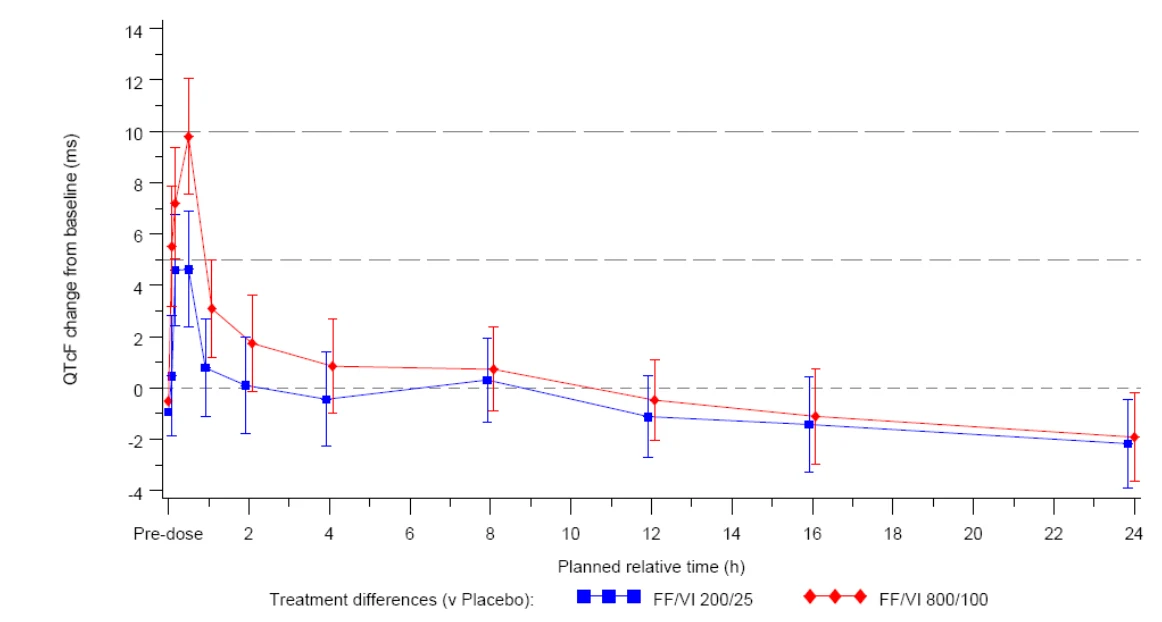
Increases in the QTcF interval were observed that were maximal at 30 min post-dosing. At the 30 min time point, the placebo-adjusted mean changes from baseline in the QTcF interval (ms) were 4.5 (90% CI: 2.1, 6.9) in the fluticasone furoate/vilanterol 200/25 mcg treatment arm and 9.6 (90% CI: 7.2, 12.0) in the fluticasone furoate/vilanterol 800/100 mcg treatment arm.
Figure 1 QTcF Treatment Differences From Placebo: Adjusted Mean Change (and 90% CI) from Baseline by Time (0-24H) on Day 7 – All Subjects Population (FF/VI data only; manually read ECGs)
*QTcF=QT/RR0.33
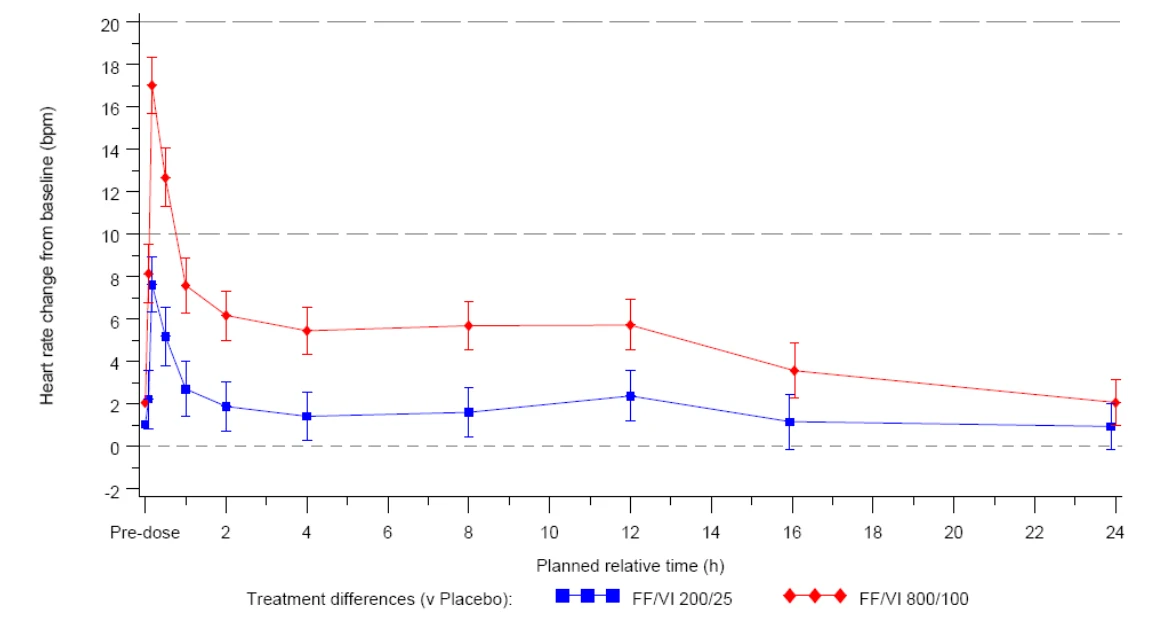
Increases in heart rate were observed that were maximal at 10 min. At the 10 min time point, the placebo-adjusted mean change from baseline in heart rate (bpm) was 7.6 (90% CI: 6.3, 8.9) in the fluticasone furoate/vilanterol 200/25 mcg treatment arm and 17.0 (90% CI: 15.7, 18.3) in the fluticasone furoate/vilanterol 800/100 mcg treatment arm.
Figure 2 Heart Rate Differences From Placebo: Adjusted Mean Change (and 90% CI) from Baseline by Time (0-24H) on Day 7 – All Subjects Population (FF/VI data only; manually read ECGs)
(See WARNINGS AND PRECAUTIONS, Cardiovascular; DRUG INTERACTIONS, Drugs that prolong the QTc interval, Non-potassium sparing diuretics (i.e., loop or thiazide diuretics) and Xanthine derivatives)
Cardiovascular Effects in subject with COPD: In 4 clinical studies of 6- and 12-month duration, there was no evidence of a treatment effect on heart rate, QTc(F), or blood pressure in subjects with COPD given combination doses of fluticasone furoate/vilanterol 50/25 mcg and BREO ELLIPTA 100/25 mcg and 200/25 mcg, the individual components of fluticasone furoate or vilanterol alone, or placebo (see ADVERSE REACTIONS, Clinical Trial Adverse Drug Reactions).
Cardiovascular Effects in subjects with Asthma: In a clinical trial of 52-week duration, there was no evidence of a treatment effect on QTc(F) or blood pressure in subjects with asthma given BREO ELLIPTA 100/25 mcg and 200/25 mcg once daily compared with fluticasone propionate 500 mcg twice daily. There was a 4- to 6-beats/min increase in heart rate observed 10 minutes after dosing with BREO ELLIPTA 100/25 mcg or BREO ELLIPTA 200/25 mcg compared with fluticasone propionate 500 mcg twice daily. When heart rate was examined over a 0 to 24-hour period via Holter monitoring, the observed effect was smaller.
Pharmacokinetics
Table 6 Summary of Fluticasone Furoate and Vilanterol Pharmacokinetic Parameters in Healthy Subjects
| Fluticasone furoate/vilanterol 800/100 mcg | Tmax (h) | t½ (h) | |||
| Median (range) | Geometric Mean (CV%) | ||||
| Fluticasone Furoate 800 mcg | 1.00 (0.08, 3.00) | 23.7 (22.6) | |||
| Vilanterol 100 mcg | 0.17 (0.08, 0.25) | 2.47 (84.0) | |||
Table 7 Summary of Fluticasone Furoate and Vilanterol (Cmax and AUC(0-24)) in Subjects with COPD (Geometric Mean [95% CI])
| BREO ELLIPTA 100/25 mcg | Cmax (pg/mL) | AUC(0-24) (pg.h/mL) |
| Fluticasone Furoate 100 mcg1 | 12.0 [10.9, 13.0] | 182.2 [169.6, 194.7] |
| Vilanterol 25 mcg2 | 43.2 [41.8, 44.6] | 265.7 [259.5, 271.9] |
1 Population pharmacokinetics analyses across 3 trials in subjects with COPD who received BREO ELLIPTA 100/25 mcg.
2 Population pharmacokinetics analyses across 4 trials in subjects with COPD who received BREO ELLIPTA 100/25 mcg.
Table 8 Summary of Fluticasone Furoate and Vilanterol (Cmax and AUC(0-24)) in Subjects with Asthma (Geometric Mean [95% CI])
| Population/Treatment | Cmax (pg/mL) | AUC(0-24) (pg.h/mL) |
| Fluticasone Furoate 100 mcg1 | 16.0 [15.6, 16.5] | 244.3 [236.0, 252.5] |
| Fluticasone Furoate 200 mcg1 | 31.4 [30.3, 32.4] | 495.3 [480.1, 510.6] |
| Vilanterol 25 mcg1 | 49.5 [46.6, 52.5] | 168.7 [163.9, 173.5] |
1Population pharmacokinetics analyses across 4 trials in subjects with asthma who received BREO ELLIPTA100/25 or 200/25 mcg.
Absorption:
Fluticasone Furoate: Fluticasone furoate acts locally in the lung; therefore, plasma levels do not predict therapeutic effect. Absolute bioavailability of fluticasone furoate after administration of fluticasone furoate/vilanterol 800/100 mcg was 15.2%. Systemic exposure for fluticasone furoate following inhaled administration is primarily due to absorption of the inhaled portion of the dose delivered to the lung since oral bioavailability from the swallowed portion of the dose is on average 1.26%.
Vilanterol: Vilanterol acts locally in the lung; therefore, plasma levels do not predict therapeutic effect. Absolute bioavailability of vilanterol after administration of fluticasone furoate/vilanterol 800/100 mcg was 27.3%. Systemic exposure for vilanterol following inhaled administration is primarily due to absorption of the inhaled portion of the dose delivered to the lung since oral bioavailability from the swallowed portion of the dose of vilanterol is <2%.
There was no difference in exposure to vilanterol between individual component and combination treatment.
Distribution:
Fluticasone Furoate: Following intravenous administration to healthy subjects, the mean volume of distribution at steady state was 661 L. The binding of fluticasone furoate to human plasma proteins was high (99.6%).
Vilanterol: Following intravenous administration to healthy subjects, the mean volume of distribution at steady state was 165 L. Binding of vilanterol to human plasma proteins was 93.9%.
Metabolism:
Fluticasone Furoate: Following intravenous administration to healthy subjects, fluticasone furoate was cleared from systemic circulation principally by hepatic metabolism via CYP3A4 (total plasma clearance of 65.4 L/hr). Fluticasone furoate undergoes fast first pass metabolism and is primarily metabolized through hydrolysis of the S-fluoromethyl carbothioate group to metabolites with significantly reduced corticosteroid activity. There was no in vivo evidence for cleavage of the furoate moiety resulting in the formation of fluticasone.
Vilanterol: Following intravenous administration, the pharmacokinetics of vilanterol showed a high plasma clearance of 108 L/hour. Following oral administration, vilanterol undergoes fast first pass metabolism and was mainly metabolized, principally via CYP3A4, by O-dealkylation to a range of metabolites with significantly reduced β1- and β2-agonist activity.
Elimination:
Fluticasone Furoate: Fluticasone furoate and its metabolites are eliminated primarily in the feces, accounting for approximately 101% and 90% of the orally and intravenously administered dose, respectively. Urinary excretion accounted for approximately 1% and 2% of the orally and intravenously administered doses, respectively. Following repeat-dose inhaled administration, the plasma elimination phase half-life averaged 24 hours.
Vilanterol: Following oral administration, vilanterol was eliminated mainly by metabolism followed by excretion of metabolites in urine and feces (approximately 70% and 30% of the recovered radioactive dose, respectively). Following single-dose inhaled administration, the plasma elimination phase half-life averaged 2.5 hours. The plasma elimination half-life of vilanterol, as determined from inhalation administration of multiple doses of vilanterol 25 mcg, is 16.0 hours in subjects with asthma and 21.3 hours in subjects with COPD.
Special Populations and Conditions
Pediatrics: The safety and efficacy of fluticasone furoate/vilanterol in patients younger than 18 years have not been established. Population pharmacokinetics analyses demonstrated no evidence of an age effect on the pharmacokinetics of fluticasone furoate or vilanterol in patients with asthma.
In a 24- to 76-week exacerbation trial, subjects received BREO ELLIPTA 100/25 mcg (n=1,009) or fluticasone furoate 100 mcg (n=1,010). Subjects had a mean age of 42 years and a history of one or more asthma exacerbations that required treatment with oral/systemic corticosteroids or emergency department visit or in-patient hospitalization for the treatment of asthma in the year prior to study entry. Adolescents aged 12 to 17 years made up 14% of the study population (n=281), with a mean exposure of 352 days for subjects in this age-group treated with BREO ELLIPTA 100/25 mcg (n=151) and 355 days for subjects in this age-group treated with fluticasone furoate 100 mcg (n=130). In this age-group, 10% of subjects treated with BREO ELLIPTA 100/25 mcg reported an asthma exacerbation compared with 7% for subjects treated with fluticasone furoate 100 mcg. Among the adolescents, asthma-related hospitalizations occurred in 4 subjects (2.6%) treated with BREO ELLIPTA 100/25 mcg compared with 0 subjects treated with fluticasone furoate 100 mcg. There were no asthma-related deaths or asthma-related intubations observed in the adolescent age-group.
Effects on Growth
Orally inhaled corticosteroids may cause a reduction in growth velocity when administered to children and adolescents. A reduction of growth velocity in children and adolescents may occur as a result of poorly controlled asthma or from use of corticosteroids, including inhaled corticosteroids. The effects of long-term treatment of children and adolescents with inhaled corticosteroids, including fluticasone furoate, on final adult height are not known.
Controlled clinical trials have shown that inhaled corticosteroids may cause a reduction in growth in children. In these trials, the mean reduction in growth velocity was approximately 1 cm/year (range: 0.3 to 1.8 cm/year) and appears to be related to dose and duration of exposure. This effect has been observed in the absence of laboratory evidence of HPA axis suppression, suggesting that growth velocity is a more sensitive indicator of systemic corticosteroid exposure in children than some commonly used tests of HPA axis function. The long-term effects of this reduction in growth velocity associated with orally inhaled corticosteroids, including the impact on final adult height, are unknown. The potential for “catch-up” growth following discontinuation of treatment with orally inhaled corticosteroids has not been adequately studied. The growth of children and adolescents receiving orally inhaled corticosteroids, including BREO ELLIPTA, should be monitored routinely (e.g., via stadiometry). The potential growth effects of prolonged treatment should be weighed against the clinical benefits obtained and the risks associated with alternative therapies. To minimize the systemic effects of orally inhaled corticosteroids, including BREO ELLIPTA, each patient should be titrated to the lowest dose that effectively controls his/her symptoms.
A randomized, double-blind, parallel-group, multicenter, 1-year, placebo-controlled trial evaluated the effect of once-daily treatment with 110 mcg of fluticasone furoate in the nasal spray formulation on growth velocity assessed by stadiometry. The subjects were 474 pre-pubescent children (girls aged 5 to 7.5 years and boys aged 5 to 8.5 years). Mean growth velocity over the 52-week treatment period was lower in the patients receiving fluticasone furoate nasal spray (5.19 cm/year) compared with placebo (5.46 cm/year). The mean reduction in growth velocity was 0.27 cm/year (95% CI: 0.06 to 0.48) (see WARNINGS and PRECAUTIONS, Endocrine and Metabolism).
Geriatrics: The population pharmacokinetic analyses showed no clinically relevant influence of age on the pharmacokinetics of either fluticasone furoate or vilanterol in subjects with asthma or COPD.
Clinical studies of BREO ELLIPTA for COPD included 2,508 subjects aged 65 and older and 564 subjects aged 75 and older. No overall differences in safety or effectiveness were observed between these subjects and younger subjects, and other reported clinical experience has not identified differences in responses between the elderly and younger patients.
Clinical studies of BREO ELLIPTA for asthma included 854 subjects aged 65 years and older. Trials did not include sufficient numbers of subjects aged 65 years and older to determine whether they respond differently from younger subjects.
Gender: The population pharmacokinetic analyses showed no influence of gender on the pharmacokinetics of either fluticasone furoate or vilanterol in subjects with asthma or COPD.
Race: The systemic exposure (AUC(0-24)) to inhaled fluticasone furoate 200 mcg was 27% to 49% higher in East Asian healthy subjects of Japanese, Korean, and Chinese heritage compared with healthy Caucasian subjects. The higher fluticasone furoate systemic exposure corresponded with lower serum cortisol levels over 24 hours (22%) in Japanese subjects only when compared to Caucasian subjects. Similar differences were observed for East Asian subjects with COPD. In subjects with asthma, vilanterol Cmax is estimated to be higher (3-fold) and AUC(0-24) comparable for those subjects from an Asian heritage compared with subjects from a non-Asian heritage. However, the higher Cmax values are similar to those seen in healthy subjects. In addition, in patients with asthma, these differences were not associated with any impact on markers of systemic effects, such as urine cortisol excretion and heart rate. As seen from clinical trials in subjects with Asian ancestry, there was also no evidence of increased risk of adverse events despite the higher exposure to FF and VI seen in this population.
Hepatic Insufficiency: The impact of hepatic impairment on the pharmacokinetics of combination doses of fluticasone furoate/vilanterol was evaluated in patients with mild (n=9), moderate (n=9) and severe (n=8) hepatic insufficiency, stratified using the Child-Pugh classification. Subjects with mild or moderate hepatic impairment and healthy control subjects (n=9) received fluticasone furoate/vilanterol 200/25 mcg once daily for 7 days. As a precaution, subjects with severe hepatic impairment received a lower combination dose of fluticasone furoate/vilanterol 100/12.5 mcg once daily for 7 days. For patients with moderate or severe hepatic impairment the maximum dose is 100/25 mcg (see DOSAGE AND ADMINISTRATION, Hepatic Insufficiency).
Fluticasone Furoate: There was an increase in fluticasone furoate systemic exposure (up to 3-fold increase in AUC(0-24)) in subjects with mild, moderate, or severe hepatic impairment compared with healthy subjects. In subjects with moderate hepatic impairment, mean serum cortisol (0 to 24 hours) was reduced by 34% compared with healthy subjects.
Vilanterol: Hepatic impairment had no effect on vilanterol systemic exposure.
Renal Insufficiency: Neither fluticasone furoate nor vilanterol systemic exposure was significantly greater in subjects with severe renal impairment (creatinine clearance <30 mL/min) compared with healthy subjects. The effects of hemodialysis have not been studied.
STORAGE AND STABILITY
Do not store above 25°C. Store in a dry place away from direct heat or sunlight.
Keep out of sight and reach of children.
If you store in a refrigerator, allow the inhaler to return to room temperature for at least an hour before use.
SPECIAL HANDLING INSTRUCTIONS
BREO ELLIPTA is provided in a foil laminate tray containing a desiccant sachet and the tray is sealed with a peelable foil lid, which together with the desiccant provides moisture protection. The lid should only be opened when it is ready to be used for the first time. Once opened the desiccant package should be discarded.
Patients should be instructed to write the date the inhaler should be discarded on the label in the space provided. The date should be added as soon as the inhaler has been removed from the tray.
In use shelf-life is six weeks. BREO ELLIPTA should be safely discarded when the dose counter reads “0” or 6 weeks after it was removed from the foil tray, whichever comes first.
DOSAGE FORMS, COMPOSITION AND PACKAGING
BREO ELLIPTA consists of an inhaler device with a plastic light grey body, dose counter and a light blue mouthpiece cover. The inhaler device encompasses two double foil blister strips both having either 14 or 30 blisters each. On one strip, each blister contains a white dry powder mixture of micronized fluticasone furoate (100 or 200 mcg) and lactose monohydrate (12.5 mg) for inhalation administration. On the other strip, each blister contains a white dry powder mixture of micronized vilanterol trifenatate (40 mcg equivalent to 25 mcg of vilanterol), magnesium stearate (125 mcg), and lactose monohydrate (12.5 mg) for inhalation administration. The lactose monohydrate contains milk proteins.
BREO ELLIPTA 100/25 mcg: Each single inhalation dispenses 100 micrograms of fluticasone furoate and 25 micrograms vilanterol (as trifenatate). Each single inhalation provides a delivered dose (the dose leaving the mouthpiece) of 92 micrograms of fluticasone furoate and 22 micrograms of vilanterol (as trifenatate).
BREO ELLIPTA 200/25 mcg: Each single inhalation dispenses 200 micrograms of fluticasone furoate and 25 micrograms vilanterol (as trifenatate). Each single inhalation provides a delivered dose (the dose leaving the mouthpiece) of 184 micrograms of fluticasone furoate and 22 micrograms of vilanterol (as trifenatate).
The actual amount of drug delivered to the lung will depend on patient factors, such as inspiratory flow rate and inspiratory time.
PART II: SCIENTIFIC INFORMATION
PHARMACEUTICAL INFORMATION
Drug Substance
Proper name: fluticasone furoate
Chemical name: (6α,11β,16α,17α)-6,9-difluoro-17-{[(fluoro-methyl)thio]carbonyl}-11-hydroxy-16-methyl-3-oxoandrosta-1,4-dien-17-yl 2-furancarboxylate
Molecular formula and molecular mass: C27H29F3O6S 538.6
Structural formula:
O F F S O O OH O F O
Physicochemical properties: fluticasone furoate is a white powder. It is practically insoluble in water.
Proper name: vilanterol trifenatate
Chemical name: triphenylacetic acid-4-{(1R)-2-[(6-{2-[2,6-dicholorobenzyl)oxy]ethoxy}hexyl)amino]-1-hydroxyethyl}-2-(hydroxymethyl)phenol (1:1)
Molecular formula and molecular mass: C24H33Cl2NO5.C20H16O2 774.8
Structural formula:
OH NH OH O O Cl Cl OH .Ph3CCO2H
Physicochemical properties: vilanterol is a white powder. It is practically insoluble in water.
CLINICAL TRIALS
Clinical Studies in COPD
The efficacy and safety of BREO ELLIPTA 100/25 mcg are based on four confirmatory clinical trials of 6 and 12 month duration in patients with a clinical diagnosis of COPD. The details of the design and patient demographics for these studies are described in Table 9.
Two 6-month randomized controlled studies (HZC112206, HZC112207; Lung Function Studies) were designed to evaluate the efficacy of BREO ELLIPTA in improving lung function (weighted mean FEV1 0-4 hours post dose and pre-dose trough FEV1) in patients with COPD.
Two one-year randomized controlled studies (HZC102970, HZC102871; Exacerbation Studies) were designed to evaluate the efficacy of BREO ELLIPTA in reducing exacerbations of COPD (defined as worsening symptoms that required treatment with oral corticosteroids and/or antibiotics or in-patient hospitalization) in COPD patients with a history of exacerbations.
In addition, a long-term mortality trial evaluated the effect of BREO ELLIPTA 100/25 mcg on survival in COPD patients with a history of or at increased risk of, cardiovascular disease.
Table 9 Summary of Patient Demographics for Clinical Studies in COPD
| Study # | Trial Design Dosage, route of administration and duration | Study Subjects (n=number) | Mean age (Range) | Gender n (%) |
|---|---|---|---|---|
| HZC112206 | 24 week treatment, multicenter, randomized, placebo-controlled, double-blind, parallel group study to evaluate the efficacy and safety of once-daily FF/VI 50/25 mcg, FF/VI 100/25 mcg, FF 100 mcg, VI 25 mcg, and placebo in subjects with COPD. | Total: 1030 FF/VI 50/25 mcg: 206 FF/VI 100/25 mcg: 206 FF 100 mcg: 206 VI 25 mcg: 205 Placebo: 207 | 63 years (40-85) | Male: 685 (67) Female: 345 (33) |
| HZC112207 | 24 week treatment, multicenter, randomized, placebo-controlled, double-blind, parallel group study to evaluate the efficacy and safety of once-daily FF/VI 100/25 mcg, FF/VI 200/25 mcg, FF 100 mcg, FF 200 mcg, VI 25 mcg, and placebo in subjects with COPD. | Total: 1224 FF/VI 100/25 mcg: 204 FF/VI 200/25 mcg: 205 FF 100 mcg: 204 FF 200 mcg: 203 VI 25 mcg: 203 Placebo: 205 | 62 years (40-85) | Male: 885 (72) Female: 339 (28) |
| HZC102970 | 52 week treatment, multicenter, randomized, double-blind, parallel group study to evaluate the efficacy and safety of once-daily FF/VI 50/25 mcg, 100/25 mcg and 200/25 mcg versus VI 25 mcg on the annual rate of moderate and severe exacerbations in subjects with COPD with a history of exacerbations. | Total: 1633 FF/VI 50/25 mcg: 412 FF/VI 100/25 mcg: 403 FF/VI 200/25 mcg: 409 VI 25 mcg: 409 | 64 years (40-88) | Male: 906 (55) Female: 727 (45) |
| HZC102871 | 52 week treatment, multicenter, randomized, double-blind, parallel group study to evaluate the efficacy and safety of once-daily FF/VI 50/25 mcg, 100/25 mcg and 200/25 mcg versus VI 25 mcg on the annual rate of moderate and severe exacerbations in subjects with COPD with a history of exacerbations. | Total: 1622 FF/VI 50/25 mcg: 408 FF/VI 100/25 mcg: 403 FF/VI 200/25 mcg: 402 VI 25 mcg: 409 | 64 years (40-90) | Male: 964 (59) Female: 658 (41) |
Notes:
FF: fluticasone furoate
VI: vilanterol
Lung Function Studies
HZC112206 and HZC112207 were 24 week randomized, double-blind, placebo controlled, parallel group studies comparing the effect of BREO ELLIPTA to vilanterol 25 mcg and fluticasone furoate alone, and placebo. Of the 2,254 randomized patients who received at least one treatment dose, the majority were male (70%) and Caucasian (84%), and ranged in age from 40 to 85 years (mean age: 62 years). At screening, the mean post-bronchodilator percent predicted FEV1 was 48.1% (range: 14-87%), and the mean percent reversibility was 13.8% (range -41%, 152%). The mean smoking history was 44.1 pack years, and 54% of the patients were current smokers.
HZC112206 evaluated the efficacy of fluticasone furoate/vilanterol 50/25 mcg (n=206) and BREO ELLIPTA 100/25 mcg (n=206) compared with fluticasone furoate 100 mcg (n=206), vilanterol 25 mcg (n=205) and placebo (n=207), all administered once daily.
HZC112207 evaluated the efficacy of BREO ELLIPTA 100/25 mcg (n=204) and BREO ELLIPTA 200/25 mcg (n=205) compared with fluticasone furoate 100 mcg (n=204) and 200 mcg (n=203) and vilanterol 25 mcg (n=203) and placebo (n=205), all administered once daily.
The co-primary endpoints in both studies were the weighted mean FEV1 from 0 to 4 hours post-dose at Day 168 and change from baseline in pre-dose trough FEV1 at the end of the study.
In HZC112206, BREO ELLIPTA 100/25 mcg increased the weighted mean FEV1 (0-4 hours) relative to placebo by 173 mL by the end of the 24 week treatment period (Figure 3). Similarly, an increase of 214 mL was observed in HZC112207 (data not shown). In addition, patients receiving BREO ELLIPTA 100/25 mcg had a greater increase in weighted mean FEV1 (0-4 hours) compared with those receiving fluticasone furoate 100 mcg (difference of 120 and 168 mL in Studies HZC112206 and HZC112207, respectively), demonstrating the contribution of vilanterol to the improvement in lung function with BREO ELLIPTA 100/25 mcg.
Figure 3 HZC112206: Weighted Mean FEV1 (0-4 hours) (L)
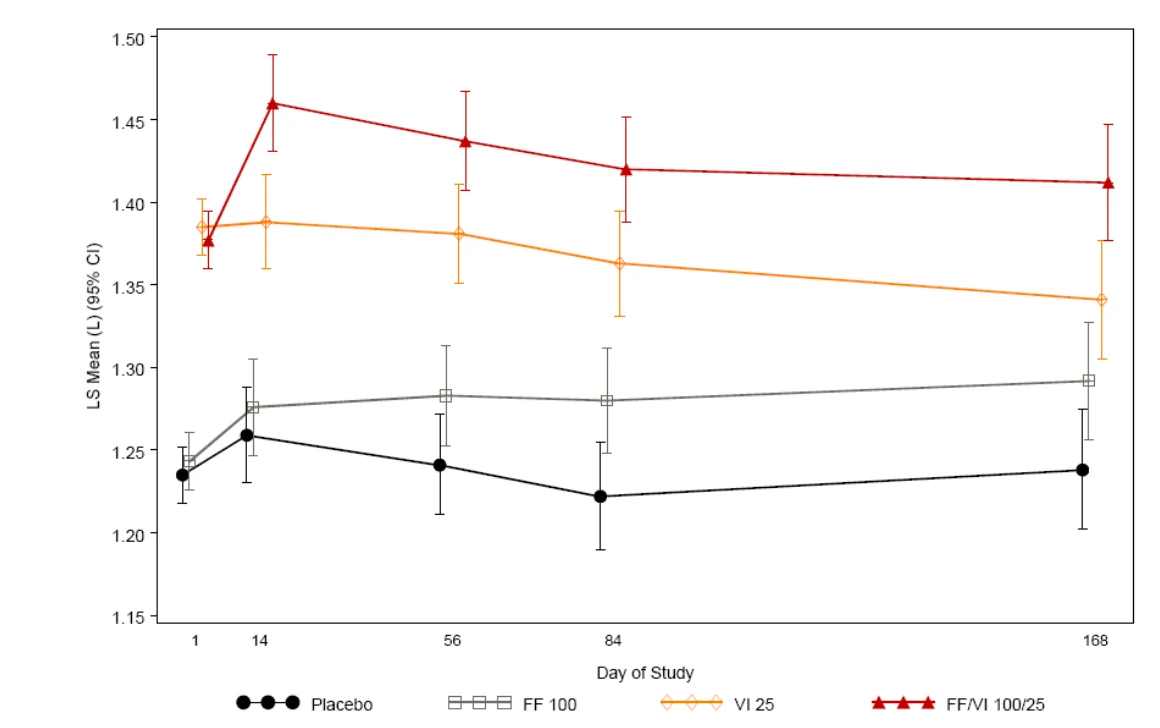 Notes:
FF: fluticasone furoate
VI: vilanterol
The second co-primary variable, change from baseline in trough FEV1 following the final treatment day, was increased by 115 mL in Study HZC112206 (Figure 4) and by 144 mL in Study HZC112207 compared with placebo (data not shown). Improvement in trough FEV1 with BREO ELLIPTA 100/25 mcg compared with vilanterol 25 mcg (45 to 48 mL) did not achieve statistical significance.
Figure 4 HZC112206: Change From Baseline in Trough FEV1 (L)
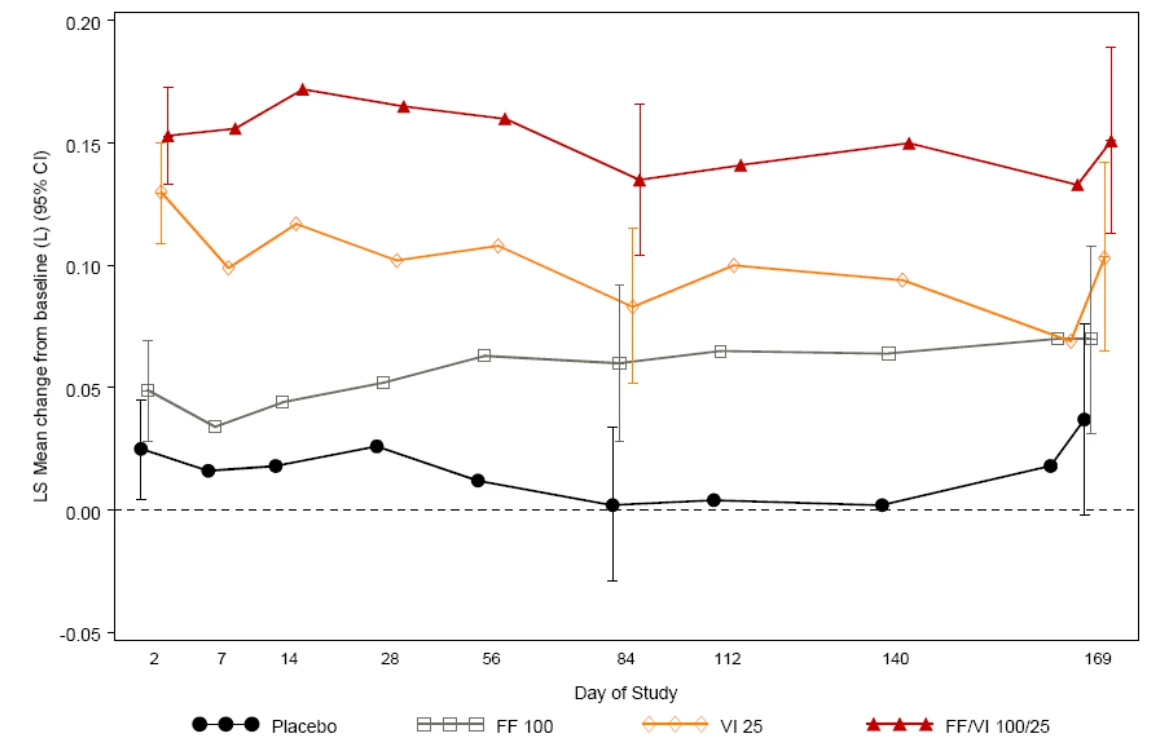
Notes:
FF: fluticasone furoate
VI: vilanterol
Exacerbation Studies
Studies HZC102970 and HZC102871 were 52 week randomized, double-blind, parallel-group, studies comparing the effect of BREO ELLIPTA 200/25 mcg, BREO ELLIPTA 100/25 mcg, fluticasone furoate/vilanterol 50/25 mcg and vilanterol 25 mcg, all administered once daily, on the annual rate of moderate/severe exacerbations in subjects with COPD with a smoking history of at least 10 pack years, a post-salbutamol FEV1/FVC ratio ≤0.70, post-salbutamol FEV1 ≤70% predicted and documented history of ≥ 1 COPD exacerbation that required antibiotics and/or oral corticosteroids or hospitalization in the 12 months prior to visit 1.
The intent to treat population included 3,255 patients with an established history of COPD and a history of exacerbations (but no other significant respiratory disorders) and a smoking history of a mean of 46.2 pack years. A majority of the patients were male (57%) and Caucasian (85%), and ranged in age from 40 to 90 (mean age: 64 years). At screening, the mean post-bronchodilator FEV1 was 1.29 L (range: 0.32 to 3.48L), the mean post-bronchodilator percent predicted FEV1 was 45.4% (range: 12% to 91%), and mean post-bronchodilator FEV1/FVC ratio of 45.5% (range: 17% to 81%) indicated that the patient population had moderate to very severe airflow obstruction. The mean percent reversibility was 14.5% (range: -65% to 313%).
The primary endpoint was the annual rate of moderate and severe exacerbations. Moderate/severe exacerbations were defined as worsening symptoms that required treatment with oral corticosteroids and/or antibiotics or in-patient hospitalization. Both studies had a 4 week run-in period during which all subjects received open-label fluticasone propionate/salmeterol 250/50 mcg twice daily to standardize COPD pharmacotherapy and stabilize disease prior to randomization to blinded study medication for 52 weeks. Prior to run-in, subjects discontinued use of previous COPD medications except rescue short-acting bronchodilators. The use of concurrent inhaled long-acting bronchodilators (beta2-agonist and anticholinergic), ipratropium/salbutamol combination products, oral beta2-agonists, and theophylline preparations were not allowed during the treatment period. Oral corticosteroids and antibiotics were allowed for the acute treatment of COPD exacerbations with specific guidelines for use. Subjects used salbutamol on an as-needed basis throughout the studies.
The results of both studies showed that treatment with BREO ELLIPTA 100/25 mcg once daily resulted in a lower annual rate of moderate/severe COPD exacerbations compared with vilanterol (Table 10).
Table 10 Analysis of Exacerbation Rates Following 12 months of Treatment
| Endpoint | HZC102970 | HZC102871 | ||||||||||
|---|---|---|---|---|---|---|---|---|---|---|---|---|
VI (n=409) | FF/VI 100/25 mcg (n=403) | VI (n=409) | FF/VI 100/25 mcg (n=403) | |||||||||
| Adjusted mean Annual rate | 1.14 | 0.90 | 1.05 | 0.70 | ||||||||
Ratio vs. VI 95% CI | 0.79 (0.64, 0.97) | 0.66 (0.54, 0.81) | ||||||||||
Notes:
FF: fluticasone furoate
VI: vilanterol
In the HZC102970 study, BREO ELLIPTA 100/25 mcg significantly lowered the risk for time to first moderate or severe exacerbation at any time point compared to treatment with vilanterol 25 mcg alone (hazard ratio of 0.8 [95% CI: 0.66, 0.99]). In the HZC102871 study, the risk for time to first moderate or severe exacerbation at any time point was numerically lower for BREO ELLIPTA 100/25 mcg compared to vilanterol 25 mcg alone (hazard ratio of 0.72 [95% CI: 0.59, 0.89]).
In the HZC102970 study, BREO ELLIPTA 100/25 mcg significantly reduced the annual rate of COPD exacerbations requiring systemic/oral corticosteroids compared to treatment with vilanterol 25 mcg alone (ratio of 0.77 [95% CI: 0.60, 0.99]). In the HZC102871 study, the annual rate of COPD exacerbations requiring systemic/oral corticosteroids was numerically lower for BREO ELLIPTA 100/25 mcg compared to vilanterol 25 mcg alone (ratio of 0.62 [95% CI: 0.49, 0.78]).
Salford Lung Study (SLS) in COPD
A 12-month, multi-center, randomized, active-controlled, open-label study HZC115151 evaluated the safety and effectiveness of the strategy of initiating treatment with BREO ELLIPTA 100/25 mcg compared with the strategy of continuing a patient’s existing COPD maintenance treatment (usual care), in a COPD population that was representative of everyday clinical practice. A total of 3,161 subjects in Salford and South Manchester UK were screened for this study, and 88.6% (2,802 subjects) were randomized to either initiate treatment with BREO ELLIPTA 100/25 mcg in lieu of their current COPD maintenance therapy, or continue with their usual care. The LS mean annual rate of moderate/severe exacerbations was 1.50 on BREO ELLIPTA 100/25 mcg and 1.64 on usual care. The effect of BREO ELLIPTA 100/25 mcg on COPD exacerbation from this effectiveness study further supported the findings established in phase III traditional clinical trials.
Mortality Trial
Study HZC113782 was a multi-centre, randomized, double-blind, placebo-controlled study evaluating the effect of BREO ELLIPTA 100/25 mcg on survival. The study employed an event-driven design and patients were followed until a sufficient number of deaths occurred. A total of 16,568 patients were treated with BREO ELLIPTA 100/25 mcg (n=4,140), fluticasone furoate 100 mcg (n=4,157), vilanterol 25 mcg (n=4,140), or placebo (n=4,131) for up to 4 years with a median treatment duration of 1.5 years. Median duration of follow-up for the endpoint of survival was 1.8 years for all treatment groups. All patients had COPD with moderate airflow limitation (post-bronchodilator ≥50% and ≤70% predicted FEV1) and had a history of, or were at increased risk of, cardiovascular disease. The primary endpoint was time to death (all-cause mortality) and the secondary endpoints were the rate of decline in FEV1, and the time to a composite of cardiovascular events (on-treatment cardiovascular death, myocardial infarction, stroke, unstable angina, or transient ischemic attack).
Survival: The primary endpoint of all-cause mortality with BREO ELLIPTA was not significantly improved compared with placebo (HR 0.88; 95% CI: 0.74, 1.04; p=0.14). Mortality from any cause was 3.1 per 100 patient-years for BREO ELLIPTA 100/25, 3.2 for fluticasone furoate, 3.4 for vilanterol, and 3.5 for placebo.
Lung Function: The mean rate of decline in FEV1 was 38 mL/year for BREO ELLIPTA and 46 mL/year for placebo. BREO ELLIPTA slowed the rate of decline in lung function as measured by FEV1 by 8 mL/year compared with placebo (95% CI: 1, 15).
Cardiovascular Composite Event: The risk of the cardiovascular composite event with BREO ELLIPTA 100/25 was not significantly different compared with placebo (HR 0.93; 95% CI: 0.75 to 1.14) (see ADVERSE REACTIONS).
Health-related Quality of Life: In a subset of 4,443 subjects, the on-treatment SGRQ responder rates at one year (defined as a change in score of 4 or more as threshold) were 49% for BREO ELLIPTA 100/25, 48% for fluticasone furoate, 48% for vilanterol, and 47% for placebo (odds ratio 1.18; 95% CI: 0.97, 1.44 for BREO ELLIPTA 100/25 compared with placebo).
Clinical Studies in Asthma
The efficacy of BREO ELLIPTA was evaluated in 4 randomized, double-blind, parallel-group clinical trials in adolescent and adult subjects aged 12 years and older with asthma. Study design and patient demographics for these asthma studies are described in Table 11.
Three trials were designed to evaluate the safety and efficacy of BREO ELLIPTA given once daily in the evening in subjects who were not controlled on their current treatments of inhaled corticosteroids or combination therapy consisting of an inhaled corticosteroid plus a LABA. A 24- to 76 week trial was designed to evaluate the efficacy of BREO ELLIPTA 100/25 mcg compared with fluticasone furoate 100 mcg in reducing asthma exacerbations, as measured by time to first asthma exacerbation. This trial enrolled subjects who had had one or more asthma exacerbations in the year prior to trial entry.
While subjects aged 12 to 17 years were included in these trials, BREO ELLIPTA is not approved for use in this age group.
Table 11 Summary of Patient Demographics for Clinical Studies in Asthma
| Study # | Trial Design Dosage, route of administration and duration | Study Subjects (n=number) | Age Range | Gender n (%) |
|---|---|---|---|---|
| HZA106827 | 12 week treatment, multicenter, randomized, double-blind, placebo-controlled, parallel group study to compare the efficacy and safety of FF/VI 100/25 mcg and FF 100 mcg both administered once-daily in the evening in adolescent and adult subjects 12 years of age and older with persistent bronchial asthma. | Total: 609 FF/VI 100/25 mcg: 201 FF 100 mcg: 205 Placebo: 203 | 12-84 | Male: 256 (42) Female: 353 (58) |
| HZA116863 | 12 week treatment, multicenter, randomized, double-blind, parallel group, study to compare the efficacy and safety of FF/VI 200/25 mcg inhalation powder, FF/VI 100/25 mcg inhalation powder, and FF 100 mcg inhalation powder in the treatment of persistent asthma in adults and adolescents | Total: 1,039 FF/VI 100/25 mcg: 346 FF/VI 200/25 mcg: 346 FF 100 mcg: 347 | 12-82 | Male: 411 (40) Female: 628 (60) |
| HZA106829 | 24 week treatment, multicenter, randomized, double-blind, parallel group study to compare the efficacy and safety of FF/VI 200/25 mcg administered once-daily each evening with FF 200 mcg administered once-daily each evening and FP 500 mcg administered twice daily in adolescent and adult subjects 12 years of age and older with persistent asthma. | Total: 586 FF/VI 200/25 mcg: 197 FF 200 mcg: 194 FP 500 mcg: 195 | 12-76 | Male: 241 (41) Female: 345 (59) |
| HZA106837 | 24-76 week treatment, multicenter, randomized, double-blind, parallel group study to evaluate the efficacy of FF/VI 100/25 mcg in reducing severe asthma exacerbations as measured by time to first severe asthma exacerbation when compared with FF 100 mcg alone. Both drugs were administered once-daily in the evening in subjects 12 years of age and older with asthma who had had one or more asthma exacerbation in the year prior to trial entry. | Total: 2,019 FF/VI 100/25 mcg: 1009 FF 100 mcg: 1010 | 12-82 | Male: 669 (33) Female: 1350 (67) |
Notes:
FF/VI: BREO ELLIPTA
FF: fluticasone furoate
FP: fluticasone propionate
VI: vilanterol
In trials HZA106827 and HZA106829, change from baseline in weighted mean FEV1 (0 to 24 hours) and change from baseline in trough FEV1 at approximately 24 hours after the last dose at study endpoint (12 and 24 weeks, respectively) were co-primary efficacy endpoints. In trial HZA106829, change from baseline in percentage of rescue-free 24-hour periods over the 24-week treatment period was a powered secondary endpoint. Change from baseline in percentage of 24-hour periods without asthma symptoms was a secondary endpoint.
In trial HZA116863, change from baseline in weighted mean FEV1 (0 to 24 hours) at Week 12 was the primary efficacy endpoint; change from baseline in trough FEV1 at approximately 24 hours after the last dose at Week 12, and change from baseline in percentage of rescue-free 24-hour periods over the 12-week treatment period were powered secondary endpoints. Change from baseline in percentage of 24-hour periods without asthma symptoms was also a secondary endpoint.
Weighted mean FEV1 (0 to 24 hours) was derived from serial measurements taken within 30 minutes prior to dosing and post-dose assessments at 5, 15, and 30 minutes and 1, 2, 3, 4, 5, 12, 16, 20, 23, and 24 hours after the final dose.
HZA106827
HZA106827 was a 12-week trial that evaluated the efficacy of BREO ELLIPTA 100/25 mcg in subjects with asthma compared with fluticasone furoate 100 mcg and placebo. Subjects receiving low- to mid-dose inhaled corticosteroid (fluticasone propionate 100 to 250 mcg twice daily or equivalent) or low-dose inhaled corticosteroid plus a LABA (fluticasone propionate/salmeterol 100 mcg/50 mcg twice daily or equivalent) entered a 4-week run-in period during which LABA treatment was stopped. Subjects reporting symptoms and/or rescue beta2-agonist medication use during the run-in period were continued in the trial. Mean baseline percent predicted FEV1 was approximately 70% across treatment groups.
At Week 12, change from baseline in weighted mean FEV1 (0 to 24 hours) in a subset of patients (n=309) was significantly greater for BREO ELLIPTA 100/25 mcg compared with placebo and numerically greater than fluticasone furoate 100 mcg, but not statistically significant (Table 12).
At Week 12, change from baseline in trough FEV1 was significantly greater for BREO ELLIPTA 100/25 mcg compared with placebo and numerically greater than fluticasone furoate 100 mcg, but not statistically significant (Table 12).
Table 12 Change from Baseline in Weighted Mean FEV1 (0-24 h) (mL) and Trough FEV1 (mL) at Week 12 (HZA106827)
BREO ELLIPTA 100/25 mcg | |
|---|---|
| Weighted Mean FEV1 | (n=108) |
| Difference vs. fluticasone furoate 100 mcg (n=106) | 116 |
| 95% CI | -5, 236 |
| P value | 0.060 |
| Difference vs. placebo (n=95) | 302 |
| 95% CI | 178, 426 |
| P value | <0.001 |
| Trough FEV1 | (n=200) |
| Difference vs. fluticasone furoate 100 mcg (n=203) | 36 |
| 95% CI | -48, 120 |
| P value | 0.405 |
| Difference vs. placebo (n=193) | 172 |
| 95% CI | 87, 258 |
| P value | <0.001 |
Lung function improvements were sustained over the 24-hour period following the final dose of BREO ELLIPTA as demonstrated by serial FEV1 measurements taken at 5, 15, and 30 minutes and 1, 2, 3, 4, 5, 12, 16, 20, 23, and 24 hours (Figure 5).
Figure 5 Mean Change From Baseline in Individual Serial FEV1 (mL) Assessments Over 24 Hours After 12 Weeks of Treatment (HZA106827)
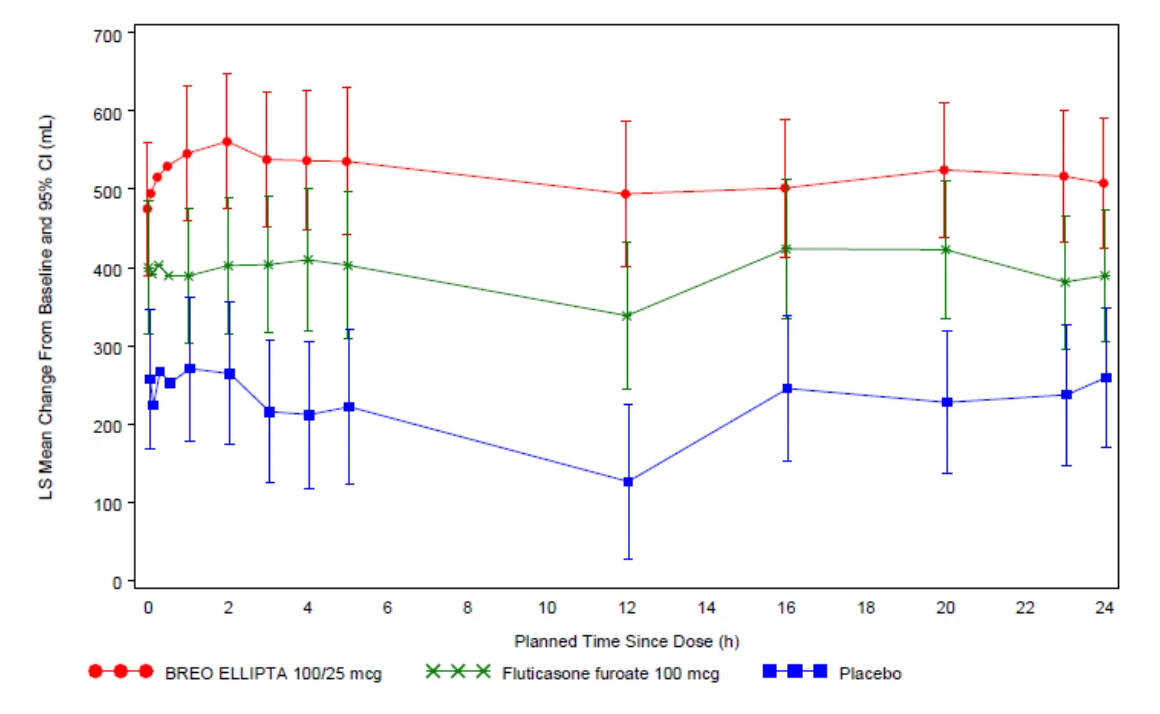
HZA116863
HZA116863 was a 12-week trial that evaluated the efficacy of BREO ELLIPTA 100/25 mcg, BREO ELLIPTA 200/25 mcg, and fluticasone furoate 100 mcg in subjects with asthma. Subjects receiving mid- to high-dose inhaled corticosteroid (greater than or equal to fluticasone propionate 250 mcg twice daily or equivalent) or a mid-dose inhaled corticosteroid plus a LABA (fluticasone propionate/salmeterol 250 mcg/50 mcg twice daily or equivalent) entered a 4-week run-in period during which LABA treatment was stopped. Subjects reporting symptoms and/or rescue beta2-agonist medication use during the run-in period were continued in the trial. Mean baseline percent predicted FEV1 was 61.13% to 62.64% across treatment groups.
At Week 12, the change from baseline in weighted mean FEV1 (0 to 24 hours) was significantly greater for BREO ELLIPTA 100/25 mcg compared with fluticasone furoate 100 mcg (Table 13). In a descriptive analysis, the change from baseline in weighted mean FEV1 (0 to 24 hours) for BREO ELLIPTA 200/25 mcg was numerically greater than BREO ELLIPTA 100/25 mcg (24 mL, 95% CI: -37, 86).
Table 13 Change From Baseline in Weighted Mean FEV1 (0-24 h) (mL) at Week 12 in HZA116863
| BREO ELLIPTA 100/25 mcg | |
| Weighted Mean FEV1 | (n=312) |
| Difference vs. fluticasone furoate 100 mcg (n=288) | 108 |
| 95% CI | 45, 171 |
| P value | <0.001 |
At Week 12, the change from baseline in the powered secondary endpoint, trough FEV1 was significantly greater for BREO ELLIPTA 100/25 mcg (n=334) compared with fluticasone furoate 100 mcg (n=336) (77 mL, 95% CI: 16, 138; P = 0.014). In a descriptive analysis, the change from baseline in trough FEV1 for BREO ELLIPTA 200/25 mcg (n=337) was numerically greater than BREO ELLIPTA 100/25 mcg (16 mL, 95% CI: -46, 77).
Subjects receiving BREO ELLIPTA 100/25 mcg had a significantly greater improvement from baseline over the 12-week treatment period in percentage of 24-hour periods without need of beta2-agonist rescue medication use, another powered secondary endpoint, compared with subjects receiving fluticasone furoate 100 mcg (12.2%, which equates to an additional 0.9 days per week without need for rescue medication).
Subjects receiving BREO ELLIPTA 100/25 mcg had a significantly greater improvement from baseline in percentage of 24-hour periods without asthma symptoms compared with subjects receiving fluticasone furoate 100 mcg (7.8%, which equates to an additional 0.5 days per week without asthma symptoms). Although not specified as a powered secondary endpoint, the percentage of 24-hour periods without asthma symptoms was included in the pre-defined statistical plan.
Lung function improvements were sustained over the 24-hour period following the final dose of BREO ELLIPTA as demonstrated by serial FEV1 measurements taken at 5, 15, and 30 minutes and 1, 2, 3, 4, 5, 12, 16, 20, 23, and 24 hours (Figure 6).
Figure 6 Mean Change From Baseline in Individual Serial FEV1 (mL) Assessments Over 24 Hours After 12 Weeks of Treatment (HZA116863)
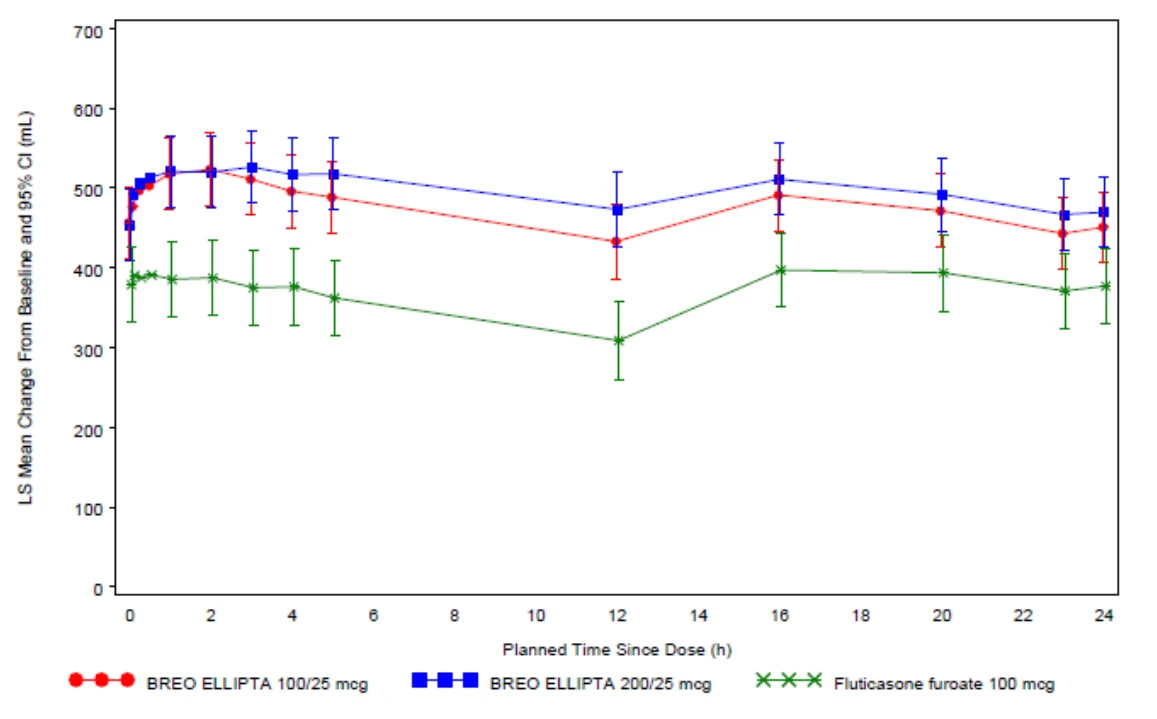
HZA106829
HZA106829 was a 24-week trial that evaluated the efficacy of BREO ELLIPTA 200/25 mcg once daily, fluticasone furoate 200 mcg once daily, and fluticasone propionate 500 mcg twice daily in subjects with asthma. Subjects receiving high-dose inhaled corticosteroid (fluticasone propionate 500 mcg twice daily or equivalent) or a mid-dose inhaled corticosteroid plus a LABA (fluticasone propionate/salmeterol 250 mcg/50 mcg twice daily or equivalent) entered a 4-week run-in period during which LABA treatment was stopped. Subjects reporting symptoms and/or rescue beta2-agonist medication use during the run-in period were continued in the trial. Mean baseline percent predicted FEV1 was approximately 67% across treatment groups.
The change from baseline in weighted mean FEV1 (0 to 24 hours) and in trough FEV1 was significantly greater for BREO ELLIPTA 200/25 mcg compared with fluticasone furoate 200 mcg (Table 14).
Table 14 Change From Baseline in Weighted Mean FEV1 (0-24 h) (mL) and Trough FEV1 (mL) Week 24 (HZA106829)
BREO ELLIPTA 200/25 mcg | |
|---|---|
| Weighted Mean FEV1 | (n=89) |
| Difference vs. fluticasone furoate 200 mcg (n=83) | 136 |
| 95% CI | 1, 270 |
| P value | 0.048 |
| Trough FEV1 | (n=187) |
| Difference vs. fluticasone furoate 200 mcg (n=186) | 193 |
| 95% CI | 108, 277 |
| P value | <0.001 |
The change from baseline in weighted mean FEV1 (0 to 24 hours) was significantly greater for BREO ELLIPTA 200/25 mcg compared with fluticasone propionate 500 mcg twice daily (206 mL, 95% CI: 73, 339; p=0.003) at Week 24. The change from baseline in trough FEV1 was significantly greater for BREO ELLIPTA 200/25 mcg compared with fluticasone propionate 500 mcg twice daily (210 mL, 95% CI: 127, 294; p<0.001) at Week 24.
Subjects receiving BREO ELLIPTA 200/25 mcg had a significantly greater improvement from baseline in percentage of 24-hour periods without need of beta2-agonist rescue medication use, a powered secondary endpoint, compared with subjects receiving fluticasone furoate 200 mcg (11.7%, which equates to an additional 0.8 days per week without need for rescue medication). Subjects receiving BREO ELLIPTA 200/25 mcg had a significantly greater improvement from baseline in percentage of 24-hour periods without asthma symptoms compared with subjects receiving fluticasone furoate 200 mcg (8.4%, which equates to an additional 0.6 days per week without asthma symptoms). Although not specified as a powered secondary endpoint, the percentage of 24-hour periods without asthma symptoms was included in the pre-defined statistical plan.
Lung function improvements were sustained over the 24-hour period following the final dose of BREO ELLIPTA as demonstrated by serial FEV1 measurements taken at 5, 15, and 30 minutes and 1, 2, 3, 4, 5, 12, 16, 20, 23, and 24 hours (Figure 7).
Figure 7 Mean Change From Baseline in Individual Serial FEV1 (mL) Assessments Over 24 Hours After 24 Weeks of Treatment (HZA106829)
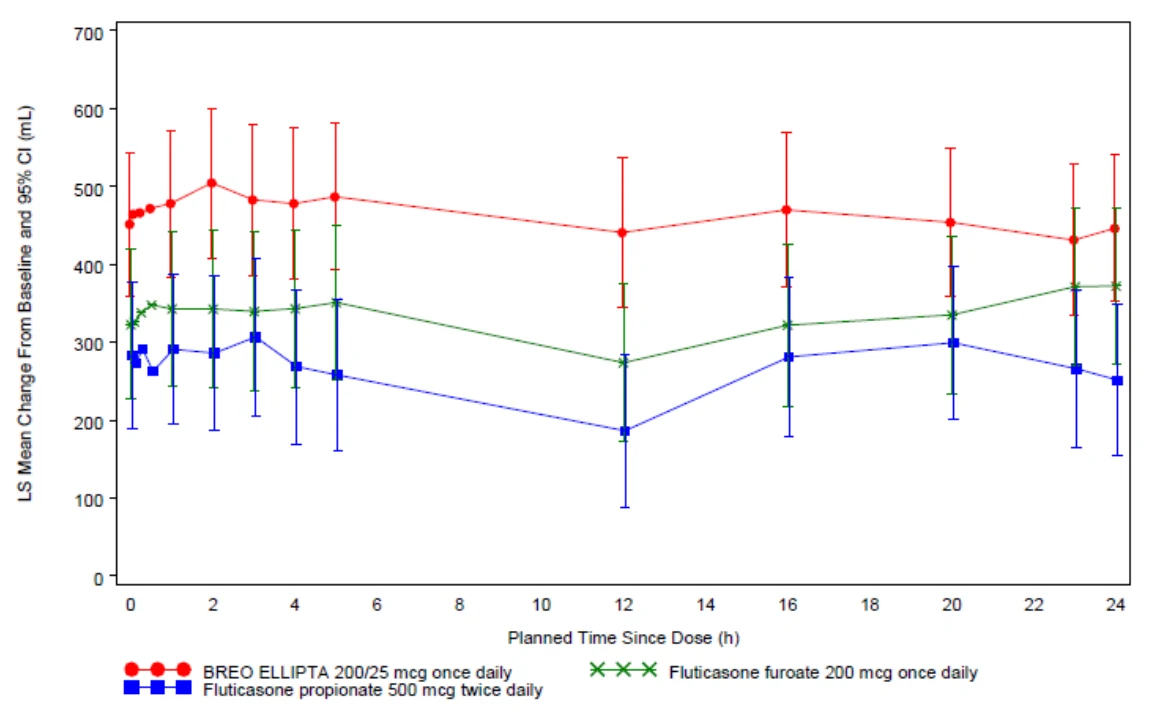
Exacerbation study
Trial HZA106837 was a 24- to 76-week event-driven exacerbation trial that evaluated whether BREO ELLIPTA 100/25 mcg significantly decreased the risk of asthma exacerbations as measured by time to first asthma exacerbation when compared with fluticasone furoate 100 mcg in subjects with asthma. Subjects receiving low- to high-dose inhaled corticosteroid (fluticasone propionate 100 mcg to 500 mcg twice daily or equivalent) or low- to mid-dose inhaled corticosteroid plus a LABA (fluticasone propionate/salmeterol 100 mcg/50 mcg to 250 mcg/50 mcg twice daily or equivalent) and a history of 1 or more asthma exacerbations that required treatment with oral/systemic corticosteroid or emergency department visit or in-patient hospitalization for the treatment of asthma in the year prior to trial entry, entered a 2-week run-in period during which LABA treatment was stopped. Subjects reporting symptoms and/or rescue beta2-agonist medication use during the run-in period were continued in the trial. Mean baseline percent predicted FEV1 was approximately 72% across treatment groups.
This trial was of variable treatment duration (from a minimum of 24 weeks to a maximum of 76 weeks with the majority of patients treated for at least 52 weeks). Patients were randomized to receive either BREO ELLIPTA 100/25 mcg or fluticasone furoate 100 mcg both administered once daily. The primary endpoint was the time to first severe asthma exacerbation. A severe asthma exacerbation was defined as deterioration of asthma requiring the use of systemic corticosteroids for at least 3 days or an inpatient hospitalization or emergency department visit due to asthma that required systemic corticosteroids.
In HZA106837, the risk of experiencing a severe asthma exacerbation in patients receiving BREO ELLIPTA 100/25 mcg was 12.8% compared to 15.9% for fluticasone furoate 100 mcg. This represents a relative reduction of 20% (hazard ratio 0.795; 95% CI: 0.642, 0.985; p=0.036). The rate of severe asthma exacerbations per patient per year was 0.19 for fluticasone furoate 100 mcg (approximately 1 in every 5 years) and 0.14 for BREO ELLIPTA 100/25 mcg (approximately 1 in every 7 years). The ratio of the exacerbation rate for BREO ELLIPTA 100/25 mcg versus fluticasone furoate 100 mcg was 0.755 (95% CI: 0.603, 0.945). This represents a 25% reduction in the rate of severe asthma exacerbations.
The 24-hour bronchodilator effect of fluticasone furoate/vilanterol was maintained throughout a one-year treatment period with no evidence of loss in efficacy (no tachyphylaxis).
Salford Lung Study (SLS) in Asthma
A 12-month, multi-center, randomized, active-controlled, open-label study HZA115150 evaluated the safety and effectiveness of the strategy of initiating BREO ELLIPTA compared with the strategy of continuing a patient’s existing asthma maintenance treatment (usual care), in an asthmatic population 18 years of age and older that was representative of everyday clinical practice. A total of 4,725 subjects in Salford and South Manchester UK, were screened for this study, and 89.6% (4,233 subjects) were randomized to either initiate treatment with BREO ELLIPTA (100/25 mcg or 200/25 mcg) in lieu of their current asthma maintenance treatment, or to continue with their usual care. The percentage of responders at Week 24 (ACT total score of ≥20 or an increase from baseline of ≥3 in ACT total score) was 74% in the BREO ELLIPTA arm and 60% in the usual care arm. The effect of BREO ELLIPTA on asthma control demonstrated in this effectiveness study is, overall, consistent with the findings shown in phase III traditional clinical trials with respect to asthma symptoms.
DETAILED PHARMACOLOGY
Animal Pharmacology
Pharmacological and toxicological effects seen with fluticasone furoate or vilanterol in nonclinical studies were those typically associated with either glucocorticoids or beta2-agonists. Administration of fluticasone furoate combined with vilanterol did not result in any significant new toxicity.
Clinical Pharmacology
HPA Axis Effects
Inhaled fluticasone furoate at repeat doses up to 400 mcg was not consistently associated with statistically significant decreases in serum or urinary cortisol in healthy subjects. At higher doses above the therapeutic range decreases in serum and urine cortisol levels were seen.
Population pharmacokinetic/pharmacodynamic meta-analyses were conducted to characterize the relationship between fluticasone furoate AUC(0-24) and 24-hour weighted mean serum cortisol and between fluticasone furoate AUC(0-24) and 24-hour urinary cortisol excretion. The population studied comprised healthy subjects and patients with asthma. The average estimate of fluticasone furoate AUC(0-24) required to reduce cortisol by 50% (AUC50) was similar for both the serum and urine cortisol models with values of 1,556 and 1,686 pg•hr/mL, respectively. These values of AUC50 are several-fold higher than average fluticasone furoate AUC(0-24) values observed at the therapeutic dose of 100 mcg in subjects with COPD (182 pg•hr/mL) and the highest dose of 200 mcg for subjects with asthma (495 pg•hr/mL).
In a subset of subjects with COPD in two 6-month lung function trials, treatment with fluticasone furoate/ vilanterol (50/25 mcg, 100/25 mcg, 200/25 mcg), and fluticasone furoate (100 and 200 mcg), showed no effect on 24-hour urinary cortisol excretion.
In a trial with subjects with asthma, treatment with fluticasone furoate/vilanterol (100/25 mcg and 200/25 mcg) for 6 weeks did not affect 24-hour serum cortisol.
In subjects with COPD treated with fluticasone furoate/vilanterol (50/25 mcg, 100/25 mcg and 200/25 mcg) for 28 days, no effects on serum cortisol were observed.
Duration and Persistence of Effects on Lung Function
The 24-hour spirometric effect of BREO ELLIPTA 100/25 mcg compared with placebo was evaluated at the end of a 28-day study treatment period in 54 patients with COPD in a randomized, double-blind, 3-way, incomplete block crossover study. BREO ELLIPTA 100/25 mcg demonstrated statistically significant increases in weighted mean FEV1 compared with placebo on the final day of treatment. As shown in Figure 8 improvements in lung function over a full 24 hours were sustained.
Figure 8 Change From Baseline in FEV1 (0-25 hours) Over Days 28 and 29
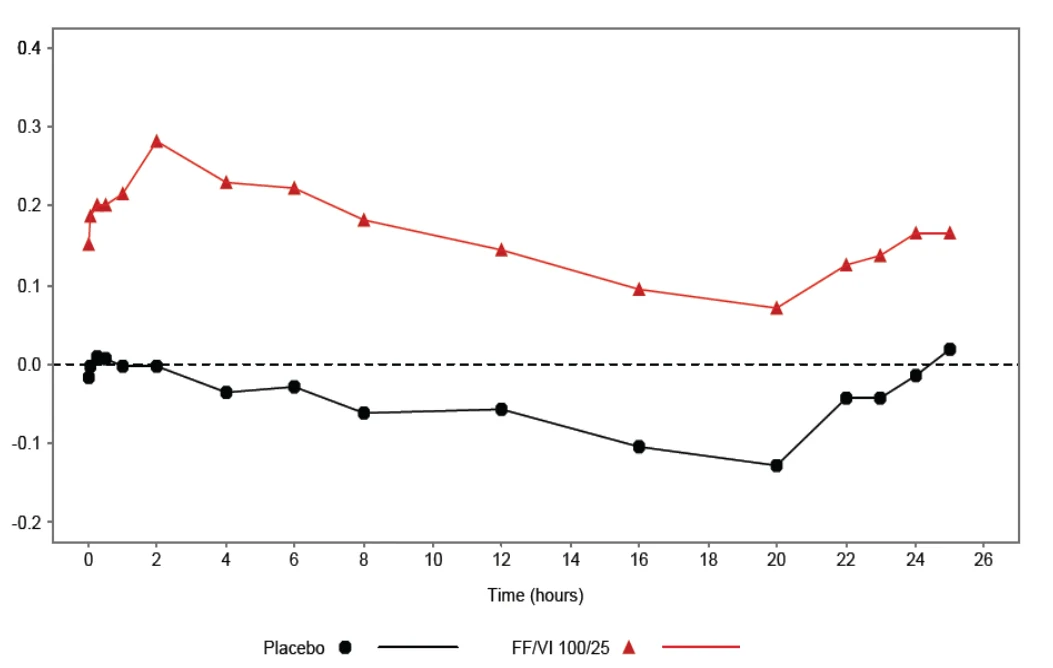
Notes:
FF/VI: BREO ELLIPTA
The difference in weighted mean FEV1 (0-24 hr) over days 28 and 29 following BREO ELLIPTA 100/25 mcg compared with placebo was 220 mL (95% CI: 165, 275, p<0.001). In addition, trough FEV1 on Day 29 was significantly higher for BREO ELLIPTA. The difference in trough FEV1 with BREO ELLIPTA 100/25 mcg with placebo was 177 mL (95% CI: 97, 257, p<0.001).
TOXICOLOGY
Fluticasone furoate
Fluticasone furoate (FF) has undergone a comprehensive toxicological evaluation, and the principal findings are summarised in Table 15. In the majority of studies, fluticasone furoate was administered by the inhaled route which resulted in systemic exposure. The major findings were typically associated with systemic exposure to glucocorticoids, and are commonly reported for other marketed inhaled corticosteroids. In patients following repeated inhaled doses of 100 or 200 mcg/day plasma concentrations of fluticasone furoate were typically lower than those achieved in animal toxicology studies (see ACTION AND CLINICAL PHARMACOLOGY, Pharmacokinetics).
LS Mean C h an ge (L)
Table 15 Summary of Principal Findings in Fluticasone Furoate Toxicology Studies
| Study Type & Duration | Route | Species | Dose mcg/kg/day, unless indicated) | Noteworthy Findings | ||
|---|---|---|---|---|---|---|
| Single Dose | oral intravenous inhalation | mouse | 1000, 1500, 2000 (mg/kg) 18000, 30000 7100 | Findings following high single doses included reduced body weight and lymphoid depletion. Gastric irritation was seen following high dose oral administration in rats. | ||
oral intravenous inhalation | rat | 1000, 1500, 2000 (mg/kg) 12000, 18000 4400 | ||||
| aRepeat Dose 4 weeks | inhalation | rat | 6.9, 17.6, 71.7 6.5, 19.5, 72.0 | Findings following repeated inhalation administration of FF included suppressed weight gain, lymphocytopaenia, reduced adrenal weight/cortical atrophy, decreased cellularity of lymphoid tissues, and hypocellularity/prominent adipocytes in bone marrow. In dogs, reduced plasma cortisol, increased hepatic glycogen and infection secondary to immunosuppression were observed, along with development of Cushingoid syndrome on chronic treatment. In all species, there was no evidence of significant treatment related effects on the respiratory tract. | ||
| dog | 10.6, 30.6, 105 9, 22, 74 | |||||
| 13 weeks | inhalation | mouse | 7.3, 18.6, 76.9 | |||
| rat | 4.3, 8.5, 24.3 | |||||
| dog | 11.3, 33.0, 64.7 | |||||
| 26 weeks | inhalation | rat | 3.2, 8.3, 20.3 | |||
| 39 weeks | inhalation | dog | 13.3, 30.1, 59.6 | |||
| Repeat Dose 14 days | intranasal | rat (male) | 80, 160 (mcg/day) | In intranasal studies, findings following administration of FF were similar to those seen following inhalation administration. In the 26 week dog study, local effects were confined to increased numbers of goblet cells in the nasal epithelium, considered an adaptive response to local administration of supratherapeutic levels of FF. | ||
| 4 weeks | intranasal | dog | 400, 1200 (mcg/day) | |||
| 13/26 weeks | intranasal | dog | 1200, 2400 (mcg/day) | |||
Genotoxicity AMES Mouse lymphoma | In vitro | NA* | up to 1000 (mcg/plate) up to 25 (mcg/mL) | FF did not cause gene mutation in bacteria or chromosomal damage in mammalian cells in vitro. | ||
| Micronucleus (2 doses, 24 hours apart) | intravenous | rat | 625, 1000 1000, 2000, 4000 10000, 20000, 40000 | There was no evidence of genotoxicity in the in vivo micronucleus tests in rats. | ||
| Study Type & Duration | Route | Species | Dose mcg/kg/day, unless indicated) | Noteworthy Findings | ||
|---|---|---|---|---|---|---|
Carcinogenicity 104 weeks | Inhalation | mouse | 2.2, 6.1, 18.8 | There was no evidence of treatment-related increases in tumour incidence in two year inhalation studies in rats and mice. | ||
| rat | 1.0, 3.2, 8.6 | |||||
Reproductive Toxicity Male fertility 69 to 73 days (from 28 days prior to co-habitation) | inhalation | rat | 6.6, 12.9, 29.4 | There were no effects on mating performance or fertility of male or female rats. Developmental toxicity in rats was confined to an increased incidence of incompletely ossified sternabrae in association with lower fetal weight. High doses in rabbits (46.6 mcg/kg/day) induced abortion. There were no major skeletal or visceral abnormalities in either rats or rabbits, and no effect on pre- or post-natal development in rats treated with FF during gestation and lactation. | ||
| FFEEEFD** 41 to 46 days (from 14 days prior to mating until Day 17 of pregnancy) | inhalation | rat | 11, 23, 91 | The developmental NOAEL in female rats achieved systemic exposures approximately 3-fold greater than in patients with asthma receiving FF 200 mcg/daya; this dose is similar to the NOAEL in the male fertility and PPN studies in which TK data were not collected; AUC data for the NOAEL could not be calculated for the rabbit EFD study, but, at NOAEL, Cmax was approximately 4-fold greater than in patients with asthma receiving FF, 200mcg/daya. | ||
| EFD*** 13 days (from Days 8 to 20 of pregnancy) | inhalation | rabbit | 9.7, 46.6, 85.1 1.8, 3.2, 8.1 | |||
PPN**** 35 days (from Days 6 to 20pc and Days 2 to 21pp) | inhalation | rat | 5.5, 15.7, 27.2 | |||
| Juvenile***** 14 Days | inhalation | rat, | 7.9, 27, 73 | In juvenile rats and dogs findings were consistent with the corticosteroid effects of FF seen in adult animals. | ||
| dog | 9.8, 23.4, 47.6 | |||||
| 28 days | intranasal | dog | 800 (µg/day) | |||
Local Tolerance Dermal irritancy 4 hours 16 hours | topical | rabbit | 500 (mcg) 0.2 (mcg/mL) | FF was non-irritating following single dose application to the skin, and practically non-irritating following application of the intranasal clinical formulation to the eye. | ||
| Study Type & Duration | Route | Species | Dose mcg/kg/day, unless indicated) | Noteworthy Findings | ||
|---|---|---|---|---|---|---|
Ocular irritancy Single dose | topical | rabbit | 0.05% (w/w) | |||
Other Toxicity Respiratory hypersensitivity 5 days | inhalation | guinea pig (male) | 67.1 to 71.2 | There was no evidence of respiratory hypersensitivity reactions following inhalation administration of FF. | ||
Key: *NA = Not applicable **FFEEEFD = Female fertility, early embryonic and embryofoetal development *** EFD = Embryofoetal development **** PPN =Pre- and post-natal development *****At start of dosing juvenile rats were aged approximately 21 days and juvenile dogs were aged approximately 8 weeks pc = post-coitum pp = post partum a = Model predicted geometric mean systemic exposure following administration of 200 mcg FF (in combination with VI) in subjects with asthma = 0.0314 ng/mL (Cmax) or 0.495 ng.h/mL (AUC) | ||||||
Vilanterol
Vilanterol (VI) has undergone a comprehensive toxicological evaluation, and the principal findings are summarised in Table 16. In the majority of studies, VI was administered by the inhaled route which resulted in systemic exposure. The major findings were typically associated with systemic exposure to beta2 agonists and are commonly reported for other marketed LABAs. In patients following repeated inhaled doses of 25 mcg/day plasma concentrations of vilanterol were typically lower than those achieved in animal toxicology studies (see ACTION AND CLINICAL PHARMACOLOGY, Pharmacokinetics).
Table 16 Summary of Principal Findings in Vilanterol Toxicology Studies
| Study Type & Duration | Route | Species | Dose (mcg/kg/day, unless indicated) | Noteworthy Findings | |||
|---|---|---|---|---|---|---|---|
| Single Dose | oral | rat | 5, 30, 100, 300 (mg/kg) | Single dose toxicity studies were not conducted with VI, however in single dose tolerability studies, high oral doses in rats were well-tolerated and in dogs single inhaled doses were associated with vasodilatation increased pulse rate and serum cardiac troponin I. | |||
| inhalation | dog | H135 | |||||
| Study Type & Duration | Route | Species | Dose (mcg/kg/day, unless indicated) | Noteworthy Findings | |||
|---|---|---|---|---|---|---|---|
aRepeat Dose 2 weeks | oral | mouse | 1000, 10000, 50000 | Findings following repeated inhalation administration of high doses of VI to mice, rats or dogs included severe clinical signs (underactive behaviour, irregular and/or laboured breathing and half closed eyelids), tachycardia, increased weight gain, variable changes in a number of clinical chemistry(e.g. increased alkaline phosphatase concentrations) and haematology endpoints, upper respiratory tract irritancy, skeletal muscle myofibre degeneration, myocardial fibrosis/necrosis and transient increases in serum cardiac troponin I, thymic involution, increased periportal hepatocyte rarefaction/decreased centrilobular hepatocyte rarefaction, myometrial hyperplasia, increased acinar development and secretory activity in mammary gland, decreased corpora lutea and abnormal oestrus cycles and increased incidence/severity of ovarian cysts. At the NOAEL in repeat dose toxicity studies of up to 39 weeks duration, compared with systemic exposures seen in asthma subjects receiving 25 mcg/day VIb, AUC exposures were ≥ 30X or >4000X greater in female or male rats, respectively, ≥ 34X in dogs and 3480X in mice. | |||
| inhalation | mouse | H51, 1164, 5814, 48972 | |||||
| rat | H50.4, 250.8, 771.6 | ||||||
| dog | 10,33,137 | ||||||
| 4 weeks | inhalation | rat | H45.1, 261.1, 708.7 | ||||
| 13 weeks | inhalation | mouse | 58.6, 1020, 6490, 38200 | ||||
| rat | 56.2, 657.9, 10392.6, 38845.1 | ||||||
| dog | 9.31, 66.0, 501 | ||||||
| 26 weeks | inhalation | rat | 57.7F, 537, 2674, 10253M | ||||
| 39 weeks | inhalation | dog | 9.55, 62.5, 510 | ||||
Genotoxicity Ames Mouse lymphoma SHE** | In vitro | NA* | up to H5000 mcg/plate up to H35 mcg/mL up to H32.5 mcg/mL | VI was not mutagenic in bacteria, did not induce morphological transformation in a Syrian hamster embryo assay, but did induce an equivocal, non-reproducible response at highly cytotoxic concentrations in the presence of S9-mix in a mouse lymphoma assay. VI was not genotoxic in vivo in the rat micronucleus or unscheduled DNA synthesis (UDS) assays. | |||
| Micronucleus (2 doses, 24 hours apart) | intravenous | rat | H7800, 12500 | ||||
| UDS*** (2 doses, 14 hours apart) | H3750, 12500 | ||||||
| Study Type & Duration | Route | Species | Dose (mcg/kg/day, unless indicated) | Noteworthy Findings | |||
|---|---|---|---|---|---|---|---|
Carcinogenicity 104 weeks | inhalation | mouse | 6.4, 62, 615, 6150, 29500 | In two-year inhalation carcinogenicity studies, proliferative changes were seen in the female reproductive tract (mesovarian/periovarian smooth muscle hypertrophy / hyperplasia, mesovarian leiomyoma in rats; ovarian tubulostromal adenomas and hyperplasia, ovarian sex-cord stromal tumours and hyperplasia, uterine smooth muscle hypertrophy/ hyperplasia, leiomyomas, leiomyosarcomas and cystic endometrial hyperplasia in mice) and pituitary gland (shortening of latency for pituitary neoplasms). There was also an increased incidence of ovarian cysts in both species. There was no statistically significant, treatment-related increase in tumor incidence at 615 or 10.5 mcg/kg/day in mice or rats, respectively. | |||
| rat | 10.5/3.47a, 84.4/28. 2a , 84.4a, 223, 657 | ||||||
| bReproductive Toxicity Male fertility 54 to 57 days (from 14 days prior to mating) | inhalation | rat | 62, 824, 31508 | Inhaled administration of VI to rats did not affect fertility in either males or females and did not cause any adverse effects on litter parameters or the developing fetus and there were no adverse effects on pre- or post-natal development after oral administration to female rats. In rabbits, administration of VI by inhaled or subcutaneous routes resulted in fetal abnormalities (low incidence of cleft palate, open eyelids, sternebral fusion and/or an abnormal pattern of frontal bone ossification). Using TK data from repeat-dose toxicity studies, the developmental NOAEL, exposures were approximately 8000X those achieved in subjects with asthma given 25 mcg/day VIb and in rabbits, the NOAEL following subcutaneous administration was 133X, but a NOAEL was not identified in rabbits following inhaled administration. | |||
| FFEED**** 22 to 33 days (from 2 weeks prior to mating to Day 6 pc) | inhalation | rat | 49.4, 664, 37112 | ||||
| EFD***** 12 days (fdom Days 6 to 17 pc) | inhalation | rat | 45.4, 613, 33733 | ||||
| 13 days (from Days 7 to 19 pc) | Inhalation subcutaneo us | rabbit | 62.7, 591, 5740 3,7,30,300 | ||||
| PPN****** 35 days (from Day 6 pc to Day 20 pp) | oral | rat | 300, 3000, 10000 | ||||
| Study Type & Duration | Route | Species | Dose (mcg/kg/day, unless indicated) | Noteworthy Findings | |||
|---|---|---|---|---|---|---|---|
Local Tolerance Local lymph node 3 days | topical | mouse | 50 mcL of 50% (w/w) | VI was non-sensitising in mouse local lymph node assay and was shown to be non-irritant to skin and not a severe irritant to the eye in reconstructed/reconstituted human tissue. | |||
| Dermal irritancy | topical | NA* | 25 mg | ||||
| Ocular irritancy | topical | NA* | 30 mg | ||||
Key: NA = Not applicable ** SHE = Syrian hamster embryo *** UDS = Unscheduled DNA synthesis ****FFEED = Female fertility and early embryonic development ***** EFD = Embryofoetal development ****** PPN =Pre- and post-natal development pc = post-coitum pp = post partum a = In week 86, the dose was reduced for female rats from 84.4 to 28.2 mcg/kg/day and from 10.5 to 3.47 mcg/kg/day b = Model predicted geometric mean systemic exposure following administration of 25 mcg VI (alone or in combination with FF) in subjects with asthma = 0.0495 ng/mL (Cmax) or 0.169 ng.h/mL (AUC) H = study conducted with α-phenylcinnamate (H) salt of VI | |||||||
Fluticasone Furoate combined with Vilanterol
Fluticasone Furoate (FF) combined with Vilanterol (VI) has been evaluated in a number of studies, and the principal findings are summarised in Table 17. Findings were consistent with those seen in studies with FF or VI alone and the effects of FF tended to predominate. The major findings were those typically associated with systemic exposure to glucocorticoids or beta2 agonists, and which are commonly reported for other marketed products with the same pharmacological targets. No studies of carcinogenicity, genotoxicity, single dose toxicity, local tolerance or impairment of fertility were conducted using fluticasone furoate and vilanterol in combination.
Table 17 Summary of Principal Findings in Fluticasone Furoate and Vilanterol Combination Toxicology Studies
| Study Type & Duration | Route | Species | Dose (mcg/kg/day; FF/VI) | Noteworthy Findings | ||
|---|---|---|---|---|---|---|
| Repeat Dose 4 weeks | inhalation | rat | 34.9/0; 0/6.29; 33.5/8.31; 29.4/18.7; 33.0/25.5 | With the exception of increased mammary gland secretion in rats and altered glycogen distribution in dogs, the effects in the combination groups were generally similar in nature and/or incidence to changes observed in rats or dogs exposed to FF or VI alone. Treatment related effects increased with the fluticasone furoate dose. | ||
| 4 weeks | inhalation | dog | 33.8/0; 0/0.953; 35.2/1.27; 33.3/3.71; 34.9/4.18 | |||
| 13 weeks | inhalation | rat | 56.4/0; 0/24.9; 7.85/5.24; 19.8/11.7; 53.8/30.7; 52.6/5.82 | |||
| 13 weeks | inhalation | dog | 56.1/0; 0/33.5; 6.92/3.81; 20.6/11.7; 63.9/35.0; 61.0/1.17 | |||
Reproductive Toxicity EFD** 12 days (from Days 6 to 17 pc) | inhalation | rat | 82.0/0; 94.4/3.5; 94.9/98.3; 0/86.9; 7.9/8.3; 29.5/31.7 | In FF/VI combination groups, findings were similar to those seen with FF alone in particular fetal growth retardation through an increase in litters with unossified or incomplete ossification of the sternebra and xiphisternum. | ||
| Juvenile*** (14 days) | inhalation | rat | 41.8/0; 0/20.4; 0/629.8; 32.8/18.8; 26.2/3.6 | In juvenile toxicity studies, findings were generally typical of a corticosteroid or a beta2-agonist and no novel toxicity was seen with the combination. Although the majority of changes were also seen in inhalation toxicity studies in adult animals, some findings in kidney, eyes, bone, lungs and teeth associated with FF treatment, were only seen in juvenile dogs. | ||
| dog | 43.1/26.8; 39.8/1.1; 27.1/0; 0/30.6; 0/94.1 | |||||
| Juvenile*** 13 weeks | inhalation | dog | 59.9/0; 0/51.6; 7.07/9.32; 18.6/19.1; 57.8/62.0; 57.5/5.38 | |||
Key: ** EFD = Embryofoetal development ***At start of dosing juvenile rats were aged approximately 21 days and juvenile dogs were aged approximately 8 weeks pc = post-coitum | ||||||
REFERENCES
Boscia JA, Pudi KK, Zvarich MT, Sanford L, Siederer SK, Crim C. Effect of Once-Daily Fluticasone Furoate/Vilanterol on 24-Hour Pulmonary Function in Patients With Chronic Obstructive Pulmonary Disease: A Randomized, Three-Way, Incomplete Block, Crossover Study. Clin Ther. 2012; Jul 34 (8):1655-66.
Hanania NA, Feldman G, Zachgo W, Shim JJ, Crim C, Sanford L, Lettis S, Barnhart F, Haumann B. The efficacy and safety of the novel long-acting β2 agonist vilanterol in patients with COPD: A randomized placebo-controlled trial. Chest. 2012 Jul 142 (1):119-27.
Vestbo J, Anderson JA, Brook RD, Calverley PMA, Celli BR, Crim C, Martinez F, Yates J, Newby DE. Fluticasone furoate and vilanterol and survival in chronic obstructive pulmonary disease with heightened cardiovascular risk (SUMMIT): a double-blind randomized controlled trial. Lancet. 2016; 387: 1817-26.
Vestbo J, Leather D, Bakerly ND, New J, Gibson JM, McCorkindale S et al. Effectiveness of Fluticasone Furoate-Vilanterol for COPD in Clinical Practice. New Engl J Med 2016; 375: 1253-1260.
Woodcock A, Vestbo J, Bakerly ND, New J, Gibson JM, McCorkindale S, et al. Effectiveness of fluticasone furoate plus vilanterol on asthma control in clinical practice: an open-label, parallel group, randomised controlled trial. Lancet 2017;pii: S0140-6736(17)32397-8.