


Product Monograph - Decapeptyl
RECENT MAJOR LABEL CHANGES
| 7 WARNINGS AND PRECAUTIONS | DEC 2024 |
|---|
TABLE OF CONTENTS
RECENT MAJOR LABEL CHANGES ............................................................................................ 2
TABLE OF CONTENTS .............................................................................................................. 2
PART I: HEALTH PROFESSIONAL INFORMATION ...................................................................... 4
1 INDICATIONS ............................................................................................................... 4
1.1 Pediatrics .............................................................................................................. 4
1.2 Geriatrics .............................................................................................................. 4
2 CONTRAINDICATIONS ................................................................................................. 4
4 DOSAGE AND ADMINISTRATION ................................................................................. 4
4.1 Dosing Considerations .......................................................................................... 4
4.2 Recommended Dose and Dosage Adjustment ..................................................... 5
4.4 Administration ...................................................................................................... 5
4.5 Missed Dose ......................................................................................................... 5
5 OVERDOSAGE .............................................................................................................. 6
6 DOSAGE FORMS, STRENGTHS, COMPOSITION AND PACKAGING ................................. 6
7 WARNINGS AND PRECAUTIONS .................................................................................. 6
7.1 Special Populations ............................................................................................... 9
7.1.1 Pregnant Women ............................................................................................. 9
7.1.2 Breast-feeding .................................................................................................. 9
7.1.3 Pediatrics ........................................................................................................ 10
7.1.4 Geriatrics ........................................................................................................ 10
8 ADVERSE REACTIONS ................................................................................................ 10
8.1 Adverse Reaction Overview ................................................................................ 10
8.2 Clinical Trial Adverse Reactions .......................................................................... 13
8.5 Post-Market Adverse Reactions ......................................................................... 14
9 DRUG INTERACTIONS ................................................................................................ 15
9.4 Drug-Drug Interactions ....................................................................................... 15
9.5 Drug-Food Interactions ....................................................................................... 15
9.6 Drug-Herb Interactions ....................................................................................... 15
9.7 Drug-Laboratory Test Interactions ...................................................................... 15
10 CLINICAL PHARMACOLOGY ....................................................................................... 15
10.1 Mechanism of Action .......................................................................................... 15
10.2 Pharmacodynamics ............................................................................................ 16
10.3 Pharmacokinetics ............................................................................................... 16
11 STORAGE, STABILITY AND DISPOSAL ......................................................................... 18
12 SPECIAL HANDLING INSTRUCTIONS ........................................................................... 18
PART II: SCIENTIFIC INFORMATION ....................................................................................... 19
13 PHARMACEUTICAL INFORMATION ............................................................................ 19
14 CLINICAL TRIALS ........................................................................................................ 20
14.1 Clinical Trials by Indication ................................................................................. 20
15 MICROBIOLOGY ........................................................................................................ 22
16 NON-CLINICAL TOXICOLOGY ..................................................................................... 22
PATIENT MEDICATION INFORMATION .................................................................................. 25
PART I: HEALTH PROFESSIONAL INFORMATION
1 INDICATIONS
DECAPEPTYL (triptorelin acetate injection) is indicated for:
- Downregulation and prevention of premature luteinizing hormone (LH) surges in women undergoing controlled ovarian hyperstimulation for assisted reproductive technologies (ART).
In clinical trials, DECAPEPTYL 0.1mg/mL has been used in cycles where urinary and recombinant human follicle stimulating hormone (FSH) as well as human menopausal gonadotrophin (HMG) were used for stimulation.
1.1 Pediatrics
Pediatrics (<18 years of age): No data are available to Health Canada; therefore, Health Canada has not authorized an indication for pediatric use.
1.2 Geriatrics
Geriatrics (≥65 years of age): No data are available to Health Canada; therefore, Health Canada has not authorized an indication for geriatric use.
2 CONTRAINDICATIONS
Triptorelin acetate injection is contraindicated in patients who are hypersensitive to this drug or to any ingredient in the formulation, including any non-medicinal ingredient, or component of the container, for a complete listing, see 6 DOSAGE FORMS, STRENGTHS, COMPOSITION AND PACKAGING.
DECAPEPTYL is contraindicated in cases of:
- Pregnancy and lactation period
4 DOSAGE AND ADMINISTRATION
4.1 Dosing Considerations
DECAPEPTYL is intended for subcutaneous injection once daily into the lower abdominal wall. Following the first administration, it is advised that the patient be kept under medical supervision for 30 minutes to ensure there is no allergic/pseudo-allergic reaction to the injection. Facilities for the treatment for such reactions should be immediately available. The following injections may be self-administered as long as the patient is made aware of the signs and symptoms that may indicate hypersensitivity, the consequences of such a reaction and the need for immediate medical intervention. The injection site should be varied to prevent lipoatrophy.
Treatment with DECAPEPTYL should be initiated under the supervision of a physician experienced in the treatment of infertility. Treatment can be started in the early follicular phase (day 2 or 3 of the menstrual cycle) or in the mid-luteal phase (day 21-23 of the menstrual cycle or 5-7 days before expected start of menses). Controlled ovarian hyperstimulation with gonadotrophins should be started after approximately 2-4 weeks of DECAPEPTYL treatment. Ovarian response should be monitored clinically (including ovarian ultrasound alone or in combination with measurement of oestradiol levels) and the dose of gonadotrophins adjusted accordingly. When a suitable number of follicles have reached an appropriate size, treatment with DECAPEPTYL and gonadotrophin is stopped and a single injection of hCG is administered to induce the final follicular maturation.
If downregulation is not confirmed after 4 weeks (determined by oestradiol levels or ultrasound documentation of a shedded endometrium), discontinuation of DECAPEPTYL should be considered. The total duration of treatment is usually 4-7 weeks. When using DECAPEPTYL, luteal phase support should be provided. Luteal phase support should be given according to the reproductive medical centre's practice.
4.2 Recommended Dose and Dosage Adjustment
The usual dosage is one injection (0.1 mg) under the skin of the lower abdomen once daily. Treatment can be started on day 2 or 3 or day 21 to 23 of the menstrual cycle (or 5-7 days before expected start of menstruation). After 2 to 4 weeks other hormones are given to stimulate follicle growth. In general, DECAPEPTYL treatment continues until follicles have reached a suitable size. This usually last 4-7 weeks.
Ovarian response should be monitored clinically (including ovarian ultrasound alone or preferably in combination with measurement of oestradiol levels) and the dose of gonadotrophins adjusted accordingly.
No specific dose recommendations are given for subjects with renal or hepatic impairment. A clinical study indicated that the risk of accumulation of triptorelin in patients with severe liver and renal impairment is small.
4.4 Administration
DECAPEPTYL is intended for subcutaneous injection once daily. Inject the entire contents of a pre-filled disposable syringe subcutaneously to the lower abdomen once daily.
4.5 Missed Dose
If the patient misses a dose, the patient should be advised to take the missed dose if it is on the same day and not to double dose.
5 OVERDOSAGE
Overdose in humans may result in a prolonged duration of action. In case of overdose, DECAPEPTYL treatment should be (temporarily) discontinued.
No adverse reaction has been reported as a consequence of overdose.
| For management of a suspected drug overdose, contact your regional poison control centre. |
|---|
6 DOSAGE FORMS, STRENGTHS, COMPOSITION AND PACKAGING
Table 1 – Dosage Forms, Strengths, Composition and Packaging
Each pre-filled syringe of 1 mL solution for injection contains 100 micrograms triptorelin acetate equivalent to 95.6 micrograms triptorelin free base.
Each box contains 1 mL solution in a pre-filled syringe (glass) with plunger stopper (chlorobutyl rubber), plunger rod (polystyrene), integrated needle and rigid needle shield in pack size of 7.
7 WARNINGS AND PRECAUTIONS
General
Before initiating treatment with DECAPEPTYL, pregnancy must be ruled out (see 7.1.1 Pregnant Women).
When triptorelin is co-administered with drugs affecting pituitary secretion of gonadotrophins caution should be given and the patient's hormonal status should be supervised.
No specific dose recommendations are given for subjects with renal or hepatic impairment. A clinical study indicated that the risk of accumulation of triptorelin in patients with severe hepatic or renal impairment is small. In patients with renal or hepatic impairment, triptorelin has a mean terminal half life of 7-8 hours compared to 3-5 hours in healthy subjects. Despite this prolonged exposure, triptorelin is not expected to be present in circulation at the time of embryo transfer.
ART is associated with an increased risk of multiple pregnancies, pregnancy wastage, ectopic pregnancies and congenital malformations. These risks are also valid with usage of DECAPEPTYL 0.1 mg/1 mL as adjunct therapy in controlled ovarian hyperstimulation. The use
| Route of Administration | Dosage Form / Strength/Composition | Non-medicinal Ingredients |
| Subcutaneous injection | Solution for injection, 0.1 mg/mL, triptorelin acetate | acetic acid (glacial), sodium chloride, water for injections. |
of DECAPEPTYL in controlled ovarian hyperstimulation may increase the risk of ovarian hyperstimulation syndrome (OHSS) and ovarian cysts.
Follicular recruitment, induced by the use of GnRH analogues and gonadotrophins, may be markedly increased in a minority of predisposed patients, particularly in case of Polycystic Ovarian Syndrome.
As with other GnRH analogues, there have been reports of ovarian hyperstimulation syndrome (OHSS) associated with the use of triptorelin in combination with gonadotrophins.
Ovarian stimulation should be done under strict medical supervision.
Ovarian Hyperstimulation Syndrome (OHSS)
OHSS is a medical event distinct from uncomplicated ovarian enlargement. OHSS is a syndrome that can manifest itself with increasing degrees of severity. It comprises marked ovarian enlargement, high serum sex steroids, and an increase in vascular permeability which can result in an accumulation of fluid in the peritoneal, pleural and, rarely, in the pericardial cavities.
The following symptoms may be observed in severe cases of OHSS: abdominal pain, abdominal distension, severe ovarian enlargement, weight gain, dyspnoea, oliguria and gastrointestinal symptoms including nausea, vomiting and diarrhoea. Clinical evaluation may reveal hypovolaemia, haemoconcentration, electrolyte imbalances, ascites, haemoperitoneum, pleural effusions, hydrothorax, acute pulmonary distress, and thromboembolic events.
Excessive ovarian response to gonadotrophin treatment seldom gives rise to OHSS unless hCG is administered to trigger ovulation. Therefore, in cases of OHSS it is prudent to withhold hCG and advise the patient to refrain from coitus or to use barrier methods for at least 4 days. OHSS may progress rapidly (within 24 hours to several days) to become a serious medical event, therefore patients should be followed for at least two weeks after the hCG administration.
OHSS may be more severe and more protracted if pregnancy occurs. Most often, OHSS occurs after hormonal treatment has been discontinued and reaches its maximum severity at about seven to ten days following treatment. Usually, OHSS resolves spontaneously with the onset of menses. If severe OHSS occurs, gonadotrophin treatment should be stopped if still ongoing, the patient hospitalized and specific therapy for OHSS started e.g. with rest, intravenous infusion of electrolyte solutions or colloids and heparin.
This syndrome occurs with higher incidence in patients with polycystic ovarian disease. The risk of OHSS might be higher with use of GnRH agonists in combination with gonadotrophins than with use of gonadotrophins alone.
Cardiovascular
Effects on QT/QTc Interval
Gonadotrophin-releasing hormone receptors superagonists and antagonists have been associated with QTc prolongation in male patients receiving these drugs as long-term treatment for prostate cancer. QTc prolongation is believed to be related to the decreased plasma levels of testosterone. Triptorelin has not been studied for QTc prolongation in female subjects. Particular care should be exercised when administering Decapeptyl to patients with risk factors for Torsade de Pointes, including, but not limited to, congenital long QT syndrome, cardiac disease; history of arrhythmias; hypokalemia, hypocalcemia, and/or hypomagnesemia; bradycardia; and eating disorders.
Endocrine and Metabolism
Loss of bone mineral density
The use of GnRH agonists is likely to cause reduction in bone mineral density averaging 1% per month during six months treatment period. Every 10% reduction in bone mineral density is linked with about a two to three times increased fracture risk. In majority of women, currently available data suggest that recovery of bone loss occurs after cessation of therapy.
No specific data is available for patients with established osteoporosis or with risk factors for osteoporosis (e.g., chronic alcohol abuse smokers, long term therapy with drugs that reduce bone mineral density, e.g. anti-convulsants or corticoids, family history of osteoporosis, malnutrition, e.g. anorexia nervosa). Since reduction in bone density is likely to be detrimental in these patients, treatment with triptorelin should be considered on an individual basis and only be initiated if the benefits of treatment outweigh the risk following a very careful appraisal. Consideration should be given to additional measures to counteract loss of bone mineral density.
Rarely, treatment with GnRH agonist may reveal the presence of previously unknown gonadotroph cell pituitary adenoma. These patients may present with a pituitary apoplexy characterised by sudden headache, vomiting, visual impairment and ophthalmoplegia.
Psychiatric
Mood changes, including depression have been reported in clinical trials. Patients with known depression should be closely monitored during therapy.
Post-market data showed an increased risk of depression (which may be severe) in patients undergoing treatment with GnRH agonists, such as triptorelin. Patients should be informed accordingly and treated as appropriate if symptoms occur.
Renal/ Hepatic/Biliary/Pancreatic
No specific dose recommendations are given for subjects with renal or hepatic impairment. A clinical study indicated that the risk of accumulation of triptorelin in patients with severe or renal impairment is small.
Reproductive Health: Female and Male Potential
Ovarian Cysts
Ovarian cysts may occur during the initial phase of treatment with GnRH agonist. They are usually asymptomatic and non-functional.
Sensitivity/Resistance
Special care should be taken in women with signs and symptoms of active allergic conditions or known history of allergic predisposition. Treatment with DECAPEPTYL is not advised in women with severe allergic conditions.
7.1 Special Populations
7.1.1 Pregnant Women
DECAPEPTYL is not indicated during pregnancy. Pregnancy must be excluded before initiation of fertilization treatment. Non-hormonal methods of contraception should be employed during therapy until menses resume. If a patient becomes pregnant while receiving triptorelin, therapy should be discontinued.
When triptorelin is used for fertilization treatment, there is no clinical evidence to suggest a causal connection between triptorelin and any subsequent abnormalities of oocyte development or pregnancy or outcome.
Very limited data on the use of triptorelin during pregnancy does not indicate an increased risk of congenital malformations. Based on the pharmacological effects disadvantageous influence on the pregnancy and the offspring cannot be excluded.
Pregnant rats were treated by subcutaneous administration of triptorelin at dose levels of 0.4, 2 or 10 μg/kg/day during the period of organogenesis. No signs of maternal toxicity or teratogenicity were seen. However, a substantial increase in the number of luteal bodies was seen in all treated groups. Treatment with 2 μg/kg caused a slight increase in the mean placental weight while treatment with 10 μg/kg caused a marked increase in placental weight.
Pregnant rabbits were treated by subcutaneous administration of triptorelin to at dose levels of 0.5, 5 or 50 μg/kg/day during the period of organogenesis. Pre-implantation losses were observed in rabbits treated with the highest dose. When compared with the control group, a higher incidence of resorptions and abortions were observed at 50.0 µg/kg/day dosage. Fetal survival, growth and morphological development were unaffected at dose-levels up to 50.0 µg/kg/day.
Pregnant Cynomolgus monkeys were given single intramuscular injections of 1500 μg triptorelin/animal (ca. 375 μg/kg) as a slow release formulation on day 10 and day 40 post-coitum. The treatment did not affect parturition and had no maternal or embryotoxic effects.
7.1.2 Breast-feeding
DECAPEPTYL is not indicated for use during lactation.
7.1.3 Pediatrics
Pediatrics (<18 years of age): No data are available to Health Canada; therefore, Health Canada has not authorized an indication for pediatric use.
7.1.4 Geriatrics
Geriatrics (≥65 years of age): No data are available to Health Canada; therefore, Health Canada has not authorized an indication for geriatric use.
8 ADVERSE REACTIONS
8.1 Adverse Reaction Overview
Frequently (≥ 2%) reported adverse events during the treatment with DECAPEPTYL in clinical trials, either before or during co-administration with gonadotrophins, are listed in the table below. The most frequent adverse events are headache (27%), vaginal bleeding/spotting (24%), abdominal pain (15%), injection site inflammation (12%) and nausea (10%).
Mild to severe hot flushes and hyperhidrosis may occur which do not usually require discontinuation of therapy.
At the beginning of treatment with DECAPEPTYL, the combination with gonadotrophins may result in ovarian hyperstimulation syndrome. Ovarian enlargement, dyspnoea, pelvic and/or abdominal pain may be observed (See Warnings and Precautions). Genital haemorrhage including menorrhagia and metrorrhagia may occur at the beginning of treatment with DECAPEPTYL.
Ovarian cysts have been reported to occur commonly (1%) during the initial phase of treatment with DECAPEPTYL.
During treatment with triptorelin some adverse reactions showed a general pattern of hypo-oestrogenic events related to pituitary-ovarian blockade such as sleep disorder, headache, mood alteration, vulvovaginal dryness, dyspareunia and decreased libido.
Breast pain, muscle spasms, arthralgia, weight increased, nausea, abdominal pain, abdominal discomfort, asthenia and episodes of blurred vision and visual disturbances may occur during treatment with DECAPEPTYL.
Single cases of allergic reactions, localized or generalized, have been reported after injection of DECAPEPTYL.
Table 2 – Tabulated summary of adverse reactions
| Based on the frequency of adverse drug reactions posted in clinical trials with DECAPEPTYL in females for downregulation and prevention of premature LH surges (N=2,095) | |||||
|---|---|---|---|---|---|
MedDRA System Organ Class | Very common (≥ 1/10) | Common (>1/100 to <1/10) | Uncommon (>1/1,000 to <1/100) | Rare (>1/10,000 to <1/1,000) | Frequency Not known* |
| Infection and Infestations | Upper respiratory tract infection, pharyngitis | ||||
| Immune system disorder | Hypersensitivity | ||||
| Psychiatric Disorders | Mood altered**, depression** | Fear | Sleep disorder, libido decreased | ||
| Nervous system disorder | Headache | Dizziness | |||
| Eye disorders | Visual impairment, vision blurred | ||||
| Vascular disorders | Hot flushes | ||||
| Respiratory, thoracic and mediastinal disorders | Dyspnoea | ||||
| Gastrointestin al disorders | Abdominal pain, nausea | Abdominal distension, vomiting | Abdominal discomfort | ||
| Skin and subcutaneous tissue disorders | Hyperhidrosis, rash | Pruritus | Angioedema, urticaria | ||
| Musculoskelet al and connective tissue | Back pain | Muscle spasms, arthralgia | |||
*Frequencies of these adverse events cannot be estimated from the available data.
**This frequency is based on class-effect frequencies common for all GnRH agonists.
***Ovarian cysts may occur during the initial phase of treatment with GnRH agonist. They are usually asymptomatic and non-functional.
1The injection site reactions High Level Term (HLT) includes several injection site reaction terms that have been reported in post-marketing experience with triptorelin acetate.
| Based on the frequency of adverse drug reactions posted in clinical trials with DECAPEPTYL in females for downregulation and prevention of premature LH surges (N=2,095) | |||||
|---|---|---|---|---|---|
MedDRA System Organ Class | Very common (≥ 1/10) | Common (>1/100 to <1/10) | Uncommon (>1/1,000 to <1/100) | Rare (>1/10,000 to <1/1,000) | Frequency Not known* |
| disorders | |||||
| Pregnancy, puerperium and perinatal conditions | Abortion | ||||
| Reproductive system and breast disorders | Vaginal haemorrhage | Ovarian cyst***, pelvic pain, ovarian hyperstimula tion syndrome, dysmenorrh oea | Breast pain | Ovarian enlargement, menorrhagia, metrorrhagia, vulvovaginal dryness, dyspareunia, | |
| General disorders and administration site conditions | Injection site inflammation | Injection site erythema, injection site pain, injection site reactions (HLT)1, fatigue, influenza like symptoms | Asthenia, | ||
| Investigations | Weight increased | ||||
8.2 Clinical Trial Adverse Reactions
Because clinical trials are conducted under very specific conditions the adverse reaction rates observed in the clinical trials may not reflect the rates observed in practice and should not be compared to the rates in the clinical trials of another drug. Adverse drug reaction information from clinical trials is useful for identifying drug-related adverse events and for approximating rates.
Table 3 – Treatment-Emergent AEs Reported by at Least 1% of the IVF/ICSI Patients Receiving DECAPEPTYL in Studies MFK/IVF/0399E and FE999906 CS003
| MedDRA Preferred Term | MFK/IVF/0399E n (%) | FE999906 CS003 n (%) | ||
|---|---|---|---|---|
Onset During Downregulation N=133 | Onset During Stimulation N=113 | Onset During Downregulati on N=781 | Onset During Stimulation N=731 | |
| Headache | 30 (27%) | 31 (27%) | 29 (4%) | 36 (5%) |
| Dizziness | 5 (4%) | 6 (5%) | ||
| Dysmenorrhoea | 7 (6%) | 2 (2%) | 20 (3%) | |
| Vaginal Haemorrhage | 2 (2%) | 176 (24%) | ||
| Pelvic Pain | 43 (6%) | |||
| Leukorrhoea | 2 (2%) | |||
Application site Disorders All events Inj. Site Inflammation Inj. Site Pain Inj. Site Bruising Injection Site Reaction | 16 (14%) 13 (12%) 5 (4%) -- 2 (2%) | 20 (18%) 11 (10%) 8 (7%) 3 (3%) 3 (3%) | ||
| Abdominal Pain | 10 (9%) | 17 (15%) | ||
| Abdominal Distension | 18 (2%) | |||
| Nausea | 6 (5%) | 11 (10%) | 20 (3%) | |
| Vomiting | 3 (3%) | |||
| Diarrhea | 2 (2%) | |||
| Ovarian Cyst | 10 (1%) | 8 (1%) | ||
| Abortion Spontaneous | 48 (7%) | |||
| Abortion Missed | 15 (2%) | |||
| MedDRA Preferred Term | MFK/IVF/0399E n (%) | FE999906 CS003 n (%) | ||
|---|---|---|---|---|
Onset During Downregulation N=133 | Onset During Stimulation N=113 | Onset During Downregulati on N=781 | Onset During Stimulation N=731 | |
| OHSS | 23 (3%) | |||
| Adnexa Uteri Pain | 12 (2%) | |||
| Upper Resp. Tract Infection | 4 (4%) | 4 (4%) | ||
| Dyspnea | 2 (2%) | |||
| Influenza-like Symptoms | 3 (3%) | |||
| Pharyngitis | 3 (3%) | |||
| Rhinitis | 2 (2%) | |||
| Fatigue | 3 (3%) | 4 (4%) | ||
| Hot Flushes | 2 (2%) | |||
| Malaise | 2 (2%) | |||
| Back Pain | 3 (3%) | 3 (3%) | ||
| Flushing | 4 (4%) | |||
| Post Procedural Pain | 26 (4%) | |||
| Post-operative Pain | 3 (3%) | |||
8.5 Post-Market Adverse Reactions
Since 1 January 1990, a total of 35 adverse events in concerning DECAPEPTYL have been reported. Thirty-two cases were reported in females of reproductive age, and in the remaining three cases information on either age or gender were not available. There were six serious adverse events reported: two reports of hypersensitive reactions and four cases of OHSS.
There were two cases of injection site necrosis, two cases of injection site pain (one of them associated with injection site haemorrhage) and one case of each of the following: diarrhea, injection site reaction, injection site bruising, circulatory collapse and lack of efficacy.
Exposure to DECAPEPTYL during pregnancy has been reported for a total of 35 cases. 6 case reports concern Triptorelin daily formulation, 29 concern Triptorelin depot formulations. The outcome of the 35 pregnancy cases with Triptorelin formulations were as follows: eight abortions (7 spontaneous and 1 elective), four cases of congenital anomalies (Down’s syndrome, cleft palate, hypospadias and multiple anomalies), three cases of ectopic pregnancies, and one case each of hyperemesis gravidarum, non-acute porphyria and pre-eclampsia. A total of 21 pregnancies were unintended pregnancies. A total of 18 healthy infants were delivered (including 1 twin pregnancy).
9 DRUG INTERACTIONS
9.4 Drug-Drug Interactions
Interactions of DECAPEPYL with other medicines have not been investigated for this indication. The possibility of interactions with commonly used medicinal products, including histamine liberating products, cannot be excluded.
When triptorelin is co-administered with drugs affecting pituitary secretion of gonadotrophins caution should be given and it is recommended that the patient’s hormonal status should be supervised.
9.5 Drug-Food Interactions
Interactions with food have not been established.
9.6 Drug-Herb Interactions
Interactions with herbal products have not been established.
9.7 Drug-Laboratory Test Interactions
Interactions with laboratory tests have not been established.
10 CLINICAL PHARMACOLOGY
10.1 Mechanism of Action
Triptorelin is a synthetic decapeptide analogue of the natural gonadotrophin-releasing hormone (GnRH). GnRH is a decapeptide, which is synthesised in the hypothalamus and regulates the biosynthesis and release of the gonadotrophins LH (luteinising hormone) and FSH (follicle stimulating hormone) by the pituitary. Triptorelin gives a greater stimulation of the pituitary to secrete LH and FSH than a comparable dose of gonadorelin and has a longer duration of action. The increase of LH and FSH levels will initially lead to an increase of serum testosterone concentrations in men or serum estrogen concentrations in women. Chronic administration of a GnRH agonist results in an inhibition of pituitary LH- and FSH-secretion. This inhibition leads to a reduction in steroidogenesis, by which the serum estradiol concentration in women and the serum testosterone concentration in men fall to within the postmenopausal or castrate range, respectively, i.e. a hypogonadotrophic hypogonadal state. Plasma DHEAS (dihydroepiandrostenedion sulphate) levels are not influenced. Therapeutically, this leads to a decrease in growth of testosterone-sensitive prostate tumours in men, and to reduction of endometriosis foci and estrogen-dependent uterus myomas in women. The assisted reproduction procedure of IVF requires a suppression of plasma concentration of luteinizing hormone. This suppression assists the treatment protocol and may prevent cancellation of IVF treatment due to a premature rise in the luteinizing hormone.
Triptorelin is a GnRH analogue with increased receptor-binding abilities as compared to GnRH and with longer plasma half-life. Treatment with triptorelin lowers the plasma concentration of luteinizing hormone in a reversible manner.
10.2 Pharmacodynamics
Continuous administration of triptorelin has a biphasic effect at the pituitary level. After an initial large sudden increase in LH and FSH levels (flare-up), circulating LH and FSH levels decrease due to the pituitary GnRH-receptor desensitization, with a consequent marked reduction in the gonadal production. The exact duration of action of DECAPEPTYL has not been established, but pituitary suppression is maintained for at least 6 days after stopping administration. After discontinuation of DECAPEPTYL, a further drop in circulating LH levels should be expected, with LH levels returning to baseline after approximately 2 weeks.
The DECAPEPTYL induced downregulation of the pituitary can prevent the LH surge and thereby premature ovulation and/or follicular luteinisation. The use of the downregulation with GnRH agonist reduces the cycle cancellation rate and improves the pregnancy rate in ART cycles.
The superagonistic effects of triptorelin on the luteinizing hormone-release hormone receptor in the anterior pituitary was demonstrated in studies in vitro and in vivo. In vitro studies demonstrated that triptorelin displaces GnRH from the GnRH receptors and in vivo treatment with triptorelin resulted in a decrease in plasma concentrations of luteinizing hormone and follicle stimulating hormone in rats, dogs and baboon monkeys. When triptorelin treatment was terminated the blood hormone levels returned to normal.
10.3 Pharmacokinetics
The pharmacokinetic data suggest that after subcutaneous administration of DECAPEPTYL the systemic bioavailability of triptorelin is close to 100%. The elimination half-life of triptorelin is approximately 3-5 hours, indicating that triptorelin is eliminated within 24 hours and therefore will not be present in circulation at the time of embryo transfer. Metabolism to smaller peptides and amino acids primarily occurs in the liver and kidneys. Triptorelin is predominantly excreted in the urine.
The clinical studies indicated that the risk of accumulation of triptorelin in patients with severe liver and renal impairment is small (i.e. half-life of approximately 8 hours in these patients).
There were no differences between the pharmacokinetics of triptorelin in rats, dogs and humans. Following subcutaneous administration, the maximum plasma concentration of triptorelin was reached within a few hours and as the half-life of triptorelin was short, there was no accumulation of triptorelin following daily administration. The human half-life corresponded to that of animals (3-5 hours versus 2 hours in dogs and < 6 hours in rats). Results from the dog studies indicate that the subcutaneous bioavailability was approximately 100%.
The dose-adjusted values of Cmax and AUC when administering triptorelin subcutaneously are comparable between dogs and humans.
Once-a-month intramuscular administration of microparticles containing triptorelin resulted in an initial surge in plasma concentration of triptorelin followed by declining plasma concentration during the following 30 days. Triptorelin was present in both rats and dogs 30 days after treatment indicating that the animals had been continuously exposed during that period. Data from toxicokinetic studies in dogs and a clinical study in patients established the bioavailability of triptorelin to be approximately 40% when administered intramuscularly as the depot formulation.
Absorption
Triptorelin is not active when given orally. Following a single dose of DECAPEPTYL 0.25 mg SC in healthy male subjects, the mean maximum plasma concentration of triptorelin was 5.68 ng/mL. Maximum plasma concentrations were reached approximately 45 minutes after SC administration. The mean terminal elimination half-life was 3.3 hours and the total clearance was 9.24 L/hour and these parameters were quite similar to those determined after IV administration.
Distribution & Metabolism
Human distribution and metabolism after administration of DECAPEPTYL have not been studied. It is known that after injection, GnRH agonist progressively accumulate in the anterior pituitary and the main inactivating organs, the liver and kidneys. In the pituitary, GnRH agonists are inactivated by N-terminal cleavage by peptidases. In the liver and kidneys, GnRH agonists are degraded to biologically inactive C-terminal metabolites.
Following IV infusion of DECAPEPTYL 0.1 mg, disappearance of triptorelin from the plasma has two components: an initial fast component of approximately 19 minutes and a second slower component of approximately 50 minutes. Protein binding has not been investigated.
Elimination
Triptorelin, as all other GnRH agonists, is predominantly excreted in urine. Information on the elimination of triptorelin is available in female subjects. DECAPEPTYL 0.5 mg was administered as an IV bolus to 19 female subjects. The mean half-life for terminal elimination was 5.1 hours (range: 2.5-13.81 hours). The elimination of triptorelin in urine was investigated in eight of the female subjects. Renal clearance over 24 hours was on average 25.3 mL/min (range: 5.3-45.4 mL/min). The mean percentage of the dose recovered in urine over the 24 hours was 16.7% (range: 3.4-34.6%). This indicates that approximately 17% of the dose is eliminated unchanged in the urine within 24 hours. This figure is similar to that reported for other GnRH agonists.
Special Populations and Conditions
- Pregnancy and Breast-feeding DECAPEPTYL is not indicated for use during pregnancy or lactation.
- Hepatic / Renal Insufficiency No specific dose recommendations are given for subjects with renal or hepatic impairment. A clinical study indicated that the risk of accumulation of triptorelin in patients with severe liver and renal impairment is small.
11 STORAGE, STABILITY AND DISPOSAL
Store in a refrigerator (2oC – 8oC). Do not freeze. Store in the original package, to protect from light. No special requirements for disposal.
12 SPECIAL HANDLING INSTRUCTIONS
No special requirements for disposal.
PART II: SCIENTIFIC INFORMATION
13 PHARMACEUTICAL INFORMATION
Drug Substance
Proper name: Triptorelin acetate
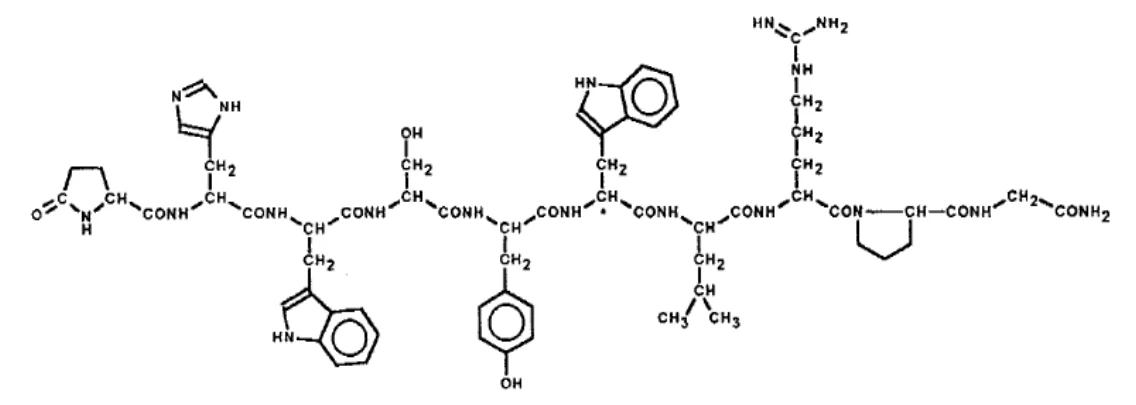
Chemical name: 5-Oxo-L-prolyl-L-histidyl-L-tryptophyl-L-seryl-L-tyrosyl-D-tryptophyl-L-leucyl-L-arginyl-L-prolylglycinamide, acetate salt
Molecular formula and molecular mass: C64H82N18O13 (net), C644H82N18O13 C2H4O2 (Triptorelin Acetate), 1311.5 (net) + 60.1 (acetate) = 1371.6 (Triptorelin Acetate)
Structural formula:
Physicochemical properties: Freely soluble in acetic acid; soluble in water, 0.1 M hydrochloric acid, 0.1 M sodium hydroxide, DMF; practically insoluble in acetone and chloroform.
14 CLINICAL TRIALS
14.1 Clinical Trials by Indication
Downregulation and Prevention of Premature LH Surges for ART
| Table 4 – Summary of patient demographics for clinical trials in ART | |||||||||
| Study # | Study design | Dosage, route of administration and duration | Study subjects (n=number) | Mean age (Range) | Primary Endpoint | ||||
MFK/IVF /0399E (ART) | Randomised (HP-hMG versus FSH), open Stimulation with HP-hMG or rFSH, then individual adjustment Fixed dose of 225 IU HP Menotrophin for 5 days. Investigator adjusted until criteria was met or patient withdrawn for poor response; for a maximum of 20 days. | Decapeptyl 0.1 mg SC Decapeptyl Depot 3.75 mg (single injection) Other GnRH agonists | GnRH agonist: 781, COH: 727 Decapeptyl 0.1 mg SC: 117 started down regulation, 113 started down regulation with Decapeptyl 0.1 mg and underwent COH | 18-38 years | Ongoing pregnancy rate | ||||
FE99990 6 CS003 (ART) | Randomized (HP -hMG versus rFSH) open, assessor blind Stimulation with HP-hMG or rFSH (225 IU for first 5 days, then individual adjustment) | Decapeptyl 0.1 mg SC | Decapeptyl 0.1 mg SC: 781 Randomised to HP-hMG or rFSH for COH: 731 | 21-37 years | Ongoing pregnancy rate | ||||
MFK/IVF/0399E and FE999906 CS003 were large randomised, multi-centre studies comparing MENOPUR and recombinant FSH in patients (18-38 years) undergoing controlled ovarian hyperstimulation for IVF/ICIS following the long GnRH agonist protocol starting in the mid-luteal phase. In MFK/IVF/0399, several GnRH agonists were used for downregulation. A total of 781 patients started downregulation, of whom 117 were given DECAPEPTYL 0.1 mg. Adequate downregulation was established by serum estradiol < 200 pmol/l (56 pg/mL) and no ovarian cysts.
In FE999906 CS003 patients (21-37 years) diagnosed with tubal or unexplained infertility, including endometriosis stage III/IV and mild male factor eligible for IVF were enrolled. In this study, 781 patients started downregulation and all received DECAPEPTYL 0.1 mg SC daily. Confirmation of downregulation prior to randomisation to menotropin or recombinant FSH was defined as menstrual bleeding and transvaginal ultrasound showing a shedded endometrium with a thickness of < 5 mm and no ovarian cysts or serum E2 50 pg/mL and no ovarian cysts.
A total of 898 patients were exposed to DECAPEPTYL 0.1 mg SC in these two studies. The primary endpoint in MFK/IVF/0399E and FE999906 CS003 was ongoing pregnancy rates (defined as at least one viable fetus at 10-11 weeks after embryo transfer) after one cycle. In FE99906 CS003, a strict protocol and treatment approach were implemented to minimize sources of variation in the study, including harmonisation of concomitant fertility treatments, a pre-specified stimulation goal and homogeneity of other major pre- and post-randomisation interventions.
Table 5 – Results of Study FE999906 CS003 in ART (Ongoing Pregnancy Rate)
| Ongoing pregnancy rate by duration of DECAPEPTYL 0.1 mg SC treatment before start of ovarian stimulation (FE999906 CS003) | |||
|---|---|---|---|
| Duration of DECAPEPTYL 0.1 mg alone | |||
| < 14 days | 14-20 days | ≥ 21 days | |
| Ongoing pregnancy rate | 56/270 (21%) | 100/385 (26%) | 23/76 (30%) |
A post-hoc evaluation of treatment outcome according to duration of downregulation was performed in FE999906 CS003. The ongoing pregnancy rate by duration of treatment with DECAPTEPTYL 0.1 mg before the start of ovarian stimulation is tabulated in Table 5.
In FE999906 CS003, the ongoing pregnancy rate increased with increasing duration of treatment with DECAPEPTYL 0.1 mg prior to gonadotropin administration. The ongoing pregnancy rates were 21%, 26% and 30% among patients who had taken DECAPEPTYL alone for < 14 days, 14-20 days and ≥ 21 days respectively. The data suggests that longer duration of pituitary downregulation prior to start of stimulation positively influences ongoing pregnancy rate.
Table 6 – Results of Study MFK/IVF/0399E in ART (Ongoing Pregnancy Rate)
| Ongoing pregnancy rate by GnRH Agonist (MFK/IVF/0399E) | ||
|---|---|---|
| DECAPEPTYL 0.1 mg | All other GnRH agonists1 | |
| Ongoing pregnancy rate | 24% (27/113) | 22% (133/614) |
| 1 DECAPEPTYL depot 3.75 mg, buserelin, leuprolide, goserelin, nafarelin | ||
The treatment outcome associated with different types of GnRH agonists can be derived from MFK/IVF00399E. Comparative data with respect to ongoing pregnancy rate are shown in Table 6.
Among the 113 patients who were downregulated with DECAPEPTYL 0.1 mg, the ongoing pregnancy rate was 24% (27/113). Although this study was not designed for this investigation, the findings suggest that the ongoing pregnancy rate associated with DECAPEPTYL 0.1 mg SC daily is not different from that observed with other GnRH agonists.
Table 7 – Results of Study MFK/IVF/0399E in ART (Ongoing Pregnancy Rate)
| Ongoing pregnancy rate by GnRH Agonist (MFK/IVF/0399E) | |||
|---|---|---|---|
DECAPEPTYL 0.1 mg | DECAPEPTYL Depot 3.75 mg | Other GnRH agonists1 | |
| Ongoing pregnancy rate | 24% (27/113) | 21% (96/466) | 25% (37/148) |
| 1 buserelin, leuprolide, goserelin, nafarelin | |||
The ongoing rate was 21% for patient’s downregulated with DECAPEPTYL Depot 3.75 mg, and 25% for those who had used other GnRH agonists (daily or depot). The data showed that DECAPEPTYL 0.1 mg is at least as efficacious as other available GnRH.
15 MICROBIOLOGY
No microbiological information is required for this product.
16 NON-CLINICAL TOXICOLOGY
Single Dose Toxicity Studies
Single dose intraperitoneal toxicity studies using up to 200,000 μg triptorelin/kg b. wt. were performed in mice and rats. The No-Observed-Adverse-Effect-Level (NOAEL) of triptorelin was 100,000-160,000 μg/kg b. wt. in mice and 10,000 μg/kg b. wt. in rats. The lowest lethal doses were 200,000 μg/kg b. wt. for male mice (not established for females) and 100,000 μg/kg b. wt. for rats. The maximum human therapeutic dose of 100 μg/day corresponds to an approximate dose level of 1.4 μg/kg b. wt. in a 70 kg person. This corresponds to 7,000 times the NOAEL in rats and 70,000 times the NOAEL in mice. Triptorelin can thus be considered to have a very low acute toxicity with respect to its therapeutic dose.
| Table 8 – Single Dose Toxicity Studies | |||||||
|---|---|---|---|---|---|---|---|
| Species | Route of Administration | No-Observed-Adverse-Effect-Level | Lowest Lethal Dose | ||||
| Mice | i.p. | Male: 160,000 μg/kg Female: 100,000 μg/kg | Male: 200,000 μg/kg Female: Not established | ||||
| Rats | i.p. | Male: 10,000 μg/kg Female: 10,000 μg/kg | Male: 100,000 μg/kg Female: 100,000 μg/kg | ||||
Repeat-dose toxicity studies
Repeat-dose toxicity studies were performed in rats, dogs and monkeys. In an intramuscular 45-day study in rats the NOAEL was found to be 609 μg/kg b. wt./day. In the 26-week studies, the NOAEL for rats and monkeys treated subcutaneously was 200 μg/kg b. wt./day and 20 μg/kg b. wt./day for dogs treated intramuscularly.
| Table 9 – Repeat-dose toxicity studies | ||||
|---|---|---|---|---|
| Species | Route of Treatment, Duration of Study | NOAEL (μg/kg b. wt./day | ||
| Rats | i.m., 45 days | 609 | ||
| Rats | s.c., 26 weeks | 200 | ||
| Dogs | i.m., 26 weeks | 20 | ||
| Monkeys | s.c., 26 weeks | 200 | ||
A maximum human therapeutic dose of 100 μg/day approximates a dosage of 1.4 μg/kg b. wt./day, is 143 times lower than the NOAEL in rats and monkeys (200 μg/kg b. wt./day). In dogs, the ratio between the NOAEL and the human therapeutic dose is 14. Women receiving triptorelin therapy for IVF are likely to be exposed for approximately 28 days. In the 26-week dog study the high dosage animals received a total of 3640 μg/kg which is 90 times more than the expected total human dosage.
Carcinogenicity: Monthly intramuscular treatment of rats with microparticles containing triptorelin at dose levels up to 6,000 μg/kg b. wt./month (214 µg/kg/b. wt) had no carcinogenic effect in mice. In the rat study, dosage of 120, 600 and 3,000 μg/kg b. wt. /month (107µg/kg/b.wt.), triptorelin resulted in a dose-related mortality in rats and dose-related proliferative lesions (adenomas) in the pituitary only.
No signs of mutagenicity or clastogenicity were recorded in the genotoxicity tests, triptorelin is considered unlikely to be carcinogenic in humans.
Genotoxicity: Three in vitro genotoxicity studies were performed: One mutagenicity test with the bacterium Salmonella typhimurium, a test with mouse lymphoma L5178Y cells, and a test with Chinese hamster ovary cells. A micronucleus test in vivo was performed in mice. There were no evidence of mutagenic or clastogenic potential of triptorelin in concentrations up to 5000 μg/plate or 5000 μg/mL in the studies in vitro and 160,000 μg/kg b. wt. in the study in vivo.
Reproductive Toxicology: Studies on reproductive toxicity were performed in rats, rabbits and monkeys. Treatment disrupted the female cycles, but after recovery there were no treatment related findings on fertility. No embryotoxic or teratogenic effects were seen.
Non-pregnant rats were treated for 60 days by subcutaneous administration of triptorelin at dose levels up to 200 μg/kg/day by daily subcutaneous injections. There was a treatment related delay in the recovery of female cycles once treatment was terminated, but after recovery and subsequent mating there were no effects on fertility or reproductive performance. Further, there were neither embryotoxic or teratotoxic effects nor effects on late prenatal and postnatal offspring development.
Pregnant rats were treated by subcutaneous administration of triptorelin at dose levels of 0.4, 2 or 10 μg/kg/day during the period of organogenesis No signs of maternal toxicity or teratogenicity were seen. However, a substantial increase in the number of luteal bodies was seen in all treated groups. Treatment with 2 μg/kg caused a slight increase in the mean placental weight while treatment with 10 μg/kg caused a marked increase in placental weight.
Pregnant rabbits were treated by subcutaneous administration of triptorelin to at dose levels of 0.5, 5 or 50 μg/kg/day during the period of organogenesis. Pre-implantation losses were observed in rabbits treated with the highest dose. When compared with the control group, a higher incidence of resorptions and abortions were observed at 50.0 µg/kg/day dosage. Fetal survival, growth and morphological development were unaffected at dose-levels up to 50.0 µg/kg/day.
Pregnant Cynomolgus monkeys were given single intramuscular injections of 1500 μg triptorelin/animal (ca. 375 μg/kg) as a slow release formulation on day 10 and day 40 post-coitum. The treatment did not affect parturition and had no maternal or embryotoxic effects.
Local Toxicity Studies: There are no studies on the local toxicity of DECAPEPTYL. However, several studies on local toxicity were performed in rabbits using triptorelin microparticles. No signs of systemic toxicity were seen in these studies and the subcutaneous treatment with triptorelin microparticles caused only transient local reactions (edema, erythema).