


Product Monograph - Vantas
SUMMARY PRODUCT INFORMATION
| Route of Administration | Dosage Form / Strength | Clinically Relevant Nonmedicinal Ingredients |
| Subcutaneous | Subdermal implant 50 mg | For a complete listing see Dosage Forms, Composition and Packaging section. |
INDICATIONS AND CLINICAL USE
VANTAS® (histrelin acetate subdermal implant) 50 mg (delivers approximately 50 μg histrelin/day) is indicated for:
the palliative treatment of hormone-dependent advanced prostate cancer (Stage M1
[TNM] or Stage D2 [AUA]).
Geriatrics:
The majority (89.9%) of the 138 patients studied in phase III clinical trials were age 65 and older. (See CLINICAL TRIALS).
Pediatrics:
The safety and efficacy of VANTAS® in pediatric patients have not been established (see CONTRAINDICATIONS).
CONTRAINDICATIONS
VANTAS® (histrelin acetate subdermal implant) 50 mg (delivers approximately 50
μg histrelin/day) is contraindicated in patients who are hypersensitive to gonadotropin releasing hormone (GnRH), GnRH agonist analogues, or to any ingredient in the formulation or component of the subdermal implant. Anaphylactic reactions to synthetic luteinizing hormone-releasing hormone (LHRH) or LHRH agonist analogues have been reported in the literature. For a complete listing, see the Dosage Forms, Composition and Packaging section of the product monograph.
- VANTAS® is contraindicated in pediatric patients.
- VANTAS® is contraindicated in women who are, or may become, pregnant while receiving the drug. VANTAS® can cause fetal harm when administered to a pregnant woman. The possibility exists that spontaneous abortion may occur.
- The use of VANTAS® in nursing mothers is not recommended.
WARNINGS AND PRECAUTIONS
Serious Warnings and Precautions
VANTAS® (histrelin acetate subdermal implant) should be prescribed by a qualified physician experienced in the use of hormonal therapy in prostate cancer.
The following are clinically significant adverse events:
- Clinical testosterone flare reaction in men with prostate cancer (see General below)
- Osteoporosis (see Endocrine and Metabolism below)
General
VANTAS® (histrelin acetate subdermal implant) 50 mg (delivers approximately 50 μg histrelin/day), like other LHRH agonists, causes a transient increase in serum concentrations of testosterone during the first week of treatment. During this time, patients may experience worsening of symptoms or onset of new symptoms including bone pain, neuropathy, hematuria, or urethral or bladder outlet obstruction. Cases of urethral obstruction and spinal cord compression, which may contribute to paralysis with or without fatal complications, have been reported with LHRH agonists. If spinal cord compression or renal impairment develops, standard treatment of these complications should be instituted.
Patients with metastatic vertebral lesions and/or with urinary tract obstruction should be closely observed during the first few weeks of therapy.
Implant Insertion/Removal Procedure
Implant insertion is a surgical procedure and it is important that the insertion instructions are followed to avoid potential complications associated with the insertion of the implant and with implant expulsion. The insertion and removal of the implant should be under the supervision of a qualified physician. Detailed instructions on the insertion and removal procedures of the implant are provided in the DOSAGE and ADMINISTRATION section. In addition, patients should be instructed to refrain from wetting the arm for 24 hours and from heavy lifting or strenuous exertion of the inserted arm for 7 days after implant insertion.
Infrequently, VANTAS® may be expelled from the body through the original incision site, rarely without the patient noticing. The patient should be instructed to monitor the incision site until it is healed. The patient should also return for routine checks of their condition and to ensure that VANTAS® is present and functioning in his body.
Carcinogenesis and Mutagenesis
Carcinogenicity studies were conducted in rats for 2 years at doses of 5, 25 or 150 µg/kg/day (up to 15 times the human dose) and in mice for 18 months at doses of 20, 200, or 2000 µg/kg/day (up to 200 times the human dose). As seen with other LH-RH agonists, histrelin acetate injection administration was associated with an increase in tumours of hormonally responsive tissues. There was a significant increase in pituitary adenomas in rats. There was an increase in pancreatic islet-cell adenomas in treated female rats and a non-dose-related increase in testicular Leydig-cell tumours (highest incidence in the low-dose group). In mice, there was significant increase in mammary-gland adenocarcinomas in all treated females. In addition, there were increases in stomach papillomas in male rats given high doses, and an increase in histiocytic sarcomas in female mice at the highest dose.
Mutagenicity studies have not been performed with histrelin acetate. Saline extracts of implants with and without histrelin were negative in a battery of genotoxicity studies. Fertility studies have been conducted in rats and monkeys given subcutaneous daily doses of histrelin acetate up to 180 µg/kg for 6 months and full reversibility of fertility suppression was demonstrated. The development and reproductive performance of offspring from parents treated with histrelin acetate has not been investigated.
Cardiovascular
There may be a relationship between androgen deprivation therapy and cardiovascular risk in men with prostate cancer on the basis of the demonstrated adverse impact of androgen deprivation on traditional cardiovascular risk factors, including serum lipoproteins, insulin sensitivity and obesity (see REFERENCES). Reports of events related to cardiovascular ischemia including myocardial infarction, stroke and cardiovascular-related deaths have been received in patients treated with LH-RH agonists. Physicians should consider whether the benefits of androgen deprivation therapy outweigh the potential cardiovascular risk. Assessment of cardiovascular risk and management according to local clinical practice and guidelines should be considered (see Monitoring and Laboratory Tests below).
Effect on QT/QTc interval: Androgen deprivation therapy has the potential to prolong QT/QTc interval on ECG. Physicians should consider whether the benefits of androgen deprivation therapy outweigh the potential risk in patients with congenital long QT syndrome, electrolyte abnormalities, or congestive heart failure and in patients taking Class IA (e.g. quinidine, procainamide), Class III (e.g. amiodarone, sotalol, dofetilide, ibutilide)), or Class IC (e.g. flecainide, propafenone) antiarrhythmic medications.
Endocrine and Metabolism
Reduction in glucose tolerance: A reduction in glucose tolerance and an increased risk in developing diabetes have been reported in men treated with androgen deprivation therapy. Patients treated with VANTAS® should undergo periodic monitoring of blood glucose. Diabetic patients may require more frequent monitoring when receiving VANTAS®.
Changes in Bone Density: Decreased bone mineral density can be anticipated with long term use of an LHRH agonist. Androgen deprivation therapy is associated with increased risks of osteoporosis and skeletal bone fractures. The risk of skeletal fracture increases with the duration of androgen deprivation therapy. Assessment of osteoporosis risk and management according to clinical practice and guidelines should be considered.
In patients with significant risk factors for decreased bone mineral content and/or bone mass such as chronic alcohol and/or tobacco use, presumed or strong family history of osteoporosis or chronic use of drugs that can reduce bone mass such as anticonvulsants or corticosteroids, VANTAS® may pose an additional risk. In these patients, risk versus benefit must be weighed carefully before therapy with VANTAS® is instituted.
Hematologic
Anemia is a known physiologic consequence of testosterone suppression. Assessment of anemia risk and management according to local clinical practice and guidelines should be considered.
Hepatic
The influence of hepatic insufficiency on histrelin pharmacokinetics has not been adequately studied.
Renal
Average serum histrelin concentrations were approximately 50% higher in prostate cancer patients with mild to severe renal impairment (CLcr: 15-60 mL/min), compared to those with no renal impairment. These changes in exposure as a result of renal impairment are not considered to be clinically relevant. Therefore, no changes in drug dosing are warranted for these patients.
Sexual Function/Reproduction
Fertility was assessed in rats and monkeys after 6 months of daily histrelin administration at doses of up to 180 μg/kg. At the end of dosing, there was atrophy of the genital organs in males and females of both species, the effect was reversible and fertility restored within 6 months of no treatment. (See TOXICOLOGY). The development and reproductive performance of offspring of histrelin-treated animals have not been assessed due to histrelin-induced reduced fertility and adverse events on maintenance of pregnancy.
Special Populations
Pregnant Women: VANTAS® is contraindicated in women who are, or may become, pregnant while receiving the drug. VANTAS® can cause fetal harm when administered to a pregnant woman. The possibility exists that spontaneous abortion may occur. (See CONTRAINDICATIONS).
Animal Data: Major fetal abnormalities were observed in rabbits but not in rats after administration of histrelin acetate throughout gestation. There was dose-related increased fetal mortality in rats treated during organogenesis at 1, 3, 5, or 15 μg/kg/day and in rabbits at 20, 50, or 80 μg/kg/day. (See TOXICOLOGY).
Nursing Women: The use of VANTAS® in nursing mothers is not recommended. (See CONTRAINDICATIONS).
Pediatrics: The safety and efficacy of VANTAS® in pediatric patients have not been established. VANTAS® is contraindicated in pediatrics.
Geriatrics: The majority (89.9%) of the 138 patients studied in phase III clinical trials were age 65 and older. (See CLINICAL TRIALS).
Race: When serum histrelin concentrations were compared for 7 Hispanic, 30 Black, and 77 Caucasian patients, average serum histrelin concentrations were similar.
Monitoring and Laboratory Tests
The response to VANTAS® should be monitored periodically by measuring serum concentrations of testosterone and prostate-specific antigen (PSA) especially if the anticipated clinical or biochemical response to the treatment has not been achieved.
Results of testosterone determinations are dependent on assay methodology. It is advisable to be aware of the type and precision of the assay methodology to make appropriate clinical and therapeutic decisions. (See DRUG-LABORATORY INTERACTIONS).
Baseline risk factors of cardiovascular diseases should be assessed. Patients receiving VANTAS® should be monitored periodically for risk factors, signs and symptoms of cardiovascular diseases. In addition, baseline ECG recording and serum potassium, calcium, and magnesium levels are recommended. Monitoring of ECG and serum electrolyte levels during treatment should also be considered for those at risk for electrolyte abnormality and QTc prolongation (See WARNINGS AND PRECAUTIONS/Cardiovascular).
Blood glucose levels and/or glycosylated hemoglobin (HbA1c) should be checked periodically in patients treated with VANTAS® and more frequently in diabetic patients (See WARNINGS AND PRECAUTIONS/Endocrine and Metabolism).
ADVERSE REACTIONS
Clinical Trial Adverse Drug Reactions
The safety of VANTAS® (histrelin acetate subdermal implant) 50 mg (delivers approximately 50 μg histrelin/day) was evaluated in 171 patients with prostate cancer
treated for up to 36 months in two clinical trials. The pivotal study (Study 3) consisted of 138 patients, while a separate supportive study (Study 4) consisted of 33 patients.
VANTAS®, like other LHRH analogues, caused a transient increase in serum testosterone concentrations during the first week of treatment. Therefore, potential exacerbations of signs and symptoms of the disease during the first few weeks of treatment are of concern in patients with vertebral metastases and/or urinary obstruction or hematuria. If these conditions are aggravated, it may lead to neurological problems such as weakness and/or paresthesia of the lower limbs or worsening of urinary symptoms. (See WARNINGS AND PRECAUTIONS).
In the first 12 months after initial insertion of the implant(s), an implant extruded through the incision site in 8 of 171 patients in the clinical trials. (See DOSAGE AND ADMINISTRATION, Insertion and Removal Procedures for correct implant placement).
In the pivotal study (Study 3) a detailed evaluation for implant site reactions was conducted. Out of the 138 patients in the study, 19 patients (13.8%) experienced local or insertion site reactions. All these local site reactions were reported as mild in severity. The majority were associated with initial insertion or removal and insertion of a new implant, and began and resolved within the first two weeks following implant insertion. Reactions persisted in 4 (2.8%) patients. An additional 4 (2.8%) patients developed application-site reactions after the first two weeks following insertion.
Common local reactions after implant insertion included bruising (7.2%) and pain/soreness/tenderness (3.6%). Other, less frequently reported, reactions included erythema (2.8%) and swelling (0.7%). In this study, two patients had local infections/inflammations, one that resolved after treatment with oral antibiotics, and the other without treatment.
Local reactions following insertion of a subsequent implant were comparable to those seen after initial insertion.
Common Adverse Events Judged Possibly or Probably Related
The following possibly or probably related systemic adverse events occurred during clinical trials of up to 24 months of treatment with VANTAS®, and were reported in > 2% of patients (Table 1).
Table 1: Incidence (%) of Possibly or Probably Related Systemic Adverse Events Reported by ≥ 2% of Patients Treated with VANTAS® for up to 24 Months
Body System Adverse Event Number (%)
Vascular Disorders Hot flashes* 112 (65.5%) General Disorders Fatigue
Weight increased
17 (9.9%) 4 (2.3%) Skin and Appendage Disorders Implant site reaction 10 (5.8%) Reproductive System and Breast Disorders Erectile dysfunction*
Gynecomastia* Testicular atrophy*
6 (3.5%) 7 (4.1%) 9 (5.3%) Psychiatric Disorders Insomnia
Libido decreased *
5 (2.9%) 4 (2.3%) Renal and Urinary Disorders Renal impairment** 8 (4.7%) Gastrointestinal Disorders Constipation 6 (3.5%) Nervous System Disorders Headache 5 (2.9%) * Expected pharmacological consequences of testosterone suppression.
** 5 of the 8 patients had a single occurrence of mild renal impairment (defined as creatinine clearance ≥ 30 to < 60 mL/min), which returned to a normal range by the next visit.
Hot flashes were the most common adverse event reported (65.5 % of patients). In terms of severity, 2.3% of patients reported severe hot flashes, 24.5% of patients reported moderate hot flashes and 37.7% reported mild hot flashes.
In addition, the following possibly or probably related systemic adverse events were reported by < 2% of patients using VANTAS® in clinical studies.
Blood and Lymphatic System Disorders: Anemia
Cardiac Disorders: Palpitations, ventricular extrasystoles
Gastrointestinal Disorders: Abdominal discomfort, nausea
General Disorders: Feeling cold, lethargy, malaise, edema peripheral, pain, pain exacerbated, weakness, weight decreased
Hepatobiliary Disorders: Hepatic disorder
Injury, Poisoning and Procedural Complications: Stent occlusion
Laboratory Investigations: Aspartate aminotransferase increased, blood glucose increased, blood lactate dehydrogenase increased, blood testosterone increased, creatinine renal clearance decreased, prostatic acid phosphatase increased
Metabolism and Nutrition Disorders: Appetite increased, fluid retention, hypercalcemia, hypercholesterolemia
Musculoskeletal and Connective Tissue Disorders: Arthralgia, back pain, back pain aggravated, bone pain, muscle twitching, myalgia, neck pain, pain in limb Nervous System Disorders: Dizziness, tremor
Psychiatric Disorders: Depression, irritability
Renal and Urinary Disorders: Calculus renal, dysuria, hematuria aggravated, renal failure aggravated, urinary frequency, urinary frequency aggravated, urinary retention Reproductive System and Breast Disorders: Breast pain, breast tenderness, genital pruritus male, gynecomastia aggravated, sexual dysfunction
Respiratory, Thoracic and Mediastinal Disorders: Dyspnea exertional Skin and Subcutaneous Tissue Disorders: Contusion, hypotrichosis, night sweats, pruritus, sweating increased
Vascular Disorders: Flushing, hematoma
Changes in Bone Density: Decreased bone density has been reported in the medical literature in men who have had orchiectomy or who have been treated with an LHRH agonist analogue. It can be anticipated that long periods of medical castration in men will have effects on bone density.
DRUG INTERACTIONS
Overview
No formal drug interaction studies with VANTAS® (histrelin acetate subdermal implant) 50 mg (delivers approximately 50 μg histrelin/ day) were performed.
No data is available on the interaction with alcohol.
Drug-Drug Interactions
No drug interaction studies were conducted with VANTAS®.
Since androgen deprivation treatment may prolong the QTc interval, the concomitant use of VANTAS® with medicinal products known to prolong the QTc interval or medicinal products able to induce torsades de pointes should be carefully evaluated. Such medicinal products include but are not limited to the examples that follow: Class IA (e.g. quinidine, disopyramide), Class III (e.g. amiodarone, sotalol, dofetilide, ibutilide, dronedarone), or Class IC (e.g. flecainide, propafenone) antiarrhythmic medicinal products, antipsychotics (e.g. chlorpromazine), antidepressants (e.g. amitriptyline, nortriptyline), opioids (e.g. methadone), macrolide antibiotics and analogues (e.g. erythromycin, clarithromycin, azithromycin), quinolone antibiotics (e.g. moxifloxacin), antimalarials (e.g. quinine), azole antifungals, 5-hydroxytryptamine (5-HT3) receptor antagonists (e.g. ondansetron), and beta-2 adrenoceptor agonists (e.g. salbutamol).
Drug-Food Interactions
No food interaction studies were conducted with VANTAS®.
Drug-Herb Interactions
No herbal interaction studies were conducted with VANTAS®.
Drug-Laboratory Interactions
Therapy with VANTAS® results in suppression of the pituitary-gonadal system. Results of diagnostic tests of pituitary gonadotropic and gonadal functions conducted during and after VANTAS® therapy may be affected.
DOSAGE AND ADMINISTRATION
Dosing Considerations
VANTAS® (histrelin acetate subdermal implant) 50 mg is designed to provide continuous subcutaneous release of histrelin acetate at a nominal rate of 50-60 micrograms per day over 12 months.
Recommended Dose and Dosage Adjustment
The recommended dose of VANTAS® is one implant for 12 months. Each implant contains 50 mg histrelin. The implant is inserted subcutaneously in the inner aspect of the upper arm and provides continuous release of histrelin for 12 months of hormonal therapy.
VANTAS® must be removed after 12 months of therapy. At the time an implant is removed, another implant may be inserted to continue therapy. (See DOSAGE AND ADMINISTRATION).
Missed Dose
Not applicable.
Administration
Insertion and Removal Procedure
VANTAS® implant is supplied in a sterile vial within an opaque plastic bag, which in turn is in a carton. The implant should be kept refrigerated (2-8°C) until the day of the procedure. The insertion tool, supplied with the implant, does not require refrigeration. All the supplies necessary to insert and/or remove the implant are readily available.
It is important to use aseptic techniques to minimize any chance of infection. Sterile gloves are required for the insertion procedure and subsequent removal of the implant.
The implant is inserted using the procedure outlined below:
Identifying the Insertion Site
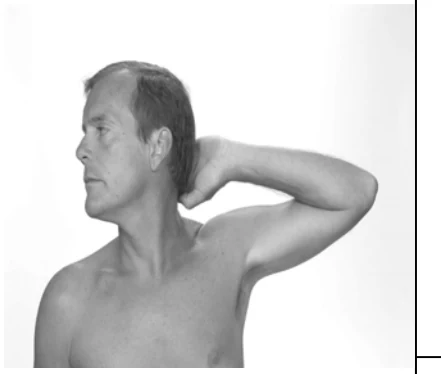
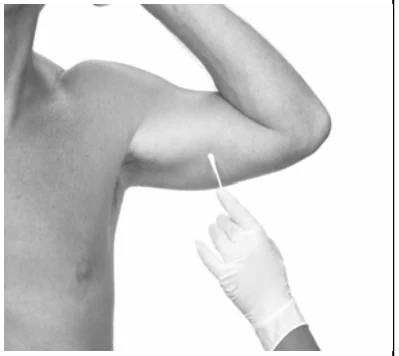
The patient should be on his back, with the arm least used (e.g., left arm for a right-handed person) flexed so the physician has ready access to the inner aspect of the upper arm. Prop the arm with pillows so the patient can easily hold that position. The optimum site for insertion is approximately half way between the shoulder and the elbow and in the crease between the bicep and triceps.
Loading the Insertion Tool
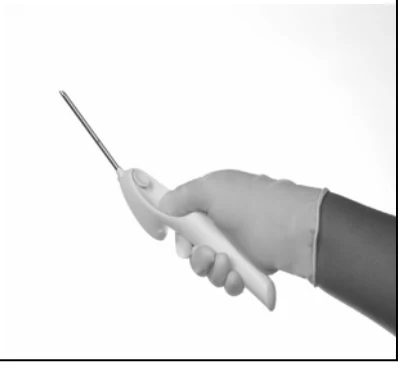
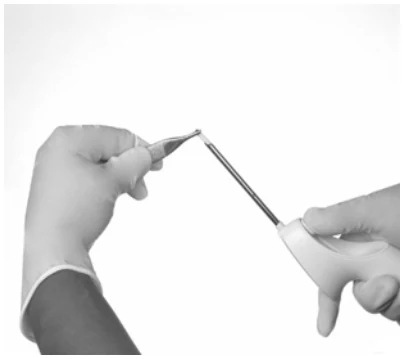
Load the insertion tool prior to prepping the insertion field and insertion site. Remove the insertion tool from its sterile bag. The tool is shipped with the cannula fully extended. Verify this by inspecting the position of the green retraction button. The button should be all the way forward, towards the cannula, away from the handle.
Remove the metal band from the vial, remove the rubber stopper, and use the mosquito clamp to grasp either tip of the implant. Avoid grabbing or clamping the middle of the implant to prevent distortion of the implant.
Insert the implant into the cannula of the insertion tool. The implant will rest in the cannula so that just the tip is visible at the bottom of the bevel.
Inserting the Implant
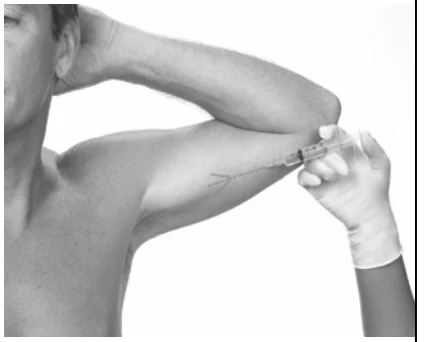
- 1. Swab the insertion area with the betadine swabs, then lay the fenestrated drape over the insertion site (for clarity of illustration, the accompanying photos do not show the drape).
Anesthetic
- 2.
Determine that the patient has no
lidocaine/epinephrine allergies. Inject a few mL's of the anesthetic, starting at the planned incision site, then infiltrating up to the length of the implant, 32 mm, in a fan-like fashion.
Incision
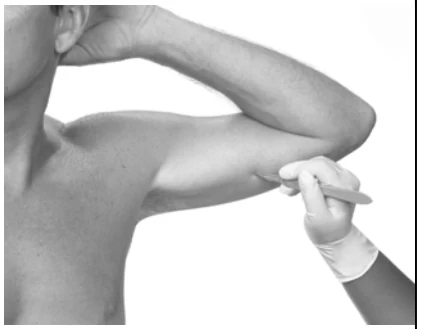
- 3. Using the scalpel, make a 2-3 mm incision immediately subcutaneous and perpendicular to the shoulder.
Insertion
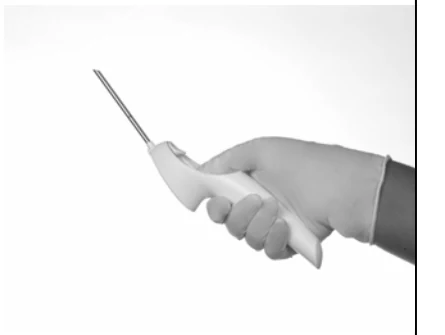
- 4. Grasp the insertion tool by its handle, as shown.
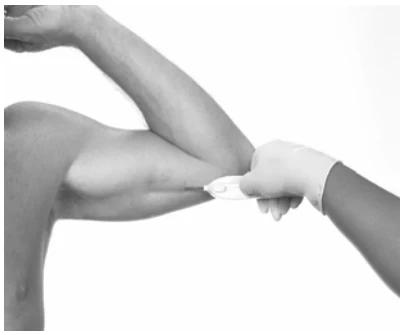
- 5. Insert the tip of the insertion tool into the incision with the bevel up and advance the tool subcutaneously along the path of the anesthetic, up to the inscribed line on the cannula. To ensure subcutaneous placement, the implanter should visibly raise the skin at all times during insertion. Be sure that the implanter doesn’t enter the muscle tissue.
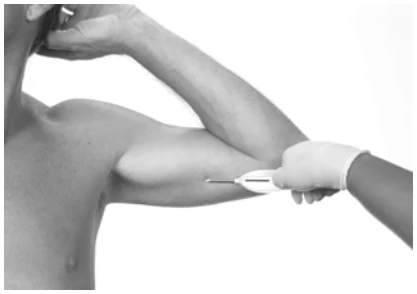
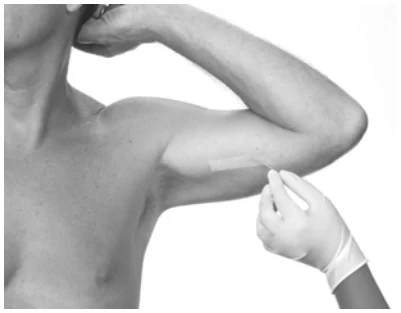
- 6. Hold the insertion tool in place as you move your thumb to the green retraction button. Press the button down to release the locking mechanism, then draw the button back to the back stop, all the while holding the tool in place. The cannula will withdraw from the incision, leaving the implant in the dermis. Withdraw the implanter from the incision. Release of the implant can be checked by palpation.
NOTE: Do not try to push the tool in deeper once the retraction process has started to avoid severing the implant. If you wish to re-start the process, withdraw the tool, grasp the implant by the tip to extract it, reset the retraction button to its most forward position, reload the implant, and start again.
After placement, sterile gauze may be used to apply pressure briefly to the insertion site to ensure hemostasis.
Closing the Incision
- 7.
To close the incision, use one or two sutures
(optional), knots facing inside the incision. Apply a light coating of antibiotic ointment directly onto the incision. Close with two surgical strips. Apply one or two of the 10 cm gauze pads over the incision and secure with elastoplast.
Patient Instructions- Aftercare
Please give the patient the Part III, Consumer Information material. Instruct the patient to refrain from wetting the arm with the implant for 24 hours. The pressure bandage can be removed at that time. The patient should not remove the surgical strips; rather, the strips should be allowed to fall off on their own after several days. Patients should refrain from heavy lifting and strenuous physical activity of the inserted arm for 7 days to allow the incision to fully close.
Removal Procedure and New Implant Insertion
VANTAS® must be removed after 12 months of therapy. The techniques and instruments required are the same as for implantation.
Assemble all the necessary implements prior to the procedure.
Locating the Implant
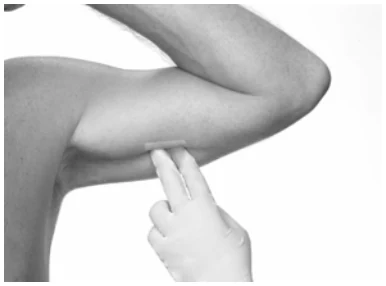
The implant may be located by palpating the area near the incision from the prior year. Generally, the implant is readily palpated. Press the distal end of the implant to determine the proximal tip’s location relative to the old incision.
In the event the implant is difficult to locate, ultrasound can be used. If ultrasound fails to locate the implant, other imaging techniques such as CT or MRI may be used to locate it.
Preparing the Site
- 1. Patient position and site preparation are the same as for the initial insertion. Swab the area above and around the implant with the betadine swabs. Drape the area with a fenestrated drape.
Anesthetic
- 2. After determining the absence of known allergies to the anesthetic agent, press down on the implant tip furthest from the old incision to determine the location of the tip closest to the incision. Inject a small amount of lidocaine/epinephrine at the tip near the incision, then advance the needle along the length, but beneath the implant, steadily injecting a small amount of anesthetic along the way. The anesthetic will raise up the implant within the dermis. If you are inserting a new implant, you have the option of either placing the new one in the same “pocket” as the removed one, or using the same incision, insert the new implant in the opposite direction. If placing the implant in the opposite direction, apply anesthetic along the length of the path for the new implant prior to removal.
Incision/Removal
- 3.
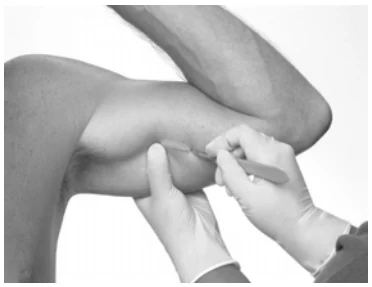
Using the #11 scalpel, make a 2-3 mm incision near the tip and about 1-2 mm deep. Generally, the tip of the implant will be visible through a thin pseudo capsule of tissue. If not, push down on the distal tip of the implant and massage it forward
towards the incision. Carefully “nick” the pseudo capsule to reveal the polymer tip.
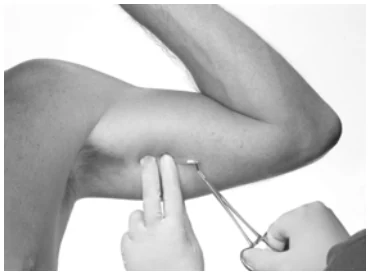
- 4. Grasp the tip with the mosquito clamp and extract t the implant.
- 5. Dispose of the implant in a proper manner, treating it like any other bio-waste.
If inserting a new implant - proceed according to “Loading the Insertion Tool”, “Insertion”, and “Closing the Incision” sections. The new implant may be placed through the same incision site. Alternatively, the contralateral arm may be used.
- 6. Provide the patient the Part III, Consumer Information material.
OVERDOSAGE
For management of suspected drug overdose, contact your regional Poison Control Centre.
There have been no reports of overdose in VANTAS® (histrelin acetate subdermal implant) 50 mg (delivers approximately 50 μg histrelin/ day) clinical trials and the adverse event profile was similar in patients receiving one, two or four VANTAS® implants. High doses of histrelin acetate injection in animal studies were generally associated only with effects attributed to the expected pharmacology. The method of drug delivery makes accidental or intentional overdosage unlikely.
ACTION AND CLINICAL PHARMACOLOGY
Mechanism of Action
VANTAS® (histrelin acetate subdermal implant) 50 mg (delivers approximately 50 μg histrelin/day), an LHRH agonist, is a potent inhibitor of gonadotropin secretion when given continuously. Both animal and human studies indicate that following an initial stimulatory phase, chronic, subcutaneous administration of histrelin acetate desensitizes responsiveness of the pituitary gonadotropin which, in turn, causes a reduction in ovarian and testicular steroidogenesis.
In humans, administration of histrelin acetate results in an initial increase in circulating levels of luteinizing hormone (LH) and follicle-stimulating hormone (FSH), leading to a transient increase in concentration of gonadal steroids (testosterone and dihydrotestosterone in males, and estrone and estradiol in premenopausal females).
However, continuous administration of histrelin acetate results in decreased levels of LH and FSH. In males, serum testosterone is reduced to castrate levels within 2 to 4 weeks after initiation of treatment.
Histrelin acetate is not active when given orally.
Pharmacodynamics
The relationship between serum testosterone concentration and serum histrelin concentration in 119 prostate cancer patients was characterized by a clockwise hysteresis, indicating an indirect pharmacodynamic relationship. This indirect relationship is consistent with the mechanism of action: following an initial stimulatory phase, chronic subcutaneous administration of histrelin acetate desensitizes responsiveness of the pituitary, which in turn causes reductions in ovarian and testicular steroidogenesis, including production of testosterone.
Pharmacokinetics
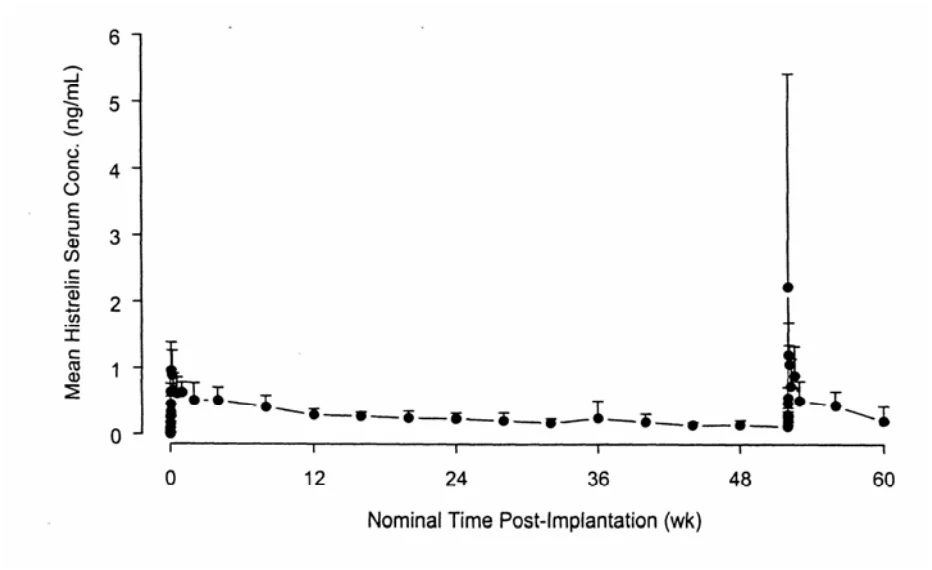
The pharmacokinetics of histrelin has been determined in healthy adult male volunteers and adult male patients with advanced prostate cancer. The healthy male volunteers received histrelin acetate in a single 500 μg aqueous solution dose by subcutaneous administration. The prostate cancer patients received either a single or multiple 50 mg histrelin acetate subdermal implant by subcutaneous route. The mean serum histrelin concentrations (measured by radioimmunoassay (RIA)) following the two modes of administration are shown for 52 weeks, in the figure below, and for 1 week (168 hr) in the inset below. When serum histrelin concentrations were measured following a second implant (inserted after 52 weeks) similar concentrations were observed over an 8-week period compared to the initial implant. Serum histrelin concentrations were proportional to dose after one, two or four 50 mg histrelin acetate subdermal implants (50, 100 or 200 mg) in 42 prostate cancer patients.
Figure 1: Mean Histrelin Serum Concentrations Following a 500 μg SC Bolus Dose in Healthy Volunteers (N=6) and a 50 mg Implant in Prostate Cancer Patients (N=119)
Absorption: Following a 500 μg subcutaneous bolus dose of histrelin acetate, peak serum histrelin concentrations occurred between 0.75 and 2 hr post dosing, with a peak of 13.5 ± 3.00 ng/mL (mean ± SD). Peak serum histrelin concentrations were achieved more slowly with the histrelin acetate subdermal implant (median of 12 hr post implant insertion). Peak concentrations averaged 1.10 ± 0.375 ng/mL (mean ± SD). Continuous subcutaneous release was evident throughout the 52-week dosing period, as serum histrelin levels were sustained throughout, in contrast to the rapid decline in serum histrelin concentrations following a subcutaneous bolus dose (see Figure 1 above). The average rate of subcutaneous drug release from 41 histrelin subdermal implants assayed for residual drug content was 56.7 ± 7.71 μg/day over the 52-week dosing period. This compares well to the average in vitro release rate of 56-57 μg/day. A bioavailability of 92% was estimated for the histrelin acetate subdermal implant in prostate cancer patients, with normal renal and hepatic function, relative to a subcutaneous bolus dose in healthy male volunteers.
Time (wk) 0 4 8 12 16 20 24 28 32 36 40 44 48 52 0.01
0.1
1
10
100
Time (hr)
0 24 48 72 96 120 144 168
0.01
0.1
1
10
100
50 mg Histrelin acetate Implant 500 µg SC bolus
Figure 2: Mean Serum Histrelin Concentration Versus Time Profile for 17 Patients Following Insertion of First and Second Histrelin implants. (Note that only four patients underwent intensive pK sampling during the first 96 hours following the second implant.)
Distribution: The apparent volume of distribution of histrelin, following a subcutaneous bolus dose, in healthy male volunteers was 58.4 ± 7.86 L. The fraction of drug unbound in plasma measured in vitro was 29.5% ± 8.9% (mean ± SD).
Metabolism: An in vitro drug metabolism study using human hepatocytes identified a single metabolite resulting from C-terminal dealkylation. Peptide fragments resulting from hydrolysis are also likely metabolites. Following a subcutaneous bolus dose in healthy volunteers the apparent clearance of histrelin was 179 ± 37.8 mL/min (mean ± SD) and the terminal half-life was 3.92 ± 1.01 hr (mean ± SD). The apparent clearance of histrelin, following a 50 mg histrelin acetate implant in 17 prostate cancer patients with intensive pharmacokinetic sampling was 174 ± 56.5 mL/min (mean ± SD).
Excretion: No drug excretion study was conducted with the 50 mg histrelin acetate implant.
Special Populations and Conditions
Pediatrics: The safety and efficacy of VANTAS® in pediatric patients have not been established. VANTAS® is contraindicated in pediatrics.
Geriatrics: The majority (89.9%) of the 138 patients studied in clinical trials were age 65 and over.
Gender: VANTAS® is not indicated for females.
Race: When serum histrelin concentrations were compared for 7 Hispanic, 30 Black and 77 Caucasian patients, average serum histrelin concentrations were similar.
Renal Insufficiency: When average serum histrelin concentrations were compared between 42 prostate cancer patients with mild to severe renal impairment (CLcr: 15-60 mL/min) and 92 patients with no renal or hepatic impairment, levels were approximately 50% higher in those patients with renal impairment (0.392 ng/mL versus 0.264 ng/mL). These changes in exposure as a result of renal impairment are not considered to be clinically relevant. Therefore, no changes in drug dosing are warranted for these patients.
Hepatic Insufficiency: The influence of hepatic insufficiency on histrelin pharmacokinetics has not been adequately studied.
Genetic Polymorphism: No data is available.
STORAGE AND STABILITY
Histrelin Subdermal Implant: VANTAS® (histrelin acetate subdermal implant) 50 mg (delivers approximately 50 μg histrelin/day) is supplied in a sterile vial, packaged within an opaque plastic bag, which in turn is packaged in a carton. An insertion tool is also provided.
Upon receipt of VANTAS® and the insertion tool, remove the carton containing the implant and store it under refrigeration (2 to 8°C) until the day of the insertion procedure. Protect from exposure to light. Do not freeze.
The insertion tool does not require refrigeration.
Keep in a safe place out of reach of children.
SPECIAL HANDLING INSTRUCTIONS
During insertion and removal of VANTAS® (histrelin acetate subdermal implant) 50 mg (delivers approximately 50 μg histrelin/day), it is important to use aseptic techniques to minimize any chance of infection. Use sterile gloves throughout the procedure.
DOSAGE FORMS, COMPOSITION AND PACKAGING
VANTAS® (histrelin acetate subdermal implant) 50 mg (delivers approximately 50 μg histrelin/day) consists of a cylindrically shaped reservoir made of a hydrophilic polymer (hydrogel), containing the peptide within its core. The implant is packaged hydrated in a
clear glass vial containing approximately 2.0 mL of 1.8% NaCl solution, so that it is primed for immediate release of the drug upon insertion.
The sterile insertion tool (Trocar) is comprised of a multi-piece plastic tool, an 8 gauge bevelled stainless steel cannula, 7.5 cm in exposed length, marked at the 4.9 cm point. Trocar is to be used with VANTAS® for single use only.
Dosage form/ strength: Subdermal implant 50 mg
Nonmedicinal ingredients: Sodium chloride solution 1.8% and stearic acid
Packaging:
Subdermal Implant
The subdermal implant is placed in a 3.5 mL Type I clear glass vial containing 2 mL of approximately 1.8% sodium chloride solution, closed with a pre-treated grey Teflon coated stopper and sealed with an aluminum crimp seal. The glass vial containing the hydrated implant is supplied in an opaque plastic bag, which in turned is individually packaged in a carton.
Insertion Tool (Trocar)
The insertion tool is enclosed in a sterile bag and packaged individually in a carton.
Supplied as a single box containing one sterile subdermal implant vial and one sterile insertion tool.
PART II: SCIENTIFIC INFORMATION
PHARMACEUTICAL INFORMATION
Drug Substance
Proper name: histrelin acetate
Chemical names:
- 1.
L-Pyroglutamyl-L-histidyl-L-tryptophyl-L-seryl-L-tyrosyl-N-benzyl-D-histidyl-
L-leucyl-L-arginyl-L-proline N-ethylamide, acetate salt
- 2. Pyr-His-Trp-Ser-Tyr-D-His(Bzl)-Leu-Arg-Pro-NHEt, acetate salt
- 3. histrelin acetate
United States Adopted Name (USAN): histrelin
International Nonproprietary Name (INN): LHRH (luteinizing hormone-releasing hormone)
Other names for histrelin acetate are:
(Des-Gly10, D-His(Bzl)6, Pro-NHEt9)-LHRH, acetate salt where LHRH =(luteinizing hormone-releasing hormone; also called gonadotropin-releasing hormone (GnRH)
pyroGlu-His-Trp-Ser-Tyr-(D-Nim-bzl-His)-Leu-Arg-Pro-NEt
Chemical Abstract Service (CAS) registry number: 76712-82-8
Molecular formula and molecular mass:
C66H86N18O12 (net)
C66H86N18O12•2C2H402 (histrelin acetate)
1323.52 (net) + 120.2 (diacetate) = 1443.7 (histrelin acetate)
Structural formula:
Physicochemical properties:
Physical Description:
White to off-white granular powder that is free from visible contamination.
Solubilities in Common Solvents:
Clear colourless solution in water (10 mg/mL)
Aqueous Solubilities:
pH 6-7.5 - very slightly soluble (~ 0.5 mg/mL) pH 5 - sparingly soluble (~ 13 mg/mL)
Quantitative Aqueous pH Solubility Profile:
The stability of histrelin acetate active product ingredient was investigated over a fifteen-day period via HPLC. The pH ranged from 5 to 8 and temperatures ranged from 50°C to 70°C. The data indicated that the stability of histrelin acetate decreased as pH and temperature increased. Histrelin acetate appeared most stable at pH 5. However, buffer catalysis may contribute to the solution’s hydrolysis degradation rate.
Polymorphism:
There are no known polymorphs of histrelin acetate
NH
NH
O
NH
O
NH
N
NH
O
NH
NH
OH
O
NH
NH
O
OH
O
NH
N
N
O
O
N NH
NH2 NH
O
NH
O
Particle Size Distribution:
The particle size of histrelin acetate is not important to the release of histrelin acetate from VANTAS®, as the active drug substance must be in solution prior to release from the implant. The design of VANTAS® controls the diffusion of the active drug substance after it is in solution. The particle size does not affect the release rate/elution rate of histrelin from the implant.
pH and pKa Values:
pKa (His-base) = 5.3
pKa (Tyr-acid) ~ 10
pKa (Arg-base) ~ 12.5
Isolelectric Point:
pI 8.3 (calculated)
UV Absorption Maxima and Molar Absorptivity:
λ max = 281 nm
Salt Form:
Nonstoichiometric acetate salt; contains ~6-9% w/w acetic acid.
Hydrate Form:
Nonstoichiometric; contains ~2-7% w/w water
Specific Rotation:
[α]D24 = -59.5° (1% in water) (corrected for net assay)
CLINICAL TRIALS
Study Results
In one open-label, multicentre, Phase 3 study, 138 patients with prostate cancer were treated with a single histrelin implant and were evaluated for at least 60 weeks. Of these, 37 patients had Jewett stage C disease, 29 had stage D disease, and the remaining 72 patients had an elevated or rising serum PSA after definitive therapy for localized disease. Serum testosterone levels were assessed as the primary efficacy endpoint to evaluate both achievement and maintenance of castrate testosterone suppression, with treatment success being defined as a serum testosterone level ≤ 50 ng/dL. At Week 52, the study included the option for removal and insertion of a new implant, with evaluation for an additional 52 weeks (the “extension phase”). A total of 120 patients completed the initial 52-week treatment period. Reasons for discontinuation were: death (n=6), disease progression (n=5), implant expulsion (n=3), hospice placement (n=2), and patient request/no specific reason given (n=2). Of the 120 patients who successfully completed 52 weeks of treatment, 111 were evaluable for efficacy. A total of 113 patients underwent removal of the first implant and insertion of a second implant for another year of therapy.
In a subset of 17 patients, serum testosterone concentrations were measured within the first week following initial implantation. In these 17 patients, mean serum testosterone concentrations increased from 376.4 ng/dL at Baseline to 530.5 ng/dL on Day 2, then decreased to below baseline by Week 2, and to below the 50 ng/dL castrate threshold by Week 4 (see Figure 3). Serum testosterone concentrations remained below the castrate level in this subset for the entire treatment period.
Figure 3: Mean Serum Total Testosterone Concentrations for all pK Patients, n=17. (Note that in this group, sampling began minutes after insertion of the histrelin implant.)
In the overall treatment group (n=138), mean serum testosterone was 388.3ng/dL at Baseline. At the time of first assessment of testosterone (at the end of Week 1), the mean serum testosterone concentration was 382.8 ng/dL. At Week 2, mean serum testosterone was 92.2 ng/dL. At Week 4 it was 15 ng/dL. At Week 52, the final mean testosterone concentration was 14.3 ng/dL (see Figure 4).
0
50
100
150
200
250
300
350
400
450
500
550
600
-4 0 4 8 12 16 20 24 28 32 36 40 44 48 52
Nominal Time Post-Implantation (weeks)
Figure 4: Mean Serum Total Testosterone Concentrations (+SD) for All Patients (n=138) Who Received One Implant. (Note that in this group, sampling began at the end of Week 1.)
Of 138 patients who received an implant, one discontinued prior to Day 28 when the implant was expelled on Day 15. Three others did not have an efficacy measurement for the Day 28 visit. Otherwise serum testosterone was suppressed to below the castrate level (≤50 ng/dL) in all 134 evaluable patients (100%) on Day 28. All three patients with missing values at Day 28 were castrate by the time of their next visit (Day 56).
Once serum testosterone concentrations at or below castrate level (≤50 ng/dL) were achieved, a total of 4 patients (3%) demonstrated breakthrough during the study. In one patient, a serum testosterone of 63 ng/dL was reported at Week 44. In another patient, a serum testosterone of 3340 ng/dL was reported at Week 40. This aberrant value was possibly related to lab error. In two patients, serum testosterone rose above castrate level and the implant could neither be palpated nor visualized with ultrasound. In the first patient, serum testosterone was 669 ng/dL at Week 8 and 311 ng/dL at Week 12. This patient reported strenuous exertion after insertion of the implant and a large scab forming at the insertion site. The implant may have been expelled without the patient’s appreciation of the event. The other patient developed erythema at the insertion site at Week 22 and was treated with oral antibiotics. At Week 26, the implant was not palpable and was not visualized with ultrasound. At Week 34, the serum testosterone rose to 135 ng/dL. The implant may have been expelled without the patient’s appreciation of the event. A new implant was inserted.
Of 120 patients who completed 52 weeks of treatment, a total of 115 patients had a serum testosterone measurement at Week 52. Of these, all had serum testosterone ≤50 ng/dL. In
0
50
100
150
200
250
300
350
400
450
500
550
600
-4 0 4 8 12 16 20 24 28 32 36 40 44 48 52
Nominal Time Post-Implantation (weeks)
patients without a Week 52 value, castrate levels were achieved by Day 28, were maintained up to Week 52, and remained below the castrate threshold after Week 52.
In all 18 patients who prematurely discontinued prior to Week 52 – except one (implant expulsion on Day 15) –castrate levels of serum testosterone were achieved by Day 28 and were maintained up to and including the time of withdrawal.
A total of 113 patients had a new implant inserted for a second year of therapy following removal of the first implant. Of this group, 68 patients had measurement of serum testosterone on Day 2 or Day 3 and on Day 7 after insertion of the second implant in order to assess for the “acute-on-chronic” phenomenon. No acute increase in serum testosterone was seen in any patient in this group following insertion of the new implant.
Serum prostate specific antigen (PSA) was monitored as a secondary endpoint. Serum PSA decreased from baseline in all patients after they began treatment with histrelin. Serum PSA decreased to within normal limits by Week 24 in 103 of 111 evaluable patients (93%).
Prior to conducting the pivotal Phase 3 Study, a Phase 2, dose-ranging study was performed in 42 patients with advanced prostate cancer. Efficacy was assessed by serum testosterone levels as the primary efficacy endpoint. Patients received 1, 2 or 4 implants. The use of 2 or 4 implants did not confer any additional benefit in suppression of testosterone beyond that produced by the single implant.
Comparative Bioavailability Studies
Not applicable.
DETAILED PHARMACOLOGY
Animal Pharmacology
Histrelin is a modified peptide closely related to GnRH. It is an agonist with higher affinity for the GnRH receptor than GnRH itself. The effects of histrelin on the male reproductive function (testosterone levels, testes and prostate weighty and morphology, fertility) and/or prostate tumour volume have been determined in dedicated studies in dogs, rats and monkeys. The results of these studies demonstrate that histrelin causes an initial stimulatory LH response with subsequent transient increase in testosterone concentration followed by inhibition of LH release and suppression of testosterone biosynthesis. After a single IV dose in rats, the effect of histrelin on peak and duration of LH and FSH release was greater than for GnRH. The effects of histrelin appear more pronounced (greater decreases in prostate weights and prostate tumour volumes) when administered by continuous administration (subcutaneous minipumps or implants) as compared to daily subcutaneous injections. There is no indication of reduction in activity over time and castrate levels of testosterone are sustained over the duration of the implant administration (up to one year in the dog). The effects on male reproduction are reversible in all species with restoration of morphology of testis and accessory sex organs and reproductive function after cessation of dosing.
The characterization of the pharmacokinetics of histrelin in animals is very limited and there are no data on protein binding, metabolism or excretion. The pharmacokinetics is very sparse and poorly characterized. It is noteworthy that the exposure in animals at doses higher than those used clinically resulted in lower plasma concentrations. For example, in dogs that were administered 80 μg/day in the form of a histrelin implant, serum concentrations ranged from 200 to 400 pg/mL. This compares to humans where 50 μg/day administered as an implant resulted in serum concentrations of 1.10 ± 0.375 ng/mL (1100 ± 375 pg/mL). Thus, it would appear that the clearance in animals is higher than in humans.
TOXICOLOGY
An overview of the principal studies conducted to support the safety of histrelin is presented below. The majority of these studies were conducted in accordance with GLP regulations. Plasma histrelin concentrations were not determined in any of the studies.
Repeat dose toxicity
The toxicity and reversibility effects of daily subcutaneous injections of histrelin were assessed in 6 months GLP compliant studies conducted in rats and monkeys.
Table 2: Overview of Repeat Dose Toxicity Studies
| Species/M: F/Group | Route of Administration | Duration | Dose | Noteworthy Findings |
Rats 30M:30F/gr | sc | Daily for 6 months + 6 months reversal | 0, 5, 30, 180 μg/kg |
|
| Monkeys 8M:8F/gr | sc | Daily for 6 months + 6 months reversal | 0, 5, 30, 180 μg/kg |
|
Key: M:F = Males:Females; gr = group, sc = subcutaneous; bw = body weight
Expected pharmacological compound-related changes were seen in the reproductive organs in both sexes of the studied species. Evidence from these studies showed that the effects of histrelin on the reproductive organs (atrophy, decline in reproductive function and cessation of estrus cycle) were reversible following six months of dosing.
In monkeys, there were no significant changes that were considered related to the pharmacological effects of histrelin whereas, in the rats, there was an increase in hepatic fat deposition in the bone marrow and hepatic periobular vacuolation. Fertility was shown to resume
within 11 weeks in the rat and within 6 months following cessation of dosing in monkeys. (See also Reproductive and developmental toxicity).
Genotoxicity
The genotoxic potential of saline extracts of implants containing histrelin was studied in vitro and in vivo using bacterial and mammalian systems. None of these assays indicated any evidence of genotoxicity. For doses and design, see table below.
Table 3: Genotoxicity Study Doses and Design
Test
Test system Doses Results
In vitro - microbial
mutagenicity
Salmonella typhimurium TA98, TA100, TA1535, TA1537 and Escherichia coli WP2uvrA in the absence and presence of liver microsomal metabolic system
1-200 μLa
0.28-56 μgb
Non cytotoxic and non mutagenic
In vitro-mammalian
mutagenicity
Mouse lymphoma L5178Y cells in the absence and presence of liver microsomal metabolic system
0.785-100 μL/mLa 0.22-28 μg/mLb
Non cytotoxic and non mutagenic
In vivo – mouse
micronucleus
5 male and 5 female mice single iv dose of saline extract
50 mL/kga
14 mg/kgb
One death, bone marrow cytotoxicity at 48 hours but no increases in micronuclei. a Extract of implant, extracted with saline at a ratio of 3 cm2 surface area/mL at 37˚ for 72 hours. b Calculated using histrelin concentration of 0.28 mg/mL as per analysis of saline extract
Carcinogenicity
Table 4: Overview of Carcinogenicity Studies
| Species/M: F/Group | Route of Administration | Duration | Dose | Noteworthy Findings |
Mice 50M:50F/gr | sc | Daily for 18 months | 0, 20, 200, 2000 μg/kg |
|
Rats 50M:50F/gr | sc | Daily for 23 months | 0, 5, 25, 150 μg/kg |
-inverse dose-related increase in testicular Leydig cell tumours(highest in the low dose) -decreases in mammary gland tumours in females -increase in pancreatic islet cell adenoma and carcinoma in females |
There were no histrelin related clinical sign in either rats or mice and the incidence of palpable masses were similar in all groups. The increase in pancreatic islet cell adenoma and carcinoma in female rats is possibly secondary to increased weight and consequently greater demand for insulin by the obese animals.
Reproductive and developmental toxicity
Fertility studies in rats and monkeys given subcutaneously daily doses of histrelin acetate of up to 180 μg/kg for 6 months showed full reversibility of fertility suppression. (See TOXICOLOGY – Repeat dose toxicity).
Table 5: Overview of Reproductive and Developmental Toxicity Studies
| Species/M: F/Group | Route of Administration | Duration | Dose | Noteworthy Findings |
| Mice 25F/gr | sc | Daily on Days 6-15 of gestation | 0, 100, 500, 1000 μg/kg/ day |
|
Rats 40F/gr | sc | Daily on gestation days 7-20 (25 dams/g) Daily on Gestation day 7 through day 25 postpartum (15 dams/g) | 0, 1, 3, 5, 15 μg/kg/ day | Subset necropsied prior to partuation
-no developmental toxicity or teratogenic effect Subset treated through to Day 25 postpartum
|
| Rabbits 20F/gr | sc | Daily on Days 6-18 of gestation | 0, 20, 50, 80 μg/kg |
-fetal evaluations revealed no obvious compound related teratogenesis but there were too few fetuses available to make an assessment of the teratogenic potential due to the reproductive sensitivity of rabbits to compounds of this kind |
Local tolerance
Long-term implantation studies of up to 6 and 12 months in rats and monkeys respectively did not cause irritation or adverse effects at the implantation site. The implant was associated with severe mineralization on the surface of the implant and adherence to the fibrous capsules in rats over time whereas minimal mineralization and tissue reaction occurred in the monkeys.
Mineralization had no impact on the local irritation associated with the implant.
Other
Several animal studies investigated the effect of long-term administration of the hydroxyethylmethacrylate and hydroxypropyl methacrylate (HEMA/HPMA) cross-linked copolymer. No safety concerns were evident for the use of the copolymer alone or as part of the drug delivery system.
REFERENCES
- 1. Chang SS. Exploring the effects of luteinizing hormone-releasing hormone agonist therapy on bone health: implications in the management of prostate cancer. Urology 2003;62(Suppl 6A):29-35.
- 2.
Conn PM and Crowley WF Jr. Gonadotropin-releasing hormone and its analogues. 1991 N
Engl J Med. 324(2):93-103.
- 3. Schurmeyer TH, Knuth US, Freichem CW, Sandow J, Akhtar FB, Nieschlag E. Suppression of Pituitary and Testicular Function in Normal Men by Constant Gonadotropin-Releasing Hormone Agonist Infusion. J Clin Endocrinol Metab 1984;59:19-24.
- 4.
Kozlowski JM and Grayhack JT. Carcinoma of the prostate. In: Gillenwater JY, Grayhack
JT, Howards SS and Duckett JW, editors. Adult and Pediatric Urology. St. Louis; Mosby Year Book; 1991. Chapter 34, p. 1277-1393.
- 5. Schulze H and Senge T. Influence of different types of antiandrogens on luteinizing hormone-releasing hormone analogue-induced testosterone surge in patients with metastatic carcinoma of the prostate. J Urol 1990;144:934-941.
- 6. Study 1: Phase I Pharmacokinetic Study. Internal Report. Valera Pharmceuticals, Inc. 2003.
- 7. Schlegel PN, Kuzma P, Frick J, Farkas A, Gomahr A, Spitz I, et al. Effective long-term androgen suppression in men with prostate cancer using a hydrogel implant with the GnRH agonist histrelin. Urology 2001;58(4):578-582. (Study 2: Phase II study reference).
- 8.
Study 3: Phase III Safety and Efficacy Study. Internal Report. Valera Pharmaceuticals, Inc.
2003.
- 9. Huggins C, Hodges CV. Studies on prostatic cancer: I. The effect of castration, of estrogen and of androgen injection on serum phosphatases in metastatic carcinoma of the prostate. Cancer Res 1941;1:293-297.
- 10.
Walsh PC. Physiologic basis for hormonal therapy in carcinoma of the prostate. Urol Clin
North Am 1975 Feb;2(11):125-140.
- 11.
Study 4: Phase III Safety and Efficacy Study. Internal Report. Valera Pharmaceuticals, Inc.
2003.
- 12.
Sundarum K, Thau RM, Goldstein M, Phillips DM, Rivier J, Vale W et al. Effect on an
LHRH agonist on pituitary and testicular function in rhesus monkeys. J Reprod Fert 1984;72:365-371.
- 13.
Sundarum K, Keizer-Zucker A, Thau RB, Bardin CW. Reversal of Testicular Function after
Prolonged Suppression with an LHRH Agonist in Rhesus Monkeys. J Androl 1987;8:103-107.
- 14. Cao YQ, Sundram K, Bardin CW, Rivier J, Vale W. Direct inhibition of testicular steroidogenesis and gonadotrophin receptor levels by [(imBzl)-D-His6, Pro9-Net]GnRH and [D-Trp6, Pro9-Net]GnRH, potent agonists of GnRh. Int J Androl 1982;Apr 5(2):158-70.
- 15. Magnusson B, Kligman AM. The identification of contact allergens by animal assay. The guinea pig maximization test. J Invest Dermatol. 1969 Mar;52(3):268-76.
- 16.
International Standard. ISO 10993-5. Biological Evaluation of Medical Devices - Part 5:
Test for in vitro cytotoxicity. Second Edition 1999-05-15.
- 17.
Levine GN, D'Amico AV, Berger P, Clark PE, Eckel RH, Keating NL, Milani RV,
Sagalowsky AI, Smith MR, Zakai N; American Heart Association Council on Clinical Cardiology and Council on Epidemiology and Prevention, the American Cancer Society, and the American Urological Association. Androgen-deprivation therapy in prostate cancer and cardiovascular risk: a science advisory from the American Heart Association, American Cancer Society, and American Urological Association: endorsed by the American Society for Radiation Oncology. Circulation. 2010 Feb 16;121(6):833-40. Epub 2010 Feb 1. PubMed PMID: 20124128.