


Product Monograph - Suprefact
SUMMARY PRODUCT INFORMATION
Route of Administration | Dosage Form / Strength | Clinically Relevant Nonmedicinal Ingredients |
| Subcutaneous Injection | Solution 1 mg/mL | Each ml of sterile aqueous injection solution contains 10 mg benzyl alcohol as a preservative. For a complete listing see Dosage Forms, Composition and Packaging section. |
| Intranasal | Solution 1 mg/mL | For a complete listing see Dosage Forms, Composition and Packaging section. |
INDICATIONS AND CLINICAL USE
SUPREFACT® (buserelin acetate) is indicated for:
Subcutaneous injection:
- The palliative treatment (initial and maintenance treatment) of patients with hormone-dependent advanced carcinoma of the prostate gland (Stage D).
Nasal solution:
- The palliative treatment (maintenance treatment) of patients with hormone-dependent advanced carcinoma of the prostate gland (Stage D).
The treatment of endometriosis in patients who do not require surgery as primary therapy.
The duration of treatment is usually six months and should not exceed nine months.
SUPREFACT injection should be administered under the supervision of a health care professional.
Geriatrics: No data is available.
Pediatrics (< 18 years of age):
Experience with SUPREFACT for the management of endometriosis has been limited to women 18 years of age and older.
CONTRAINDICATIONS
- SUPREFACT is contraindicated in patients who are hypersensitive to this drug, to any ingredient in the formulation or component of the container. Isolated cases of anaphylaxis have been reported. For a complete listing, see the Dosage Forms, Composition and Packaging section of the Product Monograph.
- SUPREFACT is contraindicated in patients with prostate cancer who do not present with hormone-dependent carcinoma and in patients who have undergone orchiectomy.
- SUPREFACT is contraindicated in women who are pregnant. As with other LHRH agonists, it is not known whether SUPREFACT causes fetal abnormalities in humans. Women of childbearing potential should be carefully examined before treatment to exclude pregnancy (see WARNINGS AND PRECAUTIONS, Special Populations – Pregnant Women).
- The use of SUPREFACT in women who are breast-feeding is contraindicated.
- SUPREFACT should not be administered to females having undiagnosed abnormal vaginal bleeding.
WARNINGS AND PRECAUTIONS
Serious Warnings and Precautions
SUPREFACT should be prescribed by a qualified physician experienced in the use of hormonal therapy in endometriosis and prostate cancer,
SUPREFACT Injection should be administered under the supervision of a healthcare professional (see DOSAGE AND ADMINISTRATION section).
The following are clinically significant adverse events:
- Clinical testosterone flare reaction in men with prostate cancer (see General section below and ADVERSE REACTIONS, Clinical Trial Adverse Drug Reactions section)
- Osteoporosis (see Musculoskeletal section below)
General
Certain adverse effects (e.g. dizziness) may impair the patient’s ability to concentrate and react, and therefore, constitute a risk in situations where these abilities are of special importance (e.g. operating a vehicle or machinery).
Initially, SUPREFACT transiently increases serum testosterone in males, serum estradiol in females and other gonadal hormones.
The administration of LHRH agonists is occasionally related with early, transient (less than 10 days duration usually) exacerbation of the signs and symptoms of metastatic prostatic cancer or endometriosis, which are sometimes, but not necessarily, associated with a transient rise in serum testosterone or estradiol.
PATIENTS WITH PROSTATIC CANCER
SUPREFACT, like other LHRH agonists, causes a transient increase in serum concentration of testosterone during the first weeks of treatment. Patients may experience worsening of symptoms or onset of new symptoms, including bone pain, neuropathy, hematuria, or ureteral or bladder outlet obstruction. Cases of spinal cord compression, which may contribute to paralysis with or without complications, have been reported with LHRH agonists. If spinal cord compression or renal impairment due to ureteral obstruction develops, standard treatment of these complications should be instituted.
Patients with metastatic vertebral lesions and/or with urinary tract obstruction should begin buserelin therapy under close supervision.
It is strongly recommended that administration of an antiandrogen be started as adjunctive therapy before starting treatment with SUPREFACT.
This adjunctive therapy must be continued in parallel with SUPREFACT therapy for 4-5 weeks. After this time testosterone levels have usually fallen to the castrate level thus therapy with SUPREFACT as a single agent can be continued.
Co-administration of anti-androgens with SUPREFACT should be initiated to block testosterone flare.
The majority of clinical studies demonstrating the efficacy of SUPREFACT were completed without concomitant therapy with antiandrogens during the first weeks of treatment.
PATIENTS WITH ENDOMETRIOSIS
Oral contraceptives must be discontinued before starting LHRH treatment; and non-hormonal methods of contraception (e.g. condoms) should be employed during therapy (see WARNINGS AND PRECAUTIONS, Special Populations, Pregnancy).
Worsening of the clinical condition may occasionally require discontinuation of therapy and/or surgical intervention.
Cardiovascular
In treated hypertensive patients, hypertensive crisis may occur. It is recommended that blood pressure be monitored regularly in these patients.
PATIENTS WITH PROSTATIC CANCER
There may be a relationship between androgen deprivation therapy and cardiovascular risk in men with prostate cancer on the basis of the demonstrated adverse impact of androgen deprivation on traditional cardiovascular risk factors, including serum lipoproteins, insulin sensitivity, and obesity (see References section).
Physicians should consider whether the benefits of androgen deprivation therapy outweigh the potential cardiovascular risk.
Androgen deprivation therapy has the potential to prolong QT/QTc interval on ECG. Physicians should also consider whether the benefits of androgen deprivation therapy outweigh the potential risk in patients with electrolyte abnormalities or congestive heart failure and in patients taking Class IA (e.g. quinidine, procainamide), Class III (e.g. amiodarone, sotalol, dofetilide, ibutilide), or Class IC (e.g. flecainide, propafenone) antiarrhythmic medications. (See DRUG INTERACTIONS, Patients with Prostatic Cancer)
SUPREFACT should not be administered to patients with congenital long QT syndrome, and should be discontinued in patients that develop QT prolongation during treatment.
Assessment of cardiovascular risk and management according to local clinical practice and guidelines should be considered.
Endocrine and Metabolism
Isolated cases of loss of diabetic control (reduction in glucose tolerance) have been observed. Blood glucose levels should be checked regularly in diabetic patients.
PATIENTS WITH PROSTATIC CANCER
While hypogonadism is a pharmacologic consequence of long-term LHRH agonist treatment, its reversibility has not been established in patients suffering with prostatic carcinoma.
Reduction in glucose tolerance
A reduction in glucose tolerance and an increase in diabetic risk have been observed in men treated with androgen deprivation therapy through orchiectomy or a LHRH agonist.
Therefore, diabetic patients and other patients at risk may require more frequent monitoring of blood glucose when receiving androgen deprivation therapy.
Hematologic
PATIENTS WITH PROSTATIC CANCER
Anemia is a known physiologic consequence of testosterone suppression. Assessment of anemia risk and management according to local clinical practice and guidelines should be considered.
Hepatic/Biliary/Pancreatic
Studies have not been conducted in patients with hepatic impairment.
Immune
The hypersensitivity reactions may become manifest as, e.g. reddening of the skin, itching, skin rash (including urticaria) and allergic asthma with dyspnea as well as in isolated cases, anaphylactic/ anaphylactoid shock have been observed in patients treated with SUPREFACT, necessitating early treatment of such conditions.
Musculoskeletal
Decreased bone mineral density (BMD) can be anticipated with long term use of an LHRH agonist. Loss of BMD may lead to osteoporosis and an increased risk of skeletal bone fracture. The risk of fracture increases with the duration of therapy. Assessment of osteoporosis risk and management according to clinical practice and guidelines should be considered.
PATIENTS WITH ENDOMETRIOSIS
Changes in bone density:
Since bone loss can be anticipated as part of natural menopause, it may also be expected to occur during a medically induced hypoestrogenic state caused by SUPREFACT.
In patients with major risk factors for decreased bone mineral content such as chronic alcohol and/or tobacco use, presumed or strong family history of osteoporosis or chronic use of drugs that can reduce bone mass such as anticonvulsants or corticosteroids, SUPREFACT, like other LHRH analogues, may pose an additional risk. In these patients, the risks and benefits must be weighed carefully before therapy with SUPREFACT is instituted.
Use of SUPREFACT for longer than the recommended six months or in the presence of other known risk factors for decreased bone mineral content may cause additional bone loss.
Psychiatric
Patients with a history of depression or depressed moods should be observed closely for evidence of mood changes and treated accordingly.
Renal
Studies have not been conducted in patients with renal impairment.
Special Populations
Pregnant Women:
SUPREFACT is contraindicated in women who are pregnant. In addition SUPREFACT for subcutaneous injection contains benzyl alcohol which may cross the placenta. Benzyl alcohol has been associated with a “gasping syndrome” that can be fatal in preterm newborn infants of low birth weight (see Pediatrics below).
A non-hormonal method of contraception (e.g. condoms) should be used during treatment.
To exclude pre-existing pregnancy at the beginning of therapy, it is recommended that treatment be started on the first or second day of menstruation. If there is any doubt, a pregnancy test is recommended (see CONTRAINDICATIONS).
Patients should be advised that if they miss or postpone a dose of SUPREFACT, ovulation may occur with the potential for conception.
If a patient becomes pregnant during treatment, she should discontinue treatment and consult her physician.
Nursing Women:
SUPREFACT passes into breast milk in small amounts. Although negative effects on the infant have not been observed, breast-feeding is contraindicated during treatment with SUPREFACT in order to prevent the infant from ingesting small quantities of buserelin acetate with breast milk. In addition, SUPREFACT injection contains benzyl alcohol which may pass into breast milk. Benzyl alcohol has been associated with a “gasping syndrome” that can be fatal in preterm newborn infants of low birth weight (see Pediatrics below).
Pediatrics (< 18 years of age):
SUPREFACT for subcutaneous injection contains benzyl alcohol that has been associated with a “gasping syndrome” that can be fatal in preterm newborn infants of low birth weight. The syndrome is characterized by neurologic deterioration, metabolic acidosis, a striking onset of gasping respiration, hematologic abnormalities, skin breakdown, hepatic and renal failure, bradycardia, hypotension and cardiovascular collapse. Therefore SUPREFACT for subcutaneous injection should not be used in pre-term or term newborn infants.
Experience with SUPREFACT for the management of endometriosis has been limited to women 18 years of age and older.
Geriatrics: No data is available
Monitoring and Laboratory Tests
LHRH agonist treatment will affect selected hormonal and other serum/urine parameters in the first week of treatment: elevation of testosterone and dihydrotestosterone, as well as acid phosphatase and estradiol can be expected. With chronic drug administration, these elevated values of these variables will fall below baseline.
It is recommended that blood pressure be monitored regularly in patients with hypertension (See WARNINGS and PRECAUTIONS, Cardiovascular).
Glycemic control tests such as blood glucose levels should be performed regularly in diabetic patients (See WARNINGS and PRECAUTIONS, Endocrine and Metabolism).
PATIENTS WITH PROSTATIC CANCER
Regular clinical assessment of patients and appropriate laboratory tests are recommended.
The response to treatment may be monitored by measuring serum testosterone, prostatic acid phosphatase (PAP) or acid phosphatase, and prostate-specific antigen (PSA). If cancer is responsive to SUPREFACT therapy, the prostate cancer tumor markers (PAP and PSA), if elevated prior to the commencement of treatment, are usually reduced by the end of the first month.
The status of bone lesions may be monitored by bone scans and that of the prostate lesions may be followed by ultrasonography and/or CT scan in addition to digital rectal examination.
Evaluation for obstructive uropathy may be undertaken by ultrasonography, intravenous pyelogram or CT scan in addition to clinical examination.
Evaluation of blood glucose levels may be undertaken at baseline and periodically thereafter for patients at risk.
Evaluation for QT prolongation should be undertaken for patients at risk by baseline ECG recording, and frequently during treatment in patients also taking medicinal products known to prolong the QTc interval or to induce torsades de pointes (see WARNINGS AND PRECAUTIONS, Cardiovascular and DRUG INTERACTIONS, Patients with Prostatic Cancer). As electrolyte abnormalities may prolong the QT interval, baseline measurements of serum potassium, calcium, and magnesium levels should be considered.
ADVERSE REACTIONS
Adverse Drug Reaction Overview
The adverse effects observed in patients treated with SUPREFACT are, principally, directly related to its anticipated pharmacologic action, i.e. suppression of pituitary (gonadotropin) and gonadal (testosterone or estradiol) hormone production with resulting clinical signs and symptoms of hypogonadism.
The most frequent adverse events reported in patients with prostatic cancer receiving SUPREFACT are hot flushes, loss of libido, impotence, nasal irritation (nasal solution) and headache (nasal solution).
The most frequent adverse events reported in patients with endometriosis receiving SUPREFACT are hot flushes, vaginal dryness, menorrhagia, headache and loss of libido.
Clinical Trial Adverse Drug Reactions
PATIENTS WITH PROSTATIC CANCER
An early in treatment transient increase in serum testosterone levels usually occurs. Occasionally, this may be associated with transient worsening of clinical status with secondary reactions such as: occurrence or exacerbation of bone pain in patients with bone metastases, signs of neurological deficit due to spinal cord compression, impaired micturition, hydronephrosis, lymphostasis or thrombosis with pulmonary embolism. This transient initial rise in serum androgen will be followed by a progressive decrease to castration levels (see
WARNINGS AND PRECAUTIONS, General). Serious clinical (flare) reactions were reported in approximately 1% of patients in SUPREFACT efficacy trials.
Such reactions can be largely avoided when an antiandrogen is given concomitantly in the initial phase of SUPREFACT treatment. However, even with concomitant anti-androgen therapy, a mild but transient increase in tumor pain as well as a deterioration in general well-being may develop in some patients.
In a large, North American multicentre study of SUPREFACT, the following reactions were encountered as listed in the table below.
| Listing of adverse reactions, arranged by body system, possibly or probably related to SUPREFACT that occurred at an incidence of 1% or greater in patients with prostatic cancer. |
Adverse reactions
| SUPREFACT | ||
Subcutaneous (%) | Intranasal (%) | |
| Gastrointestinal disorders | ||
| Gastrointestinal disturbances | 3.0 | - |
| Dry mouth | - | 1.8 |
| General disorders and administration site conditions | ||
| Transient injection site reactions (1) | 11.9 | 5.4 |
| Pain | 4.6 | - |
| Irritation | 3.3 | 3.6 |
| Swelling | 3.3 | - |
| Urticaria | 2.0 | 1.8 |
| Other | 4.6 | - |
| Clinical flare reaction | 1.3 | - |
| Nervous system disorders | ||
| Headache (2) | - | 28.5 |
| Psychiatric disorders | ||
| Loss of libido (3) | 84.8 | 75.0 |
| Reproductive system and breast disorders | ||
| Impotence (3) | 79.4 | 75.0 |
| Gynecomastia | 2.6 | - |
| Respiratory, thoracic and mediastinal disorders | ||
| Nasal irritation (2) | - | 12.5 |
| Dry nose | - | 1.8 |
| Skin and subcutaneous tissue disorders | ||
| Pruritus | 1.3 | - |
| Increased sweating | - | 1.8 |
| Vascular disorders | ||
| Hot flushes | 71.6 | 66.1 |
(1) None of the transient injection site reactions were severe or required discontinuation of therapy. (2) Not all of the cases were considered (by investigators) to be drug related. (3) Over 50% of patients enrolled reported loss of libido.
PATIENTS WITH ENDOMETRIOSIS
During the first two weeks of treatment with intranasal SUPREFACT, estradiol levels may increase but, thereafter decrease to basal or lower levels. This transient increase in estradiol may result in a temporary exacerbation of signs and symptoms (see WARNINGS AND PRECAUTIONS).
In two multicentre, open-label, randomized clinical trials, SUPREFACT was compared to danazol in the treatment of patients with mild to severe endometriosis. Reported adverse reactions, which were considered by the treating physician to have a possible or probable relationship to treatment and which occurred in 5% or more of patients are listed in the table below.
Possible or probable adverse reactions in ≥ 5% of patients taking SUPREFACT in two trials in the treatment of mild to severe endometriosis | ||
| Adverse reaction | SUPREFACT (n=168) | Danazol (n=109) |
| n (%) | n (%) | |
Hot flushes* Vaginal dryness* Menorrhagia Headache* Libido decreased* Dizziness Application site reaction Depression* Emotional lability* Asthenia Nausea Acne** | 121 (72.0) 48 (28.6) 40 (23.8) 34 (20.2) 20 (11.9) 15 ( 8.9) 13 ( 7.7) 13 ( 7.7) 12 ( 7.1) 12 ( 7.1) 11 ( 6.5) 9 ( 5.4) | 42 (38.5) 8 (7.3) 24 (22.0) 18 (16.5) 8 (7.3) 6 (5.5) 0 (0.0) 6 (5.5) 15 (13.8) 24 (22.0) 9 (8.3) 35 (32.1) |
*Physiological effects of decreased estrogen
** Androgenic-like effects
In addition, in these same studies, other adverse reactions possibly or probably related to SUPREFACT therapy that occurred between 1% and 5% of patients are listed in the table below.
| Listing of adverse reactions, arranged by body system, possibly or probably related to SUPREFACT that occurred between 1% and 5% in patients with endometriosis | |
Body system Adverse reactions (preferred term) | SUPREFACT (n = 168) |
| n (%) | |
| Cardiac disorders | |
| Palpitation | 2 (1.2) |
| Gastrointestinal disorders | |
| Constipation | 2 (1.2) |
| Gastrointestinal fullness | 5 (3.0) |
| Infections and infestations | |
| Rhinitis | 3 (1.8) |
| Upper respiratory infection | 2 (1.2) |
| Vaginitis | 3 (1.8) |
| Investigations | |
| Weight gain | 5 (3.0) |
| Weight loss | 4 (2.4) |
| Metabolism and nutrition disorders | |
| Edema | 5 (3.0) |
| Musculoskeletal and connective tissue disorders | |
| Arthralgia | 8 (4.8) |
| Myalgia | 3 (1.8) |
| Neck rigidity | 2 (1.2) |
| Pain in extremity | 3 (1.8) |
| Nervous system disorders | |
| Migraine | 5 (3.0) |
| Paresthesia | 4 (2.4) |
| Taste perversion | 3 (1.8) |
| Psychiatric disorders | |
| Anxiety | 2 (1.2) |
| Hostility | 2 (1.2) |
| Insomnia | 8 (4.8) |
| Nervousness | 4 (2.4) |
| Reproductive system and breast disorders | |
| Breast pain | 5 (3.0) |
| Dyspareunia | 3 (1.8) |
| Menstrual disorder | 2 (1.2) |
| Skin and subcutaneous tissue disorders | |
| Dry skin | 3 (1.8) |
| Hirsutism | 2 (1.2) |
| Purpura | 2 (1.2) |
| Skin disorder | 3 (1.8) |
In other clinical trials comprising a total of 968 patients with endometriosis treated with SUPREFACT, adverse events not listed above which occurred in 1% or more of patients are included in the table below (not all cases were assessed for causality to SUPREFACT).
| Listing of adverse reactions, arranged by body system, that occurred in 1% or more of patients with endometriosis (causality not assessed in all cases) | ||
Body system Adverse reactions (preferred term) | SUPREFACT (n = 968) | |
| 1200μg/day (n=152) | 900μg/day (n=816)* | |
| n (%) | n (%) | |
| Gastrointestinal disorders | ||
| Diarrhea | 12 (7.9) | 8 (1.0) |
| Dry mouth | 4 (2.6) | 9 (1.1) |
| Flatulence | 23 (15.1) | 4 (0.5) |
| Vomiting | 6 (3.9) | 9 (1.1) |
| General disorders and administration site conditions | ||
| Ill-defined symptoms | 23 (15.1) | 16 (2.0) |
| Malaise | 12 (7.9) | 4 (0.5) |
| Infections and infestations | ||
| Infection | 11 (7.2) | - |
| Metabolism and nutrition disorders | ||
| Generalized edema | 9 (5.9) | 1 (0.1) |
| Peripheral edema | 3 (2.0) | 12 (1.5) |
| Musculoskeletal and connective tissue disorders | ||
| Back pain | 42 (27.6) | 30 (3.7) |
| Psychiatric disorders | ||
| Sleep disorder | 2 (1.3) | 10 (1.2) |
| Reproductive system and breast disorders | ||
| Leukorrhea | - | 36 (4.4) |
| Pelvic pain | 1 (0.7) | 17 (2.1) |
| Premenstrual syndrome | - | 12 (1.5) |
| Vaginal discharge | - | 14 (1.7) |
| Vaginal discomfort | - | 11 (1.3) |
| Respiratory, thoracic and mediastinal disorders | ||
| Sore throat | 8 (5.3) | 4 (0.5) |
| Skin and subcutaneous tissue disorders | ||
| Pruritus | - | 12 (1.5) |
*: 16 patients received 450-1800μg/day
Less Common Clinical Trial Adverse Drug Reactions (<1%)
PATIENTS WITH PROSTATIC CANCER
Other adverse reactions, arranged by body system possibly or probably related to the administration of SUPREFACT that occurred at an incidence below 1% included:
Body as a whole: fever (subcutaneous), pain (subcutaneous)
Digestive system: (subcutaneous) diarrhea, nausea
Endocrine system: feminization (subcutaneous)
Skin and appendages: hirsutism (subcutaneous)
Urogenital system: urinary retention (subcutaneous)
PATIENTS WITH ENDOMETRIOSIS
Other adverse reactions possibly or probably related to SUPREFACT therapy reported in less than 1% of patients included:
Body as a whole: abdominal pain, allergic reaction, pain, photosensitivity
Cardiovascular system: syncope, vasodilatation
Digestive system: gastrointestinal disorder, gastrointestinal pain, increased appetite, mouth ulceration
Nervous system: amnesia, somnolence, sweating increased, thinking abnormal, tremor, vertigo
Respiratory system: epistaxis
Skin & appendages: breast atrophy, breast enlargement, rash
Special senses: abnormality of accommodation, dry eyes, ear disorder, ear pain, eye disorder, parosmia, tinnitus
Urogenital system: vaginal hemorrhage
Abnormal Hematologic and Clinical Chemistry Findings
LHRH agonist treatment will affect selected hormonal and other serum/urine parameters in the first week of treatment: elevation of testosterone and dihydrotestosterone, as well as acid phosphatase and estradiol can be expected. With chronic drug administration, these elevated values of these variables will fall below baseline.
In addition, changes in blood lipids, increase in bilirubin levels, increase in serum liver enzymes levels (e.g. transaminases), leucopenia, thrombopenia have been observed with the use of SUPREFACT.
Post-Market Adverse Drug Reactions
Very rare cases of pituitary adenomas were reported during treatment with LHRH agonists, including SUPREFACT.
PATIENTS WITH PROSTATIC CANCER
In the international adverse effect database other adverse events have been observed in patients treated with buserelin with all reports probably or possibly related to the administration of SUPREFACT:
Cardiac disorders: QT prolongation
Endocrine disorder: atrophy of the testes
Metabolic & nutritional disorders: mild edemas of the ankles and lower legs
Nervous system: mood changes
Respiratory system: rhinorrhea
Special senses: eye dryness and irritation
Skin and appendages: articular pains, skin reaction (wheal) allergy.
PATIENTS WITH ENDOMETRIOSIS
In the international database, other adverse events have been observed in patients treated with buserelin, as itemized below (not all events were considered to be related to buserelin therapy):
Digestive system: increased thirst
Haemic and lymphatic system: leucopenia, thrombopenia
Nervous system: concentration and memory disturbances, drowsiness, tiredness
Skin and appendages: articular pains, application site pain, irritation of the mucosa in the nasopharynx due to nasal solution administration (which may lead to nosebleeds, hoarseness, disturbances of smell or taste), brittle finger nails, female lactation, decrease or increase in scalp hair, decrease in body hair.
Special senses: feeling of pressure behind the eyes, impaired vision (e.g. blurred vision).
Urogenital system: ovarian cysts (during the initial phase of therapy).
DRUG INTERACTIONS
Drug-Drug Interactions
During treatment with SUPREFACT, the effect of antidiabetic agents may be attenuated.
PATIENTS WITH PROSTATIC CANCER
Co-administration of androgen deprivation therapy with medicinal products known to prolong the QTc interval or to induce torsades de pointes should be carefully evaluated. Such medicinal products include but are not limited to the examples that follow: Class IA (e.g. quinidine, disopyramide), Class III (e.g. amiodarone, sotalol, dofetilide, ibutilide), or Class IC (e.g. flecainide, propafenone) antiarrhythmic medicinal products, antipsychotics (e.g. chlorpromazine), antidepressants (e.g. amitriptyline, nortriptyline), opioids (e.g. methadone), macrolide antibiotics and analogues (e.g. erythromycin, clarithromycin, azithromycin), quinolone antibiotics (e.g. moxifloxacin), pentamidine, antimalarials (e.g. quinine), azole antifungals, 5-hydroxytryptamine (5-HT3) receptor antagonists (e.g. ondansetron), and beta-2 adrenoceptor agonists (e.g. salbutamol).
In case of SUPREFACT treatment in combination with such medicinal products, the QT interval should be closely monitored.
PATIENTS WITH ENDOMETRIOSIS
In concomitant treatment with sexual hormones (“add-back”), the dosage is to be selected so as to ensure that the overall therapeutic effect is not affected.
Drug-Herb Interactions
Interactions with herbal products have not been established.
Drug-Laboratory Interactions
Administration of SUPREFACT in therapeutic doses results in suppression of the pituitary-gonadal system. Normal function is usually restored after a few weeks of last dose of SUPREFACT. Diagnostic tests of pituitary-gonadal function conducted during the treatment and within a few weeks after discontinuation of SUPREFACT therapy may therefore be misleading.
DOSAGE AND ADMINISTRATION
Dosing Considerations
SUPREFACT should be administered at approximately equal time intervals to ensure that the desired therapeutic effect is maintained.
Recommended Dose and Dosage Adjustment
PATIENTS WITH PROSTATIC CANCER
Initial treatment:
For the first seven days of treatment give SUPREFACT 500 mcg (0.5 mL) every 8 hours by subcutaneous injection. For patient comfort, vary the injection site.
Maintenance treatment:
Depending upon patient preference, or physician recommendation, maintenance treatment may be by daily subcutaneous injection or by intranasal administration three times daily.
During maintenance dosing by the subcutaneous injection route, the SUPREFACT dose is 200 mcg (0.2 mL) daily. For patient comfort, vary the site of injection.
During maintenance dosing by the intranasal administration route, the SUPREFACT dose is 400 mcg (200 mcg into each nostril) three times daily using the metered-dose pump (nebulizer) provided. Each pump action delivers 100 mcg buserelin (as buserelin acetate) or 0.1 mL solution.
PATIENTS WITH ENDOMETRIOSIS
The dose of SUPREFACT in patients with endometriosis is 400 mcg (200 mcg into each nostril) three times daily using the metered-dose pump (nebulizer) provided. Each pump action delivers 100 mcg buserelin (as buserelin acetate) or 0.1 mL solution. The treatment duration is usually six months and should not exceed nine months.
Missed Dose
Should the patient forget to take a dose, the dose should be administered as soon as they remember. However, if it is almost time for the next dose, the patients should skip the missed dose and go back to their regular dosing schedule. The patient should not double doses.
Administration
SUPREFACT Injection
The SUPREFACT vial is supplied with a plastic cap which can be removed by pressing upwards with the thumb. This cap serves to ensure that the vial has not been previously entered. After
removal (the cap can be discarded) the rubber diaphragm of the vial is exposed. Proceed as follows:
- 1. Wash your hands, with soap and water, and dry on a clean towel.
- 2. Clean the rubber diaphragm of the SUPREFACT vial with a cotton swab previously dipped in alcohol. Leave to dry.
- 3. Select an appropriate sterile, disposable syringe and needle assembly and remove it from its sterile packaging.
- 4. Draw the syringe piston as far back as the volume (see syringe cylinder graduation) of solution you wish to withdraw from the vial.
- 5. Remove the needle sheath (protector).
- 6. Without touching the needle with your fingers, push the needle through the centre of the rubber diaphragm of the vial.
- 7. Push on the syringe plunger so that the selected air volume is expelled into the vial.
- 8. Keeping the needle in the vial, invert the vial into the vertical position adjusting the needle tip to a position below the surface of the solution in the vial.
- 9. Draw the required solution from the vial by withdrawing the syringe piston.
- 10. Carefully withdraw the needle and syringe assembly from the vial.
- 11. Choose the injection site (vary the site for each injection) and clean the skin with an alcohol impregnated swab.
- 12. Pinch the site, if you wish, between index finger and thumb and, with the needle at an angle introduce the needle quickly under the skin as far as possible.
- 13. Withdraw the syringe piston a little and, if no blood is withdrawn into the syringe, then push on the piston steadily to inject the solution.
- 14. Upon completion of the injection, and resting the alcohol-impregnated swab over the needle entry site, remove the needle in a reverse fashion of the entry motion. Hold swab to injection site for a few seconds, then remove.
- 15.
Discard needle and syringe assembly along with the swab in a safe manner. Return the
SUPREFACT vial to its storage area.
There is no information available on possible incompatibilities between SUPREFACT solution
or SUPREFACT injection and other agents.
OVERDOSAGE
From acute studies of buserelin acetate in rodents, neither 0.5 mg/kg/IV (mouse) nor 1 mg/kg/IV (rat) produced evidence of toxic signs.
Two groups of 6 and 4 healthy volunteers, aged 26-40 years and 31-40 years respectively, were given 1 mg buserelin or 5 mg buserelin orally as a single dose. No luteinizing hormone (LH) or follicle stimulating hormone (FSH) release was observed. No clinical effects were observed.
Overdose may lead to signs and symptoms such as asthenia, headache, nervousness, hot flushes, dizziness, nausea, abdominal pain, edemas of the lower extremities, and mastodynia.
For the injectable formulation, local reactions at the injection site such as pain, haemorrhage and induration.
Therapy for overdose is directed to the symptoms.
For management of a suspected drug overdose, contact your regional Poison Control Centre.
ACTION AND CLINICAL PHARMACOLOGY
Mechanism of Action
Buserelin acetate is a synthetic peptide analog of the natural gonadotropin releasing hormone (GnRH/LHRH) with enhanced biological activity. After repeated administration of SUPREFACT, the secretion of gonadotrophin release and gonadal steroids is significantly inhibited. The pharmacological effect is attributable to the down-regulation of pituitary LHRH receptors.
In male individuals the elimination of gonadotrophin release results in a reduction in the synthesis and secretion of testosterone. In female individuals the elimination of pulsatile gonadotrophin release inhibits the secretion of estrogen.
Pharmacodynamics
The substitution of glycine in position 6 by D-serine, and that of glycinamide in position 10 by ethylamide, leads to a nonapeptide with a greatly enhanced LHRH effect. The effects of buserelin on FSH and LH release are 20 to 170 times greater than those of LHRH. Buserelin also has a longer duration of action than natural LHRH.
Investigations in healthy adult males and females have demonstrated that the increase in plasma LH and FSH levels persist for at least 7 hours and that a return to basal values requires about 24 hours.
Clinical inhibition of gonadotropin release, and subsequent reduction of serum testosterone or estradiol to castration level, was found when large pharmacologic doses (50-500 mcg SC/day or 300-1200 mcg IN/day) were administered for periods greater than 1 to 3 months. Chronic administration of such doses of buserelin results in sustained inhibition of gonadotropin production, suppression of ovarian and testicular steroidogenesis and, ultimately, reduced circulating levels of gonadotropin and gonadal steroids. These effects form the basis for buserelin use in patients with hormone-dependent metastatic carcinoma of the prostate gland as well as in patients with endometriosis.
Pharmacokinetics
Absorption:
SUPREFACT is water-soluble; when administered by subcutaneous injection it is reliably absorbed. After subcutaneous injection of 200 μg, SUPREFACT is 70% bioavailable; in contrast, after oral administration, SUPREFACT is ineffective.
If administered correctly by the nasal route, it is absorbed via the nasal mucosa in such a way that sufficiently high plasma levels are guaranteed. The nasal absorption of SUPREFACT from SUPREFACT nasal solution is 1 to 3%.
Distribution:
SUPREFACT circulates in serum predominantly in intact active form. SUPREFACT accumulates preferentially in the liver and kidneys as well as in the anterior pituitary lobe, the biological target organ. Protein binding is approximately 15%.
Metabolism:
SUPREFACT is metabolized and subsequently inactivated by peptidase (pyroglutamyl peptidase and chymotrypsin-like endopeptidase) in the liver and kidneys as well as in the gastrointestinal track. In the pituitary gland, receptor-bond SUPREFACT is inactivated by membrane-located enzymes.
Excretion:
SUPREFACT and inactive SUPREFACT metabolites are excreted via the renal and biliary routes. In man approximately 50% of SUPREFACT excreted in urine is intact.
The elimination half-life is approximately 50 to 80 minutes following intravenous administration, 80 minutes after subcutaneous administration and approximately 1 to 2 hours after intranasal administration.
Special populations and conditions
Hepatic insufficiency:
The effect of hepatic impairment on the pharmacokinetics of SUPREFACT has not been studied.
Renal insufficiency:
The effect of renal impairment on the pharmacokinetics of SUPREFACT has not been studied.
STORAGE AND STABILITY
Solution for subcutaneous injection
Store at controlled room temperature 15-25 °C in the original container, protect from heat and light, do not freeze.
Do not use beyond the expiration date printed on the container label.
The product can be kept up to 14 days after the first opening when stored at room temperature.
Keep in a safe place out of reach of children.
Solution for intranasal administration
Store at controlled room temperature 15-25 °C in the original container, protect from heat and light, do not freeze.
Do not use beyond the expiration date printed on the container label.
The product can be kept up to 5 weeks after the first opening when stored at room temperature.
Keep in a safe place out of reach of children.
DOSAGE FORMS, COMPOSITION AND PACKAGING
Solution for subcutaneous injection
Each mL of sterile aqueous injection solution contains: 1.05 mg buserelin acetate (equivalent to 1.00 mg pure anhydrous buserelin free base), 10 mg benzyl alcohol as preservative, monobasic sodium phosphate buffer, 4.5 mg sodium chloride for tonicity adjustment and sodium hydroxide for pH adjustment.
SUPREFACT is packaged in clear glass multi-dose vials of 10 mL containing of 5.5 mL (net) ready for administration direct from the container. It is supplied as two cartons, each containing one vial of 5.5 mL.
Solution for intranasal administration
Each mL of aqueous intranasal solution contains: 1.06 mg buserelin acetate (equivalent to 1.00 mg pure anhydrous buserelin free base), 0.10 mg benzalkonium chloride as preservative, citric acid/sodium citrate buffer and 8.1 mg sodium chloride for tonicity adjustment.
SUPREFACT is packaged in amber glass bottles of 10.0 mL (net) for intranasal administration via the metered-dose pump (nebulizer) provided. SUPREFACT solution for intranasal administration is provided ready for administration direct from the container. It is supplied in cartons of 1 x 10.0 mL bottle and 1 metered-dose pump.
The metered-dose pump (nebulizer) provided has a mechanical action and contains no propellants.
PART II: SCIENTIFIC INFORMATION
PHARMACEUTICAL INFORMATION
Drug Substance
Proper name: Buserelin acetate (USAN)
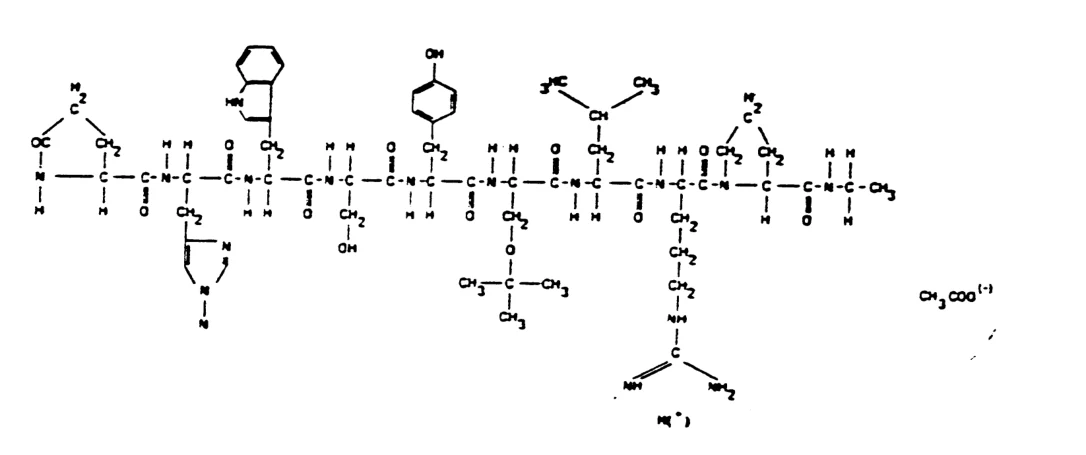
Chemical name: 5-Oxo-L-prolyl-L-histidyl-L- tryptophyl-L-seryl-L-tyrosyl-O- tert butyl-D-seryl-L-leucyl-L arginyl-N-ethyl-L-prolinamide monoacetate
or
(D-Ser[Tbu]6-des-Gly-NH210)LHRH ethylamide
Molecular formula: C62 H90 N16 O15
Molecular mass: 1299.5
Structural formula:
Physicochemical properties:
Physical form: An amorphous, white to slightly yellowish hygroscopic powder
Solubility: Freely soluble in water and dilute acids
Reactivity: Weak base
CLINICAL TRIALS
PATIENTS WITH PROSTATIC CANCER
Overview:
The clinical efficacy and safety of SUPREFACT (buserelin acetate) in the treatment of patients with carcinoma of the prostate gland is based upon data collected in 20 studies on 835 patients drawn from 12 countries. NPCP criteria were employed in the evaluation (n = 775 patients). The patient population characteristics can be summarized as follows:
| Disease Staging at Entry | Number of Patients |
| Stage A + B or not specified | 22 |
| Stage C | 150 |
| Stage D | 663 |
| TOTAL | 835 |
| SUPREFACT Administration Route | |
| Intranasal | 575 |
| Subcutaneous | 260 |
| TOTAL | 835 |
| SUPREFACT Dose | |
| As recommended | 648 |
| Maintenance dose only | 56 |
| SC/IN dose combination different to recommended dose | 131 |
| TOTAL | 835 |
Stage D patients:
At entry to these studies, 663 patients had Stage D disease and 599 of these were included in clinical evaluation of disease status following treatment with SUPREFACT:
| Evaluation | Treatment | Duration | Total | |
| <1 year | ≥1 year | n | % | |
| Missing evaluation/No data | 60 | 4 | 64 | 9.7 |
| Complete or partial regression | 83 | 74 | 157 | 23.7 |
| Stable | 124 | 63 | 187 | 28.0 |
| Progression and progression-suspected | 176 | 79 | 255 | 38.5 |
| Totals | 443 | 220 | 663 | 100 |
North American Data Sub-set:
In a multicentre, open-label, non comparative study of SUPREFACT treatment of patients with (American Urological System classification of Stage C or Stage D) carcinoma of the prostate gland, and in a comparison with National Prostatic Cancer Project (NPCP) Stage D2 patients as historic controls, 211 SUPREFACT treated patients were entered with total patient distribution as follows:
| PATIENTS | SUPREFACT | DES (1) | ORCH (2) | TOTAL |
| Enrolled | 211 | 3 | 35 | 249 |
| Evaluation - Safety | 207 | 3 | 34 | 244 |
| 185 | 3 | 33 | 221 |
| Protocols (NPCP) #500/#1300 | ||||
| Enrolled | 133 | 70 | 203 | |
| Evaluation - Efficacy | 120 | 59 | 179 | |
(1) Diethylstilbestrol - oral dose of 1 mg q8h.
(2) (Surgical) orchiectomy.
(3) Of these 185 SUPREFACT-treated patients available for evaluation of efficacy, 139 were
Stage D2 patients: of these, 109 received SUPREFACT treatment by continuous subcutaneous (SC) route while 30 patients received drug by SC route for first seven (7) days and intranasal route thereafter.
Efficacy
Objective Response:
The following Tables provide a capsule of major efficacy analyses:
Parameter Early (<12 weeks) progression-free survival (%) Mean progression-free survival (days) 2-year progression (%) 2-year life survival (%) | SUPREFACT | DES/ORCH | DES 89.2±2.8 605±70 43.2±4.9 68.9±4.5 |
| 83.8±3.1 | 86.6±2.5 | ||
| 488±70 | 589±68 | ||
| 33.9±6.1 | 42.4±4.0 | ||
| 61.9±4.2 | 65.9±3.8 |
In a best-objective-response analysis, a subset of analysis of early progression-free survival (above) the patient distributions were:
| Therapy | Progression | Stable | Regression | TOTALS | |
| Partial | Complete | ||||
| SUPREFACT | 23 | 56 | 59 | 4 | 142 |
| DES/ORCH | 24 | 89 | 46 | 20 | 179 |
| DES | 13 | 60 | 35 | 12 | 120 |
The rate of early progression-free survival in the SUPREFACT group was not significantly different from the historic controls (combined) nor did the distributions in the subset (above) show any between-treatment-comparisons differences.
Long-term progression-free survival analysis showed no significant differences in the probability of progression-free survival in the SUPREFACT group compared to either (NPCP) DES/ORCH or DES patients for up to 874 days of follow-up. Similarly, no differences were observed between patient survival (at 2 years follow-up) across groups.
Subjective Response: Pain (within SUPREFACT comparison)
For the SUPREFACT Stage D2 efficacy subjects, there was a significant improvement in pain category at all visits from Week 2 through Month 11. At all other visits, there was an improvement in pain category that did not achieve statistical significance.
Endocrine Evaluation:
In terms of testosterone suppression, mean serum testosterone values rose slightly at Week 1, then fell at each succeeding visit for the first 4 months to a value of less than 40 ng/dl. From Month 4 through Month 24, mean serum testosterone values were essentially constant, fluctuating at 30-40 ng/dl. The median time required to suppress testosterone to castration levels (<100 ng/dl) was three weeks for either route of administration.
Safety
In terms of drug safety, two patients are described as experiencing clinical "flare" of metastatic prostate carcinoma disease early in SUPREFACT treatment (both patients taking SC drug). One patient was withdrawn from buserelin treatment and was treated surgically. The other continued SUPREFACT (reduced dosage - end of Week 1) treatment and submitted to radiation therapy to spinal metastatic deposits: his SUPREFACT treatment was not interrupted.
Other safety data (NPCP patients excepted) distributions are as follows:
| SUPREFACT | ||
| Subcutaneous | Intranasal | |
| Hot flushes | 71.6% | 66.1% |
| Loss of libido (1) | 84.8% | 75.0% |
| Impotence (1) | 79.4% | 75.0% |
| Nasal irritation (2) | 12.5% | |
| Headache (2) | 28.6% | |
(1) Over 50% of patients enrolled reported loss of libido.
(2) Not all of these cases were considered (by investigators) to be drug related.
Other side effects considered SUPREFACT related were:
- Gynaecomastia (n = 4 or 2.6%)
- Pruritus (n = 2 or 1.3%)
- Gastrointestinal disturbance (n = 5 or 3.0%)
PATIENTS WITH ENDOMETRIOSIS
Overview
Two multicentre, open-label, randomized clinical studies have been conducted concurrently which compared the efficacy and safety of SUPREFACT administered intranasally at 400 mcg three times daily dosage to oral doses of 100-400 mg danazol given twice daily, in female outpatients (20 to 40 years of age) for a 6 to 9 month treatment duration followed by a 6-month follow-up period. The studies employed the same protocol; one was undertaken at 7 centres in the United States while the other was performed at multinational sites (two in Canada, one in the United Kingdom and one in Australia). A total of 277 patients with endometriosis documented by laparoscopy within 6 weeks prior to study start were enrolled.
The number of patients in each study evaluable for efficacy and safety is summarized below:
| Number of Patients | SUPREFACT | Danazol | Total | ||
Study 8/USA/310 | Study 8/MN/310 | Study 8/USA/310 | Study 8/MN/310 | ||
| Enrolled | 79 | 89 | 60 | 49 | 277 |
| Evaluable for Efficacy | 65 | 85 | 50 | 46 | 246 |
| Evaluable for Safety | 79 | 89 | 60 | 49 | 277 |
| Total Treated | 168 | 109 | 277 | ||
No patient died during treatment. Twenty-one (12.5%) and seventeen (15.6%) patients were discontinued during active treatment with SUPREFACT and danazol, respectively; not all of these cases (3.0% and 3.7% of buserelin- and danazol-treated patients, respectively) were considered (by investigators) to be drug-related.
Clinical Efficacy
Clinical efficacy was assessed by comparison of American Fertility Society (AFS) scores for endometriosis at baseline and at the end of treatment, and by monthly determination of clinical evaluation of symptoms scores.
AFS Scores: Patients were evaluated by laparoscopy within 6 weeks prior to treatment start (baseline) and at the end of 6 to 9 months treatment (Treatment Endpoint) for endometrial implant score, adhesion score and total score according to the AFS Revised Classification of Endometriosis.
Changes in mean AFS scores from baseline to Treatment Endpoint was determined in both studies for all patients evaluable for efficacy, as summarized below:
| AFS Total Scores - Treatment Endpoint Mean Change (Standard Error) from Baseline (Studies 8/USA/310 and 8/MN/310) | |||||
| AFS Scores | SUPREFACT (n=150) | Danazol (n=96) | Between treatment comparisona | ||
| Baseline | Mean Change (SE) | Baseline | Mean Change (SE) | ||
| Endometrial Implant | 10.04 | -7.13 (0.65)* | 8.73 | -5.60 (0.81)* | 0.142 |
| Adhesion | 8.73 | -1.40 (0.59)** | 6.96 | -0.51 (0.90) | 0.358 |
| Total | 18.77 | -8.53 (0.80)* | 15.69 | -6.11 (0.97)* | 0.051** |
* p< 0.001; ** p< 0.05; (paired t-Test-two tailed); a from Linear Models Analysis (two-tailed)
A comparison of mean AFS scores at baseline and at Treatment Endpoint showed significant decreases in the mean change from baseline for both endometrial implant and total scores for SUPREFACT- and danazol-treated patients. Adhesion scores showed smaller decreases in mean change from baseline for both treatment groups. For individual (endometrial implant and adhesion) scores, there was no significant difference between treatments. However, with respect to total score, there was a significantly greater decrease in the SUPREFACT-treated group.
Clinical Evaluation of Symptoms: Symptom scores were analyzed for all patients with a baseline score and at least one post-treatment assessment of the following symptoms: dysmenorrhea, dyspareunia, pelvic pain score (sum of dysmenorrhea, dyspareunia and pelvic pain), pelvic tenderness, induration and breakthrough bleeding. Each symptom (except pelvic pain score) was graded as 1=none, 2=mild, 3=moderate or 4=severe. Both treatment groups had significant decreases from baseline for all symptom scores except for breakthrough bleeding. The largest decreases reflected by improved symptomatology in both treatment groups were seen in the dysmennorrhea scores and pelvic pain scores; and the major contributing factor to the decrease in pelvic pain scores was the clinical improvement in dysmennorrhea, as indicated in the summary table below:
| Clinical Evaluation of Symptom Scores at Baseline and Treatment Endpoint (Studies 8/USA/310 and 8/MN/310) | |||||
| Symptom | SUPREFACT (n=165) | Danazol (n=107) | Between treatment comparisona | ||
| Baseline | Mean Change (SE) | Baseline | Mean Change (SE) | ||
| Dysmenorrhea | 2.62 | -1.49(0.09)* | 2.63 | -1.55(0.10)* | 0.575 |
| Dyspareunia | 1.73 | -0.54(0.07)* | 1.67 | -0.51(0.08)* | 0.911 |
| Pelvic Pain | 1.93 | -0.59(0.07)* | 1.93 | -0.71(0.09)* | 0.249 |
| Pelvic Pain Scores** | 6.27 | -2.62(0.17)* | 6.23 | -2.78(0.20)* | 0.459 |
| Pelvic Tenderness | 1.74 | -0.54(0.06)* b | 1.87 | -0.56(0.08)* c | 0.811 |
| Induration | 1.50 | -0.32(0.05)* b | 1.60 | -0.30(0.07)* d | 0.914 |
| Breakthrough Bleeding | 1.15 | 0.08(0.05) | 1.17 | 0.13(0.09) | 0.724 |
* p< 0.001 (paired t-Test-two tailed); a from Linear Models Analysis (two-tailed); b n=164; c n=106; d n=105; ** Pelvic pain scores = sum of dysmenorrhea, dyspareunia and pelvic pain
The significant changes from baseline in symptom scores observed at follow-up endpoint were similar to those observed at treatment endpoint. At treatment endpoint and follow-up endpoint, there was no significant difference between SUPREFACT and danazol treatment for mean change from baseline for any of the seven symptoms.
Endocrine Evaluation
Mean serum estradiol levels in the SUPREFACT-treated patients decreased significantly from baseline levels to 23-39 pg/mL at Treatment Endpoint. By week 4 of the follow-up period, the change in serum estradiol levels in SUPREFACT-treated patients was not significantly different from baseline levels.
In both studies, although small decreases were observed in both treatment groups, mean serum LH remained essentially stable throughout the treatment period. Serum FSH decreased slightly in SUPREFACT-treated patients and increased slightly in danazol-treated patients. None of these changes were significant.
Menses
The mean duration (days) after treatment to return of menses for SUPREFACT-treated patients was 47.5 days (n=65) and for danazol treated patients (for all dosage regimens) was 34.4 days (n=45) in one of the two controlled studies; and 45.4 days (n=78) and 35.9 days (n=43), respectively, for the other study.
Fertility
The occurrence of pregnancy occurring within the 180 days after treatment discontinuation was reported by the investigators. In one of the two controlled studies, 18 (23%) of the patients who were treated with SUPREFACT became pregnant within the prescribed 180 day period; six additional pregnancies were reported after the 180 day follow-up period. In the second study, 16 (18%) of the patients who were treated with SUPREFACT conceived within the 180 days after treatment discontinuation and one additional pregnancy was reported after the 180 follow-up period. It should be noted that clomiphene and other fertility therapy were permitted during the follow-up period.
Safety
In addition to these two controlled studies, six other open-label clinical trials encompassing a total of 968 patients with endometriosis from 66 investigative centres utilized SUPREFACT nasal solution at a daily dosage of 900 mcg (n=800), 450-1800 mcg (n=16) or 1200 mcg (n=152), or danazol at 400-1000 mg/day orally (n=72). The studies were non-comparative in design except for one which compared the safety and efficacy of SUPREFACT (900 mcg/day dosage; n=75) to that of danazol administered at 400-1000 mg/day (n=72). These seven other trials primarily demonstrate the safety of SUPREFACT in patients with endometriosis.
Adverse Events: A total of 1135 female patients with varying degrees of endometriosis were treated with SUPREFACT nasal solution. Of these 1135 patients, 994 (88%) were administered SUPREFACT for at least six months. One hundred and forty-one (12%) patients were treated with SUPREFACT for less than six months. In one open-label, uncontrolled study, 39 of 104 patients who completed six months of therapy entered a second treatment cycle and, of these, 11 entered a third treatment cycle. For these patients entering subsequent treatment cycles, the duration of therapy ranged from 3 to 12 months.
For studies which reported treatment-related adverse events, 448/503 (89.1%) patients reported one or more adverse reactions. The most frequently affected Body Systems were the Nervous System, Skin and Appendages and the Urogenital System, in which the incidences of treatment-related adverse events were 85.2%, 19.5% and 30.6%, respectively.
The most frequently reported SUPREFACT-related adverse events were those considered to be the result of the physiologic effects of decreased estrogen, namely hot flushes, vaginal dryness, headache, decreased libido and depression/emotional lability. In patients who received danazol, the most frequently reported adverse reactions were those considered to be related to the androgenic effects of the drug namely acne/skin disorder and weight gain/edema.
Changes in Bone Mineral Density: One study assessed the effects of repeated courses of treatment with SUPREFACT on bone mineral content and density in patients with endometriosis. Each treatment cycle in the study consisted of two phases, a treatment phase and a subsequent follow-up phase. Within each cycle, a twelve month course of SUPREFACT treatment at a daily dosage of 1200 mcg/day was given followed by a minimum period of six months without treatment. Bone mineral content (BMC) was assessed in the distal forearm (mainly cortical bone) by single photon absorptiometry and bone mineral density (BMD) was measured in the lumbar spine (mainly trabecular bone) by dual photon absorptiometry.
In 89 patients who completed the first 12 months of treatment (cycle 1), a median decrease of radial BMC of 1.2% was observed. This median loss appeared to continue during the follow-up period despite a slight recovery at 12 months of follow-up. There was a further loss of BMC during the second cycle of 12 months of therapy in 27 patients treated; however, the difference in loss of BMC between the two cycles was not statistically significant (p=0.5195). In 89 patients treated for 12 months (cycle 1), median spinal BMD decreased by 5%. This loss appeared to be reversed in the follow-up period reaching 98% of the original median BMD values within 12 months and increasing above baseline value after 24 months of follow-up. When the median percentage decrease of spinal BMD during treatment in cycle 1 was compared with that in cycle 2 (subsequent 12 month treatment phase), the loss was significantly larger in the first cycle than in the second cycle (n=27 patients analysed; p=0.0002). The data in this study suggest a partial reversibility of bone mineral loss after discontinuation of therapy.
DETAILED PHARMACOLOGY
Pharmacokinetics And Metabolism
Plasma elimination
Plasma elimination of buserelin was determined in two groups of 2 male rats (450-500 g) given 2 mcCi 125I- buserelin/IV (2.15 ng buserelin) or 2 mcCi 125I- buserelin plus an excess (50 ng) dose of unlabelled buserelin/IV in 2 mL saline. Continuous blood collection (500 mcg/5 min) preceded sacrifice at 90 minutes post-dosing. Plasma elimination followed a multi-exponential course with a rapid initial t1/2 = 10 min., an intermediate t1/2 = 26 min. and a prolonged t1/2 = 90 minutes. The excess buserelin dose did not change the plasma elimination rate.
In further rat studies, buserelin 10 mcg/100 g bw/IV showed a physical t1/2 in plasma of 3-6 minutes using RIA methods. In the 60 minutes post-dosing (1 mcCi 125I-buserelin) about 20% more buserelin was cleared compared to the same dose of labelled LHRH.
Organ Distribution
Two groups, each of 4 male rats, were given 1 mcCi of 125I-buserelin (specific activity 200 mcCi/mg) or 125I-LHRH/IV and sacrificed 60 minutes post-dosing. Radioactivity was detected, in both groups, in liver, kidney, spleen, (skeletal) muscle and glands (adrenal, pituitary, thyroid, salivary). In terms of the percent of dose accumulated by tissue, liver (2.1% of LHRH dose and 12.7% of buserelin dose) showed greatest accumulation followed by kidney (1.02% LHRH dose and 5.5% buserelin dose). The pituitary (biological target organ for gonadotropin release) showed a much greater buserelin accumulation (0.035%) than LHRH (0.0006%). The (3-9 heptapeptide) metabolite of buserelin does not accumulate in pituitary but is concentrated in liver and kidney.
Metabolism
The metabolism of buserelin was examined in rat and in-vitro by means of buserelin-125I Tyr5 which was biologically fully active. The metabolites were identified by TLC or HPLC or RIA. Immunological inactivation of buserelin is determined by N-terminal decomposition, by cleavage of the pyroglutamic acid- hesitating bond. Buserelin metabolism was examined in-vitro by inactivating unlabelled buserelin with enzyme preparation. Buserelin is rapidly inactivated by enzymes from liver, kidney and anterior pituitary. The main buserelin-degrading enzyme is pyroglutamyl-amino-peptidase (PGP), an enzyme which can be isolated from mammalian liver and anterior pituitary. Buserelin is also inactivated by chymotrypsin-like enzymes such as neutral endopeptidase from the pituitary.
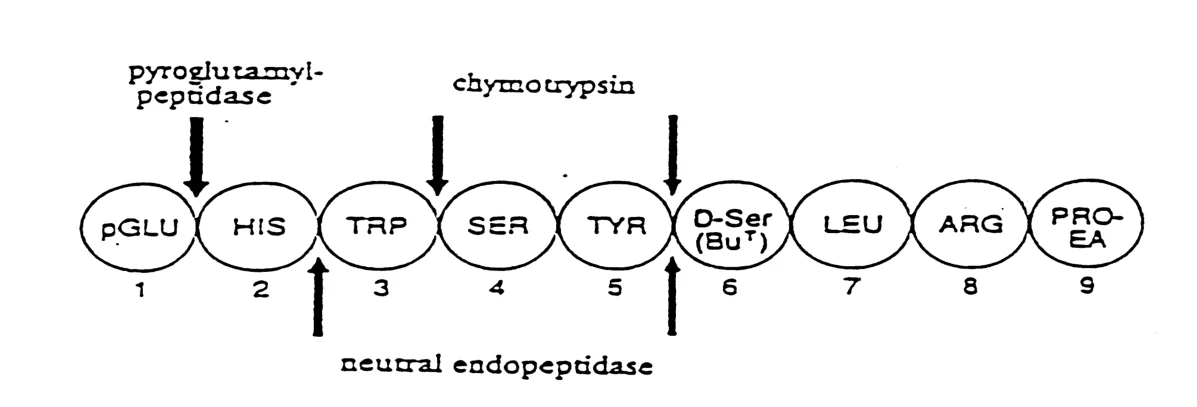
Enzyme degradation of a nonapeptide agonist: Buserelin is inactivated by N-terminal degradation. Cleavage sites indicated by arrows. The Tyr5-D-Ser(But)6 bond is resistant to degradation. All C-terminal metabolites have negligible biological activity. 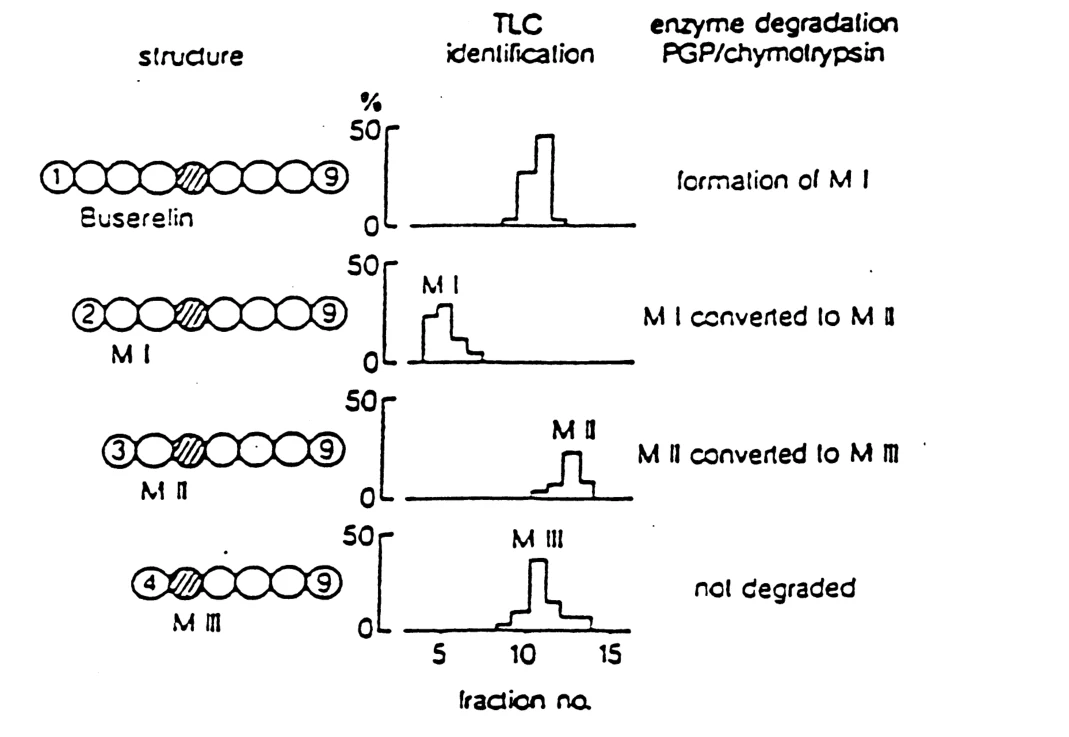
Identification of Buserelin metabolites in tissue extracts. (Left Panel) C-terminal Buserelin fragments of decreasing chain length, labeled in Tyr5 with 125I. (Middle panel) Chromatographic mobility on TLC plates (percent radio label per fraction). (Right panel) Products formed after sequential degradation with pyroglutamylaminopeptidase, followed by chymotrypsin.
Buserelin metabolites in the urine of the mouse, rat, dog, monkey and human administered buserelin SC in isotonic saline or buserelin implants were investigated (by HPLC/RIA) in one study to assess whether the metabolism in animal species was similar to that in human. Similar types of metabolites were detected in the urine of the mouse, rat, dog, monkey and human. The buserelin (5-9) pentapeptide was the main metabolite for all 5 species. The fraction of intact buserelin excreted in each species was different. None was found in the mouse and the highest amount (49.8% of total administered dose) was detected in the dog. The mouse had the highest and the dog had the lowest dose-requirement for testosterone (T) suppression. In the monkey and the human, there was a large fraction of intact buserelin in the urine (47.7% and 43.7%, respectively). The dose-requirement for suppression of oestradiol secretion in the female monkey and human (by infusion or implants) was similar. In the rat, the fraction of intact buserelin was lower (23%) than in the dog, monkey and human, and the dose required for half-maximal suppression of T secretion is higher than in the dog, monkey and human.
Animal Pharmacology
General
In anesthetized dog, buserelin (1 or 10 mcg/kg/IV) had no significant effect on blood pressure, left ventricular pressure, cardiac contractility, heart rate, ECG, or arterial (femoral) flow.
In dog and rat, buserelin (10 mcg/kg/sc) had no significant saluretic or diuretic effect.
In rabbit, buserelin (10 mcg/kg/sc) had no significant effect on blood sugar.
In guinea pig isolated ileum, buserelin 10 mcg/mL (medium) had no spasmogenic effect and did not relax contractions caused by carbachol, histamine, or barium.
Buserelin (10 mcg/mL Ringer solution bath) had no significant contractile effect on isolated rat uterus.
Behavioral changes were not observed in conscious mouse administered buserelin (1 mg/kg/sc) for one week.
Special
Animal: in-vitro
The LH response was studied on a perfused column of isolated anterior pituitary cells from male rats. After a single pulse of LHRH, LH output returned to basal levels in 8 minutes. After buserelin, the output lasted 20 minutes.
In-vitro, Leydig cells from hypophysectomized rats showed a 2-fold increase in testosterone responsiveness to buserelin compared to cells from intact rats. Isolated Leydig cells have high affinity sites for buserelin, similar in affinity to receptors in the anterior pituitary. Their short-term stimulation increases testosterone production, while long-term stimulation inhibits testicular function.
In isolated luteal cells buserelin reduced basal progesterone production and inhibited the stimulatory effect of HCG. Specific high-affinity binding of buserelin was observed in dispersed luteal cells, membrane-rich particles from luteinized rat ovary, and rat ovarian granulosa cell membrane preparation.
Animal: In-vivo
RAT
In male rats, 2.5, 5, 25 or 50 ng/80-100 g bw/SC buserelin produced peak plasma LH/FSH increases within 2 hours. Buserelin was 19 times more potent than natural LHRH in releasing LH and 16 times more potent in releasing FSH. Buserelin can directly stimulate testosterone
secretion by Leydig cells. When buserelin was injected in 55-day old male rats which had been hypophysectomized 3 days earlier, testosterone levels in serum rose to levels similar to those in intact untreated rats of the same age.
Male rats given buserelin 500 ng/day/SC/14 days showed serum LH and testosterone (T) stimulation at day 1 followed by blunted LH response, and absent T response at day 7 and 14. Animals given same daily dose by SC infusion showed day 1 LH and T response to be relatively blunted with absent response at day 7 and 14.
Groups of 10 initially immature rats were given buserelin 0.05, 0.1 or 0.2 mg/kg/SC/day for 28 consecutive days. Testicular weight and plasma testosterone level were reduced, compared to controls. Continuous infusion for 6 days of buserelin in doses of less than 340 ng/day in male rats led to an increase in pituitary LHRH receptor numbers; when the daily dose was increased 10-100 fold pituitary LHRH receptors were progressively down-regulated.
In immature female rats, pretreated with pregnant mare serum gonadotropin (PMSG), ovulation was induced by the intravenous injection of 3 ng of buserelin. The equi-effective dose of natural LHRH was 130 times larger.
A luteolytic effect of buserelin was shown in rats made pseudopregnant with PMSG and human chorionic gonadotropin (HCG) using 50 ng subcutaneously from day 6 to day 9 of pseudopregnancy. Buserelin lowered serum progesterone level, ovarian ascorbic acid concentration and ovarian HCG binding. In mated rats, buserelin prevented pregnancy.
Adult male rats were given 0, 2.5 or 12.5 mcg/kg/day/SC or 5 or 25 mcg/kg/ twice weekly/SC buserelin for 12 months. Body weight was unaffected. The low daily dose significantly (p <0.05) reduced the weight of testes and seminal vesicles. The high daily dose significantly reduced weights of testes, ventral prostate, seminal vesicles and levator ani muscle. Twice weekly, high-dose alone significantly reduced the weight of seminal vesicles only. Prostate weight was suppressed by daily dosing but returned to control values after a 5 month buserelin-free period.
HAMSTER
Following administration of 0, 2.5, 5.0, 25.0, or 50 ng/SC buserelin to male hamsters (and rats), the minimal effective dose for LH and FSH release in hamster was 2.5 ng (LH) and >50 ng (FSH). In rat the minimal effective dose was 2.5 ng for both variables.
GUINEA PIG
In guinea pigs, after a single dose of buserelin 100 ng/ 100 g bw/SC to males and females, peak LH levels occurred at 120 minutes post-dosing. Doses of 0, 4 or 16 mcg/kg buserelin/SC, to females for 28 days, followed by exposure to fertile males for 100 days during which drug treatment continued, resulted in 0% pregnancy rate in buserelin-dosed groups and 100% pregnancy rate in controls.
RABBITS
In adult male rabbits receiving daily subcutaneous injections of 0, 2, 20, or 200 mcg buserelin/kg body weight for 4 weeks, significant (p<0.05) reductions were observed in testes and prostate weight, pituitary LH, serum testosterone and testicular testosterone values, at high dose only. A reduction in hypothalamic LHRH was not significant.
DOG
In male dogs, 2.5 mcg/kg/day/SC buserelin reduced serum testosterone levels to 6% of control. When buserelin was discontinued, after six months, testicular involution was reversible within two months.
MONKEY
The effect of 5 mcg/day/SC/1 year buserelin was studied in nine female stump tail monkeys. Ovulation was inhibited in 3 of the animals. These animals became amenorrheic. Serum estradiol levels fluctuated between values associated with the early to mid-follicular phase of the normal cycle and never reached the late follicular phase. In a further 3 animals, buserelin also inhibited ovulation, but serum estradiol levels occasionally rose to values associated with the late follicular phase, indicating that follicular maturation was not completely suppressed. These animals had irregular patterns of menstruation. In the remaining 3 animals, ovulation was not suppressed. Increasing the daily dose of buserelin to 20 mcg suppressed ovulation in 2 of these animals and reduced the number of cycles in the remaining one. Cycles in this last animal were suppressed when buserelin was administered at a dose of 10 mcg twice daily. At the end of dosing, almost all animals ovulated within 2-4 weeks.
ACROSS SPECIES
A comparison of acute equi-effective doses of buserelin and native LHRH shows that the synthetic agonist was 42 times more potent in the rabbit follicle stimulation test, 120 times more potent in the rat LH release test, 100 times more potent in the rat ovary ascorbic acid test and 20 times more potent in the sheep LH release test.
Human Pharmacology
Three groups of healthy male subjects, aged 19-23, 33-44, and 45-60, were administered single i.v. injections of buserelin (1.25, 2.5, 5.0, 10.0, and 20 mcg) to assess dose-response by determination of LH and FSH levels (by RIA) in blood samples taken before and at injection, and at various times up to 24 hours after injection. Areas under the serum concentration time curves (AUC's) for each dosage indicated a positive dose response for LH release in each age group, and a less pronounced dose-response for FSH. Times to peak responses were variable: for LH, 1/2 - 4 hours (no clear result in the 33-44 age group); for FSH, 1/2 - 8 hours. Generally, adverse effects were minor. In the 33-44 age group, among 49 total treatments (7 patients), adverse effects included: nightmares (1 patient each on buserelin and natural LHRH; eosinophilia (1 patient, who also evidenced low neutrophil counts at the start and end of trial); normochrome anemia, considered as related to experimental (blood-letting) procedures.
In a dose-range finding study involving single intranasal (IN) dosages of 10, 25, 50, 100, 200, 500, 1250, or 2500 mcg of SUPREFACT (buserelin acetate), 34 healthy males were selected: 24 participated once, 5 participated twice, and 5 participated 3 times (30 days between each treatment) for a total of 49 treatments. The observation period was 3 days pre-treatment (visits 1 to 3), day of treatment (visit 4), and for 6 days post-treatment (visits 5 to 10). Plasma hormone analysis (FSH, LH, prolactin, testosterone (T), dihydrotestosterone (DHT) , estradiol (E2), pregnenolone, and 17-OH progesterone) was performed for blood samples collected at visits 1, 2, and 4 to 10. Blood samples in the pre- and post-treatment phases were collected three times daily (8 am, 4 pm, 9 pm), and on the day of drug administration at -1/2, -1/4, 0, 1/2, 1, 2, 4, 6, 8, 12, and 14 hours relative to injection. Absolute mean hormone concentrations, mean percentage hormone values for each group, and 24-hour AUC's were determined. Generally, single IN SUPREFACT doses over 500 mcg elicited maximal hormone responses: LH, FSH, 17-OH progesterone, DHT at 1250 mcg; T,E2 at 2500 mcg. Duration of response was 24 hours. The principal response was by LH (increase); dose-dependent stimulation was seen for LH and estradiol and a slight tendency for dose-dependent stimulation was found for FSH, 17-OH progesterone, T, and DHT. No change was seen in pregnenolone. Single IN doses of SUPREFACT leading to stimulation of LH and androgen hormone secretion caused a transient loss of diurnal cyclic variation and relatively low levels of plasma T and 17-OH progesterone lasting for one to three days of the post-treatment period. Clinical and laboratory profile was excellent; one volunteer complained of mild headache, nausea, and increased perspiration, not considered drug-related. Fluctuations in vital signs were not of clinical significance.
TOXICOLOGY
Local Tolerance
Single-dose, local tolerance tests (IM/IV/IA/SC) of both buserelin injection (5 mcg/mL) and nasal solution (0.113% w/w) were conducted in each of 2 rabbits/ route of administration/dosage form. A volume of 0.1 mL (SC) or 0.5 mL (IV/IA/IM) was given. One of the two rabbits was sacrificed on day 1 (IV/IA) or day 2 (IM/SC) post-dosing and the remaining animal on day 2 (IV/IA) or day 5 (IM/SC) for histologic (macroscopic/microscopic) examination. Buserelin was tolerated by all routes.
Mucosal tolerance of SUPREFACT (buserelin acetate) nasal solution (0.1 mL) in the rabbit (applied once to the conjunctival sac of the left eye of each of 6 animals with the right eye as control) was tested. Twenty-four hours later the eyes were rinsed with saline. There were no changes in the cornea, iris or conjunctiva attributable to drug.
Acute Toxicity
Acute toxicity studies (SC/IV/PO) were conducted in mouse, rat and dog. In mice, groups of 10 males and 10 females received 100 or 1000 mg/kg buserelin SC in physiological saline or via oral intubation. All animals tolerated buserelin and survived. Hence, the LD50 in both sexes via these routes was greater than 1000 mg/kg. In rats, groups of 10 males and 10 females were each given 50 or 500 mg/kg buserelin SC in physiological saline or 40 or 400 mg/kg buserelin PO in distilled water. The LD50 was greater than 500 mg/kg SC and 400 mg/kg PO (male or female). Groups of 2 male dogs administered 50 or 100 mg/kg buserelin SC in physiological saline, the
LD50 was greater than 100 mg/kg. Intravenously, groups of 10 male and 10 female mice were given 40, 50, 57.5, 65 or 100 mg/kg (male) or 50, 65, 72.5, 80, 100 or 125 mg/kg (female) buserelin. The LD50 was 56 or 78 mg/kg in males or females, respectively. In rats, groups of 10 males and 10 females were given 20, 30, 35, 40 or 45 mg/kg (male) or 20, 30, 32.5, 35, 40 or 45 (female) mg/kg buserelin IV. The LD50 value was 36 mg/kg (male or female).
Subacute and Chronic Toxicity
In a 4-week study, 4 groups of 10 male and 10 female initially immature rats were given 0, 0.05, 0.1 or 0.2 mg/kg/day/SC buserelin. Body weight gain was retarded in males and accelerated in females, testicular weight was reduced and there was a numerical preponderance of corpora lutea in ovaries. There were no adverse effects of buserelin on blood or urine parameters, or on histology at autopsy.
Eight groups of adult male rats were given buserelin, 0 or 200 ng/day/SC for 4, 6, 8 and 10 weeks. Statistically significant reductions in weight of seminal vesicle (all weeks), and prostate gland and levator ani muscle (8, 10 weeks) were found, but no significant reductions in testicular weight. In-vitro testicular secretory capacity (for testosterone) was significantly reduced at all weeks.
In a 6-month study, 4 groups of 25 male and 25 female rats were given 0, 0.05, 2.5 or 125 mcg/kg/day/SC buserelin. After 6 months, 5 animals per group were observed for a further 6 weeks without buserelin. At low dose, the ovaries showed a significant increase in corpora lutea and reduction in the intensity grade of tertiary follicles. Ovarian weight was increased. During the 6-week drug free observation period, the number of corpora lutea and the intensity grade of the tertiary follicles became normal. The mid-dose caused a prolonged estrus cycle in the first, second, fourth and fifth week. Ovaries behaved as in the low-dose group. The high dose caused an extension of the estrus cycle at all observation periods. Ovarian histology was similar to that in the low dose group. At the end of the 26 test weeks a significant reduction in the ovarian weight and spermatocyst count were found. At the end of the 6-week observation period, ovarian weight and histology and spermatocysts were normal. There were no untoward effects on blood or urine parameters or organ histology at autopsy.
In these rats, at the end of 6 months' dosing, there were no consistent changes in levels of serum FSH, prolactin, GH or T3. In males, serum LH levels were increased at low dose and significantly increased at mid-dose. No significant changes were observed in females. Pituitary LH content was significantly reduced in males at all dose levels but no changes were observed in females. Pituitary FSH showed no change in any sex/dose group. Pituitary content of LH was significantly decreased at all doses in male rats, and unchanged in female rats. Pituitary FSH, prolactin, GH and TSH were unchanged in male rats. Pituitary PRL, GH and TSH were decreased at the highest dose in female rats (due to reduced estrogen levels). Ovarian content of estradiol was slightly reduced at the highest dose, and progesterone content was increased at the two lower doses. Testicular testosterone content was unchanged in male rats in accordance with intact spermatogenesis. Adrenal corticosterone content showed no change in either sex at any dose.
In a 14-day nasal toxicity study in Beagle dogs, 2 male and 2 female animals received 100 mcg/day buserelin or the solvent (water) alone. The material was administered by atomizer to the left nostril. At autopsy, there were no pathological macroscopic or microscopic changes.
In a 30-day toxicity study in Beagle dogs, groups of 2 male and 2 female animals received 0, 0.05, 0.1 or 0.2 mg/kg/SC/day buserelin. There were severe disturbances in spermiogenesis and atrophy of the prostate gland in all treatment groups. Hematology, clinical chemistry, urinalysis and histology at autopsy did not show pathological changes.
In a 6-month toxicity study in Beagle dogs, 4 groups of 5 male and 5 female animals received 0, 0.05, 2.5 or 125 mcg/kg/SC/day buserelin. Thereafter, 2 animals per group and sex were observed for a further 8 weeks without buserelin. At the low dose, there was slight atrophy of the reproductive organs in 1 male and 2 females. After a further 8 weeks without dosing, there were no pathological changes. The mid and high dose caused a moderate to marked atrophy of the reproductive organs. The high dose led to atrophy of pituitary and thyroid glands. Behaviour, external appearance, hematology, clinical bio chemistry, urinalysis and post-mortem examination of the organs did not indicate toxicity.
In male dogs, plasma LH and testosterone were markedly decreased after 6 months of treatment, plasma prolactin T3 and T4 were unchanged. In female dogs, plasma LH was also reduced, prolactin was unchanged, whereas T3 was slightly increased at the lower doses, and T4 was slightly increased at the highest dose. These changes are within normal functional variability. Plasma testosterone in male dogs was consistently suppressed from 1-6 months of treatment, values were normalized within 6 weeks after treatment. Plasma progesterone in female dogs indicated consistent reduction of luteal function from 3-6 months of treatment, with subsequent recovery during the post-treatment period. Estrous periods are infrequent in female dogs, and long lasting luteal phases were found in two animals (6 weeks duration), during the post treatment period in accordance with normal physiology. No antibodies against buserelin were detected in rats or dogs after 6 months treatment.
Reproduction and Teratology
In a fertility study in rat, 4 groups of 30 male and 30 female animals received 0, 0.2, 0.5 or 1.8 mcg/kg/SC/day buserelin for 60 days (males) and 14 days (females) before mating. The dosing was continued until all animals were killed. Males and females of the same dosage group were mated. Half the females were killed on day 21 of pregnancy and the fetuses examined. The other half were allowed to litter and rear their offspring for 21 days. The surviving offspring (F1 generation) were reared without buserelin dosing until maturity and mated. After parturition and 21 days of rearing the offspring (F2 generation) the study was terminated. There was a dose-dependent weight reduction of testes, prostate and seminal vesicle in all dose groups. In the females, there were cycle disturbances in all dose groups. As dose increased, fertility decreased. There was no pregnancy in the high dose group. Pregnancy was prolonged, or birth was inhibited, in the two lower dose groups. There were no abnormalities in the fetuses of the animals killed after 21 days. The majority of the spontaneously born offspring were found dead. Only one litter was reared without complication. Function tests and mating attempts indicated no delayed compound toxicity.
In an embryotoxicity study in rat, four groups of 27 animals received 0, 0.4, 4 or 40 mcg/kg/day/IV buserelin from day 1 to 16 of pregnancy. On day 21 of pregnancy, the animals were killed. In all dose groups, ovarian weight was increased and large numbers of follicles and yellow bodies were found. Pregnancy was reduced in the mid and high dose groups. In the high dose group fetal mortality was increased. Fetuses showed slight developmental retardation such as poorer ossification at all dose levels, and decreased body weight and reduced length in the mid and high dose groups. In the mid and high dose groups, the placenta was enlarged. There was a dose-dependent enlargement of the renal pelvis in all 3 drug groups and in some cases the ureters were dilated.
In a fertility study in male mice, groups of 20 males were treated with 1000 or 6000 mcg/kg/day/SC buserelin for 9 or 5 weeks, respectively, before mating with untreated females and groups of 10 males received the same two doses for 9 weeks and sacrificed immediately without being mated. The copulation and conception rates in treated males (mated and unmated) in both dose groups were similar to untreated males. Mated and unmated males treated with the high dose for 9 weeks exhibited a decrease in number of spermatozoa. In both dose groups, a reduction in weight of the seminal vesicles was observed after 9 weeks treatment as well as after 5 weeks treatment in males in the high dose group.
In a fertility study in female mouse, groups of 20 females were treated with 0 or 100 mcg/kg/day/SC buserelin for 14 days before mating. The copulation and conception rates were significantly reduced in these animals and the frequency of the oestrus cycles were decreased due to prolonged dioestrus. When the animals were mated after a 2-week recovery period, reproductive performance was comparable to control animals. The fetuses from cesarian section on day 18 of gestation in the animals which were allowed to recover revealed no changes compared to untreated control animals.
In a study of fertility study in mouse, groups of 22-23 females were treated with 0, 1, 100 or 6000 mcg/kg/day/SC buserelin from day 0 to day 6 of pregnancy. An increase in number of corpora lutea was observed in all dose groups as well as an increase in weight of the ovaries in the low dose group and a decrease in the pituitary weight in the mid- and high dose groups. Fetuses delivered by Caesarean section on day 18 of gestation did not reveal any changes in malformations compared to control fetuses.
In a teratology study in rabbit, three groups of 13-15 females were treated with 0, 0.1, 1 or 10 mcg/kg/day/SC from day 6 to day 18 of pregnancy. Cesarian section performed on day 29 of gestation revealed that 15, 14, 3 and 4 females carried live fetuses and 0, 1, 11 and 9 females had implantation sites only at 0, 0.1, 1 and 10 mcg/kg/day dose levels respectively. The remaining animals in the two high dose groups showed no signs of pregnancy. Decreased ovarian weight was observed in dams in the 10 mcg/kg group. There were no differences in external, skeletal and visceral parameters measured for the fetuses.
In reproduction study in mouse to assess the effects of buserelin on pregnant mice and postnatal development and fertility of their (F1) offspring, groups of 21-24 pregnant females were treated with 0, 0.1, 1.0, 10, 100 and 1000 mcg/kg/day/SC from day 15 of gestation to day 21 of
lactation. In the parental generation (P=Fo), there was a prolongation of parturition and a reduced number of live births at each dose level except at 0.1 mcg/kg/day. No effect on the sex ratio was observed. In the F1 generation, no reproductive pathology was observed with regard to ovarian function, or to peri-postnatal reproductive parameters. In the F2 generation, there were also no effects on reproductive performance and the sex ratio of the offspring was not changed.
In an embryotoxicity study in rabbit, four groups of 15 animals were given 0, 1, 10 or 100 mcg/kg/day/IV buserelin from day 1 to day 19 after mating. On day 29 after mating the animals were killed and delivered by cesarian section. Pregnancy did not occur in most of the mid-dose animals and in all of the high dose animals. In the observed fetuses, there were no abnormalities attributable to buserelin: 24 h post-delivery incubator viability was not impaired.
Carcinogenicity
Four groups (100 male and 100 female in control group, and 50 male and 50 female in each dose group) of Wistar rats were given 0, 0.2, 0.6 or 1.8 mcg/kg/day/SC buserelin in a physiological saline vehicle volume of 1 mL/kg, for 24 months (730 consecutive days). This dosing was followed by a 6 month, buserelin-free recovery period. Mid-dose males had some body weight gain retardation which occasionally reached statistical significance compared to controls and other dose groups. Dosed females showed a marked increase in body weight gain which reached statistical significance at 3 weeks into study and remained so during buserelin dosing. Mortality rate was greatest in low and mid-dose male groups and lowest in high-dose females. Reductions in testosterone and progesterone values were seen in all buserelin dose groups throughout the dose period. All dose groups showed testicular changes, namely tubular atrophy and Leydig cell hyperplasia, which were irreversible and, to some extent, dose-dependent. Females showed atrophy of the uterus. There was no indication of a compound-induced carcinogenic effect.
A study of 290 male and 290 female Wistar rats treated with buserelin implants or control every 56 days in the doses 0 (untreated control, n=100), 0 (placebo control: i.e., rods without drug substance, n=120), 0.825 mg (n=120), 1.65 mg (n=120) or 3.3 mg (n=120) of buserelin acetate per implant [approximately 25, 50 and 100 ug/kg/day] over a maximum period of 30 months (an interim killing took place after 12 months) revealed a treatment-related occurrence of adenomas of the anterior lobe of the pituitary gland (pars distalis) in almost all male and female rats of the three dose groups. These pituitary adenomas occurred at the same overall incidence for both sexes and across the dose groups. Compared to the corresponding spontaneous findings in both control animal groups, the pituitary adenomas occurred earlier and generally resulted in the animals' death, either directly or indirectly (moribund killing). Between the 35th and 50th week of study, the mortality rate in the buserelin treated male animals rose abruptly: 58%, 43% and 43% of the rats treated with 0.825 mg, 1.65 mg and 3.3 mg buserelin acetate implants, respectively, had died or had to be killed. At this time, only 7-10% of the treated female rats had dropped out of the study. The mortality rate in the females did not rise distinctly until the 64th week of the study. This sex-specific shift in the mortality rate prevailed until the end of the study. By the 107th week of the study, all buserelin treated rats of either sex had dropped out of the study. At this time, more than 75% of all control animals were still alive. No further treatment-related findings of other tumor types were detected. The mechanism of pituitary
adenoma formation in rats is unknown. The finding can be considered as an irreversible toxic effect in rats treated at the selected high doses of buserelin acetate for more than six months.
Mutagenicity
In the Ames test in bacteria (Salmonella typhimurium and Escherichia coli), buserelin in doses of 0.8 to 2,500 mcg/ plate had no mutagenic activity.
Four groups of 5 male and 5 female NMRI mice were given 0, 0.5, 16.0 or 500 mcg/kg/buserelin SC in each of two doses spaced 24 hours apart. All animals were killed 6 hours after the last dose. From bone marrow specimens, and by count of polychromatic/normochromatic erythrocytes, no increase in erythrocytes with micronuclei was observed. Buserelin is not mutagenic by this test.
REFERENCES
- 1.
Adenauer H, Hellwich K. Endocrinological Treatment of Advanced Prostatic Cancer with
Buserelin (HOE 766), an LHRH Analogue. March 86. Data on file / Hoechst Canada Inc.
- 2. Alibhai SMH, Gogov S, Allibhai Z. Long-term side effects of androgen deprivation therapy in men with non-metastatic prostate cancer: A systematic literature review. Critical Reviews in Oncology/Hematology 2006;60:201-15.
- 3.
Bélanger A, Labrie F, Lemay A, Caron S, Raynaud JP. Inhibitory effects of a single intranasal administration of D-SER(TBU)6, des-Gly-NH210 LHRH ethylamide, a potent
LHRH agonist, on serum steroid levels in normal adult men. J Steroid Biochem 1980; 13: 123-6.
- 4. Bergquist C, Nillius SJ, Bergh T, Skarin G, Wide L. Inhibitory effects on gonadotrophin secretion and gonadal function in men during chronic treatment with a potent stimulatory luteinizing hormone-releasing hormone analogue. Acta Endocrinol 1979; 91: 601-8.
- 5. Borgmann V, Hardt W, Schmidt-Gollwitzer M, Adenauer H, Nagel R. Sustained suppression of testosterone production by the luteinizing hormone-releasing hormone agonist buserelin in patients with advanced prostate carcinoma. The Lancet 1982; May 15: 1097-9.
- 6. Chen AC, Petrylak DP. Complications of androgen-deprivation therapy in men with prostate cancer. Current Urology Reports 2005;6:210-6.
- 7. Dawood MY, Spellacy WN, Dmowski WP, et al. A comparison of the efficacy and safety of buserelin versus danazol in the treatment of endometriosis. Prog Clin Biol Res 1990; 323: 253-67.
- 8. Debruyne FMJ, Karthaus HFM, Schröder FH, de Voogt HJ, de Jong FH, Klijn JGM. Results of a Dutch phase II trial with the LHRH agonist buserelin in patients with metastatic prostatic cancer. EORTC Genitourinary Group Monograph 2, Part A: Therapeutic Principles in Metastatic Prostatic Cancer 1985; 251-70.
- 9. Faure N, Lemay A. Inhibition of testicular androgen biosynthesis by chronic administration of a potent LHRH agonist in adult men. Arch Androl 1985; 14: 95-106.
- 10. Faure N, Lemay A, Laroche B, et al. Clinical response and safety of LHRH agonist treatment in prostatic carcinoma. LHRH and its analogues. Basic and clinical aspects. Proceedings of the International Symposium on LHRH and its analogues 1984; June 28-30: 312-25.
- 11. Faure N, et al. Preliminary results on the clinical efficiency and safety of androgen inhibition by an LHRH agonist alone or combined with an anti-androgen in the treatment of prostatic carcinoma. The Prostate 1983; 4: 601.
- 12. Fedele L, Bianchi S, Arcaini L, Vercellini P, Candiani GB. Buserelin versus danazol in the treatment of endometriosis-associated infertility. Am J Obstet Gynecol 1989; 161(4): 871-6.
- 13. Fedele L, Marchini M, Bianchi S, Baglioni A, Bocciolone L, Nava S. Endometrial patterns during danazol and buserelin therapy for endometriosis: Comparative structural and ultrastructural study. Obstet Gynecol 1990; 76: 79-84.
- 14.
Heath M, Scanlon MF, Mora B, Snow MH, Gomez-Pan A, Watson MJ, Mulligan F, Hall R.
The pituitary-gonadal response to the gonadotropin releasing hormone analogue D-Ser(TBU) 6-des-Gly10 LHRH-ethyl-amide in normal men. Clin Endocrinol 1979; 10: 297-303.
- 15.
Henzl MR. Gonadotropin-Releasing Hormone (GnRH) Agonists in the Management of
Endometriosis: A Review. Clin Obstet Gynecol 1988; 31(4): 840-53.
- 16. Kiesel L, Thomas K, Tempone A, Trabant H, Widdra W, Runnebaum B. Efficacy and safety of buserelin treatment in women with endometriosis - a multicentre open-label study. Gynecol Endocrinol 1989; 3(Suppl 2): 5-19.
- 17.
Lawrence JR, McEwen J, Pidgen AW, Robinson JD. Dose-response characteristics of D-
Ser(TBU)6-des-Gly10-LHRH-ethylamide (HOE 766 - Buserelin) following intranasal administration in five healthy male volunteers. Brit Pharmacol Soc 1981; September: 16-8.
- 18. Lemay A. Buserelin vs danazol in the treatment of endometriosis: Results of an international multicentre study. J Soc Obstet Gynecol Canada 1989; 4: 30-5.
- 19. Lemay A, Maheux R, Huot C, Blanchet J, Faure N. Efficacy of intranasal or subcutaneous luteinizing hormone-releasing hormone agonist inhibition of ovarian function in the treatment of endometriosis. Am J Obstet Gynecol 1988; 158: 233-6.
- 20. Levine GN, D’Amico AV, Berger P, et al. Androgen-deprivation therapy in prostate cancer and cardiovascular risk : A science Advisory from the American Heart Association, American Cancer Society, and American Urological Association endorsed by the American Society for Radiation Oncology. Circulation 2010;121:833-40.
- 21.
Marana R, Muzii L, Muscatello P, Lanzone A, Caruso A, Dell'Acqua S, Mancuso S.
Gonadotrophin releasing hormone agonist (buserelin) in the treatment of endometriosis: changes in the extent of the disease and in CA 125 serum levels after 6-month therapy. Br J of Obstet Gynecol 1990: 97; 1016-9.
- 22. Matta WH, Shaw RW, Hesp R and Evans R. Reversible trabecular bone density loss following induced hypo-oestrogenism with the GnRH analogue buserelin in premenopausal women. Clin Endocrinol 1988; 29: 45-51.
- 23. McKay-Hart D, Mack A, Roitt S, Bunn I. A long-term study of the effects of intermittent buserelin treatment on endometriosis and bone mineral content. In: Brosens I et al. eds. LHRH Analogues in Gynaecology. Parthenon Publ Group 1990: 189-93.
- 24.
An Open-Label Noncomparative Study of Buserelin in the Treatment of Patients with Stage
C or Stage D Carcinoma of the Prostate and a Comparison with Historical Controls for Stage D2 (NPCP Protocols 500 and 1300). September 86. Data on file/ Hoechst Canada Inc.
- 25. Presant CA, Soloway MS, Klioze SS, et al. Buserelin as primary therapy in advanced prostatic carcinoma. Cancer 1985; 56: 2416-9.
- 26. Sandow J, Jerabek-Sandow G, Krauss B, Schmidt-Gollwitzer M. Pharmacokinetics and metabolism of LHRH agonists, clinical aspects. LHRH and its analogues. Basic and clinical aspects. Proceedings of the International Symposium on LHRH and its analogues 1984; June 28-30: 123-37.
- 27. Sandow J, Petri W. Intranasal administration of peptides. Biological activity and therapeutic efficacy. Transnasal Systemic Medications 1985; 183-99.
- 28. Sandow J, von Rechenberg W, Jerzabek G, Engelbart K, Kuhl H, Fraser H. Hypothalamic-pituitary-testicular function in rats after supraphysiological doses of a highly active LRH analogue (buserelin). Acta Endocrinol 1980; 94: 489-97.
- 29. Sandow J, von Rechenberg W, Jerzabek G, Stoll W. Pituitary gonadotropin inhibition by a highly active analog of luteinizing hormone-releasing hormone. Fertil Steril 1978; 30(2): 205-9.
- 30. Sandow J, von Rechenberg W, König W, Hahn M, Jerzabek G, Fraser H. Physiological studies with active analogues of LHRH. Proceedings of the 2nd Eur. Coll. on hypothalamic hormones 1978; Weinheim, Germany.
- 31.
Smith MR. Androgen deprivation therapy for prostate cancer: new concepts and concerns.
Curr Opin Endocrinol Diabetes Obes 2007;14:247-54.
- 32. Trabant H, Widdra W, de Looze S. Efficacy and safety of intranasal buserelin acetate in the treatment of endometriosis: A review of six clinical trials and comparison with danazol. In: Chadha DR, Buttram VC, eds. Current Concepts in Endometriosis. New York Liss, 1990; 357-82.
- 33. Waxman JH, Hendry WF, Whitfield HN, Oliver RTD. A long term follow-up of patients with advanced prostatic cancer treated with buserelin. EORTC Genitourinary Group Monograph 2, Part A: Therapeutic Principles in Metastatic Prostatic Cancer, 1985; 271-7.
- 34. Wenderoth UK, Happ J, Krause U, Adenauer H, Jacobi GH. Endocrine studies with a gonadotropin-releasing hormone analogue to achieve withdrawal of testosterone in prostate carcinoma patients. Eur Urol 1982; 8: 343-47.
- 35.
Wenderoth UK, Jacobi GH. Three years of experience with the GNRH-analogue buserelin in
100 patients with advanced prostatic cancer. LHRH and its analogues. Basic and clinical aspects. Proceedings of the International Symposium on LHRH and its analogues 1984; June 28-30: 349-58.