


Product Monograph - Dovonex
RECENT MAJOR LABEL CHANGES
| 12/2021 |
| 12/2021 |
| 12/2021 |
| 12/2021 |
TABLE OF CONTENTS
RECENT MAJOR LABEL CHANGES .......................................................................................... 2
TABLE OF CONTENTS ............................................................................................................ 2
PART I: HEALTH PROFESSIONAL INFORMATION .................................................................... 4
1 INDICATIONS ............................................................................................................. 4
1.1 Pediatrics .................................................................................................................. 4
1.2 Geriatrics .................................................................................................................. 4
2 CONTRAINDICATIONS ................................................................................................ 4
4 DOSAGE AND ADMINISTRATION ................................................................................ 4
4.1 Dosing Considerations ............................................................................................. 4
4.2 Recommended Dose and Dosage Adjustment ........................................................ 5
4.4 Administration ......................................................................................................... 5
4.5 Missed Dose ............................................................................................................. 6
5 OVERDOSAGE ............................................................................................................ 6
6 DOSAGE FORMS, STRENGTHS, COMPOSITION AND PACKAGING ................................ 6
7 WARNINGS AND PRECAUTIONS ................................................................................. 6
7.1 Special Populations .................................................................................................. 7
7.1.1 Pregnant Women ............................................................................................... 7
7.1.2 Breast-feeding .................................................................................................... 7
7.1.3 Pediatrics ............................................................................................................ 8
7.1.4 Geriatrics ............................................................................................................ 8
8 ADVERSE REACTIONS................................................................................................. 8
8.1 Adverse Reaction Overview ..................................................................................... 8
8.2 Clinical Trial Adverse Reactions ............................................................................... 8
8.3 Less Common Clinical Trial Adverse Reactions ........................................................ 9
8.4 Post-Market Adverse Reactions ............................................................................... 9
9 DRUG INTERACTIONS ................................................................................................ 9
9.2 Drug Interactions Overview ..................................................................................... 9
10 CLINICAL PHARMACOLOGY ........................................................................................ 9
10.1 Mechanism of Action ......................................................................................... 9
10.2 Pharmacodynamics ............................................................................................ 9
10.3 Pharmacokinetics ............................................................................................. 10
11 STORAGE, STABILITY AND DISPOSAL ........................................................................ 11
12 SPECIAL HANDLING INSTRUCTIONS .......................................................................... 11
PART II: SCIENTIFIC INFORMATION ..................................................................................... 12
13 PHARMACEUTICAL INFORMATION .......................................................................... 12
14 CLINICAL TRIALS ...................................................................................................... 13
14.1 Clinical Trials by Indications ............................................................................. 13
Indication 1: Treatment of Plaque Psoriasis .................................................................... 13
15 MiCROBIOLOGY ....................................................................................................... 22
16 NON-CLINICAL TOXICOLOGY .................................................................................... 22
PATIENT MEDICATION INFORMATION ................................................................................ 26
PART I: HEALTH PROFESSIONAL INFORMATION
1 INDICATIONS
DOVONEX (calcipotriol) ointment is indicated for:
- the topical treatment of psoriasis
- combination use with a moderate to very potent topical corticosteroid, cyclosporin A or acitretin.
Limitation of use:
DOVONEX ointment is not generally recommended for severe extensive psoriasis.
DOVONEX is not recommended for use on the face.
1.1 Pediatrics
Pediatrics (2 to <14 years of age): Based on the data submitted and reviewed by Health Canada, the safety and efficacy of DOVONEX in children aged 2-14 years has been established (See 14 CLINICAL TRIALS). Therefore, Health Canada has authorized an indication for children aged 2-14 years. The maximum dose in children is determined based on body surface area. See 4 DOSAGE AND ADMINISTRATION
Infants (<2 years of age): No data is available to Health Canada on the use in children under 2 years of age; therefore, Health Canada has not authorized an indication for children under 2 years of age.
1.2 Geriatrics
Geriatrics (>65 years of age): No data are available to Health Canada; therefore, Health Canada has not authorized an indication for geriatric use.
2 CONTRAINDICATIONS
- DOVONEX is contraindicated in patients who are hypersensitive to this drug or to any ingredient in the formulation, including any non-medicinal ingredient, or component of the container. For a complete listing, See 6 DOSAGE FORMS, STRENGTHS, COMPOSITION AND PACKAGING.
- DOVONEX is contraindicated for ophthalmic use.
- When DOVONEX is used in combination with other antipsoriatic therapies, all available information on “CONTRAINDICATIONS” for the other antipsoriatic therapy/therapies apply and should be considered.
- Due to the content of calcipotriol, DOVONEX is contraindicated in patients with known disorders of calcium metabolism. See 7 WARNINGS AND PRECAUTIONS
- DOVONEX is contraindicated in pregnant women.
4 DOSAGE AND ADMINISTRATION
4.1 Dosing Considerations
- DOVONEX (calcipotriol) is FOR TOPICAL USE ONLY and not for ophthalmic use.
- There is no experience in children with the use of DOVONEX in combination with other antipsoriatic therapies.
4.2 Recommended Dose and Dosage Adjustment
The maximum recommended weekly dose of DOVONEX ointment is:
| Age (years) | DOVONEX Ointment, g/week | Total Calcipotriol mg/week |
| 2-5 | 25 | 1.25 |
| 6 – 10 | 50 | 2.5 |
| 11 – 14 | 75 | 3.75 |
| Adults (over 14) | 100 | 5 |
Adult (≥14 years of age): The maximum amount used by an adult in one week should not exceed 100 g (equivalent to 5 mg of calcipotriol).
Geriatric (>65 years of age): Health Canada has not authorized an indication for geriatric use.
Pediatric (2 to <14 years of age): The maximum weekly dose of DOVONEX ointment for children is based on the adult dose of 100 g/week adjusted for body surface area (maximum 50 g/week/m2). The dosage regimen in children is based on the following expected body surface area: age 2-5 years, 0.5 m2 (25% of adult); age 6-10 years, 1.0 m2 (50% of adult); age 11-14 years, 1.5 m2 (75% of adult).
Infants (<2 years of age): Health Canada has not authorized an indication for children under 2 years of age.
The total dose of calcipotriol should not exceed the recommended weekly amount for each age group (see table above).
4.4 Administration
DOVONEX 50 mcg/g ointment is for topical use on the body.
DOVONEX Used as Monotherapy:
DOVONEX should be applied topically to the affected areas twice daily (i.e. in the morning and in the evening). Application can be reduced to once daily (i.e. in the morning or in the evening) for maintenance treatment when appropriate. After satisfactory improvement has occurred, the drug can be discontinued. If recurrence takes place after discontinuation, the treatment may be reinstituted.
DOVONEX Used as Combination Therapy:
DOVONEX can be used in combination with a moderately potent to very potent topical corticosteroid. See 10 CLINICAL PHARMACOLOGY
DOVONEX and the steroid should be applied once daily at alternate times (i.e. morning versus evening application).
DOVONEX can be used twice daily in combination with low dose cyclosporin A (i.e. 2 mg/kg/ day) or in combination with acitretin (20-70 mg/day). See 10 CLINICAL PHARMACOLOGY
The use of DOVONEX in combination with other treatments (i.e. topical steroids, cyclosporin A or acitretin) improves efficacy allowing for dosage reduction of the other treatments. There is no experience in children with the use of DOVONEX in combination with other antipsoriatic therapies.
4.5 Missed Dose
If an application of DOVONEX is missed, it should be used as soon as the patient remembers and further dosing resumed as usual.
5 OVERDOSAGE
Use above the recommended dose may cause elevated serum calcium (hypercalcemia) which subsides when treatment is discontinued. In such cases, the monitoring of serum calcium levels once weekly until the serum calcium returns to normal levels is recommended. The symptoms of hypercalcemia include polyuria, constipation, muscle weakness, confusion and coma.
| For management of a suspected drug overdose, contact your regional poison control centre. |
6 DOSAGE FORMS, STRENGTHS, COMPOSITION AND PACKAGING
Table – Dosage Forms, Strengths, Composition and Packaging
Description:
DOVONEX is available as a faintly translucent white to yellowish ointment. DOVONEX ointment contains 50 mcg calcipotriol per gram.
Available in 15g, 30g, and 100g lacquered aluminium tubes (equipped with an aluminium membrane).
7 WARNINGS AND PRECAUTIONS
General
When DOVONEX (calcipotriol) is used in combination with other antipsoriatic therapies, all available information on “WARNINGS AND PRECAUTIONS” for the other antipsoriatic therapy/therapies apply and should be considered.
Due to a lack of data, DOVONEX should be avoided in guttate, erythrodermic and pustular psoriasis.
DOVONEX ointment is not generally recommended for severe extensive psoriasis. If calcipotriol is used for severe extensive psoriasis, it is important to monitor the serum calcium levels at regular intervals due
| Route of Administration | Dosage Form/Strength/Compositi on | Non-medicinal Ingredients |
| Topical | Ointment 50 mcg/g calcipotriol | disodium edetate, disodium phosphate dihydrate, DL-α-tocopherol, liquid paraffin, polyoxyethylene-(2)-stearyl ether, propylene glycol, purified water, white soft paraffin |
to the risk of hypercalcemia secondary to excessive absorption of calcipotriol when there is extensive skin involvement. If the serum calcium level becomes elevated, calcipotriol therapy should be discontinued and the serum calcium level monitored in these patients until it returns to normal.
Carcinogenesis and Mutagenesis
Calcipotriol when used in combination with ultra-violet radiation (UVR) may enhance the known skin carcinogenic effect of UVR. See 16 NON-CLINICAL TOXICOLOGY
During DOVONEX treatment, physicians are recommended to advise patients to limit or avoid excessive exposure to either natural or artificial sunlight. DOVONEX should be used with UVR only if the physician and patient consider that the potential benefits outweigh the potential risks.
Monitoring and Laboratory Tests
Treatment with DOVONEX in the recommended amounts (See 4 DOSAGE AND ADMINISTRATION) does not generally result in changes in laboratory values. However, it is recommended that baseline serum calcium levels be obtained in all patients before starting treatment with calcipotriol, with subsequent monitoring of these serum calcium levels at suitable intervals. The monitoring of serum calcium levels is particularly important if the total dose of calcipotriol exceeds the recommended amount or if calcipotriol is used for severe psoriasis with extensive skin involvement. If serum calcium becomes elevated, calcipotriol treatment should be discontinued and the levels of serum calcium should be measured once weekly until the serum calcium levels return to normal values. Patients with marginally elevated serum calcium may be treated with calcipotriol, provided that serum calcium is monitored at suitable intervals.
Reproductive Health: Female and Male Potential
- Fertility: Studies in rats with oral doses of calcipotriol demonstrated no impairment of male and female fertility. See 16 NON-CLINICAL TOXICOLOGY.
Skin
DOVONEX should not be applied to the face. The patient must be instructed in correct use of the product to avoid accidental transfer to the face and eyes. Hands must be washed after each application to prevent accidental transfer to these areas. Should facial dermatitis develop in spite of these precautions, DOVONEX therapy should be discontinued.
DOVONEX should be used with caution in skin folds as this may increase the risk of developing adverse reactions. See 8 ADVERSE REACTIONS
DOVONEX ointment contains propylene glycol as an excipient which may cause skin irritation.
7.1 Special Populations
7.1.1 Pregnant Women
The safe use of calcipotriol during pregnancy has not been established. Studies in animals have not shown teratogenic effects. Calcipotriol should not be used during pregnancy unless clearly necessary.
7.1.2 Breast-feeding
It is unknown whether calcipotriol is excreted in human milk. Caution should be exercised when prescribing DOVONEX to women who breast-feed. The patient should be instructed not to use DOVONEX on the breast when breast-feeding.
7.1.3 Pediatrics
Infants (<2 years of age): No data is available to Health Canada on the use in children under 2 years of age; therefore, Health Canada has not authorized an indication for children under 2 years of age.
Pediatrics (2-14 years of age): Administration to children should be supervised by a responsible individual to ensure proper administration and dosage. There is no experience in children with the use of DOVONEX in combination with other antipsoriatic therapies.
7.1.4 Geriatrics
Geriatrics (> 65 years of age): No data are available to Health Canada; therefore, Health Canada has not authorized an indication for geriatric use.
8 ADVERSE REACTIONS
8.1 Adverse Reaction Overview
In clinical trials reported to-date, the most common adverse reactions are pruritus, skin irritation and erythema. Some patients develop face and scalp irritation which is likely related to the inadvertent transfer of DOVONEX (calcipotriol) ointment from other body parts. Systemic reactions (hypercalcemia and hypercalciuria) have been reported usually related to exceeding the recommended weekly amount of topical calcipotriol (See 4 DOSAGE AND ADMINISTRATON) or when excessive absorption of calcipotriol has occurred when used for severe psoriasis with extensive skin involvement (See 7 WARNINGS AND PRECAUTIONS).
Clinical studies have shown that combination of DOVONEX once daily plus a moderately potent to very potent topical corticosteroid once daily reduces skin irritation due to calcipotriol. Combination of DOVONEX plus cyclosporin A (2 mg/kg/day) or DOVONEX plus acitretin (20- 70 mg/day) did not affect the incidence of short term adverse effects compared to cyclosporin A or acitretin plus placebo ointment.
8.2 Clinical Trial Adverse Reactions
Clinical trials are conducted under very specific conditions. The adverse reaction rates observed in the clinical trials; therefore, may not reflect the rates observed in practice and should not be compared to the rates in the clinical trials of another drug. Adverse reaction information from clinical trials may be useful in identifying and approximating rates of adverse drug reactions in real-world use.
Table 1. Adverse Drug Reactions Occurring in ≥1% of Patients
Adverse reactions are listed by MedDRA SOC. Within each SOC, adverse reactions are presented in the order of decreasing seriousness.
| Skin and subcutaneous tissue disorders | |
|---|---|
| Common (≥1/100 to < 1/10) | Psoriasis aggravated Dermatitis Erythema Skin exfoliation Skin burning sensation Skin irritation Pruritus |
| General disorders and administration site conditions | |
| Skin and subcutaneous tissue disorders | |
|---|---|
| Common (≥1/100 to <1/10) | Application site pain |
8.3 Less Common Clinical Trial Adverse Reactions
General disorders and administration site conditions: Application site pigmentation changes
Infections and infestations: Folliculitis
Immune system disorders: Hypersensitivity
Metabolism and nutrition disorders: Hypercalcaemia
Skin and subcutaneous tissue disorders: Dry skin, photosensitivity reaction, rash*, skin oedema, seborrhoeic dermatitis
*Various types of rash reactions such as rash erythematous, rash morbilliform, rash papular, rash pruritic and rash pustular have been reported.
8.4 Post-Market Adverse Reactions
Renal and urinary disorders: Hypercalciuria
Skin and subcutaneous tissue disorders: Urticaria
9 DRUG INTERACTIONS
9.2 Drug Interactions Overview
No interaction studies have been performed with DOVONEX (calcipotriol).
10 CLINICAL PHARMACOLOGY
10.1 Mechanism of Action
To a large extent, the decision to use systemic treatment is patient specific and dependent on the level of disability (physical, occupational or psychological) associated with psoriasis.
Calcipotriol is a non-steroidal antipsoriatic agent, derived from naturally occurring vitamin D. Calcipotriol exhibits a vitamin D-like effect by competing for the 1,25(OH)2D3 receptor. Calcipotriol is as potent as 1,25(OH)2D3, the naturally occurring active form of vitamin D, in regulating cell proliferation and cell differentiation, but much less active than 1,25(OH)2D3 in its effect on calcium metabolism. Calcipotriol induces differentiation and suppresses proliferation (without any evidence of a cytotoxic effect) of keratinocytes, thus reversing the abnormal keratinocyte changes in psoriasis. The therapeutic goal envisaged with calcipotriol is thus a normalization of epidermal growth.
10.2 Pharmacodynamics
Clinical trials have shown DOVONEX ointment (calcipotriol 50 mcg/g) to be efficacious and safe in the topical treatment of psoriasis vulgaris (plaque psoriasis). Clinical improvement usually occurred rapidly and was evident within 2 weeks of treatment. The symptoms of thickness, erythema and scaling, as well as extent of psoriasis, were all improved. Best results were obtained at the end of up to 6 to 8 weeks of treatment. Long-term control of psoriasis lasting up to 12 months has been demonstrated in clinical trials with DOVONEX ointment.
Clinical trials have demonstrated the efficacy and safety of once daily DOVONEX application in combination with once daily use of a moderately potent to very potent topical corticosteroid. Twice daily use of DOVONEX is safe and effective when combined with systemic drug therapy (cyclosporin A or acitretin). In clinical studies, DOVONEX ointment was combined with either cyclosporin A (2 mg/kg/day) for up to 6 weeks or with acitretin (20-70 mg/day) for up to 12 weeks. Improved efficacy achieved through combination therapy allowed once daily steroid administration or reductions in the required dose of cyclosporin A or acitretin, thereby reducing the potential for dose related adverse effects associated with these agents. Combination of DOVONEX plus a moderately potent to very potent corticosteroid was also shown to reduce skin irritation due to calcipotriol. Combination of DOVONEX with systemic drug therapy did not affect the incidence of short term adverse events compared to systemic drug therapy alone.
10.3 Pharmacokinetics
Clinical Pharmacokinetic Studies
Absorption: A pharmacokinetic study of DOVONEX ointment has demonstrated that the apparent systemic absorption of the applied dose of calcipotriol over 12 hours is approximately 5.5% of the dose in normal subjects and in psoriatic patients.
Animal Pharmacokinetic Studies
Pharmacokinetic studies with 3H-calcipotriol have been performed in rats and minipigs.
In vivo: Oral absorption of calcipotriol was approximately 60% in rats and 40% in minipigs. The half-life of calcipotriol was 12 minutes in rats and 60 minutes in minipigs. The major metabolite of calcipotriol MC1080 was present in the first plasma sample at 5 minutes; its half-life was 54 minutes in rats and 1.8 hours in minipigs. Drug-related radioactivity was excreted in urine and faeces and clearance was considered to be almost exclusively metabolic, as less than 5% of the administered radioactivity was excreted at the time of disappearance of all calcipotriol from plasma. Determination of the tissue distribution of calcipotriol was complicated by the appearance of 3H-H20 from the metabolic degradation of 3H-calcipotriol. Autoradiography studies performed in rats however, established that calcipotriol concentrations were highest in the liver, kidney and intestine. No drug-related radioactivity was present 24 hours after administration of 3H-calcipotriol.
Special Populations and Conditions
Pediatrics: The safety, efficacy and tolerability of DOVONEX ointment in children (ages 2 to 14 years) has been demonstrated by an 8 week open-label trial as well as an 8 week double-blind vehicle controlled trial. DOVONEX was significantly more effective than vehicle in reducing the symptoms of redness, thickness and scaliness, and in the overall assessment of efficacy. No significant effects on haematology, serum and urine biochemistry parameters (including calcium levels) and parameters of bone formation or resorption were observed after 8 weeks of treatment (maximum dose 50 g/week/m2 body surface area).
11 STORAGE, STABILITY AND DISPOSAL
Store at room temperature (15-25°C).Use within 6 months of first opening the tube. May be refrigerated. For easy application use at room temperature (this is to prevent pulling of delicate skin).
12 SPECIAL HANDLING INSTRUCTIONS
No special instructions for handling are required.
PART II: SCIENTIFIC INFORMATION
13 PHARMACEUTICAL INFORMATION
Drug Substance
| Proper name (I.N.N.): | Calcipotriol |
| Chemical abstracts name: | 9,10-Secochola-5,7,10(19),22-tetraene-1,3,24-triol,24-cyclopropyl -,(1∝,3ß,5Z,7E,22E,24S) |
| Alternative chemical name: | 20(R)-(3'(S)-Cyclopropyl-3'-hydroxyprop1'(E)enyl)-1(S),3(R)-dihydroxy-9,10-secopregna-5(Z),7(E),10(19)-triene |
| Laboratory code name: | MC 903 or MC 903-000 |
| Molecular formula and mass: | C27H4003 ; 412.6 |
| Chirality: | The calcipotriol molecule is one single stereoisomer. The absolute configuration of the chiral centers at carbon atoms nos. 1, 3, 13, 14, 17, 20 and 24 is indicated in the structural formula below. |
Structural formula:
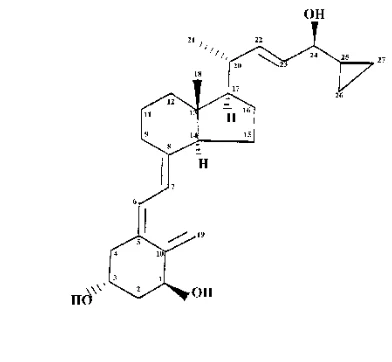
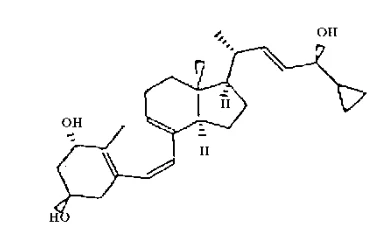
Calcipotriol “Pre-calcipotriol”
Physicochemical properties:
| Physical form: | Calcipotriol is a white or almost white crystalline substance. |
| Solubility at RT: | Freely soluble in ethanol, soluble in chloroform and propylene glycol, practically insoluble in liquid paraffin. Solubility in water is 0.6 mcg/mL. |
| Melting point: | 166-168oC |
| Polymorphism: | So far no signs have indicated the existence of polymorphic forms. |
| Derivation: | Calcipotriol is a vitamin D derivative. It is well-known that vitamin D in solution forms a reversible temperature dependent equilibrium between vitamin D and pre-vitamin D (described in (i.e.) J Pharm Sci 1968; 57:1326). In the same way, solutions of calcipotriol establish an equilibrium with "pre-calcipotriol". The structural formula of "pre-calcipotriol" is shown above. |
14 CLINICAL TRIALS
14.1 Clinical Trials by Indication
Indication 1: Treatment of Plaque Psoriasis
Table 2 - Summary of patient demographics for clinical trials in the treatment of plaque psoriasis
| Study # | Study design | Dosage, route of administration and duration | Study subjects (n) | Mean age (Range) | Sex |
| DE127-001 | Multi-centre, randomised, double-blind, vehicle-controlled, parallel-group study | (1) DOVONEX ointment (50 mcg/g calcipotriol), twice daily topical application; n=167 vs. (2) Placebo ointment, twice daily topical application; n=168 2 weeks washout period and 8 weeks active treatment. | 339 | 49 (19-81) | M (197) F (142) |
| DE127-003 | Multi-center, randomised, double-blind vehicle-controlled parallel group study | (1) DOVONEX ointment (50 mcg/g calcipotriol), twice daily topical application; n=139 vs. (2) Placebo ointment, twice daily topical application; n=138 2 weeks washout period and 8 weeks active treatment. | 277 | 47.8 (19-83) | M (193) F (84) |
| DE127-007 | Multi-centre, randomised, double-blind, vehicle-controlled, parallel-group study | (1) DOVONEX ointment (50 mcg/g) applied once daily; n=118 vs. (2) Placebo ointment applied once daily; n=117 8 weeks | 234 | 45.9 (18-86) | M (134) F (100) |
| DE127-009 | Multi-centre, randomised, double-blind, vehicle-controlled, parallel-group study | (1) DOVONEX ointment (50 mcg/g) applied once daily; n=99 vs. (2) Placebo ointment applied once daily; n=99 8 weeks | 198 | 47.3 (18-91) | M (120) F (77) |
| DE127-019 | Multi-centre, randomised, double-blind, comparative, parallel group study | (1) DOVONEX ointment (50 mcg/g calcipotriol) twice daily; n=42 vs. (2) Halobetasol propionate 0.05% ointment twice daily; n=42 vs. (3) DOVONEX ointment once daily plus halobetasol once daily; n=42 2 weeks washout period followed by 2 weeks active treatment. | 127 | 45 (19-73) | M (67) F (60) |
| MC 590 | Multi-centre, randomised, double-blind, comparative, parallel-group study | (1) DOVONEX ointment (50 mcg calcipotriol) twice daily for 2 weeks followed by twice daily DOVONEX in combination with PUVA (3 times weekly) for 10 weeks; n=54 vs. (2) Placebo ointment twice daily for 2 weeks followed by twice daily placebo ointment in combination with PUVA (3 times weekly) for 10 weeks; n=53 2 weeks washout period followed by 12 weeks active treatment. | 107 | ≥ 18 | Males and Females |
| MC 390 | Multi-centre, randomised, double-blind, right-left, comparative study | (1) DOVONEX ointment (50 mcg/g calcipotriol) twice daily plus UVB three times weekly on one side of the body vs. (2) DOVONEX ointment twice daily on the other side of the body; n=101 2 weeks washout period, 8 weeks active treatment and 8 weeks follow-up. | 101 | 43.7 (19 – 77) | M (66) F (35) |
Four studies with DOVONEX ointment were performed in US patients suffering from plaque psoriasis - DE 127-001, DE 127-003, DE 127-007 and DE 127-009. These studies were all vehicle controlled. The first two listed used DOVONEX ointment twice daily (BID) and the second two used the ointment once daily (QD). In total, 1045 patients over the age of 18 years with psoriasis of at least moderate severity were included in these 4 studies. Of these 1045 patients, 91.7% were white, 4.9% were Hispanic, 1.5% black,1% Oriental and 0.9% were native American.
A further study, DE 127-019 was performed in the US in adults with stable plaque psoriasis having plaque elevation of at least moderate severity (grade 4 on a scale of 0-8) and 5% to 20% body coverage. The treatment groups were comparable at entry in demographic characteristics, and included 66 males and 60 females of whom 119 were white and over the age of 18 years. All subjects met or exceeded the grade 4 (moderate severity) for plaque elevation.
In these 5 above studies, the evaluation criteria were severity score of scaling, erythema and plaque elevation, assessment of overall disease severity, physician's global assessment (PGA) of improvement/worsening of psoriasis, and adverse events (AEs) classified as skin related. The PGA compares disease condition to baseline, using a 7-point (0=completely clear to 6=worse) ordinal scale.
In study MC590, adults with extensive psoriasis covering >20% and <50% of the body surface and for whom PUVA therapy was indicated were included. The evaluation criteria were investigator assessment of Psoriasis Area and Severity Index (PASI), patient assessment of overall response, adverse events and serum biochemistry.
In study MC 390, adults with a clinical diagnosis of moderate to severe plaque psoriasis vulgaris with symmetrical lesions on 1) the trunk and on the arms and legs, 2) the trunk alone, 3) arms and legs, were included. Evaluation criteria was also assessment of PASI, investigator and patient assessment of overall response, adverse events and serum biochemistry.
Table 3 - Results for Physician’s Global Assessment (PGA) from studies DE127-001, DE127-003, DE127-007, DE127-009 in the treatment of plaque psoriasis.
| PGA (%patients with clear, almost clear and markedly improved scores) | Administration | Associated value and statistical significance at Week 8 | |||||||||
| Calcipotriol | Placebo | p-value* | |||||||||
| n | % | n | % | ||||||||
| Study DE127-001 | BID | 154 | 70 | 147 | 22 | p<0.001 | |||||
| Study DE127-003 | BID | 129 | 70 | 118 | 19 | p<0.001 | |||||
| Study DE127-007 | QD | 107 | 59 | 92 | 12 | p<0.001 | |||||
| Study DE127-009 | QD | 92 | 57 | 84 | 18 | p<0.001 | |||||
*p value investigator-adjusted Wilcoxon rank sum test. A p value ≤ 0.05 is considered statistically significant.
In the 4 placebo controlled studies, severity scores for all symptoms, overall severity score and physician's global assessment were lower for DOVONEX at weeks 1 through 8. Efficacy was similar between patients with “low” versus “high” baseline severity of psoriasis. There was no difference in skin related AEs between groups.
Table 4 - Results of study DE127-019 in the treatment of plaque psoriasis for Physician’s Global Assessment (PGA).
| Primary Endpoint | Associated value at day 14 | ||||||
| Halobetasol propionate/calcipotriol (n=42) | Calcipotriol (n=40) | Halobetasol propionate (n=42) | |||||
| PGA (% patients) | 93% | 58% | 83% | ||||
Plaque elevation and overall severity were significantly lower in the combination group at day 14. The PGA was also lower at days 7 and 14. No difference between groups in adverse reactions were observed.
Table 5 - Results of study MC 590 in the treatment of plaque psoriasis
| Endpoints | Associated value | |
| Calcipotriol (n=46) | Placebo (n=45) | |
| UVA dose (median; j/cm2) | 32.1 | 50.7 |
| Number of doses (median) | 12.7 | 17.1 |
| PUVA treatment period (median days) | 32.0 | 42.2 |
| Percentage change in PASI from baseline (visit 2) to end of double-blind treatment (Mean% change) | -91.4 | -75.7 |
| Physicians Global Assessment (% number of patients with clear or markedly improved scores) End of treatment | 91 | 76 |
At the end of treatment, a greater % decrease in PASI was observed with DOVONEX plus PUVA. DOVONEX combination treatment required a significantly lower UVA dose, fewer doses and shorter treatment period. Patient assessment of overall response was in favour of DOVONEX combination. No difference was noted between groups in the number of skin related AEs and laboratory values including serum calcium. No phototoxicity or photosensitivity was reported.
Table 6 - Results of study MC 390 in the treatment of plaque psoriasis
| Primary Endpoints | Associated value and statistical significance | ||||||
| Calcipotriol (n=93) | Calcipotriol + UVB (n=93) | P value1 | |||||
| Percentage change in PASI from baseline (visit 2) to end of double-blind treatment | 70.4% | 81.8% | p<0.001 | ||||
| Physicians Global Assessment (% patients achieving completely clear score) | 24.7% | 57% | p<0.001 | ||||
1Between treatment probability by t-test. Corresponding p-values by Wilcoxon test p <0.001 (stratified by country: p <0.001)
PASI reduction and the PGA were significantly in favour of DOVONEX plus UVB at all time points. No difference in adverse events and laboratory values, including serum calcium were noted.
Indication 2: Treatment of Psoriasis Vulgaris
Table 7 - Summary of patient demographics for clinical trials in the treatment of psoriasis vulgaris
| Study # | Study design | Dosage, route of administration and duration | Study subjects (n) | Mean age (Range) | Sex |
| MC 9306 INT | Multi-centre, randomised, double-blind, comparative, parallel group study | (1) DOVONEX ointment (50 mcg/g calcipotriol) twice daily plus oral acitretin (20-70 mg/day); n=76 vs. (2) Placebo ointment twice daily plus oral acitretin (20-70 mg/day); n=59 2 weeks washout period and 12 weeks active treatment. | 135 | Calcipotriol 48.1 (19-78) Placebo 47.1 (22-83) | M (100) F (35) |
| MC 9307 INT | Multicenter, randomised, double-blind, right-left, comparative study | (1) DOVONEX ointment (50 mcg/g calcipotriol) twice daily plus UVB three times weekly on one side of the body vs. (2) Placebo ointment twice daily plus UVB three times weekly on the other side of the body; n=77 2 weeks washout period, 8 weeks active treatment and 8 weeks follow-up. | 77 | 46.9 (20-77) | M (50) F (27) |
In study MC 9306 INT, 135 male and female adult patients with a clinical diagnosis of severe or extensive psoriasis vulgaris deemed not responsive to topical treatment alone were randomized in the study.
In study MC 9307 INT, 77 male and female adult patients with a clinical diagnosis of psoriasis vulgaris and symmetrical lesions on 1) the trunk and on the arms and legs, 2) the trunk alone, 3) arms and legs were randomized in the study.
Psoriasis vulgaris on the body was evaluated using both the percentage change in PASI and patient and investigator overall assessment of efficacy. The PASI score allowed for the anatomical extent of the disease in 3 areas of the body (trunk, upper limbs, lower limbs) to be calculated and then the degree of erythema, thickness/infiltration and scale/desquamation were recorded for each area. Using a fixed mathematical formula, which allowed for the difference in surface areas of these three parts of the body, a score would be calculated. Ideally the same physician provided the clinical evaluation and calculation of PASI score for each patient.
Table 8 - Results of study MC 9306 INT in the treatment of psoriasis vulgaris
| Primary Endpoints | Associated value and statistical significance | ||
| Calcipotriol (n=76) | Placebo (n=59) | p-value | |
| Percentage change in PASI from baseline (visit 2) to end of double-blind treatment | -71.4 | -48.1 | p1<0.001 |
| Physicians Global Assessment (% number of patients with clear or almost clear score) End of treatment | 65.8 | 47.5 | p2= 0.051 |
1 ANOVA, including country and treatment
2 Log linear regression analysis
Comparing the two treatment groups at end of treatment there was a statistically significant difference of 23.3% favouring calcipotriol treatment (p = 0.001; 95% CI: -36.91, -9.83). There was no statistically significant difference between the two treatment groups in the PGA (p = 0.051). There was no difference in adverse events and laboratory parameters including serum calcium between treatments.
Table 9 - Results of study MC 9307 INT in the treatment of psoriasis vulgaris
| Endpoints | Associated value and statistical significance | ||
| Calcipotriol + UVB (n=74) | Vehicle + UVB (n=74) | p value1 | |
| Percentage change in PASI from baseline (visit 2) to end of double-blind treatment Mean (CI) | -80.0 (-73.8, -86.2%) | -81.9 (-77.8%, 86.1%) | p=0.46 |
| PGA (% patients with clear or almost clear score) at Week 2 | 45.2 | 24.7 | p<0.001 |
| PGA (% patients with clear or almost clear score) at end of treatment | 82.4 | 86.5 | p=0.70 |
PGA = Physicians Global Assessment; 1Between treatment probability by t-test
After 2 weeks, the % PASI reduction and the overall assessment of response were in favour of DOVONEX plus UVB. At the end of treatment, all three assessments were similar between treatment groups. There was no effect on laboratory parameters including serum calcium.
Indication 3: Treatment of Severe Psoriasis
Table 10 - Summary of patient demographics for clinical trials in the treatment of severe psoriasis
| Study # | Study design | Dosage, route of administration and duration | Study subjects (n) | Mean age (Range) | Sex |
| MC 9101 F | Multi-centre, randomised, double-blind, comparative, parallel-group study | (1) DOVONEX ointment (50 mcg/g calcipotriol) twice daily in combination with low dose oral cyclosporin A (2 mg/kg/day); n=35 vs. (2) Placebo ointment twice daily in combination with low dose oral cyclosporin A (2 mg/kg/day); n=34 2 weeks washout period followed by 6 weeks active treatment. | 77 | (18 – 65) | Males and Females |
In study MC 9101 F, adults with severe psoriatic lesions (PASI>20) not exceeding 50% body coverage and for whom cyclosporin A was deemed appropriate were included. Evaluation criteria was investigator assessment of PASI, investigator and patient assessment of overall response, adverse events, haematology and serum biochemistry.
Table 11 - Results of study MC 9101 F in the treatment of severe psoriasis
| Endpoints | Associated value and statistical significance | ||
Calcipotriol + cyclosporine (n=30) | Placebo + cyclosporine (n=32) | p-value | |
| Number of cleared patients or with PASI reduction > 90% | 16/30 (53.3%) | 4/32 (12.5%) | p1<0.0015 |
| Percentage change in PASI from baseline (visit 2) to end of double-blind treatment (Mean%) | 84.6 | 59.9 | p2<0.001 |
| PGA (% patients with clear or almost clear score) at end of treatment | 86.6 | 68.7 | P3=0.0021 |
PGA = Physician Global Assessment
1Chi 2 Test – Yates correction
2Anova
3Test G (maximum likelihood ratio test)
There was no difference between groups in number of adverse events and laboratory values including serum calcium.
Indication 4: Clinical trials in support of the use in children 2-14 years of age
Table 12 - Summary of patient demographics for clinical trials in the treatment of plaque psoriasis in paediatric population
| Study # | Study design | Dosage, route of administration and duration | Study subjects (n) | Mean age (Range) | Sex |
| DE 127-014 | Randomized, double-blind, parallel group, vehicle controlled study | (1) Ointment containing either 50 μg/g of calcipotriol or (2) 0 μg/g of calcipotriol (ie vehicle alone) twice daily 6 weeks | 29 | 9.2 (5-12) | M (13) F (16) |
In study DE 127-014; patients of either sex between 5 and 12 years of age with stable plaque psoriasis having plaque elevation of at least moderate severity (grade 4 on a scale of 0-8) and 5% to 20% body coverage were included. The evaluation criteria were severity of scaling, erythema and plaque elevation, assessment of overall disease severity, physician's global assessment of improvement/worsening of psoriasis, adverse events, serum biochemistry, haematology and urinalysis.
Table 13 - Results of study DE 127-014 in the treatment of plaque psoriasis
| Endpoints | Associated value at Week 6 | |||||
| Calcipotriol (n=15) | Vehicle (n=10) | |||||
| Plaque Elevation (mean score) | 1.80 | 2.00 | ||||
| Scaling (mean score) | 1.67 | 2.10 | ||||
| Erythema (mean score) | 1.73 | 2.20 | ||||
| Overall Severity (mean score) | 1.73 | 2.40 | ||||
| Physicians Global Assessment (% patients with improvement) End of treatment | 73.3 % | 40 % | ||||
Table 14 - Summary of patient demographics for clinical trials in the treatment of psoriasis vulgaris in paediatric population
| Study # | Study design | Dosage, route of administration and duration | Study subjects (n) | Mean age (Range) | Sex |
| MC191 | Multicentre, prospective, randomised, double- blind, vehicle-controlled, parallel group comparison study | (1) Ointment containing either 50 μg/g of calcipotriol or (2) 0 μg/g of calcipotriol (ie vehicle alone) twice daily 2 weeks washout period followed by 8 weeks double-blind treatment. | 77 | 10 (2-14 years) | M (36) F (41) |
In study MC191, 77 patients of either sex, aged 2 - 14 years, with stable, mild to moderate psoriasis vulgaris involving not more than 30% of the body surface area were included. Prior to enrolment, signed informed consent was supplied for all patients. The extent of lesions and severity of redness, thickness and scaliness was recorded by the investigator. The PASI for each patient visit was calculated. Investigators and patients also assessed the overall treatment response. Adverse events were recorded. Blood, serum and urinary laboratory parameters including markers for calcium and bone metabolism were measured.
Table 15 - Results of study MC191 in the treatment of psoriasis vulgaris
| Endpoints | Associated value and statistical significance | ||
| Calcipotriol (n=43) | Vehicle (n=34) | P value | |
| Percentage change in PASI from baseline (visit 2) to end of double-blind treatment (mean change %) | -52.0 % | -37.1 % | p1=0.14 |
| Physicians Global Assessment (% patients with clear or almost clear score) at the end of treatment | 60.5% | 44.1% | p2=0.023 |
1Between group probability. (ANCOVA, F-test).
2Wilcoxon test, exact p-value
There was no statistically significant difference between the two groups regarding the adverse events reported.
The results from these studies suggest that DOVONEX ointment has similar efficacy and safety in children to that seen in adults. There were very few children under the age of 6 years, thus, there is limited experience of the use of DOVONEX Ointment in this age group and a maximum safe dose has not been established.
15 MICROBIOLOGY
No microbiological information is required for this drug product.
16 NON-CLINICAL TOXICOLOGY
Toxicologic studies are summarized briefly below.
General Toxicology
Despite the intended topical use of calcipotriol in the treatment of psoriasis, most of the toxicological studies were performed using the oral route of administration. This was done to assure maximum exposure to the compound. From these studies it was evident that toxicity associated with the administration of pharmacologically excessive doses of calcipotriol was due to the calcitropic activity of the compound. The maximum doses were 54 mcg/kg/day in rats, 18 mcg/kg/day in minipigs, and 3.6 mcg/kg/day in dogs. In the acute, subacute and chronic toxicity studies the main signs of toxicity were loss of bodyweight, increases in plasma or serum calcium, creatinine and urea, renal toxicity and soft tissue calcifications. These changes resulted from the exaggerated absorption of calcium and phosphorous from the intestine and are characteristic of vitamin D overdosage. The kidney was the main target organ of toxicity and tubular lesions and calcifications were apparent after prolonged hypercalcemia in all species investigated. These types of changes, however, are not considered indicative of a human risk, since less than 1% of calcipotriol is absorbed through the skin in man and there is no evidence of calcitropic effects in man with the prescribed dose.
Dermal toxicity of calcipotriol was limited to a slight-to-moderate skin irritative effect. The studies performed with calcipotriol ointment showed that the incidence and severity of skin irritation was slightly less in the calcipotriol-treated group than in the placebo ointment group. The formulation of the ointment base is analogous to that employed for a number of steroids available for the treatment of psoriasis. Skin thinning, as seen with steroid application, was not observed with the calcipotriol ointment.
Carcinogenicity
A dermal carcinogenicity study with calcipotriol in mice and an oral carcinogenicity study in rats revealed no special hazard to humans.
Genotoxicity
There was also no evidence for a mutagenic or clastogenic potential with calcipotriol.
Reproductive and Developmental Toxicology
Studies in rats with oral doses of calcipotriol demonstrated no impairment of male and female fertility. Fetal toxicity and teratogenicity studies showed no evidence of embryotoxic or teratogenic effects in rats and rabbits. Peri- and post-natal development studies indicated that calcipotriol had no toxic effects on the F1 or F2 generation.
Special Toxicology
Photo(co)carcinogenicity:
In a study where albino hairless mice were repeatedly exposed to both ultraviolet radiation (UVR) and topically applied calcipotriol for 40 weeks at the same dose levels as in the dermal carcinogenicity study (see above), a reduction in the time required for UVR to induce the formation of skin tumours was observed (statistically significant in males only), suggesting that calcipotriol may enhance the effect of UVR to induce skin tumours. The clinical relevance of these findings is unknown.
Repeated dose toxicity and safety margins
Table 20 - Calcipotriol – NOAEL Values and Safety Ratios
| Species (duration ) | Study No. | Route (vehicle) | Dose (μg/kg/day) | Dose (μg/m²/day) b | Safety ratios based on dose per kilo | Safety ratios based on dose per m² |
Mouse (4 weeks) | 940411T 7 | Dermal (isopropanol ) | 60 120 180 | 180 360 540 | 5.6 11.2 16.8 | 0.45 0.91 1.36 |
Mouse (13 weeks) | 95639 | Dermal (scalp solution) | 3 12 30 90 120 180 | 9 36 90 270 360 540 | 0.3 1.1 2.8 8.4 11.2 16.8 | 0.02 0.09 0.23 0.68 0.91 1.36 |
Rat (13 weeks) | 860224T 4 | Dermal (ethanol) | 6 18 54 | 36 108 324 | 0.6 1.7 5.0 | 0.09 0.27 0.82 |
Rat (13 weeks) | 91013 | Dermal (ointment) | 5 15 60 | 30 90 360 | 0.5 1.4 5.6 | 0.08 0.23 0.91 |
Minipig (6 months) | 91-001 | Dermal (ointment) | 10 25 50 | 350 875 1750 | 0.9 2.3 4.7 | 0.88 2.21 4.42 |
| Minipig (12 months) | 92-613 | Dermal (ointment) | 1 5 15 | 35 175 525 | 0.1 0.5 1.4 | 0.09 0.44 1.33 |
Rat (4 weeks) | 860210T 3 | Oral (propylene glycol) | 6 18 54 | 36 108 324 | 0.6 1.7 5.0 | 0.09 0.27 0.82 |
Rat (13 weeks). | LOP/052 | Oral (propylene glycol) | 3/3 d 15 75 | 18/18 d 90 450 | 0.3 1.4 7.0 | 0.05 0.23 1.14 |
Rat (26 weeks) | 880212T 2 | Oral (propylene glycol) | 4 12 36 | 24 72 216 | 0.4 1.1 3.4 | 0.06 0.18 0.55 |
Dogc (6 weeks) | 860616T 6 | Oral (ethanol) | 0.1 0.3 0.9→1.8→3. 6 | 2 6 18→36→72 | 0.01 0.03 0.08→0.17→0.3 4 | 0.01 0.02 0.05→0.09→0.1 8 |
Minipigc (26 weeks) | 880111T 1 | Oral (propylene glycol) | 1 3 6→9→18 | 35 105 210→315→63 0 | 0.1 0.3 0.6→0.8→1.7 | 0.09 0.27 0.53→0.80→1.5 9 |
| Human | Dermal | 10.7 a | 396 | - | - |
NOAEL doses are bolded/underlined for each study. If no dose is bolded/underlined, a NOAEL was not identified in the study.
a – Based on a maximum topical dose of DOVONEX ointment of 15 g (100 g weekly)
b – Calculated according to Table 1 in CDER Guidance for Industry: Estimating the Maximum Safe Starting Dose in Initial Clinical Trials for Therapeutics in Adult Healthy Volunteers using the following conversion factors: Mouse = 3, Rat = 6, Dog = 20, Minipig = 35, Human = 37.
c – An arrow indicates that the dose level was increased during the study
d – males/females
For calculation of safety ratios for DOVONEX ointment, the most relevant animal model is considered to be the minipig mainly because of the similarity of this species to man in skin structure, transdermal absorption and the experimental ability to prevent oral ingestion to guarantee the intended topical exposure.
Following 3 months of treatment with calcipotriol (50 μg/g) at dose levels of either 0.2 g (10 μg), 0.5 g (25 μg) or 1.0 g (50 μg active)/kg/day no distinct or consistent treatment-related changes were observed in body weight, food consumption, haematology, blood chemistry, or urinalysis data (Study No. 91-001).
Microscopic examination of tissues revealed changes confined to the application site and consisted of minimal local irritation characterized by minimal hyperkeratosis and acanthosis. Following 6 months of treatment of minipigs with calcipotriol (50 μg/g ointment) at the same dose levels no distinct or consistent treatment-related changes were observed in body weight, food consumption, haematology or urinalysis data. Systemic toxicity, i.e. increased serum calcium levels and kidney changes, was noted and was consistent with the known vitamin D-like pharmacologic activity of the test material. The three dose levels of calcipotriol (in ointment formulation) represent approx. 0.9, 2.3 and 4.7-fold, respectively, the margins over the intended maximum human dermal dose (approx. 10.7 μg/kg), when expressed in mg/kg (Table 19). When expressed in mg/body surface area, the values are 0.88, 2.21 and 4.42, respectively.
Calcipotriol (50 μg/g ointment) at a dose level of 0.3 g ointment/kg was moderately irritating to the skin of minipigs when administrated daily for 1 year (Study No. 92-613). No other dermal or systemic toxicities were observed following the topical administration of 0.02, 0.1, or 0.3 g calcipotriol (50 μg/g ointment)/kg corresponding to calcipotriol exposures of 1, 5 and 15 μg/kg. The three dose levels of calcipotriol (in ointment formulation) represent approx. 0.1, 0.5 and 1.4-fold, respectively, the margins over the intended maximum human dermal dose, when expressed in mg/kg (Table 20). When expressed in mg/body surface area, the values are 0.09, 0.44 and 1.33, respectively.
The margin between the observed NOAEL in minipigs following 3, 6 and 12 months of treatment and the maximum human dose was established. While the safety factor is narrow in the 12-month study, the confidence in the results from the nonclinical studies is reassured by the fact that the toxicity observed was consistent across the tested species and exhibited a clear dose-response relationship. In addition, the exposure in long-term minipig studies is generally much greater than in man that is generally treated for shorter periods.