


Product Monograph - Wynzora
Recent Major Label Changes
None at the time of the most recent authorization
Table of Contents
Certain sections or subsections that are not applicable at the time of the preparation of the most recent authorized product monograph are not listed.
Recent Major Label Changes ................................................................................................. 2
Table of Contents ................................................................................................................. 2
Part 1: Health Professional Information ................................................................................ 4
- 1.
Indications ................................................................................................................ 4
1.1. Pediatrics ................................................................................................................ 4
1.2. Geriatrics ................................................................................................................ 4
- 2. Contraindications ...................................................................................................... 4
- 4.
Dosage and administration ........................................................................................ 4
4.2. Recommended Dose and Dosage Adjustment ...................................................... 4
4.4. Administration ....................................................................................................... 5
4.5. Missed Dose ........................................................................................................... 5
- 5. Overdose .................................................................................................................. 5
- 6. Dosage Forms, Strengths, Composition And Packaging ............................................... 6
- 7.
Warnings and Precautions ......................................................................................... 6
7.1. Special Populations ................................................................................................ 8
7.1.1. Pregnancy ........................................................................................................... 8
7.1.2. Breastfeeding ..................................................................................................... 9
7.1.3. Pediatrics ............................................................................................................ 9
7.1.4. Geriatrics ............................................................................................................ 9
- 8.
Adverse Reactions ..................................................................................................... 9
8.1. Adverse Reaction Overview ................................................................................... 9
8.2. Clinical Trial Adverse Reactions ............................................................................. 9
8.2.1. Clinical Trial Adverse Reactions – Pediatrics.................................................... 10
8.3. Less Common Clinical Trial Adverse Reactions .................................................... 10
8.5. Post-Market Adverse Reactions ........................................................................... 10
8.6. Other Adverse Reactions ..................................................................................... 10
- 9.
Drug Interactions .................................................................................................... 11
9.4. Drug-Drug Interactions ........................................................................................ 11
9.5. Drug-Food Interactions ........................................................................................ 11
9.6. Drug-Herb Interactions ........................................................................................ 11
9.7. Drug-Laboratory Test Interactions....................................................................... 11
- 10.
Clinical Pharmacology ............................................................................................. 11
10.1. Mechanism of Action ....................................................................................... 11
10.2. Pharmacodynamics .......................................................................................... 11
10.3. Pharmacokinetics ............................................................................................. 13
- 11. Storage, Stability and Disposal ................................................................................. 15
- 12. Special Handling Instructions ................................................................................... 15
Part 2: Scientific Information .............................................................................................. 16
- 13. Pharmaceutical Information .................................................................................... 16
- 14.
Clinical Trials ........................................................................................................... 17
14.1. Clinical Trial by Indication ................................................................................ 17
Psoriasis Vulgaris .............................................................................................................. 17
- 15. Microbiology ........................................................................................................... 20
- 16. Non-Clinical Toxicology ........................................................................................... 20
Patient Medication Information ......................................................................................... 23
Part 1: Health Professional Information
1. Indications
WYNZORA® (calcipotriol and betamethasone dipropionate) is indicated for the topical treatment of psoriasis vulgaris in adults for up to 8 weeks.
1.1. Pediatrics
Pediatrics (< 18 years of age):
Pediatrics (12 to <18 years of age): The safety and efficacy data submitted in patients 12-17 years are limited (see 7.1.3 Pediatrics, 8.2 Clinical Trial Adverse reactions, 10.3 Pharmacokinetics). Efficacy in pediatric patients aged 12 to 17 years is extrapolated from efficacy data from adequate and well-controlled studies in the adult population age 18 years and above.
Pediatrics (<12 years of age): No data are available to Health Canada; therefore, Health Canada has not authorized an indication for pediatric patients less than 12 years of age (see 7 Warnings and Precautions, Special Populations).
1.2. Geriatrics
Geriatrics (> 65 years of age): No overall differences in safety or effectiveness of WYNZORA® were observed between geriatrics and younger subjects (see 7 Warnings and Precautions, Special Populations).
2. Contraindications
WYNZORA® is contraindicated in patients who are hypersensitive to this drug or to any ingredient in the formulation, including any non-medicinal ingredient, or component of the container. For a complete listing, see 6 Dosage Forms, Strengths, Composition and Packaging.
- Known hypersensitivity to any ingredient in the formulation or to components of the container.
- Patients with known disorders of calcium metabolism.
- Skin areas having viral lesions (e.g. herpes or varicella), fungal or bacterial skin infections, parasitic infections, skin manifestations in relation to tuberculosis.
- Skin areas having perioral dermatitis, atrophic skin, striae atrophicae, fragility of skin veins, ichthyosis, acne vulgaris, acne rosacea, rosacea, ulcers and wounds.
- Erythrodermic, exfoliative, and pustular psoriasis.
4. Dosage and Administration
4.2. Recommended Dose and Dosage Adjustment
WYNZORA® should be applied to affected areas once daily. Rub in the cream thoroughly and gently in a thin layer, ensuring that the plaques are saturated with the cream. The recommended treatment period is up to 8 weeks. Treatment should be discontinued when control is achieved. If it is necessary to continue or restart treatment after this period, treatment should be continued only after medical review and under regular medical supervision.
When using calcipotriol containing medicinal products, the maximum daily dose should not exceed 15 g. The maximum weekly dose should not exceed 100 g. If using other calcipotriol containing medical products concomitantly, the total weekly dose of all calcipotriol containing medical products, including WYNZORA®, should not exceed 100 g. The total body surface area treated, including scalp should not exceed 30%.
If used on the scalp
All the affected scalp areas may be treated with WYNZORA®.
Pediatrics (12 to < 18 years of age)
Children may demonstrate greater susceptibility to systemic corticosteroid related adverse effects due to a larger skin surface area to body weight ratio as compared to adults.
Pediatrics (< 12 years of age)
No data are available to Health Canada in pediatric patients less than 12 years of age; therefore, Health Canada has not authorized an indication for this age group (see 1.1 Pediatrics, 7.1.3 Pediatrics, 10 Clinical Pharmacology, 8 Adverse Reactions).
4.4. Administration
WYNZORA® should not be applied to the face (including eyes), genitals, and intertriginous areas. In order to achieve optimal effect, it is not recommended to take a shower or bath, immediately after application of WYNZORA®. It is recommended to allow 8 hours between application and showering to avoid washing it off.
Application under occlusive dressings should be avoided as it can increase systemic absorption of corticosteroids.
Hands must be washed after use.
WYNZORA® is not for oral, ophthalmic, or intravaginal use.
4.5. Missed Dose
If a dose is missed, the patient should apply WYNZORA® when remembered, but only once on a given day and then continue on as usual.
5. Overdose
Usage of WYNZORA® above the recommended dose may cause elevated serum calcium which subsides when treatment is discontinued. The symptoms of hypercalcaemia include polyuria, constipation, muscle weakness, confusion, and coma.
Excessive prolonged use of topical corticosteroids, including WYNZORA® may result in adrenocortical suppression which is usually reversible. Symptomatic treatment may be indicated.
In case of chronic toxicity the corticosteroid treatment must be discontinued gradually.
For the most recent information in the management of a suspected drug overdose, contact your regional poison control centre or Health Canada’s toll-free number, 1-844 POISON-X (1-844-764-7669).
6. Dosage Forms, Strengths, Composition And Packaging
Table 1 – Dosage Forms, Strengths, and Composition
Description
WYNZORA® is a white uniform cream intended for topical use. WYNZORA contains calcipotriol and betamethasone dipropionate in a cream as an oil-in-water dispersion system.
Packaging: Aluminium tubes coated with epoxyphenol and with polyethylene screw cap.
Package sizes: 1 tube of 60 g or multipack 120g (2 cartons each containing 1 tube of 60g).
7. Warnings and Precautions
General
There is no experience with the use of WYNZORA® in guttate psoriasis.
Long term use of corticosteroids may increase the risk of local and systemic adverse reactions. Treatment should be discontinued in case of adverse reactions related to long-term use of corticosteroid (see 8 Adverse Reactions).
Carcinogenesis and Mutagenesis
Reference is made to Section 16 Non-Clinical Toxicology.
Endocrine and Metabolism
Systemic absorption of topical corticosteroids can produce reversible hypothalamic-pituitary-adrenal (HPA) axis suppression with the potential for clinical glucocorticoid insufficiency. This may occur during treatment or upon withdrawal of the topical corticosteroid.
Factors that predispose a patient using a topical corticosteroid to HPA axis suppression include the use of more potent steroids, use over large surface areas, use over prolonged periods, use under occlusion, use on an altered skin barrier, use in pediatric patients, and use in patients with liver failure.
Application of topical corticosteroid products including WYNZORA® on large areas of broken skin (i.e., open sores), on mucous membranes, in skin folds or under occlusive dressings should therefore be avoided. The use of occlusion may increase penetration of the drug into the stratum corneum, increasing the risk of adverse events.
Manifestations of Cushing’s syndrome, effects on the metabolic control of diabetes mellitus (e.g.,
| Route of Administration | Dosage Form / Strength/Composition | Non-medicinal Ingredients |
| Topical | WYNZORA® contains 0.05 mg/g of calcipotriol and 0.5 mg/g of betamethasone (as betamethasone dipropionate) in a white cream. | alpha-tocopherol, butylated hydroxyanisole, carbomer interpolymer (type A), dibasic sodium phosphate heptahydrate, isopropyl alcohol, isopropyl myristate, medium-chain triglycerides, mineral oil, poloxamer (407), monobasic sodium phosphate monohydrate, polyoxyl 40 hydrogenated castor oil, polyoxyl lauryl ether, purified water and trolamine. |
hyperglycaemia, glucosuria) and unmasking of latent diabetes mellitus can also be produced in some patients by systemic absorption of topical corticosteroids.
Because of the potential for systemic absorption, use of topical corticosteroids may require that patients be periodically evaluated for HPA axis suppression. An ACTH stimulation test may be helpful in evaluating patients for HPA axis suppression (see 7 Warnings And Precautions, Monitoring and Laboratory Tests).
HPA (hypothalamic–pituitary–adrenal) axis suppression was evaluated in adult subjects (N=27) with extensive psoriasis (including scalp). Adrenal suppression was seen in 1 out of 27 subjects (3.7%) after 4 weeks of treatment, and in one additional patient after 8 weeks of treatment.
Due to the content of calcipotriol in WYNZORA®, hypercalcaemia may occur. Serum calcium is normalised when treatment is discontinued. If hypercalcaemia or hypercalciuria develop, discontinue treatment until parameters of calcium metabolism have normalized (see 7 Warnings And Precautions, Monitoring and Laboratory Tests). The risk of hypercalcaemia is minimal when the maximum daily dose of WYNZORA® (15g) is not exceeded.
Hepatic/Biliary/Pancreatic
There are no adequate and well controlled studies of WYNZORA® use in patients with hepatic impairment. As calcipotriol and corticosteroids undergo hepatic metabolism, WYNZORA® should be used with caution in patients with severe hepatic impairment.
Monitoring and Laboratory Tests
Treatment with WYNZORA® in the recommended amounts (See 4 Dosage and Administration) does not generally result in changes in laboratory values. However, in patients at risk of hypercalcaemia it is recommended that baseline serum calcium levels be obtained before starting treatment with subsequent monitoring of serum calcium levels at suitable intervals. If serum calcium becomes elevated, WYNZORA® administration should be discontinued, and serum calcium levels should be measured once weekly until they return to normal.
An ACTH stimulation test may be helpful in evaluating patients for HPA axis suppression. If HPA axis suppression is documented, an attempt should be made to gradually withdraw the drug, reduce the frequency of application, or substitute a less potent steroid. Manifestations of adrenal insufficiency may require supplemental systemic corticosteroids. Recovery of HPA axis function is generally prompt and complete upon discontinuation of topical corticosteroids (see 7 Warnings and Precautions, Endocrine and Metabolism, and 10 Clinical Pharmacology).
Ophthalmologic
WYNZORA® is not for ophthalmic use. WYNZORA® may cause eye irritation. Avoid contact with the eyes.
Visual disturbance, such as blurred vision, have been reported post-market with WYNZORA® (See 8.5 Post Market Adverse Reactions) and other topical corticosteroids. While cataracts and glaucoma have not been specifically reported with WYNZORA®, they are known risks associated with topical corticosteroid use. These conditions may contribute to visual disturbances; therefore, if a patient presents with such symptoms, cataracts and glaucoma should be considered as potential underlying causes.
Renal
There are no adequate and well controlled studies of WYNZORA® use in patients with renal impairment. As corticosteroids undergo renal excretion, WYNZORA® should be used with caution in patients with severe renal impairment.
Reproductive Health: Female and Male Potential
See section 7.1.1. Pregnancy.
- Fertility
Studies in rats with oral doses of calcipotriol or betamethasone dipropionate demonstrated no impairment of male and female fertility (see 16 Non-Clinical Toxicology, Reproductive and Developmental Toxicology).
Skin
In a vasoconstrictor trial in healthy subjects, the skin blanching response of WYNZORA® was consistent with a mid-strength corticosteroid when compared with other topical corticosteroids. Concurrent treatment with other steroids on the same treatment area must be avoided.
WYNZORA® should not be used on the face, axillae, flexures, groin or genitals. The patient must be instructed in the correct use of WYNZORA® to avoid accidental transfer or application to these regions or to the mouth, mucous membranes or eyes. Hands must be washed after each application to avoid accidental transfer to these areas as well as unintended drug absorption on the hands (see 4 Dosage and Administration).
With long-term use, there is an increased risk of local and systemic corticosteroid adverse reactions. Treatment should be discontinued in the case of corticosteroid adverse reactions related to long-term use of WYNZORA® (see 8 Adverse Reactions)
When treating psoriasis with topical corticosteroid containing products, including WYNZORA®, for a prolonged period of time, it is recommended that treatment be interrupted periodically. There may be a risk of generalised pustular psoriasis or rebound psoriasis when discontinuing treatment.
Concomitant skin infections should be treated with an appropriate antimicrobial agent. If the infection worsens, WYNZORA® should be discontinued until the infection has been adequately treated (see 2 Contraindications).
7.1. Special Populations
7.1.1. Pregnancy
The safety of WYNZORA® use during pregnancy has not been established. When given orally in animals, calcipotriol was associated with fetotoxicity (such as incomplete bone ossification and skeletal abnormalities). Studies in animals with orally administered betamethasone dipropionate have shown reproductive toxicity, including teratogenicity (see 16 Non-Clinical Toxicology, Reproduction and Development Toxicology).
A number of epidemiological studies in pregnant women have not revealed congenital anomalies among infants born to women treated with topical corticosteroids during pregnancy. However, the use of large amounts of topical corticosteroids over extensive parts of the body during pregnancy may be associated with low birth weight.
As the potential risk of using WYNZORA® during pregnancy is uncertain, WYNZORA® should be used for the shortest possible duration, in the smallest needed amounts.
7.1.2. Breastfeeding
The safety of calcipotriol and/or topical corticosteroids for use in nursing women has not been established. Betamethasone passes into breast milk, but it is not known if topical application of corticosteroid containing products, including WYNZORA®, can lead to sufficient systemic absorption to produce detectable quantities in breast milk. Caution should be exercised when prescribing WYNZORA® to women who breastfeed. The patient should be instructed not to use WYNZORA® on the breast when breastfeeding.
7.1.3. Pediatrics
Pediatrics (12 to < 18 years of age):
In an uncontrolled clinical trial with 7 subjects aged 12 to 17 years no adverse reactions were reported(see 8 Adverse Reactions and 10 Clinical Pharmacology). In this limited sample, no clinically relevant differences have been observed between the safety profiles of WYNZORA® cream in adult and adolescent populations.
Children may demonstrate greater susceptibility to systemic corticosteroid related adverse effects due to a larger skin surface area to body weight ratio as compared to adults.
Pediatrics (< 12 years of age): No data are available to Health Canada in pediatric patients less than 12 years of age; therefore, Health Canada has not authorized an indication for this age group.
7.1.4. Geriatrics
Geriatrics (> 65 years of age): The trials included 95 subjects ≥ 65 years of age treated with WYNZORA®.
No overall differences in safety or effectiveness of WYNZORA® were observed between these subjects and younger subjects.
However, since elderly patients have increased skin fragility, a greater frequency of hepatic, renal or cardiac dysfunction, and have concomitant disease or other drug therapy, caution is recommended when using products containing corticosteroids including WYNZORA®.
8. Adverse Reactions
8.1. Adverse Reaction Overview
All reported adverse reactions were seen at a frequency below 1%. The most frequently reported adverse reactions were "Application site reactions" including application site irritation, pain, pruritus, eczema, exfoliation, telangiectasia and folliculitis.
8.2. Clinical Trial Adverse Reactions
Clinical trials are conducted under very specific conditions. The adverse reaction rates observed in the clinical trials; therefore, may not reflect the rates observed in practice and should not be compared to the rates in the clinical trials of another drug. Adverse reaction information from clinical trials may be useful in identifying and approximating rates of adverse drug reactions in real-world use.
The rates of adverse reactions given below were reported in two randomized, multicenter, prospective, vehicle and active controlled clinical trial in adult subjects with plaque psoriasis. In both trials, subjects applied WYNZORA®, calcipotriol/betamethasone dipropionate topical suspension (0.05 mg/g calcipotriol, 0.5 mg/g of betamethasone (as dipropionate)or vehicle once daily for 8 weeks. A total of 555 subjects were treated with WYNZORA® once daily for up to 8 weeks, 213 subjects in MC2-01-C7 and 342 subject in MC2-01-C2. The mean weekly dose of WYNZORA® was 32.2 g and 33.8 g in MC2-01-C7 and MC2-01-C2, respectively. In MC2-01-C7, where subjects also applied treatment to the scalp, 55.7% of the subjects presented with psoriasis on the scalp.
Application site pain occurred in 1.1% of adult subjects treated with WYNZORA® for up to 8 weeks.
8.2.1. Clinical Trial Adverse Reactions – Pediatrics
In an open-label uncontrolled clinical trial, 7 subjects age 12 to 17 years with plaque psoriasis of the scalp and body applied WYNZORA® once daily for up to 8 weeks. The mean weekly dose was 27.2 grams. No adverse reactions were reported. In this limited sample, no clinically relevant differences have been observed between the safety profiles of WYNZORA® in adult and adolescent populations.
8.3. Less Common Clinical Trial Adverse Reactions
Less common (<1 %) adverse reactions are listed by MedDRA SOC. Within each SOC group, adverse reactions are presented in order of decreasing frequency.
Infections and infestations: Application site folliculitis
Nervous system disorders: Insomnia
Skin and subcutaneous tissue disorders: Pruritus, Rash, Urticaria
General disorders and administration site conditions: Application site irritation, Application site pruritus, Application site eczema, Application site exfoliation, Application site telangiectasia
8.5. Post-Market Adverse Reactions
The following adverse reactions not previously listed in the clinical trial adverse reactions section of the Product Monograph have been reported. Because these events are reported voluntarily from a population of uncertain size, it is generally not possible to reliably estimate their frequency or establish a causal relationship to drug exposure.
Vision Blurred
8.6. Other Adverse Reactions
- calcipotriol and betamethasone, respectively:
- sensation, dry skin, erythema, rash, dermatitis, eczema, psoriasis aggravated, photosensitivity and hypersensitivity reactions including very rare cases of angioedema and facial oedema.
Systemic effects after topical use may appear very rarely causing hypercalcaemia or hypercalciuria (see 7 Warnings and Precautions, Endocrine and Metabolism).
- atrophy, telangiectasia, striae, folliculitis, hypertrichosis, perioral dermatitis, allergic contact dermatitis, depigmentation and colloid milia. When treating psoriasis with topical corticosteroids, there may be a risk of generalised pustular psoriasis.
Systemic reactions due to topical use of corticosteroids are rare in adults, however they can be severe. Adrenocortical suppression, cataract, infections, impact on the metabolic control of diabetes mellitus and increase of intra-ocular pressure can occur, especially after long-term treatment. Application of WYNZORA® under occlusion (e.g., plastic, skin folds), on large areas and for prolonged treatment periods may result in increased risk of systemic adverse events and is therefore not recommended (see 7 Warnings and Precautions, Endocrine and Metabolism).
9. Drug Interactions
9.4. Drug-Drug Interactions
Interactions with other drugs have not been established.
9.5. Drug-Food Interactions
Not applicable
9.6. Drug-Herb Interactions
Interactions with herbal products have not been established.
9.7. Drug-Laboratory Test Interactions
Interactions with laboratory tests have not been established.
10. Clinical Pharmacology
10.1. Mechanism of Action
WYNZORA® is a combination of calcipotriol hydrate as a synthetic vitamin D3 analogue and betamethasone dipropionate as a synthetic corticosteroid. Calcipotriol is a vitamin D receptor agonist which normalizes the proliferation and differentiation of keratinocytes as potently as 1,25(OH)2D3, the naturally occurring active form of vitamin D. Vitamin D receptor agonists also have an immunomodulatory effect, suppressing activation and differentiation of Th17/Th1 cells while inducing a Th2/Treg response. However, calcipotriol is much less active than 1,25(OH)2D3 in its effect on calcium metabolism. Betamethasone dipropionate, like other corticosteroids, is a glucocorticoid receptor agonist with anti-inflammatory, immunosuppressive, anti-pruritic and vasoconstrictive properties. In WYNZORA®, the combination of calcipotriol and betamethasone dipropionate has greater antiinflammatory and anti-proliferative effects than either component alone.
10.2. Pharmacodynamics
Preclinical Studies
Calcipotriol is a synthetic vitamin D3 analogue which binds to the vitamin D receptor and stimulates vitamin D regulated transcription. In vitro pharmacodynamic studies have shown the activity of calcipotriol to be very similar, both qualitatively and quantitatively, to that of 1,25(OH)2D3. Vitamin D receptor agonists have a normalizing effect on human keratinocytes, arresting growth and enhancing differentiation in inappropriately proliferating cells. Through these effects on T cells, calcipotriol may interrupt the pro-inflammatory feedback loop that drives the inflammatory hyperproliferative response of keratinocytes in psoriasis.
In-vivo however, the effects of calcipotriol were significantly different from those of 1,25(OH)2D3. From studies performed in rats, it was shown that the effect of calcipotriol on calcium metabolism was at least 100 to 200 times lower than that of 1,25(OH)2D3. The low activity of calcipotriol on calcium metabolism is attributed to a rapid metabolic degradation of the active compound.
Betamethasone dipropionate in WYNZORA® is a synthetic corticosteroid. Corticosteroids suppress the immune system, particularly pro-inflammatory cytokines and chemokines, thereby inhibiting T-cell activation. At the molecular level, corticosteroids act via the intracellular glucocorticoid receptor and the anti-inflammatory function is due to transrepression of proinflammatory transcription factors such as nuclear factor κB, activator protein-1, and interferon regulatory factor-3.
Clinical Studies:
In a vasoconstrictor trial in healthy subjects, the skin blanching response of WYNZORA® was consistent with a mid-strength corticosteroid when compared with other topical corticosteroids.
Hypothalamic-Pituitary-Adrenal (HPA) Axis Suppression:
HPA axis suppression was evaluated in adult subjects (N=27) with extensive psoriasis involving 20-30% of the body surface area (including scalp) under maximal usage conditions. Treatment consisted of once daily application of WYNZORA® to the body and scalp (75% of the subjects had scalp involvement) for up to 8 weeks. Adrenal suppression was seen in 1 out of 27 subjects (3.7%) after 4 weeks of treatment, and in one additional patient after 8 weeks of treatment (N=26).
Effects on Calcium Metabolism:
The effects on calcium metabolism of once daily application of WYNZORA® to the body (including scalp involvement in 75% of subjects) for up to 8 weeks were also examined and no cases of hypercalcemia and no clinically relevant changes in urine calcium were reported.
Pediatrics
HPA axis suppression was further evaluated in an uncontrolled phase II clinical trial of 7 adolescent subjects aged 12 to 17 years with extensive psoriasis involving 10.5-16% of the body surface area (including scalp). Treatment consisted of once daily application of WYNZORA® Cream to the body and scalp for up to 8 weeks. The mean weekly dose up to Week 8 was 27.2 g. Adrenal suppression was not observed in any subjects (N=6) after 4 or 8 weeks of treatment (one subject had an abnormal ACTH-stimulated cortisol at baseline and discontinued the trial prematurely). There were no changes in calcium metabolism.
10.3. Pharmacokinetics
Table 2 – Summary of calcipotriol and betamethasone dipropionate cream pharmacokinetic parameters in adults with extensive psoriasis vulgarus
| Cmax | AUC0-∞ | |
| CAL | 30.2 | 228.5 |
| MC 1080 | 29.8 | 223.2 |
| BDP | 21.5 | 157.7 |
| B17P | 39.3 | 253.8 |
MC 1080: Main metabolite of calcipotriol
B17P (betamethasone 17-propionate): Main metabolite of betamethasone dipropionate
Absorption
The pharmacokinetics of WYNZORA® Cream was investigated in adult subjects in the maximal usage phase II trial described above (10.3 Pharmacokinetics). The mean total body surface area involvement was 23.6%. 75% of the subjects presented with psoriasis vulgaris on the scalp with a mean scalp involvement of 50.7%.
Plasma concentrations of calcipotriol and betamethasone dipropionate and their major metabolites were measured after 4 and 8 weeks of once daily application of WYNZORA® Cream.
For calcipotriol, 1 of 27 (3.7%) subjects had quantifiable levels of calcipotriol at Week 4. For the major metabolite of calcipotriol, MC1080, 3 of 27 (11.1%) subjects had quantifiable levels at Week 4. The mean Cmax values were in the sub-nanomolar plasma concentration range: CAL (30.2 pg/mL), MC-1080 (29.8 pg/mL). No subjects had quantifiable levels of calcipotriol or MC1080 at Week 8.
For betamethasone dipropionate, there were 3 of 27 subjects (11.1%) with quantifiable levels of betamethasone dipropionate at Week 4. The major metabolite of betamethasone dipropionate, betamethasone 17-propionate (B17P), was quantifiable in 13 subjects (48.1%) at Week 4. The mean Cmax values in the sub-nanomolar plasma concentration range: BDP (21.5 pg/mL), and B17P (39.3 pg/mL); however, one subject had levels of B17P in the nanomolar range at three time points. No subjects had quantifiable levels of betamethasone dipropionate at Week 8, whereas 7 of 19 (37%) subjects had quantifiable levels of B17P at Week 8 (mean Cmax: 31.3 pg/mL).
Distribution:
In rats, tissue distribution studies with radiolabelled calcipotriol and betamethasone dipropionate, respectively, showed that the kidney and liver had the highest level of radioactivity.
Metabolism:
Following systemic exposure, both active ingredients – calcipotriol and betamethasone dipropionate – are rapidly and extensively metabolised.
Calcipotriol: Calcipotriol metabolism following systemic uptake is rapid and occurs in the liver. The primary metabolites of calcipotriol are less potent than the parent compound. Calcipotriol is metabolized to MC1046 (the α,ß-unsaturated ketone analog of calcipotriol), which is metabolized further to MC1080 (a saturated ketone analog). MC1080 is the major metabolite in plasma. MC1080 is slowly metabolized to calcitroic acid.
Betamethasone dipropionate: Betamethasone dipropionate is metabolized by hydrolysis to betamethasone 17-propionate and betamethasone, including the 6ß-hydroxy derivatives of those compounds. Betamethasone17propionate (B17P) is the primary metabolite.
Elimination
The main route of excretion of calcipotriol is via faeces (rats and minipigs) and for betamethasone dipropionate it is via urine (rats and mice).
Pre-clinical Studies
In vivo: Oral absorption of calcipotriol was approximately 60% in rats and 40% in minipigs. The half-life of calcipotriol was 12 minutes in rats and 60 minutes in minipigs. The major metabolite of calcipotriol MC1080 was present in the first plasma sample at 5 minutes; its half-life was 54 minutes in rats and 1.8 hours in minipigs. Drug-related radioactivity was excreted in urine and faeces and clearance was considered to be almost exclusively metabolic, as less than 5% of the administered radioactivity was excreted at the time of disappearance of all calcipotriol from plasma. Autoradiography studies performed in rats established that calcipotriol concentrations were highest in the liver, kidney and intestine. No drug-related radioactivity was present 24 hours after administration of 3H-calcipotriol.
Following oral administration to rats at 0.02, 0.06 and 0.2 mg/kg/day, the concentration of betamethasone dipropionate was below the lower limit of quantification (75 pg/mL) in all samples. The Cmax values of the main metabolite betamethasone 17-propionate were 3–5 fold higher in female than in male rats and the AUCinf values were generally 5 fold higher in female than in male rats. In all dose groups and in both males and females, the tmax of betamethasone 17 propionate was 0.5 hours and the half-life was 0.28–0.46 hours with no difference between males and females.
Following dermal administration of calcipotriol/betamethasone dipropionate ointment to minipigs, the transdermal absorption of 3H-calcipotriol and 3H-betamethasone dipropionate was 2.1-3.5% and 3.3-3.5%, respectively, of the administered dose.
Special Populations and Conditions
- Pediatrics (12 years to 16 years 11 months)
In a study including 7 adolescent patients (6 provided PK data), calcipotriol and its metabolite MC1080 were below the lower limit of quantification in all plasma samples at Week 4. Betamethasone dipropionate were below the lower limit of quantification in all plasma samples at Week 4. The metabolite, betamethasone 17-propionate (B17P), was quantifiable in 3 of 6 (50%) subjects.
- Hepatic Insufficiency
As calcipotriol and corticosteroids undergo hepatic metabolism, WYNZORA® should be used with caution in patients with severe hepatic impairment.
- Renal Insufficiency
As corticosteroids undergo renal excretion, WYNZORA® should be used with caution in patients with severe renal impairment.
11. Storage, Stability and Disposal
Store between 15°C-25°C.
Do not freeze. Protect from light and excessive heat.
Unused product should be discarded six months after the tube has been opened.
12. Special Handling Instructions
None
Part 2: Scientific Information
13. Pharmaceutical Information
Drug Substance
| Proper name or Common | Calcipotriol | Betamethasone dipropionate |
|---|---|---|
| Chemical name: | (5Z,7E,22E,24S)-24-Cyclopropyl-9,10-secochola-5,7,10(19),22-tetraene-1α,3β,24-triol | 9-fluoro-11β,17,21-trihydroxy-16β-methylpregna-1,4-diene-3,20-dione 17,21-dipropionate |
Molecular formula: Molecular mass: | C27H40O3 412.6 | C28H37FO7, 504.6 |
| Structural formula: | 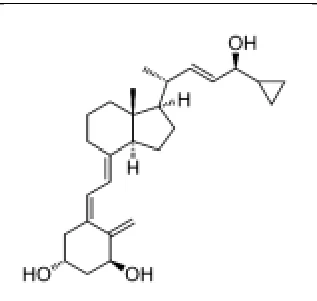 | 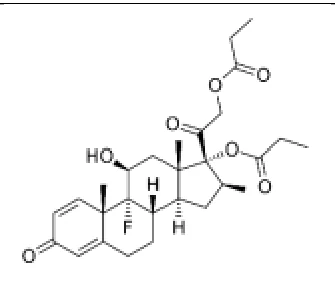 |
Physicochemical properties: Physical form: Solubility at room temperature: | White or almost white powder. Practically insoluble in water, freely soluble in ethanol (96 per cent), slightly soluble in methylene chloride. | White to almost white powder. Practically insoluble in water, freely soluble in acetone and in methylene chloride, sparingly soluble in ethanol (96 per cent). |
14. Clinical Trials
14.1. Clinical Trial by Indication
Psoriasis Vulgaris
Table 3 – Summary of patient demographics for clinical trials in psoriasis vulgaris
| Study # | Study design | Dosage, route of administration and duration | Study subjects (n) | Mean age (Range) | Sex |
| MC2-01-C2* | Phase 3, Randomised, multicentre, investigator-blind, parallel-group trial | Topical, once daily on trunk and/or limbs for 8 weeks | Total: 794 WYNZORA® Cream: 342 CAL/BDP Suspension: 337 Vehicle: 115 | Total 52.0 (18-89) | Total F: 299 M: 495 |
| MC2-01-C7** | Phase 3, Randomised, multicentre, investigator-blind, parallel-group trial | Topical, once daily on trunk and/or limbs and scalp for 8 weeks | Total:490 WYNZORA® Cream: 213 CAL/BDP Gel: 209 Vehicle: 68 | Total 50.2 (19-83) | Total F: 195 M: 295 |
*Intention to treat (ITT), **Full analysis set (FAS)
The efficacy of once daily use of WYNZORA® for treatment of psoriasis was investigated in two randomised, investigator-blind, vehicle-controlled 8-week clinical trials in adults (Table 2, MC2-01-C2 and MC2-01-C7). Calcipotriol (CAL)/betamethasone dipropionate (BDP) gel/suspension [0.05 mg/g CAL and 0.50 mg/g betamethasone (equivalent to 0.64 mg/g BDP)] was included as an active comparator.
The trials were designed to show superiority to vehicle and non-inferiority of MC2-01 cream to CAL/BDP gel/suspension.
In both MC2-01-C2 and MC2-01-C7, the trial population consisted of male and female subjects with plaque psoriasis (psoriasis vulgaris) of at least 6 months that involved non-scalp regions of the body (trunk and/or limbs), with a PGA of disease intensity of mild or moderate on the body (trunk and/or limbs) and a mPASI score of at least 2 in trial MC2-01-C2 and 3 in MC2-01-C7, and a treatment area involving 2–30% of the body. In study MC2-01-C7, subjects with scalp psoriasis could be included as part of the treatment area, provided that the total treatment area on the body and scalp combined did not exceed 30%. Eligible subjects were randomly assigned in a 3:1:3 ratio to receive either MC2 01 cream, MC2 01 vehicle, or CAL/BDP gel/suspension.
Subjects were to apply trial medication to affected areas of the body (trunk and/or limbs) topically once daily for 8 weeks. All skin types were represented in both trials, with the most common being Fitzpatrick skin type III (31.9%), type II (25.7%), and type IV (23.0%) in MC2-01-C2 and type II (48.2 %) and type III (36.3 %) being most common in trial MC2-01-C7.
The distribution of disease severities among randomized subjects was similar across the two trials and representative of clinical practice, with the majority of subjects presenting with mild to moderate disease (63%-81% with ≤10% BSA involvement and 87%-90% with mPASI ≤12). Mean PGA scores of 2.8 in both trials further support that most subjects had mild to moderate disease severity at baseline. Across treatment groups, approximately 19% to 35% of subjects had more extensive disease based on body surface area (BSA) involvement (>10% BSA affected), and approximately 10% to 13% had more severe disease according to the modified Psoriasis Area and Severity Index (mPASI > 12). The PGA is assessed using a 5-point scale (clear, almost clear, mild, moderate and severe) based on the average psoriatic lesion. The mPASI is a composite score assessing disease severity (erythema, scale, and induration) and the extent of affected area (excluding the scalp, face, and flexures).
The primary efficacy endpoint in trial MC2-01-C2 was the proportion of subjects in each treatment group with treatment success at Week 8, defined as a minimum 2 point decrease from Baseline to Week 8 on the PGA of disease severity on the trunk and limbs, i.e., as 'clear' or 'almost clear' for patients with moderate disease at baseline and 'clear' for patients with mild disease at baseline. This was the secondary endpoint trial MC2-01-C7.
The primary efficacy endpoint in trial MC2-01-C7 was the percentage change in mPASI on the body (trunk and/or limbs) from Baseline to Week 8. This was the secondary endpoint for trial MC2-01-C2.
Other secondary endpoints in MC2-01-C2 and/or MC1-01-C7 included change in itch intensity assessed on the Numerical Rating Scale (Itch by NRS) from Baseline to Week 4 (MC2 01 cream vs. MC2 01 vehicle) in trial MC2-01-C2 and PGA treatment success on the scalp at Week 8 in trial MC2-01-C7.
Results from both primary and secondary efficacy endpoints in both MC2-01-C2 and MC2-01-C7 demonstrated that WYNZORA® had superior efficacy compared to vehicle (p < 0.0001) for all confirmatory efficacy endpoints in treating psoriasis on the body and trunk. WYNZORA® has demonstrated a statistically significantly greater PGA treatment success at Week 8 compared to vehicle (Tables 4 and 5). In addition, the mean percentage change from Baseline in mPASI at Week 8 was statistically significantly greater for WYNZORA® than for the vehicle (Table 4 and 5).
Table 4 – Results of Key Endpoints at Week 8 in Subjects with Psoriasis Vulgaris in Study MC2-01-C2
Wynzora® (N = 342) | CAL/BDP suspension (N=337) | Vehicle (N = 115) | Treatment difference for Wynzora® vs vehicle (95% CI) | |||||||
|---|---|---|---|---|---|---|---|---|---|---|
| Primary endpoint | ||||||||||
| PGA Success | 37.4% | 22.8% | 3.7% | 33.7% (27.6%, 39.9%)a,c | ||||||
| Key secondary endpoint | ||||||||||
| Unadjusted Mean percentage reduction in m-PASI | 62.9% | 51.3% | 22.9% | 40.0% | ||||||
| Adjusted mPASI percentage reduction | 63.2% | 51.1% | 22.8% | 40.4%b,c | ||||||
a. Based on unadjusted rate difference with Wald confidence interval, average after multiple imputation b. Based on least-square means from ANCOVA and adjusted for site, baseline PGA severity on the body, and baseline mPASI score
c Statistically significant under multiplicity control for WYNZORA® vs Vehicle comparison (p < 0.05)
Table 5 – Results of Key Endpoints at Week 8 in Subjects with Psoriasis Vulgaris in Study MC2-01-C7
Wynzora® (N = 213) | CAL/BDP gel (N=209) | Vehicle (N = 68) | Treatment difference for Wynzora® vs vehicle (95% CI) | |||||||
|---|---|---|---|---|---|---|---|---|---|---|
| Primary endpoint | ||||||||||
| Unadjusted Mean percentage reduction in m-PASI | 67.5% | 63.5% | 11.7% | 55.8% | ||||||
| Adjusted mPASI percentage reduction | 73.1% | N/AP** | 16.4% | 56.7%b,c | ||||||
| Key secondary endpoint | ||||||||||
| PGA Success | 50.7% | 42.7% | 6.1% | 44.6% (35.3%, 53.8%)a,c | ||||||
a. Based on unadjusted rate difference with Wald confidence interval, average after multiple imputation b. Based on least-square means from ANCOVA and adjusted for site, baseline PGA severity on the body, and baseline mPASI score
c. Statistically significant under multiplicity control for WYNZORA® vs Vehicle comparison (p < 0.05)
** The adjusted estimates are derived from the ANCOVA of Wynzora vs vehicle where active control is not included.
WYNZORA® was non-inferior to CAL/BDP gel/suspension at Week 8 for PGA treatment success [Study MC2-01-C2 Difference 14.6% (95% CI: 7.6%, 21.6%); Study MC2-01-C7 Difference 7.9% (95% CI: -1.7, 17.5)]; and mPASI [Study MC2-01-C2 Difference 12.02% (96.7% CI: 7.00, 17.04); Study MC2-01-C7 Difference -4.2 (95% CI: -9.6, 1.2)].
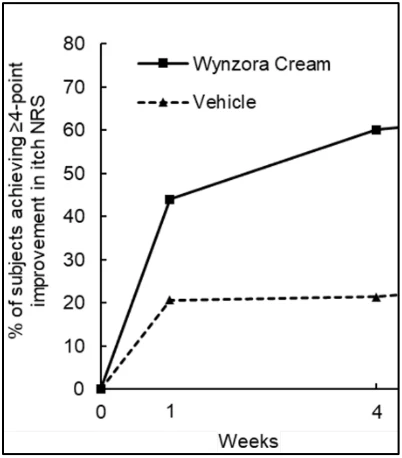
In MC2-01-C2, among subjects who had at least a peak pruritus Numeric Rating Scale (NRS) score of 4 at baseline, WYNZORA® demonstrated superior reduction of itch towards vehicle defined by at least a 4-point improvement in pruritus by NRS (numeric rating scale) from Baseline to Week 4 (60.2% vs. 21.4%).
Figure 1: Improvement in Itch NRS from Baseline to Week 4 in MC2-01-C2 with Wynzora®
In MC2-01-C7 the efficacy of WYNZORA® on scalp psoriasis was investigated as the percentage of subjects with “treatment success” according to the PGA. The efficacy of WYNZORA® Cream on scalp psoriasis was statistically significantly greater than vehicle at Week 4 (p = 0.0051) and Week 8 (p = 0.0002).
15. Microbiology
No microbiological information is required for this drug product.
16. Non-Clinical Toxicology
General Toxicology:
Calcipotriol: Despite the intended topical use of calcipotriol in the treatment of psoriasis, most of the toxicological studies were performed using the oral route of administration. This was done to assure maximum exposure to the compound. From these studies it was evident that toxicity associated with the administration of pharmacologically excessive doses of calcipotriol was due to the calcitropic activity of the compound. The maximum doses were 54 mcg/kg/day in rats, 18 mcg/kg/day in minipigs and 3.6 mcg/kg/day in dogs. In the acute, subacute and chronic toxicity studies the main signs of toxicity were loss of bodyweight, increases in plasma or serum calcium, creatinine and urea, renal toxicity and soft tissue calcifications. These changes resulted from the exaggerated absorption of calcium and phosphorous from the intestine and are characteristic of vitamin D overdosage. The kidney was the main target organ of toxicity and tubular lesions, and calcifications were apparent after prolonged hypercalcemia in all species investigated.
Betamethasone dipropionate: Betamethasone dipropionate is a widely used and well-characterized corticosteroid which has been shown to have metabolic and toxicological effects typical for corticosteroids. Oral administration of betamethasone dipropionate for up to 13 weeks in rats produced expected signs of toxicity, including body weight loss, leucopenia/lymphopenia and dose-related decreases in thymus and spleen weights along with pathological findings in these organs. Reduced body weight gain was observed in females at all dose levels (0.02, 0.06 and 0.2 mg/kg) and in high- and mid-dose males. The number of white blood cells was decreased (leucopenia) along with a decreased number of lymphocytes (lymphopenia) in the mid- and high-dose groups. In a 13-week dermal mouse study, adverse effects (reduced body weight gains or pathological findings in the spleen and thymus) were observed at dosages above 10 μg/kg/day. The NOAEL in this study was considered to be 3.3 μg/kg/day. In general, results from repeat dose toxicity studies demonstrated that adverse effects were associated with the known pharmacological activity of betamethasone dipropionate which exhibits immunosuppressive properties.
Calcipotriol and Betamethasone Dipropionate: Two dermal studies of 8-week and 13-week dermal repeat dose toxicity study were conducted in minipigs to assess the systemic exposure, the toxicity and the local tolerance.
In the 8-week study, minipigs received daily administration of 0.5 g/kg bw of WYNZORA®. Erythema and epidermal crust formation were observed in the WYNZORA® group 2-3 weeks after treatment initiation. None of the animals showed signs of systemic toxicity.
In the 13-week study, minipigs received 0.5 g/kg bw/day of WYNZORA® using a 5 days on, 2 days off dosing schedule. Erythema, dermal reactions (spots, scaly skin, crusts, nodules and dry wounds, hyperkeratosis, epidermal hyperplasia) as well as treatment-related histopathological effects in the kidney, adrenal gland, prostate and blood vessels in various organs were observed in the WYNZORA® group. Erythema was observed in the WYNZORA® group 3 days after treatment initiation. Treatment was discontinued after 25 days of dosing (up to Day 42) due to moderate to severe erythema and pain. After this cessation period, dosing resumed on Days 43-49 using a 3-days-on, 2-days-off schedule. From Day 50 until study end, a modified weekly schedule was followed: 2-days-on, 1-day-off, 2-days-on, 2-days-off. Individual animals were occasionally withheld from dosing based on erythema and/or pain symptoms as needed.
Carcinogenicity:
Calcipotriol: A dermal carcinogenicity study in mice showed no indications of increased carcinogenic risks. Calcipotriol solution was applied topically for up to 24 months at doses of 3, 10 and 30 mcg/kg/day. The high-dose was considered to be the Maximum Tolerated Dose for dermal treatment of mice with calcipotriol. Survival was decreased at 10 and 30 mcg/kg/day; particularly in the males. The reduced survival was associated with an increased incidence of obstructive uropathy, most probably caused by treatment-related changes in the urinary composition. This is an expectable effect of treatment with high doses of calcipotriol or other vitamin D analogues. There were no dermal effects and no dermal or systemic carcinogenicity.
A 104-week oral carcinogenicity study was conducted with calcipotriol in male and female rats at doses of 1, 5 and 15 mcg/kg/day. Beginning week 71, the dosage for high-dose animals of both genders was reduced to 10 mcg/kg/day. A treatment-related increase in benign C-cell adenomas was observed in the thyroid of females that received 5 or 15 mcg/kg/day and males receiving 15 mcg/kg/day. A treatment-related increase in benign pheochromocytomas was observed in the adrenal glands of males receiving 15 mcg/kg/day. No other statistically significant differences in tumor incidence were observed when compared to control. The relevance of these findings to patients is unknown.
Betamethasone dipropionate: When betamethasone dipropionate was applied topically to CD-1 mice for up to 24 months at dosages approximating 1.3, 4.2 and 8.5 mcg/kg/day in females, and 1.3, 4.2, and 12.9 mcg/kg/day in males, no significant changes in tumor incidence were observed when compared to control.
When betamethasone dipropionate was administered via oral gavage to male and female Sprague Dawley rats for up to 24 months at dosages of 20, 60, and 200 mcg/kg/day, no significant changes in tumor incidence were observed when compared to control.
Genotoxicity:
Calcipotriol: Calcipotriol did not elicit any genotoxic effects in the Ames mutagenicity assay, the mouse lymphoma TK locus assay, the human lymphocyte chromosome aberration test, or the mouse micronucleus test.
Betamethasone dipropionate: Betamethasone dipropionate did not elicit any genotoxic effects in the Ames mutagenicity assay, the mouse lymphoma TK locus assay, or in the rat micronucleus test.
Reproductive and Developmental Toxicology:
Animal reproduction studies have not been conducted with calcipotriol and betamethasone dipropionate.
Calcipotriol: Studies with oral doses of up to 54 mcg/kg/day of calcipotriol indicated no impairment of fertility or general reproductive performance in male and female rats, nor on their F1 generation progeny.
Teratogenicity studies with calcipotriol were performed by the oral route in rats and rabbits. In rabbits, increased maternal toxicity (body weight loss, reduced food intake, maternal death and abortion) and fetal toxicity (reduced mean fetal weight) were noted at a dosage of 12 mcg/kg/day. A dosage of 36 mcg/kg/day resulted in similar maternal and fetal toxicity characteristics; in addition, a significant increase in the incidence of incomplete ossification of the pubic bones and forelimb phalanges of fetuses was observed. In a rat study, a dosage of 54 mcg/kg/day resulted in a significantly increased incidence of skeletal abnormalities (enlarged fontanelles and extra ribs). The enlarged fontanelles were most likely due to the effect of calcipotriol upon calcium metabolism. The estimated maternal and fetal no-adverse effect levels (NOAEL) in the rat and rabbit are 18 mcg/kg/day and 4 mcg/kg/day, respectively.
An oral peri- and post-natal development study was conducted with rats. Pregnant Wistar rats were dosed daily with calcipotriol at exposures of 0, 6, 18 or 54 mcg/kg/day from gestation day 15 through day 20 postpartum. No remarkable effects were observed on any parameters, including survival, behavior, body weight, litter parameters, or the ability to nurse or rear pups.
Betamethasone dipropionate: Studies in male rats at oral doses of up to 200 mcg/kg/day, and in female rats at oral doses of up to 1000 mcg/kg/day, of betamethasone dipropionate indicated no impairment of fertility.
Corticosteroids have been shown to be teratogenic in laboratory animals when administered systemically at relatively low dosage levels. Betamethasone dipropionate has been shown to be teratogenic in mice and rabbits when given by the subcutaneous route at dosages of 156 mcg/ kg/day and 2.5 mcg/kg/day, respectively. The abnormalities observed included umbilical hernia, exencephaly, skeletal malformations and cleft palate.
An oral peri- and post-natal development study was conducted with rats. Betamethasone dipropionate was evaluated for effects when orally administered to pregnant rats from gestation day 6 through day 20 postpartum at dosages of 0, 100, 300, and 1000 mcg/kg/day. Reduced mean maternal body weight and prolonged gestation were detected in the treatment groups. Moreover, reduction in offspring survival, reduced body weight, and impaired righting reflex was observed. No effects on the ability of pups to learn were observed post-weaning, and the ability of the offspring of treated rats to reproduce was not affected.