


Product Monograph - Dysport Aesthetic
RECENT MAJOR LABEL CHANGES
| 7 Warnings and Precautions | 03/2022 |
|---|
TABLE OF CONTENTS
Sections or subsections that are not applicable at the time of authorization are not listed.
RECENT MAJOR LABEL CHANGES...................................................................................... 2
TABLE OF CONTENTS........................................................................................................... 2
PART I: HEALTH PROFESSIONAL INFORMATION ............................................................... 4
1 INDICATIONS .............................................................................................................. 4
1.1 Pediatrics ............................................................................................................ 4
1.2 Geriatrics ............................................................................................................ 4
2 CONTRAINDICATIONS ............................................................................................... 4
3 SERIOUS WARNINGS AND PRECAUTIONS BOX ...................................................... 4
4 DOSAGE AND ADMINISTRATION .............................................................................. 5
4.1 Dosing Considerations ........................................................................................ 5
4.2 Recommended Dose and Dosage Adjustment ..................................................... 5
4.3 Reconstitution ..................................................................................................... 5
4.4 Administration ..................................................................................................... 6
5 OVERDOSAGE............................................................................................................ 7
6 DOSAGE FORMS, STRENGTHS, COMPOSITION AND PACKAGING ........................ 8
7 WARNINGS AND PRECAUTIONS ............................................................................... 8
7.1 Special Populations........................................................................................... 10
7.1.1 Pregnant Women.........................................................................................10
7.1.2 Breast-feeding .............................................................................................10
7.1.3 Pediatrics ....................................................................................................10
7.1.4 Geriatrics.....................................................................................................10
8 ADVERSE REACTIONS............................................................................................. 10
8.1 Adverse Reaction Overview .............................................................................. 10
8.2 Clinical Trial Adverse Reactions ........................................................................ 11
8.5 Post-Market Adverse Reactions......................................................................... 13
9 DRUG INTERACTIONS.............................................................................................. 14
9.2 Drug Interactions Overview ............................................................................... 14
9.4 Drug-Drug Interactions ...................................................................................... 14
9.5 Drug-Food Interactions...................................................................................... 15
9.6 Drug-Herb Interactions ...................................................................................... 15
9.7 Drug-Laboratory Test Interactions ..................................................................... 15
10 CLINICAL PHARMACOLOGY ................................................................................... 15
10.1 Mechanism of Action ................................................................................... 15
10.2 Pharmacodynamics ..................................................................................... 15
10.3 Pharmacokinetics ........................................................................................ 16
11 STORAGE, STABILITY AND DISPOSAL ................................................................... 16
12 SPECIAL HANDLING INSTRUCTIONS...................................................................... 16
PART II: SCIENTIFIC INFORMATION ................................................................................... 16
13 PHARMACEUTICAL INFORMATION......................................................................... 16
14 CLINICAL TRIALS ..................................................................................................... 17
14.1 Trial Design and Study Demographics ......................................................... 17
14.2 Study Results .............................................................................................. 19
15 MICROBIOLOGY ....................................................................................................... 21
16 NON-CLINICAL TOXICOLOGY.................................................................................. 21
PATIENT MEDICATION INFORMATION ............................................................................... 23
PART I: HEALTH PROFESSIONAL INFORMATION
1 INDICATIONS
DYSPORT AESTHETIC (abobotulinumtoxinA) is indicated for:
The temporary improvement in the appearance of
- moderate to severe glabellar lines and/or
- moderate to severe lateral canthal lines (crow’s feet) in adult patients < 65 years of age
1.1 Pediatrics
Pediatrics (< 18 years of age): No data are available to Health Canada; therefore, Health Canada has not authorized an indication for pediatric use.
1.2 Geriatrics
Geriatrics (> 65 years of age): No data are available to Health Canada; therefore, Health Canada has not authorized an indication for geriatric use.
2 CONTRAINDICATIONS
Dysport Aesthetic is contraindicated in patients:
- who are hypersensitive to this drug or to any ingredient in the formulation, including any non-medicinal ingredient, or component of the container. For a complete listing, see 6 DOSAGE FORMS, STRENGTHS, COMPOSITION AND PACKAGING.
- with infection at the proposed injection sites.
- known to be allergic to cow’s milk protein.
3 SERIOUS WARNINGS AND PRECAUTIONS BOX
Serious Warnings and Precautions
|
|---|
4 DOSAGE AND ADMINISTRATION
4.1 Dosing Considerations
- For Intramuscular Use Only.
- The potency units of Dysport Aesthetic are specific to the preparation and assay method utilized. They are not interchangeable with other preparations of botulinum toxin products and, therefore, units of biological activity of Dysport Aesthetic cannot be compared to or converted into units of any other botulinum toxin products assessed with any other specific assay method.
- Treatment should be administered at the recommended dose for each treatment area.
- Injection intervals of Dysport Aesthetic should be no more frequent than every three months.
4.2 Recommended Dose and Dosage Adjustment
Glabellar Lines (GL)
Ten (10) Units should be injected intramuscularly at each of five injection sites, 2 in each corrugator muscle and 1 in the procerus muscle for a total dose of 50 Units (see Figure 1).
Lateral Canthal Lines (LCL)
Ten (10) Units should be injected intramuscularly at each of three injection sites for a total dose of 30 Units per side (a total of 60 Units for both sides; see Figure 1).
The clinical effect of Dysport Aesthetic may last up to four months. Repeat dose clinical studies demonstrated continued efficacy with up to four repeated administrations.
The treatment interval depends on the individual patient’s response after assessment by healthcare practitioners.
Treatment interval should not be more frequent than every three months.
Health Canada has not authorized an indication for pediatric use.
4.3 Reconstitution
Parenteral Products:
Dysport Aesthetic is supplied as a single-use vial.
Each 300 Unit vial of Dysport Aesthetic is to be reconstituted with either 1.5, 2.5 or 3.0 mL of 0.9% sterile, preservative-free, saline prior to injection. The concentration of the resulting solution will be 20 Units per 0.1 mL, 12 Units per 0.1 mL or 10 Units per 0.1 mL respectively (see Table 1).
Table 1 - Reconstitution
| Vial Size | Volume of Diluent to be Added to Vial | Target concentration Units/0.1 mL |
| 300 Unit | 1.5 mL | 20.0 |
| 300 Unit | 2.5 mL | 12.0 |
| 300 Unit | 3.0 mL | 10.0 |
Using a 21 gauge needle and aseptic technique, draw up sterile, preservative-free 0.9% saline. Insert the needle into the Dysport Aesthetic vial. The partial vacuum will begin to pull the saline into the vial. Any remaining required saline should be expressed into the vial manually. Do not use the vial if no vacuum is observed. Gently rotate the vial (do not shake), until the white substance is fully dissolved. Reconstituted Dysport Aesthetic should be a clear, colorless solution, free of particulate matter.
Draw Dysport Aesthetic into a sterile syringe. Expel any air bubbles in the syringe barrel. Remove the needle used to reconstitute the product and attach a suitable gauge needle.
Once reconstituted, Dysport Aesthetic should be stored in a refrigerator at 2–8°C protected from light and used within 24 hours. Do not freeze reconstituted Dysport Aesthetic. Discard the vial and needle in accordance with local regulations.
4.4 Administration
The recommended injection points for GLs and LCLs are described below. Ensure the injected volume/dose is accurate.
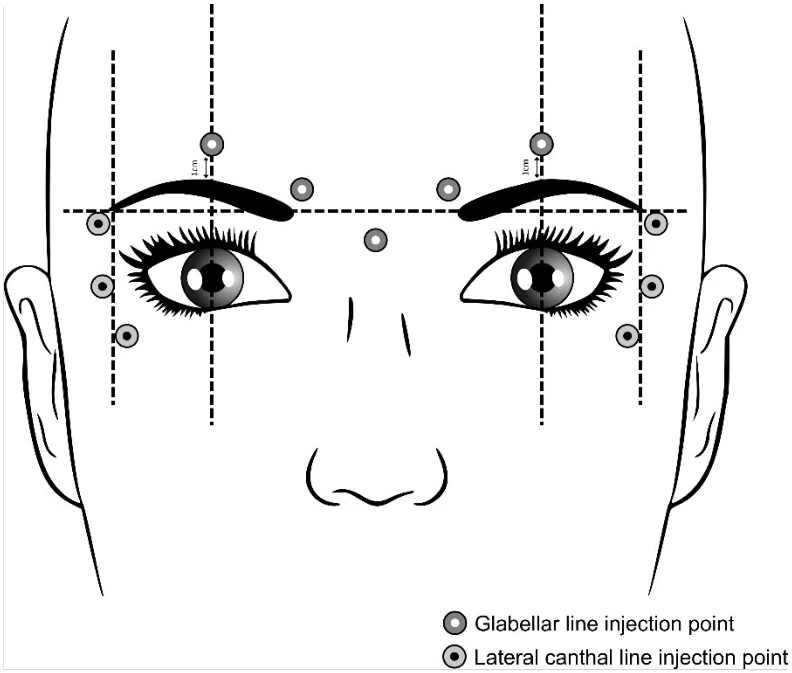
Figure 1: Glabellar Lines and Lateral Canthal Lines injection points
Glabellar lines:
Glabellar facial lines arise from the activity of the lateral corrugator and vertical procerus muscles. These can be readily identified by palpating the tensed muscle mass while having the patient frown. The corrugator depresses the skin creating a “furrowed” vertical line surrounded by tensed muscle (i.e., frown lines). The location, size, and use of the muscles vary markedly among individuals. Physicians administering Dysport Aesthetic must understand the relevant neuromuscular and/or orbital anatomy of the area involved and any alterations to the anatomy due to prior surgical procedures.
Risk of ptosis can be mitigated by careful examination of the upper lid for separation or weakness of the levator palpebrae muscle (true ptosis), identification of lash ptosis, and evaluation of the range of lid excursion while manually depressing the frontalis to assess compensation.
In order to reduce the complication of ptosis, the following steps should be taken:
- Avoid injection near the levator palpebrae superioris, particularly in patients with larger brow depressor complexes.
- Medial corrugator injections should be placed at least one centimeter above the bony supraorbital ridge.
- Ensure the injected volume/dose is accurate.
- Do not inject toxin closer than 1 centimeter above the central eyebrow.
To inject Dysport Aesthetic, advance the needle through the skin into the underlying muscle while applying finger pressure on the superior medial orbital rim. Inject patients with the recommended dose in five equally divided aliquots using a 30 gauge needle; two in each corrugator muscle and one in the procerus muscle (see Figure 1).
Lateral Canthal Lines:
Injection should be lateral (at 20-30° angle to the skin) and superficial, avoiding blood vessels. All injection points should be at the external part of the orbicularis oculi muscle and sufficiently far from the orbital rim (approximately 1 - 2 cm from the external orbital rim) and injection points 1 cm apart as shown in Figure 1.
The anatomical landmarks can be more readily identified if observed and palpated at maximal smile. Care must be taken to avoid injecting the zygomaticus major/minor muscles to avoid lateral mouth drop and asymmetrical smile.
5 OVERDOSAGE
Excessive doses of Dysport Aesthetic may be expected to produce neuromuscular weakness with a variety of symptoms. Respiratory support may be required where excessive doses cause paralysis of respiratory muscles. In the event of overdose, the patient should be medically monitored for symptoms of excessive muscle weakness or muscle paralysis. Symptomatic treatment may be necessary.
Symptoms of overdose are not likely to be present immediately following injection. Should accidental injection or oral ingestion occur, the person should be medically supervised for several weeks for signs and symptoms of excessive muscle weakness or paralysis.
In the event of suspected or actual cases of botulinum toxin poisoning, please contact your local Health Department to process a request for antitoxin. However, the antitoxin will not reverse any botulinum toxin-induced effects already apparent by the time of antitoxin administration.
| For management of a suspected drug overdose, contact your regional poison control centre. |
|---|
6 DOSAGE FORMS, STRENGTHS, COMPOSITION AND PACKAGING
To help ensure the traceability of biologic products, including biosimilars, health professionals should recognize the importance of recording both the brand name and the non-proprietary (abobotulinumtoxinA) name as well as other product-specific identifiers such as the Drug Identification Number (DIN) and the batch/lot number of the product supplied.
Table 2 – Dosage Forms, Strengths, Composition and Packaging
Dysport Aesthetic is supplied as a single-use sterile 300 Unit vial for reconstitution with 0.9% Sodium Chloride Injection USP (without preservative). Each vial contains 300 Units of lyophilized abobotulinumtoxinA, 125 micrograms human serum albumin and 2.5 mg lactose monohydrate.
7 WARNINGS AND PRECAUTIONS
Please see 3 SERIOUS WARNINGS AND PRECAUTIONS BOX.
General
Use Dysport Aesthetic only as directed.
Do not use dosage recommendations and potency units applied to other botulinum toxin products when using Dysport Aesthetic. Do not exceed the recommended dosage and frequency of administration of Dysport Aesthetic.
The safe and effective use of Dysport Aesthetic depends upon proper storage of the product, selection of the correct dose, reconstitution, and injection technique.
Caution should be exercised when administering Dysport Aesthetic to patients with neuromuscular junction disorders or when excessive weakness or atrophy is present in the target muscle, prolonged bleeding times, surgical alterations to the facial anatomy, marked facial asymmetry, inflammation at the injection site(s), ptosis, excessive dermatochalasis, deep dermal scarring, or thick sebaceous skin.
Muscle weakness remote to the site of injection and other serious adverse effects (e.g., dysphagia when injected into the neck region) have been very rarely reported in the administration of Dysport Aesthetic. Patients with a history of underlying neurologic disorders, dysphagia and/or aspiration are at a greater risk of these effects and should be treated with extreme caution. The botulinum toxin product should be used under specialist supervision in these patients and should only be used if the benefit of treatment is considered to outweigh the risk.
| Route of Administration | Dosage Form / Strength/Composition | Non-medicinal Ingredients |
| Intramuscular | Sterile, lyophilized powder for reconstitution with 0.9% Sodium Chloride Injection USP (without preservative); 300 Units per vial | 125 micrograms human serum albumin and 2.5 mg lactose monohydrate |
Patients or caregivers should be advised to seek immediate medical care if swallowing, speech or respiratory disorders arise. Injection intervals of Dysport Aesthetic should be no more frequent than every three months. Indication-specific dosage and administration recommendations should be followed.
This product contains human serum albumin, a derivative of human blood. Based on effective donor screening and product manufacturing processes, it carries an extremely remote risk for transmission of viral diseases. The theoretical risk for transmission of Creutzfeldt-Jakob disease (CJD) is considered extremely remote. No cases of transmission of viral diseases or CJD have ever been identified for albumin.
Carcinogenesis and Mutagenesis
Animal studies to evaluate the carcinogenic and genotoxic potential of Dysport Aesthetic have not been conducted. (See 16 NON-CLINICAL TOXICOLOGY section for more information).
Cardiovascular
In study 06-01, 79 subjects were assessed by EKG for treatment-related QT interval changes. Following the use of Dysport Aesthetic for the treatment of GLs, no QT/QTc prolongation was observed.
Driving and Operating Machinery
The potential risk of localized muscle weakness or visual disturbances linked with the use of Dysport Aesthetic may temporarily impair the ability to drive or operate machinery. Caution should be exercised when driving or operating a vehicle or potentially dangerous machinery.
Immune
As with all biologic products, an anaphylactic reaction may occur. Necessary precautions should be taken and epinephrine should be available. If such a reaction occurs, further injection should be discontinued (see CONTRAINDICATIONS).
Injections at more frequent intervals or at higher doses can increase the risk of antibody formation to botulinum toxin. Clinically, the formation of neutralizing antibodies may reduce the effectiveness of subsequent treatment. When patients do not respond to Dysport Aesthetic after more than one treatment, consider to test patient serum for neutralizing antibody presence.
Neurologic
Caution should be exercised when administering Dysport Aesthetic to individuals with peripheral motor neuropathy (e.g., amyotrophic lateral sclerosis or motor neuropathy), facial palsy or neuromuscular junctional disorders (e.g., myasthenia gravis or Lambert-Eaton syndrome). Patients with neuromuscular disorders may be at an increased risk of clinically significant systemic effects such as severe dysphagia and respiratory compromise.
Ophthalmologic
Because of the anticholinergic activity of botulinum toxin, caution should be exercised when administering Dysport Aesthetic to individuals with risk for angle closure glaucoma, including patients with anatomically narrow angles. Dry eye, eyelid edema, ptosis, blurred or double vision have been reported with the use of Dysport Aesthetic in the treatment of glabellar lines. Reduced tear production, reduced blinking, and corneal disorders, may occur with the use of botulinum toxins including Dysport Aesthetic.
Risk of ptosis can be mitigated by careful examination of the upper lid for separation or weakness of the levator palpebrae muscle (true ptosis), identification of lash ptosis, and evaluation of the range of lid excursion while manually depressing the frontalis to assess compensation.
The potential risk of localized muscle weakness or visual disturbances linked with the use of Dysport Aesthetic may temporarily impair the ability to drive or operate machinery.
Skin
Caution should be exercised when administering Dysport Aesthetic to patients with inflammation at the injection site(s), deep dermal scarring, or thick sebaceous skin.
7.1 Special Populations
7.1.1 Pregnant Women
There are limited data from the use of abobotulinumtoxinA in pregnant women. Animal studies do not indicate direct or indirect harmful effects with respect to pregnancy, embryo/fetal development, parturition or postnatal development other than at high doses causing maternal toxicity. The potential risk to pregnant women is unknown. Dysport Aesthetic should be used during pregnancy only if the benefit justifies any potential risk to the fetus. Caution should be exercised when prescribing to pregnant women.
7.1.2 Breast-feeding
It is not known whether this drug is excreted in human milk. The excretion of Dysport Aesthetic in milk has not been studied in animals. The use of Dysport Aesthetic during lactation is not recommended.
7.1.3 Pediatrics
Pediatrics (< 18 years): Dysport Aesthetic is not recommended for use in children.
7.1.4 Geriatrics
Geriatrics (> 65 years of age): The clinical data for subjects > 65 years of age are limited.
8 ADVERSE REACTIONS
8.1 Adverse Reaction Overview
Adverse reactions may occur within the first few days following injection and while generally transient may have a duration of several months.
Local muscle weakness represents the expected pharmacological action of botulinum toxin in muscle tissue; however, weakness of adjacent muscles associated with local diffusion and/or injection technique has been reported. Muscle weakness remote to the site of injection and other serious adverse effects (e.g., dysphagia when injected into the neck region) have been very rarely reported in the administration of Dysport Aesthetic.
8.2 Clinical Trial Adverse Reactions
Clinical trials are conducted under very specific conditions. The adverse reaction rates observed in the clinical trials; therefore, may not reflect the rates observed in practice and should not be compared to the rates in the clinical trials of another drug. Adverse reaction information from clinical trials may be useful in identifying and approximating rates of adverse drug reactions in real-world use.
Glabellar Lines (GLs)
Six clinical studies, including one Phase 2, three Phase 3, and two long-term safety studies were conducted with Dysport Aesthetic.
The adverse event data described below reflect exposure in 2,341 subjects who received 5,360 Dysport Aesthetic or placebo treatments (4,880 Dysport Aesthetic; 480 placebo). Some subjects received up to seven treatments with Dysport Aesthetic. The population was composed of subjects 19-80 years of age, and included 263 males and 2,078 females. Most subjects were Caucasian (79.8%). Subjects received 50-80 Unit doses of Dysport Aesthetic, injected intramuscularly in the glabellar region.
Adverse events of any cause were reported for 42% of the subjects treated with Dysport Aesthetic and 29% of the subjects treated with placebo. Treatment-emergent adverse events (TEAEs) were generally mild to moderate in severity and the majority of events were considered unrelated or unlikely to be related to treatment. The most frequently reported adverse events were nasopharyngitis, headache, injection site pain, upper respiratory tract infection, and sinusitis. Subjects re-treated with Dysport Aesthetic demonstrated a comparable safety profile to that of the initial treatment. Table 3 displays treatment-emergent adverse events reported in >1% of subjects, regardless of causality. Repeat dose clinical studies have demonstrated safety for up to seven administrations of Dysport Aesthetic.
| Table 3: Treatment-Emergent Adverse Events with > 1% Incidence in the glabellar region | |||||
| Adverse Events by Preferred Term | Dysport Aesthetic n=2041 (%)* | Placebo n=480 (%)* | |||
| Subjects with at least one treatment-emergent adverse event | 852 (42) | 141 (29) | |||
| Eye disorders | |||||
| Eyelid ptosis | 33 (2) | 1 (<1) | |||
| General disorders and administration site conditions | |||||
| Injection site pain | 69 (3) | 7 (1) | |||
| Injection site bruising | 34 (2) | 7 (1) | |||
| Infections and Infestations | |||||
| Nasopharyngitis | 123 (6) | 19 (4) | |||
| Upper respiratory tract infection | 58 (3) | 4 (<1) | |||
| Sinusitis | 55 (3) | 4 (<1) | |||
| Influenza | 31 (2) | 3 (<1) |
| Nervous System Disorders | ||
| Headache | 110 (5) | 16 (3) |
* Subjects who received treatment with placebo and Dysport Aesthetic are counted in both treatment columns.
The frequency of any ocular adverse events in the Dysport Aesthetic treatment group was low and decreased with subsequent treatments. The majority of eyelid ptosis events were mild to moderate in severity and resolved over several weeks. The incidence of eyelid ptosis did not increase in the long-term safety studies with multiple re-treatments at intervals ≥ three months.
The frequency of any ocular TEAE in the Dysport Aesthetic treatment group is low in Cycle 1 (3%), decreases to 2% in Cycles 2 and 3, and to 1% in Cycles 4 and 5.
Testing for antibodies to Dysport Aesthetic was performed in 1554 subjects who had up to nine cycles of treatment. Two subjects (0.13%) tested positive for binding antibodies at baseline. Three additional subjects tested positive for binding antibodies after receiving Dysport Aesthetic treatment. None of the subjects tested positive for neutralizing antibodies.
Lateral Canthal Lines (LCLs)
One dose-ranging Phase 2 and one Phase 3 (with an open label safety extension period) studies were conducted with Dysport Aesthetic. The population was composed of subjects 25-69 years of age and included 53 males and 500 females. Most of the subjects were Caucasian (99%) and received Dysport Aesthetic injected intramuscularly, as shown in Figure 1.
In the Phase 2 study, subjects were treated per eye region in LCLs, including 55 subjects with 15 U, 54 subjects with 30 U, 55 subjects with 45 U of Dysport Aesthetic (at 5, 10 and 15 U per injection site, respectively) and 54 subjects received placebo.
The Phase 3 study comprised two parts: Part A, 252 subjects received a single treatment of the recommended 30 U per eye (at 10 U per injection site) in LCLs and 83 subjects received placebo; and Part B, (active treatment only), 315 subjects entered the safety extension period up to 40 weeks with treatments in LCLs with or without concomitant treatment of the GLs. A total of 271 subjects received 3 cycles of active treatment for LCLs (30 U per eye), including 121 patients with 3 cycles of concomitant treatment in GLs (at recommended 50 U) up to a maximum of 110 U per treatment.
Adverse events of any cause were reported for 19% of the subjects treated with Dysport Aesthetic and 16.1% of the subjects treated with placebo.
TEAEs were generally mild to moderate in severity and the majority of events were considered unrelated or unlikely to be related to treatment. TEAEs considered being treatment related included eyelid edema, headache and injection site reactions (haematoma, pruritus, and swelling).
| Table 4: Treatment-Emergent Adverse Events with > 1% Incidence following first cycle of treatment from both studies in the LCLs region at 30 U. |
| Adverse Events by Preferred Term | Dysport Aesthetic n=306 (%) | Placebo n=137 (%) | ||
| Eye disorders | ||||
| Eyelid edema | 5 (1.6%) | - | ||
| General disorders and administration site conditions | ||||
| Injection site reactions (e.g. haematoma, pruritus and swelling) | 7 (2.4%) | 1 (0.7%) | ||
| Infections and Infestations | ||||
| Nasopharyngitis | 5 (1.7%) | 3 (2.2%) | ||
| Nervous System Disorders | ||||
| Headache | 13 (4.3%) | 3 (2.2%) | ||
During Part B of the Phase 3 study, subjects re-treated with Dysport Aesthetic demonstrated a comparable safety profile to that of the initial treatment. Treatment-related TEAEs that were most frequent reported by more than two subjects were headache (4.0%), injection site haematoma (2.1%) and eyelid edema (1.8%).
Less frequently reported TEAEs were facial paresis (0.9%) and eyelid ptosis (0.9%). Other rare related TEAEs included asthenopia (0.3%), photophobia (0.3%), blurred vision (0.6%), erythema of the eyelid (0.3%), and increased lacrimation (0.3%) and periorbital haematoma (0.7%). Most TEAEs were mild to moderate in intensity.
Testing for antibodies against abobotulinumtoxinA was performed for 332 subjects. No subjects tested were positive for neutralizing antibodies after receiving multiple treatments with Dysport Aesthetic over one year.
8.5 Post-Market Adverse Reactions
There is extensive post-marketing experience for the treatment of upper facial lines. Adverse reactions are reported voluntarily from a population of uncertain size; thus, it is not always possible to estimate their frequency reliably or to establish a causal relationship to drug exposure.
Adverse reactions reported during post-marketing without distinction of indications and not reflected elsewhere in the Product Monograph include the following:
Table 5: Adverse Reactions reported during post-marketing without distinction of indication
| System Organ Class | Adverse Drug Reaction |
|---|---|
| Ear and labyrinth disorders | Vertigo |
| Eye disorders | Diplopia, Dry eye |
| Gastrointestinal disorders | Dysphagia, Nausea |
| General disorders | Asthenia, Malaise |
| Immune system disorders | Hypersensitivity |
| Investigations | Neutralizing antibodies |
| Musculoskeletal and connective tissue disorders | Muscle atrophy |
|---|---|
| Nervous system disorders | Amyotrophy, Burning sensation, Dizziness, Dysarthria Hypoesthesia |
| Renal and Urinary Disorders | Urinary incontinence |
| Respiratory, thoracic and mediastinal disorders | Dysphonia, Dyspnea |
| Skin and subcutaneous tissue disorders | Erythema, Excessive granulation tissue, Urticaria |
Antibody formation to botulinum toxin has been noted in patients receiving Dysport Aesthetic. Clinically, neutralizing antibodies might be suspected by a substantial deterioration in response to therapy and/or the need for consistent use of increased doses (See 7 WARNINGS AND PRECAUTIONS-Immune).
Adverse effects resulting from distribution of the effects of the toxin to sites remote from the site of injection have been very rarely reported.
9 DRUG INTERACTIONS
9.2 Drug Interactions Overview
No specific interactions have been reported.
No formal drug interaction studies have been conducted with Dysport Aesthetic.
Patients treated concomitantly with botulinum toxins and aminoglycosides or other agents interfering with neuromuscular transmission (e.g., curare-like agents) should be observed closely because the effect of the botulinum toxin may be potentiated. Use of anticholinergic drugs after administration of Dysport Aesthetic may potentiate systemic anticholinergic effects such as blurred vision.
The effect of administering different botulinum neurotoxin products at the same time or within several months of each other is unknown. Excessive weakness may be exacerbated by another administration of botulinum toxin prior to the resolution of the effects of a previously administered botulinum toxin.
Excessive weakness may also be exaggerated by administration of a muscle relaxant before or after administration of Dysport Aesthetic.
9.4 Drug-Drug Interactions
The drugs listed in this table are based on either drug interaction case reports or studies, or potential interactions due to the expected magnitude and seriousness of the interaction (i.e., those identified as contraindicated).
Table 6 – Established or Potential Drug-Drug Interactions
| Proper name of drug | Source of Evidence | Effect | Clinical comment |
| aminoglycoside antibiotics or other medicinal products that interfere with neuromuscular transmission (e.g., curare-like agents, lincosamides, polymyxins, and anticholinesterases) | T | Theoretically, the effect of botulinum toxin may be potentiated. | The effect of botulinum toxin may be potentiated by aminoglycoside antibiotics or other drugs that interfere with neuromuscular transmission. Caution should be exercised when Dysport Aesthetic is used with aminoglycosides or any other drugs that interfere with neuromuscular transmission. |
| Different botulinum neurotoxin serotypes | T | Unknown | The effect of administering different botulinum neurotoxin serotypes at the same time or within several months of each other is unknown. Excessive weakness may be exacerbated by administration of another botulinum toxin prior to the resolution of the effects of a previously administered botulinum toxin. |
Legend: T = Theoretical
9.5 Drug-Food Interactions
Interactions with food have not been established.
9.6 Drug-Herb Interactions
Interactions with herbal products have not been established.
9.7 Drug-Laboratory Test Interactions
Interactions with laboratory tests have not been established.
10 CLINICAL PHARMACOLOGY
10.1 Mechanism of Action
Dysport Aesthetic inhibits release of the neurotransmitter, acetylcholine, from peripheral cholinergic nerve endings. Toxin activity occurs in the following sequence: Toxin heavy chain mediated binding to specific surface receptors on nerve endings, internalization of the toxin by receptor mediated endocytosis, pH-induced translocation of the toxin light chain to the cell cytosol and cleavage of SNAP25 leading to intracellular blockage of neurotransmitter exocytosis into the neuromuscular junction. This accounts for the therapeutic utility of the toxin in diseases characterized by excessive efferent activity in motor nerves.
Recovery of transmission occurs gradually as the neuromuscular junction recovers from SNAP25 cleavage and as new nerve endings are formed.
10.2 Pharmacodynamics
The primary pharmacodynamic effect of Dysport Aesthetic is due to chemical denervation of the treated muscle resulting in a measurable decrease of the compound muscle action potential, causing a localized reduction of muscle activity.
10.3 Pharmacokinetics
Dysport Aesthetic is not expected to be present in the peripheral blood at measurable levels following intramuscular injection at the recommended doses. Using currently available analytical technology, it is not possible to detect Dysport Aesthetic in the peripheral blood following intramuscular injection at the recommended doses.
Duration of Effect
The clinical effect of Dysport Aesthetic may last up to 4 months. Dysport Aesthetic should not be administered more frequently than every three months. When used for re-treatment, Dysport Aesthetic should be reconstituted and injected using the same techniques as the initial treatment.
11 STORAGE, STABILITY AND DISPOSAL
Dysport Aesthetic must be stored under refrigeration at 2–8°C. Protect from light.
Administer Dysport Aesthetic within 24 hours of reconstitution; during this period reconstituted Dysport Aesthetic should be stored under refrigeration at 2–8°C. Do not freeze after reconstitution.
Do not use after the expiration date on the vial.
12 SPECIAL HANDLING INSTRUCTIONS
All vials, including unused product remaining and expired vials, or equipment used with Dysport Aesthetic should be disposed of carefully as is done with all medical waste.
PART II: SCIENTIFIC INFORMATION
13 PHARMACEUTICAL INFORMATION
Drug Substance
Proper name: abobotulinumtoxinA
Chemical name: Botulinum toxin type A
Molecular formula and molecular mass: AbobotulinumtoxinA is produced as a 150 kDa single polypeptide chain composed of 1296 amino acid residues (1295 after cleavage of the N-terminal methionine). After synthesis, the neurotoxin is proteolytically cleaved to generate a di-chain protein composed of a heavy chain (~80 kDa) and light chain (~50 kDa). On a genetic level, the toxin gene occurs in a cluster of genes which also encode for the non-toxic non-hemagglutinin protein (NTNH), a regulator protein and the hemagglutinin (HA) proteins (HA70, HA34 and HA17). These proteins and their derivatives, except for the regulator protein, form the components of the neurotoxin type A complex.
Structural formula: AbobotulinumtoxinA (Botulinum toxin type A), the active ingredient in Dysport Aesthetic is a purified neurotoxin type A complex produced by fermentation of the bacterium Clostridium botulinum type A, Hall Strain. It is purified from the culture supernatant by a series of precipitation, dialysis, and chromatography steps.
Pharmaceutical standard: Ph. Eur.
Product Characteristics:
Dysport Aesthetic uses a cell-based assay to determine the potency of the product relative to a reference material. The assay and reference material are specific to Dysport Aesthetic. One unit of Dysport Aesthetic corresponds to the calculated median lethal intraperitoneal dose (LD50) in mice. Due to specific details of the assay system, such as vehicle, dilution scheme and laboratory protocols, units of biological activity of Dysport Aesthetic are not interchangeable with units of any other botulinum toxin or any toxin assessed with any other specific assay method.
14 CLINICAL TRIALS
14.1 Trial Design and Study Demographics
Glabellar Lines (GLs)
Two double-blind, randomized, placebo-controlled, Phase 3 clinical studies (Study 791 and Study 085) evaluated the efficacy of Dysport Aesthetic for use in the improvement of the appearance of moderate to severe GLs (Table 7). Investigator/Blinded Evaluators assessed efficacy by using a validated 4-point scale (none, mild, moderate, severe). Subjects assessed efficacy by using a similar static 4-point scale. These two studies enrolled ethnically-diverse, healthy adults (ages 19–75) with GLs of at least moderate severity at maximum frown. Subjects were excluded if they had marked ptosis, deep dermal scarring, or a substantial inability to lessen GLs, even by physically spreading them apart. The subjects in these studies received either Dysport Aesthetic (n=172) or placebo (n=117). The total dose was delivered in equally divided aliquots to specified injection sites (see Figure 1).
Treatment success for each of the Phase 3 studies was defined as post-treatment GL severity of none or mild (from moderate or severe at baseline) at maximum frown.
After completion of the randomized studies, subjects were offered participation in a three-year, open-label re-treatment study to assess the safety of multiple treatments.
Table 7 - Summary of patient demographics for clinical trials in glabellar lines
| Study # | Trial design | Dosage, route of administration and duration | Study subjects (n) | Mean age (Range) | Sex |
| 719 | A phase 3, randomized, placebo-controlled, multicenter, double-blind study | Dysport Aesthetic 50 Units administered in five aliquots of 10 Units/0.05 mL; single dose (see Figure 1) Placebo 180 days | 158 subjects | 43 years | 135 Female 23 Male |
| 085 | A phase 3, randomized, placebo-controlled, multicenter, double-blind study | Dysport Aesthetic 50 Units administered in five aliquots of 10 Units/0.05 mL; multiple doses (see Figure 1) Placebo | 311 subjects into the first treatment cycle and; 142 subjects randomized into the final treatment cycle | 47 years | 269 Female 42 Male |
Study 719
Study 719 was a single dose, double-blind, multicenter, randomized, placebo-controlled study in which 158 previously untreated subjects received either placebo or 50 Units of DYSPORT
AESTHETIC™ administered in five aliquots of 10 Units/0.05 mL (see Figure 1). Subjects were followed for 180 days. The mean age was 43 years; most of the subjects were women (85%), and predominantly Caucasian (49%) or Hispanic (47%).
Study 085
Study 085 was a repeat dose, double-blind, multicenter, placebo-controlled, randomized study to evaluate the efficacy of repeat dosing. The study was initiated with up to two open-label treatment cycles. After open-label treatment(s), subjects were randomized to receive either placebo or 50 Units of Dysport Aesthetic. Subjects receiving Dysport Aesthetic in the previous cycle, were invited to participate in the final treatment cycle, and were randomized to receive either placebo or 50 Units of Dysport Aesthetic. Subjects could have received up to four treatments through the course of the study.
The study enrolled 311 subjects into the first treatment cycle and 142 subjects were randomized into the final treatment cycle. Subjects received either placebo or 50 Units of Dysport Aesthetic™ administered in five aliquots of 10 Units/0.05 mL (see Figure 1). Overall, the mean age was 47 years; most of the subjects were women (86%) and predominantly Caucasian (80%). The primary efficacy endpoint was assessed in the final treatment cycle.
Lateral Canthal Lines (LCLs)
One double-blind, randomized, placebo-controlled, Phase 3 clinical study (Study RD.03.SRE.40131) evaluated the efficacy of Dysport Aesthetic for use in the temporary improvement in the appearance of moderate to severe LCLs at maximum smile. Investigator assessed efficacy using a validated 4-point scale (none, mild, moderate, severe), whereas subject’s satisfaction with the appearance of their LCLs was assessed as a secondary endpoint using a 4-level rating (very satisfied, satisfied, dissatisfied, very dissatisfied). Treatment success was defined as the proportion of responders at Week 4 on the severity of LCLs as none or mild at maximum smile. Duration of effect compared with placebo was assessed up to Week 16.
A total of 335 subjects were randomised in a 3:1 ratio to abobotulinumtoxinA (252 subjects) and placebo (83 subjects) and received the recommended dose of 30 Units per side (Part A). A subset of 241 subjects had moderate to severe canthal lines at rest prior to treatment. After 12 weeks post administration, 315 of those subjects participated in the open label safety extension period of the study in which they could be treated concomitantly for both LCLs and GLs up to 40 weeks (Part B).
14.2 Study Results
Studies related to Glabellar Lines (GLs)
Study 719
In study 719, the reduction of GL severity at maximum frown was greater at Day 30 in the Dysport Aesthetic group compared to the placebo group as assessed by both Investigators and subjects (see Table 9).
A majority of Dysport Aesthetic-treated subjects (56.3%) demonstrated a 2+ grade composite (a reduction in the glabellar line severity score by a minimum of 2 grades as assessed by both the Investigator/Blinded Evaluator and subject) improvement, at maximum frown, at Day 30. Onset of effect was reported as soon as 24 hours; the median time to onset of treatment response was three days.
Table 9 - Results of study 719: Investigators’ and Subjects’ Assessment of Glabellar Line Treatment Success at Maximum Frown (using 4-point scale) Following a 50 Unit Dose (% and Number of Responders/Number Assessed)
| Day | Investigators | Subjects | |||||||||
|---|---|---|---|---|---|---|---|---|---|---|---|
| Dysport Aesthetic | Placebo | Dysport Aesthetic | Placebo | ||||||||
| 14 | 94.1%* 95/101 | 19.6% 9/46 | 81.0%* 81/100 | 10.9% 5/46 | |||||||
| 30 | 89.3%* 92/103 | 3.9% 2/51 | 75.7%* 78/103 | 9.8% 5/51 | |||||||
| 60 | 66.3%* 67/101 | 2.0% 1/50 | 62.4%* 63/101 | 6.0% 3/50 | |||||||
| 90 | 46.4%* 45/97 | 6.4% 3/47 | 39.2%* 38/97 | 6.4% 3/47 | |||||||
| 120 | 24.2%† 24/99 | 4.1% 2/49 | 20.2%‡ 20/99 | 6.1% 3/49 | |||||||
| 150 | 9.5% 9/95 | 2.2% 1/45 | 8.3% 8/96 | 4.4% 2/45 | |||||||
| 180 | 6.3% 6/96 | 0% 0/46 | 7.3% 7/96 | 8.7% 4/46 | |||||||
*p<0.001; †p=0.002; ‡p=0.027
Study 085
The primary efficacy endpoint was assessed in the final treatment cycle. After the final repeat treatment with Dysport Aesthetic, the reduction of GL severity at maximum frown was statistically greater at Day 30 in the Dysport Aesthetic group compared to the placebo group (p<0.001) as assessed by both Investigators and subjects (see Table 10).
A majority of Dysport Aesthetic-treated subjects (52.1%) demonstrated a 2+ grade composite improvement, at maximum frown, at Day 30. Onset of effect was reported as soon as 24 hours; the median time to onset of treatment response was three days.
The proportion of responders in the final treatment cycle was comparable to the proportion of responders in all prior treatment cycles. There was no evidence of reduced response or an increase in adverse events with repeated exposure.
Table 10: Study 085: Proportion of Responders, at Day 30, Using Investigator’s and Subject’s Assessments of Glabellar Line Treatment Success at Maximum Frown (using 4-point scale) for the Final Treatment Cycle (% and Number of Responders/Number Assessed)
| Dysport Aesthetic | Placebo | |
|---|---|---|
| Investigator | 84.5%* 60/71 | 4.2% 3/71 |
| Subject | 78.9%* 56/71 | 1.4% 1/71 |
* p< 0.001
Study related to Lateral Canthal Lines
Study RD.03.SRE.40131
In Study RD.03.SRE.40131, at Week 4, Dysport Aesthetic injections significantly reduced the severity of LCLs compared with placebo (p≤0.001) at maximum smile (Table 11). The proportion of Responders at Week 4, assessed by the Investigator was 47.2% versus 7.2% for subjects who received Placebo.
At week 4, the proportion of Dysport Aesthetic-treated subjects reporting satisfied or very satisfied with the appearance of their LCLs was 65.5% and 16.9% for placebo-treated subjects. Among them, the proportion of Dysport Aesthetic-treated subjects reporting very satisfied was 17.5% and 1.2% for placebo-treated subjects.
At Week 8, the proportion of responders as assessed by the investigator was 37.7% for subjects treated with Dysport Aesthetic versus 4.8% for subjects who received placebo. At Week 12, the proportion of responders was 11.5% with Dysport Aesthetic versus 0% for subjects who received placebo.
In Part A of the study it was shown that Dysport Aesthetic reduced the severity of LCLs seen at maximum smile for up to 12 weeks, the time-point when subjects were offered a re-treatment and entered Part B of the study. The median time to re-treatment with Dysport Aesthetic for treatment cycles of 2 to 5 varied between 12 to 15 weeks interval.
Table 11: Proportion of Responders at Week 4, Using Investigator’s Assessments of Canthal Line Treatment Success at Maximum Frown (using 4-point scale) (% and Number of Responders/Number Assessed)
| Dysport Aesthetic | Placebo | ||||
|---|---|---|---|---|---|
| Investigator | 47.2% 119/252 | 7.2% 6/83 | |||
Difference with placebo p-value (Mantel-Haenszel test) | 40% | ||||
| 95% Confidence Interval | p< 0.001 31.7%, 48.3% |
|---|
15 MICROBIOLOGY
No microbiological information is required for this drug product.
16 NON-CLINICAL TOXICOLOGY
Carcinogenicity: Studies to evaluate the carcinogenic potential of Dysport Aesthetic have not been conducted.
Genotoxicity: Genotoxicity studies have not been conducted with Dysport Aesthetic.
Reproductive and Developmental Toxicology: In a study evaluating postnatal effects, pregnant rats were given weekly doses of 1, 2.5, 5 and 10 Units from Day 6 of gestation through weaning of the litters (21 days postpartum). There was no effect of treatment on in utero survival. Evaluation of the offspring showed no effects on survival, body weights, sexual maturation, post-weaning development, mating performance or fertility. All offspring appeared normal.
Fertility and Reproductive Toxicity: Dysport Aesthetic had no effect upon fertility when administered intramuscularly to rats at weekly doses up to 16 Units in females, and 10 Units in males. There were no effects upon implantation parameters at doses up to and including 8 Units. Mating was impaired at the high dose (10 Units for males and 16 Units for females), likely due to impaired hind limb function (result of the pharmacological effect on the muscle). The NOAEL for fertility and general reproduction performance was 8 Units/week for females and 5 Units/week for males.
Teratogenic Effects: Dysport Aesthetic was not teratogenic when evaluated in rats and rabbits. In rats, Dysport Aesthetic was administered at doses of 0.5, 1.5 and 5 Units daily from Gestation Days 6-17. Additional groups of animals received intermittent doses of 10 Units on Days 6 and 12 of gestation. There was a slight increase in fetal resorptions at the high doses of 5 Units daily and 10 Units intermittently. In rabbits, Dysport Aesthetic was administered at doses of 1, 10 and 20 Units daily from Gestation Days 6-19. Additional groups of animals received intermittent doses of 40 Units on Days 6 and 13 of gestation. All animals treated at 20 Units daily died or were sacrificed in a moribund condition, with some animals aborting. C-section data revealed comparable rates of pre-and post-implantation loss across the surviving groups. Fetal survival was not affected.
Reproductive and Developmental Effects: In a study evaluating postnatal effects, pregnant rats were given weekly doses of 1, 2.5, 5 and 10 Units from Day 6 of gestation through weaning of the litters (21 days postpartum). There was no effect of treatment on in utero survival. Evaluation of the offspring showed no effects on survival, body weights, sexual maturation, post-weaning development, mating performance or fertility. All offspring appeared normal.
Animal Toxicity Studies: Dysport Aesthetic has been evaluated in both single dose and repeated dose studies in rats. In the single dose study, Dysport Aesthetic was administered as a single intramuscular injection into the left gluteus muscle at doses of 2 or 6 Units. To evaluate reversibility of effects, subgroups of animals were sacrificed after 7, 30, 60 and 90 days of observation. No adverse systemic signs were observed, and there were no local reactions at the site of injection. Treatment related effects were limited to a reduction in the size and weight of the injected muscle, considered to be a pharmacological effect of the drug. Muscle size reduction was noted at Day 7 and Day 30 for animals treated with 6 Units and 2 Units, respectively. This was histologically confirmed as a reduction in muscle fiber size. By 90 days, muscle fiber size and resultant weights were approaching normal levels for animals treated at 2 Units, but fiber size reductions were still evident for animals treated with 6 Units. Special evaluations looking at nerves serving these muscles showed the expected disorganization early in the study, but normal nerve-muscle morphology was returning by 90 days.
In a chronic toxicity study in rats, Dysport Aesthetic was administered at 1, 4 and 12 Units given as injections at four week intervals for six injections. A fourth group of male and female animals receiving 12 U/adm. as 5 injections were subjected to a one month recovery period. Two control groups received the placebo on the same regimens. There was no indication of systemic toxicity at any dose and there were no signs of local irritation at the injection site. Reduced muscle size was evident at 4 and 12 Units following the first injection, but generally not evident at 1 Unit until the fifth injection. As expected there was histological evidence of atrophy of muscle fibers accompanied by minimal to moderate focal fatty infiltration and slight to minimal focal interstitial fibrosis at 1, 4 and 12 Units. Animals treated at 12 Units showed reduced body weight gain or body weight loss over the two week period following each dose with no evidence of recovery of the muscle in the rats treated at 12 Units and terminated one month after the fifth injection.
Ocular or Dermal Irritation: A local tolerance study in rabbits showed no adverse effects when instilled into the eye. There was no evidence of local effects at the site of injection in any of the above described toxicity and reproduction studies.