


Product Monograph - Xeomin
RECENT MAJOR LABEL CHANGES
| 1 INDICATIONS, Spasticity of the Lower Limb | 08/2024 |
|---|---|
| 4 DOSAGE AND ADMINISTRATION, 4.2 Recommended Dose and Dosage Adjustment, Spasticity of the Lower Limb | 08/2024 |
| 4 DOSAGE AND ADMINISTRATION,4.4, Administration, Spasticity of the Lower Limb | 08/2024 |
| 7 WARNINGS AND PRECAUTIONS, Neurologic, Spasticity of the Lower Limb | 08/2024 |
TABLE OF CONTENTS
Sections or subsections that are not applicable at the time of authorization are not listed.
RECENT MAJOR LABEL CHANGES ............................................................................................. 2
TABLE OF CONTENTS ............................................................................................................... 2
PART I: HEALTH PROFESSIONAL INFORMATION ....................................................................... 4
1 INDICATIONS ................................................................................................................ 4
1.1 Pediatrics ................................................................................................................. 4
1.2 Geriatrics ................................................................................................................. 4
2 CONTRAINDICATIONS .................................................................................................. 4
3 SERIOUS WARNINGS AND PRECAUTIONS BOX ............................................................. 5
4 DOSAGE AND ADMINISTRATION .................................................................................. 5
4.1 Dosing Considerations ............................................................................................. 5
4.2 Recommended Dose and Dosage Adjustment ........................................................ 6
4.3 Reconstitution ......................................................................................................... 9
4.4 Administration ....................................................................................................... 11
4.5 Missed Dose .......................................................................................................... 12
5 OVERDOSAGE ............................................................................................................. 12
6 DOSAGE FORMS, STRENGTHS, COMPOSITION AND PACKAGING ................................ 12
7 WARNINGS AND PRECAUTIONS ................................................................................. 13
7.1 Special Populations................................................................................................ 16
7.1.1 Pregnant Women ............................................................................................ 16
7.1.2 Breast-feeding ................................................................................................. 16
7.1.3 Pediatrics ......................................................................................................... 16
7.1.4 Geriatrics ......................................................................................................... 16
8 ADVERSE REACTIONS ................................................................................................. 16
8.1 Adverse Reaction Overview ................................................................................... 16
8.2 Clinical Trial Adverse Reactions ............................................................................. 18
8.2.1 Clinical Trial Adverse Reactions – Pediatrics .................................................... 24
8.3 Less Common Clinical Trial Adverse Reactions ...................................................... 25
8.3.1 Less Common Clinical Trial Adverse Reactions – Pediatrics ............................. 26
8.4 Abnormal Laboratory Findings: Hematologic, Clinical Chemistry and Other Quantitative Data ............................................................................................................ 26
8.5 Post-Market Adverse Reactions ............................................................................ 26
9 DRUG INTERACTIONS ................................................................................................. 26
9.1 Drug Interactions Overview ................................................................................... 26
9.2 Drug-Behavioural Interactions ............................................................................... 26
9.3 Drug-Drug Interactions .......................................................................................... 26
9.4 Drug-Food Interactions .......................................................................................... 27
9.5 Drug-Herb Interactions .......................................................................................... 27
9.6 Drug-Laboratory Test Interactions ......................................................................... 27
10 CLINICAL PHARMACOLOGY ........................................................................................ 27
10.1 Mechanism of Action ....................................................................................... 27
10.2 Pharmacodynamics ......................................................................................... 28
10.3 Pharmacokinetics ............................................................................................ 28
11 STORAGE, STABILITY AND DISPOSAL .......................................................................... 29
12 SPECIAL HANDLING INSTRUCTIONS ............................................................................ 29
PART II: SCIENTIFIC INFORMATION ........................................................................................ 30
13 PHARMACEUTICAL INFORMATION ............................................................................. 30
14 CLINICAL TRIALS ......................................................................................................... 31
14.1 Trial Design and Study Demographics ............................................................. 31
14.2 Study Results ................................................................................................... 35
14.3 Comparative Bioavailability Studies ................................................................. 50
15 MICROBIOLOGY ......................................................................................................... 51
16 NON-CLINICAL TOXICOLOGY ...................................................................................... 51
PATIENT MEDICATION INFORMATION ................................................................................... 55
PART I: HEALTH PROFESSIONAL INFORMATION
1 INDICATIONS
Xeomin (incobotulinumtoxinA) is indicated:
- for the treatment of hypertonicity disorders of the 7th nerve such as blepharospasm including benign essential blepharospasm and hemifacial spasm in adults
- to reduce the subjective symptoms and objective signs of cervical dystonia (spasmodic torticollis) in adults
- for the treatment of spasticity of the upper limb in adults
- for the treatment of post-stroke lower limb spasticity involving the ankle and foot in adults
- for the treatment of chronic sialorrhea associated with neurological disorders in adults
- for the treatment of chronic sialorrhea associated with neurological disorders in pediatric patients (age 2-17 years weighing 12 kg or more)
Xeomin may only be used by physicians with suitable qualifications and experience in the application of Botulinum neurotoxin type A (BoNT/A)
1.1 Pediatrics
Pediatrics (< 18 years of age): The safety and efficacy of Xeomin for the treatment of chronic (lasting at least 3 months) sialorrhea in children with neurological disorders below the age of 2 years or with a weight less than 12 kg, and for indications other than chronic sialorrhea in neurological disorders have not been studied in the pediatric population.
1.2 Geriatrics
Geriatrics (> 65 years of age): Although clinical studies included a number of patients over the age of 65, no clinical trials specifically designed for elderly patients have been performed.
2 CONTRAINDICATIONS
Xeomin is contraindicated in patients who:
- are hypersensitive to BoNT/A or to any ingredient in the formulation, including any non-medicinal ingredient, or component of the container. For a complete listing, see 6 DOSAGE FORMS, STRENGTHS, COMPOSITION AND PACKAGING.
- have generalised disorders of muscle activity (e.g. myasthenia gravis, Lambert-Eaton syndrome).
- have infection or inflammation at the proposed injection site(s).
3 SERIOUS WARNINGS AND PRECAUTIONS BOX
Serious Warnings and Precautions
|
|---|
4 DOSAGE AND ADMINISTRATION
4.1 Dosing Considerations
- Due to unit differences in the potency assay, Xeomin units are specific to Xeomin. Therefore unit doses or “U” recommended for Xeomin are not interchangeable with those for other preparations of Botulinum toxin.
- Xeomin may only be used by physicians with suitable qualifications and experience in the application of Botulinum toxin.
- Reconstituted Xeomin is intended for intramuscular or intra-salivary gland injection. After reconstitution, Xeomin should be used for only one injection session and for only one patient.
- The minimal injection intervals and the maximum doses of Xeomin should be as recommended for the specific indication.
- The optimum dosage, frequency and number of injection sites should be determined by the physician individually for each patient. A titration of the dose should be performed.
- A decrease or increase in the Xeomin dose is possible by administering a smaller or larger injection volume. Initial dosing should begin at the lowest recommended dose for the specific indication and be cautiously titrated within the recommended range for optimal patient outcome. The smaller the injection volume the less pressure sensation and the less spread of BoNT/A in the injected muscle occurs. This is of benefit in reducing effects on nearby muscles when small muscle groups are being injected.
If no treatment effect occurs within one month after the initial injection, the following measures should be taken:
- 1. wait the usual treatment interval;
- 2. consider reasons for lack of response listed below;
- 3. test patient using an acceptable method (i.e., test for anhydrotic rings with a starch iodine test or test for serum antibodies).
There are several potential explanations for a lack of or a diminished response to an individual treatment with Xeomin. These may include inadequate dose selection, selection of inappropriate muscles for injection, muscles inaccessible to injection, underlying structural abnormalities such as muscle contractures or bone disorders, change in pattern of muscle involvement, failure to correctly target the desired muscle through misplaced injections, patient perception of benefit compared with initial results, inappropriate storage or reconstitution, as well as neutralizing antibodies to Botulinum toxin.
More than one treatment course should be considered before classification of a patient as a non-responder.
4.2 Recommended Dose and Dosage Adjustment
Blepharospasm
The initial recommended dose is 1.25 to 2.5 units (0.05-0.1 mL volume) per injection site. The initial dose should not exceed 35 units per eye for pre-treated patients if the previous dose of Botulinum toxin is not known. For treatment naïve patients the initial dose should not exceed 25 units per eye. In subsequent treatments, dosing units and dosing interval may be titrated for maximum patient benefit. Normally, the total dose should not exceed 100 units per treatment session.
Median onset of effect is observed four days after injection. The effect of each treatment generally lasts approximately 3-4 months. The period between each treatment session is recommended to be at least 12 weeks. Based on monitoring of patients, there can be flexibility in terms of re-treatment intervals (see 14 CLINICAL TRIALS). Normally, no additional benefit is conferred by treating more frequently than every three months.
Spasmodic Torticollis
In practice, the usual total dose does not exceed 200 units. Doses of up to 300 units may be given. No more than 50 units should be given at any single injection site.
Median onset of effect is observed seven days after injection. The effect of each treatment generally lasts approximately 3-4 months. The period between each treatment session is recommended to be at least 12 weeks. Based on monitoring of patients, there can be flexibility in terms of re-treatment intervals, see 14 CLINICAL TRIALS.
Spasticity of the Upper Limb
The doses (units) usually administered in the management of spasticity of the upper limb are presented in Table 1.
Table 1: Dosage Guide per Muscle for the Treatment of Spasticity of the Upper Limb
| Clinical Pattern Muscle | Units (Range) | Number of injection sites per muscle |
| Flexed Wrist | ||
| Flexor carpi radialis | 25-100 | 1-2 |
| Flexor carpi ulnaris | 20-100 | 1-2 |
| Clenched Fist | ||
| Flexor digitorum superficialis | 25-100 | 2 |
| Flexor digitorum profundus | 25-100 | 2 |
| Flexed Elbow | ||
| Brachioradialis | 25-100 | 1-3 |
| Biceps | 50-200 | 1-4 |
| Brachialis | 25-100 | 1-2 |
| Pronated Forearm | ||
| Pronator quadratus | 10-50 | 1 |
| Pronator teres | 25-75 | 1-2 |
| Thumb-in-Palm | ||
| Flexor pollicis longus | 10-50 | 1 |
| Adductor pollicis | 5-30 | 1 |
| Flexor pollicis brevis/ Opponens pollicis | 5-30 | 1 |
Total dosing should not exceed 400 units per treatment session involving different muscles.
Median onset of effect is observed four days after injection. The maximum effect as an improvement of muscle tone is observed after approximately 4 weeks. The effect of each treatment generally lasts approximately 3 months; however, it may last significantly longer or shorter. The period between each treatment session is recommended to be at least 12 weeks.
Spasticity of the Lower Limb
The doses (units) usually administered in the management of spasticity of the lower limb are presented in Table 2.
Table 2: Dosage Guide per Muscle for the Treatment of Spasticity of the Lower Limb
| Clinical Pattern Muscle | Units (Range) | Number of injection sites per muscle |
| Pes Equinus including Flexed Toes: | ||
| Gastrocnemius medial/lateral | 150-200 | 4-6 |
| Soleus | 75-100 | 2-4 |
| Tibialis posterior | 75-100 | 2-3 |
| Flexor digitorum longus | 0-50 | 0-3 |
| Flexor hallucis longus | 0-50 | 0-2 |
Total dosing should not exceed 400 units per treatment session involving different muscles. Median onset of effect is observed four days after injection. The maximum effect as an improvement of muscle tone is observed after approximately 4 to 6 weeks. The effect of each treatment generally lasts approximately 3 months; however, it may last significantly longer or shorter. The period between each treatment session is recommended to be at least 12 weeks.
Spasticity of the Upper and Lower Limb
Multi-pattern / multilevel spasticity treatment of the upper in combination with the lower limb should be performed based on the above doses and recommendations for treatment. The period between each treatment session is recommended to be at least 12 weeks.
The maximum total dose for the combined treatment of the upper and lower limb in adults is 600 units. This total dose is to be divided between the upper limb (maximum 400 units) and the lower limb (maximum 400 units).
Chronic Sialorrhea (adults)
A reconstituted solution at a concentration of 5 units/0.1 mL should be used, i.e. reconstitute a 100 unit vial of Xeomin with 2 mL of 0.9% physiological saline solution (Table 5).
Xeomin is injected into the parotid and submandibular glands on both sides (i.e. 4 injection sites per treatment session). The recommended total dose per treatment session is 100 units. The dose is divided with a ratio of 3:2 between the parotid and submandibular glands (Table 3).
Table 3: Dosing by Gland for Treatment of Chronic Sialorrhea (adults)
| Glands | Units | Volume |
|---|---|---|
| Parotid gland(s) | 30 units per side | 0.6 mL per injection |
| Submandibular gland(s) | 20 units per side | 0.4 mL per injection |
The injection site should be close to the center of the gland.
The timing for repeat treatment should be determined based on the actual clinical need of the individual patient, and no sooner than every 16 weeks.
Chronic Sialorrhea (pediatrics)
Before staring therapy with Xeomin, non-invasive interventions such as oro-motor and oro-sensory therapies, behavioural intervention, and pharmacotherapy should be considered, based on the physician’s opinion of the patient’s condition.
A reconstituted solution at a concentration of 2.5 units/0.1 mL should be used, i.e. reconstitute a 100 unit vial of Xeomin with 4 mL of 0.9% physiological saline solution (Table 5).
Xeomin is injected into the parotid and submandibular glands on both sides (i.e. 4 injection sites per treatment session). Treatment doses should be administered by body weight class and the total dose should not exceed 75 units per treatment session. Treatment of pediatric patients weighing less than 12 kg has not been studied and therefore is not recommended. The body-weight adjusted dose is divided with a ratio of 3:2 between the parotid and submandibular glands (Table 4).
Table 4: Dosing by Gland for Treatment of Chronic Sialorrhea (pediatrics)
Body weight (kg) | Parotid gland, each side | Submandibular gland, each side | Total dose, both glands, both sides (Units) | ||
|---|---|---|---|---|---|
Dose per gland (Units) | Volume per injection (mL) | Dose per gland (Units) | Volume per injection (mL) | ||
| < 12 | Treatment with Xeomin not recommended | 0 | |||
| ≥ 12 and < 15 | 6 | 0.24 | 4 | 0.16 | 20 |
| ≥ 15 and < 19 | 9 | 0.36 | 6 | 0.24 | 30 |
| ≥ 19 and < 23 | 12 | 0.48 | 8 | 0.32 | 40 |
| ≥ 23 and < 27 | 15 | 0.60 | 10 | 0.40 | 50 |
| ≥ 27 and < 30 | 18 | 0.72 | 12 | 0.48 | 60 |
| ≥ 30 | 22.5 | 0.90 | 15 | 0.60 | 75 |
The injection site should be close to the center of the gland. Ultrasound guidance should be used for the localization of the involved salivary glands.
The timing for repeat treatment should be determined based on the actual clinical need of the individual patient, and no sooner than every 16 weeks. Injection of sublingual glands are not to be included in the management of pediatric chronic sialorrhea with Xeomin.
4.3 Reconstitution
This medicinal product must not be mixed with other medicinal products except those mentioned below.
Xeomin is reconstituted prior to use with sterile preservative free sodium chloride 9 mg/mL (0.9%) solution for injection. Reconstitution and dilution should be performed in accordance with good clinical practice guidelines, particularly with respect to asepsis.
It is good practice to perform vial reconstitution and syringe preparation over plastic-lined paper towels to catch any spillage. An appropriate amount of solvent (Table 5) is drawn up into a syringe. A 20-27 gauge short bevel needle is recommended for reconstitution. The exposed portion of the rubber stopper of the vial is cleaned with alcohol (70%) prior to insertion of the needle. After vertical insertion of the needle through the rubber stopper the solvent is injected gently into the vial in order to avoid foam formation. The vial must be discarded, if the vacuum does not pull the solvent into the vial. Remove the syringe from the vial and mix Xeomin with the solvent by carefully swirling and inverting the vial – do not shake vigorously. Record the date and time of reconstitution on the vial.
If needed, the needle used for reconstitution should remain in the vial and the required amount of solution should be drawn up with a new sterile syringe suitable for injection.
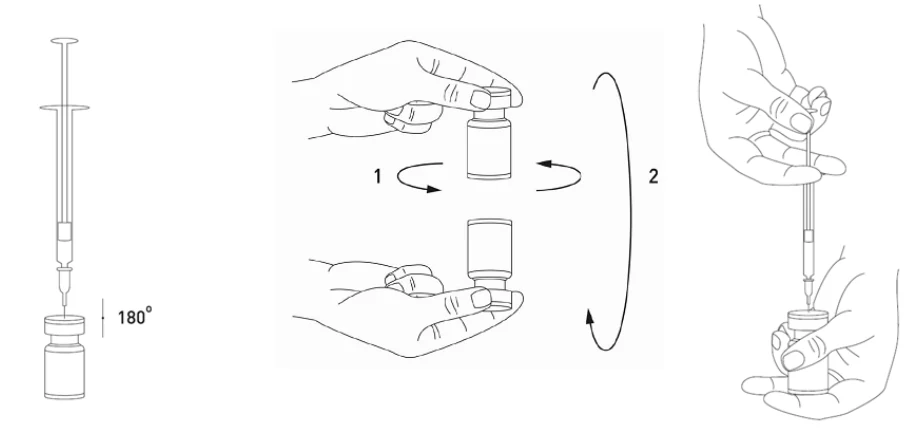
Reconstituted Xeomin is a clear colourless solution free of particulate matter.
Xeomin should not be used if the reconstituted solution (prepared as above) has a cloudy appearance or contains floccular or particulate matter.
Table 5: Possible Dilutions of Xeomin in the Reconstituted Solution
| Solvent added (sodium chloride 9 mg/mL (0.9%) solution for injection) | Resulting dose in units per 0.1 mL 50 U Vial | Resulting dose in units per 0.1 mL 100 U Vial | Resulting dose in units per 0.1 mL 200 U Vial |
0.25 mL 0.5 mL 1.0 mL 2.0 mL
| 20.0 U 10.0 U 5.0 U 2.5 U 1.25 U | 40.0 U 20.0 U 10.0 U 5.0 U 2.5 U | 80.0 U 40.0 U 20.0 U 10.0 U 5.0 U |
[CCDS 4.2.2, Table 2; US PI Table 5]
Any solution for injection that has been stored for more than 24 hours as well as any unused solution for injection should be discarded, see 11 STORAGE, STABILITY AND DISPOSAL. For safe disposal of the reconstituted solution, see 12 SPECIAL HANDLING INSTRUCTIONS.
4.4 Administration
With intramuscular use, the multiple point injection technique into target muscles with disperse innervation zones can reduce undesirable effects and, at the same time, may reach more intrafusal fibres.
Blepharospasm
Reconstituted Xeomin is injected using a suitable sterile needle (e.g. 27 - 30 gauge / 0.30 - 0.40 mm). Electromyographic guidance is not necessary.
Xeomin is injected into the medial and lateral orbicularis oculi muscle of the upper lid and the lateral orbicularis oculi muscle of the lower lid. Additional sites in the brow area, the lateral orbicularis oculi muscle and in the upper facial area may also be injected if spasms here interfere with vision.
Injections near the levator palpebrae superioris should be avoided to reduce the occurrence of ptosis. Diplopia may develop as a result of BoNT/A diffusion into the obliquus oculi inferior. Avoiding medial injections into the lower lid may reduce this adverse reaction.
Spasmodic Torticollis
In the management of spasmodic torticollis, Xeomin dosing must be tailored to the individual patient, based on the patient’s head and neck position, location of possible pain, muscle hypertrophy, patient’s body weight, and response to the injection. A suitable sterile needle (e.g. 25-30 gauge / 0.30-0.50 mm) is used for injections into superficial muscles, and an e.g. 22 gauge / 0.70 mm needle may be used for injections into deeper musculature. An injection volume of approximately 0.1 to 0.5 mL per injection site is recommended.
In the management of spasmodic torticollis, Xeomin is usually injected into the sternocleidomastoid, levator scapulae, scalenus, splenius capitis, and/or the trapezius muscle(s). This list is not exhaustive as any of the muscles responsible for controlling head position may be involved and therefore require treatment. If difficulties arise isolating single muscles, injections should be performed using electromyographic guidance. The muscle mass and the degree of hypertrophy or atrophy are factors to be taken into consideration when selecting the appropriate dose.
Multiple injection sites permit Xeomin more uniform coverage of the innervated areas of the dystonic muscle and are especially useful in larger muscles. The optimum number of injection sites is dependent upon the size of the muscle to be chemically denervated.
The sternocleidomastoid should not be injected bilaterally as there is an increased risk of adverse reactions (in particular dysphagia) when bilateral injections or doses in excess of 100 units are administered into this muscle.
Spasticity of the Upper and Lower Limb
Reconstituted Xeomin is injected using a suitable sterile needle (e.g. 26 gauge / 0.45 mm diameter / 37 mm length, for superficial muscles and a longer needle, e.g. 22 gauge / 0.7 mm diameter / 75 mm length, for deeper musculature). An injection volume of approximately 0.2 to 1 mL per injection site is recommended, but it can be exceeded to 1.5 mL in selected cases.
Localisation of the involved muscles with electromyographic, nerve stimulation or ultrasound guidance techniques may be necessary. Multiple injection sites may allow Xeomin to have more uniform contact with the innervation areas of the muscle and are especially useful when larger muscles are injected.
The exact dosage and number of injection sites should be tailored to the individual patient based on the size, number and location of muscles to be treated, the severity of spasticity, and the presence of local muscle weakness. Initial dosing should begin at the lowest recommended dose and be cautiously titrated within the recommended dose range for optimal patient outcome.
Chronic Sialorrhea (adults)
A suitable sterile needle (e.g. 27-30 gauge / 0.30-0.40 mm diameter / 12.5 mm length) should be used for intra-salivary gland administration of Xeomin. The salivary glands can be located using ultrasound imaging or surface anatomical landmarks.
Chronic Sialorrhea (pediatrics)
A suitable sterile needle (e.g. 27-30 gauge / 0.30-0.40 mm diameter / 12.5 mm length) should be used for intra-salivary gland administration of Xeomin. Ultrasound guidance should be used for the localization of the involved salivary glands.
4.5 Missed Dose
Not applicable.
5 OVERDOSAGE
Symptoms of Overdose
Overdose of Xeomin depends upon dose, site of injection and underlying tissue properties. Signs and symptoms of overdose are not apparent immediately post-injection. Increased doses may result in paralysis distant from the site of injection with a variety of symptoms. Symptoms may include general weakness, ptosis, diplopia, breathing difficulties, speech difficulties, paralysis of the respiratory muscles or swallowing difficulties which may result in aspiration pneumonia.
Measures in Cases of Overdose
Should accidental injection or oral ingestion occur, or overdose be suspected, the person should be medically monitored for up to several weeks for symptoms of excessive muscle weakness or muscle paralysis. Symptomatic treatment may be necessary. Respiratory support may be required if paralysis of the respiratory muscles occurs.
| For management of a suspected drug overdose, contact your regional poison control centre. |
|---|
6 DOSAGE FORMS, STRENGTHS, COMPOSITION AND PACKAGING
Table 6: Dosage Forms, Strengths, Composition and Packaging
| Route of Administration | Dosage Form / Strength/Composition | Non-medicinal Ingredients |
| Intramuscular or intraglandular injection | incobotulinumtoxinA for injection 50,100, or 200 units per vial | Sucrose (4.7 mg), human albumin (1.0 mg) |
Xeomin is supplied as a sterile, white, preservative free powder for solution for injection (lyophilisate) packed in a vial of type 1 glass with a latex-free stopper (bromobutyl rubber) and tamper-proof seal (aluminum).
Xeomin is available in pack sizes of 1 (single unit pack), 2, 3 or 6 vials (multi-packs).
Each vial contains 50, 100, or 200 units of incobotulinumtoxinA (Clostridium Botulinum Neurotoxin Type A (150 kD), free from complexing proteins) where one unit corresponds to the median lethal dose (LD50) in mice or the equivalent cell-based potency units. Prior to use Xeomin is reconstituted with commercially available 0.9 % physiological saline (not supplied in the pack) to form a clear, and colorless solution.
7 WARNINGS AND PRECAUTIONS
Please see 3 SERIOUS WARNINGS AND PRECAUTIONS BOX.
General
The safe and effective use of Xeomin depends upon proper storage of the product, selection of the correct dose, and proper reconstitution and administration techniques.
In very rare cases severe adverse events like excessive muscle weakness, dysphagia or aspiration pneumonia with a suspected causal relationship to toxin spread have been reported with the use of botulinum toxin at therapeutic doses. Dysphagia has also been reported following injections to sites other than the cervical musculature. Patients with a neurological underlying disease or swallowing, speech or respiratory difficulties have an increased risk for these adverse drug reactions (see Pre-existing Neuromuscular Disease). In general, patients or caregivers should be advised to seek immediate medical care if swallowing, speech or respiratory disorders occur.
Prior to administering Xeomin, the physician must familiarise himself/herself with the patient’s anatomy and any alterations to the anatomy. Care should be taken to ensure that Xeomin is not injected into a blood vessel. Undesirable effects may occur from misplaced injections of BoNT/A that temporarily paralyse nearby muscle groups. There have been reports of undesirable effects that might be related to the spread of the toxin to sites distal to the injection site, see 8 ADVERSE REACTIONS. When treating neurological indications, some of these effects can be life threatening and there have been reports of death. For the treatment of cervical dystonia and spasticity of the upper limb, extra caution is required when injecting at sites close to sensitive structures such as the carotid artery, lung apices and esophagus. Failure to correctly target the desired musculature through misplaced applications may likewise result in apparent lack of efficacy.
Clinical effects of Xeomin may increase or decrease with repeated injections. Possible reasons for change in clinical effect are different techniques of reconstitution, the chosen injection intervals, the injection sites and marginally varying toxin activity resulting from the biological testing procedure employed or secondary non-response.
Xeomin as a treatment for spasticity has been studied in association with usual standard care regimens and is not intended as a replacement for these treatment modalities. Xeomin is not likely to be effective at a joint affected by a fixed contracture.
Xeomin contains human albumin, a derivative of human blood. Standard measures to prevent infections resulting from the use of medicinal products prepared from human blood or plasma include careful selection of donors, screening of individual donations and plasma pools for specific markers of infection and the inclusion of effective manufacturing steps for the inactivation/removal of viruses. Despite this, when medicinal products prepared from human blood or plasma are administered, the possibility of transmitting infective agents cannot be totally excluded. This also applies to unknown or emerging viruses and other pathogens. There are no reports of viral transmissions with human albumin manufactured to European Pharmacopoeia specifications by established processes.
Driving and Operating Machinery
No studies on the effects on the ability to drive and use machines have been performed. However if asthenia, muscle weakness, vision disorders, dizziness or drooping eyelids occur, affected persons should avoid these tasks until they adjust to these changes.
Gastrointestinal
Spasmodic Torticollis
Patients should be informed that injections of Xeomin for the management of spasmodic torticollis may cause mild to severe dysphagia with the risk of aspiration and dyspnoea. Medical intervention may be necessary (e.g. in the form of a gastric feeding tube), see 8 ADVERSE REACTIONS. Dysphagia can last for up to two to three weeks after injection, but a duration of up to five months has been reported in one case. Patients with smaller neck muscle mass, or patients who require bilateral injections into the sternocleidomastoid muscles are at greater risk. The occurrence of dysphagia is attributable to the spread of the pharmacological effect of Botulinum toxin as the result of the neurotoxin spread into the oesophageal musculature.
Hematologic
Since Xeomin is administered by injection, and pathology may require multiple injections to deep musculature, it should be administered with caution:
- if bleeding disorders of any type exist
- in patients receiving anticoagulant therapy or taking other substances at anticoagulant doses.
Hypersensitivity Reactions
Hypersensitivity reactions have been reported with Botulinum neurotoxin products. If serious (e.g. anaphylactic reactions) and/or immediate hypersensitivity reactions occur, appropriate medical therapy should be instituted.
Immune
The risks for development of neutralizing antibodies to Botulinum toxins may be influenced by several factors and have been reported to be related to high dosage, higher total dosage, too frequent injections, young age at disease onset, and the nature of Botulinum toxin received. Antibody development may lead to treatment failure, see 4 DOSAGE AND ADMINISTRATION.
Neurologic
Pre-existing Neuromuscular Disorders
Patients with neuromuscular disorders may be at increased risk of excessive muscle weakness, particularly when treated intramuscularly. The BoNT/A product should be used under specialist supervision in these patients and should only be used if the benefit of treatment is considered to outweigh the risk. Patients with a history of dysphagia and aspiration should be treated with caution. Extreme caution should be exercised when treating these patients for cervical dystonia or chronic sialorrhea. Patients and caregivers should be advised to seek immediate medical consultation if swallowing, speech, or respiratory disorders arise.
Xeomin should be used with caution:
- In patients suffering from amyotrophic lateral sclerosis (ALS)
- In patients with other diseases which result in peripheral neuromuscular dysfunction
- In targeted muscles which display pronounced weakness or atrophy
Spasticity of the Upper and Lower Limb (adults and pediatrics)
New onset or recurrent seizures have been reported, typically in patients who are predisposed to experiencing these events. The exact relationship of these events to Botulinum neurotoxin injection has not been established.
Previously akinetic or sedentary patients should be reminded to gradually resume activities following the injection of Xeomin.
Spasticity of the Upper and Lower Limb (adults)
Caution should be exercised when treating patients especially the elderly who may be at increased risk of fall.
Chronic Sialorrhea
In cases of medication-induced sialorrhea (e.g. by aripiprazole, clozapine, pyridostigmine), the possibility of replacement, reduction or even termination of the inducing medication should be considered before using Xeomin for the treatment of sialorrhea. Efficacy and safety of Xeomin in patients with medication-induced sialorrhea were not investigated.
If cases of “dry mouth” developed in association with the administration of Xeomin, reduction of the dose should be considered.
A dental visit at the beginning of treatment is recommended. The dentist should be informed about sialorrhea treatment with Xeomin to be able to decide about appropriate measures for caries prophylaxis.
Ophthalmologic
Blepharospasm
Because of the anticholinergic effect of BoNT/A, Xeomin should be used with caution in patients at risk of developing narrow angle glaucoma.
Injections near the levator palpebrae superioris should be avoided to reduce the occurrence of ptosis. Diplopia may develop as a result of BoNT/A diffusion into the obliquus oculi inferior. Avoiding medial injections into the lower lid may reduce this adverse reaction.
Reduced blinking following Xeomin injection into the orbicularis muscle can lead to corneal exposure, persistent epithelial defects and corneal ulceration, especially in patients with cranial nerve disorders (facial nerve). Careful testing of corneal sensation should be performed in patients with previous eye operations. Vigorous treatment of any corneal epithelial defect is necessary. This may require protective drops, ointments, soft bandage contact lenses, or closure of the eye by patching or similar means.
Ecchymosis easily occurs in the soft tissues of the eyelid. Immediate gentle pressure at the injection site can limit that risk.
7.1 Special Populations
7.1.1 Pregnant Women
There have been no studies in pregnant women. Studies in animals have shown reproductive toxicity, see 16 NON-CLINICAL TOXICOLOGY. The potential risk for humans is unknown.
Xeomin should not be used during pregnancy unless clearly necessary.
7.1.2 Breast-feeding
It is not known whether BoNT/A is excreted into the breast milk. Therefore, the use of Xeomin during lactation is not recommended.
7.1.3 Pediatrics
Pediatrics (< 18 years of age): The safety and efficacy of Xeomin for the treatment of chronic sialorrhea in children with neurological disorders below the age of 2 years or with a weight less than 12 kg, and for indications other than chronic sialorrhea in neurological disorders have not been studied in the pediatric population.
Before staring therapy with Xeomin for chronic sialorrhea, non-invasive interventions such as oro-motor and oro-sensory therapies, behavioural intervention, and pharmacotherapy should be considered, based on the physician’s opinion of the patient’s condition.
7.1.4 Geriatrics
Geriatrics (> 65 years of age): Although clinical studies included a number of patients over the age of 65, no clinical trials specifically designed for elderly patients have been performed. Initial dosing should begin at the lowest recommended dose for the specific indication and be cautiously titrated within the recommended range for optimal patient outcome.
8 ADVERSE REACTIONS
8.1 Adverse Reaction Overview
Usually, undesirable effects are observed within the first week after treatment and are temporary in nature. They may be related to the active substance, the injection procedure, or both.
Undesirable effects associated with the therapeutic use of BoNT/A are mainly related to the diffusion of BoNT/A from the target muscle to adjacent muscles. The management of cervical dystonia may cause dysphagia with varying degrees of severity with the potential for aspiration which may require medical intervention. Dysphagia may persist for two to three weeks after injection, but has been reported in one case to last five months. Dysphagia appears to be dose-dependent. Treatment of blepharospasm by periocular injection can result in ptosis and diplopia. Intramuscular injections of BoNT/A for spasticity of the upper limb were reported to be commonly associated with pain in shoulder, arm or hand.
There have been rare reports of undesirable effects related to the cardiovascular system, such as arrhythmia and myocardial infarction, some with fatal outcomes. It remains unclear whether these deaths were induced by the BoNT/A products or whether these were caused by pre-existing cardiovascular disease.
QT interval prolongation has been reported in 2 out of 366 patients following administration of Xeomin in clinical studies with blepharospasm and cervical dystonia patients. However, these findings were not considered clinically relevant in the opinion of the treating cardiologist and the exact relationship of these events to Xeomin is unknown.
Application-related Undesirable Effects
As it is expected for any injection procedure localised pain, inflammation, paresthesia, hypoesthesia, tenderness, swelling/edema, erythema, itching, localised infection, hematoma, bleeding and/or bruising may be associated with the injection.
Needle related pain and/or anxiety may result in vasovagal responses, including transient symptomatic hypotension, nausea, tinnitus and syncope.
Undesirable Effects of the Substance Class Botulinum Neurotoxin Type A
Localised muscle weakness is one expected pharmacological effect of Botulinum toxin. Likewise failure to correctly apply Botulinum toxin to the targeted muscles at an appropriate dose may result in apparent lack of efficacy.
Toxin Spread
Side effects related to spread of toxin distal to the site of administration have been reported very rarely (excessive muscle weakness, dysphagia, and aspiration pneumonitis with fatal outcome in some cases).
Hypersensitivity Reactions
Serious and/or immediate hypersensitivity reactions including anaphylaxis, serum sickness, urticaria, soft tissue edema, and dyspnea have been rarely reported.
Immunogenicity
As with all therapeutic proteins, there is a potential for immunogenicity. The detection of antibody formation is highly dependent on the sensitivity and specificity of the assay.
Of the 2598 patients treated with incobotulinumtoxinA in clinical trials supporting approved neurologic and aesthetic indications and in whom antibody status was determined, 7 (0.3%) patients were positive for neutralizing antibodies after treatment whose antibody status at baseline was unknown, 5 (0.2%) additional patients developed neutralizing antibodies after treatment whose antibody status at baseline was negative, and 3 (0.1%) additional patients developed neutralizing antibodies after treatment whose antibody status at baseline was indicated as borderline. Although data in the pediatric population is still limited, available data suggests similar low immunogenicity as in the adult population.
In total, at study entry, 42% patients had previously received a botulinum toxin, 46% patients were treatment-naïve with regards to any treatment with botulinum toxin in any indication, and in 13% patients, pre-treatment status was missing.
8.2 Clinical Trial Adverse Reactions
Clinical trials are conducted under very specific conditions. The adverse reaction rates observed in the clinical trials, therefore, may not reflect the rates observed in practice and should not be compared to the rates in the clinical trials of another drug. Adverse reaction information from clinical trials may be useful in identifying and approximating rates of adverse drug reactions in real-world use.
Intramuscular Use
In the one phase 2, one phase 4, and nine phase 3 studies conducted to provide data on the safety of Xeomin, 2311patients were treated with trial medications (Xeomin, active comparator, or placebo). In these studies 1452 patients received Xeomin (507 patients with cervical dystonia [CD], 222 blepharospasm [BLEPH] patients, 248 patients with spasticity of the lower limb [SP-LL] and 475patients with post-stroke spasticity of the upper limb [SP-UL]). A total of 278 patients in the repeated-dose CD studies, 98 patients in the repeated-dose BLEPH study, 445 patients in the repeated-dose SP-UL study, and 452 in the repeated-dose SP-LL study had at least two injections of Xeomin.
The duration of observation was 120 days in the phase 2 study in cervical dystonia. For the phase 3 trials in CD, BLEPH and SP-UL, patients were observed for up to 21 weeks following a single dose injection and for up to 69 weeks following repeated injections in either a Double-Blind Extension Period (CD) or Open-Label Extension (OLEX) Period (BLEPH and SP-UL).
In all active-controlled trials, patients received one dose of either Xeomin and/or Active Comparator 1 (onabotulinumtoxinA) with doses ranging from 30-300 units in cervical dystonia patients and 15-100 units in BLEPH patients.
In the placebo-controlled and OLEX Periods of the pivotal SP-UL studies per protocol doses administered ranged from 170-400 units. The OLEX Period allowed up to a maximum of five injection intervals. In an additional study in SP-UL, patients were administered up to a maximum single dose of 400 units Xeomin. In the placebo-controlled study in CD, doses of 120 and 240 units were administered with these same doses administered in the Double-Blind Extension Period up to a maximum of five injection intervals. In an open-label study in CD, patients were administered doses ranging from 50-300 units Xeomin for 25 to 121 weeks. In the placebo-controlled study and the subsequent OLEX Period in BLEPH, patients received a maximum of 50 units Xeomin per eye with up to six injections. In the repeated-dose studies, dosing intervals were flexible with a minimum interval between two injections of at least six weeks.
The safety profile in the repeated dose studies was similar to that observed in the placebo-controlled single-dose studies. Neither the overall incidence nor the cumulative incidence rate of adverse reactions increased with increasing number of injections in any of the indications.
Tables 6 to 10 summarize adverse drug reactions by indication that occurred in at least 1% of Xeomin -treated patients and occurred more frequently than in control patients in the single dose studies.
Table 7: Adverse Drug Reactions Reported in ≥1% of Cervical Dystonia Patients (Greater than Placebo) – Single Dose Placebo-Controlled Study
System organ class Preferred term | Number of patients (%) | |||||||||
|---|---|---|---|---|---|---|---|---|---|---|
| Xeomin 120 U N=78 | Xeomin 240 U N=81 | Placebo N=74 | ||||||||
| Musculoskeletal and connective tissue disorders | ||||||||||
| Neck pain | 4 (5.1) | 10 (12.4) | 1 (1.4) | |||||||
| Muscular weakness | 5 (6.4) | 8 (9.9) | 1 (1.4) | |||||||
| Musculoskeletal pain | 5 (6.4) | 3 (3.7) | 0 | |||||||
| Musculoskeletal stiffness | 1 (1.3) | 4 (4.9) | 1 (1.4) | |||||||
Muscle spasms Myalgia | 1 (1.3) 1 (1.3) | 2 (2.5) 2 (2.5) | 1 (1.4) 0 | |||||||
| Musculoskeletal discomfort | 1 (1.3) | 0 | 0 | |||||||
| Gastrointestinal disorders | ||||||||||
| Dysphagia | 8 (10.3) | 13 (16.1) | 2 (2.7) | |||||||
| Nausea | 1 (1.3) | 2 (2.5) | 0 | |||||||
| Dry mouth | 1 (1.3) | 1 (1.2) | 0 | |||||||
| General disorders and administration site conditions | ||||||||||
| Injection site pain | 7 (9.0) | 4 (4.9) | 5 (6.8) | |||||||
Asthenia Influenza like illness Local swelling Pain Malaise | 1 (1.3) 1 (1.3) 1 (1.3) 1 (1.3) 0 | 1 (1.2) 0 0 0 1 (1.2) | 0 0 0 0 0 | |||||||
| Nervous system disorders | ||||||||||
| Headache | 2 (2.6) | 2 (2.5) | 0 | |||||||
| Head discomfort | 0 | 2 (2.5) | 0 | |||||||
Presyncope Dizziness Head titubation Migraine Paresthesia Speech disorder | 0 1 (1.3) 0 0 0 0 | 2 (2.5) 1 (1.2) 1 (1.2) 1 (1.2) 1 (1.2) 1 (1.2) | 0 0 0 0 0 0 | |||||||
System organ class Preferred term | Number of patients (%) | ||||||||
|---|---|---|---|---|---|---|---|---|---|
| Xeomin 120 U N=78 | Xeomin 240 U N=81 | Placebo N=74 | |||||||
| Skin and subcutaneous tissue disorders | |||||||||
Hyperhidrosis Erythema Skin discolouration | 1 (1.3) 1 (1.3) 1 (1.3) | 1 (1.2) 0 0 | 0 0 0 | ||||||
Respiratory, thoracic and mediastinal disorders Dysphonia Oropharyngeal pain Rhinorrhea Choking Dyspnea | 1 (1.3) 1 (1.3) 1 (1.3) 0 0 | 0 0 0 1 (1.2) 1 (1.2) | 0 0 0 0 0 | ||||||
Infections and infestations Influenza | 0 | 1 (1.2) | 0 | ||||||
Injury, poisoning and procedural complications Contusion | 1 (1.3) | 0 | 0 | ||||||
Table 8: Adverse Drug Reactions Reported in ≥1% of Cervical Dystonia Patients (Greater than Placebo) – Single Dose Active-Controlled Studies
System organ class Preferred term | Number of patients (%) | |||||
|---|---|---|---|---|---|---|
Xeomin N=272 | Active Comparator 1 (onabotulinumtoxinA) N=244 | |||||
| Gastrointestinal disorders | ||||||
| Dysphagia | 24 (8.8) | 15 (6.1) | ||||
| Musculoskeletal & connective tissue disorders | 5 (1.8) 4 (1.5) | 1 (≤ 1) 1 (≤ 1) | ||||
Neck pain Muscular weakness | ||||||
| General disorders and administration site conditions | ||||||
| Injection site pain | 3 (1.1) | 1 (≤ 1) | ||||
Overall in the main and repeated dose periods of two long term studies in cervical dystonia, patients were administered up to six injections of Xeomin with a minimum interval between two injections of at least six weeks. Adverse reactions reported in ≥1% of patients after any one injection included dry mouth, dysphagia, dysphonia, headache, head titubation, injection site pain, muscle fatigue, muscle spasms, muscle tightness, muscular weakness, musculoskeletal pain, musculoskeletal stiffness, neck pain, and upper respiratory tract infection.
Table 9: Adverse Drug Reactions Reported in ≥1% of Blepharospasm Patients (Greater than Placebo) – Single Dose Placebo-Controlled Study
System organ class Preferred term | Number of patients (%) | |||||
|---|---|---|---|---|---|---|
| Xeomin N=74 | Placebo N=34 | |||||
| Eye disorders | ||||||
| Eyelid ptosis | 13 (17.6) | 1 (2.9) | ||||
| Dry eye | 11 (14.9) | 3 (8.8) | ||||
| Vision blurred | 3 (4.1) | 0 | ||||
| Vision impairment | 2 (2.7) | 0 | ||||
| Diplopia | 1 (1.4) | 0 | ||||
| Eye pain | 1 (1.4) | 0 | ||||
| Lacrimation increased | 1 (1.4) | 0 | ||||
| Gastrointestinal disorders | ||||||
| Dry mouth | 7 (9.5) | 1 (2.9) | ||||
| Lip disorder | 2 (2.7) | 0 | ||||
| Dysphagia | 1 (1.4) | 0 | ||||
| Nausea | 1 (1.4) | 0 | ||||
| General disorders and administration site conditions | ||||||
| Injection site pain | 3 (4.1) | 0 | ||||
| Fatigue | 1 (1.4) | 0 | ||||
| Nervous system disorders | ||||||
| Headache | 1 (1.4) | 0 | ||||
Table 10: Adverse Drug Reactions Reported in ≥1% of Blepharospasm Patients (Greater than Placebo) – Single Dose Active-Controlled Study
System organ class Preferred term | Number of patients (%) | |||||
|---|---|---|---|---|---|---|
Xeomin N=148 | Active Comparator 1 (onabotulinum-toxinA) N=152 | |||||
| Eye disorders | ||||||
| Eyelid ptosis | 9 (6.1) | 7 (4.6) | ||||
| Dry eye | 3 (2.0) | 0 | ||||
Overall in the main and repeated dose periods of the blepharospasm long term study, patients were administered up to six injections of Xeomin with a minimum interval between two injections of at least six weeks. Adverse reactions reported in ≥1% of patients after any one injection included asthenia, blepharospasm, diplopia, dry eye, dry mouth, dysphagia, excessive eye blinking, eyelid ptosis, eye pain, facial paresis, fatigue, headache, injection site hematoma, injection site pain, lacrimation increased, lip disorder, muscular weakness, nausea, ocular hyperemia, edema, periorbital hematoma, rash, speech disorder, urticaria, vision blurred, and visual impairment.
Table 11: Adverse Events Reported in ≥1% of Patients with Spasticity of the Upper Limb (Greater than Placebo) – Single Dose Placebo-Controlled Studies
System organ class Preferred term | Number of patients (%) | ||||
|---|---|---|---|---|---|
| Xeomin N=283 | Placebo N=182 | ||||
| Infections and infestations | |||||
| Nasopharyngitis | 4 (1.4) | 0 | |||
| Upper respiratory tract infection | 4 (1.4) | 1 (0.5) | |||
| Nervous system disorders | |||||
| Epilepsy | 6 (2.1) | 0 | |||
| Gastrointestinal disorders | |||||
| Dry mouth | 4 (1.4) | 1 (0.5) | |||
| Musculoskeletal and connective tissue disorders | |||||
| Pain in extremity | 4 (1.4) | 0 | |||
| Injury, poisoning and procedural complications | |||||
| Fall | 3 (1.1) | 0 | |||
| Metabolism and nutrition disorders | |||||
| Hyperglycaemia | 3 (1.1) | 0 | |||
Overall in the main and repeated dose periods of the long term studies in spasticity of the upper limb, patients were administered up to six injections of Xeomin with a minimum interval between two injections of at least twelve weeks. Adverse reactions reported in ≥1% of patients after any one injection included dry mouth, injection site pain, muscular weakness, and pain in extremity.
Overall in the main and repeated dose periods of the long term studies in spasticity of the lower limb, patients were administered up to four injections of Xeomin with a minimum interval between two injections of at least 10 weeks. No ADR occurred in more than 1% of subjects together with a greater percentage than placebo.
Table 12: Adverse Events Reported in ≥1% of Patients with Spasticity of the Lower Limb (Greater than Placebo) – Single Dose Placebo-Controlled Studies
System organ class Preferred term | Number of patients (%) | ||||
|---|---|---|---|---|---|
| Xeomin N=248 | Placebo N=249 | ||||
| Infections and infestations | |||||
| Nasopharyngitis | 16 (6.5) | 12 (4.8) | |||
| Pharyngitis | 3 (1.2) | 0 | |||
| Tinea pedis | 3 (1.2) | 0 | |||
| Musculoskeletal and connective tissue disorders | |||||
| Muscular weakness | 5 (2.0) | 3 (1.2) | |||
| Nervous system disorders | |||||
| Epilepsy | 3 (1.2) | 1 (0.4) | |||
| Injury, poisoning and procedural complications | |||||
| Fall | 8 (3.2) | 5 (2.0) | |||
| Skin and subcutaneous tissue disorders | |||||
| Eczema | 6 (2.4) | 1 (0.4) | |||
| Metabolism and nutrition disorders | |||||
| Dehydration | 3 (1.2) | 0 | |||
| Eye disorders | |||||
| Vision blurred | 3 (1.2) | 0 | |||
Intraglandular Use
A total of 184 patients were enrolled in the placebo-controlled study for adult chronic sialorrhea with patients randomised to receive Xeomin at the doses of 75 Units, 100 Units or placebo, see 14 CLINICAL TRIALS. More than 50% of patients in this study were 65 years of age and over.
Table 13: Adverse Drug Reactions Reported in ≥1% of Adult Sialorrhea Patients (Greater than Placebo) – Single Dose Placebo-Controlled Study
System organ class Preferred term | Number of patients (%) | |||||||
|---|---|---|---|---|---|---|---|---|
Xeomin 100 Units N=74 | Xeomin 75 Units N=74 | Placebo N=36 | ||||||
| Gastrointestinal disorders | ||||||||
| Dry mouth | 2 (2.7) | 4 (5.4) | 0 | |||||
Dysphagia Saliva altered | 0 1 (1.4) | 2 (2.7) 0 | 0 0 | |||||
Nervous system disorders Paresthesia Dysgeusia Speech disorder | 1 (1.4) 0 0 | 1 (1.4) 1 (1.4) 1 (1.4) | 0 0 0 | |||||
Overall, in the main and repeated dose periods of the study in adult sialorrhea, patients were administered up to four consecutive injection sessions of Xeomin with a minimum interval between two injections of at least 16 weeks. Adverse reactions reported in ≥1% of patients after any one injection included dry mouth, dysphagia, paresthesia, as well as speech disorder.
Cases of persistent dry mouth (>110 days) of severe intensity have been reported which could cause further complications as gingivitis, dysphagia and caries.
8.2.1 Clinical Trial Adverse Reactions – Pediatrics
There were 148 patients who received a dose of Xeomin according to body weight, and 72 patients received placebo in the double-blind, placebo-controlled portion of the study in pediatric patients with chronic sialorrhea and an additional 35 patients 2 to 5 years of age received an open-label dose of Xeomin according to body weight, see 14 CLINICAL TRIALS.
Table 14 lists the adverse reactions that occurred in ≥1% of Xeomin-treated patients 6 to 17 years of age in the double-blind, placebo-controlled portion of the study. The most frequently reported adverse reaction in patients aged 2-5 years after Xeomin injections was nasopharyngitis (6%).
Table 14: Adverse Drug Reactions Reported in ≥1% of Pediatric Sialorrhea Patients (Greater than Placebo) – Single Dose Placebo-Controlled Study
System organ class Preferred term | Number of patients (%) | ||||
|---|---|---|---|---|---|
Xeomin (6-17 years) N = 148 | Placebo (6-17 years) N = 72 | ||||
Respiratory, thoracic and mediastinal disorders Bronchitis Pharyngitis | 2 (1.4) 5 (3.4) | 0 2 (2.8) | |||
Nervous system disorders Headache | 2 (1.4) | 0 | |||
System organ class Preferred term | Number of patients (%) | ||||
|---|---|---|---|---|---|
Xeomin (6-17 years) N = 148 | Placebo (6-17 years) N = 72 | ||||
| Gastrointestinal disorders | |||||
| Vomiting | 2 (1.4) | 0 | |||
In the open-label extension period of the study in pediatric patients with chronic sialorrhea, 247 patients aged 2-17 years received up to three additional treatments with Xeomin every 16±2 weeks. The safety profile of Xeomin during the open-label extension period was similar to that observed in the double-blind phase of the placebo-controlled study with the most frequently reported adverse reactions of nasopharyngitis and pharyngitis in patients aged 6-17 years. In patients aged 2-5 years, respiratory tract infection viral, pharyngitis, respiratory tract infection and rhinitis were the most frequently reported adverse reactions.
8.3 Less Common Clinical Trial Adverse Reactions
Adverse drug reactions occurring in Xeomin-treated patients (<1% but more frequent than in control patients) in the controlled, single-dose studies are included below.
Cervical Dystonia
Choking, colitis, contusion, dysphonia, dyspnea, erythema, eye pain, head titubation, influenza like illness, local swelling, malaise, migraine, musculoskeletal discomfort, oropharyngeal pain, pain, paresthesia, pruritus, rash, rhinorrhea, skin discolouration, skin exfoliation, speech disorder, tremor.
Blepharospasm
Extraocular muscle paresis, eye pruritus, muscular weakness, paresthesia, periorbital hematoma, prurigo.
Spasticity of the Upper Limb
Asthenia, headache, muscle weakness, myalgia, nausea, pain in extremity.
Spasticity of the Lower Limb
None reported.
Chronic Sialorrhea (adults)
None reported.
8.3.1 Less Common Clinical Trial Adverse Reactions – Pediatrics
- ) saliva.
8.4 Abnormal Laboratory Findings: Hematologic, Clinical Chemistry and Other Quantitative Data
Clinical Trial Findings
In all clinical trials, there were no findings indicative of underlying pathological changes as a result of trial medication, both with regard to the incidence of abnormal hematologic and clinical chemistry values and with regard to the mean change in laboratory values for either treatment group.
Post-Market Findings
Not available.
8.5 Post-Market Adverse Reactions
During post-approval use of Xeomin the following adverse reactions have been reported: eye swelling, eyelid edema, madarosis, vision blurred, injection site reactions, asthenia, fatigue, dysphagia, nausea, abdominal distension, hypersensitivity reactions like swelling, edema (also apart from injection site), erythema, pruritus, rash (local and generalized), allergic dermatitis, drug eruptions, lymphadenopathy, alopecia and dyspnea, dysphonia, cough, asthma, herpes zoster, muscular weakness, muscle spasm, muscle atrophy, myalgia, trismus, dysarthria, somnolence, cardiovascular insufficiency, circulatory collapse, abnormal dreams, flu-like symptoms, sialolithiasis.
Because these reactions are reported voluntarily from a population of uncertain size, it is not always possible to reliably estimate their frequency or establish a causal relationship to drug exposure.
9 DRUG INTERACTIONS
9.1 Drug Interactions Overview
No drug interaction studies have been performed.
9.2 Drug-Behavioural Interactions
Not available.
9.3 Drug-Drug Interactions
Interactions with other drugs have not been established.
Theoretically, the effects of Botulinum toxin may be potentiated by aminoglycoside antibiotics or other medicinal products that interfere with neuromuscular transmission, e.g. tubocurarine-type muscle relaxants.
Therefore, the concomitant use of Xeomin with aminoglycosides, polymyxins, tetracyclines, lincomycin, spectinomycin or any other drugs that interfere with neuromuscular transmission requires special care. Peripheral muscle relaxants should be used with caution, if necessary reducing the starting dose of relaxant, or using an intermediate-acting substance such as vecuronium or atracurium rather than substances with longer lasting effects.
In addition, when used for the treatment of chronic sialorrhea, irradiation to the head and neck including salivary glands and/or co-administration of anticholinergics (e.g. atropine, glycopyrronium, scopolamine) may increase the effect of the toxin.
4-Aminochinolines may reduce the effect of Xeomin.
9.4 Drug-Food Interactions
Interactions with food have not been established.
9.5 Drug-Herb Interactions
Interactions with herbal products have not been established.
9.6 Drug-Laboratory Test Interactions
Interactions with results of laboratory tests have not been established.
10 CLINICAL PHARMACOLOGY
10.1 Mechanism of Action
The mechanism of action of BoNT/A is well characterized. It involves a 4 step process resulting in a reduction in muscular contractions. The 4 steps include binding, uptake within a vesicle, translocation into cytosol and proteolytic cleavage of SNAP 25.
The C-terminal end of the heavy chain of BoNT/A binds to binding sites (ganglioside GT1b and the synaptic vesicle membrane protein SV2C) on presynaptic cholinergic axon terminals with very high specificity and affinity (picomolar range). The actual protein binding site of BoNT/A has not yet been fully characterized.
After binding, the complete BoNT/A molecule is taken up by endocytosis so that it resides in an endocytic vesicle in the cytosol of the nerve terminal. Translocation of the BoNT/A light chain from the vesicle into the cytosol is then mediated by a 50 kD N-terminal domain of the heavy chain which undergoes a configuration change to form a transmembrane hydrophilic pore in the vesicle, through which the light chain, a zinc-dependent endopeptidase, protrudes into the cytosol. Translocation is detectable in vitro within 20 minutes of binding, and reaches a peak after 90 minutes.
After translocation into the nerve terminal cytosol, the light chain of the neurotoxin becomes proteolytically active and specifically cleaves a component (SNAP 25) of the vesicle fusion machinery, which is essential for the release of acetylcholine. By inhibiting acetylcholine BoNT/A reduces muscular contractions. The blockade of transmission at the neuromuscular junction and at salivary glands leads to retraction of the endplate nerve terminals and subsequent loss of endplate organization.
Extensive compensatory sprouting by the affected terminal nerve membrane begins within 4 days, leading to the formation of temporary functional synapses and partial recovery of muscle function within approximately 28 days of treatment. Within approximately 2 months, the affected nerve terminals begin to recover their ability to release acetylcholine and the original endplate connections are progressively restored. Sprouting stops and the temporary synapses begin to lose their functionality. Within approximately 3 months, the original nerve endings recover full functionality, leading to the normalization of the original motor endplates. This induces retraction and regression of the sprouts and a complete functional repair of the original terminals.
In addition, cholinergic, autonomic, parasympathetic, and postganglionic sympathetic nerve synapses are also potential targets of therapeutic intervention, e.g. the intradermal application of BoNT/A leads to denervation of eccrine glands. It is therefore conceivable that systematic autonomic side effects of local BoNT/A injections may include dryness of the mouth and eyes and ocular accommodation difficulties.
10.2 Pharmacodynamics
The pharmacodynamics of locally injected BoNT/A are well established, with dose-related muscle weakness resulting from the irreversible blockade of acetylcholine release from presynaptic vesicles.
The desired pharmacological effect of BoNT/A relates to reduced muscle contraction in the target muscle, whereas undesirable effects appear to relate to the diffusion of toxin from the target muscle to adjacent muscles and/or nerves. Muscle relaxation generally occurs within 2 to 5 days after intramuscular injection, with an expected maximum effect after 2 weeks and a duration of effect for an average of 9 to 16 weeks.
The diffusion of BoNT/A from intramuscular injection sites into surrounding tissue is dose-dependent. Limiting the dose of BoNT/A in critical anatomical areas is therefore helpful in preventing complications (e.g. limiting dose administered to the orbicularis oculi muscle to prevent ptosis, or limiting the dose administered to the sternocleidomastoid muscle to prevent dysphagia in cervical dystonia). The multiple point injection technique into target muscles with disperse innervation zones (e.g., sternocleidomastoid muscle, orbicularis oculi muscle) can reduce undesirable effects in BoNT/A -treated patients and, at the same time, may reach more intrafusal fibres.
Two pharmacodynamic studies were conducted with Xeomin (incobotulinumtoxinA) in healthy volunteers. The studies were active-control (onabotulinumtoxinA) studies conducted in a small foot muscle [extensor digitorum brevis (EDB)] model. Active control studies showed a reduction in compound muscle action potential (CMAP) in all subjects with similar effects between treatments. No significant difference was seen between preparations with respect to degree of paralysis, onset of paralysis, and duration of effect. In a dose-response study overall, a dose-response relationship was observed when the highest dose (32 unit) and the lowest dose (2 unit) groups were compared with similar effects for Xeomin (incobotulinumtoxinA) and the conventional BoNT/A preparation (onabotulinumtoxinA) observed in all dose groups. No local diffusion of either preparation was observed in adjacent muscles at tested doses.
10.3 Pharmacokinetics
Classic kinetic and distribution studies cannot be conducted with BoNT/A because the active substance is applied in very small quantities (picograms per injection), and because it binds so rapidly and irreversibly to cholinergic nerve terminals.
Like many other proteins of its size, BoNT/A has been shown to undergo retrograde axonal transport after intramuscular injection. Retrograde transsynaptic passage of active BoNT/A into the central nervous system however has not been found. Proteolyzed BoNT/A yields amino acids which will enter the normal physiological metabolic pathways, being recycled or catabolized, according to the needs of the cell.
11 STORAGE, STABILITY AND DISPOSAL
Xeomin, unreconstituted, is stored at room temperature (up to 25°C) and should not be used after the expiry date stated on the outer package.
Reconstituted solution: This product does not contain any antimicrobial preservatives and should ideally be used immediately after reconstitution. Reconstituted solution is stable for up to 24 hours at 2 to 8°C.
Do not freeze reconstituted Xeomin.
Procedure to follow for a safe disposal of vials, syringes and materials used:
Any unused vials or remaining Xeomin solution in the vial and/or syringe should be inactivated by adding one of the following solutions: 70% ethanol, 50% isopropanol, diluted sodium hydroxide solution (0.1 N NaOH), or diluted sodium hypochlorite solution (at least 0.1% NaOCl).
Used vials, syringes, and materials should not be emptied and should be discarded into appropriate containers and disposed of in accordance with local requirements.
12 SPECIAL HANDLING INSTRUCTIONS
Recommendations should any incident occur during the handling of BoNT/A:
Any spills of the product must be wiped up: either using absorbent material impregnated with any of the above listed solutions in case of the powder, or with dry, absorbent material in case of reconstituted product.
The contaminated surfaces should be cleaned using absorbent material impregnated with any of the above listed solutions, then dried.
If a vial is broken, proceed as mentioned above by carefully collecting the pieces of broken glass and wiping up the product, avoiding any cuts to the skin.
If the product comes into contact with skin, rinse the affected area abundantly with water.
If product gets into the eyes, rinse thoroughly with plenty of water or with an ophthalmic eyewash solution.
If product comes into contact with a wound, cut or broken skin, rinse thoroughly with plenty of water and take the appropriate medical steps according to the dose injected.
PART II: SCIENTIFIC INFORMATION
13 PHARMACEUTICAL INFORMATION
Drug Substance
Proper name: incobotulinumtoxinA
Chemical name: Botulinum Neurotoxin Type A (toxinum botulinicum typum A)
Molecular formula and molecular mass:
IncobotulinumtoxinA is synthesised by the anaerobic bacterium Clostridium botulinum as a single chain polypeptide (1,296 amino acid residues, molecular weight ~150 kD), which is subsequently split between residues 438 and 439 as well as between residues 448 and 449 by an endogenous protease during post-translational modification. A decapeptide (residue 439 to residue 448) is cleaved from the protein, resulting in a heavy chain, with a molecular weight of ~100 kD, and a light chain, with a molecular weight of ~50 kD. These separate chains are covalently linked via a disulphide bond. The light chain is associated with one zinc ion and functions as a zinc-dependent endopeptidase. The heavy chain comprises two functional domains: the N-terminal section is the translocation domain and the C-terminal section is the binding domain (Figure 1).
Structural formula:
Figure 1: Structure of the 150 kD purified neurotoxin free from complexing proteins (incobotulinumtoxinA)
S S COOH NH 2 Zn 2+ Light chain Heavy chain
Physicochemical properties:
Xeomin (incobotulinumtoxinA) is supplied as a sterile, white, preservative free powder for solution for injection (lyophilisate) packed under nitrogen in single-use glass vials. Each vial contains 50, 100 ,or 200 units of incobotulinumtoxinA (Clostridium Botulinum Neurotoxin Type A (150 kD), free from complexing proteins), 4.7 mg of sucrose and 1.0 mg of human albumin. Prior to use Xeomin is reconstituted with commercially available 0.9 % physiological saline (not supplied in the pack) to form a clear, and colorless solution. The size of the vials allows different concentrations (i.e. doses) to be prepared.
Pharmaceutical standard: House
Product Characteristics:
Xeomin is a formulation of incobotulinumtoxinA. It is produced by the anaerobic bacterial fermentation process from the Hall strain of Clostridium botulinum as a single chain polypeptide with a molecular weight of approximately 150 kD. The neurotoxin is a part of a high molecular weight complex (MW = 900 kD) consisting of at least five additional proteins (= complexing proteins). During the unique manufacturing process of the drug substance the neurotoxin is taken through a number of purification steps, which separate the complexing proteins from the neurotoxin. Xeomin consists of the purified neurotoxin which has been separated from complexing proteins (hemagglutinins and a non-toxic non-hemagglutinating protein) during production.
14 CLINICAL TRIALS
14.1 Trial Design and Study Demographics
The safety and efficacy of Xeomin were assessed in ten randomized double-blind, parallel group, controlled multicenter trials. Study demographics and trial design are summarized in Table 15.
Table 15: Summary of patient demographics for clinical trials on safety and efficacy of Xeomin
| Study # | Trial design / Indication | Dosage and route of administration | Study subjects (n=number) | Mean age in years (Range) | No. male (%) | ||||
| Intramuscular use | |||||||||
| 1-CD | Randomised double-blind active-controlled parallel group multicentre trial to test non-inferiority / Cervical dystonia | Xeomin: 70 to 300 U Active Comparator: 70 to 300 U intramuscular injection at baseline | n=463 ITT n=420 TPP | Xeomin: 50.3 (18 – 74) | Xeomin: 87 (37.7) | ||||
900 kD Active Comparator: 49.2 (20 – 75) | 900 kD Active Comparator: 90 (38.8) | ||||||||
| 2-CD | Randomized double-blind placebo-controlled parallel group multicentre trial with a Double-Blind | Main Period: Xeomin 120 U or 240 U or placebo intramuscular injection at baseline | Main Period: n=233 ITT n=215 TPP | Main Period: Xeomin 120 U: 52.8 (18-73) | Main Period: Xeomin 120 U: 27 (34.6) | ||||
| Study # | Trial design / Indication | Dosage and route of administration | Study subjects (n=number) | Mean age in years (Range) | No. male (%) | |||||
| Extension Period (DBEX) / Cervical dystonia | DBEX Period: 120 U or 240 U; up to 5 intramuscular injections within 48 weeks | DBEX Period: n=214 ITT n=193 TPP | 240 U: 53.2 (22-75) Placebo: 52.4 (30-79) | 240 U: 27 (33.3) Placebo: 25 (33.8) | ||||||
DBEX Period: Xeomin 120 U: 53.6 (24-74) 240 U: 52.4 (18-79) | DBEX Period: Xeomin 120 U: 34 (33.0) 240 U: 42 (37.8) | |||||||||
| 1-BLEPH | Randomised double-blind active-controlled parallel group multicentre trial to test non-inferiority / Blepharospasm | Xeomin: ≤35 U per eye Active Comparator: ≤35 U per eye intramuscular injection at baseline | n=300 ITT n=256 TPP | Xeomin: 63.9 (37 – 87) | Xeomin: 32 (21.6) | |||||
900 kD Active Comparator: 61.5 (25 – 81) | 900 kD Active Comparator: 50 (32.9) | |||||||||
| 2-BLEPH | Randomized double-blind placebo-controlled, parallel group multicenter trial with an Open-Label Extension (OLEX) Period / Blepharospasm | Double-blind Period: Xeomin: ≤ 50 U per eye or placebo intramuscular injection at baseline OLEX Period: Xeomin: ≤ 50 U per eye; up to 5 intramuscular injections within 48 weeks | Double-blind Period: n=109 ITT n=102 TPP OLEX Period: n=102 ITT n=76 TPP | Double-blind Period: Xeomin: 61.5 (22-79) Placebo: 62.6 (46-79) | Double-blind Period: Xeomin: 26 (34.7) Placebo: 12 (35.3) | |||||
OLEX Period: 62.2 (22-79) | OLEX Period: 36 (35.3) | |||||||||
| 1-SP-UL | Randomized double-blind placebo-controlled, parallel group multicenter trial with an OLEX Period / Post-stroke spasticity of the upper limb | Double-blind Period: Xeomin: 170 to 400 U or placebo intramuscular injection at baseline OLEX Period: Xeomin, repeated injections of up to 400 U; up to | Double-blind Period: n=148 ITT n=140 TPP OLEX Period: n=145 ITT | Double-blind Period: Xeomin: 58.1 (34 – 78) Placebo: 53.3 (23 – 79) | Double-blind Period: Xeomin: 45 (61.6) Placebo: 50 (66.7) | |||||
OLEX Period: 55.7 (23 – 79) | OLEX Period: 93 (64.1) | |||||||||
| Study # | Trial design / Indication | Dosage and route of administration | Study subjects (n=number) | Mean age in years (Range) | No. male (%) | |||||
| 5 intramuscular injections over 48 - 69 weeks | n=145 TPP | |||||||||
| 2-SP-UL | Randomized, double-blind, placebo-controlled, multicenter study with an OLEX Period / Post-stroke spasticity of the upper limb | Double-blind Period: Xeomin 400 U or placebo Intramuscular at baseline OLEX Period: Xeomin 400 U; up to 3 intramuscular injections over 36 weeks | Double-blind Period: n=317 ITT n=238 TPP OLEX Period: n=296 ITT | Double-blind Period: Xeomin: 55.3 (20 – 79) Placebo: 57.8 (29 – 78) | Double-blind Period: Xeomin: 120 (57.1) Placebo: 61 (57.0) | |||||
OLEX Period: 56.3 (20 – 79) | OLEX Period: 169 (57.1) | |||||||||
| 1-SP-LL | Randomized, double-blind, placebo-controlled, multicenter study with an open-label lead-in tolerability Period and OLEX Period / Post-stroke spasticity of the lower limb | Lead-in Tolerability Period: Xeomin 400 U Double-blind Period: Xeomin 400U or placebo, Intramuscular OLEX Period: Xeomin 400U; up to 3 intramuscular injections over 32-40 weeks | Lead-in Tolerability Period: n= 11 ITT Double-blind Period: n=208 ITT n=200 TPP OLEX Period: n=202 ITT | Lead-in Tolerability Period: 48.7 (33-64) | Lead-in Tolerability Period: 8 (72.7) | |||||
Double-blind Period: Xeomin: 59.5 (20-79) Placebo: 58.8 (25-80) | Double-blind Period: Xeomin: 74 (71.2) Placebo: 84 (80.8) | |||||||||
OLEX Period: 58.7 (20-80) | OLEX Period: 155 (76.7) | |||||||||
| Study # | Trial design / Indication | Dosage and route of administration | Study subjects (n=number) | Mean age in years (Range) | No. male (%) | ||||||
| 2-SP-LL | Randomized, double-blind, placebo-controlled, multicenter study with an OLEX Period / Post-stroke spasticity of the lower limb | Double-blind Period: Xeomin: 400 U or placebo Intramuscular | Double-blind Period: n=289 ITT n=262 TPP | Double-blind Period: Xeomin: 57.3 (26-79) Placebo: 57.0 (18-80) | Double-blind Period: Xeomin: 104 (72.2) Placebo: 90 (62.1) | ||||||
OLEX Period: Xeomin 400 U; up to 3 intramuscular injections over 36 weeks | OLEX Period: n=267 ITT | OLEX Period: 56.7 (18-80) | OLEX Period: 179 (66.5) | ||||||||
| Intraglandular use | |||||||||||
| 1-SIA | Randomised double-blind placebo-controlled parallel group multicentre trial with an Extension Period / Chronic sialorrhea | Double-blind Period: Xeomin: 75 U or 100 U or placebo Intraglandular injection Extension Period (EP): Xeomin, repeated injections of 75 U or 100 U; up to 3 intraglandular injections over 56 to 72 weeks | Double-blind Period: n=184 FAS EP n=173 SES | Double-blind Period: Xeomin: 65.6 (21 – 80) Placebo: 63.5 (23 – 80) | Double-blind Period: Xeomin: 102 (68.9) Placebo: 28 (77.8) | ||||||
EP: 65.2 (21 – 80) | EP: 124 (71.7) | ||||||||||
| 1-PED SIA | Randomised double-blind placebo-controlled for subjects 6-17 years, parallel-group, multicenter trial followed by an Open Label Extension (OLEX) Period. Subjects 2-5 years treated with active open label Xeomin only. Chronic sialorrhea associated with neurological disorders (e.g., Cerebral Palsy, | Double-blind Period:
| Double-blind Period (n=256): Safety Evaluation Set (SES)/Full Analysis Set (FAS) (n=255):
| Double-blind Period: Xeomin: (6-17 years): 10.4 Xeomin: (2-5 years): 3.9 Placebo: (6-17 years): 10.3 | Double-blind Period: Xeomin (6-17 years): 93 (62.8) Xeomin (2-5 years): 22 (62.9) Placebo (6-17 years): 45 (62.5) | ||||||
| Study # | Trial design / Indication | Dosage and route of administration | Study subjects (n=number) | Mean age in years (Range) | No. male (%) | ||||
| Traumatic Brain Injury) and/or Intellectual Disability in children and adolescents |
Intraglandular injection OLEX Period: Xeomin (All subjects i.e. 2-17 years): Up to 3 injection sessions with Xeomin (same dose regimen as in MP) over 56-72 weeks Intraglandular injection |
All subjects treated with Xeomin | OLEX Period: Xeomin (6-17 years): 10.3 Xeomin (2-5 years): 4 | OLEX Period: Xeomin (6-17 years): 135 (63) Xeomin (2-5 years): 21 (63.6) | |||||
1 Subjects aged 2-5 years were treated with active treatment (Xeomin) only. EP: Extension Period; FAS: Full analysis set; ITT: Intent to treat; OLEX: Open-label Extension; SES: Safety evaluation set; TPP: Treated per protocol | |||||||||
14.2 Study Results
Intramuscular Use
Study 1 – Cervical Dystonia
The aim of this study was to show non-inferiority of Xeomin compared to Active Comparator 1 (onabotulinumtoxinA) in terms of safety and efficacy in patients with cervical dystonia. Eligible patients had a Toronto Western Spasmodic Torticollis Rating Scale (TWSTRS) - severity score ≥ 10, required injectable treatment of their cervical dystonia and had received at least two injections of Active Comparator 1 (onabotulinumtoxinA) with stable therapeutic response.
Both Xeomin and Active Comparator 1 (onabotulinumtoxinA) induced significant reductions in TWSTRS - Severity score from baseline to Week 4. This change in primary efficacy variable was statistically significant and demonstrated the efficacy of both treatments (p<0.0001 in both groups, ANCOVA for mean scores at control visit vs. baseline). The least square mean difference between the groups in the primary efficacy variable was -0.33 points. The upper 95% confidence limits of this difference between the two groups in the treatment induced changes in the TWSTRS - Severity score were lower than the pre-defined difference of Δ=1.3 points in all ANCOVA models of adjustments for relevant covariates (TPP population: final model 0.38). Thus, non-inferiority of Xeomin compared to Active Comparator 1 (onabotulinumtoxinA) (Table 16) was demonstrated.
Table 16: Change from Baseline in TWSTRS - Severity Score – TPP Population (Study 1-CD)
| Xeomin (N=213) | Active Comparator 1 (N=207) | ||||
| Mean TWSTRS - Severity score (±SD) Baseline Control Visit (Week 4) | 17.8 (±3.5) 11.1 (±4.8) | 17.7 (±3.7) 11.4 (±4.8) | |||
| Least squares mean change from baseline to control visit | -6.95 p<0.0001 | -6.62 p<0.0001 | |||
| Treatment difference (Xeomin – conventional preparation with 95% CI) | -0.33 [-1.05 – 0.38] | ||||
Secondary efficacy variables confirmed the results of the primary endpoint. TWSTRS - Severity score was also significantly reduced at the final visit (up to 16 weeks) for both Xeomin and Active Comparator 1 (onabotulinumtoxinA), with no significant differences between the groups. For the TWSTRS factorial subscore, there were similar changes from baseline to control visit with Xeomin and Active Comparator 1 (onabotulinumtoxinA) for factors 1 (rotation, duration, motion + time), 2 (laterocollis + shoulder elevation/anterior displacement) and 3 (lateral shift + sensory tricks). For factor 4 (retrocollis/anterocollis and sagittal shift), a significant difference between the two groups in favour of Xeomin was observed (p=0.0223, ANCOVA). Both Xeomin and Active Comparator 1 (onabotulinumtoxinA) significantly reduced TWSTRS - pain subscore and Visual Analogue Scale (VAS) score for pain from baseline to control and to final visit with no significant difference between treatment groups. Patient and investigator global assessments of efficacy were favourable for both Xeomin and Active Comparator 1 (onabotulinumtoxinA), with no significant differences between treatments. Analyses for the ITT population were in keeping with those for the TPP population. There was no significant difference in onset of action, duration of effect or waning of effect between the two treatment groups.
Study 2 – Cervical Dystonia
Main Period
Study 2-CD investigated the efficacy and safety of two Xeomin doses (120 U and 240 U) compared to placebo in the treatment of cervical dystonia. Patients (N=233) were randomized (1:1:1) to receive a single dose of Xeomin 240 U (n=81), 120 U (n=78) or placebo (n=74). Both pre-treated and treatment-naïve (40%) patients confirmed with clinical diagnosis of cervical dystonia (i.e. spasmodic torticollis) having TWSTRS scores: Total ≥20, Severity ≥10, Disability ≥3, and Pain score ≥1, were randomized. Following a single IM injection, patients were given a primary assessment at Week 4 and were followed for up to 20 weeks until a new injection was required. Patients could then continue to the extension phase of the study starting at Week 8 or as necessary through Week 20.
The primary efficacy variable, the change in TWSTRS - Total score from baseline to Week 4, was significantly greater in the Xeomin groups, compared with the placebo group (p<0.001). The descriptive mean changes (±standard deviation [SD]) in TWSTRS - Total score from baseline to Week 4 in the 240 U, 120 U, and placebo groups were -10.9 (±11.7), -9.9 (±10.4) and -2.2 (±7.3) points, respectively. The least square mean difference between the change in each Xeomin group and placebo was highly statistically significant (p<0.001; ANCOVA) and clinically meaningful: -9.0 points for 240 U vs. placebo, and -7.5 points for 120 U vs. placebo (Table 17). There was no statistically significant or clinically meaningful difference between the 240 U and 120 U dose groups.
Table 17: Change from Baseline in TWSTRS - Total Score – ITT Population (Study 2-CD)
Xeomin (120 U) (N=81) | Xeomin (240 U) (N=78) | Placebo (N=74) | |
| Mean TWSTRS - Total score (±SD) At Baseline At Control Visit 3 (Week 4) | 42.6 (±9.7) 32.7 (±13.0) | 42.1 (±9.3) 31.2 (±12.7) | 41.8 (±7.9) 39.5 (±10.1) |
| Mean change from baseline to Visit 3 (Week 4) | -9.9 (±10.4) | -10.9 (±9.2) | -2.2 (±7.3) |
| Least squares [LS] mean difference between treatments (Xeomin - placebo with 95% CI), p-value | -7.5 (-10.4, -4.6) p<0.001 | -9.0 (-12.0, -5.9) p<0.001 |
LS mean differences given in the table are derived from an ANCOVA model with the following covariates: gender, age group, pre-treatment status, baseline TWSTRS - total score, and pooled center.
Double-Blind Extension Period
The Extension Period of Study 2-CD consisted of a 48-week double-blind, repeated dose, flexible interval extension period followed by a safety observation period of up to 20 weeks (48-69 weeks total study duration). A total of 214, 191, 168, 139 and 90 subjects received injection in cycles 1, 2, 3, 4 and 5, respectively. Patients received up to five injections of ≤4.8 mL 120 U or 240 U Xeomin at flexible injection intervals of at least six weeks, the timing based on the individual patient’s clinical needs (a patient-initiated request followed by clinical confirmation of a TWSTRS - Total score ≥20 points). The safety profile in patients requiring injections at shorter intervals (≤12 weeks) compared with those requiring treatment at longer intervals (>12 weeks) was similar. None of the patients who were naïve to Botulinum neurotoxin (n=62) developed neutralizing antibodies following treatment with Xeomin.
Study 1 – Blepharospasm
The aim of Study 1-BLEPH was to show non-inferiority of Xeomin compared to Active Comparator 1 (onabotulinumtoxinA) in patients with blepharospasm. Patients with a confirmed clinical diagnosis of blepharospasm who had been previously successfully treated with Active Comparator 1 (onabotulinumtoxinA) in at least 2 consecutive sessions and who had a consistent therapeutic response were enrolled.
The primary efficacy variable measured the change from baseline (day 0) in the mean Jankovic Rating Scale (JRS) sum score at the control visit (day 21±1). Both Xeomin and Active Comparator 1 (onabotulinumtoxinA) induced significant reductions in JRS from baseline by day 21 (p<0.0001, ANCOVA). Xeomin can be considered equivalent to Active Comparator 1 (onabotulinumtoxinA) with respect to efficacy since the pre-defined criteria for non-inferiority were met (Table 18). By final visit (up to 16 weeks), mean JRS scores remained significantly below baseline value in both groups, although the effect size was smaller than at control visit.
Table 18: Change from Baseline in JRS - TPP Population (Study 1-BLEPH)
| Xeomin (N=129) | Active Comparator 1 (N=127) | |||
| Mean JRS (±SD) At baseline At control visit (3 weeks) | 5.3 (±1.5) 2.5 (±2.0) | 5.4 (±1.5) 2.8 (±2.1) | ||
| Least squares mean change from baseline to control visit | -2.9 p<0.0001 | -2.7 p<0.0001 | ||
| Treatment difference (Xeomin - onabotulinumtoxinA with 95% CI) | -0.23 (-0.68,+0.22) | |||
Secondary efficacy variables confirmed the results of the primary efficacy endpoint. Significant reductions were observed from baseline in the Blepharospasm Disability Index (BSDI) to control visit and final visit for both Xeomin (-0.83; 95% CI: -0.94, -0.73 and -0.41; 95% CI: -0.54, -0.29 respectively) and Active Comparator 1 (onabotulinumtoxinA) (-0.83; 95% CI: -0.93, -0.72 and -0.26; 95% CI: -0.38, -0.13 respectively) (p<0.0001), with no significant difference between the two treatment groups. Patients evaluation of global response (on a scale -4 [’very marked worsening’] to +4 [’complete abolishment of all signs and symptoms’]) was significantly improved in both groups at control and final visit compared with baseline, again with no significant differences between Xeomin (2.2; SD±1.6 and 2.2; SD±1.4 respectively) and Active Comparator 1 (onabotulinumtoxinA) (1.9; SD±1.4 and 2.0; SD±1.4 respectively). Investigator rated treatment response as ‘very good’ in a higher proportion of Xeomin treated patients (35%) compared with Active Comparator 1 (onabotulinumtoxinA) (28%). Analyses for the ITT population were congruent with those for the TPP population, except for a significant difference between the two treatment means for BSDI (p<0.01) at final visit, in favour of Xeomin. There was no significant difference between Xeomin and Active Comparator 1 (onabotulinumtoxinA) in onset of action (7.7±SD12.9 days and 9.2±SD18.6 days respectively; p=0.91), duration of effect (97.7±SD25.0 days and 97.9±SD28.5 days respectively; p=0.86) or waning of effect (10.6±SD3.9 weeks and 10.3±SD4.2 weeks respectively; p=0.58).
Study 2 – Blepharospasm
Double-Blind Period
Study 2-BLEPH investigated the efficacy and safety of Xeomin after a single IM injection (at a mean dose of 33 U, range from 10-50 U per eye) compared to placebo in patients with blepharospasm (clinical diagnosis of bilateral blepharospasm and JRS-Severity subscore of ≥2 at baseline) who were previously successfully treated with onabotulinumtoxinA and who had a consistent therapeutic response in at least 2 consecutive sessions. Patients were randomized to receive a single administration of Xeomin (n=75) or placebo (n=34) and were followed for 6 to 20 weeks until a new injection was required; patients could then continue to the extension phase of the study.
The primary efficacy variable was the change from baseline to Week 6 of the JRS-Severity subscore. The mean (±SD) JRS-Severity subscore decreased from baseline to Week 6 in the Xeomin group (-0.83±1.18 points) and increased in the placebo group (0.21±0.91 points) (Table 19). The difference between treatments of -1.0 points (95% confidence interval [CI]): -1.4, -0.5) was statistically significant (p<0.001).
Table 19: Change from Baseline in JRS-Severity Subscore – ITT Population (Study 2-BLEPH)
| Xeomin (N=75) | Placebo (N=34) | ||||
| Mean JRS-Severity subscore (±SD) At baseline At Visit 4 (Week 6) | 3.12 (±0.73) 2.29 (±1.19) | 2.94 (±0.81) 3.15 (±0.99) | |||
| Mean change from baseline to Visit 4 (Week 6) | -0.83 (±1.18) | 0.21 (±0.91) | |||
| Least squares [LS] mean difference* between treatments (Xeomin - placebo with 95% CI) | -1.0 (-1.4, -0.5) p<0.001 | ||||
*LS mean difference is derived from an ANCOVA model with the following covariates: gender, age group, baseline JRS severity subscore, and pooled center.
Open-Label Extension (OLEX) Period
The OLEX Period evaluated the long-term efficacy and safety of Xeomin treatments. Patients who previously participated in the placebo-controlled study entered the OLEX Period and were treated with up to five injections of Xeomin over a 48-week treatment period with a minimum interval between two injections of at least six weeks. Injection intervals were flexible and timing based on the individual patient’s clinical needs (a patient-initiated request followed by clinical confirmation of a JRS-Severity subscore ≥2). A total of 102, 93, 87, 81 and 56 subjects received injection in cycles 1, 2, 3, 4 and 5, respectively, administered at mean doses of approximately 65 to 73 U in both eyes (maximum 50 U per eye). Xeomin was effective and well tolerated during 1-year repeated treatments in patients with blepharospasm.
Study 1 – Spasticity of the Upper Limb
Double-Blind Period
Study 1-SP-UL (double-blind period) investigated the efficacy and safety of Xeomin compared to placebo in the treatment of post-stroke spasticity of the upper limb. Naïve (73.6%) and pre-treated patients with a confirmed diagnosis of post-stroke spasticity of the upper limb were randomized to either placebo or Xeomin (170-400 U). All patients had clinical patterns for flexed wrist and clenched fist as well as an Ashworth score of ≥2 (i.e., marked increase in tone). Besides these, flexed elbow, pronated forearm, and thumb-in-palm had to be treated if the Ashworth score was ≥2 and could also be treated if the Ashworth score was at least 1.
Spasticity-related efficacy evaluations were based on the Ashworth Scale (AS) assessments for the treated muscle groups: flexors of elbow, wrist, fingers, thumb as well as forearm pronators. The primary outcome measure of efficacy was a responder analysis at Week 4 for patients with at least a 1-point improvement (reduction) from baseline in the Ashworth score for wrist flexors. Various additional definitions of response in flexed wrist and the other clinical patterns were assessed as secondary efficacy variables. In addition, the extent of functional impairment was measured by the Disability Assessment Scale (DAS).
In the Xeomin group, 50 patients (68.5%) were treatment responders compared to 28 patients (37.3%) in the placebo group. There was a statistically significant and clinically relevant higher chance that a patient treated with Xeomin had at least 1-point improvement in the AS score for wrist flexors compared with placebo (Odds Ratio Xeomin: Placebo for all covariates = 3.97; 95% CI: 1.90, 8.30, p<0.001).
The results of the secondary efficacy parameters provided further evidence for a statistically significant and clinically relevant superiority of Xeomin compared to placebo. These included a 2-point improvement in the AS for wrist flexors at Week 4; (Odds ratio [OR] Xeomin /placebo = 6.95; 95% CI: 1.69 to 28.53; p=0.007 and 1-point improvement at all post-baseline visits). Overall, higher responder rates (1-point improvement on the AS score from baseline) were seen in the Xeomin treatment group for all visits and for all groups of muscles, compared to the placebo group. The proportion of responders in the Xeomin treatment group was ≥50% in all muscle groups treated for at least 8 weeks. More patients experienced improvements in AS in the Xeomin treatment group at all post-baseline visits compared to the placebo group. A graphic demonstration of responder rates at Week 4 in various muscle groups treated is provided in Figure 2.
Figure 2: Responder Rates (≥1-point Improvement) after Four Weeks for each Muscle Group (Observed Cases for the Clinical Pattern) – ITT Population (Study 1-SP-UL)
To investigate the effect of treatment on functional impairment, assessments on the DAS were performed. Statistically significant differences were observed between treatment groups for the principal function target chosen by the investigator and patient together at screening for Weeks 2, 4, 8 and 12; p≤0.005 (Table 20).
Table 20: Secondary Efficacy Variables, Analyses of Changes from Baseline over Time in DAS Scores for the Principal Therapeutic Target - ITT Population (Study 1-SP-UL)
| Treatment Group | Week 2 | Week 4 | Week 8 | Week 12 | Final Visit | |||||
| Xeomin (n = 73) | Improvement (%)1 | 39.8 | 45.2 | 45.2 | 38.4 | 30.1 | ||||
| Placebo (n= 75) | Improvement (%)1 | 12.0 | 21.3 | 21.3 | 16.0 | 20.0 | ||||
| Between treatments comparisons2 | p-value | <0.001 | 0.002 | 0.005 | 0.005 | 0.214 | ||||
1 Percentage of patients with an improvement of at least 1 point on the DAS compared to baseline. 2 Wilcoxon two-sample test p-values (zero change imputation) for change from baseline. | ||||||||||
Statistically significant differences were observed between treatment groups for all therapeutic domains (ITT population) for Xeomin compared to placebo: hygiene (up to Week 8: 32.8% vs. 17.3% respectively, p=0.036), dressing (Week 2: 37.4% vs. 6.7%, p=0.003); limb position (up to Week 8: 41.1% vs. 14.6% respectively, p=0.003); and pain (up to Week 4: 28.8% vs. 8.0%, respectively, p=0.042). In the Carer Burden Scale, used to investigate the impact of treatment on carer burden, statistically significant superiority of the treatment with Xeomin compared to placebo was observed at Week 4 for “putting the affected arm through the sleeve” (p=0.021) and for “cleaning the palm of affected hand” (p=0.028; ITT population). No statistically significant differences from placebo were seen for other items of the Carer Burden Scale (cutting the fingernails of the affected hand, cleaning the armpit of the affected arm, applying a splint on the affected arm) at any of the time points examined (Week 4, Week 12 and final visit).
A significantly shorter median time to onset of treatment effect (4 days versus 20 days; p<0.001) was observed in the Xeomin group relative to placebo. The median duration of the treatment effect observed for the Xeomin group was 12.4 weeks (87 days) compared to 12 weeks (84 days) for the placebo patients.
Xeomin was effective in the treatment of post-stroke spasticity of the upper limb. As shown by the evaluation of odds ratios, Xeomin was effective in reducing muscle tone in wrist, finger, elbow, and thumb flexors as well as in forearm pronators. Treatment with Xeomin led to significant improvements in functional impairment and in some relevant tasks in caregiver burden.
Open-Label Extension (OLEX) Period
This open-label extension (OLEX) period of the completed double-blind, placebo-controlled clinical trial evaluated the long-term efficacy and safety of Xeomin treatments in SP-UL.
Patients who previously participated in the placebo-controlled study entered the OLEX Period and were treated with up to five injection intervals over 1 year (48 to 69 weeks) with a minimum interval between two injections of at least twelve weeks. Evaluations were performed based on the AS, DAS, global assessments, and standard safety testing.
Out of 148 patients who participated in the double-blind period of the study, 145 entered the OLEX Period and 120 patients completed the 1-year trial period. Upper limb muscle groups were treated as clinically indicated (median dose = 400 units; min, max = 95, 500 units). The majority of patients (N = 129) have received up to four injection intervals. Effects seen on the AS score were highly statistically significant (p<0.0001; Wilcoxon signed rank test) during all four injection intervals and in all upper limb muscle groups treated (flexors of elbow, thumb, wrist and fingers as well as forearm pronators). Xeomin was effective in reducing functional impairment as shown on the DAS (principal therapeutic target and therapeutic domains of hygiene, dressing, limb position, and pain). Efficacy was assessed as very good or good by the majority of investigators, patients and caregivers (range: 56.3% to 85.3%). %). In the majority of injection cycles (about 60%), the time to re-treatment was between 12 and 14 weeks.
None of the patients naïve to Botulinum neurotoxin (n=109) developed neutralizing antibodies following exposure in up to six treatment sessions, and a maximum dose of 400 U of Xeomin per injection, over a 61-week period.
In conclusion, Xeomin was effective and well tolerated during 1-year repeated treatments with a median dose of 400 units in patients with post-stroke spasticity of the upper limb. Optimal patient benefit is achieved by tailoring the targeted muscles, dosing units, and dosing interval according to the individual patient’s clinical needs at time of injection.
Study 2 – Spasticity of the Upper Limb
Double-Blind Period
Study 2-SP-UL enrolled a total of 317 treatment-naïve patients with spasticity of the upper limb who were at least three months post-stroke. During the Main Period a fixed total dose of Xeomin (400 U) or placebo was administered intramuscularly to the primary target clinical pattern (PTCP) chosen one at baseline among three clinical patterns (flexed elbow, flexed wrist, and clenched fist patterns) and to other affected muscle groups. About 35% of patients in each of the study groups had concomitant physiotherapy, rehabilitation therapy or occupational therapy in the study.
The primary efficacy variable was change from baseline in AS score of the PTCP at the Week 4 post-administration in the main period. The co-primary efficacy variable was the Investigator's Global Impression of Change Scale (GICS) with respect to baseline, as assessed at the Week 4 post-administration in the main period. The efficacy analysis was conducted in 259 patients randomized in the two study groups. Table 21 shows the results of the analysis of the primary variable and the co-primary efficacy variable. Table 22 shows results of a secondary variable, the responder rate at Week 4 post-administration (a responder is a patient with 1≥point improvement or 2≥point improvement from baseline in the AS for the PTCP at a defined post-administration time).
Table 21: Change from baseline in AS score of PTCP and Investigator’s GICS at Week 4– FAS Population (Study 2-SP-UL)
| Xeomin (N=171) | Placebo (N=88) | ||||
| Mean AS score (±SD)* At baseline At Visit 3 (Week 4) | 3.0 (±0.6) 2.0 (±0.8) | 3.1 (±0.6) 2.6 (±0.9) | |||
| Mean change from baseline to Visit 3 (Week 4) | -0.9 (±0.8) | -0.5 (±0.7) | |||
| Least squares [LS] mean difference* between treatments (Xeomin - placebo with 95% CI) | -0.5 (-0.7, -0.3) p<0.001 | ||||
| Mean Investigator’s GICS score (±SD) At Visit 3 (Week 4) | 1.2 (±0.9) | 0.9 (±0.8) | |||
| LS mean ± SE | 1.2 ± 0.07 | 0.9 ± 0.09 | |||
| LS mean difference between treatments (Xeomin - placebo with 95% CI) | 0.3 (0.1, 0.5) | ||||
*Combined total of the three primary target clinical patterns
Table 22: Responders (≥1 or ≥2 points) improvement from baseline in AS score at Week 4 – FAS Population (Study 2-SP-UL)
Xeomin (N=171) n (%) | Placebo (N=88) n (%) | OR [95% CI] | |
| ≥1 point response* | 119 (69.6) | 33 (37.5) | 4.28 [2.43; 7.52] |
| ≥2 point response* | 38 (22.2) | 10 (11.4) | 2.48 [1.13; 5.43] |
*Combined total of the three primary target clinical patterns. Subjects with missing values were considered as non-responder according to the worst-case principle.
Study 1 – Spasticity of the lower limb
The double-blind, placebo-controlled Phase 3 clinical trial enrolled a total of 219 Asian (Japanese) patients with spasticity of the lower limb. The study comprised an open-label lead-in tolerability period, a double-blind Main Period (MP) and an Open-Label Extension (OLEX) period.
Double-Blind Period
During the MP, naïve (47.6%) and pre-treated patients with a confirmed diagnosis of post-stroke spasticity of the lower limb were randomized to either placebo or XEOMIN (400 units). All participants had clinical patterns for pes equinus, as well as an Ashworth score of 3 at the baseline visit, and were at least 6 months post-stroke. A fixed total dose of Xeomin (400 units) was administered intramuscularly to the study mandatory muscles gastrocnemius, soleus, and tibialis posterior and optional muscles flexor digitorum longus and flexor hallucis longus.
Table 23: Median doses injected and median number of injection sites in various muscles in the double-blind period – SES Population (Study 1-SP-LL)
| Muscle | Xeomin (N=104) | ||||
| Units | Number of injection sites | ||||
| Gastrocnemius (medial & lateral head) | 200 | 4 | |||
| Soleus | 100 | 2 | |||
| Tibialis posterior | 100 | 2 | |||
| Flexor digitorum longus | 50 | 1 | |||
| Flexor hallucis longus | 50 | 1 | |||
About 61.5% of patients in NT 201 arm and 69.2% in placebo arm had concomitant physiotherapy, rehabilitation therapy, or occupational therapy in the study.
The primary outcome parameter was the Area Under the Curve (AUC) of the changes in the modified Ashworth Scale (MAS) plantar flexors score from baseline to the end of the MP (Week 12). The primary efficacy analysis is presented below.
Table 24: AUC of the changes from baseline in MAS plantar flexors score from baseline to end of the MP – FAS population (SP-LL)
| XEOMIN (N=104) | Placebo (N=104) | ||||
|---|---|---|---|---|---|
| Mean (SD) | -7.74 (7.01) | -4.76 (5.84) | |||
| LS mean (SE) | -8.40 (0.661) | -5.81 (0.713) | |||
| LS mean difference (SE) | -2.59 (0.892) 95% CI = [-4.35; -0.83] p =0.0041 | ||||
| CI: Confidence Interval; N: Number of exposed subjects in treatment group; SE: Standard Error; SD: Standard deviation | |||||
Open-label extension (OLEX) period
A total of 202 patients were enrolled in the OLEX period during which patients received up to three injections. Each OLEX cycle consisted of a single treatment session (400 units of XEOMIN total dose) followed by an observation period of 10 to 14 weeks for the 1st and 2nd OLEX cycle and of 12 weeks for the 3rd OLEX cycle. The overall study duration was up to 52 weeks. Out of 208 patients who participated in the double-blind period of the study, 202 entered the OLEX period and 182 patients completed the OLEX. None of the patients who were naïve to Botulinum neurotoxin (n=118) developed neutralizing antibodies following treatment with Xeomin.
Study 2 – Spasticity of the lower limb
The double-blind, placebo-controlled Phase 3 clinical trial enrolled a total of 290 patients with spasticity of the lower limb from USA and several countries in Europe. The study comprised a double-blind Main Period (MP) and an Open-Label Extension (OLEX) period.
Double-Blind Period
During the MP, naïve (74.0%) and pre-treated patients with a confirmed diagnosis of post-stroke spasticity of the lower limb were randomized to either placebo or XEOMIN (400 units). All participants presented with clinical pattern of equinovarus foot, as well as an Ashworth score in the plantar flexors of at least 2 at the baseline visit, and were at least 3 months post-stroke. A fixed total dose of Xeomin (400 units) was administered intramuscularly to the study mandatory muscles gastrocnemius, soleus, and tibialis posterior and flexor digitorum longus.
Table 25: Median doses injected and median number of injection sites in various muscles in the double-blind period – SES Population (Study 2-SP-LL)
| Muscle | Xeomin (N=144) | ||
| Units | Number of injection sites | ||
| Gastrocnemius (medial & lateral head) | 150 | 4 | |
| Soleus | 100 | 2 | |
| Tibialis posterior | 100 | 2 | |
| Flexor digitorum longus | 50 | 2 | |
About 42.0% of patients in NT 201 arm and 37.2% in placebo arm had concomitant physiotherapy, rehabilitation therapy, or occupational therapy in the study.
The primary outcome parameter was the change from baseline to week 4 in AS plantar flexors score). The primary efficacy analysis is presented below.
Table 26: Changes from baseline in AS plantar flexors score from baseline to week 4 of the MP – FAS population (SP-LL)
| Xeomin (N=144) | Placebo (N=145) | ||
| Mean AS score (±SD)* At baseline At Visit 3 (Week 4) | 2.8 (±0.7) 2.4 (±0.9) | 2.8 (±0.7) 2.4 (±0.8) | |
| Mean change from baseline to Week 4 | -0.4 (±0.7) | -0.4 (±0.7) | |
| LS mean difference between treatments (Xeomin - placebo with 95% CI) | 0.0 (-0.1, 0.2) p=0.777 | ||
CI: Confidence Interval; N: Number of exposed subjects in treatment group; SE: Standard Error;;
SD: Standard deviation
Open-label extension (OLEX) period
A total of 269 patients were enrolled in the OLEX period during which patients received up to three injections. Each OLEX cycle consisted of a single treatment session (400 units of XEOMIN total dose) followed by an observation period of 10 to 14 weeks. The overall study duration was up to 57 weeks. Out of 290 patients who participated in the double-blind period of the study, 269 entered the OLEX period and 218 patients completed the OLEX.
Intraglandular Use
Chronic Sialorrhea (adults)
Double-Blind Period
The efficacy and safety of Xeomin for the treatment of chronic sialorrhea were evaluated in a randomised, double-blind and placebo-controlled clinical trial that enrolled a total of 184 patients with chronic sialorrhea resulting from Parkinson’s disease, atypical parkinsonism, stroke, or traumatic brain injury, that was present for at least three months. Patients with a history of aspiration pneumonia, amyotrophic lateral sclerosis, salivary gland or duct malformation, and gastroesophageal reflux disease were excluded. The study consisted of a 16-week main phase, followed by an extension period of dose-blinded treatment with Xeomin.
In the double-blind period (main phase), a fixed total dose of Xeomin (100 U or 75 U) or placebo was administered into the parotid and submandibular salivary glands in a 3:2 dose ratio. The co-primary efficacy variables were the change in unstimulated Salivary Flow Rate (uSFR) and the change in Global Impression of Change Scale (GICS) at Week 4 post-injection (Table 24). A total of 173 treated patients completed the main phase of the study. For both the uSFR and GICS, Xeomin 100 U was statistically significantly better than placebo at Week 4 of the main phase. Xeomin 75 U was not statistically signific antly better than placebo.
Table 27: Co-primary Efficacy Variables Change from Baseline in Unstimulated Salivary Flow Rate (uSFR) and in Global Impression of Change Scale (GICS) at Week 4 Post-injection
Xeomin 100 Units* (N=74) | Placebo (N=36) | |||||||||
| uSFR | ||||||||||
| Baseline | Mean (SD) | 0.40 (0.27) | 0.38 (0.23) | |||||||
| Week 4 | Mean (SD) | 0.27 (0.18) | 0.36 (0.19) | |||||||
| Change | Mean (SD) | -0.12 (0.21) | -0.03 (0.21) | |||||||
| LS-Mean (SE) | -0.13 (0.026) | -0.04 (0.033) | ||||||||
| 95% CI | (-0.18; -0.08) | (-0.11; 0.03) | ||||||||
| LS-Mean difference versus Placebo (SE) (95% CI) | -0.09 (0.031) (-0.15; -0.03) | |||||||||
| P-value | p = 0.004 | |||||||||
| GICS | ||||||||||
| Week 4 | Mean (SD) | 1.04 (1.03) | 0.47 (0.84) | |||||||
| LS-Mean (SE) | 1.25 (0.144) | 0.67 (0.186) | ||||||||
| LS-Mean difference versus Placebo (SE) (95% CI) | 0.58 (0.183) (0.22; 0.94) | |||||||||
| P-value | p = 0.002 | |||||||||
uSFR: Unstimulated Salivary Flow Rate; GICS: Global Impression of Change Scale; SE: Standard Error
*The hierarchical test procedure was performed for 100 U and 75 U dose groups. The treatment group of 100 U was first compared with placebo at the confirmatory level for the co-primary efficacy variables.
Key secondary and other efficacy variables were change in uSFR and change in GICS at Weeks 8, 12, and 16. At these time points for both uSFR and GICS, the data for Xeomin 100 U were supportive of the primary efficacy results.
Extension Period
In the extension period (EP), patients received up to 3 additional dose-blinded treatments (cycles) with Xeomin 100 U or 75 U every 16±2 weeks, for a total exposure duration of up to 64 weeks. Patients had periodic dental examinations to monitor for changes in dentition and oral mucosa. Of the 173 subjects who entered the EP, 84 patients received Xeomin 75 U and 89 patients received Xeomin 100 U. A total of 151 patients completed the EP (76 in the Xeomin 75 U group and 75 in the Xeomin 100 U group). Results from the EP supported the findings of the main phase showing continued treatment benefits of 100 U of Xeomin.
Chronic Sialorrhea (pediatrics)
The efficacy and safety of Xeomin for the treatment of chronic sialorrhea in pediatric patients were evaluated in a prospective, randomized, double-blind, placebo- controlled (ages 6 to 17 years), parallel-group, multicenter trial that enrolled and treated a total of 216 pediatric patients 6 to 17 years of age with chronic sialorrhea associated with neurological disorders (e.g., Cerebral Palsy, Traumatic Brain Injury) and/or Intellectual Disability in children and adolescents. An additional 35 patients 2 to 5 years of age were treated with open-label Xeomin in the study. The study consisted of a 16-week main phase (1 cycle), followed by an open-label extension period of treatment with Xeomin (3 cycles) for a total duration of 64 weeks.
In the double-blind period (main phase), patients 6 to 17 years of age were administered a total dose of Xeomin according to body weight (up to 75 Units), or placebo, into the parotid and submandibular glands in a 3:2 dose ratio, using ultrasound guidance. Patients 2 to 5 years of age all received open-label treatment with Xeomin, according to body weight, using ultrasound guidance. Patients with a body weight <12 kg were excluded.
The primary efficacy analysis was conducted in the 6-17 years of age patient group. The co-primary endpoints were the change in uSFR and carer’s GICS (Table 28) at Week 4 post-injection.
For both the uSFR and GICS, Xeomin was statistically significantly better than placebo (see Table 27).
Efficacy in pediatric patients 2 to 5 years of age is extrapolated from the finding of efficacy in older pediatric patients.
Table 28: Co-primary Efficacy Variables Change from Baseline in uSFR and in GICS at Week 4 Post-injection
Xeomin (6-17 years) (N=148) | Placebo (6-17 years) (N=72) | ||||||||||
| uSFR | |||||||||||
| Baseline | Mean (SD) | 0.57 (0.25) | 0.60 (0.25) | ||||||||
| Week 4 | Mean (SD) | 0.45 (0.21) | 0.52 (0.21) | ||||||||
| Change | Mean (SD) | -0.13 (0.17) | -0.07 (0.15) | ||||||||
| LS-Mean (SE) | -0.14 (0.012) | -0.07 (0.015) | |||||||||
| 95% CI | (-0.16; -0.11) | (-0.10; -0.04) | |||||||||
| LS-Mean difference versus Placebo (SE) (95% CI) | -0.06 (0.019) (-0.10; -0.03) | ||||||||||
| P-value | p = 0.012 | ||||||||||
| GICS | |||||||||||
| Week 4 | Mean (SD) | 0.9 (0.9) | 0.7 (0.9) | ||||||||
| LS-Mean (SE) | 0.91 (0.075) | 0.63 (0.104) | |||||||||
| LS-Mean difference versus Placebo (SE) (95% CI) | 0.28 (0.127) (0.02; 0.53) | ||||||||||
| P-value | p = 0.0320 | ||||||||||
uSFR: Unstimulated Salivary Flow Rate; GICS: Global Impression of Change Scale; SE: Standard Error
Efficacy in pediatric patients 2 to 5 years of age is extrapolated from the finding of efficacy in older pediatric patients.
Key secondary and other efficacy variables were change in uSFR and change in GICS at Weeks 8, 12, and 16. At these time points for both uSFR and GICS, the data for Xeomin were supportive of the primary efficacy results.
Extension Period
In the OLEX period, patients received up to 3 additional treatments (cycles) with Xeomin every 16±2 weeks, for a total exposure duration of up to 64 weeks (222 patients completed the extension period). Results from the OLEX supported the findings of the main phase showing continued treatment benefits of Xeomin in chronic troublesome sialorrhea for pediatric patients aged 2 to 17 years.
14.3 Comparative Bioavailability Studies
Not applicable.
15 MICROBIOLOGY
No microbiological information is required for this drug product.
16 NON-CLINICAL TOXICOLOGY
General Toxicology:
Single-Dose Toxicity
Single dose toxicity studies have been conducted with incobotulinumtoxinA in mice and rats by the intravenous, intraperitoneal, intramuscular and/or oral routes. A key finding of the acute toxicity studies is that incobotulinumtoxinA is practically non-toxic by oral administration. The oral LD50 is about 5 orders of magnitude higher than the intravenous and intraperitoneal LD50. When compared to BoNT/A-complex the oral LD50 values for incobotulinumtoxinA in rats were about 60 times higher (55,300 LDU/kg versus approximately 3,200,000 LDU/kg, respectively).
A dose of 5 LDU/kg is considered the NOAEL for a single intramuscular administration of Xeomin (incobotulinumtoxinA) in mice.
Repeat-Dose Toxicity
Repeat dose toxicity studies were conducted in mice, rabbits and monkeys by the intended clinical intramuscular route of administration.
A 28-week repeat-dose study was conducted in mice with intramuscular injection three times at 6 and 13 week intervals at doses of up to 32 LDU/kg/administration for incobotulinumtoxinA and Active Comparator 1, and doses up to 78 LDU/kg/administration for Active Comparator 2. Active Comparator 1 and incobotulinumtoxinA were comparable in paralytic effect and in toxicity (in terms of weight loss per LDU). The NOAEL for incobotulinumtoxinA in this study was <13 LDU/kg.
A repeat-dose study (3 intramuscular injections at 14 day intervals) was conducted in rabbits involving 3 biweekly doses of incobotulinumtoxinA from 2.5 to 40 LDU/kg. Mortality was seen at 5 LDU/kg and higher. No marked local reactions and no treatment-related lesions were noted in any of the dose groups during necropsy examinations. The dose level of 3.5 LDU/kg can be considered as the Maximum Tolerated Dose (MTD).
Repeat dose studies of 13 and 39 weeks were conducted in the Cynomolgus monkey where incobotulinumtoxinA was administered intramuscularly in 4-12 week intervals (dose levels of up to 16 LDU/kg). Study results revealed local effects related to the pharmacological properties of the drug. The only systemic effects were transient dose-dependent reductions in mean body weight or body weight gain.
In the 39-week toxicity study where Cynomolgus monkeys received repeated intramuscular injections of incobotulinumtoxinA in the left gastrocnemius and biceps brachialis muscles (dose of 16 LDU/kg with varying dosing intervals of up to 12 weeks for a total of 4 administrations) the occurrence of atrophy seemed to be time-related, and not specifically related to the number of administrations. Pronounced atrophy was observed following 4 intramuscular administrations of 16 U/kg/administration. The NOAEL for this study was 16 LDU/kg for a dosing interval of at least 8 weeks.
In a repeated dose study in rats, the weight of the injected submandibular salivary gland was reduced at all dose levels (2, 10, and 40 units/kg), and salivary gland atrophy was seen at the highest dose. The
NOAEL of 10 LDU/kg was established after four repeated injections of incobotulinumtoxinA at 8-week intervals.
Most effects seen in repeated dose toxicity studies were related to the pharmacological action of local muscle paralysis (i.e., reduced motility and muscular tonus, ataxia) or to generalized low-grade blockade of autonomic neurotransmission (piloerection, ptosis, lacrimation or mydriasis). No severe systemic effects or apparent organ toxicity were detected.
Carcinogenicity and Genotoxicity:
Studies have not been performed to evaluate the carcinogenic and mutagenic potential of incobotulinumtoxinA. Based on the chemical structure and mode of action there is no reason to suspect mutagenic or carcinogenic potential. Studies conducted with Active Comparator 1 have indicated no mutagenic potential.
Carcinogenicity studies of incobotulinumtoxinA or active Comparator 1 using the glandular route of administration have not been conducted.
Reproductive and Developmental Toxicology:
Fertility and Early Embryotic Development
The effects of incobotulinumtoxinA on gonadal function, mating behaviour and reproductive performance were assessed after repeated intramuscular administration in rabbits at doses of 1.25, 2.5 and 3.5 LDU/kg. There were no effects of these parameters at any dose level given therefore 3.5 LDU/kg was considered the NOAEL under the defined experimental conditions.
Embryo-foetal Development
The effects of incobotulinumtoxinA on embryonic and foetal development of the rat were evaluated following intramuscular injections of total doses up to 98 LDU/kg during the period of organogenesis. A total dose of 30 LDU/kg (weekly 10 or biweekly 6 LDU/kg) was considered the maternal NOAEL. There were no indications of embryo-toxicity in any treated group except for a slight reduction in foetal weights in the groups where maternal toxicity resulted in reduced terminal maternal body weights. The total dose level of 98 or 90 LDU/kg (weekly 30, twice weekly 18 or daily 7 LDU/kg) was considered the NOAEL for embryo-toxicity.
Effects on embryo-foetal development were also evaluated in rabbits following multiple dose intramuscular administration of incobotulinumtoxinA at single dose levels of up to 5 LDU/kg. Maternal toxicity was observed at 2.5 and 5 LDU/kg. The maternal NOAEL was determined to be 1.25 LDU/kg after intramuscular administration during gestation. Abortions between GD 23 and 29 occurred in females at 5 LDU/kg; these were most likely associated with the observed maternal toxicity, as indicated by severe body weight loss in the affected females and the absence of embryo-fetal effects in the surviving dams. No indications of embryotoxicity or teratogenicity were seen at any of the dose levels tested, and therefore the single dose level of 5 LDU/kg was considered as the foetal NOAEL under the defined experimental conditions.
Peri- and Post-natal Development
The embryo-foetal, peri and post-natal development of the rat and the subsequent reproductive performance of the offspring was evaluated following repeated intramuscular doses of incobotulinumtoxinA from day 6 of gestation to weaning. There was no adverse effect of maternal treatment on peri- or post-natal development or reproductive performance of the offspring in any group. The NOAEL for the embryo-foetal and peri- and post-natal development of the rat and subsequent reproductive performance of the offspring was therefore weekly 20 (total of 120 LDU/kg) or daily 3 LDU/kg (total of 114 LDU/kg).
Post-weaning Development in Juvenile Animals
The effects of incobotulinumtoxinA on post-weaning development in juvenile rats were assessed after repeated intramuscular injections of up to 30 LDU/kg/administration at 2-week intervals up to 11 weeks of age. Dose-dependent decreases in size and weight of injected muscle, mean body weight gain, and food consumption were observed however there were no relevant effects on sexual maturation and post-weaning development. At 30 LDU/kg, some males failed to mate, i.e., reproductive performance was impaired, while some others had atrophy of the testicular germinal epithelium, however, not all animals were affected. There were no adverse effects on mating performance or on the testicular germinal epithelium at lower dose levels. There were no indications of systemic toxicity other than growth retardation at a dose of 10 LDU/kg and below.
Special Toxicology:
Local Tolerance
Local tolerance of incobotulinumtoxinA was assessed in mice, rabbits, and monkeys. Studies indicate that incobotulinumtoxinA does not induce clinically relevant local intolerance reactions after repeated intramuscular injection up to 40 LDU/kg or repeated intradermal administration up to 8.34 LDU/kg.
IncobotulinumtoxinA was also found to be non-irritating when administered via the ocular route in rabbits (100 LDU/animal).
Hemolytic Activity
In an in vitro study with pelleted human erythrocytes, incobotulinumtoxinA was not hemolytic at concentrations up to 400 LDU/mL (concentrations at least 400 times the maximal achievable concentration in human blood). Therefore, a hemolytic potential in human blood appears extremely unlikely.
Immunogenicity
The immunogenicity of incobotulinumtoxinA was examined in two repeated-dose studies in rabbits.
In the initial study the formation of neutralizing antibodies against the active neurotoxin was measured before, during and after five intradermal biweekly applications of a high dose (235 LDU per administration, approximately 8.34 LDU/kg) of incobotulinumtoxinA or Active Comparator 1. In study week 12, BoNT/A-neutralizing antibodies were found in 4 of 8 surviving rabbits treated with Active Comparator 1 versus 0 of 10 surviving rabbits treated with incobotulinumtoxinA.
Results were confirmed with another study at lower doses where rabbits were administered incobotulinumtoxinA or Active Comparator 1 at 16 LDU per administration for 8 administrations, with a
25 LDU final booster administration over 33 weeks. An Active Comparator 2 treatment group was dosed at 40 LDU per administration for 5 administrations with a reduced dose of 20 LDU for the sixth (final) administration (due to an observed toxicity in terms of reduced body weight). After 6 injections 15 of 20 Active Comparator 2 sera were able to neutralize the paralytic activity of the neurotoxin. In test week 36, four of 20 animals treated with Active Comparator 1 had detectable neutralizing antibodies versus 0 of 20 animals administered incobotulinumtoxinA.