


Product Monograph - Eucrisa
RECENT MAJOR LABEL CHANGES
| 4 Dosage and Administration, 4.2 Recommended Dose and Dosage Adjustment | 08/2023 |
|---|
TABLE OF CONTENTS
Sections or subsections that are not applicable at the time of authorization are not listed.
RECENT MAJOR LABEL CHANGES .......................................................................................... 2
TABLE OF CONTENTS ............................................................................................................ 2
PART I: HEALTH PROFESSIONAL INFORMATION .................................................................... 4
1 INDICATIONS ............................................................................................................. 4
1.1 Pediatrics .................................................................................................................. 4
1.2 Geriatrics .................................................................................................................. 4
2 CONTRAINDICATIONS ................................................................................................ 4
4 DOSAGE AND ADMINISTRATION ................................................................................ 4
4.2 Recommended Dose and Dosage Adjustment ........................................................ 4
4.4 Administration ......................................................................................................... 4
4.5 Missed Dose ............................................................................................................. 5
5 OVERDOSAGE ............................................................................................................ 5
6 DOSAGE FORMS, STRENGTHS, COMPOSITION AND PACKAGING ................................ 5
7 WARNINGS AND PRECAUTIONS ................................................................................. 5
7.1 Special Populations .................................................................................................. 5
7.1.1 Pregnant Women ............................................................................................... 5
7.1.2 Breast-feeding .................................................................................................... 6
7.1.3 Pediatrics ............................................................................................................ 6
7.1.4 Geriatrics ............................................................................................................ 6
8 ADVERSE REACTIONS................................................................................................. 6
8.1 Adverse Reaction Overview ..................................................................................... 6
8.2 Clinical Trial Adverse Reactions ............................................................................... 6
8.2.1 Clinical Trial Adverse Reactions – Pediatrics...................................................... 7
8.3 Less Common Clinical Trial Adverse Reactions ........................................................ 7
8.4 Abnormal Laboratory Findings: Hematologic, Clinical Chemistry and Other
Quantitative Data ............................................................................................................... 8
8.5 Post-Market Adverse Reactions ............................................................................... 8
9 DRUG INTERACTIONS ................................................................................................ 8
9.2 Drug Interactions Overview ..................................................................................... 8
9.3 Drug-Behavioural Interactions ................................................................................. 8
9.4 Drug-Drug Interactions ............................................................................................ 9
9.5 Drug-Food Interactions ............................................................................................ 9
9.6 Drug-Herb Interactions ............................................................................................ 9
9.7 Drug-Laboratory Test Interactions........................................................................... 9
10 CLINICAL PHARMACOLOGY ........................................................................................ 9
10.1 Mechanism of Action ......................................................................................... 9
10.2 Pharmacodynamics ............................................................................................ 9
10.3 Pharmacokinetics ............................................................................................... 9
11 STORAGE, STABILITY AND DISPOSAL ........................................................................ 11
12 SPECIAL HANDLING INSTRUCTIONS .......................................................................... 11
PART II: SCIENTIFIC INFORMATION ..................................................................................... 12
13 PHARMACEUTICAL INFORMATION .......................................................................... 12
14 CLINICAL TRIALS ...................................................................................................... 12
14.1 Clinical Trials by Indication .............................................................................. 12
Atopic Dermatitis ............................................................................................................. 12
14.2 Comparative Bioavailability Studies ................................................................ 16
15 MICROBIOLOGY ...................................................................................................... 17
16 NON-CLINICAL TOXICOLOGY .................................................................................... 17
PATIENT MEDICATION INFORMATION ................................................................................ 18
PART I: HEALTH PROFESSIONAL INFORMATION
1 INDICATIONS
EUCRISA (crisaborole ointment, 2 %) is indicated for:
- topical treatment of mild to moderate atopic dermatitis in adults and pediatric patients 3 months of age and older. (see 4 DOSAGE AND ADMINISTRATION, 4.2 Recommended Dose and Dosage Adjustment)
1.1 Pediatrics
Pediatrics (3 months to <18 years): Based on the data submitted and reviewed by Health Canada, the safety and effectiveness of EUCRISA have been established in pediatric patients age 3 months and older for topical treatment of mild to moderate atopic dermatitis.
Pediatrics (<3 months of age): No data are available to Health Canada, therefore, Health Canada has not authorized an indication for pediatric patients below the age of 3 months.
1.2 Geriatrics
Geriatrics (≥ 65 years of age): Evidence from clinical studies of EUCRISA did not include sufficient numbers of patients 65 years of age and over to determine whether they respond differently from younger patients.
2 CONTRAINDICATIONS
EUCRISA is contraindicated in patients who are hypersensitive to this drug or to any ingredient in the formulation, including any non-medicinal ingredient, or component of the container.
For a complete listing, see 6 DOSAGE FORMS, STRENGTHS, COMPOSITION AND PACKAGING.
4 DOSAGE AND ADMINISTRATION
4.2 Recommended Dose and Dosage Adjustment
EUCRISA should be applied topically twice daily to all affected areas of skin for management of active disease.
For maintenance, once affected areas are clear or almost clear, a layer of ointment is to be applied once daily to the most commonly affected areas. If signs and symptoms of the disease worsen, a layer of ointment is to be applied twice daily to affected areas. Patients responding to up to 8 weeks of twice daily active disease treatment (i.e., lesions cleared or almost cleared) are suitable for once daily maintenance treatment.
4.4 Administration
EUCRISA should be applied topically to all affected areas of skin.
EUCRISA is for topical use only and not for oral, ophthalmic or intravaginal use.
4.5 Missed Dose
Advise patients if they forget to use EUCRISA as directed, to apply it as soon as possible, then go back to their regular schedule.
5 OVERDOSAGE
EUCRISA is not for oral use.
There are no data from clinical trials regarding signs and symptoms of overdose of EUCRISA. Overdosage with EUCRISA is not anticipated with dermal application. If surplus EUCRISA has been applied, the excess should be thoroughly wiped off.
| For management of a suspected drug overdose, contact your regional poison control centre. |
|---|
6 DOSAGE FORMS, STRENGTHS, COMPOSITION AND PACKAGING
Table 1 – Dosage Forms, Strengths, Composition and Packaging
EUCRISA contains 2% crisaborole (w/w) in a petrolatum-based, white to off-white ointment and is for topical use. Each gram of EUCRISA contains 20 mg of crisaborole in an ointment containing white petrolatum, propylene glycol, mono- and di-glycerides, paraffin, butylated hydroxytoluene, and edetate calcium disodium.
EUCRISA is supplied in 30g, 60g, and 100g multilaminate tubes.
7 WARNINGS AND PRECAUTIONS
Hypersensitivity
Hypersensitivity reactions, including contact urticaria, have occurred in patients treated with EUCRISA. Hypersensitivity should be suspected in the event of severe pruritus, swelling and erythema at the application site or at a distant site. If signs and symptoms of hypersensitivity occur, discontinue EUCRISA immediately and initiate appropriate therapy.
7.1 Special Populations
7.1.1 Pregnant Women
There is no available data with EUCRISA in pregnant women to inform the drug-associated risk for major birth defects and miscarriage. In animal reproduction studies, there were no adverse developmental effects observed with oral administration of crisaborole in pregnant rats and rabbits
| Route of Administration | Dosage Form / Strength/Composition | Non-medicinal Ingredients |
| Topical | Ointment 20 mg of crisaborole per gram (2%) of white to off-white ointment | butylated hydroxytoluene, edetate calcium disodium, mono- and di-glycerides, paraffin, white petrolatum, propylene glycol. |
during organogenesis at doses up to 3 and 2 times, respectively, the maximum recommended human dose (MRHD).
7.1.2 Breast-feeding
It is unknown if EUCRISA is excreted in human milk. There is no information available on the effects of the drug on the breastfed infant or the effects on milk production after topical application of EUCRISA to women who are breastfeeding. EUCRISA is systemically absorbed. The lack of clinical data during lactation precludes a clear determination of the risk of EUCRISA to a breastfed infant. Therefore, the developmental and health benefits of breastfeeding should be considered along with the mother’s clinical need for EUCRISA and any potential adverse effects on the breastfed infant from EUCRISA or from the underlying maternal condition. Because many drugs are excreted in human milk, precaution should be exercised.
7.1.3 Pediatrics
Pediatrics (3 months to <18 years): Based on the data submitted and reviewed by Health Canada, the safety and effectiveness of EUCRISA for topical treatment of mild to moderate atopic dermatitis have been established in pediatric patients age 3 months and older. Use of EUCRISA in this age group is supported by data from two 28 day adequate, vehicle-controlled safety and efficacy trials which included 1,313 pediatric patients ages 2 to <18 years old of whom 874 received EUCRISA. The most commonly reported adverse reaction in subjects 2 years and older was application site pain. Additionally, use of EUCRISA in pediatric patients aged 3 months to less than 2 years was supported by data from a 28-day open-label, safety and pharmacokinetics (PK) trial in 137 subjects. No new safety signals were identified in subjects 3 months to less than 2 years of age (see ADVERSE REACTIONS, ACTION AND CLINICAL PHARMACOLOGY and CLINICAL TRIALS).
The safety and effectiveness of EUCRISA in pediatric patients below the age of 3 months have not been established.
7.1.4 Geriatrics
Evidence from clinical studies of EUCRISA did not include sufficient numbers of patients 65 years of age and over to determine whether they respond differently from younger patients.
8 ADVERSE REACTIONS
8.1 Adverse Reaction Overview
The most common adverse drug reactions reported in clinical trials among patients with mild to moderate atopic dermatitis 2 years of age and older have been application site reactions.
8.2 Clinical Trial Adverse Reactions
Clinical trials are conducted under very specific conditions. The adverse reaction rates observed in the clinical trials; therefore, may not reflect the rates observed in practice and should not be compared to the rates in the clinical trials of another drug. Adverse reaction information from clinical trials may be useful in identifying and approximating rates of adverse drug reactions in real-world use.
In two randomized, double-blind, parallel-group, vehicle-controlled Phase 3 clinical trials (Studies AN2728-AD-301 and AN2728-AD-302), 1012 patients 2 to 79 years of age with mild to moderate atopic dermatitis were treated with EUCRISA twice daily for 4 weeks. The adverse reaction reported by ≥1% of EUCRISA-treated patients is listed in Table 2.
Table 2: Adverse Reaction Occurring in ≥1% of Patients in Atopic Dermatitis Trials through Week 4
| Adverse Reaction | EUCRISA Twice Daily N=1012 n (%) | Vehicle Twice Daily N=499 n (%) | ||
| Application site paina | 45 (4.45%) | 6 (1.20%) | ||
| a Refers to skin sensations such as burning or stinging. | ||||
In one double-blind, vehicle-controlled, maintenance trial (C3291035), 497 subjects 5 months to 79 years of age with mild to moderate atopic dermatitis entered into an open-label period and were first treated with EUCRISA twice daily for up to 8 weeks. The adverse reactions observed in the open-label period were consistent with the known safety profile of twice daily EUCRISA. During the double-blind maintenance period, 135 subjects out of 270 randomized subjects were treated with EUCRISA and 135 subjects received vehicle once daily for 52 weeks or until they developed a flare. The adverse reactions observed with once daily EUCRISA treatment were similar to vehicle.
8.2.1 Clinical Trial Adverse Reactions – Pediatrics
In a multicenter, open-label, uncontrolled trial, 137 pediatric subjects aged 3 months to less than 2 years were treated with EUCRISA twice daily for 4 weeks. Overall, the safety profile of EUCRISA in this age group was consistent with that of Studies AN2728-AD-301 and AN2728-AD-302 in subjects 2 years of age and older.
Use of EUCRISA twice daily in pediatric patients aged 3 months to 17 years is further supported by data from the open-label period of up to 8 weeks in C3291035, a vehicle-controlled maintenance trial in 327 pediatric subjects. Once daily use of EUCRISA in 82 pediatric subjects 3 months to 17 years is supported by data from the 52-week double-blind maintenance period of C3291035. No new safety concerns were identified in C3291035 in pediatric subjects.
8.3 Less Common Clinical Trial Adverse Reactions
The following adverse reactions were observed in <1% of patients treated with EUCRISA.
General disorders and administration site conditions: application site reactions (including contact dermatitis and pruritus)
Skin and subcutaneous tissue disorders: flare of atopic dermatitis.
In an open-label, single arm, long-term safety study, 517 patients 2 to 72 years of age (including 454 patients 2 to 17 years of age), who had completed one of the Phase 3 studies without safety issues that precluded further treatment, were treated with EUCRISA twice daily intermittently for up to 48 weeks in 28 day on-treatment or off-treatment cycles. A total of 9 (2%) patients discontinued the therapy due to adverse events. The most frequently reported adverse events included atopic dermatitis, application site pain, and application site infection.
8.4 Abnormal Laboratory Findings: Hematologic, Clinical Chemistry and Other Quantitative Data
Results for clinical laboratory testing have not identified clinically important changes from baseline to the end of study in mean or median values for any hematology or biochemistry parameters in any of the clinical studies in patients with atopic dermatitis.
8.5 Post-Market Adverse Reactions
The following adverse reactions have been identified during post-approval use of EUCRISA. Because these reactions are reported voluntarily from a population of uncertain size, it is not always possible to reliably estimate their frequency or establish a causal relationship to drug exposure:
Application site reactions
9 DRUG INTERACTIONS
9.2 Drug Interactions Overview
In vitro studies using human liver microsomes indicated that under the conditions of clinical use, crisaborole and metabolite 1 are not expected to inhibit cytochrome P450 (CYP) 1A2, 2B6, 2C8, 2C9, 2C19, 2D6, and 3A4.
In vitro studies using human liver microsome for metabolite 2 showed that it did not inhibit activities of CYP2C19, 2D6, and 3A4; was a weak inhibitor of CYP1A2 and 2B6; and a moderate inhibitor of CYP2C8 and 2C9.
In vitro studies in human hepatocytes showed that under the conditions of clinical use, crisaborole and metabolites 1 and 2 are not expected to induce CYP enzymes.
In vitro studies showed that crisaborole and metabolite 1 did not inhibit the activities of uridine diphosphate (UDP)-glucuronosyltransferase (UGT) 1A1, 1A4, 1A6, 1A9, 2B7, and 2B15. Metabolite 2 did not inhibit UGT1A4, 1A6, 2B7, and 2B15. Metabolite 2 showed weak inhibition of UGT1A1, however, no clinically significant drug interactions are expected between crisaborole (and its metabolites) and UGT1A1 substrates at therapeutic concentrations. Metabolite 2 showed moderate inhibition of UGT1A9 and may result in a moderate increase of the concentrations of sensitive UGT1A9 substrates.
In vitro studies indicate that under the condition of clinical use, crisaborole and metabolites 1 and 2 are not expected to cause clinically significant interactions with substrates of P-glycoprotein and organic anionic or cationic transporters. Crisaborole and metabolite 1 are not expected to inhibit breast cancer resistance protein (BCRP); metabolite 2 is expected to inhibit BCRP at therapeutic concentrations.
9.3 Drug-Behavioural Interactions
Drug-behavioural interactions have not been established.
9.4 Drug-Drug Interactions
The most sensitive enzyme, CYP2C9, was further investigated in a clinical trial with coadministration of EUCRISA with warfarin, a CYP2C9 substrate. The results of this study showed no drug interaction potential.
9.5 Drug-Food Interactions
Interactions with food have not been established, as not applicable for topical products.
9.6 Drug-Herb Interactions
Interactions with herbal products have not been established.
9.7 Drug-Laboratory Test Interactions
Interactions with laboratory tests have not been established.
10 CLINICAL PHARMACOLOGY
10.1 Mechanism of Action
Crisaborole is a phosphodiesterase 4 (PDE-4) inhibitor. PDE-4 inhibition results in increased intracellular cyclic adenosine monophosphate (cAMP) levels. While the specific mechanism(s) by which crisaborole exerts its therapeutic action is not well defined, crisaborole reduces the production of some inflammatory cytokines implicated in the pathophysiology of atopic dermatitis.
10.2 Pharmacodynamics
At therapeutic doses, EUCRISA ointment is not expected to prolong QTc to any clinically relevant extent. In a thorough QT/QTc study of healthy volunteers, there was no clinically important prolongation of QT/QTc interval induced by either crisaborole or its metabolites and there were no clinically significant effects on heart rate or PR or QRS intervals.
A randomized clinical study was carried out to determine the potential of EUCRISA ointment, 2%, to induce sensitization and to cause irritation by repeated topical application to normal skin of healthy volunteers (18 years of age or older) under controlled conditions. In this study, EUCRISA showed no evidence of skin sensitization potential. Some skin irritations (e.g. erythema, edema and papules) were reported.
10.3 Pharmacokinetics
Table 3 - Summary of EUCRISA Pharmacokinetic Parameters in 2 – 17 year old patients with mild to moderate atopic dermatitis and treated BSA range from 27% - 92%
| Cmax ng/ml | Tmax (hrs, median (range)) | AUC0-12(ng.hr/mL) | |
| Steady State Mean (SD) | 127 (196) | 3.00 (3.00 – 24.0) | 949 (1240) |
Absorption
The pharmacokinetics (pK) of EUCRISA were investigated in 33 pediatric patients 2 to 17 years of age with mild to moderate atopic dermatitis and a mean ± SD body surface area (BSA) involvement of 49 ± 20% (range 27% to 92%). In this study, patients applied approximately 3 mg/cm2 of EUCRISA ointment (dose range was approximately 6 g to 30 g per application) twice daily for 8 days. The lower limit of quantification for the pK assay used to detect presence of crisaborole in plasma was 0.2 ng/mL.
Plasma concentrations were quantifiable in all the patients. The mean ± SD maximum plasma concentration (Cmax) and area under the concentration time curve from 0 to 12 hours post dose (AUC0-12) for crisaborole on Day 8 were 127 ± 196 ng/mL and 949 ± 1240 ng*h/mL, respectively (Table 3). Systemic concentrations of crisaborole were at steady state by Day 8. Based on the ratios of AUC0-12 between Day 8 and Day 1, the mean accumulation factor for crisaborole was 1.9.
The PK of EUCRISA were investigated in 18 subjects 3 months to less than 24 months of age. Excluding outlier values from 5 subjects the mean ± SD Cmax and AUC0-12 for crisaborole were 188 ± 100 ng/mL and 1164 ± 550 ng∙h/mL, respectively.
Distribution:
Based on an in vitro study, crisaborole is 97% bound to human plasma proteins.
Metabolism:
Crisaborole is substantially metabolized into inactive metabolites. The major metabolite 5-(4-cyanophenoxy)-2-hydroxyl benzylalcohol (metabolite 1), is formed via hydrolysis; this metabolite is further metabolized into downstream metabolites, among which 5-(4-cyanophenoxy)-2-hydroxyl benzoic acid (metabolite 2), formed via oxidation, is also a major metabolite.
Pharmacokinetics of metabolites 1 and 2 were assessed in the PK study described above and the systemic concentrations were at or near steady state by Day 8. Based on the ratios of AUC0-12 between Day 8 and Day 1, the mean accumulation factors for metabolites 1 and 2 were 1.7 and 6.3, respectively.
Elimination
Renal excretion of metabolites is the major route of elimination.
Special Populations and Conditions
Pediatrics
A multicenter, open-label maximal use, systemic exposure study with a pK Phase and a non-pK Safety Phase was conducted in children and adolescents with mild to moderate AD. Based on the pK exposures, no difference was seen in pK exposures in patients between the various age cohorts (2 to <18 years old).
A separate PK study evaluated 18 subjects aged 3 months to <2 years of age. Following EUCRISA twice daily administration, large variations in plasma concentrations of crisaborole were observed, with 5 infants exhibiting more than 2-fold higher AUC compared to adults. Sampling methodology errors may have contributed to this result. When excluding values associated with potential sampling errors, results indicated comparable systemic crisaborole exposures in infants and toddlers as observed in older patients at similar treated BSA. However, an actual increase in exposure in infants and toddlers relative to older patients cannot be excluded.
Geriatrics
PK profiles of crisaborole and its two metabolites have not been assessed in geriatric subjects.
Hepatic Insufficiency
PK profiles of crisaborole and its two metabolites have not been assessed in patients with hepatic impairment.
Renal Insufficiency
PK profiles of crisaborole and its two metabolites have not been assessed in patients with renal impairment.
11 STORAGE, STABILITY AND DISPOSAL
Store below 25°C.
12 SPECIAL HANDLING INSTRUCTIONS
Advise the patient or caregivers to read the Patient Medication Information.
Hypersensitivity:
Advise patients to discontinue EUCRISA and seek medical attention immediately if signs or symptoms of hypersensitivity occur (see WARNING and PRECAUTIONS).
Administration Instructions:
Advise patients or caregivers that EUCRISA is for external use only and is not for ophthalmic, oral, or intravaginal use.
PART II: SCIENTIFIC INFORMATION
13 PHARMACEUTICAL INFORMATION
Drug Substance
Proper name: Crisaborole
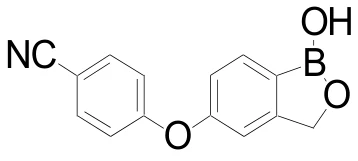
Chemical name: 4(1-hydroxy-1,3,-dihydrobenzo[c][1,2]oxaborol-5-yloxy)benzonitrile
4-[(1,3-dihydro-1-hydroxy-2,1- benzoxaborol-5-yl)oxy]benzonitrile
5-(4-cyanophenoxy)-1,3-dihydro-1-hydroxy- [2,1]-benzoxaborole
Molecular formula and molecular mass: C14 H10 BNO3, 251.1 daltons
Structural formula:
Physicochemical properties: EUCRISA contains 2% crisaborole (w/w) in a petrolatum-based, white to off-white ointment and is for topical use. The active ingredient, crisaborole, is a phosphodiesterase-4 (PDE-4) inhibitor. Crisaborole drug substance is freely soluble in common organic solvents such as isopropyl alcohol and propylene glycol, and insoluble in water.
14 CLINICAL TRIALS
14.1 Clinical Trials by Indication
Atopic Dermatitis
Trial Design and Study Demographics
Table 4 - Summary of Trial Design and Patient Demographics for Pivotal Phase 3 Clinical Trials in Atopic Dermatitis
| Study # | Trial design | Dosage, route of administration and duration | Study patients (n) | Mean age (Range) (years) And Gender | Efficacy Endpoints |
| AN2728-AD-301 | Multi-center, randomized, double-blind, vehicle- | Crisaborole ointment 2%, topical application twice daily for 28 days | 503 | 12.0 (2-65) Male: 43.5% Female: 56.5% | The primary efficacy endpoint was the proportion of patients at Day 29 who achieved success, defined as |
| Study # | Trial design | Dosage, route of administration and duration | Study patients (n) | Mean age (Range) (years) And Gender | Efficacy Endpoints |
| controlled | an ISGA of clear (0) or almost clear (1) with a 2-grade or greater improvement from baseline. The secondary efficacy endpoints were the proportion of patients at Day 29 with ISGA of clear (0) or almost clear (1) and the time to success in ISGA. | Vehicle ointment topical application twice daily for 28 days | 256 | 12.4 (2-63) Male: 44.1% Female: 55.9% | |
| AN2728-AD-302 | Multi-center, randomized, double-blind, vehicle-controlled | Crisaborole ointment 2%, topical application twice daily for 28 days | 513 | 12.6 (2-79) Male: 45.0% Female: 55.0% | |
| Vehicle ointment topical application twice daily for 28 days | 250 | 11.8 (2-79) Male: 44.8% Female: 55.2% | |||
| C3291002 | Multi-center, open-label, single arm | Crisaborole ointment 2%, topical application twice daily for 28 days | 137 | 1.1 (0.25-1.9) Male: 64.2% Female: 35.8% | Exploratory analysis using key endpoints as in studies AN2728-AD-301 and AN2728-AD-302, noted above. |
| C3291035 | Multi-center, randomized, double-blind, vehicle-controlled | Crisaborole ointment 2%, topical application once daily for 52 weeks | 135 | 22.6 (1.15 – 79.1) Male: 47.4% Female: 52.6% | Time of flare-free maintenance up until the onset of the first flare during the 52-week maintenance period. |
| Vehicle ointment topical application once daily for 52 weeks | 135 | 21.8 (0.45 – 76.1) Male: 43.7% Female: 56.3% |
The efficacy and safety of EUCRISA (crisaborole ointment, 2 %) was evaluated in two pivotal Phase 3, multicenter, randomized, double-blind, parallel-group, vehicle-controlled trials (Studies AN2728-AD-301 and AN2728-AD-302) that were identical in study design (Table 4). Patients with mild to moderate atopic dermatitis were randomized 2:1 to receive EUCRISA or vehicle applied twice daily for 28 days. Based on the amount of drug used in 28 days, the mean drug (EUCRISA Ointment, 2%) used per patient per application was approximately 3 grams in these clinical trials.
A total of 1,522 patients 2 to 79 years of age were enrolled in these studies. Overall, demographic characteristics and baseline disease characteristics were balanced between two treatment groups. The mean age was 12.3 years in the EUCRISA group and 12.1 years in the vehicle group. About 62% of patients in both treatment groups were 2 to 11 years of age, and 31-37% of patients were 2 to 6 years of age. At baseline, 38.5% of the patients had an Investigator’s Static Global Assessment (ISGA) of mild
(2), and 61.5% had an ISGA of moderate (3), in the overall assessment of atopic dermatitis (erythema, induration/papulation, and oozing/crusting) on a severity scale of 0 to 4. The mean treatable percent body surface area at baseline was 18% (range from 5% to 95%). Moderate or severe baseline pruritus was reported in approximately 70% of patients.
In a multicenter, open-label, uncontrolled trial (Study C3291002), 137 pediatric subjects aged 3 months to less than 2 years were treated with EUCRISA twice daily for 4 weeks. The primary endpoint of safety was evaluated through 4 weeks, with support from pharmacokinetic analyses showing similar drug exposure to older subjects.
One Phase 3, randomized, double-blind, vehicle-controlled trial (C3291035) assessed the efficacy and safety of EUCRISA once daily over 52 weeks as maintenance treatment to reduce the incidence of flares in adult and pediatric patients (3 months to 17 years) with mild to moderate atopic dermatitis, who responded to EUCRISA twice daily during open-label treatment of up to 8 weeks.
A total of 497 subjects 5 months to 79 years of age with a 2% to 90% treatable BSA, entered into an open-label period to receive EUCRISA twice daily for up to 8 weeks. At baseline, 66.2% of the subjects had an ISGA of moderate (3), and 33.6% had an ISGA of mild (2), in the overall assessment of atopic dermatitis (erythema, induration/papulation, and oozing/crusting) on a severity scale of 0 to 4.
Of the 497, a total of 270 subjects aged 5 months to 79 years, who achieved both ISGA success (score of clear [0] or almost clear [1] with a ≥2 grade improvement from baseline) and EASI50 response (at least 50% improvement from baseline in EASI scores) were randomized 1:1 into a double-blind maintenance period to receive EUCRISA once daily or vehicle for 52 weeks. At baseline in the maintenance period, 60.0% of the subject had an ISGA of almost clear (1) and 38.5% has an ISGA of clear (0).
Study Results
AN2728-AD-301 and AN2728-AD-302
In Phase 3 trials: AN2728-AD-301 and AN2728-AD-302, the primary efficacy endpoint was the proportion of patients at Day 29 who achieved success, defined as an ISGA of clear (0) or almost clear (1) with a 2-grade or greater improvement from baseline, comparing EUCRISA-treated patients to vehicle-treated patients. The secondary efficacy endpoints included the proportion of patients at Day 29 with ISGA of clear (0) or almost clear (1), and the time to success in ISGA.
The results of the primary efficacy endpoint from two pivotal trials are summarized in Table 5.
Table 5: Results of the Primary and Secondary Efficacy Endpoints in Patients with Mild to Moderate Atopic Dermatitis at Day 29
| AN2728-AD-301 | AN2728-AD-302 | ||||||||||||
EUCRISA Twice Daily (N=503) | Vehicle Twice Daily (N=256) | EUCRISA Twice Daily (N=513) | Vehicle Twice Daily (N=250) | ||||||||||
| Primary Efficacy Endpoint --- Success in ISGAa | 32.8% | 25.4% | 31.4% | 18.0% | |||||||||
| p-value | 0.038 | <0.001 | |||||||||||
| Secondary Efficacy Endpoint --- ISGA Clear (0) or Almost Clear (1)b | 51.7% | 40.6% | 48.5% | 29.7% | |||||||||
| p-value | 0.005 | <0.001 | |||||||||||
a Defined as an ISGA of clear (0) or almost clear (1) with a 2-grade or greater improvement from baseline. b A 2-grade or greater improvement from baseline was not required. | |||||||||||||
The results of the primary efficacy endpoint showed that patients treated with EUCRISA (crisaborole ointment, 2 %) had a statistically significant higher rate (32.8% and 31.4%) of success in ISGA at Day 29 when compared with those treated with Vehicle (25.4% and 18.0%) in both pivotal trials, respectively.
Similarly, the results of the secondary efficacy endpoint showed that patients treated with EUCRISA (crisaborole ointment, 2 %) had a statistically significant higher rate (51.7% and 48.5%) of clear or almost clear ISGA scores ratings at Day 29 when compared with those treated with Vehicle (40.6% and 29.7%) in both pivotal trials, respectively. The time to success in ISGA was also statistically significantly earlier in the EUCRISA group than in the vehicle group in both trials.
C3291002:
The efficacy of EUCRISA in children 3 months to <2 years of age is extrapolated from efficacy in patients aged 2 year and older. The key exploratory efficacy endpoint in Study C3291002 was the proportion of patients who achieved treatment success, defined as an ISGA grade of clear or almost clear with a 2-grade or greater improvement from baseline. The results on ISGA were comparable to those observed among EUCRISA-treated subjects in Studies AN2728-AD-301 and AN2728-AD-302.
C3291035:
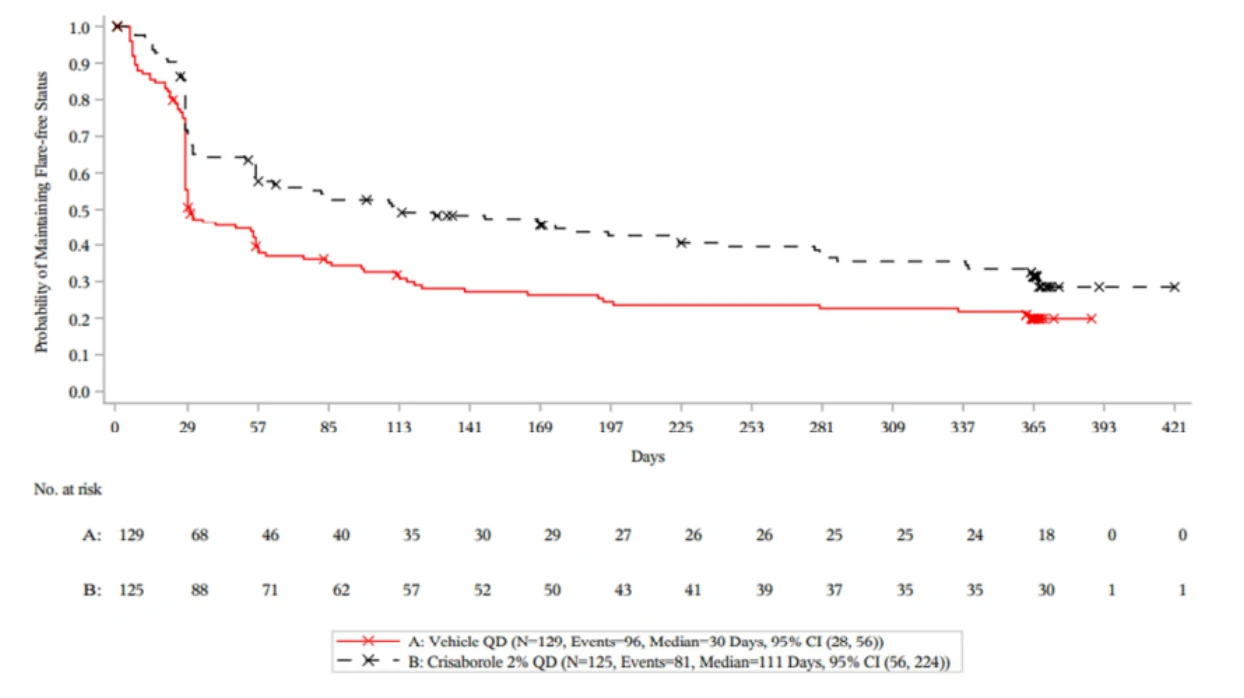
Efficacy was demonstrated by a statistically significant prolonged duration of flare-free days when comparing EUCRISA-treated subjects with vehicle-treated subjects (Table 6).
Table 6: Efficacy Results of the First Flare in Subjects with Mild to Moderate Atopic Dermatitis During the Flare-Free Maintenance Period (through Week 52)
| C3291035 | |||||||
|---|---|---|---|---|---|---|---|
EUCRISA Once Daily (N=125) | Vehicle Once Daily (N=129) | ||||||
Flare-free days until onset of first flare (Median days [95% CI])* | 111 (56, 224) | 30 (28, 56) | |||||
| Subjects with First Flare, n (%) | 81 (64.8) | 96 (74.4) | |||||
| Subjects Censored, n (%) | 44 (35.2) | 33 (25.6) | |||||
| Hazard Ratio (95% CI)a | 0.646 (0.477, 0.875) | ||||||
| p-valueb | 0.0034 | ||||||
* Estimated by the Kaplan-Meier (product limit) method; CI: Confidence Interval; LS: Least Squares a Hazard ratio based on stratified Cox regression model. b p-value based on stratified log-rank test. | |||||||
Figure 1: Kaplan-Meier Curve of Flare-Free Maintenance in Study C3291035
14.2 Comparative Bioavailability Studies
Not applicable.
15 MICROBIOLOGY
No microbiological information is required for this drug product.
16 NON-CLINICAL TOXICOLOGY
Carcinogenicity:
In an oral carcinogenicity study in Sprague-Dawley rats, oral doses of 30, 100, and 300 mg/kg/day crisaborole were administered to rats once daily for 104 weeks. A drug-related higher incidence of benign granular cell tumors in the uterus with cervix and vagina (combined) was noted in 300 mg/kg/day crisaborole treated female rats (1.5 times the MRHD on an AUC comparison basis). The clinical relevance of this finding is unknown.
In a dermal carcinogenicity study in CD-1 mice, topical doses of 2%, 5% and 7% crisaborole ointment were administered once daily for at least 99 (females) or 104 (males) weeks. No drug-related neoplastic findings were noted at topical doses up to 7% crisaborole ointment (1 times the MRHD on an AUC comparison basis).
Genotoxicity:
Crisaborole revealed no evidence of mutagenic or clastogenic potential based on the results of two in vitro genotoxicity tests (Ames assay and human lymphocyte chromosomal aberration assay) and one in vivo genotoxicity test (rat micronucleus assay).
Reproductive and Developmental Toxicology:
Rat and rabbit embryo-fetal development was assessed after oral administration of crisaborole. Crisaborole did not cause adverse effects to the fetus at oral doses up to 300 mg/kg/day in pregnant rats during the period of organogenesis (3 times the MRHD on an area under the curve (AUC) comparison basis). No crisaborole-related fetal malformations were noted after oral treatment with crisaborole in pregnant rats at doses up to 600 mg/kg/day (13 times the MRHD on an AUC comparison basis) during the period of organogenesis. Maternal toxicity was produced at this high dose of 600 mg/kg/day in pregnant rats and was associated with decreased fetal body weight and delayed skeletal ossification. Crisaborole did not cause adverse effects to the fetus at oral doses up to the highest dose tested of 100 mg/kg/day in pregnant rabbits during the period of organogenesis (2 times the MRHD on an AUC comparison basis).
In a prenatal/postnatal development study, pregnant rats were treated with crisaborole at doses of 150, 300, or 600 mg/kg/day by oral gavage during gestation and lactation (from gestation day 7 through day 20 of lactation). Crisaborole did not have any adverse effects on fetal development at doses up to 300 mg/kg/day (3 times the MRHD on an AUC comparison basis). Maternal toxicity was produced at the high dose of 600 mg/kg/day in pregnant rats and was associated with findings of stillbirths, pup mortality, and reduced pup weights.
No effects on fertility were observed in male or female rats that were administered oral doses up to 600 mg/kg/day crisaborole (13 times the MRHD on an AUC comparison basis) prior to and during early pregnancy.