


Product Monograph - Fluorouracil Injection (Sandoz Canada)
Recent Major Label Changes
| 2 Contraindications | 2026-05 |
|---|---|
| 3 Serious Warnings and Precautions Box | 2025-05 |
| 3 Serious Warnings and Precautions Box | 2026-05 |
| 7 Warnings and Precautions, Endocrine and Metabolism - Dihydropyrimidine dehydrogenase (DPD) deficiency | 2025-05 |
| 7 Warnings and Precautions, Endocrine and Metabolism - Dihydropyrimidine dehydrogenase (DPD) deficiency | 2026-05 |
| 7 Warnings and Precautions, Immune - Skin Reactions | 2025-05 |
| 7 Warnings and Precautions, Monitoring and Laboratory Tests | 2026-05 |
| 7 Warnings and Precautions, Reproductive Health - Female Contraception | 2025-05 |
| 7 Warnings and Precautions, Reproductive Health - Male Contraception | 2025-05 |
Table of Contents
Certain sections or subsections that are not applicable at the time of the preparation of the most recent authorized product monograph are not listed.
Recent Major Label Changes ................................................................................................... 2
Table of Contents ................................................................................................................... 2
Part 1: Healthcare Professional Information ........................................................................... 5
1 Indications .................................................................................................................. 5
1.1 Pediatrics ..............................................................................................................5
1.2 Geriatrics ..............................................................................................................5
2 Contraindications ........................................................................................................ 5
3 Serious Warnings and Precautions Box ....................................................................... 5
4 Dosage and Administration ......................................................................................... 6
4.1 Dosing Considerations ..........................................................................................6
4.2 Recommended Dose and Dosage Adjustment .....................................................6
4.3 Reconstitution ......................................................................................................8
5 Overdose..................................................................................................................... 8
6 Dosage Forms, Strengths, Composition, and Packaging ............................................... 8
7 Warnings and Precautions ........................................................................................... 9
General .............................................................................................................................9
Carcinogenesis and Genotoxicity .....................................................................................9
Cardiovascular ..................................................................................................................9
Endocrine and Metabolism ..............................................................................................9
Gastrointestinal ..............................................................................................................10
Hematologic ...................................................................................................................10
Hepatic/Biliary/Pancreatic .............................................................................................10
Immune ..........................................................................................................................11
Monitoring and Laboratory Tests ...................................................................................11
Neurologic ......................................................................................................................11
Renal ..............................................................................................................................11
Reproductive Health ......................................................................................................11
7.1 Special Populations .............................................................................................12
7.1.1 Pregnancy .......................................................................................................12
7.1.2 Breastfeeding .................................................................................................12
7.1.3 Pediatrics ........................................................................................................12
7.1.4 Geriatrics ........................................................................................................12
8 Adverse Reactions ..................................................................................................... 12
8.1 Adverse Reaction Overview ................................................................................12
8.2 Clinical Trial Adverse Reactions ..........................................................................13
9 Drug Interactions ...................................................................................................... 13
9.4 Drug-Drug Interactions .......................................................................................13
9.5 Drug-Food Interactions .......................................................................................14
9.6 Drug-Herb Interactions .......................................................................................14
9.7 Drug-Laboratory Test Interactions ......................................................................15
10 Clinical Pharmacology ............................................................................................... 15
10.1 Mechanism of Action ..........................................................................................15
10.3 Pharmacokinetics ...............................................................................................16
11 Storage, Stability, and Disposal ................................................................................. 16
12 Special Handling Instructions .................................................................................... 16
Part 2: Scientific Information ................................................................................................ 18
13 Pharmaceutical information ...................................................................................... 18
14 Clinical Trials ............................................................................................................. 18
15 Microbiology ............................................................................................................. 18
16 Non-Clinical Toxicology ............................................................................................. 19
17 Supporting Product Monograph ................................................................................ 21
Patient Medication Information ........................................................................................... 22
Part 1: Healthcare Professional Information
1 Indications
Fluorouracil Injection (5-fluorouracil) is indicated in the palliative management of carcinoma of the breast, colon, rectum, stomach and pancreas. In clinical practice, 5-fluorouracil is often combined with other cytotoxic agents such as methotrexate, cyclophosphamide, cisplatin, vincristine, mitomycin, adriamycin, levamisole and interferon alpha-2a; or drugs which may enhance its effect on killing tumor cells such as calcium leucovorin.
Various combinations of 5-fluorouracil/interferon and 5-fluorouracil/leucovorin/interferon are also used in clinical practice.
Fluorouracil Injection does not replace surgery or other recognized forms of therapy and should be used only when these measures are not possible or have been tried and have failed.
1.1 Pediatrics
Pediatrics (≤ 18 years of age): No data are available to Health Canada; therefore, Health Canada has not authorized an indication for pediatric use.
1.2 Geriatrics
Geriatrics (≥ 65 years of age): No data are available to Health Canada; therefore, Health Canada has not authorized an indication for geriatric use.
2 Contraindications
- Fluorouracil (5-fluorouracil) therapy is contraindicated in pregnant women, for patients in a poor nutritional state, those with severely depressed bone marrow function, with potentially serious infections, or those with a known hypersensitivity to 5-fluorouracil.
- Fluorouracil Injection must not be taken within 4 weeks of treatment with brivudine, sorivudine or their chemically related analogues. Brivudine, sorivudine and their analogues are potent inhibitors of the enzyme dihydropyrimidine dehydrogenase (DPD), which degrades fluorouracil (see 9 Drug Interactions, 9.4 Drug-Drug Interactions).
- Fluorouracil Injection is contraindicated in patients with known complete absence of dihydropyrimidine dehydrogenase (DPD) activity. Testing for DPD deficiency should be performed prior to initiating Fluorouracil Injection unless immediate treatment is necessary, based on local availability and current guidelines (see 7 Warnings and Precautions).
3 Serious Warnings and Precautions Box
- Severe skin reactions: Cases of Stevens-Johnson Syndrome (SJS) and Toxic Epidermal Necrolysis (TEN), some fatal, have been reported in patients receiving fluorouracil in combination therapy.
Severe toxicity (e.g., stomatitis, diarrhea, neutropenia, and neurotoxicity) associated with 5-
- fluorouracil has been attributed to deficiency of DPD activity, an enzyme involved in fluorouracil degradation. Fatalities have been reported. Testing for DPD deficiency should be performed prior to initiating Fluorouracil Injection unless immediate treatment is necessary, based on the local availability and current guidelines (see 7 Warnings and Precautions, Endocrine and Metabolism).
4 Dosage and Administration
4.1 Dosing Considerations
Criteria for the selection of patients: In order to be considered for Fluorouracil Injection (5-fluorouracil) therapy, a prospective patient must meet the following:
- No history of high irradiation to major bone marrow-bearing areas.
- Adequate bone marrow function, i.e., a white blood cell count of 3000/mm3 or over,
- A granulocyte count of 1500/mm3 or over and a platelet count of 80 000/mm3 or over.
- Adequate hepatic and renal functions.
Fluorouracil Injection (5-fluorouracil) should only be administered intravenously, and care should be taken to avoid extravasation. No dilution of the solution is required when Fluorouracil Injection is given by direct intravenous injection.
4.2 Recommended Dose and Dosage Adjustment
In most cases, dosage should be based on the patient's actual weight or actual body surface area. However, if the patient is obese or if there has been a spurious weight gain due to edema, ascites or other forms of abnormal fluid retention, the ideal weight or ideal body surface area should be used. Following major weight loss, the dose of 5-fluorouracil should be reduced.
5-fluorouracil is a highly toxic drug with a narrow margin of safety.
Therapeutic response is unlikely to occur without some evidence of toxicity. Patients should be informed of expected toxic effects, particularly oral manifestations (see 8 Adverse Reactions).
It is recommended that each patient be carefully evaluated prior to treatment, in order to estimate as accurately as possible the optimum initial dosage of Fluorouracil Injection. Likewise, the duration of therapy must be determined by a specialist, based on the type and course of the disease.
The following dosage schedules may be used:
Recommended Dose
IV Injection
- 1. 800 mg/m2 (19 mg/kg) single dose.
- 2. 480 mg/m2 (12 mg/kg) per day on days 1, 2, 3, 4 followed by 240 mg/m2 (6 mg/kg) per day on days 6, 8, 10 and 12. Repeat course every 30 days.
- 3. 300-450 mg/m2 (7-11 mg/kg) per day for 5 days. Repeat every 4 weeks.
- 4. 400-480 mg/m2 (10-12 mg/kg) or 500-600 mg/m2 (12-15 mg/kg) per week.
IV Infusion
Administration by infusion may result in slightly less toxicity. Fluorouracil Injection may be diluted with 300 to 500 mL of 5% dextrose solution.
- 1. 480 mg/m2 (12 mg/kg) over a period of 4 hours daily until signs of toxicity are observed, usually within 8 to 15 days.
- 2. 1000-2000 mg/m2 (24-49 mg/kg) over a period of 24 hours daily for 5 days. Repeat course every 4 weeks.
Combination therapy with folinic acid
IV injection 370-400 mg/m2 (9-10 mg/kg) for 5 days plus folinic acid 200-500 mg/m2 (5-12 mg/kg) for 5 days. Repeat course every 4 weeks.
The patient must be monitored for toxic signs. Drug therapy should be appropriately adjusted or discontinued should toxic signs such as gastrointestinal bleeding become manifested.
Dosage Reduction in Combination Therapy
When Fluorouracil Injection is combined with other cytostatics of similar toxicity profile or with radiotherapy, the recommended dosage should be reduced accordingly.
Recommendations for Poor Risk Patients
For poor risk patients, the following dosage schedules may be used:
IV Injection
240 mg/m2 (6 mg/kg) per day on days 1, 2, 3 followed by 120 mg/m2 (3 mg/kg) per day on days 5, 7, 9. Repeat course every 30 days.
IV Infusion
240 mg/m2 (6 mg/kg) over a period of 4 hours daily until signs of toxicity are observed, usually within 8 to 15 days.
Renal Impairment
Due to the impairment of bone marrow function in azotemia, secondary to kidney failure, a dose adjustment appropriate to the degree of renal failure and to the reaction of the individual patient to Fluorouracil Injection is recommended.
Hepatic Impairment
Since 5-fluorouracil is metabolized mainly in the liver, a dosage reduction should be considered when liver function is impaired.
Note: The patient's reaction to the previous course should be taken into account when determining the dosage. Some patients have received from 9 to 45 courses of treatment over periods ranging from 12 to 60 months.
Frequent blood counts (every two or three days) are essential during initial therapy. During maintenance therapy, counts before each course are sufficient.
Therapy should be properly adjusted or discontinued whenever any of the following signs of toxicity appear:
- Significant stomatitis, mucositis or esophagitis, severe diarrhea or vomiting, or gastrointestinal ulcers or bleeding occurs.
- Leukopenia (WBC count under 3000/mm3), thrombocytopenia (platelet count under 80 000/mm3), or granulocytopenia (under 1500/mm3).
- Central or peripheral nervous system toxicity, including ataxia, tremor.
- Cardiac toxicity.
4.3 Reconstitution
Parenteral Products:
Dilution
No dilution of the solution is required when Fluorouracil Injection is given by direct intravenous injection.
Fluorouracil Injection may be diluted with 300 to 500 mL of 5% dextrose and administered by infusion over a period of either 4 or 24 hours (see 4 Dosage and Administration). Infusions prepared with 5% dextrose solution should be used within 24 hours.
5 Overdose
The main symptoms of overdose are nausea, vomiting, diarrhea, stomatitis, esophagopharyngitis, gastrointestinal ulceration and bleeding, hemorrhage from any site and bone marrow depression (including thrombocytopenia, leukopenia and agranulocytosis). Uridine triacetate is a specific antidote for the treatment of 5-fluorouracil overdose or the treatment of severe early-onset toxicities. It should be administered within 96 hours after end of 5-fluorouracil infusion. In the event uridine triacetate is not available, treatment is symptomatic and supportive.
Patients who have been exposed to an overdose of Fluorouracil (5-fluorouracil) should be monitored hematologically with regular white cell counts, differentials and platelet counts. Should abnormalities appear, appropriate symptomatic therapy should be utilized. Suitable counter measures are withdrawal of medication or dosage reduction and, depending on the symptoms, blood transfusions, leukocyte or platelet infusions or antiinfective therapy. Nausea, vomiting and diarrhea may be controlled by appropriate therapy.
For the most recent information in the management of a suspected drug overdose, contact your regional poison control centre or Health Canada’s toll-free number, 1-844 POISON-X (1-844-764-7669).
6 Dosage Forms, Strengths, Composition, and Packaging
Table 1 – Dosage Forms, Strengths, and Composition
| Route of Administration | Dosage Form / Strength /Composition | Non-Medicinal Ingredients |
| Intravenous | Solution, 50 mg/mL | Sodium hydroxide, water for injection. |
Fluorouracil Injection contains 50 mg of fluorouracil per mL of water for injection; sodium hydroxide is added to solubilize the compound and to adjust the pH to approximately 9.2.
Fluorouracil Injection is available in:
100 mL Pharmacy bulk vial containing 5 000 mg fluorouracil, in packs of 1 vial.
The stopper is not made with natural rubber latex.
7 Warnings and Precautions
See 3 Serious Warnings and Precautions Box.
General
Fluorouracil (5-fluorouracil) should be given only by or under the supervision of a qualified physician who is experienced in cancer chemotherapy and well-versed in the use of potent antimetabolites.
Severe hematological effects, gastrointestinal hemorrhage and even death may result from the use of 5-fluorouracil despite meticulous selection of patients and careful adjustment of dosage, but severe toxicity is more frequent in poor risk patients.
The drug should be used with extreme caution in patients who have undergone recent major surgery; those with a history of high dose irradiation to bone marrow-bearing areas (pelvis, spine, ribs, etc.) or previous use of other myelosuppressive chemotherapeutic agents; those with a widespread involvement of bone marrow by metastatic tumors; or those with renal or liver impairment. Although severe toxicity is more likely in debilitated patients, fatalities may be encountered occasionally even in patients in relatively good condition.
Carcinogenesis and Genotoxicity
Positive mutagenic findings have been observed in the usual mutagenicity screening tests (see 16 Non-Clinical Toxicology, Genotoxicity).
Women of childbearing potential should be advised to avoid becoming pregnant while receiving treatment with 5-fluorouracil (see 7 Warnings and Precautions, Special Populations). Males are advised not to father a child during treatment.
Cardiovascular
5-fluorouracil can cause myocardial ischemia, angina, precordial pain, cardiac arrhythmias, ischemia and heart failure. In the case of cardiac toxicity, continued treatment with 5-fluorouracil is not recommended.
Endocrine and Metabolism
Dihydropyrimidine dehydrogenase (DPD) deficiency
5-fluorouracil should be used with great care in patients who are known or suspected to have a dihydropyrimidine dehydrogenase deficiency, as these patients are at a greater risk of experiencing symptoms of toxicity.
Severe toxicity (e.g., stomatitis, diarrhea, neutropenia, and neurotoxicity) associated with fluorouracil has been attributed to a deficiency of dihydropyrimidine dehydrogenase (DPD) activity. Fatal outcome has been reported in some cases. Absence of this catabolic enzyme appears to result in prolonged clearance of fluorouracil. Special attention should be given to DPD status when evaluating patients experiencing fluorouracil-related toxicities. No dose has been proven safe for patients with complete absence of DPD activity.
Patients with certain heterozygous DPYD variants (e.g., DPYD*2A variant) that may cause partial DPD deficiency have been shown to have increased risk of severe toxicity when treated with 5-fluorouracil. For patients with partial DPD deficiency where the benefits of 5-fluorouracil are considered to outweigh the risks (taking into account the suitability of an alternative non-fluoropyrimidine chemotherapeutic regimen), these patients must be treated with extreme caution, initially with a substantial dose reduction and frequent subsequent monitoring and dose adjustment according to toxicity.
Testing for DPD deficiency should be performed prior to initiating Fluorouracil Injection unless immediate treatment is necessary, based on the local availability and current guidelines.
In patients with unrecognized DPD deficiency treated with 5-fluorouracil as well as patients who test negative for specific DPYD variations, life-threatening toxicities manifesting as acute overdose may occur. In the event of grade 2-4 acute toxicity, treatment must be discontinued immediately. Permanent discontinuation should be considered based on clinical assessment of the onset, duration and severity of the observed toxicities (see 4 Dosage and Administration).
Gastrointestinal
Diarrhea
5-fluorouracil can cause severe diarrhea or vomiting, or gastrointestinal ulcers or bleeding. Diarrhea usually responds to antidiarrheal agents (see 4 Dosage and Administration). In the case of severe gastrointestinal toxicity continued treatment with 5-fluorouracil is not recommended.
Hematologic
Because of the possibility of leukopenia, frequent blood counts (every two or three days) are essential during initial therapy. If the count falls, it is advisable to obtain differentials with each count. If the count is less than 1500/mm3 with marked granulocytopenia (less than 1000/mm3), it is recommended that the patient be carefully followed and considered for prophylactic antibiotics. During maintenance therapy, counts before each course are sufficient.
Hepatic/Biliary/Pancreatic
Hepatic Insufficiency
Patients with hepatic impairment should be carefully monitored with 5-fluorouracil is administered (see Monitoring and Laboratory Tests).
Immune
Skin Reactions
Cases of Stevens-Johnson Syndrome (SJS) and Toxic Epidermal Necrolysis (TEN), some fatal, have been reported in patients receiving fluorouracil in combination therapy (see 8 Adverse Reactions, Skin).
Monitoring and Laboratory Tests
- Testing for DPD deficiency should be performed prior to initiating Fluorouracil Injection unless immediate treatment is necessary, based on the local availability and current guidelines (see 7 Warnings and Precautions, Endocrine and Metabolism).
- Patients should be carefully monitored for toxicity (see 4 Dosage and Administration).
- Patients with severe diarrhea should be monitored for symptoms of dehydration (see 7 Warnings and Precautions, Gastrointestinal).
- Patients with hepatic impairment or renal insufficiency should be carefully monitored when 5-fluorouracil is administered (see 7 Warnings and Precautions; 4 Dosage and Administration, Hepatic Impairment).
- Pregnancy testing is recommended for females of reproductive potential prior initiating 5-fluorouracil (see 7 Warnings and Precautions, 7.1 Special Populations).
Neurologic
Fluorouracil can cause neurologic toxicity including Ataxia, dysarthria, nystagmus, disorientation, headache, confusion, euphoria, acute cerebellar syndrome (which may persist following discontinuation of treatment). Extra pyramidal or cortical dysfunction (usually reversible). Isolated cases of leucoencephalopathy have also been reported. In the case of neurological toxicity, continued treatment with 5-fluorouracil is not recommended.
Renal
Renal Insufficiency
Due to the impairment of bone marrow function in azotemia, secondary to kidney failure, a dose adjustment of 5-fluorouracil is recommended (see 4 Dosage and Administration).
Reproductive Health
Fertility
Based on evidence from animal studies, 5-fluorouracil may impair fertility in females and males of reproductive potential (see 16 Non-Clinical Toxicology).
Female Contraception
Women of childbearing potential should be advised to avoid becoming pregnant while receiving treatment with 5-fluorouracil and be provided with appropriate counselling if not currently using contraceptives. An effective method of contraception should be used during treatment and for 6 months after the last dose of 5-fluorouracil. If the patient becomes pregnant while receiving 5-fluorouracil, the potential hazard to the fetus must be explained. Pregnancy testing is recommended for females of reproductive potential prior initiating 5-fluorouracil (see 7 Warnings and Precautions, Monitoring and Laboratory Tests).
Male Contraception
Male patients with female partners of reproductive potential should use effective contraception during treatment and for 3 months following the last dose of 5-fluorouracil.
7.1 Special Populations
7.1.1 Pregnancy
Although it is not known whether 5-fluorouracil crosses the human placenta, it has been shown to cross the rat placenta and enter into the fetal circulation of this rodent. Positive teratologic findings have been observed in animals (see 16 Non-Clinical Toxicology, Teratology). Therefore, this drug should not be used during pregnancy.
7.1.2 Breastfeeding
It is not known whether 5-fluorouracil is excreted in human milk. Because 5-fluorouracil inhibits DNA, RNA and protein synthesis, mothers should not nurse while receiving this drug.
7.1.3 Pediatrics
Pediatrics (≤ 18 years of age): No data are available to Health Canada; therefore, Health Canada has not authorized an indication for pediatric use.
7.1.4 Geriatrics
Geriatrics (≥ 65 years of age): No data are available to Health Canada; therefore, Health Canada has not authorized an indication for geriatric use.
8 Adverse Reactions
8.1 Adverse Reaction Overview
Stomatitis, mucositis and esophagopharyngitis (which may lead to sloughing and ulceration), diarrhea, anorexia, nausea and emesis are commonly seen during therapy with Fluorouracil (5-fluorouracil). Allergic reactions including anaphylaxis, bronchospasm, urticaria and pruritus have also been reported. If anaphylactic shock occurs, the usual countermeasures should be employed. Diarrhea usually responds to antidiarrheal agents. Uncontrolled nausea and vomiting can be treated with antiemetic agents.
Leukopenia with neutropenia usually follows each course of adequate therapy with 5-fluorouracil. The lowest white blood cell counts are commonly observed between the 9th and 14th days after the first dose, although the maximal depression may occasionally be delayed for as long as 20 days. By the 30th day, the count usually returns to the normal range. Pancytopenia, agranulocytosis, anemia, hemolytic anemia and thrombocytopenia have also been reported. Due to immunosuppression, infections (sometimes serious), may develop in patients treated with 5-fluorouracil.
Alopecia and dermatitis may be seen in a substantial number of cases. Patients should be alerted to the possibility of alopecia, but since the alopecia is reported to be reversible, special measures do not seem to be indicated. The dermatitis seen most often is a pruritic maculopapular rash appearing usually on the extremities and sometimes on the trunk. It is generally reversible and responsive to symptomatic treatment.
8.2 Clinical Trial Adverse Reactions
Cardiovascular: Myocardial ischemia, angina, precordial pain, cardiac arrhythmias, ischemia and heart failure resulting rarely in death.
Gastrointestinal: Gastrointestinal ulceration and bleeding.
Miscellaneous: Thrombophlebitis, epistaxis, nail changes (including loss of nails), chest pain, vein pigmentation. Hepatocellular damage and, in very rare cases, fatal hepatic necrosis have been observed.
Neurologic: Ataxia, dysarthria, nystagmus, disorientation, headache, confusion, euphoria, acute cerebellar syndrome (which may persist following discontinuation of treatment). Extra pyramidal or cortical dysfunction (usually reversible). Isolated cases of leucoencephalopathy have also been reported.
Ophthalmic: Visual changes; photophobia; oculomotor disturbances and lacrimation, optic neuritis. Lacrimal duct stenosis (canalicular fibrosis) associated with prolonged administration of fluorouracil has been reported as rare. This condition is reversible upon reduction or temporary cessation of 5-fluorouracil therapy, but on occasion may necessitate surgical intervention.
Skin: Dry skin; fissuring; photosensitivity as manifested by erythema or increased pigmentation of the skin; palmar-plantar erythrodysesthesia syndrome (hand-foot syndrome), as manifested by tingling of the hands and feet followed by pain, erythema and swelling. Palmar-plantar erythrodysesthesia syndrome gradually resolves 5 to 7 days after interruption of therapy. This syndrome may be treated with the concomitant oral administration of pyridoxine at doses of 100 to 150 mg per day.
Cases of Stevens-Johnson syndrome (SJS) and Toxic Epidermal Necrolysis (TEN), some fatal, have been reported in patients receiving fluorouracil in combination with other agents known to be associated with these disorders. A contributory role of fluorouracil in these occurrences of SJS/TEN cannot be excluded.
9 Drug Interactions
9.4 Drug-Drug Interactions
Brivudine, sorivudine or their chemically related analogues irreversibly inhibit DPD, resulting in a significant increase in fluorouracil exposure. This may lead to increased fluoropyrimidine-related toxicities with potentially fatal outcome. Therefore, either a different antiviral therapy may be used or there should be an interval of at least 4 weeks between the administration of brivudine, sorivudine, or the analogues and the start of fluorouracil treatment (see 2 Contraindications). In the case of accidental administration of nucleoside analogues that inhibit DPD activity to patients treated with fluorouracil, effective measures should be taken to reduce fluorouracil toxicity. Immediate hospitalization is recommended.
Leucovorin (folinic acid) and 5-fluorouracil are routinely used together in the treatment of colorectal cancer. There is biochemical rationale for the synergism produced by the combination of 5-fluorouracil and leucovorin. Leucovorin is metabolized to a reduced folate co-factor that is necessary for maximal inhibition of thymidylate synthetase by Fd-UMP, the active metabolite of 5-fluorouracil. Studies with tumour lines in vitro have confirmed this effect and several clinical studies have shown evidence that there may be some increased therapeutic benefit from providing a source of reduced folate.
Clinical trials have been reported using sequenced methotrexate/fluorouracil in head and neck, breast and colorectal cancers. Methotrexate has been shown to improve the effectiveness of 5-fluorouracil against tumor cells in vitro and in vivo. The sequence of administration is of importance. Administration of methotrexate followed by 5-fluorouracil leads to a synergistic interaction. Biochemical modulation might occur both through effects on RNA and DNA synthesis and enhancement of 5-fluorouracil uptake. The importance of the time interval between methotrexate and 5-fluorouracil exposure in the treatment of metastatic colon cancer has been demonstrated. When these two agents are separated by 24 hours as compared with 1 hour, the response rate, time to progression and survival are significantly improved. However, different tumors may respond differently to changes in the time interval between methotrexate and 5-fluorouracil.
Any form of therapy which adds to the stress of the patient, interferes with nutrition, or depresses bone marrow function, may increase the toxicity of 5-fluorouracil.
When combining 5-fluorouracil with other anticancer agents (such as methotrexate, cyclophosphamide, cisplatin, vincristine, mitomycin, adriamycin, levamisole or interferon alpha-2a) and leucovorin, drug interactions increasing both the efficacy and/or toxicity have been reported. A hemolytic-uremic syndrome has been reported to occur after long-term use of 5-fluorouracil in combination with mitomycin.
Treatment with cimetidine for several weeks before initiation of fluorouracil treatment may increase plasma fluorouracil concentrations. This effect is probably due to both inhibition of hepatic enzymes and reduction of hepatic blood flow. Caution should be taken if the patient receives fluorouracil and cimetidine concurrently; some fatal outcomes have been reported.
Metronidazole may enhance the toxicity of fluorouracil. The mechanism of interaction is presumed to be reduced clearance of fluorouracil by metronidazole. Concurrent administration should be avoided; some fatal outcomes have been reported.
Elevated INR levels and occasional episodes of bleeding have been reported during concomitant use of warfarin and fluorouracil or its analogues. In these cases, fluorouracil has usually been administered as one component of an antineoplastic combination regimen. Adequate anticoagulant response to warfarin and other coumarin-derivative therapy should be monitored regularly in patients taking fluorouracil; some fatal outcomes have been reported.
9.5 Drug-Food Interactions
Interactions with food have not been established.
9.6 Drug-Herb Interactions
Interactions with herbal products have not been established.
9.7 Drug-Laboratory Test Interactions
The results of tests for bilirubin (icteric index), and for 5-hydroxyindole acetic acid in the urine, may be increased or false positive.
10 Clinical Pharmacology
10.1 Mechanism of Action
Fluorouracil (5-fluorouracil) is a fluorinated pyrimidine antimetabolite which is structurally similar to uracil, one of the necessary building blocks in cellular division and growth.
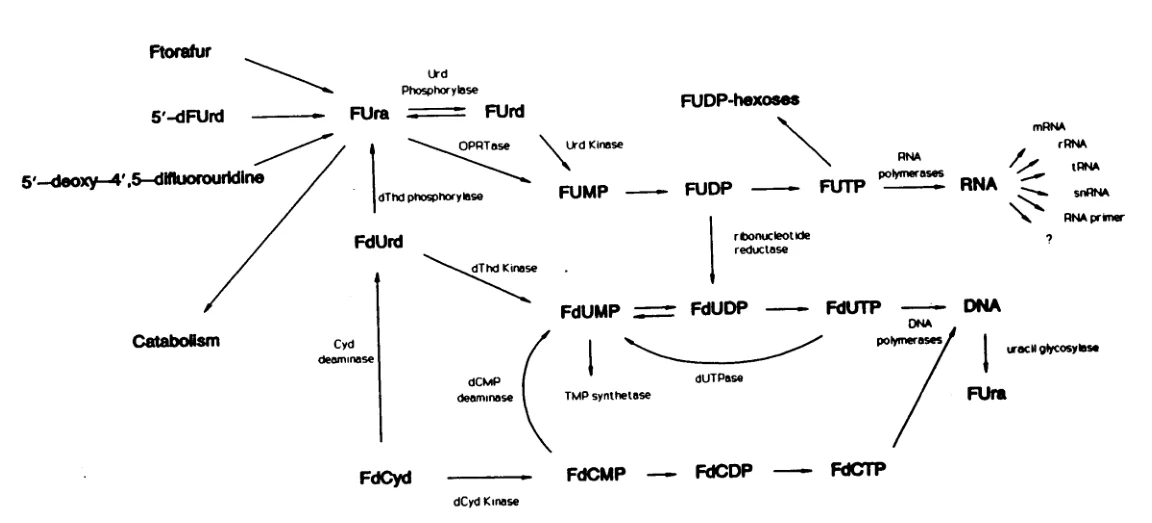
Figure 1
Its usefulness is based on uracil being utilized preferentially for nucleic acid biosynthesis in some tumors. 5-fluorouracil is metabolized to 5-fluorouridine triphosphate (F-UTP), 2-deoxyfluorouridine monophosphate (Fd-UMP), and 2-deoxyfluorouridine triphosphate (Fd-UTP) in cells to concentrations that result in both DNA-directed and RNA-directed cytotoxicities (see Figure 1). Fd-UMP is the intracellular cytotoxic form of 5-fluorouracil. It competes with the natural substrate d-UMP (deoxyuridine monophosphate) for the catalytic site on thymidylate synthetase (a key enzyme in DNA synthesis), forming a covalent complex with the enzyme that is unable to undergo the normal catalytic reaction of converting d-UMP to d-TMP. The presence of a reduced folate cofactor is required for tight binding of Fd-UMP to thymidylate synthetase. Folinic acid (leucovorin), which is metabolized to 5,10-methylene-tetrahydropteroylglutamine (a reduced folate), is able to modulate the antineoplastic effect of 5-fluorouracil by promoting the formation and stabilization of the ternary complex formed between Fd-UMP and thymidylate synthetase. In this way, leucovorin produces a synergistic effect on 5-fluorouracil therapy.
At the same time, 5-fluorouracil interferes with the mechanism of action of RNA, resulting from the formation of «fraudulent» RNA by the incorporation of F-UTP in the ribonucleotides. Incorporation into RNA has been associated with toxicity and has major effects on both the processing and functions of RNA.
By interference with the formation of DNA and RNA, 5-fluorouracil provokes unbalanced growth and death of cells. The effects of DNA and RNA deprivation are most marked on those cells which grow rapidly and which take up 5-fluorouracil rapidly.
While there is no evidence that 5-fluorouracil prolongs survival time generally, the usefulness of the drug has been demonstrated by the relief of pain and other symptoms in certain types of human malignancies. There have also occasionally been regression of tumors.
10.3 Pharmacokinetics
The steady-state plasma concentrations of 5-fluorouracil following bolus IV doses of 400-600 mg/m2 (10-15 mg/kg) range from 0.1-1.0 mM. Following continuous infusion of 1100 mg/m2/day, plasma concentrations of 0.5-2.5 mcM are observed. 5-fluorouracil readily penetrates the blood-brain barrier and CSF concentrations of about 7 mcM are reached within 30 minutes after intraveneous administration. The volume of distribution of 5-fluorouracil ranges from 0.1 to 0.4 L/kg.
The elimination half-life is 6-20 minutes and is dose-dependent. Following an IV injection, no intact drug can be detected in the plasma after three hours. For bolus doses, 5-fluorouracil plasma clearance is 0.5 to 1.4 L/min. Clearance values are 10- to 60-fold higher following IV infusion. This non-linearity likely represents saturation of a metabolic or transport process at higher drug concentrations. Plasma protein binding of 5-fluorouracil is 10%.
The metabolism of 5-fluorouracil occurs mainly in the liver and results in degradation products (e.g., carbon dioxide, urea, alpha-fluoro-beta-alanine) which are inactive. Approximately 15% of the dose is excreted intact in the urine in 6 hours and over 90% of this is excreted intact in the first hour; 60 to 80% is excreted as respiratory carbon dioxide in 8 to 12 hours.
11 Storage, Stability, and Disposal
Store between 15 and 25°C. Do not refrigerate or freeze.
Although Fluorouracil Injection (5- fluorouracil) solution may discolour slightly during storage, the potency, and safety are not adversely affected, and are maintained until the expiry date.
If a precipitate occurs during storage, resolubilize by heating to 60°C with vigorous shaking; allow to cool to body temperature before using.
12 Special Handling Instructions
Fluorouracil (5-fluorouracil) should be administered by individuals experienced in the use of antineoplastic therapy. Fluorouracil is both an irritant and a highly toxic drug. Professional staff administering 5-fluorouracil should exercise particular care to prevent spillage and contact with the drug. Should skin contact occur, the area should be vigorously washed with soap and cold water and the material used for cleansing disposed by incineration. In the case of contact with the eyes, irrigate immediately with water and contact a physician. If inhaled or ingested, seek immediate medical attention.
- 1. As for all antineoplastic agents, personnel handling these agents should wear polyvinylchloride gloves, safety glasses, disposable gowns and masks and should work in vertical laminar flow hood.
- 2. Fluorouracil is both an irritant and a highly toxic drug. Professional staff administering antineoplastic agents should exercise particular care to percent spillage and contact with the drug. Should skin contact occur, the area should be vigorously washed with soap and water. In the case of contact with the eyes, irrigate immediately with water and contact a physician. If inhaled or ingested, seek immediate medical attention.
- 3. As 5-fluorouracil is frequently adsorbed by regular glass surfaces, silanized glass should be used when 5-fluorouracil is given. All materials which have come in contact with cytotoxic agents including needles, syringes, open ampoules or vials, polyvinylchloride gloves, gowns, masks and materials used for cleansing, should be segregated and incinerated at 1000°C or more. If incineration is not possible, add household bleach (sodium hypochlorite solution) or 0.1 molar sodium hydroxide solution and place the sealed container in a landfill site.
- 4. Personnel regularly involved in the preparation and handling of cytotoxic agents should have bi-annual blood examinations.
Part 2: Scientific Information
13 Pharmaceutical information
Drug Substance
Proper name: Fluorouracil Ph.Eur.
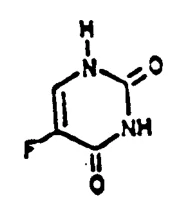
Chemical name: 5-fluoro-2,4 (1H, 3H)-pyrimidinedione
Molecular formula and molecular mass: C4H3FN2O2; 130.08
Structural formula:
Physicochemical properties:
Physical form: White to almost white, almost odourless, crystalline powder.
Solubility: Sparingly soluble in water, slightly soluble in alcohol, almost insoluble in chloroform and ether.
14 Clinical Trials
The clinical trial data on which the original indication was authorized is not available.
15 Microbiology
Animals
5-fluorouracil has wide range of activity against the majority of solid and ascitic forms of epithelial and mesenchymal transplantable tumors of mice, rats and hamsters. Examples of these transplantable tumors include Flexner-Jobling carcinoma, Walker 256 carcinoma, Yoshida ascites tumor, Shay's chloroleukemia, Sarcoma 180, Ehrlich ascites carcinoma, L-1210 leukemia, E0771, mammary adeno-carcinoma 755 and Sarcoma A-1. 5-fluorouracil is ineffective in spontaneous mammary tumors, human epidermoid carcinoma, Harding-Passey melanoma, myeloid leukemia Db 1490, and 5-fluorouracil resistant strains of Ehrlich carcinoma and leukemia L-1210.
Tissue Cultures
5-fluorouracil inhibits the growth of Hela and H. Ep. #1 cells, both of which are epithelial-like stains derived from human cervical carcinomas, in tissue culture. The minimum active concentration inhibiting the growth of Hela cells ranges from 0.1 to 1.0 mcg/mL depending on the media used in the study. For H. Ep. #1 cells, the minimum active concentration is 1.0 mcg/mL.
Microorganisms
5-fluorouracil is a potent inhibitor of the growth of the bacteria, Lactobacillus leichmannii, Lactobacillus plantarum, Lactobacillus casei and Streptococcus faecalis, and the yeast, Saccharomyces carlsbergensis. The mode of action of 5-fluorouracil in these microorganisms appears to be that the drug is converted into 5-fluoro-2'-deoxyuridylic acid, a highly potent irreversible inhibitor of the enzyme thymidylate synthetase, the catalyst needed in the methylation of deoxyuridylic acid to thymidylic acid, an important reaction in the formation of DNA.
Humans
In man, the biochemical effects of 5-fluorouracil in the anabolic pathway are:
- 1. Inhibition of the incorporation of uracil and orotic acid in the synthesis of RNA thus inhibiting its synthesis.
- 2. Synthesis of an unnatural RNA by incorporation of 5-fluorouracil into the molecule.
- 3. Inhibition of the methylation of deoxyuridylic acid to thymidylic acid thereby inhibiting the synthesis of DNA.
5-fluorouracil is converted into fluorouridine and further into the mono-, di-, and triphosphates of fluorouridine. 5-fluorouridine monophosphate is then reduced to 5-fluoro-2'-deoxyuridine monophosphate, the apparent lethal nucleotide, which inhibits the enzyme thymidylate synthetase required in the DNA synthesis. The inhibition of DNA synthesis is considered to be chiefly responsible for the antineoplastic activity of 5-fluorouracil in man, since concentrations which inhibit DNA still permit RNA synthesis.
The catabolic pathway of 5-fluorouracil is analogous to that of uracil, forming the following degradative products: dihydrofluorouracil, alpha-fluoro-beta-ureidopropionic acid, alpha-fluoro-beta-guanidopropionic acid, alpha-fluoro-beta-alanine, urea, and CO2.
16 Non-Clinical Toxicology
General Toxicology
Short-Term Toxicity
LD50 values of 5-fluorouracil in difference species via different routes of administration are as follows:
LD50 (mg/kg ± S.E.)
Species
IV
SC
IP
PO
Mice
340 ± 17
> 250
> 500
266 ± 25
Rats
165 ± 26
--
230
303 ± 51
Rabbits
27 ± 5.1
--
--
24 ± 1.9
Dogs
31.5 ± 3.8
--
--
29 ± 3.1
The toxicity of 5-fluorouracil shows pronounced species differences. Dogs, cats and rabbits display acute intoxication resembling fluoroacetate poisoning. Convulsions are observed in cats and dogs while cardiac failure appears in rabbits. Mice, rats and monkeys tolerate 5-fluorouracil better than dogs, cats and rabbits.
Long-Term Toxicity
Excessive dosage of 5-fluorouracil in mice, rats and monkeys leads to chronic intoxication characterized by depression of cells of the bone marrow and damage to cells of the gastrointestinal mucosa. The bone marrow damage caused by overdosage is reversible upon discontinuation of 5-fluorouracil.
The approximate doses which are tolerated for varying periods of time in different species are shown in the following table:
Species
Dose (mg/kg/day)
No. of Days
Route of Administration
Mice
25
14
SC
Rats
6-12
14
SC
Rabbits
2.5
30
SC
Dogs
3-12a
65b
SC
- a) One of the three monkeys receiving 12 mg/kg/day demonstrated severe toxicity and had to be sacrificed after 6 weeks of treatment.
- b) Five days/week dosing for 13 consecutive weeks.
Carcinogenicity
Animal studies have demonstrated an increased incidence of some tumors in mice, but not in rats, after long-term treatment with 5-fluorouracil. Fifty male and fifty female BALB/C mice were administered 5-fluorouracil IP at a dose of 30 mg/kg body weight once a week to test the carcinogenicity of 5-fluorouracil. A significant increase in lung tumors in both sexes and tumors of the lymphoreticular system in female mice was observed.
No evidence of carcinogenicity was reported in four groups of Fischer rats administered 5-fluorouracil by gastric intubation 5 times per week for 52 weeks, at a dose of 3.0, 1.0, 0.01 and 0.3 mg/animal per day followed by a 6 month observation period. In another study, male BR46 rats were administered weekly with IV injections of 33 mg/kg body weight for 52 weeks, followed by observations for the remainder of their lifetimes with no evidence of carcinogenesis.
Genotoxicity
Oncogenic transformation of fibroblasts from mouse embryo has been induced in vitro by 5-fluorouracil, but the relationship between oncogenicity and mutagenicity is not clear. 5-fluorouracil is mutagenic to several strains of Salmonella typhimurium, including TA 1535, TA 1537 and TA 1538, and to Saccharomyces cerevisiae, although no evidence of mutagenicity was found with Salmonella typhimurium strains TA 92, TA 98 and TA 100. A positive effect was observed in the micronucleus test on bone marrow sells of the mouse. 5-fluorouracil, at very high concentrations, produced chromosomal breaks in hamster fibroblasts in vitro.
Reproductive and Developmental Toxicology
5-fluorouracil has not been adequately studied in animals to permit an evaluation of its effects on fertility and general reproductive performance. However, doses of 125 or 250 mg/kg, administered intraperitoneally, have been shown to induce chromosomal aberrations and changes in chromosomal organization of spermatogonia in rats. Spermatogonial differentiation was also inhibited by 5-fluorouracil, resulting in transient infertility. However, in studies with a strain of mouse which is sensitive to the induction of sperm head abnormalities after exposure to a range of chemical mutagens and carcinogens, 5-fluorouracil did not produce any abnormalities at oral doses of up to 80 mg/kg/day. In female rats, 5-fluorouracil, administered intraperitoneally at weekly doses of 25 or 50 mg/kg for three weeks during the pre-ovulatory phase of oogenesis, significantly reduced the incidence of fertile matings, delayed the development of pre- and post-implantation embryos, increased the incidence of pre-implantation lethality and induced chromosomal anomalies in these embryos. In the limited study in rabbits, a single 25 mg/kg dose of 5-fluorouracil or 5 daily doses of 5 mg/kg had no effect on ovulation, appeared not to affect implantation and had only a limited effect in producing zygote destruction. Agents such as 5-fluorouracil, which interfere with DNA, RNA and protein synthesis, might be expected to have adverse effects on gametogenesis.
Teratology
5-fluorouracil is teratogenic in laboratory animals. 5-fluorouracil exhibited maximum teratogenicity when given to mice as single intraperitoneal injections of 10 to 40 mg/kg on day 10 or 12 of gestation. Similarly, intraperitoneal doses of 12 to 37 mg/kg given to rats between days 9 and 12 of gestation and intramuscular doses of 3 to 9 mg given to hamsters between days 8 and 11 of gestation were teratogenic. Malformations included cleft palates, skeletal defects and deformed appendages, paws and tails. The dosages which were teratogenic in animals are 1 to 3 times the maximum recommended human therapeutic dose. In monkeys, divided doses of 40 mg/kg given between days 20 and 24 of gestation were not teratogenic.
5-fluorouracil has not been studied in animals for its effects on peri- and post-natal development. However, 5-fluorouracil has been shown to cross the placenta and enter into fetal circulation in the rat. Administration of 5-fluorouracil has resulted in increased resorptions and embryolethality in rats. In monkeys, maternal doses higher than 40 mg/kg resulted in abortion of all embryos exposed to 5-fluorouracil. Compounds which inhibit DNA, RNA and protein synthesis might be expected to have adverse effects on peri- and post-natal development.
17 Supporting Product Monograph
- 1. Fluorouracil Injection USP, solution, 50 mg/mL, submission control 227813, Product Monograph, Pfizer Canada ULC. August 7, 2019