


Product Monograph - Fragmin (Pfizer Canada, 5000 Unit, ..., 16500 Unit)
Recent Major Label Changes
| 7 Warnings and Precautions, General | 06/2025 |
|---|---|
| 7 Warnings and Precautions, Hematologic | 08/2025 |
Table of Contents
Certain sections or subsections that are not applicable at the time of the preparation of the most recent authorized product monograph are not listed.
Recent Major Label Changes ........................................................ Error! Bookmark not defined.
Table of Contents ........................................................................ Error! Bookmark not defined.
Part 1: Healthcare Professional Information ................................ Error! Bookmark not defined.
1 Indications .................................................................................................................. 5
1.1 Pediatrics .............................................................................................................. 5
1.2 Geriatrics .............................................................................................................. 5
2 Contraindications ............................................................. Error! Bookmark not defined.
3 Serious Warnings and Precautions Box ............................ Error! Bookmark not defined.
4 Dosage and Administration .............................................. Error! Bookmark not defined.
4.1 Dosing Considerations .......................................................................................... 6
4.2 Recommended Dose and Dosage Adjustment ..................................................... 6
4.3 Reconstitution .................................................................................................... 11
4.4 Administration .................................................................................................... 11
4.5 Missed Dose ....................................................................................................... 11
5 Overdose.......................................................................... Error! Bookmark not defined.
6 Dosage Forms, Strengths, Composition and Packaging .............................................. 12
7 Warnings and Precautions ......................................................................................... 14
7.1 Special Populations ............................................................................................. 17
7.1.1 Pregnant Women ........................................................................................... 17
7.1.2 Breast-feeding ................................................................................................ 18
7.1.3 Pediatrics ........................................................................................................ 18
7.1.4 Geriatrics ........................................................................................................ 19
8 Adverse Reactions ..................................................................................................... 19
8.1 Adverse Reaction Overview ................................................................................ 19
8.2 Clinical Trial Adverse Reactions .......................................................................... 19
8.2.1 Clinical Trial Adverse Reactions – Pediatrics ................................................... 23
8.3 Less Common Clinical Trial Adverse Reactions ................................................... 24
8.3.1 Less Common Clinical Trial Adverse Reactions – Pediatrics ............................ 24
8.4 Abnormal Laboratory Findings: Hematologic, Clinical Chemistry and Other Quantitative Data ........................................................................................................... 24
8.5 Post-Market Adverse Reactions ......................................................................... 24
9 Drug Interactions ...................................................................................................... 25
9.2 Drug Interactions Overview ................................................................................ 25
9.3 Drug-Behavioural Interactions ............................................................................ 25
9.4 Drug-Drug Interactions ....................................................................................... 25
9.5 Drug-Food Interactions ....................................................................................... 26
9.6 Drug-Herb Interactions ....................................................................................... 26
9.7 Drug-Laboratory Test Interactions ...................................................................... 26
10 Clinical Pharmacology ............................................................................................... 26
10.1 Mechanism of Action .......................................................................................... 26
10.2 Pharmacodynamics ............................................................................................ 26
10.3 Pharmacokinetics ............................................................................................... 27
11 Storage, Stability and Disposal .................................................................................. 30
12 Special Handling Instructions .................................................................................... 30
Part 2: Scientific Information ................................................................................................ 31
13 Pharmaceutical Information ...................................................................................... 31
14 Clinical Trials ............................................................................................................. 32
14.1 Clinical Trials by Indication ................................................................................. 32
Thromboprophylaxis in conjunction with surgery .......................................................... 32
Unstable coronary artery disease, i.e. unstable angina and non-Q-wave myocardial infarction ........................................................................................................................ 39
Reduction of deep vein thrombosis in hospitalized patients with severely restricted mobility during acute illness ........................................................................................... 40
Anticoagulation for hemodialysis and hemofiltration .................................................... 42
Chronic renal failure, patients with no other known bleeding risk ................................. 46
15 Microbiology ............................................................................................................. 47
16 Non-Clinical Toxicology ............................................................................................. 47
Patient Medication Information ........................................................................................... 49
Part 1: Healthcare Professional Information
1 Indications
Fragmin (dalteparin sodium injection) is indicated for:
- Thromboprophylaxis in conjunction with surgery
- Treatment of acute deep venous thrombosis
- Unstable coronary artery disease (UCAD), i.e., unstable angina and non-Q-wave myocardial infarction
- Prevention of clotting in the extracorporeal system during hemodialysis and hemofiltration in connection with acute renal failure or chronic renal insufficiency
- Extended treatment of symptomatic venous thromboembolism (VTE) to prevent recurrence of venous thromboembolism in patients with cancer
- Reduction of deep vein thrombosis (DVT) in hospitalized patients with severely restricted mobility during acute illness. Decreased mortality due to thromboembolic events and complications has not been demonstrated.
1.1 Pediatrics
Pediatrics (2 weeks – 18 years): Health Canada has not authorized an indication for pediatric use. There is limited safety and efficacy information on the use of dalteparin in pediatric patients (see Monitoring and Laboratory Tests, 7.1.3 Pediatrics, and Use in Pediatrics (2 weeks – 18 years)).
1.2 Geriatrics
Geriatrics: Elderly patients may be at an increased risk for bleeding complications within the therapeutic dosage ranges. Careful clinical monitoring is advised (see Monitoring and Laboratory Tests and 7.1.4 Geriatrics).
2 Contraindications
Fragmin (dalteparin sodium injection) is contraindicated in patients who are hypersensitive to this drug or to any ingredient in the formulation, any non-medicinal ingredient (including benzyl alcohol when using the 25,000 IU multi-dose vial, (see 7 Warnings and Precautions, 7.1.1 Pregnant Women) to other low molecular weight heparins (LMWHs) and/or heparin or pork products, or component of the container. For a complete listing, see 6 Dosage Forms, Strengths, Composition and Packaging.
Fragmin (dalteparin sodium injection) is also contraindicated in patients who have the following:
- History of confirmed or suspected immunologically-mediated heparin-induced thrombocytopenia (delayed-onset severe thrombocytopenia), and/or in patients in whom an in vitro platelet-aggregation test in the presence of Fragmin is positive
- Septic endocarditis (endocarditis lenta, acute or subacute endocarditis)
- Uncontrollable active bleeding
- Major blood clotting disorders
- Acute gastroduodenal ulcer
- Cerebral hemorrhage
- Severe uncontrolled hypertension
- Diabetic or hemorrhagic retinopathy
- Other conditions or diseases involving an increased risk of hemorrhage
- Injuries to and operations on the central nervous system, eyes, and ears
- Spinal/epidural anesthesia is contraindicated where concomitant treatment with repeated high doses of Fragmin (100-120 IU/kg given twice daily or 200 IU/kg once daily, such as those needed to treat acute deep-vein thrombosis and unstable coronary artery disease) are required, due to an increased risk of bleeding.
3 Serious Warnings and Precautions Box
Serious Warnings and Precautions
- The multi-dose vial of Fragmin (25,000 IU/mL) contains benzyl alcohol (14 mg/mL) as a preservative. Benzyl alcohol has been associated with a potentially fatal “Gasping Syndrome” in neonates. Because benzyl alcohol may cross the placenta, Fragmin preserved with benzyl alcohol should not be used in pregnant women (see 7.1.1 Pregnant Women).
- The multi-dose vial of Fragmin (25,000 IU/mL) which contains benzyl alcohol must not be used in premature or newborn babies.
4 Dosage and Administration
4.1 Dosing Considerations
Fragmin may be given by subcutaneous (s.c.) injection or by intermittent or continuous intravenous (i.v.) infusion, depending upon the circumstances. Clinical trials conducted in support of clinical uses outlined below generally used subcutaneous dosing.
Fragmin must NOT be administered intramuscularly (see 7 Warnings and Precautions).
The multi-dose vial of Fragmin (25,000 IU/mL) which contains benzyl alcohol must not be used in premature or newborn babies, pediatric patients and pregnant women.
4.2 Recommended Dose and Dosage Adjustment
Use in Patients with Renal Impairment
Renal impaired patients, particularly those with severe renal impairment (CrCl <30 mL/min), treated with Fragmin should be monitored carefully.
Administration of LMWHs to patients with renal impairment has been shown to result in prolongation of anti-Xa activity, especially in those with severe renal impairment (creatinine clearance <30 mL/min), which may lead to an increased risk of bleeding. This effect has not yet been determined for Fragmin. Consideration of dosage adjustment in patients with severe renal impairment should be undertaken (see 10 Clinical Pharmacology). Literature data suggest that in critically ill patients with severe renal insufficiency, thromboprophylaxis with Fragmin at 5,000 IU once daily, does not appear to be associated with an excessive anticoagulant effect due to drug bioaccumulation and is unlikely to contribute to bleeding (see Renal Insufficiency).
Use in Pediatrics (2 weeks – 18 years)
Dosage requirements in pediatrics with VTE are based on age and body weight in order to achieve therapeutic anti-Xa levels between 0.5 and 1.0 IU/mL at 4 hours post-administration (see Pediatrics).
Starting doses by s.c. administration twice daily (q12h) per age groups are 150 IU/kg (for 2 weeks to < 2 years); 125 IU/kg (for 2 years to < 8 years); and 100 IU/kg (for 8 years to ≤ 18 years). Adjust dose in increments or decrements of 25 IU/kg to achieve therapeutic anti-Xa levels.
Thromboprophylaxis in Conjunction with Surgery
The dose of Fragmin required for adequate prophylaxis without substantially increasing bleeding risk varies depending on patient risk factors.
General surgery with associated risk of thromboembolic complications: 2500 IU s.c. administered 1-2 hours before the operation, and thereafter 2500 IU s.c. each morning until the patient is mobilized, in general 5-7 days or longer.
General surgery associated with other risk factors (see Selection of General Surgery Patients): 5000 IU s.c. is given the evening before the operation and then 5000 IU s.c. the following evenings. Treatment is continued until the patient is mobilized, in general for 5-7 days or longer.
As an alternative, 2500 IU s.c. is given 1-2 hours before the operation, with 2500 IU s.c. given again no sooner than 4 hours after surgery, but at least 8 hours after the previous dose, provided primary hemostasis is obtained. Starting on the day after surgery, 5000 IU s.c. is given each morning, in general for 5-7 days or longer.
Elective hip surgery: 5000 IU s.c. is given the evening before the operation and then 5000 IU s.c. the following evenings. Treatment is continued until the patient is mobilized, in general for 5-7 days or longer.
As an alternative 2500 IU s.c. is given 1-2 hours before the operation and 2500 IU s.c. 4-8 hours after surgery, provided primary hemostasis is obtained. Starting on the day after surgery, 5000 IU s.c. is given each morning, in general for 5-7 days or longer.
The pre-operative dose may be omitted and an initial dose of 2500 IU s.c. administered 4-8 hours after the operation, provided primary hemostasis is obtained. Starting on the day after surgery, 5000 IU s.c. is given each morning, in general for 5-7 days or longer. Omission of the pre-operative dose may reduce risk of peri-operative bleeding, however increased risk of venous thromboembolic events is possible. This option is based on the results of the North American Fragmin Trial (NAFT), which excluded patients at high risk of bleeding, i.e., documented cerebral or gastrointestinal bleeding within 3 months prior to surgery, defective hemostasis, e.g., thrombocytopenia (<100 x 109/L), ongoing anticoagulant treatment.
Treatment of Acute Deep Vein Thrombosis
The following dosage is recommended: 200 IU/kg body weight given s.c. once daily. The expected plasma anti-Xa levels during subcutaneous treatment would be <0.3 IU anti-Xa/mL before injection and <1.7 IU anti-Xa/mL 3 - 4 hours after injection. In order to individualize the dose, a functional anti-Xa assay should be performed 3 - 4 hours post-injection. The single daily dose should not exceed 18 000
IU. The following weight ranges are recommended to be adapted to the single-dose prefilled syringes as in the table below.
Table 1 – Recommended Dosage for Treatment of Acute Deep Vein Thrombosis
| Weight (kg) | Dosage (IU) |
| 46-56 | 10 000 |
| 57-68 | 12 500 |
| 69-82 | 15 000 |
| 83 and above* | 18 000 |
For patients with increased risk of bleeding, a dose of 100 IU/kg body weight given s.c. twice daily or 100 IU/kg body weight administered over a period of 12 hours as continuous i.v. infusion, can be used . The expected plasma anti-Xa levels during subcutaneous treatment would be >0.1 IU anti-Xa/mL before injection and <1.0 IU anti-Xa/mL 3 - 4 hours after injection.
Normally concomitant treatment with vitamin-K antagonists is started immediately. Treatment with Fragmin should be continued until the levels of the prothrombin complex factors (FII, FVII, FIX, FX) have decreased to a therapeutic level, in general for approximately 5 days.
*For patient weighing 83 kg and above, data from one single publication suggests that in the thrombosis treatment setting, a weight-adjusted dose beyond the recommended maximum dose of 18000 International Units/day (the largest patient weighed 190 kg and received a daily dose of 38000 IU) results in mean peak anti-Xa levels that are within the therapeutically acceptable range (see Obesity)
Extended Treatment of Symptomatic Venous Thromboembolism (VTE) to Prevent Recurrence of VTE in Patients with Cancer
Month 1: 200 IU/kg body weight given s.c. once daily for the first 30 days of treatment, which can either be administered based on actual body weight, or approximated based on weight ranges as shown in the table below:
Table 2 –Month 1 - Recommended Dosage for Extended Treatment and Preventative Recurrence of Symptomatic VTE in Cancer Patients
| Weight (kg) | Dosage (IU) |
| 46-56 | 10 000 |
| 57-68 | 12 500 |
| 69-82 | 15 000 |
| 83 and above* | 18 000 |
The total daily dose should not exceed 18,000 IU daily.
* For patient weighing 83 kg and above, data from one single publication suggests that in the thrombosis treatment setting, a weight-adjusted dose beyond the recommended maximum dose of
18,000 International Units/day (the largest patient weighed 190 kg and received a daily dose of 38,000 IU) results in mean peak anti-Xa levels that are within the therapeutically acceptable range (see Obesity).
Months 2-6: Approximately 150 IU/kg given s.c. once daily using the table shown below.
Table 3 – Months 2 to 6 - Recommended Dosage for Extended Treatment and Preventative Recurrence of Symptomatic VTE in Cancer Patients
| Weight (kg) | Dosage (IU) |
| ≤56 | 7 500 |
| 57-68 | 10 000 |
| 69-82 | 12 500 |
| 83-98 | 15 000 |
| ≥99 | 18 000 |
Dose reductions for chemotherapy-induced thrombocytopenia
In the case of chemotherapy-induced thrombocytopenia with platelet counts <50,000/mm3, Fragmin should be interrupted until the platelet count recovers above 50,000/mm3. For platelet counts between 50,000 and 100,000/mm3, Fragmin should be reduced by 17% to 33% of the last dose (allowing for dosage adjustment using the prefilled syringes), depending on the patient's weight (table below). Once the platelet count recovers to ≥ 100,000/mm3, Fragmin should be re-instituted at full dose.
Table 4 – Weight Based Dose Adjustment for Treatment of Chemotherapy-induced Thrombocytopenia
Month 1:
| Weight (kg) | Scheduled Dosage (IU) | Reduced Dose (IU) | Mean Dose Reduction (%) |
| 46-56 | 10 000 | 7 500 | 25 |
| 57-68 | 12 500 | 10 000 | 20 |
| 69-82 | 15 000 | 12 500 | 17 |
| 83 and above | 18 000 | 15 000 | 17 |
Month 2 – 6:
| Weight (kg) | Scheduled Dose (IU) | Reduced Dose (IU) | Mean Dose Reduction (%) |
| ≤56 | 7 500 | 5 000 | 33 |
| 57-68 | 10 000 | 7 500 | 25 |
| 69-82 | 12 500 | 10 000 | 20 |
| 83-98 | 15 000 | 12 500 | 17 |
| ≥99 | 18 000 | 15 000 | 17 |
Unstable Coronary Artery Disease (Unstable Angina and Non-Q-Wave Myocardial Infarction)
120 IU/kg body weight given s.c. twice daily with a maximum dose of 10 000 IU/12 hours. The expected plasma anti-Xa levels during subcutaneous treatment would be >0.1 IU anti-Xa/mL before injection and <1.6 IU anti-Xa/mL 3 - 4 hours after injection. These levels were obtained from another patient population. Treatment should be continued for up to 6 days. Concomitant therapy with ASA is recommended.
Deep Vein Thrombosis in Hospitalized Patients with Severely Restricted Mobility
In hospitalized patients with severely restricted mobility during acute illness, the recommended dose of Fragmin is 5000 IU administered by s.c. injection once daily. In clinical trials, the usual duration of administration was 12 to 14 days.
Anticoagulation for Hemodialysis and Hemofiltration
Chronic renal failure, patients with no other known bleeding risk:
Optimisation of Fragmin dose may be required for each individual patient as different types of dialysis circuits and membranes and inter-patient variability lead to different clotting stimuli.
Hemodialysis and hemofiltration for a maximum of 4 hours: a single bolus injection of 5000 IU can be administered, either intravenously or into the arterial side of the dialyser, at the start of the procedure. Alternatively, the dose can be given as an intravenous bolus injection of 30 - 40 IU/kg body weight followed by intravenous infusion of 10 - 15 IU/kg body weight per hour. Either regimen normally produces plasma levels lying within the range of 0.5-1.0 IU anti-Xa/mL.
The 5000 IU starting dose for the single bolus dosing regimen can be adjusted, session-to-session, based on the outcome of the previous dialysis; the dose may be increased or decreased in steps of 500 or 1000 anti-Xa IU until a satisfactory outcome is obtained.
The following available prefilled syringes may be used for appropriate dosing and administration:
2 500 IU (anti-factor Xa)/0.2 mL
3 500 IU (anti-factor Xa)/0.28 mL
5 000 IU (anti-factor Xa)/0.2 mL
7 500 IU (anti-factor Xa)/0.3 mL
10 000 IU (anti-factor Xa)/0.4 mL
12 500 IU (anti-factor Xa)/0.5 mL
Hemodialysis and hemofiltration for more than 4 hours: intravenous bolus injection of 30 - 40 IU/kg body weight followed by intravenous infusion of 10 - 15 IU/kg body weight per hour.
Acute renal failure, patients with high bleeding risk
Intravenous bolus injection of 5 - 10 IU/kg body weight, followed by intravenous infusion of 4 - 5 IU/kg body weight per hour. Plasma level should lie within the range of 0.2 - 0.4 IU anti-Xa/mL.
4.3 Reconstitution
Reconstitution is not required for Fragmin. See Dilution below for further instructions.
Dilution
For continuous intravenous infusion, Fragmin solution for injection (10 000 IU (anti-factor Xa)/1 mL) may be mixed with 500 mL isotonic sodium chloride (9 mg/mL) or 500 mL isotonic glucose infusion (50 mg/mL) solutions in 500 mL glass infusion bottles and plastic containers. This will provide a post-dilution concentration of 20 IU/mL.
4.4 Administration
As with all parenteral drug products, intravenous admixtures should be inspected visually for clarity, particulate matter, precipitation, discolouration and leakage prior to administration, whenever solution and container permit.
The infusion rate is 10 mL/hour. The solution should be used within 24 hours.
4.5 Missed Dose
Patients who miss their scheduled dose should be advised to contact their healthcare professional and not take two doses at the next dosage time.
5 Overdose
Accidental overdosage following administration of Fragmin may lead to hemorrhagic complications. Fragmin should be immediately discontinued, at least temporarily, in cases of significant excess dosage. In more serious cases, protamine should be administered.
The anticoagulant effect of Fragmin is inhibited by protamine. This effect may be largely neutralized by slow intravenous injection of protamine sulphate. The dose of protamine to be given should be 1 mg protamine per 100 anti-Xa IU of Fragmin administered. A second infusion of 0.5 mg protamine per 100 anti-Xa IU of Fragmin may be administered if the APTT measured 2 to 4 hours after the first infusion remains prolonged. However, even with higher doses of protamine, the APTT may remain prolonged to a greater extent than usually seen with unfractionated heparin. Anti-Xa activity is never completely neutralized (maximum about 60%).
Particular care should be taken to avoid overdosage with protamine sulphate. Administration of protamine sulphate can cause severe hypotensive and anaphylactoid reactions. Because fatal reactions, often resembling anaphylaxis, have been reported with protamine sulphate, it should be given only when resuscitation equipment and treatment of anaphylactic shock are readily available. Refer to the protamine sulphate Product Monograph for further directions for use.
For the most recent information in the management of a suspected drug overdose, contact your regional poison control centre or Health Canada's toll-free number, 1-844 POISON-X (1-844-764-7669).
6 Dosage Forms, Strengths, Composition and Packaging
Table 5 – Dosage Forms, Strengths, Composition and Packaging
Dosage forms
Solution for injection, 25 000 IU (anti- factor Xa)/mL, 3.8 mL multi-dose vial, package of 1.
Solution for injection, 2 500 IU (anti- factor Xa)/0.2 mL, single dose 0.5 mL syringe*, package of 10
Solution for injection, 3 500 IU (anti- factor Xa)/0.28 mL, single dose 0.5 mL syringe*, package of 10
Solution for injection, 5 000 IU (anti- factor Xa)/0.2 mL, single dose 0.5 mL syringe*, package of 10
Solution for injection, 7 500 IU (anti- factor Xa)/0.3 mL, single dose 0.5 mL syringe*, package of 5
Solution for injection, 10 000 IU (anti- factor Xa)/0.4 mL, single dose 1 mL syringe*, package of 5
Solution for injection, 12 500 IU (anti- factor Xa)/0.5 mL, single dose 1 mL syringe*, package of 5
| Route of Administration | Dosage Form / Strength/Composition | Non-medicinal Ingredients |
Subcutaneous injection (s.c.) or Intravenous infusion (i.v.) | Solution Multi-Dose Vial: 25 000 IU (anti-factor Xa)/mL 3.8 mL Prefilled syringe with safety needle device: 2 500 IU (anti-factor Xa)/0.2 mL 3500 IU (anti-factor Xa)/0.28 mL 5 000 IU (anti-factor Xa)/0.2 mL 7 500 IU (anti-factor Xa)/0.3 mL 10 000 IU (anti-factor Xa)/0.4 mL 12 500 IU (anti-factor Xa)/0.5 mL 15 000 IU (anti-factor Xa)/0.6 mL 16 500 IU (anti-factor Xa)/0.66 mL 18 000 IU (anti-factor Xa)/0.72 mL | Benzyl alcohol in Multi-Dose vial only. |
Solution for injection, 15 000 IU (anti- factor Xa)/0.6 mL, single dose 1 mL syringe*, package of 5
Solution for injection, 16 500 IU (anti-factor Xa)/0.66 mL, single dose 1 mL syringe*, package of 5
Solution for injection, 18 000 IU (anti- factor Xa)/0.72 mL, single dose 1 mL syringe*, package of 5
* Prefilled syringe with safety needle device: clear glass barrel with stainless steel needle (27 G 1/2") and preassembled with safety needle guard device.
Fragmin may be administered subcutaneously (s.c.) or intravenously (i.v.).
Composition
Table 6 – Solution for injection: 1 mL
Dalteparin sodium
(Low molecular weight heparin sodium)
Multi-dose vial
25 000 IU (anti-Xa)
Sodium chloride*
--
Benzyl alcohol
14 mg
Hydrochloric acid
pH adjustment
Sodium hydroxide
pH adjustment
Water for injection
ad 1 mL
*The hypotonicity is adjusted with sodium chloride. The amount is calculated from the result of the osmolality/anti-Xa activity.
Table 7 – Prefilled Syringe with Safety Needle Device
Dalteparin sodium
2 500 IU/
0.2 mL
3 500 IU/
0.28 mL
5 000 IU/
0.2 mL
7 500 IU/
0.3 mL
10 000 IU/
0.4 mL
12 500 IU/
0.5 mL
15 000 IU/
0.6 mL
16 500 IU/
0.66 mL
18 000 IU/
0.72 mL
LMWH*
Anti-Xa
Anti-Xa
Anti-Xa
Anti-Xa
Anti-Xa
Anti- Xa
Anti- Xa
Anti-Xa
Anti- Xa
Sodium chloride**
q.s.
0-2.7 mg
-
-
-
-
-
-
-
Hydrochloric acid
pH adjustment
Sodium Hydroxide
pH adjustment
Water for injection
ad 0.2 mL
ad 0.28 mL
ad 0.2 mL
ad 0.3 mL
ad 0.4 mL
ad 0.5 mL
ad 0.6 mL
ad 0.66 mL
ad 0.72 mL
* Low Molecular Weight Heparin Sodium
** The hypotonicity is adjusted with sodium chloride. The amount is calculated from the result of the osmolality/anti-Xa activity.
Potency: Potency is described in International anti-Xa units (IU). One unit (anti-Xa) of dalteparin sodium, weight average molecular weight 6000 Daltons, corresponds to the activity of one unit of the 1st International Standard for LMWH with respect to inhibition of coagulation Factor Xa in plasma utilizing the chromogenic peptide substrate S-2765 (N-α-Benzyloxycarbonyl-D-arginyl-glycyl-arginine-pNA·2HCl).
7 Warnings and Precautions
Please see 3 Serious Warnings and Precautions Box.
General
Fragmin should NOT be administered intra-muscularly.
FRAGMIN CANNOT BE USED INTERCHANGEABLY (UNIT FOR UNIT) WITH UNFRACTIONATED HEPARIN (UFH) OR OTHER LMWHs AS THEY DIFFER IN THEIR MANUFACTURING PROCESS, MOLECULAR WEIGHT DISTRIBUTION, ANTI-Xa AND ANTI-IIa ACTIVITIES, UNITS AND DOSAGES. SPECIAL ATTENTION AND COMPLIANCE WITH INSTRUCTIONS FOR USE OF EACH SPECIFIC PRODUCT ARE REQUIRED DURING ANY CHANGE IN TREATMENT.
The needle shield of the prefilled syringes may contain latex (natural rubber) which may potentially cause allergic reactions in individuals with hypersensitivity to latex.
Cardiovascular
Use in Patients with Prosthetic Heart Valves: Cases of prosthetic valve thrombosis have been reported in these patients who have received LMWHs for thromboprophylaxis. Some of these patients were pregnant women in whom thrombosis led to maternal and/or fetal deaths. Pregnant women are at higher risk of thromboembolism (see 7.1.1 Pregnant Women).
Use in Unstable Coronary Artery Disease: When thrombolytic treatment is considered appropriate in patients with unstable angina and non-Q-wave myocardial infarction, concomitant use of an anticoagulant such as Fragmin may increase the risk of bleeding.
Gastrointestinal
Fragmin should be used with caution in patients with a history of gastrointestinal ulceration.
Hematologic
Hemorrhage: Bleeding may occur in conjunction with unfractionated heparin or LMWH use. As with other anticoagulants, Fragmin should be used with extreme caution in patients at increased risk of hemorrhage. Bleeding can occur at any site during therapy with Fragmin. An unexpected drop in hematocrit or blood pressure should lead to a search for a bleeding site (see Bleeding, 8.5 Post-Marketing Adverse Reactions).
The concomitant use with drugs affecting hemostasis, such as thrombolytic agents, other anticoagulants, NSAIDs, platelet inhibitors, or dextran may enhance the anticoagulant effect of dalteparin and is not recommended. Appropriate caution should be exercised under specific circumstances of switching anticoagulant therapy (see 9.4 Drug-Drug Interactions).
Platelets/Thrombocytopenia: Platelet counts should be determined prior to the start of treatment with Fragmin and, subsequently, twice weekly for the duration of treatment. Thrombocytopenia of any degree should be monitored closely. Heparin-induced thrombocytopenia can occur with the administration of Fragmin. Its incidence is unknown at present.
Caution is recommended when administering Fragmin to patients with congenital or drug induced thrombocytopenia or platelet defects.
During Fragmin administration, special caution is necessary in rapidly developing thrombocytopenia and severe thrombocytopenia (<100 000/μL). A positive or unknown result obtained from in vitro tests for antiplatelet antibody in the presence of Fragmin or other LMWHs and/or heparins would contraindicate Fragmin.
Hepatic
Fragmin should be used with caution in patients with hepatic insufficiency, as these patients may have potentially higher risk of hemorrhage (see 8.2 Clinical Trial Adverse Reactions).
Hyperkalemia
Heparin and LMWH can suppress adrenal secretion of aldosterone leading to hyperkalaemia, particularly in patients such as those with diabetes mellitus, chronic renal failure, pre-existing metabolic acidosis, raised plasma potassium or taking potassium sparing drugs. Plasma potassium should be measured in patients at risk (see 8.5 Post-Market Adverse Reactions).
Monitoring and Laboratory Tests
Monitoring Fragmin Activity: Determination of anti-factor Xa levels in plasma is the only method available for monitoring Fragmin activity. Routine clotting assays are unsuitable for monitoring its anticoagulant activity. Only at very high plasma Fragmin levels is activated partial thromboplastin time (APTT) prolongation observed. Prolongation of APTT during hemodialysis and treatment of acute deep venous thrombosis should only be used as a criterion of overdose. Dose increases aimed at prolonging APTT could cause overdosing and bleeding.
Measurement of peak anti-Xa levels at about 4 hours post-dose should be considered for certain special patient populations at higher risk of bleeding and receiving Fragmin, such as the elderly, patients with renal impairment or the extremes of body weight, during pregnancy, or for children. At treatment doses of 100 IU/kg s.c. twice daily, peak anti-Xa levels should generally be maintained at no more than 1.0 IU/mL in these patients.
Due to pharmacokinetic differences in neonates and young infants (≤ 2 years), a larger starting dose (e.g. 150 IU/kg) is required with upward dose adjustments expected (4.2 Recommended Dose and Dosage Adjustment, Use in Pediatrics (2 weeks – 18 years). Close monitoring of anti-Xa levels in pediatrics is warranted.
When Fragmin is administered subcutaneously, the individual patient’s anti-Xa activity level will not remain within the range that would be expected with unfractionated heparin by continuous i.v. infusion throughout the entire dosing interval (see 10.3 Pharmacokinetics). Fragmin should be administered as directed (see 4 Dosage and Administration).
With normal prophylactic doses, Fragmin does not modify global clotting tests of APTT, prothrombin time (PT) and thrombin clotting time (TT). Therefore, treatment cannot be monitored with these tests.
Liver Function Tests: Since Fragmin use may be associated with a rise in hepatic transaminases, this observation should be considered when liver function tests are assessed (see 8.2 Clinical Trial Adverse Drug Reactions).
As with all antithrombotic agents, there is a risk of systemic bleeding with dalteparin sodium administration. Care should be taken with dalteparin sodium use in newly operated patients. After treatment is initiated, patients should be carefully monitored for bleeding complications. This may be done by regular physical examination of the patients, close observation of the surgical drain, periodic measurements of hemoglobin, and anti-Xa determinations.
Osteoporosis
Long term treatment with heparin has been associated with a risk of osteoporosis. Although this has not been observed with dalteparin the risk of osteoporosis cannot be excluded.
Patients with Extreme Body Weight
Safety and efficacy of LMWHs in high weight (e.g., >120 kg) and low weight (e.g., <46 kg) patients have not been fully determined. Individualized clinical and laboratory monitoring are recommended in these patients.
However, data from one single publication suggests that in the thrombosis treatment setting, a weight-adjusted dose beyond the recommended maximum dose of 18000 International Units/day (the largest patient weighed 190 kg and received a daily dose of 38000 IU) results in mean peak anti-Xa levels that are within the therapeutically acceptable range (see Obesity)
Peri-Operative Considerations
Spinal/Epidural Hematomas:
When neuraxial anesthesia (epidural/spinal anesthesia) or spinal puncture is employed, patients anticoagulated or scheduled to be anticoagulated with LMWHs or heparinoids for prevention of thromboembolic complications are at risk of developing an epidural or spinal hematoma which can result in long-term or permanent paralysis.
The risk of these events is increased by the use of indwelling epidural catheters for administration of analgesia or by the concomitant use of drugs affecting hemostasis such as non- steroidal anti-inflammatory drugs (NSAIDs), platelet inhibitors, or other anticoagulants. The risk also appears to be increased by traumatic or repeated epidural or spinal puncture.
Patients should be frequently monitored for signs and symptoms of neurological impairment. If neurological compromise is noted, urgent treatment is necessary.
The physician should consider the potential benefit versus risk before neuraxial intervention in patients anticoagulated or to be anticoagulated for thromboprophylaxis (see 2 Contraindications and 8 Adverse Reactions).
When a higher dose (5000 IU s.c.) of Fragmin is administered for thromboprophylaxis in conjunction with surgery, no spinal/epidural invasion should be performed for at least 12 hours following the last dose of Fragmin and the next dose should be held until at least 12 hours after the anaesthetic procedure. Alternatively, when a lower dose (2500 IU s.c.) of Fragmin is administered, the dose can be initiated 1 - 2 hours prior to surgery. Fragmin injection should be given after spinal/epidural anaesthesia and only if the anaesthesiologist considers the spinal/epidural puncture as uncomplicated. Indwelling catheters should not be removed or manipulated for at least 10 - 12 hours following the last dose of Fragmin.
In patients receiving higher therapeutic dalteparin doses (such as 100IU/kg -120 IU/kg every 12 hours or 200 IU/kg once daily), the interval for the insertion or removal of the epidural or spinal catheter should be a minimum of 24 hours. Extreme vigilance and frequent monitoring must be exercised to detect any signs and symptoms of neurologic impairment such as back pain, sensory or motor deficits (numbness and weakness in lower limbs) and bowel or bladder dysfunction.
Use in Knee Surgery: The risk of bleeding in knee surgery patients receiving LMWHs may be greater than in other orthopedic surgical procedures. It should be noted that hemarthrosis is a serious complication of knee surgery. The frequency of bleeding events observed with Fragmin in orthopedic surgery patients is derived from clinical trials in hip replacement surgery patients. The physician should weigh the potential risks with the potential benefits to the patient in determining whether to administer a LMWH in this patient population.
Selection of General Surgery Patients: Risk factors associated with postoperative venous thromboembolism following general surgery include history of venous thromboembolism, varicose veins, obesity, heart failure, malignancy, previous long bone fracture of a lower limb, bed rest for more than 5 days prior to surgery, predicted duration of surgery of more than 30 minutes, and age 60 years or above.
Renal
Fragmin should be used with caution in patients with renal insufficiency, particularly in patients with severe renal insufficiency (CrCl < 30 mL/min). These patients should be carefully monitored because the half-life for anti-Xa activity after administration of Fragmin may be prolonged in this patient population (see 10 Clinical Pharmacology and Use in Patients with Renal Impairment). Although anti-Xa monitoring is the most appropriate measure of the pharmacodynamics effects of Fragmin, it remains a poor predictor of haemorrhage risk, nonetheless monitoring of anti-factor Xa activity may be considered in patients with severe renal impairment (CrCl <30 mL/min). Dose reduction should be considered in patients with severe renal impairment.
Meanwhile, data from publications based on one study suggests that in critically ill patients with severe renal insufficiency, thromboprophylaxis with Fragmin at 5,000 IU once daily, does not appear to be associated with an excessive anticoagulant effect due to drug bioaccumulation and is unlikely to contribute to bleeding (see Renal Insufficiency).
A post-hoc subgroup analysis of a randomized open-label controlled study (CLOT study) was performed on patients with cancer and renal impairment who received Fragmin for up to 6 months at a dose level of 200 IU/kg daily for Month 1 and 150 IU/kg daily for Month 2-6. The bleeding rates increased as renal function decreased. The bleeding rates were 11.8% (any bleeding) and 4.1% (major bleeding) for patients with normal renal function and were 15.4% (any bleeding) and 7.7% (major bleeding) for patients with moderate renal impairment (CrCl ≥30 and <60 ml/min). For patients with severe renal impairment (CrCl <30 ml/min), the bleeding rates were 55.6% (any bleeding) and 22.2% (major bleeding).
7.1 Special Populations
7.1.1 Pregnant Women
The multi-dose vial of Fragmin (25,000 IU/mL) contains benzyl alcohol (14 mg/mL) as a preservative. Benzyl alcohol has been associated with serious adverse events, including a potentially fatal “Gasping Syndrome” in neonates. Cases of Gasping Syndrome have been reported in neonates when benzyl alcohol has been administered in amounts of 99-404 mg/kg/day. Manifestations of the disease include: metabolic acidosis, respiratory distress, gasping respirations, central nervous system dysfunction, convulsions, intracranial hemorrhages, hypoactivity, hypotonia, cardiovascular collapse and death. Benzyl alcohol containing formulations must not be used in premature or newborn babies. Although normal therapeutic doses of this product ordinarily deliver amounts of benzyl alcohol that are substantially lower than those reported in association with the “gasping syndrome”, the minimum amount of benzyl alcohol at which toxicity may occur is not known. The risk of benzyl alcohol toxicity depends on the quantity administered and the liver and kidneys’ capacity to detoxify the chemical. Premature and low-birth weight infants may be more likely to develop toxicity. Benzyl alcohol may cause toxic reactions and anaphylactoid reactions in infants and children up to 3 years old. Other formulations without benzyl alcohol are available. Because benzyl alcohol may cross the placenta, Fragmin preserved with benzyl alcohol should not be used in pregnant women.
There are also postmarketing reports of prosthetic valve thrombosis in pregnant women with prosthetic heart valves while receiving LMWHs for thromboprophylaxis. These events led to maternal death or surgical interventions.
Pregnant women with prosthetic heart valves appear to be at exceedingly high risk of thromboembolism. An incidence of thromboembolism approaching 30% has been reported in these patients, in some cases even with apparent adequate anticoagulation at treatment doses of LMWHs or unfractionated heparin. Any attempt to anticoagulate such patients should normally only be undertaken by medical practitioners with documented expertise and experience in this clinical area.
Data from one single publication suggests that ante partum thromboprophylaxis is warranted in pregnant women with idiopathic thrombosis or symptomatic thrombophilia (see Pregnancy and Breast-feeding)
Caution is recommended when treating patients with an increased risk of haemorrhage, such as perinatal women (see Hematologic).
Teratogenic Effects: Available data from published literature have not reported a clear association with dalteparin and adverse developmental outcomes.
A prospective study “Efficacy of Thromboprophylaxis as an Intervention during Gravidity” (EThIG) involved 810 pregnant women and investigated a pregnancy-specific scheme for risk stratification (low, high, very high risk of VTE) with daily doses of Fragmin between 50 and 150 IU/kg body weight (in single cases up to max. 200 IU/kg body weight). Out of 810 pregnant women, 26 had no pregnancy outcome data. Out of 784 pregnancies with known outcomes: the incidence of miscarriage was 4.9%, premature births 15.9%, physical malformations 2.5%, and small for gestational age 11.2%.
Pregnant women receiving anticoagulants, including Fragmin, are at increased risk for bleeding. Hemorrhage can occur at any site and may lead to death of mother and/or fetus. Pregnant women receiving Fragmin should be carefully monitored. Pregnant women and women of child-bearing potential should be informed of the potential hazard to the fetus and the mother if Fragmin is administered during pregnancy.
7.1.2 Breast-feeding
It is not known whether Fragmin is excreted in human milk. Because many drugs are excreted in human milk, caution should be exercised when Fragmin is administered to nursing women.
7.1.3 Pediatrics
Pediatrics (2 weeks – 18 years): There is limited safety and efficacy data on the use of Fragmin in pediatric patients (see 8.2.1 Clinical Trial Adverse Reactions - (Pediatrics) and Pediatric population). If
Fragmin is used in pediatric patients, anti-Xa levels should be monitored (see Monitoring and Laboratory Tests and 4 Dosage and Administration).
7.1.4 Geriatrics
Elderly patients receiving LMWHs are at increased risk of bleeding. Careful attention to dosing intervals and concomitant medications, especially anti-platelet preparations, is advised. Close monitoring of elderly patients with low body weight (e.g., <45 kg) and those predisposed to decreased renal function is recommended.
8 Adverse Reactions
8.1 Adverse Reaction Overview
Clinically significant adverse reactions observed with use of Fragmin and other LMWHs include bleeding events and local reactions, with a low incidence of thrombocytopenia and allergic reactions.
The safety of long term dalteparin administration has not been established.
8.2 Clinical Trial Adverse Reactions
Clinical trials are conducted under very specific conditions. The adverse reaction rates observed in the clinical trials; therefore, may not reflect the rates observed in practice and should not be compared to the rates in the clinical trials of another drug. Adverse reaction information from clinical trials may be useful in identifying and approximating rates of adverse drug reactions in real-world use.
Bleeding
As with any antithrombotic treatment, hemorrhagic manifestations can occur. Injection site hematomas are a common side effect with Fragmin (dalteparin sodium), occurring at a frequency of less than 5% with lower (prophylaxis) doses and less than 10% with higher (treatment) doses.
The incidence of major hemorrhagic complications during Fragmin treatment has been low and generally did not differ from that observed with unfractionated heparin. Patients taking Fragmin are at risk for major bleeding complications when plasma anti-Xa levels approach 2.0 IU/mL. Other risk factors associated with bleeding on therapy with heparins include serious concurrent illness, chronic heavy consumption of alcohol, use of platelet inhibiting drugs, renal failure, age and, possibly, female gender. Petechiae or easy bruising may precede frank hemorrhage. Bleeding may range from minor local hematomas to major hemorrhage. The early signs of bleeding may include epistaxis, hematuria, or melena. Bleeding may occur at any site and be difficult to detect, for example, retroperitoneal bleeding. Bleeding may also occur at surgical sites. Major hemorrhage, including retroperitoneal or intracranial bleeding, has been reported in association with Fragmin use, in some cases leading to fatality. Spinal or epidural hematomas have been reported with the concurrent use of Fragmin and spinal/epidural anaesthesia.
Thromboprophylaxis in Conjunction with Surgery
The following table summarizes major bleeding events that occurred in pivotal trials of Fragmin for thromboprophylaxis in general surgery associated with thromboembolic complications.
Table 8 – Bleeding Events for Thromboprophylaxis in General Surgery Associated with Thromboembolic Complications
Fragmin1 N=385 n (%) | Heparin2 N=265 n (%) | Placebo N=108 n (%) | ||
Major bleeding Wound or Perioperative Bleed Wound hematoma | 11 (2.9) 10 (2.6) 1 (0.3) | 3 (1.1) 2 (0.8) 1 (0.4) | 4 (3.7) 4 (3.7) 0 (0.0) | |
Treatment for at least 5-7 days 1 2500 IU s.c. 2 hours before surgery, then 2500 IU daily 2 Heparin 5000 IU s.c. 2 hours before surgery, then 12 hours later and once daily thereafter | ||||
The following table summarizes major bleeding events that occurred in pivotal trials of Fragmin for thromboprophylaxis in general surgery associated with other risk factors (e.g., malignancy) and trials of elective hip surgery.
Table 9 – Bleeding Events for Thromboprophylaxis in General Surgery Associated with Other Risk Factors and Elective Hip Surgery
| General Surgery Associated with Other Risk Factors* | Elective Hip Surgery | |||||||||||
| Fragmin vs Warfarin sodium** | Fragmin vs Heparin* | |||||||||||
Fragmin1 N=543 n (%) | Heparin2 N=533 n (%) | Fragmin3 started before surgery N=496 n (%) | Fragmin4 started after surgery N=487 n (%) | Warfarin sodium5 N=489 n (%) | Fragmin1 N=69 n (%) | Heparin2 N=97 n (%) | ||||||
| Major bleeding | 11 (2.0) | 10 (1.9) | 18 (3.6) | 12 (2.5) | 15 (3.1) | 0 (0.0) | 3 (4.3) | |||||
*Treatment for at least 5-10 days ** Treatment for 6 ± 2 days 15000 IU s.c. once daily after surgery with the initial dose given 8 hours before surgery; or 2500 IU 2 hours before surgery and 2500 IU 12 hours later, then 5000 IU once daily 2 Heparin 5000 IU s.c. 2 hours before surgery, 5000 IU s.c. evening of surgery, then 5000 IU s.c. twice daily; or 5000 IU s.c. three times daily 3 2500 IU s.c. 2 hours before surgery, 2500 IU s.c. at least 4 hours after surgery, then 5000 IU s.c. once daily 4 2500 IU s.c. at least 4 hours after surgery, then 5000 IU s.c. once daily 5 Warfarin sodium 10 mg evening of day of surgery, then dose adjustment to maintain an INR from 2.0 to 3.0 | ||||||||||||
In a third hip replacement surgery clinical trial in which patients were randomized to Fragmin 2500 IU administered 2 hours before surgery, followed by 2500 IU at least 6 hours later and maintained on 5000 IU daily or warfarin 5-7.5 mg beginning the night before surgery, the incidence of major bleeding events was 2.6% (7/274) for patients treated with Fragmin and 0.4% (1/279) for patients treated with warfarin.
Treatment of Acute Deep Vein Thrombosis
In 3 pivotal studies of patients with deep vein thrombosis treated with Fragmin 100-120 IU/kg s.c. twice daily or 120-240 IU/kg continuous infusion over 12 hours vs heparin 240 U/kg continuous infusion over 12 hours, 2/103 (1.9%) and 1/119 (0.8%) of patients treated with Fragmin and heparin, respectively, experienced major bleeding. The corresponding percentages from pivotal studies of patients treated with Fragmin 200 IU/kg given s.c. once daily vs heparin given in a dose of 20,000-40,000 U/24 hour i.v. infusion were 4/328 (1.2%) and 5/353 (1.4%), respectively.
Unstable Angina and Non-Q-Wave Myocardial Infarction
The following table summarizes major bleeding events that occurred with Fragmin, heparin, and placebo in clinical trials of unstable angina and non-Q-wave myocardial infarction.
Table 10 – Major Bleeding Events in Unstable Angina and Non-Q-Wave Myocardial Infarction
Fragmin 120 IU/kg/12 hr. s.c.1 N=1497 n (%) | Heparin i.v. and s.c.2 N=731 n (%) | Placebo q 12 hr. s.c. N=760 n (%) | ||||
| Major Bleeding Events3,4 | 15 (1.0%) | 7 (1.0%) | 4 (0.5%) | |||
1 Treatment was administered for 5 to 8 days 2 Heparin i.v. infusion for at least 48 hours, APPT 1.5 to 2 times control, then 12,500 U s.c. every 12 hours for 5 to 8 days 3 Aspirin (75 to 165 mg per day) and beta blocker therapies were administered concurrently 4 Bleeding events were considered major if: 1) accompanied by a decrease in hemoglobin of >2 g/dL in connection with clinical symptoms; 2) a transfusion was required; 3) bleeding led to interruption of treatment or death; or 4) intracranial bleeding | ||||||
Extended Treatment of Symptomatic Venous Thromboembolism (VTE) to Prevent Recurrence of VTE in Patients with Cancer
The following table summarizes major bleeding events that occurred in the pivotal trial of Fragmin in patients with cancer treated for symptomatic VTE to prevent recurrence of VTE.
Table 11 – Bleeding Events for Extended Treatment of Symptomatic VTE to Prevent Recurrence of VTE in Patients with Cancer (CLOT trial)
Fragmin1
N=338
n (%)
Oral Anticoagulant2
N=335
n (%)
p-value*
Major bleeding
19 (5.6)
12 (3.6)
0.270
1Fragmin 200 IU/kg s.c. administered once daily for the first month, then approximately 150 IU/kg s.c. for months 2-6
2Fragmin 200 IU/kg s.c. for >5 days plus oral anticoagulant for 6 months dose adjusted to an INR of 2.0-3.0
*Fisher’s Exact Test
Deep Vein Thrombosis in Hospitalized Patients with Severely Restricted Mobility
The following table summarizes the adverse events from the clinical trial of hospitalized patients with severely restricted mobility during acute illness.
Table 12 –- Adverse Events in Hospitalized Patients with Restricted Mobility
Dalteparin, N=1848 n (%) | Placebo, N=1833 n (%) | |||||
|---|---|---|---|---|---|---|
| Mortality | ||||||
| Day 14 | 8 (0.43) | 7 (0.38) | ||||
| Day 21 | 43 (2.35) | 42 (2.32) | ||||
| Day 90 | 107 (6.12) | 103 (6.01) | ||||
| Hemorrhage1 | ||||||
| Fatal, day 21 | 2 (0.11) | 1 (0.05) | ||||
| Major, day 14 | 8 (0.43) | 0 (0.00) | ||||
| Major, day 21 | 9 (0.49) | 3 (0.16) | ||||
| Minor, day 14 | 16 (0.87) | 5 (0.27) | ||||
| Minor, day 21 | 19 (1.03) | 10 (0.55) | ||||
| Thrombocytopenia | ||||||
| Day 14 | 10 (0.54) | 6 (0.33) | ||||
| Day 21 | 10 (0.54) | 8 (0.44) | ||||
| 1A bleeding event was considered major if: 1) was accompanied by a decrease in hemoglobin of ≥ 2 g/dL in connection with clinical symptoms; 2) intraocular, spinal/epidural, intracranial, or retroperitoneal bleeding; 3) required transfusion of ≥ 2 units of blood products; 4) required significant medical or surgical intervention; or 5) led to death. | ||||||
Three of the major bleeding events that occurred by Day 21 were fatal, all due to gastrointestinal hemorrhage (2 patients in the group treated with Fragmin and 1 in the group receiving placebo). Two deaths occurred after Day 21: 1 patient in the placebo group died from a subarachnoid hemorrhage that started on Day 55, and 1 patient died on day 71 (2 months after receiving the last dose of Fragmin) from a subdural hematoma.
Table 13 – Other Adverse Drug Reactions
| MedDRA System Organ Class | Adverse Drug Reactions | Frequency |
|---|---|---|
| Blood and lymphatic system disorders | Mild, reversible non-immunological thrombocytopenia | Common |
| Angioedema | Rare | |
| Hepato-biliary disorders | Transient elevation of liver transaminases (ASAT, ALAT)* | Common |
| Immune system disorders | Anaphylactoid reactions** | Rare |
| Skin and subcutaneous tissue disorders | Skin rash, Allergic reactions and Skin necrosis | Rare |
| General disorders and administration site conditions | Pain at injection site | Common |
| Injury, poisoning and procedural complications | Spinal or epidural haematoma | Unknown |
*has not been correlated to any long-term effect on liver function ** Fragmin therapy should be discontinued in patients showing local or systemic allergic responses. | ||
Anticoagulation for Hemodialysis and Hemofiltration
Chronic renal failure, patients with no other known bleeding risk:
In a study investigating a modified Fragmin dosing regimen that permitted dose adjustment, involving 152 patients undergoing 3 or 4 hemodialysis (HD) sessions per week, with each session planned for 4 hours or less, for maximum study duration of 20 HD sessions, no patients experienced major bleeding and no deaths were reported. All patients started with a 5000 IU bolus but dose adjustments of 500 IU or 1000 IU were permitted, session-to-session, as indicated, based upon the occurrence of clotting or bleeding events. For 1 (0.7%) patient, a clinically relevant non-major bleed was reported, and for 38 (25%) patients, minor bleeds were reported.
A total of 218 all-cause AEs were reported in the study, with 95 (62.5%) of 152 patients reporting at least 1 AE. The most often reported treatment-related AE was arteriovenous fistula site haemorrhage, reported in 15 (9.9%) patients. Post procedural haemorrhage was reported in 6 (3.9%) patients. Contusion was reported in 5 (3.3%) patients. These AEs were considered by the Investigator to be related to study drug.
Skeletal Effects
Use of LMWHs over extended periods has been reported to be associated with development of osteopenia.
8.2.1 Clinical Trial Adverse Reactions – Pediatrics
In a 3-month pediatric study (FRAG-A001-201) in 38 patients (with or without cancer) treated for symptomatic VTE, 19 (50.0%) patients experienced 53 treatment-related AEs. The most common
(greater than 10%) adverse reactions were injection site bruising (30%), contusion (12%), and epistaxis (10%). Major bleeding (intestinal hematoma) occurred in one patient (2%). Discontinuation due to adverse reactions occurred in 12% of patients, most often due to thrombocytopenia (4%).
The long-term effects of treatment with Fragmin in pediatric patients, including effects on growth and bone metabolism, are unknown.
8.3 Less Common Clinical Trial Adverse Reactions
The less common clinical trial adverse reaction data are not available.
8.3.1 Less Common Clinical Trial Adverse Reactions – Pediatrics
The less common clinical trial adverse reaction data - pediatrics are not available.
8.4 Abnormal Laboratory Findings: Hematologic, Clinical Chemistry and Other Quantitative Data
The abnormal laboratory findings are not available.
8.5 Post-Market Adverse Reactions
In post-marketing experience, the following undesirable effects have been reported:
Table 14 – Post-Marketing Experience Adverse Drug Reactions
| MedDRA System Organ Class | Adverse Drug Reactions | Frequency |
|---|---|---|
| Blood and lymphatic system disorders | Severe immunologically-mediated heparin-induced thrombocytopenia (type II, with or without associated thrombotic complications), see Hematologic, Platelets/Thrombocytopenia | Rare |
| Thrombocytopenia | Unknown | |
| Thrombocythemia | Unknown | |
| Immune system disorders | Hypersensitivity reactions Anaphylactic reactions Urticaria | Uncommon Rare Uncommon |
| Skin and subcutaneous tissue disorders | Skin necrosis | Very rare |
| Alopecia | Common | |
Rash Pruritus Erythema | Unknown Uncommon Uncommon | |
| General disorders and administration site conditions | Retroperitoneal hemorrhage* | Very rare |
| Gastrointestinal hemorrhage* | Unknown | |
| Intracranial hemorrhage* | Unknown | |
| Hemorrhage (bleeding at any site) | Common | |
| Injury, poisoning and procedural complications | Spinal or epidural hematoma | Unknown |
| Metabolism and nutrition disorders | Hyperkalemia | Common |
| * occasionally leading to fatality | ||
Pediatric population: The most common adverse events reported in patients who were <18 years of age were thrombocytopenia, haemorrhage, error in drug administration, thrombosis, and alopecia.
9 Drug Interactions
9.2 Drug Interactions Overview
The drug interactions overview is not available.
9.3 Drug-Behavioural Interactions
Interactions with individual behaviours have not been established.
9.4 Drug-Drug Interactions
Drugs Increasing Action of Dalteparin
Fragmin should be used with caution in patients receiving oral anticoagulants, platelet inhibitors, non-steroidal anti-inflammatories, thrombolytic agents and dextran because of increased risk of bleeding. Acetylsalicylic acid (ASA), unless contraindicated, is recommended in patients treated for unstable angina or non-Q-wave myocardial infarctions (see 4 Dosage and Administration, 8 Adverse Reactions).
Because NSAIDs and ASA analgesic/anti-inflammatory doses reduce production of vasodilatory prostaglandins, and thereby renal blood flow and renal excretion, particular care should be taken when administering dalteparin concomitantly with NSAIDs or high dose ASA in patients with renal failure.
Drugs Antagonizing Action of Dalteparin
The concomitant use of dalteparin with andexanet alfa may reduce effectiveness of dalteparin. Andexanet alfa, a recombinant human coagulation factor Xa that promotes blood coagulation, is capable of binding to heparin-bound anti-thrombin III (ATIII) and reducing the anticoagulant effect of dalteparin.
9.5 Drug-Food Interactions
Interactions with food have not been established.
9.6 Drug-Herb Interactions
Interactions with herbs have not been established.
9.7 Drug-Laboratory Test Interactions
Interactions with lab tests have not been established.
10 Clinical Pharmacology
10.1 Mechanism of Action
Fragmin is a LMWH with antithrombotic properties. It acts by potentiating the activity of antithrombin III, inhibiting formation of both Factor Xa and thrombin by antithrombin. However, it preferentially potentiates inhibition of Factor Xa, resulting in only slight increases of clotting time, i.e., activated partial thromboplastin time (APTT). Dalteparin sodium is composed of molecules with and without a specially characterized pentasaccharide, the antithrombin binding site, that is essential for high affinity binding to the plasma protein antithrombin (AT III).
10.2 Pharmacodynamics
Doses of Fragmin Injection of up to 10,000 anti-Xa IU administered subcutaneously as a single dose or two 5,000 IU doses 12 hours apart to healthy subjects did not produce a significant change in platelet aggregation, fibrinolysis, or global clotting tests such as prothrombin time (PT), thrombin time (TT) or APTT. Subcutaneous administration of doses of 5,000 IU twice daily of Fragmin for seven consecutive days to patients undergoing abdominal surgery did not markedly affect APTT, Platelet Factor 4 (PF4), or lipoprotein lipase.
Specific activity of Fragmin is consistent with that of unfractionated heparin regarding anti-Xa activity but has less effects on APTT. For Fragmin, only high doses lead to noticeable increases in the APTT; therefore, measurement of APTT can be used only as an indicator of overdosage. In the case of Fragmin, anti-Xa activity of plasma is used both as an estimate of clotting activity, and as a basis to determine dosage. Fragmin potency is described in international anti-Xa units (IU).
The specific activity of Fragmin on factor Xa (by measurement of anti-factor Xa IU/mg) is 130, and its specific activity on factor IIa (by measurement of anti-factor IIa IU/mg) is 58. The ratio of anti-Xa/anti-IIa activity for Fragmin is 2.2 (for unfractionated heparin the anti-Xa/anti-IIa is equal to 1).
Dalteparin sodium has a smaller effect on platelet function and platelet adhesion than heparin, and thus has only a small effect on primary hemostasis. Heparin treatment depletes the pool of platelet factor 4, while dalteparin sodium has much less of an effect. Fragmin is also associated with smaller increases in free fatty acids and plasma lipoprotein lipase activities than heparin. Fragmin administration appears to give rise to transient elevation of liver transaminases to the same extent as heparin. There is a single report of the levels not returning to normal after withdrawal of treatment. Levels nonetheless returned to normal after 2 weeks.
10.3 Pharmacokinetics
Table 15 – Summary of Dalteparin Sodium Injection Pharmacokinetic Parameters in Adults
| Cmax | Tmax | t½ (h) | AUC0-∞ | CL | Vd | |
| 120 IU/kg i.v. | 2.2 ± 0.3 IU/mL | NA | 119 ± 17 min | 392 ± 68.6 IU*min/mL | 20.5 ± 2.5 mL/min | 3.4 ± 0.5 L |
| 120 IU/kg s.c. | 0.6 ± 0.1 IU/mL | 4 hours | 228 ± 40 min | 339 ± 49.5 IU*min /mL | NA | NA |
Absorption
The absolute bioavailability of Fragmin measured as the anti-Factor Xa activity after subcutaneous injection is 87 ± 6%. Compared with heparin, Fragmin is well absorbed following subcutaneous injection. The plasma concentration of dalteparin sodium following subcutaneous administration is easily predicted since there is a direct relationship between the administered dose and the anti-Factor Xa activity in plasma. Increasing the dose from 2500 IU to 10,000 IU resulted in an overall increase in anti-Factor Xa AUC that was proportionally greater by about one-third. For the twice daily dosing regimen (100 IU/kg/12 hours) of Fragmin, the steady state level is attained after 2-4 s.c. injections (24-48 hours).
Distribution
The volume of distribution was found to be approximately 3 litres (40 to 60 mL/kg).
Animal studies using radioactively labelled drug have shown that the distribution of Fragmin is similar, whether the dose is administered intravenously or subcutaneously (i.v. or s.c.).
Metabolism
After administration of IV doses of 40, 60 and 120 IU/kg, mean plasma half-lives were 2.1 ± 0.3, 2.3 ± 0.4 hours, and 2.0 ± 0.3 respectively that was twice as long as for heparin. The half life after subcutaneous injection of Fragmin in the doses 2500, 5000 and 10 000 IU anti Xa, was 3.4, 3.3 and 3.9 hours respectively. Longer plasma half-lives were observed following subcutaneous injections possibly due to delayed absorption.
Elimination
Dalteparin is primarily excreted by the kidneys; however, the biological activity of the renally eliminated fragments is not well characterized. In 72 hours, approximately 70 % of radioactive Fragmin dose has been excreted in urine, however less than 5% of anti-Xa activity is detectable in the urine. The mean plasma clearances of dalteparin anti-Factor Xa activity in normal volunteers following single IV bolus doses of 120 IU/kg was 20.5 ± 2.45 mL/min. Dalteparin sodium, in contrast to heparin, is not cleared by a saturable mechanism, thus elimination half-life is dose independent.
Special Populations and Conditions
Pediatrics: A prospective study by Nohe et al. investigated the efficacy, safety and inverse age relation in the dose of dalteparin to achieve therapeutic plasma anti-Xa activity in 48 pediatric patients (from 31 weeks preterm to 18 years) with arterial and venous thrombosis. Anti-Xa
- levels were adjusted 4 hours post-dose to 0.2 to 0.4 IU/mL for prophylaxis and to 0.4 to 1.0 IU/mL for therapy. The treatment duration was 3 to 6 months. In 10 patients who received dalteparin (95 ± 52 IU/kg s.c. once daily) for thromboprophylaxis, no thromboembolic events occurred. The dose for antithrombotic therapy was 129 ± 43 IU/kg s.c. once daily. In the 23 patients given dalteparin for primary antithrombotic therapy, 7/23 (30%) had complete recanalization, 7/23 (30%) had partial recanalization, and 9/23 (40%) had no recanalization. In the 8 patients administered dalteparin for secondary antithrombotic therapy following successful thrombolysis, recanalisation was maintained or improved. In the 5 patients receiving dalteparin following failed thrombolysis, no recanalization was seen. Minor bleeding, reported in 2/48 children (4%), resolved after dose reduction.
Study FRAG-A001-201 was an open-label, multi-center, Phase 2 clinical trial to determine twice-daily dosing recommendations for dalteparin (s.c. injection 12 hours apart), as a function of age, in order to achieve therapeutic anti-Xa levels (0.5 to 1.0 IU/mL) at 4 hours (±1 h) post-dose. A total of 38 pediatric patients with (N = 26) or without (N = 12) cancer received dalteparin for up to 3 months for the treatment and secondary prophylaxis of VTE, with starting doses defined for 5 age groups (Table 16). All patients had dose adjustments in increments or decrements of 25 IU/kg in order to achieve 0.5 to 1.0 IU/mL during the 7-day dose adjustment period. A total of 26 patients completed the study and 12 prematurely discontinued (4 due to adverse events, 3 patients withdrew consent and 5 for other reasons). At study completion, 21 (61.8%) patients had achieved resolution of the qualifying VTE; 7 (20.6%) patients showed regression, 2 (5.9%) patients showed no change, no patients showed progression and 4 (11.8%) patients did not contribute data for this analysis. In addition, 1 (2.9%) patient experienced a new VTE during the study. None of the patients received concomitant treatment with vitamin K antagonists.
Supplementary data on the dose of dalteparin required to achieve therapeutic anti-Xa levels were obtained from the Kids-DOTT and Mayo Clinic Studies with similar dosage recommendations. The median doses of dalteparin (IU/kg) to achieve required therapeutic anti- Xa levels per age group are presented in Table 16. Time to achieve therapeutic anti-Xa levels during the dose adjustment was approximately 4 days for patients aged < 8 years, and 2 days for patients aged ≥ 8 years in Study FRAG-A001-201.
Table 16 – Median doses of dalteparin (IU/kg) associated with therapeutic Anti-Xa levels (0.5 to 1.0 IU/mL) by age group (N=91)
| Age Groups | N | Median Dosea. (range; IU/kg) |
|---|---|---|
| 2 weeks to ˂ 8 weeks | 6 | 236.4 (133.0 to 307.9) |
| ≥ 8 weeks to ˂ 2 years | 14 | 180.5 (104.8 to 272.7) |
| ≥ 2 years to ˂ 8 years | 15 | 135.0 (104.4 to 195.8) |
| ≥ 8 years to ˂ 12 years | 12 | 125.0 (123.8 to 160.3) |
| ≥ 12 years to ˂ 19 years | 44 | 115.8 (43.1 to 232.0) |
a. Pooled data from Study FRAG-A001-201, Kids-DOTT (J Thromb Haemost. 2014; 12:1822) and Mayo Clinic (Thromb Res. 2015; 136: 229) studies. Starting doses were as following: in the Mayo Clinic study:100 IU/kg twice a day or 200 IU/kg once daily/ in the Kids-DOTT study: age 0 to <1 year:150 IU/kg twice a day; age 1 to <13 years:125 IU/kg twice a day; age 13 to <21 years:100 IU/kg twice a day/ in the FRAG-A001-201: age 0 to <8 weeks:125 IU/kg q12h; age ≥8 weeks to <2 years:150 IU/kg q12h; age ≥2 to <8 years:125 IU/kg q12h; age ≥8 to <12 years: 125 IU/kg q12h; age ≥12 to <19 years:100 IU/kg q12h.
- Pregnancy and Breast-feeding: In a prospective trial, the EThIG study, 810 pregnant women were assigned to one of three dosing strategies according to pre-defined risk factors related to history of VTE and thrombophilic profile. Low-risk women (group I) received 50–100 IU dalteparin/ kg body weight/ day for 14 days postpartum. Women at high (group II) or very high risk (group III) received dalteparin from enrolment until six weeks postpartum (50–100 IU and 100–200 IU/ kg/ day, respectively. Symptomatic VTE occurred in five women (0.6 %; 95% CI 0.2, 1.5%). There were no events in group I; three women in group II (2 antepartum, 1 postpartum) and two in group III (both postpartum) suffered of a VTE event. Bleeding was classified as serious in 24 episodes (3.0% 95% CI: 1.9, 4.4 %) in 22 women (2.7% 95% CI: 1.8, 4.2 %), and no cases of fatal bleeding occurred. Thrombocytopenia occurred in 18 women (2.2%; 95% CI: 1.4, 3.6%), with no cases with clinical or laboratory features of heparin-induced thrombocytopenia (HIT).
Renal Insufficiency: In patients with chronic renal insufficiency requiring hemodialysis, the mean terminal half-life of anti-Xa activity following a single intravenous dose of 5,000 IU Fragmin was 5.7 ± 2.0 hours, i.e., considerably longer than values observed in healthy volunteers, therefore, greater accumulation can be expected in these patients (see Renal and Use in Patients with Renal Impairment).
In a multi-center, open-label, prospective cohort study (DIRECT study) of critically ill patients with severe acute or chronic renal insufficiency or dialysis (mean creatinine clearance of 18.9 ml/min), 138 evaluable patients received at least one dose of subcutaneous dalteparin 5,000 IU once daily as thromboprophylaxis. The median duration of dalteparin administration was 7 days. Trough anti-Xa levels were measured twice weekly, at 20 hours post dose, to assess for dalteparin bioaccumulation (defined as anti-Xa levels > 0.40 IU/mL). No patient (0%; 95% CI: 0, 3.0) had bioaccumulation, during the study. Peak anti-Xa levels were between 0.29 IU/mL and 0.34 IU/mL and trough levels were below the lower limit of detection (<0.06 IU/mL). These peak anti-Xa levels achieved with prophylactic dose of dalteparin were consistent with peak prophylactic levels of anticoagulation of 0.20–0.40 IU/ml observed in other hospitalized medical and surgical patients.
Obesity: In a prospective, cohort study, 37 overweight patients were a priori stratified into three weight classes: (A) within 20 % of ideal body weight (IBW) (N=13), (B) 20-40% of IBW (n=14), and (C) greater than 40% of IBW (n=10). All patients, with serum creatinine levels <150µmol/L, received dalteparin sodium 200 IU/kg based on actual body weight subcutaneously once daily for the treatment of DVT or pulmonary embolism for a minimum of 5 days. All patients had peak anti-Xa levels measured 3-4 h following their Day 3 injection and trough anti-Xa levels measured immediately prior to injections on Day 3 and Day 5. Patients were stratified per weight in three different groups: A, B, C with mean daily doses of dalteparin respectively of 14,030 IU, 17,646 IU, and 23,565 IU. Mean (SD) peak anti-Xa levels on Day 3
- were 1.01 (0.20) IU/ml, 0.97 (0.21) IU/ml and 1.12 (0.22) IU/ml for groups A, B and C, respectively. Mean (SD) trough anti-Xa levels on Day 3 were 0.12 (0.05) IU/ml, 0.11 (0.03) IU/ml and 0.11 (0.03) IU/ml for groups A, B and C, respectively. Similar trough anti-Xa levels were observed on Day 5. No thromboembolic or bleeding complications occurred during dalteparin therapy in any patients.
- Intensive Care Unit (ICU) Patients: In a large international randomized, controlled multicenter study, the thromboprophylactic effect of dalteparin 5,000 IU once daily was compared to unfractionated heparin (UFH) 5,000 IU twice daily in 3746 critically ill medical and surgical patients who were admitted in the intensive care unit (ICU). The primary outcome was proximal leg deep vein thrombosis (DVT) as determined by periodic compression ultrasound. The median duration of study drug in both groups was 7 days. Proximal leg DVT was reported by 5.1% patients in the dalteparin group and 5.8% patients in the UFH group. The proportion of patients with pulmonary emboli was 1.3% in the dalteparin group and 2.3% in the UFH group. The rates of major bleeding and death in the hospital were 5.5% and 22.1% in the dalteparin group, and 5.6% and 24.5% in the UFH group. Of these parameters, only the rate of pulmonary emboli showed a statistically significant difference between treatment groups.
11 Storage, Stability and Disposal
Store at room temperature (15 - 30oC).
The 25 000 IU/mL multi-dose vial must be used within 2 weeks after initial penetration.
Follow standard guidelines for disposal of prefilled syringe with safety needle device.
12 Special Handling Instructions
Do not remove any small air bubbles from the prefilled syringe before injection.
Part 2: Scientific Information
13 Pharmaceutical Information
Drug Substance
Proper name: Dalteparin sodium
Chemical name: Sodium salt of depolymerized heparin obtained by nitrous acid degradation of heparin from pork intestinal mucosa. The majority of the components have a 2-O-sulfo-.alpha.-L-idopyranosuronic acid structure at the non-reducing end and a 6-O-sulfo-2,5-anhydro-D-mannitol structure at the reducing end of their chain. The degree of sulphation is 2 to 2.5 per disaccharide unit (about 11 % sulfur content).
Molecular formula and molecular mass: Fragmin is composed of strongly acidic sulphated polysaccharide chains with a weight average molecular weight of 6000 Daltons and about 90% of the material within the range 2000 9000.
Structural formula:
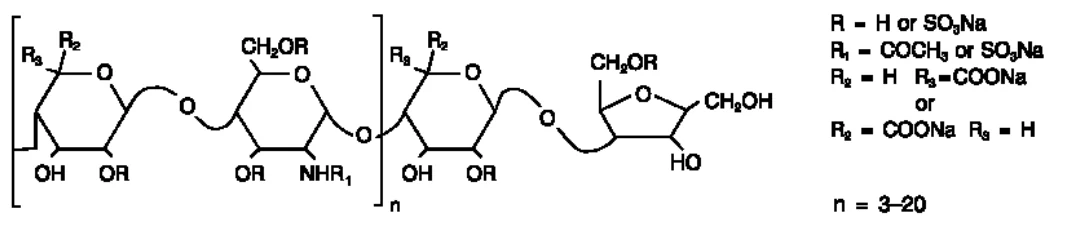
Physicochemical properties: White or yellowish white powder. Dalteparin sodium is soluble in water. pH (1% w/w solution) 5.0 - 7.5.
Product Characteristics: Dalteparin sodium is produced through controlled nitrous acid depolymerization of sodium heparin from porcine intestinal mucosa followed by a chromatographic purification process. It is composed of strongly acidic sulfated polysaccharide chains (oligosaccharide, containing 2,5-anhydro-D-mannitol residues as end groups) with an average molecular weight of 5,000 and about 90% of the material within the range 2,000–9,000. The molecular weight distribution is:
<3000 daltons 3.0–15%
3,000 to 8,000 daltons 65.0–78.0%
>8,000 daltons 14.0–26.0%
14 Clinical Trials
14.1 Clinical Trials by Indication
Thromboprophylaxis in conjunction with surgery
Table 17 – Summary of patient demographics for clinical trials in Thromboprophylaxis in conjunction with surgery
| Study # | Study design | Diagnosis | Dosage, route of administration and duration | Study subjects (n) | Mean age (Range) | Sex | |||
| Study # | Study design | Diagnosis | Dosage, route of administration and duration | Study subjects (n) | Mean age (Range) | Sex | |||
| Study # | Study design | Diagnosis | Dosage, route of administration and duration | Study subjects (n) | Mean age (Range) | Sex | |||
| Study 1 | Single-center, double-blind study comparing Fragmin to heparin | Patients undergoing hip replaceme nt surgery | Fragmin 5000 IU qd s.c. starting the evening before surgery, or Heparin 5000 IU tid s.c., starting the morning of surgery. Treatment in both groups was continued for up to 9 days postoperatively. | 140 enrolled, 139 treated. 136 underwent surgery: 67 Fragmin and 69 heparin. | 69 yrs (range 42-87 yrs) | 58.8% female | |||
| Study 2 | Multi-center, double-blind, randomized study: Postoperativ e dosing Comparing Fragmin to warfarin | Patients had undergone hip replaceme nt surgery | Three groups:
Treatment for all groups: 4 to 8 days postoperatively, after which patients underwent bilateral venography. | 1501 enrolled, 1472 treated.
94.4% white | 63 yrs (range 18-91 yrs) | 51.8% female | |||
| Study 3 | Two double-blind, randomized, controlled clinical trials | Patients undergoing major abdominal surgery Abdominal surgery patients at risk include those who are over 40 years of age, obese, undergoing surgery under general anesthesia lasting longer than 30 minutes, or who have additional risk factors such as malignancy or a history of deep vein thrombosis or pulmonary embolism. | Fragmin qd s.c. beginning prior to surgery and continuing for 5 to 10 days after surgery | 204 treated: 102 Fragmin, 102 placebo | 64 yrs (range 40-98 yrs) | 54.9% female | |||
| Study 4 | 391 treated: 195 Fragmin, 196 heparin | 59 yrs (range 30-88 yrs) | 51.9% female | ||||||
Study 1 Results:
In the intent-to-treat analysis, the incidence of proximal DVT was significantly lower for patients treated with Fragmin (dalteparin sodium injection) compared with patients treated with heparin (6/67 vs 18/69; p=0.012). Further, the incidence of pulmonary embolism detected by lung scan was also significantly lower in the group treated with Fragmin (9/67 vs 19/69; p=0.032).
Study 2 Results:
For patients with interpretable venograms, the frequencies of deep vein thrombosis (DVT) in patients receiving preoperative and postoperative Fragmin and warfarin for all DVTs were 36 (10.7%) of 337, 44 (13.1%) of 336, and 81 (24.0%) of 338, respectively (p<0.001 for both preoperative and postoperative Fragmin vs warfarin); for proximal DVT, 3 (0.8%) of 354, 3 (0.8%) of 358, and 11 (3.0%) of 363 (p= 0.04 and p= 0.03 for preoperative and postoperative Fragmin vs warfarin, respectively).
Studies 3 and 4 Results:
Fragmin was shown to reduce the risk of DVT in patients at risk for thromboembolic complications. As summarized in the following tables, Fragmin 2500 IU was superior to placebo and similar to heparin in reducing the risk of DVT.
Table 18 – Efficacy of Fragmin in the Prophylaxis of deep vein thrombosis following abdominal surgery
| Indication | Dosing Regimen | |
Fragmin 2500 IU qd s.c. | Placebo qd s.c. | |
| All Treated Abdominal Surgery Patients | 102 | 102 |
Treatment Failures in Evaluable Patients Total Thromboembolic Events | 4/91 (4.4%)1 | 16/91 (17.6%) |
| Proximal DVT | 0 | 5/91 (5.5%) |
| Distal DVT | 4/91 (4.4%) | 11/91 (12.1%) |
| PE | 0 | 2/91 (2.2%)2 |
1 p-value = 0.008 2 Both patients also had DVT , 1 proximal and 1 distal | ||
Table 19 – Efficacy of Fragmin in the Prophylaxis of deep vein thrombosis following abdominal surgery
| Indication | Dosing Regimen | |
Fragmin 2500 IU qd s.c. | Heparin 5000 IU bid s.c. | |
| All Treated Abdominal Surgery Patients | 195 | 196 |
Treatment Failures in Evaluable Patients Total Thromboembolic Events | 7/178 (3.9%)1 | 7/174 (4.0%) |
| Proximal DVT | 3/178 (1.7%) | 4/174 (2.3%) |
| Distal DVT | 3/178 (1.7%) | 3/174 (1.7%) |
| PE | 1/178 (0.6%) | 0 |
| 1 p-value = 0.74 | ||
One published study compared 28-day treatment of Fragmin to 7-day treatment after major abdominal surgery. In total, 590 patients were recruited, of whom 427 were randomized and received at least 1 day of study medication, and 343 reached an evaluable endpoint. The primary efficacy endpoint was objectively verified VTE occurring between 7 and 28 days after surgery. All patients underwent bilateral venography at day 28. The cumulative incidence of VTE was 16.3% (29/178 patients) with 7-day treatment of Fragmin and 7.3% (12/165 patients) with 28-day treatment of Fragmin.
Bleeding events were not increased with prolonged compared with short-term thromboprophylaxis: major bleeding occurred in 4 of 222 (1.8%) patients in the short-term group and in 1 of 205 (0.5%) patients in the prolonged thromboprophylaxis group
Treatment of deep vein thrombosis (DVT)
Table 20 – Summary of patient demographics for clinical trials in Treatment of DVT
| Study # | Study design | Diagnosis | Dosage, route of administration and duration | Study subjects (n) | Mean age (Range) | Sex |
| Study 1 | Double-blind, randomized, controlled | Phlebographically proven DVT | Dosing: s.c. q12h, at least 5 d. Initial dose to achieve anti-Factor Xa levels of 0.5-0.8 IU/mL, adjusted Day 2 or later according to plasma anti-Factor Xa activity. Fragmin: Mean initial dose 87 IU/kg, adjusted dose 90 IU/kg (i.e. 4000-10000IU) Heparin: Mean initial dose 170 IU/kg, adjusted dose 219 IU/kg (i.e. 8000-20000IU) Warfarin treatment was started the day of inclusion. | 54 patients Fragmin 28, heparin 26. | 61.5 yrs | 57.4% male |
Subcutaneous Fragmin and heparin in DVT were found to be equally safe and efficacious. The Heparin group required more dose adjustments. Leg pain disappeared more rapidly in patients receiving Fragmin.
Extended treatment of symptomatic venous thromboembolism (VTE) to prevent recurrence of VTE in patients with cancer
Table 21 – Summary of patient demographics for clinical trials in Extended treatment of symptomatic VTE to prevent recurrence of VTE in patients with cancer
| Study # | Study design | Diagnosis | Dosage, route of administration and duration | Study subjects (n) | Mean age (Range) | Sex |
| Study 1 | Randomized open-label, parallel group, 48 center, active- controlled study | Patients with cancer and newly diagnosed, objectively confirmed acute deep vein thrombosis (DVT) and/or pulmonary embolism (PE) | Fragmin: 6 months - (200 IU/kg s.c. once daily for 1 month followed by ~150 IU/kg s.c. once daily for 5 months) or Fragmin: For a minimum of 5 days 200 IU/kg s.c. once daily and simultaneous oral anticoagulation (coumarin derivatives) with a Vitamin K antagonist. Oral anticoagulation was maintained for 6 months adjusted for INR 2.0-3.0. | 676 patients Fragmin: 338 (53.3% completed) Oral coagulatio n: 339 (48.7% completed) | 64 yrs | 51.5% female |
A total of 27 (8.0%) and 53 (15.7%) patients in the experimental and control arms, respectively, experienced at least one episode of an adjudicated, symptomatic DVT and/or PE during the 6-month study period. In the intent-to-treat population, the primary comparison of the cumulative probability of the first VTE recurrence over the 6-month study period was highly statistically significant (2-sided log-rank test, p=0.0017) in favor of the experimental regimen. The estimated cumulative probability of recurrence at 6 months was reduced from 0.172 in the control arm to 0.087 in the experimental arm, reflecting a 52% reduction in the relative risk of VTE (RR=0.48; 95% CI, 0.30-0.77; likelihood test, p=0.0016).
Unstable coronary artery disease, i.e. unstable angina and non-Q-wave myocardial infarction
Table 22 – Summary of patient demographics for clinical trials in Unstable coronary artery disease
| Study # | Study design | Diagnosis | Dosage, route of administration and duration | Study subjects (n) | Mean age (Range) | Sex |
| Study 1 | Double-blind, randomized, placebo-controlled | Patients recently experienced unstable angina with EKG changes or non-Q-wave myocardial infarction (MI). Unstable angina was defined to include only angina with EKG changes | Fragmin: 120 IU/kg q12h s.c. Placebo q12h s.c. Except when contraindicated, concurrent treatment with Aspirin (75 mg once daily) and beta blockers. Treatment was initiated within 72 h of the event; most received treatment within 24 h) and continued for 5 to 8 days. | 1506 patients enrolled and treated; Fragmin 746, placebo 760. 99.7% white. | 68 yrs (range 40-90 yrs) | 63.9% male |
| Study 2 | Randomized , controlled trial to evaluate long-term treatment with Fragmin | Patients recently experienced unstable angina with EKG changes or non-Q-wave myocardial infarction (MI). | Fragmin: 120 IU/kg q12h s.c. or Heparin: APTT-adjusted dosage. Except when contraindicated, were treated concurrently with Aspirin (100 to 165 mg/day). 1-week (5 to 8 days) treatment | 1499 enrolled, 1482 treated; Fragmin 751, heparin 731. 96.0% white. | 64 yrs (range 25- 92 yrs) | 64.2% male |
Study 1 Results: The combined incidence of the double endpoint of death or myocardial infarction was lower for Fragmin compared with placebo at 6 days after initiation of therapy. These results were observed in an analysis of all-randomized and all-treated patients. The combined incidence of death, MI, need for intravenous (i.v.) heparin or i.v. nitroglycerin, and revascularization was also lower for Fragmin than for placebo (see table below).
Table 23 – Efficacy of Fragmin in the Prophylaxis of ischemic complications in unstable angina and non-Q-wave myocardial infarction
| Indication | Dosing Regimen | |
Fragmin 120 IU/kg/12 hr s.c. | Placebo q 12 hr s.c. | |
All Treated Unstable Angina and Non-Q-Wave MI Patients | 746 | 760 |
Primary Endpoints - 6 day timepoint Death, MI | 13/741 (1.8%)1 | 36/757 (4.8%) |
Secondary Endpoints - 6 day timepoint Death, MI, i.v. heparin, i.v. nitroglycerin, Revascularization | 59/739 (8.0%)1 | 106/756 (14.0%) |
| 1 p-value = 0.001 | ||
Study 2 Results: The incidence of the combined triple endpoint of death, myocardial infarction, or recurrent angina during this 1-week treatment period (5 to 8 days) was 9.3% for Fragmin and 7.6% for heparin (p=0.323).
Reduction of deep vein thrombosis in hospitalized patients with severely restricted mobility during acute illness
Table 24 – Summary of patient demographics for clinical trials in Reduction of deep vein thrombosis in hospitalized patients with severely restricted mobility during acute illness
| Study # | Study design | Diagnosis | Dosage, route of administration and duration | Study subjects (n) | Mean age (Range) | Sex |
| Study 1 | Double-blind, multi-center, randomized, placebo-controlled trial | DVT in hospitalized patients with severely restricted mobility | Fragmin 5000 IU or placebo s.c. qd during Days 1 to 14 of the study. | 3681 enrolled and treated: Fragmin: 1848 Placebo: 1833 92.1% white | 69 yrs (range 26-99 yrs) | 51.9% female |
The primary efficacy endpoint was defined as at least one of the following within Days 1 to 21 of the study: asymptomatic proximal DVT (diagnosed by compression ultrasound), a confirmed symptomatic DVT, a confirmed pulmonary embolism or sudden death.
The primary endpoint was evaluated at Day 21, and the follow-up period was up to Day 90. These patients were ≥40 years of age with an acute medical condition requiring a projected hospitalization of ≥ 4 days and had ≤3 days of prior immobilization and were confined to bed during waking hours.
The study included patients with congestive heart failure (NYHA Class III or IV), acute respiratory failure not requiring ventilatory support, and the following acute conditions with at least one additional risk factor occurring in >1% of treated patients: acute infection (excluding septic shock), acute rheumatic disorder, acute lumbar or sciatic pain, vertebral compression, or acute arthritis of the lower extremities. Risk factors include > 75 years of age, cancer, previous DVT/PE, obesity and chronic venous insufficiency.
When given at a dose of 5000 IU once a day s.c., Fragmin significantly reduced the incidence of thromboembolic events including verified DVT by Day 21 (see table below). The prophylactic effect was sustained through Day 90. Decrease mortality due to thromboembolic events and complications has not been demonstrated.
Table 25 – Efficacy of Fragmin in the Reduction of deep vein thrombosis in hospitalized patients with severely restricted mobility during acute illness
| Dalteparin, n/N (%) | Placebo, n/N (%) | RR (95% CI) | |||||
|---|---|---|---|---|---|---|---|
| Primary end point (day 21) | |||||||
| Venous thromboembolism and sudden death | 42/1518 (2.77) | 73/1473 (4.96) | 0.55 (0.38–0.80) | ||||
| Sudden death | 5/1829 (0.27) | 3/1807 (0.17) | 1.65 (…) | ||||
| Pulmonary embolism, fatal | 0/1829 (0.00) | 2/1807 (0.11) | 0.00 (…) | ||||
| Pulmonary embolism, symptomatic | 5/1759 (0.28) | 4/1740 (0.23) | 1.22 (…) | ||||
| Deep vein thrombosis: distal, | 3/1759 (0.17) | 4/1739 (0.23) | 0.74 (…) | ||||
| symptomatic | |||||||
| Deep vein thrombosis: proximal, | 2/1759 (0.11) | 7/1739 (0.40) | 0.28 (…) | ||||
| symptomatic | |||||||
| Deep vein thrombosis: proximal, | 27/1507 (1.79) | 53/1453 (3.65) | 0.48 (0.31–0.77) | ||||
| asymptomatic | |||||||
| Secondary end point at day 14 | |||||||
| All-cause mortality | 8/1846 (0.43) | 7/1831 (0.38) | 1.13 (0.41–3.12) | ||||
| Secondary end point at day 21 | |||||||
| Deep vein thrombosis: proximal | 32/1508 (2.12) | 64/1464 (4.37) | 0.49 (0.32–0.74) | ||||
| and symptomatic distal | |||||||
| All-cause mortality | 43/1829 (2.35) | 42/1807 (2.32) | 1.01 (0.66–1.54) | ||||
| Secondary endpoint at day 90 | |||||||
| Symptomatic venous thromboembolism | 15/1615 (0.93) | 21/1583 (1.33) | 0.70 (0.36–1.35) | ||||
| (all deep vein thrombosis and pulmonary embolism) | |||||||
| All symptomatic pulmonary embolism | 5/1615 (0.31) | 6/1583 (0.38) | 0.82 (0.25–2.67) | ||||
| All symptomatic deep vein thrombosis | 10/1614 (0.62) | 15/1579 (0.95) | 0.65 (0.29–1.45) | ||||
| All-cause mortality | 107/1747 (6.12) | 103/1715 (6.01) | 1.02 (0.78–1.33) | ||||
RR indicates relative risk. Only 1 event per patient (most severe) was recorded. 95% CIs were not produced if <5 patients in either treatment group experienced an event. | |||||||
Anticoagulation for hemodialysis and hemofiltration
Table 26 – Summary of patient demographics for clinical trials in Prevention of clotting in the extracorporeal system during hemodialysis and hemofiltration
| Study # | Study design | Diagnosis | Dosage, route of administration and duration | Study subjects (n) | Mean age (Range) | Sex |
| Study # | Study design | Diagnosis | Dosage, route of administration and duration | Study subjects (n) | Mean age (Range) | Sex |
| Study # | Study design | Diagnosis | Dosage, route of administration and duration | Study subjects (n) | Mean age (Range) | Sex |
| Study 1 | Double-blind, multi-center, randomized, placebo-controlled trial | DVT in hospitalized patients with severely restricted mobility | Fragmin 5000 IU or placebo s.c. qd during Days 1 to 14 of the study. | 3681 enrolled and treated: Fragmin: 1848 Placebo: 1833 92.1% white | 69 yrs (range 26-99 yrs) | 51.9% female |
| Study 2 |
|
|
Hemodialysis (HD) or Hemofiltration (HF):
Fragmin: Mean initial bolus 24.3 U/kg; continuous infusion 9.8 U/kg/h. Heparin: Mean initial bolus 50.1 U/kg; continuous infusion 16.1 U/kg/h.
Studied through 50 dialyses. |
(11 on HD, 6 on HF) |
|
|
| Study 3 | Randomized, cross-over study | Chronic renal insufficiency Patients on hemodialysis for at least 4 months, 3 times/week (3-4 hours) before study entry Patients with arteriovenous (A/V) fistula only | Fragmin given as a single bolus dose of 5 000 IU at start of the dialysis, administered into the arterial tubing. Heparin mean total dose of 6 500 IU given as a bolus dose (2 500-3 500 IU) at start of dialysis into the arterial tubing followed by continuous infusion i.v. during dialysis. Duration of study : one HD with Heparin followed by one HD with Fragmin HD duration: 3-4 hours | 11 patients | 55 years old | 45.4% female |
Study 1 Results: Overall, 10 242 hemodialyses/hemofiltrations were performed in this study. In term of efficacy, the incidence rates of clotting formations in the filter and extracorporeal circuit were 1.59% (80 of 5 045) and 1.33% (69 of 5 197) for Fragmin and unfractionated heparin, respectively. In term of safety, no bleeding complications were observed; however among the 35 patients (F: 19 and H: 16) requiring erythrocyte concentrates (Hb< 6.5g/dL), the incidence rates of concentrates required were 2.71% (76 of 2 808) and 3.85% (88 of 2 288) for Fragmin and unfractionated heparin, respectively.
Blood samples performed at month 1, 3, 6, 9 and 12 showed no differences in the plasma anti-factor Xa levels between both treatment groups and within each treatment group during the course of 12 months of treatment.
Mean factor VIII activities had risen after 12 months in the heparin group, whereas they remained unchanged in the Fragmin group. In parallel, a decrease in the level of pre-dialysis fibrin monomers was observed after both 6 and 12 months in the Fragmin group, whereas no changes were observed in the heparin group. An increase in plasma triglycerides was observed in the heparin group, which was not observed in the Fragmin group.
Study 2 Results:
Long Term Study: During a total of about 4 000 dialyses for 6+6 months, a dose of Fragmin about 2/3 that of heparin resulted in comparable antithrombotic activity (F: 26 dialyses vs H: 20 dialyses); no bleeding complications were noted. PTT and thrombin time were only marginally increased by Fragmin (5-8 sec) compared to heparin (increase in PTT of 90-120 sec, and in thrombin time of 230-260 sec). The elevated levels of Factor VIII and fibrin monomers during treatment with heparin decreased with Fragmin treatment and increased again with heparin treatment. In addition, no signs of plasma anti-factor Xa levels accumulation were observed after 6 months of treatment.
Acute renal failure with bleeding risk: During 50 dialyses in these patients, efficacy and safety of Fragmin was demonstrated. Only minor thrombotic material was found during 5 dialyses (mostly in single needle HD). No clinically significant bleeding occurred.
Study 3 Results: There were no signs of thromboembolic complications during the study. All dialyses were clinically uneventful except for one with heparin (due to severe hypotension). Mean punctures times were 4.5 minutes and 4.7 minutes, respectively for Fragmin and Heparin.
Chronic renal failure, patients with no other known bleeding risk
Table 27 – Summary of patient demographics for clinical trials in Chronic renal failure
| Study # | Study design | Diagnosis | Dosage, route of administration and duration | Study subjects (n) | Mean age (Range) | Sex | ||||
| The PARROT study1 | Phase IIIb open-label study Open label single arm trial to investigate a new Fragmin dose regimen for use during hemodialysis (HD) | Subjects with end stage renal failure requiring 3 or 4 HD sessions per week, with each session planned for 4 hours or less, with no other known risks of bleeding. Subjects previously treated during HD procedures by either unfractionated heparin or Low molecular weight heparin. Vascular access permitted in the study: A/V fistula, A/V graft or catheter | Fragmin dose: 5000 IU single bolus dose given into the arterial side of the dialyzer at the start of the procedure. Depending on the outcome of the previous HD session and any intervening clinical events, the dose of 5000 IU was maintained through the course of the study or dosage modification occurred at subsequent HD sessions by increment/decrement of 500 IU or 1000 IU, at the discretion of the investigator. Criteria for dose adjustments were occurrence of clotting grade 3 or 4, minor bleeding during HD or between HD sessions, prolonged access compression time (>10 minutes) or other clinical events. Study duration for a maximum of 20 HD sessions | 152 subjects enrolled and treated 77.0% white. | Mean age 57.1 years old (range 18- 85 yrs) | n=106 male | ||||
| 1 The PARROT study: A phase IIIb open-label study to optimize the single bolus dose of dalteparin sodium for the prevention of clotting within the extracorporeal system during hemodialysis procedures for subjects with chronic renal insufficiency. | ||||||||||
The primary efficacy outcome was the mean proportion of “successful” HD sessions defined as a HD session which was completed as planned, without the need for premature termination due to clotting in the HD circuit. The mean proportion of successful HD sessions was 99.9% (2774 of 2776 evaluable HD sessions; 50 HD sessions were excluded from the analysis because the effect of Fragmin could not be assessed), with a 95% CI of 99.7% to 100.0%. No HD session was prematurely terminated due to a safety event of bleeding.
For the secondary endpoint assessing the acceptability of the dose, the point estimate of the mean proportion of HD sessions with an acceptable dose was 89.8% (2363 of 2630 evaluable HD sessions; 196 HD sessions were excluded from the analysis because the acceptability of the dose could not be assessed), with a 95% CI of 87.4% to 91.9%.
For subjects who had completed at least one HD session, the dalteparin dose was adjusted for 79 (52.3%) subjects, and 72 (47.7%) subjects received the standard fixed dose of 5000 IU per HD session at all HD sessions.
The most common reason for dose adjustments was Grade 3 or 4 clotting at previous HD sessions for 203/2797 (7.3%) HD sessions, followed by access compression time >10 minutes at previous HD session for 47/2797 (1.7%).
Anti-Xa levels were measured at HD1, HD10 and HD20 at baseline, 2hrs after the start of the HD and at the end of the HD. Most of the subjects did not show any accumulation of anti-Xa serum levels. Only for 2 subjects, the pre-HD session value was above the threshold of <0.4 IU/mL at HD 10 but this was resolved at HD session 20.
The results of this study demonstrate that a flexible dosing regimen of Fragmin administered into the arterial side of the extracorporeal system during HD sessions up to 4 hours in subjects with chronic renal failure and no other known risks of bleeding is effective and well tolerated, and that a flexible dosing regimen is appropriate to address the potential limitations of the fixed dose regimen (5000 IU).
15 Microbiology
No microbiological information is required for this drug product.
16 Non-Clinical Toxicology
General Toxicology:
Acute Toxicity
No LD50 has been determined in studies of single lethal acute doses given to mice. Given both i.v. and s.c., doses of 100 000 IU/kg were tolerated. Any deaths recorded were the result of hemorrhagic complications at the s.c. injection site.
Short-term Toxicity
Rats treated with large doses administered s.c. once daily for 9 consecutive days registered increases in platelets and bleeding time, and injection site hematomas in some animals at doses of 500 - 1000 IU/kg/day. At higher doses, 5000 - 20 000 IU/kg/day, bleeding from injection site hematoma could prove fatal, and decreases in Hb, PCV and RBC were recorded.
Long-term Toxicity
Beagle dogs treated with 250 - 1000 IU/kg/day administered s.c. for 26 weeks yielded no serious toxicological changes.
Some dogs were reported to have enlarged livers at the higher dose levels, and for heparin at 250 IU/kg/day, although no significant histopathological liver changes were observed.
Microradiographic examination and determination of gravity and specific ash of the skeletons of the dogs showed significant differences between treated and control groups. Therefore, dalteparin sodium has a weak osteopenic effect. Heparin has a comparable effect.
Dalteparin sodium was administered s.c. once daily to Sprague Dawley rats at the dose levels of 250, 500 or 1000 IU/kg/day for 26 weeks. Twenty rats/sex/group were killed at the end of the treatment period and the remaining 10 animals/sex/group were killed after a 6-week recovery period. There was no evidence of any systemic toxicity and the only significant finding was the presence of dose-related and reversible small hemorrhages at the injection sites. A dose-related and proportional increase in plasma anti-Xa activity was seen during the study, with peak levels attained at about 1 hour post dose.
In a 52-week intravenous toxicity study, beagle dogs (5 males and 5 females/group) received dalteparin sodium i.v. at the dose levels of 300, 1000 or 3000 IU/kg/day for 52 weeks. At the end of the treatment period, 4 dogs/sex/group were killed and the remaining dogs (1 animal/sex/group) were kept untreated for 5 weeks prior to sacrifice. Dalteparin sodium was well tolerated in dogs after repeated i.v. administration of doses up to 1000 IU/kg/day. Subcutaneous hemorrhages at the injection sites occurred in all drug-treated groups, with dose-dependency. At the highest dose level (3000 IU/kg/day), slightly increased liver weights were observed in males and a decrease in the ratio of cortical bone versus bone width was found in females.
In the mid and high-dose groups, both sexes showed a decrease in serum glutamate-oxaloacetate transaminase (SGOT) activity and an increase in globulin fraction. Male animals in the active treatment groups showed increased levels of serum potassium, cholesterol and phospholipids, decrease in gamma globulin fraction ratio, and an increase in plasma glucose. Females of high dose group showed a decrease in total protein and an increase in chlorine.
No organ toxicity was revealed in any of the toxicity studies. No significant adverse changes were found in the reproductive toxicity studies and no mutagenic effect was detected.
Carcinogenicity:
In two teratology studies, rats and rabbits received Fragmin intravenously. For both studies, no adverse effects were observed on the assessed litter parameters (mean litter size, post-implantation loss, litter and mean foetal weights and incidences of malformations, anomalies and variants).
Reproductive and Developmental Toxicology:
In the fertility study and the peri-/post-natal study, rats received Fragmin subcutaneously. No adverse effects were observed on number of successfully mating and on number/weight of the offspring produced. No effect of the treatment was observed on litter parameters as assessed by litter size and pup mortality, litter and mean pup weights, pre-weaning development and terminal autopsy of pups.