


Product Monograph - Fuzeon
SUMMARY PRODUCT INFORMATION
| Route of Administration | Dosage Form / Strength | Clinically Relevant Non-medicinal Ingredients |
| Subcutaneous injection | Single-use vial / 108 mg/vial | mannitol For a complete listing of non-medicinal ingredients see Dosage Forms, Composition and Packaging section. |
INDICATIONS AND CLINICAL USE
FUZEON (enfuvirtide) in combination with other antiretroviral agents is indicated for:
- the treatment of HIV-1 infection in treatment-experienced patients with evidence of HIV-1 replication despite ongoing antiretroviral therapy.
Geriatrics (>65 years of age): Clinical studies of FUZEON did not include sufficient numbers of subjects aged 65 and over to determine whether they respond differently from younger subjects.
Pediatrics: The safety and pharmacokinetics of FUZEON have not been established in pediatric patients below 6 years of age. Limited data are available in pediatric patients 6 years and older (see CLINICAL TRIALS: Pediatric Patients).
CONTRAINDICATIONS
- FUZEON (enfuvirtide) is contraindicated in patients who are hypersensitive to this drug or to any ingredient in the formulation or component of the container. For a complete listing, see the DOSAGE FORMS, COMPOSITION AND PACKAGING section of the product monograph.
WARNINGS AND PRECAUTIONS
Serious Warnings and Precautions Hypersensitivity reactions have been associated with the use of FUZEON (enfuvirtide) in clinical trials (<1%). See section on hypersensitivity reactions below. |
General
FUZEON should always be used in combination with other antiretroviral agents.
FUZEON should not be used in antiretroviral treatment-naïve patients.
Alcohol pads, needed by the patient to ensure safe use of the product, are not included in the FUZEON kit. Instruct your patient to purchase alcohol pads at the time FUZEON is prescribed to them (see DOSAGE AND ADMINISTRATION and PART III: CONSUMER INFORMATION).
Non HIV Infected Individuals
There is a theoretical risk that FUZEON use may lead to the production of anti-enfuvirtide antibodies which cross react with HIV gp41. This could result in a false positive HIV test with an ELISA assay; a confirmatory western blot test would be expected to be negative. FUZEON has not been studied in non HIV-infected individuals
Carcinogenesis and Mutagenesis
Animal carcinogenicity studies of enfuvirtide are ongoing. Enfuvirtide was neither mutagenic nor clastogenic in a series of in vivo and in vitro assays (see TOXICOLOGY: Mutagenicity).
Hypersensitivity Reactions
Hypersensitivity reactions have been associated with therapy with FUZEON and may recur on re-challenge. Hypersensitivity reactions have occurred in <1% of patients studied and have included individually and in combination: rash, fever, nausea and vomiting, chills, rigors, hypotension, and elevated serum liver transaminases. Other adverse events that may be immune mediated and have been reported in subjects receiving FUZEON include primary immune complex reaction, respiratory distress, glomerulonephritis, and Guillain-Barre syndrome. Patients developing signs and symptoms suggestive of a systemic hypersensitivity reaction should discontinue FUZEON and should seek medical evaluation immediately. Therapy with FUZEON should not be restarted following systemic signs and symptoms consistent with a hypersensitivity reaction. Risk factors that may predict the occurrence or severity of hypersensitivity to FUZEON have not been identified (see ADVERSE REACTIONS).
Immune
Immune Reconstitution Inflammatory Syndrome: Immune Reconstitution Syndrome has been reported in patients treated with combination antiretroviral therapy, including FUZEON. During the initial phase of combination antiretroviral treatment, a patient whose immune system responds to therapy may develop an inflammatory response to indolent or residual opportunistic infections (such as MAC, CMV, PCP and TB) which may necessitate further evaluation and treatment.
Autoimmune disorders such as Graves’ disease and Guillain-Barré syndrome have also been reported in the setting of immune reconstitution; however, the time to onset is variable, and can occur many months after initiation of treatment.
Respiratory
Pneumonia: An increased rate of bacterial pneumonia was observed in patients treated with FUZEON in the Phase III clinical trials compared to the control arm (see ADVERSE REACTIONS). It is unclear if the increased incidence of pneumonia is related to the use of FUZEON. Patients with HIV infection should be monitored for signs and symptoms of pneumonia especially if they have underlying conditions which may predispose them to pneumonia. Risk factors for pneumonia included low initial CD4 lymphocyte count, high initial viral load, intravenous drug use, smoking and prior history of lung disease.
Skin
Local Injection Site Reactions: Local injection site reactions were the most common adverse events associated with the use of FUZEON (98% of patients in Phase III clinical trials had at least one local injection site reaction). Manifestations may include pain and discomfort, induration, erythema, nodules and cysts, pruritus and ecchymosis. Local site reactions that required analgesics or limited usual activities were seen in 11% of patients (see ADVERSE REACTIONS). Patients must be familiar with the ‘FUZEON Injection Instructions’ in order to know how to inject FUZEON appropriately and how to monitor carefully for signs or symptoms of cellulitis or local infection.
Special Populations
Pregnant Women: There are no adequate and well-controlled studies in pregnant women. Enfuvirtide produced no adverse effects on the developing conceptus in teratology studies conducted at exposures of up to 8.9 times higher in rats and 3.2 times higher in rabbits, than estimated human therapeutic exposures. FUZEON should be used during pregnancy only if the potential benefit justifies the potential risk to the fetus.
Antiretroviral Pregnancy Registry
To monitor maternal-fetal outcomes of pregnant women exposed to antiretroviral drugs, an Antiretroviral Pregnancy Registry has been established. Physicians are encouraged to register patients by calling 1-800-258-4263.
Nursing Women: It is not known whether enfuvirtide is secreted in human milk. Studies where radio-labeled 3H-enfuvirtide was administered to lactating rats indicated that a very low level of radioactivity was present in the milk. Because of both the potential for HIV transmission and any possible adverse effects in nursing infants, mothers should be instructed not to breast-feed if they are receiving FUZEON.
Pediatrics: The safety and pharmacokinetics of FUZEON have not been fully established in pediatric patients below 6 years of age, as there were too few patients studied in this age group. Limited efficacy data are available in pediatric patients 6 years of age and older (see CLINICAL TRIALS: Pediatric Clinical Trials).
Geriatrics (> 65 years of age): Clinical studies of FUZEON did not include sufficient numbers of subjects aged 65 and over to determine whether they respond differently from younger subjects.
ADVERSE REACTIONS
Adverse Drug Reaction Overview
In clinical studies the most serious adverse reactions observed with FUZEON (enfuvirtide) were hypersensitivity reactions and pneumonia. Local injection site reactions were the most common adverse events associated with the use of FUZEON.
Clinical Trial Adverse Drug Reactions
Because clinical trials are conducted under very specific conditions the adverse reaction rates observed in the clinical trials may not reflect the rates observed in practice and should not be compared to the rates in the clinical trials of another drug. Adverse drug reaction information from clinical trials is useful for identifying drug-related adverse events and for approximating rates.
The overall safety profile of FUZEON (enfuvirtide) is based on 2120 patients who received at least 1 dose of FUZEON during various clinical trials. The safety population consisted of 2051 adults including 658 adults who have been exposed to the recommended dose for greater than 48 weeks and 69 pediatric patients.
Assessment of treatment-emergent adverse events is based on the pooled data from the two Phase III studies TORO-1 and TORO-2. In these studies FUZEON was administered subcutaneously at a dose of 90 mg bid in combination with a background regimen to 663 patients. A total of 334 patients received background antiretroviral agents alone as the control arm.
In the TORO-1 and TORO-2 studies, after study week 8, patients on background alone who met protocol defined criteria for virological failure were permitted to revise their background regimens and add FUZEON. At week 48 of the study the cumulative exposure to FUZEON + background was 557 patient-years, and to background alone 162 patient-years. Due to this difference in exposure, safety results are expressed as the number of patients with an adverse event per 100 patient-years of exposure.
Treatment-emergent adverse events, excluding injection site reactions, from the Phase III studies
(TORO-1 and TORO-2) are summarized for adult patients, regardless of severity and causality in Table 1. Only events occurring at ≥ 2 per 100 patient-years and at a higher rate in patients treated with FUZEON are summarized in the table; events that occurred at a higher rate in the control arms are not displayed.
Table 1: Rates (per 100 patient-years of exposure) of Patients with Selected Treatment-Emergent Adverse Events* Reported in ≥ 2 per 100 Patient-years for Adult Patients and Occurring More Frequently in Patients Treated With FUZEON (Pooled Studies TORO-1/TORO-2 at 48 Weeks)
| Adverse Event (by System Organ Class) | FUZEON+ Background Regimen (N=663) | Background Regimen (N=334) |
|---|---|---|
| Total Exposure (patient-years) | 557 | 162 |
| Blood and lymphatic system disorders | ||
| Lymphadenopathy | 5.9 | 1.2 |
| Ear and labyrinth disorders | ||
| Vertigo | 3.6 | 0.6 |
| Eye disorders | ||
| Conjunctivitis | 4.1 | 2.5 |
| Gastrointestinal disorders | ||
| Pancreatitis | 3.6 | 2.5 |
| Gastro-oesophageal reflux disease | 2.7 | 2.5 |
| General disorders and administrative site conditions | ||
| Influenza like illness | 4.5 | 3.7 |
| Weakness | 2.7 | 0.6 |
| Infections and Infestations | ||
| Sinusitis | 9.5 | 6.2 |
| Influenza | 6.5 | 6.2 |
| Skin Papilloma | 6.6 | 3.1 |
| Pneumonia | 3.6 | 0.6 |
| Ear infection | 2.2 | 1.2 |
| Immune system disorders | ||
| Hypersensitivity | 2.0 | 1.9 |
| Investigations | ||
| Weight decreased | 11.1 | 10.5 |
| Blood triglycerides increased | 2.9 | 1.9 |
| Haematuria present | 2.2 | 1.9 |
| Metabolism and nutrition disorders | ||
| Appetite decreased | 8.6 | 4.9 |
| Anorexia | 3.8 | 3.1 |
| Hypertriglyceridaemia | 2.0 | 1.9 |
| Adverse Event (by System Organ Class) | FUZEON+ Background Regimen (N=663) | Background Regimen (N=334) |
|---|---|---|
| Diabetes mellitus | 2.0 | 0.6 |
| Musculoskeletal, connective tissue and bone disorders | ||
| Myalgia | 7.0 | 5.6 |
| Nervous system disorders | ||
| Peripheral neuropathy | 15.4 | 13.6 |
| Hypoaesthesia | 2.9 | 1.9 |
| Disturbance in attention | 2.3 | 1.9 |
| Tremor | 2.2 | 1.9 |
| Psychiatric disorders | ||
| Anxiety | 7.5 | 6.8 |
| Irritability | 2.3 | 1.9 |
| Nightmare | 2.3 | 1.2 |
| Renal and urinary disorders | ||
| Calculus renal | 2.3 | 1.2 |
| Respiratory, thoracic and mediastinal disorders | ||
| Nasal congestion | 3.1 | 2.5 |
| Skin and subcutaneous tissue disorders | ||
| Dry skin | 5.0 | 4.3 |
| Eczema seborrhoeic | 2.3 | 1.9 |
| Erythema | 2.2 | 1.2 |
| Acne | 2.0 | 0.6 |
*Excludes Injection Site Reactions
Hypersensitivity reactions have been attributed to FUZEON (≤ 1%) and in some cases have recurred upon re-challenge (see WARNINGS AND PRECAUTIONS).
The events most frequently reported in patients receiving FUZEON+background regimen, excluding injection site reactions, were diarrhea (38 per 100 patient-years), nausea (27 per 100 patient-years), and fatigue (24 per 100 patient-years). All these events were seen at a lower incidence than in patients that received background regimen alone: diarrhea (73 per 100 patient- years), nausea (50 per 100 patient-years), and fatigue (38 per 100 patient-years). The addition of FUZEON to background antiretroviral therapy generally did not increase the frequency or severity of most adverse events.
Rates of adverse events for patients who switched to FUZEON after virological failure were similar. The only adverse events with a statistically significant risk ratio between the FUZEON regimen and the background regimen alone were pneumonia and lymphadenopathy. Most adverse events were of mild or moderate intensity.
The incidence of pneumonia was 3.6 events/100 patient-years in subjects on the FUZEON+background regimen. On analysis of all diagnoses of pneumonia (pneumonia, bacterial pneumonia, bronchopneumonia, and related terms) in the Phase 3 clinical trials, an increased rate of bacterial pneumonia was observed in subjects on FUZEON+background compared to background alone (6.6 pneumonia events per 100 patient-years versus 0.6 events per 100 patient-years). Approximately half of the study subjects with pneumonia required hospitalization. Three subject deaths in the FUZEON arm were attributed to pneumonia; all three had serious concomitant AIDS-related illnesses that contributed to their deaths. Risk factors for pneumonia included low initial CD4 lymphocyte count, high initial viral load, intravenous drug use, smoking and a prior history of lung disease. It is unclear if the increased incidence of pneumonia was related to the use of FUZEON. However, because of this finding patients with HIV infection should be carefully monitored for signs and symptoms of pneumonia, especially if they have underlying conditions which may predispose them to pneumonia (see WARNINGS AND PRECAUTIONS). In uncontrolled studies in which only safety events were monitored, a rate of 2.1 pneumonia events per 100 patient-years was reported. The safety population for these studies comprised 1166 patients with exposure to FUZEON of 522 patient-years. Three cases of pneumonia resulted in death; risk factors for pneumonia in two of these cases included low CD4 count at initiation of therapy and one of these cases also had a prior history of recurrent pneumonia.
Local Injection Site Reactions (ISRs)
Local injection site reactions were the most frequent adverse events associated with the use of FUZEON. In the TORO-1 and TORO-2 studies combined, 98% of patients had at least 1 local injection site reaction and 4% of patients discontinued treatment with FUZEON because of injection site reactions (see Table 2). Injection site reactions were generally seen within the first week of initiating therapy with FUZEON, and for the majority were associated with either mild tenderness or moderate pain at the injection site without limitation of usual activities. The percentage of patients that required analgesics or limited usual activities was 11% (Grade 3 reactions). The severity of the pain and discomfort associated with injection site reactions did not increase with treatment duration. The signs/symptoms characterizing the injection site reactions generally lasted ≤ 7 days and the average number of injection site reactions evident at any given study visit was ≤ 5 (in the 72% of patients with injection site reactions evident). In 24% of subjects an individual injection site reaction lasted for longer than 7 days. Individual signs and symptoms characterizing local injection site reactions are summarized in Table 2. Infection at the injection site (including abscess and cellulitis) was reported in 2.4 per 100 patient-years.
Table 2: Summary of Individual Signs/Symptoms Characterizing Local Injection Site Reactions to Enfuvirtide in Studies TORO-1 and TORO-2 Combined (% of Subjects) through 48 Weeks
| N=663 | ||||||||
| Withdrawal Rate Due to Injection Site Reactions | 4% | |||||||
| Event Category | FUZEON+ Background Regimena | % of Events Comprising Grade 3 Reactions | % of Events Comprising Grade 4 Reactions | |||||
| Pain/Discomfort | 96% | 11%b | 0%b | |||||
| Induration | 90% | 44%c | 19%c | |||||
| Erythema | 91% | 24%d | 11%d |
| Nodules and Cysts | 80% | 29%e | 0.2%e |
| Pruritus | 65% | 4%f | NAf |
| Ecchymosis | 52% | 9%g | 5%g |
a Any severity grade b Grade 3 = severe pain requiring analgesics (or narcotic analgesics for ≤ 72 hours) and/or limiting usual activities; Grade 4 = severe pain requiring hospitalization or prolongation of hospitalization, resulting in death, or persistent or significant disability/incapacity, or life-threatening, or medically significant. c Grade 3 = ≥ 25 mm but <50 mm average diameter; Grade 4 = ≥ 50 mm average diameter d Grade 3 = ≥ 50 mm but <85 mm average diameter; Grade 4 = ≥ 85 mm average diameter e Grade 3 = ≥ 3 cm; Grade 4 = if draining f Grade 3 = refractory to topical treatment or requiring oral or parenteral treatment; Grade 4= not defined g Grade 3 = >3 cm but ≤ 5 cm; Grade 4 = >5 cm | |||
A non-blinded, randomized, 4 cohort, crossover study (N=66) evaluated the effects of gentle manual massage, heated moist cloth, topical hydrocortisone (1% cream) and self vs partner injection on ISRs. The severity of ISR signs and symptoms with each intervention was compared with no intervention (control) based on patient recall and clinical assessments. In general, manual gentle massage, and partner injection appear to be interventions that may offer a slight benefit in some patients for reducing the severity of ISR signs and symptoms.
Adverse Events in Pediatric Patients
FUZEON has been studied in 69 pediatric patients 4 through 16 years of age with duration of exposure to FUZEON ranging from 1 dose to 134 weeks. Adverse reactions seen during clinical trials were similar to those observed in adult patients.
Less Common Clinical Trial Adverse Events
The following adverse events have been reported in 1 or more patients; however, a causal relationship to FUZEON has not been established.
Blood and Lymphatic Disorders: thrombocytopenia with neutropenia and fever
Cardiac Disorders: unstable angina pectoris
Endocrine and Metabolic: hyperglycemia
Gastrointestinal Disorders: constipation; abdominal pain upper
General: asthenia
Hepato-Biliary Disorders: toxic hepatitis; hepatic steatosis
Immune System Disorders: worsening abacavir hypersensitivity reaction
Infections: sepsis; herpes simplex
Investigations: increased amylase; increased lipase; increased AST; increased GGT
Nervous System Disorders: taste disturbance; Guillain-Barre syndrome (fatal); sixth nerve palsy
Psychiatric Disorders: insomnia; depression
Renal and Urinary Disorders: glomerulonephritis; tubular necrosis; renal insufficiency; renal failure (including fatal cases).
Respiratory, Thoracic, and Mediastinal Disorders: pneumopathy; respiratory distress; cough
Skin and Subcutaneous Tissue Disorders: pruritus.
Abnormal Hematologic and Clinical Chemistry Findings
Table 3 shows the treatment-emergent laboratory abnormalities that occurred in at least 2 patients per 100 patient-years and more frequently in those receiving FUZEON+background regimen than background regimen alone, from the pooled studies TORO-1 and TORO-2.
Table 3: Percentage of Treatment-Emergent Laboratory Abnormalities That Occurred in ≥ 2 per 100 Patient-years for Adult Patients and More Frequently in Patients Receiving FUZEON (pooled studies TORO-1 and TORO-2, 48 weeks)
| Laboratory Parameters | Grading | FUZEON + Background Regimen | Background Regimen |
| N=663 | N=334 | ||
ALT Gr. 3 Gr. 4 | >5-10 x ULN >10 x ULN | 4.8 1.4 | 4.3 1.2 |
Creatine Phosphokinase (U/L) Gr. 3 Gr. 4 | >5-10 x ULN >10 x ULN | 8.3 3.1 | 8.0 8.6 |
Eosinophilia 1-2 X ULN (0.7 x 10⁹ cells/L) >2 X ULN (0.7 x 10⁹ cells/L) | 0.7-1.4 x 10⁹/L >1.4 x 10⁹/L | 10.8 2.2 | 3.7 1.8 |
Hemoglobin (g/dL) Gr. 3 Gr. 4 | 6.5-7.9 g/dL < 6.5 g/dL | 2.0 0.7 | 1.9 1.2 |
Post-Market Adverse Drug Reactions
Skin and Subcutaneous Tissue Disorders: cutaneous amyloidosis at the injection site.
DRUG INTERACTIONS
Overview
CYP450 Metabolized Drugs
Results from in vitro and in vivo studies suggest that enfuvirtide is unlikely to have significant drug interactions with concomitantly administered drugs metabolized by CYP450 enzymes.
Antiretroviral Agents
No drug interactions with other antiretroviral medications have been identified that would warrant alteration of either the enfuvirtide dose or the dose of the other antiretroviral medication.
Drug-Drug Interactions
Influence of FUZEON (enfuvirtide) on the Metabolism of Concomitant Drugs: Based on the results from an in vitro human microsomal study, enfuvirtide is not an inhibitor of CYP450 enzymes. In an in vivo human metabolism study (N=12), FUZEON at the recommended dose of 90 mg bid did not affect the metabolic activity of CYP3A4, CYP2D6 and N-acetyltransferase, increased the metabolic activity of CYP2C19 by 13% (90% CI: -2% to +28%) and of CYP2E1 by 8% (90% CI: -13% to +29%) and decreased the metabolic activity for CYP1A2 by 6% (90% CI: -29% to +17%).
Influence of Concomitant Drugs on the Metabolism of Enfuvirtide: In separate pharmacokinetic interaction studies, coadministration of ritonavir (N=12), saquinavir/ritonavir (N=12), and rifampin (N=12) did not result in clinically significant pharmacokinetic interactions with FUZEON (see Table 4).
Table 4: Effect of Ritonavir, Saquinavir/Ritonavir, and Rifampin on the Steady-State Pharmacokinetics of Enfuvirtide (90 mg bid)*
| Coadministered Drug | Dose of Coadministered Drug | N | % Change of Enfuvirtide Pharmacokinetic Parameters†# (90% CI) | ||
| Cmax | AUC | Ctrough | |||
| Ritonavir | 200 mg, q12h, 4 days | 12 | ↑24 (↑9 to ↑41) | ↑22 (↑8 to ↑37) | ↑14 (↑2 to ↑28) |
| Saquinavir/ Ritonavir | 1000/100 mg, q12h, 4 days | 12 | ↔ | ↑14 (↑5 to ↑24) | ↑26 (↑17 to ↑35) |
| Rifampin | 600 mg, qd, 10 days | 12 | ↔ | ↔ | ↓15 (↓22 to ↓7) |
* All studies were performed in HIV-1+ subjects using sequential crossover design. † ↑=increase; ↓=decrease; ↔ = No Effect (↑ or ↓ < 10%) # No interactions were clinically significant | |||||
DOSAGE AND ADMINISTRATION
Recommended Dose and Dosage Adjustment
Adults: The recommended dose of FUZEON (enfuvirtide) is 90 mg (1 mL) twice daily injected subcutaneously into the upper arm, anterior thigh or abdomen. The injection should be given at a site different from the preceding injection site and where there is no current injection site reaction from an earlier dose. Also, do not inject into moles, scar tissue, bruises, and navel (see PART III: FUZEON Injection Directions).
Pediatric Patients: There are insufficient data available to establish a dose recommendation of FUZEON in pediatric patients below the age of 6 years. Based on limited data in pediatric patients 6 through 16 years of age, it is expected that a dosage of 2.0 mg/kg twice daily up to a maximum dose of 90 mg bid injected subcutaneously into the upper arm, anterior thigh or abdomen will produce enfuvirtide plasma concentrations similar to those achieved in adult patients receiving 90 mg bid dosage. The injection should be given at a site different from the preceding injection site and where there is no current injection site reaction from an earlier dose. Do not inject into moles, scar tissue, bruises, and navel (see Injection Directions). Table 5 contains dosing guidelines for FUZEON based on body weight. Weight should be monitored periodically and the dose of FUZEON adjusted accordingly.
Table 5: Pediatric Dosing Guidelines
| Weight | Dose per bid injection (mg/dose) | Injection volume (90 mg enfuvirtide per mL) | |
| Kilograms (kg) | Pounds (lbs) | ||
| 11.0 to 15.5 | 24.2 to 34.1 | 27 | 0.3 mL |
| 15.6 to 20.0 | 34.2 to 44.0 | 36 | 0.4 mL |
| 20.1 to 24.5 | 44.1 to 53.9 | 45 | 0.5 mL |
| 24.6 to 29.0 | 54.0 to 63.8 | 54 | 0.6 mL |
| 29.1 to 33.5 | 63.9 to 73.7 | 63 | 0.7 mL |
| 33.6 to 38.0 | 73.8 to 83.6 | 72 | 0.8 mL |
| 38.1 to 42.5 | 83.7 to 93.5 | 81 | 0.9 mL |
| ≥ 42.6 | ≥ 93.6 | 90 | 1.0 mL |
Missed Dose
If a dose of FUZEON is missed, you should take the missed dose as soon as you can and then take the next dose as scheduled. If you have missed a dose of FUZEON and it is close to the time for your next dose, wait and take the next dose as regularly scheduled. Do not take two doses of FUZEON at the same time.
Administration
For more detailed instructions, see PART III: FUZEON Injection Directions.
Before needle insertion, ensure rubbing alcohol, alcohol pads or another antiseptic are used for sterilization of the vials and skin in order to prevent contamination from microorganisms (see PART III: FUZEON Injection Directions). Antiseptics for use in sterilization are not included in the FUZEON convenience kit and must be separately acquired. Instruct your patients to purchase antiseptic pads at the time of dispensing FUZEON to the patient.
FUZEON must only be reconstituted with 1.1 mL of Sterile Water for Injection. After adding the water, the vial should be gently tapped for 10 seconds and then allowed to stand until the powder goes completely into solution, which could take up to 45 minutes. Before the solution is withdrawn for administration, the vial should be inspected visually to ensure that the contents are fully in solution, and that the solution is clear, colourless and without bubbles or particulate matter. If there is evidence of particulate matter, the vial must not be used and should be discarded or returned to the pharmacy.
FUZEON contains no preservative. Once reconstituted, FUZEON should be injected immediately. If the reconstituted FUZEON cannot be injected immediately, it must be kept refrigerated in the vial until use and used within 24 hours. Refrigerated reconstituted solution should be brought to room temperature before injection and the vial should be inspected visually again to ensure that the contents are fully in solution and that the solution is clear, colourless and without bubbles or particulate matter.
The reconstituted solution should be injected subcutaneously in the upper arm, abdomen or anterior thigh. The injection should be given at a site different from the preceding injection site and where there is no current injection site reaction. Also, do not inject into moles, scar tissue, bruises, and navel. A vial is suitable for single use only; unused portions must be discarded.
Patients should contact their healthcare professional for any questions regarding the administration of FUZEON. Patients should be taught to recognize the signs and symptoms of injection site reactions and instructed when to contact their healthcare professional about these reactions.
Reconstitution:
| FUZEON Vial Size | Volume of Diluent to be added to FUZEON Vial | Approximate Available Volume | Nominal Concentration per mL |
| 3 mL | 1.1 mL | 1.2 mL | 90 mg/mL* |
* 1 mL of the reconstituted solution contains the label claim of 90 mg enfuvirtide.
FUZEON must only be reconstituted with the diluent supplied, 1.1 mL of sterile water for injection. Once reconstituted, FUZEON solution should be injected immediately. If the reconstituted solution cannot be injected immediately it must be refrigerated until use and used within 24 hours.
OVERDOSAGE
There are no reports of human experience of acute overdose with FUZEON (enfuvirtide). The highest dose administered to 12 patients in a clinical trial was 180 mg as a single dose subcutaneously. These patients did not experience any adverse events that were not seen with the recommended dose. There is no specific antidote for overdose with FUZEON. Treatment of overdose should consist of general supportive measures.
| For management of a suspected drug overdose, contact your regional Poison Control Centre. |
ACTION AND CLINICAL PHARMACOLOGY
Mechanism of Action
FUZEON (enfuvirtide) is an inhibitor of HIV-1 gp41 mediated fusion derived from a naturally occurring motif, amino acid residues (643-678) within the gp41 transmembrane glycoprotein of human immunodeficiency virus type 1 strain LAI (HIV-1LAI).
Enfuvirtide interferes with the entry of HIV-1 into cells by inhibiting fusion of viral and cellular membranes. Enfuvirtide binds to the first heptad-repeat (HR1) in the gp41 subunit of the viral envelope glycoprotein and prevents the conformational changes required for the fusion of viral and cellular membranes.
Antiviral Activity In Vitro: The in vitro antiviral activity of enfuvirtide was assessed by infecting different CD4+ cell types with laboratory and clinical isolates of HIV-1. The IC50 (50% inhibitory concentration) for enfuvirtide in laboratory and primary isolates representing HIV-1 clades A to G ranged from 4 to 280 nM (18 to 1260 ng/mL). The IC50 for baseline clinical isolates ranged from 0.089 to 107 nM (0.4 to 480 ng/mL) by the cMAGI assay (n=130). (see MICROBIOLOGY: Antiviral activity in vitro). The relationship between the in vitro susceptibility of HIV-1 to enfuvirtide and inhibition of HIV-1 replication in humans has not been established.
Pharmacokinetics
The pharmacokinetic properties of enfuvirtide were evaluated in HIV-1 infected adult and pediatric patients
Table 6: Summary of Pharmacokinetic Parameters in HIV-1 Infected Patients
| Cmax (µg/mL) | t1/2 (h) | AUC0-∞ (µ.h/mL) | Clearance (L/h) | Volume of Distribution (L)* |
| 4.59 | 3.8 | 55.8 | 1.7 | 5.5 |
*Intravenous administration of a 90 mg dose of FUZEON.
Absorption: After a 90 mg subcutaneous single dose of FUZEON in the abdomen in 12 HIV-1 infected patients, the mean (±SD) Cmax was 4.59 ± 1.5 µg/mL, AUC was 55.8 ± 12.1 µg•h/mL and absolute bioavailability (using the 90 mg intravenous dose as a reference) was 84.3% ± 15.5%.
The subcutaneous absorption of enfuvirtide is basically proportional to the administered dose over the 45 mg to 180 mg dose range. Subcutaneous absorption at the 90 mg dose is comparable when injected into the abdomen, thigh or arm. In 4 separate studies (N=9 to 12) the mean steady-state trough plasma concentration ranged from 2.6 to 3.4 µg/mL.
Distribution: The mean (±SD) steady state volume of distribution after intravenous administration of a 90 mg dose of FUZEON (N=12) was 5.5 ± 1.1 L. Enfuvirtide is 92% bound to plasma proteins in HIV infected plasma over a concentration range of 2 to 10 µg/mL. It is bound predominantly to albumin and to a lower extent to α-1 acid glycoprotein. Enfuvirtide was not displaced from its binding sites by saquinavir, nelfinavir, lopinavir, efavirenz, nevirapine, amprenavir, itraconazole, midazolam or warfarin. Enfuvirtide did not displace warfarin, midazolam, amprenavir or efavirenz from their binding sites.
Enfuvirtide levels in the cerebrospinal fluid measured in a small number of HIV infected patients were reported to be negligible. The molecule may be too large to pass the blood brain barrier.
Metabolism: As a peptide, enfuvirtide is expected to undergo catabolism, to its constituent amino acids, with subsequent recycling of the amino acids in the body pool.
In in vitro human microsomal and hepatocyte studies, hydrolysis of the amide group of the C- terminus amino acid, phenylalanine, results in a deamidated metabolite. This reaction is not NADPH dependent. This metabolite is detected in human plasma following administration of enfuvirtide, with an AUC ranging from 2.4% to 15% of the enfuvirtide AUC.
Excretion: Mass balance studies to determine elimination pathway(s) of enfuvirtide have not been performed in humans. However, such studies in rodents using 3H-enfuvirtide indicated incomplete recovery of the administered radioactivity in the excreta 7 days after the dose. Following a 90 mg subcutaneous dose of enfuvirtide (N=12) the mean ± SD elimination half-life of enfuvirtide is 3.8 ± 0.6 h and the mean ±SD clearance is 1.7 ± 0.4 L/h.
Special Populations and Conditions
Pediatrics: The pharmacokinetics of enfuvirtide have been studied in 25 pediatric patients aged 5 through 16 years (one 5 year old was studied) at a dose of 2 mg/kg. Data from one patient was excluded due to a very low AUC12h value. In the remaining 24 pediatric patients receiving the 2 mg/kg bid dose, the mean ± SD steady-state AUC12 was 56.3 ± 21.8 µg•h/mL, Cmax was 6.3 ± 2.3 µg/mL, Ctrough was 3.0 ± 1.5 µg/mL, and the apparent clearance was 40 ± 16 mL/h/kg.
A dose of 2 mg/kg bid (maximum 90 mg bid) is expected to provide enfuvirtide plasma concentrations similar to those obtained in adult patients receiving 90 mg bid dosage.
Geriatrics: The pharmacokinetics of enfuvirtide have not been studied in patients over 65 years of age.
Gender and Weight: Analysis of plasma concentration data from patients in clinical trials indicated that the clearance of enfuvirtide is 20% lower in females than males and is increased with increased body weight irrespective of gender (20% higher in a 100 kg and 20% lower in a 40 kg body weight patient relative to a 70 kg reference patient). However, these changes are not clinically significant and no dose adjustment is required.
Race: Analysis of plasma concentration data from patients in clinical trials indicated that the clearance of enfuvirtide was not different in Blacks compared to Caucasians. Other pharmacokinetic studies suggest no difference between Asians and Caucasians after adjusting for body weight.
Hepatic Insufficiency: The pharmacokinetics of enfuvirtide have not been studied in patients with hepatic impairment.
Renal Insufficiency: Analysis of plasma concentration data from patients in clinical trials indicated that the clearance of enfuvirtide is not affected to any clinically relevant extent in patients with creatinine clearance above 35 mL/min. The results of a renal impairment study indicate clearance of enfuvirtide was reduced by 38% in patients with severe renal impairment (n=4) and by 14-28% in patients with end stage renal disease maintained on dialysis (n=8) compared to patients with normal renal function (n=8). The results were within the range seen in patients in the pivotal studies with normal renal function. Hemodialysis did not significantly alter enfuvirtide clearance. Thus, no dose adjustment is recommended for patients with impaired renal function including those receiving hemodialysis.
STORAGE AND STABILITY
Powder for solution: Store at 15-30ºC
Reconstituted solution: Store in refrigerator (2-8ºC) for no longer than 24 hours
Unused portions of FUZEON remaining in the single-use vial should be discarded. The release of pharmaceuticals in the environment should be minimized. Medicines should not be disposed of via wastewater and disposal through household waste should be avoided. Use established “collection systems” if available in your location.
DOSAGE FORMS, COMPOSITION AND PACKAGING
Composition:
FUZEON is a white to off-white, sterile, lyophilized powder. Each single-use vial contains 108 mg enfuvirtide. Reconstitution with sterile water for injection yields a 90 mg/mL solution of enfuvirtide. The non-medicinal ingredients are hydrochloric acid, mannitol, sodium carbonate, and sodium hydroxide.
Availability:
FUZEON powder for solution for subcutaneous injection is supplied in single-use vials containing 108 mg enfuvirtide.
FUZEON is available as institutional or convenience kits containing:
- 60 vials of FUZEON, 60 vials containing 2 mL of diluent (Sterile Water for Injection), reconstitution-syringes*, and administration syringes*.
*Syringes manufactured by Terumo (Philippines) Corp., 124 East Main Ave., Laguna Technopark, Binan, Laguna, Philippines.
PART II: SCIENTIFIC INFORMATION
PHARMACEUTICAL INFORMATION
Drug Substance
| Common Name | Enfuvirtide |
| Chemical Name | Enfuvirtide is a linear 36-amino acid synthetic peptide, composed of naturally-occurring L-amino acid residues. Enfuvirtide has the following primary amino acid sequence: Ac-Tyr-Thr-Ser-Leu-Ile-His-Ser-Leu-Ile-Glu-Glu-Ser-Gln-Asn-Gln- Gln-Glu-Lys-Asn-Glu-Gln-Glu-Leu-Leu-Glu-Leu-Asp-Lys-Trp-Ala- Ser-Leu-Trp-Asn-Trp-Phe-NH2 |
Structural Formula 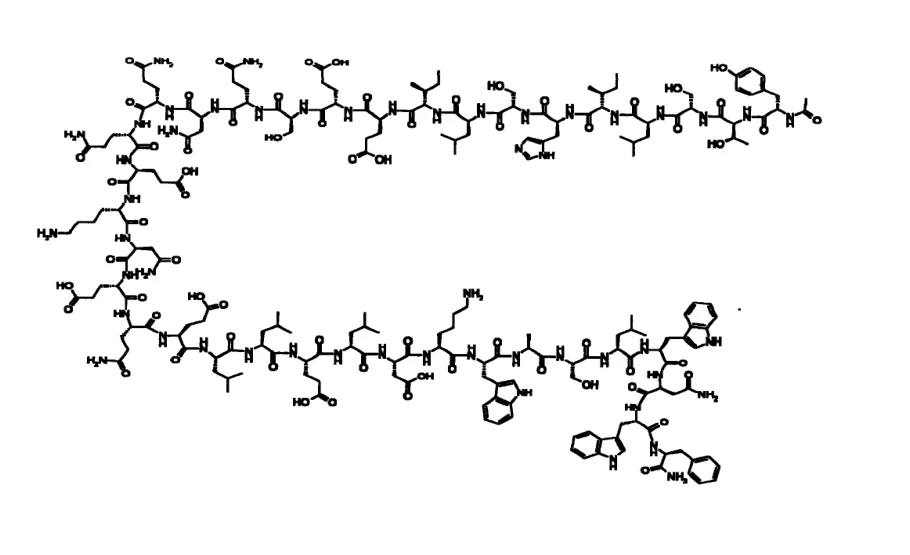 | |
| Molecular Mass | 4,492 Da |
| Molecular Formula | C204H301N51O64 |
| Physical Form | Enfuvirtide is a white to off-white amorphous solid. |
| Solubility | Enfuvirtide is insoluble to very slightly soluble in most organic solvents, exceptions being dimethylformamide and glacial acetic acid. Enfuvirtide is more soluble in dimethylformamide than in glacial acetic acid. Enfuvirtide has similar solubility in the presence of ammonium and sodium cations over potassium. In general, the solubility decreases slightly as the buffer concentration increases. Enfuvirtide has negligible solubility in pure water. |
| pH | Enfuvirtide is insoluble at low pH and solubility increases with increasing pH with a dramatic inflection at about pH 6.1. Extrapolation of the data from pH 6.40 to pH 8.61 indicates that enfuvirtide has an expected solubility of 296 mg/mL at a pH of 11.0. |
| Melting point | Enfuvirtide does not melt but decomposes upon heating with onset of decomposition at about 189ºC. |
CLINICAL TRIALS
Studies in Antiretroviral Experienced Patients
Studies TORO-1 and TORO-2 were randomized, controlled, open-label, multi-center trials in HIV-1 infected subjects with viremia despite 3 to 6 months prior therapy with a nucleoside reverse transcriptase inhibitor (NRTI), non-nucleoside reverse transcriptase inhibitor (NNRTI) and protease inhibitor (PI) or viremia and documented resistance or intolerance to at least one member in each of the NRTI, NNRTI and PI class.
All patients received an individualized background regimen consisting of 3 to 5 antiretroviral agents selected on the basis of the patient's prior treatment history, as well as baseline genotypic and phenotypic viral resistance measurements. Patients were then randomized at a 2:1 ratio to FUZEON (enfuvirtide) 90 mg bid with background regimen or background regimen alone.
Demographic characteristics for Studies TORO-1 and TORO-2 are shown in Table 7. Subjects had prior exposure to a median of 12 antiretrovirals for a median of 7 years.
Table 7: TORO-1 and TORO-2 Pooled Subject Demographics
| FUZEON+Background Regimen | Background Regimen | |
| N=661 | N=334 | |
| Sex Male Female | 90% 10% | 90% 10% |
| Race White Black | 89% 8% | 89% 7% |
| Mean Age (yr) (range) | 42 (16-67) | 43 (24-82) |
| Median Baseline HIV-1 RNA (log10 copies/mL) | 5.2 (3.5-6.7) | 5.1 (3.7-7.1) |
| Median Baseline CD4 Cell Count (cells/mm3) | 88 (1-994) | 97 (1-847) |
The proportion of patients achieving viral load of <400 copies/mL at week 48 was 34% for patients receiving FUZEON plus background regimen compared to 13% for subjects receiving background regimen only (see Table 8).
Table 8: Outcomes of Randomized Treatment at Week 48 (Pooled Studies TORO-1 and TORO-2)
| Outcomes | FUZEON + Background Regimen 90 mg bid | Background Regimen |
| N=661 | N=334 | |
| HIV-1 RNA Log Change from Baseline (log10 copies/mL)*∇ | -1.4 | -0.5 |
| CD4+ cell count Change from Baseline (cells/mm3)#∇ | +91 | +45 |
| HIV RNA ≥ 1 log below Baseline**∇ | 304 (46%) | 61 (18%) |
| HIV RNA <400 copies/mL**∇ | 225 (34%) | 44 (13%) |
| HIV RNA <50 copies/mL**∇ | 154 (23%) | 27 (8%) |
| Time to Virological Failure## (weeks) | 32 | 11 |
| Discontinued due to adverse reactions/intercurrent illness/labs† | 9% | 11% |
| Discontinued due to injection site reactions† | 4% | N/A |
| Discontinued due to other reasons†§ø | 13% | 25% |
* Based on results from pooled data of TORO-1 and TORO-2 on ITT population (week 48 viral load for subjects who were lost to follow-up, discontinued therapy, or switched from their original randomization, is replaced by their baseline value). # Last value carried forward ## Protocol defined virological failure (not meeting 0.5 log decline by week 8, not meeting 1.0 log decline by week 16, or having a 1.0 log rebound after a 2.0 log decline); each criteria confirmed by a second viral load ≥ 2 weeks after the initial value. † Percentages based on safety population FUZEON+background (N=663) and background (N=334). Denominator for non-switch patients: N=112. § As per the judgment of the investigator. ø Includes discontinuations from loss to follow-up, treatment refusal, and other reasons. ∇ p<0.0001 ** FDA Algorithm | ||
Pediatric Clinical Trials
Fifty-six HIV-1 infected pediatric subjects ages 3 through 16 years have received FUZEON in two open-label, single-arm clinical trials. Adverse experiences were similar to those observed in adult patients.
Study T20-204 was an open-label, multicenter trial that evaluated the safety and antiviral activity of FUZEON in treatment-experienced pediatric subjects. Fourteen subjects from 3 to 12 years were enrolled (median age of 8 years). Median baseline CD4 cell count was 523 cells/µL and the median baseline HIV-1 RNA was 4.5 log10 copies/mL.
Eleven of the 14 study subjects completed 48 weeks of chronic therapy. By week 48, 6/14 (43%) subjects had ≥ 1 log10 decline in HIV-1 RNA and 4/14 (29%) subjects were below 400 copies/mL of HIV-1 RNA. The median changes from baseline (for the As Treated population) in HIV-1 RNA and CD4 cell count were 1.24 log10 copies/mL and 237 cells/µL, respectively.
Study T20-310 is an ongoing, open-label, multicenter trial evaluating the pharmacokinetics, safety, and antiviral activity of FUZEON in treatment-experienced pediatric subjects and adolescents. Forty-two subjects from 5 through 16 years were enrolled (median age of 12 years). Median baseline CD4 cell count was 94 cells/µL and the median baseline HIV-1 RNA was 5.0 log10 copies/mL. The evaluation of the antiviral activity is ongoing.
In addition to the above studies, 13 pediatric patients received FUZEON in ongoing safety studies.
DETAILED PHARMACOLOGY
Nonclinical Pharmacokinetics
The pharmacokinetic profiles of enfuvirtide in the rat and the monkey are similar, both being characterized by small volumes of distribution, low systemic clearances, and short terminal elimination half-lives. One metabolite of enfuvirtide, Ro 50-6343, has been identified as the hydrolysis product of the amide group on the C-terminal phenylalanine residue. The pharmacokinetic and metabolic characteristics of enfuvirtide in animals are comparable to those observed in humans.
Intravenous bolus dose administration of enfuvirtide in both the rat and monkey resulted in biphasic plasma concentration-time profiles with terminal phase half-lives of 1.4 to 2.4 hours and 2.9 to 3.8 hours, respectively. Enfuvirtide is readily absorbed in the monkey, as in humans, after SC injection with peak concentrations occurring within 1-3 hours after dosing. Absolute bioavailability in primates ranged from 54 to 133%. In the rat, enfuvirtide absorption after SC injection is dose-dependent, with a decreasing fraction absorbed with increasing dose.
The extent of plasma protein binding of enfuvirtide was 95 to 99% in plasma of healthy volunteers, and 92% in HIV+ plasma. Albumin was the primary binding constituent (95%); relatively low binding (37 to 59%) was associated with α1-acid glycoprotein. Enfuvirtide did not show significant protein binding displacement interactions with warfarin, midazolam, itraconazole or several anti-HIV medications. In vitro studies using human hepatic microsomes indicated no significant inhibitory effects of enfuvirtide on the metabolic activities of several P450 isozymes. There was a slight decrease in CYP2C19 activity at a high concentration of enfuvirtide. These protein binding and metabolic interactions studies suggest that the potential for drug interactions involving enfuvirtide is minimal.
The distribution and excretion profile of radioactivity from mass balance studies following administration of 3H-enfuvirtide in the rat suggests that enfuvirtide and its catabolites are widely distributed in the body. Relatively low amounts of radioactivity are slowly eliminated at a constant rate in the urine and feces suggesting that the radiolabel is incorporated into intermediary pathways as either a radiolabeled fragment or amino acid. A significant fraction of radioactivity was also captured in expired air.
MICROBIOLOGY
Antiviral Activity In Vitro: The in vitro antiviral activity of enfuvirtide has been demonstrated for acute infection of T-lymphoblastoid cell lines, monocyte/macrophage cells, and primary peripheral blood mononuclear cells (PBMC) by laboratory and clinical HIV-1 isolates. Enfuvirtide susceptibility for 130 baseline PBMC virus isolates from patients in Phase II clinical studies was determined in a cMAGI assay. Enfuvirtide had a geometric mean EC50 of 16 ng/mL (SD 57) and a range of 0.4 to 480 ng/mL against these virus isolates. Enfuvirtide also inhibited HIV-1 envelope mediated cell cell fusion with IC50 values reported in the range 0.5 ng/mL to 25 ng/mL for a variety of assay protocols.
The relationship between the in vitro susceptibility of HIV-1 to enfuvirtide and inhibition of HIV-1 replication in humans has not been established.
Enfuvirtide has no activity against HIV-2.
Enfuvirtide exhibited additive to synergistic effects in cell culture assays when combined with individual members of various antiretroviral classes, including zidovudine, lamivudine, nelfinavir, indinavir and efavirenz.
Resistance In Vitro: HIV-1 isolates with reduced susceptibility to enfuvirtide have been selected in vitro which harbor substitutions in amino acids 36 to 38 of the gp41 ectodomain. These substitutions were correlated with varying levels of reduced enfuvirtide susceptibility in HIV site-directed mutants. Phenotypic analysis of site-directed mutants in positions 36 to 38 in an HIV-1 molecular clone showed a 5-fold to 684-fold decrease in susceptibility to enfuvirtide.
Resistance In Vivo: In clinical trials, HIV-1 isolates with reduced susceptibility to enfuvirtide have been recovered from subjects treated with FUZEON in combination with other antiretroviral agents. Post treatment HIV-1 virus from 246 subjects experiencing protocol defined virological failure exhibited decreases in susceptibility to enfuvirtide ranging from 4-fold to 6318-fold relative to their respective baseline virus and exhibited genotypic changes in gp41 amino acids 36 to 45. Substitutions in this region, presented in order of decreasing frequency, were observed at amino acid positions 38, 43, 36, 40, 42 and 45 and the most common specific amino acids observed were V38A, N43D, G36D and Q40H. Substitutions of other amino acid residues were observed at positions 36, 38 and 43 which were also associated with varying degrees of reduced susceptibility to enfuvirtide.
Cross-Resistance: HIV-1 clinical isolates resistant to nucleoside analogue reverse transcriptase inhibitors (NRTI), non-nucleoside analogue reverse transcriptase inhibitors (NNRTI), and protease inhibitors (PI) were susceptible to enfuvirtide in cell culture. Cross-resistance to other fusion inhibitors are still being evaluated.
TOXICOLOGY
Acute Toxicity: The acute toxicity of enfuvirtide was assessed after single intravenous and intraperitoneal doses in rats and in a single-dose intravenous study in cynomolgus monkeys. The results of these studies are presented in Table 9.
Multi-dose Toxicity: The toxicity and toxicokinetic profile of enfuvirtide after repeated administration were assessed in rats and monkeys.
Chronic toxicology studies revealed no adverse systemic toxicities after administration of doses up to 30 mg/kg/day in rodents for 6 months, and 20 mg/kg/day in primates for 9 months, using the therapeutic route and regimen (i.e., twice daily SC injection). Plasma exposures were 0.7 and 2.8 times higher than estimated therapeutic exposures in rats and primates, respectively. Enfuvirtide was also well tolerated in 28-day toxicity studies using the intravenous route of administration. Additional rat and primate studies evaluated enfuvirtide batches prepared by different synthetic routes, and the impact of prior treatment with another fusion inhibitor (T-1249) on enfuvirtide safety.
The major observations in both species when enfuvirtide was given subcutaneously were local changes at the injection sites indicative of inflammation and mechanical trauma. Enfuvirtide evoked an immunogenic response in primates manifested as the development of antibodies to the molecule. There was no evidence that the antibodies reduced systemic exposures to the enfuvirtide. The animal profile of general tolerance of enfuvirtide with adverse effects limited to the injection site is generally consistent with observations in HIV patients.
The multi-dose studies performed, and their results are presented in Tables 10-11.
Special Toxicity Studies and Safety Pharmacology Studies: Studies to address specific safety concerns related to enfuvirtide administration were focussed on the potential for hypersensitivity reactions, and potential pharmacological actions of the molecule on the cardiovascular and central nervous systems were also assessed in standard models. In addition, the minipig was investigated as a potential animal model for injection site reactions, the most common clinical adverse finding.
A positive skin sensitization response to enfuvirtide was observed in guinea pigs, indicating a potential for causing delayed contact hypersensitivity.
Slight, transient changes in hemodynamic and respiratory parameters, and changes in the QRS complex and ST-segment, were observed in dogs after intravenous administration enfuvirtide doses that produced high peak plasma concentrations (> 86 times the human plasma concentration following a clinical dose of 90 mg bid). Importantly, no change in the QT or QTC interval were observed. Enfuvirtide did not affect the central nervous system in mouse observational studies.
A summary of these studies is presented in Table 12.
Reproductive Toxicity: Fertility, teratology and pre- and postnatal development studies were conducted to provide information on the effect of enfuvirtide on all phases of mammalian reproduction and development, including immediate and latent effects through one complete life cycle (i.e., to the F2 generation).
Enfuvirtide produced no adverse effects on embryofetal development after administration of doses up to 500 mg/kg/day in rats, and 30 mg/kg/day in rabbits. Plasma exposures were 8.9 and 3.2 times higher than estimated therapeutic exposures in rats and rabbits, respectively. No adverse effects on fertility or pre- and postnatal development were seen in rats treated with up to 30 mg/kg/day enfuvirtide. The risk of enfuvirtide for causing genetic or chromosomal damage is low.
The reproductive toxicity studies performed, and their results are presented in Table 13.
Carcinogenicity: Long-term animal carcinogenicity studies of enfuvirtide are ongoing.
Mutagenicity: Enfuvirtide was neither mutagenic nor clastogenic in a series of in vivo and in vitro assays including the Ames bacterial reverse mutation assay, a mammalian cell forward gene mutation assay in AS52 Chinese Hamster ovary cells, or an in vivo mouse micronucleus assay.
A summary of the studies performed, and their results are presented in Table 14.
Table 9: Summary of Acute Toxicity Studies
| Study Type | Species/ Strain | N (sex/gp) | Rte | Dose (mg/kg/day) | Cmax (µg/mL) | AUC (µg·hr/mL) | Findings |
| Single dose toxicity in rat | Rat/ Fischer | 5 | IV | 0 10 20 50 100 | NM | NM | Clinical signs of toxicity and lethality at 100 mg/kg; Congestion and hemorrhage in lung at ≥ 20 mg/kg; MNLD = 50 mg/kg |
| 3 | IP | 100 | |||||
| Single dose toxicity in primate | Cyno Monkey | 1 (females only) | IV | 0 5 10 25 50 | NM | NM | All doses well-tolerated; mild intolerance (including slow recovery from anesthesia and pale mucous membranes) at 50 mg/kg. |
NM = not measured
Table 10: Summary of Multiple-Dose Toxicity Studies in Rats
| Study Type | Species/ Strain | N (sex/gp) | Rte | Dose (mg/kg/day) [regimen] | Cmax (µg/mL) | AUC0-12hr (µg.hr/mL) | Findings |
|---|---|---|---|---|---|---|---|
| 28-Day toxicity in rat | Rat/ Fisher | Terminal: 10; Recovery: 5 | IV | 0 1 3 10 [QD] | NM | NM | Well-tolerated at all doses; slight ↓ leukocytes and reversible ↑ thyroid/parathyroid wts at 10 mg/kg; slight ↑ RBC, Hct, Hb, ↓ MCH, MCHC after recovery at 10 mg/kg. |
| 7-Day bridging toxicity in rat | Rat/ Fischer | MTD Phase: 2 Repeat Dose Phase: 5 | IV | 0, 50, 75, 100, 110, 125 0, 2, 7, 15 [QD] | NM | NM | Lethality at 110 (F-moc material) or 125 (t-Boc material); F-moc: Slight ↓ RBC, Hb, ↑ MCV at ≥ 2 mg/kg; ↓ Hct, ↑ MCH at ≥ 7 mg/kg; t-Boc: Slight ↓ RBC, HB, Hct at ≥ 7 mg/kg. |
| 6-Month toxicity and toxicokinetics in rat | Rat/ Sprague- Dawley (Crl:CD) | Interim: 10; Terminal: 15; Recovery: 5 | SC | 0 2.76/2.4 10.35/9.0 34.5/30.0 [BID] | (day 36) 1.84 3.82 8.27 | (day 36) 8.0 20.1 39.1 | All doses well-tolerated; no adverse systemic toxicities; gross and microscopic injection site changes in all groups. |
Table 11: Summary of Multiple Dose Toxicity Studies in Primates
| Study Type | Species/ Strain | N (sex/gp) | Rte | Dose (mg/kg/day) [regimen] | Cmax (µg/mL) | AUC (µg.hr/mL) | Findings |
|---|---|---|---|---|---|---|---|
| 28-Day toxicity and toxico-kinetics in primate | Cyno Monkey | 4 | IV | 0 0.4 1.2 4.0 [BID] | (day 7) 3.8 11.9 41.2 | (day 7)a 5.7 17.7 48.4 | Well-tolerated at all doses; antibody response at 4 mg/kg/day. |
| 28-Day bridging toxicity and toxico-kinetics in primate | Cyno monkey | 2 | SC | 0 10 20 [BID] | (day 28) | (day 28)b | All doses well-tolerated; no adverse systemic toxicities; Local gross and microscopic changes at 20 mg/kg; slightly more severe with Rte 1 material. |
| Rt1 22 45 | Rt2 18 33 | Rt1 104 218 | Rt2 100 168 | ||||
| 9-Month toxicity and toxico-kinetics in primate | Cyno monkey | Interim: 2-3; Terminal: 3-4; Recovery: 1 | SC | 0 10 20 [BID] | (day 272) 15.0 20.0 | (day 272)c 161.2 158.1 | All doses well-tolerated; no adverse systemic toxicities; isolated ↑ eosinophils and leukocytes; antibody response at both dose levels; injection site changes in all groups, but more significant in enfuvirtide groups. |
| 28-day toxicity in primates | Cyno Monkey | 6 | SC | T1249: 12.5, 25 [QD] | All treatments well-tolerated; no adverse systemic toxicities; gross and microscopic changes at enfuvirtide injection sites | ||
| 2 | ENF: 50 [BID] | (day 49) 59.2 | (day 49)c 342.0 |
a = AUC 0 ∞
b = AUC 0 8hr
c = AUC 0 12hr
Table 12: Summary of Special Toxicity and Safety Pharmacology Studies
| Study Type | Species/ Strain | N (sex/gp) | Rte | Dose | Cmax (µg/mL) | AUC (µg.hr/mL ) | Findings |
|---|---|---|---|---|---|---|---|
| Skin Sensitization | Guinea pig/ Dunkin Hartley | Con: 5 Test: 10 (males only) | derm top | 25 mg/ml 50 mg/ml | NM | NM | Positive skin sensitization response |
| Skin Sensitization | Guinea pig/ Dunkin Hartley | Con: 5 Test: 10 (males only) | derm top | 50 mg/ml 100 mg/ml | NM | NM | Positive skin sensitization response; more severe response with Tris |
| 14 Day Minipig Dose Response Study | Minipig/ Hanford | 1M 2F | SC | 50 mg/ml (4 inj/day); 100 mg/ml (2 inj/day) | NM | NM | SC masses beginning day 5; acute and chronic inflammation, foreign body giant cells, granuloma, fibrosis, collagen degeneration seen microscopically. Most prominent changes at sites injected 4X daily with vehicle or T-20. |
| 14 Day Minipig Formulation Comparison | Minipig/ Hanford | 3M | SC | 50 mg/ml (4 inj/day); 100 mg/ml (2 inj/day) | NM | NM | SC masses beginning on day 4. Well-defined granulomas in most T-20 treated sites (none in vehicle sites). Tris formulation appeared to cause the most severe reaction. Other microscopic changes as in previous study. |
| Locomotor activity in mice (single dose study) | Mice ICR CD-1 | 10M | SC | 0, 5, 15, 50 mg/kg | NM | NM | No effect of enfuvirtide |
| General behavior in mice (single dose study) | Mice ICR CD-1 | 4M | SC | 0, 5, 15, 50 mg/kg | NM | NM | No effect of enfuvirtide |
| Cardio-vascular and respiratory function in dog (single dose study) | Beagle dogs | 1M 3 F 3M 3F | IV | 0 mg/kg 5 " 15 " 50 " | 108 396 1240 | NM | Slight, transient ↓ MAP, ↑ HR, LV dp/dt, ↓ QRS amplitude, resp rate, min vol at > 15 mg/kg; slight ↓ LV SP, tidal volume at 50 mg/kg; one ST-segment elevation at 50 mg/kg. No changes in QT or QTc |
NM = not measured
Table 13: Summary of Reproductive Toxicity Studies
| Study Type | Species/ Strain | N (sex/gp) | Rte | Dose | Cmax (µg/mL) | AUC (µg.hr/mL) | Findings |
|---|---|---|---|---|---|---|---|
| Rat Fertility and Early Embryonic Development | Rat/ Sprague-Dawley Crl:CD | 25 | SC | 0 2.4 9.0 30.0 [BID] | NM | NM | No adverse effects on fertility or early embryonic development |
| Rat Embryofetal Development | Rat/ Sprague-Dawley Crl:CD | 25F | SC | 0 2.4 9.0 30.0 [BID] | NM | NM | No adverse effects on maternal generation or embryofetal development |
| Rat Embryofetal Development | Rat/ Sprague-Dawley Crl:CD | 22F | SC | 0 125 250 500 [BID] | (day 11) 49.4 64.0 62.2 | (day 11) 325 546 499 | No adverse effects on maternal generation or embryofetal development |
| Rabbit Embryofetal Development | Rabbit/ New Zealand White | 4F | SC | 0 1.0 3.0 10.0 30.0 [BID] | NM | NM | No adverse effects on maternal generation or embryofetal development |
| Rabbit Embryofetal Development | Rabbit/ New Zealand White | 20F | SC | 0 3.0 10.0 30.0 [BID] | day 11 NM 8.4 27.0 | day 11 NM 33 177 | No adverse effects on maternal generation or embryofetal development |
| 6F | |||||||
| Rat Pre- and Postnatal Development | Rat/ Sprague-Dawley Crl:CD | 25F (F0) 25F (F1) | SC | 0 2.4 9.0 30.0 [BID] | NM | NM | No adverse effects on the maternal generation or the peri- and postnatal development of the offspring |
NM = not measured
Table 14: Summary of Genetic Toxicity Studies
| Study Type | Species/ Strain | N (sex/gp) | Dose | Rte | Findings |
| Bacterial Reverse Gene Mutation (Ames Test) | TA1535 TA1537 TA98 TA100 TA102 WP2 uvrA | 16.7, 50, 167, 500, 1670, 5000 µg/plate | Non-mutagenic | ||
| Forward Gene Mutation Assay in Mammalian Cells | AS52 Chinese Hamster Ovary Cells | 10, 50, 100, 250, 500, 750, 1000 µg/ml | Non-mutagenic | ||
| In vivo micronucleus | Mice Crl:CD1 (ICR) | 5/sex at 24, 48, 72 hr | 100 500 1000 mg/kg | IV | Non-clastogenic |
REFERENCES
- 1. Braun MC et al. Activation of the formyl peptide receptor by the HIV-derived peptide T-20 suppresses interleukin-12 p70 production by human monocytes. Blood 2001;97(11):3531-6.
- 2. Chan DC et al. Core structure of gp41 from the HIV envelope glycoprotein. Cell 1997;89:263-73.
- 3. Chen C-H et al. A molecular clasp in the human immunodeficiency virus (HIV) type 1 TM protein determines the anti-HIV activity of gp41 derivatives: Implication for viral fusion. J Virol 1995;69(6): 3771-7.
- 4. Derdeyn CA et al. Sensitivity of human immunodeficiency virus type 1 to the fusion inhibitor T-20 is modulated by coreceptor specificity defined by the V3 loop of gp120. J Virol 2000;74(18):8358-67.
- 5. Kilby JM et al. Potent suppression of HI-1 replication in humans by T-20, a peptide inhibitor of gp41-mediated virus entry. Nature Medicine 1998; 4:1302-7.
- 6. Kliger Y, Shai Y. Inhibition of HIV-1 entry before gp41 folds into its fusion-active conformation. J Mol Biol. 2000; 295:163-8.
- 7. Lalezari J, Henry K, O'Hearn M, et al. Enfuvirtide, an HIV-1 fusion inhibitor, for drug-resistant HIV infection in North and South America. N Engl J Med 2003; 348 (22):2175-85.
- 8. Lazzarin A, Clotet B, Cooper D, et al. Efficacy of enfuvirtide in patients infected with drug-resistant HIV-1 in Europe and Australia. N Engl J Med 2003; 348 (22):2186-95.
- 9. Mobley PW et al. Membrane-perturbing domains of HIV type 1 glycoprotein 41. IDS Research and Human Retroviruses 2001;17(4):311-27.
- 10. Pilcher CD, Eron JJ, Ngo L, Dusek A, Sista P, Gleavy J, Brooks D, Venetta T, DiMassimo E, and Hopkins S. Prolonged therapy with the fusion inhibitor T-20 in combination with oral antiretroviral agents in an HIV-infected individual. AIDS 13(15):2171-3.
- 11. Price RW, Parham R, Kroll JL, et al. Enfuvirtide cerebrospinal fluid (CSF) pharmacokinetics and potential use in defining CSF HIV1 origin. Antivir Ther 2008;13(3):36974.