


Product Monograph - Xofluza
Recent Major Label Changes
None at time of the most recent authorization.
Table of Contents
Certain sections or subsections that are not applicable at the time of the preparation of the most recent authorized product monograph are not listed.
Recent Major Label Changes .................................................................................................. 2
Table of Contents................................................................................................................... 2
Part 1: Healthcare Professional Information........................................................................... 4
- 1.
Indications .................................................................................................................. 4
1.1. Pediatrics......................................................................................................... 4
1.2. Geriatrics ......................................................................................................... 4
- 2. Contraindications ....................................................................................................... 4
- 3. Serious Warnings and Precautions Box ....................................................................... 4
- 4.
Dosage and Administration ........................................................................................ 4
4.1. Dosing Considerations...................................................................................... 4
4.2. Recommended Dose and Dosage Adjustment ................................................... 5
4.3. Reconstitution ................................................................................................. 5
4.4. Administration ................................................................................................. 5
4.5. Missed Dose .................................................................................................... 5
- 5. Overdose .................................................................................................................... 6
- 6. Dosage Forms, Strengths, Composition, and Packaging............................................... 6
- 7.
Warnings and Precautions .......................................................................................... 6
General ....................................................................................................................... 6
Immune ...................................................................................................................... 7
Reproductive Health.................................................................................................... 7
Sensitivity/Resistance.................................................................................................. 7
7.1. Special Populations .......................................................................................... 7
7.1.1 Pregnancy .................................................................................................... 7
7.1.2 Breastfeeding............................................................................................... 7
7.1.3 Pediatrics ..................................................................................................... 8
7.1.4 Geriatrics ..................................................................................................... 8
- 8.
Adverse Reactions ...................................................................................................... 8
8.1. Adverse Reaction Overview .............................................................................. 8
8.2. Clinical Trial Adverse Reactions ........................................................................ 8
8.2.1. Clinical Trial Adverse Reactions – Pediatrics .................................................. 9
8.3. Less Common Clinical Trial Adverse Reactions .................................................. 9
8.4. Abnormal Laboratory Findings: Hematologic, Clinical Chemistry and Other Quantitative Data ........................................................................................................ 9
8.5. Post-Market Adverse Reactions ........................................................................ 9
- 9.
Drug Interactions ...................................................................................................... 10
9.2. Drug Interactions Overview ............................................................................ 10
9.3. Drug-Behaviour Interactions........................................................................... 10
9.4. Drug-Drug Interactions................................................................................... 10
9.5. Drug-Food Interactions .................................................................................. 11
9.6. Drug-Herb Interactions................................................................................... 11
9.7. Drug-Laboratory Test Interactions .................................................................. 11
- 10.
Clinical Pharmacology ............................................................................................... 11
10.1. Mechanism of Action.................................................................................. 11
10.2. Pharmacodynamics .................................................................................... 11
10.3. Pharmacokinetics ....................................................................................... 12
- 11. Storage, Stability, and Disposal................................................................................. 15
- 12. Special Handling Instructions .................................................................................... 15
Part 2: Scientific Information ............................................................................................... 16
- 13. Pharmaceutical Information ..................................................................................... 16
- 14.
Clinical Trials............................................................................................................. 16
14.1. Clinical Trials by Indication.......................................................................... 16
- 15. Microbiology ............................................................................................................ 23
- 16. Non-Clinical Toxicology............................................................................................. 24
Patient Medication Information........................................................................................... 25
Part 1: Healthcare Professional Information
1. Indications
XOFLUZA (baloxavir marboxil tablets) is indicated for:
- the treatment of uncomplicated influenza in patients 12 years of age and older who have been symptomatic for no more than 48 hours and who are otherwise healthy or at high risk of developing influenza complications.
Healthcare professionals should consider available information on influenza drug susceptibility patterns and treatment effects when deciding whether to use XOFLUZA (see 14.1 Clinical Trials by Indication).
Efficacy is based on significant reduction in the time to alleviation or improvement of influenza symptoms with XOFLUZA compared with placebo.
1.1. Pediatrics
Pediatrics (≥ 12 years of age): Based on the data submitted and reviewed by Health Canada, the safety and efficacy of XOFLUZA in pediatric patients at least 12 years of age and weighing at least 40 kilograms (kg) has been established; therefore, Health Canada has authorized an indication for pediatric use. The safety and efficacy in pediatric patients with acute uncomplicated influenza who are less than 12 years of age or who weigh less than 40 kg has not been established (see 14.1 Clinical Trials by Indication).
1.2. Geriatrics
Geriatrics (≥ 65 years of age): Evidence from one pivotal clinical study in patients with influenza at high risk of influenza complications suggests that use in geriatric patients, at least 65 years of age and weighing at least 40 kg, is not associated with relevant differences in safety or effectiveness. The safety and efficacy in geriatric patients with acute uncomplicated influenza who weigh less than 40 kg has not been established.
2. Contraindications
XOFLUZA is contraindicated in patients who are hypersensitive to this drug (see 7 Warnings and Precautions) or to any ingredient in the formulation, including any non-medicinal ingredient, or component of the container. For a complete listing, see 6 Dosage Forms, Strengths, Composition, and Packaging.
3. Serious Warnings and Precautions Box
|
|---|
4. Dosage and Administration
4.1. Dosing Considerations
A single dose of XOFLUZA should be initiated within 48 hours of symptom onset.
Avoid co-administration of XOFLUZA with calcium-fortified beverages, polyvalent cation-containing laxatives, antacids or oral supplements (e.g., calcium, iron, magnesium, selenium, or zinc). Where possible, avoid co-administration of XOFLUZA with dairy products. (see 9.5 Drug-Food Interactions)
4.2. Recommended Dose and Dosage Adjustment
The recommended dose of XOFLUZA for adults and adolescents (≥ 12 years of age) is a single dose based on body weight, as listed in the table below.
Table 1 – Recommended Dose of XOFLUZA in Patients 12 years of Age and Older
| Patient Body Weight (kg) | Recommended Single Oral Dose |
|---|---|
| 40 kg to < 80 kg | 40 mg |
| ≥ 80 kg | 80 mg |
No dose reductions of XOFLUZA are recommended.
Pediatric use
The safety and efficacy of XOFLUZA in patients < 12 years of age or weighing < 40 kg has not been established. No dose adjustment is recommended for patients 12 to < 18 years of age who weigh ≥ 40 kg (see 10.3 Pharmacokinetics).
Geriatric use
The safety and efficacy of XOFLUZA in patients ≥ 65 years of age and weighing < 40 kg has not been established. No dosage adjustment is recommended for patients ≥ 65 who weigh ≥ 40 kg (see 10.3 Pharmacokinetics).
Renal Impairment
The safety and efficacy of XOFLUZA has not been studied in patients with renal impairment. A change in dose is not required for patients with renal impairment (see 10.3 Pharmacokinetics).
Hepatic Impairment
No dose adjustment is required in patients with mild (Child-Pugh class A) to moderate (Child-Pugh class B) hepatic impairment (see 10.3 Pharmacokinetics). XOFLUZA has not been studied in patients with severe hepatic impairment.
4.3. Reconstitution
Not Applicable.
4.4. Administration
Take XOFLUZA orally with or without food (see 10.3 Pharmacokinetics).
4.5. Missed Dose
XOFLUZA is a single-dose drug.
5. Overdose
Reports of overdoses with XOFLUZA have been received from clinical trials and during post-marketing experience. In the majority of cases reporting overdose, no adverse events were reported. Reports of vomiting, some of which may be clinically significant, have been received following overdoses of XOFLUZA.
No known specific antidote exists for XOFLUZA. In the event of overdose, standard supportive medical care should be initiated based on the patient’s signs and symptoms.
Baloxavir is unlikely to be significantly removed by dialysis due to high serum protein binding.
| For the most recent information in the management of a suspected drug overdose, contact your regional poison control centre or Health Canada’s toll-free number, 1-844 POISON-X (1-844-764-7669). |
|---|
- 6. Dosage Forms, Strengths, Composition, and Packaging
Table 2 – Dosage Forms, Strengths, and Composition
7. Warnings and Precautions
See 3 Serious Warnings and Precautions Box.
General
There is no clinical evidence for efficacy of XOFLUZA in any illness caused by agents other than influenza viruses types A and B.
The efficacy and safety of XOFLUZA in patients who begin treatment after 48 hours of symptoms has not been established.
The efficacy and safety of XOFLUZA has not been established in the treatment of influenza in patients requiring hospitalization (i.e. complicated influenza).
The efficacy and safety of XOFLUZA has not been established in prevention of influenza.
| Route of Administration | Dosage Form/ Strength/Composition | Non-Medicinal Ingredients |
| Oral | 20 mg, 40 mg, 80 mg; blister packs | croscarmellose sodium, hypromellose, lactose monohydrate, microcrystalline cellulose, povidone, sodium stearyl fumarate, talc, titanium dioxide |
Immune
There is no evidence for efficacy of XOFLUZA in any illness caused by agents other than influenza viruses. Serious bacterial infections may begin with influenza-like symptoms or may coexist with or occur as complications during the course of influenza. Health professionals should be alert to the potential for secondary bacterial infections and treat with antibiotics as appropriate.
Reproductive Health
Fertility
No effects on fertility were observed in the rat study performed with baloxavir marboxil at exposure approximately 2 times the human exposure at the maximum recommended dose based on AUC (see 7.1.1 Pregnancy).
Sensitivity/Resistance
Cases of anaphylaxis, urticaria, rash and angioedema have been reported in post-marketing experience with XOFLUZA. Appropriate treatment should be instituted if an allergic-like reaction occurs or is suspected. The use of XOFLUZA is contraindicated in patients with known hypersensitivity to XOFLUZA (see 2 Contraindications and 8.5 Post-Market Adverse Reactions).
7.1. Special Populations
7.1.1 Pregnancy
There are no adequate and well-controlled studies with XOFLUZA in pregnant women. The potential risk of XOFLUZA in pregnant women is unknown. XOFLUZA should not be used during pregnancy unless the potential benefit to the mother justifies the potential risk to the fetus.
Baloxavir marboxil did not cause malformations in the embryo-fetal studies in rats or rabbits at exposures approximately 2 and 3 times the human exposure of the maximum recommended dose based on AUC, respectively. At exposure approximately 6 times the human exposure at the maximum recommended dose based on AUC, baloxavir marboxil given to pregnant rabbits caused maternal toxicity resulting in miscarriages and an increase in the incidence rates of minor skeletal abnormalities in fetuses. Such effects were not seen in rats.
The pre- and post-natal study in rats did not show drug-related adverse findings in dams and pups at exposure approximately 2 times the human exposure at the maximum recommended dose based on AUC.
7.1.2 Breastfeeding
It is not known whether baloxavir marboxil and the active metabolite, baloxavir, are excreted in human breast milk. Baloxavir marboxil or its metabolites were present in the milk of lactating rats.
Therefore, a decision should be made whether to discontinue nursing or to initiate treatment with XOFLUZA, taking into consideration the potential benefit of XOFLUZA to the nursing mother and the potential risk to the infant.
7.1.3 Pediatrics
The safety and efficacy of XOFLUZA in pediatric patients < 12 years of age or weighing < 40 kg has not been established.
7.1.4 Geriatrics
The safety and efficacy of XOFLUZA in geriatric patients (≥ 65 years of age) weighing < 40 kg has not been established.
8. Adverse Reactions
8.1. Adverse Reaction Overview
The overall safety profile of XOFLUZA is based on data from a total of 2109 subjects who have been exposed to at least one dose of baloxavir marboxil in completed Phase 1, 2, and 3 studies.
A total of 1640 adult and adolescent subjects have received XOFLUZA in 3 placebo-controlled clinical studies (studies 1518T0821, 1601T0831 [CAPSTONE-1] and 1602T0832 [CAPSTONE-2]). Based on pooled data from these studies, the incidence of adverse events reported as treatment-related in the XOFLUZA group was consistent between the pooled studies in otherwise healthy patients (1518T0821, CAPSTONE-1) and the study in patients at high risk of developing influenza-related complications (CAPSTONE-2) (5% and 6%, respectively), and was similar to the incidence of adverse events reported as treatment-related in the placebo group (5% and 8%, respectively). Overall, the incidence of serious adverse events across all 3 studies was low (0.7% in total) in the XOFLUZA-treated subjects. No serious treatment-related adverse events were identified from clinical studies.
The safety profile in patients at high risk was similar to that in otherwise healthy adults and adolescents.
8.2. Clinical Trial Adverse Reactions
Clinical trials are conducted under very specific conditions. Therefore, the frequencies of adverse reactions observed in the clinical trials may not reflect frequencies observed in clinical practice and should not be compared to frequencies reported in clinical trials of another drug.
Among XOFLUZA-treated subjects (N=1640) in studies 1518T0821, CAPSTONE-1 and CAPSTONE-2, 1,334 subjects (81%) were 18 to 64 years of age, 209 subjects (13%) were adults 65 years of age or older and 97 subjects (6%) were adolescents 12 to 17 years of age. These studies included otherwise healthy adults and adolescents (N=910) and subjects at high risk of developing complications associated with influenza (N=730). Of these, 1,440 subjects received XOFLUZA at the recommended 40 mg and 80 mg doses.
Table 3 displays the most common adverse events (regardless of causality assessment) reported in at least 1% of adult and adolescent subjects who received XOFLUZA at the recommended dose in studies 1518T0821, CAPSTONE-1 and CAPSTONE-2.
Table 3 – Incidence of adverse events occurring in greater than or equal to 1% of subjects receiving XOFLUZA in the acute uncomplicated influenza studies
| Adverse Event | XOFLUZA (N=1440) | Placebo (N=1136) |
|---|---|---|
| Diarrhea | 3% | 4% |
| Bronchitis | 3% | 4% |
| Nausea | 2% | 3% |
| Sinusitis | 2% | 3% |
| Headache | 1% | 1% |
Clinical Trial Adverse Reactions (Geriatrics)
In one pivotal clinical study conducted in patients with influenza who are at high risk of influenza complications, 209 of 730 (29%) XOFLUZA-treated subjects were 65 years of age and older. The safety profile observed for this population was similar to that reported in the overall study population except for nausea which was reported in 6% of elderly subjects compared to 1% of subjects from 18 to 64 years of age.
Safety in geriatric patients weighing < 40 kg has not been established.
8.2.1. Clinical Trial Adverse Reactions – Pediatrics
No differences in safety were observed between adult and pediatric (≥ 12 years of age) populations. Safety in pediatric populations < 12 years of age or weighing < 40 kg has not been established.
8.3. Less Common Clinical Trial Adverse Reactions
Not Applicable.
8.4. Abnormal Laboratory Findings: Hematologic, Clinical Chemistry and Other Quantitative Data
Not Applicable.
8.5. Post-Market Adverse Reactions
The following adverse reactions have been identified during post-marketing use of XOFLUZA. Because these reactions are reported voluntarily from a population of uncertain size, it is not possible to reliably estimate their frequency or establish a causal relationship to XOFLUZA exposure.
Immune system disorder: Anaphylaxis, anaphylactic reactions and hypersensitivity.
Skin and subcutaneous tissue disorders: Angioedema, urticaria and rash.
Gastrointestinal disorders: Vomiting, bloody diarrhea, melena and ischemic colitis.
9. Drug Interactions
9.2. Drug Interactions Overview
No clinically significant drug-drug interactions are anticipated between baloxavir marboxil or its active metabolite, baloxavir and substrates, inhibitors, or inducers of cytochrome P450 (CYP enzymes), substrates or inhibitors of UDP-glucuronosyltransferase (UGT) enzyme, or gut, renal, or hepatic transporters.
Polyvalent cation containing products may decrease plasma concentrations of baloxavir. XOFLUZA should not be taken with dairy products, calcium-fortified beverages, polyvalent cation containing laxatives or antacids, or oral supplements containing iron, zinc, selenium, calcium, magnesium.
9.3. Drug-Behaviour Interactions
No studies on the effects on the ability to drive and to use machines have been performed.
9.4. Drug-Drug Interactions
Effects of Other Drugs on Baloxavir Marboxil or its Active Metabolite Baloxavir
In vitro studies demonstrated that baloxavir marboxil and baloxavir are substrates of P-glycoprotein (P-gp), and baloxavir is primarily metabolized by UGT-glucuronosyltransferase (UGT1A3) with minor contribution from CYP3A4. However, itraconazole, a strong inhibitor of P-gp and CYP3A, increased the Cmax and AUC0-inf of baloxavir 1.33 fold and 1.23 fold, respectively. These increases are not considered to be clinically meaningful.
Probenecid, an inhibitor of UGT enzyme, decreased the Cmax and AUC0-inf of baloxavir by 21% and 25%, respectively. These decreases are not considered to be clinically meaningful.
Effects of Baloxavir Marboxil or its Active Metabolite Baloxavir on Other Drugs
In in vitro studies at clinically relevant concentrations, baloxavir marboxil and its active metabolite, baloxavir did not inhibit any of the following isozymes of CYP or UGT family: CYP1A2, CYP2B6, CYP2C8, CYP2C9, CYP2C19, CYP2D6, CYP3A4, UGT1A1, UGT1A3, UGT1A4, UGT1A6, UGT1A9, UGT2B7, and UGT2B15 isozymes).
In in vitro studies at clinically relevant concentrations, baloxavir marboxil and baloxavir did not cause significant induction of CYP1A2, CYP2B6, and CYP3A4. In in vitro transporter studies at clinically relevant concentrations, baloxavir marboxil and baloxavir inhibited the efflux transporter P-gp. Baloxavir but not baloxavir marboxil inhibited breast cancer resistant protein (BCRP).
Based on in vitro transporter studies, despite a weak in vitro inhibitory potential, baloxavir is not expected to be an in vivo inhibitor of organic anion transporting polypeptides (OATP)1B1, OATP1B3, organic cation transporter (OCT)1, OCT2, OAT1, OAT3, multidrug and toxin extrusion (MATE)1, or MATE2K, hence no relevant pharmacokinetic interaction is anticipated between baloxavir and medicines which are substrates of these transporters.
A single 40 mg dose of baloxavir marboxil had no clinically meaningful effect on the pharmacokinetics of midazolam, a substrate of CYP3A4.
A single 80 mg dose of baloxavir marboxil had no clinically meaningful effect on the pharmacokinetics of digoxin, a substrate of P-gp.
A single 80 mg dose of baloxavir marboxil decreased Cmax and AUC0-inf of rosuvastatin, a substrate of BCRP, by 18% and 17%, respectively. These decreases are not considered to be clinically meaningful and indicate that baloxavir marboxil or baloxavir is not expected to affect the pharmacokinetics of co-administered drugs that are substrates of BCRP.
The concurrent use of XOFLUZA with intranasal live attenuated influenza vaccine (LAIV) has not been evaluated. Concurrent administration of antiviral drugs may inhibit viral replication of LAIV and thereby decrease the effectiveness of LAIV vaccination. Interactions between inactivated influenza vaccines and XOFLUZA have not been evaluated.
9.5. Drug-Food Interactions
Administration of baloxavir marboxil 20 mg tablets to healthy volunteers following consumption of a moderate fat, moderate calorie meal (approximately 400 to 500 kcal including 150 kcal from fat) indicated that Cmax, AUC0-72 and AUCinf of baloxavir were decreased by 47%, 44% and 37%, respectively, when compared to administration under fasting conditions. The Tmax was unchanged in the presence of food. (see 10.3 Pharmacokinetics).
Avoid co-administration of XOFLUZA with calcium-fortified beverages, polyvalent cation-containing laxatives, antacids or oral supplements (e.g., calcium, iron, magnesium, selenium, or zinc). Where possible, avoid co-administration of XOFLUZA with dairy products. (see 4 Dosage and Administration).
9.6. Drug-Herb Interactions
Not studied.
9.7. Drug-Laboratory Test Interactions
Not studied.
10. Clinical Pharmacology
10.1. Mechanism of Action
Baloxavir marboxil is a prodrug that is converted by hydrolysis to its active metabolite, baloxavir, the active form that exerts anti-influenza activity. Baloxavir acts on the cap-dependent endonuclease (CEN), an influenza virus-specific enzyme in the polymerase acidic (PA) subunit of the viral RNA polymerase complex and thereby inhibits the transcription of influenza virus genomes resulting in inhibition of influenza virus replication. The 50% inhibition concentration (IC50) of baloxavir was 1.4 to 3.1 nmol/L for influenza A viruses and 4.5 to 8.9 nmol/L for influenza B viruses in an enzyme inhibition assay.
10.2. Pharmacodynamics
Nonclinical studies demonstrate potent antiviral activity of baloxavir against influenza A and B virus in vitro and in vivo. The antiviral activity of baloxavir against laboratory strains and clinical isolates of influenza A and B viruses was determined in the MDCK cell culture assay. The median 50% effective concentration (EC50) values of baloxavir were 0.73 nmol/L (n=31; range: 0.20-1.85 nmol/L) for subtype A/H1N1 strains, 0.83 nmol/L (n=33; range: 0.35-2.63 nmol/L) for subtype A/H3N2 strains, and 5.97 nmol/L (n=30; range: 2.67-14.23 nmol/L) for type B strains. In a MDCK cell-based virus titer reduction assay, the 90% effective concentration (EC90) values of baloxavir were in the range of 0.46 to 0.98 nmol/L for subtype A/H1N1 and A/H3N2 viruses, 0.80 to 3.16 nmol/L for avian subtype A/H5N1 and A/H7N9 viruses, and 2.21 to 6.48 nmol/L for type B viruses.
The relationship between antiviral activity in cell culture and inhibition of influenza virus replication in humans has not been established.
Effects on Electrocardiogram
At twice the expected exposure from recommended dosing, XOFLUZA did not prolong the QTc interval.
10.3. Pharmacokinetics
After oral administration, baloxavir marboxil is extensively converted to its active metabolite, baloxavir, predominantly by arylacetamide deacetylase in the gastrointestinal lumen, intestinal epithelium, and liver. The plasma concentration of baloxavir marboxil was very low or below the limit of quantitation (< 0.100 ng/mL).
Influenza Patients
Oral drug clearance of baloxavir in the typical Asian and non-Asian patient (65 kg) was 9.3 L/h and 5.4 L/h, respectively. In the Phase 3 study (CAPSTONE 1), mean drug exposure to baloxavir in terms of AUCinf and Cmax were 6881 ng.hr/mL and 103 ng/mL, respectively, in the typical Asian patient, and 4645 ng.hr/mL and 70.5 ng/mL, respectively, in the typical non-Asian patient. There were no differences in PK parameters between influenza patients who are otherwise healthy (CAPSTONE-1) and patients who are at high risk of complications (CAPSTONE-2).
Healthy Subjects
The pharmacokinetic parameters of baloxavir in Japanese healthy adult subjects after a single oral administration of 40 mg baloxavir marboxil in the fasted and fed states are summarized in Table 4. The pharmacokinetic parameters of baloxavir in Caucasian healthy adult subjects after a single oral administration of 80 mg baloxavir marboxil in the fasted state are summarized in Table 5.
Table 4 – Pharmacokinetic Parameters of Plasma baloxavir in Japanese healthy subjects after Administration of a Single Oral Dose of 40 mg of baloxavir marboxil in the Fasted and Fed State
| Parameters | Geometric Mean (CV%) | |||||||
|---|---|---|---|---|---|---|---|---|
| Parameters | Geometric Mean (CV%) | |||||||
| Fasted | Fed | |||||||
| Fasted | Fed | |||||||
| N | 14 | 14 | ||||||
| Cmax (ng/mL) | 130 (24.1) | 67.6 (40.0) | ||||||
| Tmaxa (hr) | 4.00 (3.00, 5.00) | 4.00 (0.50, 5.00) | ||||||
| AUC0-last (ng·hr/mL) | 6932 (19.2) | 4406 (38.8) | ||||||
| AUC0-inf (ng·hr/mL) | 7086 (19.6) | 4540 (39.1) | ||||||
| t1/2,z (hr) | 93.9 (21.6) | 97.5 (22.8) | ||||||
| CL/F (L/hr) | 4.78 (19.6) | 7.45 (39.1) | ||||||
| Vz/F (L) | 647 (19.1) | 1050 (35.6) | ||||||
| a Median (Min, Max) | ||||||||
Table 5 – Pharmacokinetic Parameters of Plasma Baloxavir in Caucasian healthy subjects after Administration of a Single Oral Dose of 80 mg of Baloxavir Marboxil in the Fasted State (Study 1612T081C)
| Parameters | Geometric Mean (CV%) |
|---|---|
| N | 12 |
| Cmax (ng/mL) | 145 (25.4) |
| AUC0-last (ng·hr/mL) | 6305 (21.2) |
| AUC0-inf (ng·hr/mL) | 6551 (22.5) |
| t1/2,z (hr) | 79.1 (22.4) |
| CL/F (L/hr) | 10.3 (22.5) |
Absorption
Following a single oral administration of 80 mg of baloxavir marboxil, peak plasma concentration (Tmax) of baloxavir was reached at approximately 4 hours in the fasted state. The absolute bioavailability of baloxavir marboxil has not been established.
Food effect
A food-effect study involving administration of baloxavir marboxil 20 mg tablets to healthy volunteers under fasting conditions and with a moderate fat, moderate calorie meal (approximately 400 to 500 kcal including 150 kcal from fat) indicated that the Cmax, AUC0-72, and AUCinf of baloxavir were decreased by 47%, 44% and 37%, respectively, under fed conditions. Tmax was unchanged in the presence of food. In clinical studies with influenza patients where XOFLUZA was administered with or without food, no clinically relevant differences in efficacy were observed.
Distribution
In an in vitro study, the binding of baloxavir to human serum proteins, primarily albumin, is 92.9% to 93.9%. The apparent volume of distribution of baloxavir following a single oral administration of 80 mg of baloxavir marboxil is approximately 1180 liters in Caucasian patients and 647 liters in Japanese subjects.
Metabolism
In vitro studies revealed that arylacetamide deacetylase in the gastrointestinal lumen, intestinal epithelium, and the liver mainly contributes to the conversion from baloxavir marboxil to baloxavir and baloxavir is primarily metabolized by UGT1A3 with minor contribution from CYP3A4.
In the human mass balance study, after administration of a single oral dose of 40 mg of [14C]-labeled baloxavir marboxil, baloxavir accounted for 82.2% of the plasma AUC for total radioactivity. Baloxavir glucuronide (16.4% of the plasma AUC for total radioactivity) and (12aR,5R,11S) sulfoxide of baloxavir (1.5% of the plasma AUC for total radioactivity) were also detected in plasma.
Elimination
The apparent terminal elimination half-life (t1/2,z) of baloxavir after a single oral administration of baloxavir marboxil is 79.1 hours in Caucasian subjects, and 93.9 hours in Japanese subjects, see Tables 4 and 5.
Linearity/non-linearity
Following single oral administration of baloxavir marboxil, baloxavir exhibits linear pharmacokinetics in the fasted state within the dose range of 6 mg to 80 mg.
Excretion
Baloxavir marboxil and baloxavir were excreted mainly via fecal route in humans. Following a single oral administration of 40 mg of [14C]-labeled baloxavir marboxil, the amount of total radioactivity excreted were 80.1% of the administered dose in the feces and 14.7% in urine. The amount of baloxavir excreted in the urine was 3.3% of the administered dose.
Special populations and conditions
A population pharmacokinetic analysis using plasma baloxavir concentrations from clinical studies with baloxavir marboxil for subjects aged 12 to 64 years did not identify a clinically meaningful effect of age on the pharmacokinetics of baloxavir.
- Pediatrics: The pharmacokinetics of XOFLUZA in pediatric patients (< 12 years of age) has not been established. The pharmacokinetic data collected for patients aged 12 to < 18 was similar to adult patients.
- Geriatrics: Pharmacokinetic data collected in patients ≥ 65 years show that drug exposure to baloxavir was similar to patients aged ≥ 12 to 64 years.
- Sex: A population pharmacokinetic analysis did not identify a clinically meaningful effect of gender on the pharmacokinetics of baloxavir. No dose adjustment based on gender is required.
- Ethnic Origin: Based on a population pharmacokinetic analysis, race is a covariate on CL/F of baloxavir in addition to body weight; however, no dose adjustment of baloxavir marboxil based on race is required. Based on a population pharmacokinetic analysis, baloxavir exposure is approximately 35% lower in non-Asians as compared to Asians; this difference is not considered clinically significant when the recommended dose was administered.
Hepatic Insufficiency: Geometric mean ratios (90% confidence interval) of Cmax and AUC of baloxavir in patients with moderate hepatic impairment (Child-Pugh class B) compared to healthy controls were 0.80 (0.50 – 1.28) and 1.12 (0.78 – 1.61), respectively. Since no clinically meaningful differences in the pharmacokinetics of baloxavir were observed in patients with moderate hepatic impairment (Child-Pugh class B) compared with healthy controls with normal hepatic function, no dose adjustment is required in patients with mild or moderate hepatic impairment.
The pharmacokinetics in patients with severe hepatic impairment has not been evaluated.
Renal Insufficiency: The effects of renal impairment on the pharmacokinetics of baloxavir marboxil or baloxavir have not been evaluated. Renal impairment is not expected to alter the
- elimination of baloxavir marboxil or baloxavir. Renal excretion represents a minor pathway of elimination for baloxavir marboxil or baloxavir. A population pharmacokinetic analysis did not identify a clinically meaningful effect of renal function on the pharmacokinetics of baloxavir in patients with creatine clearance (CrCL) 50 mL/min and above. No dose adjustment is required in patients with renal impairment. Baloxavir is unlikely to be significantly removed by dialysis.
- Obesity: Body weight had a significant effect on the pharmacokinetics of baloxavir (as body weight increases, baloxavir exposure decreases). When dosed with the recommended weight-based dosing, no clinically significant differences in exposure was observed between body weight groups.
- Storage, Stability, and Disposal
Store between 15-30°C, store in the original package in order to protect from moisture.
This medicine should not be used after the expiry date (EXP) shown on the pack.
The release of pharmaceuticals in the environment should be minimized. Medicines should not be disposed of via wastewater and disposal through household waste should be avoided. Any unused medicinal product or waste material should be disposed of in accordance with local requirements.
12. Special Handling Instructions
None.
Part 2: Scientific Information
13. Pharmaceutical Information
Drug Substance
Proper name: baloxavir marboxil
Chemical name: ({(12aR)-12-[(11S)-7,8-difluoro-6,11-dihydrodibenzo[b,e]thiepin-11-yl]-6,8- dioxo-3,4,6,8,12,12a-hexahydro-1H-[1,4]oxazino[3,4-c]pyrido[2,1- f][1,2,4]triazin-7-yl}oxy)methyl methyl carbonate
Molecular formula and molecular mass: C27H23F2N3O7S, 571.55 g/mol
Structural formula:
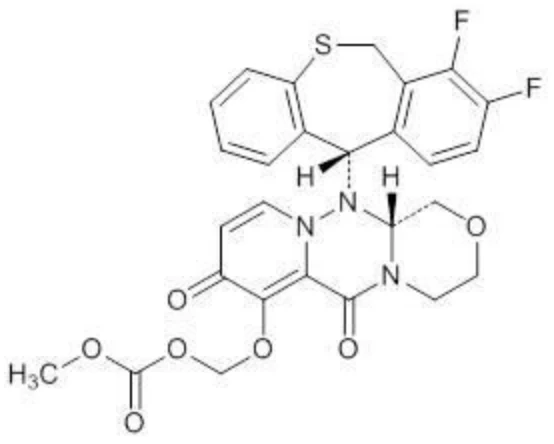
Physicochemical properties: White to light yellow powder. Practically insoluble in water at 25ºC and fasted-state and fed-state simulated intestinal fluid.
Product Characteristics:
Baloxavir marboxil is a prodrug that is converted by hydrolysis to its active metabolite, baloxavir, the active form that exerts anti-influenza activity.
14. Clinical Trials
14.1. Clinical Trials by Indication
Treatment Of Uncomplicated Influenza In Patients 12 Years Of Age And Older
Table 6 – Summary of trial design and study demographics
| Study # | Trial design | Dosage, route of administration and duration | Study subjects (n) | Mean age (years) (Range) | Sex n (%) | Race n (%) |
| Study # | Trial design | Dosage, route of administration and duration | Study subjects (n) | Mean age (years) (Range) | Sex n (%) | Race n (%) |
| Study # | Trial design | Dosage, route of administration and duration | Study subjects (n) | Mean age (years) (Range) | Sex n (%) | Race n (%) |
| Otherwise Healthy | ||||||
1601T0831 CAPSTONE-1 | Multicentre (United States (US) and Japan), randomized, placebo / active control, double-blind study in otherwise healthy (OwH) adult and adolescent patients (12 to 64 years and ≥ 40 kg) with acute uncomplicated influenza | Single oral dose of baloxavir marboxil by body weight:
Placebo Oseltamivir: 75 mg by mouth BID for 5 days | Randomized: N = 1436 (bxm: 612 pbo: 310 oselt.: 514) Intent-to-Treat Infected (ITTI): N = 1064 (bxm: 456 pbo: 231 oselt.: 377) | ITTI: bxm: 33.5 (12-64) pbo: 33.9 (12-64) oselt.: 36 (20-64) | ITTI: Male bxm: 232 (50.9) pbo: 120 (51.9) oselt.: 218 (57.8) | ITTI: Asian bxm: 349 (76.5) pbo: 178 (77.1) ost: 305 (80.9) Black or African American bxm: 18 (3.9) pbo: 11 (4.8) ost: 9 (2.4) White bxm: 85 (18.6) pbo: 40 (17.3) ost: 60 (15.9) Other bxm: 4 (0.9) pbo: 2 (0.9) ost: 2 (0.5) |
| 1518T0821 | Multicenter (Japan only), randomized, placebo-controlled double-blind study in adult patients (20 to 64 years) with acute uncomplicated influenza | Single dose of baloxavir marboxil (10, 20, or 40 mg) Placebo | Randomized and ITTI: N = 400 (100 patients in each of the 4 treatment groups) | ITTI: bxm 10 mg: 37.7 (20-62) bxm 20 mg: 37.9 (20-60) bxm 40 mg: 37.3 (20-63) pbo: 37.4 (20-64) | ITTI: Male bxm 10 mg: 68 (68.0) bxm 20 mg: 58 (58.0) bxm 40 mg: 60 (60.0) pbo: 61 (61.0) | ITTI: Asian bxm 10 mg: 100 (100.0) bxm 20 mg: 99 (99.0) bxm 40 mg: 100 (100.0) pbo: 100 (100.0) Other bxm 20 mg: 1 (1.0) |
| High Risk | ||||||
1602T0832 CAPSTONE-2 | Multicentre (global), randomized, placebo / active control, double-blind study in adults and adolescents (≥ 12 years and ≥ 40 kg) with acute uncomplicated influenza who are at high risk (HR) of developing influenza complications. | Single oral dose of baloxavir marboxil by body weight:
Placebo Oseltamivir: 75 mg by mouth BID for 5 days | Randomized: N = 2184 (bxm: 730 pbo: 729 oselt.: 725) ITTI: N = 1163 (bxm: 388 pbo: 386 oselt.: 389) | ITTI: bxm: 52.3 (12-84) pbo: 51.9 (12-86) oselt.: 51.1 (12-89) | ITTI: Male bxm: 193 (49.7) pbo: 180 (46.6) oselt.: 191 (49.1) | ITTI: American Indian or Alaska Native bxm: 1 (0.3) pbo: 2 (0.5) ost: 3 (0.8) Asian bxm: 167 (43.0) pbo: 157 (40.7) ost: 163 (41.9) Black or African American bxm: 39 (10.1) pbo: 30 (7.8) ost: 29 (7.5) White bxm: 178 (45.9) pbo: 194 (50.3) ost: 188 (48.3) Other bxm: 3 (0.8) pbo: 3 (0.8) ost: 6 (1.5) |
Study Results
Study 1601T0831
Study 1601T0831 is a phase 3 randomized, double-blind, multicentre, placebo- and active-controlled study designed to evaluate the efficacy and safety of single oral dose of XOFLUZA compared with placebo or oseltamivir in otherwise healthy adult and adolescent patients (aged ≥ 12 years to ≤ 64 years and weighing at least 40 kg) with acute uncomplicated influenza. Eligible patients had an axillary temperature of at least 38 degrees Celsius (˚C), at least one respiratory symptom (cough, nasal congestion, or sore throat) with a severity of moderate or greater, and at least one systemic symptom (headache, feverishness or chills, muscle or joint pain, or fatigue) with a severity of moderate or greater. Patients were randomized to receive 40 mg or 80 mg of XOFLUZA according to weight (< 80 kg or ≥ 80 kg respectively), oseltamivir 75 mg twice daily for 5 days (if aged > 20 years) or placebo. All patients were treated within 48 hours of symptom onset, and were required to self-assess their influenza symptoms as “none”, “mild”, “moderate” or “severe” twice daily up until Day 9 and once daily thereafter until Day 14. The primary efficacy endpoint, the time to alleviation of symptoms (TTAS), was defined as the time when all seven symptoms (cough, sore throat, headache, nasal congestion, feverishness or chills, muscle or joint pain, and fatigue) had been assessed by the patient as “none” or “mild” for a duration of at least 21.5 hours.
A total of 1436 patients were randomized to receive treatment in the 2016-2017 Northern Hemisphere influenza season. The primary efficacy analysis population, the intention-to-treat infected (ITTI) population, comprised 1064 patients (11% of whom were < 20 years of age) with influenza confirmed by reverse transcriptase polymerase chain reaction (RT-PCR) at study entry. The predominant influenza virus strain in this study was the A/H3 subtype (84.8% to 88.1%) followed by the B type (8.3% to 9.0%) and the A/H1N1pdm subtype (0.5% to 3.0%). Most patients (approximately 75%) had not received influenza vaccination.
At the primary analysis of the primary endpoint (TTAS), a statistically significant improvement was seen for XOFLUZA when compared with placebo, see Table 7.
Table 7 – Time to Alleviation of Symptoms in Otherwise Healthy Patients with Acute Uncomplicated Influenza (XOFLUZA vs Placebo)
| Time to Alleviation of Symptoms (Median [hours]) | |||
|---|---|---|---|
XOFLUZA 40/80 mg (95% CI) N=455 | Placebo (95% CI) N=230 | Difference between XOFLUZA and placebo (95% CI for difference) | P-value |
53.7 (49.5, 58.5) | 80.2 (72.6, 87.1) | -26.5 (−35.8, −17.8) | < 0.0001 |
| CI: Confidence interval The time to alleviation of symptoms was compared between the XOFLUZA group and the placebo group using the stratified Peto-Prentice’s generalized Wilcoxon test with the composite symptom score at baseline (≤ 11 or ≥ 12) and the region (Japan/Asia or Rest of the world) as the stratification factors | |||
At the secondary analysis of the primary endpoint, when the 20 to 64 year old stratum of the XOFLUZA group was compared to the oseltamivir group, there was no statistically significant difference in time to alleviation of symptoms. For adolescent subjects (12 to 17 years of age), the median time to alleviation of symptoms for subjects infected with influenza and who received XOFLUZA (N=63) was 54 hours (95% CI of 44, 81) compared to 93 hours (95% CI of 64, 118) in the placebo arm (N=27).
Secondary endpoints included time to resolution of fever and incidence of influenza-related complications.
Resolution of Fever
Following study drug administration there was faster resolution of fever in the XOFLUZA group compared with the placebo group. The median time to resolution of fever in patients treated with XOFLUZA was 24.5 hours (95% CI: 22.6, 26.6) compared with 42.0 hours (95% CI: 37.4, 44.6) in those receiving placebo.
Incidence of Influenza-Related Complications
Overall, the incidence of influenza-related complications (death, hospitalization, sinusitis, bronchitis, otitis media, and radiologically confirmed pneumonia) was low (<5% in each treatment group). No significant difference either in the overall incidence of influenza-related complications or in the incidence of each individual complication was observed between treatment groups.
Study 1518T0821
The phase 2 study was designed to evaluate the efficacy and safety of a single oral dose of XOFLUZA compared with placebo in otherwise healthy adult patients (aged ≥ 20 years to ≤ 64 years) with influenza. A total of 400 patients were randomized to one of three dose groups of XOFLUZA (10, 20 or 40 mg) or placebo in the 2015-2016 Northern Hemisphere influenza season in Japan. The predominant influenza virus strain was A/H1N1pdm subtype (61% to 71%) followed by B subtype (21% to 24%) and A/H3N2 subtype (5% to 13%).
The median time to alleviation of symptoms was significantly shorter (p < 0.05) compared with placebo in all dose groups. At 40 mg the median time to alleviation of symptoms was 49.5 hours (95% CI: 44.5, 64.4) in the XOFLUZA group versus 77.7 hours (95% CI: 67.6, 88.7) in the placebo group.
Study 1602T0832
Study 1602T0832 is a phase 3 randomized, double-blind, multicentre, placebo- and active-controlled study designed to evaluate the efficacy and safety of single oral dose of XOFLUZA compared with placebo or oseltamivir in adult and adolescent patients (aged ≥ 12 years) with influenza who are at high risk of developing influenza-related complications. Eligible patients had an axillary temperature of at least 38˚C, at least one respiratory symptom (cough, nasal congestion, or sore throat) at a severity of moderate or greater, and at least one systemic symptom (headache, feverishness or chills, muscle or joint pain, or fatigue) at a severity of moderate or greater, and all were treated within 48 hours of symptom onset. Patients were required to self-assess their influenza symptoms as “none”, “mild”, “moderate” or “severe” twice daily up to Day 9 and once daily thereafter up to Day 14. The primary efficacy endpoint was time to improvement of influenza symptoms (TTIS) of cough, sore throat, headache, nasal congestion, feverishness or chills, muscle or joint pain, and fatigue. This endpoint included alleviation of new symptoms and improvement of any pre-existing symptoms that had worsened due to influenza.
Patients excluded from the study included patients with cancer within the last 5 years, unless nonmelanoma skin cancer; patients with untreated human immunodeficiency virus (HIV) infection or treated HIV infection with a cluster of differentiation 4 (CD4) count below 350 cells/cubic millimetre (mm3) in the last 6 months; patients with immunosuppression following organ or bone marrow transplants, and patients exceeding 20 mg of prednisolone or equivalent dose of chronic systemic corticosteroids.
A total of 2184 patients with signs and symptoms of influenza were randomized to receive a single oral dose of 40 mg or 80 mg of XOFLUZA according to body weight (patients who weighed 40 to < 80 kg received 40 mg and patients who weighed ≥ 80 kg received 80 mg), oseltamivir 75 mg twice daily for 5 days, or placebo. The primary efficacy analysis population, the ITTI population, comprised 1163 patients with a confirmed diagnosis of influenza virus infection (by RT-PCR) at study entry. The predominant influenza viruses in this study were the A/H3 subtype (46.9% to 48.8%) and influenza B (38.3% to 43.5%). The most common (>10%) high risk factors represented in the study population were underlying asthma or chronic lung disease (38.0% to 40.7%), diabetes (17.9% to 20.9%), heart disease (11.9% to 13.6%), morbid obesity (9.3% to 12.3%), or being 65 years of age or older (26.5% to 29.1%). A total of 216 patients (19%) had pre-existing symptoms (cough, muscle or joint pain, or fatigue) associated with their underlying high risk condition that were worsened due to influenza infection. Most patients had not received influenza vaccination.
A statistically significant improvement in the primary endpoint (TTIS) was observed for XOFLUZA when compared with placebo, see Table 8.
Table 8 – Time to Improvement of Influenza Symptoms in Patients with Acute Uncomplicated Influenza at High Risk of Developing Influenza-Related Complications in Study 1602T0832 (XOFLUZA vs Placebo)
| Time to Improvement of Influenza Symptoms (Median [hours]) | |||
|---|---|---|---|
XOFLUZA 40/80 mg (95% CI) N=385 | Placebo (95% CI) N=385 | Difference between XOFLUZA and placebo (95% CI for difference) | P-value |
73.2 (67.5, 85.1) | 102.3 (92.7, 113.1) | -29.1 (−42.8, −14.6) | < 0.0001 |
The time to improvement of influenza symptoms was compared between the XOFLUZA group and the placebo group using the stratified generalized Wilcoxon test with region, composite symptom scores at baseline and preexisting and worsened symptoms as the stratification factors.
At the secondary analysis of the primary endpoint, when the XOFLUZA group was compared to the oseltamivir group, there was no statistically significant difference in time to improvement of influenza symptoms. The median time to improvement of influenza symptoms in the limited number of adolescent subjects aged 12 to 17 years infected with influenza virus was similar for subjects who received XOFLUZA (188 hours) or placebo (192 hours) (N=13 and N=12, respectively). The median time to improvement of influenza symptoms in adult subjects aged ≥ 65 years infected with influenza virus was lower for subjects who received XOFLUZA (70 hours [95% CI: 62, 85]) than placebo (88 hours [95% CI: 70, 102]) (N=112 and N=102, respectively).
Virus Subtype
For patients infected with type A/H3 virus (predominant strain), the median time to improvement of influenza symptoms was shorter in the XOFLUZA group compared with the placebo group (see Table 9). In the subgroup of patients infected with type B virus, the median time to improvement of influenza symptoms was shorter in the XOFLUZA group compared with the placebo group.
Table 9 – Time to Improvement of Symptoms by Influenza Virus Subtype
Time to Improvement of Symptoms (Hours) Median [95% CI] | ||
|---|---|---|
| Virus | XOFLUZA | Placebo |
| A/H3 | 75.4 [62.4, 91.6] N= 180 | 100.4 [88.4, 113.4] N= 185 |
| B | 74.6 [67.4, 90.2) N= 166 | 100.6 [82.8, 115.8] N= 167 |
Resolution of Fever
The proportion of patients who had fever was reduced more rapidly in the XOFLUZA group than in the placebo group following study drug administration. The median time to resolution of fever was 30.8 hours (95% CI: 28.2, 35.4) in the XOFLUZA group compared with 50.7 hours (95% CI: 44.6, 58.8) in the placebo group.
Incidence of Influenza-Related Complications
The overall incidence of influenza-related complications (death, hospitalization, sinusitis, otitis media, bronchitis, and/or pneumonia) was 2.8% (11/388 patients) in the XOFLUZA group compared with 10.4% (40/386 patients) in the placebo group. The lower overall incidence of influenza-related complications in the XOFLUZA group compared with the placebo group was mainly driven by lower incidences of bronchitis (1.8% vs. 6.0%, respectively) and sinusitis (0.3% vs. 2.1%, respectively). There were no significant treatment differences for the other complications of death, hospitalization, otitis media and pneumonia.
15. Microbiology
Resistance Monitoring During Clinical Development
Viruses bearing the PA/I38T/F/M/N/S mutation selected in vitro or in clinical studies show reduced susceptibility to baloxavir with changes in EC50 values ranging from 11 to 57-fold for influenza A and 2 to 8-fold for influenza B viruses. Cell culture: Influenza A virus isolates with reduced susceptibility to baloxavir have been detected by serial passage of virus in cell culture in the presence of increasing concentrations of baloxavir. Reduced susceptibility of influenza A virus to baloxavir was observed in amino acid substitutions I38T (H1N1 and H3N2) and E199G (H3N2) in the polymerase acidic (PA) protein of the viral RNA polymerase complex. Influenza B virus isolates with reduced susceptibility to baloxavir have not been detected in cell culture.
Clinical Studies: Influenza A virus isolates with treatment-emergent amino acid substitutions in the PA protein at position I38T/F/M/N/S associated with > 10 fold reduced susceptibility to baloxavir and influenza B virus isolates with the treatment-emergent amino acid substitutions in the PA protein at position I38T associated with a > 5 fold reduced susceptibility to baloxavir were observed in clinical studies.
None of the treatment-emergent amino acid substitutions associated with reduced susceptibility to baloxavir were found in virus from pre-treatment isolates in the clinical studies.
In the phase 3 study in otherwise healthy patients (1601T0831), PA/I38T/M were detected in 36 of 370 patients (9.7%) in the XOFLUZA treatment group. In the phase 3 study in high risk patients (1602T0832), PA/I38T/M/N were detected in 15 of 290 patients (5.2%) in the XOFLUZA treatment group.
Health professionals should consider available information on influenza virus drug susceptibility patterns and treatment effects when deciding whether to use XOFLUZA.
Cross Resistance
Baloxavir is active against neuraminidase inhibitor resistant strains including H274Y in A/H1N1, E119V and R292K in A/H3N2, and R152K and D198E in type B virus, H274Y in A/H5N1, R292K in A/H7N9.
No single amino acid substitution has been identified that could confer cross-resistance between baloxavir and neuraminidase inhibitors (e.g., peramivir, oseltamivir, zanamivir). However, a virus may carry amino acid substitutions associated with reduced susceptibility to baloxavir in the PA protein and to neuraminidase inhibitors in the neuraminidase and may therefore exhibit reduced susceptibility to both classes of inhibitors. The clinical relevance of phenotypic cross resistance evaluations has not been established.
16. Non-Clinical Toxicology
Carcinogenicity: Carcinogenicity studies have not been performed with baloxavir marboxil.
Genotoxicity: The pro-drug baloxavir marboxil, and its active form, baloxavir, were negative in bacterial reverse mutation tests, micronucleus tests with cultured mammalian cells, and baloxavir marboxil was negative in an in vivo rodent micronucleus test.