


Product Monograph - Livtencity
Recent Major Label Changes
| 4 Dosage and Administration, 4.1 Dosing Considerations | 2024-11 |
|---|---|
| 4 Dosage and Administration, 4.2 Recommended Dose and Dose Adjustment | 2026-06 |
| 7 Warning and Precautions | 2024-11 |
Table of Contents
Sections or subsections that are not applicable at the time of authorization are not listed.
Recent Major Label Changes ................................................................................................... 2
Table of Contents ................................................................................................................... 2
Part 1: Healthcare Professional Information ........................................................................... 4
- 1.
Indications ....................................................................................................................... 4
1.1. Pediatrics .................................................................................................................. 4
1.2. Geriatrics .................................................................................................................. 4
- 2. Contraindications ............................................................................................................ 4
- 4.
Dosage and Administration ............................................................................................. 4
4.1. Dosing Considerations .............................................................................................. 4
4.2. Recommended Dose and Dosage Adjustment ......................................................... 4
4.4. Administration .......................................................................................................... 5
4.5. Missed Dose ............................................................................................................. 6
- 5. Overdose ......................................................................................................................... 6
- 6. Dosage Forms, Strengths, Composition, and Packaging ................................................... 6
- 7.
Warnings and Precautions ............................................................................................... 6
General ................................................................................................................................. 6
Carcinogenesis and Mutagenesis .......................................................................................... 7
Infection/Immune ................................................................................................................. 7
Reproductive Health: Female and Male Potential ................................................................ 7
7.1. Special Populations .................................................................................................. 8
7.1.1. Pregnancy ........................................................................................................ 8
7.1.2. Breastfeeding .................................................................................................. 8
7.1.3. Pediatrics ......................................................................................................... 8
7.1.4. Geriatrics ......................................................................................................... 8
- 8.
Adverse Reactions ........................................................................................................... 8
8.1. Adverse Reaction Overview ...................................................................................... 8
8.2. Clinical Trial Adverse Reactions ................................................................................ 9
8.3. Less Common Clinical Trial Adverse Reactions ....................................................... 10
8.4. Abnormal Laboratory Findings ............................................................................... 11
- 9.
Drug Interactions ........................................................................................................... 11
9.2. Drug Interactions Overview .................................................................................... 11
9.4. Drug-Drug Interactions ........................................................................................... 13
9.5. Drug-Food Interactions........................................................................................... 15
9.6. Drug-Herb Interactions ........................................................................................... 16
9.7. Drug-Laboratory Test Interactions ......................................................................... 16
- 10.
Clinical Pharmacology ................................................................................................... 16
10.1. Mechanism of Action .............................................................................................. 16
10.2. Pharmacodynamics ................................................................................................ 16
10.3. Pharmacokinetics ................................................................................................... 16
- 11. Storage, Stability, and Disposal ...................................................................................... 18
Part 2: Scientific Information ................................................................................................ 19
- 13. Pharmaceutical Information .......................................................................................... 19
- 14.
Clinical Trials .................................................................................................................. 19
14.1. Clinical Trials by Indication ..................................................................................... 19
- 15. Microbiology ................................................................................................................. 24
- 16. Non-Clinical Toxicology .................................................................................................. 25
Patient Medication Information ........................................................................................... 27
Part 1: Healthcare Professional Information
1. Indications
LIVTENCITY (maribavir) is indicated for:
Treatment of adults with post-transplant cytomegalovirus (CMV) infection/disease who are refractory (with or without genotypic resistance) to one or more prior antiviral therapies.
1.1. Pediatrics
Pediatrics (< 18 years): No data are available to Health Canada; therefore, Health Canada has not authorized an indication for pediatric use.
1.2. Geriatrics
Geriatrics (> 65 years): Evidence from clinical studies and experience suggests that use in the geriatric population is NOT associated with differences in safety or effectiveness. Clinical studies of LIVTENCITY include participants 65 years of age and older and their data contribute to the overall assessment of safety and efficacy (see 14 Clinical Trials). Of the total number of participants in the pivotal trial randomized to receive LIVTENCITY (N=235), 23% were 65 years of age and older.
2. Contraindications
- LIVTENCITY is contraindicated in patients who are hypersensitive to this drug or to any ingredient in the formulation, including any non-medicinal ingredient, or component of the container. For a complete listing, see 6 Dosage Forms, Strengths, Composition, and Packaging.
- Co-administration of LIVTENCITY with ganciclovir or valganciclovir is contraindicated. LIVTENCITY may antagonize the antiviral effect of ganciclovir and valganciclovir by inhibiting human CMV UL97 serine/threonine kinase, which is required for activation/phosphorylation of ganciclovir and valganciclovir (see 9 Drug Interactions).
4. Dosage and Administration
4.1. Dosing Considerations
- No human data are available to establish whether LIVTENCITY poses a risk to pregnancy outcomes. LIVTENCITY is not recommended during pregnancy or for people who could become pregnant, who are not using reliable contraception.
- LIVTENCITY was not studied in patients with CMV Central Nervous System (CNS) infection. Based on non-clinical data CNS penetration of maribavir is expected to be low compared to plasma levels. Therefore, LIVTENCITY is not expected to be effective in treating CMV CNS infections (e.g., meningo-encephalitis). If CMV CNS infection is suspected, coverage with another CMV anti-viral agent is recommended.
4.2. Recommended Dose and Dosage Adjustment
The recommended dose of LIVTENCITY is 400 mg (two 200 mg tablets) twice daily resulting in a daily dose of 800 mg.
Drug-Drug Interactions
Consider the potential for drug-drug interactions prior to and during LIVTENCITY therapy (see 2 Contraindications, 7 Warnings and Precautions and 9 Drug Interactions).
Frequently monitor immunosuppressant drug levels (including tacrolimus, cyclosporine, sirolimus and everolimus) throughout treatment with LIVTENCITY, especially following initiation and after discontinuation of LIVTENCITY and adjust the immunosuppressant dose, as needed. LIVTENCITY has the potential to increase the drug concentrations of immunosuppressant drugs that are CYP3A4 and/or P-glycoprotein (P-gp) substrates where minimal concentration changes may lead to serious adverse events (see 7 Warnings and Precautions and 9 Drug Interactions).
If LIVTENCITY is co-administered with carbamazepine, increase the dose of LIVTENCITY to 800 mg twice daily (see 9 DRUG INTERACTIONS).
If LIVTENCITY is co-administered with phenytoin or phenobarbital, increase the dose of LIVTENCITY to 1,200 mg twice daily (see 9 Drug Interactions).
If LIVTENCITY is co-administered with rifabutin, increase the dosage of LIVTENCITY to 800 mg twice daily (see 9 Drug Interactions)
Coadministration of LIVTENCITY and efavirenz is not recommended, as efavirenz may reduce maribavir exposure and antiviral efficacy. However, if coadministration cannot be avoided, an increased maribavir dose of 1200 mg twice daily may be considered based on PBPK predictions. Patients should be closely monitored for virologic response, as this dosing recommendation has not been evaluated in clinical drug-drug interaction studies (see 9 Drug Interactions)
Special Populations
Elderly Patients
No dose adjustment is required for patients over 65 years of age.
Impaired Renal Function
No dose adjustment of LIVTENCITY is needed for patients with mild (creatinine clearance 50 to 80 mL/minute), moderate (creatinine clearance 30 to <50 mL/minute) or severe (creatinine clearance <30 mL/minute) renal impairment. Administration of LIVTENCITY in patients with end stage renal disease (ESRD) or patients on dialysis has not been studied (see 10 Clinical Pharmacology).
Impaired Hepatic Function
No dose adjustment of LIVTENCITY is needed for patients with mild (Child-Pugh Class A) or moderate hepatic impairment (Child-Pugh Class B). Administration of LIVTENCITY in patients with severe hepatic impairment (Child Pugh Class C) has not been studied (see 10 Clinical Pharmacology).
Pediatric population
The safety and efficacy of LIVTENCITY in patients below 18 years of age have not been established. Health Canada has not authorized an indication for pediatric use.
4.4. Administration
LIVTENCITY is intended for oral use only and can be taken with or without food.
The immediate-release tablets can be taken as a whole tablet.
4.5. Missed Dose
Instruct patients that if they miss a dose of LIVTENCITY and the next dose is due within the next 3 hours, they should skip the missed dose and continue with the regular schedule. Patients are not to double their next dose or take more than the prescribed dose.
5. Overdose
In Study 303, an accidental overdose of a single extra dose occurred in 1 LIVTENCITY-treated patient on Day 13 (1,200 mg total daily dose). No adverse reactions were reported.
In Study 202, patients were treated with up to 1,200 mg twice daily. The safety profile of higher doses were comparable to 400 mg twice daily. However, the highest dose was associated with a greater incidence of immunosuppressant drug level increase.
There is no known specific antidote for LIVTENCITY. In case of overdose, it is recommended that the patient be monitored for adverse reactions and appropriate symptomatic treatment instituted. Due to the high plasma protein binding of LIVTENCITY, dialysis is unlikely to reduce plasma concentrations of LIVTENCITY significantly.
For the most recent information in the management of a suspected drug overdose, contact your regional poison control centre or Health Canada’s toll-free number, 1-844 POISON-X (1-844-764-7669).
- 6. Dosage Forms, Strengths, Composition, and Packaging
Table 1 – Dosage Forms, Strengths, Composition and Packaging
LIVTENCITY tablets are available as blue, oval shaped convex film-coated tablets containing 200 mg of maribavir and debossed with “SHP” on one side and “620” on the other side.
Maribavir 200 mg tablets are supplied in a high-density polyethylene (HDPE) white square bottle with an induction seal and a child resistant cap.
7. Warnings and Precautions
General
Virologic Failure During Treatment and Recurrence Post-Treatment Virologic failure due to resistance can occur during and after treatment with LIVTENCITY. Virologic
| Route of Administration | Dosage Form / Strength/Composition | Non-medicinal Ingredients |
| oral | Tablet 200 mg | Tablet core: Magnesium stearate, Microcrystalline cellulose, Sodium starch glycolate Film coating: FD & C Blue #1/Brilliant Blue FCF aluminum lake, Macrogol/polyethylene glycol, Polyvinyl alcohol, Talc, Titanium dioxide |
recurrence during the post-treatment period usually occurred within 4-8 weeks after treatment discontinuation. Some maribavir pUL97 resistance-associated substitutions confer cross-resistance to ganciclovir and valganciclovir (see 15 Microbiology). Monitor CMV DNA levels and check for maribavir resistance if the patient is not responding to treatment or has a recurrence.
Carcinogenesis and Mutagenesis
See 16 Non-Clinical Toxicology for further information.
Infection/Immune
Patients with CMV Central Nervous System (CNS) Infection
LIVTENCITY was not studied in patients with CMV CNS infection. Based on non-clinical data, CNS penetration of maribavir is expected to be low compared to plasma levels. Therefore, LIVTENCITY is not expected to be effective in treating CMV CNS infections (e.g., meningo-encephalitis). If CMV CNS infection is suspected, coverage with another CMV anti-viral agent is recommended.
Drug Interactions
Risk of Adverse Reactions or Reduced Therapeutic Effect Due to Drug Interactions
The concomitant use of LIVTENCITY and certain medicinal products may result in known or potentially significant medicinal product interactions, some of which may lead to:
- Possible clinically significant adverse reactions from greater exposure of concomitant medicinal products.
- Significant decrease of LIVTENCITY plasma concentrations which may lead to reduced therapeutic effect of LIVTENCITY and possible development of viral resistance.
For steps to prevent or manage these known or potentially significant medicinal product interactions, including dosing recommendations, see 2 Contraindications and 9 Drug Interactions, Table 5.
Use with Immunosuppressant Drugs
LIVTENCITY has the potential to increase the drug concentrations of immunosuppressant drugs that are cytochrome P450 (CYP)3A and/or P-gp substrates with narrow therapeutic ranges (including tacrolimus, cyclosporine, sirolimus and everolimus). Frequently monitor immunosuppressant drug levels throughout treatment with LIVTENCITY, especially following initiation and after discontinuation of LIVTENCITY and adjust the dose, as needed (see 8 Adverse Reactions, 9 Drug Interactions and 10 Clinical Pharmacology).
Reproductive Health: Female and Male Potential
- Fertility
Fertility studies were not conducted in humans with LIVTENCITY. No effects on fertility or reproductive performance were noted in rats in a combined fertility and embryofetal development study. However, in rats, decreases in sperm straight line velocity, without an effect on fertility were noted in males at doses ≥100 mg/kg/day, which is estimated to be less than the human exposure at the recommended human dose (RHD).
7.1. Special Populations
7.1.1. Pregnancy
There is no clinical experience with LIVTENCITY in pregnant women. Studies in animals have shown reproductive toxicity. LIVTENCITY is not recommended during pregnancy and in women of childbearing potential not using contraception.
LIVTENCITY did not affect embryofetal growth or development, nor produce any malformations, and was not teratogenic in pregnant rats or rabbits, at doses up to 400 mg/kg/day and 100 mg/kg/day, respectively (1.1 and 0.45 times higher than human exposure at the RHD, respectively). Decreases in the number of viable fetuses and increases in early resorptions and post-implantation losses were observed at ≥100 mg/kg/day, which is approximately 0.5 times the human exposure at the RHD.
In a pre- and postnatal developmental toxicity study in rats, decreased pup survival due to poor maternal care and reduced body weight gain associated with a delay in developmental milestones were observed at doses ≥150 mg/kg/day. However, the subsequent fertility and mating performance of these offspring, and their ability to maintain pregnancy and to deliver live offspring, were unaffected by LIVTENCITY. No effects were observed at 50 mg/kg/day, which is estimated to be less than the human exposure at the RHD.
7.1.2. Breastfeeding
It is unknown whether maribavir or its metabolites are excreted in human milk. A risk to the breastfeeding child cannot be excluded. Breastfeeding should be discontinued during treatment with LIVTENCITY.
7.1.3. Pediatrics
Pediatrics (< 18 years): No data are available to Health Canada; therefore, Health Canada has not authorized an indication for pediatric use.
7.1.4. Geriatrics
Geriatrics (> 65 years): Evidence from clinical studies suggests that use in the geriatric population is not associated with differences in safety or effectiveness.
8. Adverse Reactions
8.1. Adverse Reaction Overview
The adverse reactions presented in Table 2 have been observed in one Phase 3 multi-center, randomized, open-label, active-control superiority study (SHP620-303) in which 352 patients were randomized and 350 patients were treated with LIVTENCITY (N=234) or Investigator Assigned Treatment (IAT) consisting of monotherapy or dual therapy with ganciclovir, valganciclovir, foscarnet, or cidofovir (N=116) for an 8-week treatment phase following a diagnosis of resistant/refractory CMV. Adverse events were collected during the treatment phase and follow-up phase through Study Week
- 20. The mean exposures (SD) for LIVTENCITY and IAT were 48.6 (13.82) and 31.2 (16.91) days respectively. LIVTENCITY-treated patients received a maximum of 60 days.
The most commonly reported adverse reactions occurring in at least 1% of patients in the LIVTENCITY group, were: taste disturbance (44.8%), nausea (8.5%), vomiting (7.7%), immunosuppressant drug concentration level increased (6.4%), diarrhea (3.8%), abdominal pain (2.1%), neutropenia (1.7%), acute kidney injury (1.7%), anemia (1.3%), and decreased appetite (1.3%). The most commonly reported serious adverse reactions were acute kidney injury (1.3%), and nausea, fatigue, immunosuppressant drug concentration level increase, and pyrexia, treatment failure, hepatic failure, gastroenteritis, hepatic enzyme increase, vomiting occurring at < 1%.
Serious adverse reactions occurred less frequently in the LIVTENCITY group than in the IAT group (5.1% and 14.7%, respectively). No patients in the LIVTENCITY group experienced serious, drug related neutropenia or febrile neutropenia. In contrast in patients treated with ganciclovir/valganciclovir, 7.1% of patients had serious related febrile neutropenia. In addition, 1% of patients in the LIVTENCITY group and 11% in the foscarnet group experienced serious related renal disorders (acute kidney injury and renal impairment).
Adverse reactions led to discontinuation in 1.7% of the IAT group compared to 1.3% in the LIVTENCITY group.
8.2. Clinical Trial Adverse Reactions
Clinical trials are conducted under very specific conditions. The adverse reaction rates observed in the clinical trials; therefore, may not reflect the rates observed in practice and should not be compared to the rates in the clinical trials of another drug. Adverse reaction information from clinical trials may be useful in identifying and approximating rates of adverse drug reactions in real-world use.
Table 2 - Adverse Drug Reactionsc in ≥1% of patients receiving LIVTENCITY, Ganciclovir/Valganciclovir, Foscarnet, Cidofovir, and/or IAT in SHP620-303
| LIVTENCITY 400 mg BID N = 234 | Ganciclovir/ Valganciclovir N = 56 | Foscarnet N = 47 | Cidofovir N = 6 | IAT N = 116 | |||||||||
|---|---|---|---|---|---|---|---|---|---|---|---|---|---|---|
| LIVTENCITY 400 mg BID N = 234 | Ganciclovir/ Valganciclovir N = 56 | Foscarnet N = 47 | Cidofovir N = 6 | IAT N = 116 | |||||||||
| n (%) | n (%) | n (%) | n (%) | n (%) | ||||||||||
| n (%) | n (%) | n (%) | n (%) | n (%) | ||||||||||
| Blood and lymphatic system disorders | ||||||||||||||
| Anemia | 3 (1.3) | 3 (5.4) | 6 (12.8) | 0 (0.0) | 9 (7.8) | |||||||||
| Neutropenia | 4 (1.7) | 14 (25.0) | 2 (4.3) | 0 (0.0) | 16 (13.8) | |||||||||
| Gastrointestinal Disorders | ||||||||||||||
| Nausea | 20 (8.5) | 1 (1.8) | 8 (17.0) | 1 (16.7) | 11 (9.5) | |||||||||
| Vomiting | 18 (7.7) | 0 (0.0) | 4 (8.5) | 1 (16.7) | 5 (4.3) | |||||||||
| Diarrhea | 9 (3.8) | 1 (1.8) | 4 (8.5) | 1 (16.7) | 6 (5.2) | |||||||||
| Abdominal Pain | 5 (2.1) | 0 (0.0) | 0 (0.0) | 0 (0.0) | 0 (0.0) | |||||||||
| General Disorders and Administration Site Conditions | ||||||||||||||
| Decreased appetite | 3 (1.3) | 1 (1.8) | 2 (4.3) | 0 (0.0) | 3 (2.6) | |||||||||
| Investigations | ||||||||||||||
| Immunosuppressant drug concentration level increaseda | 15 (6.4) | 0 (0.0) | 0 (0.0) | 0 (0.0) | 0 (0.0) | |||||||||
| Nervous System Disorders | ||||||||||||||
| Taste disturbance (dysgeusia)b | 105 (44.8) | 1 (1.8) | 1 (2.1) | 0 (0.0) | 2 (1.8) | |||||||||
| Renal and urinary disorders | ||||||||||||||
| Acute Kidney injury | 4 (1.7) | 0 (0.0) | 9 (19.1) | 0 (0.0) | 9 (7.8) | |||||||||
a Immunosuppressant drug concentration level increased includes preferred terms Immunosuppressant drug level increased, Drug level increased b Taste disturbance (dysgeusia) includes preferred terms Dysgeusia, Ageusia and Taste disorder. c Frequencies of adverse reactions are based on all treatment-emergent adverse events. Adverse Reactions were adjudicated for causation by the Investigator and coded using MedDRA, Version 23.0 | ||||||||||||||
Taste Disturbance
Taste disturbance (comprised of the reported preferred terms ageusia, dysgeusia, hypogeusia and taste disorder) occurred in 44.8% of patients treated with LIVTENCITY. These events rarely led to discontinuation of LIVTENCITY (0.9%) and, for most patients, resolved while patients remained on therapy (37%) or within a median of 7 days (Kaplan-Meier estimate, 95% CI:4-8 days) after treatment discontinuation.
Immunosuppressant Drug Level Increase
Immunosuppressant drug level increase occurred in 6.4% of patients treated with LIVTENCITY. LIVTENCITY has the potential to increase the drug concentrations of immunosuppressant drugs that are CYP3A and/or P-gp substrates with narrow therapeutic ranges (including tacrolimus, cyclosporine, sirolimus and everolimus). Frequently monitor immunosuppressant drug levels throughout treatment with LIVTENCITY, especially following initiation and after discontinuation of LIVTENCITY and adjust the dose, as needed (see 9 Drug Interactions and 10 Clinical Pharmacology).
8.3. Less Common Clinical Trial Adverse Reactions
Table 3 – Less Common (<1%) of Selected Adverse Drug Reactions in patients receiving LIVTENCITY, Ganciclovir/Valganciclovir, Foscarnet, Cidofovir, and/or IAT in SHP620-303
| LIVTENCITY 400 mg BID N = 234 | Ganciclovir/ Valganciclovir N = 56 | Foscarnet N = 47 | Cidofovir N = 6 | IAT N = 116 | ||||||
|---|---|---|---|---|---|---|---|---|---|---|---|
| n (%) | n (%) | n (%) | n (%) | n (%) | |||||||
| General disorders and administration site conditions | |||||||||||
| Pyrexia | 1 (0.4) | 0 (0.0) | 1 (2.1) | 0 (0.0) | 1 (0.9) | ||||||
| Renal and urinary disorders | |||||||||||
| Proteinuria | 1 (0.4) | 0 (0.0) | 1 (2.1) | 1 (16.7) | 2 (1.7) | ||||||
8.4. Abnormal Laboratory Findings
Table 4- Potentially Clinically Significant (as Determined by Investigator) Selected Laboratory Assessments by Study Period and Treatment Group (Safety Set)
Parameter Study Period | LIVTENCITY 400 mg BID (N=234) n (%) | IAT (N = 116) n (%) | ||
|---|---|---|---|---|
| Hemoglobin (g/L) | ||||
Baseline Final on-treatment assessment Final overall study observation | 20 (8.5) 30 (12.8) 19 (8.1) | 11 (9.5) 18 (15.5) 13 (11.2) | ||
| Leukocytes (x 109/L) | ||||
Baseline Final on-treatment assessment Final overall study observation | 22 (9.4) 8 (3.4) 17 (7.3) | 9 (7.8) 14 (12.1) 10 (8.6) | ||
| Lymphocytes (x 109/L) | ||||
Baseline Final on-treatment assessment Final overall study observation | 16 (6.8) 4 (1.7) 6 (2.6) | 8 (6.9) 7 (6.0) 8 (6.9) | ||
| Neutrophils (x 109/L) | ||||
Baseline Final on-treatment assessment Final overall study observation | 5 (2.1) 5 (2.1) 11 (4.7) | 1 (0.9) 13 (11.2) 11 (9.5) | ||
| Platelets (x 109/L) | ||||
Baseline Final on-treatment assessment Final overall study observation | 11 (4.7) 13 (5.6) 11 (4.7) | 9 (7.8) 13 (11.2) 10 (8.6) | ||
| Creatinine (µmol/L) | ||||
Baseline Final on-treatment assessment Final overall study observation | 15 (6.4) 23 (9.8) 21 (9.0) | 8 (6.9) 14 (12.1) 13 (11.2) | ||
BID=twice daily; CMV=cytomegalovirus; IAT=investigator-assigned anti-CMV treatment Baseline was defined as the last value on or prior to the first dose date of study-assigned treatment, or date of randomization for subjects who did not receive study-assigned treatment. Percentages were calculated based on the number of subjects in the safety set. | ||||
9. Drug Interactions
9.2. Drug Interactions Overview
Effect of other medicinal products on LIVTENCITY
Maribavir is primarily metabolized by CYP3A, and medicinal products that induce or inhibit CYP3A are expected to affect the clearance of maribavir (see 10 Clinical Pharmacology). Concomitant administration of LIVTENCITY with some strong CYP3A inducers, such as rifampicin, and St John’s wort, is not recommended, as significant decreases in maribavir plasma concentrations may occur which may result in decrease in efficacy.
Co-administration of LIVTENCITY with rifabutin, carbamazepine, phenobarbital and phenytoin (strong or moderate CYP3A inducers) is likely to decrease maribavir concentrations, and therefore, the LIVTENCITY dose should be increased according to Table 5 (see 9.4 Drug-Drug Interactions).
Co-administration of LIVTENCITY with other strong or moderate CYP3A inducers has not been evaluated, but decreased maribavir concentrations are expected. Co-administration of LIVTENCITY and medicinal products that are inhibitors of CYP3A may result in increased plasma concentrations of maribavir. However, no dose adjustment is needed when LIVTENCITY is co-administered with CYP3A inhibitors.
Co-administration of LIVTENCITY and efavirenz is not recommended, as efavirenz may reduce maribavir exposure and antiviral efficacy. If coadministration cannot be avoided, PBPK modelling supports increasing the LIVTENCITY dose as specified in Table 5 (see 9.4 Drug-Drug Interactions).
Effect of LIVTENCITY on other medicinal products
LIVTENCITY is contraindicated with valganciclovir/ganciclovir. LIVTENCITY may antagonize the antiviral effect of ganciclovir and valganciclovir by inhibiting human CMV UL97 serine/threonine kinase, which is required for activation/phosphorylation of ganciclovir and valganciclovir (see 2 Contraindications and 10 Clinical Pharmacology).
Maribavir is an inhibitor of P-glycoprotein (P-gp) and breast cancer resistance protein (BCRP). Co-administration of LIVTENCITY with drugs that are sensitive substrates of P-gp and BCRP may result in a clinically relevant increase in plasma concentrations of these substrates (see Table 5).
At therapeutic concentrations, clinically significant interactions are not expected when LIVTENCITY is co-administered with substrates of CYP1A2, 2A6, 2B6, 2C8, 2C9, 2C19, 2E1, 2D6, and 3A4; UGT1A1, 1A4, 1A6, 1A9, 2B7; bile salt export pump (BSEP); multidrug and toxin extrusion protein (MATE)1/2K; organic anion transporters (OAT)1 and OAT3; organic cation transporters (OCT)1 and OCT2; organic anion transporting polypeptide (OATP)1B1 and OATP1B3 based on in vitro and clinical drug interaction results (see Table 5 and 10 Clinical Pharmacology).
General information
If dose adjustments of concomitant medicinal products are made due to treatment with LIVTENCITY, doses should be readjusted after treatment with LIVTENCITY is completed. Table 5 provides a listing of established or potentially clinically significant medicinal product interactions. The medicinal product interactions described are based on studies conducted with LIVTENCITY or are predicted medicinal product interactions that may occur with LIVTENCITY (see 7 Warnings and Precautions and 10 Clinical Pharmacology). The drugs listed in this table are not all-inclusive.
9.4. Drug-Drug Interactions
The drugs listed in this table are based on either drug interaction case reports or studies, or potential interactions due to the expected magnitude and seriousness of the interaction (i.e., those identified as contraindicated).
Table 5 - Established and other potentially significant drug interactions: Recommendation concerning co-administration based on drug interaction studies or predicted interactions
| Medicinal Product by Therapeutic Area | Effect on Geometric Mean Ratio (90 % CI) (likely mechanism of action) | Recommendation Concerning Co-administration with LIVTENCITY |
|---|---|---|
| Medicinal Product by Therapeutic Area | Effect on Geometric Mean Ratio (90 % CI) (likely mechanism of action) | Recommendation Concerning Co-administration with LIVTENCITY |
| Medicinal Product by Therapeutic Area | Effect on Geometric Mean Ratio (90 % CI) (likely mechanism of action) | Recommendation Concerning Co-administration with LIVTENCITY |
| Acid-Reducing Agents | ||
antacid (aluminium and magnesium hydroxide oral suspension) (20 mL single dose, maribavir 100 mg single dose) | ↔ maribavir AUC 0.89 (0.83, 0.96) Cmax 0.84 (0.75, 0.94) | No dose adjustment is required. |
omeprazole (40 mg single dose, maribavir 400 mg twice daily) | ↔ maribavir ↑ plasma omeprazole/5-hydroxyomeprazole concentration ratio 1.71 (1.51, 1.92) (CYP2C19 inhibition) | No dose adjustment is required. |
| Antiarrhythmics | ||
digoxina (0.5 mg single dose, 400 mg twice daily maribavir) | ↑digoxin AUC 1.21 (1.10, 1.32) Cmax 1.25 (1.13, 1.38) (P-gp inhibition) | Use caution when LIVTENCITY and digoxin are co-administered. Monitor serum digoxin concentrations. The dose of digoxin may need to be reduced when co-administered with LIVTENCITYa. |
| Anticonvulsants | ||
| carbamazepine | Interaction not studied. Expected: ↓ maribavir (CYP3A induction) | A dose adjustment of LIVTENCITY to 800 mg BID is recommended when co-administrated with carbamazepine. |
| phenobarbital | Interaction not studied. Expected: ↓ maribavir (CYP3A induction) | A dose adjustment of LIVTENCITY to 1,200 mg BID is recommended when co-administrated with phenobarbital. Caution is recommended if LIVTENCITY is co-administered with phenobarbital at dose higher than 100 mg, due to potential for decrease in efficacy of LIVTENCITY |
| phenytoin | Interaction not studied. Expected: ↓ maribavir (CYP3A induction) | A dose adjustment of LIVTENCITY to 1,200 mg BID is recommended when co-administrated with phenytoin. |
| Antifungals | ||
ketoconazole (400 mg single dose, maribavir 400 mg single dose) | ↑ maribavir AUC 1.53 (1.44, 1.63) Cmax 1.10 (1.01, 1.19) (CYP3A inhibition) | No dose adjustment is required. |
voriconazole (200 mg twice daily, maribavir 400 mg twice daily) | Expected: ↑ maribavir (CYP3A inhibition) ↔ voriconazole AUC 0.93 (0.83, 1.05) Cmax 1.00 (0.87, 1.15) (CYP2C19 inhibition) | No dose adjustment is required. |
| Antihypertensives | ||
| diltiazem | Interaction not studied. Expected: ↑ maribavir (CYP3A inhibition) | No dose adjustment is required. |
| Antimycobacterials | ||
| rifabutin | Interaction not studied. Expected: ↓ maribavir (CYP3A induction) | A dose adjustment of maribavir to 800 mg BID is recommended when coadministration with rifabutin. |
rifampin (600 mg once daily, maribavir 400 mg twice daily) | ↓ maribavir AUC 0.40 (0.36, 0.44) Cmax 0.61 (0.52, 0.72) Ctrough 0.18 (0.14, 0.25) (CYP3A and CYP1A2 induction) | Co-administration of LIVTENCITY and rifampin is not recommended due to potential for a decrease in efficacy of LIVTENCITY. |
| Antitussives | ||
dextromethorphan (30 mg single dose, maribavir 400 mg twice daily) | ↔ dextrorphan AUC 0.97 (0.94, 1.00) Cmax 0.94 (0.88, 1.01) (CYP2D6 inhibition) | No dose adjustment is required. |
| Antivirals | ||
ganciclovir valganciclovir | Interaction not studied. Expected: ↓ ganciclovir ↓ valganciclovir (CMV pUL97 kinase inhibition) | Co-administration of LIVTENCITY with ganciclovir or valganciclovir is contraindicated (see 2 Contraindications). |
| Herbal Products | ||
| St. John's wort (Hypericum perforatum) | Interaction not studied. Expected: ↓ maribavir (CYP3A induction) | Co-administration of LIVTENCITY and St. John's wort is not recommended due to potential for a decrease in efficacy of LIVTENCITY. |
| HMG-CoA Reductase Inhibitors | ||
| rosuvastatina | Interaction not studied. Expected: ↑ rosuvastatin (BCRP inhibition) | The patient should be closely monitored for rosuvastatin-related events, especially the occurrence of myopathy and rhabdomyolysis. A rosuvastatin dose reduction may be necessarya. |
| Antiretroviral agents | ||
| efavirenz | Interaction not studied. Expected: ↓ maribavir (CYP3A induction) | A dose adjustment of maribavir to 1200 mg BID is recommended when coadministration with efavirenz is clinically unavoidable. |
| Immunosuppressants | ||
cyclosporinea everolimusa sirolimusa | Interaction not studied. Expected: ↑ cyclosporine, everolimus, sirolimus (CYP3A/P-gp inhibition) | Frequently monitor cyclosporine, everolimus and sirolimus levels throughout treatment with LIVTENCITY, especially following initiation and after discontinuation up to 48 hours of LIVTENCITY and adjust dose, as neededa. |
tacrolimusa (tacrolimus stable daily dose between 1.5 and 16 mg, maribavir 400 mg twice daily) | ↑ tacrolimus AUC 1.51 (1.39, 1.65) Cmax 1.38 (1.20, 1.57) Ctrough 1.57 (1.41, 1.74) (CYP3A/P-gp inhibition) | Frequently monitor tacrolimus levels throughout treatment with LIVTENCITY, especially following initiation and up to 48 hours after discontinuation of LIVTENCITY and adjust dose, as neededa. |
| Oral Anticoagulants | ||
warfarin (10 mg single dose, maribavir 400 mg twice daily) | ↔ S-warfarin AUC 1.01 (0.95, 1.07) (CYP2C9 inhibition) | No dose adjustment is required. |
| Sedatives | ||
midazolam (0.075 mg/kg administered orally, maribavir 400 mg twice daily) | ↔ midazolam AUC 0.89 (0.79, 1.00) Cmax 0.82 (0.70, 0.96) | No dose adjustment is required. |
↑ = increase, ↓ = decrease, ↔ = no change CI = Confidence Interval; SD = Single Dose; QD = Once Daily; BID = Twice Daily *AUC0-∞ for single dose, AUC0-12 for twice daily dose daily. Note: the table is not extensive but provides examples of clinically relevant interactions. a Refer to the respective prescribing information. | ||
9.5. Drug-Food Interactions
In healthy subjects, oral administration of a single 400 mg dose of a developmental formulation of maribavir with a moderate-fat, moderate calorie meal decreased AUC0-t and Cmax of maribavir by 14% and 28%, respectively.
9.6. Drug-Herb Interactions
Co-administration of maribavir and St. John's wort is not recommended due to potential for a decrease in efficacy of maribavir.
9.7. Drug-Laboratory Test Interactions
Interactions with laboratory tests have not been established.
10. Clinical Pharmacology
10.1. Mechanism of Action
Maribavir is a selective orally bioavailable benzimidazole riboside antiviral drug with a novel mechanism of action against human CMV (HCMV). Maribavir attaches to the UL97 encoded kinase at the adenosine triphosphate (ATP) binding site, abolishing phosphotransferase needed in processes such as DNA replication, encapsidation, and nuclear egress of viral capsids.
10.2. Pharmacodynamics
Cardiac electrophysiology
The effect of maribavir at doses up to 1,200 mg on the QTc interval was evaluated in a randomized, single-dose, placebo- and active-controlled (moxifloxacin 400 mg oral) 4-period crossover thorough QT trial in 52 healthy subjects. Maribavir does not prolong QTc interval to any clinically relevant extent following the 1,200 mg dose, with peak plasma concentrations approximately twice the steady-state peak concentration following 400 mg twice daily doses in transplant patients.
10.3. Pharmacokinetics
Maribavir pharmacological activity is due to the parent drug. The pharmacokinetics of maribavir have been characterized following oral administration in healthy subjects and transplant patients. Maribavir exposure increased in approximately dose proportionally. Maribavir PK is time-independent. In healthy subjects, the geometric mean steady-state AUC0-t, Cmax and Ctrough values were 101 µg*h/mL, 16.4 µg/mL and 2.89 µg/mL, respectively, following 400 mg twice daily oral maribavir doses.
In transplant recipients, maribavir steady state exposure following oral administration of 400 mg twice daily doses are provided below, based on a population pharmacokinetics analysis. Steady-state was reached within 2 days, with mean accumulation ratios of 1.47 for AUC and 1.37 for Cmax.
Table 6 - Maribavir pharmacokinetic properties based on a population pharmacokinetics analysis
| Parameter GM (% CV) | AUC0-t µg*h/mL | Cmax µg/mL | Ctrough µg/mL |
|---|---|---|---|
| Maribavir 400 mg twice daily | 142 (48.5%) | 20.1 (35.5%) | 5.43 (85.9%) |
| GM: Geometric mean, % CV: Geometric coefficient of variation | |||
Absorption
Maribavir was rapidly absorbed with peak plasma concentrations occurring 1.0 to 3.0 hours post dose. Exposure to maribavir is unaffected by co-administration with proton pump inhibitors (PPIs) and histamine H2 receptor antagonists (H2 blockers). Results on an earlier developmental tablet demonstrated that exposure to maribavir is unaffected by co-administration with antacids.
Effect of Food
In healthy subjects, oral administration of a single 400 mg dose of a developmental formulation of maribavir with a moderate-fat, moderate-calorie meal decreased AUC0-t and Cmax of maribavir by 14% and 28%, respectively (see 4 Dosage and Administration).
Distribution
Based on population pharmacokinetic analyses, the mean apparent steady-state volume of distribution is estimated to be 24.9 L.
In vitro binding of maribavir to human plasma proteins was 98.0% over the concentration range of 0.05-200 μg/mL. Ex vivo protein binding of maribavir (98.5% - 99.0%) was consistent with in vitro data, with no apparent difference observed among healthy subjects, subjects with hepatic (moderate) or renal (mild, moderate or severe) impairment, human immunodeficiency virus (HIV) patients, or transplant patients.
Maribavir is expected to be poorly penetrant across the blood-brain barrier in humans based on the results from the whole-body autoradiography study in rats.
Metabolism
Maribavir is primarily eliminated by hepatic metabolism via CYP3A4 (primary metabolic pathway (fraction metabolized estimated to be at least 35%), with minor contribution from CYP1A2. The major metabolite of maribavir, VP 44469, is formed by N-dealkylation of the isopropyl moiety and is considered pharmacologically inactive. The metabolic ratio for this major metabolite in plasma was 0.15 - 0.20. Multiple UGT enzymes, namely UGT1A1, UGT1A3, UGT2B7, and possibly UGT1A9, are involved in the glucuronidation of maribavir in humans, however, the contribution of glucuronidation to the overall clearance of maribavir is low based on in vitro data.
Based on in vitro studies, the metabolism of maribavir is not mediated by CYP2B6, CYP2C8, CYP2C9, CYP2C19, CYP3A5, UGT1A4, UGT1A6, UGT1A10, or UGT2B15.
Elimination
The mean terminal elimination half-life and oral clearance of maribavir are 4.32 hours and 2.67 L/h, respectively, in transplant patients. After single dose oral administration of [14C]-maribavir, approximately 61% (< 2% as unchanged drug) and 14% (5.7% as unchanged drug) of the radioactivity were recovered in urine and feces, respectively, primarily as the major and inactive metabolite.
Special Populations and Conditions
- Transplant Types: Transplant types (HSCT vs. SOT) or between SOT types (liver, lung, kidney, or heart) or presence of gastrointestinal (GI) graft-versus host disease (GvHD) do not have a clinically significant impact on PK of maribavir.
- Pediatrics: The pharmacokinetics of maribavir in patients less than 18 years of age have not been evaluated.
- Geriatrics: See below.
Age, Gender, Race, Ethnicity, and Weight: Age (18-79 years), gender, race (Caucasian, Black, Asian, or others), ethnicity (Hispanic/Latino or non-Hispanic/Latino) and body weight (36 to
- 141 kg) did not have clinically significant effect on the pharmacokinetics of maribavir based on population PK analysis.
- Hepatic Insufficiency: No clinically significant effect of moderate hepatic impairment (Child-Pugh Class B, score of 7-9) was observed on total or unbound maribavir PK parameters following a single dose 200 mg of maribavir. Compared to the healthy control subjects, mean AUC0-ꝏ and Cmax were 26% and 35% higher, respectively, in subjects with moderate hepatic impairment.
- Renal Insufficiency: No clinically significant effect of mild/moderate (CLcr, between 30 and 80 mL/min) or severe (CLcr less than 30 mL/min) renal impairment was observed on maribavir total PK parameters following a single dose of 400 mg maribavir. The difference in maribavir PK parameters (AUC0-ꝏ and Cmax ) between subjects with mild/moderate or severe renal impairment and subjects with normal renal function was < 9%.
- Storage, Stability, and Disposal
Store at room temperature (15 to 30°C).
Part 2: Scientific Information
13. Pharmaceutical Information
Drug Substance
Proper/Common name: maribavir
Chemical name: 5,6-Dichloro-2-(isopropylamino)-1-β-L-ribofuranosyl-1H-benzimidazole
Molecular formula and molecular mass: C15H19Cl2N3O4 and molecular weight is 376.24
Structural formula:
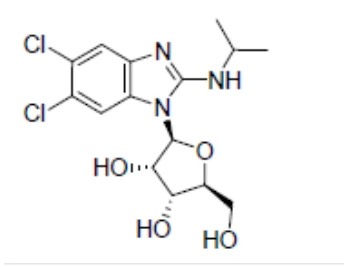
Physicochemical properties: Maribavir (polymorphic Form IV) is a white to off-white solid powder. Maribavir has four stereocenters and is supplied as a single stereoisomer having an L-ribofuranosyl ring and absolute stereochemistry shown in the structural formula. The aqueous solubility of maribavir is pH-dependent from “soluble” at pH is less than 2 and “very slightly soluble” at pH greater than 4.
14. Clinical Trials
14.1. Clinical Trials by Indication
Treatment of adults with post-transplant cytomegalovirus (CMV) infection/disease who are refractory (with or without genotypic resistance) to ganciclovir, valganciclovir, cidofovir, or foscarnet.
Pivotal Study (SHP620-303)
LIVTENCITY was evaluated in a Phase 3, multi-centre, randomized, open-label, active-controlled superiority study (Study SHP620-303) to assess the efficacy and safety of LIVTENCITY treatment compared to IAT in 352 HSCT and SOT recipients with CMV infections that were refractory to treatment with ganciclovir, valganciclovir, foscarnet, or cidofovir, including CMV infections with or without confirmed resistance to 1 or more anti-CMV agents.
Patients were stratified by transplant type (HSCT or SOT) and screening viral load and then randomized in a 2:1 allocation ratio to receive LIVTENCITY 400 mg twice daily or IAT (ganciclovir, valganciclovir, foscarnet, or cidofovir) for an 8-week treatment period and a 12-week follow-up phase. Summaries of trial design, demographics, and disease characteristics are presented in Table 7 and Table 8.
Table 7 - Summary of patient demographics for clinical trials in treatment of adults with post-transplant CMV infection and/or disease who are resistant and/or refractory to one or more prior antiviral therapies
| Study # | Study design | Dosage, route of administration and duration | Study subjects (n) | Median age (Range) | Sex |
| SHP620-303 | Randomized, open-label, active controlled superiority study to assess the efficacy and safety of LIVTENCITY treatment compared to IAT in HSCT and SOT recipients with CMV infections that were refractory to treatment with ganciclovir, valganciclovir, foscarnet, or cidofovir, including CMV infections with or without confirmed resistance to 1 or more anti-CMV agents. | LIVTENCITY 400 mg twice daily (oral) or IAT (ganciclovir, valganciclovir, foscarnet, or cidofovir) 8-week treatment period | 352 | 57 (19 - 79) | M = 213 F = 139 |
Table 8 - Summary of the Demographic and Baseline Disease Characteristics of the Study Population in Study 303
| Characteristica | IAT | LIVTENCITY 400 mg Twice Daily |
|---|---|---|
| Characteristica | IAT | LIVTENCITY 400 mg Twice Daily |
| (N=117) | (N=235) | |
| Age (years)b | ||
| Median | 54 | 57 |
| Min, Max | 19, 77 | 19, 79 |
| Sex, n (%) | ||
| Male | 65 (56) | 148 (63) |
| Female | 52 (44) | 87 (37) |
| Ethnicity, n (%) | ||
| Hispanic or Latino | 7 (6) | 14 (6) |
| Not Hispanic or Latino | 95 (81) | 198 (84) |
| Not reported | 12 (10) | 19 (8) |
| Unknown | 3 (3) | 4 (2) |
| Race, n (%) | ||
| White | 87 (74) | 179 (76) |
| Asian | 7 (6) | 9 (4) |
| Black or African American | 18 (15) | 29 (12) |
| Other | 5 (4) | 16 (7) |
| Missing | 0 | 2 (1) |
| IAT treatment | ||
| Foscarnet | 47 (41) | n/a |
| Ganciclovir/Valganciclovir | 56 (48) | n/a |
| Cidofovir | 6 (5) | n/a |
| Foscarnet + Ganciclovir/Valganciclovir | 7 (6) | n/a |
| Transplant type, n (%) | ||
| HSCT | 48 (41) | 93 (40) |
| SOTc | 69 (59) | 142 (60) |
| Kidney f | 32 (46) | 74 (52) |
| Lung f | 22 (32) | 40 (28) |
| Heart f | 9 (13) | 14 (10) |
| Multiple f | 5 (7) | 5 (4) |
| Liver f | 1 (1) | 6 (4) |
| Pancreas f | 0 | 2 (1) |
| Intestine f | 0 | 1 (1) |
| CMV DNA levels category as reported by central laboratory, n (%)d | ||
| High | 7 (6) | 14 (6) |
| Intermediate | 25 (21) | 68 (29) |
| Low | 85 (73) | 153 (65) |
| Baseline symptomatic CMV infection | ||
| No | 109 (93) | 214 (91) |
| Yese | 8 (7) | 21 (9) |
| CMV syndrome (SOT only), n (%)e, f, g | 7 (88) | 10 (48) |
| Tissue invasive disease, n (%)e, f, g | 1 (13) | 12 (57) |
CMV=cytomegalovirus, DNA=deoxyribonucleic acid, HSCT=hematopoietic stem cell transplant, IAT=investigator assigned anti-CMV treatment, max=maximum, min=minimum, N=number of patients, SD=standard deviation, SOT=solid organ transplant a Baseline was defined as the last value on or before the first dose date of study-assigned treatment, or date of randomization for patients who did not receive study-assigned treatment. b Age was calculated as the difference between date of birth and date of informed consent, truncated to years.
c The most recent transplant.
d Viral load was defined for analysis by the baseline central specialty laboratory plasma CMV DNA qPCR results as high (≥91,000 IU/mL), intermediate (≥9,100 and <91,000 IU/mL), and low (<9,100 IU/mL).
e Confirmed by Endpoint Adjudication Committee (EAC).
f Percentages are based on the number of patients within the category.
g Patients could have multiple reasons.
Study Results
Pivotal Study (SHP620-303)
The primary efficacy endpoint was confirmed CMV viremia clearance (plasma CMV DNA concentration below the lower limit of quantification (<LLOQ; i.e., <137 IU/mL)) at Week 8. The key secondary endpoint was CMV viremia clearance and CMV infection symptom control at the end of Study Week 8 with maintenance of this treatment effect through Study Week 16.
For the primary endpoint, LIVTENCITY was superior to IAT (56% vs. 24%, respectively, p<0.001). For the key secondary endpoint, 19% vs. 10% achieved both CMV viremia clearance and CMV infection symptom control in the LIVTENCITY and IAT group, respectively (p=0.013) (see Table 9).
| Table 9 - Primary and Key Secondary Efficacy Endpoint Analysis (Randomized Set) in Study 303 | ||
|---|---|---|
| IAT (N=117) n (%) | LIVTENCITY 400 mg Twice Daily (N=235) n (%) | |
| Primary Endpoint: CMV Viremia Clearance Response at Week 8 | ||
| Responders | 28 (24) | 131 (56) |
| Adjusted difference in proportion of responders (95% CI)a | 33 (22.8, 42.7) | |
| p-value: adjusteda | <0.001 | |
| Key Secondary Endpoint: Achievement of CMV Viremia Clearance and CMV Infection Symptom Controlc at Week 8, With Maintenance Through Week 16b | ||
| Responders | 12 (10) | 44 (19) |
| Adjusted difference in proportion of responders (95% CI)a | 10 (2.0, 16.9) | |
| p-value: Adjusteda | 0.013 | |
CI=confidence interval; CMV=cytomegalovirus; HSCT=hematopoietic stem cell transplant; IAT=investigator-assigned anti-CMV treatment; N=number of patients; SOT=solid organ transplant.
a Cochran-Mantel-Haenszel weighted average approach was used for the adjusted difference in proportion (maribavir – IAT), the corresponding 95% CI, and the p-value after adjusting for the transplant type and baseline plasma CMV DNA concentration. Only those with both stratification factors were included in the computation.
b CMV infection symptom control was defined as resolution or improvement of tissue-invasive disease or CMV syndrome for symptomatic patients at baseline, or no new symptoms for patients who were asymptomatic at baseline.
The treatment effect was consistent across key subgroups and supports the generalizability of the study outcomes (see Table 10).
Table 10 - Percentage of Responders by subgroup in Study 303
| IAT (N=117) | LIVTENCITY 400 mg Twice Daily (N=235) | |||
|---|---|---|---|---|
| n/N | % | n/N | % | |
| Transplant type | ||||
| SOT | 18/69 | 26 | 79/142 | 56 |
| HSCT | 10/48 | 21 | 52/93 | 56 |
| Baseline CMV DNA viral load | ||||
| Low | 21/85 | 25 | 95/153 | 62 |
| Intermediate/High | 7/32 | 22 | 36/82 | 44 |
| Genotypic resistance to other anti-CMV agents | ||||
| Yes | 15/70 | 21 | 76/121 | 63 |
| No | 10/33 | 30 | 42/96 | 44 |
| CMV syndrome/disease at baseline | ||||
| Yes | 1/8 | 13 | 10/21 | 48 |
| No | 27/109 | 25 | 121/214 | 57 |
| Age Group | ||||
| 18 to 44 years | 8/32 | 25 | 28/55 | 51 |
| 45 to 64 years | 19/69 | 28 | 71/126 | 56 |
| ≥ 65 years | 1/16 | 6 | 32/54 | 59 |
The reasons for failure to meet the primary endpoint are summarized in Table 11.
Table 11 - Analysis of Failures for Primary Efficacy Endpoint
| Outcome at Week 8 | LIVTENCITY N=235 n (%) | IAT N=117 n (%) |
|---|---|---|
| Responders (Confirmed DNA Level < LLOQ)a | 131 (56) | 28 (24) |
Non-responders: Due to virologic failureb:
Due to drug/study discontinuation:
Due to other reasons but remained on studyd | 104 (44) 80 (34) 48 (20) 32 (14) 21 (9) 8 (3) 10 (4) 1 (<1) 2 (1) 3 (1) | 89 (76) 42 (36) 35 (30) 7 (6) 44 (38) 26 (22) 3 (3) 9 (8) 6 (5) 3 (3) |
CMV=Cytomegalovirus, IAT=Investigator-assigned anti-CMV Treatment,LLOQ=Lower Limit of Quantitation.
Percentages are based on the number of patients in the Randomized Set.
a Confirmed CMV DNA level < LLOQ at the end of Week 8 (2 consecutive samples separated by at least 5 days with DNA levels < LLOQ [ie, <137 IU/mL]).
b CMV DNA breakthrough=achieved confirmed CMV DNA level < LLOQ and subsequently became detectable.
c Other reasons= other reasons not including adverse events, deaths and lack of efficacy, withdrawal of consent, and non-compliance.
d Includes patients who completed study assigned treatment and were non-responders.
Recurrence
Virologic recurrence during follow-up period:
After the end of treatment phase, 65/131 (50%) of patients in the LIVTENCITY group and 11/28 (39%) patients in the IAT group who achieved CMV DNA level < LLOQ experienced virologic recurrence during the follow-up period. Most of the recurrences 58/65 (89%) in LIVTENCITY group and 11/11 (100%) in IAT group occurred within 4 weeks after study drug discontinuation; and the median time to recurrence after CMV DNA level < LLOQ was 15 days (range 7, 71) in the LIVTENCITY group and 15 days (range 7, 29) in the IAT group.
New onset symptomatic CMV infection
For the entire study period, a similar percentage of patients in each treatment group developed new onset symptomatic CMV infection (LIVTENCITY 6% [14/235]; IAT 6% [7/113]).
Rescue arm
Twenty-two patients received LIVTENCITY as rescue therapy due to worsening of CMV viremia or new/persistent symptomatic CMV infections (7 patients [31.8%]) or lack of improvement in CMV infection plus intolerance to IAT (15 patients [68.2%]). Of the 22 patients, 11 (50.0%) patients achieved confirmed CMV viremia clearance at Week 8 of the LIVTENCITY rescue treatment phase and 11 (50.0%) patients were non-responders.
Overall mortality:
All-cause mortality was assessed for the entire study period. A similar percentage of patients in each treatment group died during the trial (LIVTENCITY 11% [27/235]; IAT 11% [13/117]).
Supportive Phase 2 Study (SHP620-202)
Study 202 was a Phase 2, randomized study to assess the safety and anti-CMV activity of 400 mg, 800 mg and 1,200 mg twice daily of LIVTENCITY for the treatment of 120 transplant recipients with CMV infections that are resistant or refractory to treatment with ganciclovir/valganciclovir or foscarnet. By Week 6, 28/40 (70.0%) patients who received 400 mg twice daily LIVTENCITY had achieved the primary efficacy endpoint of confirmed undetectable plasma CMV DNA. Virologic recurrences occurred while on treatment for 6/29 (20.7%) patients and during the follow-up period for 1/29 (3.4%) patient. The proportion of patients with undetectable CMV DNA levels and virologic recurrences was comparable among the three LIVTENCITY dose groups. The safety and virologic response of doses up to 1,200 mg twice daily and durations of up to 24 weeks of LIVTENCITY were comparable.
15. Microbiology
Antiviral Activity
Maribavir selectively inhibited in vitro HCMV replication in yield reduction, DNA hybridization, and plaque reduction assays in human cell lines at noncytotoxic submicromolar concentrations. The EC50 values ranged from 0.03 to 2.2 µM depending on the cell line and assay endpoint. The cell culture antiviral activity of maribavir has also been evaluated against CMV clinical isolates. The median EC50 values were 0.1 μM (n=10, range 0.03-0.13 μM) and 0.28 μM (n=10, range 0.12-0.56 μM) using DNA hybridization and plaque reduction assays, respectively. Maribavir is highly selective for HCMV. No significant difference in baseline maribavir EC50 values across the four HCMV glycoprotein B genotypes (N=2, 1, 4, and 1 for gB1, gB2, gB3, and gB4, respectively) was seen.
Combination Antiviral Activity
When maribavir was tested in vitro in combination with other antiviral compounds, it showed additive interactions with letermovir, foscarnet, cidofovir and GW275175X (a benzimidazole CMV terminase inhibitor) against wild type and mutant HCMV, and strong antagonism with ganciclovir.
In Cell Culture
Mutations conferring resistance to maribavir have been identified on gene UL97: L337M, F342Y, V353A, L397R, T409M, H411L/N/Y, and C480F. These mutations confer resistance that ranges from 3.5-fold to >200-fold increase in EC50 values. UL27 gene variants (R233S, W362R, W153R, L193F, A269T, V353E, L426F, E22stop, W362stop, 218delC, and 301-311del) conferred <5-fold increase in EC50.
Viral Resistance
In Clinical Studies
In Phase 2 Study 202 evaluating maribavir in 120 hematopoietic stem cell transplant (HSCT) or solid organ transplant (SOT) recipients with CMV infection that are refractory and/or resistant to valganciclovir/ganciclovir or foscarnet, post-treatment pUL97 genotyping data from 19 of 25 patients who initially achieved viremia clearance and later experienced recurrent CMV infection while on maribavir showed 10 patients with mutation T409M, 3 patients with mutation H411Y or H411L, and 6 patients with mutation C480F. Post-treatment genotyping data for pUL97 from 16 out of 26 patients who did not respond to >14 days of maribavir therapy showed 5 patients with mutation T409M, 2 patients with mutation H411Y, and 3 patients with mutation C480F. One patient who did not respond to >14 days of maribavir treatment had the pUL97 mutation F342Y at baseline. Additional pUL27 genotyping was performed on 37 patients in Study 202. The only resistance-associated amino acid substitution in pUL27 that was not detected at baseline was G344D. Phenotypic analysis of pUL27 and pUL97 recombinants showed that pUL97 mutations F342Y, T409M, H411Y, H411L and C480F conferred 4.5-fold, 78-fold, 15-fold, 69-fold, and 224-fold increases, respectively, in maribavir EC50 compared with the wild-type strain. The pUL27 mutation G344D was not shown to confer maribavir resistance.
In Phase 3 Study 303 evaluating maribavir in patients with phenotypic resistance to valganciclovir/ganciclovir, DNA sequence analysis of the entire coding regions of pUL97 and pUL27 was performed on 134 paired sequences from maribavir-treated patients. The treatment-emergent pUL97 substitutions F342Y (4.5-fold), T409M (78-fold), H411L/N/Y (69-, 9-, and 12-fold, respectively), and/or C480F (224-fold) were detected in 58 patients (47 patients were on-treatment failures and 11 patients had recurrences). One subject with the pUL27 L193F substitution (2.6-fold reduced susceptibility to maribavir) at baseline did not meet the primary endpoint.
Cross-Resistance
Cross-resistance has been observed between maribavir and ganciclovir/valganciclovir in cell culture and in clinical studies.
pUL97 valganciclovir/ganciclovir resistance-associated substitutions F342S/Y, K355del, V356G, D456N, V466G, C480R, P521L, and Y617del reduce susceptibility to maribavir >4.5-fold. Other vGCV/GCV resistance pathways have not been evaluated for cross-resistance to maribavir. pUL54 DNA polymerase substitutions conferring resistance to vGCV/GCV, cidofovir, or foscarnet remained susceptible to maribavir.
Substitutions pUL97 F342Y and C480F are maribavir treatment-emergent resistance-associated substitutions that confer >1.5-fold reduced susceptibility to vGCV/GCV, a fold reduction that is associated with phenotypic resistance to vGCV/GCV. The clinical significance of this cross-resistance to vGCV/GCV for these substitutions has not been determined. Maribavir resistant virus remained susceptible to cidofovir and foscarnet. Additionally, there are no reports of any pUL27 maribavir resistance-associated substitutions being evaluated for vGCV/GCV, cidofovir, or foscarnet cross-resistance. Given the lack of resistance-associated substitutions for these drugs mapping to pUL27, cross-resistance is not expected for pUL27 maribavir substitutions.
16. Non-Clinical Toxicology
General Toxicology
In repeat-dose oral toxicity studies in rats (26 weeks) and monkeys (52 weeks), the major findings were regenerative anemia and histologic change of mucosal cell hyperplasia in the intestinal tract, at doses ≥25 mg/kg/day in rats and at doses ≥100 mg/kg/day in monkeys, which was associated with dehydration in both species, and clinical observations of soft to liquid stool, and electrolyte changes (in monkeys only). The anemia and intestinal hyperplasia were reversible or showed progression to recovery after cessation of dosing. A no observed adverse effect level (NOAEL) was not established in monkeys and was therefore considered to be <100 mg/kg/day, which is approximately 0.25 the human exposure at the RHD. In rats the NOAEL was 25 mg/kg/day, at which exposures were 0.05 and 0.1 times the human exposure at the RHD in males and females, respectively.
Carcinogenicity
Two-year carcinogenic studies were conducted in both mice and rats at doses up to 150 and 100 mg/kg/day, respectively. No carcinogenic potential was identified in rats up to 100 mg/kg/day at which exposures in males and females were 0.2 and 0.36 times, respectively the human exposure at the RHD. In male mice, an equivocal elevation in the incidence of hemangioma, hemangiosarcoma, and combined hemangioma/ hemangiosarcoma across multiple tissues at 150 mg/kg/day is of unknown relevance in humans. There were no carcinogenic findings at the next lower dose of 75 mg/kg/day, which is approximately 0.35 and 0.25 in males and females, respectively, the human exposure at the RHD.
Genotoxicity
LIVTENCITY was not mutagenic in a bacterial mutation assay. In the mouse lymphoma assay, LIVTENCITY demonstrated mutagenic potential in the absence of metabolic activation and the results were equivocal in the presence of metabolic activation (not concentration-dependent and not reproduced in the repeat assay). LIVTENCITY was not clastogenic in the in vivo rat bone marrow micronucleus assay.
Reproductive and Developmental Toxicology
See 7 Warnings and Precautions, 7.1.1 Pregnancy.