


Product Monograph - Tpoxx
Recent Major Label Changes
| Dosage and Administration, Recommended Dose and Dosage Adjustment (4.2) | 2023-10 |
|---|
Table of Contents
Certain sections or subsections that are not applicable at the time of the preparation of the most recent authorized product monograph are not listed.
Recent Major Label Changes ................................................................................................. 2
Table of Contents ................................................................................................................. 2
Part 1: Healthcare Professional Information ......................................................................... 4
- 1.
Indications..................................................................................................................... 4
1.1. Pediatrics .................................................................................................................... 4
1.2. Geriatrics .................................................................................................................... 4
- 2. Contraindications .......................................................................................................... 4
- 4.
Dosage and Administration ............................................................................................ 4
4.1. Dosing Considerations ................................................................................................ 4
4.2. Recommended Dose and Dosage Adjustment ........................................................... 4
4.4. Administration ............................................................................................................ 5
4.5. Missed Dose ............................................................................................................... 6
- 5. Overdose ....................................................................................................................... 6
- 6. Dosage Forms, Strengths, Composition, and Packaging .................................................. 6
- 7.
Warnings and Precautions ............................................................................................. 6
General ................................................................................................................................... 6
Endocrine and Metabolism .................................................................................................... 6
Immune .................................................................................................................................. 7
QTc Interval Prolongation ...................................................................................................... 7
Reproductive Health - Fertility ............................................................................................... 7
7.1. Special Populations .................................................................................................... 7
7.1.1. Pregnant Women ............................................................................................... 7
7.1.2. Breastfeeding ..................................................................................................... 8
7.1.3. Pediatrics ............................................................................................................ 8
7.1.4. Geriatrics ............................................................................................................ 8
- 8.
Adverse Reactions ......................................................................................................... 8
8.1. Adverse Reaction Overview ....................................................................................... 8
8.2. Clinical Trial Adverse Reactions .................................................................................. 8
8.2.1. Clinical Trial Adverse Reactions – Pediatrics...................................................... 9
8.3. Less Common Clinical Trial Adverse Reactions .......................................................... 9
8.4. Abnormal Laboratory Findings: Hematologic, Clinical Chemistry, and Other Quantitative Data ..................................................................................................... 10
- 9.
Drug Interactions ......................................................................................................... 10
9.2. Drug Interactions Overview ..................................................................................... 10
9.3. Drug-Behaviour Interactions .................................................................................... 10
9.4. Drug-Drug Interactions ............................................................................................. 10
9.5. Drug-Food Interactions ............................................................................................ 11
9.6. Drug-Herb Interactions ............................................................................................. 11
9.7. Drug-Laboratory Test Interactions ........................................................................... 12
- 10.
Clinical Pharmacology .................................................................................................. 12
10.1. Mechanism of Action ............................................................................................... 12
10.2. Pharmacodynamics .................................................................................................. 12
10.3. Pharmacokinetics ..................................................................................................... 12
- 11. Storage, Stability, and Disposal .................................................................................... 14
- 12. Special Handling Instructions ....................................................................................... 14
Part 2: Scientific Information ............................................................................................. 15
- 13. Pharmaceutical Information ........................................................................................ 15
- 14.
Clinical Trials ............................................................................................................... 16
14.1. Clinical Trials by Indication ....................................................................................... 16
- 15. Microbiology ............................................................................................................... 19
- 16. Non-Clinical Toxicology ................................................................................................ 19
Patient Medication Information ......................................................................................... 21
LIST OF TABLES
Table 1: Recommended Pediatric and Adult Dosage and Preparation Instructions .......................... 5
Table 2: Dosage Forms, Strengths, and Composition.......................................................................... 6
Table 3: Adverse Reactions Reported in ≥1% of Healthy Adult Subjects Receiving at Least One Dose of TPOXX® 600 mg ......................................................................................................... 9
Table 4: Established or Potential Drug-Drug Interactions ................................................................10
Table 5: Drug Interactions – Changes in TPOXX Pharmacokinetic Parameters in the Presence of Co-Administered Druga .........................................................................................................11
Table 6: Summary of TPOXX Pharmacokinetic Parameters in Healthy Adults ................................13
Table 7: Summary of Nonclinical Trials in Treatment of Orthopox Infections (Efficacy Studies) ....17
Table 8: Survival Rates in Tecovirimat Treatment Studies in Cynomolgus Macaques and NZW Rabbits Exhibiting Clinical Signs of Orthopoxvirus Disease ................................................18
Part 1: Healthcare Professional Information
“HEALTH CANADA HAS AUTHORIZED THE SALE OF THIS EXTRAORDINARY USE NEW DRUG FOR TREATMENT OF HUMAN SMALLPOX DISEASE IN ADULTS AND PEDIATRIC PATIENTS WEIGHING AT LEAST 13KG BASED ON LIMITED CLINICAL TESTING IN HUMANS”
1. Indications
EUND TPOXX (tecovirimat capsules) is indicated for the treatment of human smallpox disease in adults and pediatric patients weighing at least 13kg.
1.1. Pediatrics
Pediatrics (≥13 kg): Health Canada has authorized an extraordinary use indication for pediatric patients weighing ≥13 kg. No clinical studies in pediatric patients are available. Pharmacokinetic simulation was used to derive the dosing regimens of TPOXX in pediatric patients that are predicted to be comparable to adult exposure from the recommended dose of TPOXX.
Pediatrics (<13 kg): No data are available to Health Canada; therefore, Health Canada has not authorized an indication for pediatric use.
1.2. Geriatrics
Geriatrics (≥65 years of age): Clinical studies of TPOXX did not include sufficient numbers of subjects aged 65 and over to determine whether the safety profile of TPOXX is different in this population compared to younger subjects.
2. Contraindications
TPOXX is contraindicated in patients who are hypersensitive to this drug or to any ingredient in the formulation, including any non-medicinal ingredient, or component of the container. For a complete listing, see 6 Dosage Forms, Strengths, Composition, and Packaging.
4. Dosage and Administration
4.1. Dosing Considerations
EUND
4.2. Recommended Dose and Dosage Adjustment
The recommended dosage of TPOXX in adults and pediatric patients weighing at least 40 kg and less than 120 kg is 600 mg (three 200 mg capsules) taken twice daily orally for 14 days. The recommended dosage of TPOXX in those weighing 120 kg or more is 600 mg (three 200 mg capsules) taken three times daily orally for 14 days. TPOXX should be taken within 30 minutes after a full meal of moderate or high fat.
Dosage for Pediatric Patients and Those Who Cannot Swallow Capsules
The recommended dosage for pediatric patients is based on weight starting at 13 kg as shown in Table 1. The dose should be given twice daily orally for 14 days and should be taken within 30 minutes after a full meal of moderate or high fat.
Preparation Instructions:
- Carefully open the capsule so that the contents do not spill or escape into the air.
- Hold the capsule with the cap facing up and pull the cap away from the body of the capsule.
- Use a small container for mixing.
- Mix the entire contents of the capsule with 30 mL of liquid (e.g. milk, chocolate milk) or soft food (e.g. yogurt, applesauce).
- The mixture should be taken within 30 minutes after mixing and within 30 minutes of eating a meal.
Table 1: Recommended Pediatric and Adult Dosage and Preparation Instructions
| Body Weight | Dosage | Number of Capsules | Drug-Food Preparation |
|---|---|---|---|
| 13 kg to less than 25 kg | 200 mg twice daily | Contents of 1 Capsule twice daily | Mix 1 capsule of TPOXX with 30 mL of liquid (e.g. milk, chocolate milk) or soft food (e.g. yogurt, applesauce). Administer the whole mixture. |
| 25 kg to less than 40 kg | 400 mg twice daily | Contents of 2 Capsules twice daily | Mix 2 capsules of TPOXX with 30 mL of liquid (e.g. milk, chocolate milk) or soft food (e.g. yogurt, applesauce). Administer the whole mixture. |
| 40 kg to less than 120 kg | 600 mg twice daily | Contents of 3 Capsules twice daily | Mix 3 capsules of TPOXX with 30 mL of liquid (e.g. milk, chocolate milk) or soft food (e.g. yogurt, applesauce). Administer the whole mixture. |
| 120 kg and above | 600 mg three times daily | Contents of 3 Capsules three times daily. | Mix 3 capsules of TPOXX with 30 mL of liquid (e.g. milk, chocolate milk) or soft food (e.g. yogurt, applesauce). Administer the whole mixture. |
Renal Impairment
No dose adjustment of TPOXX is required for patients with renal impairment (see 10.3 Pharmacokinetics, Special Populations and Conditions).
Hepatic Impairment
No dose adjustment of TPOXX is required for patients with hepatic impairment (see 10.3 Pharmacokinetics, Special Populations and Conditions).
4.4. Administration
The recommended dose should be administered orally and should be taken within 30 minutes after a full meal of moderate or high fat (containing approximately 25 grams of fat) to ensure proper tecovirimat absorption.
4.5. Missed Dose
If a dose of TPOXX is missed, the patient should be advised to take it as soon as the patient remembers, and then continue with the next dose at the proper time interval.
5. Overdose
There is no clinical experience with overdosage of TPOXX. In case of overdosage, monitor patients for any signs or symptoms of adverse effects. Hemodialysis will not significantly remove TPOXX in overdosed patients.
For the most recent information in the management of a suspected drug overdose, contact your regional poison control centre or Health Canada’s toll-free number, 1-844 POISON-X (1-844-764-7669).
- 6. Dosage Forms, Strengths, Composition, and Packaging
Tecovirimat capsules are orange/black opaque hard gelatin capsule, size “0”, containing 200 mg of tecovirimat (as tecovirimat monohydrate). The capsules are imprinted with white ink with “SIGA” and the SIGA symbol followed by “®” on an orange body and with “ST-246®” on the black cap. TPOXX capsules are supplied in an HDPE plastic bottle containing 42 opaque hard-shell capsules.
Table 2: Dosage Forms, Strengths, and Composition
7. Warnings and Precautions
General
The efficacy of TPOXX for treatment of smallpox disease has not been determined in humans because adequate and well-controlled field trials have not been feasible, and inducing smallpox disease in humans to study the drug’s efficacy is not ethical. The efficacy of TPOXX is based solely on efficacy studies in animal models of orthopoxvirus disease (see 14 Clinical Trials).
Endocrine and Metabolism
Co-administration of repaglinide and TPOXX may cause mild to moderate hypoglycemia. Monitor blood glucose and monitor for hypoglycemic symptoms when administering TPOXX with repaglinide.
In a drug interaction study, 10 of 30 healthy subjects experienced mild (6 subjects) or moderate (4 subjects) hypoglycemia following co-administration of repaglinide (2 mg) and TPOXX.
| Route of Administration | Dosage Form/ Strength/Composition | Non-Medicinal Ingredients |
| Oral | Capsule, 200 mg | Colloidal silicon dioxide, croscarmellose sodium, hydroxypropyl methylcellulose, lactose monohydrate magnesium stearate, microcrystalline cellulose, sodium lauryl sulfate. The capsule shell contains gelatin, FD&C Blue No. 1, FD&C Red No. 3, FD&C Yellow No. 6, and titanium dioxide. The printing ink contains ammonium hydroxide, isopropyl alcohol, n-butyl alcohol, propylene glycol, simethicone, shellac, and titanium dioxide. |
Symptoms resolved in all subjects after intake of food and/or oral glucose.
Taking TPOXX may reduce the effects of the medicine midazolam, a medicine used for the treatment of seizures, anxiety, or sleeping problems. Talk to your doctor or pharmacists before taking TPOXX if you are taking midazolam.
Immune
TPOXX efficacy may be reduced in immunocompromised patients based on studies demonstrating reduced efficacy in immunocompromised animal models.
Live animal studies have indicated that co-administration of TPOXX at the same time as live smallpox vaccine (vaccinia virus) may reduce the immune response to the vaccine. The clinical impact of this is unknown.
QTc Interval Prolongation
TPOXX has been reported to cause prolongation of the QTc interval (see 10 Clinical Pharmacology, Cardiac Electrophysiology). Caution should be observed if TPOXX is administered to patients who are considered to be at a high risk of the torsade de pointes arrhythmia, including, but not limited to, those with congenital or acquired long QT syndrome, other cardiac disease, electrolyte depletion (e.g., hypokalemia, hypomagnesemia, or hypocalcemia) or conditions that can lead to electrolyte depletion, or in situations of concomitant treatment with Class IA or Class III antiarrhythmics or other QTc-prolonging drugs (see 9 Drug Interactions, QT/QTc Prolonging Drugs). Torsade de pointes can be asymptomatic or experienced by the patient as dizziness, palpitations, syncope, or seizures. If sustained, torsade de pointes can progress to ventricular fibrillation and sudden cardiac death.
Reproductive Health - Fertility
There is no data on the effects on fertility in humans. In male mice decreased fertility associated with testicular toxicity (increased percent abnormal sperm and decreased sperm motility) was observed at 1000 mg/kg/day (approximately 24 times the human exposure at RHD) (see 16 Non-Clinical Toxicology).
7.1. Special Populations
7.1.1. Pregnant Women
TPOXX has not been studied in pregnant women. TPOXX should not be used during pregnancy unless the benefits outweigh the risks.
In animal reproduction studies, no embryofetal developmental toxicity was observed in mice during the period of organogenesis at tecovirimat exposures (area under the curve [AUC]) up to 23 times higher than human exposure at the recommended human dose (RHD). In rabbits, no embryofetal developmental toxicity was observed during organogenesis at tecovirimat exposures (AUC) less than human exposures at the RHD. In a mouse pre /post natal development study, no toxicities were observed at maternal tecovirimat exposures up to 24 times higher than human exposure at the RHD (see 16 Non-Clinical Toxicology).
The background risk of major birth defects and miscarriage for the indicated population is unknown.
7.1.2. Breastfeeding
It is unknown if TPOXX is excreted in human milk. Because many drugs are excreted in human milk, precaution should be exercised. When administered to lactating mice, tecovirimat was present in the milk. The developmental and health benefits of breastfeeding should be considered along with the mother’s clinical need for TPOXX and any potential adverse effects on the breastfed child from TPOXX or from the underlying maternal condition.
7.1.3. Pediatrics
Based on the data submitted and reviewed, Health Canada has authorized an extraordinary use indication for pediatric populations ≥13 kg.
As in adults, the effectiveness of TPOXX in pediatric patients is based solely on efficacy studies in animal models of orthopoxvirus disease. As exposure of healthy pediatric subjects to TPOXX with no potential for direct clinical benefit is not ethical, pharmacokinetic simulation was used to derive dosing regimens that are predicted to provide pediatric patients with exposures comparable to the observed exposure in adults under 120 kg receiving 600 mg twice daily. The dosage for pediatric patients is based on weight.
7.1.4. Geriatrics
Clinical studies of TPOXX did not include sufficient numbers of subjects aged 65 and over to determine whether the safety profile of TPOXX is different in this population compared to younger subjects. Of the 359 subjects in the TPOXX clinical study, 10% (36/359) were ≥ 65 years of age, and 1% (4/359) were ≥ 75 years of age. No alteration of dosing is needed for patients ≥ 65 years of age.
8. Adverse Reactions
8.1. Adverse Reaction Overview
EUND Because clinical trials are conducted under very specific conditions, adverse reaction rates observed in the clinical trials of a drug cannot be directly compared to rates in the clinical trials of another drug and may not reflect the rates observed in practice.
The safety of TPOXX has not been studied in patients with smallpox disease.
8.2. Clinical Trial Adverse Reactions
The safety of TPOXX was evaluated in 359 healthy adult subjects ages 18 79 years in a Phase 3 clinical trial. Of the subjects who received at least one 600 mg dose of TPOXX, 59% were female, 69% were White, 28% were Black/African American, 1% were Asian, and 12% were Hispanic or Latino. Ten percent of the subjects who participated in the study were age 65 or older. Of these 359 subjects, 336 subjects received at least 23 of 28 doses of 600 mg TPOXX in a twice daily regimen for 14 days.
Most Frequently Reported Adverse Reactions
The most frequently reported adverse reactions were headache and nausea. Adverse reactions that occurred in at least ≥1% of subjects in the TPOXX treatment group are shown in Table 3.
Table 3: Adverse Reactions Reported in ≥1% of Healthy Adult Subjects Receiving at Least One Dose of TPOXX® 600 mg
| Adverse Reaction | TPOXX 600 mg N = 359 (%) | Placebo N = 90 (%) |
|---|---|---|
| Very Common (≥10%) Headache | 12 | 8 |
| Common (≥1%) Nausea | 5 | 4 |
| Abdominal paina | 2 | 1 |
| Vomiting | 2 | 0 |
aIncludes abdominal pain, abdominal pain upper, abdominal distension, abdominal discomfort, abdominal pain lower, epigastric pain
Adverse Reactions Leading to Discontinuation of TPOXX
Six subjects (2%) had their treatment with TPOXX discontinued due to adverse reactions. Each of these subject’s adverse reactions (with severity) is listed below:
- EEG change, abnormal
- Mild upset stomach, dry mouth, decreased concentration and dysphoria
- Mild nausea and fever, moderate diarrhea, severe headache
- Mild palpable purpura
- Mild nausea, fever and chills
- Mild facial redness, facial swelling and pruritus
8.2.1. Clinical Trial Adverse Reactions – Pediatrics
Since conducting studies in healthy children is unethical, pediatric safety studies have not been conducted.
8.3. Less Common Clinical Trial Adverse Reactions
Clinically significant adverse reactions that were reported in <1% of subjects exposed to TPOXX and at rates higher than subjects who received placebo are listed below:
- Gastrointestinal: dry mouth, chapped lips, dyspepsia, eructation, oral paresthesia
- General and administration site: pyrexia, pain, chills, malaise, thirst
- Investigations: abnormal electroencephalogram, hematocrit decreased, hemoglobin decreased, heart rate increased
- Musculoskeletal and connective tissue: arthralgia, osteoarthritis
- Nervous system: migraine, disturbance in attention, dysgeusia, paresthesia
- Psychiatric: depression, dysphoria, irritability, panic attack
- Respiratory, Thoracic and Mediastinal Disorders: oropharyngeal pain
- Skin and subcutaneous tissue: palpable purpura, rash, pruritic rash, facial redness, facial swelling, pruritus
8.4. Abnormal Laboratory Findings: Hematologic, Clinical Chemistry, and Other Quantitative Data
No abnormal laboratory findings have been found in clinical trials with TPOXX. Clinical trials were only conducted in healthy adults so these findings may not be reflective of use in the target patient population.
9. Drug Interactions
9.2. Drug Interactions Overview
Tecovirimat is a weak inducer of cytochrome P450 (CYP) 3A4 and a weak inhibitor of CYP2C8 and CYP2C19. However, the effects are not expected to be clinically relevant for most substrates of those enzymes based on the magnitude of interactions and the duration of treatment of TPOXX. Tecovirimat is a substrate of UGT1A1 and UGT1A4. Tecovirimat inhibited Breast Cancer Resistance Protein (BCRP) in vitro. See Table 4 for clinical recommendations for select sensitive substrates.
9.3. Drug-Behaviour Interactions
No studies on the effects on the ability and use of machines have been performed. However, there is no evidence from the available data that TPOXX treatment affects the ability to drive and use machines.
9.4. Drug-Drug Interactions
The following table provides a list of established drug interactions. Interactions with other drugs have not been studied at this time.
Table 4: Established or Potential Drug-Drug Interactions
| Concomitant Drug Class: Drug Name | Source of Evidence | Effect on Concentrationa | Clinical comment | |
| Blood Glucose-Lowering Agent: | ||||
| Repaglinideb | Clinical Trial | repaglinide | Monitor blood glucose and monitor for hypoglycemic symptoms in patients when TPOXX is co-administered with repaglinide. | |
| CNS Depressant: | ||||
| Midazolamb | Clinical Trial | midazolam | Monitor for effectiveness of midazolam. | |
| Phosphate Bindersb | ||||
Calcium acetate Lanthanum carbonate Sevelamer carbonate Sucroferric oxyhydroxide | Clinical Trial | tecovirimat | Monitor for signs or symptoms of adverse effects when TPOXX is co-administered with phosphate binders (see 5 Overdose). | |
a↓ = decrease, ↑ = increase
bThese interactions have been studied in healthy adults.
The effects of co-administration of TPOXX with four different phosphate binders on the tecovirimat Cmax and AUC0-24 are summarized in Table 5.
Table 5: Drug Interactions – Changes in TPOXX Pharmacokinetic Parameters in the Presence of Co-Administered Druga
| Co-Administered Drug | Dose of Co-Administered Drug (mg) | Nb | Mean Ratioc (90% CI) of TPOXX PK with/without Co-administered Drug No Effect = 1.00 | |
|---|---|---|---|---|
| Cmax | AUC0-24 hour | |||
| Phosphate binders | Sevelamer carbonate (1600 mg, single dose) | 39 | 1.16 (1.08, 1.26) | 1.26 (1.17, 1.36) |
| Sucroferric oxyhydroxide (500 mg, single dose) | 37 | 1.15 (1.06, 1.24) | 1.20 (1.11, 1.29) | |
| Calcium acetate (1334 mg, single dose) | 37 | 1.09 (1.01, 1.18) | 1.16 (1.07, 1.25) | |
| Lanthanum carbonate (500 mg, single dose) | 38 | 1.21 (1.12, 1.30) | 1.22 (1.13, 1.32) | |
aAll interaction studies conducted in healthy volunteers with tecovirimat 600 mg twice daily (every 12 hours) taken with a meal (consisting of approximately 600 calories and 25 g fat).
bNumber of subjects with reportable PK values when TPOXX was co-administered with phosphate binder.
cRatio of Geometric LS Mean
QT/QTc Prolonging Drugs
Caution should be observed if TPOXX is administered in combination with drugs that cause QT/QTc interval prolongation (see 7 Warnings and Precautions, QTc Interval Prolongation & 10 Clinical Pharmacology, Cardiac Electrophysiology). Current information sources should be consulted for lists of drugs that cause QT/QTc prolongation.
Drugs that Can Reduce Serum Electrolyte Levels
Caution should be observed if TPOXX is administered with drugs that can decrease serum levels of potassium, magnesium, and/or calcium because of potential augmentation of the QTc prolongation effect (see 7 Warnings and Precautions, Cardiovascular & 10 Clinical Pharmacology, Cardiac Electrophysiology). Drugs that can decrease serum electrolyte levels include, but are not limited to, loop, thiazide, and related diuretics.
9.5. Drug-Food Interactions
Absorption of tecovirimat increased by approximately 40-50% (as measured by Cmax and AUC0-24) when TPOXX was administered with a full meal of moderate or high fat (containing approximately 25 grams of fat), as compared to administration in the fasted state.
9.6. Drug-Herb Interactions
Interactions with herbal products have not been established.
9.7. Drug-Laboratory Test Interactions
Interactions with laboratory tests have not been established.
10. Clinical Pharmacology
10.1. Mechanism of Action
Tecovirimat targets and inhibits the activity of the orthopoxvirus VP37 protein (encoded by a highly conserved gene in all members of the orthopoxvirus genus). Tecovirimat blocks the interaction of VP37 with cellular Rab9 GTPase and TIP47, which prevents the formation of egress competent enveloped virions necessary for cell-to-cell and long-range dissemination of virus.
10.2. Pharmacodynamics
Cardiac Electrophysiology
In a double-blind, placebo- and positive-controlled, randomized, crossover ECG assessment study in healthy subjects (N=48), tecovirimat administered as a single supratherapeutic dose of 1000 mg was associated with a maximum difference from placebo in mean change from baseline QTcF of 5.1 ms (90% CI 2.9, 7.3) at 4 h post dosing. Following the 1000 mg single dose of tecovirimat, the mean Cmax values were 2500 ng/mL for tecovirimat, 710 ng/mL for the M4 metabolite, 121 ng/mL for the M5 metabolite, and 4250 ng/mL for the TFMBA metabolite.
This ECG assessment study did not achieve therapeutic plasma concentrations of the metabolites of tecovirimat. In healthy subjects (N=48) receiving the therapeutic 600 mg BID dose for 14 days under fed conditions, the mean Cmax values were reported to be 2209 ng/mL for tecovirimat, 1290 ng/mL for the M4 metabolite, 665 ng/mL for the M5 metabolite, and 7956 ng/mL for the TFMBA metabolite.
10.3. Pharmacokinetics
Comparison of Animal and Human PK Data to Support Effective Human Dose Selection
Because the effectiveness of TPOXX cannot be tested in humans, a comparison of tecovirimat exposures achieved in healthy human subjects to those observed in animal models of orthopoxvirus infection (nonhuman primates and rabbits infected with monkeypox virus and rabbitpox virus, respectively) in therapeutic efficacy studies was necessary to support the dosage regimen of 600 mg twice daily for treatment of smallpox disease in humans. Humans with body mass between 40 kg and 120 kg achieve greater systemic exposure (AUC, Cmax, and Cmin) of tecovirimat following a twice daily dose of 600 mg when compared to the therapeutic exposures in these animal models. However, at the 600 mg twice daily oral dosage, tecovirimat exposure was reduced in adult subjects weighing more than 120 kg compared to the exposures in adult subjects weighing less than 120 kg. Specifically, in 34 adult subjects weighing more than 120 kg who received 600 mg TPOXX orally every 12 hours, the observed mean steady state values of AUC0-24hr, Cmax, and Ctrough were 19500 hr•ng/mL (CV: 23%), 1300 ng/mL (CV: 29%), and 585 ng/mL (CV: 31%), respectively.
Based on a comparison of the simulated maximum exposures (maximum Cmax) with maximum safety limit and simulated minimum exposures (minimum Cmin) and minimum efficacy level, a three times daily dose of 600 mg is recommended for the body weight range of 120 kg and above.
Human pharmacokinetic data from a Phase 3 safety study (SIGA-246-008) is presented in Table 6. The data presented is taken from healthy, fed, male and female subjects, 18-72 years of age who had taken TPOXX 600 mg twice daily for 14 days.
Table 6: Summary of TPOXX Pharmacokinetic Parameters in Healthy Adults
Cmax (ng/mL) N=48 | Cmin N=48 | Tmax (h) N=48 | t½ (h) N=48 | AUC0-24h (ng.h/mL) N=48 | AUC0-∞ (ng.h/mL) N=16 | CL (CL/F, L/h) N=167 | Vd (Vz/F, L) N=16 | |
|---|---|---|---|---|---|---|---|---|
| Steady State (mean)a | 2209d | 690 | 4b | 19.3c | 30632 | 50975d | 20.8 | 572 |
aValues listed are arithmetic mean values
bValue reflects administration of drug with food.
cValue refers to mean terminal plasma half-life.
d600 mg BID on Day 14 in fed subjects.
Absorption
Tecovirimat reaches maximum plasma concentrations 4 to 6 hours after oral administration.
Distribution
Tecovirimat is 77.3-82.2% bound to human plasma proteins at concentrations between 0.03 and 50 µM. After a single 600 mg dose of [14C]-tecovirimat in healthy subjects, concentrations of total radioactivity were lower in whole blood compared to plasma at all time points, with ratios of whole blood to plasma ranging from 0.62-0.90 across all time points. Tecovirimat has a high volume of distribution (572 L).
Metabolism
Tecovirimat is metabolized by hydrolysis of the amide bond and glucuronidation. The following inactive metabolites were detected in plasma: M4 (N-{3,5-dioxo-4-azatetracyclo[5.3.2.0{2,6}.0{8,10}]dodec-11-en-4-yl}amine), M5 (3,5 dioxo-4-aminotetracyclo[5.3.2.0{2,6}.0{8,10}]dodec-11-ene), and TFMBA (4 (trifluoromethyl) benzoic acid).
Elimination
After a single dose of [14C]-tecovirimat in healthy subjects, approximately 95% of the [14C]-radioactivity was recovered in urine and feces over the 192-hour post-dose period, with approximately 73% of the [14C]-radioactivity administered being recovered in urine and 23% being recovered in feces, indicating that the renal pathway is the major route of excretion. The renal excretion of parent compound was minimal, accounting for less than 0.02%. The majority of drug excreted by the renal system is in a glucuronidated form of drug and metabolite. In feces, the excretion was mainly unchanged tecovirimat. The terminal half-life was 19.3 hours.
Special populations and conditions
No clinically significant differences in the pharmacokinetics of tecovirimat in healthy adults were observed based on age, gender, or race.
TPOXX pharmacokinetics has not been evaluated in pediatric patients. The recommended pediatric dosing regimen is expected to produce tecovirimat exposures that are comparable to those in adult subjects based on a population pharmacokinetic modeling and simulation approach.
- Pregnancy and Breast-feeding: Studies have not been performed in pregnant and/or breast-feeding women. Therefore, no pharmacokinetic data are available in this specific population.
- Hepatic Insufficiency: In a dedicated study in subjects with mild, moderate, or severe hepatic insufficiency (based on Child Pugh Scores A, B, or C), no clinically significant differences in the pharmacokinetics of tecovirimat were observed. No dosage adjustment is required for patients with mild, moderate, or severe hepatic insufficiency (Child Pugh Class A, B, or C).
- Renal Insufficiency: In a dedicated study in subjects with renal insufficiency (based on estimated GFR), no clinically significant differences in the pharmacokinetics of tecovirimat were observed. No dosage adjustments are required for patients with mild, moderate, or severe renal impairment or patients with end-stage renal disease requiring hemodialysis.
- Obesity: No early studies were conducted specifically in individuals with obesity as defined by BMI. Systemic exposure was observed to decrease as the weight of patients increased, and for patients weighing more than 120 who received the 600 mg twice daily doses, the Cmin (Ctrough) values were close to the minimum effective dose of 160 ng/mL. Therefore, in order to ensure adequate systemic levels of tecovirimat, additional modeling and simulation was performed, resulting in recommended doses of 600 mg three times daily for patients weighing 120 kg and above (see 4.2 Recommended Dose and Dosage Adjustment).
- Storage, Stability, and Disposal
Store at room temperature (15-25°C).
This medicine should not be used after the expiry date shown on the bottle.
12. Special Handling Instructions
Disposal of Unused/Expired Medicines
The release of pharmaceuticals into the environment should be minimized. Medicines should not be disposed of via wastewater and disposal through household waste should be avoided.
Any unused medicinal product or waste material should be disposed of in accordance with local requirements.
Part 2: Scientific Information
13. Pharmaceutical Information
Drug Substance
Non-Proprietary Name of the Drug Substance(s): Tecovirimat monohydrate
Chemical name: Benzamide, N-[(3aR,4R,4aR,5aS,6S,6aS)-3,3a,4,4a,5,5a,6,6a-octahydro-1,3-dioxo-4,6-ethenocycloprop[f]isoindol-2(1H)-yl]-4-(trifluoromethyl), rel-(monohydrate)
Molecular Formula and Molecular Mass: C19H15F3N2O3•H2O (394.35 g/mol)
Structure (for Biologics)/Structural Formula:
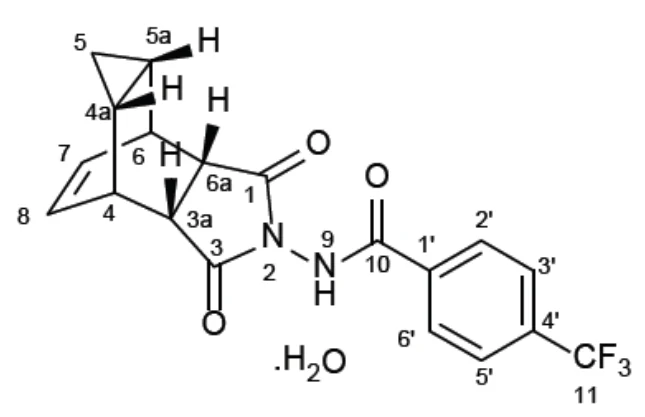
Physicochemical Properties: Tecovirimat monohydrate is a white to off-white solid substance, with a pKa of 7.77. Tecovirimat monohydrate has a solubility of 1.6 – 4 µg/mL in aqueous buffers (pH 1.2-6.8) at 37°C and has a classification of BCS Class II in regards to solubility.
14. Clinical Trials
The efficacy of TPOXX for treatment of smallpox disease has not been determined in humans because adequate and well-controlled field trials have not been feasible, and inducing smallpox disease in humans to study the drug’s efficacy is not ethical. Therefore, the efficacy of TPOXX for treatment of smallpox was established based on results of adequate and well-controlled animal efficacy studies of non-human primates and rabbits infected with non-variola orthopoxviruses. Survival rates observed in the animal studies may not be predictive of survival rates in clinical practice.
14.1. Clinical Trials by Indication
Treatment of human smallpox disease
Efficacy studies were conducted in cynomolgus macaques infected with monkeypox virus, and New Zealand White (NZW) rabbits infected with rabbitpox virus. The primary efficacy endpoint for these studies was survival. In non-human primate studies, cynomolgus macaques were lethally challenged intravenously with 5 x 10⁷ plaque-forming units of monkeypox virus; tecovirimat was administered orally once daily at a dose level of 10 mg/kg for 14 days, starting at Day 4, 5 or 6 post-challenge. In rabbit studies, NZW rabbits were lethally challenged intradermally with 1,000 plaque-forming units of rabbitpox virus; tecovirimat was administered orally once daily for 14 days at a dose level of 40 mg/kg, starting at Day 4 post-challenge. The timing of tecovirimat dosing in these studies was intended to assess efficacy when treatment is initiated after animals have developed clinical signs of disease, specifically dermal pox lesions in cynomolgus macaques, and fever in rabbits. Clinical signs of disease were evident in some animals at Day 2-3 post-challenge but were evident in all animals by Day 4 post-challenge. Survival was monitored for 3-6 times the mean time to death for untreated animals in each model.
Table 7: Summary of Nonclinical Trials in Treatment of Orthopox Infections (Efficacy Studies)
| Study No. | Species | Trial design | Dosage, route of administration and duration | Study subjects (n) | Mean age (Range) | Sex (M/F) |
|---|---|---|---|---|---|---|
| FY10-087 | Cynomolgus monkey (Macaca fascicularis) | Randomized, placebo-controlled , repeat-dose, unblinded in non-human primates following lethal monkeypox virus challenge | 0, 3, 10, 20 mg/kg, oral tecovirimat, 14 days | n=6 per dose group | 3-4 years | 50% male / 50% female |
| AP-09-026G | Cynomolgus monkey (Macaca fascicularis) | Double-blinded, randomized, placebo-controlled, repeat-dose in non-human primates | 0, 0.3, 1, 3, and 10 mg/kg, oral tecovirimat, 14 days | N=5 per dose group, N=7 in 0 mg/kg dose group | 2.5-4 years | 100% male |
| SR10-037F | Cynomolgus monkey (Macaca fascicularis) | Double-blinded, randomized, placebo-controlled, treatment delay, repeat-dose in non-human primates | 0, 10 mg/kg, oral tecovirimat, 14 days | N=3 in 0 mg/kg dose group N=6 for 10 mg/kg dosing groups (days 4, 5, and 6 post-MPXV inoculation) | 3.27-3.50 years | 67% male/ 33% female (placebo) 50% male / 50% female (10 mg/kg groups) |
| SR10-038F | Cynomolgus monkey (Macaca fascicularis) | Double-blinded, placebo-controlled treatment duration, repeat-dose in non-human primates | 0, 10 mg/kg, oral tecovirimat, for 3, 5, 7, or 10 days | N=4 in 0 mg/kg dose group N=4 for 10 mg/kg dosing group (3 doses post- MPXV inoculation) N=6 for 10 mg/kg dosing groups (5, 7, 10 doses post- MPXV inoculation | 3.81-5.05 years | 50% male / 50% female (0, 10 mg/kg, 3, 5, 7 doses post-inoculation) 40% male/60% female (10 mg/kg, 10 doses post- MPXV post inoculation) |
| SR14-008F | New Zealand White rabbits (Oryctolagus cuniculus) | Double-blinded, randomized, placebo-controlled, repeat-dose in New Zealand white rabbits | 0, 20, 40, 80, 120 mg/kg, oral tecovirimat, 14 days | N=10 per dose group | 14 weeks | 50% male / 50% female |
| SR13-025F | New Zealand White rabbits (Oryctolagus cuniculus) | Double-blinded, randomized, repeat-dose study in New Zealand white rabbits | 40, 80, 120 mg/kg, oral tecovirimat, 14 days | N=8 per dose group | 13-14 weeks | 50% male / 50% female |
Treatment with tecovirimat for 14 days resulted in statistically significant improvement in survival relative to placebo, except when given to cynomolgus macaques starting at Day 6 post challenge (Table 8).
Table 8: Survival Rates in Tecovirimat Treatment Studies in Cynomolgus Macaques and NZW Rabbits Exhibiting Clinical Signs of Orthopoxvirus Disease
| Treatment Initiationa | Survival Percentage (No. survived/n) | p-valueb | Survival Rate Differencec (95% CI)d | ||
|---|---|---|---|---|---|
| Placebo | Tecovirimat | ||||
| Cynomolgus Macaques | |||||
| AP-09-026G | Day 4 | 0% (0/7) | 80% (4/5) | 0.0038 | 80% (20.8%, 99.5%) |
| FY10-087 | Day 4 | 0% (0/6) | 100% (6/6) | 0.0002 | 100% (47.1%, 100%) |
| SR10-037F | Day 4 | 0% (0/3) | 83% (5/6) | 0.0151 | 83% (7.5%, 99.6%) |
| Day 5 | 83% (5/6) | 0.0151 | 83% (7.5%, 99.6%) | ||
| Day 6 | 50% (3/6) | 0.1231 | 50% (-28.3%, 90.2%) | ||
| SR10-038F | Day 4 (3 doses) | 25% (1/4) | 50% (2/4) | 0.3643 | 25% (-51.0%, 83.0%) |
| Day 4 (5 doses) | 100% (6/6) | 0.0141 | 75% (8.1%, 99.4%) | ||
| Day 4 (7 doses) | 100% (6/6/) | 0.0141 | 75% (8.1%, 99.4%) | ||
| Day 4 (10 doses) | 80% (4/5) | 0.0972 | 55% (-20.9%, 93.7%) | ||
| NZW Rabbits | |||||
| SR14-008F | Day 4 | 0% (0/10) | 90% (9/10) | < 0.0001 | 90% (50.3%, 99.8%) |
| SR13-025F | Day 4 | NAe | 88% (7/8) | NA | NA |
aDay post-challenge tecovirimat treatment was initiated.
bp-value is from 1-sided Boschloo Test (with Berger-Boos modification of gamma = 0.000001) compared to placebo.
cSurvival percentage in tecovirimat treated animals minus survival percentage in placebo treated animals.
dExact 95% confidence interval based on the score statistic of difference in survival rates.
eA placebo control group was not included in this study.
KEY: NA = Not Applicable
15. Microbiology
Mechanism of Action
Tecovirimat targets and inhibits the activity of the orthopoxvirus VP37 protein (encoded by and highly conserved in all members of the orthopoxvirus genus) and blocks its interaction with cellular Rab9 GTPase and TIP47, which prevents the formation of egress-competent enveloped virions necessary for cell-to-cell and long-range dissemination of virus.
Activity in Cell Culture
In cell culture assays, the effective concentrations of tecovirimat resulting in a 50% reduction in virus-induced cytopathic effect (EC50), were 0.016-0.067 μM, 0.014-0.039 µM, 0.015 µM, and 0.009 µM, for variola, monkeypox, rabbitpox, and vaccinia viruses, respectively. Ranges given for variola and monkeypox viruses are reflective of results from multiple strains assayed.
Resistance
There are no known instances of naturally occurring tecovirimat resistant orthopoxviruses, although tecovirimat resistance may develop under drug selection. Tecovirimat has a relatively low resistance barrier, and certain amino acid substitutions in the target VP37 protein can confer large reductions in tecovirimat antiviral activity. The possibility of resistance to tecovirimat should be considered in patients who either fail to respond to therapy or who develop recrudescence of disease after an initial period of responsiveness.
Cross Resistance: There are no other antiviral drugs approved for the treatment of orthopoxvirus infections.
16. Non-Clinical Toxicology
General toxicology
In a repeat-dose toxicology study in dogs, convulsions (tonic and clonic) were observed in one animal within 6 hours of a single dose of 300 mg/kg (approximately 4 times higher than the highest observed human exposure at the RHD based on Cmax). Electroencephalography (EEG) findings in this animal were consistent with seizure activity during the observed convulsions. Tremors, which were considered non-adverse, were observed in 2 out of 3 animals and 1 out of 2 animals at 100 mg/kg/dose (similar to the highest observed human exposure at the RHD based on Cmax), in two separate studies. No EEG findings were noted at 100 mg/kg/dose; however, convulsions were observed in 2 out of 3 animals in one study and were not observed in 2 animals administered this dose in another study. These findings were specific to dogs and not observed in other species.
Genotoxicity
Tecovirimat was not genotoxic in in vitro or in vivo assays, including a bacterial reverse mutation assay, a mammalian mutagenicity assay in mouse lymphoma L5178Y/TK± cells, and in an in vivo mouse micronucleus study.
Carcinogenicity
Carcinogenicity studies have not been conducted with tecovirimat.
Reproductive and developmental toxicology
In a fertility and early embryonic development study in mice, no effects of tecovirimat on female fertility were observed at tecovirimat exposures (AUC) approximately 24 times higher than human exposure at the RHD. In male mice, decreased male fertility associated with testicular toxicity (increased percent abnormal sperm and decreased sperm motility) was observed at 1,000 mg/kg/day (approximately 24 times the human exposure at the RHD).