


Product Monograph - Glycopyrronium / Formoterol Fumarate Dihydrate Pressurized Inhalation Suspension
RECENT MAJOR LABEL CHANGES
None.
TABLE OF CONTENTS
Sections or subsections that are not applicable at the time of authorization are not listed.
RECENT MAJOR LABEL CHANGES ........................................................................................ 2
TABLE OF CONTENTS ............................................................................................................. 2
PART I: HEALTH PROFESSIONAL INFORMATION ................................................................. 4
1 INDICATIONS ................................................................................................................. 4
1.1 Pediatrics ............................................................................................................... 4
1.2 Geriatrics ............................................................................................................... 4
2 CONTRAINDICATIONS .................................................................................................. 4
3 SERIOUS WARNINGS AND PRECAUTIONS BOX ........................................................ 5
4 DOSAGE AND ADMINISTRATION ................................................................................ 5
4.1 Dosing Considerations ........................................................................................... 5
4.2 Recommended Dose and Dosage Adjustment ....................................................... 5
4.4 Administration ........................................................................................................ 6
4.5 Missed Dose .......................................................................................................... 6
5 OVERDOSAGE ............................................................................................................... 6
6 DOSAGE FORMS, STRENGTHS, COMPOSITION AND PACKAGING ......................... 7
7 WARNINGS AND PRECAUTIONS ................................................................................. 7
7.1 Special Populations ............................................................................................. 11
7.1.1 Pregnant Women ...........................................................................................11
7.1.2 Breast-feeding ................................................................................................12
7.1.3 Pediatrics .......................................................................................................12
7.1.4 Geriatrics .......................................................................................................12
8 ADVERSE REACTIONS ............................................................................................... 12
8.1 Adverse Reaction Overview ................................................................................. 12
8.2 Clinical Trial Adverse Reactions........................................................................... 13
8.3 Less Common Clinical Trial Adverse Reactions ................................................... 14
8.5 Post-Market Adverse Reactions ........................................................................... 15
9 DRUG INTERACTIONS ................................................................................................ 15
9.2 Drug Interactions Overview .................................................................................. 15
9.4 Drug-Drug Interactions ......................................................................................... 16
9.5 Drug-Food Interactions ........................................................................................ 17
9.6 Drug-Herb Interactions ......................................................................................... 17
9.7 Drug-Laboratory Test Interactions ........................................................................ 17
10 CLINICAL PHARMACOLOGY ...................................................................................... 18
10.1 Mechanism of Action ...................................................................................... 18
10.2 Pharmacodynamics ........................................................................................ 18
10.3 Pharmacokinetics ........................................................................................... 20
11 STORAGE, STABILITY AND DISPOSAL ..................................................................... 23
12 SPECIAL HANDLING INSTRUCTIONS ........................................................................ 23
PART II: SCIENTIFIC INFORMATION ..................................................................................... 24
13 PHARMACEUTICAL INFORMATION ........................................................................... 24
14 CLINICAL TRIALS ........................................................................................................ 25
14.1 Clinical Trials by Indication ............................................................................. 25
15 MICROBIOLOGY .......................................................................................................... 30
16 NON-CLINICAL TOXICOLOGY .................................................................................... 31
17 SUPPORTING PRODUCT MONOGRAPHS ................................................................. 32
PATIENT MEDICATION INFORMATION ................................................................................. 33
PART I: HEALTH PROFESSIONAL INFORMATION
1 INDICATIONS
Glycopyrronium/formoterol fumarate dihydrate pressurized inhalation suspension is a combination of a long-acting muscarinic antagonist (LAMA) and a long-acting beta2-agonist (LABA), indicated for the long-term maintenance bronchodilator treatment of airflow obstruction in patients with chronic obstructive pulmonary disease (COPD), including chronic bronchitis and/or emphysema.
Glycopyrronium/formoterol fumarate dihydrate pressurized inhalation suspension is not indicated for the relief of an acute deterioration of COPD.
Glycopyrronium/formoterol fumarate dihydrate pressurized inhalation suspension is not indicated for the treatment of asthma. The safety and efficacy of glycopyrronium/formoterol fumarate dihydrate pressurized inhalation suspension in asthma have not been established (see 7 WARNINGS AND PRECAUTIONS).
1.1 Pediatrics
Pediatrics (<18 years of age): Glycopyrronium/formoterol fumarate dihydrate pressurized inhalation suspension should not be used in patients under 18 years of age. The safety and effectiveness of glycopyrronium/formoterol fumarate dihydrate pressurized inhalation suspension in patients less than 18 years of age have not been established.
1.2 Geriatrics
Geriatrics (≥65 years of age): No dosage adjustment is required in patients 65 years of age and older.
2 CONTRAINDICATIONS
- Patients who are hypersensitive to glycopyrronium, formoterol fumarate dihydrate (formoterol fumarate) or to any ingredient in the formulation or component of glycopyrronium/formoterol fumarate dihydrate pressurized inhalation suspension. For a complete listing, see 6 DOSAGE FORMS, STRENGTHS, COMPOSITION AND PACKAGING.
- All LABAs are contraindicated in patients with asthma without use of a long-term asthma control medication (see 7 WARNINGS AND PRECAUTIONS).
3 SERIOUS WARNINGS AND PRECAUTIONS BOX
Serious Warnings and Precautions
ASTHMA-RELATED DEATH Long-acting beta2-adrenergic agonists (LABAs) increase the risk of asthma-related death. Data from a large placebo-controlled US study that compared the safety of salmeterol (SEREVENT® Inhalation Aerosol) or placebo added to patients’ usual asthma therapy showed an increase in asthma-related deaths in patients receiving salmeterol. This finding with salmeterol is considered a class effect of LABAs, including formoterol fumarate, one of the active ingredients in glycopyrronium/formoterol fumarate dihydrate pressurized inhalation suspension. Glycopyrronium/formoterol fumarate dihydrate pressurized inhalation suspension is only indicated for COPD. The safety and efficacy of glycopyrronium/formoterol fumarate dihydrate pressurized inhalation suspension in patients with asthma have not been established. Glycopyrronium/formoterol fumarate dihydrate pressurized inhalation suspension is therefore not indicated for the treatment of asthma. |
4 DOSAGE AND ADMINISTRATION
4.1 Dosing Considerations
- Counselling by doctors on smoking cessation should be the first step in treating patients with COPD who smoke, independent of the clinical presentation, i.e., chronic bronchitis (with or without airflow limitation) or emphysema. Cessation of smoking produces dramatic symptomatic benefits and has been shown to confer a survival advantage.
- As with other inhaled drugs containing beta2-adrenergic agents, glycopyrronium/formoterol fumarate dihydrate pressurized inhalation suspension should not be used more often than recommended, at higher doses than recommended, or in conjunction with other medicines containing a long-acting beta-adrenergic agonist or a long-acting muscarinic antagonist, as an overdose may result.
- When beginning treatment with glycopyrronium/formoterol fumarate dihydrate pressurized inhalation suspension, patients who have been taking oral or inhaled, short-acting beta2-agonists on a regular basis (e.g., 4 times a day) should be instructed to discontinue the regular use of these drugs and use them only for symptomatic relief of acute respiratory symptoms.
- Patients should be made aware that for optimum benefit, glycopyrronium/formoterol fumarate dihydrate pressurized inhalation suspension must be used regularly, even when asymptomatic.
4.2 Recommended Dose and Dosage Adjustment
The recommended dose of glycopyrronium/formoterol fumarate dihydrate pressurized inhalation suspension is twice daily, administered as 2 inhalations in the morning and 2 inhalations in the evening via oral inhalation. Patients should be advised not to take more than two inhalations twice daily.
Pediatrics (< 18 years of age): glycopyrronium/formoterol fumarate dihydrate pressurized inhalation suspension should not be used in patients under 18 years of age.
Geriatrics (≥ 65 years of age): no dose adjustments are required for elderly patients but greater sensitivity in some older individuals cannot be ruled out.
Hepatic impairment: no dose adjustments are required for patients with hepatic impairment. However, because formoterol fumarate is primarily eliminated via hepatic metabolism, patients with hepatic disease should be closely monitored.
Renal impairment: no dose adjustments are required for patients with renal impairment. However, because glycopyrronium is primarily eliminated via renal metabolism, patients with severe renal impairment (creatinine clearance of ≤30 mL/min/1.73 m2) or end-stage renal disease requiring dialysis, should be treated with glycopyrronium/formoterol fumarate dihydrate pressurized inhalation suspension only if the expected benefits outweigh the potential risks and should be closely monitored.
4.4 Administration
Glycopyrronium/formoterol fumarate dihydrate pressurized inhalation suspension should be administered as 2 inhalations twice daily, in the morning and in the evening via oral inhalation.
To ensure proper administration of glycopyrronium/formoterol fumarate dihydrate pressurized inhalation suspension, the doctor or other qualified health professional should teach the patient how to operate the inhalation device (see PATIENT MEDICATION INFORMATION,Instructions for Use).
4.5 Missed Dose
If a dose is missed, the next dose should be taken as soon as possible. However, if it is nearly time for the next dose, the patient should not take the missed dose and just go back to the regular dosing schedule. The patient should not take a double dose.
5 OVERDOSAGE
No data from clinical studies are available regarding overdose with glycopyrronium/formoterol fumarate dihydrate pressurized inhalation suspension. An overdose of glycopyrronium/formoterol fumarate dihydrate pressurized inhalation suspension may lead to signs and symptoms due to the individual components’ actions, consistent with known inhaled muscarinic antagonist adverse effects (e.g., atrial arrhythmias, tachycardia, blurred vision, urinary retention, dry mouth, nausea) and those seen with overdose of other beta2-agonists (e.g., nausea, vomiting, insomnia, hypertension, tremor, headache, tachycardia, palpitations, dizziness, ventricular arrhythmias, metabolic acidosis, hypokalemia, hyperglycemia and muscle spasms). As with all inhaled sympathomimetic medicines, cardiac arrest and even death may be associated with an overdose of glycopyrronium/formoterol fumarate dihydrate pressurized inhalation suspension.
Glycopyrronium/formoterol fumarate dihydrate pressurized inhalation suspension should be discontinued in case of overdose. Supportive and symptomatic treatment should be initiated. The judicious use of a cardioselective beta-receptor blocker may be considered, bearing in mind that such medication can produce bronchospasm. Cardiac monitoring including electrocardiogram monitoring is recommended in cases of overdosage.
| For management of a suspected drug overdose, contact your regional poison control centre. |
6 DOSAGE FORMS, STRENGTHS, COMPOSITION AND PACKAGING
Table 1 – Dosage Forms, Strengths and Composition
Glycopyrronium/formoterol fumarate dihydrate pressurized inhalation suspension is a pressurized metered dose inhaler, comprising an internally-coated aluminium canister with an attached dose indicator, supplied with a white plastic actuator body and mouthpiece with an orange dust cap. Each inhaler is individually packaged in a foil laminate pouch containing a desiccant sachet and packed into a carton.
Each glycopyrronium/formoterol fumarate dihydrate pressurized inhalation suspension metered dose contains 10.4 mcg glycopyrronium bromide (equivalent to 8.3 mcg glycopyrronium) and 5.8 mcg formoterol fumarate dihydrate.
The delivered dose (the dose leaving the mouthpiece) contains 9.0 glycopyrronium bromide (equivalent to 7.2 mcg glycopyrronium) and 5.0 mcg formoterol fumarate dihydrate.
Glycopyrronium/formoterol fumarate dihydrate pressurized inhalation suspension also contains hydrofluoroalkane (HFA-134a) and porous particles (comprised of 1,2-distearoyl-sn-glycero-3-phosphocholine (DSPC) and calcium chloride) that form a co-suspension with the drug crystals.
Glycopyrronium/formoterol fumarate dihydrate pressurized inhalation suspension is available in a carton containing 1 inhaler with 120 actuations.
7 WARNINGS AND PRECAUTIONS
| Please see 3 SERIOUS WARNINGS AND PRECAUTIONS BOX. |
General
Not for use in asthma
Glycopyrronium/formoterol fumarate dihydrate pressurized inhalation suspension is only indicated for COPD. Glycopyrronium/formoterol fumarate dihydrate pressurized inhalation suspension should not be used in the treatment of asthma due to the absence of data in this indication and is contraindicated in this patient population.
| Route of Administration | Dosage Form / Strength/Composition | Non-medicinal Ingredients |
| Inhalation use | Pressurized inhalation suspension 8.3 mcg glycopyrronium (as bromide) / 5.8 mcg formoterol fumarate dihydrate per metered actuation | Hydrofluoroalkane (HFA-134a), porous particles (comprised of 1,2-distearoyl-sn-glycero-3-phosphocholine (DSPC) and calcium chloride) |
It has been shown that long-acting beta2-adrenergic agonists increase the risk of asthma-related death. Data from a 28-week, large placebo-controlled US study comparing the safety of a twice-daily long-acting beta2-adrenergic agonist (salmeterol) with placebo, each added to usual asthma therapy, showed an increase in asthma-related deaths in patients receiving salmeterol (13 out of 13,176 in patients treated with salmeterol vs. 3 out of 13,179 in patients treated with placebo; RR 4.37, 95% CI 1.25, 15.34). The increased risk of asthma-related death may represent a class effect of long-acting beta2-adrenergic agonists, including formoterol fumarate dihydrate, one of the active ingredients of glycopyrronium/formoterol fumarate dihydrate pressurized inhalation suspension.
Acute bronchospasm
Glycopyrronium/formoterol fumarate dihydrate pressurized inhalation suspension is not indicated for the treatment of acute episodes of bronchospasm (i.e., as a rescue therapy).
Glycopyrronium/formoterol fumarate dihydrate pressurized inhalation suspension has not been studied in the relief of acute symptoms and extra doses should not be used for that purpose. Glycopyrronium/formoterol fumarate dihydrate pressurized inhalation suspension should not be initiated in patients with acutely deteriorating COPD, which may be a life-threatening condition. The use of glycopyrronium/formoterol fumarate dihydrate pressurized inhalation suspension in this setting is inappropriate.
When prescribing glycopyrronium/formoterol fumarate dihydrate pressurized inhalation suspension, the healthcare professional should also provide the patient with an inhaled, short-acting bronchodilator for treatment of COPD symptoms that occur acutely, despite regular twice-daily use of glycopyrronium/formoterol fumarate dihydrate pressurized inhalation suspension.
When beginning treatment with glycopyrronium/formoterol fumarate dihydrate pressurized inhalation suspension, patients who have been taking inhaled, short-acting bronchodilators on a regular basis (e.g., four times a day) should be instructed to discontinue the regular use of these drugs and use them only for symptomatic relief of acute respiratory symptoms.
COPD may deteriorate acutely over a period of hours or chronically over several days or longer. If glycopyrronium/formoterol fumarate dihydrate pressurized inhalation suspension no longer controls the symptoms of bronchoconstriction, or the patient’s inhaled, short-acting beta2-agonist becomes less effective or the patient needs more inhalation of a short-acting beta2-agonist than usual, these may be markers of deterioration of disease. In this setting, a re-evaluation of the patient and the COPD treatment regimen should be undertaken at once. Increasing the daily dosage of glycopyrronium/formoterol fumarate dihydrate pressurized inhalation suspension beyond the recommended dose is not appropriate in this situation.
Excessive use and use with other LABA and LAMA products
Glycopyrronium/formoterol fumarate dihydrate pressurized inhalation suspension should not be used more frequently than twice daily or at higher doses than recommended.
Glycopyrronium/formoterol fumarate dihydrate pressurized inhalation suspension should not be administered concomitantly with other medicines containing a long-acting beta2-adrenergic agonist or a long-acting muscarinic antagonist, as an overdose may result. Clinically significant cardiovascular effects and fatalities have been reported in association with excessive use of inhaled sympathomimetic drugs.
Anticholinergic Effects
Like other anticholinergic drugs, glycopyrronium (as bromide)/formoterol fumarate dihydrate pressurized inhalation aerosol should be used with caution in patients with narrow-angle glaucoma or urinary retention.
Cardiovascular
Cardiovascular effects, such as cardiac arrhythmias (e.g., atrial fibrillation and tachycardia), may be seen after the administration of sympathomimetic agents and muscarinic receptor antagonists, including glycopyrronium/formoterol fumarate dihydrate pressurized inhalation suspension. In case such effects occur, treatment may need to be discontinued.
Cardiovascular effects such as tachycardia, arrhythmia, palpitations, myocardial ischemia, angina pectoris, hypertension or hypotension have been associated with use of beta-adrenergic agonists. In addition, beta-adrenergic agonists have been reported to produce electrocardiogram (ECG) changes, such as flattening of the T wave, prolongation of the QTc interval and ST segment depression. Therefore, glycopyrronium/formoterol fumarate dihydrate pressurized inhalation suspension, like all products containing beta-adrenergic agonists, should be used with caution in patients with cardiovascular disease, especially coronary insufficiency, acute myocardial infarction, cardiac arrhythmias and severe hypertension.
Heart rate
Like other beta2-agonists, formoterol fumarate can produce clinically significant cardiovascular effects in some patients as measured by an increase in pulse rate, systolic or diastolic blood pressure or cardiac arrhythmias, such as supraventricular tachycardia and extrasystoles. If such effects occur, glycopyrronium/formoterol fumarate dihydrate pressurized inhalation suspension may need to be discontinued.
QT interval
Like other beta2-agonists, caution is recommended if glycopyrronium/formoterol fumarate dihydrate pressurized inhalation suspension is administered to patients with a known history of QTc prolongation, risk factors for torsade de pointes (e.g., hypokalemia) or patients who are taking medications known to prolong the QTc interval (see Drugs known to prolong the QTc interval).
In healthy subjects, glycopyrronium/formoterol fumarate dihydrate pressurized inhalation suspension was associated with a dose- and concentration-dependent prolongation of the QTc interval. At a dose of glycopyrronium/formoterol fumarate dihydrate of 16.6/11.6 mcg, the largest mean difference from placebo in the QTcI interval was <5 ms after a single dose (see Cardiac electrophysiology).
Driving and Operating Machinery
There have been no studies investigating the effect of glycopyrronium/formoterol fumarate dihydrate pressurized inhalation suspension on the ability to perform tasks that require judgement, motor or cognitive skills. The occurrence of headache, blurred vision, dizziness or nausea may influence the ability to drive or to use machinery.
Endocrine and Metabolism
Glycopyrronium/formoterol fumarate dihydrate pressurized inhalation suspension should be used with caution in patients with convulsive disorders or thyrotoxicosis and in those who are unusually responsive to sympathomimetic amines. Doses of the related beta2-adrenoceptor agonist salbutamol, when administered intravenously, have been reported to aggravate pre-existing diabetes mellitus and ketoacidosis.
Hypokalemia and hyperglycemia
Metabolic effects of hyperglycemia and hypokalemia may be observed with high doses of beta2-adrenergic agonists.
Beta-adrenergic agonist medicines may produce significant hypokalemia in some patients, which has the potential to produce adverse cardiovascular effects. The decrease in serum potassium is usually transient, not requiring supplementation. In patients with severe COPD, hypokalemia may be potentiated by hypoxia and concomitant treatment, which may increase the susceptibility to cardiac arrhythmias (see Treatments leading to hypokalemia). Therefore, glycopyrronium/formoterol fumarate dihydrate pressurized inhalation suspension should be used with caution in patients predisposed to low levels of serum potassium.
Inhalation of high doses of beta2-adrenergic agonists may produce increases in plasma glucose. Upon initiation of treatment with glycopyrronium/formoterol fumarate dihydrate pressurized inhalation suspension, plasma glucose should be monitored more closely in diabetic patients. glycopyrronium/formoterol fumarate dihydrate pressurized inhalation suspension has not been studied in patients whose diabetes mellitus is not controlled.
In two 24-week Phase III clinical studies and a 28-week safety extension study evaluating glycopyrronium/formoterol fumarate dihydrate pressurized inhalation suspension in patients with COPD, there was no evidence of a treatment effect on serum glucose or potassium.
Genitourinary
Worsening of urinary retention
Glycopyrronium/formoterol fumarate dihydrate pressurized inhalation suspension, like other anticholinergic-containing drugs, should be used with caution in patients with urinary retention. Prescribers and patients should be alert for signs and symptoms of urinary retention (e.g., difficulty passing urine, painful urination), especially in patients with prostatic hyperplasia or bladder-neck obstruction. Instruct patients to consult a physician immediately should any of these signs or symptoms develop.
Hepatic/Biliary/Pancreatic
Formal pharmacokinetic studies using glycopyrronium/formoterol fumarate dihydrate pressurized inhalation suspension have not been conducted in patients with hepatic impairment. However, because formoterol fumarate, a component of glycopyrronium/formoterol fumarate dihydrate pressurized inhalation suspension, is primarily eliminated via hepatic metabolism, impairment of liver function may lead to accumulation of formoterol fumarate in the plasma. Therefore, patients with hepatic disease should be closely monitored.
Monitoring and Laboratory Tests
Potentially serious hypokalemia has been observed with other beta-agonist therapies, which may increase susceptibility to cardiac arrhythmias. It is therefore recommended that serum potassium levels be monitored in patients predisposed to low levels of serum potassium.
Due to the hyperglycemic effect observed with other beta-agonists, additional blood glucose monitoring is recommended in diabetic patients.
Ophthalmologic
Worsening of narrow-angle glaucoma
Glycopyrronium/formoterol fumarate dihydrate pressurized inhalation suspension, like other anticholinergic-containing drugs, should be used with caution in patients with narrow-angle glaucoma. Prescribers and patients should be alert for signs and symptoms of acute narrow-angle glaucoma (e.g., eye pain or discomfort, blurred vision, visual halos or coloured images in association with red eyes from conjunctival congestion and corneal edema). Instruct patients to consult a physician immediately should any of these signs or symptoms develop. Miotic drops alone are not considered to be effective treatment.
Renal
Formal pharmacokinetic studies using glycopyrronium/formoterol fumarate dihydrate pressurized inhalation suspension have not been conducted in patients with renal impairment. However, because glycopyrronium, a component of glycopyrronium/formoterol fumarate dihydrate pressurized inhalation suspension, is primarily eliminated via renal metabolism, patients with severe renal impairment (creatinine clearance of ≤30 mL/min/1.73 m2) or end-stage renal disease requiring dialysis, should be treated with glycopyrronium/formoterol fumarate dihydrate pressurized inhalation suspension only if the expected benefits outweigh the potential risks. These patients should be monitored closely for potential adverse drug reactions.
Respiratory
Paradoxical bronchospasm
As with other inhalation therapies, administration of glycopyrronium/formoterol fumarate dihydrate pressurized inhalation suspension may cause paradoxical bronchospasm that may be life-threatening. If this occurs, treatment with glycopyrronium/formoterol fumarate dihydrate pressurized inhalation suspension should be stopped and other treatments considered.
Sensitivity/Resistance
As with all medications, immediate hypersensitivity reactions may occur after administration of glycopyrronium/formoterol fumarate dihydrate pressurized inhalation suspension. If signs suggesting allergic reactions (in particular, difficulties in breathing or swallowing, swelling of tongue, lips and face, urticaria or skin rash) occur, therapy with glycopyrronium/formoterol fumarate dihydrate pressurized inhalation suspension should be stopped at once and alternative treatments should be considered. The patient should NOT be re-challenged with glycopyrronium/formoterol fumarate dihydrate pressurized inhalation suspension (see 2 CONTRAINDICATIONS).
7.1 Special Populations
7.1.1 Pregnant Women
There are no adequate and well-controlled studies with the use of glycopyrronium/formoterol fumarate dihydrate pressurized inhalation suspension or its individual components, glycopyrronium and formoterol fumarate, in pregnant women.
Single-dose studies in humans found that very small amounts of glycopyrronium passed the placental barrier. In animal studies, formoterol fumarate has caused adverse effects in reproduction studies at very high systemic exposure levels (see Reproductive and Developmental Toxicology). Glycopyrronium/formoterol fumarate dihydrate pressurized inhalation suspension should only be used during pregnancy if the expected benefit to the patient outweighs the potential risks to the fetus. Women should be advised to contact their physician if they become pregnant while taking glycopyrronium/formoterol fumarate dihydrate pressurized inhalation suspension.
Labour and delivery
There are no well-controlled human studies that have investigated the effects of glycopyrronium or formoterol fumarate, alone or in combination during labour and delivery. Because beta2-agonists may potentially interfere with uterine contractility, glycopyrronium/formoterol fumarate dihydrate pressurized inhalation suspension should be used during labour only if the potential benefit justifies the potential risk.
7.1.2 Breast-feeding
It is not known whether glycopyrronium and/or formoterol fumarate are excreted in human milk. In rats, small amounts of formoterol fumarate have been detected in maternal milk. Furthermore, other muscarinic antagonists (including metabolites) are excreted into the milk of lactating rats. Administration of glycopyrronium/formoterol fumarate dihydrate pressurized inhalation suspension to women who are breast-feeding should only be considered if the expected benefit to the patient outweighs the potential risks to the child.
7.1.3 Pediatrics
Pediatrics (<18 years of age): Glycopyrronium/formoterol fumarate dihydrate pressurized inhalation suspension should not be used in patients under 18 years of age.
7.1.4 Geriatrics
Geriatrics (≥65 years of age): No dosage adjustment is required in patients 65 years of age and older, but greater sensitivity in some older individuals cannot be ruled out.
8 ADVERSE REACTIONS
8.1 Adverse Reaction Overview
Long-acting beta2-adrenergic agonists such as formoterol fumarate, one of the active ingredients of glycopyrronium/formoterol fumarate dihydrate pressurized inhalation suspension, increase the risk of asthma-related death. Glycopyrronium/formoterol fumarate dihydrate pressurized inhalation suspension is not indicated for the treatment of asthma (see 1 INDICATIONS, 2 CONTRAINDICATIONS and Not for use in asthma).
Glycopyrronium/formoterol fumarate dihydrate pressurized inhalation suspension is a combination of a long-acting beta2-agonist (LABA) and a long-acting muscarinic antagonist (LAMA). Adverse reactions to glycopyrronium/formoterol fumarate dihydrate pressurized inhalation suspension are expected to be similar in nature to other beta2-agonists and muscarinic antagonists. Adverse reactions that have been associated with muscarinic antagonists include cardiovascular effects (e.g., atrial arrhythmias and tachycardia), ocular disorders (e.g., blurred vision), urinary retention, gastrointestinal disorders and dry mouth.
Adverse reactions that have been associated with beta2-agonists include cardiovascular effects (e.g., tachycardia, arrhythmia, palpitations, myocardial ischemia, hypertension or hypotension), hypokalemia, hyperglycemia, headache, nervousness, insomnia, dizziness, metabolic acidosis, muscle spasms, fatigue, malaise and tremor.
Other adverse drug reactions that have been associated with glycopyrronium/formoterol fumarate dihydrate pressurized inhalation suspension include nausea and anxiety.
8.2 Clinical Trial Adverse Reactions
Clinical trials are conducted under very specific conditions. The adverse reaction rates observed in the clinical trials; therefore, may not reflect the rates observed in practice and should not be compared to the rates in the clinical trials of another drug. Adverse reaction information from clinical trials may be useful in identifying and approximating rates of adverse drug reactions in real-world use.
A total of 1491 COPD patients have received at least 1 dose of glycopyrronium/formoterol fumarate dihydrate pressurized inhalation suspension in the clinical program. The safety data described below are based on two 24-week Phase III clinical studies and a 28-week long-term safety extension study. Adverse reactions observed in other studies were similar to those observed in these pivotal studies.
24-week studies
A total of 1036 subjects with COPD were treated with glycopyrronium/formoterol fumarate dihydrate pressurized inhalation suspension twice daily at the recommended therapeutic dose. Other treatments included individual components (glycopyrronium or formoterol fumarate) or placebo.
Table 2 shows all adverse events, irrespective of causality towards the drug, that occurred with a rate of 1% or greater in patients receiving glycopyrronium/formoterol fumarate dihydrate pressurized inhalation suspension in the two 24-week placebo-controlled studies, where the rates in patients receiving glycopyrronium/formoterol fumarate dihydrate pressurized inhalation suspension exceeded placebo.
Table 2 Adverse events with glycopyrronium/formoterol fumarate dihydrate pressurized inhalation suspension occurring with ≥1% incidence and more common than with placebo in patients with COPD in placebo-controlled clinical studies up to 6 months duration
| Adverse events | Glycopyrronium/formoterol fumarate dihydrate pressurized inhalation suspension n=1036 N (%) | Placebo n=443 N (%) | Glycopyrronium n=890 N (%) | Formoterol fumarate n=890 N (%) | ||||
|---|---|---|---|---|---|---|---|---|
| Infections and infestations | ||||||||
| Urinary tract infection | 27 (2.6) | 10 (2.3) | 16 (1.8) | 13 (1.5) | ||||
| Tooth abscess | 16 (1.5) | 2 (0.5) | 7 (0.8) | 6 (0.7) | ||||
| Influenza | 12 (1.2) | 2 (0.5) | 9 (1.0) | 11 (1.2) | ||||
| Acute sinusitis | 11 (1.1) | 4 (0.9) | 7 (0.8) | 8 (0.9) | ||||
| Respiratory, thoracic and mediastinal disorders | ||||||||
| Cough | 41 (4.0) | 12 (2.7) | 27 (3.0) | 24 (2.7) | ||||
| Oropharyngeal pain | 14 (1.4) | 5 (1.1) | 14 (1.6) | 19 (2.1) | ||||
Adverse events
| Glycopyrronium/formoterol fumarate dihydrate pressurized inhalation suspension n=1036 N (%) | Placebo n=443 N (%) | Glycopyrronium n=890 N (%) | Formoterol fumarate n=890 N (%) | ||||||
|---|---|---|---|---|---|---|---|---|---|
| Gastrointestinal disorders | |||||||||
| Vomiting | 14 (1.4) | 5 (1.1) | 16 (1.8) | 10 (1.1) | |||||
| Dry mouth | 13 (1.3) | 1 (0.2) | 6 (0.7) | 5 (0.6) | |||||
| Musculoskeletal and connective tissue disorders | |||||||||
| Arthralgia | 20 (1.9) | 2 (0.5) | 13 (1.5) | 9 (1.0) | |||||
| Muscle spasms | 16 (1.5) | 4 (0.9) | 6 (0.7) | 16 (1.8) | |||||
| Pain in extremity | 15 (1.4) | 3 (0.7) | 7 (0.8) | 4 (0.4) | |||||
| Injuries, poisoning and procedural complications | |||||||||
| Fall | 12 (1.2) | 0 | 3 (0.3) | 4 (0.4) | |||||
| Contusion | 11 (1.1) | 2 (0.5) | 7 (0.8) | 3 (0.3) | |||||
| General disorders and administration site conditions | |||||||||
| Chest pain | 17 (1.6) | 6 (1.4) | 15 (1.7) | 9 (1.0) | |||||
| Fatigue | 11 (1.1) | 0 | 7 (0.8) | 5 (0.6) | |||||
| Nervous system disorders | |||||||||
| Headache | 15 (1.4) | 4 (0.9) | 20 (2.2) | 25 (2.8) | |||||
| Dizziness | 13 (1.3) | 5 (1.1) | 8 (0.9) | 9 (1.0) | |||||
| Psychiatric disorders | |||||||||
| Anxiety | 13 (1.3) | 0 | 13 (1.5) | 10 (1.1) | |||||
Long-term safety extension study
Glycopyrronium/formoterol fumarate dihydrate pressurized inhalation suspension was studied in a 28-week long-term safety extension study to the 24-week placebo-controlled studies.
893 patients with COPD who successfully completed either of the pivotal studies were treated for up to another 28 weeks for a total treatment period of up to 52 weeks with two inhalations of glycopyrronium/formoterol fumarate dihydrate pressurized inhalation suspension (n=290), glycopyrronium 8.3 mcg (n=219) and formoterol fumarate dihydrate 5.8 mcg (n=213) administered twice daily or active control.
The adverse events reported on the long term safety study were similar to those occurring in the 24-week placebo-controlled studies.
8.3 Less Common Clinical Trial Adverse Reactions
Other less common adverse events that occurred with a frequency of <1.0% in patients receiving glycopyrronium/formoterol fumarate dihydrate pressurized inhalation suspension and higher compared with placebo are listed below:
Cardiac disorders: atrial fibrillation
Gastrointestinal disorders: abdominal pain, large intestine polyp
General disorders: pain, pyrexia
Immune system disorders: seasonal allergy
Infections and infestations: cellulitis, gastroenteritis viral, oral candidiasis, pharyngitis
Injury, poisoning and procedural complications: laceration, ligament sprain
Metabolism and nutrition disorders: diabetes mellitus/type 2 diabetes mellitus
Musculoskeletal and connective tissue disorder: bursitis, musculoskeletal pain, muscle strain
Nervous system disorders: tremor
Psychiatric disorders: insomnia
Respiratory, thoracic and mediastinal disorders: dysphonia, epistaxis, hemoptysis, productive cough, respiratory tract congestion, sinus congestion
8.5 Post-Market Adverse Reactions
The following reactions have been reported during post-approval use of glycopyrronium/formoterol fumarate dihydrate pressurized inhalation suspension. Because these reactions are reported voluntarily from a population of uncertain size, it is generally not possible to reliably estimate their frequency or establish a causal relationship to drug exposure. Some of these adverse reactions may also have been observed in clinical studies with glycopyrronium/formoterol fumarate dihydrate pressurized inhalation suspension.
Renal and urinary disorders: urinary retention
Immune system disorders: hypersensitivity
9 DRUG INTERACTIONS
9.2 Drug Interactions Overview
No formal drug interaction studies have been performed with glycopyrronium/formoterol fumarate dihydrate pressurized inhalation suspension. Information on glycopyrronium/formoterol fumarate dihydrate pressurized inhalation suspension is based on the potential for interactions for each of its two components.
In clinical studies, glycopyrronium/formoterol fumarate dihydrate pressurized inhalation suspension has been used concomitantly with other COPD medicinal products, including sympathomimetic bronchodilators, phosphodiesterase inhibitors and inhaled steroids without clinical evidence of drug interactions.
Co-administration of glycopyrronium/formoterol fumarate dihydrate pressurized inhalation suspension with other anticholinergic and/or long-acting beta2-adrenergic agonist containing medicinal products has not been studied and is not recommended.
9.4 Drug-Drug Interactions
Sympathomimetic agents
Concomitant administration of other sympathomimetic agents, such as short-acting or long-acting beta agonists (alone or as part of combination therapy) may potentiate the undesirable effects of glycopyrronium/formoterol fumarate dihydrate pressurized inhalation suspension (see 7 WARNINGS AND PRECAUTIONS).
Treatments leading to hypokalemia
Concomitant treatment with methylxanthine derivatives, oral corticosteroids (e.g., prednisone), or non-potassium-sparing diuretics may potentiate the possible initial hypokalemic effect of beta2-adrenergic agonists, therefore caution is advised in their concomitant use (see Hypokalemia and hyperglycemia).
Beta-adrenergic blockers
Beta-adrenergic blockers may weaken or antagonize the effect of beta2-adrenergic agonists. Therefore glycopyrronium/formoterol fumarate dihydrate pressurized inhalation suspension should not be given together with beta-adrenergic blockers (including eye drops) unless there are compelling reasons for their use. Where required, cardioselective beta-adrenergic blockers could be considered, although they should be administered with caution.
Anticholinergics
There is a potential for an interaction with concomitantly used anticholinergic medications that leads to an additive pharmacological effect. Therefore, avoid co-administration of glycopyrronium/formoterol fumarate dihydrate pressurized inhalation suspension with other anticholinergic-containing drugs as this may lead to an increase in undesirable anticholinergic effects.
Drugs known to prolong the QTc interval
As with other drugs containing beta2-adrenergic agonists, glycopyrronium/formoterol fumarate dihydrate pressurized inhalation suspension should be administered with caution to patients treated with monoamine oxidase inhibitors, tricyclic antidepressants or drugs known to prolong the QT interval, as any effect of these on QT interval may be potentiated. Drugs known to prolong the QT interval may increase the risk of ventricular arrhythmia (see Cardiovascular).
Table 3 Potential Drug-Drug Interactions
| Drug class | Ref | Effect | Clinical comment |
|---|---|---|---|
Drugs known to prolong QTc interval MAO inhibitors Tricyclic antidepressants | T | Potential pharmacodynamics interaction (prolongation of the QTc interval and increased risk of ventricular arrhythmias) | Caution is recommended during concomitant therapy |
| Drug class | Ref | Effect | Clinical comment |
|---|---|---|---|
| Beta-adrenergic blockers (including ophthalmic agents) | T | Beta-adrenergic blockers may weaken or antagonize the effect of beta2-adrenergic agonists resulting in severe bronchospasm | If concomitant therapy is required, cardioselective beta-adrenergic blockers could be considered, although they should be administered with caution |
| Methylxanthine derivatives, oral corticosteroids (e.g., prednisone), or nonpotassium- sparing diuretics | T | Potential pharmacodynamic interaction (increased risk of hypokalemia) | Caution is recommended during concomitant therapy |
| Sympathomimetic agents | T | Potential pharmacodynamic interaction (additive pharmacologic and adverse effects) | Caution is recommended during concomitant use with long acting sympathomimetic agents administered by any route |
| Anticholinergics | T | Potential for an additive interaction with concomitantly used anticholinergic medications | Avoid co-administration with other anticholinergic-containing drugs administered by any route |
| Cimetidine | CT | Increased total exposure (AUC) to glycopyrronium by 22% and decreased renal clearance by 23% | No clinically relevant drug interaction is expected in patients with normal renal function and also in patients with mild to moderate renal impairment |
Abbreviations: AUC = area under the curve; CT = clinical trial; T = theoretical; MAO = monoamine oxidase; Ref = reference
9.5 Drug-Food Interactions
Interactions with food have not been established. No clinically relevant effect of food would be expected and therefore a food interaction study was not conducted.
9.6 Drug-Herb Interactions
Interactions with food have not been established. No clinically relevant effect of food would be expected and therefore a food interaction study was not conducted.
9.7 Drug-Laboratory Test Interactions
Interactions with laboratory tests have not been established.
10 CLINICAL PHARMACOLOGY
10.1 Mechanism of Action
Glycopyrronium/formoterol fumarate dihydrate pressurized inhalation suspension is a fixed-dose combination of two inhaled bronchodilators: glycopyrronium is a long-acting muscarinic antagonist (LAMA, also known as a long-acting anticholinergic) and formoterol fumarate is a long-acting beta2-adrenergic agonist (LABA). The combination of these substances with different mechanisms of action results in additive efficacy compared to use with either component alone. As a consequence of the differential density of muscarinic receptors and beta2 adrenoceptors in the central and peripheral airways of the lung, muscarinic antagonists should be more effective in relaxing central airways and beta2-adrenergic agonists should be more effective in relaxing peripheral airways; relaxation of both central and peripheral airways with combination treatment may contribute to its beneficial effects on lung function.
Glycopyrronium is a competitive muscarinic receptor antagonist with a rapid onset of action. It has a similar affinity to the subtypes of all five human muscarinic receptors M1 to M5. In the airways, it exhibits pharmacological effects through inhibition of the M3 receptor at the smooth muscle leading to bronchodilation.
Formoterol fumarate is a potent selective long-acting beta2-adrenoceptor agonist. The pharmacologic effects of beta2-adrenoceptor agonist drugs, including formoterol fumarate, are at least in part attributable to stimulation of intracellular adenyl cyclase, the enzyme that catalyzes the conversion of adenosine triphosphate (ATP) to cyclic-3', 5'-adenosine monophosphate (cyclic AMP). Increased cyclic AMP levels cause relaxation of bronchial smooth muscle and inhibition of release of mediators of immediate hypersensitivity from cells, especially from mast cells.
10.2 Pharmacodynamics
Glycopyrronium/formoterol fumarate dihydrate pressurized inhalation suspension demonstrated a rapid onset of action within 5 minutes of the first dose. The effects were maintained over the dosing interval and there was a sustained effect over time in the six month clinical studies.
24-hour bronchodilatory profile
Two 4-week, randomized, double-blind crossover studies were performed to evaluate 24 hour lung function (FEV1) at Day 29 of treatment, compared to placebo, in a total of 123 subjects with COPD. In both studies, glycopyrronium/formoterol fumarate dihydrate pressurized inhalation suspension demonstrated statistically significant improvements of 265 mL and 249 mL (both p<0.0001) in 24-hour lung function compared with placebo for the primary efficacy endpoint, which was FEV1 area under the curve from 0 to 24 hours (AUC0-24) on Day 29. Glycopyrronium/formoterol fumarate dihydrate pressurized inhalation suspension twice daily generated comparable bronchodilatory responses from 0 to 12 hours and from 12 to 24 hours, indicating that the dosing scheme yields sustained therapeutic benefit.
Cardiac electrophysiology
The potential for QTc interval prolongation was assessed in a randomized, double-blind, single-dose, placebo- and positive-controlled crossover study in 69 healthy subjects. The largest mean (90% confidence interval [CI]) differences from placebo in baseline-corrected QTcI interval for a single-dose treatment of glycopyrronium/formoterol fumarate dihydrate 16.6/11.6 mcg (therapeutic dose) and 132.8/46.4 mcg (supra-therapeutic dose), were 3.1 (90% CI [1.4, 4.7]) ms at 0.17 h and 7.6 (90% CI [6.0, 9.2]) ms at 0.33 h, respectively. No effect on the QTcI interval was observed in the glycopyrronium 132.8 mcg single component treatment arm.
Figure 1 Estimated differences from placebo in QTcI (ΔΔQTcI) based on the statistical modelling (analysis set: safety population)
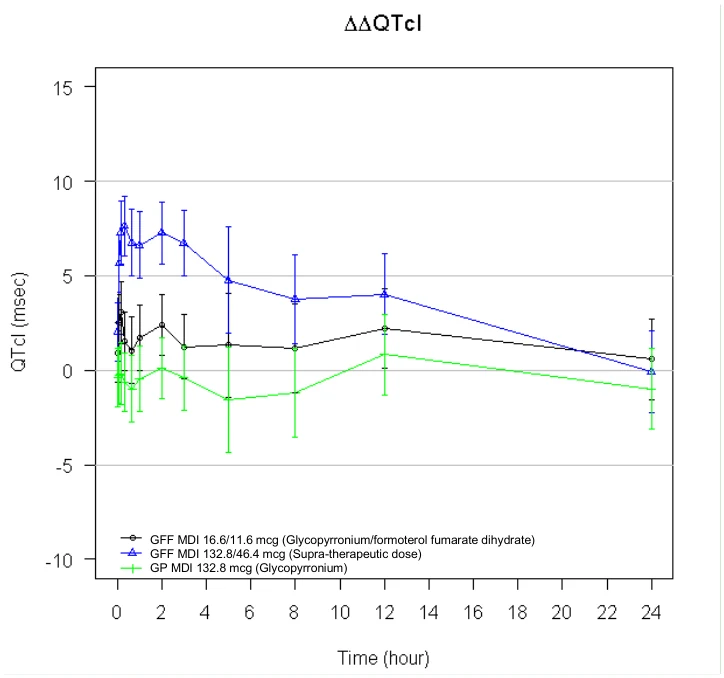
Abbreviations: GFF = glycopyrronium/formoterol fumarate dihydrate; GP = glycopyrronium;
MDI = metered dose inhaler
A dose-dependent increase in heart rate (HR) was also observed. The largest mean (90% confidence interval) differences from placebo in baseline-corrected heart rate were 3.3 (90% CI [1.8, 4.9]) beats/min at 0.1h and 7.6 (90% CI [5.6, 9.5]) beats/min at 0.17 h with glycopyrronium/formoterol fumarate dihydrate 16.6/11.6 mcg (therapeutic dose) and 132.8/46.4 mcg (supra-therapeutic dose), respectively.
GFF MDI 16.6/11.6 mcg (Glycopyrronium/formoterol fumarate dihydrate)
GFF MDI 132.8/46.4 mcg (Supra-therapeutic dose)
GP MDI 132.8 mcg (Glycopyrronium)
Figure 2 Placebo-corrected change-from-baseline heart rate (analysis set: safety population)
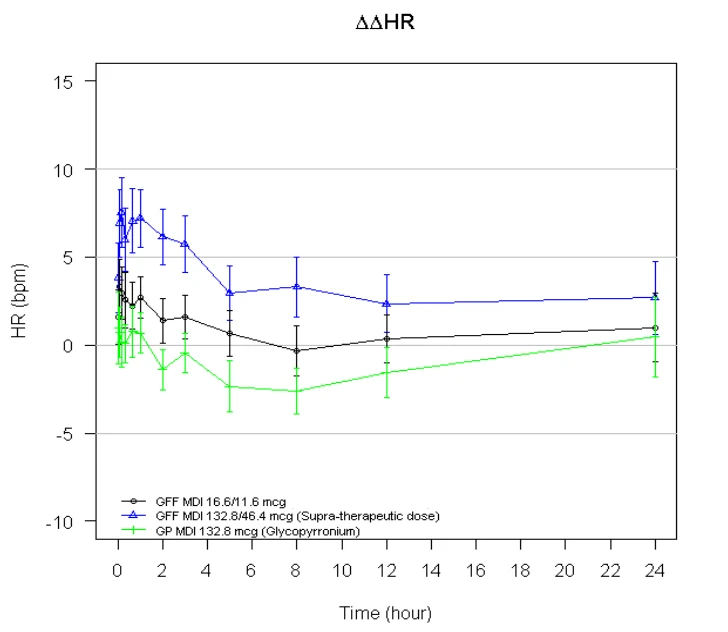
Abbreviations: GFF = glycopyrronium/formoterol fumarate dihydrate; GP = glycopyrronium; HR= heart rate; MDI = metered dose inhaler
See Cardiovascular and Drugs known to prolong the QTc interval.
Although statistically significant differences between treatments were noted for some HR parameters, the estimated mean changes from baseline in the mean, maximum, minimum, daytime and nighttime HR were never more than a 2 bpm decrease or a 1 bpm increase in any one treatment group, and these small changes were not deemed to be clinically meaningful.
The effect of glycopyrronium/formoterol fumarate dihydrate on cardiac rhythm in subjects with COPD was assessed using 24-hour Holter monitoring in 2-week and 24-week studies. All treatments were administered as two inhalations, twice daily. The Holter monitoring population included 58 subjects on glycopyrronium/formoterol fumarate dihydrate 33.2/11.6 mcg in the 2-week study and 171 subjects on glycopyrronium/formoterol fumarate dihydrate pressurized inhalation suspension in the 24-week study (assessed at Week 4). No clinically meaningful effects on cardiac rhythm were observed.
10.3 Pharmacokinetics
Linear pharmacokinetics were observed for glycopyrronium (dose range: 16.6 to 132.8 mcg) and formoterol fumarate dihydrate (dose range: 2.9 to 46.4 mcg) after oral inhalation.
Table 4 Summary of glycopyrronium/formoterol fumarate dihydrate pressurized inhalation suspension pharmacokinetic parameters in subjects with COPD
Cmax1 (pg/mL) | t½2, 3 (h) | AUC0-121 (pg · h/mL) | Clearance1 (L/h) | |
|---|---|---|---|---|
| Single dose | ||||
| Glycopyrronium4 | 20.0 (14.7) | N/A | 42.0 (21.8) | 265.6 (131.7) |
| Formoterol fumarate dihydrate4 | 9.9 (5.0) | N/A | 49.2 (20.1) | 165.0 (61.5) |
| Repeated dose | ||||
| Glycopyrronium5 | 28.7 (20.4) | 15.1 (13.2, 17.2) | 93.4 (58.3) | 141.0 (7.9) |
| Formoterol fumarate dihydrate5 | 13.2 (6.2) | 12.9 (12, 13.9) | 77.4 (32.5) | 117.6 (55.7) |
1 Data presented as arithmetic mean (SD)
2 Data presented as arithmetic mean (95% confidence interval)
3 Population pharmacokinetic analysis of glycopyrronium and formoterol fumarate dihydrate administered alone or in combination in subjects with COPD
4 Administered as two inhalations of glycopyrronium/formoterol fumarate dihydrate pressurized inhalation suspension at Day 1
5 Administered as two inhalations of glycopyrronium/formoterol fumarate dihydrate pressurized inhalation suspension twice daily at Week 12
Absorption
Glycopyrronium: Following inhaled administration of glycopyrronium/formoterol fumarate dihydrate pressurized inhalation suspension in subjects with COPD, Cmax occurred at 5 minutes. Steady state is achieved within 2 to 3 days of repeated dosing of glycopyrronium/formoterol fumarate dihydrate pressurized inhalation suspension and the extent of exposure is approximately 2.3 times higher than after the first dose.
Formoterol fumarate: Following inhaled administration of glycopyrronium/formoterol fumarate dihydrate pressurized inhalation suspension in subjects with COPD, Cmax occurred within 20 to 60 minutes. Steady state is achieved within 2 to 3 days of repeated dosing with glycopyrronium/formoterol fumarate dihydrate pressurized inhalation suspension and the extent of exposure is approximately 1.5 times higher than after the first dose.
Distribution
Glycopyrronium: Population pharmacokinetic analysis showed that estimated Vc/F (volume of the central compartment) and V2/F (volume of the peripheral compartment) are 710 L and 1900 L, respectively.
Formoterol fumarate: Population pharmacokinetic analysis showed that estimated Vc/F (volume of the central compartment) and V2/F (volume of the peripheral compartment) are 970 L and 480 L, respectively. Over the concentration range of 10-500 nmol/L, plasma protein binding of formoterol fumarate ranged from 46% to 58%.
Metabolism
Glycopyrronium: Based on information from the published literature, metabolism plays a minor role in the overall elimination of glycopyrronium.
Formoterol fumarate: The primary metabolism of formoterol fumarate is by direct glucuronidation and by O-demethylation followed by glucuronide conjugation to inactive metabolites. Secondary metabolic pathways include deformylation and sulfate conjugation. CYP2D6 and CYP2C have been identified as being primarily responsible for O-demethylation.
Elimination
Glycopyrronium: After IV administration of a 0.2 mg radiolabeled glycopyrronium, 85% of dose recovered was recovered in urine 48 hours post dose and some radioactivity was also recovered in bile. The terminal elimination half-life derived via population pharmacokinetics analysis was approximately 15 hours.
Formoterol fumarate: The major part of the dose of formoterol fumarate is eliminated via metabolism. After inhalation, 6% to 10% of the dose of formoterol fumarate is excreted unmetabolized in the urine. Following IV infusion of formoterol fumarate, about 19% of the dose was excreted in urine as unmetabolized formoterol fumarate within 24 to 48 hours. Less than 10% of the nominal dose was recovered intact after inhalation without concomitant charcoal. A considerable fraction of the dose might be excreted in urine as metabolite(s) of formoterol fumarate (e.g., Met1), or as conjugates of these metabolite(s). The terminal elimination half-life derived via population pharmacokinetics analysis was approximately 13 hours.
Special Populations and Conditions
- Geriatrics (≥ 65 years of age): population pharmacokinetic analysis showed no clinically significant differences in the pharmacokinetics of glycopyrronium and formoterol fumarate between COPD patients 65 years and older and those younger than 65 years of age.
- Sex: population pharmacokinetic analysis showed that no dose adjustment is required for glycopyrronium or formoterol fumarate based on the effect of gender.
- Ethnic Origin: population pharmacokinetic analysis showed that no dose adjustment is required for glycopyrronium or formoterol fumarate based on the effect of race.
- Hepatic Insufficiency: no pharmacokinetic studies have been performed with glycopyrronium/formoterol fumarate dihydrate pressurized inhalation suspension in patients with hepatic impairment; however, because formoterol fumarate is primarily eliminated via hepatic metabolism, an increased exposure can be expected in patients with severe liver impairment.
- Renal Insufficiency: no pharmacokinetic studies have been performed with glycopyrronium/formoterol fumarate dihydrate pressurized inhalation suspension in patients with renal impairment; however, because glycopyrronium is primarily eliminated via renal metabolism, when glycopyrronium was administered IV in uremic patients undergoing renal transplantation, mean elimination half-life was significantly longer (46.8 minutes) than in healthy patients (18.6 minutes). The mean AUC (10.6 hr·mcg/mL), mean plasma clearance (0.43 L/hr/kg), and mean 3-hour urine excretion (0.7%) for glycopyrronium were also significantly different than those of controls (3.73 hr·mcg/mL, 1.14 L/hr/kg, and 50%, respectively).
11 STORAGE, STABILITY AND DISPOSAL
Store between 15 to 30°C.
Glycopyrronium/formoterol fumarate dihydrate pressurized inhalation suspension should be kept protected inside the sealed foil pouch until the administration period starts and used within 3 months of opening the foil pouch.
Keep this medicine out of the sight and reach of children.
12 SPECIAL HANDLING INSTRUCTIONS
The canister should not be broken, punctured or burnt, even when apparently empty. Do not use or store near heat or open flames. Do not expose to temperatures above 50°C.
The actuator should be cleaned weekly for the first 3 weeks.
PART II: SCIENTIFIC INFORMATION
13 PHARMACEUTICAL INFORMATION
Drug Substance
Proper name:
glycopyrronium bromide formoterol fumarate dihydrate
Chemical name:
3-Hydroxy-1,1-dimethylpyrrolidinium bromide α-cyclopentylmandelate | N-[2-Hydroxy-5-[(1RS)-1-hydroxy-2-[[(1RS)-2-(4-methoxyphenyl)-1- methylethyl]amino]ethyl]phenyl] formamide, (E)-2-butenedioate dihydrate |
Molecular formula and molecular mass:
C19H28BrNO3 398.33 | C42H52N4O12•2H2O 841 |
Structural formula:
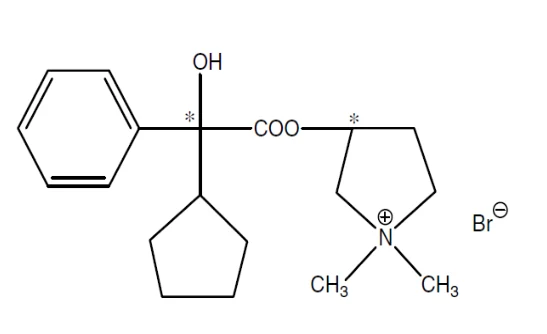
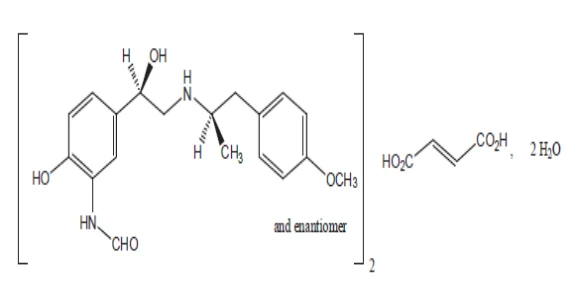
Physicochemical properties:
White or almost white powder. Melts between 193 – 198°C, the range between beginning and end of melting does not exceed 2°C. Freely soluble in water, soluble in alcohol, slightly soluble in chloroform and insoluble in ether. | White or almost white or slightly yellow powder. Melts between 138 – 140°C. Slightly soluble in water, soluble in methanol, slightly soluble in 2-propanol and practically insoluble in acetonitrile. |
14 CLINICAL TRIALS
14.1 Clinical Trials by Indication
COPD
Table 5 Summary of trial designs and patient demographics for pivotal clinical trials in COPD
| Study # | Study design | Treatment and dosage1 | Study subjects2 (n) Mean age (Range) Gender (%) | Primary efficacy endpoint |
|---|---|---|---|---|
| PT003006 | 24-week, multi-center, randomized, double-blind, parallel-group, placebo and active controlled (open-label) study to assess the efficacy and safety of glycopyrronium/form oterol fumarate dihydrate pressurized inhalation suspension in subjects with moderate to very severe COPD | Glycopyrronium/ formoterol fumarate dihydrate pressurized inhalation suspension (GFF MDI 16.6/11.6 mcg) twice daily GP MDI 16.6 mcg twice daily FF MDI 11.6 mcg twice daily Tiotropium 18 mcg once daily Placebo twice daily | GFF MDI: 526 GP MDI: 449 FF MDI: 451 Tiotropium: 451 Placebo: 219 63 years (40-80) Male: 56.4% Female: 43.6% | Morning pre-dose trough FEV1 at week 24 |
| PT003007 | 24-week, multi-center, randomized, double-blind, parallel-group, placebo controlled study to assess the efficacy and safety of glycopyrronium/ formoterol fumarate dihydrate pressurized inhalation suspension in subjects with moderate to very severe COPD | Glycopyrronium/ formoterol fumarate dihydrate pressurized inhalation suspension (GFF MDI 16.6/11.6 mcg) twice daily GP MDI 16.6 mcg twice daily FF MDI 11.6 mcg twice daily Placebo twice daily | GFF MDI: 510 GP MDI: 439 FF MDI: 437 Placebo: 223 63 years (40-80) Male: 55.1% Female: 44.9% | Morning pre-dose trough FEV1 at week 24 |
Abbreviations: FEV1 = forced expiratory volume in 1 second; FF = formoterol fumarate dihydrate; GFF = glycopyrronium/formoterol fumarate dihydrate; GP = glycopyrronium; MDI = metered dose inhaler
1 Administered as two inhalations of glycopyrronium/formoterol fumarate dihydrate pressurized inhalation suspension, FF MDI 5.8 mcg, GP MDI 8.3 mcg and placebo MDI twice daily and one inhalation of tiotropium 18 mcg once daily.
2 Subjects who were randomized to treatment and received at least 1 dose of study drug.
Study design
The safety and efficacy of glycopyrronium/formoterol fumarate dihydrate pressurized inhalation suspension was evaluated in a clinical development program that included two 24-week randomized, double-blind, parallel-group, placebo-controlled lung function studies (PT003006 and PT003007), which included a 28-week extension study (PT003008) to evaluate safety over 1 year. Study PT003006 also included an open-label active control arm.
In both studies PT003006 and PT003007, the primary endpoint was change from baseline in morning pre-dose trough FEV1 at week 24 compared with placebo, glycopyrronium 16.6 mcg twice daily and formoterol fumarate dihydrate 11.6 mcg twice daily to demonstrate the bronchodilator contributions of glycopyrronium and formoterol fumarate in glycopyrronium/formoterol fumarate dihydrate pressurized inhalation suspension, respectively. The secondary endpoints were change from baseline in morning pre-dose trough FEV1 over 24 weeks, peak change from baseline in FEV1 within 2 hours post-dose at week 24, change from baseline in St. George’s Respiratory Questionnaire (SGRQ) total score at week 24, change from baseline in average daily rescue use over 24 weeks and time to onset of action on Day 1.
Study demographics and baseline characteristics
Studies PT003006 and PT003007 included 3699 patients aged ≥40 years and <80 years who had a clinical diagnosis of moderate to very severe COPD (with FEV1/FVC ratio of <0.70 and post-salbutamol FEV1 <80% predicted normal value) and a history of smoking of at least 10 pack-years. Long and short acting anticholinergics, fixed-combinations of ICS/LABAs, fixed-combination of SABA and short-acting anticholinergics, LABAs, SABAs theophylline and corticosteroids were not allowed. Patients who had a current diagnosis of asthma, concomitant respiratory disorders including but not limited to lung cancer and alpha-1 antitrypsin deficiency or any underlying renal, liver, endocrine, cardiac or other medical condition that may have increased the risk for the subject were excluded.
Demographic characteristics were similar in both studies (PT003006 and PT003007). The majority of the 3699 patients recruited in the 24-week pivotal trials were male (56%) and Caucasian (91%), with a mean age of 63 years and an average smoking history of 51 pack-years (54% current smokers). At baseline, the mean post-bronchodilator FEV1 was 1.52 L (GOLD I [0.1%] GOLD II [53.1%], GOLD III [41.7%], GOLD IV [5.2%]), mean post-bronchodilator percent predicted FEV1 was 51% (range: 19% to 82%) and mean percent reversibility was 20% (range: -32% to 135%).
Study results
Lung Function
In studies PT003006 and PT003007, glycopyrronium/formoterol fumarate dihydrate pressurized inhalation suspension showed statistically significant improvements in trough FEV1 compared with placebo at 24 weeks (150 mL and 103 mL, respectively; both p<0.0001) and over 24 weeks (158 mL and 129 mL, respectively; both p<0.0001). Glycopyrronium/formoterol fumarate dihydrate pressurized inhalation suspension also showed statistically significant improvements in trough FEV1 compared with its individual components at 24 weeks and over
24 weeks in both studies (Table 5 and Figure 3 and Figure 4). The magnitude of effect was consistently greater for glycopyrronium/formoterol fumarate dihydrate pressurized inhalation suspension compared with placebo, glycopyrronium and formoterol fumarate through week 24 in both studies. Improvements relative to placebo were seen at the first visit assessed (Week 2).
Glycopyrronium/formoterol fumarate dihydrate pressurized inhalation suspension showed statistically significant improvements in peak FEV1 within 2 hours post-dose at 24 weeks relative to placebo of 291 mL (95% CI [252, 331]) and 267 mL (95% CI [226, 308]), in PT003006 and PT003007 respectively (both p<0.0001).
Table 6 Primary and secondary efficacy endpoints for treatment with glycopyrronium/formoterol fumarate dihydrate pressurized inhalation suspension in studies PT003006 and PT003007
| PT003006 | PT003007 | |
|---|---|---|
| Primary endpoint: trough FEV1 at 24 weeks1 | ||
| Glycopyrronium/formoterol fumarate dihydrate pressurized inhalation suspension vs. placebo | N=429 vs 344 150 mL 95% CI (114, 186) p<0.0001 | N=433 vs 367 103 mL 95% CI (67, 140) p<0.0001 |
| Glycopyrronium/formoterol fumarate dihydrate pressurized inhalation suspension vs. glycopyrronium | N=429 vs 344 59 mL 95% CI (31, 88) p<0.0001 | N=433 vs 367 54 mL 95% CI (25, 83) p=0.0003 |
| Glycopyrronium/formoterol fumarate dihydrate pressurized inhalation suspension vs. formoterol fumarate dihydrate | N=429 vs 367 64 mL 95% CI (36, 92) p<0.0001 | N=433 vs 350 56 mL 95% CI (27, 85) p=0.0002 |
| Secondary endpoint: trough FEV1 over 24 weeks2 | ||
| Glycopyrronium/formoterol fumarate dihydrate pressurized inhalation suspension vs. placebo | N=519 vs 208 158 mL 95% CI (132, 183) p<0.0001 | N=503 vs 216 129 mL 95% CI (103, 155) p<0.0001 |
| Glycopyrronium/formoterol fumarate dihydrate pressurized inhalation suspension vs. glycopyrronium | N=519 vs 440 60 mL 95% CI (39, 80) p<0.0001 | N=503 vs 434 55 mL 95% CI (34, 76) p<0.0001 |
| Glycopyrronium/formoterol fumarate dihydrate pressurized inhalation suspension vs. formoterol fumarate dihydrate | N=519 vs 439 64 mL 95% CI (44, 84) p<0.0001 | N=503 vs 434 57 mL 95% CI (36, 78) p<0.0001 |
Abbreviations: CI = confidence interval; FEV1 = forced expiratory volume in 1 second
1 Subjects who have trough FEV1 data available both at baseline and at Week 24.
2 Subjects who have trough FEV1 data available both at baseline and at least one post-baseline assessment.
Figure 3 Adjusted mean change from baseline in morning pre-dose trough FEV1 (L) over time: PT003006
M orni ng P re-Dos e Trough F E V 1(L) A dj us t ed M ean Change F rom B as el i ne i n 0 2 4 8 12 16 20 24 Number of Weeks Post-Dose -0.050 -0.025 0.000 0.025 0.050 0.075 0.100 0.125 0.150 0.175 0.200 0.225 Placebo GP MDI 16.6 mcg FF MDI 11.6 mcg BEVESPI AEROSPHERE Treatment Group:
Abbreviations: GFF = glycopyrronium/formoterol fumarate dihydrate; FEV1 = forced expiratory volume in 1 second; FF = formoterol fumarate dihydrate; GP = glycopyrronium; MDI = metered dose inhaler
1 Administered as two inhalations of glycopyrronium/formoterol fumarate dihydrate pressurized inhalation suspension, FF MDI 5.8 mcg, GP MDI 8.3 mcg and placebo MDI twice daily.
Figure 4 Adjusted mean change from baseline in morning pre-dose trough FEV1 (L) over time: PT003007
M orni ng P re-Dos e Trough F E V 1(L) A dj us t ed M ean Change F rom B as el i ne i n 0 2 4 8 12 16 20 24 Number of Weeks Post-Dose -0.050 -0.025 0.000 0.025 0.050 0.075 0.100 0.125 0.150 0.175 0.200 0.225 Placebo GP MDI 16.6 mcg FF MDI 11.6 mcg BEVESPI AEROSPHERE Treatment Group:
Abbreviations: GFF = glycopyrronium/formoterol fumarate dihydrate; FEV1 = forced expiratory volume in 1 second; FF = formoterol fumarate dihydrate; GP = glycopyrronium; MDI = metered dose inhaler
GFF MDI
FF MDI 11.6 mcg
GP MDI 16.6 mcg
Placebo
GFF MDI
FF MDI 11.6 mcg
GP MDI 16.6 mcg
Placebo
1 Administered as two inhalations of glycopyrronium/formoterol fumarate dihydrate pressurized inhalation suspension, FF MDI 5.8 mcg, GP MDI 8.3 mcg and placebo MDI twice daily.
A 12-hour serial spirometry sub study, which evaluated the bronchodilation time-profile over 12 hours post-dose, was performed in both studies (PT003006 n=564, PT003007 n=585). Statistically significant adjusted mean increases from baseline in FEV1 were observed with glycopyrronium/formoterol fumarate dihydrate pressurized inhalation suspension compared to placebo at all post-dose time points from 5 minutes post-dose to 12 hours post-dose on Day 1 and from 0.5 hours to 12 hours post-dose at Week 12 (see Figure 5 and Figure 6). Similar results were seen in both studies.
Figure 5 Adjusted mean changes from baseline in FEV1 (L) over the 12 hours post-dose on Day 1: PT003006 (spirometry sub study population)
i n F E V 1 (L) on Day 1 A dj us t ed M ean Change F rom B as el i ne Baseline 15 min 30 min 1 hr 2 hr 4 hr 6 hr 8 hr 10 hr 11.5 hr 12 hr 12 hr trough Time Post-Dose -0.10 -0.05 0.00 0.05 0.10 0.15 0.20 0.25 0.30 0.35 Placebo GP MDI 16.6 mcg FF MDI 11.6 mcg BEVESPI AEROSPHERE Treatment Group: Placebo GP MDI 16.6 mcg FF MDI 11.6 mcg BEVESPI AEROSPHERE Treatment Group:
Abbreviations: GFF = glycopyrronium/formoterol fumarate dihydrate; FEV1 = forced expiratory volume in 1 second; FF = formoterol fumarate dihydrate; GP = glycopyrronium; MDI = metered dose inhaler
1 Administered as two inhalations of glycopyrronium/formoterol fumarate dihydrate pressurized inhalation suspension, FF MDI 5.8 mcg, GP MDI 8.3 mcg and placebo MDI twice daily.
GFF MDI
FF MDI 11.6 mcg
GP MDI 16.6 mcg
Placebo
Figure 6 Adjusted mean changes from baseline in FEV1 (L) over the 12 hours post-dose on Week 12: PT003006 (spirometry sub study population)
Time Post-Dose i n F E V 1 (L) at W eek 12 A dj us t ed M ean Change F rom B as el i ne Placebo GP MDI 16.6 mcg FF MDI 11.6 mcg BEVESPI AEROSPHERE Treatment Group: Placebo GP MDI 16.6 mcg FF MDI 11.6 mcg BEVESPI AEROSPHERE Treatment Group: -0.10 -0.05 0.00 0.05 0.10 0.15 0.20 0.25 0.30 0.35 0.40 Baseline Pre-dose 15 min 30 min 1 hr 2 hr 4 hr 6 hr 8 hr 10 hr 11.5 hr 12 hr 12 hr trough
Abbreviations: GFF = glycopyrronium/formoterol fumarate dihydrate; FEV1 = forced expiratory volume in 1 second; FF = formoterol fumarate dihydrate; GP = glycopyrronium; MDI = metered dose inhaler
1 Administered as two inhalations of glycopyrronium/formoterol fumarate dihydrate pressurized inhalation suspension, FF MDI 5.8 mcg, GP MDI 8.3 mcg and placebo MDI twice daily.
Symptom control and quality of life
Statistically significant improvements were observed in the change from baseline in average daily use of rescue medication (salbutamol) for glycopyrronium/formoterol fumarate dihydrate pressurized inhalation suspension compared to placebo over 24 weeks, -1.08 (95% CI [-1.43, -0.74]) and -1.04 (95% CI [-1.37, -0.72]) puffs per day in studies PT003006 and PT003007, respectively.
Following 24 weeks of treatment, glycopyrronium/formoterol fumarate dihydrate pressurized inhalation suspension provided improvements in disease-specific health status (assessed by SGRQ total score) compared to placebo of -2.52 units (95% CI [-4.64, -0.39]) and -1.72 units (95% CI [-3.80, 0.37]) in studies PT003006 and PT003007, respectively.
In study PT003006, the percentage of patients who achieved a clinically meaningful improvement from baseline in SGRQ total score (defined as a decrease of at least 4 units) was higher with glycopyrronium/formoterol fumarate dihydrate pressurized inhalation suspension than with placebo (37% compared to 28%). In study PT003007, the trends were similar (39% compared to 33%).
15 MICROBIOLOGY
No microbiological information is required for this drug product.
GFF MDI
FF MDI 11.6 mcg
GP MDI 16.6 mcg
Placebo
16 NON-CLINICAL TOXICOLOGY
General Toxicology:
Nonclinical data reveal no clinically relevant findings for human use with glycopyrronium and formoterol fumarate based on conventional studies of safety pharmacology, repeated dose toxicity, genotoxicity, carcinogenic potential and toxicity to reproduction and development.
Repeated Dose Toxicity
The repeat dose toxicity of glycopyrronium combined with formoterol fumarate was evaluated in 14 day inhalation toxicity studies in rats and dogs and a 3 month inhalation toxicity study in dogs. Findings were consistent with those typically associated with anticholinergics and beta2 agonists and are shown in Table 7.
Table 7 Repeated Dose Toxicology Studies – Glycopyrronium/formoterol Fumarate Combination
| Study Type | Species | Route | Doses glycopyrronium /formoterol fumarate (mcg/kg/day) | Primary Findings |
Repeat Dose 14 day | CD Rat | Inhalation | Air Vehicle 74/15 234/44 381/71 | A decrease in body weight gain at the highest exposure group seen at Day 7, but not at Day 14, increased BUN and cholesterol, decreased glucose and triglycerides and an increase in reticulocytes were noted. These were generally within normal historical ranges, returned to baseline within the 14-day recovery period, and showed no correlation to histopathology findings or other parameters. NOAEL = 381/71 mcg/kg/day |
Repeat Dose 14 day | Beagle Dog | Inhalation | Air Vehicle 17/3 52/9 75/13 | Skin erythema and intermittent periods of sinus tachycardia were noted. Histopathological findings, in the heart (papillary muscle fibrosis), and in the liver (swollen cytoplasm) were noted. Transient and biologically insignificant changes in various clinical chemistry and hematology parameters that returned to baseline during the recovery period were also noted. NOAEL = 17/3 mcg/kg/day. |
Repeat Dose 3 month | Beagle Dog | Inhalation | Air Vehicle 18/5 43/11 61/14 87/0 0/4 0/10 0/14 | Increased heart rates and increase in liver weight in females were found in animals treated with formoterol (monotherapy or combination). Histopathological findings in the liver were swollen cytoplasm. Transient and biologically insignificant changes in various clinical chemistry and hematology parameters were also noted. NOAEL = mid dose 43/11 mcg/kg/day. |
Abbreviations: NOAEL = no observed adverse effect level
Since both glycopyrronium and formoterol fumarate have previously been shown, individually, to be non-genotoxic and non-carcinogenic, and the reproductive/developmental toxicity profile of both have been sufficiently characterised individually, genotoxicity, carcinogenicity and reproductive toxicity studies of the combination have not been conducted.
Carcinogenicity:
Glycopyrronium: Chronic administration of glycopyrronium was not carcinogenic in rats at any dose level tested. No treatment related proliferative (i.e., hyperplastic, pre-neoplastic, or neoplastic) changes were observed.
Formoterol fumarate: The carcinogenic potential of formoterol fumarate was studied in mice after oral administration and in rats after inhalation. The only treatment related findings were increased incidence of uterine leiomyomas in mice and one mesovarian leiomyoma in rats. These are expected findings in rodents with β-stimulating agents.
Genotoxicity:
Glycopyrronium: Glycopyrronium was not mutagenic in the bacterial reverse mutation assay, the in vitro mammalian cell micronucleus assay in TK6 cells or the in vivo micronucleus assay in rats.
Formoterol fumarate: The mutagenic potential of formoterol fumarate was studied in the Ames test, Mouse Lymphoma L5178 TK +/- assay, in vitro chromosome aberration test in human lymphocytes and the rat micronucleus test. Overall, it was concluded that formoterol fumarate is not an in vitro mutagen and is not mutagenic in vivo either.
Reproductive and Developmental Toxicology:
Glycopyrronium: Animal reproduction studies with glycopyrronium produced no teratogenic effects, however resulted in diminished rates of conception in a dose-related manner. Other studies in dogs suggest that this may be due to diminished seminal secretion which is evident at high doses of glycopyrronium.
Formoterol fumarate: Animal reproduction studies with formoterol fumarate have shown a somewhat reduced fertility in male rats at high systemic exposure and implantation losses, as well as decreased early postnatal survival and birth weight at considerably higher systemic exposures than those reached during clinical use. However, these animal experimental results have little relevance to man. A slight increase in the incidence of uterine leiomyomas have been observed in rats and mice treated with formoterol fumarate; an effect which is considered to be a class-effect in rodents after long-term exposure to high doses of beta2-adrenoreceptor agonists. Formoterol fumarate is excreted in rat milk.
17 SUPPORTING PRODUCT MONOGRAPHS
- 1. OXEZE® TURBUHALER® Dry Powder for Oral Inhalation, 6 mcg/dose and 12 mcg/dose, Submission Control Number 185400, Product Monograph, AstraZeneca Canada Inc. (June 1, 2016).
- 2. SEEBRI® BREEZHALER® Inhalation Powder Hard Capsules, 50 mcg, Submission Control Number 183834, Product Monograph, Novartis Pharmaceuticals Canada Inc. (July 27, 2015).