


Product Monograph - Haegarda
RECENT MAJOR LABEL CHANGES
| 1.1 Pediatrics | 2021-03 |
TABLE OF CONTENTS
Sections or subsections that are not applicable at the time of authorization are not listed.
RECENT MAJOR LABEL CHANGES ................................................................................ 2
TABLE OF CONTENTS....................................................................................................... 2
PART I: HEALTH PROFESSIONAL INFORMATION ....................................................... 4
1 INDICATIONS ........................................................................................................... 4
1.1 Pediatrics .......................................................................................................... 4
1.2 Geriatrics .......................................................................................................... 4
2 CONTRAINDICATIONS ........................................................................................... 4
4 DOSAGE AND ADMINISTRATION ......................................................................... 4
4.1 Dosing Considerations..................................................................................... 4
4.2 Recommended Dose and Dosage Adjustment .............................................. 4
4.3 Reconstitution................................................................................................... 4
4.4 Administration................................................................................................... 5
4.5 Missed Dose..................................................................................................... 9
5 OVERDOSAGE ......................................................................................................... 9
6 DOSAGE FORMS, STRENGTHS, COMPOSITION AND PACKAGING .............. 9
7 WARNINGS AND PRECAUTIONS........................................................................ 10
7.1 Special Populations ....................................................................................... 11
7.1.1 Pregnant Women ..................................................................................... 11
7.1.2 Breast-feeding .......................................................................................... 12
7.1.3 Pediatrics .................................................................................................. 12
7.1.4 Geriatrics .................................................................................................. 12
8 ADVERSE REACTIONS......................................................................................... 12
8.1 Adverse Reaction Overview .......................................................................... 12
8.2 Clinical Trial Adverse Reactions ................................................................... 12
8.2.1 Clinical Trial Adverse Reactions – Pediatrics ......................................... 13
8.3 Less Common Clinical Trial Adverse Reactions .......................................... 13
8.3.1 Less Common Clinical Trial Adverse Reactions – Pediatrics................ 14
8.4 Abnormal Laboratory Findings: Hematologic, Clinical Chemistry and Other Quantitative Data ..................................................................................................... 14
8.5 Post-Market Adverse Reactions.................................................................... 14
9 DRUG INTERACTIONS.......................................................................................... 14
9.2 Drug Interactions Overview ........................................................................... 14
9.3 Drug-Behavioural Interactions ....................................................................... 14
9.4 Drug-Drug Interactions .................................................................................. 14
9.5 Drug-Food Interactions .................................................................................. 14
9.6 Drug-Herb Interactions .................................................................................. 14
9.7 Drug-Laboratory Test Interactions ................................................................ 14
10 CLINICAL PHARMACOLOGY............................................................................... 14
10.1 Mechanism of Action ................................................................................ 14
10.2 Pharmacodynamics .................................................................................. 15
10.3 Pharmacokinetics,, .................................................................................... 15
11 STORAGE, STABILITY AND DISPOSAL ............................................................ 16
12 SPECIAL HANDLING INSTRUCTIONS................................................................ 16
PART II: SCIENTIFIC INFORMATION ............................................................................. 17
13 PHARMACEUTICAL INFORMATION ................................................................... 17
14 CLINICAL TRIALS .................................................................................................. 17
14.1 Trial Design and Study Demographics.................................................... 17
14.2 Study Results............................................................................................ 18
14.3 Comparative Bioavailability Studies ........................................................ 19
14.4 Immunogenicity......................................................................................... 19
15 MICROBIOLOGY .................................................................................................... 19
16 NON-CLINICAL TOXICOLOGY ............................................................................. 20
PATIENT MEDICATION INFORMATION ......................................................................... 21
PART I: HEALTH PROFESSIONAL INFORMATION
1 INDICATIONS
HAEGARDA (C1 Esterase Inhibitor Subcutaneous (Human)) is indicated for:
- Routine prevention of Hereditary Angioedema (HAE) attacks in adolescents and adult patients.
1.1 Pediatrics
Pediatrics (>8 years): Clinical study has been performed in children >8 years of age (see section WARNINGS AND PRECAUTIONS, subsection Special Populations).
1.2 Geriatrics
Geriatrics (65-72 years): Clinical study has been performed in patients ≤72 years of age (see section WARNINGS AND PRECAUTIONS, subsection Special Populations).
2 CONTRAINDICATIONS
- HAEGARDA (C1 Esterase Inhibitor Subcutaneous (Human)) is contraindicated in individuals who have experienced life-threatening hypersensitivity reactions, including anaphylaxis, to C1 Esterase Inhibitor (C1-INH) preparations or to any ingredient in the formulation or component of the container.
- For a complete listing, see DOSAGE FORMS, STRENGTHS, COMPOSITION AND PACKAGING section of the Product Monograph.
4 DOSAGE AND ADMINISTRATION
4.1 Dosing Considerations
Not applicable.
4.2 Recommended Dose and Dosage Adjustment
The recommended dose of HAEGARDA is 60 IU/kg body weight twice weekly (every 3-4 days) administered after reconstitution by subcutaneous injection at a rate tolerated by the patient. HAEGARDA is administered subcutaneously in the abdominal area or other subcutaneous injection sites.
The maximum tolerated dose used in patients in clinical studies was 10,000 IU, corresponding to a volume of 20 mL, twice weekly by subcutaneous injection.
4.3 Reconstitution
Subcutaneous
HAEGARDA 2000 IU should be reconstituted with the provided 4 mL of Sterile Water for Injection (Diluent).
HAEGARDA 3000 IU should be reconstituted with the provided 5.6 mL of Sterile Water for Injection (Diluent).
Table 1 – Reconstitution
| Format | Vial Size | Volume of Diluent to be Added to Vial | Concentration per mL |
| 2000 IU | 20 mL | 4 mL | 500 IU/mL |
| 3000 IU | 30 mL | 5.6 mL | 500 IU/mL |
See section 11 STORAGE, STABILITY AND DISPOSAL for the recommended storage period and conditions.
4.4 Administration
HAEGARDA is intended for self-administration by subcutaneous injection only. The patient or caregiver should be trained on how to administer HAEGARDA as needed.
General Instructions:
- The reconstituted solution for HAEGARDA should be colourless and clear to slightly opalescent.
- Reconstitution is generally achieved within 5 minutes but may take as long as 10 minutes.
- After filtering/withdrawal (see below) reconstituted product should be inspected visually for particulate matter and discoloration prior to administration. Do not use solutions that have particles or deposits in them.
- Reconstitution and withdrawal must be carried out using aseptic techniques.
- In the absence of compatibility studies HAEGARDA must not be mixed with other medicinal products and diluents.
- Any unused medicinal product or waste material should be disposed of in accordance with local requirements.
- The suggested infusion site for the injection of HAEGARDA is the abdominal area, however other subcutaneous injection areas can be used. In the clinical trials, HAEGARDA was injected into a single site each administration and subsequent injection sites were rotated.
- The reconstituted preparation should be administered by subcutaneous injection at a rate tolerated by the patient.
- If the reconstituted product is not administered immediately, storage shall not exceed 8 hours at room temperature. The reconstituted product should only be stored in the vial.
Follow the steps below and use aseptic technique to reconstitute and administer HAEGARDA.
Use the Mix2Vial® filter transfer set, syringe and either the SC infusion set or the hypodermic needle provided with HAEGARDA (see section DOSAGE FORMS, STRENGTHS, COMPOSITION AND PACKAGING).
Step 1: Assemble supplies
|
| ||||
Step 2: Clean surface Thoroughly clean a table or other flat surface using alcohol or disinfectant wipes. | ||||
Step 3: Wash hands Thoroughly wash and dry your hands. | ||||
| Reconstitution: | ||||
Step 4: Clean Stoppers Remove the flip caps from both vials (HAEGARDA and diluent). Wipe rubber stoppers with an antiseptic wipe and allow the rubber stopper to dry. | ||||
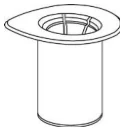 | Step 5: Open the Mix2Vial® package by peeling off the lid. Do not remove the Mix2Vial® from the blister package! | |||
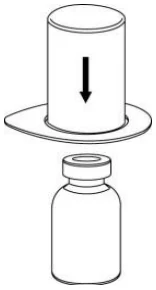 | Step 6: Place the diluent vial on an even, clean surface and hold the vial tight. Take the Mix2Vial® together with the blister package and push the spike of the blue adapter end straight down through the diluent vial stopper. | |||
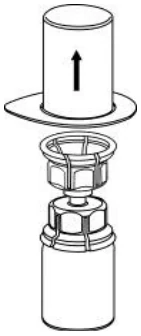 | Step 7: Carefully remove the blister package from the Mix2Vial® set by holding at the rim, and pulling vertically upwards. Make sure that you only pull away the blister package and not the Mix2Vial® set. | |||
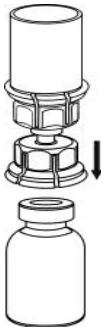 | Step 8: Place the HAEGARDA vial on an even and firm surface. Invert the diluent vial with the Mix2Vial® set attached and push the spike of the transparent adapter end straight down through the HAEGARDA vial stopper. The diluent will automatically flow into the HAEGARDA vial. | |||
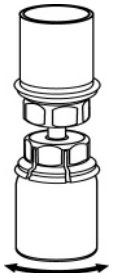 | Step 9: With the diluent and HAEGARDA vial still attached to the Mix2Vial® transfer set, gently swirl the HAEGARDA vial to ensure that the powder is fully dissolved. (Generally, within 5 minutes but may take as long as 10 minutes.) Do not shake the vial. |
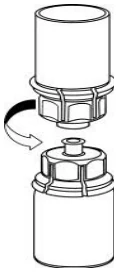 | Step 10: With one hand grasp the HAEGARDA-side of the Mix2Vial® set and with the other hand grasp the diluent-side and unscrew the set carefully counter-clockwise into two pieces. Discard the diluent vial with the blue Mix2Vial® adapter attached. |
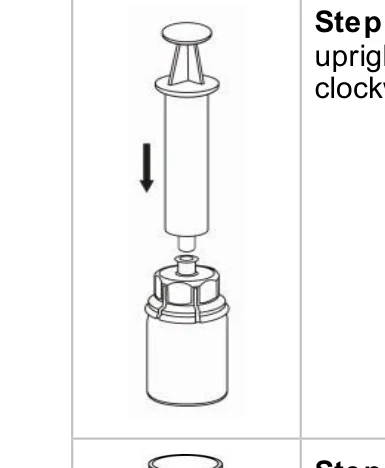 | Step 11: Draw air into an empty, sterile syringe. While the HAEGARDA vial is upright, connect the syringe to the Mix2Vial®'s Luer Lock fitting by screwing clockwise. Inject air into the HAEGARDA vial. |
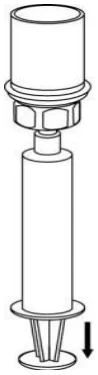 | Step 12: While keeping the syringe plunger pressed, turn the system upside down and draw the solution into the syringe by pulling the plunger back slowly. |
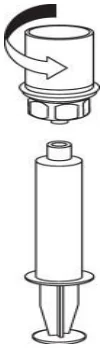 | Step 13: Now that the solution has been transferred into the syringe, firmly hold on to the barrel of the syringe (keeping the syringe plunger facing down) and disconnect the transparent Mix2Vial® adapter from the syringe by unscrewing counter-clockwise. The reconstituted solution should be colorless, clear and free from visible particles. Do not use if particulate matter or discoloration is observed. |
| Administration: | |
Step 14: Prepare injection site
| 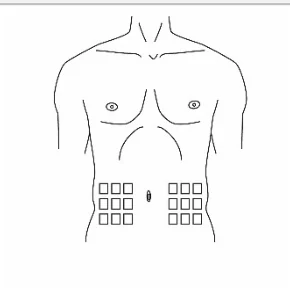 Figure 1 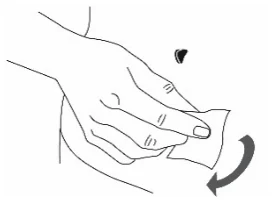 Figure 2 |
Step 15: Injection in the abdominal area or other subcutaneous injection area As instructed by a health professional:
| 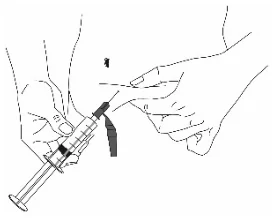 Figure 3 |
Injection with Hypodermic Needle:
| |
Injection by SC Infusion Set:
| 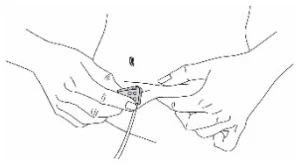 Figure 4 |
Step 16: Clean up
|
Step 17: Record treatment Record the lot number from the HAEGARDA vial label in the patient’s treatment diary or log book with the date and time of infusion every time HAEGARDA is used. |
4.5 Missed Dose
Proceed with the next dose immediately and continue at regular intervals. Do not take a double dose to make up for a missed dose.
5 OVERDOSAGE
No case of overdose has been reported. Doses corresponding to up to 117 IU/kg SC have been administered twice weekly in a fixed-dose clinical study and were well tolerated.
| For management of a suspected drug overdose, contact your regional poison control centre. |
6 DOSAGE FORMS, STRENGTHS, COMPOSITION AND PACKAGING
To help ensure the traceability of biologic products, including biosimilars, health professionals should recognise the importance of recording both the brand name and the non-proprietary (active ingredient) name as well as other product-specific identifiers such as the Drug Identification Number (DIN) and the batch/lot number of the product supplied.
Table 2 – Dosage Forms, Strengths, Composition and Packaging
HAEGARDA is supplied as a white lyophilized powder in the following two formats:
- 2000 IU: which contains 2000 IU of C1-INH per injection vial accompanied with 4 mL of Sterile Water for Injection for reconstitution. After reconstitution, the concentration is 500 IU/mL.
- 3000 IU: which contains 3000 IU of C1-INH per injection vial accompanied with 5.6 mL of Sterile Water for Injection for reconstitution. After reconstitution, the concentration is 500 IU/mL.
1 The potency of C1-INH is expressed in International Units (IU), which is related to the current World Health Organization (WHO) standard for C1-INH products.
| Route of Administration | Dosage Form/ Strength/Composition | Non-medicinal Ingredients |
| Subcutaneous (SC) | Lyophilized powder for reconstitution and injection | Glycine, sodium chloride, sodium citrate |
2000 IU1/vial 3000 IU/vial | ||
The potency of C1-INH is expressed in International Units (IU), which is related to the current WHO Standard for C1-INH products.
Each vial of reconstituted HAEGARDA contains 500 IU/mL of C1-INH, 65 mg total protein, 10 mg glycine, 8.5 mg sodium chloride and 2.5 mg sodium citrate.
Excipients with known effect:
- Sodium up to 486 mg (approximately 21 mmol) per 100 mL solution.
The product package includes:
- 1 vial with HAEGARDA powder
- 1 vial of diluent (Sterile Water for Injection)
- 1 Mix2Vial® transfer device for reconstitution
- 1 inner carton
The inner carton contains:
- 1 syringe (10 mL) for withdrawal
- 1 SC infusion set
- 1 hypodermic needle
The components used in the packaging for HAEGARDA are latex-free.
HAEGARDA is a human plasma derived, purified, pasteurized, nanofiltered, lyophilized concentrate of C1-INH to be reconstituted for subcutaneous (SC) administration. HAEGARDA is prepared from large pools of human plasma.
The manufacturing process for HAEGARDA includes multiple steps that reduce the risk of virus transmission. The virus inactivation/reduction capacity consists of three steps:
- Pasteurization in aqueous solution at +60°C for 10 hours
- Hydrophobic interaction chromatography
- Virus filtration (also called nanofiltration) by two filters, 20 nm and 15 nm, in series
See section PHARMACEUTICAL INFORMATION, subsection Viral Inactivation for further details.
7 WARNINGS AND PRECAUTIONS
This product is prepared from large pools of human plasma. Thus, there is a possibility it may contain causative agents of viral or other undetermined diseases
General
HAEGARDA should not be used to treat an acute HAE attack. In case of an acute HAE attack, individualized treatment should be initiated.
Standard measures to prevent infections resulting from the use of medicinal products prepared from human blood or plasma include selection of donors, screening of individual donations and plasma pools for specific markers of infection and the inclusion of effective manufacturing steps for the inactivation/ removal of viruses. Despite this, when medicinal products prepared from human blood or plasma are administered, the possibility of transmitting infective agents cannot be totally excluded. Products made from human plasma may contain infectious agents such as viruses and, theoretically, the agent responsible for the Creutzfeldt-Jakob disease (CJD). This also applies to unknown or emerging viruses and other pathogens.
The measures taken are considered effective for enveloped viruses such as human immunodeficiency virus (HIV), hepatitis B virus (HBV), hepatitis C virus (HCV) and for the non-enveloped viruses HAV and parvovirus B19.
Appropriate vaccination (hepatitis A and B) should be generally considered for patients in regular/repeated receipt of human plasma-derived products.
It is strongly recommended that every time HAEGARDA is administered to a patient, the name and batch number of the product are recorded in order to maintain a link between the patient and the batch of the product.
All infections thought by a physician possibly to have been transmitted by this product should be reported by the physician or other health professional to CSL Behring at 1-866-773-7721. The physician should discuss the risks and benefits of this product with the patient.
Cardiovascular
Thrombosis has occurred in treatment attempts with high doses of C1-INH intravenous (IV) for prophylaxis or therapy of capillary leak syndrome before, during or after cardiac surgery under extracorporeal circulation (unlicensed indication and dose). At the recommended SC doses, a causal relationship between TEEs and the use of C1-INH concentrate has not been established.
Driving and Operating Machinery
HAEGARDA has no or negligible influence on the ability to drive and use machines.
Sensitivity/Resistance
If severe allergic reactions occur, the administration of HAEGARDA must be stopped immediately (e.g. discontinue injection) and appropriate medical care must be initiated.
7.1 Special Populations
7.1.1 Pregnant Women
There are limited data that suggest no increased risk from the use of general C1-INH products in pregnant women. C1-INH is a physiological component of human plasma. No studies on reproduction and developmental toxicity have been performed with HAEGARDA in animals. No adverse effects on fertility, pre- and postnatal development are expected in humans.
In a retrospective case collection study, 22 pregnant women with type I HAE and ranging in age from 20 to 38 years received C1-INH doses of 500 or 1000 IU per intravenous (IV) administration for the treatment of acute attacks before, during, and/or after pregnancy (total of 35 pregnancies). No adverse events were associated with C1-INH treatment before, during, or after pregnancy2.
In an observational registry (overall 318 subjects) data were collected on 11 pregnancies in 10 subjects (16 to 40 years old) receiving up to 3000 IU C1-INH (IV administration) to treat or prevent HAE attacks. No adverse events were associated with C1-INH treatment3.
2 Martinez Saguer I, Rusicke E, Aygören Pürsün E, Heller C, Klingebiel T, Kreuz W. Characterization of acute hereditary angioedema attacks during pregnancy and breast-feeding and their treatment with C1 inhibitor concentrate. Am J Obstet Gynecol. 2010 Aug;203(2):131.e1-7
3 Fox J, Vegh AB, Martinez-Saguer I, Wuillemin WA, Edelman J, Williams-Herman D, Rojavin M, Rosenberg T. Safety of a C1-inhibitor concentrate in pregnant women with hereditary angioedema. Allergy Asthma Proc. 2017 May 1;38(3):216 -221.
In an open-label extension study (Study 3002), 4 pregnant women with type I HAE and ranging in age from 19 to 32 years received C1-INH (subcutaneous (SC) administration). Patients received 40 or 60 IU/kg per SC administration for 4-8 weeks (9-15 doses) during the first trimester. All four women delivered healthy babies.
7.1.2 Breast-feeding
There is no information regarding the excretion of HAEGARDA in human milk, the effect on the breastfed infant, or the effects on milk production. It is unknown whether C1-INH is present in human milk. The developmental and health benefits of breastfeeding should be considered along with the mother's clinical need for HAEGARDA and any potential adverse effects on the breastfed infant from HAEGARDA or from the underlying maternal condition. HAEGARDA should be given to a nursing mother only if clearly needed.
In a retrospective case collection study2, breastfeeding was documented for neonates from 21 of 35 births with a median duration of 4.8 months (ranging from 1 to 34 months). Mothers were treated postpartum with C1-INH doses up to 1000 IU per IV administration for the treatment of acute HAE attacks. No adverse events to the mothers were associated with C1-INH treatment after pregnancy. No information regarding the effect on the breastfed infant was reported.
7.1.3 Pediatrics
Pediatrics (<18 years): The safety and effectiveness of HAEGARDA were evaluated in a subgroup of eleven pediatric patients 8 to <17 years of age in both a randomized, double blind, placebo controlled, crossover, routine prophylaxis trial (Study 3001) and Study 3002. Results of subgroup analysis by age were consistent with overall study results (see section CLINICAL TRIALS).
7.1.4 Geriatrics
The safety and effectiveness of HAEGARDA were evaluated in a subgroup of ten geriatric patients 65 to 72 years of age in both Study 3001 and Study 3002. Results of subgroup analysis by age were consistent with overall study results (see section CLINICAL TRIALS).
8 ADVERSE REACTIONS
8.1 Adverse Reaction Overview
Adverse reactions occurring in more than 4% of subjects treated with HAEGARDA were: injection site reaction, hypersensitivity, nasopharyngitis and dizziness.
8.2 Clinical Trial Adverse Reactions
Clinical trials are conducted under very specific conditions. The adverse reaction rates observed in the clinical trials; therefore, may not reflect the rates observed in practice and should not be compared to the rates in the clinical trials of another drug. Adverse reaction information from clinical trials may be useful in identifying and approximating rates of adverse drug reactions in real-world use.
Of the 90 subjects randomized in Study 3001 (see section CLINICAL TRIALS), 86 subjects received at least 1 dose of HAEGARDA and 86 subjects received at least 1 dose of placebo (Table 3). A total of 5081 injections of HAEGARDA and placebo were administered over a range of 3 to 19 weeks (median of 16.6 weeks for HAEGARDA; median of 16.3 weeks for placebo).
Eligible patients were also able to participate in Study 3002 for up to 140 weeks (n=126, randomized, 110 completed the study at week 53, and around 45 subjects completed the Extension Period of 88 weeks).
Table 3 – Adverse Reactions in >4% of Subjects Treated with HAEGARDA
| MedDRA System Organ Class | Adverse Reaction | HAEGARDA | Placebo (N=86) | |||||||
| 60 IU/kg (N=43) | 40 IU/kg (N=43) | Overall* (N=86) | ||||||||
| n (%) | n (%) | n (%) | n (%) | |||||||
| General Disorders and Administration Site Conditions | Injection Site Reaction† | 15 (34.9) | 12 (27.9) | 27 (31.4) | 21 (24.4) | |||||
| Immune System Disorders | Hypersensitivity‡ | 3 (7.0) | 2 (4.7) | 5 (5.8) | 1 (1.2) | |||||
| Infections and Infestations | Nasopharyngitis | 8 (18.6) | 1 (2.3) | 9 (10.5) | 6 (7.0) | |||||
| Nervous System Disorders | Dizziness | 0 (0.0) | 4 (9.3) | 4 (4.7) | 1 (1.2) | |||||
N = number of subjects receiving the treatment; n = number of subjects experiencing ≥1 event.
* Includes subjects who were treated with 40 IU/kg or 60 IU/kg HAEGARDA.
† Includes the MedDRA Preferred Terms: Injection site bruising, Injection site coldness, Injection site discharge, Injection site erythema, Injection site hematoma, Injection site hemorrhage, Injection site induration, Injection site edema, Injection site pain, Injection site pruritus, Injection site rash, Injection site reaction, Injection site scar, Injection site swelling, Injection site urticaria, Injection site warmth.
‡ Includes the MedDRA Preferred Terms: Hypersensitivity, Pruritus, Rash, and Urticaria.
Of the injection site reactions occurring after treatment with HAEGARDA, 95.0% were of mild intensity and 82.5% resolved within 1 day after onset.
Overall, safety data from Study 3002, consisting of 64 roll-over patients from Study 3001 and 62 non-rollover patients, was consistent with the safety data from Study 3001.
8.2.1 Clinical Trial Adverse Reactions – Pediatrics
Not applicable.
8.3 Less Common Clinical Trial Adverse Reactions
Not applicable.
8.3.1 Less Common Clinical Trial Adverse Reactions – Pediatrics
Not applicable.
8.4 Abnormal Laboratory Findings: Hematologic, Clinical Chemistry and Other Quantitative Data
Not applicable.
8.5 Post-Market Adverse Reactions
Not applicable.
9 DRUG INTERACTIONS
9.2 Drug Interactions Overview
No drug interaction studies have been conducted with HAEGARDA.
9.3 Drug-Behavioural Interactions
Not applicable.
9.4 Drug-Drug Interactions
Interactions with other drugs have not been established.
9.5 Drug-Food Interactions
Interactions with food have not been established.
9.6 Drug-Herb Interactions
Interactions with herbal products have not been established.
9.7 Drug-Laboratory Test Interactions
Interactions with laboratory tests have not been established.
10 CLINICAL PHARMACOLOGY
10.1 Mechanism of Action
C1-INH is a normal constituent of human plasma and belongs to the group of serine protease inhibitors (serpins) that includes antithrombin III, alpha-1 protease inhibitor, alpha-2 antiplasmin, and heparin cofactor II. As with the other inhibitors in this group, C1-INH has an important inhibiting potential on several of the major cascade systems of the human body including the complement, fibrinolytic and coagulation systems. Regulation of these systems is performed through the formation of complexes between the protease and the inhibitor, resulting in inactivation of both and consumption of the C1-INH.
C1-INH, which is usually activated during the inflammatory process, inactivates its substrate by covalently binding to the reactive site. C1-INH is the only known inhibitor for the C1r and C1s subcomponents of complement component 1 (C1), coagulation factor XIIa, and plasma kallikrein. Additionally, C1-INH is the main inhibitor for coagulation factor XIa of the intrinsic coagulation cascade.
HAE patients have absent or low levels of endogenous or functional C1-INH. Although the events that induce attacks of angioedema in HAE patients are not well defined, it has been postulated that increased vascular permeability and the clinical manifestation of HAE attacks may be primarily mediated through contact system activation. Suppression of contact system activation by C1-INH through the inactivation of plasma kallikrein and factor XIIa is thought to modulate this vascular permeability by preventing the generation of bradykinin4. Administration of HAEGARDA replaces the missing or malfunctioning C1-INH protein in patients with HAE5.
10.2 Pharmacodynamics
In untreated patients, insufficient levels of functional C1-INH lead to increased activation of C1, which results in decreased levels of complement component 4 (C4). The administration of HAEGARDA increases plasma levels of C1-INH in a dose dependent manner and subsequently increases plasma concentrations of C4. The C4 plasma concentrations after SC administration of 60 IU/kg HAEGARDA were in the normal range (16 to 38 mg/dL).
10.3 Pharmacokinetics6,7,8
The pharmacokinetic (PK) characteristics of C1-INH were primarily described using population PK methods on pooled data from 3 clinical trials6,7,8 in healthy subjects and HAE subjects.
The characterization and evaluation of C1-INH functional activity in subjects with HAE in Study 3002 was done using the population PK model developed previously for the pooled analysis of subjects in 3 clinical trials. After inclusion of the final Study 3002 data, the population PK parameters remain unchanged and the C1-INH functional activity was similar across all studies following HAEGARDA administration for the 60 IU/kg dose.
Absorption
Following twice weekly SC dosing, C1-INH is slowly absorbed, with a median (95% CI) time to peak concentration (tmax) of approximately 59 hours (23, 134 hours). Based on a median (95% CI) apparent plasma half life of 69 hours [2.9 days] (24, 250 hours [1, 10.4 days]), steady state for C1-INH is expected within 3 weeks of dosing. A mean (95% CI) steady state trough functional C1-INH of 48% (25.1 102%) is expected after twice weekly SC administration of 60 IU/kg HAEGARDA. The mean (95% CI) relative bioavailability (F) of C1-INH after SC administration was approximately 43% (35.2, 50.2%).
Distribution
The population mean (95% CI) clearance and apparent volume of distribution of C1-INH were estimated to be approximately 83 mL/hr (72.7, 94.2 mL/hr) and 4.33 L (3.51, 5.15 L). C1-INH clearance was found to be positively correlated with total body weight. The steady state PK of SC of C1-INH was found to be independent of dose between 20 80 IU/kg in HAE subjects.
Special Populations and Conditions
Studies have not been conducted to evaluate the PK of C1-INH in specific patient populations
4 Davis AE, The pathophysiology of hereditary angioedema. Clin Immunol. 2005 Jan;114(1):3-9.
5 Nuijens JH, Eerenberg Belmer AJM, Huijbregts CCM, et al. Proteolytic inactivation of plasma C1 inhibitor in sepsis. J Clin Invest. 1989 Aug;84(2):443-50.
6 Study 1001: A randomized, double-blind, single-center, cross-over study to evaluate the safety, bioavailability and pharmacokinetics of two formulations of C1-esterase inhibitor administered intravenously
7 Study 2001: An Open-label, Cross-over, Dose-ranging Study to Evaluate the Pharmacokinetics, Pharmacodynamics and Safety of the Subcutaneous Administration of a Human Plasma-derived C1-esterase Inhibitor in Subjects with Hereditary Angioedema
8 Study 3001: A double-blind, randomized, placebo-controlled, crossover study to evaluate the clinical efficacy and safety of subcutaneous administration of human plasma-derived C1-esterase inhibitor in the prophylactic treatment of hereditary angioedema.
stratified by gender, race, age, or the presence of renal or hepatic impairment. The population analysis, evaluating age (12 to 72 years), was found not to influence the PK of C1-INH.
11 STORAGE, STABILITY AND DISPOSAL
The shelf life of HAEGARDA is 36 months. When stored in the refrigerator or at room temperature (at +2°C to +30°C), HAEGARDA is stable for the period indicated by the expiration date on the carton and vial label.
Keep HAEGARDA in its original carton until ready to use. Do not freeze. Protect from light.
After reconstitution the physico-chemical stability has been demonstrated for 48 hours at room temperature (max. +30°C). From a microbiological point of view and as HAEGARDA contains no preservative, the reconstituted product should be used immediately. If it is not administered immediately, storage shall not exceed 8 hours at room temperature. The reconstituted product should only be stored in the vial.
12 SPECIAL HANDLING INSTRUCTIONS
Not applicable.
PART II: SCIENTIFIC INFORMATION
13 PHARMACEUTICAL INFORMATION
Drug Substance
Proper name: C1 Esterase Inhibitor (Human)
Chemical name: NA
Molecular formula and molecular mass: 105 kDa
Structural formula: C1-INH is a soluble, single chain glycoprotein containing 478 amino acid residues organized into three beta sheets and eight or nine alpha helices. The molecular weight of the heavily glycosylated molecule is 105 kD, of which the carbohydrate chains comprise at least 26%-35%.
Physicochemical properties: Colourless, clear to slightly opalescent solution.
Pharmaceutical standard: The potency of C1-INH is expressed in International Units (IU), which is related to the current World Health Organization (WHO) standard for C1-INH products.
Product Characteristics
HAEGARDA (C1 Esterase Inhibitor Subcutaneous (Human)) is a human plasma derived, purified, pasteurized, nanofiltered white lyophilized concentrate of C1-INH to be reconstituted for SC administration. Each vial of reconstituted HAEGARDA contains 500 IU/mL of C1-INH, 65 mg total protein, 10 mg glycine, 8.5 mg sodium chloride and 2.5 mg sodium citrate.
Viral Inactivation
All plasma used in the manufacturing of C1-INH is obtained from US donors and is tested using serological assays for hepatitis B surface antigen and antibodies to HIV-1/2 and HCV. Additionally, the plasma is tested with Nucleic Acid Testing (NAT) for HBV, HCV, HIV-1 and HAV and found to be non-reactive (negative). The plasma is also tested by NAT for Human Parvovirus B19. Only plasma that has passed virus screening is used for production, and the limit for Parvovirus B19 in the fractionation pool is set not to exceed 104 IU of Parvovirus B19 DNA per mL.
The manufacturing process for HAEGARDA includes multiple steps that reduce the risk of virus transmission. The virus inactivation/reduction capacity consists of three steps:
- Pasteurization in aqueous solution at 60°C for 10 hours;
- Hydrophobic interaction chromatography;
- Virus filtration (also called nanofiltration) by two filters, 20 nm and 15 nm, in series.
14 CLINICAL TRIALS
14.1 Trial Design and Study Demographics
Study 3001: A multicenter, randomized, double blind, placebo controlled, crossover study
The efficacy and safety of HAEGARDA for routine prophylaxis to prevent HAE attacks were demonstrated in a multicenter, randomized, double blind, placebo controlled, crossover study (Study 3001). The study assessed 90 adult and adolescent subjects with symptomatic HAE type I or II. The median (range) age of subjects was 40 (12 to 72) years old; 60 subjects were female and 30 subjects were male. Subjects were randomized to receive either 60 IU/kg or 40
IU/kg HAEGARDA in one 16 week treatment period and placebo in the other 16 week treatment period. Patients subcutaneously self administered HAEGARDA or placebo 2 times per week. Efficacy was evaluated for the last 14 weeks of each treatment period.
Study 3002: An open-label extension study
Eligible patients were also able to participate in an open-label extension study (Study 3002) for up to 140 weeks. Approximately half of the subjects enrolled in the extension study participated in the multicenter, randomized, double blind, placebo controlled, crossover study (64/126, 50.8%), which contributed to the similarities between study populations.
14.2 Study Results
Study 3001: A multicenter, randomized, double blind, placebo controlled, crossover study
Twice per week SC doses of 60 IU/kg or 40 IU/kg HAEGARDA significantly reduced the time normalized number of HAE attacks (the rate of attacks) relative to placebo (Table 4). 60 IU/kg reduced the mean rate of attacks to 0.52 attacks per month from 4.03 attacks per month on placebo (p<0.001). 40 IU/kg reduced the mean rate of attacks to 1.19 attacks per month from 3.61 attacks per month on placebo (p<0.001).
Table 4 – Time normalized Number of HAE Attacks (Number/Month) (ITT Population)
| 60 IU/kg HAEGARDA Treatment Sequences (N = 45) | 40 IU/kg HAEGARDA Treatment Sequences (N = 45) | |||
| HAEGARDA | Placebo | HAEGARDA | Placebo | |
| N | 43 | 42 | 43 | 44 |
| Mean (SD) | 0.53 (0.771) | 4.02 (2.308) | 1.22 (2.310) | 3.61 (2.088) |
| Min, Max | 0.0, 3.1 | 0.6, 11.3 | 0.0, 12.5 | 0.0, 8.9 |
| Median | 0.29 | 3.75 | 0.29 | 3.81 |
| LS Mean (SE)* | 0.52 (0.261) | 4.03 (0.263) | 1.19 (0.327) | 3.61 (0.327) |
| 95% CI for LS Mean* | (0.00, 1.04) | (3.51, 4.55) | (0.54, 1.85) | (2.96, 4.26) |
| Treatment difference (within-subjects) | 60 IU/kg HAEGARDA - Placebo | 40 IU/kg HAEGARDA - Placebo | ||
| LS Mean* (95% CI) | -3.51 (-4.21, -2.81) | -2.42 (-3.38, -1.46) | ||
| p-value* | <0.001 | <0.001 | ||
CI = confidence interval; HAE = hereditary angioedema; ITT = Intent to treat; N = number of subjects;
n = number of subjects with data; LS = Least squares.
* From a mixed model.
The median (25th, 75th percentile) percentage reduction in the time normalized number of HAE attacks relative to placebo was 95.1% (79.0, 100.0) on 60 IU/kg HAEGARDA and 88.6% (69.6, 100.0) on 40 IU/kg HAEGARDA among subjects with evaluable data in both treatment periods.
The percentage of responders (95% CI) with a ≥50% reduction in the time‑normalized number of HAE attacks on HAEGARDA relative to placebo was 82.9% (73.4%, 89.5%). 90% of subjects on 60 IU/kg responded to treatment and 76.2% of subjects on 40 IU/kg responded to treatment.
The percentages of subjects (95% CI) with ≥70% and ≥90% reductions in the time‑normalized number of HAE attacks on HAEGARDA relative to placebo were 74.4% (64.0%, 82.6%) and 50.0% (39.4%, 60.6%), respectively. The percentages of subjects with ≥70% and ≥90% reductions were 82.5% and 57.5% on 60 IU/kg and 66.7% and 42.9% on 40 IU/kg. 71.1% of subjects on 60 IU/kg and 53.3% of subjects on 40 IU/kg had ≥1 HAE attack per 4 week period on placebo and <1 HAE attack per 4 week period on HAEGARDA.
Forty percent (40.0%) of subjects on 60 IU/kg and 37.8% of subjects on 40 IU/kg were attack-free, and the median rate of HAE attacks per month was 0.29 on both doses. The maximum rate of HAE attacks per month was 3.1 on 60 IU/kg and 12.5 on 40 IU/kg.
HAEGARDA reduced the time normalized number of uses of rescue medication (the rate of rescue medication use) relative to placebo. 60 IU/kg reduced the mean rate of rescue medication use to 0.32 uses per month from 3.89 uses per month on placebo. 40 IU/kg reduced the mean rate of rescue medication use to 1.13 uses per month from 5.55 uses per month on placebo.
Study 3002: An open-label extension study
The long-term safety and efficacy of HAEGARDA for routine prophylaxis to prevent HAE attacks were demonstrated in an open-label, randomized, parallel-arm study (Study 3002). The study assessed 126 adult and pediatric subjects with symptomatic HAE type I or II. The median (range) age of subjects was 41.0 (8-72) years. Patients with a monthly attack rate of 4.3 in 3 months before entry in the study were enrolled and treated for a mean of 1.5 years; 44 patients (34.9%) had more than 2 years of exposure. Mean steady-state C1-INH functional activity increased to 52.0% with 40 IU/kg and 66.6% with 60 IU/kg. Incidence of adverse events was low and similar in both dose groups (11.3 and 8.5 events per patient-year for 40 IU/kg and 60 IU/kg, respectively). For 40 IU/kg and 60 IU/kg, median annualized attack rates were 1.3 and 1.0, respectively, and median rescue medication use was 0.2 and 0.0 times per year, respectively. For subjects receiving the 60 IU/kg dose in the extension period:
- 15 (62.5%) were attack-free during months 1-12;
- 14 (58.3%) were attack-free during months 1-18;
- 12 (50.0%) were attack-free during months 1-22.
14.3 Comparative Bioavailability Studies
Not applicable.
14.4 Immunogenicity
Not applicable.
15 MICROBIOLOGY
No microbiological information is required for this drug product.
16 NON-CLINICAL TOXICOLOGY
General Toxicology
Non-clinical data reveal no special hazard for humans based on conventional studies of safety pharmacology, single and repeat dose toxicity and local tolerability.
In a local tolerability study in rabbits, a single subcutaneous administration of C1-INH at dose levels up to approximately 670 IU/kg did not result in adverse findings. Accordingly, a NOAEL of 670 IU/kg was obtained for single subcutaneous administration.
In vivo thrombogenicity tests in rabbits indicate that there was no prothrombotic risk associated with the IV administration of C1-INH up to 800 IU/kg.
Carcinogenicity
No animal studies have been completed to evaluate the effects of C1-INH on carcinogenesis.
Genotoxicity
No animal studies have been completed to evaluate the effects of C1-INH on mutagenesis.
Reproductive and Developmental Toxicology
No animal studies have been completed to evaluate the effects of C1-INH on impairment of fertility.