


Product Monograph - Heparin Sodium Injection USP (Sterinova)
SUMMARY PRODUCT INFORMATION
| Route of Administration | Dosage Form / Strength | Clinically Relevant Nonmedicinal Ingredients |
| Subcutaneous injection | Solution 5000 units/0.5 mL, single dose prefilled syringe | N/A |
INDICATIONS AND CLINICAL USE
Heparin Sodium Injection is indicated for:
- prophylaxis of venous thrombosis and its extension
- prophylaxis of pulmonary embolism
- prophylaxis of thromboembolic complications associated with atrial fibrillation
- prophylaxis of peripheral arterial embolism
Geriatrics (> 60 years of age):
There are limited adequate and well-controlled studies in patients 65 years and older. However a higher incidence of bleeding has been reported in patients over 60 years of age, especially women. Lower doses of heparin may be indicated in these patients (see WARNINGS AND PRECAUTIONS and DOSAGE AND ADMINISTRATION).
Pediatrics (<16 years):
There are no adequate and well controlled studies on heparin use in pediatric patients. Heparin Sodium Injection USP, 5000 USP units / 0.5 mL, prefilled syringe should not be administered to children since it does not allow a dose adjustment and the provided dose is much higher than the dose recommended based on clinical experience. (see DOSAGE AND ADMINISTRATION).
CONTRAINDICATIONS
Heparin Sodium Injection should not be used in patients:
- with severe thrombocytopenia or a history of heparin-induced thrombocytopenia and heparin-induced thrombocytopenia and thrombosis or a history of thrombocytopenia with pentosan polysulfate.
- with a known hypersensitivity to heparin or pork products or to any ingredient in the formulation (eg. anaphylactoid reactions). For a complete listing, see DOSAGE FORMS, COMPOSITION AND PACKAGING section of the product monograph.
- in whom, suitable blood coagulation tests (e.g., the whole blood clotting time, partial thromboplastin time) cannot be performed at appropriate intervals. This contraindication refers to full-dose heparin regimens only; there is usually no need to monitor coagulation parameters in patients receiving low-dose heparin.
- with an uncontrollable active bleeding state (see WARNINGS AND PRECAUTIONS), except when this is due to disseminated intravascular coagulation.
WARNINGS AND PRECAUTIONS
General
Heparin is not intended for intramuscular use.
This prefilled syringe of Heparin Sodium is not intended for IV administration.
Use only if solution is clear and container and seals are intact.
Hemorrhage
Avoid using heparin in the presence of major bleeding, except when the benefits of heparin outweigh the potential risks.
Hemorrhage can occur at virtually any site in patients receiving heparin. Fatal hemorrhages have occurred. Adrenal hemorrhage (with resultant acute adrenal insufficiency), ovarian hemorrhage and retroperitoneal hemorrhage have occurred during anticoagulant therapy with heparin. A higher incidence of bleeding has been reported in patients over 60 years of age, particularly in women.
Serious Warnings and Precautions
Do not use Heparin Sodium Injection as a “catheter lock flush” product. Heparin Sodium Injection is supplied syringes that contain a concentrated dose of 5000 units per syringe. Fatal hemorrhages have occurred in pediatric patients due to medication errors in which 1 mL Heparin Sodium Injection vials were confused with 1 mL “catheter lock flush” vials. Carefully examine all Heparin Sodium Injection syringes to confirm the correct syringe choice prior to administration of the drug.
An unexplained fall in hematocrit, fall in blood pressure, or any other unexplained symptom should lead to serious consideration of a hemorrhagic event.
Heparin sodium should be used with extreme caution in disease states in which there is increased danger of hemorrhage, including:
- Cardiovascular: Subacute bacterial endocarditis. Severe hypertension.
- Surgical: During and immediately following (a) spinal tap, spinal or epidural anesthesia or (b) major surgery, especially involving the brain, spinal cord or eye.
- Hematologic: Conditions associated with increased bleeding tendencies, such as hemophilia, thrombocytopenia and some vascular purpuras.
- Gastrointestinal: Ulcerative lesions and continuous tube drainage of the stomach or small intestine, and clinical settings in which stress-induced gastrointestinal hemorrhage is possible.
- Patients with hereditary antithrombin III deficiency receiving concurrent antithrombin III therapy: The anticoagulant effect of heparin is enhanced by concurrent treatment with antithrombin III (human) in patients with hereditary antithrombin III deficiency. To reduce the risk of bleeding, reduce the heparin dose during concomitant treatment with antithrombin III (human).
- Other: Menstruation, liver disease with impaired hemostasis, severe renal disease, or in patients with indwelling catheters.
Hematologic
Heparin-induced Thrombocytopenia (HIT) and Heparin-induced Thrombocytopenia and Thrombosis (HITT): Heparin-induced Thrombocytopenia (HIT) is a serious antibody-mediated reaction resulting from irreversible aggregation of platelets. HIT may progress to the development of venous and arterial thromboses, a condition known as Heparin-induced Thrombocytopenia and Thrombosis (HITT).
Thrombotic events may also be the initial presentation for HITT. These serious thromboembolic events include deep vein thrombosis, pulmonary embolism, cerebral vein thrombosis, limb ischemia, stroke, myocardial infarction, mesenteric thrombosis, renal arterial thrombosis, skin necrosis, gangrene of the extremities that may lead to amputation, and possibly death. Monitor thrombocytopenia of any degree closely. If the platelet count falls below 100,000/mm3 or if recurrent thrombosis develops, promptly discontinue heparin, evaluate for HIT and HITT, and, if necessary, administer an alternative anticoagulant.
HIT and HITT can occur up to several weeks after the discontinuation of heparin therapy. Patients presenting with thrombocytopenia or thrombosis after discontinuation of heparin should be evaluated for HIT and HITT.
Thrombocytopenia: Thrombocytopenia in patients receiving heparin has been reported with frequencies up to 30% and may appear from 4-21 days after the start of treatment, although it may occur sooner if there is a history of heparin-induced thrombocytopenia. Platelet counts should be obtained at baseline and periodically during heparin administration. Mild thrombocytopenia (count greater than 100,000/mm3) may remain stable or reverse even if heparin is continued. However, thrombocytopenia of any degree should be monitored closely. If the count falls below 100,000/mm3 associated with positive or unknown in vitro platelet antibody test results in the presence of heparin or if recurrent thrombosis develops, promptly discontinue heparin product, evaluate for HIT and HITT and, if necessary, administer an alternative anticoagulant.
Epidural or Spinal Anesthesia: In patients undergoing epidural or spinal anesthesia, or lumbar puncture, the prophylactic use of heparin has been associated with epidural or spinal hematomas, which may result in prolonged or permanent paralysis. The risk is increased by the use of epidural or spinal catheters for anesthesia, by concomitant use of drugs affecting coagulation such as nonsteroidal anti-inflammatory drugs (NSAIDs), platelet aggregation inhibitors and by traumatic or repeated punctures.
Hyperkalemia
Heparin can suppress adrenal secretion of aldosterone leading to hyperkalemia, particularly in patients at risk of increased potassium levels such as patients with diabetes mellitus, renal insufficiency or taking drugs that may increase plasma potassium levels such as ACE inhibitors. The risk of hyperkalemia appears to increase with the duration of treatment, but is usually reversible with discontinuation of heparin.
Heparin resistance
Resistance to heparin is frequently encountered in fever, thrombosis, thrombophlebitis, infections with thrombosing tendencies, myocardial infarction, cancer, in postsurgical patients, and patients with antithrombin III deficiency. Close monitoring of coagulation tests is recommended in these cases. Adjustment of heparin doses based on anti-Factor Xa levels may be warranted.
Heparin Hypersensitivity
Patients with documented hypersensitivity to heparin should be given the drug only in clearly life-threatening situations.
Because Heparin Sodium Injection is derived from animal tissue, it should be used with caution in patients with a history of allergy.
Carcinogenesis and Mutagenesis
No long term studies in animals have been performed with Heparin Sodium Injection to evaluate the carcinogenic potential of heparin. No studies in animals have been performed addressing mutagenesis or impairment of fertility.
Special Populations
Pregnant Women:
There are no adequate and well-controlled studies on heparin use in pregnant women.
Although heparin sodium does not cross the placenta based on human and animal studies, heparin sodium should be administered during pregnancy only if the potential benefit justifies the potential risk to the fetus. If used during pregnancy, it should be administered with caution especially during the last trimester and withdrawn one or two days before the delivery date, due to the risk of fetal-maternal hemorrhage.
Heparin use during pregnancy has been associated with adverse events including perinatal death and prematurity.
Long-term usage of therapeutic doses of heparin during pregnancy may increase the risk of osteoporosis and vertebral fractures.
In a published study conducted in rats and rabbits, pregnant animals received heparin intravenously during organogenesis at a dose of 10 000 units/kg/day, approximately 10 times the maximum daily dose based on body weight. The number of early resorptions increased in both species. There was no evidence of teratogenic effects.
Nursing Women:
Heparin Sodium Injection contains no preservatives. Preservative free heparin is recommended when heparin therapy is needed during lactation. Due to its large molecular weight, heparin is not likely to be excreted in human milk, and any heparin in milk would not be orally absorbed by a nursing infant.
Neonates, premature and low birth weight infants:
Carefully examine all heparin drug product containers to confirm choice of the correct strength prior to administration of the drug. Pediatric patients, including neonates, have died as a result of medication errors in which Heparin Sodium Injection vials have been confused with “catheter lock flush” vials. Heparin Sodium Injection USP, 5000 USP units / 0.5 mL, prefilled syringe should not be administered to neonates since it does not allow a dose adjustment and the provided dose is much higher than the dose recommended based on clinical experience. (see WARNINGS AND PRECAUTIONS).
Pediatrics (<16 years of age):
There are no adequate and well controlled studies on heparin use in pediatric patients. Heparin Sodium Injection USP, 5000 USP units / 0.5 mL, prefilled syringe should not be administered to children since it does not allow a dose adjustment and the provided dose is much higher than the dose recommended based on clinical experience. (see DOSAGE AND ADMINISTRATION).
Fatal Medication Errors: Heparin is supplied in a wide range of strengths. Fatal hemorrhages have occurred in infants and pediatric patients due to medication errors in which 1 mL Heparin Sodium Injection vials were confused with 1 mL “catheter lock flush” vials. Carefully examine all heparin products to ensure that the proper strength is selected for administration (see WARNINGS AND PRECAUTIONS, Serious Warnings and Precautions).
Geriatrics (>60 years of age):
A higher incidence of bleeding has been reported in patients over 60 years of age, especially women. Clinical studies indicate that lower doses of heparin may be indicated in these patients (see ACTION AND CLINICAL PHARMACOLOGY and DOSAGE AND ADMINISTRATION).
Monitoring and Laboratory Tests
Coagulation Testing: When heparin sodium is administered in therapeutic amounts, its dosage should be regulated by frequent blood coagulation tests. If the coagulation test is unduly prolonged or if hemorrhage occurs, discontinue heparin promptly (see OVERDOSAGE).
Periodic platelet counts, hematocrits, and tests for occult blood in the stool are recommended during the entire course of heparin therapy, regardless of the route of administration (see DOSAGE AND ADMINISTRATION).
Clinical evaluation and periodic laboratory determinations are necessary to monitor changes in fluid balance and electrolyte concentrations during prolonged parenteral therapy or whenever the condition of the patient warrants such evaluation.
ADVERSE REACTIONS
Adverse Drug Reaction Overview
- 1.
Hemorrhage.
Hemorrhage is the chief complication that may result from heparin therapy (see WARNINGS AND PRECAUTIONS). An overly prolonged clotting time or minor bleeding during therapy can usually be controlled by withdrawing the drug (see OVERDOOSAGE). It should be appreciated that gastrointestinal or urinary tract bleeding during anticoagulant therapy may indicate the presence of an underlying occult lesion. Bleeding can occur at any site but certain specific hemorrhagic complications may be difficult to detect:
a. Adrenal hemorrhage, with resultant acute adrenal insufficiency, has occurred during anticoagulant therapy. Therefore, such treatment should be discontinued in patients who develop signs and symptoms of acute adrenal hemorrhage and insufficiency. Initiation of corrective therapy should not depend on laboratory confirmation of the diagnosis, since any
- delay in an acute situation may result in the patient’s death.
- b. Ovarian (corpus luteum) hemorrhage developed in a number of women of reproductive age receiving short- or long-term, anticoagulant therapy. This complication if unrecognized may be fatal.
- c. Retroperitoneal hemorrhage
- d. Spinal hematoma and epidural hematoma
- 2. Thrombocytopenia, Heparin-induced Thrombocytopenia (HIT), Heparin-induced Thrombocytopenia and Thrombosis (HITT) and delayed Onset of HIT and HITT. (see WARNINGS AND PRECAUTIONS.)
- 3.
Local Irritation.
Local irritation, erythema, mild pain, hematoma or ulceration may follow deep subcutaneous (intrafat) injection of heparin sodium. These complications are much more common after intramuscular use, and such use is not recommended.
- 4.
Hypersensitivity.
Generalized hypersensitivity reactions have been reported, with chills, fever, and urticaria as the most usual manifestations, and asthma, rhinitis, lacrimation, headache, nausea and vomiting, and anaphylactoid reactions, including shock, occurring less frequently. Itching and burning, especially on the plantar site of the feet, may occur. (see WARNINGS AND PRECAUTIONS.)
Thrombocytopenia has been reported to occur in patients receiving heparin with a reported incidence of up to 30%. While often mild and of no obvious clinical significance, such thrombocytopenia can be accompanied by severe thromboembolic complications such as skin necrosis, gangrene of the extremities that may lead to amputation, myocardial infarction, pulmonary embolism, stroke, and possibly death. (see WARNINGS AND PRECAUTIONS).
Certain episodes of painful, ischemic and cyanosed limbs have in the past been attributed to allergic vasospastic reactions. Whether these are in fact identical to the thrombocytopenia associated complications remains to be determined.
- 5.
Bone and Joint
Therapeutic doses of heparin administered for longer than 3months have been associated with osteoporosis and spontaneous vertebral fractures. Osteoporosis may be reversible after discontinuation of heparin.
- 6. Osteoporosis following long-term administration of high doses of heparin.
- 7.
Miscellaneous
Cutaneous necrosis after systemic administration, suppression of aldosterone synthesis, delayed transient alopecia, priapsim, and rebound hyperlipemia on discontinuation of heparin sodium have also been reported.
Significant elevations of aminotransferase AST (SGOT) and ALT (SGPT) levels have occurred in a high percentage of patients (and healthy subjects) who have received heparin.
Hyperkalemia has also been reported.
Reactions which may occur because of the solution or the technique of administration include febrile response, and infection at the site of injection.
If an adverse reaction does occur, discontinue use, evaluate the patient, institute appropriate therapeutic countermeasures and save the remainder of the fluid for examination if deemed necessary.
Clinical Trial Adverse Drug Reactions
Because clinical trials are conducted under very specific conditions, the adverse drug reaction rates observed in the clinical trials may not reflect the rates observed in practice and should not be compared to the rates in the clinical trials of another drug. Adverse drug reaction information from clinical trials is useful for identifying drug-related adverse events and for approximating rates.
Adverse reaction data from clinical trials are not available.
Post Market Adverse Drug Reactions:
Adverse reaction rates associated with the use of heparin sodium in clinical practice have been reviewed1. Incidence rates in the following table are taken from this review.
Table 1. Adverse reaction rates reported in the literature
1 Niccolai CS, Hicks RW, Oertel L, Francis JL: Heparin Consensus Group. Unfractionated heparin: focus on a high-alert drug. Pharmacotherapy. 2004 Aug; 24 (8Pt2):146S-155S
| Adverse Reaction | Incidence |
| Hemorrhage | Major bleeding: up to 7% Fatal bleeding: up to 2% |
Thrombocytopenia Heparin Induced Thrombocytopenia (HIT) Heparin Induced Thrombocytopenia and Thrombosis (HITT) Delayed Onset HIT and HITT | HIT rate1-3% |
Miscellaneous
| Osteopenia rate up to one-third of patients on long term therapy (osteopenia may lead to osteoporosis) |
DRUG INTERACTIONS
Overview
Oral anticoagulants: Heparin sodium may prolong the one-stage prothrombin time. Therefore, when heparin sodium is given with dicumarol or warfarin sodium, a period of at least 5 hours after the last intravenous dose or 24 hours after the last subcutaneous dose should elapse before blood is drawn if a valid prothrombin time is to be obtained.
Platelet inhibitors: Drugs such as acetylsalicylic acid, dextran, phenylbutazone, ibuprofen, indomethacin, dipyridamole, hydroxychloroquine and others that interfere with platelet aggregation reactions (the main hemostatic defense of heparinized patients) may induce bleeding and should be used with caution in patients receiving heparin sodium.
Concomitant use of thrombolytic agents such as alteplase, streptokinase may also increase the risk of hemorrhage.
Concomitant use of some contrast media may also affect the coagulation process and increase the risk of hemorrhage.
Drug-Drug Interactions
The drugs listed in this table are based on either drug interaction case reports or studies, or potential interactions due to the expected magnitude and seriousness of the interaction (i.e., those identified as contraindicated).
Table 2. Summary of drug-drug Interactions with heparin
| Drug | Interaction |
Drugs Enhancing Heparin Effect: Drugs interfering with platelet aggregation:
| May induce bleeding, Prolongation of one-stage prothrombin time (A period of at least 5 hours after the last intravenous dose or 24 hours after the last subcutaneous dose should elapse before blood is drawn to obtain a valid prothrombin time). Enhances anticoagulant effect of heparin in patients with hereditary antithrombin III deficiency. (To reduce the risk of bleeding, a reduced dose of heparin is recommended during treatment with antithrombin III (human) |
Drugs Decreasing Heparin Effect:
| May partially counteraction of the anticoagulant action of heparin sodium. (Monitor patients’ coagulation tests appropriately) |
Effect of Heparin on Other drugs
Heparin can increase the effect of oral antidiabetic agents such as sulfonylureas, as well as benzodiazepines (chlordiazepoxide, diazepam, oxazepam) and propranolol.
Drug-Food Interactions
Heavy alcohol drinkers are at greater risk of major heparin associated bleeding than moderate or non-drinkers.
Drug-Herb Interactions
Interactions with herbal products have not been established.
Drug-Laboratory Interactions
Table 3. Important Drug-Laboratory Interactions
| Drug / Laboratory Interaction | Significance | Notes |
Significant elevations of aminotransferase AST (SGOT) or Significant elevations of aminotransferase ALT (SGPT) | Aminotransferase determinations are important in the differential diagnosis of myocardial infarction, liver disease and pulmonary emboli, rises that might be caused by drugs (like heparin) should be interpreted with caution. | Hyperaminotransferasemia: Significant elevations of aminotransferase levels have occurred in a high percentage of patients (and healthy subjects) who have received heparin. |
| Prothrombin time | Heparin sodium may prolong the one-stage prothrombin time | When heparin sodium is given with warfarin, allow a period of at least 5 hours after the last intravenous or 24 hours after the last subcutaneous dose of heparin to elapse before blood is drawn to obtain a valid prothrombin time. |
DOSAGE AND ADMINISTRATION
Dosing Considerations
The product should be administered under the supervision of a qualified health professional who is experienced in the use of anticoagulant agents and in the management of patients with venous thrombosis, pulmonary embolism, acute and chronic consumptive coagulopathies and peripheral arterial embolism. Appropriate management of therapy and complications is only possible when adequate diagnostic treatment facilities are readily available.
Preparation for Administration
Confirm the choice of the correct Heparin Sodium Injection syringe to ensure that the syringe is not confused with a “catheter lock flush” syringe or other incorrect strength or syringe (see WARNINGS AND PRECAUTIONS).
Inspect parenteral drug products visually for particulate matter and discoloration prior to administration, whenever solution and container permit. Use only if solution is clear and container is intact. Do not use if solution is discoloured or contains precipitate.
Administer Heparin Sodium Injection by deep subcutaneous (intrafat, i.e. above the iliac crest or abdominal fat layer) injection.
To avoid loss of the solution when using prefilled syringes, a small air bubble should not be expelled from the syringe prior injection. The needle should be fully inserted perpendicularly into a pinched-up fold of skin, which should be held gently but firmly until injection has been completed. The injection sire should not be rubbed. Use a different site for each injection to prevent the development of hematoma. This product is not intended for intravenous administration.
Heparin Sodium Injection is not intended for intramuscular (IM) use (see ADVERSE REACTIONS, Local Irritation).
Laboratory Monitoring for Efficacy and Safety
Adjust the dosage of Heparin Sodium Injection according to the patient’s coagulation test results. Dosage is considered adequate when the activated partial thromboplastin time (aPTT) is 1.5 to 2 times normal or when the whole blood clotting time is elevated approximately 2.5 to 3 times the control value. After deep subcutaneous (SC) injections, tests for adequacy of dosage are best performed on samples drawn 4 to 6 hours after the injections.
Periodic platelet counts and hematocrits are recommended during the entire course of Heparin Sodium Injection therapy, regardless of the route of administration.
Pediatric Use
There are no adequate and well controlled studies on heparin use in pediatric patients.
Low-Dose Subcutaneous Heparin Sodium
The most widely used dosage has been 5,000 units 2 hours before surgery and 5,000 units every 8 to 12 hours thereafter for 7 days or until the patient is fully ambulatory, whichever is longer. Administer the heparin by deep subcutaneous (intrafat, i.e. above the iliac crest or abdominal fat layer) injection. Use a different sire for each injection to prevent the development of hematoma.
Converting to Warfarin
To ensure continuous anticoagulation when converting from Heparin Sodium Injection to warfarin, continue full heparin therapy for several days until the INR (prothrombin time) has reached a stable therapeutic range. Heparin therapy may then be discontinued without tapering (see DRUG INTERACTIONS).
Missed Dose:
The product should only be administered under the supervision of a qualified health professional who is experienced in the use of anticoagulant agents, and missed doses are not to be expected.
OVERDOSAGE
Symptoms: Bleeding is the chief sign of heparin overdosage. Nosebleeds, blood in urine or tarry stools may be noted as the first sign of bleeding. Easy bruising or petechial formations may precede frank bleeding.
Treatment: Neutralization of heparin effect.
When clinical circumstances (bleeding) require reversal of heparinization, protamine sulfate (1% solution) by slow infusion will neutralize heparin sodium. No more than 50 mg should be administered very slowly, in any 10 minute period. Each mg of protamine sulfate neutralizes approximately 100 USP Heparin Units. The amount of protamine required decreases over time as heparin is metabolized. Although the metabolism of heparin is complex, it may, for the purpose of choosing a protamine dose, be assumed to have a half-life of about ½ hour after intravenous injection.
Administration of protamine sulfate can cause severe hypotensive and anaphylactoid reactions. Because fatal reactions often resembling anaphylaxis have been reported, the drug should be given only when resuscitation techniques and treatment of anaphylactoid shock are readily available.
For additional information the labelling of Protamine Sulfate Injection, USP products should be consulted.
For management of a suspected drug overdosage, contact your regional Poison Control Centre.
ACTIONS AND CLINICAL PHARMACOLOGY
Mechanism of Action
Heparin inhibits reactions that lead to the clotting of blood and formation of fibrin clots both in vitro and in vivo. Heparin acts at multiple sites in the normal coagulation system. Small amounts of heparin in combination with antithrombin III (heparin cofactor) can inhibit thrombosis by inactivating activated Factor X and inhibiting the conversion of prothrombin to thrombin. Once active thrombosis has developed, larger amounts of heparin can inhibit further coagulation by inactivating thrombin and preventing the conversion of fibrinogen to fibrin. Heparin also prevents the formation of a stable fibrin clot by inhibiting the activation of Factor XIII, the fibrin stabilizing factor. Heparin does not have fibrinolytic activity.
Pharmacodynamics
Bleeding time is usually unaffected by heparin. Clotting time is prolonged by full therapeutic doses of heparin; in most cases, it is not measurably affected by low doses of heparin.
Heparin does not have fibrinolytic activity; therefore, it will not lyse existing clots.
Pharmacokinetics
| Absorption | Peak plasma levels of heparin are achieved 2-4 hours following subcutaneous administration, although there are considerable individual variations. Log-linear plots of heparin plasma concentrations with time for a wide range of dose levels are linear which suggests the absence of zero order processes. |
| Distribution | The absence of a relationship between anticoagulant half-life and concentration half-life may reflect factors such as protein binding of heparin. |
| Metabolism | Liver and the reticulo-endothelial system are the sites of biotransformation. The biphasic elimination curve, a rapidly declining alpha phase (t1/2 = 10 minutes) and after the age of 40, a slower beta phase, indicates uptake in the organs. |
| Excretion | The plasma half-life is approximately 1½ hours, however the half-life increases with increasing doses ranging from approximately 1 hour with a dose of 100 units/kg to approximately 2½ hours with a dose of 400 units/kg. The plasma half-life may be prolonged in patients with cirrhosis or severe renal impairment. Patients with pulmonary embolism may have a more rapid clearance of heparin. Heparin is not removed by hemodialysis. |
Special Populations and Conditions
Geriatrics: Patients over 60 years of age, following similar doses of heparin, may have higher plasma levels of heparin and longer activated partial thromboplastin times
(APTTs) compared with patients under 60 years of age.
STORAGE AND STABILITY
Exposure of products to heat should be minimized. Avoid excessive heat. Protect from freezing.
Invert container and carefully inspect the solution in good light for cloudiness, haze or particulate matter. Any container which is suspect should not be used.
It is recommended that the product be stored in the blister pack at room temperature (15ºC to 25ºC) and protected from freezing.
DOSAGE FORMS, COMPOSITION AND PACKAGING
Heparin Sodium Injection, USP 5 000 units per 0.5 mL (10 000 units per 1 mL), single dose is preservative free and is supplied in prefilled syringes fitted with a 27G - ½ inch needle suited for subcutaneous injection, and needle safety device. The closure system consists of an elastomeric needle shield and an elastomeric plunger stopper.
Syringes are supplied in blisters inside a carton box (1 syringe per blister and 10 blisters per box).
Nonmedicinal ingredients:
Each prefilled syringe contains water for injection and may contain sodium hydroxide and/or hydrochloric acid (to adjust pH).
PART II: SCIENTIFIC INFORMATION PHARMACEUTICAL INFORMATION
Drug Substance
Proper name: Heparin sodium Chemical name: Heparin sodium Molecular formula and molecular mass:
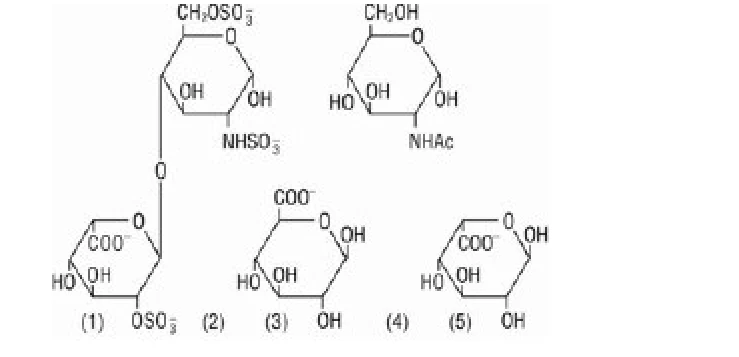
Heparin is a heterogeneous group of straight-chain anionic mucopolysaccarides, called glycosaminoglycans having anticoagulant properties. Although others may be present, the main sugars occurring in heparin are: (1) alpha-L-iduronic acid-2- sulfate, (2) 2-deoxy-2-sulfamino-alpha-D-glucose 6-sulfate, (3) beta-D-glucuronic acid, (4) 2-acetamido-2-deoxy-alpha-D-glucose, and (5) alpha-L-iduronic acid.
These sugars are present in decreasing amounts, usually in the order (2) > (1) >
(4) > (3) > (5), and are joined by glucosidic linkages, forming polymers of varying sizes. Heparin is strongly acidic because of its content of covalently linked sulfate and carboxylic acid groups. In heparin sodium, the acidic protons of the sulfate units are partially replaced by sodium ions.
Molecular structure of heparin sodium (representative units):
Physicochemical properties: Crude Heparin is derived from North American, South American or EU sourced porcine intestinal tissue.
Description: White or almost white powder Solubility: Freely soluble in water
pH: 5.5 to 8.0 for a 1% aqueous solution
CLINICAL TRIALS
The clinical effectiveness of Heparin, in the mentioned indications, has been determined through many years of clinical use and is described in a number of published studies and clinical practice guidelines.
REFERENCES
- 1. Belch JJ, Lowe GD, Ward AG, Forbes CD, Prentice CR. Prevention of deep vein thrombosis in medical patients by low-dose heparin. Scott Med J 1981, 26:115- 117.
- 2. Gallus AS, Hirsh J, Tuttle RJ, Trebilcock R, O'Brien SE, Carroll JJ, Minden JH, Hudecki SM. Small subcutaneous doses of heparin in prevention of venous thrombosis. N Engl J Med 1973, 288:545-551.
- 3. Gårdlund B. Randomised, controlled trial of low-dose heparin for prevention of fatal pulmonary embolism in patients with infectious diseases. The Heparin Prophylaxis Study Group. Lancet 1996, 347:1357-1361.
- 4. Halkin H, Goldberg J, Modan M, Modan B. Reduction of mortality in general medical in-patients by low-dose heparin prophylaxis. Ann Intern Med 1982, 96:561-565.
- 5. Hirsh J, Anand SS, Halperin JL, Fuster V. Guide to Anticoagulant Therapy: Heparin. A Statement for Healthcare Professionals From the American Heart Association. Circulation 2001;103;2994-3018.
- 6. Ibarra-Perez C, Lau-Cortes E, Colmenero-Zubiate S, Arevila-CeballosN, Fong JH, Sanchez-Martinez R, Dominguez MV, Elizalde- Gonzalez J. Prevalence and prevention of deep venous thrombosis of the lower extremities in high-risk pulmonary patients. Angiology 1988, 39:505-513.
- 7. International Stroke Trial Collaborative Group. The International Stroke Trial (IST): a randomised trial of aspirin, subcutaneous heparin, both, or neither among 19435 patients with acute ischaemic stroke. Lancet 1997, 349:1569-1581.
- 8. Vardi M, Zittan E, Bitterman H. Subcutaneous unfractionated heparin for the initial treatmentof venous thromboembolism (Review) The Cochrane Library 2009, Issue 4.