


Product Monograph - Levemir Penfill
RECENT MAJOR LABEL CHANGES
| 4.4 Administration | 03/2021 |
| 7 Warnings and Precautions | 03/2021 |
TABLE OF CONTENTS
Sections or subsections that are not applicable at the time of authorization are not listed.
RECENT MAJOR LABEL CHANGES .................................................................................... 2
TABLE OF CONTENTS ......................................................................................................... 2
PART I: HEALTH PROFESSIONAL INFORMATION.............................................................. 4
1 INDICATIONS............................................................................................................. 4
1.1 Pediatrics .......................................................................................................... 4
1.2 Geriatrics........................................................................................................... 4
2 CONTRAINDICATIONS .............................................................................................. 4
3 SERIOUS WARNINGS AND PRECAUTIONS BOX..................................................... 5
4 DOSAGE AND ADMINISTRATION ............................................................................. 5
4.1 Dosing Considerations ....................................................................................... 5
4.2 Recommended Dose and Dosage Adjustment ................................................... 5
4.4 Administration.................................................................................................... 6
5 OVERDOSAGE .......................................................................................................... 7
6 DOSAGE FORMS, STRENGTHS, COMPOSITION AND PACKAGING ....................... 8
7 WARNINGS AND PRECAUTIONS ............................................................................. 8
7.1 Special Populations ......................................................................................... 12
7.1.1 Pregnant Women ....................................................................................... 12
7.1.2 Breast-feeding............................................................................................ 12
7.1.3 Pediatrics ................................................................................................... 12
7.1.4 Geriatrics ................................................................................................... 13
8 ADVERSE REACTIONS ........................................................................................... 13
8.1 Adverse Reaction Overview ............................................................................. 13
8.2 Clinical Trial Adverse Reactions ....................................................................... 13
8.3 Less Common Clinical Trial Adverse Reactions................................................ 21
8.5 Post-Market Adverse Reactions ....................................................................... 26
9 DRUG INTERACTIONS ............................................................................................ 27
9.4 Drug-Drug Interactions..................................................................................... 27
9.5 Drug-Food Interactions .................................................................................... 28
9.6 Drug-Herb Interactions..................................................................................... 28
9.7 Drug-Laboratory Test Interactions .................................................................... 28
10 CLINICAL PHARMACOLOGY .................................................................................. 28
10.1 Mechanism of Action .................................................................................. 28
10.2 Pharmacodynamics.................................................................................... 28
10.3 Pharmacokinetics....................................................................................... 30
11 STORAGE, STABILITY AND DISPOSAL ................................................................. 34
12 SPECIAL HANDLING INSTRUCTIONS .................................................................... 35
PART II: SCIENTIFIC INFORMATION ................................................................................. 35
13 PHARMACEUTICAL INFORMATION ....................................................................... 35
14 CLINICAL TRIALS ................................................................................................... 36
14.1 Trial Design and Study Demographics ........................................................ 36
14.2 Study Results............................................................................................. 36
15 MICROBIOLOGY...................................................................................................... 49
16 NON-CLINICAL TOXICOLOGY ................................................................................ 49
PATIENT MEDICATION INFORMATION ............................................................................. 53
PART I: HEALTH PROFESSIONAL INFORMATION
1 INDICATIONS
LEVEMIR® (insulin detemir) is indicated for:
- the treatment of type 1 diabetes mellitus in adults, adolescent and children 2 years and above;
- the treatment of type 2 diabetes mellitus in adults when insulin is required for the control of hyperglycemia;
- the treatment of type 2 diabetes mellitus in combination with oral anti-diabetic agents (OADs) in adults who are not in adequate metabolic control on OADs alone. For safety reasons, the use of insulin in combination with thiazolidinedione is not indicated (See Warnings and Precautions);
- the treatment of adult patients with type 2 diabetes mellitus in combination with Victoza® (liraglutide) and metformin when Victoza® and metformin do not achieve adequate glycemic control (see CLINICAL TRIALS).
Levemir® is also recommended in combination with short- or rapid-acting meal time insulin.
1.1 Pediatrics
Pediatrics (<18 years of age): Evidence from clinical studies and experience suggests that use in the pediatric population is not associated with any differences in safety or effectiveness. Please see CLINICAL PHARMACOLOGY.
1.2 Geriatrics
Geriatrics (≥65 years): There was no clinically relevant difference in the pharmacokinetics and pharmacodynamics of Levemir® between elderly and younger subjects. Please see WARNINGS AND PRECAUTIONS and CLINICAL PHARMACOLOGY.
2 CONTRAINDICATIONS
Levemir® is contraindicated in patients who are hypersensitive to this drug or to any ingredient in the formulation, including any non-medicinal ingredient, or component of the container. For a complete listing, see DOSAGE FORMS, STRENGTHS, COMPOSITION AND PACKAGING.
Levemir® (insulin detemir) is contraindicated during episodes of hypoglycemia (see HYPOGLYCEMIA AND TREATMENT OF OVERDOSAGE).
3 SERIOUS WARNINGS AND PRECAUTIONS BOX
Serious Warnings and Precautions
|
4 DOSAGE AND ADMINISTRATION
4.1 Dosing Considerations
Levemir® should be used once daily in combination with:
- Oral antidiabetic drugs (OADs); or
- Short- or rapid-acting meal time insulin.
When Levemir® is used as part of a basal-bolus insulin regimen; Levemir® has the option of being administered twice daily, depending on patients’ needs.
For patients who require twice daily dosing to optimise blood glucose control, the evening dose can be administered either with the evening meal or at bedtime.
Dosage of Levemir® is individual and determined, based on the physician’s advice, in accordance with the needs of the patient.
4.2 Recommended Dose and Dosage Adjustment
New Patients: Patients being initiated on insulin for the first time can be started on Levemir® in the same manner as they would be on human insulin.
Type 2 patients adding Levemir® to OAD:
In combination with oral antidiabetic agents, it is recommended to initiate Levemir® treatment with once daily administration at a dose of 10Units or 0.1- 0.2Units/kg. The dose of Levemir® should be titrated based on individual patients’ needs.
The following titration guideline is recommended based on the average of three self-measured pre-breakfast plasma glucose concentrations:
| Average pre-breakfast self-measured plasma glucose (SMPG) | Levemir® dose adjustment (Units) |
| >10.0 mmol/L | +8 |
| 9.1-10.0 mmol/L | +6 |
| 8.1-9.0 mmol/L | +4 |
| 7.1-8.0 mmol/L | +2 |
| 6.1-7.0 mmol/L | +2 |
| 4.1-6.0 mmol/L: | no change (target) |
| If one SMPG measurement | |
| 3.1-4.0 mmol/L | -2 |
| <3.1 mmol/L | -4 |
Type 2 patients adding Levemir® to glucagon-like peptide (GLP)-1 receptor agonist:
When using Levemir® with a glucagon-like peptide (GLP)-1 receptor agonist, administer as separate injections. Never mix. It is acceptable to inject Levemir® and a GLP-1 receptor agonist in the same body region but the injections should not be adjacent to each other.
The recommended starting dose of Levemir® in patients with type 2 diabetes inadequately controlled on a GLP-1 receptor agonist is 10 units given once daily in the evening.
Transfer Patients: When patients are transferred from other insulin to Levemir®, the change should be made as directed by the physician.
Patients transferring to Levemir® from intermediate or long-acting insulin may require adjustment of dose and timing of administration to achieve glycemic target.
Close glucose monitoring is recommended during the transition and in the initial weeks thereafter. Concomitant antidiabetic treatment may need to be adjusted (dose and timing of concurrent short-acting insulins or the dose of oral antidiabetic agents, see WARNINGS AND PRECAUTIONS, General).
4.4 Administration
Levemir® should not be mixed or diluted with any other insulin for injection (see WARNINGS AND PRECAUTIONS).
Levemir® is for subcutaneous administration only. Levemir® must not be administered intravenously as it may result in severe hypoglycemia. Intramuscular administration should also be avoided. Levemir® must not be used in insulin infusion pumps.
Levemir® (insulin detemir) is administered subcutaneously by injection in the abdominal wall, the thigh, the upper arm, the deltoid region or the gluteal region. Injection sites should always be rotated within the same region from one injection to the next so that the same site is not used more than approximately once a month in order to reduce the risk of lipodystrophy and cutaneous amyloidosis (see WARNINGS AND PRECAUTIONS and ADVERSE REACTIONS) . As with all insulins, the duration of action will vary according to the dose, injection site, blood flow, temperature and level of physical activity.
Parenteral drug products should be inspected visually for particulate matter and discolouration prior to administration, whenever solution and container permit. Levemir® should never be used if it has become viscous (thickened) or cloudy; it should only be used if it is clear and colourless. Levemir® should not be used after its expiration date.
In patients with diabetes mellitus, optimized metabolic control effectively delays the onset and slows the progression of late diabetic complications. Optimized metabolic control, including glucose monitoring is therefore recommended.
Before travelling between different time zones the patient should seek the doctors’ advice since this means that the patient has to take the insulin and meals at different times.
As a precautionary measure, patients should always carry a spare insulin delivery device in case the insulin delivery device is lost or damaged.
5 OVERDOSAGE
Hypoglycemia may occur as a result of an excessive dose of insulin relative to food intake, energy expenditure, or both. Omission of a meal or unplanned strenuous physical exercise may lead to hypoglycemia. Symptoms of hypoglycemia may occur suddenly. They may include cold sweat, cool pale skin, fatigue, drowsiness, excessive hunger, vision changes, headache, nausea and palpitation. Severe hypoglycemia may lead to unconsciousness and/or convulsions and may be fatal.
Mild hypoglycemic episodes can be treated by oral administration of glucose or sugary products. It is therefore recommended that patients with diabetes carry sugar-containing products.
Severe hypoglycemic episodes, where the patient has become unconscious, can be treated by glucagon (0.5 to 1 mg) given intramuscularly or subcutaneously by a trained person, or by glucose given intravenously by a medical professional. Glucose must also be given intravenously if the patient does not respond to glucagon within 10 to 15 minutes. Upon regaining consciousness, administration of oral carbohydrates is recommended for the patient in order to prevent a relapse.
| For management of a suspected drug overdose, contact your regional poison control centre. |
6 DOSAGE FORMS, STRENGTHS, COMPOSITION AND PACKAGING
To help ensure the traceability of biologic products, including biosimilars, health professionals should recognise the importance of recording both the brand name and the non-proprietary (active ingredient) name as well as other product-specific identifiers such as the Drug Identification Number (DIN) and the batch/lot number of the product supplied.
Levemir® Penfill® (insulin detemir) cartridges are designed for use with Novo Nordisk Insulin Delivery Devices, NovoFine®, NovoFine® Plus and NovoTwist® needles.
Levemir® FlexTouch® is a pre-filled pen designed to be used with NovoFine®, NovoFine® Plus and NovoTwist® needles. FlexTouch® delivers 1-80 units in increments of 1 unit.
1 mL of the solution contains 100 units of insulin detemir (equivalent to 14.2 mg).
Pack sizes for all presentations include 1 x 3 mL and 5 x 3 mL.
Non-medicinal ingredients: zinc acetate, disodium phosphate dihydrate, glycerol, metacresol, phenol, sodium chloride and water for injection. Hydrochloric acid and/or sodium hydroxide may be added to adjust pH.
Table – Dosage Forms, Strengths, Composition and Packaging
Description
Levemir® (insulin detemir) is a sterile solution of insulin detemir for use as an injection. Insulin detemir is a long-acting basal insulin analogue, with up to 24 hours duration of action, produced by a process that includes expression of recombinant DNA in Saccharomyces cerevisiae followed by chemical modification.
7 WARNINGS AND PRECAUTIONS
General
When using Levemir® in combination with oral anti-diabetic agents (OADs) , please refer to the respective product monograph for OADs for their Warnings and Precautions Information.
Stress or concomitant illness, especially infectious and febrile conditions may change insulin requirement. In these instances, patients should contact their physician and carefully control their blood glucose.
Hypokalemia is among the potential clinical adverse effect associated with the use of all insulins therapies. This potential clinical adverse effect may be relevant in patients who are on potassium lowering drugs or losing potassium through other means (e.g. diarrhoea). (see
| Route of Administration | Dosage Form / Strength/Composition | Non-medicinal Ingredients |
| subcutaneous | solution for injection / 100 U/mL | disodium phosphate dihydrate, glycerol, metacresol, phenol, sodium chloride, zinc acetate and water for injection. Hydrochloric acid and/or sodium hydroxide may be added to adjust pH. |
ADVERSE REACTIONS)
Thiazolidinediones (TZDs), alone or in combination with other antidiabetic agents (including Insulin), can cause heart failure and oedema. The combination of Insulin with a TZD is not indicated for the treatment of Type 2 Diabetes Mellitus. Please refer to the respective TZD product monograph WARNINGS AND PRECAUTIONS information when the use of these drugs in combination with any insulin, including Levemir®, is contemplated.
Never share a Levemir® FlexTouch®, Penfill® or a Novo Nordisk Insulin Delivery Device Between Patients.
Levemir® FlexTouch®, Penfill® or a Novo Nordisk Insulin Delivery Device should never be shared between patients, even if the needle is changed. Sharing poses a risk for transmission of blood-borne pathogens
Carcinogenesis and Mutagenesis
See PART II: SCIENTIFIC INFORMATION – NON-CLINICAL TOXICOLOGY.
Driving and Operating Machinery
No studies on the effects on the ability to drive and use machines have been performed. Due caution should be exercised when driving or operating a vehicle or potentially dangerous machinery.
Endocrine and Metabolism
Hypoglycemia
Omission of a meal or unplanned strenuous physical exercise may lead to hypoglycemia.
As with other insulins, hypoglycemia is the most common adverse effect of insulin therapy, including Levemir® - and may occur if the insulin dose is too high in relation to the insulin requirement (see ADVERSE REACTIONS and HYPOGLYCEMIA AND TREATMENT OF OVERDOSAGE).
When a GLP-1 receptor agonist is used in combination with Levemir®, the Levemir® dose may need to be lowered or more conservatively titrated to minimize the risk of hypoglycemia
Early warning symptoms of hypoglycemia may be different or less pronounced under certain conditions, such as long duration of diabetes, diabetic nerve disease, use of medications such as beta-blockers, or intensified diabetes control.
Patients, whose blood glucose control is greatly improved, e.g. by intensified insulin therapy, may experience a change in their usual warning symptoms of hypoglycemia, and should be advised accordingly. Usual warning symptoms may disappear in patients with longstanding diabetes.
Concomitant illness, especially infections and feverish conditions, usually increase the patient’s insulin requirement. Concomitant diseases in the kidney, liver or affecting the adrenal, pituitary or thyroid gland can require changes in the insulin dose.
Hypoglycemia can occur regardless of what type of insulin you take and can cause fatigue, sweating, heart palpitations, disturbed behaviour, hunger, convulsions, and loss of consciousness or, in extreme circumstances, even death which can occur without recognizable symptoms.
The patient's ability to concentrate and react may be impaired as a result of hypoglycemia. This may constitute a risk in situations where these abilities are of special importance (e.g. driving or using machines). Patients should be advised to take precautions to avoid hypoglycemia while driving. This is particularly important in those who have reduced or absent awareness of the warning signs of hypoglycemia or have frequent episodes of hypoglycemia. The advisability of driving should be considered in these circumstances.
Some people may not recognize when their blood sugar drops low.
Glucose monitoring is recommended for all patients with diabetes.
Hyperglycemia
Inadequate dosing or discontinuation of treatment, especially in type 1 diabetes, may lead to hyperglycemia and diabetic ketoacidosis. Usually the first symptoms of hyperglycemia develop gradually over a period of hours or days. They include thirst, increased frequency of urination, nausea, vomiting, drowsiness, flushed dry skin, dry mouth, and loss of appetite as well as acetone odour of breath. In type 1 diabetes, untreated hyperglycemic events eventually lead to diabetic ketoacidosis, which is potentially lethal.
Hepatic/Biliary/Pancreatic
Hepatic Impairment: As with other insulins, the requirements for Levemir® may need to be adjusted in patients with hepatic impairment (see ACTION AND CLINICAL PHARMACOLOGY, Pharmacokinetics).
Hypoalbuminaemia
There are limited data in patients with severe hypoalbuminaemia. Careful monitoring is recommended in these patients.
Immune
Lipodystrophy and Cutaneous Amyloidosis
Subcutaneous administration of insulin products, including Levemir® can result in lipoatrophy (thinning of adipose tissue) or lipohypertrophy (thickening of adipose tissue) or localized cutaneous amyloidosis (skin lumps) which may affect insulin absorption.
Patients must be instructed to perform continuous rotation of the injection site to reduce the risk of developing lipodystrophy and cutaneous amyloidosis. Patients should be advised to consult their health professional if they notice any of these conditions and before changing the injection site. There is a potential risk of delayed insulin absorption and worsened glycemic control following insulin injections at sites with these reactions. A sudden change in the injection site to an unaffected area has been reported to result in hypoglycemia. Blood glucose monitoring is recommended after the change in the injection site from an affected to an unaffected area, and dose adjustment of antidiabetic medications may be considered.
Local Allergic Reaction
As with any insulin therapy, injection site reactions may occur and include pain, redness, itching, hives, swelling, bruising and inflammation. Continuous rotation of the injection site within the particular injection area may help to reduce the risk of developing these reactions. Reactions usually resolve in a few days to a few weeks. On rare occasions, injection site reactions may require discontinuation of Levemir®.
Systemic Allergic Reaction:
Systemic allergic reactions have rarely occurred with insulin treatment. These reactions may be characterized by a generalized rash (with pruritus); shortness of breath; wheezing and a drop in blood pressure. Severe cases of generalized allergy including anaphylactic reaction may be life threatening.
Antibody production:
Insulin administration may cause formation of insulin antibodies. A positive correlation was observed in clinical trials between the dose of Levemir® (insulin detemir) and the formation of insulin detemir specific antibodies, but this did not appear to affect HbA1c. The impact of insulin detemir antibodies on glycemic control has been studied for up to 24 months in an open-label clinical trial in paediatric patients with type 1 diabetes (See PART II: CLINICAL TRIALS).
Monitoring and Laboratory Tests
As with all insulin therapy, the therapeutic response to Levemir® should be monitored by periodic blood glucose tests. Glycosylated hemoglobin should be measured every 3 to 4 months in all patients taking insulin.
Transferring Patients from Other Insulins:
When patients are transferred between different types of insulin products, including animal insulins, the early warning symptoms of hypoglycemia may have changed or become less pronounced than those experienced with their previous insulin. Transferring a patient to a new type or brand of insulin should be done only under strict medical supervision. Changes in insulin strength, timing of administration, manufacturer, type (e.g. regular, NPH or insulin analogs), or method of manufacture (recombinant DNA versus animal source insulin) may result in the need for a change in dosage. Concomitant oral anti-diabetic treatment may also need to be adjusted. If an adjustment is needed, it may be done with the first doses or during the first weeks or months and under medical supervision.
Skin and subcutaneous tissue disorders
See WARNINGS AND PRECAUTIONS - Immune
Information for Patients
Patients should be informed about the potential advantages and disadvantages of Levemir® (insulin detemir) therapy including possible side effects. Patients should also be offered continued education and advice on insulin therapies, delivery device options, life-style management, self-monitoring, complications of insulin therapy, timing of dosage, instruction for use of injection devices and storage of insulin.
To obtain optimal glycemic control, the need for regular blood glucose self-monitoring should be considered when using Levemir®.
Female patients should be advised to discuss with their physician if they are pregnant or if they intend to become pregnant.
Mixing of Insulin
Levemir® MUST NOT be mixed with any other insulin product.
Renal
Renal Impairment: As with other insulins, the requirements for Levemir® may need to be adjusted in patients with renal impairment (see ACTION AND CLINICAL PHARMACOLOGY, Pharmacokinetics).
Avoidance of accidental mix-ups/medication errors
Patients must be instructed to always check the insulin label before each injection to avoid accidental mix-ups between Levemir and other insulin products.
7.1 Special Populations
7.1.1 Pregnant Women
Treatment with Levemir® can be considered during pregnancy, if the benefit justifies possible risks.
Insulin requirements usually decrease during the first trimester and increase during the second and third trimesters. Patients should be advised to inform their health care professional if they are pregnant or contemplating pregnancy while taking Levemir®.
The efficacy and safety of Levemir® have been studied in one open-label randomised controlled clinical trial in pregnant women with type 1 diabetes. Patients who were pregnant or intended to be pregnant were randomised to Levemir® (n=152) or NPH insulin (n=158) and both in combination with insulin aspart at each meal. The safety results are presented under “PART I: ADVERSE REACTIONS” section and the efficacy results under “PART II: CLINICAL TRIALS” section.
Animal reproduction studies have not revealed any differences between Levemir® and human insulin regarding embryotoxicity and teratogenicity.
In general, intensified blood glucose control and monitoring of pregnant women with diabetes are recommended throughout pregnancy and when contemplating pregnancy. Insulin requirements usually fall in the first trimester and increase subsequently during the second and third trimester. After delivery, insulin requirements normally return rapidly to pre-pregnancy values.
7.1.2 Breast-feeding
It is unknown whether Levemir® is excreted in significant amounts in human milk. No metabolic effects of ingested insulin detemir on the breast-fed newborn/infant are anticipated since insulin detemir, as a peptide, is digested into amino acids in the human gastrointestinal tract.
Patients with diabetes who are lactating may require adjustments in insulin dose, meal plan or both.
7.1.3 Pediatrics
The pharmacokinetic properties of Levemir® were investigated in children (6-12 years) and adolescents (13-17 years) and compared to adults with type 1 diabetes. The pharmacokinetic properties were similar in the three groups. The efficacy and safety of Levemir® has been studied for up to 12 months in two randomised controlled, clinical trials in adolescents and children with type 1 diabetes aged 2 years and above (see PART II: CLINICAL TRIALS). One trial was extended for an additional 12 months (total of 24 months treatment data) to assess antibody formation after long-term treatment with Levemir®. The extension which also assessed efficacy and safety was uncontrolled. The safety and efficacy of Levemir® have not been studied in children below the age of 2 years with type 1 diabetes. The safety and efficacy of Levemir® have not been studied in children with type 2 diabetes.
7.1.4 Geriatrics
There was no clinically relevant difference in pharmacokinetics of Levemir® between elderly and young subjects.
As with all insulins, in elderly patients and patients with renal or hepatic impairment, glucose monitoring should be intensified and insulin detemir dosage adjusted on an individual basis.
Others
The presence of diseases such as Acromegaly, Cushing’s syndrome, Hyperthyroidism and Pheochromocytoma can complicate the control of diabetes mellitus.
8 ADVERSE REACTIONS
8.1 Adverse Reaction Overview
Adverse drug reactions observed in patients using Levemir® are mainly due to the pharmacologic effect of insulin. The overall percentage of adult patients treated with Levemir® expected to experience adverse drug reactions is estimated to be 10%. Hypoglycemia is a very common undesirable effect. It may occur if the insulin dose is too high in relation to the insulin requirement. Severe hypoglycemia may lead to unconsciousness and/or convulsions and may result in temporary or permanent impairment of brain function or even death.
Injection site reactions are seen more frequently during treatment with Levemir®, than with human insulin. These reactions include redness, inflammation, bruising, swelling and itching at the injection site. Most of the injection site reactions are minor and of a transitory nature, i.e. they normally disappear during continued treatment in a few days to a few weeks.
Lipodystrophy (including lipohypertrophy, lipoatrophy) and cutaneous amyloidosis may occur at the injection site and delay local insulin absorption. Continuous rotation of the injection site within the given injection area may help to reduce or prevent these reactions (see WARNINGS AND PRECAUTIONS).
No serious adverse events were reported with Levemir by more than 1% in adult subjects with type1 and 2 diabetes. The most common serious adverse events (reported by more than 1%) for Levemir in children and adolescents with type I were gastroenteritis (2.2%) and hypoglycemia (1.5%).
8.2 Clinical Trial Adverse Reactions
Clinical trials are conducted under very specific conditions. The adverse reaction rates observed in the clinical trials; therefore, may not reflect the rates observed in practice and should not be compared to the rates in the clinical trials of another drug. Adverse reaction information from clinical trials may be useful in identifying and approximating rates of adverse drug reactions in real-world use.
Levemir® has been evaluated for safety in 17 intermediate and long-term trials including 4,500 adult and paediatric/adolescent subjects treated with Levemir® for type 1 or type 2 diabetes. Further, safety during pregnancy has been investigated in a clinical trial including 310 pregnant women (152 exposed to Levemir®).
- 8 controlled clinical trials in adult subjects with T1DM, 2163 subjects exposed to Levemir®, 1314 exposed to NPH, 159 exposed to glargine
- 2 controlled clinical trials in paediatric/adolescent subjects (2-17 years of age) with T1DM, 409 subjects exposed to Levemir®, 285 exposed to NPH
- 5 controlled clinical trials in adult subjects with T2DM (combination with OAD), 1392 subjects exposed to Levemir®, 778 exposed to NPH, 291 exposed to glargine
- 2 controlled clinical trials in adult subjects with T2DM (basal-bolus), 536 subjects exposed to Levemir®, 363 exposed to NPH
- 1 controlled clinical trial in pregnant women with T1DM, 152 subjects exposed to Levemir®, 158 exposed to NPH
In controlled clinical trials in adult and paediatric subjects with type 1 diabetes, discontinuation due to adverse events occurred in 1.4% of subjects with Levemir® and in approximately 0.5% of subjects treated with comparators (NPH and insulin glargine). In adult subjects with type 2 diabetes, adverse event discontinuation rates were 3.5% with Levemir®, 3.8% with insulin glargine and 1.5% with NPH. In pregnant women with type 1 diabetes, adverse event discontinuation rates were 8.6% with Levemir® and 3.8% with NPH.
Adverse events regardless of relationship to trial drug
Treatment-emergent adverse events from clinical trials regardless of relationship to trial drug excludes events from clinical pharmacology trials and extension trials.
The most common adverse events (≥2%) in adult subjects with type 2 diabetes are summarised in Table 1. The most common adverse events (≥2%) in subjects with type 1, for both adults and adolescents are summarised in Table 2.
Table 1: Treatment-emergent adverse events in ≥2% of adult subjects with type 2 diabetes
| System Organ Class Preferred Term | Levemir® (%) n=1928 | NPH (%) n=1141 | Glargine (%) n=291 |
|---|---|---|---|
| Exposure years | 959 | 502 | 268 |
| Cardiac disorders | |||
| Coronary artery disease | 0.6 | 0.2 | 2.1 |
| Eye disorders | |||
| Retinal disorder | 2.2 | 1.8 | 3.8 |
| Cataract | 0.6 | 0.6 | 2.4 |
| Gastrointestinal disorders |
| System Organ Class Preferred Term | Levemir® (%) n=1928 | NPH (%) n=1141 | Glargine (%) n=291 |
|---|---|---|---|
| Diarrhoea | 3.9 | 4.8 | 7.9 |
| Abdominal pain | 2.7 | 2.1 | 4.5 |
| Nausea | 2.1 | 1.9 | 2.7 |
| Dyspepsia | 1.1 | 0.7 | 4.1 |
| Vomiting | 1.1 | 0.5 | 3.4 |
| Tooth disorder | 0.9 | 0.2 | 3.4 |
| Constipation | 0.6 | 0.4 | 2.1 |
| General disorders and administration site conditions | |||
| Influenza like illness | 4.5 | 4.6 | 6.9 |
| Pain | 1.5 | 0.7 | 6.9 |
| Injection site reaction | 2.4 | 1.5 | 0.7 |
| Oedema peripheral | 1.7 | 1.4 | 4.1 |
| Fatigue | 1.5 | 1.1 | 2.7 |
| Chest pain | 1.0 | 0.5 | 4.5 |
| Infections and infestations | |||
| Gastroenteritis | 1.7 | 1.8 | 4.5 |
| Upper respiratory tract infection | 13.4 | 10.1 | 31.3 |
| Bronchitis | 3.0 | 2.3 | 5.2 |
| Pharyngitis | 2.7 | 1.8 | 5.5 |
| Urinary tract infection | 1.6 | 1.4 | 4.1 |
| Sinusitus | 1.6 | 1.2 | 3.8 |
| Infection | 1.1 | 0.5 | 6.5 |
| Rhinitis | 0.9 | 1.1 | 2.4 |
| Injury, poisoning and procedural complications | |||
| Injury | 2.9 | 1.8 | 8.2 |
| Bite | 0.3 | 0.1 | 2.1 |
| Musculoskeletal and connective tissue disorders | |||
| Arthritis | 0.9 | 0.9 | 2.4 |
| Pain in extremity | 1.1 | 0.7 | 2.7 |
| Back pain | 4.1 | 2.7 | 7.6 |
| Arthralgia | 1.9 | 2.1 | 4.5 |
| System Organ Class Preferred Term | Levemir® (%) n=1928 | NPH (%) n=1141 | Glargine (%) n=291 |
|---|---|---|---|
| Myalgia | 0.8 | 1.4 | 4.1 |
| Osteoarthritis | 0.8 | 0.6 | 2.7 |
| Nervous system disorders | |||
| Neuropathy peripheral | 0.6 | 0.7 | 3.4 |
| Headache | 8.1 | 7.5 | 10.7 |
| Dizziness | 1.5 | 1.0 | 2.4 |
| Cerebrovascular disorder | 0.4 | 0.4 | 2.1 |
| Psychiatric disorders | |||
| Depression | 0.9 | 0.6 | 2.4 |
| Respiratory, thoracic and mediastinal disorders | |||
| Cough | 2.5 | 2.0 | 5.8 |
| Dyspnoea | 0.3 | 0.6 | 2.7 |
| Skin and subcutaneous tissue disorders | |||
| Skin disorders | 0.6 | 0.3 | 2.1 |
| Vascular disorders | |||
| Hypertension | 3.5 | 2.6 | 7.9 |
Table 2: Treatment-emergent adverse events in >=2% of adult and pediatric subjects with type 1 diabetes
| System Organ Class Preferred Term | Adults | Pediatric subjects | |||
|---|---|---|---|---|---|
| Levemir® (%) n=2163 | NPH (%) n=1314 | Glargine (%) n=159 | Levemir® (%) n=409 | NPH (%) n=285 | |
| Exposure years | 869 | 516 | 76 | 283 | 219 |
| Eye disorders | |||||
| Retinal disorder | 1.6 | 0.8 | 5.0 | 0 | 0 |
| Gastrointestinal disorders | |||||
| Abdominal pain | 4.2 | 2.8 | 1.3 | 9.5 | 8.1 |
| Diarrhoea | 3.0 | 3.3 | 6.9 | 3.9 | 4.2 |
| Nausea | 2.5 | 2.7 | 3.1 | 4.2 | 4.6 |
| Vomiting | 1.8 | 1.5 | 3.8 | 5.4 | 7.0 |
| Toothache | 2.5 | 2.1 | 1.9 | 2.0 | 1.4 |
| Dyspepsia | 1.5 | 2.3 | 0.6 | 1.7 | 2.5 |
| System Organ Class Preferred Term | Adults | Pediatric subjects |
|---|
| Levemir® (%) n=2163 | NPH (%) n=1314 | Glargine (%) n=159 | Levemir® (%) n=409 | NPH (%) n=285 | |
|---|---|---|---|---|---|
| Gastritis | 0.7 | 0.7 | 3.8 | 1.7 | 2.1 |
| Abdominal pain upper | 0.1 | 0.1 | 0 | 2.0 | 2.8 |
| General disorders and administration site conditions | |||||
| Influenza like illness | 6.5 | 4.9 | 8.2 | 7.8 | 8.4 |
| Pyrexia | 1.2 | 0.8 | 0 | 7.1 | 3.5 |
| Immune system disorders | |||||
| Hypersensitivity | 1.8 | 2.4 | 1.3 | 1.7 | 0.7 |
| Infections and infestations | |||||
| Sinusitis | 2.3 | 1.8 | 1.9 | 2.2 | 1.4 |
| Upper respiratory tract infection | 23.1 | 20.5 | 32.1 | 24.9 | 22.8 |
| Pharyngitis | 5.2 | 4.7 | 5.0 | 14.4 | 13.7 |
| Nasopharyngitis | 0 | 0 | 0 | 18.3 | 28.4 |
| Gastroenteritis | 3.7 | 4.1 | 4.4 | 13.9 | 9.5 |
| Rhinitis | 2.7 | 2.9 | 3.1 | 5.6 | 3.2 |
| Viral infection | 2.5 | 2.1 | 0.6 | 7.3 | 8.4 |
| Bronchitis | 2.7 | 2.1 | 1.9 | 3.9 | 4.2 |
| Infection | 1.4 | 1.3 | 1.3 | 0.2 | 2.1 |
| Influenza | 0 | 0 | 0 | 2.4 | 6.3 |
| Otitis media | 0.4 | 0.3 | 0.6 | 2.2 | 2.8 |
| Injury, poisoning and procedural complications | |||||
| Injury | 3.4 | 3.6 | 3.1 | 2.7 | 2.8 |
| Metabolism and nutrition disorders | |||||
| Hypoglycemia | 0.8 | 0.5 | 1.3 | 1.5 | 2.1 |
| Musculoskeletal and connective tissue disorders | |||||
| Back pain | 4.1 | 3.7 | 6.3 | 1.5 | 0.4 |
| Pain in extremity | 0.6 | 0.7 | 0.6 | 2.2 | 0.7 |
| Nervous system disorders |
| System Organ Class Preferred Term | Adults | Pediatric subjects |
|---|
| Levemir® (%) n=2163 | NPH (%) n=1314 | Glargine (%) n=159 | Levemir® (%) n=409 | NPH (%) n=285 | |
|---|---|---|---|---|---|
| Headache | 19.4 | 19.2 | 19.5 | 24.0 | 21.1 |
| Reproductive system and breast disorders | |||||
| Dysmenorrhoea | 1.8 | 1.9 | 1.9 | 2.2 | 1.1 |
| Respiratory, thoracic and mediastinal disorders | |||||
| Cough | 1.8 | 1.4 | 0.6 | 6.1 | 3.9 |
Pregnancy Clinical Trials
In one open-label randomised controlled clinical trial in pregnant women with type 1 diabetes patients who were pregnant or intended to be pregnant were randomised to Levemir® (n=152) or NPH insulin (n=158) and both in combination with insulin aspart at each meal. Approximately one half of the subjects in each arm were randomised when already pregnant.
The overall frequency of maternal adverse events during pregnancy was similar for Levemir® and NPH insulin treatment groups; however, a numerically higher frequency of serious adverse events during pregnancy in the mothers (61 (40%) vs. 49 (31%)) and in the offspring during pregnancy and after birth (36 (24%) vs. 32 (20%)) was seen for Levemir® compared to NPH insulin.
The number of live born children of women becoming pregnant after randomisation were 50 (83%) for Levemir® and 55 (89%) for NPH insulin.
The frequency of children with congenital malformations was 4 (5%) in the Levemir® group and 11 (7%) in the NPH insulin group. Thereof, 3 (4%) children in the Levemir® group and 3 (2%) children in the NPH insulin group had major malformations.
Table 3: Treatment-emergent adverse events in ≥2% of pregnant women with type 1 diabetes
| System Organ Class Preferred Term | Levemir® (%) n=152 | NPH (%) n=158 |
|---|---|---|
| Exposure years | 119 | 127 |
| Blood and lymphatic system disorders | ||
| Anaemia | 14.5 | 14.6 |
| Eye disorders | ||
| Diabetic retinopathy | 3.9 | 6.3 |
| Retinopathy | 2.6 | 0.6 |
| Gastrointestinal disorders | ||
| Haemorrhoids | 0.7 | 3.2 |
| Diarrhoea | 14.5 | 7.6 |
| Abdominal pain | 7.2 | 8.2 |
| System Organ Class Preferred Term | Levemir® (%) n=152 | NPH (%) n=158 |
|---|---|---|
| Abdominal pain upper | 7.9 | 3.8 |
| Vomiting | 7.2 | 5.7 |
| Toothache | 4.6 | 5.7 |
| Dyspepsia | 3.3 | 3.2 |
| Constipation | 2.6 | 7.0 |
| Nausea | 3.3 | 1.3 |
| Gingivitis | 2.6 | 0.6 |
| General disorders and administration site conditions | ||
| Malaise | 2.6 | 0.6 |
| Influenza like illness | 2.6 | 1.3 |
| Pyrexia | 2.6 | 3.8 |
| Oedema peripheral | 2.6 | 1.9 |
| Infections and infestations | ||
| Tonsillitis | 0 | 2.5 |
| Bacteriuria | 2.6 | 1.3 |
| Mastitis | 2.6 | 0 |
| Rhinitis | 4.6 | 1.9 |
| Pharyngitis | 1.3 | 2.5 |
| Sinusitis | 2.0 | 2.5 |
| Nasopharyngitis | 29.6 | 29.7 |
| Urinary tract infection | 11.8 | 7.6 |
| Gastroenteritis | 11.2 | 6.3 |
| Influenza | 5.9 | 10.1 |
| Upper respiratory tract infection | 5.9 | 8.2 |
| Vulvovaginal candidiasis | 2.6 | 3.8 |
| Vaginal infection | 3.9 | 1.9 |
| Injury, poisoning and procedural complications | ||
| Perineal laceration | 0.7 | 3.8 |
| Metabolism and nutrition disorders | ||
| Hypoglycemia | 5.3 | 3.2 |
| Diabetes mellitus inadequate control | 3.3 | 1.3 |
| System Organ Class Preferred Term | Levemir® (%) n=152 | NPH (%) n=158 |
|---|---|---|
| Musculoskeletal and connective tissue disorders | ||
| Back pain | 2.0 | 3.2 |
| Myalgia | 0.7 | 2.5 |
| Muscle spasms | 2.0 | 2.5 |
| Pain in extremity | 0.7 | 3.2 |
| Neoplasms benign, malignant and unspecified (incl cysts and polyps) | ||
| Uterine leiomyoma | 0.7 | 3.2 |
| Nervous system disorders | ||
| Hypoglycemic unconsciousness | 1.3 | 6.3 |
| Headache | 29.6 | 23.4 |
| Pregnancy, puerperium and perinatal conditions | ||
| Haemorrhage in pregnancy | 0 | 3.2 |
| Abortion threatened | 2.6 | 0 |
| Pre-eclampsia | 10.5 | 7.0 |
| Polyhydramnios | 3.3 | 5.1 |
| Failed induction of labour | 2.6 | 3.2 |
| Abortion spontaneous | 5.3 | 2.5 |
| Threatened labour | 3.3 | 6.3 |
| Placental insufficiency | 3.3 | 3.2 |
| Reproductive system and breast disorders | ||
| Uterine cervical erosion | 0 | 3.2 |
| Dysmenorrhoea | 2.0 | 2.5 |
| Vaginal haemorrhage | 2.6 | 3.2 |
| Respiratory, thoracic and mediastinal disorders | ||
| Cough | 3.9 | 2.5 |
| Oropharyngeal pain | 7.2 | 8.2 |
| Vascular disorders | ||
| Varicose vein | 1.3 | 2.5 |
| Hypertension | 3.9 | 5.7 |
Pre-eclampsia, spontaneous abortions and hypoglycemia (severe and non-severe), number and %, are shown in Table 4.
Table 4: Pre-eclampsia, spontaneous abortions and hypoglycemia in pregnant women
| Levemir® N (%) | NPH N (%) | |
|---|---|---|
| Number of subjects | 152 | 158 |
| Pre-eclampsia | 16 (11%) | 11 (7%) |
| Spontaneous abortion* | 10 (7%) | 8 (6%) |
| Severe hypoglycemia | 25 (16%) | 33 (21%) |
| Non-severe hypoglycemia** | 144 (95%) | 146 (92%) |
*includes 5 preferred terms: ‘Abortion spontaneous’, ‘Abortion missed’, ‘Blighted ovum’, ‘Cervical incompetence’ and ‘Abortion incomplete’ All events related to spontaneous abortion were reported as serious. **Includes minor and symptoms only.
With Levemir, 8 pre-eclampsia events and 10 hypoglycemia events were serious. All events related to spontaneous abortion were reported as serious.
Post-marketing data from additional approximately 300 outcomes from pregnant women exposed to Levemir® indicate no adverse effects of insulin determir on pregnancy and no malformative or foeto/neonatal toxicity of insulin detemir.
Adverse Events in Trials of Levemir® in Combination with Liraglutide:
In the Levemir® add-on to liraglutide+metformin trial, all patients received liraglutide 1.8 mg + metformin during a 12-week run-in period. During the run-in period, 167 patients (17% of enrolled total) withdrew from the trial: 76 (46% of withdrawals) of these patients doing so because of gastrointestinal adverse reactions and 15 (9% of withdrawals) doing so due to other adverse events. Only those patients who completed the run-in period with inadequate glycemic control were randomized to 26 weeks of add-on therapy with Levemir® or continued, unchanged treatment with liraglutide 1.8 mg + metformin. During this randomized 26-week period, diarrhea was the only adverse reaction reported in ≥5% of patients treated with Levemir® in combination with liraglutide 1.8 mg + metformin (11.7%) and greater than in patients treated with liraglutide 1.8 mg and metformin alone (6.9%).
In trial 1842, when Levemir was added to Victoza® 1.8 mg and metformin, no major hypoglycemic event (patient not able to self-treat) was observed. The rate of minor hypoglycemic episodes (patient able to self-treat) during the 26-week main trial and 26-week extension period was low across all treatment groups, at 0.23, 0.03 and 0.12 events per subject-years for insulin detemir + liraglutide 1.8 mg + metformin, liraglutide 1.8 mg + metformin, and non-randomized liraglutide 1.8 mg + metformin, respectively. The incidence of minor hypoglycemic episodes was statistically significantly higher in the detemir + liraglutide 1.8 mg + metformin treatment group than in the liraglutide 1.8 mg + metformin group (p=0.0011),when excluding an outlier in the liraglutide 1.8 mg+metformin group with a medical history of frequent hypoglycemia.
8.3 Less Common Clinical Trial Adverse Reactions
In addition, the following adverse drug reactions were reported at an incidence of <1% for Levemir® in controlled clinical trials.
Adult and paediatric/adolescent subjects with type 1 or type 2 diabetes
Blood and lymphatic system disorders: Anaemia, Lymphadenopathy, Thrombocytopenia, Hypochromic anaemia, Leukocytosis, Lymphadenitis, Coagulopathy, Thrombocytosis, Anaemia vitamin B12 deficiency.
Cardiac disorders: Palpitations, Atrioventricular block, Cardiomegaly, Bradycardia, Cardiomyopathy, Cardiac valve disease, Left ventricular failure, Atrial flutter, Sinus bradycardia, Ventricular extrasystoles, Angina pectoris, Coronary artery disease, Cardiac failure, Arrhythmia, Tachycardia, Myocardial infarction, Extrasystoles, Atrial fibrillation, Bundle branch block, Cardiac disorder.
Congenital, familial and genetic disorders: Hernia congenital, Talipes.
Ear and labyrinth disorders: Tinnitus, Hypoacusis, Vestibular disorder, Tympanic membrane perforation, Vertigo, Ear pain, Ear disorder, Motion sickness.
Endocrine disorders: Hypothyroidism, Goitre, Thyroid disorder, Hyperthyroidism.
Eye disorders: Cataract, Eye pain, Macular degeneration, Retinal haemorrhage, Ulcerative keratitis, Vision blurred, Eye irritation, Periorbital oedema, Retinal vein thrombosis, Accommodation disorder, Conjunctival haemorrhage, Conjunctivitis allergic, Corneal opacity, Lacrimation increased, Macular oedema, Maculopathy, Papilloedema, Photopsia, Refraction disorder, Retinal artery thrombosis, Retinal detachment, Retinal vascular disorder, Retinitis, Vitreous detachment, Vitreous floaters, Glaucoma, Eye disorder, Eye haemorrhage, Visual impairment, Diabetic retinopathy, Xerophthalmia, Conjunctivitis, Retinopathy, Retinal oedema, Blepharitis, Keratitis.
Gastrointestinal disorders: Dry mouth, Periodontitis, Stomatitis, Aphthous stomatitis, Faecal incontinence, Oesophagitis, Anorectal disorder, Cheilitis, Gastric ulcer, Irritable bowel syndrome, Oedema mouth, Salivary duct obstruction, Abdominal adhesions, Abdominal pain lower, Abnormal faeces, Colitis ulcerative, Colonic polyp, Duodenal ulcer, Gingival bleeding, Oesophageal ulcer, Pancreatic enzyme abnormality, Pancreatitis, Rectal tenesmus, Salivary gland enlargement, Tooth discolouration, Enteritis, Colitis, Dysphagia, Rectal haemorrhage, Abdominal pain upper, Gastritis, Constipation, Abdominal discomfort, Flatulence, Gingivitis, Gastrooesophageal reflux disease, Dental caries, Gastrointestinal disorder, Food poisoning, Haemorrhoids, Mouth ulceration, Abdominal distension.
General disorders and administration site conditions: Gait disturbance, Chest discomfort, Condition aggravated, Adverse event, Calcinosis, Chills, Death, Hunger, Injection site atrophy, Injection site pruritus, Injection site rash, Injection site swelling, Injury associated with device, Mucosal inflammation, Sudden death, Application site nodule, Drug withdrawal syndrome, Inflammation, Injection site fibrosis, Injection site induration, Injection site necrosis, Therapeutic response increased, Injection site pain, Cyst, Injection site hypertrophy, Malaise, Injection site erythema, Oedema, Injection site inflammation, Gravitational oedema, Fatigue, Oedema peripheral, Chest pain, Injection site haematoma, Asthenia.
Hepatobiliary disorders: Gallbladder disorder, Cholestasis, Hepatic steatosis, Hepatitis cholestatic, Biliary colic, Cholelithiasis.
Immune system disorders: Allergy to arthropod sting, Seasonal allergy.
Infections and infestations: Paronychia, Infection parasitic, Post procedural infection, Diarrhoea infectious, Gastroenteritis viral, Oral herpes, Pilonidal cyst, Diverticulitis, Hepatitis infectious, Impetigo, Localised infection, Otitis media acute, Rash pustular, Respiratory tract infection, Sialoadenitis, Tooth abscess, Tuberculosis, Abdominal wall abscess, Appendiceal abscess, Bronchiolitis, Cervicitis, Cestode infection, Conjunctivitis viral, Enterobiasis, Erythema infectiosum, Gangrene, Gastroenteritis shigella, Infected bites, Pelvic inflammatory disease, Pertussis, Scarlet fever, Scrotal abscess, Soft tissue infection, Upper respiratory tract infection bacterial, Vulvitis, Abscess, Onychomycosis, Otitis externa, Skin infection, Tooth infection, Ear infection, Folliculitis, Furuncle, Tracheitis, Varicella, Mastitis, Laryngitis, Fungal skin infection, Herpes simplex, Candidiasis, Herpes zoster, Cellulitis, Vaginal infection, Wound infection, Acute tonsillitis, Bacterial infection, Cystitis, Otitis media, Influenza, Pneumonia, Fungal infection, Eye infection, Genital candidiasis, Tonsillitis, Periodontal destruction, Pyelonephritis.
Injury, poisoning and procedural complication: Fracture, Arthropod bite, Head injury, Heat stroke, Post procedural fistula, Thermal burn, Upper limb fracture, Ankle fracture, Burns second degree, Humerus fracture, Patella fracture, Pelvic fracture, Procedural pain, Sunburn, Animal bite, Clavicle fracture, Epicondylitis, Facial bones fracture, Joint injury, Lower limb fracture, Nail injury, Open wound, Periorbital haematoma, Rib fracture, Wrist fracture, Contusion, Wound dehiscence, Hand fracture, Medication error, Foot fracture, Fall, Bite.
Investigations: Pulse pressure decreased, Blood alkaline phosphatase increased, Blood iron decreased, Blood pressure increased, Allergy test positive, Biopsy skin, Blood potassium increased, Blood pressure decreased, Cyst aspiration, HIV test positive, Urine analysis abnormal, Blood urea increased, Cardiac murmur, Hepatic enzyme increased, Weight decreased, Electrocardiogram abnormal, Weight increased.
Metabolism and nutrition disorders: Diabetes mellitus, Hypokalaemia, Diabetes mellitus, inadequate control, Obesity, Polydipsia, Hyperuricaemia, Hypoglycemia unawareness, Ketoacidosis, Hypercholesterolaemia, Hyperlipidaemia, Increased appetite, Decreased appetite, Hypertriglyceridaemia, Hyperkalaemia, Gout, Diabetic ketoacidosis, Hyperglycemia, Ketosis, Hypoglycemia.
Musculoskeletal and connective tissue disorders: Osteoarthritis, Joint stiffness, Muscular weakness, Musculoskeletal stiffness, Intervertebral disc protrusion, Joint swelling, Polymyalgia rheumatica, Rheumatoid arthritis, Axillary mass, Bone development abnormal, Flank pain, Gouty arthritis, Muscle disorder, Muscle hypertrophy, Musculoskeletal chest pain, Musculoskeletal discomfort, Osteonecrosis, Osteopenia, Plantar fasciitis, Synovial cyst, Tendon disorder, Ankylosing spondylitis, Neck pain, Tenosynovitis, Osteoporosis, Pathological fracture, Torticollis, Bone disorder, Nuchal rigidity, Bursitis, Musculoskeletal pain, Pain in extremity, Tendonitis, Arthropathy, Myalgia, Bone pain, Arthritis, Muscle spasms.
Neoplasms benign, malignant and unspecified (incl cysts and polyps): Benign gastrointestinal neoplasm, Bladder cancer, Breast cancer female, Fibroadenoma of breast, Uterine leiomyoma, Lymphoma, Melanocytic naevus, Benign breast neoplasm, Breast neoplasm, Haemangioma, Lip and/or oral cavity cancer, Myeloproliferative disorder, Pharyngeal cancer stage unspecified, Pituitary tumour, Uterine cancer, Skin papilloma, Lipoma, Neoplasm malignant,
Nervous system disorders: Coma, Amnesia, Diabetic neuropathy, Grand mal convulsion, Hyperaesthesia, , Cerebrovascular accident, Epilepsy, Sensory disturbance, Visual field defect, Ageusia, Aphasia, Balance disorder, Brain stem haemorrhage, Carotid artery thrombosis, Diabetic coma, Disturbance in attention, Drop attacks, Dystonia, Formication, Lethargy, Memory impairment, Mental retardation, Multiple sclerosis, Neuritis, Parosmia, Sedation, Tension headache, Tongue paralysis, Vocal cord paralysis, Hypoaesthesia, Paraesthesia, Syncope, Dysaesthesia, Somnolence, Hyperkinesia, Paralysis, Tremor, Dysgeusia, Sciatica, Muscle contractions involuntary, Hypertonia, Convulsion, Migraine, Dizziness, Cerebrovascular disorder, Neuropathy peripheral, Hypoglycemic coma, Carpal tunnel syndrome, Neuralgia.
Psychiatric disorders: Confusional state, Agitation, Neurosis, Tension, Thinking abnormal, Drug abuse, Emotional disorder, Emotional distress, Personality disorder, Tic, Nervousness, Affect lability, Sleep disorder, Depression, Anxiety, Insomnia.
Renal and urinary disorders: Ketonuria, Nocturia, Renal colic, Renal cyst, Urethral disorder, Azotaemia, Urinary retention, Urine abnormality, Albuminuria, Haematuria, Polyuria, Nephrolithiasis, Renal impairment, Renal pain, Dysuria.
Reproductive system and breast disorders: Menstrual disorder, Balanoposthitis, Breast pain, Gynaecomastia, Breast disorder, Genital discharge, Menstruation irregular, Metrorrhagia, Vulvovaginal discomfort, Balanitis, Breast enlargement, Dysfunctional uterine bleeding, Prostatitis, Testicular pain, Uterine inflammation, Withdrawal bleed, Prostatic disorder, Amenorrhoea, Menopausal symptoms, Ovarian cyst, Premenstrual syndrome, Menorrhagia, Erectile dysfunction.
Respiratory, thoracic and mediastinal disorders: Nasal congestion, Bronchospasm, Pulmonary embolism, Pulmonary fibrosis, Haemoptysis, Hiccups, Nasal polyps, Pneumonitis, Rhinorrhoea, Sinus congestion, Asthma, Pulmonary oedema, Rhinitis allergic, Dysphonia, Chronic obstructive pulmonary disease, Dyspnoea, Respiratory disorder, Epistaxis, Oropharyngeal pain.
Skin and subcutaneous tissue disorders: Nail disorder, Hyperkeratosis, Lichenoid keratosis, Erythema, Psoriasis, Scar, Skin irritation, Sweat gland disorder, Dermatitis atopic, Seborrhoea, Skin burning sensation, Skin discolouration, Skin fissures, Skin necrosis, Erythema multiforme, Erythema nodosum, Hypertrichosis, Onychoclasis, Parakeratosis, Pruritus generalised, Rash papular, Skin mass, Skin reaction, Skin disorder, Eczema, Lipohypertrophy, Purpura, Pruritus, Rash, Acne, Dermatitis allergic, Dermatitis contact, Dry skin, Photosensitivity reaction, Alopecia, Skin ulcer, Dermatitis, Dermatitis bullous, Skin hypertrophy, Rash, erythematous, Urticaria, Hyperhidrosis, Lipodystrophy acquired.
Surgical and medical procedures: Endodontic procedure.
Vascular disorders: Aneurysm, Intermittent claudication, Thrombophlebitis, Arterial thrombosis limb, Thrombosis, Flushing, Vasculitis, Arteritis, Deep vein thrombosis, Haemorrhage, Necrosis ischaemic, Peripheral vascular disorder, Raynaud's phenomenon, Angiopathy, Circulatory collapse, Hot flush, Phlebitis, Hypotension, Varicose vein, Haematoma, Orthostatic hypotension, Vein disorder, Arteriosclerosis, Peripheral ischaemia.
Pregnant women with type 1 diabetes
Blood and lymphatic system disorders: Anaemia of pregnancy, Hypochromic anaemia, Iron deficiency anaemia, Thrombocytopenia.
Cardiac disorders: Cardiovascular disorder, Ventricular extrasystoles.
Congenital, familial and genetic disorders: Kidney duplex.
Ear and labyrinth disorders: Ear pain, Vertigo.
Eye disorders: Arteriosclerotic retinopathy, Conjunctivitis, Conjunctivitis allergic, Eye pain, Eye swelling, Retinal aneurysm, Visual impairment .
Gastrointestinal disorders: Abdominal discomfort, Dental caries, Disbacteriosis, Food poisoning, Hyperchlorhydria, Impaired gastric emptying, Lip blister, Oesophagitis, Proctalgia, Haemorrhoids, Gastrooesophageal reflux disease, Gingivitis.
General disorders and administration site conditions: Fatigue, Hyperthermia, Device failure, Infusion site extravasation, Injection site extravasation, Injection site pruritus, Injection site reaction, Injection site urticaria, Mass.
Hepatobiliary disorders: Cytolytic hepatitis, Hyperbilirubinaemia.
Immune system disorders: Hypersensitivity, Rhesus incompatibility.
Infections and infestations: Ureaplasma infection, Eye infection, Genitourinary tract infection, Gingival infection, Infection, Pyelonephritis, Respiratory tract infection viral, Viral infection, Wound infection, Asymptomatic bacteriuria, Bacterial infection, Bacteriuria in pregnancy, Cellulitis, Endometritis, Genital infection, Nail bed infection, Pharyngotonsillitis, Salmonellosis, Syphilis, Tooth abscess, Urinary tract infection bacterial, Urogenital infection bacterial, Bronchitis, Gastroenteritis viral, Localised infection, Respiratory tract infection, Vulvovaginal mycotic infection.
Injury, poisoning and procedural complications: Wrong drug administered, Contusion, Induced abortion haemorrhage, Injury, Injury corneal, Limb injury, Maternal exposure during pregnancy, Muscle strain, Thermal burn, Vaccination complication, Ligament sprain, Perineal laceration.
Investigations: Alanine aminotransferase increased, Amniocentesis abnormal, Blood alkaline phosphatase increased, Serum ferritin decreased, Blood pressure increased, Blood thyroid stimulating hormone increased, Haemoglobin decreased, Streptococcus test positive, Weight increased.
Metabolism and nutrition disorders: Decreased insulin requirement, Dehydration, Hypercalcaemia.
Musculoskeletal and connective tissue disorders: Muscle contracture, Neck pain, Scoliosis, Arthralgia, Pain in extremity, Myalgia.
Neoplasms benign, malignant and unspecified (incl cysts and polyps): Uterine leiomyoma.
Nervous system disorders: Hypoglycemic seizure, Migraine, Sinus headache, Burning sensation, Optic neuritis, Presyncope, Vagus nerve disorder.
Pregnancy, puerperium and perinatal conditions: Abortion missed, Amniorrhoea, Hyperemesis gravidarum, Premature labour, Amniorrhexis, Ectopic pregnancy, Foetal death, Oligohydramnios, Premature rupture of membranes, Uterine hypotonus, Abortion incomplete, Cervix dystocia, Foetal distress syndrome, Foetal malposition, Imminent abortion, Perineal haematoma, Retained products of conception, Stillbirth, Cephalo-pelvic disproportion, Gestational hypertension.
Psychiatric disorders: Depressed mood, Depression.
Renal and urinary disorders: Proteinuria, Bladder pain, Calculus urinary, Cystitis, noninfective.
Reproductive system and breast disorders: Genital haemorrhage, Perineal pain, Cervical polyp, Cervix disorder, Uterine cervical laceration, Vaginal discharge, Varicose veins vulval.
Respiratory, thoracic and mediastinal disorders: Epistaxis, Sinus congestion, Vasomotor rhinitis.
Skin and subcutaneous tissue disorders: Lipodystrophy acquired, Urticaria, Cold sweat, Dermatitis allergic, Dry skin, Petechiae, Pruritus, Skin haemorrhage, Skin ulcer, Eczema.
Social circumstances: Inadequate diet.
Surgical and medical procedures: Cataract operation, Episiotomy, Cervix cerclage procedure, Intra-uterine contraceptive device removal, Sterilisation, Tooth extraction.
Vascular disorders: Aneurysm, Hypotension.
8.5 Post-Market Adverse Reactions
Additional adverse reactions have been identified during post-marketing use of Levemir®. As these reactions are reported voluntarily and spontaneously from a population of an unconfirmed size, it is generally not possible to make reliable estimates of their frequency or establish a causal relationship to drug exposure.
Levemir® has been marketed since 10 November 2003. As of 31 Oct 2012, 17,450 adverse reaction reports concerning the post-marketing use of Levemir® have been received by Novo Nordisk. These were comprised of 31,426 adverse reactions, of which 28,280 were non-serious and 3,146 were serious. More than 80% of adverse drug reactions were reported in the categories listed below (Table 5).
Table 5: Distribution of adverse reactions associated with the post-marketing use of Levemir® according to seriousness and MedDRA system organ class
| System organ class Most frequently reported reactions | Non-serious | Serious events | Total | |
| Listed | Unexpected | |||
| events | ||||
| General disorders and administration site conditions | 11,764 | 275 | 238 | 12,277 |
| Injection site erythema, injection site pain and injection site pruritus | ||||
| Investigations | 7,558 | 197 | 185 | 7,940 |
| Blood glucose increased, blood glucose decreased and blood glucose fluctuation | ||||
| Skin and subcutaneous tissue disorders | 2,107 | 106 | 110 | 2,323 |
| Rash, pruritus and urticaria | ||||
| Metabolism and nutrition disorders | 1,223 | 333 | 179 | 1,735 |
| Hypoglycaemia, hyperglycaemia and diabetes mellitus inadequate control | ||||
| Nervous system disorders | 1,004 | 164 | 217 | 1,385 |
| Headache, dizziness and hypoglycemic unconsciousness | ||||
| Injury, poisoning and procedural complications | 1,119 | 84 | 68 | 1,271 |
| Wrong drug administered, incorrect storage of drug and incorrect dose administered | ||||
| Gastrointestinal disorders | 945 | 11 | 115 | 1,071 |
| Nausea, diarrhoea and vomiting | ||||
The overall distribution of the adverse reaction reports received during the 9 years of post-marketing experience of Levemir® is in accordance with the established safety profile of the product.
9 DRUG INTERACTIONS
9.4 Drug-Drug Interactions
As with insulins in general, concomitant use of other drugs may influence insulin requirements.
The following substances may reduce insulin requirements: Oral antidiabetic drugs, monoamine oxidase inhibitors (MAOI), beta-blockers, angiotensin converting enzyme (ACE) inhibitors, salicylates, anabolic steroids, suphonamides and alcohol.
The following substances may increase insulin requirements: Oral contraceptives, thiazides, glucocorticoids, thyroid hormones, sympathomimetics, growth hormone and danazol.
Beta-blocking agents may mask the symptoms of hypoglycemia and delay recovery from hypoglycemia.
Octreotide/lanreotide may either increase and decrease insulin requirement.
Liraglutide: No pharmacokinetic interaction was observed between liraglutide and Levemir® when separate subcutaneous injections of Levemir® 0.5 Units/kg (single-dose) and liraglutide 1.8 mg (steady state) were administered in patients with type 2 diabetes.
To avoid the risk of developing new or worsening heart failure, the use of TZDs in combination therapy with Levemir® is not indicated (see WARNINGS AND PRECAUTIONS).
9.5 Drug-Food Interactions
Interactions with food have not been established.
9.6 Drug-Herb Interactions
Interactions with herbal products have not been established.
9.7 Drug-Laboratory Test Interactions
Interactions with laboratory tests have not been established.
Drug-Lifestyle Interactions
Hypoglycemia may occur as a result of an excess of insulin relative to food intake, energy expenditure, or both. Omission of a meal or unplanned strenuous physical exercise may lead to hypoglycemia. (Please see Hypoglycemia and Treatment of Overdosage).
Alcohol may intensify or reduce the hypoglycemic effect of insulin.
10 CLINICAL PHARMACOLOGY
10.1 Mechanism of Action
Levemir® (insulin detemir) is a soluble, long-acting basal insulin analogue with a flat and predictable action profile with a prolonged duration of action. The nocturnal glucose profile is flatter and smoother with Levemir® than with NPH insulin. Levemir® has improved predictability of action compared to other basal preparations such as NPH (Neutral Protamine Hagedorn) insulin.
The prolonged action of Levemir® is mediated by the slower systemic absorption of insulin detemir molecules at the injection site due to strong self-association of the drug molecule and albumin binding via the fatty acid side-chain. More than 98% of insulin detemir in the bloodstream is albumin bound and insulin detemir is distributed more slowly to peripheral target tissues compared to NPH insulin. The absorption kinetics and action profile of Levemir® has less intra-patient variability compared to NPH insulin and insulin glargine in clinical studies.
10.2 Pharmacodynamics
Intra-patient variability of Levemir® actions was compared to NPH insulin and insulin glargine in a parallel group, randomized, double-blind, clinical pharmacology study of 52 patients (Study NN304-1450) with type 1 diabetes each receiving 4 doses of assigned treatments. Variability in glucodynamic effects (intra-patient variability in average and maximum glucose infusion rates) from one injection to another, as expressed by the coefficient of variation, was 2- to 2.5-fold less for Levemir® than for NPH insulin , (p<0.001) vs. insulin detemir, and 1.6- to 1.8-fold less than for insulin glargine (p<0.001).
The blood glucose lowering effect of Levemir® is due to the facilitated uptake of glucose following binding of insulin detemir to receptors on muscle and fat cells and to the simultaneous inhibition of glucose output from the liver.
Figure 1 – Activity profiles for Levemir®. Figure 1 shows Glucose Infusion Rate results from an isoglycemic clamp study in patients with type 1 diabetes.
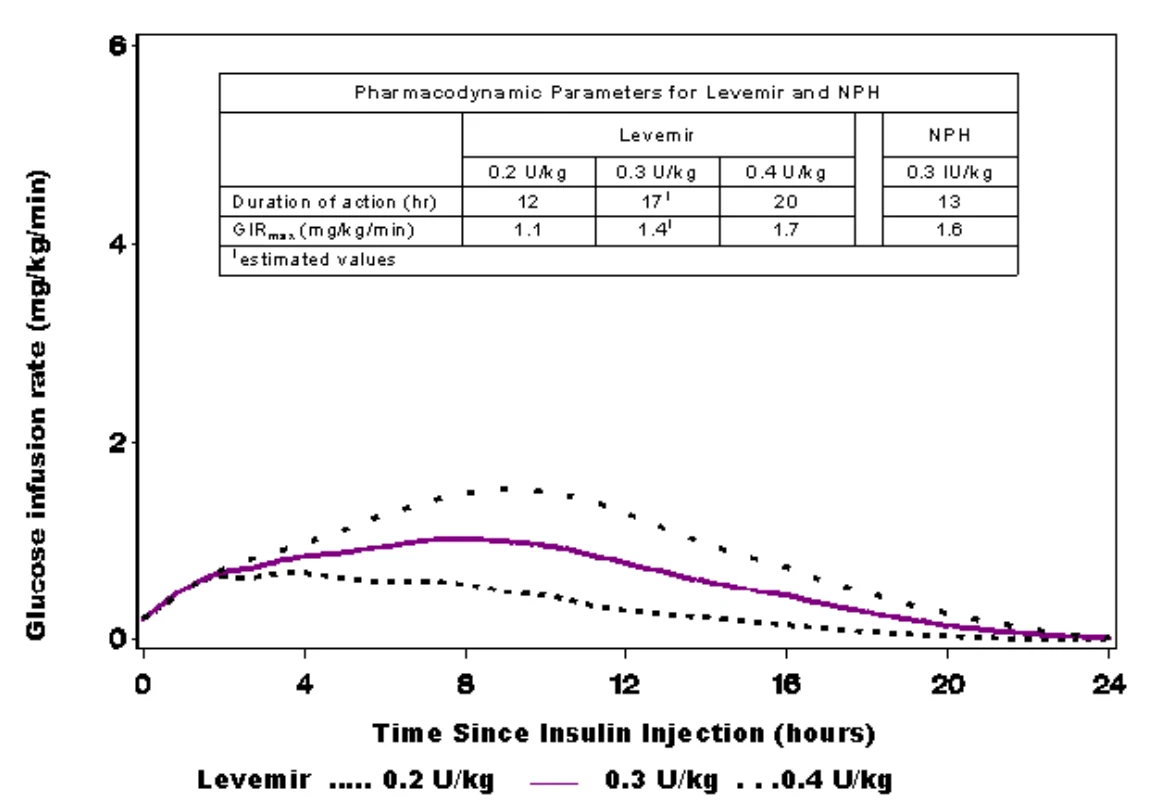
The duration of action is up to 24 hours (please see Figure 1), depending on dose, providing an opportunity for once or twice daily administration. If administered twice daily, steady state will occur after 2-3 dose administrations. For doses in the interval of 0.2 - 0.4 U/kg, Levemir® exerts more than 50% of its maximum effect from 3-4 hours and up to approximately 14 hours after dose administration.
Dose proportionality in pharmacodynamic response [maximum effect, duration of action (range: 6 - 24 hours), total effect] is observed after subcutaneous administration.
The time action profile of Levemir® shows significantly less intra-patient variability than other basal insulins. This reduced variability results in a more predictable glycemic response for an individual.
In long-term treatment trials (≥ 6 months) in patients with type 1 diabetes, fasting plasma glucose was improved with Levemir® compared with NPH insulin when given as basal-bolus therapy. Glycemic control, measured as glycosylated hemoglobin (HbA1c) with Levemir® is comparable to NPH insulin.
The overall risk of hypoglycemia did not differ between type 1 patients treated with Levemir®, NPH or insulin glargine.
The risk of nocturnal hypoglycemia was reduced by 22% for Levemir® as compared to NPH.
The risk of severe hypoglycemia was 72% lower (p<0.047) and nocturnal hypoglycemia was 32% (p<0.046) lower with insulin detemir when compared to insulin glargine, Study NN304-
1372.
Clinical trials in patients with type 2 diabetes treated with basal insulin in combination with oral antidiabetic drugs demonstrated that glycemic control (HbA1c) with Levemir® is comparable to NPH and insulin glargine and associated with less weight gain (see CLINICAL TRIALS section).
In trials with the use of OAD-insulin combination therapy Levemir® treatment resulted in a lower risk of minor nocturnal hypoglycemia compared to NPH.
10.3 Pharmacokinetics
Table 6: Summary of insulin detemir’s Pharmacokinetic Parameters in subjects with type 1 Diabetes
| Single dose (U/kg) | Cmax (pmol/L) Mean (SD) | Tmax (min) median (minimum;maximum) | AUC0-∞ (pmol·103·min/L) mean (SD) |
|---|---|---|---|
| 0.1 | 1434 (920) | 240 (119; 480) | 1232 (1119) |
| 0.2 | 2896 (1910) | 360 (119; 660) | 1681 (925) |
| 0.4 | 4422 (1774) | 420 (300; 540) | 3709 (1766) |
| 0.8 | 7278 (2809) | 420 (300; 600) | 6715 (2665) |
| 1.6 | 16535 (9344) | 420 (180; 480) | 14235 (6181) |
Absorption
In clinical trials, after subcutaneous injection of Levemir® in healthy subjects and in patients with diabetes, intra-subject variation in absorption is lower for Levemir® than NPH insulin and insulin glargine. Dose proportionality in serum concentrations was observed after subcutaneous administration.
Maximum serum concentration is reached between 6 and 8 hours after administration.
Bioavailability of insulin detemir is approximately 60%.
Distribution, Metabolism and Excretion: The terminal half-life after subcutaneous administration is determined by the rate of absorption from the subcutaneous tissue. The terminal half-life is between 5 and 7 hours depending on dose.
An apparent volume of distribution for insulin detemir (approximately 0.1 L/kg) indicates that a high fraction of insulin detemir is circulating in the blood.
Degradation of insulin detemir is similar to that of human insulin; all metabolites formed are inactive.
The results of the in vitro and in vivo protein binding studies demonstrate that there is no clinically relevant interaction between insulin detemir and fatty acids or other protein bound drugs.
Special Populations and Conditions
- Sex No clinically relevant difference between genders is seen in pharmacokinetic parameters.
- Pregnancy and Breast-feeding The effect of pregnancy on the pharmacokinetics of Levemir® has not been studied. A clinical trial in pregnant women investigated the efficacy and safety of Levemir® compared to NPH insulin (see CLINICAL TRIALS, Pregnancy).
- Ethnic Origin In two trials in healthy Japanese and Caucasian subjects, there were no clinically relevant differences seen in pharmacokinetic parameters.
Hepatic Insufficiency: Individuals with severe hepatic dysfunction, without diabetes, were observed to have lower AUCs as compared to healthy volunteers.
Caution should be taken when making general dosing recommendations for subjects with liver impairment. As with other insulin preparations, titration with Levemir® and glucose monitoring should be intensified in patients with liver impairment.
- Renal Insufficiency: There was no clinically relevant difference in pharmacokinetics of Levemir® between subjects with renal impairment and healthy subjects.
- Smoking: The effect of smoking on the pharmacokinetics and pharmacodynamics of Levemir® has not been studied.
- Obesity: In controlled clinical trials, which included patients with Body Mass Index (BMI) up to 50 kg/m2, subgroup analyses based on BMI did not show any differences in safety and efficacy between Levemir® and NPH insulin.
Detailed Pharmacology
Insulin detemir is derived from human insulin by the omission of residue B30 and acylation of the side-chain amino group LysB29 by the naturally occurring fatty acid tetradecanoic acid.
A protracted pharmacodynamic action of insulin detemir can be attributed to increased self-association and albumin binding compared to human insulin which delays absorption from subcutaneous sites into the bloodstream and leads to slower distribution to target tissues (98 - 99 % bound to albumin in plasma).
The pharmacology of insulin detemir has been extensively examined in vitro and in vivo pre-clinical studies. Insulin detemir was less potent than human insulin in binding and activating the insulin receptor and in stimulating cellular glucose utilisation. This reduction was in the order of 4 - 5 fold as compared to human insulin (varying between 4 and 10 fold in various assays). The explanation for this reduction is linked to the fatty acid side chain at position B29 of the insulin molecule. The marketed version of Levemir® (insulin detemir) is equipotent on a unit to unit basis with human insulin.
Insulin detemir was also shown to have lower binding affinity than human insulin in binding to the IGF-I receptor and to dissociate faster from the insulin receptor than human insulin. These data, together with the reduced insulin receptor binding affinity, explain why insulin detemir is less potent than human insulin in stimulating mitogenesis (see TOXICITY).
The insulin and IGF-I receptor affinities and the metabolic and mitogenic potencies of insulin detemir are all reduced by approximately the same extent as compared to human insulin. Analogues showing a disproportionate increase in IGF-I receptor affinity over insulin receptor affinity have a greater mitogenic potential than human insulin. Thus, the balance between metabolic and mitogenic properties is similar for insulin detemir as for human insulin, which is beneficial from a safety perspective.
The low receptor binding affinity of insulin detemir combined with the high binding to serum albumin could give rise to a larger fraction of insulin detemir to undergo non-receptor mediated elimination compared to human insulin. This is thought to result in a low potency of insulin detemir in animal species like rabbits, mice and rats. Similarly, clinical trials have consistently shown that insulin detemir must be dosed at a higher molar dose than human insulin to provide comparable metabolic effect.
Insulin detemir is equipotent with human insulin in some species, e.g. in pig and dog (Table 16).
Table 16: In vivo potency of insulin detemir in various species.
| Species | Relative potency of insulin detemir compared to NPH insulin (molar basis) | Relative potency of insulin detemir normalized to the potency estimated in humans (unit basis) |
|---|---|---|
| Mouse | 0.06 | 0.24 |
| Rat | 0.15 | 0.6 |
| Rabbit | 0.05 | < 0.2 |
| Dog | ~ 1 | 4 |
| Pig | ~1 | 4 |
| Human | Approx. 0.25 | 1 |
The pharmacological data for receptor binding, cellular metabolic activity and hypoglycemic activity in non-diabetic and diabetic animal models show that insulin detemir has the molecular pharmacology typical of insulin. Experiments in pigs furthermore indicate that insulin detemir has a flat and prolonged action profile compared to NPH insulin.
Cardiovascular studies plus a relevant range of standard behavioural and organ function tests and interaction studies have been conducted in rats and dogs. When initiating the safety pharmacology programme, the tentative human therapeutic dose was expected to be 1.8 nmol/kg. Dose level was selected to be 100 times the human therapeutic dose, but because of the lower potency shown in subsequent clinical trials the actual doses were only 15 - 25 times higher.
Dose levels used in rodents were up to 180 nmol/kg. In dogs, the highest dose administered was 18 nmol/kg (Table 16) due to the high sensitivity of this species to insulin treatment. No unanticipated findings were observed. In anaesthetised rats, increased blood pressure was observed at 180 nmol/kg. This finding was believed to be a stress-related reaction to the induced hypoglycemia. In anaesthetised dogs, a reduction in blood pressure was induced at 18 nmol/kg (Table 17) probably due to hypoglycemia. Other expected effects most likely related to hypoglycemia were decreased spontaneous diuresis (Table 16) at dose levels above the expected human therapeutic dose. The doses tested were above the doses used in the clinical development programme and therefore considered sufficient.
In conclusion, the safety pharmacology programme raised no safety issues.
Table 17: Safety Pharmacology
| Test | Doses1 (nmol/kg) | Results |
|---|---|---|
| Irwin test, mouse | 0, 1.8, 18, 180 | 18 and 180 nmol/kg - minor and short-lasting effects seen in some animals: decreased reactivity, spontaneous activity and exploration with some visual placing loss. |
| Locomotor, mouse | 0, 1.8, 18, 180 | 18 and 180 nmol/kg – statistical significant dose-dependent inhibition of static movements and active time. Marked reduction in rearing activity. |
| Hexobarbitone, mouse | 0, 1.8, 18, 180 | No significant effects on time to onset of sleep or duration of sleep induced by hexobarbitone. |
| Alcohol, mouse | 0, 1.8, 18, 180 | No significant effects on time to onset of sleep or duration of sleep induced by alcohol. 180 nmol/kg – mortality rate similar to positive control. |
| Anti-convulsant activity, mouse | 0, 1.8, 18, 180 | No inhibitory effects on pentylenetetrazol-induced convulsant activity. |
| Pro-convulsant activity, mouse | 0, 1.8, 18, 180 | No enhancing effect on pentylenetetrazol-induced convulsant activity. |
| Analgesic effect, mouse | 0, 1.8, 18, 180 | No effect on acetic acid-induced writhing in mice. |
| Body temperature, rat | 0, 1.8, 18, 180 | No significant effect on body temperature over a period of 24 hours. |
| Cardiovascular and respiratory, rat | 0, 1.8, 18, 180 | No effects in low doses (1.8 and 18 nmol/kg). Marginal but significant increase in mean and diastolic blood pressure most pronounced 45 minutes after dosing (180 nmol/kg). No ECG abnormalities detected. No effects on respiratory system. |
| Test | Doses1 (nmol/kg) | Results |
|---|---|---|
| Plasma levels, anaestethized rat | 0, 1.8, 18, 180 | Dose dependent plasma concentration was attained. Maximum concentration was reached 45 minutes after dosing. |
| Cardiovascular and respiratory, dog | 0, 0.18, 1.8, 18 | No effect in low doses (0.18 and 1.8 nmol/kg). 18 nmol/kg – marginal decrease in diastolic blood pressure, significant at 3 - 4 hours after dosing. Significant increase in pO2 of arterial blood at 2 hours after dosing. No effects on respiratory system. |
| Water and electrolyte metabolism, rat | 0, 1.8, 18, 180 | Dose-dependent mild diuretic effect up to 4 hours after injection (18 and 180 nmol/kg). Slight and transient reduction in specific gravity of the urine (18 nmol/kg). Increase in urine volume and electrolyte excretion, decrease in specific gravity and osmolality (180 nmol/kg). The effects were apparent for 4 hours after dosing, but had disappeared by 24 hours. |
| Autonomic nervous system and smooth muscle, guinea pig ileum | 0.1 nM, 1nM, 10 nM, 100 nM, agonists | No effect on the baseline tension or the contractile response induced by the agonists histamine and acetylcholine. |
| Digestive System, mouse | 0, 1.8, 18, 180 | No significant effect on the gastrointestinal motility or irritation on the gastric mucosal surface. |
1 single dose
11 STORAGE, STABILITY AND DISPOSAL
Before Opening: Levemir® (insulin detemir) should be stored between 2°C and 8°C (in a refrigerator) not near a freezing compartment. Do not freeze. In order to protect from light, Levemir® Penfill® cartridges should be kept in the outer carton.
In order to protect from light, keep the cap on when Levemir® FlexTouch® is not in use.
Levemir® Penfill®: During use or when carried as a spare: Store below 30°C. Do not refrigerate. Do not freeze. Use within 42 days.
Levemir® FlexTouch®: During use or when carried as a spare: Store below 30°C. Can be stored in a refrigerator (2°C - 8°C). Do not freeze. Use within 42 days.
Levemir® should not be used after the expiry date printed on the package.
12 SPECIAL HANDLING INSTRUCTIONS
Penfill®/FlexTouch®: Needles and Levemir® Penfill®FlexTouch® should never be shared between patients, even if the needle is changed.. The cartridge must not be refilled.
Levemir® must not be used if it does not appear clear and colourless.
Levemir® which has been frozen must not be used.
The patient should be advised to discard the needle after each injection.
PART II: SCIENTIFIC INFORMATION
13 PHARMACEUTICAL INFORMATION
Drug Substance
Proper name: Insulin Detemir
Chemical name: Lys B29-(Nε-tetradecanoyl) des (B30) human insulin
Molecular formula and molecular mass: C267H402O76N64S6 and 5916.9
Insulin detemir differs from human insulin in that the amino acid molecule in position B30 has been omitted and a 14-C fatty acid chain has been attached to position B29.
Structural formula:
Figure 2 – Structural formula of insulin detemir
(A1) (A21) (B1) (B29) Gly Ile Val Glu Gln Cys Cys Thr Ser Ile Cys Ser Leu Tyr Gln Leu Glu Asn Tyr Cys Asn Cys Leu His Gln Asn Val Phe Gly Ser His Leu Val Glu Ala Leu Tyr Leu Val Cys Gly Glu Arg Gly Phe Phe Tyr Thr Pro Lys NHC O S S S S S S
Pharmaceutical standard: House Standard
Product Characteristics:
Levemir® (insulin detemir) is a sterile, aqueous, clear, colourless and neutral solution. One unit (U) of Levemir® corresponds to one IU of human insulin. One unit of Levemir® contains 0.142 mg salt-free anhydrous insulin detemir. Each milliliter of Levemir® contains 100 U (14.2 mg/ml) insulin detemir, 0.89 mg disodium phosphate dihydrate, 30.0 mg mannitol, 2.06 mg metacresol, 1.80 mg phenol, 1.17 mg sodium chloride, 65.4 μg zinc acetate and water for injection. Hydrochloric acid and/or sodium hydroxide may be added to adjust pH. Levemir® has a pH of approximately 7.4.
Viral Inactivation
Levemir® (insulin detemir) is considered to be virologically safe.
14 CLINICAL TRIALS
14.1 Trial Design and Study Demographics
The efficacy and safety of Levemir® given once-daily at bedtime or twice-daily (before breakfast and at bedtime, or at 12-hour intervals) was compared to that of once-daily or twice-daily NPH insulin or once-daily glargine in open-label, randomized, active control, parallel studies of efficacy.
In general, Levemir® achieved a level of glycemic control similar to NPH insulin and insulin glargine, as measured by glycosylated hemoglobin (HbA1c). The overall rate of hypoglycemia did not differ between patients with diabetes treated with Levemir® and those treated with NPH insulin or insulin glargine.
Within-subject variation in glycemic excursions, and fluctuations throughout the day were generally reduced with use of Levemir® as compared to NPH insulin. In combination with a short or rapid-acting insulin, variability of fasting blood glucose was consistently and significantly lower with Levemir® in both type 1 and type 2 patients compared to NPH insulin. In type 1 and type 2 diabetes trials, in contrast to comparator treatments, Levemir® was not associated with significant weight gain.
14.2 Study Results
Type 1 Diabetes:
In three large randomized, controlled clinical studies, adult patients with type 1 diabetes (NN304-1335, n = 747; NN304-1447, n = 400; NN304-1448, n = 408) were randomized to basal-bolus treatment with once- or twice-daily Levemir® or with NPH insulin once- or twice-daily for 4 to 6 months. The bolus (mealtime) treatment was regular human insulin or insulin aspart. In these studies, Levemir® and NPH insulin had a similar effect on glycosylated hemoglobin, with a similar overall rate of hypoglycemia. Nocturnal glucose profiles were flatter and smoother, and the risk for nocturnal hypoglycemia was reduced (by 22%) for Levemir® as compared to NPH insulin. Levemir®, in contrast to comparator treatment, was associated with weight loss or smaller weight increase. In the secondary outcomes, Levemir® demonstrated significantly improved fasting plasma glucose (FPG) and within-subject variation with similar overall rates of hypoglycemia and safety profiles including adverse events, laboratory safety parameters, physical examination, and vital signs, compared with NPH insulin.
The efficacy and safety of Levemir® in adolescents and children with type 1 diabetes aged 2 -17 years has been studied for up to 12 months in two randomized, controlled clinical trials (NN304-1379 and NN304-1689). One trial was extended for an additional 12 months (total of 24 months treatment data) to assess antibody formation after long-term treatment with Levemir®.The extension which also assessed efficacy and safety was uncontrolled (Table 7).
A 6 month, open-labelled, randomized, parallel efficacy and safety study (NN304-1379, n=347) compared Levemir® and NPH in children and adolescents (aged 6-17 years) with type 1 diabetes on a once or twice daily basal-bolus regimen. Glycemic control with Levemir®, as measured by HbA1c, was demonstrated to be similar to NPH insulin in children and adolescents, with a decrease in mean HbA1c of approximately 0.8%-point with both treatments. The Levemir® group had lower mean FPG [8.4 vs. 9.6 mmol/L, ] and less day-to-day variation in home-measured FPG [SD 3.3 vs. 4.3, ]. The relative risk of experiencing any hypoglycemic episode was similar between the two treatment groups , while the risk of experiencing a nocturnal hypoglycemic episode was 26% lower with Levemir® . Levemir® resulted in a smaller increase in mean BMI at the end of treatment, compared to NPH insulin. BMI was standardized by Z-scores in order to compare different age groups. On average, the BMI in the insulin detemir group increased by 0.2 kg/m2 during the trial, while the BMI in the NPH insulin group increased by 0.7 kg/m2 .
A 12 month, open-labelled, randomized, parallel efficacy and safety study (NN304-1689, n=347) compared Levemir® and NPH in children and adolescents (aged 2-16 years) with type 1 diabetes on a basal-bolus regimen with insulin aspart as bolus insulin at each meal. Randomization was stratified by age (2-5 years, n =82, 6-16 years, n=265). Glycemic control with Levemir®, as measured by HbA1c, was demonstrated to be similar to NPH insulin in children and adolescents, with an increase in mean HbA1c over the trial period of 0.34%-point with Levemir® and 0.22%-point with NPH. The HbA1c results were similar in children aged 2-5 years and children aged 6-16 years. FPG at end of trial was 8.0 mmol/L with Levemir® and 8.6 mmol/L with NPH. Day-to-day variation in home-measured FPG was less with Levemir® than with NPH [SD 2.6 vs. 3.6]. The rates of any hypoglycemic episodes and of nocturnal episodes were 56.3 and 8.2 per subject year of exposure, respectively, for Levemir® and 71.0 and 13.1 per subject year of exposure , respectively, with NPH. The mean change in body weight from baseline to 52 weeks of treatment increased by 2.7 kg in the patients who received insulin detemir compared to a mean increase of 3.6 kg in the patients treated with NPH insulin.
Table 7: Type 1 Diabetes Mellitus - Pediatric
NN304-1379 (6-17 years) 26 weeks | NN304-1689 (2-16 years) 52 weeks | ||||
| Levemir® | NPH | Levemir® | NPH | ||
| Intent-to-Treat Population (N) | 232 | 115 | 177 | 170 | |
| HbA1c (%) | |||||
| 8.8 | 8.8 | 8.4 | 8.4 | |
| 8.75 | 8.64 | |||
| -0.7* | -0.8* | 0.34** | 0.24** | |
| 0.1 (-0.1, 0.3) | 0.1 (-0.1; 0.4) | |||
| Basal insulin dose (units/day) | |||||
| 24 | 26 | 17 | 17 | |
| 8 | 6 | 8 | 7 | |
| Total insulin dose (units/days) | |||||
| 48 | 50 | 35 | 34 | |
| 9 | 7 | 10 | 8 | |
| FBG (mg/dl) | |||||
| 181 | 181 | 135 | 141 | |
| -39 | -21 | -10** | 0** | |
| ||||
| Body weight (kg) | ||||
| 46.3 | 46.2 | 37.4 | 36.5 |
| 1.6* | 2.7* | 2.7** | 3.6** |
*From an ANCOVA model adjusted for baseline value, geographical region, gender and age (covariate)
** From an ANCOVA model adjusted for baseline value, country, pubertal status at baseline and age (stratification factor)
Pregnancy
In a randomised controlled clinical trial, pregnant women with type 1 diabetes (n = 310) were treated in a basal-bolus regimen where Levemir® (n = 152) was compared to NPH insulin (n = 158) with insulin aspart as meal time insulin.
Levemir® was shown to be non-inferior to NPH insulin measured by HbA1c. The mean HbA1c, at gestational week 36, was 6.27% in Levemir® treated group and 6.33% in NPH treated group.
The target of HbA1c ≤ 6.0% at both gestational week 24 and 36 was reached by 41% of the subjects in the Levemir® group and by 32% in the NPH insulin group.
At gestational week 24 and 36, mean FPG were 5.38 mmol/L and 4.76 mmol/L respectively, for Levemir® and 6.32 mmol/L and 5.41 mmol/L respectively for NPH insulin.
There was no statistically significant difference between Levemir® and NPH insulin treatment groups in the rate of hypoglycemic episodes during pregnancy and the overall safety profile was similar for Levemir® and NPH insulin during pregnancy on pregnancy outcomes as well as on the foetes and the newborn.
Type 2 Diabetes: Basal-Bolus regimen
In two large, randomized, controlled clinical studies (NN304-1336 = 505 and NN304-1385 = 394) in adults with type 2 diabetes, Levemir® was evaluated up to 6 months as part of a regimen of Levemir® once-or-twice daily plus bolus insulin aspart. The comparator basal insulin in both trials was NPH insulin plus either insulin aspart or human soluble insulin. As measured by values of glycosylated hemoglobin or fasting plasma glucose, Levemir® had efficacy similar to the corresponding once-or twice-daily NPH insulin. The overall incidence of hypoglycemia (which was lower for type 2 diabetes than type 1 diabetes) was generally similar for Levemir® and NPH insulin. Levemir® in contrast to comparator treatment, was associated with significantly less weight gain.
Type 2 Diabetes: Combination Therapy with Oral Anti-Diabetic Agents (OADs)
Three (intermediate and long-term) phase 3 trials (NN304-1632, NN304-1373, and NN304-1530) were conducted to study the safety and efficacy of insulin detemir when used in combination with OADs in subjects with type 2 diabetes, who are inadequately treated on oral agents alone. All three trials were randomized, parallel, open-labelled multi-centre trials, in which the therapeutic response to Levemir® was compared to that of NPH insulin or insulin glargine. Subjects were titrated individually according to predetermined targets for glycemic control (“treat-to-target”) with continuous dose titration throughout the trials based on self-measured plasma glucose (SMPG) recordings.
Target-driven titration led to clinically relevant reductions in HbA1c and FPG. HbA1c decreased similarly with Levemir® as with NPH insulin or insulin glargine. Treatment with Levemir® was confirmed to be well within the predefined limit of noninferiority to treatment with NPH insulin or insulin glargine with respect to HbA1c at the end of treatment in all three trials (Table 14). FPG decreased considerably from baseline to end of treatment in all treatment groups in all three trials. The average decrease in FPG was similar with insulin detemir compared to NPH insulin and insulin glargine. In trial NN304-1632, morning administration of Levemir® resulted in statistically significantly higher FPG levels compared to evening administration of NPH insulin. This could be expected considering that the basis for titration of Levemir® morning doses were pre-dinner plasma glucose concentrations rather than pre-breakfast values as used for the evening doses.
The proportion of subjects who reported one or more hypoglycemic episodes during the treatment period in the confirmatory trials was consistently lower with Levemir® than with NPH insulin throughout the treatment period and lower with Levemir® compared to insulin glargine during the initiation period, but thereafter similar in the two treatment groups.
There is a lower risk of nocturnal hypoglycemic episodes with insulin detemir compared with NPH insulin when used as add-on treatment to OADs in subjects with type 2. There is a slightly lower risk of nocturnal hypoglycemic episodes with insulin detemir compared to insulin glargine in clinical studies when HbA1c levels were taken into account (NN304-1373).
Significantly lower weight gain was observed in clinical studies in Trial NN304-1632, NN304-1373 and NN304-1530 in subjects with type 2 diabetes using OADs. Subjects on NPH insulin experienced a significantly larger weight increase compared to insulin detemir. A significantly lower increase in body weight was also seen with insulin detemir compared with insulin glargine after 52 weeks of treatment p<0.001 once daily detemir vs. glargine; p<0.012 twice daily detemir vs. glargine.
Exploratory analyses with covariate adjustments for HbA1c, gave similar results, indicating that changes in body weight were independent of individual differences in HbA1c.
Table 8: Change in body weight after insulin treatment
Study duration | Insulin detemir once | Insulin detemir twice | NPH insulin | Insulin glargine |
| 20 weeks | +0.7 kg | +1.6 kg | ||
| 26 weeks | +1.2 kg | +2.8 kg | ||
| 52 weeks | +2.3 kg | +3.7 kg | +4.0 kg |
Table 9: Summary of patient demographics for clinical trials in adults, children and adolescents with type 1 diabetes
| Stud y | Trial design | Dosage, route of administration and duration | Study subjec ts (n)* | Mean age (Rang e) | Gend er |
|---|---|---|---|---|---|
| NN30 4-1335 | Randomized, controlled, once daily (bedtime) Levemir or NPH in combination with soluble insulin before each meal in patients with type 1 diabetes. | Administered subcutaneously, once daily (bed time), 6 months |
| Treatme nt Group | Daily basal insulin dose (U/kg) | Daily bolus insulin dose (U/kg) | ||
| Pre-stud y mea n | End of stud y mea n | Pre-stud y mea n | End of stud y mea n | |
| Levemir | 0.31 | 0.27 | 0.44 | 0.47 |
| NPH | 0.31 | 0.33 | 0.44 | 0.44 |
| 747 | 40.5 (18-77) | Males and Femal es | |||
| NN30 4-1447 | Randomized, controlled, Levemir/NovoR apid compared to NPH/NovoRapi d treatment in adult patients with type 1 diabetes | Administered subcutaneously, twice daily, 16 weeks |
| Treatme nt Group | Daily basal insulin dose (U/kg) | Daily bolus insulin dose (U/kg) | ||
| Pre-stud y mea n | End of stud y mea n | Pre-stud y mea n | End of stud y mea n | |
| Levemir | 0.35 | 0.43 | 0.39 | 0.39 |
| NPH | 0.32 | 0.38 | 0.37 | 0.34 |
| 400 | 40.2 (18-77) | Males and Femal es |
| Stud y | Trial design | Dosage, route of administration and duration | Study subjec ts (n)* | Mean age (Rang e) | Gend er |
|---|---|---|---|---|---|
| NN30 4-1448 | Randomized, controlled, Levemir/NovoR apid compared to NPH/NovoRapi d treatment in adult patients with type 1 diabetes. | Administered subcutaneously, twice daily, 16 weeks |
| Treatme nt Group | Daily basal insulin dose (U/kg) | Daily bolus insulin dose (U/kg) | ||
| Pre-stud y mea n | End of stud y mea n | Pre-stud y mea n | End of stud y mea n | |
| Levemir | 0.36 | 0.49 | 0.40 | 0.38 |
| NPH | 0.39 | 0.45 | 0.40 | 0.38 |
| 408 | 40.2 (18 -76) | Males and Femal es | |||
| NN30 4- 1379 | Randomized, open, parallel, active controlled (NPH insulin), basal/bolus human soluble insulin (HIS) regimen in children and adolescents with type 1 diabetes. | Administered subcutaneous, twice daily, 16 weeks |
| Daily basal insulin dose (U/kg) | Daily bolus insulin dose (U/kg) | |||
| Pre-study mean ** | End of stud y mea n | Pre-study mean ** | End of stud y mea n | |
| Leve mir | NA | 0.66 | NA | 0.52 |
| NPH | NA | 0.64 | NA | 0.51 |
| 347 | 11.9 (6 – 17) | Males and Femal es | |||
| NN30 4-1689 | Randomized, open, parallel, active controlled (NPH insulin), basal/bolus insulin aspart regimen in children and adolescents with type 1 diabetes. | Administered subcutaneously, once or twice daily, |
| Daily basal insulin dose (U/kg) | Daily bolus insulin dose (U/kg) | |||
| Pre-study mean ** | End of stud y mea n | Pre-study mean ** | End of stud y mea n | |
| Levem ir® | NA | 0.60 | NA | 0.48 |
| NPH | NA | 0.58 | NA | 0.45 |
| 347 | 9.9 (2-16) | Males and Femal es |
| Stud y | Trial design | Dosage, route of administration and duration | Study subjec ts (n)* | Mean age (Rang e) | Gend er |
|---|---|---|---|---|---|
| NN30 4-1690 | Uncontrolled extension of NN304-1689 basal/bolus Levemir®/insuli n aspart in children and adolescents with type 1 diabetes. | Administered subcutaneously, once or twice daily, 52 weeks |
| Daily basal insulin dose (U/kg) | Daily bolus insulin dose (U/kg) | |||
| Pre-study mean ** | End of stud y mea n | Pre-study mean ** | End of stud y mea n | |
| Levem ir® | NA | NA | NA | NA |
| NPH | NA | NA | NA | NA |
| 146 | 11.1 (3.1-17.9) | Males and Femal es |
* Number of exposed patients
* * A large variety of insulin preparations (including human insulin and insulin analogues as separate injections and pre-mixed preparations) and injection regimens were used before the start of the trial. The overall distribution of regimens was similar in the two treatment groups. The mean pre-trial daily dose of basal insulin per kg body weight prior to randomization was similar in the two treatment groups. The mean daily bolus insulin dose per kg body weight remained unchanged during the trial in both treatment groups.
Table 10: Summary of patient demographics for clinical trial NN304-1687 in pregnant women with type 1 diabetes
| Study | Trial design | Dosage, route of administration and duration | Study subject s (n)* | Mean age (Rang e) | Gende r |
|---|---|---|---|---|---|
| NN30 4-1687 | Randomize d, open, parallel, active controlled (NPH insulin), basal/bolus insulin aspart regimen in pregnant women with type 1 diabetes. |
| Daily basal insulin dose (U/kg) | Daily bolus insulin dose (U/kg) | |||
| Pre-study mean | Gest. Week 36 | Pre-study mean | Gest. Week 36 | |
| Levemir® | 0.32 | 0.46 | 0.36 | 0.71 |
| NPH | 0.37 | 0.46 | 0.37 | 0.59 |
| Administered subcutaneously, once or twice daily during pregnancy | 310 expose d subject s were pregna nt at some point during the trial. | 30.1 (21-43) | Female s |
* Number of exposed patients
Table 11: Study results – type 1 Adults: Combined ANOVA of HbA1c (%) at End of Trial in type 1 Diabetes Mellitus (Studies 1335, 1447, 1448)
| Primary Endpoints | Levemir | NPH | Difference (detemir – NPH) | |||
| HbA1c (16 weeks) | N | Mean (SE) | N | Mean (SE) | Mean | 95% CI |
| 983 | 8.30 (0.10) | 485 | 8.41 (0.10) | -0.11 | [-0.20; -0.01] | |
Table 12: Summary of patient demographics for clinical trials in type 2 diabetes
| Study | Trial design | Dosage, route of administration and duration | Study subjec ts (n)* | Mean age (Rang e) | Gend er |
|---|---|---|---|---|---|
| NN304 -1336 | Open, randomised, parallel study comparing Levemir and NPH in patients with type 2 diabetes, using NovoRapid as bolus insulin. | Administered subcutaneously, once or twice daily, 6 months |
| Treatm ent Group | Daily basal insulin dose (U/kg) | Daily bolus insulin dose (U/kg) | ||
| Pre-stud y mea n | End of stud y mea n | Pre-stud y mea n | End of stud y mea n | |
| Levemir | 0.32 | 0.42 | 0.40 | 0.46 |
| NPH | 0.31 | 0.39 | 0.40 | 0.40 |
| 505 | 60.4 (35-91) | Males and Femal es | |||
| NN304 -1385 | Open, randomized, parallel study comparing Levemir/NovoR apid and NPH/HSI in type 2 patients. | Administered subcutaneously, once or twice daily, 4 months |
| Treatm ent Group | Daily basal insulin dose (U/kg) | Daily bolus insulin dose (U/kg) | ||
| Pre-stud y mea n | End of stud y mea n | Pre-stud y mea n | End of stud y mea n | |
| Levemir | 0.42 | 0.58 | 0.20 | 0.37 |
| NPH | 0.39 | 0.46 | 0.20 | 0.33 |
| 394 | 58.2 (29-80) | Males and Femal es |
| Study | Trial design | Dosage, route of administration and duration | Study subjec ts (n)* | Mean age (Rang e) | Gend er |
|---|---|---|---|---|---|
| NN304 - 1632 | Open-label, randomized, parallel-group trial with once daily Levemir (morning or evening) or NPH (evening) as add-on to current OAD therapy in insulin naïve adult subjects with type 2 diabetes inadequately controlled on current OAD therapy. | Administered subcutaneously, once daily, 20 weeks |
| Treatment Group | Daily basal insulin dose (U/kg) | |
| Start of study mean | End of study mean | |
| Levemir (morning) | 0.13 | 0.50 |
| Levemir (evening) | 0.13 | 0.43 |
| NPH (evening) | 0.12 | 0.38 |
| 498 | 58.5 (29-89) | Males and Femal es | |||
| NN304 - 1373 | Open-label, randomised, parallel-group trial with Levemir (once or twice daily) or glargine (once daily) as add-on to current OAD therapy in insulin naïve adult subjects with type 2 diabetes inadequately controlled on current OAD therapy. | Administered subcutaneously, once or twice daily, 52 weeks * Between group dose differences cannot be interpreted since different dosing regimens were used. |
| Treatment Group | Daily basal insulin dose (U/kg) | |
| Mean at 1 week | Mean at 52 weeks | |
| Levemir (once-daily) | 0.14 | 0.52 |
| Levemir (twice-daily)* | N/A | 1.00 |
| Glargine (once-daily) | 0.14 | 0.44 |
| 582 | 58.9 (27-82) | Males and Femal es |
| Study | Trial design | Dosage, route of administration and duration | Study subjec ts (n)* | Mean age (Rang e) | Gend er |
|---|---|---|---|---|---|
| NN304 - 1530 | Open-label, randomized, parallel-group trial with Levemir (twice daily) or NPH (twice daily) as add-on to current OAD therapy in insulin naïve adult subjects with type 2 diabetes inadequately controlled on current OAD therapy. | Administered subcutaneously, once or twice daily, 24 weeks |
| Treatment Group | Daily basal insulin dose (U/kg) | |
| Mean at 1 week | Mean at 24 weeks | |
| Levemir (twice-daily) | 0.21 | 0.77 |
| NPH (twice-daily) | 0.21 | 0.52 |
| 475 | 60.8 (27-80) | Males and Femal es | |||
| NN221 1-1842 | Multicentre, 26 week randomized, open-label, parallel-group, multinational trial with a 26 week extension to investigate the effect of Insulin Detemir in combination with Liraglutide and Metformin compared to Liraglutide and Metformin in Subjects with type 2 diabetes. | Liraglutide 1.8 mg once daily + metformin or Liraglutide 1.8 mg + Levemir® (insulin detemir)+metformin or Non-Randomized liraglutide 1.8 mg + metformin | 987 | 57.1 (18-80) | Males and Femal es |
* Number of exposed patients
Table 13: Study results – type 2, Basal-Bolus: ANOVA of HBA1c (%) at End of Trial in type 2 diabetes mellitus
| Primary Endpoints | Levemir | NPH | Difference (detemir – NPH) |
Missing 1337 HbA 1336 HbA1c (6 months) | N* | Mean (SE) | N* | Mean (SE) | Mean | 95% CI |
| 315 | 7.63 (0.07) | 155 | 7.48 (0.08) | 0.16 | [0.00; 0.31] | |
| 1385 HbA1c (22 weeks) | 182 | 7.46 (0.07) | 192 | 7.52 (0.07) | -0.062 | [-0.25; 0.13] |
* Number of (modified) intent to treat (ITT) subjects
Table 14: Study results - ANOVA of HbA1c (%) at End of Treatment in Combination with OADs in type 2 diabetes mellitus
| Detemir vs NPH or Glargine | ||||||
| Trial ID Dose regimen | Detemir | NPH or Glargine* | Difference** | |||
| N | Mean (SE) | N | Mean (SE) | Mean | 95% C.I. | |
| 1632 evening Once | 163 | 7.43 (0.088) | 157 | 7.33 (0.087) | 0.104 | –0.081; 0.289 |
| 1632 morning Once | 156 | 7.48 (0.088) | 157 | 7.36 (0.090) | 0.127 | –0.071; 0.324 |
| 1373 Once or twice | 268 | 7.16 (0.078) | 275 | 7.12 (0.078) | 0.045 | –0.114, 0.205 |
| 1530 Twice | 230 | 6.58 (0.064) | 232 | 6.46 (0.063) | 0.126 | –0.002; 0.254 |
| Detemir vs Detemir | ||||||
| Detemir evening | Detemir morning | Difference** | ||||
| 1632*** Once | 163 | 7.32 (0.083) | 156 | 7.35 (0.079) | –0.031 | –0.002; 0.145 |
* Comparator was NPH insulin in Trials NN304-1632 (once daily) and NN304-1530 (twice daily) and insulin glargine (once daily) in Trial NN304-1373.
** Difference is insulin detemir – comparator.
*** NPH insulin was only administered in the evening in Trial NN304-1632, but is compared to both insulin detemir dosed in the evening and in the morning.
Type 2 Diabetes Combination Therapy with Metformin and Liraglutide
This 26-week open-label trial enrolled 987 patients with inadequate glycemic control (HbA1c 7-10%) on metformin (≥1500 mg/day) alone or inadequate glycemic control (HbA1c 7-8.5%) on metformin (≥1500 mg/day) and a sulfonylurea. Patients who were on metformin and a sulfonylurea discontinued the sulfonylurea at start of run-in (Week -12). All patients entered a 12-week run-in period during which they received add-on therapy with liraglutide titrated to 1.8 mg once-daily. The greatest change in HbA1c and body weight was observed during the 12-week run-in period; subjects in the randomized groups had a mean screening HbA1c of 8.3% which decreased to 7.6% and observed change in body weight was 3.5 kg. At the end of the run-in period, 498 patients (50%) achieved HbA1c <7% with liraglutide 1.8 mg and metformin and continued treatment in a nonrandomized, observational arm. Another 167 patients (17%) withdrew from the trial during the run-in period with approximately one-half of these patients doing so because of gastrointestinal adverse reactions [see ADVERSE REACTIONS)]. The remaining 323 patients with HbA1c ≥7% (33% of those who entered the run-in period) were randomized to 26 weeks of once-daily Levemir® administered in the evening as add-on therapy (N=162) or to continued, unchanged treatment with liraglutide 1.8 mg and metformin (N=161). The starting dose of Levemir® was 10 units/day and the mean dose at the end of the 26-week randomized period was 39 units/day (0.41 U/kg). During the 26-week randomized treatment period, the percentage of patients who discontinued due to ineffective therapy was 3.1% in the group randomized to continued treatment with liraglutide 1.8 mg and metformin and 1.2% in the group randomized to add on therapy with Levemir®. The total percentage of withdrawals was 21.1% (N=34) in the group randomized to continued treatment with VICTOZA® 1.8 mg and metformin and 11.1% (N=18) in the group randomized to add on therapy with insulin detemir.
Treatment with Levemir® as add-on to liraglutide 1.8 mg + metformin resulted in statistically significant reductions in HbA1c compared to continued, unchanged treatment with liraglutide 1.8 mg + metformin alone (Table 15). From a mean baseline body weight of 96 kg and 95.3 kg after randomization (Week 0), there was a mean (adjusted) reduction of 0.16 kg in the patients who received Levemir® add-on therapy compared to a mean (adjusted) reduction of 0.95 kg in the patients who continued on unchanged treatment with liraglutide 1.8 mg + metformin alone, respectively.
Table 15: Results of a 26-week open-label trial of Levemir® as add on to VICTOZA® + metformin compared to continued treatment with VICTOZA® + metformin alone in patients not achieving HbA1c < 7% after 12 weeks of metformin and VICTOZA® (Week -12 to 0)
| Levemir® + VICTOZA® + Metformin | VICTOZA®+Metfor min | |
| Intent-to-Treat Population (N) | 162 | 157 |
| HbA1c (%) | ||
| Na | 160 | 149 |
| Mean at baseline (after randomization, Week 0) | 7.6 | 7.6 |
| Change from baseline (adjusted mean) | -0.5 | 0.0 |
| Difference from Victoza® + metformin arm (adjusted mean) b | -0.5* | |
| 95% Confidence Interval | (-0.7, -0.4) | |
| Na | 160 | 149 |
| Estimated proportion of patients achieving HbA1c <7% c | 43% | 17% |
| Fasting Plasma Glucose (mmol/L) | ||
| Na | 160 | 154 |
| Mean at baseline (after randomization, Week 0) | 9.23 | 8.81 |
| Change from baseline (adjusted mean)b | -2.12 | -0.39 |
aIntent-to-treat population using last observation on study. Subjects with no post-baseline measurements are excluded from analysis.
bLeast squares mean from an ANCOVA with treatment, country and previous OAD as factors and baseline value as a covariate.
c Estimates from a logistic regression model with treatment as fixed effect and baseline HbA1c as covariate.
*p-value <0.0001
Observed Antibody Formation:
Antibody development has been observed with the use of Levemir® in adult and pediatric patients. A positive correlation was observed between the dose of insulin detemir at end of trial and the formation of insulin detemir specific antibodies in adults and pediatric subjects. No correlation was observed between formation of insulin detemir specific antibodies and change in HbA1c, while a positive correlation was observed between formation of insulin detemir specific antibodies and hypoglycemic episodes in pediatric subjects.
NN304-1689 in children and adolescents was extended for an additional 12 months (total of 24 months treatment data) to assess antibody formation after long-term treatment with Levemir®. After an initial increase in insulin antibodies after initiating treatment with Levemir®, the insulin antibodies decreased. The level of antibodies did not seem to have a negative effect on neither HbA1c nor insulin dose. Results indicate that antibody development had no negative effect on glycemic control and insulin detemir dose.
15 MICROBIOLOGY
No microbiological information is required for this drug product.
16 NON-CLINICAL TOXICOLOGY
The general toxicity (single-dose and repeat-dose toxicity) was assessed after intravenous and subcutaneous single-dose administration to mice and rats and after subcutaneous repeat-dose administration to rats and dogs for up to six and twelve months, respectively. These studies demonstrated no toxicity potential of insulin detemir other than effects directly or indirectly related to hypoglycemia. This is in agreement with published studies where a fast-acting formulation (Novolin®ge Toronto), a slow release formulation (Novolin®ge NPH) and a rapid-acting insulin analogue (insulin lispro) demonstrated very little effects other than those associated with hypoglycemia.
Table 18: Single-dose Toxicity Overview
| Species (Strain, Route) | (M + F) Animals per Group | Doses (nmol/kg) | Observed Maximum Non-Lethal Dose (nmol/kg) |
| Rat (SD, s.c.) | 5 + 5 | 0, 375, 1500, 6000, 24000 | Highest non-lethal dose: 24000 nmol/kg in males and females. |
| Rat (SD, i.v.) | 5 + 5 | 0, 375, 1500, 6000, 12000, 24000 | Highest non-lethal dose: 6000 nmol/kg in males and females. |
| Mouse (NMRI, s.c.) | 5 + 5 | 0, 375, 1500, 6000, 24000 | Highest non-lethal dose: 1500 nmol/kg in males and females. |
| Mouse (NMRI, i.v.) | 5 + 5 | 0, 375, 750, 1500, 3000, 6000, 12000 | Highest non-lethal dose: 1500 nmol/kg in males and females. |
Table 19: Repeat-dose Toxicity Overview
| Species (Strain, Route) | Daily Dose (nmol/kg/day) | Number of Animals (main & recovery) | Duration | Results |
|---|---|---|---|---|
| Rat (SPRD, s.c.) | 0 (Vehicle) | M: 12 (+ 6 kinetic); F: 12 (+ 6 kinetic) | 4 weeks | No observed Adverse Effects |
| Species (Strain, Route) | |
|---|---|
| Daily Dose (nmol/kg/day) | Number of Animals (main & recovery) |
| Duration | |
| Results | |
| above 300 nmol/kg/day (apart from local effects) | |
| 30 | M: 12 (+ 6 kinetic); F: 12 (+ 6 kinetic) |
| 96 | M: 12 (+ 6 kinetic); F: 12 (+ 6 kinetic) |
| 300 | M: 12 (+ 6 kinetic); F: 12 (+ 6 kinetic) |
| Rat (SPRD, s.c.) | |
| 0 (Vehicle) | M: 20+10; F: 20+10 |
| 3 months (4 week recovery) | |
| No observed Adverse Effects above 300 nmol/kg/day (apart from local effects) | |
| 30 | M: 20; F: 20 |
| 96 | M: 20+10; F: 20+10 |
| 300 | M: 20+10; F: 20+10 |
| Positive Control (Novolin® NPH, 144 nmol/kg/day weeks 1-3; 72 nmol/kg/day from week 4) | M: 20; F: 20 |
| Rat (SPRD, s.c.) | |
| 0 (Vehicle) | M: 25; F: 25 |
| 6 months | |
| No observed Adverse Effects above 300 nmol/kg/day (apart from local effects) | |
| 30 | M: 25; F: 25 |
| 96 | M: 25; F: 25 |
| 300 | M: 25; F: 25 |
| Positive Control (Novolin® NPH, 72 nmol/kg/day) | M: 25; F: 25 |
| Dog (Beagle, s.c.) | |
| 0 (Vehicle) | M: 4; F: 4 |
| 4 weeks | |
| No observed Adverse Effects above 9 nmol/kg/day (apart from local effects) | |
| 3 | M: 4; F: 4 |
| 6 | M: 4; F: 4 |
| 9 | M: 4; F: 4 |
| Dog (Beagle, s.c.) | |
| 0 (Vehicle) | M: 6; F: 6 |
| 3 months (4 week recovery) | |
| No observed Adverse Effects above 7.2 nmol/kg/day | |
| 1.8 | M: 4; F: 4 |
| 3.6 | M: 6; F: 6 |
| 7.2 | M: 6; F: 6 |
| Positive Control (Novolin® NPH, 7.2 nmol/kg) | M: 4; F: 4 |
| Dog (Beagle, s.c.) | |
| 0 (Vehicle) | M: 4; F: 4 |
| 6 months | |
| No observed Adverse Effects above 1.8 | |
| 1.8 | M: 4; F: 4 |
| 3.6 | M: 4; F: 4 |
| Species (Strain, Route) | |
|---|---|
| Daily Dose (nmol/kg/day) | Number of Animals (main & recovery) |
| Duration | |
| Results | |
| nmol/kg/day | |
| 7.2 | M: 4; F: 4 |
| Positive Control (Novolin® NPH, 7.2 nmol/kg) | M: 4; F: 4 |
| Dog (Beagle, s.c.) | |
| 0 (Vehicle) | M: 4; F: 4 |
| 12 months | |
| No observed Adverse Effects above 7.2 nmol/kg/day | |
| 1.8 | M: 4; F: 4 |
| 3.6 | M: 4; F: 4 |
| 7.2 | M: 4; F: 4 |
| Positive Control (Novolin® NPH, 7.2 nmol/kg/day) | M: 4; F: 4 |
Mutagenicity
A standard set of experiments have been conducted involving the Ames test, the mouse micronucleus test and the test for chromosome aberrations in human lymphocytes. All tests were negative. It was concluded that insulin detemir was not mutagenic under the conditions of these tests.
Mitogenicity
The mitogenic potency of insulin detemir was compared to human insulin in three different cell systems, Chinese Hamster Ovary Cells, K1 strain (CHO-K1), human mammary cancer fibroblasts (MCF-7 cells) and human osteosarcoma cells B10 (Saos/B10 cells).
It was concluded that mitogenic potency of insulin detemir is lower than that of human insulin and that the ratio between mitogenic and metabolic potencies of insulin detemir is similar to that of human insulin.
Carcinogenicity
Carcinogenicity trials have not been performed with insulin detemir. The analysis of mitogenic potential, receptor binding, genotoxicity and chronic rat studies conducted demonstrate that insulin detemir has a similar or reduced carcinogenic potential as compared to NPH insulin.
Immunogenicity
Immunogenicity was tested by comparing the antibody response to insulin detemir with the antibody response in parallel groups of rabbits treated with bovine or porcine insulin. There was no statistically significant difference between the groups receiving insulin detemir and porcine insulin, indicating that the immunogenicity of insulin detemir is either less than or equivalent to that of porcine insulin. There was a statistically significant difference with respect to antibody formation between the groups receiving insulin detemir and bovine insulin, indicating that insulin detemir was less immunogenic than bovine insulin.
In rat and dog toxicology studies, antibody development was either absent or low; indicating that antibody inhibition of the insulin was not an issue in the toxicological studies. Furthermore, the low antibody development in the toxicological studies may indicate a low antigenicity of insulin detemir in rats and dogs.
Pregnancy
In a fertility and embryonic development study, insulin detemir was administered to female rats before mating, during mating, and through pregnancy at doses up to 300 nmol/kg/day (3 times the recommended human dose, based on plasma Area Under the Curve (AUC) ratio). Doses of 150 and 300 nmol/kg/day produced numbers of litters with visceral anomalies. Doses up to 900 nmol/kg/day (approximately 135 times the recommended human dose based on AUC ratio) were given to rabbits during organogenesis. Drug-dose related increases in the incidence of fetuses with gall bladder abnormalities such as small, bilobed, bifurcated and missing gall bladders were observed at doses of 900 nmol/kg/day. The rat and rabbit embryo-fetal development studies that included concurrent human insulin control groups indicated that insulin detemir and human insulin had similar effects regarding embryo-toxicity and teratogenicity.