


Product Monograph - Lumakras
RECENT MAJOR LABEL CHANGES
| 4 DOSAGE AND ADMINISTRATION, 4.2 Recommended Dose and Dosage Adjustment | 10 / 2023 10 / 2024 01 / 2025 |
|---|---|
| 4 DOSAGE AND ADMINISTRATION, 4.4 Administration | 10 / 2023 |
| 7 WARNINGS AND PRECAUTIONS | 08 / 2024 01 / 2025 |
| 7 WARNINGS AND PRECAUTIONS, 7.1.4 Geriatrics | 01 / 2025 |
TABLE OF CONTENTS
Sections or subsections that are not applicable at the time of authorization are not listed.
RECENT MAJOR LABEL CHANGES ........................................................................................3
TABLE OF CONTENTS ..............................................................................................................3
PART I: HEALTH PROFESSIONAL INFORMATION ................................................................5
1 INDICATIONS ..................................................................................................................5
1.1 Pediatrics ..............................................................................................................5
1.2 Geriatrics ..............................................................................................................5
2 CONTRAINDICATIONS ..................................................................................................5
3 SERIOUS WARNINGS AND PRECAUTIONS BOX .......................................................5
4 DOSAGE AND ADMINISTRATION .................................................................................5
4.1 Dosing Considerations .........................................................................................5
4.2 Recommended Dose and Dosage Adjustment ....................................................6
4.3 Reconstitution .......................................................................................................7
4.4 Administration .......................................................................................................7
4.5 Missed Dose .........................................................................................................8
5 OVERDOSAGE ...............................................................................................................8
6 DOSAGE FORMS, STRENGTHS, COMPOSITION AND PACKAGING ........................8
7 WARNINGS AND PRECAUTIONS .................................................................................9
7.1 Special Populations ............................................................................................10
7.1.1 Pregnant Women ............................................................................................10
7.1.2 Breast-feeding ................................................................................................10
7.1.3 Pediatrics ........................................................................................................10
7.1.4 Geriatrics ........................................................................................................11
8 ADVERSE REACTIONS ................................................................................................11
8.1 Adverse Reaction Overview ...............................................................................11
8.2 Clinical Trial Adverse Reactions .........................................................................13
8.2.1 Clinical Trial Adverse Reactions – Pediatrics .................................................15
8.3 Less Common Clinical Trial Adverse Reactions .................................................15
8.3.1 Less Common Clinical Trial Adverse Reactions – Pediatrics .........................15
8.4 Abnormal Laboratory Findings: Hematologic, Clinical Chemistry and Other Quantitative Data ...........................................................................................................15
9 DRUG INTERACTIONS .................................................................................................16
9.1 Serious Drug Interactions ...................................................................................16
9.2 Drug Interactions Overview ................................................................................16
9.3 Drug-Behavioural Interactions ............................................................................16
9.4 Drug-Drug Interactions .......................................................................................16
9.5 Drug-Food Interactions .......................................................................................17
9.6 Drug-Herb Interactions .......................................................................................17
9.7 Drug-Laboratory Test Interactions ......................................................................18
10 CLINICAL PHARMACOLOGY ......................................................................................18
10.1 Mechanism of Action ..........................................................................................18
10.2 Pharmacodynamics ............................................................................................18
10.3 Pharmacokinetics ...............................................................................................18
11 STORAGE, STABILITY AND DISPOSAL .....................................................................21
12 SPECIAL HANDLING INSTRUCTIONS ........................................................................21
PART II: SCIENTIFIC INFORMATION ......................................................................................22
13 PHARMACEUTICAL INFORMATION ...........................................................................22
14 CLINICAL TRIALS ........................................................................................................23
14.1 Trial Design and Study Demographics ...............................................................23
14.2 Study Results .....................................................................................................24
15 MICROBIOLOGY ...........................................................................................................24
16 NON-CLINICAL TOXICOLOGY ....................................................................................24
PATIENT MEDICATION INFORMATION .................................................................................26
“LUMAKRAS, indicated for:
|
|---|
PART I: HEALTH PROFESSIONAL INFORMATION
1 INDICATIONS
LUMAKRAS® (sotorasib) is indicated for:
- the treatment of adult patients with Kirsten rat sarcoma viral oncogene homolog (KRAS) G12C-mutated locally advanced (not amenable to curative therapy) or metastatic non-small cell lung cancer (NSCLC) who have received at least one prior systemic therapy.
This indication is issued market authorization with conditions based on objective response rate (ORR) and duration of response (DOR) (see 14 CLINICAL TRIALS). Continued approval for this indication may be contingent upon verification and description of clinical benefit in a confirmatory trial(s).
1.1 Pediatrics
Pediatrics (< 18 years of age): No data are available to Health Canada; therefore, Health Canada has not authorized an indication for pediatric use.
1.2 Geriatrics
Geriatrics (≥ 65 years of age): In clinical studies, no overall differences in safety or efficacy were observed between geriatric patients (≥ 65 years old) and younger patients.
2 CONTRAINDICATIONS
LUMAKRAS is contraindicated in patients who are hypersensitive to this drug or to any ingredient in the formulation, including any non-medicinal ingredient, or component of the container. For a complete listing, see 6 DOSAGE FORMS, STRENGTHS, COMPOSITION AND PACKAGING.
3 SERIOUS WARNINGS AND PRECAUTIONS BOX
At the time of authorization, no serious warning or precaution had been identified.
4 DOSAGE AND ADMINISTRATION
4.1 Dosing Considerations
Confirm presence of KRAS G12C mutation using a validated test prior to initiation of LUMAKRAS.
NOC/c
NOC/c
NOC/c
4.2 Recommended Dose and Dosage Adjustment
The recommended dosage of LUMAKRAS is 960 mg (eight 120 mg tablets or four 240 mg tablets) orally once daily until disease progression or unacceptable toxicity (see 14 CLINICAL TRIALS).
Dose Modifications
LUMAKRAS dose reduction levels are summarized in Table 1. Dosage modifications for adverse reactions are provided in Table 2.
If adverse reactions occur, a maximum of two dose reductions are permitted. Discontinue LUMAKRAS if patients are unable to tolerate the minimum dose of 240 mg once daily.
Table 1. Recommended Dose Reduction Levels for LUMAKRAS
| Dose Reduction Level | Dose |
|---|---|
| First dose reduction | 480 mg (4 x 120 mg tablets or 2 x 240 mg tablets) once daily |
| Second dose reduction | 240 mg (2 x 120 mg tablets or 1 x 240 mg tablet) once daily |
Table 2. Recommended Dose Modifications for LUMAKRAS
| Adverse Reaction | Severitya | Dosage Modification |
|---|---|---|
| Hepatotoxicity (see 7 WARNINGS AND PRECAUTIONS) | Grade 2 AST or ALT with symptoms or Grade ≥ 3 AST or ALT |
|
| AST or ALT > 3 x ULN with total bilirubin > 2 x ULN |
| |
| Interstitial Lung Disease (ILD)/ pneumonitis (see 7 WARNINGS AND PRECAUTIONS) | Any Grade |
|
| Nausea, vomiting or diarrhea despite appropriate supportive care (including anti-emetic and anti-diarrheal therapy) | Grade ≥ 3 |
|
| Other adverse reactions | Grade ≥ 3 |
|
| ALT = alanine aminotransferase; AST = aspartate aminotransferase; ULN = upper limit of normal a Grading defined by National Cancer Institute Common Terminology Criteria for Adverse Events (NCI CTCAE) version 5.0 | ||
Hepatic Impairment
No dose adjustment is recommended for patients with mild (Child-Pugh A) hepatic impairment. There are limited data on daily LUMAKRAS dosing in subjects with moderate or severe hepatic impairment (Child-Pugh B or C). Use LUMAKRAS in patients with moderate or severe hepatic impairment only if the benefits outweigh the risks (see 10.3 Pharmacokinetics).
Monitor LUMAKRAS related toxicities in patients with hepatic impairment more frequently since these patients may be at increased risk for adverse reactions including hepatotoxicity.
Renal Impairment
Based on population pharmacokinetic analysis, no dose adjustment is recommended for patients with mild and moderate renal impairment (estimated glomerular filtration rate (eGFR) as determined by Modification of Diet in Renal Disease formula (MDRD): ≥ 45 mL/min/1.73m2). However, since data were limited in patients with moderate renal impairment, caution should be exercised when treating these patients (see 10.3 Pharmacokinetics, Special populations).
LUMAKRAS has not been studied in patients with severe renal impairment (eGFR as determined by MDRD: < 30 mL/min/1.73m2).
4.3 Reconstitution
Not applicable.
4.4 Administration
Take LUMAKRAS at the same time each day with or without food. Swallow tablets whole. Do not chew, crush, or split tablets.
Administration to Patients Who Have Difficulty Swallowing Solids
Disperse tablets in 120 mL (4 ounces) of non-carbonated, room temperature water without crushing. Do not use other liquids. Stir until tablets are dispersed into small pieces (the tablets will not completely dissolve) and drink immediately. The appearance of the mixture may range from pale to bright yellow. Rinse the container with an additional 120 mL (4 ounces) of water and drink immediately. If the mixture is not consumed immediately, stir the mixture again to ensure that tablets are dispersed. Consume within two hours of preparation.
If administration through a nasogastric (NG) tube (8 Fr and above) or percutaneous endoscopic gastrostomy (PEG) tube (24 Fr and above) is required, follow the process described above for the initial dispersion. Draw up the mixture into a catheter tip disposable syringe and immediately inject the mixture through the feeding tube. Rinse the container with extra 120 ml of water and flush it down the feeding tube. The resulting dispersed suspension and rinse should be administered as per the NG or PEG tube manufacturer's instructions with appropriate water flushes. Silicone and polyurethane feeding tubes can be used. Administer within two hours of preparation, stored at room temperature.
Coadministration of LUMAKRAS with Acid-Reducing Agents
Avoid coadministration of proton pump inhibitors (PPIs) and H2 receptor antagonists with LUMAKRAS. If treatment with an acid-reducing agent cannot be avoided, take LUMAKRAS 4 hours before or 10 hours after administration of a local antacid (see 9.4 Drug-Drug Interactions and 10.3 Pharmacokinetics).
4.5 Missed Dose
If a dose of LUMAKRAS is missed by greater than 6 hours, resume treatment as prescribed the next day.
If vomiting occurs after taking LUMAKRAS, do not take an additional dose. Resume treatment as prescribed the next day.
5 OVERDOSAGE
There is no clinical experience with overdose with LUMAKRAS. In the event of an overdose, treat the patient symptomatically and institute supportive measures as required.
| For management of a suspected drug overdose, contact your regional poison control centre. |
|---|
6 DOSAGE FORMS, STRENGTHS, COMPOSITION AND PACKAGING
Table 3. Dosage Forms, Strengths, Composition and Packaging
Product Characteristics:
120 mg Tablet
Yellow, oblong-shaped, immediate release, film-coated tablet (7 mm × 16 mm), debossed with “AMG” on one side and “120” on the opposite side.
- HDPE bottles with child-resistant polypropylene closures and aluminum foil induction seal liners containing 120 film-coated tablets.
- HDPE bottle with child-resistant polypropylene closures and aluminum foil induction seal liner containing 240 film-coated tablets.
- PVC/Aclar blisters with aluminum foil backing in each carton. Each blister card contains 8 film-coated tablets. Carton contains 30 blister cards for a total of 240 film-coated tablets.
- PVC/PVDC blisters with aluminum foil backing in each carton. Each blister card contains 8 film-coated tablets. Carton contains 30 blister cards for a total of 240 film-coated tablets.
| Route of Administration | Dosage Form / Strength/Composition | Non-medicinal Ingredients |
| Oral | sotorasib tablet, 120 mg | croscarmellose sodium, iron oxide yellow, lactose monohydrate, magnesium stearate, microcrystalline cellulose, polyethylene glycol, polyvinyl alcohol, talc, titanium dioxide |
| Oral | sotorasib tablet, 240 mg | croscarmellose sodium, iron oxide yellow, lactose monohydrate, magnesium stearate, microcrystalline cellulose, polyethylene glycol, polyvinyl alcohol, talc, titanium dioxide |
240 mg Tablet
Yellow, oval-shaped, immediate release, film-coated tablet (8 mm × 18 mm), debossed with “AMG” on one side and “240” on the opposite side.
- HDPE bottles with child-resistant polypropylene closures and aluminum foil induction seal liners containing 120 film-coated tablets.
- PVC/Aclar blisters with aluminum foil backing in each carton. Each blister card contains 8 film-coated tablets. Carton contains 15 blister cards for a total of 120 film-coated tablets.
7 WARNINGS AND PRECAUTIONS
Hepatic/Biliary/Pancreatic
Hepatotoxicity
LUMAKRAS can cause hepatotoxicity, which may lead to drug-induced liver injury and hepatitis. Among 748 patients with any tumour type who received 960 mg LUMAKRAS once daily (QD), hepatotoxicity related events1, occurred in 19.3% (all grades), including 10.2% (Grade ≥ 3). Drug-induced liver injury, and hepatitis were reported in 2.1% of the population. Among 554 patients with NSCLC who received 960 mg LUMAKRAS once daily (QD), hepatotoxicity related events, occurred in 21.1% (all grades), including 12.6% (Grade ≥ 3). Drug-induced liver injury, and hepatitis were reported in 2.7% of the population.
Serious cases of increased aspartate aminotransferase (AST) / increased alanine aminotransferase (ALT) can occur (see 8.1 Adverse Reaction Overview). A total of 16.2% of patients who received LUMAKRAS had increased AST/ALT, 7.6% were Grade ≥ 3. Increased AST/ALT leading to dose interruption and/or reduction occurred in 7.9% of patients. LUMAKRAS was discontinued due to AST/ALT increases in 2.1% of patients. The median time to first onset for increased AST/ALT was 6.3 weeks (range: 0.4 to 103.1 weeks). LUMAKRAS has also been associated with transient elevations of alkaline phosphatase (ALP) and total bilirubin in 960 mg monotherapy clinical trials.
Recent immunotherapy is a predictive factor for hepatotoxicity with LUMAKRAS. Hepatic disorders occurred more frequently in patients treated with immunotherapy within 3 months prior to starting LUMAKRAS (38%) as compared to those who started sotorasib more than 3 months after completing immunotherapy (17%) or those who never received immunotherapy (22.6%). Regardless of time from prior immunotherapy, elevations improved or resolved with interruption of LUMAKRAS treatment and treatment with corticosteroids.
Cases of liver enzyme increase can be asymptomatic. Monitor liver function tests (ALT, AST and total bilirubin) prior to the start of LUMAKRAS, every 3 weeks for the first 3 months, then once a month or as clinically indicated, with more frequent testing in patients who develop transaminase and/or bilirubin elevations. Consider treatment with corticosteroids and withhold or permanently discontinue LUMAKRAS based on severity of adverse reaction (see 4.2 Recommended Dose and Dosage Adjustment).
1 Hepatotoxicity includes preferred terms (PTs): alanine aminotransferase increased, aspartate aminotransferase increased, blood bilirubin increased, drug-induced liver injury, hepatitis, hepatotoxicity, liver function test increased, transaminases increased, transaminases abnormal, hypertransaminasaemia, hyperbilirubinaemia.
NOC/c
Respiratory
Interstitial Lung Disease (ILD)/Pneumonitis
Severe or life-threatening ILD/pneumonitis can occur in patients treated with LUMAKRAS with prior exposure to immunotherapy or radiotherapy. Recent (≤ 3 months) immunotherapy prior to starting LUMAKRAS may be considered a risk factor for ILD/pneumonitis. Among 748 patients with any tumour type who received 960 mg QD LUMAKRAS, ILD/pneumonitis occurred in 1.9% of patients (see 8.1 Adverse Reaction Overview), 0.9% were Grade ≥ 3, 0.8% were serious and 1 case was fatal. LUMAKRAS was discontinued due to ILD/pneumonitis in 1.1% of patients. ILD/pneumonitis leading to dose interruption and/or reduction occurred in 0.5% of the patients. The median time to first onset for ILD/pneumonitis was 12.4 weeks (range: 2.1 to 100.6 weeks).
Monitor patients for new or worsening pulmonary symptoms indicative of ILD/pneumonitis (e.g. dyspnea, cough, and fever). Immediately withhold LUMAKRAS in patients with suspected ILD/pneumonitis and permanently discontinue LUMAKRAS if no other potential causes of ILD/pneumonitis are identified (see 4.2 Recommended Dose and Dosage Adjustment).
Reproductive Health: Female and Male Potential
Refer to Section 7.1 Special Populations, 7.1.1 Pregnant Women
Fertility
There are no clinical studies to evaluate the effect of LUMAKRAS on fertility. (see 16 NON-CLINICAL TOXICOLOGY, Impairment of Fertility).
7.1 Special Populations
7.1.1 Pregnant Women
There are no clinical studies with LUMAKRAS use in pregnant women.
In rat and rabbit embryo-fetal development studies, oral sotorasib did not affect embryo survival at exposures up to 4 times the human exposure at the 960 mg clinical dose. However, there were slight decreases in fetal body weights, and the number of ossified metacarpals in fetuses at approximately 2.3 times the human exposure, based on AUC, at the clinical dose of 960 mg, which was associated with maternal toxicity (see 16 NON-CLINICAL TOXICOLOGY, Reproductive and Developmental Toxicology).
Inform the patient of the potential hazards to the fetus if LUMAKRAS is used during pregnancy, or if the patient becomes pregnant while taking LUMAKRAS.
7.1.2 Breast-feeding
There are no clinical studies on the presence of LUMAKRAS or its metabolites in human milk, the effects on the breastfed child or on milk production. Because of the potential risk for LUMAKRAS to cause adverse effects in breastfed children, advise women not to breastfeed during treatment with LUMAKRAS and for 1 week after the final dose.
7.1.3 Pediatrics
Pediatrics (< 18 years of age): Safety and effectiveness of LUMAKRAS in pediatric patients have not been established. No data are available to Health Canada; therefore, Health Canada has not authorized an indication for pediatric use.
7.1.4 Geriatrics
Of the 748 patients with any tumour type who received the recommended dose of LUMAKRAS at 960 mg once daily, 47.9% were 65 years or older, and 11.5% were 75 and over. In clinical studies, no overall differences in safety or efficacy were observed in comparison with younger patients. No dose adjustment is required for geriatric patients.
8 ADVERSE REACTIONS
8.1 Adverse Reaction Overview
The data described in the 7 WARNINGS AND PRECAUTIONS section reflect the safety of LUMAKRAS 960 mg orally once daily in 748 patients with any tumour type across multiple clinical studies. Of those, 38.5% were exposed for 6 months or longer and 20.3% were exposed for greater than one year. The median duration of exposure to LUMAKRAS was 4.2 months (range: 0 to 47 months). In this pooled safety population, the most common adverse reactions (incidence ≥ 15%) were diarrhea (36.6%), musculoskeletal pain (29.7%), nausea (25.3%), fatigue (23.5%), hepatotoxicity (19.3%), abdominal pain (18.3%), cough (16.6%), vomiting (16.2%), dyspnea (15.8%), arthralgia (15.6%), and decreased appetite (15.5%).
Non-Small Cell Lung Cancer
The data described below reflect the safety of LUMAKRAS in 554 patients with KRAS G12C-mutated locally advanced or metastatic NSCLC who received 960 mg orally once daily as monotherapy. This information excludes any event with disease progression-related preferred terms. The median duration of exposure to LUMAKRAS was 4.8 months (range: 0 to 47) with 43.5% exposed for at least 6 months, and 24.4% exposed for at least 1 year. The median age of patients was 65 years old (range: 32 to 88 years); 47% female; 64% Eastern Cooperative Oncology Group Performance Status (ECOG PS) 1; 80% White, 16% Asian and 2% Black.
Serious adverse events occurred in 49.5% of NSCLC patients treated with LUMAKRAS. Serious adverse reactions in ≥2% of patients were pneumonia (5.1%), hepatotoxicity (4.7%), musculoskeletal pain (3.6%), dyspnea (2.5%) and diarrhea (2%).
Fatal adverse events, excluding disease progression, occurred in 7.6% of the population. Fatal adverse reactions included pneumonia (0.9%), dyspnea (0.7%), and ILD (0.2%).
Permanent discontinuation of LUMAKRAS due to an adverse reaction occurred in 12.1% of patients. The main adverse reaction leading to permanent discontinuation of LUMAKRAS was hepatotoxicity (4.7%).
Dosage reductions and/or interruptions of LUMAKRAS due to an adverse reaction occurred in 46.0% of patients with NSCLC treated at 960 mg QD. Adverse reactions which required dosage interruption and /or reduction in ≥ 2% of subjects were diarrhea (13.9%), hepatotoxicity (12.1%), nausea (4.0%), increased blood alkaline phosphatase (2.5%), fatigue (2.2%) and musculoskeletal pain (2.0%).
The most common adverse reactions (≥ 20% of patients) reported in the pooled safety population were diarrhea, musculoskeletal pain, fatigue, nausea and hepatotoxicity. Increased incidence of hepatotoxicity and pneumonitis have been reported in patients who received immunotherapy ≤ 3 months prior to starting LUMAKRAS.
NOC/c
Table 4 summarizes the common adverse reactions (≥ 10%) identified across clinical trials in patients receiving LUMAKRAS monotherapy at 960 mg daily. Adverse Drug Reactions are organized by MedDRA System Organ Class (SOC) and then by MedDRA preferred term in Table 4. Within each SOC, preferred terms are arranged by decreasing frequency.
Table 4. Adverse Drug Reactions Occurring in ≥ 10% (Any grades) or ≥ 2% (Grade ≥ 3) of NSCLC Patients who Received LUMAKRAS Monotherapy at 960 mg QD Across Clinical Trials (Excluding Any Event with Disease Progression-related Preferred Terms)
| Adverse Reaction | All Grades (N = 554) (%) | Grade ≥ 3 (N = 554) (%) |
|---|---|---|
| Blood and lymphatic system disorders | ||
| Anemia | 15.5 | 3.4 |
| Gastrointestinal Disorders | ||
| Diarrhea | 41.0 | 8.7 |
| Nausea | 26.4 | 2.2 |
| Abdominal Paina | 16.1 | 2.5 |
| Vomiting | 15.2 | 1.4 |
| Constipation | 15.0 | 0.7 |
| General disorders and administration site conditions | ||
| Fatigueb | 25.8 | 3.8 |
| Edemac | 10.8 | 0.4 |
| Hepatobiliary disorders | ||
| Hepatotoxicityd | 21.1 | 12.6 |
| Infections | ||
| Pneumoniae | 8.8 | 5.2 |
| Investigations | ||
| Blood ALP increased | 10.3 | 3.1 |
| Metabolism and nutrition disorders | ||
| Decreased appetite | 18.1 | 1.4 |
| Musculoskeletal and connective tissue disorders | ||
| Musculoskeletal painf | 31.8 | 6.1 |
| Arthralgia | 18.1 | 2.0 |
| Nervous system disorders | ||
| Headache | 10.6 | 0.2 |
| Respiratory, thoracic, and mediastinal disorders | ||
| Dyspneag | 19.3 | 5.1 |
| Coughh | 19.1 | 0.9 |
| Pulmonary Embolism | 3.2 | 2.7 |
* Grading defined by NCI CTCAE version 5.0
a Abdominal pain includes abdominal pain, abdominal pain upper, abdominal pain lower.
b Fatigue includes fatigue and asthenia.
c Edema includes edema peripheral, edema, edema generalized, localized edema.
d Hepatotoxicity includes alanine aminotransferase increased, aspartate aminotransferase increased, blood bilirubin increased, drug-induced liver injury, hepatitis, hepatotoxicity, liver function test increased, transaminases increased, transaminases abnormal, hypertransaminasaemia, hyperbilirubinaemia.
e Pneumonia includes pneumonia, pneumonia bacterial, pneumonia influenza, pneumonia staphylococcal, pneumonia aspiration.
f Musculoskeletal pain includes back pain, bone pain, musculoskeletal chest pain, musculoskeletal discomfort, musculoskeletal pain, myalgia, neck pain, non-cardiac chest pain, pain in extremity, musculoskeletal stiffness, spinal pain.
g Dyspnea includes dyspnea and dyspnea exertional.
h Cough includes cough, productive cough, and upper-airway cough syndrome.
The most common laboratory abnormalities (≥ 35%) were decreased lymphocytes, decreased hemoglobin, increased AST, decreased calcium, increased ALT, increased ALP and increased total cholesterol. Decreased lymphocytes (16.2%), elevations in ALT (12.1%) and AST (9.2%) were the most frequently reported Grade ≥ 3 laboratory abnormalities.
8.2 Clinical Trial Adverse Reactions
Clinical trials are conducted under very specific conditions. The adverse reaction rates observed in the clinical trials; therefore, may not reflect the rates observed in practice and should not be compared to the rates in the clinical trials of another drug. Adverse reaction information from clinical trials may be useful in identifying and approximating rates of adverse drug reactions in real-world use.
CodeBreaK 100 Phase 1 and Phase 2 Part A (960 mg daily dose)
The safety of LUMAKRAS was evaluated in 214 patients with KRAS G12C mutated locally advanced or metastatic NSCLC in CodeBreaK 100 Phase 1/2 Part A. Patients received LUMAKRAS 960 mg orally once daily until disease progression or unacceptable toxicity. Prior to enrollment, 82% of patients received at least 1 prior line of systemic therapy for metastatic NSCLC; and 69% received both platinum-based chemotherapy and anti-PD-1/PD-L1. The median duration of exposure to LUMAKRAS was 5.6 months (range: 0.2 to 43.2 months), with 49% exposed for at least 6 months and 28.0% exposed for ≥ 12 months.
The safety profile of LUMAKRAS observed in CodeBreaK 100 was generally consistent with the safety profile observed in the pooled safety population.
Adverse reactions reported in CodeBreak 100 Phase 2 Part A are displayed below.
| Table 5. Adverse Reactions Occurring in ≥ 10% (Any grades) or ≥ 2% (Grade 3 or 4) of NSCLC Patients Who Received LUMAKRAS in CodeBreaK 100, Excluding Preferred Terms Related to Disease-progression | ||
LUMAKRAS N = 214 | ||
All Grades (%) | Grade 3 or 4 (%) | |
| Gastrointestinal disorders | ||
| Diarrhea | 46 | 5.6 |
| Nausea | 30 | 0.9 |
| Vomiting | 19 | 1.4 |
| Constipation | 20 | 0.5 |
| Abdominal Paina | 18 | 1.4 |
| Hepatobiliary disorders | ||
| Hepatotoxicityb | 24 | 11.2 |
| Respiratory | ||
| Coughc | 28 | 1.9 |
| Dyspnead | 22 | 4.2 |
| Pulmonary Embolism | 3 | 2.8 |
| Musculoskeletal Disorders | ||
| Musculoskeletal Paine | 39 | 8.9 |
| Arthralgia | 24 | 2.8 |
| General disorders and administration site conditions | ||
| Fatiguef | 31 | 3.3 |
| Edemag | 16 | 0.5 |
| Metabolism and nutrition disorders | ||
| Decreased appetite | 15 | 0.9 |
| Infections | ||
| Pneumoniah | 16 | 8.9 |
| Skin and Subcutaneous Tissue Disorders | ||
| Rashi | 15 | 0 |
a Abdominal pain includes abdominal pain, abdominal pain upper, abdominal pain lower b Hepatotoxicity includes alanine aminotransferase increased, aspartate aminotransferase increased, blood bilirubin increased, drug-induced liver injury, hepatitis, transaminases abnormal, transaminases increased, hypertransaminases. c Cough includes cough, productive cough, and upper-airway cough d Dyspnea includes dyspnea and dyspnea exertional e Musculoskeletal pain includes back pain, bone pain, musculoskeletal chest pain, neck pain, musculoskeletal pain, myalgia, bone pain, musculoskeletal stiffness, spinal pain, non-cardiac chest pain and pain in extremity f Fatigue includes fatigue and asthenia g Edema includes edema peripheral, edema, edema generalized, localized edema h Pneumonia includes pneumonia, pneumonia bacterial, pneumonia influenza, pneumonia staphylococcal, pneumonia aspiration i Rash includes dermatitis, dermatitis acneiform, rash, rash maculo-papular, rash pustular
Serious adverse reactions occurred in 56.1% of patients treated with LUMAKRAS and included pneumonia (9.3%), musculoskeletal pain (5.1%), hepatotoxicity (3.3%), and dyspnea (3.3%). Excluding preferred terms related to disease progression, fatal events occurred in 8.4% of patients who received LUMAKRAS due to respiratory failure (2.3%), cardiac arrest and pneumonia (0.9% each). Permanent discontinuation of LUMAKRAS due to an adverse reaction occurred in 10.3% of patients. The most frequent adverse reaction that led to discontinuation was hepatotoxicity (4.2%) in the form of increased AST and ALT.
Dosage interruptions or reductions of LUMAKRAS due to an adverse reaction occurred in 38.3% of patients. The most common adverse reactions which required treatment modification were increased liver enzymes (ALT and/or AST) and diarrhea, .
The adverse reactions most frequently reported (≥ 20%) in CodeBreak 100 Phase 1/2A were diarrhea, musculoskeletal pain, fatigue, nausea, cough, arthralgia, hepatotoxicity, and dyspnea. The most common laboratory abnormality (≥ 35%) were decreased lymphocytes, decreased hemoglobin, decreased calcium, increased ALT, increased AST and increased ALP.
8.2.1 Clinical Trial Adverse Reactions – Pediatrics
Trials were not conducted in pediatric populations.
8.3 Less Common Clinical Trial Adverse Reactions
Respiratory: Pneumonitis (2.3%)
8.3.1 Less Common Clinical Trial Adverse Reactions – Pediatrics
Trials were not conducted in pediatric populations.
8.4 Abnormal Laboratory Findings: Hematologic, Clinical Chemistry and Other Quantitative Data
Table 6. Laboratory Abnormalities (≥ 20%) That Worsened from Baseline in Patients with KRAS G12C-Mutated NSCLC Who Received LUMAKRAS Monotherapy at 960 mg in Clinical Trials
| Laboratory Abnormalities | LUMAKRAS 960 mg N = 554 | |
|---|---|---|
All Grades (%) | Grade ≥ 3 (%) | |
| Chemistry | ||
| Decreased calcium | 41.6 | 0.9 |
| Increased aspartate aminotransferase | 39.2 | 9.2 |
| Increased alkaline phosphatase | 38.9 | 4.2 |
| Increased alanine aminotransferase | 38.7 | 12.1 |
| Increased total cholesterol | 36.0 | 0.6 |
| Increased urine protein | 32.0 | 2.8 |
| Decreased sodium | 31.4 | 2.4 |
| Decreased albumin | 28.4 | 2.0 |
| Laboratory Abnormalities | LUMAKRAS 960 mg N = 554 | |
|---|---|---|
All Grades (%) | Grade ≥ 3 (%) | |
| Increased triglycerides | 27.1 | 1.0 |
| Increased creatinine | 25.0 | 0.9 |
| Increased potassium | 21.0 | 1.5 |
| Increased activated partial thromboplastin time | 20.6 | 2.0 |
| Hematology | ||
| Decreased lymphocytes | 49.8 | 16.2 |
| Decreased hemoglobin | 42.1 | 3.3 |
Grading categories determined using CTCAE version 5.0
Post-Market Findings
At the time of authorization, no post-market findings were identified.
9 DRUG INTERACTIONS
9.1 Serious Drug Interactions
At the time of authorization, no serious drug interactions were identified.
9.2 Drug Interactions Overview
Drug interactions were observed when sotorasib was co-administered with an acid-reducing agent, a strong CYP3A4 inducer, a P-glycoprotein (P-gp) substrate, CYP3A4 substrates and Breast Cancer Resistance Protein (BCRP) substrates (see 10.3 Pharmacokinetics). The related findings and effects are discussed further below in Table 7.
9.3 Drug-Behavioural Interactions
At the time of authorization, drug-behavioural interactions have not been established.
9.4 Drug-Drug Interactions
The drugs listed in this table are based on either drug interaction case reports or studies, or potential interactions due to the expected magnitude and seriousness of the interaction (i.e., those identified as contraindicated).
| Table 7. Established or Potential Drug-Drug Interactions | |||
| Source of Evidence | Effect | Clinical comment | |
| Acid-Reducing Agents Effect on LUMAKRAS | CT | Coadministration of LUMAKRAS with PPI (omeprazole) or an H2 receptor antagonist (famotidine) led to a ↓ in sotorasib concentrations. | Avoid coadministration of PPIs and H2 receptor antagonists with LUMAKRAS since it may reduce the efficacy of sotorasib. If treatment with an acid-reducing agent cannot be avoided, take LUMAKRAS 4 hours before or 10 hours after administration of a local antacid (see 10.3 Pharmacokinetics). |
| Strong CYP3A4 Inducers Effect on LUMAKRAS | CT | Coadministration of LUMAKRAS with a strong CYP3A4 inducer (rifampin) led to a ↓ in sotorasib concentrations. | Avoid coadministration of strong CYP3A4 inducers with LUMAKRAS since it may reduce the efficacy of sotorasib (see 10.3 Pharmacokinetics). |
| LUMAKRAS Effect on CYP3A4 Substrates | CT | LUMAKRAS is a moderate CYP3A4 inducer. LUMAKRAS ↓ CYP3A4 substrates. | Avoid coadministration of LUMAKRAS and CYP3A4 sensitive substrates, for which minimal concentration changes may lead to therapeutic failures of the substrate. If coadministration cannot be avoided, increase the CYP3A4 substrate dosage in accordance with approved product labelling. |
| LUMAKRAS Effect on P-glycoprotein (P-gp) substrates | CT | Coadministration of LUMAKRAS with a P-gp substrate (digoxin) led to an ↑ in digoxin concentrations. | Avoid coadministration of LUMAKRAS and P-gp substrates, for which minimal concentration changes may lead to increased adverse reactions. If coadministration cannot be avoided, decrease the P-gp substrate dosage in accordance with approved product labeling (see 10.3 Pharmacokinetics). |
| LUMAKRAS Effect on BCRP Substrates | CT | Coadministration of LUMAKRAS with a BCRP substrate led to an ↑ in the plasma concentrations of the BCRP substrate which may ↑ the effects of these substrates (see 10.3 Pharmacokinetics). | LUMAKRAS is a weak BCRP inhibitor. When coadministered with LUMAKRAS, monitor for adverse reactions of the BCRP substrate and decrease the BCRP substrate dosage in accordance with its product labeling. |
CT = Clinical Trial
9.5 Drug-Food Interactions
Refer to 10.3 Pharmacokinetics, Absorption, Effect of Food for more information.
9.6 Drug-Herb Interactions
At the time of authorization, interactions with herbal products have not been established.
9.7 Drug-Laboratory Test Interactions
At the time of authorization, interactions with laboratory tests have not been established.
10 CLINICAL PHARMACOLOGY
10.1 Mechanism of Action
Sotorasib is an oral, potent and highly selective inhibitor of KRASG12C, a tumour-restricted, mutant-oncogenic form of the RAS GTPase, KRAS. Sotorasib forms an irreversible, covalent bond with the unique cysteine of KRASG12C, locking the protein in an inactive state that prevents downstream signaling without affecting wild-type KRAS. Sotorasib blocked KRAS signaling, inhibited cell growth, promoted apoptosis, and was associated with anti-tumour inflammatory responses and immunity only in KRAS p.G12C tumour models. Sotorasib inhibited KRASG12C in vitro and in vivo with minimal detectable off-target activity. In mice with xenografts of human or mouse tumour cells, sotorasib treatment led to tumour regressions at clinically relevant concentrations.
10.2 Pharmacodynamics
Cardiac electrophysiology
The effect of sotorasib on the QT interval was assessed in 156 patients administered LUMAKRAS 960 mg once daily in clinical studies. LUMAKRAS did not prolong the QT interval to any clinically relevant extent.
10.3 Pharmacokinetics
The pharmacokinetics of sotorasib have been characterized in patients with KRAS G12C-mutated solid tumours, including NSCLC and healthy subjects. Sotorasib exhibited non-linear time-dependent, pharmacokinetics over the dose range of 180 mg to 960 mg once daily with similar systemic exposure (ie, AUC0-24h and Cmax) across doses at steady state, likely due to low solubility. Sotorasib systemic exposure (AUC0-24h and Cmax) was comparable between film-coated tablets and film-coated tablets predispersed in water administered under fasted conditions. Steady state of sotorasib concentrations was reached within 22 days. No accumulation with multiple dosing was observed. The pharmacokinetics of sotorasib in NSCLC subjects is described in Table 8.
NOC/c
Table 8. Summary of LUMAKRAS Pharmacokinetic Parameters in NSCLC Patients
| Cmax (ng/mL) | Tmax (h) | t½ (h) | AUCinf (hour●ng/mL) | AUC0-24h (hour●ng/mL) | CL/F (L/hour) | Vd (L) | AR | |
960 mg QD, N = 25 Day 1 | 5870 (8320, 59%) | 1.0 (0.23 – 6.3) | 5.56 (1.69)a | 75500 (86700, 51%)a | 73000 (81500, 44%)d | 12.7 (15.2, 75%)a | 98.2 (112, 61%)a | NC |
960 mg QD, N = 21 Day 8 | 4970 (7180, 55%) | 1.0 (0.25 – 10) | 5.19 (1.99)b | NC | 36600 (43900, 58%)c | 26.2 (32.5, 76%)c | 211 (367, 135%)c | 0.56 (0.65, 59%) |
AR= accumulation ratio, QD= once daily, Cmax = maximum observed drug concentration; Tmax = time to reach Cmax; t1/2 = terminal half-life; AUCinf = area under the drug concentration-time curve from time 0 to infinity; AUC0-24h= area under the concentration-time curve from time 0 to 24 hour postdose; CL/F = apparent drug clearance observed at terminal phase; Vd = volume of distribution observed at terminal phase; NC = not calculated Data presented as Geometric Mean (Mean, CV%) for all PK Parameters except for tmax, and t1/2 which is presented as Median (Range) and Mean (SD), respectively. Values are reported to 3 significant figures except for tmax and CV% which are presented as 2 significant figures and the nearest integer, respectively. Day 8 observed PK was used to approximate steady state PK parameters aN = 15 bN = 16, cN = 18, dN = 19
Pharmacokinetics of sotorasib have been characterized in patients with KRAS G12C-mutated solid tumours, including NSCLC, and healthy subjects.
Absorption:
Following an oral, single-dose or multiple dose administration, the sotorasib median time to achieve peak concentration is 1 hour.
Dose Comparison Study: In a dose comparison sub-study in patients receiving sotorasib 240 mg or 960 mg once daily dose, after 8 daily doses, geometric mean Cmax and AUC0-24 for the 240 mg dose were both 22% lower than the 960 mg dose.
Effect of Food
Following administration of a single 360 mg dose (3 X 120 mg) of sotorasib to healthy subjects with a high-fat, high-calorie meal, there was no effect on Cmax, AUC increased by 38%, and Tmax was delayed from 0.5 hours to 1.75 hours compared to administration under fasted conditions.
Distribution:
The mean volume of distribution at steady state of sotorasib was 211 L. In vitro, plasma protein binding of sotorasib is 89%.
Metabolism:
The main metabolic pathways of sotorasib are non-enzymatic glutathione conjugation and oxidative metabolism with CYP3As.
Elimination:
The mean plasma terminal elimination half-life (+/-SD) is 5 (2) hours. The mean oral clearance (CV%) (CL/F) was 12.7L/hour (75%) following a single oral dose of 960 mg and increased to 26.2 L/hour (76%) at Day 8 following multiple dose administration.
Excretion:
After a single dose of radiolabeled sotorasib, approximately 74% of the dose was recovered in the feces (53% unchanged) and 6% (1% unchanged) recovered in the urine.
Special Populations and Conditions
No clinically meaningful differences in the pharmacokinetics of sotorasib were observed based on age (31 to 86 years), sex, race (75% Caucasian, 13% Asian and 8% Black), body weight, line of therapy, ECOG PS (0 and 1), or mild renal impairment (estimated glomerular filtration rate (eGFR) as determined by Modification of Diet in Renal Disease (MDRD) formula: ≥ 60 mL/min/1.73m2).
Based on limited data in the population pharmacokinetics analysis (n=37 out of 500 subjects, 7.4% of the total dataset), no clinically meaningful differences in the pharmacokinetics of sotorasib were observed in patients with moderate renal impairment (eGFR as determined by MDRD formula: 45 - 59 mL/min/1.73m2).
The effect of severe renal impairment on sotorasib pharmacokinetics has not been studied.
Hepatic Impairment
According to a population pharmacokinetic analysis, mild hepatic impairment (AST or ALT < 2.5 x ULN or total bilirubin < 1.5 x ULN) did not notably affect the pharmacokinetics of sotorasib.
In a dedicated clinical study, following administration of a single 960 mg dose, AUCinf of total sotorasib decreased by 25.4% in subjects with moderate impairment (Child-Pugh B) and increased by 3.6% in subjects with severe impairment (Child-Pugh C), compared with subjects with normal liver function. The unbound AUCinf of sotorasib increased by 1.8-fold in subjects with moderate hepatic impairment and by 6.3-fold in subjects with severe hepatic impairment.
Drug Interaction Studies
Clinical Studies
Effect of Other Drugs on Sotorasib
Acid-Reducing Agents:
Coadministration of repeat doses of omeprazole (PPI) with a single dose of 960 mg LUMAKRAS decreased sotorasib Cmax by 65% and AUC by 57% under fed conditions, and decreased sotorasib Cmax by 57% and AUC by 42% under fasted conditions.
Coadministration of a single dose of famotidine (H2 receptor antagonist) given 10 hours prior to and 2 hours after a single dose of 960 mg LUMAKRAS decreased sotorasib Cmax by 35% and AUC by 38% (see 9.4 Drug-Drug Interactions).
Strong CYP3A4 Inducers:
Coadministration of LUMAKRAS with repeat doses of rifampin (a strong CYP3A4 inducer) decreased sotorasib Cmax by 35% and AUC by 51% (see 9.4 Drug-Drug Interactions).
Other Drugs:
No clinically meaningful effect on the exposure of sotorasib was observed following coadministration of LUMAKRAS with itraconazole (a combined strong CYP3A4 and P-gp inhibitor), and a single dose of rifampin (an OATP1B1/1B3 inhibitor), or metformin (a MATE1/MATE2-K substrate).
Effect of Sotorasib on Other Drugs
CYP3A substrates:
Sotorasib is a CYP3A4 inducer. Coadministration of LUMAKRAS with midazolam (a sensitive CYP3A substrate) decreased midazolam Cmax by 48% and AUC by 53% (see 9.4 Drug-Drug Interactions).
P-gp substrates:
Sotorasib is a P-gp inhibitor. Co-administration of LUMAKRAS with digoxin (a P-gp substrate) increased digoxin Cmax by 91% and AUC by 21%.
MATE1/MATE2-K substrates:
No clinically meaningful effect on the exposure of metformin (a MATE1/MATE-2K substrate) was observed following coadministration of LUMAKRAS.
BCRP substrates:
Sotorasib is a BCRP inhibitor. Coadministration of LUMAKRAS with rosuvastatin (a BCRP substrate) increased rosuvastatin Cmax by 70% and AUC by 34% (see 9.4 Drug-Drug Interactions).
In Vitro Studies
Cytochrome P450 (CYP) Enzymes:
Sotorasib may induce CYP2C8, CYP2C9, CYP2C19, and CYP2B6. In vitro data indicated sotorasib does not inhibit CYP1A2, CYP2B6, CYP2C8, CYP2C9, CYP2C19, or CYP2D6.
Transporter Systems:
In vitro data indicated that sotorasib is a substrate of P-gp.
11 STORAGE, STABILITY AND DISPOSAL
No special storage conditions required.
Store at 15°C to 30°C.
12 SPECIAL HANDLING INSTRUCTIONS
Dispose of any unused medicinal product or waste material in accordance with local requirements.
PART II: SCIENTIFIC INFORMATION
13 PHARMACEUTICAL INFORMATION
Drug Substance
Proper /Common name: sotorasib
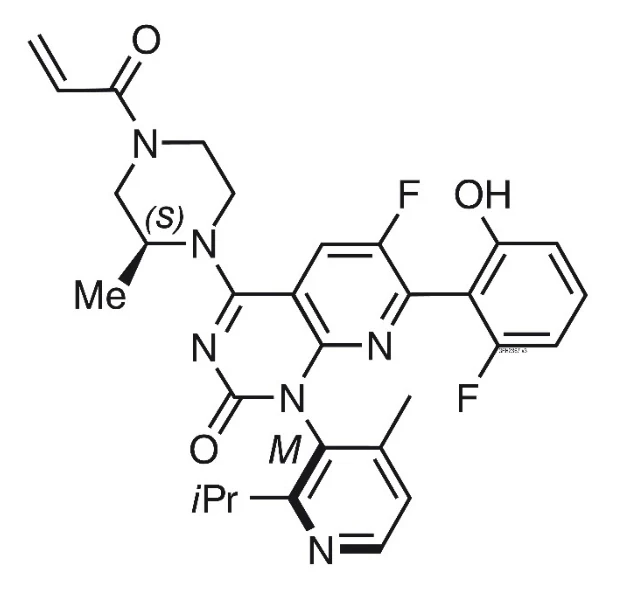
Chemical name: 6-fluoro-7-(2-fluoro-6-hydroxyphenyl)-(1M)-1-[4-methyl-2-(propan-2yl) pyridine 3-yl]-4-[(2S)-2- methyl-4-(prop-2-enoyl)piperazin-1-yl]-pyrido[2,3-d]pyrimidin-2(1H)-one
Molecular formula and molecular mass: C30H30F2N6O3 560.6 g/mol
Structural formula:
Physicochemical properties: A white to off-white to yellow to light brown powder with a pKa of 8.06 and 4.56 (determined electrophoretically) and with a pH 5.6 at 0.06 mg/mL (deionized water). It is slightly hygroscopic, gaining < 0.3 wt%, water between 0% to 90% Relative Humidity (RH). The log of the distribution coefficient (LogD – octanol/water) at pH 7.4 is 2.44. The solubility of sotorasib in the aqueous media decreases over the range of pH 1.2 to 6.8 from 1.3 mg/mL to 0.03 mg/mL.
14 CLINICAL TRIALS
14.1 Trial Design and Study Demographics
Table 9. Summary of patient demographics for clinical trials in Locally Advanced or Metastatic NSCLC
| Study # | Study design | Dosage, route of administration and duration | Study subjects (n) | Median Age (Range) | Gender |
20170543 (CodeBreaK 100 – Phase 2 Part A) | Single-arm, open label, multicenter trial | 960 mg, oral, once daily until disease progression or unacceptable toxicity | 126 | 64 years (37 to 80 years) | Male and Female |
Advanced KRAS G12C-mutated NSCLC in Previously Treated Patients (CodeBreaK 100 Study Phase 2 Part A)
The efficacy of LUMAKRAS was demonstrated in a single-arm, open-label, multicenter trial (CodeBreaK 100 Phase 2 Part A) that enrolled patients with locally advanced or metastatic KRAS G12C-mutated NSCLC who had disease progression after receiving prior therapy. Key eligibility criteria included progression on an immune checkpoint inhibitor and/or platinum-based chemotherapy, an Eastern Cooperative Oncology Group Performance Status (ECOG PS) of 0 or 1, and at least one measurable lesion as defined by Response Evaluation Criteria in Solid Tumours (RECIST v1.1), adequate hematological, hepatic, renal and cardiac function parameters. Subjects with active brain metastases were excluded.
All patients were required to have prospectively identified KRAS G12C-mutated NSCLC in tumour tissue samples using the QIAGEN therascreen KRAS RGQ PCR Kit performed in a central laboratory. A total of 124 patients had at least one measurable lesion at baseline as assessed by Blinded Independent Central Review (BICR) according to RECIST v1.1 and were treated with LUMAKRAS 960 mg once daily until disease progression or unacceptable toxicity. The median duration of treatment was 5.5 months (range 0 to 34) with 48% of patients treated for ≥ 6 months and 25% of patients treated for ≥ 12 months. The major efficacy outcome measure was objective response rate (ORR) and duration of response (DOR) as evaluated by a BICR according to RECIST v1.1.
The baseline demographic and disease characteristics of the study population were: median age 64 years (range 37 to 80) with 47% ≥ 65 years and 8% ≥75 years, 50% Female, 82% White, 15% Asian, 2% Black; 70% ECOG PS 1, 96% had stage IV disease, 99% with nonsquamous histology, 81% former smokers, 12% current smokers, 5% never smokers. All patients received at least 1 prior line of systemic therapy for metastatic NSCLC; 43% received only 1 prior line of therapy, 35% received 2 prior lines of therapy, 22% received 3 prior lines of therapy; 91% received prior anti-PD-1/PD-L1 immunotherapy, 90% received prior platinum-based chemotherapy, 81% received both platinum-based chemotherapy and anti-PD-1/PD-L1. The sites of known extra-thoracic metastasis included 48% bone, 21% brain, and 21% liver.
NOC/c
14.2 Study Results
Advanced KRAS G12C-mutated NSCLC in Previously Treated Patients (CodeBreaK 100 Study Phase 2 Part A)
Efficacy results are summarized in Table 10. The ORR was 37% (95% CI: 29, 46). The patients with objective responses had DOR ranging from 1.3 to 32.6 months, and 4.3% were still on study with ongoing response after a median duration of follow-up of 29.2 months. The median time to response (TTR) was 1.4 months (range 1.2 to 10.1), with 70% of responses occurring within the first 7 weeks. Consistent efficacy results were seen in patients with KRAS G12C mutation identified in either tissue or plasma specimens.
Table 10. Efficacy Results in CodeBreaK 100 for Patients with KRAS G12C-mutated NSCLC
| Efficacy Parameter | LUMAKRAS N = 124 |
|---|---|
ORR (95% CI)a Complete response, % Partial response, % | 37.1 (28.6, 46.2) 4.0 33.1 |
DORa Medianb, months (range) 95% CI Patients with duration ≥ 6 monthsb, % | 11.1 (1.3, 32.6) 6.9, 15.0 71.3 |
CI = confidence interval; DOR = duration of response; ORR = objective response rate
a Response-related efficacy outcome as per BICR, RECIST 1.1
b Estimate using Kaplan-Meier method
Data cut-off period Sept 2022
15 MICROBIOLOGY
No microbiological information is required for this drug product.
16 NON-CLINICAL TOXICOLOGY
General Toxicology
In the 3-month rat toxicology study, renal toxicity including minimal to marked histologic tubular degeneration/necrosis and increased kidney weight, urea nitrogen, creatinine, and urinary biomarkers of renal tubular injury, were present at sotorasib doses ≥ 60 mg/kg (approximately 0.4 times the human exposure at the clinical dose of 960 mg based on AUC). Increases in cysteine S-conjugate β-lyase pathway metabolism in the rat kidney compared to human may make rats more susceptible to renal toxicity due to local formation of a putative sulfur-containing metabolite.
In the 3-month dog toxicology study, there were sotorasib-induced findings in the liver (centrilobular hepatocellular hypertrophy), pituitary gland (hypertrophy of basophils), and thyroid gland (marked follicular cell atrophy, moderate to marked colloid depletion, and mild to moderate follicular cell hypertrophy) at doses ≥ 200 mg/kg (approximately 0.35 times the human exposure at the clinical dose of 960 mg based on AUC). These findings may be due to an adaptive response to hepatocellular enzyme induction and subsequent reduced thyroid hormone levels (secondary hypothyroidism), although thyroid levels were not measured in dogs.
Carcinogenicity:
Carcinogenicity studies have not been performed with sotorasib.
Genotoxicity:
Sotorasib was not mutagenic in an in vitro bacterial reverse mutation (Ames) assay. Sotorasib was not genotoxic in the in vivo rat micronucleus and comet assays.
Reproductive and Developmental Toxicology:
In a rat embryo-fetal developmental study, once daily oral administration of sotorasib to pregnant rats during the period of organogenesis resulted in maternal toxicity at 540 mg/kg (equivalent to approximately 4 times the human exposure, based on AUC, at the clinical dose of 960 mg). Sotorasib did not affect embryo-fetal survival or development at doses up to 540 mg/kg.
In a rabbit embryo-fetal developmental study, once daily administration of sotorasib during the period of organogenesis resulted in lower fetal body weights, and a reduction in the number of ossified metacarpals, in fetuses at the 100 mg/kg dose level (equivalent to approximately 2.3 times the human exposure, based on AUC, at the clinical dose of 960 mg), which was associated with maternal toxicity including effects such as decreased body weight gain and decreased food consumption during the dosing phase.
Impairment of Fertility:
Fertility/early embryonic development studies were not conducted with sotorasib. There were no adverse effects on female or male reproductive organs in general toxicology studies conducted in dogs and rats.