


Product Monograph - Lysodren
RECENT MAJOR LABEL CHANGES
| 7 Warnings and Precautions, Hepatic/Biliary/Pancreatic | 05/2026 |
|---|---|
| 7 Warnings and Precautions, Monitoring and Laboratory Tests | 12/2024 |
| 7 Warnings and Precautions, Psychiatric | 12/2024 |
| 7 Warnings and Precautions, 7.1.1 Pregnant Women | 12/2024 |
| 7 Warnings and Precautions, Cardiovascular | 12/2024 |
TABLE OF CONTENTS
RECENT MAJOR LABEL CHANGES ......................................................................................................... 2
TABLE OF CONTENTS ........................................................................................................................... 2
Part I: Health Professional Information ............................................................................................... 4
- 1.
Indications .......................................................................................................................................4
1.1. Pediatrics (<18 years of age) ..............................................................................................4
1.2. Geriatrics ............................................................................................................................4
- 2. Contraindications ............................................................................................................................4
- 3. Serious Warnings and Precautions Box ..........................................................................................4
- 4.
Dosage and Administration ............................................................................................................4
4.1. Dosing Considerations .......................................................................................................4
4.2. Recommended Dose and Dosage Adjustment ..................................................................5
4.4. Administration ...................................................................................................................6
4.5. Missed dose .......................................................................................................................6
- 5. Overdosage .....................................................................................................................................6
- 6. Dosage Forms, Strengths, Composition, and Packaging .................................................................7
- 7.
Warnings and Precautions ..............................................................................................................7
General ............................................................................................................................................7
Carcinogenesis and Mutagenesis ....................................................................................................8
Cardiovascular .................................................................................................................................8
Driving and Operating Machinery ...................................................................................................8
Endocrine and Metabolism .............................................................................................................8
Hematologic ....................................................................................................................................8
Hepatic/Biliary/Pancreatic ..............................................................................................................9
Monitoring and Laboratory Tests ...................................................................................................9
Neurologic .................................................................................................................................... 10
Peri-Operative Considerations ..................................................................................................... 10
Psychiatric .................................................................................................................................... 10
Renal ............................................................................................................................................ 10
Reproductive Health: Female and Male Potential ....................................................................... 10
7.1. Special Populations ......................................................................................................... 11
7.1.1. Pregnancy ................................................................................................................... 11
7.1.2. Breastfeeding ............................................................................................................. 11
7.1.3. Pediatrics .................................................................................................................... 11
7.1.4. Geriatrics .................................................................................................................... 11
- 8.
Adverse Reactions ........................................................................................................................ 11
8.1. Adverse Reaction Overview ............................................................................................ 11
8.5. Post-Market Adverse Reactions ...................................................................................... 12
- 9.
Drug Interactions ......................................................................................................................... 13
9.2. Drug Interactions Overview ............................................................................................ 13
9.3. Drug-Behavioural Interactions ........................................................................................ 13
9.4. Drug-Drug Interactions ................................................................................................... 13
9.5. Drug-Food Interactions ................................................................................................... 15
9.6. Drug-Herb Interactions ................................................................................................... 15
9.7. Drug-Laboratory Test Interactions .................................................................................. 15
- 10.
Clinical Pharmacology .................................................................................................................. 15
10.1. Mechanism of Action .................................................................................................. 15
10.3. Pharmacokinetics ....................................................................................................... 15
- 11. Storage, Stability and Disposal ..................................................................................................... 16
- 12. Special Handling Instructions ....................................................................................................... 16
Part 2: Scientific Information ............................................................................................................ 17
- 13. Pharmaceutical Information ........................................................................................................ 17
- 14.
Clinical Trials ................................................................................................................................ 17
14.1. Clinical Trials by Indication ......................................................................................... 17
Study Results ................................................................................................................................ 17
- 16. Non-Clinical Toxicology ................................................................................................................ 18
Patient Medication Information ........................................................................................................ 19
Part I: Health Professional Information
1. Indications
LYSODREN® (mitotane tablets) is indicated for:
- The treatment of inoperable adrenocortical carcinoma of both functional and non-functional type.
1.1. Pediatrics (<18 years of age)
Based on the data submitted and reviewed by Health Canada, the safety and efficacy of LYSODREN in patients <18 years of age have not been established; therefore, Health Canada has not authorized an indication for pediatric use. Neuropsychological impairment has been reported in children and adolescents receiving LYSODREN therapy (see 7. Warnings and Precautions, Neurologic section).
1.2. Geriatrics
No data are available to Health Canada; therefore, Health Canada has not authorized an indication for geriatric use.
2. Contraindications
3. Serious Warnings and Precautions Box
- Severe neurologic toxicity can occur with mitotane plasma levels above 20 mg/L, therefore this threshold should not be exceeded. Mitotane plasma concentrations should be measured at frequent intervals (see 7. Warnings and Precautions, Neurologic section).
4. Dosage and Administration
4.1. Dosing Considerations
LYSODREN should be administered under the supervision of a qualified physician experienced in the uses of cancer chemotherapeutic agents.
Before Initiating Treatment: All possible tumour tissue should be surgically removed from large metastatic masses before LYSODREN administration is instituted (see 7. Warnings and Precautions).
Hepatic Impairment: LYSODREN should be administered with care to patients with liver disease other than metastatic lesions from the adrenal cortex, since the metabolism of LYSODREN may be interfered with and the drug may accumulate. No information on the use of mitotane in patients with hepatic impairment was provided to Health Canada. The use of mitotane in patients with severe hepatic impairment is not recommended. If a decision is made to use mitotane in patients with mild or moderate hepatic impairment, liver function and mitotane plasma levels should be regularly monitored in these patients.
Renal Impairment: There are insufficient data to support the use of mitotane in patients with renal impairment. Biliary excretion is the major elimination pathway of mitotane, however renal elimination also plays an important role. Therefore, the use of mitotane in patients with severe renal impairment is not recommended. If a decision is made to use mitotane in patients with mild or moderate renal impairment, mitotane plasma levels should be regularly monitored in these patients.
4.2. Recommended Dose and Dosage Adjustment
Treatment in adults should be started with 2 - 3 g mitotane per day and increased progressively (e.g., at two week-intervals) until mitotane plasma levels reach the therapeutic window 14 – 20 mg/L.
If it is urgent to control Cushing’s symptoms in highly symptomatic patients, higher starting doses between 4 - 6 g per day could be necessary and daily dose increased more rapidly (e.g., every week). A starting dose higher than 6 g/day is generally not recommended.
If severe side effects appear, the dose should be reduced until the maximum tolerated dose is achieved. If the patient can tolerate higher doses and improved clinical response appears possible, the dose should be increased within the therapeutic range until adverse reactions interfere.
Experience has shown that the maximum tolerated dose (MTD) will vary from 2-16 g per day, but has usually been 8-10 g per day. The highest doses used in the studies to date were 18-19 g per day.
Health Canada has not authorized and indication for pediatric use (see 7. Warnings and Precautions, 7.1.3. Pediatrics).
Treatment should be instituted in the hospital until a stable dosage regimen is achieved.
Treatment should be continued as long as clinical benefits are observed. Maintenance of clinical status or slowing of growth of metastatic lesions can be considered clinical benefits if they can clearly be shown to have occurred.
If no clinical benefits are observed after three months at the maximum tolerated dose, the case may be considered a clinical failure. However, 10% of the patients who showed a measurable response required more than three months at the MTD.
Early diagnosis and prompt institution of treatment improve the probability of a positive clinical response.
Monitoring of plasma levels:
Mitotane plasma levels should be monitored in order to adjust the mitotane dose, particularly if high starting doses are considered necessary. Dose adjustments may be necessary to achieve the desired plasma levels in the therapeutic window (between 14 and 20 mg/L), and avoid specific adverse reactions which ensures optimal efficacy of LYSODREN with acceptable safety. Severe neurologic toxicity has been reported with mitotane levels above 20 mg/L and therefore, this threshold should not be exceeded. Mitotane plasma concentrations should be measured after each dose adjustment and at frequent intervals (e.g., every two weeks), until the target concentration range is reached, usually within 3 to 5 months. Monitoring should be more frequent (e.g., every week) when a high starting dose has been used. It should be taken into account that dose adjustments do not produce immediate changes in plasma levels of mitotane. In addition, because of tissue accumulation, mitotane plasma levels should be monitored regularly (e.g. monthly) once the maintenance dose has been reached.
If toxicity occurs at mitotane plasma levels above 20 mg/L, treatment should be withheld and restarted when plasma levels are within the therapeutic range (14 - 20 mg/L). If unacceptable toxicity occurs and mitotane plasma levels are within the therapeutic window, the dose should be reduced until a maximum tolerated dose is reached. Dose adjustments do not produce immediate changes in plasma levels of mitotane. Due to the prolonged half life, significant serum concentrations may persist; thus, regular monitoring (e.g. every two months) of mitotane plasma levels is necessary after interruption of treatment.
4.4. Administration
The total daily dose may be divided in two or three doses according to patient’s convenience. Tablets should be taken with a glass of water during meals containing fat-rich food.
Care must be taken whenever handling cytostatic products. Always take steps to prevent exposure.
To minimize the risk of dermal exposure, always wear impervious gloves when handling bottles containing LYSODREN tablets. This includes all handling activities in clinical settings, pharmacies, storerooms and home healthcare settings, including during unpacking and inspection, transport within a facility and dose preparation and administration.
LYSODREN tablets should not be crushed. Personnel should avoid exposure to crushed and/or broken tablets. If contact with broken tablets occurs, wash immediately and thoroughly.
Procedures for proper handling and disposal of anti-cancer drugs should be considered.
4.5. Missed dose
In case of missed dose, the next dose should be taken as scheduled. A double dose should not be taken.
5. Overdosage
LYSODREN overdose may lead to severe central nervous system impairment (i.e., dizziness, cognitive disorder, speech disorder, disturbance in attention, memory impairment, balance disorder), especially if mitotane plasma levels are above 20 mg/L (see 7. Warnings and Precautions). No proven antidotes have been established for LYSODREN overdose. Temporary interruption of LYSODREN should be considered. The patient should be followed closely, taking into account that the central nervous system impairment may or may not be reversible after discontinuation of LYSODREN. Given the long half-life (see 10.3. Pharmacokinetics) and the lipophilic nature of mitotane, it may take weeks to return to normal. Other effects should be treated symptomatically. Because of its lipophilic nature, mitotane is not likely to be dialysable.
It is recommended that the frequency of mitotane plasma level monitoring be increased (e.g. every two weeks) in patients at risk of overdose (e.g. patients with renal or hepatic impairment, obese patients, or patients with a recent weight loss) (see 7. Warnings and Precautions).
For management of a suspected drug overdose, please contact your regional Poison Control Centre or Health Canada's toll-free number, 1-844 POISON-X (1-844-764-7669).
- 6. Dosage Forms, Strengths, Composition, and Packaging
Table 1 – Dosage Forms, Strengths, Composition and Packaging
Description
LYSODREN is available as a 500 mg one-half inch, biconvex, round compressed white tablet in bottles of 100. They are bisected on one side and impressed with “BL” over “L1" on the other side.
7. Warnings and Precautions
Please see 3. Serious Warnings and Precautions Box.
General
Before Initiating Treatment
All possible tumour tissue should be surgically removed from large metastatic masses before LYSODREN administration is instituted. This is necessary to minimize the possibility of infarction and hemorrhage in the tumour due to a rapid, positive effect of the drug.
Shock, Severe Trauma and infection
LYSODREN should be temporarily discontinued immediately following shock, severe trauma or infection, since adrenal suppression is its prime action. Exogenous steroids may be required in such circumstances since the depressed adrenal gland may not immediately start to secrete steroids. Because of an increased risk of acute adrenocortical insufficiency, patients should be instructed to contact their physician immediately if injury, infection, or any other concomitant illness occurs.
Mitotane Tissue Accumulation
LYSODREN can accumulate in fat tissue, which may result in prolongation of plasma half-life. Consequently, despite LYSODREN dose remaining constant, mitotane plasma levels may increase. Therefore, regular monitoring of mitotane plasma levels is necessary once the maintenance dose is established (e.g., monthly). Monitoring should continue after interruption of treatment (e.g., every two months), as prolonged release of mitotane can occur. Close monitoring of mitotane plasma levels is highly recommended when treating overweight patients and patients with recent weight loss (e.g., every two weeks) (see 5. Overdosage).
| Route of Administration | Dosage Form / Strength/Composition | Non-medicinal Ingredients |
| Oral | Tablet 500 mg | Colloidal silicon dioxide, corn starch, microcrystalline cellulose, polyethylene glycol |
Carcinogenesis and Mutagenesis
The carcinogenic and mutagenic potentials of mitotane are unknown.
Cardiovascular
LYSODREN should be administered with caution to patients who have or may develop prolongation of QTc, including patients with electrolyte abnormalities, congestive heart failure, bradyarrhythmias or patients taking other medicinal products that lead to QT prolongation or electrolyte abnormalities. For patients with risk factors for QT-interval prolongation, regular ECG monitoring is recommended.
Driving and Operating Machinery
Since LYSODREN may cause dizziness and sedation, patients should not drive or operate machinery, or other hazardous pursuits requiring mental and physical alertness, until these effects have passed (see 8. Adverse Reactions).
Endocrine and Metabolism
Adrenal insufficiency may develop in patients treated with LYSODREN, and adrenal steroid replacement should be considered for these patients.
LYSODREN modifies the metabolism of exogenous steroids resulting in a substantial percentage of patients treated with LYSODREN showing signs of adrenal insufficiency. In these patients, steroid replacement therapy should be considered. Since LYSODREN increases hormone binding proteins, free cortisol and corticotropin (ACTH) levels should be monitored to determine the optimal dose of steroid replacement as a somewhat higher dose than normal replacement therapy may be required.
Glucocorticoid insufficiency is more frequent, but mineralocorticoid insufficiency may also be associated and the steroid substitution may need to be adapted accordingly.
Mitotane has a long half life (see 10.3. Pharmacokinetics) and is an inducer of hepatic Cytochrome P-450 enzymes. Enzyme induction is likely to persist after discontinuation of mitotane treatment. Medications metabolized by Cytochrome P-450 enzymes should be used with caution and dose adjusted as appropriate when coadministered with mitotane and for a period of approximately 6 months after discontinuation of mitotane treatment (see 9.4. Drug-Drug Interactions).
Hypogonadism: Hypogonadism in males (with symptoms such as gynaecomastia, libido decreased, erectile dysfunction, fertility disorders) has been described in patients treated with LYSODREN.
Patients with severe Cushing’s syndrome: Severe Cushing’s syndrome is known to increase the risk of opportunistic infections, such as Pneumocystis jirovecii pneumonia, due to immunosuppression and anti-inflammatory effect of hypercortisolism. Generally, infection must be anticipated in such patients and careful management is warranted. Initiation of an appropriate prophylactic treatment may be considered.
Hematologic
All blood cells can be affected with mitotane treatment. Leucopenia (including neutropenia), anemia and thrombocytopenia have been reported frequently during mitotane treatment (see 8. Adverse Reactions). Red blood cell, white blood cell and platelet counts should be monitored during mitotane treatment.
Hepatic/Biliary/Pancreatic
LYSODREN should be administered with care to patients with liver disease other than metastatic lesions from the adrenal cortex, since the metabolism of LYSODREN may be interfered with and the drug may accumulate.
Hepatotoxicity has been observed in patients treated with mitotane. Cases of liver damage (hepatocellular, cholestatic and mixed) and autoimmune hepatitis were observed. Liver function tests (alanine transaminase [ALT], aspartate transaminase [AST], bilirubin and alkaline phosphatase [ALP] levels) should be periodically monitored, especially during the first months of treatment or when it is necessary to increase the dose. If AST and/or ALT are increased >5 ULN, or ALP or bilirubin > 2 ULN, there is risk of liver injury/failure. In this case, LYSODREN treatment should be discontinued. Treatment should only be resumed at the physician’s discretion, based on the severity of the adverse reaction as well as the patient's clinical condition.
Monitoring and Laboratory Tests
Mitotane has been shown to increase plasma levels of hormone-binding proteins (e.g. sex hormone-binding globulin (SHBG) and corticosteroid-binding globulin [CBG]), which should be taken into account when interpreting the results of hormonal assays.
Mitotane plasma concentrations should be measured at frequent intervals (e.g., after each dose adjustment) until the target concentration range is reached, usually within 3 to 5 months. Because of tissue accumulation, mitotane plasma levels should be monitored regularly (e.g. monthly) once the maintenance dose has been reached.
Patients on coumarin type anticoagulants should be closely monitored for a change in anticoagulation dosage requirements when administering LYSODREN.
Liver function tests (alanine transaminase [ALT], aspartate transaminase [AST], bilirubin levels) should be periodically monitored, especially during the first months of treatment or when it is necessary to increase the dose (see 7. Warnings and Precautions, Hepatic/Biliary/Pancreatic).
Red blood cell, white blood cell and platelet counts should be monitored during mitotane treatment (see 7. Warnings and Precautions, Hematologic).
Regardless of LYSODREN dosage, triglycerides should be monitored regularly especially in patients with or at risk of dyslipidemia (such as metabolic syndrome, alcohol abuse, high fat diet). Triglyceride-lowering therapy and discontinuation of LYSODREN may be considered in case of severe hypertriglyceridemia as it is a potential cause of acute pancreatitis.
Substances metabolised through cytochrome P450 and particularly cytochrome 3A4: Mitotane is a hepatic enzyme inducer and it should be used with caution in case of concomitant use of medicinal products influenced by hepatic metabolism.
Neurologic
Administration of LYSODREN may lead to brain damage and impairment of function, which may or may not be reversible after discontinuation of LYSODREN. Behavioural and neurological assessments should be made at regular intervals, especially when mitotane plasma levels exceed 20 mg/L.
Since central nervous system toxicity has been associated with LYSODREN, coadministration of medicinal products with central nervous system action may have an additive effect (see 8. Adverse Reactions).
Peri-Operative Considerations
Prolonged bleeding time has been reported in patients treated with LYSODREN, which should be taken into account when surgery is considered. In some patients, bleeding time may be normal but with pathologic adenosine diphosphate (ADP)-induced platelet aggregation. Routine in vitro bleeding time is not suitable to detect this platelet defect and to assess bleeding risk. ADP-induced platelet aggregometry testing prior to surgery is recommended to determine mitotane-induced bleeding risk.
Psychiatric
Caution is advised when prescribing LYSODREN to patients with a history of depression or those at risk of developing depression.
Renal
LYSODREN should be administered with care to patients with renal impairment, since the metabolism of LYSODREN may be interfered with and the drug may accumulate.
Reproductive Health: Female and Male Potential
Non-malignant ovarian macrocysts, often bilateral and multiple, have been observed with higher incidence in this population. The ovarian macrocysts may be symptomatic (e.g., pelvic pain or discomfort, vaginal bleeding or menstrual disorders) or asymptomatic. Isolated cases of complicated cysts have been reported (adnexal torsion and haemorrhagic cyst rupture). Improvement after mitotane discontinuation has been observed. Women should be urged to seek medical advice if they experience gynecological symptoms such as bleeding and/or pelvic pain (see 8. Adverse Reactions). Periodic ovarian ultrasound monitoring is recommended in premenopausal women treated with LYSODREN.
Women of childbearing potential must use effective contraception during treatment and after discontinuation of treatment as long as mitotane plasma levels are detectable, which may require several months.
Mitotane has been shown to increase plasma levels of hormone binding proteins (e.g. sex hormone-binding globulin (SHBG) and corticosteroid-binding globulin [CBG]). LYSODREN-induced increases in hormone-binding proteins may result in gynecomastia.
Fertility
No data are available.
Function
No data are available.
Teratogenic Risk
No data are available.
7.1. Special Populations
7.1.1. Pregnancy
Data, based on a limited number of exposed pregnancies, indicate abnormalities on the foetal adrenals after exposure to mitotane. Mitotane has been detected in umbilical cord blood. Pregnant women should be advised of a potential risk to the foetus.
Animal reproduction studies have not been conducted with mitotane. Animal studies with similar substances have shown reproductive toxicity.
LYSODREN is not recommended during pregnancy and in women of childbearing potential not using contraception.
Women of childbearing potential:
Women of childbearing potential must use an effective contraception during treatment and after discontinuation of treatment as long as mitotane plasma levels are detectable. The prolonged elimination of mitotane from the body after discontinuation of Lysodren should be considered.
7.1.2. Breastfeeding
Mitotane has been detected in breast milk. Because of the potential for serious adverse reactions in nursing infants from mitotane, mothers should be advised to discontinue nursing during LYSODREN therapy and after treatment discontinuation as long as mitotane plasma levels are detectable (see 10.3. Pharmacokinetics).
7.1.3. Pediatrics
Based on the data submitted and reviewed by Health Canada, the safety and efficacy of LYSODREN in patients <18 years of age have not been established; therefore, Health Canada has not authorized an indication for pediatric use. Neuropsychological impairment has been reported in children and adolescents receiving LYSODREN therapy (see 7. Warnings and Precautions, Neurologic).
7.1.4. Geriatrics
No data are available.
8. Adverse Reactions
8.1. Adverse Reaction Overview
A very high percentage of patients treated with LYSODREN have shown at least one type of side effect. The main types of adverse reactions consist of the following:
Gastrointestinal
Gastrointestinal disturbances, which consisted of anorexia, nausea or vomiting, and in some cases diarrhea, occurred in about 80% of the patients.
Neurologic
Central nervous system side effects occurred in 40% of the patients. These consisted primarily of central nervous system depression as manifested by lethargy and somnolence (25%), and dizziness or vertigo (15%).
Skin
Skin toxicity was observed in about 15% of the cases. These skin changes consisted primarily of transient skin rashes which do not seem to be dose related. In some instances, however, this side effect subsided while the patients were maintained on drug.
Ovarian macrocysts
Non-malignant ovarian macrocysts (pelvic pain, bleeding or asymptomatic) have been observed in pre-menopausal women (see 7. Warnings and Precautions).
Sex hormone disturbances
The following sex hormone disturbances have occurred in patients treated with mitotane: decreased blood androstenedione and decreased blood testosterone in females, increased sex hormone binding globulin in females and males, decreased blood free testosterone in males, hypogonadism in males.
Very rare reactions
Infrequently occurring side effects involve the eye (vision blurred, diplopia, lenticular opacities, toxic retinopathy); the genito-urinary system (hematuria, hemorrhagic cystitis, and albuminuria/proteinuria); cardiovascular system (hypertension, orthostatic hypotension, and flushing); and some miscellaneous complaints including generalized aching, hyperpyrexia, and lowered protein bound iodine (PBI).
8.5. Post-Market Adverse Reactions
- approval use of LYSODREN. Because these reactions are reported voluntarily from a population of uncertain size, it is not always possible to reliably estimate their frequency or establish a causal relationship to drug exposure.
- anemia, leukopenia, thrombocytopenia
- adrenal insufficiency, growth retardation, hypothyroidism, thyroid disorder, sex hormone disturbances, hypogonadism (in males)
- maculopathy
- : mucosal inflammation, epigastric discomfort, dysgeusia, dyspepsia
- : asthenia
- hypersensitivity reactions
- Opportunistic infection
Investigations: bleeding time prolonged, blood alkaline phosphatase increased, gamma-glutamyltransferase increased, blood uric acid decreased, blood cholesterol increased, blood triglycerides increased, blood androstenedione decreased (in females), blood testosterone decreased (in females), blood free testosterone decreased (in males), sex hormone binding globulin increased, corticosteroid binding globulin increased, thyroxin binding globulin increased
- hepatitis, hepatic enzymes increased, liver injury (hepatocellular / cholestatic / mixed)
Metabolism and nutrition disorders: hypercholesterolemia, hypertriglyceridaemia, hypouricaemia
- muscular weakness
- dysarthria, headache, ataxia, mental impairment, paresthesia / polyneuropathy, movement disorder, balance disorder
- neuropsychological disturbance, confusion
- haemorrhagic cystitis, haematuria, proteinuria
- : gynecomastia, ovarian macrocysts
- : dyspnea
Skin and subcutaneous tissue disorders: pruritus
9. Drug Interactions
9.2. Drug Interactions Overview
Mitotane has a long half life (see 10.3. Pharmacokinetics) and is an inducer of hepatic Cytochrome P-450 enzymes. Enzyme induction is likely to persist after discontinuation of mitotane treatment. Medications metabolized by Cytochrome P-450 enzymes should be used with caution and dose adjusted as appropriate when coadministered with mitotane and for a period of approximately 6 months after discontinuation of mitotane treatment.
9.3. Drug-Behavioural Interactions
No data available.
9.4. Drug-Drug Interactions
The drugs listed in this table are based on either drug interaction case reports or studies, or potential interactions due to the expected magnitude and seriousness of the interaction.
Table 2 – Established or Potential Drug-Drug Interactions
| Drug | Source of Evidence | Effect | Clinical comment |
| Drugs metabolized by CYP3A4, such as etoposide, midazolam and sunitinib | C | ↓ conc. | LYSODREN has been shown to have an inductive effect on cytochrome P450 enzymes, including CYP3A4. LYSODREN should be given with caution to patients receiving drugs metabolized by this route. Medications metabolized by Cytochrome P-450 enzymes should be used with caution and dose adjusted as appropriate when coadministered with mitotane. Enzyme induction is likely to persist after discontinuation of mitotane treatment. A pharmacokinetic interaction between mitotane and etoposide has been reported resulting in accelerated clearance of etoposide (2-fold higher) and might contribute to a reduced efficacy in ACC patients treated concomitantly with mitotane and etoposide. |
| Coumarin-type anticoagulants, such as warfarin | C | ↓ conc. | LYSODREN has been reported to accelerate the metabolism of warfarin by the mechanism of hepatic microsomal enzyme induction, leading to an increase in dosage requirements for warfarin. Therefore, physicians should closely monitor patients for a change in anticoagulant dosage requirements when administering LYSODREN to patients on coumarin type anticoagulants. |
| Drugs with central nervous system action | T | ↑ toxicity | Since central nervous system toxicity has been associated with LYSODREN, coadministration of medicinal products with central nervous system action may have an additive effect. |
| Spironolactone | T | ↓ effect | LYSODREN must not be given in combination with spironolactone, since this substance may block the action of mitotane. |
| Hormone binding protein, such as sex hormone-binding globulin (SHBG) and corticosteroid-binding globulin (CBG) | C | ↑ conc. | Mitotane has been shown to increase plasma levels of hormone binding proteins. This should be taken into account when interpreting the results of hormonal assays and may result in gynaecomastia. |
Legend: C = Case Study; CT = Clinical Trial; T = Theoretical
9.5. Drug-Food Interactions
Pharmacokinetic data using various LYSODREN formulations suggest that administration with high-fat meal enhances absorption of mitotane.
9.6. Drug-Herb Interactions
Interactions with herbal products have not been established.
9.7. Drug-Laboratory Test Interactions
Interactions with laboratory tests have not been established.
10. Clinical Pharmacology
10.1. Mechanism of Action
LYSODREN (mitotane) can best be described as an adrenal cytotoxic agent, although it can cause adrenal inhibition, apparently without cellular destruction. Its biochemical mechanism of action is unknown. Data are available to suggest that the drug modifies the peripheral metabolism of steroids and also directly suppresses the adrenal cortex. The administration of LYSODREN alters the extra-adrenal metabolism of cortisol in man, leading to a reduction in measurable 17-hydroxy corticosteroids, even though plasma levels of corticosteroids do not fall. The drug apparently causes increased formation of 6-β-hydroxy cortisol.
10.3. Pharmacokinetics
Absorption:
One study with adrenal carcinoma patients indicated that about 40% of oral LYSODREN was absorbed.
Distribution:
Plasma concentrations of mitotane were determined during and following administration of LYSODREN. Both unchanged drug and a metabolite were measured. The levels in patients receiving doses from 5-15 grams per day varied from 7-90 micrograms/ml of unchanged LYSODREN and 29-54 micrograms/ml of the metabolite.
Autopsy data have provided evidence that LYSODREN is found in most tissues of the body. Fat tissues were the primary site of storage. In one patient a very large number of tissues were examined and the drug was found in essentially every tissue.
Metabolism:
LYSODREN appears to be converted, in part, to a water-soluble metabolite. This material has not been characterized, but is only found in the urine and blood of patients receiving LYSODREN. Examination of bile was made and found to contain no unchanged LYSODREN. There was metabolite in the bile, and this would indicate that biliary excretion is a significant route of removal of this metabolite from the body.
Elimination:
About 10% of oral LYSODREN was recovered in the urine as a water-soluble metabolite. A small amount of oral LYSODREN was excreted in the bile and the balance was apparently stored in the tissues. When administered parenterally, approximately 25% of the dose was found in the urine as a water-soluble metabolite.
Following discontinuation of the drug, blood levels fell, but persisted for several weeks due to the long terminal elimination half-life of mitotane (median 53 days; range 18-159 days). In most patients blood levels became undetectable after six to nine weeks. In one patient who had received a total of 1900 grams of LYSODREN, high blood levels were found ten weeks after stopping the drug.
Hepatic Insufficiency: LYSODREN should be administered with care to patients with liver disease other than metastatic lesions from the adrenal cortex, since the metabolism of LYSODREN may be interfered with and the drug may accumulate (see 7. Warnings and Precautions).
Renal Insufficiency: There is no experience in the use of mitotane in patients with renal impairment, so data are insufficient to give a dose recommendation in this group. Biliary excretion is the major elimination pathway of mitotane, however renal elimination also plays an important role. Therefore, the use of mitotane in patients with severe renal impairment is not recommended and, in cases of mild to moderate renal impairment, caution should be exercised. Monitoring of mitotane plasma levels is specially recommended in these patients (see 7. Warnings and Precautions).
Obesity: LYSODREN can accumulate in fat tissue, which may result in prolongation of plasma half-life. Close monitoring of mitotane plasma levels is recommended when treating overweight patients and patients with recent weight loss (see 7. Warnings and Precautions).
11. Storage, Stability and Disposal
LYSODREN tablets may be stored at room temperature (15 - 30°C).
Procedures for proper disposal of anti-cancer drugs should be considered.
12. Special Handling Instructions
Care must be taken whenever handling cytostatic products. Always take steps to prevent exposure.
To minimize the risk of dermal exposure, always wear impervious gloves when handling bottles containing LYSODREN tablets. This includes all handling activities in clinical settings, pharmacies, storerooms and home healthcare settings, including during unpacking and inspection, transport within a facility and dose preparation and administration.
LYSODREN tablets should not be crushed. Personnel should avoid exposure to crushed and/or broken tablets. If contact with broken tablets occurs, wash immediately and thoroughly.
Procedures for proper handling and disposal of anti-cancer drugs should be considered.
Part 2: Scientific Information
13. Pharmaceutical Information
Drug Substance
Proper name: mitotane
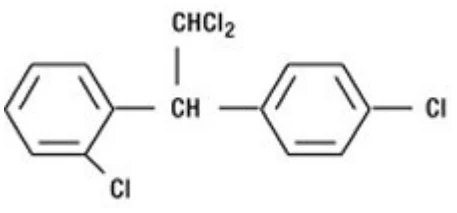
Chemical name: o,p'-DDD
1, 1 dichloro-2(o-chlorophenyl)-2-(p-chlorophenyl) ethane
Molecular formula and molecular mass:
C14H10Cl4 - 320.04 g/mol
Structural formula:
Physicochemical properties:
Mitotane is a white granular solid composed of clear colorless crystals.
Mitotane is tasteless and has a slight pleasant aromatic odor.
14. Clinical Trials
14.1. Clinical Trials by Indication
Hutter and Kayhoe (1966)
This study reported on the clinical features and the results of LYSODREN treatment of 138 patients with adrenal cortical carcinoma, and compared their findings with 48 treated patients previously reported in the literature. Subsequent to their report, 115 patients given drug were studied.
Study Results
Hutter and Kayhoe (1966)
There is no evidence of a cure as a consequence of the administration of LYSODREN. A number of patients have been treated intermittently, treatment being restarted when severe symptoms reappear. Patients often do not respond after the third or fourth such course. Experience accumulated to date suggests that continuous treatment with the maximum possible dosage of LYSODREN would be the best approach.
A substantial percentage of the patients treated showed signs of adrenal insufficiency. It therefore appears necessary to watch for and institute steroid replacement in those patients. It has been shown that metabolism of exogenous steroids is modified and consequently somewhat higher doses than just replacement therapy may be required.
There was significant reduction in tumour mass following LYSODREN administration in about 50%, and a significant reduction in elevated steroid excretion in about 80% of the evaluable patients studied to date.
Clinical effectiveness can be shown by reduction in tumor mass, reduction in pain, weakness or anorexia, and reduction of steroid symptoms.
16. Non-Clinical Toxicology
Dogs were used for much of the experimental work with LYSODREN. Doses as low as 4 mg/kg/day may produce some effects upon the canine adrenals. However, most of the data suggest that toxicity occurs between 80-200 mg/kg/day, primarily as a result of LYSODREN'S effect upon the adrenals. At doses of 100 mg/kg and higher of LYSODREN, deaths occurred in some of the dogs after two to four weeks of administration.
The primary action of LYSODREN is upon the adrenal cortex. The toxicity observed in animals appears to result from suppression of the activity of the adrenal cortex. The production of adrenal steroids has been shown to be reduced in most of the studies.
A toxicity study was conducted in rats at doses as high as 300 mg/kg/day for 28 days. There were no deaths nor was there any evidence of organ changes in these animals. In this study even the adrenal cortex showed no evidence of change, indicating that the rodent appears to be highly resistant to LYSODREN.
In both dogs and rats, there was a dose-related rise in alkaline phosphatase. In dogs, there were signs of histological changes in the liver at the high doses (50-100 mg/kg/day).
A dose of 300 mg/kg/day administered to guinea pigs resulted in deaths in one of three animals and a reduction in cortisol levels. Death was probably due to adrenal insufficiency.