


Product Monograph - Xpovio
RECENT MAJOR LABEL CHANGES
| None at the time of the most recent authorization |
|---|
TABLE OF CONTENTS
Sections or subsections that are not applicable at the time of authorization are not listed.
RECENT MAJOR LABEL CHANGES ............................................................................................. 2
TABLE OF CONTENTS ............................................................................................................... 2
PART I: HEALTH PROFESSIONAL INFORMATION ....................................................................... 4
1 INDICATIONS ................................................................................................................ 4
1.1 Pediatrics ............................................................................................................... 4
1.2 Geriatrics ............................................................................................................... 4
2 CONTRAINDICATIONS .................................................................................................. 4
4 DOSAGE AND ADMINISTRATION .................................................................................. 4
4.1 Dosing Considerations ........................................................................................... 4
4.2 Recommended Dose and Dosage Adjustment ...................................................... 4
4.3 Administration ....................................................................................................... 8
4.4 Missed Dose .......................................................................................................... 8
5 OVERDOSAGE ............................................................................................................... 8
6 DOSAGE FORMS, STRENGTHS, COMPOSITION AND PACKAGING .................................. 9
7 WARNINGS AND PRECAUTIONS ................................................................................... 9
7.1 Special Populations .............................................................................................. 12
7.1.1 Pregnant Women ................................................................................................ 12
7.1.2 Breast-feeding ..................................................................................................... 12
7.1.3 Pediatrics ............................................................................................................. 13
7.1.4 Geriatrics ............................................................................................................. 13
8 ADVERSE REACTIONS ................................................................................................. 13
8.1 Adverse Reaction Overview ................................................................................. 13
8.2 Clinical Trial Adverse Reactions ........................................................................... 14
8.3 Less Common Clinical Trial Adverse Reactions .................................................... 18
8.4 Abnormal Laboratory Findings: Hematologic, Clinical Chemistry and Other Quantitative Data ............................................................................................................ 18
9 DRUG INTERACTIONS ................................................................................................. 19
9.1 Drug-Drug Interactions ........................................................................................ 19
9.2 Drug-Food Interactions ........................................................................................ 19
9.3 Drug-Herb Interactions ........................................................................................ 20
9.4 Drug-Laboratory Test Interactions ....................................................................... 20
10 CLINICAL PHARMACOLOGY ........................................................................................ 20
10.1 Mechanism of Action ........................................................................................... 20
10.2 Pharmacodynamics ............................................................................................. 20
10.3 Pharmacokinetics ................................................................................................ 20
11 STORAGE, STABILITY AND DISPOSAL .......................................................................... 21
PART II: SCIENTIFIC INFORMATION ........................................................................................ 22
13 PHARMACEUTICAL INFORMATION ............................................................................. 22
14 CLINICAL TRIALS ......................................................................................................... 23
14.1 Clinical Trials by Indication .................................................................................. 23
Relapsed/Refractory Multiple Myeloma ......................................................................... 23
15 MICROBIOLOGY ......................................................................................................... 27
16 NON-CLINICAL TOXICOLOGY ...................................................................................... 27
PATIENT MEDICATION INFORMATION ................................................................................... 29
PART I: HEALTH PROFESSIONAL INFORMATION
1 INDICATIONS
XPOVIO® (selinexor) is indicated:
- in combination with bortezomib and dexamethasone for the treatment of adult patients with multiple myeloma who have received at least one prior therapy.
1.1 Pediatrics
Pediatrics (< 18 years of age): No data are available to Health Canada; therefore, Health Canada has not authorized an indication for pediatric use.
1.2 Geriatrics
Geriatrics (≥ 65 years of age): No overall differences in effectiveness were observed between patients ≥ 65 years of age and younger patients. When comparing patients 65 years of age and older to younger patients, older patients had a higher incidence of discontinuation due to an adverse reaction and a higher incidence of serious adverse reactions (see 7 WARNINGS AND PRECAUTIONS, Special Populations, Geriatrics, 8 ADVERSE REACTIONS and 14 CLINICAL TRIALS).
2 CONTRAINDICATIONS
- XPOVIO is contraindicated in patients who are hypersensitive to this drug or to any ingredient in the formulation, including any non-medicinal ingredient, or component of the container. For a complete listing, see 6 DOSAGE FORMS, STRENGTHS, COMPOSITION AND PACKAGING.
4 DOSAGE AND ADMINISTRATION
4.1 Dosing Considerations
- Advise patients to maintain adequate fluid and caloric intake throughout treatment. Consider intravenous hydration for patients at risk of dehydration (see 7 WARNINGS AND PRECAUTIONS).
- Provide prophylactic antiemetics. Administer a 5‐HT3 receptor antagonist and other anti‐nausea agents prior to and during treatment with XPOVIO (see 7 WARNINGS AND PRECAUTIONS).
4.2 Recommended Dose and Dosage Adjustment
The recommended starting dose of XPOVIO in combination with bortezomib and dexamethasone in a 35-day cycle is as follows:
- XPOVIO 100 mg (five 20 mg tablets) taken orally once weekly on Day 1 of each week.
- bortezomib 1.3 mg/m2 administered subcutaneously once weekly on Day 1 of each week for 4 weeks followed by 1 week off.
- dexamethasone 20 mg taken orally twice weekly on Days 1 and 2 of each week.
- Treatment is administered until disease progression or unacceptable toxicity.
- For additional information regarding the administration of bortezomib and dexamethasone, refer to their respective Product Monographs.
Dose Modification in Patients with Hepatic Impairment
There is limited data to determine the best dosing options for patients with moderate or severe hepatic impairment; these patients should be closely monitored for safety and efficacy (see 10.3 Pharmacokinetics and refer to bortezomib Product Monograph).
Table 1 XPOVIO Dosage Reduction Steps for Adverse Reactions
| Multiple myeloma in combination with bortezomib and dexamethasone (SVd) | |
|---|---|
| Recommended starting dosage | 100 mg once weekly |
| First reduction | 80 mg once weekly |
| Second reduction | 60 mg once weekly |
| Third reduction | 40 mg once weekly |
| Fourth reduction* | Permanently discontinue |
*If symptoms do not resolve, treatment should be discontinued.
Recommended dosage modifications for hematologic adverse reactions are presented in Table 2. Recommended dosage modifications for non‐hematologic adverse reactions are presented in Table 3.
Table 2 XPOVIO Dosage Modification Guidelines for Hematologic Adverse Reactions
| Adverse Reaction | Occurrence | Action | |
|---|---|---|---|
| Thrombocytopenia | |||
| Platelet count 25 x 109/L to less than 75 x 109/L | Any |
| |
| Platelet count 25 x 109/L to less than 75 x 109/L with concurrent bleeding | Any |
| |
| Platelet count less than 25 x 109/L | Any |
| |
| Neutropenia | |||
| Absolute neutrophil count of 0.5 to 1 x 10⁹/L without fever | Any |
| |
Absolute neutrophil count less than 0.5 x 10⁹/L OR febrile neutropenia | Any |
| |
| Adverse Reaction | Occurrence | Action | |
|---|---|---|---|
| Anemia | |||
| Hemoglobin less than 80 g/L | Any |
| |
| Life-threatening consequences | Any |
| |
Table 3 XPOVIO Dosage Modification Guidelines for Non-Hematologic Adverse Reactions
| Adverse Reaction | Occurrence | Action | |
|---|---|---|---|
| Nausea and Vomiting | |||
Grade 1 or 2 nausea (oral intake decreased without significant weight loss, dehydration, or malnutrition) OR Grade 1 or 2 vomiting (5 or fewer episodes per day) | Any |
| |
Grade 3 nausea (inadequate oral caloric or fluid intake) OR Grade 3 or higher vomiting (6 or more episodes per day) | Any |
| |
| Diarrhea | |||
| Grade 2 (increase of 4 to 6 stools per day over baseline) | 1st |
| |
| 2nd and subsequent |
| ||
| Grade 3 or higher | Any |
| |
| Adverse Reaction | Occurrence | Action | |
|---|---|---|---|
| (increase of 7 stools or more per day over baseline; hospitalization indicated) |
| ||
| Weight Loss and Anorexia | |||
Weight loss of 10% to less than 20% OR Anorexia associated with significant weight loss or malnutrition | Any |
| |
| Hyponatremia | |||
| Sodium level 130 – 120 mmol/L | Any |
| |
| Sodium level 120 mmol/L or less | Any |
| |
| Fatigue | |||
Grade 2 lasting greater than 7 days OR Grade 3 | 1st |
| |
| 2nd and subsequent |
| ||
| Ocular Toxicity§ | |||
| Grade 2, excluding cataract | Any |
| |
| Grade ≥3, excluding cataract | Any |
| |
| Adverse Reaction | Occurrence | Action | |
|---|---|---|---|
| Cataract (Grade ≥2) | Any |
| |
| Other Non-Hematologic Adverse Reactions | |||
| Grade 3 or 4 | Any |
| |
§Ocular toxicities may include blindness, cataracts, visual acuity reduced, vision blurred and visual impairment.
Health Canada has not authorized an indication for pediatric use (see 1 INDICATIONS, Pediatrics).
4.3 Administration
Each XPOVIO dose should be taken orally at approximately the same time of day and each tablet should be swallowed whole with water. Do not break, chew, crush, or divide the tablets.
XPOVIO can be taken with or without food.
4.4 Missed Dose
If a XPOVIO dose is missed or delayed or a patient vomits after a dose of XPOVIO, the patient should not repeat the dose. Patients should take the next dose on the next regularly scheduled day.
5 OVERDOSAGE
In general, doses of up to 300 mg selinexor/week have been associated with similar side effects to those reported for standard dosing and have generally been reversible within 1 week.
Potential acute symptoms of overdosage include nausea, vomiting, diarrhea, dehydration and confusion. Potential signs include low sodium levels, elevated liver enzymes, and low blood counts. Patients should be monitored closely and provided supportive care as appropriate. No fatalities due to overdose have been reported to date.
In the event of an overdose, the patient should be monitored, specifically for adverse reactions listed in section 8 ADVERSE REACTIONS of the Product Monograph and appropriate symptomatic treatment should be provided immediately.
| For management of a suspected drug overdose, contact your regional poison control centre. |
|---|
6 DOSAGE FORMS, STRENGTHS, COMPOSITION AND PACKAGING
Table 4 Dosage Forms, Strengths, Composition and Packaging
| Route of Administration | Dosage Form / Strength/Composition | Non-medicinal Ingredients |
| oral | tablet 20 mg | Colloidal silicon dioxide, croscarmellose sodium, FD&C Blue #2/Indigo Carmine Aluminum Lake, FD&C Blue #1 Brilliant Blue FCF Aluminum Lake, glycerol monostearate, magnesium stearate, microcrystalline cellulose, polyethylene glycol, polysorbate 80, polyvinyl alcohol-partially hydrolyzed, polyvinylpyrrolidone, sodium lauryl sulfate, talc, titanium dioxide. |
XPOVIO tablets are supplied in blister packaging: one carton of 20 tablets (4 blister cards of 5 tablets each).
Selinexor tablets are formulated as blue, round, bi-convex, film-coated tablets with “K20” debossed on one side and nothing on the other side.
7 WARNINGS AND PRECAUTIONS
General
Consult the Product Monographs for bortezomib and dexamethasone when given in combination with XPOVIO, prior to initiating treatment.
Patients should be advised to maintain adequate fluid and caloric intake throughout treatment. Intravenous hydration should be considered for patients at risk of dehydration.
Driving and Operating Machinery
Fatigue, confusional state and dizziness have been reported in patients taking XPOVIO (see 8 ADVERSE REACTIONS). Patients should exercise caution when driving or using machines.
Endocrine and Metabolism
XPOVIO can cause severe or life-threatening hyponatremia.
Monitor sodium level at baseline, during treatment, and as clinically indicated. Monitor more frequently during the first two months of treatment. Correct sodium levels for concurrent hyperglycemia (serum glucose >8.3 mmol/L) and high serum paraprotein levels. Hyponatremia should be treated as per clinical guidelines (intravenous saline and/or salt tablets), including dietary review. Patients may require XPOVIO dose interruption and/or modification based on severity of adverse reaction (See 4 DOSAGE AND ADMINISTRATION and 8 ADVERSE REACTIONS).
Gastrointestinal
Nausea / Vomiting / Diarrhea
Nausea, vomiting, diarrhea, which sometimes can be severe and require the use of antiemetic and anti-diarrheal medicinal products (see 8 ADVERSE REACTIONS). Provide prophylactic 5-HT3 antagonists and/or other anti-nausea agents, prior to and during treatment with XPOVIO.
Nausea/vomiting can be managed by dose interruption, reduction and/or discontinuation, and/or initiation of other antiemetic medicinal products as clinically indicated. Manage diarrhea by dose modifications and/or standard anti-diarrheal agents; administer intravenous fluids to prevent dehydration in patients at risk (see 4 DOSAGE AND ADMINISTRATION).
Anorexia / Weight Loss
XPOVIO can cause weight loss and anorexia. Monitor patient weight, nutritional status and volume status at baseline, and throughout treatment and as clinically indicated. Monitor more frequently during the first three months of treatment. Interrupt, reduce dose or permanently discontinue based on severity of adverse reactions (see 4 DOSAGE AND ADMINISTRATION). Provide nutritional support, fluids and electrolyte repletion as clinically indicated.
Hematologic
Thrombocytopenia
XPOVIO can cause life‐threatening thrombocytopenia, potentially leading to hemorrhage (see 8 ADVERSE REACTIONS). Thrombocytopenia is the leading cause of dosage modifications (see 4 DOSAGE AND ADMINISTRATION).
In patients with multiple myeloma who received XPOVIO 100 mg once weekly (BOSTON, n=195), decreased platelet count was reported in 92% (All Grades) and 43% (Grade 3 or 4) of patients. The median time to first onset of any grade thrombocytopenia was 22 days and 43 days for Grade 3 or 4 thrombocytopenia. Bleeding occurred in 16% of patients with thrombocytopenia, clinically significant bleeding (Grade ≥3 bleeding) occurred in 4% of patients with thrombocytopenia, and fatal hemorrhage occurred in 2% of patients with thrombocytopenia. Permanent discontinuations of XPOVIO due to thrombocytopenia occurred in 2% of patients.
Monitor platelet counts at baseline and throughout treatment. Monitor more frequently during the first three months of treatment. Institute platelet transfusion and/or other treatments as clinically indicated. Monitor patients for signs and symptoms of bleeding and evaluate promptly. Interrupt, reduce dose, or permanently discontinue based on severity of adverse reaction (see 4 DOSAGE AND ADMINISTRATION).
Neutropenia
XPOVIO can cause life-threatening neutropenia, potentially increasing the risk of infection (see 8 ADVERSE REACTIONS).
In patients with multiple myeloma who received XPOVIO 100 mg once weekly (BOSTON, n=195), decreased neutrophil count was reported in 48% (All Grades) and 12% (Grade 3 or 4) of patients. The median time to onset of the first event for any grade neutropenia was 23 days and 40 days for Grade 3-4 neutropenia. Febrile neutropenia was reported in <1% of patients.
Obtain white blood cell counts with differential at baseline and throughout treatment. Monitor more frequently during the first three months of treatment. Monitor patients for signs and symptoms of concomitant infection and evaluate promptly. Consider supportive measures, including antimicrobials and growth factors (e.g., G-CSF). Reduce dose, interrupt, or permanently discontinue treatment based on severity of adverse reaction (see 4 DOSAGE AND ADMINISTRATION).
Tumour Lysis Syndrome
There were no cases of tumour lysis syndrome (TLS) in the SVd arm of the BOSTON study. However, in supportive studies, the incidence of TLS was ~0.3% in patients with MM; thus, a causal relationship between selinexor treatment and TLS cannot be completely excluded. In the supportive studies, the event onset latency ranged from 3 to 8 days (median 4 days). The total selinexor dose prior to event onset ranged from 40 to 320 mg (median 160 mg). Close monitoring and management of patients with hematological malignancies, including MM, for potential signs and symptoms of TLS are recommended.
Immune
Serious and fatal infections have occurred in patients treated with XPOVIO combination therapy. Grade 3 or higher infections occurred in 31% of patients and deaths from infections occurred in 3.1% of patients treated with XPOVIO in the BOSTON clinical trial. The most common Grade 3 or higher infections were pneumonia (14%), sepsis (4.1%) and upper respiratory tract infection (3.6%) in patients treated with XPOVIO combination therapy (see 8 ADVERSE REACTIONS).
Atypical infections reported after XPOVIO include, but are not limited to, fungal pneumonia and herpesvirus infection.
Monitor patients for signs and symptoms of infection and treat promptly and appropriately.
Monitoring and Laboratory Tests
Platelet counts, hemoglobin, and white blood cell count with differential should be monitored at baseline and throughout treatment with XPOVIO. Consider more frequent monitoring during the first 3 months of treatment.
Sodium level, patient weight, nutritional status and volume status should be monitored at baseline, throughout treatment and as clinically indicated. Monitor sodium level more frequently during the first 2 months of treatment.
Neurologic
XPOVIO can cause life-threatening neurological toxicities including confusional state and dizziness (see 8 ADVERSE REACTIONS).
Coadministration of XPOVIO with other products that cause dizziness or mental status changes may increase the risk of neurological toxicity.
Optimise hydration status, haemoglobin level, and concomitant medications to avoid exacerbating dizziness or mental status changes. Institute fall precautions as appropriate.
Patients should be instructed to avoid situations where dizziness or confusional state may be a problem and to not take other medicinal products that may cause dizziness or confusional state without adequate medical advice. Patients should be advised not to drive or operate heavy machinery.
Ophthalmologic
New onset or exacerbation of cataract has occurred during XPOVIO therapy (see 8 ADVERSE REACTIONS). Manage cataracts per standard clinical guidelines. Monitor for signs and symptoms of cataract, perform ophthalmic evaluation, reduce dose and monitor for progression. If surgery is warranted, hold XPOVIO dose 24 hours prior to cataract surgery and for 72 hours after surgery (see
4 DOSAGE AND ADMINISTRATION).
Reproductive Health: Female and Male Potential
Fertility
Based on findings in animals, XPOVIO may impair fertility in females and males of reproductive potential (see 16 NON-CLINICAL TOXICOLOGY).
Teratogenic Risk
XPOVIO can cause fetal harm when administered to a pregnant woman (see 7.1 SPECIAL POPULATIONS).
Advise females of reproductive potential to use effective contraception during treatment with XPOVIO and for 1 week after the last dose.
Advise males with a female partner of reproductive potential to use effective contraception during treatment with XPOVIO and for 1 week after the last dose.
7.1 Special Populations
7.1.1 Pregnant Women
There are no data from the use of XPOVIO in pregnant women. Studies in animals have shown selinexor can cause fetal harm (see 16 NON-CLINICAL TOXICOLOGY). XPOVIO is not recommended during pregnancy or in females of childbearing potential not using contraception.
If the patient becomes pregnant while taking XPOVIO, XPOVIO should be immediately discontinued, and the patient should be apprised of the potential hazard to the fetus.
Based on findings in animal studies and its mechanism of action (see 10 CLINICAL PHARMACOLOGY), XPOVIO can cause fetal harm when administered to a pregnant woman. There are no available data in pregnant women to inform the drug-associated risk. In animal reproduction studies, administration of selinexor to pregnant rats during organogenesis resulted in structural abnormalities and alterations to growth. Developmental defects were seen with daily exposure in pregnant rats at systemic exposures below the exposure (AUClast) in humans at the recommended human dose of 100 mg. Advise pregnant women of the risks to a fetus.
In an embryo-fetal development study in pregnant rats, daily oral administration of selinexor at 0, 0.25, 0.75, or 2 mg/kg throughout organogenesis caused incomplete or delayed ossification, skeletal variations, and reduced fetal weight compared with controls at a dose of 0.75 mg/kg and above. The NOAEL for maternal and embryo-fetal developmental toxicity was 0.25 mg/kg/day (approximately 0.02x the human exposure (AUClast) of the recommended dose of 100 mg). Malformations were observed at 2 mg/kg, including microphthalmia, fetal edema, malpositioned kidney, and persistent truncus arteriosus.
7.1.2 Breast-feeding
There is no information regarding the presence of selinexor or its metabolites in human milk, or their effects on the breastfed child or milk production. Because of the potential for serious adverse reactions in a breastfed child, advise women not to breastfeed during treatment with XPOVIO and for 1 week after the last dose.
7.1.3 Pediatrics
Pediatrics (<18 years of age): No data are available to Health Canada; therefore, Health Canada has not authorized an indication for pediatric use.
7.1.4 Geriatrics
In BOSTON, of the 195 patients with multiple myeloma who received XPOVIO in combination with bortezomib and dexamethasone, 56% were 65 years of age and older, while 17% were 75 years of age and older. No overall differences in effectiveness were observed between these patients and younger patients. When comparing patients 65 years of age and older to younger patients, older patients had a higher incidence of discontinuation due to an adverse reaction (28% vs 13%) and a higher incidence of serious adverse reactions (56% vs 47%).
8 ADVERSE REACTIONS
8.1 Adverse Reaction Overview
The safety data described in this section are based on the BOSTON study, a global, randomized, open-label clinical trial in patients with previously treated multiple myeloma (n=399). In BOSTON, once-weekly XPOVIO 100 mg was administered with once-weekly bortezomib 1.3 mg/m2 and twice-weekly oral dexamethasone 20 mg (SVd) and compared to twice-weekly bortezomib 1.3 mg/m2 with twice-weekly dexamethasone 20 mg (Vd) (see 14 CLINICAL TRIALS).
The most frequent treatment-emergent adverse events (TEAEs) in >10% of SVd patients were thrombocytopenia, nausea, fatigue, anemia, decreased appetite, diarrhea, peripheral neuropathy, upper respiratory tract infection, weight decreased, asthenia, cataract, vomiting, cough, pneumonia, constipation, insomnia, back pain, pyrexia, neutropenia, dyspnea, vision blurred, bronchitis, dizziness, peripheral edema, headache, hypokalemia and taste disorder.
Severe (Grade 3 or higher) TEAEs were reported in 85% and 61% of SVd- and Vd-treated patients, respectively. Severe (Grade 3 or higher) TEAEs with at least a 5% greater incidence in the SVd arm compared to the Vd arm were thrombocytopenia (39% vs 17%), anemia (16% vs 10%), cataract (9% vs 2%), diarrhea (6% vs 0.5%), nausea (8% vs 0%) and fatigue (13% vs 1%). Serious adverse events (resulting in death or disability, requiring or prolonging hospitalization, or are life-threatening) were reported in 52% and 38% of SVd- and Vd-treated patients, respectively. Serious adverse events with at least a 2% greater incidence in the SVd arm compared to the Vd arm were diarrhea (4% vs 0%), vomiting (4% vs 0%), cataract (2% vs 0%), nausea (2% vs 0%), urinary tract infection (2% vs 0%), and sepsis (4% vs 0%). There was a similar number of fatal adverse events in the SVd (12 patients; 6.2%) and in the Vd (11 patients; 5.4%) arms within 30 days of last treatment. The most frequent fatal adverse events in SVd-treated patients were pneumonia and sepsis (3 patients [1.5%] each).
A statistically significant reduction in All Grades and ≥ Grade 2 peripheral neuropathy was noted in patients receiving SVd (32% and 21%) compared with patients receiving Vd (47% and 34%) [odds ratio 0.52 and 0.50, one-sided p<0.0013]. A nominal reduction in severe neuropathy (≥ Grade 3) was also observed in SVd-treated patients (5% SVd vs. 9% Vd).
Permanent discontinuation of XPOVIO due to an adverse event occurred in 19% of patients. Adverse events which resulted in permanent discontinuation of XPOVIO in >2% of patients included fatigue (3.6%), nausea (3.1%), thrombocytopenia, decreased appetite, peripheral neuropathy and vomiting (2.1% each).
Dosage interruptions of XPOVIO due to an adverse event occurred in 83% of patients. Adverse events which required dosage interruption in >5% of patients included thrombocytopenia (33%), fatigue (13%), asthenia (12%), pneumonia (11%), upper respiratory tract infection (10%), decreased appetite (9%), neutropenia (8%), pyrexia (8%), nausea (7%), bronchitis (7%), diarrhea (6%), weight decreased (6%) and anemia (5%).
Dose reductions of XPOVIO due to an adverse event occurred in 64% of patients. Adverse events which required dose reductions in >5% of patients included thrombocytopenia (31%), decreased appetite (8%), nausea, fatigue, decreased weight (7% each) and asthenia (6%).
8.2 Clinical Trial Adverse Reactions
Clinical trials are conducted under very specific conditions. The adverse reaction rates observed in the clinical trials, therefore, may not reflect the rates observed in practice and should not be compared to the rates in the clinical trials of another drug. Adverse reaction information from clinical trials may be useful in identifying and approximating rates of adverse drug reactions in real-world use.
Adverse Reactions and Laboratory Abnormalities described below reflect exposure to XPOVIO for a median treatment duration of 30 weeks (range: 1 to 120 weeks) and a median dose of 80 mg/week (range: 30 to 137) for the SVd patient group (n=195) and a median treatment duration of 32 weeks (range: 1 to 122 weeks) for the Vd patient group (n=204).
Table 5 Adverse Reactions with an All Grades Incidence ≥1% in the SVd Group by MedDRA System Organ Class in the BOSTON Study
SVd N = 195 | Vd N = 204 | |||||||||||||
| MedDRA System Organ Classa Preferred Term | All Grades n (%) | Grade ≥ 3 n (%) | All Grades n (%) | Grade ≥ 3 n (%) | ||||||||||
| Blood and lymphatic system disorders | ||||||||||||||
| Thrombocytopenia | 117 (60) | 77 (39) | 55 (27) | 35 (17) | ||||||||||
| Anemiab | 71 (36) | 31 (16) | 47 (23) | 21 (10) | ||||||||||
| Neutropenia | 29 (15) | 17 (9) | 12 (6) | 7 (3.4) | ||||||||||
| Lymphopenia | 11 (6) | 7 (3.6) | 4 (2) | 3 (1.5) | ||||||||||
| Leukopenia | 10 (5) | 1 (0.5) | 3 (1.5) | 1 (0.5) | ||||||||||
| Cardiac disorders | ||||||||||||||
| Tachycardia | 10 (5) | 0 | 3 (1.5) | 0 | ||||||||||
| Ear and Labyrinth Disorders | ||||||||||||||
| Vertigo | 6 (3.1) | 0 | 1 (0.5) | 0 | ||||||||||
| Eye Disorders | ||||||||||||||
| Cataract | 42 (22) | 17 (9) | 13 (6) | 3 (1.5) | ||||||||||
| Vision Blurred§ | 25 (13) | 1 (0.5) | 13 (6) | 0 | ||||||||||
SVd N = 195 | Vd N = 204 | |||||||||||||
| MedDRA System Organ Classa Preferred Term | All Grades n (%) | Grade ≥ 3 n (%) | All Grades n (%) | Grade ≥ 3 n (%) | ||||||||||
| Gastrointestinal disorders | ||||||||||||||
| Nausea | 98 (50) | 15 (8) | 20 (10) | 0 | ||||||||||
| Diarrhea | 63 (32) | 12 (6) | 51 (25) | 1 (0.5) | ||||||||||
| Vomiting | 40 (21) | 8 (4.1) | 9 (4.4) | 0 | ||||||||||
| Constipation | 33 (17) | 0 | 35 (17) | 3 (1.5) | ||||||||||
| Abdominal pain | 15 (8) | 0 | 12 (6) | 3 (1.5) | ||||||||||
| Dyspepsia | 8 (4.1) | 0 | 5 (2.5) | 1 (0.5) | ||||||||||
| Dry mouth | 4 (2.1) | 0 | 1 (0.5) | 0 | ||||||||||
| Flatulence | 3 (1.5) | 0 | 1 (0.5) | 0 | ||||||||||
| General disorders and administration site conditions | ||||||||||||||
| Fatigue | 82 (42) | 26 (13) | 37 (18) | 2 (1.0) | ||||||||||
| Asthenia | 48 (25) | 16 (8) | 27 (13) | 9 (4.4) | ||||||||||
| Pyrexia | 30 (15) | 3 (1.5) | 22 (11) | 2 (1.0) | ||||||||||
| Edema peripheral | 23 (12) | 1 (0.5) | 26 (13) | 0 | ||||||||||
| General physical health deterioration | 3 (1.5) | 3 (1.5) | 1 (0.5) | 1 (0.5) | ||||||||||
| Malaise | 3 (1.5) | 0 | 0 | 0 | ||||||||||
| Infections and infestations | ||||||||||||||
| Upper respiratory tract infection§ | 57 (29) | 7 (3.6) | 44 (22) | 3 (1.5) | ||||||||||
| Pneumoniac | 35 (18) | 27 (14) | 34 (17) | 24 (12) | ||||||||||
| Bronchitisd | 24 (12) | 4 (2.1) | 20 (10) | 1 (0.5) | ||||||||||
| Lower respiratory tract infection | 14 (7) | 4 (2.1) | 10 (5) | 4 (2) | ||||||||||
| Sepsis§ | 8 (4.1) | 8 (4.1) | 1 (0.5) | 1 (0.5) | ||||||||||
| Injury, poisoning and procedural complications | ||||||||||||||
| Fall | 10 (5) | 2 (1.0) | 8 (3.9) | 1 (0.5) | ||||||||||
| Contusion | 6 (3.1) | 0 | 2 (1.0) | 0 | ||||||||||
SVd N = 195 | Vd N = 204 | |||||||||||||||
| MedDRA System Organ Classa Preferred Term | All Grades n (%) | Grade ≥ 3 n (%) | All Grades n (%) | Grade ≥ 3 n (%) | ||||||||||||
| Investigations | ||||||||||||||||
| Weight decreased | 51 (26) | 4 (2.1) | 25 (12) | 2 (1.0) | ||||||||||||
| Alanine aminotransferase increased | 13 (7) | 3 (1.5) | 7 (3.4) | 0 | ||||||||||||
| Aspartate aminotransferase increased | 9 (5) | 3 (1.5) | 6 (2.9) | 1 (0.5) | ||||||||||||
| Metabolism and nutrition disorders | ||||||||||||||||
| Decreased appetite | 69 (35) | 7 (3.6) | 11 (5) | 0 | ||||||||||||
| Hypokalemia | 19 (10) | 8 (4.1) | 10 (5) | 5 (2.5) | ||||||||||||
| Hypophosphatemia | 16 (8) | 10 (5) | 6 (2.9) | 3 (1.5) | ||||||||||||
| Hypocalcemia | 15 (8) | 3 (1.5) | 5 (2.5) | 0 | ||||||||||||
| Hyponatremia | 15 (8) | 9 (5) | 3 (1.5) | 1 (0.5) | ||||||||||||
| Hypercreatinemia | 13 (7.0) | 2 (1.0) | 7 (3.4) | 1 (0.5) | ||||||||||||
| Dehydration | 9 (5) | 3 (1.5) | 2 (1) | 1 (0.5) | ||||||||||||
| Hypomagnesemia | 7 (3.6) | 0 | 4 (2.0) | 0 | ||||||||||||
| Hyperkalemia | 7 (3.6) | 0 | 4 (2.0) | 2 (1.0) | ||||||||||||
| Nervous system disorders | ||||||||||||||||
| Neuropathy peripheral§ | 63 (32) | 9 (5) | 96 (47) | 18 (9) | ||||||||||||
| Dizziness | 24 (12) | 1 (0.5) | 8 (3.9) | 0 | ||||||||||||
| Headache | 19 (10) | 1 (0.5) | 11 (5) | 0 | ||||||||||||
| Taste disorder§ | 19 (10) | 0 | 4 (2) | 0 | ||||||||||||
| Syncope | 7 (3.6) | 2 (1.0) | 3 (1.5) | 1 (0.5) | ||||||||||||
| Amnesia§ | 5 (2.6) | 1 (0.5) | 1 (0.5) | 0 | ||||||||||||
| Balance disorder | 3 (1.5) | 0 | 1 (0.5) | 0 | ||||||||||||
| Psychiatric disorders | ||||||||||||||||
| Insomnia | 31 (16) | 2 (1.0) | 32 (16) | 4 (2) | ||||||||||||
| Mental status changes§ | 17 (9) | 3 (1.5) | 3 (1.5) | 0 | ||||||||||||
SVd N = 195 | Vd N = 204 | |||||||||||||
| MedDRA System Organ Classa Preferred Term | All Grades n (%) | Grade ≥ 3 n (%) | All Grades n (%) | Grade ≥ 3 n (%) | ||||||||||
| Renal and urinary disorders | ||||||||||||||
| Acute kidney injuryd | 10 (5) | 3 (1.5) | 3 (1.5) | 2 (1.0) | ||||||||||
| Respiratory, thoracic and mediastinal disorders | ||||||||||||||
| Cough | 35 (18) | 1 (0.5) | 30 (15) | 0 | ||||||||||
| Dyspnea§ | 26 (13) | 1 (0.5) | 35 (17) | 5 (2.5) | ||||||||||
| Epistaxis | 11 (6) | 2 (1) | 3 (1.5) | 1 (0.5) | ||||||||||
| Skin and subcutaneous tissue disorders | ||||||||||||||
| Alopecia | 9 (5) | 0 | 3 (1.5) | 0 | ||||||||||
| Night sweats§ | 6 (3.1) | 1 (0.5) | 1 (0.5) | 0 | ||||||||||
| Pruritis | 5 (2.6) | 0 | 3 (1.5) | 0 | ||||||||||
| Vascular disorders | ||||||||||||||
| Hypotension | 11 (6) | 4 (2.1) | 11 (5) | 1 (0.5) | ||||||||||
SVd = XPOVIO + bortezomib (VELCADE®) + dexamethasone; Vd = bortezomib (VELCADE®) + dexamethasone.
a MedDRA version 22.0
b Grade 5 anemia was reported in one patient (0.5%) in the Vd arm.
c Grade 5 pneumonia was reported in 3 patients (1.5%) in the SVd arm and 3 patients (1.5%) in the Vd arm. These events were considered to be not related to study treatment.
d Includes one (0.5%) Grade 5 event in the SVd arm considered not related to study treatment.
§ Includes multiple preferred terms:
Neuropathy peripheral represents high level term peripheral neuropathies NEC.
Upper respiratory tract infection includes upper respiratory infection, nasopharyngitis, pharyngitis, respiratory syncytial virus infection, respiratory tract infection, rhinitis, and viral upper respiratory infection.
Vision blurred includes blurred vision, visual acuity reduced and visual impairment.
Dyspnea includes dyspnea and dyspnea exertional.
Mental status changes includes mental status changes, confusional state and delirium.
Taste disorder includes taste disorder, ageusia, and dysgeusia.
Pneumonia includes pneumonia, pneumonia pneumococcal, hemophilus infection, pneumonia bacterial, pneumonia fungal, pneumonia influenza, pneumonia parainfluenzae viral, pneumonia respiratory syncytial viral, and pulmonary sepsis.
Amnesia includes amnesia and memory impairment
Night sweats includes night sweats and hyperhidrosis
Sepsis includes sepsis, septic shock, pulmonary sepsis, staphylococcal sepsis and urosepsis
Cataract
New onset or exacerbation of cataract has occurred during treatment with XPOVIO (see 7 WARNINGS AND PRECAUTIONS). In patients with multiple myeloma who received XPOVIO 100 mg once weekly (BOSTON, n=195), the incidence of new onset or worsening cataracts requiring clinical intervention was reported in 22% of patients. The median time to new onset of cataract was 228 days. The median time to worsening of cataract in patients presenting with cataract at start of XPOVIO therapy was 237 days. Treatment of cataracts usually requires surgical removal of the cataract.
Gastrointestinal Events
Among the 195 patients with multiple myeloma who received SVd in the BOSTON study, diarrhea (32%), nausea (50%), and vomiting (21%) were among the most frequent adverse drug reactions associated with selinexor treatment. Most events were Grade 1 or 2 with ≥ Grade 3 events of diarrhea, nausea and vomiting occurring in 6%, 8% and 4% of patients, respectively. These events occurred most frequently in the first 8 weeks of treatment. In the SVd arm, 172 (88.2%) patients were given 5-HT3 antagonists prophylactically. In the clinical trial, patients with treatment emergent nausea/vomiting could also receive olanzapine or an NK1 antagonist. Permanent treatment discontinuations due to diarrhea and vomiting each occurred in 2% of SVd treated patients.
Anorexia was reported in 35% of patients and Grade 3 anorexia was reported in 3.6% of patients who received XPOVIO 100 mg once weekly in the BOSTON study (n=195). The median time to onset of the first event was 35 days. Permanent discontinuations due to anorexia occurred in 2.1% of patients. Weight loss was reported in 26% of patients and Grade 3 weight loss was reported in 2.1% of patients. The median time to onset of the first event was 58 days. Permanent discontinuation due to weight loss occurred in 1% of patients (see 7 WARNINGS AND PRECAUTIONS).
8.3 Less Common Clinical Trial Adverse Reactions
All adverse reactions occurred at >1% and are presented in Table 5, ADVERSE REACTIONS, Clinical Trial Adverse Reactions.
8.4 Abnormal Laboratory Findings: Hematologic, Clinical Chemistry and Other Quantitative Data
Clinical Trial Findings
Table 6 Select Laboratory Abnormalities (≥10%) Worsening from Baseline in Patients with Multiple Myeloma Receiving SVd or Vd in the BOSTON Trial
| Laboratory Abnormality | Weekly SVd | Twice Weekly Vd | |||||||||||
| All Grades (%) | Grade 3 or 4 (%) | All Grades (%) | Grade 3 or 4 (%) | ||||||||||
| Hematologic laboratory abnormalities | |||||||||||||
| Platelet count decrease | 92 | 43 | 51 | 19 | |||||||||
| Lymphocyte count decrease | 77 | 38 | 70 | 27 | |||||||||
| Hemoglobin decrease | 71 | 17 | 51a | 12 | |||||||||
| Neutrophil count decrease | 48 | 12 | 19 | 7 | |||||||||
| Chemistry laboratory abnormalities | |||||||||||||
| Glucose increase | 62 | 3.8 | 47 | 4.1 | |||||||||
| Phosphate decrease | 61 | 23 | 42 | 11 | |||||||||
| Sodium decrease | 58 | 14 | 25 | 3 | |||||||||
| Calcium decrease | 55 | 2.1 | 47 | 1 | |||||||||
| Blood urea nitrogen increase | 41 | 5 | 40 | 5 | |||||||||
| Laboratory Abnormality | Weekly SVd | Twice Weekly Vd | |||||||||||
| All Grades (%) | Grade 3 or 4 (%) | All Grades (%) | Grade 3 or 4 (%) | ||||||||||
| Creatinine increase | 28 | 3.6 | 24 | 1.5 | |||||||||
| Potassium decrease | 27 | 6 | 22 | 3.5 | |||||||||
| Magnesium decrease | 27 | <1 | 23 | 1.5 | |||||||||
| Potassium increase | 18 | 4.1 | 21 | 2.5 | |||||||||
| Hepatic laboratory abnormalities | |||||||||||||
| ALT increase | 33 | 3.1 | 30 | <1 | |||||||||
| Albumin decrease | 27 | <1 | 35 | <1 | |||||||||
| AST increase | 24 | 1.5 | 19 | <1 | |||||||||
| Bilirubin increase | 16 | 1 | 13 | 2 | |||||||||
| ALP increase | 12 | 0 | 16 | <1 | |||||||||
The denominator used to calculate the rate varied from 91 to 201 based on the number of patients with at least one post-treatment value.
a Includes one fatal anemia.
9 DRUG INTERACTIONS
9.1 Drug-Drug Interactions
No clinically significant differences in selinexor pharmacokinetics were observed when co-administered with acetaminophen (up to 1,000 mg daily PO dose of acetaminophen).
No clinically significant differences in selinexor pharmacokinetics were observed when co-administered with a strong CYP3A inhibitor, clarithromycin (500 mg PO twice daily for 7 days).
There is a potential for drug-drug interactions between selinexor and CYP3A4 inducers.
CYP Enzymes
Selinexor does not inhibit CYP1A2, CYP2B6, CYP2C8, CYP2C9, CYP2C19, or CYP3A4/5. Selinexor is not a CYP3A4, CYP1A2, or CYP2B6 inducer. Selinexor is a substrate of CYP3A.
Non‐CYP Enzyme Systems
Selinexor is a substrate of UGTs and GSTs.
Transporter Systems
Selinexor inhibits OATP1B3 but does not inhibit other solute carrier (SLC) transporters. Selinexor is not a substrate of P‐gp, BCRP, OATP1B1, OATP1B3, OAT1, OAT3, OCT1, OCT2, MATE1, or MATE2‐K.
9.2 Drug-Food Interactions
Interactions with food have not been established.
9.3 Drug-Herb Interactions
Interactions with herbal products have not been established.
9.4 Drug-Laboratory Test Interactions
Interactions with laboratory tests have not been established.
10 CLINICAL PHARMACOLOGY
10.1 Mechanism of Action
In non-clinical settings, selinexor reversibly inhibits nuclear export of tumor suppressor proteins (TSPs), growth regulators, and mRNAs of growth promoting (oncogenic) proteins by specifically blocking exportin 1 (XPO1). XPO1 inhibition by selinexor leads to marked accumulation of TSPs in the nucleus, cell cycle arrest, reductions in several oncoproteins such as c-Myc and cyclin D1, and apoptosis of cancer cells. The combination of selinexor and dexamethasone was evaluated in patients with disease refractory/resistant to dexamethasone and proteasome inhibitors and in cell lines, both of which demonstrated activity and synergy for the combination including when proteasome inhibition was present. The combination of selinexor and bortezomib was evaluated in cells and murine xenograft multiple myeloma models in vivo, including cells and models resistant to proteasome inhibitors.
10.2 Pharmacodynamics
Cardiac electrophysiology
The effect of multiple doses of selinexor up to 175 mg weekly on the QTc interval was evaluated in patients with heavily pre-treated haematologic malignancies. Selinexor had no large effect (i.e. no greater than 20 ms) on QTc interval at the therapeutic dose level.
10.3 Pharmacokinetics
The pharmacokinetics of a single oral dose of 60 mg/m2 (equivalent to 100 mg) selinexor is shown in Table 7.
Table 7 Summary of Selinexor Pharmacokinetic Parameters (Mean and CV%) in Patients with Hematologic Malignancies
| Cmax (ng/mL) | Tmax (h) | t½ (h) | AUC0-∞ (ng h/mL) | CL/F (L/h/kg) | Vd/F (L/kg) | |
| Single dose mean | 693 (29) | 1.9 (1.8 – 2.0) | 6.0 (30) | 6998 (12) | 0.19 (25) | 1.6 (23) |
Absorption
Following oral administration of selinexor peak plasma concentration, Cmax is reached within 4 hours. Concomitant administration of a high fat meal (800 - 1,000 calories with approximately 50% of total caloric content of the meal from fat) resulted in an increase in AUCT of 15.7% and an increase in Cmax of 14.7%. Concomitant administration of a low-fat meal (500 – 600 calories with approximately 20% of total caloric content of the meal from fat) resulted in an increase in AUCT of 20.0% and an increase in Cmax of 17.8%. The median Tmax was delayed from 1.5 to 3.4 hours when the tablets were administered with food.
Distribution
Selinexor is 95.0% bound to human plasma proteins. In a population pharmacokinetic (PK) analysis, the apparent volume of distribution (Vd/F) of selinexor was 133 L in cancer patients.
Metabolism
Selinexor is metabolized by CYP3A4, multiple UDP-glucuronosyltransferases (UGTs) and glutathione S-transferases (GSTs).
Elimination
Following a single dose of 100 mg selinexor the mean half-life (t1/2) is 6 to 8 hours. In a population PK analysis, the apparent total clearance (CL/F) of selinexor was 18.6 L/h in cancer patients.
Special Populations and Conditions
Based on population pharmacokinetic analyses of 793 patients no clinically significant differences in the pharmacokinetics of selinexor were observed based on age (18 – 94 years old), sex, body weight (36 to 168 kg), and ethnicity.
- Pediatrics Selinexor was not studied in patients under 18 years of age.
- Hepatic Insufficiency Population PK analysis indicated that mild hepatic impairment (bilirubin >1-1.5 x ULN or AST > ULN, but bilirubin ≤ ULN, n = 119) had no clinically significant effect on the PK of selinexor. In a small number of patients with moderate (bilirubin >1.5-3 x ULN; any AST, n = 10) and severe hepatic impairment (bilirubin >3 x ULN; any AST, n = 3), no clear change in the apparent clearance (CL/F) was observed. However, because of the small number of patients involved in the analysis, patients with moderate or severe hepatic impairment should be treated with caution.
- Renal Insufficiency The degree of renal impairment was determined by creatinine clearance (CLcr) as estimated by the Cockcroft-Gault equation. Results from population PK analyses of patients with normal renal function (n=283, CLcr: >=90 mL/min), and mild (n=309, CLcr: 60 to 89 mL/min), moderate (n=185, CLcr: 30 to 59 mL/min) or severe (n=13, CLcr: 15 to 29 mL/min) renal impairment indicated that creatinine clearance had no impact on the PK of XPOVIO. Therefore, mild, moderate, or severe renal impairment is not expected to alter selinexor PK, and no adjustments in the dose of selinexor are required in patients with renal dysfunction.
11 STORAGE, STABILITY AND DISPOSAL
Store between 2 - 30°C.
PART II: SCIENTIFIC INFORMATION
13 PHARMACEUTICAL INFORMATION
Drug Substance
Proper/Common name: selinexor
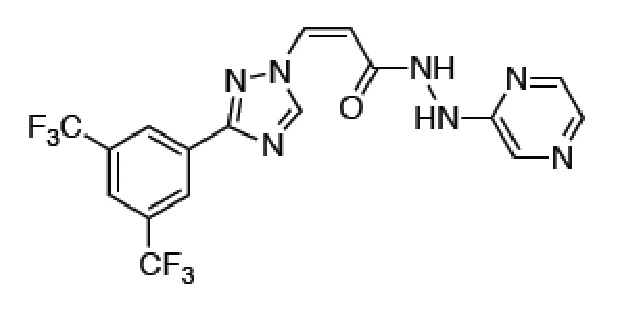
Chemical name: (2Z)‐3‐{3‐[3,5‐bis(trifluoromethyl)phenyl]‐1H‐1,2,4‐triazol‐1yl}‐N'‐(pyrazin‐2‐yl)prop‐2‐enehydrazide
Molecular formula and molecular mass: C17H11F6N7O; 443.31 g/mol
Structural formula:
Physicochemical properties: Selinexor is the anhydrous Form A, a white to off-white powder with a pKa of 10.2. The solubility of selinexor in aqueous media decreases over the range pH 1.0 to pH 7.4 from 0.114 mg/mL to 0.009 mg/mL. The melting point is 178°C.
14 CLINICAL TRIALS
14.1 Clinical Trials by Indication
Relapsed/Refractory Multiple Myeloma
Table 8 Summary of patient demographics for a clinical trial in patients with relapsed or refractory multiple myeloma who had received at least one prior line of therapy (BOSTON)
| Study # | Study design | Dosage, route of administration and duration | Study subjects (n) | Mean age (Range) | Sex |
| KCP-330-023 (BOSTON) | Randomized (1:1), open label, active controlled, Phase 3 study | SVd arma: XPOVIO 100 mg PO once weekly + bortezomib 1.3 mg/m2 SC once weekly + dexamethasone 20 mg PO twice weekly Vd armb: bortezomib 1.3 mg/m2 SC twice weekly + dexamethasone 20 mg PO four times weekly for first 8 cycles followed by bortezomib 1.3 mg/m2 SC once weekly + dexamethasone 20 mg PO twice weekly | 195 207 | 65.3 (40 - 87) 55.9% ≥ 65 years of age 66.7 (38 - 90) 63.8% ≥ 65 years of age | Male: 59% Female: 41% Male: 56% Female: 44% |
SVd = selinexor + bortezomib (VELCADE®) + dexamethasone; Vd = bortezomib (VELCADE®) + dexamethasone a XPOVIO was administered on days 1, 8, 15, 22, 29 in combination with bortezomib once weekly on days 1, 8, 15, 22 and dexamethasone on days 1, 2, 8, 9, 15, 16, 22, 23, 29 and 30 of each 35-day cycle.
b bortezomib was administered twice weekly on days 1, 4, 8, 11 in combination with dexamethasone on days 1, 2, 4, 5, 8, 9, 11, 12 of each 21-day cycle for the first 8 cycles, followed by bortezomib once weekly on days 1, 8, 15, 22 and dexamethasone on days 1, 2, 8, 9, 15, 16, 22, 23, 29, 30 of each 35-day cycle.
The efficacy of XPOVIO in combination with bortezomib and dexamethasone was evaluated in a global, randomized, open label, active‐controlled trial in patients 18 years of age or older who had received 1 to 3 prior anti‐MM regimens, BOSTON (KCP-330-023). A total of 402 patients were randomized 1:1 to receive either SVd (n=195) or Vd (n=207). Among these, the median age was 67 years (range 38 to 90 years), 60% of patients were 65 years of age or older, 20% of patients were 75 years of age or older, and 57% were male. Randomization was stratified based on prior proteasome inhibitor therapies exposure (yes versus no), number of prior regimens (1 versus >1), Stage (III versus I or II) according to the Revised‐International Staging System (RISS) and region. Upon confirmed progressive disease (PD), patients in the Vd arm could receive XPOVIO in combination with bortezomib and dexamethasone
(SVd) or XPOVIO 100 mg taken orally on Days 1, 8, 15, 22, 29 with dexamethasone 20 mg taken orally on Days 1, 2, 8, 9, 15, 16, 22, 23, 29, and 30 of each 35‐day cycle.
Patients enrolled in the trial had multiple myeloma that was measurable by paraprotein in the serum, urine or via free light chain measurements. Prior treatment with bortezomib or another proteasome inhibitor was allowed. Eligible patients were also required to have an Eastern Cooperative Oncology Group (ECOG) score of ≤ 2 and adequate hepatic, renal and hematopoietic function. Patients were excluded if they had systemic light-chain amyloidosis, CNS involvement, or Grade 2 painful or Grade 2 or higher peripheral neuropathy.
Treatment continued in both arms until disease progression or unacceptable toxicity.
Antiemetic prophylaxis was used in 88% and 36% of patients in the SVd arm and Vd arm, respectively.
Baseline patient and disease characteristics were balanced and comparable between treatment arms and are shown in Table 9.
Table 9 Baseline Patient and Disease Characteristics in BOSTON
| XPOVIO + bortezomib + dexamethasone (N = 195) | bortezomib + dexamethasone (N=207) | |
| Median age in years (range) | 66 (40 – 87) | 67 (38 – 90) |
| Gender (%) Male / Female | 59.0 / 41.0 | 55.6 / 44.4 |
| Age Group (% [<65 / 65 – 74 / ≥75]) | 44.1 / 38.5 / 17.4 | 36.2 / 41.1 / 22.7 |
| Race, n (%) White Black or African American Asian Other or Missing | 161 (82.6) 4 ( 2.1) 25 (12.8) 5 ( 2.6) | 165 (79.7) 7 ( 3.4) 25 (12.1) 10 ( 4.8) |
| Median years from diagnosis to randomization (range) | 3.81 (0.4, 23.0) | 3.59 (0.4, 22.0) |
| ECOG performance status, n (%) 0 – 1 ≥2 | 175 (90) 20 (10) | 191 (92) 16 ( 8) |
| Creatinine Clearance, n (%), mL per minute <30 30 to 59 ≥60 | 3 (1.5) 53 (27) 139 (71) | 10 ( 5) 60 (29) 137 (66) |
| XPOVIO + bortezomib + dexamethasone (N = 195) | bortezomib + dexamethasone (N=207) | |
| Revised International Staging System at Baseline, n (%) I II III Unknown | 56 (29) 117 (60) 12 ( 6) 10 ( 5) | 52 (25) 125 (60) 16 ( 8) 14 ( 7) |
| Number of Prior Therapies, n (%) 1 2 3 | 99 (51) 65 (33) 31 (16) | 99 (48) 64 (31) 44 (21) |
| Type of known prior therapy, n (%) Stem Cell transplantation Lenalidomide Pomalidomide Bortezomib Carfilzomib Daratumumab | 76 (39) 77 (39) 11 ( 6) 134 (69) 20 (10) 11 ( 6) | 63 (30) 77 (37) 7 ( 3) 145 (70) 21 (10) 6 ( 3) |
| Known high-risk cytogeneticsa, n (%) | 97 (50) | 95 (46) |
| del (17p)/p53 | 21 (11) | 16 ( 8) |
| t (14;16) | 7 ( 4) | 11 ( 5) |
| t (4;14) | 22 (11) | 28 (14) |
| 1q21 | 80 (41) | 71 (34) |
a Includes any of del (17p)/p53, t (14;16), t (4;14), 1q21.
The primary endpoint of the BOSTON study was progression free survival (PFS) according to the International Myeloma Working Group (IMWG) Uniform Response Criteria for Multiple Myeloma, as assessed by an Independent Review Committee (IRC). Confirmation of progressive disease was required. Progression and disease response were assessed every three weeks up to week 37, then every 5 weeks thereafter. Key secondary efficacy endpoints included overall response rate (ORR), overall survival (OS), and response rate for responses ≥ very good partial response (VGPR) as per IMWG criteria.
BOSTON demonstrated a statistically significant improvement in PFS in the SVd arm compared to the Vd arm; hazard ratio (HR)=0.70 (95% CI: 0.53-0.93; p=0.0075). Efficacy results are shown in Table 10 and Figure 1.
Table 10 Efficacy Results of BOSTON in Patients with Relapsed or Refractory Multiple Myeloma
| Endpoint | XPOVIO + bortezomib + dexamethasone (N = 195) | bortezomib + dexamethasone (N=207) | ||||||||||||||
| Progression-Free Survival | ||||||||||||||||
| Median (months) [95% CI] | 13.9 [11.7, Not reached] | 9.5 [8.1, 10.8] | ||||||||||||||
| Hazard Ratioa [95% CI] | 0.70 [0.53, 0.93] | |||||||||||||||
| One-sided p-valueb | 0.0075 | |||||||||||||||
| Overall Response Rate (ORR)c, n (%) | 149 (76.4) | 129 (62.3) | ||||||||||||||
| 95% CI | (69.8, 82.2) | (55.3, 68.9) | ||||||||||||||
| One-sided p-value | 0.0012 | |||||||||||||||
| Stringent Complete Response (sCR) | 19 (10) | 13 ( 6) | ||||||||||||||
| Complete Response (CR) | 14 ( 7) | 9 ( 4) | ||||||||||||||
| Very Good Partial Response (VGPR) | 54 (28) | 45 (22) | ||||||||||||||
| Partial Response (PR) | 62 (32) | 62 (30) | ||||||||||||||
| Duration of Response | ||||||||||||||||
| Median (months) [95% CI] | 20.3 (12.6, NE) | 12.9 (9.3, 15.8) | ||||||||||||||
| ≥ VGPR Response Rated, n (%) | 87 (44.6) | 67 (32.4) | ||||||||||||||
| 95% CI | (37.5, 51.9) | (26.0, 39.2) | ||||||||||||||
| One-sided p-value | 0.0082 | |||||||||||||||
| Overall Survival (OS) | ||||||||||||||||
| Number of events, n (%) | 47 | 62 | ||||||||||||||
| Median OS, months (95% CI) | Not reached [NE, NE] | 25.0 [23.5, NE] | ||||||||||||||
| Hazard Ratio (95% CI)e | 0.84 [0.58, 1.23] | |||||||||||||||
| One-sided p-value | 0.1852 | |||||||||||||||
a Hazard ratio is based on stratified Cox’s proportional hazard regression modeling. Median follow up of 15.1 months at the time of the analysis.
b p-value based on stratified log-rank test. The pre-planned PFS interim analysis boundary of statistical significance was defined as a p-value <0.0103.
c Includes sCR + CR + VGPR + PR, p value based on Cochran-Mantel-Haenszel test.
d Includes sCR + CR + VGPR, p value based on Cochran-Mantel-Haenszel test.
e Based on stratified Cox Proportional Hazard model with Efron's Method of handling ties. Stratified for prior PI therapies, number of prior anti-MM regimens and R-ISS Stage at screening.
NE=Not Estimable
Figure 1 BOSTON Kaplan-Meier Curve of Progression-Free Survival (ITT Population)
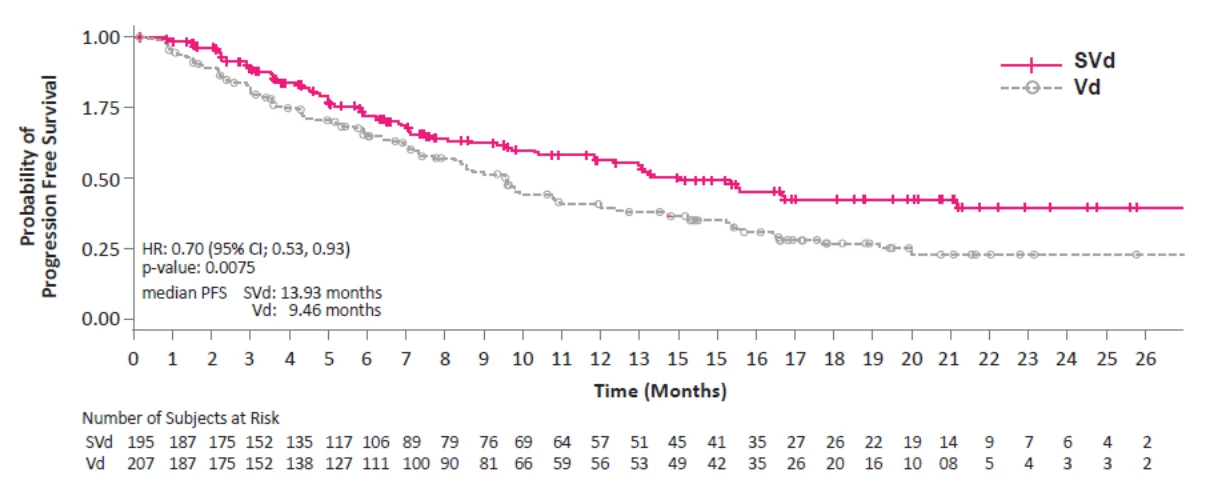
The median time to response was 1.1 months in the SVd-treated patients and 1.4 months in the Vd-treated patients. The median duration of response was 20.3 months and 12.9 months in the SVd and Vd arms, respectively.
Upon confirmed progressive disease, 74 (36%) patients crossed over from the Vd arm to receive a regimen that included selinexor.
In an ad-hoc updated analysis (15 Feb 2021) with median follow-up time of 22.1 months the median PFS was 13.2 months in the SVd arm and 9.5 months in the Vd arm (hazard ratio (HR)=0.71 (95% CI: 0.54 – 0.93; p=0.0064). The overall response rate remained consistent with the primary analysis (77% and 63% in the SVd and Vd arms, respectively). The median duration of response was 17.3 months in the SVd arm and 12.9 months in the Vd arm. At the time of the updated analysis (median follow-up for survival 28.7 months), the median overall survival was 36.67 (95% CI: 30.19, NE) months in the SVd arm and 32.76 (95% CI: 27.83, NE) months in the Vd arm (HR=0.88 (95% CI: 0.63 – 1.21; p=0.2152).
Grade ≥2 peripheral neuropathy, a pre‐specified key secondary endpoint, was lower in the SVd arm (21%) compared to the Vd arm (34%); odds ratio 0.50 [95% CI: 0.32, 0.79, p=0.0013], due to the lower dose of bortezomib in the SVd arm.
15 MICROBIOLOGY
No microbiological information is required for this drug product.
16 NON-CLINICAL TOXICOLOGY
General Toxicology: Findings in the repeat dose 13-week rat study were decrements in body weight gain and food consumption, and hematopoietic/lymphoid hypoplasia, and male/female reproductive organ effects. All the reproductive organ toxicity was irreversible with cessation of treatment. The NOAEL was considered to be 0.25 mg/kg (approximately 0.02-fold of human area under the curve [AUClast] of an 100 mg dose) in males and 1 mg/kg (approximately 0.14-fold of the area under the curve [AUClast] at the recommended human dose of 100 mg) in females.
In the 13-week monkey study, the treatment-related effects observed included body weight loss, gastrointestinal effects, and lymphoid/haematologic depletion which were partially/fully reversed with cessation of treatment. Gastrointestinal toxicities, including anorexia, decrements in body weight gain and reduced food consumption were noted to be CNS-mediated. No safety margin for these toxicities could be established. The NOAEL was 1 mg/kg across both genders approximately 0.23- fold to 0.29-fold of the area under the curve (AUClast) at the recommended human dose of 100 mg.
Carcinogenicity: Carcinogenicity studies have not been conducted with selinexor.
Genotoxicity: Selinexor was not mutagenic in vitro in a bacterial reverse mutation (Ames) assay and was not clastogenic in either the in vitro mammalian chromosomal aberration test in human lymphocytes or in the in vivo bone marrow micronucleus assay in rats.
Reproductive and Developmental Toxicology: In animal reproduction studies, administration of selinexor to pregnant rats during organogenesis resulted in structural abnormalities and alterations to growth at exposures that were below those occurring clinically at the recommended dose. In other short-term toxicology studies, effects were observed in male and female reproductive organs in monkeys and developmental effects were seen with daily exposure in rats.
Fertility and early embryonic development studies in animals have not been conducted with selinexor. In repeat-dose oral toxicity studies, selinexor was administered for up to 13 weeks in rats and monkeys. Reduced sperm, spermatids, and germ cells in epididymides and testes were observed in rats at ≥1 mg/kg, decreased ovarian follicles were observed in rats at ≥2 mg/kg, and single cell necrosis of testes was observed in monkeys at ≥1.5 mg/kg. These results were observed at systemic exposures approximately 0.10, 0.29, and 0.49 times, respectively, the exposure (AUClast) in humans at the recommended human dose of 100 mg.
In an embryo-fetal development study in pregnant rats, daily oral administration of selinexor at 0, 0.25, 0.75, or 2 mg/kg throughout organogenesis caused incomplete or delayed ossification, skeletal variations, and reduced fetal weight compared with controls at a dose of 0.75 mg/kg and above. The NOAEL for maternal and embryo-fetal developmental toxicity was 0.25 mg/kg/day (approximately 0.02x the human exposure (AUClast) of the recommended dose of 100 mg.
Other Toxicities
A topical challenge to guinea pig in a sensitization assay showed that selinexor at 25% induced a mild grade II dermal contact hypersensitivity response at 24 and 48 hours.