


Product Monograph - Riva-Hydroxyurea
Recent Major Label Changes
| 4 Administration, 4.4 Administration | 2026-04 |
|---|---|
| 7 Warnings and Precautions, General | 2025-08 |
| 9 Drug Interactions, 9.7 Drug-Laboratory Test Interactions | 2025-08 |
Table of Contents
Certain sections or subsections that are not applicable at the time of the preparation of the most recent authorized product monograph are not listed.
Recent Major Label Changes .................................................................................................... 2
Table of Contents ..................................................................................................................... 2
Part 1: Healthcare Professional Information ............................................................................ 4
- 1.
Indications .................................................................................................................... 4
1.1. Pediatrics ............................................................................................................... 4
1.2. Geriatrics ............................................................................................................... 4
- 2. Contraindications ......................................................................................................... 4
- 4.
Dosage and Administration .......................................................................................... 4
4.1. Dosing Considerations ........................................................................................... 4
4.2. Recommended Dose and Dosage Adjustment ....................................................... 4
4.4. Administration ....................................................................................................... 6
4.5. Missed Dose ........................................................................................................... 6
- 5. Overdose ...................................................................................................................... 6
- 6. Dosage Forms, Strengths, Composition, and Packaging ................................................ 6
- 7.
Warnings and Precautions ............................................................................................ 6
General ............................................................................................................................. 6
Carcinogenesis and Genotoxicity ...................................................................................... 7
Driving and Operating Machinery ..................................................................................... 7
Hematologic ..................................................................................................................... 7
Hepatic/Biliary/Pancreatic ................................................................................................ 8
Immune ............................................................................................................................ 8
Neurologic ........................................................................................................................ 8
Renal ................................................................................................................................. 8
Reproductive Health ......................................................................................................... 8
Respiratory ....................................................................................................................... 9
Skin ................................................................................................................................... 9
7.1. Special Populations ................................................................................................ 9
7.1.1. Pregnancy ......................................................................................................... 9
7.1.2. Breastfeeding .................................................................................................... 9
7.1.3. Pediatrics .......................................................................................................... 9
7.1.4. Geriatrics ........................................................................................................... 9
- 8.
Adverse Reactions ........................................................................................................ 9
8.1. Adverse Reaction Overview ................................................................................... 9
8.2. Clinical Trial Adverse Reactions............................................................................ 10
8.5. Post-Market Adverse Reactions ........................................................................... 10
- 9.
Drug Interactions ........................................................................................................ 11
9.2. Drug Interactions Overview ................................................................................. 11
9.4. Drug-Drug Interactions ........................................................................................ 11
9.5. Drug-Food Interactions ........................................................................................ 11
9.6. Drug-Herb Interactions ........................................................................................ 11
9.7. Drug-Laboratory Test Interactions ....................................................................... 11
- 10.
Clinical Pharmacology ................................................................................................. 12
10.1. Mechanism of Action ....................................................................................... 12
10.3. Pharmacokinetics ............................................................................................. 12
- 11. Storage, Stability, and Disposal .................................................................................. 13
- 12. Special Handling Instructions ...................................................................................... 13
Part 2: Scientific Information ................................................................................................. 14
- 13. Pharmaceutical Information ....................................................................................... 14
- 14.
Clinical Trials .............................................................................................................. 15
14.2. Comparative Bioavailability Studies ..................................................................... 15
- 15. Microbiology .............................................................................................................. 15
- 16. Non-Clinical Toxicology .............................................................................................. 16
- 17. Supporting Product Monographs ................................................................................ 17
Patient Medication Information ............................................................................................ 18
Part 1: Healthcare Professional Information
1. Indications
RIVA-HYDROXYUREA (hydroxyurea) is indicated for:
- concomitant use with irradiation therapy in the treatment of primary squamous cell (epidermoid) carcinomas of the head and neck, excluding the lip.
Tumor responses to hydroxyurea have been reported in resistant chronic myelocytic leukemia.
1.1. Pediatrics
Pediatrics (< 18 years of age): No data are available to Health Canada; therefore, Health Canada has not authorized an indication for pediatric use.
1.2. Geriatrics
Geriatrics: Data on which the indication was originally approved are not available; therefore, it is unknown if use in the geriatric population is associated with differences in safety or efficacy.
2. Contraindications
- RIVA-HYDROXYUREA is contraindicated in patients who are hypersensitive to this drug or to any ingredient in the formulation, including any non-medicinal ingredient, or component of the container. For a complete listing, see 6 Dosage Forms, Strengths, Composition, and Packaging.
- RIVA-HYDROXYUREA is contraindicated in patients with marked bone marrow depression, i.e., leukopenia (< 2500 white blood cells/mm3) or thrombocytopenia (< 100,000/mm3), or severe anemia.
4. Dosage and Administration
4.1. Dosing Considerations
- RIVA-HYDROXYUREA should be administered under the supervision of an adequately trained healthcare professional.
- Patients should be informed to maintain adequate fluid intake.
4.2. Recommended Dose and Dosage Adjustment
Primary Squamous Cell (Epidermoid) Carcinomas of the Head and Neck)
Intermittent Therapy: 80 mg/kg administered orally as a single dose every third day.
This intermittent dosage schedule may offer the advantage of reduced toxicity over daily therapy (e.g., bone marrow depression).
Concomitant Therapy with Irradiation (Carcinoma of the head and neck): 80 mg/kg administered orally as a single dose every third day.
Administration of RIVA-HYDROXYUREA should be started at least seven days before initiation of irradiation, and continued during radiotherapy and continue indefinitely thereafter, provided the patient is kept under adequate observation and exhibits no unusual or severe toxicity.
Resistant Chronic Myelocytic Leukemia
Continuous Therapy
20 to 30 mg/kg administered orally as a single daily dose.
An adequate trial period for determining the effectiveness of RIVA-HYDROXYUREA is 6 weeks. When there is regression in tumor size or arrest in tumor growth, therapy should be continued indefinitely. Therapy should be interrupted if the white blood cell count drops below 2,500/mm3, or the platelet count below 100,000/mm3. In these cases, the counts should be reevaluated after 3 days, and therapy resumed when the counts return to acceptable levels. Hematopoietic rebound is usually rapid. If rapid rebound has not occurred during combined RIVA-HYDROXYUREA and irradiation therapy, irradiation may also be interrupted. Anemia, even if severe can be managed without interrupting RIVA-HYDROXYUREA therapy.
Concomitant therapy
Concurrent use of RIVA-HYDROXYUREA with other myelosuppressive agents may require adjustments of dosages.
RIVA-HYDROXYUREA should be administered cautiously to patients who have recently received extensive radiation therapy or chemotherapy with other cytotoxic drugs (see 7 Warnings and Precautions, Hematologic and 8.5 Post-Market Adverse Reactions).
Pain or discomfort from inflammation of the mucous membranes at the irradiated site (mucositis) is usually controlled by measures such as topical anesthetics and orally administered analgesics. If the reaction is severe, RIVA-HYDROXYUREA therapy may be temporarily interrupted; if it is extremely severe, irradiation dosage may, in addition, be temporarily postponed.
Severe gastric distress, such as nausea, vomiting, and anorexia, resulting from combined therapy may usually be controlled by interruption of RIVA-HYDROXYUREA administration.
Special Populations
Renal Insufficiency:
There are no data that support specific guidance for dosage adjustment in patients with impaired renal function. Since renal excretion is a pathway of elimination, consideration should be given to decreasing the dosage in this population (see 10.3 Pharmacokinetics). Close monitoring of hematologic parameters is advised.
Hepatic Insufficiency:
There are no data that support specific guidance for dosage adjustment in patients with impaired hepatic function. Close monitoring of hematologic parameters is advised.
Pediatric patients (below 18 years):
Because of the rarity of carcinomas of the head and neck in children, dosage regimens have not been established. Health Canada has not authorized an indication for pediatric use.
Geriatric
Elderly patients may require a lower dose regimen (see 7 Warnings and Precautions).
4.4. Administration
Swallow RIVA-HYDROXYUREA capsules whole. Do NOT open, break or chew capsules because RIVA-HYDROXYUREA is a cytotoxic drug (see 12 Special Handling Instructions).
4.5. Missed Dose
The physician should be consulted regarding missed doses.
5. Overdose
Acute mucocutaneous toxicity has been reported in patients receiving hydroxyurea at a dosage several times the therapeutic dose. Soreness, violet erythema, edema on palms and foot soles followed by scaling of hands and feet, severe generalized hyperpigmentation of skin, and stomatitis have also been observed.
For the most recent information in the management of a suspected drug overdose, contact your regional poison control centre or Health Canada’s toll-free number, 1-844 POISON-X (1-844-764-7669).
- 6. Dosage Forms, Strengths, Composition, and Packaging
Table 1 – Dosage Forms, Strengths, and Composition
Description
RIVA-HYDROXYUREA is available in size 1, hard gelatin capsules with opaque pink body imprinted with HU 500 in black ink and opaque green cap imprinted with HU 500 in black ink containing white to off-white granular powder. Provided in bottles of 100 capsules.
7. Warnings and Precautions
General
Drug-Induced Fever: High fever (≥ 39°C) requiring hospitalization has been reported, in some cases concurrently with gastrointestinal, pulmonary, musculoskeletal, hepatobiliary, dermatological or cardiovascular manifestations. Onset typically occurred within 6 weeks of initiation and resolved promptly after discontinuation of hydroxyurea. Upon re-administration, fever re-occurred within 24 hours.
Tumor lysis syndrome: Tumor lysis syndrome has been reported in patients taking hydroxyurea therapy. Patients at risk of tumor lysis syndrome are those with the highest tumor burden prior to treatment. Monitor patients closely and take appropriate precautions.
| Route of Administration | Dosage Form / Strength/Composition | Non-medicinal Ingredients |
| Oral | Capsule 500 mg | Colloidal silica, magnesium stearate. Capsule shell: D&C Yellow No. 10, FD&C Blue No. 1, FD&C Red No. 3, FD&C Yellow No. 6, gelatin, titanium dioxide. Ink: Black iron oxide, potassium hydroxide, propylene glycol, shellac. |
Interference with Continuous Glucose Monitoring Systems: Hydroxyurea may falsely elevate sensor glucose results from certain continuous glucose monitoring (CGM) systems and may lead to hypoglycaemia if sensor glucose results are relied upon to dose insulin.
If a patient using a CGM is to be prescribed hydroxyurea, consult with the CGM prescriber about alternative glucose monitoring methods.
Carcinogenesis and Genotoxicity
Hydroxyurea is unequivocally genotoxic and a presumed transpecies carcinogen which implies a carcinogenic risk to humans. In patients receiving long-term therapy with hydroxyurea for myeloproliferative disorders, such as polycythemia vera and thrombocytopenia, secondary leukemia has been reported. It is unknown whether this leukemogenic effect is secondary to hydroxyurea or is associated with the patients’ underlying disease. Skin cancer has also been reported in patients receiving long-term hydroxyurea.
Patients should be advised to protect skin from sun exposure, conduct self-inspection of the skin and be screened for secondary malignancies during routine follow-up visits.
Driving and Operating Machinery
The effect of hydroxyurea on driving and operating machinery has not been studied. Since RIVA-HYDROXYUREA may cause drowsiness and other neurologic effects (see 8.5 Post-Market Adverse Reactions, Neurologic), alertness may be impaired. Exercise caution when driving or operating a vehicle or potentially dangerous machinery.
Hematologic
Treatment with RIVA-HYDROXYUREA should not be initiated if bone marrow function is depressed (see 2 Contraindications). RIVA-HYDROXYUREA may produce bone marrow suppression; leukopenia is generally its first and most common manifestation. Thrombocytopenia and anemia occur less often and are seldom seen without a preceding leukopenia. The recovery from myelosuppression is rapid when RIVA-HYDROXYUREA therapy is interrupted. Bone marrow depression is more likely in patients who have previously received radiotherapy or cytotoxic cancer chemotherapeutic agents; RIVA-HYDROXYUREA should be used cautiously in such patients.
Serious cases of hemolytic anemia in patients treated with hydroxyurea for myeloproliferative diseases have been reported (see 8.5 Post-Market Adverse Reactions). Patients who develop persistent anemia should have laboratory tests evaluated for hemolysis. In the setting of confirmed diagnosis of hemolytic anemia, RIVA-HYDROXYUREA should be discontinued.
Severe anemia must be corrected before initiating therapy with RIVA-HYDROXYUREA.
Erythrocytic abnormalities: Megaloblastic erythropoiesis, which is self-limiting, is often seen early in the course of hydroxyurea therapy. The morphologic change resembles that seen in pernicious anemia, but is not related to vitamin B12 or folic acid deficiency. The macrocytosis may mask the incidental development of folic acid deficiency; regular determinations of serum folic acid are recommended. Hydroxyurea may also delay plasma iron clearance and reduce the rate of iron utilization by erythrocytes, but it does not appear to alter the red blood cell survival time.
Patients who have received irradiation therapy in the past may have an exacerbation of post irradiation erythema when RIVA-HYDROXYUREA is given.
Hepatic/Biliary/Pancreatic
Hepatitis and cholestasis have been reported commonly in patients treated with hydroxyurea, with many requiring hospitalization. If hepatitis or cholestasis occurs, RIVA-HYDROXYUREA should be discontinued (see 8 Adverse Reactions).
Hepatotoxicity and hepatic failure resulting in death were reported during postmarketing surveillance in human immunodeficiency virus (HIV)-infected patients treated with hydroxyurea and other antiretroviral agents. Fatal hepatic events were reported most often in patients treated with the combination of hydroxyurea, didanosine, and stavudine. This combination should be avoided.
Fatal and nonfatal pancreatitis has occurred in HIV-infected patients during therapy with hydroxyurea and didanosine, with or without stavudine. This combination should be avoided.
Immune
Concomitant use of RIVA-HYDROXYUREA with a live virus vaccine may potentiate the replication of the vaccine virus because normal defense mechanisms may be suppressed by RIVA-HYDROXYUREA. Vaccination with a live vaccine in a patient taking RIVA-HYDROXYUREA may result in severe infection. Patient’s antibody response to vaccines, including killed or inactivated vaccines, may be suboptimal. The use of live vaccines should be avoided and individual specialist advice sought (see 9.2 Drug Interactions Overview).
Neurologic
Peripheral neuropathy, which was severe in some cases, has been reported in HIV-infected patients receiving hydroxyurea in combination with antiretroviral agents, including didanosine, with or without stavudine (see 8.5 Post-Market Adverse Reactions, Neurologic).
Renal
RIVA-HYDROXYUREA should be used with caution in patients with renal dysfunction (see 4.2 Recommended Dose and Dosage Adjustment and 10.3 Pharmacokinetics).
Reproductive Health
Fertility
Azoospermia or oligospermia, sometimes reversible, have been observed in men. Male patients should be informed about the possibility of sperm conservation before the start of therapy.
Female patients of reproductive potential should be counselled to use effective contraception during therapy and for at least 6 months after therapy.
Teratogenic Risk
Animal studies have shown that effects of prenatal exposure to hydroxyurea included embryo-fetal death, numerous fetal malformations of the viscera and skeleton, growth retardation, and functional deficits (see 16 Non-Clinical Toxicology). Women of childbearing potential should be advised to avoid becoming pregnant while taking RIVA-HYDROXYUREA.
As hydroxyurea is genotoxic, men under therapy are advised to use safe contraceptive measures during and at least 1 year after therapy. RIVA-HYDROXYUREA should not be used to treat males contemplating conception.
Respiratory
Interstitial lung disease including pulmonary fibrosis, lung infiltration, pneumonitis, and alveolitis/allergic alveolitis (including fatal cases) have been reported in patients treated with hydroxyurea for myeloproliferative neoplasm. Patients developing pyrexia, cough, dyspnea, or other respiratory symptoms should be closely monitored, investigated and treated. Promptly discontinue hydroxyurea and treat with corticosteroids to resolve the pulmonary events (see 8.5 Post-Market Adverse Reactions, Respiratory).
Skin
Cutaneous vasculitic toxicities including vasculitic ulcerations and gangrene have occurred in patients with myeloproliferative disorders during therapy with hydroxyurea. These vasculitic toxicities were reported most often in patients with a history of or currently receiving interferon therapy. Due to potentially severe clinical outcomes for the cutaneous vasculitic ulcers reported in patients with myeloproliferative disease, hydroxyurea should be discontinued if cutaneous vasculitic ulcerations develop and alternative cytoreductive agents should be initiated as indicated (see 8.5 Post-Market Adverse Reactions, Dermatologic).
7.1. Special Populations
7.1.1. Pregnancy
RIVA-HYDROXYUREA can cause fetal harm when administered to a pregnant woman. There are no adequate and well-controlled studies in pregnant women. Animal studies have shown that prenatal exposure to hydroxyurea is associated with developmental abnormalities (see 16 Non-Clinical Toxicology). If RIVA-HYDROXYUREA is used during pregnancy or if the patient becomes pregnant while on RIVA-HYDROXYUREA therapy, the patient should be apprised of the potential hazard to the fetus.
7.1.2. Breastfeeding
Hydroxyurea is secreted in human milk. Because of the potential for serious adverse reactions in nursing infants from hydroxyurea, breast feeding should be discontinued.
7.1.3. Pediatrics
Pediatrics (< 18 years old): Safety and effectiveness in children have not been established. No data are available to Health Canada; therefore, Health Canada has not authorized an indication for pediatric use.
7.1.4. Geriatrics
Elderly patients may be more sensitive to the effects of RIVA-HYDROXYUREA and may require a lower dose regimen.
8. Adverse Reactions
8.1. Adverse Reaction Overview
The data on which the indication was originally approved are not available.
8.2. Clinical Trial Adverse Reactions
The data on which the indication was originally approved are not available.
8.5. Post-Market Adverse Reactions
- (see 7 Warnings and Precautions, Hematologic).
Maculopapular rash, facial erythema, peripheral erythema, skin ulceration, cutaneous lupus erythematosus and dermatomyositis-like skin changes. Nail pigmentation (melanonychia) has been observed in some patients. Hyperpigmentation, erythema, atrophy of skin and nails, scaling, violet papules, and alopecia have been observed in some patients after several years of long-term daily maintenance therapy with hydroxyurea. Skin cancer has been reported rarely.
- with myeloproliferative disorders during therapy with hydroxyurea. These vasculitic toxicities were reported most often in patients with a history of or currently receiving interferon therapy (see 7 Warnings and Precautions, Skin).
- relationship to hydroxyurea administration is questionable because cerebral metastatic disease was not excluded.
Elevated serum uric acid, blood urea nitrogen (BUN), and creatinine levels; rare instances of dysuria. Abnormal bromsulphalein test (BSP) retention has been reported.
- hydroxyurea with many requiring hospitalization. If hepatitis or cholestasis occurs hydroxyurea should be discontinued. Elevation of hepatic enzymes have been reported.
- -infected patients who received hydroxyurea in combination with antiretroviral agents, in particular didanosine plus stavudine.
- instances of acute pulmonary reactions (diffuse pulmonary infiltrates/fibrosis, and dyspnea). Fatal and nonfatal pancreatitis and severe peripheral neuropathy have been reported in HIV-infected patients who received hydroxyurea in combination with antiretroviral agents, in particular didanosine plus stavudine. Patients treated with hydroxyurea in combination with didanosine, stavudine, and indinavir in study ACTG 5025 showed a median decline in CD4 cells of approximately 100/mm3 (see 7 Warnings and Precautions, Hepatic/Biliary/Pancreatic).
- hydroxyurea and Irradiation Therapy
Adverse reactions observed with combined hydroxyurea and irradiation therapy were similar to those reported with the use of hydroxyurea alone, primarily bone marrow depression (leukopenia and anemia), and gastric irritation. Nearly all patients receiving an adequate course of combined hydroxyurea and irradiation therapy will develop leukopenia. Decreased platelet counts (< 100,000 cells/mm3) have occurred rarely and usually in the presence of marked leukopenia. RIVA-HYDROXYUREA may potentiate some adverse reactions usually seen with irradiation alone, such as gastric distress and mucositis.
9. Drug Interactions
9.2. Drug Interactions Overview
Prospective studies on the potential for hydroxyurea to interact with other drugs have not been performed.
Concurrent use of hydroxyurea and other myelosuppressive agents or radiation therapy may increase the likelihood of bone marrow depression or other adverse events (see 7 Warnings and Precautions, Hematologic and 8.5 Post-Market Adverse Reactions, Hematologic).
There is increased risk of serious and fatal infections with the concomitant use of live vaccines. Live vaccines are not recommended in patients treated with RIVA-HYDROXYUREA (see 7 Warnings and Precautions, Immune).
9.4. Drug-Drug Interactions
Since hydroxyurea may raise the serum uric acid level, dosage adjustment of uricosuric medication may be necessary.
In vitro studies have shown a significant increase in cytarabine cytotoxic activity in hydroxyurea-treated cells. Whether this interaction will lead to synergistic toxicity in the clinical setting or the need to modify cytarabine doses has not been established.
9.5. Drug-Food Interactions
Interactions with food have not been established.
9.6. Drug-Herb Interactions
Interactions with herbal products have not been established.
9.7. Drug-Laboratory Test Interactions
A published study has shown increases of laboratory values of urea, uric acid (5-9%) and lactic acid (6-11%) measured by in vitro enzymatic assays, in the presence of hydroxyurea (0.1 – 1 mM), indicating an analytical interference. The clinical relevance of these results is unknown.
Hydroxyurea may falsely elevate sensor glucose results from certain continuous glucose monitoring (CGM) systems. (see 7 Warnings and Precautions)
10. Clinical Pharmacology
10.1. Mechanism of Action
Neoplastic Disease: The precise mechanism by which hydroxyurea produces its antineoplastic effects cannot, at present, be described. However, the reports of various studies in rat and human tissue cultures lend support to the hypothesis that hydroxyurea causes an immediate inhibition of DNA synthesis, by acting as a ribonucleotide reductase inhibitor, without interfering with the synthesis of ribonucleic acid or of protein. Hydroxyurea probably acts by decreasing the rate of conversion of ribonucleotides and deoxyribonucleotides. This effect is particularly apparent in cells with a high rate of proliferation.
Potentiation of Irradiation Therapy: Three mechanisms have been postulated for the potentiation of the therapeutic effects of irradiation by hydroxyurea on squamous cell (epidermoid) carcinomas of the head and neck. In vitro studies utilizing Chinese hamster cells suggest that hydroxyurea is lethal to normally radioresistant S-stage cells and holds other cells of the cell cycle in the G1 or pre-DNA synthesis stage where they are most susceptible to the effects of irradiation. The third mechanism of action has been theorized on the basis of in vitro studies of HeLa cells: it appears that hydroxyurea, by inhibition of DNA synthesis, hinders the normal repair process of cells damaged but not killed by irradiation, thereby decreasing their survival rate; there is no alteration of RNA and protein syntheses.
10.3. Pharmacokinetics
Absorption
Hydroxyurea is readily absorbed after oral administration. Peak plasma levels are reached in 1-4 hours after an oral dose. With increasing doses, disproportionately greater mean peak plasma concentrations and area under the plasma concentration-time curve (AUC) are observed. There are no data on the effect of food on the absorption of hydroxyurea.
Distribution
Hydroxyurea distributes rapidly and widely in the body with an estimated volume of distribution approximating total body water. Plasma to ascites fluid ratios range from 2:1 to 7.5:1. Hydroxyurea concentrates in leukocytes and erythrocytes. Hydroxyurea crosses the blood-brain barrier.
Metabolism
Up to 50% of an oral dose undergoes conversion through metabolic pathways that are not fully characterized. In one minor pathway, hydroxyurea may be degraded to acetohydroxamic acid by urease found in intestinal bacteria.
Elimination
Excretion of hydroxyurea in humans is a nonlinear process occurring through two pathways: one is saturable, probably hepatic metabolism; the other is first-order renal excretion. In patients with malignancies, renal elimination ranged from 25-55% of the administered dose. The concentration in the serum at 24 hours is negligible when the usual dose is given as a single daily dose.
Special Populations and Conditions
No information is available regarding pharmacokinetic differences due to age, gender, or race.
Hepatic Insufficiency
There are no data that support specific guidance for dosage adjustment in patients with impaired hepatic function.
Renal Insufficiency
Since renal excretion is a pathway of elimination, consideration should be given to decreasing the dosage in this population. In adult patients with sickle cell disease, an open-label, non-randomized, single dose, multi-center study was conducted to assess the influence of renal function on the pharmacokinetics of hydroxyurea. Patients in the study with normal (creatinine clearance (CrCl) > 80 ml/min), mild (CrCl 50-80 ml/min), or severe (CrCl < 30 mL/min) renal impairment received hydroxyurea as a single oral dose of 15 mg/kg, achieved by using combinations of the 200 mg, 300 mg, or 400 mg capsules. Patients with end-stage renal disease (ESRD) received two doses of 15 mg/kg separated by 7 days, the first was given following a 4-hour hemodialysis session, the second prior to hemodialysis. In this study the mean exposure (AUC) in patients whose creatinine clearance was < 60 ml/min (or ESRD) was approximately 64% higher than in patients with normal renal function. The results suggest that the initial dose of hydroxyurea should be reduced when used to treat patients with renal impairment (see 7 Warnings and Precautions, Renal and 4 Dosage and Administration).
- Storage, Stability, and Disposal
RIVA-HYDROXYUREA should be stored at room temperature (15 - 30°C). Protect from excessive heat and moisture. RIVA-HYDROXYUREA should not be dispose of at home. Healthcare professionals should advise their patients to return unused medication to pharmacy for proper disposal according to local requirements.
12. Special Handling Instructions
People who are not taking RIVA-HYDROXYUREA should not be exposed to it. RIVA-HYDROXYUREA should be kept away from pregnant women, children and pets. To decrease the risk of exposure, wear disposable gloves when handling RIVA-HYDROXYUREA or bottles containing RIVA-HYDROXYUREA. Anyone handling RIVA-HYDROXYUREA should wash their hands with soap and water before and after contact with the bottle or capsules. This includes handling activities in clinical settings, pharmacies, storerooms, and home healthcare settings, including during unpacking and inspection, transport within a facility, and dose preparation and administration.
Patients must be cautioned not to allow the powder to come in contact with the skin and mucous membranes, including avoidance of inhaling the powder.
If the powder is spilled, it should be immediately wiped up with a damp disposable towel and discarded in a closed container, such as a plastic bag, as should the empty capsules. If contact with crushed or opened capsules occurs on the skin, wash affected area immediately and thoroughly with soap and water. If contact with crushed or opened capsules occurs on the eye(s), the affected area should be flushed thoroughly with water or isotonic eyewash designated for that purpose for at least 15 minutes. Procedures for proper handling and disposal of anticancer drugs should be considered. Several guidelines on this subject have been published. There is no general agreement that all of the procedures recommended in the guidelines are necessary or appropriate.
Part 2: Scientific Information
13. Pharmaceutical Information
Drug Substance
Non-proprietary name of the drug substance: hydroxyurea
Chemical name: N-hydroxyurea
hydroxycarbamide
Molecular formula and molecular mass: CH4N202, 76.1 g/mol
Structural formula:
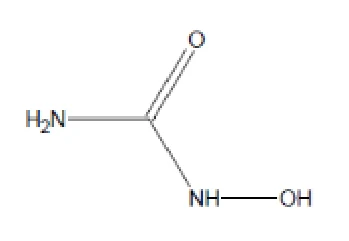
Physicochemical properties: Hydroxyurea is a white to off white crystalline powder, freely soluble in water and practically insoluble in ethanol.
14. Clinical Trials
The data on which the indication was originally approved are not available.
14.2. Comparative Bioavailability Studies
A randomized, two-way, single-dose, crossover comparative bioavailability study of RIVA-HYDROXYUREA 500 mg capsules (Laboratoire RIVA Inc.) with PrHYDREA® 500 mg capsules (Bristol-Myers Squibb Canada) was conducted in 24 healthy adult males subjects under fasting conditions. Comparative bioavailability data from 23 subjects that were included in the statistical analysis are presented in the following table:
Table 2 – Summary Table of the Comparative Bioavailability Data
Hydroxyurea (1 x 500 mg) Geometric mean Arithmetic mean (CV %) | ||||
| Parameter | Test1 | Reference2 | % Ratio of geometric means | 90% Confidence Interval |
AUCT (mcg·h/mL) | 71.947 72.740 (13.88%) | 70.863 71.503 (12.60%) | 101.5 | 99.6% - 103.5% |
AUCI (mcg·h/mL) | 73.522 74.339 (13.95%) | 72.330 72.979 (12.63%) | 101.6 | 99.6% - 103.7% |
CMAX (mcg/mL) | 17.815 18.457 (26.92%) | 18.959 19.668 (26.79%) | 94.0 | 83.2% - 106.1% |
TMAX3 (h) | 0.500 (0.33 - 2.33) | 0.500 (0.33 - 2.33) | ||
T½ 4 (h) | 3.467 (11.75%) | 3.446 (13.09%) | ||
1 RIVA-HYDROXYUREA (hydroxyurea) 500 mg capsules (Laboratoire RIVA Inc.)
2 PrHYDREA® (hydroxyurea) 500 mg capsules (Bristol-Myers Squibb Canada)
3 Expressed as the median (range) only
4 Expressed as the arithmetic mean (CV %) only
15. Microbiology
No microbiological information is required for this drug product.
16. Non-Clinical Toxicology
General Toxicology
Acute Toxicity
| Species | Sex | Formulation | Route of Administration | LD50 (g/kg) |
| Mice | M | 10% in water | Oral | 7.3 |
| Mice | M/F | 10% in water | Oral | 5 |
| Mice | M | 10% in water | I.P. | 7.3 |
| Mice | M/F | 10 - 12% in water | I.V. | > 15 |
| Rats | M | 10 or 30% in water | Oral | 5.8 |
| Rats | M | 10% in saline | I.V. | 4.7 |
| Dogs | M | Capsules | Oral | Not lethal at a dose of 2.0 |
| Dogs | M/F | 10% in saline | I.V. | Not lethal at doses of 0.1 - 4.0 |
Signs of toxicity in mice included: excitement followed by sedation, ataxia, tremors, convulsions.
In rats, toxicity was manifested by: excitement followed by sedation, tremors, ataxia, convulsions, loss of weight, rigidity, apnea.
Signs of toxicity in dogs were: panting, ataxia, defecation, emesis, unsteady gait, mydriasis, weakness of the hind limbs, hypothermia, bradycardia, decreased sensitivity to pain, loss of scratch reflex and eventually a plane 3 anesthesia.
Subacute and Chronic Toxicity
In subacute and chronic toxicity studies in the rat, the most consistent pathological findings were an apparent dose-related mild to moderate bone marrow hypoplasia as well as pulmonary congestion and mottling of the lungs. At the highest dosage levels (1260 mg/kg/day for 37 days then 2520 mg/kg/day for 40 days), testicular atrophy with absence of spermatogenesis occurred; in several animals, hepatic cell damage with fatty metamorphosis was noted. Thymic atrophy, weight depression and a tendency to bronchopulmonary infections were also noted. In the mouse, weight losses were more pronounced with daily therapy than with intermittent treatment. In the dog, mild to marked bone marrow depression was a consistent finding except at the lower dosage levels. Additionally, at the higher dose levels (140-420 or 140-1260 mg/kg/week given during 3 or 7 days a week for 12 weeks), growth retardation, slightly increased blood glucose values and hemosiderosis of the liver or spleen were found; reversible spermatogenic arrest was noted. In the monkey, bone marrow depression, lymphoid atrophy of the spleen and degenerative changes in the epithelium of the small and large intestines were found. At the higher, often lethal, doses (400-800 mg/kg/day for 7-15 days), hemorrhage and congestion were found in the lungs, brain and urinary tract. Changes in heart rate, blood pressure, orthostatic hypotension, electrocardiogram changes, and slight hemolysis, and/or methemoglobinemia) were observed in some species of laboratory animals at doses exceeding those used clinically.
Reproductive and Developmental Toxicology
Studies on rats given aqueous solutions of hydroxyurea orally revealed temporarily decreased fertility in male F0 generation rats due to aspermatogenesis. In F0 generation female rats there were no drug induced adverse effects on implantation of the number of live fetuses, viability or lactation. The administration of hydroxyurea did not induce mutagenic responses.
Hydroxyurea has been demonstrated to be teratogenic in multiple animal models, including mice, rats, hamsters, rabbits, cats, miniature swine, dogs, and monkeys. The spectrum of effects following prenatal exposure to hydroxyurea includes embryo-fetal death, numerous fetal malformations of the viscera and skeleton, growth retardation, and functional deficits.
17. Supporting Product Monographs
- 1. HYDREA (hydroxyurea), capsules, 500 mg, control 300417, Product Monograph, CHEPLAPHARM Arzneimittel GmbH. (2025-11-28)