


Product Monograph - Oncaspar
RECENT MAJOR LABEL CHANGES
| 4 DOSAGE AND ADMINISTRATION, 4.2 Recommended Dose and Dosage Adjustment | 01/2023 |
|---|---|
| 7 WARNING AND PRECAUTIONS | 01/2023 |
| 7 WARNING AND PRECAUTIONS | 07/2024 |
TABLE OF CONTENTS
Sections or subsections that are not applicable at the time of authorization are not listed.
RECENT MAJOR LABEL CHANGES ............................................................................................ 2
TABLE OF CONTENTS .............................................................................................................. 2
PART I: HEALTH PROFESSIONAL INFORMATION ...................................................................... 4
1 INDICATIONS ............................................................................................................... 4
1.1 Pediatrics .............................................................................................................. 4
1.2 Geriatrics .............................................................................................................. 4
2 CONTRAINDICATIONS ................................................................................................. 4
4 DOSAGE AND ADMINISTRATION ................................................................................. 4
4.1 Dosing Considerations .......................................................................................... 4
4.2 Recommended Dose and Dosage Adjustment ..................................................... 5
4.4 Administration ...................................................................................................... 6
5 OVERDOSAGE .............................................................................................................. 6
6 DOSAGE FORMS, STRENGTHS, COMPOSITION AND PACKAGING ................................. 7
7 WARNINGS AND PRECAUTIONS .................................................................................. 7
7.1 Special Populations ............................................................................................. 10
7.1.1 Pregnant Women ........................................................................................... 10
7.1.2 Breast-feeding ................................................................................................ 11
7.1.3 Pediatrics (< 18 years of age) .......................................................................... 11
7.1.4 Geriatrics (≥ 65 years of age) .......................................................................... 11
7.1.5 Philadelphia Chromosome-Positive Patients: ................................................. 11
8 ADVERSE REACTIONS ................................................................................................ 11
8.1 Adverse Reaction Overview ................................................................................ 11
8.2 Clinical Trial Adverse Reactions .......................................................................... 11
8.3 Less Common Clinical Trial Adverse Reactions ................................................... 13
8.5 Post-Market Adverse Reactions ......................................................................... 16
9 DRUG INTERACTIONS ................................................................................................ 18
9.4 Drug-Drug Interactions ....................................................................................... 18
9.5 Drug-Food Interactions ....................................................................................... 20
9.6 Drug-Herb Interactions ....................................................................................... 20
9.7 Drug-Laboratory Test Interactions ...................................................................... 20
10 CLINICAL PHARMACOLOGY ....................................................................................... 21
10.1 Mechanism of Action .......................................................................................... 21
10.2 Pharmacodynamics ............................................................................................ 21
10.3 Pharmacokinetics ............................................................................................... 21
11 STORAGE, STABILITY AND DISPOSAL ......................................................................... 23
12 SPECIAL HANDLING INSTRUCTIONS ........................................................................... 23
PART II: SCIENTIFIC INFORMATION ....................................................................................... 24
13 PHARMACEUTICAL INFORMATION ............................................................................ 24
14 CLINICAL TRIALS ........................................................................................................ 25
14.1 Trial Design and Study Demographics ................................................................ 25
14.2 Study Results ...................................................................................................... 29
15 MICROBIOLOGY ........................................................................................................ 30
16 NON-CLINICAL TOXICOLOGY ..................................................................................... 30
PATIENT MEDICATION INFORMATION .................................................................................. 32
PART I: HEALTH PROFESSIONAL INFORMATION
ONCASPAR (pegaspargase) is a pegylated form of L-asparaginase, an enzyme that breaks down L-asparagine. L-asparaginase hydrolyses the non-essential amino acid, L-asparagine, into aspartic acid and ammonia, thus depleting the circulating pool of serum L-asparagine. L-asparaginase has a unique mechanism of action as it selectively starves leukaemic cells in acute lymphoblastic leukaemia (ALL) which are unable to synthesize adequate amounts of L-asparagine and normally rely on serum L-asparagine as their source for protein synthesis. Normal cells have the ability to independently synthesize L-asparagine.
1 INDICATIONS
ONCASPAR (pegaspargase) is indicated as:
- A component of a multi-agent chemotherapeutic regimen for the treatment of patients with acute lymphoblastic leukaemia (ALL).
1.1 Pediatrics
Pediatrics (< 18 years of age): Based on the data submitted and reviewed by Health Canada, the safety and efficacy of ONCASPAR in pediatric patients has been evaluated (see 14 CLINICAL TRIALS). The safety and efficacy of ONCASPAR in children < 1 year of age are very limited.
1.2 Geriatrics
There are limited data available for patients older than 65 years.
2 CONTRAINDICATIONS
ONCASPAR is contraindicated in patients with:
- Anaphylactic or severe hypersensitivity reactions to the active substance or to any of the excipients. For a complete listing, see 6 DOSAGE FORMS, STRENGTHS, COMPOSITION AND PACKAGING section of the Product Monograph.
- Known serious allergic reactions to ONCASPAR.
- Severe hepatic impairment (bilirubin > 3 times upper limit of normal [ULN]; transaminases > 10 times ULN) (see 7 WARNINGS AND PRECAUTIONS – Hepatotoxicity and Abnormal Liver Function).
- Known serious thrombosis during previous L-asparaginase therapy.
- Known pancreatitis including pancreatitis related to previous L-asparaginase therapy (see 7 WARNINGS AND PRECAUTIONS – Pancreatitis).
- Known serious hemorrhagic events with previous L-asparaginase therapy.
4 DOSAGE AND ADMINISTRATION
4.1 Dosing Considerations
ONCASPAR is employed as part of combination chemotherapy protocols with other antineoplastic agents.
4.2 Recommended Dose and Dosage Adjustment
Recommended premedication
Premedicate patients with acetaminophen, an H-1 receptor blocker (e.g. diphenhydramine), and an H-2 receptor blocker (e.g. famotidine) 30-60 minutes prior to administration of ONCASPAR to decrease the risk and severity of both infusion and hypersensitivity reactions. Steroid administration may also be considered in the premedication regimen. If premedication is administered, therapeutic drug monitoring should be considered to assess for silent inactivation (see 7 WARNINGS AND PRECAUTIONS).
The recommended dose of ONCASPAR is 2500 U (equivalent to 3.3 mL ONCASPAR)/m² body surface area every 14 days in paediatric patients with body surface area >0.6 m2 and under 21 years of age.
There are data suggesting that the dose of ONCASPAR could be adjusted to 82.5 U (equivalent to 0.1 mL ONCASPAR)/kg body weight every 14 days in children with a body surface area <0.6 m², or to 2000 U (equivalent to 2.67 mL ONCASPAR)/m2 body surface area every 14 days in adult patients >21 years of age in order to decrease toxicities (e.g. hyperbilirubinemia).
Treatment may be monitored based on the trough serum L-asparaginase activity measured before the next administration of ONCASPAR. If L-asparaginase activity values fail to reach target levels, a switch to a different L-asparaginase preparation could be considered (see 7 WARNINGS AND PRECAUTIONS).
Special populations
No formal studies were conducted in patients with renal or hepatic impairment.
Recommended Monitoring and Dosage Modifications for Adverse Reactions
Monitor patients at least weekly, with bilirubin, transaminases, glucose and clinical examinations until recovery from the cycle of therapy. (see 7 WARNINGS AND PRECAUTIONS, Monitoring and Laboratory Tests). If an adverse reaction should occur, modify treatment according to Table 1.
Table 1 Dosage Modifications
| Adverse Reaction | Severity* | Action |
|---|---|---|
| Infusion Reaction/Hypersensitivity Reaction (see “Warnings and Precautions”) | Grade 1 |
|
| Grade 2 |
| |
| Grade 3 to 4 |
| |
| Thrombosis (see “Warnings and Precautions”) | Uncomplicated deep vein thrombosis |
|
| Adverse Reaction | Severity* | Action |
|---|---|---|
| Severe or life-threatening thrombosis |
| |
| Pancreatis (see “Warnings and Precautions”) | Grade 3 to 4 |
|
| Hemorrhage (see “Warnings and Precautions”) | Grade 3 to 4 |
|
| Hepatotoxicity (see “Warnings and Precautions”) | Total bilirubin more than 3 times to no more than 10 times the ULN |
|
| Total bilirubin more than 10 times the ULN |
| |
*Grades are in accordance with NCI-CTCAE ver. 5.0. *Grade 1 is mild, grade 2 is moderate, grade 3 is severe, and grade 4 is life-threatening. | ||
4.4 Administration
ONCASPAR can be given by intramuscular injection or intravenous infusion.
For smaller volumes of ONCASPAR, the preferred route of administration is intramuscular. When ONCASPAR is given by intramuscular injection the volume injected at one site should not exceed 2 mL in children and adolescents and 3 mL in adults. If higher volume is given, the dose should be divided and given at several injection sites. ONCASPAR does not contain a preservative. Use only one dose per vial; discard unused product.
Intravenous infusion of ONCASPAR is usually given over a period of 1 to 2 hours in 100 mL of sodium chloride 9 mg/mL (0.9%) solution for injection or 5% glucose solution, through an infusion that is already running.
5 OVERDOSAGE
There have been cases of overdose reported with ONCASPAR. Following overdose, increased liver enzymes, rash and hyperbilirubinaemia have been observed. There is no specific pharmacological treatment. In case of overdose, patients must be carefully monitored for signs and symptoms of adverse reactions, and appropriately managed with symptomatic and supportive treatment.
| For management of a suspected drug overdose, contact your regional poison control centre. |
|---|
6 DOSAGE FORMS, STRENGTHS, COMPOSITION AND PACKAGING
Table – Dosage Forms, Strengths, Composition and Packaging
ONCASPAR is a clear, colourless solution for injection/infusion. ONCASPAR is supplied in Type I glass vials containing 3,750 Units of L-asparaginase per 5 mL solution. Each carton contains one single-use vial and one package insert.
7 WARNINGS AND PRECAUTIONS
General
ONCASPAR should be prescribed and administered by physicians and health care personnel experienced in the use of antineoplastic products. It should only be given in a hospital setting where appropriate resuscitation equipment is available. Patients should be closely monitored and carefully observed for any adverse reactions throughout the infusion period.
Anaphylaxis and Serious Allergic Reactions
Hypersensitivity reactions to ONCASPAR, such as life-threatening anaphylaxis and serious allergic reactions, can occur in patients receiving ONCASPAR. The risk of serious allergic reactions is higher in patients with known hypersensitivity to other forms of L-asparaginase (particularly E. coli derived asparaginase). Premedicate patients 30-60 minutes prior to administration of ONCASPAR (see 4 DOSAGE AND ADMNISTRATION). Monitor patients for an hour after administration, having resuscitation equipment and other means required for the treatment of anaphylaxis in readiness (epinephrine, oxygen, intravenous steroids, etc.). Discontinue ONCASPAR in patients with serious allergic reactions (see 2 CONTRAINDICATIONS and 8 ADVERSE REACTIONS). Depending on the severity of the symptoms, administration of antihistamines, corticosteroids and possibly circulation stabilising medical products, inotropes, and/or vasopressors are indicated as counter-measure.
Other hypersensitivity reactions can include: angioedema, lip swelling, eye swelling, blood pressure decreased, bronchospasm, dyspnoea, hypotension, laryngeal edema, local erythema or swelling, pruritus, systemic rash, and urticaria.
Central Nervous System Toxicity
Combination therapy with ONCASPAR can result in central nervous system toxicity. ONCASPAR may cause central nervous system dysfunctions manifesting as convulsion, and less frequently confusional state and somnolence (mildly impaired consciousness). If ONCASPAR is used in association with neurotoxic products (such as vincristine and methotrexate), the patient should be closely monitored (see 9 DRUG INTERACTIONS).
In rare cases, a reversible posterior leukoencephalopathy syndrome (RPLS) may occur.
In very rare cases, mild tremor in the fingers has been described.
| Route of Administration | Dosage Form / Strength/Composition | Non-medicinal Ingredients |
| Intramuscular Injection; Intravenous Injection | Solution for Injection/Infusion; 3750 U per 5 mL (750 U per mL) |
|
Driving and Operating Machinery
ONCASPAR may have a major influence on the ability to drive and use machines. The following adverse reactions have been reported in patients treated with ONCASPAR along with other chemotherapy medicinal products: somnolence, confusion, dizziness, syncope, seizure. Patients should not drive or operate machines while receiving ONCASPAR if they experience these or other adverse reactions which can impair their ability to drive or operate machines.
Glucose Intolerance
Glucose intolerance can occur in patients receiving ONCASPAR. Glucose intolerance can be irreversible. Inhibition of insulin production may lead to clinical hyperglycemia, which requires treatment with insulin, in 2-3% of patients treated with ONCASPAR. Therefore, monitor patients for hyperglycemia as well as signs and symptoms of hyperglycemia (see Monitoring and Laboratory Tests).
Hepatotoxicity and Abnormal Liver Function
Combination therapy with ONCASPAR can result in severe hepatic toxicity. Caution is required when ONCASPAR is given in combination with other hepatotoxic substances especially if there is pre-existing hepatic impairment. In this case, patients should be monitored for liver impairment. ONCASPAR may worsen pre-existing liver impairment. Because of this, there is a possibility that ONCASPAR may increase toxicity of other concomitant medication, which are hepatically metabolized.
Hepatotoxicity and abnormal liver function including elevations of AST, ALT, alkaline phosphatase, bilirubin (direct and indirect) and depression of serum albumin and plasma fibrinogen can occur. Appropriate monitoring should be performed.
There is an increased risk of hepatic effects (such as increase in transaminases, bilirubin increased, hypofibrinogenaemia) among patients >18 years of age using asparaginase products.
In the presence of symptoms of hyperammonemia (e.g. nausea, vomiting, lethargy, irritation), ammonia levels should be monitored closely.
Hepatic veno-occlusive disease (VOD), also known as sinusoidal obstruction syndrome (SOS), is a rare, life-threatening disease that can cause hepatic damage and is a complication of certain chemotherapy regimens, typically pre-transplant chemotherapy.
Hepatotoxicity, including severe, life-threatening and potentially fatal cases of hepatic VOD, have been observed in patients treated with ONCASPAR in combination with standard chemotherapy, including during the induction phase of multiphase chemotherapy (see section 8 ADVERSE REACTIONS).
Evaluate bilirubin and transaminases prior to each dose of ONCASPAR and at least weekly, during cycles of treatment that include ONCASPAR, through 6 weeks after the last dose of ONCASPAR. Monitor frequently for signs and symptoms of hepatic VOD, which may include rapid weight gain, fluid retention with ascites, hepatomegaly (which may be painful), and rapid increase of bilirubin. For patients who develop abnormal liver tests after ONCASPAR, more frequent monitoring for liver test abnormalities and clinical signs and symptoms of VOD is recommended. In the event of serious liver toxicity, including VOD, discontinue treatment with ONCASPAR and provide supportive care (see 4 DOSAGE AND ADMNISTRATION).
Infections (Myelosuppression)
ONCASPAR possesses immunosuppressive activity and may cause myelosuppression, either directly or indirectly (by altering myelosuppressive effects of other agents such as methotrexate or 6 mercaptopurine). It is therefore possible that the use of this medicinal product promotes infections. Simultaneous vaccination with live vaccine increases the risk of severe infections (see 9 DRUG INTERACTIONS).
Infections are very common and sepsis is commonly reported in patients treated with ONCASPAR (see 8 ADVERSE REACTIONS). Monitor closely patient’s peripheral blood count (see Monitoring and Laboratory Tests).
Monitoring and Laboratory Tests
Measurement of the L-asparaginase activity level in serum or plasma may be undertaken in order to rule out an accelerated reduction of L-asparaginase activity.
Low L-asparaginase activity levels are often accompanied by the appearance of anti-L-asparaginase antibodies. In such cases, a switch to a different L-asparaginase preparation should be considered. Expert advice should first be sought.
The decrease in the number of circulating lymphoblasts is often quite marked, and normal or too low leukocyte counts are often seen in the first days after the start of therapy. To monitor the therapeutic effect, the peripheral blood count and the patient’s bone marrow should be monitored closely.
Anaphylaxis and serious allergic reactions may occur. Patients should be monitored for one hour after administration, having resuscitation equipment and other means required for the treatment of anaphylaxis (epinephrine, oxygen, IV steroids, etc.)
Monitor coagulation parameters at baseline and periodically during and after treatment, particularly when used simultaneously with other coagulant/anticoagulant medicinal products such as methotrexate, daunorubicin, corticosteroids, acetylsalicylic acid and nonsteroidal anti-inflammatory medicinal products.
Monitor liver function tests, including: AST, ALT, ALP, bilirubin (direct and indirect), serum albumin as ONCASPAR can result in hepatotoxicity.
In the presence of symptoms of hyperammonemia (e.g. nausea, vomiting, lethargy, irritation), ammonia levels should be monitored closely.
Serum amylase and/or lipase measurements should be carried out frequently to identify early signs of inflammation of the pancreas.
Blood and urine glucose levels should be monitored during treatment with ONCASPAR as they may rise.
ONCASPAR may result in central nervous system toxicities. As such, patients should be monitored for signs of central nervous system dysfunctions, including but not limited to: convulsions, somnolence, confusion and tremor.
Closely monitor patient’s uric acid levels, particularly during Induction therapy as tumor lysis syndrome may result in uric acid nephropathy.
Pancreatitis
There have been reported adverse reactions of pancreatitis, in few cases with a fatal outcome. Patients should be informed of the characteristic symptom of pancreatitis that, if left untreated, could become fatal: persistent abdominal pain that could be severe, which may radiate to the back. If pancreatitis occurs permanently discontinue ONCASPAR. Appropriate investigations should be performed. As the precise pathogenesis is unknown, only supportive measures can be recommended as per local clinical practice. Disturbances of exocrine pancreatic function can result in diarrhoea.
Serum amylase and/or lipase measurements should be carried out frequently to identify early signs of inflammation of the pancreas.
Hemorrhagic or necrotising pancreatitis with fatal outcome has been reported. Blood and urine glucose levels should be monitored during treatment with ONCASPAR as they may rise (see Monitoring and Laboratory Tests).
Renal
Decrease in the number of circulating lymphoblasts and leukocyte counts can be associated with a marked rise in the serum uric acid level. Uric acid nephropathy may develop. Monitor closely patient’s uric acid levels (see Monitoring and Laboratory Tests).
Reproductive Health: Female and Male Potential
Fertility
No studies investigating the effect of pegaspargase on fertility have been performed.
Men and women should use effective contraception during treatment and for at least 6 months after ONCASPAR discontinuation. Since an indirect interaction between components of the oral contraception and pegaspargase cannot be ruled out, oral contraceptives are not considered sufficiently safe in such clinical situation. A method other than oral contraceptives should be used in women of childbearing potential (see 9 DRUG INTERACTIONS).
Thrombosis/Coagulopathy
Serious thrombotic events, including sagittal sinus thrombosis can occur in patients receiving ONCASPAR. Discontinue ONCASPAR in patients with serious thrombotic events.
In the presence of corticosteroids, osteonecrosis (avascular necrosis) is a possible complication of hypercoagulability observed in children and adolescents with a higher incidence seen in girls (see 9 DRUG INTERACTIONS).
Increased prothrombin time (PT) increased partial thromboplastin time (PTT), hypofibrinogenemia and antithrombin III decrease can occur in patients receiving ONCASPAR. Monitor coagulation parameters at baseline and periodically during and after treatment; particularly when other medicinal products with pro coagulant/anticoagulant effects such as methotrexate, daunorubicin, corticosteroids, acetylsalicylic acid and nonsteroidal anti-inflammatory medicinal products are used simultaneously (see 9 DRUG INTERACTIONS).
Patients receiving ONCASPAR are at increased risk of bleeding (see 9 DRUG INTERACTIONS). Regular monitoring of the coagulation profile is necessary. Fibrinogen can be regarded as a parameter of the pro- and anticoagulatory system. When there is a marked drop in fibrinogen or Antithrombin III (ATIII) deficiency, consider appropriate replacement therapy.
7.1 Special Populations
7.1.1 Pregnant Women
There are limited amount of data from the use of L-asparaginase and no data from the use of ONCASPAR, in pregnant women. No reproduction studies in animals with pegaspargase were performed. It is unknown whether ONCASPAR can cause fetal harm when administered to a pregnant woman or can affect reproduction capacity. However, L-asparaginase has been shown in animals to possess embryotoxic teratogenic activity. Therefore, and due to its pharmacological properties, ONCASPAR should not be used during pregnancy unless the benefit of treatment to the woman is considered to outweigh the possible risks.
7.1.2 Breast-feeding
It is not known whether ONCASPAR is excreted into human breast milk. Based on its pharmacological properties, any risk including serious adverse events to the breast-fed newborns/infants cannot be excluded. Consequently, a decision should be made whether to discontinue breast-feeding, or discontinue ONCASPAR therapy, taking into account the benefit of breast-feeding for the child and the benefit of ONCASPAR therapy for the woman.
7.1.3 Pediatrics (< 18 years of age)
The safety and efficacy of ONCASPAR were evaluated in pediatric patients (see 14 CLINICAL TRIALS).
The safety and efficacy of ONCASPAR in children < 1 year of age are very limited.
7.1.4 Geriatrics (≥ 65 years of age)
There are limited data available for patients older than 65 years.
7.1.5 Philadelphia Chromosome-Positive Patients:
Safety and efficacy in Philadelphia chromosome-positive patients have not been established. A possible increased risk of hepatotoxicity when combining imatinib with L-asparaginase therapy should be taken into account prior to deciding to use ONCASPAR in this patient population.
8 ADVERSE REACTIONS
8.1 Adverse Reaction Overview
The safety profile of ONCASPAR is based on the analysis of safety data from clinical trials and post-marketing experience of ONCASPAR in ALL patients. The most frequently reported Adverse Drug Reactions (ADRs) from clinical trials are presented in Table 2.
8.2 Clinical Trial Adverse Reactions
Clinical trials are conducted under very specific conditions. The adverse reaction rates observed in the clinical trials; therefore, may not reflect the rates observed in practice and should not be compared to the rates in the clinical trials of another drug. Adverse reaction information from clinical trials may be useful in identifying and approximating rates of adverse drug reactions in real-world use.
Table 2 - Adverse Reactions reported with ONCASPAR therapy
| MedDRA Standard System Organ Class | Adverse Reaction |
| Blood and lymphatic system disorders | Very Common: Febrile neutropenia Common: Anaemia, Thrombosis, Coagulopathy (increased prothrombin time, increased partial thromboplastin time, and hypofibrinogenaemia). |
| Gastrointestinal disorders | Very Common: Pancreatitis, Diarrhoea, Abdominal pain Common: Vomiting, stomatitis, ascites |
| Hepatobiliary disorders | Common: Hepatoxicity |
| Immune system disorders | Very Common: Hypersensitivity, Urticaria, Rash, Anaphylactic reactions Unknown: Anaphylactic shock |
| Infections and infestations | Very Common: Infections Common: Sepsis |
| Investigations | Very Common: Alanine aminotransferase increased, Aspartate aminotransferase increased, Blood bilirubin increased, Blood fibrinogen decreased, Lipase increased, International normalized ratio increased, Amylase increased, Activated partial thromboplastin time prolonged Common: Neutrophil count decreased, Platelet count decreased |
| Metabolism and nutrition disorders | Very Common: Hyperglycaemia, Hypertriglyceridaemia, Hypoalbuminaemia Common: Decreased appetite, Hyperlipidaemia, Hypercholesterolaemia, Hypokalaemia |
| Musculoskeletal and connective tissue disorders | Common: Pain in extremities |
| Nervous system disorders | Common: Convulsion, Peripheral Motor Neuropathy, Syncope |
| Respiratory, thoracic and mediastinal disorders | Common: Hypoxia |
| Vascular disorders | Very Common: Embolism* Common: Thrombosis** |
Legend: ADR frequency is based upon the following scale: Very Common (≥1/10); Common (≥1/100 - <1/10)
*The following were observed in DFCI 11-001: Pulmonary embolism (common), venous thrombosis (common), venous thrombosis limb (uncommon), thrombophlebitis superficial (uncommon) **Including CNS Thrombosis
8.3 Less Common Clinical Trial Adverse Reactions
There were no clinically important adverse reactions less than the 1% that were reported in clinical trials with ONCASPAR included in Table 2.
Clinical studies in First-Line (non-hypersensitive population) in ALL
The safety was evaluated based upon three clinical studies using ONCASPAR solution for injection/infusion in the first line treatment of ALL in both standard and high risk patients: Study CCG-1962, Study AALL07P4, and study DFCI 11-001.
Study CCG-1962, was a multicenter randomized study of ONCASPAR compared with native E. coli asparaginase as part of antineoplastic combination therapy in children aged 1 through 9 years with newly diagnosed standard-risk acute lymphoblastic leukaemia. Detailed safety information was collected for pre-specified adverse reactions identified as asparaginase-induced adverse reactions and for grade 3 and 4 (Table 3 below). The total number of patients with preferred term infection of any grade was 31 (53%) in the ONCASPAR arm and 32 (54%) in the Native E. coli L-asparaginase arm.
Table 3 - Study CCG-1962-Per Patient Incidence of Selected Adverse Reactions (Grade 3 and 4)†
System Organ Class (SOC) Preferred Term (PT) | ONCASPAR nd=58 (%) | Native E. coli L-Asparaginase n=59 (%) |
|---|---|---|
| Gastrointestinal Disorders | ||
| Pancreatitis | 1 (2) | 1 (2) |
| Constipation | 2 (3) | 0 (0) |
| Diarrhoea | 2 (3) | 0 (0) |
| Immune System Disorders | ||
| Clinical Allergic Reactions to Asparaginase* | 1 (2) | 0 |
| Infection and Infestations | ||
| Infection | 3 (5) | 3 (5) |
| Sepsis | 2 (3) | 0 |
| Investigations | ||
| Abnormal Liver Tests | 3 (5) | 5 (8) |
| Elevated Transaminasesa | 2 (3) | 4 (7) |
| Hyperbilirubinaemia | 1 (2) | 1 (2) |
| Metabolic and Nutritional | ||
| Hyperglycaemia | 3 (5) | 2 (3) |
| Nervous system disorders | ||
| Nervous system disorders | 5 (9) | 3 (5) |
| Neuropathy Peripheral | 4 (7) | 0 (0) |
| Skin And Subcutaneous Tissue Disorders | ||
| Skin disorder | 3 (5) | 1 (2) |
| Vascular Disorders |
| Central Nervous System Thrombosis | 2 (3) | 2 (3) |
|---|---|---|
| Coagulopathyb | 1 (2) | 3 (5) |
| Hypotension | 2 (3) | 0 (0) |
a Aspartate aminotransferase, alanine aminotransferase b Prolonged prothrombin time or partial thromboplastin time; or hypofibrinogenaemia * The allergic reaction in the table refers to one case of Grade 3 hives. Other allergic reactions reported in the study are an unspecified allergic reaction (Grade 1) and an anaphylactic shock (ungraded). † Pre-specified adverse reactions are identified as asparaginase-induced adverse reactions and for grade 3 and 4
Study AALL07P4 was a multicenter, randomized, open-label, active comparator controlled trial, in which patients received ONCASPAR intravenously in the control arm. The most common adverse events reported in the ONCASPAR arm were hypersensitivity/anaphylactic reactions, elevated hepatic and pancreatic enzymes, pancreatitis and abnormalities in albumin, metabolic electrolytes and glycaemic levels. Hematological disorders included decreased platelet count, neutropenia, leukocytopenia and anaemia. Coagulopathy included increased INR, aPTT, and fibrinogen decreased. Common nervous system disorder included syncope, convulsions and peripheral neuropathy. In addition, febrile neutropenia, abdominal pain, infections (including sepsis) and hypoxia were observed. Most of these adverse events were of Grade 3-4. This adverse events profile was generally consistent with described events in other studies with ONCASPAR.
Study DFCI 11-001 is an open label, randomized, active controlled multicenter clinical trial that treated 237 children and adolescents with newly diagnosed ALL, who received an investigational pegylated asparaginase product or ONCASPAR (used as comparator, n=119) as part of an DFCI ALL Consortium backbone therapy. The study population characteristics in ONCASPAR arm were: median age on enrollment was 4 years (range 1 18 years); the majority of patients were male (60%) and white (75%). Most patients were considered standard risk (SR, 59%) and had B cell lineage ALL (87%). The median number of doses during the study was 16 doses for ONCASPAR (administered every two weeks). The median duration of exposure was 8 months for ONCASPAR. The safety profile in this study was consistent with other studies with ONCASPAR. The most common adverse events included hypoalbuminemia, alanine aminotransferase increased, aspartate aminotransferase increased, hypertriglyceridemia, blood fibrinogen decreased, blood bilirubin increased, lipase increased and hyperglycemia.
The most common severe adverse reactions with ONCASPAR (graded 3 or 4) observed in studies DFCI 11-001 and AALL07P4 with a frequency of >5% included: alanine aminotransferase increased, AST increased, blood bilirubin increased, febrile neutropenia, hyperglycemia, lipase increased, pancreatitis, and hypersensitivity.
Other first-line studies:
Studies DFCI 05-001 and CCG-1991 both also incorporated ONCASPAR as part of multi-chemotherapy regimens for the treatment of pediatric ALL. Asparaginase-related adverse events remained consistent with other ONCASPAR inclusive studies: allergy, pancreatitis and thrombosis. Deaths due to infections, pancreatitis (n=3) and central nervous haemorrhage (n=2) occurred in patients receiving ONCASPAR in study CCG-1991. In study DFCI 05-001, infections and hypertriglyceridaemia occurred more frequently in the ONCASPAR arm. The following grade 4 adverse events were also reported for subjects on the ONCASPAR only; these events were not reported in other studies (each in one subject): agitation, chyle or lymph leakage, fatigue, iron overload, mood changes or depression, perforation of the small bowel, skin breakdown or decubitus ulcer, wound (non-infectious).
Patients with previously treated ALL and/or hypersensitivity to native E. coli asparaginase
Adverse reaction information was obtained from clinical trials that enrolled a total of 174 patients with relapsed ALL who received ONCASPAR as a single agent or in combination with multi-agent chemotherapy. The toxicity profile of ONCASPAR in patients with previously treated relapsed ALL is similar to that reported above with the exception of clinical allergic reactions (see Table 4). The most common adverse reactions of ONCASPAR were clinical allergic reactions (bronchospasm, hypotension, laryngeal edema, local erythema or swelling, systemic rash, and urticaria), elevated transaminases, hyperbilirubinaemia, and coagulopathies. The most common serious adverse events due to ONCASPAR treatment were thrombosis (4%), hyperglycaemia requiring insulin therapy (3%), and pancreatitis (1%).
Among 62 patients with relapsed ALL and prior hypersensitivity reactions to asparaginase, 35 patients (56%) had a history of clinical allergic reactions to native Escherichia (E.) coli L-asparaginase, and 27 patients (44%) had a history of clinical allergic reactions to both native E. coli and native Erwinia L-asparaginase. Twenty of the 62 patients (32%) experienced clinical allergic reactions to ONCASPAR (see Table 3).
Among 112 patients with relapsed ALL with no prior hypersensitivity reactions to asparaginase, 11 patients (10%) experienced clinical allergic reactions to ONCASPAR (see Table 4).
Table 4 - Incidence of Clinical Allergic Reactions, Overall and By Severity Grade
| Patient Status | Toxicity Grade, n (%) | Total | |||
|---|---|---|---|---|---|
| 1 | 2 | 3 | 4 | ||
Previously Hypersensitive Patients (n = 62) | 7 (11) | 8 (13) | 4 (6) | 1 (2) | 20 (32) |
Non- Hypersensitive Patients (n = 112) | 5 (4) | 4 (4) | 1 (1) | 1 (1) | 11 (10) |
Immunogenicity
As with all therapeutic proteins, there is a potential for immunogenicity, defined as development of binding and/or neutralizing antibodies to the product.
In Study CCG-1962, ONCASPAR-treated patients were assessed for evidence of binding antibodies using an enzyme-linked immunosorbent assay (ELISA) method. The incidence of protocol-specified “high-titer” antibody formation was 2% in Induction (n=48), 10% in Delayed Intensification 1 (n=50), and 11% in Delayed Intensification 2 (n=44). There is insufficient information to determine whether the development of antibodies is associated with an increased risk of clinical allergic reactions, altered pharmacokinetics, or loss of anti-leukemic efficacy.
The detection of antibody formation is highly dependent on the sensitivity and specificity of the assay, and the observed incidence of antibody positivity in an assay may be influenced by several factors including sample handling, concomitant medications, and underlying disease. Therefore, comparison of the incidence of antibodies to ONCASPAR with the incidence of antibodies to other products may be misleading.
The immunogenicity assessment and assay used in the study have limitations therefore, the incidence of antibody development might not have been reliably determined.
8.5 Post-Market Adverse Reactions
The type of adverse reactions seen in post-market experience with ONCASPAR is largely similar to that of native non-pegylated L-asparaginase (e.g. native E. coli L-asparaginase), and is consistent with those observed in ONCASPAR clinical trials.
In the global post-marketing experience of ONCASPAR, the most frequently reported terms are those likely to be associated with an immune response (urticaria, hypersensitivity, anaphylactic reaction, rash, pruritus, lip swelling, swelling face and erythema), followed by hypertriglyceridaemia, pancreatitis, hepatotoxicity, sepsis, renal failure, infection, and disease progression.
Adverse reactions reported in post-marketing experience by system organ class are presented below.
Blood and lymphatic system disorders
There have been reports of mild to moderate myelosuppression, and all three blood cell lines can be affected. About half of all serious haemorrhages and thromboses affect cerebral vessels and can lead, for example, to stroke, seizures, headache or loss of consciousness.
Cardiac disorders
Tachycardia may occur.
Endocrine disorders
Alterations in endocrine pancreatic function are observed commonly and are expressed mainly in the form of abnormal glucose metabolism. Both diabetic ketoacidosis and hyperosmolar hyperglycaemia have been described, which generally respond to administration of exogenous insulin.
Gastrointestinal disorders
About half of patients develop mild to moderate gastrointestinal reactions such as loss of appetite, nausea, vomiting, abdominal cramps, diarrhoea and weight loss.
Acute pancreatitis occurs commonly. There have been isolated reports of formation of pseudocysts (up to four months after the last treatment).
Haemorrhagic or necrotising pancreatitis occurs rarely. One case of pancreatitis with simultaneous acute parotitis has been described with L-asparaginase treatment. Haemorrhagic or necrotising pancreatitis with fatal outcome has been reported.
Serum amylase can rise during and also after the conclusion of ONCASPAR therapy.
General disorders and administration site conditions
Pyrexia can occur after the injection, which usually subsides spontaneously.
Hepatobiliary disorders
Alteration of liver parameters is very common. A dose-independent rise in serum transaminases and serum bilirubin is commonly observed.
Hepatotoxicity, including severe, life-threatening and potentially fatal cases of hepatic VOD, have been observed in patients treated with ONCASPAR in combination with standard chemotherapy, including during the induction phase of multiphase chemotherapy. A rapid weight gain, fluid retention with ascites, hepatomegaly, associated with rapid increase of serum bilirubin and persistent thrombocytopenia might indicate a risk of developing severe VOD.
There have been reported cases of hepatic steatosis (fatty liver), cholestasis, icterus, hepatic cell necrosis and hepatic failure with fatal outcome.
Impaired protein synthesis can lead to a decline in the serum protein. A dose-dependent decrease in serum albumin was observed in most patients during treatment.
Immune system disorders
Hypersensitivity reactions (i.e. urticaria, rash, pruritus, lip swelling, swelling face and erythema) and anaphylactic reactions, including anaphylactic shock, have been reported.
Specific antibodies to pegaspargase have been measured. Neutralizing antibody reducing clinical efficacy were also observed.
Investigations
Blood cholesterol increased, gamma glutamyl transferase increased, Antithrombin III decreased, and neutrophil count decreased have been reported.
Metabolism and nutrition disorders
Alterations in serum lipid levels have been observed and changes in serum lipid values, in most cases without clinical symptoms, are very common.
A dose-dependent rise in serum urea occurs regularly, and is nearly always a sign of pre-renal metabolic imbalance.
Cases of hypercalcemia, hypoglycemia, and hyponatremia have been reported.
Dehydration may occur.
Musculoskeletal and connective tissue disorders
Cases of osteonecrosis have been reported.
Nervous system disorders
ONCASPAR may cause central nervous system dysfunctions manifesting as convulsion, and less frequently confusional state and somnolence (mildly impaired consciousness).
There have been reports of reversible posterior leukoencephalopathy syndrome (RPLS).
In very rare cases, mild tremor in the fingers has been described.
Renal and urinary disorders
Acute renal failure cases have been reported, that may develop in rare cases during treatment with L-asparaginase-containing regimens.
Skin and subcutaneous tissue disorders
Allergic reactions can manifest in the skin. Toxic epidermal necrolysis has been associated with L-asparaginase treatment.
Vascular disorders:
Superior sagittal sinus thrombosis has been reported.
9 DRUG INTERACTIONS
9.4 Drug-Drug Interactions
No formal drug interaction studies have been conducted with ONCASPAR and other drugs. The following drug interactions have been observed with other asparaginase products and may occur with ONCASPAR, see Table 5.
The decrease in serum proteins caused by asparaginase products (including ONCASPAR) can increase the toxicity of other medicinal products that are protein bound.
Table 5. Potential Drug-Drug Interactions
| Drug Category Names | Source of Evidence | Effect | Clinical Comment |
|---|---|---|---|
Antimetabolites Methotrexate, cytarabine, etc. | T* | Methotrexate and cytarabine can interact differently: Prior administration of these substances can increase the action of asparaginase products synergistically. If these substances are given subsequently, the effect of asparaginase products can be weakened antagonistically. In addition, by inhibiting protein synthesis and cell division, asparaginase products can disturb the mechanism of action of other substances which require cell division for their effect, e.g. methotrexate. | Caution should be exercised. |
| Drug Category Names | Source of Evidence | Effect | Clinical Comment |
|---|---|---|---|
Glucocorticoids Prednisolone Dexamethasone, etc. (See 7 WARNINGS AND PRECAUTIONS) | T* | The concomitant use of ONCASPAR with glucocorticoids can alter coagulation parameters (e.g., fall in fibrinogen and antithrombin III deficiency). A decreased glucocorticoid elimination by ONCASPAR may result in higher exposure to glucocorticoids. Asparaginase may increase the risk of glucocorticoid-induced osteonecrosis in children >10 years of age, with a higher incidence seen in girls. | Patients should be closely monitored. Monitor coagulation parameters and manage bleeding/thrombo ti c risk. |
| Antineoplastic agents that are substrates for CYPs | T* | ONCASPAR might have effects on protein synthesis in the liver and accompanying reduced clearance, which may interfere with metabolism and clearance of antineoplastic agents that are substrates for CYPs. | Caution should be exercised. |
Neurotoxic Products e.g. Vincristine, Methotrexate | T* | Asparaginase products can cause central nervous dysfunction manifesting as convulsion and less frequently confusional state and somnolence (mildly impaired consciousness), if asparaginases are used in association with neurotoxic products. Simultaneous treatment may increase toxicity of ONCASPAR. Asparaginase-induced CNS dysfunction in the form of agitation, depression, hallucination, confusion and somnolence is possibly due to hyperammonaemia. | Monitor patient closely. Administer neurotoxic products in a timely manner before administration of ONCASPAR |
Pro-coagulant/ Methotrexate, Daunorubicin Anticoagulants Coumadin, potassium, Heparin, acetylsalicylic acid, etc. Dipyridamole Other drugs impacting coagulation: | T* | ONCASPAR can lead to fluctuation in coagulation factors. The concomitant use of ONCASPAR with anticoagulants can promote the tendency to bleeding and/or thrombosis. | Caution should be exercised. Monitor coagulation parameters, adjust pro-coagulant/ anticoagulant dosage if |
| Drug Category Names | Source of Evidence | Effect | Clinical Comment |
|---|---|---|---|
| Nonsteroidal anti- inflammatory drugs | needed, and manage bleeding/ thrombotic risk. | ||
Oral contraceptives (see 7 WARNINGS and PRECAUTIONS, Reproductive Health: Female and Male Potential, Contraception) | T* | ONCASPAR may reduce the hepatic clearance of oral contraceptives. The concomitant use of ONCASPAR with oral contraceptives should be avoided. | Alternative methods of contraception other than oral contraception should be used in women of childbearing potential. |
Live vaccines (See 7 WARNINGS AND PRECAUTIONS, Infections) | T* | The concomitant use of live vaccines may increase the risk of severe infections attributable to the immunosuppressive activity of ONCASPAR, the underlying disease, and the use of combination chemotherapy. | Live vaccines should not be given for at least 3 months after termination of the entire antileukaemic treatment. |
Legend: T = Theoretical
* Observed with other Asparaginase products.
9.5 Drug-Food Interactions
Interactions with food have not been established.
9.6 Drug-Herb Interactions
Interactions with herbal products have not been established.
9.7 Drug-Laboratory Test Interactions
Interactions with laboratory tests have not been established.
10 CLINICAL PHARMACOLOGY
10.1 Mechanism of Action
The mechanism of action of L-asparaginase is the enzymatic cleavage of the amino acid L-asparagine into aspartic acid and ammonia. Depletion of L-asparagine in blood serum results in inhibition of protein-synthesis, DNA-synthesis and RNA-synthesis, especially in leukaemic blasts which are not able to synthesize L-asparagine, thus undergoing apoptosis.
Normal cells, in contrast, are capable of synthesising L-asparagine and are less affected by its rapid withdrawal during treatment with the enzyme L-asparaginase. The PEGylation does not change the enzymatic properties of L-asparaginase, but it influences the pharmacokinetics and immunogenicity of the enzyme.
10.2 Pharmacodynamics
Anti-leukaemic effect of L-asparaginase is related to a sustained L-asparagine depletion in blood and cerebrospinal fluid (CSF). The pharmacodynamic (PD) effect of ONCASPAR was assessed after IM (Study CCG 1962) and IV administration (AALL07P4).
In Study CCG-1962, pharmacodynamics was assessed through serial measurements of L-asparagine in serum (n=57) and cerebrospinal fluid (CSF) (n=50) in 57 newly diagnosed paediatric patients with standard-risk ALL who received IM doses of ONCASPAR (2,500 U/m²), during induction and intensification treatment phases. In all phases of treatment, serum asparagine concentrations decreased within 4 days of the first dose of asparaginase in the treatment phase and remained low for approximately 3 weeks. CSF asparagine concentrations decreased from a mean pretreatment concentration of 3.1 μM to 1.7 μM on Day 4 ± 1 and 1.5 μM at 25 ± 1 days after administration of ONCASPAR (see 14 CLINICAL TRIALS).
In Study AALL07P4, the PD effect of ONCASPAR was assessed in 47 evaluable subjects with high risk B precursor ALL who received IV doses of ONCASPAR 2,500 U/m2 BSA during the Induction and Consolidation phases. Plasma L asparagine concentrations were depleted to below the assay limit of quantification within 24 hours following the Induction and first Consolidation dose of ONCASPAR and depletion was sustained for approximately two weeks. CSF asparagine concentrations were reduced by the 4th day following the Induction dose, and remained largely undetectable until the 25th day after dosing.
Based on results from these two studies, a 2,500 U/m2 BSA dose of ONCASPAR administered IM (CCG 1962) and IV (AALL07P4) provides maintenance of L asparagine depletion for approximately two weeks following dosing.
10.3 Pharmacokinetics
ONCASPAR pharmacokinetic properties were based on an enzymatic assay measuring L-asparaginase activity after IM (CCG 1962) and IV (AALL07P4, DFCI 11-001) administration of 2,500 U/m² in patients with ALL.
Table 6 - Plasma Asparaginase Activity Pharmacokinetic Parameters After a Single Dose of ONCASPAR 2,500 IU/m² in Patients with ALL in Study AALL07P4
| Cmax (U/mL)* | Tmax (h) † | t½ (h)ǂ | AUC0-t (day.U/mL)* | AUC0-∞ (day.U/mL) ǂ | CL (L/day)ǂ | Vd (L)ǂ | |
| Single dose Arithmetic mean (%CV) | 1.64 (28.0) | 1.25 (1.08-5.33) | 5.33 (43.8) | 14.8 (24.0) | 16.6 (29.0) | 0.215 (56.4) | 1.95 (58.0) |
* N=47 evaluable subjects.
† Median (10th, 90th percentiles).
ǂ N= 46 evaluable subjects.
Absorption
The mean maximum asparaginase activity (Cmax) was reached at approximately 1 U/mL (n=45 52) on Day 5 after a single IM injection. The mean half life of absorption from the IM site was 1.7 days.
The mean Cmax and the area under the curve (AUC0 inf) was 1.64 U/mL and 16.6 day.U/mL, respectively, after a single IV infusion (n=47) during the induction phase.
Distribution:
The mean volume of distribution at steady state was estimated to be 1.86 L/m2 after a single IM injection and approximately 2 L after a single IV infusion based on non compartmental analysis.
Elimination
The mean elimination half life was approximately 5.8 days following a single IM injection and 5.3 days following a single IV infusion. The clearance was 0.17 L/m2/day and 0.2 L/day, respectively, for a single IM and IV dose.
In Study AALL07P4, PK parameters after a single 2,500 U/m2 IV dose during Induction were calculated by noncompartmental PK analysis from sequential plasma samples and are depicted in Table 6. The Cmax and AUC of ONCASPAR trended lower in males, subjects with larger BMI, and subjects >10 years. During Induction, following a single IV dose of Oncaspar 2,500 U/m2, asparaginase activity ≥0.1 U/mL was sustained for up to 18 days post dose in 95.3% of subjects.
In Study DFCI 11-001, assessments of asparaginase activity were performed following a single IV dose of ONCASPAR 2,500 U/m2 BSA during Induction, and every two weeks during post Induction. During Induction, plasma asparaginase activity ≥0.1 U/mL was sustained in 93.5% of subjects 18 days after administration. During the post Induction phase, a nadir (trough) asparaginase activity above 0.4 U/mL was sustained in 100% of evaluable subjects (N) from Week 7 up until Week 25 (i.e. N=86 on Week 7, N=84 on Week 13, and N=78 on Weeks 19 and 25). These results indicate that, when ONCASPAR 2,500 U/m2 BSA is administered every two weeks, clinically relevant asparaginase activity is sustained over the entire dosing interval (i.e., two weeks).
In study CCG-1962, patients with newly diagnosed ALL received a single intramuscular injection of ONCASPAR (2500 U/m² body surface area) or native L-asparaginase from E. coli (25000 U/m² body surface area) or from Erwinia (25000 U/m² body surface area). The mean plasma elimination half-life of ONCASPAR was longer than the mean plasma elimination half-lives of the native L-asparaginases from E. coli or Erwinia (5.7, 1.3, and 0.65 days), respectively. The immediate cell death of leukaemic cells in vivo, measured by rhodamine fluorescence, was the same for all three L-asparaginase preparations.
ALL patients with several relapses were treated either with ONCASPAR or with native L-asparaginase from E. coli as part of an induction therapy. ONCASPAR was given in a dose of 2500 U/m² body surface intramuscularly on days 1 and 15 of induction. The mean plasma half-life of ONCASPAR was 8 days in non-hypersensitive patients (AUC 10.35 U/mL/day), and 2.7 days in hypersensitive patients (AUC 3.52 U/mL/day).
Special Populations and Conditions
- Geriatrics There is no data available for elderly patients.
- Hepatic Insufficiency The impact of hepatic impairment on the PK of ONCASPAR has not been evaluated. Since the proteolytic enzymes responsible for ONCASPAR metabolism are ubiquitously distributed in tissues the exact role of the liver is unknown: however any decrease in liver function is not expected to present clinical relevant problems in the use of ONCASPAR.
- Renal Insufficiency The impact of renal impairment on the PK of ONCASPAR has not been evaluated. As pegaspargase is a protein with a high molecular weight, it is not excreted renally, and no change of pharmacokinetic of ONCASPAR in patients with renal impairment is foreseen.
11 STORAGE, STABILITY AND DISPOSAL
Keep refrigerated prior to use at 2°C to 8°C. Do not freeze or shake. Store vials in the original package to protect from light.
Discard any unused portion.
Do not use beyond the expiration date printed on the carton or vial.
12 SPECIAL HANDLING INSTRUCTIONS
This medicinal product can cause irritation on contact. The solution must therefore be handled and administered with particular caution. Inhalation of the vapour and contact with the skin and mucous membranes, especially the eyes, must be avoided. In case of contact, irrigate with plenty of water for at least 15 minutes.
The solution can be diluted with 5% glucose solution or sodium chloride 9 mg/mL (0.9%) solution for injection before intravenous injection.
Inspect parenteral drug products for particulate matter and discoloration prior to administration. The solution should be clear and colorless in appearance. Do not administer if particulate matter or discoloration is found and notify Servier.
Any unused medicinal product or waste material should be disposed of in accordance with local requirements.
PART II: SCIENTIFIC INFORMATION
13 PHARMACEUTICAL INFORMATION
Drug Substance
Proper name: Pegaspargase
Molecular formula and molecular mass: Pegaspargase is an L-asparaginase (L-asparagine amidohydrolase) that is covalently conjugated to monomethoxypolyethylene glycol (mPEG). L-asparaginase is a tetrameric enzyme that consists of identical 34.5 kDa subunits. Approximately 69 to 82 molecules of mPEG are linked to L-asparaginase; the molecular weight of each mPEG molecule is about 5 kDa.
Structural formula: The L-asparaginase intermediate used for production of ONCASPAR is a high-affinity type II L-asparaginase expressed in E. coli. The complete amino acid sequence of one L-asparaginase monomer is provided in Figure 1 below.
Figure 1: Amino Acid Sequence of Asparaginase
| 1 | 11 | 21 | 31 | 41 |
|---|---|---|---|---|
| LPNITILATG | GTIAGGGDSA | TKSNYTAGKV | GVENLVNAVP | QLKDIANVKG |
| 51 | 61 | 71 | 81 | 91 |
| EQVVNIGSQD | MNDDVWLTLA | KKINTDCDKT | DGFVITHGTD | TMEETAYFLD |
| 101 | 111 | 121 | 131 | 141 |
| LTVKCDKPVV | MVGAMRPSTS | MSADGPFNLY | NAVVTAADKA | SANRGVLVVM |
| 151 | 161 | 171 | 181 | 191 |
| NDTVLDGRDV | TKTNTTDVAT | FKSVNYGPLG | YIHNGKIDYQ | RTPARKHTSD |
| 201 | 211 | 221 | 231 | 241 |
| TPFDVSKLNE | LPKVGIVYNY | ANASDLPAKA | LVDAGYDGIV | SAGVGNGNLY |
| 251 | 261 | 271 | 281 | 291 |
| KTVFDTLATA | AKNGTAVVRS | SRVPTGATTQ | DAEVDDAKYG | FVASGTLNPQ |
| 301 | 311 | 321 | ||
| KARVLLQLAL | TQTKDPQQIQ | QIFNQY | ||
| Key to amino acid designations: A = Alanine; C = Cysteine; D = Aspartic Acid; E = Glutamic Acid; F = Phenylalanine; G = Glycine; H = Histidine; I = Isoleucine; K = Lysine; L = Leucine; M = Methionine; N = Asparagine; P = Proline; Q = Glutamine; R = Arginine; S = Serine; T = Threonine; V = Valine; W = Tryptophan; Y = Tyrosine. Residues containing reactive nucleophilic primary amino groups are bolded, italicized, and underlined. | ||||
Each L-asparaginase monomer contains two cysteine residues at positions 77 and 105, which are engaged in an intra-molecular disulfide bond.
L-asparaginase is a homotetrameric enzyme, comprised of four identical subunits coupled by weak, non-covalent, largely hydrophobic interactions.
The chemical reaction between monomethoxypolyethylene glycol succinimidyl succinate (SS-PEG) and exposed primary amines on the protein is shown in Figure 2.
Figure 2: Reaction between SS-PEG and a Protein
SS-PEG N-Hydroxysuccinimide n=average number of 114 k=number of amino groups modified m=number of amine groups on the protein Protein PEG-Protein (NH2)m-k Protein(NH2)m
14 CLINICAL TRIALS
14.1 Trial Design and Study Demographics
Table 7 - Summary of design and patient demographics for clinical trials* when ONCASPAR was used in newly diagnosed patients with acute lymphoblastic leukaemia (ALL)
| Study # | Study design | Dosage, route of administration and duration | Study subjects (n) | Mean age (Range) | Sex (n = M/F) |
| DFCI 11-001 | active-controlled, randomized, multicenter study of an intravenous investigational pegylated asparaginase versus intravenous ONCASPAR | ONCASPAR 2,500 U/m2 Treatment was administered intravenously during Induction (Day 7), and then every 2 weeks for a total of 30 weeks post-Induction therapy | N=119 ONCASPAR treated | children and adolescents aged 1 to <22 years | 71/48 ONCASPAR treated |
| AALL07P4 | Pilot, open label, controlled, randomized study comparing an investigational pegylated asparaginase versus ONCASPAR in the first line treatment of ALL | ONCASPAR 2,500 U/m2 Intravenously during Induction/Extended Induction, Consolidation, Delayed Intensification and Interim Maintenance phases of an augmented Berlin-Frankfurt-Mü nster (aBFM) treatment regimen | N=54 ONCASPAR treated | 1 to <31 | 31/23 ONCASPAR treated |
| CCG-1962 | Phase II, open-label, randomized study to compare PEG- L-asparaginase and native E. coli L-asparaginase in the standard treatment arm of CCG-1952 study for standard-risk ALL | ONCASPAR 2,500 U/m2 IM single injections during Induction and during each of 2 Delayed Inductions Native E. coli L-asparaginase (Elaspar) 6,000 U/m2 IM, 9 injections over 20 days during Induction and 6 injections over 12 days during each of two delayed Inductions | N=118 | 1-9 years | 64/54 |
* The patient numbers for the DFCI 11-001 and AALL07P4 studies is FAS as ITT is not available.
| Table 8 - Summary of design and patient demographics for clinical trials when ONCASPAR was used in patients with relapsed/refractory hematological malignancies, including acute lymphoblastic leukaemia (ALL) | |||||||
| Study # | Study design | Dosage, route of administration and duration | Study subjects (n = number) | Mean age (Range) | Sex (n = M/F) | ||
| ASP-201A | Phase II/III, open-label, multicenter, international, non comparative study | ONCASPAR 2.000 U/m2 IM every 2 weeks (three doses in induction, continued after the induction if patient benefit with the treatment). ONCASPAR10.000 U/m2 IV one or two times over 2 hour infusion with Vincristine, Prednison and Doxorubicin (only 3 patients) | N=42 | 1-43 years | 30/12 | ||
| ASP-302 | Phase II/III, open-label, uncontrolled study conducted in 3 phases: early, re-induction and remission therapy (maintenance) | ONCASPAR 2.500 U/m2 IM every 2 weeks during re-induction and remission therapy (a total of 29 planned administrations) | N=21 | 1-35 year | 13/8 | ||
| ASP-304 | Phase III, open-label, randomized, comparative study of PEG- L-asparaginase vs native E. coli L-asparaginase in combination with standard agents as second induction therapy Known hypersensitive patients were assigned directly to PEG- L-asparaginase | ONCASPAR: 2.500 U/m2 IM (two doses: day 1 and day 15) vs Elspar: 10.000 U/m2 IM (twelve doses, three times a week for 26 days) | N=76 | 1-18 year | 47/29 | ||
| Table 8 - Summary of design and patient demographics for clinical trials when ONCASPAR was used in patients with relapsed/refractory hematological malignancies, including acute lymphoblastic leukaemia (ALL) | |||||||
| Study # | Study design | Dosage, route of administration and duration | Study subjects (n = number) | Mean age (Range) | Sex (n = M/F) | ||
| ASP-001C/AS P -003C | Open Label, non-comparative, multicenter, compassionate use study of PEG-L-asparginase in ALL and AUL refractory patients, or with known hypersensitivity to other forms of L-asparaginase. | A dose of ONCASPAR 2.000 U/m2 IM as a single agent or in combination therapy to induce remission during induction. Patients in complete remission received additional dose of 2.000 U/m2 IM during maintenance phase as a single agent or in combination therapy | N=41 | 1-66 years | 27/14 | ||
Summary of clinical trials when ONCASPAR was used in newly diagnosed patients with ALL
Study CCG-1962
Study demographics and trial design
The CCG-1962 was a multicentre randomized Phase II study, designed to determine the safety, efficacy, and pharmacokinetics of PEG-Asparaginase (ONCASPAR) compared with standard native E. coli Asparaginase in children aged 1 through 9 years with newly diagnosed standard-risk ALL (SR ALL). In this study, children were randomized 1:1 to ONCASPAR or native E. coli L-asparaginase as part of a combination therapy. ONCASPAR was administered intramuscularly at a dose of 2,500 U/m2 on Day 3 of the 4-week induction phase and on Day 3 of each of two 8-week delayed intensification phases. Native E. coli asparaginase was administered intramuscularly at a dose of 6,000 U/m2 three times weekly for 9 doses during induction and for 6 doses during each delayed intensification phase.
The study enrolled 118 standard risk patients who had white blood cell counts of ≤50,000/µL and ≤20% surface Ig-positive positive leukaemic blasts.
Patient characteristics between the ONCASPAR and Native E. coli L-asparaginase groups generally well matched for age, sex, race, presenting WBC count, CNS disease status and baseline organomegaly. No patients had B-cell (L3) leukaemia. Three children had Down Syndrome and two of these were treated with ONCASPAR.
14.2 Study Results
L-asparagine Depletion
The efficacy was determined by measuring asparagine depletion (magnitude and duration) in the ONCASPAR and native E. coli asparaginase treatment groups. The protocol-specified goal was achievement of asparagine depletion to a serum concentration of ≤1 micro molar. The proportion of patients with this level of depletion was similar between the two study arms during all 3 phases of treatment at the protocol-specified time points.
In all phases of treatment, serum asparagine concentrations decreased within 4 days of the first dose of asparaginase in the treatment phase and remained low for approximately 3 weeks for both ONCASPAR and native E. coli asparaginase groups. Serum asparagine concentrations during the induction phase are shown in Figure 3. The patterns of serum asparagine depletion in the 2 delayed intensification phases are similar to the pattern of serum asparagine depletion in the induction phase.
Figure 3. Mean (± standard error) serum asparagine during Study 1 induction phase
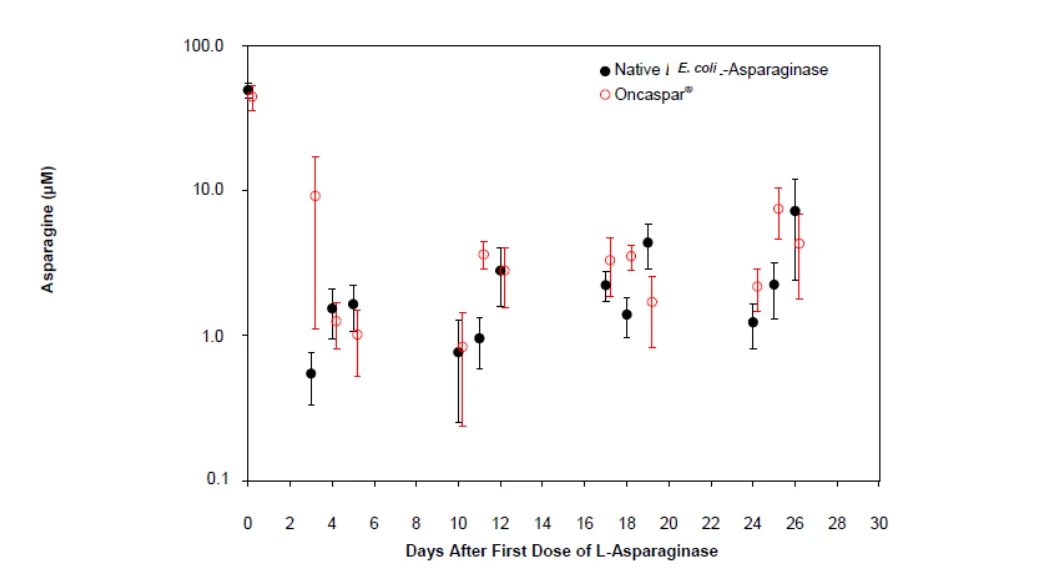
CSF asparagine concentrations were determined in 50 patients during the induction phase. CSF asparagine decreased from a mean pretreatment concentration of 3.1 μM to 1.7 μM on Day 4 ± 1 and 1.5 μM at 25 ± 1 days after administration of ONCASPAR. These findings were similar to those observed in the native E. coli L-asparaginase treatment arm.
Event-free Survival
While the 3-year EFS were 83% in the ONCASPAR arm and 79% in the native E. coli L-asparaginase arm, the study was not designed to detect differences in EFS rates.
Summary of Clinical Trials when ONCASPAR was used in Patients with Relapsed ALL
In a comparative study conducted by the Pediatric Oncology Group (POG #8866), Study ASP-304, multiple relapsed ALL patients were randomized to either ONCASPAR or E. coli L-asparaginase for induction therapy. ONCASPAR was administered at a dose of 2,500 U/m2 intramuscularly on days 1 and 15 of induction. In comparison, E. coli L-asparaginase was given at a dose of 10,000 U/m2 intramuscularly every other day for a total of 12 doses during induction therapy. Patients with known hypersensitivity to other forms of L-asparaginase were directly assigned to the ONCASPAR treatment group; the majority of the patients were able to tolerate ONCASPAR without manifestation of any allergic reactions. Three ONCASPAR patients had their overall therapy discontinued due to adverse experiences (toxicity). Two hypersensitive patients experienced systemic hypersensitivity reactions (CTC grades 3 or 4), one during induction therapy and the other during extension therapy. One non-hypersensitive patient experienced CTC grade 4 hyperbilirubinemia. One non-hypersensitive patient treated with E. coli L-asparaginase experienced an episode of hypersensitivity which required discontinuation. This patient was subsequently treated with ONCASPAR and achieved complete remission during reinduction therapy without evidence of hypersensitivity.
Open trials (Studies 001C/003C, ASP-201A and ASP-302) which evaluated the effectiveness of ONCASPAR at a dose of 2,000-2,500 U/m2 intramuscularly during induction, consolidation or maintenance therapy demonstrated that ONCASPAR (pegaspargase) had similar clinical activity (remission rates) in the treatment of hypersensitive patients as reported in scientific literature between 1995 to 2000. The majority of the patients with known hypersensitivity to the native forms of L-asparaginase were safely treated with ONCASPAR (pegaspargase) without manifestations of any NCI grade 3 or 4 hypersensitivity reactions.
15 MICROBIOLOGY
No microbiological information is required for this drug product.
16 NON-CLINICAL TOXICOLOGY
Acute Toxicity: Only very high doses of pegaspargase given to mice intraperitoneally as a single dose
(25000 – 100000 U/kg body weight) caused the death of 14% of all treated mice. Mild hepatotoxicity was observed with the same dosages. Side effects were loss of body weight, piloerection and reduced activity. Reduced splenic weight might be a sign of potential immunosuppressant characteristics of the treatment.
Pegaspargase was well tolerated both in rats and dogs when administered intravenously in single dose up to 500 U/kg.
Carcinogenicity: Long-term investigations of carcinogenicity or studies of the effect on fertility in animals were not conducted with pegaspargase.
Pegaspargase was not mutagenic in the Ames test using Salmonella typhimurium strains.
Reproductive and Developmental Toxicology: No studies of reproductive toxicity were conducted with pegaspargase.
Embryotoxicity studies with L-asparaginase have given evidence of teratogenic potential in rats treated from day 6 to 15 of gestation with a No Observed Effect Level (NOEL) for teratogenic effects at 300 U/kg i.v. In rabbits doses of 50 or 100 U/kg i.v. on days 8 and 9 of gestation induced viable fetuses with congenital malformations: no NOEL has been determined. Multiple malformations and embryolethal effects were observed with doses in the therapeutic range. Investigations of the effect on fertility and peri- and postnatal development were not conducted.
Repeated Dose Toxicity: A 4-week study in rats with a dosage of pegaspargase of 400 U/kg/day intraperitoneal resulted in a fall in food intake and body weight compared to the control group.
A 3-month study in mice with pegaspargase at doses up to 500 U/kg intraperitoneal or intramuscular resulted in slight hepatocellular changes only at the highest intraperitoneal dose.
A temporarily diminished increase in body weight and a slight temporary reduction in the total leukocyte count was observed in dogs which were treated with pegapargase 1200 U/kg weekly for 2 weeks. Increased serum glutamic pyruvic transaminase activity also occurred in one of four dogs.