


Product Monograph - Mabcampath
RECENT MAJOR LABEL CHANGES
TABLE OF CONTENTS
RECENT MAJOR LABEL CHANGES ............................................................................................ 2
TABLE OF CONTENTS .............................................................................................................. 2
PART I: HEALTH PROFESSIONAL INFORMATION ...................................................................... 4
1 INDICATIONS ............................................................................................................... 4
1.1 Pediatrics ................................................................................................................ 4
1.2 Geriatrics ................................................................................................................ 4
2 CONTRAINDICATIONS ................................................................................................. 4
3 SERIOUS WARNINGS AND PRECAUTIONS BOX ............................................................ 4
4 DOSAGE AND ADMINISTRATION ................................................................................. 5
4.1 Dosing Considerations ............................................................................................ 6
4.2 Recommended Dose and Dosage Adjustment ....................................................... 6
4.3 Reconstitution ........................................................................................................ 8
4.4 Administration ........................................................................................................ 8
4.5 Missed Dose ........................................................................................................... 9
5 OVERDOSAGE .............................................................................................................. 9
6 DOSAGE FORMS, STRENGTHS, COMPOSITION AND PACKAGING ................................. 9
7 WARNINGS AND PRECAUTIONS ................................................................................ 10
7.1 Special Populations............................................................................................... 14
7.1.1 Pregnant Women ........................................................................................... 14
7.1.2 Breast-feeding ................................................................................................ 14
7.1.3 Pediatrics ........................................................................................................ 14
7.1.4 Geriatrics ........................................................................................................ 15
8 ADVERSE REACTIONS ................................................................................................ 15
8.1 Adverse Reaction Overview .................................................................................. 15
8.2 Clinical Trial Adverse Reactions ............................................................................ 15
8.5 Post-Market Adverse Reactions ........................................................................... 33
9 DRUG INTERACTIONS ................................................................................................ 35
9.2 Drug Interactions Overview .................................................................................. 35
9.4 Drug-Drug Interactions ......................................................................................... 35
9.5 Drug-Food Interactions ......................................................................................... 35
9.6 Drug-Herb Interactions ......................................................................................... 35
9.7 Drug-Laboratory Test Interactions ........................................................................ 35
10 CLINICAL PHARMACOLOGY ....................................................................................... 36
10.1 Mechanism of Action ...................................................................................... 36
10.3 Pharmacokinetics ........................................................................................... 36
11 STORAGE, STABILITY AND DISPOSAL ......................................................................... 37
PART II: SCIENTIFIC INFORMATION ....................................................................................... 37
13 PHARMACEUTICAL INFORMATION ............................................................................ 37
14 CLINICAL TRIALS ........................................................................................................ 38
14.1 Clinical Trials by Indication ............................................................................. 38
15 MICROBIOLOGY ........................................................................................................ 47
16 NON-CLINICAL TOXICOLOGY ..................................................................................... 47
PATIENT MEDICATION INFORMATION .................................................................................. 52
PART I: HEALTH PROFESSIONAL INFORMATION
1 INDICATIONS
MabCampath (alemtuzumab) is indicated for:
- the treatment of patients with previously untreated progressive B-CLL.
- the treatment of B-CLL patients who have been treated with alkylating agents and who have failed fludarabine therapy.
The effectiveness of MabCampath as a single agent for the treatment of patients with previously untreated B-CLL is based on progression-free survival (PFS), complete response (CR) and overall response (OR) rates. Currently no data are available that demonstrate an increased overall survival with MabCampath (see 14 CLINICAL TRIALS).
Physicians should carefully weigh the benefits and risks of treatment with MabCampath, taking into consideration the prognostic characteristics of B-CLL patients such as Rai Stage [see 14 CLINICAL TRIALS, Previously Untreated Patients] before initiating treatment.
1.1 Pediatrics
Pediatrics (<18 years of age): No data are available to Health Canada; therefore, Health Canada has not authorized an indication for pediatric use.
1.2 Geriatrics
Geriatrics (> 65 years of age): Although no substantial differences in safety and efficacy related to age in B-CLL patients were observed, the number of patients over 65 years of age included in the clinical trials is not sufficient to exclude important differences.
2 CONTRAINDICATIONS
- Patients who have active infections.
- Patients with underlying immunodeficiency (e.g., seropositive for HIV).
- Patients who have or have had progressive multifocal leukoencephalopathy (PML).
- Patients who have known Type I hypersensitivity or anaphylactic reactions to MabCampath (alemtuzumab) or to any one of its components.
- Patients with active secondary malignancies.
3 SERIOUS WARNINGS AND PRECAUTIONS BOX
Serious Warnings and Precautions
| MabCampath® (alemtuzumab) should be administered under the supervision of a physician |
|---|
experienced in the use of antineoplastic therapy.
|
|---|
Warnings and Precautions, including the serious Warnings and Precautions, apply to all patients (previously untreated and previously treated) who receive MabCampath.
4 DOSAGE AND ADMINISTRATION
All Dosage and Administration recommendations apply to previously untreated and previously treated B-CLL patients.
4.1 Dosing Considerations
MabCampath (alemtuzumab) should be administered under the supervision of a physician experienced in the use of antineoplastic therapy.
4.2 Recommended Dose and Dosage Adjustment
MabCampath therapy should be initiated at a dose of 3 mg administered as a two hour IV infusion daily (see 8 ADVERSE REACTIONS). When the MabCampath 3 mg daily dose is tolerated (e.g., infusion-related toxicities are ≤ Grade 2), the daily dose should be escalated to 10 mg and continued until tolerated. When the 10 mg dose is tolerated, the maintenance dose of MabCampath 30 mg may be initiated. The maintenance dose of MabCampath is 30 mg/day administered three times per week on alternate days (i.e., Monday, Wednesday, and Friday) for up to 12 weeks. In most patients, escalation to 30 mg can be accomplished in three to seven days. Dose escalation to the recommended maintenance dose of 30 mg administered three times per week is required. Single doses of MabCampath greater than 30 mg or cumulative weekly doses of greater than 90 mg should not be administered since higher doses are associated with an increased incidence of pancytopenia. (see 3 SERIOUS WARNINGS AND PRECATUONS BOX). MabCampath should be administered intravenously only. The infusion should be administered over a two hour period. DO NOT ADMINISTER AS AN INTRAVENOUS PUSH OR BOLUS.
Recommended Concomitant Medications:
Premedication should be given prior to the first dose, at dose escalations, and as clinically indicated. The premedication used in clinical studies was diphenhydramine 50 mg and acetaminophen 500-1000 mg administered 30 minutes prior to MabCampath infusion.
Institute appropriate medical management (e.g., glucocorticoids, epinephrine, meperidine) for infusion reactions as needed. For patients who experience an infusion reaction physicians may consider glucocorticoids and/or meperidine as additional premedication for subsequent doses, as clinically indicated. In the clinical study in previously untreated patients, if grade 3 or 4 infusion-related adverse events were not prevented or ameliorated sufficiently with the protocol-recommended premedications, meperidine 25 mg or hydrocortisone 200 mg IV (or equivalent) given 1 hour prior to MabCampath administration may have been of benefit. Thirty six percent of previously untreated patients treated with MabCampath and 14% of patients treated with chlorambucil received concomitant glucocorticoid therapy (see 8 ADVERSE REACTIONS, Clinical Trial Adverse Drug Reactions).
It is strongly recommended that patients should receive anti-infective prophylaxis to minimize the risks of serious opportunistic infections (see 3 SERIOUS WARNINGS AND PRECATUONS BOX). Administer trimethoprim/sulfamethoxazole DS twice daily (BID) three times per week (or equivalent) as PCP prophylaxis and famciclovir 250 mg twice a day (BID) or equivalent as herpetic prophylaxis upon initiation of MabCampath therapy. Prophylaxis should be continued for a minimum of two months after completion of MabCampath therapy or until the CD4+ count is ≥ 200 cells/μL, whichever occurs later.
See 7 WARNINGS AND PRECAUTIONS, Immunosuppression/Opportunistic Infections for information on cytomegalovirus (CMV) management.
The use of allopurinol and hydration to reduce the risk of tumor lysis syndrome is recommended.
In the clinical study in previously untreated patients, allopurinol was administered orally at a dose of 300 mg per day beginning 1 day before MabCampath treatment began and for the next 14 days for the first month. Allopurinol could be administered thereafter as clinically indicated.
Dose Modification and Reinitiation of Therapy:
MabCampath therapy should be withheld during serious infection or other serious adverse reactions until the event resolves (see 7 WARNINGS AND PRECAUTIONS). MabCampath therapy should be discontinued if evidence of autoimmune anemia or autoimmune thrombocytopenia appears. Table1 includes recommendations for dose modification for neutropenia or thrombocytopenia.
Table 1: Dose Modification for Neutropenia and Thrombocytopenia
| Hematologic Values | Dose Modification* |
| Absolute Neutrophil Count (ANC) < 250/μL and/or platelet count ≤ 25,000/μL | |
| For first occurrence | Withhold MabCampath therapy. Resume MabCampath therapy at 30 mg when ANC ≥ 500/μL and platelet count ≥ 50,000/μL. |
| For second occurrence | Withhold MabCampath therapy. Resume MabCampath therapy at 10 mg when ANC ≥ 500/μL and platelet count ≥ 50, 000/μL. |
| For third occurrence | Discontinue MabCampath therapy. |
| ≥ 50% decrease from baseline value in patients initiating therapy with a baseline ANC ≤250/μL and/or a baseline platelet count ≤ 25,000/μL | |
| For first occurrence | Withhold MabCampath therapy. Resume MabCampath at 30 mg upon return to baseline value(s). |
| For second occurrence | Withhold MabCampath therapy. Resume MabCampath at 10 mg upon return to baseline value(s). |
| For third occurrence | Discontinue MabCampath therapy. |
*If the delay between dosing is ≥ 7 days, initiate therapy at MabCampath 3 mg and escalate to 10 mg and then to 30 mg as tolerated (see 4 DOSAGE AND ADMINISTRATION)
There are no dose modifications recommended for lymphopenia.
4.3 Reconstitution
Parenteral drug products should be inspected for visible particulate matter and discoloration prior to administration. If particulate matter is present or the solution is discolored, the 30 mg/mL vial should not be used. DO NOT SHAKE VIAL PRIOR TO USE. As with all parenteral drug products, aseptic technique should be used during the preparation and administration of MabCampath.
4.4 Administration
30 mg/1 mL (30 mg/mL) vial
Withdraw the necessary amount of MabCampath from the 30 mg/mL vial into a syringe calibrated in increments of 0.01 mL for the 3 mg and 10 mg dose and 0.1 mL for the 30 mg dose (as shown below). Inject into 100 mL sterile 0.9% Sodium Chloride USP or 5% Dextrose in Water USP. Gently invert the bag to mix the solution. Discard syringe.
| Dose | Amount (mL) Withdrawn from 30 mg/mL Vial | Volume of Diluent | Nominal Concentration per mL |
|---|---|---|---|
| Initial: 3 mg | 0.1 mL | 100 mL | 0.03 mg |
| Initial: 10 mg | 0.33 mL | 100 mL | 0.10 mg |
| Maintenance: 30 mg | 1 mL | 100 mL | 0.30 mg |
The 30 mg/mL vial contains no preservatives and is intended for single use only. DISCARD VIAL including any unused portion after withdrawal of dose.
MabCampath contains no antimicrobial preservative. MabCampath should be used within eight hours after dilution. MabCampath solutions may be stored at room temperature (15-30°C) or refrigerated (2-8ºC). MabCampath solutions should be protected from light.
Incompatibilities:
No incompatibilities between MabCampath and polyvinylchloride (PVC) bags, PVC or polyethylene-lined PVC administration sets, or low-protein binding filters have been observed. No data are available concerning the incompatibility of MabCampath with other drug substances. Other drug substances should not be added or simultaneously infused through the same intravenous line.
4.5 Missed Dose
If therapy is interrupted for seven or more days, MabCampath should be reinstituted with gradual dose escalation.
5 OVERDOSAGE
Initial doses of intravenous MabCampath (alemtuzumab) of greater than 3 mg are not well-tolerated. One previously treated patient who received 80 mg as an initial dose by IV infusion experienced acute bronchospasm, cough, and shortness of breath, followed by anuria and death. A review of the case suggested that tumor lysis syndrome may have played a role.
Single doses of MabCampath greater than 30 mg or a cumulative weekly dose greater than 90 mg should not be administered as higher doses have been associated with a higher incidence of pancytopenia (see 3 SERIOUS WARNINGS AND PRECATUONS BOXand 4 DOSAGE AND ADMINISTRATION). There is no known specific antidote for MabCampath overdosage in previously untreated or previously treated B-CLL patients. Treatment consists of drug discontinuation and supportive therapy.
| For management of a suspected drug overdose, contact your regional poison control centre. |
|---|
6 DOSAGE FORMS, STRENGTHS, COMPOSITION AND PACKAGING
Table 2 – Dosage Forms, Strengths, Composition and Packaging
| Route of | Dosage Form / | Non-medicinal Ingredients |
MabCampath (alemtuzumab) is supplied in single-use clear glass vials.
Each MabCampath 30 mg/mL vial contains 30 mg of alemtuzumab in 1 mL of sterile, preservative-free solution. MabCampath is available in boxes of one 30 mg/mL vial (one vial of 30 mg in 1 mL solution) and three 30 mg/mL vials (three vials of 30 mg in 1 mL solution). Note that the three-vial boxes are NOT to be administered as a single dose]
7 WARNINGS AND PRECAUTIONS
Please see 3 SERIOUS WARNINGS AND PRECATUONS BOX.
General
Infusion Reactions
MabCampath has been associated with adverse reactions including pyrexia, chills/rigors, nausea, hypotension, urticaria, dyspnea, rash, emesis, and bronchospasm. In clinical trials, the frequency of infusion reactions was highest in the first week of therapy and declined in the second or third weeks of treatment [see 8 ADVERSE REACTIONS, Infusion Reactions]. Monitor for the signs and symptoms listed above and withhold infusions for Grade 3 or 4 infusion reactions.
The following serious, including fatal, infusion reactions have been identified in post-marketing reports: syncope, pulmonary infiltrates, acute respiratory distress syndrome (ARDS), respiratory arrest, cardiac arrhythmias, myocardial infarction, acute cardiac insufficiency, cardiac arrest, angioedema, and anaphylactoid shock.
MabCampath should be initiated at the recommended dose-escalation scheme (see 4 DOSAGE AND ADMINISTRATION). In order to prevent or decrease the severity of infusion reactions, patients should be premedicated with an oral antihistamine and acetaminophen prior to dosing and monitored closely for infusion reactions. In cases where severe infusion reactions (which may include cytokine release effects) occur, treatment with glucocorticoids, epinephrine and or meperidine can be used [see 4 DOSAGE AND ADMINISTRATION, Recommended Concomitant Medications]. For patients who experience an infusion reaction physicians may consider glucocorticoids and/or meperidine as additional premedication for subsequent doses. Careful monitoring of blood pressure and symptoms related to hypotension is recommended especially in patients with ischemic heart disease and in patients on antihypertensive medications. Monitoring and resuscitation facilities should be available. If therapy is interrupted for seven or more days, MabCampath should be reinstituted with gradual dose escalation. For patients with pre-existing cardiac disease, MabCampath should only be administered if
| Administration | Strength/Composition | |
| Intravenous solution | 30 mg/mL vial | dibasic sodium phosphate, disodium edetate dihydrate, polysorbate 80, potassium chloride, potassium dihydrogen phosphate and sodium chloride |
the benefits outweigh the risks (see 8 ADVERSE REACTIONS and 4 DOSAGE AND ADMINISTRATION).
Carcinogenesis and Mutagenesis
No long-term studies in animals have been performed to establish the carcinogenic or mutagenic potential of MabCampath, or to determine its effects on fertility in males or females. Women of childbearing potential and men of reproductive potential should use effective contraceptive methods during treatment and for a minimum of six months following MabCampath therapy.
Cardiovascular
Hypotension, hypertension, bradycardia, atrial fibrillation, cardiac arrest, sinus bradycardia and supraventricular extrasystoles have been observed in patients treated with MabCampath. Assessment and ongoing monitoring of cardiac function (e.g. echocardiography, heart rate and body weight) should be considered in patients previously treated with potentially cardiotoxic agents.
Hematologic
Prolonged myelosuppression has occurred in patients with leukemia and lymphoma receiving MabCampath. In addition, severe, including fatal, autoimmune anemias and thrombocytopenia were observed in patients receiving MabCampath.
Hemolytic anemia, pure red cell aplasia, bone marrow aplasia and hypoplasia were observed in the clinical studies at the recommended dose. Single doses of MabCampath greater than 30 mg or cumulative doses greater than 90 mg per week increase the incidence of pancytopenia.
MabCampath should be discontinued for severe hematologic toxicity (except lymphopenia) or in any patient with evidence of autoimmune hematologic toxicity [see 4 DOSAGE AND ADMINISTRATION, Table - Dose Modification and Reinitiation of Therapy for Neutropenia and Thrombocytopenia]. Following resolution of transient, non-immune myelosuppression, MabCampath may be reinitiated with caution (see 4 DOSAGE AND ADMINISTRATION). There are no data on the safety of resumption of MabCampath in patients with autoimmune cytopenias or marrow aplasia (see 8 ADVERSE REACTIONS).
Tumor Lysis Syndrome
Patients should be well hydrated and, when indicated, allopurinol should be administered for patients with high tumor load, to reduce the risk of tumor lysis syndrome.
Immunosuppression/Opportunistic Infections:
MabCampath treatment results in severe and prolonged lymphopenia with a concomitant increased incidence of opportunistic infections (see 8 ADVERSE REACTIONS). Prophylaxis against PCP and herpes viruses is recommended upon initiation of therapy and for a minimum of two months following the last dose of MabCampath or until CD4+ counts are ≥ 200 cells/μL, whichever occurs later [see 4 DOSAGE AND ADMINISTRATION, Recommended Concomitant Medications]. Prophylaxis does not eliminate these infections.
A variety of opportunistic infections have been reported in patients receiving MabCampath therapy (see 8 ADVERSE REACTIONS, Infections). If a serious infection occurs, MabCampath therapy should be interrupted and may be reinitiated following the resolution of the infection. There have been a significant number of reports of reactivation or new cytomegalovirus (CMV) viremia or infections in patients during clinical studies and in post-marketing reports. Routinely monitor patients for CMV infection during MabCampath treatment and for at least 2 months following completion of treatment. Withhold MabCampath for serious infections and during antiviral treatment for CMV infection or confirmed CMV viremia (e.g. polymerase chain reaction (PCR) positive CMV in 2 consecutive samples obtained 1 week apart) (see 8 ADVERSE REACTIONS). Initiate therapeutic ganciclovir (or equivalent) for CMV infection or confirmed CMV viremia (see 4 DOSAGE AND ADMINISTRATION).
Guidelines exist in the published literature for the management of CMV in patients treated with MabCampath (O’Brien, 2006, Clin Lymphoma). These guidelines offer a variety of options regarding CMV management and the increased risk of viremia/infection when treated with MabCampath; these options include surveillance, pre-emptive therapy and up front prophylaxis. Although MabCampath therapy was to be withheld during antiviral treatment for CMV in Study 4, these guidelines suggest that MabCampath be held only for those patients with severe infection, who are persistently symptomatic, or both, in order for patients to derive the most benefit from therapy and to avoid unnecessary treatment interruptions.
Because of the potential of transfusion associated Graft versus Host Disease (TAGVHD), it is recommended that patients who have been treated with MabCampath should receive irradiated blood products.
In patients receiving MabCampath as initial therapy, the median time to recovery of CD4+ counts to ≥ 200 cells/μL occurred by 6 months post-treatment; however, at 2 months post-treatment the median was 183 cells/µL. In previously treated patients receiving MabCampath, the median time to recovery of CD4+ counts to ≥ 200 cells/μL was two months, however, full recovery (to baseline) of CD4+ and CD8+ counts may take more than 12 months (see 3 SERIOUS WARNINGS AND PRECATUONS BOXand 4 DOSAGE AND ADMINISTRATION).
The potential for an increased risk of infection-related complications may exist following treatment with multiple chemotherapeutic or biological agents.
Epstein-Barr virus (EBV) infection, including severe and sometimes fatal EBV associated hepatitis, has been reported in MabCampath-treated patients. Epstein Barr Virus-associated lymphoproliferative disorders have been observed in postmarketing experience.
Progressive Multifocal Leukoencephalopathy:
Progressive multifocal leukoencephalopathy (PML) is a serious and potentially fatal event that is known to occur in B-CLL patients (Bower et al., 1997, Neurology). Progressive multifocal leukoencephalopathy has been reported in patients with B-CLL with or without treatment with MabCampath. The reported frequency of PML in B-CLL patients treated with MabCampath is no greater than the reported background frequency in B-CLL patients. (See 8 ADVERSE REACTIONS: Clinical Trial Adverse Drug Reactions: Previously Treated Patients and ADVERSE REACTIONS: Post-Market Adverse Drug Reactions.)
The factors that might increase an individual patient's risk for PML have not been completely identified. It is not known whether early detection of PML with early intervention will mitigate the disease. Physicians treating patients with B-CLL should be alert to any new signs or symptoms that may be suggestive of PML (e.g., progressive weakness on one side of the body or clumsiness of limbs, disturbance of vision, and changes in thinking, memory and orientation) and consider PML in the differential diagnosis of patients reporting new-onset neurological symptoms. MabCampath should be immediately withheld in B-CLL patients at the first sign or symptom suggestive of PML and a neurologic evaluation should be performed as clinically indicated. This may include consultation with a neurologist, magnetic resonance imaging (MRI) scan, and cerebrospinal fluid analysis for JC viral DNA. Discontinue MabCampath and consider discontinuation or reduction of any concomitant chemotherapy or immunosuppressive therapy in B-CLL patients with confirmed PML.
Immune
Autoimmunity:
Autoimmune diseases have been reported, occurring in association with MabCampath treatment, including Graves’ disease, hypothyroidism and Goodpasture’s syndrome. This may be associated with the severe lymphopenia induced by treatment with MabCampath. Appropriate clinical and laboratory monitoring should be undertaken.
Haemophagocytic lymphohistiocytosis (HLH)
During postmarketing use, HLH has been reported in patients treated with MabCampath. HLH is a life-threatening syndrome of pathologic immune activation characterized by clinical signs and symptoms of extreme systemic inflammation. It is associated with high mortality rates if not recognized early and treated. Symptoms have been reported to occur within a few months following the initiation of treatment, commonly observed in association with infections. Patients who develop early manifestations of pathologic immune activation should be evaluated immediately, and a diagnosis of HLH should be considered.
Immunization:
Patients who have recently received MabCampath, should not be immunized with live viral vaccines, due to their immunosuppression. The safety of immunization with live viral vaccines following MabCampath therapy has not been studied. The ability to generate a primary or anamnestic humoral response to any vaccine following MabCampath therapy has not been studied.
Immunogenicity:
As with all therapeutic proteins, there is potential for immunogenicity. Using an ELISA assay, anti-human antibodies were detected in 11 of 133 (8.3%) previously untreated patients. In addition, two patients were weakly positive for neutralizing activity. Limited data suggest that the anti-MabCampath antibodies did not adversely affect tumour response. Four (1.9%) of 211 previously treated patients evaluated for development of an immune response were found to have antibodies to MabCampath.
Monitoring and Laboratory Tests
Complete blood counts (CBC) and platelet counts should be obtained at weekly intervals during MabCampath therapy and more frequently if worsening anemia, neutropenia, or thrombocytopenia is observed on therapy. CD4+ counts should be assessed after treatment until recovery to ≥ 200 cells/μL (see 7 WARNINGS AND PRECAUTIONS and 8 ADVERSE REACTIONS). Recommendations for dose modification and reinitiation of therapy for neutropenia and thrombocytopenia are provided in Table under DOSAGE AND ADMINISTRATION.
Reproductive Health: Female and Male Potential
Fertility
Mature sperm are CD52 positive, and MabCampath may cause loss of mature sperm and the possibility of male infertility. Studies have not been carried out to determine the effect or duration of infertility, if any.
7.1 Special Populations
7.1.1 Pregnant Women
Animal reproduction studies have not been conducted with MabCampath. It is not known whether MabCampath can affect reproductive capacity or cause fetal harm when administered to a pregnant woman. However, human IgG is known to cross the placental barrier and therefore MabCampath may cross the placental barrier and cause fetal B and T lymphocyte depletion. Males and females of childbearing capacity should use effective contraceptive measures during treatment and for six months following MabCampath therapy. MabCampath should be given to a pregnant woman only if the benefit outweighs the risks to mother and fetus.
7.1.2 Breast-feeding
Excretion of MabCampath in human breast milk has not been studied, although it is highly likely that it is excreted in the milk. Because many drugs including human IgG are excreted in human milk, breast-feeding should be discontinued during treatment and for at least 3 months following the last dose of MabCampath.
7.1.3 Pediatrics
Pediatrics (<18 years): No data are available to Health Canada; therefore, Health Canada has not authorized an indication for pediatric use
7.1.4 Geriatrics
Geriatrics (> 65 years): Of 147 previously untreated B-CLL patients treated with MabCampath, 35% were ≥ age 65 and 4% were ≥ age 75. Of 149 patients previously treated patients with B-CLL, 44% were ≥ 65 years of age and 10% were ≥ 75 years of age. No substantial differences in safety and efficacy related to age in previously untreated or previously treated B-CLL patients were observed; however, the size of the database is not sufficient to exclude important differences.
8 ADVERSE REACTIONS
8.1 Adverse Reaction Overview
The most common adverse reactions with MabCampath are: infusion reactions (pyrexia, chills, hypotension, urticaria, nausea, rash, tachycardia, dyspnea), cytopenias (neutropenia, lymphopenia, thrombocytopenia, anemia), infections (CMV viremia, CMV infection, other infections), gastrointestinal symptoms (nausea, emesis, abdominal pain), and neurological symptoms (insomnia, anxiety, headache), fatigue and hypertension. The most common serious adverse reactions are cytopenias, infusion reactions, and immunosuppression/ infections (see 7 WARNINGS AND PRECAUTIONS).
8.2 Clinical Trial Adverse Reactions
Clinical trials are conducted under very specific conditions. The adverse reaction rates observed in the clinical trials; therefore, may not reflect the rates observed in practice and should not be compared to the rates in the clinical trials of another drug. Adverse reaction information from clinical trials may be useful in identifying and approximating rates of adverse drug reactions in real-world use.
The data below reflect exposure to MabCampath in 296 patients with CLL of whom 147 were previously untreated and 149 received at least 2 prior chemotherapy regimens. The median duration of exposure was 11.7 weeks for previously untreated patients and 9.0 weeks for previously treated patients.
Infusion Reactions
The pattern of infusion-related reactions reported in previously untreated and previously treated patients was similar; the occurrence of infusion reactions for in all patients was greatest during the initial week of treatment and decreased with subsequent doses of MabCampath.
Antihistamines, acetaminophen, antiemetics, meperidine, and/or glucocorticoids as well as incremental dose escalation were used to prevent or ameliorate infusion-related events (see 7 WARNINGS AND
PRECAUTIONS and 4 DOSAGE AND ADMINISTRATION)
Previously Untreated Patients: Infusion-related reactions including pyrexia, chills, hypotension, urticaria and dyspnea were common in patients treated with MabCampath. Grade 3 and 4 pyrexia and/or chills occurred in approximately 10% of previously untreated patients treated with MabCampath and in none of the patients treated with chlorambucil. All patients were pretreated with antipyretics and antihistamines; additionally, 43% of patients treated with MabCampath received glucocorticoid pre-treatment and 0.7% of patients treated with chlorambucil received glucocorticoid pre-treatment. Premedication with glucocorticoids to prevent infusion reactions would not be expected in patients treated with an antineoplastic agent such as chlorambucil that is administered orally as opposed to an intravenously administered monoclonal antibody such as MabCampath.
Previously Treated Patients: Infusion-related reactions including pyrexia, chills, hypotension, urticaria and dyspnea were common in previously untreated patients treated with MabCampath. Additional infusion-related events reported frequently include nausea, vomiting, rash, fatigue, pruritus, headache and diarrhea. Grade 3 and 4 pyrexia and/or chills were reported in 35% of patients.
Hematologic
Pancytopenia/Marrow Hypoplasia
Previously Untreated Patients: With the exception of one patient who experienced pure red cell aplasia 6 months after completing treatment with MabCampath, there were no reports of pancytopenia or bone marrow aplasia in patients treated with MabCampath or chlorambucil.
Previously Treated Patients: MabCampath therapy was permanently discontinued in 6% of patients due to pancytopenia/marrow hypoplasia; 2% of cases of pancytopenia/ marrow hypoplasia were fatal.
Anemia
Previously Untreated Patients: Grade 3 or 4 anemia was reported in 11% of patients treated with MabCampath with a median time to onset of 31 days and 18% of patients treated with chlorambucil with a median time to onset of 57 days. Sixteen percent of patients treated with MabCampath and 18% of patients treated with chlorambucil received either erythropoiesis stimulating agents, transfusions or both. Autoimmune hemolytic anemia secondary to MabCampath therapy was reported in no patients treated with MabCampath and 1% of patients treated with chlorambucil.
Previously Treated Patients: Grade 3 or 4 anemia was reported in 38% of patients. Sixty seven percent of patients required red blood cell (RBC) transfusions. In addition, the use of erythropoiesis stimulating agents was reported in 20% of patients. Autoimmune hemolytic anemia secondary to MabCampath therapy was reported in 1% of patients. Positive Coombs test without hemolysis was reported in 2% of patients (see 3 SERIOUS WARNINGS AND PRECATUONS BOX).
Neutropenia
Previously Untreated Patients: Grade 3 or 4 neutropenia was reported in 41% of patients treated with MabCampath and 25% of patients treated with chlorambucil. The median time to onset of neutropenia was 30 days in the MabCampath arm and 26 days in the chlorambucil arm. Ten percent of patients treated with MabCampath and 4% of patients treated with chlorambucil received granulocyte colony stimulating factors (see 8 ADVERSE REACTIONS, Infections).
Previously Treated Patients: Grade 3 or 4 neutropenia was reported in 63% of patients with a median duration of 28 days (range: 2 – 165 days). Seventeen percent of patients received granulocyte colony stimulating factors (see 8 ADVERSE REACTIONS, Infections).
Thrombocytopenia
Previously Untreated Patients: Grade 3 or 4 thrombocytopenia was reported in 12% of patients treated with MabCampath with a median time to onset of 9 days and a median duration of 14 days and in 12% of chlorambucil patients with a median time to onset of 55 days. Three percent of patients treated with MabCampath and 2% of patients treated with chlorambucil required platelet transfusions. Autoimmune thrombocytopenia was not reported in patients treated with MabCampath but was reported in 1% of patients treated with chlorambucil. There were no autoimmune thrombocytopenia fatalities reported in patients treated with either MabCampath or chlorambucil.
Previously Treated Patients: Grade 3 or 4 thrombocytopenia was reported in 50% of patients with a median duration of 21 days (range: 2 – 165 days). Thirty-eight percent of previously treated patients required platelet transfusions for management of thrombocytopenia. Autoimmune thrombocytopenia was reported in 2% of patients with one fatal case of MabCampath-related autoimmune thrombocytopenia (see 3 SERIOUS WARNINGS AND PRECATUONS BOX).
Lymphopenia
Previously Untreated Patients: Severe lymphopenia and a rapid and sustained decrease in lymphocyte subsets occurred in previously untreated patients following administration of MabCampath. The median CD4+ was 0 cell/μL at one month after initiation of therapy, 183 cells/ μL at 2 months after discontinuation of therapy and 251 cells/μL at 6 months after discontinuation of therapy. The median CD8+ count was 1.5 cells/µL at 1 month after initiation of therapy, 256 cells/µL at 2 months after discontinuation of therapy and 543 cells/µL at 6 months after discontinuation of therapy.
Previously Treated Patients: Severe lymphopenia and a rapid and sustained decrease in lymphocyte subsets occurred in previously treated patients following administration of MabCampath. The median CD4+ was 2 cells /μL (range 0 - 564) at 1 month after initiation of therapy, 207 cells/μL (range 0 - 1876) at 2 months after discontinuation of therapy, 470 cells/μL (range 29 - 2079) at 6 months after discontinuation of therapy. The median CD8+ count was 2 cells/μL (range 0 - 1127) at 1 month after initiation of therapy, 251 cells/μL (range 0 - 3885) at 2 months after discontinuation of therapy, and 578 cells/μL (range 20 - 2507) at 6 months after discontinuation of therapy. In some previously treated patients treated with MabCampath, CD4+ and CD8+ lymphocyte counts had not returned to baseline levels at longer than 1 year post therapy.
Infections
Previously Untreated Patients: In the study of previously untreated patients, patients treated with MabCampath were tested weekly for CMV using a PCR assay from initiation through completion of therapy, and every 2 weeks for the first 2 months following therapy. CMV infection occurred in 16% (23/147) of patients treated with MabCampath; approximately one-third of these infections were serious or life-threatening however all patients with CMV infection recovered. No events of CMV infection were documented in patients treated with chlorambucil. Asymptomatic PCR positive CMV was reported in 77/147 (52.4%) of MabCampath-treated patients and in 11/147 (7.5%) of chlorambucil-treated patients during treatment and through 30 days following last drug administration. In the MabCampath arm 36/77 (46.8%) of patients with asymptomatic PCR positive CMV received antiviral therapy and 47/77 (61%) of these patients had MabCampath therapy interrupted. No patients in the chlorambucil arm received antiviral therapy or had therapy interrupted for antiviral treatment.
Approximately 80% of patients treated with MabCampath and 50% of patients treated with chlorambucil experienced at least one infection-related event regardless of relationship to treatment. Infection-related events, excluding CMV, were reported in 46% of patients treated with MabCampath and 50% of chlorambucil treated patients. Infection-related fatalities occurred in 1% of patients treated with MabCampath and 2% of patients treated with chlorambucil. Grade 3 sepsis was reported in 1.4% of patients treated with MabCampath; there were no reports of Grade 4 sepsis. Grade 4 sepsis was reported in 0.7% of chlorambucil treated patients; there were no reports of Grade 3 sepsis. Grade 3-4 febrile neutropenia occurred in 5% of patients treated with MabCampath and 3% of patients treated with chlorambucil.
Previously Treated Patients: In studies of previously treated patients in which routine CMV surveillance was not required, CMV infection was documented in 6% (9/149) of patients; nearly all of these infection-related events were serious or life-threatening. Other infection-related events were reported in approximately 50% of patients. Approximately 55% of patients experienced at least one infection-related event. Infection-related fatalities were reported in 16% of patients. Grade 3 or 4 sepsis and Grade 3 or 4 febrile neutropenia were also reported in 10% of patients.
Cardiac
Previously Untreated Patients: Cardiac dysrhythmias occurred in 15% of patients treated with MabCampath; the majority were tachycardias and were temporally associated with infusion. Dysrhythmias were Grade 3 or 4 in 2% of patients. Cardiac dysrhythmias occurred in 3% of patients treated with chlorambucil; dysrhythmias were Grade 3 or 4 in 2% of patients.
Previously Treated Patients: Cardiac dysrhythmias occurred in 11% of patients treated with MabCampath (Study 1); the majority were tachycardias. Dysrhythmias were Grade 3 or 4 in 2% of patients.
Previously Untreated Patients: Table 3 contains adverse reactions reported in ≥1% of 294 patients randomized (1:1) to receive either MabCampath or chlorambucil as initial therapy for B-CLL. Error! Reference source not found.4 contains adverse events regardless of relationship to treatment that were reported in previously untreated patients with ≥ 2% observed difference in frequency between the MabCampath and chlorambucil treatment groups. Table 5 contains infections observed in two or more previously untreated patients regardless of relationship to treatment with MabCampath or chlorambucil. MabCampath was administered at a dose of 30 mg intravenously three times weekly for up to 12 weeks. The median duration of therapy for patients treated with MabCampath was 11.7 weeks with a median weekly dose of 82 mg (25-75% interquartile range: 69 mg – 90 mg). Chlorambucil was administered 40 mg/m2 orally every month for up to 12 cycles. The median duration of therapy for patients treated with chlorambucil was 28.3 weeks (7 cycles).
Table 3: Adverse Drug Reactions in ≥ 1%* of the Previously Untreated B-CLL Patient Population (Safety Population) During Treatment or Within 30 Days of Last Study Treatment
MabCampath (N=147) | Chlorambucil (N=147) | ||||
|---|---|---|---|---|---|
| Preferred Term | Any Grade (%) | Grade 3-4 (%) | Any Grade (%) | Grade 3-4 (%) | |
| BODY AS A WHOLE – GENERAL DISORDERS | |||||
| Pyrexia | 64 | 8 | 3 | 0 | |
| Chills | 50 | 3 | 0 | 0 | |
| Fatigue | 6 | 1 | 5 | 0 | |
| Febrile neutropenia | 3 | 0 | 2 | 0 | |
| Anorexia | 1 | 0 | 3 | 0 | |
| Syncope | 1 | 1 | 0 | 0 | |
| CARDIOVASCULAR DISORDERS - GENERAL | |||||
| Hypotension | 14 | 1 | 0 | 0 | |
| Hypertension | 8 | 3 | 0 | 0 | |
| CENTRAL & PERIPHERAL SYSTEM DISORDERS | |||||
| Headache | 7 | 1 | 3 | 0 | |
| Tremor | 3 | 0 | 1 | 0 | |
| Dizziness | 3 | 1 | 0 | 0 | |
| Hypoaesthesia | 2 | 0 | 0 | 0 | |
| GASTROINTESTINAL SYSTEM DISORDERS | |||||
| Nausea | 13 | 0 | 35 | 1 | |
| Vomiting | 7 | 0 | 18 | 1 | |
| Abdominal pain | 3 | 0 | 1 | 0 | |
| Diarrhoea | 1 | 0 | 2 | 0 | |
| Dyspepsia | 0 | 0 | 2 | 0 | |
| HEART RATE & RHYTHM DISORDERS | |||||
| Tachycardia | 7 | 0 | 0 | 0 | |
MabCampath (N=147) | Chlorambucil (N=147) | ||||
|---|---|---|---|---|---|
| Preferred Term | Any Grade (%) | Grade 3-4 (%) | Any Grade (%) | Grade 3-4 (%) | |
| Bradycardia | 2 | 1 | 0 | 0 | |
| Sinus tachycardia | 2 | 0 | 0 | 0 | |
| Palpitations | 0 | 0 | 1 | 0 | |
| METABOLIC & NUTRITIONAL DISORDERS | |||||
| Weight decreased | 2 | 0 | 0 | 0 | |
| MUSCULO-SKELETAL SYSTEM DISORDERS | |||||
| Asthenia | 3 | 0 | 1 | 0 | |
| Back pain | 2 | 1 | 0 | 0 | |
| Bone pain | 1 | 0 | 1 | 0 | |
| Myalgia | 1 | 0 | 1 | 0 | |
| Musculoskeletal pain | 1 | 0 | 1 | 0 | |
| Paraesthesia | 1 | 0 | 0 | 0 | |
| PLATELET, BLEEDING & CLOTTING DISORDERS | |||||
| Thrombocytopenia | 5 | 5 | 5 | 4 | |
| Petechiae | 0 | 0 | 1 | 1 | |
| Gingival bleeding | 0 | 0 | 1 | 0 | |
| PSYCHIATRIC DISORDERS | |||||
| Anxiety | 1 | 0 | 0 | 0 | |
| RED BLOOD CELL DISORDERS | |||||
| Anaemia | 3 | 2 | 5 | 3 | |
| RESISTANCE MECHANISM DISORDERS | |||||
| Cytomegalovirus viraemia | 53 | 4 | 6 | 0 | |
| Cytomegalovirus infection | 13 | 4 | 0 | 0 | |
| Oral candidiasis | 1 | 0 | 0 | 0 | |
MabCampath (N=147) | Chlorambucil (N=147) | ||||
|---|---|---|---|---|---|
| Preferred Term | Any Grade (%) | Grade 3-4 (%) | Any Grade (%) | Grade 3-4 (%) | |
| RESPIRATORY SYSTEM DISORDERS | |||||
| Dyspnoea | 7 | 2 | 0 | 0 | |
| Haemoptysis | 0 | 0 | 1 | 1 | |
| Pharyngitis | 1 | 0 | 3 | 0 | |
| Pneumonia | 2 | 1 | 1 | 1 | |
| Bronchospasm | 2 | 1 | 0 | 0 | |
| Bronchitis | 1 | 0 | 1 | 1 | |
| Bronchopneumonia | 1 | 1 | 1 | 1 | |
| SKIN & APPENDAGES DISORDERS | |||||
| Urticaria | 15 | 2 | 1 | 0 | |
| Rash | 12 | 1 | 1 | 0 | |
| Pruritus | 3 | 0 | 1 | 0 | |
| Erythema | 3 | 0 | 1 | 0 | |
| Cyanosis | 1 | 0 | 0 | 0 | |
| Dermatitis allergic | 1 | 0 | 0 | 0 | |
| Hyperhidrosis | 1 | 0 | 0 | 0 | |
| WHITE CELL & RETICULOENDOTHELIAL SYSTEM DISORDERS | |||||
| Neutropenia | 9 | 7 | 1 | 1 | |
| Leukopenia | 1 | 1 | 1 | 1 | |
*≥ 1% is defined as 2 or more patients treated with MabCampath or 2 or more patients treated with chlorambucil
Table 4: Adverse Events Regardless of Relationship in Previously Untreated B-CLL Patients Treated with MabCampath or Chlorambucil with ≥ 2% Observed Difference Between Treatment Groups
| System Organ Class Preferred Term | MabCampath (N=147) | Chlorambucil (N=147) |
|---|---|---|
| Application Site Disorders | ||
| Cellulitis | 0 | 4 (2.7%) |
| Gastrointestinal System Disorders | ||
| Abdominal pain upper | 5 (3.4%) | 2 (1.4%) |
| Musculo-skeletal System Disorders | ||
| Muscle spasms | 1 (0.7%) | 4 (2.7%) |
| Muscular weakness | 3 (2.0%) | 0 |
| Psychiatric Disorders | ||
| Insomnia | 15 (10.2%) | 5 (3.4%) |
| Resistance Mechanism Disorders | ||
| Candidiasis | 6 (4.1%) | 2 (1.4%) |
| Herpes simplex | 1 (0.7%) | 5 (3.4%) |
| Viral infection | 5 (3.4%) | 2 (1.4%) |
| Respiratory System Disorders | ||
| Upper respiratory tract infection | 2 (1.4%) | 7 (4.8%) |
| Pharyngolaryngeal pain | 1 (0.7%) | 5 (3.4%) |
| Skin and Appendages Disorders | ||
| Night sweats | 2 (1.4%) | 7 (4.8%) |
| Urinary System Disorders | ||
| Urinary tract infection | 3 (2.0%) | 6 (4.1%) |
This table does not include terms already reported in Table 3.
Table 5: Infections Observed in 2 or More Previously Untreated Patients Regardless of Relationship to Treatment with MabCampath or Chlorambucil
MabCampath N=147 | Chlorambucil N=147 | |
|---|---|---|
| N (%) | N (%) | |
| Bronchitis | 11 (7.5%) | 7 (4.8%) |
| Bronchitis acute | 2 (1.4%) | 4 (2.7%) |
| Bronchopneumonia | 3 (2.0%) | 4 (2.7%) |
| Candidiasis | 6 (4.1%) | 2 (1.4%) |
| Cellulitis | 0 | 4 (2.7%) |
| Cystitis | 1 (0.7%) | 1 (0.7%) |
| Cytomegalovirus infection | 23 (15.6%) | 0 |
| Cytomegalovirus viraemia | 82 (55.8%) | 12 (8.2%) |
| Furuncle | 0 | 2 (1.4%) |
| Herpes simplex | 1 (0.7%) | 5 (3.4%) |
| Herpes zoster | 3 (2.0%) | 4 (2.7%) |
| Infection | 3 (2.0%) | 1 (0.7%) |
| Influenza | 0 | 2 (1.4%) |
| Laryngopharyngitis | 1 (0.7%) | 1 (0.7%) |
| Lobar pneumonia | 1 (0.7%) | 1 (0.7%) |
| Nasopharyngitis | 2 (1.4%) | 4 (2.7%) |
| Oral candidiasis | 3 (2.0%) | 0 |
| Pharyngitis | 10 (6.8%) | 15 (10.2%) |
| Pneumonia | 13 (8.8%) | 7 (4.8%) |
| Rhinitis | 7 (4.8%) | 8 (5.4%) |
| Sepsis | 2 (1.4%) | 2 (1.4%) |
| Sinusitis | 3 (2.0%) | 1 (0.7%) |
| Tonsillitis | 1 (0.7%) | 3 (2.0%) |
| Upper respiratory tract infection | 2 (1.4%) | 7 (4.8%) |
| Urethritis | 1 (0.7%) | 1 (0.7%) |
| Urinary tract infection | 3 (2.0%) | 6 (4.1%) |
| Viral infection | 5 (3.4%) | 2 (1.4%) |
Infection related events regardless of relationship to treatment were reported in 80.3% of previously untreated patients treated with MabCampath and 55.4% of previously untreated patients treated with chlorambucil. Two deaths were reported in previously untreated patients treated with MabCampath neither of which were considered related to treatment. Three deaths were reported in previously untreated patients treated with chlorambucil one of which (Listeria encephalitis) was considered related to treatment. With the exception of one nonfatal case of pneumonia in a MabCampath treated patient and one fatal case in a chlorambucil treated patient, all previously untreated patients who experienced infection-related ADRs recovered.
In the clinical trial of previously untreated patients, the following ADRs, listed by body system, that are not described in Table 3 were observed in < 1% of all patients in the MabCampath arm during the on-treatment period:
- Application site disorders: infusion site erythema, injection site edema
- Body as a whole, general disorders: anaphylactic reaction, hypersensitivity, localized edema, lymphadenopathy, malaise, oral discomfort
- Cardiovascular disorders general: angina pectoris, cardiac arrest, myocardial infarction
- Central and peripheral nervous system disorders: vertigo
- Gastrointestinal system disorders: ileus, mucosal inflammation, stomach discomfort
- Heart rate and rhythm disorders: arrhythmia supraventricular, atrial fibrillation, sinus bradycardia, supraventricular extrasystoles
- Metabolic and nutritional disorders: hyperglycemia, protein total decreased, tumor lysis syndrome
- Musculo-skeletal system disorders: arthralgia, muscle spasms, musculoskeletal chest pain
- Platelet, bleeding and clotting disorders: epistaxis
- Resistance mechanism disorders: beta hemolytic streptococcal infection, body tinea, candidiasis, genital candidiasis, herpes ophthalmic, sepsis, staphylococcal bacteremia, tuberculosis
- Respiratory system disorders: rhinitis, dysphonia, hypoxia, nasopharyngitis, pleural effusion, rhinorrhea
- Skin and appendages disorders: dermatitis, rash macular
- Urinary system disorders: cystitis, dysuria, urinary tract infection, urine output decreased
- Vascular (extracardiac) disorders: flushing, orthostatic hypotension
- Vision disorders: conjunctivitis
- White cell and reticuloendothelial system disorders: agranulocytosis, lymphopenia
Previously Treated Patients
Additional safety information was obtained from 3 single arm studies of 149 previously treated patients with CLL administered 30 mg MabCampath intravenously three times weekly for 4 to 12 weeks (median cumulative dose 673 mg [range 2 – 1106 mg]; median duration of therapy 9.0 weeks).
5 lists adverse events including severe or life threatening (National Cancer Institute Common Toxicity Criteria v.2.0 [NCI-CTC] Grade 3 or 4) adverse events reported in ≥ 1% of the previously treated patients.
Table 6: Adverse Drug Reactions in ≥ 1% of the Previously-Treated B-CLL Patient Population During Treatment or Within 30 Days of Last Study Treatment (Studies 1, 2 and 3)
B-CLL STUDIES In Previously Treated Patients (N=149) | |||||||
|---|---|---|---|---|---|---|---|
| Preferred Term | ANY Grade (%) | Grade 3 or 4 (%) | |||||
| APPLICATION SITE DISORDERS | |||||||
| CELLULITIS | 1 | 1 | |||||
| INJECTION SITE REACTION | 1 | 0 | |||||
| BODY AS A WHOLE – GENERAL DISORDERS | |||||||
| RIGORS | 85 | 15 | |||||
| FEVER | 82 | 14 | |||||
| FATIGUE | 27 | 4 | |||||
| ANOREXIA | 13 | 1 | |||||
| ASTHENIA | 9 | 0 | |||||
| PAIN | 7 | 1 | |||||
| CHEST PAIN | 6 | 1 | |||||
| MALAISE | 5 | 0 | |||||
| TEMPERATURE CHANGED SENSATION | 5 | 0 | |||||
| BACK PAIN | 5 | 2 | |||||
| INFLUENZA-LIKE SYMPTOMS | 5 | 0 | |||||
| NEUTROPENIC FEVER | 5 | 1 | |||||
| EDEMA | 1 | 0 | |||||
| EDEMA MOUTH | 1 | 1 | |||||
| CARDIOVASCULAR DISORDERS, GENERAL | |||||||
| HYPOTENSION | 30 | 3 | |||||
| HYPERTENSION | 9 | 1 | |||||
| CENTR & PERIPH NERVOUS SYSTEM DISORDERS | |||||||
| HEADACHE | 18 | 1 | |||||
| PARESTHESIA | 6 | 0 | |||||
| TREMOR | 6 | 0 | |||||
B-CLL STUDIES In Previously Treated Patients (N=149) | |||||||
|---|---|---|---|---|---|---|---|
| Preferred Term | ANY Grade (%) | Grade 3 or 4 (%) | |||||
| DIZZINESS | 5 | 0 | |||||
| HYPOESTHESIA | 3 | 0 | |||||
| VERTIGO | 3 | 0 | |||||
| HYPERKINESIA | 1 | 0 | |||||
| GASTRO-INTESTINAL SYSTEM DISORDERS | |||||||
| NAUSEA | 49 | 2 | |||||
| VOMITING | 37 | 4 | |||||
| DIARRHEA | 13 | 1 | |||||
| ABDOMINAL PAIN | 6 | 2 | |||||
| STOMATITIS | 5 | 1 | |||||
| DYSPEPSIA | 4 | 0 | |||||
| STOMATITIS ULCERATIVE | 3 | 0 | |||||
| CONSTIPATION | 2 | 0 | |||||
| MUCOSITIS (NOT OTHERWISE SPECIFIED) | 2 | 0 | |||||
| FLATULENCE | 1 | 0 | |||||
| HEART RATE AND RHYTHM DISORDERS | |||||||
| TACHYCARDIA | 5 | 1 | |||||
| PALPITATION | 1 | 0 | |||||
| LIVER AND BILIARY SYSTEM DISORDERS | |||||||
| HEPATIC FUNCTION ABNORMAL | 1 | 0 | |||||
| METABOLIC AND NUTRITIONAL DISORDERS | |||||||
| WEIGHT DECREASE | 5 | 0 | |||||
| DEHYDRATION | 2 | 2 | |||||
| HYPOCALCEMIA | 2 | 0 | |||||
| HYPONATREMIA | 1 | 1 | |||||
| THIRST | 1 | 0 | |||||
| MUSCULO-SKELETAL SYSTEM DISORDERS | |||||||
| MYALGIA | 9 | 0 | |||||
| SKELETAL PAIN | 3 | 1 | |||||
| ARTHRALGIA | 1 | 0 | |||||
B-CLL STUDIES In Previously Treated Patients (N=149) | |||||||
|---|---|---|---|---|---|---|---|
| Preferred Term | ANY Grade (%) | Grade 3 or 4 (%) | |||||
| PLATELET,BLEEDING & CLOTTING DISORDERS | |||||||
| THROMBOCYTOPENIA* | 72 | 50 | |||||
| PURPURA | 2 | 0 | |||||
| PSYCHIATRIC DISORDERS | |||||||
| ANXIETY | 3 | 0 | |||||
| SOMNOLENCE | 3 | 0 | |||||
| CONFUSION | 2 | 1 | |||||
| DEPRESSION | 2 | 0 | |||||
| INSOMNIA | 1 | 0 | |||||
| RED BLOOD CELL DISORDERS | |||||||
| ANEMIA* | 77 | 38 | |||||
| RESISTANCE MECHANISM DISORDERS | |||||||
| SEPSIS | 18 | 13 | |||||
| HERPES SIMPLEX | 10 | 1 | |||||
| MONILIASIS | 10 | 1 | |||||
| INFECTION | 7 | 1 | |||||
| CYTOMEGALOVIRUS INFECTION | 6 | 3 | |||||
| HERPES ZOSTER | 5 | 1 | |||||
| ABSCESS | 3 | 0 | |||||
| PNEUMOCYSTIS JIROVECI INFECTION | 3 | 3 | |||||
| INFECTION BACTERIAL | 2 | 0 | |||||
| INFECTION VIRAL | 1 | 1 | |||||
| RESPIRATORY SYSTEM DISORDERS | |||||||
| DYSPNEA | 18 | 6 | |||||
| PNEUMONIA | 18 | 13 | |||||
| BRONCHITIS | 9 | 1 | |||||
| BRONCHOSPASM | 6 | 2 | |||||
| SINUSITIS | 6 | 1 | |||||
| UPPER RESP TRACT INFECTION | 6 | 0 | |||||
| COUGHING | 4 | 1 | |||||
B-CLL STUDIES In Previously Treated Patients (N=149) | |||||||
|---|---|---|---|---|---|---|---|
| Preferred Term | ANY Grade (%) | Grade 3 or 4 (%) | |||||
| PHARYNGITIS | 4 | 0 | |||||
| PNEUMONITIS | 3 | 3 | |||||
| HYPOXIA | 2 | 1 | |||||
| HEMOPTYSIS | 1 | 0 | |||||
| PULMONARY INFILTRATION | 1 | 1 | |||||
| RHINITIS | 1 | 0 | |||||
| SKIN AND APPENDAGES DISORDERS | |||||||
| RASH | 29 | 3 | |||||
| URTICARIA | 28 | 5 | |||||
| PRURITUS | 21 | 1 | |||||
| SWEATING INCREASED | 15 | 1 | |||||
| RASH ERYTHEMATOUS | 4 | 1 | |||||
| BULLOUS ERUPTION | 1 | 1 | |||||
| SKIN DISORDER | 1 | 0 | |||||
| SPECIAL SENSES OTHER, DISORDERS | |||||||
| TASTE LOSS | 2 | 1 | |||||
| URINARY SYSTEM DISORDERS | |||||||
| URINARY TRACT INFECTION | 3 | 0 | |||||
| HEMATURIA | 1 | 1 | |||||
| VASCULAR (EXTRACARDIAC) DISORDERS | |||||||
| FLUSHING | 4 | 0 | |||||
| VASOSPASM | 1 | 0 | |||||
| VISION DISORDERS | |||||||
| CONJUNCTIVITIS | 2 | 0 | |||||
| ENDOPHTHALMITIS | 1 | 1 | |||||
| WHITE CELL AND RETICULOENDOTHELIAL SYSTEM DISORDERS | |||||||
| GRANULOCYTOPENIA* | 80 | 63 | |||||
| PANCYTOPENIA | 5 | 3 | |||||
B-CLL STUDIES In Previously Treated Patients (N=149) | ||||||
|---|---|---|---|---|---|---|
| Preferred Term | ANY Grade (%) | Grade 3 or 4 (%) | ||||
| LEUKOPENIA | 1 | 1 | ||||
| LYMPHOCYTES ATYPICAL | 1 | 1 | ||||
*Abnormal laboratory results were included in the table, based on the NCI-CTC toxicity grades for laboratory values. Patients who had toxicity grades shifted from low to high post-baseline, were included in the frequency column for Any Grade. Patients who had toxicity grades shifted from low to Grade 3 or higher post-baseline were included in the frequency column for Grade 3 or 4.
During clinical trials in previously treated patients with B-CLL, no additional, clinically significant, adverse drug reactions were recorded at a rate of less than 1% besides those already mentioned in the Product Monograph.
In Study 1, all patients were required to receive anti-herpes and anti-PCP prophylaxis (see 4 DOSAGE AND ADMINISTRATION) and were followed for infections for six months. Forty (43%) of 93 patients experienced 59 infections (one or more infections per patient) related to MabCampath during treatment or within six months of the last dose. Of these, 34 (37%) patients experienced 42 infections that were of Grade 3 or 4 severity; 11 (18%) were fatal. Fifty-five percent of the Grade 3 or 4 infections occurred during treatment or within 30 days of last dose. In addition one or more episodes of febrile neutropenia (ANC ≤ 500/μL) were reported in 10% of patients.
The following types of infections were reported in Study 1: Grade 3 or 4 sepsis in 12% of patients with one fatality, Grade 3 or 4 pneumonia in 15% with five fatalities, and opportunistic infections in 17% with four fatalities. Candida infections were reported in 5% of patients; CMV infections in 8% (4% of Grade 3 or 4 severity); Aspergillosis in 2% with fatal Aspergillosis in 1%; fatal Mucormycosis in 2%; fatal Cryptococcal pneumonia in 1%; Listeria monocytogenes meningitis in 1%; disseminated Herpes zoster in 1%; Grade 3 Herpes simplex in 2%; and Torulopsis pneumonia in 1%. PCP pneumonia occurred in one (1%) patient who discontinued PCP prophylaxis.
In Studies 2 and 3 in which anti-herpes and anti-PCP prophylaxis was optional, 37 (66%)
patients had 47 infections while or after receiving MabCampath therapy. In addition to the opportunistic infections reported above, the following types of related events were observed on these studies: interstitial pneumonitis of unknown etiology and progressive multifocal leukoencephalopathy.
Serious Adverse Events in Clinical Trials
The following serious adverse events were reported in at least one patient treated on studies where MabCampath was used as a single agent (and are not reported in other sections of the Product
Monograph) regardless of relationship. These studies were conducted in patients with lymphocytic leukemia and lymphoma (N = 892) and in patients with non-malignant diseases (N =152) such as rheumatoid arthritis, solid organ transplant, or multiple sclerosis.
Body As A Whole: allergic reactions, anaphylactoid reaction, ascites, hypovolemia, influenza-like syndrome, mouth edema, neutropenic fever and syncope
Cardiovascular Disorders: cardiac failure, cyanosis, atrial fibrillation, cardiac arrest, ventricular arrhythmia, ventricular tachycardia, angina pectoris, coronary artery disorder, myocardial infarction and pericarditis.
Additional SAEs observed only in previously untreated patients include: troponin increased, sudden cardiac death, sinus bradycardia, myocardial ischaemia, supraventricular tachycardia and cardiopulmonary failure.
Central and Peripheral Nervous System Disorders: abnormal gait, aphasia, coma, grand mal convulsions, paralysis and meningitis.
Additional SAEs observed only in previously untreated patients include: ischemic cerebral infarction, ischemic stroke and depressed level of consciousness.
Endocrine Disorders: hyperthyroidism
Gastrointestinal System Disorders: duodenal ulcer, esophagitis, gingivitis, gastroenteritis, GI hemorrhage, hematemesis, hemorrhoids, intestinal obstruction, intestinal perforation, melena, paralytic ileus, peptic ulcer, pseudomembranous colitis, colitis, pancreatitis, peritonitis, hyperbilirubinemia, hepatic failure, hepatocellular damage, hypoalbuminemia and biliary pain.
Additional SAEs observed only in previously untreated patients include: hemorrhoidal hemorrhage, gastrointestinal inflammation, gastritis, hepatitis and cholecystitis.
Hearing and Vestibular Disorders: decreased hearing.
Additional SAEs observed only in previously untreated patients include: acute vestibular syndrome.
Metabolic and Nutritional Disorders: acidosis, aggravated diabetes mellitus, dehydration, fluid overload, hyperglycemia, hyperkalemia, hypokalemia, hypoglycemia, hyponatremia, increased alkaline phosphatase and respiratory alkalosis.
Musculoskeletal System Disorders: arthritis or worsening arthritis, arthropathy, bone fracture, myositis, muscle atrophy, muscle weakness, osteomyelitis and polymyositis.
Neoplasms: malignant lymphoma, malignant testicular neoplasm, prostatic cancer, plasma cell dyscrasia, secondary leukemia, squamous cell carcinoma, transformation to aggressive lymphoma and transformation to prolymphocytic leukemia.
Additional SAEs observed only in previously untreated patients include: malignant pleural effusion and tumor lysis syndrome.
Platelet, Bleeding, and Clotting Disorders: coagulation disorder, disseminated intravascular coagulation, hematoma, pulmonary embolism and thrombocythemia.
Additional SAEs observed only in previously untreated patients include: autoimmune thrombocytopenia (onset may be delayed).
Psychiatric Disorders: confusion, hallucinations, nervousness, abnormal thinking and apathy.
White Cell and Reticuloendothelial System Disorders: agranulocytosis, aplasia, decreased haptoglobin, lymphadenopathy and marrow depression.
Additional SAEs observed only in previously untreated patients include: leukopenia.
Red Blood Cell Disorders: hemolysis, hemolytic anemia, splenic infarction and splenomegaly.
Additional SAEs observed only in previously untreated patients include: pure red cell aplasia.
Reproductive System Disorders: cervical dysplasia.
Resistance Mechanism Disorders: abscess, bacterial infection, Pneumocystis jiroveci infection and otitis media.
Additional SAEs observed only in previously untreated patients include: Varicella Zoster Virus infection, other viral infections (not specified), Cytomegalovirus infections and viraemia, tuberculosis, lobar pneumonia, bronchopneumonia, septic shock, candidiasis, enterococcal infection and hypogammaglobulinemia.
Respiratory System Disorders: asthma, bronchitis, chronic obstructive pulmonary disease, hemoptysis, hypoxia, pleural effusion, pleurisy, pneumothorax, pulmonary edema, pulmonary fibrosis, pulmonary infiltration, respiratory depression, respiratory insufficiency, sinusitis, stridor and throat tightness
Skin and Appendages Disorders: angioedema, bullous eruption, cellulitis and purpuric rash.
Additional SAEs observed only in previously untreated patients include: dermatitis exfoliative and dermatitis allergic
Special Senses Disorders: taste loss.
Urinary System Disorders: abnormal renal function, acute renal failure, anuria, facial edema, hematuria, toxic nephropathy, ureteric obstruction, urinary retention and urinary tract infection.
Vascular (Extracardiac) Disorders: cerebral hemorrhage, cerebrovascular disorder, deep vein thrombosis, increased capillary fragility, intracranial hemorrhage, phlebitis, subarachnoid hemorrhage and thrombophlebitis.
Vision Disorders: endophthalmitis.
In previously untreated patients, the only related SAEs reported in at least one patient treated with MabCampath were CMV viremia, CMV infection, febrile neutropenia, pneumonia and bronchopneumonia. The only drug related SAEs that were more common in patients treated with MabCampath were CMV events
8.5 Post-Market Adverse Reactions
Post Marketing Experience with MabCampath
The following adverse reactions were identified during post-approval use of alemtuzumab for the treatment of B-cell chronic lymphocytic leukemia (B-CLL) (marketed as MabCampath®), as well as for the treatment of other disorders, generally at higher and more frequent doses (e.g., 30 mg). Because these reactions are reported voluntarily from a population of uncertain size, it is not always possible to reliably estimate their frequency or establish a causal relationship to MabCampath exposure.
Infusion reactions: Serious and sometimes fatal reactions including bronchospasm, hypoxia, syncope, pulmonary infiltrates, acute respiratory distress syndrome, respiratory arrest, myocardial infarction, arrhythmias, acute cardiac insufficiency and cardiac arrest have been observed. Severe anaphylactic and other hypersensitivity reactions, including anaphylactic shock and angioedema, have been reported following MabCampath administration. These symptoms can be ameliorated or avoided if premedication and dose escalation are utilized (see 7 WARNINGS AND PRECAUTIONS).
Infections and infestations: Serious and sometimes fatal viral (e.g. adenovirus, parainfluenza, hepatitis B, progressive multifocal leukoencephalopathy (PML)), Epstein-Barr Virus (EBV) including EBV-associated lymphoproliferative disorder, bacterial (including tuberculosis and atypical mycobacterioses, nocardiosis), protozoan (e.g. toxoplasma gondii) and fungal (e.g. rhinocerebral mucormycosis) infections, including those due to reactivation of latent infections, have been observed during post-marketing surveillance. The recommended anti-infective prophylaxis appears to be effective in reducing the risk of PCP and herpes infections. Epstein-Barr virus (EBV) infection, sometimes fatal EBV associated hepatitis, and EBV-associated lymphoproliferative disorder have been reported (see 7 WARNINGS AND PRECAUTIONS).
Blood and lymphatic system disorders herpes: Severe bleeding reactions have been reported.
Immune system disorders: Serious and sometimes fatal autoimmune phenomena including transfusion associated Graft versus Host Disease, Goodpasture' s syndrome, Graves' disease, autoimmune hemolytic anemia, autoimmune thrombocytopenia, aplastic anemia, Guillian Barre syndrome and its chronic form, chronic inflammatory demyelinating polyradiculoneuropathy have been reported. A positive Coombs test has also been observed. Fatal Transfusion associated Graft versus Host Disease has also been reported. Haemophagocytic lymphohistiocytosis (HLH).
Metabolism and nutrition disorders: Dehydration; Tumor lysis syndrome with fatal outcome has been reported.
Nervous system disorders: Dizziness; Optic neuropathy; Intracranial hemorrhage has occurred with fatal outcome, in patients with thrombocytopenia; stroke, including hemorrhagic and ischemic stroke.
Cardiac disorders: Congestive heart failure, cardiomyopathy, and decreased ejection fraction have been reported in patients previously treated with potentially cardiotoxic agents.
Hepatobiliary Disorders: Autoimmune hepatitis, hepatic function abnormality. Hepatitis (associated with EBV infection) has been reported (see 7 WARNINGS AND PRECAUTIONS).
Psychiatric: Confusion
Renal and Urinary Disorders: Renal function abnormality, glomerulonephritis.
Post Marketing Experience with Lemtrada®
The following adverse reactions were identified during post-approval use of alemtuzumab for the treatment of relapsing forms of multiple sclerosis (MS), marketed as Lemtrada®. Because these reactions are reported voluntarily from a population of uncertain size, it is not always possible to reliably estimate their frequency or establish a causal relationship to alemtuzumab exposure.
Blood and Lymphatic System disorders: Neutropenia, thrombocytopenia
Hepatobiliary Disorders: Autoimmune hepatitis.
Immune System Disorders: Autoimmune hepatitis, vasculitis, Guillain-Barre syndrome, hemophagocytic lymphohistiocytosis
Nervous System Disorders: Stroke, including hemorrhagic and ischemic stroke ,cervicocephalic arterial dissection, and autoimmune encephalitis.
Endocrine Disorders: Hypothyroidism, hyperthyroidism, and thyroiditis.
Gastrointestinal System Disorders: Cases of cholecystitis including acalculous cholecystitis and acute acalculous cholecystitis have been reported with Lemtrada.
Infections and Infestations: Cytomegalovirus infections and Opportunistic infections have been reported in Lemtrada- treated patients with concomitant corticosteroid use.
Respiratory, Thoracic and Mediastinal Disorders: Pulmonary alveolar hemorrhage.
For more information, please consult the Lemtrada Product Monograph.
9 DRUG INTERACTIONS
9.2 Drug Interactions Overview
No formal drug interaction studies have been performed with MabCampath (alemtuzumab). An immune response to MabCampath may interfere with subsequent diagnostic serum tests that utilize antibodies.
9.4 Drug-Drug Interactions
Interactions with other drugs have not been established.
9.5 Drug-Food Interactions
Interactions with food have not been established.
9.6 Drug-Herb Interactions
Interactions with herbal products have not been established.
9.7 Drug-Laboratory Test Interactions
Interactions with laboratory tests have not been established.
10 CLINICAL PHARMACOLOGY
10.1 Mechanism of Action
Alemtuzumab binds to CD52, a non-modulating antigen that is present on the surface of essentially all B and T lymphocytes, a majority of monocytes, macrophages, and natural killer (NK) cells, and a subpopulation of granulocytes. Analysis of samples collected from multiple volunteers has not identified CD52 expression on erythrocytes or hematopoetic stem cells. The proposed mechanism of action is antibody-dependent lysis of leukemic cells following cell surface binding. MabCampath-1H Fab binding was observed in lymphoid tissues and the mononuclear phagocyte system. A proportion of bone marrow cells, including some CD34+ cells, express variable levels of CD52. Significant binding was also observed in the skin and male reproductive tract (epididymis, sperm, seminal vesicle). Mature spermatozoa stain for CD52, but neither spermatogenic cells nor immature spermatozoa show evidence of staining.
10.3 Pharmacokinetics
MabCampath (alemtuzumab) pharmacokinetics were characterized in a study of 30 previously treated, yet MabCampath-naïve, patients with chronic lymphocytic leukemia (B-CLL) who had failed previous therapy with purine analogs. MabCampath was administered as a two hour intravenous infusion, at the recommended dosing schedule, starting at 3 mg and increasing to 30 mg three times per week for up to 12 weeks. MabCampath pharmacokinetics displayed nonlinear elimination kinetics. After the last 30 mg dose, the mean volume of distribution at steady-state was 0.18 L/kg (range: 0.1 to 0.4 L/kg). Systemic clearance decreased with repeated administration due to decreased receptor-mediated clearance (i.e., loss of CD52 receptors in the periphery). After 12 weeks of dosing, patients exhibited a seven-fold increase in mean AUC. Mean half-life was 11 hours (range: 2 to 32 hours) after the first 30 mg dose and was six days (range: 1 to 14 days) after the last 30 mg dose.
Special Populations and Conditions
- Pediatrics: The pharmacokinetics of MabCampath in pediatric patients have not been studied.
- Geriatrics: Comparisons of AUC in previously treated B-CLL patients 65 years or older (n=6) versus previously treated B-CLL patients less than 65 years (n=15) suggested that no dose adjustments are necessary for age.
- Sex: Comparisons of AUC in previously treated female B-CLL patients (n=4) versus previously treated male B-CLL patients (n=17) suggested that no dose adjustments are necessary for gender. text]
- Hepatic Insufficiency: The effects of hepatic impairment on the pharmacokinetics of MabCampath have not been studied.
- Renal Insufficiency The effects of renal impairment on the pharmacokinetics of MabCampath have not been studied.
11 STORAGE, STABILITY AND DISPOSAL
MabCampath (alemtuzumab) should be stored at 2-8°C (36-46°F). Do not freeze. DISCARD IF 30 mg/mL VIAL HAS BEEN FROZEN. Protect from direct sunlight.
MabCampath contains no antimicrobial preservative. MabCampath should be used within eight hours after dilution. MabCampath solutions may be stored at room temperature (15-30°C) or refrigerated (2-8°C). MabCampath solutions should be protected from light.
PART II: SCIENTIFIC INFORMATION
13 PHARMACEUTICAL INFORMATION
Drug Substance
Proper name: alemtuzumab
Structural formula:
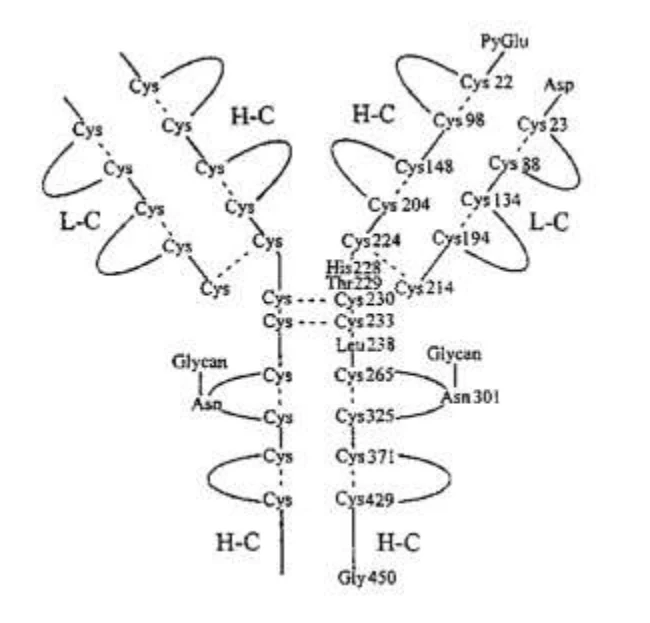
Physicochemical properties: MabCampath (alemtuzumab) is a recombinant DNA-derived humanized monoclonal antibody (MabCampath-1H) that is directed against the 21-28 kD cell surface glycoprotein, CD52. The MabCampath-1H antibody is an IgG1 kappa with human variable framework and constant regions, and complementarity-determining regions from a murine (rat) monoclonal antibody (MabCampath-1G). The MabCampath-1H antibody has an approximate molecular weight of 150 kD. The MabCampath structure consists of two-24 kDa light polypeptide chains (L-C) and two-49 kDa heavy polypeptide chains (H-C) linked together by two interdisulfide (L-C)-(H-C) bridges and two interdisulfide (H-C)-(H-C) bridges to form a Y-shaped molecule. Each molecule also contains a total of 12 intrachain disulfide bridges and an asparagine residue in each heavy chain that is amenable to glycosylation.
Product Characteristics:
MabCampath is a sterile, clear, colorless, isotonic pH 6.8-7.4 solution for injection.
Each single-use 30 mg/mL vial contains 1 mL of solution. Each unit of MabCampath (mL) contains 30 mg alemtuzumab, 8.0 mg sodium chloride, 1.44 mg dibasic sodium phosphate, 0.2 mg potassium chloride, 0.2 mg potassium dihydrogen phosphate, 0.1 mg polysorbate 80, and 0.0187 mg disodium edetate dihydrate. No preservatives are added.
MabCampath is produced in mammalian cell (Chinese hamster ovary) suspension culture in a medium containing neomycin. Neomycin is not detectable in the final product.
Viral Inactivation
The viral safety of MabCampath is confirmed by a combination of selection and qualification of vendors, raw material testing, cell bank characterization studies, validation of the viral removal and inactivation capacity of the alemtuzumab purification process, and routine in-process testing.
14 CLINICAL TRIALS
14.1 Clinical Trials by Indication
- Treatment of patients with previously untreated progressive B-CLL.
Table 7 – Summary of patient demographics for clinical trials in the treatment of patients with previously untreated progressive B-CLL.
| Study # | Study design | Dosage, route of administration and duration | Study subjects (n) | Median age (Range) | Sex (Male/Fem ale) |
| 4 | Phase 3, open-label, randomized comparative trial | MabCampath 30 mg IV 3 times/week for a maximum of 12 weeks (3 months) or chlorambucil 40 mg/m2 PO once every 28 days, to a maximum of 12 cycles (12 months) | Total: 297 patients 149 were randomized to MabCampath and 148 to chlorambucil | Mabcampath group: 59 (35, 86) Chlorambucil group: 60 (36, 83) | Mabcampa th group: 106/43 Chlorambu cil group: 107/41 |
Previously Untreated B-CLL Patients (Study 4)
The safety and efficacy of MabCampath were evaluated in a Phase 3, open-label, randomized comparative trial of previously untreated Rai Stage I-IV B-CLL patients requiring therapy (Study 4). The primary objective of Study 4 was to demonstrate that MabCampath is superior to chlorambucil as initial therapy in patients with progressive B-CLL as measured by progression free survival (PFS). The secondary objectives were to compare overall survival, complete response (CR) and overall response (CR or partial response) rates using the 1996 NCIWG (National Cancer Institute Working Group) criteria, the duration of response, time to treatment failure, time to alternative treatment, and safety of the two treatment arms.
Patients eligible for participation in CAM307 were > 18 years of age with histopathologically confirmed (CD5+, CD19+, CD23+) previously untreated progressive B-CLL requiring therapy, Rai Stages I-IV with adequate liver and renal function. Patients were excluded if ANC <0.5 × 10⁹/L or platelet count <10 × 109/L, or if they were experiencing autoimmune thrombocytopenia, had received prior bone marrow transplant, had an active infection or had significant co-morbid conditions which could interfere with their participation on study.
Patients were randomized 1:1 to MabCampath 30 mg IV 3 times/week for a maximum of 12 weeks (3 months) or chlorambucil 40 mg/m2 PO once every 28 days, to a maximum of 12 cycles (12 months) of therapy. All MabCampath patients received prophylaxis for PCP (trimethoprim/sulfamethoxazole DS or equivalent) and herpes viral infections (famciclovir or equivalent) during therapy and for a minimum of 2 months following the last dose of MabCampath therapy or until CD4+ counts were ≥ 200 cells/µL whichever occurred later. Time to event parameters, except for duration of response, are calculated from date of randomization; duration of response is calculated from the onset of the best response.
The trial enrolled and randomized 297 patients (213 males, 84 females; median age 60 years); 149 were randomized to MabCampath and 148 to chlorambucil. Most patients had performance status 0-1 (96%). Bulky disease, i.e. maximum lymph nodes ≥ 5cm, was seen in 22% of patients. Randomization was designed to assure balance for Rai Stage (I/II versus III/IV), age (< 65 versus ≥ 65 years), gender, performance status (WHO 0 or 1 versus WHO 2), maximum lymph node size (< 5 cm versus ≥ 5 cm), and study center. Patient population characteristics are shown in Table 8. The study design provided for investigator assessment of response and an independent assessment by an independent response review panel (IRRP).
Table 8: Summary of Previously Untreated Patient Population (Study 4)
| Characteristics | MabCampath (N=149) | Chlorambucil (N=148) |
|---|---|---|
| Gender (Male/Female) | 106/43 | 107/41 |
| Median Age (Range) | 59 (35, 86) | 60 (36, 83) |
| Rai Stage (IRRP)* | ||
| I-II | 62.4% | 64.9% |
| III-IV | 33.6% | 33.1% |
| Max lymph node > 5 cm | 22.1% | 23.0% |
| WHO Performance Status 0-1 | 96.0% | 96.6% |
*Nine patients (6 treated with MabCampath and 3 treated with chlorambucil) were assessed as Rai Stage 0 (n=5) and unconfirmed for BCLL diagnosis (n=4) by the IRRP.
All efficacy data presented are from the IRRP assessments (Table 9, Figure 1). MabCampath is superior to chlorambucil as measured by PFS, time to alternative treatment, complete and overall response rates. Complete and overall response rates are shown in Table 9 and PFS results are presented in Table 10. The Kaplan-Meier curve for PFS is shown in Figure 1. Comparison of PFS and time to alternative treatment between treatment arms were conducted using the log-rank test stratified by Rai Stage (I/II versus III/IV).
Table 9: Results of study 4 in treatment of patients with previously untreated progressive B-CLL
| Outcomes | Independent Review of Response Rate and Duration | ||
|---|---|---|---|
| MabCampath (N=149) | Chlorambucil (N=148) | P value | |
Overall Response Rate (95% CI) | 83.2% (76.2%, 88.8%) | 55.4% (47.0%, 63.6%) | <0.0001* |
Complete Response (95% CI) | 24.2% (17.5%, 31.8%) | 2.0% (0.4%, 5.8%) | <0.0001* |
| Partial Response | 59.1% | 53.4% | Not Applicable |
| Stable Disease | 6.0% | 28.4% | Not Applicable |
Duration of Best Response (CR or PR) Months [Kaplan-Meier median (95% CI)] | N=124 16.2 (11.5, 23.0) | N=82 12.7 (10.2, 14.3) | Not Applicable |
*Pearson’s chi-square test or Fisher Exact test
Table 10: Summary of Overall PFS in Previously Untreated Patients by IRRP Assessment (Study 4)
| Overall Statistic | MabCampath (N=149) | Chlorambucil (N=148) |
|---|---|---|
Kaplan-Meier Median (95% CI) in months | 14.6 (12.3, 21.7) | 11.7 (9.9, 13.2) |
| Min, Max | 0.6, 25.1 | 0.3, 27.9 |
| % Censored | 45.0 | 26.4 |
| P-value* | 0.0001 | |
| Hazard Ratio† (95% CI) | 0.58 (0.431, 0.768) | |
Patients who are unconfirmed as Rai Stage I-IV per IRRP (n=9) are censored at day 1
*Comparisons between treatment groups are based on the log-rank test stratified for Rai Stage.
†Hazard ratios are calculated using Cox model stratified for Rai Stage.
Figure 1: Progression Free Survival in Previously Untreated Patients (Study 4)
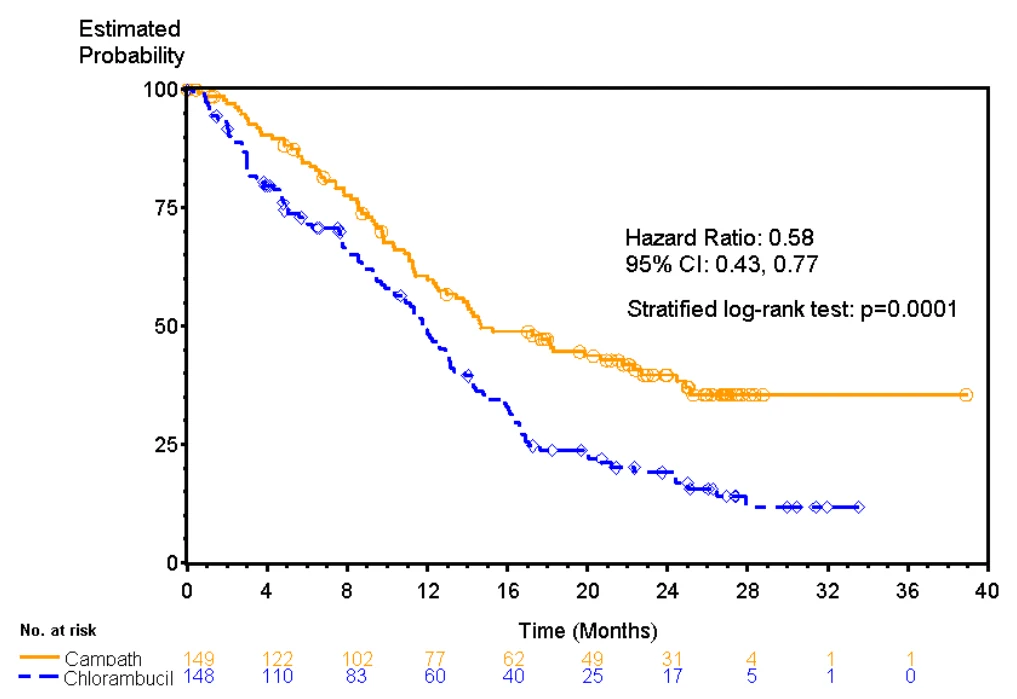
As shown in Table 11, further subgroup analyses of PFS by Rai Stage showed consistent evidence of treatment effect in Rai Stage I-II (HR=0.53, CI 0.37-0.77, p=0.0007) and Rai Stage III-IV patients (HR=0.65, CI 0.41-1.03, p=0.0663) treated with MabCampath compared to patients treated with chlorambucil. In these exploratory analyses of previously untreated patients (Study 4), there was a smaller estimated treatment effect in previously untreated Rai Stage III-IV B-CLL patients compared to the Rai Stage I-II patients following treatment with MabCampath (Table 9). The median PFS was lower in Rai Stage III-IV patients treated with MabCampath and chlorambucil (10.2 and 8.5 months respectively) than in Rai Stage I-II patients treated with MabCampath and chlorambucil (21.7 months and 12.5 months respectively). Compared to chlorambucil, the increase in median PFS in Rai Stage III-IV patients treated with MabCampath was 1.7 months and the increase in median PFS in Rai Stage I-II patients treated with MabCampath was 9.2 months. The estimated hazard ratio for Rai Stage I-II patients of 0.53 suggested that the risk of progression or death in treatment naïve Rai Stage I-II B-CLL patients treated with MabCampath is 47% less than for those treated with chlorambucil.
Table 11: Summary of Overall PFS in Previously Untreated Patients by IRRP Assessment by Rai Stage (I-II versus III-IV) (Study 4)
| Rai Stage | Overall Statistic | MabCampath (N=149) | Chlorambucil (N=148) | ||||||||
|---|---|---|---|---|---|---|---|---|---|---|---|
| I-II | N | 93 | 96 | ||||||||
| Kaplan-Meier Median (95% CI) in months | 21.7 (14.0, Not Reached) | 12.5 (10.9, 14.8) | |||||||||
| Min, Max | 2.0, 24.9 | 0.9, 26.4 | |||||||||
| % Censored | 48.4 | 28.1 | |||||||||
| P-value* | 0.0007 | ||||||||||
| Hazard Ratio† (95% CI) | 0.53 (0.367, 0.770) | ||||||||||
| III-IV | N | 50 | 49 | ||||||||
| Kaplan-Meier Median (95% CI) in months | 10.2 (8.5, 18.1) | 8.5 (4.7, 12.9) | |||||||||
| Min, Max | 0.6, 25.1 | 0.3, 27.9 | |||||||||
| % Censored | 32.0 | 18.4 | |||||||||
| P-value* | 0.0663 | ||||||||||
| Hazard Ratio† (95% CI) | 0.65 (0.411, 1.032) | ||||||||||
*Comparisons between treatment groups are based on the log-rank test.
†Hazard ratios are calculated using Cox model
Time to alternative treatment is determined from the date of randomization to the date of alternative treatment or death due to any cause. The difference in time to alternative treatment was highly statistically significant (p=0.0001) with an estimated hazard ratio of 0.54 (95% CI: 0.39, 0.74), suggesting that the risk of progression or death in treatment naïve B-CLL patients treated with MabCampath is 46% less than for patients treated with chlorambucil. The overall Kaplan-Meier median time to alternative treatment was 23.3 months (95% CI: 20.9, 31.0 months) for patients treated with MabCampath and 14.7 months (95% CI: 12.6, 16.8 months) for patients treated with chlorambucil.
Median overall survival has not yet been reached for either arm. After a median follow-up of 24.6 months, 84% of patients in each arm were alive at the last follow-up or the data cut-off dates. There was no overall difference in survival with a total of 24 deaths in the patients treated with MabCampath (Rai Stage I-II: 8 deaths and Rai Stage III-IV: 16 deaths), and 24 deaths in patients treated with chlorambucil (Rai Stage I-II: 14 deaths and Rai III-IV: 10 deaths). There were not enough events or long enough follow-up data to expect to detect a difference in the overall survival.
PFS and Prognostic Factor Analyses in Previously Untreated B-CLL Patients (Study 4)
Exploratory analyses were performed to relate progression free survival (PFS) following treatment with MabCampath in previously untreated patients to prognostic factors using multivariate modeling. Five significant prognostic factors were identified: del 17p, del 11q, age (≥70 versus <70 years), Rai Stage (I-II versus III-IV), and beta-2 microglobulin (≥3.0 versus <3.0 mg/L). The cytogenetic abnormalities (del 17p and del 11q) and high level (≥3.0 mg/L) beta-2 microglobulin at study entry are statistically significant negative prognostic factors, while patients who had less disease burden at study entry (Rai Stage I-II) and patients who are over 70 years old have better prognosis after controlling for other prognostic characteristics in the model. Treatment with MabCampath improved PFS after adjusting for these prognostic factors (HR=0.52, CI=0.38-0.70 p <0.0001).
Cytogenetic Analyses in Previously Untreated B-CLL Patients (Study 4)
The cytogenetic profile of B-CLL has been increasingly recognized as providing important prognostic information and may predict response to certain therapies. Of previously untreated patients (n=282) in whom baseline cytogenetic (FISH) data were available in Study 4, chromosomal aberrations were detected in 82%. Chromosomal aberrations were categorized according to Döhner’s hierarchical model (Döhner, 2000, NEJM). In previously untreated patients, treated with either MabCampath or chlorambucil, there were 21 patients with the 17p deletion, 54 patients with 11q deletion, 34 patients with trisomy 12, 51 patients with normal karyotype and 67 patients with sole 13q deletion.
Although a trend towards improved PFS and ORR was observed in MabCampath treated B-CLL patients with 11q, sole 13q, and 17p deletions, the number of patients in each cytogenetic category tested is too small to allow definitive conclusions to be made and the prognostic value of cytogenetic markers in B-CLL is an area of active research and needs to be confirmed.
Treatment of B-CLL patients who have been treated with alkylating agents and who have failed fludarabine therapy
Table 12 – Summary of patient demographics for clinical trials in the treatment of B-CLL patients who have been treated with alkylating agents and who have failed fludarabine therapy.
| Study # | Study design | Dosage, route of administration and duration | Study subjects (n) | Median age (Range) |
| 1 | A multicenter, open-label, noncomparative study | Patients were gradually escalated to a maintenance dose of MabCampath 30 mg intravenously three times per week for 4 to 12 weeks | 93 | 66 (32 – 86) |
| 2 | A multicenter, open-label, noncomparative study | 30 mg three times per week with treatment cycles of 8 weeks | 32 | 57 (46 - 75) |
| 3 | A multicenter, open-label, noncomparative study | 30 mg three times per week with treatment cycles of 6 weeks | 24 | 62 (44 - 77) |
Previously Treated B-CLL Patients (Studies 1, 2 and 3)
The safety and efficacy of MabCampath (alemtuzumab) were evaluated in a multicenter, open-label, noncomparative study (Study 1) of 93 patients with B-cell chronic lymphocytic leukemia (B-CLL) who had been previously treated with alkylating agents and had failed treatment with fludarabine. Fludarabine failure was defined as lack of an objective partial (PR) or complete (CR) response to at least one fludarabine-containing regimen, progressive disease (PD) while on fludarabine treatment, or relapse within 6 months of the last dose of fludarabine. Patients were gradually escalated to a maintenance dose of MabCampath 30 mg intravenously three times per week for 4 to 12 weeks. Patients received premedication prior to infusion and anti-PCP and anti-herpes prophylaxis while on treatment and for at least 2 months after the last dose of MabCampath.
Two supportive, multicenter, open-label, noncomparative studies of MabCampath enrolled a total of 56 patients with B-CLL (Studies 2 and 3). These patients had been previously treated with fludarabine or other chemotherapies. In Studies 2 and 3, the maintenance dose of MabCampath was 30 mg three times per week with treatment cycles of 8 and 6 weeks respectively. A slightly different dose escalation scheme was used in these trials. Premedication to ameliorate infusional reactions and anti-PCP and anti-herpes prophylaxis were optional.
Objective tumor response rates and duration of response were determined using the NCI Working Group Response Criteria (1996). A comparison of patient characteristics and the results for each of these studies is summarized in Table 13. Time to event parameters, except for duration of response, are calculated from initiation of MabCampath therapy. Duration of response is calculated from the onset of the response.
| Table 13: Summary of Previously Treated B-CLL Patient Population and results of studies 1,2 and 3 in the treatment of B-CLL patients who have been treated with alkylating agents and who have failed fludarabine therapy. | Study 1 (N = 93) | Study 2 (N = 32) | Study 3 (N = 24) |
|---|---|---|---|
| Median Age in Years (Range) | 66 (32 – 86) | 57 (46 - 75) | 62 (44 - 77) |
| Median Number of Prior Regimens (Range) | 3 (2 – 7) | 3 (1 – 10) | 3 (1 – 8) |
Prior Therapies: Alkylating Agents Fludarabine | 100% 100% | 100% 34% | 92% 100% |
Disease Characteristics: Rai Stage III / IV Disease B-Symptoms | 76% 42% | 72% 31% | 71% 21% |
Overall Response Rate (95% Confidence Interval) Complete Response Partial Response | 33% (23%, 43%) 2% 31% | 28% (14%, 47%) 0% 28% | 33% (16%, 55%) 0% 33% |
Median Time to Response (months) (95% Confidence Interval) | 2 (1, 2) | 4 (1, 4) | 4 (2, 4) |
Median Duration of Response (months) (95% Confidence Interval) | 9 (6, 12) | 7 (5, NR) | 15 (10, NR) |
(ITT population)
NR = not reached; the upper limit of the confidence interval could not be estimated
NC = not calculated
15 MICROBIOLOGY
No microbiological information is required for this drug product.
16 NON-CLINICAL TOXICOLOGY
Tissue Binding
In nonclinical testing, MabCampath-1H was found to bind via antibody-binding fragment (Fab) interactions to essentially all B cell and T cell lymphocytes, as well as to monocytes, thymocytes, and macrophages. The pattern of binding in the bone marrow in particular
| Table 13: Summary of Previously Treated B-CLL Patient Population and results of studies 1,2 and 3 in the treatment of B-CLL patients who have been treated with alkylating agents and who have failed fludarabine therapy. | Study 1 (N = 93) | Study 2 (N = 32) | Study 3 (N = 24) |
|---|---|---|---|
Progression-Free Survival (months) (95% Confidence Interval) Responder Non-Responder | 5 (4, 6) 10 (7, 13) 3 (3, 4) | 7 (4, 8) 10 (9, NR) NC | 7 (2, 18) 20 (12, NR) NC |
Survival (months) (95% Confidence Interval) Responder Non-Responder | 20 (14, 28) 34 (26, NR) 14 (9, 22) | 26 (12, 44) 44 (28, NR) NC | 28 (7, 33) 36 (19, NR) NC |
suggested that the expression of CD52 was greater on mature than on immature B cells. A small percentage (< 5%) of the neutrophil population in blood smears also reacted with MabCampath-1H. However, this binding was not observed with either erythrocytes or platelets. The binding of MabCampath-1H to peripheral blood lymphocytes and their effective depletion provide the rationale for using MabCampath-1H in hematological malignancies.
Importantly, MabCampath-1H did not damage hematopoietic stem cells and there was no direct toxicity observed on progenitor cells after treatment with the MAB. When bone marrow mononuclear cells were enriched for progenitor cells by selection with CD34 antibody and then incubated with MabCampath-1H, there was again no significant reduction of progenitor cells. These results suggest that MabCampath-1H is unlikely to impair the subsequent proliferation and development of early hematopoietic progenitor cells.
In addition to the expected pattern of widespread staining in lymphoid tissues and the mononuclear phagocyte system, significant Fab binding was also observed in the male reproductive tract (epididymis, sperm, seminal vesicle) and the skin. However, neither spermatogenic cells nor spermatozoa which had just been formed in the seminiferous tubules showed evidence of staining. Skin cells that stained positive were present mainly as perivascular clusters, while a minority of isolated cells stained in the connective tissue of the dermis. Other tissues tested but with no apparent binding included: the female reproductive system (vagina, uterus, ovary, cervix), breast, thymus, submandibular gland, spleen, parathyroid, pancreas, muscle (smooth, skeletal, cardiac), lung, kidney (surgical and post mortem), bone (cancellous), bladder, aorta, prostate, and gastrointestinal tract (esophagus, stomach, small and large intestine).
The ability of MabCampath-1H to bind malignant cells from humans has been studied in at least 25 types of leukemic and lymphoproliferative disease. Overall, 684 out of 1031 samples responded positively, for an overall reactivity rate of 66%. The CD52 antigen was expressed on all B and T cell chronic lymphocytic leukemias (192/192), as well as on 94% of NHLs tested (206/220). Reactivity with acute lymphocytic leukemia samples was also high (79%, 99/125), but only 32% (76/236) of samples from patients with acute myeloid leukemias tested positive. CD52 thus appears to be a good target antigen for several lymphoproliferative diseases, especially CLL. It is likely to be on the clonogenic tumor cell because it is widely expressed in B cell ontogeny, represented by the earliest tumor types (pre-B-acute lymphocytic leukemia [ALL]) through B-ALL and NHL.
In a separate study, CD52 expression in T cell prolymphocytic leukemia (T-PLL) was found to be significantly higher than in other leukemias.
General Toxicology:
Nonclinical safety evaluation of MabCampath-1H in animals has been limited to nonhuman primates because of the lack of reactivity in any other species tested. Furthermore, nonhuman primates often express CD52 on erythrocytes. Selected cynomolgus monkeys were the only animal species found with lymphocyte, but not erythrocyte, expression of the CD52 antigen, and thus were the only suitable species for in vivo studies with MabCampath-1H antibodies.
Although the cynomolgus monkey was established as the only suitable animal model for assessing the nonclinical safety of MabCampath-1H in vivo, its predictive value in humans is limited. The affinity of MabCampath-1H for CD52 in cynomolgus monkeys is approximately 16-fold less than for human CD52. Saturation of cynomolgus CD52 in vitro, and most likely in vivo, thus requires significantly greater concentrations of MabCampath-1H than are required to saturate human CD52. Despite these experimental limitations, the toxicological studies conducted do nevertheless provide an informative profile of the activity of MabCampath-1H in vivo.
Single Dose Toxicity
All toxicities associated with single intravenous administration of MabCampath-1H (0.1 to 3 mg/kg) were reversible. As expected, lymphocytopenia was the most common treatment-related effect, presenting in all animals that received doses of 1 mg/kg or higher. This response was dose related. Nadirs occurred between 8 and 48 hours postdose, with recovery noted approximately two to five weeks postdosing. Variable changes in platelet counts and slight increases in reticulocyte counts were observed in some animals at the 1 and 3 mg/kg dose levels. There was no evidence of morphological changes on macroscopic and microscopic examination that were attributable to treatment.
As in the single dose IV study, marked lymphocyte count reductions occurred at all SC dose levels (1 to 3 mg/kg) with nadirs (4 to 56% of predose counts) occurring from 48 hours to 10 days postdose; recovery occurred after approximately three to six weeks. In general, the depletion of lymphocyte counts was less severe after single SC compared to IV doses. Additional observations included variable effects on platelet counts and transient increases in reticulocyte count in the 3 mg/kg animals only. There was no evidence of morphological changes on macroscopic and microscopic examination that were attributable to treatment, and there was no evidence of injection site reaction.
An additional toxicology study of the cardiovascular and respiratory effects of single IV administrations of MabCampath-1H at dose levels ranging from 3 to 30 mg/kg was also conducted. At the 3 mg/kg dose level, there were no major effects on the cardiovascular and respiratory systems, whereas higher dosages (10 and 30 mg/kg) were characterized by moderate to severe dose-related hypotension persisting up to 3.5 hours and accompanied by a slight tachycardia. One 30 mg/kg animal exhibited a marked secondary hypotension accompanied by tachycardia and hyperpnea and died at about 6 hours postdosing. In addition to the expected decreases in lymphocyte counts, circulating levels of neutrophils appeared elevated in a non-dose-dependent manner at higher dose levels. Male monkeys at the 10 and 30 mg/kg levels also exhibited a progressive and sustained increase in red cell counts, packed cell volume, and hemoglobin levels. Other chemistry changes noted at these higher dose levels included increases in urea, lactate dehydrogenase, glutamic oxaloacetic transaminase, α-hydroxybutyrate dehydrogenase, and creatine phosphate kinase (CPK) levels. Cholesterol was decreased at the 30 mg/kg dose only. These changes may largely reflect cardiac and renal changes associated with the cardiovascular effects of intravenous MabCampath-1H at higher doses.
Multiple Dose Toxicity
Although sample sizes in the IV or SC multidose monkey study were too small to determine statistical significance, it appears that there may have been a slight cumulative effect on the degree of lymphocyte depletion and in the occurrence of accompanying neutropenia. Whereas lymphocyte depletion following either IV or SC single doses of MabCampath-1H ranged from 4 to 56% of predose counts, all but one group treated daily with escalating dose levels of 1.0 (days 1-7), 1.5 (days 8-10), 2.0 (days 11-14) and 3.0 (days 15-30) mg/kg for either 14 or 30 days developed lymphocyte nadirs of 1% of predose counts or less. Lymphocyte depletion recovered quickly after cessation of dosing for all animals regardless of dosing route or duration. Similarly, repeat IV or SC dosing for 30 days resulted in an absolute neutropenia (3 to 10% predose values) that was reversible after cessation of dosing; this effect was not observed in those animals treated with either single doses or with the 14-daily dose regimen. Of note, histopathology results from bone marrow samples revealed no remarkable changes attributable to treatment with MabCampath-1H.
IV and SC routes of administration appeared to have roughly equivalent effects after both single and multiple doses of MabCampath-1H. In general, the depletion of lymphocyte counts was less severe after SC dosing, with the greatest degree of difference observed at the 1 mg/kg single dose level (decrease to 23% [IV] versus 56% [SC] of predose levels). This trend continued with the 3 mg/kg single dose and 14-daily dose (1 to 3 mg/kg) regimens, with a lesser degree of difference between the routes as the cumulative dose of drug increased. When rising doses (1 to 3 mg/kg) of MabCampath-1H were administered for as long as 30 consecutive days, there was no significant difference in the lymphocytolytic effect with either administration route. Neither the onset nor the duration of the lymphocyte nadir seemed to be influenced by the dosing method.
Due to the limited sample sizes in these studies, the statistical significance of the differing lymphocytopenic and neutropenic effects for the IV and SC routes of administration could not be determined. However, given their relative parity in degree of target organ toxicity, and the fact that there is no evidence of injection site reaction with either IV or SC administration of MabCampath-1H in cynomolgus monkeys, both routes of administration have undergone further clinical development.
Carcinogenicity: No long-term animal studies have been performed to establish the carcinogenic or mutagenic potential of alemtuzumab.
Reproductive and Developmental Toxicology: Reproductive and developmental toxicity studies including teratogenicity have not been conducted.
Other Studies:
In a study by Stebbings et al, six cynomolgus monkeys (four inoculated, two control) were administered MabCampath-1H to examine the effect of lymphoid depletion on prior vaccinations with attenuated simian immunodeficiency virus (SIVmac32H [pC8]). MabCampath-1H was administered as a series of three intravenous injections, starting with 3 mg/kg on day 1, then 10 mg/kg on days 4 and 7. Eight days from the first dose of MabCampath-1H, all six animals were challenged with wild-type virus.
On the day of challenge with the wild-type virus, all six monkeys had greater than 99% depletion of CD3+, and peripheral CD4 and CD8 absolute counts. On the basis of absolute number data, depletion of lymphocytes in the lymph nodes was not as pronounced as that observed in the peripheral blood. Eight weeks after challenge, the four inoculated monkeys had recovery of their mean absolute peripheral CD4 and CD8 counts to 21% and 43% of predepletion levels, respectively. The fall in CD3+ lymphocyte counts was slow to recover in all animals and had still not reached pretreatment levels by eight weeks after challenge.
Other hematological effects noted in the four inoculated monkeys by the day of challenge with wildtype virus (eight days after MabCampath-1H) included hemoglobin levels, total WBC counts, and lymphocyte counts below or barely within the reference range on a group mean basis. The control monkeys also exhibited similar reductions in total WBC and lymphocyte counts, but not in hemoglobin. The only subsequent mean data to deviate marginally from the reference range was a low mean corpuscular hemoglobin concentration (27.75 g%, reference range 28 to 32.7 g%) at four weeks after challenge in the inoculated monkeys.
Of note, virus was isolated from the control monkeys but not the inoculated monkeys two weeks after challenge, demonstrating that immunosuppression as exemplified by severe lymphocytopenia due to the administration of MabCampath-1H did not change antibody responses or viral loads. Treatment with MabCampath-1H therefore does not appear to depress cellular responses significantly. This can be explained in part by the presence of residual CD4 lymphocytes in the lymph nodes or other soluble inhibitory factors produced by CD8 cells.