


Product Monograph - Tepezza
Recent Major Label Changes
| N/A |
|---|
Table of Contents
Certain sections (as indicated in section 2.1. of the PM Guidance) or subsections that are not applicable at the time of the preparation of the most recent authorized Product Monograph are not listed.
Recent Major Label Changes ..................................................................................... 2
Table of Contents ....................................................................................................... 2
Part 1: Healthcare Professional Information ............................................................. 4
- 1.
Indications ......................................................................................................... 4
1.1 Pediatrics ................................................................................................. 4
1.2 Geriatrics.................................................................................................. 4
- 2. Contraindications .............................................................................................. 4
- 3. Serious Warnings and Precautions Box ........................................................... 4
- 4.
Dosage and Administration ............................................................................... 5
4.1 Dosing Considerations .............................................................................. 5
4.2 Recommended Dose and Dosage Adjustment .......................................... 5
4.3 Reconstitution........................................................................................... 5
4.4 Administration........................................................................................... 6
4.5 Missed Dose............................................................................................. 6
- 5. Overdosage ........................................................................................................ 7
- 6. Dosage Forms, Strengths, Composition and Packaging.................................. 7
- 7.
Warnings and Precautions ................................................................................ 7
Driving and Operating Machinery ......................................................................... 7
Ear/Nose/Throat .................................................................................................. 7
Endocrine and Metabolism ................................................................................... 8
Gastrointestinal.................................................................................................... 8
Immune ............................................................................................................... 8
Reproductive Health ............................................................................................ 8
7.1 Special Populations .................................................................................. 9
7.1.1 Pregnancy................................................................................. 9
7.1.2 Breastfeeding ............................................................................ 9
7.1.3 Pediatrics .................................................................................. 9
7.1.4 Geriatrics .................................................................................. 9
- 8.
Adverse Reactions........................................................................................... 10
8.1 Adverse Reaction Overview .................................................................... 10
8.2 Clinical Trial Adverse Reactions .............................................................. 10
8.2.1 Clinical Trial Adverse Reactions – Pediatrics............................ 13
8.3 Less Common Clinical Trial Adverse Reactions....................................... 13
8.3.1 Less Common Clinical Trial Adverse Reactions – Pediatrics..... 13
8.4 Abnormal Laboratory Findings: Hematologic, Clinical Chemistry, and Other Quantitative Data .......................................................................... 13
8.5 Post-Market Adverse Reactions .............................................................. 14
- 9.
Drug Interactions ............................................................................................. 14
9.2 Drug Interactions Overview ..................................................................... 14
9.3 Drug-Behaviour Interactions.................................................................... 14
9.4 Drug-Drug Interactions............................................................................ 14
9.5 Drug-Food Interactions ........................................................................... 14
9.6 Drug-Herb Interactions............................................................................ 14
9.7 Drug-Laboratory Test Interactions ........................................................... 14
- 10.
Clinical Pharmacology ..................................................................................... 14
10.1 Mechanism of Action .............................................................................. 14
10.2 Pharmacodynamics ................................................................................ 15
10.3 Pharmacokinetics ................................................................................... 15
10.4 Immunogenicity ...................................................................................... 15
- 11. Storage, Stability and Disposal ....................................................................... 16
- 12. Special Handling Instructions ......................................................................... 16
Part 2: Scientific Information ................................................................................... 17
- 13. Pharmaceutical Information ............................................................................ 17
- 14.
Clinical Trials ................................................................................................... 18
14.1 Clinical Trials by Indication...................................................................... 18
Active thyroid eye disease (TED) ............................................................ 18
- 15. Microbiology .................................................................................................... 21
- 16. Non-Clinical Toxicology .................................................................................. 21
Patient Medication Information ................................................................................ 23
Part 1: Healthcare Professional Information
1. Indications
TEPEZZA® (teprotumumab for injection) is indicated in adults for the treatment of moderate to severe active Thyroid Eye Disease (TED).
1.1 Pediatrics
Pediatrics (< 18 years of age): No data are available to Health Canada; therefore, Health Canada has not authorized an indication for pediatric use.
1.2 Geriatrics
Geriatrics (≥ 65 years of age): In clinical trials of Tepezza in patients with moderate to severe active thyroid eye disease, 14% (32/225) of participants were ≥ 65 years of age. See 10.3 Pharmacokinetics, Special Populations and Conditions.
2. Contraindications
Tepezza is contraindicated in:
- Patients who are hypersensitive to this drug or to any ingredient in the formulation, including any non-medicinal ingredient, or component of the container. For a complete listing, see 6. Dosage Forms, Strengths, Composition and Packaging.
- Pregnancy. See 7.1 Special Populations.
3. Serious Warnings and Precautions Box
Diabetic ketoacidosis and hyperosmolar hyperglycemic state
Post-market cases of diabetic ketoacidosis and hyperosmolar hyperglycemic state, both serious potentially life-threatening conditions, have been reported in patients with pre- diabetes (elevated glycosylated hemoglobin or hyperglycemia without overt diabetes) or existing diabetes treated with Tepezza. Ensure patients are aware of the signs and symptoms associated with these conditions and instructed to seek urgent medical care if they occur. See 7. Warnings and Precautions.
Patients with pre-existing hyperglycemia or diabetes must be under appropriate glycemic control before starting and while receiving Tepezza.
4. Dosage and Administration
4.1 Dosing Considerations
Hyperglycemia Assessment
Assess patients for elevated blood glucose and symptoms of hyperglycemia prior to infusion and continue to monitor while on treatment with Tepezza. Ensure patients with hyperglycemia or pre-existing diabetes are under appropriate glycemic control before administering Tepezza. See 3. Serious Warnings and Precautions Box, 7. Warnings and Precautions.
Hearing Impairment Including Hearing Loss
Assess patients’ hearing before, during, and after treatment with Tepezza. See 7. Warnings and Precautions.
Pregnancy
Perform a pregnancy test before starting treatment to ensure the patient is not pregnant. See 2. Contraindications, 7. Warnings and Precautions - 7.1 Special Populations.
4.2 Recommended Dose and Dosage Adjustment
The recommended dose of Tepezza is an intravenous infusion of 10 mg/kg for the initial dose followed by an intravenous infusion of 20 mg/kg every three weeks for 7 additional infusions.
Health Canada has not authorized an indication for pediatric (<18 years of age) use (see 1.1 Pediatrics).
4.3 Reconstitution
Parenteral drug products should be inspected visually for particulate matter and discolouration prior to administration, whenever solution and container permit. See 6. Dosage Forms, Strengths, Composition and Packaging.
Upon reconstitution, Tepezza is a colourless or slightly brown, clear to opalescent solution which is free of foreign particulate matter. Inspect the reconstituted solution visually for particulate matter and discolouration prior to administration. Discard the solution if any particulate matter or discolouration are observed. See 12. Special Handling Instructions.
- Step 1: Calculate the dose (mg) and determine the number of vials needed for the 10 or 20 mg/kg dosage based on patient weight. Each Tepezza vial contains 500 mg of the teprotumumab antibody.
- Step 2: Using appropriate aseptic technique, reconstitute each Tepezza vial with 10 mL of Sterile Water for Injection, USP. Ensure that the stream of diluent is not directed onto the lyophilized powder, which has a cake-like appearance. Do not shake, but gently swirl the solution by rotating the vial until the lyophilized powder is dissolved. The reconstituted solution has a volume of 10.5 mL. Withdraw 10.5 mL of reconstituted solution to obtain 500 mg. After reconstitution, the final concentration is 47.6 mg/mL.
Step 3: The reconstituted Tepezza solution must be further diluted in 0.9% Sodium Chloride Injection, USP prior to infusion. To prepare the diluted solution, use 100 mL infusion bags for a dose less than 1800 mg, and 250 mL infusion bags for a dose equal of greater than 1800 mg. To maintain a constant volume in the infusion bag, a sterile syringe and needle should be used to remove the volume equivalent to the amount of the
- epezza solution to be placed into the infusion bag. Discard the 0.9% Sodium Chloride, USP volume withdrawn.
- Step 4: Withdraw the required volume from the reconstituted Tepezza vial(s) based on the patient’s weight (in kg) and transfer into an intravenous bag containing 0.9% Sodium Chloride Solution, USP. Mix diluted solution by gentle inversion. Do not shake.
- Care should be taken to ensure the sterility of the prepared solution.
Tepezza does not contain any preservative. The combined storage time of reconstituted Tepezza solution in the vial and the diluted solution in the infusion bag containing 0.9% Sodium Chloride Injection, USP is a total of 4 hours at room temperature 20°C to 25°C or up to 48 hours under refrigerated conditions 2°C to 8°C protected from light. If refrigerated prior to administration, allow the diluted solution to reach room temperature prior to infusion.
Do not freeze the reconstituted or diluted solution. See 11. Storage, Stability and Disposal.
Discard vial(s) and all unused contents. See 12. Special Handling Instructions.
Table 1. Reconstitution
| Vial Size | Volume of Sterile Water for Injection, USP, to be Added to Vial | Approximate Available Volume | Concentration per mLa |
| 20 mL | 10 mL | 10.5 mL | 47.6 mg/mL |
a The reconstituted Tepezza solution must be further diluted in 0.9% Sodium Chloride Injection, USP prior to infusion. See 4.3 Reconstitution, Steps 3-4.
4.4 Administration
Tepezza must be diluted prior to administration. See 4.3 Reconstitution.
Administer the diluted solution intravenously over 90 minutes for the first two infusions. If well tolerated, the minimum time for subsequent infusions can be reduced to 60 minutes. If not well tolerated, the minimum time for subsequent infusions should remain at 90 minutes.
Do not administer Tepezza as an intravenous push or bolus. Tepezza should not be infused concomitantly with other agents.
4.5 Missed Dose
If an infusion is missed, the physician will assess when the next dose of Tepezza will be given.
The timing of the next planned dose should be adjusted to maintain a three-week period between doses.
5. Overdosage
No information is available for patients who have received an overdosage. There is no known antidote for teprotumumab overdose. Treatment consists of discontinuation of the medicinal product and supportive therapy. See 7. Warnings and Precautions.
| For the most recent information in the management of a suspected drug overdose, contact your regional poison control centre or Health Canada’s toll-free number, 1-844 POISON-X (1-844-764-7669). |
|---|
6. Dosage Forms, Strengths, Composition and Packaging
To help ensure the traceability of biologic products, healthcare professionals should record both the brand name and the non-proprietary (active ingredient) name as well as other product-specific identifiers such as the Drug Identification Number (DIN) and the batch / lot number of the product supplied.
Table 2. Dosage Forms, Strengths, Composition and Packaging
Tepezza is a sterile, preservative-free, white to off-white lyophilized powder supplied in a 20-mL clear glass vial for reconstitution and dilution. Each carton contains one 500 mg single-dose vial.
7. Warnings and Precautions
Driving and Operating Machinery
Tepezza has the potential to have a minor influence on the ability to drive and use machines because fatigue and headaches have been reported with the use of Tepezza.
Exercise caution when driving or operating a vehicle or potentially dangerous machinery.
Ear/Nose/Throat
Hearing Impairment
Tepezza may cause severe hearing impairment, including hearing loss, which in some cases may be permanent and could lead to the recommendation for hearing aids. Events associated with hearing impairment (reported as deafness, neurosensory hypoacusis, eustachian tube dysfunction, eustachian tube patulous, hyperacusis, hypoacusis, autophony, tinnitus and tympanic membrane disorder) have been observed in 10.8% of patients treated with Tepezza in clinical trials and during post-marketing experience with Tepezza (see 8. Adverse Reactions). Hearing tests should be performed in all patients before, during and after treatment with Tepezza.
| Route of Administration | Dosage Form / Strength/Composition | Non-medicinal Ingredients |
| Intravenous infusion | Sterile powder for concentrate for solution for infusion / 500 mg teprotumumab per vial | L-histidine, L-histidine hydrochloride monohydrate, Polysorbate 20, Trehalose dihydrate |
Patients should be advised to stop smoking and to avoid other risk factors for hearing impairment including exposure to high intensity noises and concomitant use of ototoxic medications during treatment with Tepezza.
Endocrine and Metabolism
Hyperglycemia
Hyperglycemia or increased blood glucose may occur in patients treated with Tepezza. In the double-masked active TED clinical trials, 12.6% of patients (79% of whom had pre-existing diabetes or impaired glucose tolerance) experienced a hyperglycemic event reported as hyperglycemia (or increased blood glucose), impaired glucose tolerance or diabetes mellitus. Diabetic ketoacidosis and hyperosmolar hyperglycemic state, have also been reported in other TED clinical trials and during post-marketing experience (see 3. Serious Warnings and Precautions Box).
Prior to infusion of Tepezza, assess patients for elevated blood glucose and symptoms of hyperglycemia. Ensure patients with pre-existing hyperglycemia or diabetes are under appropriate glycemic control before starting and while receiving Tepezza. Monitor all patients closely for elevated blood glucose and symptoms of hyperglycemia during treatment with Tepezza and for 6 months after the last dose of Tepezza. Adjust existing or start new diabetic treatments, if necessary as per standard clinical practice.
Gastrointestinal
Exacerbation of Pre-existing Inflammatory Bowel Disease
Tepezza may cause an exacerbation of pre-existing inflammatory bowel disease (IBD). Monitor patients with IBD for flare of disease. If IBD exacerbation is suspected, consider discontinuation of Tepezza (see 8. Adverse Reactions).
Immune
Infusion Reactions
Tepezza may cause infusion reactions. Infusion reactions have been reported in approximately 4% of patients treated with Tepezza. Signs and symptoms of infusion-related reactions include transient increases in blood pressure, feeling hot, tachycardia, dyspnea, headache and muscular pain. Infusion reactions may occur during any of the infusions or within 1.5 hours after an infusion. Reported infusion reactions are usually of mild or moderate intensity and can usually be successfully managed with interruption or slowing of the infusion, corticosteroids and antihistamines (see 8. Adverse Reactions).
In patients who experience an infusion reaction, consideration should be given to pre-medicating with an antihistamine, antipyretic, corticosteroid and/or administering all subsequent infusions at a slower infusion rate.
Reproductive Health
Fertility
Fertility studies have not been performed with Tepezza.
7.1 Special Populations
7.1.1 Pregnancy
Tepezza is contraindicated during pregnancy (see 2. Contraindications). Patients with reproductive potential should use effective contraception measures prior to initiation, during treatment and for 6 months after the last dose of Tepezza. If the patient becomes pregnant during treatment, Tepezza must be discontinued and the patient informed of the potential risk to the fetus.
There are no data available on the use of Tepezza in pregnant women.
Tepezza may cause fetal harm when administered to a pregnant woman based on teratogenic effects observed in animals and its mechanism of action in inhibiting insulin-like growth factor-1 receptor (IGF-1R). Administration of teprotumumab to pregnant cynomolgus monkeys resulted in fetal growth retardation and teratogenicity, consisting of external and skeletal abnormalities of the head and skull. Teprotumumab was detected in monkey fetal serum, indicating that teprotumumab crosses the placental barrier. Teprotumumab exposure may also lead to an increase in fetal loss (16. Non-Clinical Toxicology - Reproductive and Developmental Toxicology).
7.1.2 Breastfeeding
It is unknown whether teprotumumab is secreted in human milk. Teprotumumab induced developmental toxicity in animals (16. Non-Clinical Toxicology - Reproductive and Developmental Toxicology). Thus, as a precautionary measure, Tepezza should not be used during breastfeeding.
7.1.3 Pediatrics
Pediatrics (< 18 years of age): Based on the data submitted and reviewed by Health Canada, the safety and efficacy of Tepezza in pediatric patients has not been established; therefore, Health Canada has not authorized an indication for pediatric use. Tepezza may cause harm to children from birth, including throughout adolescence, before growth and maturation are complete based on its mechanism of action and adverse effects observed in juvenile animals. Administration of teprotumumab to juvenile cynomolgus monkeys resulted in adverse effects on body weight, including reductions in body weight gain, body weight loss, and adverse effects on bone development (reduction in bone mass and strength and narrowing of bones) (16. Non-Clinical Toxicology).
7.1.4 Geriatrics
Geriatrics (≥ 65 years of age): In clinical trials of Tepezza in patients with active moderate to severe thyroid eye disease, 14% (32/225) of participants were ≥ 65 years of age. See 10.3 Pharmacokinetics, Special Populations and Conditions.
8. Adverse Reactions
8.1 Adverse Reaction Overview
The most commonly reported adverse reactions during treatment in clinical trials in patients with moderate to severe active TED were muscle spasms, alopecia, diarrhea, nausea, hyperglycemia and hearing impairment. See 7. Warnings and Precautions and 8.2 Clinical Trial Adverse Reactions.
8.2 Clinical Trial Adverse Reactions
Clinical trials are conducted under very specific conditions. Therefore, the frequencies of adverse reactions observed in the clinical trials may not reflect frequencies observed in clinical practice and should not be compared to frequencies reported in clinical trials of another drug.
The safety of Tepezza was evaluated in three randomized, double-masked, placebo-controlled clinical studies consisting of 224 patients with active Thyroid Eye Disease (111 received Tepezza and 113 received placebo). Patients were treated with Tepezza (10 mg/kg for first infusion and 20 mg/kg for the remaining 7 infusions) or placebo given as an intravenous infusion every 3 weeks for a total of 8 infusions. Most patients completed 8 infusions (89% of Tepezza patients and 91% of placebo patients).
The most common adverse reactions (≥ 5%) that occurred at greater incidence in the teprotumumab group than in the control group during the double-masked treatment period of the three studies are summarized in Table 3.
Table 3. Adverse Reactions Occurring in 5% or More of Patients Treated with Tepezza and Greater Than 1% Incidence than Placebo
| Teprotumumab n = 111 (%) | Placebo n = 113 (%) | ||||
| Ear and labyrinth | |||||
| Hearing impairmenta | 12 (11%) | 1 (1%) | |||
| Ear discomfortb | 7 (6%) | 1 (1%) | |||
| Gastrointestinal | |||||
| Diarrhea | 14 (13%) | 8 (7%) | |||
| Nausea | 14 (13%) | 8 (7%) | |||
| Infections | |||||
| Urinary tract infectionsc | 8 (7%) | 2 (2%) | |||
| Metabolism and nutrition | |||||
| Hyperglycemiad | 14 (13%) | 2 (2%) | |||
| Musculoskeletal and connective tissue | |||||
| Muscle spasms | 25 (23%) | 6 (5%) | |||
| Nervous system disorders | |||||
| Fatigue | 8 (7%) | 6 (5%) | |||
| Teprotumumab n = 111 (%) | Placebo n = 113 (%) | |||||
| Dysgeusiae | 10 (9%) | 0 | ||||
| Skin and subcutaneous tissue | ||||||
| Alopecia | 18 (16%) | 7 (6%) | ||||
| Dry skin | 10 (9%) | 0 | ||||
| Nail disordersf | 6 (5%) | 1 (1%) | ||||
a Hearing impairment includes hearing loss (deafness), eustachian tube dysfunction, eustachian tube patulous, hyperacusis, hypoacusis, autophony, tinnitus, and neurosensory hypoacusis
b Ear discomfort includes ear discomfort and ear pain. Ear discomfort events were reported as ear pressure, ear fullness, and sensation of block in the ears.
c Urinary tract infections includes urinary track infection and cystitis.
d Hyperglycemia (includes blood glucose increased, diabetes mellitus, and glucose tolerance impaired).
e Dysgeusia includes dysgeusia, hypogeusia and taste disorder
f Nail disorders includes ingrowing nail, nail discolouration, nail disorder and onychoclasis
Menstrual disorders
Among female participants of childbearing potential, menstrual disorders (amenorrhea, dysmenorrhoea, heavy menstrual bleeding, hypomenorrhoea, menstruation irregular) were reported by 14.3% (5 of 35) of teprotumumab-treated participants and 0 placebo‑treated participants during the double-masked treatment period. All cases of menstrual disorders in the teprotumumab group were nonserious, mild or moderate in intensity and did not result in discontinuation of teprotumumab.
Change in body weight
During the double-masked treatment period, the mean change from baseline in body weight was 0.95 kg at week 12 and 1.33 kg at week 24 in the placebo group and -0.84 kg at week 12 and -1.10 kg at week 24 in the teprotumumab group. At week 24, a greater proportion of participants in the teprotumumab group compared with the placebo group had a decrease in body weight from baseline: 5 to < 10% decrease/Grade 1 (9.9% vs. 3.5%), 10 to < 20% decrease/Grade 2 (2.7% vs. 0.9%) and ≥ 20% decrease/Grade 3 (0.9% vs. 0%), respectively. In the study with a 48-week follow-up period after the final dose of teprotumumab, the mean change in body weight returned to baseline by week 48.
Hypersensitivity and Infusion Reactions
Infusion reactions were observed in 4 of 111 (3.6%) teprotumumab-treated participants in the double-masked treatment period; all of the events were mild to moderate in intensity and three were non-serious. The one serious event occurred 6 minutes after the start of the first teprotumumab infusion and resolved with stopping the infusion and administration of antihistamines and corticosteroids. The symptoms of the infusion-related reactions included sensation of warmth, skin rash, increased blood pressure, tachycardia and feeling of obstructed epiglottis and dyspnea (without hypoxia). The symptoms occurred during or within 90 minutes after the infusion. Some patients needed symptomatic treatment and all events resolved without complication. Two participants discontinued teprotumumab, one continued with pre-medications for subsequent infusions and one continued without need of medical treatment. See 7. Warnings and Precautions.
No events of anaphylaxis were reported during treatment with teprotumumab.
Hearing Loss
During the double-masked treatment period, 12 of 111 (10.8%) participants in the teprotumumab group reported 16 adverse events of hearing impairment and one of 113 (0.9%) participants in the placebo group reported one event. The reported events included autophony, deafness, eustachian tube dysfunction, eustachian tube patulous, hyperacusis, hypoacusis, neurosensory hypoacusis and tinnitus. The median time-to-onset of the hearing impairment events in the teprotumumab-exposed participants was 81 days (IQR 42, 119 days); eight of the 16 events resolved during the study period after a median duration of 160 days (IQR 12, 187days) and the remaining events were ongoing at the end of the study after a median follow-up from the onset of the events of 160 days (IQR 157, 195 days). One of the events resulted in discontinuation of teprotumumab, three events were treated medically and three events resulted in referrals to otolaryngology and/or for hearing aid evaluation. See 7. Warnings and Precautions.
Hyperglycemia and related events
During the double-masked treatment period, hyperglycemia and related events (blood glucose increased, glucose tolerance impaired and diabetes mellitus) were reported in 14 of 111 (12.6%) teprotumumab-treated participants and two of 113 (1.8%) placebo-treated participants. At baseline, eight of the 14 teprotumumab-treated participants had diabetes, three had pre-diabetes and three were normoglycemic. The majority of hyperglycemia events in the teprotumumab group were nonserious and Grade 1 or 2 in severity. Seven of the 14 participants were started on new medications or had adjustments to existing medications for glycemic control; in six of the seven, these therapies were ongoing at the end of the study. No participants discontinued therapy due to a hyperglycemic event. See 3. Serious Warnings and Precautions Box, 7. Warnings and Precautions.
Teprotumumab-treated participants with pre-existing diabetes and prediabetes showed a greater elevation in fasting glucose and HbA1c levels over the double-masked treatment period as compared with normoglycemic participants.
In most patients, hyperglycemia and elevated HbA1c resolved within 3 to 6 months following completion of teprotumumab treatment.
Inflammatory bowel disease
Three persons with inflammatory bowel disease (IBD) were enrolled in the double-masked clinical trials. During the double-masked treatment period, the two teprotumumab-treated participants experienced an exacerbation of inflammatory bowel disease (IBD) that required hospital admission; the one placebo-treated participant did not report any IBD-related events.
Muscle Spasms
During the double-masked treatment period, muscle spasms were reported by 25 of 111 (22.5%) participants in the teprotumumab group. Events were mild to moderate, nonserious, of limited duration and were generally manageable without treatment interruption or discontinuation.
Skin, hair and nail disorders
Overall, skin, hair, and nail events were reported in 25 of 111 (22.5 %) teprotumumab treated participants. All cases of dry skin, hair loss, and nail disorders were nonserious, mild or moderate in intensity and did not result in discontinuation of therapy.
8.2.1 Clinical Trial Adverse Reactions – Pediatrics
Not applicable
8.3 Less Common Clinical Trial Adverse Reactions
Adverse Events Reported with a frequency of ˂5% of patients treated with Tepezza are summarized below:
Gastrointestinal disorders: Inflammatory bowel disease
Injury, poisoning and procedural complications: Infusion related reaction
Metabolism and nutrition disorders: Diabetic ketoacidosis
8.3.1 Less Common Clinical Trial Adverse Reactions – Pediatrics
Not applicable
8.4 Abnormal Laboratory Findings: Hematologic, Clinical Chemistry, and Other Quantitative Data
Fasting blood glucose
In the double-masked studies, the mean fasting blood glucose increased by 0.615 mmol/L in the teprotumumab group, compared with 0.015 mmol/L in the placebo group at week 24. 10 - 36% of subjects in the teprotumumab group shifted from normal at baseline to high fasting blood glucose during treatment with teprotumumab as compared to – 4 - 23% of subjects in the placebo group.
Hemoglobin A1c (HbA1c)
In the double-masked studies, the mean HbA1c increased by 0.32 in the teprotumumab group, compared with 0.03 in the placebo group at week 24. 18% of subjects in the teprotumumab group had an increase of > 0.5% in their HbA1c during treatment with teprotumumab as compared to 2% of subjects in the placebo group.
8.5 Post-Market Adverse Reactions
The following adverse reactions have been identified during post approval use of Tepezza. Because these reactions are reported voluntarily from a population of uncertain size, it is not always possible to reliably estimate their frequency or establish a causal relationship to drug exposure.
Metabolism and Nutrition Disorders: diabetic ketoacidosis, hyperosmolar hyperglycemic state (HHS).
Otologic: severe hearing impairment including hearing loss, which in some cases may be permanent.
Nervous system disorders: encephalopathy
9. Drug Interactions
9.2 Drug Interactions Overview
No drug interaction studies have been performed with Tepezza.
9.3 Drug-Behaviour Interactions
The interaction of Tepezza with individual behavioural risks (e.g. cigarette smoking, cannabis use, and/or alcohol consumption) has not been studied.
9.4 Drug-Drug Interactions
Interactions with other drugs have not been established.
9.5 Drug-Food Interactions
Interactions with food have not been established.
9.6 Drug-Herb Interactions
Interactions with herbal products have not been established.
9.7 Drug-Laboratory Test Interactions
Interactions with laboratory tests have not been established.
10. Clinical Pharmacology
10.1 Mechanism of Action
Teprotumumab mechanism of action in patients with Thyroid Eye Disease has not been fully characterized. Teprotumumab binds to insulin-like growth factor-1 receptor (IGF-1R) and blocks its activation and signaling.
10.2 Pharmacodynamics
No formal pharmacodynamic studies have been conducted with teprotumumab.
10.3 Pharmacokinetics
The pharmacokinetics of teprotumumab was described by a two-compartment population PK model based on data from 10 healthy subjects (dose of 1500 mg) single IV and 176 patients with Thyroid Eye Disease (first infusion at 10 mg/kg followed by 7 repeated doses of 20 mg/kg Q3W). Following this recommended dose regimen, the geometric mean (%CV) estimates for steady-state area under the concentration curve (AUCss), peak Cmax, and Ctrough concentrations of teprotumumab were 131 (±18.4%) mg*hr/mL, 630 (18.1%) mcg/mL, and 149 (22.9%) mcg/mL, respectively.
Absorption
Teprotumumab is administered as an intravenous infusion.
Distribution
Following the recommended Tepezza dosing regimen, the population PK estimated mean (± standard deviation) for central and peripheral volume of distribution of teprotumumab were 3.01 (±0.77) L and 3.76 (± 0.60) L, respectively.
Metabolism
Metabolism of teprotumumab has not been fully characterized. However, teprotumumab is expected to undergo metabolism via proteolysis.
Elimination
Following the recommended Tepezza dosing regimen, the population PK estimated mean (± standard deviation) for the clearance of teprotumumab was 0.27 (± 0.07) L/day and for the elimination half-life was 22 (± 4) days.
Special Populations and Conditions
No clinically relevant differences in the pharmacokinetics of teprotumumab were observed following administration of teprotumumab based on patient’s age (18 – 80 years), gender, race/ethnicity, weight (43 – 169 kg), renal function (creatinine clearance 32.6 to 278 mL/min estimated by Cockcroft-Gault Equation), bilirubin levels (2.60 – 24.5 µmol/L), aspartate aminotransferase (AST) levels (8 – 73 U/L), or alanine aminotransferase (ALT) levels (7 – 174 U/L). The effect of hepatic impairment on the pharmacokinetics of teprotumumab is unknown.
10.4 Immunogenicity
As with all therapeutic proteins, there is potential for immunogenicity.
The detection of antibody formation is highly dependent on the sensitivity and specificity of the assay. Additionally, the observed incidence of antibody (including neutralizing antibody) positivity in an assay may be influenced by several factors including assay methodology, sample handling, timing of sample collection, concomitant medications, and underlying disease. For these reasons, comparison of incidence of antibodies in the studies described below with the incidences of antibodies in other studies or to other products may be misleading.
In randomized placebo-controlled studies (OPTIC and OPTIC-J) where teprotumumab was administered intravenously over a 24-week period, 3.0% (2/67) participants with active TED tested positive for binding anti-drug antibodies with low titre values at post-baseline visits. There was no apparent impact of ADA on efficacy, safety, and pharmacokinetics.
11. Storage, Stability and Disposal
Refrigerate at 2°C to 8°C in original carton until time of use to protect from light. Do not freeze.
The product does not contain any preservative. The combined storage time of reconstituted Tepezza solution in the vial and the diluted solution in the infusion bag containing 0.9% Sodium Chloride Injection is a total of 4 hours at room temperature 20°C to 25°C or up to 48 hours under refrigerated conditions 2°C to 8°C protected from light. If refrigerated prior to administration, allow the diluted solution to reach room temperature prior to infusion.
Discard vial(s) and all unused contents.
12. Special Handling Instructions
Discard the solution if any particulate matter or discolouration are observed.
Part 2: Scientific Information
13. Pharmaceutical Information
Drug Substance
Non-proprietary name of the drug substance: Teprotumumab
Chemical name: Immunoglobulin G1 anti-(human insulin-like growth factor-1 receptor)
Molecular formula and molecular mass: Teprotumumab is a recombinant, human monoclonal antibody of the immunoglobulin G1 (IgG1) subclass with a molecular weight of 148 kDa. Teprotumumab is composed of two 448 amino acid heavy chains and two 215 amino acid light chains.
Structure: Teprotumumab is composed of two heterodimers. Each of the heterodimers is composed of a heavy and a light polypeptide chain. The four polypeptide chains of the antibody molecule are linked together by disulfide bonds. N-linked glycosylation is present on each heavy chain at asparagine 298.
Physicochemical properties: Teprotumumab is an insulin-like growth factor-1 receptor inhibitor (IGF-1R), a fully human IgG1 monoclonal antibody produced in Chinese hamster ovary (CHO-DG44) cells.
Pharmaceutical standard: Professed
Product Characteristics:
Tepezza is a formulation of teprotumumab, which is a fully human IgG1 monoclonal antibody produced in Chinese hamster ovary (CHO-DG44) cells using recombinant DNA technologies. Tepezza is supplied as a sterile, preservative-free, lyophilized powder for reconstitution and dilution for intravenous infusion.
14. Clinical Trials
14.1 Clinical Trials by Indication
Active thyroid eye disease (TED)
Table 4. Summary of patient demographics for clinical trials for the treatment of Thyroid Eye Disease
| Study # | Study design | Dosage, route of administration and duration | Study subjects (n) | Mean age, Years (Range) | Sex |
| OPTIC (HZNP-TEP-301) | A Phase 3, multicentre, multinational, randomized, double-masked, placebo-controlled, parallel-group study | Tepezza (10 mg/kg for first infusion and 20 mg/kg for the remaining 7 infusions) or placebo (1:1 ratio) administered q3w for a total of 8 IV infusions Duration: 24 weeks | Total: 83 Placebo: 42 Tepro: 41 | Placebo: 48.9 (20 – 73) Tepro: 51.6 (31 – 79) | Placebo: F: 31 M: 11 Tepro: F: 29 M: 12 |
| OPTIC-J | A Phase 3, randomized, double-masked, placebo-controlled, parallel-group, multicentre trial in Japanese patients with active Thyroid Eye Disease | Total: 54 Placebo: 27 Tepro: 27 | Placebo: 50.0 (39 – 62) Tepro: 46.6 (20 – 73) | Placebo: F: 20 M: 7 Tepro: F: 18 M: 9 | |
| IV = intravenous; q3w = every three weeks; Tepro = Teprotumumab, F = Female; M – male. | |||||
OPTIC was a randomized, double-masked, placebo-controlled study in patients with moderate-to-severe active TED. Active TED was defined as Clinical Activity Score (CAS) ≥ 4/7 for the more severely affected eye at screening and baseline. Moderate-to-severe TED was associated with 1 or more of the following: lid retraction ≥ 2 mm, moderate or severe soft tissue involvement, exophthalmos ≥ 3 mm above normal for race and gender and/or non-constant or constant diplopia. Patients were euthyroid or had thyroxine and free triiodothyronine levels less than 50% above or below normal limits. Prior surgical treatment for TED was not permitted. Median proptosis was 23 mm and ranged from 16 to 33 mm at baseline. The median CAS on the study eye at baseline was 5 (range 4 to 7) and the median time since the diagnosis of TED was 6.78 months (range 0.9 to 10.3).
The primary endpoint was the proptosis responder rate defined as the percentage of participants with a ≥ 2 mm reduction from baseline in proptosis in the study eye, without deterioration (≥ 2 mm increase) of proptosis in the fellow eye at Week 24.
Study Results
Efficacy results are summarized in Table 5.
Table 5. Efficacy results of patients with Thyroid Eye Disease at Week 24 in OPTIC (ITT Analysis Set)
| Placebo (N = 42) | Tepezza (N = 41) | Treatment Difference (95% CI) | p-value | ||||
|---|---|---|---|---|---|---|---|
| Primary Endpoint: | |||||||
| Proptosis Responder Rate,c % (n) | 10% (4) | 83% (34) | 73% (59, 88) | <0.05a | |||
| Secondary Endpoint: | |||||||
| Average Change from Baseline in Proptosis (mm) Through Week 24, LS Mean (SE) | -0.54 (0.19) | -2.82 (0.19) | -2.28 (-2.77, -1.80) | <0.05b | |||
CI = confidence interval; ITT = intent-to-treat; LS = Least Squares Note: Secondary endpoints were tested in a hierarchical manner to control for multiplicity. All statistical tests were two-sided and compared to the 5% significance level. a Cochran–Mantel–Haenszel (CMH) test stratified by tobacco use status (smoker vs non -smoker). b Results obtained from mixed model repeated measurements (MMRM) analysis with an unstructured covariance matrix including baseline value, tobacco use status, treatment group, visit, visit by treatment, and visit by baseline value interactions. A change from baseline of 0 was imputed at the first post-baseline visit for any patient without a post-baseline value. c Proptosis responder rate defined as the proportion of patients with a ≥ 2 mm reduction in proptosis from baseline in the study eye, without deterioration (≥ 2 mm increase) in proptosis in the fellow eye. | |||||||
Figure 1. Change from Baseline in Proptosis Over 24 Weeks in OPTIC (ITT Analysis Set; Study Eye)
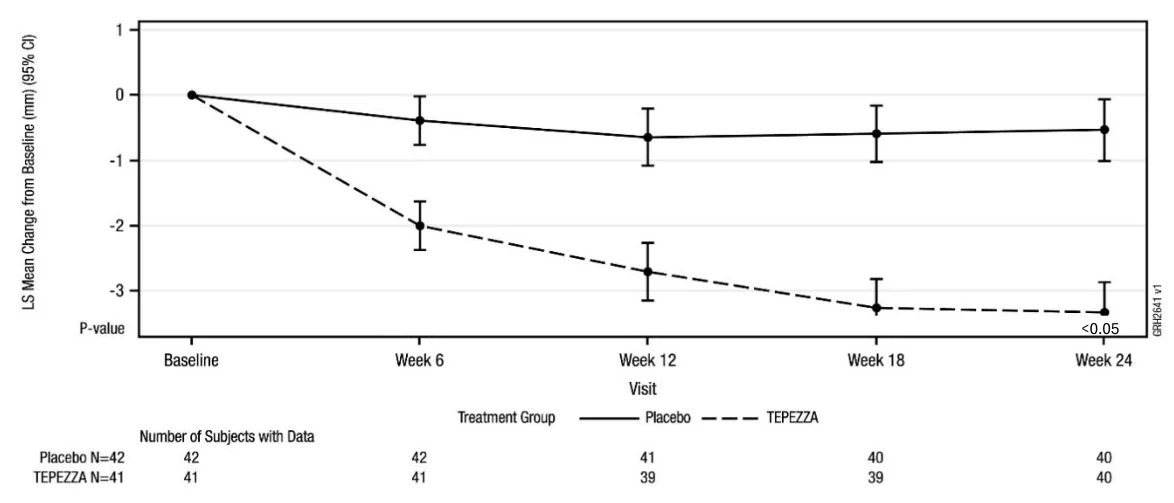
CI = Confidence Interval; ITT = intent-to-treat; LS = Least Squares
Similar efficacy results were observed in the fellow eye.
<0.05
Following discontinuation of teprotumumab treatment in OPTIC, 56% of patients (19 of 34 patients) who were proptosis responders at Week 24 remained proptosis responders at Week 72.
Fifty six (56) patients (67%) had diplopia at baseline. Among these patients, the diplopia responder rate at Week 24 was 68% (19/28) in the teprotumumab group and 29% (8/28) in the placebo group. A diplopia responder was defined as a patient with baseline diplopia grade >0 in the study eye who had a reduction of ≥1 grade with no corresponding deterioration (≥1 grade worsening) in the fellow eye at Week 24.
OPTIC-J was a randomized, double-masked, placebo-controlled study in Japanese patients with moderate-to-severe active TED. Active TED was defined as CAS ≥ 3/7 for the more severely affected eye at screening and baseline. Moderate-to-severe active TED was associated with 1 or more of the following: lid retraction ≥ 2 mm, moderate or severe soft tissue involvement and/or inconstant or constant diplopia. Patients were euthyroid or had thyroxine and free triiodothyronine levels < 50% above or below normal limits. Prior orbital irradiation or surgical therapy for TED was not permitted. Median proptosis was 20.0 mm and ranged from 14.5 to 27.0 mm and 42 patients (77.8%) had diplopia at baseline. The median CAS in the study eye at baseline was 4.0 (range 3 to 7) and the median time since the diagnosis of TED was 4.72 months (range 0.53 to 8.9).
The primary endpoint was the proptosis responder rate defined as the percentage of participants with a ≥ 2 mm reduction from baseline in proptosis in the study eye, without deterioration (≥ 2 mm increase) of proptosis in the fellow eye at Week 24.
Study Results
Efficacy results are summarized in Table 6.
Table 6. Efficacy results of patients with Thyroid Eye Disease at Week 24 in OPTIC-J (ITT Analysis Set)
| Endpoint | Placebo (N = 27) | Tepezza (N = 27) | Treatment Difference (95% CI) | p-value |
|---|---|---|---|---|
| Primary Endpoint: | ||||
| Proptosis Responder Rate,c % (n) | 11% (3) | 89% (24) | 78% (61, 95) | <0.05a |
| Secondary Endpoint: | ||||
| Change from Baseline in Proptosis (mm), LS mean (SE) | -0.37 (0.30) | -2.36 (0.30) | -1.99 (-2.75, -1.22) | <0.05b |
CI = confidence interval; ITT = intent-to-treat; LS = least squares; SE = standard error Note: Results shown are those for the study eye, if applicable. All statistical tests were two-sided and compared to the 5% significance level. a p-value was estimated from Cochran-Mantel-Haenszel test adjusted for the randomization stratification factor (tobacco use status). | ||||
b p-value is from mixed model repeated measurements analysis with an unstructured variance-covariance matrix including change from baseline value as the dependent variable and the following covariates: Baseline value, treatment group, tobacco use status, visit, visit-by-treatment and visit-by-baseline value interactions. c proptosis responder rate at week 24 defined as a ≥ 2-mm reduction from baseline in proptosis in the study eye without deterioration [≥ 2-mm increase] of proptosis in the fellow eye |
|---|
Figure 2. Change from Baseline in Proptosis Over 24 Weeks in OPTIC-J (ITT Analysis Set; Study Eye)
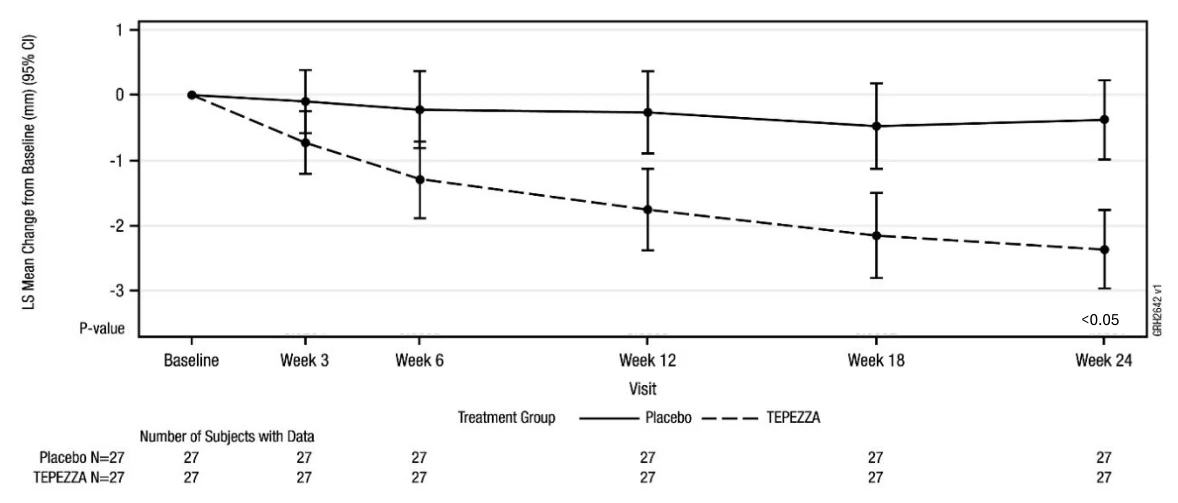
CI = Confidence Interval; ITT = intent-to-treat; LS = Least Squares
Similar efficacy results were observed in the fellow eye.
15. Microbiology
No microbiological information is required for this drug product.
16. Non-Clinical Toxicology
General toxicology:
A 13-week and a 39-week repeat-dose toxicity study were conducted in cynomolgus monkeys. Animals in the 13-week study consisted of juvenile animals (approximately 2 years of age) and sexually mature animals. The animals in the 39-week study consisted mainly of sexually immature animals (approximately 2.5 to 4 years of age). Animals were intravenously administered teprotumumab at doses of 0 (vehicle control), 3, 15, or 75 mg/kg once weekly. In both studies and in all age groups, thymic atrophy and adverse reductions in body weight due to body weight loss or due to less or no body weight gain were observed at all doses when compared to the concurrent control animals. Other effects included decreased alkaline phosphatase (ALP) activity levels due to decreased bone ALP activity levels and decreases in red blood cell mass, reticulocyte counts, neutrophil counts, B- cell counts, T-cell counts, and/or natural killer cell counts either at all doses or at the two highest doses. No effects on other endpoints, including cardiovascular and respiratory endpoints, were observed. The teprotumumab-related effects in these studies occurred in animals at exposures similar to or less than those in humans at the maximum recommended human dose (MRHD) based on
<0.05
AUC. A no-observed-adverse-effect level (NOAEL) for the general toxicity of teprotumumab cannot be established based on the adverse reductions in body weight/body weight loss observed at all doses.
The above adverse reductions in body weights, including body weight loss, in juvenile and sexually mature animals are consistent with the mechanism of action of teprotumumab in inhibiting IGF-1R.
Carcinogenicity: The carcinogenic potential of teprotumumab has not been evaluated in long-term animal studies.
Genotoxicity: The genotoxic potential of teprotumumab has not been evaluated.
Reproductive and developmental toxicology: Fertility studies have not been performed with teprotumumab.
In an embryofetal development study, seven pregnant cynomolgus monkeys were dosed intravenously at one dose level of teprotumumab, 75 mg/kg (8.8-fold the maximum MRHD based on AUC) once weekly from gestation day 20 through the end of gestation. The incidence of abortion was higher for the teprotumumab-administered group compared to the control group. Teprotumumab caused decreased fetal growth during pregnancy, decreased fetal size and weight at caesarean section, decreased placental weight and size, and decreased amniotic fluid volume. Teprotumumab administration also caused teratogenicity. Multiple external and skeletal abnormalities were observed in each exposed fetus, including misshapen cranium, closely set eyes, micrognathia, pointing and narrowing of the nose, and ossification abnormalities of skull bones, sternebrae (reductions in the number of sternebrae), carpals, tarsals and teeth. Thus, a NOAEL for the effects of teprotumumab on development was not established.
The above adverse effects on embryofetal development are consistent with the mechanism of action of teprotumumab in inhibiting IGF-1R.
Based on mechanism of action in inhibiting IGF-1R, in utero and/or postnatal exposure to teprotumumab may also cause harm during postnatal growth and development.
Juvenile toxicity: A 13-week juvenile toxicity study was conducted in 11- to 14-month old juvenile cynomolgus monkeys in which animals were intravenously administered teprotumumab at doses of 0 (vehicle control), 3, 15, and 75 mg/kg once weekly. Decreases in body weight due to decreases in body weight gain, decreases in bone mass (bone mineral content and density) and bone strength, and narrower bones were observed at all doses and were related to teprotumumab administration. Other effects were consistent with those observed in the repeat dose-toxicity studies summarized above, as well as decreased size/germinal centres in the spleen, and were similarly considered non-adverse. Based on the adverse reductions in body weight and body weight gain and the adverse bone findings, a NOAEL was not established for the study.
A 13-week repeat-dose toxicity study that included juvenile cynomolgus monkeys aged approximately 2 years was also conducted and is summarized above (see General toxicology).
The above adverse effects on growth and development in juvenile animals are consistent with the mechanism of action of teprotumumab in inhibiting IGF-1R.