


Product Monograph - Ocrevus
Recent Major Label Changes
| 2026-10 |
|---|---|
| 2026-10 |
| 2026-10 |
| 2026-10 |
| 2026-05 |
| 2026-02 |
| 2026-02 |
| 2026-10 |
| 2026-02 |
Table of Contents
Certain sections or subsections that are not applicable at the time of the preparation of the most recent authorized product monograph are not listed.
Recent Major Label Changes ................................................................................................... 2
Table of Contents ................................................................................................................... 2
Part 1: Healthcare Professional Information ........................................................................... 5
- 1.
Indications ....................................................................................................................... 5
1.1. Pediatrics .................................................................................................................. 5
1.2. Geriatrics .................................................................................................................. 5
- 2. Contraindications ............................................................................................................ 6
- 4.
Dosage and Administration ............................................................................................. 6
4.1. Dosing Considerations .............................................................................................. 6
4.2. Recommended Dose and Dosage Adjustment ......................................................... 8
4.3. Reconstitution ........................................................................................................ 11
4.4. Administration ........................................................................................................ 12
4.5. Missed Dose ........................................................................................................... 12
- 5. Overdose ....................................................................................................................... 12
- 6. Dosage Forms, Strengths, Composition, and Packaging ................................................. 12
- 7.
Warnings and Precautions ............................................................................................. 13
General ............................................................................................................................... 13
Dependence, Tolerance and/or Abuse Liability .................................................................. 14
Driving and Operating Machinery ....................................................................................... 14
Hepatic/Biliary/Pancreatic .................................................................................................. 14
Immune .............................................................................................................................. 14
Infections ............................................................................................................................ 16
Malignancies ....................................................................................................................... 17
Psychiatric ........................................................................................................................... 18
Renal ................................................................................................................................... 18
Reproductive Health ........................................................................................................... 18
Serious Adverse Events Reported in Other Anti-CD20 Antibodies ...................................... 18
7.1. Special Populations ................................................................................................ 19
7.1.1. Pregnancy ...................................................................................................... 19
7.1.2. Breastfeeding ................................................................................................ 19
7.1.3. Pediatrics ....................................................................................................... 20
7.1.4. Geriatrics ....................................................................................................... 20
- 8.
Adverse Reactions ......................................................................................................... 20
8.1. Adverse Reaction Overview .................................................................................... 20
8.2. Clinical Trial Adverse Reactions .............................................................................. 21
8.2.1. Clinical Trial Adverse Reactions – Pediatrics .................................................. 25
8.3. Less Common Clinical Trial Adverse Reactions ....................................................... 26
8.4. Abnormal Laboratory Findings: Hematologic, Clinical Chemistry, and Other Quantitative Data ............................................................................................................... 26
8.5. Post-Market Adverse Reactions ............................................................................. 27
- 9.
Drug Interactions ........................................................................................................... 27
9.2. Drug Interactions Overview .................................................................................... 27
9.3. Drug-Behaviour Interactions .................................................................................. 27
9.4. Drug-Drug Interactions ........................................................................................... 27
9.5. Drug-Food Interactions........................................................................................... 28
9.6. Drug-Herb Interactions ........................................................................................... 28
9.7. Drug-Laboratory Test Interactions ......................................................................... 28
- 10.
Clinical Pharmacology ................................................................................................... 28
10.1. Mechanism of Action .............................................................................................. 28
10.2. Pharmacodynamics ................................................................................................ 28
10.3. Pharmacokinetics ................................................................................................... 29
10.4. Immunogenicity ...................................................................................................... 29
- 11. Storage, Stability, and Disposal ...................................................................................... 30
- 12. Special Handling Instructions ......................................................................................... 31
Part 2: Scientific Information ................................................................................................ 32
- 13. Pharmaceutical Information .......................................................................................... 32
- 14.
Clinical Trials .................................................................................................................. 32
14.1. Clinical Trials by Indication ..................................................................................... 32
- 15. Microbiology ................................................................................................................. 42
- 16. Non-Clinical Toxicology .................................................................................................. 42
Patient Medication Information ........................................................................................... 44
Part 1: Healthcare Professional Information
1. Indications
Relapsing Remitting Multiple Sclerosis (RRMS)
OCREVUS (ocrelizumab for injection) is indicated for:
- the treatment of adult patients with relapsing remitting multiple sclerosis (RRMS) with active disease defined by clinical and imaging features (see 14 Clinical Trials).
- the treatment of pediatric patients aged 10 years and older with relapsing remitting multiple sclerosis (RRMS) (see 14 Clinical Trials).
Primary Progressive Multiple Sclerosis (PPMS)
NOC/c OCREVUS (ocrelizumab for injection) is indicated for:
- the management of adult patients with early primary progressive multiple sclerosis (PPMS) as defined by disease duration and level of disability, in conjunction with imaging features characteristic of inflammatory activity (see 14 Clinical Trials).
OCREVUS treatment should be initiated and supervised by healthcare professionals (HCPs) experienced in the treatment of patients with multiple sclerosis (MS) and who are familiar with the efficacy and safety profile of OCREVUS (see 7 Warnings and Precautions and 4 Dosage and Administration).
Specific pre-medication should be administered before injecting OCREVUS (see 4.1 Dosing Considerations).
Resources for the treatment of hypersensitivity and anaphylactic reactions should be immediately available.
Patients treated with OCREVUS must be informed about the risks of OCREVUS.
1.1. Pediatrics
Relapsing Remitting Multiple Sclerosis (RRMS)
Pediatric (≥ 10 years of age): Based on the data submitted and reviewed by Health Canada, the safety and efficacy of OCREVUS in pediatric patients aged 10 years and older with RRMS, has been established; therefore, Health Canada has authorized an indication for pediatric use in those patients.
Pediatric (< 10 years of age): No data are available to Health Canada in patients below the age of 10 years. Therefore, Health Canada has not authorized an indication for pediatric patients under 10 years of age.
Primary Progressive Multiple Sclerosis (PPMS)
Pediatric (< 18 years): No data are available to Health Canada; therefore, Health Canada has not authorized an indication for pediatric use.
1.2. Geriatrics
Geriatrics (> 55 years of age): The safety and efficacy of OCREVUS in patients > 55 years of age has not been established.
2. Contraindications
OCREVUS is contraindicated in patients:
- Who are hypersensitive to this drug or to any ingredient in the formulation, including any non-medicinal ingredient, or component of the container. For a complete listing, see 6 Dosage Forms, Strengths, Composition, and Packaging.
- With a history of life-threatening infusion reaction to OCREVUS (see 7 Warnings and Precautions, Infusion Reactions).
- With active Hepatitis B virus (HBV) infection (see 4.1 Dosing Considerations and 7 Warnings and Precautions).
- With severe, active infections (see 4.1 Dosing Considerations and 7 Warnings and Precautions, Infections).
- Who have or have had confirmed progressive multifocal leukoencephalopathy (PML) (see 7 Warnings and Precautions, Progressive Multifocal Leukoencephalopathy (PML)).
- Who are in a severely immunocompromised state (see 7 Warnings and Precautions, Possible Increased Risk of Immunosuppressant Effects with Other Immunosuppressants).
- With known active malignancies (see 7 Warnings and Precautions, Malignancies).
4. Dosage and Administration
4.1. Dosing Considerations
OCREVUS treatment should be initiated and supervised by a neurologist experienced in the treatment of patients with MS. OCREVUS should be administered under the close supervision of an experienced healthcare professional with access to appropriate medical support to manage the most frequent adverse reactions (including infusion reactions and infections). Resources for the treatment of hypersensitivity and anaphylactic reactions should be immediately available.
Patients treated with OCREVUS must be informed about the risks of OCREVUS (also see package leaflet).
Specific pre-medication should be provided prior to OCREVUS administration (see 4.1 Dosing Considerations, Recommended Premedication).
OCREVUS infusions should not be administered as an intravenous push or bolus (see 4.2 Recommended Dose and Dosage Adjustment, Table 2).
Assessment Prior to First Dose of OCREVUS
Hepatitis B Virus Screening
Prior to initiating OCREVUS, perform Hepatitis B virus (HBV) screening. OCREVUS is contraindicated in patients with active HBV confirmed by positive results for HBsAg and anti-HBV tests. For patients who are negative for surface antigen [HBsAg] and positive for HB core antibody [HBcAb+] or are carriers of HBV [HBsAg+], consult liver disease experts before starting and during treatment (see 7 Warnings and Precautions, Hepatitis B Reactivation).
Serum Immunoglobulins
Prior to initiating OCREVUS, perform testing for quantitative serum immunoglobulins. For patients with low serum immunoglobulins, consult immunology experts before initiating treatment with OCREVUS (see 7 Warnings and Precautions, Reduction in Immunoglobulins).
Vaccinations
Because vaccination with live-attenuated or live vaccines is not recommended during treatment and after discontinuation until B-cell repletion, administer all necessary immunizations according to immunization guidelines at least 6 weeks prior to initiation of OCREVUS (see 7 Warnings and Precautions and 10 Clinical Pharmacology).
Liver Function Tests
Prior to initiating OCREVUS, obtain serum aminotransferases (alanine aminotransferase [ALT] and aspartate aminotransferase [AST]), alkaline phosphatase, and bilirubin levels (see 7 Warnings and Precautions).
Preparation before Every Infusion
Infection Assessment
Prior to every infusion of OCREVUS, determine whether there is an active infection. In case of active infection, delay infusion of OCREVUS until the infection resolves (see 7 Warnings and Precautions, Infections).
Risk of Hypotension
Prior to every infusion of OCREVUS, verify whether the patient is receiving antihypertensive treatments. Hypotension may occur during OCREVUS infusions. Therefore, withholding of antihypertensive treatments should be considered for 12 hours prior to and throughout each OCREVUS infusion (see 7 Warnings and Precautions, Hypotension).
Recommended Premedication
Pre-medicate with methylprednisolone (or an equivalent corticosteroid) and with an antihistamine drug prior to each OCREVUS infusion (see 7 Warnings and Precautions, Infusion Reactions) to reduce the frequency and severity of infusion reactions. Premedication with an antipyretic may also be considered.
Table 1 – Premedication prior to OCREVUS Infusion
| Premedication | Timing | Dose |
|---|---|---|
| Methylprednisolone IV (or an equivalent) | Approximately 30 minutes prior to OCREVUS infusion |
|
| Antihistaminic drug (e.g. diphenhydramine) | Approximately 30-60 minutes prior to OCREVUS infusion |
|
| Antipyretic drug (e.g. acetaminophen may be considered) | Approximately 30-60 minutes prior to OCREVUS infusion |
|
4.2. Recommended Dose and Dosage Adjustment
Adult Patients
- Initial dose: 300 mg intravenous infusion, followed 2 weeks later by a second 300 mg intravenous infusion.
- Subsequent doses: single 600 mg intravenous infusion every 6 months (see Table 2).
- Observe the patient for at least one hour after the completion of the infusion (see 7 Warnings and Precautions, Infusion Reactions).
- If patients did not experience a serious infusion reaction with any previous OCREVUS infusion, a shorter (2-hour) infusion can be administered for subsequent doses (see Table 2, Option 2) (see 8.2 Clinical Trial Adverse Reactions, Infusion Reactions and 14 Clinical Trials by Indication, Safety Study of Shorter (2-hour) Infusion).
A minimum interval of 5 months should be maintained between each dose of OCREVUS.
Table 2 – Recommended Dose, Infusion Rate, and Infusion Duration for RRMS and PPMS in Adult Patients
| Amount and Volume1 | Infusion Rate and Duration3 | |||||||
|---|---|---|---|---|---|---|---|---|
| Amount and Volume1 | Infusion Rate and Duration3 | |||||||
Initial Dose (two infusions) | Infusion 1 | 300 mg in 250 mL |
| |||||
Infusion 2 (2 weeks later) | 300 mg in 250 mL | |||||||
Subsequent Doses (one infusion every 6 months)2 | Option 1 Infusion of approximately 3.5 hours duration | 600 mg in 500 mL |
| |||||
| OR | ||||||||
Option 2 (If no serious infusion reaction with any previous OCREVUS infusion) Infusion of approximately 2 hours duration | 600 mg in 500 mL |
| ||||||
2 Administer the first subsequent Dose 6 months after Infusion 1 of Initial Dose.
3 Infusion time may take longer if the infusion is interrupted or slowed (see 4 Dosage and Administration).
Pediatric Patients (≥ 10 years of age)
OCREVUS is administered by IV infusion every 6 months. The recommended dose is administered according to the patient’s body weight:
- Pediatric patients who weigh between 25 and 35 kg: 300 mg
- Pediatric patients who weigh 35 kg or more: 600 mg
Pediatric patients who start on a 300 mg dose and subsequently reach a stable body weight of 35 kg or more should be switched to the 600 mg dose.
Initial dose:
The initial dose is split into two separate, equal IV infusions administered 2 weeks apart depending on the patient’s body weight (see Table 3).
Subsequent doses:
Subsequent doses of OCREVUS thereafter are administered as a single 300 mg or 600 mg IV infusion every 6 months depending on the patient’s body weight (see Table 3).
Pediatric patients who reach 35 kg should be switched to the 600 mg dose (see Table 3).
A minimum interval of 5 months should be maintained between each dose of OCREVUS.
Table 3 – Dose and Schedule of OCREVUS for Pediatric Patients
| Infusion | Amount of OCREVUS IV to be administered* | Infusion instruction | |||||
|---|---|---|---|---|---|---|---|
| Body Weight 25-35 kg | |||||||
Initial Dose divided into 2 infusions | Infusion 1 | 150 mg in 250 mL |
| ||||
Infusion 2 (2 weeks later) | 150 mg in 250 mL | ||||||
| Subsequent Doses** | Single infusion once every 6 months | 300 mg in 250 mL | |||||
| Body Weight ≥ 35 kg | |||||||
Initial Dose divided into 2 infusions | Infusion 1 | 300 mg in 250 mL |
| ||||
Infusion 2 (2 weeks later) | 300 mg in 250 mL | ||||||
| Subsequent Doses** | Single infusion once every 6 months | 600 mg in 500 mL |
| ||||
** First single infusion should be administered 6 months after Infusion 1 of Initial Dose.
A shorter (2-hour) 600 mg infusion has not been studied in pediatric patients.
Dose Modifications Because of Infusion Reactions
Dose modifications in response to infusion reactions depend on the infusion reactions severity.
Life-threatening Infusion Reactions
Immediately stop OCREVUS if there are signs of a life-threatening or disabling infusion reaction during an infusion, such as acute hypersensitivity or acute respiratory distress syndrome. Provide appropriate supportive treatment. Permanently discontinue OCREVUS in these patients.
Severe Infusion Reactions
If a patient experiences a severe infusion reaction or a complex of flushing, fever, and throat pain symptoms, immediately interrupt the infusion and provide appropriate supportive treatment. Restart the infusion only after all symptoms have resolved. When restarting, begin at half of the infusion rate at the time of onset of the infusion reaction (see 4.2 Recommended Dose and Dosage Adjustment). If this rate is tolerated, increase the rate as described in Table 2. This change in rate will increase the total duration of the infusion but not the total dose.
Mild to Moderate Infusion Reaction
If a patient experiences a mild to moderate infusion reaction (e.g. headache), reduce the infusion rate to half the rate at the onset of the infusion reaction. This reduced rate should be maintained for at least 30 minutes. If this rate is tolerated, increase the rate as described in Table 2. This change in rate will increase the total duration of the infusion but not the total dose.
See 7 Warnings and Precautions, Infusion Reactions for full description of symptoms associated with infusion reactions.
4.3. Reconstitution
Parenteral Products:
Preparation of the Dilute Solution for Infusion and Administration
Prior to the start of the intravenous infusion, the content of the infusion bag should be at room temperature.
Visually inspect for particulate matter and discolouration prior to administration. Do not use the solution if discoloured or if the solution contains discrete foreign particulate matter. Do not shake. Withdraw intended dose and further dilute into an infusion bag containing 0.9% Sodium Chloride Injection, according to Table 4. Discard any unused portion left in the vial.
Table 4 – Dilution of OCREVUS for Intravenous Infusion
| Dose of OCREVUS | Volume of OCREVUS | Volume of 0.9% sodium chloride | Final Drug Concentration |
|---|---|---|---|
| 150 mg | 5 mL | 250 mL | 0.6 mg/mL |
| 300 mg | 10 mL | 250 mL | 1.2 mg/mL |
| 600 mg | 20 mL | 500 mL | 1.2 mg/mL |
Do not use other diluents to dilute OCREVUS since their use has not been tested. The product contains no preservative and is intended for single use only.
Incompatibilities
No incompatibilities between OCREVUS and polyvinyl chloride (PVC) or polyolefin (PO) bags and IV administration sets have been observed.
4.4. Administration
Administer OCREVUS under the close supervision of an experienced healthcare professional with access to appropriate medical support to manage severe reactions such as serious infusion reactions.
The diluted infusion solution must be administered through a dedicated line using an infusion set with a 0.2 or 0.22 micron in-line filter.
4.5. Missed Dose
If a planned infusion of OCREVUS is missed, administer OCREVUS as soon as possible; do not wait until the next scheduled dose. Reset the dose schedule to administer the next sequential dose 6 months after the missed dose is administered.
5. Overdose
There is no specific antidote in the event of an overdose; interrupt the infusion immediately and observe the patient for infusion reactions (see 7 Warnings and Precautions, Infusion Reactions).
| For the most recent information in the management of a suspected drug overdose, contact your regional poison control centre or Health Canada’s toll-free number, 1-844 POISON-X (1-844-764-7669). |
|---|
- 6. Dosage Forms, Strengths, Composition, and Packaging
To help ensure the traceability of biologic products, healthcare professionals should record both the brand name and the non-proprietary (active ingredient) name as well as other product-specific identifiers such as the Drug Identification Number (DIN) and the batch/lot number of the product supplied.
Table 5 – Dosage Forms, Strengths, and Composition
OCREVUS is supplied as a preservative-free, sterile solution in a single-use glass vial. Each 15 mL vial contains 10 mL of OCREVUS for IV infusion. There is one vial per pack.
7. Warnings and Precautions
General
Infusion Reactions
Fatal infusion reactions have been observed in patients treated with other anti-CD20 antibodies. OCREVUS can cause infusion reactions, which can include pruritus, rash, urticaria, erythema, bronchospasm, throat irritation, oropharyngeal pain, dyspnea, pharyngeal or laryngeal edema, flushing, hypotension, pyrexia, fatigue, headache, dizziness, nausea, tachycardia, and anaphylaxis. In multiple sclerosis (MS) clinical trials (WA21092, WA21093 and WA25046), the incidence of infusion reactions in OCREVUS-treated patients [who received methylprednisolone (or an equivalent steroid) and possibly other pre-medication to reduce the risk of infusion reactions prior to each infusion] was 34 to 40%, with the highest incidence with the first infusion. There were no fatal infusion reactions, but 0.3% of OCREVUS-treated MS patients experienced infusion reactions that were serious, some requiring hospitalization.
Observe all patients treated with OCREVUS for infusion reactions during the infusion and for at least one hour after completion of the infusion. Inform patients that infusion reactions can occur up to 24 hours after the infusion.
Reducing the Risk of Infusion Reactions and Managing Infusion Reactions
Administer pre-medication (e.g., methylprednisolone or an equivalent corticosteroid, and an antihistamine) to reduce the frequency and severity of infusion reactions. The addition of an antipyretic (e.g., acetaminophen) may also be considered (see 4.1 Dosing Considerations, Recommended Premedication).
Management recommendations for infusion reactions depend on the type and severity of the reaction (see 4.2 Recommended Dose and Dosage Adjustment, Dose Modifications Because of Infusion Reactions). For life-threatening infusion reactions, immediately and permanently stop OCREVUS and administer appropriate supportive treatment. For less severe infusion reactions, management may involve temporarily stopping the infusion, reducing the infusion rate, and/or administering symptomatic treatment.
Patients should be administered OCREVUS under the close supervision of an experienced healthcare professional in a setting where medications and supportive care measures for the treatment of hypersensitivity reactions (e.g., epinephrine, antihistamines, glucocorticoids) are immediately available in the event of an allergic reaction during administration.
Hypotension
| Route of Administration | Dosage Form/ Strength/Composition | Non-Medicinal Ingredients |
| Intravenous | 300 mg per vial (30 mg/mL concentrate for solution for infusion) | Glacial acetic acid, polysorbate 20, sodium acetate trihydrate, α,α trehalose dihydrate, and water for injection. |
As a symptom of infusion reaction, hypotension may occur during OCREVUS infusions. Therefore, withholding of antihypertensive treatments should be considered for 12 hours prior to and throughout each OCREVUS infusion. Patients with a history of congestive heart failure (New York Heart Association III & IV) were not studied.
Dependence, Tolerance and/or Abuse Liability
No studies on drug abuse and dependence have been conducted.
Driving and Operating Machinery
No studies on the effects on the ability to drive and to use machines have been performed.
Hepatic/Biliary/Pancreatic
The safety and efficacy of OCREVUS in patients with hepatic impairment have not been formally studied. Patients with mild hepatic impairment were included in clinical trials. No significant change in the pharmacokinetics of OCREVUS was observed (see 10.3 Pharmacokinetics, Special Populations and Conditions, Hepatic Insufficiency).
Liver Injury
Clinically significant liver injury, without findings of viral hepatitis, has been observed in the post-marketing setting in patients treated with OCREVUS. Signs of liver injury, including markedly elevated serum hepatic enzymes with elevated total bilirubin, have occurred from days to months after treatment initiation.
Liver function tests should be performed before initiation of treatment with OCREVUS, and patients should be monitored for signs and symptoms of any hepatic injury during treatment. Serum aminotransferases, alkaline phosphatase, and bilirubin levels should be measured in patients who report symptoms that may indicate liver injury, including new or worsening fatigue, anorexia, nausea, vomiting, right upper abdominal discomfort, dark urine, or jaundice.
If liver injury is confirmed, discontinue OCREVUS. If an alternative etiology is identified, treatment with OCREVUS can be resumed only when the event has been fully resolved.
Immune
Immune-Mediated Colitis
Immune-mediated colitis, which can present as a severe and acute-onset form of colitis, has been reported in patients receiving OCREVUS in the post-marketing setting. Some cases of colitis were serious, requiring hospitalization, with a few patients requiring surgical intervention. Systemic corticosteroids were required in many of these patients. The time from treatment initiation to onset of symptoms in these cases ranged from a few weeks to years. Monitor patients for immune-mediated colitis during OCREVUS treatment, and evaluate promptly if signs and symptoms that may indicate immune-mediated colitis, such as new or persistent diarrhea or other gastrointestinal signs and symptoms, occur.
Hypersensitivity Reactions
Hypersensitivity may be clinically indistinguishable from infusion reactions in terms of symptoms. A hypersensitivity reaction may present during any infusion, although typically would not present during the first infusion. For subsequent infusions, more severe symptoms than previously experienced, or new severe symptoms, should prompt consideration of a potential hypersensitivity reaction. If a hypersensitivity reaction is suspected during infusion, the infusion must be stopped immediately and permanently. Patients with known IgE-mediated hypersensitivity to ocrelizumab must not be treated (see 2 Contradictions and 7 Warnings and Precautions, Infusion Reactions).
Possible Increased Risk of Immunosuppressant Effects with Other Immunosuppressants
When initiating OCREVUS after an immunosuppressive therapy or initiating an immunosuppressive therapy after OCREVUS, the potential for increased immunosuppressive effects should be taken into consideration (see 10.1 Mechanism of Action). OCREVUS has not been studied in combination with other disease modifying MS therapies. The concomitant use of OCREVUS and other immune-modulating or immunosuppressive therapies, including immunosuppressant doses of corticosteroids, is expected to increase the risk of immunosuppression. When switching from drugs with prolonged immune effects, such as daclizumab, fingolimod, natalizumab, teriflunomide, or mitoxantrone, consider the duration and mode of action of these drugs because of additive immunosuppressive effects when initiating OCREVUS. Exercise caution when prescribing OCREVUS, taking into consideration the pharmacodynamics of other disease modifying MS therapies. (See 9.4 Drug-Drug Interactions).
Patients in a severely immunocompromised state must not be treated until the condition resolves (see 2 Contraindications).
Reduction in Immunoglobulins
As expected with any B-cell depleting therapy, decreased immunoglobulin levels are observed with OCREVUS treatment (see 8.4 Abnormal Laboratory Findings: Hematologic, Clinical Chemistry, and Other Quantitative Data, Immunoglobulins). Monitor the level of immunoglobulins at the beginning of treatment. Monitor during and after discontinuation of treatment with OCREVUS, until B-cell repletion, especially when recurrent serious infections are suspected. Consider discontinuing OCREVUS in patients with serious opportunistic or recurrent serious infections, and if prolonged hypogammaglobulinemia requires treatment with intravenous immunoglobulins (see 4.1 Dosing Considerations).
Vaccination
The safety of immunization with live or live-attenuated vaccines, following OCREVUS therapy has not been studied and vaccination with live-attenuated or live vaccines is not recommended during treatment and until B-cell repletion (see 10.1 Mechanism of Action).
OCREVUS may interfere with the effectiveness of non-live vaccines (see 9.4 Drug-Drug Interactions, Vaccination).
Physicians should review the immunization status of patients before starting treatment with OCREVUS. Patients who require vaccination should complete their immunizations at least 6 weeks prior to initiation of OCREVUS (see 9.4 Drug-Drug Interactions, Vaccination and 10 Clinical Pharmacology).
Vaccination of neonates and infants born to mothers treated with OCREVUS during pregnancy
There are no adequate and well-controlled studies on the effects of OCREVUS in neonates and infants born from mothers who have been administered OCREVUS during pregnancy. Due to the potential depletion of B-cells in infants of mothers who have been exposed to OCREVUS during pregnancy, it is recommended that vaccination with live or live-attenuated vaccines are delayed until the recovery of B-cells has been confirmed as measured by CD19+ B-cells. Depletion of B-cells in these infants may increase the risks from live or live attenuated vaccines (see 16 Non-Clinical Toxicology, Reproductive and developmental toxicology, and 10.1 Mechanism of Action).
It is recommended that all vaccinations other than live or live-attenuated may follow the local immunization schedule, but physicians should assess whether a protective immune response was mounted. Physicians may consult vaccination experts as the efficacy of the vaccination of a neonate or infant may be decreased following OCREVUS exposure (see 9.4 Drug-Drug Interactions, Vaccination).
Infections
Delay OCREVUS administration in patients with an active infection until the infection is resolved.
A higher proportion of OCREVUS-treated patients experienced infections compared to patients taking IFN or placebo. OCREVUS increased the risk for upper respiratory tract infections, lower respiratory tract infections, and herpes-related infections (see 8 Adverse Reactions).
In RRMS clinical trials (Study WA21092 and Study WA21093), 58% of OCREVUS-treated patients experienced one or more infections compared to 52% of IFN-treated patients. There were 2 (0.2%) Grade 4 infections in the OCREVUS group, whereas no Grade 4 infection in the IFN group. The proportion of patients reporting serious infections was 2.9% for IFN versus 1.3% for OCREVUS.
In the PPMS clinical trial (Study WA25046), 71.0% of OCREVUS-treated patients experienced one or more infections compared to 67.8% of placebo-treated patients. There were 8 (1.6%) Grade 4 (life-threatening) and 2 (0.4%) Grade 5 (fatal) infections in the OCREVUS group, versus 1 (0.4%) Grade 4 infection and 0 Grade 5 in the placebo group. The proportion of patients reporting serious infections was 6.7% for placebo versus 6.2% for OCREVUS.
In PPMS (Study WA25046), patients with swallowing difficulties are at a higher risk of aspiration pneumonia. OCREVUS treatment may further increase the risk of severe pneumonia in these patients. Physicians should take prompt action for patients presenting with pneumonia.
Fatal infections have also been observed in clinical trials in patients treated with other anti-CD20 antibodies.
Respiratory Tract Infections
A higher proportion of OCREVUS-treated patients experienced respiratory tract infections compared to patients taking IFN. In RRMS clinical trials (Study WA21092 and Study WA21093), 40% of OCREVUS-treated patients experienced upper respiratory tract infections compared to 33% of IFN-treated patients, and 8% of OCREVUS-treated patients experienced lower respiratory tract infections compared to 5% of IFN-treated patients.
A higher proportion of OCREVUS-treated patients experienced respiratory tract infections compared to patients taking placebo. In PPMS clinical trial (Study WA25046), 49% of OCREVUS-treated patients experienced upper respiratory tract infections compared to 43% of placebo-treated patients, and 10% of OCREVUS-treated patients experienced lower respiratory tract infections compared to 9% of placebo-treated patients.
The respiratory tract infections were predominantly mild to moderate and consisted mostly of upper respiratory tract infections and bronchitis.
Herpes
In RRMS clinical trials (Study WA21092 and Study WA21093), herpes infections were reported more frequently in OCREVUS-treated patients than in IFN-treated patients, including herpes zoster (2.1% vs. 1.0%), herpes simplex (0.7% vs. 0.1%), oral herpes (3.0% vs. 2.2%), genital herpes (0.1% vs. 0%), and herpes virus infection (0.1% vs. 0%). Infections were predominantly mild (Grade 1) to moderate (Grade 2) in severity.
In the PPMS clinical trial, oral herpes infections were reported more frequently in OCREVUS-treated patients than in placebo-treated patients for oral infections (2.7% vs 0.8%).
Serious cases of infections caused by herpes simplex virus and varicella zoster virus, including central nervous system infections (encephalitis and meningitis), intraocular infections, and disseminated skin and soft tissue infections, have been reported in the post-marketing setting in multiple sclerosis patients receiving OCREVUS. Serious herpes virus infections may occur at any time during treatment with OCREVUS. Some cases were life-threatening.
If serious herpes infections occur, OCREVUS should be discontinued or withheld until the infection has resolved, and appropriate treatment should be administered. Advise patients to promptly contact their healthcare provider if they experience any signs or symptoms of herpes infections.
Progressive Multifocal Leukoencephalopathy (PML)
PML is an opportunistic viral infection of the brain caused by the John Cunningham (JC) virus that typically only occurs in patients who are immunocompromised, and that usually leads to death or severe disability.
JC virus infection resulting in PML has been observed in patients treated with anti-CD20 antibodies, including OCREVUS. PML has occurred in OCREVUS-treated patients who had not been treated previously with natalizumab (which has a known association with PML), were not taking any immunosuppressive or immunomodulatory medications associated with the risk of PML prior to or concomitantly with OCREVUS, and did not have any known ongoing systemic medical conditions resulting in compromised immune system function.
At the first sign or symptom suggestive of PML, withhold OCREVUS and perform an appropriate diagnostic evaluation. MRI findings may be apparent before clinical signs or symptoms. Typical symptoms associated with PML are diverse, progress over days to weeks, and include progressive weakness on one side of the body or clumsiness of limbs, disturbance of vision, and changes in thinking, memory, and orientation leading to confusion and personality changes. If PML is confirmed, discontinue treatment of OCREVUS permanently.
Hepatitis B Reactivation
Hepatitis B virus (HBV) reactivation, in some cases resulting in fulminant hepatitis, hepatic failure and death, has been reported in patients treated with anti-CD20 antibodies.
HBV screening should be performed in all patients before initiation of treatment with OCREVUS as per local guidelines. Patients with active HBV (i.e. an active infection confirmed by positive results for HBsAg and anti HB testing) should not be treated with OCREVUS. Patients with positive serology (i.e. negative for HBsAg and positive for HB core antibody [HBcAb+] or are carriers of HBV [positive for surface antigen, HBsAg+]) should consult liver disease experts before start of treatment and should be monitored and managed following local medical standards to prevent hepatitis B reactivation. In the event of HBV reactivation, OCREVUS and concomitant medications should be discontinued until the active infection is resolved.
Malignancies
An increased risk of malignancy with OCREVUS may exist. In controlled trials, malignancies, including breast cancer, occurred more frequently in OCREVUS-treated patients. Breast cancer occurred in 6 of 781 females treated with OCREVUS, including 4/240 (1.7%) female patients with PPMS and 2/541 (0.4%) female patients with RRMS. None of 668 females treated with REBIF or placebo reported breast cancer. After approximately 10 years of continuous ocrelizumab treatment over the controlled period and Open Label Extension (OLE) phase of the pivotal clinical trials, the incidence of malignancies remained within the background rate expected for an MS population. Patients with a known active malignancy should not be treated with OCREVUS (see 2 Contradictions). Individual benefit risk should be considered in patients with known risk factors for malignancies and in patients who are being actively monitored for recurrence of malignancy. Patients should follow standard breast cancer screening guidelines.
Psychiatric
Depression and Suicide
In RRMS clinical trials, depression including suicide occurred in 8.5% and 7.9% of patients receiving OCREVUS and IFN, respectively.
In PPMS clinical trial, depression including suicide occurred in 9.7% and 13.8% of patients receiving OCREVUS and placebo, respectively. Four events (0.8%) related to suicide (including suicide attempts, depression suicidal and suicidal ideation) occurred in the OCREVUS group and one event (depression suicidal; 0.4%) occurred in the placebo group.
Depression was not measured through a validated test during the OLE phase of the MS studies. Over the 10-year period there was no increase in depression- and suicide-related adverse events. Analyses of risk factors for serious infections were performed in the Pivotal Phase III RRMS and PPMS trials. Depression was associated with a higher risk of serious infections (see 8.2 Clinical Trial Adverse Reactions). OCREVUS should be used with caution in patients with previous or current depression, a condition that is common in people with multiple sclerosis. Patients treated with OCREVUS should be advised to immediately report any symptoms of depression and/or suicidal ideation to their prescribing physician. Patients developing depression during OCREVUS therapy should be monitored closely and cessation of therapy should be considered.
Renal
The safety and efficacy of OCREVUS in patients with renal impairment has not been formally studied. Patients with mild renal impairment were included in clinical trials. No significant change in the pharmacokinetics of OCREVUS was observed (see 10.3 Pharmacokinetics, Special Populations and conditions, Renal Insufficiency).
Reproductive Health
Females of childbearing potential should use contraception while receiving OCREVUS and for 6 months after the last infusion of OCREVUS (see 10.1 Mechanism of Action, and 10.3 Pharmacokinetics, Elimination).
Serious Adverse Events Reported in Other Anti-CD20 Antibodies
Serious cardiovascular events and severe mucocutaneous reactions have occurred rarely in patients treated with other anti-CD20 antibodies. Patients experiencing a severe mucocutaneous reaction should discontinue treatment with OCREVUS and seek prompt medical evaluation.
7.1. Special Populations
7.1.1. Pregnancy
OCREVUS is a humanized monoclonal antibody of an immunoglobulin G1 subtype and immunoglobulins are known to cross the placental barrier. OCREVUS should be avoided during pregnancy unless the potential benefit to the mother outweighs the potential risk to the fetus.
There are no adequate data on the developmental risk associated with use of OCREVUS in pregnant females. However, transient peripheral B-cell depletion and lymphocytopenia have been reported in infants born to mothers exposed to other anti-CD20 antibodies during pregnancy. Following administration of ocrelizumab to pregnant monkeys at doses similar to or greater than those used clinically, increased perinatal mortality, depletion of B-cell populations, in addition to renal, bone marrow, and testicular toxicity were observed in the offspring in the absence of maternal toxicity (see 16 Non-Clinical Toxicology, Reproductive and developmental toxicology).
Postponing vaccination with live or live-attenuated vaccines should be considered for neonates and infants born to mothers who have been administered OCREVUS during pregnancy. B-cell levels in neonates and infants following maternal exposure to OCREVUS have not been studied in clinical trials and the potential duration of B-cell depletion in neonates and infants is unknown (see 7 Warnings and Precautions, Vaccination).
In OCREVUS clinical trials (WA21092, WA21093 and WA25046), the rate of induced abortion reported was 16.7% (8/48). In the general population worldwide, the overall rate of pregnancies ending in induced abortion is 20% and in MS patients it is 26.5% as reported in literature. The overall rate of birth defects (defined as any abnormality affecting body structure or function) was 12.5% (6/48) and the rate of structural malformations was 6.3% (3/48). The background risk of major birth defects and miscarriage for the indicated population is unknown.
7.1.2. Breastfeeding
Human IgGs are known to be excreted in breast milk during the first few days after birth (colostrum period), which decrease to low concentrations soon afterwards.
In a prospective, multicenter, open-label study (SOPRANINO, Study MN42989), 13 lactating women with MS (delivering 13 healthy, full-term infants) were administered OCREVUS at a median of 2.0 months postpartum (range 0.5-5.0 months). Low concentrations of ocrelizumab were detected in the breastmilk over 60 days following the mother’s first postpartum infusion (median relative infant dose of 0.27% [range 0.0-1.8 %]), indicating minimal transfer of ocrelizumab to breastmilk. At 30 days after the mother’s first post-partum OCREVUS infusion, ocrelizumab was undetectable in all available serum samples of breastfed infants (n=9), and infant B-cell levels were within the normal range in all available blood samples (n=10). No apparent effects of OCREVUS on health, growth and development were observed in breastfed infants of treated mothers over a follow-up period of 44.6 weeks (range 8.6-62.7 weeks).
While no clinical data on infants potentially exposed to ocrelizumab via breastmilk receiving live or live-attenuated vaccines are available, no risks are expected due to normal B-cell levels and undetectable serum ocrelizumab levels observed in those infants.
In a separate prospective clinical study, low ocrelizumab concentrations in breastmilk (median relative infant dose of 0.1% [range 0.07-0.7%]) over 90 days after the mother’s first postpartum infusion were observed in 29 lactating women who were administered ocrelizumab at a median of 4.3 months (range 0.1-36 months) postpartum. Follow-up of 21 infants breastfed for at least 2 weeks showed normal growth and development up to 1 year.
If clinically needed, OCREVUS can be used during breastfeeding starting a few days after birth. The developmental and health benefits of breastfeeding should be considered along with the mother’s clinical need for OCREVUS .
For animal data using different study design and dosing regimens showing excretion of ocrelizumab in the breast milk of monkeys see16 Non-Clinical Toxicology, Reproductive and developmental toxicology.
7.1.3. Pediatrics
Relapsing-Remitting Multiple Sclerosis (RRMS)
Pediatric (≥10 years of age): The safety and efficacy of OCREVUS has been evaluated in pediatric patients 10 years of age and older with RRMS. See 4 Dosage and Administration, 7 Warnings and Precautions, 8.2 Clinical Trial Adverse Reactions, and 10.3 Pharmacokinetics.
Pediatric (< 10 years of age): No data are available to Health Canada for pediatric patients under 10 years of age; therefore, Health Canada has not authorized an indication for these patients.
Primary Progressive Multiple Sclerosis (PPMS)
Pediatric (< 18 years): No data are available to Health Canada; therefore, Health Canada has not authorized an indication for pediatric use.
7.1.4. Geriatrics
Geriatrics (> 55 years of age): The safety and efficacy of OCREVUS in patients > 55 years of age has not been established.
8. Adverse Reactions
8.1. Adverse Reaction Overview
The safety of OCREVUS has been evaluated in 1311 patients across MS clinical studies, which includes 825 patients in active-controlled (RRMS) clinical trials and 486 patients in a placebo-controlled (PPMS) study WA25046. Table 6 summarizes the adverse drug reactions (ADRs) that have been reported in association with the use of OCREVUS in adult patients in the controlled period of the pivotal clinical trials.
A total of 2,376 patients were included in the controlled period of the pivotal clinical trials; of these patients, 1,852 entered the Open-Label Extension (OLE) phase. There were 1325 RRMS patients and 527 PPMS patients. All patients switched to OCREVUS (ocrelizumab 600 mg IV infusion every 24 weeks) during the OLE phase. 1,155 patients completed the OLE phase, resulting in approximately 10 years of continuous ocrelizumab treatment (15,515 patient-years of exposure) across the controlled period and OLE phase.
The safety of OCREVUS was evaluated in 93 patients aged 10 to <18 years of age in the active-controlled RRMS clinical trial. The overall safety profile was generally consistent with that observed in adult patients.
8.2. Clinical Trial Adverse Reactions
Clinical trials are conducted under very specific conditions. Therefore, the frequencies of adverse reactions observed in the clinical trials may not reflect frequencies observed in clinical practice and should not be compared to frequencies reported in clinical trials of another drug.
Relapsing Remitting Multiple Sclerosis (RRMS)
The ADRs described in this section were identified based on data from two identical active-controlled studies WA21092 and WA21093 to evaluate the efficacy and safety of OCREVUS in adults with relapsing remitting multiple sclerosis (RRMS). In the two studies, patients were given OCREVUS 600 mg (n=825), every 6 months (with the first dose administered as two 300 mg IV infusions separated by 2 weeks and all subsequent doses as a single, 600 mg infusion), or interferon beta-1a (IFN) 44 mcg (n=826) subcutaneous 3 times per week. The controlled period of the study was 96 weeks (4 doses of OCREVUS).
The most common (incidence ≥ 10%) adverse reactions for OCREVUS in the RRMS trials were (OCREVUS vs. IFN): infusion reactions (34% vs. 10%), upper respiratory tract infections (15% vs. 11%), nasopharyngitis (15% vs. 10%). Serious adverse events (SAEs) were reported in 7.0% of patients receiving OCREVUS and in 8.8% of patients receiving IFN.
Primary Progressive Multiple Sclerosis (PPMS)
The ADRs described in this section were identified based on data from the placebo-controlled study WA25046 to evaluate the efficacy and safety of OCREVUS in adults with primary progressive MS (PPMS). Patients were given OCREVUS 600 mg (n=486) or placebo (n=239) every 6 months (administered as two 300 mg infusions separated by 2 weeks during the entire study).
The most common (incidence ≥ 10%) adverse reactions for OCREVUS in the PPMS trials were (OCREVUS vs. placebo): infusion reactions (40% vs. 26%), upper respiratory tract infections (12% vs. 6%), influenza (12% vs. 8%). Serious adverse events (SAEs) were reported in 21% of patients receiving OCREVUS and in 23% of patients receiving placebo. In the WA25046 PPMS trial, 20 of 618 patients (3.2%) treated with OCREVUS discontinued treatment due to an adverse event; 2 patients (0.3%) discontinued treatment due to breast cancer and 2 patients (0.3%) discontinued due to an infusion reaction.
Table 6 – Summary of ADRs associated with OCREVUS in RRMS or PPMS with an incidence of ≥ 1% and higher than the comparator1
ADR (MedDRA) System organ class (SOC) Preferred Term | RRMS Pooled WA21092 & WA21093 | PPMS WA250463 | ||
|---|---|---|---|---|
OCREVUS 600 mg IV, every 24 weeks1 n=825 | Interferon beta-1a 44mcg S. C., 3 times per week n=826 | OCREVUS n=486 | Placebo n=239 | |
| Injury, Poisoning and Procedural Complications | ||||
| Infusion related reaction2 | 283 (34.3%) | 82 (9.9%) | 195 (40.1%) | 61 (25.5%) |
| Infections and Infestations | ||||
| Upper respiratory tract infection | 125 (15.2%) | 88 (10.7%) | 59 (12.1%) | 14 (5.9%) |
| Nasopharyngitis | 123 (14.9%) | 84 (10.2%) | 117 (24.1%) | 67 (28.0%) |
| Sinusitis | 46 (5.6%) | 45 (5.4%) | 19 (3.9%) | 7 (2.9%) |
| Bronchitis | 42 (5.1%) | 29 (3.5%) | 31 (6.4%) | 15 (6.3%) |
| Influenza | 38 (4.6%) | 39 (4.7%) | 57 (11.7%) | 20 (8.4%) |
| Gastroenteritis | 25 (3.0%) | 19 (2.3%) | 22 (4.5%) | 12 (5.0%) |
| Oral herpes | 25 (3.0%) | 18 (2.2%) | 13 (2.7%) | 2 (0.8%) |
| Respiratory tract infection | 19 (2.3%) | 17 (2.1%) | 13 (2.7%) | 2 (0.8%) |
| Viral infection | 18 (2.2%) | 23 (2.8%) | 15 (3.1%) | 4 (1.7%) |
| Herpes zoster | 17 (2.1%) | 8 (1.0%) | 8 (1.6%) | 4 (1.7%) |
| Rhinitis | 12 (1.5%) | 3 (0.4%) | 17 (3.5%) | 9 (3.8%) |
| Lower Respiratory Infections | 10 (1.2%) | 4 (0.5%) | 6 (1.2%) | 1 (0.4%) |
| Conjunctivitis | 9 (1.1%) | 5 (0.6%) | 10 (2.1%) | 1 (0.4%) |
| Cellulitis | 7 (0.8%) | 5 (0.6%) | 11 (2.3%) | 1 (0.4%) |
| Psychiatric disorders | ||||
| Insomnia | 46 (5.6%) | 38 (4.6%) | 28 (5.8%) | 15 (6.3%) |
| Respiratory, thoracic and mediastinal disorders | ||||
| Cough | 25 (3.0%) | 12 (1.5%) | 34 (7.0%) | 8 (3.3%) |
| Catarrh | 0 | 0 | 10 (2.1%) | 2 (0.8%) |
1 The first dose was given as two separate 300 mg infusions at Weeks 0 and 2.
2 Symptoms reported as an infusion reaction within 24 hours of infusion are described below in “Infusion reactions”
3 PPMS patients were randomized 2:1 (OCREVUS:placebo).
PPMS: Each dose of OCREVUS 600 mg was administered as two IV infusions of 300 mg OCREVUS.
PPMS: at least 120 weeks controlled treatment period.
RRMS: 96 weeks controlled treatment period.
In an additional placebo-controlled phase IIIb study (WA40404) in 1012 PPMS patients who received at least one dose of either OCREVUS (n = 506) or placebo (n = 506), the ADR of COVID-19 and the ADR of COVID-19 pneumonia were identified (See 8.2 Clinical Trial Adverse Reactions, COVID-19 and COVID-19 Pneumonia).
Further information on selected adverse drug reactions from clinical trials:
Infusion Reactions
Across the RRMS and PPMS trials, symptoms associated with infusion reactions included, but are not limited to: pruritus, rash, urticaria, erythema, flushing, hypotension, pyrexia, fatigue, headache, dizziness, throat irritation, oropharyngeal pain, dyspnoea, pharyngeal or laryngeal edema, nausea, tachycardia. In the controlled clinical trials, there were no fatal infusion reactions.
In active-controlled (RRMS) clinical trials, infusion reactions were the most common adverse event in patients treated with OCREVUS 600 mg with an overall incidence of 34.3% compared with an incidence of 9.9% in the interferon beta-1a treatment group (placebo infusion). The incidence of infusion reactions was highest during Dose 1, infusion 1 (27.5%) and decreased over time to < 10% at Dose 4. The majority of infusion reactions in both treatment groups were mild to moderate (see 7 Warnings and Precautions, General, Infusion Reactions).
In the placebo-controlled (PPMS) pivotal clinical trial, infusion reactions were the most common adverse event in patients treated with OCREVUS, with an overall incidence of 40% compared with an incidence of 26% in the placebo group. Five (1.0%) patients in the OCREVUS group had experienced serious infusion reactions. No serious infusion reactions reported in the placebo group. The incidence of infusion reactions was highest during Dose 1, infusion 1 (27.4%) and decreased with subsequent Doses to < 10% at Dose 4. A greater proportion of patients in each group experienced infusion reactions with the first infusion of each dose compared with the second infusion of that dose. The majority of infusion reactions were mild to moderate.
Infusion Reactions with Alternative Shorter Infusion of Subsequent Doses
In a study (MA30143 Shorter Infusion Substudy) designed to characterize the safety profile of shorter (2-hour) OCREVUS infusions in patients with Relapsing-Remitting Multiple Sclerosis who did not experience a serious reaction with any previous OCREVUS infusion, the incidence, intensity, and types of symptoms of infusion reactions were consistent with those of infusions administered over 3.5 hours (see 14.1 Clinical Trials by Indication, Safety Study of Shorter (2-hour) Infusion).
Infection
There was no increase in serious infections associated with OCREVUS treatment (in RRMS patients the rate of serious infections (SIs) was lower than for interferon beta-1a, and in PPMS patients the rate was similar to placebo).
In the active-controlled (RRMS) and the pivotal placebo-controlled (PPMS) clinical trials, respiratory tract infections and herpes infections (both predominantly mild to moderate) were more frequently reported in the OCREVUS treatment arm (see 7 Warnings and Precautions, Infections).
Respiratory Tract Infections
The proportion of respiratory tract infections was higher in the OCREVUS treated patients compared to interferon and placebo in pivotal studies. The infections were predominately mild to moderate and consisted mostly of upper respiratory tract infections (including nasopharyngitis) and bronchitis (see Table 6, see 7 Warnings and Precautions, Respiratory Tract Infections).
COVID-19 and COVID-19 Pneumonia
In a placebo controlled phase IIIb study (WA40404) in patients with PPMS, COVID-19 infection events* were observed more frequently in patients treated with OCREVUS compared to the placebo group (19.4% vs 14.4%). In patients treated with OCREVUS, COVID-19 was observed more frequently compared to placebo (16% vs 11.3%) and predominantly mild to moderate in severity (14.2%). COVID-19 pneumonia was observed more frequently in patients treated with OCREVUS compared to the placebo group (3.2% vs 1.8%), and was predominantly observed as a serious infection (2.6% vs 1.6%). Fatalities due to COVID-19 pneumonia occurred in 4 (0.8%) OCREVUS treated patients compared with 1 (0.2%) the placebo group, and were associated with known risk factors in both arms.
*Includes COVID-19, COVID-19 pneumonia, and asymptomatic abnormal laboratory tests results.
Herpes (see 7 Warnings and Precautions, Herpes)
In active-controlled (RRMS) clinical trials, herpes infections were reported more frequently in OCREVUS-treated patients than interferon beta-1a treated patients.
In the pivotal placebo-controlled (PPMS) clinical trial, a higher proportion of patients with oral herpes (2.7% vs 0.8%) were observed in the OCREVUS treatment arm.
Hepatic/Biliary/Pancreatic
SAEs related to cholecystitis/cholelithiasis/pancreatitis were observed in RRMS clinical trials (OCREVUS vs. IFN): Pancreatitis: 2 (0.2%) vs. 0 (0%), cholecystitis/cholelithiasis: 6 (0.7%) vs. 2 (0.2%).
SAEs related to cholecystitis/cholelithiasis/pancreatitis were observed in the PPMS clinical trial (OCREVUS vs. Placebo): Pancreatitis acute: 2 (0.4%) vs. 0 (0%), cholecystitis acute and cholelithiasis: 1 (0.2%) vs. 1 (0.4%) each, cholecystitis chronic: 0 (0%) vs 1 (0.2%).
Other
In a Phase II trial, one patient, who received 2000 mg of OCREVUS, died of systemic inflammatory response syndrome (SIRS) of unknown etiology, following a magnetic resonance imaging (MRI) examination 12 weeks after the last infusion; an anaphylactoid reaction to the MRI gadolinium-contrast agent could have contributed to the SIRS.
Open-Label Extension Phase of the Pivotal Trials
The safety profile observed following the OLE period was consistent with that observed during the controlled period.
Infusion Reactions
Over the controlled period and OLE phase of the pivotal RRMS and PPMS clinical trials, patients were given 600 mg of OCREVUS (median of 18 doses for RRMS patients and median of 16 doses for PPMS patients). Incidence of IRs decreased to < 4% by Dose 4 of the OLE phase in RRMS patients and to < 5% by Dose 5 of the OLE phase in PPMS patients. With subsequent doses administered during the OLE phase, the incidence of infusion reaction remained low. The majority of infusion reactions were mild during the OLE phase (see 7 Warnings and Precautions, Infusion Reactions).
Infection
Over the OLE phase in RRMS and PPMS patients in pivotal studies, the overall risk of SIs did not increase from that observed during the controlled period. Throughout the controlled period and OLE phase, the rate of SIs in PPMS patients remained higher than that observed in RRMS patients. Consistent with the controlled treatment period, the most common type of SIs observed for both RRMS and PPMS were urinary and respiratory, demonstrating a stable risk profile over the 10 year treatment period.
A multivariate analysis of risk factors for SIs was conducted in the approximately 10 years of cumulative exposure data from the controlled period and OLE phase of the OCREVUS pivotal MS clinical studies. Risk factors for SIs in RRMS patients include having at least 1 comorbidity, recent clinical relapse, and EDSS ≥6.0. Risk factors for SIs in PPMS patients include body mass index greater than 25 kg/m2, having at least 2 comorbidities, EDSS ≥6.0, and IgM < lower limit of normal (LLN). Comorbidities included, but were not limited to, cardiovascular, renal and urinary tract conditions, previous infections, and depression.
8.2.1. Clinical Trial Adverse Reactions – Pediatrics
In the active-controlled RRMS clinical study (WN42086), the safety of OCREVUS was evaluated in 93 pediatric patients 10 years of age and older. Patients were given OCREVUS 600 mg (n=93) by IV infusion every 6 months or fingolimod 0.5 mg (n=92) orally once every day. The double-blind period (or controlled period) was of flexible duration (at least 24 weeks), during which patients received a median of 4 doses of OCREVUS.
The ADRs identified for OCREVUS in pediatric patients were consistent with the known ADRs in adults presented in Table 6.
Infusion Reactions
In pediatric patients, the most common symptoms associated with infusion reactions included headache, throat irritation, pruritus, rash, erythema, and nausea.
Infusion reactions were the most common adverse event in pediatric patients treated with OCREVUS, with an incidence of 48.4% compared with an incidence of 23.9% in fingolimod-treated patients (placebo infusion).
The incidence of infusion reactions was highest during Dose 1, infusion 1 (31.2%) and decreased to 8.6% for Dose 1, infusion 2 (on Day 15). At Dose 2, 16.3% of patients had an infusion reaction. The incidence and intensity of infusion reactions decreased with subsequent infusions. The majority of infusion reactions were mild to moderate. One infusion reaction was reported as serious (with a Grade 3 intensity at Dose 1).
Infections
Infections occurred in 73.1% of OCREVUS-treated patients (1.5 infections per patient year) and 58.7% of the fingolimod-treated patients (1.2 infections per patient year). Upper respiratory tract infection, nasopharyngitis, and influenza were more frequently reported in OCREUVS-treated patients and were all mild to moderate.
There was no increase in serious infections (SIs) associated with OCREVUS-treated patients (the rate of SIs was similar to fingolimod).
Immunoglobulins
Treatment with OCREVUS resulted in a decrease in total immunoglobulins over the controlled period of the study, mainly driven by reduction in IgM. Similar to the pattern observed in the adult population, reduction in IgM occurred earlier and in a higher proportion of patients compared with IgG and IgA.
8.3. Less Common Clinical Trial Adverse Reactions
In RRMS and PPMS clinical trials in adults, there are no adverse reactions that occurred at an incidence rate of < 1%.
8.4. Abnormal Laboratory Findings: Hematologic, Clinical Chemistry, and Other Quantitative Data
Clinical Trial Findings from adult trials in RRMS and PPMS
Immunoglobulins
Treatment with OCREVUS resulted in a decrease in total immunoglobulins over the controlled period of the pivotal studies, mainly driven by reduction in IgM.
In the active-controlled (RRMS) studies, the proportion of patients, at baseline, reporting IgG, IgA and IgM < lower limit of normal (LLN) in the OCREVUS treatment arm was 0.5%, 1.5% and 0.1% respectively. Following treatment, the proportion of OCREVUS-treated patients reporting IgG, IgA and IgM < LLN at 96 weeks was 1.5%, 2.4% and 16.5% respectively.
In the pivotal placebo-controlled (PPMS) study WA25046, the proportion of patients, at baseline, reporting IgG, IgA and IgM < LLN in the OCREVUS treatment arm was 0.0%, 0.2% and 0.2% respectively. Following treatment, the proportion of OCREVUS-treated patients reporting IgG, IgA and IgM < LLN at 120 weeks was 1.1%, 0.5% and 15.5% respectively.
Clinical trial data from the controlled period and OLE phase of the pivotal clinical trials have shown an apparent association between decreased levels of IgG (and less so for IgM or IgA) and increased rate of SIs 2.1% of RRMS patients had a SI during a period with IgG < LLN and 2.3% of PPMS patients had a SI during a period with IgG < LLN. The difference in the rate of SIs between patients with IgG < LLN compared to patients with IgG ≥ LLN did not increase over time. The type, severity, latency, duration, and outcome of SIs observed during episodes of immunoglobulins below LLN were consistent with the overall SIs observed in patients treated with OCREVUS during the controlled period and OLE phase. Throughout the 10 years of continuous ocrelizumab treatment, mean IgG levels of RRMS and PPMS patients remained above LLN.
Neutrophils
In the active-controlled (RRMS) treatment period, decreased neutrophils were observed in 14.7% of OCREVUS patients as compared to 40.9% of patients treated with interferon beta-1a. In the placebo-controlled pivotal (PPMS) clinical trial, decreased neutrophils were observed in 12.9% of OCREVUS patients as compared to 10.0% of patients treated with placebo.
The majority of the decreased neutrophils were transient (only observed once for a given patient treated with OCREVUS) and were Grade 1 (< LLN - 1.5 x 10⁹/L) and 2 (< 1.5 - 1.0 x 10⁹/L) in severity. Overall, approximately 1% of the patients in the OCREVUS group had Grade 3 (< 1.0-0.5 x 10⁹/L) or 4 (< 0.5 x 10⁹/L) neutropenia and was not temporally associated with an infection.
Lymphocytes
In RRMS, a decrease in lymphocytes < LLN was observed in 20.7% of OCREVUS treated patients vs 32.6% of patients treated with interferon beta-1-a.
In PPMS, a decrease in lymphocytes < LLN was observed in 26.3% of OCREVUS treated patients vs 11.7% of placebo-treated patients.
The majority of these decreases reported in OCREVUS treated patients were Grade 1 (< LLN - 800 cells/mm3) and 2 (between 500 and 800 cells/mm3) in severity. Approximately 1% of the patients in the OCREVUS group had a Grade 3 lymphopenia (between 200 and 500 cells/mm3). None of the patients reported with Grade 4 lymphopenia (< 200 cells/mm3).
An increased rate of SIs was observed during episodes of confirmed total lymphocytes counts decrease in OCREVUS treated patients. The number of SIs was too low to draw definitive conclusions.
8.5. Post-Market Adverse Reactions
The following adverse reactions have been identified during post-approval use of OCREVUS. Because these reactions are reported voluntarily from a population of uncertain size, it is not always possible to reliably estimate their frequency or establish a causal relationship to drug exposure.
Gastrointestinal Disorders: Immune-mediated colitis (see 7 Warnings and Precautions, Immune-Medicated Colitis).
Hepatobiliary Disorders: Liver injury (see 7 Warnings and Precautions).
Infections and Infestations: Serious herpes infections and progressive multifocal leukoencephalopathy (see 7 Warnings and Precautions, Herpes, and Progressive Multifocal Leukoencephalopathy (PML)).
9. Drug Interactions
9.2. Drug Interactions Overview
No formal drug interaction studies have been performed.
9.3. Drug-Behaviour Interactions
Interactions with behaviour have not been established.
9.4. Drug-Drug Interactions
Immunosuppressive or Immune-Modulating Therapies
The concomitant use of OCREVUS and other immune-modulating or immunosuppressive therapies, including immunosuppressant doses of corticosteroids, is expected to increase the risk of immunosuppression. Consider the risk of additive effects on the immune system when coadministering immunosuppressive therapies with OCREVUS. When switching from drugs with prolonged immune effects, such as daclizumab, fingolimod, natalizumab, teriflunomide, or mitoxantrone, consider the duration and mode of action of these drugs because of additive immunosuppressive effects when initiating OCREVUS. (See 7 Warnings and Precautions, Possible Increased Risk of Immunosuppressant Effects with Other Immunosuppressants).
Vaccination
A randomized open-label study BN29739 (VELOCE), in 102 adult RRMS patients (68 patients taking ocrelizumab and 34 patients receiving no disease-modifying therapy except interferon-beta) evaluated the effects of ocrelizumab on humoral immune responses to tetanus toxoid-containing vaccine, pneumococcal polysaccharide, pneumococcal conjugate vaccines, keyhole limpet hemocyanin neoantigen, and seasonal inactivated influenza vaccines.
The observed humoral responses to all vaccines used in the study were decreased in adult RRMS patients treated with ocrelizumab compared to those not treated with ocrelizumab. For the primary endpoint (response to TT-containing booster vaccine), the proportion of patients with a positive response was decreased in ocrelizumab-treated patients (Group A: 23.9%) compared with patients not treated with ocrelizumab (Group B: 54.5%).
9.5. Drug-Food Interactions
Interactions with food have not been established.
9.6. Drug-Herb Interactions
Interactions with herbal products have not been established.
9.7. Drug-Laboratory Test Interactions
Interactions with laboratory tests have not been established.
10. Clinical Pharmacology
10.1. Mechanism of Action
The precise mechanisms through which ocrelizumab exerts its therapeutic clinical effects in MS are not fully elucidated but is presumed to involve immunomodulation through the reduction in the number and function of CD20-expressing B-cells. Following cell surface binding, ocrelizumab selectively depletes CD20-expressing B-cells through antibody-dependent cellular phagocytosis (ADCP), antibody-dependent cellular cytotoxicity (ADCC), complement-dependent cytotoxicity (CDC), and apoptosis. The capacity of B-cell reconstitution and pre-existing humoral immunity are preserved. In addition, innate immunity and total T-cell numbers are not affected.
10.2. Pharmacodynamics
For the B-cell counts, CD19 is used as the presence of OCREVUS interferes with the recognition of CD20 by the assay. Treatment with ocrelizumab leads to depletion of CD19+ B-cells in blood by 14 days post treatment (first time-point of assessment).
In the Phase III adult studies, between each dose of ocrelizumab, up to 5% of patients showed B-cell repletion (> LLN or baseline) at least at one time point.
In the pediatric Phase III study, B-cell depletion after treatment with ocrelizumab was similar to adults. Depletion was observed by 14 days post-treatment, and 6.5% of patients showed B-cell repletion at least at one time point.
In the Phase II RRMS study, the median time to B-cell repletion (returned to baseline/LLN whichever occurred first) was 72 weeks (range 27 - 175 weeks). Ninety percent of all patients had their B-cells repleted to LLN or baseline by approximately two and a half years after the last infusion.
10.3. Pharmacokinetics
Pharmacokinetics of ocrelizumab in the MS studies were described by a two compartment model with time-dependent clearance. Clearance and central volume were estimated at 0.17 L/day and 2.78 L, peripheral volume and inter-compartment clearance at 2.68 L and 0.294 L/day, and initial time-dependent clearance at 0.0489 L/day which declined with a half-life of 33 weeks.
Area under curve (AUCτ) after the 4th dose of 600 mg OCREVUS was 3510 µg/mL•day, and mean maximum concentration (Cmax) was 212 µg/mL in RRMS (600 mg infusion) and 141 µg/mL in PPMS (300 mg infusions).
Absorption
Ocrelizumab is administered as an IV infusion. There have been no studies performed with other routes of administration.
Distribution
The population pharmacokinetics estimate of the central volume of distribution was 2.78 L. Peripheral volume and inter-compartment clearance were estimated at 2.68 L and 0.294 L/day.
Metabolism
The metabolism of ocrelizumab has not been directly studied, as antibodies are cleared principally by catabolism.
Elimination
Constant clearance was estimated at 0.17 L/day, and initial time-dependent clearance at 0.0489 L/day which declined with a half-life of 33 weeks. The terminal elimination half-life was 26 days.
Special populations and conditions
- Pediatrics: The median AUC over the first 24-week dosing interval was 3130 µg/mL•day, and median Cmax was 147 µg/mL, in pediatric patients 10 years of age and older receiving OCREVUS 600 mg (body weight ≥35 kg) or 300 mg (body weight <35 kg). Clearance and time-dependent clearance were estimated at 0.149 L/day and 0.0457 L/day, volume of distribution (Vss) was 4.67 L, and terminal elimination half-life 26 days.
- No studies have been conducted to investigate the pharmacokinetics of OCREVUS in pediatric patients under 10 years of age.
- Geriatrics No studies have been conducted to investigate the pharmacokinetics of OCREVUS in patients > 55 years. The safety and efficacy of OCREVUS in patients > 55 years of age has not been established.
- Hepatic Insufficiency No formal pharmacokinetic study has been conducted. Patients with mild hepatic impairment were included in clinical trials, and no significant change in the pharmacokinetics was observed in those patients.
- Renal Insufficiency No formal pharmacokinetic study has been conducted. Patients with mild renal impairment were included in clinical trials and no significant change in the pharmacokinetics of ocrelizumab was observed in those patients.
10.4. Immunogenicity
All therapeutic proteins have the potential for immunogenicity.
Immunogenicity data are highly dependent on the sensitivity and specificity of the test methods used. Additionally, the observed incidence of a positive result in a test method may be influenced by several factors, including sample handling, timing of sample collection, drug interference, concomitant medication and the underlying disease. Therefore, comparison of the incidence of antibodies to OCREVUS with the incidence of antibodies to other products may be misleading.
Adult Patients
Patients in the RRMS studies (Study WA21092, Study WA21093) were tested at multiple time points (baseline and every 6 months, post treatment for the duration of the trial) for anti-drug antibodies (ADAs). Out of 807 patients treated with ocrelizumab and who had evaluable samples, 3 (~ 0.4%) tested positive for treatment-emergent ADAs, of which 1 patient tested positive for neutralizing antibodies. The impact of treatment-emergent ADAs on safety and efficacy cannot be assessed given the low incidence of ADA associated with OCREVUS.
Patients in the PPMS (Study WA25046) were tested at multiple time points (baseline and every 6 months, post treatment for the duration of the trial) for anti-drug antibodies (ADAs). Out of 481 patients treated with ocrelizumab and who had evaluable samples, 9 (~ 1.9%) tested positive for treatment-emergent ADAs, of which 1 patient tested positive for neutralizing antibodies. The impact of treatment-emergent ADAs on safety and efficacy cannot be assessed given the low incidence of ADA associated with OCREVUS.
Pediatric Patients
In Study WN42086, out of 90 pediatric patients treated with OCREVUS, with post-baseline assessments, 2 patients (2.2%) showed treatment-emergent ADAs to OCREVUS. Neutralizing antibodies have not been investigated in pediatric patients. The impact of treatment-emergent ADAs on safety and efficacy cannot be assessed in pediatric patients given the low incidence of ADA associated with OCREVUS.
- 11. Storage, Stability, and Disposal
Vials
Store vials at 2-8°C.
Keep the vial in the outer carton to protect from light.
Do not freeze. Do not shake.
The product contains no preservative and is intended for single use only.
OCREVUS may contain fine translucent and/or reflective particles associated with enhanced opalescence. Do not use the solution if discoloured or if the solution contains discrete foreign particulate matter.
This medicine should not be used after the expiry date (EXP) shown on the pack.
Prepared Solution for Intravenous Infusion
The prepared infusion solution should be used immediately. If not used immediately, it can be stored in the refrigerator up to 24 hours at 2-8°C and 8 hours at room temperature up to 25°C, which includes infusion time.
In the event an IV infusion cannot be completed the same day, the remaining solution should be discarded.
Disposal of Unused/Expired Medicines
The release of pharmaceuticals in the environment should be minimized. Medicines should not be disposed of via wastewater and disposal through household waste should be avoided. Use established “collection systems”, if available in your location.
Any unused medicinal product or waste material should be disposed of in accordance with local requirements.
12. Special Handling Instructions
The following points should be strictly adhered to regarding the use and disposal of syringes and other medicinal sharps:
- Needles and syringes should never be reused.
- Place all used needles and syringes into a sharps container (puncture-proof disposable container).
Part 2: Scientific Information
13. Pharmaceutical Information
Drug Substance
Non-proprietary name of the drug substance(s): ocrelizumab
Chemical name: Immunoglobulin G1, anti-(human CD20[antigen]) (human-mouse monoclonal 2H7 γ1-chain), disulfide with human-mouse monoclonal 2H7 κ-chain, dimer
Molecular formula and molecular mass: C6482H9952N1712O2014S46, approximately 145,564 Da (peptide chains only, without heavy chain C-terminal lysine residues)
Structure (for biologics)/Structural formula: Ocrelizumab is a humanized monoclonal antibody based on the human immunoglobulin G1 (IgG1) framework that contains heavy chain VHIII and light chain VĸI subgroup sequences. The recombinant antibody consists of two identical 213 residue light chains and two identical 451 or 452 residue heavy chains.
Physicochemical properties: Concentrate for solution for infusion: clear or slightly opalescent, and colourless to pale brown solution, sterile liquid for intravenous infusion.
Pharmaceutical standard: Professed
Product Characteristics:
OCREVUS is a recombinant humanized monoclonal antibody that selectively targets CD20-expressing B-cells.
14. Clinical Trials
14.1. Clinical Trials by Indication
Adult Patients
Relapsing Remitting Multiple Sclerosis (RRMS)
Study WA21092 and Study WA21093
Study Demographics and Trial Design
The efficacy and safety of OCREVUS were evaluated in two (Study WA21092 and Study WA21093) 96 week randomized, double-blind, double-dummy, active comparator-controlled clinical trials with identical designs, in patients with relapsing remitting MS (in accordance with McDonald criteria 2010). The dose of OCREVUS was 600 mg every 24 weeks (initial treatment was given as two 300 mg IV infusions administered 2 weeks apart, and subsequent doses were administered as a single 600 mg IV infusion) and placebo subcutaneous injections were given 3 times per week. The dose of REBIF, the active comparator, was 44 mcg given as subcutaneous injections 3 times per week and placebo IV infusions were given every 24 weeks. Randomization was stratified by region (United States versus rest of the world [ROW]) and baseline EDSS (< 4.0 versus ≥ 4.0). Both studies included patients who had experienced at least one relapse within the prior year, or two relapses within the prior two years, and had an Expanded Disability Status Scale (EDSS) score from 0 to 5.5. Patients with primary progressive forms of multiple sclerosis (MS) were excluded. Neurological evaluations were performed every 12 weeks and at the time of a suspected relapse. Brain MRIs were performed at baseline and at Weeks 24, 48, and 96.
The primary outcome of both Study WA21092 and Study WA21093 was the annualized relapse rate (ARR). Additional outcome measures included the proportion of patients with confirmed disability progression, the mean number of MRI T1 gadolinium (Gd)-enhancing lesions at Weeks 24, 48, and 96, and new or enlarging MRI T2 hyperintense lesions. Progression of disability was defined as an increase of 1 point or more from the baseline EDSS score attributable to MS when the baseline EDSS score was 5.5 or less, or 0.5 points or more when the baseline EDSS score was above 5.5. Disability progression was considered confirmed when the increase in the EDSS was confirmed at a regularly scheduled visit 12 weeks after the initial documentation of neurological worsening. The primary population for analysis of confirmed disability progression was the pooled population from Studies WA21092 and WA21093.
The study design and baseline characteristics of the study population are summarized in Table 7.
Table 7 - Study Design and Demographic Characteristics
RRMS Study WA21092 n=821 | RRMS Study WA21093 n=835 | |||||||||||||
| Study design | ||||||||||||||
| Study population | Patients with relapsing remitting MS | |||||||||||||
| Disease history at screening | At least two relapses within the prior two years or one relapse within the prior year; EDSS between 0 and 5.5, inclusive | |||||||||||||
| Study duration | 2 years (96 weeks) | |||||||||||||
| Treatment groups | Group A: OCREVUS 600 mg Group B: interferon beta-1A (Rebif®), 44 mcg s.c. (IFN) | |||||||||||||
| Completed the 96 week double blind treatment period | Group A: OCREVUS n= 366 (89.3%) Group B: interferon beta-1A (Rebif®) n=340 (82.7%) | Group A: OCREVUS n= 360 (86.3%) Group B: interferon beta-1A (Rebif®) n=320 (76.6%) | ||||||||||||
| Baseline characteristics | OCREVUS 600 mg (n=410) | IFN 44 mcg (n=411) | OCREVUS 600 mg (n=417) | IFN 44 mcg (n=418) | ||||||||||
| Mean age (years) | 37.1 | 36.9 | 37.2 | 37.4 | ||||||||||
| Gender distribution (% male/% female) | 34.1/65.9 | 33.8/66.2 | 35.0/65.0 | 33.0/67.0 | ||||||||||
| Mean/Median duration since onset of MS symptoms (years) | 6.74/4.88 | 6.25/4.62 | 6.72/5.16 | 6.68/5.07 | ||||||||||
| Mean/Median disease duration since diagnosis (years) | 3.82/1.53 | 3.71/1.57 | 4.15/2.10 | 4.13/1.84 | ||||||||||
| Mean number of relapses in the last year | 1.31 | 1.33 | 1.32 | 1.34 | ||||||||||
| Mean Gd-enhancing T1 Lesion count | 1.69 | 1.87 | 1.82 | 1.95 | ||||||||||
| Mean T2 lesion count | 51.04 | 51.06 | 49.26 | 51.01 | ||||||||||
| Mean EDSS | 2.82 | 2.71 | 2.73 | 2.79 | ||||||||||
Study Results
In Study WA21092 and Study WA21093, OCREVUS significantly lowered the annualized relapse rate and the proportion of patients with disability progression confirmed at 12 weeks after onset compared to REBIF. Results for Study WA21092 and Study WA21093 are presented in Table 8 and Figure 1.
Table 8 - Key Clinical and MRI Endpoints from RRMS Study WA21092 and RRMS Study WA21093
| Endpoints | RRMS Study WA21092 | RRMS Study WA21093 | |||||||||||
|---|---|---|---|---|---|---|---|---|---|---|---|---|---|
OCREVUS 600 mg (n=410) | IFN 44 mcg (n=411) | OCREVUS 600 mg (n=417) | IFN 44 mcg (n=418) | ||||||||||
| Clinical Endpoints | |||||||||||||
| Annualized Relapse Rate (primary endpoint) | 0.156 | 0.292 | 0.155 | 0.290 | |||||||||
Rate ratio (95% CI)2 Relative Reduction | 0.536 (0.400, 0.719) 46% (p<0.0001) | 0.532 (0.397, 0.714) 47% (p<0.0001) | |||||||||||
| Proportion of patients with 12-week Confirmed Disability Progression3 | 9.8% OCREVUS vs 15.2% IFN | ||||||||||||
Hazard ratio (95% CI)4 Risk Reduction (Pooled Analysis1) | 0.60 (0.45, 0.81) 40% (p=0.0006) | ||||||||||||
| Proportion of patients with 24-week Confirmed Disability Progression3 | 7.6% OCREVUS vs 12.0% IFN | ||||||||||||
Hazard ratio (95% CI)4 Risk Reduction (Pooled Analysis1) | 0.60 (0.43, 0.84) 40% (p=0.0025) | ||||||||||||
| MRI Endpoints | |||||||||||||
| Mean number of T1 Gd-enhancing lesions per MRI scan | 0.016 | 0.286 | 0.021 | 0.416 | |||||||||
Rate ratio (95% CI)5 Relative Reduction | 0.058 (0.032, 0.104) 94% (p<0.0001) | 0.051 (0.029, 0.089) 95% (p<0.0001) | |||||||||||
| Mean number of new and/or enlarging T2 hyperintense lesions per MRI scan | 0.323 | 1.413 | 0.325 | 1.904 | |||||||||
Rate ratio (95% CI)6 Relative Reduction | 0.229 (0.174, 0.300) 77% (p<0.0001) | 0.171 (0.130, 0.225) 83% (p<0.0001) | |||||||||||
1 Data prospectively pooled from Study WA21092 & WA21093. 2 Rate ratio and p-value were estimated using negative binomial model adjusted by baseline EDSS (< 4.0 vs. ≥ 4.0) and geographical region (US vs. ROW). 3 Defined as an increase of ≥ 1.0 point from the baseline Expanded Disability Status Scale (EDSS) score for patients with baseline score of 5.5 or less, or ≥ 0.5 when the baseline score is > 5.5, Kaplan-Meier estimates at Week 96. 4 Hazard ratio was estimated using Cox model stratified by Study, baseline EDSS (< 4.0 vs. ≥ 4.0) and geographical region (US vs. ROW); p-value was estimated using log-rank test stratified by Study, baseline EDSS (< 4.0 vs. ≥ 4.0) and geographical region (US vs. ROW). 5 Rate ratio and p-value were estimated using negative binomial model adjusted by baseline T1 Gd-enhancing lesions (present vs. not present), baseline EDSS (< 4.0 vs. ≥ 4.0) and geographical region (US vs. ROW). 6 Rate ratio and p-value were estimated using negative binomial model adjusted by baseline T2 hyperintense lesion count, baseline EDSS (< 4.0 vs. ≥ 4.0) and geographical region (US vs. ROW). Type I error was strictly controlled using hierarchical test procedure. | |||||||||||||
Figure 1- Kaplan-Meier Plot of Time to Onset of Confirmed Disability Progression Sustained for at Least 12 Weeks with the Initial Event of Neurological Worsening Occurring during the Double-blind Treatment Period (Pooled ITT Population)*
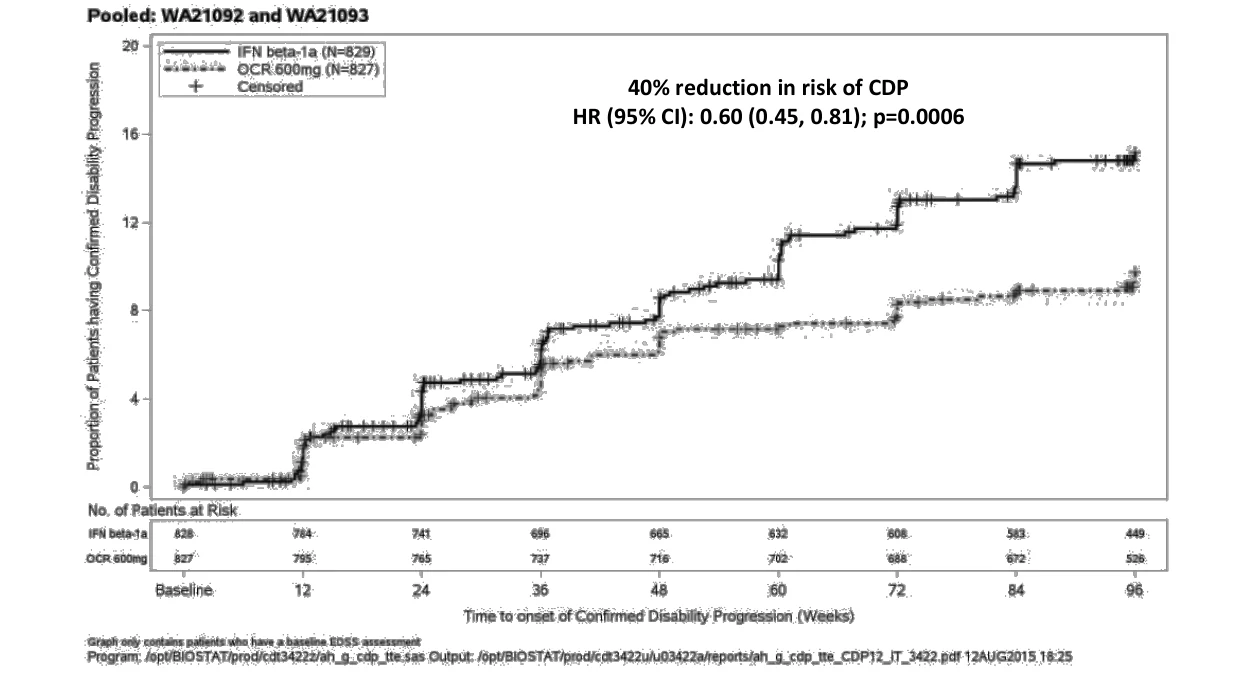
*Pre-specified pooled analysis of Study WA21092 and Study WA21093
Safety Study of Shorter (2-hour) Infusion
Study MA30143 Substudy
The safety of the shorter (2-hour) OCREVUS infusion was evaluated in a prospective, multicenter, randomized, double-blind, controlled, parallel arm Study MA30143 substudy in adult patients with Relapsing-Remitting Multiple Sclerosis who were naïve to other disease modifying treatments and did not experience a serious infusion reaction with any previous OCREVUS infusion. The first dose of OCREVUS was administered as two 300 mg infusions (600 mg total) separated by 14 days. After enrollment in the substudy, starting from their second dose or onwards (Dose 2 to 6), patients were randomized in a 1:1 ratio to receive an OCREVUS infusion over approximately 3.5 hours or 2 hours every 24 weeks, with appropriate premedication prior to each infusion (see 4 Dosage and Administration). The randomization was stratified by region and the dose at which patients were first randomized.
The primary endpoint of this substudy was the proportion of patients with infusion reactions occurring during or within 24 hours following the first randomized infusion of OCREVUS. The primary analysis was performed when 580 patients were randomized, most of them (469/579, 81%) received a single randomized infusion of OCREVUS over 3.5 or 2.0 hours. The proportions of patients with infusion reactions occurring during or within 24 hours following the first randomized infusion were similar (24.4% in the 2-hour infusion group compared to 23.3% in the 3.5-hour infusion group). The stratified group difference was similar. Overall, in all randomized doses, the majority of the infusion reactions were mild or moderate. Two infusion reactions were severe in intensity with one severe infusion reaction in each group. There were no life-threatening, fatal, or serious infusion reactions in this substudy.
40% reduction in risk of CDP
HR (95% CI): 0.60 (0.45, 0.81); p=0.0006
Primary Progressive Multiple Sclerosis (PPMS)
NOC/c
Study WA25046
Study Demographics and Trial Design
The efficacy and safety of OCREVUS were also evaluated in a randomized, double-blind, placebo-controlled clinical trial in patients with primary progressive MS.
Patients were randomised 2:1 to receive either OCREVUS 600 mg or placebo as 2 x 300 mg IV infusions, administered 2 weeks apart every 24 weeks for at least 120 weeks. Randomization was stratified by region (United States [US] versus rest of the world [RoW]) and age (≤ 45 versus > 45). Selection criteria required a screening EDSS of 3 to 6.5 and a score of 2 or greater for the EDSS pyramidal functional system due to lower extremity findings. In addition, subjects were required to be between 18 to 55 years of age, with disease duration from the onset of MS symptoms less than 10 years in patients with an EDSS at screening ≤ 5.0 or less than 15 years in patients with an EDSS at screening > 5.0. Neurological assessments were conducted every 12 weeks. An MRI scan was obtained at baseline and at Weeks 24, 48, and 120.
The primary outcome for the study was the time to onset of disability progression attributable to MS confirmed to be present at the next neurological assessment at least 12 weeks later. Disability progression occurred when the EDSS score increased by 1 point or more from the baseline EDSS if the baseline EDSS was 5.5 points or less, or by 0.5 points or more if the baseline EDSS was more than 5.5 points. In the study, confirmed disability progression also was deemed to have occurred if patients who had onset of disability progression discontinued participation in the study before the next assessment. Additional outcome measures included timed 25-foot walk, and percentage change in T2 hyperintense lesion volume.
The study randomized 488 patients to OCREVUS and 244 to placebo; 21% of OCREVUS-treated patients and 34% of placebo-treated patients did not complete the trial. Overall, demographic and baseline characteristics were well balanced across the two treatment groups.
Study design and baseline characteristics of the study population are presented in Table 9.
Table 9 - Study design and baseline characteristics for PPMS Study WA25046
| Study Name | PPMS Study WA25046 (n=732) | |
| Study design | ||
| Study population | Patients with primary progressive form of MS | |
| Study duration | Event-driven (Minimum 120 weeks and 253 confirmed disability progression events) Median follow-up time: OCREVUS 3.0 years, Placebo 2.8 years | |
| Disease history at screening | Age 18-55 years, EDSS of 3.0 to 6.5 | |
| Treatment groups | Group A: OCREVUS 600 mg Group B: Placebo, in 2:1 randomization | |
| Baseline characteristics | OCREVUS 600 mg (n=488) | Placebo (n=244) |
| Mean Age (years) | 44.7 | 44.4 |
| Gender distribution (% male/% female) | 51.4/48.6 | 49.2/50.8 |
| Mean/Median duration since onset of MS symptoms (years) | 6.7/6.0 | 6.1/5.5 |
| Mean/Median disease duration since PPMS diagnosis (years) | 2.9/1.6 | 2.8/1.3 |
| Mean EDSS | 4.7 | 4.7 |
Key clinical and MRI efficacy results are presented in Table 10 and Figure 2.
Table 10 - Key Clinical and MRI Endpoints from PPMS Study WA25046
| PPMS Study WA25046 | |||||||
| Endpoints | OCREVUS 600 mg (n=488) | Placebo (n=244) | |||||
| Clinical Endpoints | |||||||
Primary efficacy endpoint Proportion of patients with 12 weeks - Confirmed Disability Progression1 (primary endpoint) Hazard ratio (95% CI)2 Risk reduction | 32.9% | 39.3% | |||||
0.76 (0.59, 0.98) 24% (p=0.0321) | |||||||
| Proportion of patients with 24 weeks - Confirmed Disability Progression1 | 29.6% | 35.7% | |||||
Hazard ratio (95% CI)2 Risk reduction | 0.75 (0.58, 0.98) 25% (p=0.0365) | ||||||
| MRI Endpoints | |||||||
Percentage change in T2 hyperintense lesion volume, from baseline to Week 1203 Adjusted Geometric Mean4 (ratio relative to baseline, at week 120) | -3.4 0.966 | 7.4 1.074 | |||||
| Ratio of Adjusted Geometric Means (95% CI) | 0.900 (0.88, 0.92) (p< 0.0001)5 | ||||||
1 Defined as an increase of ≥ 1.0 point from the baseline EDSS score for patients with baseline score of 5.5 or less, or ≥ 0.5 when the baseline score is > 5.5 2 Hazard ratio was estimated using Cox model stratified by geographical region (US vs. ROW) and age (≤ 45, > 45 years); p-value was estimated using log-rank test stratified by geographical region (US vs. ROW) and age (≤ 45, > 45 years. 3 Percentage change calculated as (adj. geometric mean ratio -1) *100 4 Estimates (back-transformed) are based on mixed-effect model for repeated measures (MMRM) 5 Ranked ANCOVA model adjusting for baseline T2 lesion volume, age and geographical region Type I error was strictly controlled using hierarchical test procedure. | |||||||
Figure 2 - Kaplan-Meier Plot of Time to Onset of Confirmed Disability Progression Sustained for at Least 12 Weeks with the Initial Event of Neurological Worsening Occurring during the Double-blind Treatment Period (ITT Population)*
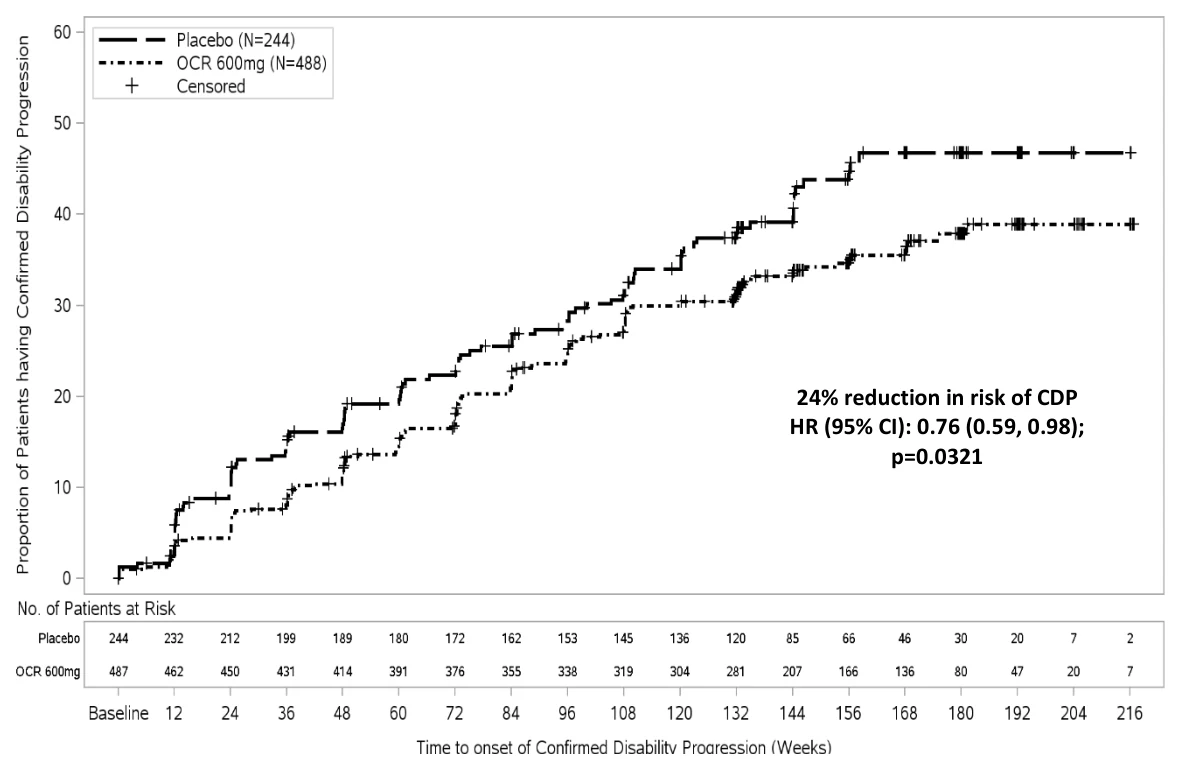
* All patients in this analysis had a minimum of 120 weeks of follow-up. The primary analysis is based on all disability progression events accrued including 21 with initial disability progression but without a confirmatory EDSS score at 12 Weeks.
In the overall population in study WA25046, the proportion of patients with 20 percent worsening of the timed 25-foot walk confirmed at 12 weeks was 49% in OCREVUS-treated patients compared to 59% in placebo-treated patients (25% risk reduction).
A sensitivity analysis of the primary endpoint, where patients with initial disease progression who discontinued the study before having a confirmatory visit were treated as having no progression, resulted in a HR of 0.82 [95% CI: 0.63, 1.07], p=0.1477.
In exploratory subgroup analyses of study WA25046, the proportion of female patients with disability progression confirmed at 12 weeks after onset was similar in OCREVUS-treated patients and placebo-treated patients (approximately 36% in each group). In male patients, the proportion of patients with disability progression confirmed at 12 weeks after onset was approximately 30% in OCREVUS-treated patients and 43% in placebo treated patients. Other clinical and MRI endpoints generally favoured OCREVUS numerically across these subgroups. These results are exploratory in nature and should be interpreted with caution.
Pediatric Patients
Relapsing Remitting Multiple Sclerosis
Study WN42086 (Operetta 2)
Study Demographics and Trials Design
24% reduction in risk of CDP
HR (95% CI): 0.76 (0.59, 0.98); p=0.0321
Efficacy and safety of OCREVUS in pediatric patients aged 10 years to less than 18 years diagnosed with relapsing remitting multiple sclerosis (RRMS) were evaluated in a randomized, double-blind, double-dummy, active comparator-controlled non-inferiority clinical study (Study WN42086, Operetta 2). Patients were randomised 1:1 to receive either treatment arm:
- OCREVUS or placebo by IV infusion every 24 weeks at a dose of 300 mg for patients < 35 kg and 600 mg for patients ≥ 35 kg. For patients weighing < 35kg, the first dose of ocrelizumab or placebo was administered as 2 x 150 mg IV infusions given 14 days apart, for a total dose of 300 mg. For patients weighing ≥ 35 kg, the first dose of ocrelizumab or placebo was administered as 2 x 300 mg IV infusions given 14 days apart, for a total dose of 600 mg.
- Fingolimod or placebo orally daily at a dose of 0.25 mg for patients with a body weight ≤ 40 kg and 0.5 mg for patients > 40kg.
Randomization was stratified by region (United States vs. rest of world [ROW]), pre-pubertal status, and presence of T1 Gd lesions at baseline. Patients were treated in the double-blind period until the primary analysis, which was conducted after the last randomized patient completed 24 weeks since first blinded ocrelizumab or placebo IV infusion.
Selection criteria required patients to be between ≥ 10 to < 18 years of age, with a body weight of ≥ 25 kg, and a screening EDSS of 0 to 5.5. In addition, patients had to have disease activity, defined as at least one relapse during the year prior to screening or two relapses in the previous two years prior to screening or evidence of at least one Gd-enhancing lesion on MRI within 6 months prior to randomization (including screening MRI). An MRI scan was obtained at baseline and at Weeks 12, 24, 48, 72, and 96.
The primary outcome for this study was to demonstrate non-inferiority of ocrelizumab compared with fingolimod on protocol-defined annualized relapse rate during the double-blind period. Additional MRI outcome measures included the number of new or enlarging T2-hypertense lesions during the double-blind period and the number of T1 Gd-enhancing lesions at Week 12.
All patients weighed 35 kg or more and received a dose of 600 mg ocrelizumab by IV infusion. All patients receiving fingolimod were given a daily dose of 0.5 mg orally. The median treatment duration in weeks (min-max) was 76.7 (32.1-159.7) for patients receiving OCREVUS and 73.9 (11.0-145.0) for patients receiving fingolimod. 89 (96%) participants receiving OCREVUS and 81 (86%) participants receiving fingolimod were ongoing in the study at the time of the primary analysis.
Study design and baseline characteristics of the study population are summarized in Table 11.
Table 11 – Study design and baseline characteristics for Study WN42086
| Study Name | Study WN42086 OPERETTA 2 (n=187) | |
| Study design | ||
| Study population | Pediatric patients aged ≥10 to <18 years with relapsing remitting multiple sclerosis (RRMS) | |
| Study duration | Flexible duration, until the last patient enrolled completed at least 24 weeks on treatment | |
| Disease history at screening | At least one relapse during the year prior to screening or two relapses in the previous two years prior to screening or evidence of at least one Gd-enhancing lesion on MRI within 6 months prior to randomization (including screening MRI); EDSS of 0-5.5 (inclusive) | |
| Treatment groups | OCREVUS IV 600 mg Fingolimod 0.5 mg capsule, in a 1:1 randomization | |
| Baseline characteristics | OCREVUS 600 mg (n=93) | Fingolimod 0.5 mg (n=94) |
Mean age, years (min-max) | 15.0 (11.0-17.0) | 15.0 (12.0-17.0) |
| Gender distribution (% male/% female) | 28.0/72.0 | 34.0/66.0 |
Median weight, kg (min-max) | 63.1 (50.0-154.2) | 63.5 (42.3-123.0) |
| Mean/Median duration since onset of MS symptoms (years) | 1.1/0.7 | 1.3/0.9 |
| Mean/Median disease duration since RRMS diagnosis (years) | 0.6/0.4 | 0.7/0.5 |
| Mean number of relapses in the last year | 1.4 | 1.5 |
| Proportion of patients with Gd-enhancing T1 lesion (%) | 47.3 | 46.8 |
| Mean number of T2 lesions | 57.4 | 57.4 |
Study Results
Key clinical and MRI efficacy results are presented in Table 12.
Table 12 – Key Clinical and MRI Endpoints from RRMS Study WN42086
| Endpoints | Study WN42086 (Operetta 2) | ||||||
| OCREVUS 600 mg (n=93) | Fingolimod 0.5 mg (n=94) | ||||||
| Clinical Endpoints | |||||||
| Annualized Relapse Rate (Primary Endpoint) 1 | 0.070 | 0.135 | |||||
Rate Ratio (95% CI) 4 Relative Reduction | 0.517 (0.193, 1.329) 2 48.3% | ||||||
| MRI Endpoints | |||||||
| Annualized rate of new and/or enlarging T2 hyperintense lesions 1 | 3.827 | 7.275 | |||||
Rate Ratio (95% CI) 4 Relative Reduction | 0.522 (0.359, 0.760) 3 (p=0.001) 5 47.8% | ||||||
| Rate of T1 Gd-enhancing lesions at Week 12 | 0.054 | 0.375 | |||||
Rate Ratio (95% CI) 4 Relative Reduction | 0.128 (0.034, 0.414) (p=0.001) 5 87.2% | ||||||
1 During the double-blind treatment period. 2 The prespecified non-inferiority margin was 3.0 for annualized relapse rate. 3 The prespecified non-inferiority margin was 1.27 for annualized rate of new and/or enlarging T2 hyperintense lesions. 4 The rate ratio, corresponding 95%CI were estimated using a negative binomial model adjusted by region [U.S. vs. Rest of World], pre-pubertal status (yes vs. no), and presence of T1 Gd lesions at baseline [yes vs. no]. 5 The prespecified hierarchical testing order for superiority is: 1) T2 new/enlarging lesions (DBP); 2) T1 Gd-enhancing lesions (Week 12). | |||||||
15. Microbiology
No microbiological information is required for this drug product.
16. Non-Clinical Toxicology
Genotoxicity
No studies have been performed to assess the genotoxic potential of ocrelizumab. As an antibody, ocrelizumab is not expected to interact directly with DNA.
Carcinogenicity
No carcinogenicity studies have been performed to assess the carcinogenic potential of ocrelizumab.
Reproductive and developmental toxicology
Impairment of Fertility
No effects on reproductive organs were observed in male monkeys administered ocrelizumab by intravenous injection (three loading doses of 15 or 75 mg/kg, followed by weekly doses of 20 or 100 mg/kg) for 8 weeks. There were also no effects on estrus cycle in female monkeys administered ocrelizumab over three menstrual cycles using the same dosing regimen. The doses tested in monkey are 2 and 10 times the recommended human dose of 600 mg, on a mg/kg basis.
Reproductive and Developmental Toxicity
Following intravenous administration of ocrelizumab to pregnant monkeys during organogenesis (loading doses of 15 or 75 mg/kg on gestation days 20, 21, and 22, followed by weekly doses of 20 and 100 mg/kg, respectively), depletion of B-lymphocytes in lymphoid tissue (spleen and lymph nodes) was observed in fetuses at both doses.
Intravenous administration of ocrelizumab (three daily loading doses of 15 or 75 mg/kg, followed by weekly doses of 20 and 100 mg/kg, respectively) to pregnant monkeys throughout the period of organogenesis and continuing through at least the first 28 days post-partum (total of 5 doses during the lactation period) resulted in perinatal deaths (some associated with bacterial infections), renal toxicity (glomerulopathy and inflammation), lymphoid follicle formation in the bone marrow, and severe decreases in circulating B-lymphocytes in neonates. The cause of the neonatal deaths is uncertain; however, both affected neonates were found to have bacterial infections. Reduced testicular weight was observed in neonates at the high dose. In addition, ocrelizumab was shown to be excreted in the breast milk of monkeys (assessed 25 to 28 days post-partum) and was also detected in the serum of monkey infants up to 180 days after birth.
A no-effect dose for adverse developmental effects was not identified; the doses tested in monkey are 2 and 10 times the recommended human dose of 600 mg, on a mg/kg basis.