


Product Monograph - Mercaptopurine Tablets USP
RECENT MAJOR LABEL CHANGES
| 3 Serious Warnings and Precautions Box | 11/2023 |
|---|---|
| 4 Dosage and Administration, 4.2 Recommended Dose and Dosage Adjustment | 11/2023 |
| 7 Warnings and Precautions, Immune | 11/2023 |
| 7 Warnings and Precautions, Carcinogenesis and Mutagenesis | 11/2023 |
| 7 Warnings and Precautions, Hematologic | 11/2023 |
| 7 Warnings and Precautions, Monitoring and Laboratory Tests | 11/2023 |
| 7.1 Special Populations, 7.1.3 Pediatrics | 11/2023 |
TABLE OF CONTENTS
Sections or subsections that are not applicable at the time of authorization are not listed.
RECENT MAJOR LABEL CHANGES ........................................................................................... 2
TABLE OF CONTENTS ............................................................................................................ 2
PART I: HEALTH PROFESSIONAL INFORMATION ..................................................................... 4
1 INDICATIONS .............................................................................................................. 4
1.1 Pediatrics ................................................................................................................... 4
1.2 Geriatrics ................................................................................................................... 4
2 CONTRAINDICATIONS ................................................................................................. 4
3 SERIOUS WARNINGS AND PRECAUTIONS BOX ............................................................ 5
4 DOSAGE AND ADMINISTRATION ................................................................................. 5
4.1 Dosing Considerations .............................................................................................. 5
4.2 Recommended Dose and Dosage Adjustment ......................................................... 5
4.4 Administration .......................................................................................................... 7
4.5 Missed Dose .............................................................................................................. 7
5 OVERDOSAGE ............................................................................................................. 7
6 DOSAGE FORMS, STRENGTHS, COMPOSITION AND PACKAGING ................................. 7
7 WARNINGS AND PRECAUTIONS .................................................................................. 8
7.1 Special Populations ................................................................................................. 13
7.1.1 Pregnant Women ................................................................................................ 13
7.1.2 Breast-feeding ..................................................................................................... 13
7.1.3 Pediatrics ............................................................................................................. 13
7.1.4 Geriatrics ............................................................................................................. 14
8 ADVERSE REACTIONS................................................................................................ 14
8.1 Adverse Reaction Overview .................................................................................... 14
8.3 Less Common Clinical Trial Adverse Reactions ....................................................... 15
8.5 Post-Market Adverse Reactions .............................................................................. 15
9 DRUG INTERACTIONS ............................................................................................... 15
9.2 Drug Interactions Overview .................................................................................... 15
9.4 Drug-Drug Interactions ........................................................................................... 16
9.5 Drug-Food Interactions ........................................................................................... 16
9.6 Drug-Herb Interactions ........................................................................................... 16
9.7 Drug-Laboratory Test Interactions.......................................................................... 16
10 CLINICAL PHARMACOLOGY ....................................................................................... 17
10.1 Mechanism of Action .......................................................................................... 17
10.2 Pharmacodynamics ............................................................................................. 17
10.3 Pharmacokinetics ................................................................................................ 17
11 STORAGE AND STABILITY .......................................................................................... 19
12 SPECIAL HANDLING INSTRUCTIONS ........................................................................... 19
PART II: SCIENTIFIC INFORMATION ..................................................................................... 21
13 PHARMACEUTICAL INFORMATION ........................................................................... 21
14 CLINICAL TRIALS ....................................................................................................... 21
14.2 Comparative Bioavailability Studies .................................................................... 21
15 MICROBIOLOGY ....................................................................................................... 22
16 NON-CLINICAL TOXICOLOGY ..................................................................................... 22
17 SUPPORTING PRODUCT MONOGRAPHS .................................................................... 26
PATIENT MEDICATION INFORMATION ................................................................................ 27
PART I: HEALTH PROFESSIONAL INFORMATION
1 INDICATIONS
Mercaptopurine Tablets USP (mercaptopurine) is indicated for:
- The maintenance therapy of the acute lymphatic (lymphocytic, lymphoblastic) leukemia as part of a combination regimen.
Combination therapy with multiple agents has produced results superior to that achieved with mercaptopurine alone. The effectiveness of mercaptopurine in maintenance programs in adult lymphatic leukemia has not been established.
Mercaptopurine is not effective for prophylaxis or treatment of central nervous system leukemia.
Mercaptopurine is not effective in acute myelogenous leukemia, chronic lymphocytic leukemia, the lymphomas (including Hodgkin's Disease), or solid tumors.
1.1 Pediatrics
Pediatrics (< 18 years of age): Acute lymphatic leukemia occurring in children responds, in general, more favorably to mercaptopurine than the same disorder occurring in adults (see 7.1.3 Special Populations).
1.2 Geriatrics
No specific studies have been carried out in the geriatrics (see 4.2 Recommended Dose and Dosage Adjustment and 7.1.4 Geriatrics).
2 CONTRAINDICATIONS
- Patients who are hypersensitive to this drug or to any ingredient in the formulation. For a complete listing, see 6 DOSAGE FORMS, STRENGTHS, COMPOSITION AND PACKAGING section of the product monograph.
- Mercaptopurine Tablets USP should only be used when a diagnosis of acute leukemia has been adequately established and the responsible physician is knowledgeable in assessing response to chemotherapy. Mercaptopurine is contraindicated in patients whose disease has demonstrated prior resistance to this drug. In animals and man there is usually complete cross-resistance between mercaptopurine and thioguanine.
Immunization using a live organism vaccine has the potential to cause infection in immunocompromised hosts. Therefore, immunizations with live organism vaccines is
- contraindicated in patients treated with Mercaptopurine Tablets USP (See 7 Warnings and Precautions; Immune).
3 SERIOUS WARNINGS AND PRECAUTIONS BOX
Serious Warnings and Precautions
|
|---|
4 DOSAGE AND ADMINISTRATION
4.1 Dosing Considerations
Once complete hematologic remission is obtained with induction and consolidation therapies, maintenance therapy with Mercaptopurine Tablets USP in combination with other agents can be considered. This is indicated in children with acute lymphatic leukemia. The use of mercaptopurine in maintenance schedules for adults with acute lymphatic leukemia has not been established to be effective. If remission is achieved, maintenance doses will vary from patient to patient. It is to be emphasized that in children with acute lymphatic leukemia in remission, superior results have been obtained when mercaptopurine has been combined with other agents (most frequently with methotrexate) for remission maintenance. Mercaptopurine should rarely be relied upon as a single agent for the maintenance of remissions induced in acute leukemia.
4.2 Recommended Dose and Dosage Adjustment
The recommended daily maintenance dosage of mercaptopurine is 1.5 mg/kg to 2.5 mg/kg orally once daily as part of combination chemotherapy maintenance regimen.
The response to this agent depends upon the particular sub classification of the acute lymphatic leukemia and the age of the patient (pediatric or adult).
Dosage modification in patients with TPMT and NUDT15-deficiency
TPMT deficiency
Consider testing for TPMT and NUDT15 deficiency in patients who experience severe myelosuppression or repeated episodes of myelosuppression.
Patients with inherited little or no thiopurine S-methyltransferase (TPMT) activity are at increased risk for severe Mercaptopurine Tablets USP toxicity from conventional doses of mercaptopurine and generally require dose reduction (See 7 WARNINGS AND PRECUATIONS; Patients with NUDT15 variant). The optimal starting dose for homozygous deficient patients has not been established. (See 10 CLINICAL PHARMACOLOGY)
Most patients with heterozygous TPMT deficiency tolerated recommended Mercaptopurine Tablets USP doses, but some require dose reduction. Genotypic and phenotypic testing of TPMT status are available. (See 10 CLINICAL PHARMACOLOGY.)
NUDT15 deficiency
Patients with inherited mutations in the NUDT15 gene are at an increased risk for severe mercaptopurine toxicity. These patients generally require dose reduction, particularly those being NUDT15 variant homozygotes (see 7 WARNINGS AND PRECAUTIONS, Hematologic). Genotypic testing of NUDT15 variants may be considered before initiating 6-mercaptopurine therapy. In any case, close monitoring of blood counts is necessary. The prescribing physician is advised to establish whether dose reduction is required based on patient response to treatment as well as their genetic profile.
Dosage modification in Hepatic Impairment patients
Use the lowest recommended starting dosage for Mercaptopurine Tablets USP in patients with hepatic impairment. Adjust the dosage to maintain absolute neutrophil count (ANC) at a desirable level and for adverse reactions (See 7 WARNINGS AND PRECAUTIONS, Hepatic).
Dosage modification in Renal Impairment patients
Consideration should be given to starting with smaller dosages in patients with impaired renal function, since these patients may have a slower elimination of the drug and a greater cumulative effect. See 8 ADVERSE REACTIONS.
Use the lowest recommended starting dosage for Mercaptopurine Tablets USP in patients with renal impairment (CLcr less than 50 mL/min). Adjust the dosage to maintain absolute neutrophil count (ANC) at a desirable level and for adverse reactions.
Dosage Modification with Concomitant Use of Allopurinol
Reduce the dose of Mercaptopurine Tablets USP to one-third to one-quarter of the current dosage when coadministered with allopurinol (See 8 ADVERSE REACTION, Renal).
Dose Modification for Geriatrics
No specific studies have been carried out in the elderly. In general, dose selection for an elderly patient should be cautious, usually starting at the low end of the dosing range, reflecting the greater frequency of decreased hepatic, renal, or cardiac function, and of concomitant disease or other drug therapy. It is advisable to monitor renal and hepatic function in these patients, and if there is any impairment, consideration should be given to reducing the Mercaptopurine Tablets USP dosage (see 7.1.4 Geriatrics).
4.4 Administration
Do not administer to patients who are unable to swallow tablets.
4.5 Missed Dose
If a dose is missed, the patient should be instructed to take their next dose as scheduled. Doses should not be doubled.
5 OVERDOSAGE
Signs and symptoms of overdosage may be immediate such as anorexia, nausea, vomiting and diarrhea; or delayed such as myelosuppression, liver dysfunction, and gastroenteritis. There is no known pharmacologic antagonist of mercaptopurine. The drug should be discontinued immediately if unintended toxicity occurs during treatment. If a patient is seen immediately following an accidental overdosage of the drug, induced emesis may be useful. Active measures (such as the use of activated charcoal or gastric lavage) may not be effective in the event of overdose unless the procedure can be undertaken within 60 minutes of ingestion. Dialysis cannot be expected to clear mercaptopurine. Hemodialysis is thought to be of marginal use due to the rapid intracellular incorporation of mercaptopurine into active metabolites with long persistence.
| For management of a suspected drug overdose, contact your regional poison control centre. |
|---|
6 DOSAGE FORMS, STRENGTHS, COMPOSITION AND PACKAGING
Table - Dosage Forms, Strengths, Composition and Packaging
| Route of Administration | Dosage Form / Strength / Composition | Non-medicinal Ingredients |
| Oral | Tablet / 50 mg | Corn starch, hypromellose, lactose, lactose monohydrate, magnesium stearate, potato starch, sodium starch glycolate, and stearic acid |
Description
Mercaptopurine Tablets USP 50 mg are pale yellow, scored, biconvex tablets, with product identification “54 420” on one side. Bottles of 25 and 250 tablets.
7 WARNINGS AND PRECAUTIONS
General
The safe and effective use of Mercaptopurine Tablets USP demands a thorough knowledge of the natural history of the condition being treated. After selection of an initial dosage schedule, therapy will frequently need to be modified depending upon the patient's response and manifestations of toxicity.
The most frequent, serious, toxic effect of mercaptopurine is myelosuppression resulting in leukopenia, thrombocytopenia and anemia. Whether or not these manifestations demand modification or cessation of treatment and/or dosage depends both upon the response of the underlying disease and a careful consideration of supportive facilities (granulocyte and platelet transfusions) which may be available. Life-threatening infections and bleeding have been observed as a consequence of mercaptopurine-induced granulocytopenia and thrombocytopenia. Severe hematologic toxicity may require supportive therapy with platelet transfusions for bleeding, and antibiotics and granulocyte transfusions if sepsis is documented.
It is important to discontinue the drug temporarily at the first evidence of an abnormally large fall in white blood cell count, platelet count or hemoglobin concentration, as leukocyte and platelet counts continue to fall after treatment is stopped. In many patients with severe depression of the formed elements of the blood due to mercaptopurine, the bone marrow appears hypoplastic on aspiration or biopsy, whereas in other cases it may appear normocellular. The qualitative changes in the erythroid elements towards the megaloblastic series, characteristically seen with the folic acid antagonists and some other antimetabolites, are not seen with this drug.
It is recommended that evaluation of the hemoglobin or hematocrit, total white blood cell count and differential count, and quantitative platelet count be obtained weekly while the patient is on mercaptopurine therapy.
In cases where the cause of fluctuations in the formed elements in the peripheral blood is obscure, bone marrow examination may be useful for the evaluation of marrow status. The decision to increase, decrease, continue or discontinue a given dosage of mercaptopurine must be based not only on the absolute hematologic values, but also upon the rapidity with which changes are occurring.
In many instances, complete blood counts will need to be done more frequently than once weekly (often daily) in order to evaluate the effect of the therapy. The dosage of mercaptopurine may need to be reduced when this agent is combined with other drugs whose primary toxicity is myelosuppression.
Carcinogenesis and Mutagenesis
Mercaptopurine in common with other anti-metabolites causes chromosomal aberrations in mice, rats and man and induces dominant-lethal mutations in male mice. Carcinogenic potential exists in man, as post-marketing surveys have documented the occurrence of acute non-lymphocytic leukemia, acute myelogenous leukemia and chronic myeloid leukemia in patients treated with mercaptopurine. These data include patients who received mercaptopurine for non-neoplastic disorders.
In addition, post marketing cases of the rare, very aggressive and usually fatal hepatosplenic T-cell lymphoma (HSTCL) have been reported in patients treated with mercaptopurine (see 8 ADVERSE REACTIONS).
Patients receiving immunosuppressive drugs, including mercaptopurine, are known to have an increased risk of developing other malignancies, notably skin cancer (melanoma and non-melanoma, sarcomas (Kaposi’s and non-Kaposi’s), and uterine cervical cancer in situ. The increased risk appears to be related to the degree and duration of immunosuppression.
It has been reported that discontinuation of immunosuppression may provide partial regression of lymphoproliferative disorders. A treatment regimen containing multiple immunosuppressants (including thiopurines) should therefore be used with caution as this could lead to lymphoproliferative disorders, some with reported fatalities. A combination of multiple immunosuppressants, given concomitantly increases the risk of Epstein-Barr virus-associated lymphoproliferative disorders.
Photosensitivity reactions have been reported in patients treated with mercaptopurine. For patients with increased risk for skin cancer, exposure to sunlight and UV light should be limited, and patients should wear protective clothing and use a sunscreen with a high protection factor.
Hematologic
Bone Marrow Toxicity
The most consistent dose-related toxicity is bone marrow suppression. This may be manifested by anemia, leukopenia, thrombocytopenia, or any combination of these. Any of these findings may also indicate progression of the underlying disease. It is imperative that patients be instructed to report promptly the development of fever, sore throat, signs of local infection, bleeding from any site, or symptoms suggestive of anemia. Since mercaptopurine may have a delayed effect, it is important to withdraw the medication temporarily at the first sign of an abnormally large fall in any of the formed elements of the blood. Careful monitoring of haematological parameters should be conducted during therapy (See 7 WARNINGS AND PRECAUTIONS, Monitoring and Laboratory Tests).
Bone marrow toxicity may be more profound in patients treated with concomitant allopurinol (see 9 DRUG INTERACTIONS and 4 DOSAGE AND ADMINISTRATION). This problem could be exacerbated by coadministration with drugs that inhibit TPMT, such as olsalazine, mesalazine, or sulphasalazine.
Patients with TPMT variant
Mercaptopurine is primarily inactivated by metabolism through the enzyme thiopurine S-methyltransferase (TPMT), whose activity can be highly variable due to polymorphisms in the TPMT gene. Patients with low or intermediate TPMT activity accumulate higher concentrations of mercaptopurine cytotoxic metabolites than those with normal TPMT activity. Individuals who are homozygous for an inherited defect in the TPMT (thiopurine methyltransferase) gene are unusually sensitive to the myelosuppressive effects of mercaptopurine and prone to developing rapid bone marrow suppression following the initiation of treatment. Laboratory tests are available, both genotypic and phenotypic, to determine the TPMT status. Substantial dose reductions are generally required for homozygous-TPMT deficiency patients (two non-functional alleles) to avoid the development of life threatening bone marrow suppression (See 10.3 Pharmacokinetics). Although heterozygous patients with intermediate TPMT activity may have increased mercaptopurine toxicity, this is variable, and the majority of patients tolerate normal doses of mercaptopurine. If a patient has clinical or laboratory evidence of severe toxicity, particularly myelosuppression, TPMT testing should be considered. In patients who exhibit excessive myelosuppression due to 6-mercaptopurine, it may be possible to adjust the mercaptopurine dose and administer the usual dosage of other myelosuppressive chemotherapy as required for treatment (see 4 DOSAGE AND ADMINISTRATION).
A possible association between decreased TPMT activity and secondary leukemias and myelodysplasia has also been reported in individuals receiving mercaptopurine in combination with other cytotoxics.
Patients with NUDT15 variant
Patients with inherited mutated NUDT15 gene are at increased risk for severe 6-mercaptopurine toxicity, such as early leukopenia and alopecia, from conventional doses of thiopurine therapy. They generally, require dose reduction, particularly those being NUDT15 variant homozygotes (see 4.2 Recommended Dose and Dosage Adjustment and 10.3 Pharmacokinetics). Close monitoring of blood count is necessary.
Hepatic
Mercaptopurine is hepatotoxic in animals and man; deaths have been reported from hepatic necrosis. Hepatic injury can occur with any dosage, but seems to occur with greatest frequency when doses of 2.5mg/kg/day are exceeded. The histologic pattern of mercaptopurine hepatotoxicity includes features of both intrahepatic cholestasis and parenchymal cell necrosis, either of which may predominate. It is not clear how much of the hepatic damage is due to direct toxicity from the drug and how much may be due to a hypersensitivity reaction. In some patients jaundice has cleared following withdrawal of mercaptopurine and reappeared with its reintroduction.
Published reports have cited widely varying incidences of overt hepatotoxicity; several reports have indicated that as many as 10 to 40% of patients with acute leukemia develop jaundice while receiving treatment with mercaptopurine.
Usually, clinically detectable jaundice appears early in the course of treatment (1 or 2 months). However, jaundice has been reported as early as 1 week and as late as 8 years after the start of treatment with mercaptopurine.
Monitoring of serum transaminase levels, alkaline phosphatase, and bilirubin levels may allow early detection of hepatotoxicity. It is advisable to monitor these liver function tests at weekly intervals when first beginning therapy and at monthly intervals thereafter. Liver function tests may be advisable more frequently in patients who are receiving mercaptopurine with other hepatotoxic drugs or with known pre-existing liver disease.
The concomitant administration of mercaptopurine with other hepatotoxic agents requires especially careful clinical and biochemical monitoring of hepatic function. Combination therapy involving mercaptopurine with other drugs not felt to be hepatotoxic should nevertheless be approached with caution. The combination of mercaptopurine with doxorubicin was reported to be hepatotoxic in 19 of 20 patients undergoing remission-induction therapy (an unauthorized indication) for leukemia resistant to previous therapy.
The hepatotoxicity has been associated in some cases with anorexia, diarrhea, jaundice, and ascites. Hepatic encephalopathy has occurred. The onset of clinical jaundice, hepatomegaly, or anorexia with tenderness in the right hypochondrium are immediate indications for withholding mercaptopurine until the exact etiology can be identified. Likewise, any evidence of deterioration in liver function studies, toxic hepatitis, or biliary stasis should prompt discontinuation of the drug and lead to a search for an etiology of the hepatotoxicity.
Immune
Immunization
Immunization using a live organism vaccine has the potential to cause infection in immunocompromised hosts. Therefore, immunizations with live organism vaccines is contraindicated in patients treated with Mercaptopurine Tablets USP.
Immunosuppression
Mercaptopurine recipients may manifest decreased cellular hypersensitivities and impaired allograft rejection. Induction of immunity to infectious agents or vaccines will be subnormal in these patients; the degree of immunosuppression will depend on antigen dose and temporal relationship to drug. This drug effect is similar to that of azathioprine and should be carefully considered with regard to intercurrent infections and risk of subsequent neoplasia.
Macrophage activation syndrome
Macrophage activation syndrome (MAS) is a known, life-threatening disorder that may develop in patients with autoimmune conditions, in particular with inflammatory bowel disease, and there could potentially be an increased susceptibility for developing the condition with the use of mercaptopurine. If MAS occurs, or is suspected, evaluation and treatment should be started as early as possible, and treatment with Mercaptopurine Tablets USP should be discontinued. Physicians should be attentive to symptoms of infection such as Epstein-Barr virus and cytomegalovirus, as these are known triggers for MAS.
Monitoring and Laboratory Tests
The most consistent dose-related toxicity is bone marrow suppression. This may be manifest by anemia, leukopenia, thrombocytopenia, or any combination of these. Since mercaptopurine may have a delayed effect, it is important to withdraw the medication temporarily at the first sign of an abnormally large fall in any of the formed elements of the blood. Careful monitoring of haematological parameters should be conducted during maintenance therapy. If a patient has clinical or laboratory evidence of severe bone marrow toxicity, particularly myelosuppression, TPMT and NUDT15 testing should be considered.
TPMT Testing
Although available, phenotypic or genetic screening tests for TPMT deficiency are not currently uniform for patient care in Canada. Genotypic testing can determine the allelic pattern of a patient. Currently, 3 alleles—TPMT*2, TPMT*3A and TPMT*3C— account for about 95% of individuals with reduced levels of TPMT activity. Individuals homozygous for these alleles are
TPMT deficient and those heterozygous for these alleles have variable TPMT (low or intermediate) activity. Phenotypic testing determines the level of thiopurine nucleotides or TPMT activity in erythrocytes and can also be informative. Caution must be used with phenotyping since some coadministered drugs can influence measurement of TPMT activity in blood, and recent blood transfusions will misrepresent a patient’s actual TPMT activity.
Monitoring plasma levels of mercaptopurine during therapy is of questionable value. It is technically difficult to determine plasma concentrations which are seldom greater than 1 to 2 mcg/mL after a therapeutic oral dose.
Reproductive Health: Female and Male Potential
- Fertility
The effect of mercaptopurine on human fertility is unknown for either males or females. Transient oligospermia has been reported.
Based on findings from animal studies, mercaptopurine can impair female and male fertility (See 16 NON-CLINICAL TOXICOLOGY). The long-term effects of mercaptopurine on female and male fertility, including the reversibility have not been studied.
- Teratogenic Risk
Mercaptopurine has been shown to be embryotoxic in rats at doses that are not toxic to the mother. It has also proven to be embryo-lethal when administered at higher doses in the first half of the gestation period. Women receiving mercaptopurine in the first trimester of pregnancy have an increased incidence of abortion; the risk of malformation in offspring surviving first trimester exposure is not accurately known. In a series of 28 women receiving mercaptopurine after the first trimester of pregnancy, 3 mothers died undelivered, 1 delivered a stillborn child, and 1 aborted; there were no cases of macroscopically abnormal fetuses. Teratogenic effects were seen in nonclinical studies (see 16 NON-CLINICAL TOXICOLOGY).
7.1 Special Populations
7.1.1 Pregnant Women
Mercaptopurine Tablets USP can cause fetal harm when administered to pregnant women.
Mercaptopurine Tablets USP should not be given during pregnancy or in patients of reproductive potential without careful weighing of risk versus benefit. Use of Mercaptopurine Tablets USP in pregnant patients should be avoided whenever possible. The pregnancy status of females of reproductive potential should be verified prior to initiating Mercaptopurine Tablets USP treatment. (See 7 WARNINGS AND PRECAUTIONS, Reproductive Health: Female and Male Potential).
Females of reproductive potential should be advised to use effective contraception during treatment with Mercaptopurine Tablets USP and for 6 months after the last dose. Males under therapy should be advised to use effective contraception during treatment and for 3 months after the last dose. (See 16 NON-CLINICAL TOXICOLOGY).
7.1.2 Breast-feeding
Mercaptopurine has been detected in the breast milk of renal transplant patients receiving immunosuppressive therapy with azathioprine, a pro-drug of mercaptopurine. Mothers receiving Mercaptopurine Tablets USP should not breast feed.
7.1.3 Pediatrics
Pediatrics (< 18 years of age): Hypoglycemia has been reported in pediatric patients with Acute lymphocytic leukemia (ALL) treated with mercaptopurine with a large proportion of the cases in children under 6 years of age.
7.1.4 Geriatrics
No specific studies have been carried out in the elderly. It is advisable to monitor renal and hepatic function in these patients (See 4 DOSAGE AND ADMINISTRATION, Dose Modification for Geriatrics).
8 ADVERSE REACTIONS
8.1 Adverse Reaction Overview
The following clinically significant adverse reactions are described elsewhere in the labeling:
Myelosuppression (see 7 WARNINGS AND PRECAUTIONS, Hematologic); Hepatotoxicity (see 7 WARNINGS AND PRECAUTIONS, Hepatic); Immunosuppression (see 7 WARNINGS AND PRECAUTIONS, Immune); Treatment related malignancies [see 7 WARNINGS AND PRECAUTIONS, Carcinogenesis and Mutagenesis]; Macrophage activation syndrome (see 7 WARNINGS AND PRECAUTIONS, Immune).
Hematologic
The most frequent adverse reaction to mercaptopurine is myelosuppression. Patients without TPMT enzyme activity (homozygous-deficient) are particularly susceptible to hematologic toxicity, and some patients with low or intermediate TPMT enzyme activity are more susceptible to hematologic toxicity than patients with normal TPMT activity, although the latter can also experience severe toxicity. Maintenance of remission generally involves multiple drug regimens whose component agents cause myelosuppression. Anemia, leukopenia, and thrombocytopenia are frequently observed. Dosages and schedules are adjusted to prevent life-threatening cytopenias.
Neoplasms benign, malignant and unspecified (including cysts and polyps)
Secondary Leukemia and myelodysplasia were common (2-6%) (see 7 WARNINGS AND PRECAUTIONS)
Post-marketing cases of hepatosplenic T-cell lymphoma (HSTCL) have been reported in patients treated with mercaptopurine for inflammatory bowel disease (an unauthorized indication).
Gastrointestinal
Intestinal ulceration has been reported as common (3%). Nausea, vomiting and anorexia are uncommon during initial administration, but they may occur during toxicity. Mild diarrhea and sprue-like symptoms have been noted occasionally, but it is difficult at present to attribute these to the medication. Oral lesions are rarely seen, and when they occur they resemble thrush rather than antifolic ulcerations. Rare reports of Oral Ulceration.
Rare reports of pancreatitis (in leukemia patients). Common reports of pancreatitis in the Inflammatory bowl disease (IBD) population (an unauthorized indication).
Renal
Hyperuricemia frequently occurs in patients receiving mercaptopurine as a consequence of rapid cell lysis accompanying the antineoplastic effect. Adverse effects can be minimized by increased hydration, urine alkalinization, and the prophylactic administration of a xanthine oxidase inhibitor such as allopurinol.
Immune system disorders
Hypersensitivity reactions such as Arthralgia; skin rash and drug fever have been reported as common (2 – 2.7%).
Before attributing fever to mercaptopurine, every attempt should be made to exclude more common causes of pyrexia, such as sepsis, in patients with acute leukemia.
Very Rare Facial oedema also has been reported.
8.3 Less Common Clinical Trial Adverse Reactions
Additional side effects have been reported including benign neoplasms, malignant neoplasms skin cancers (melanoma and non-melanoma), sarcomas (Kaposi’s and non-Kaposi’s), and uterine cervical cancer in situ.
8.5 Post-Market Adverse Reactions
In addition to the adverse reaction reports from clinical trials, the following possible adverse reactions have been identified during post-approval use of mercaptopurine:
- Skin and subcutaneous tissue disorders (< 2%): Alopecia (rare), photosensitivity (frequency is unknown)
- Hepatobiliary disorders: Portal hypertension in patients with inflammatory bowel disease (frequency is unknown).
- Metabolism and nutrition disorders: Hypoglycemia in pediatric patients.
9 DRUG INTERACTIONS
9.2 Drug Interactions Overview
The dosage of mercaptopurine may need to be reduced when this agent is combined with other drugs whose primary toxicity is myelosuppression. The concomitant administration of mercaptopurine with other hepatotoxic agents requires especially careful clinical and biochemical monitoring of hepatic function. Combination therapy involving mercaptopurine with other drugs not felt to be hepatotoxic should nevertheless be approached with caution. The combination of mercaptopurine with doxorubicin was reported to be hepatotoxic in 19 of 20 patients undergoing remission-induction therapy for leukemia resistant to previous therapy.
9.4 Drug-Drug Interactions
The drugs listed below are based on either drug interaction case reports or studies, or potential interactions due to the expected magnitude and seriousness of the interaction (i.e., those identified as contraindicated).
Azathioprine: The active metabolite of azathioprine is mercaptopurine.
Allopurinol: When allopurinol and mercaptopurine are administered concomitantly, it is imperative that the dose of mercaptopurine be reduced to one-third to one-quarter of the usual dose. Failure to observe this dosage reduction will result in a delayed catabolism of mercaptopurine and the strong likelihood of inducing severe toxicity.
Warfarin: Inhibition of the anticoagulant effect of warfarin when given with mercaptopurine has been reported. Monitor the international normalized ratio (INR) in patients receiving warfarin and adjust the warfarin dosage as appropriate.
Vaccinations: Vaccination with live organism vaccines is contraindicated in patients receiving mercaptopurine (see 7 WARNINGS AND PRECAUTIONS).
Thioguanine: There is usually complete cross-resistance between mercaptopurine and thioguanine.
Trimethoprim-Sulfamethoxazole: Enhanced marrow suppression has been noted in some patients receiving trimethoprim-sulfamethoxazole with mercaptopurine. The dosage of mercaptopurine may need to be reduced when these two drugs are combined.
Aminosalicylate derivatives: As there is in vitro evidence that aminosalicylate derivatives (e.g. olsalazine, mesalazine or sulphasalazine) inhibit the TPMT enzyme, they should be administered with caution to patients receiving concurrent mercaptopurine therapy (See 7 WARNINGS AND PRECAUTIONS).
9.5 Drug-Food Interactions
Interactions of mercaptopurine with food have not been established.
9.6 Drug-Herb Interactions
Interactions of mercaptopurine with herbal products have not been established.
9.7 Drug-Laboratory Test Interactions
Interactions of mercaptopurine with laboratory tests have not been established.
10 CLINICAL PHARMACOLOGY
10.1 Mechanism of Action
Mercaptopurine is a purine analog that undergoes intracellular transport and activation to form metabolites including thioguanine nucleotides (TGNs). Incorporation of TGNs into DNA or RNA results in cell-cycle arrest and cell death. TGNs and other mercaptopurine metabolites are also inhibitors of de novo purine synthesis and purine nucleotide interconversions. Mercaptopurine was cytotoxic to proliferating cancer cells in vitro and had antitumor activity in mouse tumor models. It is not known which of the biochemical effects of mercaptopurine and its metabolites are directly or predominantly responsible for cell death.
10.2 Pharmacodynamics
The cytotoxic effect of mercaptopurine can be related to the levels of red blood cell mercaptopurine derived thioguanine nucleotides, but not to the plasma mercaptopurine concentration.
Monitoring plasma levels of mercaptopurine during therapy is of questionable value. It is technically difficult to determine plasma concentrations which are seldom greater than 1 to 2 mcg/mL after a therapeutic oral dose. More significantly, mercaptopurine enters rapidly into the anabolic and catabolic pathways for purines and the active intracellular metabolites have appreciably longer half-lives than the parent drug. The biochemical effects of a single dose of mercaptopurine are evident long after the parent drug has disappeared from plasma. Because of this rapid metabolism of mercaptopurine to active intracellular derivatives, hemodialysis would not be expected to appreciably reduce toxicity of the drug. There is no known pharmacologic antagonist to the biochemical actions of mercaptopurine in vivo.
10.3 Pharmacokinetics
Summary of mercaptopurine’s Pharmacokinetic Parameters in the patient population
| Cmax | t½ (min) | AUC0-∞ | Clearance (mL/min/m2) | Volume of distribution (L/kg) | |
| Single dose mean | - | 90 ± 30 | - | 4832 ± 2562 | 0.9 |
Absorption
The bioavailability of oral mercaptopurine shows considerable inter-individual variability. When administered at a dosage of 75 mg/m2 to 7 patients, the bioavailability averaged 16% of the administered dose, with a range of 5 to 37%. The variable bioavailability probably results from the metabolism of a significant portion of mercaptopurine during first-pass hepatic metabolism.
Distribution
The mean time to peak plasma concentration is 2.2 hours with a range of 0.5 to 4 hours.
There is a negligible entry of mercaptopurine into cerebrospinal fluid. Plasma protein binding averages 19% over the concentration range 10 to 50 mcg/mL (a concentration only achieved by intravenous administration of mercaptopurine at doses exceeding 5 to 10 mg/kg).
Metabolism
The main method of elimination for mercaptopurine is by metabolic alteration. The kidneys eliminate approximately 7% of mercaptopurine unaltered within 12 hours of the drug being administered.
Mercaptopurine is inactivated via two major pathways. One is thiol methylation, which is catalyzed by the polymorphic enzyme thiopurine methyltransferase (TPMT), to form the inactive metabolite methyl-6-MP. TPMT activity is highly variable in patients because of a genetic polymorphism in the TPMT gene.
For Caucasians and African Americans, approximately 0.3% (1:300) of patients have two non-functional alleles (homozygous-deficient) of the TPMT gene and have little or no detectable enzyme activity.
Another inactivation pathway is oxidation, which is catalyzed by xanthine oxidase (XO) and forms 6-thiouric acid. This is excreted in the urine.
Excretion
The elimination half-life of mercaptopurine is 90 ± 30 minutes, but the active metabolites have a longer half-life. The apparent body clearance is 4832 ± 2562 mL/min/m2.
Special Populations and Conditions
- Pediatrics
Pharmacokinetics in the pediatric population have not been studied.
- Geriatrics
Pharmacokinetics in the geriatric population have not been studied.
- Hepatic Insufficiency
Pharmacokinetics in individuals with hepatic insufficiency have not been studied (See 7 WARNINGS AND PRECAUTIONS, Hepatic).
- Renal Insufficiency
Slower elimination of the drug and a greater cumulative effect (See 8 ADVERSE REACTIONS, Renal).
- Genetic Polymorphism
Variability in mercaptopurine metabolism is one of the major causes of interindividual differences in systemic exposure to the drug and its active metabolites. Mercaptopurine activation occurs via hypoxanthine-guanine phosphoribosyl transferase (HGPRT) and several enzymes to form 6-thioguanine nucleotides (6-TGNs). The cytotoxicity of mercaptopurine is due, in part, to the incorporation of 6-TGN into DNA.
Approximately 10% of patients have one TPMT non-functional allele (heterozygous) leading to low or intermediate TPMT activity and 90% of individuals have normal TPMT activity with two functional alleles. Homozygous-deficient patients (two non-functional alleles), if given usual doses of mercaptopurine, accumulate excessive cellular concentrations of active thioguanine nucleotides predisposing them to mercaptopurine toxicity. Heterozygous patients with low or intermediate TPMT activity accumulate higher concentrations of active thioguanine nucleotides than people with normal TPMT activity and are more likely to experience mercaptopurine toxicity. TPMT genotyping or phenotyping (red blood cell TPMT activity) can identify patients who are homozygous deficient or have low or intermediate TPMT activity (See 4.2 Recommended Dose and Dosage Adjustment).
Recent studies indicate that a strong association exists between the NUDT15 variant NUDT15 c.415C>T [p.Arg139Cys] (also known as NUDT15 R139C [rs116855232]), which is thought to lead to a loss of function of the NUDT15 enzyme, and thiopurine-mediated toxicity such as leukopenia and alopecia. The frequency of NUDT15 c.415C>T has an ethnic variability of 9.8 % in East Asians, 3.9 % in Hispanics, 0.2 % in Europeans and 0.0 % in Africans, indicating an increased risk for the Asian population. Patients who are NUDT15 variant homozygotes (NUDT15 T risk alleles) are at an excessive risk of thiopurine toxicity compared with the C homozygotes (See 4.2 Recommended Dose and Dosage Adjustment)
11 STORAGE AND STABILITY
Mercaptopurine Tablets USP should be stored in a dry place between 15˚ and 30˚C.
12 SPECIAL HANDLING INSTRUCTIONS
Tablets should be returned to the manufacturer for destruction. Proper precautions should be taken in packaging these materials for transport.
All materials which have come in contact with cytotoxic drugs should be segregated and incinerated at 1000˚C or more. Sealed containers may explode.
Personnel regularly involved in the preparation and handling of cytotoxic agents should have biannual blood examinations.
Care should be taken when handling or halving the tablets so as not to contaminate hands or to inhale the drug.
PART II: SCIENTIFIC INFORMATION
13 PHARMACEUTICAL INFORMATION
Drug Substance
Proper name: Mercaptopurine
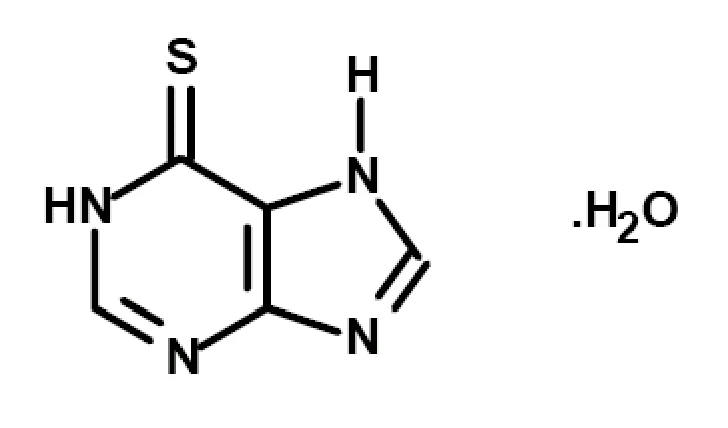
Chemical name: 1,7-dihydro-6H-purine-6-thione monohydrate
Molecular formula and molecular mass: C5H4N4S•H2O (170.20 g/mol)
Structural formula:
Physicochemical properties:
pKa: 7.8 and 11.2
Mercaptopurine is a yellow, odourless, crystalline powder.
14 CLINICAL TRIALS
14.2 Comparative Bioavailability Studies
A single oral dose (1 x 50 mg), randomized, double-blind, two-sequence crossover comparative bioavailability study of Mercaptopurine Tablets USP (SteriMax Inc.) and Purinethol (Novopharm Limited) was conducted in 61 healthy male subjects under fasting conditions. A summary of the bioavailability data from the 61 subjects that were included in the statistical analysis is presented in the table below.
Summary Table of the Comparative Bioavailability Data
Mercaptopurine (1 x 50 mg) Geometric Mean Arithmetic Mean (CV %) | ||||
| Parameter | Test 1 | Reference2 | % Ratio of Geometric Means | 90% Confidence Interval |
AUCT (ng·h/mL) | 126.68 134.07 (35.28) | 124.98 130.80 (31.25) | 101.4 | 96.1 - 106.9 |
AUCI (ng·h/mL) | 127.34 134.17 (35.51) | 126.30 132.12 (31.09) | 100.8 | 95.5 - 106.4 |
Cmax (ng/mL) | 61.50 67.36 (44.58) | 62.75 69.92 (44.63) | 98.0 | 88.5 - 108.6 |
Tmax3 (h) | 1.50 (0.50 - 3.00) | 1.00 (0.50 - 4.00) | ||
T½4 (h) | 2.14 (127.03) | 2.24 (74.29) | ||
1 Mercaptopurine Tablets USP (mercaptopurine), 50 mg tablets (Roxane Laboratories on behalf of SteriMax Inc.)
2 Purinethol (mercaptopurine), 50 mg tablets (Novopharm Limited, Canada)
3 Expressed as the median (range) only
4 Expressed as the arithmetic mean (CV%) only
15 MICROBIOLOGY
Not Applicable
16 NON-CLINICAL TOXICOLOGY
General Toxicology
Acute toxicity studies with mercaptopurine are limited. Since mercaptopurine is the major metabolite of the much more extensively studied azathioprine, consideration of azathioprine toxicology (under the assumption that most of the toxicity of azathioprine is due to its metabolites) is warranted.
Toxic doses of the order of 25 mg/kg in dogs, cats, rats and mice produced anorexia (with associated weight loss), reticulopenia, leukopenia and diarrhea. Microscopic lesions included hypoplasia of bone marrow and degenerative changes in the intestinal epithelium and liver.
Acute Toxicity Studies
| LD50 | Mercaptopurine (mg/kg) | Azathioprine (mg/kg) |
| Mouse (oral) | 480 | 2500 |
| Rat (oral) | - | 400 |
| Mouse(I.P.) | - | 650 |
| Mouse (Germ Free) (I.P.) | - | 750 |
| Mouse (Germ Free) (oral) | - | 2500 |
| Rat (I.P.) | - | 310 |
| Rat (oral) | - | 400 |
| Guinea Pig (I.M.) | 25-50 | - |
Single studies
Acute toxicity studies in mice and rats showed a species variation and a somewhat lower toxicity when azathioprine was administered orally than when it was given intraperitoneally. The single LD50 dose in mice is 650 mg/kg, intraperitoneally, and about 2500 mg/kg, orally. In rats, the single LD50 is 310 mg/kg, intraperitoneally, and 400 mg/kg, orally. Death after an LD50 dose, and even after an LD100 dose, was delayed two to seven days. Subacute toxicity studies also demonstrated the cumulative toxicity. When the drug was given to mice for five successive days, the maximum tolerated daily dose was 100 mg/kg intraperitoneally and 200 mg/kg orally. In rats given five consecutive daily doses, the LD50 was 100 mg/kg whether the drug was given intraperitoneally or orally, and in these animals death occurred within a day or two of the last dose.
Repeat-dose studies
Chronic toxicity studies in rats revealed that all the animals that died of drug toxicity at the two highest dosage levels (60 mg/kg body weight/day and 180 mg/kg body weight/day incorporated in the diet) showed agranulocytic spleens and bone marrows and hemorrhagic lungs. There was also some colloid depletion of the thyroid and failure of spermatogenesis. None of the animals that survived the six-month period showed blood dyscrasias or histological abnormalities.
Dogs receiving 1 or 2 mg/kg body weight/day orally for 18 weeks showed a normal weight gain and no hematologic changes. Of four dogs receiving 4 mg/kg/day orally for 18 weeks, two had episodes of fever during the last six weeks and one of these died of pneumonia and had evidence of bone marrow depression. The other two dogs maintained a normal hematologic picture. Two dogs (including the one that died) showed reduced weight gain; the other two dogs that survived the dosage of 4 mg/kg/day showed at autopsy discolored and mottled lungs but no histological abnormalities in the liver, spleen, kidneys, testes, adrenals, pancreas or myocardium. Bone marrows showed normal cellularity. A dog given ten doses of 10 mg/kg, orally, over a 12-day period became moribund four days after the last dose and had agranulocytosis and acute ulcers of the anal and rectal region with tissue necrosis. At a dose of 7.5 mg/kg given orally for ten doses, a dog maintained its weight and showed a normal white blood cell count for several months after the study; the red blood cell count was slightly depressed to 3.7 million two weeks after the final dose, but the count gradually returned to normal. At a dose of 5 mg/kg for ten doses, a dog maintained its weight and continued to show a normal blood picture for several months. Dogs with kidney homografts generally tolerated doses of 10 mg/kg/day, orally, for two days followed by maintenance doses of 2.5 mg to 4 mg/kg/day. The hepatotoxic potential of azathioprine was studied by Starzl et al. in 18 normal dogs. Azathioprine alone was administered for 40 days in the same dosage as used for prevention of homograft rejection. There were declines in hematocrit, weight loss and elevations of SGOT, SGPT and alkaline phosphatase. These changes tended to occur early suggesting that the liver injury was due to direct hepatotoxicity. Although there was usually a partial recovery from these biochemical abnormalities, 13 of the 18 dogs had histologic evidence of liver injury at the end of 40 days. The principal histologic alterations were usually in the centrilobular area. As Starzl pointed out, the hepatotoxicity of azathioprine is greater in dogs than in man. This is borne out by the 3% incidence of hepatitis in the cases reported in the Registry.
Mutagenicity
Azathioprine was found to be mutagenic in a number of in vitro and in vivo genotoxicity assays.
Carcinogenicity Studies
Rats: Azathioprine was administered orally in the diet at doses of 0, 3, or 10 mg/kg/day to groups of 70 male and 70 female Sprague-Dawley rats for 90 and 97 consecutive weeks, respectively. A life-table analysis indicated comparable cumulative survival of the control and 3 mg/kg/day female group. Survival of the male 3 mg/kg/day group began to diverge from the control group by day 600. Reduced cumulative survival of the male and female 10 mg/kg/day groups compared to the controls began by 450 and 350 days, respectively. There were no effects on food consumption. The mean weight of the 10 mg/kg group was lower than the untreated control group mean.
There was a marked depletion of body fat in the 10 mg/kg/day rats. An increased incidence of neoplasms of the skin, ear canal (including the auditory sebaceous or Zymbal's gland) and preputial gland was associated with azathioprine administration. The presence of a few neoplasms of the nonglandular stomach in the treated males was considered potentially significant due to their rare spontaneous occurrence. Two mucinous adenocarcinomas of the duodenum, which were noted in the male 3 mg/kg/day group, were considered possibly significant.
Mice: A study was carried out to determine the carcinogenic effects of azathioprine when given orally in the diet to mice during an 18-month period. Six hundred (300 males and 300 females) clinically healthy 21-day-old Charles River mice were used in this study. Mice were randomly assigned to 1 of the 3 following dose groups of 100 males and 100 females: 0 mg/kg/day, 3 mg/kg/day, and 10 mg/kg/day. Mice in the high-dose group (10 mg/kg/day) were fed a drug-free diet during dose weeks 21 through 38 because high mortality due to drug toxicity was observed. Otherwise the drug-diet mixture was fed until there was 10 to 20% survival of that sex in any treatment groups. Surviving females were sacrificed after 524 to 530 days on study and surviving males after 600 to 602 days on study. Mice were observed daily and palpated weekly for tumors. Complete necropsies were performed on each mouse after death or sacrifice. Representative sections of all major organs and all tumors were fixed, prepared, and examined histologically from high dose (10 mg/kg/day) and control mice. Target organs and all tumors were examined from low dose (3 mg/kg/day) mice. Azathioprine in the diet significantly reduced the survival of 3 mg/kg/day females and 10 mg/kg/day males and females. Paleness of the mucous membranes, probably due to anemia, was observed. Significant differences in food consumption and body weights were periodically observed, but they were not consistently present throughout the study. The number of clinically palpable nodules was similar in control and treated mice. At necropsy enlarged thymuses, lymph nodes, and spleens were observed, especially in the high-dose group. Cystic endometrial hyperplasia was present in the majority of control and treated females. Histologically, both male and female mice had a dose-related increase (p<.01) in lymphosarcomas. This increased incidence of lymphosarcoma in azathioprine-dose females was also responsible for a significant (p<.01) increase in total malignant and/or malignant plus benign tumors. In treated male mice, the incidence of malignant or malignant plus benign tumors was not significantly increased. Synergistic immunosuppression with N-nitrosobutylurea and azathioprine induced leukemia, mean latent period of 189 days, in 14 of 24 (58%) C57BL mice. Immunosuppression with azathioprine of NZB X NZW mice that had lupus nephritis also increased the incidence of lymphosarcoma. In view of the above, lymphosarcoma as observed in this current study in treated mice may have been secondary to azathioprine immunosuppression. An increased number of squamous cell carcinomas was observed in the preputial area of treated mice, and for purposes of statistical comparison were considered to be of preputial gland origin. Although the total number of these tumors in either treated group of male mice was not significantly greater than the number in controls, a positive dose response was detected statistically. The incidence of spontaneous preputial gland carcinomas reported in the literature is low; therefore, these tumors may have been induced by azathioprine. Long-term carcinogenicity studies of azathioprine showed an increased incidence of lymphosarcomas, as well as epithelial tumours and carcinomas in mice and rats, respectively, at dosages of up to 2-fold the human therapeutic dose and at lower dosages in immunocompromised mice.
Fertility Study
Mercaptopurine can impair fertility.
In mice, surviving female offspring of mothers who received chronic low doses of azathioprine during pregnancy were found sterile, or if they became pregnant, had smaller litters and more dead fetuses as compared to control animals.
In mice, azathioprine decreased fertility in animals that mated. It also decreased sperm viability and count in male animals.
Teratology Studies
Reproductive studies have been performed in a variety of species. Studies in pregnant rats, mice and rabbits using azathioprine in dosages from 5 to 15 mg/kg bodyweight/day over the period of organogenesis have shown varying degrees of foetal abnormalities. The administration of azathioprine to pregnant rats and one strain of mice did not produce significant congenital anomalies. However, studies with pregnant rabbits and Swiss-Webster mice have shown that azathioprine has significant teratogenic potential producing resorptions and skeletal anomalies even when administered as late as the midpoint of gestation. Teratogenicity was evident in rabbits at 10 mg/kg bodyweight/day.
17 SUPPORTING PRODUCT MONOGRAPHS
- 1. Purinethol (Mercaptopurine Tablets, 50 mg), submission control 264179, Product Monograph, Teva Canada Limited. MAR 23, 2023.