


Product Monograph - Obizur
RECENT MAJOR LABEL CHANGES
2 CONTRAINDICATIONS
| 10/2022 |
|---|
TABLE OF CONTENTS
Sections or subsections that are not applicable at the time of authorization are not listed.
TABLE OF CONTENTS ..............................................................................................................2
PART I: HEALTH PROFESSIONAL INFORMATION .......................................................................4
1 INDICATIONS.................................................................................................................4
1.1 Pediatrics..............................................................................................................4
1.2 Geriatrics ..............................................................................................................4
2 CONTRAINDICATIONS ...................................................................................................4
4 DOSAGE AND ADMINISTRATION....................................................................................4
4.1 Dosing Considerations ............................................................................................4
4.2 Recommended Dose and Dosage Adjustment ............................................................4
4.3 Reconstitution........................................................................................................5
4.4 Administration........................................................................................................7
4.5 Missed Dose .........................................................................................................8
5 OVERDOSAGE ..............................................................................................................8
6 DOSAGE FORMS, STRENGTHS, COMPOSITION AND PACKAGING...................................8
7 WARNINGS AND PRECAUTIONS ....................................................................................9
7.1 Special Populations ................................................................................................9
7.1.1 Pregnant Women ............................................................................................... 9
7.1.2 Breast-feeding ..................................................................................................10
7.1.3 Pediatrics ........................................................................................................10
7.1.4 Geriatrics .........................................................................................................10
8 ADVERSE REACTIONS ................................................................................................ 10
8.1 Adverse Reaction Overview ................................................................................... 10
8.2 Clinical Trial Adverse Reactions ............................................................................. 10
8.4 Abnormal Laboratory Findings: Hematologic, Clinical Chemistry and Other Quantitative Data 11
8.5 Post-Market Adverse Reactions ............................................................................. 11
9 DRUG INTERACTIONS ................................................................................................. 11
9.2 Drug Interactions Overview.................................................................................... 11
10 CLINICAL PHARMACOLOGY ........................................................................................ 12
10.1 Mechanism of Action............................................................................................ 12
10.2 Pharmacodynamics ............................................................................................. 12
10.3 Pharmacokinetics ................................................................................................ 12
11 STORAGE, STABILITY AND DISPOSAL ......................................................................... 12
12 SPECIAL HANDLING INSTRUCTIONS............................................................................ 12
PART II: SCIENTIFIC INFORMATION ......................................................................................... 13
13 PHARMACEUTICAL INFORMATION .............................................................................. 13
14 CLINICAL TRIALS ........................................................................................................ 14
14.1 Acquired Hemophilia A.......................................................................................... 14
14.2 Study Results ................................................................................................... 15
14.3 Immunogenicity ................................................................................................ 16
15 MICROBIOLOGY .......................................................................................................... 16
16 NON-CLINICAL TOXICOLOGY....................................................................................... 16
PATIENT MEDICATION INFORMATION ..................................................................................... 17
PART I: HEALTH PROFESSIONAL INFORMATION
1 INDICATIONS
OBIZUR (Antihemophilic Factor (Recombinant), Porcine Sequence, for Injection) is indicated for:
- Treatment of bleeding episodes in patients with Acquired Hemophilia A (AHA).
Treatment should be administered under the supervision of a qualified health professional who is experienced in the use of coagulation agents and in the management of bleeding disorders.
1.1 Pediatrics
The safety and efficacy of OBIZUR have not been established in pediatric patients.
1.2 Geriatrics
Geriatrics (> 65 years of age): AHA is typically a geriatric disease (average age 70 years old) where patients can have multiple co-morbidities and concomitant medications. Clinical studies in this population suggest that OBIZUR is safe and effective. OBIZUR should be dosed according to the clinical response independent of the age of the patient.
2 CONTRAINDICATIONS
OBIZUR is contraindicated in patients with:
- Known anaphylactic reactions to the following: the active substance, any ingredient in the formulation, hamster protein or any component of the container. For a complete listing, see 6 DOSAGE FORMS, STRENGTHS, COMPOSITION AND PACKAGING.
- Congenital hemophilia A with inhibitors (CHAWI) (see 8.2 Clinical Trial Adverse Reactions).
Safety and efficacy of OBIZUR has not been established in patients with a baseline anti- porcine factor VIII inhibitor titre of greater than 20 BU.
4 DOSAGE AND ADMINISTRATION
4.1 Dosing Considerations
For intravenous use after reconstitution only.
- Treatment with OBIZUR under the supervision of a physician experienced in the treatment of bleeding disorders is recommended.
- Dosage, frequency, and duration of treatment with OBIZUR depend on the severity of bleeding episode, target factor VIII levels, and the patient’s clinical condition.
- Parenteral drug products should be inspected for particulate matter and discoloration prior to administration. Do not administer if particulate matter or discoloration is found.
- Each vial of OBIZUR has the recombinant porcine factor VIII potency in units stated on the vial
4.2 Recommended Dose and Dosage Adjustment
The recommended dosing guidance is provided in Table 1. It is especially important to monitor the Factor VIII trough levels, administration, to guide subsequent dosing until the required clinical outcome is achieved, especially in cases of life-threatening bleeding episodes (see 7 WARNINGS AND PRECAUTIONS).
Titrate dose and frequency based on factor VIII activity levels to maintain recommended target levels. Plasma levels of factor VIII should not exceed 200% of normal.
Table 1. Recommended Dosing and Frequency Guidance for Treatment of Bleeding Episodes with OBIZUR
| Type of Bleeding Episode | Dosage Necessary to Maintain the Therapeutic Plasma Level | Target trough Factor VIII Blood Activity (% of Normal or Units per dL) | |||
|---|---|---|---|---|---|
| For Bleeding | For Healing | ||||
| Mild superficial extremity intramuscular and joint |
| 50-100% | 50-100% | ||
| Moderate to severe intramuscular bleeding |
| 100-200% | 50-100% | ||
| Retroperitoneal, gastrointestinal, intracranial | |||||
Please see Monitoring and Laboratory Tests section for more information
FVIII potency results from a one-stage clotting assay can be affected by the type of aPTT reagent and reference standard used in the assay; variability observed in this assay is in line with that encountered with standard recombinant FVIII products.
FVIII potency determination for OBIZUR in patient samples by a chromogenic assay results in recoveries of 40-60% of nominal. This discrepancy needs to be taken into account during treatment monitoring of patients when using the chromogenic assay.
4.3 Reconstitution
Preparation and Reconstitution
Preparation
Before starting reconstitution, you will need the following:
- Calculated number of vials of OBIZUR
- Same number of 1 mL pre-filled syringes of sterile Water for Injection and sterile vial adapters
- Alcohol swabs
- Large sterile syringe to contain the final volume of reconstituted product
Perform reconstitution, product administration, and handling of the administration set and needles with caution. Percutaneous puncture with a needle contaminated with blood can transmit infectious viruses including HIV (AIDS) and hepatitis. Obtain immediate medical attention if injury occurs. Place needles in a sharps container after single use.
Discard all equipment, including any reconstituted OBIZUR, in an appropriate container.
The procedures below are provided as general guidelines for the preparation and reconstitution of OBIZUR. Repeat following reconstitution instructions for each vial of OBIZUR to be administered.
Reconstitution
Powder for Solution for injection / 500 Units per mL reconstituted with 1 mL of sterile water for injection for intravenous use.
- 1. Use aseptic technique during reconstitution procedure.
- 2. Bring OBIZUR to room temperature.
- 3. Remove cap from the OBIZUR vial to expose the central portion of the rubber stopper and place on a clean surface. Cleanse the rubber stopper with an alcohol swab (not supplied) and allow it to dry prior to use (Figure A).
- 4. Peel back the cover of the vial adapter package (Figure B). Be careful not to touch the luer lock (tip) in the center of the vial adapter. Leave the vial adapter in the package and place it on a clean surface with the luer lock pointing up.
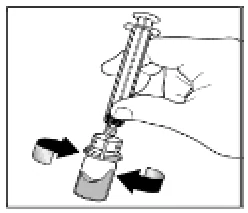
- 5. Snap off the tamper resistant cap of the pre-filled syringe and place it on a clean surface (Figure C).
- 6. Firmly hold the package containing the vial adapter on a clean, flat surface. Connect the pre-filled syringe to the vial adapter by pushing the syringe tip down onto the luer lock in the center of the vial adapter, and screw until the syringe is secured (Figure D).
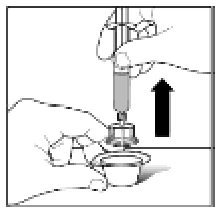
- 7. Carefully lift up the combined syringe and vial adapter and remove it from the plastic package (Figure E).
- 8.
With one hand, continue to hold the combined syringe and vial adapter. With the other hand, hold the OBIZUR vial tightly on a clean, flat surface. In a continuous motion, place the vial adapter over the OBIZUR vial; firmly push the filter spike of the vial adapter through the center of the OBIZUR vial’s rubber circle until the clear plastic cap snaps onto the vial (Figure F).
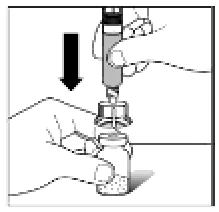
Some of the liquid in the pre-filled syringe may automatically transfer into the OBIZUR vial. Push the plunger down to complete the transfer of all liquid from the syringe into the OBIZUR vial.
With the syringe and the vial still attached, gently swirl (in a circular motion) until the product is fully dissolved /reconstituted (Figure G).
- 9.
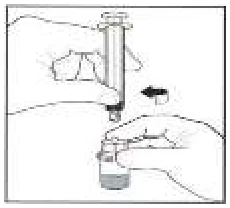
With one hand hold the vial and vial adapter, and with the other hand firmly grasp the barrel of the pre-filled syringe and unscrew the syringe from the vial adapter (Figure H).
Figure A Figure B Figure C Figure D
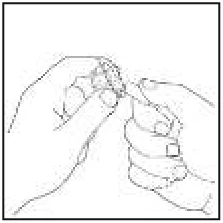
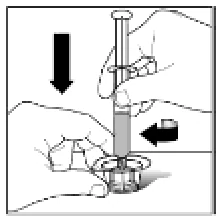
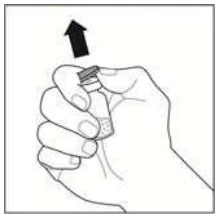
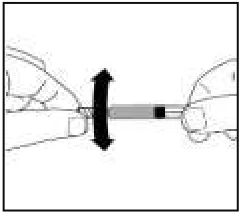
Figure E Figure F Figure G Figure H
4.4 Administration
For intravenous use after reconstitution only.
Inspect parenteral drug products for particulate matter and discoloration prior to administration. The solution should be clear and colorless in appearance. Do not administer if particulate matter or discoloration is found and notify Takeda.
Do not mix with other medicinal products for infusion.
Administer OBIZUR at room temperature within 3 hours of reconstitution.
Discard any unused product.
Using aseptic technique, administer using the following procedure:
Once all vials have been reconstituted, using a new large sterile syringe of the appropriate size for the volume (not supplied), pull back the plunger and admit air into the syringe.
Connect the large syringe to the vial adapter by pushing the syringe tip down onto the luer lock in the center of the vial adapter, and screw until the syringe is secured.
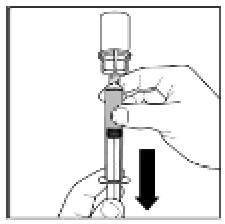
Withdraw the reconstituted OBIZUR into the syringe (Figure I).
Figure I
Unscrew the large syringe and repeat this process for all reconstituted vials of OBIZUR, until total volume to be administered is reached.
Administer the total volume as a slow bolus infusion at a rate of 1-2 mL per minute. (Alternatively, attach a large syringe to a syringe pump and set pump rate at 1-2 mL per minute). Do not administer OBIZUR as an intravenous push or bolus.
Flush line with 0.9% Sodium Chloride Injection (not supplied), USP.
4.5 Missed Dose
Dosing is under the discretion of the treating health professional based on individual clinical circumstances.
5 OVERDOSAGE
There were no reports of overdose in clinical studies of OBIZUR. High and sustained Factor VIII activity in blood may predispose to thromboembolic events (see 7 WARNINGS AND PRECAUTIONS, Cardiovascular).
| For management of a suspected drug overdose, contact your regional poison control centre. |
|---|
6 DOSAGE FORMS, STRENGTHS, COMPOSITION AND PACKAGING
To help ensure the traceability of biologic products, including biosimilars, health professionals should recognise the importance of recording both the brand name and the non-proprietary (active ingredient) name as well as other product-specific identifiers such as the Drug Identification Number (DIN) and the batch/lot number of the product supplied.
Table 2. Dosage Forms, Strengths, Composition and Packaging
OBIZUR is formulated as a sterile, nonpyrogenic, lyophilized powder preparation. Reconstituted solution is clear and colourless, and free of particulate material.
OBIZUR is available in single-dose vial with the following product strength and pack sizes:
Nominal Strength Pack Size
500 units 1 pack
5 pack
10 pack
Each kit contains one package insert and appropriate number of each of the components listed below correlating to the pack size:
- Single-dose 500 Unit vial of OBIZUR
- 1 mL sterile Water for Injection prefilled syringe
- Vial adapter with filter
| Route of Administration | Dosage Form / Strength/Composition | Non-medicinal Ingredients |
| Intravenous use | Powder for Solution for Injection / 500 Units per mL reconstituted with 1 mL of water for injection | Calcium chloride, Polysorbate 80, Sodium chloride, Sucrose, Tris, Tri-sodium citrate. |
7 WARNINGS AND PRECAUTIONS
General
Allergic type hypersensitivity reactions (including anaphylaxis) may occur. The product contains trace amounts of hamster proteins. Early signs of allergic reactions, which can progress to anaphylaxis, include angioedema, chest-tightness, hypotension, lethargy, nausea, vomiting, paresthesia, restlessness, wheezing, and dyspnea. Immediately discontinue administration and initiate appropriate treatment if allergic or anaphylactic- type reactions occur.
Cardiovascular
High and sustained Factor VIII activity in blood may predispose to thromboembolic events. Those with pre-existing cardiovascular disease and the elderly are at particular risk. Plasma levels of factor VIII should not exceed 200% of normal or 200 units per dL (see Monitoring and Laboratory Tests).
Inhibitors
Inhibitory antibodies to OBIZUR have occurred in patients treated with OBIZUR (see 8 ADVERSE REACTIONS and see 14.3 Immunogenicity).
Anamnestic reactions with increase (≥ 10 BU) in previously detected human FVIII inhibitors and/or porcine FVIII inhibitors have also been reported in patients treated with OBIZUR.
Monitor patients for the development or increase of these inhibitory antibodies by appropriate assays (see Monitoring and Laboratory Tests). If the plasma factor VIII level fails to increase as expected, or if bleeding is not controlled after OBIZUR administration, and inhibitory antibodies (new inhibitory antibodies to porcine FVIII or increase in previously detected inhibitory antibodies to human and/or porcine FVIII) are suspected, consider other therapeutic options.
Monitoring and Laboratory Tests
Perform one-stage clotting assay to confirm that adequate factor VIII levels have been achieved and maintained (See 4.2 Recommended Dose and Dosage Adjustment).
- Monitor factor VIII activity 30 minutes and 3 hours after initial dose.
- Monitor factor VIII activity 30 minutes after subsequent doses. Subsequent dose to be administered every 4 to 12 hours based on clinical response and measured factor VIII levels.
Monitor the plasma levels of human and porcine FVIII inhibitors. Perform a Nijmegen Bethesda inhibitor assay if expected plasma factor VIII activity levels are not attained or if bleeding is not controlled with the expected dose of OBIZUR (see 4 DOSAGE AND ADMINISTRATION section). Use Bethesda Units (BU) to report inhibitor levels.
Reproductive Health: Female and Male Potential
- Fertility
The effects of OBIZUR on fertility have not been established.
7.1 Special Populations
7.1.1 Pregnant Women
Animal reproduction studies have not been conducted with OBIZUR. It is not known whether OBIZUR can affect reproductive capacity or cause fetal harm when given to pregnant women.
Health professionals should balance the potential risks and only prescribe OBIZUR if clearly needed.
7.1.2 Breast-feeding
It is not known whether this drug is excreted into human milk. Because many drugs are excreted into human milk, caution should be exercised if OBIZUR is administered to nursing mothers. Health professionals should balance the potential risks and only prescribe OBIZUR if clearly needed.
7.1.3 Pediatrics
The safety and efficacy of OBIZUR have not been established in pediatric patients.
7.1.4 Geriatrics
AHA is typically a geriatric disease (average age 70 years old) where patients can have multiple co-morbidities and be using concomitant medications. Clinical studies in this population suggest that OBIZUR is safe and effective. OBIZUR should be dosed according to the clinical response independent of the age of the patient.
8 ADVERSE REACTIONS
8.1 Adverse Reaction Overview
The safety profile of OBIZUR is based on the analysis of safety data from 3 clinical studies. The most frequently reported Adverse Drug Reactions (ADRs) included constipation, diarrhea, hypokalemia, anemia, oedema peripheral and a positive anti-porcine inhibitor test result.
8.2 Clinical Trial Adverse Reactions
Because clinical trials are conducted under very specific conditions the adverse reaction rates observed in the clinical trials may not reflect the rates observed in practice and should not be compared to the rates in the clinical trials of another drug. Adverse drug reaction information from clinical trials is useful for identifying drug-related adverse events and for approximating rates.
Acquired Hemophilia A
In the pivotal clinical trial of OBIZUR for Acquired Hemophilia A, 29 adult subjects were evaluable for safety. Of the 29 adult subjects, 10 were between the ages of 42 and 65, and 19 were 65 years of age or older. Ten (34%) subjects were female.
In the clinical trial, serious ADRs occurred in 9 subjects. Two subjects (6.9%) developed anti-porcine FVIII inhibitors (≥ 0.6 Bethesda Units) that were considered an AR to OBIZUR by the investigator. Seven subjects (24.1%) developed anamnestic reactions with a rise ≥10 BU in human factor VIII and/or recombinant factor VIII, porcine sequence inhibitors.
Please see Table 3 for a summary of adverse reactions.
Table 3. Clinical Trial Adverse Reactions
| System Organ Class (SOC) | Events (Preferred MedDRA Term | # of ARs | Number of Subjects (N=29) | Frequency | % per Subject |
|---|---|---|---|---|---|
| Immune System Disorders | Anamnestic Reaction* | 7 | 7 | Very Common | 24.1% |
| INVESTIGATIONS | Antibody test positive | 2 | 2 | Common | 6.9% |
|---|
Legend: ADR frequency is based on the Council for International Organizations of Medical Sciences (CIOMS) guidelines: Very Common (≥1/10); Common (≥1/100 -
<1/10), Uncommon (≥1/1,000 - <1/100), Rare (≥1/10,000 - <1/1,000), Very Rare (<1/10,000)
*See 14.3 Immunogenicity
Congenital Hemophilia A with Inhibitors
In the clinical study of OBIZUR in patients with congenital hemophilia A with FVIII inhibitors (CHAWI) undergoing surgery, out of 8 adult patients evaluable for safety analysis a total of 5 subjects experienced anamnestic reactions (see 2 CONTRAINDICATIONS).
8.4 Abnormal Laboratory Findings: Hematologic, Clinical Chemistry and Other Quantitative Data
There were no specific patterns of abnormal hematology, or blood chemistry, and no abnormalities were considered related to OBIZUR.
Abnormal Hematologic Changes
Abnormal hematology laboratory values were observed in all subjects with clinically significantly abnormal hematology laboratory values observed in 8 subjects; these values were consistent with the subjects’ underlying diseases and all resolved. Anemia was the most frequently reported abnormal hematology laboratory value that was reported in 5 subjects. No abnormal hematology results were considered serious events and all resolved by study termination.
Abnormal Chemistry Changes
Abnormal clinical chemistry laboratory results were observed in all subjects during clinical development, but there were no specific patterns of abnormal chemistry results. Fifteen clinically significant abnormal blood chemistry laboratory results were reported as AEs in 9 subjects; these AEs resolved by study end in 8 subjects. One subject testing positive for Hepatitis C had elevated aminotransferase (ALT and AST) results that remained unresolved at study end. Hypokalemia, reported in 4 subjects, was the most frequently reported blood chemistry abnormal lab result that was reported as an AE.
Urinalysis
Overall, there were no significant abnormal urinalysis results or any specific patterns of abnormal urinalysis results in the clinical studies. Two subjects during clinical development had abnormal urinalysis results reported as TEAEs. None of these were deemed related to OBIZUR treatment.
8.5 Post-Market Adverse Reactions
No adverse reactions other than those mentioned in Clinical Trials have been observed in the post-marketing setting.
9 DRUG INTERACTIONS
9.2 Drug Interactions Overview
There are no known drug interactions reported with OBIZUR. No drug interaction studies have been performed.
10 CLINICAL PHARMACOLOGY
10.1 Mechanism of Action
OBIZUR temporarily replaces the inhibited endogenous factor VIII that is needed for effective hemostasis in patients diagnosed with acquired hemophilia A.
10.2 Pharmacodynamics
Patients with acquired hemophilia A (AHA) have normal factor VIII genes but develop autoantibodies against their own factor VIII (i.e., inhibitors). These autoantibodies neutralize circulating human factor VIII and create a functional deficiency of this procoagulant protein. AHA results in a prolonged clotting time as measured by the activated partial thromboplastin time (aPTT) assay, a conventional in vitro test for biological activity of factor VIII. Treatment with OBIZUR should normalize the aPTT during treatment; however aPTT normalization should not be used as a measure of efficacy.
10.3 Pharmacokinetics
A formal pharmacokinetic study of OBIZUR in patients diagnosed with acquired hemophilia A has not been performed.
11 STORAGE, STABILITY AND DISPOSAL
Keep refrigerated prior to use at 2° to 8°C. Do not freeze. Store vials in the original package to protect from light.
Administer reconstituted product at room temperature within 3 hours of reconstitution. Do not mix with other medicinal products for infusion.
Discard any unused product.
Do not use beyond the expiration date printed on the carton or vial.
12 SPECIAL HANDLING INSTRUCTIONS
Inspect parenteral drug products for particulate matter and discoloration prior to administration. The solution should be clear and colourless in appearance. Do not administer if particulate matter or discolouration is found and notify Takeda.
PART II: SCIENTIFIC INFORMATION
13 PHARMACEUTICAL INFORMATION
Drug Substance
Proper name: Antihemophilic Factor (Recombinant), Porcine Sequence
Chemical name: Antihemophilic Factor (Recombinant), Porcine Sequence
Molecular formula and
molecular mass: The molecular formula of OBIZUR is: C7427H11336N2016O2162S56 with a corresponding molecular weight of approximately 165 kDa (based on the amino acid sequence).
Structural formula:
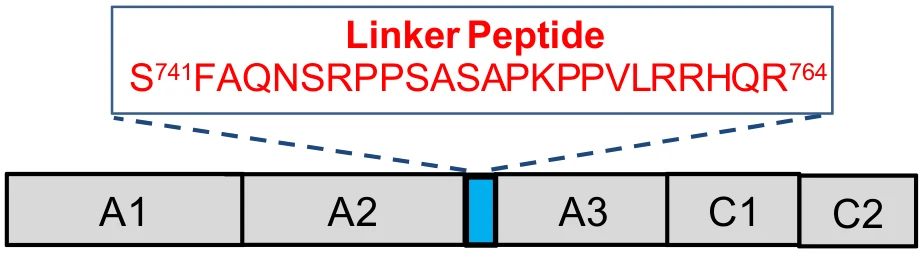
. Heavy Chain Light Chain
Physicochemical properties: OBIZUR is a purified protein produced by recombinant DNA that is a B-domain deleted recombinant porcine factor VIII manufactured using baby hamster kidney (BHK) cells. OBIZUR is a heterodimer consisting of a heavy chain and light chain held together through non-covalent interactions consisting of approximately 1448 amino acids. Full-length human and porcine factor VIII are expressed with the domain structure A1-A2-B- A3-C1-C2. In OBIZUR, the porcine factor VIII B-domain, which is not known to be necessary for procoagulant activity, has been replaced with a 24 amino acid linker containing the first 12 amino acids of the B-domain adjacent to the C terminus of the heavy chain and the last 12 amino acids of the B-domain adjacent to the N terminus of the light chain. Thus, the naturally occurring cleavage sites for the B-domain of factor VIII have been incorporated into the OBIZUR molecular construct. The OBIZUR structure also includes the original activation sequence of the molecule within the light chain, including a 40 amino acid activation peptide.
| Pharmaceutical standard: | The potency units are determined using a one-stage clotting assay against a standard calibrated against the WHO 8th International Standard Factor VIII Concentrate. The specification for OBIZUR specific activity is 11,000 to 18, 000 U/mg of protein. |
|---|
Linker Peptide S741FAQNSRPPSASAPKPPVLRRHQR764 A1 A2 A3 C1 C2 |
Product Characteristics
The manufacturing of OBIZUR FBDS utilizes a roller bottle cell culture process for cell expansion and recombinant protein expression followed by a series of filtration and chromatographic steps to purify the product from process related impurities. OBIZUR manufacturing utilizes Fetal Bovine Serum (FBS) in the cell expansion process and no other animal and no human derived components are used in the process.
Viral Inactivation
The process includes two validated orthogonal viral removal/inactivation steps for clearance of potential virus particles, namely solvent/detergent treatment and nanofiltration through a series of two 15-nm filters.
OBIZUR manufacturing process mapping, conducted during process validation, demonstrates consistent and robust OBIZUR product purification and process-related impurity removal across the process. SP Chromatography and Q Chromatography, the two dedicated purification steps, are the major OBIZUR purification steps as well as the major process-related impurity reduction steps (HCP, DNA, rh Insulin and TBP). The polishing, formulation, and viral removal steps (Mustang Q, DEAE and Nanofiltration) in the purification process maintain the OBIZUR purity and also contribute to the reduction of process-related impurities (HCP, DNA, rh Insulin and TBP). Two cell culture media FBS related impurities, BSA and bIgG, were below the LOQ following the SP chromatography step. BSA, bIgG, and TBP are consistently removed to below the limit of detection by the manufacturing process steps and are well controlled through the process.
14 CLINICAL TRIALS
14.1 Clinical Trials by Indication
Acquired Hemophilia A
Table 4. Summary of patient demographics for clinical trials in Acquired Hemophilia A patient population
| Study # | Trial design | Dosage, route of administration and duration | Study subjects (n) | Mean age (Range) | Sex |
|---|---|---|---|---|---|
| OBIZUR 301 | Multicenter, open- label, single-cohort, prospective, Phase 2/3 study | 200 U/kg; intravenous injection. Duration of treatment varied based on response | 29 | 69.8 (42-90) | Male and Female |
The efficacy and safety of OBIZUR for the treatment of serious bleeding episodes in subjects with acquired hemophilia with autoimmune inhibitory antibodies to human factor VIII has been evaluated in an international, multicenter, open-label, single-cohort, prospective, Phase 2/3 study (N=29) (Table 4). Patient(s) diagnosed with acquired hemophilia A (AHA) with auto-immune inhibitory antibodies to human factor VIII experiencing serious bleeding requiring hospitalization were considered evaluable for efficacy. One subject was considered evaluable at study entry; however, it was later determined this subject did not have AHA, leaving 28 subjects evaluable for efficacy.
Study Results
An initial dose of 200 units per kg of OBIZUR was administered for the treatment of serious initial bleeding episodes. Treatment was initiated for nineteen intramuscular or joint bleeding events, two surgeries, four post-surgical bleeding events, two intracranial events, one retroperitoneal hemorrhage, and one periorbital bleed. OBIZUR was safe and well tolerated for the treatment of all serious bleeds in subjects with AHA (N=29). An assessment of efficacy was rendered by the study site investigator at 24 hours after initiation of OBIZUR treatment, using a 4-point ordinal scale to determine effectiveness, based on clinical assessment of subject stability and blood factor VIII levels. As assessment of effective or partially effective was considered as a positive response (as defined in Table 5).
Table 5. Investigator Assessment of Response to OBIZUR
| Assessment of efficacy | Control of bleeding | Clinical Assessment | Factor VIII levels | Response |
|---|---|---|---|---|
| Effective | Bleeding stopped | Clinical control | ≥50% | Positive |
| Partially effective | Bleeding reduced | Clinical stabilization or improvement or alternative reason for bleeding | ≥ 20% | Positive |
| Poorly effective | Bleeding slightly reduced or unchanged | Not clinically stable | <50% | Negative |
| Not effective | Bleeding worsening | Clinically deteriorating | <20% | Negative |
The efficacy of OBIZUR to control serious bleeds in subjects with AHA was assessed in this study primarily by the response to treatment after 24 hours (as determined both clinically and by FVIII activity levels achieved), and secondarily by the frequency, total dose, number of infusions of OBIZUR and time required to achieve haemostasis.
Of the 28 AHA subjects evaluable for efficacy, 100% (28/28) of subjects with initial bleeding episodes had a positive response to treatment at 24 hours. A positive response was observed in most bleeds by 8 or 16 hours after first infusion, with 95% (19/20) of subjects evaluated showing a positive response at 8 hours and 100% (18/18) at 16 hours.
In addition to response to treatment, the overall treatment success was determined by the investigator based on his/her ability to discontinue or reduce the dose and/or dosing frequency of OBIZUR. A total of 24/28 (86%) had successful treatment of the initial bleeding episode. Of those subjects treated with OBIZUR first-line, defined as no immediate previous anti-hemorrhagic agents reported prior to first OBIZUR treatment, 16/17 (94%) had eventual treatment success reported. Eleven subjects were reported as to having received anti-hemorrhagics (e.g., tranexamic acid, rFVIIa, activated prothrombin-complex concentrate) prior to first treatment with OBIZUR. Of these 11 subjects, eight had eventual successful treatment (73%).
The median dose per infusion to successfully treat the primary bleeding episode was 133 units per kg and a median total dose of 1523 units per kg. In the initial 24 hour period, a median of 3 infusions (median dose 200 U/kg) were utilized in the clinical study. When treatment was required beyond 24 hours, a median of 10.5 infusions (median dose 100 U/kg) were given for a median of 6 days to control a bleeding episode.
14.3 Immunogenicity
Inhibitory antibodies against OBIZUR
Inhibitory antibodies against OBIZUR were measured using the Nijmegen modification of the Bethesda assay method. In the clinical trial of OBIZUR for Acquired Hemophilia A, all dosed subjects (N=29) were evaluated for anti-porcine factor VIII inhibitor development.
Of the 29 subjects treated with OBIZUR, 19 subjects did not have a detectable anti-porcine factor VIII antibodies at baseline (<0.6 BU/mL). Of the 19 subjects, 12 had no detectable anti-porcine factor VIII titre post-treatment, five of the 19 (26%) had an increase in titre (≥ 0.6 BU/mL), 2 subjects had no post-treatment samples analyzed and seven subjects developed anamnestic reactions with a rise in ≥ 10 BU in human factor VIII and/or recombinant factor VIII, porcine sequence inhibitors developed anti-porcine factor VIII antibodies following exposure to OBIZUR. Of the 10 subjects with detectable anti-porcine factor VIII antibodies at baseline, 2 (20%) experienced an increase in titre and eight (80%) experienced a decreasing to a non-detectable titre (<0.6 BU/mL).
Binding antibodies against baby hamster kidney (BHK) protein.
Binding antibodies against BHK protein were measured using a direct binding enzyme-linked immunosorbent assay (ELISA). Twenty-six subjects had samples analyzed for BHK protein at baseline with 21 of these subjects also having post-treatment samples analyzed. Two subjects only had post-dose samples analyzed. All samples drawn and assayed for anti-BHK protein titres were anti-BHK protein negative at all time points. Therefore, treatment-related binding antibodies to BHK protein were not detected for all subjects tested.
15 MICROBIOLOGY
Not applicable
16 NON-CLINICAL TOXICOLOGY
Nonclincal studies evaluating the carcinogenic and mutagenic potential of OBIZUR have not been conducted.
No adverse effects were observed on histopathological examination of reproductive organs in repeat dose toxicity studies. No investigations on impairment of fertility and development have been conducted.