


Product Monograph - Persantine
RECENT MAJOR LABEL CHANGES
Not applicable.
TABLE OF CONTENTS
Sections or subsections that are not applicable at the time of authorization are not listed.
RECENT MAJOR LABEL CHANGES ............................................................................................. 2
TABLE OF CONTENTS ............................................................................................................... 2
PART I: HEALTH PROFESSIONAL INFORMATION ....................................................................... 4
1 INDICATIONS ................................................................................................................ 4
1.1 Pediatrics .................................................................................................................... 4
2 CONTRAINDICATIONS .................................................................................................. 4
3 SERIOUS WARNINGS AND PRECAUTIONS BOX ............................................................. 4
4 DOSAGE AND ADMINISTRATION .................................................................................. 4
4.1 Dosing Considerations ................................................................................................ 4
4.2 Recommended Dose and Dosage Adjustment ........................................................... 4
4.3 Reconstitution ............................................................................................................ 5
4.4 Administration ............................................................................................................ 5
5 OVERDOSAGE ............................................................................................................... 5
6 DOSAGE FORMS, STRENGTHS, COMPOSITION AND PACKAGING .................................. 6
7 WARNINGS AND PRECAUTIONS ................................................................................... 6
7.1 Special Populations ..................................................................................................... 8
7.1.1 Pregnant Women ..................................................................................................... 8
7.1.2 Breast Feeding ......................................................................................................... 8
7.1.3 Pediatrics ................................................................................................................. 8
8 ADVERSE REACTIONS ............................................................................................................ 8
8.1 Adverse Reaction Overview ....................................................................................... 8
8.2 Clinical Trial Adverse Reactions .................................................................................. 8
8.3 Less Common Clinical Trial Adverse Reactions .......................................................... 9
8.5 Post-Market Adverse Reactions .............................................................................. 10
9 DRUG INTERACTIONS ......................................................................................................... 10
9.2 Drug Interaction Overview ....................................................................................... 10
9.3 Drug-Behavioural Interactions ................................................................................. 11
9.4 Drug-Drug Interactions ............................................................................................. 11
9.5 Drug-Food Interactions ............................................................................................. 12
10 CLINICAL PHARMACOLOGY .............................................................................................. 13
10.1 Mechanism of Action ............................................................................................. 13
10.2 Pharmacodynamics ................................................................................................ 13
10.3 Pharmacokinetics ................................................................................................... 14
11 STORAGE AND STABILITY ................................................................................................. 14
12 SPECIAL HANDLING INSTRUCTIONS .................................................................................. 14
PART II: SCIENTIFIC INFORMATION ........................................................................................ 15
13 PHARMACEUTICAL INFORMATION ................................................................................... 15
14 CLINICAL TRIALS ............................................................................................................... 16
15 MICROBIOLOGY ............................................................................................................... 16
16 NON-CLINICAL TOXICOLOGY ............................................................................................ 16
PATIENT MEDICATION INFORMATION ................................................................................... 20
PART I: HEALTH PROFESSIONAL INFORMATION
1 INDICATIONS
PERSANTINE (5 mg/mL dipyridamole) is indicated for:
- intravenous use to induce pharmacologic vasodilation for myocardial perfusion imaging.
1.1 Pediatrics
Pediatrics (< 18 years of age): No data are available to Health Canada; therefore, Health Canada has not authorized an indication for pediatric use.
2 CONTRAINDICATIONS
- Patients who are hypersensitive to this drug or to any ingredient in the formulation, including any non-medicinal ingredient or component of the container. See 6 DOSAGE FORMS, STRENGTHS, COMPOSITION AND PACKAGING.
- Intravenous administration of PERSANTINE is not recommended in states of shock or collapse.
3 SERIOUS WARNINGS AND PRECAUTIONS BOX
Serious Warnings And Precautions
|
4 DOSAGE AND ADMINISTRATION
4.1 Dosing Considerations
- The dose of intravenous PERSANTINE used as an adjunct to myocardial perfusion imaging should be adjusted according to the weight of the patient.
4.2 Recommended Dose and Dosage Adjustment
The recommended dose is 0.142 mg/kg/min., infused over 4 minutes.
A total dose of greater than 60 mg is not recommended for use in any patient.
Pediatrics (<18 years of age): Health Canada has not authorized an indication for pediatric use.
4.3 Reconstitution
Immediately prior to infusion, PERSANTINE intravenous (i.v.) should be diluted at least 1:2 with Dextrose Injection, USP 5%.
4.4 Administration
The imaging agent should be injected within 5 minutes following the 4 minute infusion of PERSANTINE. Do not mix PERSANTINE i.v. with other drugs in the same syringe or infusion container. Infusion of undiluted PERSANTINE may cause local irritation.
As with all parenteral drug products, intravenous admixtures should be inspected visually for clarity, particulate matter, precipitate, discolouration and leakage prior to administration, whenever solution and container permit. Solutions showing haziness, particulate matter, precipitate, discolouration or leakage should not be used. Discard unused portion.
5 OVERDOSAGE
Hypotension, if it occurs, is likely to be of short duration but vasopressor substances may be used if necessary. Symptoms such as feeling warm, flushes, sweating, accelerated pulse, restlessness, feeling of weakness and dizziness, and anginal complaints may occur. A drop in blood pressure and tachycardia might be observed.
PARENTERAL ADMINISTRATION (I.V. INFUSION)
No cases of overdose in humans have been reported in this indication. Signs and symptoms as described under 8 ADVERSE REACTIONS are expected to occur. Aminophylline, as described in 7 WARNINGS AND PRECAUTIONS, Cardiovascular, may be administered. Due to its wide distribution to tissue and its predominantly hepatic elimination, dipyridamole is not likely to be accessible to enhanced removal procedures.
For management of a suspected drug overdose, contact your regional poison control centre.
6 DOSAGE FORMS, STRENGTHS, COMPOSITION AND PACKAGING
Table 1: Dosage Forms, Strengths, Composition and Packaging
| Route of Administration | Dosage Form/ Strength / Composition | Non-medicinal Ingredients |
|---|---|---|
| Intravenous | Solution 5 mg/mL | hydrochloric acid, polyethylene glycol, sterile water for injection and tartaric acid. |
PERSANTINE is provided in 10 mL ampoules containing 5 mg/mL dipyridamole. PERSANTINE ampoules are supplied in packages of 5 ampoules.
7 WARNINGS AND PRECAUTIONS
Please see 3 SERIOUS WARNINGS AND PRECAUTIONS BOX.
General
Rare serious adverse reactions associated with the administration of intravenous PERSANTINE for myocardial imaging have been reported. These have included fatal and non-fatal myocardial infarction, ventricular fibrillation, symptomatic ventricular tachycardia, stroke and transient cerebral ischemia.
Cardiovascular
Since excessive doses of dipyridamole (intravenous or oral) or intravenous doses given too rapidly can produce peripheral vasodilation, PERSANTINE should be used with caution in patients with hypotension, coronary artery disease, including rapidly worsening angina, left ventricular outflow obstruction, (including subvalvular aortic stenosis), or hemodynamic instability. In rare cases, such patients may be at risk for developing myocardial ischemia and infarction.
Clinical experience suggests that patients being treated with oral dipyridamole who also require pharmacological stress testing with intravenous dipyridamole, should discontinue drugs containing oral dipyridamole for twenty-four hours prior to stress testing. Failure to do so may impair the sensitivity of the test.
An intravenous bolus of PERSANTINE (40-50 mg over 4 minutes) can result in chest pain in patients with coronary artery disease. Rarely, hypotension or ventricular arrhythmias occur with a rapid, i.v. bolus. The infusion rate should be monitored to minimize this risk. The symptoms can generally be reversed with an intravenous injection of 50-250 mg of aminophylline over several minutes.
Intravenous PERSANTINE (dipyridamole) as an adjunct to myocardial perfusion imaging should be used with caution in patients with unstable angina; as such patients may be at risk for severe myocardial infarction.
As with exercise induced stress, the use of intravenous PERSANTINE as an adjunct to myocardial perfusion imaging may occasionally precipitate cardiac arrhythmias in patients with severe heart disease. Scanning should therefore be performed with constant monitoring of the patient's ECG. Parenteral aminophylline should be readily available and should be administered as a slow intravenous injection of 50-250 mg in the event of occurrences such as chest pain, bronchospasm, severe nausea/vomiting, hypotension, severe headache.
In the case of severe hypotension, the patient should be placed in a supine position with the head tilted down if necessary, before administration of parenteral aminophylline. If 250 mg of aminophylline does not relieve chest pain symptoms within a few minutes, sublingual nitroglycerin may be administered. If chest pain continues despite use of aminophylline and nitroglycerin, the possibility of myocardial infarction should be considered. If the clinical condition of a patient with an adverse event permits a one minute delay in the administration of parenteral aminophylline, thallium-201 may be injected and allowed to circulate for one minute before the injection of aminophylline. This will allow initial thallium perfusion imaging to be performed before reversal of the pharmacologic effects of PERSANTINE on the coronary circulation.
Driving and Operating Machinery
Patients should be advised that they may experience undesirable effects such as dizziness during treatment with PERSANTINE i.v. Therefore, caution should be recommended when driving a car or operating machinery. If patients experience dizziness they should avoid potentially hazardous tasks such as driving or operating machinery 24h after drug administration.
Hepatic/Biliary/Pancreatic
A small number of cases have been reported in which unconjugated dipyridamole was shown to be incorporated into gallstones to a variable extent (up to 70% by dry weight of stone). These patients were all elderly, had evidence of ascending cholangitis and had been treated with oral dipyridamole for a number of years. There is no evidence that dipyridamole was the initiating factor in causing gallstones to form in these patients. It is possible that bacterial deglucuronidation of conjugated dipyridamole in bile may be the mechanism responsible for the presence of dipyridamole in gallstones.
Reproductive Health: Female and Male Potential
Fertility
No studies on the effect on human fertility have been conducted with PERSANTINE i.v. Non-clinical studies with dipyridamole did not indicate direct or indirect harmful effects with respect to the fertility index (see 16 NON-CLINICAL TOXICOLOGY).
Respiratory
Patients with a history or presence of bronchial hyperreactivity may be at risk of developing bronchospasm during the use of intravenous PERSANTINE as an adjunct to myocardial perfusion imaging. Although the actual overall incidence of this occurrence is small (~ 0.2%), the clinical information to be gained through the use of intravenous PERSANTINE should be weighed against the potential risk to the patient.
7.1 Special Populations
7.1.1 Pregnant Women
Reproductive studies have been performed in mice, rats, and rabbits at doses of up to 125 mg/kg and have not revealed evidence of impaired embryonic development attributable to dipyridamole. However, there have not been adequate, well controlled studies in pregnant women and the drug should be used during pregnancy only if the expected benefits outweigh the potential risks (see 16 NON-CLINICAL TOXICOLOGY).
7.1.2 Breast Feeding
Dipyridamole is excreted in human milk. Caution should therefore be used when this drug is administered to nursing mothers.
7.1.3 Pediatrics
Pediatrics (< 18 years of age): No data are available to Health Canada; therefore, Health Canada has not authorized an indication for pediatric use.
8 ADVERSE REACTIONS
8.1 Adverse Reaction Overview
Serious adverse events (fatal and non-fatal myocardial infarction, severe ventricular arrhythmias, and serious CNS abnormalities) associated with the intravenous administration of PERSANTINE for myocardial imaging are described in 7 WARNINGS AND PRECAUTIONS, General.
8.2 Clinical Trial Adverse Reactions
Clinical trials are conducted under very specific conditions. The adverse reaction rates observed in the clinical trials; therefore, may not reflect the rates observed in practice and should not be compared to the rates in the clinical trials of another drug. Adverse reaction information from clinical trials may be useful in identifying and approximating rates of adverse drug reactions in real-world use.
When intravenous PERSANTINE was used as an adjunct to myocardial perfusion imaging in a study of 3911 patients, the following events (Table 2) occurred in greater than 1% of the patients. The mean dosage of intravenous dipyridamole administered to these patients was 0.567 mg/kg (SD, 0.030 mg/kg), with a range of 0.14-0.79 mg/kg. Almost 93% of the patients were administered doses in the range of 0.55 to less than 0.65 mg/kg.
Table 2: Adverse Events Occurring in > 1% of Patients When PERSANTINE was Used as an Adjunct to Myocardial Perfusion Imaging
Incidence (%) of Occurrence
Event Description in 3911 Patients
Body as Whole:
Pain Unspecified 2.6
Paresthesia 1.3
Fatigue 1.2
Cardiovascular
Chest pain/angina pectoris 19.7
Electrocardiogram Abnormalities/ST-T changes 7.5
Electrocardiogram Abnormalities/Extrasystoles 5.2
Hypotension 4.6
Flushing 3.4
Electrocardiogram Abnormalities/Tachycardia 3.2
Blood Pressure Lability 1.6
Hypertension 1.5
Gastrointestinal
Nausea 4.6
Nervous System
Headache 12.2
Dizziness 11.8
Respiratory System
Dyspnea 2.6
8.3 Less Common Clinical Trial Adverse Reactions
The adverse reactions listed in this section were reported at an incidence <1%.
Body as a Whole: asthenia, malaise, rigor, injection site pain, injection site reaction unspecified.
Cardiovascular: Electrocardiographic abnormalities unspecified, electrocardiogram change,* arrhythmia unspecified, palpitation, ventricular tachycardia, bradycardia*, myocardial infarction*, AV block, syncope*, orthostatic hypotension, atrial fibrillation, ventricular fibrillation*, supraventricular tachycardia, ventricular arrhythmia unspecified, heart block unspecified, cardiomyopathy, and edema.
Central and Peripheral Nervous System: Hypoaesthesia, hypertonia, nervousness/anxiety, tremor, abnormal coordination, somnolence, dysphonia, migraine, vertigo.
Ear and Labyrinth System: earache, tinnitus
Gastrointestinal: Dyspepsia, dry mouth, abdominal pain*, flatulence, vomiting*, eructation, dysphagia, tenesmus, increased appetite, thirst, dysgeusia
Musculoskeletal System: Myalgia*, back pain, arthralgia, leg cramping, intermittent claudication
Psychiatric Disorders: depersonalization
Renal and Urinary System: renal pain
Reproductive System and Breast: perineal pain, breast pain
Respiratory: Pharyngitis, bronchospasm*, hyperventilation, rhinitis, coughing, pleural pain.
Skin: diaphoresis
Vision: vision abnormalities unspecified, eye pain
*identified as adverse drug reactions based on master sheet
8.5 Post-Market Adverse Reactions
When using PERSANTINE as an adjunct to myocardial imaging, the following adverse events have been reported: cardiac death, cardiac arrest, arrhythmias (including sinus arrest), tachycardia, fibrillation, and cerebrovascular events (including transient ischaemic attack, cerebrovascular accident, and convulsion). PERSANTINE caused severe hypotension and hot flushes. Diarrhoea has been observed.
Hypersensitivity reactions such as rash, urticaria, angio-oedema, laryngospasm, bronchospasm and very rarely anaphylactoid reactions have been reported.
9 DRUG INTERACTIONS
9.2 Drug Interaction Overview
Xanthine derivatives (e.g. caffeine and theophylline) can potentially reduce the vasodilating effect of dipyridamole and should therefore be avoided 24 hours before myocardial imaging with PERSANTINE i.v.
Dipyridamole increases plasma levels and cardiovascular effects of adenosine.
Dipyridamole may increase the hypotensive effect of drugs which reduce blood pressure and may counteract the anticholinesterase effect of cholinesterase inhibitors thereby potentially aggravating myasthenia gravis.
In patients already receiving oral dipyridamole, clinical experience suggests that the sensitivity of the intravenous dipyridamole stress test may be impaired. Oral dipyridamole treatment should be discontinued for twenty-four hours prior to testing.
9.3 Drug-Behavioural Interactions
Interactions with behaviours have not been established.
9.4 Drug-Drug Interactions
The drugs listed in this table are based on either drug interaction case reports or studies, or potential interactions due to the expected magnitude and seriousness of the interaction (i.e., those identified as contraindicated).
Table 3: Established or Potential Drug-Drug Interactions
Proper/ Common name | Source of Evidence | Effect | Clinical comment |
| Adenosine | Dipyridamole increases plasma levels and cardiovascular effects of adenosine. | Adjustment of adenosine dosage should be considered. | |
| Anticoagulants, thrombolytics | The combined use of such agents may result in an increased risk of hemorrhage. | Caution is necessary when dipyridamole is used concurrently with anticoagulants or thrombolytics. | |
| ASA | The addition of dipyridamole to acetylsalicylic acid does not increase the incidence of bleeding events. | ||
| Blood pressure lowering drugs | Dipyridamole may increase the hypotensive effect of blood pressure lowering drugs. | Monitoring is advised. |
Proper/ Common name | Source of Evidence | Effect | Clinical comment |
| Cholinesterase inhibitors | Dipyridamole may counteract the anticholinesterase effect of cholinesterase inhibitors. | In patients with myasthenia gravis, readjustment of therapy may be necessary during treatment with dipyridamole. | |
| Dipyridamole (oral) | In patients already receiving oral dipyridamole, clinical experience suggests that the sensitivity of the intravenous dipyridamole testing may be impaired. | Oral dipyridamole treatment should be discontinued for 24-hours prior to testing. | |
| Theophylline, aminophylline | The use of oral maintenance xanthines (e.g., theophylline, aminophylline) may abolish the coronary vasodilation produced by intravenous dipyridamole administration. | This could lead to false negative imaging results. | |
| Warfarin | When dipyridamole was administered concomitantly with warfarin, bleeding was no greater in frequency or severity than that observed when warfarin was administered alone. |
9.5 Drug-Food Interactions
Xanthine derivatives (e.g., found in coffee, tea) may weaken the effect of PERSANTINE and therefore should be avoided 24 hours before myocardial imaging with PERSANTINE.
10 CLINICAL PHARMACOLOGY
10.1 Mechanism of Action
Dipyridamole normalizes increased platelet adhesiveness and tendency to aggregate (Hellem's Method). Dipyridamole has been found to lengthen abnormally shortened platelet survival time in a dose-dependent manner; 400 mg/day or 100 mg/day plus 1 gram ASA.
It is believed that platelet reactivity and interaction with prosthetic cardiac valve surfaces, resulting in abnormal shortened platelet survival time is a significant factor in connection with prosthetic heart valve replacement.
In a controlled clinical trial involving patients who had undergone surgical placement of prosthetic heart valves (mitral and/or aortic valve replacement), dipyridamole, in combination with anticoagulants, significantly decreased the incidence of post-operative thromboembolic events, without increasing hemorrhagic complications. The incidence of thromboembolic events in patients receiving dipyridamole in a dose of 400 mg/day in combination with anticoagulants was 1.3% compared to 14.3% to the control group treated with anticoagulant alone.
In vitro dipyridamole potentiates the aggregation-inhibiting effects of adenosine and prostaglandin E1, inhibits platelet uptake of adenosine, serotonin and glucose, and increases platelet cyclic AMP levels. At higher concentrations dipyridamole inhibits platelet aggregation induced by ADP or collagen.
Myocardial blood flow increases in a dose-dependent fashion after i.v. or oral dipyridamole, with flows 170% or more above normal. Maximal increases are achieved at about 2.0 µg/mL with 0.8 µg/mL being the threshold serum level. Single oral doses of 150 mg dipyridamole produce the maximal response. At normal therapeutic doses, no significant alterations of peripheral blood flow, systemic blood pressure, or heart rate have been observed.
10.2 Pharmacodynamics
PERSANTINE is a coronary vasodilator in man. The mechanism of vasodilation has not been fully elucidated, but may result from inhibition of uptake of adenosine, an important mediator of coronary vasodilation. The effects of endogenous adenosine are potentiated by dipyridamole inhibition of adenosine uptake in erythrocytes and platelets. Since adenosine is involved in physiological regulation of coronary blood flow, the coronary vasodilation induced by dipyridamole may be related to the adenosine-sparing effect of this drug. The vasodilatory effects of PERSANTINE are abolished by administration of the adenosine receptor antagonist theophylline.
How PERSANTINE-induced vasodilation leads to abnormalities in thallium distribution (when administered intravenously for myocardial perfusion imaging) and ventricular function is also uncertain, but presumably represents a “steal” phenomenon. In this situation, relatively intact vessels dilate, and sustain enhanced flow, leaving reduced pressure and flow across areas of hemodynamically important coronary vascular constriction.
10.3 Pharmacokinetics
Absorption: Dipyridamole is readily absorbed from the gastrointestinal tract, reaching peak plasma levels in man 1-3 hours following oral administration. Peak plasma levels are dose-dependent and range from about 0.5 µg/mL after a 25 mg dose to 1.6 µg/mL after a 75 mg dose., Blood levels are quite variable, possibly depending on food intake and gastrointestinal peristalsis. Ingestion on an empty stomach may result in higher blood levels.
Distribution: Following intravenous administration, the distribution half-life in man is about 25 minutes and after oral administration about 3 hours. When plasma levels of drug are followed for up to 60 hours after i.v. or oral administration of 20 to 50 mg, plasma levels decline tri-exponentially with half-lives of 5 minutes (i.v. only), 53 minutes and about 10-12 hours. The volume of distribution is about 140 litres with about 92-99% binding to plasma proteins, primarily alpha1-acid glycoprotein.
Metabolism: Conjugation of dipyridamole with glucuronic acid is the primary pathway of metabolism. In individuals with surgical drainage of the biliary tract, 95% of an intravenous 25 mg dose can be recovered from the bile within 2 hours. Enterohepatic circulation has been demonstrated in both animals and man.
11 STORAGE AND STABILITY
The PERSANTINE ampoules should be stored at room temperature (15-30°C). Protect from light. Protect from freezing.
12 SPECIAL HANDLING INSTRUCTIONS
Not applicable.
PART II: SCIENTIFIC INFORMATION
13 PHARMACEUTICAL INFORMATION
Drug Substance
Proper name: dipyridamole
Chemical name: 2,2',2'',2'''-[(4,8-Dipiperidinolpyrimido[5,4- d]pyrimidine- 2,6 diyl) dinitrilo]-tetraethanol
Molecular formula and molecular mass: C24H40N8O4 , 504.6
Structural formula:
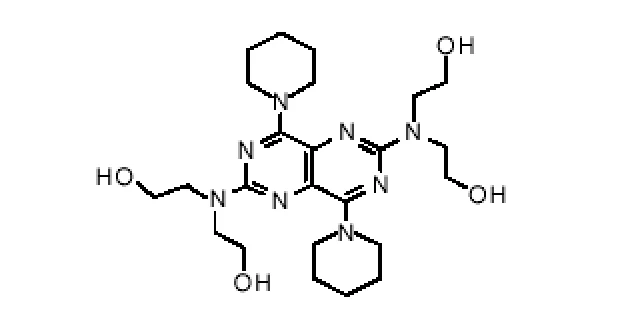
Physicochemical properties:
Description: A homogeneous yellow crystalline powder, odourless but with a bitter taste. It is soluble in dilute acids, methanol, ethanol and chloroform. In solution, PERSANTINE is yellow and shows a strong blue-green fluorescence.
Melting Range: 164-168°C
14 CLINICAL TRIALS
Information on clinical trials is unavailable for this drug product.
15 MICROBIOLOGY
No microbiological information is required for this drug product
16 NON-CLINICAL TOXICOLOGY
General Toxicology:
Table 4: Acute Toxicity of Dipyridamole, ASA and their Combination
| Substance | Species | Route of Administration | LD50 (mg/kg) |
| dipyridamole | rat | p.o. | 6,000 |
| rat | i.v. | 200 | |
| dog | p.o. | 400 | |
acetylsalicylic acid (ASA) | rat dog | p.o. p.o. | 1,820 1,000 |
| dipyridamole/ASA* | mouse (male) | p.o. | 3,000-5,000 |
| mouse (female) | p.o. | 5,000 | |
| rat (male) | p.o. | 5,000 | |
| rat (female) | p.o. | 5,000 | |
| mouse (male) | i.p. | 910 | |
| mouse (female) | i.p. | 1,200 | |
| rat (male) | i.p. | 1,050 | |
| rat (female) | i.p. | 1,230 | |
| dog | p.o. | 875-950 |
*dipyridamole/ASA mixed in a ratio of 1/5, weight/weight
After single dose administration of dipyridamole, signs of toxicity among the survivors were ataxia and depression, while in those that died; prostration and tonic convulsions were also seen. After ASA, lethargy fluctuating with restlessness, bleeding through the nose and respiratory distress occurred. Some animals died in a prostrate position without any preceding agitation.
Symptomatology following administration of the combination dipyridamole/ASA, (1/5), did not differ appreciably from the toxic signs observed with either substance alone.
Subacute intravenous administration of dipyridamole to dogs at levels of 1 and 10 mg/kg/day for 4 weeks did not produce significant signs of toxicity. Oral dipyridamole (20, 40, 60, 80 mg/kg/day) administered for 13 weeks to beagles produced no toxic effect at the low dose but resulted in kidney toxicity with increasing doses. This was manifested by weight loss, increased blood urea and serum creatinine and epithelial nephritis at the high dose. The abnormalities were rapidly reversible upon discontinuation of treatment. When dogs were treated orally for 26 weeks with dipyridamole at doses of 10, 20 and 40 mg/kg/day, only occasional emesis occurred at the high dose level. Hematological, biochemical and urinary analyses were within normal limits. Rats fed dipyridamole in the diet at levels of 25, 75 and 225 mg/kg/day over a period of 27 weeks showed no signs of toxicity.
Treatment of rats for 3 months with the combination dipyridamole/ASA (1/5) at oral doses of 25, 100 and 400 mg/kg resulted in no drug-related toxicity except for a delay in body weight development in the high dose group. In chronic toxicity studies of 6 months duration in rats and dogs, dipyridamole/ASA (1/4) had no toxic effect at doses of 25 and 100 mg/kg in either species.
With increasing dose (200 and 400 mg/kg/day), renal and gastrointestinal lesions appeared along with associated biochemical changes. At the high dose in dogs, all animals were dead at 3 months. Control groups of dogs received ASA, 80 and 160 mg/kg/day. The lesions observed were similar to toxic signs in the combination treatment groups except for the nephritis and renal changes seen in the 200 and 400 mg/kg dose groups of dogs.
Carcinogenicity:
Two year carcinogenicity studies of dipyridamole in mouse and rat in doses up to 75 mg/kg/day demonstrated no tumorogenic effect of the drug. The dipyridamole/ASA combination (1/5) also produced no evidence of carcinogenicity in either rats or mice at oral doses up to 450 mg/kg.
Genotoxicity:
Mutagenicity assays (cytogenetic, microorganism, dominant lethal and micronucleus tests) of both dipyridamole alone and the dipyridamole/ASA combination (1/15) could not demonstrate any mutagenic potential of these compounds.
Reproductive and Developmental Toxicology:
Oral studies on reproduction toxicity did not reveal any embryo-/fetotoxic effects during organo-genesis or in the perinatal phase. The NOELs for embryo/fetotoxicity were 40 mg/kg/day in rabbits, 125 mg/kg/day in mice and 1000 mg/kg/day in rats. In the perinatal study in rats doses exceeding 100 mg/kg/day showed an increased perinatal mortality and a reduced body weight development of the progeny. Fertility of rats was not impaired up to 1250 mg/kg/day. Auto-radiographic investigations in rats showed that the progeny was exposed to the test compound in a low proportion of the dose. Reproductive toxicity of dipyridamole i.v. was not studied. It has been estimated that about 0.032% of an overall dose of dipyridamole of 25 mg is excreted in the breast milk of female rabbits.
Non-clinical Pharmacodymamics
Intravenous injection of dipyridamole in the dog causes coronary vasodilation. The threshold dose is 0.01 mg/kg with maximal effects reached by 0.2 mg/kg. A fall in systemic blood pressure, due to peripheral vasodilation, can be detected at a dose of 0.5 mg/kg with variable but not major effects on heart rate. The diastolic pressure decrease is larger than that for systolic pressure. The respiratory rate and depth are slightly increased, probably due to stimulation of carotid sinus chemoreceptors. An oral dose of 2.0 mg/kg in the dog increases coronary blood flow by 246% for 5 hours.
In the presence of aneroid ring constriction of coronary vessels, chronic administration of dipyridamole in dogs, rabbits and pigs increases the number and diameter of collateral coronary vessels. The rate of mortality in these animals is decreased compared to non-drug treated controls. Even in the absence of a chronic hypoxic stimulus, chronic dipyridamole treatment produces greater flow across intercoronary vessels in response to acute ligation of a coronary mainstem artery, compared to controls. When blood flow through ischemic areas was measured in experimentally produced infarctions, acute intravenous dipyridamole has produced both increases and decreases, as well as no change in flow. Intravenous dipyridamole, 10 mg/hr for 6 hours, decreased the size of experimental infarctions in dogs by 76% compared to saline-treated controls.
Non-clinical Pharmacokinetics
In animal studies, autoradiography in rats shows the liver with the highest concentrations of dipyridamole, with decreasing quantities in the following tissues: adrenal cortex, kidneys, myocardium, pituitary, skeletal muscle, lungs and blood. Twice as much drug is found in the myocardium as in skeletal muscle. Within the myocardium, the largest portion of dipyridamole is intracellular with the sarcolemma fraction containing up to 50%. On the basis of autoradiography, there are only small amounts of placental transfer. The drug does not cross the blood-brain barrier.
Non-clinical data have also shown that dipyridamole can be excreted in breast milk.