


Product Monograph - Repatha
RECENT MAJOR LABEL CHANGES
| 7 WARNINGS AND PRECAUTIONS, General | 10/2024 |
|---|
TABLE OF CONTENTS
Sections or subsections that are not applicable at the time of authorization are not listed.
RECENT MAJOR LABEL CHANGES ..................................................................................... 2
TABLE OF CONTENTS .......................................................................................................... 2
PART I: HEALTH PROFESSIONAL INFORMATION............................................................... 4
1 INDICATIONS.............................................................................................................. 4
1.1 Pediatrics ........................................................................................................... 4
1.2 Geriatrics............................................................................................................ 4
2 CONTRAINDICATIONS ............................................................................................... 5
4 DOSAGE AND ADMINISTRATION .............................................................................. 5
4.1 Dosing Considerations ........................................................................................ 5
4.2 Recommended Dose and Dosage Adjustment .................................................... 5
4.3 Reconstitution..................................................................................................... 6
4.4 Administration..................................................................................................... 6
4.5 Missed Dose....................................................................................................... 6
5 OVERDOSAGE ........................................................................................................... 6
6 DOSAGE FORMS, STRENGTHS, COMPOSITION AND PACKAGING ........................ 7
7 WARNINGS AND PRECAUTIONS .............................................................................. 7
7.1 Special Populations ............................................................................................ 8
7.1.1 Pregnant Women .......................................................................................... 8
7.1.2 Breast-feeding............................................................................................... 9
7.1.3 Pediatrics ...................................................................................................... 9
7.1.4 Geriatrics ...................................................................................................... 9
8 ADVERSE REACTIONS .............................................................................................. 9
8.1 Adverse Reaction Overview ................................................................................ 9
8.2 Clinical Trial Adverse Reactions ........................................................................ 10
8.2.1 Clinical Trial Adverse Reactions – Pediatrics ............................................... 13
8.3 Less Common Clinical Trial Adverse Reactions................................................. 13
8.3.1 Less Common Clinical Trial Adverse Reactions – Pediatrics ........................ 14
8.4 Abnormal Laboratory Findings: Hematologic, Clinical Chemistry and Other Quantitative Data ....................................................................................................... 14
8.5 Post-Market Adverse Reactions ........................................................................ 14
9 DRUG INTERACTIONS ............................................................................................. 15
9.1 Serious Drug Interactions.................................................................................. 15
9.2 Drug Interactions Overview ............................................................................... 15
9.3 Drug-Behavioural Interactions ........................................................................... 15
9.4 Drug-Drug Interactions...................................................................................... 15
9.5 Drug-Food Interactions ..................................................................................... 15
9.6 Drug-Herb Interactions...................................................................................... 15
9.7 Drug-Laboratory Test Interactions ..................................................................... 15
10 CLINICAL PHARMACOLOGY ................................................................................... 15
10.1 Mechanism of Action ................................................................................... 15
10.2 Pharmacodynamics..................................................................................... 15
10.3 Pharmacokinetics........................................................................................ 16
11 STORAGE, STABILITY AND DISPOSAL .................................................................. 17
12 SPECIAL HANDLING INSTRUCTIONS ..................................................................... 17
PART II: SCIENTIFIC INFORMATION .................................................................................. 18
13 PHARMACEUTICAL INFORMATION ........................................................................ 18
14 CLINICAL TRIALS .................................................................................................... 18
14.1 Clinical Trials by Indication .......................................................................... 18
14.2 Comparative Bioavailability Studies ............................................................. 35
14.3 Immunogenicity ........................................................................................... 35
15 MICROBIOLOGY....................................................................................................... 36
16 NON-CLINICAL TOXICOLOGY ................................................................................. 36
PATIENT MEDICATION INFORMATION .............................................................................. 38
PATIENT MEDICATION INFORMATION .............................................................................. 53
PATIENT MEDICATION INFORMATION .............................................................................. 70
PART I: HEALTH PROFESSIONAL INFORMATION
1 INDICATIONS
Prevention of Cardiovascular Events
Repatha® (evolocumab injection) is indicated as an adjunct to diet and standard of care therapy (including moderate- to high-intensity statin therapy alone or in combination with other lipid-lowering therapy), to reduce the risk of myocardial infarction, stroke, and coronary revascularization in adult patients with atherosclerotic cardiovascular disease (ASCVD) by further lowering low-density lipoprotein cholesterol (LDL-C) levels (see 14 CLINICAL TRIALS).
Primary Hyperlipidemia (including Heterozygous Familial Hypercholesterolemia [HeFH] and ASCVD)
REPATHA is indicated for the reduction of elevated LDL-C in adult patients with primary hyperlipidemia (including heterozygous familial hypercholesterolemia and ASCVD):
- as an adjunct to diet and statin therapy, with or without other lipid-lowering therapies, in patients who require additional lowering of LDL-C
- as an adjunct to diet, alone or in combination with non-statin lipid-lowering therapies, in patients for whom a statin is contraindicated
Pediatric Patients with Heterozygous Familial Hypercholesterolemia
REPATHA is indicated as an adjunct to diet and other LDL-C-lowering therapies (e.g., statins, ezetimibe) in pediatric patients aged 10 years and older with HeFH who require additional lowering of LDL-C.
Homozygous Familial Hypercholesterolemia
REPATHA is indicated as an adjunct to diet and other LDL-lowering therapies (e.g., statins, ezetimibe, LDL apheresis) in adult and pediatric patients aged 10 years and older with homozygous familial hypercholesterolemia (HoFH) who require additional lowering of LDL-C.
1.1 Pediatrics
Pediatrics (≥ 10 years of age): The efficacy and safety of REPATHA have been established in pediatric patients ≥ 10 years of age with HeFH and HoFH. Data on efficacy and safety in HoFH patients aged 10-11 years are limited (see 14 CLINICAL TRIALS).
The efficacy and safety of REPATHA have not been established in pediatric patients <10 years of age with HeFH, HoFH or in pediatric patients with other types of hyperlipidemia (see 7.1.3 Pediatrics).
1.2 Geriatrics
Geriatrics (≥ 65 years of age): Of the 18,546 patients treated with REPATHA in double-blinded clinical studies, 7,656 (41.3%) were ≥ 65 years of age, while 1,500 (8.1%) were ≥ 75 years of age. No overall differences in safety or efficacy were observed between these patients and younger patients (see 7.1.4 Geriatrics).
2 CONTRAINDICATIONS
- REPATHA is contraindicated in patients who are hypersensitive to this drug or to any ingredient in the formulation, including any non-medicinal ingredient, or component of the container. For a complete listing, see 6 DOSAGE FORMS, STRENGTHS, COMPOSITION AND PACKAGING.
- For the lipid-lowering therapies such as statin or other lipid-lowering therapies used in combination with REPATHA, see the 2 CONTRAINDICATIONS section of the product monographs for those medications.
4 DOSAGE AND ADMINISTRATION
4.1 Dosing Considerations
- REPATHA is administered subcutaneously.
- REPATHA is intended for patient self-administration or by a caregiver (e.g. parent) after proper training by a healthcare professional. Administration should be performed by an individual who has been trained to administer the product.
- In pediatric patients, REPATHA use should be initiated and supervised by healthcare professionals who treat children with dyslipidemias.
4.2 Recommended Dose and Dosage Adjustment
Prevention of Cardiovascular Events and Primary Hyperlipidemia in Adult Patients (including HeFH and ASCVD) and HeFH in Pediatric Patients (aged 10 years and older)
The recommended dose for REPATHA is either 140 mg every 2 weeks or 420 mg once monthly; both doses are clinically equivalent. When switching dosage regimens, administer the first dose of the new regimen on the next scheduled date of the prior regimen.
One prefilled syringe* (PFS) or prefilled autoinjector (AI) delivers the 140 mg every 2 week dose. One single-use automated mini-doser (AMD) with 3.5 mL prefilled cartridge delivers the 420 mg once monthly dose. Alternatively, 3 prefilled syringes* or 3 prefilled AIs administered consecutively within 30 minutes delivers the 420 mg once monthly dose.
Homozygous Familial Hypercholesterolemia
Adult and Pediatric Patients (aged 10 years and older): The initial recommended dose is 420 mg once monthly. After 12 weeks of treatment, dose frequency can be up-titrated to 420 mg once every 2 weeks if a clinically meaningful response is not achieved. Patients on apheresis may initiate treatment with 420 mg every two weeks to correspond with their apheresis schedule. One AMD with prefilled cartridge delivers the 420 mg once monthly dose. Alternatively, three prefilled syringes* or 3 prefilled AIs administered consecutively within 30 minutes deliver the 420 mg once monthly or 420 mg every 2 weeks dose.
*Pre-filled syringes are not available in Canada
Patients with Renal Impairment
There is limited experience in patients with severe or end-stage renal disease (ESRD) receiving hemodialysis. No dosage adjustment may be required in these patient populations. However, REPATHA should be used with caution in patients with severe renal impairment (see 10 CLINICAL PHARMACOLOGY, Pharmacokinetics, Special Populations and Conditions, Renal Insufficiency).
Patients with Hepatic Impairment
No dosage adjustment is necessary in patients with mild to moderate hepatic impairment.
Geriatric Patients
No dosage adjustment is necessary in geriatric patients.
4.3 Reconstitution
Not applicable
4.4 Administration
Prior to subcutaneous administration, allow REPATHA to sit at room temperature up to 25°C for at least 30 minutes for the prefilled syringe* or autoinjector and at least 45 minutes for the automated mini-doser with prefilled cartridge. Do not warm in any other way.
Avoid vigorous shaking of the product.
Visually inspect the solution for particles and discolouration. Do not use if the solution is discoloured, cloudy, or if flakes or particles are present.
Doses may be administered in the upper arm, thigh, or abdomen. Injection sites should be rotated and injections should not be given into areas where the skin is tender, bruised, red, or hard.
Comprehensive instructions for the administration of REPATHA are provided in the Patient Medication Information.
4.5 Missed Dose
If an every 2 week or once monthly dose is missed, instruct the patient to:
- Administer REPATHA as soon as possible if there are more than 7 days until the next scheduled dose, or,
- Omit the missed dose and administer the next dose according to the original schedule.
5 OVERDOSAGE
There is no specific treatment for REPATHA overdose. In the event of an overdose, the patient should be treated symptomatically and supportive measures instituted as required.
| For management of a suspected drug overdose, contact your regional poison control centre. |
|---|
*Pre-filled syringes are not available in Canada
6 DOSAGE FORMS, STRENGTHS, COMPOSITION AND PACKAGING
To help ensure the traceability of biologic products, including biosimilars, health professionals should recognise the importance of recording both the brand name and the non-proprietary (active ingredient) name as well as other product-specific identifiers such as the Drug Identification Number (DIN) and the batch/lot number of the product supplied.
Dosage Forms, Strengths, Composition and Packaging
REPATHA is provided as:
- One mL solution (140 mg/mL evolocumab) in a single-use prefilled autoinjector with type 1 glass syringe and stainless steel needle (140 mg/mL AI); supplied as a 1-pack, 2-pack, and 3-pack.
- 3.5 mL solution in a single-use prefilled cartridge assembly made of Crystal Zenith® resin which is co-packaged with the administration device. The administration device is a compact, sterile, single-use, disposable, injection device intended for use only with the provided 3.5 mL prefilled cartridge assembly. (120 mg/mL AMD); supplied as a 1-pack.
- One mL solution (140 mg/mL evolocumab) in a single-use prefilled syringe* made from type I glass with stainless steel needle (140 mg/mL PFS); supplied as a 1-pack.
REPATHA is a clear to opalescent, colourless to yellowish sterile, preservative-free solution, practically free from particles.
Each 1 mL prefilled syringe* and autoinjector contains 140 mg evolocumab, proline, glacial acetic acid, polysorbate 80, water for injection and sodium hydroxide.
Each 3.5 mL automated mini-doser and prefilled cartridge contains 420 mg evolocumab (120 mg/mL), proline, glacial acetic acid, polysorbate 80, water for injection and sodium hydroxide.
7 WARNINGS AND PRECAUTIONS
General
Concomitant Lipid-Lowering Therapies
When using REPATHA in combination with statins or other lipid-lowering therapies (e.g., ezetimibe), the prescriber should refer to the 7 WARNINGS AND PRECAUTIONS sections of the product monographs for those medications.
- *Prefilled syringes are not available in Canada
| Route of Administration | Dosage Form / Strength/Composition | Non-medicinal Ingredients |
| Subcutaneous injection | Solution Prefilled syringe* and autoinjector: 140 mg/mL Automated mini-doser with prefilled cartridge: 120 mg/mL | proline, glacial acetic acid (acetate), polysorbate 80, sodium hydroxide, water for injection |
Hypersensitivity in Latex-sensitive patients
The autoinjector, automated mini-doser with prefilled cartridge, and prefilled syringe* are not made with natural rubber latex (see 12 SPECIAL HANDLING INSTRUCTIONS).
Immune
Hypersensitivity reactions (e.g., rash, urticaria, angioedema) have been reported in patients treated with REPATHA, including some that led to discontinuation of therapy. If signs or symptoms of serious allergic reactions occur, discontinue treatment with REPATHA and treat according to the standard of care and monitor until signs and symptoms resolve (see 8 ADVERSE REACTIONS).
Hepatic/Biliary/Pancreatic
The safety and efficacy of REPATHA in patients with severe hepatic impairment has not been studied. REPATHA should be used with caution in patients with severe hepatic impairment (Childs-Pugh, Class C).
The effects of REPATHA in patients with or at risk of hepatitis C virus (HCV) infection remain uncertain.
Renal
No dose adjustment is necessary in patients with mild to moderate renal impairment. There is limited experience with REPATHA in patients with severe renal impairment (see 10 CLINICAL PHARMACOLOGY, Special Populations and Conditions, Renal Insufficiency).
Reproductive Health: Female and Male Potential
Fertility:
No data are available on the effect of REPATHA on human fertility. For further fertility information regarding animal studies, see 16 NON-CLINICAL TOXICOLOGY.
7.1 Special Populations
7.1.1 Pregnant Women
No studies have been conducted with REPATHA in pregnant women and relevant data from clinical use are very limited.
Studies in monkeys showed that evolocumab crosses the placental barrier. The serum concentrations in infant monkeys at birth were comparable to the maternal serum. For further information regarding animal studies, see 16 NON-CLINICAL TOXICOLOGY.
Animal studies are not always predictive of human response. Therefore, it is not known whether REPATHA can cause fetal harm when administered to a pregnant woman. For patients being treated for primary hyperlipidemia, REPATHA can be used alone or in combination with other lipid-lowering therapies. Statin product monographs recommend discontinuation when a patient becomes pregnant, therefore REPATHA should also be discontinued (see the Special Populations section of the product monograph of the statins). For patients being treated for
*Prefilled syringes are not available in Canada
homozygous familial hypercholesterolemia REPATHA should be used during pregnancy only if the potential benefit justifies the potential risk to the fetus.
Women who become pregnant during REPATHA treatment, or their healthcare provider, are encouraged to call Amgen at 1-866-502-6436 to report the pregnancy.
7.1.2 Breast-feeding
There is no information regarding the presence of evolocumab in human milk, the effects on the breastfed infant, or the effects on milk production. A risk to breastfed newborns and infants cannot be excluded. The development and health benefits of breastfeeding should be considered along with the mother’s clinical need for REPATHA and any potential adverse effects on the breastfed infant from REPATHA or from the underlying maternal condition.
7.1.3 Pediatrics
The efficacy and safety of REPATHA have been established in pediatric patients ≥ 10 years of age with HeFH and HoFH. A clinical study to evaluate the effects of REPATHA treatment was conducted in 157 pediatric patients aged 10 to 17 years old with HeFH and who received at least one dose of REPATHA or placebo. No new safety concerns were identified and the safety data in this pediatric population were generally consistent with the known safety profile of the product in adults with HeFH.
Twenty-six pediatric patients aged 11 to 17 years with HoFH have been treated with REPATHA in clinical studies. The efficacy and safety data were generally consistent between pediatric and adult patients with HoFH. Data on efficacy and safety in HoFH patients aged 10-11 years are limited (see 14 CLINICAL TRIALS, Homozygous Familial Hypercholesterolemia (HoFH), Trial Design and Study Demographics).
REPATHA has not been studied in pediatric patients < 10 years of age with HeFH, HoFH or in pediatric patients with other types of dyslipidemia (see 14 CLINICAL TRIALS).
7.1.4 Geriatrics
Of the 18,546 patients treated with REPATHA in double-blind clinical studies, 7,656 (41.3%) were ≥ 65 years of age and 1,500 (8.1%) were ≥ 75 years of age. No overall differences in safety or efficacy were observed between these patients and younger patients.
8 ADVERSE REACTIONS
8.1 Adverse Reaction Overview
The safety of REPATHA was evaluated in approximately 37,756 patients; 20,238 patients received REPATHA, representing 30,387 patient-years of exposure of REPATHA. The most common adverse reactions with REPATHA reported in > 2% of patients and greater than control were nasopharyngitis, upper respiratory tract infection, influenza and injection site reactions (pain, erythema, bruising, swelling and hemorrhage). Rash, urticaria, back pain, arthralgia and nausea have also been reported.
The safety profile in the pediatric population was generally consistent with the safety profile of REPATHA in the adult population.
8.2 Clinical Trial Adverse Reactions
Clinical trials are conducted under very specific conditions. The adverse reaction rates observed in the clinical trials; therefore, may not reflect the rates observed in practice and should not be compared to the rates in the clinical trials of another drug. Adverse reaction information from clinical trials may be useful for identifying and approximating rates of drug reactions in real-world use.
Adverse Reactions in the Cardiovascular Outcomes Trial
In a double-blind, randomized, placebo controlled cardiovascular outcomes trial, 13,769 patients received at least one dose of REPATHA and 13,756 received placebo (see 14 CLINICAL TRIALS, Prevention of Cardiovascular Events). The mean age of enrolled patients was 62.5 years (range: 40 to 86 years), and 45% were 65 years of age and older. Twenty-five percent (25%) were women, 85% were White, 2% were Black, 10% were Asian, 8% identified as Hispanic. Patients were exposed to REPATHA or placebo for a mean of 24.1 months; 91% of patients were exposed for ≥ 12 months, 54% were exposed for ≥ 24 months, and 5% were exposed for ≥ 36 months.
In general, the safety profile of REPATHA in these patients was consistent with the known safety profile of REPATHA in patients with primary hyperlipidemia (Table 1, Table 2). Serious adverse events were reported in 25% of REPATHA- and placebo-treated patients. Adverse events led to treatment discontinuation in 4.4% of REPATHA-treated patients and 4.2% of placebo-treated patients. Common adverse reactions (≥ 5% of patients in either treatment group) included diabetes mellitus, (REPATHA: 8.8%, placebo: 8.2%), nasopharyngitis (REPATHA: 7.8%, placebo 7.4%) and upper respiratory tract infection (REPATHA 5.1%, placebo: 4.8%).
Among the 16,676 patients without diabetes mellitus at baseline, the incidence of new-onset diabetes mellitus during the trial was 8.1% in patients assigned to REPATHA compared with 7.7% in those assigned to placebo.
Adverse Events in the Cardiovascular Outcomes Open-label Extension Trials
In two open-label, single-arm, multicentre, extension studies, 6,630 patients received at least one dose of REPATHA (see 14 CLINICAL TRIALS, Prevention of Cardiovascular Events). Patients who were randomized to placebo in the parent Cardiovascular Outcomes Trial were exposed to REPATHA in the extension studies up to 5.3 years [median (Q1, Q3) = 5.0 (4.4, 5.0) years]. Patients who were randomized to REPATHA in the parent Cardiovascular Outcomes Trial were exposed to REPATHA across both the parent and extension studies up to 8.4 years [median (Q1, Q3) = 7.0 years (6.5, 7.5) years].
The types and frequency of adverse events within the extension studies were consistent with those observed in previous REPATHA studies. No new safety risks with REPATHA were identified from the results of the extension studies, including in patients achieving an LDL-C < 0.65 mmol/L or < 1.03 mmol/L.
Adverse Reactions in Patients with Primary Hyperlipidemia (including Heterozygous Familial Hypercholesterolemia and ASCVD)
Adverse Reactions in Seven Pooled 12-Week Controlled Trials
In seven pooled 12-week, double-blind, randomized, placebo-controlled trials, 993 patients received 140 mg of REPATHA subcutaneously every 2 weeks and 1,059 patients received 420 mg of REPATHA subcutaneously monthly. The mean age was 57 years (range, 18 to 80 years), 29% were older than 65 years, 49% were women, 85% White, 5% Black, 9% Asian, and 5% Hispanic. Adverse events, by system organ class and preferred term, for the 12-week placebo controlled trials occurring in ≥ 1% of patients and occurring more frequently in REPATHA groups (QM dosing and Q2W dosing) than placebo groups (QM dosing and Q2W dosing), are shown in Table 1.
Table 1. Adverse Events Reported by ≥ 1% of REPATHA-treated Patients and More Frequently Than with Placebo by System Organ Class and Preferred Term in the 12-week Studies
| System Organ Class Preferred Term | Any Placebo (N = 1,224) n (%) | EvoMab 140 mg Q2W or 420 mg QM (N = 2,052) n (%) | |||
| Gastrointestinal disorders | |||||
| Nausea | 15 (1.2) | 36 (1.8) | |||
| General disorders and administration site conditions | |||||
| Fatigue | 12 (1.0) | 33 (1.6) | |||
| Infections and infestations | |||||
| Nasopharyngitis | 48 (3.9) | 82 (4.0) | |||
| Upper Respiratory Tract Infection | 24 (2.0) | 43 (2.1) | |||
| Urinary Tract Infection | 15 (1.2) | 26 (1.3) | |||
| Influenza | 13 (1.1) | 25 (1.2) | |||
| Injury, poisoning and procedural complications | |||||
| Contusion | 6 (0.5) | 21 (1.0) | |||
| Musculoskeletal and connective tissue disorders | |||||
| Back Pain | 27 (2.2) | 47 (2.3) | |||
| Arthralgia | 19 (1.6) | 37 (1.8) | |||
| Muscle Spasms | 15 (1.2) | 27 (1.3) | |||
| Respiratory, thoracic and mediastinal disorders | |||||
| Cough | 8 (0.7) | 25 (1.2) | |||
| Includes the following studies: 20090158, 20101154, 20101155, 20110114, 20110115, 20110117, 20110231. N = number of subjects randomized and dosed in the full analysis set; EvoMab = Evolocumab; Q2W = every 2 weeks (subcutaneous) and QM = monthly (subcutaneous) Coded using MedDRA version 17.0 | |||||
Adverse Reactions in a 52-Week Controlled Trial
In a 52-week, double-blind, randomized, placebo-controlled trial, REPATHA (420 mg QM (n = 599) was compared to placebo (n = 302) in patients with primary hyperlipidemia on background lipid-lowering therapy. The mean age was 56 years (range: 22 to 75 years), 23% were older than 65 years, 52% were women, 80% White, 8% Black, 6% Asian, and 6% Hispanic. The overall incidence of treatment emergent adverse events was comparable between the evolocumab QM (74.8%) and placebo QM (74.2%) treatment groups. Serious adverse events were reported 33 (5.5%) subjects in the evolocumab QM group and 13 (4.3%) in the placebo group. Treatment emergent adverse events leading to discontinuation of the product were 13 (2.2%) vs. 3 (1.0%) in the evolocumab QM group and the placebo QM group, respectively. Adverse events reported in at least 2% of REPATHA-treated patients, and more frequently than in placebo-treated patients are shown in Table 2.
Table 2. Adverse Events Reported by ≥ 2% of REPATHA-treated Patients and More Frequently Than with Placebo by System Organ Class and Preferred Term in the 52-week Study
System Organ Class Preferred Term | Placebo SC QM (N = 302) n (%) | EvoMab 420 mg QM (N = 599) n (%) | |||
| Gastrointestinal Disorders | |||||
| Diarrhea | 8 (2.6) | 18 (3.0) | |||
| Abdominal Pain Upper | 2 (0.7) | 13 (2.2) | |||
| General Disorders and Administration Site Conditions | |||||
| Injection Site Erythema | 6 (2.0) | 16 (2.7) | |||
| Infection and Infestations | |||||
| Nasopharyngitis | 29 (9.6) | 63 (10.5) | |||
| Upper Respiratory Tract Infection | 19 (6.3) | 56 (9.3) | |||
| Influenza | 19 (6.3) | 45 (7.5) | |||
| Urinary Tract Infection | 11 (3.6) | 27 (4.5) | |||
| Sinusitis | 9 (3.0) | 25 (4.2) | |||
| Gastroenteritis | 6 (2.0) | 18 (3.0) | |||
| Musculoskeletal and Connective Tissue Disorders | |||||
| Back Pain | 17 (5.6) | 37 (6.2) | |||
| Myalgia | 9 (3.0) | 24 (4.0) | |||
| Musculoskeletal Pain | 9 (3.0) | 20 (3.3) | |||
| Osteoarthritis | 5 (1.7) | 12 (2.0) | |||
| Nervous System Disorders | |||||
| Headache | 11 (3.6) | 24 (4.0) | |||
| Dizziness | 8 (2.6) | 22 (3.7) | |||
| Respiratory Thoracic and Mediastinal Disorders | |||||
| Cough | 11 (3.6) | 27 (4.5) | |||
| Oropharyngeal Pain | 4 (1.3) | 15 (2.5) | |||
| Vascular Disorders | |||||
| Hypertension | 7 (2.3) | 19 (3.2) | |||
| N = number of subjects randomized and dosed in the full analysis set; EvoMab = Evolocumab; QM = monthly (subcutaneous) Coded using MedDRA version 17.0 | |||||
The incidence of treatment emergent adverse events in the homozygous familial hypercholesterolemia population was 12 (36.4%) in the evolocumab 420 mg QM group and 10 (62.5%) in the placebo group. No adverse reactions led to discontinuation during 12-week treatment.
Adverse Reactions in Integrated Phase 2 and Phase 3 Controlled Trials
Allergic Reactions
Hypersensitivity events were reported in 4.5% and 3.9% of REPATHA-treated and control-treated patients, respectively. The most common allergic reactions were rash (1.3% versus 1.2% for REPATHA and control, respectively), eczema (0.6% versus 0.4%), erythema (0.3% versus 0.3%), and urticaria (0.3% versus 0.2%) (see 7 WARNINGS AND PRECAUTIONS, General, Immune).
Injection Site Reactions
Injection site reactions have been reported in patients treated with REPATHA (2.2% REPATHA-treated vs. 1.7% control-treated). The most common injection site reactions were pain, bruising, erythema, swelling and hemorrhage. Most of these reactions were mild in severity. The proportions of patients who discontinued treatment due to local injection site reactions were 0.1% in the REPATHA group and 0.1% in the control group. The proportions of patients who experienced recurrent local injection site reactions were 0.51% in the REPATHA group and 0.37% in the control group.
8.2.1 Clinical Trial Adverse Reactions – Pediatrics
Adverse Reactions in Pediatric Patients with HeFH
In a randomized, multicentre, placebo-controlled, double-blind, 24-week trial, 157 pediatric patients aged 10-17 with HeFH received at least one dose of REPATHA or placebo; 104 patients received 420 mg REPATHA subcutaneously once monthly (see 14 CLINICAL TRIALS). The mean age was 13.7 years (range: 10 to 17 years), 56% were female, 85% White, 1% Black, 1% Asian, and 13% other; 8% identified as Hispanic ethnicity. The safety profile of REPATHA in these patients was generally consistent with the safety profile of REPATHA in adult patients with HeFH. Common adverse reactions (> 5% of patients treated with REPATHA and occurring more frequently than placebo) included nasopharyngitis (11.5% REPATHA, 11.3% placebo), headache (10.6% REPATHA, 1.9% placebo), oropharyngeal pain (6.7% REPATHA, 0.0% placebo), influenza (5.8% REPATHA, 3.8% placebo), and upper respiratory tract infection (5.8% REPATHA, 1.9% placebo).
Adverse Events in Pediatric Patients with HoFH in Open Label Studies
Two open-label studies included 26 pediatric HoFH patients who received at least one dose of REPATHA for a combined exposure of 62.2 patient-years. In the first study, adverse events were reported in 7 of the 12 pediatric HoFH patients and none of the adverse events led to discontinuation of REPATHA. In the second study, adverse events were reported in 12 of the 14 pediatric HoFH patients with one adverse event of rash leading to discontinuation of REPATHA. The safety profile of REPATHA in these patients was generally consistent with the safety profile of REPATHA in adult patients with HoFH.
8.3 Less Common Clinical Trial Adverse Reactions
Less Common Clinical Trial Adverse Drug Reactions (< 1%)
The adverse reactions described below are from a pool of the 52-week trial and seven 12-week trials that included 2,651 patients treated with REPATHA, including 557 exposed for 6 months and 404 exposed for 1 year. The mean and median exposure durations of REPATHA in this pool of eight trials were 20 weeks and 12 weeks, respectively.
The following adverse reactions were reported in the 8 pooled control trials at an incidence of < 1% of patients:
BLOOD AND LYMPHATIC SYSTEM DISORDERS: Anemia (0.1% placebo vs. 0.6% REPATHA)
CARDIAC DISORDERS: Palpitations (0.3% placebo vs. 0.7% REPATHA)
GASTROINTESTINAL DISORDERS: Abdominal Pain Upper (0.6% placebo vs. 0.8% REPATHA), Dyspepsia (0.4% placebo vs. 0.6% REPATHA), Abdominal Distension (0.4% placebo vs. 0.5% REPATHA)
GENERAL DISORDERS AND ADMINISTRATION SITE CONDITIONS: Injection Site Pain (0.6% placebo vs. 0.9% REPATHA), Edema Peripheral (0.7% placebo vs. 0.8% REPATHA), Seasonal Allergy (0.5% placebo vs. 0.6% REPATHA)
INFECTIONS AND INFESTATIONS: Cystitis (0.7% placebo vs. 0.8% REPATHA),
INJURY, POISONING AND PROCEDURAL COMPLICATIONS: Arthropod Bite (0.1% placebo vs. 0.8% REPATHA),
INVESTIGATIONS: Blood Creatine Phosphokinase Increased (0.5% placebo vs. 0.9% REPATHA)
NERVOUS SYSTEM DISORDERS: Paresthesia (0.1% placebo vs. 0.6% REPATHA)
MUSCULOSKELETAL AND CONNECTIVE TISSUE DISORDERS: Osteoarthritis (0.5% placebo vs. 0.6% REPATHA), Musculoskeletal Chest Pain (0.4% placebo vs. 0.5% REPATHA) Tendonitis (0.3% placebo vs. 0.5% REPATHA)
PSYCHIATRIC DISORDERS: Anxiety (0.2% placebo vs. 0.5% REPATHA)
8.3.1 Less Common Clinical Trial Adverse Reactions – Pediatrics
The safety profile in the pediatric population was generally consistent with the safety profile of REPATHA in the adult population.
8.4 Abnormal Laboratory Findings: Hematologic, Clinical Chemistry and Other Quantitative Data
Not applicable
8.5 Post-Market Adverse Reactions
In addition to the events listed above, the following adverse reactions have been identified post-market in patients receiving REPATHA:
- Hypersensitivity reactions including angioedema
- Influenza-like illness
- Myalgia (with or without associated muscle weakness)
9 DRUG INTERACTIONS
9.1 Serious Drug Interactions
No serious drug interactions have been established.
9.2 Drug Interactions Overview
No formal drug-drug interaction studies have been conducted for REPATHA.
9.3 Drug-Behavioural Interactions
Interactions with behaviour have not been established.
9.4 Drug-Drug Interactions
The pharmacokinetic interaction between statins and REPATHA was evaluated in the REPATHA clinical studies. An approximately 20% increase in the clearance of REPATHA was observed in adult patients co-administered with statins. This increased clearance is in part mediated by statins increasing the concentration of PCSK9 which did not adversely impact the pharmacodynamic effect of REPATHA on lipids. No statin dose adjustments are necessary when used in combination with REPATHA.
9.5 Drug-Food Interactions
Interactions with food have not been established.
9.6 Drug-Herb Interactions
Interactions with herbal products have not been established.
9.7 Drug-Laboratory Test Interactions
Interactions with laboratory tests have not been established.
10 CLINICAL PHARMACOLOGY
10.1 Mechanism of Action
REPATHA (evolocumab) is a fully human monoclonal immunoglobulin G2 (IgG2) that binds to Proprotein Convertase Subtilisin/Kexin Type 9 (PCSK9). REPATHA binds selectively and with high affinity to PCSK9 and inhibits circulating PCSK9 from binding to the low-density lipoprotein (LDL) receptor (LDLR) on the liver cell surface, thus preventing PCSK9-mediated LDLR degradation therefore increasing the number of LDLR available to clear LDL, thereby lowering serum LDL-C levels.
10.2 Pharmacodynamics
REPATHA reduced free PCSK9 in a concentration-related manner. Following a single subcutaneous administration of REPATHA 140 mg or 420 mg, maximum suppression of circulating free PCSK9 occurred within 4 hours, followed by a reduction of LDL-C from baseline reaching nadir by 14 and 21 days, respectively. Free PCSK9 concentrations returned to baseline upon discontinuation of REPATHA.
10.3 Pharmacokinetics
Absorption and Distribution
Following a single subcutaneous administration of 140 mg or 420 mg REPATHA, median times to peak serum concentrations (tmax) were 3 to 4 days. A greater than dose proportional increase was observed, with a 3.2-fold and 4.9-fold increase in REPATHA maximum concentrations (Cmax) and total exposure (AUClast), respectively, for a 3-fold increase in dose (140 mg to 420 mg). The absolute bioavailability of REPATHA after SC administration was about 72% as determined by population pharmacokinetics analysis.
Following multiple SC administration of REPATHA at 140 mg every 2 weeks (Q2W) or 420 mg monthly (QM), steady state was reached by 12 weeks and an approximate two to three-fold accumulation was observed in trough serum concentrations.
Following a single 420 mg REPATHA intravenous dose, the mean volume of distribution was estimated 3.3 (0.5) L, suggesting that REPATHA has limited tissue distribution.
Metabolism and Excretion
REPATHA is expected to be degraded into small peptides and amino acids via catabolic pathways. Two mechanisms of elimination for evolocumab were observed. At low concentrations, the elimination is predominately through saturable binding to target PCSK9, while at higher concentrations the elimination of evolocumab is largely through a non-saturable elimination by endogenous immunoglobulin G (IgG) clearance mechanism.
Following a single 420 mg intravenous dose of REPATHA, the mean (SD) systemic clearance was estimated to be 12 (2) mL/hr. Statins increase the clearance of REPATHA by approximately 20%.
Based on a population pharmacokinetic analysis, the estimated effective half -life of REPATHA in patients is about 11 days for 140 mg SC Q2W and 17 days for 420 mg SC QM.
Special Populations and Conditions
Population pharmacokinetic analyses based on data from 3,414 patients suggest that age (18-80 years), race, or gender had no significant impact on REPATHA pharmacokinetics. Body weight influenced the pharmacokinetics of REPATHA without having notable impact on LDL-C reduction. Therefore, no dose adjustments are recommended based on these demographics.
Pediatric patients with HeFH (10 to 17 years, n = 103)
Following subcutaneous administration of 420 mg REPATHA once monthly, mean (SD) serum trough concentrations were 22.4 (14.7) mcg/mL and 25.8 (19.2) mcg/mL at week 12 and week 24, respectively.
Pediatric patients with HoFH (11 to 17 years, n = 12)
Following subcutaneous administration of 420 mg REPATHA once monthly, mean (SD) serum trough concentrations were 20.3 (14.6) mcg/mL and 17.6 (28.6) mcg/mL at week 12 and week 80, respectively
Hepatic Insufficiency
Following a single 140 mg subcutaneous dose of REPATHA, the exposure to REPATHA was found to be approximately 40% to 50% lower in patients with mild or moderate hepatic impairment (N = 8) compared with healthy patients. However, the time course and extent of absolute LDL-C lowering effect were found to be similar between patients with mild or moderate hepatic impairment and healthy patients. Patients with severe hepatic impairment (Childs-Pugh C) have not been studied.
Renal Insufficiency
Population pharmacokinetic analysis of integrated data from the REPATHA clinical studies did not reveal a difference in pharmacokinetics between patients with no renal impairment and patients with mild or moderate renal impairment.
Single 140 mg subcutaneous doses of REPATHA were studied in 6 patients with normal renal function (estimated glomerular filtration rate [eGFR] ≥ 90 mL/min/1.73 m2), 6 patients with severe renal impairment (eGFR < 30 mL/min/1.73 m2), and 6 patients with end stage renal disease (ESRD) receiving hemodialysis. The mean evolocumab exposure, as assessed by Cmax, was found to be approximately 30% to 45% lower in patients with severe renal impairment and ESRD compared with patients with normal renal function. The pharmacodynamics of REPATHA in patients with severe renal impairment and ESRD were comparable to patients with normal renal function, and there were no clinically meaningful differences in LDL-C lowering.
11 STORAGE, STABILITY AND DISPOSAL
REPATHA prefilled syringes*, autoinjectors and automated mini-dosers with prefilled cartridges should be refrigerated at 2°C to 8°C in the original carton. If removed from the refrigerator, REPATHA should be kept at controlled room temperature up to 25°C in the original carton and must be used within 30 days.
Protect from direct light and temperatures above 25°C. Do not freeze. Do not shake. Do not use REPATHA beyond the expiration date.
12 SPECIAL HANDLING INSTRUCTIONS
Any unused medicinal product or waste material should be disposed of in accordance with local requirements.
The autoinjector, automated mini-doser with prefilled cartridge, and prefilled syringe* are not made with natural rubber latex (see 7 WARNINGS AND PRECAUTIONS).
*Prefilled syringes are not available in Canada
PART II: SCIENTIFIC INFORMATION
13 PHARMACEUTICAL INFORMATION
Drug Substance
Proper name: Evolocumab
Chemical name: anti-PCSK9 monoclonal antibody
Molecular formula and molecular mass: 144 kDa
Structural formula: Evolocumab is a fully human monoclonal antibody of the immunoglobulin G2 (IgG2) subclass consisting of 2 heavy chains and 2 light chains of the lambda subclass. Evolocumab contains 36 total cysteine residues involved in both intrachain and interchain disulfide bonds. Each heavy chain contains 441 amino acids with 4 intrachain disulfides. Each light chain contains 215 amino acids with 2 intrachain disulfides. Each heavy chain contains an N-linked glycan at a consensus glycosylation site on asparagine 291.
Physicochemical properties: Repatha® is a clear to opalescent, colourless to yellowish sterile, preservative-free solution, practically free from particles.
Product Characteristics
REPATHA has high affinity binding to Proprotein Convertase Subtilisin/Kexin Type 9 (PCSK9). Evolocumab is produced using recombinant DNA technology in Chinese hamster ovary (CHO) cells.
14 CLINICAL TRIALS
14.1 Clinical Trials by Indication
Prevention of Cardiovascular Events
Trial Design and Study Demographics
| Table 3. Summary of Trial Design and Patient Demographics | |||||
| Study # | Trial design | Dosage, Route of Administration and Duration | Study subjects (n) | Mean age (Range) | Gender |
FOURIER Cardiovascular outcomes | Randomized, placebo-controlled, double-blind, event-driven | REPATHA 140 mg SC Q2W REPATHA 420 mg SC QM Placebo SC Q2W Placebo SC QM | 27, 564 | 62.5 (40-86) | 24.6% females |
The cardiovascular outcomes study (FOURIER) was a phase 3, double-blind, randomized, placebo-controlled, event-driven, study to evaluate the effects of REPATHA treatment in adult patients with established cardiovascular disease as evidenced by a history of myocardial infarction, non-hemorrhagic stroke, or symptomatic peripheral arterial disease. Enrolled patients were required to have one or more additional major risk factors (e.g. diabetes mellitus, current daily cigarette smoking, age ≥ 65 years, or recent myocardial infarction [within 6 months]) or two or more minor risk factors (e.g. history of coronary revascularization, elevated non-HDL-C, metabolic syndrome). Eligible patients were required to be on a stable, moderate- to high- intensity statin background therapy at randomization consisting of an effective statin dose, i.e., at least atorvastatin 20 mg daily or equivalent, and where locally approved, highly effective statin therapy (defined as at least atorvastatin 40 mg daily or equivalent) was recommended. Patients with NYHA class III and class IV heart failure were excluded from the study.
A total of 27,564 (13,784 REPATHA; 13,780 placebo) adult patients were randomized 1:1 to receive either REPATHA (140 mg every 2 weeks or 420 mg once monthly) or placebo (every 2 weeks or once monthly, respectively) subcutaneously; 86% used the every 2 weeks regimen throughout the trial. Randomization was stratified by the final screening LDL-C level (< 2.2 mmol/L vs ≥ 2.2 mmol/L) and by geographical region (Europe, North America, Latin America and Asia Pacific).
The primary endpoint was the time to cardiovascular death, myocardial infarction, hospitalization for unstable angina, stroke, or coronary revascularization, whichever occurred first. The key secondary endpoint was time to cardiovascular death, myocardial infarction, or stroke, whichever occurred first.
The study ended after a minimum of 1,630 patients had experienced a key secondary endpoint event of cardiovascular death, myocardial infarction, or stroke. Patients were to complete all planned visits regardless of their adherence to investigational product. The median follow-up duration was 26 months. Overall, 99.2% of patients were followed until the end of the trial or death.
The mean (SD) age at baseline was 63 (9) years, with 45% being at least 65 years old; 25% were women. The trial population was 85% white, 2% black, and 10% Asian; 8% identified as Hispanic ethnicity. Regarding prior diagnoses of cardiovascular disease, 81% had prior myocardial infarction, 19% had prior non-hemorrhagic stroke, and 13% had symptomatic peripheral arterial disease. Selected additional baseline risk factors included hypertension (80%), diabetes mellitus (1% type 1; 36% type 2), current daily cigarette smoking (28%), New York Heart Association class I or II congestive heart failure (23%), and eGFR < 60 mL/min per 1.73 m2 (6%). Most patients were on a high- (69%) or moderate-intensity (30%) statin therapy at baseline, and 5% were also taking ezetimibe. Most patients were taking at least one other cardiovascular medication including anti-platelet agents (93%), beta blockers (76%), angiotensin converting enzyme (ACE) inhibitors (56%), or angiotensin receptor blockers (23%). On stable background lipid-lowering therapy, the median (Q1, Q3) LDL-C at baseline was 2.4 (2.1, 2.8) mmol/L; the mean (SD) was 2.5 (0.7) mmol/L.
FOURIER-OLE consisted of two open-label extension (OLE) studies to evaluate the long-term safety and efficacy of REPATHA in patients who completed the FOURIER parent study. All patients received REPATHA 140 mg every 2 weeks or 420 mg once monthly for approximately 5 years.
The primary endpoint was subject incidence of adverse events. Secondary efficacy endpoints included percent change of LDL-C from baseline at each scheduled visit and achievement of an LDL-C level < 1.03 mmol/L at each scheduled visit.
Study Results
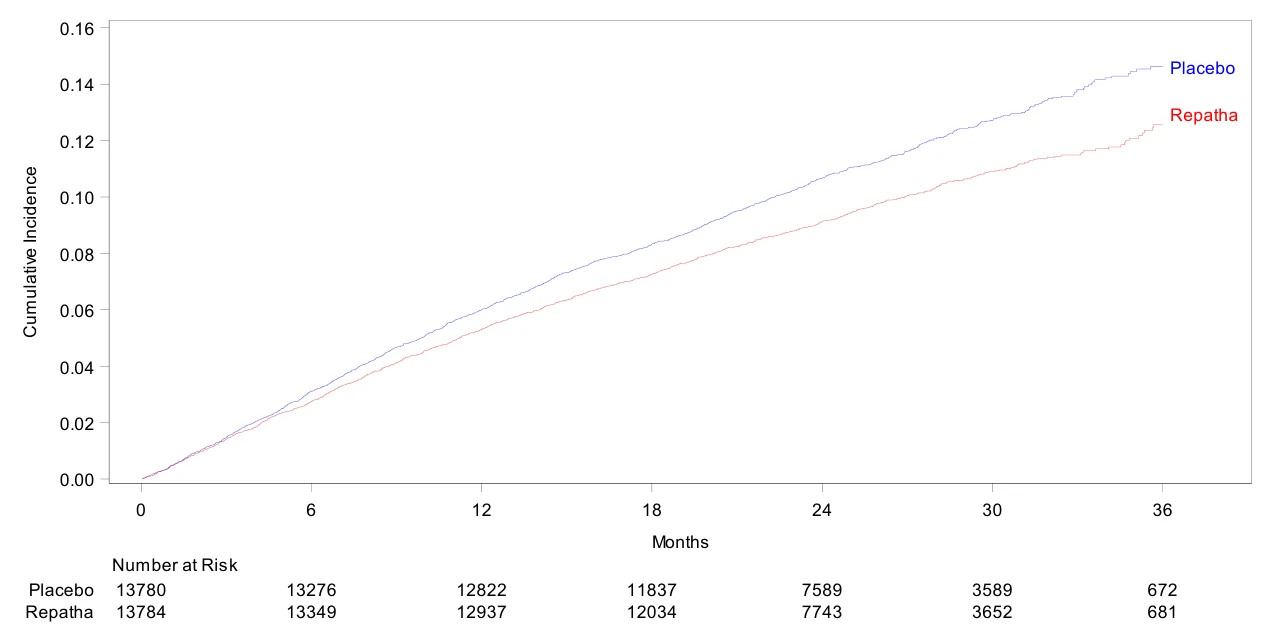
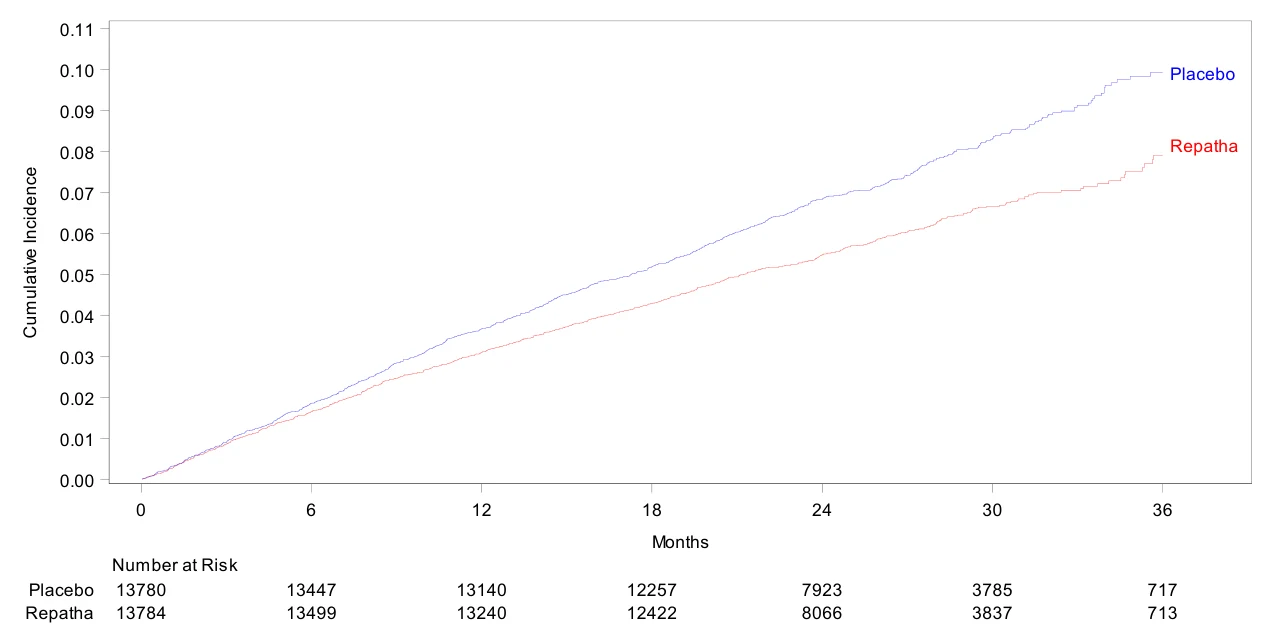
In the FOURIER study, REPATHA significantly reduced the risk for the primary composite endpoint (time to cardiovascular death, myocardial infarction, stroke, hospitalization for unstable angina, or coronary revascularization, whichever occurred first) and the key secondary composite endpoint (time to cardiovascular death, myocardial infarction, or stroke, whichever occurred first). The Kaplan-Meier estimates of the cumulative incidence of the primary and key secondary composite endpoints over time are shown in Figure 1and Figure 2 below.
The results of primary and secondary efficacy endpoints are shown in Table 4.
Table 4. Treatment Effects of REPATHA Compared with Placebo in Patients with Established Cardiovascular Disease (FOURIER)
| Placebo (N = 13,780) n (%) | REPATHA (N = 13,784) n (%) | Hazard Ratio (95% CI) | p-value a | |||||
Primary endpoint Time to cardiovascular death, myocardial infarction, hospitalization for unstable angina, stroke, or coronary revascularization, whichever occurred first | 1,563 (11.34) | 1,344 (9.75) | 0.85 (0.79, 0.92) | <0.0001 | ||||
Key secondary endpoint Time to cardiovascular death, myocardial infarction, or stroke, whichever occurred first | 1,013 (7.35) | 816 (5.92) | 0.80 (0.73, 0.88) | <0.0001 | ||||
| Other secondary endpoints | ||||||||
| Time to cardiovascular death | 240 (1.74) | 251 (1.82) | 1.05 (0.88, 1.25) | 0.6188b | ||||
| Time to death by any causec | 426 (3.09) | 444 (3.22) | 1.04 (0.91, 1.19) | |||||
| Time to first fatal or non-fatal myocardial infarction | 639 (4.64) | 468 (3.40) | 0.73 (0.65, 0.82) | |||||
| Time to first fatal or non-fatal stroke | 262 (1.90) | 207 (1.50) | 0.79 (0.66, 0.95) | |||||
| Time to first coronary revascularization | 965 (7.00) | 759 (5.51) | 0.78 (0.71, 0.86) | |||||
| Time to first hospitalization for unstable anginad | 239 (1.73) | 236 (1.71) | 0.99 (0.82, 1.18) | |||||
| a Two-sided log-rank test stratified by randomization stratification factors (final screening LDL-C and geographic region) collected via IVRS b Based on pre-specified hierarchical nature of the statistical testing for multiplicity adjustment, the statistical testing could not be performed for the other secondary endpoints due to non-statistical significant result of time to cardiovascular death. c Time to death by any cause is not a component of either the primary composite endpoint or key secondary composite endpoint d Not a prespecified endpoint; an ad-hoc analysis was performed to ensure results are provided for each individual component of the primary endpoint. | ||||||||
Figure 1. Cumulative Incidence Estimates for the Primary Composite Endpoint Over 3 Years
Figure 2. Cumulative Incidence Estimates for the Key Secondary Composite Endpoint Over 3 Years
The percent change from baseline at each scheduled assessment in LDL-C was assessed as an exploratory endpoint in the study. At Week 12, the LS (least squares) mean percent change from baseline in LDL-C was -2.42 in the placebo group and -63.11 in the REPATHA group. Of the patients treated with REPATHA, 9,518 (69.1%) achieved at least one LDL-C value < 0.65 mmol/L. The safety profile of REPATHA-treated patients with post-baseline LDL-C < 0.65 mmol/L was similar to that of REPATHA-treated patients with higher post-baseline LDL-C ≥ 1 mmol/L.
In a sub-study of 1,974 patients enrolled in the cardiovascular outcomes study, who had established cardiovascular disease, and who did not have mild cognitive impairment or dementia, REPATHA (n = 586) was non-inferior to placebo (n = 618) on select cognitive function domains assessed using neuropsychological function tests measured over a median follow-up of 19 months.
In the FOURIER-OLE studies, the observed mean percent reduction from baseline in LDL-C ranged from 53.4% to 67.2%. The subject incidences of achieving a post-baseline LDL-C level < 1.03 mmol/L following treatment ranged from 54.6% to 76.1%.
Primary Hyperlipidemia (including Heterozygous Familial Hypercholesterolemia and ASCVD)
Trial Design and Study Demographics
| Table 5. Summary of Patient Demographics | |||||
| Study # | Trial design | Dosage, Route of Administration and Duration | Study subjects (n) | Mean age (Range) | Gender |
| RUTHERFORD-2 | Double-blind, randomized, placebo-controlled | REPATHA 140 mg SC Q2W REPATHA 420 mg SC QM Placebo SC Q2W Placebo SC QM | 329 | 51.2 (19-79) | 42.2% females |
| LAPLACE-2 Combination Therapy | Double-blind, randomized, placebo and ezetimibe-controlled, combination therapy | REPATHA 140 mg SC Q2W REPATHA 420 mg SC QM Placebo SC Q2W Placebo SC QM ezetimibe 10 mg PO QD | 1,896 | 59.8 (20-80) | 45.8% females |
| DESCARTES Long-Term Efficacy | Double-blind, Randomized, placebo-controlled, long term | REPATHA 420 mg SC QM Placebo SC QM | 901 | 56.2 (25-75) | 52.3% females |
| GAUSS-2 Statin-Intolerant | Double-blind, randomized, ezetimibe-controlled | REPATHA 140 mg SC Q2W REPATHA 420 mg SC QM Placebo PO QD Placebo SC Q2W Placebo SC QM Ezetimibe 10 mg PO QD | 307 | 61.5 (22-80) | 45.9% females |
Q2W = once every 2 weeks; QM = once monthly; QD = once daily, SC = subcutaneously, PO = oral
RUTHERFORD-2 was an international, multicentre, double-blind, randomized, placebo-controlled, 12-week study of REPATHA in 329 patients with heterozygous familial hypercholesterolemia on statins with or without other lipid-lowering therapies. Patients were randomized to receive subcutaneous injections of REPATHA 140 mg every two weeks, 420 mg once monthly, or placebo. HeFH was diagnosed by the Simon Broome criteria (1991). In this study 38% of patients had clinical atherosclerotic cardiovascular disease. The mean age at baseline was 51 years (range, 19 to 79 years), 15% of the patients were ≥ 65 years old, 42% were women, 90% were White, 5% were Asian, and 1% were Black. The average LDL-C at baseline was 4.0 mmol/L with 76% of the patients on high- intensity statin therapy.
LAPLACE-2 was an international, multicentre, double-blind, randomized controlled trial in which patients were initially randomized to an open-label specific statin regimen for a 4-week lipid stabilization period followed by random assignment to subcutaneous injections of REPATHA 140 mg every 2 weeks, REPATHA 420 mg once monthly, or placebo for 12 weeks. The trial included 1,896 patients with primary hyperlipidemia (including 526 who had atherosclerotic cardiovascular disease) who received REPATHA or placebo as add-on therapy to daily doses of statins (atorvastatin 10 mg or 80 mg with or without ezetimibe 10 mg daily, rosuvastatin 5 mg or 40 mg, or simvastatin 40 mg). Among these patients, the mean age at baseline was 60 years (range: 20 to 80 years), 35% were ≥ 65 years old, 46% were women, 94% were White, 4% were Black, 1% were Asian and 5% were Hispanic or Latino. After 4 weeks background statin therapy, the mean baseline LDL-C was 2.8 mmol/L (range 2.3 – 3.2 mmol/L) across the five groups.
DESCARTES was an international, multicentre, double-blind, randomized, placebo-controlled, 52-week trial that included 901 patients with primary hyperlipidemia (including 156 who had atherosclerotic cardiovascular disease) who were assigned to background lipid-lowering therapy based on underlying cardiovascular risk. Patients who did not reach target LDL-C goal on atorvastatin 80 mg also received ezetimibe 10 mg and thus had LDL-C levels more refractory to treatment. After stabilization on background therapy, patients were randomly assigned to the addition of placebo or REPATHA 420 mg administered subcutaneously once monthly. Among these patients, the mean age at baseline was 56 years (range, 25 to 75 years), 23% were ≥ 65 years, 52% were women, 80% were White, 8% were Black, 6% were Asian, and 6% were Hispanic or Latino. After stabilization on the assigned background therapy, the mean baseline LDL-C was 2.6 mmol/L (range 2.3 – 3.0 mmol/L) across the background therapy groups.
GAUSS-2 was a multicentre, double-blind, randomized, ezetimibe-controlled, 12-week trial that included 307 patients with primary hyperlipidemia (including 117 who had atherosclerotic cardiovascular disease) who had tried at least two different statins and who were unable to continue on the lowest effective dose of either due to intolerable myalgia, myositis or rhabdomyolysis (which resolved when the statins were discontinued or the doses reduced). Patients were randomly assigned to receive subcutaneous injections of REPATHA 140 mg every 2 weeks, REPATHA 420 mg once monthly, or placebo every 2 weeks or monthly with ezetimibe 10 mg daily for 12 weeks. Among these patients, 55 patients were on statin therapy at baseline, while the mean age was 62 years (range: 22 to 80 years), 41% were ≥ 65 years old, 46% women, 94% White, 2% Black, 3% Asian, and 2.3% Hispanic or Latino. The mean baseline LDL-C was 5.0 mmol/L.
Study Results
In the RUTHERFORD-2 study, the differences between REPATHA and placebo group in mean percent change in LDL-C from baseline to Week 12 was -61% (95%CI: -67%, -55%; p < 0.0001) and -60% (95%CI: -68%, -53%; p < 0.0001) for the 140 mg every 2 weeks and 420 mg once monthly dosages, respectively. For additional results see Table 6.
Table 6. Effect of REPATHA on Lipid Parameters in Adult Patients with HeFH (Mean % Change from Baseline to Week 12 in RUTHERFORD-2)
| Treatment Group | LDL-Ca | Non-HDL-C | Apo B | Total Cholesterol |
|---|---|---|---|---|
| Placebo every 2 weeks (n = 54) | -2 | -1 | -1 | -2 |
| REPATHA 140 mg every 2 weeks† (n = 110) | -63 | -56 | -50 | -43 |
Mean difference from placebo (95% CI) | -61* (-67, -55) | -55* (-60, -49) | -49* (-55, -44) | -41 (-45, -36) |
| Placebo once monthly (n = 55) | 4 | 5 | 5 | 3 |
| REPATHA 420 mg once monthly† (n = 110) | -57 | -50 | -45 | -37 |
Mean difference from placebo (95% CI) | -60* (-68, -53) | -55* (-62, -48) | -49* (-56, -43) | -40 (-46, -34) |
a Calculated LDL-C.
Estimates are least squares means from a repeated measures model, which included treatment group, stratification factor, scheduled visit and the interaction of treatment with scheduled visit as covariates.
Inferential statistics for total cholesterol are not presented since it was an exploratory endpoint.
* p < 0.0001 compared with placebo; type I error was controlled among all primary and secondary endpoints.
†140 mg every 2 weeks or 420 mg once monthly yield similar reductions in LDL-C
In the LAPLACE-2 study, the overall difference between REPATHA and placebo in mean percent change in LDL-C from baseline to Week 12 was -73% (95% CI: -77%, -70%; p < 0.0001) and -64% (95% CI: -69%, -60%; p < 0.0001) for the 140 mg every 2 weeks and 420 mg once monthly dosages, respectively. The difference between REPATHA and ezetimibe in mean percent change in LDL-C from baseline to Week 12 was -45% (95% CI: -51%, -40%; p < 0.0001) and -42% (95% CI: -48%, -37%; p < 0.0001) for the 140 mg every 2 weeks and 420 mg once monthly dosages, respectively. For individual results see Table 7.
| Table 7. Effect of REPATHA on Lipid Parameters in Adult Patients with Primary Hyperlipidemia on Atorvastatin 10 mg or 80 mg with or without Ezetimibe 10 mg daily, Rosuvastatin 5 mg or 40 mg, or Simvastatin 40 mg (Mean % Change from Baseline to Week 12 in LAPLACE-2) | ||||
|---|---|---|---|---|
| Table 7. Effect of REPATHA on Lipid Parameters in Adult Patients with Primary Hyperlipidemia on Atorvastatin 10 mg or 80 mg with or without Ezetimibe 10 mg daily, Rosuvastatin 5 mg or 40 mg, or Simvastatin 40 mg (Mean % Change from Baseline to Week 12 in LAPLACE-2) | ||||
| Treatment Group | LDL-Ca | Non-HDL-C | Apo B | Total Cholesterol |
| Treatment Group | LDL-Ca | Non-HDL-C | Apo B | Total Cholesterol |
| Background Treatment with Atorvastatin 10 mg | ||||
| Q2W | ||||
| Placebo every 2 weeks (n = 56) | 10 | 8 | 8 | 6 |
| Ezetimibe 10 mg daily (n = 56) | -21 | -18 | -16 | -14 |
| REPATHA 140 mg every 2 weeks† (n = 110) | -65 | -53 | -51 | -37 |
| Mean difference of REPATHA from placebo (95% CI) | -74 * (-81, -68) | -62* (-67, -56) | -59* (-64, -54) | -43 (-47, -38) |
| Mean difference of REPATHA from Ezetimibe (95% CI) | -44** (-50, -37) | -35** (-41, -29) | -35** (-40, -30) | -23 (-27, -18) |
| QM | ||||
| Placebo once monthly (n = 55) | 1 | 2 | 0 | 1 |
| Ezetimibe 10 mg daily (n = 55) | -17 | -15 | -11 | -11 |
| REPATHA 420 mg once monthly† (n = 110) | -60 | -53 | -47 | -37 |
| Mean difference of REPATHA from placebo (95% CI) | -61* (-68, -54) | -55* (-61, -48) | -47* (-53, -42) | -38 (-43, -33) |
| Mean difference of REPATHA from Ezetimibe (95% CI) | -43** (-50, -36) | -38** (-44, -31) | -36** (-42, -30) | -25 (-30, -21) |
| Background Treatment with Atorvastatin 80 mg | ||||
| Q2W | ||||
| Placebo every 2 weeks (n = 55) | 15 | 12 | 12 | 9 |
| Ezetimibe 10 mg daily (n = 56) | -15 | -14 | -12 | -10 |
| REPATHA 140 mg every 2 weeks† (n = 109) | -65 | -55 | -50 | -36 |
| Mean difference of REPATHA from placebo (95% CI) | -80* (-91, -68) | -67* (-76, -57) | -61* (-69, -54) | -46 (-53, -39) |
| Mean difference of REPATHA from Ezetimibe (95% CI) | -50** (-61, -39) | -41** (-50, -31) | -37** (-45, -30) | -26 (-33, -20) |
| QM | ||||
| Placebo once monthly (n = 55) | 12 | 10 | 7 | 6 |
| Ezetimibe 10 mg daily (n = 54) | -21 | -17 | -12 | -12 |
| REPATHA 420 mg once monthly† (n = 110) | -62 | -50 | -46 | -33 |
| Mean difference of REPATHA from placebo (95% CI) | -74* (-84, -65) | -60* (-68, -52) | -53* (-61, -45) | -39 (-45, -33) |
| Mean difference of REPATHA from Ezetimibe (95% CI) | -41** (-51, -32) | -33** (-41, -24) | -34** (-42, -26) | -20 (-26, -14) |
| Background Treatment with Rosuvastatin 5 mg | ||||
| Q2W | ||||
| Placebo every 2 weeks (n = 58) | 8 | 8 | 6 | 6 |
| REPATHA 140 mg every 2 weeks† (n = 113) | -63 | -52 | -50 | -36 |
| Mean difference of REPATHA from placebo (95% CI) | -71* (-78, -64) | -60* (-66, -54) | -57* (-62, -51) | -43 (-47, -39) |
| QM | ||||
| Placebo once monthly (n = 57) | 5 | 6 | 5 | 3 |
| REPATHA 420 mg once monthly† (n = 115) | -61 | -52 | -49 | -36 |
| Mean difference of REPATHA from placebo (95% CI) | -66* (-72, -59) | -57* (-63, -52) | -53* (-58, -48) | -39 (-44, -35) |
| Background Treatment with Rosuvastatin 40 mg | ||||
| Q2W | ||||
| Placebo every 2 weeks (n = 56) | 10 | 9 | 5 | 4 |
| REPATHA 140 mg every 2 weeks† (n = 111) | -62 | -51 | -46 | -33 |
| Mean difference of REPATHA from placebo (95% CI) | -71* (-80,-63) | -60* (-67, -52) | -51* (-57, -44) | -38 (-42, -33) |
| QM | ||||
| Placebo once monthly (n = 55) | 3 | 3 | 3 | 1 |
| REPATHA 420 mg once monthly† (n = 112) | -56 | -46 | -44 | -30 |
| Mean difference of REPATHA from placebo (95% CI) | -59* (-69, -48) | -50* (-58, -41) | -47* (-54, -39) | -31 (-37, -25) |
| Background Treatment with Simvastatin 40 mg | ||||
| Q2W | ||||
| Placebo every 2 weeks (n = 56) | 5 | 2 | 0 | 0 |
| REPATHA 140 mg every 2 weeks† (n = 112) | -69 | -59 | -56 | -42 |
| Mean difference of REPATHA from placebo (95% CI) | -74* (-80, -67) | -61* (-67, -55) | -56* (-61, -51) | -42 (-47, -38) |
| QM | ||||
| Placebo once monthly (n = 55) | 3 | 6 | 4 | 1 |
| REPATHA 420 mg once monthly† (n = 115) | -59 | -51 | -49 | -36 |
| Mean difference of REPATHA from placebo (95% CI) | -62* (-71, -52) | -57* (-65, -49) | -53* (-59, -46) | -37 (-43, -31) |
a Calculated LDL-C.
Estimates are least squares means from a repeated measures model, which included treatment group, stratification factor, scheduled visit and the interaction of treatment with scheduled visit as covariates.
Inferential statistics for total cholesterol are not presented since it was an exploratory endpoint.
* p < 0.0001 compared with placebo; type I error was controlled among all primary and secondary endpoints.
†140 mg every 2 weeks or 420 mg once monthly yield similar reductions in LDL-C
**p < 0.0001 compared with ezetimibe; type I error was controlled among all primary and secondary endpoints.
In the DESCARTES study for these patients with primary hyperlipidemia on cholesterol-lowering diet alone, or on atorvastatin therapy with or without ezetimibe along with a cholesterol-lowering diet, the overall difference between REPATHA 420 mg once monthly and placebo in mean percent change in LDL-C from baseline to Week 52 was -59% (95% CI: -64%, -55%; p ˂ 0.0001). For individual results see Table 8.
Table 8. Effect of REPATHA on Lipid Parameters in Adult Patients with Primary Hyperlipidemia on Cholesterol-lowering Diet Alone, or Atorvastatin 10mg or 80 mg with or without Ezetimibe 10 mg daily along with a Cholesterol-lowering diet (Mean % Change from Baseline to Week 52 in DESCARTES)
| Treatment Group | LDL-Ca | Non-HDL-C | Apo B | Total Cholesterol | |||||||
|---|---|---|---|---|---|---|---|---|---|---|---|
| Cholesterol-lowering Diet Alone | |||||||||||
| Placebo once monthly (n = 37) | 11 | 9 | 0 | 5 | |||||||
REPATHA 420 mg once monthly (n = 74) | -53 | -45 | -43 | -31 | |||||||
| Mean difference of REPATHA from placebo (95% CI) | -64* (-72, -55) | -54* (-62, -47) | -43* (-50, -36) | -36* (-42, -31) | |||||||
| Background Treatment with Atorvastatin 10 mg and Cholesterol-lowering Diet | |||||||||||
| Placebo once monthly (n = 129) | 8 | 9 | 3 | 5 | |||||||
REPATHA 420 mg once monthly (n = 254) | -56 | -46 | -45 | -30 | |||||||
| Mean difference of REPATHA from placebo (95% CI) | -64* (-70, -59) | -55* (-59, -50) | -48* (-52, -43) | -35* (-39, -32) | |||||||
| Background Treatment with Atorvastatin 80 mg and Cholesterol-lowering Diet | |||||||||||
| Placebo once monthly (n = 73) | 11 | 12 | 5 | 8 | |||||||
| REPATHA 420 mg once monthly (n = 145) | -47 | -38 | -39 | -25 | |||||||
| Mean difference of REPATHA from placebo (95% CI) | -58* (-69, -46) | -50* (-60, -39) | -45* (-53, -36) | -33* (-40, -26) | |||||||
| Background Treatment with Atorvastatin 80 mg, Ezetimibe 10 mg and Cholesterol-lowering Diet | |||||||||||
| Placebo once monthly (n = 63) | 3 | 2 | 1 | 2 | |||||||
| REPATHA 420 mg once monthly (n = 126) | -46 | -39 | -37 | -27 | |||||||
| Mean difference of REPATHA from placebo (95% CI) | -49* (-60, -38) | -41* (-51, -31) | -38* (-46, -29) | -29* (-36, -22) | |||||||
a Calculated LDL-C.
Estimates are least squares means from a repeated measures model, which included treatment group, stratification factor, scheduled visit and the interaction of treatment with scheduled visit as covariates.
* p < 0.0001 compared with placebo; type I error was controlled among all primary and secondary endpoints.
In the GAUSS-2 study, the difference between REPATHA and ezetimibe in mean percent change in LDL-C from baseline to Week 12 was -39% (95% CI: -45%, -34%; p < 0.0001) and -38% (95% CI: -43%, -33%; p ˂ 0.0001) for the 140 mg every 2 weeks and 420 mg once monthly dosages, respectively. For additional results see Table 9.
Table 9. Effect of REPATHA on Lipid Parameters in Adult Patients with Primary Hyperlipidemia (Mean % Change from Baseline to Week 12 Compared to Ezetimibe in GAUSS-2)
| Treatment Group | LDL-Ca | Non-HDL-C | Apo B | Total Cholesterol | |||||||
|---|---|---|---|---|---|---|---|---|---|---|---|
| Q2W | |||||||||||
| Ezetimibe 10 mg daily (n = 51) | -18 | -17 | -13 | -13 | |||||||
| REPATHA 140 mg every 2 weeks† (n = 103) | -57 | -49 | -46 | -38 | |||||||
| Mean difference from Ezetimibe (95% CI) | -39** (-45, -34) | -32** (-37, -27) | -33** (-38, -28) | -25 (-29, -21) | |||||||
| QM | |||||||||||
| Ezetimibe 10 mg daily (n = 51) | -15 | -13 | -10 | -11 | |||||||
| REPATHA 420 mg once monthly† (n = 102) | -53 | -46 | -43 | -36 | |||||||
| Mean difference from Ezetimibe (95% CI) | -38** (-43, -33) | -33** (-37, -29) | -33** (-38, -28) | -25 (-29, -22) | |||||||
a Calculated LDL-C.
Estimates are least squares means from a repeated measures model, which included treatment group, stratification factor, scheduled visit and the interaction of treatment with scheduled visit as covariates.
Inferential statistics for total cholesterol are not presented since it was an exploratory endpoint.
†140 mg every 2 weeks or 420 mg once monthly yield similar reductions in LDL-C
**p < 0.0001 compared with ezetimibe; type I error was controlled among all primary and secondary endpoints.
Acute Phase of Acute Coronary Syndrome (ACS)
Effect on LDL-C During Acute Phase of Acute Coronary Syndrome (ACS)
Trial Design and Study Demographics
EVOPACS was a single country, multicentre, double-blind, randomized, placebo-controlled, 8-week study conducted on 308 patients admitted to the hospital within 24 to 72 hours of an ACS event. Overall, 57 (19%) of eligible patients were women and the mean (SD) age of patients was 60.8 (11.3) years.
If patients were not on a statin or were on statin treatment other than atorvastatin 40 mg prior to screening, this was stopped and atorvastatin 40 mg once daily was initiated. Most subjects (241 [78%]) were not on stable statin treatment for ≥ 4 weeks prior to screening and most (235 [76%]) were not taking a statin at baseline. By week 4, 281 (97%) subjects were receiving high-intensity statins.
Study Results
At baseline, LDL-C values were 3.61 mmol/L in the evolocumab plus atorvastatin group and 3.42 mmol/L in the placebo plus atorvastatin group. At week 8, LDL-C values were 0.79 mmol/L in evolocumab plus atorvastatin group and 2.06 mmol/L in placebo plus atorvastatin group. The study met its primary objective for REPATHA 420 mg once monthly in significantly reducing LDL-C from baseline to week 8 compared to placebo (p < 0.001). The mean (SD) reduction in calculated LDL-C from baseline at week 8 was 77.1% (15.8%) in the evolocumab plus atorvastatin group and 35.4% (26.6%) in the placebo plus atorvastatin group, with a least squares (LS) mean difference (95% CI) of 40.7% (36.2%, 45.2%). LDL-C reductions in this study were consistent with previous studies where evolocumab was added to stable lipid-lowering therapy.
The effects of evolocumab in this patient population were consistent with those observed in previous studies in the evolocumab clinical development program and no new safety concerns were noted.
Heterozygous Familial Hypercholesterolemia (HeFH) in Pediatric Patients (10 to 17 years of age)
Effect of REPATHA on LDL-C in Pediatric Patients with HeFH
Trial Design and Study Demographics
| Table 10. Summary of Trial Design and Patient Demographics | |||||
| Study # | Trial design | Dosage, Route of Administration and Duration | Study subjects (n) | Mean age (Range) | Gender |
| HAUSER-RCT | Randomized, multicentre, placebo-controlled, double-blind, parallel group, 24 week study | REPATHA 420 mg SC QM Placebo SC QM | 157 | 13.7 (10-17) | 56.1% females |
HAUSER-RCT was a randomized, multicentre, placebo-controlled, double-blind, parallel group, 24-week study in 157 pediatric patients aged 10 to 17 years old with HeFH. HeFH was diagnosed by diagnostic criteria (Simon Broome Register Group [1991], the Dutch Lipid Clinic Network [1999], MEDPED [1993] or by genetic testing. Patients were required to be on a low-fat diet and were receiving optimized background lipid-lowering therapy (statin with or without ezetimibe). Patients were randomly assigned 2:1 to receive Repatha (420 mg evolocumab once monthly subcutaneously; n=104) or placebo (n=53) for 24 weeks. Patients’ mean age was 14 years (range: 10 to 17 years): 56.1% of patients were female, 85% were white, 1% Black, 1% Asian and 8% were Hispanic or Latino. The mean LDL-C at baseline was 4.77 mmol/L.
Study Results
Study HAUSER-RCT in pediatric patients aged 10 to under 17 with HeFH, met its primary endpoint; the difference between REPATHA and placebo in mean percent change in LDL-C from baseline to Week 24 was -38% (95% CI: -46%, -31%). For additional results, see Figure 3 and Table 11.
Figure 3. Effect of REPATHA on Calculated LDL-C in Pediatric Patients with HeFH – Mean Percent Change from Baseline by Scheduled Visit and Treatment Group (HAUSER-RCT)
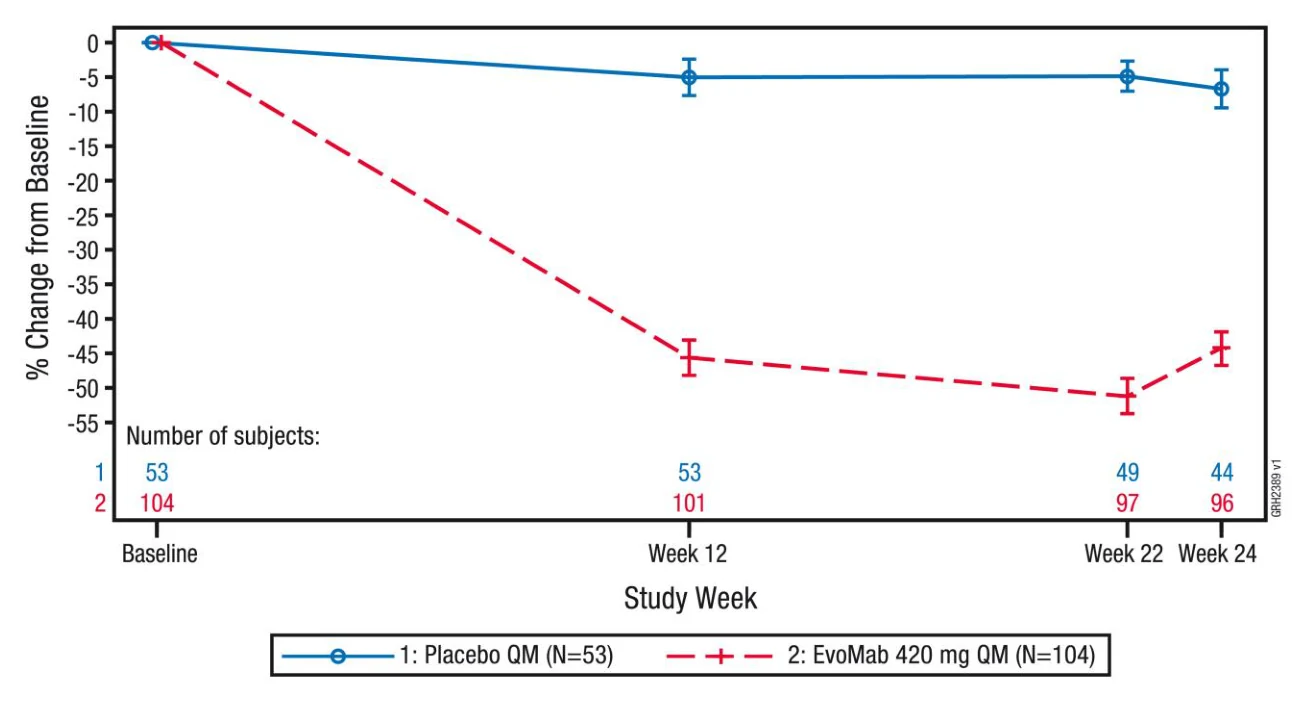
EvoMab = evolocumab; LDL-C = low density lipoprotein cholesterol; QM = monthly (subcutaneous)
N = number of patients randomized and dosed in the full analysis set. Vertical lines represent the standard error around the mean. Plot is based on observed data and no imputation is used for missing values.
Table 11. Effect of REPATHA on Lipid Parameters in Pediatric Patients with HeFH (Mean Percent Change from Baseline to Week 24 in HAUSER-RCT)
| Treatment Group | LDL-Ca | Non-HDL-C | ApoB | Total Cholesterol |
|---|---|---|---|---|
Placebo once monthly (n = 53) % change from baseline | -6 | -6 | -2 | -5 |
REPATHA 420 mg once monthly (n = 104) % change from baseline | -44 | -41 | -35 | -32 |
| Mean difference in % change of REPATHA from placebo (95% CI) | -38 (-45, -31) | -35 (-42, -28) | -32 (-39, -26) | -27 (-32, -21) |
a Calculated LDL-C. All adjusted p-values < 0.0001 CI = Confidence Interval; LDL-C = low density lipoprotein cholesterol; HDL-C = high density lipoprotein cholesterol; ApoB = apolipoprotein B n = number of patients randomized and dosed in the full analysis set
Homozygous Familial Hypercholesterolemia (HoFH)
Trial Design and Study Demographics
| Table 12. Summary of Trial Design and Patient Demographics | |||||
| Study # | Trial design | Dosage, Route of Administration and Duration | Study subjects (n) | Mean age (Range) | Gender |
| TESLA | Double-blind, randomized, placebo-controlled 12-week study | REPATHA 420 mg QM placebo SC QM | 49 | 34.3 (13-57) | 25% females |
| TAUSSIG | Multicentre, Open-label 5-year extension study | REPATHA 420 mg QM REPATHA 420 mg Q2W | 300 (14 pediatric, 286 adult) | 47.5 (13-78) | 44% females |
| HAUSER-OLE | Ongoing, Open-label, single-arm, multicentre, 80 week study | REPATHA 420 mg SC QM | 12 (pediatric HoFH subjects) | 12.4 (11-17) | 16.7% females |
Q2W = once every 2 weeks; QM = once monthly; SC = subcutaneously.
TESLA Part B was a multicentre, double-blind, randomized, placebo-controlled, 12-week trial in 49 HoFH patients (not on lipid-apheresis therapy), 33 of whom received REPATHA 420 mg once monthly and 16 of whom received placebo, as an adjunct to other lipid-lowering therapies (e.g., statins, ezetimibe, bile-acid sequestrants). The mean age at baseline was 31 years, 49% were female, 90% Caucasian, 4% were Asian, and 6% other. The trial included 10 adolescents (ages 13 to 17 years), 7 of whom received REPATHA.
The mean LDL-C at baseline was 9.0 mmol/L with all patients on statins and 92% on ezetimibe. The diagnosis of HoFH was made by genetic confirmation or a clinical diagnosis based on a history of an untreated LDL-C concentration > 12.9 mmol/L together with either xanthoma before 10 years of age or evidence of HeFH in both parents. Twenty-four (49%) participants had homozygous genetic defects, 24 (49%) participants had compound heterozygous genetic defects and one had heterozygous genetic defects; overall, the gene affected was the LDLR for 96%. The primary endpoint was percent change from baseline in LDL-C at week 12.
TAUSSIG was a multicentre, open-label 5-year extension study to assess the long-term safety and efficacy of REPATHA in patients with severe familial hypercholesterolemia (FH), including homozygous familial hypercholesterolemia (HoFH), who were treated with REPATHA as an adjunct to other lipid-lowering therapies. A total of 106 HoFH patients (72 non-apheresis and 34 apheresis) enrolled in TAUSSIG. All patients in the study were initially treated with REPATHA 420 mg once monthly except for those receiving lipid apheresis at enrollment, who began with REPATHA 420 mg every two weeks. Dose frequency in non-apheresis patients could be titrated up to 420 mg once every 2 weeks based on LDL-C response and PCSK9 levels. Of the 72 non-apheresis HoFH patients in TAUSSIG (who started on the 420 mg QM dose), 53 patients up-titrated to the 420 mg Q2W dose, with 48 of these 53 patients having received ≥ 12 weeks of both doses. The diagnosis of HoFH was made by genetic confirmation or a clinical diagnosis based on a history of an untreated LDL-C concentration > 13.0 mmol/L together with either xanthoma before 10 years of age or evidence of HeFH in both parents. The statistical analysis of efficacy data from this study is descriptive in nature, and no hypotheses were tested.
HAUSER-OLE was an open-label, single-arm, multicentre, 80-week study to evaluate the safety, tolerability and efficacy of REPATHA for LDL-C reduction that was designed to include pediatric patients aged 10 to under 18 years with HoFH. The diagnosis of HoFH was made by genetic confirmation in all patients. Patients were on a low-fat diet and receiving background lipid-lowering therapy (atorvastatin or rosuvastatin with or without ezetimibe). No patients were receiving lipid apheresis. Overall, 12 patients received 420 mg REPATHA subcutaneously once monthly. The mean age was 12 years (range 11 to 17 years), with 6 patients within the age range of 10-11 years, 83% were male, 75% were white, 17% Asian and 8% Other. Median LDL-C at baseline was 10.3 mmol/L.
Study Results
In Part B of TESLA, REPATHA 420 mg once monthly significantly reduced LDL-C at week 12 as compared with placebo: mean percent change from baseline to Week 12 was -32% (95% CI: -45%, -19%; p<0.001). For additional information see Table 13.
Table 13. Effect of REPATHA on Lipid Parameters in Patients with HoFH (Mean % Change from Baseline to Week 12 in TESLA)
| Treatment Group | LDL-Ca | Non-HDL-C | Apo B | Total Cholesterol |
|---|---|---|---|---|
| Placebo once monthly (n = 16) | 9 | 8 | 4 | 8 |
| REPATHA 420 mg once monthly (n = 33) | -23 | -22 | -19 | -19 |
| Mean difference of REPATHA from placebo (95% CI) | -32* (-45,-19) | -30 (-42, -18) | -23* (-35,-11) | -27 (-38, -16) |
a Calculated LDL-C.
Estimates are least squares means from a repeated measures model, which included treatment group, screening LDL-C, scheduled visit and the interaction of treatment with scheduled visit as covariates.
Inferential statistics for non-HDL-C and total cholesterol are not presented since it was an exploratory endpoint.
* p < 0.001 compared with placebo; type I error was controlled among all primary and secondary endpoints.
| Figure 4. Effect of REPATHA on LDL-C in Patients with HoFH – Mean Percent Change from Baseline by Scheduled Visit and Treatment Group |
|---|
| N = number of patients that were randomized and dosed in the full analysis set; EvoMab = Evolocumab; QM = monthly. Vertical lines represent the standard error around the mean. Plot is based on observed data and no imputation is used for missing values. |
Long-term Study in Patients with HoFH
In TAUSSIG, long-term use of REPATHA demonstrated a sustained treatment effect as evidenced by reduction of LDL-C in patients with HoFH (overall, non-apheresis and apheresis) (Table 14). Changes in other lipid parameters (total cholesterol, ApoB, and non-HDL-C,) also demonstrate a sustained effect of long-term REPATHA administration in patients with HoFH.
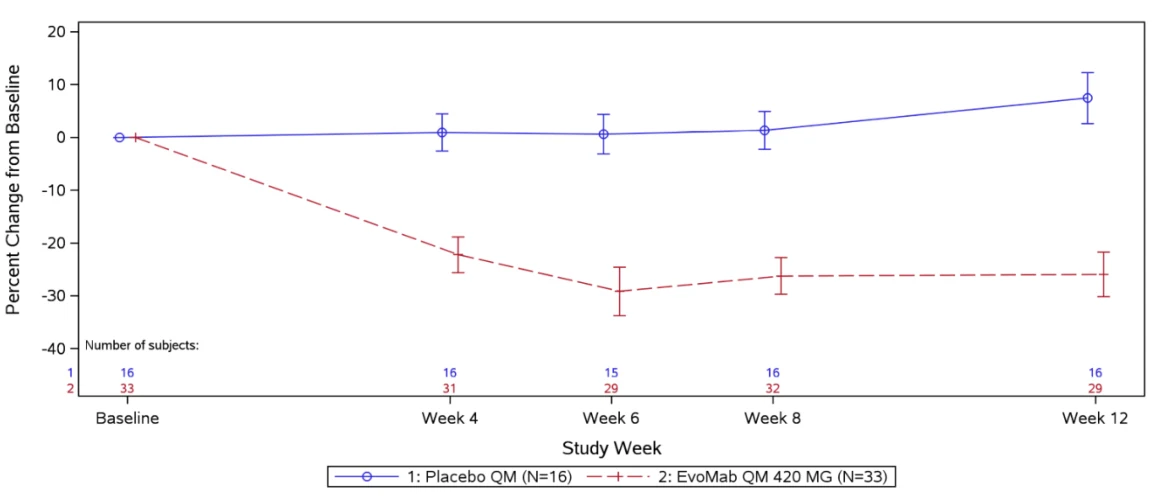 |
|---|
Table 14. Effect of REPATHA on LDL-C in Patients with HoFH (Mean % Change from Baseline to OLE Week 48 in TAUSSIG)
| Patient Population (N) | OLE Week 12 | OLE Week 24 | OLE Week 36 | OLE Week 48 |
|---|---|---|---|---|
| HoFH (overall) (N = 106) | -21 (n = 104) | -21 (n = 99) | -27 (n = 94) | -25 (n = 93) |
| Median | -18 | -22 | -27 | -26 |
| Range | -92, 38 | -74, 147 | -75, 36 | -76, 157 |
| Non-apheresis (N = 72) | -23 (n = 70) | -26 (n = 69) | -31 (n = 65) | -28 (n = 64) |
| Median | -21 | -28 | -32 | -28 |
| Range | -85, 23 | -74, 147 | -75, 28 | -74, 157 |
| Apheresis (N = 34) | -18 (n = 34) | -11 (n = 30) | -19 (n = 29) | -19 (n = 29) |
| Median | -15 | -17 | -13 | -14 |
| Range | -92, 38 | -58, 120 | -70, 36 | -76, 47 |
OLE = open-label extension
N (n) = Number of evaluable patients (N) and patients with observed LDL values at specific schedule visit (n) in the HoFH Final Analysis Set (overall non-apheresis and apheresis) Values are calculated LDL-C.
A total of 48 patients were included in the HoFH Evolocumab Titration Analysis Set, which included non-apheresis patients who received evolocumab 420 mg QM for at least 12 weeks in the OLE study followed by evolocumab 420 mg Q2W for at least 12 weeks in the OLE study. Mean percent reductions from baseline in LDL-C were 20% at week 12 of QM treatment and 30% at week 12 of Q2W treatment.
Among 14 patients aged 13 to under 18 years with HoFH, mean percent reduction from baseline in LDL-C at OLE week 12 was 9.4%.
In HAUSER-OLE, in 12 patients aged 11 to under 18 years with HoFH, the median (Q1, Q3) percent change from baseline in calculated LDL-C at week 12 was -12% (-33, 2.6), at week 48 was -15% (-39, 3.7) and at week 80 was -14.3% (-40.6, 3.5).
14.2 Comparative Bioavailability Studies
Not Applicable.
14.3 Immunogenicity
As with all therapeutic proteins, there is potential for immunogenicity. The detection of anti-drug binding antibody formation is highly dependent on the sensitivity and specificity of the assay. Additionally, the observed incidence of antibody (including neutralizing antibody) positivity in an assay may be influenced by several factors, including assay methodology, sample handling, timing of sample collection, concomitant medications and underlying disease. For these reasons, comparison of the incidence of antibodies to evolocumab with incidence of antibodies in other studies or to other products may be misleading.
In a pool of clinical studies, 48 out of 17,992 adult patients (0.3%) treated with at least one dose of REPATHA tested positive for the development of anti-evolocumab binding antibodies. Of the patients whose sera tested positive for binding antibodies, none tested positive for neutralizing antibodies.
No anti-evolocumab antibodies were detected in clinical studies of pediatric patients treated with REPATHA.
There was no evidence of impact of anti-evolocumab antibody development on the pharmacokinetic profile, clinical response or safety of REPATHA in the clinical studies.
15 MICROBIOLOGY
No microbiological information is required for this drug product.
16 NON-CLINICAL TOXICOLOGY
General Toxicology
No adverse effects were observed in cynomolgus monkeys administered vehicle control or evolocumab at 3, 30, or 300 mg/kg SC QW for 6 months followed by a 25 week recovery period. The NOAEL for evolocumab was 300 mg/kg QW, which corresponds to a Cmax and AUC0-168 at the end of the study of 11,700 mcg/mL and 1,730,000 mcg•hr/mL. This evolocumab dose level provided an AUC exposure 133-fold higher than achieved in patients receiving evolocumab at 420 mg Q2W.
In addition, no adverse effects were noted in hamsters administered vehicle control or evolocumab at 100 and 300 mg/kg QW SC for 3 months. The NOAEL for this study was 300 mg/kg, which corresponds to a Cmax of 2,080 mcg/mL and AUC0-168 of 266,000 mcg•hr/mL. This evolocumab dose level provided an AUC exposure 21-fold higher than achieved in patients receiving evolocumab at 420 mg Q2W.
The intended pharmacological effect of decreased serum LDL-C and total cholesterol was observed in these studies and was reversible upon cessation of treatment.
No adverse effects were observed when evolocumab was administered in combination with rosuvastatin to cynomolgus monkeys given rosuvastatin alone (5 mg/kg; administered QD orally in a gelatin capsule), a combination of evolocumab (10 mg/kg; administered SC Q2W) and rosuvastatin (5 mg/kg; administered QD orally), or a combination of evolocumab (100 mg/kg; administered SC Q2W) and rosuvastatin (5 mg/kg; administered QD orally). The NOAEL was the highest dose level tested (100 mg/kg evolocumab with 5 mg/kg rosuvastatin), which corresponded to evolocumab Cmax and AUCt values on study day 85 of 1740 mcg/mL and 248000 mcg•hr/mL, respectively, and rosuvastatin Cmax and AUCt values of 15.7 ng/mL and 184 ng•hr/mL, respectively. Reductions in serum LDL-C and total cholesterol were more pronounced than observed previously with evolocumab alone and were reversible upon cessation of treatment.
Carcinogenicity
In a lifetime pharmacology study, hamsters received vehicle control or evolocumab administered SC, Q2W at 10, 30, or 100 mg/kg until terminal necropsy in week 86 (females) or week 105 (males). The expected PD effect (serum LDL-C lowering) was observed in all evolocumab dose groups throughout the study. Evolocumab was not carcinogenic in hamsters in this study. This evolocumab dose level provided an AUC exposure 7-fold higher than achieved in patients receiving evolocumab at 420 mg Q2W.
Genotoxicity
Genotoxicity and mutagenicity studies were not conducted.
Reproductive and Developmental Toxicology
Male and female hamsters were administered vehicle control or evolocumab at 10, 30 or 100 mg/kg SC Q2W before cohabitation (males for 4 weeks; females for 2 weeks) and through mating and implantation. Evolocumab administration did not result in any effects on mating, fertility, estrous cycling, male reproductive assessments (organ weights or sperm parameters), or embryo-fetal survival. In sexually mature cynomolgus monkeys, no effects were observed on reproductive organ weight or histopathology, menstrual cycling or sperm parameters following administration of evolocumab at 3, 30, or 300 mg/kg SC QW for 6 months.
Cynomolgus monkeys were administered 0 or 50 mg/kg evolocumab by SC injection once between GD20 to GD22 (dependent on pregnancy determination), on GD35, and Q2W thereafter through gestation until parturition. Embryo-fetal and post-natal development (including skeletal, neurobehavioural and external/ visceral assessments) were not affected in offspring of pregnant cynomolgus monkeys administered. Treated mothers displayed up to a 70% reduction in serum LDL-C compared to control females. Offspring of evolocumab treated mothers were exposed to therapeutic levels of evolocumab via placental transfer and displayed no reductions in serum LDL-C. The developmental no observed effect level (NOEL) was 50 mg/kg Q2W. This evolocumab dose level provided an AUC exposure 5-fold higher than achieved in patients receiving evolocumab at 420 mg Q2W.