


Product Monograph - Leqvio
Recent Major Label Changes
| 4 Dosage and administration, 4.4 Administration | 2026-08 |
|---|---|
| 7 Warnings and Precautions, Immune | 2026-08 |
Table of contents
Sections or subsections that are not applicable at the time of authorization are not listed.
Recent Major Label Changes ................................................................................................... 2
Table of contents .................................................................................................................... 2
Part 1: Health Professional Information .................................................................................. 4
Indications .................................................................................................................. 4
1.1 Pediatrics .............................................................................................................. 4
1.2 Geriatrics .............................................................................................................. 4
Contraindications ........................................................................................................ 4
Dosage and Administration ......................................................................................... 4
4.1 Dosing Considerations .......................................................................................... 4
4.2 Recommended Dose and Dosage Adjustment ..................................................... 4
4.4 Administration ...................................................................................................... 5
4.5 Missed Dose ......................................................................................................... 5
Overdosage ................................................................................................................. 6
Dosage Forms, Strengths, Composition and Packaging ................................................ 6
Warnings and Precautions ........................................................................................... 6
Endocrine and Metabolism .............................................................................................. 6
Hepatic/Biliary/Pancreatic ............................................................................................... 6
Immune ............................................................................................................................ 7
Renal ................................................................................................................................ 7
Reproductive Health ........................................................................................................ 7
Skin ................................................................................................................................... 7
7.1 Special Populations ............................................................................................... 7
7.1.1 Pregnancy ......................................................................................................... 7
7.1.2 Breastfeeding ................................................................................................... 8
7.1.3 Pediatrics .......................................................................................................... 8
7.1.4 Geriatrics .......................................................................................................... 8
Adverse Reactions ....................................................................................................... 8
8.1 Adverse Reaction Overview .................................................................................. 8
8.2 Clinical Trial Adverse Reactions ............................................................................ 9
8.5 Post-Market Adverse Reactions ......................................................................... 11
Drug Interactions ...................................................................................................... 12
9.2 Drug Interactions Overview ................................................................................ 12
9.4 Drug-Drug Interactions ....................................................................................... 12
9.5 Drug-Food Interactions ....................................................................................... 12
9.6 Drug-Herb Interactions ....................................................................................... 12
Clinical Pharmacology ............................................................................................... 12
10.1 Mechanism of Action .......................................................................................... 12
10.2 Pharmacodynamics ............................................................................................ 13
10.3 Pharmacokinetics ............................................................................................... 13
10.4 Immunogenicity .................................................................................................. 15
Storage, Stability and Disposal .................................................................................. 16
Special Handling Instructions .................................................................................... 16
Part 2: Scientific Information ................................................................................................ 17
Pharmaceutical Information ...................................................................................... 17
Clinical Trials ............................................................................................................. 18
14.1 Clinical Trials by Indication ................................................................................. 18
Microbiology ............................................................................................................. 25
Non-Clinical Toxicology ............................................................................................. 26
Patient Medication Information ........................................................................................... 28
Part 1: Health Professional Information
Indications
Primary hypercholesterolemia
LEQVIO® (inclisiran injection) is indicated as an adjunct to lifestyle changes, including diet, to further reduce low-density lipoprotein cholesterol (LDL-C) level in adults with the following conditions who are on maximally tolerated dose of a statin, with or without other LDL-C -lowering therapies:
- Heterozygous familial hypercholesterolemia (HeFH), or
- Non-familial hypercholesterolemia with atherosclerotic cardiovascular disease (ASCVD)
The effect of LEQVIO on cardiovascular morbidity and mortality has not been determined.
1.1 Pediatrics
Pediatrics (<18 years of age): No data are available to Health Canada; therefore, Health Canada has not authorized an indication for pediatric use.
1.2 Geriatrics
Geriatrics (≥ 65 years of age): Of the 1833 patients treated with inclisiran in the Phase III program, 981 (54%) patients were 65 years of age and older, while 239 (13%) patients were 75 years of age and older. Elderly subjects with heterozygous familial hypercholesterolemia were however less represented (22% were aged ≥ 65 years). No overall differences in safety or efficacy were observed between patients aged ≥ 65 years and younger patients.
Contraindications
- LEQVIO is contraindicated in patients who are hypersensitive to this drug or to any ingredient in the formulation, including any non-medicinal ingredient, or component of the container.
- For the lipid lowering therapies such as statin or other lipid lowering therapies used in combination with LEQVIO, see the Contraindications section of the product monographs for those medications.
Dosage and Administration
4.1 Dosing Considerations
LEQVIO is administered subcutaneously through a single-dose pre-filled syringe.
LEQVIO is intended for administration by a healthcare professional (e.g. doctor, nurse or pharmacist).
4.2 Recommended Dose and Dosage Adjustment
The recommended dose of LEQVIO is 284 mg administered as a single subcutaneous injection: initially, again at 3 months, followed by every 6 months.
Treatment Transition from PCSK9 Inhibitor Monoclonal Antibody
There is no evidence to support concomitant use with proprotein convertase subtilisin/kexin type 9 (PCSK9) inhibitor monoclonal antibodies. PCSK9 inhibitor monoclonal antibodies can be administered once every 2 weeks or once monthly. When transitioning from a PCSK9 monoclonal antibody to LEQVIO, administer the last dose of the PCSK9 monoclonal antibody and then, wait until the next scheduled date to administer the first dose of LEQVIO. Administration of LEQVIO thereafter should be done as per the recommended dosing schedule (i.e. initially, again at 3 months, followed by every 6 months).
Dosing in special populations
Renal impairment
No dose adjustment is necessary for patients with mild and moderate renal impairment despite an increase in drug exposure (see 10 Clinical Pharmacology). There is very limited efficacy and safety data in patients with severe renal impairment treated with LEQVIO (n=11) in the pivotal trials (see 7 Renal). None of the patients received dose adjustment. The effect of end-stage renal disease - ESRD (CrCL of <15 ml/min) and of hemodialysis on the pharmacokinetics and pharmacodynamics of LEQVIO has not been studied.
Hepatic impairment
No dose adjustment is necessary for patients with mild (Child-Pugh class A) or moderate (Child-Pugh class B) hepatic impairment despite an increase in drug exposure (see 10 Clinical Pharmacology). LEQVIO should be used with caution in patients with moderate hepatic impairment due to very limited efficacy and safety data. Patients with severe hepatic impairment (Child-Pugh class C) have not been studied.
Pediatric patients (<18 years of age)
Health Canada has not authorized an indication for pediatric use.
Geriatric patients (≥65 years of age)
No dose adjustment is necessary in patients 65 years of age or above.
4.4 Administration
LEQVIO is for subcutaneous injection into the abdomen. Injections should not be given into areas of active skin disease or injury such as sunburns, skin rashes, inflammation, or skin infections.
LEQVIO should be inspected visually for particulate matter prior to administration. If the solution contains visible particulate matter, the solution should not be used.
Use aseptic technique.
Each 284 mg dose is administered using a single pre-filled syringe. Each pre-filled syringe is for single use only.
Do not co-administer LEQVIO with other injectable drugs at the same injection site.
Dispose of the syringe and needle in a sharps container (see 11 Storage, Stability and Disposal).
For the instructions for use of the pre-filled syringe with needle guard, see Patient Medication Information.
4.5 Missed Dose
If a planned dose of LEQVIO is missed by less than 3 months, LEQVIO should be administered as soon as possible and patient’s original dosing schedule should be maintained.
If a planned dose of LEQVIO is missed by more than 3 months, a new dosing schedule is necessary and LEQVIO should be administered as soon as possible, again at 3 months, followed by every 6 months.
Overdosage
In healthy subjects (n=48) who received a single 852 mg subcutaneous dose of inclisiran (3 times the maximum recommended dose), mild nausea and injection site pain were reported in one healthy subject and considered related to the drug. Based on population pharmacodynamics modeling, the LDL-C lowering effect of inclisiran is expected to return to >80% of the baseline value by one year after discontinuation of inclisiran treatment in subjects with either HeFH or ASCVD. No specific treatment for LEQVIO overdose is available. In the event of an overdose, the patient should be treated symptomatically, and supportive measures instituted as required.
| For the most recent information in the management of a suspected drug overdose, contact your regional poison control centre or Health Canada’s toll-free number, 1-844 POISON-X (1-844-764-7669). |
|---|
Dosage Forms, Strengths, Composition and Packaging
Table 1 - Dosage Forms, Strengths, and Composition
Warnings and Precautions
Endocrine and Metabolism
Disturbances in glucose metabolism homeostasis have been observed in patients treated with LEQVIO (see 8.2 Clinical Trial Adverse Reactions). Periodic monitoring of patients at high risk of diabetes mellitus is recommended (e.g. metabolic syndrome).
Hepatic/Biliary/Pancreatic
The safety and efficacy of LEQVIO in patients with severe hepatic impairment have not been studied. Patients with active liver disease were excluded from the pivotal trials.
| Route of Administration | Dosage Form/ Strength/Composition | Non-Medicinal Ingredients |
|---|---|---|
| Subcutaneous injection | Solution for injection in pre-filled syringe 1.5 mL of solution containing 284 mg inclisiran (equivalent to 300 mg inclisiran sodium). | Phosphoric acid, sodium hydroxide, water for injection. |
Solution for injection in pre-filled syringe with needle guard 1.5 mL of solution containing 284 mg inclisiran (equivalent to 300 mg inclisiran sodium). | ||
Transaminase elevations have been observed in patients treated with LEQVIO (see 8.2 Clinical Trial Adverse Reactions). Transaminase elevations generally occurred after 6 months following initiation of treatment. The effect was usually transient, although some subjects experienced a sustained effect (i.e. for at least 2 consecutive visits). Subjects with active liver disease or unexplained elevations in ALT, AST, >3x the ULN, or total bilirubin >2x ULN, were excluded from the pivotal trials.
Treatment should be discontinued for severe or clinically significant transaminase elevations. For resumption of dosing after interruption see 4 Dosage and Administration.
Immune
Hypersensitivity reactions including, anaphylactic reactions and angioedema have been reported in patients treated with Leqvio (see 8.5 Post Market Adverse Reactions).
Instruct patients to discontinue LEQVIO and seek immediate medical care if any signs or symptoms of anaphylaxis or angioedema occur.
Renal
Due to limited data, the safety and efficacy of LEQVIO in patients with severe renal impairment could not be established. The safety and efficacy of LEQVIO in patients with end-stage renal disease with or without hemodialysis have not been studied. The pivotal trials only included patients with calculated glomerular filtration rate >30 mL/min and no current or planned renal dialysis or renal transplantation.
Reproductive Health
Fertility
There are no data on the effect of LEQVIO on human fertility. No effects on fertility were observed in female and male rats at doses equivalent to 20.4-fold and 44.1-fold based on area under the curve (AUC), compared to exposures observed at the maximum recommended human dose - MRHD (see 16 Non-Clinical Toxicology).
Skin
Injection Site Reactions
Injection site reactions have been reported in approximately 8% of patients receiving LEQVIO in the placebo-controlled trials (see 8.2 Clinical Trial Adverse Reactions). Symptoms included erythema, pain, pruritus, rash, bruising or discoloration around the injection site. The severity of the reaction was predominantly mild. Monitor for reactions and manage clinically as needed.
7.1 Special Populations
7.1.1 Pregnancy
There are no or limited amount of data from the use of inclisiran in pregnant women. Inclisiran should not be used during pregnancy.
Animal data
In embryo-fetal development studies conducted in pregnant female Sprague-Dawley rats and New Zealand White rabbits, inclisiran was administered by subcutaneous injection at 50, 100 and 150 mg/kg once daily during the period of organogenesis (rats: Days 6 to 17 post coitum; rabbits: Days 7 to 19 post coitum). There was no evidence of embryo-fetal death, fetotoxicity or teratogenicity. The highest doses tested were associated with safety margins in rats and rabbits of 16.0-fold and 39.3-fold, respectively, based on AUC, compared to exposures observed at the MRHD. Increased incidence of incomplete ossification of the pubic bone was observed in rabbits administered 150 mg/kg/day (safety margin 39.3-fold). This observation could be due to experimental variance although an effect of inclisiran on skeletal development can not be completely ruled out (see 16 Non-Clinical Toxicology).
In rats, inclisiran crosses the placenta and was detected in fetal plasma with concentrations generally increasing with dose, but 65- to 154-fold lower compared to maternal levels. Inclisiran was below the lower limit of quantitation in fetal livers in all dose groups.
In rabbits, inclisiran was below the lower limit of quantitation in fetal plasma as well as liver.
In the pre- and postnatal development study conducted in pregnant female Sprague-Dawley rats, inclisiran was administered once daily by subcutaneous injection at 50, 100 and 150 mg/kg from Day 6 post coitum to lactation Day 20. Inclisiran was well-tolerated with no evidence of maternal toxicity and no effects on maternal performance. There were no adverse effects on the offspring.
7.1.2 Breastfeeding
It is unknown if LEQVIO (inclisiran) is excreted in human milk. There are no data on the effects of inclisiran on the breastfed child or on milk production. Inclisiran was present in rat milk following once-daily subcutaneous injection. However, there is no evidence of systemic absorption in suckling rat neonates. A risk to the suckling child cannot be excluded. A decision must be made whether to discontinue breast-feeding or to discontinue/abstain from inclisiran therapy taking into account the benefit of breast-feeding for the child and the benefit of therapy for the woman.
7.1.3 Pediatrics
Pediatrics (<18 years of age): No data are available to Health Canada; therefore, Health Canada has not authorized an indication for pediatric use.
7.1.4 Geriatrics
Geriatrics (≥ 65 years of age): No overall differences in safety or effectiveness were observed between these patients and younger patients.
Adverse Reactions
8.1 Adverse Reaction Overview
Safety data from the 3 Phase III placebo-controlled pivotal trials showed that treatment emergent adverse events (TEAEs) occurred at a similar incidence in the LEQVIO treated and placebo-treated patients. The majority of the TEAEs were mild and unrelated to LEQVIO or placebo. The most common adverse reactions associated with LEQVIO in pivotal trials were adverse events at the injection site (see 7 Warnings and Precautions). The most frequently occurring adverse events at the injection site in patients treated with LEQVIO were injection site reaction (3.1%), injection site pain (2.2%), injection site erythema (1.6%), and injection site rash (0.7%). A total of 5.6% (102/1833) inclisiran-treated subjects discontinued the treatment in pivotal studies. The most common TEAEs that occurred more frequently in the inclisiran-treated subjects were: diabetes mellitus, nasopharyngitis, arthralgia, back pain, urinary tract infection, diarrhea, bronchitis, cough, headache, angina pectoris, dizziness, pain in extremity, dyspnea, and injection site reaction. There were 0.7% (12/1833) discontinuations in inclisiran-treated subjects from the pivotal studies due to adverse events.
8.2 Clinical Trial Adverse Reactions
Clinical trials are conducted under very specific conditions. Therefore, the frequencies of adverse reactions observed in the clinical trials may not reflect the frequencies observed in clinical practice and should not be compared to the frequencies reported in the clinical trials of another drug.
The safety of LEQVIO was evaluated in 3 Phase III placebo-controlled trials that included 3,655 patients with atherosclerotic cardiovascular disease (ASCVD), ASCVD risk equivalents, or heterozygous familial hypercholesterolemia, treated with maximally tolerated statins and LEQVIO or placebo, including 1,833 patients exposed to 4 injections of inclisiran for up to 18 months (mean treatment duration of 526 days).
Adverse events (regardless of causality) reported for ≥ 1% of patients treated with inclisiran in the pivotal trials are listed by MedDRA system organ class in Table 2.
Table 2 – Adverse events reported by ≥1% of LEQVIO-treated subjects and more frequently than with placebo by system organ class and preferred term in controlled Phase III safety pool (Safety Population)
| system organ class/ preferred term | Placebo N=1822 n (%) | Inclisiran injection N=1833 n (%) |
|---|---|---|
| Subjects with at least one TEAE | 1409 (77.33) | 1430 (78.01) |
| Blood and lymphatic system disorders | ||
| Anaemia | 33 ( 1.81) | 38 ( 2.07) |
| Cardiac disorders | ||
| Angina pectoris | 57 ( 3.13) | 58 ( 3.16) |
| Ear and labyrinth disorders | ||
| Vertigo | 14 ( 0.77) | 21 ( 1.15) |
| Eye disorders | ||
| Cataract | 20 ( 1.10) | 22 ( 1.20) |
| Gastrointestinal disorders | ||
| Abdominal pain | 31 ( 1.70) | 35 ( 1.91) |
| Diarrhoea | 63 ( 3.46) | 71 ( 3.87) |
| Dyspepsia | 18 ( 0.99) | 22 ( 1.20) |
| Large intestine polyp | 13 ( 0.71) | 19 ( 1.04) |
| Nausea | 26 ( 1.43) | 35 ( 1.91) |
| General disorders and administration site conditions | ||
| Injection site erythema | 4 ( 0.22) | 30 ( 1.64) |
| Injection site pain | 9 ( 0.49) | 41 ( 2.24) |
| Injection site reaction | 2 ( 0.11) | 56 ( 3.06) |
| Oedema peripheral | 34 ( 1.87) | 38 ( 2.07) |
| Infections and infestations | ||
| Bronchitis | 50 ( 2.74) | 78 ( 4.26) |
| Cellulitis | 14 ( 0.77) | 21 ( 1.15) |
| Gastroenteritis | 19 ( 1.04) | 30 ( 1.64) |
| Lower respiratory tract infection | 27 ( 1.48) | 34 ( 1.85) |
| Nasopharyngitis | 134 ( 7.35) | 140 ( 7.64) |
| Pneumonia | 36 ( 1.98) | 46 ( 2.51) |
|---|---|---|
| Respiratory tract infection | 18 ( 0.99) | 20 ( 1.09) |
| Upper respiratory tract infection | 103 ( 5.65) | 105 ( 5.73) |
| Urinary tract infection | 66 ( 3.62) | 81 ( 4.42) |
| Investigations | ||
| Blood pressure increased | 14 ( 0.77) | 22 ( 1.20) |
| Metabolism and nutrition disorders | ||
| Diabetes mellitus | 207 (11.36) | 212 (11.57) |
| Hyperglycaemia | 14 ( 0.77) | 25 ( 1.36) |
| Musculoskeletal and connective tissue disorders | ||
| Arthralgia | 72 ( 3.95) | 91 ( 4.96) |
| Back pain | 77 ( 4.23) | 83 ( 4.53) |
| Muscle spasms | 25 ( 1.37) | 28 ( 1.53) |
| Pain in extremity | 47 ( 2.58) | 60 ( 3.27) |
| Spinal osteoarthritis | 15 ( 0.82) | 21 ( 1.15) |
| Nervous system disorders | ||
| Dizziness | 55 ( 3.02) | 59 ( 3.22) |
| Headache | 56 ( 3.07) | 59 ( 3.22) |
| Sciatica | 18 ( 0.99) | 19 ( 1.04) |
| Psychiatric disorders | ||
| Insomnia | 19 ( 1.04) | 20 ( 1.09) |
| Renal and urinary disorders | ||
| Acute kidney injury | 17 ( 0.93) | 19 ( 1.04) |
| Renal impairment | 16 ( 0.88) | 23 ( 1.25) |
| Respiratory, thoracic and mediastinal disorders | ||
| Asthma | 15 ( 0.82) | 20 ( 1.09) |
| Cough | 54 ( 2.96) | 61 ( 3.33) |
| Dyspnoea | 47 ( 2.58) | 59 ( 3.22) |
"More frequent" in Inclisiran is defined as % of subjects with AEs in Inclisiran > % of subjects with AEs in placebo at PT level
Adverse events at the injection site
Adverse events at the injection site occurred in 8.2% and 1.8% of LEQVIO-treated and placebo-treated patients, respectively, in the pivotal trials. The proportion of patients who discontinued treatment due to adverse events at the injection site in LEQVIO-treated patients and placebo-treated patients were 0.2% and 0.0%, respectively. All of these adverse drug reactions were mild or moderate in severity, transient and resolved without sequelae.
Hepatic transaminase elevations
In the placebo-controlled studies, there were more frequent elevations of serum hepatic transaminases between >1x the upper limit of normal (ULN) and ≤3x ULN in patients on inclisiran (alanine aminotransferase - ALT: 19.7% and aspartate aminotransferase - AST: 17.2%) than in patients on placebo (ALT: 13.6% and AST: 11.1%). Transaminase elevations greater than 3 times the ULN occurred in 9 (0.5%) patients treated with LEQVIO and 7 (0.4%) patients treated with placebo for ALT and 8 (0.4%) patients treated with LEQVIO and 10 (0.5%) patients treated with placebo for AST.
Low LDL-C levels
Approximately 30% of subjects in the inclisiran Phase 3 program had LDL-C < 0.65 mmol/L (25 mg/dL) at least at one time point, and 14% of patients had LDL-C of less than 0.65 mmol/L (25 mg/dL) at two consecutive occasions. Diabetes mellitus, ASCVD, and LDL-C levels ≤ 2.1 mmol/L (81 mg/dL) at baseline were identified as the factors influencing most the likelihood of having low LDL-C levels upon inclisiran treatment.
The safety profile of inclisiran in subjects reaching sustained LDL-C ˂ 0.65 mmol/L (25 mg/dL) or ˂ 1.3 mmol/L (50 mg/dL) compared with the remaining trial subjects showed a higher incidence of adverse events related to hypersensitivity and new-onset/worsening of diabetes in subjects reaching sustained LDL-C ˂ 0.65mmol/L (25 mg/dL) as compared to the remaining trial subjects. The long-term effects of very low levels of LDL-C induced by LEQVIO are unknown.
Lower respiratory tract infections
A higher incidence of lower respiratory tract and lung infections was observed with inclisiran (8.1%) as compared to placebo (6.0%), including events of bronchitis, pneumonia and lower respiratory tract infection.
Worsening of glycemic control
In the pivotal trials safety pool, potentially clinically significant HbA1c test results (i.e. ≥6.5% + ≥0.5% change) were more frequent with inclisiran (18.7%) than with placebo (15.6%). An analysis of the shift in glucose control based on both fasting glucose and HbA1c revealed that a greater proportion of inclisiran-treated subjects (25.2%) experienced changes that worsened their baseline condition as compared to placebo-treated subjects (21.7%).
Less common Clinical Trial Adverse Drug Reactions (<1%)
In the pooled placebo-controlled studies, the following adverse events (regardless of causality) were observed with a frequency of less than 1% and at a higher frequency in the LEQVIO arm compared to placebo (placebo vs. LEQVIO):
Cardiac disorders: cardiac arrest (0.1% vs. 0.3%)
Ear and labyrinth disorders: hearing loss (0.2% vs. 0.5%), deafness (0% vs. 0.2%), tinnitus (0.3% vs. 0.5%), vertigo (0.8% vs. 1.1%)
Injury, poisoning and procedural complications: spinal fractures and dislocations (0.2% vs. 0.5%), pelvic fractures and dislocations (0% vs. 0.2%)
Investigations: serious events of anemia (0.1% vs. 0.3%) blood pressure decreased (0.1 vs. 0.2%), hyperglycemia (0.1% vs. 0.2%)
Endocrine disorders: hypothyrodism (0.7% vs. 0.8%), hyperthyroidism (0.1% vs. 0.3%)
Nervous system disorders: migraine headaches (0.2% vs. 0.5%), peripheral neuropathies (0.5% vs. 0.7%), depression (0.1% vs. 0.2%)
Neoplasm: squamous cell carcinoma of skin (0.1% vs. 0.3%)
Musculoskeletal and connective tissue disorders: osteoporosis/osteopenia (0.4% vs. 0.7%)
Respiratory, thoracic and mediastinal disorders: rhinitis (0.2% vs. 0.7%)
8.5 Post-Market Adverse Reactions
Adverse drug reactions from spontaneous reports and literature cases (frequency not known)
The following adverse drug reactions have been derived from post-marketing experience with Leqvio via spontaneous case reports and literature cases. Because these reactions are reported voluntarily from a population of uncertain size, it is not possible to reliably estimate their frequency which is therefore categorized as not known. Adverse drug reactions are listed according to system organ classes in MedDRA. Within each system organ class, ADRs are presented in order of decreasing seriousness.
Table 3 – Adverse drug reactions from spontaneous reports and literature (frequency not known)
| Immune system disorders | Hypersensitivity including anaphylactic reaction, angioedema, rash, urticaria, pruritus |
|---|
Drug Interactions
9.2 Drug Interactions Overview
No formal clinical drug interaction studies have been performed. Although in vivo studies were not conducted, LEQVIO is not anticipated to be a substrate, inhibitor or inducer of cytochrome P450 (CYP450) enzymes or common drug transporters, and therefore LEQVIO is not expected to have clinically significant interactions with other medications (see 10.3 Pharmacokinetics).
9.4 Drug-Drug Interactions
Based on the limited data available, clinically meaningful interactions with atorvastatin, rosuvastatin or simvastatin are not expected.
9.5 Drug-Food Interactions
No studies have been conducted to assess drug-food interactions with LEQVIO.
9.6 Drug-Herb Interactions
Interactions with herb products have not been established.
Clinical Pharmacology
10.1 Mechanism of Action
Inclisiran is a double-stranded small interfering ribonucleic acid (siRNA) that causes the degradation of proprotein convertase subtilisin/kexin type 9 (PCSK9) mRNA. Inclisiran is conjugated on the sense strand with triantennary N-acetylgalactosamine (GalNAc) to facilitate uptake by hepatocytes and selectively target asialoglycoprotein receptors in the liver. PCSK9 is predominantly produced in the cytoplasm of liver cells by cellular machinery that translates PCSK9 mRNA into proteins. A natural cellular mechanism called RNA interference is responsible for regulating the production of this and other proteins in a highly specific way. In hepatocytes, inclisiran utilizes the RNA interference mechanism and directs catalytic breakdown of mRNA for PCSK9. This increases LDL-C receptor recycling and expression on the hepatocyte cell surface, which generally increases LDL-C uptake and lowers LDL-C levels in the circulation. Inclisiran’s mechanism of action also includes long-term intracellular presence in hepatocytes (>42 days in monkeys and >98 days in rats after single administration), after it is cleared from the plasma, which contributes to its long duration of effect in lowering LDL-C.
10.2 Pharmacodynamics
A Phase II study provided an overview of the mean LDL-C percentage change from baseline to multiple time points following single and double doses of inclisiran. Following a single subcutaneous administration of 284 mg of inclisiran, in subjects with elevated LDL-C, mean LDL-C reductions of 40%, 49%, 51%, and 38% were observed on days 14, 30, 60 and 180 days post-dose, respectively. On day 360, mean LDL-C reduction was 29.5% and considered substantial however to a lesser extent. Following a double dose of inclisiran (day 1 and day 90 injection), the mean reduction of LDL-C on days 14 to 60 were similar however, on day 180, the mean reduction in LDL-C was 53% and considered more substantial when compared to 38% on day 180 following the single dose.
In the Phase III studies, following four doses of LEQVIO at Day 1, Day 90 (~3 months), Day 270 (~9 months) and Day 450 (~15months), LDL-C, total cholesterol, apolipoprotein B (Apo B), non-high-density lipoprotein cholesterol (non-HDL-C), and lipoprotein(a) (Lp(a)) were reduced.
Cardiac Electrophysiology
In a randomized, double-blind, placebo-controlled, active-comparator, 3-way crossover trial, 48 healthy subjects were administered an 852 mg subcutaneous dose of inclisiran (3 times the maximum recommended dose), moxifloxacin, and placebo. The 90% confidence interval (CI) for comparisons of change from baseline QTcF with placebo excluded zero at a single time point 4 h after SC injection: 2.5 ms (90% CI 0.6, 4.5) (i.e., below the threshold of clinical concern). Patients with uncontrolled arrhythmia were excluded from the pivotal trials.
No clinically meaningful changes in QTc or any other ECG parameters or blood pressure were observed with the supratherapeutic dose of inclisiran (safety margin: based on Cmax, 1.6-fold higher compared to severe renal impairment).
10.3 Pharmacokinetics
Table 4 - Summary of inclisiran injection plasma pharmacokinetic parameters in healthy subjects receiving a single subcutaneous (SC) dose of inclisiran
| Cmax (ng/mL) | Tmax (h) | t½ (h) | AUC0-∞ (ng*h/mL) | CL (L/h) | Vd (L) | |
|---|---|---|---|---|---|---|
Single Dose 284 mg SC (Mean) | 509 | 4 | 9.6 | 7980 | 38.1 | 508 |
Absorption
In healthy subjects, following a single subcutaneous administration, systemic exposure to inclisiran increased in a linear and approximately dose-proportional manner over a range from 24 mg to 756 mg. At the recommended dosing regimen of 284 mg of inclisiran, plasma concentrations reached peak over a range of 0.5 to 12 hours post-dose with a mean Cmax of 509 ng/mL with a CV% of 50.7%. Concentrations reached undetectable levels after 24 to 48 hours post-dosing. The mean area under the plasma concentration-time curve extrapolated to infinity was 7980 ng*h/mL. Minimal to no accumulation of inclisiran in plasma was observed after repeat dosing.
Distribution
Inclisiran is 87% protein bound in vitro at the relevant clinical plasma concentrations. Following a single subcutaneous 284 mg dose of inclisiran to healthy adults, the mean apparent volume of distribution was approximately 508 L. In animal studies, inclisiran has been shown to have high uptake into, and selectivity for the liver, the target organ for cholesterol-lowering. Tissue uptake was also observed in the kidney (primary excretion site), the bone marrow, lymph nodes, and the intestinal tract.
Metabolism
Inclisiran metabolism has not been extensively studied in humans. Data available indicates that inclisiran was the major component in plasma of healthy subjects. Inclisiran is primarily metabolized by nucleases to shorter nucleotides. The primary metabolites of the antisense strand (AS-active) of inclisiran across species, n-1 and n-2 derivatives, are expected to retain the same pharmacological profile as the parent strand. The minor amounts of extensively truncated metabolites and metabolites resulting from endonuclease cleavage are not expected to enter the RNA-inducing silencing complex (RISC), and therefore not expected to possess pharmacologic activity. Inclisiran is not a substrate for CYP450 or transporters.
Elimination
The mean terminal elimination half-life of inclisiran is approximately 9.6 hours, and no accumulation occurs with multiple dosing. On average, sixteen percent (16%) of inclisiran is cleared through the kidney. Based on animal data, the remaining clearance is primarily due to tissue uptake, particularly by the liver, the target organ for cholesterol-lowering, followed by the kidney, which is a major site of inclisiran elimination. Inclisiran that enters cells is degraded by endo- and exonucleases and individual nucleotides are expected to be eliminated by renal and fecal excretion. Inclisiran exhibits a slow elimination half-life from liver based on animal studies (270 hours in rats; 1980 hours in monkeys).
Linearity/non-linearity
In the Phase I clinical study, an approximately dose-proportional increase in inclisiran exposure was observed after administration of subcutaneous doses of inclisiran ranging from 24 mg to 756 mg. No accumulation and no time-dependent changes were observed after multiple subcutaneous doses of inclisiran.
In the Phase I clinical study, a dissociation was observed between inclisiran pharmacokinetic parameters with systemic concentrations of inclisiran generally undetectable by 48 hours and LDL-C pharmacodynamic effects (long lasting). Extrapolating data from animal studies, selective delivery of inclisiran to hepatocytes, where it is incorporated into the RNA-induced silencing complex (RISC), results in a long duration of action, beyond that anticipated based on the plasma elimination half-life of 9.6 hours. In Phase I and Phase II studies, the maximal effects of reducing LDL-C were observed with a 284 mg dose, with higher doses not producing greater effects.
Drug interaction potential
No clinical drug interaction studies have been performed. Inclisiran is not a substrate, inhibitor or inducer of CYP450 enzymes or transporters and is not expected to cause drug-drug interactions or to be affected by inhibitors or inducers of CYP450 enzymes or transporters. Using analysis of population pharmacokinetic simulations, concomitant use of inclisiran had no meaningful impact on atorvastatin or rosuvastatin concentrations.
Special populations and conditions
A population pharmacodynamic analysis was conducted on data from 4,328 patients. Age, body weight, gender, race and creatinine clearance did not significantly influence inclisiran pharmacodynamics. No dose adjustments are recommended for patients with these demographics.
- Hepatic Insufficiency: Pharmacokinetic analysis of data from a dedicated hepatic impairment study reported an increase in inclisiran Cmax of approximately 1.1- and 2.1-fold, and an increase in inclisiran AUC of approximately 1.3- and 2.0-fold, in patients with mild and moderate hepatic impairment, respectively, relative to patients with normal hepatic function. Inclisiran was undetectable in plasma 96 hours after administration in hepatic impairment patients. Despite the higher transient inclisiran plasma exposures, the reduction in LDL-C was similar between the groups of patients administered inclisiran with normal hepatic function and mild hepatic impairment. In patients with moderate hepatic impairment, baseline PCSK9 levels were markedly lower and the reduction in LDL-C was less than that observed in patients with normal hepatic function. No dose adjustment was considered necessary in patients with mild to moderate hepatic impairment (Child-Pugh class A and B). LEQVIO has not been studied in patients with severe hepatic impairment (Child-Pugh class C). Patients with liver disease were excluded from pivotal trials.
- Renal Insufficiency: Pharmacokinetic analysis of data from a dedicated renal impairment study reported an increase in inclisiran Cmax of approximately 2.3-, 2.0- and 3.3-fold, and an increase in inclisiran AUC of approximately 1.6-, 1.8- and 2.3-fold, in patients with mild, moderate and severe renal impairment, respectively, relative to patients with normal renal function. Despite the higher transient plasma exposures over 24 to 48 hours, the reduction in LDL-C was similar across all groups of renal function. Based on PK, PD and safety assessments, no dose adjustment is necessary for patients with renal impairment (mild, moderate, or severe). The effect of end stage renal disease - ESRD (CrCL of <15 ml/min) and of hemodialysis on the pharmacokinetics and pharmacodynamics of inclisiran has not been studied.
10.4 Immunogenicity
With all oligonucleotides there is potential for immunogenicity. Initial screening, confirmatory, and titration anti drug antibodies (ADA) assays were developed for inclisiran. The immunogenicity of LEQVIO has been evaluated using a semi-quantitative enzyme-linked immunosorbent assay for the detection of inclisiran-reactive IgG/IgM antibodies in human serum.
In the pivotal trials, 1,830 patients were tested for ADA. Confirmed positivity was detected in 1.8% (33/1830) of patients prior to dosing and in 4.9% (90/1830) of patients during the 18 months of treatment with LEQVIO. No clinically significant differences in the clinical efficacy, safety or pharmacodynamic profiles of LEQVIO were observed in the patients who tested positive for anti-inclisiran antibodies. Long term immunogenicity with subsequent injections is unknown since the observation period was limited to 18 months (4 injections) in the pivotal trials.
The detection of antibody formation is highly dependent on the sensitivity and specificity of the assay. In addition, the observed incidence of antibody positivity in an assay may be influenced by several factors, including assay methodology, sample handling, timing of sample collection, concomitant medications, and underlying disease. For these reasons, comparison of the incidence of antibodies to LEQVIO in the studies described above with the incidence of antibodies in other studies or to other products may be misleading.
Storage, Stability and Disposal
Store between 15°C to 25°C. Do not freeze.
LEQVIO must be kept out of the reach and sight of children.
In the absence of compatibility studies, this product must not be mixed with other medicinal products
Special Handling Instructions
Discard after single use.
Dispose of the syringe and needle in a sharps container.
Part 2: Scientific Information
Pharmaceutical Information
Drug Substance
Proper name: Inclisiran sodium
Chemical name:
Duplex of
Sense strand
(2S,4R)-1-{1-[(2-acetamido-2-deoxy-β-Dgalactopyranosyl)oxy]-16,16-bis({3-[(3-{5-[(2-acetamido-2-deoxy-β-D-galactopyranosyl)oxy]pentanamido} propyl)amino]-3-oxopropoxy}methyl)-5,11,18-trioxo-14- oxa-6,10,17-triazanonacosan-29-oyl}-4-hydroxypyrrolidin-2-yl]methyl hydrogen all-P-ambo-2'-O-methyl-P-thiocytidylyl-(3'→5')-2'-O-methyl-P-thiouridylyl-(3'→5')-2'-O-methyladenylyl-(3'→5')-2'-O-methylguanylyl-(3'→5')-2'-O-methyladenylyl-(3'→5')-2'-O-methylcytidylyl-(3'→5')-2'- deoxy-2'-fluorocytidylyl-(3'→5')-2'-O-methyluridylyl-(3'→5')-2'-deoxy-2'-fluoroguanylyl-(3'→5')-2'-O-methyluridylyl- (3'→5')-thymidylyl-(3'→5')-2'-O-methyluridylyl-(3'→5')-2'-O-methyluridylyl-(3'→5')-2'-O-methylguanylyl-(3'→5')-2'-O-methylcytidylyl-(3'→5')-2'-O-methyluridylyl-(3'→5')-2'-O-methyluridylyl-(3'→5')-2'-O-methyluridylyl-(3'→5')-2'-O-methyluridylyl-(3'→5')-2'-O-methylguanylyl-(3'→5')-2'-O-methyl-3'-uridylate
-and-
Antisense strand
all-P-ambo-2'-O-methyl-P-thioadenylyl-(5'→3')-2'-O-methyl-P-thioadenylyl-(5'→3')- 2'-O-methylguanylyl-(5'→3')-2'-O-methyladenylyl-(5'→3')- 2'-O-methyluridylyl-(5'→3')-2'-deoxy-2'-fluorocytidylyl-(5'→3')-2'-O-methyluridylyl-(5'→3')-2'-deoxy2'-fluoroguanylyl-(5'→3')-2'-O-methylguanylyl-(5'→3')-2'-deoxy-2'-fluoroadenylyl-(5'→3')-2'-O-methylcytidylyl- (5'→3')-2'-deoxy-2'-fluoroadenylyl-(5'→3')-2'-O-methyladenylyl-(5'→3')-2'-deoxy-2'-fluoroadenylyl-(5'→3')- 2'-O-methyladenylyl-(5'→3')-2'-deoxy-2'-fluorocytidylyl- (5'→3')-2'-O-methylguanylyl-(5'→3')-2'-deoxy2'-fluoroadenylyl-(5'→3')-2'-deoxy-2'-fluoroadenylyl- (5'→3')-2'-deoxy-2'-fluoroadenylyl-(5'→3')-2'-O-methyl-P-thioadenylyl-(5'→3')-2'-deoxy-2'-fluoro-P-thiocytidylyl- (5'→3')-2'-O-methyladenosine
Molecular formula and molecular mass:
| Molecular formula of the sodium salt | C529 H664 F12 N176 Na43 O316 P43 S6 |
| Molecular formula of the free acid | C529 H707 F12 N176 O316 P43 S6 |
| Molecular weight of the sodium salt (g/mol) | 17,284.72 |
| Molecular weight of the free acid (g/mol) | 16,339.51 |
Structural formula:

Physicochemical properties:
- Inclisiran sodium is a white to pale yellow powder.
- The solubility of inclisiran sodium in water is at least 300 mg/mL at ambient conditions.
Clinical Trials
14.1 Clinical Trials by Indication
Primary Hypercholesterolemia (including Heterozygous Familial Hypercholesterolemia and ASCVD)
Table 5 - Summary of Patient Demographics for Clinical Trials
| Study # | Trial design | Dosage, route of administration and duration | Study subjects (n) | Age (range) | Sex |
| ORION-9 | International, placebo-controlled, double-blind, randomized trial to evaluate the effect of Inclisiran in subjects with HeFH and elevated LDL-C | Inclisiran 284 mg SC Placebo SC Duration: 18 months | 242 240 | 54.4 (22-79) 55.0 (21-80) | 53.7 % female 46.3% male 52.1 % female 47.9% male |
| ORION-10 | Placebo-controlled, double-blind, randomized trial to evaluate the effect of Inclisiran in subjects with ASCVD and elevated LDL-C | Inclisiran 284 mg SC Placebo SC Duration: 18 months | 781 780 | 66.4 (35-90) 65.7 (39-89) | 31.5% female 68.5% male 29.7% female 70.3% male |
| ORION-11 | International, placebo-controlled, double-blind, randomized trial to evaluate the effect of Inclisiran in subjects with ASCVD or ASCVD-risk equivalents and elevated LDL-C | Inclisiran 284 mg SC Placebo SC Duration: 18 months | 810 807 | 64.8 (20-88) 64.8 (34-87) | 28.5% female 71.5% male 28.0% female 72.0% male |
The safety and efficacy of LEQVIO were evaluated in three 18-month, Phase III, randomized, double-blind, placebo-controlled trials in adult patients with atherosclerotic cardiovascular disease (ASCVD), ASCVD risk equivalents, or heterozygous familial hypercholesterolemia (HeFH).
Patients were taking a maximally tolerated dose of statins (i.e. maximum dose of statin that can be taken on a regular basis without intolerable adverse events) with or without other lipid-modifying therapy (such as ezetimibe), and required additional LDL-C reduction. Patients were administered subcutaneous injections of 284 mg of LEQVIO or placebo on Day 1, Day 90 (~3 months), Day 270 (~9 months) and Day 450 (~15 months). Patients were followed until Day 540 (~18 months).
Study Results
Heterozygous Familial Hypercholesterolemia (HeFH)
ORION-9 was an international, multicenter, double-blind, randomized, placebo-controlled 18-month trial in 482 patients with heterozygous familial hypercholesterolemia (HeFH). All patients had HeFH, were taking maximally tolerated doses of statins with or without other lipid modifying therapy, such as ezetimibe, and required additional LDL-C reduction. The diagnosis of HeFH was made either by genotyping or clinical criteria ("definite FH" using either the Simon Broome or WHO/Dutch Lipid Network criteria).
The co-primary endpoints were the percentage change in LDL-C from baseline to Day 510 (~17 months) relative to placebo, and the time-adjusted percentage change in LDL-C from baseline after Day 90 (~3 months) and up to Day 540 (~18 months) to estimate the integrated effect on LDL-C over time. Key secondary endpoints were the absolute change in LDL-C from baseline to Day 510, the time-adjusted absolute change in LDL-C from baseline after Day 90 and up to Day 540, and the percentage change from baseline to Day 510 in PCSK9, total cholesterol, Apo B and non-HDL-C. Additional secondary endpoints included the proportion of patients attaining global lipid targets for their level of ASCVD risk.
The mean age at baseline was 55 years (range: 21 to 80 years), 22% were ≥65 years old, 53% were women, 94% were White, 3% were Black, 3% were Asian, and 3% were Hispanic or Latino ethnicity. The mean baseline LDL-C was 4.0 mmol/L (153 mg/dL). Seventy-four percent (74%) were taking high-intensity statins, 15% were taking medium-intensity statins, and 10% were not on a statin. Fifty-two percent (52%) of patients were treated with ezetimibe. The most commonly administered statins were atorvastatin and rosuvastatin.
LEQVIO significantly reduced the mean percentage change in LDL-C from baseline to Day 510 by 48% compared to placebo (95% CI: -54%, -42%; p<0.0001) (Table 6 and Figure 1).
LEQVIO also significantly reduced the time-adjusted percentage change in LDL-C from baseline after Day 90 and up to Day 540 by 44% compared to placebo (95% CI: -48%, -40%; p<0.0001). For additional results, see Table 6.
Table 6 - Mean percentage change from baseline and difference from placebo in lipid parameters at day 510 in patients with heterozygous familial hypercholesterolemia in ORION-9
| Treatment Group | LDL-C | Total Cholesterol | Non-HDL-C | Apo B | Lp(a)* | |||||
| Day 510 (mean percentage change from baseline) | ||||||||||
| Placebo (n=240) | 8 | 7 | 7 | 3 | 4 | |||||
| Treatment Group | LDL-C | Total Cholesterol | Non-HDL-C | Apo B | Lp(a)* |
| Inclisiran (n=242) | -40 | -25 | -35 | -33 | -13 |
| Difference from placebo (LS Mean) (95% CI) | -48 (-54, -42) | -32 (-36, -28) | -42 (-47, -37) | -36 (-40, -32) | -17 (-22, -12) |
Apo B = Apolipoprotein B; CI = Confidence interval; LDL-C = Low-density lipoprotein cholesterol; Lp(a) = Lipoprotein(a); LS = Least squares; Non-HDL-C = Non-high-density lipoprotein cholesterol.
*At Day 540; median percentage change in Lp(a) values.
Figure 1 - Mean percent change from baseline LDL-C in patients with heterozygous familial hypercholesterolemia treated with inclisiran compared to placebo in ORION-9

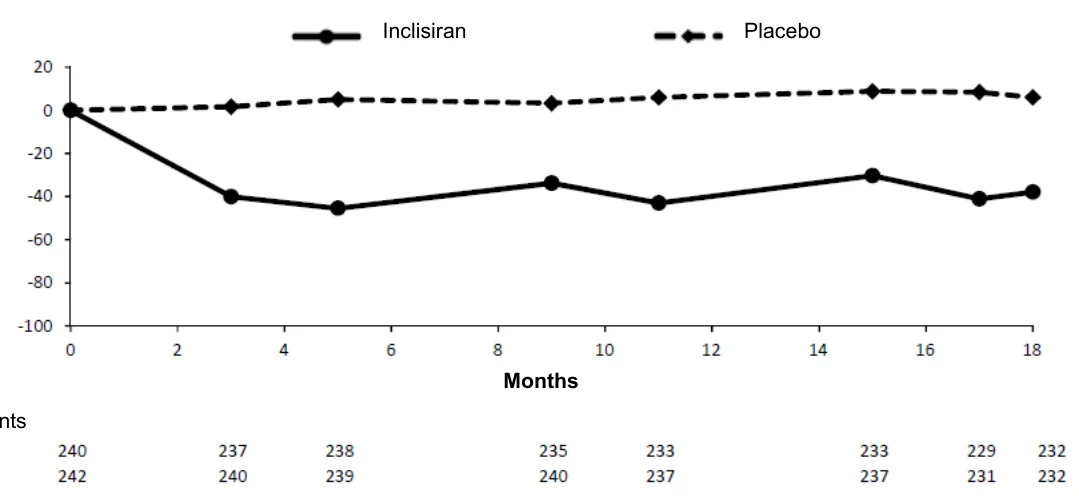
At Day 510, the LDL-C target of <1.8 mmol/L (70 mg/dL) was achieved by 53% of LEQVIO treated patients with HeFH and ASCVD compared to 1% of placebo-treated patients. In patients with HeFH without ASCVD, the LDL-C target of <2.6 mmol/L (100 mg/dL) was achieved by 67% of LEQVIO-treated patients compared to 9% of placebo-treated patients.
Consistent and statistically significant (p<0.05) percentage change in LDL-C from baseline to Day 510 and time-adjusted percentage change in LDL-C from baseline after Day 90 and up to Day 540 were observed across all subgroups, irrespective of baseline demographics, baseline disease characteristics (including gender, age, body mass index, race and baseline statin use), comorbidities, and geographic regions.
Primary hyperlipidemia in patients with clinical atherosclerotic cardiovascular disease
Two studies (ORION-10 and ORION-11) were conducted in patients with ASCVD and ASCVD Risk Equivalents (defined as type 2 diabetes, familial hypercholesterolemia, and including subjects whose 10-
Inclisiran
Placebo
Mean p ercent c h ange from b as el i ne
ORION-9
No. of patients
Placebo
Inclisiran
Months
year risk of a CV event assessed by Framingham Risk Score or equivalent has a target LDL-C of <100 mg/dL).
The co-primary endpoints in each study were the percentage change in LDL-C from baseline to Day 510 relative to placebo, and the time-adjusted percentage change in LDL-C from baseline after Day 90 and up to Day 540 to estimate the integrated effect on LDL-C over time.
Key secondary endpoints were the absolute change in LDL-C from baseline to Day 510, the time-adjusted absolute change in LDL-C from baseline after Day 90 and up to Day 540, and the percentage change from baseline to Day 510 in PCSK9, total cholesterol, Apo B, and non-HDL-C. Additional secondary endpoints included the proportion of patients attaining global lipid targets for their level of ASCVD risk.
ORION-10
ORION-10 was a multicenter, double-blind, randomized, placebo-controlled 18-month trial conducted in 1,561 patients with ASCVD. Patients were taking a maximally tolerated dose of statins with or without other lipid modifying therapy, such as ezetimibe, and required additional LDL-C reduction. Patients were administered subcutaneous injections of 284 mg of LEQVIO or placebo on Day 1, Day 90 (~3 months), Day 270 (~9 months) and Day 450 (~15 months).
The mean age at baseline was 66 years (range: 35 to 90 years), 60% were ≥65 years old, 31% were women, 86% were White, 13% were Black, 1% were Asian, and 14% identified as Hispanic or Latino ethnicity. The mean baseline LDL-C was 2.7 mmol/L (105 mg/dL). Sixty-nine percent (69%) were taking high-intensity statins, 19% were taking medium-intensity statins, 1% were taking low-intensity statins, and 11% were not on a statin. The most commonly administered statins were atorvastatin and rosuvastatin. Fourteen percent of patients received ezetimibe at the time of enrollment.
LEQVIO significantly reduced the mean percentage change in LDL-C from baseline to Day 510 by 52% compared to placebo (95% CI: -56%, -49%; p<0.0001) (Table 7 and Figure 2).
LEQVIO also significantly reduced the time-adjusted percentage change in LDL-C from baseline after Day 90 and up to Day 540 by 54% compared to placebo (95% CI: -56%, -51%; p<0.0001). For additional results, see Table 7.
Table 7 - Mean percentage change from baseline and difference from placebo in lipid parameters at day 510 in ORION-10
| Treatment Group | LDL-C | Total Cholesterol | Non-HDL-C | Apo B | Lp(a)* | ||||||||||||||
| Day 510 (mean percentage change from baseline) | |||||||||||||||||||
| Placebo (n=780) | 1 | 0 | 0 | -2 | 4 | ||||||||||||||
| Inclisiran (n=781) | -51 | -34 | -47 | -45 | -22 | ||||||||||||||
| Difference from placebo (LS Mean) (95% CI) | -52 (-56, -49) | -33 (-35, -31) | -47 (-50, -44) | -43 (-46, -41) | -26 (-29, -22) | ||||||||||||||
Apo B = Apolipoprotein B; CI = Confidence interval; LDL-C = Low-density lipoprotein cholesterol; Lp(a) = Lipoprotein(a); LS = Least squares; Non-HDL-C = Non-high-density lipoprotein cholesterol.
*At Day 540; median percentage change in Lp(a) values.
Figure 2 - Mean percent change from baseline LDL-C in patients with primary hypercholesterolemia and ASCVD treated with inclisiran compared to placebo in ORION-10

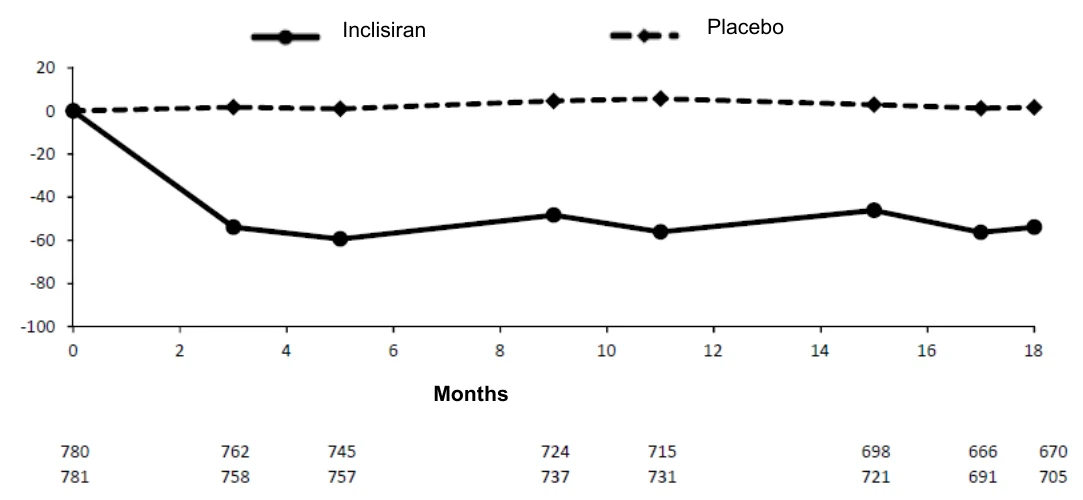
During the ORION-10 study, 91% of LEQVIO-treated patients had a greater than 50% LDL-C reduction from baseline as compared to 7% of placebo-treated patients. At Day 510, the LDL-C target of <1.8 mmol/L (70 mg/dL) was achieved by 84% of LEQVIO-treated patients with ASCVD compared to 18% of placebo-treated patients.
ORION-11
ORION-11 was an international, multicenter, double-blind, randomized, placebo-controlled 18-month trial which evaluated 1,617 patients with ASCVD or ASCVD risk equivalents (ASCVD risk equivalent was defined as those patients with type 2 diabetes mellitus, familial hypercholesterolemia, or 10-year risk of
Months
Mean p ercent c h ange from b as el i ne
Inclisiran
Placebo
ORION-10
No. of patients
Placebo
Inclisiran
20% or greater of having a cardiovascular event assessed by Framingham Risk Score or equivalent). More than 75% of patients were receiving a high-intensity statin background treatment, 87% of patients had ASCVD, and 13% were ASCVD risk equivalent. Patients were taking a maximally tolerated dose of statins with or without other lipid modifying therapy, such as ezetimibe (7.1% patients), and required additional LDL-C reduction. Patients were administered subcutaneous injections of 284 mg of LEQVIO or placebo on Day 1, Day 90 (~3 months), Day 270 (~9 months) and Day 450 (~15 months).
The mean age at baseline was 65 years (range: 20 to 88 years), 55% were ≥65 years old, 28% were women, 98% were White, 1% were Black, 1% were Asian, and 1% were Hispanic or Latino ethnicity. The mean baseline LDL-C was 2.7 mmol/L (105 mg/dL). Seventy-eight percent (78%) were taking high-intensity statins, 16% were taking medium-intensity statins, 0.4% were taking low-intensity statins, and 5% were not on a statin. The most commonly administered statins were atorvastatin and rosuvastatin.
LEQVIO significantly reduced the mean percentage change in LDL-C from baseline to Day 510 by 50% compared to placebo (95% CI: -53%, -47%; p<0.0001) (Table 8 and Figure 3).
LEQVIO also significantly reduced the time-adjusted percentage change in LDL-C from baseline after Day 90 and up to Day 540 by 49% compared to placebo (95% CI: -52%, -47%; p<0.0001). For additional results, see Table 8.
Table 8 - Mean percentage change from baseline and difference from placebo in lipid parameters at day 510 in ORION-11
| Treatment Group | LDL-C | Total Cholesterol | Non-HDL-C | Apo B | Lp(a)* | |||||||||||||||
| Day 510 (mean percentage change from baseline) | ||||||||||||||||||||
| Placebo (n=807) | 4 | 2 | 2 | 1 | 0 | |||||||||||||||
Inclisiran (n=810) | -46 | -28 | -41 | -38 | -19 | |||||||||||||||
Difference from placebo (LS Mean) (95% CI) | -50 (-53, -47) | -30 (-32, -28) | -43 (-46, -41) | -39 (-41, -37) | -19 (-21, -16) | |||||||||||||||
Apo B = Apolipoprotein B; CI = Confidence interval; LDL-C = Low-density lipoprotein cholesterol; Lp(a) = Lipoprotein(a); LS = Least squares; Non-HDL-C = Non-high-density lipoprotein cholesterol.
*At Day 540; median percentage change in Lp(a) values.
Figure 3 - Mean percent change from baseline LDL-C in patients with primary hypercholesterolemia and ASCVD / ASCVD risk equivalents treated with inclisiran compared to placebo in ORION-11

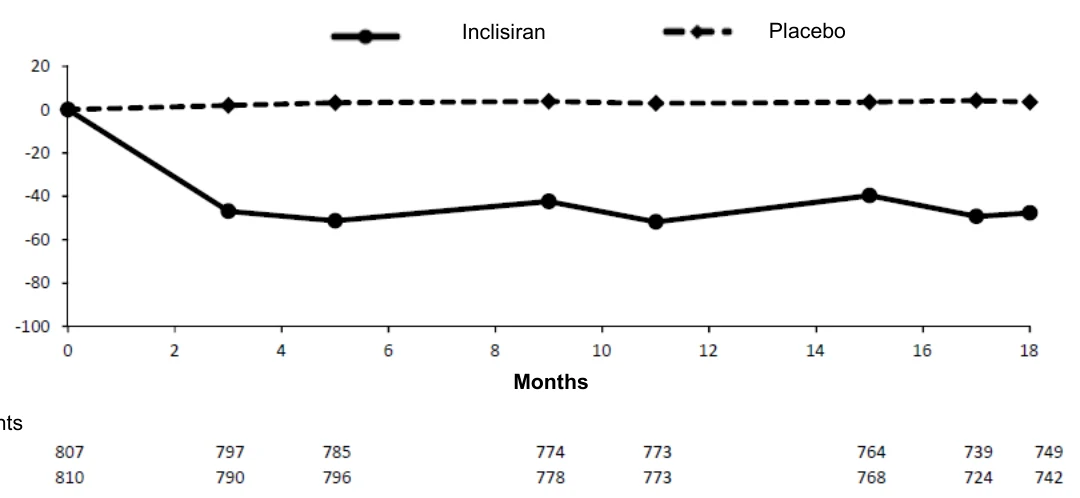
At Day 510, the LDL-C target of <1.8 mmol/L (70 mg/dL) was achieved by 82% of LEQVIO-treated patients with ASCVD compared to 16% of placebo-treated patients.
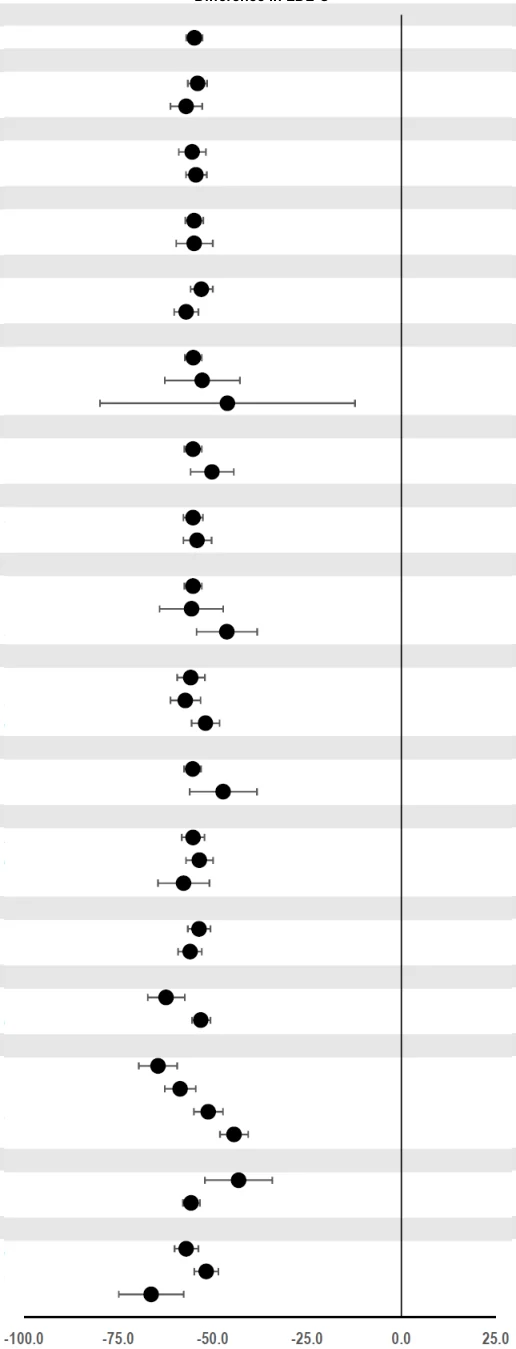
In a pooled analysis of the two ASCVD studies (ORION-10 and -11), consistent and statistically significant (p<0.05) percentage change in LDL-C from baseline to Day 510 and time-adjusted percentage change in LDL-C from baseline after Day 90 and up to Day 540 were observed. This was observed across all subgroups irrespective of baseline demographics, baseline disease characteristics (including gender, age, body mass index, race and baseline statin use), comorbidities, and geographic regions (Figure 4).
Placebo
Inclisiran
Mean p ercent c h ange from b as el i ne
ORION-11
No. of patients
Placebo
Inclisiran
Months
Figure 4 - Treatment Differences in Percentage Change from Baseline in LDL-C at Day 510: Pooled analysis of ORION-10 and ORION-11
The effect of inclisiran on cardiovascular morbidity and mortality has not yet been determined.
Microbiology
No microbiological information is required for this drug product.
Non-Clinical Toxicology
General toxicology
Preclinical data reveal no special hazard for humans based on conventional studies of safety pharmacology, repeated dose toxicity, and carcinogenic potential.
Repeat dose toxicity
In repeat dose toxicology studies conducted in rats and monkeys, the no observed adverse effect levels (NOAEL) were identified as the highest doses of inclisiran administered subcutaneously (250 mg/kg and 300 mg/kg, respectively) and were associated with safety margins of 54.9-fold in rats and 112-fold in monkeys, based on AUC, compared to exposures observed at the MRHD. Histopathologic observations included basophilic granulation in hepatocytes and lymph node macrophages of monkeys and kidneys of rats and monkeys, vacuolation of hepatocytes of rats and lymph node macrophages of monkeys. These observations were either absent or of reduced severity following recovery. These observations were not associated with changes in clinical laboratory parameters and are not considered adverse.
Genotoxicity
No mutagenic or clastogenic potential of inclisiran was found in a battery of tests, including a bacterial mutagenicity assay, in vitro chromosomal aberration assay in human peripheral blood lymphocytes, and an in vivo rat bone marrow micronucleus assay.
Carcinogenicity: The carcinogenic potential of inclisiran was evaluated in a 6-month study in TgRasH2 mice and a 2-year study in Sprague-Dawley rats.
Male and female TgRasH2 mice were administered inclisiran by subcutaneous injection once every 28 days at 300, 600 and 1500 mg/kg.
Male and female Sprague-Dawley rats were administered inclisiran by subcutaneous injection once every 28 days at 40, 95 and 250 mg/kg. An increase in the incidence of benign fibroadenomas was identified in both males and females administered 250 mg/kg inclisiran. This finding is not considered pre-neoplastic and there is currently no known human relevance. Inclisiran can be considered not carcinogenic up to the highest doses tested, corresponding to safety margins of 256-fold in mice and 60.7-fold in rats, based on AUC, compared to exposures observed at the MRHD.
Reproductive and developmental toxicity
In a male fertility study, inclisiran was administered to male Sprague-Dawley rats by subcutaneous injection at 10, 50 and 250 mg/kg once every two weeks prior to and through mating. Inclisiran was not associated with paternal toxicity or effects on spermatogenesis, fertility or early embryonic development. The highest dose tested was associated with a safety margin of 44.1-fold based on AUC, compared to exposures observed at the MRHD.
In a female fertility study, inclisiran was administered to female Sprague-Dawley rats by subcutaneous injection at 10, 50 and 250 mg/kg once every four days prior to and through mating, and then once daily during the gestation period up to Day 7 post coitum. The high dose administered prior to gestation, 250 mg/kg, was reduced to 150 mg/kg for daily administration during gestation. Inclisiran did not produce maternal toxicity or have adverse effects on female fertility or early embryonic development. The highest dose tested was associated with a safety margin of 20.4-fold based on AUC, compared to exposures observed at the MRHD.
In embryo-fetal development studies conducted in pregnant female Sprague-Dawley rats and New Zealand White rabbits, inclisiran was administered by subcutaneous injection at 50, 100 and 150 mg/kg once daily during the period of organogenesis (rats: Days 6 to 17 post coitum; rabbits: Days 7 to 19 post coitum). There was no evidence of embryo-fetal death, fetotoxicity or teratogenicity. The highest doses tested were associated with safety margins in rats and rabbits of 16.0-fold and 39.3-fold, respectively, based on AUC, compared to exposures observed at the MRHD. In New Zealand White rabbits, there was a statistically higher incidence of incomplete ossification of the pubic bone at 150 mg/kg/day (35%) in comparison to controls (5%). This observation was performed post-mortem, with birth occurring by cesarian section, representing a single time-point observation of skeletal development, and could have been the result of experimental variance. The effect of inclisiran on skeletal development of rabbit fetuses can not completely rule out an effect in humans.