


Product Monograph - Sunvepra
SUMMARY PRODUCT INFORMATION
| Route of Administration | Dosage Form / Strength | Clinically Relevant Nonmedicinal Ingredients |
| Oral | Capsule / 100 mg | None For a complete listing, see DOSAGE FORMS, COMPOSITION AND PACKAGING section. |
INDICATIONS AND CLINICAL USE
SUNVEPRA (asunaprevir) is indicated in combination with other agents for the treatment of chronic hepatitis C (CHC) in adult patients with hepatitis C virus (HCV) genotypes 1 or 4 and compensated liver disease, including cirrhosis.
The following points should be considered when initiating treatment with SUNVEPRA:
- Treatment with SUNVEPRA should be initiated and monitored by a physician experienced in the treatment of CHC.
- SUNVEPRA must not be administered as monotherapy (see WARNINGS AND PRECAUTIONS and DOSAGE AND ADMINISTRATION).
- Treatment regimen is dependent on viral genotype and subtype (see DOSAGE AND ADMINISTRATION).
- SUNVEPRA has not been studied in patients who have previously failed therapy with a treatment regimen that includes asunaprevir or other HCV protease inhibitors.
Geriatrics (≥ 65 years of age)
No overall differences in safety or effectiveness were observed in patients <65 and patients ≥65.
Pediatrics (< 18 years of age)
The safety and efficacy of SUNVEPRA have not been studied in pediatric patients.
CONTRAINDICATIONS
SUNVEPRA is contraindicated in patients who are hypersensitive to this drug or to any ingredient in the formulation or component of the container. For a complete listing, see the DOSAGE FORMS, COMPOSITION and PACKAGING section of the Product Monograph.
When SUNVEPRA is used in combination with DAKLINZA, peginterferon alfa, and ribavirin, the contraindications applicable to those agents are applicable to the combination regimen. Refer to the respective Product Monographs for a list of contraindications.
The combination of SUNVEPRA with DAKLINZA, peginterferon alfa, and ribavirin is contraindicated in women who are pregnant or may become pregnant and men whose female partners are pregnant, may be pregnant or plan to become pregnant because of the risks of birth defects and fetal death associated with ribavirin (see WARNINGS AND PRECAUTIONS; Special populations, Pregnant Women, Use with Peginterferon Alfa and Ribavirin).
SUNVEPRA is contraindicated in patients with moderate or severe hepatic impairment (Child-Pugh B or C, score 7 or greater) and patients with decompensated liver disease (see ACTION AND CLINICAL PHARMACOLOGY).
SUNVEPRA is contraindicated in combination with drugs that are:
Dependent on the cytochrome P450 enzyme 2D6 (CYP2D6) for clearance and for which elevated plasma concentrations are associated with serious venticular arrhythmias and sudden death.
Moderate or strong inducers and inhibitors of CYP3A, which may lead to loss of therapeutic effect or increased toxicity.
Strong inhibitors of organic anion transporting polypeptide (OATP) 1B1 or 2B1, which may lead to loss of therapeutic effect.
See Table 4 (DRUG INTERACTIONS; Drugs Contraindicated with SUNVEPRA) for list of drugs that are contraindicated.
WARNINGS AND PRECAUTIONS
Serious Warnings and Precautions
Hepatotoxicity: Alanine aminotransferase (ALT) and Aspartate aminotransferase (AST) elevations accompanied by increases in total bilirubin, with or without pyrexia or eosinophilia may occur (seeWARNINGS AND PRECAUTIONS, Hepatic, Potential for Hepatotoxicity and ADVERSE REACTIONS; Potential for Hepatotoxicity)
Potential for Hepatitis B Virus (HBV) Reactivation: Screen all patients for evidence of current or prior HBV infection before initiating SUNVEPRA treatment. Cases of HBV reactivation, including those resulting in fulminant hepatitis, hepatic failure, and death, have been reported during HCV treatment and/or post-treatment with regimens containing direct-acting antivirals (DAAs) in patients co-infected with HBV (see WARNINGS AND PRECAUTIONS; Potential for Hepatitis B Virus Reactivation)
General
SUNVEPRA must not be administered as monotherapy (see DOSAGE AND ADMINISTRATION).
Warnings and precautions for DAKLINZA, peginterferon alfa, and ribavirin also apply when coadministered with SUNVEPRA.
Potential for Hepatitis B Virus Reactivation
Cases of HBV reactivation, including those resulting in fulminant hepatitis, hepatic failure, and death have been reported in HCV/HBV coinfected patients who were undergoing, or completed treatment with DAA. To decrease the risk of HBV reactivation in patients co-infected with HBV, HBV screening should be performed in all patients prior to initiation of HCV treatment. Patients with positive HBV serology (HBsAg positive) and patients with serologic evidence of resolved HBV infection (i.e. HBsAg negative and anti-HBc positive) should be monitored and treated according to current clinical practice guidelines to manage potential for HBV reactivation (see WARNING AND PRECAUTIONS, Monitoring and Laboratory Tests).
Use in Patients with Other HCV Genotypes
The safety and efficacy of SUNVEPRA has not been studied in patients infected with HCV genotypes 2, 3, 5 or 6.
Carcinogenesis and Mutagenesis
Asunaprevir was not carcinogenic in mice or in rats. No evidence of mutagenic or clastogenic activity in vitro or in vivo assays (see NON-CLINICAL TOXICOLOGY).
Drug Interactions
The concomitant use of SUNVEPRA and other drugs may result in known or potentially significant drug interactions (see DRUG INTERACTIONS; Drug-Drug Interactions). See CONTRAINDICATIONS for drugs that are contraindicated for use with SUNVEPRA due to potential for life-threatening adverse events, increased toxicity, or loss of therapeutic effect.
Hepatic
Potential for Hepatotoxicity
For patients receiving SUNVEPRA containing regimens, liver enzymes should be monitored at least once every 2 weeks for the initial 12 weeks of treatment, and every 4 weeks thereafter until completion of therapy. Any upward trend in alanine aminotransferase (ALT) or aspartate aminotransferase (AST) levels warrants more frequent monitoring. If on-treatment elevations in ALT levels 10 times ULN or greater occur, treatment should be discontinued immediately and not be resumed.
ALT and AST elevations were observed in phase 2 and 3 clinical trials of SUNVEPRA containing regimens. Cases of potential drug-induced liver injury, defined as ALT/AST elevations accompanied by increases in total bilirubin, with or without pyrexia or eosinophilia, occurred including a severe case in a patient with cirrhosis at week 6 of therapy in a clinical trial of asunaprevir and daclatasvir combined with an investigational non-nucleoside HCV NS5B inhibitor.
In clinical trials of SUNVEPRA combined with DAKLINZA or of SUNVEPRA combined with DAKLINZA, peginterferon alfa, and ribavirin, the frequency of ALT and AST elevations at least 5 times upper limit of normal (ULN) was 3% to 4%, and the frequency of bilirubin elevations at least 2.6 times ULN was 1% (see ADVERSE REACTIONS; Table 1). Frequencies of ALT/AST elevations were higher in trials of SUNVEPRA plus DAKLINZA conducted in Japan than in global trials of this regimen. In HALLMARK NIPPON, conducted in Japan, 7% of patients had ALT greater than 5 times ULN while 2% of patients in the global study HALLMARK DUAL had ALT greater than 5 times ULN. In SUNVEPRA and DAKLINZA trials, ALT/AST elevations had a medium time to onset of 13 weeks after initiation of therapy (range: 4-24 weeks) and in most cases returned to normal limits despite continued therapy. These liver enzyme elevations were also reversible in subjects who discontinued therapy.
Hepatic Impairment
SUNVEPRA is contraindicated for patients with moderate or severe hepatic impairment since an appropriate dose has not been established (see CONTRAINDICATIONS).
In a pharmacokinetic study in non–HCV-infected subjects with mild (Child-Pugh A), moderate (Child-Pugh B), and severe (Child-Pugh C) hepatic impairment, asunaprevir steady-state exposures were markedly higher in subjects with moderate or severe hepatic impairment (see ACTION AND CLINICAL PHARMACOLOGY).
Patients with mild hepatic impairment (Child-Pugh A) who are administered SUNVEPRA should be monitored closely with appropriate clinical evaluation during therapy to ensure that no worsening of hepatic function is occurring that would necessitate discontinuation of therapy.
Cirrhosis
SUNVEPRA is contraindicated for patients with decompensated cirrhosis. Of more than 1300 patients in five clinical studies of SUNVEPRA combination therapy, 322 patients had compensated cirrhosis (Child-Pugh A). No overall differences in safety or effectiveness were observed between patients with compensated cirrhosis and subjects without cirrhosis.
Renal
For patients with severe renal impairment [creatinine clearance (CrCl) less than 30 mL/min] who are not receiving hemodialysis, the recommended dose of SUNVEPRA is 100 mg once daily. No dosage adjustment of SUNVEPRA is required for the majority of renally impaired patients including those receiving hemodialysis or those with mild or moderate renal impairment (CrCl 30 mL/min or greater) (see ACTION AND CLINICAL PHARMACOLOGY).
Sexual Function/Reproduction
There are no data on the effect of asunaprevir on human fertility. No effects on fertility were observed in animal studies (see NON-CLINICAL TOXICOLOGY).
Special Populations
Pregnant Women
SUNVEPRA has not been studied in pregnant women. For a summary of findings from reproductive toxicity studies in animals, see NON-CLINICAL TOXICOLOGY.
SUNVEPRA in combination with DAKLINZA should not be used during pregnancy or in women of childbearing potential not using contraception (refer to the Product Monograph for DAKLINZA). For patients using oral contraception, a high-dose oral contraceptive (containing at least 30 µg of ethinyl estradiol combined with norethindrone acetate/norethindrone) is recommended (see DRUG INTERACTIONS).
Use with Peginterferon Alfa and Ribavirin
Ribavirin may cause birth defects and/or death of the exposed fetus, and animal studies have shown that interferons have abortifacient effects (see CONTRAINDICATIONS). Extreme care must be taken to avoid pregnancy in female patients and in female partners of male patients. Ribavirin therapy should not be started unless a report of a negative pregnancy test has been obtained immediately before initiation of therapy.
When SUNVEPRA is used in combination with DAKLINZA, peginterferon alfa, and ribavirin, women of childbearing potential and their male partners must use 2 forms of effective contraception during treatment and for at least 6 months after treatment has concluded. Routine monthly pregnancy tests must be performed during this time. If oral contraception is one of the forms of contraception, a high-dose oral contraceptive (containing at least 30 μg of ethinyl estradiol combined with norethindrone acetate/norethindrone) is recommended. Refer also to the Product Monograph for peginterferon alfa and ribavirin.
Nursing Women
Mothers should be instructed not to breastfeed if they are taking SUNVEPRA. It is not known whether asunaprevir is present in human milk. Pharmacokinetic data in animals have shown the presence of asunaprevir and its metabolites in milk.
Pediatrics (˂18 years of age)
The safety and efficacy of SUNVEPRA have not been studied in pediatric patients younger than 18 years of age.
Geriatrics (≥ 65 years of age)
Of more than 1300 patients in five clinical studies of SUNVEPRA combination therapy, 275 were 65 years and older and 20 were 75 and older. No overall differences in safety or effectiveness were observed between these patients and younger subjects.
Liver Transplant Patients
The safety and efficacy of SUNVEPRA combination therapy have not been studied in liver transplant patients.
HCV/HIV-1 Co-infection
The safety and efficacy of SUNVEPRA have not been studied in HCV patients co-infected with HIV-1 (Human Immunodeficiency Virus).
HCV/HBV Co-infection
The safety and efficacy of SUNVEPRA have not been studied in HCV patients co-infected with HBV (Hepatitis B Virus).
HBV reactivation has been reported during treatment and post-treatment with DAA regimens in patients co-infected with HBV who were not undergoing treatment for HBV infection (see WARNINGS AND PRECAUTIONS; Potential for Hepatitis B Virus Reactivation).
Monitoring and Laboratory Tests
Liver enzymes should be monitored at least once every 2 weeks for the initial 12 weeks of treatment, and every 4 weeks thereafter until completion of therapy. Any upward trend in ALT or AST levels warrants more frequent monitoring. If on-treatment elevations in ALT levels 10 times ULN or greater occur, treatment should be discontinued immediately and not be resumed (see WARNINGS AND PRECAUTIONS; Hepatic, Potential for Hepatic Toxicity).
Clearance of HCV may lead to increased replication of HBV in patients who are HCV/HBV co-infected. Co-infected patients who show evidence of current or prior HBV infection should undergo periodic monitoring for clinical and laboratory signs (e.g. HBsAg, HBV DNA, serum aminotransferase levels, bilirubin) for HBV reactivation during and at post-treatment follow-up. Consult a physician with expertise in the management of HBV regarding the consideration for HBV antiviral therapy in HCV/HBV co-infected patients (see WARNINGS AND PRECAUTIONS; Potential for Hepatitis B Virus Reactivation).
ADVERSE REACTIONS
Adverse Drug Reaction Overview
SUNVEPRA must be administered with other medicinal products for the treatment of chronic HCV infection. Refer to the full Product Monograph for DAKLINZA, peginterferon alfa, and ribavirin for their associated adverse reactions.
The potential for hepatotoxicity is discussed in greater detail in the WARNINGS AND PRECAUTIONS; Hepatic, Potential for Hepatotoxicity section.
The safety assessment of SUNVEPRA is based on data from 1316 patients with chronic HCV infection who received SUNVEPRA with DAKLINZA (n=918) or with DAKLINZA, peginterferon alfa, and ribavirin (n=398) for 24 weeks in five clinical trials. Of the 1316 subjects, 1265 (96%) received 100 mg twice daily of the marketed 100 mg soft gelatin capsule formulation of asunaprevir, and 51 (4%) received 200 mg twice daily of a 200 mg dry granulated tablet. The 100 mg marketed capsule formulation has exposures comparable to the 200 mg tablet (administered with food) (see CLINICAL TRIALS; Table 11 for demographic information).
The safety experience in these trials is presented by regimen.
SUNVEPRA in Combination with DAKLINZA
The safety of SUNVEPRA in combination with DAKLINZA was assessed in 918 patients with chronic HCV infection in four open-label clinical trials (HALLMARK DUAL [AI447028], HALLMARK NIPPON [AI447026], AI447017, AI447011).
The most common adverse reactions (any severity, frequency of 10% or greater) were headache (15%) and fatigue (12%). Most adverse reactions were mild to moderate in severity. Six percent (56/918) of patients experienced a serious adverse event (SAE). SAEs considered treatment-related and reported in more than one patient were pyrexia and ALT increased. Three percent (23/918) of patients discontinued for adverse events; the most common adverse events leading to discontinuation (1% or greater) were increase in ALT (15/918; 2%) and increase in AST (12/918; 1%). Overall, 2% (19/918) of patients discontinued study therapy due to at least 1 adverse event that involved elevations of liver function tests (ALT increased, AST increased, blood bilirubin increased, transaminases increased, or hypertransaminasemia) (see WARNINGS AND PRECAUTIONS; Hepatic, Potential for Hepatotoxicity).
In the HALLMARK DUAL study during the first 12 weeks of treatment, rates of adverse reactions reported were similar between treatment-naive patients treated with placebo and patients treated with SUNVEPRA in combination with DAKLINZA.
SUNVEPRA in Combination with DAKLINZA Plus Peginterferon alfa and Ribavirin
The safety of SUNVEPRA in combination with DAKLINZA, peginterferon alfa, and ribavirin was assessed in 398 patients with chronic HCV genotype 1 or 4 infection in an open-label clinical trial (HALLMARK QUAD [AI447029]). The most common adverse reactions (any severity, frequency of 15% or greater) were fatigue (39%), headache (28%), pruritus (25%), asthenia (23%), influenza-like illness (22%), insomnia (21%), anemia (19%), rash (18%), alopecia (16%), irritability (16%), and nausea (15%). Most adverse reactions were mild to moderate in severity. Six percent (22/398) of patients experienced an SAE. The only SAE considered treatment-related and reported in more than 1 patient was anemia. Five percent (18/398) of patients discontinued for adverse events. Rash, malaise, vertigo, and neutropenia were the most common adverse events leading to discontinuation of study therapy (each reported in 2 (0.5%) patients).
Asthenia and influenza-like illness were the only adverse reactions that occurred with a frequency at least 5% greater in HALLMARK QUAD than in patients treated with placebo, peginterferon alfa, and ribavirin from six phase 2 placebo-controlled clinical trials (n=174).
Clinical Trial Adverse Drug Reactions
Because clinical trials are conducted under widely varying conditions, adverse reaction rates observed in the clinical trials of a drug cannot be directly compared to rates in the clinical trials of another drug and may not reflect the rates observed in practice. Adverse drug reaction information from clinical trials is useful for identifying drug-related adverse events and for approximating rates.
Adverse reactions of at least moderate severity (Grades 2-4) and considered at least possibly related to treatment and occurring at a frequency of 3% or greater in clinical trials of SUNVEPRA in combination with DAKLINZA are presented in Table 1.
| Table 1: Adverse Reactions of at Least Moderate Severity Reported in ≥3% of Patients in Clinical Trials of SUNVEPRA in Combination with DAKLINZA (DUAL) | |||
|---|---|---|---|
| Adverse Reaction | Percent with Adverse Reactiona n=918 | ||
| 24 weeks | |||
| Hepatobiliary Disorder | |||
| Increase in ALT | 5% | ||
| Increase in AST | 3% | ||
a Events of at least moderate severity (Grades 2-4) with at least a possible relationship to study drug (investigator attribution) and occurring in at least 3% of patients. Integrated data from four open-label phase 2/3 studies (HALLMARK DUAL, HALLMARK NIPPON, AI447017, and AI447011) in patients infected with HCV genotype 1b.
Adverse reactions of at least moderate severity (Grades 2-4) and considered at least possibly related to treatment and occurring at a frequency of 3% or greater in HALLMARK QUAD (SUNVEPRA in combination with DAKLINZA, peginterferon alfa, and ribavirin) are presented in Table 2.
| Table 2: Adverse Reactions of at Least Moderate Severity Reported in ≥3% of Patients in HALLMARK QUAD, SUNVEPRA in Combination with DAKLINZA, Peginterferon Alfa, and Ribavirin (QUAD) | |||
|---|---|---|---|
| Percent with Adverse Reactionsa | |||
| QUADb | |||
| Adverse Reaction | 24 weeks n=398 | ||
| Blood and Lymphatic Disorders | |||
| Neutropenia | 11% | ||
| Anemia | 11% | ||
| Thrombocytopenia | 5% | ||
| Gastrointestinal Disorders | |||
| Nausea | 4% | ||
| General Disorders nd Administration Site Conditions | |||
| Fatigue | 11% | ||
| Asthenia | 7% | ||
| Influenza-like illness | 4% | ||
| Investigations | |||
| Weight decreased | 3% | ||
| Nervous System Disorders | |||
| Headache | 6% | ||
| Psychiatric Disorders | |||
| Insomnia | 4% | ||
| Depression | 4% | ||
| Skin and Subcutaneous Tissue Disorders | |||
| Pruritus | 6% | ||
| Rash | 5% | ||
| Alopecia | 3% | ||
| Dry skin | 3% | ||
a Events of at least moderate severity (Grades 2-4) with at least a possible relationship to study drug (investigator attribution) and occurring in at least 3% of patients in HALLMARK QUAD.
b HALLMARK QUAD, a phase 3 study that included patients infected with HCV genotype 1 or 4.
Less Common Clinical Trial Adverse Drug Reactions
SUNVEPRA in combination with DAKLINZA (integrated data from studies HALLMARK DUAL, HALLMARK NIPPON, AI447017, and AI447011).
Additional adverse reactions of at least moderate severity (Grades 2-4) reported in clinical studies of SUNVEPRA administered in combination with other oral agents for the treatment of HCV infection at a frequency of <3% are listed below by body system.
Blood and Lymphatic System Disorders: eosinophilia, lymphopenia, thrombocytopenia.
Cardiac Disorders: atrial fibrillation.
Gastrointestinal Disorders: abdominal pain, constipation, diarrhea, dyspepsia, nausea.
General Disorders and Administration Site Conditions: asthenia, fatigue, malaise, pyrexia.
Infections and infestations: influenza, nasopharyngitis.
Investigations: increased blood bilirubin.
Metabolism and Nutrition Disorders: decreased appetite.
Musculoskeletal and Connective Tissue Disorders: arthralgia, myalgia.
Nervous System Disorders: amnesia, disturbance in attention, dizziness, headache.
Psychiatric Disorders: insomnia.
Respiratory, Thoracic, and Mediastinal Disorders: cough, dyspnea, oropharyngeal pain.
Skin and Subcutaneous Tissue Disorders: alopecia, pruritus, psoriasis, rash.
Vascular Disorders: hypertension.
SUNVEPRA in Combination with DAKLINZA, Peginterferon Alfa, and Ribavirin (Study HALLMARK QUAD)
Additional adverse reactions of at least moderate severity (Grades 2-4) reported in HALLMARK QUAD at a frequency of <3% are listed below by body system.
Blood and Lymphatic System Disorders: leukopenia, lymphopenia.
Eye Disorders: dry eye.
Ear and Labyrinth Disorders: vertigo.
Gastrointestinal Disorders: abdominal pain, constipation, diarrhea, dyspepsia, dysphagia, hemorrhoids, stomatitis, vomiting.
General Disorders and Administration Site Conditions: irritability, malaise, pain, pyrexia.
Hepatobiliary Disorders: hyperbilirubinemia.
Investigations: weight decreased.
Metabolism and Nutrition Disorders: decreased appetite.
Musculoskeletal and Connective Tissue Disorders: arthralgia, back pain, musculoskeletal chest pain, myalgia.
Nervous System Disorders: disturbance in attention, dizziness, syncope.
Psychiatric Disorders: anxiety, mood swings, sleep disorder.
Respiratory, Thoracic, and Mediastinal Disorders: cough, dyspnea, dyspnea exertional.
Skin and Subcutaneous Tissue Disorders: dermatitis, dermatitis exfoliative, eczema, erythema, generalized rash, maculopapular rash, seborrheic.
Abnormal Clinical Chemistry Findings
Grades 2-4 liver enzyme and bilirubin elevations observed in HCV-infected subjects treated with SUNVEPRA combination therapy are presented in Table 3 (see WARNINGS AND PRECAUTIONS). Laboratory data from the placebo, peginterferon alfa, and ribavirin arms of six phase 2 placebo-controlled clinical trials are included in Table 3.
| Table 3: Grades 2-4 Liver Enzyme and Bilirubin Elevations in Clinical Trials of SUNVEPRA in Combination with DAKLINZA, with or without Peginterferon Alfa and Ribavirin | |||||||
|---|---|---|---|---|---|---|---|
| Percent with Abnormality | |||||||
| Interferon-containing Regimens | |||||||
| Parameter a | DUAL b n=918 | QUADc n=398 | Placebo with Peginterferon Alfa and Ribavirin n=174d | ||||
| ALT increased (≥2.6× ULN) | 12% | 11% | 13% | ||||
| AST increased (≥2.6× ULN) | 9% | 13% | 10% | ||||
| Total bilirubin increased (≥1.6 × ULN) | 4% | 10% | 8% | ||||
a Laboratory results were graded using the Division of AIDS (DAIDS) Table for Grading the Severity of Adult and Pediatric Adverse Events, Version 1.0.
b Integrated data from four open-label phase 2/3 studies (HALLMARK DUAL, HALLMARK NIPPON, AI447017, and AI447011) in patients infected with HCV genotype 1b.
c Data from HALLMARK QUAD, a phase 3 study of SUNVEPRA, DAKLINZA, peginterferon alfa, and ribavirin in patients infected with HCV genotype 1 or 4.
d Data from subjects who received placebo, peginterferon alfa, and ribavirin in six phase 2 clinical trials.
Potential for Hepatotoxicity
ALT and AST elevations were observed in phase 2 and 3 clinical trials of SUNVEPRA-containing regimens (see Table 3). Cases of potential drug-induced liver injury, defined as ALT/AST elevations accompanied by increases in total bilirubin, with or without pyrexia or eosinophilia, occurred including a severe case in a patient with cirrhosis at week 6 of therapy in a clinical trial of asunaprevir and daclatasvir combined with an investigational non-nucleoside HCV NS5B inhibitor (see WARNINGS AND PRECAUTIONS, Hepatic, Potential for Hepatotoxicity).
Post-Market Adverse Drug Reactions
Because postmarketing adverse reactions are reported voluntarily from a population of uncertain size, it is not always possible to reliably estimate their frequency or establish a causal relationship to drug exposure.
The following additional adverse reaction was identified during post approval use of
SUNVEPRA:
| Skin and Subcutaneous Tissue Disorders: | erythema multiforme |
DRUG INTERACTIONS
Refer to the respective Product Monographs of other drugs in the regimen for drug interaction information. The most conservative recommendation should be followed.
Overview
See Table 5 for steps to prevent or manage other possible and known significant drug interactions. Consider the potential for drug interactions before and during SUNVEPRA therapy, review concomitant medications during SUNVEPRA therapy, and monitor for the adverse reactions associated with the concomitant drugs.
Drug-Drug Interactions
Potential for Other Drugs to Affect SUNVEPRA
CYP3A is involved in the elimination of asunaprevir. Therefore, moderate or strong inducers of CYP3A may decrease the plasma levels of asunaprevir, and moderate or strong inhibitors of CYP3A may increase the plasma levels of asunaprevir (see CONTRAINDICATIONS). Asunaprevir is also a substrate of P-glycoprotein transporter (P-gp), but coadministration of agents that modify P-gp activity alone (without concurrent effect on CYP3A) is unlikely to have a clinically meaningful effect on asunaprevir exposure. OATP 1B1 and 2B1 are involved in the liver distribution of asunaprevir. Therefore, strong inhibitors of OATP-mediated transport may increase the plasma concentrations of asunaprevir and decrease its therapeutic effect by reducing distribution to the liver (see CONTRAINDICATIONS).
Serious Drug Interactions
Co-administration of drugs that are moderate or strong inducers of CYP3A (e.g. rifampin) may lead to loss of therapeutic effect of SUNVEPRA.
Co-administration of drugs that are moderate or strong inhibitors of CYP3A (e.g. ketoconazole) may lead to an increase in the likelihood and severity of liver related events.
Co-administration of strong inhibitors of organic anion transporting polypeptide (OATP) 1B1 or 2B1 (e.g. cyclosporine) may lead to loss of therapeutic effect of SUNVEPRA.
Asunaprevir is a moderate inhibitor of CYP2D6. Co-administration of drugs that are sensitive substrates of CYP2D6 with a narrow therapeutic index (e.g. thioridazine) may lead to an increase in adverse events (See CONTRAINDICATIONS and DRUG INTERACTIONS; Established and Other Potentially Significant Drug Interactions, Table 5).
Potential for SUNVEPRA to Affect Other Drugs
Asunaprevir is a moderate inhibitor of CYP2D6 (see CONTRAINDICATIONS), a weak inhibitor of OATP 1B1/1B3/2B1- and P-gp–mediated transport, and a weak inducer of CYP3A. Caution should be used when SUNVEPRA is administered with substrates of these enzymes or transporters, with close clinical monitoring for both desired therapeutic outcomes and adverse reactions. Asunaprevir, in vitro, did not inhibit (IC50 >40 μM) CYP1A2, CYP2C9, or CYP2C19. In vitro asunaprevir is a weak inhibitor of renal uptake transporters, organic anion transporter (OAT) 1 and 3, and organic cation transporter (OCT) 1 and 2, but is not expected to have a clinical effect on the pharmacokinetics of substrates of these transporters.
Drugs Contraindicated with SUNVEPRA
Contraindicated drugs include, but are not limited to, those listed in Table 4 (see CONTRAINDICATIONS).
| Table 4: Drugs that are Contraindicated with SUNVEPRA | ||||
|---|---|---|---|---|
| Drugs that Are Contraindicated with SUNVEPRAa | Mechanism of Interaction | Clinical Comment | ||
| Antipsychotic agent thioridazine | Inhibition of CYP2D6 by asunaprevir | Increased concentrations may result in cardiac arrhythmias or sudden death | ||
| Anticonvulsants carbamazepine, oxcarbazepine, phenobarbital, phenytoin | Strong or moderate induction of CYP3A by coadministered drug | May lead to loss of therapeutic effect of SUNVEPRA. | ||
| Anti-infective agents nafcillinb, rifabutin, rifampin, rifapentineb | ||||
| Endothelin receptor antagonist bosentan | ||||
| Glucocorticoid, systemic dexamethasone | ||||
| Herbal products St. John’s wort (Hypericum perforatum) | ||||
| HIV non-nucleoside reverse transcriptase inhibitors efavirenz, etravirine, nevirapine | ||||
| Wakefulness-promoting agent modafinil | ||||
| Antifungal agents fluconazole, itraconazole, ketoconazole, posaconazole, voriconazole | Strong or moderate inhibition of CYP3A by coadministered drug | Increased concentrations of SUNVEPRA may increase the likelihood and severity of liver-related adverse events. | ||
| Anti-infective agents clarithromycin, erythromycin, telithromycinb | ||||
| Calcium channel blocker | ||||
| Table 4: Drugs that are Contraindicated with SUNVEPRA |
|---|
| Drugs that Are Contraindicated with SUNVEPRAa | Mechanism of Interaction | Clinical Comment | |||
|---|---|---|---|---|---|
| diltiazem, verapamil | |||||
| HIV protease inhibitors atazanavir, darunavir/ritonavir, fosamprenavir, indinavir, lopinavir/ritonavir, nelfinavir, ritonavir, saquinavir | |||||
| Pharmacokinetic enhancer cobicistat or cobicistat-containing regimen | |||||
Antiarrhythmics Flecainide Propafenone | Sensitive substrates of CYP2D6 with a narrow therapeutic range | Increased concentrations of flecainide and propafenone may result in adverse events. | |||
| Antimycobacterial agent rifampin | Strong inhibition of OATP 1B1 or 2B1 | May lead to loss of therapeutic effect of SUNVEPRA. | |||
| Immunosuppressants cyclosporine | |||||
| Lipid-lowering agent gemfibrozil | |||||
a This table is not a comprehensive list of strong and moderate inducers or inhibitors of CYP3A or strong inhibitors of OATP 1B1 or 2B1.
b Not marketed in Canada.
Established and Potentially Significant Drug Interactions
Clinical recommendations for established or potentially significant drug interactions between SUNVEPRA and other drugs are summarized in Table 5.
| Table 5: Established and Other Potentially Significant Drug Interactions | ||||||
|---|---|---|---|---|---|---|
| Concomitant Drug Class: Drug Namea | Effect on Concentrationb | Clinical Comment | ||||
| Anticoagulants | ||||||
| Dabigatran etexilate | ↑ Dabigatran etexilate | Close clinical monitoring is recommended when initiating therapy with SUNVEPRA in patients receiving dabigatran etexilate or other intestinal P-gp substrates that have a narrow therapeutic range. | ||||
| Antidepresssants | ||||||
| Tricyclics Amitriptyline Imipramine Nortriptyline | ↑ Amitriptyline ↑ Imipramine ↑ Nortriptyline | Close clinical monitoring is recommended when sensitive substrates of CYP2D6 with a narrow therapeutic range, including certain tricyclic antidepressants (TCA), are administered with SUNVEPRA. Plasma concentrations of the TCA may need to be monitored and the dose of the TCA reduced [see DRUG INTERACTIONS, Drug-Drug Interactions, Potential for SUNVEPRA to Affect Other Drugs]. | ||||
| Table 5: Established and Other Potentially Significant Drug Interactions |
|---|
| Concomitant Drug Class: Drug Namea | Effect on Concentrationb | Clinical Comment |
|---|---|---|
| Antitussives | ||
| Dextromethorphanc | ↑ Dextromethorphan | Close clinical monitoring is recommended when dextromethorphan or other sensitive substrates of CYP2D6 are administered with SUNVEPRA. Dose reduction of sensitive CYP2D6 substrates should be considered [see DRUG INTERACTIONS, Drug-Drug Interactions, Potential for SUNVEPRA to Affect Other Drugs]. |
| Cardiovascular agents | ||
| Antiarrhythmic: Digoxinc | ↑ Digoxin | Digoxin and other P-gp substrates with a narrow therapeutic range should be used with caution when administered with SUNVEPRA. The lowest dose of digoxin should be initially prescribed. The serum digoxin concentrations should be monitored and used for titration of digoxin dose to obtain the desired clinical effect. |
| Hormonal contraceptives | ||
Ethinyl estradiol + norgestimatec Ethinyl estradiol + norethindrone acetate/norethindronec | ↓ Ethinyl estradiol ↓ Norelgestromin | For patients using oral contraception, a high-dose oral contraceptive (containing at least 30 μg of ethinyl estradiol combined with norethindrone acetate/norethindrone) is recommended during treatment with SUNVEPRA. |
| Lipid-lowering agents | ||
HMG-CoA reductase inhibitor: Atorvastatin Fluvastatin Pravastatin Rosuvastatinc Simvastatin | ↑ Rosuvastatin | Treatment with rosuvastatin and other OATP 1B1/1B3 substrates can be initiated at the recommended dose when coadministered with SUNVEPRA. Close clinical monitoring for both desired therapeutic outcomes and side effects of the OATP substrate is recommended. |
| Sedatives | ||
| Benzodiazepine: Midazolamc | ↓ Midazolam | Coadministration of SUNVEPRA with midazolam and other medicinal products that are highly dependent on CYP3A for elimination and for which reduced plasma concentrations may be associated with reduced therapeutic effect should be approached with caution. These other medicinal products include but are not limited to alfentanil, fentanyl, quinidine and triazolam. |
a This table is not all inclusive.
b The direction of the arrow (↑ = increase, ↓ = decrease) indicates the direction of the change in pharmacokinetic parameters.
c These interactions have been studied (see Table 6, Table 7 below).
Assessment of Drug Interactions
Drug interaction studies were conducted with asunaprevir and other drugs likely to be coadministered or drugs commonly used as probes for pharmacokinetic interaction. The effects of asunaprevir on the Cmax, AUC, and Cmin of the coadministered drug are summarized in Table 6 and the effects of the coadministered drug on the Cmax, AUC, and Cmin of asunaprevir are summarized in Table 7. Drug interaction studies were conducted in healthy adults unless otherwise noted.
| Table 6: Effect of SUNVEPRA on the Pharmacokinetics of Concomitant Drugs | ||||||||||||||||
|---|---|---|---|---|---|---|---|---|---|---|---|---|---|---|---|---|
| Concomitant Drug | Coadministered Drug Dose | SUNVEPRA Dose | N | Ratio (90% CI) of Pharmacokinetic Parameters of Coadministered Drugs With/Without Asunaprevir No Effect=1.00 | ||||||||||||
| Cmax | AUC | Cmin | ||||||||||||||
| Caffeine | 200 mg single dose | 200 mg BIDa | 19 | 0.95 (0.91, 1.00) | 0.96 (0.89, 1.04) | NA | ||||||||||
| Daclatasvir | 30 mg QD | 200 mg BIDb | 26 | 1.07 (0.97, 1.18) c | 1.20 (1.11, 1.30)c | 1.33 (1.22, 1.45)c | ||||||||||
| Dextromethorphan | 30 mg single dose | 200 mg BIDa | 17 | 2.72 (2.10, 3.53) | 3.94 (3.09, 5.03) | NA | ||||||||||
| Digoxin | 0.5 mg single dose | 200 mg BIDa | 16 | 1.09 (0.97, 1.22) | 1.30 (1.21, 1.40) | NA | ||||||||||
| 0.25 mg single dose | 100 mg BID and daclatasvir 60 mg QD | 16 | 1.77 (1.50, 2.07) | 1.29 (1.20, 1.39) | NA | |||||||||||
| Escitalopram | 10 mg QD | 100 mg BID | 16 | 0.97 (0.92, 1.02) | 0.95 (0.91, 0.98) | NA | ||||||||||
| Ethinyl estradiol/ norgestimate | 35 μg QD/ 0.180/0.215/ 0.250 mg QD | 600 mg BIDa | 17 | Ethinyl estradiol: 0.75 (0.67, 0.85) Norelgestromin: 0.71 (0.65, 0.77) | Ethinyl estradiol: 0.72 (0.67, 0.78) Norelgestromin: 0.66 (0.62, 0.70) | NA | ||||||||||
| Ethinyl estradiol/ norethindrone acetate | 30 μg QD/ 1.5 mg QD (high-dose oral contraceptive) | 100 mg BID and daclatasvir 60 mg QD | 36 | Ethinyl estradiol: 0.93 (0.86, 0.99) Norethindrone: 0.93 (0.85, 1.01) | Ethinyl estradiol: 0.86 (0.83, 0.89) Norethindrone: 1.02 (0.94, 1.11) | NA | ||||||||||
| 36 | Ethinyl estradiold: | Ethinyl estradiold: | NA | |||||||||||||
| Table 6: Effect of SUNVEPRA on the Pharmacokinetics of Concomitant Drugs |
|---|
| Concomitant Drug | Coadministered Drug Dose | SUNVEPRA Dose | N | Ratio (90% CI) of Pharmacokinetic Parameters of Coadministered Drugs With/Without Asunaprevir No Effect=1.00 |
|---|
| Cmax | AUC | Cmin | ||||
|---|---|---|---|---|---|---|
1.36 (1.28, 1.45) Norethindroned: 1.26 (1.17, 1.36) | 1.27 (1.21, 1.33) Norethindroned: 1.43 (1.34, 1.52) | |||||
| Losartan | 25 mg single dose | 200 mg BIDa | 18 | 1.63 (1.35, 1.97) | 0.89 (0.81, 0.98) | NA |
| Methadone | stable maintenance 40-120 mg | 100 mg BID | 15 | Total methadone: 1.00 (0.89, 1.12) R-methadone: 0.97 (0.86, 1.08) | Total methadone: 0.94 (0.84, 1.05) R-methadone: 0.91 (0.82, 1.01) | Total methadone: 0.91 (0.80, 1.03) R-methadone: 0.88 (0.80, 0.98) |
| Midazolam | 5 mg single oral dose | 200 mg BIDa | 19 | 0.79 (0.73, 0.87) |
| NA |
| Omeprazole | 40 mg single dose | 200 mg BIDa | 18 | 0.96 (0.79, 1.16) | 0.80 (0.69, 0.94) | NA |
| Peginterferon alfae | 180 μg once weekly | 200 mg BIDa | 10 | ↔f | ↔f | ↔f |
| Ribavirine | 1000 or 1200 mg/day in two divided doses | 200 mg BIDa | 11 | ↔f | ↔f | ↔f |
| Rosuvastatin | 10 mg single dose | 200 mg BIDa | 20 | 1.95 (1.47, 2.58) | 1.41 (1.26, 1.57) | NA |
| Sertraline | 50 mg QD | 100 mg BID | 18 | 0.81 (0.67, 0.97) | 0.79 (0.67, 0.94) | NA |
a Asunaprevir tablet (not marketed) 200 mg administered with food has similar bioavailability as asunaprevir soft capsule 100 mg.
b Nonmarketed capsule formulation.
c Results are dose-normalized to 60 mg dose of daclatasvir.
d Pharmacokinetics of ethinyl estradiol/norethindrone when high-dose oral contraceptive is administered with asunaprevir and daclatasvir compared with pharmacokinetics of ethinyl estradiol/norethindrone when a low-dose oral contraceptive (ethinyl estradiol 20 μg QD/norethindrone 1 mg QD) is administered alone.
e Study conducted in subjects with chronic HCV infection.
f Pharmacokinetic parameters for peginterferon alfa and ribavirin in subjects who received peginterferon alfa, ribavirin, and asunaprevir were similar to those in subjects who received peginterferon alfa, ribavirin, and placebo.
NA = Not available.
| Table 7: Effect of Coadministered Drugs on the Pharmacokinetics of SUNVEPRA | |||||||||||||
|---|---|---|---|---|---|---|---|---|---|---|---|---|---|
| Concomitant Drug | Coadministered Drug Dose | SUNVEPRA Dose | N | Ratio (90% CI) of Pharmacokinetic Parameters of Asunaprevir With/Without Coadministered Drugs No Effect=1.00 | |||||||||
| Cmax | AUC | Cmin | |||||||||||
| Daclatasvir | 30 mg QD | 200 mg BIDa | 26 | 0.58 (0.45, 0.76)b | 0.87 (0.73, 1.04)b | 1.76 (1.42, 2.17)b | |||||||
| Escitalopram | 10 mg QD | 100 mg BID | 16 | 0.87 (0.65, 1.18) | 0.92 (0.76, 1.12) | NA | |||||||
| Ketoconazole | 200 mg BID | 200 mg BIDc | 19 | 6.92 (5.92, 8.09) | 9.65 (8.64, 10.77) | 9.35 (8.31, 10.53) | |||||||
| Peginterferon alfad | 180 μg once weekly | 200 mg BIDc | 11 | ↔e | ↔e | ↔e | |||||||
| Ribavirind | 1000 or 1200 mg/day in two divided doses | 200 mg BIDc | 11 | ↔e | ↔e | ↔e | |||||||
| Rifampin | 600 mg single dose | 200 mg single dose fastedc | 20 | 21.11 (14.27, 31.24) | 14.81 (11.22, 19.53) | NA | |||||||
| 600 mg QD | 600 mg BIDc | 20 | 0.95 (0.60, 1.50) | 0.79 (0.56, 1.09) | NA | ||||||||
| Sertraline | 50 mg QD | 100 mg BID | 18 | 0.94 (0.70, 1.28) | 0.88 (0.70, 1.11) | NA | |||||||
a Nonmarketed capsule formulation.
b Results are dose-normalized to 600 mg dose.
c Asunaprevir tablet (not marketed) 200 mg administered with food has similar bioavailability as asunaprevir soft capsule 100 mg.
d Study conducted in subjects with chronic HCV infection.
e Pharmacokinetic parameters for asunaprevir when administered with peginterferon and ribavirin in this study were similar to those observed in a study of HCV-infected subjects administered asunaprevir and daclatasvir for 14 days.
NA = Not available.
Drugs without Significant Interactions with SUNVEPRA
Based on the results of drug interaction studies (see Table 6, Table 7 above), no clinically significant drug interactions were observed when SUNVEPRA was used with the following drugs: daclatasvir, escitalopram, methadone, peginterferon alfa, ribavirin, sertraline, caffeine and other CYP1A2 substrates, losartan and other CYP2C9 substrates, or omeprazole and other CYP2C19 substrates.
Drug-Food Interactions
No drug-food interaction was observed. SUNVEPRA can be taken without regard to food.
Drug-Herb Interactions
St. John’s wort is contraindicated with SUNVEPRA since coadministration of St. John’s wort, an inducer of CYP3A, may decrease SUNVEPRA plasma concentrations (see CONTRAINDICATIONS).
Drug-Laboratory Interactions
Interactions of SUNVEPRA with laboratory tests have not been established.
DOSAGE AND ADMINISTRATION
Dosing Considerations
SUNVEPRA must not be administered as monotherapy.
Treatment regimen is dependent on viral genotype.
SUNVEPRA can be taken without regard to food.
Testing Prior to the Initiation of Therapy
Screen all patients for evidence of current or prior HBV infection by measuring HBsAg and anti-HBc before initiating treatment for HCV with SUNVEPRA (see WARNING AND PRECAUTIONS, Monitoring and Laboratory Test).
Recommended Dose
The recommended dose of SUNVEPRA for adults is 100 mg, taken orally, twice daily for 24 weeks.
The recommended treatment regimens with SUNVEPRA, based on viral genotype, are provided in Table 8. For specific dose recommendations for other agents in the regimen, refer to the respective Product Monographs.
| Table 8: Treatment Regimens and Duration by Patient Population | ||||
|---|---|---|---|---|
| Patient Population | Treatment | Duration of Treatment | ||
Genotype 1b Treatment-naivea or treatment-experiencedb, with or without compensated cirrhosis | SUNVEPRA and DAKLINZA (DUAL) | 24 weeks | ||
Genotype 1 or 4 Treatment-naivea,c or treatment- | SUNVEPRA, DAKLINZA, peginterferon alfa, and ribavirin (QUAD) | 24 weeks | ||
| Table 8: Treatment Regimens and Duration by Patient Population |
|---|
| Patient Population | Treatment | Duration of Treatment |
|---|---|---|
| experiencedb, with or without compensated cirrhosis | ||
a Treatment naive is defined as no prior exposure to any interferon, ribavirin, or other approved or experimental HCV-specific direct-acting antiviral agent at the time of treatment initiation.
b Treatment-experienced is defined as those who failed prior therapy with an interferon-based regimen, including null or partial response, or intolerant to or ineligible for interferon-based therapy (see CLINICAL TRIALS; Table 11, Table 14 for more detailed definitions).
c Clinical trial experience with the QUAD regimen in treatment-experienced patients is extrapolated to treatment-naive patients.
Special Populations
Pediatrics (<18 years of age)
SUNVEPRA has not been studied in pediatric patients <18 years of age.
Geriatrics (≥65 years of age)
No dose adjustment of SUNVEPRA is required for elderly patients.
Renal Impairment
For patients with severe renal impairment [creatinine clearance (CrCl) less than 30 mL/min] who are not receiving hemodialysis, the recommended dose of SUNVEPRA is 100 mg once daily. No dosage adjustment of SUNVEPRA is required for the majority of renally impaired patients including those receiving hemodialysis or those with mild or moderate renal impairment (CrCl 30 mL/min or greater) (see ACTION AND CLINICAL PHARMACOLOGY; Special Populations and Conditions; Renal Impairment).
Hepatic Impairment
SUNVEPRA is contraindicated in patients with moderate (Child-Pugh B) or severe (Child-Pugh C) hepatic impairment (see CONTRAINDICATIONS).
No dose adjustment of SUNVEPRA is required for patients with mild hepatic impairment (Child-Pugh A) (see WARNINGS AND PRECAUTIONS).
Dose Modification and Interruption
Dose modification of SUNVEPRA or DAKLINZA for adverse reactions is not recommended. Refer to the respective Product Monograph for dose modification of peginterferon alfa and ribavirin. Treatment interruption should be avoided; however, if treatment interruption is necessary because of adverse reactions, neither SUNVEPRA nor DAKLINZA should be given as monotherapy. If resumption of therapy is considered, the risks and benefits should be carefully assessed (see WARNINGS AND PRECAUTIONS). For the SUNVEPRA/DAKLINZA regimen, both drugs must be restarted at the same time.
Discontinuation of therapy is recommended for patients experiencing confirmed virologic breakthrough (greater than 1 log10 IU/mL increase in HCV RNA from nadir).
Missed Dose
Patients should be instructed that if they miss a dose of SUNVEPRA the dose should be taken as soon as possible if remembered within 8 hours of the scheduled dose time. However, if the missed dose is remembered more than 8 hours after the scheduled dose, the dose should be skipped and the next dose taken at the appropriate time. For instructions for missed doses of DAKLINZA, peginterferon alfa, or ribavirin, refer to the respective Product Monograph.
OVERDOSAGE
| For management of a suspected drug overdose, contact your regional Poison Control Centre. |
There is limited clinical experience of overdose with SUNVEPRA. In phase 1 clinical trials, healthy subjects who received up to 300 mg twice daily (gelatin capsule) for up to 10 days had no unexpected adverse events. In clinical trials, asunaprevir use at the recommended dose or higher is associated with elevated liver enzymes.
There is no known antidote for overdose of SUNVEPRA. Treatment of overdose with SUNVEPRA should consist of general supportive measures, including monitoring of vital signs and observation of the patient’s clinical status. Because asunaprevir is highly protein bound (>99%) and has a molecular weight greater than 700, dialysis is unlikely to significantly reduce plasma concentrations of the drug.
ACTION AND CLINICAL PHARMACOLOGY
Mechanism of Action
Asunaprevir is a direct acting antiviral agent (DAA) that inhibits the HCV NS3/4A serine protease complex (see MICROBIOLOGY).
Pharmacodynamics
Cardiac Electrophysiology
The effect of asunaprevir on the QTc interval was evaluated in a randomized, double-blind, positive- and placebo-controlled, parallel-group, nested-crossover study in 120 healthy subjects. The effect of a supratherapeutic dose of asunaprevir (soft gelatin capsule) 300 mg twice daily relative to placebo on QTc (using Fridericia’s correction) was evaluated on Days 3 and 10 of active dosing. Moxifloxacin was the positive control. No statistically significant effects of asunaprevir on placebo-corrected change in QTc (using Fridericia’s correction) or significant relationship between plasma concentration and change in QTc were observed.
Pharmacokinetics
The pharmacokinetic properties of asunaprevir were evaluated in healthy adults and in subjects with chronic HCV (see Table 9).
| Table 9: Summary of Twice-Daily Administration of SUNVEPRA in Healthy Adults and HCV Infected Patients | ||||||||
| PK Parameters | Healthy Subjects Geometric Mean (CV%) | HCV-Infected Patientsa Geometric Mean (CV%) | ||||||
| AUCTAU (ng●h/mL) | 504 (58) | 1887 (77) | ||||||
| Cmax (ng/mL) | 128 (58) | 572 (75) | ||||||
| Cmin (ng/mL) | 9.5 (41) | 47.6 (105) | ||||||
a Asunaprevir 100 mg twice daily in combination with daclatasvir (HALLMARK DUAL).
Absorption
The absolute oral bioavailability of asunaprevir soft capsule is 9.3%. Asunaprevir is rapidly absorbed following administration with quantifiable concentrations within 30 minutes of administration, and peak plasma concentrations occurring between 1 and 4 hours. In healthy subjects, asunaprevir AUCTAU and Cmax increased 4-fold following a 2-fold increase in dose from 100 mg to 200 mg of the soft gel capsules, demonstrating greater than dose-proportional increases in asunaprevir pharmacokinetics. Asunaprevir reaches steady state in 7-10 days of twice-daily dosing. Exposure in HCV-infected patients was 4-fold greater than in healthy subjects (see Table 9). Intersubject variability was high.
Effect of Food on Oral Absorption
In healthy subjects, administration of 100 mg asunaprevir soft capsule with a high-fat meal (approximately 1000 kcal, approximately 50% from fat) increased the rate of absorption relative to fasting conditions, but did not have a clinically meaningful effect on the overall bioavailability of asunaprevir, with an increase in Cmax and AUC of 34% and 20%, respectively. Tmax of asunaprevir when administered with food occurred about 1.5 hours post dose relative to about 2.5 hours post dose when administered under fasting conditions.
Distribution
Protein binding of asunaprevir in HCV-infected subjects was greater than 99% and was independent of dose at the dose range studied (200-600 mg twice daily).
In vitro studies performed with HEK-293 cells indicated that asunaprevir is a substrate of the liver uptake transporters OATP 1B1 and 2B1. In subjects who received asunaprevir 100 mg soft capsule orally followed by a 100 μg 14C-asunaprevir intravenous dose, estimated volume of distribution at steady state was 194 L, which is approximately 5 times total body water and consistent with extensive distribution to tissues. Preferential liver distribution for asunaprevir (liver concentrations up to 1240-fold relative to plasma in animals) is likely required for asunaprevir to exert its antiviral effect.
Metabolism
Asunaprevir undergoes oxidative metabolism primarily mediated by CYP3A. Asunaprevir is also a substrate of P-gp and OATP. The AUC of asunaprevir increased 9- to 15-fold when co-administered with ketoconazole (strong CYP3A4/P-gp inhibitor) or with rifampin (strong OATP inhibitor) (see CONTRAINDICATIONS and DRUG INTERACTIONS). Asunaprevir appears to weakly induce its own metabolism at the recommended dose of 100 mg twice daily. In a 14C human absorption, distribution, metabolism, and excretion (ADME) study, asunaprevir represented the majority of the radioactivity in plasma (~55% of AUC (0-24)), while metabolites had AUC values below 5% of total plasma radioactivity for any given individual metabolite.
Excretion
Following single-dose oral administration of 14C-asunaprevir in healthy subjects, 84% of total radioactivity was recovered in feces (primarily as metabolites) and less than 1% was recovered in the urine (primarily as metabolites). Metabolism was the major route of asunaprevir elimination. Of dose recovered in feces, unchanged asunaprevir accounted for 7.5% of the dose. Both asunaprevir and its metabolites were detected in human bile. Following multiple-dose administration of asunaprevir in healthy subjects, the terminal elimination half-life ranged from 17 to 23 hours. In subjects who received asunaprevir 100 mg soft capsule orally followed by a 100 μg 14C-asunaprevir intravenous dose, estimated total body clearance of asunaprevir was 49.5 L/h, indicating that asunaprevir is a moderate to high extraction ratio drug.
Special Populations and Conditions
Pediatrics
The pharmacokinetics of SUNVEPRA in pediatric patients has not been evaluated.
Geriatrics
Population pharmacokinetic analysis of data from clinical trials of SUNVEPRA indicated that within the range evaluated (20-79) age had no clinically meaningful effect on the pharmacokinetics of asunaprevir.
Gender
Population pharmacokinetic analysis of data from clinical trials of SUNVEPRA indicated that gender had no clinically meaningful effect on the pharmacokinetics of asunaprevir.
Race
Population pharmacokinetic analysis of data from clinical trials of SUNVEPRA indicated that race had no clinically meaningful effect on the pharmacokinetics of asunaprevir.
Hepatic Impairment
The pharmacokinetic properties of asunaprevir were studied in non–HCV-infected subjects with mild (Child-Pugh A), moderate (Child-Pugh B), and severe (Child-Pugh C) hepatic impairment and compared with unimpaired subjects. Subjects received asunaprevir (nonmarketed hard capsule) 200 mg twice daily for 7 days. Mild hepatic impairment had minimal effect on asunaprevir pharmacokinetics. Asunaprevir steady-state exposures (Cmax, AUCTAU, and Cmin) were markedly higher in subjects with moderate (5.0-, 9.8-, and 32.9-fold, respectively) or severe hepatic impairment (22.9-, 32.1-, and 76.5-fold, respectively) than in subjects without hepatic impairment (see CONTRAINDICATIONS and WARNINGS AND PRECAUTIONS; Hepatic).
Renal Impairment
The pharmacokinetic properties of asunaprevir, as one of three components of an investigational fixed dose combination tablet (asunaprevir/daclatasvir/an investigational non-nucleoside NS5B inhibitor), were studied after multiple-dose administration in non-HCV infected subjects with normal renal function (CrCL ≥90 mL/min, defined using the Cockcroft-Gault CrCL formula), with mild (CrCl 60 to <90 mL/min), moderate (CrCl 30 to <60 mL/min), or severe (CrCl <30 mL/min) renal impairment not on hemodialysis, and with end-stage renal disease (ESRD) on hemodialysis. Compared to subjects with normal renal function, the Cmax of asunaprevir was estimated to be 29%, 65% and 88% higher and the AUC of asunaprevir was estimated to be 33%, 76% and 103% higher in subjects with mild, moderate and severe renal impairment, respectively. Asunaprevir unbound Cmax was estimated to be 37%, 87% and 119% higher and asunaprevir unbound AUC was estimated to be 41%, 99% and 137% higher for subjects with mild, moderate and severe renal impairment, respectively, compared with subjects with normal renal function. Subjects with ESRD requiring hemodialysis had an 11% decrease in asunaprevir Cmax and a 16% decrease in AUC soon after hemodialysis compared to subjects with normal renal function. Asunaprevir unbound Cmax and AUC decreased 2% and 6%, respectively, soon after hemodialysis in subjects with ESRD requiring hemodialysis compared to subjects with normal renal function (see WARNINGS AND PRECAUTIONS; Renal).
STORAGE AND STABILITY
Store at room temperature (15° to 30°C), protect from exposure to light and store in the original container.
SPECIAL HANDLING INSTRUCTIONS
There are no special handling instructions.
DOSAGE FORMS, COMPOSITION AND PACKAGING
SUNVEPRA capsules are available for oral administration in 100 mg strengths of asunaprevir containing the following non-medicinal ingredients: butylated hydroxytoluene (BHT), glycerol monocaprylocaprate Type 1, medium-chain triglycerides, polysorbate 80. The capsule shell contains gelatin, glycerine, sorbitol sorbitan solution and titanium dioxide.
SUNVEPRA 100 mg asunaprevir capsules are oval, opaque white to pale-yellow, soft gelatin capsules filled with a clear solution. Capsules are imprinted with “BMS” in black on one line and “711” in black on a second line below “BMS”.
SUNVEPRA capsules, 100 mg are supplied in HDPE bottles containing 56 capsules
PART II: SCIENTIFIC INFORMATION
PHARMACEUTICAL INFORMATION
Drug Substance
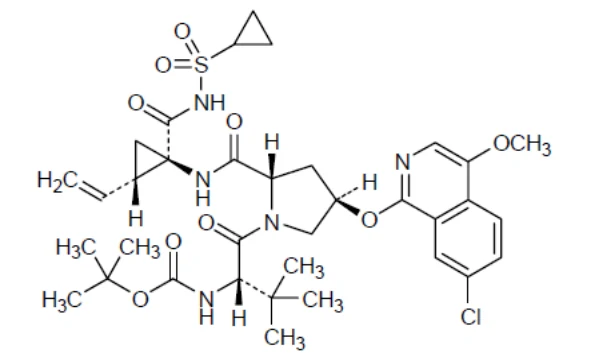
Proper name: asunaprevir
Chemical name: cyclopropanecarboxamide, N-[(1,1 dimethylethoxy)carbonyl]-3- methyl-L-valyl-(4R)-4-[(7-chloro-4-methoxy-1-isoquinolinyl)oxy]-
L-prolyl-1-amino-N-(cyclopropylsulfonyl)-2-ethenyl-,(1R,2S)
Molecular formula: C35H46ClN5O9S
Molecular mass: 748.29
Structural formula:
Physicochemical properties:
Appearance: Asunaprevir drug substance is a white to off-white powder.
Solubility: The aqueous solubility at 20°C and solution pH 5.72 is 0.0003 mg/mL. Asunaprevir is practically insoluble (< 100 µg/mL) across the physiological pH range (pH 1.2 to 6.8).
CLINICAL TRIALS
The efficacy and safety of SUNVEPRA in combination with DAKLINZA as an all-oral regimen were evaluated in HCV genotype 1b infected patients with compensated liver disease in the phase 3 open label HALLMARK DUAL trial. The efficacy and safety of SUNVEPRA in combination with DAKLINZA, peginterferon alfa, and ribavirin were evaluated in patients with HCV genotype 1 or 4 infection in the phase 3 HALLMARK QUAD trial (see Table 10 for details of study designs).
Sustained virologic response (SVR, virologic cure) in both clinical trials was defined as HCV RNA below the lower limit of quantification (LLOQ) at post-treatment week 12.
| Table 10: Summary of Study Design for Trials of SUNVEPRA Combination Therapy for Chronic Hepatitis C Infection | |||||||
|---|---|---|---|---|---|---|---|
| Trial | Treatment Regimens and Dosage | Genotype/Population | Duration of Treatment | ||||
| HALLMARK DUAL (AI447028, open-label) | SUNVEPRA (100 mg BID) and DAKLINZA (60 mg QD) n=645 Placebo, n=102b | Genotype (GT) 1b Compensated liver disease including cirrhosis Treatment-naive, treatment-experienced, interferon intolerant/ineligible | 24 weeks | ||||
| HALLMARK QUAD (AI447029, open-label) | SUNVEPRA (100 mg BID), DAKLINZA (60 mg QD), peginterferon alfa, and ribavirin a | GT 1, 4 treatment-experienced Compensated liver disease including cirrhosis | 24 weeks | ||||
a Peginterferon alfa-2a: 180 μg given once weekly; ribavirin: <75 kg: 1000 mg/day (400 mg in morning and 600 mg in evening) with food; ≥75 kg: 600 mg twice daily with food.
b This group received placebo for 12 weeks and were rolled over into another study and offered treatment with SUNVEPRA in combination with DAKLINZA for 24 weeks.
SUNVEPRA in Combination with DAKLINZA for the Treatment of Patients with HCV Genotype 1b (HALLMARK DUAL, AI447028)
The demographic and other baseline characteristics of the population in HALLMARK DUAL are summarized in Table 11.
| Table 11: Demographic and Other Baseline Characteristics of HCV Genotype 1ba Infected Patients (With or Without Compensated Cirrhosis) Treated with SUNVEPRA and DAKLINZA in HALLMARK DUAL | ||||||||||
|---|---|---|---|---|---|---|---|---|---|---|
| Characteristic | Treatment-naive | Prior Non-responders (Partial, Null)c 24 weeks N=205 n (%) | Interferon Intolerant/ Ineligibled 24 weeks N=235 n (%) | |||||||
| DUAL 24 weeks N=205 n (%) | Placebob 12 weeks N=102 n (%) | |||||||||
| Age (years) Mean (range) | 53.1 (20 - 79) | 52.5 (22 - 83) | 56.1 (23 - 77) | 58.0 (24 - 77) | ||||||
| Gender Male Female | 101 (49.3%) 104 (50.7%) | 54 (52.9%) 48 (47.1%) | 111 (54.1%) 94 (45.9%) | 98 (41.7%) 137 (58.3%) | ||||||
| Table 11: Demographic and Other Baseline Characteristics of HCV Genotype 1ba Infected Patients (With or Without Compensated Cirrhosis) Treated with SUNVEPRA and DAKLINZA in HALLMARK DUAL |
|---|
| Characteristic | Treatment-naive | Prior Non-responders (Partial, Null)c 24 weeks N=205 n (%) | Interferon Intolerant/ Ineligibled 24 weeks N=235 n (%) |
|---|
| DUAL 24 weeks N=205 n (%) | Placebob 12 weeks N=102 n (%) | |||
|---|---|---|---|---|
| Race White Black Asian Other | 135 (65.9%) 14 (6.8%) 52 (25.4%) 4 (2.0%) | 59 (57.8%) 8 (7.8%) 33 (32.4%) 2 (2.0%) | 148 (72.2%) 10 (4.9%) 45 (22.0%) 2 (1.0%) | 169 (71.9%) 10 (4.3%) 56 (23.8%) 0 |
| Body Mass Index (BMI) ≥ 30 kg/m2 | 30 (14.6%) | 13 (12.7%) | 32 (15.6%) | 43 (18.3%) |
| Prior Response Partial Null | NA | NA | 84 (41.0%) 119 (58.0%) | NA |
| HCV RNAe Mean log10 IU/mL <800,000 IU/mL ≥800,000 IU/mL | 6.24 53 (25.9%) 152 (74.1%) | 6.25 26 (25.5%) 76 (74.5%) | 6.51 27 (13.2%) 178 (86.8%) | 6.35 48 (20.4%) 187 (79.6%) |
| Cirrhosis (Child-Pugh A) Present Absent | 33 (16.1%) 172 (83.9%) | 16 (15.7%) 86 (84.3%) | 63 (30.7%) 142 (69.3%) | 111 (47.2%) 124 (52.8%) |
| IL28B rs12979860 genotype CC CT TT | 76 (37.1%) 101 (49.3%) 28 (13.7%) | Not done | 29 (14.1%) 123 (60.0%) 50 (24.4%) | 82 (34.9%) 102 (43.4%) 41 (17.4%) |
a VERSANT HCV genotype 2.0 assay (LIPA) was used for HCV genotype/subtype assessments.
b Patients in the treatment-naive cohort were randomized 2:1 to receive SUNVEPRA and DAKLINZA for 24 weeks or placebo for 12 weeks (placebo patients were rolled over into another study and offered treatment with SUNVEPRA and DAKLINZA for 24 weeks).
c Null responders never attained ≥2 log10 decline in HCV RNA level after at least 12 weeks of peginterferon alfa/ribavirin therapy or never attained ≥1 log10 decline in HCV RNA level after at least 4 weeks of peginterferon alfa/ribavirin therapy. Partial responders received at least 12 weeks of prior peginterferon alfa/ribavirin therapy and attained ≥2 log10 decline in HCV RNA level, but never achieved undetectable HCV RNA, or became HCV
RNA undetectable and subsequently had a detectable HCV RNA result during peginterferon alfa ribavirin treatment.
d 61% of patients were ineligible for interferon-based therapy, and 72% were intolerant of interferon-based therapy. Interferon intolerant/ineligible patients met protocol-specified criteria for depression, anemia, neutropenia, and/or thrombocytopenia with advanced fibrosis/cirrhosis.
e HCV RNA values were measured using the COBAS TaqMan HCV test (version 2.0), for use with the High Pure System. The assay had a LLOQ of 25 IU per mL.
Study Results
SVR, the primary endpoint, and outcomes for patients without SVR in HALLMARK DUAL are shown by patient population in Table 12.
| Table 12: Treatment Outcomes: SUNVEPRA and DAKLINZA in Patients Infected with HCV Genotype 1b in HALLMARK DUAL | |||||||||||
|---|---|---|---|---|---|---|---|---|---|---|---|
| Treatment Outcomes | Treatment Naive 24 weeks N=203a n (%) | Prior Non-Responders (Partial, Null ) 24 weeks N=205 n (%) | Interferon Intolerant/Ineligible 24 weeks N=235 n (%) | ||||||||
| SVR12b | 184 (91%) | 169 (82%) | 194 (83%) | ||||||||
| RVRc | 168 (83%) | 150 (73%) | 159 (68%) | ||||||||
| EOTRd | 189 (93%) | 174 (85%) | 204 (87%) | ||||||||
| Outcomes for patients without SVR | |||||||||||
| Overall virologic failure | 19 (9%) | 36 (18%) | 41 (17%) | ||||||||
| On-treatment virologic failuree | 12 (6%) | 29 (14%) | 28 (12%) | ||||||||
| Virologic breakthroughe | 9 (4%) | 26 (13%) | 20 (9%) | ||||||||
| Relapsee | 5/189 (3%) | 7/174 (4%) | 12/204 (6%) | ||||||||
| Missing post-treatment data | 2 (1%) | 0 | 1 (<1%) | ||||||||
| Discontinuation Due to adverse event Otherf | 6 (3%) 9 (4%) | 2 (1%) 26 (13%) | 2 (1%) 25 (11%) | ||||||||
a Two patients in the naive cohort who were treated but not randomized are excluded from the efficacy analysis.
b SVR12: Sustained virologic response with HCV RNA <LLOQ at follow-up Week 12. Missing post-treatment Week 12 HCV RNA was imputed using the using the Next Value Carried Backwards (NVCB) approach, ie, using the next and closest available HCV RNA measurement after the follow-up Week 12 HCV RNA visit window.
c RVR: HCV RNA undetectable at treatment Week 4.
d EOTR: HCV RNA undetectable at End of Treatment.
e On-treatment virologic failure includes subjects with virologic breakthrough (confirmed >1 log10 increase in HCV RNA from nadir or any confirmed HCV RNA ≥LLOQ after <LLOQ during treatment), those with HCV RNA ≥LLOQ at treatment week 8, and those with detectable HCV RNA at end of treatment. Relapse: HCV RNA undetectable at End of Treatment followed by confirmed HCV RNA ≥LLOQ during follow-up; rates are calculated with a denominator of subjects with undetectable HCV RNA at the End of Treatment.
f No deaths were observed in the HALLMARK DUAL study.
Among patients who had failed prior therapy, SVR rate was the same (82%) among the 84 patients with prior partial response and the 119 patients with prior null response. Response was rapid (95% of patients had HCV RNA <LLOQ at week 4).
Subgroup analyses were performed for the primary efficacy endpoint (SVR12) for subgroups. The response rates for selected subgroups are summarized in Table 13.
| Table 13: SVR in Selected Subgroups of Treatment Naive, Treatment Experienced and Interferon Intolerant/Ineligible Patients with HCV Genotype 1b Infection in HALLMARK DUAL | |||||||
|---|---|---|---|---|---|---|---|
| Characteristic | Treatment-Naive 24 weeks N= 203 n/N (%) | Prior Non-Responders (Partial, Null) 24 weeks N=205 n/N (%) | Interferon Intolerant/Ineligible 24 weeks N= 235 n/N (%) | ||||
| HCV RNA <800,000 IU/mL ≥800,000 IU/mL | 52/53 (98%) 132/150 (88%) | 25/27 (93%) 144/178 (81%) | 42/48 (88%) 152/187 (81%) | ||||
| Cirrhosis Present Absent | 29/32 (91%) 155/171 (91%) | 55/63 (87%) 114/142 (80%) | 90/111 (81%) 104/124 (84%) | ||||
| Baseline NS5A Without Y93H or L31F/I/M/Va With Y93H or L31 F/I/M/Va | 162/169 (96%) 10/17 (59%) | 151/165 (92%) 7/25 (28%) | 172/191 (90%) 11/30 (37%) | ||||
a Analysis includes patients with available baseline NS5A sequence data. The overall prevalence of NS5A polymorphisms at L31F/I/M/V or Y93H in HALLMARK DUAL was 12%: 4% of patients had L31 polymorphisms alone, 8% of patients had Y93H alone, and 0.3% of patients had L31I/M+Y93H together.
There were no differences in antiviral response due to race, body mass index (BMS) gender, age, IL28B allele, or presence or absence of cirrhosis in any of the treatment populations. SVR rates were consistently high across all categories of baseline viral load. Among patients 65 years of age or older, 88% (117/133) achieved SVR, and among patients 75 years or older, 100% (10/10) achieved SVR.
SUNVEPRA in Combination with DAKLINZA, Peginterferon Alfa, and Ribavirin for the Treatment of Patients with HCV Genotype 1 or 4 (HALLMARK QUAD, AI447029)
The demographics and other baseline characteristics of the population in HALLMARK QUAD are summarized in Table 14.
| Table 14: Demographic and Other Baseline Characteristics of Previously Treated Patientsa with HCV Genotype 1 or 4 Infection Treated with SUNVEPRA, DAKLINZA, Peginterferon Alfa, and Ribavirin in HALLMARK QUAD | ||||||
| Characteristic | HCV Genotype 1 24 weeks N=354 n (%) | HCV Genotype 4 24 weeks N=44 n (%) | ||||
|---|---|---|---|---|---|---|
| Age (years) Mean (range) | 52.9 (19-76) | 50.8 (20-71) | ||||
| Gender Male Female | 240 (67.8%) 114 (32.3%) | 33 (75.0%) 11 (25.0%) | ||||
| Race White Black Asian Other | 271 (76.6%) 33 (9.3%) 47 (13.3%) 3 (0.8%) | 33 (75.0%) 4 (9.1%) 1 (2.3%) 6 (13.6%) | ||||
| HCV Genotype 1a 1b | 176 (49.7) 178 (50.3) | NA NA | ||||
| HCV RNAb Mean log10 IU/mL <800,000 IU/mL ≥800,000 IU/mL | 6.50 47 (13.3%) 307 (86.7%) | 6.08 15 (34.1%) 29 (65.9%) | ||||
| Cirrhosis (Child-Pugh A) Present Absent | 73 (20.6%) 281 (79.4%) | 20 (45.5%) 24 (54.5%) | ||||
| IL28B rs12979860 genotype CC CT TT | 33 (9.3%) 231 (65.3%) 90 (25.4%) | 3 (6.8%) 32 (70.5%) 10 (22.7%) | ||||
a All patients were non-responders (null or partial) to prior treatment with peginterferon alfa-2a or -2b and ribavirin. Null responders never attained ≥2 log10 decline in HCV RNA level after at least 12 weeks of peginterferon alfa/ribavirin therapy or never attained ≥1 log10 decline in HCV RNA level after at least 4 weeks of peginterferon alfa/ribavirin therapy. Partial responders received at least 12 weeks of prior peginterferon alfa/ribavirin therapy and attained ≥2 log10 decline in HCV RNA level, but never achieved undetectable HCV RNA, or became HCV RNA undetectable and subsequently had a detectable HCV RNA result during peginterferon alfa ribavirin treatment.
b HCV RNA values were measured using the COBAS TaqMan HCV test (version 2.0), for use with the High Pure System. The assay had a lower limit of quantification (LLOQ) of 25 IU per mL.
Study Results
SVR, the primary endpoint, and outcomes for patients who did not achieve SVR in HALLMARK QUAD are shown by patient population in Table 15. The demonstrated effectiveness of SUNVEPRA, DAKLINZA, peginterferon alfa, and ribavirin treatment in HCV genotype 1 and 4 null responders indicates that this regimen is also expected to be effective in HCV genotype 1 and 4 patients who are treatment naive.
| Table 15: Treatment Outcomes: SUNVEPRA in Combination with DAKLINZA, Peginterferon Alfa, and Ribavirin in Previously Treated Patients with HCV Genotype 1 or 4 Infection in HALLMARK QUAD | ||||||||
|---|---|---|---|---|---|---|---|---|
| Treatment Outcomes | HCV Genotype 1 24 weeks N=354 n (%) | HCV Genotype 4 24 weeks N=44 n (%) | ||||||
| SVR12a | 330 (93%) | 44 (100%) | ||||||
| RVRb | 292 (83%) | 36 (82%) | ||||||
| EOTRc | 337 (95%) | 43 (98%) | ||||||
| Outcomes for patients without SVR | ||||||||
| Overall virologic failure | 24 (7%) | 0 | ||||||
| On-treatment virologic failured | 12 (3%) | 0 | ||||||
| Virologic breakthroughd | 11 (3%) | 0 | ||||||
| Relapsed | 8/337 (2%) | 0 | ||||||
| Missing post-treatment data | 4 (1%) | 0 | ||||||
Discontinuation Due to adverse event Othere | 7 (2%) 12 (3%) | 0 0 | ||||||
a SVR12: Sustained virologic response with HCV RNA <LLOQ at follow-up Week 12. Missing post-treatment Week 12 HCV RNA was imputed using the using the Next Value Carried Backwards (NVCB) approach, ie, using the next and closest available HCV RNA measurement after the follow-up Week 12 HCV RNA visit window.
b RVR: HCV RNA undetectable at treatment Week 4.
c EOTR: HCV RNA undetectable at End of Treatment.
d On-treatment virologic failure includes patients with virologic breakthrough (confirmed >1 log10 increase in HCV RNA over nadir or any confirmed HCV RNA ≥LLOQ after confirmed undetectable), those with confirmed HCV RNA ≥LLOQ at treatment week 8, and those with detectable HCV RNA at end of treatment. Relapse was defined as HCV RNA ≥LLOQ during follow-up after HCV RNA undetectable at end of treatment.Relapse rates are calculated with a denominator of subjects with undetectable HCV RNA at the end of treatment.
e There were no deaths during the treatment phase of HALLMARK QUAD.
Response was rapid (98% of patients had HCV RNA <LLOQ at week 4).
Subgroup analyses were performed for the primary efficacy endpoint (SVR12) for selected subgroups. The response rates for these subgroups are summarized in Table 16.
| Table 16: SVR in Selected Subgroups of Treatment-Experienced Patients with HCV Genotype 1 or 4 Infection in HALLMARK QUAD | ||||||
|---|---|---|---|---|---|---|
| Characteristic | HCV Genotype 1 24 weeks N =354 n/N (%) | HCV Genotype 4 24 weeks N =44 n/N (%) | ||||
| Treatment History Prior partial responder Prior null responder | 111/120 (93%) 219/234( 94%) | 10/10 (100%) 34/34 (100%) | ||||
| Genotype 1a 1b | 154/176 (88%) 176/178 (99%) | NA | ||||
| HCV RNA <800,000 IU/mL ≥800,000 IU/mL | 46/47 (98%) 284/307 (93%) | 15/15 (100%) 29/29 (100%) | ||||
| Cirrhosis Present Absent | 66/73 (90%) 264/281 (94%) | 20/20 (100%) 24/24 (100%) | ||||
There were no differences in antiviral response due to gender, age, BMI, baseline HCV RNA level, presence or absence of baseline polymorphisms, IL28B allele status, or presence or absence of cirrhosis in any of the treatment populations.
Long-Term Follow-Up
Limited data are available from an ongoing follow-up study to assess durability of response up to 3 years after treatment with SUNVEPRA. Among 255 patients who achieved SVR12 with SUNVEPRA and DAKLINZA with a median duration of post-SVR12 follow-up of approximately 8.5 months, 1 (<1%) relapse occurred. No relapses occurred among 31 patients who achieved SVR12 with SUNVEPRA, DAKLINZA, peginterferon alfa, and ribavirin with a median duration of post-SVR12 follow-up of approximately 18 months.
MICROBIOLOGY
Mechanism of Action
Asunaprevir is an inhibitor of the HCV NS3/4A serine protease complex. This NS3/4A enzyme complex is responsible for processing the HCV polyprotein to yield mature viral proteins required for viral replication.
Antiviral Activity
In biochemical assays, asunaprevir is most active against NS3/4A protease complexes representing HCV genotype 1 (1a IC50 [50% inhibitory concentration] = 0.7 to 1.8 nM; 1b IC50 = 0.3 nM) and displays reduced activities against genotypes 2 (2a IC50 = 15 nM; 2b IC50 = 78 nM) and 3 (3a IC50 = 320 nM). Potencies against genotypes 4a, 5a, and 6a were 1.6, 1.7, and 0.9 nM, respectively. In cell-based HCV replicon assays, asunaprevir inhibited HCV genotype 1a, 1b, and 2a replication with effective concentration (50% reduction, EC50) values of 4, 1.2, and 230 nM, respectively. Against hybrid replicons encoding the NS3 protease domain representing HCV genotype 4a, observed EC50 values ranged from 1.8 to 7.6 nM whereas reduced activities against genotypes 2b and 3a NS3 hybrid replicons (2b EC50 = 480; 3a EC50 = 1162 nM) were observed.
Asunaprevir showed additive and/or synergistic interactions with interferon alfa, daclatasvir, HCV NS5B active-site or allosteric inhibitors targeting either Site I or II, and ribavirin in two- or three-drug combination studies using a cell-based HCV replicon system. No antagonism of antiviral activity was observed.
Resistance
See the DAKLINZA Product Monograph for the cell culture and clinical resistance profiles for daclatasvir, including important information on NS5A resistance-associated polymorphisms.
In Cell Culture
HCV genotype 1a and genotype 1b replicons with reduced susceptibility to asunaprevir were selected in cell culture and characterized for asunaprevir genotypic and phenotypic resistance. Resistance to asunaprevir was evaluated by introducing emergent NS3 protease substitutions into the respective replicon backbone. In HCV genotype 1a asunaprevir-resistant replicons, predominant substitutions were detected at amino acids R155K, D168G, and I170T. Recombinant replicons containing these substitutions confirmed their role in resistance to asunaprevir (5- to 21-fold reduced susceptibility to asunaprevir).
In the HCV genotype 1b asunaprevir-resistant replicons, predominant substitutions were detected at amino acid D168A/G/H/V/Y. Recombinant replicons containing these substitutions confirmed their role in resistance to asunaprevir (16- to 280-fold reduced susceptibility to asunaprevir).
In Clinical Studies
Effect of Baseline HCV Polymorphisms on Treatment Response
Analyses were conducted to explore the association between naturally occurring baseline NS3 amino acid substitutions (polymorphisms) and treatment outcome.
SUNVEPRA in combination with DAKLINZA:
Baseline NS3 polymorphisms at amino acid positions associated with resistance were detected in 30.7% (278/905) of patients with available NS3 sequence. Nonstructural protein 3 resistance associated polymorphisms (RAPs) in genotype 1b samples included V36I/L, T54A/S, V55A/I, N77A/S, Q80K/L/R, S122 cysteine (C)/G/N/T, D168E, and F169L. The majority of detected baseline NS3 RAPs conferred minimal change (≤ 2-fold) in asunaprevir susceptibility when reference genotype 1b (Con1) replicons harboring the respective NS3 substitutions were assessed. The baseline NS3 polymorphism D168E was the only tested polymorphism to confer a clinically meaningful loss in asunaprevir potency compared with the reference control (asunaprevir EC50 for D168E = 67 nM vs Con1 control = 1 nM). The prevalence of this polymorphism was 0.7% (6/905 patients), and it was present at baseline in 2% (3/138) of the patients who failed treatment and had NS3 sequence. One of the 3 failures also had NS5A-L31I/M-Y93H at baseline.
SUNVEPRA in combination with DAKLINZA, peginterferon alfa, and ribavirin:
Of 379 patients with available baseline NS3 sequence in HALLMARK QUAD (see CLINICAL TRIALS), 4 patients had pre-existing signature asunaprevir-resistant polymorphisms at R155 (R155K/T) and/or D168 (D168E/N). Of the 4 patients, 3 patients had R155 substitutions and experienced virologic failure (all 3 were infected with HCV genotype 1a).
Resistance Substitutions in Subjects not Achieving SVR
Treatment Emergent NS3 Amino Acid Substitutions in Pooled Data from Phase 2 and 3 Clinical Trials: Patients who did not Achieve SVR with SUNVEPRA and DAKLINZA, or with SUNVEPRA, DAKLINZA, Peginterferon Alfa, and Ribavirin are provided in Table 17.
| Table 17: Treatment Emergent NS3 Amino Acid Substitutions in Pooled Data from Phase 2 and 3 Clinical Trials: Patients who did not Achieve SVR with SUNVEPRA and DAKLINZA, or with SUNVEPRA, DAKLINZA, Peginterferon Alfa, and Ribavirin | ||||||||||||||
|---|---|---|---|---|---|---|---|---|---|---|---|---|---|---|
| Treated Subjects | SUNVEPRA and DAKLINZA | SUNVEPRA, DAKLINZA, Peginterferon Alfa, and Ribavirin | ||||||||||||
| Category | Genotype 1b n=141 % (n) | Genotype 1a n=23a % (n) | Genotype 1b n=2 % (n) | Genotype 4 n=1a % (n) | ||||||||||
| Emerging amino acid substitutions in NS3 | 118 | 16 | 1 | 0 | ||||||||||
| Any substitution at NS3 position 36, 54, 56H/L, 77, 80, 122, 155, 168, and/or 170A/M/T | 97 (114) | 94 (15) | 100 (1) | 0 | ||||||||||
| V36X + other noted NS3 substitutionsb | 0.8 (1) | 25 (4) | 0 | 0 | ||||||||||
| R155Xc | 3 (4) | 50 (8) | 0 | 0 | ||||||||||
| R155K | 0 | 50 (8) | 0 | 0 | ||||||||||
| D168Xd | 94 (111) | 44 (7) | 100 (1) | 0 | ||||||||||
| D168V | 40 (47) | 0 | 100 (1) | 0 | ||||||||||
| D168E | 21 (25) | 38 (6) | 0 | 0 | ||||||||||
| Table 17: Treatment Emergent NS3 Amino Acid Substitutions in Pooled Data from Phase 2 and 3 Clinical Trials: Patients who did not Achieve SVR with SUNVEPRA and DAKLINZA, or with SUNVEPRA, DAKLINZA, Peginterferon Alfa, and Ribavirin |
|---|
| Treated Subjects | SUNVEPRA and DAKLINZA | SUNVEPRA, DAKLINZA, Peginterferon Alfa, and Ribavirin |
|---|
| Category | Genotype 1b n=141 % (n) | Genotype 1a n=23a % (n) | Genotype 1b n=2 % (n) | Genotype 4 n=1a % (n) |
|---|---|---|---|---|
| Only D168X | 77 (91) | 38 (6) | 100 (1) | 0 |
| D168X + other noted NS3 substitutionse | 17 (20) | 6 (1) | 0 | 0 |
| V36G, V36M, T54S, N77S, Q80K/L/R, or S122G/I/N/T | Less than 10% | Less than 10% | 0 | 0 |
a Of the 26 patients who did not achieve SVR12 by a modified intent-to-treat analysis (patients with missing values for a given time point were considered as a failure for the specific time point only), 2 patients (1 with HCV genotype 1a and 1 with HCV genotype 4) achieved SVR12 by an imputed analysis (for patients missing post-treatment week 12 HCV RNA, the next subsequent HCV RNA value was used).
b X may include G (genotype 1b) or M (genotype 1a). Other noted NS3 substitutions include R155K or D168E.
c X may include G, K, or Q.
d X may include NS3 D168 substitutions A, E, F, H, N, T, V, or Y.
e For genotype 1a patients, other NS3 substitutions included V36M; for genotype 1b patients, other NS3 substitutions included V36G, T54S, N77S, Q80R, S122D/G/I/T, or R155Q.
Persistence of Resistance-Associated Substitutions
Persistence of emergent NS3 resistance-associated substitutions was monitored post treatment in patients who experienced treatment failure in phase 2/3 clinical trials of SUNVEPRA-containing regimens. Among patients treated with SUNVEPRA and DAKLINZA, 41 patients were monitored (32 patients for 24 weeks post treatment and 9 patients for 36-48 weeks post treatment). Emergent HCV genotype 1b NS3 resistance-associated substitutions remained at detectable levels in 19 of 32 patients monitored at 24 weeks post treatment and in 1 of 9 patients monitored for 36-48 weeks post treatment.
The lack of detection of resistance-associated substitution does not necessarily indicate that drug-resistant virus is no longer present. The long-term clinical impact of virus containing emergent asunaprevir-resistant substitutions is unknown.
Cross Resistance
Cross-resistance between asunaprevir and other NS3/4A protease inhibitors is expected. Against genotype 1a and 1b replicons harboring NS3 amino acid substitutions at V36 and T54 (telaprevir- and boceprevir-resistance variants), minimal effects on the anti-HCV activity of asunaprevir have been observed. Conversely, against genotype 1a replicons harboring NS3 amino acid substitutions R155K, V36M + R155K, and genotype 1b replicons harboring A156T/V (telaprevir-, boceprevir-, and simeprevir-resistance variants) and D168V (simeprevir-resistance variant), reduced susceptibility to asunaprevir (6- to 357-fold loss) has been observed.
HCV replicons expressing asunaprevir-associated resistance substitutions remained fully sensitive to interferon alfa and ribavirin, as well as other direct-acting antivirals with different mechanisms of action, such as HCV NS5A and NS5B inhibitors.
NON-CLINICAL TOXICOLOGY
General Toxicity
Repeat-dose toxicity studies with asunaprevir were conducted in rats (≤ 6 months) and dogs (≤ 9 months). The primary target organs for asunaprevir identified in the 1-month rat and dog studies were the gastrointestinal (GI) tract and the liver. These findings occurred only at high exposures and were not seen in the 6-month rat or 9-month dog studies. Following dosing for 1 month in rats at 600 mg/kg/day (81-fold the recommended human dose [RHD] AUC), increases in serum alanine aminotransferase (ALT) activity and total bilirubin (TBIL) concentration occurred without a histological correlate. In dogs at 300 mg/kg/day (375-fold RHD), asunaprevir was not tolerated following 1 month of dosing, and findings at this dose included minimal to slight hepatic coagulative necrosis with correlative increases in serum ALT and γ-glutamyltransferase activities and TBIL. Dogs given 300 mg/kg/day for 1 month exhibited increased incidences of vomitus as the only finding suggestive of GI involvement.
Minimal hematologic changes were observed in both rats and dogs following dosing for 1 month at 600 or 300 mg/kg/day, respectively, and included increased red cell distribution width and decreased mean corpuscular volume. These changes reflected a shift to smaller red blood cell size and suggested a change in iron metabolism. These hematologic changes were not adverse due to their minimal nature and severity, and no histologic effect on bone marrow was observed in the 1- or 6-month studies in rats and 1- or 9-month studies in dogs.
Other asunaprevir-related serum chemistry changes observed at 600 and 300 mg/kg/day (highest doses tested) in rats and dogs in the 1-month studies included minimal to mild decreases in total protein, albumin, and globulins. In rats, malabsorption and/or accelerated enteric loss of proteins associated with intestinal alterations may have contributed to the observed changes in serum proteins.
Relative to the 1-month findings, there was no progression of toxicity or new target organs in chronic toxicity studies in rats or dogs. Asunaprevir was clinically well tolerated and no toxicologically significant clinical or anatomic pathology changes were observed at the highest doses of asunaprevir tested in rats (6 months; 136-fold RHD AUC) or dogs (9 months; 82-fold RHD AUC).
Juvenile Toxicology
In juvenile rats administered asunaprevir for 10 weeks, the toxicity profile was similar to that observed in adult rats. Abdominal distension and body weight and food consumption changes were considered adverse effects at 400 mg/kg/day (highest dose tested). The AUC for juvenile rats at the no observed adverse effect level (NOAEL) was 98-fold the RHD AUC.
Carcinogenesis andMutagenesis
Asunaprevir was not carcinogenic in mice at AUC values 350-fold the RHD AUC or in rats at 54-fold the RHD AUC. No evidence of mutagenic or clastogenic activity was observed in in vitro mutagenesis (Ames) tests, mammalian mutation assays in Chinese hamster ovary cells, or in an in vivo oral micronucleus study in rats.
Impairment of Fertility
Asunaprevir had no effects on fertility in male or female rats (at AUC values that were 105- and 101-fold in males and females respectively, the RHD AUC).
Reproductive Toxicity
Asunaprevir was not a selective developmental toxicant when administered to pregnant mice or rabbits during organogenesis at maternal doses associated with AUC values 472-fold (mouse) and 1.2-fold (rabbit) the AUC at the recommended human dose (RHD). In a study of prenatal and postnatal development in rats, developmental toxicity was not observed at doses up to 125 mg/kg/day, with AUC values 76-fold the RHD AUC. At the highest dose evaluated (400 mg/kg/day), both maternal and developmental toxicity were observed. In rats, maternal toxicity noted at 400 mg/kg/day in the dams included clinical signs (thinness, suspected dehydration, and abdominal distention); decreased body weights late in gestation and early lactation; reduced food consumption throughout gestation and lactation; and gross necropsy observations of pale, enlarged adrenal glands in dams, with intestinal dilatation and thickening in pups. Manifestations of developmental toxicity included reduced survival and reduced weight that persisted into adulthood, with associated reductions in food consumption. The AUC value associated with this dose is 193-fold the RHD AUC.
REFERENCES
- 1. Suzuki Y, Ikeda K, Suzuki F, et al. Dual oral therapy with daclatasvir and asunaprevir for patients with HCV genotype 1b infection and limited treatment options. Journal of Hepatology 2013; 58:655-62.
- 2. Lok AS, Gardiner DF, Lawitz E, et al. Preliminary study of two antiviral agents for hepatitis C genotype 1. The New England Journal of Medicine. 2012; 366:216-24.
- 3. Kumada H, Suzuki Y, Ikeda K, et al. Daclatasvir plus asunaprevir for chronic HCV genotype 1b infection. Hepatology 2014; Jun;59(6):2083-91.
- 4. Chayama Kazuaki, Takahashi, Shoici, Toyota Joji et al. Dual Therapy with the Nonstructural Protein 5A Inhibitor, Daclatasvir, and the Nonstructural Protein 3 Protease Inhibitor, Asunaprevir, in Hepatitis C Virus Genotype 1b-Infected Null Responders. Hepatology 2012; 55;742-748.