


Product Monograph - Venclexta
Recent Major Label Changes
| 1 Indications | 2026-04 |
|---|---|
| 2 Contraindications | 2025-07 |
| 3 Serious Warnings and Precautions Box | 2025-07 |
| 4 Dosage and Administration, 4.1 Dosing Considerations, | 2025-07 |
| 4 Dosage and Administration, 4.2 Recommended Dose and Dose Adjustment | 2026-04 |
| 7 Warnings and Precautions, Endocrine and Metabolism | 2025-07 |
| 7 Warnings and Precautions, Hematologic | 2026-04 |
| 7 Warnings and Precautions, Hepatic/Biliary/Pancreatic | 2026-04 |
| 7 Warnings and Precautions, Immune | 2026-04 |
| 7 Warnings and Precautions, Renal | 2025-07 |
| 7 Warnings and Precautions, 7.1.4 Geriatrics | 2026-04 |
Table of Contents
Certain sections or subsections that are not applicable at the time of the preparation of the most recent authorized product monograph are not listed.
Recent Major Label Changes ................................................................................................... 2
Table of Contents ................................................................................................................... 2
Part 1: Healthcare Professional Information ........................................................................... 5
- 1.
Indications ....................................................................................................................... 5
1.1. Pediatrics .................................................................................................................. 5
1.2. Geriatrics .................................................................................................................. 5
- 2. Contraindications ............................................................................................................ 5
- 3. Serious Warnings and Precautions Box ............................................................................ 6
- 4.
Dosage and Administration ............................................................................................. 6
4.1. Dosing Considerations .............................................................................................. 6
4.2. Recommended Dose and Dosage Adjustment ....................................................... 10
4.3. Reconstitution ........................................................................................................ 17
4.4. Administration ........................................................................................................ 17
4.5. Missed Dose ........................................................................................................... 17
- 5. Overdose ....................................................................................................................... 17
- 6. Dosage Forms, Strengths, Composition, and Packaging ................................................. 17
- 7.
Warnings and Precautions ............................................................................................. 18
Carcinogenesis and Genotoxicity ........................................................................................ 18
Endocrine and Metabolism ................................................................................................. 19
Hematologic ....................................................................................................................... 20
Hepatic/Biliary/Pancreatic .................................................................................................. 21
Immune .............................................................................................................................. 21
Monitoring and Laboratory Tests ....................................................................................... 22
Renal ................................................................................................................................... 23
Reproductive Health ........................................................................................................... 23
7.1. Special Populations ................................................................................................ 23
7.1.1. Pregnancy ...................................................................................................... 23
7.1.2. Breastfeeding ................................................................................................ 23
7.1.3. Pediatrics ....................................................................................................... 24
7.1.4. Geriatrics ....................................................................................................... 24
- 8.
Adverse Reactions ......................................................................................................... 24
8.1. Adverse Reaction Overview .................................................................................... 24
8.2. Clinical Trial Adverse Reactions .............................................................................. 30
8.3. Less Common Clinical Trial Adverse Reactions ....................................................... 43
8.4. Abnormal Laboratory Findings: Hematologic, Clinical Chemistry, and Other Quantitative Data ............................................................................................................... 46
8.5. Post-Market Adverse Reactions ............................................................................. 54
- 9.
Drug Interactions ........................................................................................................... 55
9.1. Serious Drug Interactions ....................................................................................... 55
9.2. Drug Interactions Overview .................................................................................... 55
9.3. Drug-Behaviour Interactions .................................................................................. 55
9.4. Drug-Drug Interactions ........................................................................................... 55
9.5. Drug-Food Interactions........................................................................................... 58
9.6. Drug-Herb Interactions ........................................................................................... 58
9.7. Drug-Laboratory Test Interactions ......................................................................... 59
- 10.
Clinical Pharmacology ................................................................................................... 59
10.1. Mechanism of Action .............................................................................................. 59
10.2. Pharmacodynamics ................................................................................................ 59
10.3. Pharmacokinetics ................................................................................................... 59
- 11. Storage, Stability, and Disposal ...................................................................................... 62
- 12. Special Handling Instructions ......................................................................................... 62
Part 2: Scientific Information ................................................................................................ 63
- 13. Pharmaceutical Information .......................................................................................... 63
- 14.
Clinical Trials .................................................................................................................. 64
14.1. Clinical Trials by Indication ..................................................................................... 64
- 15. Microbiology ................................................................................................................. 98
- 16. Non-Clinical Toxicology .................................................................................................. 98
Patient Medication Information ......................................................................................... 100
Part 1: Healthcare Professional Information
1. Indications
- VENCLEXTA (venetoclax), in combination with obinutuzumab, is indicated for the treatment of patients with previously untreated chronic lymphocytic leukemia (CLL).
- VENCLEXTA, in combination with ibrutinib, is indicated for the treatment of adult patients with previously untreated CLL.
- VENCLEXTA, in combination with rituximab, is indicated for the treatment of adult patients with CLL who have received at least one prior therapy.
VENCLEXTA is indicated as monotherapy for the treatment of patients with CLL with 17p deletion who have received at least one prior therapy, or patients with CLL without 17p deletion who have received at least one prior therapy and for whom there are no other available treatment options.
Clinical effectiveness of VENCLEXTA as monotherapy is based on response rate results from single-arm studies (see 14 Clinical Trials).
- VENCLEXTA, in combination with ibrutinib, is indicated for the treatment of adult patients with relapsed or refractory mantle cell lymphoma (MCL).
VENCLEXTA, in combination with azacitidine or low-dose cytarabine, is indicated for the treatment of patients with newly diagnosed acute myeloid leukemia (AML) who are 75 years or older, or who have comorbidities that preclude use of intensive induction chemotherapy.
Clinical effectiveness of VENCLEXTA in combination with low-dose cytarabine is based on response rates and transfusion independence results (see 14 Clinical Trials).
1.1. Pediatrics
Pediatrics (< 18 years of age): The safety and efficacy have not been established in children and adolescents below 18 years of age, therefore, Health Canada has not authorized an indication for pediatric use (see 7.1.3 Pediatrics).
1.2. Geriatrics
Geriatrics (≥ 65 years of age): No clinically meaningful differences in safety and effectiveness were observed between older and younger patients in the combination and the monotherapy studies (see 7.1.4 Geriatrics).
2. Contraindications
- VENCLEXTA (venetoclax) is contraindicated in patients who are hypersensitive to this drug or to any ingredient in the formulation, including any non-medicinal ingredient, or component of the container. For a complete listing, see the 6 Dosage Forms, Strengths, Composition, and Packaging section.
- In patients with CLL or MCL, concomitant use of VENCLEXTA (venetoclax) with strong CYP3A inhibitors at initiation and during ramp-up phase is contraindicated (see 4 Dosage and Administration and 9 Drug Interactions).
3. Serious Warnings and Precautions Box
VENCLEXTA (venetoclax) should only be prescribed by a qualified physician who is experienced in the use of anti-cancer agents.
The following are significant adverse drug reactions identified in clinical trials conducted with VENCLEXTA.
Tumour lysis syndrome (TLS) (see 7 Warnings and Precautions).
- Weekly dosage ramp-up over a period of 5 weeks for patients with CLL or MCL and 3 to 4 days ramp-up for patients with AML, with blood chemistry monitoring on each dose ramp-up is required (see 4 Dosage and Administration).
- Patients must receive prophylaxis for TLS, including hydration and anti-hyperuricemics prior to initiating treatment (see 4 Dosage and Administration).
- In patients with CLL or MCL, concomitant use of strong CYP3A inhibitors at initiation and during ramp-up phase is contraindicated (see 2 Contraindications, 4 Dosage and Administration and 9 Drug Interactions).
- In patients with AML, concomitant use of strong CYP3A inhibitors during initiation and ramp-up requires VENCLEXTA dose reduction according to Table 9 (see 4 Dosage and Administration and 9 Drug Interactions).
- Serious infections that may lead to hospitalization or death (see 7 Warnings and Precautions and 4 Dosage and Administration).
4. Dosage and Administration
4.1. Dosing Considerations
Risk Assessment and Prophylaxis for Tumour Lysis Syndrome
Patients treated with VENCLEXTA (venetoclax) may develop tumour lysis syndrome (TLS). Refer to the appropriate section below for specific details on management. Assess patient-specific factors for level of risk of TLS and provide prophylactic hydration and anti-hyperuricemics to patients prior to first dose of VENCLEXTA to reduce risk of TLS.
Chronic Lymphocytic Leukemia or Mantle Cell Lymphoma
VENCLEXTA can cause rapid reduction in tumour and thus poses a risk for TLS in the initial 5-week ramp-up phase. Changes in blood chemistries consistent with TLS that require prompt management can occur as early as 6 to 8 hours following the first dose of VENCLEXTA and at each dose increase. TLS can also occur upon resumption of VENCLEXTA following a dosage interruption. See Table 6 and
Table 6 for dose modifications of VENCLEXTA after interruption.
The risk of TLS is a continuum based on multiple factors, including comorbidities, particularly reduced renal function (creatinine clearance [CrCl] < 80 mL/min) and tumour burden. Splenomegaly may contribute to the overall TLS risk. The risk may decrease as tumour burden decreases with VENCLEXTA treatment (see 7 Warnings and Precautions).
Perform tumour burden assessments, including radiographic evaluation (e.g., CT scan). Assess blood chemistry (potassium, uric acid, phosphorus, calcium and creatinine) in all patients and correct pre-existing abnormalities prior to initiation of treatment with VENCLEXTA. Blood chemistry monitoring should also be performed for all patients at 6 to 8 hours post-dose, and 24 hours post-dose for the first dose of 20 and 50 mg, and pre-dose at subsequent ramp-up doses. The next dose should not be administered until 24-hour blood chemistry results have been evaluated (see Table 1 and Table 2).
Table 1 and Table 2 below describe the recommended TLS prophylaxis and monitoring during VENCLEXTA treatment based on tumour burden determination from clinical trial data. In addition, consider all patients comorbidities for risk-appropriate prophylaxis and monitoring, either outpatient or in hospital. Reassess the risk of TLS when reinitiating VENCLEXTA after a dosage interruption lasting more than 1 week during the ramp-up phase, or more than 2 weeks after completion of ramp-up. Institute prophylaxis and monitoring as needed.
Table 1 – Recommended TLS Prophylaxis Based on Tumour Burden in Patients with CLL From Clinical Trial Data (consider all patient co-morbidities before final determination of prophylaxis and monitoring schedule)
| Tumour Burden | Prophylaxis | Blood Chemistry Monitoringc,d | ||
| Hydrationa | Anti-hyperuricemicsb | Setting and Frequency of Assessments | ||
| Low | All LN < 5 cm AND ALC < 25 x109/L | Oral (1.5 to 2 L) | Allopurinol | Outpatient
|
| Medium | Any LN 5 cm to < 10 cm OR ALC ≥ 25 x109/L | Oral (1.5 to 2 L) and consider additional intravenous | Allopurinol | Outpatient
|
| High | Any LN ≥ 10 cm OR ALC ≥ 25 x109/L AND any LN ≥ 5 cm | Oral (1.5 to 2L) and intravenous (150 to 200 mL/hr as tolerated) | Allopurinol; consider rasburicase if baseline uric acid is elevated | In hospital at first dose of 20 and 50 mg
Outpatient at subsequent ramp-up doses
|
ALC = absolute lymphocyte count; LN = lymph node.
| ||||
Table 2 – Recommended TLS Prophylaxis Based on Tumour Burden in Patients with MCL From Clinical Trial Data (consider all patient co-morbidities before final determination of prophylaxis and monitoring schedule)
| Risk Level | Prophylaxis | Blood Chemistry Monitoringc,d | ||
| Hydrationa | Anti-hyperuricemicsb | Setting and Frequency of Assessments | ||
| Low | CrCl ≥ 60 mL/min AND All lesions ≤ 5 cm OR All lesions ≤ 10 cm and ALC ≤ 25 x 109/L | Oral (1.5 to 2 L) and consider additional intravenous | Allopurinol | Outpatient
|
| High | CrCl < 60 mL/min AND/OR Any lesion > 10 cm OR At least one lesion > 5 cm and ALC > 25 x 109/L | Oral (1.5 to 2L) and intravenous (150 to 200 mL/hr as tolerated) | Allopurinol; consider rasburicase if baseline uric acid is elevated | In hospital
Outpatient
|
ALC = absolute lymphocyte count; CrCl = creatinine clearance
|
Acute Myeloid Leukemia
The VENCLEXTA daily dose ramp-up is 3 days with azacitidine or 4 days with low-dose cytarabine (see Table 4). Based on physician’s assessment, hospitalization should be considered on or before initiating VENCLEXTA until 24 hours after reaching maximum VENCLEXTA dose.
Follow the prophylaxis measures listed below:
- All patients should have white blood cell count less than 25 × 109/L prior to initiation of VENCLEXTA. Cytoreduction prior to treatment may be required.
- Prior to the first dose of VENCLEXTA and during ramp-up phase, all patients should be adequately hydrated and receive anti-hyperuricemic agents
- Assess blood chemistry (potassium, uric acid, phosphorus, calcium, and creatinine) and correct pre-existing abnormalities prior to initiation of treatment with VENCLEXTA.
- Monitor blood chemistries for TLS at pre-dose, 6 to 8 hours after each new dose during ramp-up and 24 hours after reaching final dose.
- For patients with risk factors for TLS (e.g., circulating blasts, high burden of leukemia involvement in bone marrow, elevated pretreatment lactate dehydrogenase (LDH) levels, or reduced renal function) additional measures should be considered, including increased laboratory monitoring and reducing VENCLEXTA starting dose.
4.2. Recommended Dose and Dosage Adjustment
Chronic Lymphocytic Leukemia or Mantle Cell Lymphoma
VENCLEXTA Dose Ramp-Up Schedule
The starting dose of VENCLEXTA is 20 mg once daily for 7 days. The VENCLEXTA dose must be administered according to a weekly ramp-up schedule to the daily dose of 400 mg over a period of 5 weeks as shown in Table 3. The 5-week ramp-up dosing schedule is designed to gradually reduce tumour burden (debulk) and decrease the risk of TLS.
Table 3 – Dosing Schedule for Ramp-Up Phase in Patients with CLL or MCL
| Week | VENCLEXTA Daily Dose |
| 1 | 20 mg (2 x 10 mg) |
| 2 | 50 mg (1 x 50 mg) |
| 3 | 100 mg (1 x 100 mg) |
| 4 | 200 mg (2 x 100 mg) |
| 5 | 400 mg (4 x 100 mg) |
The Starting Pack provides the first 4 weeks of VENCLEXTA according to the ramp-up schedule and also contains a Quick Start Guide for patients. The 400 mg dose is supplied in bottles of 100 mg tablets (see 6 Dosage Forms, Strengths, Composition, and Packaging).
Chronic Lymphocytic Leukemia
VENCLEXTA in Combination with Obinutuzumab
On Cycle 1 Day 1, start obinutuzumab administration at 100 mg, followed by 900 mg which may be administered on Day 1 or Day 2. Administer 1000 mg on Days 8 and 15 of Cycle 1, and on Day 1 of 5 subsequent cycles (total of 6 cycles, 28 days each). See GAZYVA Product Monograph for more information. Substitution of GAZYVA with any other biological medicinal product requires the consent of the prescribing physician.
On Cycle 1 Day 22, start VENCLEXTA according to the ramp-up schedule (see Table 3), continuing through Cycle 2 Day 28. After completing the ramp-up schedule, patients should continue VENCLEXTA 400 mg once daily from Cycle 3 Day 1 of obinutuzumab to the end of Cycle 12.
VENCLEXTA should be given for a total of 12 months as finite treatment: for six 28-day cycles in combination with obinutuzumab, followed by 6 months of VENCLEXTA as a single agent.
VENCLEXTA in Combination with Ibrutinib
Start ibrutinib (420 mg once daily) as a single agent for 3 cycles (1 cycle is 28 days), followed by 12 cycles of VENCLEXTA in combination with ibrutinib. Beginning on Cycle 4 Day 1, administer VENCLEXTA according to the ramp-up schedule (see Table 3). After completing the ramp-up schedule, patients should continue VENCLEXTA 400 mg once daily in combination with ibrutinib 420 mg orally once daily for 12 cycles through to the end of Cycle 15.
For information on dosing of ibrutinib, consult the ibrutinib Product Monograph.
VENCLEXTA in Combination with Rituximab
Start rituximab administration after the patient has completed the 5-week ramp-up dosing schedule with VENCLEXTA and has received VENCLEXTA at the recommended dosage of 400 mg orally once daily for 7 days (see Table 3). Administer rituximab on Day 1 of each 28-day cycle for 6 cycles, at a dose of 375 mg/m2 intravenous (IV) for Cycle 1 and 500 mg/m2 IV for Cycles 2 through 6 (see RITUXAN PM for more detailed information).
VENCLEXTA should be administered at least 30 minutes prior to starting the rituximab infusion.
Patients should continue VENCLEXTA 400 mg orally once daily for 24 months from Cycle 1 Day 1 of rituximab. Patients should stop taking VENCLEXTA after 24 months.
VENCLEXTA in Monotherapy
The recommended dose of VENCLEXTA is 400 mg once daily after the patient has completed the ramp-up schedule. VENCLEXTA should be taken orally until disease progression or unacceptable toxicity is observed.
Mantle Cell Lymphoma
VENCLEXTA in Combination with Ibrutinib
On Day 1, start VENCLEXTA according to the 5-week ramp-up dosing schedule (see Table 3) in combination with ibrutinib 560 mg once daily. After completing the ramp-up phase, continue VENCLEXTA at a dose of 400 mg once daily in combination with ibrutinib 560 mg once daily for 23 months, followed by ibrutinib monotherapy 560 mg once daily until disease progression or unacceptable toxicity.
The treatment duration of VENCLEXTA in combination with ibrutinib is 24 months, including the ramp-up period.
See ibrutinib Product Monograph for additional information.
Acute Myeloid Leukemia
VENCLEXTA in Combination with Azacitidine or Low-Dose Cytarabine
The dose of VENCLEXTA depends upon the combination agent. Administer VENCLEXTA according to the dosing schedule, including ramp-up, as shown in Table 4.
Table 4 – Dosing Schedule for Ramp-Up Phase in Patients with AML
| Day | VENCLEXTA Daily Dose | |
| 1 | 100 mg | |
| 2 | 200 mg | |
| 3 | 400 mg | |
| 4 and beyond | 400 mg when dosing in combination with azacitidine | 600 mg when dosing in combination with low-dose cytarabine |
Initiate VENCLEXTA administration on Cycle 1 Day 1 in combination with azacitidine (75 mg/m2 administered subcutaneously on Days 1 to 7 of each 28-day cycle), or in combination with cytarabine (administered at a dose of 20 mg/m2 subcutaneously once daily on Days 1 to 10 of each 28-day cycle). See the azacitidine or cytarabine injection Product Monographs for more information.
VENCLEXTA, in combination with azacitidine or low-dose cytarabine, should be continued as long as the patient is deriving clinical benefit or until unacceptable toxicity is observed. For patients without unacceptable toxicity, it is recommended that patients be treated for a minimum of 6 cycles.
Interrupt VENCLEXTA dosing as needed for management of hematologic toxicities and blood count recovery (see Table 8). Refer to the azacitidine or cytarabine injection Product Monographs for additional information.
Dose Modifications Based on Toxicities: Chronic Lymphocytic Leukemia or Mantle Cell Lymphoma
Dosing interruption and/or dose reduction for toxicities may be required. See Table 5 for recommended dose modifications and Table 6 for recommended dose reductions for toxicities related to VENCLEXTA. For patients who have had a dosing interruption greater than 1 week during the first 5 weeks of ramp-up phase or greater than 2 weeks after completing the ramp-up phase, reassess for risk of TLS to determine if reinitiation with a reduced dose is necessary (e.g., all or some levels of dose ramp-up schedule). Patients who discontinue VENCLEXTA have to discontinue rituximab treatment.
Refer to the ibrutinib Product Monograph for additional information.
Table 5 – Recommended VENCLEXTA Dose Modifications for Toxicitiesa in CLL or MCL
| Event | Occurrence | Action |
| Event | Occurrence | Action |
| Tumour Lysis Syndrome | ||
| Blood chemistry changes or symptoms suggestive of TLS | Any | Withhold the next day’s dose. If resolved within 24 to 48 hours of last dose, resume at the same dose. |
| For any blood chemistry changes requiring more than 48 hours to resolve, resume at a reduced dose (see Table 6 or Table 7) (see 4 Dosage and Administration). | ||
| For any events of clinical TLSb resume at a reduced dose following resolution (see Table 6 or Table 7) (see 4 Dosage and Administration). | ||
| Non-Hematologic Toxicities | ||
| Grade 3 or 4 non-hematologic toxicities | 1st occurrence | Interrupt VENCLEXTA. Once the toxicity has resolved to Grade 1 or baseline level, VENCLEXTA therapy may be resumed at the same dose. No dose modification is required. |
| 2nd and subsequent occurrences | Interrupt VENCLEXTA. Follow dose reduction guidelines in Table 6 or Table 7 when resuming treatment with VENCLEXTA after resolution. A larger dose reduction may occur at the discretion of the physician. | |
| Hematologic Toxicities | ||
| Grade 3 neutropenia with infection or fever; or Grade 4 hematologic toxicities (except lymphopenia) (see 4 Dosage and Administration) | 1st occurrence | Interrupt VENCLEXTA. To reduce the infection risks associated with neutropenia, granulocyte-colony stimulating factor (G-CSF) may be administered with VENCLEXTA if clinically indicated. Once the toxicity has resolved to Grade 1 or baseline level, VENCLEXTA therapy may be resumed at the same dose. |
| 2nd and subsequent occurrences | Interrupt VENCLEXTA. Consider using G-CSF as clinically indicated. Follow dose reduction guidelines in Table 6 or Table 7 when resuming treatment with VENCLEXTA after resolution. A larger dose reduction may occur at the discretion of the physician. | |
Consider discontinuing VENCLEXTA for patients who require dose reductions to less than 100 mg for more than 2 weeks.
| ||
| ||
Table 6 – Dose Reduction for Toxicity During VENCLEXTA Treatment for CLL
| Dose at Interruption, mg | Restart Dose, mga |
| 400 | 300 |
| 300 | 200 |
| 200 | 100 |
| 100 | 50 |
| 50 | 20 |
| 20 | 10 |
| |
Table 7 – Dose Reduction for Toxicity During VENCLEXTA Treatment for MCL
| Dose at Interruption, mg | Restart Dose, mga,b |
| 400 | 300 |
| 300 | 200 |
| 200 | 100 |
| |
Dose Modifications Based on Toxicities: Acute Myeloid Leukemia
Dose Modification for Tumour Lysis Syndrome
If a patient meets criteria for clinically significant laboratory or clinical TLS, no additional venetoclax dose should be administered until resolution. During ramp-up, monitor for evidence of TLS, and manage abnormalities of serum creatinine and electrolytes promptly.
Dose Modification for Other Toxicities
Monitor blood counts frequently through resolution of cytopenias. Dose modification and interruptions for cytopenias are dependent on remission status. Dose modifications of VENCLEXTA for adverse reactions are provided in Table 8.
Table 8 – Recommended Dose Modifications for Adverse Reactions in AML
| Adverse Reaction | Occurrence | Dosage Modification |
| Hematologic Adverse Reactions | ||
| Grade 4 neutropenia with or without fever or infection; or Grade 4 thrombocytopenia (see 7 Warnings and Precautions) | Occurrence prior to achieving remissiona | In most instances, do not interrupt VENCLEXTA in combination with azacitidine or low-dose cytarabine due to cytopenias prior to achieving remission. |
| First occurrence after achieving remission and lasting at least 7 days | Delay subsequent cycle of VENCLEXTA in combination with azacitidine or low-dose cytarabine and monitor blood counts. Upon resolution to Grade 1 or 2, resume VENCLEXTA at the same dose in combination with azacitidine or low-dose cytarabine. | |
| Subsequent occurrences in cycles after achieving remission and lasting 7 days or longer | Delay subsequent cycle of VENCLEXTA in combination with azacitidine or low-dose cytarabine and monitor blood counts. Upon resolution to Grade 1 or 2, resume VENCLEXTA at the same dose in combination with azacitidine or low-dose cytarabine, and reduce VENCLEXTA duration by 7 days during each of the subsequent cycles, such as 21 days instead of 28 days. | |
| Non-Hematologic Adverse Reactions | ||
| Grade 3 or 4 non-hematologic toxicities (see 8 Adverse Reactions) | Any occurrence | Interrupt VENCLEXTA if not resolved with supportive care. Upon resolution to Grade 1 or baseline level, resume VENCLEXTA at the same dose. |
| ||
Dose Modifications for Patients with Hepatic Impairment
The combination of VENCLEXTA and ibrutinib should not be used in patients with moderate (Child-Pugh class B) or severe hepatic impairment (Child-Pugh class C). If the benefit is considered to outweigh the risk in a patient with mild hepatic impairment, no dose modifications are needed for VENCLEXTA (see 7 Warnings and Precautions and 10.3 Pharmacokinetics). See ibrutinib Product Monograph for ibrutinib dose modification and additional information.
For all other combinations or monotherapy, no dose adjustment of VENCLEXTA is required for patients with mild or moderate hepatic impairment. These patients should be monitored more closely for signs of toxicity at initiation and during the dose ramp-up phase. A 50% reduction in the dose of VENCLEXTA throughout the initiation and ramp-up phase of treatment is recommended for patients with severe hepatic impairment; at steady state, a 50% reduction of the once daily dose is also recommended.
Monitor these patients more frequently for signs of toxicity (see 7 Warnings and Precautions and 10.3 Pharmacokinetics).
Dose Modifications for Patients with Renal Impairment
No dose adjustment is recommended for patients with mild or moderate renal impairment (CrCl ≥ 30 mL/min). While severe renal impairment (CrCl ≥ 15 mL/min and < 30 mL/min) did not affect venetoclax pharmacokinetics in 6 patients with AML, clinical experience is limited and a recommended dose has not been determined for patients with severe renal impairment (CrCl < 30 mL/min) or patients on dialysis (see 7 Warnings and Precautions, 8 Adverse Reactions and 10.3 Pharmacokinetics).
Dose Modifications for Use with Strong or Moderate CYP3A Inhibitors or P-gp Inhibitors
Concomitant use of VENCLEXTA with a strong or moderate CYP3A inhibitor or a P-gp inhibitor increases venetoclax exposure (i.e., Cmax and AUC) and may increase VENCLEXTA toxicities, including the risk for TLS at initiation and during ramp-up phase. Table 9 describes VENCLEXTA contraindication or dosage modification based on concomitant use with a strong or moderate CYP3A inhibitor or a P-gp inhibitor at initiation, during, or after the ramp-up phase. Monitor patients more frequently for signs of toxicities (see 9 Drug Interactions).
Resume the VENCLEXTA dose that was used prior to concomitant use of a strong or moderate CYP3A inhibitor or a P-gp inhibitor 2 to 3 days after discontinuation of the inhibitor (see 9 Drug Interactions).
Table 9 – Management of Potential VENCLEXTA Interactions with CYP3A Inhibitors and P-gp Inhibitors
| Inhibitors | Initiation and Ramp-Up Phase | Steady Daily Dose (After Ramp-Up Phase)a | |
| Strong CYP3A inhibitor | CLL, MCL | Contraindicated | Reduce the VENCLEXTA dose to 100 mg or lessb. |
| AML | Day 1 – 10 mg | ||
| Day 2 – 20 mg | |||
| Day 3 – 50 mg | |||
| Day 4 – 100 mg or less | |||
| Moderate CYP3A inhibitor | Reduce the VENCLEXTA dose by at least 50%. | ||
| P-gp inhibitor | |||
| |||
Dose Modification for Pediatrics (< 18 years of age)
Health Canada has not authorized an indication for pediatric use (see 1.1 Pediatrics).
Dose Modifications for Geriatrics (≥ 65 years of age)
No dose adjustment is necessary for elderly patients (see 1.2 Geriatrics).
4.3. Reconstitution
Not applicable.
4.4. Administration
Instruct patients to take VENCLEXTA tablets with a meal and water at approximately the same time each day. VENCLEXTA tablets should be swallowed whole and not chewed, crushed or broken prior to swallowing.
4.5. Missed Dose
If the patient misses a dose of VENCLEXTA within 8 hours of the time it is usually taken, the patient should take the missed dose as soon as possible and resume the normal daily dosing schedule. If a patient misses a dose by more than 8 hours, the patient should not take the missed dose and should resume the usual dosing schedule the next day.
If the patient vomits following dosing, no additional dose should be taken that day. The next prescribed dose should be taken at the usual time.
5. Overdose
Daily doses of up to 1200 mg of venetoclax have been administered in clinical trials. Of the 5 patients who received a dose of 1200 mg, there was 1 death in the setting of TLS after dose-escalation to 1200 mg. No other increased toxicity was seen. If an overdose is suspected, treatment should consist of general supportive measures.
For the most recent information in the management of a suspected drug overdose, contact your regional poison control centre or Health Canada’s toll-free number, 1-844 POISON-X (1-844-764-7669).
- 6. Dosage Forms, Strengths, Composition, and Packaging
Table 10 – Dosage Forms, Strengths and Composition
| Route of Administration | Dosage Form / Strength/Composition | Non-medicinal Ingredients |
| oral | tablet / 10 and 100 mg venetoclax | calcium phosphate dibasic, colloidal silicon dioxide, copovidone, iron oxide yellow, polyethylene glycol, polysorbate 80, polyvinyl alcohol, sodium stearyl fumarate, talc and titanium dioxide |
| oral | tablet / 50 mg venetoclax | calcium phosphate dibasic, colloidal silicon dioxide, copovidone, iron oxide black, iron oxide red, iron oxide yellow, polyethylene |
Description
VENCLEXTA 10 mg film-coated tablets are round, biconvex shaped, pale yellow debossed with “V” on one side and “10” on the other side.
VENCLEXTA 50 mg film-coated tablets are oblong, biconvex shaped, beige debossed with “V” on one side and “50” on the other side.
VENCLEXTA 100 mg film-coated tablets are oblong, biconvex shaped, pale yellow debossed with “V” on one side and “100” on the other side.
For ramp-up dosing, VENCLEXTA is dispensed as a monthly Starting Pack. Each pack contains 4 weekly wallet blister packs, as follows:
- A Week 1 wallet blister pack containing a blister card of 14 tablets (i.e., two 10 mg tablets per day for 7 days)
- A Week 2 wallet blister pack containing a blister card of 7 tablets (i.e., one 50 mg tablet per day for 7 days)
- A Week 3 wallet blister pack containing a blister card of 7 tablets (i.e., one 100 mg tablet per day for 7 days)
- A Week 4 wallet blister pack containing a blister card of 14 tablets (i.e., two 100 mg tablets per day for 7 days)
The following individual packaging presentations are also available:
- A unit dose blister containing 2 tablets of 10 mg
- A unit dose blister containing 1 tablet of 50 mg
- A unit dose blister containing 1 tablet of 100 mg
- Bottles containing 120 tablets of 100 mg
7. Warnings and Precautions
See 3 Serious Warnings and Precautions Box.
Carcinogenesis and Genotoxicity
Second Primary Malignancies
In the MURANO study, second primary malignancies were more frequently reported with VENCLEXTA (venetoclax) + rituximab (11%) than bendamustine + rituximab (7%). The higher reporting rate in the VENCLEXTA + rituximab arm was primarily due to the higher frequency of non-melanoma skin malignancies (7% versus 3% in the bendamustine + rituximab arm).
| Route of Administration | Dosage Form / Strength/Composition | Non-medicinal Ingredients | |
| glycol, polysorbate 80, polyvinyl alcohol, sodium stearyl fumarate, talc and titanium dioxide | |||
In the pooled VENCLEXTA 400 mg monotherapy safety database, other malignancies, most frequently skin cancers, occurred in 18.8% of patients treated with VENCLEXTA. Non-melanoma skin cancers occurred in 9.4% of patients, and non-skin related malignancies occurred in 9.4% of patients. Causality with VENCLEXTA has not been determined.
Monitor patients for the appearance of non-melanoma skin cancers. No carcinogenicity studies of venetoclax have been performed.
Endocrine and Metabolism
Tumour Lysis Syndrome
Tumour Lysis Syndrome (TLS), including fatal events and renal failure requiring dialysis, has occurred in patients treated with VENCLEXTA (see 8 Adverse Reactions).
VENCLEXTA can cause rapid reduction in tumour, and thus poses a risk for TLS at initiation and during the ramp-up phase, and during reinitiation after dosage interruption in patients with CLL or MCL. Changes in blood chemistries consistent with TLS that require prompt management can occur as early as 6 to 8 hours following the first dose of VENCLEXTA and at each dose increase. Advise patients to not take their next dose until 24-hour blood chemistry results have been evaluated and they have been informed it is safe to do so (see 7 Warnings and Precautions and 4 Dosage and Administration). TLS, including fatal cases, has been reported after a single 20 mg dose of VENCLEXTA.
The risk of TLS is a continuum based on multiple factors (see Table 1), including comorbidities (particularly reduced renal function), tumour burden and splenomegaly in CLL and in MCL.
All patients should be assessed for risk and should receive appropriate prophylaxis for TLS, including hydration and anti-hyperuricemics prior to initiation of treatment with VENCLEXTA. Monitor blood chemistries and manage abnormalities promptly (see 7 Warnings and Precautions). Employ more intensive measures (intravenous hydration, frequent monitoring, hospitalization) as overall risk increases (see 4 Dosage and Administration). Interrupt dosing if needed, when restarting VENCLEXTA, follow dose modification guidance (see 4 Dosage and Administration).
Venetoclax is a CYP3A and P-gp substrate. Concomitant use of VENCLEXTA with a strong or moderate CYP3A inhibitor or a P-gp inhibitor increases venetoclax exposure (i.e., Cmax and AUC) and may increase the risk of TLS at initiation and during ramp-up phase (see 4 Dosage and Administration and 9 Drug Interactions). In patients with CLL, concomitant use of VENCLEXTA with strong CYP3A inhibitors at initiation and during the 5-week ramp-up phase is contraindicated (see 2 Contraindications). For patients requiring concomitant use of VENCLEXTA with strong or moderate CYP3A inhibitors, or P-gp inhibitors, follow the recommendations for managing drug-drug interactions summarized in Table 9 (see 9 Drug Interactions and 4 Dosage and Administration).
Monitor patients more frequently for signs of VENCLEXTA toxicities (see 4 Dosage and Administration).
Grapefruit products, Seville oranges, and starfruit must not be consumed during the ramp-up phase, as they contain inhibitors of CYP3A.
Hematologic
Hemorrhage
Serious and fatal hemorrhagic events have been reported in patients with AML treated with VENCLEXTA in combination with azacitidine or low-dose cytarabine. Grade ≥ 3 hemorrhagic adverse events were more frequently reported in patients treated with VENCLEXTA plus azacitidine (10.2%) or VENCLEXTA plus low-dose cytarabine (10.6%) compared to those treated with placebo plus azacitidine or low-dose cytarabine (6.3% and 7.4%, respectively).
Patients should be monitored for bleeding events, and treatment should be interrupted as appropriate (see 4 Dosage and Administration).
Neutropenia
Neutropenia is an identified risk with VENCLEXTA treatment.
Neutropenia (all Grades) was reported in 58% of patients in the VENCLEXTA + obinutuzumab arm of the CLL14 study. Forty-one percent experienced dose interruption, 13% had dose reduction and 2% discontinued VENCLEXTA due to neutropenia. Grade 3 neutropenia was reported in 25% of patients and Grade 4 neutropenia in 28% of patients. The median duration of Grade 3 or 4 neutropenia was 22 days (range: 2 to 363 days). The following complications of neutropenia were reported in the VENCLEXTA + obinutuzumab arm versus the obinutuzumab + chlorambucil arm, respectively: febrile neutropenia 6% versus 4%, Grade ≥ 3 infections 19% versus 16%, and serious infections 19% versus 14%.
In patients with CLL treated with VENCLEXTA + ibrutinib in the GLOW and CAPTIVATE studies, neutropenia (all Grades) was reported in 46% of patients. Grade 3 or 4 neutropenia was reported in 36% of patients. The median duration of Grade 3 or 4 neutropenia was 18 days (range: 1 to 249 days). Fifteen percent of patients experienced dose interruption, 5% had dose reduction, and 0.2% discontinued VENCLEXTA due to neutropenia. Febrile neutropenia was reported in 1.4%, Grade ≥ 3 infections in 10%, and serious infections in 9% of patients.
Neutropenia was reported in 65% of patients treated with VENCLEXTA in combination with rituximab in the MURANO study, with Grade 3 neutropenia reported in 35% of patients and Grade 4 in 27% of patients. In addition, febrile neutropenia was reported in 4% of patients. The median duration of Grade 3 or 4 neutropenia was 8 days (range: 1 to 712 days). Forty-six percent of patients treated with VENCLEXTA + rituximab experienced dose interruptions and 3% of patients discontinued VENCLEXTA due to neutropenia.
Neutropenia was reported in 51.7% of patients treated with 400 mg VENCLEXTA in monotherapy clinical trials, with Grade 3 or 4 neutropenia reported in 46% of patients (see 8 Adverse Reactions).
In patients with MCL, Grade 3 or 4 neutropenia has occurred in patients treated with VENCLEXTA in combination with ibrutinib.
Neutropenia (all Grades) was reported in 34% of patients treated with VENCLEXTA + ibrutinib in the SYMPATICO study, with Grade ≥3 neutropenia reported in 31% of patients. Nineteen percent of patients treated with VENCLEXTA + ibrutinib experienced dose interruption, 10% had dose reduction and <1% discontinued VENCLEXTA due to neutropenia. Neutropenia (all Grades) was reported in 17% of patients treated with placebo + ibrutinib in the SYMPATICO study with Grade ≥3 neutropenia reported in 13% of patients. Eight percent of patients experienced a dose interruption; no patients had dose reductions or discontinued placebo due to neutropenia. The following were reported in the VENCLEXTA + ibrutinib arm versus the placebo + ibrutinib arm, respectively: febrile neutropenia 1% versus 2%, grade ≥3 infections 29% versus 30%, and serious infections 28% versus 28%.
In patients with AML, Grade 3 or 4 neutropenia is common before starting treatment. In clinical trials, baseline neutrophil counts worsened in 95% to 98% of patients with AML treated with VENCLEXTA in combination with azacitidine or low-dose cytarabine. Neutropenia can recur with subsequent cycles of therapy.
Grade ≥ 3 neutropenia was reported in 45% of patients treated with VENCLEXTA in combination with azacitidine in the VIALE-A study. The following were reported in the VENCLEXTA + azacitidine arm versus the placebo + azacitidine arm, respectively: febrile neutropenia 42% versus 19%, Grade ≥ 3 infections 64% versus 51%, and serious infections 57% versus 44%.
Grade ≥ 3 neutropenia was reported in 51% of patients treated with VENCLEXTA in combination with low-dose cytarabine in the VIALE-C study. The following were reported in the VENCLEXTA + low-dose cytarabine arm versus the placebo + low-dose cytarabine arm, respectively: febrile neutropenia 32% versus 29%, Grade ≥ 3 infections 42% versus 50%, and serious infections 35% versus 35%.
Monitor complete blood counts throughout the treatment period. Dose interruptions or dose reductions are recommended for severe neutropenia. Consider supportive measures, including antimicrobials for any signs of infection, and prophylactic use of growth factors (e.g., granulocyte-colony stimulating factor [G-CSF]) (see 4 Dosage and Administration).
Hepatic/Biliary/Pancreatic
Hepatic Impairment
The combination of VENCLEXTA and ibrutinib should not be used in patients with moderate (Child-Pugh class B) or severe hepatic impairment (Child-Pugh class C). If the benefit is considered to outweigh the risk in a patient with mild hepatic impairment, no dose modifications are needed for VENCLEXTA. See ibrutinib Product Monograph for ibrutinib dose modification and additional information.
For all other combinations or monotherapy, no dose adjustment of VENCLEXTA is required in patients with mild or moderate hepatic impairment; however, close monitoring for signs of toxicity is recommended at treatment initiation and during the dose ramp-up phase. Reduce the VENCLEXTA dose by 50% for patients with severe hepatic impairment and monitor patients more frequently for signs of toxicity (see 8 Adverse Reactions).
Immune
Immunization
The safety and efficacy of immunization with live attenuated vaccines during or following VENCLEXTA therapy have not been studied. Live vaccines should not be administered during treatment with VENCLEXTA and thereafter until B-cell recovery. Advise patients that vaccinations may be less effective.
Infections
Serious and fatal infections, including events of sepsis, have been reported in patients treated with VENCLEXTA (see 8 Adverse Reactions). Patients treated with VENCLEXTA should be monitored for fever and other signs of infection, and have their complete blood counts monitored throughout treatment, and treated promptly. Dosing should be interrupted as appropriate (see 4 Dosage and Administration).
In the pooled GLOW and CAPTIVATE studies of patients with CLL, infections of any Grade were reported in 67.4% of patients treated in the VENCLEXTA + ibrutinib arm. The most common infections were upper respiratory tract infection (22.8%), urinary tract infection (9.3%), nasopharyngitis (6.1%), cellulitis, and pneumonia (5.4% each). Serious infections were reported in 9.1% of patients treated in the VENCLEXTA + ibrutinib arm. The most common serious infections reported in the VENCLEXTA + ibrutinib arm were pneumonia (2.8%) and cellulitis (1.2%).
In the MURANO study of patients with CLL, the frequency of infections of any Grade was higher in VENCLEXTA + rituximab arm compared with bendamustine + rituximab arm (75% vs. 62%). The most common infections in the VENCLEXTA + rituximab arm were upper and lower respiratory tract infections (see Table 14). Serious infections were reported in 21% of patients treated with VENCLEXTA + rituximab including 4 fatal cases (3 died from pneumonia and 1 from sepsis) compared with 24% of patients treated with bendamustine + rituximab including 4 fatal cases (2 sepsis and 1 case each of scedosporium infection and Listeria sepsis).
In the pooled VENCLEXTA 400 mg monotherapy safety database of patients with CLL, infections were reported in 80.4% of patients, with Grade ≥ 3 events for 23.9%. The most common infections identified as adverse drug reactions were upper respiratory tract infection (30.7%), pneumonia (12.8%), nasopharyngitis (11.1%), and urinary tract infection (9.4%). Serious infections were reported in 24.7% of patients treated with VENCLEXTA monotherapy, including 7 fatal cases (4 sepsis, 2 pneumonia, and 1 respiratory syncytial virus infection). The most common serious adverse reactions of infection were pneumonia (7.7%) and upper respiratory tract infection (1.4%). Causality with VENCLEXTA cannot be ruled out.
In the SYMPATICO study of patients with MCL, infections of any Grade were reported in 70.9% of patients treated with VENCLEXTA + ibrutinib arm compared with 72.0% of patients treated with placebo + ibrutinib. The most common infections identified as adverse drug reactions were pneumonia (17.9%) and upper respiratory tract infection (17.2%) in the VENCLEXTA + ibrutinib arm. Serious infections were reported in 28.4% of patients treated with VENCLEXTA + ibrutinib compared with 28.0% of patients treated with placebo + ibrutinib.
In patients with AML, the frequency of infections (all Grades) was higher in patients treated with VENCLEXTA + azacitidine (84.5%) compared to those treated with placebo + azacitidine (67.4%), and was similar between patients treated with VENCLEXTA + low-dose cytarabine (61.3%) and those treated with placebo + low-dose cytarabine (61.8%). The most commonly reported serious infections in patients treated with VENCLEXTA in combination with azacitidine or low-dose cytarabine were pneumonia and sepsis, reported in 16.6% and 5.7%, respectively, of patients treated with VENCLEXTA + azacitidine, and 12.7% and 5.6%, respectively, of patients treated with VENCLEXTA + low-dose cytarabine. Pneumonia and sepsis were also the most frequent Grade ≥ 3 infections, reported in 19.8% and 6.0%, respectively, of patients treated with VENCLEXTA + azacitidine and 16.9% and 5.6%, respectively, of patients treated with VENCLEXTA + low-dose cytarabine.
Monitoring and Laboratory Tests
Tumour burden assessments, including radiographic evaluation, should be performed for all patients prior to VENCLEXTA initiation. Blood chemistry monitoring (potassium, uric acid, phosphorous, calcium, and creatinine) should also be performed for all patients before initiating VENCLEXTA, at 6 to 8 hours post-dose, and 24 hours post-dose for the first dose of 20 and 50 mg, and pre-dose at subsequent ramp-up doses. The next dose should not be administered until 24-hour blood chemistry results have been evaluated. For patients at continued risk of TLS (based on residual tumour burden, observed laboratory changes consistent with tumour lysis, or comorbidities, see 7 Warnings and Precautions) this same monitoring schedule should be performed when starting each subsequent ramp-up. Refer to 4 Dosage and Administration for additional information.
Patients treated with VENCLEXTA should be monitored for signs of infection, and have their complete blood counts monitored throughout treatment.
Patients should have their baseline renal function and hepatic status measured prior to VENCLEXTA initiation.
Renal
Renal Impairment
Due to the increased risk of TLS, patients with reduced renal function (CrCl < 80 mL/min) may require more intensive prophylaxis and monitoring to reduce the risk of TLS when initiating treatment with VENCLEXTA (see 4 Dosage and Administration).
No dose adjustment is recommended for patients with mild or moderate renal impairment (CrCl ≥ 30 mL/min and < 90 mL/min). A recommended dose has not been determined for patients with severe renal impairment (CrCl < 30 mL/min) or patients on dialysis (see 8 Adverse Reactions and 10.3 Pharmacokinetics).
Reproductive Health
Females of reproductive potential should undergo pregnancy testing before initiation of VENCLEXTA. Advise females of reproductive potential to use effective contraception during treatment with VENCLEXTA and for at least 30 days after the last VENCLEXTA dose.
Fertility
Testicular germ cell depletion was observed in dogs. It is unknown if this finding is reversible. Based on these findings, male fertility may be compromised by treatment with VENCLEXTA (see 16 Non-Clinical Toxicology).
7.1. Special Populations
7.1.1. Pregnancy
VENCLEXTA should not be used during pregnancy.
Venetoclax may cause fetal harm if administered to pregnant women. There are no adequate and well-controlled data from the use of VENCLEXTA in pregnant women. In pregnant mice, venetoclax treatment during the period of organogenesis resulted in an increase in postimplantation loss, reduced fetal body weights, an increase in the average number of early resorptions and in the percentage of dead or resorbed conceptuses per litter (see 16 Non-Clinical Toxicology).
7.1.2. Breastfeeding
It is not known whether venetoclax or its metabolites are excreted in human milk. A risk to the newborns/infants cannot be excluded because many drugs are excreted in human milk.
Breastfeeding should be discontinued during treatment with VENCLEXTA.
7.1.3. Pediatrics
Pediatrics (< 18 years of age): No data are available to Health Canada, therefore Health Canada has not authorized an indication for pediatric use.
7.1.4. Geriatrics
Geriatrics (≥ 65 years of age): A total of 434 patients with CLL were evaluated for safety from the combination study of VENCLEXTA + rituximab (MURANO) and three open-label monotherapy studies. Of these, 54% were ≥ 65 years of age and 16% were ≥ 75 years of age.
No specific dose adjustment is required for elderly patients (aged ≥ 65 years). No clinically meaningful differences in safety or efficacy were observed between patients < 65 years of age and those ≥ 65 years of age in combination and monotherapy studies. In the MURANO combination study, patients ≥ 65 years of age experienced higher incidences of diarrhea, peripheral oedema, dizziness, blood creatinine increased, constipation, pyrexia, and fall than those < 65 years of age.
A total of 106 patients with CLL were evaluated for safety from the VENCLEXTA + ibrutinib (GLOW) study. Of these, 33% were ≥ 75 years of age. Patients ≥ 75 years experienced ≥ 10% higher incidence of diarrhea, vomiting, pneumonia, bronchitis, anemia, decreased appetite, fatigue, peripheral edema, weight decreased, and limb injury than patients < 75 years of age.
A total of 267 patients with MCL were evaluated for safety from the VENCLEXTA + ibrutinib (SYMPATICO) study. Of these, 67% were ≥ 65 years of age and experienced higher incidences of neutropenia, urinary tract infection, fall, hypokalemia, and hypomagnesemia compared to those < 65 years of age.
Refer to the ibrutinib Product Monograph for additional information.
8. Adverse Reactions
8.1. Adverse Reaction Overview
Chronic Lymphocytic Leukemia
VENCLEXTA in Combination with Obinutuzumab
The safety of VENCLEXTA in combination with obinutuzumab (n = 212) versus obinutuzumab in combination with chlorambucil (n = 214) was evaluated in an open-label randomized (1:1) Phase 3 study in patients with previously untreated CLL and coexisting medical conditions. Details of the study treatment are described in 14 Clinical Trials.
The most common (≥ 20%) adverse reactions (ARs) of any grade reported in patients receiving VENCLEXTA in combination with obinutuzumab were neutropenia, and diarrhea.
The most common (≥ 5%) Grade 3/4 reactions in the VENCLEXTA + obinutuzumab patients were neutropenia, anaemia, and febrile neutropenia.
Serious adverse reactions were reported in 49.1% of patients treated with VENCLEXTA + obinutuzumab. The most frequently (≥ 2%) reported serious adverse reactions in the VENCLEXTA + obinutuzumab arm were pneumonia, sepsis, and febrile neutropenia. Deaths due to adverse event were reported in 16 patients treated with VENCLEXTA + obinutuzumab, with sepsis as the most frequent cause of death.
In the VENCLEXTA + obinutuzumab arm, adverse events led to discontinuation in 16% of patients, dose reductions in 21% of patients and dose interruptions in 74% of patients. The most common adverse reaction that led to dose interruption of VENCLEXTA was neutropenia.
VENCLEXTA in Combination with Ibrutinib
The safety of VENCLEXTA in combination with ibrutinib in patients with previously untreated CLL was evaluated in one controlled, randomized clinical study (GLOW [Study CLL3011]) and one single-arm, open-label clinical study (CAPTIVATE [Study PCYC-1142-CA]). Details of the study treatment are described in 14 Clinical Trials.
The most commonly occurring adverse reactions (≥ 20%) in these studies were diarrhea, neutropenia, nausea, arthralgia, fatigue, upper respiratory tract infection, headache, and muscle spasms. In the VENCLEXTA + ibrutinib arm, adverse events led to discontinuation in 10% of patients, dose reductions in 22% of patients, and dose interruptions in 51% of patients. The most common adverse reaction that led to dose interruption of VENCLEXTA was neutropenia.
Serious adverse reactions were reported in 28% of patients treated with VENCLEXTA + ibrutinib. The most frequently (≥ 2%) reported serious adverse reactions in the VENCLEXTA + ibrutinib arm were pneumonia and atrial fibrillation. Deaths due to adverse events were reported in 8 patients treated with VENCLEXTA + ibrutinib.
VENCLEXTA in Combination with Rituximab
The safety of VENCLEXTA in combination with rituximab (n = 194) versus bendamustine in combination with rituximab (n = 188) was evaluated in an open-label, randomized Phase 3 study in patients with CLL who had received at least one prior therapy (MURANO Study; details of the study treatment are described in 14 Clinical Trials). At the time of data analysis, the median duration of exposure was 22 months in the VENCLEXTA + rituximab arm compared with 6 months in the bendamustine + rituximab arm.
The most common adverse reactions (≥ 20%) of any Grade with 5% higher frequency reported in the VENCLEXTA + rituximab arm were neutropenia, diarrhea, and upper respiratory tract infection. Grade 3 to 4 adverse events were reported more frequently in the VENCLEXTA + rituximab arm than in the bendamustine + rituximab arm (64% vs. 48%), mainly due to Grade 3 to 4 neutropenia (see Table 14).
Serious adverse reactions were reported in 46% of patients treated with VENCLEXTA + rituximab. The most frequently (≥ 2%) reported serious adverse reactions in the VENCLEXTA + rituximab arm were pneumonia, febrile neutropenia, pyrexia, and TLS. Deaths due to adverse event were reported in 10 patients treated with VENCLEXTA + rituximab, with pneumonia as the most frequent cause of death. Two fatal cases of pneumonia were reported after disease progression.
Discontinuations due to adverse events occurred in 16% of patients treated with VENCLEXTA + rituximab. Dose reductions due to adverse events occurred in 15% of patients treated with VENCLEXTA + rituximab. Dose interruptions due to adverse events occurred in 71% of patients treated with VENCLEXTA + rituximab. The most common adverse reaction that led to dose interruption of VENCLEXTA was neutropenia.
VENCLEXTA as Monotherapy
The safety of VENCLEXTA has been assessed in a pooled safety database of 352 patients with previously treated CLL who were treated with VENCLEXTA in two Phase 2 trials (M13-982 and M14-032) and one Phase 1 trial (M12-175). The trials enrolled patients with previously treated CLL, including 212 patients with 17p deletion and 146 patients who had failed an inhibitor of the B-cell receptor pathway. Patients were treated with VENCLEXTA 400 mg monotherapy once daily following a dose ramp-up schedule.
The most common adverse reactions (≥ 20%) of any Grade were neutropenia, diarrhea, nausea, anemia, thrombocytopenia, fatigue, upper respiratory tract infection and cough.
Serious adverse reactions were reported in 56.5% of patients. The most frequently reported serious adverse reactions (≥ 2%) were pneumonia, febrile neutropenia, sepsis, pyrexia and autoimmune hemolytic anaemia. Deaths due to adverse reactions not related to disease progression were reported in 17 patients, most commonly (2 patients each) from septic shock and cardiopulmonary failure.
Discontinuations due to adverse reactions occurred in 11% of patients. The most frequently reported adverse reactions (≥ 2 patients) were thrombocytopenia, autoimmune hemolytic anemia, fatigue and multiple organ dysfunction syndrome.
Dosage reductions due to adverse reactions occurred in 14% of patients. The most frequently reported adverse reactions (≥ 5 patients) leading to dose reductions was neutropenia. Dose interruptions due to adverse reactions occurred in 40% of patients. The most frequently reported adverse reactions (≥ 5 patients) leading to dose interruption were neutropenia, nausea, diarrhea, pneumonia, vomiting, febrile neutropenia, thrombocytopenia, hyperphosphatemia, pyrexia, tumour lysis syndrome and blood creatinine increased.
Mantle Cell Lymphoma
VENCLEXTA in Combination with Ibrutinib
The safety of VENCLEXTA in combination with ibrutinib (n = 134) versus placebo in combination with ibrutinib (n = 133) was evaluated in SYMPATICO, a double-blind, randomized phase 3 study in patients with relapsed or refractory MCL. Details of the study treatment are described in the 14 Clinical Trials section.
The most common adverse reactions (≥ 20%) of any grade with ≥ 5% higher frequency reported in the VENCLEXTA + ibrutinib arm compared to the placebo + ibrutinib were diarrhea, neutropenia, nausea and anemia. The most common (≥ 5%) Grade ≥ 3 adverse reactions reported with ≥ 2% higher frequency in the VENCLEXTA + ibrutinib arm were neutropenia, anemia and diarrhea (Table 16). Serious adverse reactions were reported in 60% of patients in the VENCLEXTA + ibrutinib arm. The most frequently reported serious adverse reactions (≥ 2%) were pneumonia, (worsening of) mantle cell lymphoma, accidental overdose (reported as SAE per protocol requirement), atrial fibrillation, COVID-19, anemia, atrial flutter, COVID-19 pneumonia, tumour lysis syndrome, thrombocytopenia, gastrointestinal haemorrhage, and acute kidney injury.
Deaths due to adverse events were reported in 16% (22/134) of patients treated with VENCLEXTA + ibrutinib versus 14% (18/132) in the placebo + ibrutinib arm, with (worsening of) mantle cell lymphoma as the most frequent cause of death in 3% and 8%, respectively.
In patients with renal impairment (CrCL < 60 mL/min; n = 48) at baseline, 7 out of 22 participants in the VENCLEXTA + ibrutinib arm had fatal events (respiratory failure, clostridium colitis, cerebrovascular accident, cardiac arrest [n = 2], [worsening of] mantle cell lymphoma, and death), and 5 out of
26 patients had a fatal event in the placebo + ibrutinib arm (Intestinal ischemia, [worsening of] mantle cell lymphoma [n = 2], cardiac failure, and metabolic acidosis). In this small subset of patients, the majority of deaths were due to disease progression, comorbidities or complications thereof. The benefit-risk of the combination regimen in patients with CrCL < 60 mL/min should be assessed on a case-by-case basis by the treating physician.
In patients with ECOG 2, 4 out of 6 participants in the VENCLEXTA + ibrutinib arm had fatal events (clostridium colitis, hemorrhage intracranial due to fall, [worsening of] mantle cell lymphoma [n = 2]), and 1 out of 4 patients had a fatal event of (worsening of) mantle cell lymphoma in the placebo + ibrutinib arm. In this small subset of patients, the majority of deaths were due to disease progression, comorbidities or complications thereof. The benefit-risk of the combination regimen in patients with an ECOG score of 2 should be assessed on a case-by-case basis by the treating physician.
The median duration of study drug exposure was 22.2 months (range: 0.5 to 60.4 months) in the VENCLEXTA + ibrutinib arm, and 17.7 months (range: 0.1 to 58.9 months) in the placebo + ibrutinib arm.
In the VENCLEXTA + ibrutinib arm, adverse events not related to disease progression led to discontinuation in 16% of patients, dose reductions in 36% of patients, and dose interruptions in 77% of patients. The most common adverse reaction that led to dose interruption of VENCLEXTA was neutropenia.
Acute Myeloid Leukemia
VENCLEXTA in Combination with Azacitidine
The safety of VENCLEXTA (400 mg daily dose) in combination with azacitidine (n = 283) versus placebo in combination with azacitidine (n = 144) was evaluated in a double-blind randomized Phase 3 study in patients with newly diagnosed AML (see 14 Clinical Trials). At the time of the primary analysis, the median duration of treatment was 7.6 months (range: < 0.1 to 30.7 months) in the VENCLEXTA + azacitidine arm and 4.3 months (range: 0.1 to 24.0 months) in the placebo + azacitidine arm.
The most common adverse reactions (≥ 15%) of any Grade, reported by a higher percentage of patients (≥ 5% of patients) receiving VENCLEXTA + azacitidine compared to those with placebo + azacitidine were thrombocytopenia, neutropenia, nausea, febrile neutropenia, diarrhea, vomiting, anemia, decreased appetite, peripheral edema, leukopenia, and asthenia. The most common (≥ 5%) Grade ≥ 3 AEs reported in a higher percentage of patients (by ≥ 2%) in the VENCLEXTA + azacitidine arm compared to the placebo + azacitidine arm were thrombocytopenia, neutropenia, febrile neutropenia, anemia, leukopenia, and atrial fibrillation.
In the VENCLEXTA + azacitidine arm, serious adverse reactions were reported in 83% of patients, with most frequent (≥ 5%) being febrile neutropenia (30%), pneumonia (23%), sepsis (16%) and hemorrhage (9%). Deaths due to adverse events were reported in 23% of patients who received VENCLEXTA in combination with azacitidine, with the most frequent (≥ 2%) being pneumonia (4%), sepsis (3%) and hemorrhage (2%).
Adverse reactions led to VENCLEXTA treatment discontinuations in 24% of patients, VENCLEXTA dose reductions in 2%, and VENCLEXTA dose interruptions in 72%. Among patients who achieved bone marrow clearance of leukemia, 53% underwent dose interruptions for ANC < 500/microL.
The most frequent adverse reactions (≥ 5%) leading to VENCLEXTA dose interruptions in the VENCLEXTA + azacitidine arm were febrile neutropenia (20%), neutropenia (20%), pneumonia (14%), thrombocytopenia (10%) and sepsis (8%).
VENCLEXTA in Combination with Low-Dose Cytarabine
The safety of VENCLEXTA (600 mg daily dose) in combination with low-dose cytarabine (n = 142) versus placebo with low-dose cytarabine (n = 68) was evaluated in a double-blind randomized Phase 3 study, in patients with newly-diagnosed AML (see 14 Clinical Trials). At the time of the primary analysis, the median duration of treatment was 3.9 months (range: < 0.1 to 17.1 months) in the VENCLEXTA + low-dose cytarabine arm and 1.7 months (range: 0.1 to 14.2 months) in the placebo + low-dose cytarabine arm.
The most common adverse reactions (≥ 15%) of any Grade, reported by a higher percentage of patients (≥ 5% of patients) receiving VENCLEXTA + low-dose cytarabine compared to those with placebo + low-dose cytarabine were neutropenia, thrombocytopenia, nausea, diarrhea, hypokalemia, anemia, and vomiting. The most common (≥ 5%) Grade ≥ 3 AEs reported in a higher percentage of patients (by ≥ 2%) in the VENCLEXTA + low-dose cytarabine arm compared to the placebo + low-dose cytarabine arm were neutropenia, thrombocytopenia, febrile neutropenia, anemia, and leukopenia.
Serious adverse reactions were reported in 65% of patients in the VENCLEXTA + low-dose cytarabine arm, with the most frequent (≥ 5%) being pneumonia (18%), febrile neutropenia (16%), sepsis (11%), hemorrhage (9%), and thrombocytopenia (5%). Deaths due to adverse events were reported in 23% of patients who received VENCLEXTA in combination with low-dose cytarabine, with the most frequent (≥ 2%) being pneumonia (5%), septic shock (3%), sepsis (3%), and acute cardiac failure (2%).
Adverse reactions led to treatment discontinuations in 25% of patients, VENCLEXTA dose reductions in 9%, and VENCLEXTA dose interruptions in 63%. Among patients who achieved bone marrow clearance of leukemia, 32% underwent dose interruptions for ANC < 500/microL.
The most frequent adverse reaction leading to venetoclax discontinuation in the VENCLEXTA + low-dose cytarabine arm was pneumonia (7%). The most frequent adverse reaction (≥ 2%) leading to dose reductions in the VENCLEXTA + low-dose cytarabine arm was thrombocytopenia (1%). The most frequent adverse reactions (≥ 5%) leading to dose interruption in the VENCLEXTA + low-dose cytarabine arm were neutropenia (20%), thrombocytopenia (15%), pneumonia (8%), febrile neutropenia (6%), and anemia (5%).
Tumour Lysis Syndrome
Tumour lysis syndrome is an important identified risk when initiating VENCLEXTA.
Chronic Lymphocytic Leukemia
VENCLEXTA in Combination with Obinutuzumab
In the CLL14 study, the incidence of laboratory TLS was 1% (3/212) in patients treated with VENCLEXTA + obinutuzumab (see 7 Warnings and Precautions). All three events of laboratory TLS resolved and did not lead to withdrawal from the study. Obinutuzumab administration was delayed in 2 cases in response to the TLS events.
VENCLEXTA in Combination with Ibrutinib
In the GLOW study, no adverse events of TLS were reported in patients treated with VENCLEXTA in combination with ibrutinib.
In the CAPTIVATE study, no adverse events of TLS were reported in patients treated with VENCLEXTA in combination with ibrutinib in the fixed duration cohort. In the Minimal Residual Disease (MRD) cohort, Grade 3 laboratory TLS was reported in 1 patient (0.6%) treated with VENCLEXTA in combination with ibrutinib during the first 16 cycles.
VENCLEXTA in Combination with Rituximab
In the MURANO study, the incidence of adverse events of TLS was 3% (6/194; 1 clinical TLS, 5 laboratory TLS) in patients treated with VENCLEXTA + rituximab. After 77/389 patients were enrolled in the study, the protocol was amended to include the TLS prophylaxis and monitoring measures described in see 4 Dosage and Administration. All events of the TLS cases occurred during the VENCLEXTA ramp-up phase. The 6 patients completed the ramp-up and reached the recommended daily dose of 400 mg of VENCLEXTA. No clinical TLS was observed in patients who followed the current 5-week ramp-up dosing schedule and TLS prophylaxis and monitoring measures (see 4 Dosage and Administration). Common treatment-emergent laboratory abnormalities identified in the MURANO trial are presented in Table 23.
VENCLEXTA as Monotherapy
In the initial Phase 1 dose-finding trials, which had shorter (2- to 3-week) ramp-up phase and higher starting dose, the incidence of TLS was 13% (10/77; 5 laboratory TLS, 5 clinical TLS), including 2 fatal events and 3 events of acute renal failure, 1 requiring dialysis. The risk of TLS was reduced after revision of the dosing regimen and modification to prophylaxis and monitoring measures (see 4 Dosage and Administration). In 168 patients with CLL (163 previously treated, 5 previously untreated) starting with a daily dose of 20 mg and increasing over 5 weeks to a daily dose of 400 mg in Studies M13-982 and M14-032, the rate of TLS was 2.4%. All events either met laboratory TLS criteria or were reported as TLS events by the physician. No TLS with clinical consequences was observed in these patients (see Table 19).
Mantle Cell Lymphoma
VENCLEXTA in Combination with Ibrutinib
In the double-blind, randomized phase 3 study (SYMPATICO), the incidence of laboratory TLS was 5% (7/134) in patients treated with VENCLEXTA + ibrutinib (see 7 Warnings and Precautions). No clinical TLS events were reported in patients treated with VENCLEXTA + ibrutinib.
Acute Myeloid Leukemia
VENCLEXTA in Combination with Azacitidine or Low-Dose Cytarabine
In the randomized Phase 3 study of VENCLEXTA in combination with azacitidine (VIALE-A), the incidence of TLS in patients with AML who followed the 3-day ramp-up and TLS prophylaxis and monitoring measures was 1.1% (3/283, 1 clinical TLS). In the randomized Phase 3 study of VENCLEXTA in combination with low-dose cytarabine (VIALE-C), the incidence of TLS in patients with AML who followed the 4-day ramp-up and the TLS prophylaxis and monitoring measures was 5.6% (8/142, 4 clinical TLS, 2 of which were fatal). The studies required reduction of white blood cell count to < 25 × 109/L prior to VENCLEXTA initiation in addition to the dose ramp-up schedule, and standard prophylaxis and monitoring measures (see 4 Dosage and Administration). All cases of TLS occurred during dose ramp-up.
8.2. Clinical Trial Adverse Reactions
Clinical trials are conducted under very specific conditions. Therefore, the frequencies of adverse reactions observed in the clinical trials may not reflect frequencies observed in clinical practice and should not be compared to frequencies reported in clinical trials of another drug.
Chronic Lymphocytic Leukemia
VENCLEXTA in Combination with Obinutuzumab
Table 11 provides the adverse reactions reported in CLL14, listed by MedDRA body system organ class and reflects exposure to VENCLEXTA with a median duration of 10.5 months (range: 1 to 13.5 months) and to obinutuzumab and chlorambucil for 6 and 12 cycles, respectively.
Table 11 – Adverse Reactions Reported in ≥ 10% (All Grades) of Patients Treated with VENCLEXTA + Obinutuzumab
VENCLEXTA + Obinutuzumab (N = 212) | Obinutuzumab + Chlorambucil (N = 214) | ||||||||
| Adverse Reaction by Body System | All Grades % | Grade 3 or 4 % | All Grades % | Grade 3 or 4 % | |||||
| Blood & lymphatic system disorders | |||||||||
| Neutropeniaa | 60 | 56 | 62 | 52 | |||||
| Anaemiab | 17 | 8 | 20 | 7 | |||||
| Gastrointestinal disorders | |||||||||
| Diarrhea | 28 | 4 | 15 | 1 | |||||
| Nausea | 19 | 0 | 22 | 1 | |||||
| Constipation | 13 | 0 | 9 | 0 | |||||
| Vomiting | 10 | 1 | 8 | 1 | |||||
| General disorders and administration site conditions | |||||||||
| Fatiguec | 21 | 2 | 23 | 1 | |||||
| Infections & infestations disorder | |||||||||
| Upper respiratory tract infectiond | 17 | 1 | 17 | 1 | |||||
| |||||||||
VENCLEXTA in Combination with Ibrutinib
Adverse reactions reported in the randomized Phase 3 study, GLOW, presented in Table 12 below, reflect exposure to VENCLEXTA + Ibrutinib with a median duration of 13.8 months and exposure to chlorambucil + obinutuzumab with a median duration of 5.1 months. Hematology and chemistry laboratory abnormalities are described in Table 21.
Table 12 – Adverse Reactions Reported in ≥ 10% (All Grades) of Patients with CLL/SLL in the VENCLEXTA + Ibrutinib arm from the GLOW Study
VENCLEXTA + Ibrutinib (N = 106) | Chlorambucil + Obinutuzumab (N = 105) | ||||||||||
VENCLEXTA + Ibrutinib (N = 106) | Chlorambucil + Obinutuzumab (N = 105) | ||||||||||
| Adverse Reaction by Body System | All Grades % | Grade 3 or 4 % | All Grades % | Grade 3 or 4 % | |||||||
| Adverse Reaction by Body System | All Grades % | Grade 3 or 4 % | All Grades % | Grade 3 or 4 % | |||||||
| Blood & lymphatic system disorders | |||||||||||
| Neutropeniaa | 42 | 35 | 59 | 51 | |||||||
| Anemiaa | 18 | 3 | 18 | 2 | |||||||
| Thrombocytopeniaa | 14 | 7 | 28 | 21 | |||||||
| Cardiac disorders | |||||||||||
| Atrial fibrillation | 14 | 7 | 2 | 0 | |||||||
| Gastrointestinal disorders | |||||||||||
| Diarrhea | 51 | 10 | 12 | 1 | |||||||
| Nausea | 26 | 0 | 26 | 0 | |||||||
| Stomatitisa | 15 | 0 | 3 | 0 | |||||||
| Vomiting | 14 | 1 | 13 | 0 | |||||||
| Constipation | 10 | 0 | 7 | 0 | |||||||
| General disorders and administration site conditions | |||||||||||
| Fatigue | 15 | 1 | 10 | 0 | |||||||
| Peripheral edema | 15 | 0 | 3 | 0 | |||||||
| Infections & infestations | |||||||||||
| Urinary tract infection | 16 | 2 | 5 | 2 | |||||||
| Pneumoniaa | 13 | 9b | 10 | 6b | |||||||
| Upper respiratory tract infection | 12 | 0 | 13 | 0 | |||||||
| Metabolism and nutrition disorders | |||||||||||
| Decreased appetite | 13 | 1 | 6 | 1 | |||||||
| Hyperphosphataemia | 10 | 1 | 0 | 0 | |||||||
| Musculoskeletal and connective tissue disorders | |||||||||||
| Musculoskeletal paina | 25 | 3 | 19 | 0 | |||||||
| Arthralgia | 11 | 1 | 7 | 0 | |||||||
| Skin and subcutaneous tissue disorders | |||||||||||
| Rasha | 28 | 7 | 14 | 1 | |||||||
| Bruisinga | 23 | 1 | 3 | 0 | |||||||
| Vascular disorders | |||||||||||
| Hemorrhagea | 23 | 4 | 5 | 1 | |||||||
| Hypertensiona | 14 | 9 | 5 | 2 | |||||||
a. Includes multiple adverse reaction preferred terms. b. Includes Grade 5 events. | |||||||||||
Adverse reactions reported in CAPTIVATE, presented in Table 13 below, reflect exposure with a median duration of 11.5 months for VENCLEXTA and 14.1 months for ibrutinib. Hematology and chemistry laboratory abnormalities are described in Table 22.
Table 13 – Adverse Reactions Reported in ≥ 10% (All Grades) of Patients with CLL/SLL in the CAPTIVATEa Study
VENCLEXTA + Ibrutinib (N = 323) | ||||||
VENCLEXTA + Ibrutinib (N = 323) | ||||||
VENCLEXTA + Ibrutinib (N = 323) | ||||||
| Adverse Reaction by Body System | All Grades (%) | Grade ≥ 3 (%) | ||||
| Adverse Reaction by Body System | All Grades (%) | Grade ≥ 3 (%) | ||||
| Adverse Reaction by Body System | All Grades (%) | Grade ≥ 3 (%) | ||||
| Blood and lymphatic system disorders | ||||||
| Neutropeniab | 48 | 38 | ||||
| Thrombocytopeniab | 20 | 4 | ||||
| Cardiac disorders | ||||||
| Palpitations | 11 | 0 | ||||
| Gastrointestinal disorders | ||||||
| Diarrhea | 67 | 4 | ||||
| Nausea | 44 | 1 | ||||
| Stomatitisb | 30 | 1 | ||||
| Abdominal painb | 24 | 1 | ||||
| Vomiting | 22 | 1 | ||||
| Dyspepsia | 18 | 0 | ||||
| Constipation | 16 | 0 | ||||
| Gastroesophageal reflux disease | 13 | 0 | ||||
| General disorders and administration site conditions | ||||||
| Fatigue | 26 | 2 | ||||
| Pyrexia | 13 | 0 | ||||
| Infections and infestations | ||||||
| Upper respiratory tract infection | 26 | 0 | ||||
| Skin infectionb | 20 | 2 | ||||
| Musculoskeletal and connective tissue disorders | ||||||
| Musculoskeletal painb | 41 | 1 | ||||
| Arthralgia | 34 | 2 | ||||
| Muscle spasms | 25 | 0 | ||||
| Nervous system disorders | ||||||
| Headache | 27 | 1 | ||||
| Dizziness | 16 | 0 | ||||
| Respiratory, thoracic, and mediastinal disorders | ||||||
| Cough | 17 | 0 | ||||
| Oropharyngeal pain | 14 | 0 | ||||
| Skin and subcutaneous tissue disorders | ||||||
| Bruisingb | 47 | 0 | ||||
| Rashb | 38 | 3 | ||||
| Dry skin | 11 | 0 | ||||
| Vascular disorders | ||||||
| Hemorrhageb | 33 | 1 | ||||
| Hypertensionb | 17 | 7 | ||||
| ||||||
VENCLEXTA in Combination with Rituximab
Table 14 provides the adverse reactions reported in MURANO.
Table 14 – Summary of Adverse Reactions Reported with Incidence of ≥ 10% and ≥ 5% Higher for all Grades or ≥ 2% Higher for Grade 3 or 4 in Patients Treated with VENCLEXTA + Rituximab Compared with Bendamustine + Rituximab
VENCLEXTA + Rituximab (N = 194) | Bendamustine + Rituximab (N = 188) | |||||||||
| Adverse Reaction by Body System | All Grades % | Grade 3 or 4 % | All Grades % | Grade 3 or 4 % | ||||||
| Blood & lymphatic system disorders | ||||||||||
| Neutropeniaa | 65 | 62 | 50 | 44 | ||||||
| Gastrointestinal disorders | ||||||||||
| Diarrhea | 40 | 3 | 17 | 1 | ||||||
| Infections & infestations | ||||||||||
| Upper respiratory tract infectionb | 39 | 2 | 23 | 2 | ||||||
| Lower respiratory tract infectionc | 18 | 2 | 10 | 2 | ||||||
| Metabolism and nutrition disorders | ||||||||||
| Tumour lysis syndromed | 3 | 3 | 1 | 1 | ||||||
| Musculoskeletal and connective tissue disorders | ||||||||||
| Musculoskeletal paine | 19 | 1 | 13 | 0 | ||||||
a. Includes the following preferred terms: Neutropenia and neutrophil count decreased. b. Includes the following preferred terms: laryngitis, nasopharyngitis, pharyngitis, pharyngotonsillitis, rhinitis, upper respiratory tract infection, and viral upper respiratory tract infection. c. Includes the following preferred terms: bronchitis, bronchitis chronic, lower respiratory tract infection, and lung infection. d. Includes 6 patients with reported adverse event of TLS, 5 patients with laboratory TLS and 1 patient with clinical TLS (defined as laboratory TLS with clinical consequences such as acute renal failure, cardiac arrhythmias, or sudden death and/or seizures). e. Includes the following preferred terms: back pain, bone pain, musculoskeletal chest pain, musculoskeletal pain, myalgia, neck pain, and pain in extremity. | ||||||||||
VENCLEXTA as Monotherapy
Adverse reactions described in Table 15 below reflect exposure to single agent VENCLEXTA in 352 patients with previously treated CLL in 3 single-arm studies (M13-982, M14-032, M12-175) at the 400 mg once daily dose. The median duration of treatment was 17.9 months (range: 0 to 50.1 months).
Table 15 – Adverse Reactions Reported in ≥ 10% (Any Grade) or ≥ 5% (Grade 3 or 4) of Patients with Previously Treated CLL
VENCLEXTA (N = 352) | ||||||||
VENCLEXTA (N = 352) | ||||||||
VENCLEXTA (N = 352) | ||||||||
| Adverse Reaction by Body System | Any Grade (%) | Grade 3 or 4 (%) | ||||||
| Adverse Reaction by Body System | Any Grade (%) | Grade 3 or 4 (%) | ||||||
| Adverse Reaction by Body System | Any Grade (%) | Grade 3 or 4 (%) | ||||||
| Blood and lymphatic system disorders | ||||||||
| Neutropeniaa | 51.7 | 46 | ||||||
| Anemiab | 33.5 | 18.8 | ||||||
| Thrombocytopeniac | 31.5 | 20.5 | ||||||
| Lymphopeniad | 11.1 | 6.8 | ||||||
| Febrile neutropenia | 6.8 | 6.8 | ||||||
| Gastrointestinal disorders | ||||||||
| Diarrhea | 46 | 2.6 | ||||||
| Nausea | 42.6 | 1.1 | ||||||
| Abdominal paine | 19.6 | 2.8 | ||||||
| Constipation | 17.3 | 0.3 | ||||||
| Vomiting | 16.2 | 1.1 | ||||||
| Mucositisf | 14.2 | 0.3 | ||||||
| General disorders and administration site conditions | ||||||||
| Fatigueg | 33.8 | 4.0 | ||||||
| Oedemah | 22.2 | 1.7 | ||||||
| Pyrexia | 18.8 | 0.6 | ||||||
| Infections and infestations | ||||||||
| Upper respiratory tract infectioni | 41.5 | 1.4 | ||||||
| Pneumoniaj | 14.8 | 7.7 | ||||||
| Lower respiratory tract infectionk | 13.4 | 2.3 | ||||||
| Metabolism and nutrition disordersl | ||||||||
| Hyperphosphataemiam | 17.6 | 1.4 | ||||||
| Hypokalemian | 15.6 | 4.8 | ||||||
| Hypocalcaemiao | 12.2 | 2.3 | ||||||
| Hyperkalaemiap | 11.1 | 1.1 | ||||||
| Hypomagnesemia | 10.8 | 0.3 | ||||||
| Musculoskeletal and connective tissue disorders | ||||||||
| Musculoskeletal painq | 30.7 | 2.3 | ||||||
| Arthralgia | 13.6 | 0.9 | ||||||
| Nervous system disorders | ||||||||
| Headache | 18.8 | 0.6 | ||||||
| Dizzinessr | 14.8 | 0 | ||||||
| Respiratory, thoracic, and mediastinal disorders | ||||||||
| Coughs | 24.4 | 0 | ||||||
| Dyspneat | 13.6 | 1.4 | ||||||
| Skin and subcutaneous tissue disorders | ||||||||
| Rashu | 18.5 | 0.3 | ||||||
| ||||||||
| ||||||||
Mantle Cell Lymphoma
VENCLEXTA in Combination with Ibrutinib
Table 16Table 16 provides the adverse reactions reported in SYMPATICO.
Table 16 – Common (≥ 10%) Adverse Reactions Reported with ≥ 5% Higher (All-Grade) or ≥ 2% Higher (Grade ≥ 3) Incidence in Patients Treated with VENCLEXTA + Ibrutinib Compared with Placebo + Ibrutinib
| Adverse Reaction by Body System | VENCLEXTA + Ibrutinib (N = 134) | Placebo + Ibrutinib (N = 132) | ||||||||
| Adverse Reaction by Body System | VENCLEXTA + Ibrutinib (N = 134) | Placebo + Ibrutinib (N = 132) | ||||||||
| All Grades % | Grade ≥ 3 % | All Grades % | Grade ≥ 3 % | |||||||
| All Grades % | Grade ≥ 3 % | All Grades % | Grade ≥ 3 % | |||||||
| Blood and lymphatic system disorders | ||||||||||
| Neutropeniaa | 34 | 31 | 17 | 13 | ||||||
| Anemia | 22 | 10 | 12 | 3 | ||||||
| Gastrointestinal disorders | ||||||||||
| Diarrhea | 65 | 8 | 34 | 2 | ||||||
| Nausea | 31 | 2 | 17 | 3 | ||||||
| Vomiting | 19 | 1 | 11 | 2 | ||||||
| Infections and infestations | ||||||||||
| Upper respiratory tract infection | 17 | 1 | 12 | 2 | ||||||
| Metabolism and nutrition disorders | ||||||||||
| Tumor lysis syndrome | 5 | 4 | 2 | 2 | ||||||
| Hypomagnesemia | 10 | < 1 | 4 | < 1 | ||||||
| Cardiac disorders | ||||||||||
| Atrial flutter | 5 | 4 | < 1 | < 1 | ||||||
| ||||||||||
Acute Myeloid Leukemia
VENCLEXTA in Combination with Azacitidine
Adverse reactions and laboratory abnormalities reported in VIALE-A (M15-656), presented below in Table 17 and Table 26, respectively, reflect exposure to VENCLEXTA + azacitidine for a median duration of 7.6 months (range: < 0.1 to 30.7 months).
Table 17 – Common (> 10%) Adverse Reactions Reported with ≥ 5% Higher (All-Grades) or ≥ 2% Higher (Grade ≥ 3) Incidence in Patients Treated with VENCLEXTA + Azacitidine Compared with Placebo + Azacitidine
| Adverse Reaction by Body System | VENCLEXTA + Azacitidine (N = 283) | Placebo + Azacitidine (N = 144) | |||||||||||
| Adverse Reaction by Body System | VENCLEXTA + Azacitidine (N = 283) | Placebo + Azacitidine (N = 144) | |||||||||||
| Adverse Reaction by Body System | VENCLEXTA + Azacitidine (N = 283) | Placebo + Azacitidine (N = 144) | |||||||||||
| All Grades (%) | Grade ≥ 3 (%) | All Grades (%) | Grade ≥ 3 (%) | ||||||||||
| All Grades (%) | Grade ≥ 3 (%) | All Grades (%) | Grade ≥ 3 (%) | ||||||||||
| All Grades (%) | Grade ≥ 3 (%) | All Grades (%) | Grade ≥ 3 (%) | ||||||||||
| Blood and lymphatic system disorders | |||||||||||||
| Thrombocytopeniaa | 51 | 48 | 41 | 38 | |||||||||
| Neutropeniab | 45 | 45 | 30 | 28 | |||||||||
| Febrile neutropenia | 42 | 42 | 19 | 19 | |||||||||
| Anemiac | 28 | 26 | 21 | 20 | |||||||||
| Gastrointestinal disorders | |||||||||||||
| Nausea | 44 | 2 | 35 | < 1 | |||||||||
| Diarrhea | 41 | 5 | 33 | 3 | |||||||||
| Vomiting | 30 | 2 | 23 | < 1 | |||||||||
| Stomatitisd | 18 | 1 | 13 | 0 | |||||||||
| Abdominal paine | 18 | < 1 | 13 | 0 | |||||||||
| General disorders and administration site conditions | |||||||||||||
| Fatiguef | 31 | 6 | 23 | 2 | |||||||||
| Edemag | 27 | < 1 | 19 | 0 | |||||||||
| Infections and infestations | |||||||||||||
| Sepsish | 18 | 18 | 14 | 14 | |||||||||
| Urinary tract infectioni | 16 | 6 | 9 | 6 | |||||||||
| Metabolism and nutrition disorders | |||||||||||||
| Decreased appetite | 25 | 4 | 17 | < 1 | |||||||||
| Musculoskeletal and connective tissue disorders | |||||||||||||
| Arthralgia | 12 | < 1 | 5 | 0 | |||||||||
| Nervous system disorder | |||||||||||||
| Dizziness/syncopej | 19 | 4 | 8 | 1 | |||||||||
| Respiratory, thoracic and mediastinal disorders | |||||||||||||
| Dyspnea | 13 | 3 | 8 | 2 | |||||||||
| Vascular disorder | |||||||||||||
| Hemorrhagek | 38 | 10 | 37 | 6 | |||||||||
| Hypotensionl | 12 | 5 | 8 | 3 | |||||||||
| |||||||||||||
| |||||||||||||
VENCLEXTA in Combination with Low-Dose Cytarabine
Adverse reactions and laboratory abnormalities reported in VIALE-C (M16-043), presented below in Table 18 and Table 27, respectively, reflect exposure to VENCLEXTA + low-dose cytarabine for a median duration of 3.9 months (range: < 0.1 to 17.1 months).
Table 18 – Common (≥ 10%) Adverse Reactions Reported with ≥ 5% Higher (All-Grade) or ≥ 2% Higher (Grade ≥ 3) Incidence in Patients Treated with VENCLEXTA + Low-Dose Cytarabine Compared with Placebo + Low-Dose Cytarabine
| Adverse Reaction by Body System | VENCLEXTA + Low-Dose Cytarabine (N = 142) | Placebo + Low-Dose Cytarabine (N = 68) | |||||||||
| Adverse Reaction by Body System | VENCLEXTA + Low-Dose Cytarabine (N = 142) | Placebo + Low-Dose Cytarabine (N = 68) | |||||||||
| Adverse Reaction by Body System | VENCLEXTA + Low-Dose Cytarabine (N = 142) | Placebo + Low-Dose Cytarabine (N = 68) | |||||||||
| All Grades (%) | Grade ≥ 3 (%) | All Grades (%) | Grade ≥ 3 (%) | ||||||||
| All Grades (%) | Grade ≥ 3 (%) | All Grades (%) | Grade ≥ 3 (%) | ||||||||
| All Grades (%) | Grade ≥ 3 (%) | All Grades (%) | Grade ≥ 3 (%) | ||||||||
| Blood and lymphatic system disorders | |||||||||||
| Neutropeniaa | 51 | 51 | 21 | 19 | |||||||
| Thrombocytopeniab | 50 | 49 | 44 | 43 | |||||||
| Febrile neutropenia | 32 | 32 | 29 | 29 | |||||||
| Anemia | 27 | 25 | 22 | 22 | |||||||
| Gastrointestinal disorders | |||||||||||
| Nausea | 42 | 1 | 31 | 0 | |||||||
| Diarrhea | 28 | 3 | 16 | 0 | |||||||
| Vomiting | 25 | < 1 | 13 | 0 | |||||||
| Abdominal painc | 15 | < 1 | 9 | 3 | |||||||
| Stomatitisd | 15 | 1 | 6 | 0 | |||||||
| General disorders and administration site conditions | |||||||||||
| Fatiguee | 22 | 2 | 21 | 0 | |||||||
| Infections and infestations | |||||||||||
| Pneumoniaf | 29 | 24 | 22 | 22 | |||||||
| Investigations | |||||||||||
| Blood bilirubin increased | 11 | 2 | 1 | 0 | |||||||
| Metabolism and nutrition disorders | |||||||||||
| Hypokalemia | 28 | 11 | 22 | 15 | |||||||
| Musculoskeletal and connective tissue disorders | |||||||||||
| Musculoskeletal paing | 23 | 3 | 18 | 0 | |||||||
| Nervous system disorder | |||||||||||
| Headache | 11 | 0 | 4 | 0 | |||||||
| Dizziness/syncopeh | 12 | 1 | 6 | 0 | |||||||
| Vascular disorder | |||||||||||
| Hemorrhagei | 40 | 11 | 28 | 7 | |||||||
| Hypotensionj | 11 | 5 | 4 | 1 | |||||||
| |||||||||||
| |||||||||||
8.3. Less Common Clinical Trial Adverse Reactions
Chronic Lymphocytic Leukemia
VENCLEXTA in Combination with Obinutuzumab
Other clinically important adverse reactions (all Grades) reported in < 10% of patients treated with VENCLEXTA + obinutuzumab arm are presented below:
Blood and Lymphatic System Disorders: febrile neutropenia (6%), lymphopenia (1%)
Infections and Infestations: pneumonia (9%), urinary tract infection (6%), sepsis (4%)
Investigations: blood creatinine increased (3%)
Metabolism and Nutrition Disorder: tumour lysis syndrome (1%)
During treatment with single agent VENCLEXTA after completion of VENCLEXTA + obinutuzumab combination treatment, the most common all grade adverse reaction (≥ 10% patients) reported was neutropenia (26%). The most common grade ≥ 3 adverse reactions (≥ 2% patients) were neutropenia (23%), and anemia (2%).
Long-term safety data (range 0 to 61.1 months), with approximately 3 years of follow-up after the end of treatment in the VENCLEXTA + obinutuzumab arm, indicate that there is generally no cumulative or unique late-onset toxicity associated with VENCLEXTA + obinutuzumab treatment.
VENCLEXTA in Combination with Ibrutinib
Other adverse reactions reported in patients treated with VENCLEXTA + ibrutinib in the GLOW and CAPTIVATE studies include:
Blood and Lymphatic System Disorders: febrile neutropenia (1%), lymphopenia (< 1%)
Infections and Infestations: sepsis (1%)
Investigations: blood creatinine increased (6%)
Metabolism and Nutrition Disorders: hyperkalemia (7%), hyperuricemia (7%), hypocalcemia (3%), tumour lysis syndrome (< 1%)
VENCLEXTA in Combination with Rituximab
Other common adverse drug reactions (all Grades) reported in patients in the VENCLEXTA + rituximab arm of MURANO include:
Blood and Lymphatic System Disorders: anemia (16%), thrombocytopenia (15%), febrile neutropenia (4%)
Gastrointestinal Disorders: nausea (21%), constipation (14%), vomiting (8%)
General Disorders and Administration Site Conditions: fatigue (18%), pyrexia (15%)
Infections and Infestations: pneumonia (9%), urinary tract infections (6%), sepsis (1%)
Investigations: blood creatinine increase (3%)
Metabolism and Nutrition Disorders: hyperkalemia (6%), hyperphosphatemia (5%), hyperuricemia (4%), hypocalcemia (2%).
Respiratory, Thoracic and Mediastinal Disorders: cough (18%)
During treatment with single agent VENCLEXTA after completion of VENCLEXTA + rituximab combination treatment, the most common all Grade adverse reactions (≥ 10% patients) reported were upper respiratory tract infection (21%), diarrhea (19%), neutropenia (16%), and lower respiratory tract infection (11%); the most common Grade 3 or 4 adverse reaction (≥ 2% patients) was neutropenia (11%).
Long-term safety data (range 0.3 to 60.1 months), which includes approximately 2 years of follow-up after the end of treatment in the VENCLEXTA + rituximab arm, indicate that there is generally no cumulative or unique late-onset toxicity associated with VENCLEXTA + rituximab treatment.
VENCLEXTA as Monotherapy
Other common adverse drug reactions (all Grades) reported in patients treated with VENCLEXTA monotherapy include:
Infections and Infestations: urinary tract infections (9.7%), sepsis (5%)
Investigations: blood creatinine increased (8.2%)
Metabolism and Nutrition Disorders: hyperuricemia (7.4%), tumour lysis syndrome (2.8%)
Adverse reactions relevant to TLS observed in 168 patients with CLL in Studies M13-982 and M14-032 who followed the current dose ramp-up schedule and TLS prophylaxis measures described in 4 Dosage and Administration are presented in Table 19.
Table 19 – Adverse Reactions Relevant to TLS Reported in Patients with Previously Treated CLL
VENCLEXTA (N = 168) | ||||||
| Adverse Reaction | Any Grade (%) | Grade ≥ 3 (%) | ||||
| TLSa | 2.4 | 2.4 | ||||
| Hyperkalemiab | 17.3 | 1.2 | ||||
| Hyperphosphatemiac | 14.3 | 1.8 | ||||
| Hypocalcemiad | 16.1 | 1.8 | ||||
| Hyperuricemiae | 10.1 | 0.6 | ||||
| ||||||
Mantle Cell Lymphoma
VENCLEXTA in Combination with Ibrutinib
Other adverse drug reactions (all Grades) reported in the VENCLEXTA + ibrutinib arm of SYMPATICO include:
Blood & lymphatic system disorders: lymphopenia (4%), febrile neutropenia (1%)
Gastrointestinal disorders: constipation (14%)
General disorders and administration site conditions: fatigue (29%)
Infections and infestations: pneumonia (22%), urinary tract infection (10%), sepsis (5%)
Investigations: blood creatinine increased (4%)
Metabolism and nutrition disorders: hyperuricemia (7%), hyperkalemia (4%), hyperphosphatemia (2%), hypocalcemia (2%)
Acute Myeloid Leukemia
VENCLEXTA in Combination with Azacitidine
Other adverse reactions (all Grades) reported in the VENCLEXTA + azacitidine arm are presented below:
Hepatobiliary Disorders: cholecystitis/cholelithiasis (4%)
Infections and Infestations: pneumonia (34%)
Investigations: weight decreased (13%)
Metabolism and Nutrition Disorders: tumour lysis syndrome (1%)
VENCLEXTA in Combination with Low-Dose Cytarabine
Other adverse reactions (all Grades) reported in the VENCLEXTA + low-dose cytarabine arm are presented below:
Hepatobiliary Disorders: cholecystitis/cholelithiasis (1.4%)
Infections and Infestations: sepsis (13%), urinary tract infection (7%)
Investigations: weight decreased (9%)
Metabolism and Nutrition Disorders: tumour lysis syndrome (6%)
Respiratory Disorders: dyspnea (7%)
8.4. Abnormal Laboratory Findings: Hematologic, Clinical Chemistry, and Other Quantitative Data
Clinical Trial Findings
Chronic Lymphocytic Leukemia
VENCLEXTA in Combination with Obinutuzumab
Table 20 provides common laboratory abnormalities reported in CLL14.
Table 20 – New or Worsening Clinically Important Laboratory Abnormalities Occurring at ≥ 10% in Patients Treated with VENCLEXTA + Obinutuzumab
VENCLEXTA + Obinutuzumab (N = 212) | Obinutuzumab + Chlorambucil (N = 214) | ||||||||
| Laboratory Abnormalitya | All Grades % | Grade 3 or 4 % | All Grades % | Grade 3 or 4 % | |||||
| Hematology | |||||||||
| Leukopenia | 90 | 46 | 89 | 41 | |||||
| Lymphopenia | 87 | 57 | 87 | 51 | |||||
| Neutropenia | 83 | 63 | 79 | 56 | |||||
| Thrombocytopenia | 68 | 28 | 71 | 26 | |||||
| Anemia | 53 | 15 | 46 | 11 | |||||
| Chemistry | |||||||||
| Blood creatinine increased | 80 | 6 | 74 | 2 | |||||
| Hypocalcemia | 67 | 9 | 58 | 4 | |||||
| Hyperkalemia | 41 | 4 | 35 | 3 | |||||
| Hyperuricemia | 38 | 38 | 38 | 38 | |||||
| |||||||||
VENCLEXTA in Combination with Ibrutinib
Table 21 – Hematology (per IWCLL Criteria) and Chemistry Laboratory Abnormalities (per CTCAE) from GLOW
VENCLEXTA + Ibrutinib (N = 106) | Chlorambucil + Obinutuzumab (N = 105) | |||||||||
| Parameter | All Grades (%) | Grade 3 or 4 (%) | All Grades (%)a | Grade 3 or 4 (%) | ||||||
| Hematology | ||||||||||
| Neutrophils decreaseda | 76 | 42 | 90 | 54 | ||||||
| Platelets decreasedb | 49 | 13 | 74 | 31 | ||||||
| Hemoglobin decreasedc | 36 | 0 | 40 | 0 | ||||||
| Chemistryd | ||||||||||
| ALT increased | 21 | 3 | 25 | 3 | ||||||
| AST increased | 22 | 2 | 29 | 3 | ||||||
| Bilirubin increased | 34 | 2 | 24 | 1 | ||||||
| Creatinine clearance decreased | 38 | 5 | 16 | 1 | ||||||
| Creatinine increased | 31 | 1 | 16 | 0 | ||||||
| Hyperkalemia | 29 | 2 | 21 | 1 | ||||||
| Hyperuricemia | 35 | 8 | 18 | 5 | ||||||
| Hypoalbunimemia | 34 | 0 | 19 | 2 | ||||||
| Hypocalcemia | 25 | 0 | 29 | 0 | ||||||
| Hypokalemia | 24 | 3 | 9 | 0 | ||||||
| Hyponatremia | 24 | 8 | 25 | 1 | ||||||
| ||||||||||
Table 22 – Hematology (per IWCLL Criteria) and Chemistry Laboratory Abnormalities (per CTCAE) from CAPTIVATEa
VENCLEXTA + Ibrutinib (N = 323) | ||||||
| Laboratory Abnormality | All Grades (%) | Grade 3 or 4 (%) | ||||
| Hematology | ||||||
| Neutrophils decreasedb | 72 | 37 | ||||
| Platelets decreasedc | 60 | 11 | ||||
| Hemoglobin decreasedd | 22 | < 1 | ||||
| Chemistrye | ||||||
| ALP increased | 22 | < 1 | ||||
| ALT increased | 20 | 2 | ||||
| AST increased | 23 | 2 | ||||
| Bilirubin increased | 28 | 3 | ||||
| Creatinine increased | 20 | 0 | ||||
| Hyperkalemia | 26 | 2 | ||||
| Hypernatremia | 43 | 0 | ||||
| Hyperuricemia | 26 | 26 | ||||
| Hypocalcemia | 38 | < 1 | ||||
| Hypomagnesemia | 32 | 1 | ||||
| ||||||
VENCLEXTA in Combination with Rituximab
Table 23 provides common laboratory abnormalities reported in MURANO.
Table 23 – Common (≥ 10%) New or Worsening Laboratory Abnormalitiesa Occurring at ≥ 5% (Any Grade) or ≥ 2% (Grade 3 or 4) Higher Incidence with VENCLEXTA + Rituximab Compared with Bendamustine + Rituximab
VENCLEXTA + Rituximab (N = 194) | Bendamustine + Rituximab (N = 188) | ||||||||||
| Parameter | Any Grade (%)a | Grade 3 or 4 (%) | Any Grade (%)a | Grade 3 or 4 (%) | |||||||
| Hematology | |||||||||||
| Leukopenia | 89 | 46 | 81 | 35 | |||||||
| Lymphopenia | 87 | 56 | 79 | 55 | |||||||
| Neutropenia | 86 | 64 | 84 | 59 | |||||||
| Chemistry | |||||||||||
| Tumour lysis syndromeb | 5 | 5 | 3 | 3 | |||||||
| Hypocalcemia | 62 | 5 | 51 | 2 | |||||||
| Hypophosphatemia | 57 | 14 | 35 | 4 | |||||||
| AST/SGOT increased | 46 | 2 | 31 | 3 | |||||||
| Hyperuricemia | 36 | 36 | 33 | 33 | |||||||
| Alkaline phosphatase increased | 35 | 1 | 20 | 1 | |||||||
| Hyperbilirubinemia | 33 | 4 | 26 | 3 | |||||||
| Hyponatremia | 30 | 6 | 20 | 3 | |||||||
| Hypokalemia | 29 | 6 | 18 | 3 | |||||||
| Hyperkalemia | 24 | 3 | 19 | 2 | |||||||
| Hypernatremia | 24 | 1 | 13 | 0 | |||||||
| Hypoglycemia | 16 | 2 | 7 | 0 | |||||||
| |||||||||||
VENCLEXTA as Monotherapy
Table 24 provides common laboratory abnormalities reported throughout treatment that were new or worsening from baseline.
Table 24 – New or Worsening Laboratory Abnormalities with VENCLEXTA Monotherapy (≥ 40% Any Grade or ≥ 10% Grade 3 or 4)
VENCLEXTA (N = 352) | ||||||
| Laboratory Abnormality | Any Gradea (%) | Grade 3 or 4 (%) | ||||
| Hematology | ||||||
| Leukopenia | 89.5 | 44.0 | ||||
| Neutropenia | 87.5 | 63.4 | ||||
| Lymphopenia | 76.4 | 41.9 | ||||
| Anemia | 72.7 | 27.6 | ||||
| Thrombocytopenia | 66.8 | 33.2 | ||||
| Chemistry | ||||||
| Hypocalcemia | 87.5 | 12.2 | ||||
| Hyperglycemia | 67.2 | 7.7 | ||||
| Hyperkalemia | 60.1 | 4.9 | ||||
| AST increased | 53.4 | 3.4 | ||||
| Hypoalbuminemia | 48.9 | 2.0 | ||||
| Hypophosphatemia | 46.4 | 11.4 | ||||
| Hyponatremia | 41.5 | 9.1 | ||||
| ||||||
Mantle Cell Lymphoma
VENCLEXTA in Combination with Ibrutinib
Table 25 – Common (≥ 10%) New or Worsening Laboratory Abnormalities Occurring at ≥ 5% (Any Grade) or ≥ 2% (Grade 3 or 4) Higher Incidence with VENCLEXTA + Ibrutinib Compared with Placebo + Ibrutinib
VENCLEXTA + Ibrutinib (N = 134) | Placebo + Ibrutinib (N = 132) | |||||||||
| Parameter | Any Grade (%)a | Grade 3 or 4 (%) | Any Grade (%)a | Grade 3 or 4 (%) | ||||||
| Hematology | ||||||||||
| Neutropenia | 73 | 36 | 39 | 17 | ||||||
| Lymphopenia | 63 | 26 | 30 | 9 | ||||||
| Leukopenia | 61 | 18 | 20 | 4 | ||||||
| Chemistry | ||||||||||
| ALT/SGPT increased | 22 | <1 | 15 | <1 | ||||||
| Alkaline phosphatase increased | 34 | <1 | 23 | <1 | ||||||
| Hypocalcemia | 54 | 6 | 48 | 6 | ||||||
| Hypomagnesemia | 61 | 5 | 36 | 2 | ||||||
| Hypophosphatemia | 37 | 13 | 37 | 7 | ||||||
| Hyperkalemia | 35 | 3 | 28 | 2 | ||||||
| Hypokalemia | 34 | 7 | 17 | 3 | ||||||
| Hypernatremia | 40 | 0 | 27 | 0 | ||||||
| Hyponatremia | 20 | 8 | 18 | 4 | ||||||
| Hyperuricemia | 51 | 51 | 43 | 43 | ||||||
| ||||||||||
Acute Myeloid Leukemia
VENCLEXTA in Combination with Azacitidine
Table 26 – Common (≥ 10%) New or Worsening Laboratory Abnormalities Occurring at ≥ 5% (Any Grade) or ≥ 2% (Grade 3 or 4) Higher Incidence with VENCLEXTA + Azacitidine Compared with Placebo + Azacitidine
| VENCLEXTA + Azacitidine N = 283 | Placebo + Azacitidine N = 144 | |||||||||||
| Laboratory Abnormality | All Gradesa (%) | Grade 3 or 4 (%) | All Gradesa (%) | Grade 3 or 4 (%) | ||||||||
| Hematology | ||||||||||||
| Anemia | 61 | 57 | 56 | 52 | ||||||||
| Thrombocytopenia | 94 | 88 | 94 | 80 | ||||||||
| Leukopenia | 98 | 96 | 81 | 68 | ||||||||
| Neutropenia | 98 | 98 | 88 | 81 | ||||||||
| Lymphopenia | 91 | 71 | 72 | 39 | ||||||||
| Chemistry | ||||||||||||
| Alkaline phosphatase increased | 42 | 1 | 29 | < 1 | ||||||||
| Hyperbilirubinemia | 53 | 7 | 40 | 4 | ||||||||
| Blood bicarbonate decreased | 31 | < 1 | 25 | 0 | ||||||||
| Hypocalcemia | 51 | 6 | 39 | 9 | ||||||||
| Hyponatremia | 46 | 14 | 47 | 8 | ||||||||
| ||||||||||||
VENCLEXTA in Combination with Low-Dose Cytarabine
Table 27 – Common (≥ 10%) New or Worsening Laboratory Abnormalities Occurring at ≥ 5% (Any Grade) or ≥ 2% (Grade 3 or 4) Higher Incidence with VENCLEXTA + Low-Dose Cytarabine Compared With Placebo + Low-Dose Cytarabine
| VENCLEXTA + Low-Dose Cytarabine (N = 142) | Placebo + Low-Dose Cytarabine (N = 68) | |||||||||
| Laboratory Abnormality | All Gradesa (%) | Grade 3 or 4 (%) | All Gradesa (%) | Grade 3 or 4 (%) | ||||||
| Hematology | ||||||||||
| Anemia | 63 | 57 | 57 | 54 | ||||||
| Leukopenia | 95 | 90 | 75 | 65 | ||||||
| Lymphopenia | 92 | 69 | 65 | 24 | ||||||
| Neutropenia | 95 | 92 | 82 | 71 | ||||||
| Thrombocytopenia | 97 | 95 | 92 | 90 | ||||||
| Chemistry | ||||||||||
| Hypocalcemia | 53 | 8 | 45 | 13 | ||||||
| ALT/SGPT increased | 30 | 4 | 26 | 1 | ||||||
| AST/SGOT increased | 36 | 6 | 37 | 1 | ||||||
| Alkaline phosphatase increased | 34 | 1 | 26 | 1 | ||||||
| Hyperbilirubinemia | 61 | 7 | 38 | 7 | ||||||
| Hypokalemia | 56 | 16 | 42 | 14 | ||||||
| Hyperglycemia | 52 | 13 | 59 | 9 | ||||||
| Creatinine increased | 32 | 4 | 35 | 3 | ||||||
| Hypoalbuminemia | 61 | 6 | 43 | 4 | ||||||
| Hypernatremia | 11 | 3 | 6 | 1 | ||||||
| ||||||||||
8.5. Post-Market Adverse Reactions
Metabolism and nutrition disorders: tumour lysis syndrome, including fatal cases and patients requiring dialysis/hemofiltration.
9. Drug Interactions
9.1. Serious Drug Interactions
In patients with CLL and MCL, concomitant use of VENCLEXTA (venetoclax) with strong CYP3A inhibitors at initiation and during ramp-up phase is contraindicated (see 9.4 Drug-Drug Interactions).
9.2. Drug Interactions Overview
Venetoclax is predominantly metabolized by CYP3A4. Venetoclax is a P-glycoprotein (P-gp) and breast cancer resistance protein (BCRP) substrate as well as a P-gp and BCRP inhibitor and weak OATP1B1 inhibitor in vitro.
9.3. Drug-Behaviour Interactions
The interaction of VENCLEXTA with individual behavioural risks (e.g. cigarette smoking, cannabis use, and/or alcohol consumption) has not been studied.
9.4. Drug-Drug Interactions
The drugs listed in these tables are based on either drug interaction studies, or potential interactions due to the expected magnitude and seriousness of the interaction.
Effect of Other Drugs on VENCLEXTA
Venetoclax is a CYP3A and P-gp substrate; co-administration of VENCLEXTA with a strong or moderate CYP3A inhibitor or a P-gp inhibitor increases venetoclax exposure; co-administration of VENCLEXTA with drugs that induce CYP3A may decrease venetoclax exposure (see Table 28).
Table 28 – Effects of Other Drugs on the Pharmacokinetics of Venetoclax
| Co-administered drug | Dose of co-administered drug | Dose of Venetoclax | Venetoclax Ratioa (with/without co-administered drug) | Clinical Commentb | ||||
| Co-administered drug | Dose of co-administered drug | Dose of Venetoclax | Venetoclax Ratioa (with/without co-administered drug) | Clinical Commentb | ||||
| Cmax | AUC | |||||||
| Cmax | AUC | |||||||
| Strong CYP3A Inhibitors or P-gp Inhibitors | ||||||||
ketoconazole (strong CYP3A, P-gp and BCRP inhibitor) | 400 mg once daily, 7 days | 50 mg, single dose | 2.32 | 6.40 | For patients requiring concomitant use of VENCLEXTA with strong or moderate CYP3A inhibitors, or P-gp inhibitors, VENCLEXTA dosing should be administered according to Table 9. Monitor patients more frequently for signs of VENCLEXTA toxicities (see 4 Dosage and Administration). Resume the VENCLEXTA dose that was used prior to initiating the CYP3A inhibitor or a P-gp inhibitor 2 to 3 days after discontinuation of the inhibitor (see 4 Dosage and Administration). | |||
ritonavir (strong CYP3A, P-gp and OATP1B1/B3 inhibitor | 50 mg once daily, 14 days | 10 mg, single dose | 2.42 | 7.91 | ||||
posaconazole (strong CYP3A and P-gp inhibitor) | 300 mg once daily, 7 days | 50 mg once daily with posaconazole, 400 mg once daily without posaconazole | 1.61 | 1.90 | ||||
| 100 mg once daily with posaconazole, 400 mg once daily without posaconazole | 1.86 | 2.44 | ||||||
rifampin (strong P-gp inhibitor) | 600 mg, single dose | 200 mg, single dose | 2.06 | 1.78 | ||||
| Strong CYP3A Inducers | ||||||||
rifampin (strong CYP3A inducer) | 600 mg once daily, 13 days | 200 mg, single dose | 0.58 | 0.29 | Avoid concomitant use of VENCLEXTA with strong or moderate CYP3A inducers. Consider alternative treatments with less CYP3A induction. | |||
| Azithromycin | ||||||||
| azithromycin | 500 mg on 1st day, followed by 250 mg once daily for 4 days | 100 mg single dose | 0.76 | 0.65 | No dose adjustment is needed when venetoclax is co-administered with azithromycin. | |||
AUC = area under the plasma concentration-time curve; Cmax = peak plasma concentration | ||||||||
Gastric Acid Reducing Agents
Based on population pharmacokinetic analysis in patients with relapsed or refractory CLL, non-Hodgkin's lymphoma (NHL) and healthy subjects, gastric acid reducing agents (e.g., proton pump inhibitors, H2-receptor antagonists, antacids) do not affect venetoclax bioavailability.
Effects of VENCLEXTA on Other Drugs
In vitro Studies
In vitro studies indicated that venetoclax is not an inhibitor or inducer of CYP1A2, CYP2B6, CYP2C8, CYP2C9, CYP2C19, CYP2D6 or CYP3A4 at clinically relevant concentrations. Venetoclax is not an inhibitor of UGT1A4, UGT1A6, UGT1A9 and UGT2B7. Venetoclax is not expected to inhibit OATP1B3, OCT1, OCT2, OAT1, OAT3, MATE1 or MATE2K at clinically relevant concentrations.
Venetoclax is an inhibitor of P-gp and BCRP in vitro. Venetoclax may inhibit intestinal P-gp and BCRP after a therapeutic dose and alter the absorption of co-administered drugs that are P-gp or BCRP substrates (see Table 29).
Table 29 – Effects of Venetoclax on the Pharmacokinetics of Other Drugs
| Co-administered drug | Dose of co-administered drug | Dose of Venetoclax | Co administered Drug Ratioa (with/without venetoclax) | Clinical Comment | |||||
| Cmax | AUC | ||||||||
digoxin (P-gp substrate) | 0.5 mg, single dose | 100 mg, single dose | 1.35 | 1.09 | To avoid a potential interaction in the gastrointestinal (GI) tract, narrow therapeutic range P-gp substrates (e.g., digoxin, everolimus, and sirolimus), should be avoided. If a narrow therapeutic index P-gp substrate must be used, it should be taken at least 6 hours before VENCLEXTA to avoid a potential interaction in the GI tract. | ||||
warfarin (anticoagulant) | 5 mg, single dose | 400 mg, single dose | 1.18 to 1.20 | 1.23 to 1.28 | Because venetoclax was not dosed to steady-state, it is recommended that the international normalized ratio (INR) be monitored closely in patients receiving warfarin. | ||||
AUC = area under the plasma concentration-time curve; Cmax = peak plasma concentration | |||||||||
9.5. Drug-Food Interactions
Avoid grapefruit products, Seville oranges, and starfruit during treatment with VENCLEXTA, as they contain inhibitors of CYP3A.
Food has an effect on venetoclax. Administration with a low-fat meal increased venetoclax exposure by approximately 3.4-fold and administration with a high-fat meal increased venetoclax exposure by 5.1- to 5.3-fold compared to fasting conditions (see 10.3 Pharmacokinetics). VENCLEXTA should be administered with a meal.
9.6. Drug-Herb Interactions
Avoid concomitant use of St. John’s wort, as this herb is a strong inducer of CYP3A.
9.7. Drug-Laboratory Test Interactions
The interactions of VENCLEXTA with laboratory tests have not been established.
10. Clinical Pharmacology
10.1. Mechanism of Action
Venetoclax is a selective and orally bioavailable small-molecule inhibitor of B-cell lymphoma (BCL)-2, a protein that inhibits cells from programmed cell death (apoptosis). Overexpression of BCL-2 in various hematologic malignancies contributes to cancer cell survival by binding and sequestering high levels of BH3 motif-containing pro-apoptotic proteins, and has been associated with resistance to chemotherapeutics.
Overexpression of BCL-2 has also been demonstrated in various lymphoma and leukemia cell lines.
Venetoclax helps restore the process of apoptosis by binding directly to the BH3-binding groove of BCL-2, displacing BH3 motif-containing pro-apoptotic proteins like BIM, BAX, BAK, BAD, NOXA and PUMA to initiate mitochondrial outer membrane permeabilization (MOMP), the release of cytochrome c, and caspase activation, ultimately resulting in programmed cancer cell death (apoptosis). In nonclinical studies, venetoclax has demonstrated cytotoxic activity towards a variety of tumour cells derived from B-cell and other hematologic malignancies that overexpress BCL-2.
10.2. Pharmacodynamics
Cardiac Electrophysiology
The effect of multiple doses of VENCLEXTA (venetoclax) up to 1200 mg once daily on the QTc interval was evaluated in an open-label, single-arm study in 176 patients with previously treated hematologic malignancies. Venetoclax had no large effect (i.e., > 20 ms) on QTc interval and there was no relationship between venetoclax exposure and change in QTc interval.
In nonclinical cardiovascular safety studies, venetoclax was tested in an in vitro human ether-a-go-go related gene (hERG) assay and in both conscious and anesthetized dogs. In hERG, an IC50 could not be calculated due to limited solubility (1.5 mcg/mL). In anesthetized dogs that received an intravenous infusion of venetoclax, there was a small, but significant, increase in corrected QT interval (8 msec) from baseline, as compared to vehicle at the highest achieved plasma concentration of 46 mcg/mL (22 times the human Cmax,ss at the dose of 400 mg/day). In conscious dogs, venetoclax did not produce any cardiovascular effects up to and including the highest oral dose of 150 mg/kg (Cmax = 16 mcg/mL; 7.6 times the human Cmax,ss at the dose of 400 mg/day). In the anesthetized dog at higher plasma concentrations, venetoclax produced mild reductions in myocardial contractility (–6 to –13%) and cardiac output (–11 to –19%) at plasma concentrations of ≥ 16 mcg/mL and ≥ 32 mcg/mL, respectively. These concentrations are greater than the plasma concentration of venetoclax in humans (average Cmax = 6.09 mcg/mL at the 1200 mg dose).
10.3. Pharmacokinetics
The pharmacokinetic parameters of venetoclax at steady-state are shown in Table 30. Venetoclax steady state AUC increased proportionally over the dose range of 150 to 800 mg.
Table 30 – Summary of Venetoclax (400 mg) Pharmacokinetic Parameters in Patients with Hematological Malignancies
| Cmax (mcg/mL) | t½ (h)a | AUC0-24 (mcg*h/mL) | CL/F (L/h) | VdSS/Fa (L) | ||||
| Steady-state mean (%CV) | 2.10 (53) | 26 (17) | 32.8 (52) | 16.5 (66) | 256 to 321 (32) | |||
| ||||||||
Administration with ibrutinib
In patients with MCL, when 400 mg venetoclax was combined with ibrutinib (560 mg), venetoclax Cmax and AUC24 were 92% and 120% higher, respectively, when compared to 400 mg venetoclax monotherapy in patients with CLL.
Absorption
Following multiple oral administrations, maximum plasma concentration of venetoclax was reached 5 to 8 hours after dose.
Food Effect
In healthy volunteers, administration with a low-fat (25% of calories from fat) meal increased venetoclax exposure by approximately 3.4-fold and administration with a high-fat (55% of calories from fat) meal increased venetoclax exposure by 5.1- to 5.3-fold compared to fasting conditions.
Distribution
Venetoclax is highly bound to human plasma protein with unbound fraction in plasma < 0.01 across a concentration range of 1 to 30 micromolar (0.87 to 26 mcg/mL). The mean blood-to-plasma ratio was 0.57. The population estimate for steady-state apparent volume of distribution (Vdss/F) of venetoclax ranged from 256 L to 321 L in patients.
Metabolism
In vitro studies demonstrated that venetoclax is predominantly metabolized by CYP3A. M27 was identified as a major metabolite in plasma with an inhibitory activity against BCL-2 that is at least 58-fold lower than venetoclax in vitro.
Elimination
The population estimate for the terminal phase elimination half-life (t1/2) of venetoclax was approximately 26 hours. After a single oral administration of 200 mg radiolabeled [14C]-venetoclax to healthy subjects, > 99.9% of the dose was recovered in feces and < 0.1% of the dose was excreted in urine within 9 days. Unchanged venetoclax accounted for 20.8% of the administered radioactive dose excreted in feces. The pharmacokinetics of venetoclax does not change over time.
Special populations and conditions
- Pediatrics Pharmacokinetics of VENCLEXTA has not been evaluated in patients less than 18 years of age.
- Geriatrics Based on population pharmacokinetic analyses, age does not have an effect on the pharmacokinetics of venetoclax.
- Sex Based on population pharmacokinetic analyses, gender does not have an effect on the venetoclax clearance.
Ethnic origin Based on population pharmacokinetic analyses with 771 subjects with AML, including 123 Asian subjects, Asian subjects had 67% higher venetoclax exposure than non-Asian populations. Based on the analysis of the safety and efficacy data across Asian and non-Asian populations, no dose adjustment based on Asian race is considered necessary.
Based on cross-study comparison, mean venetoclax steady-state Cmax and AUC24 at the 400 mg once daily dose when administered in combination with ibrutinib 560 mg in Japanese MCL subjects were approximately 48% and 35% higher than those observed in non-Japanese subjects receiving the same regimen in SYMPATICO. Individual Cmax and AUC24 exposures at steady state in the Japanese subjects with MCL were within the range of exposures observed in non-Japanese subjects with MCL. Therefore, no dose adjustments are necessary for venetoclax in the Japanese MCL population.
- Hepatic Insufficiency Based on a population pharmacokinetic analysis that included 69 subjects with mild hepatic impairment, 7 subjects with moderate hepatic impairment and 429 subjects with normal hepatic function, venetoclax exposures are similar in subjects with mild and moderate hepatic impairment and normal hepatic function. The NCI Organ Dysfunction Working Group criteria for hepatic impairment were used in the analysis. Mild hepatic impairment was defined as normal total bilirubin and aspartate transaminase (AST) > upper limit of normal (ULN) or total bilirubin > 1.0 to 1.5 times ULN, moderate hepatic impairment as total bilirubin > 1.5 to 3.0 times ULN, and severe hepatic impairment as total bilirubin > 3.0 ULN. In a dedicated hepatic impairment study following administration of a single dose of 50 mg venetoclax Cmax and AUC in subjects with mild (Child-Pugh A; 7 subjects) or moderate (Child-Pugh B; 6 subjects) hepatic impairment were similar to subjects with normal hepatic function (6 subjects). In subjects with severe (Child-Pugh C; 5 subjects) hepatic impairment, the mean venetoclax Cmax was similar to subjects with normal hepatic function. However, venetoclax AUC was 2.3- to 2.7-fold higher than subjects with normal hepatic function. Venetoclax t1/2 was 2-fold longer in subjects with severe hepatic impairment (median t1/2 of 46h; range 15 to 75h) compared to subjects with normal hepatic function (median t1/2 of 17h; range 13 to 33h).
- Renal Insufficiency Based on a population pharmacokinetic analysis that included 321 subjects with mild renal impairment (CrCl ≥ 60 and < 90 mL/min, calculated by Cockcroft-Gault equation), 219 subjects with moderate renal impairment (CrCl ≥ 30 and < 60 mL/min), 6 subjects with severe renal impairment (CrCl ≥ 15 and < 30 mL/min) and 224 subjects with normal renal function (CrCl ≥ 90 mL/min), venetoclax exposures in subjects with mild, moderate or severe renal impairment are similar to those with normal renal function. The pharmacokinetics of venetoclax has not been studied in subjects with end-stage renal disease (CrCl < 15 mL/min) or subjects on dialysis.
- Storage, Stability, and Disposal
Store between 2 and 30°C.
12. Special Handling Instructions
There are no special handling instructions.
Part 2: Scientific Information
13. Pharmaceutical Information
Drug Substance
Non-proprietary name of the drug substance(s): venetoclax
Chemical name: 4-(4-{[2-(4-chlorophenyl)-4,4-dimethylcyclohex-1-en-1-yl]methyl}piperazin-1-yl)-N-({3-nitro-4-[(tetrahydro-2H-pyran-4-ylmethyl)amino]phenyl}sulfonyl)-2-(1H-pyrrolo[2,3-b]pyridin-5-yloxy)benzamide)
Molecular formula and molecular mass: C45H50ClN7O7S and 868.44 g/mol
Structural formula:
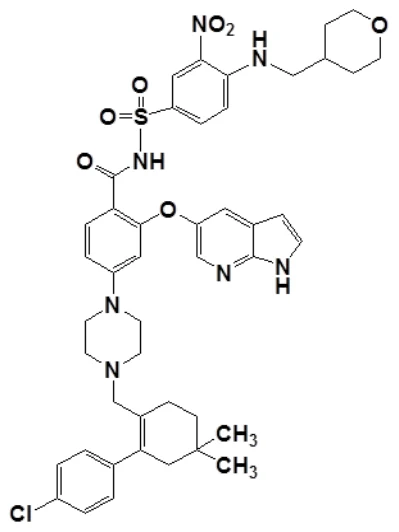
Physicochemical properties: Venetoclax is a light yellow to dark yellow solid and has very low aqueous solubility.
Pharmaceutical standard: Professed
14. Clinical Trials
14.1. Clinical Trials by Indication
Chronic Lymphocytic Leukemia
Table 31 - Summary of Patient Demographics for Clinical Trials in CLL
| Study # | Study design | Dosage, route of administration and duration | Study subjects (n) | Mean Age (range) | Sex |
| Study # | Study design | Dosage, route of administration and duration | Study subjects (n) | Mean Age (range) | Sex |
| CLL14 | Randomized (1:1), open-label, Phase 3 study | VENCLEXTA orally once daily + obinutuzumaba chlorambucil + obinutuzumab | 216 216 Total: N = 432 | 71.1 (41 to 89) | M: 66.9% F: 33.1% |
| GLOW (CLL3011) | Randomized (1:1), open-label, active controlled Phase 3 study | VENCLEXTA orally once daily + ibrutinib 420 mg once dailya (Total of 15 cycles) chlorambucil + obinutuzumab | 106 105 Total: N = 210 | 71 (47 to 93) | M: 58% F: 42% |
| CAPTIVATE (PCYC-1142-CA) | Phase 2, 2-cohort study | Fixed duration cohort: VENCLEXTA orally once daily + ibrutinib 420 mg orally once dailya (Total of 15 cycles) Minimal residual disease cohort: VENCLEXTA orally once daily + ibrutinib 420 mg orally once dailya,b (Total of 15 cycles) | 159 164 Total: N = 323 | 60 (33 to 71) 58 (28 to 69) | M: 67% F: 33% M: 63% F: 37% |
| MURANO | Randomized (1:1), open-label Phase 3 study | VENCLEXTA orally once daily + rituximaba bendamustine + rituximab | 194 195 Total: N = 389 | 64.1 (22 to 85) | M: 73.8% F: 26.2% |
| M13-982 | Phase 2, single-arm, open-label | VENCLEXTA orally once dailya | Total: N = 145 | 66.0 (29 to 85) | M: 63.4% F: 36.6% |
| M14-032 | Open-label, multi-center, Phase 2 study | VENCLEXTA orally once dailya | Total: N = 28 | 64.3 (50 to 75) | M: 78.6% F: 21.4% |
| M12-175 | Phase 1, open-label | VENCLEXTA orally once dailya | Total: N = 116 | 64.5 (36 to 86) | M: 76.7% F: 23.3% |
| |||||
VENCLEXTA in Combination with Obinutuzumab
Study CLL14
CLL14 was a randomized (1:1), multi-center, open-label Phase 3 study that evaluated the efficacy and safety of VENCLEXTA in combination with obinutuzumab versus obinutuzumab in combination with chlorambucil for previously untreated CLL in patients with coexisting medical conditions (total Cumulative Illness Rating Scale [CIRS] score > 6 or creatinine clearance [CrCL] < 70 mL/min). Patients in the study were assessed for risk of tumour lysis syndrome (TLS) and received prophylaxis accordingly prior to obinutuzumab administration.
All patients received obinutuzumab at 1000 mg on Cycle 1 Day 1 (the first dose could be split as 100 and 900 mg on Days 1 and 2), and 1000 mg doses on Days 8 and 15 of Cycle 1, and on Day 1 of each subsequent cycle, for a total of 6 cycles. On Day 22 of Cycle 1, patients in the VENCLEXTA + obinutuzumab arm began the 5-week VENCLEXTA ramp-up schedule (see 4 Dosage and Administration). After completing the ramp-up schedule on Cycle 2 Day 28, patients received VENCLEXTA 400 mg once daily from Cycle 3 Day 1 until the last day of Cycle 12 as a finite treatment duration. Following completion of 12 months of VENCLEXTA, patients stopped therapy and were continued to be followed for disease progression and overall survival. Patients randomized to the obinutuzumab + chlorambucil arm received 0.5 mg/kg oral chlorambucil on Day 1 and Day 15 of Cycles 1 to 12, in the absence of disease progression or unacceptable toxicity. Each cycle was 28 days.
Baseline demographic and disease characteristics were similar between the study arms (Table 32).
Table 32 – Demographics and Baseline Characteristics in CLL14
| Characteristic | VENCLEXTA + Obinutuzumab (N = 216) | Obinutuzumab + Chlorambucil (N = 216) |
| Age, years; median (range) | 72 (43-89) | 71 (41-89) |
| White; % | 89 | 90 |
| Male; % | 68 | 66 |
| ECOG performance status; % | ||
| 0 | 41 | 48 |
| 1 | 46 | 41 |
| 2 | 13 | 12 |
| CIRS score, median (range) | 9 (0 to 23) | 8 (1 to 28) |
| Creatinine clearance < 70 mL/min; % | 60 | 55 |
| Binet Stage at screening; % | ||
| A | 21 | 20 |
| B | 36 | 37 |
| C | 43 | 43 |
| CLL cytogenetics, % | ||
| 17p deletion | 9 | 7 |
| 11q deletion | 18 | 20 |
| Mutation status, % | ||
| TP53 mutation | 11 | 9 |
| IgVH unmutated | 56 | 57 |
At baseline, the median lymphocyte count was 55 x 109 cells/L in both study arms. The median follow-up at the time of analysis was 28 months (range: 0 to 36 months).
The primary endpoint was progression-free survival (PFS) as assessed by investigators using the International Workshop for Chronic Lymphocytic Leukemia (IWCLL) updated National Cancer Institute-sponsored Working Group (NCI-WG) guidelines (2008). The key secondary efficacy endpoints were PFS assessed by Independent Review Committee (IRC), minimal residual disease (MRD)-negativity rate (measured in peripheral blood and bone marrow), complete response rate (CRR), overall response rate (ORR), and overall survival (OS).
Treatment with VENCLEXTA + obinutuzumab demonstrated a statistically significant 65% reduction in the risk of disease progression or death when compared with obinutuzumab + chlorambucil treatment (stratified hazard ratio [HR] 0.35 [95% CI: 0.23 to 0.53], p < 0.0001, stratified log-rank test).
Efficacy results for CLL14 are shown in Table 33. The Kaplan-Meier curve for PFS is shown in Figure 1.
Table 33 – Efficacy Results for CLL14
| VENCLEXTA + Obinutuzumab (N = 216) | Obinutuzumab + Chlorambucil (N = 216) | |||||||||||||
| Progression-free survival, investigator-assesseda | ||||||||||||||
| Number of events (%) | 30 (13.9) | 77 (36) | ||||||||||||
| Disease progression, % | 14 (6) | 69 (31.9) | ||||||||||||
| Death, % | 16 (7.4) | 8 (4) | ||||||||||||
| Median, months | Not Reached | Not Reached | ||||||||||||
| HR (95% CI) | 0.35 (0.23, 0.53) | |||||||||||||
| p-value | < 0.0001 | |||||||||||||
| Response rate | ||||||||||||||
| ORR, % (95% CI) | 183 (85) (79.2, 89.2) | 154 (71) (64.8, 77.2) | ||||||||||||
| p-value | 0.0007 | |||||||||||||
| CR, % | 100 (46) | 47 (22) | ||||||||||||
| CR+CRi, % | 107 (50) | 50 (23) | ||||||||||||
| p-value | < 0.0001 | |||||||||||||
| PR, % | 76 (35) | 104 (48) | ||||||||||||
CI = confidence interval; CR = complete remission; CRi = complete remission with incomplete marrow recovery; INV = investigator; IRC = independent review committee; MRD = minimal residual disease; ORR = overall response rate (CR + CRi + nPR + PR); PR = partial remission; HR = hazard ratio.
| ||||||||||||||
Figure 1 – Kaplan-Meier Curve of Investigator-Assessed Progression-Free Survival (ITT Population) in CLL14
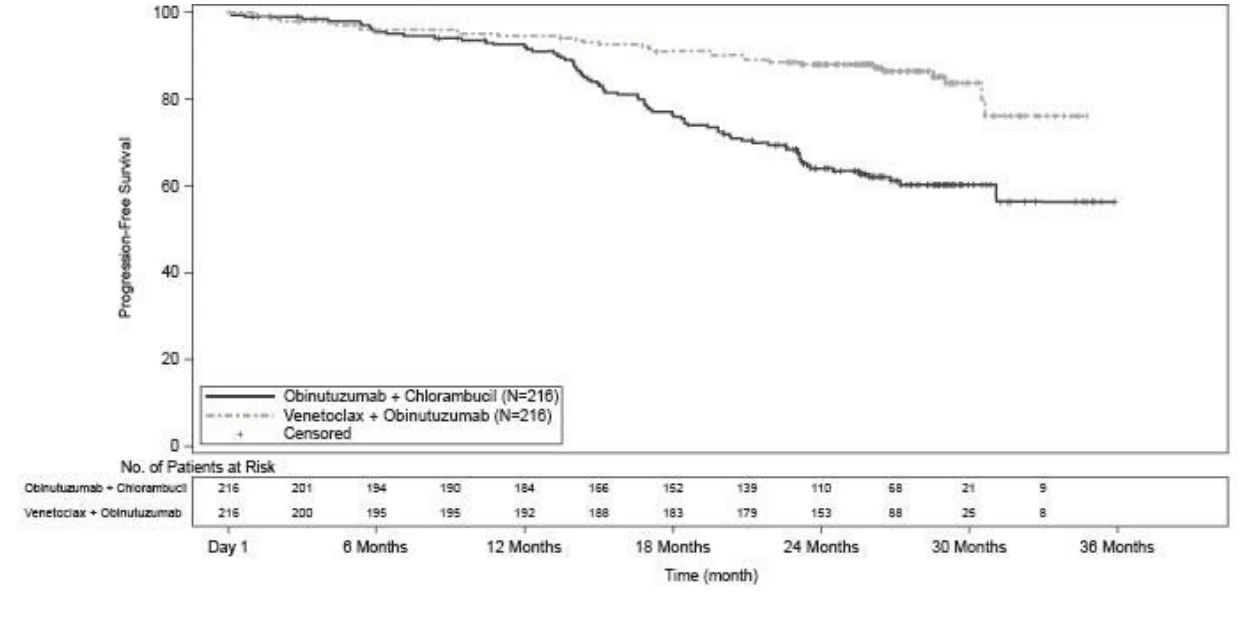
Results of investigator-assessed PFS were confirmed by an IRC.
MRD was evaluated using allele-specific oligonucleotide polymerase chain reaction (ASO-PCR). The cut-off for a negative status was < 1 CLL cell per 104 leukocytes. Rates of MRD negativity regardless of response and in patients with IRC-assessed complete remission (CR/CRi) are shown in Table 34.
Table 34 – Minimal Residual Disease Negativity Rates Three Months After the Completion of Treatment in CLL14
| VENCLEXTA + Obinutuzumab | Obinutuzumab + Chlorambucil | ||||||||
| VENCLEXTA + Obinutuzumab | Obinutuzumab + Chlorambucil | ||||||||
| MRD negativity rate in ITT population | |||||||||
| N | 216 | 216 | |||||||
| Bone marrow, n (%) | 123 (57) | 37 (17) | |||||||
| 95% CI | (50, 64) | (12, 23) | |||||||
| p-valuea | < 0.0001 | ||||||||
| Peripheral blood, n (%) | 163 (76) | 76 (35) | |||||||
| 95% CI | (69, 81) | (29, 42) | |||||||
| p-valuea | < 0.0001 | ||||||||
| MRD negativity rate in patients with CR | |||||||||
| N | 100 | 47 | |||||||
| Bone marrow, n (%) | 69 (69) | 21 (45) | |||||||
| 95% CI | (59, 78) | (30, 60) | |||||||
| p-valuea | 0.0048 | ||||||||
| Peripheral blood, n (%) | 87 (87) | 29 (62) | |||||||
| 95% CI | (79, 93) | (46, 75) | |||||||
| p-valuea | 0.0005 | ||||||||
CI = confidence interval; CR = complete remission; ITT – intent to treat; MRD = minimal residual disease.
In paired samples, the concordance of MRD negativity between peripheral blood and bone marrow samples at end of treatment was 91% in the VENCLEXTA + obinutuzumab arm and 58% in the obinutuzumab + chlorambucil arm. | |||||||||
At the time of primary PFS analysis, overall survival data were immature with death occurring in 9% of patients in the VENCLEXTA + obinutuzumab arm and 8% of patients in the chlorambucil + obinutuzumab arm.
In an exploratory analysis, statistically significant and clinically meaningful PFS benefit with VENCLEXTA + obinutuzumab versus obinutuzumab + chlorambucil treatment was observed across the following subgroups: sex; age (< 65, ≥ 65; < 75, ≥ 75); Binet stage at screening (A, B, C); B-symptoms (fever, night sweats, weight loss); estimated CrCL (< 70, ≥ 70 mL/min); del(17p)/TP53 mutation (yes, no); IgVH mutational status (mutated, unmutated).
52-month follow-up
With the median follow-up of 52.4 months the median PFS in the VENCLEXTA + obinutuzumab arm had not been reached [95% CI: 57.3, not reached] and median PFS in the obinutuzumab + chlorambucil arm was 36.4 months [95% CI: 34.1, 41.0].
With death having occurred in 15.7% (34/216) of patients in the VENCLEXTA + obinutuzumab arm and 19.0% (41/216) of patients in the obinutuzumab + chlorambucil arm, an overall survival benefit was not demonstrated [stratified HR 0.85; 95% CI: 0.54, 1.35].
VENCLEXTA in Combination with Ibrutinib
The efficacy and safety of fixed duration treatment with VENCLEXTA in combination with ibrutinib in patients with previously untreated CLL was demonstrated in two clinical studies: one Phase 3, randomized controlled trial (GLOW [CLL3011]), and one Phase 2, multi-center, 2-cohort study (CAPTIVATE [PCYC-1142-CA]).
GLOW (CLL3011)
GLOW was a randomized, open-label Phase 3 study of VENCLEXTA in combination with ibrutinib versus chlorambucil in combination with obinutuzumab, conducted in patients with previously untreated active CLL who were 65 years or older, and adult patients <65 years of age with a Cumulative Illness Rating Scale (CIRS) score > 6 or CrCL ≥ 30 to < 70 mL/min, including 14 patients with clinical presentation of SLL. Patients with del 17p or known TP53 mutations were excluded. Patients (n = 211) were randomized 1:1 to receive either VENCLEXTA in combination with ibrutinib or chlorambucil in combination with obinutuzumab.
Patients in the VENCLEXTA + ibrutinib arm received single agent ibrutinib for 3 cycles followed by VENCLEXTA in combination with ibrutinib for 12 cycles (including 5-week VENCLEXTA dose ramp-up). Each cycle was 28 days. Ibrutinib was administered at a dose of 420 mg daily. VENCLEXTA was administered according to the 5-week dose ramp-up, then at the recommended daily dose of 400 mg (see 4 Dosage and Administration).
Patients randomized to the chlorambucil + obinutuzumab arm received treatment for 6 cycles. Obinutuzumab was administered at a dose of 1000 mg on Days 1 (or 100 mg on Day 1 and 900 mg on Day 2), 8 and 15 in Cycle 1. In Cycles 2 to 6, 1000 mg obinutuzumab was given on Day 1. Chlorambucil was administered at a dose of 0.5 mg/kg body weight on Days 1 and 15 of Cycles 1 to 6. Patients with confirmed progression by IWCLL criteria after completion of either fixed duration regimen could be treated with single agent ibrutinib.
The median age was 71 years (range, 47 to 93 years), 58% were male, and 96% were white. All patients had a baseline ECOG performance status of 0 (35%), 1 (53%), or 2 (12%). At baseline, 18% of patients presented with del 11q and 52% with unmutated IGHV. The most common reasons for initiating CLL therapy included: constitutional symptoms (59%), progressive marrow failure (48%), lymphadenopathy (36%), splenomegaly (28%) and progressive lymphocytosis (19%). At baseline assessment for risk of TLS, 25% of patients had high tumour burden. After 3 cycles of single agent ibrutinib lead-in therapy, 2% of patients had high tumour burden. High tumour burden was defined as any lymph node ≥ 10 cm; or any lymph node ≥ 5 cm and absolute lymphocyte count ≥ 25 × 109/L.
The primary endpoint in GLOW was PFS as assessed by an IRC according to the IWCLL criteria. Secondary endpoints included minimal residual disease (MRD) negativity rate in the bone marrow and complete response (CR) rate.
A clinically meaningful and statistically significant improvement in PFS was observed for the VENCLEXTA + ibrutinib fixed duration treatment arm compared with the chlorambucil + obinutuzumab arm (HR = 0.22; 95% CI: 0.13, 0.36; p < 0.0001), representing a 78% reduction in the risk of disease progression or death with VENCLEXTA + ibrutinib.
Improvements in key secondary endpoints of MRD negativity rate in the bone marrow and CR rate were also demonstrated. The MRD negativity rate in bone marrow as assessed by Next-Generation Sequencing (NGS) was significantly higher in the VENCLEXTA + ibrutinib arm compared with the chlorambucil + obinutuzumab arm (55.7% vs. 21.0%; respectively; p < 0.0001). Fixed duration treatment of VENCLEXTA + ibrutinib resulted in a significantly higher CR rate (i.e., proportion of subjects with CR or CRi) per IRC assessment compared with chlorambucil with obinutuzumab (38.7% vs. 11.4%, respectively; p < 0.0001).
Efficacy results for GLOW with a median follow-up time of 28 months are shown in Table 35, the Kaplan-Meier curve for PFS is shown in Figure 2, and rates of MRD negativity are shown in Table 36.
Table 35 – Efficacy Results of Study CLL3011 (GLOW) in Patients with Previously Untreated CLL
| Endpointa | VENCLEXTA + Ibrutinib (N = 105) | Chlorambucil + Obinutuzumab (N = 105) |
| Progression-free survival | ||
| Number of events (%) | 22 (20.8) | 67 (63.8) |
| Median (95% CI), months, | NE (31.2, NE) | 21.0 (16.6, 24.7) |
| HR (95% CI) | 0.22 (0.13, 0.36) | |
| p-valueb | < 0.0001 | |
| Complete response rate, %c | 38.7 | 11.4 |
| 95% CI | (29.4, 48.0) | (5.4, 17.5) |
| p-valued | < 0.0001 | |
| Overall response rate, %e | 86.8 | 84.8 |
| 95% CI | (80.3, 93.2) | (77.9, 91.6) |
| p-value | 0.6991 | |
CI = confidence interval; CR = complete response; CRi = complete response with incomplete marrow recovery; HR = hazard ratio; IRC = Independent Review Committee; NE = not evaluable; nPR = nodular partial response; PR = partial response
| ||
Figure 2 – Kaplan-Meier Curve of Progression-Free Survival (ITT Population) in Patients with Previously Untreated CLL in Study CLL3011 (GLOW)
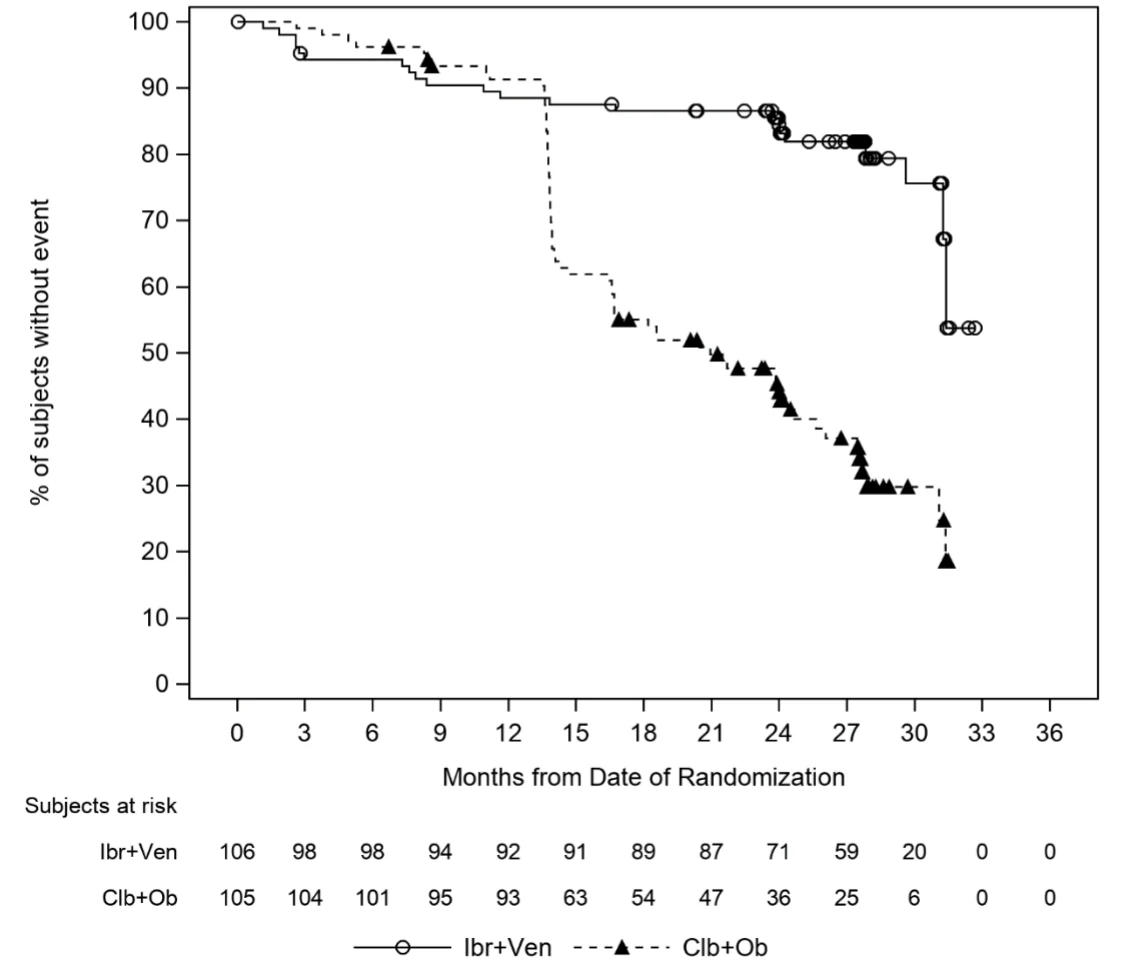
The PFS treatment effect of VENCLEXTA + ibrutinib versus chlorambucil + obinutuzumab was consistent across predefined subgroups, including the high-risk population (TP53 mutation, 11q deletion, or unmutated IGHV), with a PFS HR of 0.23 [95% CI (0.13, 0.41)].
With a median follow-up of 28 months, overall survival data were not mature with a total of 23 deaths: 11 (10%) in the VENCLEXTA + ibrutinib arm and 12 (11%) in the chlorambucil + obinutuzumab arm.
Table 36 – Minimal Residual Disease Negativity Rates in Patients with Previously Untreated CLL in Study CLL3011 (GLOW)
| NGS Assaya | Flow Cytometryb | ||||||||||||||||
| VENCLEXTA + Ibrutinib N = 106 | Chlorambucil + Obinutuzumab N = 105 | VENCLEXTA + Ibrutinib N = 106 | Chlorambucil + Obinutuzumab N = 105 | ||||||||||||||
| MRD negativity rate | |||||||||||||||||
| Bone marrow, n (%) | 59 (55.7) | 22 (21.0) | 72 (67.9) | 24 (22.9) | |||||||||||||
| 95% CI | (46.2, 65.1) | (13.2, 28.7) | (59.0, 76.8) | (14.8, 30.9) | |||||||||||||
| P-value | < 0.0001 | < 0.0001 | |||||||||||||||
| Peripheral blood, n (%) | 63 (59.4) | 42 (40.0) | 85 (80.2) | 49 (46.7) | |||||||||||||
| 95% CI | (50.1, 68.8) | (30.6, 49.4) | (72.6, 87.8) | (37.1, 56.2) | |||||||||||||
| P-value | 0.0055 | < 0.0001 | |||||||||||||||
CI = confidence interval; NGS = next-generation sequencing P-values are from Cochran-Mantel-Haenszel chi-square test. Except the p-value for MRD negativity rate in bone marrow by NGS, which is the primary MRD analysis and the first key secondary endpoint of GLOW, all other p-values are nominal. All MRD results were derived from samples obtained from ≥ 80% of participants. | |||||||||||||||||
|
Three months after the completion of treatment, MRD negativity rates in peripheral blood were 55% (58/106) by NGS assay and 61% (65/106) by flow cytometry in patients treated with VENCLEXTA + ibrutinib and, at the corresponding time point, were 39% (41/105) by NGS assay and 41% (43/105) by flow cytometry in patients treated with chlorambucil + obinutuzumab. At 3 months after completion of treatment, 56 patients in the VENCLEXTA + ibrutinib arm who were MRD negative in peripheral blood by NGS assay had matched bone marrow specimens; of these, 52 patients (93%) were MRD negative in both peripheral blood and bone marrow.
Twelve months after the completion of treatment, MRD negativity rates in peripheral blood were 49% (52/106) by NGS assay and 55% (58/106) by flow cytometry in patients treated with VENCLEXTA + ibrutinib and, at the corresponding time point, was 12% (13/105) by NGS assay and 16% (17/105) by flow cytometry in patients treated with chlorambucil + obinutuzumab.
64-month follow-up
With a median follow-up of 64 months, there were 20 (18.9%) deaths in the VENCLEXTA + ibrutinib arm and 40 (38.1%) in the chlorambucil + obinutuzumab arm corresponding to a HR of 0.462 [(95% CI: 0.269, 0.791), not statistically significant] and Kaplan-Meier OS estimates at 60 months of 81.6% and 60.8% in the two arms, respectively. Median OS was not reached in either arm.
CAPTIVATE (PCYC-1142-CA)
CAPTIVATE was a Phase 2, multi-center, 2-cohort study assessing both minimal residual disease (MRD)-guided discontinuation and fixed duration (FD) therapy with VENCLEXTA in combination with ibrutinib, conducted in adult patients who were 70 years or younger with previously untreated active CLL. The study enrolled 323 patients; of these, 159 patients were enrolled to FD therapy consisting of 3 cycles of single agent ibrutinib followed by VENCLEXTA in combination with ibrutinib for 12 cycles (including 5-week dose ramp-up). Each cycle was 28 days. Ibrutinib was administered at a dose of 420 mg daily. VENCLEXTA was administered daily, according to the 5-week dose ramp-up, then at the recommended daily dose of 400 mg (see 4 Dosage and Administration). Patients with confirmed progression by IWCLL criteria after completion of the FD regimen could be retreated with single agent ibrutinib.
In the FD cohort the median age was 60 years (range, 33 to 71 years), 67% were male, and 92% were Caucasian. All patients had a baseline ECOG performance status of 0 (69%) or 1 (31%). The trial enrolled 146 patients with CLL and 13 patients with SLL. At baseline, 13% of patients presented with del 17p, 18% with del 11q, 17% with del 17p or TP53 mutation, 56% with unmutated IGHV and 19% with complex karyotype. The most common reasons for initiating CLL therapy included: lymphadenopathy (65%), progressive lymphocytosis (51%), splenomegaly (30%), fatigue (24%), progressive marrow failure demonstrated by anemia and/or thrombocytopenia (23%), and night sweats (21%). At baseline assessment for risk of TLS, 21% of patients had high tumour burden. After 3 cycles of single agent ibrutinib lead-in therapy, 1% of patients had high tumour burden. High tumour burden was defined as any lymph node ≥ 10 cm, or any lymph node ≥ 5 cm and absolute lymphocyte count ≥ 25 × 109/L.
The primary endpoint in the FD cohort, the complete response rate as assessed by the investigator, was 55.3% (95% CI: 47.6, 63.1) for all participants. The CR rate per IRC assessment for all participants in the FD cohort was 59.7% (95% CI: 52.1, 67.4) and 61.0% (95% CI: 52.8, 69.2) for participants without del 17p. Per investigator assessment, the secondary efficacy endpoint of overall response rate was 96.2% for all participants.
Efficacy results for Study PCYC-1142-CA with a median follow-up time of 28 months are shown in Table 37, and rates of minimal residual disease (MRD) negativity are shown in Table 38.
Table 37 – Efficacy Results of Study PCYC-1142-CA (CAPTIVATE; Fixed Duration Cohort)a in Patients with Previously Untreated CLL
| VENCLEXTA + Ibrutinib | |||||||||||
| Endpointa | Without Del 17p (N = 136) | All (N = 159) | |||||||||
| Complete response rate, n (%) | 76 (55.9) | 88b (55.3) | |||||||||
| 95% CI (%) | (47.5, 64.2) | (47.6, 63.1) | |||||||||
| Median duration of CR, months (range)c | NE (0.03+, 24.9+) | NE (0.03+, 24.9+) | |||||||||
| Overall response rate, n (%)d | 130 (95.6) | 153 (96.2) | |||||||||
| 95% CI (%) | (92.1, 99.0) | (93.3, 99.2) | |||||||||
| Best overall response | |||||||||||
| CR | 74 (54.4) | 83 (52.2) | |||||||||
| CRi | 2 (1.5) | 5 (3.1) | |||||||||
| nPR | 1 (0.7) | 1 (0.6) | |||||||||
| PR | 53 (39.0) | 64 (40.3) | |||||||||
CI = confidence interval; CR = complete response; CRi = complete response with incomplete marrow recovery; NE = not evaluable; nPR = nodular partial response; PR = partial response
| |||||||||||
Table 38 – Minimal Residual Disease Negativity Rates in Patients with Previously Untreated CLL in Study PCYC-1142-CA (CAPTIVATE; Fixed Duration Cohort)
| VENCLEXTA + Ibrutinib | |||||||
| Without Del 17p (N = 136) | All (N = 159) | ||||||
| MRD negativity rate | |||||||
| Bone marrow, n (%) | 84 (61.8) | 95 (59.7) | |||||
| 95% CI | (53.6, 69.9) | (52.1, 67.4) | |||||
| Peripheral blood, n (%) | 104 (76.5) | 122 (76.7) | |||||
| 95% CI | (69.3, 83.6) | (70.2, 83.3) | |||||
CI = confidence interval MRD was evaluated by flow cytometry of peripheral blood or bone marrow per central laboratory. The definition of negative status was < 1 CLL cell per 10,000 leukocytes (< 1 × 10⁴). All MRD results were derived from samples obtained from ≥ 80% of participants. | |||||||
Three months after the completion of treatment with VENCLEXTA + ibrutinib, the MRD negativity rate for all subjects was 56.6% (90/159) in the peripheral blood and 52.2% (83/159) in the bone marrow, and for subjects without del 17p, 57.4% (78/136) in the peripheral blood and 54.4% (74/136) in the bone marrow. At this assessment, 84 patients who were MRD negative in peripheral blood had matched bone marrow specimens; of these, 76 patients (90%) were MRD negative in both peripheral blood and bone marrow.
CLL with del 17p/TP53 in CAPTIVATE (PCYC-1142-CA)
In patients in the FD cohort with del 17p and/or TP53 mutation (n = 27: of which, n = 20 for del 17p), the overall response rate based on IRC assessment was 96.3%; the complete response rate was 55.6% and the median duration of complete response was not reached (range 4.3 to 22.6 months). The MRD negativity rate in patients with del 17p and/or TP53 mutation 3 months after completion of treatment in bone marrow and peripheral blood was 40.7% and 59.3%, respectively.
VENCLEXTA in Combination with Rituximab
MURANO
MURANO was a randomized (1:1), multi-center, open-label Phase 3 study with time-limited therapy that evaluated the efficacy and safety of VENCLEXTA (venetoclax) in combination with rituximab versus bendamustine in combination with rituximab in patients with relapsed or refractory CLL who had received at least one line of prior therapy. Patients previously treated with VENCLEXTA were excluded.
Patients in the VENCLEXTA + rituximab arm completed the 5-week ramp-up schedule of VENCLEXTA (see 4 Dosage and Administration) and received 400 mg VENCLEXTA daily for 24 months from Cycle 1 Day 1 of rituximab in the absence of disease progression or unacceptable toxicity. After the 5-week dose ramp-up, rituximab was initiated at 375 mg/m2 for Cycle 1 and 500 mg/m2 for Cycles 2 to 6. Each cycle was 28 days. Patients randomized to bendamustine + rituximab received bendamustine at 70 mg/m2 on Days 1 and 2 for 6 cycles and rituximab at the above described dose and schedule. Following completion of the 24-month treatment in the VENCLEXTA + rituximab arm or 6 cycles of bendamustine + rituximab, patients continued to be followed for disease progression and overall survival.
A total of 389 patients were randomized; 194 to the VENCLEXTA + rituximab arm and 195 to the bendamustine + rituximab arm. Baseline demographic and disease characteristics were similar between the two arms (Table 39).
Table 39 – Demographics and Baseline Characteristics in MURANO
| Characteristic | VENCLEXTA + Rituximab (N = 194) | Bendamustine + Rituximab (N = 195) |
| Characteristic | VENCLEXTA + Rituximab (N = 194) | Bendamustine + Rituximab (N = 195) |
| Age, years; median (range) | 64.5 (28 to 83) | 66 (22 to 85) |
| White; % | 96.8 | 96.7 |
| Male; % | 70.1 | 77.4 |
| ECOG performance status; % | ||
| 0 | 57.2 | 55.7 |
| 1 | 42.3 | 43.3 |
| 2 | 0.5 | 1.0 |
| Tumour burden; % | ||
| Absolute lymphocyte count ≥ 25 x 109/L | 66.5 | 68.7 |
| One or more nodes ≥ 5 cm | 45.7 | 47.6 |
| Number of prior lines of therapy; % | ||
| Median number (range) | 1 (1 to 5) | 1 (1 to 4) |
| 1 | 57.2 | 60.0 |
| 2 | 29.4 | 22.1 |
| ≥ 3 | 13.4 | 17.9 |
| Previous CLL regimens | ||
| Median number (range) | 1 (1 to 5) | 1 (1 to 4) |
| Prior alkylating agents, % | 93.3 | 95.4 |
| Prior purine analogs, % | 80.5 | 81.4 |
| Prior CD20 antibodies, % | 76.3 | 78.6 |
| Prior B-cell receptor pathway inhibitors, % | 1.5 | 2.6 |
| FCR, % | 54.1 | 55.4 |
| Fludarabine refractory, % | 14.1 | 15.5 |
| CLL cytogenetics, % | ||
| 17p deletion | 26.6 | 27.2 |
| 11q deletion | 35.3 | 37.9 |
| TP53 mutation | 25.0 | 27.7 |
| IgVH unmutated | 68.3 | 68.3 |
| Time since diagnosis, years; median (range) | 6.44 (0.5 to 28.4) | 7.11 (0.3 to 29.5) |
| FCR = fludarabine, cyclophosphamide, rituximab. | ||
The median follow-up at the time of primary analysis was 24.8 months (range: 0.3 to 37.4 months) in the VENCLEXTA + rituximab arm and 22.1 months (range: 0 to 33.8 months) in the bendamustine + rituximab arm.
Efficacy was based on the primary endpoint of PFS as assessed by an IRC using the IWCLL updated NCI-WG guidelines (2008). Treatment with VENCLEXTA + rituximab demonstrated a statistically significant 81% reduction in the risk of progression or death (HR: 0.19 [95% CI: 0.13, 0.28]; P < 0.0001, Table 39 and
Figure 3).
The key secondary endpoints were CR/CRi rate, best ORR and overall survival. The CR/CRi rate was 8% in the VENCLEXTA + rituximab arm and 4% in the bendamustine + rituximab arm (Table 39). The CR/CRi rate difference did not reach statistical significance.
The ORR was 92% in the VENCLEXTA + rituximab arm and 72% in the bendamustine + rituximab arm (Table 40). At the time of the primary PFS analysis, overall survival data were immature with death occurring in 8% of patients in the VENCLEXTA + rituximab arm and 14% of patients in the bendamustine
+ rituximab arm. Based on the hierarchical testing plan, formal statistical testing could not be performed for ORR and overall survival.
Table 40 – Efficacy Results for MURANO by IRC Assessment (ITT Population)
VENCLEXTA + Rituximab (N = 194) | Bendamustine + Rituximab (N = 195) | |||||||||||||
| Progression-free survival | ||||||||||||||
| Number of events (%) | 35 (18.0) | 106 (54.4) | ||||||||||||
| Disease progression | 26 (13) | 91 (47) | ||||||||||||
| Death events | 9 (5) | 15 (8) | ||||||||||||
Median, months, (95% CI) | Not reached | 18.1 (15.8, 22.3) | ||||||||||||
| HR (95% CI)a | 0.19 (0.13, 0.28) | |||||||||||||
| p-value | p < 0.0001 | |||||||||||||
| Response rate, % | ||||||||||||||
ORR (95% CI) | 92.3 (87.6, 95.6) | 72.3 (65.5, 78.5) | ||||||||||||
| CR+CRi (95% CI) | 8.2 (4.8, 13.1) | 3.6 (1.5, 7.3) | ||||||||||||
| nPR | 1.5 | 0.5 | ||||||||||||
| PR | 82.5 | 68.2 | ||||||||||||
CI = confidence interval; CR = complete remission; CRi = complete remission with incomplete marrow recovery; IRC = independent review committee; nPR = nodular partial remission; ORR = overall response rate (CR + CRi + nPR + PR); PR = partial remission.
| ||||||||||||||
Figure 3 – Kaplan-Meier Curve of IRC-Assessed Progression-Free Survival (ITT Population) in MURANO
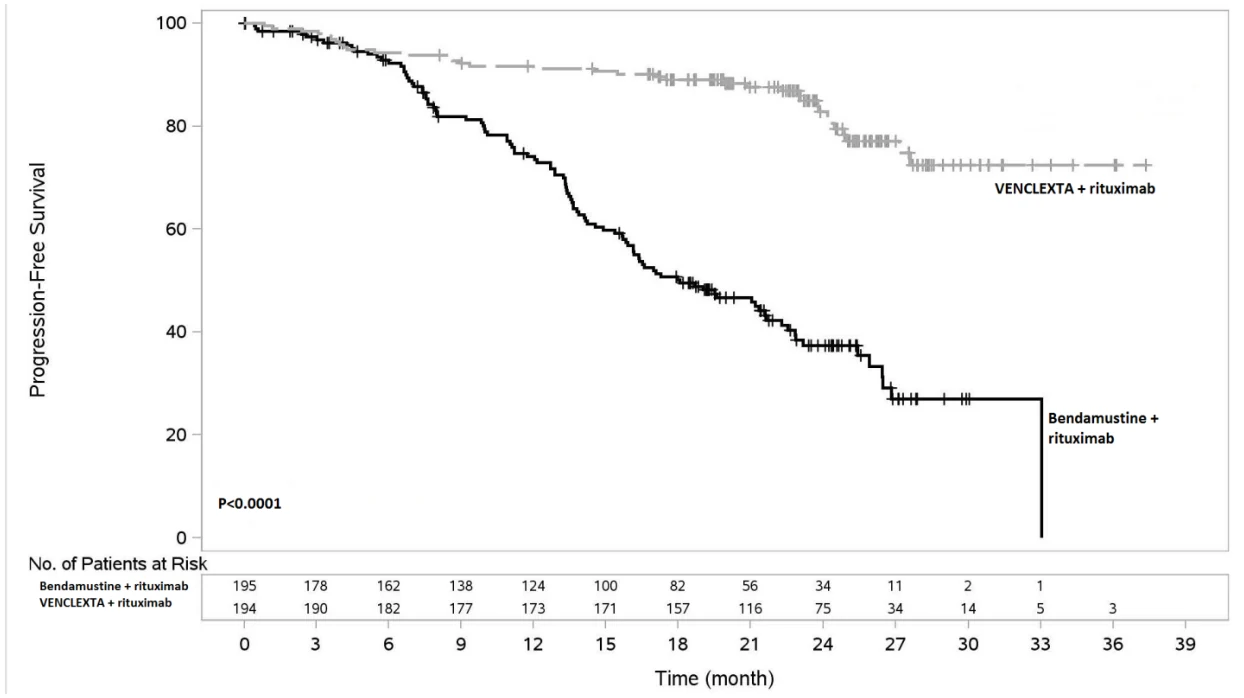
The PFS benefit with VENCLEXTA + rituximab versus bendamustine + rituximab treatment was observed across all subgroups examined including age (< 65, ≥ 65 years and < 75, ≥ 75 years), prior lines of therapy (1, > 1), bulky disease (< 5 cm, ≥ 5 cm), 17p deletion, 11q deletion, TP53 mutation, IgVH mutation, and refractory versus relapse to most recent therapy.
At the time of the primary analysis (data cut-off date 8 May 2017), 65 patients completed the 24-month VENCLEXTA + rituximab treatment regimen without progression and 78 patients were still receiving VENCLEXTA (+18 months of treatment).
Minimal residual disease was evaluated using allele-specific oligonucleotide polymerase chain reaction (ASO-PCR) and flow cytometry. The cut-off for a negative status was one CLL cell per 104 leukocytes. At 3 months after the last dose of rituximab, the MRD negativity rate in peripheral blood was 62.4% (95% CI: 55.2, 69.2) in the VENCLEXTA + rituximab arm and 13.3% (95% CI: 8.9, 18.9) in the bendamustine + rituximab arm.
59-month follow-up
With a median follow-up of 59.2 months (range 0 to 71.5 months), the investigator-assessed median PFS was 53.6 months in the VENCLEXTA + rituximab arm and 17.0 months in the bendamustine + rituximab arm (stratified hazard ratio = 0.19; 95% CI: 0.15, 0.26).
Median overall survival had not been reached in either arm. Death occurred in 16.5% (32/194) of patients in the VENCLEXTA + rituximab arm and 32.8% (64/195) of patients in the bendamustine + rituximab arm (stratified HR 0.40; 95% CI [0.26, 0.62]). The Kaplan-Meier curve for OS is shown in Figure 4.
Figure 4 – Kaplan-Meier Curve of Overall Survival in MURANO
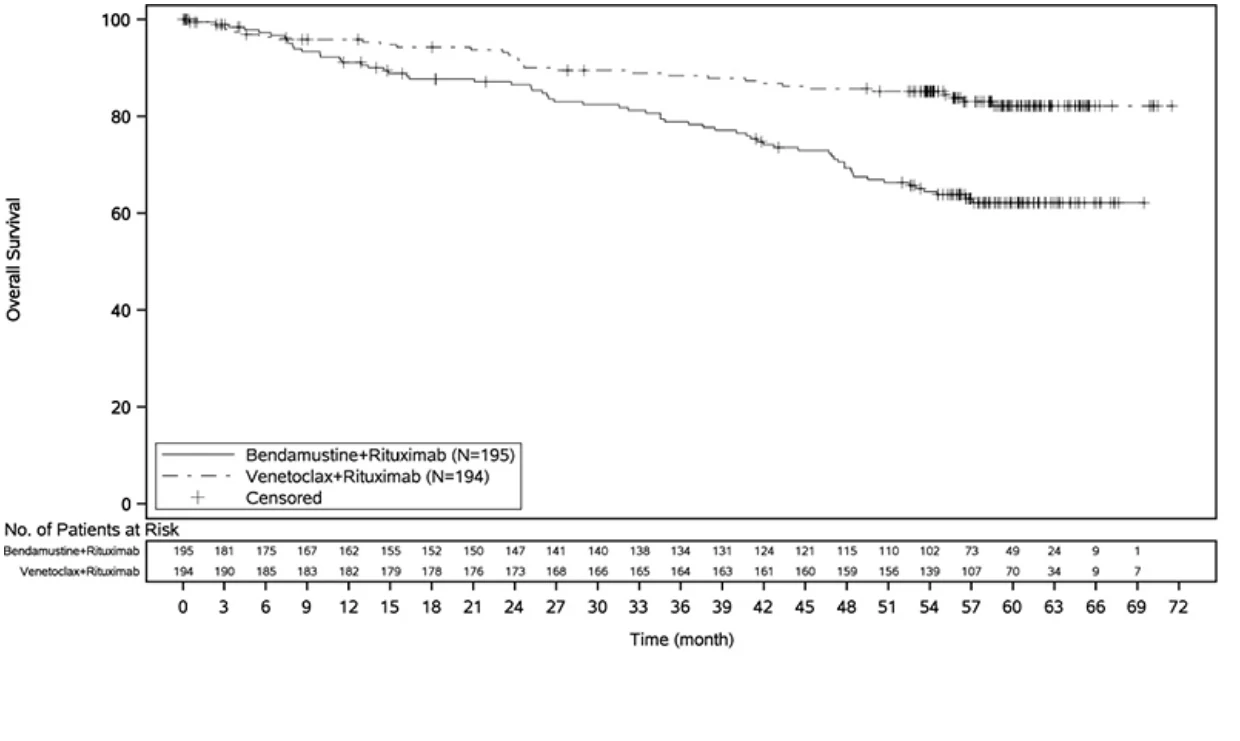
VENCLEXTA as Monotherapy
The safety and efficacy of VENCLEXTA in patients with CLL who have received at least one prior therapy were evaluated in three single-arm studies: M13-982, M14-032 and M12-175.
Study M13-982
Study M13-982 was a Phase 2 multi-center, single-arm, open-label trial of 107 patients with previously treated CLL with 17p deletion. Patients were enrolled in the study if they had confirmed 17p deletion, and had relapsed following or were refractory after receiving at least one prior line of therapy. Table 41 summarizes the baseline demographic and disease characteristics of the study population.
Table 41 – Demographic and Baseline Characteristics of Patients in Study M13-982
| Characteristics | M13-982 N = 107a |
| Characteristics | M13-982 N = 107a |
| Age (years) | |
| Median (range) | 67 (37 to 85) |
| Gender, n (%) | |
| Male | 70 (65.4) |
| Female | 37 (34.6) |
| Race, n (%) | |
| White | 103 (97.2) |
| Other | 4 (2.1) |
| Eastern Cooperative Oncology Group (ECOG) performance status | |
| 0 | 39.3 |
| 1 | 52.3 |
| 2 | 8.4 |
| Tumour burden, % | |
| Absolute lymphocyte count ≥ 25 x 109/L | 50.5 |
| One or more nodes > 5 cm | 53.3 |
| Number of prior therapies; median (range) | 2 (1 to 10) |
| Time since diagnosis, months; median (range) | 81.7 (1.2 to 385.6)b |
| |
Of the patients, 37.4% (34/91) were fludarabine refractory, 81.1% (30/37) harbored the unmutated IgVH gene, and 23.8% (19/80) had 11q deletion.
Patients received VENCLEXTA via a weekly ramp-up schedule starting at 20 mg and ramping to 50, 100, 200 and finally 400 mg once daily. Patients continued to receive 400 mg of VENCLEXTA orally once daily until disease progression or unacceptable toxicity. The median time on treatment at the time of evaluation was 12.1 months (range: 0 to 21.5 months).
The primary efficacy endpoint was ORR as assessed by an IRC using the IWCLL updated NCI-WG guidelines (2008). Efficacy results are shown in Table 42.
Table 42 – Efficacy Results in Study M13-982
| Endpoint | IRC Assessment N = 107a |
ORR, n (%) (95% CI) | 85 (79.4) (70.5, 86.6) |
| CR + CRi, n (%) | 8 (7.5) |
| nPR, n (%) | 3 (2.8) |
| PR, n (%) | 74 (69.2) |
CI = confidence interval; CR = complete remission; CRi = complete remission with incomplete marrow recovery; IRC = independent review committee; nPR = nodular partial remission; ORR = overall response rate (CR + CRi + nPR + PR); PR = partial remission. | |
The median time to first response was 0.8 months (range: 0.1 to 8.1 months). The duration of response (DOR) ranged from 2.9 to 19.0+ months.
Based on a later data cut-off date and investigator-assessed efficacy, the DOR was evaluated in 80 patients who had a record of first response (complete remission [CR], complete remission with incomplete marrow recovery [CRi], or partial remission [PR], or nodular partial remission [nPR]). The median DOR was 35.3 months (95% CI: 26.5, NA). The Kaplan-Meier estimate for DOR at 18 and 24 months was 83.5% (95% CI: 73.3%, 90.1%) and 64.3% (95% CI: 52.6%, 73.8%), respectively.
MRD was evaluated in patients who achieved complete remission (CR), complete remission with incomplete marrow recovery (CRi), or partial remission (PR) with limited remaining disease with VENCLEXTA treatment. The cut-off for a negative status was one CLL cell per 104 leukocytes in the sample (i.e., an MRD value of < 10-4 was considered MRD negative). Thirty-one percent (33/107) of patients were MRD negative in the peripheral blood, including 13 patients who were also MRD negative in the bone marrow, based on investigator assessment at a later data cut-off date.
Quality of life was assessed using the cancer-specific European Organization for Research and Treatment of Cancer (EORTC) QLQ-C30 questionnaire. There were 73 patients who completed the Global Health Status assessment/Quality of Life subscale (GHS/QoL) at both baseline and Week 24. Patients receiving treatment with VENCLEXTA showed a 15.9% improvement in GHS/QoL mean score from baseline (58.6) to Week 24 (67.9).
Study M14-032
Study M14-032 was an open-label, multi-center, Phase 2 study that evaluated the efficacy of VENCLEXTA in patients with CLL who relapsed or were refractory to ibrutinib or idelalisib. Patients received a daily dose of 400 mg of VENCLEXTA following the ramp-up schedule. Patients continued to receive VENCLEXTA 400 mg once daily until disease progression or unacceptable toxicity was observed. At the time of analysis, the median duration of treatment was 14.3 months (range: 0.1 to 31.4 months).
The primary efficacy endpoint was ORR according to IWCLL updated NCI WG guidelines (2008) and was assessed by an IRC. Response assessments were performed at Week 24 for patients in the main cohort, while patients enrolled in the expansion cohort had disease assessment at Week 36.
A total of 127 patients were enrolled in the study, which included 64 patients in the main cohort (43 with prior ibrutinib, 21 with prior idelalisib) and 63 patients in an expansion cohort (48 with prior ibrutinib, 15 with prior idelalisib). The median age was 66 years (range: 28 to 85 years), 70% were male and 92% were white. The median time since diagnosis was 8.3 years (range: 0.3 to 18.5 years; N = 96). The median number of prior anti-CLL treatments was 4 (range: 1 to 15 treatments). Of the 127 patients, 18.9% had received both ibrutinib and idelalisib. At baseline, 41% of patients had one or more nodes ≥ 5 cm, 31% had absolute lymphocyte count ≥ 25 x 109/L, 57% had documented unmutated IgVH, and 39% had documented 17p deletion.
Efficacy results for 127 patients assessed by the IRC are shown in Table 43.
Table 43 – Efficacy Results in Study M14-032
| IRC Assessment | |||||||||||||||||
| Endpoint | Ibrutinib Failures N = 91 | Idelalisib Failures N = 36 | All Patients N = 127 | ||||||||||||||
| ORR, n (%) [95% CI] | 64 (70.3) [59.8, 79.5] | 25 (69.4) [51.9, 83.7] | 89 (70.1) [61.3, 77.9] | ||||||||||||||
| CR + CRi, n (%) | 1 (1.1) | 0 | 1 (0.8) | ||||||||||||||
| nPR, n (%) | 0 (0) | 0 (0) | 0 (0) | ||||||||||||||
| PR, n (%) | 63 (69.2) | 25 (69.4) | 88 (69.3) | ||||||||||||||
| DOR, % (95% CI) | N = 64 | N = 25 | N = 89 | ||||||||||||||
| 6-month estimate | 96.5 (86.6, 99.1) | 100 (100, 100) | 97.4 (90.0, 99.4) | ||||||||||||||
| 12-month estimate | N/A | N/A | N/A | ||||||||||||||
| Time to first response, median, months (range) | 2.6 (1.0, 8.9) | 2.3 (1.6, 5.3) | 2.5 (1.0, 8.9) | ||||||||||||||
| CI = confidence interval; CR = complete remission; CRi = complete remission with incomplete marrow recovery; DOR = duration of response; IRC = independent review committee; nPR = nodular partial remission; ORR = overall response rate (CR + CRi + nPR + PR); PR = partial remission. | |||||||||||||||||
Median DOR has not been reached with DOR for all patients ranging from 0 to 11.6 months with a median follow-up of 18.7 months. The MRD negativity rate in peripheral blood for all 127 patients was 25% (32/127), including 8 patients who achieved MRD negativity in bone marrow.
Study M12-175
Study M12-175 was a Phase 1, multi-center, open-label trial of patients with previously treated CLL, including those with 17p deletion, who had relapsed following or were refractory to standard treatments, and for whom no other therapies were available. Efficacy was evaluated in 67 patients who were administered VENCLEXTA following a dose ramp-up schedule to a final daily dose of 400 mg, and continued to receive 400 mg of VENCLEXTA monotherapy orally once daily until disease progression or unacceptable toxicity. The median time on treatment at the time of evaluation was 22.1months (range: 0.5 to 50.1 months).
The median age was 66 years (range: 42 to 84 years), 78% were male and 87% were white. The median number of prior treatments was 3 (range 1 to 11). At baseline, 67% of patients had one or more nodes ≥ 5 cm, 30% of patients had absolute lymphocyte count ≥ 25 × 109/L, 33% had documented unmutated IgVH, and 21% had documented 17p deletion.
An overall response rate (ORR) of 71% (95% CI: 58%, 82%), CR + CRi rate of 7% and PR rate of 64% was reported for the 59 patients with relapsed or refractory CLL, as assessed by an IRC using the IWCLL updated NCI-WG guidelines (2008).
The DOR ranged from 2.4 to 32.5 months with an estimated median follow up of 9.7 months. The 12-month estimate for DOR was 89% (95% CI: 68%, 98%).
Mantle Cell Lymphoma
Table 44 – Summary of Patient Demographics for Clinical Trials in Relapsed or Refractory MCL
| Study # | Study design | Dosage, route of administration and duration | Study subjects (n) | Mean Age (range) | Sex |
| SYMPATICO (PCYC-1143-CA) | Randomized (1:1), double-blind, Phase 3 study | VENCLEXTA orally once daily + ibrutinib 560 mg orally once dailya placebo + ibrutinib 560 mg orally once daily | 134 133 Total: N = 267 | 67 (42 to 88) | M: 79% F: 21% |
|
VENCLEXTA in Combination with Ibrutinib
SYMPATICO was a randomized (1:1), double-blind phase 3 study that evaluated the efficacy and safety of VENCLEXTA in combination with ibrutinib versus placebo in combination with ibrutinib in patients with relapsed or refractory MCL. The patients studied received at least 1, but no more than 5, prior treatment regimens for MCL, and had documented failure to achieve at least partial response with, or documented disease progression after, the most recent treatment regimen.
Patients received VENCLEXTA 400 mg orally once daily following completion of the VENCLEXTA 5-week ramp-up dosing schedule (see 4 Dosage and Administration) or placebo once daily for 23 months. Patients received ibrutinib 560 mg concurrently at the start of VENCLEXTA ramp-up or placebo, and continued ibrutinib 560 mg monotherapy until disease progression or unacceptable toxicity.
A total of 267 patients were randomized: 134 to the VENCLEXTA + ibrutinib arm and 133 to the placebo + ibrutinib arm. Baseline demographic and disease characteristics were similar between the study arms (Table 45).
Table 45 – Demographics and Baseline Characteristics in SYMPATICO
| Characteristic | VENCLEXTA + Ibrutinib (N = 134) | Placebo + Ibrutinib (N = 133) |
| Characteristic | VENCLEXTA + Ibrutinib (N = 134) | Placebo + Ibrutinib (N = 133) |
| Characteristic | VENCLEXTA + Ibrutinib (N = 134) | Placebo + Ibrutinib (N = 133) |
| Age | ||
| years; median (range) | 69 (42, 84) | 67 (44, 88) |
| ≥ 65 years, n (%) | 93 (69) | 86 (65) |
| Race, n% | ||
| White | 116 (87) | 115 (86) |
| Other | 18 (13) | 18 (14) |
| Gender, n (%) | ||
| Male | 103 (77) | 108 (81) |
| Female | 31 (23) | 25 (19) |
| Number of Prior Lines of Therapy; n (%) | ||
| 1 | 80 (60) | 79 (59) |
| 2 | 32 (24) | 31 (23) |
| ≥ 3 | 22 (16) | 23 (17) |
| Median Time from Diagnosis; months (range) | 42.7 (2 to 262) | 39.2 (0 to 203) |
| ECOG Performance Status; n (%) | ||
| 0 | 74 (55) | 74 (56) |
| 1 | 54 (40) | 55 (41) |
| 2 | 6 (4) | 4 (3) |
| Renal Function | ||
| Creatinine Clearance (CrCl) ≥ 60 mL/min | 111 (83) | 106 (18) |
| CrCl < 60 mL/min | 22 (16) | 26 (20) |
| MCL Histology, n (%) | ||
| Typical | 88 (66) | 95 (71) |
| Blastoid | 19 (14) | 17 (13) |
| Pleomorphic | 8 (6) | 6 (5) |
| Tumor Lysis Syndrome; n (%) | ||
| Low Risk | 105 (78) | 104 (78) |
| High Risk | 29 (22) | 29 (22) |
| Simplified MIPI Score; n (%) | ||
| Low Risk | 18 (13) | 23 (17) |
| Intermediate Risk | 63 (47) | 68 (51) |
| High Risk | 51 (38) | 41 (31) |
| Bulky Disease; n (%) | ||
| ≥ 5 to < 10 cm | 49 (37) | 43 (32) |
| ≥ 10 cm | 13 (10) | 10 (8) |
| Enlargement of Spleen; n (%)a | 42 (31) | 33 (25) |
| Extranodal Disease; n (%) | 64 (48) | 61 (46) |
| BM involvement; n (%) | 62 (46) | 54 (41) |
| Prior Stem Cell Transplant; n (%) | 39 (29) | 50 (38) |
| TP53 Mutation; n (%) | ||
| Mutated | 40 (30) | 37 (28) |
| Not Mutated | 66 (49) | 57 (43) |
| Not performed/Missing | 28 (21) | 39 (29) |
| Refractory to last prior therapy; %b | 24 | 21 |
| MIPI = MCL International Prognostic Index | ||
|
|
The median duration of follow-up was 51.2 months (95% CI: 50.5 to 52.9 months).
Efficacy was based on the primary endpoint of PFS as assessed by investigator using the 2014 Lugano Classification for NHL. Efficacy results are summarized in Table 46. The Kaplan-Meier curve for PFS is shown in Figure 5.
Table 46 – Efficacy Results in SYMPATICO
| Endpoint | VENCLEXTA + Ibrutinib N = 134 | Placebo + Ibrutinib N = 133 |
| Endpoint | VENCLEXTA + Ibrutinib N = 134 | Placebo + Ibrutinib N = 133 |
| Progression-free survival, investigator-assessed | ||
| Number of events, n (%) | 73 (54) | 94 (71) |
| Progressive Disease, n (%) | 46 (63%) | 74 (79%) |
| Deaths, n (%) | 27 (37%) | 20 (21%) |
| Median, months (95% CI)a | 31.9 (22.8, 47.0) | 22.1 (16.5, 29.5) |
| HR (95% CI)b | 0.65 (0.47, 0.88) | |
| p-valueb | 0.0052 | |
| Response ratec | ||
| ORR, n (%) | 110 (82) | 99 (74) |
| Rate ratio (95% CI)d | 1.1 (0.97, 1.25) | |
| p-valued | 0.1279 | |
| CR, n (%) | 72 (54) | 43 (32) |
| Rate ratio (95% CI)d | 1.66 (1.24, 2.22) | |
| p-valued | 0.0004 | |
| Time to next treatment | ||
| Number of events, n (%) | 42 (31) | 60 (45) |
| Median, months (95% CI)a | NE (48.0, NE) | 35.4 (24.7, 49.5) |
| HR (95% CI)b | 0.60 (0.40, 0.89) | |
| p-valueb | 0.0096 | |
CI = confidence interval; CR = complete remission; HR = hazard ratio; NE = not evaluable; ORR = overall response rate; PR = partial remission;
| ||
Figure 5 – Kaplan-Meier Curve of Investigator-Assessed Progression-free Survival in SYMPATICO
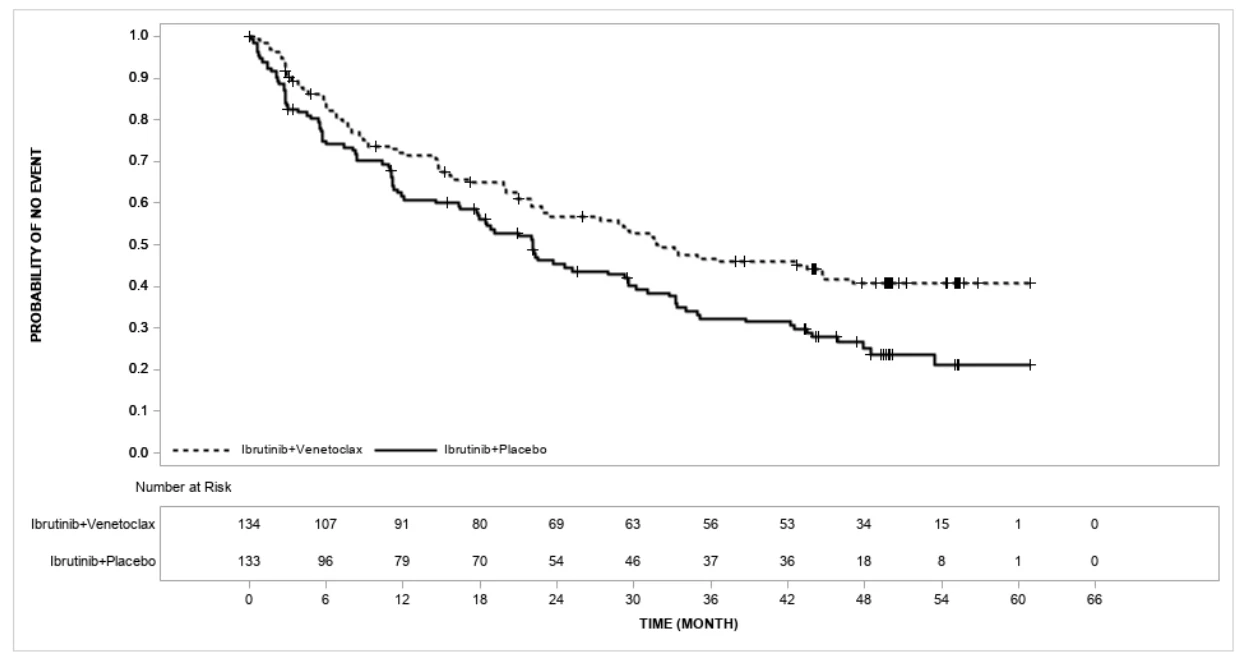
The median duration of response (DOR) per investigator assessment was 42.1 months (95% CI: 28.7, not estimable) in the VENCLEXTA + ibrutinib arm and 27.6 months (95% CI: 19.4, 39.5) in the placebo + ibrutinib arm.
The PFS benefit with VENCLEXTA + ibrutinib versus placebo + ibrutinib treatment was observed across all subgroups with the exception of some patients for which TP53 testing was not performed/missing (Figure 6).
Figure 6 - Forest Plot of Investigator-Assessed PFS in SYMPATICO
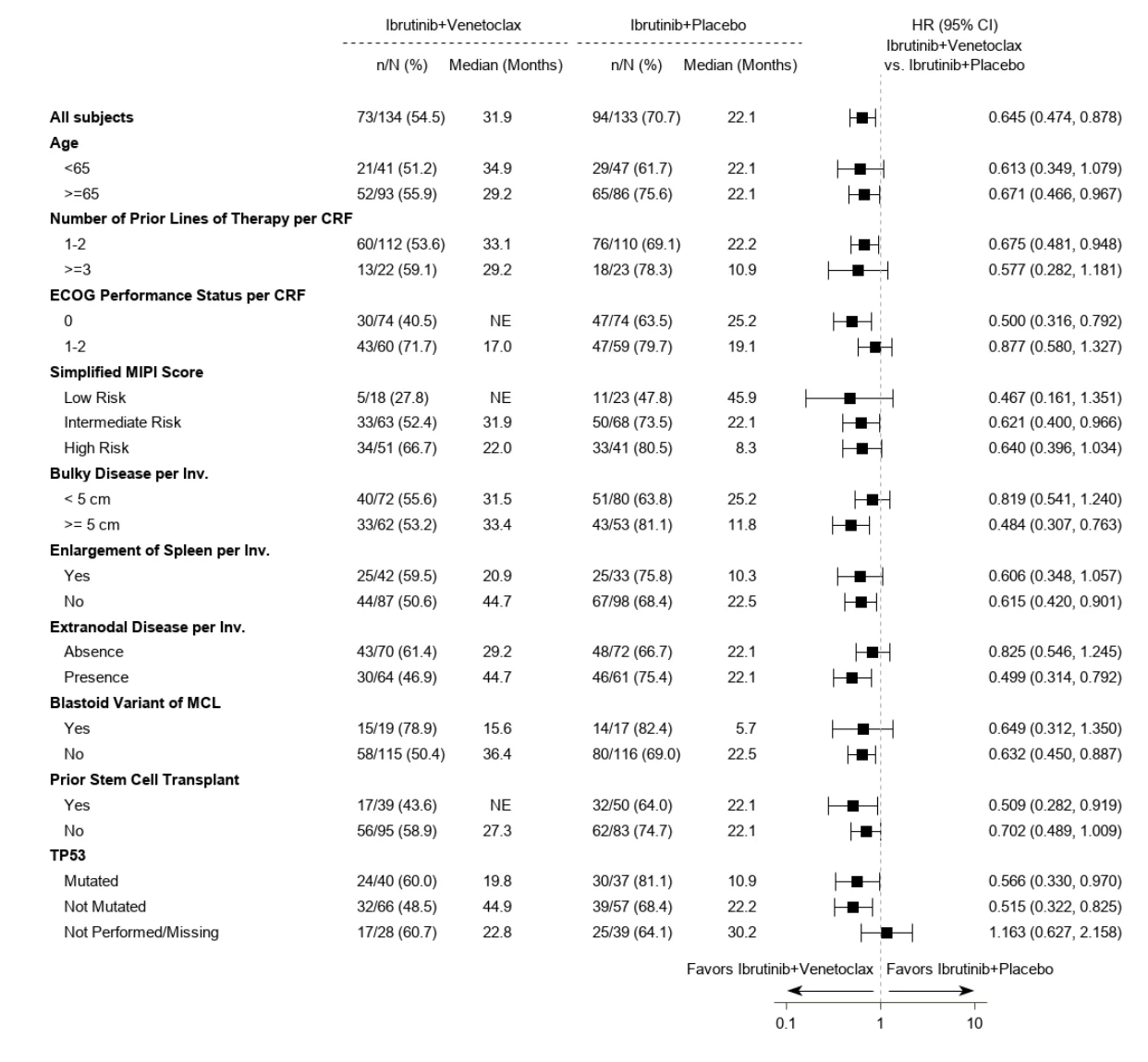
At the time of primary PFS analysis, there were 69 deaths (51.5%) in the VENCLEXTA + ibrutinib arm and 75 deaths (56.4%) in the placebo + ibrutinib arm. The median overall survival was 44.9 months (95% CI: 31.9, not estimable) in the VENCLEXTA + ibrutinib arm and 38.6 months (95% CI: 25.2, 53.4) in the placebo + ibrutinib arm (HR 0.85; 95% CI: 0.62, 1.19). In patients with TP53 mutation, the median OS was 36.7 months (95% CI: 11.1, not estimable) in the VENCLEXTA + ibrutinib arm and 15.4 months (95% CI: 10.9, 38.5) in the placebo + ibrutinib arm. In patients with ECOG Performance Status 0, the median OS was not reached (95% CI: 50.5, not estimable) in the VENCLEXTA + ibrutinib arm and 43.9 months (95% CI: 28.3, not estimable) in the placebo + ibrutinib arm. In patients with ECOG Performance Status 1/2, the median OS was 29.2 months (95% CI: 12.4, 34.9) in the VENCLEXTA + ibrutinib arm and 35.2 months (95% CI: 18.8, 52.6) in the placebo + ibrutinib arm.
Acute Myeloid Leukemia
Table 47 - Summary of Patient Demographics for Clinical Trials in AML
| Study # | Study design | Dosage, route of administration and duration | Study subjects (n) | Mean Age (range) | Sex |
| VIALE-A (M15-656) | Randomized (2:1), double-blind, placebo-controlled Phase 3 study | VENCLEXTA + azacitidine placebo + azacitidine | 286 145 Total: N = 431 | 75.4 (49 to 91) | M: 60,1% F: 39.9% |
| VIALE-C (M16-043) | Phase 3 randomized (2:1), double-blind, placebo-controlled, multi-center study | VENCLEXTA + low-dose cytarabine placebo + low-dose cytarabine | 143 68 Total: N = 211 | 74.8 (36 to 93) | M: 55.5% F: 44.5% |
VENCLEXTA in Combination with Azacitidine
VIALE-A
VIALE-A (M15-656) was a randomized (2:1), double-blind, placebo controlled Phase 3 study that evaluated the efficacy and safety of VENCLEXTA in combination with azacitidine versus placebo in combination with azacitidine in patients with newly diagnosed AML who were ≥ 75 years of age, or had comorbidities that precluded the use of intensive induction chemotherapy based on at least one of the following criteria: baseline ECOG performance status of 2 or 3, severe cardiac or pulmonary comorbidity, moderate hepatic impairment, creatinine clearance < 45 mL/min, or other comorbidity.
Patients in VIALE-A completed the 3-day ramp-up schedule to a final 400 mg once daily dose. During the ramp-up, patients received TLS prophylaxis and were hospitalized for monitoring. All patients received VENCLEXTA 400 mg orally once daily on Days 1 to 28 plus azacitidine 75 mg/m2 either intravenously or subcutaneously on Days 1 to 7 of each 28-day cycle beginning on Cycle 1 Day 1 (see 4 Dosage and Administration).
Bone marrow assessments were performed at the end of Cycle 1 treatment. If remission was confirmed, defined as less than 5% leukemia blasts, patients with cytopenias had VENCLEXTA or placebo interrupted for up to 14 days or until ANC ≥ 500/microL and platelet count ≥ 50 × 103/microL. For patients with resistant disease at the end of Cycle 1, a bone marrow assessment was performed after Cycle 2 or 3 and as clinically indicated. Azacitidine was resumed on the same day as VENCLEXTA or placebo following interruption (see 4 Dosage and Administration). Azacitidine dose reduction was implemented in the clinical trial for management of hematologic toxicity. Patients continued treatment until disease progression or unacceptable toxicity.
A total of 431 patients were randomized: 286 to the VENCLEXTA + azacitidine arm and 145 to the placebo + azacitidine arm. The baseline demographic and disease characteristics are shown in Table 48.
Table 48 – Baseline Demographic and Disease Characteristics in Patients with AML (VIALE-A)
| Characteristic | VENCLEXTA + Azacitidine N = 286 | Placebo + Azacitidine N = 145 |
| Characteristic | VENCLEXTA + Azacitidine N = 286 | Placebo + Azacitidine N = 145 |
| Age, years; median (range) | 76 (49 to 91) | 76 (60 to 90) |
| Race | ||
| White; % | 76 | 75 |
| Black or African American; % | 1.0 | 1.4 |
| Asian; % | 23 | 23 |
| Males; % | 60 | 60 |
| ECOG performance status; % | ||
| 0 to 1 | 55 | 56 |
| 2 | 40 | 41 |
| 3 | 5.6 | 3.4 |
| Bone marrow blast; % | ||
| < 30% | 30 | 28 |
| ≥ 30% to < 50% | 21 | 23 |
| ≥ 50% | 49 | 49 |
| Disease history; % | ||
| De Novo AML | 75 | 76 |
| Secondary AML | 25 | 24 |
| Cytogenetic risk detecteda; % | ||
| Intermediate | 64 | 61 |
| Poor | 36 | 39 |
| Mutation analyses detected; n/Nb (%) | ||
| IDH1 or IDH2 | 61/245 (25) | 28/127 (22) |
| IDH1 | 23/245 (9.4) | 11/127 (8.7) |
| IDH2 | 40/245 (16) | 18/127 (14) |
| FLT3 | 29/206 (14) | 22/108 (20) |
| NPM1 | 27/163 (17) | 17/86 (20) |
| TP53 | 38/163 (23) | 14/86 (16) |
| ||
The dual primary endpoints of the study were overall survival (OS) measured from the date of randomization to death from any cause and composite complete remission rate (complete remission + complete remission with incomplete blood count recovery; CR + CRi) for the first 226 randomized patients with 6 months of follow-up. The overall median follow-up at the time of analysis was approximately 20.5 months (range: < 0.1 to 30.7 months).
VENCLEXTA + azacitidine demonstrated a 34% reduction in the risk of death compared with placebo + azacitidine (p < 0.001). The Kaplan-Meier curve for OS is shown in Figure 7. The efficacy results are presented in Table 49.
Table 49 – Efficacy Results for VIALE-A
| Endpoint | VENCLEXTA + Azacitidine | Placebo + Azacitidine |
| Overall survival | (N = 286) | (N = 145) |
| Number of deaths, n (%) | 161 (56) | 109 (75) |
| Median survivala, months (95% CI) | 14.7 (11.9, 18.7) | 9.6 (7.4, 12.7) |
| Hazard ratiob (95% CI) | 0.66 (0.52, 0.85) | |
| p-valueb | < 0.001 | |
| CR+CRic | (N = 147) | (N = 79) |
| n (%) | 96 (65) | 20 (25) |
| 95% CI | (57, 73) | (16, 36) |
| p-valued | < 0.001 | |
| CR | (N = 286) | (N = 145) |
| n (%) | 105 (37) | 26 (18) |
| (95% CI) | (31, 43) | (12, 25) |
| p-valued | < 0.001 | |
| Median DORe, months (95% CI) | 17.5 (15.3, NR) | 13.3 (8.5, 17.6) |
CI = confidence interval; NR = not reached. CR = complete remission, defined as absolute neutrophil count > 1,000/microliter, platelets > 100,000/microliter, red blood cell transfusion independence, and bone marrow with < 5% blasts. | ||
Absence of circulating blasts and blasts with Auer rods; absence of extramedullary disease; CRi = complete remission with incomplete blood count recovery.
- a. Kaplan-Meier estimate at the second interim analysis (data cut-off date 04 January 2020).
- b. Hazard ratio estimate (venetoclax +azacitidine versus placebo + azacitidine) based on Cox-proportional hazards model stratified by cytogenetics (intermediate risk, poor risk) and age (18 to < 75, ≥ 75) as assigned at randomization; P-value based on log-rank test stratified by the same factors.
- c. The CR+CRi rate is from a planned interim analysis of first 226 randomized patients with 6 months of follow-up at the first interim analysis (data cut-off date 01 October 2018).
- d. P-value is from Cochran-Mantel-Haenszel test stratified by cytogenetics (intermediate risk, poor risk) and age (18 to < 75, ≥ 75) as assigned at randomization.
- e. DOR (duration of response) was defined as time from first response of CR for DOR of CR, to the first date of confirmed morphologic relapse, confirmed progressive disease or death due to disease progression, whichever occurred earlier. Median DOR from Kaplan-Meier estimate.
Figure 7 – Kaplan-Meier Curve for Overall Survival in VIALE-A
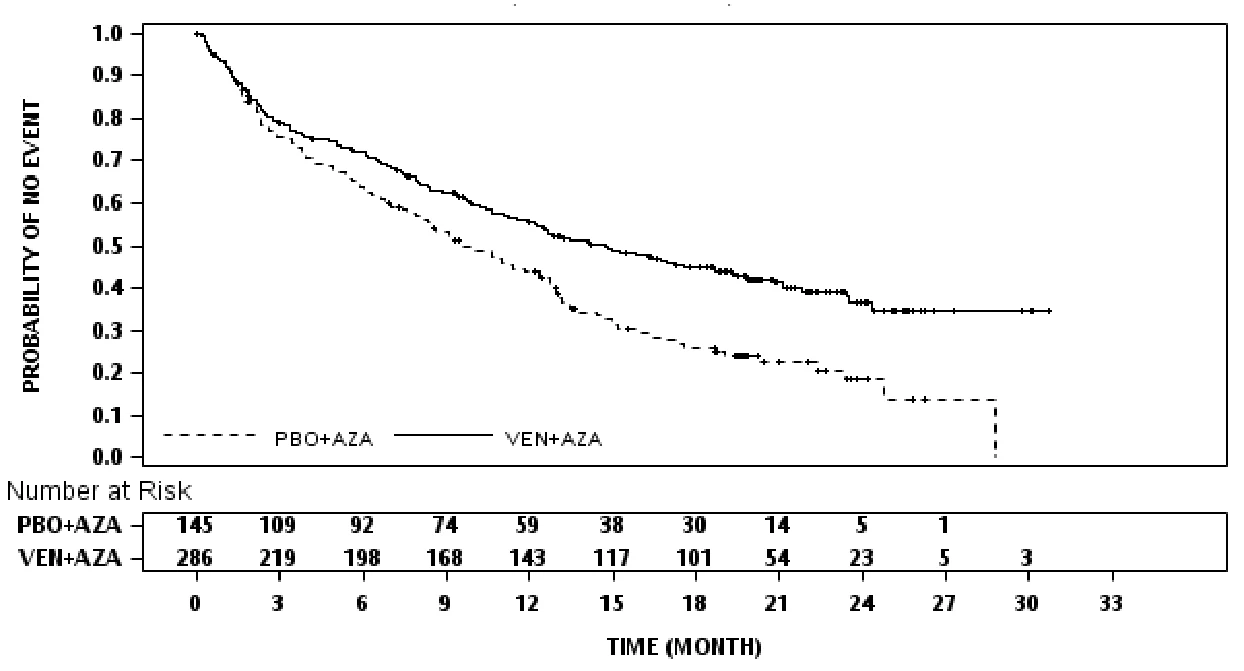
Transfusion independence, defined as a period of ≥ 56 consecutive days with no transfusion after the first dose of study drug, was a pre-defined secondary endpoint. In the VENCLEXTA + azacitidine treatment arm, 155 patients were dependent on red blood cell (RBC) and/or platelet transfusions at baseline; of these patients, 49% (76/155) became independent of RBC and platelet transfusions during any consecutive ≥ 56-day post-baseline period. There were 131 patients in the VENCLEXTA + azacitidine arm who were independent of both RBC and platelet transfusions at baseline; 69% (90/131) remained transfusion independent. Eighty-one patients treated with placebo + azacitidine were dependent on RBC and/or platelet transfusions at baseline; of these patients, 27% (22/81) became independent of RBC and platelet transfusions during any consecutive ≥ 56-day post-baseline period. Of the patients treated with placebo + azacitidine, 64 were independent of both RBC and platelet transfusions at baseline; 42% (27/64) remained transfusion independent.
The median time to first response of CR or CRi was 1.3 months (range, 0.6 to 9.9 months) with VENCLEXTA + azacitidine treatment.
In exploratory subgroup analyses, an OS benefit with VENCLEXTA + azacitidine versus placebo + azacitidine treatment was observed across all subgroups examined.
Figure 8 – Forest plot of overall survival by subgroups from VIALE-A
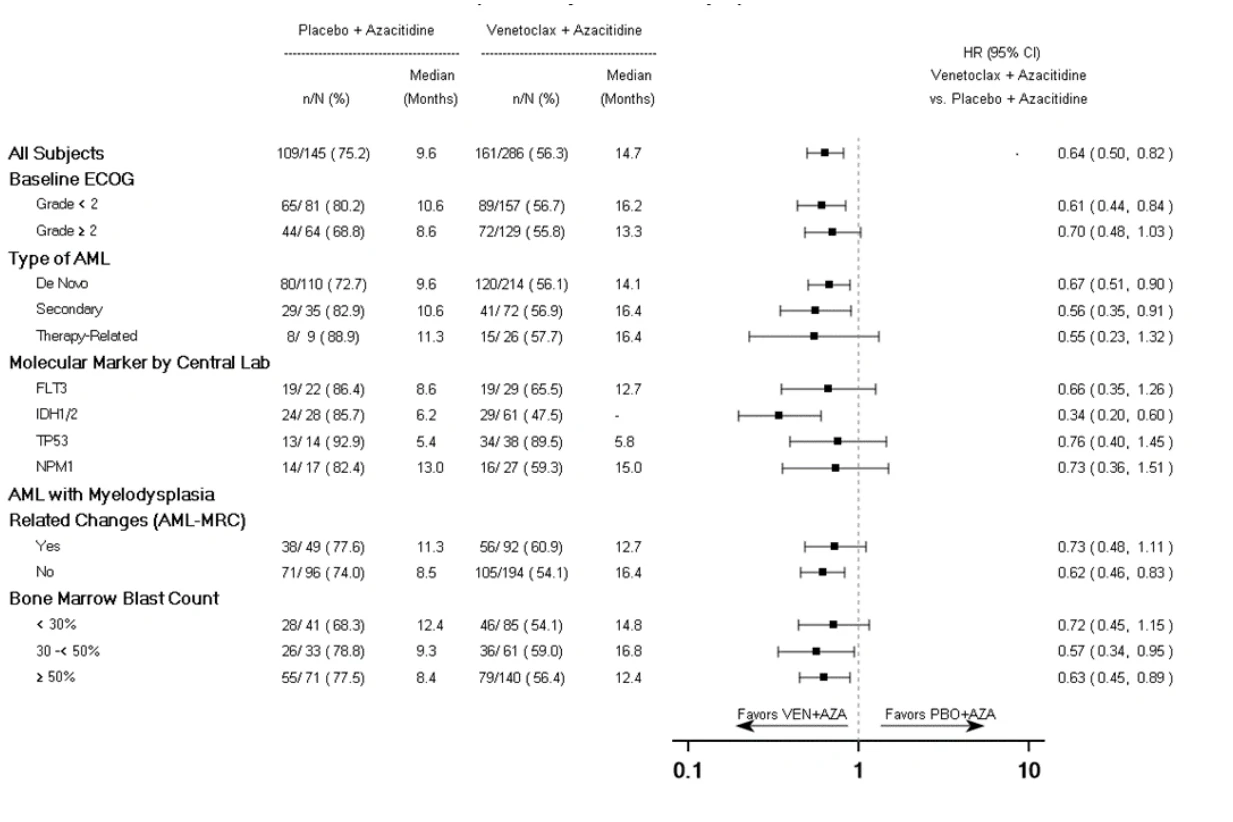
Unstratified hazard ratio (HR) is displayed on the X-axis with logarithmic scale.
‘-‘ = Not reached
VENCLEXTA in Combination With Low-Dose Cytarabine
VIALE-C
VIALE-C (M16-043) was a Phase 3 randomized (2:1), double-blind, placebo-controlled, multi-center study that evaluated the efficacy and safety of VENCLEXTA in combination with low-dose cytarabine in patients with newly-diagnosed AML who were ≥ 75 years of age, or had comorbidities that precluded the use of intensive induction chemotherapy based on at least one of the following criteria: baseline ECOG performance status of 2 or 3, severe cardiac or pulmonary comorbidity, moderate hepatic impairment, creatinine clearance < 45 mL/min, or other comorbidity.
Patients in VIALE-C completed the 4-day ramp-up schedule to a final 600 mg once daily dose (see 4 Dosage and Administration). Patients received TLS prophylaxis and were hospitalized for monitoring during the ramp-up period and for at least 24 hours after reaching the final dose of VENCLEXTA on Day 4. All patients received VENCLEXTA 600 mg orally once daily on Days 1 to 28 plus low-dose cytarabine 20 mg/m2 subcutaneously (SC) once daily on Days 1 to 10 of each cycle. Placebo orally once daily was administered on Days 1 to 28 plus low-dose cytarabine 20 mg/m2 SC once daily on Days 1 to 10.
Bone marrow assessments were performed at the end of Cycle 1 treatment. If remission was confirmed (defined as less than 5% leukemia blasts), patients with cytopenias had VENCLEXTA or placebo interrupted for up to 14 days or until ANC ≥ 500/microL and platelet count ≥ 25 × 103/microL. For patients with resistant disease at the end of Cycle 1, a bone marrow assessment was performed after Cycle 2 or 3 and as clinically indicated. Low-dose cytarabine was resumed on the same day as VENCLEXTA or placebo following interruption. Patients continued treatment until disease progression or unacceptable toxicity. Dose reduction for low-dose cytarabine was not implemented in the clinical trial.
A total of 211 patients were randomized: 143 to the VENCLEXTA + low-dose-cytarabine arm and 68 to the placebo + low-dose cytarabine arm. The baseline demographic and disease characteristics are shown in Table 50.
Table 50 – Baseline Demographic and Disease Characteristics in Patients with AML
| Characteristic | VENCLEXTA + Low-Dose Cytarabine N = 143 | Placebo + Low-Dose Cytarabine N = 68 |
| Characteristic | VENCLEXTA + Low-Dose Cytarabine N = 143 | Placebo + Low-Dose Cytarabine N = 68 |
| Age, years; median (range) | 76 (36, 93) | 76 (41, 88) |
| Race | ||
| White; % | 71 | 69 |
| Black or African American; % | 1.4 | 1.5 |
| Asian; % | 27 | 29 |
| Males; % | 55 | 57 |
| ECOG performance status; % | ||
| 0 to 1 | 52 | 50 |
| 2 | 44 | 37 |
| 3 | 4.2 | 13 |
| Disease history; % | ||
| De Novo AML | 59 | 66 |
| Secondary AML | 41 | 34 |
| Mutation analyses detected; n/Na (%) | ||
| TP53 | 22/112 (20) | 9/52 (17) |
| IDH1 or IDH2 | 21/112 (19) | 12/52 (23) |
| FLT3 | 20/112 (18) | 9/52 (17) |
| NPM1 | 18/112 (16) | 7/52 (13) |
| Cytogenetic risk detectedb; % | ||
| Favorable | < 1 | 4 |
| Intermediate | 63 | 63 |
| Poor | 33 | 29 |
| ||
The overall median follow-up at the time of the primary analysis was 12 months (range: 0.1 to 17.6 months). Clinical benefit was based on the rate of complete remission (CR) and duration of CR, with supportive evidence of rate of CR + CRi (complete remission with incomplete blood count recovery), duration of CR + CRi and the rate of conversion from transfusion dependence to transfusion independence.
Table 51 – Efficacy Results for VIALE-C
| Endpoint | VENCLEXTA + Low-Dose Cytarabine N = 143 | Placebo + Low-Dose Cytarabine N = 68 |
| CR, n, (%) | 39 (27) | 5 (7) |
| (95% CI) | (20, 35) | (2, 16) |
| Median DORa, months (95% CI) | 11.1 (5.9, NR) | 8.3 (3.1, 8.3) |
| CR + CRi, n, (%) | 68 (48) | 9 (13) |
| (95% CI) | (39, 56) | (6, 24) |
| Median DORa, months (95% CI) | 10.8 (5.9, NR) | 6.2 (1.1, NR) |
CI = confidence interval; CR + CRi = complete remission + complete remission with incomplete blood count recovery; DOR = duration of response; NR = not reached.
| ||
The median time to first response of CR + CRi was 1.1 months (range: 0.8 to 4.7 months) with VENCLEXTA + low-dose cytarabine treatment.
Among the patients treated with VENCLEXTA + low-dose cytarabine, 111 were dependent on red blood cell (RBC) and/or platelets transfusions at baseline; of these patients, 33% (37/111) became independent of RBC and platelet transfusions during any consecutive ≥ 56-day post-baseline period. There were 32 patients in the VENCLEXTA + low-dose cytarabine arm who were independent of both RBC and platelet transfusions at baseline; 50% (16/32) remained transfusion independent of both RBC and platelet transfusions during any consecutive ≥ 56-day post-baseline period.
Among the patients treated with placebo + low-dose cytarabine 55 were dependent on red blood cell (RBC) and/or platelets transfusions at baseline; of these patients, 13% (7/55) patients became independent of RBC and platelet transfusions during any consecutive ≥ 56-day post-baseline period. Of the patients treated with placebo + low-dose cytarabine, 13 were independent of both RBC and platelet transfusions at baseline, 31% (4/13) remained transfusion independent during any consecutive ≥ 56-day post-baseline period.
VENCLEXTA + low-dose cytarabine did not significantly improve overall survival (OS) versus placebo + low-dose cytarabine. The hazard ratio (HR) for OS was 0.75 (95% CI: 0.52, 1.07); p-value 0.114. The median OS for the VENCLEXTA + low-dose cytarabine arm was 7.2 months (95% CI: 5.6, 10.1) and for placebo + low-dose cytarabine arm was 4.1 months (95% CI: 3.1, 8.8).
15. Microbiology
Not applicable.
16. Non-Clinical Toxicology
General toxicology
Repeated dose toxicity studies were conducted up to 26 weeks in duration in mice and up to 39 weeks in dogs. Dose-dependent reductions in lymphocytes and red blood cell mass were observed in animal studies with venetoclax. Both effects were reversible after cessation of dosing with venetoclax, with recovery of lymphocytes occurring by 18 weeks post treatment. Both B- and T-cells were affected, but the most significant decreases occurred with B-cells. Decreases in lymphocytes were not associated with opportunistic infections.
In dogs, venetoclax also caused single-cell necrosis in various tissues, including the gallbladder and exocrine pancreas, with no evidence of disruption of tissue integrity or organ dysfunction; these findings were minimal to mild in magnitude. Following a 4-week dosing period and subsequent 4-week recovery period, minimal single-cell necrosis was still present in some tissues and reversibility has not been assessed following longer periods of dosing or recovery. In the 9-month study, these changes were observed at the lowest dose of 2 mg/kg/day (0.5 times the human AUC at 400 mg/day).
After approximately 3 months of daily dosing in dogs, venetoclax caused progressive white discoloration of the hair coat, due to loss of melanin pigment in the hair. In the 9-month study, these changes occurred at doses ≥ 6 mg/kg/day (1.5 times the human AUC at 400 mg/day). No changes in the quality of the hair coat or skin were observed, nor in other pigmented tissues examined (e.g., the iris and the ocular fundus of the eye). Reversibility of the hair coat changes has not been assessed in dogs.
Genotoxicity
Venetoclax was not mutagenic in an in vitro bacterial mutagenicity (Ames) assay, did not induce numerical or structural aberrations in an in vitro chromosome aberration assay using human peripheral blood lymphocytes, and was not clastogenic in an in vivo mouse bone marrow micronucleus assay at doses up to 835 mg/kg.
Carcinogenicity
Venetoclax and the M27 major human metabolite were not carcinogenic in a 6-month transgenic (Tg.rasH2) mouse carcinogenicity study at oral doses up to 400 mg/kg/day of venetoclax and at a single dose level of 250 mg/kg/day of M27. Exposure margins (AUC), relative to the clinical AUC at 400 mg/day, were approximately 2-fold for venetoclax and 5.8-fold for M27.
Reproductive and developmental toxicology
Fertility and early embryonic development studies were conducted in male and female mice. These studies evaluated mating, fertilization, and embryonic development through implantation. There were no effects of venetoclax on estrous cycles, mating, fertility, corpora lutea, uterine implants or live embryos per litter at dosages up to 600 mg/kg/day (in male and female mice, approximately 2.8 and 3.2 times the human AUC exposure at the recommended dose of 400 mg/day, respectively). However, a risk to human male fertility exists based on testicular toxicity (germ cell loss) observed in dogs at all dose levels examined (0.5 times the human AUC exposure at the recommend dose of 400 mg/day). Testicular germ cell depletion was not reversible following 4 weeks of once daily oral dosing and a 4-week non-dosing recovery period. Reversibility over longer recovery periods has not been assessed.
In embryo-fetal development studies, VENCLEXTA was administered to pregnant mice and rabbits to evaluate potential effects after implantation and subsequent embryo-fetal development during the respective periods of organogenesis. In mice, venetoclax was associated with increased post-implantation loss and decreased fetal body weight at 150 mg/kg/day (maternal exposures approximately 1.2 times the human AUC exposure at the recommended dose of 400 mg/day). In rabbits, VENCLEXTA at 300 mg/kg/day produced maternal toxicity, but no fetal toxicity (maternal exposures approximately 0.2 times the human AUC exposure at the recommended dose of 400 mg/day). No teratogenicity was observed in either the mouse or the rabbit.
Juvenile toxicity
In a juvenile toxicology study, mice were administered VENCLEXTA at 10, 30, or 100 mg/kg/day by oral gavage from 7 to 60 days of age. Clinical signs of toxicity included decreased activity, dehydration, skin pallor, hunched posture, abdominal distention, and brown fur staining at ≥ 30 mg/kg/day. In addition, mortality and body weight effects occurred at 100 mg/kg/day. Other venetoclax-related effects were reversible decreases in lymphocytes at ≥ 10 mg/kg/day, which were consistent with adult mice and considered non-adverse. The venetoclax No Observed Adverse Effect Level (NOAEL) of 10 mg/kg/day in mice is approximately 0.14 times the clinical dose of 400 mg on a mg/m2 basis.
Special toxicology
Phototoxicity
Venetoclax absorbs light within the range of natural sunlight. There was no evidence of cutaneous phototoxicity in hairless mice that received up to 825 mg/kg/day once daily for 3 days. Systemic exposure to venetoclax in this study cannot be confirmed. In rats, there was no evidence that [14C]-venetoclax-derived radioactivity selectively associates with tissues containing melanin.