


Patient Medication Information: uses, side effects, how to take - Vivaglobin
ABOUT THIS MEDICATION
What the medication is used for:
Vivaglobin® is a medication used to treat adults and children who need antibody replacement therapy due to primary immune deficiency.
Vivaglobin® is supplied as a sterile liquid in single-use vials and is given by injection subcutaneously (under the skin). Do not administer Vivaglobin® into a blood vessel (vein or artery) as there is no safety information in patients supporting this route of administration.
For treatment to be effective, you must carefully follow your doctor’s instructions regarding dose and treatment schedule for Vivaglobin®.
What it does:
Vivaglobin® treats primary immune deficiency, a condition in which a person’s natural defense system—or immune system— does not function properly.
Normally, our immune system helps protect us against infections by recognizing potentially harmful bacteria and viruses that enter our body every day. In response, the immune system produces special proteins called antibodies that fight these foreign invaders (germs). However, when our immune system is not working properly, it is unable to produce these valuable antibodies, leaving us more vulnerable to illness.
Vivaglobin® is known as antibody replacement therapy, because it replaces the missing and much-needed IgG antibodies in people who have low levels of these infection-fighting proteins. By replacing these important antibodies, Vivaglobin® helps make people with primary immune deficiency better able to avoid infections and fight them when they do occur.
When it should not be used:
People who have a history of severe allergic reactions to immunoglobulin treatment or have a condition known as selective IgA deficiency should not use Vivaglobin®. Tell your doctor if you have ever had an allergic reaction due to either of these conditions. If a serious allergic reaction occurs at any time, stop the Vivaglobin® treatment and contact your doctor or an emergency medical professional immediately.
Because clinical studies with pregnant women have not been conducted, if you are pregnant or think you may be pregnant, discuss with your doctor whether Vivaglobin® is clearly needed. Please also consult your doctor about the use of this product if you are a nursing mother.
What the medicinal ingredient is:
Vivaglobin® is a highly purified product, called an immune globulin, made from human plasma. Vivaglobin® contains the antibody immunoglobulin G (IgG), which is found in the blood of healthy individuals to help combat germs, such as bacteria and viruses. Because it helps the body rid itself of these bacteria and viruses, IgG is important in helping the body fight disease and illness.
What the important nonmedicinal ingredients are:
Vivaglobin® also contains the following inactive ingredients: 2.25% glycine, 0.3% sodium chloride, and water for injection.
For a full listing of nonmedicinal ingredients see Part 1 of the product monograph.
What dosage forms it comes in:
Vivaglobin® is a solution for subcutaneous infusion.
WARNINGS AND PRECAUTIONS
NG
Serious Warnings and Precautions
- Products made from human plasma may contain infectious agents such as viruses, and theoretically, the Creutzfeldt-Jacob (CJD) agent.
Immune Globulin (human) products have been reported to be associated with the following events:
- aseptic meningitis syndrome
- thrombo-embolism
- renal impairment or dysfunction
- anemia (hemolysis, hemolytic)
- transfusion-related acute lung injury (TRALI)
BEFORE you use Vivaglobin® talk to your doctor or pharmacist if:
- you are pregnant or think that you may be pregnant;
- you are nursing;
you have a history of allergic or other adverse reactions
to immune globulins;
- you recently have been vaccinated.
you have been previously advised that you have IgA
deficiency.
INTERACTIONS WITH THIS MEDICATION
Vivaglobin® can impair the efficacy of certain virus vaccines, such as measles, mumps and rubella (also known by its abbreviation “MMR”). Inform the immunizing physician of recent treatment with Vivaglobin® so appropriate precautions can be taken.
Other products must not be mixed with the Vivaglobin® solution.
PROPER USE OF THIS MEDICATION
How do I use Vivaglobin®?
Vivaglobin® is injected subcutaneously (under the skin). Do not administer it into a blood vessel (vein or artery).
Your doctor will determine the appropriate dose for your treatment.
Your doctor or healthcare professional will teach you the proper techniques for administering Vivaglobin®. Only after such instruction should you follow the instructions below.
Preparing for your treatment
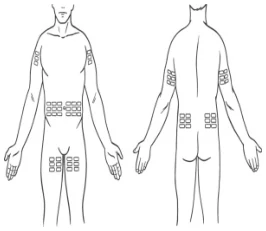
The following areas are recommended for subcutaneous injection of Vivaglobin®:
- Abdomen
- Thighs
- Upper arms
- Hip
For proper selection of injection site, please consult your doctor or healthcare professional.
Instructions for administration
The following instructions are intended only as a guide. Before administering Vivaglobin®, you should be under the care of a doctor and should have received proper training on preparation and administration from a healthcare professional.
- 1.
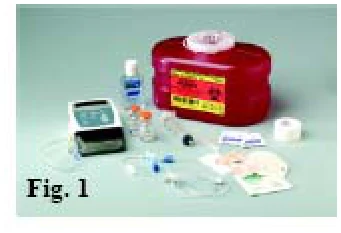
Prior to use, allow the vial(s) of Vivaglobin® to reach room temperature, +20°C to +25°C. On a clean, smooth, flat surface, such as a table, assemble all the supplies you will need for your treatment, such as your Vivaglobin® product vials, treatment diary or logbook, an infusion pump, administration tubing, subcutaneous injection sets, y-sites, alcohol wipes, antiseptic skin preps, syringe(s), needle(s), gauze or transparent dressing, tape and a sharps disposal container. Your doctor or healthcare professional can give you a complete list of supplies. Discuss with your doctor or healthcare professional whether you should use gloves when preparing and injecting Vivaglobin® (Fig. 1).
- 2. There are several different types of ambulatory infusion pumps that may be used to administer Vivaglobin®. Your healthcare professional will help you to determine which type of pump is appropriate for you. Follow the pump manufacturer’s instructions for preparing the infusion pump and priming the administration tubing. Set the rate of infusion on the pump as instructed by healthcare professional.
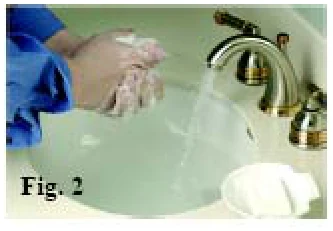
- 3. Before preparing Vivaglobin® for infusion, wash and dry your hands thoroughly. (Fig. 2)
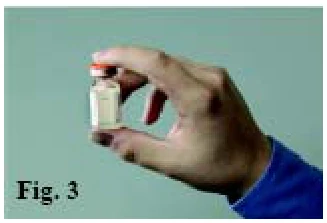
- 4. Be sure to visually inspect Vivaglobin® for particles in the solution and discoloration before administration by gently rotating the vial (do not shake the vial). Vivaglobin® should be a clear solution that can vary from colorless to light brown. If the solution in a vial is cloudy or contains particles, or if the tamper-evident cap is missing, do not use it. Check the expiry date on each vial of Vivaglobin®. Do not use beyond the expiry date. (Fig.3)
- 5.
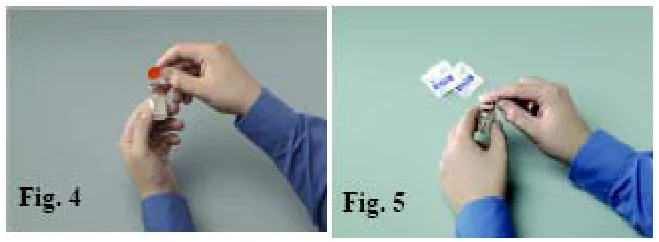
Remove the cap from the vial to expose the central portion of
the rubber stopper. Disinfect the rubber stopper with an alcohol wipe and allowing it to dry. While wiping the rubber stopper, be sure not to shake the Vivaglobin® vial. (Figs. 4 and 5)
- 6.
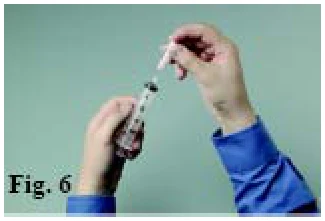
Prepare the equipment used to withdraw Vivaglobin® from
the vial. If you are using a syringe, using aseptic technique as instructed by your healthcare professional, attach a needle to the syringe tip. (Fig. 6)
- 7.
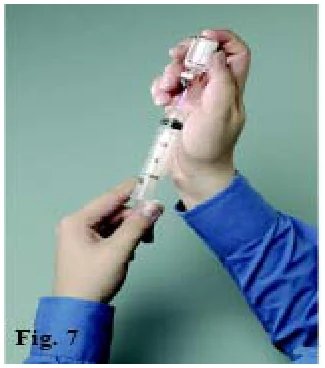
Pulling back on the syringe plunger, draw back a volume of
air into the syringe that is equal to the volume of Vivaglobin® that will be withdrawn. With the Vivaglobin® vial placed on a flat surface, insert the needle into the center of the vial stopper. Then inject the air into the vial. Next, leaving the syringe and needle in the vial, carefully invert the vial as shown in the illustration. Withdraw the Vivaglobin® solution into the syringe and remove the filled syringe from the vial. Remove the needle from the syringe filled with Vivaglobin® and discard the needle into a sharps disposal container. Repeat this step if multiple vials are required to achieve the prescribed dose of Vivaglobin®. (Fig. 7)
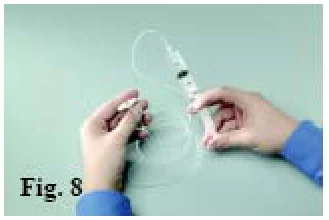
- 8. Follow manufacturer’s instructions for filling the infusion pump reservoir and priming the administration tubing and needle/catheter. “Priming” the administration tubing refers to the removal of the air from the tubing and needle/catheter that will be used to infuse Vivaglobin®. Priming may also be done by connecting the syringe filled with Vivaglobin® to the administration tubing and gently pushing on the syringe plunger to fill the tubing with Vivaglobin® until a drop is seen exiting the needle/catheter. (Fig. 8)
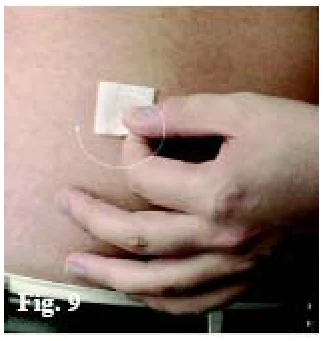
- 9. Select an appropriate injection site(s), depending on the amount required for your total Vivaglobin® dose and the instructions of your healthcare professional. Cleanse the site(s) with antiseptic skin prep(s) beginning in the center of the site and working outward in a circular motion. Allow site(s) to dry before proceeding to the next step. If your healthcare professional recommends that you administer Vivaglobin® using multiple sites, ensure that each site is at least two inches apart. (The maximum recommended infusion volume per injection site is 15 mL). (Fig. 9)
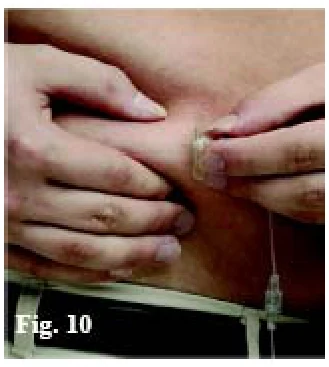
- 10. Using two fingers, grasp the skin around the infusion site. As instructed by your healthcare professional, insert the needle directly into the subcutaneous tissue and not into a blood vessel. (Fig. 10)

- 11.
After each needle is inserted into the tissue, you must test to
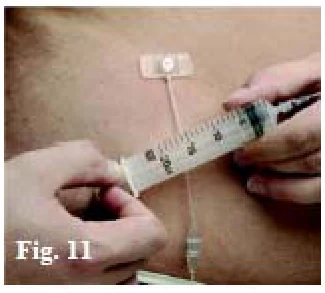
make sure that a blood vessel has not been accidentally entered. This must be done prior to starting your infusion. To do this, attach a sterile syringe to the end of the primed administration tubing, and gently pull back on the syringe plunger. Look to see if any blood is flowing back into the administration tubing. If you see any blood, remove and discard the needle and administration tubing. Then, repeat steps 8-11 using a new needle, administration tubing and a new injection site. (Fig. 11)
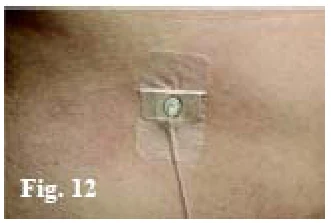
- 12.
Secure the needle by applying sterile gauze or transparent
dressing over the site and tape in place. (Fig. 12)
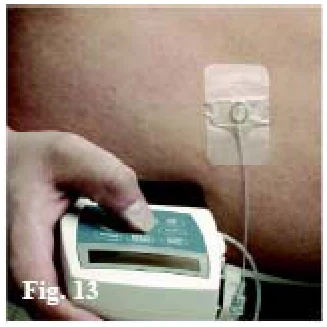
- 13.
Secure the administration tubing to the infusion pump
following the manufacturer’s instructions and turn on the pump. (Fig. 13)
- 14.
Once the infusion is complete, turn off the infusion pump.
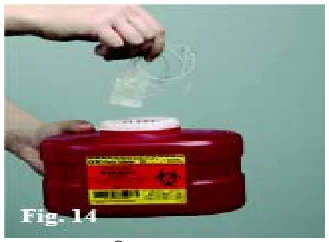
Remove the needle(s) from the injection site(s) and discard any unused solution and administration equipment in accordance with biohazard procedures as recommended by your healthcare professional. Follow the manufacturer’s instructions regarding care of the infusion pump after each use. (Fig. 14)
- 15. On each Vivaglobin® vial, you will find a peel-off label with the product lot number and expiration date. Record the time, date, and exact dose of your infusion, then remove the labels and affix them to your treatment diary/logbook. Take this record of your treatment with you whenever you visit your physician. (Fig. 15)
- 14.
These instructions are intended to serve as a guide for people who have already been instructed by a healthcare professional on the proper method of administering Vivaglobin®. If you have not received such training, please consult your doctor before attempting to administer Vivaglobin®. If you experience any problems or need more information regarding your subcutaneous treatment, contact your doctor or healthcare professional.
Usual dose:
The recommended weekly dose of Vivaglobin® is 100 to 200 mg/kg body weight administered subcutaneously. Doses may be adjusted over time to achieve the desired clinical response and serum IgG levels.
Overdose:
There is no overdose information for Vivaglobin®
Missed Dose:
Inform your doctor if you missed a dose. Your next dose should be administered as soon as possible to ensure an adequate protection.
SIDE EFFECTS AND WHAT TO DO ABOUT THEM
In clinical studies, Vivaglobin® has been shown to be safe and well tolerated in both adults and children. As with any medication, side effects may accompany treatment.
The frequency of side effects was based on a review of over 5,900 injections given during the clinical trials. The most frequently reported side effect was injection site reaction, which generally consisted of mild or moderate swelling, redness, and itching, and tended to decrease substantially over time after several injections.
Please contact your healthcare professional if you would like more information on managing these reactions.
Other side effects may include:
- Headache (Headaches due to high blood pressure)
- Gastrointestinal disorder
- Fever
- Nausea
- Sore throat
- Rash
- Allergic reaction
- Increased cough
- Pain
- Diarrhea
- Migraine
- Aseptic meningitis
If you are concerned about these or any other side effects, please talk to your doctor or pharmacist.
| SERIOUS SIDE EFFECTS, HOW OFTEN THEY HAPPEN AND WHAT TO DO ABOUT THEM | ||||
| Symptom / effect | Talk with your doctor or pharmacist | Stop taking drug and call your doctor or pharmacist | ||
| Only if severe | In all cases | |||
| Common | Mild injection site reactions Headache | 9 9 | ||
| Uncommon | Gastrointestinal disorder Fever Nausea Sore throat Rash Allergic reaction Skin disorder Anaphylactic reaction | 9 9 9 9 9 9 9 | 9 | |
As with any immunoglobulin preparation, there is a rare possibility that an anaphylactic reaction could occur. Prior to starting home treatment with Vivaglobin®, discuss this possibility with your doctor or pharmacist so that appropriate treatment of this reaction is available.
This is not a complete list of side effects. For any unexpected
effects while taking Vivaglobin® , contact your doctor or pharmacist.
HOW TO STORE IT
Vivaglobin® is supplied in single-use vials. It contains no preservatives, so any unused portion should be discarded immediately after injection. Store Vivaglobin in the refrigerator at +2°C to +8°C. Vivaglobin may be stored at room-temperature (not to exceed +25°C) for up to 5 months within an overall storage period of 36 months at +2°C to +8°C. If the product is stored outside the refrigerator, please add the date removed from refrigeration and note a new expiry date on the carton on the space provided. The new expiry date should be 5 months from the date the product is removed from the refrigerator, or the previously stamped expiry date, whichever is shorter. Once the product is removed from refrigeration, it cannot be returned to the refrigerator.
Immune Globulin Subcutaneous (Human), Vivaglobin, is stable for the period indicated by the expiration date on its label. Do not freeze. Keep vials in their storage box until use.
Keep Vivaglobin® and all other medications out of the reach of children.
REPORTING SUSPECTED SIDE EFFECTS
To monitor drug safety, Health Canada collects information on serious and unexpected effects of drugs. If you suspect you have had a serious or unexpected reaction to this drug you may notify Health Canada by:
toll-free telephone: 866-234-2345
toll-free fax 866-678-6789
By email: cadrmp@hc-sc.gc.ca
By regular mail:
National AR Centre
Marketed Health Products Safety and Effectiveness Information Division
Marketed Health Products Directorate
Tunney’s Pasture, AL 0701C
Ottawa ON K1A 0K9
NOTE: Before contacting Health Canada, you should contact your physician or pharmacist.
* We recommend that CSL Behring Canada, Inc. be copied when reporting suspected side effects, at the following address:
adversereporting@cslbehring.com
or be informed by pager
Pager Number: 1-613-783-1892
MORE INFORMATION
This document plus the full product monograph, prepared for health professionals, can be found at:
http://www.cslbehring.ca
or for more information you may communicate with the sponsor, CSL Behring Canada, Inc. at: 1-613-783-1892