


Product Monograph - Zelboraf
SUMMARY PRODUCT INFORMATION
| Route of Administration | Dosage Form / Strength | Clinically Relevant Non-medicinal Ingredients |
| oral | Film-coated tablet / 240 mg | No clinically relevant non-medicinal ingredients. For a complete listing see Dosage Forms, Composition and Packaging section. |
INDICATIONS AND CLINICAL USE
ZELBORAF® (vemurafenib) is indicated as a monotherapy for the treatment of BRAF V600 mutation-positive unresectable or metastatic melanoma. A validated test is required to identify BRAF V600 mutation status.
BRAF V600 mutations were identified in the Phase III and Phase II studies by the Health Canada approved cobas® 4800 BRAF V600 Mutation Test.
Clinical data supporting the effectiveness of ZELBORAF in patients with BRAF mutations other than V600E are limited.
ZELBORAF should not be used in patients with BRAF wild-type melanoma (see WARNINGS and PRECAUTIONS, General).
ZELBORAF has not been studied in patients previously treated with BRAF inhibitors.
ZELBORAF should be prescribed and supervised by a qualified physician experienced in the use of anti-cancer agents.
Geriatrics (≥ 65 years of age):
In clinical studies, elderly patients (≥ 65 years) experienced more adverse events when taking ZELBORAF (see WARNINGS AND PRECAUTIONS, Special Populations).
Pediatrics (< 18 years of age):
The safety and efficacy of ZELBORAF in patients under the age of 18 have not been established. ZELBORAF is not approved for use in patients under the age of 18 years.
CONTRAINDICATIONS
ZELBORAF (vemurafenib) is contraindicated in
- Patients who are hypersensitive to ZELBORAF or to any ingredient in the formulation. For a complete listing, see DOSAGE FORMS, COMPOSITION AND PACKAGING.
WARNINGS AND PRECAUTIONS
Serious Warnings and Precautions Serious adverse reactions and/or life threatening events include:
ZELBORAF has not been studied in patients with severe hepatic impairment (see Special Populations/Hepatic Impairment below). ZELBORAF (vemurafenib) tablets should be prescribed and supervised by a qualified physician experienced in the use of anti-cancer agents. |
General
A validated test is required to detect BRAF V600 mutation-positive tumours in patients treated with ZELBORAF (vemurafenib). In vitro experiments have demonstrated paradoxical activation of MAP-kinase signaling in BRAF wild-type cells exposed to BRAF inhibitors. This may promote growth of wild-type BRAF melanomas. New primary melanomas have been reported in patients taking ZELBORAF (see Malignancies below). ZELBORAF should not be used in patients with wild-type BRAF tumours or in patients where the BRAF mutational status is not known.
The cobas® BRAF 4800 Mutation Test was designed for and has a high sensitivity to detect V600E mutations in tumours (80-90% of all BRAF mutations in melanomas). It has reduced sensitivity for detecting less common BRAF V600 mutations including V600K, the second most common BRAF mutation in melanomas (see Part II, CLINICAL TRIALS). Clinical data supporting use of ZELBORAF in patients with BRAF mutations other than V600E are limited.
Tumour Lysis Syndrome (TLS)
One case of vemurafenib treatment-related TLS occurred in the Phase II study of 132 previously treated melanoma patients.
Malignancies
Cutaneous Squamous Cell Carcinoma (cuSCC)
Cases of cuSCC (which include those classified as keratoacanthoma or mixed keratoacanthoma subtype) have been reported in patients treated with ZELBORAF (see ADVERSE REACTIONS). The incidence of cuSCC in patients treated with ZELBORAF across all studies was approximately 27%. The majority of excised lesions reviewed by an independent central dermatopathology laboratory were classified as SCC-keratoacanthoma subtype or with mixed-keratoacanthoma features (52%). Most lesions classified as “other” (43%) were benign skin lesions (e.g. verruca vulgaris, actinic keratosis, benign keratosis, cyst/benign cyst). CuSCC usually occurred early in the course of treatment with a median time to the first appearance of 7 to 8 weeks. Of the patients who experienced cuSCC, approximately 33% experienced > 1 occurrence with median time between occurrences of 6 weeks. Potential risk factors associated with cuSCC in ZELBORAF clinical trials included age (≥ 65 years), prior skin cancer, RAS mutations, and chronic sun exposure. Cases of cuSCC were typically managed with simple excision, and patients were able to continue treatment without dose adjustment.
Nonclinical studies demonstrated that administration of vemurafenib to mice increased the proliferation of human cuSCCs in a xenograft tumour model of the disease (see DETAILED PHARMACOLOGY, Secondary Pharmacodynamics).
It is recommended that all patients receive a dermatologic evaluation prior to initiation of therapy and be monitored routinely while on therapy. Any suspicious skin lesions should be excised, sent for dermatopathologic evaluation and treated as per local standard of care. No dose adjustment is required. Monitoring should continue for 6 months following discontinuation of ZELBORAF.
Patients should be instructed to inform their physicians of the occurrence of any skin changes.
New Primary Melanoma
In the Phase III clinical study, 7 patients (2.0%) experienced new primary melanomas. Manage with excision and continue treatment without dose modification. Perform dermatologic monitoring as above for cutaneous squamous cell carcinoma.
Non-Cutaneous Malignancies
The paradoxical activation of MAP-kinase signaling in BRAF wild type cells exposed to BRAF inhibitors may lead to increased risk of non-cutaneous malignancies, including those with RAS mutations, in patients taking ZELBORAF. In clinical studies cases of squamous cell carcinomas of the head and neck (tongue and tonsils) have been reported in association with ZELBORAF. In the post-market setting, progression of a pre-existing pancreatic adenocarcinoma in one patient and chronic myelomonocytic leukemia (CMML) in a second patient have occurred during treatment with ZELBORAF. The CMML possessed a RAS mutation (see ADVERSE REACTIONS) and KRAS mutations are frequently found in pancreatic cancer.
ZELBORAF should be used with caution in patients with a prior or concurrent cancer, particularly those associated with RAS mutations. Patients should undergo head and neck examination consisting of at least a visual inspection of oral mucosa and lymph node palpation, prior to initiation of treatment and every 3 months during treatment. Pelvic (for women) and anal examinations should also be done prior to initiation of treatment, at the end of treatment, or when considered clinically indicated. In addition, patients should undergo a chest CT scan prior to initiation of treatment and every 6 months during treatment. Following discontinuation of ZELBORAF, monitoring for non-cutaneous malignancies should continue for up to 6 months. Abnormal findings should be evaluated as clinically indicated.
Cardiovascular
QT Prolongation
In both Phase II and Phase III studies, patients were excluded if they had a baseline QTc interval of ≥450 msec.
Exposure-dependent QTc prolongation was observed in an uncontrolled, open-label Phase II QT sub-study in previously treated patients with metastatic melanoma. Analysis of centralized ECG data from this study in 132 patients treated with ZELBORAF 960 mg twice daily showed a mean increase from baseline in QTc at Day 1 (3.3 ms; upper 95% CI: 5 ms) and Day 15 (12.8 ms; upper 95% CI: 14.9 ms). The mean QTc effect remained stable between 12 and 15 ms beyond the first month of treatment, with the largest mean QTc prolongation (15.1 ms; upper 95% CI: 17.7 ms) observed at the Cycle 6 (week 18) assessment (n=85 patients). Maximum treatment-emergent individual QTc changes from baseline of > 30 ms were observed in 58 patients (45%). Two patients (1.6%) developed treatment-emergent absolute QTc values > 500 ms (CTCAE Grade 3), and one patient (0.8%) exhibited a QTc change from baseline of >60 ms. QTc prolongation with ZELBORAF showed a positive concentration-response relationship.
QTc prolongation was also observed in the Phase III clinical trial in previously untreated patients with unresectable stage IIIC or stage IV melanoma. QT prolongation may lead to an increased risk of ventricular arrhythmias including Torsade de Pointes. If sustained, torsade de pointes can progress to ventricular fibrillation and sudden cardiac death. Treatment with ZELBORAF is not recommended in patients with uncorrectable electrolyte abnormalities (e.g., hypokalemia, hypomagnesemia, hypocalcemia), long QT syndrome, or who are taking medicinal products known to prolong the QT interval (DRUG INTRERACTIONS, Overview).
Caution should be exercised when administering ZELBORAF to patients who have other risk factors for torsade de pointes such as age 65 years or older, family history of sudden cardiac death at <50 years, cardiac disease, history of arrhythmias, bradycardia, acute neurological events, diabetes mellitus and autonomic neuropathy.
ECG and electrolytes should be monitored before treatment with ZELBORAF and after dose modification. Further monitoring should occur at day 15 and monthly during the first 3 months of treatment followed by every 3 months thereafter or more often as clinically indicated. Initiation of treatment with ZELBORAF is not recommended in patients with QTc > 500 ms. If, during treatment, the QTc exceeds 500 ms (CTCAE ≥ grade 3), ZELBORAF treatment should be temporarily interrupted, electrolyte abnormalities should be corrected, and cardiac risk factors for QT prolongation (e.g. congestive heart failure, bradyarrhythmias) should be controlled. Re-initiation of treatment should not occur until the QTc decreases below 500 ms and should be re-initiated at a lower dose, as described in Table 6 and Table 7 (see DOSAGE AND ADMINISTRATION: Recommended Dose and Dosage Adjustment). Permanent discontinuation of ZELBORAF treatment is recommended if after correction of associated risk factors, the QTc meets values of both > 500 ms and > 60 ms increase from pre-treatment values and if recommended dose reductions are not effective to manage when the QTc meets values of > 500 ms but ≤ 60 ms increase from pre-treatment values (Table 7).
Hypertension
Elevations in blood pressure have been reported in association with ZELBORAF. The mean change from baseline ranged from 4-10 mmHg for Systolic Blood Pressure (SBP) and 0-8 mmHg for Diastolic Blood Pressure (DBP) over the course of treatment. Mean absolute blood pressure remained less than <140/90 mmHg. Hypertension was reported as an adverse event in 3% of patients treated with ZELBORAF (see ADVERSE REACTIONS, Clinical Trial Adverse Drug Reactions). Blood pressure should be monitored during ZELBORAF treatment, with control of hypertension as appropriate (See Monitoring and Laboratory Tests). Patients were excluded from clinical studies if they had uncontrolled hypertension.
Hepatic
Liver injury, including cases reported as hepatic failure have occurred in the post-market setting with ZELBORAF monotherapy. Elevations in transaminases (ALT/AST), alkaline phosphatase and bilirubin have also been reported with ZELBORAF monotherapy in the Phase III study (see Monitoring and Laboratory Tests and ADVERSE REACTIONS - Post-Market Adverse Drug Reactions).
Concurrent Administration with Ipilimumab
In a Phase I trial, grade 3 increases in transaminases and bilirubin were reported in a majority of patients who received concurrent administration of ipilimumab (3 mg/kg) and ZELBORAF (960 mg BID or 720 mg BID). Given these liver toxic effects, the (combination) study was closed to further patient accrual. The concurrent administration of ipilimumab and vemurafenib is not recommended.
Immune
Serious hypersensitivity reactions, including anaphylaxis have been reported in association with ZELBORAF (see CONTRAINDICATIONS and ADVERSE REACTIONS). A case of hypersensitivity reaction with rash, fever, rigors and hypotension 8 days after starting ZELBORAF 960 mg twice daily was reported in a clinical trial. Similar symptoms were observed upon re-initiation of treatment with a single dose of 240 mg ZELBORAF. The patient discontinued ZELBORAF permanently and recovered without sequelae. Severe hypersensitivity reactions included generalized rash, erythema, and hypotension. In patients who experience a severe hypersensitivity reaction, ZELBORAF treatment should be permanently discontinued.
Severe dermatologic reactions have occurred in association with ZELBORAF. There have been cases of Drug Reaction with Eosinophilia and Systemic Symptoms (DRESS), a potentially life threatening syndrome including severe skin eruption, lymphadenopathy, fever, hematological abnormalities (eosinophilia or atypical lymphocytes) and internal organ involvement, reported in the post-market setting. Stevens-Johnson Syndrome (SJS) and Toxic Epidermal Necrolysis (TEN) have been reported in the pivotal clinical trial as uncommon events, and in the post-market setting. In patients who experience a severe dermatologic reaction, ZELBORAF treatment should be permanently discontinued.
Musculoskeletal and connective tissue disorders
Dupuytren’s contracture and plantar fascial fibromatosis
Dupuytren’s contracture and plantar fascial fibromatosis have been reported with ZELBORAF. The majority of cases were mild to moderate, but severe, disabling cases of Dupuytren’s contracture have also been reported (see ADVERSE REACTIONS - Clinical Trial Adverse Drug Reactions, ADVERSE REACTIONS - Post-Market Adverse Drug Reactions).
Events should be managed with dose reduction, treatment interruption, or with treatment discontinuation (see DOSAGE AND ADMINISTRATION - Dose Adjustment).
Ophthalmologic
ZELBORAF treatment-related serious ophthalmologic reactions, including uveitis, iritis and retinal vein occlusion, have been reported (see ADVERSE REACTIONS). Monitor patients routinely for ophthalmologic reactions.
Pancreatitis
Cases of drug-induced pancreatitis have been reported in clinical studies and in the post-marketing setting, generally occurring within two weeks after initiation of ZELBORAF treatment. Unexplained abdominal pain should be promptly investigated to include measurement of serum amylase and lipase in addition to other appropriate diagnostic work up (e.g. CT abdomen). Patients should be closely monitored if re-starting ZELBORAF after an episode of pancreatitis, and dose modification should be considered.
Renal
Acute kidney injury ranging from mild to moderate elevations of serum creatinine levels to acute interstitial nephritis and acute tubular necrosis was reported with ZELBORAF treatment in clinical trials and in the post-market setting. In a phase III clinical study, elevations of serum creatinine were mild (> 1-1.5 x ULN) to moderate (> 1.5 – 3 x ULN) and appeared to be reversible in nature in most cases. The incidence of serum creatinine elevations was 40% in patients treated with ZELBORAF (compared to 6% for patients treated with dacarbazine). Acute kidney injury was reported in 10% of patients in the ZELBORAF arm (compared to 1.4% in the control arm), see ADVERSE REACTIONS. Serum creatinine should be measured before initiation of treatment with ZELBORAF and periodically monitored during ZELBORAF treatment as clinically indicated. For recommended dose modifications, see DOSAGE AND ADMINISTRATION, Dose Adjustment.
Skin
Photosensitivity
Mild to severe photosensitivity was reported in patients who were treated with ZELBORAF in clinical trials (see ADVERSE REACTIONS). All patients should be advised to avoid sun exposure while taking ZELBORAF. While taking the drug, patients should be advised to wear protective clothing and use a broad spectrum UVA/UVB sun screen and lip balm (SPF ≥ 30) when outdoors to help protect against sunburn.
For photosensitivity, grade 2 (intolerable) or greater adverse events, dose modifications are recommended (see DOSAGE AND ADMINISTRATION, Recommended Dose and Dosage Adjustment).
Radiation Sensitization and Radiation Recall
Cases of radiation sensitization and radiation recall have been reported in patients treated with radiation prior to, during, or following ZELBORAF treatment in the post-marketing setting. Most cases were cutaneous in nature but some cases involving visceral organs had fatal outcomes (see Post-Market Adverse Drug Reactions and DRUG INTERACTIONS, Radiation Sensitization and Radiation Recall).
The cases of radiation recall showed acute inflammation confined to previously irradiated area, triggered by ZELBORAF administration 7 or more days after completion or radiotherapy. The majority of cases affected the skin while the remaining cases involved the lung and urinary bladder. The cases of radiation sensitization showed potentiation of radiation reaction evidenced by the greater than expected severity of the reaction for local radiation injury. The majority of cases involved the skin, while other cases involved the oesophagus, liver, brain and rectum. In nearly all cases, patients were either dosed concomitantly with radiation or within 3 days after completion of radiotherapy. One case was a patient with metastatic liver disease who developed radiation necrosis of the liver 10 weeks after receiving 20 Gy over 5 fractions radiation over the thoracic spine while ZELBORAF treatment was temporarily withheld. Two patients experienced radiation necrosis of the brain while receiving ZELBORAF.
It is recommended that ZELBORAF not be used concomitantly with radiation therapy, unless the potential benefit justifies the potential risk to the patient.
Special Populations
Fertility:
No non-clinical fertility studies have been conducted. No histopathological findings were noted in reproductive organs in males and females in repeat-dose toxicology studies ( see TOXICOLOGY)
Contraception:
Women of childbearing potential and men should use effective contraception while receiving ZELBORAF and for at least 6 months after discontinuation of ZELBORAF.
Pregnant Women:
ZELBORAF crosses the placenta in rats (fetuses have 3-5% of maternal levels) and may cause fetal harm by interfering with BRAF function, which is essential for the developing embryo.ZELBORAF was not teratogenic in rat or rabbit embryo/fetuses when animals were exposed at 1.7X and 0.7X human exposure levels, respectively (see TOXICOLOGY).
ZELBORAF is not recommended during pregnancy unless the potential benefits for the mother outweigh the potential risk to the fetus. There are no adequate or well-controlled studies in pregnant women however, placental transfer of vemurafenib to a fetus (approximately 50% of maternal levels) has been reported . Based on its mechanism of action, vemurafenib could cause fetal harm when administered to a pregnant woman.
Labor and Delivery:
The safe use of ZELBORAF during labor and delivery has not been established.
Nursing Women:
It is not known whether ZELBORAF is excreted in human breast milk. A risk to newborns/infants cannot be excluded. A decision must be made whether to discontinue breast-feeding or discontinue treatment with ZELBORAF after considering the benefits of breast feeding for the child and the benefits of therapy for the mother.
Pediatrics:
The safety and efficacy of ZELBORAF in pediatric patients below 18 years of age have not been established. ZELBORAF is not approved for use in patients under the age of 18 years.
Geriatrics:
Ninety-four of 336 patients (28%) with unresectable or metastatic melanoma treated with ZELBORAF in the Phase III study were ≥ 65 years. In clinical studies, elderly patients (≥ 65 years) experienced more adverse events, including cuSCC, decreased appetite, and cardiac disorders. The effects of ZELBORAF on overall survival, progression-free survival and best overall response rate were similar in the elderly and younger patients.
Gender:
The grade 3 adverse events reported more frequently in females than males were rash, arthralgia and photosensitivity (see ADVERSE REACTIONS and ACTION AND CLINICAL PHARMACOLOGY: Special Populations and Conditions).
Renal Impairment:
The safety and efficacy of ZELBORAF have not been studied in patients with renal impairment.
Hepatic Impairment:
ZELBORAF has not been studied in patients with severe hepatic impairment. Since ZELBORAF is primarily eliminated by the liver, patients with severe hepatic impairment may have higher systemic concentrations that could result in more frequent and/or severe exposure-related adverse events including QTc prolongation (see DOSAGE AND ADMINISTRATION: Dose Adjustment/Hepatic Impairment).
Monitoring and Laboratory Tests
Before taking ZELBORAF, patients should have BRAF V600 mutation-positive tumour status confirmed by an experienced laboratory using a validated test.
Liver enzymes (transaminases and alkaline phosphatase) and bilirubin should be measured before initiation of treatment and monitored monthly during treatment, or as clinically indicated, as hepatotoxicity may occur with ZELBORAF. For recommended dose modifications, see DOSAGE AND ADMINISTRATION, Dose Adjustment.
ECG monitoring and electrolyte determinations should be performed at baseline, day 15; months 1, 2, and 3; and at 3 month intervals thereafter or more often if clinically indicated. Blood pressure monitoring and eye examinations should be performed at baseline and periodically during treatment with ZELBORAF.
Creatinine: Serum creatinine should be measured before initiation of treatment and periodically monitored during treatment as clinically indicated.
ADVERSE REACTIONS
Adverse Drug Reaction Overview
The most common adverse drug reactions (> 30%) reported in patients treated with ZELBORAF (vemurafenib) include arthralgia, rash, alopecia, fatigue, photosensitivity reaction, nausea, diarrhea, headache, pruritus and skin papilloma, the majority of which were mild or moderate in intensity.
Clinical Trial Adverse Drug Reactions
Because clinical trials are conducted under very specific conditions the adverse reaction rates observed in the clinical trials may not reflect the rates observed in practice and should not be compared to the rates in the clinical trials of another drug. Adverse drug reaction information from clinical trials is useful for identifying drug-related adverse events and for approximating rates.
The adverse drug reactions (ADRs) described in this section were identified from two clinical trials, a Phase III study (NO25026) in treatment-naïve patients with BRAF V600 mutation-positive unresectable or metastatic melanoma and a Phase II study (NP22657) in patients with BRAF V600 mutation-positive metastatic melanoma who have failed at least one prior systemic therapy.
In the Phase III open-label study, 675 patients were randomized in a 1:1 ratio to either ZELBORAF or dacarbazine; the patients randomized to the ZELBORAF arm received a twice daily oral starting dose of 960 mg; patients randomized to the active control arm received dacarbazine 1000 mg/m2 administered intravenously every 3 weeks. The median duration of ZELBORAF treatment for safety evaluations was 6.62 months compared to 0.79 months for dacarbazine. The Phase II study was an open-label, uncontrolled, single-arm study in which 132 patients received ZELBORAF 960 mg twice daily. The median treatment duration in this study was 5.7 months.
In the Phase III study, a higher percentage of patients treated with ZELBORAF (47%) than dacarbazine (18%) experienced serious adverse events (SAEs). The most common (≥1%) Grade 3 SAEs in the patients treated with ZELBORAF were (preferred terms): squamous cell carcinoma of the skin (19%), keratoacanthoma (10%), malignant melanoma (2%), and basal cell carcinoma (1%). Dacarbazine-related SAEs were mostly infections and infestations in nature.
Across all studies, a small percentage of patients experienced AEs that led to study treatment discontinuation. The incidence of adverse events resulting in permanent discontinuation of study medication in the Phase III study for patients treated with ZELBORAF was 7% and 2% for patients treated with dacarbazine. In the Phase II study, the incidence of adverse events resulting in permanent discontinuation of study medication was 3%.
Table 1 summarizes the ADRs occurring in at least 10% of patients treated with ZELBORAF in either the Phase III or Phase II studies.
Table 1 Summary of ADRs* Occurring in ≥ 10% in Patients Treated with ZELBORAF in Clinical Trials
| Phase III Study: Treatment Naïve Patients** | Phase II Study: Patients who Failed at Least One Prior Systemic Therapy |
|---|
ZELBORAF n= 337+ | Dacarbazine## n= 287+ | ZELBORAF n= 132 | |||||||
|---|---|---|---|---|---|---|---|---|---|
| ADRs | All Grades (%) | Grade 3 (%) | Grade 4 (%) | All Grades (%) | Grade 3 (%) | Grade 4 (%) | All Grades (%) | Grade 3 (%) | Grade 4 (%) |
| Skin and subcutaneous tissue disorders | |||||||||
| Rash | 41 | 9 | - | 2 | - | - | 54 | 7 | - |
| Photosensitivity reaction | 41 | 4 | - | 5 | - | - | 52 | 3 | - |
| Alopecia | 48 | - | - | 2 | - | - | 38 | - | - |
| Pruritus | 25 | 1 | - | 2 | - | - | 32 | 2 | - |
| Hyperkeratosis | 29 | 1 | - | <1 | - | - | 30 | - | - |
| Rash maculo-papular | 10 | 3 | - | <1 | - | - | 21 | 6 | - |
| Dry skin | 23 | - | - | <1 | - | - | 19 | - | - |
| Actinic keratosis | 12 | - | - | 4 | - | - | 17 | - | - |
| Rash papular | 5 | <1 | - | <1 | - | - | 11 | - | - |
| Erythema | 17 | - | - | 2 | - | - | 10 | - | - |
| Palmar-plantar erythrodysaesthesia syndrome | 9 | <1 | 1 | - | - | 10 | 2 | - | |
| Skin lesion | 11 | - | - | 1 | - | - | 6 | - | - |
| Musculoskeletal and connective tissue disorders | |||||||||
| Arthralgia | 56 | 6 | - | 4 | 1 | - | 68 | 8 | - |
| Myalgia | 15 | 1 | - | 2 | - | - | 24 | <1 | - |
| Pain in extremity | 21 | <1 | - | 7 | 2 | - | 10 | - | - |
| Musculoskeletal pain | 12 | <1 | - | 4 | <1 | - | 12 | - | - |
| Back pain | 13 | <1 | - | 7 | <1 | - | 11 | <1 | - |
| Arthritis | 4 | <1 | - | - | - | 10 | 2 | - | |
| General disorders and administration site conditions | |||||||||
| Fatigue | 46 | 3 | - | 35 | 2 | - | 57 | 4 | - |
| Edema peripheral | 20 | <1 | - | 5 | - | - | 23 | - | - |
| Pyrexia | 21 | <1 | - | 10 | <1 | - | 19 | 2 | - |
| Asthenia | 14 | <1 | 10 | <1 | 2 | - | |||
| Gastrointestinal disorders | |||||||||
| Nausea | 38 | 2 | - | 45 | 2 | - | 42 | 3 | - |
| Diarrhea | 36 | 1 | - | 13 | <1 | - | 32 | <1 | - |
| Phase III Study: Treatment Naïve Patients** | Phase II Study: Patients who Failed at Least One Prior Systemic Therapy |
|---|
ZELBORAF n= 337+ | Dacarbazine## n= 287+ | ZELBORAF n= 132 |
|---|
| ADRs | All Grades (%) | Grade 3 (%) | Grade 4 (%) | All Grades (%) | Grade 3 (%) | Grade 4 (%) | All Grades (%) | Grade 3 (%) | Grade 4 (%) | |||||||||
|---|---|---|---|---|---|---|---|---|---|---|---|---|---|---|---|---|---|---|
| Vomiting | 21 | 2 | - | 28 | 1 | - | 28 | 2 | - | |||||||||
| Constipation | 14 | <1 | - | 25 | - | - | 17 | - | - | |||||||||
| Abdominal pain | 10 | 2 | 5 | <1 | - | 10 | 2 | - | ||||||||||
| Abdominal pain, upper | 10 | <1 | - | 3 | - | - | 5 | 2 | - | |||||||||
| Nervous system disorders | ||||||||||||||||||
| Headache | 33 | 1 | - | 10 | - | - | 29 | - | ||||||||||
| Dysgeusia | 15 | - | - | 4 | - | - | 11 | - | - | |||||||||
| Neuropathy peripheral | 3 | - | - | <1 | - | - | 11 | <1 | - | |||||||||
| Dizziness | 11 | <1 | - | 5 | - | - | 6 | - | - | |||||||||
| Neoplasms benign, malignant and unspecified (incl cysts and polyps) | ||||||||||||||||||
| Skin papilloma | 28 | <1 | - | <1 | - | - | 31 | - | - | |||||||||
| SCC of skin# | 27 | 26 | - | <1 | <1 | - | 26 | 25 | - | |||||||||
| Seborrhoeic keratosis | 13 | <1 | - | 1 | - | - | 14 | - | - | |||||||||
| Melanocytic naevus | 10 | - | - | 1 | - | - | 5 | - | - | |||||||||
| Investigations | ||||||||||||||||||
| Gamma-glutamyltransferase increased | 7 | 4 | <1 | 1 | - | - | 15 | 6 | 4 | |||||||||
| Weight decreased | 9 | 1 | 3 | 10 | <1 | |||||||||||||
| Metabolism and nutrition disorders | ||||||||||||||||||
| Decreased appetite | 22 | <1 | - | 8 | <1 | - | 23 | - | - | |||||||||
| Respiratory, thoracic and mediastinal disorders | ||||||||||||||||||
| Cough | 13 | - | - | 8 | <1 | - | 15 | - | - | |||||||||
| Oropharyngeal pain | 7 | - | - | 2 | - | - | 10 | - | - | |||||||||
| Dyspnoea | 11 | 1 | - | 9 | 2 | <1 | 8 | - | - | |||||||||
| Injury, poisoning and procedural complications | ||||||||||||||||||
| Sunburn | 15 | <1 | - | - | - | - | 14 | - | - | |||||||||
| Psychiatric disorders | ||||||||||||||||||
| Phase III Study: Treatment Naïve Patients** | Phase II Study: Patients who Failed at Least One Prior Systemic Therapy |
|---|
ZELBORAF n= 337+ | Dacarbazine## n= 287+ | ZELBORAF n= 132 |
|---|
| ADRs | All Grades (%) | Grade 3 (%) | Grade 4 (%) | All Grades (%) | Grade 3 (%) | Grade 4 (%) | All Grades (%) | Grade 3 (%) | Grade 4 (%) | |||||||||
|---|---|---|---|---|---|---|---|---|---|---|---|---|---|---|---|---|---|---|
| Depression | 5 | <1 | - | 2 | - | - | 10 | <1 | - | |||||||||
| Insomnia | 10 | - | - | 6 | - | - | 7 | - | - | |||||||||
| Renal and Urinary Disorders | ||||||||||||||||||
| Acute kidney injury | 10## | 1 | <1 | 1.4 | <1 | - | 1.5 | - | - | |||||||||
* Adverse drug reactions were reported using MedDRA and graded using NCI-CTCAE v 4.0 (NCI common toxicity criteria) for assessment of toxicity.
# cuSCC includes cases of keratoacanthoma and Bowen’s disease. All cases of cutaneous squamous cell carcinoma were to be reported as Grade 3 per instructions to study investigators (however one investigator in each of the Phase III and Phase II studies did not agree with this approach) and no dose modification or interruption was required. + Represents Safety Population, patients randomized and received at least one dose of ZELBORAF or dacarbazine.
** Data from Updated Safety Analysis with data cut-off date of February 1, 2012.
## For dacarbazine patients who crossed over to ZELBORAF only AEs with an onset date before date of crossover are included.
## Includes acute kidney injury, renal impairment, and laboratory changes consistent with acute kidney injury based on n=419 which includes 84 patients that crossed over from dacarbazine as of 27 May 2015.
The following clinically relevant ADRs were reported in < 10% of the patients treated with ZELBORAF in the Phase III and Phase II studies:
Skin and Subcutaneous Tissue Disorders: keratosis pilaris (9%), erythema nodosum– a form of panniculitis (2%), Stevens-Johnson syndrome (<1%), toxic epidermal necrolysis (TEN) (<1%)
Cardiac Disorders: atrial fibrillation (3%), cardiac failure (< 1%)
Musculoskeletal and Connective Tissue Disorders: joint swelling (5%), muscle weakness (4%), Dupuytren's contracture (1%)
Nervous system Disorders: VIIth nerve paralysis (1%), syncope/loss of consciousness (1%)
Neoplasms Benign, Malignant and Unspecified (includes cysts and polyps): basal cell carcinoma (3%)
Infections and Infestations: folliculitis (8%)
Eye Disorders: retinal vein occlusion (<1%), uveitis/iritis (3%)
Vascular Disorders: hypertension (3%), vasculitis (1%)
Metabolism and Nutrition Disorders: hypokalemia (5%), dehydration (3%), tumour lysis syndrome (<1%)
Gastrointestinal Disorders: pancreatitis (<1%)
Investigations: blood creatinine increased (7%), electrocardiogram QT prolonged (3%)
Table 2 summarizes clinically significant AEs [serious adverse events (SAEs) or grade ≥3 events] that occurred more frequently in females than in males in the vemurafenib arm of the Phase III trial. Females experienced approximately twice as many clinically significant events of arthralgia, photosensitivity reactions and rash compared to males in this study.
Table 2 Summary of NCI CTCAE Grade ≥3 and SAEs in Males and Females*
| Body system/Adverse event | Grade ≥ 3: Female vemurafenib N=137 No. (%) | Serious: Female vemurafenib N=137 No. (%) | Grade ≥ 3: Male vemurafenib N=199 No. (%) | Serious: Male vemurafenib N=199 No. (%) |
|---|---|---|---|---|
| Skin and subcutaneous tissue disorders | 35 (26) | 2 (1) | 26 (13) | 2 (1) |
| Rash | 17 (12) | 1 (<1) | 11 (6) | 1 (<1) |
| Photosensitivity reaction | 5 (4) | -- | 4 (2) | -- |
| Rash maculo-papular | 4 (3) | -- | 4 (2) | -- |
| Pruritus | 3 (2) | -- | 2 (1) | 1 (<1) |
| General disorders and administration site conditions | 10 (7) | 4 (3) | 10 (5) | 6 (3) |
| Fatigue | 3 (2) | 1 (<1) | 3 (2) | 2 (1) |
| Gastrointestinal disorder | 9 (7) | 2 (1) | 10 (5) | 5 (3) |
| Nausea | 3 (2) | -- | 1 (<1) | -- |
| Musculoskeletal and connective tissue disorders | 10 (7) | 3 (2) | 9 (5) | 3 (2) |
| Arthralgia | 7 (5) | 1 (<1) | 4 (2) | 1 (<1) |
| Respiratory, thoracic and mediastinal disorders | 5 (4) | 2 (1) | 5 (3) | 1 (<1) |
| Pulmonary embolism | 2 (1) | 2 (1) | 1 (<1) | -- |
* Data cut-off date December 30, 2010
Abnormal Hematologic and Clinical Chemistry Findings
Liver laboratory abnormalities in the Phase III clinical study are summarised below (Table 3) as the proportion of patients who experienced a shift from baseline to grade 3 or 4.
Table 3 Change from Baseline to Grade 3/4 Liver Enzyme Abnormalities**
| Change from baseline to grade 3/4 | |||||
|---|---|---|---|---|---|
| Parameter | ZELBORAF (%) | Dacarbazine (%) | |||
| GGT | 11.5 | 8.6 | |||
| Change from baseline to grade 3/4 |
|---|
| Parameter | ZELBORAF (%) | Dacarbazine (%) |
|---|---|---|
| AST | 0.9 | 0.4 |
| ALT* | 2.8 | 1.9 |
| Alkaline phosphatase* | 2.9 | 0.4 |
| Bilirubin* | 1.9 | - |
*For ALT, Alkaline Phosphatase and Bilirubin there were no patients with a change to grade 4 in either treatment arm.
**Data cut-off date December 30, 2010
Creatinine changes from baseline in the Phase III clinical study are summarized below (Table 4) as the proportion of patients who experienced a shift from baseline.
Table 4 Creatinine change from baseline*
| ZELBORAF (%) | Dacarbazine (%) | |
| Change >= 1 grade from baseline (all grade) | 27.9 | 6.1 |
| Change >= 1 grade from baseline to grade 3 or higher | 1.2 | 1.1 |
| 0.3 | 0.4 |
| 0.9 | 0.8 |
*Data cut-off date June 25, 2013
Clinical Trial Adverse Drug Reactions (Phase II Study in Patients with Brain Metastases)
In a phase II study in 146 patients with BRAF V600 mutation-positive melanoma metastatic to the brain, the most common adverse drug reactions (> 20% all grades) reported were: arthralgia, rash, hyperkeratosis, photosensitivity reaction, fatigue, alopecia and QT prolongation, the majority of which were mild or moderate in intensity.
Post-Market Adverse Drug Reactions
Events included in this section have been identified post-approval, which includes spontaneous case reports as well as adverse events from ongoing or completed clinical studies.
Table 5 Adverse Drug Reactions Reported in the Post Marketing Setting
| System organ class (SOC) | ADR |
| Hepatobiliary disorders | Liver injury, including cases reported as hepatic failure |
|---|---|
| Blood and lymphatic systems disorders | Neutropenia, including cases of febrile neutropenia |
| Neoplasms benign, malignant and unspecified (including cysts and polyps) | Chronic myelomonocytic leukemia (CMML)* Pancreatic adenocarcinoma# |
| Immune system disorders | Drug reaction with eosinophilia and systemic symptoms (DRESS) |
| Skin and subcutaneous tissue disorders | Panniculitis |
| Injury, poisoning and procedural complications | Radiation sensitization and radiation recall^ |
| Gastrointestinal disorders | Pancreatitis |
| Renal and urinary disorders | Acute kidney Injury |
| Musculoskeletal and connective tissue disorders | Plantar fascial fibromatosis |
*Progression of pre-existing chronic myelomonocytic leukemia with N-RAS mutation
# Progression of pre-existing pancreatic adenocarcinoma with k-ras mutation
^ Includes recall phenomenon, radiation skin injury, radiation pneumonitis, radiation esophagitis, radiation proctitis, radiation hepatitis, cystitis radiation, and radiation necrosis.
Neoplasms benign, malignant and unspecified (including cysts and polyps): One case of progression of N-RAS mutated CMML occurred in a male patient with metastatic melanoma treated with ZELBORAF for less than two weeks. The patient had an elevated white blood cell count prior to starting ZELBORAF treatment, which was consistent with the pre-existence of a clinically undiagnosed N-RAS mutant CMML. After the first dose of ZELBORAF, laboratory results showed a marked leucocytosis and monocytosis and ZELBORAF treatment was subsequently held. There was a temporal relationship between ZELBORAF treatment and increase in white blood cell (WBC) and absolute monocyte counts, through multiple cycles of dechallenge and rechallenge.
Hepatobiliary disorders: Two cases reported as hepatic failure occurred following treatment with ZELBORAF monotherapy. Elevations in ALT of 15x and 58x ULN1 together with elevations in bilirubin of 5x and 2.5x ULN, respectively, occurred within 2 months of starting treatment. Alkaline phosphatase levels were normal in one patient and not reported in the other. Both patients recovered fully following permanent discontinuation of ZELBORAF.
Other cases of drug-induced liver injury defined as any one of the following: a) ≥ 5x ULN ALT, b) ≥ 2x ULN ALP or c) ≥ 3x ULN ALT and simultaneous ≥ 2x ULN bilirubin, were also reported in the post-market setting in patients treated with ZELBORAF. Median time to onset was 44 days after the initial dose.
Skin and subcutaneous tissue disorders: Panniculitis, a painful inflammation of subcutaneous fat cells or surrounding connective tissues, has been reported in patients receiving ZELBORAFmonotherapy; the majority of whom were women.
1ULN: Upper Limit of Normal
Renal and Urinary Disorders: A broad spectrum of renal adverse drug reaction cases has been reported with ZELBORAF ranging from mild to moderate creatinine elevations to acute interstitial nephritis and acute tubular necrosis. In most cases, creatinine elevations appeared to be reversible in nature.
DRUG INTERACTIONS
Overview
A single drug-drug interaction study involving multiple doses of vemurafenib (960 mg twice daily) followed by a cocktail of single dose of substrates for CYP2C19, CYP2D6, CYP2C9, CYP1A2 and CYP3A4 was conducted in melanoma patients. Interactions were observed between vemurafenib and substrates for CYP1A2, CYP2D6, CYP2C9 and CYP3A4 (see Drug-Drug Interactions below). No interactions were observed with the CYP2C19 substrate.
Vemurafenib causes QTc prolongation (see WARNINGS AND PRECAUTIONS, Cardiovascular). The concomitant use of vemurafenib with anti-arrhythmic medicines and other QTc-prolonging drugs should be avoided to the extent possible. These findings are discussed further below.
Drug-Drug Interactions
Effects of Vemurafenib on CYP Substrates
CYP1A2 inhibition was observed when a single dose of caffeine was co-administered after repeat dosing with vemurafenib for 15 days. This resulted in an average 2.6-fold increase (maximum up to 5-fold) in caffeine plasma exposure (AUClast) after vemurafenib treatment. In a clinical trial with tizanidine (a sensitive CYP1A2 substrate), administration of multiple oral doses of vemurafenib (960 mg twice daily) to 18 BRAF V600 mutation-positive cancer patients for 20 days, significantly increased the exposure (AUClast and Cmax) of a single 2 mg oral dose of tizanidine by approximately 4.2-fold and 2.2-fold, respectively.
Concomitant use of vemurafenib with drugs with a narrow therapeutic window that are predominantly metabolized by CYP1A2 is not recommended. If co-administration can not be avoided, toxicities should be monitored closely and a dose reduction of concomitant CYP1A2 substrates should be considered.
In another clinical trial, CYP3A4 induction was observed when a single dose of midazolam was co-administered after repeat dosing with vemurafenib for 15 days. This resulted in an average 39% decrease (maximum up to 80%) in midazolam plasma exposure (AUClast) after vemurafenib treatment.
CYP2D6 inhibition was observed when a single dose of dextromethorphan was co-administered after repeat dosing with vemurafenib for 15 days. This resulted in an average 47% increase (maximum up to 264%) in dextromethorphan plasma exposure (AUClast) after vemurafenib treatment.
When a single dose of warfarin (CYP2C9 substrate) was co-administered after repeat dosing with vemurafenib for 15 days, a reduced clearance resulting in a 5-hour longer terminal half-life and a mean increase of 23% (90% CI: 1.15, 1.31) in S-warfarin plasma exposure (AUCinf) was observed. Additional studies demonstrated that vemurafenib inhibited CYP2C9 in vitro (see TOXICOLOGY). Therefore caution should be exercised and additional INR (international normalized ratio) monitoring should be considered when vemurafenib is co-administered with warfarin in patients.
Vemurafenib may increase the plasma exposure of drugs predominantly metabolized by CYP1A2, CYP2C9 and CYP2D6 and decrease the plasma exposure of drugs predominantly metabolized by CYP3A4. Dose reductions for medications predominantly metabolized via CYP1A2 and CYP2D6 should be considered based on their therapeutic windows before concomitantly treating with vemurafenib.
Vemurafenib moderately inhibited CYP2C8 in vitro. The in vivo relevance of this finding is unknown, but a risk for a clinically relevant effect on concomitantly administered CYP2C8 substrates cannot be excluded. Concomitant administration of CYP2C8 substrates with a narrow therapeutic window should be made with caution since vemurafenib may increase their concentrations.
Effects of Concomitant Medications on Vemurafenib
Non-clinical studies suggest that CYP3A4 metabolism and glucuronidation are responsible for the low level of metabolism of vemurafenib.
In a clinical study, co-administration of rifampin, a strong CYP3A4 inducer, significantly decreased the plasma exposure of vemurafenib (AUC) by approximately 40% following a single 960 mg dose of vemurafenib (see ACTION AND CLINICAL PHARMACOLOGY- Metabolism). Coadministration of itraconazole, a strong CYP3A4 inhibitor, increased steady state vemurafenib AUC by approximately 40%. There are no clinical data available showing the effect of other strong inducers (e.g., phenytoin, carbamazepine, rifabutin, phenobarbital) or inhibitors (e.g., ketoconazole, clarithromycin, atazanavir, saquinavir, ritonavir, indinavir, nelfinavir, voriconazole) of CYP3A4 activity on vemurafenib exposure. Caution should be used when administering vemurafenib with strong CYP3A4 inhibitors and inducers. Dose reduction of ZELBORAF may be considered during coadministration with a strong CYP3A4 inhibitor, if clinically indicated.
Interaction of Vemurafenib with Drug Transport Systems
In vitro studies have demonstrated that vemurafenib is both a substrate and an inhibitor of efflux transporters, P-glycoprotein (P-gp) and breast cancer resistance protein (BCRP).
A clinical drug interaction study using a P-gp substrate drug (Digoxin) demonstrated that multiple oral doses of vemurafenib (960 mg twice daily) increased the exposure of a single oral dose of digoxin, with an approximately 1.8 and 1.5 fold increase in digoxin AUClast and Cmax, respectively. Caution should be exercised when dosing vemurafenib concurrently with P-gp substrates. Dose reduction of the concomitant P-gp substrate drug may be considered, if clinically indicated.
The effects of vemurafenib on drugs that are substrates of BCRP, and the effects of BCRP inducers and inhibitors on vemurafenib exposure are unknown. Caution is advised in co-administering vemurafenib with these drugs to avoid suboptimal concentrations of vemurafenib and/or of the concomitant medications.
In vitro studies have also demonstrated that vemurafenib is an inhibitor of bile salt export pump (BSEP). Although the in vivo relevance of this finding is unknown, a possible role of BSEP inhibition as an underlying cause of liver injury in humans cannot completely be ruled out.
Radiation Sensitization and Radiation Recall
Radiation sensitization and radiation recall has been reported in patients receiving vemurafenib (see WARNINGS AND PRECAUTIONS and Post Market Adverse Drug Reactions). In the majority of cases, patients received radiotherapy regimens greater than or equal to 2 Gy/day (hypofractionated regimens). Radiation sensitization and radiation recall has been reported in targeted tissues in association with both concurrent and non-concurrent use of ZELBORAF. Toxicity in this setting has manifested as both cutaneous and non-cutaneous (e.g. pneumonitis, esophagitis, cystitis, brain and liver toxicity) injury.
QTc Prolonging Drugs
Drugs that have been associated with QTc interval prolongation and/or torsade de pointes should not be administered with vemurafenib if possible. These include, but are not limited to, the examples in the following list. Chemical/pharmacological classes are listed if some, although not necessarily all, class members have been implicated in QTc prolongation and/or torsade de pointes:
- Class IA antiarrhythmics (e.g., quinidine, procainamide, disopyramide, dronedarone)
- Class III antiarrhythmics (e.g., amiodarone, sotalol, ibutilide)
- Class IC antiarrhythmics (e.g., flecainide, propafenone)
- antipsychotics (e.g., chlorpromazine, pimozide, haloperidol, droperidol, ziprasidone)
- antidepressants (e.g., fluoxetine, citalopram, venlafaxine, tricyclic/tetracyclic antidepressants [e.g., amitriptyline, imipramine, maprotiline])
- opioids (e.g., methadone)
- macrolide antibiotics and analogues (e.g., erythromycin, clarithromycin, telithromycin, tacrolimus)
- quinolone antibiotics (e.g., moxifloxacin, levofloxacin, ciprofloxacin)
- pentamidine
- antimalarials (e.g., quinine, chloroquine)
- azole antifungals (e.g., ketoconazole, fluconazole, voriconazole)
- domperidone
- 5-hydroxytryptamine (5-HT)3 receptor antagonists (e.g., dolasetron, ondansetron)
- prochlorperazine
- tyrosine kinase inhibitors (e.g., sunitinib, lapatinib)
- histone deacetylase inhibitors (e.g., vorinostat)
- beta-2 adrenoceptor agonists (e.g., salmeterol, formoterol)
Drug-Food Interactions
Grapefruit, grapefruit juice and other foods that are known to affect CYP3A4 and P-gp activity should be avoided during treatment with ZELBORAF.
Drug –Herb Interactions
Interactions with herbal products have not been established. St. John’s wort (Hypericum perforatum) is an inducer of CYP3A4 that may increase the metabolism of ZELBORAF and decrease ZELBORAF blood levels.
Drug –Laboratory Test Interactions
Interactions between ZELBORAF and laboratory tests have not been studied.
Drug-Lifestyle Interactions
No studies on the effects of ZELBORAF on the ability to drive or operate machinery have been performed. Zelboraf may have a minor influence on the ability to drive and use machines. Fatigue and vision problems have been reported and patients taking ZELBORAF should observe caution when driving or operating machines.
DOSAGE AND ADMINISTRATION
Recommended Dose and Dosage Adjustment
Recommended Dose
The recommended dose of ZELBORAF (vemurafenib) is 960 mg (four 240 mg tablets) twice daily. It is recommended that treatment with ZELBORAF continue until disease progression or the development of unacceptable toxicity (see Table 6).
Dose Adjustment
Management of adverse events may require dose reduction, temporary interruption or treatment discontinuation of ZELBORAF (Table 6).
Initiation of treatment with ZELBORAF is not recommended in patients with QTc>500 ms. If, during treatment, the QTc exceeds 500 ms (CTCAE ≥ grade 3), ZELBORAF treatment should be temporarily interrupted. Re-initiation of treatment should occur once the QTc decreases below 500 ms and at a lower dose (Table 7 below). Permanent discontinuation of ZELBORAF treatment is recommended if after correction of associated risk factors, the QTc meets values of both > 500 ms and > 60 ms increase from pre-treatment values and if recommended dose reductions are not effective to manage when the QTc meets values of > 500 ms but ≤ 60 ms increase from pre-treatment values (Table 7).
Dose modifications or interruptions are not recommended for cutaneous squamous cell carcinoma (cuSCC). Dose reductions resulting in a dose below 480 mg twice daily are not recommended.
Table 6 Dose Adjustments
| Recommended ZELBORAF Dose Modification | ||
|---|---|---|
Toxicity Grade (CTC-AE)* | ZELBORAF dose changes during current treatment period | Dose modification at resumption of treatment |
| Grade 1 or tolerable Grade 2 | No change | N/A |
| Intolerable Grade 2 or Grade 3 | ||
| 1st Appearance^ | Interrupt until resolved: grade 0 – 1 | Resume dosing at 720 mg twice daily (or 480 mg twice daily if the dose has already been lowered) |
| 2nd Appearance^ | Interrupt until resolved: grade 0 – 1 | Resume dosing at 480 mg twice daily (or discontinue permanently if the dose has already been lowered to 480 mg twice daily) |
| 3rd Appearance^ | Discontinue permanently | N/A |
| Grade 4 | ||
| 1st Appearance^ | Discontinue permanently or interrupt until resolved: grade 0 – 1 | Resume dosing at 480 mg twice daily (or discontinue permanently if the dose has already been lowered to 480 mg twice daily) |
| 2nd Appearance^ | Discontinue permanently | N/A |
*The intensity of clinical adverse events graded by the Common Terminology Criteria for Adverse Events v4.0 (CTC-AE)
^ Any AE where treatment interruption and dose reduction are clinically indicated and undertaken
Table 7 Dose Modification Schedule Based on Prolongation of the QTc Interval
| QTc interval and ∆QTc value from pre-treatment | Recommended dose modification |
| QTc>500 ms at baseline | Treatment not recommended. |
| QTc >500 ms during treatment and change from pre-treatment values >60 ms | Discontinue permanently. |
| QTc>500 ms during treatment and change from pre-treatment value remains ≤60 ms | |
| 1st occurrence | Temporarily interrupt treatment until QTc decreases below 500 ms. Resume dosing at 720 mg twice daily (or 480 mg twice daily if the dose has already been lowered). |
| 2nd occurrence | Temporarily interrupt treatment until QTc decreases below 500 ms. Resume dosing at 480 mg twice daily (or discontinue permanently if the dose has already been lowered to 480 mg twice daily). |
| 3rd occurrence | Discontinue permanently. |
Hepatic impairment
Based on population pharmacokinetic analysis, no adjustment to the starting dose is needed for patients with pre-existing mild (total bilirubin >1.0-1.5x ULN) or moderate (total bilirubin >1.5-3x ULN) hepatic impairment. ZELBORAF in patients with severe hepatic impairment has not been studied and therefore, safety, efficacy and potential need for dose adjustment are unknown.
Administration
The first dose should be taken in the morning and the second dose should be taken in the evening approximately 12 hours later. Both doses should be taken consistently with or without food to maintain an effective therapeutic dose as the impact of food on ZELBORAF exposure is not known.
ZELBORAF tablets should be swallowed whole with a glass of water. ZELBORAF tablets should not be chewed or crushed.
Missed Dose
If a dose is missed, it can be taken up to 4 hours prior to the next dose to maintain the twice daily regimen. Both doses should not be taken at the same time.
Vomiting
In case of vomiting, continue to take ZELBORAF as usual and do not take an additional dose.
OVERDOSAGE
There is no specific antidote for overdosage of ZELBORAF (vemurafenib). Patients who develop adverse reactions should receive appropriate symptomatic treatment. In case of suspected overdose, ZELBORAF should be withheld and supportive care instituted.
| For management of a suspected drug overdose, contact your regional Poison Control Centre. |
ACTION AND CLINICAL PHARMACOLOGY
Mechanism of Action
Vemurafenib is an inhibitor of BRAF serine-threonine kinase. Mutations in the BRAF gene result in constitutive activation of BRAF proteins, which can cause cell proliferation without associated growth factors.
Non-clinical data generated in biochemical assays demonstrated that vemurafenib can potently inhibit BRAF kinases with activating codon 600 mutations (see Table 10).
This inhibitory effect was confirmed in the ERK phosphorylation and cellular anti-proliferation assays in available melanoma cell lines expressing V600-mutant BRAF. In cellular anti-proliferation assays the inhibitory concentration 50 (IC50) against V600 mutated cell lines (V600E, V600R, V600D and V600K mutated cell lines) ranged from 0.016 to 1.131 μM whereas the IC50s against two BRAF wild type cell lines were 12.06 and 14.32 μM, respectively.
Pharmacokinetics
A population PK analysis using pooled data from 458 patients estimated the median of the steady-state Cmax, Cmin and AUC0-12hr to be 62 μg/mL, 59 μg/mL and 734 μg*h/mL, respectively. A one-compartment open model with first-order absorption and first-order elimination adequately describes the vemurafenib concentration-time profile in the population PK analysis. The median accumulation ratio estimate for a twice daily regimen is 7.36. The pharmacokinetics of vemurafenib were shown to be dose proportional between 240 and 960 mg twice daily, and population PK analysis also confirmed that the pharmacokinetics of vemurafenib are linear. Table 8 summarizes the Day 1 and Day 15 pharmacokinetic parameters in the Phase I and II studies.
Table 8 Day 1 and Day 15 Pharmacokinetic Parameters
| Parameters | NP22657 (phase II) | NP25163 (phase I) | ||||||||||||
| Day 1 (n =88) | Day 15 (n = 87) | Day 1 (n =16) | Day 15 (n =11) | |||||||||||
AUC0-8h (μg.h/mL) | 22.1 ± 12.7 (57.6)a (3.5-56.4) | 380.2 ± 143.6 (37.8)a (66.2-903.9) | 27 ± 22 (69.9)a (2.8 – 57.7) | 392.2 ± 126.4 (32.2)a (217.3 – 575.7) | ||||||||||
Cmax (μg/mL) | 4.1 ± 2.3 (56.6)a (0.64-11.8) | 56.7 ± 21.8 (38.4)a (10.2-118.0) | 4.8 ± 3.3 (69.8)a (0.61-10.7) | 61.4 ± 22.8 (37.1)b (31.2-106.0) | ||||||||||
Tmaxc (h) | 4.0 (1.8 – 8.1) | 2.0 (0.0 – 8.9) | 5.0 (2.0, 8.0) | 2.0 (0.0, 24.0) | ||||||||||
a Coefficient of Variation, % (CV%)
b 0-168 h interval of time assessment.
c Median (min, max)
Absorption: The effect of food on absorption of vemurafenib is not known (see DOSAGE and ADMINISTRATION, Administration). Vemurafenib is absorbed with a median Tmax of approximately 4 hours following a single 960 mg dose (four 240 mg tablets). Vemurafenib exhibits marked accumulation after repeat dosing at 960 mg twice daily with high inter-patient variability. In the Phase II study mean vemurafenib plasma concentration at 4 hours post dose increases from 4.1 μg/mL on Day 1 to 56.7 μg /mL on Day 15 (range 10.2 to 118 μg/mL) (Table 8).
At steady state (day 22), the mean vemurafenib exposure in plasma is stable (concentrations before and 2-4 hours after the morning dose) as indicated by the mean ratio of 1.13. Similar marked inter-patient variability in plasma exposure was observed at steady-state independent of dose reduction.
The absorption rate constant (Ka) estimated by the population PK analysis was highly variable (with 101% between patient variability) and estimated to be 0.19 hr-1.
Distribution: The population apparent volume of distribution for vemurafenib in metastatic melanoma patients is estimated to be 91 L (with 64.8% inter-patient variability). It is highly bound to human plasma proteins in vitro (>99%). In nonclinical studies, vemurafenib did not cross the blood-brain barrier (DETAILED PHARMACOLOGY, Nonclinical Pharmacokinetics).
Metabolism: The relative proportions of vemurafenib and its metabolites were characterized in a human mass balance study using 14C-vemurafenib. The parent compound and metabolites accounted for 95% and 5% of the plasma radioactivity, respectively. In feces, the parent compound and 3 primary metabolites accounted for 54.6% and 13.5% of the total starting radioactivity, respectively, when collected up to 96 h.CYP3A4 pathway could be an important elimination pathway for vemurafenib. Coadministration of itraconazole, a strong CYP3A4 inhibitor, increased steady state vemurafenib AUC by approximately 40%.
Excretion: From the mass balance study, on average, 95% of the dose was recovered within 18 days, the majority (94%) in feces, with <1% recovered in urine. The population apparent clearance of vemurafenib in patients with metastatic melanoma is estimated to be 29.3 L/day (with 31.9% inter-patient variability). The median of the individual elimination half-life estimates for vemurafenib is 56.9 hours (the 5th and 95th percentile range is 29.8 - 119.5 hours).
Special Populations and Conditions
Pediatrics: The pharmacokinetics of vemurafenib in children has not been established.
Geriatrics: Based on the population PK analysis, age has no statistically significant effect on vemurafenib pharmacokinetics.
Gender: In the population PK analysis, gender was found to be statistically significant in explaining the inter-patient variability, with a 17% greater apparent clearance (CL/F) and a 48% greater apparent volume of distribution (V/F) in males. However, results from the population analysis show that the differences in exposure are relatively small between male and female patients and the mean steady-state exposure in females is approximately 14% higher than in males (with an estimated median 12-hour steady-state AUC and Cmax of 792 µg*h/mL and 67 µg/mL in females and 696 µg*h/mL and 63 µg/mL in males, respectively). Therefore, there is no need to dose adjust based on gender. It is unclear whether this is a gender or a body size effect.
Race: Consistent with historical data in melanoma patients, the vemurafenib clinical trial population studied was primarily Caucasian. Therefore, there was an insufficient number of non-Caucasian patients to evaluate clinical trial exposure by ethnic origin. In the clinical pharmacology studies there were no “non-white” patients enrolled.
Hepatic Insufficiency: Based on non-clinical data (see DETAILED PHARMACOLOGY, Nonclinical pharmacokinetics) and the human mass balance study, ZELBORAF is eliminated primarily via the liver. No dedicated pharmacokinetic studies of ZELBORAF were conducted in patients with hepatic impairment.
Renal Insufficiency: No pharmacokinetic studies of ZELBORAF were conducted in patients with impaired renal function.
STORAGE AND STABILITY
Store between 15-30°C, in the original package, protect from moisture.
SPECIAL HANDLING INSTRUCTIONS
This medicine should not be used after the expiry date (EXP) shown on the pack.
Disposal of unused/expired medicines
The release of pharmaceuticals in the environment should be minimized. Medicines should not be disposed of via wastewater and disposal through household waste should be avoided. Use established “collection systems”, if available in your location.
DOSAGE FORMS, COMPOSITION AND PACKAGING
Dosage Form / Composition:
Each ZELBORAF 240 mg film-coated tablet contains 240 mg vemurafenib. Non-medicinal ingredients (alphabetical order) include: Colloidal anhydrous silica, croscarmellose sodium, hydroxypropyl cellulose, hydroxypropyl methylcellulose acetate succinate (HPMC-AS) and magnesium stearate. The film-coating mixture includes (alphabetical order): Iron oxide red (E172), macrogol 3350, polyvinyl alcohol, talc and titanium dioxide (E171).
Packaging:
ZELBORAF 240 mg film-coated tablets are oval, biconvex, pinkish white to orange white film-coated tablets with VEM engraved on one side. ZELBORAF is available in aluminium blister packs containing 56 film-coated tablets (8 tablets per blister card and 7 blister cards per carton)
PART II: SCIENTIFIC INFORMATION
PHARMACEUTICAL INFORMATION
The drug substance is unmilled crystalline vemurafenib.
Proper name: vemurafenib
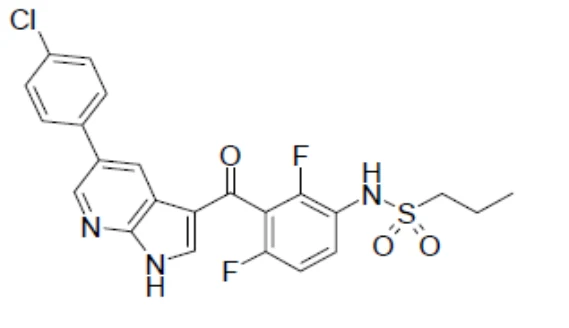
Chemical name: Propane-1-sulfonic acid {3-[5-(4-chlorophenyl)-1H-pyrrolo[2,3-b] pyridine-3-carbonyl]-2,4-difluoro-phenyl}-amide
Molecular formula: C23H18ClF2N3O3S
Molecular Mass: 489.93 g/mole
Structural formula: vemurafenib
Physical Form: Vemurafenib is a white to off-white crystalline solid. When co-precipitated with HPMC-AS it forms an amorphous white to almost white powder or powder with clumps.
Solubility: Vemurafenib generally has poor aqueous solubility. The solubility of Form II at physiological pHs (SGF and SIF) is 0.0001 mg/mL at 37°C. The compound is very soluble in organic liquids [511.8 mg/mL in dimethylacetamide (DMA)]. To improve aqueous solubility vemurafenib is co-precipitated with HPMC-AS to form an amorphous white solid.
pKa (Acidic): 7.9 and 11.1
Partition co-efficient: Log P (water): 3.0
Melting Point: Approx. 271°C (vemurafenib crystalline Form II)
Hygroscopicity: Vemurafenib is non-hygroscopic. When co-precipitated with HPMC-AS, the co-precipitate exhibits some evidence of hygroscopicity.
Crystal Forms: Several polymorphs and solvates of vemurafenib have been identified of which crystalline Form II is thermodynamically the most stable form. This form is produced consistently by the manufacturing process. The vemurafenib/HPMC-AS co-precipitate is non-crystalline in nature.
CLINICAL TRIALS
Study Demographics and Trial Design
The efficacy of ZELBORAF (vemurafenib) in melanoma has been evaluated in a Phase III comparative clinical trial of 675 patients and a Phase II single-arm clinical trial of 132 patients. Prior to study enrolment, tumour specimens from all patients were tested for the presence of BRAF V600 mutations by the cobas® 4800 BRAF V600 Mutation Test (a real-time polymerase chain reaction assay). Approximately 50% of the patients with melanoma screened for the clinical studies had BRAF V600 mutation-positive tumours. The test was designed for and has a high specificity for detecting V600E. It is less sensitive for detecting other V600 mutations including the second most common mutation, V600K. A third study was conducted to evaluate the activity of ZELBORAF in patients with BRAF V600 mutation-postive melanoma metastatic to the brain. The efficacy and safety of ZELBORAF have not been evaluated in patients whose tumours were not positive for BRAF V600 mutations by the cobas® 4800 BRAF V600 Mutation Test.
Phase III Study in Treatment Naïve Patients
In an open-label, multicenter, international, randomized Phase III study in previously untreated patients with BRAF V600 mutation-positive unresectable or metastatic melanoma, patients were randomized to treatment with ZELBORAF (960 mg twice daily) or dacarbazine (1000 mg/m2 every 3 weeks). Treatment was continued until time of disease progression, unacceptable toxicity and/or consent withdrawal. The co-primary efficacy endpoints of the study were overall survival (OS) and progression-free survival (PFS). Key secondary efficacy endpoints included confirmed best overall response rate (BORR) and response duration. At the primary analysis significant improvements in OS and PFS were observed and the Data Safety Monitoring Board (DSMB) recommended the study be modified to permit dacarbazine patients to cross-over to receive ZELBORAF.
A total of 675 patients were randomized to ZELBORAF (n=337) or dacarbazine (n=338). Randomization was stratified according to disease stage, LDH, ECOG performance status and geographic region. Baseline characteristics were well balanced between treatment groups. For patients randomized to ZELBORAF, 59% were male, 99% were Caucasian, the median age was 56 years (28% were ≥ 65 years), all patients had ECOG performance status of 0 or 1, and the majority of patients had stage M1c disease (66%).
At the pre-specified interim analysis (December 30, 2010 data cut-off), statistically significant and clinically meaningful improvements were observed in the co-primary endpoints of overall survival (OS) (p<0.0001) and progression-free survival (PFS) (p<0.0001) (unstratified log-rank test) (see Table 9). Overall survival was longer with ZELBORAF compared to dacarbazine with a hazard ratio of 0.37 (95% CI: 0.26, 0.55), which represents a 63% decrease in the hazard of death with ZELBORAF compared to dacarbazine. At the time of the primary efficacy analysis, median follow-up was 3.75 months (range 0.3 to 10.8) in the ZELBORAF arm and 2.33 months (range < 0.1 to 10.3) in the dacarbazine arm.
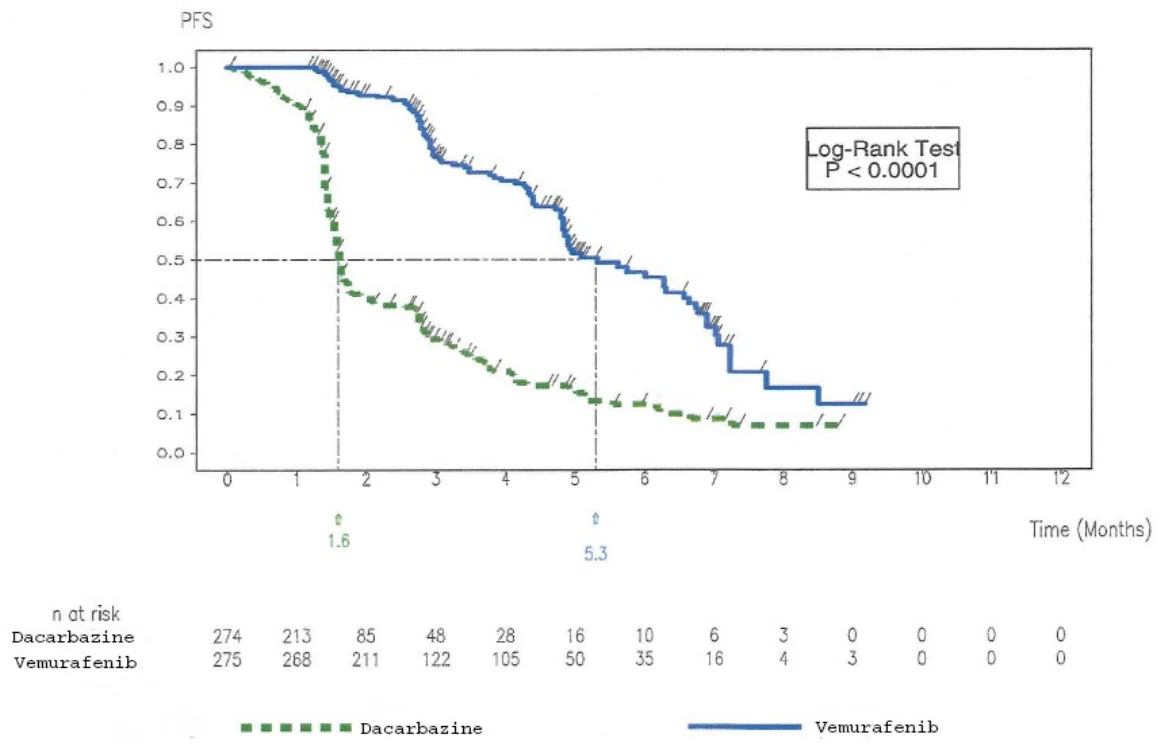
Progression-free survival by investigator assessment was longer with ZELBORAF compared to dacarbazine with a hazard ratio for progression or death (PFS) of 0.26 (95% CI: 0.20, 0.33), which represents a 74% decrease in the hazard of progression or death for ZELBORAF compared to dacarbazine (see Table 9, Figure 2). The secondary endpoint of confirmed best overall response rate (complete response [CR] + partial response [PR]), as assessed by the investigator, was significantly improved (p<0.0001) in the ZELBORAF arm (48.4%) (95% CI: 41.6%, 55.2%) compared to the dacarbazine arm (5.5%) (95% CI: 2.8%, 9.3%).
Improvement in OS, PFS and confirmed best overall response in favour of treatment with ZELBORAF were generally observed across subgroups (age, sex, baseline LDH, ECOG performance status, metastatic disease stage) and geographic regions.
In an updated analysis (March 31, 2011 data cut off) with a median follow-up of 6.21 months (range 0.4 to 13.9) in the ZELBORAF arm, median overall survival had not been reached (95% CI; 9.59, not reached). The median follow-up time for OS in the dacarbazine group was 4.5 months (range <0.1 to 11.7 months).
An updated post-hoc analysis of OS was performed 24 months after the last patient was randomized (December 20, 2012 data cut-off date) with a median follow-up of 13.4 months (range 0.4 to 33.3 months) in the ZELBORAF arm and 9.2 months (range: 0.03-32.5 months) in the dacarbazine arm (see Table 9 and Figure 1 for results).
Table 9 Efficacy of ZELBORAF in Treatment- Naïve Patients with BRAF V600 Mutation Positive Melanoma
ZELBORAF (N=336) | Dacarbazine (N=336) | p-valuea | ||||||||
| Primary analysis of Overall Survival (OS)* (December 30, 2010 data cut off): | ||||||||||
| Number of events | 43 | 75 | ||||||||
Hazard Ratiob (95% CI) | 0.37 (0.26, 0.55) | <0.0001 | ||||||||
6-month survival rate (95 % CI)c | 84% (78%, 89%) | 64% (56%, 73%) | - | |||||||
| Updated analysis of OS (Final Analysis for OS; March 31, 2011 data cut off)d: | ||||||||||
| Censored at time of crossoverf | ||||||||||
| Number of events | 78 | 121 | ||||||||
Hazard Ratiob (95% CI) | 0.44 (0.33, 0.59) | <0.0001 | ||||||||
Median OS (months) (95% CI)c | Not reached (9.6, NR) | 7.9 (7.3, 9.6) | ||||||||
6-month survival rate (95 % CI)c | 83% (79%, 87%) | 63% (57%, 69%) | ||||||||
| Uncensored at time of crossoverf | ||||||||||
| Number of events | 78 | 122 | ||||||||
Hazard Ratiob (95% CI) | 0.47 (0.35, 0.62) | <0.0001 | ||||||||
| Updated post-hoc analysis of OS (December 20, 2012 data cut off): | ||||||||||
| Censored at time of crossoverg | ||||||||||
| Number of events | 242 | 178 | ||||||||
Hazard Ratiob (95% CI) | 0.78 (0.64, 0.94) | |||||||||
Median OS (months) (95% CI)c | 13.6 (12.0, 15.3) | 9.7 (7.9,12.8) | ||||||||
| Uncensored at time of crossoverg | ||||||||||
| Number of events | 242 | 236 | ||||||||
Hazard Ratiob (95% CI) | 0.79 (0.66, 0.95) | |||||||||
| Primary analysis of Progression-free Survivale (December 30, 2010 data cut off): | ||||||||||
| Number of events | 104 | 182 | ||||||||
Hazard Ratiob (95% CI) | 0.26 (0.20, 0.33) | <0.0001 | ||||||||
Median PFS (months) (95% CI)c | 5.3 (4.9, 6.6) | 1.6 (1.6, 1.7) | - | |||||||
a Unstratified log-rank test
b Hazard ratio estimated using Cox model; a hazard ratio of < 1 favours ZELBORAF
c Kaplan-Meier Estimate
d The number of evaluable patients for the updated overall survival analysis was 337 for ZELBORAF and 338 for dacarbazine e The number of evaluable patients for the progression-free survival analysis was 275 for ZELBORAF and 274 for dacarbazine f At the time of the updated analysis for OS 50 dacarbazine patients had received vemurafenib
g At the time of the updated post hoc analysis (24 months after last patient randomized) 84 dacarbazine patients had received ZELBORAF
* At the time of analysis, Kaplan-Meier estimates of median OS for both treatment arms were considered unreliable due to the small number of patients in follow up (<10%) beyond month 7, based on recommendations in Pocock et al [ref 2]
Figure 1 Updated Kaplan-Meier Curves of Overall Survival (Censored at Time of Crossover) – Treatment-Naïve Patients (December 20, 2012)
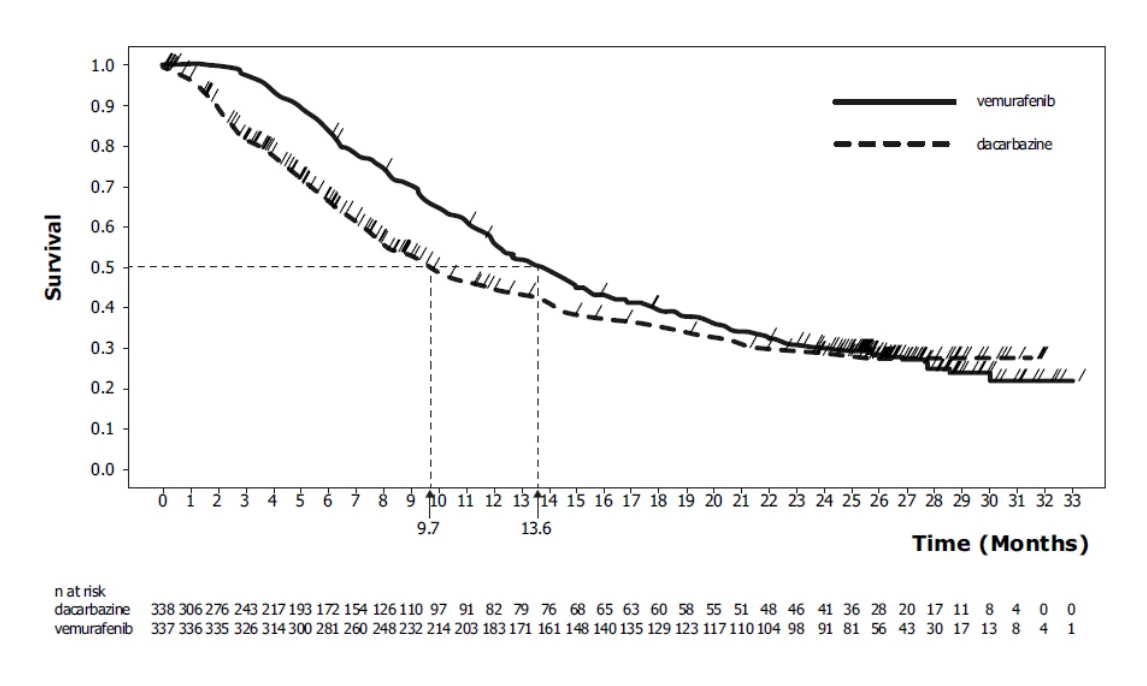
Figure 2 Kaplan-Meier Curves of Progression-free Survival – Treatment Naïve Patients (December 30, 2010)
Quality of life was assessed using the Functional Assessment of Cancer Therapy-Melanoma v.4 (FACT-M) questionnaire. Analyses of FACT-M and its subscales suggested that there was no difference in quality of life measured over time on study treatment in patients treated with vemurafenib compared with patients treated with dacarbazine. The proportion of patients with improvement in the physician’s assessment of performance status was higher in the patients treated with ZELBORAF (63.4%) (95% CI: 57%, 69%) than in the patients treated with dacarbazine (20.2%) (95% CI: 15%, 26%).
A total of 57 patients out of 673 whose tumours were analysed retrospectively by sequencing were reported to have BRAF V600K mutation-positive melanoma in this Phase III study. Although limited by the low number of patients, compared to V600E patients, efficacy analyses among these patients with V600K-positive tumours suggest treatment benefit of vemurafenib in terms of OS, PFS and confirmed best overall response. No patients with melanoma harbouring BRAF V600 mutations other than V600E and V600K were identified in the vemurafenib treatment arm. One patient in the dacarbazine control arm had V600D positive melanoma. Retrospective sequencing (Sanger and 454) did not identify wild-type BRAF in tumours originally assigned as V600 mutation positive by the cobas® BRAF 4800 Mutation Test.
Phase II Study in Patients who Failed at least One Prior Systemic Therapy
A Phase II single-arm, multi-center, multinational study was conducted in 132 metastatic melanoma patients with BRAF V600 mutation-positive tumours. The median age was 52 years with 19% of patients being older than 65 years. The majority of patients were male (61%), Caucasian (99%), and had stage M1c disease (61%). Forty-nine percent of patients failed ≥ 2 prior therapies. More patients received prior therapy with IL-2 (39%) than with dacarbazine treatment (23%) in this study. The median duration of follow-up was 6.9 months (range, 0.6 to 11.3).
The primary endpoint of confirmed best overall response rate (BORR = CR + PR) as assessed by an independent review committee (IRC) was 52% (95% CI: 43%, 61%). Patients with prior IL-2 or dacarbazine therapy had a BORR of 48% (95% CI: 34%, 62%) and 60% (95% CI: 41%, 77%), respectively. The median time to response was
1.4 months with 75% of responses occurring by month 1.6 of treatment. The median duration of response by IRC was 6.5 months (95% CI: 5.6, not reached).
Nine of the 132 patients had BRAF V600K mutations confirmed by Sanger sequencing. Amongst these patients, 3 had a PR, 3 had SD, 2 had PD and one was not evaluable.
Phase II Study in Patients with Brain Metastases
An open-label, single-arm, multicenter, phase II study (N = 146) of ZELBORAF was conducted in adult patients with histologically confirmed BRAF V600 melanoma metastatic to the brain. Patients were required to have at least one measurable brain lesion of 0.5 cm or greater on contrast-enhanced MRI, a stable or decreasing corticosteroid dose and no prior treatment with a BRAF or MEK inhibitor. The study included two simultaneously enrolling cohorts:
- Previously untreated patients (cohort 1: N = 90): Patients who had not received previous treatment for brain metastases; prior systemic therapy for metastatic melanoma was allowed.
- Previously treated patients (cohort 2: N = 56): Patients who had been previously treated for their brain metastases and had progressed following this treatment. For patients treated with stereotactic radiotherapy (SRT) or surgery, a new RECIST-assessable brain lesion must have developed following this prior therapy.
The majority of patients were male (61.6%), and Caucasian (92.5%), and the median age was 54 years (range 26 – 83 years), similarly distributed between the two cohorts. The median number of brain target lesions at baseline was 2 (range 1 to 5), in both cohorts. All patients received ZELBORAF 960 mg orally twice daily until disease progression or unacceptable toxicity.
The primary objective of the study was to evaluate the efficacy of ZELBORAF using best overall response rate (BORR) in the brain of metastatic melanoma patients with previously untreated brain metastases (Cohort 1), as assessed by an independent review committee (IRC) using Response Evaluation Criteria in Solid Tumors, Version 1.1 (RECIST v1.1).
Secondary objectives included duration of response (DOR) in Cohort 1, and BORR and DOR in the brain of metastatic melanoma patients with previously treated brain metastases (Cohort 2).
Table 10 Efficacy of ZELBORAF in Patients with BRAF V600 Melanoma Brain Metastases
Cohort 1 No Previous Treatment | Cohort 2 Previously Treated | Total | |
BORRa in brain (n) Responders [n(%)] (95% CI)b | 90 16 (17.8%) (10.5‒27.3) | 56 10 (17.9%) (8.9‒30.4) | 146 26 (17.8%) (12.0‒25.0) |
DORc in brain (n) Median (months) (95% CI)d | 16 4.6 (2.9, 6.2) | 10 6.6 (2.8, 10.7) | 26 5.0 (3.7, 6.6) |
a Best Overall Response Rate as assessed by independent review committee
b two-sided 95% Clopper-Pearson Confidence Interval (CI)
c Duration of response as assessed by an Independent Review Committee
d Kaplan-Meier estimate
DETAILED PHARMACOLOGY
Nonclinical Pharmacokinetics
Dogs administered a single oral dose of 100 mg/kg in the fasted stated had an approximately 1.5-fold increase in exposure (AUC and Cmax) compared to fed animals. Higher inter-subject variation was also observed in the fed animals.
In a quantitative whole body autoradiography study using 14C-vemurafenib, concentrations of radioactivity in tissues were relatively similar to blood concentrations at all time points, except for liver, kidney, adrenal cortex, lachrymal glands, lung, and alimentary canal tissues, which were generally higher than blood. Radioactivity was not detectable in the brain and spinal cord (central nervous system) of rats suggesting vemurafenib does not cross the blood-brain barrier. Accumulation and retention of vemurafenib in melanin-containing tissues of the eye (uveal tract) or skin was not apparent.
Human CYP3A4 was the primary enzyme responsible for the in vitro metabolism of vemurafenib and eight in vitro minor metabolites were identified in liver microsomes/hepatocytes of humans, dogs and rats. In plasma from rats, dogs and humans, unchanged vemurafenib was the major component and two minor monohydroxylation metabolites were detected.
Drug-derived radioactivity in rats was primarily recovered in the faeces following a single oral administration of 100 mg/kg of 14C-labeled vemurafenib (MBP formulation). The urine accounted for only 1-2% of the total excreted radioactivity. In bile duct cannulated animals, most of the radioactivity collected over 24 h was recovered in the bile (71%) and less in the feces (13.4%) demonstrating that the major elimination route of drug-derived radioactivity was biliary excretion in the rat. Elimination was not complete after 24 h in the rats with approximately 16% of administered radioactivity remaining in the carcass.
Primary Pharmacodynamics
Vemurafenib inhibits BRAF V600E and other V600 mutations with greater potency compared to wild-type BRAF in in vitro kinase inhibition assays. The concentration of vemurafenib required to inhibit 50% of enzyme activity (IC50) of each of the different BRAF proteins is shown in Table 11.
Table 11 Inhibition of Different BRAF Variants by Vemurafenib
| Kinase | IC50 (nM) |
| BRAF_wild-type | 39 |
| BRAF_V600E | 10 |
| BRAF_V600K | 7 |
| BRAF_V600R | 9 |
| BRAF_V600D | 7 |
| BRAF_V600G | 8 |
| BRAF_V600A | 14 |
| BRAF_V600M | 7 |
The results from the in vitro kinase assays were consistent with the inhibition of proliferation of melanoma cell lines. Melanoma cell lines harbouring V600 mutations V600E (A375, SK-MEL28, etc.), V600K (WM3152), V600D (WM2664, WM239A) and V600R (WM1341D) were all inhibited at lower vemurafenib concentrations (IC50 range – 0.02 to 1 μM) compared to melanoma cell lines expressing wild-type BRAF (CHL-1, SK-MEL-2) (IC50 range - > 10 μM).
The selectivity of vemurafenib as a BRAF-kinase inhibitor was assessed by screening a panel of 63 receptors and a panel of 273 kinases. Vemurafenib displayed weak interactions for most receptors and kinases screened. Two kinases (Ack1 and Srm) were inhibited at low nM vemurafenib concentrations, similar to BRAF V600E, and an additional 2 kinases at slightly higher concentrations (MAP4K5 and FGR). The physiological consequences of interactions between vemurafenib and these additional kinases are not known.
Secondary Pharmacodynamics
The potential mechanism by which vemurafenib contributes to the development of cuSCC was evaluated in vivo in a A431 cuSCC xenograft mouse model. At vemurafenib doses of 25 and 75 mg/kg/day there was dose-dependent growth of the xenograft tumors when compared to vehicle-treated control mice. Preliminary evidence suggests that vemurafenib causes a paradoxical increase in MEK activity (p-MEK) in these tumours (see WARNINGS AND PRECAUTIONS, cuSCC).
Safety Pharmacology
The safety pharmacology program comprised studies evaluating potential effects on the cardiovascular, central nervous and respiratory systems. The highest doses employed in the in vivo studies were the maximum feasible doses possible with a corn oil formulation, which produced lower systemic exposures to vemurafenib compared to the clinical MBP formulation (see TOXICOLOGY).
Vemurafenib inhibited hERG (human ether-à-go-go-related gene) channel currents expressed in mammalian cells (HEK 293) with an IC50 of 1.24 µM (measured concentrations).
When administered as single oral doses of 30, 100, and 1000 mg/kg (corn oil formulation) to 4 conscious radiotelemetry-implanted male dogs according to a Latin-square crossover design, vemurafenib was not associated with any changes in the QTc interval or other ECG parameters over a 24 h period. However, exposures achieved with the 1000 mg/kg dose (Cmax = 42 μM) were only about half of the Cmax (~90 μM) observed in patients treated with 960 mg bid. In repeat-dose toxicity studies in dogs up to 13-weeks, all ECGs were qualitatively and quantitatively within normal limits at exposure levels comparable to patients.
No adverse effects were observed after single oral dose administration of vemurafenib up to 1000 mg/kg in rats in the central nervous system and respiratory safety pharmacology studies (estimated Cmax = 160 μM).
TOXICOLOGY
The non-clinical safety profile of vemurafenib was assessed in rats, dogs and rabbits. Two formulations were used in the repeat-dose toxicology studies: a corn oil formulation in the initial studies and a MBP formulation in studies beyond 4 weeks of duration. The corn oil formulation (vemurafenib suspension in corn oil) was used for the 28-day repeat-dose toxicity and safety pharmacology studies. Due to limited systemic exposures with the corn oil formulation, the MBP formulation (vemurafenib-006 suspension in 2% Klucel LF (w/v) in aqueous vehicle adjusted to pH 4 with 1 N HCl) was developed and used to achieve higher systemic exposures for the
13-week and 26-week repeat-dose toxicity studies, the prematurely terminated 39-week toxicity study, the in vivo micronucleus assay, and embryo-fetal developmental toxicity studies.
Repeat-dose toxicology studies identified the liver and bone marrow as target organs in the dog. Reversible toxic effects (hepatocellular necrosis and degeneration) in the liver at exposures below the clinical exposure (based on AUC comparisons) were noted in a 13-week dog study with twice daily dosing. Focal bone marrow necrosis was noted in one dog in a prematurely terminated 39-week dog study with twice daily dosing at exposures within the range of clinical exposures.
Vemurafenib was shown to be phototoxic in vitro in cultured murine fibroblasts after UVA irradiation.
CYP2C9 inhibition with vemurafenib was observed in vitro (i.e., IC50 of 5.9 µM).
Carcinogenicity
No carcinogenicity studies have been performed to establish the carcinogenic potential of ZELBORAF.
Mutagenicity
No signs of genotoxicity were identified in in vitro assays (bacterial mutation [AMES Assay], human lymphocyte chromosome aberration) nor were they identified in the in vivo rat bone marrow micronucleus test conducted with vemurafenib.
Impairment of Fertility
No fertility studies in animals have been performed to evaluate the effect of ZELBORAF. In the repeat-dose toxicology studies no findings were noted in reproductive organs.
Teratogenicity
Vemurafenib revealed no evidence of teratogenicity in rat embryo/fetuses at doses up to 250 mg/kg/day (approximately 1.7 times the human clinical exposure based on AUC) or rabbit embryo/fetuses at doses up to 450 mg/kg/day (approximately 0.7 times the human clinical exposure based on AUC).
Fetal drug levels were 3-5% of maternal levels, indicating that vemurafenib has the potential to be transmitted from the mother to the developing fetus.
REFERENCES
- 1. Callahan M.K. et al. Progression of RAS-Mutant Leukemia during RAF Inhibitor Treatment. NEJM 2012; 367: 2316-2321.
- 2. Chapman PB, Hauschild A, Robert C, Haanen JB, Ascierto P, Larkin J, Dummer R, Garbe C, Testori A, Maio M, Hogg D, Lorigan P, Lebbe C, Jouary T, Schadendorf D, Ribas A, O’Day SJ, Sosman JA, Kirkwood JM, Eggermont AMM, Dreno B, Nolop K, Jiang L, Nelson B, Hou J, Lee RJ, Flaherty KT, McArthur GA, for the BRIM-3 Study Group. Improved Survival with Vemurafenib in Melanoma with BRAF V600E Mutation. NEJM. 2011 doi:10.1056/NEJMoa1103782
- 3. Pocock SJ, Clayton TC, Altman DG. Survival plots of time-to-event outcomes in clinical trials: good practice and pitfalls. Lancet 2002; 359:1686-89.
- 4. Ribas A et al. Hepatotoxicity with combination of Vemurafenib and Ipilimumab. NEJM 2013; 368: 1365-1366.
- 5. Wenk KS, Pichard DC, Nasabzadeh T, Jang S, Venna SS. Vemurafenib-Induced DRESS. JAMA Dermatol. 2013 ;149:1242-3.