


Product Monograph - Azacitidine for Injection (Apotex)
RECENT MAJOR LABEL CHANGES
None at the time of the most recent authorization
TABLE OF CONTENTS
Certain sections or subsections that are not applicable at the time of the preparation of the most recent authorized product monograph are not listed.
RECENT MAJOR LABEL CHANGES ................................................................................................. 2
TABLE OF CONTENTS ............................................................................................................ 2
PART I: HEALTH PROFESSIONAL INFORMATION ..................................................................... 4
1 INDICATIONS ................................................................................................................ 4
1.1 Pediatrics .................................................................................................................... 4
1.2 Geriatrics .................................................................................................................... 4
2 CONTRAINDICATIONS.................................................................................................... 4
3 SERIOUS WARNINGS AND PRECAUTIONS BOX ................................................................. 4
4 DOSAGE AND ADMINISTRATION .................................................................................... 4
4.1 Dosing Considerations ............................................................................................... 4
4.2 Recommended Dose and Dosage Adjustment ........................................................... 5
4.3 Reconstitution ............................................................................................................ 7
4.4 Administration ............................................................................................................ 8
4.5 Missed Dose ............................................................................................................... 8
5 OVERDOSAGE ................................................................................................................ 9
6 DOSAGE FORMS, STRENGTHS, COMPOSITION AND PACKAGING ....................................... 9
7 WARNINGS AND PRECAUTIONS ....................................................................................... 9
7.1 Special Populations .................................................................................................. 11
7.1.1 Pregnant Women ..................................................................................................... 12
7.1.2 Breast-feeding .......................................................................................................... 12
7.1.3 Pediatrics .................................................................................................................. 12
7.1.4 Geriatrics .................................................................................................................. 12
8 ADVERSE REACTIONS ................................................................................................... 12
8.1 Adverse Reaction Overview ..................................................................................... 12
8.2 Clinical Trial Adverse Reactions ............................................................................... 13
8.3 Less Common Clinical Trial Adverse Reactions ........................................................ 18
8.5 Post-Market Adverse Reactions............................................................................... 19
9 DRUG INTERACTIONS .................................................................................................. 21
9.2 Drug Interactions Overview ..................................................................................... 21
9.3 Drug-Behavioural Interactions ................................................................................. 21
9.4 Drug-Drug Interactions ............................................................................................ 21
9.5 Drug-Food Interactions ............................................................................................ 21
9.6 Drug-Herb Interactions ............................................................................................ 21
9.7 Drug-Laboratory Test Interactions ........................................................................... 21
10 CLINICAL PHARMACOLOGY ........................................................................................... 21
10.1 Mechanism of Action ............................................................................................... 21
10.2 Pharmacodynamics .................................................................................................. 21
10.3 Pharmacokinetics ..................................................................................................... 22
11 STORAGE, STABILITY AND DISPOSAL ............................................................................. 24
12 SPECIAL HANDLING INSTRUCTIONS ............................................................................... 25
PART II: SCIENTIFIC INFORMATION ..................................................................................... 27
13 PHARMACEUTICAL INFORMATION ………………………………………………………………………………………27
14 CLINICAL TRIALS ........................................................................................................... 27
14.1 Clinical Trials by Indication ...................................................................................... 27
16 NON-CLINICAL TOXICOLOGY ........................................................................................ 33
17 SUPPORTING PRODUCT MONOGRAPHS ....................................................................... 36
PATIENT MEDICATION INFORMATION ................................................................................ 37
PART I: HEALTH PROFESSIONAL INFORMATION
1 INDICATIONS
Azacitidine for Injection (azacitidine for injection) is indicated for the treatment of adult patients who are not eligible for hematopoietic stem cell transplantation with:
- Intermediate-2 and High-risk Myelodysplastic Syndrome (MDS) according to the International Prognostic Scoring System (IPSS),
- Acute Myeloid Leukemia (AML) with 20-30 % blasts and multi lineage dysplasia, according to World Health Organization (WHO) classification
1.1 Pediatrics
The safety and effectiveness of azacitidine for injection in children and adolescents (<18 yrs) have not been established.
1.2 Geriatrics
No overall differences in safety or effectiveness of azacitidine for injection were observed between younger patients and patients ≥ 65 years of age. Greater sensitivity of some older individuals cannot be ruled out. Because elderly patients are more likely to have decreased renal function, it may be useful to monitor renal function.
2 CONTRAINDICATIONS
- Patients who are hypersensitive to azacitidine or to any ingredient in the formulation or component of the container. For a complete listing, see 6 DOSAGE FORMS, STRENGTHS, COMPOSITION AND PACKAGING.
- Advanced malignant hepatic tumors.
3 SERIOUS WARNINGS AND PRECAUTIONS BOX
Serious Warnings and Precautions
Azacitidine for Injection should be administered under the supervision of a qualified physician experienced in the use of cancer chemotherapeutic agents |
|---|
4 DOSAGE AND ADMINISTRATION
4.1 Dosing Considerations
- Patients should be premedicated with anti-emetics for nausea and vomiting.
Azacitidine for Injection is for subcutaneous use only. •
Azacitidine for injection has not been studied in patients with impaired hepatic function.
- Dosage given should be adjusted according to tolerability as described below.
- Injectable azacitidine should not be used interchangeably with oral azacitidine. Due to differences in exposure, the dose and schedule recommendations for oral azacitidine are different from those for injectable azacitidine. Verify drug name, dose, and administration route.
4.2 Recommended Dose and Dosage Adjustment
Recommended dose
The recommended starting dose for the first treatment cycle, for all patients regardless of baseline hematology laboratory values, is 75 mg/m2 of body surface area, injected subcutaneously, daily for 7 consecutive days, followed by a rest period of 21 days (28 -day treatment cycle).
It is recommended that patients be treated for a minimum of 6 cycles unless unacceptable toxicities occur after dose delays / adjustments or standard supportive care such as transfusions, growth factors or antibiotics have proved to be unsuccessful. Treatment should be continued as long as the patient continues to benefit or until disease progression.
Patients should be monitored for hematologic response/toxicity and renal toxicities (see 7 WARNINGS AND PRECAUTIONS); a delay in starting the next cycle or a dose reduction as described below may be necessary.
- Renal impairment: Azacitidine for Injection can be administered to patients with renal impairment without initial dose adjustment. If unexplained reductions in serum bicarbonate levels to less than 20 mmol/L occur, the dose should be reduced by 50 % on the next cycle. If unexplained elevations in serum creatinine or BUN to ≥ 2 fold above baseline values and above ULN occur, the next cycle should be delayed until values return to normal or baseline. The dose should be reduced by 50 % on the next treatment cycle (see 7 WARNINGS AND PRECAUTIONS). Patients with renal impairment should be closely monitored for toxicity since azacitidine and/or its metabolites are primarily excreted through the kidney.
- Hepatic impairment: Patients with impaired liver function were excluded from the pivotal clinical trial. These patients should be treated with caution. Azacitidine for Injection is contraindicated in patients with advanced malignant hepatic tumors (see 7 WARNINGS AND PRECAUTIONS and 2 CONTRAINDICATIONS).
Dose adjustment due to hematological toxicity
Hematological toxicity is defined as the lowest count reached in a given cycle (nadir) if platelets fall below 50.0 x 10⁹/L and/or absolute neutrophil count (ANC) below 1 x 10⁹/L.
Recovery is defined as an increase of cell line(s) where hematological toxicity was observed of at least half of the difference of nadir and the baseline count plus the nadir count (i.e., blood count at recovery ≥ Nadir Count + (0.5 x [Baseline count – Nadir count]).
Patients without reduced baseline blood counts (i.e. White Blood Cells (WBC) ≥ 3.0 x 10⁹/L and ANC ≥ 1.5 x 10⁹/L, and platelets ≥ 75.0 x 10⁹/L) prior to the first treatment.
If hematological toxicity is observed following Azacitidine for Injection treatment, the next cycle of Azacitidine for Injection therapy should be delayed until the platelet count and the ANC have recovered. If recovery is achieved within 14 days, no dose adjustment is necessary. However, if recovery has not been achieved within 14 days, the dose should be reduced according to Table 1. Following dose modifications, the cycle duration should return to 28 days.
Table 1: Dose Modifications due to hematological toxicity, Patients without reduced baseline blood counts
| Nadir counts | % Dose in the next cycle, if recovery1 is not achieved within 14 days | |||
| ANC (x 109/L) | Platelets (x 109/L) | |||
| ≤ 1.0 | ≤ 50.0 | 50 % | ||
| > 1.0 | > 50.0 | 100 % | ||
1Recovery = counts ≥ Nadir count + (0.5 x [Baseline count - Nadir count])
Patients with reduced baseline blood counts (i.e. WBC < 3.0 x 10⁹/L or ANC < 1.5 x 10⁹/L or platelets < 75.0 x 10⁹/L) prior to the first treatment.
Following Azacitidine for Injection treatment, if the decrease in WBC or ANC or platelets from that prior to treatment is less than 50 %, or greater than 50 % but with an improvement in any cell line differentiation, the next cycle should not be delayed and no dose adjustment made.
If the decrease in WBC or ANC or platelets is greater than 50 % from that prior to treatment, with no improvement in cell line differentiation, the next cycle of Azacitidine for Injection therapy should be delayed until the platelet count and the ANC have recovered. If recovery is achieved within 14 days, no dose adjustment is necessary. However, if recovery has not been achieved within 14 days, bone marrow cellularity should be determined. If the bone marrow cellularity is > 50 %, no dose adjustments should be made. If bone marrow cellularity is ≤ 50 %, treatment should be delayed and the dose reduced according to Table 2:
Table 2: Dose Modifications due to hematological toxicity, Patients with reduced baseline blood counts
| Bone marrow cellularity | % Dose in the next cycle if recovery is not achieved within 14 days | |
| Recoverya ≤ 21 days | Recoverya > 21 days | |
| 15-50 % | 100 % | 50 % |
| < 15 % | 100 % | 33 % |
aRecovery = counts ≥ Nadir count + (0.5 x [Baseline count - Nadir count])
Following dose modifications, the cycle duration should return to 28 days.
4.3 Reconstitution
Table 3 – Reconstitution
| Vial Size | Volume of Diluent to be Added to Vial | Approximate Available Volume | Concentration per mL |
| 100 mg | 4 mL water for injection | 4 mL | 25 mg/mL |
Reconstitution procedure
- 1.
The following supplies should be assembled:
- Vial(s) of Azacitidine for Injection; vial(s) of water for injection; nonsterile surgical gloves;
- Alcohol wipes; 5 mL injection syringe(s) with needle(s).
- 2. 4 mL of water for injection should be drawn into the syringe, making sure to purge any air trapped within the syringe.
- 3. The needle of the syringe containing the 4 mL of water for injection should be inserted through the rubber top of the Azacitidine for Injection vial followed by injection of the water for injection into the vial.
- 4. Following removal of the syringe and needle, the vial should be vigorously shaken until a uniform cloudy suspension is achieved. Do not filter the suspension after reconstitution. Doing so could reduce or remove the active substance. After reconstitution each mL of suspension will contain 25 mg of azacitidine (100 mg/4 mL). The reconstituted product is a homogeneous, cloudy suspension, free of agglomerates. Discard the product if it contains large particles or agglomerates.
- 5. The rubber top should be cleaned and a new syringe with needle inserted. The vial should then be turned upside down; making sure the needle tip is below the level of the liquid. The plunger should then be pulled back to withdraw the amount of medicinal product required for the proper dose, making sure to purge any air trapped within the syringe. The syringe with needle should then be removed from the vial and the needle disposed of.
- 6. A fresh subcutaneous needle (recommended 25-gauge) should then be firmly attached to the syringe. The needle should not be purged prior to injection, in order to reduce the incidence of local injection site reactions.
- 7. If needed (doses requiring more than 1 vial) all the above steps for preparation of the suspension should be repeated. For doses requiring more than 1 vial, the dose should be equally divided (e.g., dose 150 mg = 6 mL, 2 syringes with 3 mL in each syringe) and injected into separate sites. Due to retention in the vial and needle, it may not be feasible to withdraw all of the suspension from the vial.
- 8. The contents of the dosing syringe must be re suspended immediately prior to administration. The temperature of the suspension at the time of injection should be approximately 20°C to 25°C. To re suspend, vigorously roll the syringe between the palms until a uniform, cloudy suspension is achieved. Discard the product if it contains large particles or agglomerates.
The Azacitidine for Injection suspension should be prepared immediately before use and the reconstituted suspension should be administered within 45 minutes. If elapsed time is greater than 45 minutes, the reconstituted suspension should be discarded appropriately and a new dose prepared. Alternatively, if the product needs to be reconstituted in advance of the administration, it must be placed in a refrigerator (2°C to 8°C) immediately after reconstitution, and kept in the refrigerator for a maximum of 8 hours. If the elapsed time in the refrigerator is greater than 8 hours, the suspension should be discarded appropriately and a new dose prepared. The syringe filled with reconstituted suspension should be allowed up to 30 minutes prior to administration to reach a temperature of approximately 20°C-25°C. If the elapsed time is longer than 30 minutes, the suspension should be discarded appropriately and a new dose prepared.
4.4 Administration
Reconstituted Azacitidine for Injection should be injected subcutaneously (insert the needle at a 45 -90° angle) using a 25-gauge needle into the upper arm, thigh or abdomen. Doses requiring more than 1 vial should be injected into two separate sites. Injection sites should be rotated. New injections should be given at least 2.5 cm from the previous site and never into areas where the site is tender, bruised, red, or hardened.
Calculation of an individual dose
The total dose, according to the body surface area (BSA) can be calculated as follows:
Total dose (mg) = Dose (mg/m2) x BSA (m2)
Table 4 is provided only as an example of how to calculate individual Azacitidine for Injection doses based on an average BSA value of 1.8 m2.
Table 4: Example of calculation of an individual dose
| Dose mg/m2 (% of recommended starting dose) | Total dose based on BSA value of 1.8 m2 | Number of vials required | Total volume of reconstituted suspension required |
| 75 mg/m2 (100 %) | 135 mg | 2 vials | 5.4 mL |
| 37.5 mg/m2 (50 %) | 67.5 mg | 1 vial | 2.7 mL |
| 25 mg/m2 (33 %) | 45 mg | 1 vial | 1.8 mL |
Any unused product or waste material should be disposed of in accordance with local requirements.
4.5 Missed Dose
If a dose is missed during the 7-day cycle, it should not be administered at the same time as the next dose, but should be added to the end of the current dosing cycle.
5 OVERDOSAGE
One case of overdose with azacitidine for injection was reported during clinical trials. A patient experienced diarrhea, nausea, and vomiting after receiving a single intravenous dose of approximately 290 mg/m2, almost 4 times the recommended starting dose.
In the event of overdose, the patient should be monitored with appropriate blood counts and should receive supportive treatment, as necessary. There is no known specific antidote for Azacitidine for Injection overdose.
6 DOSAGE FORMS, STRENGTHS, COMPOSITION AND PACKAGING
Table 5 – Dosage Forms, Strengths, Composition and Packaging
Route of Administration | Dosage Form/ Strength/Composition | Non-medicinal Ingredients |
| Subcutaneous | Lyophilized powder, 100 mg azacitidine per vial | Mannitol |
Azacitidine for Injection is supplied in 100 mg single-use vials packaged in cartons of 1 vial. Each vial of Azacitidine for Injection contains 100 mg of azacitidine and 100 mg mannitol as a sterile white lyophilized powder for reconstitution as a suspension for subcutaneous injection.
7 WARNINGS AND PRECAUTIONS
General
Treatment with Azacitidine for Injection may require supportive care sufficient to protect a patient from serious bleeding, infection and less serious nausea and vomiting.
Carcinogenesis and Mutagenesis
In vitro studies demonstrated that azacitidine is mutagenic and clastogenic in bacterial and mammalian cell systems. Azacitidine induced tumors of the hematopoietic system in female mice, when administered intraperitoneally 3 times per week at 2.2 mg/kg (6.6 mg/m2) for 52 weeks. An increased incidence of tumors in the lymphoreticular system, lung, mammary gland, and skin was seen in mice treated with azacitidine administered intraperitoneally once a week at 2.0 mg/kg (6 mg/m2) for 50 weeks. A tumorigenicity study in rats revealed an increased incidence of mammary and testicular tumors at 2.6 mg/kg (15.6 mg/m2) when administered intraperitoneally 3 times per week for 34 weeks (see 16 NON-CLINICAL TOXICOLOGY).
Cardiovascular
Patients with a history of severe congestive heart failure, clinically unstable cardiac disease or pulmonary disease were excluded from the pivotal clinical study and therefore the safety and efficacy of azacitidine for injection in these patients have not been established.
| For the most recent information in the management of a suspected drug overdose, contact your regional poison control centre or Health Canada’s toll-free number, 1-844 POISON-X (1-844-764-7669). |
|---|
No thorough clinical QT/QTc study or in vitro studies (hERG, canine Purkinje fiber assay) were performed to rule out the effect of azacitidine for injection on QT prolongation. An in vivo safety pharmacology study in dogs receiving azacitidine reported increased QTc interval, but interpretation of this study is limited by confounding effects associated with toxicity (see 16 NON-CLINICAL TOXICOLOGY).
Endocrine and Metabolism
Tumor Lysis Syndrome (TLS)
There have been reports of Tumor Lysis Syndrome (TLS) in patients treated with azacitidine for injection in the postmarketing setting. Patients at risk for TLS are those with high tumor burden prior to treatment. These patients should be monitored closely and appropriate precautions taken.
Differentiation Syndrome
Cases of differentiation syndrome (also known as retinoic acid syndrome) have been reported in patients receiving injectable azacitidine. Differentiation syndrome may be fatal, and symptoms and clinical findings include respiratory distress, pulmonary infiltrates, fever, rash, pulmonary oedema, peripheral oedema, rapid weight gain, pleural effusions, pericardial effusions, hypotension and renal dysfunction (see 8.5 Post-Market Adverse Reactions). Treatment with high-dose IV corticosteroids and hemodynamic monitoring should be considered at first onset of symptoms or signs suggestive of differentiation syndrome. Temporary discontinuation of injectable azacitidine should be considered until resolution of symptoms and if resumed, caution is advised.
Hematologic
Treatment with azacitidine for injection is associated with anemia, neutropenia and thrombocytopenia, particularly during the first 2 cycles. Complete blood counts should be performed as needed to monitor response and toxicity, but at least prior to each treatment cycle (see Monitoring and Laboratory Tests). After administration of the recommended dose for the first cycle, the dose for subsequent cycles should be reduced or its administration delayed based on nadir counts and hematological response (see 4 DOSAGE AND ADMINISTRATION). Patients should be advised to promptly report febrile episodes. Patients and physicians should be observant for signs and symptoms of bleeding, particularly in case of pre-existing or treatment-related thrombocytopenia. Physicians should be prepared to provide appropriate supportive measures (e.g., transfusions for anemia and thrombocytopenia, growth factors and/or prophylactic antibiotics for neutropenia).
Hepatic/Biliary/Pancreatic
Patients with extensive tumor burden due to metastatic disease have been rarely reported to experience progressive hepatic coma and death during azacitidine for injection treatment, especially in such patients with baseline serum albumin < 30 g/L. Azacitidine for Injection is contraindicated in patients with advanced malignant hepatic tumors (see 2 CONTRAINDICATIONS).
Safety and effectiveness of azacitidine for injection in patients with MDS and hepatic impairment have not been studied as these patients were excluded from the clinical trials.
Monitoring and Laboratory Tests
Liver function tests and serum creatinine should be determined prior to initiation of therapy and prior to each treatment cycle. Complete blood counts should be performed prior to initiation of therapy and as needed to monitor response and toxicity, but at a minimum, prior to each treatment cycle. Serum electrolytes, bicarbonate (serum CO2), creatinine, and BUN should be monitored periodically.
Renal
Renal abnormalities ranging from elevated serum creatinine to renal failure and death were reported rarely in patients treated with intravenous azacitidine for injection in combination with other chemotherapeutic agents. Severe renal tubular dysfunction may infrequently accompany Azacitidine for Injection therapy and may be manifested as hypophosphatemia, hypokalemia, or hyponatremia, with or without increases in serum creatinine and blood urea nitrogen (BUN). In addition, renal tubular acidosis, defined as a fall in serum bicarbonate to < 20 mmol/L in association with an alkaline urine and hypokalaemia (serum potassium < 3 mmol/L) was reported in 5 subjects with chronic myelogenous leukemia (CML) treated with azacitidine for injection and etoposide. Serum electrolytes, bicarbonate (serum CO2), creatinine, and BUN should be monitored periodically (see Monitoring and Laboratory Tests). If unexplained reductions in serum bicarbonate (< 20 mmol/L) or elevations of serum creatinine or BUN occur, the dose should be reduced or administration delayed (see 4 DOSAGE AND ADMINISTRATION).
Patients with renal impairment should be closely monitored for toxicity since azacitidine and/or its metabolites are primarily excreted through the kidney.
Reproductive Health: Female and Male Potential
- Function
Men should be advised not to father a child while receiving treatment and for 6 months following the last dose. Females of childbearing potential must use an effective method of contraception during treatment with azacitidine and for at least 6 months after the last dose. Female partners of male patients receiving azacitidine should not become pregnant.
Skin
Necrotizing fasciitis, including fatal cases, has been reported in patients treated with azacitidine for injection. Azacitidine for Injection therapy should be discontinued in patients who develop necrotizing fasciitis, and appropriate treatment should be promptly initiated.
Reports of injection site necrosis have been received for patients treated with azacitidine for injection in the postmarketing setting. Patients should be monitored for signs of injection site necrosis and appropriate management taken as warranted.
7.1 Special Populations
- 7.1.1 Pregnant Women
In mice and rat developmental toxicity studies azacitidine for injection caused multiple fetal abnormalities, including CNS anomalies (exencephaly/encephalocele), limb anomalies (micromelia, club foot, syndactyly, oligodactyly) and others (microphthalmia, micrognathia, gastroschisis, edema, and rib abnormalities) and fetal deaths (see 16 NON-CLINICAL TOXICOLOGY).
There are no adequate data on the use of azacitidine for injection in pregnant women. The potential risk for humans is unknown. Azacitidine for Injection should not be used during pregnancy. Women of childbearing potential should be advised to avoid becoming pregnant while receiving treatment with Azacitidine for Injection. If the patient becomes pregnant while taking Azacitidine for Injection, she should be apprised of the potential hazard to the fetus.
7.1.2 Breast-feeding
It is not known whether azacitidine or its metabolites are excreted in human milk. Due to the potential for carcinogenicity shown for azacitidine in animal studies and the potential for serious adverse reactions in the nursing child, mothers should be advised not to breast feed while undergoing therapy with Azacitidine for Injection.
7.1.3 Pediatrics
The safety and effectiveness of azacitidine for injection in children and adolescents have not been established. In the clinical trial program, no patients under 18 years of age were treated.
7.1.4 Geriatrics
Because elderly patients (≥65 yrs) are more likely to have decreased renal function, it may be useful to monitor renal function.
8 ADVERSE REACTIONS
8.1 Adverse Reaction Overview
Adverse reactions considered to be possibly or probably related to the administration of azacitidine for injection have occurred in 97 % of patients.
The most commonly reported adverse reactions with azacitidine for injection treatment were hematological reactions including thrombocytopenia, neutropenia and leukopenia (usually Grade 3 -4), gastrointestinal events including nausea, vomiting (usually Grade 1 2) or injection site reactions (usually Grade 1-2).
The most common serious adverse reactions (> 2 %) noted from the pivotal study and also reported in the supporting studies included febrile neutropenia (8.0 %) and anemia (2.3 %). Other less frequently reported serious adverse reactions (< 2 %) included neutropenic sepsis, pneumonia, thrombocytopenia and hemorrhagic events (e.g., cerebral hemorrhage).
Adverse reactions most frequently resulting in discontinuation or dose reduction were leukopenia, thrombocytopenia, and neutropenia. Adverse reactions most frequently resulting in the dose being held were leukopenia, neutropenia, thrombocytopenia, pyrexia, pneumonia, and febrile neutropenia.
8.2 Clinical Trial Adverse Reactions
Clinical trials are conducted under very specific conditions. The adverse reaction rates observed in the clinical trials; therefore, may not reflect the rates observed in practice and should not be compared to the rates in the clinical trials of another drug. Adverse reaction information from clinical trials may be useful in identifying and approximating rates of adverse drug reactions in real-world use.
Phase 3 Pivotal International Open-Label Randomized Survival Study in Higher Risk MDS (AZA-001)
The pivotal clinical study (AZA-001) was an international, multicenter, open-label, randomized trial in MDS patients with refractory anemia with excessive blasts (RAEB), RAEB in transformation (RAEB-T) or modified chronic myelomonocytic leukemia (CMMoL) according to the French American British (FAB) classification and Intermediate-2 and High risk according to IPSS classification. Of the 358 patients enrolled in the study, 179 were randomized to receive azacitidine for injection plus best supportive care (BSC) and 179 were randomized to receive conventional care regimens (CCR) plus BSC (105 to BSC alone, 49 to low dose cytarabine and 25 to chemotherapy with cytarabine and anthracycline).
Azacitidine for injection was administered subcutaneously (SC) at a dose of 75 mg/m2 daily for 7 consecutive days every 28 days (which constituted one cycle of therapy).
In AZA-001 the median cycle length for patients treated with azacitidine for injection was 34.0 days, suggesting that investigators were delaying the start of the next treatment cycle consistent with protocol- specified dosing recommendations based on hematological toxicities. The median number of treatment cycles was 9.
Patients treated with azacitidine for injection remained on treatment longer than those receiving best supportive care (BSC) and thus had a longer median treatment period (10.43 months) compared with BSC only (6.16 months).
The most common serious adverse events that were assessed as at least possibly related to azacitidine for injection in Study AZA-001 (≥ 3 patients) included febrile neutropenia (8.0%); anemia (2.3%); as well as neutropenic sepsis, pneumonia, and thrombocytopenia (1.7% each). Serious treatment-related hemorrhagic adverse reactions (e.g., cerebral hemorrhage in 1.1 % of patients) were also considered medically important.
In Study AZA-001, the frequency of adverse events leading to discontinuation of azacitidine for injection or to reduction of the dose was 12.6% and 11.4%, respectively. Therapy with azacitidine for injection was temporarily interrupted in 46.9% of patients. The Treatment Emergent Adverse Events (TEAEs) most frequently leading to interruption were neutropenia, 18.3%; thrombocytopenia 12.6%, pneumonia 4.0% and pyrexia 2.9%. The percentage for all other TEAEs that led to interruption was < 2%.
The most common clinical intervention as a result of adverse drug reactions in azacitidine for injection-treated patients was treatment with a concomitant medication in 96.0% of azacitidine for injection patients (Study AZA- 001).
There were 12% (21/175) on treatment deaths in the azacitidine for injection group compared with 18.6% (19/102) in the BSC group. In
azacitidine for injection-treated patients, the adverse events that most frequently led to death were from the infections and infestations SOC including pneumonia and sepsis in 5 patients each (2.9%); cerebral hemorrhage in 4 patients (2.3%), and AML or MDS in 3 patients each (1.7%). Note that some of these patients experienced more than 1 treatment emergent adverse event resulting in death. Of the 21 on-treatment deaths in the azacitidine for injection group, 7 were assessed as possibly related to azacitidine for injection (of which 1 was considered to be possibly related to underlying disease as well).
Table 6: Most Frequently Observed Adverse Reactions (≥ 5.0% in the Azacitidine for injection Treated Patients and the Percentage with NCI CTC Grade 3/4 Reactions; AZA-001)
System Organ Class Preferred Termi) | Number (%) of Patients | |||
| Any Grade | Grade 3/4 | |||
| Azacitidine for injection (N=175) | Best Supportive Care Only (N=102) | Azacitidine for injection (N=175) | Best Supportive Care Only (N=102) | |
| Blood and lymphatic system disorders | ||||
| Thrombocytopenia | 122 (69.7) | 35 (34.3) | 102 (58.3) | 29 (28.4) |
| Neutropenia | 115 (65.7) | 29 (28.4) | 107 (61.1) | 22 (21.6) |
| Anemia | 90 (51.4) | 45 (44.1) | 24 (13.7) | 9 (8.8) |
| Leukopenia | 32 (18.3) | 2 (2.0) | 26 (14.9) | 1 (1.0) |
| Febrile neutropenia | 24 (13.7) | 10 (9.8) | 22 (12.6) | 7 (6.9) |
| Gastrointestinal disorders | ||||
| Constipation | 88 (50.3) | 8 (7.8) | 2 (1.1) | 0 |
| Nausea | 84 (48.0) | 12 (11.8) | 3 (1.7) | 0 |
| Vomiting | 47 (26.9) | 7 (6.9) | 0 | 0 |
| Abdominal pain | 22 (12.6) | 7 (6.9) | 7 (4.0) | 0 |
| Dyspepsia | 10 (5.7) | 2 (2.0) | 0 | 0 |
| General disorders and administration site conditions | ||||
| Injection site erythema | 75 (42.9) | 0 | 0 | 0 |
| Pyrexia | 53 (30.3) | 18 (17.6) | 8 (4.6) | 1 (1.0) |
| Injection site reaction | 51 (29.1) | 0 | 1 (0.6) | 0 |
| Fatigue | 42 (24.0) | 12 (11.8) | 6 (3.4) | 2 (2.0) |
| Injection site pain | 33 (18.9) | 0 | 0 | 0 |
| Injection site hematoma | 11 (6.3) | 0 | 0 | 0 |
| Injection site rash | 10 (5.7) | 0 | 0 | 0 |
| Injection site induration | 9 (5.1) | 0 | 0 | 0 |
| Injection site bruising | 9 (5.1) | 0 | 0 | 0 |
| Infections and infestations | ||||
| Upper respiratory tract infection | 16 (9.1) | 4 (3.9) | 3 (1.7) | 0 |
| Urinary tract infection | 15 (8.6) | 3 (2.9) | 3 (1.7) | 0 |
| Rhinitis | 10 (5.7) | 1 (1.0) | 0 | 0 |
| Investigations | ||||
| Weight decreased | 14 (8.0) | 0 | 1 (0.6) | 0 |
| Metabolism and nutrition disorders | ||||
| Hypokalemia | 11 (6.3) | 3 (2.9) | 3 (1.7) | 3 (2.9) |
| Nervous system disorders | ||||
| Lethargy | 13 (7.4) | 2 (2.0) | 0 | 1 (1.0) |
| Psychiatric disorders | ||||
| Insomnia | 15 (8.6) | 3 (2.9) | 0 | 0 |
| Anxiety | 9 (5.1) | 1 (1.0) | 0 | 0 |
| Renal and urinary disorders | ||||
| Hematuria | 11 (6.3) | 2 (2.0) | 4 (2.3) | 1 (1.0) |
| Respiratory, thoracic and mediastinal disorders | ||||
| Dyspnea | 26 (14.9) | 5 (4.9) | 6 (3.4) | 2 (2.0) |
| Pharyngolaryngeal pain | 11 (6.3) | 3 (2.9) | 0 | 0 |
| Dyspnea exertional | 9 (5.1) | 1 (1.0) | 0 | 0 |
| Skin and subcutaneous tissue disorders | ||||
| Pruritus | 21 (12.0) | 2 (2.0) | 0 | 0 |
| Petechiae | 20 (11.4) | 4 (3.9) | 2 (1.1) | 0 |
| Rash | 18 (10.3) | 1 (1.0) | 0 | 0 |
| Erythema | 13 (7.4) | 3 (2.9) | 0 | 0 |
| Vascular disorders | ||||
| Hypertension | 15 (8.6) | 4 (3.9) | 2 (1.1) | 2 (2.0) |
- i)
Multiple reports of the same preferred term from a patient were only counted once within each treatment. System organ classes and preferred terms are based on coding of adverse events using MedDRA
Supportive Cancer and Leukemia Group B (CALGB) studies CALGB 9221 and CALGB 8921
Study 9221 was a randomized, open-label, controlled trial carried out in 53 U.S. sites that compared the safety and efficacy of subcutaneous azacitidine for injection plus supportive care with supportive care alone (“observation”) in patients with any of the five FAB subtypes of MDS: refractory anemia (RA), RA with ringed sideroblasts (RARS), RAEB, RAEB-T, and CMMoL. Study 8921 was a multi-center, open-label, single-arm study of 72 patients with RAEB, RAEB- T, CMMoL, or AML.
For the combined supportive studies, the median average cycle length was comparable at 33.5 days. Table 7 presents adverse reactions occurring in at least 5% of patients treated with azacitidine for injection in the two supportive studies described above. The serious events observed in AZA-001 were also the most commonly reported (≥ 3 patients) treatment-related serious adverse events in the combined supportive 9221/8921 CALGB studies in azacitidine for injection-treated patients, in addition to pyrexia (6.8%).
It is important to note that duration of exposure was longer for the azacitidine for injection-treated group than for the observation group: patients received azacitidine for injection-for a mean of 11.4 months while mean time in the observation arm was 6.1 months.
Table 7: Most Frequently Observed Adverse Reactions (≥ 5.0% in All SC Azacitidine for injection Treated Patients; Studies 9221 and 8921)
System Organ Class Preferred Termi | Number (%) of Patients | |
All Azacitidine for injectionii (N=220) | Observationiii (N=92) | |
| Blood and lymphatic system disorders | ||
| Anemia | 153 (69.5) | 59 (64.1) |
| Thrombocytopenia | 144 (65.5) | 42 (45.7) |
| Leukopenia | 106 (48.2) | 27 (29.3) |
| Neutropenia | 71 (32.3) | 10 (10.9) |
| Febrile neutropenia | 36 (16.4) | 4 (4.3) |
| Anemia aggravated | 12 (5.5) | 5 (5.4) |
| Gastrointestinal disorders | ||
| Nausea | 155 (70.5) | 16 (17.4) |
| Vomiting | 119 (54.1) | 5 (5.4) |
| Diarrhea | 80 (36.4) | 13 (14.1) |
| Constipation | 74 (33.6) | 6 (6.5) |
| Abdominal tenderness | 26 (11.8) | 1 (1.1) |
| Gingival bleeding | 21 (9.5) | 4 (4.3) |
| Stomatitis | 17 (7.7) | 0 |
| Loose stools | 12 (5.5) | 0 |
| Mouth hemorrhage | 11 (5.0) | 1 (1.1) |
| General disorders and administration site conditions | ||
| Pyrexia | 114 (51.8) | 28 (30.4) |
| Injection site erythema | 77 (35.0) | 0 |
| Injection site pain | 50 (22.7) | 0 |
| Chest pain | 36 (16.4) | 5 (5.4) |
| Injection site bruising | 31 (14.1) | 0 |
| Injection site reaction | 30 (13.6) | 0 |
| Malaise | 24 (10.9) | 1 (1.1) |
| Lethargy | 17 (7.7) | 2 (2.2) |
| Injection site pruritus | 15 (6.8) | 0 |
| Injection site granuloma | 11 (5.0) | 0 |
Injection site pigmentation changes | 11 (5.0) | 0 |
| Injection site swelling | 11 (5.0) | 0 |
| Infections and infestations | ||
| Nasopharyngitis | 32 (14.5) | 3 (3.3) |
| Upper respiratory tract infection | 28 (12.7) | 4 (4.3) |
| Pneumonia | 24 (10.9) | 5 (5.4) |
| Injury, poisoning, and procedural complications | ||
| Post procedural hemorrhage | 13 (5.9) | 1 (1.1) |
| Metabolism and nutrition disorders | ||
| Anorexia | 45 (20.5) | 6 (6.5) |
| Musculoskeletal and connective tissue disorders | ||
| Arthralgia | 49 (22.3) | 3 (3.3) |
| Myalgia | 35 (15.9) | 2 (2.2) |
| Chest wall pain | 11 (5.0) | 0 |
| Nervous system disorders | ||
| Headache | 48 (21.8) | 10 (10.9) |
| Dizziness | 41 (18.6) | 5 (5.4) |
| Psychiatric disorders | ||
| Anxiety | 29 (13.2) | 3 (3.3) |
| Insomnia | 24 (10.9) | 4 (4.3) |
| Respiratory, thoracic and mediastinal disorders | ||
| Dyspnea | 64 (29.1) | 11 (12.0) |
| Skin and subcutaneous tissue disorders | ||
| Ecchymosis | 67 (30.5) | 14 (15.2) |
| Erythema | 37 (16.8) | 4 (4.3) |
| Rash | 31 (14.1) | 9 (9.8) |
| Urticaria | 13 (5.9) | 1 (1.1) |
| Dry skin | 11 (5.0) | 1 (1.1) |
| Skin nodule | 11 (5.0) | 1 (1.1) |
| Vascular disorders | ||
| Petechiae | 52 (23.6) | 8 (8.7) |
| Hematoma | 19 (8.6) | 0 |
| Hypotension | 15 (6.8) | 2 (2.2) |
i Multiple reports of the same preferred terms for a patient are only counted once within each treatment group.
ii Includes adverse reactions from all patients exposed to azacitidine for injection, including patients after crossing over from observations.
iii Includes adverse reactions from observation period only; excludes any adverse events after crossover to azacitidine injection. System organ classes and preferred terms are based on coding of adverse events using MedDRA.
In AZA-001 and two supporting clinical studies of azacitidine injection (Study 9221 and Study 8921), adverse reactions of neutropenia, thrombocytopenia, anemia, nausea, vomiting, diarrhea, constipation, and injection site erythema/reaction tended to increase in incidence with higher doses of azacitidine for injection. Adverse reactions that tended to be more pronounced during the first 1 to 2 cycles of SC treatment compared with later cycles included thrombocytopenia, neutropenia, anemia, nausea, vomiting, injection site erythema/pain/bruising/reaction, constipation, petechiae, dizziness, anxiety, hypokalemia, and insomnia. There did not appear to be any adverse reactions that increased in frequency over the course of treatment.
8.3 Less Common Clinical Trial Adverse Reactions
Less Common Clinical Trial Adverse Reactions (<5%)
The list below contains the adverse reactions for which a causal relationship with azacitidine for injection treatment could reasonably be established. Frequencies given are based on the observations during the pivotal clinical study or two supporting clinical studies. The frequencies are defined using the CIOMS IV working group recommendation criteria:
Common (frequent) ≥1/100 and <1/10 (≥1% and <10%) Uncommon (infrequent) ≥1/1000 and <1/100 (≥0.1% and <1%)
Blood and lymphatic system disorders:
Common: bone marrow failure, pancytopenia
Eye disorders:
Common: eye hemorrhage, conjunctival hemorrhage
Gastrointestinal disorders:
Common: gastrointestinal hemorrhage, hemorrhoidal hemorrhage, stomatitis, gingival bleeding
General disorders and administration site conditions:
Common: injection site inflammation, injection site discoloration, injection site nodule, injection site hemorrhage
Immune system disorders:
Uncommon: hypersensitivity reaction
Infections and infestations:
Common: neutropenic sepsis, sinusitis, pharyngitis, herpes simplex
Musculoskeletal and connective tissue disorders:
Common: musculoskeletal pain
Nervous system disorders:
Common: intracranial hemorrhage
Psychiatric disorders:
Common: confusional state
Skin and subcutaneous tissue disorders:
Common: purpura, alopecia, rash macular
Vascular disorders:
Common: hematoma
8.5 Post-Market Adverse Reactions
An estimated nearly 247,000 patients were exposed to azacitidine for injection outside of sponsor-conducted clinical studies from May 2004 through 18 May 2015. Adverse reactions identified from other sources (including reports from post-marketing surveillance activities, non-sponsor-conducted clinical studies [e.g., investigator-initiated trials], other compassionate-use/named-patient use, registries, or the published literature) have generally been similar to those reported during clinical trials with azacitidine for injection. During other experience, serious adverse reactions reported in more than an isolated patient receiving azacitidine for injection and not previously described in the ADVERSE REACTIONS section include the following:
Blood and lymphatic system disorders:
- Hemorrhagic diathesis
Cardiac disorders:
- Atrial fibrillation, cardiac failure congestive, cardiac failure, pericardial effusion
Gastrointestinal disorders:
- Colitis, intestinal perforation, pancreatitis acute, subileus
General disorders and administration site conditions:
- Death, edema peripheral, sudden death, injection site necrosis
Hepatobiliary disorders:
- Hepatic failure, hepatitis, ascites, hyperbilirubinemia, jaundice
Infections and infestations:
- Sepsis, septic shock, infection, bacterial sepsis, abscess intestinal, cellulitis, pseudomonal sepsis, lower respiratory tract infection, bronchopulmonary aspergillosis, Clostridium difficile colitis, lobar pneumonia, lung infection pseudomonal
Injury, poisoning and procedural complications:
- Splenic rupture
Investigations:
- Blood creatinine increased, blood bilirubin increased, AST increased, ALT increased
Metabolism and nutrition disorders:
- Dehydration, hyperglycemia, hyponatremia, tumor lysis syndrome
Neoplasms benign, malignancy and unspecified (including cysts and polyps):
- Differentiation syndrome
Nervous system disorders:
- Grand mal convulsion
Renal and urinary disorders:
- Renal failure acute, renal failure
Respiratory, thoracic, and mediastinal disorders:
- Interstitial lung disease, pulmonary embolism, acute respiratory distress syndrome
Skin and subcutaneous tissue disorders:
- Leukocytoclastic vasculitis, pyoderma gangrenosum, Sweet’s syndrome (acute febrile neutrophilic dermatosis), necrotizing fasciitis
9 DRUG INTERACTIONS
9.2 Drug Interactions Overview
No formal clinical drug interaction studies with azacitidine have been conducted.
Based on in vitro data, azacitidine metabolism does not appear to be mediated by cytochrome P450 isoenzymes (CYPs) (see 10.3 Pharmacokinetics). Therefore, CYP inhibitors and inducers are unlikely to have any impact on the metabolism of azacitidine.
Clinically significant inhibitory or inductive effects of azacitidine on cytochrome P450 enzymes are unlikely.
9.3 Drug-Behavioural Interactions
No studies of the effects on the ability to drive and use machines have been performed. Patients should be advised that they may experience undesirable effects such as fatigue, during treatment with Azacitidine for Injection. Therefore, caution should be recommended when driving a car or operating machines.
9.4 Drug-Drug Interactions
Interactions with other drugs have not been established.
9.5 Drug-Food Interactions
Interactions with food have not been established.
9.6 Drug-Herb Interactions
Interactions with herbal products have not been established.
9.7 Drug-Laboratory Test Interactions
Interactions with laboratory tests have not been established.
10 CLINICAL PHARMACOLOGY
10.1 Mechanism of Action
Azacitidine is believed to exert its antineoplastic effects by multiple mechanisms including cytotoxicity on abnormal hematopoietic cells in the bone marrow and hypomethylation of DNA. The cytotoxic effects of azacitidine may result from multiple mechanisms, including inhibition of DNA, RNA and protein synthesis, incorporation into RNA and DNA, and activation of DNA damage pathways. Non proliferating cells are relatively insensitive to azacitidine. Incorporation of azacitidine into DNA results in the inactivation of DNA methyltransferases, leading to hypomethylation of DNA. DNA hypomethylation of methylated genes may restore normal function to genes that are critical for differentiation and proliferation. The relative importance of DNA hypomethylation versus cytotoxicity or other activities of azacitidine to clinical outcomes has not been established.
10.2 Pharmacodynamics
As a pyrimidine nucleoside analogue designed to incorporate into RNA and DNA instead of cytidine, azacitidine has a broad spectrum of anti-metabolic effects. The primary pharmacodynamic effects of interest in the treatment of MDS are:
- Inhibition of DNA methylation
- Cytotoxicity by incorporation of azacitidine into DNA and RNA and inhibition of protein synthesis
The primary pharmacodynamic properties of azacitidine are hypomethylation of DNA and cytotoxicity of abnormal hematopoietic cells in the bone marrow.
Azacitidine inhibits the methylation of newly synthesized DNA by inhibiting DNA methyltransferase. Incorporation of azacitidine into the newly synthesized strand of DNA causes noncompetitive inhibition of DNA methyltransferase thus blocking the methylation of new DNA. It is widely recognized that hypermethylation of DNA can lead to the silencing of critical genes responsible for cell growth control and differentiation, and DNA hypomethylation of such genes may restore normal expression and function.
Treatment with azacitidine can induce cellular differentiation and is associated with DNA hypomethylation. Azacitidine-induced demethylation and differentiation frequently persist for many cell generations. In addition, hypermethylation of regions with dense CpG dinucleotides, referred to as CpG islands, spanning the promoter regions of tumor suppressor genes is commonly associated with cancers. The cause of aberrant hypermethylation of CpG islands is unclear but de novo methylation has been shown to increase with age. Overexpression of DNA methyltransferase may also contribute to hypermethylation of CpG islands. The relative importance of DNA hypomethylation versus cytotoxicity, or other activities of azacitidine, to clinical outcomes has not been established.
As an agent that incorporates into nucleic acids and alters gene expression, azacitidine also has the potential to cause harm. In addition to its role in DNA demethylation and cell differentiation, azacitidine has immunosuppressive, antimicrobial, mutagenic, embryotoxic, teratogenic, and tumorigenic effects.
10.3 Pharmacokinetics
Table 8 - and text summarize SC and IV pharmacokinetic data conducted in one study of six MDS patients.
| Dose | Cmax (ng/mL) | t½ (min) | AUC | Clearance (L/hr) | Volume of distribution (L) |
75 mg/m2 single dose SC | 750 ± 403 | 41 ± 8 | 961 ± 48 | 167 ± 49 | Not Calculated |
75 mg/m2 single dose IV | 2750 ± 1069 | 22 ± 1 | 1044 ± 286 | 147 ± 47 | 76 ± 26 |
Absorption
Following subcutaneous administration of a single 75 mg/m2 dose, azacitidine was rapidly absorbed with peak plasma concentrations of 750 ± 403 ng/mL occurring at 0.5 h (the first sampling point) after dosing. The absolute bioavailability of azacitidine after subcutaneous relative to intravenous administration (single 75 mg/m2 doses) was approximately 89 % based on area under the curve (AUC). AUC and Cmax of subcutaneous administration of azacitidine were approximately dose proportional within the 25 to 100 mg/m2 dose range. Multiple dosing at the recommended dose-regimen dose not result in drug accumulation.
Distribution:
Following intravenous administration, the mean volume of distribution was 76 ± 26 liters, and systemic clearance was 147 ± 47 L/h.
Metabolism:
Based on in vitro data, azacitidine metabolism does not appear to be mediated by cytochrome P450 isoenzymes (CYPs).
Metabolism of azacitidine is by spontaneous hydrolysis and by deamination mediated by cytidine deaminase. In human liver S9 fractions, formation of metabolites was independent of NADPH implying any metabolism would be catalysed by cytosolic enzymes.
Azacitidine Effect on CYP450 Isoenzymes: In vitro studies of azacitidine with cultured human hepatocytes indicate that at concentrations of 1.0 mcM to 100 mcM (i.e., up to approximately 30- fold higher than clinically achievable concentrations), azacitidine does not induce cytochrome P450 isoenzymes (CYPs) 1A2, 2C19, 3A4 or 3A5. In studies to assess inhibition of a series of P450 isoenzymes (CYP 1A2, 2B6, 2C8, 2C9, 2C19, 2D6, 2E1 and 3A4) incubated with 100 mcM azacitidine, IC50 values could not be determined. Therefore, enzyme induction or inhibition by azacitidine at clinically achievable plasma concentrations is unlikely.
Elimination
Azacitidine is cleared rapidly from plasma with a mean elimination half life (t1/2) after subcutaneous administration of 41 ± 8 minutes. Urinary excretion is the primary route of elimination of azacitidine and/or its metabolites. Following intravenous and subcutaneous administration of 14C-azacitidine, 85 and 50% of the administered radioactivity was recovered in urine respectively, while < 1 % was recovered in feces.
Special Populations and Conditions
- Pediatrics: No pharmacokinetic data are available in patients below the age of 18 years.
- Geriatrics: In one pharmacokinetic study in six patients (see Table 8), six adult subjects received single intravenous and subcutaneous doses of azacitidine for injection. The mean ± standard deviation (SD) age of patients in this study was 71.0 ± 8.7 years (range 57 to 83 years).
- Sex: The effects of gender on the pharmacokinetics of azacitidine for injection have not been studied.
- Ethnic Origin: The effects of race on the pharmacokinetics of azacitidine for injection have not been studied.
- Hepatic Insufficiency: The effects of hepatic insufficiency on the pharmacokinetics of azacitidine for injection have not been studied.
Renal Insufficiency: Severe renal impairment has no major effect on the pharmacokinetic exposure of azacitidine after single and multiple subcutaneous administrations. The pharmacokinetics of azacitidine were studied in adult cancer patients with normal renal function (n=6) or severe renal impairment (CLcr < 30 mL/min/1.73 m2; n=6). Following 5 consecutive days of SC administration of azacitidine at doses of 75 mg/m2 mean azacitidine plasma concentrations versus time profiles were similar in shape, with higher concentrations observed in patients with severe renal impairment. Mean azacitidine AUC values measured on days 1 and 5 were increased approximately 70% and 40%, respectively, in patients with severe renal insufficiency compared to patients with normal renal function. Mean azacitidine Cmax obtained from patients with severe renal impairment were increased approximately 42% and 6%, respectively, compared to patients with normal renal function on days 1 and 5.
Azacitidine can be administered to patients with renal impairment without initial dose adjustment provided these patients are monitored for toxicity since azacitidine and/or its metabolites are primarily excreted by the kidney.
After parenteral injection, both appearance and disappearance of the drug in blood occurs rapidly. Tissue distribution in mice following IP administered 14C-azacitidine showed higher uptake of radioactivity in spleen and thymus than in organs such as kidney and liver. This finding may be due to a greater cell proliferation rate in lymphoid tissues than in other parenchymal organs. Cellular uptake of azacitidine is mediated by the facilitated nucleoside transport system. Metabolism of azacitidine is comparable to that of cytidine except that azacitidine is susceptible to spontaneous hydrolysis in neutral and alkaline solutions. Like cytidine, intracellular azacitidine is sequentially phosphorylated to form azacitidine triphosphate that may be incorporated into RNA or DNA. The first phosphorylation step, mediated by uridine-cytidine kinase, is rate limiting and subject to competitive inhibition by uridine triphosphate and cytidine triphosphate. Catabolism of azacitidine is mediated by cytidine deaminase to form 5 -azauridine. Following IP treatment with 14C-azacitidine in mice, recovery of radioactivity is primarily in the urine with a smaller amount eliminated in the feces.
11 STORAGE, STABILITY AND DISPOSAL
Storage
Store at room temperature (15 to 30°C).
Stability after reconstitution
Chemical and physical in use stability of the reconstituted medicinal product has been demonstrated at 25°C for 45 minutes and at 2°C to 8°C for 8 hours.
From a microbiological point of view, the reconstituted product should be used immediately. If not used immediately, in use storage times and conditions prior to use are the responsibility of the user and must not be longer than 8 hours at 2°C to 8°C.
Incompatibilities
Azacitidine for Injection is incompatible with 5% Dextrose solutions, Hespan, or solutions that contain bicarbonate. These solutions have the potential to increase the rate of degradation of Azacitidine
for Injection and should therefore be avoided.
12 SPECIAL HANDLING INSTRUCTIONS
Azacitidine for Injection is a cytotoxic medicinal product and, as with other potentially toxic compounds, caution should be exercised when handling and preparing Azacitidine for Injection suspensions. Procedures for proper handling and disposal of anticancer medicinal products should be applied.
If reconstituted Azacitidine for Injection comes into contact with the skin, immediately and thoroughly wash with soap and water. If it comes into contact with mucous membranes, flush thoroughly with water.
PART II: SCIENTIFIC INFORMATION
13 PHARMACEUTICAL INFORMATION
Drug Substance
Proper name: azacitidine
Chemical name: 4-Amino-1-β-D-ribofuranosyl-s-triazin-2(1H)-one Molecular formula and molecular mass: C8H12N4O5; 244 g/mol Structural formula:
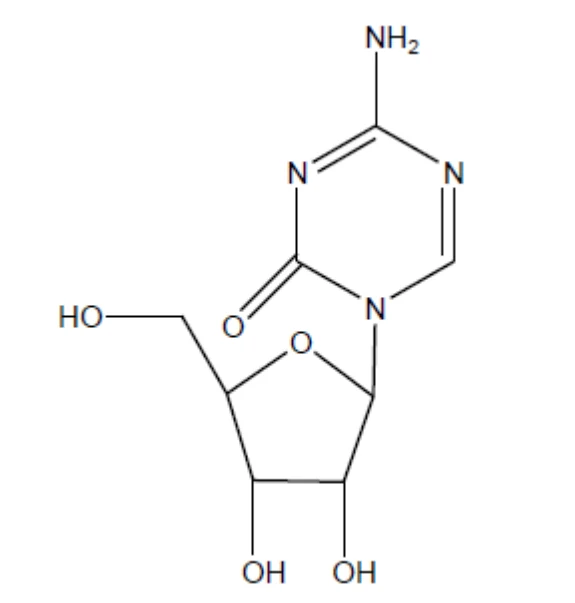
Physicochemical properties: Azacitidine is a white to off-white solid. Azacitidine was found to be insoluble in acetone, ethanol, and methyl ethyl ketone; slightly soluble in ethanol/water (50/50), propylene glycol, and polyethylene glycol; sparingly soluble in water, water saturated octanol, 5% dextrose in water, N-methyl-2-pyrrolidone, normal saline and 5% Tween 80 in water; and soluble in dimethylsulfoxide (DMSO).
14 CLINICAL TRIALS
14.1 Clinical Trials by Indication
Phase 3 Pivotal International Open-Label Randomized Survival Study in Higher Risk MDS (AZA-001)
Trial Design and Study Demographics
Table 9 - Summary of patient demographics for clinical trials in Higher Risk MDS
| Study # | Study design | Dosage, route of administration and duration | Study subjects (n) | Mean age (Range) | Sex |
AZA- 001 (Higher Risk MDS) | A prospective international, multicenter, controlled open label, randomized (1:1), parallel group Phase 3 comparative study. | Azacitidine for injection 75 mg/m2 daily for 7 days; 21day rest (28- day treatment cycle) median of 9 cycles (range = 1- 39 days) median daily dose 75 mg/m2 median cycle | Azacitidine for injection plus best supportive care (BSC) N=179 Conventional care regimens (CCR) plus BSC N= 179 (105 to BSC alone, 49 to low dose cytarabine and 25 to chemotherapy with cytarabine and anthracycline). | Azacitidine for injection 68.0 (42 - 83) CCR 69.2 (38 - 88) | 30% (F) 70% (M) |
A prospective international, multicenter, controlled open label, randomized (1:1), parallel group Phase 3 comparative study was designed to determine whether azacitidine for injection resulted in improvement of survival in patients with primary MDS (AZA-001).
This pivotal study enrolled patients with an IPSS classification of Intermediate-2 (INT-2) or High primary MDS diagnosed as RAEB or RAEB-T according to the FAB classification. Under the current WHO classification system, RAEB-T patients (20-30 % blasts in the bone marrow) are now considered to be AML patients with 20% to 30% blasts and multi-lineage dysplasia. The primary endpoint of the study was overall survival.
Azacitidine for injection was administered at a subcutaneous dose of 75 mg/m2 daily for 7 days, followed by a rest period of 21 days (28-day treatment cycle) for a median of 9 cycles (range = 1-39 days). The median daily dose of azacitidine for injection was 75 mg/m2, and the median cycle length was 34 days (i.e., the treatment cycle was extended by approximately 1 week based on the time of nadir and hematologic recovery).
Of the 358 patients enrolled in the study, 179 were randomized to receive azacitidine for injection plus best supportive care (BSC) and 179 were randomized to receive conventional care regimens (CCR) plus BSC (105 to BSC alone, 49 to low dose cytarabine and 25 to chemotherapy with cytarabine and anthracycline). Patients were pre selected by their physician to 1 of the 3 CCR prior to randomization.
The azacitidine for injection and CCR groups were comparable for baseline parameters (Table 10).
Table 10: AZA-001 Baseline Demographics and Disease Characteristics
| Parameter | Azacitidine for injection (N=179) | Combined CCR (N=179) |
| Gender – n (%) | ||
| Male | 132 (73.7) | 119 (66.5) |
| Female | 47 (26.3) | 60 (33.5) |
| Race – n (%) | ||
| Caucasian | 177 (98.9) | 175 (97.8) |
| Asian/Oriental | 2 (1.1) | 3 (1.7) |
| Hispanic | 0 (0.0) | 1 (0.6) |
| Age (years) | ||
| Mean ± SD | 68.0 ± 7.57 | 69.2 ± 7.87 |
| Range | 42 - 83 | 38 - 88 |
| FAB Classification - n (%) | ||
| RAEB | 104 (58.1) | 103 (57.5) |
| RAEB-T | 61 (34.1) | 62 (34.6) |
| mCMMoL | 6 (3.4) | 5 (2.8) |
| WHO Classification - n (%) | ||
| RAEB-1 | 14 (7.8) | 17 (9.5) |
| RAEB-2 | 98 (54.7) | 95 (53.1) |
| CMMoL-1 and CMMoL-2 | 11 (6.2) | 5 (2.8) |
| AML | 55 (30.7) | 58 (32.4) |
| Indeterminate | 1 (0.6) | 4 (2.2) |
| IPSS - n (%) | ||
| INT-1 (0.5 to 1.0) | 5 (2.8) | 13 (7.3) |
| INT-2 (1.5 to 2.0) | 76 (42.5) | 70 (39.1) |
| High (≥ 2.5) | 82 (45.8) | 85 (47.5) |
| Transfusion product used in 56 days before randomization - n (%) | ||
| Any transfusion product | 115 (64.2) | 117 (65.4) |
| Blood cells, packed human | 111 (62.0) | 114 (63.7) |
| Platelets | 38 (21.2) | 27 (15.1) |
Study Results
Table 11 - Effect of Azacitidine for injection on RBC Transfusions in MDS Patients
| Primary Endpoints | Azacitidine for injection plus BSC (n= 179) | Conventional Care Regimens (n= 179) |
| Number and percent of patients who were transfusion dependent at baseline who became transfusion independent on treatmenta | 50/111 (45.0%) (95% CI: 35.6%, 54.8%) | 13/114 (11.4%) (95% CI: 6.2%, 18.7%) |
Number and percent of patients who were transfusion-independent at baseline who became transfusion-dependent on treatment | 10/68 (14.7%) (95% CI: 7.3%, 25.4%) | 28/65 (43.1%) (95% CI: 30.9%, 56.0%) |
a A patient was considered RBC transfusion independent during the treatment period if the patient had no RBC transfusions during any 56 consecutive days or more during the treatment period. Otherwise, the patient was considered transfusion dependent.
In the ITT analysis of 358 patients (179 azacitidine for injection and 179 CCR), azacitidine for injection treatment was associated with a median survival of 24.46 months versus 15.02 months for those receiving CCR treatment, a difference of 9.44 months, with a stratified log-rank p-value of 0.0001. The hazard ratio for the treatment effect was 0.58 (95 % CI: 0.43, 0.77). The two year survival rates were 50.8 % in patients receiving azacitidine for injection versus 26.2 % in patients receiving CCR (p < 0.0001).
Figure 1: Kaplan-Meier Curve of Time to Death from Any Cause: Intent-to Treat Population
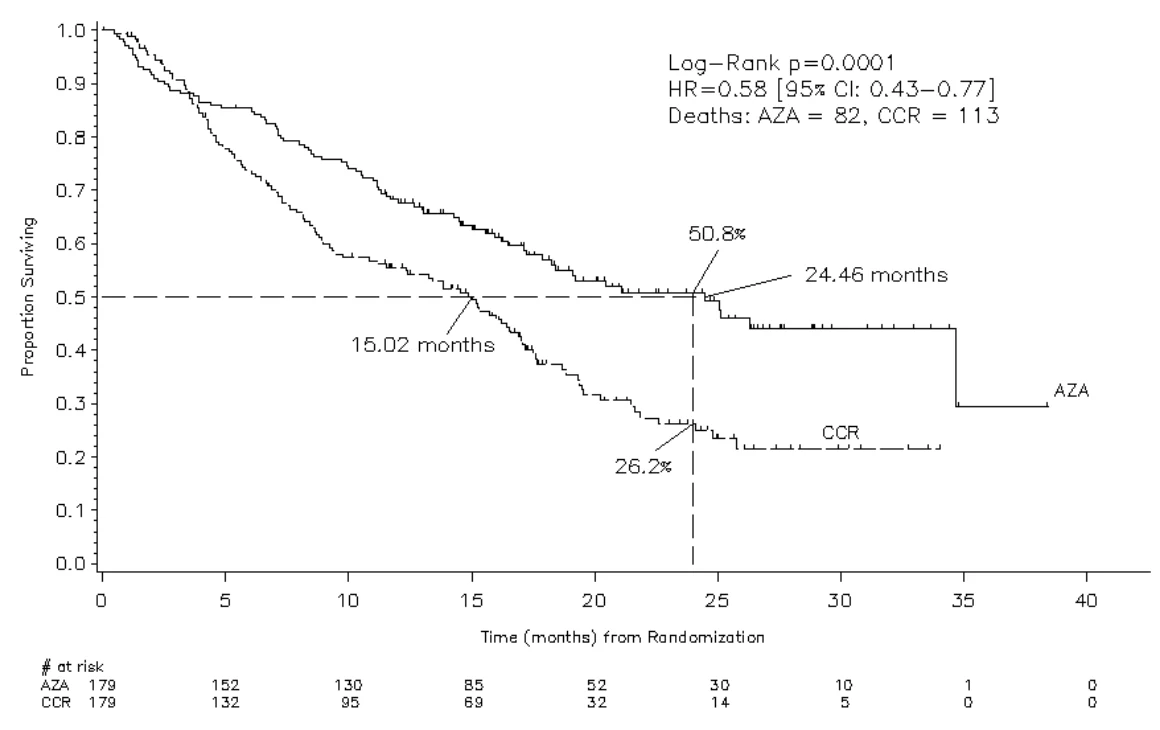
KEY: AZA=azacitidine for injection; CCR=conventional care regimens; CI=confidence interval; HR=hazard ratio
The survival benefits of azacitidine for injection were consistent regardless of the CCR treatment option (BSC alone, low dose cytarabine plus BSC or standard induction chemotherapy plus BSC) utilized in the control arm.
Figure 2 provides a graphical representation of hazard ratios and 95% CI for overall survival for the comparison of azacitidine for injection versus combined CCR by subgroup. The azacitidine for injection group had a reduced risk of death compared with patients in the combined CCR group for all subgroups. The intent-to-treat hazard ratio of 0.58 is captured within the confidence interval of all subgroups, which represents an overall consistency of the survival benefit within each subgroup.
Figure 2: Hazard Ratio and 95%Confidence Interval for Overall Survival by Subgroup for Azacitidine for injection Versus Combined CCR (ITT Population)
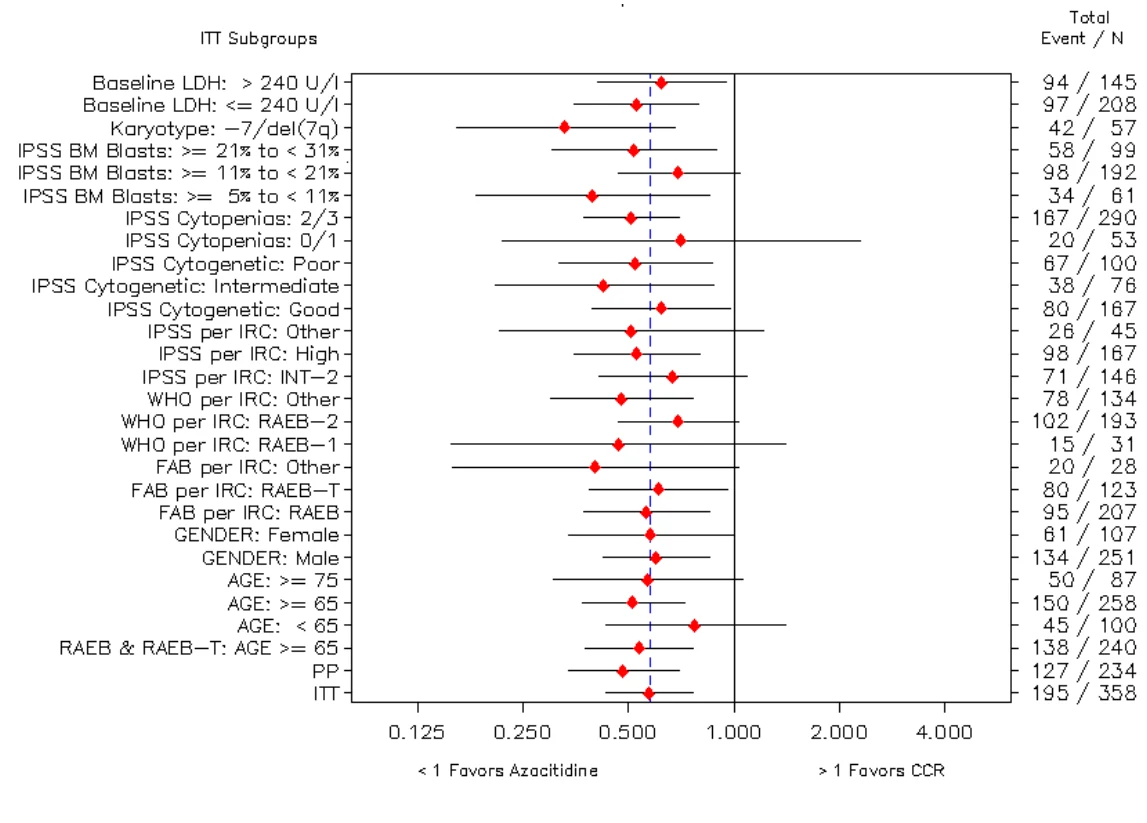
When IPSS cytogenetic subgroups were analyzed, similar findings in terms of median overall survival were observed in all groups (good, intermediate, poor cytogenetics, including monosomy 7).
On analyses of age subgroups, an increase in median overall survival was observed for all groups (< 65 years, ≥ 65 years and ≥ 75 years).
Azacitidine for injection treatment was associated with a median time to death or transformation to AML of 13.0 months versus 7.6 months for those receiving CCR treatment, an improvement of 5.4 months with a stratified log rank p value of 0.0025. Median time to AML transformation (measured from randomization to 30% bone marrow blasts or greater at last bone marrow assessment) was 17.8 months in the azacitidine for injection group compared with 11.5 months in the CCR group (hazard ratio, 0.50 [95% CI, 0.35 to 0.70], p<0.001).
Azacitidine for injection treatment was also associated with a reduction in cytopenias, and their related symptoms. Azacitidine for injection treatment led to a reduced need for red blood cell transfusions (see Table 11). In patients treated with azacitidine for injection who were RBC transfusion dependent at baseline and became transfusion independent, the median duration of RBC transfusion independence was 13.0 months.
Ad-hoc Analysis of Efficacy in WHO AML Patients in Study AZA-001
Trial Design and Study Demographics
Table 12 - Summary of patient demographics for clinical trials in Study AZA-001 (Ad-hoc Analysis)
| Study # | Study design | Study subjects (n) | Median age (Range) | Sex |
AZA-001 (Ad-hoc Analysis) | Ad hoc study using FAB MDS classification for randomization | Azacitidine for injection N=55 CCR N=58 | Azacitidine for injection 70 (52 -80) CCR 70 (50-83) | Azacitidine for injection 67.3% (M) 32.7% (F) CCR 70.7% (M) 29.3% (F) |
The AZA-001 study used the FAB MDS classification for randomization. As the WHO classification of MDS became more widely accepted, the FAB entry diagnosis was reclassified by the IRC. According to the WHO classification, 113 out of 358 patients had entry diagnosis of AML with 20-30% blasts and multi-lineage dysplasia. These AML patients were randomly assigned to receive either azacitidine for injection (n=55) or CCR (n=58). The two groups (azacitidine for injection vs. CCR) were well balanced with respect to age (median, Min, Max): 70 (52, 80) and 70 (50, 83) years old; gender (M/F, %): 67.3/32.7 and 70.7/29.3; ECOG performance status (0/1/2): 29.1/63.6/7.3 and 37.9/58.6/0; IPSS (Int-2/High/Not applicable, %): 5.5/85.5/3.6 and 19.0/77.6/3.4, BM blasts (median, Min, Max, %): 23.0 (20, 34) and 23.1 (13.0, 68.9) and transfusion dependence (RBC/Platelet, %): 61.8/27.3 and 67.2/17.2.Overall, 24% of patients had unfavourable karyotype (-7/7q- or complex): azacitidine for injection 25% and CCR 22%; and 72% had an intermediate or good karyotype (azacitidine for injection 69% and CCR 74%). All AML patients had ≥ 1 cytopenia; 94% had multi- lineage dysplasia in both groups.
Study Results
In the subgroup analysis of the 113 patients (55 azacitidine for injection and 58 CCR) with 20-30% blasts and multilineage dysplasia classified as AML according to WHO classification, azacitidine for injection treatment was associated with a median survival of 24.5 months versus 16.0 months for those receiving CCR treatment, a difference of 8.5 months, with a stratified log-rank p-value of 0.0038. The hazard ratio for the treatment difference was 0.47 (95% CI: 0.28, 0.79). The two year survival rates were 50.2% in patients receiving azacitidine for injection versus 15.9% in patients receiving CCR (p <0.0007).
Of patients who were RBC transfusion dependent at baseline, 41.2% became RBC transfusion independent in the azacitidine for injection group, compared with 17.9% of the patients in the combined CCR group. The percentage of patients who were platelet transfusion dependent at baseline and became platelet transfusion independent during the treatment period was similar in the azacitidine for injection (53.3%) and combined CCR groups (40.0%).
The rate of infection requiring IV antibiotic, antifungal, or antiviral therapy was approximately 2- fold lower with azacitidine for injection compared to that of with CCR (0.58 vs. 1.14 rate per patient-year). The relative risk of such infections was 0.51 (95% CI 0.29, 0.78; p = 0.0029) indicating a 49% risk reduction in the azacitidine for injection group relative to the CCR group.
In patients with one or more cytogenetic abnormalities at baseline, the percentage of patients with a major cytogenetic response was similar in the azacitidine for injection and combined CCR groups. Minor cytogenetic response was statistically significantly (p = 0.0015) higher in the azacitidine for injection group (34 %) compared with the combined CCR group (10 %).
16 NON-CLINICAL TOXICOLOGY
Toxicology data were collected from in vitro studies and studies conducted in mice, rats, dogs, and rhesus monkeys. An overview of the principal toxicologic studies is provided in Table 13. The majority of the non-clinical safety information is derived from published scientific literature. These studies were not conducted according to current scientific / regulatory standards or guidelines.
Toxicity in animals, including effects on target organs (bone marrow, lymphoid tissues, liver and kidney), carcinogenicity, and severe reproductive toxicity occurred at administered dose levels in animals that are considerably lower than the intended clinical dose of 75 mg/m2.
The relationship between observed toxicity and systemic exposure to azacitidine has not been well characterized in animals.
Table 13: Toxicology Program
| Study Type and Duration | Route of Administration | Species or Test System | Results |
| Single-dose toxicity | PO, IP, and IV IV IV | Mouse Rat Dog | The lethal IV dose in 50% (LD50) of the animals after a single administration was approximately 117 mg/kg (351 mg/m2) in mice and 51 mg/kg (306 mg/m2) in rats. The approximate lethal dose in dogs was 13 mg/kg (266 mg/m2). |
| Study Type and Duration | Route of Administration | Species or Test System | Results |
Repeat-dose toxicity 5 days 5 days 5 days and 5 days in 2 cycles 2 days 14 days 14 days | PO, IP, and IV IV IV PO PO IV | Mouse Dog Dog Dog Dog Monkey | The animal models in toxicology were all more sensitive than humans to the toxicity of azacitidine. In the toxicology species, the main target organs were identified to be the bone marrow, liver, kidneys, and lymphoid tissue (spleen, lymph nodes). |
| Genotoxicity | In vitro | Salmonella typhimurium Escherichia coli Human lymphoblast cells Mouse lymphoma cells Hamster embryo cells | Azacitidine causes genotoxicity. Azacitidine is mutagenic and clastogenic in bacterial and mammalian cells. |
Carcinogenicity 50 and 52 weeks 9 months | IP IP | Mouse Rat | Azacitidine has shown carcinogenic potential in mice and rats after IP administration. |
| Fertility | IP | Rat | Azacitidine has shown potential to produce adverse effects on male reproduction and fertility, including decreased testes and epididymides weights, decreased sperm counts, and decreased pregnancy rates. |
| Study Type and Duration | Route of Administration | Species or Test System | Results |
Embryo Fetal Development | IP | Mouse Rat | Azacitidine produces dose- dependent embryotoxicity, embryolethality and teratogenicity in mice and rats after IP administration. Fetal malformations were noted at 0.3 mg/kg (1.8 mg/m2) in rats and at 2 mg/kg (6 mg/m2) in mice. |
General Toxicology: Single-dose studies in mice, rats, and dogs indicated that rodents are less sensitive than dogs to the acute effects of azacitidine. In rats, a lethal dose of approximately 51 mg/kg (306 mg/m2) after IV administration was observed.
The main target organs of toxicity in animals after repeated administration are the bone marrow, liver, kidneys, and lymphoid tissues (spleen, lymph nodes, thymus). In a 14 -day, repeat-dose PO study in dogs, dosing at 0.8 mg/kg/day (16 mg/m2) was discontinued on day 10 due to morbidity. Findings consisted of mixed cell depletion in the bone marrow, lymphoid depletion in the thymus, spleen and lymph nodes, and centrilobular hepatocellular vacuolation in the liver. Dose-related findings were present at ≥ 0.2 mg/kg/day (≥ 4 mg/m2/day). In monkeys administered 0.28 – 2.2 mg/kg/day (4.1 – 32 mg/m2) IV for 14 days, mortality was noted at the high dose after 8 and 14 days. In these animals there were elevations of serum AST (SGOT), ALT (SGPT), and BUN. Microscopically there was bone marrow hypoplasia, areas of necrosis and cloudy swelling of tubular epithelium in the kidneys, and cloudy swelling or fatty change in the liver. The NOAEL in monkeys was 0.28 mg/kg/day (4 mg/m2).
Carcinogenicity: Carcinogenicity studies have shown that azacitidine is a carcinogen in mice and rats after IP administration. In Sprague-Dawley rats administered 2.6 mg/kg (15.6 mg/m2) and 5.2 mg/kg (31.2 mg/m2) of azacitidine for approximately 9 months (34 weeks), neoplastic lesions were noted in multiple tissues.
Genotoxicity: Genotoxicity studies conducted in vitro have consistently shown that azacitidine is both mutagenic and clastogenic and induces chromosome aberrations in vitro. Azacitidine caused a mutagenic response in bacterial systems at 1-10 mcg/plate, and induced an increased number of micronuclei in mammalian cells at 0.1 to 5 mcM.
Reproductive and Developmental Toxicology: In fertility studies in male rats, azacitidine treatment resulted in reduced fertility after IP administration of 5 mg/kg (30 mg/m2) 3 times per week for 11 weeks before mating. Males treated with 2.5 mg/kg (15 mg/m2) were fertile but mating with untreated females resulted in increases in preimplantation embryo loss and increases in the average number of abnormal embryos.
In mice a 44% frequency of intrauterine embryonal death (increased absorption) were observed after a single intraperitoneal (IP) injection of 6mg/m2 (approximately 8% of the recommended human dose on a mg/m2 basis) of azacitidine on gestation day 10. Developmental abnormalities in the brain have been detected in mice given azacitidine on or before gestation day 15.
In rats, azacitidine was embryotoxic when given IP on gestation days 4 -8 (postimplantation) at 6.0 mg/m2 (1.0 mg/kg) although treatment during the preimplantation period (on gestation days 1-3) had no adverse effect on the embryos at this dose.
Azacitidine caused an increase in resorptions when administered as a single IP dose of ≥ 6.0 mg/m2 (1.0 mg/kg) on gestation days 9 or 10. Statistically significant fetal anomalies were observed in rats following IP dosing of ≥ 1.8 mg/m2 (0.3 mg/kg) on gestation day 1 to 8, or after a single IP dose of 3 to 12 mg/m2 (0.5 to 2 mg/kg, respectively) on gestation day 9, 10, 11 or 12. Findings included: CNS anomalies (exencephaly/encephalocele), limb anomalies (micromelia, club foot, syndactyly, oligodactyly) and others (microphthalmia, micrognathia, gastroschisis, oedema, and rib abnormalities). Doses in these studies ranged from 2.4 to 16% of the recommended human daily dose on a mg/m2 basis.
Special Toxicology: An in vivo safety pharmacology study in dogs receiving azacitidine at single intravenous doses of ≥ 2 mg/kg reported increased heart rate, decreased blood pressure and increased QTc interval. The interpretations of this study are limited by concurrent confounding effects associated with toxicity including severe clinical signs (e.g., vomiting, flushed skin, decreased food consumption, and decreased spontaneous locomotor activity as well as fecal changes such as watery, mucous, or loose stool) in dogs. Additionally, large excursions in heart rate, decreases in potassium, and concurrent elevated autonomic nervous system tone as indicated by a spectrum of clinical signs and tachycardia limit the interpretation of the measurements. Results from in vitro tissue studies support the conclusion that azacitidine had no direct effects on vasodilatory parameters in the isolated rat aorta, no positive chronotropic effect was observed on the pacemaker activity of the guinea pig right atria, and there was no effect on heart rate and contractility in the isolated perfused guinea pig hearts; therefore, suggesting that blood pressure and heart rate changes in the cardiovascular dog study were also due to indirect effects of azacitidine.
17 SUPPORTING PRODUCT MONOGRAPHS
- 1. PrVIDAZA® (powder, 100 mg azacitidine per vial), submission control 282916, Product Monograph, Bristol-Myers Squibb Canada. (FEB 13, 2024)