


Product Monograph - Basaglar (Eli Lilly Canada, PM 00038146)
SUMMARY PRODUCT INFORMATION
| Route of Administration | Dosage Form / Strength | Clinically Relevant Nonmedicinal Ingredients |
| Subcutaneous | Solution for Injection, 100 units/mL | Glycerin, m-cresol, zinc oxide and water for injection. Hydrochloric acid and sodium hydroxide for pH adjustment. |
DESCRIPTION
BASAGLAR™ [insulin glargine (rDNA origin)] injection is a recombinant human insulin analogue that is a long-acting, parenteral blood-glucose-lowering agent. BASAGLAR is produced by recombinant DNA technology utilizing a non-pathogenic laboratory strain of Escherichia coli (K12) as the production organism.
Insulin glargine differs from natural human insulin in that the amino acid asparagine at position 21 of the A-chain is replaced by glycine and two arginines are added to the C-terminus of the B-chain (see PHAMACEUTICAL INFORMATION, Drug Substance).
The similarity between the subsequent entry biologic (SEB) product BASAGLAR and the reference product Lantus® (insulin glargine) was established in accordance with the Guidance for Sponsors: Information and Submission Requirements for Subsequent Entry Biologics (SEBs).
INDICATIONS AND CLINICAL USE
Comparability between BASAGLAR and the reference product has been established based on comparative chemistry and manufacturing studies, comparative non-clinical studies and comparative pharmacokinetic/pharmacodynamic (PK/PD) and clinical trials. Comparative PK/PD and clinical trials were carried out in healthy volunteers and in adult patients with type 1 diabetes mellitus or type 2 diabetes mellitus. The indication for pediatric type 1 diabetes mellitus (age: >6 years old) has been granted on the basis of similarity, demonstrated between BASAGLAR and the reference product, in product quality, mechanism of action, disease pathophysiology, safety profile, dosage regimen and based on clinical experience with the reference products.
BASAGLAR (insulin glargine (rDNA origin) injection) is a recombinant human insulin analogue indicated for once-daily subcutaneous administration in the treatment of patients over 17 years of age with type 1 or type 2 diabetes mellitus who require basal (long-acting) insulin for the control of hyperglycemia.
BASAGLAR is also indicated in the treatment of pediatric patients (>6 years old) with type 1 diabetes mellitus who require basal (long-acting) insulin for the control of hyperglycemia.
CONTRAINDICATIONS
BASAGLAR is contraindicated in patients who are hypersensitive to insulin glargine or to any ingredient in the formulation or component of the container. For a complete list of excipients, see DOSAGE FORMS, COMPOSITION AND PACKAGING.
WARNINGS AND PRECAUTIONS
Serious Warnings and Precautions Hypoglycemia is the most common adverse effect of insulin, including BASAGLAR (see WARNINGS AND PRECAUTIONS, Endocrine and Metabolism, Hypoglycemia). As with all insulins, the timing of hypoglycemia may differ among various insulin formulations. Glucose monitoring is recommended for all patients with diabetes. Uncorrected hypoglycemic or hyperglycemic reactions can cause loss of consciousness, coma, or death. Any change of insulin should be made cautiously and only under medical supervision. BASAGLAR should not be used for intravenous, intramuscular or insulin pump administration. The prolonged duration of activity of insulin glargine is dependent on injection into subcutaneous tissue. Intravenous administration of the usual subcutaneous dose could result in severe hypoglycemia. BASAGLAR must not be mixed with any other insulin or diluted with any other solution. If BASAGLAR is diluted or mixed, the solution may become cloudy, and the pharmacokinetic/ pharmacodynamic profile (e.g., onset of action, time to peak effect) of BASAGLAR and/or the mixed insulin may be altered in an unpredictable manner (see DOSAGE AND ADMINISTRATION). BASAGLAR shall not be used if it is not water-clear and colourless or if it has formed a deposit of solid particles on the wall of the cartridge (see DOSAGE AND ADMINISTRATION). |
General
As with all insulin preparations, the time course of BASAGLAR action may vary in different individuals or at different times in the same individual and the rate of absorption is dependent on blood supply, temperature, and physical activity.
Hypokalemia is among the potential clinical adverse effect associated with the use of all insulin therapies, particularly when given intravenously. However, BASAGLAR should not be given intravenously (see DOSAGE AND ADMINISTRATION, Administration). If left untreated, hypokalemia may cause respiratory paralysis, ventricular arrhythmia, and death. This potential clinical adverse effect may be relevant in patients who are on potassium lowering drugs or losing potassium through other means (e.g. diarrhea).
Stress or concomitant illness, especially infectious and febrile conditions may change insulin requirements.
Insulin may cause sodium retention and edema, particularly if previously poor metabolic control is improved by intensified insulin therapy.
Patients with human insulin antibodies may be hypersensitive to other insulins, with a risk of hypoglycemia and/or cross-reactivity.
Thiazolidinediones (TZDs), alone or in combination with other antidiabetic agents (including insulin), can cause heart failure and edema. The combination of TZD with insulin is not indicated for the treatment of type 2 diabetes mellitus. Please refer to the respective TZD product monograph Warnings and Precautions information when the use of these drugs in combination with any insulin, including BASAGLAR, is contemplated.
To avoid transmission of disease, a cartridge or prefilled syringe shall not be used by more than one person.
Accidental mix-ups between insulin glargine and other insulins, particularly short-acting insulins, have been reported. To avoid medication errors between insulin glargine and other insulins, patients should be instructed to always check the insulin label before each injection (see ADVERSE REACTIONS).
Endocrine and Metabolism
Hypoglycemia
As with all insulin preparations, hypoglycemic reactions, especially during initiation of therapy, may be associated with the administration of BASAGLAR. Hypoglycemia is the most common adverse effect of insulins (see ADVERSE REACTIONS). Hypoglycemia may occur if the insulin dose is too high in relation to the insulin requirement (see OVERDOSAGE). Early warning symptoms of hypoglycemia may be different, be less pronounced or absent under certain conditions, as for example, in patients whose glycemic control is markedly improved, in elderly patients, in patients where an autonomic neuropathy is present, in patients whose hypoglycemia is developing gradually, in patients with a long history of diabetes, in patients with psychiatric illness, or in patients receiving concurrent treatment with certain other drugs such as beta-blockers. Hypoglycemia may occur with other substances including alcohol and psychiatric medications, street drugs, birth control pills, injections and patches (see DRUG INTERACTIONS: Drug-Drug Interactions). Such situations may result in severe hypoglycemia (and possibly, loss of consciousness) prior to patients’ awareness of hypoglycemia.
The time of occurrence of hypoglycemia depends on the action profile of the insulins used and may therefore, change when the treatment regimen or timing of administration is changed.
As with all insulins, prolonged or severe hypoglycemic attacks, especially if recurrent, may lead to neurological damage, loss of consciousness, coma or death (see ADVERSE REACTIONS). Severe hypoglycemia has been observed in clinical trials with insulin, including trials with insulin glargine.
As with all insulins, additional caution (including intensified blood glucose monitoring) should be exercised in patient populations who are at greater risk for clinically significant sequelae from hypoglycemic episodes.
In a clinical study with the reference product (Lantus®), symptoms of hypoglycemia or counter regulatory hormone responses were similar after intravenous insulin glargine and regular human insulin both in healthy subjects and adult patients with type 1 diabetes.
Hypoglycemic reactions following treatment with insulin products such as BASAGLAR are mostly mild and easily managed. Changes in insulin therapy or changes in life style (i.e. diet, omission of a meal, exercise/physical activity) may require a change in dosage to avoid hypoglycemia. Glucose monitoring is recommended for all patients with diabetes.
Diabetic patients should be instructed to carry a quick source of sugar (about 15 g of glucose) to prevent the progression of a hypoglycemic reaction, should one occur (see PART III: CONSUMER INFORMATION).
The prolonged effect of subcutaneous BASAGLAR may delay recovery from hypoglycemia. For patients being switched from twice-daily neutral protamine hagedorn (NPH) insulin to once-daily BASAGLAR the recommended initial BASAGLAR dose is 80% of the total NPH dose that is being discontinued. This dose reduction will lower the likelihood of hypoglycemia.
Hyperglycemia
The use of too low insulin dosages or discontinuation of treatment, especially in type 1 diabetes, may lead to hyperglycemia and diabetic ketoacidosis. Uncorrected hyperglycemic reactions can cause loss of consciousness, coma, or death.
Immune
Injection Site and Local Allergic Reactions
As with any insulin therapy, lipodystrophy may occur at the injection site and delay insulin absorption. Other injection site reactions with insulin therapy include redness, pain, itching at the injection site, hives, swelling, and inflammation. Continuous rotation of the injection site within a given area may help to reduce or prevent these reactions. Most minor reactions to insulins usually resolve in a few days to a few weeks. They may occur if the injection is not properly made (irritants in the skin cleansing agent or poor injection technique), or if the patient is allergic to the insulin or any excipients.
Rarely, subcutaneous (SC) administration of insulin products can result in lipoatrophy (depression in the skin) or lipohypertrophy (enlargement or thickening of tissue). Patients should be advised to consult their doctor if they notice any of these conditions.
Reports of injection site pain were more frequent with the reference product (Lantus®) than NPH human insulin (2.7% insulin glargine versus 0.7% human NPH). The reports of pain at the injection site were usually mild and did not result in discontinuation of therapy. Other possibly related treatment-emergent injection site reactions occurred at similar incidences with both insulin glargine and NPH human insulin.
Systemic Allergic Reactions
Immediate-type allergic reactions are rare. Such reactions to insulin (including insulin glargine) or the excipients may, for example, be associated with generalized skin reactions, angioedema, bronchospasm, hypotension, anaphylactic reaction or shock and may be life threatening (see CONTRAINDICATIONS and ADVERSE REACTIONS).
Antibody Production
Insulin administration may cause insulin antibodies to form. In clinical studies with the reference product (Lantus®), antibodies that cross-react with human insulin and insulin glargine were observed in both NPH human insulin and insulin glargine treatment groups with similar percentages of increased and decreased titers. There was no correlation in either treatment group between increases or decreases in these antibody titers and changes in either A1C or total insulin requirements. In theory, the presence of such insulin antibodies may necessitate adjustment of the insulin dose in order to correct a tendency to hyperglycemia or hypoglycemia, but has not been found on review of Lantus® clinical trials and available post-marketing data.
Intercurrent conditions
Insulin requirements may be altered during intercurrent conditions such as infection or illness, emotional disturbances, or stress.
Renal/Hepatic/Biliary/Pancreatic Impairment
Although studies have not been performed in patients with diabetes and hepatic or renal impairment, BASAGLAR requirements may be diminished due to reduced capacity for gluconeogenesis and reduced insulin metabolism (see ACTION AND CLINICAL PHARMACOLOGY, Special Populations and Conditions). Careful glucose monitoring and dose adjustments of insulin or insulin analogues including BASAGLAR may be necessary in patients with hepatic or renal dysfunction.
Retinopathy
A marked change in glycemic control may cause temporary visual impairment, due to temporary alteration in the turgidity and refractive index of the lens.
Long-term improved glycemic control decreases the risk of progression of diabetic retinopathy. However, as for all insulin regimens, intensification of insulin therapy with abrupt improvement in glycemic control may be associated with temporary worsening of diabetic retinopathy.
In patients with proliferative retinopathy, particularly if not treated with photocoagulation, severe hypoglycemic episodes may result in transient amaurosis (see ADVERSE REACTIONS, Eye disorders).
Transferring Patients from Other Insulins
Any change of insulin should be made cautiously and only under medical supervision. Changes in insulin strength, timing of administration, manufacturer, type (e.g., regular, NPH, or insulin analogues), species (animal, human), or method of manufacture (recombinant DNA versus animal-source insulin) may result in the need for a change in dosage. Concomitant oral antidiabetic treatment may need to be adjusted.
As with all insulins, when transferring to BASAGLAR, the early warning symptoms of hypoglycemia may be changed, be less pronounced, or absent. The prolonged effect of subcutaneous BASAGLAR may delay recovery from hypoglycemia (see DOSAGE AND ADMINISTRATION).
Special Populations
Pregnant Women
Teratogenic effects:
For insulin glargine no clinical data on exposed pregnancies from controlled clinical studies are available. Post Marketing data for the reference product (Lantus®) on pregnant women (more than 1000 pregnancy outcomes) indicate no reports of specific adverse effects of insulin glargine on maternal and fetal/neonatal outcomes.
Animal data do not indicate reproductive toxicity for the reference product (Lantus®) (see Part II: TOXICOLOGY, Reproduction Toxicity and Impairment of Fertility).
It is essential for patients with diabetes or a history of gestational diabetes to maintain good metabolic control throughout pregnancy to prevent adverse outcomes associated with hyperglycemia.
Insulin requirements may decrease during the first trimester and generally increase during the second and third trimesters. Immediately after delivery, insulin requirements decline rapidly (increased risk of hypoglycemia). Careful monitoring of glucose control is essential.
Patients with diabetes should be advised to inform their doctor if they are pregnant or are contemplating pregnancy.
Nursing Women
It is unknown whether insulin glargine is excreted in significant amounts in human milk. Many drugs, including human insulin, are excreted in human milk. There are no adequate and well controlled studies in nursing women. For this reason, caution should be exercised when
BASAGLAR is administered to a nursing woman. Lactating women may require adjustments in insulin dose and diet.
Pediatrics (>6 years of age)
BASAGLAR can be used in children over 6 years of age with type 1 diabetes mellitus, based on the established safety and effectiveness of the reference product (Lantus®) in children over 6 years of age with type 1 diabetes mellitus (see ACTIONS AND CLINICAL PHARMACOLOGY, Special Populations and Conditions, and INDICATIONS AND CLINICAL USE).
Geriatrics (>65 years of age)
In controlled clinical studies comparing the reference product (Lantus®) to NPH human insulin, 593 of 3890 patients with type 1 and type 2 diabetes were 65 years and older. The only difference in safety or effectiveness in this subpopulation compared to the entire study population was an expected higher incidence of cardiovascular events in both insulin glargine and NPH human insulin treated patients.
Of the total number of subjects in a clinical study of patients with type 2 diabetes who were treated with BASAGLAR or Lantus®, each in combination with oral agents in a controlled clinical trial environment, 29.8% were 65 and over, while 5.6% were 75 and over. No overall differences in safety or effectiveness were observed between these subjects and younger subjects in this 24-week study, and other reported clinical experience has not identified differences in responses between the elderly and younger patients, but greater sensitivity of some older individuals cannot be ruled out. Nevertheless, caution should be exercised when BASAGLAR is administered to geriatric patients.
In elderly patients with diabetes, the initial dosing, dose increments, and maintenance dosage should be conservative to avoid hypoglycemic reactions.
Hypoglycemia may be difficult to recognize in the elderly (see WARNINGS AND PRECAUTIONS, Endocrine and Metabolism, Hypoglycemia). In the elderly, progressive deterioration of renal function may lead to steady decrease in insulin requirements. Careful glucose monitoring and dose adjustments of insulin or insulin analogues including BASAGLAR may be necessary (see WARNINGS AND PRECAUTIONS, Renal/ Hepatic/ Biliary/ Pancreatic Impairment).
Other
The presence of diseases such as Acromegaly, Cushing’s Syndrome, Hyperthyroidism, and Pheochromocytoma can complicate the control of diabetes mellitus.
Re-usable pens to be used with BASAGLAR cartridge
The BASAGLAR cartridge should only be used with the following pens:
- HumaPen® Savvio™ which delivers BASAGLAR in 1 unit dose increments.
- HumaPen Luxura® HD, which delivers BASAGLAR in 0.5 unit dose increments.
- HumaPen Luxura®, which delivers BASAGLAR in 1 unit increments
- HumaPen Memoir®, which delivers BASAGLAR in 1 unit increments
This cartridge should not be used with any other reusable pen as the dosing accuracy has only been established with the listed pens.
Occupational Hazards
The patient’s ability to concentrate and react may be impaired as a result of hypoglycemia or hyperglycemia or, for example, as a result of visual impairment. This may constitute a risk in situations where these abilities are of special importance (e.g. driving a car or operating machinery).
Patients should be advised to take precautions to avoid hypoglycemia whilst driving. This is particularly important in those who have reduced or absent awareness of the warning symptoms of hypoglycemia or have frequent episodes of hypoglycemia. It should be considered whether it is advisable to drive or operate machinery in these circumstances.
ADVERSE REACTIONS
Adverse Drug Reaction Overview- BASAGLAR studies
Type 1 and type 2 diabetes in adults
Two phase 3 safety and efficacy clinical trials were conducted comparing BASAGLAR and Lantus® (insulin glargine), Study ABEB in patients with type 1 diabetes mellitus and Study ABEC in patients with type 2 diabetes mellitus. A total of 1291 patients received at least 1 dose of randomly assigned study drug, with a total of 644 patients receiving BASAGLAR, and 647 patients receiving Lantus® across the 2 studies.
The safety profile of BASAGLAR was consistent with that previously reported for the reference product in patients with type 1 diabetes mellitus or type 2 diabetes mellitus.
In these clinical trials, BASAGLAR and Lantus® were similar in terms of incidences of severe and total hypoglycemia, overall incidence of serious adverse events (SAEs), discontinuations due to adverse events (AEs), treatment-emergent adverse events (TEAEs) (including those possibly related to study drug, procedure, or disease), injection site AEs, or TEAEs captured by the special topic assessment of allergic events.
The most frequently reported TEAEs included nasopharyngitis (BASAGLAR: 9.9%; Lantus®:10.4%), upper respiratory tract infection (BASAGLAR: 6.4%; Lantus®: 5.6%), and diarrhea (BASAGLAR: 3.3%; Lantus®: 3.7%).
In study ABEB, 20 patients (7.5%) in the BASAGLAR group and 11 patients (4.1%) in the Lantus® group reported treatment-emergent allergic events. Most events were mild or moderate in severity, none were reported as serious and none led to discontinuation.
In Study ABEC, the incidence of treatment-emergent allergic events was similar among treatment groups: 21 patients (5.6%) in the BASAGLAR group and 27 patients (7.1%) in the Lantus® group reported treatment-emergent allergic events. Most events were mild or moderate in severity, and none led to discontinuation. One event of severe asthma in the BASAGLAR treatment group was reported as serious, but unrelated to study drug, procedure, or disease.
In clinical studies comparing BASAGLAR to Lantus® in adult patients with type 1 or type 2 diabetes mellitus, the incidence of injection site or local allergic reactions was similar between the two treatment arms.
Injection site adverse events (AEs) were evaluated for pain, pruritus, and rash associated with the injection, as well as the characteristics of the injection site (abscess, nodule, lipoatrophy, lipohypertrophy, or induration). The number of patients experiencing injection site AEs in studies ABEB and ABEC combined were 20 (3.1%) for BASAGLAR and 14 (2.2%) for Lantus®. Most patients in both treatment groups with injection site AEs reported having mild or moderate pain associated with the injection. A total of 3 patients (BASAGLAR: 1 patient; Lantus®: 2 patients) discontinued from the phase 3 studies due to injection site AEs.
Adverse Drug Reaction Overview: Studies with the reference product (Lantus®)
Type 1 and type 2 diabetes in adults
The adverse events most commonly associated with the reference product Lantus® [insulin glargine injection (rDNA origin)] include the following:
Eye disorders
Retinopathy was evaluated in the clinical studies by means of retinal adverse events reported and fundus photography. The numbers of retinal adverse events reported for Lantus® and human NPH treatment groups were similar for patients with type 1 and type 2 diabetes.
Effects of Lantus® on diabetic retinopathy were evaluated in a large 5-year NPH-controlled study in patients with type 2 diabetes in which progression of retinopathy was investigated by fundus photography using a grading protocol derived from the Early Treatment Diabetic Retinopathy Study (ETDRS). The primary outcome in this study was progression by 3 or more steps on the ETDRS scale at study endpoint. The results of this analysis are shown in the table below for the per-protocol (primary analysis) population and indicate non-inferiority of Lantus® to NPH in the progression of diabetic retinopathy as assessed by this outcome. The per-protocol population, which comprised 72.0% of randomized patients, were patients treated with study drug for at least 4 years and had fundus photographs at baseline and after at least 4.5 years post-baseline. The results in the Intent to Treat (ITT) population are similar to the results in the per-protocol population.
Table 1: Number (%) of subjects with 3-step or greater progression in ETDRS at endpoint – per protocol population
| Insulin glargine (N=374) | NPH (N=363) | |
| Subjects with 3-step or greater progression (progression rate) | 53/374 (14.2%) | 57/363 (15.7%) |
| Difference in progression rate (SE) versus NPH | -1.98% (2.57%) | |
| 95% CI versus NPH | (-7.02% to 3.06%) |
Note: % Calculated using number of PP subjects with non-missing data as denominator. ETDRS = early treatment diabetic retinopathy scale. Adjusted for baseline A1C stratum. Margin of noninferiority = 10%.
Figure 1 - Plot of 3-step or greater progression rate over time - PP population
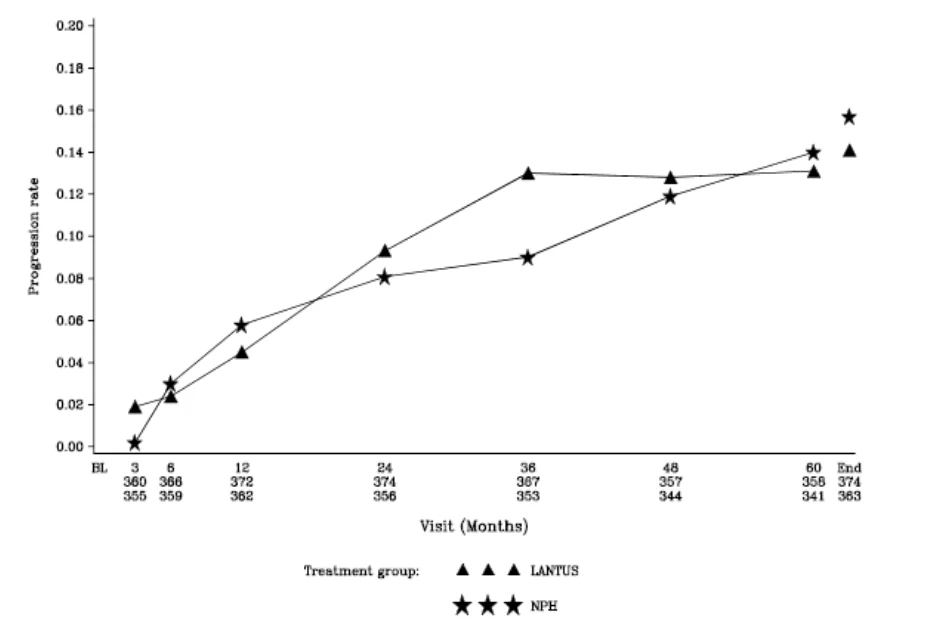
Two pre-specified secondary outcomes were the development of “clinically significant macular edema” (CSME) and “proliferative diabetic retinopathy” (PDR), both based on fundus photograph assessment. CSME developed in 15.6% of the Lantus® group and 14.6% of the NPH group and PDR developed in 5.4% of the Lantus® group and 3.9% of the NPH group. Cataracts were reported more commonly in the Lantus® group, in particular cortical (but not nuclear) cataracts. There was a baseline imbalance in cataracts with a greater incidence in the Lantus® treatment group. Diabetic retinopathy adverse events were reported in 4.9% of Lantus® treated patients vs. 3.8% of NPH treated patients.
Benign prostatic hyperplasia (BPH) was reported as an Adverse Event by 2.7% of the Lantus® group compared to 0.6% of the NPH group; urinary retention was reported by 1.2% vs. none, respectively. Neoplasms benign or malignant were seen in 11.1% of Lantus® patients, vs. 12.3% of NPH patients.
Immune system disorders
- allergic reaction (see WARNINGS AND PRECAUTIONS).
- injection site reaction
Investigations
- antibodies formation (see WARNINGS and PRECAUTIONS).
Metabolism and nutrition disorders
Hypoglycemia: Hypoglycemia, a frequent adverse reaction to insulin therapy, may occur if the insulin dose is too high in relation to the insulin requirement.
As with all insulins, prolonged or severe hypoglycemic attacks, especially if recurrent, may lead to neurological damage, loss of consciousness, coma or death (see WARNINGS and PRECAUTIONS).
In the multinational ORIGIN trial conducted in 12,537 participants, the rates of severe hypoglycemia (affected participants per 100 participant years of exposure) were 1.05 for insulin glargine and 0.30 for Standard Care group and the rates of confirmed non severe hypoglycemia were 7.71 for insulin glargine and 2.44 for Standard Care group. Over the course of this study (median follow-up: 6.2 years), 42% of the patients in the insulin glargine group did not experience any hypoglycemia.
Skin and subcutaneous tissue disorders
- Lipodystrophy, pruritus, and rash (see WARNINGS AND PRECAUTIONS).
Comparative Clinical Trial Adverse Drug Reactions - BASAGLAR
Because clinical trials are conducted under very specific conditions the adverse drug reaction rates observed in the clinical trials may not reflect the rates observed in practice and should not be compared to the rates in the clinical trials of another drug. Adverse drug reaction information from clinical trials is useful for identifying drug-related adverse events and for approximating rates.
Study ABEB- Type 1 diabetes in adults
Study ABEB compared the efficacy and safety of once-daily BASAGLAR and Lantus®, when used subcutaneously in combination with pre-meal insulin lispro for a total of 52 weeks in adult patients with type 1 diabetes mellitus (T1DM).
A total of 535 patients were randomized and received at least 1 dose of study drug (BASAGLAR: 268 patients; Lantus®: 267 patients), of these patients, 167 patients (62.3%) in the BASAGLAR group and 166 patients (62.2%) in the Lantus® group reported TEAEs. Overall, the most frequently reported TEAEs were nasopharyngitis (BASAGLAR 43 patients [16.0%]; Lantus® 45 patients [16.9%]), upper respiratory tract infection (BASAGLAR 22 patients [8.2%]; Lantus® 21 patients [7.9%]), hypoglycemia (BASAGLAR 13 patients [4.9%]; Lantus® 12 patients [4.5%]), and diarrhea (BASAGLAR 12 patients [4.5%]; Lantus® 10 patients [3.7%]).
The most frequently reported TEAEs possibly related to study drug were hypoglycemia (BASAGLAR 10 patients [3.7%]; Lantus® 9 patients [3.4%]) and injection site reaction (BASAGLAR 2 patients [0.7%]; Lantus® 1 patient [0.4%]). The incidence of TEAEs possibly related to study drug were similar between treatment groups.
Overall during the 52-week study, 515 patients (96.3%) reported 40,393 events of total hypoglycemia, (BASAGLAR 256 patients [95.5%], 19,541 events; Lantus® 259 patients [97.0%], 20,852 events). This included events meeting the criteria for severe hypoglycemia, documented symptomatic hypoglycemia with blood glucose (BG) ≤3.9 mmol/L (70 mg/dL), asymptomatic hypoglycemia with BG ≤3.9 mmol/L (70 mg/dL), probable symptomatic hypoglycemia, or unspecified hypoglycemia with BG ≤3.9 mmol/L (70 mg/dL).
Overall during the 52-week study, a total of 21 patients (3.9%) reported 29 events of severe hypoglycemia (BASAGLAR 10 patients [3.7%], 13 events; Lantus® 11 patients [4.1%], 16 events). Severe hypoglycemia was defined as symptoms requiring assistance of another person, and included severe hypoglycemia events with BG ≤3.9 mmol/L (70 mg/dL), BG < 3.0 mmol/L (54 mg/dL), BG missing, or BG not aligned with severe symptoms.
Overall, 3 patients (1.1%) on BASAGLAR reported cardiac events [sinus tachycardia 2 patients (0.7%), cardiac failure 1 patient (0.4%)], and 6 patients (2.2%) on Lantus® reported cardiac events [palpitation 2 patients (0.7%), sinus tachycardia 1 patient (0.4%), bradycardia 1 patient (0.4%), hypertrophic cardiomyopathy 1 patient (0.4%), tachycardia 1 patient (0.4%)].
Overall, 12 patients (4.5%) on BASAGLAR reported vascular events [hypertension 9 patients (3.4%), peripheral arterial occlusive disease 2 patients (0.7%), hot flush 1 patient (0.4%)], and 6 patients (2.2%) on Lantus® reported vascular events [hypertension 5 patients (1.9%), microangiopathy 1 patient (0.4%)].
Table 2 shows the treatment emergent adverse events occurring in ≥1% of patients in either the BASAGLAR or Lantus® treatment group.
Table 2: Treatment Emergent Adverse Events reported in ≥1% of BASAGLAR-treated or Lantus®-treated patients with T1DM (study ABEB)
| Adverse Event | BASAGLAR (N=268) | Lantus® (N=267) |
|---|---|---|
System Organ Class Preferred Term | n (%) | n (%) |
| Gastrointestinal disorders | ||
| Diarrhea | 12 (4.5) | 10 (3.7) |
| Abdominal pain upper | 3 (1.1) | 5 (1.9) |
| Vomiting | 6 (2.2) | 2 (0.7) |
| Gastritis | 3 (1.1) | 4 (1.5) |
| Gastrooesophageal reflux disease | 4 (1.5) | 3 (1.1) |
| Toothache | 4 (1.5) | 1 (0.4) |
| Nausea | 1 (0.4) | 3 (1.1) |
| General disorders and administration site conditions | ||
| Influenza like illness | 3 (1.1) | 5 (1.9) |
| Fatigue | 4 (1.5) | 3 (1.1) |
| Injection site reaction | 3 (1.1) | 2 (0.7) |
| Pyrexia | 4 (1.5) | 0 (0.0) |
| Infections and infestations | ||
| Nasopharyngitis | 43 (16.0) | 45 (16.9) |
| Upper respiratory tract infection | 22 (8.2) | 21 (7.9) |
| Gastroenteritis | 8 (3.0) | 8 (3.0) |
| Sinusitis | 7 (2.6) | 8 (3.0) |
| Adverse Event | BASAGLAR (N=268) | Lantus® (N=267) |
|---|---|---|
| Influenza | 5 (1.9) | 9 (3.4) |
| Bronchitis | 4 (1.5) | 8 (3.0) |
| Urinary tract infection | 4 (1.5) | 5 (1.9) |
| Gastroenteritis viral | 5 (1.9) | 3 (1.1) |
| Pharyngitis | 3 (1.1) | 4 (1.5) |
| Tooth abscess | 1 (0.4) | 4 (1.5) |
| Viral upper respiratory tract infection | 3 (1.1) | 2 (0.7) |
| Cystitis | 0 (0.0) | 3 (1.1) |
| Immune system disorders | ||
| Seasonal allergy | 3 (1.1) | 2 (0.7) |
| Injury, poisoning and procedural complications | ||
| Ligament sprain | 3 (1.1) | 0 (0.0) |
| Metabolism and nutrition disorders | ||
| Hypoglycemia | 13 (4.9) | 12 (4.5) |
| Musculoskeletal and connective tissue disorders | ||
| Back pain | 10 (3.7) | 9 (3.4) |
| Arthralgia | 3 (1.1) | 5 (1.9) |
| Musculoskeletal pain | 2 (0.7) | 5 (1.9) |
| Neck pain | 2 (0.7) | 3 (1.1) |
| Pain in extremity | 3 (1.1) | 2 (0.7) |
| Nervous system disorders | ||
| Headache | 7 (2.6) | 7 (2.6) |
| Dizziness | 6 (2.2) | 0 (0.0) |
| Psychiatric disorders | ||
| Depression | 3 (1.1) | 2 (0.7) |
| Respiratory, thoracic and mediastinal disorders | ||
| Cough | 6 (2.2) | 8 (3.0) |
| Sinus congestion | 6 (2.2) | 5 (1.9) |
| Oropharyngeal pain | 5 (1.9) | 4 (1.5) |
| Nasal congestion | 3 (1.1) | 3 (1.1) |
| Upper respiratory tract inflammation | 4 (1.5) | 2 (0.7) |
| Skin and subcutaneous tissue disorders | ||
| Acne | 2 (0.7) | 3 (1.1) |
| Dermatitis contact | 1 (0.4) | 4 (1.5) |
| Vascular disorders | ||
| Hypertension | 9 (3.4) | 5 (1.9) |
Study ABEC – Type 2 diabetes in adults
Study ABEC compared the efficacy and safety of once-daily BASAGLAR and Lantus®, when used subcutaneously in combination with oral antihyperglycemic medications (OAMs) for 24 weeks in adult patients with type 2 diabetes mellitus (T2DM). Both United States (US) and European (EU) approved Lantus® were used as the reference product.
A total of 756 patients were randomized and received at least 1 dose of study drug (BASAGLAR 376 patients; Lantus® 380 patients).
A total of 196 patients (52.1%) in the BASAGLAR group and 184 patients (48.4%) in the Lantus® group reported TEAEs. Overall, the most frequently reported TEAEs (≥3%) in either treatment group were nasopharyngitis (5.6% in the BASAGLAR arm and 5.8% in the Lantus® arm), upper respiratory tract infection (5.1% in the BASAGLAR arm and 3.9% in the Lantus® arm), and diarrhea (2.4% in the BASAGLAR arm and 3.7% in the Lantus® arm).
Overall, 588 patients (78.5%) reported 7409 events of total hypoglycemia including events with
BG ≤70 mg/dL (BASAGLAR 296 patients [79.4%], 3564 events; Lantus® 292 patients [77.7%], 3845 events). Overall, a total of 4 patients (0.5%) reported 9 events of severe hypoglycemia (BASAGLAR 2 patients [0.5%], 7 events; Lantus® 2 patients [0.5%], 2 events),
Overall, 10 patients (2.7%) on BASAGLAR reported 11 cardiac events [palpitations 3 patients (0.8%), tachycardia 2 patients (0.5%), coronary artery disease 1 patient (0.3%), cardiac failure congestive 1 patient (0.3%), diastolic dysfunction 1 patient (0.3%), left ventricular hypertrophy 1 patient (0.3%), mitral valve incompetence 1 patient (0.3%), ventricular extrasystoles 1 patient (0.3%)], and 8 patients (2.1%) on Lantus® reported 11 cardiac events [coronary artery disease 3 patients (0.8%), cardiac failure congestive 2 patients (0.5%), angina pectoris 1 patient (0.3%), arrhythmia 1 patient (0.3%), atrial fibrillation 1 patient (0.3%), bradycardia 1 patient (0.3%), hypertensive heart disease 1 patient (0.3%), myocardial infarction 1 patient (0.3%)].
Overall, 21 patients (5.6%) on BASAGLAR reported 21 vascular events [hypertension 8 patients (2.1%), hypertensive crisis 3 patients (0.8%), essential hypertension 1 patient (0.3%), hypotension 1 patient (0.3%), aortic arteriosclerosis 1 patient (0.3%), deep vein thrombosis 1 patient (0.3%), femoral artery occlusion 1 patient (0.3%), hematoma 1 patient (0.3%), hypertensive angiopathy 1 patient (0.3%), peripheral arterial occlusive disease 1 patient (0.3%), varicose vein 1 patient (0.3%), venous insufficiency 1 patient (0.3%)], and 9 patients (2.4%) on Lantus® reported 9 vascular events [hypertension 3 patients (0.8%), essential hypertension 1 patient (0.3%), hypotension 1 patient (0.3%), diabetic vascular disorder 1 patient (0.3%), hot flush 1 patient (0.3%), pallor 1 patient (0.3%), subclavian artery occlusion 1 patient (0.3%)].
An additional four potentially cardiac-related events were observed [cerebrovascular event 1 patient BASAGLAR (0.27%), pulmonary embolism 1 patient BASAGLAR (0.27%), amaurosis 1 patient Lantus® (0.26%), cerebral ischemia 1 patient Lantus® (0.26%)].
Table 3 shows the treatment emergent adverse events occurring in ≥1% of patients in either the BASAGLAR or Lantus® treatment group. The following TEAE were reported at a higher incidence in the BASAGLAR arm compared to the Lantus® arm: upper respiratory tract infection, urinary tract infection, gastroenteritis viral, sinusitis, abnormal weight gain, abnormal loss of weight, muscle spasms, headache, dizziness, sinus headache, oropharyngeal pain, sinus congestion, and hypertension.
Table 3: Treatment Emergent Adverse Events reported in ≥1% of BASAGLAR-treated or Lantus®-treated patients with T2DM (Study ABEC)
| Adverse Event | BASAGLAR (N=376) | Lantus® (N=380) |
|---|---|---|
System Organ Class Preferred Term | n (%) | n (%) |
| Gastrointestinal disorders | ||
| Diarrhea | 9 (2.4) | 14 (3.7) |
| Nausea | 8 (2.1) | 8 (2.1) |
| Vomiting | 5 (1.3) | 6 (1.6) |
| Constipation | 4 (1.1) | 5 (1.3) |
| Abdominal pain upper | 1 (0.3) | 4 (1.1) |
| Gastrooesophageal reflux disease | 1 (0.3) | 4 (1.1) |
| General disorders and administration site conditions | ||
| Oedema peripheral | 5 (1.3) | 6 (1.6) |
| Infections and infestations | ||
| Nasopharyngitis | 21 (5.6) | 22 (5.8) |
| Upper respiratory tract infection | 19 (5.1) | 15 (3.9) |
| Influenza | 7 (1.9) | 11 (2.9) |
| Urinary tract infection | 7 (1.9) | 7 (1.8) |
| Bronchitis | 6 (1.6) | 7 (1.8) |
| Gastroenteritis viral | 7 (1.9) | 6 (1.6) |
| Sinusitis | 8 (2.1) | 3 (0.8) |
| Gastroenteritis | 2 (0.5) | 4 (1.1) |
| Investigations | ||
| Weight increased | 5 (1.3) | 7 (1.8) |
| Metabolism and nutrition disorders | ||
| Abnormal weight gain | 10 (2.7) | 3 (0.8) |
| Abnormal loss of weight | 4 (1.1) | 3 (0.8) |
| Musculoskeletal and connective tissue disorders | ||
| Back pain | 9 (2.4) | 10 (2.6) |
| Arthralgia | 7 (1.9) | 8 (2.1) |
| Pain in extremity | 4 (1.1) | 5 (1.3) |
| Muscle spasms | 4 (1.1) | 1 (0.3) |
| Myalgia | 1 (0.3) | 4 (1.1) |
| Nervous system disorders | ||
| Headache | 8 (2.1) | 6 (1.6) |
| Dizziness | 6 (1.6) | 5 (1.3) |
| Hypoaesthesia | 4 (1.1) | 4 (1.1) |
| Sinus headache | 5 (1.3) | 2 (0.5) |
| Paraesthesia | 0 (0.0) | 4 (1.1) |
| Psychiatric disorders | ||
| Depression | 1 (0.3) | 4 (1.1) |
| Respiratory, thoracic and mediastinal disorders | ||
| Cough | 8 (2.1) | 8 (2.1) |
| Oropharyngeal pain | 6 (1.6) | 4 (1.1) |
| Adverse Event | BASAGLAR (N=376) | Lantus® (N=380) |
|---|---|---|
| Sinus congestion | 5 (1.3) | 4 (1.1) |
| Asthma | 2 (0.5) | 5 (1.3) |
| Dyspnoea | 3 (0.8) | 4 (1.1) |
| Skin and subcutaneous tissue disorders | ||
| Pruritus | 4 (1.1) | 4 (1.1) |
| Vascular disorders | ||
| Hypertension | 8 (2.1) | 3 (0.8) |
Type 1 diabetes in children and adolescents- Studies with the reference product (Lantus®)
Table 4 lists adverse events that occurred in a pediatric controlled trial in at least 1% of patients treated with insulin glargine.
Table 4: Adverse Events by Body System ≥1% reported in Study 3003 (Percent Incidence)
| Adverse event (diagnosis) | Number (%) of subjects | |||||||
|---|---|---|---|---|---|---|---|---|
| Body System/Coded Term | Insulin glargine n= 174 | Human NPH n=175 | ||||||
| Body as a whole | ||||||||
| Infection | 24 (13.8) | 31 (17.7) | ||||||
| Accidental injury | 5 (2.9) | 4 (2.3) | ||||||
| Abdominal pain | 2 (1.1) | 2 (1.1) | ||||||
| Allergic reaction | 2 (1.1) |
| ||||||
| Flu syndrome |
| 3 (1.7) | ||||||
| Pain in extremity | 2 (1.1) |
| ||||||
| Digestive system | ||||||||
| Gastroenteritis | 8 (4.6) | 10 (5.7) | ||||||
| Diarrhea | 2 (1.1) | 2 (1.1) | ||||||
| Sore throat | 2 (1.1) |
| ||||||
| Endocrine system | ||||||||
| Diabetes mellitus | 1 (0.6) | 4 (2.3) | ||||||
| Injection site reactions | ||||||||
| Injection site mass | 8 (4.6) | 6 (3.4) | ||||||
| Injection site reaction | 5 (2.9) | 6 (3.4) | ||||||
| Injection site hemorrhage | 2 (1.1) | 2 (1.1) | ||||||
| Metabolic and nutritional disorders | ||||||||
| Hypoglycemic reaction* | 3 (1.7) | 7 (4.0) | ||||||
| Hyperglycemia | 1 (0.6) | 3 (1.7) | ||||||
| Ketosis | 1 (0.6) | 5 (2.9) | ||||||
| Lipodystrophy | 3 (1.7) | 2 (1.1) | ||||||
| Musculo-skeletal system | ||||||||
| Bone fracture (not spontaneous) | 3 (1.7) | 3 (1.7) | ||||||
| Bone disorder | 2 (1.1) |
| ||||||
| Nervous system | ||||||||
| Adverse event (diagnosis) | Number (%) of subjects |
|---|
| Body System/Coded Term | Insulin glargine n= 174 | Human NPH n=175 |
|---|---|---|
| Headache | 6 (3.4) | 5 (2.9) |
| Respiratory system | ||
| Upper respiratory infection | 24 (13.8) | 28 (16.0) |
| Pharyngitis | 13 (7.5) | 15 (8.6) |
| Rhinitis | 9 (5.2) | 9 (5.1) |
| Bronchitis | 6 (3.4) | 7 (4.0) |
| Sinusitis | 5 (2.9) | 5 (2.9) |
| Asthma | 1 (0.6) | 2 (1.1) |
| Cough increased | 3 (1.7) |
|
| Skin and appendages | ||
| Fungal dermatitis | 1 (0.6) | 2 (1.1) |
| Skin benign neoplasm | 1(0.6) | 2 (1.1) |
| Eczema | 2 (1.1) | 1 (0.6) |
| Herpes zoster | 2 (1.1) | 1 (0.6) |
| Urticaria | 2 (1.1) |
|
*Non-serious hypoglycemia episodes are reported separately.
Study 3003: The most commonly reported event was lipodystrophy, a known consequence of insulin injections. The intensity was mostly mild. Injection site events were assessed as possibly related in 9 (5.2%) insulin glargine subjects and 5 (2.9%) human NPH subjects however none of these subjects discontinued due to these events.
Study 3013: extension of Study 3003, uncontrolled long-term follow-up study of 143 patients who were well-controlled on insulin glargine from 3003, for 201-1159 days. The most common adverse events were upper respiratory infections, infection, and rhinitis. Note that when comparing safety findings between studies, the difference in length of exposure needs to be kept in mind.
Study 4005: controlled, randomized, double-cross-over: 26 subjects (age range 12 - 20), regimen of insulin glargine + lispro vs. human NPH + human regular. Adverse events were equally distributed between the two treatment regimens. The most common adverse events were upper respiratory tract infection and gastroenteritis.
Patients in the pediatric clinical trials of insulin glargine were treated with a human NPH-based regimen pre-study, and patients assigned to receive human NPH during the study began study treatment on the same human NPH regimen they had taken pre-study. This may have been a factor in the increased incidence of hypoglycemia seen in insulin glargine-treated patients during (but not following) initial titration in these trials, as an increase in hypoglycemia may be expected when switching from one insulin to another and titrating the dose of the new insulin.
Cardiovascular Safety – studies with reference product Lantus®
Study 4032 (ORIGIN Trial): randomized, 2x2 factorial design study: 12,537 participants. Participants were randomized to receive Lantus® (n=6264), titrated to a Fasting Plasma Glucose (FPG) of 5.3 mmol/L or less, or Standard Care (n=6273). Overall, the incidence of major adverse cardiovascular outcomes was similar between groups. All-cause mortality was also similar between groups (see Table 5).
The objective of the trial was to demonstrate that Lantus® use could significantly lower the risk of major cardiovascular outcomes compared to standard care. Two co-primary composite cardiovascular endpoints were used in ORIGIN. The first co-primary endpoint was the time to first occurrence of a major adverse cardiovascular event defined as the composite of CV death, nonfatal myocardial infarction and nonfatal stroke. The second co-primary endpoint was the time to the first occurrence of CV death or nonfatal myocardial infarction or nonfatal stroke or revascularization procedure or hospitalization for heart failure.
Anthropometric and disease characteristics were balanced at baseline. The mean age was 64 years and 8% of participants were 75 years of age or older. The majority of participants were male (65%). Fifty nine percent were Caucasian, 25% were Latin, 10% were Asian and 3% were Black. The median baseline BMI was 29 kg/m2 and 88% had type 2 diabetes. For patients with type 2 diabetes, 59% were treated with a single oral antidiabetic drug, 23% had known diabetes but were on no antidiabetic drug and 6% were newly diagnosed during the screening procedure. The mean A1c (SD) at baseline was 6.5% (1.0). Fifty nine percent of participants had had a prior cardiovascular event and 39% had documented coronary artery disease or other cardiovascular risk factors.
Vital status was available for 99.9% and 99.8% of participants randomized to Lantus® and standard care respectively at end of trial. The median duration of follow-up was 6.2 years [range:
8 days to 7.9 years]. The mean A1c (SD) at the end of the trial was 6.5% (1.1) and 6.8% (1.2) in the Lantus® and standard care group respectively. The median dose of Lantus® at end of trial was 0.45 U/kg. Eighty-one percent of patients randomized to Lantus® were using Lantus® at end of the study.
Table 5: ORIGIN: Time to Onset of each Primary and Secondary Endpoint
Lantus® N=6264 | Standard care N=6273 | Lantus® vs Standard care | |||||||
|---|---|---|---|---|---|---|---|---|---|
Participants with Events N (%) n | No./100 patient-yr | Participants with Events N (%) n | No./100 patient-yr | Hazard Ratio (95% CI) | |||||
| Primary endpoints | |||||||||
| CV death, nonfatal myocardial infarction (MI), or nonfatal stroke | 1041 (16.6) | (2.94) | 1013 (16.1) | (2.85) | 1.02 (0.94, 1.11) | ||||
| CV death, nonfatal myocardial infarction (MI), or nonfatal stroke, or hospitalization for heart failure or revascularization procedure | 1792 (28.6) | (5.52) | 1727 (27.5) | (5.28) | 1.04 (0.97, 1.11) | ||||
| Secondary endpoints | |||||||||
| All-cause mortality | 951 (15.2) | (2.57) | 965 (15.4) | (2.60) | 0.98 (0.90, 1.08) | ||||
| Composite microvascular outcome* | 1323 (21.1) | (3.87) | 1363 (21.7) | (3.99) | 0.97 (0.90, 1.05) | ||||
| Components of coprimary endpoint | |||||||||
Lantus® N=6264 | Standard care N=6273 | Lantus® vs Standard care |
|---|
Participants with Events N (%) n | No./100 patient-yr | Participants with Events N (%) n | No./100 patient-yr | Hazard Ratio (95% CI) | ||
|---|---|---|---|---|---|---|
| CV death | 580 (9.3) | (1.57) | 576 (9.2) | (1.55) | 1.00 (0.89, 1.13) | |
| MI (fatal or non-fatal) | 336 (5.4) | (0.93) | 326 (5.2) | (0.90) | 1.03 (0.88, 1.19) | |
| Stroke(fatal or non-fatal) | 331 (5.3) | (0.91) | 319 (5.1) | (0.88) | 1.03 (0.89, 1.21) | |
| Revascularizations | 908 (14.5) | (2.69) | 860 (13.7) | (2.52) | 1.06 (0.96, 1.16) | |
| Hospitalization for heart failure | 310 (4.9) | (0.85) | 343 (5.56) | (0.95) | 0.90 (0.77, 1.05) | |
*with components of: laser photocoagulation or vitrectomy or blindness for diabetic retinopathy; progression in albuminuria; or doubling of serum creatinine or development of the need for renal replacement therapy
Lantus® did not alter the relative risk for CV disease and CV mortality when compared to standard care. There were no differences between Lantus® and Standard Care groups for the two co-primary outcomes; for any component endpoint comprising these outcomes; for all mortality; or for the composite microvascular outcome.
Malignancies – reference product Lantus®
In the ORIGIN trial, the overall incidence of cancer (all types combined) or death from cancer was similar between treatment groups. The time to first event of any cancer or new cancer during the study was similar between the two treatment groups with respective hazard ratios of 0.99 (95% CI: 0.88, 1.11) and 0.96 (95% CI: 0.85, 1.09).
Body Weight – reference product Lantus®
At the last on-treatment visit (median follow-up: 6.2 years), there was a mean increase in body weight from baseline of 1.4 kg in the Lantus® group and a mean decrease of 0.8 kg in the Standard Care group.
Post-Market Adverse Drug Reactions
Other:
Medication errors have been reported from post-marketing experience with the reference product Lantus® (insulin glargine) in which other insulins, particularly short-acting insulins, have been accidentally administered instead of insulin glargine.
DRUG INTERACTIONS
A number of substances affect glucose metabolism and may require insulin dose adjustment and particularly close monitoring.
Drug-Drug Interactions
Substances that may increase the blood-glucose-lowering effect and susceptibility to hypoglycemia, for example: oral antidiabetic products, ACE inhibitors, disopyramide, fibrates, fluoxetine, MAO inhibitors, pentoxifylline, propoxyphene, salicylates, somatostatin analogue (e.g. octreotide), sulfonamide antibiotics.
Substances that may reduce the blood-glucose-lowering effect, for example: corticosteroids, danazol, diazoxide, diuretics, sympathomimetic agents (e.g., epinephrine, salbutamol, terbutaline), glucagon, isoniazid, phenothiazine derivatives, somatropin, thyroid hormones, estrogens, progestogens (e.g., in oral contraceptives), protease inhibitors and atypical antipsychotic medications (e.g., olanzapine and clozapine).
Beta-blockers, clonidine, lithium salts, and alcohol may either potentiate or weaken the blood-glucose-lowering effect of insulin. Pentamidine may cause hypoglycemia, which may sometimes be followed by hyperglycemia. In addition, under the influence of sympatholytic medicinal products such as beta-blockers, clonidine, guanethidine, and reserpine, the signs of hypoglycemia may be reduced or absent.
Other
To avoid the risk of developing new or worsening heart failure, the use of TZDs in combination therapy with insulin is not indicated (see WARNINGS AND PRECAUTIONS).
Drug-Food Interactions
Interactions with food have not been established.
Drug-Herb Interactions
Interactions with herbal products have not been established.
Drug-Laboratory Interactions
Interactions with laboratory tests have not been established.
DOSAGE AND ADMINISTRATION
Dosing Considerations
BASAGLAR [insulin glargine (rDNA)] injection is a recombinant human insulin analogue. Its potency is stated in units and is approximately the same as human insulin. On average, it exhibits a glucose-lowering profile with no pronounced peak with a prolonged duration of action that permits once-daily basal dosing. BASAGLAR is administered subcutaneously once a day. It may be administered at any time during the day as long as it is administered at the same time every day.
The desired blood glucose levels as well as the doses and timing of antidiabetic medications must be determined and adjusted individually.
Dose adjustment may be required, for example, if the patient's timing of administration, weight or lifestyle changes or other circumstances arise that increase susceptibility to hypoglycemia or hyperglycemia (see WARNINGS AND PRECAUTIONS, Endocrine and Metabolism, Hypoglycemia and Hyperglycemia). The dose may also have to be adjusted during intercurrent illness (see WARNINGS AND PRECAUTIONS, Intercurrent Conditions). Any change in insulin dose should be made under medical supervision.
The prolonged duration of activity of BASAGLAR is dependent on injection into subcutaneous space. BASAGLAR should not be administered intravenously, intramuscularly or via an insulin pump. Intravenous administration of the usual subcutaneous dose could result in severe hypoglycemia (see WARNINGS AND PRECAUTIONS).
In cases of insufficient glucose control or a tendency to hyper- or hypoglycemic episodes, patient’s compliance with the prescribed insulin regimen, injection sites and proper injection techniques, the handling of injection devices and all other relevant factors must be reviewed before dose adjustment is considered.
Blood glucose monitoring is recommended for all patients with diabetes.
BASAGLAR must not be used for the treatment of diabetic ketoacidosis. Intravenous short-acting insulin should be the preferred treatment.
Recommended Dose and Dosage Adjustment
Initiation of BASAGLAR therapy
In the clinical study ABEC (ELEMENT 2), insulin naïve patients with type 2 diabetes were started on BASAGLAR at a dose of 10 units once daily, and subsequently adjusted according to the patient’s need (see CLINICAL TRIALS).
Changeover to BASAGLAR
When changing from a treatment regimen with an intermediate or long-acting insulin to a regimen with BASAGLAR, the amount and timing of short-acting insulin or fast-acting insulin analogue or the dose of any oral antidiabetic drug may need to be adjusted secondary to the risk of hypoglycemia. In clinical studies when patients were transferred from once-daily NPH human insulin or ultralente human insulin to once-daily Lantus® (the reference product), the initial dose was usually not changed.
However, in studies when patients were transferred from twice-daily NPH human insulin to Lantus® (the reference product) once daily, the initial dose (U) was usually reduced by approximately 20% (compared to total daily IU of NPH human insulin) and then adjusted based on patient response.
If transferring patients from Lantus® to BASAGLAR, the dose of BASAGLAR should be the same as Lantus® and the time of day for administration should be determined by the physician.
To reduce the risk of hypoglycemia, when patients are transferred from once daily insulin glargine 300 units/mL to once daily BASAGLAR, the recommended initial BASAGLAR dose is 80% of the insulin glargine 300 units/mL dose that is being discontinued.
A program of close metabolic monitoring under medical supervision is recommended during transfer and in the initial weeks thereafter. The amount and timing of short-acting insulin or fast-acting insulin analogue may need to be adjusted. This is particularly true for patients with acquired antibodies to human insulin needing high-insulin doses and occurs with all insulin analogues. Such patients may experience a greater insulin response to BASAGLAR.
With improved metabolic control and resulting increase in insulin sensitivity, adjustment of the dose(s) of antidiabetic treatments may become necessary.
Administration
BASAGLAR is administered by subcutaneous injection. The injection area must not be rubbed.
As with all insulins, injection sites within an injection area (abdomen, thigh, buttock or deltoid) must be alternated from one injection to the next. Patients should be rigorous with site rotation secondary to prolonged deposition. In clinical studies with the reference product (Lantus®), there was no relevant difference in insulin glargine absorption after abdominal, thigh, or deltoid subcutaneous administration. As for all insulins, the rate of absorption, and consequently the onset and duration of action, may be affected by exercise and other variables.
Preparation and handling
BASAGLAR is a clear, colourless solution for injection; it is not a suspension.
Parenteral drug products should be inspected visually prior to administration. BASAGLAR must only be used if the solution is clear and colourless with no particles visible. To minimize local irritation at the injection site, it is recommended to allow the insulin to reach room temperature before injection.
To prevent the possible transmission of disease, never share a BASAGLAR pen or cartridge between patients, even if the needle on the delivery device is changed.
Mixing and diluting
BASAGLAR must not be mixed with any other insulin. Mixing can change the time/action profile of BASAGLAR and cause precipitation.
When the reference product (Lantus®) and regular human insulin were mixed immediately before injection in dogs, a delayed onset of action and time to maximum effect for regular human insulin was observed. The total bioavailability of the mixture was also slightly decreased compared to separate injections of insulin glargine and regular human insulin. The relevance of these observations in dogs to humans is not known.
BASAGLAR must not be diluted. Diluting can change the time/action profile of BASAGLAR.
OVERDOSAGE
Symptoms
An excess of insulin relative to food intake, energy expenditure or both may lead to severe and sometimes prolonged and life-threatening hypoglycemia (see WARNINGS AND PRECAUTIONS).
Symptoms of hypoglycemia may occur suddenly. They may include cold sweat, cool pale skin, fatigue, drowsiness, excessive hunger, vision changes, headache, nausea and palpitation. Nocturnal hypoglycemia is common in people taking insulin and symptoms can include restlessness, making unusual noises, attempting to get out of bed or accidentally rolling out of bed, sleepwalking, nightmares and sweating. Patients may wake with a headache in the morning if their blood sugar was low during the night.
Severe hypoglycemia may lead to unconsciousness and/or convulsions and may be fatal. In some cases, the first sign of hypoglycemia may be confusion or loss of consciousness (hypoglycemia unawareness). Severe hypoglycemia, resulting in seizures, is more likely to occur at nighttime (nocturnal hypoglycemia) than during the day.
Management
Mild episodes of hypoglycemia can usually be treated with oral carbohydrates. Adjustments in drug dosage, meal patterns, or exercise may be needed. It is therefore recommended that patients with diabetes carry sugar-containing products.
Severe hypoglycemic episodes, where the patient has become unconscious, can be treated by glucagon (for adult: 1 mg; for children weighing less than 20 kg: 0.5 mg) given intramuscularly or subcutaneously by a trained person, or by glucose given intravenously by a medical professional. Upon regaining consciousness, administration of oral carbohydrates is recommended for the patient in order to prevent a relapse.
After apparent clinical recovery from hypoglycemia, continued observation and additional carbohydrate intake may be necessary to avoid reoccurrence of hypoglycemia.
| For management of a suspected drug overdose, contact your regional Poison Control Centre. |
ACTION AND CLINICAL PHARMACOLOGY
Pharmacodynamics
Insulin glargine is a human insulin analogue designed to have low solubility at neutral pH. At pH 4, as in the BASAGLAR injection solution, it is completely soluble. After injection into the subcutaneous tissue, the acidic solution is neutralized, leading to formation of micro-precipitates from which small amounts of insulin glargine are slowly released, resulting in a relatively constant concentration/time profile over 24 hours with no pronounced peak. This allows once-daily dosing to meet a patient’s basal insulin needs.
The primary activity of insulin, including insulin glargine, is regulation of glucose metabolism.
Insulin and its analogues lower blood glucose levels by stimulating peripheral glucose uptake, especially by skeletal muscle and fat, and by inhibiting hepatic glucose production. Insulin inhibits lipolysis in the adipocyte, inhibits proteolysis, and enhances protein synthesis.
Insulin glargine and human insulin have been shown to be equipotent in glucose-lowering effect on a molar basis (when administered intravenously at the same doses). In euglycemic clamp studies with the reference product (Lantus®) in healthy subjects or in patients with type 1 diabetes, the onset of action of subcutaneous insulin glargine was slower than NPH human insulin. The effect profile of insulin glargine was relatively constant with no pronounced peak, and the duration of its effect was prolonged compared to NPH human insulin.
Figure 2 shows results from a study with the reference product (Lantus®) in patients with type 1 diabetes conducted for a maximum of 24 hours after the injection. The median time between injection and the end of pharmacological effect was 14.5 hours (range: 9.5 to 19.3 hours) for NPH human insulin, and 24 hours (range: 10.8 to >24.0 hours) (24 hours was the end of the observation period) for insulin glargine.
Figure 2 - Activity Profile in Patients with Type 1 Diabetes
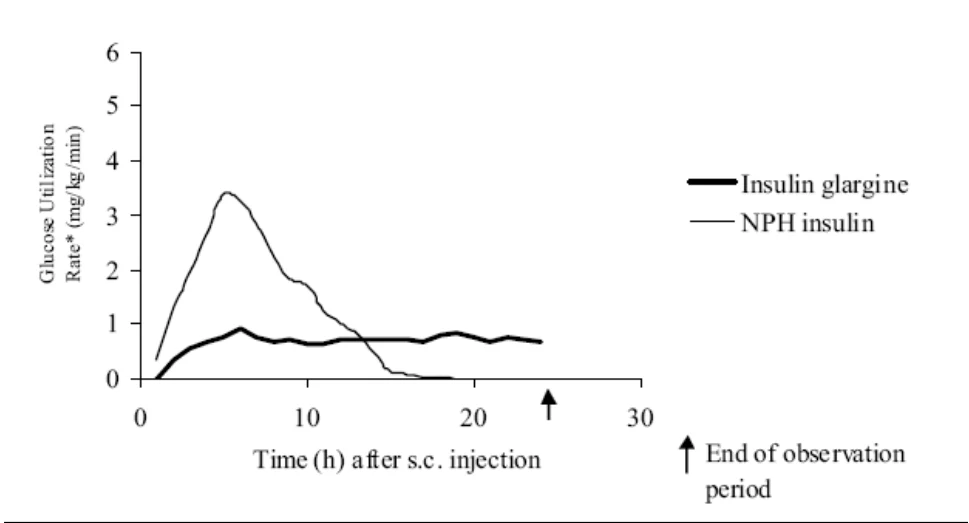
*Determined as amount of glucose infused to maintain constant plasma glucose levels (hourly mean values). Indicative of insulin activity. Between-patient variability (CV, coefficient of variation), insulin glargine, 84% and human NPH, 78%
BASAGLAR demonstrated similar pharmacodynamic profile and similar mean pharmacodynamic responses (Rmax and Gtot) compared to that of Lantus® when administered as a single dose of 0.5 U/kg subcutaneously to healthy subjects (see Figure 3 and CLINICAL TRIALS – Comparative Pharmacokinetic/Pharmacodynamic Studies).
Figure 3 - Activity Profile in Healthy Subjects
Time (h) M e a n Gl u co se I n f u si o n Ra t e (m g / kg / m i n ) 0 2 4 6 8 0 4 8 12 16 20 24 BASAGLAR LANTUS
Mean glucose infusion rate (mg/kg/min) over time with 95% CI
Pharmacokinetics
Absorption and Bioavailability
After subcutaneous injection of Lantus® (the reference product) in healthy subjects and patients with diabetes, the insulin serum concentrations indicated a slower, more prolonged absorption and a relatively constant concentration/time profile over 24 hours with no pronounced peak in comparison to NPH human insulin. Serum insulin concentrations were thus consistent with the time profile of the pharmacodynamic activity of insulin glargine.
After subcutaneous injection of 0.3 units/kg insulin glargine in patients with type 1 diabetes, a relatively constant concentration-time profile has been demonstrated. The duration of action after abdominal, thigh, or deltoid subcutaneous administration was similar.
The relative bioavailability of BASAGLAR to Lantus® was close to 1, with the 90% confidence interval of the least square mean ratio of AUC (0-24) of BASAGLAR to Lantus® being contained within the window of 0.8 to 1.25 in healthy subjects following a single dose administration of 0.5 units/kg subcutaneously (see CLINICAL TRIALS- Comparative Pharmacokinetic/Pharmacodynamic Studies).
Metabolism
After subcutaneous injection of the reference product (Lantus®) in healthy subjects and diabetic patients, insulin glargine is rapidly metabolized at the carboxyl terminus of the Beta chain with formation of two active metabolites M1 (21A-Gly-insulin) and M2 (21A-Gly-des-30B-Thr-insulin). In plasma, the principal circulating compound is the metabolite M1. The exposure to M1 increases with the administered dose of insulin glargine. The pharmacokinetic and pharmacodynamic findings indicate that the effect of the subcutaneous injection with insulin glargine is principally based on exposure to M1. Insulin glargine and the metabolite M2 were not detectable in the vast majority of subjects and, when they were detectable their concentration was independent of the administered dose of the insulin glargine.
Special Populations and Conditions
Age, race, and gender
Information on the effect of age, race, and gender on the pharmacokinetics of insulin glargine is unavailable. However, in controlled clinical trials for the reference product (Lantus®) in adults (n=3890, Studies 3001, 3002, 3004, 3005, and 3006), and a controlled clinical trial in pediatric patients (n=349, Study 3003) subgroup analyses based on age, race (white, black, Asian /oriental, multiracial and Hispanic) and gender did not show differences in safety and efficacy between insulin glargine and NPH human insulin.
In controlled clinical studies with BASAGLAR in adults (n=1291), subgroup analyses based on age, race and gender did not suggest a difference in safety and efficacy for patients treated with BASAGLAR compared to those treated with Lantus®.
Hepatic Insufficiency
No studies were performed in patients with hepatic insufficiency.
However, some studies with human insulin have shown increased circulating levels of insulin in patients with liver failure. Careful glucose monitoring and dose adjustments of insulin or insulin analogues including BASAGLAR may be necessary in patients with hepatic dysfunction (see WARNINGS AND PRECAUTIONS, Renal/ Hepatic/ Biliary/ Pancreatic Impairment).
Renal Insufficiency
No studies were performed in patients with renal insufficiency. However, some studies with human insulin have shown increased circulating levels of insulin in patients with renal failure. Careful glucose monitoring and dose adjustments of insulin or insulin analogues including BASAGLAR may be necessary in patients with renal dysfunction (see
WARNINGS AND PRECAUTIONS, Renal/ Hepatic/ Biliary/ Pancreatic Impairment).
Pregnancy
The effect of pregnancy on the pharmacokinetics and pharmacodynamics of insulin glargine has not been studied (see WARNINGS AND PRECAUTIONS, Special Populations).
Obesity
In controlled clinical trials for the reference product (Lantus®), which included patients with Body Mass Index (BMI) up to and including 49.6 kg/m2, subgroup analyses based on BMI did not suggest any differences in safety and efficacy between insulin glargine and NPH human insulin.
In controlled clinical trials, subgroup analysis based on BMI did not show differences in safety and efficacy between BASAGLAR and Lantus®.
Smoking
Information on the effect of smoking on the pharmacokinetics and pharmcodynamics of BASAGLAR has not been studied.
Duration of Effect
The longer duration of action (up to 24 hours) of insulin glargine is directly related to its slower rate of absorption and supports once-daily subcutaneous administration. The time course of action of insulins including BASAGLAR may vary between individuals and/or within the same individual. The doses and timing of antidiabetic medications must be determined and adjusted individually to achieve the desired blood glucose levels.
BASAGLAR demonstrated similar duration of action and pharmacodynamics responses (Rmax and Gtot) compared to Lantus® when administered as a single 0.3 U/kg subcutaneous (SC) dose in a randomized, investigator- and subject-blind, 2-period crossover, 42-hour euglycemic clamp study in 20 patients with type 1 diabetes.
STORAGE AND STABILITY
Unopened (not in-use) BASAGLAR Cartridges and BASAGLAR KwikPens
Unopened BASAGLAR cartridges and BASAGLAR KwikPens should be stored in a refrigerator, between 2°C - 8°C. Do not freeze. Do not use BASAGLAR if it has been frozen. Unopened BASAGLAR cartridges or BASAGLAR KwikPens may be used until the expiration date printed on the label. Do not use past the expiration date. If BASAGLAR freezes, discard it.
Opened (in-use) BASAGLAR Cartridges and BASAGLAR KwikPens
Opened (in-use) BASAGLAR cartridges and BASAGLAR KwikPens should be stored at room temperature, below 30°C and away from direct heat and light. In-use BASAGLAR cartridges or BASAGLAR KwikPens must be used within 28 days, and should be discarded after 28 days even if they still contain BASAGLAR. Do not use past the expiration date. If BASAGLAR freezes, discard it.
SPECIAL HANDLING INSTRUCTIONS
Information to be provided to the patient
Inspect the cartridge or KwikPen of BASAGLAR before use. BASAGLAR must only be used if the solution is clear and colourless with no particles visible (see DOSAGE and ADMINISTRATION: Administration). BASAGLAR is a clear solution, not a suspension. BASAGLAR can be confused with other insulin types, since it visually resembles short-acting insulins. The insulin label must always be checked before each injection to avoid medication errors between BASAGLAR and other insulins. Do not shake the cartridge or KwikPen before use. Patients must be advised that BASAGLAR must not be mixed with any other insulin or diluted with any other solution. Mixing or diluting can change the time/action profile of BASAGLAR and mixing can cause precipitation (see WARNINGS AND PRECAUTIONS).
Patients should be instructed on self-management procedures including glucose monitoring, proper injection technique, and hypoglycemia and hyperglycemia management. Patients must be instructed on handling of special situations such as intercurrent conditions (illness, stress, or emotional disturbances), an inadequate or skipped insulin dose, inadvertent administration of an increased insulin dose, inadequate food intake or skipped meals. The extent of patient participation in his/her diabetes management is variable and is generally determined by the physician.
Insulin treatment requires constant alertness to the possibility of hyper- and hypoglycemia. Patients and their relatives must know what steps to take if hyperglycemia or hypoglycemia occurs or is suspected, and they must know when to inform a physician.
Patients with diabetes should be advised to inform their doctor if they are pregnant or are contemplating pregnancy.
To prevent the possible transmission of disease, each pen must be used by one patient only.
Empty BASAGLAR cartridges and BASAGLAR KwikPens must never be reused and must be properly discarded.
Refer patients to the Consumer Information leaflet for BASAGLAR for additional information. Also refer patients to the Instructions for Use for BASAGLAR KwikPen, and Lilly’s reusable pens for additional information on use of the pens.
DOSAGE FORMS, COMPOSITION AND PACKAGING
BASAGLAR is a clear, colourless, aqueous solution for subcutaneous administration.
BASAGLAR is available in cartridges or KwikPens (prefilled insulin delivery devices):
- Cartridge, 3 mL, 100 units/mL, 5 cartridges/box
- KwikPen, 3 mL prefilled pen, 100 units/mL, 5 pens/box
- KwikPen, 3 mL prefilled pen, 100 units/mL, 1 pen/box
Not all pack sizes and presentations may be marketed.
Cartridges are designed for use only with Lilly’s insulin delivery devices. The cartridge containing BASAGLAR is not designed to allow any other insulin to be mixed in the cartridge or for the cartridge to be reused.
Each milliliter of BASAGLAR contains insulin glargine 100 units. Each milliliter also contains excipients: glycerin, m-cresol, zinc oxide and water for injection. BASAGLAR has a pH of approximately 4. The pH is adjusted by addition of aqueous solutions of hydrochloric acid and sodium hydroxide.
PART II: SCIENTIFIC INFORMATION
PHARMACEUTICAL INFORMATION
Drug Substance
Proper name: insulin glargine (rDNA origin)
Chemical name: 21A-Gly-30Ba-L-Arg-30Bb-L-Arg-human insulin
Molecular formula: C267H404N72O78S6
Molecular weight: 6063 daltons
Structural formula:
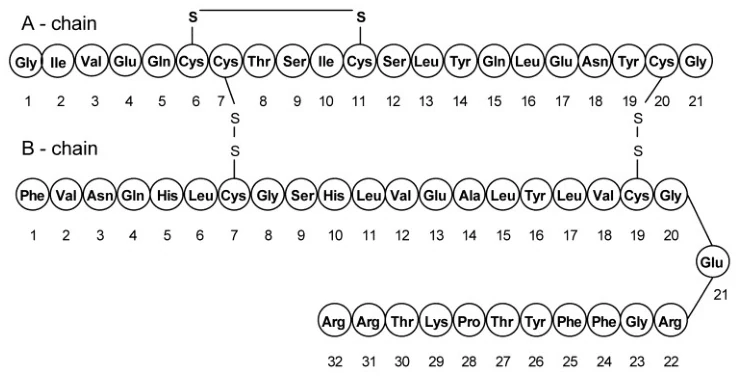
Description: white or almost white solid
Solubility: Very soluble (greater than 1000 mg/mL) in pH 1.2 buffer
Practically insoluble (less than 0.1 mg/mL) in pH 7.4 to 9.0 buffer, as well as water, ethanol and acetonitrile
CLINICAL TRIALS
BASAGLAR™ [insulin glargine (rDNA origin)] injection is a subsequent entry biologic.
The clinical development program to demonstrate clinical similarity between BASAGLAR and Lantus® is based on comparative pharmacokinetic/pharmacodynamics (PK/PD) studies in healthy subjects; comparative bioavailability and PD response studies in healthy subjects; a comparative duration of action study in patients with type 1 diabetes mellitus; and comparative safety and efficacy studies in patients with type 1 and type 2 diabetes mellitus.
Comparative Pharmacokinetic/Pharmacodynamic (PK/PD) Studies
Pivotal PK/PD Study
Study ABEO is a Phase 1, randomized, double-blind, 2-treatment, 4-period, replicate crossover study conducted in 91 healthy subjects (85 males, 6 females, 22 to 62 years of age) to evaluate the PK and PD similarity of BASAGLAR (Test) and Lantus® (Reference). On 4 separate occasions, fasted subjects received a single SC 0.5-U/kg dose of BASAGLAR or Lantus® according to the following sequences: BASAGLAR - Lantus®- BASAGLAR -Lantus® or Lantus®- BASAGLAR -Lantus®- BASAGLAR. A minimum 7-day washout separated doses. Serial blood samples were collected predose and at time points up to 24 hours postdose to assess PK, and a euglycemic glucose clamp procedure lasting up to 24 hours was conducted to assess PD. The primary PK parameters were AUC(0-24) and Cmax, and the primary PD parameters were Gtot and Rmax.
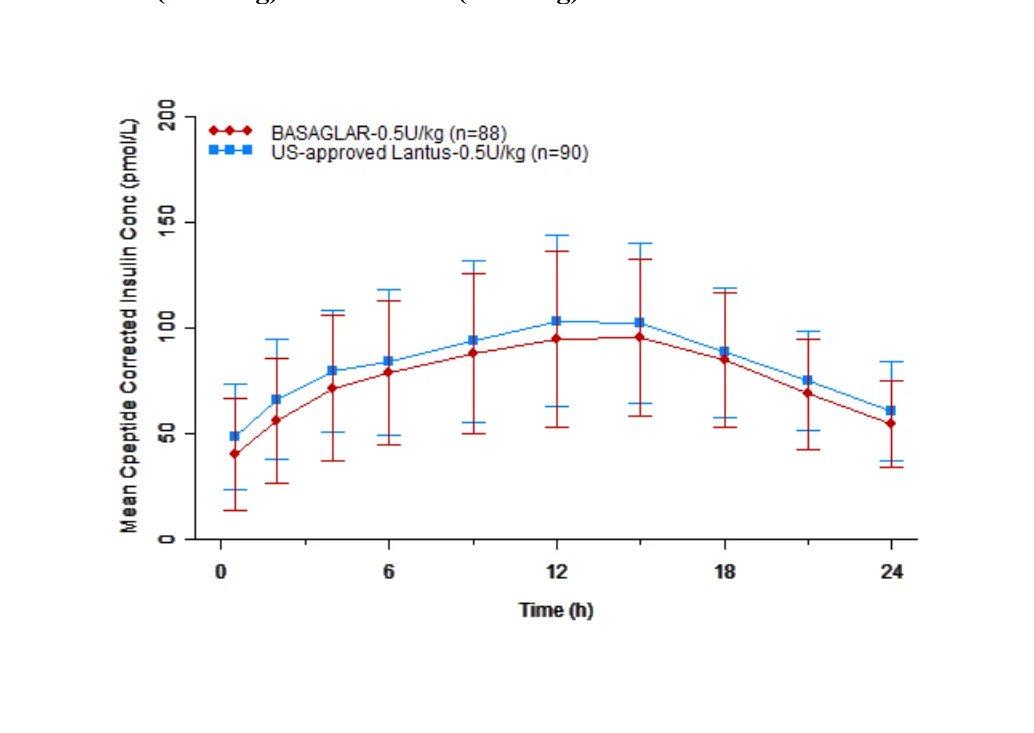
The pharmacokinetic and pharmcodynamic parameters for study ABEO are summarized in Table 6. Figure 4 shows the PK profiles for BASAGLAR and Lantus®. BASAGLAR was determined to have similar PK and PD properties compared to Lantus®.
Table 6: Comparative PK and PD data for BASAGLAR vs. Lantus® in Healthy Subjects (Study ABEO)
| Parameter | BASAGLAR Geometric Mean (%CV) | LANTUS® Geometric Mean (%CV) | Ratio of Least Squares Geometric Means | 90% Confidence Interval (for PK) 95% Confidence Interval (for PD) | ||||||||
|---|---|---|---|---|---|---|---|---|---|---|---|---|
| Phamacokinetic Properties | ||||||||||||
AUC0-24h (pmol•h/L) | 1720 (42) | 1900 (35) | 0.90 | (0.86, 0.94) | ||||||||
Cmax (pmol/L) | 103 (41) | 111 (34) | 0.92 | (0.87, 0.96) | ||||||||
| tmax (h)a | 12.0 (2.00-21.0) | 12.0 (2.00-24.0) | ||||||||||
| Pharmacodynamic Properties | ||||||||||||
| Gtot (mg/kg)b | 1670 (60) | 1820 (74) | 0.91 | (0.84, 1.00) | ||||||||
| Rmax (mg/kg/min)b | 2.12 (54) | 2.27 (58) | 0.93 | (0.87, 0.99) | ||||||||
Abbreviations: CV= coefficient of variation, t1/2 = terminal elimination half-life, tmax = time to achieve the maximum plasma concentration, Cmax = maximum plasma concentration, AUC0-24 = area under the plasma-concentration-versus-time curve from Time 0 to 24 hours; Gtot=total glucose infusion over the clamp duration; Rmax= maximum glucose infusion rate; LOESS=locally weighted regression in smoothing scatterplots; GIR=glucose infusion rate.
a Median (range)
b Gtot and Rmax parameter estimates are based on LOESS smoothed GIR profiles.
Figure 4: Mean (±standard deviation) C-peptide corrected serum insulin concentration versus time profile following subcutaneous administration of a single dose of BASAGLAR (0.5 U/kg) and Lantus® (0.5 U/kg).
Antibody Production – BASAGLAR
In a 52 week study (ABEB) in patients with type 1 diabetes 107 of 265 (40.4%) patients randomized to BASAGLAR had detectable antibodies to insulin at least once during the treatment period compared to 105 of 267 (39.3%) randomized to Lantus® (Table 7).
In a 24 week study (ABEC) in patients with type 2 diabetes 56 of 365 (15.3%) patients randomized to BASAGLAR had detectable antibodies to insulin at least once during the treatment period compared to 40 of 365 (11.0%) randomized to Lantus®. Among patients on prior Lantus® 29 of 151 (19.2%) patients randomized to BASAGLAR had detectable antibodies to insulin at least once during the treatment period compared to 11 of 139 (7.95%) Lantus® patients. Among insulin-naïve patients 27 of 214 (12.6%) patients randomized to BASAGLAR had detectable antibodies to insulin at least once during the treatment period compared to 29 of 226 (12.8%) Lantus® patients (Table 7). The mean antibody level (% binding) among patients with type 1 diabetes at 52 weeks was 2.04% in the BASAGLAR arm versus 1.98% in the Lantus® arm; and in patients with type 2 diabetes treated for 24 weeks it was 3.72% in the BASAGLAR arm versus 2.38% in the Lantus® arm.
The level of antibody production did not appear to be correlated to hemoglobin A1c (A1c), insulin dose, or incidence and rate of hypoglycemia. The long-term effect of BASAGLAR immunogenicity is unknown.
Table 7: Proportion of Patients with Detected Antibodies by Study Treatment and Baseline Antibody Status - Studies ABEB and ABEC
| Study | Population | Visit | BASAGLAR | Lantus® | ||||||||||
|---|---|---|---|---|---|---|---|---|---|---|---|---|---|---|
| Number of Patients (a) | Number (%) of Patients with Detected Antibodies | Number of Patients (a) | Number (%) of Patients with Detected Antibodies | |||||||||||
| ABEB | FAS | Baseline | 265 | 45 (17.0) | 267 | 55 (20.6) | ||||||||
| Week 24 Overall | 265 | 80 (30.2) | 267 | 90 (33.7) | ||||||||||
| Week 52 Overall | 265 | 107 (40.4) | 267 | 105 (39.3) | ||||||||||
Week 52 (LOCF) | 265 | 73 (27.5) | 267 | 59 (22.1) | ||||||||||
| ABEC | FAS | Baseline | 365 | 20 (5.5) | 365 | 13 (3.6) | ||||||||
| Week 24 Overall | 365 | 56 (15.3) | 365 | 40 (11.0) | ||||||||||
Week 24 (LOCF) | 365 | 30 (8.2) | 365 | 22 (6.0) | ||||||||||
| ABEC | Prior Lantus® Patients | Baseline | 151 | 10 (6.6) | 139 | 6 (4.4) | ||||||||
| Week 24 Overall | 151 | 29 (19.2) | 139 | 11 (7.9) | ||||||||||
Week 24 (LOCF) | 151 | 13 (8.6) | 139 | 5 (3.6) | ||||||||||
| ABEC | Insulin- | Baseline | 214 | 10 (4.7) | 226 | 7 (3.1) | ||||||||
| Study | Population | Visit | BASAGLAR | Lantus® |
|---|
| Number of Patients (a) | Number (%) of Patients with Detected Antibodies | Number of Patients (a) | Number (%) of Patients with Detected Antibodies |
|---|---|---|---|
| naïve Patients | |||
| Week 24 Overall | |||
| 214 | 27 (12.6) | 226 | 29 (12.8) |
Week 24 (LOCF) | |||
| 214 | 17 (7.9) | 226 | 17 (7.5) |
- (a) Only patients with detected or non-detected insulin antibody levels at baseline and post-baseline were included in analysis.
- (b) Fisher’s exact test
Abbreviations: LOCF=last observation carried forward
Comparative Clinical Efficacy and Safety Studies- Adults
The safety and efficacy of once-daily BASAGLAR was compared to that of once-daily Lantus® in an open-label, randomized, active-controlled, parallel study of 535 adults with type 1 diabetes (Study ABEB, also known as ELEMENT 1). The stratification factors at randomization were country, A1c level (<8.5 vs. ≥8.5%), and time of basal insulin injection (daytime, evening/bedtime). As shown in Table 9 below, similar efficacy outcomes were observed in this non-inferiority study designed for 52-week treatment duration, with a primary efficacy endpoint evaluation at 24 weeks.
The safety and efficacy of once-daily BASAGLAR was also compared to that of once-daily Lantus® in a double-blind, randomized, active-controlled parallel study of 756 adults with type 2 diabetes (Study ABEC, also known as ELEMENT 2). The stratification factors at randomization were country, A1c levels (<8.5% vs ≥ 8.5%), sulfonylurea use (yes/no) and time of basal insulin injection (daytime, evening/bedtime). Similar efficacy outcomes were observed in this non-inferiority study (Table 10).
Demographic and baseline characteristics were generally balanced between treatment groups in each of the studies. The populations were predominantly white (in Study ABEB, BASAGLAR 73.8% and Lantus® 75.3%; in Study ABEC, BASAGLAR 80.3% and Lantus® 76.6%). Patients had a mean age of 41.2 years in Study ABEB (BASAGLAR 41.0 years, Lantus® 41.4 years) and 58.8 years in Study ABEC (BASAGLAR 59.0 years, Lantus® 58.7 years). In Study ABEB, 14 patients (5.2%) in the BASAGLAR arm and 11 patients (4.1%) in the Lantus® arm were ≥65 years old. In Study ABEC, 112 patients (29.8%) in the BASAGLAR arm and 102 patients (26.8%) in the Lantus® arm were ≥65 years old. Few patients were ≥75 years old
[Study ABEB: BASAGLAR 2 (0.7%) and Lantus® 0; Study ABEC: BASAGLAR 21 (5.6%) and Lantus® 13 (3.4%)]. The mean duration of diabetes was 16.4 years in Study ABEB (BASAGLAR 16.2 years; Lantus®16.6 years) and 11.5 years in Study ABEC (BASAGLAR 11.7 years, Lantus® 11.2 years).
Overall, the mean A1c at baseline in Study ABEB was 7.77% (BASAGLAR: 7.75%; Lantus®: 7.79%), and for ABEC was 8.33% (BASAGLAR: 8.34%; Lantus®: 8.31%).
Data from the two Phase 3 clinical studies provide evidence of comparable efficacy by meeting the primary test of the noninferiority of BASAGLAR to Lantus®, as well as by demonstrating that the change in A1c after 24 weeks in patients with type 1 diabetes mellitus (ABEB) and type 2 diabetes mellitus (ABEC) is entirely contained within the pre-specified margins of ±0.4%.
Table 8 provides a summary of the study design for both Studies ABEB and ABEC.
Table 8: Summary of patient demographics for clinical trials in specific indication
| Study # | Trial design and duration | Dosage and route of administration | Study subjects (n=number) Full analysis set (FAS) | Mean age (Range) | Gender % (number) |
|---|---|---|---|---|---|
ABEB (T1DM) ELEMENT 1 | Phase 3, prospective, randomized, multinational, multicenter, 2-arm, active control, open label, parallel, 24-week treatment with a 28-week active-control, open-label extension, and 4-week post- treatment follow up to compare BASAGLAR and Lantus® when each is used in combination with mealtime insulin lispro in adult patients with T1DM | BASAGLAR was initiated at the same dose as the patient’s prestudy once-daily basal insulin. Insulin lispro was administered with meals at the same dose as the patient’s prestudy mealtime insulin dose while avoiding hypoglycemia. Investigators recommended basal and bolus insulin dose adjustments to achieve glycemic targets. | 535 patients received study drug (full analysis set) BASAGLAR: 268 patients: Lantus®: 267 patients | 41.2 years Range: 18.3- 81.4 years | Females: 225 (42%) Males: 310 (58%) |
ABEC (T2DM) ELEMENT 2 | Phase 3, prospective, randomized, multinational, multicenter, 2-arm, active-control, double-blind, parallel, 24-week treatment study with a 4-week post-treatment follow-up to compare BASAGLAR and Lantus® when each is used in combination with at least 2 oral antihyperglycemic medications in adult patients with T2DM. Patients were either insulin-naïve or already administering once-daily (QD) Lantus®. | If the patient was insulin-naïve, the starting dose for BASAGLAR was 10 units QD. If the patient was already taking Lantus®, BASAGLAR was initiated at the same dose as the patient’s prestudy Lantus® dose. All patients were to then follow a patient-driven dosing algorithm under investigator supervision throughout the study. | 756 patients received study drug (full analysis set) BASAGLAR: 376 patients: Lantus®: 380 patients | 58.8 years Range: 23.4- 84.3 years | Females: 378 (50%) Males: 378 (50%) |
T1DM=type 1 diabetes mellitus; T2DM=type 2 diabetes mellitus
Study Results
The primary outcome in both studies was change in A1c from baseline to 24-week endpoint. Both studies confirmed that BASAGLAR once daily is non-inferior to Lantus® once daily, using non-inferiority margins (NIM) of both 0.4% and 0.3% (full analysis set, FAS). In addition, based on protocol specified testing, BASAGLAR and Lantus® were considered to have comparable efficacy in both studies, in terms of change in A1c from baseline to week 24, at the 0.4% margin.
Table 9: Summary of Efficacy Results for BASAGLAR vs. Lantus® in T1DM – Study ABEB
Study ABEB (T1DM) 24-week endpoint N=535 | Study ABEB (T1DM) 52-week endpoint N=534 | |||||||||||||
| BASAGLAR n=268 | Lantus® n=267 | BASAGLAR n=267 | Lantus® n=267 | |||||||||||
| A1c (%)c | ||||||||||||||
| Number of patients at endpointa | 256 | 258 | 248 | 246 | ||||||||||
| Mean baseline | 7.76 | 7.79 | 7.76 | 7.79 | ||||||||||
| LS Mean change from baselineb | -0.38 | -0.48 | -0.29 | -0.30 | ||||||||||
| LS Mean treatment difference (BASAGLAR –Lantus®)* | 0.103 | 0.016 | ||||||||||||
| 95% CI from treatment difference | (-0.009, 0.215) | (-0.107, 0.140) | ||||||||||||
| Basal Insulin Dose (U/day) | ||||||||||||||
| Number of patientsa | 268 | 266 | 268 | 266 | ||||||||||
| Mean baseline | 25.1 | 23.3 | 25.1 | 23.3 | ||||||||||
| LS Mean change from baselineb | 2.0 | 2.0 | 2.7 | 2.4 | ||||||||||
| Total Insulin Dose (U/day) | ||||||||||||||
| Number of patientsa | 264 | 266 | 264 | 266 | ||||||||||
| Mean baseline | 55.5 | 52.8 | 55.5 | 52.8 | ||||||||||
| LS Mean change from baselineb | 0.7 | 0.6 | 2.9 | 2.9 | ||||||||||
a Only patients with nonmissing baseline value and at least one nonmissing postbaseline value of the response variable were included in analysis.
b Change from baseline to endpoint values are LS means, reflecting adjustment for the design factors of the study. Baseline values are unadjusted means.
c Mixed-effects model for repeated measures (MMRM ) methodology utilized
Abbreviations: CI = confidence interval; A1c = hemoglobin A1c; LS = least squares; N = total number of patients; n = number of patients in defined subgroup; NA= not applicable; T1DM = type 1 diabetes mellitus *Non-inferiority testing approach: BASAGLAR was non-inferior to Lantus® in the primary treatment comparison at both 0.4% and 0.3% non-inferiority margins (NIMs) based on the full analysis set (FAS) population. The non-inferiority test was only pre-specified for the 24 week A1c endpoint.
Table 10: Summary of Efficacy Results for BASAGLAR vs. Lantus® in T2DM – Study ABEC
Study ABEC (T2DM) 24-week endpoint N=756 | ||||||||
BASAGLAR n=376 | Lantus® n=380 | |||||||
| A1c (%)c | ||||||||
| Number of patients at endpointa | 331 | 329 | ||||||
| Mean baseline | 8.35 | 8.31 | ||||||
| LS Mean change from baselineb | -1.26 | -1.31 | ||||||
| LS Mean treatment difference (BASAGLAR –Lantus®)* | 0.051 | |||||||
| 95% CI from treatment difference | (-0.095, 0.196) | |||||||
| Basal Insulin Dose (U/day) | ||||||||
| Number of patientsa | 374 | 379 | ||||||
| Mean baseline | 15.4 | 12.0 | ||||||
| LS Mean change from baselineb | 32.3 | 32.6 | ||||||
| Total Insulin Dose (U/day) | ||||||||
| Number of patientsa | N/A | N/A | ||||||
| Mean baseline | N/A | N/A | ||||||
| LS Mean change from baselineb | N/A | N/A | ||||||
a Only patients with nonmissing baseline value and at least one nonmissing postbaseline value of the response variable were included in analysis.
b Change from baseline to endpoint values are LS means, reflecting adjustment for the design factors of the study. Baseline values are unadjusted means.
c Mixed-effects model for repeated measures (MMRM ) methodology utilized
Abbreviations: CI = confidence interval; A1c = hemoglobin A1c; LS = least squares; N = total number of patients; n = number of patients in defined subgroup; NA= not applicable; T2DM = type 2 diabetes mellitus.
*Non-inferiority testing approach: BASAGLAR was non-inferior to Lantus® in the primary treatment comparison at both 0.4% and 0.3% NIMs based on FAS population. The non-inferiority test was only prespecified for the 24 week A1c endpoint.
Body Weight
In Study ABEB the mean change from baseline for the body weight was 0.36 kg for BASAGLAR and 0.12 kg for Lantus® at 24 weeks; at 52 weeks the changes were 0.71 kg and 0.36 kg respectively. In Study ABEC the mean change from baseline for the body weight was 1.78 kg for BASAGLAR and 2.02 kg for Lantus® at 24 weeks.
Basal Insulin Dose
In Study ABEB, the change in basal insulin dose from baseline to any visit or endpoints (LOCF) was similar between BASAGLAR and Lantus®. The actual basal insulin dose at endpoints (LOCF), and the actual measurements adjusted for weight (U/kg/day) were also similar between BASAGLAR and Lantus®. Likewise the actual measurements not adjusted for weight (as measured in U/day) at Week 36, Week 44 and Week 52 were also similar between treatment arms.
In Study ABEC, the actual daily basal insulin dose at endpoint (LOCF) and the change from baseline in basal insulin dose (in U/day or U/kg/day) at any visit or endpoint (LOCF) were similar between BASAGLAR and Lantus®.
Total Insulin Dose
In Study ABEB the increases in mean total insulin dose from baseline to endpoint were similar in both treatment groups.
Pediatric Type 1 Diabetes Mellitus
There are no clinical trials conducted with BASAGLAR in pediatric patients (>6 years of age) with type 1 diabetes mellitus. The use of BASAGLAR in pediatric (>6 years of age) type 1 diabetes mellitus is supported by the similar product quality characteristics of BASAGLAR and Lantus® and by the similar pathophysiology of pediatric type 1 diabetes mellitus compared to the studied population (adult type 1 diabetes mellitus). In addition, comparative non-clinical, human pharmacokinetic and clinical efficacy and safety studies have been conducted to demonstrate comparable clinical profiles between BASAGLAR and the reference product (Lantus®).
DETAILED PHARMACOLOGY
Since BASAGLAR is a Subsequent Entry Biologic, where the pharmacodynamics and pharmacokinetic properties of insulin glargine have already been described for the reference biologic drug Lantus®, this section summarizes the comparative studies that were conducted to compare the pharmacology of BASAGLAR to Lantus®.
Insulin receptor (IR) binding: Based on comparative in vitro studies (DBT149 and DBT93), BASAGLAR is similar to Lantus® with respect to IR binding affinity (isoforms A and B).
In comparative studies (DBT149 and DBT93) using a panel of eight different in vitro assays, BASAGLAR and Lantus® insulin glargine were similar in their in vitro pharmacological properties as determined by human insulin receptor (hIR) and human insulin-like growth factor -1 receptor (hIGF-1R) binding affinity, hIR receptor activation, de novo lipogenesis or intrinsic metabolic activity in adipocytes, and mitogenic potential.
TOXICOLOGY
Since BASAGLAR is a Subsequent Entry Biologic, where the animal toxicology properties of insulin glargine have already been described for the reference biologic drug Lantus®, this section summarizes the comparative studies that were conducted to compare the toxicology of BASAGLAR to Lantus®.
Comparative Toxicity - BASAGLAR vs Lantus®
The toxicity profile of BASAGLAR was characterized alongside Lantus® in separate 1-month subchronic toxicity studies in non-diabetic rats (Table 11), including glucodynamic and toxicokinetic assessments. The repeat-dose toxicity of BASAGLAR was evaluated in rats administered once daily subcutaneous doses of 0, 0.3, 1.0, and 3.0/2.0 mg/kg for 4 weeks (Study 8229488). In a second repeat-dose toxicity study (Study 8259267), BASAGLAR doses of 0, 0.3,
1.0, and 2.0 mg/kg were given for 4 weeks. Lantus® was the reference compound in both of these studies and was given to additional animals at identical doses as BASAGLAR.
For BASAGLAR and Lantus®, these studies demonstrated a similar spectrum of effects that are typically associated with sustained hyperinsulinemia and/or hypoglycemia, including clinical signs, polyphagia, neuropathy, and pancreatic islet cell atrophy (Table 11). Microscopic finding in the skin/subcutis was also observed. The dose-limiting toxicity (DLT) in rats for BASAGLAR and Lantus® was severe hypoglycemia resulting in clinical signs of toxicity and sometimes mortality or moribundity. The maximum-tolerated dose (MTD) for BASAGLAR and Lantus® was 0.3 mg/kg. All findings were considered to be typical of insulin analogues in animals and were easily monitored in human subjects via routine serum glucose testing. While the margins of safety were moderate in animals (15.9-fold), these modest margins are not unusual in the development of insulin analogues. In conclusion, the toxicity profiles of BASAGLAR and Lantus® were similar (Table 11).
Table 11: Comparison of Important Attributes from 1-Month Subchronic Toxicity Studies of BASAGLAR
| Study | 8259267 | 8229488 |
|---|---|---|
| Materials | BASAGLAR and Lantus® (EU-approved) | BASAGLAR and Lantus® (US-approved) |
| Doses | 0, 0.3, 1.0, 2.0 mg/kg | 0, 0.3, 1.0, 3.0/2.0 mg/kg |
| PK/PD | Days 1 and 29 | Days 1, 15, and 29/32 |
| Results |
|
|
| MTD | 0.3 mg/kg for BASAGLAR and Lantus® | 0.3 mg/kg for BASAGLAR and Lantus® |
Abbreviations: BWG= body weight gain; FC= food consumption; MTD= maximum-tolerated dose;
PD= pharmacodynamics; PK= pharmacokinetics.
Carcinogenesis, Mutagenesis, Impairment of Fertility
Non-clinical data (for the reference product Lantus®) reveal no special hazard for humans based on conventional studies of safety pharmacology, repeated dose toxicity, genotoxicity, carcinogenic potential, or toxicity to reproduction.
REFERENCES
- 1. American Diabetes Association. Diabetic retinopathy. Diabetes Care January 2002:25(Suppl 1):S90-S93.
- 2. American Diabetes Association. Gestational diabetes. Diabetes Care January 2002:25(Suppl 1):S94-S96.
- 3.
American Diabetes Association. Insulin administration. Diabetes Care January
2002:25(Suppl 1):S112-S115.
- 4.
American Diabetes Association. Insulin administration. Diabetes Care January
2004:27(Suppl 1):S106-S109.
- 5. American Diabetes Association. Preconception care of women with diabetes. Diabetes Care January 2002:25(Suppl 1):S82-S85.
- 6. American Diabetes Association. Standards of medical care for patients with diabetes mellitus. Diabetes Care January 2002:25(Suppl 1):213-229.
- 7. Barnett AH, Owens DR. Insulin analogues. Lancet 1997:349:47-51.
- 8.
Birkeland KI. Improving glycaemic control with current therapies. Diabet Med
1998:15(Suppl 4):S13-S19.
- 9. Blevins TC, Dahl D, Rosenstock J, Ilag LL, Huster WJ, Zielonka JS, Pollom RK, Prince MJ. Efficacy and Safety of LY2963016 Insulin Glargine Compared with Insulin Glargine (Lantus®) in Patients with Type 1 Diabetes in a Randomised Controlled Trial (The ELEMENT 1 Study) [published online ahead of print, May 14, 2015]. Diabetes, Obesity and Metabolism. doi:10.1111/dom.12946.
- 10.
Bolli GB, Gale EAM. Hypoglycemia. In: Alberti KGMM, DeFronzo RA, Keen H, Zimmet P. International Textbook of Diabetes Mellitus. Chichester, England: John Wiley & Sons
1992:1131-1149.
- 11. Davidson JK, Galloway JA, Chance RE. Insulin therapy. In: Davidson JK. Clinical Diabetes Mellitus. A Problem-Oriented Approach. New York: Thieme Medical Publishers, Inc.1991:266-332.
- 12. Deeg M, Ilag L, Huster WJ, Pollom RK, Zielonka JS, Prince MJ, Konrad RJ. Evaluation of Immunogenicity of LY2963016 Insulin Glargine Compared with Lantus® Insulin Glargine in Patients with T1DM or T2DM [abstract 70-OR]. Diabetes 2014:63 (Suppl 1): A19.
- 13. Di Cianni G, Torlone E, Lencioni C et al. Perinatal outcomes associated with the use of glargine during pregnancy. Diabetic Med. 2008;25:993-6.
- 14. ORIGIN Trial Investigators, Gerstein HC, Bosch J, Dagenais GR, Díaz R, Jung H, Maggioni AP, Pogue J, Probstfield J, Ramachandran A, Riddle MC, Rydén LE, Yusuf S. Basal Insulin and Cardiovascular and Other Outcomes in Dysglycemia. N Engl J Med 2012;367:319-28.
- 15. Heise T, Zhang X, Lam ECQ, Seger ME, Coutant D, Chua L, Linnebjerg H. Duration of Action of 2 Insulin Glargine Products, LY2963016 and Lantus®, in Subjects with Type I Diabetes Mellitus (T1DM) [abstract 891-P]. Diabetes 2014:63(Suppl 1):A228.
- 16. Home PD, Alberti KGMM. Insulin therapy. In: Alberti KGMM, DeFronzo RA, Keen H, Zimmet P. International Textbook of Diabetes Mellitus. Chichester, England: John Wiley & Sons 1992:831-863.
- 17. Koda-Kimble MA, Rotblatt MD. Diabetes mellitus. In: Young LY, Koda-Kimble MA, editors. Applied Therapeutics: The Clinical Use of Drugs. Vancouver: Applied Therapeutics Inc. 1992:72.1-72.53.
- 18. Lantus® Product Monograph, sanofi-aventis, July 2015.
- 19. Lepercq J, Jacqueminet S, Hieronimus S et al. Use of insulin glargine throughout pregnancy in 102 women with type 1 diabetes. Diabetes Metab. 2010;36:209-12.
- 20. Linnebjerg H, Lam ECQ, Seger ME, Coutant D, Chua L, Chong CL, Ferreira MM, Soon D, Zhang X. Comparative Pharmacokinetics (PK) and Pharmacodynamics (PD) of LY2963016 Insulin Glargine and EU- and US-approved Versions of Lantus® Insulin Glargine in Healthy Subjects [abstract 889-P]. Diabetes 2014:63(Suppl 1):A227.
- 21. Marshall SM, Walker M, Alberti KGMM. Diabetic ketoacidosis and hyperglycemic non- ketotic coma. In: Alberti KGMM, DeFronzo RA, Keen H, Zimmet P. International Textbook of Diabetes Mellitus. Chichester, England: John Wiley & Sons 1992:1152-1164.
- 22. Mohn A, Strang S, Wernicke-Panten K, Lang AM, Edge JA, Dunger DB. Nocturnal glucose control and free insulin levels in children with type 1 diabetes by use of the long-acting insulin HOE 901 as part of a three-injection regimen. Diabetes Care 2000:23:557-9.
- 23. Negrato CA, Rafacho A, Negrato G et al. Glargine vs. NPH insulin therapy in pregnancies complicated by diabetes: an observational cohort study. Diabetes Res and Clin Pract. 2010;89:46-51.
- 24. Owens R, Kahl SD, Ruan X, Zhang C, Moyers JS, Farmen MW, Michael MD. The in vitro Pharmacology of LY IGlar (LY2963016) a New Insulin Glargine Product [abstract 1033-P]. Diabetes. 2015:64(Suppl 1):A265.
- 25. Pantalone KM, Faiman C, Olansky L. Insulin glargine use during pregnancy. Endocr Pract. 2011;17:448-55.
- 26. Persson B, Lunell NO. Diabetes mellitus and pregnancy. In: Alberti KGMM, DeFronzo RA, Keen H, Zimmet P. International Textbook of Diabetes Mellitus. Chichester, England: John Wiley & Sons 1992:1085-1101.
- 27. Peters AL, Davidson MB. Aging and diabetes. In: Alberti KGMM, DeFronzo RA, Keen H, Zimmet P. International Textbook of Diabetes Mellitus. Chichester, England: John Wiley & Sons 1992:1103-1128.
- 28. Pickup JC, Williams G, EDITOR. The pharmacokinetics of insulin. In: Pickup JC, Williams G. Textbook of Diabetes. Oxford: Blackwell Science Ltd, 1997:32.1-32.14.
- 29. Pickup JC, Williams G, EDITOR. Insulin injection treatment and its complications. In: Pickup JC, Williams G. Textbook of Diabetes. Oxford: Blackwell Science Ltd, 1997:33.1-33.20.
- 30. Pickup JC, Williams G, EDITOR. Acute metabolic complications of diabetes: diabetic ketoacidosis, hyperosmolar non-ketotic syndrome and lactic acidosis. In: Pickup JC, Williams G. Textbook of Diabetes. Oxford: Blackwell Science Ltd, 1997:39.1-39.23.
- 31. Pickup JC, Williams G, EDITOR. Hypoglycaemia in diabetes mellitus. In: Pickup JC, Williams G. Textbook of Diabetes. Oxford: Blackwell Science Ltd,1997:40.1-40.23.
- 32. Pickup JC, Williams G, EDITOR. Pregnancy and diabetes mellitus. In: Pickup JC, Williams G. Textbook of Diabetes. Oxford: Blackwell Science Ltd, 1997:72.1-72.34.
- 33. Pollex EK, Feig DS, Lubetsky A et al. Insulin glargine safety in pregnancy: a transplacental transfer study. Diabetes Care. 2010;33:29-33.
- 34. E. Pollex, M. E. Moretti, G. Koren et al. Safety of insulin glargine use in pregnancy: a systematic review and meta-analysis. Ann Pharmacother. 2011;45:9-16.
- 35. Ratner RE. Type 2 diabetes mellitus: The grand overview. Diabetic Med 1998:15(Suppl 4):S4-S7.
- 36.
Rosenstock J, Hollander P, Bhargava A, et.al. Similar Efficacy and Safety of LY2963016 Insulin Glargine and Insulin Glargine (Lantus®) Insulin Glargine in Patients with Type 2
- Diabetes Previously Treated with Insulin Glargine or Insulin-naïve: A Randomized, Double-blind Controlled Trial (The ELEMENT 2 Study) [published online ahead of print, April 30, 2015]. Diabetes, Obesity and Metabolism.doi:10.1111/dom.12482.
- 37. Rossetti L, Giaccari A, DeFronzo RA. Glucose toxicity. Diabetes Care June 1990:13(6):610-630.
- 38. Schober E, Schoenle E, Van Dyk J, Wernicke-Panten K. Comparative Trial Between Insulin Glargine and NPH Insulin in Children and Adolescents With Type 1 Diabetes. Diabetes Care 2001:24:2005-2006.
- 39.
Skyler JS. Lessons from studies of insulin in pharmacokinetics. Diabetes Care
1986:9(6):666-668.
- 40. Unger RH, Grundy S. Hyperglycaemia as an inducer as well as a consequence of impaired islet cell function and insulin resistance: implications for the management of diabetes. Diabetologia March 1985:28(3):119-121.
- 41. Zhang X, Lam ECQ, Seger ME, Coutant D, Chua L, Tan LH, Soon D, Linnebjerg H. Comparative Pharmacokinetics and Pharmacodynamics of 2 Insulin Glargine Products, LY2963016 and Lantus®, in Healthy Subjects at 2 Dose Levels [abstract 890P]. Diabetes. 2014:63(Suppl 1):A227-A228.