


Product Monograph - Brineura
RECENT MAJOR LABEL CHANGES
| 4 Dosage and Administration, 4.2 Recommended Dose and Dosage Adjustment | 2025-08 |
|---|---|
| 7 Warnings and Precautions, 7.1.3 Pediatrics | 2025-08 |
TABLE OF CONTENTS
Sections or subsections that are not applicable at the time of authorization are not listed.
RECENT MAJOR LABEL CHANGES .......................................................................................... 2
TABLE OF CONTENTS ............................................................................................................ 2
PART 1: HEALTH PROFESSIONAL INFORMATION.................................................................... 4
1 INDICATIONS ............................................................................................................. 4
1.1 Pediatrics ................................................................................................................ 4
1.2 Geriatrics ................................................................................................................ 4
2 CONTRAINDICATIONS ................................................................................................ 4
4 DOSAGE AND ADMINISTRATION ................................................................................ 4
4.1 Dosing Considerations ........................................................................................... 4
4.2 Recommended Dose and Dosage Adjustment ...................................................... 4
4.4 Administration ....................................................................................................... 5
4.5 Missed Dose ........................................................................................................... 8
5 OVERDOSE ................................................................................................................ 8
6 DOSAGE FORMS, STRENGTHS, COMPOSITION AND PACKAGING ................................ 8
7 WARNINGS AND PRECAUTIONS ................................................................................. 8
7.1 Special Populations .............................................................................................. 10
7.1.1 Pregnancy ......................................................................................................... 10
7.1.2 Breastfeeding ................................................................................................... 10
7.1.3 Pediatrics .......................................................................................................... 10
7.1.4 Geriatrics .......................................................................................................... 10
8 ADVERSE REACTIONS............................................................................................... 11
8.1 Adverse Reaction Overview ................................................................................. 11
8.2 Clinical Trial Adverse Reactions ........................................................................... 11
8.2.1 Clinical Trial Adverse Reactions – Pediatrics.................................................... 13
8.3 Less Common Clinical Trial Adverse Reactions .................................................... 13
8.3.1 Less Common Clinical Trial Adverse Reactions-Pediatrics ............................... 13
8.4 Abnormal Laboratory Findings: Hematologic, Clinical Chemistry and Other Quantitative Data ............................................................................................................. 13
8.5 Post-Market Adverse Reactions ........................................................................... 13
9 DRUG INTERACTIONS .............................................................................................. 13
9.2 Drug Interactions Overview ................................................................................. 13
9.4 Drug-Drug Interactions ........................................................................................ 14
9.5 Drug-Food Interactions ........................................................................................ 14
9.6 Drug-Herb Interactions ........................................................................................ 14
9.7 Drug-Laboratory Test Interactions....................................................................... 14
10 CLINICAL PHARMACOLOGY ...................................................................................... 14
10.1 Mechanism of Action ........................................................................................... 14
10.2 Pharmacodynamics .............................................................................................. 14
10.3 Pharmacokinetics ................................................................................................. 14
10.4 Immunogenicity ................................................................................................... 16
11 STORAGE, STABILITY AND DISPOSAL ........................................................................ 16
12 SPECIAL HANDLING INSTRUCTIONS .......................................................................... 17
PART 2: SCIENTIFIC INFORMATION ..................................................................................... 19
13 PHARMACEUTICAL INFORMATION .......................................................................... 19
14 CLINICAL TRIALS ...................................................................................................... 19
14.1 Trial Design and Study Demographics ................................................................. 19
14.2 Study Results ........................................................................................................ 21
15 MICROBIOLOGY ...................................................................................................... 23
16 NON-CLINICAL TOXICOLOGY .................................................................................... 23
PATIENT MEDICATION INFORMATION ................................................................................ 25
PART 1: HEALTH PROFESSIONAL INFORMATION
1 INDICATIONS
BRINEURA (cerliponase alfa injection) is indicated for the treatment of neuronal ceroid lipofuscinosis type 2 (CLN2) disease, also known as tripeptidyl peptidase 1 (TPP1) deficiency.
1.1 Pediatrics
Pediatrics (< 18 years of age): Based on the data submitted and reviewed by Health Canada, the safety and efficacy of BRINEURA in pediatric patients has been established; therefore, Health Canada has authorized an indication for pediatric use (see 7.1.3 Pediatrics and 14 CLINICAL TRIALS).
1.2 Geriatrics
No data are available to Health Canada; therefore, Health Canada has not authorized an indication for geriatric use (> 65 years of age).
2 CONTRAINDICATIONS
BRINEURA is contraindicated in:
- CLN2 patients with ventriculo-peritoneal shunts.
- Patients with signs of acute intracerebroventricular access device complications e.g., leakage, device failure, or device-related infection (see 7 WARNINGS AND PRECAUTIONS, Device-related Complications).
- Patients who have severe hypersensitivity reactions to this drug or to any ingredient in the formulation, including any non-medicinal ingredient, or component of the container. For a complete listing, see 6 DOSAGE FORMS, STRENGTHS, COMPOSITION AND PACKAGING.
4 DOSAGE AND ADMINISTRATION
4.1 Dosing Considerations
- Pre-treatment of patients with antihistamines with or without antipyretics or corticosteroids is recommended 30 to 60 minutes prior to the start of infusion.
- Consideration of dose adjustments may be necessary for patients who may not tolerate the infusion. The infusion rate may be decreased to a slower rate and/or the dose may be reduced by 50%.
- If the infusion is interrupted due to a hypersensitivity reaction, it should be restarted at approximately one-half the initial infusion rate at which the hypersensitivity reaction occurred.
- The infusion should be interrupted and/or the rate slowed in patients who in the judgement of the treating physician have a possible increase in intracranial pressure during the infusion as suggested by symptoms such as headache, nausea, vomiting, or decreased mental state.
4.2 Recommended Dose and Dosage Adjustment
The recommended dose in patients 2 years of age and older is 300 mg cerliponase alfa (10 mL solution) administered once every other week by intracerebroventricular infusion. In patients less than 2 years of age, lower doses are recommended (see Table 1).
Table 1: Dose and volume of BRINEURA
| Age groups | Total dose administered every other week (mg) | Volume of BRINEURA solution (mL) |
| Birth to < 6 months | 100 | 3.3 |
| 6 months to < 1 year | 150 | 5 |
| 1 year to < 2 years | 200 (first 4 doses) 300 (subsequent doses) | 6.7 (first 4 doses) 10 (subsequent doses) |
| 2 years and older | 300 | 10 |
4.4 Administration
Aseptic technique must be strictly observed during preparation and administration.
BRINEURA must only be administered by a healthcare professional knowledgeable in intracerebroventricular administration in a healthcare setting.
- BRINEURA is administered to the cerebrospinal fluid (CSF) by infusion via a surgically implanted reservoir and catheter (intracerebroventricular access device). The implanted intracerebroventricular access device should be appropriate for accessing the cerebral ventricles for therapeutic administration. It is recommended that the first dose be administered at least 5 to 7 days after device implantation.
Following BRINEURA infusion, a calculated amount of flushing solution must be used to flush the infusion components including the intracerebroventricular access device in order to fully administer BRINEURA and to maintain patency of the intracerebroventricular access device (see Withdraw flushing solution). BRINEURA and flushing solution vials should be thawed prior to administration. The infusion rate for BRINEURA and the flushing solution is 2.5 mL/hour. The complete infusion time, including BRINEURA and the required flushing solution, is approximately 2 to 4.5 hours, depending on the dose and volume administered.
Thaw BRINEURA and flushing solution
Thaw BRINEURA vials and flushing solution vial at room temperature for approximately 60 minutes. Do not thaw or warm vials any other way. Do not shake vials. Condensation will occur during thawing period. Thawing the vials outside the carton is recommended.
BRINEURA and flushing solution must be completely thawed and used immediately.
Do not refreeze vials or freeze syringes containing BRINEURA or flushing solution.
Inspect thawed BRINEURA and flushing solution vials
Inspect the vials to ensure they are fully thawed. BRINEURA should be clear to slightly opalescent and colourless to pale yellow. BRINEURA vials may occasionally contain thin translucent fibres or opaque particles. These naturally occurring particles are cerliponase alfa. These particles are removed via the 0.2 micron inline filter without having a detectable effect on the purity or strength of BRINEURA.
The flushing solution may contain particles, which appear during the thaw period; however, these dissolve when the solution reaches room temperature. The flushing solution should be clear and colourless.
Do not use if the solutions are discoloured or if there is other foreign particulate matter in the solutions.
Withdraw BRINEURA
Label one unused sterile syringe “BRINEURA” and attach a syringe needle. Remove the green flip-off caps from both BRINEURA vials. Using aseptic technique, withdraw the volume of BRINEURA solution per required dose (see 4.2 Recommended Dose and Dosage Adjustment) into the sterile syringe labelled “BRINEURA”. Do not dilute BRINEURA. Do not mix BRINEURA with any other medicinal product. Discard the needle and empty vials per local requirements.
Administer BRINEURA before the flushing solution.
- 1. Label the infusion line for “Intracerebroventricular infusion only”.
- 2. Attach the syringe containing BRINEURA to the extension line, if used, otherwise connect the syringe to the infusion set. The infusion set must be equipped with a 0.2 micron inline filter. See Figure 1.
- 3. Inspect the scalp for signs of intracerebroventricular access device leakage or failure and for potential infections. Do not administer BRINEURA if there are signs and symptoms of acute intracerebroventricular access device leakage, device failure, or device-related infection (see 7 WARNINGS AND PRECAUTIONS, Device-related Complications).
- 4. Prepare the scalp for intracerebroventricular infusion using aseptic technique per institution standard of care.
- 5. Insert the port needle into the intracerebroventricular access device.
- 6.
Connect a separate empty sterile syringe (no larger than 3 mL) to the port needle. Withdraw CSF to check patency of the intracerebroventricular access device and for laboratory testing.
- Do not return CSF to the intracerebroventricular access device. CSF samples should routinely be sent for infection monitoring (see 7 WARNINGS AND PRECAUTIONS, Device-related Complications). Consult with institution for recommended amount to be withdrawn for testing purposes.
- 7.
Attach the infusion set to the port needle (see Figure 1). A 0.2 micron inline filter is required.
- Secure the components per institution standard of care.
- 8.
Place the syringe containing BRINEURA into the syringe pump and program the pump to deliver at an infusion rate of 2.5 mL per hour.
- Program the pump alarms to sound at the most sensitive settings for pressure (occlusion alarm), rate, and volume limits. See the syringe pump manufacturer’s operating manual for details.
- Do not deliver as a bolus or manually.
- 9. Initiate infusion of BRINEURA at a rate of 2.5 mL per hour.
- 10. Periodically inspect the infusion system during the infusion for signs of leakage or delivery failure.
- 11. Verify that the “BRINEURA” syringe in the syringe pump is empty after the infusion is complete. Detach and remove the empty syringe from the pump and disconnect from the tubing. Discard the empty syringe in accordance with local requirements.
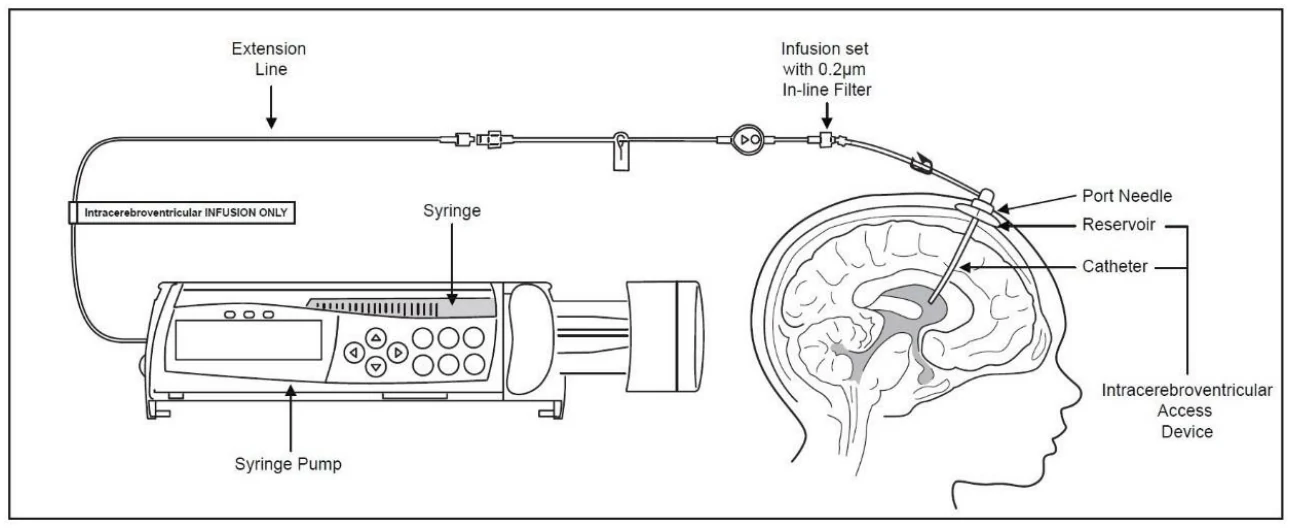
Figure 1: Infusion System Set up
Withdraw flushing solution
Determine the volume of flushing solution needed to ensure complete delivery of BRINEURA to the cerebral ventricles. Calculate the flush volume by adding the priming volume of all infusion components, including the intracerebroventricular access device.
Label one unused sterile syringe “flushing solution” and attach a syringe needle. Remove the yellow flip-off cap from the flushing solution vial. Using aseptic technique, withdraw the appropriate amount of flushing solution from the vial into the new sterile syringe labelled “flushing solution”. Discard the needle and the vial with the remaining solution per local requirements.
Administer the flushing solution provided after the BRINEURA infusion is complete.
- 1. Attach the syringe containing the calculated volume of flushing solution to the infusion components.
- 2.
Place the syringe containing the flushing solution into the syringe pump and program the pump to deliver an infusion rate of 2.5 mL per hour.
- Program the pump alarms to sound at the most sensitive settings for pressure (occlusion alarm), rate, and volume limits. See the syringe pump manufacturer’s operating manual for details.
- Do not deliver as a bolus or manually.
- 3. Initiate infusion of the flushing solution at a rate of 2.5 mL per hour.
- 4. Periodically inspect the infusion components during the infusion for signs of leakage or delivery failure.
- 5. Verify that the “flushing solution” syringe in the syringe pump is empty after the infusion is complete. Detach and remove the empty syringe from the pump and disconnect from the infusion line.
- 6. Remove the port needle. Apply gentle pressure and bandage the infusion site per institution standard of care.
- 7. Dispose of the infusion components, needles, unused solutions and other waste materials in accordance with local requirements.
4.5 Missed Dose
In case of a missed dose, resume the regular schedule as soon as possible as determined by the healthcare provider.
5 OVERDOSE
No information is available.
For the most recent information in the management of a suspected drug overdose, contact your regional poison control centre or Health Canada’s toll-free number, 1-844 POISON-X (1-844-764-7669).
6 DOSAGE FORMS, STRENGTHS, COMPOSITION AND PACKAGING
To help ensure the traceability of biologic products, including biosimilars, health professionals should recognise the importance of recording both the brand name and the non-proprietary (active ingredient) name as well as other product-specific identifiers such as the Drug Identification Number (DIN) and the batch/lot number of the product supplied.
Table 2: Dosage Forms, Strengths, Composition and Packaging
Each package contains:
- BRINEURA (cerliponase alfa injection; 2 vials of 150 mg/5 mL)
- Flushing Solution Injection (1 vial, 5 mL)
7 WARNINGS AND PRECAUTIONS
General
Device-related Complications
BRINEURA must be administered using aseptic technique to reduce the risk of infection. Intracerebroventricular access device-related infections, including sub-clinical infections have been observed in patients treated with BRINEURA. In clinical studies, antibiotics were administered, the intracerebroventricular access device was replaced, and BRINEURA treatment was continued.
BRINEURA is contraindicated if there are signs of acute intraventricular access device-related complications (see 2 CONTRAINDICATIONS). Healthcare professionals should inspect the scalp for skin
| Route of Administration | Dosage Form / Strength/Composition | Non-medicinal Ingredients |
| Intracerebroventricular infusion | Solution for infusion, 150 mg/5 mL | Calcium chloride dihydrate, Magnesium chloride hexahydrate, Potassium chloride, Sodium chloride, Sodium dihydrogen phosphate monohydrate, Sodium phosphate dibasic heptahydrate, Water for injection |
integrity to ensure the intracerebroventricular access device is not compromised prior to each infusion. Inspection of the infusion site and a patency check must be performed to detect intracerebroventricular access device leakage, failure or infection prior to initiation of BRINEURA infusion (see 4 DOSAGE AND ADMINISTRATION). Consultation with a neurosurgeon may be needed to confirm the integrity of the device.
Common signs of device-related complications include device leakage and device failure or device-related infections such as swelling, erythema of the scalp, extravasation of fluid, or bulging of the scalp around or above the intraventricular access device. In case of intraventricular access device complications, discontinue the BRINEURA infusion and replacement of the access device may be required prior to subsequent infusions (refer to the device manufacturer’s labelling for further instructions).
The signs and symptoms of device-related infections may not be apparent, therefore, CSF samples should routinely be sent for testing to detect subclinical device infections (see 4 DOSAGE AND ADMINISTRATION).
Material degradation of the intracerebroventricular access device reservoir occurs after approximately 4 years of use. Access device replacement should be considered prior to 4 years of single-puncture administrations of BRINEURA (approximately 105 administrations of BRINEURA).
Meningitis
Meningitis, including life-threatening meningitis, has been observed in patients treated with BRINEURA. Meningitis may present with the following symptoms: fever, headache, neck stiffness, light sensitivity, nausea, vomiting, change in mental status and device site erythema. CSF samples should routinely be sent for testing to detect subclinical device infections. Seek immediate medical care if signs and symptoms of meningitis occur.
Immune
Acute Systemic Hypersensitivity Reactions
Hypersensitivity reactions have been reported in BRINEURA-treated patients. The signs and symptoms included pyrexia, vomiting, pleocytosis or irritability. Patients were routinely pre-medicated with antihistamines with or without antipyretics or corticosteroids, prior to infusion of BRINEURA (see 8 ADVERSE REACTIONS, Hypersensitivity). The management of hypersensitivity reactions may include temporarily interrupting the infusion, and/or treatment with antihistamines, antipyretics, and/or corticosteroids.
Anaphylactic reactions have been reported in BRINEURA-treated patients during clinical trials and post-marketing use. Due to the potential for anaphylaxis, appropriate medical support should be readily available when BRINEURA is administered. If anaphylaxis occurs, immediately discontinue the infusion and initiate appropriate medical treatment. Observe patients closely during and after the infusion. Inform patients/caregivers of the signs and symptoms of anaphylaxis and instruct them to seek immediate medical care should signs and symptoms occur. Symptoms of anaphylactic reactions may include generalized hives, pruritus or flushing, swollen lips, tongue, and or uvula, dyspnoea, bronchospasm, stridor, hypoxemia, hypotonia, syncope, diarrhoea or incontinence.
Consider the risks and benefits of readministration of BRINEURA following an anaphylactic reaction.
Monitoring and Laboratory Tests
Clinical and cardiovascular monitoring
Vital signs (blood pressure, heart rate) should be monitored before infusion starts, periodically during infusion, and post-infusion in a healthcare setting (see 4 DOSAGE AND ADMINISTRATION). Upon completion of the infusion, the patient status should be clinically assessed and continued observation may be necessary for longer periods if clinically indicated. In clinical studies, hypotension was reported in 2 (8%) patients, which occurred during or up to eight hours after BRINEURA infusion (see 8 ADVERSE REACTIONS).
Electrocardiogram (ECG) monitoring during infusion should be performed in patients with a history of bradycardia, conduction disorder, or with structural heart disease, as some patients with CLN2 disease may develop conduction disorders or heart disease. In patients without cardiac abnormalities, regular 12-lead ECG evaluations should be performed every 6 months.
CSF samples should routinely be sent for testing to detect subclinical device infections (see 4 DOSAGE AND ADMINISTRATION; 7 WARNINGS AND PRECAUTIONS).
Reproductive Health
Animal reproduction studies have not been conducted using BRINEURA.
7.1 Special Populations
7.1.1 Pregnancy
There are no data on the use of BRINEURA in pregnant women.
7.1.2 Breastfeeding
There are no data on the presence of cerliponase alfa in human milk, the effects on the breastfed child, or the effects on milk production.
It is unknown if BRINEURA is excreted in human milk. Because many drugs are excreted in human milk precaution should be exercised.
7.1.3 Pediatrics
BRINEURA has been studied in children 1 to 9 years of age at treatment initiation in a non-randomized single-arm clinical study with extension in patients with CLN2 disease. In the Brineura treated patients during the study, median (min, max) age at last assessment was 10.3 (7.8, 13.1) years.
The safety and efficacy of BRINEURA in children less than 1 year of age has not yet been established.
The posology proposed in children below 1 year has been estimated based on brain mass. Treatment should be based on the benefits and risks to the individual patient as assessed by the physician. It is important to initiate treatment in patients as early as possible.
7.1.4 Geriatrics
Safety and efficacy of BRINEURA in elderly patients have not been established.
8 ADVERSE REACTIONS
8.1 Adverse Reaction Overview
The most frequent (≥ 10%) adverse reactions observed during BRINEURA clinical trials include pyrexia, convulsions, vomiting, hypersensitivity, needle issues, device related infections, CSF pleocytosis, device leakage, irritability, device malfunction, and headache. Serious adverse reactions observed in clinical trials included pyrexia, hypersensitivity, anaphylactic reaction, convulsion, device-related infection, CSF pleocytosis, and device leakage.
During clinical trials, 5 of 38 (13%) patients had 6 drug-related adverse reactions and 11 of 38 (29%) patients had 33 device-related adverse reactions leading to dose modification. The drug and device related adverse reaction reported in 2 or more patients included device related infection (5 patients), needle issue (4 patients), convulsion (2 patients), device malfunction (2 patients), device difficult to use (2 patients), device issue (2 patients), device deployment issue (2 patients), and device end of service (2 patients).
8.2 Clinical Trial Adverse Reactions
Clinical trials are conducted under very specific conditions. The adverse reaction rates observed in the clinical trials; therefore, may not reflect the rates observed in practice and should not be compared to the rates in the clinical trials of another drug. Adverse reaction information from clinical trials may be useful in identifying and approximating rates of adverse drug reactions in real-world use.
The adverse reactions described in this section were evaluated in three clinical studies in a total of 38 patients with CLN2 disease. The pooled safety population was comprised of 24 patients who receive at least one dose of 300 mg of BRINEURA up to 309 weeks in a non-randomized single-arm dose escalation clinical study with extension (190-201/202), and 14 patients, including 8 patients less than 3 years of age, who received at least one dose of BRINEURA according to the dose regimen described in Table 1 for up to 143 weeks in a non-randomized single-arm clinical study (190-203).
Table 3 summarizes adverse reactions reported in at least 5% of CLN2 patients treated with BRINEURA in clinical trials.
Table 3: Adverse Reactions Reported in ≥ 2 (5%) Pediatric Patients with CLN2 Disease
Adverse Reactions MedDRA System Organ Class Preferred Term | BRINEURA N = 38 N (%) |
Cardiac disorders ECG abnormalitiesa Bradycardia Hypotension | 33 (87%) 2 (5%) 3(8%) |
Gastrointestinal disorders Vomiting | 24 (63%) |
General disorders and administration site conditions Pyrexiab Feeling jittery | 32 (84%) 2 (5%) |
Immune system disorders Hypersensitivityc | 14 (37%) |
Adverse Reactions
MedDRA System Organ Class Preferred Term | BRINEURA N = 38 N (%) |
Infections and infestations Device – related infectiond | 9 (24%) |
Nervous system disorders Convulsione Headache CSF Pleocytosis | 31 (82%) 5 (13%) 7 (18%) |
Product issues Needle issuef Device leakage Device malfunction | 11 (29%) 7 (18%) 5 (13%) |
Psychiatric disorders Irritability | 6 (16%) |
a ECG abnormalities include: non-specific repolarization abnormality, notched QRS, ST segment elevation, biphasic T wave abnormality, supraventricular extrasystoles, bradycardia, sinus tachycardia, and intraventricular conduction delay.
b Pyrexia includes combined preferred terms “Pyrexia” and “Increased body temperature”.
c Hypersensitivity includes: the preferred term of hypersensitivity.
d Device-related infections included Propionibacterium acnes, Staphylococcus epidermis.
e Atonic seizures, generalized tonic-clonic seizures, partial seizures, seizures, epilepsy, myoclonus, myoclonic epilepsy, and petit mal epilepsy
f Dislodgement of infusion needle
Device-Related Complications
In clinical studies, adverse reactions related to the device were observed in 26 of 38 (68%) of patients. Device-related adverse reactions include infection, delivery system-related complications, and pleocytosis. Seven of 38 (18%) patients experienced a total of 14 device related events that led to device replacement. These included 9 events of device related infection, 2 events of device leakage, 2 events of device deployment issues, and 1 device malfunction (see 7 WARNINGS AND PRECAUTIONS, Device-related Complications). During clinical study 190-201/202 up to 309 weeks a total of 15 infections were reported over 3142 infusions (0.5%). In clinical study 190-203, no infections were reported over 988 infusions and there were no device replacements.
Convulsions
In clinical studies, 31 of 38 (82%) patients who received BRINEURA experienced 767 convulsion events, including seizure, epilepsy, generalized tonic-clonic seizure, etc. Twenty seven (4%) of all convulsion events were considered related to cerliponase alfa and ranged from mild to severe. Convulsions resolved with standard anti-convulsive therapies and did not result in discontinuation of BRINEURA treatment.
Hypersensitivity
Hypersensitivity reactions were reported in 19 of 38 (50%) patients treated with BRINEURA during or within 24 hours after completion of the BRINEURA infusion, despite pre-medication with antihistamines with or without antipyretics or corticosteroids (see 7 WARNINGS AND PRECAUTIONS). Hypersensitivity reactions were reported in 5 of 8 (63%) patients < 3 years of age compared with 14 of 30 (47%) patients ≥ 3 years of age. Severe (Common Terminology Criteria for Adverse Events (CTCAE) grade 3) hypersensitivity reactions occurred in 6 of 38 patients (16%) and no patients discontinued treatment. Twelve events in 10 of 38 (26%) patients were classed as serious adverse events (SAEs) and were assessed by the investigator as related to treatment with BRINEURA. The most common manifestations included pyrexia with vomiting, pleocytosis, or irritability, which are inconsistent with classic immune mediated hypersensitivity. Symptoms resolved over time or with administration of antipyretics, antihistamines and/or glucocorticosteroids.
Two patients experienced hypoxia (decreased oxygen saturation less than 88% and 90% by pulse oximeter, respectively) after starting BRINEURA or after BRINEURA infusion. Symptoms resolved after oxygen administration, airway repositioning and normal saline infusion.
8.2.1 Clinical Trial Adverse Reactions – Pediatrics
See 1.1 Pediatrics, 7.1.3 Pediatrics.
8.3 Less Common Clinical Trial Adverse Reactions
Due to the size of the clinical trial and the lack of placebo control, all adverse drug reactions are presented above as common clinical trial adverse reactions.
8.3.1 Less Common Clinical Trial Adverse Reactions-Pediatrics
Less common adverse reactions observed in clinical trials in BRINEURA treated patients occurring at a frequency of < 5% (1 patient) are provided below.
Immune system disorder: Anaphylactic reactions
Injury, Poisoning, and Procedural complications: Infusion related reactions
Product Issues: Device breakage, device connection issue, device infusion issue, device issue, device occlusion
8.4 Abnormal Laboratory Findings: Hematologic, Clinical Chemistry and Other Quantitative Data
Clinical Trial Findings
Elevated white blood cell count in cerebrospinal fluid was observed in 32 of 38 patients (84%) during treatment with BRINEURA in clinical trials.
Decreased CSF protein was observed in 31 of 38 patients (82%) and increased CSF protein was observed in 9 of 38 patients (24%) with BRINEURA in clinical trials.
8.5 Post-Market Adverse Reactions
Anaphylactic reactions and meningitis have been reported during post-approval use of BRINEURA, therefore, frequency is unknown.
9 DRUG INTERACTIONS
9.2 Drug Interactions Overview
No interaction studies have been performed. Cerliponase alfa is a recombinant human protein and systemic exposure is limited due to intracerebroventricular administration, therefore interactions between cerliponase alfa and medicinal products metabolised by cytochrome P450 enzymes are unlikely to occur.
9.4 Drug-Drug Interactions
Interactions with other drugs have not been established.
9.5 Drug-Food Interactions
Interactions with food have not been established.
9.6 Drug-Herb Interactions
Interactions with herbal products have not been established.
9.7 Drug-Laboratory Test Interactions
Interactions with laboratory tests have not been established.
10 CLINICAL PHARMACOLOGY
10.1 Mechanism of Action
CLN2 disease is a neurodegenerative disease caused by deficiency of the lysosomal enzyme tripeptidyl peptidase-1 (TPP1), which catabolizes polypeptides in the CNS. TPP1 has no known substrate specificity. Deficiency in TPP1 activity results in the accumulation of lysosomal storage materials normally metabolized by this enzyme in the central nervous system (CNS), leading to progressive decline in motor function.
Cerliponase alfa (rhTTP1), a proenzyme, is taken up by target cells in the CNS and is translocated to the lysosomes through the Cation Independent Mannose-6-Phosphate Receptor (CI-MPR, also known as M6P/IGF2 receptor). Cerliponase alfa is activated in the lysosome and the activated proteolytic form of rhTPP1 cleaves tripeptides from the N-terminus of proteins.
10.2 Pharmacodynamics
No pharmacodynamic studies have been conducted with cerliponase alfa.
10.3 Pharmacokinetics
The pharmacokinetics of cerliponase alfa were evaluated in patients with CLN2 disease who received intracerebroventricular infusions of 30 mg, 100 mg, and 300 mg over approximately 4.5 hours once every other week.
Following the initial single dose intracerebroventricular administration of BRINEURA in CLN2 patients at dose of 30 mg, 100 mg, or 300 mg, cerliponase alfa exposure (Cmax and AUC0-∞ values) in CSF increased less than proportionally. Following the recommended intracerebroventricular infusions of 300 mg BRINEURA over approximately 4.5 hours once every other week, the estimated mean (±SD) pharmacokinetic parameters of cerliponase alfa at Day 1, Week 5, and Week 13 in CSF and plasma in 14 patients with CLN2 disease are summarized in Table 3. There was no apparent accumulation of cerliponase alfa in CSF or plasma. Cerliponase alfa pharmacokinetics has high inter-subject and intra-subject variability.
Table 4: Pharmacokinetic properties following first Intracerebroventricular infusion (approximately 4 hours in duration) of 300 mg cerliponase alfa in CSF and Plasma
Parameter Mean ± SD (CV%) | Day 1 | Week 5 | Week 13 | |||||||||||||||||||||
|---|---|---|---|---|---|---|---|---|---|---|---|---|---|---|---|---|---|---|---|---|---|---|---|---|
CSF (N=13) | Plasma (N=12) | CSF (N=14) | Plasma (N=12) | CSF (N=13) | Plasma (N=9) | |||||||||||||||||||
| Tmax*, hr | 4.50 [4.25, 5.75] | 12.0 [4.25, 24.5] | 4.25 [3.83, 4.50] | 12.0 [7.50, 24.2] | 4.25 [4.00, 4.50] | 12.3 [4.25, 75.9] | ||||||||||||||||||
| Cmax, µg/mL | 1430 ± 1040 (73.0) | 1.43 ± 1.08 (75.2) | 1770 ± 980 (55.3) | 2.40 ± 1.30 (54.2) | 1500 ± 382 (25.5) | 1.08 ± 0.96 (89.2) | ||||||||||||||||||
| AUC0-t, µg-hr/mL | 9450 ± 4630 (49.0) | 25.9 ± 23.2 (89.4) | 13000 ± 5170 (39.8) | 40.9 ± 24.3 (59.4) | 11700 ± 3640 (31.0) | 17.0 ± 17.5 (103) | ||||||||||||||||||
| Vss, mL | 310 ± 213 (68.7) | NA | 214 ± 139 (65.0) | NA | 192 ± 41.2 (21.4) | NA | ||||||||||||||||||
| CL, mL/hr | 40.8 ± 22.2 (54.5) | NA | 26.8 ± 12.7 (47.1) | NA | 27.8 ± 8.13 (29.2) | NA | ||||||||||||||||||
| t1/2, hr | 7.74 ± 3.02 (38.9) | NA | 7.10 ± 1.69 (23.8) | NA | 7.34 ± 1.68 (22.8) | NA | ||||||||||||||||||
*Tmax expressed as time since start of ~4-hour infusion and presented as median [min, max], and occurred at the first sampling timepoint post infusion.
**Plasma PK data did not support the estimation of Vss, CL, or t1/2 for most patients due to insufficient quantifiable samples during the terminal phase of the concentration-time profile.
Distribution:
The estimated CSF volume of distribution of cerliponase alfa following intracerebroventricular infusion of 300 mg of BRINEURA (mean Vss = 310 mL) exceeds the typical CSF volume (100 mL), suggesting distribution to tissues outside the CSF. The large CSF to plasma ratios in Cmax and AUC0-t (approximately 1000 and 400, respectively) suggest that the majority of administered cerliponase alfa remains localized within the CNS.
Metabolism:
Cerliponase alfa is a protein and is expected to be metabolically degraded through peptide hydrolysis.
Special Populations and Conditions
Pediatric population less than 3 years
Pediatric CLN2 patients ages 1 to < 2 years (n=2) and 2 to < 3 years (n=6) were administered cerliponase alpha according to the recommended pediatric dosing regimen for up to 144 weeks (Study 190-203). CSF exposure was within the range characterized to be safe and effective in the pivotal study. Plasma exposure in younger patients trended higher than the range characterized in the pivotal study. There are no pharmacokinetic data in patients less than 1 year of age.
Table 5. Pharmacokinetics in the cerebrospinal fluid (CSF) and plasma of CLN2 patients by age at time of visit and dose in pediatric patients < 3 years of age
| Age at Visit | Dose (mg) | Parameter | Median [Min, Max] | |||||||||
|---|---|---|---|---|---|---|---|---|---|---|---|---|
| 1 to < 2 years | 200 | CSF | N | 3 | ||||||||
| Cmax, mcg/mL | 511 [163, 987] | |||||||||||
| AUC0-t, mcg-hr/mL | 2720 [1100, 5050] | |||||||||||
| Plasma | N | 2 | ||||||||||
| Cmax, mcg/mL | 10.4 [9.46, 11.3] | |||||||||||
| AUC0-t, mcg-hr/mL | 91.8 [72.7, 111] | |||||||||||
| 300 | CSF | N | 2 | |||||||||
| Cmax, mcg/mL | 566 [496, 636] | |||||||||||
| AUC0-t, mcg-hr/mL | 8030 [8030, 8030]1 | |||||||||||
| Plasma | N | 2 | ||||||||||
| Cmax, mcg/mL | 14.1 [11.2, 17.0] | |||||||||||
| AUC0-t, mcg-hr/mL | 145 [82.7, 206] | |||||||||||
2 to < 3 years | 300 | CSF | N | 6 | ||||||||
| Cmax, mcg/mL | 896 [508, 1790] | |||||||||||
| AUC0-t, mcg-hr/mL | 4100 [2380, 6720]2 | |||||||||||
| Plasma | N | 6 | ||||||||||
| Cmax, mcg/mL | 14.9 [9.08, 35.3] | |||||||||||
| AUC0-t, mcg-hr/mL | 163 [91.5, 320] | |||||||||||
1N=1 due to less than 3 evaluable datapoints for determination of AUC0-t
2N=5 due to less than 3 evaluable datapoints for determination of AUC0-t
10.4 Immunogenicity
In clinical studies 190-201/202, anti-drug antibodies (ADAs) were detected in 79% (19 of 24) in serum and 42% (10 of 24) in CSF of patients treated with cerliponase alfa for up to 309 weeks. Drug-specific neutralizing antibodies (NAb) capable of inhibiting receptor-mediated cellular uptake of cerliponase alfa were detected in the CSF of 13% of patients at a single visit and were undetectable in all other CSF samples tested. No association was found between serum ADA titres and incidence or severity of hypersensitivity. Patients who experienced moderate to severe hypersensitivity adverse events or anaphylaxis were tested for drug-specific IgE and found to be negative. There was no identified clinically significant effect of ADA on pharmacokinetics or efficacy of BRINEURA.
In clinical study 190-203, ADA were detected in 100% (14 of 14) in serum and 21% (3 of 14) in CSF of patients treated with cerliponase alfa for up to 144 weeks. ADA titers were higher and hypersensitivity occurred in higher percentage in patients < 3 years of age compared to patients 3 years of age and older. NAb responses were not detected in CSF of patients with positive ADA.
11 STORAGE, STABILITY AND DISPOSAL
Temperature
Store upright in a freezer (-25°C to -15°C).
Transport and distribute frozen (-85°C to -15°C).
Light
Store in the original package in order to protect from light.
Other
Thawed BRINEURA and flushing solution should be used immediately. Product should only be withdrawn from the unopened vials immediately prior to use. If immediate use is not possible, unopened vials of BRINEURA or flushing solution should be stored at 2-8°C and used within 24 hours.
Disposal
Any unused medicinal product or waste material should be disposed of in accordance with local requirements.
12 SPECIAL HANDLING INSTRUCTIONS
For instructions for use, see 4 DOSAGE AND ADMINISTRATION.
Intracerebroventricular access devices and disposable components listed below, or equivalent, should be used to administer BRINEURA.
Intracerebroventricular access devices used in BRINEURA clinical studies were: Codman® HOLTER RICKHAM and HOLTER SALMON-RICKHAM Reservoirs (standard and large), Codman® Ventricular and Codman® Bactiseal® Catheters, and Medtronic CSF-Ventricular Reservoir (with catheter).
Syringe pumps used in BRINEURA clinical studies were: Braun Perfusor® FM, Braun Perfusor® Space, Alaris® CC, Alaris® CC Guardrails, and Medfusion® 3500.
The following disposable infusion components were used in BRINEURA clinical trials:
- Syringe: Braun Perfusor, BD Plastipak, BD Luer-Lok, and Artsana S.P.A. Luer-Lok;
- Extension Set: Fresenius Injectomat line, Alaris CC Extension set, Vygon Lectro-Cath Extension tube, and Smiths Medical MINI-VOL Extension;
- Extension Set with 0.2 micron filter: ICU Medical microbore tubing and filter, Braun Intrapur infusion filter set, and Smiths Medical MINI-VOL Extension with 0.2 micron filter;
- 0.2 micron filters: Impromediform GmbH Bacterial Filter and B. Braun Supor filter;
- Port needle: Smiths Medical Deltec GRIPPER Needle, DKS Loversan Huber set, and Bard Huber Plus Safety Infusion Set
Preparation for administration of BRINEURA and flushing solution
The following components (not supplied) are required for proper administration of BRINEURA and flushing solution (see 4.4 Administration, Figure 1). All infusion components must be sterile. BRINEURA and flushing solution are supplied and stored frozen (see 11 STORAGE, STABILITY AND DISPOSAL).
- A programmable syringe pump with appropriate delivery range, delivery rate, and alarms for occlusion. The pump must be programmable to deliver the medicinal product at a constant rate of 2.5 mL/hr.
- Two single-use syringes compatible with the pump equipment. A syringe volume of 10 to 20 mL is recommended.
- Two single-use hypodermic syringe needles, (21 G, 25.4 mm).
- One single-use infusion set. An extension line may be added if needed. A length of 150 to 206 cm (not to exceed 400 cm) and an inner diameter of 0.1 cm is recommended.
- A 0.2 µm inline filter is required. The inline filter may be integral to the infusion set. The inline filter should be placed as close as practically possible to the port needle.
- A non-coring port needle with a gauge of 22 or smaller and a suggested length of 16 mm. Refer to the intracerebroventricular access device manufacturer’s recommendation for the port needle.
- One empty sterile single-use syringe (for collection of CSF to check patency).
Any unused medicinal product or waste material should be disposed of in accordance with local requirements.
PART 2: SCIENTIFIC INFORMATION
13 PHARMACEUTICAL INFORMATION
Drug Substance
Proper name: cerliponase alfa
Chemical name: Recombinant human tripeptidyl peptidase 1 (rhTPP1)
Molecular formula and molecular mass: Recombinant human tripeptidyl peptidase-1 (rhTPP1) is an enzymatically-inactive, 544 amino acid zymogen (pro-enzyme) with a calculated isotope average molecular mass of 59307.7 kDa. rhTPP1 has identical primary amino acid sequence to the human tripeptidyl peptidase-1 (hTPP1) zymogen. The molecular formula for rhTPP1 is C2657H4042N734O793S11.
Structural formula:
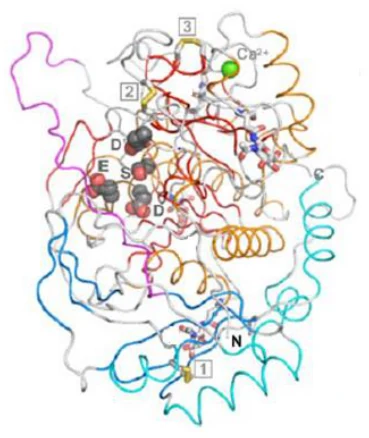
Physicochemical properties: The mature native human tripeptidyl peptidase 1 (hTPP1) protein is a lysosomal serine protease, and is the only known mammalian member of the sedolisin (serine-carboxyl peptidase) family characterized by a highly conserved Ser-Glu Asp (SED) catalytic triad. hTPP1 is an enzymatically inactive zymogen in vivo that is activated into a mature protease form through a series of proteolytic cleavages in the lysosome. Recombinant human TPP1 (rhTPP1) has identical primary amino acid sequence to the hTPP1 zymogen.
Product Characteristics:
rhTPP1 is produced in a Chinese Hamster Ovary (CHO) cell line transfected with rhTPP1 cDNA, and is secreted as a monomer.
14 CLINICAL TRIALS
14.1 Trial Design and Study Demographics
Table 6: Summary of Patient Demographics for Clinical Trials in CLN2 Disease
| Study # | Study design | Dosage, route of administration and duration | Study subjects (n) | Mean age (Range) | Sex |
| 190-201 | Open label, dose escalation clinical study | 300 mg, intracerebroventricular infusion, every other week | CLN2 patients (24) | 3 to 8 years | 9 M / 15 F |
| 190-202 | Open label, long term extension study | 300 mg, intracerebroventricular infusion, every other week | CLN2 patients (23) | 3 to 8 years | 9 M / 14 F |
| 190-203 | Phase 2 | 200 mg (<2 years, first 4 doses), 300 mg (≥2 years), intracerebro-ventricular infusion, every other week | CLN2 patients (14) | 1 to 6 years | 6 M / 8 F |
In the 190-201/202 study population, 63% percent of patients were female and 37% were male. Ninety-six percent of patients were Caucasian and 4% were Asian. In the 190-203 study population, 57% of patients were female and 43% were male. All patients were Caucasian.
These studies used the ML score, the sum of the motor and language domains of the CLN2 clinical rating scale (see Table 7) to assess disease progression. Each domain encompasses scores of 3 (grossly normal) to 0 (profoundly impaired), for a total possible score of 6, with unit decrements representing milestone events in the loss of previously attained functions of ambulation and speech.
Table 7: Motor Language Score - CLN2 Clinical Rating Scale
| Domain | Score | Rating | |
|---|---|---|---|
| Motor | 3 | Grossly normal gait. No prominent ataxia, no pathologic falls. | |
| 2 | Independent gait, as defined by ability to walk without support for 10 steps. Will have obvious instability, and may have intermittent falls. | ||
| 1 | Requires external assistance to walk, or can crawl only. | ||
| 0 | Can no longer walk or crawl. | ||
| Language | 3 | Apparently normal language. Intelligible and grossly age-appropriate. No decline noted yet. | |
| 2 | Language has become recognizably abnormal: some intelligible words, may form short sentences to convey concepts, requests, or needs. This score signifies a decline from a previous level of ability (from the individual maximum reached by the child). | ||
| 1 | Hardly understandable. Few intelligible words | ||
| 0 | No intelligible words or vocalizations | ||
14.2 Study Results
Study 190-201/202
A total of 24 patients, aged 3 to 9 years at baseline, were treated with BRINEURA 300 mg every other week. Of these, 23 patients were treated for 48 weeks (1 patient withdrew after week 1 due to the inability to continue with study procedures). The mean baseline ML score was 3.5 (standard deviation (SD) 1.2) with a range from 1 to 6.
Findings from studies 190-201 and 190-202 were compared with an expected rate of decline based on a natural history control group that included patients that satisfied the inclusion criteria for studies 190-201 and 190-202. Decline was defined as having an unreversed (sustained) 2-point decline, or an unreversed score of 0, in the ML score. Results from the natural history control group demonstrated an estimated mean rate of decline in the ML score of 2 points per 48 weeks. There were differences in the manner in which the CLN2 clinical rating scales were implemented between the natural history database and studies 190-201 and 190-202.
In study 190-201, 20 out of 23 (87%) patients receiving BRINEURA for 48 weeks did not have an unreversed 2 point decline compared to the 2 points per 48 weeks expected decline in the natural history control group (p=0.0002, binomial test assuming p0=0.5). A total of 15 patients out of 23 (65%) had no overall decline in ML score, irrespective of baseline score, and 2 of these 15 patients had their ML score increased by one point during the treatment period. Five patients experienced a single point decrease, and 3 patients experienced a 2 point decrease.
All 23 patients completed study 190-201 and continued to the extension study 190-202 where they were treated with BRINEURA at 300 mg every other week for a total duration of 288 weeks. Efficacy results from studies 190-201 and 190-202 were pooled and compared with a natural history control group that satisfied the inclusion criteria for studies 190-201 and 190-202. The median time to an unreversed 2 point decline or ML score of 0 (primary endpoint) in patients treated with BRINEURA (N=23) was 272 weeks compared with 49 weeks among the natural history control group (N=42). The estimated mean change from baseline in patients treated with BRINEURA compared to the natural history control group (N=42 patients) showed attenuation of disease progression and durability of the treatment effect up to last assessment (Week 321) (see Figure 2).
Figure 1: Mean Change from Baseline in ML Score (Natural History Control Group vs BRINEURA treated patients, 300 mg every other week)
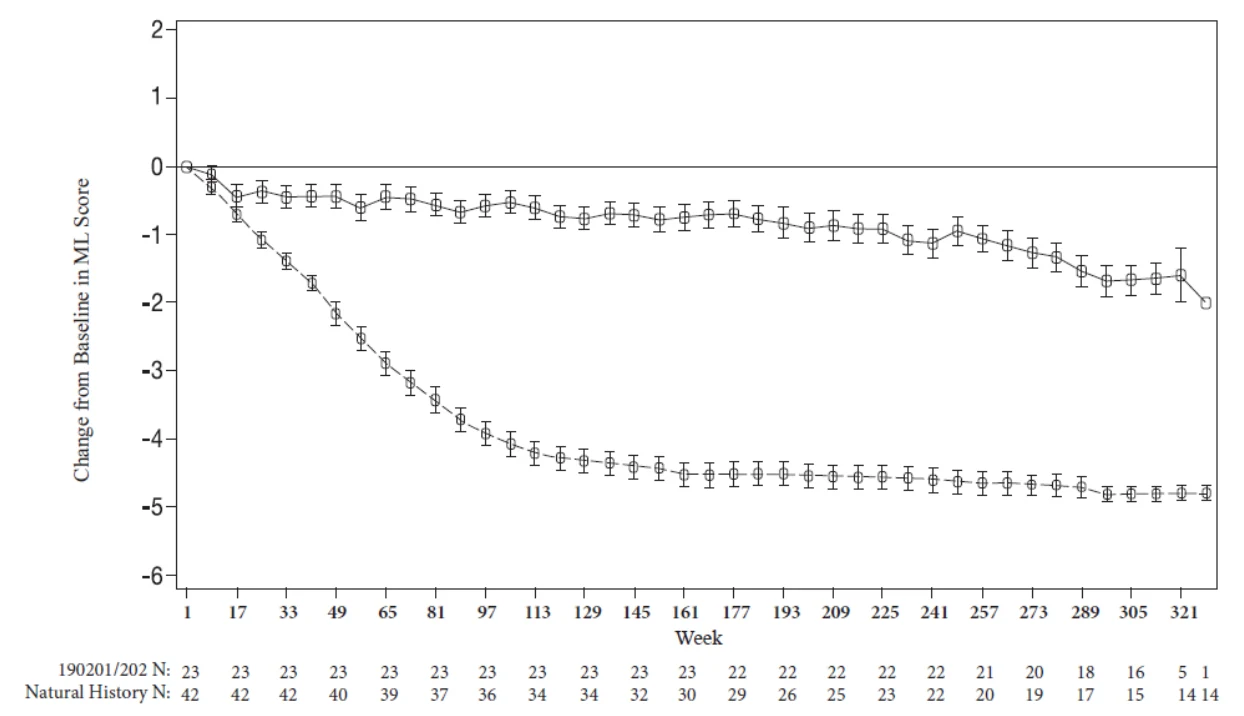
Vertical bars represent standard error of the mean
Solid line: 190-201 and 190-202 clinical studies
Dash line: 190-901 Natural history control group
Study 190-203
In Study 190-203, a total of 14 patients with CLN2 disease, ages 1 to 6 years at baseline (8 of 14 less than 3 years of age), were treated with BRINEURA for up to 169 weeks (1 patient withdrew to receive treatment commercially). The mean (SD) baseline ML score was 4.6 (1.69) with a range from 1 to 6.
BRINEURA treated patients were matched to natural history comparators on the basis of age, ML score, and pooled genotype. The mean (SD) rate of decline (primary endpoint) on the ML score was 0.15 (0.24) points per 48 weeks for the matched BRINEURA treated patients (N=12) and 1.30 (0.86) points per 48 weeks for the matched natural history comparators (N=29) (difference = 1.15 points, 95% CI: 0.80, 1.50).
A total of 10 of 12 (83%) treated patients had less than a 2 point decline in the ML score from baseline to last assessment. Eight patients (67%) showed no clinical progression in the ML score, two (17%) lost a single point and 2 (17%) lost 2 points. No treated patients reached an ML score of zero compared with 10 of 29 (34%) of the matched natural history comparators.
In patients below 3 years of age, the mean (SD) rate of decline in the ML score was 0.04 (0.11) points per 48 weeks for matched treated patients (N=8) compared with 1.09 (0.56) points per 48 weeks for matched natural history comparators (N=20) (difference = 1.05 points). Seven of the treated patients below 3 years of age with an ML score of 6 at baseline remained at an ML score of 6 at the last measured timepoint, which represents grossly normal gait and language. Three of these 7 patients remained with no other symptoms of CLN2 disease at week 145, as assessed by the CLN2 rating scale, brain imaging and adverse events, whereas all matched comparators had become symptomatic. In this population, BRINEURA treated patients showed a delay in disease onset.
15 MICROBIOLOGY
No microbiological information is required for this drug product.
16 NON-CLINICAL TOXICOLOGY
General Toxicology:
Limited preclinical safety data of cerliponase alfa were generated from two single dose toxicity studies in monkeys and four repeated dose studies in a dachshund dog model of classic late infantile CLN2 disease. Two single dose toxicity studies were conducted in monkeys, with cerliponase alfa delivered as an ICV or intrathecal-lumbar (IT-L) infusion over approximately 4 hours. In each of these studies no BMN 190-related effects were observed up to the highest dose administered (20 mg or 14 mg for ICV or IT-L administration, respectively). In both monkey studies, exposure (based on AUC) in the plasma and CSF are approximately 1-2-fold exposure in patients following ICV administration of cerliponase alfa at a dose of 300 mg, every other week.
The dachshund dog disease model primarily served to investigate the pharmacokinetic and pharmacodynamic properties of cerliponase alfa, but also aimed to evaluate the toxicity of cerliponase alfa. In the dog, cerliponase alfa was delivered as a biweekly or monthly ICV infusion over four hours, or as an intrathecal-cisternal (IT-C) bolus, at doses up to 48 mg. Noteworthy findings were consistent with the administration of a heterologous protein in an animal model and included hypersensitivity reactions following multiple doses of cerliponase alfa, as well as inflammatory reactions which appear to be associated with the presence of the ICV or IT-L catheters. However, the results of these studies in dachshund dogs cannot reliably predict human safety, because the regimen of cerliponase alfa infusions was different and highly variable even within the same study due to difficulties with the in-dwelling catheter system and prominent hypersensitivity reactions. In addition, these investigations included small animal numbers, mostly tested single dose groups and lacked appropriate controls. Thus, the non-clinical development is inconclusive with respect to the clinical safety of cerliponase alfa.
Genotoxicity:
No studies have been performed to evaluate the genotoxic potential of cerliponase alfa.
Carcinogenicity:
No studies have been performed to evaluate the carcinogenic potential of cerliponase alfa.
Reproductive and Developmental Toxicology:
Developmental and reproductive toxicology (DART) studies have not been conducted with cerliponase alfa.