


Product Monograph - Replagal
RECENT MAJOR LABEL CHANGES
None
TABLE OF CONTENTS
Sections or subsections that are not applicable at the time of authorization are not listed.
PART I: HEALTH PROFESSIONAL INFORMATION............................................................... 4
1 INDICATIONS.............................................................................................................. 4
1.1 Pediatrics ........................................................................................................... 4
1.2 Geriatrics............................................................................................................ 4
2 CONTRAINDICATIONS ............................................................................................... 4
4 DOSAGE AND ADMINISTRATION .............................................................................. 4
4.1 Dosing Considerations ........................................................................................ 4
4.2 Recommended Dose and Dosage Adjustment .................................................... 4
4.4 Administration..................................................................................................... 5
5 OVERDOSAGE ........................................................................................................... 5
6 DOSAGE FORMS, STRENGTHS, COMPOSITION AND PACKAGING ........................ 5
7 WARNINGS AND PRECAUTIONS .............................................................................. 6
7.1 Special Populations ............................................................................................ 7
7.1.1 Pregnant Women ............................................................................................ 7
7.1.2 Breast-feeding ................................................................................................. 7
7.1.3 Pediatrics ........................................................................................................ 7
7.1.4 Geriatrics ........................................................................................................ 7
8 ADVERSE REACTIONS .............................................................................................. 7
8.1 Adverse Reaction Overview ................................................................................ 7
8.2 Clinical Trial Adverse Reactions .......................................................................... 8
8.2.1 Clinical Trial Adverse Reactions - Pediatrics .................................................. 10
8.3 Less Common Clinical Trial Adverse Reactions................................................. 10
8.5 Post-Market Adverse Reactions ........................................................................ 10
9 DRUG INTERACTIONS ............................................................................................. 11
9.4 Drug-Drug Interactions...................................................................................... 11
9.5 Drug-Food Interactions ..................................................................................... 11
9.6 Drug-Herb Interactions...................................................................................... 11
9.7 Drug-Laboratory Test Interactions ..................................................................... 12
10 CLINICAL PHARMACOLOGY ................................................................................... 12
10.1 Mechanism of Action ..................................................................................... 12
10.2 Pharmacodynamics ....................................................................................... 12
10.3 Pharmacokinetics .......................................................................................... 13
11 STORAGE, STABILITY AND DISPOSAL .................................................................. 14
PART II: SCIENTIFIC INFORMATION .................................................................................. 15
13 PHARMACEUTICAL INFORMATION ........................................................................ 15
14 CLINICAL TRIALS .................................................................................................... 17
14.1 Trial Design and Study Demographics ........................................................... 17
14.2 Study Results ................................................................................................ 18
16 NON-CLINICAL TOXICOLOGY ................................................................................. 20
PATIENT MEDICATION INFORMATION .............................................................................. 21
PART I: HEALTH PROFESSIONAL INFORMATION
1 INDICATIONS
REPLAGAL (agalsidase alfa) is indicated for:
- long-term enzyme replacement therapy in patients with a confirmed diagnosis of Fabry Disease (α-galactosidase A deficiency).
REPLAGAL treatment should be supervised by a physician experienced in the management of patients with Fabry disease or other inherited metabolic diseases.
1.1 Pediatrics
Pediatrics (<18 years of age)
The experience in children is limited. In children in clinical studies (7-18 years) who received REPLAGAL 0.2 mg/kg every other week for one to 4 years no unexpected safety issues were encountered. The safety and efficacy of REPLAGAL in children ages 0-6 years has not yet been established.
1.2 Geriatrics
Geriatrics (>65 years of age)
Studies specifically in patients over 65 years of age have not been performed and no dosage regimen can presently be recommended in these patients as safety and efficacy have not yet been established.
2 CONTRAINDICATIONS
REPLAGAL is contraindicated in patients with severe allergic reactions to the active substance or to any ingredient in the formulation or components of the container of REPLAGAL. For a complete listing, see 6 DOSAGE FORMS, STRENGTHS, COMPOSITION AND PACKAGING.
4 DOSAGE AND ADMINISTRATION
4.1 Dosing Considerations
- REPLAGAL is intended for long-term, chronic use
- REPLAGAL treatment should be supervised by a physician experienced in the management of patients with Fabry Disease or other inherited metabolic diseases
- Infusion of REPLAGAL at home may be considered for patients who are tolerating their infusions well.
4.2 Recommended Dose and Dosage Adjustment
REPLAGAL is administered at a dose of 0.2 mg/kg body weight every other week by intravenous infusion over 40 minutes.
4.4 Administration
- 1. Calculate the dose and number of REPLAGAL vials needed.
- 2. Dilute the total volume of REPLAGAL concentrate required in 100 mL of 9 mg/mL (0.9%) sodium chloride solution for infusion. Care must be taken to ensure the sterility of the prepared solutions since REPLAGAL does not contain any preservative or bacteriostatic agent; aseptic technique must be observed. Once diluted, the solution should be mixed gently but not shaken.
- 3. The solution should be inspected visually for particulate matter and discoloration prior to administration.
- 4. Administer the infusion solution over a period of 40 minutes using an intravenous line with an integral filter. Since no preservative is present, it is recommended that administration is started as soon as possible. After dilution, the product should be administered immediately.
- 5. Do not infuse REPLAGAL concomitantly in the same intravenous line with other agents.
- 6. For single use only. Any unused product or waste material should be disposed of in accordance with local requirements.
5 OVERDOSAGE
No case of overdose has been reported.
| For management of a suspected drug overdose, contact your regional poison control centre. |
6 DOSAGE FORMS, STRENGTHS, COMPOSITION AND PACKAGING
To help ensure the traceability of biologic products, including biosimilars, health professionals should recognise the importance of recording both the brand name and the non-proprietary (active ingredient) name as well as other product-specific identifiers such as the Drug Identification Number (DIN) and the batch/lot number of the product supplied.
Table 1 – Dosage Forms, Strengths, Composition and Packaging
| Route of Administration | Dosage Form / Strength / Composition | Non-medicinal Ingredients |
| Intravenous (IV) | Concentrate for solution for intravenous infusion 1 mg/mL | Polysorbate 20 Sodium chloride Sodium hydroxide Sodium phosphate monobasic monohydrate Water for injection |
Each vial of 3.5 mL concentrate for solution for infusion contains 3.5 mg of agalsidase alfa.
The concentrate must be diluted further prior to administration. (see 4.4 Administration).
3.5 mL of concentrate for solution for infusion in a 5 mL vial (Type 1 glass) with a fluoro-resin coated butyl rubber stopper, a one-piece aluminum seal and flip-off cap.
Pack size of 1 vial per carton.
7 WARNINGS AND PRECAUTIONS
Driving and Operating Machinery
REPLAGAL has no or negligible influence on the ability to drive and use machines.
Hepatic/Biliary/Pancreatic
No studies have been performed in patients with hepatic impairment.
Immune
Hypersensitivity reactions
Hypersensitivity reactions have been reported. If severe hypersensitivity or anaphylactic reactions occur, the administration of REPLAGAL should be discontinued immediately and appropriate treatment initiated. The current medical standards for emergency treatment are to be observed. (see 8 ADVERSE REACTIONS)
Idiosyncratic infusion-related reactions
In adult and pediatric patients treated with REPLAGAL in clinical studies idiosyncratic infusion -related reactions were very commonly reported. The most common symptoms have been rigors, headache, nausea, pyrexia, flushing and fatigue. Serious infusion reactions have been reported uncommonly; symptoms reported include pyrexia, rigors, tachycardia, urticaria, nausea/vomiting, angioneurotic edema with throat tightness, stridor and swollen tongue. Other infusion-related symptoms may include dizziness and hyperhidrosis. Infusion reactions may be associated with hemodynamic stress triggering cardiac events in patients with pre-existing cardiac manifestations of Fabry disease. The onset of infusion-related reactions has generally occurred within the first 2-4 months after initiation of treatment with REPLAGAL although later onset (after 1 year) has been reported as well. These effects have decreased with time. If mild or moderate acute infusion reactions occur, medical attention must be sought immediately and appropriate actions instituted. The infusion can be temporarily interrupted (5 to 10 minutes) until symptoms subside and the infusion may then be restarted. Mild and transient effects may not require medical treatment or discontinuation of the infusion. In addition, oral or intravenous pre-treatment with antihistamines and/or corticosteroids, from 1 to 24 hours prior to infusion may prevent subsequent reactions in those cases where symptomatic treatment was required. (see 8 ADVERSE REACTIONS)
Antibodies to the protein
As with all protein pharmaceutical products, patients may develop antibodies to the protein. A low titre anti-drug antibody response has been observed in approximately 9.4% of male patients treated with REPLAGAL after 12 months of treatment. (see 8 ADVERSE REACTIONS, Immunogenicity)
Renal
No dose adjustment is necessary in patients with renal impairment. The presence of extensive renal damage (eGFR < 60 mL/min) may limit the renal response to enzyme replacement therapy, possibly due to underlying irreversible pathological changes. In such cases, the loss of renal function remains within the expected range of the natural progression of the disease. Limited data are available in patients on dialysis or post-kidney transplantation, no dose adjustment is required.
Reproductive Health: Female and Male Potential
Fertility
See 7.1.1 Special Populations: Pregnant Women
7.1 Special Populations
7.1.1 Pregnant Women
There is very limited data on pregnancies exposed to REPLAGAL. Animal studies do not indicate direct or indirect harmful effects with respect to pregnancy or embryonal/fetal development when exposed during organogenesis. (see 16 NON-CLINICAL TOXICOLOGY, Reproduction and Teratology Studies)
7.1.2 Breast-feeding
It is not known whether REPLAGAL is excreted in human milk. Caution should be exercised when prescribing REPLAGAL to nursing mothers.
7.1.3 Pediatrics
Pediatrics (<18 years of age): The experience in children is limited. In clinical studies of children (7-18 years of age) who received REPLAGAL 0.2 mg/kg every other week for one to 4 years, no unexpected safety issues were encountered.
7.1.4 Geriatrics
Geriatrics (>65 years of age): Studies specifically in patients over the age of 65 years old have not been performed and no dosage regimen can presently be recommended in these patients as safety and efficacy have not yet been established.
8 ADVERSE REACTIONS
8.1 Adverse Reaction Overview
The most common adverse reactions (occurring in at least 10% of patients) reported in patients treated with REPLAGAL in clinical studies were headache, nasopharyngitis, nausea, diarrhea, vomiting, cough, pain in limb, pyrexia, arthralgia, dizziness, back pain, fatigue, paraesthesia, pharyngitis, rigors, chest pain, neuropathic pain, abdominal pain, pain, peripheral edema, asthenia, myalgia, dyspnea, fatigue aggravated, rash, hypoesthesia, palpitations, tinnitus, flushing, peripheral swelling, tremor, and tinnitus aggravated.
The most serious adverse reactions in patients include abdominal discomfort, abdominal pain, anaphylactic reaction, arthralgia, asthenia, atrial fibrillation, chest pain, chest tightness, cough, diarrhea, dyspnea, erythema, heart failure, hypersensitivity, hypertension, hypoesthesia, malaise, myocardial ischemia, nasopharyngitis, nausea, neuropathic pain, palpitations, pyrexia, tachyarrhythmia, tachycardia, throat tightness, tremor, ventricular extrasystoles, and vomiting.
8.2 Clinical Trial Adverse Reactions
Clinical trials are conducted under very specific conditions. The adverse reaction rates observed in the clinical trials; therefore, may not reflect the rates observed in practice and should not be compared to the rates in the clinical trials of another drug. Adverse reaction information from clinical trials may be useful in identifying and approximating rates of adverse drug reactions in real-world use.
The most common adverse reactions reported in the clinical studies were infusion-related reactions, which occurred very commonly (13.7% of patients) in adults patients treated with REPLAGAL. (see 7 WARNINGS AND PRECAUTIONS)
The adverse reactions presented in Table 2 have been reported in 177 patients treated with REPLAGAL at a dose of 0.2 mg/kg every other week in 11 clinical trials (1 Phase I/II trial, 7 Phase II trials and 3 Phase III trials), ranging in treatment durations of at least 9-51 weeks to 3 years. These clinical trials included 21 patients with history of end-stage renal disease, 24 pediatric patients (7 to 17 years of age) and 17 female patients. Information is presented by system organ class and frequency (very common ≥1/10; common ≥1/100, <1/10).
Table 2 – Adverse Reactions Reported (≥1%) for REPLAGAL in Clinical Studies
System Organ Class & Adverse Reaction | Frequency Category | Number and Frequency by Subjects N=177 (%) |
|---|---|---|
| Cardiac disorders | ||
| Palpitations | Very common | 26 (15) |
| Tachycardia | Common | 6 (3) |
| Atrial fibrillation | Common | 4 (2) |
| Ear and labyrinth disorders | ||
| Tinnitus | Very common | 24 (14) |
| Tinnitus aggravated | Very common | 19 (11) |
| Eye disorders | ||
| Lacrimation increased | Common | 3 (2) |
| Gastrointestinal disorders | ||
| Nausea | Very common | 75 (42) |
| Diarrhea | Very common | 74 (42) |
| Vomiting | Very common | 71 (40) |
| Abdominal pain | Very common | 46 (26) |
| Abdominal discomfort | Common | 4 (2) |
| General disorders and administration site conditions | ||
| Pyrexia | Very common | 67 (38) |
| Fatigue | Very common | 55 (31) |
| Rigors | Very common | 50 (28) |
| Chest pain | Very common | 47 (27) |
| Pain | Very common | 44 (25) |
| Asthenia | Very common | 37 (21) |
| Fatigue aggravated | Very common | 29 (16) |
| Influenza like illness | Common | 17 (10) |
| Malaise | Common | 15 (8) |
| Chest tightness | Common | 13 (7) |
System Organ Class & Adverse Reaction | Frequency Category | Number and Frequency by Subjects N=177 (%) |
|---|---|---|
| Feeling hot | Common | 9 (5) |
| Feeling cold | Common | 7 (4) |
| Discomfort | Common | 3 (2) |
| Injection site rash | Common | 2 (1) |
| Immune system disorders | ||
| Hypersensitivity | Common | 9 (5) |
| Investigations | ||
| Corneal reflex decreased | Common | 2 (1) |
| Metabolism and nutrition disorders | ||
| Peripheral edema | Very common | 43 (24) |
| Musculoskeletal and connective tissue disorders | ||
| Pain in limb | Very common | 70 (40) |
| Arthralgia | Very common | 59 (33) |
| Back pain | Very common | 56 (32) |
| Myalgia | Very common | 35 (20) |
| Peripheral swelling | Very common | 20 (11) |
| Joint swelling | Common | 15 (8) |
| Musculoskeletal discomfort | Common | 5 (3) |
| Nervous system disorders | ||
| Headache | Very common | 111 (63) |
| Dizziness | Very common | 59 (33) |
| Paraesthesia | Very common | 53 (30) |
| Neuropathic pain | Very common | 47 (27) |
| Hypoesthesia | Very common | 27 (15) |
| Tremor | Very common | 20 (11) |
| Dysgeusia | Common | 5 (3) |
| Hypersomnia | Common | 4 (2) |
| Respiratory, thoracic and mediastinal disorders | ||
| Nasopharyngitis | Very common | 88 (50) |
| Cough | Very common | 70 (40) |
| Pharyngitis | Very common | 52 (29) |
| Dyspnea | Very common | 31 (18) |
| Rhinorrhea | Common | 11 (6) |
| Throat tightness | Common | 10 (6) |
| Hoarseness | Common | 6 (3) |
| Throat secretion increased | Common | 2 (1) |
| Skin and subcutaneous tissue disorders | ||
| Rash | Very common | 29 (16) |
| Acne | Common | 13 (7) |
| Erythema | Common | 11 (6) |
| Pruritus | Common | 10 (6) |
| Livedo reticularis | Common | 2 (1) |
| Urticaria | Common | 2 (1) |
| Vascular disorders | ||
| Flushing | Very common | 21 (12) |
System Organ Class & Adverse Reaction | Frequency Category | Number and Frequency by Subjects N=177 (%) |
|---|---|---|
| Hypertension | Common | 14 (8) |
| Hypotension | Common | 9 (5) |
Adverse drug reactions reported in patients with a history of end stage renal disease were similar to those reported in the general study population.
Immunogenicity
As with all protein pharmaceutical products, patients may develop antibodies to the protein. A low titer anti-drug antibody response has been observed in approximately 9.4% of male patients treated with REPLAGAL after 12 months of treatment. These anti-drug antibodies appeared to develop following approximately 6-12 months of treatment. After 18 to 24 months of therapy, 6.3% of REPLAGAL-treated patients were still antibody positive. In other studies, after 12 to 54 months of therapy, 17% of REPLAGAL-treated patients were still antibody-positive. Borderline IgE antibody positivity not associated with anaphylaxis has been reported in clinical trials in a very limited number of patients. (see 7 WARNINGS AND PRECAUTIONS)
8.2.1 Clinical Trial Adverse Reactions - Pediatrics
Adverse reactions reported in pediatric patients in clinical studies were generally similar to those reported in adults. However, infusion-related reactions (pyrexia, dyspnea, chest pain) and pain exacerbation occurred more frequently in pediatric patients than in adults. (see 7 WARNINGS AND PRECAUTIONS)
8.3 Less Common Clinical Trial Adverse Reactions
Cardiac disorders: Tachyarrhythmia
Investigations: Oxygen saturation decreased
Musculoskeletal and connective tissue disorders: Sensation of heaviness
Nervous system disorders: Parosmia
Skin and subcutaneous tissue disorders: Angioneurotic edema
8.5 Post-Market Adverse Reactions
Infusion-related reactions may include cardiac events such as cardiac arrhythmias (atrial fibrillation, ventricular extrasystoles, tachyarrhythmia), myocardial ischemia and heart failure in patients with Fabry disease involving heart structures. The most common infusion-related reactions were mild and include rigors, pyrexia, flushing, headache, nausea, dyspnea, tremor and pruritus. Infusion-related symptoms may also include dizziness, hyperhidrosis, hypotension, cough, vomiting, and fatigue. Hypersensitivity, including anaphylaxis, has been reported. (see 7 WARNINGS AND PRECAUTIONS)
Other Clinical Trial completed Post-Approval – Study HGT-REP-081
Table 3 summarizes adverse reactions observed in a multicenter open-label treatment protocol that included 167 patients with Fabry disease who received 0.2 mg/kg every other week for up to 310 weeks.
Table 3 – Adverse Reactions Reported (≥1%) for REPLAGAL in Study HGT-REP-081 completed Post-Approval*
System Organ Class & Adverse Reaction | Frequency Category | Number and Frequency by Subjects N=167 (%) |
| General disorders and administration site conditions | ||
| Pain | Common | 16 (10) |
| Asthenia | Common | 14 (8) |
| Skin and subcutaneous tissue disorders | ||
| Hyperhidrosis | Very common | 19 (11) |
| Vascular disorders | ||
| Hypotension | Very common | 18 (11) |
| Hypertension | Very common | 17 (10) |
| Flushing | Common | 9 (5) |
Less common adverse reactions observed in Study HGT-REP-081 include: *
General disorders and administration site conditions: discomfort, feeling hot
Immune system disorders: anaphylactic reaction
Nervous system disorders: hypersomnia
*Adverse reactions already listed in Table 2 (Adverse Reactions Reported (≥1%) for REPLAGAL in Clinical Studies) and 8.3 Less Common Clinical Trial Adverse Reactions are not repeated unless there are changes in frequency.
9 DRUG INTERACTIONS
9.4 Drug-Drug Interactions
REPLAGAL should not be co-administered with chloroquine, amiodarone, benoquin or gentamicin since these substances have the potential to inhibit intracellular α-galactosidase activity.
As α-galactosidase A is itself an enzyme, it would be unlikely candidate for cytochrome P450 mediated drug-drug interactions. In clinical studies, neuropathic pain medicinal products (e.g., gabapentin) were administered concurrently to most patients without any evidence of interaction.
9.5 Drug-Food Interactions
Interactions with food have not been established.
9.6 Drug-Herb Interactions
Interactions with herbal products have not been established.
9.7 Drug-Laboratory Test Interactions
Interactions with laboratory tests have not been established.
10 CLINICAL PHARMACOLOGY
10.1 Mechanism of Action
Fabry Disease is a glycosphingolipid storage disorder that is caused by deficient activity of the lysosomal enzyme α-galactosidase A, resulting in accumulation of globotriaosylceramide (also referred to as Gb3 or CTH), the glycosphingolipid substrate for this enzyme. Agalsidase alfa catalyzes the hydrolysis of Gb3, cleaving a terminal galactose residue from the molecule. Treatment with the enzyme has been shown to reduce accumulation of Gb3 in many cell types including endothelial and parenchymal cells. Agalsidase alfa has been produced in a human cell line to provide for a human glycosylation profile that influences biodistribution to allow preferential uptake by target cells.
10.2 Pharmacodynamics
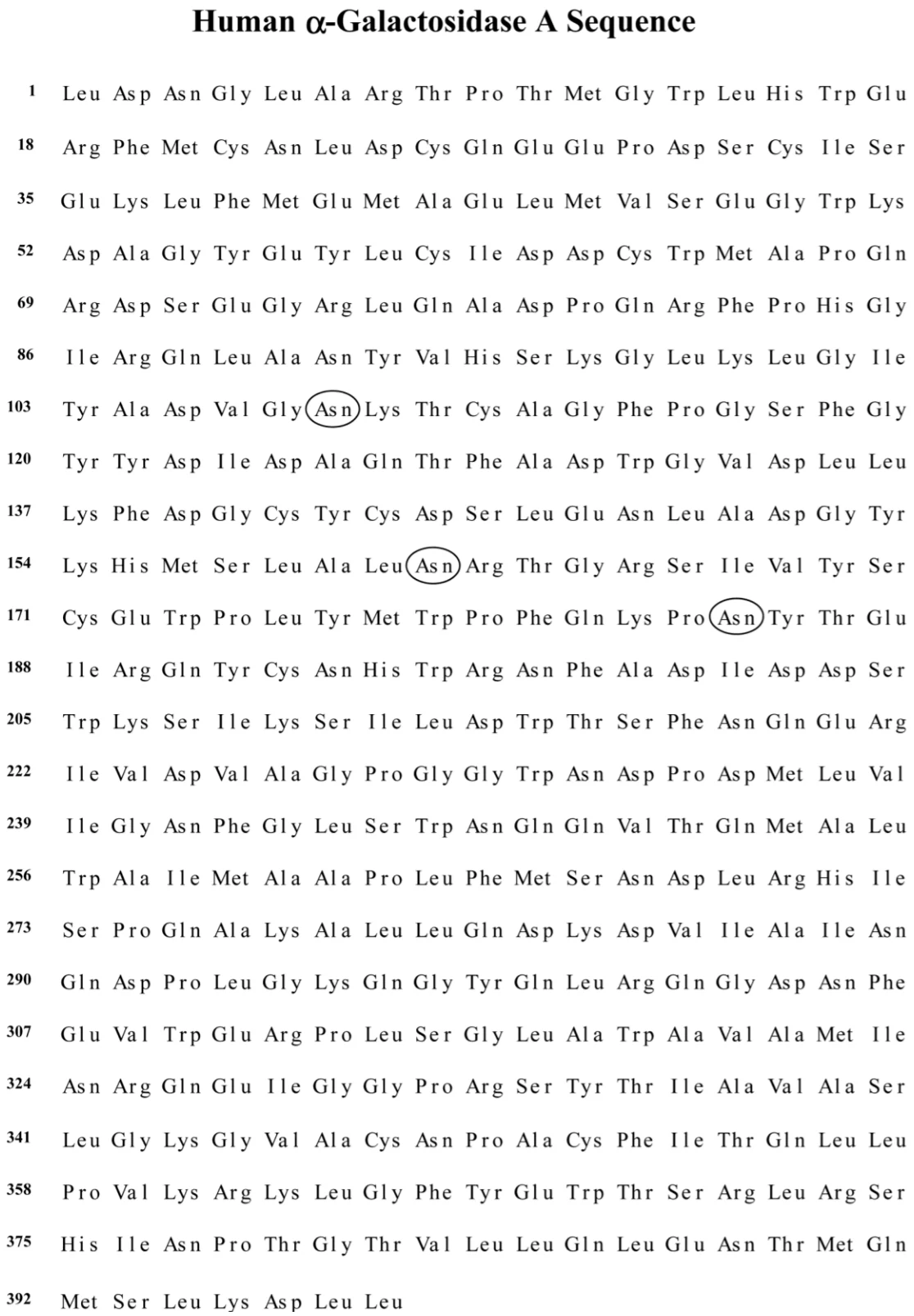
Agalsidase alfa is a human α-galactosidase A produced in a human cell line by genetic engineering technology. Agalsidase alfa is a homodimer which consists of 2 approximately 50,000 Dalton subunits, with each subunit consisting of 398 amino acids. The product is post -translationally modified by the removal of a signal sequence of 31 residues and by the addition of carbohydrate chains to 3N-linked glycosylation sites.
Agalsidase alfa is targeted to its lysosomal site of action by mannose-6-phosphate (M6P) residues on the agalsidase alfa molecule. The M6P moiety binds to a specific M6P receptor on the cell surface and is thus directed to the lysosomes. Many cells in the body contain M6P receptors, and agalsidase alfa has been shown to be taken up by the liver, kidney, heart, and blood vessels.
Agalsidase alfa is a highly purified preparation. Biological activity of agalsidase alfa is measured using the water soluble substrate 4-methylumbelliferyl-α-D-galactopyranoside (4-MUF-gal), and biological potency is measured based on its ability to be taken up by normal human cells.
Non-clinical Pharmacodynamics
Agalsidase alfa was evaluated for pharmacological effect in a “knockout” mouse model of α-galactosidase A deficiency.
Immunostaining of tissues from mice treated with a single dose of agalsidase alfa at 1.0 mg/kg provided direct evidence that intravenously administered agalsidase alfa was taken up by liver, heart, and kidney cells. A single dose of 0.2 mg/kg was sufficient to catabolize stored Gb3 in the liver, heart, and kidney. Multiple injections of 0.1 and 1.0 mg/kg restored liver to almost normal levels of Gb3 and significantly improved the reduction of Gb3 in heart and kidney. The results of this study have shown that intravenously dosed agalsidase alfa is effectively targeted to key tissues that show storage induced pathology in Fabry Disease, indicating that it reaches the lysosomes in an active form.
10.3 Pharmacokinetics
REPLAGAL 0.2 mg per kg body weight were administered to 17 adult male patients with Fabry Disease as 40-minute intravenous infusions. Following the infusion, agalsidase alfa had a biphasic distribution and elimination profile from the circulation. The median clearance of agalsidase alfa normalized for body weight was 3.4 mL/min/kg (range: 0.6, 85.5 mL/min/kg). The median volume of distribution was 203 mL/kg (range: 89, 6778 mL/kg), and the median elimination half-life was 54.7 min (range: 28.5, 654.2 min).
Based on the analysis of pre- and post-dose liver biopsies in males with Fabry Disease treated with agalsidase alfa manufactured using a different method, the tissue half-life has been estimated to be in excess of 24 hours and hepatic uptake of the enzyme estimated to be 10% of administered dose at the therapeutic dose level of 0.2 mg/kg.
In three studies with pharmacokinetic evaluations in Fabry patients receiving REPLAGAL 0.2 mg/kg body weight every other week, 4 of 17 adult male Fabry patients, 4 of 14 pediatric Fabry patients, and 2 of 10 adolescent / young adult Fabry patients tested positive for anti-agalsidase alfa antibodies (6 patients were IgM+; 4 patients were IgG+). Of the 6 IgM+ patients, 1 tested positive for neutralizing antibodies. Of the 4 IgG+ patients, 3 tested positive for neutralizing antibodies. Following six months of REPLAGAL treatment, some male patients showed altered pharmacokinetics including an apparent increase in clearance. These changes were associated with the development of low titer antibodies to agalsidase alfa.
Agalsidase alfa is a protein. It is not expected to bind to proteins. It is expected that its metabolic degradation will follow the pathways of other proteins, i.e. peptide hydrolysis. Agalsidase alfa is unlikely to be a candidate for drug-drug interactions.
Special Populations and Conditions
Pediatrics: In 14 pediatric Fabry patients (7 to <18 years old), median clearance of REPLAGAL was 4.7 mL/min/kg (range: 2.1, 8.2 mL/min/kg). The mean (SD) volume of distribution was 128 mL/kg (51 mL/kg) and the mean (SD) elimination half-life was 32 min (9 min). In a separate long-term pediatric study of 10 adolescents / young adults with Fabry disease (15 to 23 years old), median clearance of REPLAGAL was 3.1 mL/min/kg (range: 1.2, 20 mL/min/kg).
Sex: Pharmacokinetic parameters were not significantly different between men and women.
Ethnic Origin: Formal pharmacokinetic studies for race have not been conducted.
Hepatic Insufficiency: As metabolism is expected to occur by peptide hydrolysis, impaired liver function is not expected to affect the pharmacokinetics of agalsidase alfa in a clinically significant manner.
Renal Insufficiency: Renal elimination of agalsidase alfa is considered to be a minor clearance pathway since pharmacokinetic parameters are not altered by impaired renal function. (see 7 WARNINGS AND PRECAUTIONS, Renal).
11 STORAGE, STABILITY AND DISPOSAL
Store in a refrigerator (2 - 8°C).
REPLAGAL diluted into normal saline should be used as soon as practicable after preparation, as the product does not contain any bacteriostatic preservatives. However, when prepared under aseptic conditions, the diluted product may be stored for 24 hours at 2 to 8°C.
For single use only. Any unused product or waste material should be disposed of in accordance with local requirements.
PART II: SCIENTIFIC INFORMATION
13 PHARMACEUTICAL INFORMATION
Drug Substance
Proper name (USAN/INN): agalsidase alfa
Chemical name: agalsidase alfa
Other name: Gene-activated α-galactosidase A
Molecular formula and molecular mass:
The mature enzyme is a glycoprotein which consists of a homodimer of 2 approximately 50,000 dalton molecular weight subunits, each consisting of 398 amino acids.
Structural formula:
Agalsidase alfa is the active pharmaceutical ingredient in the drug product REPLAGAL, and is the human protein α-galactosidase A produced by a well-characterized human cell line by genetic engineering technology. Agalsidase alfa is post-translationally modified by the removal of a signal sequence of 31 residues and by the addition of carbohydrate chains to 3 N-linked glycosylation sites (circled in illustration).
Physicochemical properties:
Agalsidase alfa drug substance is a clear colorless solution. As formulated in sodium phosphate and sodium chloride, agalsidase alfa has a pH of 6.0±0.5).
14 CLINICAL TRIALS
14.1 Trial Design and Study Demographics
Efficacy Studies
Table 4 - Summary of patient demographics and study design for clinical trials in Adults
| Study # | Trial design | Dosage, route of administration and duration | Study subjects receiving Replagal (n=number) | Mean age (Range) | Sex | ||
|---|---|---|---|---|---|---|---|
| TKT 028 | Multicenter,open-label randomized study to evaluate safety and efficacy of 3 REPLAGAL dose regimens in adults with Fabry disease | 0.2mg/kg EOW, 0.2mg/kg weekly, and 0.4mg/kg weekly by i.v. infusion 12 months | META-ANALYSIS OF ADULT PATIENTS FOR CARDIAC PARAMETERS n = 153 Mean age: 47.3 yrs (19-84 yrs) Male: 58% Female: 42% META-ANALYSIS OF ADULT PATIENTS FOR RENAL PARAMETERS n = 183 Mean age: 48.6 yrs (20-84 yrs) Male: 51% Female: 49% | ||||
| HGT-REP-060 | Open-label, multicenter, extension of study TKT 028 to evaluate safety and efficacy of REPLAGAL in adults with Fabry disease | 0.2mg/kg EOW by i.v. infusion 12 months | |||||
| HGT-REP-059 | Open-label, multicenter, single-arm study to evaluate safety of REPLAGAL in adults with Fabry disease | 0.2mg/kg EOW by i.v. infusion 24 months | |||||
| CFDI-001 | Open-label, multicenter observational study to evaluate the effects of enzyme replacement therapy in Canadian patients with Fabry disease (interim report including patients receiving REPLAGAL) | 0.2mg/kg EOW or 0.2mg/kg weekly by i.v. infusion 10 years | |||||
EOW = every other week
Table 5 - Summary of patient demographics and study design for clinical trials in Pediatric Patients
| Study # | Trial design | Dosage, route of administration and duration | Study subjects receiving REPLAGAL (n=number) | Mean age (Range) | Sex |
|---|---|---|---|---|---|
| HGT-REP-084 | Open-label, multicenter study to evaluate safety of REPLAGAL in pediatric patients with Fabry disease who are enzyme replacement treatment-naïve. | 0.2mg/kg EOW by i.v. infusion 12 months | n=14 | 12.16 yrs (6.7-15.9 yrs) | Male: 35.7% Female: 64.3% |
EOW = every other week
14.2 Study Results
A summary of the results of the meta-analysis of cardiac and renal parameters from REPLAGAL (agalsidase alfa) studies in adult patients with Fabry Disease who were treatment-naïve at baseline are presented in Table 6.
Table 6 – Results of Meta-analysis of Studies in Adult patients with Fabry Disease treated with REPLAGAL 0.2 mg/kg EOW who were Treatment-naïve at Baseline
| Primary analysis | Mean baseline value (SD) | Adjusted Annualized Rate of Change using a Random Coefficient Model (AARC by RIS) (95% CI) |
Left ventricular mass index (LVMI) (g/m2.7) (n=30) | 56.1 (23.39) | 0.32 (-2.07, 2.71) |
Estimated glomerular filtration rate (eGFR) (mL/min/1.73m2) (n=38) | 79.0 (27.34) | -0.85 (-3.85, 2.15) |
CI = Confidence interval; SD = Standard deviation; EOW = every other week
Cardiac Effects
The annual rate of change (95% CI) of LVMI in adult treatment-naïve patients (n=30), treated with REPLAGAL 0.2 mg/kg administered EOW over a mean of 1.95 (0.9 - 3.1) years, was 0.32 (-2.07, 2.71) g/m2.7 demonstrating the stabilizing effect of REPLAGAL on this parameter (see Table 6). This was further corroborated by the average annual rates of change for interventricular septum end-diastole thickness (IVSTd) and posterior wall thickness (PWTd).
The annual rates of change (95% CI) for cardiac parameters in adult patients treated with REPLAGAL 0.2 mg/kg administered EOW regardless of treatment at baseline (n=153) were:
- 0.31 (-0.77, 1.38) g/m2.7 for LVMI from a mean (SD) at baseline of 62.5 (26.6) g/m2.7,
- 0.009 (-0.014, 0.031) cm for IVSTd from a mean (SD) at baseline of 1.41 (0.47) cm, and
- -0.014 (-0.032, 0.005) cm for PWTd from a mean (SD) at baseline of 1.31 (0.38) cm.
In a subset of patients with left-ventricular hypertrophy at baseline (n=98) the average annual rates of change (95% CI) for cardiac parameters in patients on treatment with REPLAGAL were close to zero, further supporting a positive treatment effect:
- -0.12 (-1.67, 1.43) g/m2.7 for LVMI from a mean (SD) at baseline of 76.3 (23.3) g/m2.7,
- -0.002 (-0.026, 0.021) cm for IVSTd from a mean (SD) at baseline of 1.63 (0.44) cm, and
- -0.033 (-0.059, -0.007) cm for PWTd from a mean (SD) at baseline of 1.48 (0.35) cm.
Effects on Renal Function
The annual rate of change (95% CI) of eGFR in adult treatment-naïve patients (n=38), treated with REPLAGAL 0.2 mg/kg administered EOW over a mean of 1.97 (0.9 – 3.1) years, was -0.85 (-3.85, 2.15) mL/min/1.73m2, thus providing a strong indication of a reduction of decline in renal function in patients with Fabry disease (see Table 6).
The annual rate of change (95% CI) of eGFR in adult patients treated with REPLAGAL 0.2 mg/kg administered EOW regardless of treatment at baseline (n=183), with a mean (SD) eGFR at baseline of 81.2 (26.32) mL/min/1.73m2, was -3.26 (-4.36, -2.17) mL/min/1.73m2.
In a subset of these patients with baseline eGFR below normal values, the annual rates of changes (95% CI) for eGFR in patients on treatment with REPLAGAL further demonstrated REPLAGAL’s effect on the reduction of decline in renal function:
- -2.25 (-3.54, -0.96) mL/min/1.73m2 for eGFR in patients with CKD Stage 2 at baseline (n=78) with a mean baseline (SD) eGFR of 75.6 (8.01) mL/min/1.73m2, and
- -2.95 (-5.19, -0.71) mL/min/1.73m2 for eGFR in patients with CKD Stage 3 at baseline (n=24) with mean baseline (SD) eGFR of 45.9 (9.6) mL/min/1.73m2.
Results in Pediatric Patients
In a 55-week open-label multicenter study to evaluate the safety of REPLAGAL in pediatric patients with Fabry disease who are enzyme replacement treatment-naïve, an additional primary objective was to assess the changes in heart rate variability (HRV) (as an assessment of cardiac autonomic function) with LVMI and eGFR among secondary endpoints. The analyses of HRV indicated that time domain HRV indices remained stable or trended towards improvement. The baseline LVMI values for males and females were within the normal range (<51 g/m2.7 for males and <48 g/m2.7 for females) and overall, the mean baseline LVMI was 35.37 g/m2.7. At Week 55, the mean LVMI changed by 0.16 g/m2.7. Taken together, the study results indicated a potential stabilization or trend toward improvement in the cardiac function when treatment was started as soon as children with Fabry disease had low or abnormal HRV and before they developed left-ventricular hypertrophy. Overall and by sex, assessments of renal function remained stable over the course of REPLAGAL treatment. The mean baseline eGFR was 117.50 mL/min/1.73 m2 and none of the patients had eGFR ≤60 mL/min/1.73 m2 at baseline. The mean change in eGFR from baseline at Week 55 was 0.15 mL/min/1.73 m2.
Effects on Plasma Gb3 Levels
The effect of REPLAGAL on plasma Gb3 was analyzed in treatment-naïve male patients receiving 0.2 mg/kg administered EOW in an open-label study. Plasma Gb3 levels generally decreased over time. At baseline, the mean (SD) plasma Gb3 was 19.0 (9.84) nmol/mL. After 12 months (n=9), 18 months (n=8), and 24 months (n=3) of treatment, the mean change (SD) in plasma Gb3 from baseline was -8.2 (5.01) nmol/mL, -9.8 (10.04) nmol/mL, and -10.5 (1.95) nmol/mL, respectively.
Post-market experience
Total worldwide exposure to REPLAGAL, as of July 31, 2015, was estimated to be 14,683 patient-years.
16 NON-CLINICAL TOXICOLOGY
Acute Toxicity Studies
The acute toxicity of agalsidase alfa was evaluated in rats. Doses of up to 10 mg/kg body weight, representing 50 times the recommended clinical dose, have been tested without any adverse toxicity.
Subacute and Subchronic Toxicity Studies
Multiple dose toxicity of agalsidase alfa was evaluated using rats, rabbits and monkeys. Doses of up to five times the recommended clinical dose and at twice the dosing frequency were tested for 13 and 26 weeks in rats, and 13 weeks in monkeys. No adverse toxicity was observed. No toxicity was observed in a 14-day, daily-dosing, range finding study in rabbits.
Reproduction and Teratology Studies
A reproductive study in male rats used a maximum dose of 1.0 mg/kg and a dosing frequency of 3 times per week. There were no adverse effects of intravenous dosing of agalsidase alfa on male reproductive organs or on any assessment of male reproduction.
A combined fertility/teratology study in female rats used a maximum dose of 1.0 mg/kg body weight with daily dosing from pre-mating, through mating and day 17 of gestation. There were no adverse effects of intravenous dosing of agalsidase alfa on maternal reproductive performance as indicated by mating index, fertility index, pre- and post-implantation losses, or by fetal sex ratio. There were no treatment related changes in the frequency of major malformations, minor external or visceral abnormalities, or skeletal abnormalities in the examined fetuses. A teratology study in rabbits was also conducted using intravenous doses up to 1.0 mg/kg body weight per day from days 7 through 19 of gestation. There were no adverse maternal or fetal development effects observed.
It is not known whether agalsidase alfa crosses the placenta.
Both males and females were used for the majority of the studies and no sex related differences were observed in toxicity or in pharmacokinetics.
Mutagenicity and Carcinogenicity Studies
Mutagenicity and carcinogenicity studies were not conducted, however genotoxic and carcinogenic potential are not expected.