


Product Monograph - Xenpozyme
Recent Major Label Changes
| 4 Dosage and Administration | 2025-11 |
|---|---|
| 7 Warnings and Precautions | 2025-11 |
Table of Contents
Certain sections or subsections that are not applicable at the time of the preparation of the most recent authorized product monograph are not listed.
Recent Major Label Changes ................................................................................................... 2
Table of Contents ................................................................................................................... 2
Part 1: Healthcare Professional Information ........................................................................... 4
- 1.
Indications .................................................................................................................. 4
1.1. Pediatrics ................................................................................................................... 4
1.2. Geriatrics .................................................................................................................... 4
- 2. Contraindications ........................................................................................................ 4
- 3. Serious Warnings and Precautions Box ....................................................................... 4
- 4.
Dosage and Administration ......................................................................................... 5
4.1. Dosing Considerations .............................................................................................. 5
4.2. Recommended Dose and Dosage Adjustment .......................................................... 5
4.3. Reconstitution ........................................................................................................... 8
4.4. Administration ........................................................................................................... 8
4.5. Missed Dose ............................................................................................................. 12
5 Overdose .................................................................................................................. 13
6 Dosage Forms, Strengths, Composition, and Packaging ............................................. 14
- 7.
Warnings and Precautions ......................................................................................... 14
Driving and Operating Machinery .................................................................................. 14
Immune 14
Monitoring and Laboratory Tests ................................................................................... 15
Reproductive Health ...................................................................................................... 16
7.1. Special Populations ............................................................................................. 16
7.1.1. Pregnancy ....................................................................................................... 16
7.1.2. Breastfeeding ................................................................................................. 17
7.1.3. Pediatrics ........................................................................................................ 17
7.1.4. Geriatrics ........................................................................................................ 17
- 8.
Adverse Reactions ..................................................................................................... 17
8.1. Adverse Reaction Overview ................................................................................ 17
8.2. Clinical Trial Adverse Reactions .......................................................................... 17
8.2.1. Clinical Trial Adverse Reactions – Pediatrics ................................................... 20
8.3 Less Common Clinical Trial Adverse Reactions ......................................................... 20
8.3.1 Less Common Clinical Trial Adverse Reactions – Pediatrics ................................... 21
8.5. Post-Market Adverse Reactions ......................................................................... 21
- 9.
Drug Interactions ...................................................................................................... 21
9.4. Drug-Drug Interactions ....................................................................................... 21
9.5. Drug-Food Interactions ....................................................................................... 21
9.6. Drug-Herb Interactions ....................................................................................... 21
9.7. Drug-Laboratory Test Interactions ...................................................................... 21
- 10.
Clinical Pharmacology ............................................................................................... 21
10.1. Mechanism of Action ...................................................................................... 21
10.2. Pharmacodynamics ........................................................................................ 22
10.3. Pharmacokinetics ........................................................................................... 22
- 11. Storage, Stability, and Disposal ................................................................................. 23
Part 2: Scientific Information ................................................................................................ 25
13 Pharmaceutical Information ...................................................................................... 25
- 14.
Clinical Trials ............................................................................................................. 26
14.1. Clinical Trials by Indication ............................................................................. 26
- 16. Non-Clinical Toxicology ............................................................................................. 31
Patient Medication Information ........................................................................................... 35
Part 1: Healthcare Professional Information
1. Indications
XENPOZYME® (olipudase alfa) is an enzyme replacement therapy indicated for:
- long-term treatment of non-central nervous system (CNS) manifestations of acid sphingomyelinase deficiency (ASMD) in pediatric and adult patients.
There is no clinical trial experience with Xenpozyme in patients with ASMD Type A.
1.1. Pediatrics
Pediatrics (<18 years of age): Based on the data submitted and reviewed by Health Canada, the efficacy and safety of Xenpozyme in pediatric patients aged < 18 years has been established. Therefore, Health Canada has authorized an indication for pediatric use [see 14 Clinical Trials]. Data to support the efficacy and safety of Xenpozyme in patients < 2 years of age are limited.
1.2. Geriatrics
Geriatrics (>65 years of age): There is limited information on the efficacy, safety and pharmacokinetics in elderly patients (> 65 years of age). Clinical studies with Xenpozyme included 2 patients between 65 and 75 years of age. See 7.1.4 Geriatrics, 10.3 Pharmacokinetics.
2. Contraindications
Olipudase alfa is contraindicated:
- In patients who have experienced a life-threatening hypersensitivity (anaphylactic) reaction to olipudase alfa or to any of the excipients (7 Warnings and Precautions). For a complete listing of ingredients in Xenpozyme see 6 Dosage Forms, Strengths, Composition, and Packaging.
3. Serious Warnings and Precautions Box
Infusion-Associated Reactions, including Hypersensitivity/Anaphylaxis and Acute Phase Reactions
- Patients treated with Xenpozyme have experienced life-threatening infusion-associated reactions, including hypersensitivity/anaphylaxis and acute phase reactions. Appropriate medical monitoring and support measures, including cardiopulmonary resuscitation equipment, should be readily available during Xenpozyme infusion. If a severe infusion-associated reaction occurs, discontinue Xenpozyme immediately and initiate appropriate medical treatment (see 5 Overdose, 7 Warnings and Precautions).
4. Dosage and Administration
4.1. Dosing Considerations
Xenpozyme administration should be supervised by a healthcare professional experienced in the management of ASMD or other inherited metabolic disorders and with access to appropriate medical support to manage potential severe infusion-associated reactions such as systemic hypersensitivity reactions/anaphylaxis, including ready access to emergency resuscitation equipment and medications. Management of infusion-associated reactions should be based on the severity of signs and symptoms and may include temporarily interrupting the Xenpozyme infusion, lowering the infusion rate, and/or appropriate medical treatment. If severe hypersensitivity or anaphylaxis occurs, Xenpozyme should be discontinued immediately, and appropriate medical treatment should be initiated.
Patients should be counselled to monitor for signs and symptoms of infusion-associated reactions closely, especially within the 24 hours following each infusion (see 7 Warnings and Precautions and 8 Adverse Reactions).
- The rapid metabolism of accumulated sphingomyelin (SM) by Xenpozyme generates pro-inflammatory breakdown products, which may induce infusion-associated reactions and/or liver enzyme elevations. It is important to employ a dose escalation regimen and to carefully follow all instructions for dosage and administration to reduce the risk of medication errors including overdosage and help minimize the impact of these potentially serious adverse events. The dose escalation regimen is different for pediatric patients compared to adult patients (see 5 Overdose, 7 Warnings and Precautions and 16 Non-Clinical Toxicology).
Transaminase levels monitoring
Obtain baseline transaminase (alanine aminotransferase [ALT] and aspartate aminotransferase [AST]) levels within 1 month prior to treatment initiation. Obtain transaminase levels within 72 hours prior to the next dose during any dose escalation phases (see 7 Warnings and Precautions for additional monitoring and dose adjustment recommendations; and 8 Adverse Reactions).
Pregnancy status
Use of Xenpozyme during pregnancy may cause fetal harm; its use is not recommended during pregnancy. Before initiating treatment in women of childbearing potential, determine pregnancy status. Counsel female patients with reproductive potential on the use of contraception during treatment with Xenpozyme (see 7 Warnings and Precautions and 7.1.1 Pregnancy). Educational materials for patients are available through the Sanofi support program for Xenpozyme patients or by calling Sanofi at 1-800-265-7927.
Pretreatment
Prior to Xenpozyme administration, consider pre-treating patients with antihistamines, antipyretics and/or systemic corticosteroids. Infusion associated reactions may still occur in patients after receiving pre-treatment (see 7 Warnings and Precautions, Immune).
4.2. Recommended Dose and Dosage Adjustment
Recommended Dose
Adult patients
The recommended starting dose of Xenpozyme is 0.1 mg/kg for adults with body mass index (BMI) ≤30 and subsequently, the dose should be increased according to the dose escalation regimen presented in Table 1. See section 4.5 for information about missed doses.
Treatment with Xenpozyme should always be initiated via a dose escalation regimen in order to reduce the risk of infusion-associated reactions (including hypersensitivity/anaphylaxis) and elevated transaminase levels.
Administer Xenpozyme via intravenous infusion every 2 weeks.
Table 1: Dose escalation regimen in adults
| Adult patients (≥18 years old) | |
|---|---|
| First dose (Day 1/Week 0) | 0.1 mg/kg* |
| Second dose (Week 2) | 0.3 mg/kg* |
| Third dose (Week 4) | 0.3 mg/kg* |
| Fourth dose (Week 6) | 0.6 mg/kg* |
| Fifth dose (Week 8) | 0.6 mg/kg* |
| Sixth dose (Week 10) | 1 mg/kg* |
| Seventh dose (Week 12) | 2 mg/kg* |
| Eighth dose (Week 14) | 3 mg/kg* (recommended maintenance dose) |
| *Body weight is to be used for patients with a BMI ≤30. For patients with a BMI >30, please refer to ‘Patients with BMI>30’ below. | |
Maintenance phase
The recommended maintenance dosage of Xenpozyme is 3 mg/kg* every 2 weeks.
*Body weight is to be used for patients with a BMI ≤30. For patients with a BMI >30, please refer to ‘Patients with BMI >30’ below.
Patients with BMI >30
In patients with a BMI >30, the body weight that is used to calculate the dose of Xenpozyme is estimated via the following method (for dose escalation and maintenance phases).
Body weight (kg) to be used for dose calculation = (actual height in m)2 x 30. Example:
For a patient with: BMI of 38 kg/m2
body weight of 110 kg
height of 1.70 m
The dose to be administered will be calculated using a body weight of (1.7)2 x 30 = 86.7 kg.
For monitoring of transaminase levels, see 4.1 Dosing Considerations, Transaminase Levels.
Pediatric patients
The recommended starting dose of Xenpozyme is 0.03 mg/kg for pediatric patients with BMI ≤30 and the dose should be subsequently increased according to the dose escalation regimen presented in Table 2. See section 4.5 for information about missed doses.
Treatment with Xenpozyme should always be initiated via a dose escalation regimen in order to reduce the risk of infusion-associated reactions (including hypersensitivity/anaphylaxis) and elevated transaminase levels.
Administer Xenpozyme via intravenous infusion every 2 weeks.
Table 2: Dose escalation regimen in pediatric patients
| Pediatric patients (0 to <18 years old) | |
|---|---|
| First dose (Day 1/Week 0) | 0.03 mg/kg* |
| Second dose (Week 2) | 0.1 mg/kg* |
| Third dose (Week 4) | 0.3 mg/kg* |
| Fourth dose (Week 6) | 0.3 mg/kg* |
| Fifth dose (Week 8) | 0.6 mg/kg* |
| Sixth dose (Week 10) | 0.6 mg/kg* |
| Seventh dose (Week 12) | 1 mg/kg* |
| Eighth dose (Week 14) | 2 mg/kg* |
| Ninth dose (Week 16) | 3 mg/kg* (recommended maintenance dose) |
*Body weight is to be used for patients with a BMI ≤30. For patients with a BMI >30, please refer to ‘Patients with BMI >30’ below.
Maintenance phase
The recommended maintenance dosage of Xenpozyme in pediatric patients 3 mg/kg* every 2 weeks.
*Body weight is to be used for patients with a BMI ≤30. For patients with a BMI >30, please refer to ‘Patients with BMI >30’ below.
Pediatric patients with BMI >30
In patients with a body mass index (BMI >30), the body weight that is used to calculate the dose of Xenpozyme is estimated via the following method (see 4.2 Recommended Dose)
Body weight (kg) to be used for dose calculation = (actual height in m)2 x 30
For missed doses (see 4.5 Missed Dose, see using the dose escalation regimen in pediatric patients) as reference.
For monitoring of transaminase levels, see 4.1 Dosing Considerations, Transaminase Levels.
Dosage adjustments
Geriatrics (≥65 years of age):
Clinical studies with Xenpozyme included 2 patients between 65 and 75 years of age; these patients received the standard dosing regimen for adults. See 10.3 Pharmacokinetics
Hepatic and Renal impairment
No dose adjustment is recommended in patients with renal or hepatic impairment (see 10.3 Pharmacokinetics).
Hypersensitivity, infusion-associated reactions, and transaminase elevations
Monitor for signs and symptoms of IARs, such as headache, urticaria, pyrexia, nausea and vomiting, and other signs or symptoms of hypersensitivity, during the infusion. Slow, pause or discontinue the infusion, depending on the symptom severity, and initiate appropriate medical treatment, as needed (see 7 Warnings and Precautions ). In case of severe hypersensitivity and/or anaphylactic reaction, immediately discontinue treatment with Xenpozyme (see 7 Warnings and Precautions).
4.3. Reconstitution
See section 4 Dosage and Administration for detailed instructions on preparation of infusions.
Table 3: Reconstitution
| Vial Size | Volume of Diluent To Be Added to Vial | Approximate Available Volume | Concentration Per mL |
| 4 mg | 1.1 mL | 1 mL | 4 mg/mL |
| 20 mg | 5.1 mL | 5 mL | 4 mg/mL |
The reconstituted solution and diluted solutions of Xenpozyme should be used immediately (see 11 Storage, Stability and Disposal)
4.4. Administration
Xenpozyme is for intravenous use only and should be reconstituted, diluted, and administered under the supervision of a healthcare professional. Infusions should be administered in a stepwise manner preferably using an infusion pump. See section 4.1 Dosing Considerations for important safety information regarding monitoring for infusion reactions during and after administration.
Preparation of the dosing solution
The powder for concentrate for solution for infusion must be reconstituted with sterile water for injection, diluted with 9 mg/mL (0.9%) of sodium chloride solution and then administered by intravenous infusion.
The reconstitution and dilution steps must be completed under aseptic conditions. Filtering devices should not be used at any time during the preparation of the infusion solution. Avoid foaming during reconstitution and dilution steps.
- a)
Determine the number of vials to be reconstituted based on the individual patient’s weight and the prescribed dose:
Patient weight (kg)* × dose (mg/kg) = patient dose (in mg).
*Or adjusted weight for patients with BMI >30; see 4.2 Recommended Dose and Dosage Adjustment.
When using 20 mg vials, patient dose (in mg) divided by 20 mg/vial = number of vials to reconstitute. If the number of vials includes a fraction, round up to the next whole number.
- b) Remove the required number of vials from refrigeration and set aside for approximately 20 to 30 minutes to allow them to reach room temperature.
- c)
Reconstitute each vial by injecting:
- • 1.1 mL of Sterile Water for Injection, into the 4 mg vial
- • 5.1 mL of Sterile Water for Injection, into the 20 mg vial
Using a slow drop-wise addition technique to the inside wall of the vial.
- d) Tilt and roll each vial gently. Each vial will yield a 4 mg/mL clear, colourless solution.
- e) Visually inspect the reconstituted solution in the vials for particulate matter and discolouration. Xenpozyme solution should be clear and colourless. Any vials exhibiting opaque particles or discolouration should not be used.
- f)
For actual volumes of infusion based on body weight (see Table 4):
- • Prepare an infusion solution at 0.1 mg/mL by adding 0.25 mL (1 mg) of the reconstituted solution prepared in step c and 9.75 mL of 0.9% sodium chloride for injection in an empty 10 mL syringe.
- •
Calculate the volume (mL) required to obtain the patient dose (mg).
Example: 0.3 mg ÷ 0.1 mg/mL = 3 mL
- • Transfer the required volume of 0.1 mg/mL infusion solution to an empty sterile syringe of the closest size appropriate to contain the volume of infusion.
For fixed volumes of infusion (see Table 4 for the recommended total infusion volume based on patients age and/or weight):
- Withdraw the volume of reconstituted solution, corresponding to the prescribed dose, from the appropriate number of vials and dilute with 9 mg/mL (0.9%) of sodium chloride solution, in a syringe or infusion bag depending on the volume of infusion (see Table 4 for the recommended total infusion volume based on patients age and/or weight).
Table 4: Volumes of Administration*
| Pediatric Patients (<18 years) | Adult patients (≥18 years) | |||||
|---|---|---|---|---|---|---|
Body weight ≥3 kg to <10 kg | Body weight ≥10 kg to <20 kg | Body weight ≥20 kg | ||||
| Dose (mg/kg) | Total infusion volume | |||||
| 0.03 | Actual volume will vary based on body weight** (0.6 mL to 3 mL) | Actual volume will vary based on body weight** (3 mL to 6 mL) | 5 mL | Not applicable | ||
| 0.1 | Actual volume will vary based on body weight** (2 mL to 10 mL) | 5 mL | 10 mL | 20 mL | ||
| 0.3 | 5 mL | 10 mL | 20 mL | 100 mL | ||
| 0.6 | 10 mL | 20 mL | 50 mL | 100 mL | ||
| 1 | 20 mL | 50 mL | 100 mL | 100 mL | ||
| 2 | 50 mL | 75 mL | 200 mL | 100 mL | ||
| 3 | 50 mL | 100 mL | 250 mL | 100 mL | ||
* Use actual or adjusted body weight per patient BMI. Refer to section 4 above.
** Volume will vary to achieve a final concentration of 0.1 mg/mL.
Dilution instructions for 5 mL ≤ total volume ≤ 20 mL using a syringe:
- Pull back the empty 5 mL, 10 mL or 20 mL syringe to the marking for the required final volume as per Table 4 so that it is full of air to the desired volume.
- Insert the needle of the syringe containing the reconstituted solution from step c) into the tip of the empty 5 mL, 10 mL, or 20 mL syringe and inject the volume slowly to the inside wall of the syringe.
- Add slowly the quantity sufficient of 9 mg/mL (0.9%) sodium chloride solution to obtain the required total infusion volume (avoid foaming within the syringe).
- Dilution instructions for a total volume ≥ 50 mL using an infusion bag:
Empty infusion bag:
- In the appropriate size sterile infusion bag, inject slowly the reconstituted solution from step c)
- Add slowly the quantity sufficient of 9 mg/mL (0.9%) sodium chloride solution to obtain the required total infusion volume (avoid foaming within the bag)
Prefilled infusion bag:
- From the appropriate size infusion bag prefilled with 9 mg/mL (0.9%) sodium chloride solution, withdraw the volume of normal saline equivalent to the volume of reconstituted solution (volume in the syringe prepared in step f) to obtain a final volume as specified in Table 1).
- Add slowly the solution withdrawn in step f) into the infusion bag (avoid foaming within the bag).
- Gently invert the syringe or the infusion bag to mix. Do not shake. Because this is a protein solution, slight flocculation (described as thin translucent fibers) occurs occasionally after dilution. The diluted solution must be filtered through an in-line low protein-binding 0.2 μm filter during administration.
- After the infusion is complete, the infusion line should be flushed with 9 mg/mL (0.9%) of sodium chloride solution using the same infusion rate as the one used for the last part of the infusion
- Vials are for single dose only. Discard any unused solution.
After reconstitution and dilution, the solution is administered as an intravenous infusion. The infusion rates must be incrementally increased during the infusion only in the absence of infusion-associated reactions, including hypersensitivity/anaphylaxis (see 7 Warnings and Precautions ). The infusion rate and duration of infusion (+/- 5 min) for each step of infusion are detailed in Table 5 and Table 6:
Table 5: Infusion rates and duration of infusion in adult patients
| Dose (mg/kg) | Infusion rate Duration of infusion | Approximate duration of infusion | |||||||||||||
|---|---|---|---|---|---|---|---|---|---|---|---|---|---|---|---|
| step 1 | step 2 | step 3 | step 4 | ||||||||||||
| 0.1 | 20 mL/hr for 20 min | 60 mL/hr for 15 min | NA | NA | 35 min | ||||||||||
| 0.3 to 3 | 3.33 mL/hr for 20 min | 10 mL/hr for 20 min | 20 mL/hr for 20 min | 33.33 mL/hr for 160 min | 220 min | ||||||||||
hr: hour; min: minute; NA: Not applicable
Table 6: Infusion rates and duration of infusion in pediatric patients
| Dose (mg/kg) | Infusion rate Duration of infusion | Approximate duration of infusion | |||||||||||||
|---|---|---|---|---|---|---|---|---|---|---|---|---|---|---|---|
| step 1 | step 2 | step 3 | step 4 | ||||||||||||
| 0.03 | 0.1 mg/kg/hr for the full length of the infusion | NA | NA | NA | 18 min | ||||||||||
| 0.1 | 0.1 mg/kg/hr for 20 min | 0.3 mg/kg/hr onwards | NA | NA | 35 min | ||||||||||
| 0.3 | 0.1 mg/kg/hr for 20 min | 0.3 mg/kg/hr for 20 min | 0.6 mg/kg/hr onwards | NA | 60 min | ||||||||||
| 0.6 | 0.1 mg/kg/hr for 20 min | 0.3 mg/kg/hr for 20 min | 0.6 mg/kg/hr for 20 min | 1 mg/kg/hr onwards | 80 min | ||||||||||
| 1 | 100 min | ||||||||||||||
| 2 | 160 min | ||||||||||||||
| 3 | 220 min | ||||||||||||||
hr: hour; min: minute; NA: Not applicable
At the end of infusion (once the syringe or infusion bag is empty), the infusion line should be flushed with 9 mg/mL (0.9%) of sodium chloride solution using the same infusion rate as the one used for the last part of the infusion.
Home infusion during maintenance phase:
Home infusion under the supervision of a healthcare professional may be considered for patients on maintenance dose (see 4.2 Recommended Dose and Dosage Adjustment) and who are tolerating their infusions well. The decision to have patients moved to home infusion should be made after evaluation and recommendation by the prescribing and or treating physician.
Appropriate medical support, including personnel trained in emergency measures, should be readily available when Xenpozyme is administered. If anaphylactic or other acute reactions occur, immediately discontinue the Xenpozyme infusion, initiate appropriate medical treatment and seek the attention of a physician (see 7 Warnings and Precautions). If severe hypersensitivity reactions occur, subsequent infusions should only occur in a setting where resuscitation measures are available. The dose and infusion rate used in the home settings should remain the same as were used in the supervised clinical settings, and should not be changed without supervision of the prescribing and or treating physician. In case of missed doses or delayed infusion, the prescribing and or treating physician should be contacted as subsequent infusions may occur in a supervised clinical setting.
4.5. Missed Dose
A dose is considered missed when not administered within 3 days of the scheduled date. When a dose of Xenpozyme is missed, administer the next dose as described below as soon as possible. Thereafter, administration should be scheduled every 2 weeks from the date of the last administration.
Table 7: Dosing recommendations for Xenpozyme missed doses*
| Consecutive missed doses | During the dose escalation phase | During the maintenance phase: |
|---|---|---|
| If 1 infusion is missed: | administer the last tolerated dose, before resuming dose escalation, according to the dose escalation regimen in adults (Table 1) or in pediatric patients (Table 2). | administer the maintenance dose and adjust the treatment schedule accordingly. |
| If 2 consecutive infusions are missed: | administer 1 dose below the last tolerated dose (using a minimal dose of 0.3 mg/kg), before resuming dose escalation according to Table 1 or Table 2. | administer 1 dose below the maintenance dose (i.e. 2 mg/kg). Then for subsequent infusions, administer |
*At the next scheduled infusion after a missed dose, if the dose administered is 0.3 or 0.6 mg/kg, that dose should be administered twice as per Table 1 and Table 2.
5 Overdose
Cases of overdose of Xenpozyme have been reported in pediatric patients during dose escalation due to medication administration errors. Some of these patients experienced serious adverse events including death within 24 hours of treatment initiation. The main clinical findings included vomiting, pyrexia, respiratory failure, hypotension, marked elevations in liver function tests, and gastrointestinal bleeding (see 7 Warnings and Precautions).
There is no known specific antidote for Xenpozyme overdose. In the event of an overdose, stop the infusion immediately and monitor the patient closely in a hospital setting for the development of infusion-associated reactions, including hypersensitivity and acute phase reactions. For the management of adverse reactions, see 7 Warnings and Precautions and 8 Adverse Reactions.
For the most recent information in the management of a suspected drug overdose, contact your regional poison control centre or Health Canada’s toll-free number, 1-844 POISON-X (1-844-764-7669).
| the maintenance dose (3 mg/kg) every 2 weeks. | ||
| If 3 or more consecutive infusions are missed: | For adult patients who have not completed the dose escalation regimen, re-initiate the dose escalation regimen starting at 0.1 mg/kg and follow Table 1. For paediatric patients who have not completed the dose escalation regimen, re-initiate the dose escalation regimen starting at 0.03 mg/kg and follow Table 2. | resume dose escalation at 0.3 mg/kg according to Table 1 or Table 2. For adult patients who have missed maintenance dosing for an extended period during which sphingomyelin could have reaccumulated, the treating physician should consider resuming dosing at 0.1 mg/kg and dose escalate according to Table 1. For paediatric patients who have missed maintenance dosing for an extended period during which sphingomyelin could have reaccumulated, the treating physician should consider resuming dosing at 0.03 mg/kg and dose escalate according to Table 2. |
6 Dosage Forms, Strengths, Composition, and Packaging
Table 8: Dosage Forms, Strengths, and Composition
Xenpozyme is supplied in single-use, 5- or 20-mL Type I borosilicate glass vials. The primary packaging components consists of a siliconized gray elastomeric stopper and an aluminum seal with a plastic cover.
Description
Olipudase alfa is a recombinant human acid sphingomyelinase consisting of 570 amino acid residues.
7. Warnings and Precautions
Please see 3 Serious Warnings and Precautions Box
Driving and Operating Machinery
No studies on the effects of Xenpozyme on the ability to drive and use machines have been performed. Hypotension has been reported in clinical studies. Advise patients that Xenpozyme may have an influence on the ability to drive and use machines (see 8 Adverse Reactions).
Immune
Patients treated with Xenpozyme have experienced life-threatening infusion-associated reactions, including hypersensitivity/anaphylaxis and acute phase reactions (see 3 Serious Warnings and Precautions Box).
Hypersensitivity/anaphylaxis
Hypersensitivity reactions, including anaphylaxis, have been reported in Xenpozyme-treated patients (see 8 Adverse Reactions). In clinical studies, hypersensitivity reactions occurred in 9 (22.5%) adult and 9 (45%) pediatric patients including one pediatric patient who experienced anaphylaxis. Independent of the clinical study program, a 16-month-old patient with ASMD type A treated with Xenpozyme experienced 2 anaphylactic reactions. In both pediatric patients with anaphylaxis, anti-olipudase alfa IgE antibodies were detected (see 8 Adverse Reactions).
| Route of Administration | Dosage Form/Strength/Composition | Non-Medicinal Ingredients |
| Intravenous Infusion | Lyophilized powder for reconstitution 4 mg/mL olipudase alfa Presentation
| L-methionine, sodium phosphate dibasic heptahydrate, sodium phosphate monobasic monohydrate, Sucrose |
Mild to moderate hypersensitivity reactions reported in more than one adult patient included urticaria, erythema, pruritus, rash, and angioedema (see 8 Adverse Reactions). In pediatric patients, mild to moderate hypersensitivity reactions reported in more than one patient included urticaria, erythema, rash, and pruritus (see 8 Adverse Reactions).
Observe patients closely for hypersensitivity reactions during and for an appropriate period of time after Xenpozyme infusion, based on clinical judgement.
Management of hypersensitivity/anaphylaxis
Inform patients of the potential symptoms of hypersensitivity/anaphylaxis and instruct them to seek immediate medical care should symptoms occur.
If severe/life-threatening hypersensitivity or anaphylaxis occurs, Xenpozyme should be discontinued immediately, and appropriate medical treatment should be initiated.
Prior to Xenpozyme administration, consider pre-treating patients with antihistamines, antipyretics and/or systemic corticosteroids. Patients were not routinely premedicated prior to infusion of Xenpozyme in the clinical studies. In some patients, the above medications were used prior to or after Xenpozyme infusions. Patients may benefit from pre-treatment. However, the efficacy of these treatments in ameliorating mild to moderate recurrent hypersensitivity reactions has not been established.
Infusion associated reactions (IARs)
IARs (including hypersensitivity reactions and acute phase reactions) occurred in approximately 60% of patients treated with Xenpozyme in clinical studies. The majority of IARs were assessed as mild or moderate. These IARs included headache, urticaria, pyrexia, vomiting and diarrhea. Acute phase reactions, with associated elevations in C-reactive protein, calcitonin, and interleukin-6 (IL-6), and reductions in serum iron were also observed (see 8 Adverse Reactions). In the international post-marketing setting, within 24 hours after being treated with a higher than recommended initial dose of Xenpozyme, a 2 year old male patient with ASMD experienced fever, respiratory distress, hypotension and death (see 5 Overdose).
Management of IARs should be based on the severity of signs and symptoms and may include temporarily slowing or interrupting the Xenpozyme infusion, lowering the infusion rate, reducing the Xenpozyme dose, and/or initiating appropriate medical treatment. If a patient requires a dose reduction, re-escalation should follow dose escalation. The dose escalation procedure is different for adult patients compared to pediatric patients (see 4 Dosage and Administration
Prior to Xenpozyme administration, consider pre-treating patients with antihistamines, antipyretics and/or systemic corticosteroids. IARs may still occur in patients after receiving pre-treatment.
Monitoring and Laboratory Tests
Anti-drug Antibodies
Physicians may consider testing for anti-olipudase alfa IgE antibodies in patients who have experienced severe hypersensitivity reactions (see 8 Adverse Reactions). If testing is warranted, contact your local Sanofi representative or Sanofi at 1-800-265-7927.
Elevated Transient Transaminase Levels
Transient transaminase elevations (ALT or AST) within 24 to 48 hours after infusions were reported in 4 (10%) adult and 7 (35%) pediatric patients during the dose escalation phase with Xenpozyme in clinical studies (see 8 Adverse Reactions). At the time of the next scheduled infusion, these elevated transaminase levels generally returned to the levels observed prior to the Xenpozyme infusion.
Transaminases (ALT and AST) levels should be obtained within 1 month prior to Xenpozyme treatment initiation (see 4 Dosage and Administration). During dose escalation or upon resuming treatment following missed doses, transaminases levels should be obtained within 72 hours prior to the next scheduled Xenpozyme infusion. If either the baseline or a pre-infusion transaminase level is >2 times the ULN during dose escalation, then additional transaminase levels should be obtained within 72 hours after the end of the infusion. If the transaminase levels are elevated above baseline and >2 times the ULN, the Xenpozyme dose can be adjusted (repeat prior dose or reduce the dose) or treatment can be temporarily withheld until the transaminases return to the patient’s baseline values, based on clinical judgement.
Upon reaching the recommended maintenance dose of Xenpozyme, transaminase testing is recommended as part of routine clinical management of ASMD.
Reproductive Health
Fertility
No human data are available to determine potential effects of Xenpozyme on fertility in male and female patients. Animal data did not show any effect on male or female fertility in mice (see 16 Non-Clinical Toxicology, 7.1.1 Pregnancy).
Women of Childbearing Potential
Xenpozyme use during pregnancy may cause fetal harm. Confirm pregnancy status prior to treatment initiation with Xenpozyme in women of childbearing potential. Advise women of childbearing potential to use effective contraception during treatment and for 14 days after the last dose if Xenpozyme is discontinued. Patient educational materials are available through the Sanofi support program or by calling Sanofi at 1-800-265-7927.
7.1. Special Populations
7.1.1. Pregnancy
There are very limited available data on Xenpozyme use in pregnant women. Treatment of a pregnant woman with Xenpozyme may cause harm to the embryo/fetus. Studies in animals have shown developmental toxicity, including increased incidence of exencephaly in fetuses of pregnant CD-1 mice given daily doses of ≥10 mg/kg body weight during gestation (see 16 Non-Clinical Toxicology). Xenpozyme is not recommended during pregnancy and in women of childbearing potential not using effective contraception. If pregnancy occurs during treatment with Xenpozyme, discontinuation should be considered.
7.1.2. Breastfeeding
Xenpozyme treatment is not recommended while breast-feeding. There are no available data on the presence of olipudase alfa in human milk, effects on milk production or on the breastfed infant. Olipudase alfa was detected in the milk of lactating mice (see 16 Non-Clinical Toxicology). A risk to the infant/newborn cannot be excluded.
7.1.3. Pediatrics
Pediatrics (<18 years): Based on the data submitted and reviewed by Health Canada, the safety and efficacy of Xenpozyme in pediatric patients has been established. Therefore, Health Canada has authorized an indication for pediatric use [See 14 Clinical Trials]. Data to support the efficacy and safety of Xenpozyme in patients < 2 years of age are limited.
7.1.4. Geriatrics
Geriatrics (>65 years of age): Clinical studies with Xenpozyme included 2 patients between 65 and 75 years of age. Differences in safety profiles of Xenpozyme between geriatric patients and younger patients have not been established due to limited clinical trial experience in geriatric patients. The warnings and precautions applicable to adults aged ≤ 65 apply to those aged >65 years. See 10.3 Pharmacokinetics.
8. Adverse Reactions
8.1. Adverse Reaction Overview
The pooled safety analysis from 4 clinical studies (DFI13412, DFI12712/ASCEND, DFI13803/ASCEND-Peds, and LTS13632) included a total of 60 patients (40 adult and 20 pediatric patients) treated with Xenpozyme at doses up to 3 mg/kg every 2 weeks.
The median exposure duration was 4.95 years (range: 0.4 to 9.6 years) in adult patients and 6.15 years (range: 4.3 to 8.2 years) in pediatric patients.
Serious adverse reactions were reported in 1 (2.5%) adult patient and 4 (20%) pediatric patients. The adult patient had an event of extrasystoles in the context of a history of cardiomyopathy. In pediatric patients, the serious adverse reactions were anaphylactic reaction, urticaria, rash, hypersensitivity, and alanine aminotransferase level increase. One adult patient discontinued due to recurrent adverse events of rash.
8.2. Clinical Trial Adverse Reactions
Clinical trials are conducted under very specific conditions. Therefore, the frequencies of adverse reactions observed in the clinical trials may not reflect frequencies observed in clinical practice and should not be compared to frequencies reported in clinical trials of another drug.
Table 9: Adverse drug reactions reported in ≥10% of adult and pediatric patients with ASMD treated with XENPOZYME† for a median of 4.95 (range 0.4 to 9.6) years in adult patients and 6.15 years (range: 4.3 to 8.2 years) in pediatric patients in pooled safety analysis of completed clinical studies DFI13412, DFI12712/ASCEND, DFI13803/ASCEND-Peds and LTS13632
System Organ Class (SOC)
Preferred Term (PT)
Overall
(N=60)
n (%)
Cardiac disorders
Palpitations
7 (11.7%)
Gastrointestinal disorders
Abdominal pain*
37 (62%)
Nausea
-29 (48%)
Diarrhoea
-28 (47%)
Vomiting
20 (33%)
General disorders and administration site conditions
Pyrexia*
-32(53%)
Fatigue*
20 (33%)
Pain
6(10%)
Infusion site reactions*
10 (16.7%)
Investigations
Alanine aminotransferase increased
6 (10%)
Aspartate aminotransferase increased
7 (12%)
C-reactive protein increased
7 (12%)
Musculoskeletal and connective tissue disorders
Arthralgia
21 (35%)
Back pain
22 (37%)
Myalgia
20 (33%)
Nervous system disorders
Headache
40 (67%)
Respiratory, thoracic and mediastinal disorders
Dyspnoea
9 (15%)
Throat irritation
6 (10%)
Skin and subcutaneous tissue disorders
Rash*
25 (42%)
Pruritus
17 (28%)
Urticaria
19 (32%)
*Combined PTs are: 'Abdominal pain' includes Abdominal pain, Abdominal pain upper, Gastrointestinal pain and abdominal discomfort; 'Fatigue' includes Fatigue and Asthenia; 'Pyrexia' includes Pyrexia and Body temperature increased; 'Rash' includes Rash , Rash papular, Rash macular, Rash maculopapular, Rash erythematous, Rash pruritic, Rash morbilliform, Papule, Macule, and Erythema; 'Infusion site reactions' includes infusion site pain, infusion site swelling, infusing site bruising, infusion site extravasation, infusion site erythema, infusion site haematoma, infusion site irritation, infusion site rash, infusion site urticaria, injection site pain, injection site pruritus.
†In the pooled clinical studies, Xenpozyme was administered once every 2 weeks by dose escalation, followed by maintenance dosing (see 4 Dosage and Administration).
Infusion-associated reactions (IARs), including hypersensitivity/anaphylactic reactions
IARs were reported in 23 of 40 (57.5%) adult and 13 of 20 (65%) pediatric patients. IAR symptoms reported in at least 3 adult patients (≥7.5%) were headache (25%), nausea (17.5%), urticaria (17.5%), myalgia (12.5%), arthralgia (10%), pyrexia (10%), pruritus (10%), vomiting (7.5%), abdominal pain (7.5%), erythema (7.5%), and fatigue (7.5%). IAR symptoms reported in at least two pediatric patients (≥10%) were pyrexia (40%), urticaria (40%), vomiting (30%), C-reactive protein increased (20%), headache (20%), nausea (20%) erythema (15%), rash (15%), serum ferritin increased (15%), abdominal pain (10%), and pruritus (10%). IARs typically occurred between the time of infusion and 24 hours after infusion end. The majority of IARs were assessed as mild or moderate.
Hypersensitivity-related IARs, including anaphylaxis, occurred in 18 (30%) patients, 9 (22.5%) adult and 9 (45%) pediatric patients in clinical studies. The most frequently reported hypersensitivity related IAR symptoms were urticaria (25%), pruritus (10%), erythema (10%), and rash (8.3%).
One pediatric patient in the clinical studies incurred a severe and serious anaphylactic reaction. Also, independent of the clinical study program, a 16-month-old patient with ASMD type A treated with Xenpozyme experienced 2 serious anaphylactic reactions. Anti-olipudase alfa IgE antibodies were detected in both pediatric patients.
In 2 adult and 3 pediatric patients, IAR symptoms were associated with changes in laboratory parameters (e.g C-reactive protein, ferritin value) indicative of acute phase reaction, as reported by the investigator. (see 7 Warnings and Precautions).
Immunogenicity
As with all therapeutic proteins, there is a potential for immunogenicity to Xenpozyme. The detection of antibody formation is highly dependent on the sensitivity and specificity of the assay. The observed incidence of antibody (including neutralizing antibody) positivity in an assay may be influenced by several factors including assay methodology, sample handling, timing of sample collection, concomitant medications, and underlying disease. For these reasons, comparison of the incidence of antibodies to Xenpozyme with the incidence of antibodies to other products may be misleading.
Overall, 19 out of 40 (47.5%) adult patients and 15 out of 20 (75%) pediatric patients treated with Xenpozyme developed treatment-emergent antidrug antibodies (ADA). The median time to seroconversion from first Xenpozyme infusion was approximately 52 weeks in adults and 12 weeks in pediatric patients. The majority of ADA-positive patients (16 out of 19 adult and 11 out of 15 pediatric patients) had a low ADA response (titer ≤400) or reverted to ADA-negative. Eight out of the 19 adult ADA-positive patients and 9 out of the 15 pediatric ADA-positive patients had neutralizing antibodies (NAb) that inhibited the olipudase alfa activity. Ten patients developed NAbs at a single time point and 7 patients had an intermittent response.. One pediatric patient experienced an anaphylactic reaction and developed IgE ADA, and IgG ADA with a peak titer of 1600.
There was a higher percentage of patients with treatment-emergent IARs (including hypersensitivity reactions) in patients who developed treatment-emergent ADA versus those who did not (70.6% versus 46.2%) (see 7 Warnings and Precautions ).
No clinically significant effect of ADA was observed on pharmacokinetics and efficacy of Xenpozyme in adult and pediatric populations.
Transaminase elevations
Transient transaminase (ALT or AST) elevations within 24 to 48 hours after infusion occurred in some patients treated with Xenpozyme during the dose escalation phase in the clinical studies. These elevations generally returned to the previous pre-infusion transaminase levels by the next scheduled infusion.
Overall, after 52 weeks of treatment with Xenpozyme, mean ALT decreased by 45.9% and mean AST decreased by 40.2%, compared to baseline levels. In adult patients, all 16 patients with an elevated baseline ALT had an ALT within the normal range and 10 of 12 adult patients with an elevated baseline AST had an AST within the normal range.
8.2.1. Clinical Trial Adverse Reactions – Pediatrics
Except for a higher incidence of hypersensitivity related IARs in pediatric patients compared to adults, the observed overall safety profile of Xenpozyme in pediatric patients was consistent with that of the adult patients.
8.3 Less Common Clinical Trial Adverse Reactions
Eye disorders
Common (1-10%): Ocular discomfort, ocular hyperaemia
General disorders and administration site conditions:
Common (1-10%): Catheter site related reaction, chills
Hepatobiliary disorders
Common (1-10%): Hepatic pain
Investigations
Common (1-10%): C-reactive protein abnormal, C-reactive protein increased
Musculoskeletal and connective tissue disorders
Common (1-10%): Bone pain
Respiratory, thoracic and mediastinal disorders
Common (1-10%): Throat tightness**, wheezing
Skin and subcutaneous tissue disorders
Common (1-10%): Angioedema
Vascular disorders
Common (1-10%): hypotension
8.3.1 Less Common Clinical Trial Adverse Reactions – Pediatrics
Due to the rarity of disease and consequent small trial sizes, all ADRs are >1% in the pooled data.
8.5. Post-Market Adverse Reactions
Not Applicable
9. Drug Interactions
9.4. Drug-Drug Interactions
No drug-drug interaction studies have been conducted with Xenpozyme. Because olipudase alfa is a recombinant human protein, no cytochrome P450 mediated drug-drug interactions are expected.
9.5. Drug-Food Interactions
No drug-food interaction studies have been conducted with Xenpozyme. Interactions with foods have not been established.
9.6. Drug-Herb Interactions
No drug-herb interaction studies have been conducted with Xenpozyme. Interactions with herbal products have not been established.
9.7. Drug-Laboratory Test Interactions
No drug-laboratory test interaction studies have been conducted with Xenpozyme. Interactions with laboratory tests have not been established.
10. Clinical Pharmacology
10.1. Mechanism of Action
Acid sphingomyelinase deficiency (ASMD) is a lysosomal storage disease that results from reduced activity of the enzyme acid sphingomyelinase (ASM), caused by pathogenic variants in the sphingomyelin phosphodiesterase 1 (SMPD1) gene.
ASM catalyzes the hydrolysis of sphingomyelin to ceramide and phosphocholine. The deficiency of ASM causes an intracellular accumulation of sphingomyelin (as well as cholesterol and other cell membrane lipids) in organs including the spleen, liver, bone marrow, lungs, lymph nodes and brain.
Xenpozyme provides an exogenous source of ASM.
Xenpozyme is not expected to cross the brain-blood barrier or modulate the CNS manifestations of the disease.
10.2. Pharmacodynamics
Ceramide is elevated in plasma of adult and pediatric patients with ASMD. Following repeated administration of Xenpozyme in both adult and pediatric patients, plasma ceramide levels showed a transient increase after each dose (post-infusion), with a gradual decrease in the plasma levels over the treatment period. In the DFI12712/ASCEND study, the Least Squares (LS) mean percentage change from baseline to Week 52 (Standard Error, SE) in pre-infusion plasma ceramide level was -36.4% (5.3) in the Xenpozyme treatment group compared to -0.2% (5.6) in the placebo group. In pediatric patients, the LS mean percentage change from baseline to Week 52 in pre-infusion plasma ceramide level was -57% (5.1).
Lyso-sphingomyelin is elevated in plasma of adult and pediatric ASMD patients. Following repeated administration of Xenpozyme, plasma lyso-sphingomyelin levels decreased, reflecting reduction of sphingomyelin content in tissue. In the DFI12712/ASCEND study, the LS mean percentage change from baseline to Week 52 (SE) in pre-infusion plasma lyso-sphingomyelin level was -77.7 % (3.9) in the Xenpozyme treatment group compared to -5% (4.2) in the placebo group. In pediatric patients, the LS mean percentage change from baseline to Week 52 in pre-infusion plasma lyso-sphingomyelin level was -87.2% (1.3).
In adult patients, the liver sphingomyelin content, as assessed by histopathology, decreased by 92% (8.1) from baseline to Week 52 in the Xenpozyme treatment group compared to an increase of 10.3% (7.8) in the placebo group.
10.3. Pharmacokinetics
The pharmacokinetics (PK) of olipudase alfa were assessed in 49 adult ASMD patients from all clinical studies, receiving single or multiple administrations.
Olipudase alfa exhibited linear pharmacokinetics over the dose range of 0.03 to 3 mg/kg. Following a dose escalation regimen from 0.1 mg/kg to the maintenance dose of 3 mg/kg administered once every 2 weeks, there was minimal accumulation in plasma levels of olipudase alfa.
Table 10: Mean (CV%) of olipudase alfa PK parameters following administration of 3 mg/kg every 2 weeks in adult and pediatric patients with ASMD
| Age Group (year) | Cmax (µg/mL) | AUC0-τ (µg.h/mL) |
|---|---|---|
| Adults (≥18) | 30.2 (5.1) | 607 (120) |
| Pediatrics (<18) | 24.3 (2.8) | 449 (70) |
Absorption
There is no absorption since Xenpozyme is administered intravenously.
Distribution:
The estimated mean (CV%) volume of distribution of olipudase alfa is 13.1 L (18%).
Metabolism:
Olipudase alfa is a recombinant human enzyme and is expected to be eliminated via proteolytic degradation into small peptides and amino acids.
Elimination
The mean (CV%) clearance of olipudase alfa is 0.331 L/h (22%). The mean terminal half-life (t1/2) ranged from 31.9 to 37.6 hours in adult patients with ASMD.
Special populations and conditions
- Pediatrics: The PK of olipudase alfa were assessed in 20 pediatric patients including 4 adolescent patients (12 to <18 years of age), 9 child patients (6 to < 12 years of age) and 7 child/infant patients (<6 years of age). Olipudase alfa exposures were lower in pediatric patients compared to those in adult patients However, these differences were not considered to be clinically relevant.
- Geriatrics: There is limited information on olipudase alfa pharmacokinetics in elderly patients (only 2 patients between 65 and 75 years of age included in clinical studies with Xenpozyme).
- Sex: There were no clinically relevant differences in olipudase alfa pharmacokinetics based on gender.
- Ethnic origin: There is limited information of olipudase alfa pharmacokinetics in non-Caucasian ethnic groups.
- Hepatic Insufficiency: Olipudase alfa is a recombinant protein and is expected to be eliminated by proteolytic degradation. Therefore, impaired liver function is not expected to affect the pharmacokinetics of olipudase alfa.
- Renal Insufficiency: Four patients (11.1%) with mild renal impairment (60 mL/min ≤ creatinine clearance <90 mL/min) were included in the ASCEND study. There were no clinically relevant differences in olipudase alfa pharmacokinetics in patients with mild renal impairment. The impact of moderate to severe renal impairment on the pharmacokinetics of olipudase alfa is not known. Olipudase alfa is not expected to be eliminated through renal excretion. Therefore, renal impairment is not expected to affect the pharmacokinetics of olipudase alfa.
- Storage, Stability, and Disposal
Store refrigerated between 2°C and 8°C.
The reconstituted solution and diluted solutions of Xenpozyme should be used immediately. This product contains no preservatives. If immediate use is not possible, the reconstituted solution may be stored for up to 24 hours at 2°C to 8°C, or 6 hours at room temperature (25°C). After dilution, the solution can be stored for up to 24 hours at 2°C to 8°C followed by 12 hours (including infusion time) at room temperature (25°C).
Part 2: Scientific Information
13 Pharmaceutical Information
Drug Substance
Non-proprietary name of the drug substance: Olipudase alfa
Chemical name: Sphingomyelinase C (synthetic human); recombinant DNA derived des-(1-13)-human sphingomyelin phosphodiesterase (acid sphingomyelinase, EC-3.1.4.12).
Molecular formula and molecular mass: Olipudase alfa is a recombinant human acid sphingomyelinase consisting of 570 amino acid residues. Olipudase alfa drug substance has a molecular weight of ~76 000 Daltons.
Structural formula:
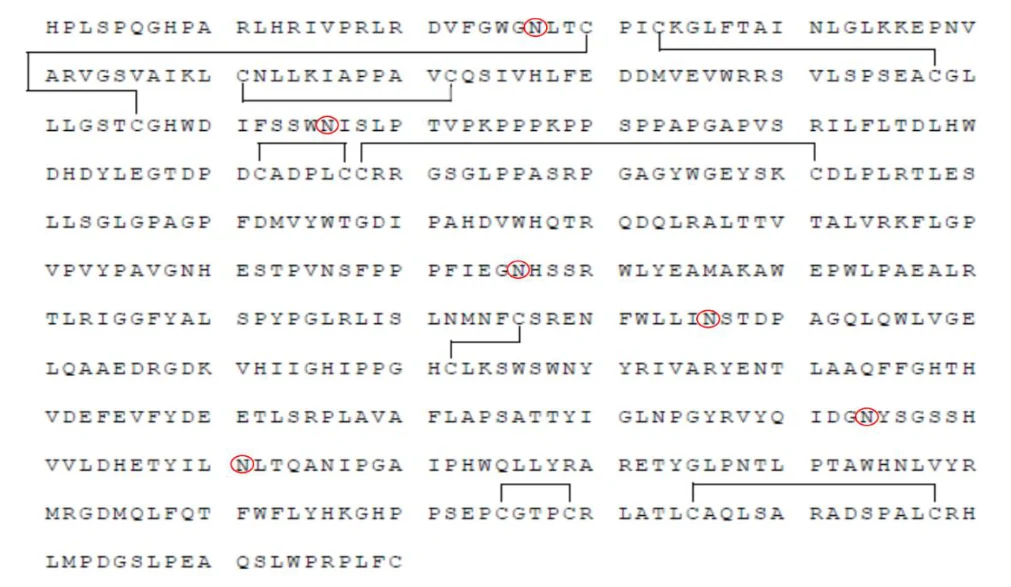
Physicochemical properties: Olipudase alfa drug substance is a clear, colourless liquid essentially free from foreign matter, has a solution pH of 6.1 to 6.9.
Product Characteristics:
Olipudase alfa is expressed by recombinant Chinese hamster ovary (CHO) cells and manufactured by standard mammalian cell culture processes followed by chromatographic purification to yield purified recombinant enzyme. The olipudase alfa drug product is a sterile lyophilized powder for solution for intravenous infusion.
14. Clinical Trials
Although different study designs were employed, efficacy results in adult and pediatric populations were generally consistent.
14.1. Clinical Trials by Indication
Long-Term Treatment of Non-Central Nervous System (CNS) Manifestations of Acid Sphingomyelinase Deficiency (ASMD)
The efficacy of Xenpozyme has been evaluated in 3 clinical studies (DFI12712/ASCEND study in adult patients, DFI13803/ASCEND-Peds study in pediatric patients and LTS13632 extension study in adult and pediatric patients) involving a total of 61 patients with ASMD.
Clinical study in adult patients
The ASCEND study is a phase II/III study in adult patients with ASMD (clinical diagnosis consistent with ASMD type B and A/B). A total of 36 patients were randomized in a 1:1 ratio to receive either Xenpozyme or placebo.
Table 11: Summary of patient demographics for clinical trials in ASMD
| Study # | Study design | Dosage, route of administration and duration | Study subjects (n) | Mean age (Range) | Sex |
ASCEND (study DFI12712) | Phase 2/3, multicenter, randomized, double-blinded, placebo-controlled, repeat dose study in patients with acid sphingomyelinase deficiency | Dosage: A dose escalation procedure was followed beginning at 0.1 mg/kg to a target dose of 3 mg/kg. Route of Administration: Intravenous Infusion every 2 weeks Duration: PAP: 52 Weeks ETP: 4 years | 36 | 35 (34.8) | Olipudase alfa group Male: 9 (50%) Female: 9 (50%) Placebo group Male: 5 (28%) Female: 13 (72%) |
Treatment was administered in both groups as an IV infusion once every 2 weeks. The study was divided into 2 consecutive periods: a randomized placebo-controlled, double-blinded primary analysis period (PAP) which lasted to Week 52, followed by an extension treatment period (ETP) for up to 4 years. Patients randomized to the placebo arm in the PAP crossed over to active treatment in the ETP, dose escalating upwards from 0.1 mg/kg to the targeted maintenance dose of 3 mg/kg, while patients in the original Xenpozyme arm continued treatment uninterrupted. At the time of database lock for regulatory assessment, mean duration of exposure to Xenpozyme in the ASCEND study was 2.8 years and the longest duration of exposure was 4.4 years.
Patients enrolled in the study had a diffusion capacity of the lungs for carbon monoxide (DLco) ≤70% of the predicted normal value, a spleen volume ≥6 multiples of normal (MN) measured by magnetic resonance imaging (MRI) and scores ≥5 in splenomegaly related score (SRS). Overall, demographic and disease characteristics at baseline were similar between the two treatment groups. The median patient age was 30 years (range: 18-66). Four patients (11.1%) with mild renal impairment (60 mL/min ≤ creatinine clearance < 90 mL/min) were included in each group. There were no patients with moderate or severe renal impairment. Patients taking medications that may decrease olipudase alfa activity (e.g fluoxetine, chlorpromazine, tricyclic antidepressants [e.g., imipramine, or desipramine]) were excluded from the study.
This study included 2 primary efficacy endpoints: the percentage change in DLco (in % predicted of normal) and spleen volume (in MN), as measured by MRI, from baseline to Week 52.
Secondary efficacy endpoints included the percentage change in liver volume (in MN) and platelet count from baseline to Week 52.
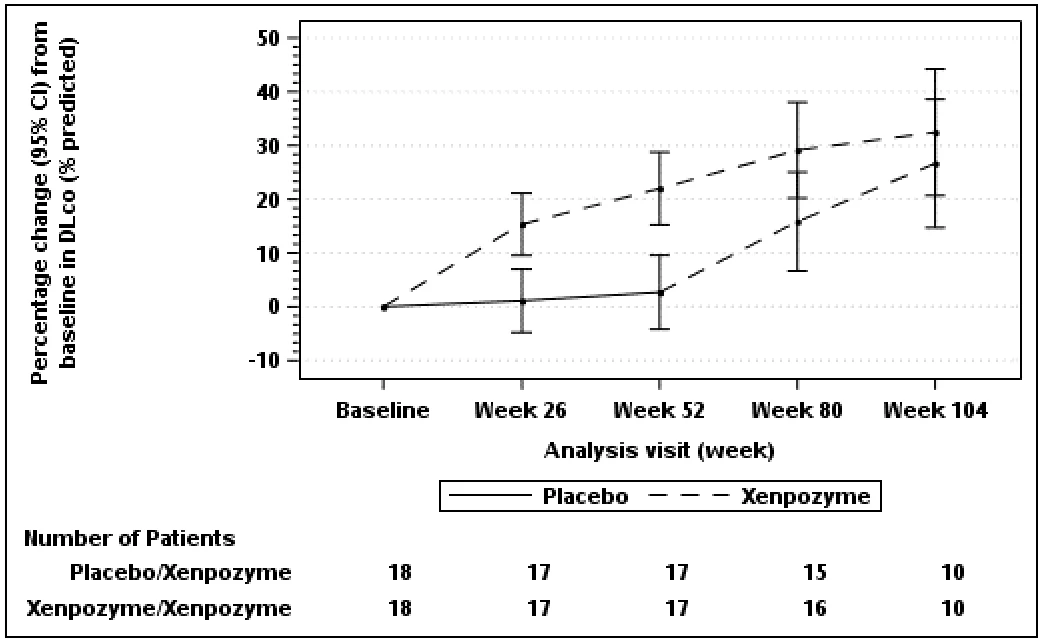
Improvements in mean percent change in DLco (% predicted) and spleen volume as well as in liver volume and platelet count were observed in the Xenpozyme group as compared to the placebo group during the 52-week primary analysis period. Results of key efficacy endpoints are presented in Table 12, Figure 1 and Figure 2 below.
Table 12: Observed Values at Baseline and Percent Changes from Baseline to Week 52 in Key Efficacy Endpoints
| Placebo (n=18) | Xenpozyme (n=18) | Difference [95% CI] | p-value | |||||
|---|---|---|---|---|---|---|---|---|
| Primary Endpoints | ||||||||
Mean DLco (% predicted) at Baseline (SD) LS Mean Percent Change in DLco (% predicted) from Baseline to Week 52 (SE) | 48.5 (10.8) 3.0 (3.4) | 49.4 (11.0) 22.0 (3.3) | NA 19.0 (4.8) [9.3, 28.7] | NA 0.0004* | ||||
Mean Spleen Volume (MN) at Baseline (SD) LS Mean Percent Change in Spleen Volume from Baseline to Week 52 (SE) | 11.2 (3.8) 0.5 (2.5) | 11.7 (4.9) -39.5 (2.4) | NA -39.9 (3.5) [-47.1, -32.8] | NA <0.0001* | ||||
| Secondary Endpoints | ||||||||
Mean Liver Volume (MN) at Baseline (SD) LS Mean Percent Change in Liver Volume from Baseline to Week 52 (SE) | 1.6 (0.5) -1.5 (2.5) | 1.4 (0.3) -28.1 (2.5) | NA -26.6 (3.6) [-33.9, -19.3] | NA <0.0001* | ||||
Mean Platelet Count (109/L) at Baseline (SD) LS Mean Percent Change in Platelet Count from Baseline to Week 52 (SE) | 115.6 (36.3) 2.5 (4.2) | 107.2 (26.9) 16.8 (4.0) | NA 14.3 (5.8) [2.6, 26.1] | NA 0.0185* | ||||
*Statistically significant after multiplicity adjustment
Figure 1: Plot of the LS means (95% CI) of the Percentage Change in DLco (% predicted) from Baseline to Week 104 – mITT (modified intent-to-treat) population*
The vertical bars represent the 95% CIs for the LS means.
The LS means and 95% CIs are based on a mixed model for repeated measures approach, using data up to Week 104.
Patients randomized to the placebo group received placebo up to Week 52 and switched to Xenpozyme thereafter.
*mITT (modified intent-to-treat) population is randomized population who received at least 1 infusion (partial or total) of Xenpozyme or Placebo.
Figure 2: Plot of the LS means (95%CI) of the Percentage Change in Spleen Volume (MN) from Baseline to Week 104 – mITT (modified intent-to-treat) population*
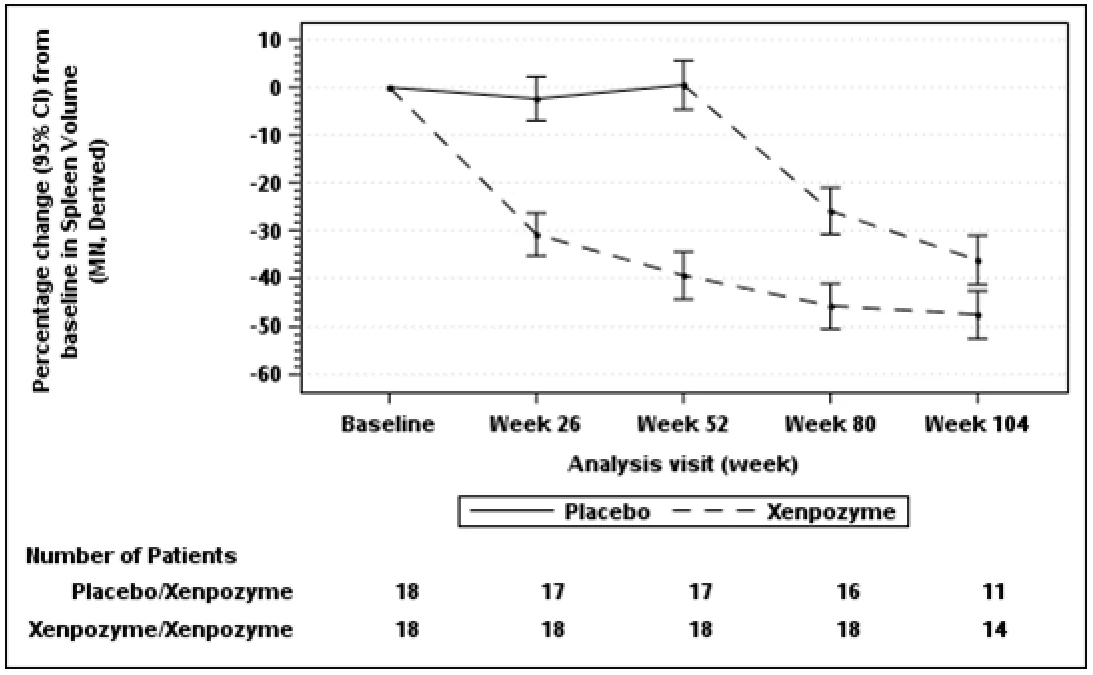
The vertical bars represent the 95% CIs for the LS means.
The LS means and 95% CIs are based on a mixed model for repeated measures approach, using data up to Week 104.
Patients randomized to the placebo group received placebo up t Week 52 and switched to Xenpozyme thereafter.
*mITT (modified intent-to-treat) population is randomized population who received at least 1 infusion (partial or total) of Xenpozyme or Placebo.
After 52 weeks of treatment, most patients with elevated transaminase levels at baseline had values within the normal range.
Seventeen of 18 patients previously receiving placebo and 18 of 18 patients previously treated with Xenpozyme for 52 weeks (PAP) started or continued treatment with Xenpozyme, respectively, for up to 4 years. At Week 104, patients initially randomized to placebo had received Xenpozyme for 52 weeks and demonstrated the following LS mean (SE) percent changes in clinical parameters from baseline (before first administration of Xenpozyme): increase in DLco (% predicted) was 28.0 (6.2) (see Figure 1); reduction in spleen volume (MN) was 35.9 (3.0) (see Figure 2); reduction in liver volume (MN) was 30.7 (2.5), increase in platelet count was 21.7 (6.4).
Patients in the previous Xenpozyme group demonstrated sustained improvement from baseline to Week 104 in the following parameters: LS mean (SE) percent increase in DLco (% predicted) was 28.5 (6.2) (see Figure 1); LS mean (SE) percent reduction in spleen volume (MN) was 47.0 (2.7) (see Figure 2); LS mean (SE) percent reduction in liver volume (MN) was 33.4 (2.2); LS mean (SE) percent increase in platelet count was 24.9 (6.9).
Long term data in adults
The maximum duration of exposure in adult patients was >7 years in a set of 5 patients enrolled in a Phase 1 study and a long-term extension study.
Sustained improvements in DLco (% predicted), spleen and liver volumes and platelet count, compared to baseline, were noted in adult patients over the course of the extension study.
Clinical study in Pediatric patients
The ASCEND-Peds study (Phase 1/2 clinical study) is a multi-center, open-label, repeated-dose study to evaluate the safety and tolerability of Xenpozyme administered for 64 Weeks in pediatric patients aged <18 years with ASMD (clinical diagnosis consistent with ASMD type B and A/B; there is no clinical trial experience with Xenpozyme in patients with ASMD Type A).
Table 13: Summary of patient demographics for clinical trials in ASMD
| Study # | Study design | Dosage, route of administration and duration | Study subjects (n) | Mean age (Range) | Sex |
ASCEND-Peds study (DFI12712) | A Phase 1/2, multi-center, open-label, ascending dose study in pediatric patients aged <18 years with acid sphingomyelinase deficiency | Dosage: A dose escalation procedure was followed beginning at 0.03 mg/kg to a target dose of 3 mg/kg. Route of Administration: Intravenous Infusion once every 2 weeks Duration: 64 Weeks | 20 Ages: 12 to <18 years: 4 6 to <12 years: 9 1 to <6 years: 7 | 8 (8.2) | Males: 10 (50%) Females: 10(50%) |
Exploratory efficacy endpoints related to organomegaly, pulmonary and liver functions, and linear growth were evaluated at Week 52.
Patients enrolled in the study had a spleen volume ≥5 MN measured by MRI. Patients were distributed across all age cohorts from 1.5 to 17.5 years old, with both sexes equally represented. Patients taking medications that may decrease olipudase alfa activity (e.g, fluoxetine, chlorpromazine, tricyclic antidepressants [e.g., imipramine, or desipramine]) were excluded from the study.
Treatment with Xenpozyme resulted in improvements in mean percent change in DLco (% predicted), spleen and liver volumes, platelet counts, and linear growth progression (as measured by height z-scores) at Week 52 as compared to baseline (see Table 14).
Table 14: Efficacy Results in XENPOZYME-Treated Pediatric Patients with ASMD
Baseline (n=20) | Week 52 (n=20) | |
|---|---|---|
Baseline (n=20) | Week 52 (n=20) | |
Mean DLco (% predicted) (SD) LS Mean Percent Change in DLco* (% predicted) (SE) 95% CI | 54.8 (14.2) | 71.7 (14.8) 32.9 (8.3) 13.4, 52.5 |
Mean Spleen Volume (MN) (SD) LS Mean Percent Change in Spleen Volume (SE) 95% CI | 19.0 (8.8) | 9.3 (3.9) -49.2 (2.0) -53.4, -45.0 |
Mean Liver Volume (MN) (SD) LS Mean Percent Change in Liver Volume (SE) 95% CI | 2.7 (0.7) | 1.5 (0.3) -40.6 (1.7) -44.1, -37.1 |
Mean Platelet Count (109/L) (SD) LS Mean Percent Change in Platelet Count (SE) 95% CI | 137.7 (62.3) | 173.6 (60.5) 34.0 (7.6) 17.9, 50.1 |
Mean Height Z-scores (SD) LS Mean Change in Height Z-scores (SE) 95% CI | -2.1 (0.8) | -1.6 (0.8) 0.6 (0.4) 0.4, 0.7 |
* DLco was evaluated in 9 pediatric patients aged ≥ 5 years who were able to perform the test
The effects of Xenpozyme on spleen and liver volumes, and height z-scores were similar across all pediatric age cohorts included in the study.
Extension study in pediatric patients
Patients who participated in the DFI13803/ASCEND-Peds studies continued treatment in an open-label extension study (LTS13632). All 20 pediatric patients from the DFI13803/ASCEND-Peds study continued to receive Xenpozyme at 3 mg/kg once every 2 weeks by IV infusion for up to >5 years.
Sustained improvements in DLco (% predicted), spleen and liver volumes and platelet count, compared to baseline, were noted in pediatric patients over the course of the extension study. In addition, pediatric patients (all age cohorts) showed a continued improvement in height z-score and an improvement in bone age (by hand X-ray) at Month 48, indicating that bone age was getting closer to chronological age.
16. Non-Clinical Toxicology
General Toxicology
Single Dose Toxicity
In BALB/c and C57BL/6 mice, rats, and dogs, a single IV administration of olipudase alfa was well-tolerated up to 12, 75, 30, and 30 mg/kg (highest doses tested in each study), respectively.
In acid sphingomyelinase knockout (ASMKO) mice (a disease model for ASMD), single doses of olipudase alfa resulted in mortality at doses ≥ 10 mg/kg administered as an IV bolus injection associated with clinical observations and signs of toxicity (e.g., mild to severe lethargy, coolness to touch, and unwillingness to move). These findings were accompanied by elevations of serum AST, ALT and cholesterol, catabolites of accumulated sphingomyelin in the serum (ceramide, sphingosine and sphingosine 1-phosphate), as well as elevations in the serum concentrations of inflammatory mediators, such as cytokines and acute phase proteins. Dose-related microscopic findings consisting of focal areas of necrosis, ballooning degeneration and inflammation, and apoptosis in the liver and adrenal glands, and hemorrhage in the adrenal glands were noted.
Repeat Dose Toxicity
Repeat dose toxicology studies were conducted in ASMKO mice, Sprague-Dawley rats and Cynomolgus monkeys.
Administration of olipudase alfa to ASMKO mice via a dose escalation regimen, four administrations at 3 mg/kg IV every other day, followed by a repeat IV doses of up to 30 mg/kg every 2 weeks, did not result in olipudase alfa-related mortality and reduced the severity of other toxicity findings.
ASMKO mice were administered 0 (vehicle), 0.3, 1.0 or 3.0 mg/kg bw olipudase alfa by intravenous injection every other week for 13 weeks. Premature deaths occurring in two males in the high-dose group were associated with severe hypersensitivity. Hypersensitivity presented as mild to severe lethargy in 18 out of 20 high-dose group males and 18 out of 20 high-dose group females following the second through seventh doses. The NOAEL was 3 mg/kg bw.
The biweekly IV administration of 0 (vehicle), 3, 10 or 30 mg/kg bw olipudase alfa to Sprague Dawley rats (bolus injection) and Cynomolgus monkeys (30-minute infusion) for 26 weeks did not result in olipudase alfa-related adverse effects at doses up to 30 mg/kg, however signs of hypersensitivity were observed in rats at all doses. The NOAEL was considered to be 30 mg/kg, corresponding to AUC-based exposures 2.3-fold (rat) to 3.9-fold (monkey) those in patients at therapeutic dose.
The assessment of local tolerability was incorporated into the repeat-dose toxicology study in Cynomolgus monkeys by macroscopic and microscopic evaluation of the IV infusion sites. No findings related to olipudase alfa administration were observed.
Carcinogenicity
No studies were conducted to evaluate carcinogenicity of olipudase alfa.
Genotoxicity
No studies were conducted to evaluate genotoxicity of olipudase alfa.
Reproductive and Developmental Toxicology
A combined male and female fertility study conducted in CD-1 mice at doses of 0, 3.16, 10, and 30 mg/kg via a bolus IV administration showed no effects on mating and fertility of the male or female mice or on early gestation parameters of female mice. Mortality occurred in all olipudase alfa groups, which was considered due to hypersensitivity from olipudase alfa administration. The male and female reproductive NOAELs were 30 mg/kg/dose.
The IV administration of olipudase alfa to pregnant CD-1 mice once daily from Gestation Days (GD) 6 through 15 at doses of 3, 10, or 30 mg/kg/day resulted in maternal effects limited to an increased incidence of decreased activity at ≥3 mg/kg/day. Mortality noted in low-dose animals was considered due to hypersensitivity from olipudase alfa administration. Exencephaly was observed in 1 litter in each of the 10 and 30 mg/kg dose groups (2 and 3 fetuses, respectively). The incidence was higher than historical control data. The increased incidence of exencephaly was observed in pregnant mice at exposure levels less than the human exposure at the recommended maintenance therapeutic dose and frequency. On the basis of these data, the developmental NOAEL for olipudase alfa is 3 mg/kg/day (AUC0-24 83.1 µg.hr/mL) corresponding to 0.14-fold the exposure at therapeutic dose.
The IV infusion (10 minutes) of olipudase alfa to pregnant NZW rabbits once daily from GD 6 through 19 at doses of 0, 3, 10, or 30 mg/kg/day did not result in olipudase alfa-related maternal effects at any dose. There were no olipudase alfa-related effects on embryo-fetal survival or fetal body weights, and there were no olipudase alfa-related fetal external, visceral, or skeletal abnormalities at any dose. Therefore, the developmental NOAEL was 30 mg/kg/day (AUC0-24 of 6350∙hr μg /mL) corresponding to 10.5-fold the exposure at therapeutic dose.
In a pre- and postnatal developmental toxicity study, the IV administration of olipudase alfa to pregnant CD-1 mice at doses of 0, 3.16, 10 or 30 mg/kg once every other day from GD6 through postpartum Day 19 or 20 did not induce any effect on maternal (F1) reproductive function. Mortality noted in low-dose and high-dose animals was considered due to hypersensitivity from olipudase alfa administration based on the time of death following dose administration, and in conjunction with adverse clinical observations. There were no toxicologically significant differences in any developmental and reproductive parameters evaluated in the F1 generation male and female offspring. The maternal NOAEL and the NOAEL for reproduction in the dams and for viability and growth in the offspring were 30 mg/kg/dose.
Olipudase alfa was detected in milk of lactating CD-1 mice 2 days after intravenous administration of 3 mg/kg olipudase alfa on postpartum day 7.
Special Toxicology
Safety Pharmacology
In Beagle dogs and Cynomolgus monkeys, the single IV administration of olipudase alfa at doses up to 30 mg/kg did not induce an adverse effect on cardiovascular and respiratory functions.
In ASMKO mice, a dose-dependent reduction in heart rate accompanied by a decrease in motor activity and followed by a slow decline in blood pressure was noted after a single IV administration at 3, 10, and 20 mg/kg. After 2 doses of olipudase alfa at 3 and 10 mg/kg to ASMKO mice, a slight decline in heart rate was noted following the second administration.
Drug-drug Interactions
Potential inhibition of olipudase alfa was evaluated by measurement of sphingomyelin concentration in liver and spleen of ASMKO mice co-administered olipudase alfa (1 mg/kg bw, IV) and therapeutically-relevant concentrations of citalopram or fluoxetine via surgically-implanted osmotic pump. Co-administration of fluoxetine did not inhibit the reduction of tissue sphingomyelin in liver or spleen, relative to vehicle controls, with levels similar in magnitude to animals receiving olipudase alfa alone. Liver sphingomyelin concentration in animals co-administered citalopram was reduced relative to vehicle control animals and similar in magnitude to animals receiving olipudase alfa alone, however, a potential inhibitory effect of citalopram in spleen cannot be excluded.