


Product Monograph - Naglazyme
SUMMARY PRODUCT INFORMATION
| Route of Administration | Dosage Form / Strength | Clinically Relevant Nonmedicinal Ingredients |
| Intravenous Infusion | Concentrate 1 mg / mL Sterile solution 5 mg / 5 mL | There are no clinically relevant nonmedicinal ingredients. For a complete listing of nonmedical ingredients see Dosage Forms, Composition and Packaging section. |
DESCRIPTION
Naglazyme® Galsulfase for injectionis a recombinant form of human N-acetylgalactosamine 4-sulfatase and is produced by recombinant DNA technology using mammalian Chinese Hamster Ovary (CHO) cell line.
INDICATIONS AND CLINICAL USE
Naglazyme is indicated for long-term enzyme replacement therapy in patients with a confirmed diagnosis of Mucopolysaccharidosis VI (MPS VI; N-acetylgalactosamine 4-sulfatase deficiency; Maroteaux-Lamy syndrome).
Treatment with Naglazyme should be supervised by a physician experienced in the management of patients with MPS VI or other inherited metabolic diseases. Naglazyme should be administered in an appropriate clinical setting where resuscitation equipment is immediately available.
Geriatrics (> 65 years of age):
No data are available in patients > 65 years; the oldest patients treated in clinical trials were < 30 years of age (see CLINICAL TRIALS).
Paediatrics (<16 years of age):
There is no evidence for special considerations when Naglazyme is administered to the paediatric population. However, data from patients ≤ 1 year of age are limited (see CLINICAL TRIALS).
Clinical studies with Naglazyme were conducted in 56 patients; ages 5 to 29 years, with the majority of these patients in the paediatric age group. In addition, an open-label study was conducted in four infants (3 months to 12.7 months) treated with 1 mg / kg (n = 2) or 2 mg / kg (n = 2) of Naglazyme. Safety results in infants were consistent with results observed in patients 5 to 29 years old.
CONTRAINDICATIONS
Patients who are hypersensitive to this drug or to any ingredient in the formulation or component of the container (see Warnings and Precautions regarding management of hypersensitivity). For a complete listing, see the Dosage Forms, Composition and Packaging section of the product monograph.
WARNINGS AND PRECAUTIONS
General
Spinal Cord Compression
Spinal / cervical cord compression (SCC) with resultant myelopathy is a known and serious complication of MPS VI. SCC is expected to occur in the natural history of the disease, including in patients on Naglazyme. There have been post-marketing reports of patients treated with Naglazyme who experienced the onset or worsening of SCC requiring decompression surgery. Patients with MPS VI should be monitored for signs and symptoms of spinal / cervical cord compression (including back pain, paralysis of limbs below the level of compression, urinary and fecal incontinence) and given appropriate clinical care.
Cardiovascular
Risk of Acute Cardiorespiratory Failure
Caution should be exercised when administering Naglazyme to patients susceptible to fluid volume overload; such as in patients weighing 20 kg or less, patients with acute underlying respiratory illness, or patients with compromised cardiac and / or respiratory function, because congestive heart failure may result. Appropriate medical support and monitoring measures should be readily available during Naglazyme infusion, and some patients may require prolonged observation times that should be based on the individual needs of the patient.
Immune
Anaphylaxis and Allergic Reactions
Anaphylaxis and severe allergic reactions have been observed in patients during and up to 24 hours after Naglazyme infusion. Some of the reactions were life-threatening and included anaphylaxis, shock, respiratory distress, dyspnea, bronchospasm, laryngeal edema, and hypotension. If anaphylaxis or other severe allergic reactions occur, Naglazyme should be immediately discontinued, and appropriate medical treatment should be initiated. In patients who have experienced anaphylaxis or other severe allergic reactions during infusion with Naglazyme, caution should be exercised upon re-administration; appropriately trained personnel and equipment for emergency resuscitation (including epinephrine) should be available during infusion.
Infusion Reactions
Because of the potential for infusion reactions, patients should receive antihistamines with or without antipyretics prior to infusion. Despite routine pretreatment with antihistamines, infusion reactions, some severe, have occurred in 33 of 59 (56%) patients treated with Naglazyme. Serious adverse reactions during infusion included laryngeal edema, apnea, pyrexia, urticaria, respiratory distress, angioedema, and anaphylactoid reaction. Severe adverse reactions included urticaria, chest pain, rash, dyspnea, apnea, laryngeal edema, and conjunctivitis.
The most common symptoms of drug-related infusion reactions were pyrexia, chills / rigors, rash, urticaria, dyspnea, nausea, vomiting, pruritis, erythema, abdominal pain, hypertension, and headache. Respiratory distress, chest pain, hypotension, angioedema, conjunctivitis, tremor, and cough were also reported. Infusion reactions began as early as Week 1 and as late as Week 146 of Naglazyme treatment. Twenty-three of 33 patients (70%) experienced recurrent infusion reactions during multiple infusions though not always in consecutive weeks.
Symptoms typically abated with slowing or temporary interruption of the infusion and administration of additional antihistamines, antipyretics, and occasionally corticosteroids. Most patients were able to complete their infusions. Subsequent infusions were managed with a slower rate of Naglazyme administration, treatment with additional prophylactic antihistamines, and, in the event of a more severe reaction, treatment with prophylactic corticosteroids.
If severe infusion reactions occur, immediately discontinue the infusion of Naglazyme and initiate appropriate treatment. The risks and benefits of re-administering Naglazyme following a severe reaction should be considered.
No factors were identified that predisposed patients to infusion reactions. There was no association between severity of infusion reactions and titer of anti-galsulfase antibodies.
Immune-Mediated Reactions
Type III immune complex-mediated reactions, including membranous glomerulonephritis have been observed with Naglazyme, as with other enzyme replacement therapies. If immune-mediated reactions occur, discontinuation of the administration of Naglazyme should be considered, and appropriate medical treatment initiated. The risks and benefits of re-administering Naglazyme following an immune-mediated reaction should be considered. Some patients have successfully been rechallenged and have continued to receive Naglazyme under close clinical supervision.
Respiratory
Acute Respiratory Complications Associated with Administration
Sleep apnea is common in MPS VI patients and antihistamine pretreatment may increase the risk of apneic episodes. Evaluation of airway patency should be considered prior to initiation of treatment. Patients using supplemental oxygen or continuous positive airway pressure (CPAP) during sleep should have these treatments readily available during infusion in the event of an infusion reaction, or extreme drowsiness / sleep induced by antihistamine use.
Consider delaying Naglazyme infusions in patients who present with an acute febrile or respiratory illness because of the possibility of acute respiratory compromise during infusion of Naglazyme.
Special Populations
Pregnant Women:
Adequate and well-controlled studies have not been conducted with Naglazyme in pregnant women. Reproduction studies have been performed in rats at intravenous doses up to 3 mg / kg / day (about 0.5 times the recommended human dose of 1 mg / kg based on the body surface area) and in rabbits at intravenous doses up to 3 mg / kg / day (about 0.97 times the recommended human dose of 1 mg / kg based on the body surface area) and have revealed no evidence of impaired fertility or harm to the fetus due to Naglazyme. Naglazyme should be used during pregnancy only if clearly needed.
Nursing Women:
It is unknown if Naglazyme is excreted in human milk. Because many drugs are excreted in human milk, precaution should be exercised.
Paediatrics (<16 years of age):
There is no evidence for specific monitoring and hazards when Naglazyme is administered in the paediatric population.
Geriatrics (>65 years of age):
No data are available in patients >65 years; the oldest patients treated in clinical trials were
<30 years of age (see CLINICAL TRIALS).
ADVERSE REACTIONS
Adverse Drug Reaction Overview
Due to the low number of patients in clinical trials, adverse event (AE) data from all Naglazyme studies have been combined and reviewed in a single, clinical trial safety analysis. All patients treated with Naglazyme (59 / 59) in clinical trials reported at least one AE. The majority (42 / 59; 71%) of patients experienced at least one adverse drug reaction (ADR). The most common adverse reactions were pyrexia, rash, pruritus, urticaria, chills / rigors, nausea, headache, abdominal pain, vomiting and dyspnea. Serious adverse reactions included laryngeal edema, apnea, pyrexia, urticaria, respiratory distress, angioedema, asthma and anaphylactoid reaction.
Infusion reactions, defined as adverse reactions occurring during Naglazyme infusions or until the end of the infusion day, were observed in 33 of the 59 (56%) patients treated with Naglazyme across five clinical studies. Infusion reactions began as early as Week 1 and as late as Week 146 of Naglazyme treatment, and occurred during multiple infusions though not always in consecutive weeks. Very common symptoms of these infusion reactions were pyrexia, chills / rigors, rash, urticaria and dyspnea. Common symptoms of infusion reactions were pruritus, vomiting, abdominal pain, nausea, hypertension, headache, chest pain, erythema, cough, hypotension, angioedema, respiratory distress, tremor, conjunctivitis, malaise, bronchospasm and arthralgia.
In addition to infusion reactions reported in clinical trials, serious reactions that occurred during Naglazyme infusion in the worldwide marketing experience include anaphylaxis, shock, hypotension, bronchospasm, and respiratory failure. Additional infusion reactions included pyrexia, erythema, pallor, bradycardia, tachycardia, hypoxia, cyanosis, tachypnea, and paresthesia.
Clinical Trial Adverse Drug Reactions
Because clinical trials are conducted under very specific conditions the adverse reaction rates observed in the clinical trials may not reflect the rates observed in practice and should not be compared to the rates in the clinical trials of another drug. ADR information from clinical trials is useful for identifying drug-related AE and for approximating rates.
Clinical Trials Experience
Naglazyme was studied in a randomized, double-blind, placebo-controlled trial in which 19 patients received weekly infusions of 1 mg / kg Naglazyme and 20 patients received placebo; of the 39 patients 66% were female, and 62% were White, non-Hispanic. Patients were aged 5 years to 29 years. Naglazyme-treated patients were approximately 3 years older than placebo-treated patients (mean age 13.7 years versus 10.7 years, respectively).
Serious adverse reactions experienced in this trial included apnea, pyrexia, and respiratory distress. Severe adverse reactions included chest pain, dyspnea, laryngeal edema, and conjunctivitis. The most common adverse reactions requiring interventions were infusion associated reactions.
Table 1 summarizes the adverse reactions that occurred in the placebo-controlled trial in at least 2 patients more in the Naglazyme-treated group than in the placebo-treated group.
| Table 1: Adverse Reactions that Occurred in the Placebo-Controlled Trial in at Least 2 Patients More in the Naglazyme Group than in the Placebo Group | |||||||||||||
|---|---|---|---|---|---|---|---|---|---|---|---|---|---|
| MedDRA Preferred Term | NAGLAZYME (n = 19) | Placebo (n = 20*) | |||||||||||
| No. Patients (%) | No. Patients (%) | ||||||||||||
| All | 19 (100) | 20 (100) | |||||||||||
| Abdominal Pain | 9 (47) | 7 (35) | |||||||||||
| Ear Pain | 8 (42) | 4 (20) | |||||||||||
| Arthralgia | 8 (42) | 5 (25) | |||||||||||
| Pain | 6 (32) | 1 (5) | |||||||||||
| Conjunctivitis | 4 (21) | 0 | |||||||||||
| Dyspnea | 4 (21) | 2 (10) | |||||||||||
| Rash | 4 (21) | 2 (10) | |||||||||||
| Chills / Rigors | 4 (21) | 0 | |||||||||||
| Chest Pain | 3 (16) | 1 (5) | |||||||||||
| Pharyngitis | 2 (11) | 0 | |||||||||||
| Areflexia | 2 (11) | 0 | |||||||||||
| Corneal Opacity | 2 (11) | 0 | |||||||||||
| Gastroenteritis | 2 (11) | 0 | |||||||||||
| Hypertension | 2 (11) | 0 | |||||||||||
| Table 1: Adverse Reactions that Occurred in the Placebo-Controlled Trial in at Least 2 Patients More in the Naglazyme Group than in the Placebo Group |
|---|
| MedDRA Preferred Term | NAGLAZYME (n = 19) | Placebo (n = 20*) |
|---|
| No. Patients (%) | No. Patients (%) | |
|---|---|---|
| Malaise | 2 (11) | 0 |
| Nasal Congestion | 2 (11) | 0 |
| Umbilical Hernia | 2 (11) | 0 |
| Hearing Impairment | 2 (11) | 0 |
| *One of the 20 patients in the placebo group dropped out after Week 4 infusion | ||
Four open-label clinical trials were conducted in MPS VI patients aged 3 months to 29 years with Naglazyme administered at doses of 0.2 mg / kg (n = 2), 1 mg / kg (n = 55), and 2 mg / kg (n = 2). The mean exposure to the recommended dose of Naglazyme (1 mg / kg) was 138 weeks (range = 54 to 261 weeks). Two infants (12.1 months and 12.7 months) were exposed to 2 mg / kg of Naglazyme for 105 and 81 weeks, respectively.
In addition to those listed in Table 1, common adverse reactions observed in the open-label trials include pruritus, urticaria, pyrexia, headache, nausea, and vomiting. The most common adverse reactions requiring interventions were infusion reactions. Serious and severe adverse reactions included laryngeal edema, urticaria, angioedema, rash, and abdominal pain. Observed AEs in four open-label studies (up to 261 weeks treatment) were not different in nature or severity to those observed in the placebo-controlled study. No patients discontinued during open-label treatment with Naglazyme due to AEs.
Immunogenicity
Ninety-eight percent (53 / 54) of patients treated with Naglazyme and evaluable for the presence of antibodies to galsulfase developed anti-galsulfase IgG antibodies within 4 to 8 weeks of treatment (in four clinical studies). In 19 patients treated with Naglazyme from the placebo-controlled study, serum samples were evaluated for a potential relationship of anti-galsulfase antibody development to clinical outcome measures. All 19 patients treated with Naglazyme developed antibodies specific to galsulfase; however, the analysis revealed no consistent predictive relationship between total antibody titer, neutralizing or IgE antibodies, and infusion-associated reactions, urinary glycosaminoglycan (GAG) levels, or endurance measures. Antibodies were assessed for the ability to inhibit enzymatic activity but not cellular uptake.
The data reflect the percentage of patients whose test results were considered positive for antibodies to galsulfase using specific assays and are highly dependent on the sensitivity and specificity of the assay. Additionally, the observed incidence of antibodies in an assay may be influenced by several factors including sample handling, timing of sample collection, concomitant medications, and underlying disease. For these reasons, comparison of the incidence of antibodies to galsulfase with the incidence of antibodies to other products may be misleading.
Post-Market Adverse Drug Reactions
The following adverse reactions have been identified during post-approval use of Naglazyme. Because these reactions are reported voluntarily from a population of uncertain size, it is not always possible to reliably estimate their frequency or establish a causal relationship to drug exposure.
In addition to infusion reactions reported in clinical trials, serious reactions which occurred during Naglazyme infusion in the worldwide marketing experience include anaphylaxis, shock, hypotension, bronchospasm, and respiratory failure.
Additional infusion reactions included pyrexia, erythema, pallor, bradycardia, tachycardia, hypoxia, cyanosis, tachypnea, and paresthesia.
During post-marketing surveillance, there has been a single case of membranous nephropathy and rare cases of thrombocytopenia reported. In the case of membranous nephropathy, renal biopsy revealed galsulfase-immunoglobulin complexes in the glomeruli. With both membranous nephropathy and thrombocytopenia, patients have been successfully rechallenged and have continued to receive Naglazyme.
DRUG INTERACTIONS
Drug-Drug Interactions
Interactions with other drugs have not been established.
Drug-Food Interactions
Interactions with food have not been established.
Drug-Herb Interactions
Interactions with herbal products have not been established.
Drug-Laboratory Interactions
Interactions with laboratory tests have not been established.
DOSAGE AND ADMINISTRATION
Dosing Considerations
Naglazyme is intended for use under the supervision of a health professional in a clinical setting where resuscitation equipment to manage medical emergencies is readily available. Because of the potential for infusion reactions, patients should receive antihistamines with or without antipyretics prior to infusion and the infusion rate may be slowed and / or temporarily stopped, based on clinical judgment. The safety and efficacy of Naglazyme in patients with hepatic or renal insufficiency have not been evaluated and no alternative dose regimen can be recommended in these patients.
Recommended Dose and Dosage Adjustment
The recommended dosage regimen of Naglazyme is 1 mg per kg of body weight administered once weekly as an intravenous infusion. The total volume of infusion should be delivered over a period of time of no less than four hours. The rate of infusion can be adjusted depending on body weight (see details in paragraphs below).
In clinical trials, 13 (21.6%) patients required additional treatment despite prophylaxis / pretreatment, and 13 (21.6%) patients required decreased infusion rate due to adverse events including infusion reactions. No patients required increased intervals between doses due to adverse events.
Each vial of Naglazyme provides 5 mg of galsulfase (expressed as protein content) in 5 mL of solution and is intended for single use only. Do not use the vial more than one time. The concentrated solution for infusion must be diluted with 0.9% sodium chloride solution, USP, using aseptic techniques. Administer the diluted Naglazyme solution to patients using an infusion set equipped with a 0.2 µm in-line filter. There is no information on the compatibility of diluted Naglazyme with glass containers.
Pretreatment with antihistamines with or without antipyretics is recommended 30 to 60 minutes prior to the start of the infusion.
For Patients Weighing Greater than 20 kg
The total volume of the infusion should be delivered over a period of time of no less than 4 hours. Naglazyme should be diluted with 0.9% sodium chloride solution, USP, to a final volume of 250 mL and delivered by controlled intravenous infusion using an infusion pump. The initial infusion rate should be 6 mL per hour for the first hour. If the infusion is well tolerated, the rate of infusion may be increased to 80 mL per hour for the remaining 3 hours. The infusion time can be extended up to 20 hours if infusion reactions occur.
For Patients Weighing 20 kg or Less
For patients 20 kg or less or those who are susceptible to fluid volume overload, physicians may consider diluting Naglazyme in a volume of 100 mL 0.9% sodium chloride injection, USP. The infusion rate (mL per hour) should be decreased so that the total infusion duration remains no less than 4 hours.
Administration
Instructions for Use
Prepare and use Naglazyme according to the following steps. Use aseptic techniques.
a. Determine the number of vials to be used based on the patient's weight and the recommended dose of 1 mg per kg:
Patient's weight (kg) × 1 mL / kg of Naglazyme = Total number of mL of Naglazyme
Total number of mL of Naglazyme ÷ 5 mL per vial = Total number of vials
Round up to the next whole vial. Remove the required number of vials from the refrigerator to allow them to reach room temperature. Do not allow vials to remain at room temperature longer than 24 hours prior to dilution. Do not heat or microwave vials.
- b. Before withdrawing the Naglazyme solution from the vial, visually inspect each vial for particulate matter and discoloration. The Naglazyme solution should be clear to slightly opalescent and colorless to pale yellow. Some translucency may be present in the solution. Do not use if the solution is discolored or if there is particulate matter in the solution.
- c. From a 250 mL infusion bag of 0.9% sodium chloride solution, USP, withdraw and discard a volume equal to the volume of Naglazyme solution to be added. If using a 100 mL infusion bag, this step is not necessary.
- d. Slowly withdraw the calculated volume of Naglazyme from the appropriate number of vials using caution to avoid excessive agitation. Do not use a filter needle, as this may cause agitation. Agitation may denature Naglazyme, rendering it biologically inactive.
- e. Slowly add the Naglazyme solution to the 0.9% sodium chloride solution, USP, using care to avoid agitation of the solutions. Do not use a filter needle.
- f. Gently rotate the infusion bag to ensure proper distribution of Naglazyme. Do not shake the solution.
- g. Administer the diluted Naglazyme solution to patients using an infusion set equipped with a 0.2 µm in-line filter.
Naglazyme does not contain preservatives; therefore, after dilution with saline, the infusion bags should be used immediately. If immediate use is not possible, the diluted solution must be stored refrigerated at 2°C to 8°C and administered within 48 hours from the time of dilution to completion of administration. Other than during infusion, do not store the diluted Naglazyme solution at room temperature.
Naglazyme must not be infused with other products in the infusion tubing. The compatibility of Naglazyme in solution with other products has not been evaluated.
OVERDOSAGE
Several patients have received their total dose of Naglazyme at approximately twice the recommended infusion rate without apparent adverse events.
| For management of a suspected drug overdose, contact your regional Poison Control Centre. |
ACTION AND CLINICAL PHARMACOLOGY
Mechanism of Action
Mucopolysaccharide storage disorders are caused by the deficiency of specific lysosomal enzymes required for the catabolism of GAG. MPS VI is characterized by the absence or marked reduction in N–acetylgalactosamine 4-sulfatase. The sulfatase activity deficiency results in the accumulation of the GAG substrate, dermatan sulfate, throughout the body. This accumulation leads to widespread cellular, tissue, and organ dysfunction. Galsulfase is intended to provide an exogenous enzyme that will be taken up into lysosomes and increase the catabolism of GAG. Galsulfase uptake by cells into lysosomes is most likely mediated by the binding of mannose-6-phosphate-terminated oligosaccharide chains of galsulfase to specific mannose-6-phosphate receptors.
Pharmacodynamics
The responsiveness of urinary GAG to dosage alterations of galsulfase is unknown. A single study (ASB-008) comprising four patients (ages ≤ 1 year) compared two treatment doses of 1 mg / kg and 2 mg / kg. Both strengths reduced initial urinary GAG concentrations by 74% after 52 weeks.
The relationship of urinary GAG to other measures of clinical response such as infant development, cardiac function, ophthalmic function, and hearing, has not been established. No association was observed between antibody development and urinary GAG levels as illustrated in the figure below.
Figure 1: Urinary GAG and Antibody Titer Across Study Time Points
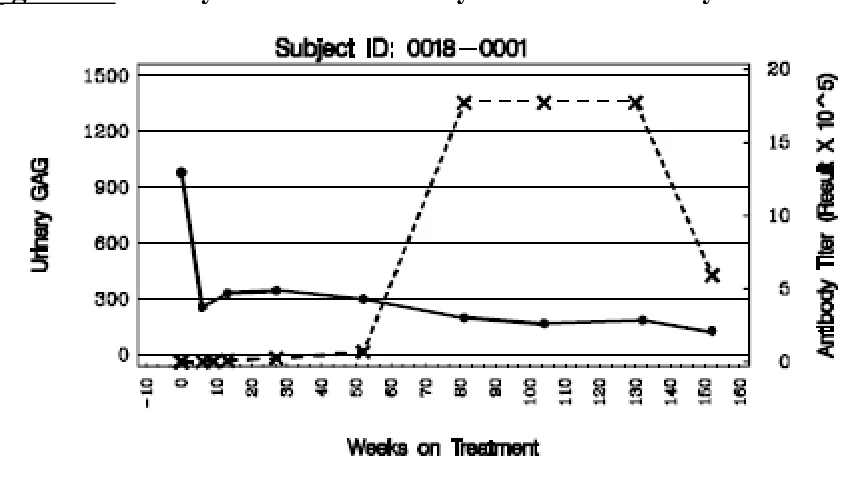 The strength of the infusion is 1 mg / kg
Pharmacokinetics
The pharmacokinetic parameters of galsulfase were evaluated in 13 patients with MPS VI who received 1 mg / kg of galsulfase as a weekly 4-hour infusion for 24 weeks. The variation of Naglazyme concentration with time and week of application is illustrated below.
Figure 2: Mean Plasma Concentrations of rhASB after Administration of 1 mg / kg / week to MPS VI Patients 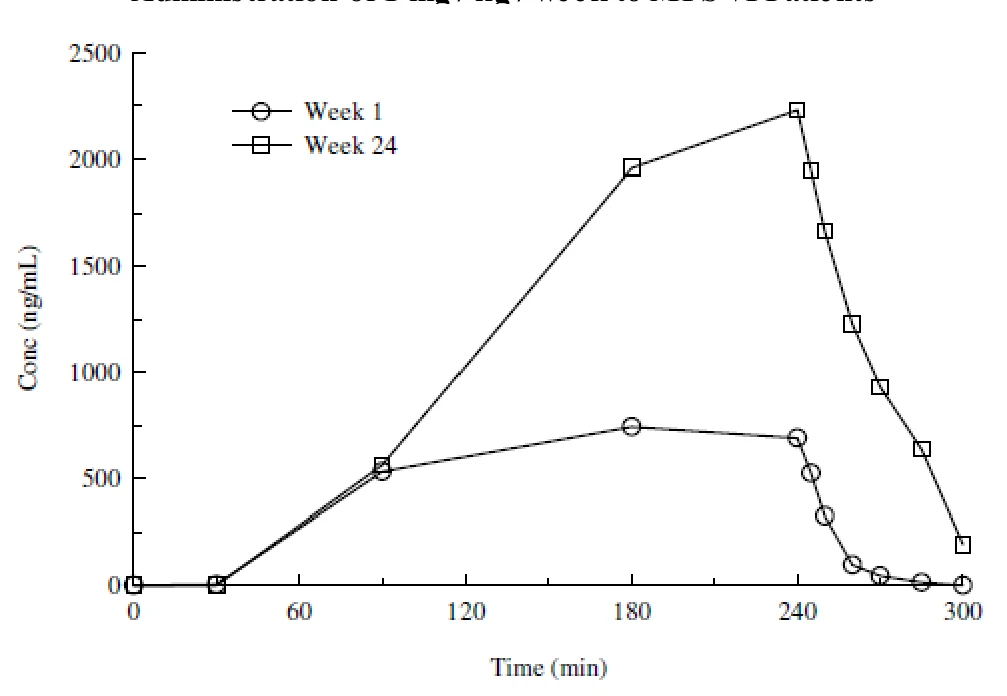
The pharmacokinetic parameters at Week 1 and Week 24 are shown in Table 2. Galsulfase pharmacokinetic parameters listed in Table 2 require cautious interpretation because of large assay variability. Development of anti-galsulfase antibodies appears to affect galsulfase pharmacokinetics, however, the data are limited.
Figure 3: Relationship Between Individual Patient CL and Antibody Level After Administration of 1 mg / kg / week of rhASB for 24 Weeks to MPS Patients
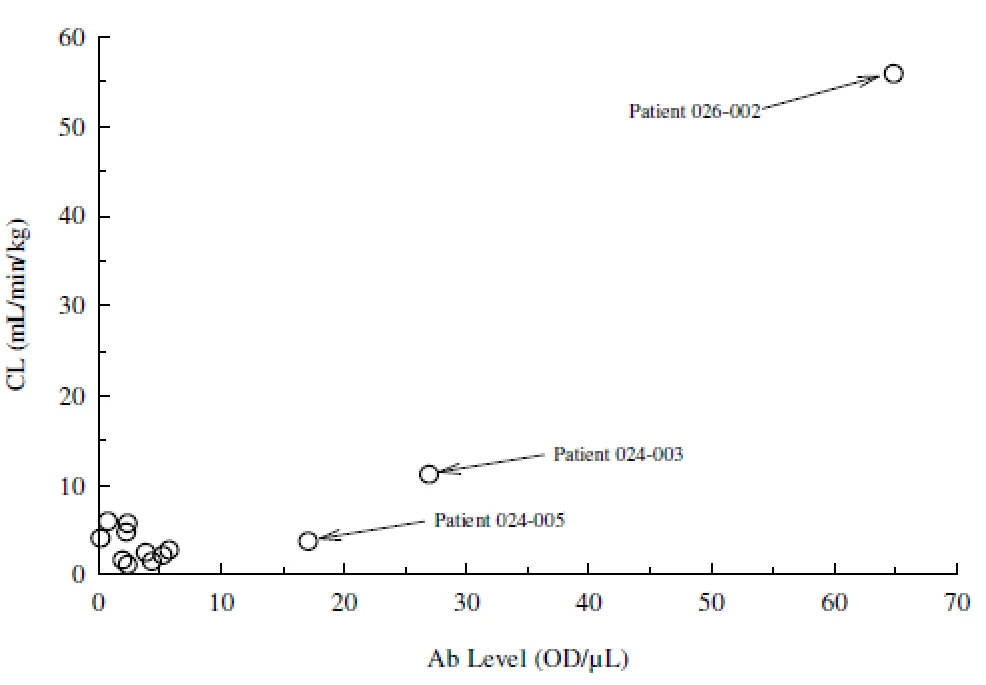
CL and Vz at Week 24 increased as antibody levels increased in those patients with antibody levels greater than 10 OD / μL. However, it is not possible to determine if this was an effect of the antibody on the clearance and distribution of rhASB, or assay interference.
Table 2: Summary of galsulfase Pharmacokinetic Parameters
| Pharmacokinetic Parameter | Week 1 | Week 24 |
|---|---|---|
| Cmax (mcg / mL) | ||
| N | 14 | 13 |
| Median (Range) | 0.8 (0.4 to 1.3) | 1.5 (0.2 to 5.5) |
| Mean±SD | 0.8± 0.2 | 2.4±1.6 |
| AUC0-t (hr•mcg / mL)* | ||
| N | 13 | 13 |
| Median (Range) | 2.3 (1.0 to 3.5) | 4.3 (0.3 to 14.2) |
| Mean±SD | 2.2 ± 0.6 | 5.7±4.0 |
| Vss (mL / kg) | ||
| N | 11 | 13 |
| Median (Range) | 347 (191,1481) | 279 (85.9, 6471) |
| Mean±SD | 449±356 | 864±1732 |
| Vz (mL / kg) | ||
| N | 11 | 13 |
| Median (Range) | 103 (56 to 323) | 69 (59 to 2,799) |
| Mean±SD | 118±74.7 | 316±752 |
| CL (mL / kg / min) | ||
| N | 11 | 13 |
| Median (Range) | 7.2 (4.7 to 10.5) | 3.7 (1.1 to 55.9) |
| Mean±SD | 7.3±1.5 | 7.9±14.7 |
| Half-life (min) | ||
| N | 11 | 13 |
| Median (Range) | 9 (6 to 21) | 26 (8 to 40) |
| Mean±SD | 11.1±5.3 | 22.8±10.7 |
| * Area under the plasma galsulfase concentration-time curve from start of infusion to 60 minutes post infusion. | ||
STORAGE AND STABILITY
Store Naglazyme under refrigeration at 2°C to 8°C. Do not freeze or shake. Protect from light. Do not use Naglazyme after the expiration date on the vial.
The expiry of Naglazyme is 3 years from the date of manufacture.
Diluted solutions:
After dilution, Naglazyme should be used immediately. If not used immediately, in-use storage times and conditions are the responsibility of the user and should normally not be longer than 24 hours at 2°C - 8°C followed by up to 24 hours at room temperature (23°C- 27°C) during administration.
Keep in a safe place out of the reach of children.
SPECIAL HANDLING INSTRUCTIONS
Any unused product or waste material is to be disposed of in accordance with local requirements.
DOSAGE FORMS, COMPOSITION AND PACKAGING
Each vial of Naglazyme is intended for single use only. This product contains no preservatives.
Naglazyme is supplied as a sterile injection in clear Type I glass vial, containing 5 mg galsulfase (expressed as protein content) per 5 mL (extractable volume) concentrate for solution for infusion. The closure consists of a siliconized chlorobutyl rubber stopper and an aluminum seal with a plastic flip-off cap.
The concentrate for solution for intravenous infusion has to be diluted with 0.9% sodium chloride solution, USP, for infusion using aseptic technique. The diluted Naglazyme solution is administered to patients using an infusion set equipped with a 0.2 µm in-line filter.
List of excipients:
Polysorbate 80
Sodium chloride
Sodium phosphate dibasic, heptahydrate
Sodium phosphate monobasic, monohydrate
Water for injection
Pack size: 1 vial
PART II: SCIENTIFIC INFORMATION
PHARMACEUTICAL INFORMATION
Drug Substance
Proper name: galsulfase
Chemical name: recombinant human N-acetylgalactosamine 4-sulfatase
Molecular formula and molecular mass: C2528H3858O714N688S16
~ 56 kDa
Structural Formula:
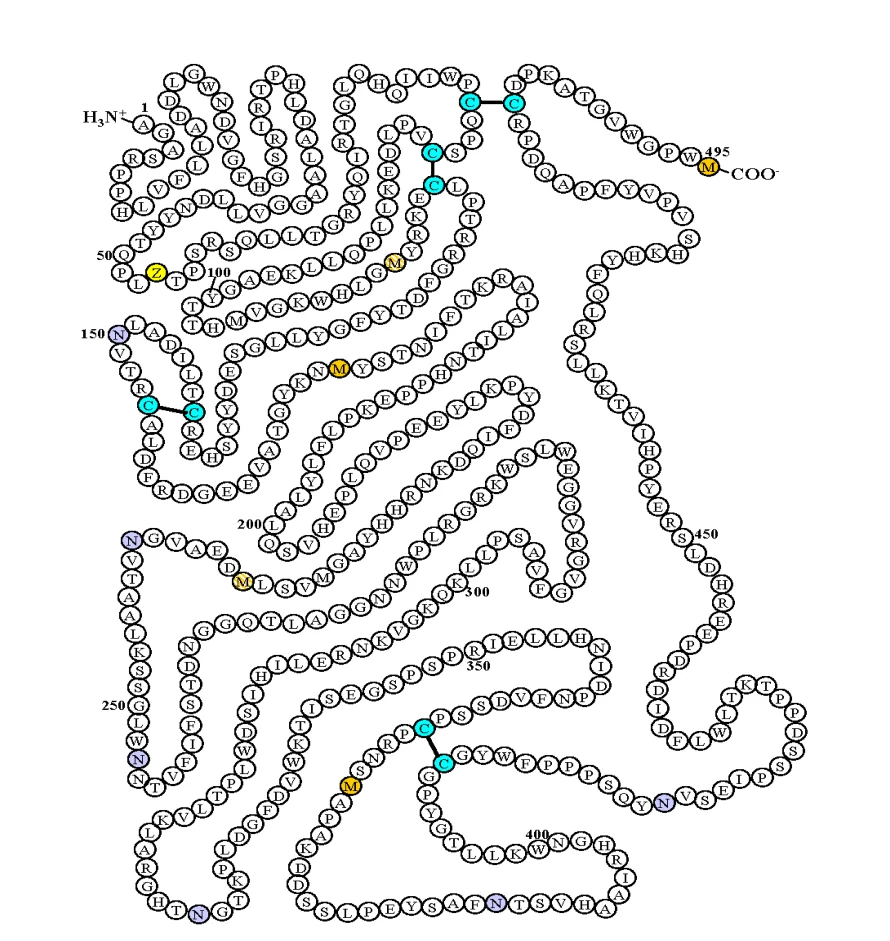 Legend: N Glycosylated asparagine residue C Cysteine in disulfide bridge Z Cα-formylglycine: catalytic residue in active site. Encoded as cysteine, post-translationally modified to formylglycine in endoplasmic reticulum (ref Schmidt, 1995, Cell). Found in all sulfatase enzymes. M Oxidizable methionine; quantitatively converted to Met sulfoxide in forced oxidation with hydrogen peroxide M Oxidizable methionine: partially converted to Met sulfoxide in forced oxidation with hydrogen peroxide
Physicochemical properties: Recombinant human N–acetylgalactosamine 4–sulfatase, also known as arylsulfatase B (rhASB), is a 495 amino acid lysosomal sulfatase that cleaves the sulfate ester from N-acetylgalactosamine 4–sulfate residues at the nonreducing ends of the glycosaminoglycans chondroitin sulfate and dermatan sulfate. Naglazyme® (galsulfase) is a colorless to pale yellow, clear to slightly opalescent solution. Each vial provides 5 mg galsulfase, in a 5 mL extractable solution with pH of approximately 5.8.
Product Characteristics
Naglazyme is intended for intravenous infusion and is supplied as a sterile, nonpyrogenic, colorless to pale yellow, clear to slightly opalescent solution that must be diluted with 0.9% sodium chloride solution, USP, prior to administration. Each vial of Naglazyme provides 5 mg galsulfase, 43.8 mg sodium chloride, 6.20 mg sodium phosphate monobasic monohydrate, 1.34 mg sodium phosphate dibasic heptahydrate, 0.25 mg polysorbate 80, and water for injection, in a 5 mL extractable solution. Galsulfase is a recombinant form of human N-acetylgalactosamine 4-sulfatase and is produced by recombinant DNA technology using a mammalian Chinese Hamster Ovary (CHO) cell line.
CLINICAL TRIALS
Study Demographics And Trial Design
The three clinical studies (Table 3) focused on the effects of Naglazyme on the systematic manifestation of MPS VI.
Table 3: Summary of Patient Demographics for Clinical Trials in Specific Indication
| Study # | Trial design | Dosage, route of administration and duration | Study subjects (n=number enrolled / completed) | Mean age (Range) | Gender Male / Female |
| ASB-03-05 | Phase 3 Double-Blind, Placebo-Controlled, Randomized | Naglazyme at 1.0 mg / kg / week or placebo / week, intravenous infusion for 24 weeks | MPS VI patients (n = 39 / 38a) | 13.7 years (5 to 29) | 13 / 26 |
| ASB-03-06 | Phase 3 Open Label Extension | 1.0 mg / kg / week, intravenous infusion for up to 240 weeks | MPS VI patients (n = 38 / 38) | ||
| ASB-008 | Phase 4 Open Label | Naglazyme at 1.0 mg / kg / week or 2.0 mg / kg / week, intravenous infusion for 52-104 weeks | MPS VI patients (n = 4 / 4) | 9.2 months (3.3 to 12.7) | 4 / 0 |
| a One patient in the placebo group dropped out after 4 weeks of infusion | |||||
Study Results
Study ASB-03-05 Results
In the randomized, double-blind, multicenter, placebo-controlled clinical trial, 38 patients with MPS VI received 1 mg / kg Naglazyme or placebo, once-weekly for 24 weeks. The patients’ ages ranged from 5 to 29 years. Enrollment was restricted to patients with a 12-minute walk distance of 5 to 400 meters. All patients were treated with antihistamines prior to each infusion. The Naglazyme-treated group showed greater mean increases in the distance walked in 12-minutes (12-minute walk test, 12-MWT) compared with the placebo group (Table 4).
Table 4: Results from Placebo-Controlled Clinical Study
| Naglazyme | Placebo | Naglazyme vs. Placebo | ||||||||||||||
| Baseline | Week 24 | Change | Baseline | Week 24 | Change | Difference in Changes | ||||||||||
| n | 19 | 19 | 19 | 20 | 19* | 19 | ||||||||||
| Results from the 12-Minute Walk Test (Meters) | ||||||||||||||||
Mean ± SD Median Percentiles (25th, 75th) | 227 ± 170 210 90, 330 | 336 ± 227 316 125, 483 | 109 ± 154 48 7, 183 | 381 ± 202 365 256, 560 | 399 ± 217 373 204, 573 | 26 ± 122 34 –3, 89 | 83 ± 45† 92 ± 40‡ (p = 0.025)‡,§ | |||||||||
* One patient in the placebo group dropped out after 4 weeks of infusion † Observed mean of Naglazyme - Placebo ± SE ‡ Model-based mean of Naglazyme - Placebo ± SE, adjusted for baseline § p-value based on the model-based mean difference | ||||||||||||||||
The 3-Minute Stair Climb Test was analyzed as a secondary endpoint. The rate in the Naglazyme group increased over time (mean [± SD]): 19 ±13 stairs per minute at baseline and 27 ± 17 stairs per minute at Week 24. The placebo group showed a nearly constant rate of number of stairs climbed over time (mean [± SD]): 31 ± 18 stairs per minute at baseline and 33 ± 20 stairs per minute at Week 24). The difference in change in rates (mean [± SD]) for the Naglazyme and placebo patients was 6 ± 3 stairs per minute (p = 0.053).
Study ASB-03-06 Results
Following the 24-week placebo-controlled study period, 38 patients received open-label Naglazyme for 72 weeks. Among the 19 patients who were initially randomized to Naglazyme and who continued to receive treatment for 72 weeks (total of 96 weeks), increases in the 12-MWT distance and in the rate of stair climbing were observed compared to the start of the open-label period ((mean [ ± SD] change): 72 ± 116 meters and 5.6 ± 10.6 stairs / minute, respectively). Among the 19 patients who were randomized initially to placebo for 24 weeks, and then crossed over to treatment with Naglazyme, the increases after 72 weeks of Naglazyme treatment compared to the start of the open-label period, ((mean [ ± SD] change): were 118 ± 127 meters and 11.1 ± 10.0 stairs / minute, for the 12-MWT and the rate of stair climbing, respectively.)
Bioactivity was evaluated with urinary GAG concentration. Overall, 95% of patients showed at least a 50% reduction in urinary GAG levels after 72 weeks of treatment with Naglazyme. No patient receiving Naglazyme reached the normal range for urinary GAG levels.
In an additional open-label extension study, patients receiving Naglazyme showed maintenance of initial improvement in endurance for approximately 240 weeks.
Study ASB-008 Results
In an additional Phase 4, randomized, two-dose level study, four MPS VI patients <1 year of age were treated at 1 or 2 mg / kg / week for 53 to 153 weeks. Safety results in infants were consistent with results observed in patients 5 to 29 years old (see ADVERSE REACTIONS).
DETAILED PHARMACOLOGY
In vitro nonclinical pharmacology studies with recombinant human N-acetylgalactosamine 4-sulfatase (rhASB) have established cellular enzyme uptake and activity. These findings were extended to a relevant animal model of the MPS VI disease process, the feline MPS VI model. This animal model shares the same etiology and similar pathology with the human MPS VI disease and allows for the pharmacological evaluation of the ability of rhASB to reduce tissue lysosomal GAG storage and to monitor the putative bioactivity marker of rhASB treatment effect, urinary GAG (uGAGs) excretion. The model also allows for the assessment of toxicities of rhASB, both those related to the biochemical / physiological changes associated with degradation of stored GAGs and those related to the administration of a heterologous protein.
Ten rhASB pharmacology studies were conducted in MPS VI–affected cats. In these studies, treatment with rhASB was well tolerated. Body weights, hematological and clinical chemistry parameters all remained within the expected ranges. Gross necropsy and histopathological analysis of tissues from MPS VI–affected cats treated for up to eleven months revealed no abnormalities related to treatment with rhASB.
Evidence of rhASB pharmacological activity in the MPS VI feline model was observed in all studies, which ranged from 5 weeks to 15 months in duration. rhASB treatment of MPS VI-affected cats rapidly lowered the biochemical marker of pharmacological effect, uGAG excretion. The durability of the pharmacological effect of rhASB in limiting the emergence and progression, along with reversal, of MPSVI–associated pathology in this animal model was also noted in the longer term nonclinical pharmacology studies. rhASB treatment was associated with a reduction of storage vacuoles in Kupffer cells and connective tissue, an increase in bone mineral volume, greater mobility and flexibility, and, in some cases, improvement in the neurological symptoms that occur secondary to spinal cord compression. The once weekly dose of 1.0 mg / kg rhASB, administered via intravenous (IV) infusion, produced the optimal clinical benefit. Early rhASB treatment prevents many of the manifestations of the MPS VI disease. A significant impact on bone growth and remodeling was observed when treatment was initiated before significant MPS VI bone associated pathology had developed in young cats. Finally, the pharmacological response of rfASB at
1.0 mg / kg / week was comparable to that of rhASB at 5.0 mg / kg in MPS VI–affected cats. This improved response using a lower dose of homologous protein suggests that the lowest pharmacologically active dose of rhASB in cats, 1.0 mg / kg / week, will be more active in the homologous species, humans, therefore providing additional support of the human dose of rhASB (1.0 mg / kg / week).
Formal safety pharmacology assessments of rhASB were made in conjunction with single-dose and repeated–dose GLP toxicity studies conducted in dogs and cynomolgus monkeys, respectively. There were no rhASB–related effects on clinical observations, body temperature, heart rate, respiration rate, blood pressure, blood oxygenation, ECG measurements, blood coagulation or urinalysis parameters. This data indicates that rhASB had no detectable effect on the cardiovascular and respiratory systems, the urogenital system or blood coagulation system following a single intravenous administration in dogs and repeated intravenous administrations in a cynomolgus monkeys.
Overall, these studies indicate that long–term treatment of MPS VI–affected cats is well tolerated and improves many characteristic morphological changes associated with the disease, particularly when treatment is started before symptoms, especially bone, are evident. Safety pharmacology assessments made in conjunction with single–dose and repeated–dose GLP toxicity studies conducted in dogs and cynomolgus monkeys, respectively, indicate that rhASB has no detectable effect on major organ systems. Pharmacokinetic and tissue distribution parameters determined in the feline model of MPS VI indicate that weekly dosing is sufficient to maintain adequate tissue ASB levels. Dose-response, dose regimen and dose schedule studies indicate that 1.0 mg / kg / week is the lowest rhASB dose that produces significant clinical improvement in MPS VI feline model, thus supporting the human clinical dose of 1.0 mg / kg / week.
TOXICOLOGY
Single Dose Toxicity
Acute intravenous toxicity studies of rhASB was conducted in rats and dogs. Overall, when administered as a single intravenous bolus dose to rats, rhASB was well tolerated at 0.1 and 1.0 mg / kg, and produced a transient swelling of the face and / or paws at 10.0 mg / kg. The no observed adverse effect level (NOAEL) of rhASB in this study was 1.0 mg / kg. There was no evidence of toxicity when rhASB was administered to Beagle dogs as a single 4-hour intravenous infusion at doses of 2.0 and 20.0 mg / kg. Dogs from all groups, including controls, had reactions (reddening of the skin and facial edema) after dosing; which were absent within 4 hours of the completion of dosing. This reaction has been seen previously in dogs administered formulations that contain polysorbate. A no observed effect level (NOEL) was not determined in this study since the severity of the reactions was comparable across groups including vehicle treated animals. An approximate 54× safety factor between humans treated at 1.0 mg / kg and dogs treated at 20.0 mg / kg based on AUC∞ values.
Repeated Dose Toxicity
A 27-week repeat dose intravenous toxicity study was conducted in cynomolgus monkeys. No significant toxicity was noted as a result of chronic 4-hour IV infusion administration of rhASB at doses up to 10.0 mg / kg / week in cynomolgus monkeys. Serocellular / pustular epidermitis was noted in several animals that received rhASB and was often accompanied by minimal to moderately increased eosinophils (perivascularly), lymphocytes, histiocytes, and acanthosis / hyperkeratosis. The inflammatory changes observed together with the observation of increased eosinophils in rhASB–treated animals may be indicative of a response to a heterologous protein rather than primary toxicity of rhASB. The only other findings considered to be related to treatment were dose related histopathological findings in the liver (i.e., minimal bile duct hyperplasia, increased incidence and severity of subacute to chronic periportal inflammation) observed at 3 and 10 mg / kg body weight; and in the adrenal gland (i.e., minimal to slight cortical atrophy, observed at 10 mg / kg body weight in males).
Based on the finding of serocellular / pustular epidermitis, which occurred in females at all dose levels, a NOAEL was not determined in this study. There was an approximate 21×–32× safety factor between humans treated at 1.0 mg / kg and monkeys treated at 10 mg / kg based on AUC∞.
Carcinogenesis
Carcinogenic potential would not be anticipated with rhASB based on the structure of the drug substance (a recombinant human glycoprotein) and its impurity profile. The biochemical properties of N–acetylgalactosamine 4–sulfatase are well characterized and there are no known interactions with DNA.
Mutagenesis
Studies to assess the genotoxic potential of rhASB have not been conducted. Genotoxic potential would not be anticipated with rhASB based on the structure of the drug substance (a recombinant human glycoprotein), its impurity profile or excipients in the final drug product (Polysorbate 80, sodium phosphate and sodium chloride).
Impairment of Fertility and Reproductive Toxicity
Five nonclinical studies evaluated the effects of rhASB on fertility and implantation, and fetal development and maternal toxicity. Three rat studies were conducted using IV bolus administrations of rhASB; a dose-ranging combination fertility and developmental toxicity study, a definitive combined intravenous fertility and developmental toxicity study, and a retrospective toxicokinetic study which confirmed exposure in pregnant rats. In all studies, clinical signs consistent with anaphylactoid–type reactions were seen after approximately nine days of repeated dose administration of rhASB at 3.0 mg / kg / day. No effects were observed on body weights, feed consumption values, fertility and mating parameters, male sexual organ weights and sperm evaluation parameters and no effects were observed caesarean-sectioning and litter observations as well as gross external, soft tissue and skeletal fetal alterations after repeat administration of the rhASB at up to 3.0 mg / kg / day. Two rabbit studies were also conducted using 4-hour IV infusions of rhASB to evaluate developmental toxicity; a dose-ranging development toxicity and toxicokinetic study and a definitive developmental toxicity study. No effects on clinical observations, body weights, food consumption, caesarean-sectioning observations, litter observations, fetal gross external, soft tissue and skeletal parameters were observed after repeat administration of the rhASB at up to 3.0 mg / kg / day rhASB. No studies of perinatal toxicity studies have been conducted with rhASB.
REFERENCES
- 1. Harmatz, P. Long term safety and efficacy of enzyme replacement therapy for MPS VI (Maroteaux-Lamy syndrome). Mol Genet Metab . 2008.
- 2. Harmatz, P, Giugliani, R, Schwartz, I, Guffon, N et. al. Enzyme replacement therapy for mucopolysaccharidosis VI: a phase 3, randomized, double-blind, placebo-controlled, multinational study of recombinant human N-acetylgalactosamine 4-sulfatase (recombinant human arylsulfatase B or rhASB) and follow-on, open-label extension study. J Pediatr 148[4], 533-539. 2006.
- 3. Harmatz, P, Ketteridge, D, Giugliani, R, Guffon, N et. al. Direct comparison of measures of endurance, mobility, and joint function during enzyme-replacement therapy of mucopolysaccharidosis VI (Maroteaux-Lamy syndrome): results after 48 weeks in a phase 2 open-label clinical study of recombinant human N-acetylgalactosamine 4-sulfatase. Pediatrics 115[6], e681-e689. 2005.
- 4. Harmatz, P, Whitley, CB, Waber, L, Pais, R et. al. Enzyme replacement therapy in mucopolysaccharidosis VI (Maroteaux-Lamy syndrome). J Pediatr 144[5], 574-580. 2004.