


Product Monograph - Nexviazyme
RECENT MAJOR LABEL CHANGES
| 4 Dosage and Administration, 4.4 Administration | [08/2024] |
|---|---|
| 7 Warnings and Precautions | [08/2024] |
| 8 Adverse Reactions | [08/2024] |
| 10 Clinical Pharmacology | [08/2024] |
| 14 Clinical Trials | [08/2024] |
TABLE OF CONTENTS
Sections or subsections that are not applicable at the time of authorization are not listed.
RECENT MAJOR LABEL CHANGES ...................................................................................................... 2
TABLE OF CONTENTS ....................................................................................................................... 2
PART I: HEALTH PROFESSIONAL INFORMATION ................................................................................ 4
1 INDICATIONS ............................................................................................................................ 4
1.1 Pediatrics ................................................................................................................. 4
1.2 Geriatrics ................................................................................................................. 4
2 CONTRAINDICATIONS ................................................................................................................ 4
3 SERIOUS WARNINGS AND PRECAUTIONS BOX ............................................................................ 4
4 DOSAGE AND ADMINISTRATION ................................................................................................ 5
4.1 Dosing Considerations ............................................................................................ 5
4.2 Recommended Dose and Dosage Adjustment ....................................................... 5
4.3 Reconstitution .......................................................................................................... 5
4.4 Administration .......................................................................................................... 5
4.7 Instructions for Preparation and Use ....................................................................... 7
5 OVERDOSAGE ........................................................................................................................... 8
6 DOSAGE FORMS, STRENGTHS, COMPOSITION AND PACKAGING .................................................. 8
7 WARNINGS AND PRECAUTIONS ................................................................................................. 9
7.1 Special Populations ............................................................................................... 11
7.1.1 Pregnant Women ................................................................................................. 11
7.1.2 Breast-feeding ..................................................................................................... 12
7.1.3 Pediatrics ............................................................................................................. 12
7.1.4 Geriatrics ............................................................................................................. 12
8 ADVERSE REACTIONS .............................................................................................................. 12
8.1 Adverse Reaction Overview .................................................................................. 12
8.2 Clinical Trial Adverse Reactions ............................................................................ 12
9 DRUG INTERACTIONS .............................................................................................................. 16
9.4 Drug-Drug Interactions .......................................................................................... 16
9.5 Drug-Food Interactions .......................................................................................... 16
9.6 Drug-Herb Interactions .......................................................................................... 16
9.7 Drug-Laboratory Test Interactions ......................................................................... 16
10 CLINICAL PHARMACOLOGY ...................................................................................................... 16
10.1 Mechanism of Action ......................................................................................... 16
10.2 Pharmacodynamics ........................................................................................... 17
10.3 Pharmacokinetics .............................................................................................. 17
11 STORAGE, STABILITY AND DISPOSAL ........................................................................................ 18
PART II: SCIENTIFIC INFORMATION................................................................................................. 19
13 PHARMACEUTICAL INFORMATION ........................................................................................... 19
14 CLINICAL TRIALS ...................................................................................................................... 20
14.1 Trial Design and Study Demographics .............................................................. 20
14.2 Study Results ..................................................................................................... 20
14.4 Immunogenicity .................................................... Error! Bookmark not defined.
16 NON-CLINICAL TOXICOLOGY .................................................................................................... 22
PATIENT MEDICATION INFORMATION ............................................................................................ 25
PART I: HEALTH PROFESSIONAL INFORMATION
1 INDICATIONS
Nexviazyme™ (avalglucosidase alfa for injection) is an enzyme replacement therapy (ERT) indicated for:
- the long-term treatment of patients with late-onset Pompe disease (acid α-glucosidase deficiency).
1.1 Pediatrics
Pediatrics (>6 months of age): Based on the data submitted and reviewed by Health Canada, the safety and efficacy of Nexviazyme in pediatric late-onset Pompe disease (LOPD) patients has been established; therefore, Health Canada has authorized an indication for pediatric use in these patients (see 14 CLINICAL TRIALS). Nexviazyme is not indicated in infantile onset Pompe disease (IOPD) patients; a study with IOPD patients (n=22) is ongoing.
1.2 Geriatrics
Geriatrics (>65 years of age): Limited evidence from clinical studies does not suggest that use in the geriatric population is associated with differences in efficacy or safety.
2 CONTRAINDICATIONS
Life-threatening hypersensitivity to the active substance or to any of the excipients when re-challenge was unsuccessful (see WARNINGS AND PRECAUTIONS, Immune, Hypersensitivity reactions including anaphylaxis). For a complete listing, see 6 DOSAGE FORMS, STRENGTHS, COMPOSITION AND PACKAGING.
3 SERIOUS WARNINGS AND PRECAUTIONS BOX
Hypersensitivity Reactions Including Anaphylaxis
- Patients treated with NEXVIAZYME have experienced life-threatening hypersensitivity reactions, including anaphylaxis. Appropriate medical support measures, including cardiopulmonary resuscitation equipment, should be readily available during NEXVIAZYME administration. If a severe hypersensitivity reaction (e.g., anaphylaxis) occurs, NEXVIZAZYME should be discontinued immediately and appropriate medical treatment should be initiated. In patients with severe hypersensitivity reaction, a desensitization procedure to NEXVIAZYME may be considered (see 7 WARNINGS AND PRECAUTIONS).
Infusion-Associated Reactions (IARs)
- Patients treated with NEXVIAZYME have experienced severe IARs. If severe IARs occur, consider immediate discontinuation of NEXVIAZYME, initiation of appropriate medical treatment, and the benefits and risks of readministering NEXVIAZYME following severe IARs. Patients with an acute underlying illness at the time of NEXVIAZYME infusion may be at greater risk for IARs. Patients with advanced Pompe disease may have compromised cardiac and respiratory function, which may predispose them to a higher risk of severe complications from IARs (see 7 WARNINGS AND PRECAUTIONS).
4 DOSAGE AND ADMINISTRATION
4.1 Dosing Considerations
- Vials are single-use only. Any unused product should be discarded.
4.2 Recommended Dose and Dosage Adjustment
Patients with late-onset Pompe disease (LOPD)
The recommended dose of Nexviazyme is 20 mg/kg of body weight administered every other week (qow).
Pediatric patients (>6 months of age)
Based on population-PK modeling, no dose adjustment is required in pediatric LOPD patients (see Section 7 WARNINGS AND PRECAUTIONS, Pediatrics).
Geriatric patients (>65 years of age)
Clinical studies with Nexviazyme included 11 patients aged 65-75 years and 2 patients over the age of 75 years. There is no recommended dose adjustment for patients over the age of 65 (see 14 CLINICAL TRIALS).
Hepatic impairment
The safety and efficacy of Nexviazyme have not been studied in patients with hepatic impairment.
Renal impairment
Based on available data, including population-PK modeling, no dose adjustment is required in patients with mild renal impairment. Nexviazyme has not been studied in patients with moderate or severe renal impairment (see 10 CLINICAL PHARMACOLOGY, Pharmacokinetics).
4.3 Reconstitution
| Table 1 – Reconstitution | ||||||||
| Vial Size | Volume of Sterile Water for Injection (WFI) to be Added to Vial | Approximate Available Volume | Nominal Concentration per mL | |||||
| 20 mL | 10 mL | 10.0 mL | 10 mg/mL | |||||
Following reconstitution, each vial contains 10.3 mL reconstituted solution and a total extractable volume of 10.0 mL at 10 mg/mL of Nexviazyme. Each vial contains an overfill to compensate for liquid loss during preparation. This overfill ensures that, after dilution with the entire content, there is solution containing 10 mg/mL Nexviazyme.
4.4 Administration
Nexviazyme is intended for long-term, chronic use under the guidance and supervision of a health care professional who is knowledgeable in the treatment of Pompe disease. Nexviazyme should be reconstituted, diluted and administered by a health care professional in a hospital or in an appropriate setting of outpatient care.
Nexviazyme is for intravenous (IV) infusion only.
Intravenous (IV) infusion
Infusion should be administered incrementally as determined by patient response and comfort over approximately 4 hours for patients with LOPD. For patients with LOPD, it is recommended that the infusion begins at an initial rate of 1 mg/kg/hour and be gradually increased by 2 mg/kg/hour every 30 minutes if there are no signs of infusion associated reactions (IARs) until a maximum rate of 7 mg/kg/hour is reached. Vital signs should be obtained at each step, before increasing the infusion rate. Patients may be pretreated with antihistamines, antipyretics and/or corticosteroids to prevent or reduce allergic reactions.
In the event of anaphylaxis or severe hypersensitivity reaction or severe infusion associated reactions (IARs), immediately discontinue administration of Nexviazyme and initiate appropriate medical treatment. In the event of mild to moderate hypersensitivity reactions or IARs, the infusion rate may be slowed or temporarily stopped and/or appropriate medical treatment initiated (see 7 WARNINGS AND PRECAUTIONS, Immune, Hypersensitivity reactions including anaphylaxis and Infusion Associated Reactions).
Symptoms may persist despite temporarily stopping the infusion; therefore, the treating physician should wait at least 30 minutes for symptoms of the reactions to resolve before deciding to stop the infusion for the remainder of the day. If symptoms subside, resume infusion rate for 30 minutes at half the rate, or less, of the rate at which the reactions occurred, followed by an increase in infusion rate by 50% for 15 to 30 minutes. If symptoms do not recur, increase the infusion rate to the rate at which the reactions occurred and consider continuing to increase the rate in a stepwise manner until the maximum rate is achieved.
Home Infusion
Infusion of Nexviazyme at home may be considered for patients who are tolerating their infusions well and have no history of moderate or severe IARs. The decision to have a patient move to home infusion should be made after evaluation and upon recommendation by the prescribing and or treating physician. A patient’s underlying co-morbidities and ability to adhere to the home infusion requirements need to be taken into account when evaluating the patient for eligibility to receive home infusion. The following criteria should be considered:
- The patient must have no ongoing concurrent condition that, in the opinion of the physician, may affect patient’s ability to tolerate the infusion.
- The patient is considered medically stable. A comprehensive evaluation must be completed before the initiation of home infusion.
- The patient must have received Nexviazyme infusions for few months in a hospital or in another appropriate setting of outpatient care. Documentation of a pattern of well-tolerated infusions with no IARs, or mild IARs that have been controlled with premedication, is a prerequisite for the initiation of home infusion.
- The patient must have a history of adherence to the prescribed infusion schedule.
- Home infusion infrastructure, resources, and procedures, including training, must be established and available to the home infusion staff. The home infusion staff should be available at all times during the home infusion and a specified time after-infusion, depending on patient’s tolerance prior to starting home infusion.
If the patient experiences adverse reactions during the home infusion, stop the infusion process immediately and initiate appropriate medical treatment (see 7 WARNINGS AND PRECAUTIONS). Subsequent infusions may need to occur in a hospital or in an appropriate setting of outpatient care until no such adverse reactions occur. Dose and infusion rate must not be changed without consulting the prescribing and or treating physician.1
4.7 Instructions for Preparation and Use
Use aseptic technique during preparation.
- 1.
Determine the number of vials to be reconstituted based on the individual patient’s weight and the recommended dose of 20 mg/kg.
- Patient weight (kg) x dose (mg/kg) = patient dose (in mg).
- Patient dose (in mg) divided by 100 mg/vial = number of vials to reconstitute. If the number of vials includes a fraction, round up to the next whole number.
Example: Patient weight (16 kg) x dose (20 mg/kg) = patient dose (320 mg).
320 mg divided by 100 mg/vial = 3.2 vials; therefore, 4 vials should be reconstituted.
- 2. Remove the required number of vials needed for the infusion from the refrigerator and set aside for approximately 30 minutes to allow them to reach room temperature.
- 3. Reconstitute each vial by slowly injecting 10 mL of Sterile Water for Injection (WFI) to each vial. Each vial will yield 100 mg per 10 mL (10 mg/mL). Avoid forceful impact of the water for injection on the powder and avoid foaming. This is done by slow drop-wise addition of the WFI down the inside of the vial and not directly onto the lyophilized cake. Tilt and roll each vial gently. DO NOT invert, swirl, or shake Avoid any air introduction into the infusion bag during the dilution of the product.
- 4. Perform an immediate visual inspection on the reconstituted vials for particulate matter and discoloration. If upon immediate inspection particles are observed or if the solution is discolored, DO NOT USE. Allow the solution to become dissolved.
- 5. The reconstituted solution should be diluted in 5% dextrose in water to a final concentration of 0.5 to 4 mg/mL. See Error! Reference source not found. for the recommended total infusion volume based on the patient weight.
- 6. Slowly withdraw the volume of reconstituted solution from each vial (calculated according to the patient’s weight).
- 7. Add the reconstituted solution slowly and directly into the 5% dextrose solution. Avoid foaming or agitation of the infusion bag. Avoid air introduction into the infusion bag.
- 8. Gently invert or massage the infusion bag to mix. DO NOT shake.
- 9.
It is recommended to use an in-line low protein binding 0.2 μm filter to administer Nexviazyme. After
- the infusion is complete, flush with dextrose 5% in water bag.
- 10. Do not infuse Nexviazyme in the same intravenous line with other products.
| Table 2 - Projected intravenous infusion volumes for Nexviazyme administration by patient weight at 20 mg/kg Dose | ||||||
Patient Weight Range (kg) | Total Infusion Volume for 20 mg/kg (mL) | |||||
| 1.25 to 10 | 50 | |||||
| 10.1 to 20 | 100 | |||||
| 20.1 to 30 | 150 | |||||
| 30.1 to 35 | 200 | |||||
| 35.1 to 50 | 250 | |||||
| 50.1 to 60 | 300 | |||||
| 60.1 to 100 | 500 | |||||
| 100.1 to 120 | 600 | |||||
| 120.1 to 140 | 700 | |||||
| 140.1 to 160 | 800 | |||||
| 160.1 to 180 | 900 | |||||
| 180.1 to 200 | 1000 | |||||
5 OVERDOSAGE
There have been no reports of overdose with Nexviazyme. In a clinical study, pediatric patients received doses up to 40 mg/kg of body weight every other week.
| For management of a suspected drug overdose, contact your regional poison control centre. |
|---|
6 DOSAGE FORMS, STRENGTHS, COMPOSITION AND PACKAGING
To help ensure the traceability of biologic products, including biosimilars, health professionals should recognize the importance of recording both the brand name and the non-proprietary (active ingredient) name as well as other product-specific identifiers such as the Drug Identification Number (DIN) and the batch/lot number of the product supplied.
| Table 3– Dosage Forms, Strengths, Composition and Packaging | |||||
| Route of Administration | Dosage Form / Strength/Composition | Non-medicinal Ingredients | |||
| intravenous infusion | lyophilized powder 100 mg/vial | Glycine, L-Histidine, L-Histidine HCl monohydrate, mannitol, polysorbate 80 | |||
Nexviazyme is supplied in type I colorless clear glass vial closed with a siliconized elastomeric stopper. The stoppered vials are crimped with an aluminum seal with a Flip-Off® button.
Each pack contains 1 vial.
Description
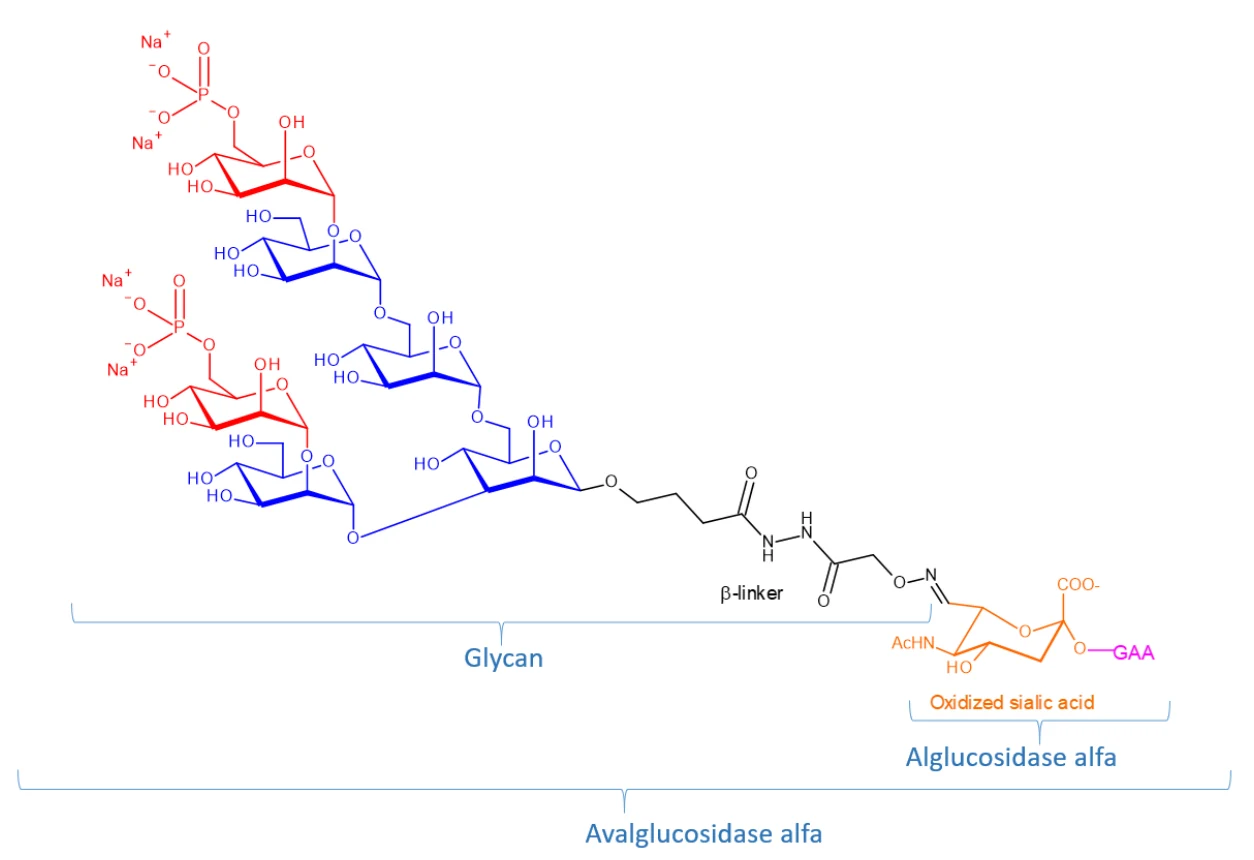
Avalglucosidase alfa is a recombinant human acid α-glucosidase (GAA) with synthetic bis-mannose-6-phosphate (bis-M6P) moieties conjugated to its oxidized sialic acid residues.
7 WARNINGS AND PRECAUTIONS
Cardiovascular
Risk of Acute cardiorespiratory failure
Caution should be exercised when administering Nexviazyme to patients susceptible to fluid volume overload or patients with acute underlying respiratory illness or compromised cardiac and/or respiratory function for whom fluid restriction is indicated. These patients may be at risk of serious exacerbation of their cardiac or respiratory status during infusion. Appropriate medical support and monitoring measures should be readily available during Nexviazyme infusion, and some patients may require prolonged observation times that should be based on the individual needs of the patient.
Cardiac arrhythmia and sudden death during general anesthesia for central venous catheter placement
Caution should be used when administering general anesthesia for the placement of a central venous catheter.
Driving and Operating Machinery
Due caution should be exercised when driving or operating a vehicle or potentially dangerous machinery.
No studies on the effects on the ability to drive and use machines have been performed. Because dizziness has been reported as an IAR, this may affect the ability to drive and use machines on the day of the infusion (see 8 ADVERSE REACTIONS, Clinical Trial Adverse Reactions).
Immune
Hypersensitivity reactions including anaphylaxis
Hypersensitivity reactions, including anaphylaxis, have been reported in Nexviazyme-treated patients. In clinical studies 86 (60.6%) patients experienced hypersensitivity reactions including 7 patients who reported severe hypersensitivity reactions and 4 patients who experienced anaphylaxis. Some of the hypersensitivity reactions were IgE mediated. Anaphylaxis signs and symptoms included hypotension, hypoxia, respiratory distress, chest pressure, generalized edema, flushing, cough, dizziness, nausea, redness on palms, swollen lower lip, decreased breath sounds, feeling hot, erythema, redness on feet, throat tightness, difficulty swallowing (dysphagia), difficulty speaking (dysarthria), pruritis, swollen tongue, itchy palms and feet, and oxygen desaturation. Symptoms of severe hypersensitivity reactions included swollen tongue, respiratory failure, respiratory distress, generalized edema, erythema, urticaria, and rash.
Appropriate medical support measures, including cardiopulmonary resuscitation equipment especially for patients with cardiac hypertrophy and patients with significantly compromised respiratory function, should be readily available when Nexviazyme is administered.
If severe hypersensitivity or anaphylaxis occur, Nexviazyme should be discontinued immediately, and appropriate medical treatment should be initiated. The risks and benefits of re-administering Nexviazyme following anaphylaxis or severe hypersensitivity reaction should be considered. Some patients have been re-challenged using slower infusion rates at a dose lower than the recommended dose. In patients with severe hypersensitivity, desensitization procedure to Nexviazyme may be considered. If the decision is made to re-administer the product, extreme caution should be exercised, with appropriate resuscitation measures available. Once a patient tolerates the infusion, the dose may be increased to reach the approved dose.
If mild or moderate hypersensitivity reactions occur, the infusion rate may be slowed or temporarily stopped.
Infusion Associated Reactions
In clinical studies, IARs were reported to occur at any time during and/or within a few hours after the infusion of Nexviazyme and were more likely with higher infusion rates. IARs were reported in approximately 56 (39.4%) patients treated with Nexviazyme in clinical studies. The majority of IARs were assessed as mild to moderate and symptoms reported in more than one patient included chills, cough, diarrhea, erythema, somnolence, sluggishness, fatigue, pyrexia, flushing, feeling hot or cold, cyanosis and pallor, headache, influenza like illness, nausea, ocular hyperemia, eyelid edema, face edema, pain in extremity, pruritus, rash, rash erythematous, increased or decreased blood pressure, tachycardia, urticaria, vomiting, respiratory distress, chest discomfort, dyspnea, dizziness, hyperhidrosis, skin plaque, lip swelling, oxygen saturation decreased, throat irritation, dyspepsia, burning sensation, pain, palmar erythema, swollen tongue and tremor. In clinical studies, 6 (4.2%) patients reported severe IARs including symptoms of respiratory distress, hypoxia, chest discomfort, generalized edema, tongue edema, dysphagia, nausea, erythema, urticaria, and increased or decreased blood pressure.
Patients with an acute underlying illness at the time of Nexviazyme infusion appear to be at greater risk for IARs. Patients with advanced Pompe disease may have compromised cardiac and respiratory function, which may predispose them to a higher risk of severe complications from IARs. Antihistamines, antipyretics, and/or corticosteroids can be given to prevent or reduce IARs. However, IARs may still occur in patients after receiving pre-treatment.
If severe IARs occur, immediate discontinuation of the administration of Nexviazyme should be considered and appropriate medical treatment should be initiated. The benefits and risks of re-administering Nexviazyme following severe IARs should be considered. Some patients have been re-challenged using slower infusion rates at a dose lower than the recommended dose. Once a patient tolerates the infusion, the dose may be increased to reach the approved dose. If a mild or moderate IARs occur regardless of pre-treatment, decreasing the infusion rate or temporarily stopping the infusion may ameliorate the symptoms.
Guide for healthcare professionals (HCPs) for immunosurveillance service
A “Guide for healthcare professionals (HCPs) for immunosurveillance service” is available to help manage the following safety concerns for Nexviazyme:
- Infusion associated reactions including hypersensitivity and anaphylactic reactions, with or without development of IgG and IgE antibodies
- Immunogenicity leading to loss of response (High Sustained IgG Antibody Titers and/or neutralizing antibodies)
The guide also provides information about the immunosurveillance service made available by Sanofi in Canada. The guide is available upon request by phone (1-800-265-7927) or accessed at (www.sanofi.ca).
Immunogenicity
Treatment emergent anti-drug antibodies (ADA) were reported in both treatment naïve (95%) and treatment experienced patients (62%) (see 8 ADVERSE REACTIONS, Clinical Trial Adverse Reactions, Immunogenicity).
IARs and hypersensitivity reactions may occur independent of the development of ADA. The majority of IARs and hypersensitivity reactions were mild or moderate and were managed with standard clinical practices. In treatment-naïve patients, a trend for increases in the incidence of IARs was observed with increasing ADA titers, with the highest incidence of IARs (69.2%) reported in the high ADA peak titer range ≥12,800, compared with an incidence of 33.3% in patients with intermediate ADA titer 1,600-6,400, an incidence of 14.3% in those with low ADA titer 100-800 and an incidence of 33.3% in those who were ADA negative. In clinical studies, the development of ADA did not have an apparent impact on efficacy.
ADA testing may be considered if patients do not respond to therapy. Adverse-event-driven immunologic testing, including IgG and IgE ADA, may be considered for patients who have risk for allergic reaction or previous anaphylactic reaction to alglucosidase alfa.
Monitoring and Laboratory Tests
There are no marketed tests for antibodies against Nexviazyme. It is recommended that patients be monitored for IgG antibody formation periodically.
Patients who experience reactions suggestive of anaphylactic or allergic reactions may also be tested for IgE antibodies to avalglucosidase alfa and other mediators of anaphylaxis. If testing is warranted, contact your local Sanofi Genzyme representative or Sanofi Genzyme Canada at 1-800-265-7927.
Patients should be informed that a registry for patients with Pompe disease has been established in order to better understand the variability and progression of Pompe disease and to continue to monitor and evaluate treatments. Patients should be encouraged to participate and advised that their participation may involve long-term follow-up. Information regarding the registry program may be found at www.registrynxt.com or by calling 1-800-745-4447, extension 15500.
7.1 Special Populations
7.1.1 Pregnant Women
There are no available data on the use of Nexviazyme in pregnant women. An embryo-fetal toxicity study performed in pregnant mice administered avalglucosidase alfa intravenously resulted in maternal toxicity related to an immunologic response (including an anaphylactoid response) and increased post-implantation loss (see 16 NON-CLINICAL TOXICOLOGY).
Nexviazyme is not recommended in pregnancy. Available data from case reports of Nexviazyme use in pregnant women are insufficient to evaluate for a drug associated risk of major birth defects, miscarriage, or adverse maternal or fetal outcomes. All women of childbearing potential prescribed Nexviazyme should have a discussion around contraception with their Health Care Professional and adequate contraception should be advised. Women exposed during pregnancy should be encouraged to enroll in the Pompe registry. If a patient wishes to become pregnant, or became pregnant, the decision to discontinue Nexviazyme treatment should be discussed with their Health Care Professional (see 10 CLINICAL PHARMACOLOGY).
7.1.2 Breast-feeding
Nexviazyme is not recommended while breast-feeding. There are no available data on the presence of Nexviazyme in human milk or the effects of Nexviazyme on milk production or the breastfed infant. A risk to the newborn/infant cannot be excluded.
7.1.3 Pediatrics
The safety of Nexviazyme in pediatric patients older than 6 months with Pompe disease is limited. There are no data available in patients 6 months of age and younger. The safety of Nexviazyme was assessed in 2 pediatric patients with LOPD (9 and 16 years of age) in the pivotal clinical trial, and 22 pediatric patients with IOPD (1 to 12 years of age) in an ongoing clinical trial (see 14 CLINICAL TRIALS and 8 ADVERSE REACTIONS, Clinical Trial Adverse Reactions).
7.1.4 Geriatrics
Of the 95 patients with LOPD exposed to Nexviazyme in the pivotal clinical trial, 11.6% (n=11) were aged between 65-75 years of age and 2.1% (n=2) patients were over 75 years of age. Differences in efficacy and safety between these patients and younger patients have not been determined due to limited clinical trial experience in geriatric patients.
8 ADVERSE REACTIONS
8.1 Adverse Reaction Overview
Serious adverse reactions reported in patients treated with Nexviazyme were headache, dyspnea, respiratory distress, nausea, skin discoloration, chills, chest discomfort, pyrexia, blood pressure increased, body temperature increased, heart rate increase, and oxygen saturation decreased. A total of 4 patients receiving Nexviazyme in clinical studies permanently discontinued treatment, of these 3 patients discontinued the treatment because of serious adverse event. The most frequently reported adverse drug reactions (ADRs) (>5%) were headache, nausea, pruritus, rash, urticaria, fatigue, chills and erythema. IARs were reported in 56 (39.4%) of patients. (see 7 WARNINGS AND PRECAUTIONS).
8.2 Clinical Trial Adverse Reactions
Because clinical trials are conducted under very specific conditions, the adverse reaction rates observed in the clinical trials may not reflect the rates observed in practice and should not be compared to the rates in the clinical trials of another drug. Adverse reaction information from clinical trials is useful for identifying drug-related adverse events and for approximating rates.
Adverse Reactions from Clinical Trials in the Pompe Disease Population
The pooled safety analysis from four pivotal and supportive studies in LOPD included a total of 142 Nexviazyme-treated patients [(118 adults and 2 pediatric patients (1 pediatric patient directly enrolled in the open-label extension period of EFC14028 study) and an ongoing study in IOPD (22 pediatric patients)].
ADRs reported in at least 3 patients (≥2%) treated with Nexviazyme in the pooled analysis of clinical studies are listed in Table 4. Serious adverse events were consistent across adult and pediatric populations.
| Table 4 - Adverse reactions occurring in at least 1 patients (≥ 2%) treated with Nexviazyme in pooled analysis of clinical studies. The pooled safety analysis from 4 clinical studies (EFC14028/COMET, ACT14132/mini-COMET, TDR12857/NEO, and LTS13769/NEO-EXT) included a total of 142 patients (118 adult and 24 pediatric patients (1 pediatric patient directly enrolled in the open-label extension period of Study 1)) | ||
Nexviazyme patients (N = 142) n (%) | ||
Nervous system disorders Headache Dizziness | 10 (7) 4 (3) | |
Respiratory, thoracic and mediastinal disorders Cough Dyspnea | 3 (2) 3 (2) | |
Gastrointestinal disorders Nausea Diarrhea | 8 (6) 3 (2) | |
Skin and subcutaneous tissue disorders Pruritus Rash Urticaria Erythema | 13 (9) 11 (8) 9 (7) 4 (3) | |
Musculoskeletal and connective tissue disorders Muscle spasms Myalgia | 4 (3) 4 (3) | |
General disorders and administration site conditions Fatigue Chills Chest discomfort Pain | 9 (7) 7 (5) 3 (2) 3 (2) | |
Adverse Reactions from Clinical Trials in Late-Onset Pompe Disease (LOPD)
In clinical study EFC14028, 100 LOPD patients aged 16 to 78 naïve to enzyme replacement therapy were treated with 20 mg/kg body weight of Nexviazyme (n=51) or with 20 mg/kg body weight of alglucosidase alfa (n=49) given every other week as an intravenous infusion for 49 weeks followed by an open-label extension period. During the 49-week double-blind active-controlled period, serious adverse reactions were reported in 2% of patients treated with Nexviazyme and 6.1% of those treated with alglucosidase alfa. A total of 4 patients receiving alglucosidase alfa permanently discontinued treatment due to adverse reactions; none of the patients from the Nexviazyme group permanently discontinued treatment. The most frequently reported ADRs (>5%) were headache, nausea, pruritus, urticaria, and fatigue. IARs were reported in 25.5% of the patients treated with Nexviazyme, compared to 32.7% of patients treated with alglucosidase alfa. The most frequently reported treatment-emergent IARs (>2 patients) in the avalglucosidase alfa group were pruritus and urticaria, and in the alglucosidase alfa group were nausea, pruritus, and flushing. Severe IARs were reported in 2 patients treated with alglucosidase alfa; there were no reports of severe IARs in patients treated with Nexviazyme.
Of the 100 enrolled patients, 95 patients entered the open-label extension period. Of these, 51 patients continued treatment with Nexviazyme and 44 patients switched from alglucosidase alfa to Nexviazyme treatment. During the extension period until at least 145 weeks, serious adverse reactions were reported by 3 (5.8%) patients continuing Nexviazyme treatment and by 2 (4.5%) patients who switched from alglucosidase alfa to Nexviazyme treatment. IARs were reported in 12 (23.5%) patients continuing Nexviazyme treatment throughout the study and in 21 (47.7%) patients who switched to Nexviazyme. No adverse reaction or IAR was reported by the additional pediatric patient directly enrolled in the open-label extension period.
Pediatrics
The safety profile of Nexviazyme in pediatric patients 1 to 12 years old with Pompe disease was consistent with the safety profile of Nexviazyme in older pediatric and adult patients. The safety and effectiveness of Nexviazyme have not been established in pediatric patients younger than 1 year of age.
Immunogenicity
As with all therapeutic proteins, there is a potential for immunogenicity. The detection of antibody formation is highly dependent on the sensitivity and specificity of the assay. Additionally, the observed incidence of antibody (including neutralizing antibody) positivity in an assay may be influenced by several factors, including assay methodology, sample handling, timing of sample collection, concomitant medications, and underlying disease. For these reasons, comparison of the incidence of antibodies to Nexviazyme in the studies described below with the incidence of antibodies in other studies or to other products may be misleading.
In clinical study EFC14028, treatment emergent anti-drug antibodies (ADAs) were reported in both treatment naïve and treatment experienced patients (Table 5), with 58/61 (95.1%) of treatment naïve patients reporting ADAs A total of two patients reported High Sustained Antibody Titers (HSAT) to Nexviazyme,. The median time to seroconversion was 8.3 weeks.
2 . ADA cross-reactivity studies showed that the majority of patients generate antibodies that are cross-reactive to alglucosidase alfa. At week 49, antibodies specific to Nexviazyme were detected in 3 (5.9%) patients.
ADA did not impact measures of efficacy while limited impacts on PK (decrease in AUC) and PD (decrease in urinary glucose tetrasaccharide response) were observed primarily with high titer (≥12,800) patients. In vitro evaluation of neutralizing antibodies that inhibited enzyme activity or inhibited cellular uptake demonstrated no clear relationship of assay positivity with PK.
| Table 5 – Incidence of ADA response in patients with LOPD | |||||||||||
|---|---|---|---|---|---|---|---|---|---|---|---|
| Nexviazyme | |||||||||||
Treatment-naïve patients Avalglucosidase alfa ADA (N=61)d | Treatment experienced patients Avalglucosidase alfa ADA (N=61)e | ||||||||||
Adults 20 mg/kg every other week (N=61) N (%) | Adults 20 mg/kg every other week (N=55) N (%) | Pediatric 20 mg/kg every other week (N=6) N (%) | |||||||||
| ADA at baseline | 2 (3.3) | 40 (72.7) | 1 (16.7) | ||||||||
| Treatment emergent ADAa | 58 (95.1) | 27 (49.1) | 1(16.6) | ||||||||
| Treatment-induced ADAc | 56 (94.9) | 9 (60.0) | 1 (16.6) | ||||||||
| Treatment-boosted ADAb | 2 (100) | 18 (45.0) | 0 | ||||||||
| Neutralizing antibody | |||||||||||
| Both NAb types | 13 (21.1) | 2 (3.6) | 0 | ||||||||
| Inhibition enzyme activity, only | 4 (6.6) | 8 (14.5) | 0 | ||||||||
| Inhibition of enzyme uptake, only | 10 (16.4) | 8 (14.5) | 0 | ||||||||
a Treatment emergent = Treatment induced + Treatment boosted. b Treatment -boosted ADA incidence defined as 100x (Treatment boosted ADA positive patients)/(number of evaluable patients with ADA positive at baseline). c Treatment induced ADA incidence is defined as 100 x (Treatment induced ADA positive patients)/(number of evaluable patients with ADA negative at baseline). d Treatment naive: only treated with avalglucosidase alfa e Treatment experienced: previously treated with alglucosidase alfa. Treatment-experienced patients received alglucosidase alfa treatment within a range of 0.9-9.9 years for adult patients and 0.5-11.7 years for pediatric patients before receiving NEXVIAZYME. | |||||||||||
IARs and hypersensitivity reactions may occur independent of the development of ADAs. Increases in the incidence of IARs and hypersensitivity were observed with higher ADA titers. In enzyme replacement therapy (ERT) experienced adult patients, the occurrences of IARs and hypersensitivity were higher in patients who developed treatment emergent ADA compared to patients who were ADA negative. One (1) treatment naïve adult patient and 1 treatment experienced adult patient developed anaphylaxis. The occurrences of IARs were similar between pediatric patients with ADA positive and negative status. One treatment-experienced pediatric patient developed anaphylaxis (see 7 WARNINGS AND PRECAUTIONS, Immune, Immunogenicity).
9 DRUG INTERACTIONS
9.4 Drug-Drug Interactions
No drug-drug interaction studies have been conducted with Nexviazyme. Interactions with other drugs have not been established.
9.5 Drug-Food Interactions
No drug-food interaction studies have been conducted with Nexviazyme. Interactions with food has not been established.
9.6 Drug-Herb Interactions
No drug-herb interaction studies have been conducted with Nexviazyme. Interactions with herbal products have not been established
9.7 Drug-Laboratory Test Interactions
Interactions with laboratory tests have not been established.
10 CLINICAL PHARMACOLOGY
10.1 Mechanism of Action
Pompe disease (also known as glycogen storage disease type II, acid maltase deficiency, and glycogenosis type II) is a rare metabolic muscle disease inherited in an autosomal recessive manner defined by a deficiency of acid α-glucosidase (GAA), which is necessary for the degradation of lysosomal glycogen. GAA cleaves alpha-1,4 and alpha-1,6 linkages in glycogen under the acidic conditions of the lysosome. Pompe disease results in intra-lysosomal accumulation of glycogen in various tissues, particularly cardiac and skeletal muscles, leading to the development of cardiomyopathy, progressive muscle weakness, and impairment of respiratory function.
Avalglucosidase alfa is a recombinant human acid α-glucosidase (rhGAA) that provides an exogenous source of GAA. Avalglucosidase alfa is a modification of alglucosidase alfa in which approximately 7 hexamannose structures each containing 2 terminal mannose-6-phosphate (bis-M6P) moieties are conjugated to oxidized sialic acid residues on alglucosidase alfa. Avalglucosidase alfa has a 15-fold increase in mannose-6-phosphate (M6P) moieties compared with alglucosidase alfa. Increasing the level of bis-M6P on rhGAA provides a mechanism to drive uptake into the diaphragm and other skeletal muscle via the cation-independent M6P receptor.
10.2 Pharmacodynamics
In fifty-one treatment-naïve LOPD patients aged 16 to 78, the mean percentage (SD) change in urinary hexose tetrasaccharides from baseline to week 49 for patients treated with Nexviazyme 20 mg/kg every other week was -53.90% (24.03), and was -53.35% (72.73) at week 145 (n = 44 patients).
10.3 Pharmacokinetics
| Table 6 - Summary of avalglucosidase alfa Pharmacokinetic Parameters in LOPD patients derived from population modeling | ||||||||||
| Cmax (µg/mL) | tmax (h) | t½ (h) | AUC2w (µg*h/mL) | CL (L/h) | Distribution volume (L) | |||||
| 20 mg/kg mean | 273 | 4.0 | 1.55 | 1220 | 0.87 | 3.4 | ||||
| Median reported for tmax; Cmax = maximum plasma concentration; tmax = time to reach the maximum plasma concentration; t½ = terminal elimination half-life; AUC2w = area under the plasma concentration-time curve over the dosing interval (2 weeks); CL = total plasma clearance | ||||||||||
Patients with late-onset Pompe disease (LOPD)
The pharmacokinetics of avalglucosidase alfa was evaluated in a population analysis of 75 LOPD patients aged 16 to 78 years who received 5 to 20 mg/kg of avalglucosidase alfa every other week for up to 5 years.
Absorption: The exposure to avalglucosidase alfa increased in a dose-proportional manner between 5 to 20 mg/kg in LOPD patients. No accumulation was observed following every other week dosing.
In LOPD patients, the population PK model predicted a mean Cmax and mean AUC2W of 273 µg/mL and 1220 µg•h/mL, respectively following 20 mg/kg every other week dosing.
Distribution: In LOPD patients, the typical population PK model predicted central compartment volume of distribution of avalglucosidase alfa was 3.4 L.
Metabolism: The metabolic pathway of avalglucosidase alfa has not been characterized. As a glycoprotein, avalglucosidase alfa is expected to be degraded into small peptides or amino acids via non-saturable catabolic pathways.
Elimination: In LOPD patients, the typical population PK model predicted linear clearance was 0.87 L/h. Following 20 mg/kg every other week dosing, the mean plasma elimination half-life was 1.55 hours.
Special Populations and Conditions
Pediatrics: Population pharmacokinetic analyses in pediatric LOPD patients showed that age did not meaningfully influence the pharmacokinetics of avalglucosidase alfa
Geriatrics: Population pharmacokinetic analyses in LOPD patients showed that age did not meaningfully influence the pharmacokinetics of avalglucosidase alfa.
Sex: Population pharmacokinetic analyses in LOPD patients showed that gender did not meaningfully influence the pharmacokinetics of avalglucosidase alfa.
Hepatic Insufficiency: The pharmacokinetics of avalglucosidase alfa have not been studied in patients with hepatic impairment.
Renal Insufficiency: No formal study of the effect of renal impairment on the pharmacokinetics of avalglucosidase alfa was conducted. On the basis of a population pharmacokinetic analysis of data from 75 LOPD patients receiving 20 mg/kg every other week, including 6 patients with mild renal impairment (glomerular filtration rate: 60 to 89 mL/min; at baseline), no relevant effect of renal impairment on exposure to avalglucosidase alfa was observed.
11 STORAGE, STABILITY AND DISPOSAL
Store in a refrigerator between 2°C to 8°C. Do not use Nexviazyme after the expiration date on the vial.
Shelf-Life (after reconstitution and dilution)
The reconstituted and diluted solution should be administered without delay. The reconstituted product can be stored up to 24 hours when refrigerated at 2°C and 8°C and the diluted product can be stored up to 24 hours when refrigerated at 2°C to 8°C and up to 9 hours (including infusion time) when stored at room temperature (up to 25°C).
PART II: SCIENTIFIC INFORMATION
13 PHARMACEUTICAL INFORMATION
Drug Substance
Proper name: avalglucosidase alfa
Chemical name: Recombinant human acid α-glucosidase conjugated with synthetic bis-mannose-6-phosphate (bis-M6P).
Molecular formula: C4490H6829N1197O1298S32, protein
Total molecular mass including glycan: approximately 124 kDa
Structural formula:
Physicochemical properties: Avalglucosidase alfa concentrate solution for infusion, after reconstitution, is a clear, colorless to pale yellow solution, and essentially free of visible particles.
Product Characteristics
Nexviazyme is a sterile white to pale yellow lyophilized powder. After reconstitution it is a clear, colourless to pale yellow solution.
14 CLINICAL TRIALS
14.1 Trial Design and Study Demographics
| Table 7- Summary of patient demographics for clinical trials in late-onset Pompe disease | |||||||||||
| Study # | Trial design | Dosage, route of administration and duration | Study subjects (n) | Mean age (Range) | Sex (M/F) | ||||||
EFC14028 (COMET) | Phase 3, multicenter, multinational, randomized, double-blind, 49-weeks Primary Analysis Period (PAP) study long-term, open label Extension Treatment Period (ETP) | Test: Avalglucosidase alfa: 20 mg/kg qow Reference: Alglucosidase alfa: 20 mg/kg qow Intravenous infusion Duration: PAP: 49 weeks ETP: 5-years long | 100 | 48.1 (16-78) | 52/48 | ||||||
Clinical Trials in patients with LOPD Study EFC14028, was a multinational, multicenter, randomized, double-blinded study comparing the efficacy and safety of Nexviazyme and alglucosidase alfa in 100 treatment-naïve LOPD patients aged 3 years or older at the initiation of treatment. Patients were randomized in a 1:1 ratio based on baseline forced vital capacity (FVC), gender, age, and country to receive 20 mg/kg of Nexviazyme or alglucosidase alfa once every other week for 12 months (49 weeks). The study included an open-label, long-term, follow-up phase of up to 5 years for all patients, in which patients in the alglucosidase alfa arm were switched to Nexviazyme and continued treatment up to at least week 145. Overall, 95 patients entered the open label period (51 from the Nexviazyme arm and 44 from the alglucosidase arm). An additional pediatric patient was enrolled directly into the extension treatment period with Nexviazyme. | |||||||||||
14.2 Study Results
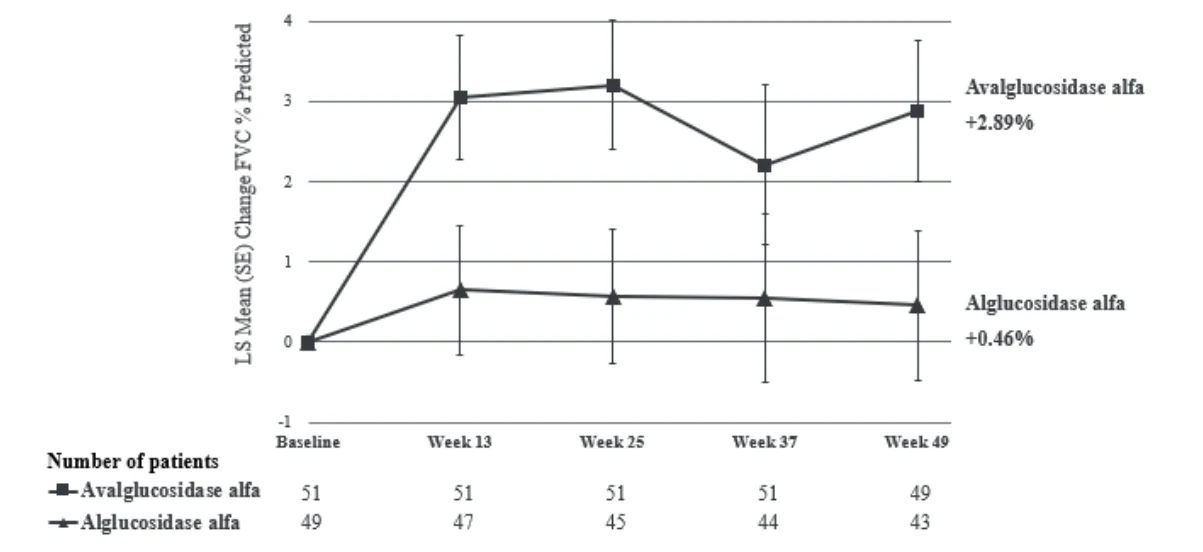
The primary endpoint of study EFC14028 was the change in FVC (% predicted) in the upright position from baseline to 12 months (week 49). The study met its primary objective of demonstrating the non-inferiority of Nexviazyme to alglucosidase alfa based on the pre-specified margin of -1.1%. Results are shown in Table 8 and Figure 1 .
| Table 8 - LS mean change from baseline to week 49 in FVC (% predicted) in upright position | |||
| Primary Endpoints | Nexviazyme (n=51) | alglucosidase alfa (n=49) | |
| Forced Vital Capacity (Percent of predicted normal) | |||
| Table 8 - LS mean change from baseline to week 49 in FVC (% predicted) in upright position | ||||||
| Primary Endpoints | Nexviazyme (n=51) | alglucosidase alfa (n=49) | ||||
Pre- treatment Baseline Mean (SD) | 62.5 (14.4) | 61.6 (12.4) | ||||
Week 49 Mean (SD) | 65.49 (17.42) | 61.16 (13.49) | ||||
Estimated Change from Baseline to Week 49 (MMRM) LS Mean (SE) | 2.89* (0.88) | 0.46* (0.93) | ||||
Estimated Difference Between Groups in Change from Baseline to Week 49 (MMRM) LS Mean (95% CI) p-value** | 2.43* (-0.13,4.99) 0.0074 | |||||
MMRM: mixed model repeated measure. *On the basis of MMRM model, the model includes baseline FVC (% predicted, as continuous), sex, age (in years at baseline), treatment group, visit, interaction term between treatment group and visit as fixed effects. ** Non-inferiority margin of -1.1%. Statistical superiority of NEXVIAZYME over alglucosidase alfa was not achieved (p=0.06). | ||||||
Figure 1 Plot of LS mean (SE) change from baseline of FVC (% predicted) - in upright position over time - in PAP *
*all randomized patients
All 51 patients randomized to avalglucosidase alfa continued to receive treatment after Week 49, and the LS mean change from baseline to Week 145 in FVC (% predicted) was 1.43 (SE = 1.23, 95% CI: -1.02, 3.87).
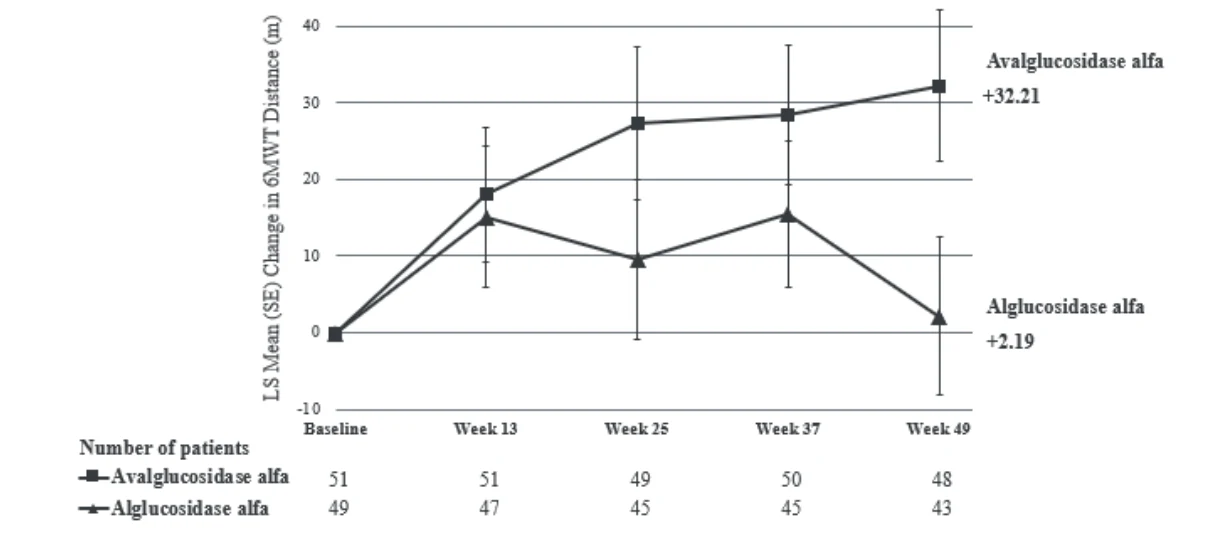
The key secondary endpoint of study EFC14028 was change in total distance walked in 6 minutes (6-Minute Walk Test, 6MWT) from baseline to 12 months (week 49). At week 49, the LS mean change from baseline (SE) in 6MWT for patients treated with Nexviazyme and alglucosidase alfa was 32.21 m (9.93) and 2.19 m (10.40) respectively. The results for the 6MWT are shown in Figure 2.
Figure 2 - Plot of LS mean (SE) change from baseline of 6MWT (distance walked, in meters) over time - in PAP *
*all randomized patients
All 51 patients randomized to avalglucosidase alfa continued to receive treatment after Week 49, and the LS mean change from baseline to Week 145 in 6MWT was 20.65 (SE = 9.60, 95% CI: 1.59, 39.70).
16 NON-CLINICAL TOXICOLOGY
General Toxicology
In a 26-week repeat-dose toxicity study, avalglucosidase alfa was administered to monkeys at a dose of 0 (vehicle), 50, or 200 mg/kg IV (intravenously) once every 2 weeks No adverse effects were observed. The NOAEL was 200 mg/kg IV every other week (23-fold higher than the human exposure at the maximum recommended human dose [MRHD] based on AUC). The results for some animals in the dosing groups were confounded by technical error associated with the surgical procedure.
Carcinogenicity
Carcinogenicity studies with avalglucosidase alfa were not conducted.
Genotoxicity
Genotoxicity studies with avalglucosidase alfa were not conducted.
Reproductive and Developmental Toxicity
Some reproductive toxicity studies in mice included pre-treatment with diphenylhydramine to prevent or minimize hypersensitivity reactions. Rabbits were not pretreated with DPH because hypersensitivity reactions were not observed. Avalglucosidase alfa does not cross the placenta in mice, therefore, there is no fetal exposure to avalglucosidase alfa in the mouse developmental and reproductive toxicity studies. Exposure to avalglucosidase alfa from maternal milk was not assessed.
Fertility
The effects of avalglucosidase alfa on mating performance, fertility, and early embryonic development were evaluated in a fertility study in male and female mice administered 0 (vehicle), 10, 20, or 50 mg/kg IV every 2 days (3.5-, 7-, or 17.5-fold higher than the MRHD on a mg/kg basis, respectively). Male mice were dosed before to cohabitation (10 weeks) and female mice were dosed through conception to Gestational Day (GD) 7 (2 weeks). Death related to an immunologic response (including an anaphylactoid response) occurred at all doses. There were no adverse effects on male or female fertility. A NOAEL could not be determined based on the hypersensitivity reaction deaths that occurred at the lowest dose.
Embryo-Fetal Development
Pregnant mice were administered avalglucosidase alfa at a dose of 0 (vehicle) 10, 20 or 50 mg/kg IV once daily on GD 6 through 15. Caesarean sections were performed on GD18. Placental transfer studies determined that avalglucosidase alfa is not transported from the maternal to the fetal circulation. Maternal death at 50 mg/kg/day was considered related to an immunologic response (including an anaphylactoid response). Increased post implantation loss and mean number of late resorptions were observed at this dose that may be related to the immunologic response in the mothers. The maternal, and the developmental NOAEL were 20 mg/kg/day IV (4.8-fold higher than the human exposure at the MRHD based on AUC).
Pregnant rabbits were administered avalglucosidase alfa at doses of 0 (vehicle), 30, 60, and 100 mg/kg/day IV once per day during organogenesis (GD6 to 19). Caesarian sections were performed on GD 29. Effects on maternal body weight and food consumption were observed. No adverse embryo-fetal effects occurred. The maternal NOAEL was 30 mg/kg/day IV (14.5-fold higher than the human exposure at 20 mg/kg based on AUC) and the developmental NOAEL was 100 mg/kg/day IV (91-fold higher than the human exposure at the MRHD based on AUC).
Pre- and Postnatal Development
Pregnant mice were administered avalglucosidase alfa at doses of 0 (vehicle), 10, 20 or 50 mg/kg IV every 2 days from implantation and continuing through gestation and lactation, through weaning (GD6 through postnatal [PND] day 20). There was no effect on F1 development, sexual maturation, or neurobehavioral parameters. The maternal NOAEL and the NOAEL for reproduction in the dams and for viability and growth in the offspring were 50 mg/kg/dose IV (17.5-fold higher than the MRHD on a mg/kg basis).
Juvenile Toxicity
In a juvenile toxicity study, mice were administered avalglucosidase alfa (at 0 [vehicle], 20, 50, or 100 mg/kg IV once every 2 weeks in females and 0, 25, 50, or 100 mg/kg IV once every 2 weeks in males; (below 1-, equal to 1,- or 2-fold, and 4- to 7-fold higher than the human exposure at the MRHD based on AUC, respectively) for approximately 9 weeks from PND21. Death related to an immunologic response (including an anaphylactoid response) was observed at all doses without dose-response. Increased white blood cell parameters were observed in surviving males, consistent with an immunologic (anaphylactoid) response. There were no effects on developmental neurobehavioral functional parameters (motor activity, learning and memory, and auditory [startle] reflex),sexual maturation, or fertility. A NOAEL could not be determined based on the hypersensitivity reaction deaths that occurred at the lowest dose.
Drug Abuse Liability Potential
Drug abuse liability assessment studies were not performed.