


Product Monograph - Caripul
RECENT MAJOR LABEL CHANGES
| 7 WARNINGS AND PRECAUTIONS , Gastrointestinal | 03/2024 |
|---|
TABLE OF CONTENTS
Sections or subsections that are not applicable at the time of authorization are not listed.
RECENT MAJOR LABEL CHANGES .................................................................................... 2
TABLE OF CONTENTS .......................................................................................................... 2
PART I: HEALTH PROFESSIONAL INFORMATION ............................................................. 4
1 INDICATIONS .............................................................................................................. 4
1.1 Pediatrics ............................................................................................................ 4
1.2 Geriatrics ............................................................................................................ 4
2 CONTRAINDICATIONS .............................................................................................. 4
4 DOSAGE AND ADMINISTRATION ............................................................................. 5
4.1 Dosing Considerations ....................................................................................... 5
4.2 Recommended Dose and Dosage Adjustment .................................................. 5
4.3 Reconstitution ..................................................................................................... 6
4.4 Administration ................................................................................................... 10
5 OVERDOSAGE ......................................................................................................... 11
6 DOSAGE FORMS, STRENGTHS, COMPOSITION AND PACKAGING .................. 11
7 WARNINGS AND PRECAUTIONS ........................................................................... 11
7.1 Special Populations .......................................................................................... 14
7.1.1 Pregnant Women .......................................................................................... 14
7.1.2 Breast-feeding .............................................................................................. 14
7.1.3 Pediatrics ...................................................................................................... 14
7.1.4 Geriatrics ...................................................................................................... 14
8 ADVERSE REACTIONS ............................................................................................ 15
8.2 Clinical Trial Adverse Reactions ....................................................................... 15
8.5 Post-Market Adverse Reactions ....................................................................... 21
9 DRUG INTERACTIONS ............................................................................................. 22
9.2 Drug Interactions Overview .............................................................................. 22
9.4 Drug-Drug Interactions ..................................................................................... 22
9.5 Drug-Food Interactions ..................................................................................... 22
9.6 Drug-Herb Interactions ..................................................................................... 22
9.7 Drug-Laboratory Test Interactions .................................................................... 22
10 CLINICAL PHARMACOLOGY .................................................................................. 22
10.1 Mechanism of Action ........................................................................................ 22
10.2 Pharmacodynamics .......................................................................................... 22
10.3 Pharmacokinetics ............................................................................................. 24
11 STORAGE, STABILITY AND DISPOSAL ................................................................. 26
12 SPECIAL HANDLING INSTRUCTIONS .................................................................... 26
PART II: SCIENTIFIC INFORMATION .................................................................................. 27
13 PHARMACEUTICAL INFORMATION ....................................................................... 27
14 CLINICAL TRIALS .................................................................................................... 27
14.1 Clinical Trials by Indication ............................................................................... 27
Long-term treatment of idiopathic pulmonary arterial hypertension (iPAH) ................ 27
Chronic infusion in pulmonary arterial hypertension (PAH) associated with connective tissue disease (CTD) .................................................................................................. 29
15 MICROBIOLOGY ....................................................................................................... 30
16 NON-CLINICAL TOXICOLOGY ................................................................................ 30
PATIENT MEDICATION INFORMATION ............................................................................. 33
PART I: HEALTH PROFESSIONAL INFORMATION
1 INDICATIONS
CARIPUL® (epoprostenol sodium) is indicated for:
- the long-term intravenous treatment of idiopathic pulmonary arterial hypertension (iPAH), heritable pulmonary arterial hypertension (HPAH) and pulmonary arterial hypertension associated with connective tissue disease in NYHA functional Class III and Class IV patients who did not respond adequately to conventional therapy.
Prior to initiation of therapy, the potential benefit of CARIPUL® should be weighed against the risks associated with use of the drug and the presence of an indwelling central venous catheter.
CARIPUL® should be used only by clinicians experienced in the diagnosis and treatment of pulmonary hypertension. The diagnosis of iPAH, HPAH or PAH associated with connective tissue disease (CTD) should be carefully established by standard clinical tests.
1.1 Pediatrics
Pediatrics (< 18 years of age): The safety and effectiveness of epoprostenol in pediatric patients has not been established.
1.2 Geriatrics
Geriatrics (> 65 years of age): Clinical studies of epoprostenol did not include sufficient numbers of patients aged 65 and over to determine whether they respond differently from younger patients. In general, dose selection in the geriatric population should be made carefully, reflecting the greater frequency of decreased hepatic, renal, or cardiac function and of concomitant disease or other drug therapy.
2 CONTRAINDICATIONS
- CARIPUL® is contraindicated in patients who are hypersensitive to this drug or to any ingredient in the formulation, including any non-medicinal ingredient, structurally-related compounds, or component of the container. For a complete listing, see 6 DOSAGE FORMS, STRENGTHS, COMPOSITION AND PACKAGING.
- The chronic use of CARIPUL® (epoprostenol sodium) in patients with congestive heart failure due to severe left ventricular systolic dysfunction is contraindicated. A large study evaluating the effect of epoprostenol on survival in NYHA Class III and IV patients with congestive heart failure due to severe left ventricular systolic dysfunction was terminated after an interim analysis of 471 patients revealed a higher mortality in patients receiving epoprostenol plus conventional therapy than in those receiving conventional therapy alone.
- CARIPUL® should not be used chronically in patients who develop pulmonary edema during dose initiation. (see 7 WARNINGS AND PRECAUTIONS)
4 DOSAGE AND ADMINISTRATION
4.1 Dosing Considerations
- CARIPUL® (epoprostenol sodium) must be reconstituted only as directed with Sterile Water for Injection, or Sodium Chloride 0.9% Injection. Reconstituted solutions of CARIPUL® must not be diluted or administered with other parenteral solutions or medications.
- CARIPUL® is not to be used for bolus administration.
- During dose initiation and dose-finding, asymptomatic increases in pulmonary artery pressure coincident with increases in cardiac output occurred rarely. In such cases, consider dose reduction, but such an increase does not imply that chronic treatment is contraindicated. However, in the rare occurrence of pulmonary edema, chronic treatment is contraindicated.
- During chronic use, CARIPUL® is delivered continuously on an ambulatory basis through a permanent indwelling central venous catheter. Unless contraindicated, anticoagulant therapy should be administered to iPAH patients receiving CARIPUL® to reduce the risk of pulmonary thromboembolism or systemic embolism through a patent foramen ovale. In order to reduce the risk of infection, aseptic technique must be used in the reconstitution and administration of CARIPUL® as well as in routine catheter care. Because CARIPUL® is metabolized rapidly, even brief interruptions in the delivery of CARIPUL® may result in symptoms associated with rebound pulmonary hypertension including dyspnea, dizziness, and asthenia. The decision to initiate therapy with CARIPUL® should be based upon the understanding that there is a high likelihood that intravenous therapy with CARIPUL® will be needed for prolonged periods, possibly years, and the patient's ability to accept and care for a permanent intravenous catheter and infusion pump should be carefully considered.
4.2 Recommended Dose and Dosage Adjustment
Dosage
Continuous chronic infusion of CARIPUL® should be prepared as directed (see 4.3 Reconstitution) and administered through a central venous catheter. Temporary peripheral intravenous infusion may be used until central access is established. Chronic infusion of CARIPUL® should be initiated at 2 ng/kg/min and increased in increments of 2 ng/kg/min every 15 minutes or longer until dose-limiting pharmacologic effects are elicited or until a tolerance limit to the drug is established or further increases in the infusion rate are not clinically warranted (see Dosage Adjustments below). If dose-limiting pharmacologic effects occur, then the infusion rate should be decreased to the point that the pharmacologic effects of CARIPUL® are tolerated. In clinical trials, the most common dose-limiting adverse events were nausea, vomiting, hypotension, sepsis, headache, abdominal pain, or respiratory disorder (most treatment-limiting adverse events were not serious). If the initial infusion rate of 2 ng/kg/min is not tolerated, use a lower dose.
In the controlled 12-week trial in PAH associated with CTD, for example, the dose increased from a mean starting dose of 2.2 ng/kg/min. During the first 7 days of treatment, the dose was increased daily to a mean dose of 4.1 ng/kg/min on day 7 of treatment. At the end of week 12, the mean dose was 11.2 ng/kg/min. The mean incremental increase was 2 to 3 ng/kg/min every
3 weeks.
Dosage Adjustments
Changes in the chronic infusion rate should be based on persistence, recurrence, or worsening of the patient’s symptoms of pulmonary hypertension and the occurrence of adverse events due to excessive doses of CARIPUL®. In general, increases in dose from the initial chronic dose should be expected.
Increments in dose should be considered if symptoms of pulmonary hypertension persist or recur after improving. The infusion should be increased by 1- to 2-ng/kg/min increments at intervals sufficient to allow assessment of clinical response; these intervals should be at least 15 minutes. In clinical trials, incremental increases in dose occurred at intervals of 24 to 48 hours or longer. Following establishment of a new chronic infusion rate, the patient should be observed, and standing and supine blood pressure and heart rate monitored for several hours to ensure that the new dose is tolerated.
During chronic infusion, the occurrence of dose-limiting pharmacological events may necessitate a decrease in infusion rate, but the adverse event may occasionally resolve without dosage adjustment. Dosage decreases should be made gradually in 2-ng/kg/min decrements every 15 minutes or longer until the dose-limiting effects resolve. Abrupt withdrawal of CARIPUL® or sudden large reductions in infusion rates should be avoided. Except in life-threatening situations (e.g., unconsciousness, collapse, etc.), infusion rates of CARIPUL® should be adjusted only under the direction of a physician.
In patients receiving lung transplants, doses of epoprostenol were tapered after the initiation of cardiopulmonary bypass.
Pediatrics (< 18 years of age)
The safety and effectiveness of epoprostenol in pediatric patients has not been established.
4.3 Reconstitution
CARIPUL® is stable only when reconstituted as directed using Sterile Water for Injection, or Sodium Chloride 0.9% Injection. CARIPUL® must not be reconstituted or mixed with any other parenteral medications or solutions prior to or during administration. Each vial is for single use only; discard any unused solution.
Use after reconstitution and immediate dilution to final concentration
A concentration for the solution of CARIPUL® should be selected that is compatible with the infusion pump being used with respect to minimum and maximum flow rates, reservoir capacity, and the infusion pump criteria listed above. CARIPUL®, when administered chronically, should be prepared in a drug delivery reservoir appropriate for the infusion pump. Outlined in Table 1 are directions for preparing different concentrations of CARIPUL® for up to a 48-hour period. Each vial is for single use only; discard any unused solution.
The vial containing 0.5 mg epoprostenol must be used for the preparation of solutions with final concentrations below 15,000 ng/mL.
Table 1: Reconstitution and Dilution Instructions
| To make 100 mL of solution with Final Concentration (ng/mL) of: | Directions: |
| 3,000 ng/mL | Dissolve contents of one 0.5 mg vial with 5 mL of Sterile Water for Injection or Sodium Chloride 0.9% Injection. Withdraw 3 mL of the vial contents and add to a sufficient volume of the identical diluent to make a total of 100 mL. |
| 5,000 ng/mL | Dissolve contents of one 0.5 mg vial with 5 mL of Sterile Water for Injection, or Sodium Chloride 0.9% Injection. Withdraw entire vial contents and add to a sufficient volume of the identical diluent to make a total of 100 mL. |
| 10,000 ng/mL | Dissolve contents of two 0.5 mg vials each with 5 mL of Sterile Water for Injection, or Sodium Chloride 0.9% Injection. Withdraw entire vial contents and add to a sufficient volume of the identical diluent to make a total of 100 mL. |
| 15,000 ng/mL1 | Dissolve contents of one 1.5 mg vial with 5 mL of Sterile Water for Injection, or Sodium Chloride 0.9% Injection. Withdraw entire vial contents and add to a sufficient volume of the identical diluent to make a total of 100 mL. |
| 30,000 ng/mL1 | Dissolve contents of two 1.5 mg vials each with 5 mL of Sterile Water for Injection, or Sodium Chloride 0.9% Injection. Withdraw entire vial contents and add to a sufficient volume of the identical diluent to make a total of 100 mL. |
- 1. Higher concentrations may be prepared for patients who receive CARIPUL® long-term.
Infusion rates may be calculated using the following formula:
Infusion Rate (mL/hr) = [Dose (ng/kg/min) x Weight (kg) x 60 min/hr]
Final Concentration (ng/mL)
Tables 2 to 6 provide infusion delivery rates for doses up to 16 ng/kg/min based upon patient weight, drug delivery rate, and concentration of the solution of CARIPUL® to be used. These tables may be used to select the most appropriate concentration of CARIPUL® that will result in an infusion rate between the minimum and maximum flow rates of the infusion pump and that will allow the desired duration of infusion from a given reservoir volume. For infusion/dose rates lower than those listed in Tables 2 to 6, it is recommended that the pump rate be set by a healthcare professional such that steady state is achieved in the patient, keeping in mind the half life of epoprostenol is no more than six minutes. Higher infusion rates, and therefore, more concentrated solutions may be necessary with long-term administration of CARIPUL®
Table 2: Infusion Rates for CARIPUL® at a Concentration of 3,000 ng/mL
| Dose or Drug Delivery Rate (ng/kg/min) | ||||||||||
| Patient weight (kg) | 2 | 3 | 4 | 5 | ||||||
| Infusion Delivery Rate (mL/hr) | ||||||||||
| 20 | --- | 1.2 | 1.6 | 2.0 | ||||||
| 30 | 1.2 | 1.8 | 2.4 | 3.0 | ||||||
| 40 | 1.6 | 2.4 | 3.2 | 4.0 | ||||||
| 50 | 2.0 | 3.0 | 4.0 | |||||||
| 60 | 2.4 | 3.6 | ||||||||
| 70 | 2.8 | |||||||||
| 80 | 3.2 | |||||||||
| 90 | 3.6 | |||||||||
| 100 | 4.0 | |||||||||
Table 3: Infusion Rates for CARIPUL® at a Concentration of 5,000 ng/mL
| Dose or Drug Delivery Rate (ng/kg/min) | ||||||||||||||||
| Patient weight (kg) | 2 | 4 | 6 | 8 | 10 | 12 | 14 | |||||||||
| Infusion Delivery Rate (mL/hr) | ||||||||||||||||
| 20 | --- | 1.0 | 1.4 | 1.9 | 2.4 | 2.9 | 3.4 | |||||||||
| 30 | --- | 1.4 | 2.2 | 2.9 | 3.6 | 4.3 | 5.0 | |||||||||
| 40 | 1.0 | 1.9 | 2.9 | 3.8 | 4.8 | 5.8 | 6.7 | |||||||||
| 50 | 1.2 | 2.4 | 3.6 | 4.8 | 6.0 | 7.2 | 8.4 | |||||||||
| 60 | 1.4 | 2.9 | 4.3 | 5.8 | 7.2 | 8.6 | 10.1 | |||||||||
| 70 | 1.7 | 3.4 | 5.0 | 6.7 | 8.4 | 10.1 | 11.8 | |||||||||
| 80 | 1.9 | 3.8 | 5.8 | 7.7 | 9.6 | 11.5 | 13.4 | |||||||||
| 90 | 2.2 | 4.3 | 6.5 | 8.6 | 10.8 | 13.0 | 15.1 | |||||||||
| 100 | 2.4 | 4.8 | 7.2 | 9.6 | 12.0 | 14.4 | 16.8 | |||||||||
Table 4: Infusion Rates for CARIPUL® at a Concentration of 10,000 ng/mL
| Dose or Drug Delivery Rate (ng/kg/min) | ||||||||||||
| Patient weight (kg) | 4 | 6 | 8 | 10 | 12 | 14 | 16 | |||||
| Infusion Delivery Rate (mL/hr) | ||||||||||||
| 20 | --- | --- | 1.0 | 1.2 | 1.4 | 1.7 | 1.9 | |||||
| 30 | --- | 1.1 | 1.4 | 1.8 | 2.2 | 2.5 | 2.9 | |||||
| 40 | 1.0 | 1.4 | 1.9 | 2.4 | 2.9 | 3.4 | 3.8 | |||||
| 50 | 1.2 | 1.8 | 2.4 | 3.0 | 3.6 | 4.2 | 4.8 | |||||
| 60 | 1.4 | 2.2 | 2.9 | 3.6 | 4.3 | 5.0 | 5.8 | |||||
| 70 | 1.7 | 2.5 | 3.4 | 4.2 | 5.0 | 5.9 | 6.7 | |||||
| 80 | 1.9 | 2.9 | 3.8 | 4.8 | 5.8 | 6.7 | 7.7 | |||||
| 90 | 2.2 | 3.2 | 4.3 | 5.4 | 6.5 | 7.6 | 8.6 | |||||
| 100 | 2.4 | 3.6 | 4.8 | 6.0 | 7.2 | 8.4 | 9.6 | |||||
Table 5: Infusion Rates for CARIPUL® at a Concentration of 15,000 ng/mL
| Dose or Drug Delivery Rate (ng/kg/min) | ||||||||||||
| Patient weight (kg) | 4 | 6 | 8 | 10 | 12 | 14 | 16 | |||||
| Infusion Delivery Rate (mL/hr) | ||||||||||||
| 20 | --- | --- | --- | --- | 1.0 | 1.1 | 1.3 | |||||
| 30 | --- | --- | 1.0 | 1.2 | 1.4 | 1.7 | 1.9 | |||||
| 40 | --- | 1.0 | 1.3 | 1.6 | 1.9 | 2.2 | 2.6 | |||||
| 50 | --- | 1.2 | 1.6 | 2.0 | 2.4 | 2.8 | 3.2 | |||||
| 60 | 1.0 | 1.4 | 1.9 | 2.4 | 2.9 | 3.4 | 3.8 | |||||
| 70 | 1.1 | 1.7 | 2.2 | 2.8 | 3.4 | 3.9 | 4.5 | |||||
| 80 | 1.3 | 1.9 | 2.6 | 3.2 | 3.8 | 4.5 | 5.1 | |||||
| 90 | 1.4 | 2.2 | 2.9 | 3.6 | 4.3 | 5.0 | 5.8 | |||||
| 100 | 1.6 | 2.4 | 3.2 | 4.0 | 4.8 | 5.6 | 6.4 | |||||
Table 6: Infusion Rates for CARIPUL® at a Concentration of 30,000 ng/mL
| Dose or Drug Delivery Rate (ng/kg/min) | ||||||||||
| Patient weight (kg) | 6 | 8 | 10 | 12 | 14 | 16 | ||||
| Infusion Delivery Rate (mL/hr) | ||||||||||
| 30 | --- | --- | --- | --- | --- | 1.0 | ||||
| 40 | --- | --- | --- | 1.0 | 1.1 | 1.3 | ||||
| 50 | --- | --- | 1.0 | 1.2 | 1.4 | 1.6 | ||||
| 60 | --- | 1.0 | 1.2 | 1.4 | 1.7 | 1.9 | ||||
| 70 | --- | 1.1 | 1.4 | 1.7 | 2.0 | 2.2 | ||||
| 80 | 1.0 | 1.3 | 1.6 | 1.9 | 2.2 | 2.6 | ||||
| 90 | 1.1 | 1.4 | 1.8 | 2.2 | 2.5 | 2.9 | ||||
| 100 | 1.2 | 1.6 | 2.0 | 2.4 | 2.8 | 3.2 | ||||
Use at room temperature (25°C): CARIPUL® solution reconstituted with 5 mL of Sterile Water for Injection or Sodium Chloride 0.9% Injection, and immediately diluted to the final concentration in the drug delivery reservoir can be administered at room temperature per the conditions of use as outlined in Table 7.
Table 7: Maximum Duration of Administration (hours) at Room Temperature (25°C) of Fully Diluted Solutions in the Drug Delivery Reservoir
| Final concentration range | Immediate administration1 | If stored for up to 8 days at 2° to 8°C1 |
| ≥3,000 ng/mL and <15,000 ng/mL | 48 hours | 24 hours |
| ≥15,000 ng/mL | 48 hours | 48 hours |
- 1. Short excursions at 40°C are permitted for up to: 2 hours for concentrations below 15,000 ng/mL, 4 hours for concentrations between 15,000 ng/mL and 60,000 ng/mL 8 hours for concentrations above 60,000 ng/mL
A single reservoir of fully diluted solution of CARIPUL® prepared as directed above can also be administrated as outlined in Table 8.
Table 8: Maximum Duration of Administration (hours) at Higher Temperatures (>25°C up to 30°C) of Fully Diluted Solutions in the Drug Delivery Reservoir
| Final concentration range | Immediate administration1 | If stored for up to 8 days at 2° to 8°C1 |
| All concentrations | 24 hours | 24 hours |
- 1. Short excursions at 40°C are permitted for up to: 2 hours for concentrations below 15,000 ng/mL, 4 hours for concentrations between 15,000 ng/mL and 60,000ng/mL, 8 hours for concentrations above 60,000 ng/mL.
Do not expose the reconstituted or diluted solutions to direct sunlight.
4.4 Administration
CARIPUL®, once prepared as directed (see 4.3 Reconstitution), is administered by continuous intravenous infusion via a central venous catheter using an ambulatory infusion pump. During initiation of treatment, CARIPUL® may be administered peripherally.
Infusion sets with an in-line 0.22 micron filter should be used.
The ambulatory infusion pump used to administer CARIPUL® should:
- 1) be small and lightweight,
- 2) be able to adjust infusion rates in 2-ng/kg/min increments,
- 3) have occlusion, end-of-infusion, and low-battery alarms,
- 4) be accurate to ±6% of the programmed rate, and
- 5) be positive pressure-driven (continuous or pulsatile) with intervals between pulses not exceeding 3 minutes at infusion rates used to deliver CARIPUL®.
The reservoir should be made of polyvinyl chloride, polypropylene, or glass. The infusion pump used in the most recent clinical trials was the CADD-1 HFX 5100 (SIMS Deltec). A 60-inch microbore non-DEHP extension set with proximal antisyphon valve, low priming volume (0.9 mL), and in-line 0.22 micron filter was used during clinical trials.
Suitable ambulatory pumps to be used for the administration of CARIPUL® include:
- CADD-Solis VIP
Manufactured by Smiths Medical.
Pump accessories found compatible with the administration of CARIPUL® include:
- CADD disposable Medication Cassette Reservoir 100 mL from Smiths Medical.
- CADD extension set with in-line 0.2 micron filter (CADD extension set with male luer, 0.2- micron air- eliminating filter, clamp, and integral anti-siphon valve with male luer) from Smiths Medical.
To avoid potential interruptions in drug delivery, the patient should have access to a backup infusion pump and intravenous infusion sets. A multi-lumen catheter should be considered if other intravenous therapies are routinely administered.
5 OVERDOSAGE
Signs and symptoms of excessive doses of epoprostenol are the expected dose-limiting pharmacologic effects of epoprostenol, including flushing, headache, hypotension and complications of hypotension (e.g., tachycardia, nausea, vomiting, and diarrhea). Treatment will ordinarily require dose reduction of epoprostenol sodium or discontinue the infusion and initiate appropriate supportive measures as necessary; for example, plasma volume expansion and/or adjustment to pump flow.
One patient with secondary pulmonary hypertension accidentally received 50 mL of an unspecified concentration of epoprostenol. The patient vomited and became unconscious with an initially unobtainable blood pressure. Epoprostenol was discontinued and the patient regained consciousness within seconds.
| For management of a suspected drug overdose, contact your regional poison control centre. |
|---|
6 DOSAGE FORMS, STRENGTHS, COMPOSITION AND PACKAGING
Table 9: Dosage Forms, Strengths, Composition and Packaging.
| Route of Administration | Dosage Form / Strength / Composition | Non-medicinal Ingredients |
| Injectable / Intravenous (I.V.) | Sterile powder for solution for injection
| L-Arginine Sodium hydroxide (for pH adjustment) Sucrose |
Dosage Forms and Packaging
CARIPUL® (epoprostenol for injection) is a sterile lyophilized product for intravenous (IV) administration. CARIPUL® contains epoprostenol sodium equivalent to 0.5 mg (500,000 ng) or 1.5 mg (1,500,000 ng) epoprostenol in a 10 mL vial, individually package in a carton.
Composition
Each 10 mL vial of CARIPUL® contains epoprostenol sodium equivalent to 0.5 mg (500,000 ng) epoprostenol.
Each 10 mL vial of CARIPUL® contains epoprostenol sodium equivalent to 1.5 mg (1,500,000 ng) epoprostenol.
7 WARNINGS AND PRECAUTIONS
General
Reconstitute CARIPUL® only as directed using Sterile Water for Injection, or Sodium Chloride 0.9% Injection. Do not mix CARIPUL® with any other parenteral medications or solutions prior to or during administration.
CARIPUL® is not to be used for bolus administration (see 8.2 Clinical Trial Adverse Reactions, Adverse Events During Dose Escalation, Table 10 and Table 11).
Because of the high pH of the final infusion solutions, care should be taken to avoid extravasation during their administration and consequent risk of tissue damage.
During the early phase of chronic administration, intense patient education is required.
Due to the potential for problems associated with the drug delivery system, immediate access to medical care should be available during chronic treatment.
Abrupt Withdrawal
Abrupt withdrawal (including interruptions in drug delivery) or sudden large reductions in dosage of CARIPUL® may result in symptoms associated with rebound pulmonary hypertension, including dyspnea, dizziness, and asthenia and may lead to death. In clinical trials, there were rare reports of deaths considered attributable to the interruption of epoprostenol. Abrupt withdrawal should be avoided, except in life-threatening situations (e.g., unconsciousness, collapse, etc.).
Chronic Use and Dose Adjustment
CARIPUL® is infused continuously through a permanent indwelling central venous catheter via a small, portable infusion pump. Thus, therapy with CARIPUL® requires commitment by the patient to drug reconstitution, drug administration, care of the permanent central venous catheter, and access to intense and ongoing patient education. Sterile technique must be adhered to in preparing the drug and in the care of the catheter, and even brief interruptions in the delivery of CARIPUL® may result in rapid symptomatic deterioration. The decision to receive CARIPUL® for pulmonary hypertension should be based upon the understanding that there is a high likelihood that therapy with CARIPUL® will be needed for prolonged periods, possibly years, and the patient's ability to accept and care for a permanent intravenous catheter and infusion pump should be carefully considered.
Based on clinical trials, the acute hemodynamic response to epoprostenol did not correlate well with survival during chronic use of epoprostenol. Dosage of CARIPUL® during chronic use should be adjusted at the first sign of recurrence or worsening of symptoms attributable to pulmonary hypertension or the occurrence of adverse events associated with CARIPUL® (see 4 DOSAGE AND ADMINISTRATION). During administration and following dosage adjustments, standing and supine blood pressure and heart rate should be monitored closely for several hours.
During ongoing treatment, patients should avoid situations which promote vasodilation such as saunas, hot baths and sunbathing. Severe hypotension has been seen in patients treated with chronic epoprostenol infusions under such circumstances.
Dose Initiation
CARIPUL® is a potent pulmonary and systemic vasodilator. The cardiovascular effects during infusion disappear within 30 minutes of the end of administration. Acute dose initiation with
CARIPUL® must be performed in a hospital setting with adequate personnel and equipment for physiologic monitoring and emergency care.
Carcinogenesis and Mutagenesis
Studies have not been performed to evaluate the carcinogenic potential of epoprostenol sodium. Preliminary studies revealed no evidence of mutagenicity in the Ames test. Micronucleus test and DNA elution tests were also negative. (see 16 NON-CLINICAL TOXICOLOGY)
Cardiovascular
Hypotension may occur during infusions of CARIPUL®. If excessive hypotension occurs during administration of CARIPUL®, the dose should be reduced or the infusion discontinued. Hypotension may be profound in overdose and may result in loss of consciousness (see 5 OVERDOSAGE).
Epoprostenol use has been associated with an increased incidence of bradycardia in patients with pulmonary hypertension and with episodes of severe hypotension, including fatalities.
Driving and Operating Machinery
Pulmonary hypertension and its therapeutic management may affect the ability to drive and operate machinery.
Endocrine and Metabolism
Elevated serum glucose levels have been reported during infusion of epoprostenol.
Gastrointestinal
Postmarketing cases of ascites have been reported in patients using CARIPUL®. The majority of cases have occurred in patients with risk factors such as right heart failure or chronic congestive hepatopathy. However, in cases where ascites is not attributable to other causes, clinicians should consider dose reduction or discontinuation of CARIPUL® therapy.
Hematologic
Risks of Bleeding
Epoprostenol is a potent inhibitor of platelet aggregation, therefore, an increased risk for hemorrhagic complications should be considered, particularly for patients with other risk factors for bleeding (see 9 DRUG INTERACTIONS).
Monitoring and Laboratory Tests
Prothrombin times should be monitored because anticoagulant therapy is generally recommended in these patients. Platelet counts should also be monitored.
Peri-Operative Considerations
Sepsis
Sepsis/septicemia is a known risk associated with the presence of an indwelling central venous catheter and requires immediate access to expert medical care (see 8.2 Clinical Trial Adverse Reactions, Adverse Events Associated with the Drug Delivery System).
Reproductive Health: Female and Male Potential
Fertility
Animal studies did not indicate harmful effects with respect to fertility. However, the relevance of these findings in humans is unknown (see 16 NON-CLINICAL TOXICOLOGY).
Respiratory
Pulmonary Edema
A minority of patients have pulmonary hypertension associated with pulmonary veno-occlusive disease. Some of these patients develop pulmonary edema during dose initiation. Where pulmonary edema arises within hours to days of starting CARIPUL® infusion, a diagnosis of veno-occlusive disease should be considered. In such cases consideration should be given to discontinuation of CARIPUL®. The CARIPUL® should be discontinued after dose tapering.
CARIPUL® should not be used chronically in patients who develop pulmonary edema during dose initiation.
7.1 Special Populations
7.1.1 Pregnant Women
There are no adequate and well-controlled studies in pregnant women. Animal studies did not indicate harmful effects with respect to pregnancy, embryonal/fetal development, parturition or postnatal development. However, the relevance of these findings in humans is unknown (see 16 NON-CLINICAL TOXICOLOGY).
Labour and Delivery
The use of epoprostenol during labor, vaginal delivery, or caesarean section has not been studied in humans.
7.1.2 Breast-feeding
It is not known whether epoprostenol or its metabolites are excreted in human milk. A risk to the nursing child cannot be excluded. Because many drugs are excreted in human milk, consideration should be given to discontinuation of breast feeding when CARIPUL® is to be administered to a nursing woman or to discontinue/abstain from CARIPUL® therapy taking into account the benefit of breast feeding for the child and the benefit of therapy for the woman.
7.1.3 Pediatrics
Pediatrics (< 18 years of age): The safety and effectiveness of epoprostenol in children has not been established.
7.1.4 Geriatrics
Geriatrics (> 65 years of age): Clinical studies of epoprostenol did not include sufficient numbers of patients aged 65 and over to determine whether they respond differently from younger patients. In general, dose selection for an elderly patient should be made carefully, reflecting the greater frequency of decreased hepatic, renal, or cardiac function and of concomitant disease or other drug therapy.
8 ADVERSE REACTIONS
8.2 Clinical Trial Adverse Reactions
Because clinical trials are conducted under very specific conditions, the adverse reaction rates observed in the clinical trials may not reflect the rates observed in practice and should not be compared to the rates in the clinical trials of another drug. Adverse reaction information from clinical trials is useful for identifying drug-related adverse events and for approximating rates.
During clinical trials, adverse events were classified as follows: (1) adverse events during dose escalation, (2) adverse events during chronic administration, and (3) adverse events associated with the drug delivery system.
Adverse Events During Dose Escalation
In early clinical trials, epoprostenol was increased in 2 ng/kg/min increments until such time as the patients developed symptomatic intolerance. The most common adverse events and those that limited further increases in dose were generally related to vasodilation, the major pharmacologic effect of epoprostenol. The most common dose-limiting adverse events (occurring in >1% of patients) were nausea, vomiting, headache, hypotension, and flushing, but also include chest pain, anxiety, dizziness, bradycardia, dyspnea, abdominal pain, and musculoskeletal pain. Table 10 lists the adverse events reported during dose escalation in decreasing order of frequency as well as the percent of cases where the event was dose limiting. Age related differences (<16 vs ≥16 years) in the incidence of adverse events are shown in Table 11.
Table 10: Adverse Events During Dose Escalation
| Adverse Events Occurring in ≥ 1% of patients | epoprostenol (n=391) % of patients where event was reported | epoprostenol (n=391) % of patients where event was dose-limiting |
| Flushing | 58 | 14 |
| Headache | 49 | 18 |
| Nausea/Vomiting | 32 | 19 |
| Hypotension | 16 | 15 |
| Anxiety, nervousness, agitation | 11 | 7 |
| Chest pain | 11 | 7 |
| Dizziness | 8 | 4 |
| Bradycardia | 5 | 4 |
| Abdominal pain | 5 | 2 |
| Musculoskeletal pain | 3 | 2 |
| Dyspnea | 2 | 2 |
| Back pain | 2 | - |
| Sweating | 1 | ≤ 1 |
| Dyspepsia | 1 | ≤ 1 |
| Hypesthesia/Paresthesia | 1 | ≤ 1 |
| Tachycardia | 1 | ≤ 1 |
Table 11: Age Related Adverse Events During Dose Escalation
Adverse Events
<16 y.o. (n=63) % of patients reporting event | ≥16 y.o. (n=328) % of patients reporting event | |
| Flushing | 14 | 66 |
| Headache | 8 | 57 |
| Nausea/Vomiting | 40 | 30 |
| Hypotension | 14 | 16 |
| Anxiety, nervousness, agitation | 21 | 9 |
| Chest pain | 0 | 13 |
| Dizziness | 2 | 9 |
| Bradycardia | 6 | 5 |
| Abdominal pain | 6 | 5 |
Adverse Events During Chronic Administration
Interpretation of adverse events is complicated by the clinical features of PAH (pulmonary arterial hypertension), which may be similar to some of the pharmacologic effects of epoprostenol (e.g., dizziness, syncope). Adverse events which may be related to the underlying disease include dyspnea, fatigue, chest pain, edema, hypoxia, right ventricular failure, and pallor. Several adverse events, on the other hand, can clearly be attributed to epoprostenol. These include jaw pain, flushing, headache, diarrhea, nausea and vomiting, flu-like symptoms, and anxiety/nervousness.
Adverse Events During Chronic Administration for iPAH (idiopathic pulmonary arterial hypertension)
In an effort to separate the adverse effects of the drug from the adverse effects of the underlying disease, Table 12 lists adverse events that occurred at a rate at least 10% different in the two groups in controlled trials for iPAH.
Table 12: Adverse Events Regardless of Attribution Occurring in Patients with iPAH During Chronic Administration in Controlled Trials with ≥ 10% Difference between Epoprostenol and Conventional Therapy Alone
| Adverse Event | Epoprostenol (n=52) % of patients | Conventional Therapy (n=54) % of patients | ||
| Occurrence More Common with Epoprostenol | ||||
General Chills/fever/sepsis/flu-like symptoms | 25 | 11 | ||
Cardiovascular Tachycardia Flushing | 35 42 | 24 2 | ||
Gastrointestinal Diarrhea Nausea/vomiting | 37 67 | 6 48 | ||
Musculoskeletal Jaw Pain Myalgia Nonspecific musculoskeletal pain | 54 44 35 | 0 31 15 | ||
Neurological Anxiety/nervousness/tremor Dizziness Headache Hypesthesia, Hyperesthesia, Paresthesia | 21 83 83 12 | 9 70 33 2 | ||
| Occurrence More Common with Conventional Therapy | ||||
Cardiovascular Heart failure Syncope Shock | 31 13 0 | 52 24 13 | ||
Respiratory Hypoxia | 25 | 37 | ||
Thrombocytopenia, dry mouth, lassitude, chest tightness, reddening over the infusion site, occlusion of the long i.v. catheter and bleeding at various sites (e.g., pulmonary, gastrointestinal, epistaxis, intracranial, post-procedural, retroperitoneal) have been reported during uncontrolled clinical trials and post marketing clinical use in patients receiving epoprostenol.
Table 13 lists those additional adverse events reported in iPAH patients receiving epoprostenol plus conventional therapy versus conventional therapy alone during controlled clinical trials where the difference in incidence of the event between treatment groups was <10%.
Table 13: Adverse Events Regardless of Attribution Occurring During Chronic Administration in Controlled Trials with <10% Difference between Epoprostenol and Conventional Therapy Alone
| Adverse Event | Epoprostenol (n=52) % of patients | Conventional Therapy (n=54) % of patients |
General Asthenia | 87 | 81 |
Cardiovascular Angina Pectoris Arrhythmia Bradycardia Supraventricular tachycardia Pallor Cyanosis Palpitation Cerebrovascular accident Hypotension Myocardial ischemia | 19 27 15 8 21 31 63 4 27 2 | 20 20 9 0 30 39 61 0 31 6 |
Gastrointestinal Abdominal pain Anorexia Ascites Constipation | 27 25 12 6 | 31 30 17 2 |
Metabolic Edema Hypokalemia Weight reduction Weight gain | 60 6 27 6 | 63 4 24 4 |
Musculoskeletal Arthralgia Bone pain Chest pain | 6 0 67 | 0 4 65 |
Neurological Confusion Convulsion Depression Insomnia | 6 4 37 4 | 11 0 44 4 |
Respiratory Cough increase Dyspnea Epistaxis Pleural effusion | 38 90 4 4 | 46 85 2 2 |
Skin and Appendages Pruritus Rash Sweating | 4 10 15 | 0 13 20 |
Special Senses Amblyopia Vision abnormality | 8 4 | 4 0 |
Other Hemorrhage | 19 | 11 |
Although the number of patients was small, in controlled trials there was a trend towards increased incidence of bradycardia associated with chronic treatment in patients <16 vs those ≥16 years of age. Bradycardia, sometimes accompanied by orthostatic hypotension, has occurred in healthy volunteers at doses of epoprostenol greater than 5 ng/kg/min. Bradycardia associated with a considerable fall in systolic and diastolic blood pressure has followed i.v. administration of a dose of epoprostenol equivalent to 30 ng/kg/min in healthy conscious volunteers.
Adverse Events During Chronic Administration for PAH (pulmonary arterial hypertension) associated with CTD (connective tissue disease)
In an effort to separate the adverse effects of the drug from the adverse effects of the underlying disease, Table 14 lists adverse events that occurred at a rate at least 10% different between the two groups in the controlled trial for patients with PAH.
Table 14: Adverse Events Regardless of Attribution Occurring in Patients with PAH Associated with CTD with ≥ 10% Difference between Epoprostenol and Conventional Therapy Alone
| Adverse Event | Epoprostenol (n=56) % of patients | Conventional Therapy (n=55) % of patients | ||
| Occurrence More Common with Epoprostenol | ||||
Cardiovascular Flushing Hypotension | 23 13 | 0 0 | ||
Gastrointestinal Anorexia Nausea/vomiting Diarrhea | 66 41 50 | 47 16 5 | ||
Musculoskeletal Jaw pain Pain/neck pain/arthralgia | 75 84 | 0 65 | ||
Neurological Headache | 46 | 5 | ||
Skin and Appendages Skin ulcer Eczema/rash/urticaria | 39 25 | 24 4 | ||
| Occurrence More Common with Conventional Therapy | ||||
Cardiovascular Cyanosis Pallor Syncope | 54 32 7 | 80 53 20 | ||
Gastrointestinal Ascites Esophageal reflux/gastritis | 23 61 | 33 73 | ||
Metabolic Weight decrease | 45 | 56 | ||
Neurological Dizziness | 59 | 76 |
Respiratory Hypoxia | 55 | 65 |
Table 15 lists additional adverse events reported in PAH associated with CTD patients receiving epoprostenol plus conventional therapy or conventional therapy alone during controlled clinical trials.
Table 15: Adverse Events Regardless of Attribution Occurring in Patients with PAH Associated with CTD with <10% Difference between Epoprostenol and Conventional Therapy Alone
| Adverse Event1 | Epoprostenol (n=56) % of patients | Conventional Therapy (n=55) % of patients |
General Asthenia Hemorrhage/hemorrhage injection Site/hemorrhage rectal Infection/rhinitis Chills/fever/sepsis/flu-like symptoms | 100 11 21 13 | 98 2 20 11 |
Cardiovascular Heart failure/heart failure right Myocardial Infarction Palpitation Shock Tachycardia Thrombocytopenia Vascular disorder peripheral Vascular disorder | 11 4 63 5 43 4 96 95 | 13 0 71 5 42 0 100 89 |
Gastrointestinal Abdominal enlargement Abdominal pain Constipation Flatulence | 4 14 4 5 | 0 7 2 4 |
Metabolic Edema/edema peripheral/edema genital Hypercalcemia Hyperkalemia Thirst | 79 48 4 0 | 87 51 0 4 |
Musculoskeletal Arthritis Back pain Chest pain Cramps leg | 52 13 52 5 | 45 5 45 7 |
Respiratory Cough increase Dyspnea Epistaxis Pharyngitis | 82 100 9 5 | 82 100 7 2 |
Pleural effusion Pneumonia Pneumothorax Pulmonary edema Respiratory disorder Sinusitis | 7 5 4 4 7 4 | 0 0 0 2 4 4 |
Neurological Anxiety/hyperkinesia/nervousness/tremor Depression/depression psychotic Hyperesthesia/hypesthesia/paresthesia Insomnia Somnolence | 7 13 5 9 4 | 5 4 0 0 2 |
Skin and Appendages Collagen disease Pruritus Sweat | 82 4 41 | 84 2 36 |
Urogenital Hematuria Urinary tract infection | 5 7 | 0 0 |
- 1. Table lists adverse events which occurred in at least 2 patients in either group.
Adverse Events Associated with the Drug Delivery System
Chronic infusions of epoprostenol are delivered using a small, portable infusion pump through an indwelling central venous catheter. During controlled iPAH trials of up to 12 weeks duration, up to 21% of patients reported a local infection and up to 13% of patients reported pain at the venous catheter insertion site. During a 12 week controlled trial of PAH associated with CTD, 14% of patients reported a local infection and 9% of patients reported pain at the venous catheter insertion site. During subsequent long-term follow-up in clinical trials of iPAH, sepsis/septicemia (mostly related to delivery system for epoprostenol) was reported at least once in 14% of patients and occurred at a rate of 0.32 infections per patient per year in patients treated with epoprostenol. When suspected, sepsis should be diagnosed and treated quickly. It is therefore important that these patients have immediate access to expert medical care. Catheter-related infections caused by organisms not always considered pathogenic (including micrococcus) have been reported. Malfunctions in the delivery system resulting in an inadvertent bolus of, or a reduction in, epoprostenol were associated with symptoms related to excess or insufficient epoprostenol respectively, that may lead to serious consequences including death (see 7 WARNINGS AND PRECAUTIONS; 8.2 Clinical Trial Adverse Reactions, Adverse Events During Chronic Administration; and 5 OVERDOSAGE).
8.5 Post-Market Adverse Reactions
In addition to adverse reactions reported from clinical trials, the following adverse reactions were reported spontaneously to various surveillance systems during post-approval use of epoprostenol:
Blood and Lymphatic: Hypersplenism, splenomegaly.
Cardiac Disorders: High output cardiac failure
Endocrine Disorders: Hyperthyroidism
9 DRUG INTERACTIONS
9.2 Drug Interactions Overview
Additional reductions in blood pressure may occur when CARIPUL® is administered with diuretics, antihypertensive agents, or other vasodilators.
When NSAIDS or other drugs affecting platelet aggregation are used concomitantly, there is the potential for CARIPUL® to increase the risk of bleeding.
In clinical trials, epoprostenol was used with digoxin, diuretics, anticoagulants, oral vasodilators and supplemental oxygen.
9.4 Drug-Drug Interactions
The vasodilator effects of CARIPUL® may augment or be augmented by concomitant use of other vasodilators.
In a pharmacokinetic substudy in patients with congestive heart failure receiving furosemide or digoxin in whom epoprostenol therapy was initiated, apparent oral clearance values for furosemide (n=23) and digoxin (n=30) were decreased by 13% and 15%, respectively, on the second day of therapy and returned to baseline values by day 87. The change in furosemide clearance value is not likely to be clinically significant. However, patients on digoxin may show elevations of digoxin concentrations after initiation of therapy with epoprostenol, which may be clinically significant in patients prone to digoxin toxicity.
9.5 Drug-Food Interactions
Interactions with food have not been established.
9.6 Drug-Herb Interactions
Interactions with herbal products have not been established.
9.7 Drug-Laboratory Test Interactions
Interactions with laboratory tests have not been established.
10 CLINICAL PHARMACOLOGY
10.1 Mechanism of Action
CARIPUL® (epoprostenol sodium), also known as prostacyclin, PGI2 or PGX, a metabolite of arachidonic acid, is a naturally occurring prostaglandin. Epoprostenol has two major pharmacological actions: (1) direct vasodilation of pulmonary and systemic arterial vascular beds, and (2) inhibition of platelet aggregation.
10.2 Pharmacodynamics
In animals, the vasodilatory effects of epoprostenol reduce right and left ventricular afterload and increase cardiac output and stroke volume. The effect of epoprostenol on heart rate in animals varies with dose. At low doses, there is vagally mediated bradycardia, but at higher doses, epoprostenol causes reflex tachycardia in response to direct vasodilation and hypotension. No major effects on cardiac conduction have been observed. Additional pharmacologic effects of epoprostenol in animals include bronchodilation, inhibition of gastric acid secretion, and decreased gastric emptying.
Cardiovascular Pharmacology: Epoprostenol sodium produces vascular relaxation in vitro, and systemic, pulmonary, and coronary vasodilation in vivo without significant electrocardiographic effects.
In anesthetized rats, epoprostenol sodium (0.125-64 μg/kg I.V.) caused dose-dependent decreases in systolic and diastolic blood pressures (up to 100 mm Hg) along with tachycardia (up to 66 beats/min) which was reflex in origin. Dose-dependent reductions in mean arterial blood pressure (up to 40 mm Hg) accompanied by tachycardia (up to 80 beats/min) was observed in conscious rats receiving 0.1-1 μg/kg/min I.V.
In anesthetized dogs, epoprostenol sodium (0.01-0.3 μg/kg/min I.V.) produced dose dependent decreases in total peripheral resistance (27-61%), mean arterial blood pressure (15-61%), and pulmonary vascular resistance (32-44%), and increases in cardiac output which were a function of dose-dependent increases in stroke volume (+40% at 0.3 μg/kg/min).
In conscious dogs, intra-arterial administration of epoprostenol sodium (0.1-1 μg/kg/min) effected dose-dependent decreases in left ventricular work (-39% at 1 μg/kg/min) and mean arterial blood pressure (-28% at 1 μg/kg/min). Pulmonary artery and renal artery blood flows were increased by 45% and 43% respectively at the highest dose, while most other organs showed dose-dependent decreases in blood flow.
The hypoxia-induced increases in pulmonary arterial blood pressure and pulmonary vascular resistance in anesthetized cats were respectively reduced (by 70%) and abolished by epoprostenol sodium (0.3 μg/kg/min I.V.).
The effects of epoprostenol sodium are mediated through a specific membrane receptor, with signal transduction through the adenylate cyclase/cAMP secondary messenger system.
Endocrine Effects: The effects of epoprostenol sodium on the circulating levels of anterior pituitary hormones was studied in rats. Although 1 mg/kg epoprostenol sodium given subcutaneously for seven consecutive days was a no-effect dose, 60 mg/kg/day produced decreased plasma luteinizing hormone but had no effect on follicle stimulating hormone. There were no significant differences in pituitary weights and no drug-related lesions were found by light-microscopy. In a primate luteolysis screening bioassay, 11.5 mg/kg epoprostenol sodium given by intramuscular injection did not produce signs of luteolysis (decreased levels of progesterone).
Subcutaneous injection of 30 mg/kg epoprostenol sodium in two male patas monkeys produced a prominent and persistent increase in plasma cortisol but did not affect either thyroid hormone T3 or T4.
Gastrointestinal Effects: Epoprostenol sodium produces dose-dependent in vivo and in vitro inhibition of gastric acid secretion induced by histamine and pentagastrin in rats and rat isolated tissue. Dose-dependent inhibition of ethanol-induced gastric lesions in rats has been observed. Gastric emptying may be decreased.
Neuropharmacological Effects: Epoprostenol sodium administered as a single intravenous bolus to conscious mice (1-10 mg/kg) and rats (0.1 μg/kg-100 mg/kg) exerts relatively minor behavioural effects until high doses are achieved. Decreases in body temperature and peripheral flushing are commonly observed secondary to the vasodilation caused by this agent.
Platelet Aggregation: Epoprostenol sodium is the most potent inhibitor of platelet aggregation known, with profound inhibition of aggregation observed in virtually all species, both in vivo and ex vivo. Increased bleeding times were observed in rats and dogs.
Renal Effects: Under basal conditions, epoprostenol sodium causes equivocal changes in urine output and ion excretion. Renal function following ischemia is preserved by treatment with epoprostenol sodium. In rabbits, epoprostenol caused a dose dependent reduction in glomerular filtration rate.
Respiratory Effects: Epoprostenol sodium has bronchodilator effects in guinea pigs and dogs exposed to the bronchoconstriction induced by histamine, acetylcholine and PGF2α.
10.3 Pharmacokinetics
Epoprostenol is rapidly hydrolyzed at neutral pH in blood and is also subject to enzymatic degradation. Animal studies using tritium-labeled epoprostenol have indicated a high clearance (93 mL/kg/min), small volume of distribution (357 mL/kg), and a short half-life (2.7 minutes). During infusions in animals, steady-state plasma concentrations of tritium-labeled epoprostenol were reached within 15 minutes and were proportional to infusion rates.
No available chemical assay is sufficiently sensitive and specific to assess the in vivo human pharmacokinetics of epoprostenol. The in vitro half-life of epoprostenol in human blood at 37°C and pH 7.4 is approximately 6 minutes; therefore, the in vivo half-life of epoprostenol in humans is expected to be no greater than 6 minutes. The in vitro pharmacologic half-life of epoprostenol in human plasma, based on inhibition of platelet aggregation, is 10.6 minutes in males (n = 954) and 10.8 minutes in females (n = 1024).
Tritium-labelled epoprostenol has been administered to humans in order to identify the metabolic products of epoprostenol. Epoprostenol is metabolized to 2 primary metabolites: 6-keto-PGF1α (formed by spontaneous degradation) and 6,15-diketo-13,14-dihydro-PGF1α (enzymatically formed), both of which have pharmacological activity at orders of magnitude less than epoprostenol in animal test systems. The recovery of radioactivity in urine and feces over a one-week period was 82% and 4% of the administered dose, respectively. Fourteen additional minor metabolites have been isolated from urine, indicating that epoprostenol is extensively metabolized in humans.
Absorption
Epoprostenol is rapidly hydrolyzed at neutral pH in blood and is also subject to enzymatic degradation. In one study in rabbits, after a 107 mg/kg bolus I.V. dose of 3H-epoprostenol sodium, clearance was 93 mL/min/kg, volume of distribution was 357 mL/kg, and the terminal half-life was 2.7 min.
In a separate study in rabbits, after an 85 mg/kg dose of 3H-epoprostenol sodium, clearance was 256 mL/min/kg, volume of distribution was 1015 mL/kg, and the terminal half-life was 2.9 min. When rabbits were given intravenous infusions of tritiated epoprostenol sodium (ranging from 4.2 to 604 ng/kg/min), plasma steady-state concentrations were achieved within 15 minutes of initiation of the infusions, and steady-state concentrations increased linearly with increasing infusion rate. A study performed in cats (100 ng/kg/min of 3H-epoprostenol sodium) using the same analytical methodology, indicated that steady state was achieved by 60 minutes after initiation of the infusion.
Distribution
Tissue distribution studies have been performed in rats given either intravenous or subcutaneous doses of tritiated epoprostenol sodium. Tritium concentrations declined rapidly after either route of administration. The highest levels of radioactivity were observed in the kidney, liver, and small intestine and the lowest levels were observed in brain and adipose tissue. After an I.V. dose, approximately one-third of the radioactivity was detected in the liver 15 minutes after dosing.
Metabolism
Epoprostenol undergoes rapid chemical hydrolysis under physiological conditions to yield 6-keto-PGF1α. In addition, the metabolism of epoprostenol involves dehydrogenation of the C-15 hydroxyl group, reduction of the 13,14-trans double bond, β-oxidation, ω or ω-1 oxidation. Metabolites consistent with all these metabolic reactions were observed in in vitro and in vivo studies in rats, dogs and monkeys. In addition, glucuronide-conjugated metabolites have been isolated from rat bile after epoprostenol sodium administration. Cytochrome P-450-dependent epoxidation of epoprostenol has been described in vitro. All of the metabolites reported in animal studies are essentially inactive, with the exception of 6-keto-PGE1, that has been detected in dogs but not in any other species. Liver and kidney may be the most important organs with respect to metabolism.
Elimination
Epoprostenol-derived material is rapidly excreted into urine and feces after dosing with epoprostenol sodium. Dogs excrete nearly 90% of the administered dose in the urine, while in rats there was a more balanced distribution into urine and feces. Monkeys excreted 45.2% of the dose into urine, but fecal recovery was not determined.
Comparative Pharmacokinetics of CARIPUL® and FLOLAN
In a study carried out in twenty healthy male subjects, two different epoprostenol products CARIPUL® and FLOLAN were administered in a cross-over design in sequential infusions of 2, 4, 6, and 8 ng/kg/min for 2 h each. Due to the very short half-life of epoprostenol, the pharmacokinetic profiles of CARIPUL® and FLOLAN were characterized via analysis of the concentration-time profiles of 2 primary metabolites, 6-keto-prostacyclin F1α (spontaneously formed by hydration) and 6,15-diketo-13,14-dihydro-prostacyclin F1α (formed by enzymatic degradation). Overall, the pharmacokinetic profiles of CARIPUL® and FLOLAN were comparable. This resulted into comparable area under the curve (AUC0) values with 90% CIs of the geometric mean ratios contained within the 0.8-1.25 equivalence range. In addition, both formulations showed comparable hemodynamic (mainly cardiac output and heart rate), safety, and tolerability characteristics.
11 STORAGE, STABILITY AND DISPOSAL
Powder for Solution for Infusion
Store the vials CARIPUL® between 15°C and 30°C. In this temperature range, unopened vials of CARIPUL® are stable until the date indicated on the package. Protect vials from freezing.
Each vial is for single use only. For maximum duration of administration of reconstituted or diluted CARIPUL® solutions, see 4.3 Reconstitution.
Do not expose the reconstituted or diluted solution to direct sunlight.
Discard any unused solution.
Any unused product or waste material should be disposed of in accordance with local requirements.
12 SPECIAL HANDLING INSTRUCTIONS
Parenteral drug products should be inspected visually for particulate matter and discoloration prior to administration whenever solution and container permit. If either occurs, CARIPUL® should not be administered.
PART II: SCIENTIFIC INFORMATION
13 PHARMACEUTICAL INFORMATION
Drug Substance
Proper name: Epoprostenol sodium
Chemical name [USAN]: Prosta-5,13-dien-1-oic acid, 6,9-epoxy-11,15-dihydroxy-, sodium salt, (5Z, 9α, 11α, 13E, 15S)
Chemical name [Chem. Abstr.]: (5Z,9α,11α,13E,15S)-6,9-epoxy-11,15-dihydroxyprosta-5, 13-dien-l-oic acid. It is used as sodium salt.
Molecular formula and molecular mass: C20H31NaO5 and 374.45
Structural formula [USAN]:
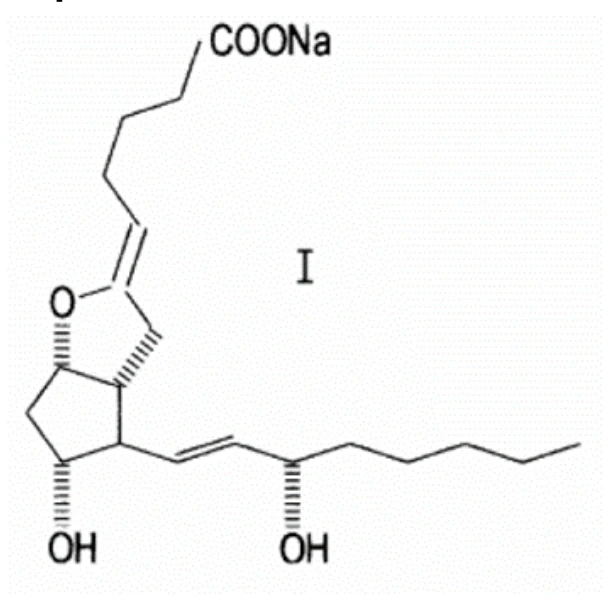
Physicochemical properties: Epoprostenol sodium is a white to off-white solid which melts over a wide range of temperatures with decomposition. It is readily soluble in water and ethanol, and sparingly soluble in acetonitrile.
14 CLINICAL TRIALS
14.1 Clinical Trials by Indication
Long-term treatment of idiopathic pulmonary arterial hypertension (iPAH)
Acute Hemodynamic Effects
Acute intravenous infusions of epoprostenol for up to 15 minutes in patients with idiopathic pulmonary arterial hypertension and pulmonary arterial hypertension associated with connective tissue disease produced dose-related increases in cardiac index (Cl) and stroke volume (SV), and dose-related decreases in pulmonary vascular resistance (PVR), total pulmonary resistance
(TPR), and mean systemic arterial pressure (SAPm). The effects of epoprostenol on mean pulmonary arterial pressure (PAPm) were variable and minor.
Chronic Hemodynamic Effects
Chronic hemodynamic effects in patients with idiopathic pulmonary arterial hypertension were generally similar to acute effects. Cl, SV, and arterial oxygen saturation were increased, and PAPm, right atrial pressure (RAP), TPR, and systemic vascular resistance (SVR) were decreased in patients who received epoprostenol chronically, compared to those who did not.
Survival
Survival was improved in NYHA (New York Heart Association) functional Class III and Class IV iPAH patients treated with epoprostenol for 12 weeks in a multicenter, open, randomized, parallel, controlled study. At the end of the treatment period, 8 of 40 patients receiving standard therapy alone had died, whereas none of the 41 patients receiving epoprostenol had died (p=0.003).
Table 16 illustrates the treatment-related hemodynamic changes in these patients after 8 or 12 weeks of treatment.
Table 16: Hemodynamics During Chronic Administration of Epoprostenol in Patients with iPAH
Hemodynamic Parameter | Baseline | Mean change from baseline at end of treatment period1 | ||||||||||
Epoprostenol (n=52) | Conventional (n=54) | Epoprostenol (n=48) | Conventional (n=41) | |||||||||
CI (L/min/m2) | 2.0 | 2.0 | 0.32 | -0.1 | ||||||||
PAPm (mm Hg) | 60 | 60 | -52 | 1 | ||||||||
PVR (Wood U) | 16 | 17 | -42 | 1 | ||||||||
SAPm (mm Hg) | 89 | 91 | -4 | -3 | ||||||||
SV (mL/beat) | 44 | 43 | 62 | -1 | ||||||||
TPR (Wood U) | 20 | 21 | -52 | 1 | ||||||||
CI = cardiac index; PAPm = mean pulmonary arterial pressure; PVR = pulmonary vascular resistance; SAPm = mean systemic arterial pressure; SV = stroke volume ; TPR = total pulmonary resistance
- 1. At 8 weeks: Epoprostenol n=10; Conventional Therapy n=11 (n is the number of patients with hemodynamic data). At 12 weeks: Epoprostenol n=38; Conventional Therapy n=30 (n is the number of patients with hemodynamic data)
- 2. Denotes statistically significant difference between Epoprostenol and Conventional Therapy groups
Chronic infusion in pulmonary arterial hypertension (PAH) associated with connective tissue disease (CTD)
Hemodynamic Effects
Chronic continuous infusions of epoprostenol in patients with PAH associated with CTD were studied in a prospective, open, randomized trial of 12 weeks duration comparing epoprostenol plus conventional therapy to conventional therapy alone. Except for the five New York Heart Association (NYHA) functional Class II patients, all patients were either functional Class III or Class IV. The patients principally had pulmonary vascular manifestations of the collagen-vascular disease, with minimal evidence of interstitial lung disease and with total lung capacities greater than 60% of the predicted normal. Dosage of epoprostenol was determined (see 4 DOSAGE AND ADMINISTRATION) and averaged 11.2 ng/kg per minute at study end. Conventional therapy varied among patients and included oxygen and diuretics in two-thirds of the patients, oral vasodilators in 40% of the patients, and digoxin in a third of the patients. A statistically significant increase in CI, and statistically significant decreases in PAPm, RAP, PVR, and SAPm were observed in patients who received epoprostenol chronically compared to those who did not. Table 17 illustrates the treatment-related hemodynamic changes in these patients after 12 weeks of treatment.
Table 17: Hemodynamics During Chronic Administration of Epoprostenol in Patients with PAH associated with CTD
Hemodynamic Parameter | Baseline | Mean Change from Baseline at 12 Weeks | |||||||
Epoprostenol (n=56) | Conventional Therapy (n=55) | Epoprostenol (n=50) | Conventional Therapy (n=48) | ||||||
PAPm (mm Hg) | 51 | 49 | -51 | 1 | |||||
RAP (mm Hg) | 13 | 11 | -11 | 1 | |||||
PVR (Wood U) | 14 | 11 | -51 | 1 | |||||
SAPm (mm Hg) | 93 | 89 | -81 | -1 | |||||
CI = cardiac index; PAPm = mean pulmonary arterial pressure; RAP = right atrial pressure; PVR = pulmonary vascular resistance; SAPm = mean systemic arterial pressure
- 1. Denotes statistically significant difference between Epoprostenol and Conventional Therapy groups (n is the number of patients with hemodynamic data).
Clinical Effects
Statistically significant improvement was observed in exercise capacity, as measured by the 6-minute walk, in patients receiving continuous intravenous epoprostenol plus conventional therapy for 12 weeks compared to those receiving conventional therapy alone. Improvements were apparent as early as the first week of therapy. Increases in exercise capacity were accompanied by statistically significant improvements in dyspnea and fatigue, as measured by the Borg Dyspnea Index and Dyspnea Fatigue Index. By week 12, NYHA Functional Class improved in 21 of 51 (41%) patients treated with epoprostenol compared to none of the 48 patients treated with conventional therapy alone.
No statistical difference in survival over 12 weeks was observed in PAH patients treated with epoprostenol. At the end of the treatment period, 4 of 56 (7%) patients receiving epoprostenol died, whereas 5 of 55 (9%) patients receiving conventional therapy died.
15 MICROBIOLOGY
No microbiological information is required for this drug product.
16 NON-CLINICAL TOXICOLOGY
General Toxicology:
Acute Toxicity Studies
The acute toxicity of epoprostenol sodium was determined in rodents as follows:
| Strain/Species | No. per Group | Dose (mg/kg) | Route | LD50 (mg/kg) |
| Evans-1 mouse | 10M, 10F | 0, 0.1, 0.3, 1, 10 | I.V. | >10 |
| Evans-1 mouse | 10M, 0F | 0, 0.003, 0.03, 0.1, 0.3, 1 | I.V. | - |
| Wistar rat | 5M, 5F | 0, 0.0001, 0.01, 1, 100 25, 35, 50, 70, 80, 100 | I.V. | 66.3 |
The LD50 in mice could not be estimated since the maximum dose level of 10 mg/kg epoprostenol was lethal in only 1 of 10 male and in none of 10 female mice.
Epoprostenol 0.0001 mg/kg was without effect. The effects of epoprostenol sodium were observed in mice given doses as low as 0.003 mg/kg. Flaccid paralysis, hypoactivity, ataxia, lost or weak righting reflex, slow and/or deep laboured breathing, ptosis and piloerection were observed following doses of epoprostenol greater than 0.01 mg/kg I.V. Signs of toxicity observed 2 to 5 minutes postdose with 0.03 to 10 mg/kg included decreased activity, bradypnea, hypothermia, ataxia, and skin flushing. These signs disappeared in 2 hours postdose. Dose-related hypothermia, which occurred slightly later than the other signs, was most prominent 10 minutes following dosing, but undetectable at 2 hours postdose. With the exception of pulmonary hemorrhage in one male mouse receiving 10 mg/kg, there were no gross lesions in any other animal. Rats given intravenous doses of 100 mg/kg developed respiratory distress, collapsed and died 1 to 10 minutes postdose.
Subacute and Subchronic Toxicity Studies
| Strain / Species | No. per Group | Doses | Route | Duration (days) | Drug-related Findings |
| SD Rat | 5M, 5F | 0, 56, 180, 560 ng/kg/min | continuous I.V. | 14 | Weight loss, reddened skin, and decreased platelet counts. |
| Beagle Dog | 2M, 2F | 0, 12.5, 40, 125 ng/kg/min | continuous I.V. | 30 | Emesis, soft feces, decreased platelet counts, significantly decreased white blood cells. |
| Beagle Dog | 2M, 2F | 125 ng/kg/min | continuous | 30 | Platelet decreases and |
| I.V. | hematologic changes reversed. | ||||
Monkey (Erythroceb us patas) | 2M, 2F | 0, 0.01, 0.1, 1 μg/kg/min | I.V. (1 hr/day 3 X/wk) | 14 | Emesis, diarrhea, decreased blood pressure, tachycardia, focal necrosis in heart (1 monkey), bleeding time and blood glucose significantly increased. |
| Wistar Rat | 0M, 2F | 0, 1, 10, 30, 60 mg/kg | S.C. | 7 | Hypotension, EKG changes (myocardial ischemia), necrosis in heart. |
| Wistar Rat | 15M, 15F | 0, 1, 10, 100 μg/kg | S.C. | 14 | Red skin, hypotension, EKG changes (myocardial ischemia). |
Monkey (Erythroceb us patas) | 1M, 0F | Dose escalation 0, 1, 10, 30, 60, 60 mg/kg | S.C. | 5 | Red skin, hypotension (all doses); necrosis in heart. |
Carcinogenicity: Carcinogenesis bioassays have not been performed with epoprostenol sodium.
Genotoxicity: Preliminary studies showed that epoprostenol sodium was non-mutagenic in the Ames Salmonella assay, non-clastogenic in the rat micronucleus assay, and did not damage DNA in the alkaline elution assay (see below).
| Study | Species | No. per Group | Dose/Concentration | Duration |
| Ames assay | Salmonella typhimurium | NA1 | Up to 2000 μg/plate | NA |
| Micronucleus assay | Rat | 10M, 0F | 0, 10, 20, 40 mg/kg i.p. | 1 day |
| Alkaline Elution assay | in vitro | NA | Up to 3 mM concentration | NA |
- 1. Not Applicable
Reproductive and Developmental Toxicology: In a Segment I reproduction study in rats, males were treated with 0, 10, 30, or 100 μg/kg/day subcutaneous epoprostenol sodium for 60 days prior to mating and during a 14-day mating period. Females were treated 14 days before mating and during mating, gestation and lactation. There were no signs of treatment-related effects on fertility of either the parental generation or the first filial generation rats. Estrus cycles of the Fo dams were normal. Pregnancies, developmental milestones and behavioural tests were all judged to be normal.
There was no teratogenic effect in fetuses from rats and rabbits given epoprostenol sodium by subcutaneous injection during critical periods of organogenesis at dose levels of 1, 10, and 100 μg/kg/day. Gestation, parturition, and the rearing of young were all normal in rats given subcutaneous doses of 0, 10, 30 and 100 μg/kg/day.
| Study | Strain / Species | No. per Group | Route | Dose and Frequency | Drug-related Findings |
Segment I Fertility | SD Rat | 12M, 24F | S.C. | 0, 10, 30, 100 μg/kg/day (60 days) | Depression (all doses), ataxia (30 and 100 μg/kg); no effect on fertility. |
Segment II Teratology | Wistar Rat | 20F | S.C. | 0, 1, 10, 100 μg/kg/day Gestational days 6-16 | No teratogenic effects. |
Segment III Peri-postnatal | SD Rat | 24F | S.C. | 0, 10, 30, 100 μg/kg/day Gestational day 15 through Postpartum day 21 | Depression (all doses), ataxia (30 and 100 μg/kg); slightly delayed parturition; pup survival significantly decreased. |
Segment II Teratology | DB Rabbit | 15F | S.C. | 0, 1, 10, 100 μg/kg/day Gestational days 6-18 | No obvious teratogenic effects; technical difficulties with the study. |
Segment II Teratology | DB Rabbit | 44F | S.C. | 0, 100 μg/kg/day Gestational days 6-18 | Red skin, hypotension. No teratogenic effects. |
Special Toxicology:
Dermal Irritation
Epoprostenol sodium at a dose of 0.1 mL (1 mg/mL concentration) applied three times in one day to abraded skin of CFLP mice produced no histopathologic alterations.
Toxicity of Hydrolysis Product
The subacute toxicity of 6-keto-PGF1α an epoprostenol hydrolysis product, was investigated in patas monkeys. A dose of 1 μg/kg/min given as a 60-minute intravenous infusion 3 times per week for 2 weeks was devoid of toxic and pharmacodynamic activity.