


Product Monograph - Fasenra
Recent Major Label Changes
| 1 Indications | 2026-08 |
|---|---|
| 1 Indications, 1.1 Pediatrics | 2026-08 |
| 4 Dosage and Administration, 4.1 Dosing Considerations | 2026-08 |
| 4 Dosage and Administration, 4.2 Recommended Dose and Dosage Adjustment | 2026-08 |
| 7 Warnings and Precautions, General | 2026-08 |
| 7 Warnings and Precautions, Immune | 2026-08 |
| 7 Warnings and Precautions, 7.1.3 Pediatrics | 2026-08 |
| 7 Warnings and Precautions, 7.1.4 Geriatrics | 2026-08 |
| 1 Indications | 2025-06 |
| 4 Dosage and Administration, 4.1 Dosing Considerations | 2025-06 |
| 4 Dosage and Administration, 4.2 Recommended Dose and Dosage Adjustment | 2025-06 |
| 4 Dosage and Administration, 4.4 Administration | 2025-06 |
| 7 Warnings and Precautions, Immune | 2025-06 |
| 7 Warnings and Precautions, 7.1.3 Pediatrics | 2025-06 |
| 7 Warnings and Precautions, 7.1.4 Geriatrics | 2025-06 |
Table of Contents
Certain sections or subsections that are not applicable at the time of the preparation of the most recent authorized product monograph are not listed.
Recent Major Label Changes ................................................................................................ 2
Table of Contents .................................................................................................................. 2
Part 1: Healthcare Professional Information ........................................................................ 5
- 1.
Indications ...................................................................................................................... 5
1.1. Pediatrics ............................................................................................................. 5
1.2. Geriatrics.............................................................................................................. 5
- 2. Contraindications ........................................................................................................... 5
- 4.
Dosage and Administration............................................................................................ 6
4.1. Dosing Considerations .......................................................................................... 6
4.2. Recommended Dose and Dosage Adjustment ...................................................... 6
4.4. Administration....................................................................................................... 7
4.5. Missed Dose......................................................................................................... 7
- 5. Overdose ........................................................................................................................ 7
- 6. Dosage Forms, Strengths, Composition, and Packaging ............................................. 8
- 7.
Warnings and Precautions ............................................................................................. 8
General ............................................................................................................................ 8
Immune............................................................................................................................ 9
Reproductive Health ......................................................................................................... 9
7.1. Special Populations ............................................................................................ 10
7.1.1. Pregnancy .................................................................................................. 10
7.1.2. Breastfeeding.............................................................................................. 10
7.1.3. Pediatrics .................................................................................................... 10
7.1.4. Geriatrics .................................................................................................... 10
- 8.
Adverse Reactions ........................................................................................................11
8.1. Adverse Reaction Overview ................................................................................ 11
8.2. Clinical Trial Adverse Reactions .......................................................................... 11
8.2.1. Clinical Trial Adverse Reactions – Pediatrics ............................................... 14
8.3. Less Common Clinical Trial Adverse Reactions................................................... 14
8.5. Post-Market Adverse Reactions .......................................................................... 15
- 9.
Drug Interactions.......................................................................................................... 16
9.2. Drug Interactions Overview ................................................................................. 16
9.3. Drug-Behaviour Interactions................................................................................ 16
9.4. Drug-Drug Interactions........................................................................................ 16
9.5. Drug-Food Interactions ....................................................................................... 16
9.6. Drug-Herb Interactions........................................................................................ 16
9.7. Drug-Laboratory Test Interactions ....................................................................... 16
- 10.
Clinical Pharmacology ................................................................................................. 16
10.1. Mechanism of Action .......................................................................................... 16
10.2. Pharmacodynamics ............................................................................................ 17
10.3. Pharmacokinetics ............................................................................................... 17
10.4. Immunogenicity .................................................................................................. 18
- 11. Storage, Stability, and Disposal ................................................................................... 19
- 12. Special Handling Instructions ...................................................................................... 19
Part 2: Scientific Information .............................................................................................. 20
- 13. Pharmaceutical Information ......................................................................................... 20
- 14.
Clinical Trials ................................................................................................................ 21
14.1. Clinical Trials by Indication.................................................................................. 21
Asthma.............................................................................................................. 21
Eosinophilic granulomatosis with polyangiitis (EGPA) ......................................... 29
Hypereosinophilic Syndrome (HES) ................................................................... 33
- 15. Microbiology................................................................................................................. 37
- 16. Non-Clinical Toxicology ............................................................................................... 37
Patient Medication Information ........................................................................................... 38
Instructions for Use – Prefilled Syringe.............................................................................. 43
Instructions for Use - Autoinjector ..................................................................................... 49
Part 1: Healthcare Professional Information
1. Indications
Asthma
FASENRA (benralizumab) is indicated as an add-on maintenance treatment of adult patients with severe eosinophilic asthma.
FASENRA is not indicated for relief of acute bronchospasm or status asthmaticus (see 7 Warnings and Precautions).
Eosinophilic granulomatosis with polyangiitis (EGPA)
FASENRA is indicated as an add-on treatment for adult patients with relapsing or refractory eosinophilic granulomatosis with polyangiitis.
Hypereosinophilic syndrome (HES)
FASENRA is indicated as an add-on to standard therapy for the treatment of patients aged 12 years and older with hypereosinophilic syndrome without an identifiable non-hematologic secondary cause.
1.1. Pediatrics
Asthma (< 18 years of age)
FASENRA is not indicated in the pediatric population for the treatment of asthma, as the efficacy and safety of FASENRA has not been established in patients less than 18 years of age (see 7.1.3 Pediatrics).
Eosinophilic granulomatosis with polyangiitis (EGPA) (< 18 years of age)
FASENRA is not indicated in the pediatric population for the treatment of EGPA, as the efficacy and safety of FASENRA has not been established in patients less than 18 years of age (see 7.1.3 Pediatrics).
Hypereosinophilic syndrome (HES)
Adolescents (12 to < 18 years of age): Based on limited data in adolescent patients aged 12 to <18 years of age submitted and reviewed by Health Canada, along with the extrapolation of evidence from adults, the safety and efficacy of FASENRA in pediatric patients with HES aged 12 years and older and weighing ≥40 kg have been established. Therefore, Health Canada has authorized an indication for pediatric use (see 7.1.3 Pediatrics).
Pediatrics (< 12 years of age): FASENRA is not indicated in the pediatric population for the treatment of HES, as the safety and efficacy of FASENRA in pediatric patients with HES below the age of 12 years have not been established.
1.2. Geriatrics
Geriatrics (≥ 65 years of age): There is limited experience with FASENRA in patients 65 years of age and older. No overall differences in efficacy or safety of FASENRA were observed between geriatric and adult patients treated with FASENRA in clinical trials. Sensitivity of some older individuals, however, cannot be excluded (see 7.1.4 Geriatrics).
2. Contraindications
FASENRA (benralizumab) is contraindicated in patients who are hypersensitive to benralizumab, or to any ingredient(s) in the formulation, including any non-medicinal ingredient, or component of the container (see 6 Dosage Forms, Strengths, Composition, and Packaging).
4. Dosage and Administration
4.1. Dosing Considerations
FASENRA (benralizumab) is for subcutaneous use only.
FASENRA treatment should be initiated by a qualified healthcare professional experienced in the diagnosis and treatment of severe asthma, EGPA, and HES.
After proper training in the subcutaneous injection technique and education about signs and symptoms of hypersensitivity reactions (see 7 Warnings and Precautions), patients or their caregivers may administer FASENRA if their physician determines that it is appropriate, with medical follow-up as necessary.
Monitoring of patients after administration of biologic agents is recommended (see 7 Warnings and Precautions).
4.2. Recommended Dose and Dosage Adjustment
Asthma
The recommended dosage of FASENRA is 30 mg (one injection) administered every 4 weeks for the first 3 doses, and then once every 8 weeks thereafter by subcutaneous injection.
Eosinophilic granulomatosis with polyangiitis (EGPA)
The recommended dosage of FASENRA is 30 mg (one injection) administered every 4 weeks by subcutaneous injection. In the EGPA clinical trial, FASENRA was studied in combination with an optional tapering course of corticosteroids (see 14.1 Clinical Trials by Indication).
FASENRA has not been studied in patients who have organ-threatening or life-threatening manifestations of EGPA.
Hypereosinophilic syndrome (HES)
The recommended dosage of FASENRA is 30 mg (one injection) administered every 4 weeks by subcutaneous injection.
Pediatrics:
Asthma (< 18 years of age)
Health Canada has not authorized an indication for pediatric use for the treatment of asthma (see 7.1.3 Pediatrics).
Eosinophilic granulomatosis with polyangiitis (EGPA) (< 18 years of age)
Health Canada has not authorized an indication for pediatric use for the treatment of EGPA (see 7.1.3 Pediatrics).
Hypereosinophilic syndrome (HES) (< 18 years of age)
No dose adjustment is required for adolescent patients aged 12 to <18 years of age and weighing ≥40 kg.
An indication in patients with HES aged below 12 years has not been authorized by Health
Canada (see 7.1.3 Pediatrics).
Geriatrics (≥ 65 years of age): No dose adjustment is required for elderly patients (see 10.3 Pharmacokinetics, Special Populations and Conditions).
Renal Impairment: No dose adjustment is required for patients with renal impairment (see 10.3 Pharmacokinetics, Special Populations and Conditions).
Hepatic Impairment: No dose adjustment is required for patients with hepatic impairment (see 10.3 Pharmacokinetics, Special Populations and Conditions).
4.4. Administration
FASENRA is administered by subcutaneous injection into the thigh, or abdomen. The upper arm can be used if a healthcare professional or caregiver administers the injection.
A patient may self-inject FASENRA or the patient’s caregiver may administer FASENRA if their healthcare professional determines it is appropriate. The healthcare professional should ensure appropriate initiation and follow-up of patients. Proper training in subcutaneous injection technique using the prefilled syringe or autoinjector (FASENRA PEN) should be provided according to the Instructions for Use.
Patients should be instructed to watch for signs of anaphylaxis and seek immediate emergency medical assistance if they suspect signs of anaphylaxis after self -administration (see 7 Warnings and Precautions, Immune).
Do not administer FASENRA into areas where the skin is tender, bruised, erythematous, or hardened.
Prior to administration, warm FASENRA by placing the product at room temperature. This generally takes 30 minutes from a refrigerated storage condition.
Additional information and instructions for the preparation and administration of FASENRA using the prefilled syringe or autoinjector (FASENRA PEN) are given in the Instructions for Use.
4.5. Missed Dose
If a dose is missed or the patient is unable to keep an appointment for one of the injections, the missed dose should be administered as soon as possible.
5. Overdose
Doses of up to 200 mg were administered subcutaneously to patients in clinical trials without evidence of dose-related toxicities.
There is no specific treatment for an overdose with FASENRA (benralizumab). If overdose occurs, the patient should be monitored for any signs or symptoms of adverse effects and given appropriate supportive symptomatic treatment.
| For the most recent information in the management of a suspected drug overdose, contact your regional poison control centre or Health Canada’s toll-free number, 1-844 POISON-X (1-844-764-7669). |
|---|
- 6. Dosage Forms, Strengths, Composition, and Packaging
To help ensure the traceability of biologic products, healthcare professionals should record both the brand name and the non-proprietary (active ingredient) name as well as other product-specific identifiers such as the Drug Identification Number (DIN) and the batch/lot number of the product supplied.
Table 1 Dosage Forms, Strengths, and Composition
Description
FASENRA (benralizumab) is a sterile, preservative-free, clear to opalescent, colourless to yellow solution for subcutaneous injection.
Since FASENRA is a protein, translucent or white to off-white particles may be present in the solution.
FASENRA is available in below packaging formats:
Prefilled syringe
FASENRA is available in a pack containing one single use prefilled syringe.
Benralizumab solution (30 mg in 1 mL (30 mg/mL)) is provided in a type I glass syringe with a staked 29 gauge 12.7 mm stainless steel needle, rigid needle shield and FluroTec-coated plunger stopper to prevent needle stick injuries. The prefilled syringe is assembled with a needle guard, a finger flange, and a plunger rod.
Autoinjector
FASENRA is available in a pack containing one single use autoinjector (FASENRA PEN).
Benralizumab solution (30 mg in 1 mL (30mg/mL)) is provided in a type I glass syringe with a staked 29 gauge 12.7 mm stainless steel needle, rigid needle shield and FluroTec-coated plunger stopper. The autoinjector consists of the syringe and handheld, mechanical (spring-based) injection device.
7. Warnings and Precautions
General
Acute Asthma Symptoms or Deteriorating Disease: FASENRA (benralizumab) should not be used to treat acute asthma symptoms or acute exacerbations. Do not use FASENRA to treat
| Route of Administration | Dosage Form / Strength / Composition | Non-medicinal Ingredients |
| Subcutaneous use | Solution/ 30 mg/mL in a:
| L-histidine; L-histidine hydrochloride monohydrate; α,α-trehalose dihydrate; and polysorbate 20; and Water for Injection. |
acute bronchospasm or status asthmaticus.
Patients should be instructed to seek medical advice if their asthma remains uncontrolled or worsens after initiation of treatment with FASENRA.
Corticosteroid Reduction:
Abrupt discontinuation of corticosteroids after initiation of FASENRA therapy is not recommended. Reduction in corticosteroid dose may be associated with systemic withdrawal symptoms and/or unmask conditions previously suppressed by systemic corticosteroid therapy. Reduction in corticosteroid doses, if appropriate, should be gradual and performed under the supervision of a physician.
Hypereosinophilic Syndrome Subgroup Diagnosis:
Due to the differential treatment regimens between HES subgroups, genetic testing for the FIP1L1-PDGFRα mutation should be completed to aid in the determination of the HES variant and to guide optimal treatment decision.
Immune
Hypersensitivity and Administration-Related Reactions
Hypersensitivity reactions (e.g., anaphylaxis, angioedema, urticaria, rash) and administration site reactions (e.g., injection site bruising, pain, and erythema) have occurred following administration of FASENRA. These reactions may occur within hours of administration, but in some instances have a delayed onset (i.e., days). In the event of a hypersensitivity reaction, FASENRA should be discontinued (see 2 Contraindications).
Parasitic Infections
Eosinophils may be involved in the immunological response to some helminth infections. Patients with pre-existing helminth infections were excluded from participation in clinical trials therefore, the effect of FASENRA on a patient’s response to such infections is unknown.
Patients with pre-existing helminth infections should be treated for their infection prior to therapy with FASENRA.
If patients become infected while receiving treatment with FASENRA and do not respond to anti-helminth treatment, discontinue treatment with FASENRA until infection resolves.
A limited number of cases of serious Strongyloides infections have been reported in patients receiving FASENRA in the post-marketing setting; however, information available is insufficient to establish a causal relationship. In patients at risk of or with possible prior exposure to endemic areas, screening for Strongyloides infection should be considered prior to initiating treatment with FASENRA.
Reproductive Health
- Fertility
No data are available on the effect of FASENRA on human fertility. A study in monkeys did not show any effects on reproductive organs or reproductive parameters (see 16 Non-Clinical Toxicology).
7.1. Special Populations
7.1.1. Pregnancy
No studies have been conducted with FASENRA in pregnant women. In clinical trials there were too few pregnancies to inform on maternal and fetal health and developmental outcomes.
A study in monkeys showed that benralizumab is pharmacologically active in infants exposed during organogenesis through parturition. Systemic exposure to benralizumab and suppression of eosinophil counts were observed in offspring of exposed animals. Animal studies did not demonstrate any additional effects on pregnancy or neonatal/infant development (see 16 Non-Clinical Toxicology).
Animal studies are not always predictive of human response; therefore, it is not known whether FASENRA can cause fetal harm when administered to a pregnant woman.
FASENRA should not be used by pregnant women unless the expected benefit to the mother justifies the potential risk to the fetus. Women should be advised to contact their physicians if they become pregnant while receiving FASENRA and for up to 4 months after treatment is stopped.
7.1.2. Breastfeeding
There are no data regarding the presence of FASENRA in human breast milk, the effects on the breastfed infant, or the effects on milk production. A decision must be made whether to discontinue breast-feeding or to discontinue/abstain from benralizumab therapy taking into account the benefit of breast-feeding for the infant and the benefit of therapy for the mother.
7.1.3. Pediatrics
Asthma (< 18 years of age):
Based on the data submitted and reviewed by Health Canada, the safety and efficacy of FASENRA in pediatric patients 12 to less than 18 years of age have not been established (see 14 Clinical Trials). A limited number of adolescent subjects (N=108) were enrolled in the pivotal asthma exacerbation studies, and no studies have been conducted in children less than 12 years of age. Therefore, Health Canada has not authorized an indication for pediatric use in asthma.
Eosinophilic granulomatosis with polyangiitis (EGPA) (< 18 years of age):
Based on the data submitted and reviewed by Health Canada, the safety and efficacy of FASENRA in pediatric patients less than 18 years of age have not been established (see 14 Clinical Trials). Therefore, Health Canada has not authorized an indication for pediatric use in EGPA.
Hypereosinophilic syndrome (HES) (< 12 years of age):
Based on the data submitted and reviewed by Health Canada, the safety and efficacy of FASENRA in pediatric patients less than 12 years of age and weighing <40 kg have not been established (see 14 Clinical Trials). Therefore, Health Canada has not authorized an indication for pediatric use in HES in patients less than 12 years of age.
7.1.4. Geriatrics
Geriatrics (≥ 65 years of age): There is limited experience with FASENRA in patients 65 years of age and older. No overall differences in efficacy or safety of FASENRA were observed between geriatric and adult patients treated with FASENRA in clinical trials. Sensitivity of some older individuals, however, cannot be excluded.
Asthma: Of the total number of patients in the asthma clinical trials of benralizumab, 13% (n=320) were 65 years of age and older, while 0.4% (n=9) were 75 years of age and older.
Eosinophilic granulomatosis with polyangiitis (EGPA): Of the total number of patients treated with benralizumab in the EGPA clinical trial, 18.6% (n=13) were 65 years of age and older.
Hypereosinophilic syndrome (HES): Of the total number of patients treated with benralizumab in the HES clinical trial, 22% (n=15) were 65 years of age and older.
8. Adverse Reactions
8.1. Adverse Reaction Overview
In clinical studies that included patients with severe asthma with an eosinophilic phenotype, the most commonly reported adverse reactions during treatment were headache (8%), pharyngitis (5%), pyrexia (3%), and hypersensitivity reactions (3%).
In a clinical study that included patients with EGPA, the incidence of adverse reactions were similar to those reported in asthma, with the exception of headache, which occurred in 17% of FASENRA (benralizumab) treated patients.
In a clinical study that included patients with HES, the incidence of adverse reactions were similar to those reported in asthma and EGPA, with the exception of headache, which occurred in 16% of FASENRA treated patients. No new adverse reactions were identified.
Hypersensitivity reactions may occur within hours or days of being treated with FASENRA including swelling of the face, mouth, and tongue; fainting, dizziness, or light-headedness; hives; breathing problems; and rash.
8.2. Clinical Trial Adverse Reactions
Clinical trials are conducted under very specific conditions. Therefore, the frequencies of adverse reactions observed in the clinical trials may not reflect frequencies observed in clinical practice and should not be compared to frequencies reported in clinical trials of another drug.
Asthma
Across three phase 3 studies (SIROCCO, CALIMA, and ZONDA), 1,808 patients received at least 1 dose of FASENRA (see 14 Clinical Trials). These data described below reflect exposure to FASENRA in 1,663 patients with severe asthma, including 1,556 exposed for at least 24 weeks and 1,387 exposed for at least 48 weeks. The safety exposure for FASENRA is derived from phase 3 placebo-controlled studies (SIROCCO and CALIMA) from 48 weeks duration [FASENRA every 4 weeks (n = 841), FASENRA every 4 weeks for 3 doses, then every 8 weeks (n = 822), and placebo (n = 847)]. While a dosing regimen of FASENRA every 4 weeks was included in clinical trials, FASENRA administered every 4 weeks for 3 doses, then every 8 weeks thereafter is the recommended dose (see 4 Dosage and Administration).
Adverse events that occurred at greater than or equal to 1% incidence are shown in Table 2.
Table 2 Adverse events with ≥1% incidence with FASENRA and ≥1% more common with FASENRA than placebo in patients with severe eosinophilic asthma (SIROCCO and CALIMA)
| FASENRA n=822 n (%) | Placebo n=847 n (%) | |
| General disorders and administration site conditions | ||
| Pyrexia | 23 (3%) | 13 (2%) |
| Infections & Infestations | ||
| Pharyngitis | 33 (4%) | 21 (2%) |
| Musculoskeletal and connective tissue disorders | ||
| Arthralgia | 30 (4%) | 19 (2%) |
| Myalgia | 16 (2%) | 7 (1%) |
| Nervous system disorders | ||
| Headache | 68 (8%) | 52 (6%) |
| Respiratory, thoracic and mediastinal disorders | ||
| Cough | 27 (3%) | 17 (2%) |
Phase 3 oral corticosteroid-reduction trial (ZONDA)
In ZONDA, 73 patients were treated with at least one dose of FASENRA, as per the recommended dosing regimen, while taking a daily oral corticosteroid (OCS) (7.5 to 40mg per day) in addition to regular use of high-dose ICS and LABA. Numerically higher incidence of headache and pyrexia were reported in this treatment group when compared to placebo. The frequencies for the remaining adverse reactions with FASENRA were similar to placebo. The safety results in ZONDA were similar to those observed in SIROCCO and CALIMA.
Adverse drug reactions (events considered to be possibly related to treatment with benralizumab) were identified following evaluation of all data from two randomized placebo controlled trials and include headache, pharyngitis (Pharyngitis including: ‘Pharyngitis’, ‘Pharyngitis bacterial’, ‘Viral pharyngitis’, ‘Pharyngitis streptococcal’), pyrexia, hypersensitivity reactions (Hypersensitivity Reactions including: ‘Urticaria’, ‘Urticaria papular’, and ‘Rash’) and injection site reactions (all common; ≥1/100 to <1/10).
Safety Extension Trials (BORA and MELTEMI)
In a select subset of patients with severe eosinophilic asthma, who were tolerant to FASENRA, and entered the 56-week duration, single-blind, uncontrolled, extension trial BORA (n = 440), the safety profile of FASENRA was consistent with that observed in the placebo-controlled studies.
Additionally, in an open-label safety extension trial (MELTEMI) in patients with asthma from previous trials, 226 patients were treated with FASENRA at the recommended dose for up to 43 months. Combined with the treatment period in previous asthma studies, this corresponds to median follow-up of 3.4 years (range 8.5 months – 5.3 years). The safety profile during this follow-up period was consistent with the known safety profile of FASENRA.
Eosinophilic granulomatosis with polyangiitis (EGPA)
The safety of FASENRA in EGPA patients was studied in a double-blind, randomized, multicentre, active-controlled trial (MANDARA). A total of 70 patients with EGPA received FASENRA 30 mg by SC injection every 4 weeks for 52 weeks duration.
Adverse events that occurred at greater than or equal to 2% incidence are shown in Table 3.
Table 3 Adverse events* with ≥2% incidence in patients with EGPA (MANDARA)
FASENRA n= 70 n (%) | Mepolizumab n= 70 n (%) | |
|---|---|---|
General disorders and administration site conditions Injection site bruising Injection site pain Injection site erythema Asthenia Fatigue Injection site hematoma Injection site urticaria Nervous system disorders Headache | 2 (3%) 3 (4%) 2 (3%) 2 (3%) 2 (3%) 2 (3%) 0 5 (7%) | 4 (6%) 3 (4%) 2 (3%) 0 0 0 2 (3%) 3 (4%) |
*Assessed as possibly related to FASENRA by investigator
Hypereosinophilic syndrome (HES)
The safety of FASENRA in HES patients was studied in a double-blind, randomized, multicentre, placebo-controlled trial (NATRON). A total of 67 patients with HES received FASENRA 30 mg by SC injection every 4 weeks for 24 weeks duration.
Adverse events that occurred at greater than or equal to 4% incidence and more common with FASENRA than placebo are shown in Table 4.
Table 4 Adverse events with ≥4% incidence with FASENRA and ≥1% more common with FASENRA than placebo in patients with HES (NATRON)
| FASENRA n = 67 n (%) | Placebo n = 66 n (%) | |
| Gastrointestinal disorders | ||
| Abdominal paina | 4 (6%) | 2 (3%) |
| Nausea | 3 (4%) | 0 |
| General disorders and administration site conditions | ||
| Influenza like illness | 4 (6%) | 0 |
| Injection site reactionsb | 3 (4%) | 0 |
| Musculoskeletal and connective tissue disorders | ||
| Back pain | 3 (4%) | 0 |
| Nervous system disorders | ||
| Headache | 11 (16%) | 5 (8%) |
| Respiratory, thoracic and mediastinal disorders | ||
| Rhinitis allergic | 3 (4%) | 1 (2%) |
| Skin and subcutaneous tissue disorders | ||
| Rash | 3 (4%) | 0 |
a Abdominal pain includes the following Preferred Terms (PTs): abdominal pain, abdominal pain upper, abdominal pain lower
b Injection site reactions include the following Preferred Terms (PTs): injection site edema, injection site pain, and injection site reaction
8.2.1. Clinical Trial Adverse Reactions – Pediatrics
Pediatric population - Hypereosinophilic syndrome (HES)
A total of 4 adolescent patients (12 to 17 years of age) were enrolled in the Phase 3 study, of whom 3 received FASENRA and 1 received placebo. One patient in each treatment group experienced a HES flare during the 24-week treatment period.
The safety profile in adolescents appeared to be generally consistent with that observed in adult patients. However, given the low number of adolescent patients enrolled, data in this age group remains limited.
8.3. Less Common Clinical Trial Adverse Reactions
Adverse events that occurred more frequently with FASENRA than with placebo (2 reports or more in FASENRA compared to no reports in placebo), and that were reported less commonly in asthma trials (defined as less than 1% in the FASENRA Q8W treatment group) or in the HES trial (defined as less than 4% in the FASENRA Q4W treatment group) are summarized below.
Blood and lymphatic system disorders: leukopenia, lymphadenopathy
Cardiac disorders: atrial fibrillation
Endocrine disorders: adrenal insufficiency
Eye disorders: conjunctival hemorrhage, eye hemorrhage
Gastrointestinal disorders: abdominal distension, abdominal pain upper, dysphagia
General disorders and administration site conditions: chest pain, chills, feeling cold, hyperpyrexia, hyperthermia, injection site papule, pain, malaise
Hepatobiliary disorders: cholecystitis
Immune system disorders: food allergy
Infections and infestations: appendicitis, gingivitis, viral sinusitis, diverticulitis, rhinitis
Injury, poisoning and procedural complications: arthropod bite, arthropod sting, eye injury, meniscus injury, stab wound
Investigations: bacterial test positive, blood alkaline phosphatase increased, blood creatine phosphokinase increased
Musculoskeletal and connective tissue disorders: arthritis, exostosis
Nervous system disorders: neuralgia
Psychiatric disorders: nervousness, panic attack, sleep disorder, insomnia
Renal and urinary disorders: hematuria
Reproductive system and breast disorders: dysmenorrhea, ovarian cyst, pelvic pain, uterine polyp
Respiratory, thoracic and mediastinal disorders: nasal turbinate hypertrophy, respiratory tract inflammation
Skin and subcutaneous tissue disorders: dermatitis allergic, urticaria
Vascular disorders: essential hypertension, hematoma, hypotension, lymphoedema, orthostatic hypotension, peripheral coldness
8.5. Post-Market Adverse Reactions
The following additional adverse reactions have been identified during post approval use of FASENRA.
Immune system disorders: Anaphylaxis (e.g. anaphylactic reaction, angioedema).
9. Drug Interactions
9.2. Drug Interactions Overview
Cytochrome P450 enzymes, efflux pumps and protein-binding mechanisms are not involved in the clearance of benralizumab. There is no evidence of IL-5Rα expression on hepatocytes and eosinophil depletion does not produce chronic systemic alterations of proinflammatory cytokines.
9.3. Drug-Behaviour Interactions
The interaction of FASENRA with individual behavioural risks (e.g. cigarette smoking, cannabis use, and/or alcohol consumption) has not been studied.
9.4. Drug-Drug Interactions
No formal drug-drug interaction studies have been conducted.
An effect of benralizumab on the pharmacokinetics of co-administered medications is not expected. Based on the population analysis, commonly co-administered medications had no effect on benralizumab clearance in patients with asthma.
9.5. Drug-Food Interactions
FASENRA is administered as a subcutaneous injection. Interactions with food are therefore not applicable.
9.6. Drug-Herb Interactions
No formal drug-herb interaction studies have been conducted.
9.7. Drug-Laboratory Test Interactions
No formal drug-laboratory test interaction studies have been conducted.
10. Clinical Pharmacology
10.1. Mechanism of Action
FASENRA (benralizumab) is a targeted, humanized afucosylated, monoclonal antibody (IgG1, kappa) that binds to the alpha subunit of the human interleukin-5 receptor (IL-5Rα) with a dissociation constant of 16 pM. The IL-5 receptor is expressed on the surface of eosinophils and basophils. The results of in vitro studies have also shown that the absence of fucose in the Fc domain of benralizumab results in higher affinity (45.5 nM) for FcɣRIII receptors, which are expressed on immune effectors cells such as natural killer cells. In vitro, benralizumab induces apoptosis of eosinophils and basophils through enhanced antibody-dependent cell-mediated cytotoxicity (ADCC).
Inflammation is an important component in the pathogenesis of asthma, EGPA, and HES. Eosinophils and other cell types (e.g., mast cells, neutrophils, macrophages, lymphocytes) and mediators (e.g., histamine, eicosanoids, leukotrienes, cytokines) are involved in inflammation in asthma, EGPA, and HES. Benralizumab reduces eosinophilic inflammation through enhanced ADCC; however, the exact mechanism of benralizumab action in asthma, EGPA and HES has not been definitively established.
10.2. Pharmacodynamics
Dose-dependent reductions in blood eosinophils were observed following SC administration of benralizumab in asthma patients. In a 52-week Phase 2 dose-ranging trial, asthma patients received 1 of 3 doses of benralizumab [2 mg (n=81), 20 mg (n=81), or 100 mg (n=222)] administered every 4 weeks for the first 3 doses followed by every 8 weeks thereafter or placebo (n=222). At the time of the last dose (Week 40), median blood eosinophil counts were 170/mcL, 100/mcL, 50/mcL, and 40/mcL for placebo, 2, 20, and 100 mg benralizumab groups, respectively, reduced by 11%, 68%, 82% and 79% from the baseline levels.
A reduction in blood eosinophil counts was observed 24 hours post dosing in a Phase 2 asthma trial.
In the phase 3 asthma exacerbation trials, SIROCCO and CALIMA, following SC administration of benralizumab at the recommended dose, blood eosinophils were reduced to a median absolute blood eosinophil count of 0 cells/mcL, which corresponds to a median reduction of 100% (see 14 Clinical Trials). This near complete depletion of blood eosinophils was seen at the first observed time point, 4 weeks of treatment, and was sustained throughout the treatment period for both the greater than or equal to 300/mcL and less than 300/mcL baseline blood eosinophil count cohorts. Maintenance of near complete eosinophil depletion was observed throughout the 56-week extension study (BORA) consistent with previous trials and was maintained in MELTEMI.
Treatment with benralizumab was also associated with reductions in blood basophils. In the Phase 2 asthma dose-ranging trial, at 52 weeks (12 weeks after the last dose), median blood basophil counts were changed to 42, 18, 17, and 46 cells/mcL in the 2 mg, 20 mg and 100 mg benralizumab and placebo groups, respectively, compared to the baseline levels 45, 52, 46, and 40 cells/mcL in the 2 mg, 20 mg and 100 mg benralizumab and placebo groups.
In patients with EGPA, reduction of blood eosinophils was consistent with the effect observed in the asthma trials. Blood eosinophils counts were reduced from baseline (median count 240 cells/mcL) to a median count of 30 cells/mcL following the recommended dose regimen. The reduction of eosinophil count was seen at the first observed time point (1 week of treatment) and was maintained throughout the 52-week treatment period.
In patients with HES, reduction of blood eosinophils was consistent with the effect observed in asthma and EGPA trials. Blood eosinophil reduction was seen at the first observed timepoint (Week 4) and was maintained over the 24-week treatment period.
10.3. Pharmacokinetics
The pharmacokinetic properties of benralizumab below are based on the population pharmacokinetic analyses from the asthma trials. Findings in EGPA and HES were generally similar with those in asthma although a lower clearance is predicted for patients with EGPA and HES relative to patients with asthma (see Elimination). The pharmacokinetics of benralizumab was approximately dose-proportional in patients with asthma following subcutaneous administration over a dose range of 20 to 200 mg.
Absorption: Following subcutaneous administration to patients with asthma, the absorption half-life was approximately 3.5 days. Based on population pharmacokinetic analysis, the estimated absolute bioavailability was approximately 59% and there was no clinically relevant difference in relative bioavailability in the administration to the abdomen, thigh, or arm.
Distribution: Based on population pharmacokinetic analysis, central and peripheral volume of distribution of benralizumab was 3.1 L and 2.5 L, respectively, for a 70 kg individual.
Metabolism: Benralizumab is a humanized IgG1 monoclonal antibody that is degraded by proteolytic enzymes widely distributed in the body and not restricted to hepatic tissue.
Elimination: From population pharmacokinetic analysis, benralizumab exhibited linear pharmacokinetics and no evidence of target receptor-mediated clearance pathway. The estimated systemic clearance (CL) for benralizumab was 0.29 L/d for an asthma patient weighing 70 kg. For patients with EGPA and HES, population modelling estimated CL was approximately 0.22 L/d. Following subcutaneous administration in patients with asthma, the elimination half-life was approximately 15.5 days.
Special Populations and Conditions
Pediatrics (< 18 years of age): Based on the population pharmacokinetic analysis, age did not affect benralizumab clearance.
Geriatrics (≥ 65 years of age): Based on population pharmacokinetic analysis, age did not affect benralizumab clearance.
Race or Gender: A population pharmacokinetics analysis indicated that there was no significant effect of race and gender on benralizumab clearance.
Renal impairment: No formal clinical studies have been conducted to investigate the effect of renal impairment on benralizumab. Based on population pharmacokinetic analysis, benralizumab clearance was comparable in subjects with creatinine clearance values between 30 and 80 mL/min and patients with normal renal function. There are limited data available in subjects with creatinine clearance values less than 30 mL/min; however, benralizumab is not cleared renally.
Hepatic impairment: No formal clinical studies have been conducted to investigate the effect of hepatic impairment on benralizumab. IgG monoclonal antibodies are not primarily cleared via hepatic pathway; change in hepatic function is not expected to influence benralizumab clearance. Based on population pharmacokinetic analysis, baseline hepatic function biomarkers (alanine transaminase (ALT), aspartate transaminase (AST), and bilirubin) had no clinically relevant effect on benralizumab clearance.
10.4. Immunogenicity
The observed treatment-emergent ADA response is highly dependent on several factors, including assay sensitivity and specificity, assay methodology, sample handling, timing of sample collection, concomitant medication, and underlying disease. For these reasons, comparison of the treatment-emergent ADA response to benralizumab with the treatment-emergent ADA response to other products may be misleading.
In adult and adolescent patients with asthma, treatment-emergent ADA response developed in 107 out of 809 (13%) patients treated with FASENRA at the recommended dosing regimen during the Phase 3 asthma placebo-controlled 48 to 56 week treatment period. A total of 12% (94 out of 809) of patients treated with FASENRA developed neutralizing antibodies. Anti-benralizumab antibodies were associated with increased clearance of benralizumab and increased blood eosinophil levels in patients with high anti-drug antibody titers compared to antibody negative patients. No evidence of an association of ADA with efficacy or safety was observed.
In a select subset of patients with severe eosinophilic asthma, who were tolerant to FASENRA, and entered the 56 week duration, single-blind, uncontrolled, extension trial BORA, an additional 18/510 (4%) had newly-developed treatment-emergent antibodies. ln patients who were ADA-positive in the predecessor trials, antibody titers remained stable in the second year of treatment. Consistent with the predecessor trials, no evidence of an association of ADA with safety was observed.
In patients with EGPA, treatment-emergent ADA response developed in 6 out of 67 (9%) patients treated with benralizumab during the active controlled 52-week treatment period. Neutralizing antibody activity was detected in one of the ADA positive patients.
In patients with HES, treatment-emergent ADA response developed in 7 out of 66 (11%) patients treated with benralizumab during the placebo-controlled 24-week treatment period. Neutralizing antibody activity was detected in 2 of the 66 HES patients treated with benralizumab.
In the clinical trials conducted in patients with asthma, EGPA, or HES, no apparent correlation of ADA development to efficacy or adverse events was observed.
- 11. Storage, Stability, and Disposal
Store in a refrigerator (2°C - 8°C). FASENRA (benralizumab) may be kept at room temperature up to 25°C for a maximum of 14 days. After removal from the refrigerator, FASENRA must be used within 14 days or discarded. Store FASENRA PEN or prefilled syringe in the original package in order to protect from light. Do not freeze. Do not expose to heat. Discard unused drug into sharps container. Do not use this medicine after the expiry date that is stated on the label; the expiry date refers to the last day of the stated month.
12. Special Handling Instructions
Do not shake. Do not use if frozen.
In the absence of compatibility studies, this medicinal product must not be mixed with other medicinal products.
Part 2: Scientific Information
13. Pharmaceutical Information
Drug Substance
Non-proprietary name of the drug substance: Benralizumab
Chemical name: Immunoglobulin G1, anti-(human interleukin 5 receptor α-chain) (human-mouse monoclonal MEDI-563 heavy chain), disulfide with human-mouse monoclonal MEDI-563 α-chain, dimer.
Molecular formula and molecular mass: Benralizumab is comprised of two heavy chains and two light chains with an overall molecular weight of approximately 150 kDa.
Structure: Benralizumab is a recombinant humanized afucosylated IgG1κ monoclonal antibody of approximately 150 kDa, including oligosaccharides. The antibody is composed of two identical heavy chains of approximately 49,400 Da each, and two identical light chains of approximately 23,500 Da each. Benralizumab has primarily N-linked biantennary complex-type oligosaccharides attached to each heavy chain at Asn-301, without fucose. The average size of the oligosaccharide moiety is approximately 1,500 Da per heavy chain.
Physicochemical properties: Benralizumab has an isoelectric point (pI) of 8.4-8.9, density of 1.071 g/mL, and an extinction coefficient (determined experimentally) of 1.43 (mg/mL)-1cm-1.
Product Characteristics:
FASENRA (benralizumab) is a targeted, humanized monoclonal antibody (IgG1, kappa) that selectively binds to the alpha subunit of the human interleukin-5 receptor (IL-5Rα) with a low dissociation constant. Benralizumab is produced in Chinese hamster ovary cells by recombinant DNA technology.
14. Clinical Trials
14.1. Clinical Trials by Indication
Asthma
Table 5 Summary of Patient Demographics for Clinical Trials in Asthma
| Study # | Study design | Dosage, route of administration and duration | Study subjects (n) | Age (Range) | Sex n (%) |
D3250C00017 (SIROCCO) | Phase 3, Multicentre, randomized, double-blind, parallel group, placebo controlled study of the efficacy and safety of benralizumab in patients with severe, uncontrolled asthma | FASENRA 30 mg SC Placebo 2 dosing regimens: Q4W throughout the treatment period, Q4W for the first 3 doses and then Q8W thereafter. 48 weeks | Q4W: 399 Q8W: 398 Placebo: 407 Total: 1204 | 12-75 years | Female: 796 (66%) Male: 408 (34%) |
D3250C00018 (CALIMA) | Phase 3, Multicentre, randomized, double-blind, parallel group, placebo controlled study of the efficacy and safety of benralizumab in patients with severe, uncontrolled asthma | FASENRA 30 mg SC Placebo 2 dosing regimens: Q4W throughout the treatment period, Q4W for the first 3 doses and then Q8W thereafter 56 weeks | Q4W: 425 Q8W: 441 Placebo: 440 Total: 1306 | 12-75 years | Female: 807 (62%) Male: 499 (38%) |
D3250C00020 (ZONDA) | Phase 3, Multicentre, randomized, double-blind, parallel group, placebo controlled study of the efficacy and safety of benralizumab to reduce oral corticosteroid use in patients with uncontrolled asthma | FASENRA 30 mg SC Placebo 2 dosing regimens: Q4W throughout the treatment period, Q4W for the first 3 doses and then Q8W thereafter 28 weeks | Q4W: 72 Q8W: 73 Placebo: 75 Total: 220 | 20-75 years | Female: 135 (61%) Male: 85 (39%) |
SC: subcutaneous; Q4W: every 4 weeks; Q8W: every 8 weeks
Study demographics and trial design
FASENRA (benralizumab) was developed for the treatment of patients with severe asthma with an eosinophilic phenotype; therefore, the clinical development program was designed to study the ability of benralizumab to reduce the annual rate of asthma exacerbations, improve lung function, reduce asthma symptoms, and reduce oral corticosteroid (OCS) use in patients across a wide range of baseline peripheral blood eosinophil levels.
The safety and efficacy of FASENRA as an add-on therapy in patients with uncontrolled asthma were evaluated in 3 randomized, double-blind, parallel-group, placebo-controlled clinical trials:
- Two replicate long-term exacerbation trials in adults and adolescents (12 years and older) with 48 and 56 weeks duration (SIROCCO and CALIMA, respectively); and
- One 28-week OCS reduction trial in adults (18 years and over) (ZONDA).
While two dosing regimens were studied in the three trials, the recommended dosing regimen is FASENRA administered every 4 weeks for the first 3 doses, and then every 8 weeks (Q8W) thereafter (see 4 Dosage and Administration). Only results from the recommended dosing regimen of FASENRA (i.e., Q8W) and placebo will be discussed.
A total of 805, 881 and 148 patients were randomized to treatment with FASENRA Q8W and placebo in SIROCCO, CALIMA and ZONDA, respectively (see Table 5). This included 84 adolescents (SIROCCO/CALIMA combined; 38 within the FASENRA Q8W arms and 46 within the placebo arms).
SIROCCO and CALIMA
The two exacerbation trials, SIROCCO and CALIMA, were 48 and 56 weeks in duration, respectively, and randomized a total of 2510 patients (adults and adolescents aged 12 years and older) with uncontrolled asthma. Patients were required to have a history of 2 or more asthma exacerbations requiring oral or systemic corticosteroid treatment in the past 12 months, Asthma Control Questionnaire (ACQ)-6 score of 1.5 or greater at screening, and reduced lung function at baseline [pre-bronchodilator forced expiratory volume in 1 second (FEV1) below 80% in adults, and below 90% in adolescents] despite regular treatment with high-dose (> 500 mcg fluticasone propionate equivalent) inhaled corticosteroids (ICS) (SIROCCO) or with medium- (500 mcg fluticasone propionate equivalent) or high-dose ICS (CALIMA) and their current standard of care. Patients were stratified by geography, age, and blood eosinophils count (greater than or equal to 300 cells/mcL or less than 300 cells/mcL). Subjects were enrolled in SIROCCO and CALIMA irrespective of baseline blood eosinophils levels; however, they were stratified in a 2:1 ratio according to high- (greater than or equal to 300 cells/mcL) and low- (less than 300 cells/mcL) eosinophil stratums, respectively. The stratification was intended as a means of enriching the sample population for patients suggested most likely to respond to benralizumab, while accommodating subjects below this threshold in order to assess efficacy across a full range of baseline blood eosinophil levels.
The primary efficacy (intent-to-treat [ITT]) population consisted of patients with a baseline blood eosinophil count of greater than or equal to 300 cells/mcL who were taking high-dose ICS and LABA. Pre-specified efficacy analyses were also conducted in patients with baseline blood eosinophils of less than 300 cells/mcL; however, these analyses were considered to be supportive as they were not controlled for multiplicity. The primary endpoint for both studies was the annual asthma exacerbation rate ratio versus placebo within the primary efficacy (ITT) population. Key secondary endpoints were FEV1 and ACQ-6.
ZONDA
For the 28-week oral corticosteroid reduction trial, a total of 220 asthma patients were enrolled who were being treated with daily OCS (7.5 to 40 mg per day) in addition to regular use of high-dose ICS and LABA with or without additional controller(s) to maintain asthma control. The trial included an 8 week run-in period during which the OCS was titrated to the minimum effective dose without losing asthma control. Patients were required to have blood eosinophil counts greater than or equal to 150 cells/mcL and a history of at least one exacerbation in the past 12 months.
The primary endpoint was percent reduction from baseline of the final OCS dose during Weeks 24 to 28, while maintaining asthma control.
Table 6 Demographics and Baseline Characteristics of Placebo-controlled Asthma Trials including ITT Population
| Total Population | High Dose ICS and ≥300 cells/mcL* | |||||||||||||||
| SIROCCO (N=1204) | CALIMA (N=1306) | ZONDA (N=220) | SIROCCO (n=809) | CALIMA (n=728) | ||||||||||||
| Mean age (yr) | 49 | 49 | 51 | 49 | 49 | |||||||||||
| Female (%) | 66 | 62 | 61 | 65 | 61 | |||||||||||
| Caucasian (%) | 73 | 84 | 93 | 71 | 86 | |||||||||||
| Duration of asthma, median (yr) | 15 | 16 | 12 | 14 | 16 | |||||||||||
| Never smoked (%) | 80 | 78 | 79 | 81 | 77 | |||||||||||
| Mean baseline FEV1 pre-bronchodilator (L) | 1.67 | 1.76 | 1.85 | 1.66 | 1.78 | |||||||||||
| Mean baseline % predicted FEV1 | 57 | 58 | 60 | 56 | 58 | |||||||||||
| Median number of exacerbations in previous year | 2 | 2 | 2 | 2 | 2 | |||||||||||
| Mean baseline ACQ-6 | 2.8 | 2.7 | 2.6 | 2.8 | 2.8 | |||||||||||
*Intent to treat population
Study Results
Baseline blood eosinophils greater than or equal to 300 cells/mcL:
Exacerbations
The primary endpoint for SIROCCO and CALIMA was the rate of clinically significant asthma exacerbations in patients with baseline blood eosinophil counts of greater than or equal to 300 cells/mcL who were taking high-dose ICS and LABA. Clinically significant asthma exacerbation was defined as worsening of asthma requiring use of oral/systemic corticosteroids for at least 3 days, and/or emergency department visits requiring use of oral/systemic corticosteroids and/or hospitalization. For patients on maintenance oral corticosteroids, a clinically significant asthma exacerbation requiring oral corticosteroids was defined as a temporary increase in stable oral/systemic corticosteroids for at least 3 days or a single depo-injectable dose of corticosteroids.
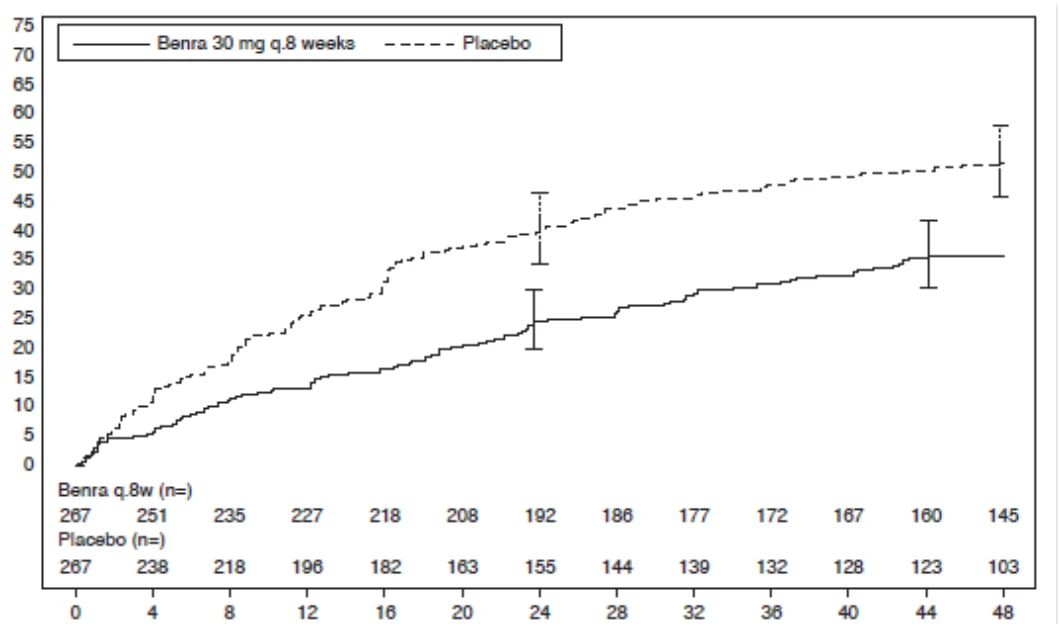
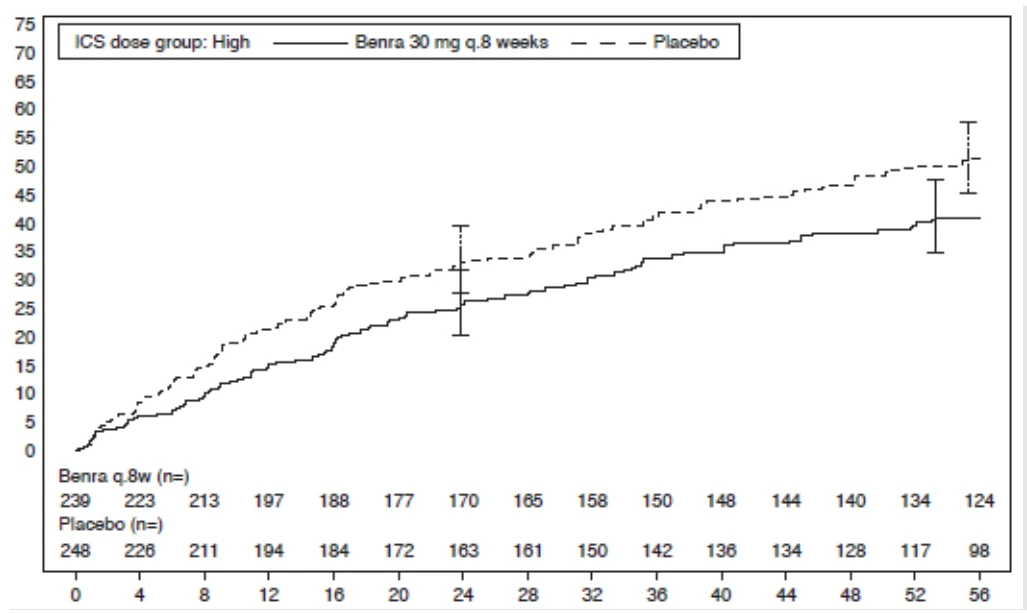
In SIROCCO, 35% of patients receiving FASENRA experienced a clinically significant exacerbation compared to 51% on placebo. FASENRA significantly reduced the annual asthma exacerbation rate compared to placebo by 51% (rate ratio: 0.49 [95% CI: 0.37, 0.64]; p<0.001) (Table 7). In CALIMA, 40% of patients receiving FASENRA experienced a clinically significant exacerbation compared to 51% on placebo. FASENRA significantly reduced the annual asthma exacerbation rate compared to placebo by 28% (rate ratio: 0.72 [95% CI: 0.54, 0.95]; p=0.019) (Table 8).
Table 7 Rate of Clinically Significant Exacerbations, SIROCCO (ITT Population)a,b
| Treatment | Exacerbations per year | |||
| Rate | Difference | Rate Ratio (95% CI)c | p-value | |
| Clinically significant exacerbations | ||||
| FASENRA (n=267) | 0.74 | -0.78 | 0.49 (0.37, 0.64) | <0.001 |
| Placebo (n=267) | 1.52 | -- | -- | -- |
| Exacerbations requiring hospitalization/emergency room visit | ||||
| FASENRA (n=267) | 0.09 | -0.16 | 0.37 (0.20, 0.67) | <0.001d |
| Placebo (n=267) | 0.25 | -- | -- | -- |
- a. Baseline blood eosinophil counts of greater than or equal to 300 cells/mcL and taking high-dose ICS
- b. Statistical analysis model: a negative binomial model including covariates treatment group, region, exacerbations in the previous year, and use of maintenance oral corticosteroids.
- c. Annual Asthma Exacerbation Rate Ratio over 48 weeks.
- d. p-value was not controlled for multiplicity.
Table 8 Rate of Clinically Significant Exacerbations, CALIMA (ITT Population) a,b
| Treatment | Exacerbations per year | |||
| Rate | Difference | Rate Ratio (95% CI)c | p-value | |
| Clinically significant exacerbations | ||||
| FASENRA (n=239) | 0.73 | -0.29 | 0.72 (0.54, 0.95) | 0.019 |
| Placebo (n=248) | 1.01 | -- | -- | -- |
| Exacerbations requiring hospitalization/emergency room visit | ||||
| FASENRA (n=239) | 0.12 | 0.02 | 1.23 (0.64, 2.35) | 0.538d |
| Placebo (n=248) | 0.10 | -- | -- | -- |
- a. Baseline blood eosinophil counts of greater than or equal to 300 cells/mcL and taking high-dose ICS
- b. Statistical analysis model: a negative binomial model including covariates treatment group, region, exacerbations in the previous year, and use of maintenance oral corticosteroids.
- c. Annual Asthma Exacerbation Rate Ratio over 56 weeks.
- d. p-value was not controlled for multiplicity.
The time to first asthma exacerbation was longer for the patients receiving FASENRA compared with placebo in both trials. In SIROCCO, the risk of having an asthma exacerbation was reduced by 40% (HR [95% CI]: 0.60 [0.46, 0.78]) and in CALIMA, by 27% (HR [95% CI]: 0.73 [0.55, 0.95]) (Figure 1).
Figure 1 Kaplan-Meier Cumulative Incidence Curves for Time to First Exacerbation, SIROCCO and CALIMA
SIROCCO
CALIMA
In SIROCCO, in patients with a history of 3 or more asthma exacerbations in the previous year, the annual asthma exacerbation rate from baseline to week 48 was 0.95 for FASENRA (n=103) compared to 2.23 for placebo (n=118). In CALIMA, in patients with a history of 3 or more
Week(s)
P ro b ab i l ity o f exp eri en ci n g an exacerb ati o n (% )
P ro b ab i l ity o f exp eri en ci n g an exacerb ati o n (% )
Week(s)
asthma exacerbations in the previous year, the annual asthma exacerbation rate from baseline to week 56 was 0.82 for FASENRA (n=95) compared to 1.65 for placebo (n=97).
Lung Function
FASENRA significantly improved baseline pre-bronchodilator FEV1 compared to placebo. In SIROCCO, the mean change from baseline in pre-bronchodilator FEV1 was 0.159 L ([95% CI: 0.068, 0.249], p<0.001). In CALIMA, the mean change from baseline in pre-bronchodilator FEV1 was 0.116 L ([95% CI: 0.028, 0.204], p<0.010). Compared with placebo, FASENRA provided consistent improvements over time in the mean change from baseline in FEV1 (Figure 2).
Figure 2 Mean Change from Baseline in Pre-Bronchodilator FEV1 (L), SIROCCO and CALIMA
SIROCCO
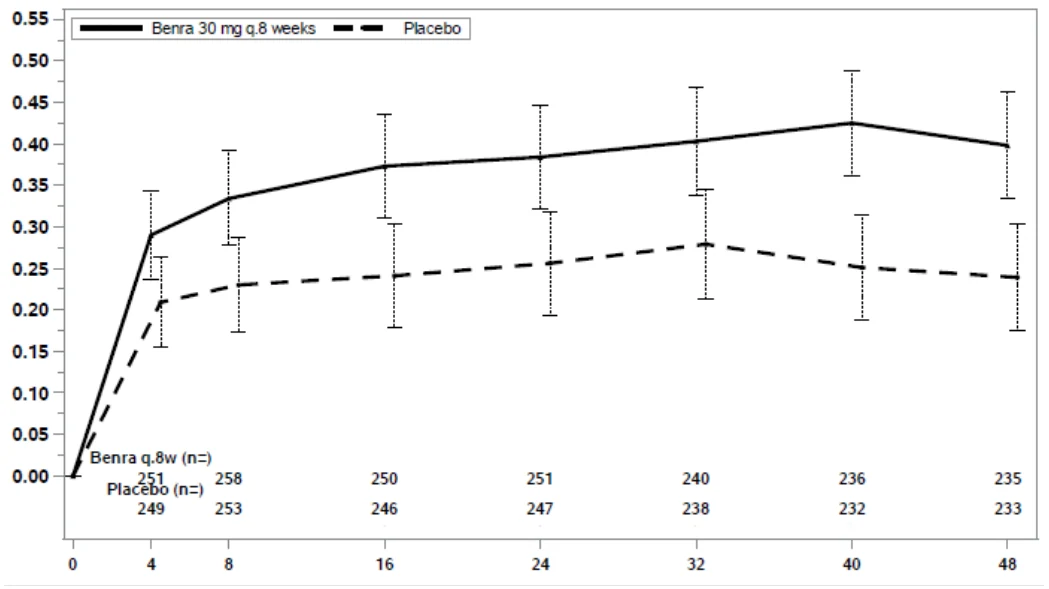
Week(s)
Ch an g e fro m b asel i n e F E V 1 (L )
CALIMA
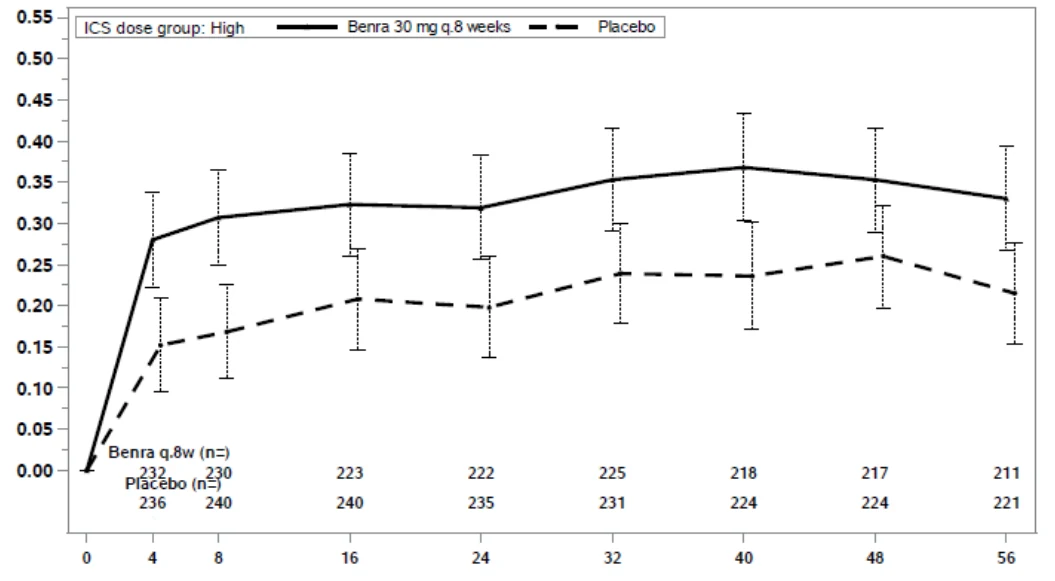
Week(s)
Asthma Symptoms and Quality of Life
In SIROCCO, the observed mean change from baseline to week 48 in Asthma Control Questionnaire (ACQ)-6 was -1.47 units for FASENRA compared to -1.12 units for placebo. In CALIMA, the observed mean change from baseline to week 56 was -1.49 units for FASENRA compared to -1.21 units for placebo. In SIROCCO, the observed mean change from baseline to week 48 in Standardized Asthma Quality of Life Questionnaire for 12 Years and Older (AQLQ(S)+12) was 1.56 units for FASENRA compared to 1.25 units for placebo. In CALIMA, the observed mean change from baseline to week 56 was 1.61 units for FASENRA compared to 1.32 units for placebo.
Baseline blood eosinophils less than 300 cells/mcL:
In SIROCCO, in patients with baseline blood eosinophil counts less than 300 cells/mcL, the annual asthma exacerbation rate from baseline to week 48 was 1.11 for FASENRA (n=131) compared to 1.34 for placebo (n=140) (Rate Ratio = 0.83 [95% CI: 0.59, 1.16]). In CALIMA, in patients with baseline blood eosinophil counts less than 300 cells/mcL, the annual asthma exacerbation rate from baseline to week 56 was 0.83 for FASENRA (n=125) compared to 1.38 for placebo (n=122) (Rate Ratio = 0.60 [95% CI: 0.42, 0.86]).
Oral Corticosteroid Reduction (ZONDA)
The primary endpoint in ZONDA was the percent reduction from baseline of the final OCS dose during Weeks 24 to 28, while maintaining asthma control. The median percent reduction in daily OCS dose from baseline was 75% in patients receiving recommended dose of FASENRA (95% CI: 60, 88) compared to 25% in patients receiving placebo (95% CI: 0, 33). Reductions of 50% or higher in the OCS dose were observed in 48 (66%) patients receiving FASENRA compared to 28 (37%) of those receiving placebo. The proportion of patients with a mean final dose less than or equal to 5 mg at Weeks 24 to 28 were 59% for FASENRA and 33% for placebo (odds ratio 2.74, 95% CI: 1.41, 5.31). Only patients with an optimized baseline OCS dose of 12.5 mg or less were eligible to achieve a 100% reduction in OCS dose during the study. Of those patients, 52.4% (22 of 42) receiving FASENRA and 19% (8 of 42) on placebo achieved a 100%
Ch an g e fro m b asel i n e F EV1 (L )
reduction in OCS dose.
Exacerbations and time to first asthma exacerbation were also assessed as secondary endpoints. In this 28-week trial, a smaller proportion of patients receiving FASENRA (23.3%) (17 of 73) experienced ≥1 asthma exacerbation compared to placebo (52.0%) (39 of 75). A longer time to the first asthma exacerbation was also observed in patients receiving FASENRA compared to placebo.
Eosinophilic granulomatosis with polyangiitis (EGPA)
Table 9 Summary of Patient Demographics for Clinical Trial in EGPA
| Study # | Study design | Dosage, route of administration and duration | Study subjects (n) | Age (Range) | Sex n (%) |
D3253C00001 (MANDARA) | Phase 3, Multicentre, randomized, double-blind, active-controlled, parallel group study of the efficacy and safety of benralizumab compared to mepolizumab in the treatment of EGPA in patients receiving standard of care therapy | FASENRA 30 mg SC Active comparator: mepolizumab 300 mg SC Dosage regimen: 1 x FASENRA 30 mg plus 3 placebo to mepolizumab SC injections Q4W 3 x mepolizumab 100 mg plus 1 placebo to FASENRA SC injections Q4W 52 weeks | FASENRA: 70 Mepolizumab: 70 | 19 – 79 years | Female: 84 (60%) Male: 50 (40%) |
SC: subcutaneous; EGPA: Eosinophilic granulomatosis with polyangiitis; Q4W: every 4 weeks
The efficacy and safety of FASENRA was evaluated in a randomized, double-blind, active-controlled, non-inferiority clinical trial of 52 weeks treatment duration, in patients aged 18 years and older with EGPA. A total of 140 patients who had a history of relapsing or refractory disease were randomized but those with active organ- or life-threatening EGPA were excluded from the trial. At screening, patients had to be on stable OCS therapy (≥7.5 to ≤50 mg/day prednisolone or prednisone), with or without stable immunosuppressant therapy (except cyclophosphamide). At baseline, median dose of OCS was 10 mg and 36% of patients were on immunosuppressant therapy. FASENRA 30 mg was evaluated compared to mepolizumab injection 300 mg administered subcutaneously every 4 weeks in addition to background prednisolone/prednisone with or without immunosuppressive therapy. Starting at Week 4, the OCS dose was tapered at the discretion of the investigator.
The MANDARA trial was a non-inferiority trial and was not designed to assess whether FASENRA was superior to mepolizumab. The pre-specified noninferiority (NI) margin based on the primary endpoint was a treatment difference of -25%. The secondary endpoints (accrued duration of remission, relapse, and OCS reduction) were not included in the pre-specified multiple testing procedure for statistical significance and are presented descriptively.
The demographics and baseline characteristics are provided in Table 10.
Table 10 Demographics and Baseline Characteristics of EGPA Trial
Benralizumab 30 mg (N=70) | Mepolizumab 300 mg (N = 70) | |
|---|---|---|
Benralizumab 30 mg (N=70) | Mepolizumab 300 mg (N = 70) | |
| Mean age (years) | 52 | 53 |
| Female, n (%) | 45 (64) | 39 (56) |
Race, n (%) White Asian Other | 53 (82) 9 (14) 3 (5) | 57 (85) 8 (12) 2 (3) |
| Time since diagnosis of EGPA, years, mean (SD) | 5.4 (5.38) | 4.9 (5.92) |
| History of ≥1 confirmed relapse in past 2 years, n (%) | 55 (79) | 55 (79) |
History/presence of Asthma plus Eosinophilia (>1.0x10⁹ /L), n (%) Biopsy evidence of EOS vasculitis/inflammationa Neuropathyb Sino-nasal abnormality Cardiomyopathyc Glomerulonephritis Alveolar hemorrhage Palpable purpura Nonfixed pulmonary infiltrates | 70 (100) 20 (29) 38 (54) 63 (90) 17 (24) 4 (6) 2 (3) 7 (10) 49 (70) | 70 (100) 33 (47) 45 (64) 66 (94) 13 (19) 2 (3) 2 (3) 10 (14) 43 (61) |
| Refractory disease, n (%) | 42 (60) | 42 (60) |
| BVAS, median (range) | 0.0 (0, 18) | 0.0 (0, 15) |
ACQ-6, n (%) < 1.5 ≥ 1.5 | 39 (56) 31 (44) | 42 (60) 28 (40) |
| Baseline oral corticosteroidd daily dose, mg, median (range) | 10 (5, 30) | 10 (7.5, 40) |
| Receiving immunosuppressive therapye,n (%) | 26 (37) | 24 (34) |
| ANCA positivef, n (%) | 18 (26) | 22 (31) |
ACQ-6 = Asthma Control Questionnaire (6-item version); ANCA = anti-neutrophil cytoplasmic antibodies; BVAS = Birmingham Vasculitis Activity Score; EGPA = eosinophilic granulomatosis with polyangiitis; EOS = eosinophil; SD=standard deviation
- a. A biopsy showing histopathological evidence of eosinophilic vasculitis, OR perivascular eosinophilic infiltration, OR eosinophil-rich granulomatous inflammation
- b. Mono or poly (motor deficit or nerve conduction abnormality).
- c. Established by echocardiography or magnetic resonance imaging.
- d. Prednisone or prednisolone equivalent.
- e. Azathioprine, methotrexate, mycophenolic acid.
- f. ANCA positive historically or at screening.
Study Results
Primary endpoint: Remission
The primary endpoint was the proportion of patients in remission, defined as Birmingham Vasculitis Activity Score (BVAS)=0 (no active vasculitis) plus prednisolone/ prednisone dose≤4 mg/day, at both Week 36 and Week 48. As shown in Table 11, FASENRA demonstrated non-inferiority to mepolizumab for the primary endpoint.
Table 11 Remission and Components of Remission in EGPA
Remission (OCS≤4 mg/day + BVAS=0) | OCS≤4 mg/day | BVAS=0 | |||||||||||||
|---|---|---|---|---|---|---|---|---|---|---|---|---|---|---|---|
FASENRAa N=70 | Mepob N=70 | FASENRAa N=70 | Mepob N=70 | FASENRAa N=70 | Mepob N=70 | ||||||||||
| Patients in remission at both Weeks 36 and 48 | |||||||||||||||
| Patients, n (%)c | 40 (58) | 40 (57) | 42 (61) | 41 (58) | 58 (83) | 59 (84) | |||||||||
| Difference in remission rate, (%)c (95% CI) | 1.21 (-14.11, 16.53)d | -- -- | -- -- | -- -- | -- -- | -- -- | |||||||||
N=number of patients in analysis.
- a. FASENRA 30 mg administered every 4 weeks.
- b. Mepolizumab (Mepo) 300 mg administered every 4 weeks.
- c. The remission rates and the difference (benralizumab – mepolizumab) were estimated using marginal standardisation method in a logistic regression model. The covariates in the model include treatment arm, baseline dose of prednisone, baseline BVAS and region (North America, Rest of World, and Japan).
- d. NI margin -25% with 2.5% 1-sided significance level. Since the lower bound of the 95% CI for the treatment difference was >-25%, the efficacy of FASENRA was demonstrated to be noninferior to the efficacy of mepolizumab.
Secondary Endpoints
Accrued duration of remission
Results for accrued duration of remission and the components of remission are also shown in Table 12.
Table 12 Accrued Duration of Remission and Components of Remission in EGPA
Remission (OCS≤4 mg/day + BVAS=0) | OCS≤4 mg/day | BVAS=0 | ||||||||
|---|---|---|---|---|---|---|---|---|---|---|
FASENRAa N=70 | Mepob N=70 | FASENRAa N=70 | Mepob N=70 | FASENRAa N=70 | Mepob N=70 | |||||
| Accrued duration over 52 weeks, n (%) | ||||||||||
0 weeksc >0 to <12 weeks 12 to <24 weeks 24 to <36 weeks ≥36 weeks | 9 (13) 13 (19) 8 (11) 20 (29) 20 (29) | 15 (21) 10 (14) 8 (11) 19 (27) 18 (26) | 9 (13) 11 (16) 9 (13) 19 (27) 22 (31) | 12 (17) 12 (17) 8 (11) 18 (26) 20 (29) | 0 0 2 (3) 6 (9) 62 (89) | 0 2 (3) 2 (3) 7 (10) 59 (84) | ||||
N=number of patients in analysis.
- a. FASENRA 30 mg administered every 4 weeks.
- b. Mepolizumab (Mepo) 300 mg administered every 4 weeks.
- c. Did not achieve remission at any point.
The proportion of patients achieving remission within the first 24 weeks of treatment and remaining in remission through Week 52 was 42% for FASENRA and 37% for mepolizumab.
Relapse
Relapse (defined as worsening related to vasculitis, asthma, or sino-nasal symptoms requiring an increase in dose of corticosteroids or immunosuppressive therapy or hospitalization) was observed in 30% of patients on FASENRA and 30% of patients on mepolizumab. The annualized relapse rate was 0.50 for patients receiving FASENRA versus 0.49 for patients receiving mepolizumab.
Oral corticosteroid reduction
The average daily OCS dose during Weeks 48 to 52 is presented in Table 13.
Table 13 Average Daily Oral Corticosteroid Dose during Weeks 48 to 52 in EGPA
| Number (%) of Patients | |||||
|---|---|---|---|---|---|
| FASENRAa (N=70) | Mepolizumabb (N=70) | ||||
0 mg >0 to ≤4.0 mg >4.0 to ≤7.5 mg >7.5 mg | 29 (41) 19 (27) 15 (21) 7 (10) | 19 (27) 30 (43) 13 (19) 8 (11) | |||
N=number of patients in analysis.
- a. FASENRA 30 mg administered every 4 weeks.
- b. Mepolizumab 300 mg administered every 4 weeks.
Hypereosinophilic Syndrome (HES)
Table 14 Summary of Patient Demographics for Clinical Trial in HES
| Study # | Study design | Dosage, route of administration and duration | Study subjects (n)* | Age (Range) | Sex n (%) |
| D3254C00001 (NATRON) | Phase 3, Multicentre, randomized, double-blind, placebo-controlled, parallel group study of the efficacy and safety of benralizumab compared to placebo in the treatment of HES | FASENRA 30 mg SC Q4W Placebo SC Q4W Dosage regimen: 24 weeks | FASENRA: 67 Placebo: 66 | 14 – 87 years | Female: 82 (62%) Male: 51 (38%) |
SC: subcutaneous; HES: Hypereosinophilic Syndrome; Q4W: every 4 weeks
*Intent-to-treat (ITT) population
The efficacy and safety of FASENRA was evaluated in a randomized, double-blind, parallel group, placebo-controlled clinical trial of 24-week treatment duration, in patients aged 12 years and older with HES.
A total of 133 patients (129 adults and 4 adolescents) who had signs or symptoms of HES flare or had experienced at least two HES flares within the past 12 months received randomized treatment. At screening, patients had a blood eosinophil count ≥1,000 cells/mcL and stable HES therapy for at least 4 weeks. HES therapy included OCS, immunosuppressive/cytotoxic therapy or other symptomatic therapies. Patients with non-hematologic secondary HES (e.g., drug hypersensitivity, parasitic helminth infection, HIV infection, non-hematologic malignancy) or patients who were FIP1L1-PDGFRA kinase-positive were excluded from the study. Patients were randomized to FASENRA 30 mg or placebo administered subcutaneously every 4 weeks while continuing their stable HES therapy.
The demographics and baseline characteristics are provided in Table 15.
Table 15 Summary of Demographics and Baseline Characteristics of the HES Trial
Benralizumab (N=67) | Placebo (N = 66) | |
|---|---|---|
| Mean age (years) | 48 | 49 |
| Female, n (%) | 43 (64) | 39 (59) |
Race, n (%) White Black or African American Asian Other | 42 (72) 3 (5) 10 (17) 3 (5) | 45 (79) 1 (2) 11 (19) 0 |
Time since HES diagnosis, years, mean (SD) Median | 4.2 (6.0) 1.9 | 4.5 (6.0) 2.0 |
Number of HES worsenings/flares in the previous 12 months, mean (SD) Median | 2.5 (1.64) 2.0 | 2.7 (2.02) 2.0 |
HES background therapy at baseline, n (%) Any background HES therapy at baseline Systemic oral corticosteroid Cytotoxic / immunosuppressive therapy Othera | 63 (94) 47 (70) 6 (9) 45 (67) | 63 (96) 55 (83) 5 (8) 46 (70) |
Baseline oral corticosteroidb daily dose (mg), median (range) | 5 (0, 20) | 5 (0, 30) |
| Absolute blood eosinophil count (cells/mcL) at screening, median | 1085.0 | 1120.0 |
HES = hypereosinophilic syndrome; SD = Standard deviation
a Examples of 'other' HES therapy include but are not limited to beclomethasone dipropionate, formoterol fumarate, omeprazole, salbutamol, tiotropium bromide, triamcinolone, acetonide, cetirizine.
b Prednisone equivalent
Study Results
Primary Endpoint: Time to first HES flare
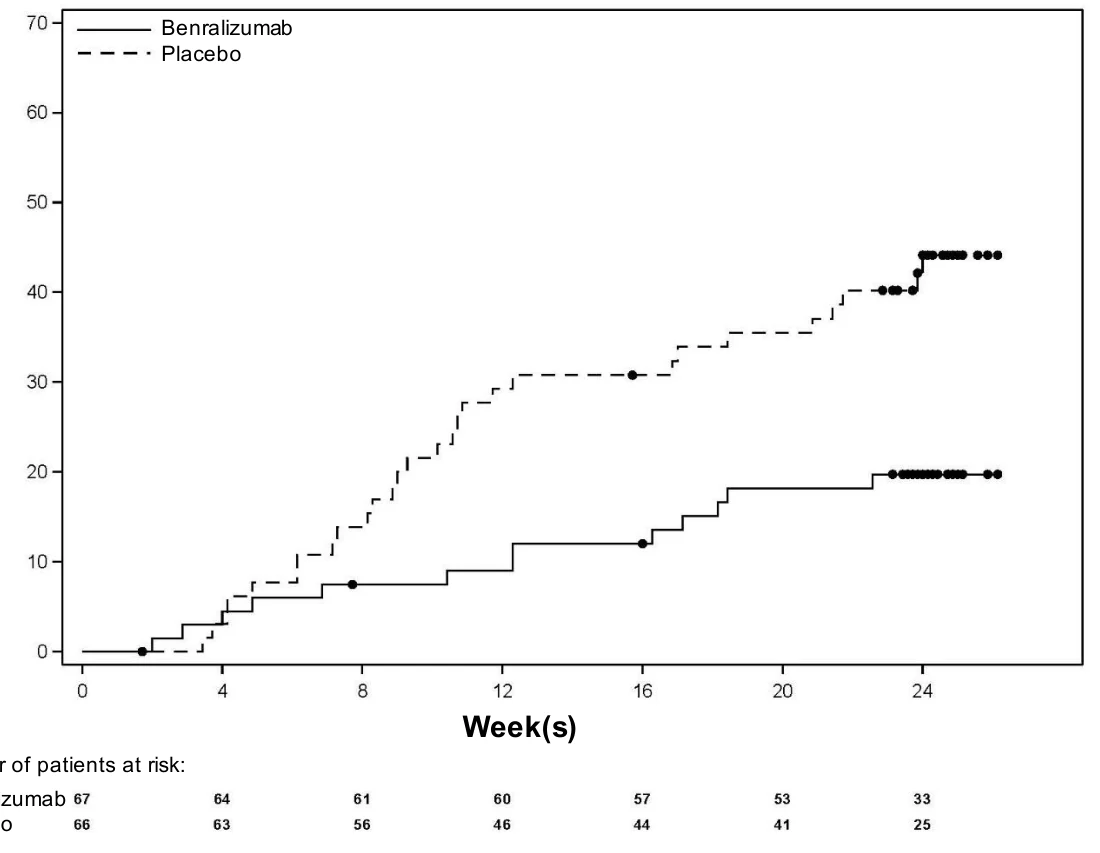
The primary endpoint was time to first HES flare, defined as a HES clinical manifestation or laboratory abnormality that resulted in an increase or addition of OCS of 10 mg/day or more for at least 2 days, or, an increase or addition of new cytotoxic and/or immunosuppressive therapy, or hospitalization. Treatment with FASENRA delayed the time to first HES flare (Figure 3) and resulted in a statistically significant 65% reduction in the risk of first flare over the 24-week treatment period compared to placebo (HR: 0.35; 95% CI: 0.18, 0.69; p=0.0024).
Figure 3 Kaplan Meier Curve for Time to First HES Flare Versus Placebo
Key Secondary Endpoints
Key secondary endpoints included the proportion of patients who experienced a HES flare during the 24-week treatment period, frequency of HES flares, time to first hematologic relapse (defined as eosinophil count ≥1000 cells/mcL), and change from baseline in fatigue severity (Patient-Reported Outcomes Measurement Information Systemic (PROMIS) Fatigue Short Form 7a). The results are shown in Table 16.
Week(s)
Benralizumab Placebo
Benralizumab Placebo
Number of patients at risk:
Pro b a b i l i t y o f e x pe ri e nc i n g HES f l a re ( %)
Table 16 Key Secondary Efficacy Variables, HES Trial (ITT Population)
FASENRAa (N=67) | Placebo (N=66) | Comparison (FASENRA vs Placebo) (95% CI) | ||||||||
| Proportion of patients who experienced a HES flare | ||||||||||
| Patients with ≥1 HES flare or who withdrew from studyb, n (%) | 15 (22) | 30 (45) | Relative riskc,f: 0.48 (0.29, 0.80) p-value 0.003 | |||||||
| Frequency of HES flares | ||||||||||
| Rate/year | 0.41 | 1.23 | Rate ratioc,g: 0.34 (0.18, 0.63) p-value 0.0008 | |||||||
Patients with 0 flares, n (%) Patients with 1 flare, n (%) Patients with 2 flares, n (%) Patients with ≥3 flares, n (%) | 54 (81) 13 (19) 0 (0) 0 (0) | 38 (58) 20 (30) 8 (12) 0 (0) | -- | |||||||
| Time to first hematologic relapsed | ||||||||||
| Patients with hematologic relapse, n (%) | 5 (7) | 39 (59) | Hazard ratioc,h: 0.08 (0.03, 0.20) p-valuei <0.0001 | |||||||
| Change from baseline in fatigue severity based on PROMIS Fatiguee | ||||||||||
| Absolute change from baseline in standardized T-score at Week 24, LS mean (95% CI) | -8.6 (-10.6, -6.6) | -3.9 (-6.0, -1.8) | Difference versus placebo: -4.7 (-7.6, -1.8) p-value 0.0017 | |||||||
ITT=Intention to treat, PROMIS=Patient-Reported Outcomes Measurement Information System
- a. FASENRA 30 mg administered every 4 weeks
- b. Any patients who withdrew from the study without having flared (placebo, n=2; FASENRA, n=2) are included in the analysis as if they had flared.
- c. A risk, rate or hazard ratio <1 favours FASENRA.
- d. Hematologic relapse is defined as eosinophil count ≥1,000 cells/mcL.
- e. PROMIS Fatigue Short Form 7a scale: standardized T-score (range 29.4 to 83.2). A reduction in score indicates improvement.
- f. The analysis was performed using a Cochran-Mantel-Haenszel test stratified by region.
- g. The analysis was performed using a negative binomial model adjusted by region.
- h. The analysis was performed using a Cox proportional hazards model including treatment group and region as covariates.
- i. The analysis was performed using a stratified log rank test adjusted for region.
Pediatric population:
A total of 4 adolescents aged 12 to 17 years were enrolled in the Phase 3 trial, 3 received FASENRA and 1 received placebo. One patient in each treatment group had a HES flare during the 24-week treatment period. The efficacy profile in pediatric patients with HES 12 years of age and older appeared similar to that of the adult population. However, given the low number of adolescent patients enrolled, data in this age group remains limited. Efficacy in adolescent patients is supported by evidence from adequate and well-controlled studies in adults, along with pharmacokinetic and pharmacodynamic data in pediatric patients.
15. Microbiology
No microbiological information is required for this drug product.
16. Non-Clinical Toxicology
General toxicology
Intravenous and subcutaneous administration to sexually mature cynomolgus monkeys for up to 9 months duration at IV doses of 10 and 25 mg/kg or at an SC dose of 30 mg/kg once every 2 weeks was associated with reductions or depletion in peripheral blood and bone marrow eosinophil counts. Reductions in eosinophil counts were an expected pharmacological effect. In addition, no adverse histopathological findings were observed in the reproductive organs of male and female monkeys. Male and female reproductive parameters (testicular volume; sperm motility, concentration, count, and morphology; reproductive hormone patterns; and menstrual cycle length) were also unaffected. Benralizumab-related adverse effects were limited to clinical signs of bruising/reddened areas around the eyes and on the face, chest, and lower abdomen (petechiae and ecchymosis), as well as decreased platelet count and indicators of circulating erythrocyte mass in one animal following intravenous dosing at 25 mg/kg body weight. No other benralizumab-related adverse effects, including on the respiratory and cardiovascular systems, were observed. The no-observed-adverse-effect level (NOAEL) was, therefore, 10 mg/kg body weight every two weeks following intravenous administration and 30 mg/kg body weight every two weeks following subcutaneous administration. The safety margins based on the intravenous and subcutaneous NOAEL values are approximately 155 and 275 times (49 and 88 times for adolescents 12-17 years of age), respectively, to the maximum recommended human dose (MRHD) on an AUC basis, and 136 and 193 times (66 and 94 times for adolescents), respectively, to the MRHD on a Cmax basis.
Carcinogenicity
Long-term animal studies have not been performed to evaluate the carcinogenic potential of benralizumab.
Reproductive and developmental toxicology
In a prenatal and postnatal development study conducted in cynomolgus monkeys, there was no evidence of maternal or developmental toxicity with IV administration of benralizumab throughout pregnancy and one month post-partum at maternal doses of 10 and 30 mg/kg administered every two weeks (from gestation day 20 to one month post-partum). The NOAEL was therefore the highest dose tested. The highest dose produced exposures up to approximately 319 times (on AUC basis) and 454 times (on Cmax basis) that achieved with the MRHD. Systemic exposure to benralizumab was observed in offspring. Reduction or depletion of peripheral eosinophil counts was also observed in maternal animals and their offspring; however, the effect in infants as a result of in utero or lactational exposure is not an intended effect.
Juvenile Toxicity
Juvenile toxicity studies were not conducted with benralizumab.